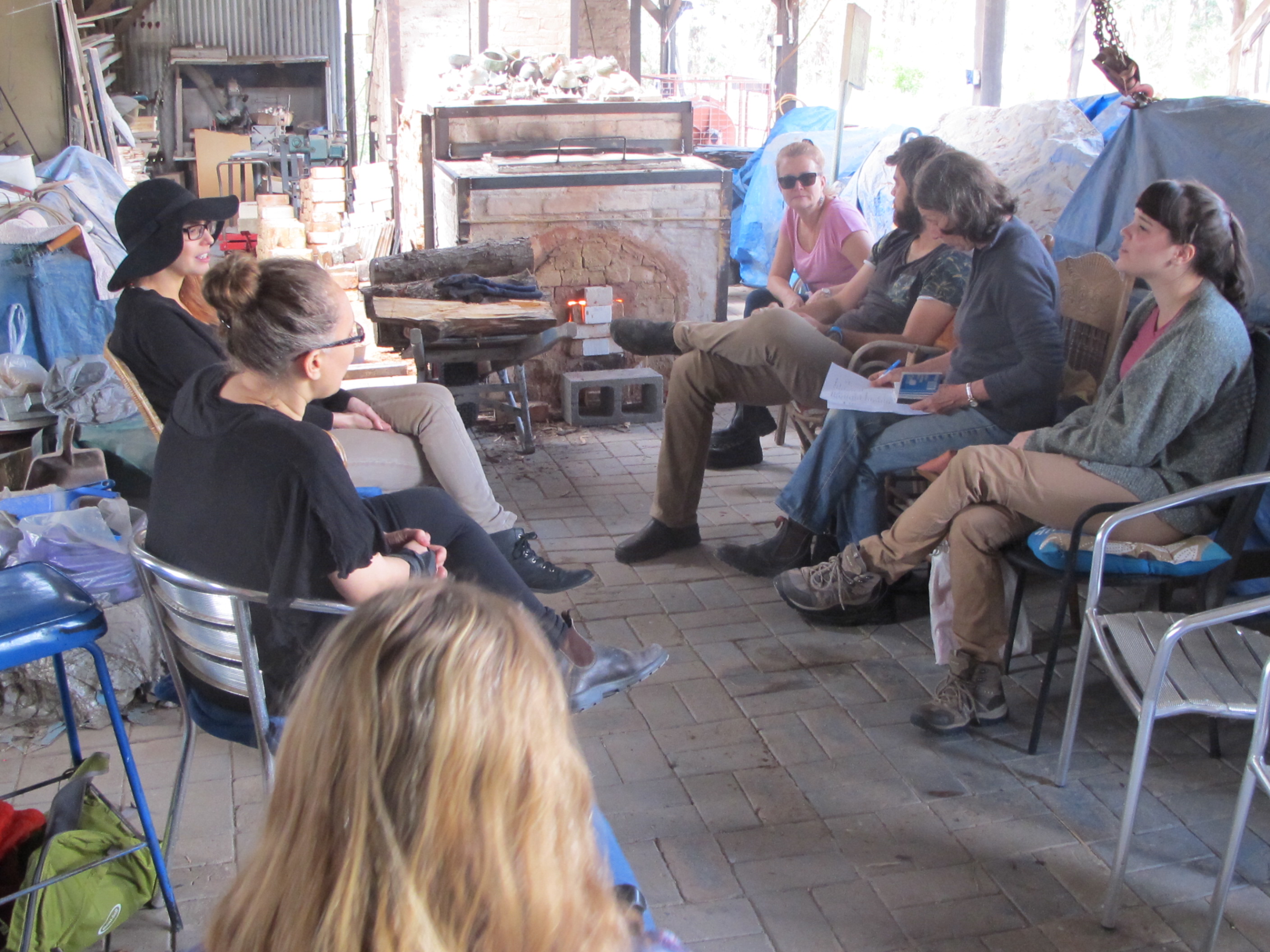
The April Fools New Firing
I’m awake before dawn. There isn’t even a hint of light through the place where I know the window is. It’s drizzling or raining lightly, because I can hear the drip of the rain on our bedrooms’ tin roof. I reach for my phone in the dark, it’s just 6 minutes before the alarm is due to go off. How do we do this? What sort of clock do we have in our heads that can measure by dead reckoning to within 6 minutes over 8 hours. If I tell myself to wake up at a certain early hour, I usually do it. I just don’t know how. I trained my self when I was a teenager, to wake up every two hours through the night, when I was firing my first gas fired kilns, so that I could turn the gas up, to get a steady temperature rise. That knack has stayed with me it seems.
I walk down to the pottery shed in the pitch dark. No stars tonight. Total cloud cover with some light drizzle. No need for a torch. I’ve walked this path so many times in my life. I know the way by heart. I turn at the corner of the orchard fence. I can’t see it, but I know that it’s there. I know that I’m in the shed now and reach for the light switch and suddenly, It’s all real instead of imagined.
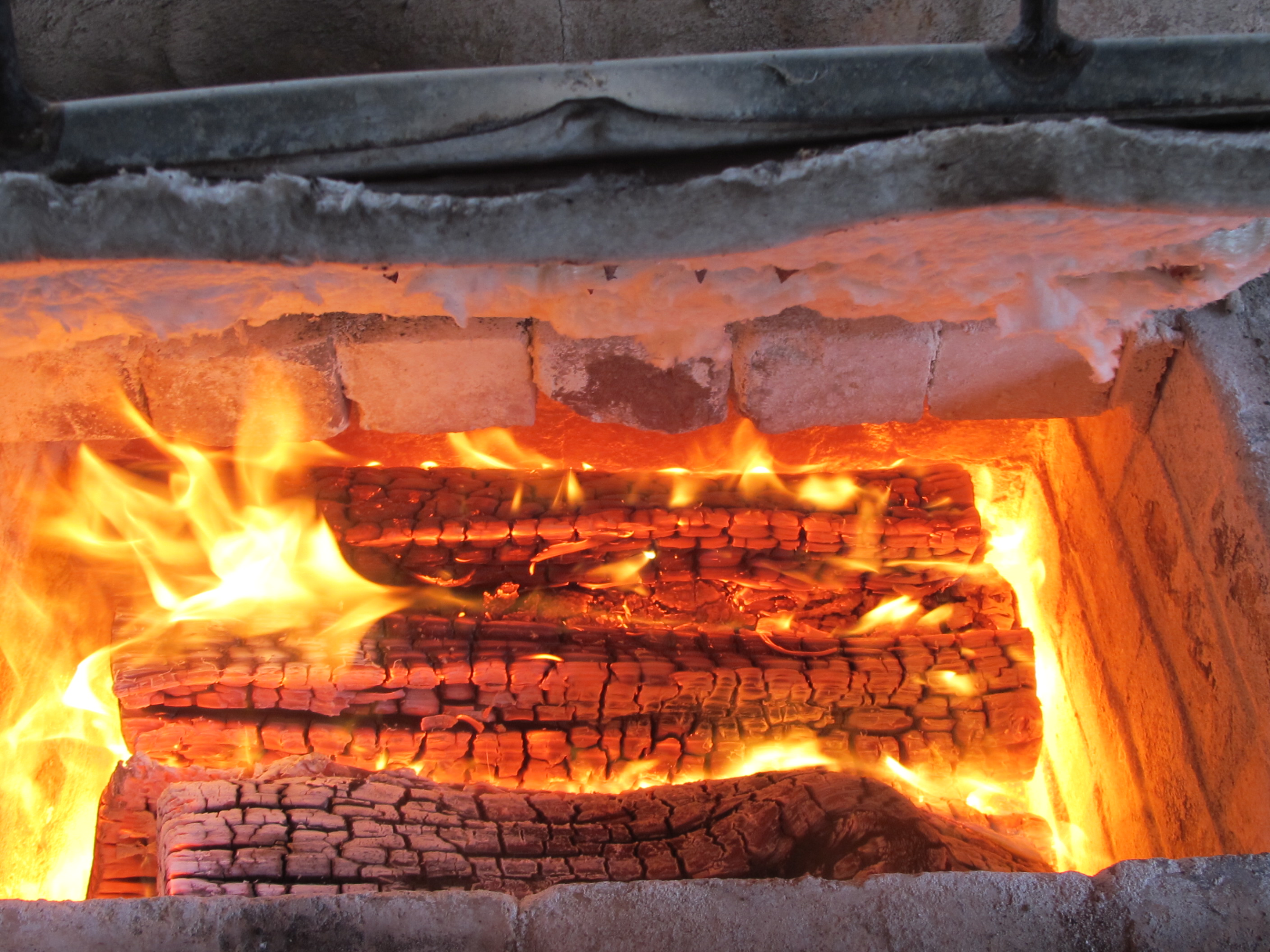
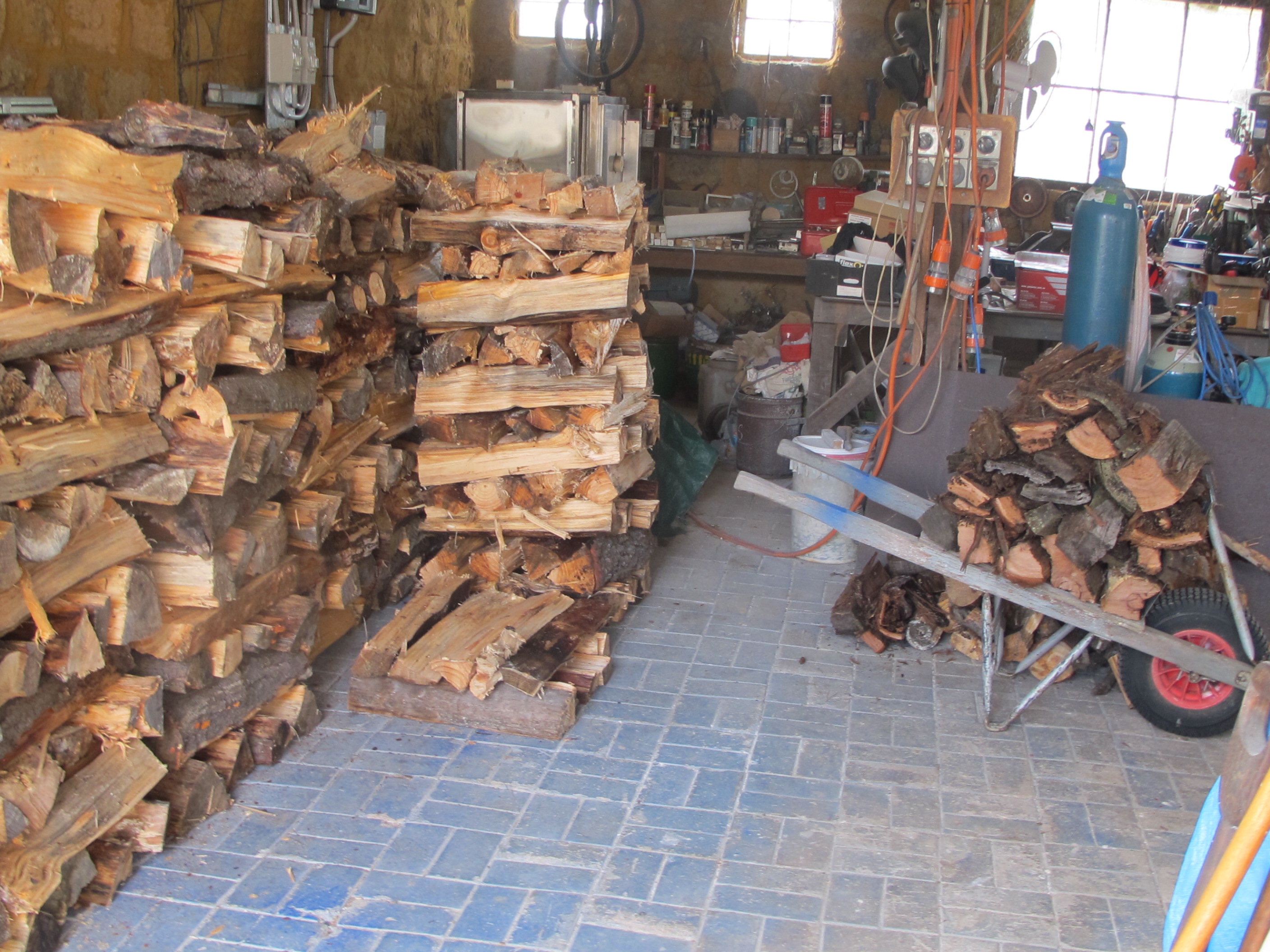
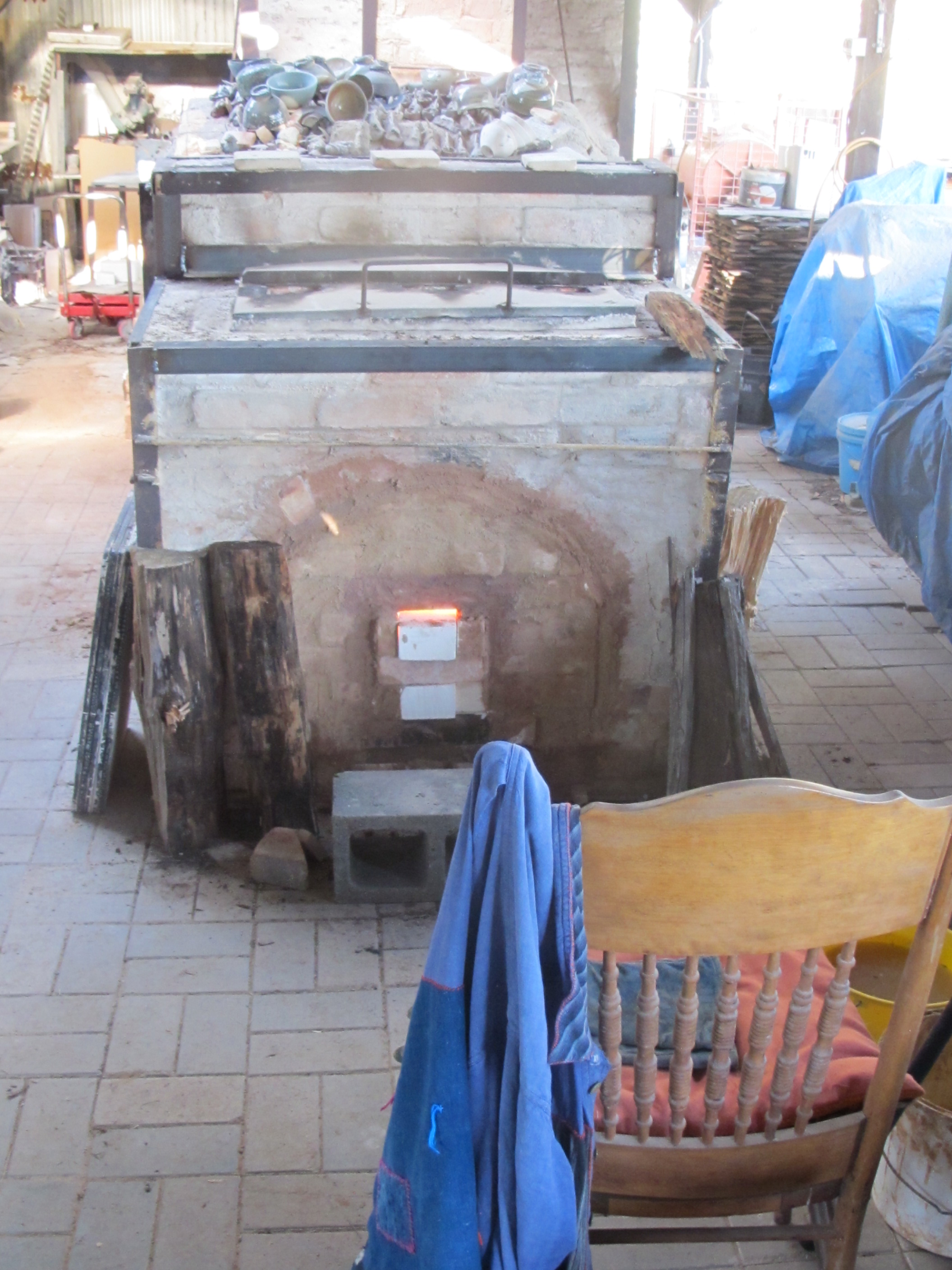
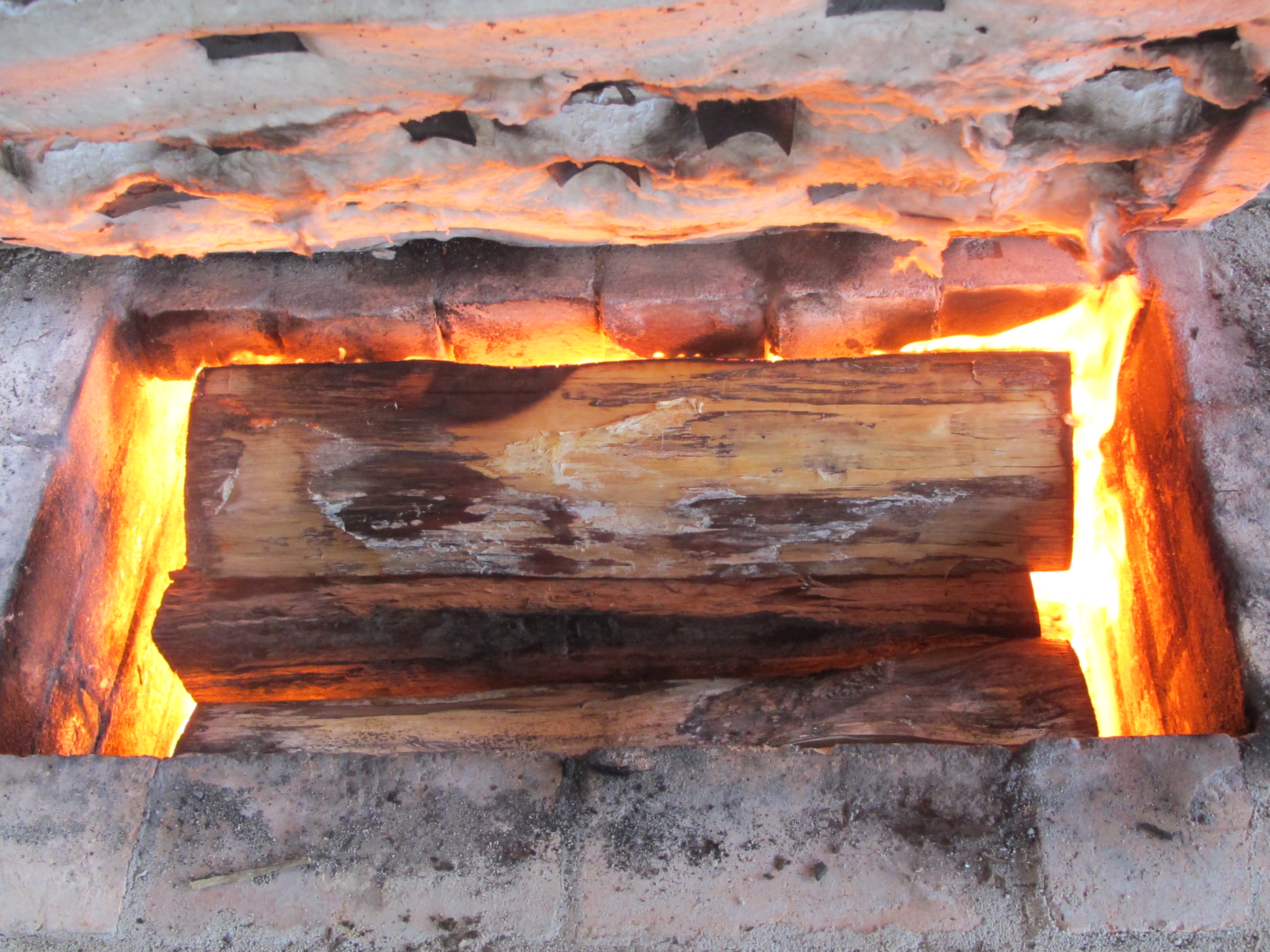
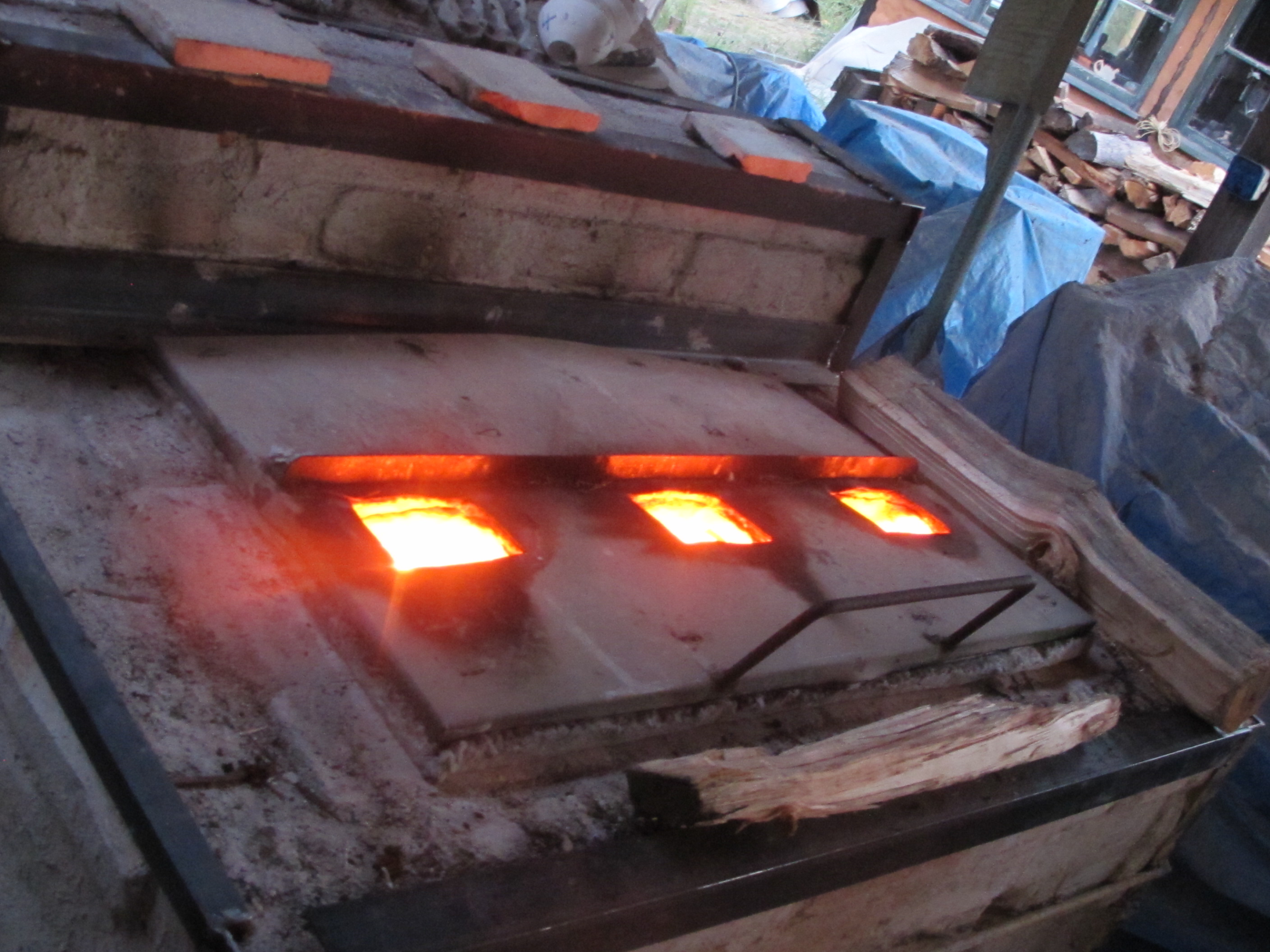
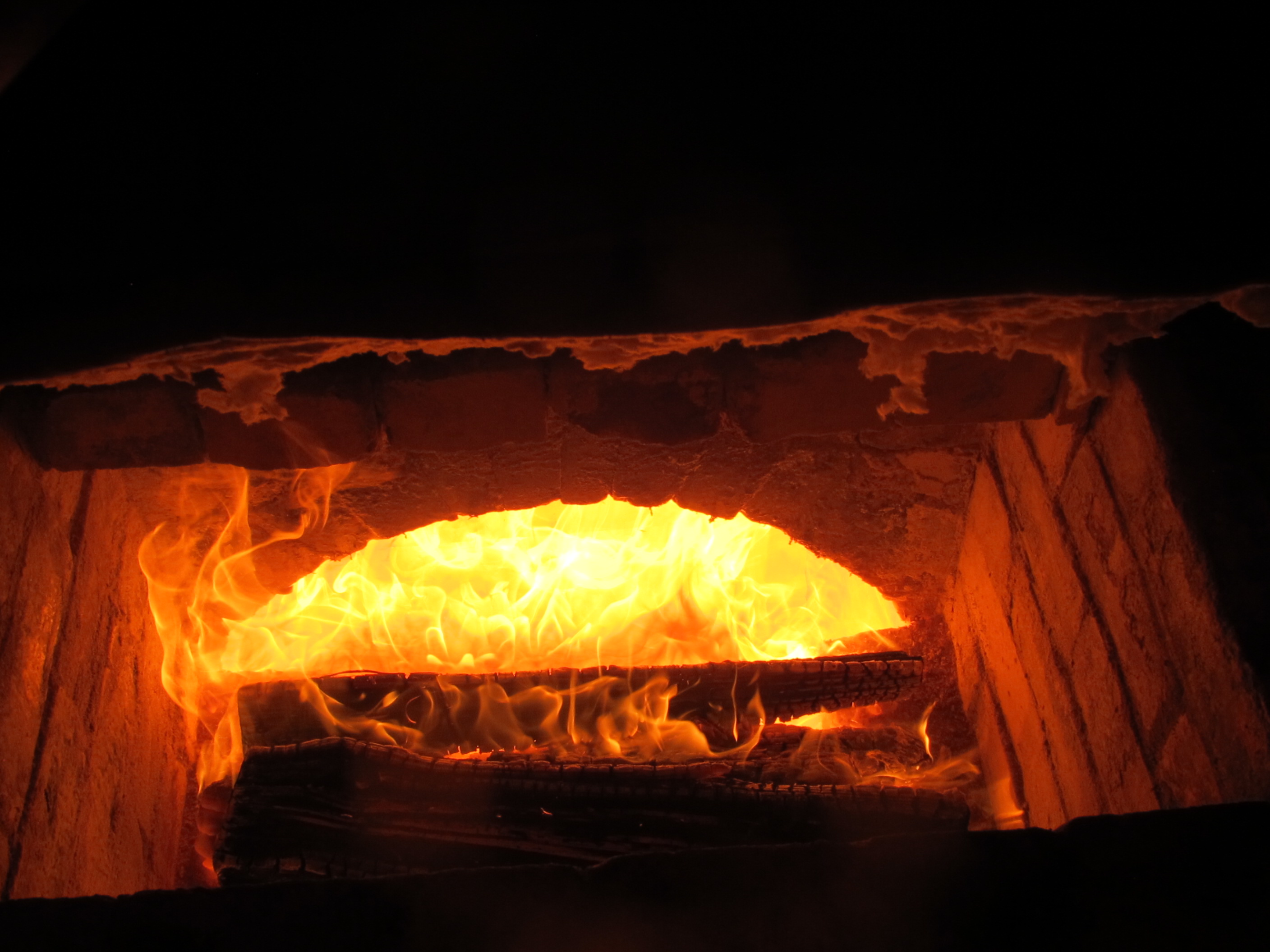
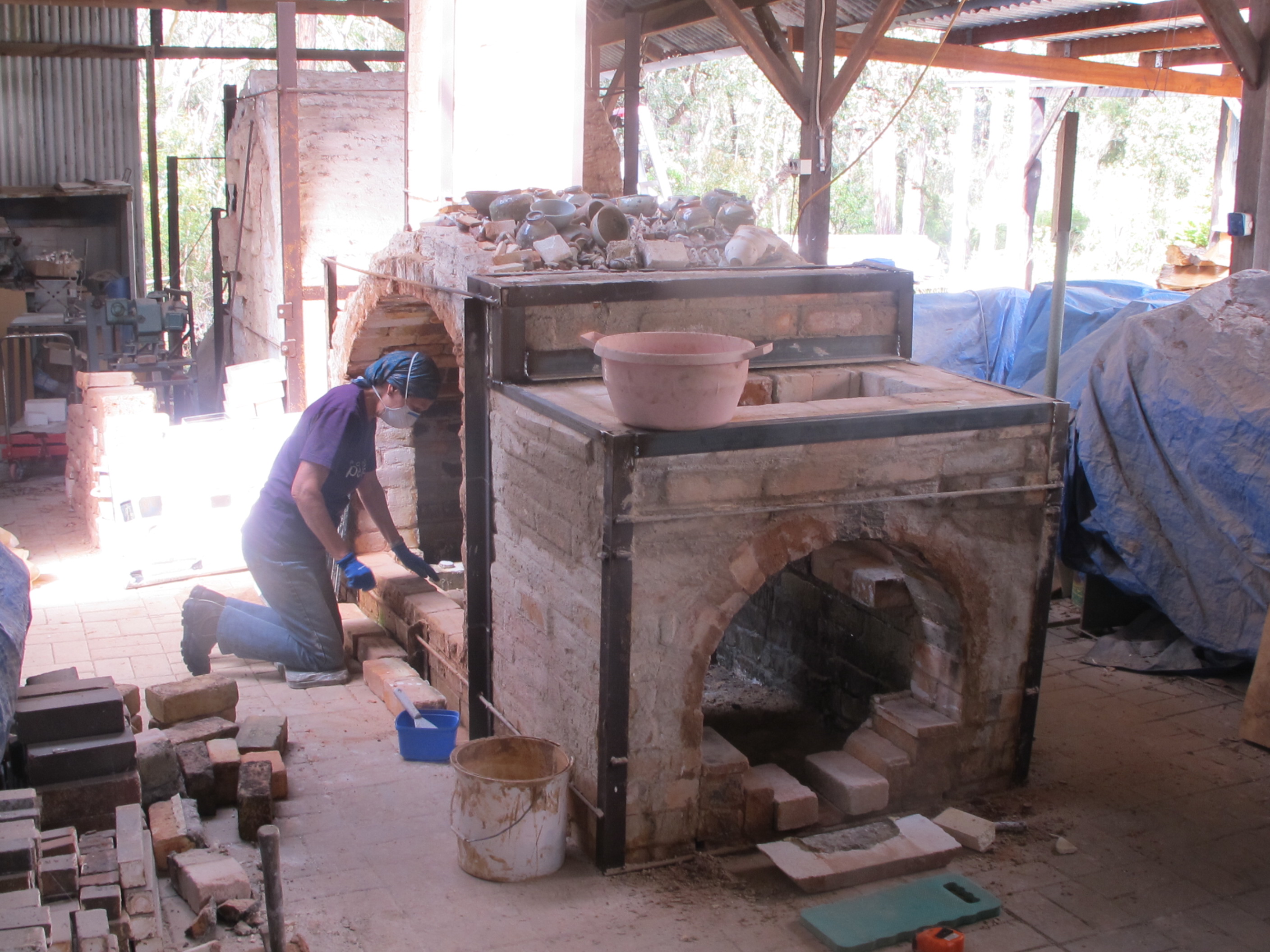
The kiln is packed and was preheated last night. The wood is all split and stacked neatly along the far wall. Everything is ready. I light the match and the kindling crackles into life. I love the smell of the fresh cut and split wood, the smell of the smoke as the fire is slow to catch. I’ve learnt to light a small fire in the base of the chimney to get the chimney hotter quickly to establish the draught. It’s been a few months since I last fired this kiln and the chimney is cold and damp. It has sat idle over the hottest months of the summer, waiting for this day. The first day of Autumn and the official end to the fire bans. We waste no time in getting going. This is the start of the kiln firing season.
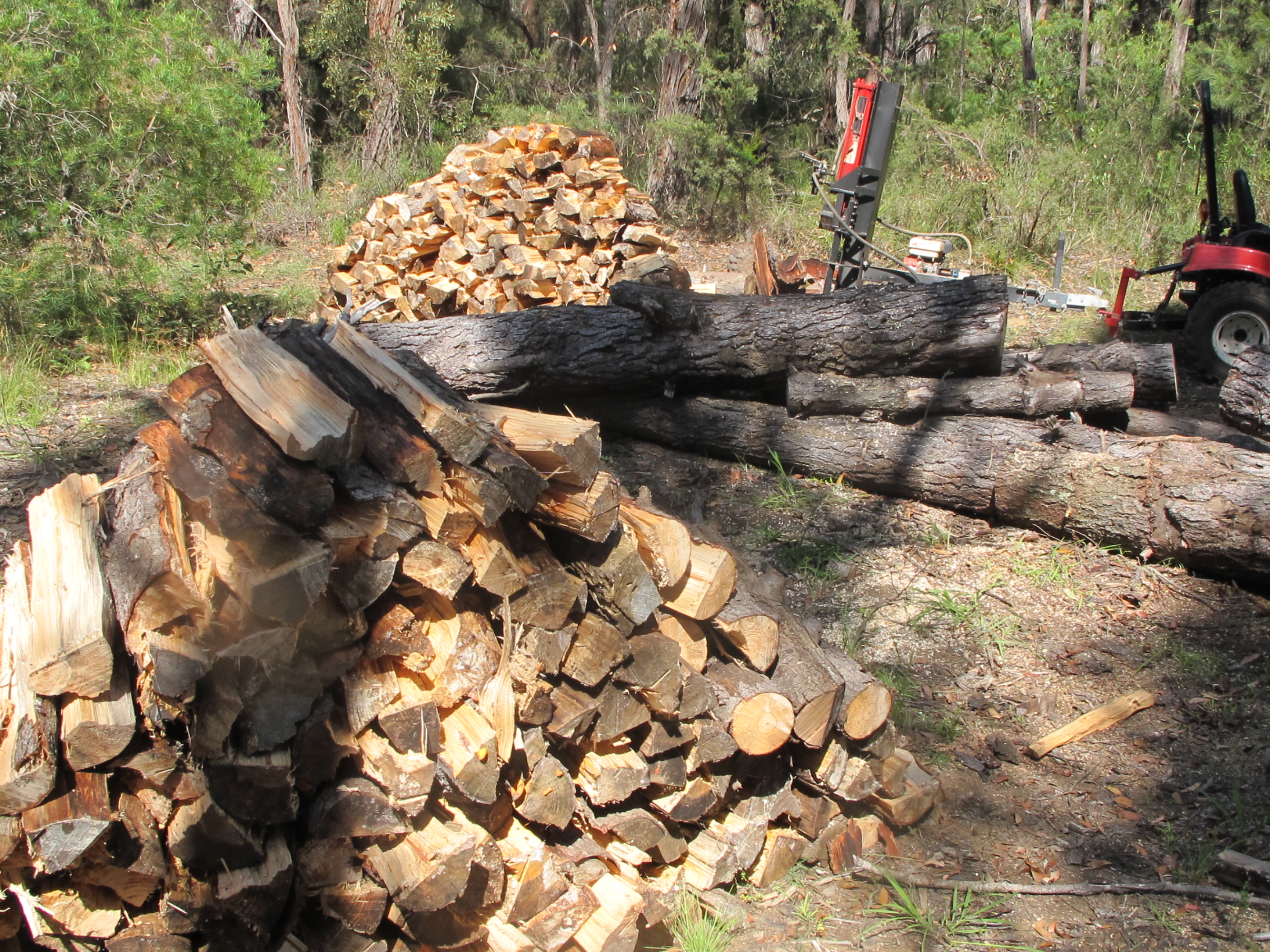
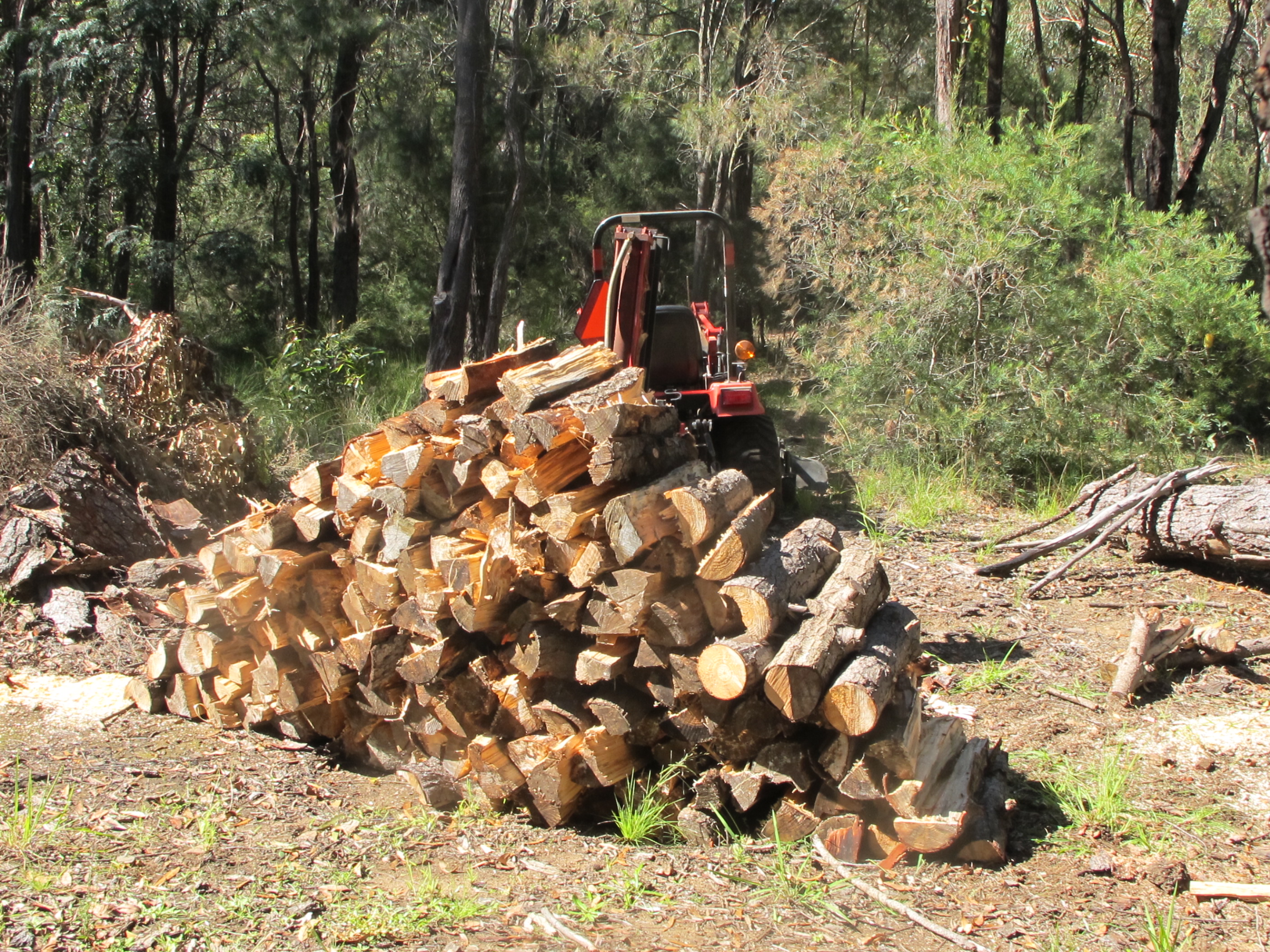
I have spent the last few days cutting, splitting and stacking the wood for these firings. Then carting and re-stacking the logs in the kiln shed. We have had a very wet summer, so we could probably have done a few firings on the wettest days, but I was fully busy making and installing kilns for other potters over the summer. I had plenty of orders, so I sold my soul for the mighty dollar. Paid work has been a bit thin on the ground these last few years, because of the closure of the art schools.
Because of all this wet weather, the wood is still pretty wet inside. It hasn’t dried out much over the summer. So now I have a shed full of wood that won’t get any wetter and will start to dry out a lot faster now that it is under cover. I really need an open walled wood shed over near the wood pile site, where I can safely store the split wood to allow it to season without risk of fire danger to the house or pottery. I was given about 60 or 70 tonnes of logs last year, 8 or 9 tip-truck loads. Enough wood for quite a few years. It all came from a building site in a near-by village.
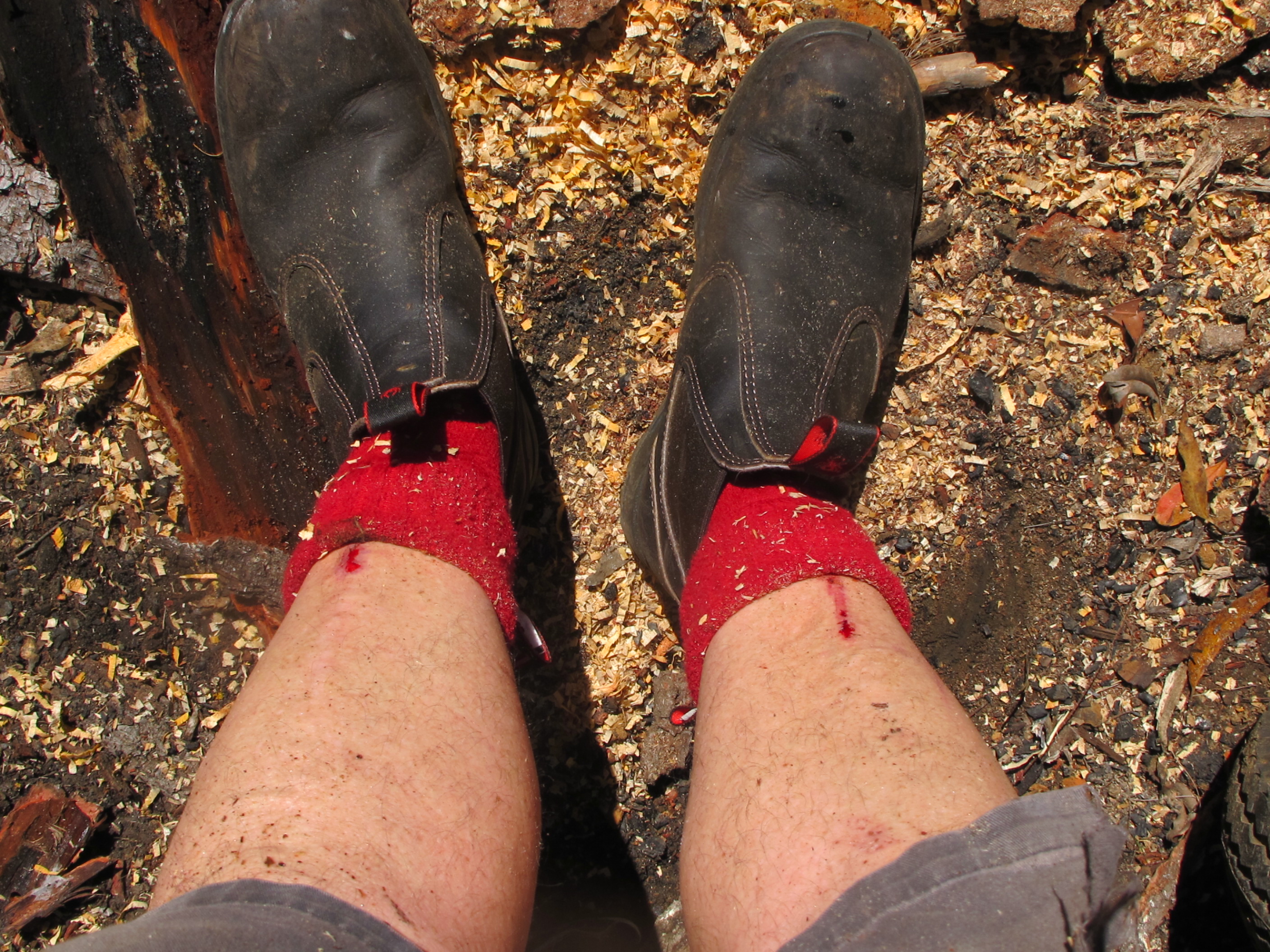
Splitting wood can become quite boring over several hours. I manage to roll a few logs onto my shins during the day. I’m already wearing hard boots, ear muffs, face shield and gloves. It seems that I’ll now have to go out and get some shin-pads as well.
During the dull moments, I worked out that I had cut and split over 500 pieces of wood by the end of the day, then picked them up and stacked them onto the trailer, then unloaded them and re-stacked them in the kiln shed. That’s 1500 wood movements. No wonder that I’m feeling old.
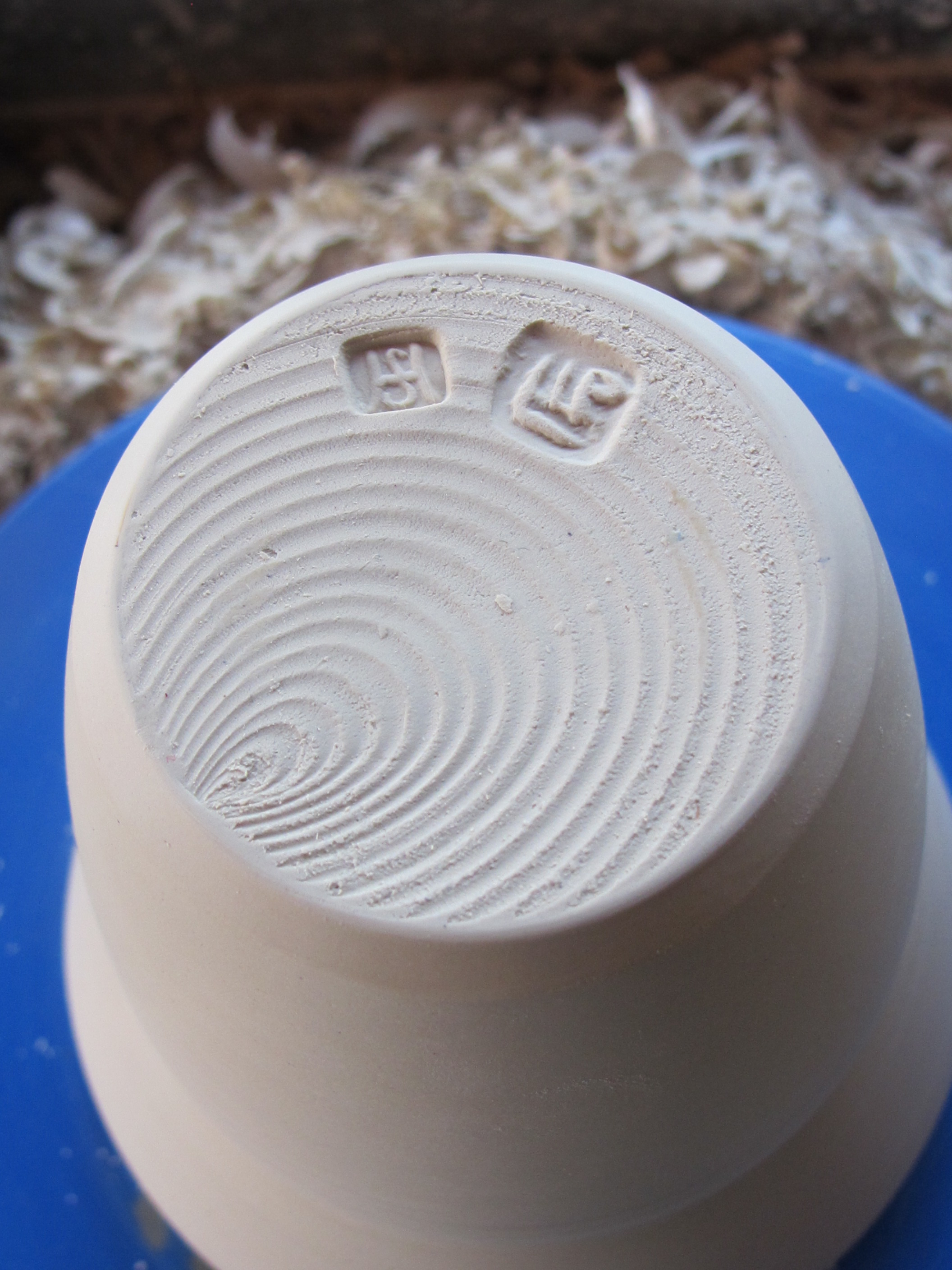
We have spent a few days in the pottery throwing some of the fresh new porcelain stone bodies that I made over the summer months. It’s throwing quite well for something that is principally ground rock paste, with an addition of around 15% of plastic clay. It really has made a big difference to the workability. Now it throws more like fresh ricotta rather than wet putty.
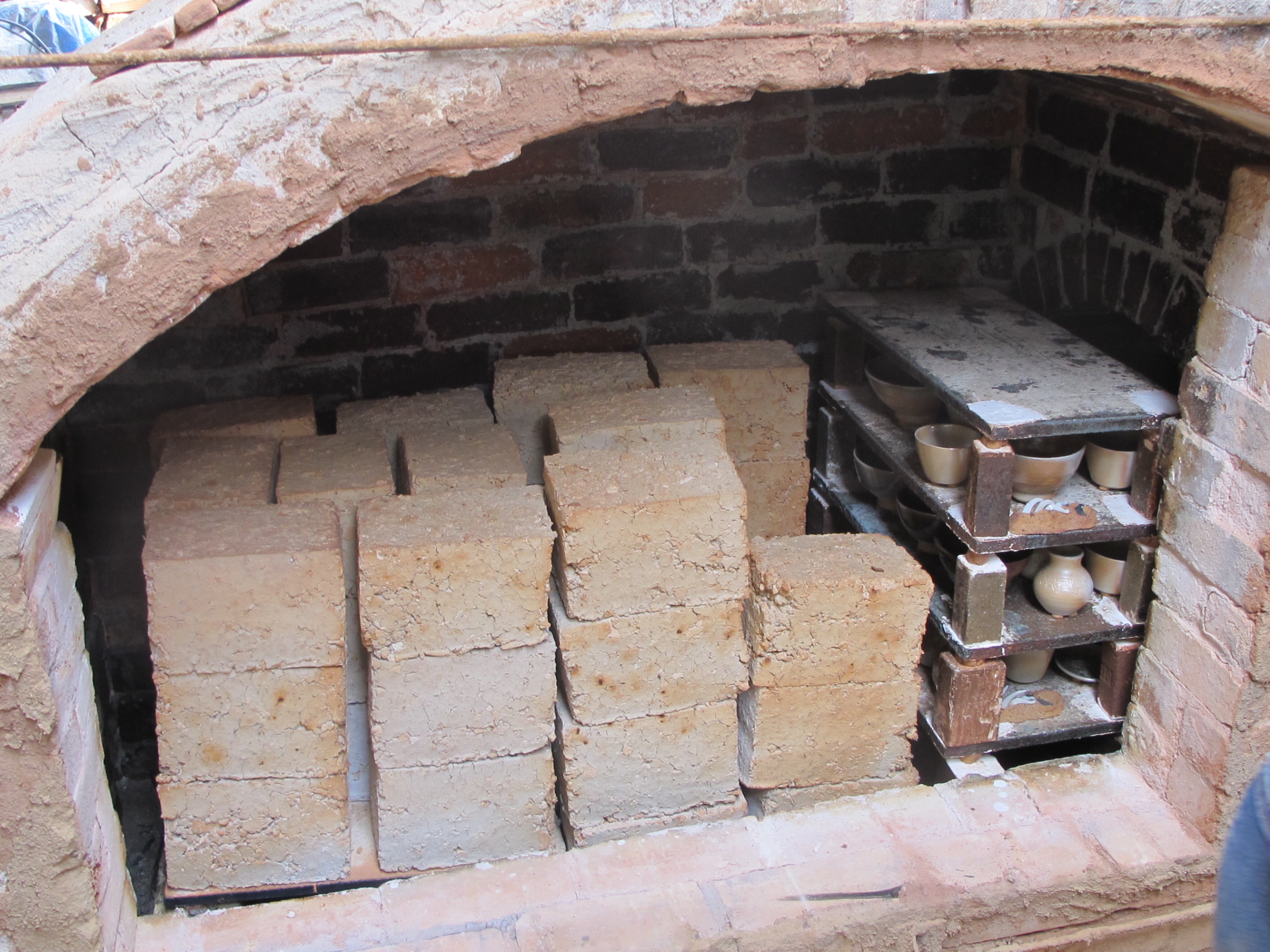
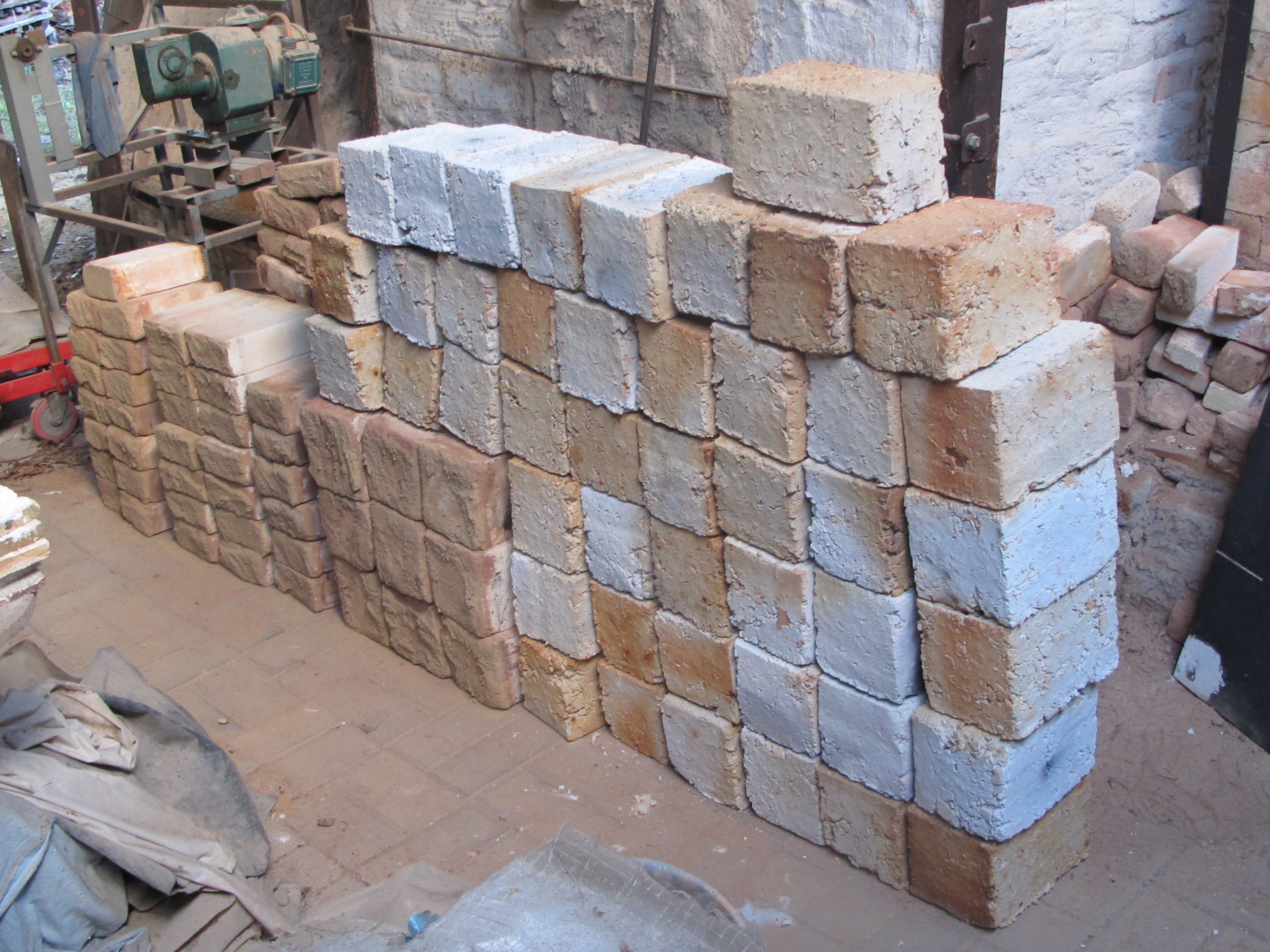
We have a few tests of these new bodies in this firing. We also have the back of the kiln filled with our latest batch of home-made firebricks. These are all larger size blocks 230mm x 150mm x 150mm.
I will use them as door blocks. As the door of this current kiln is quite wide. Using larger blocks will make for faster door bricking-up. I am already using quite a few of these large blocks in the door, but not enough to fill the entire door. After this firing I will have enough and a few spares.
As the firing progresses into high temperatures, There isn’t a lot to do. While I wait between stokes. I sit and shell dried radish seeds. liberating them from their sticky pods. It takes an inordinately long time to do. It is so very fiddly and tedious. I’m a fool. I don’t know why I don’t just go to the shop and buy a packet of seeds. Well, actually I do know. I want to be a self reliant fool. These are seeds that I have grown and dried myself. They are mine and true to type. They are not hybridised or treated with poisonous anti-fungal treatments. Home-grown, organic and clean. The stuff of real life.
It’s a great big new experiment. A new firebox, new wood, new fire brick load, new porcelain bodies and new-season radish seeds.
Best wishes from A Pair April Fools
It’s The Season For Wild Passata
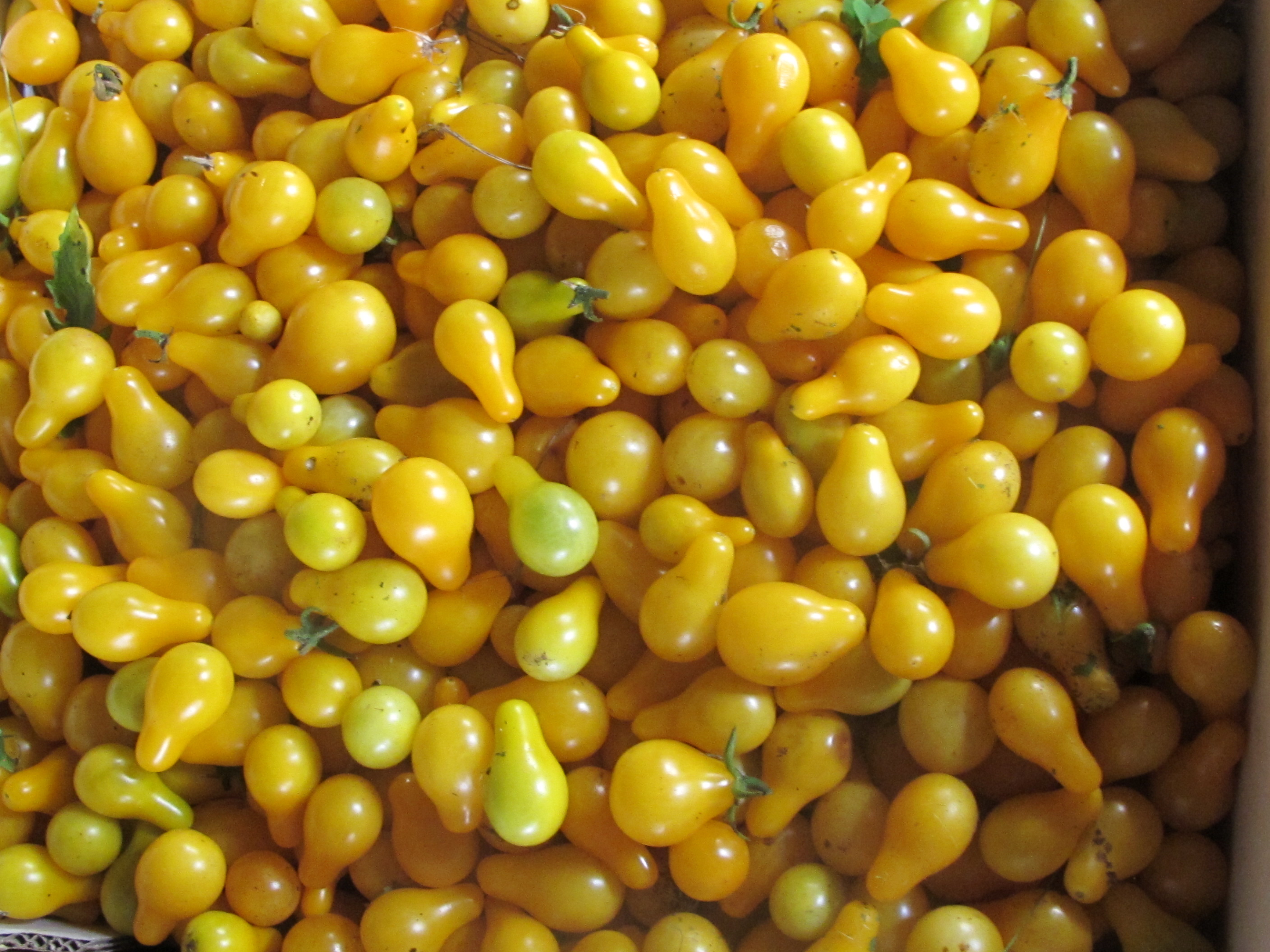
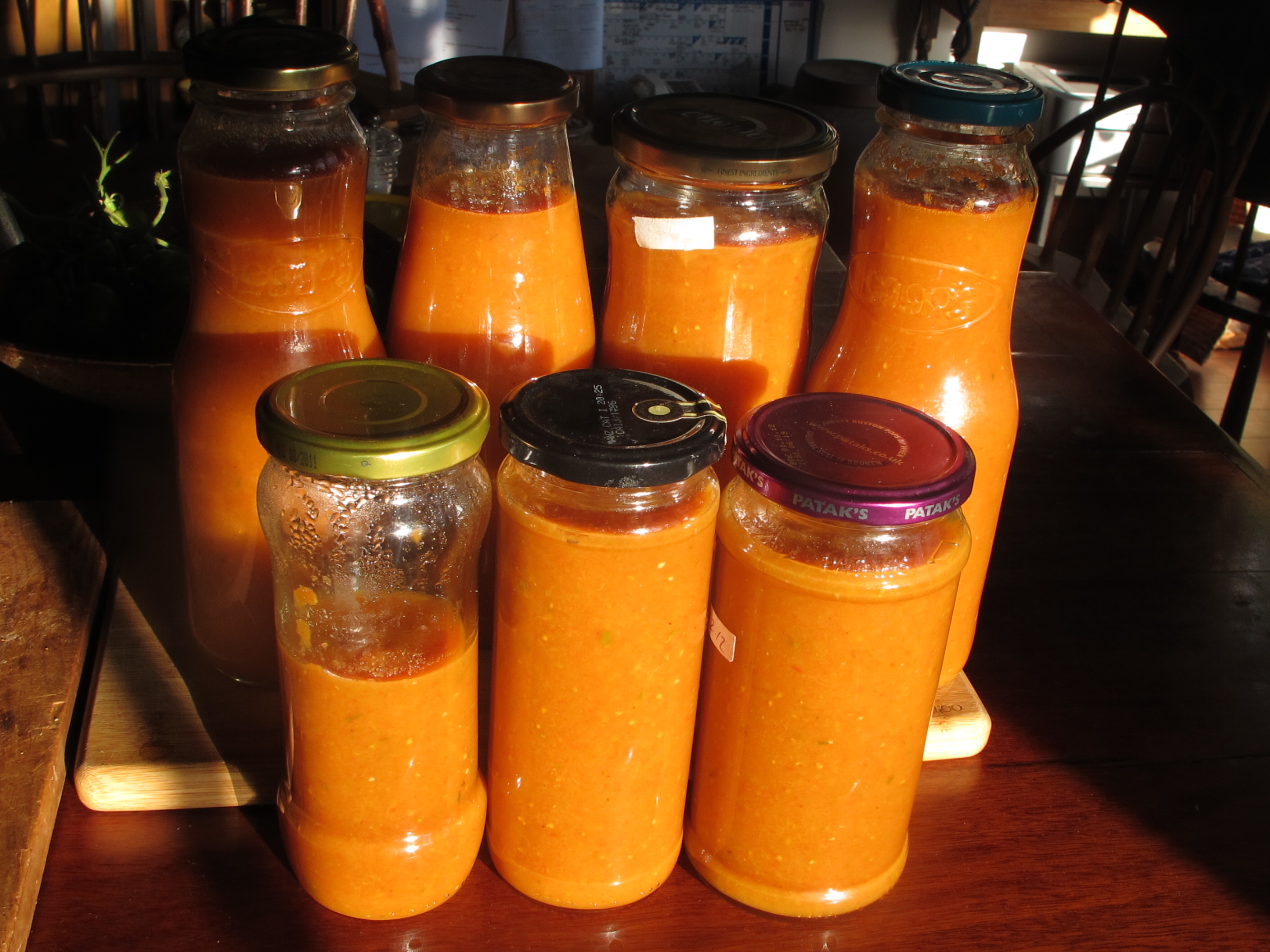
Another on-going job besides kiln maintenance at this time of year, is keeping up with the tomato crop as it slowly sprawls and proliferates all across the garden beds and over the lawn and down the pathways. They keep on flowering and producing loads of ever-smaller compact, flavoursome, little zingers. full of intense tomato flavour, but very small. These little beauties take a long, back-bending, time to pick. There is no easy way. I’ve tried kneeling and I’ve tried bending, but the problem is that there are so few places to put your feet, when the plants spread all over the place. I’m always aware of not crushing the fruit or the plant stems, which set down adventitious roots all along the way to feed and nourish the ever-expanding crop. It takes a long time, as there are so many of them, but it’s worth it. It doesn’t take too long to fill the first box.
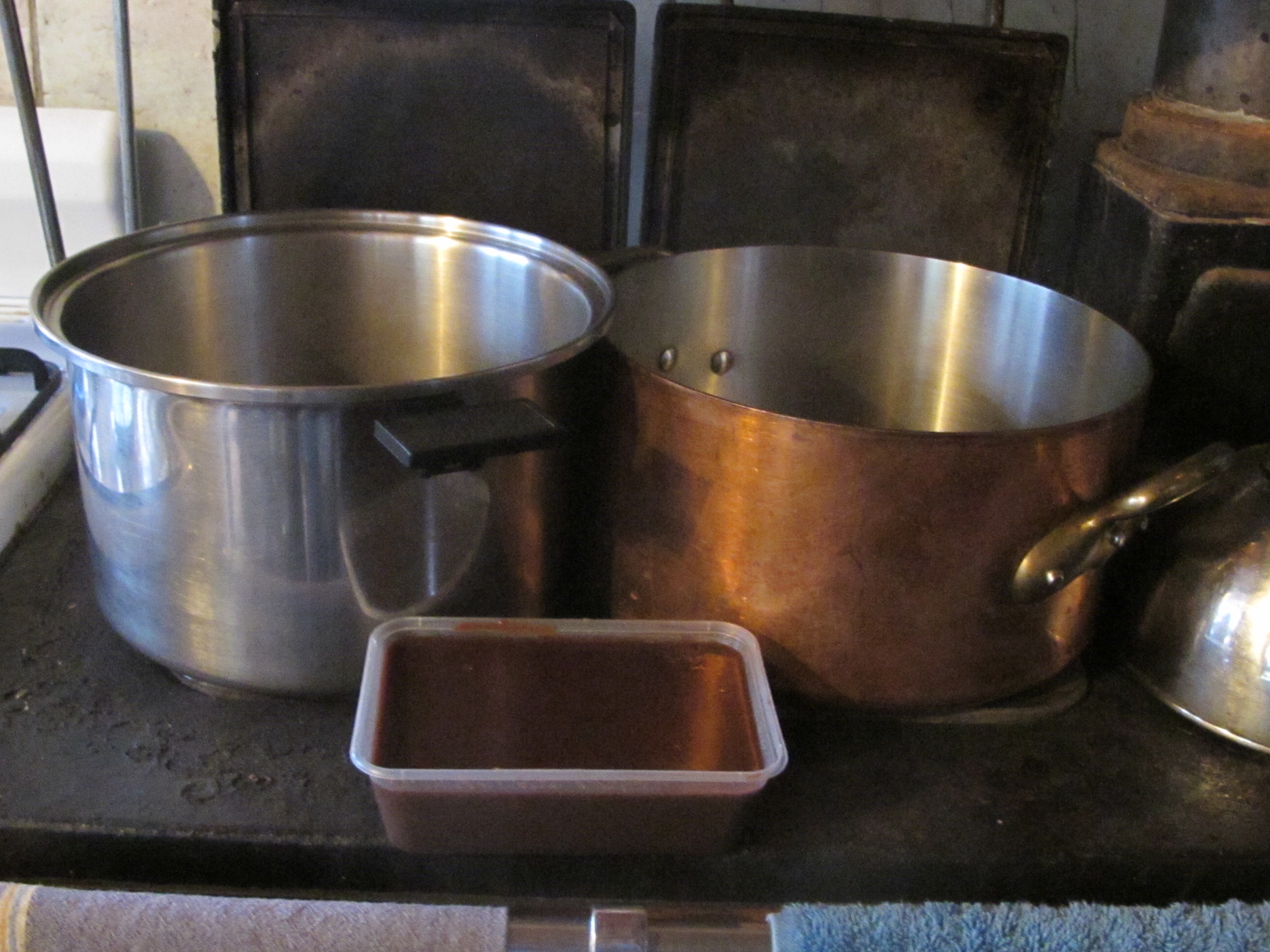
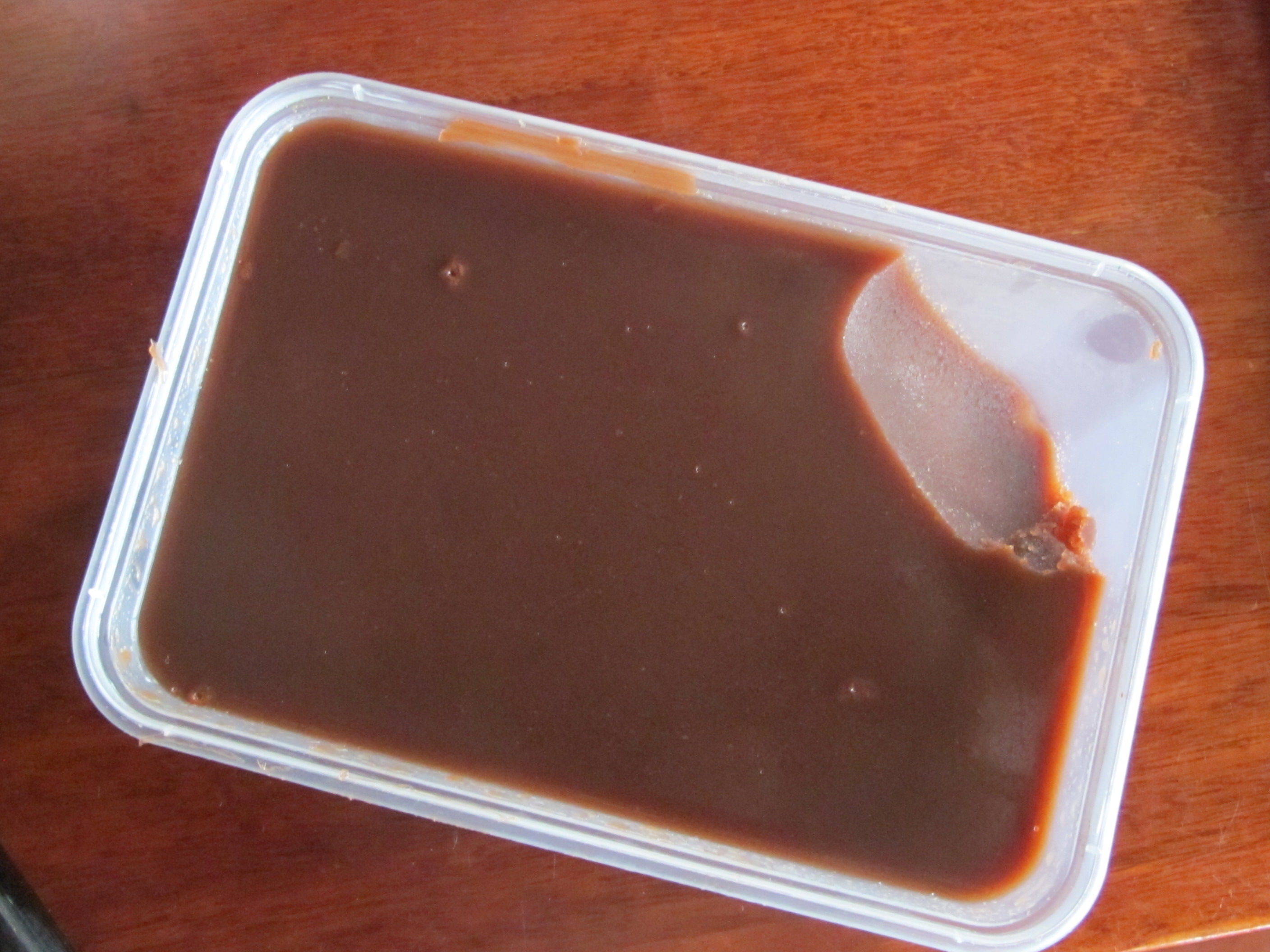
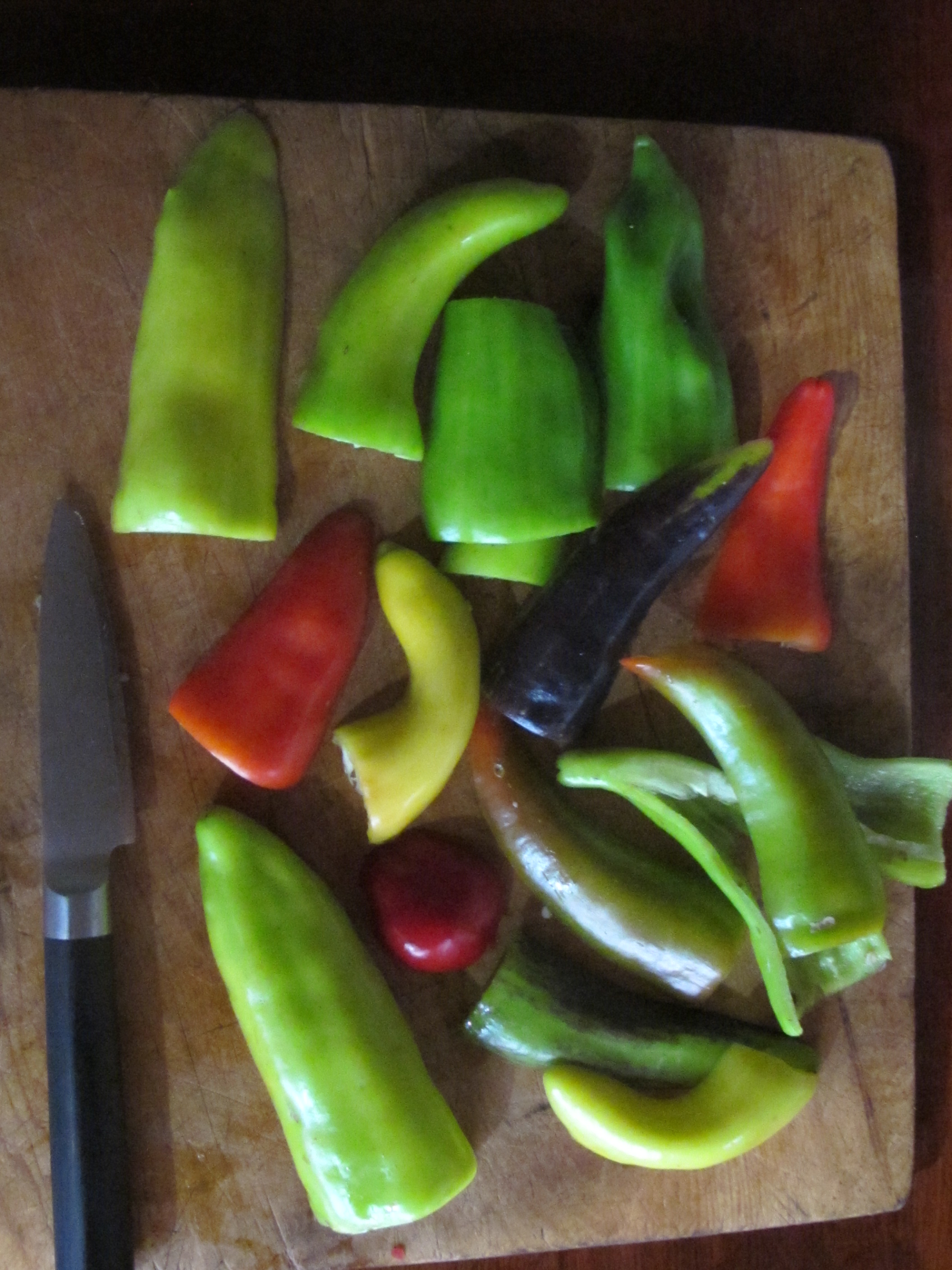
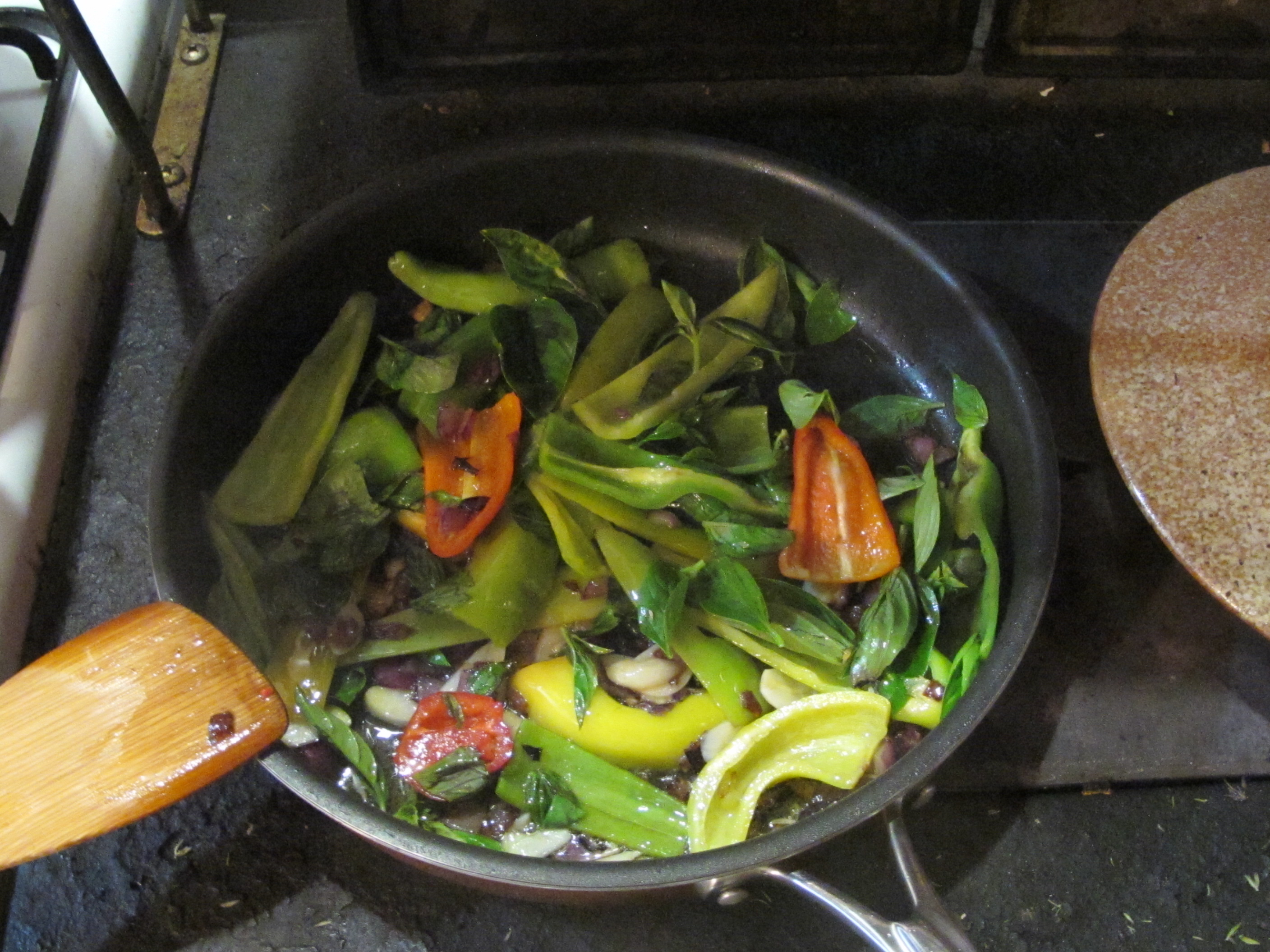
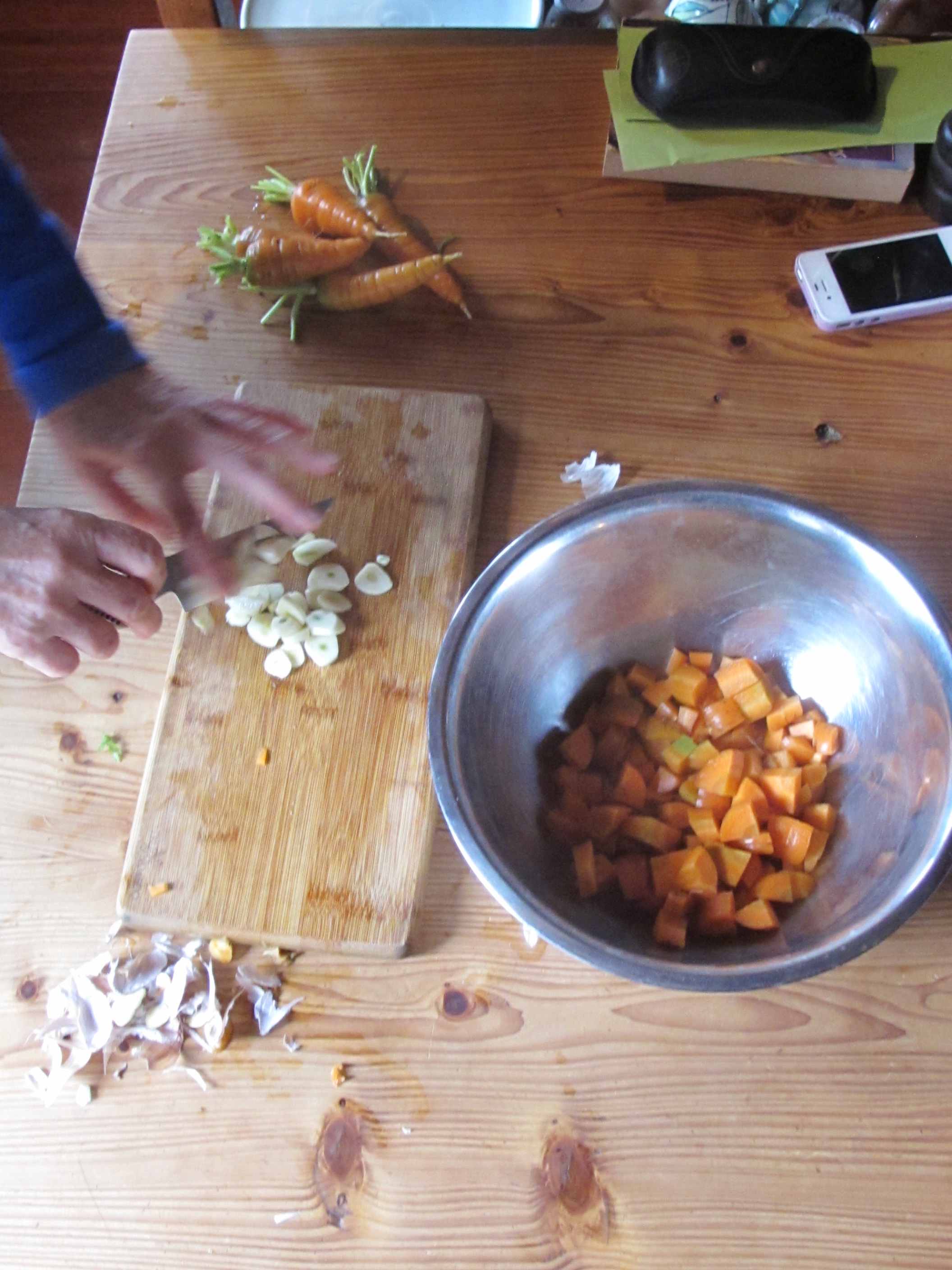
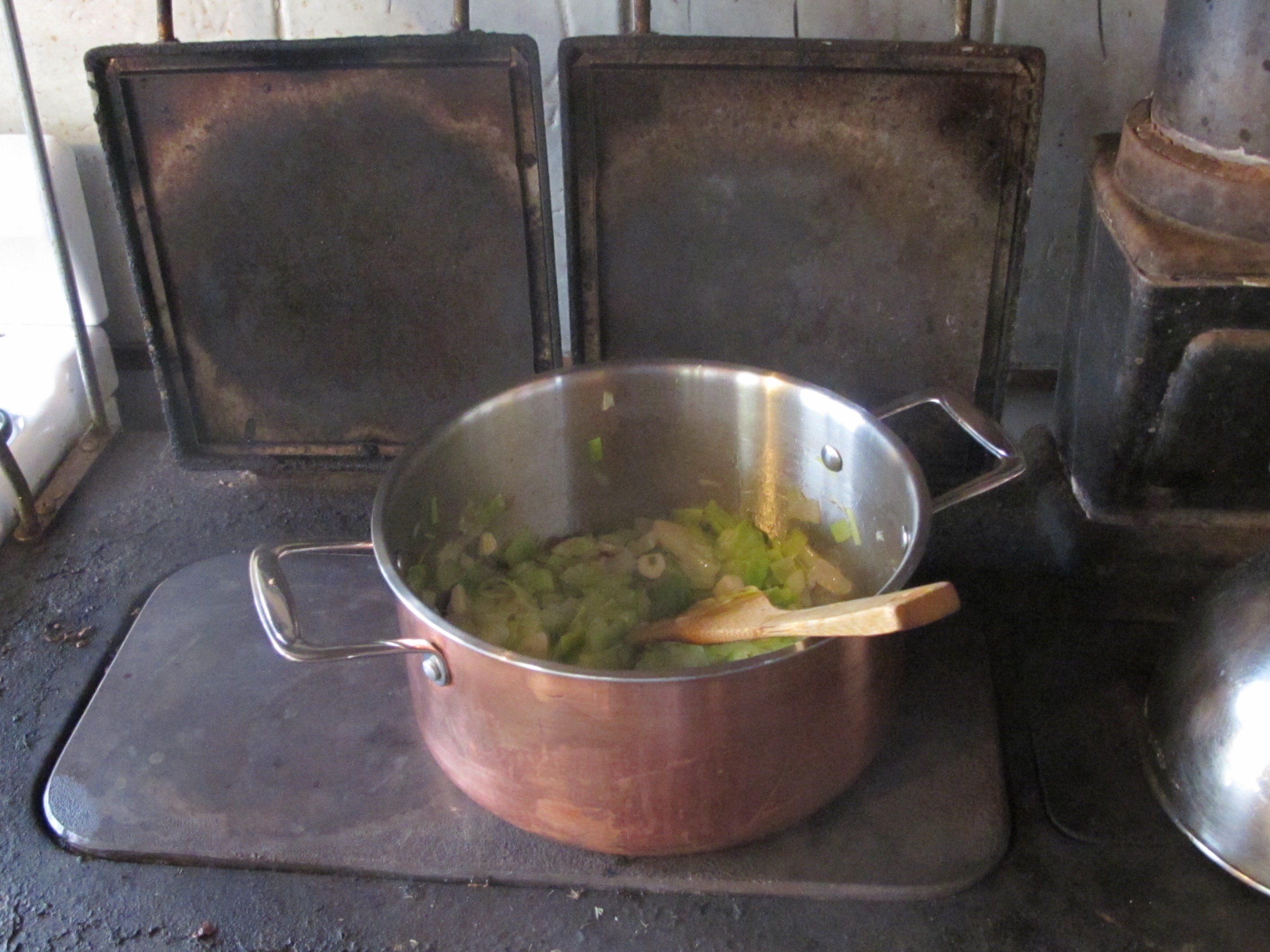
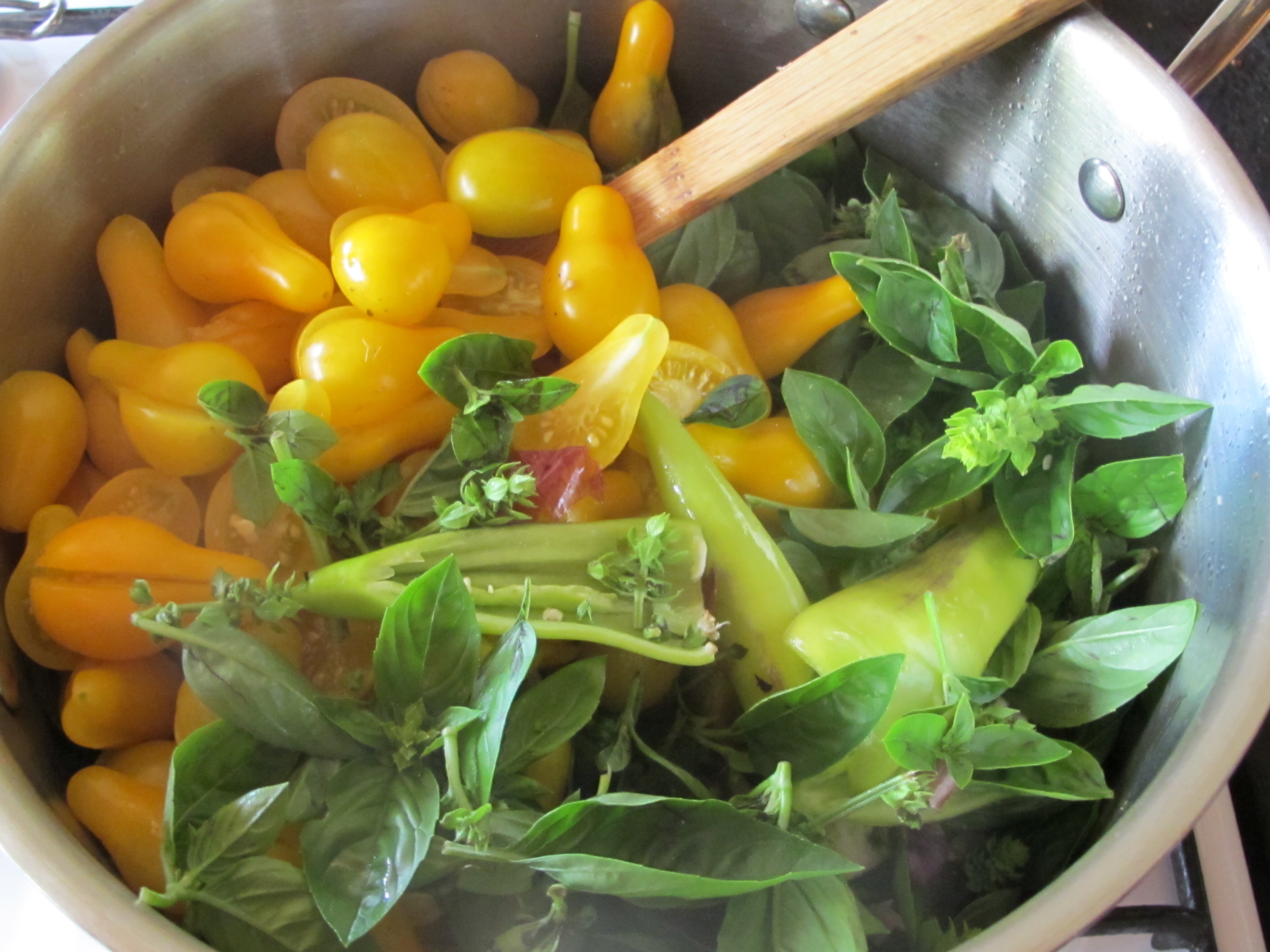
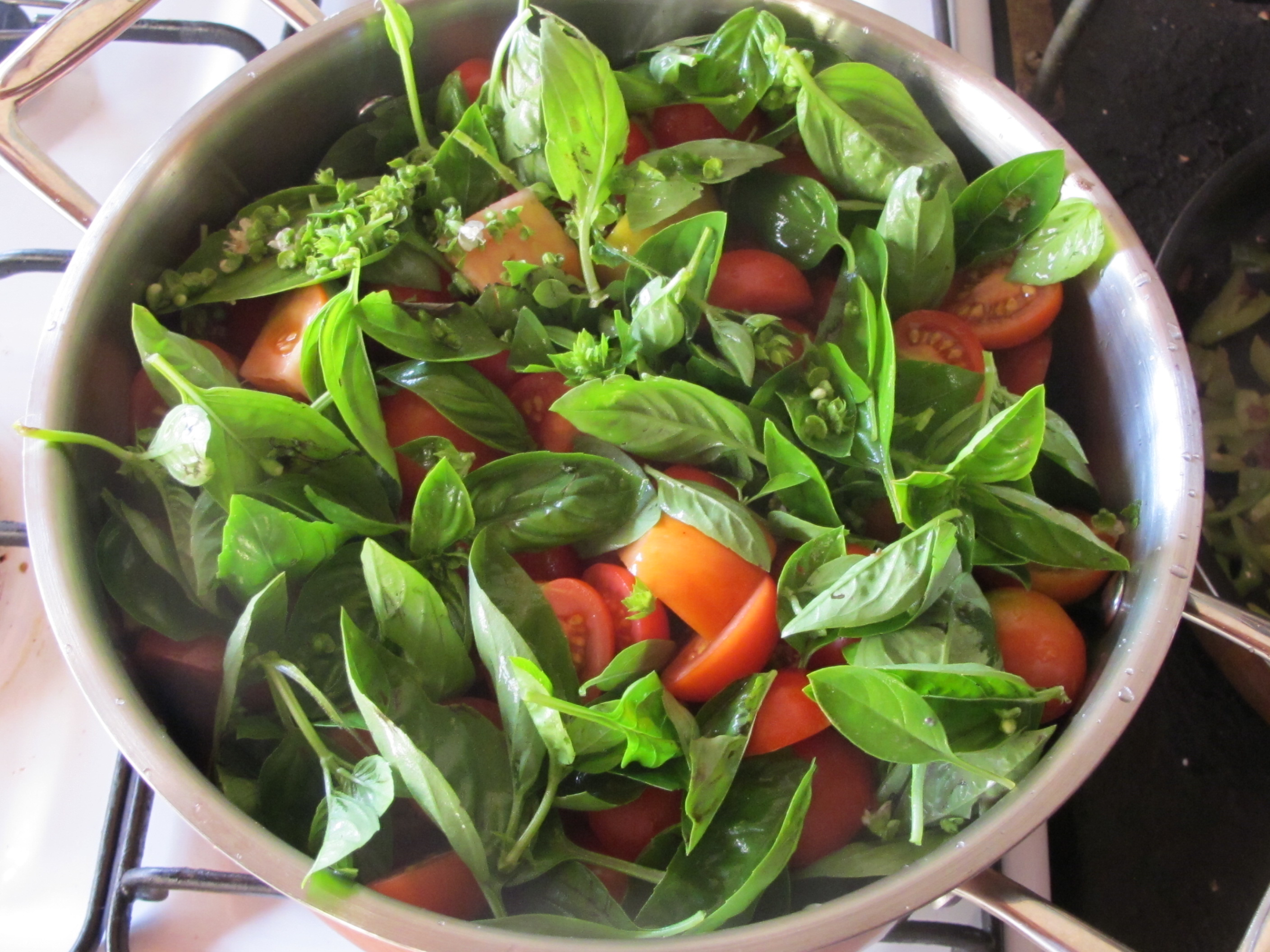
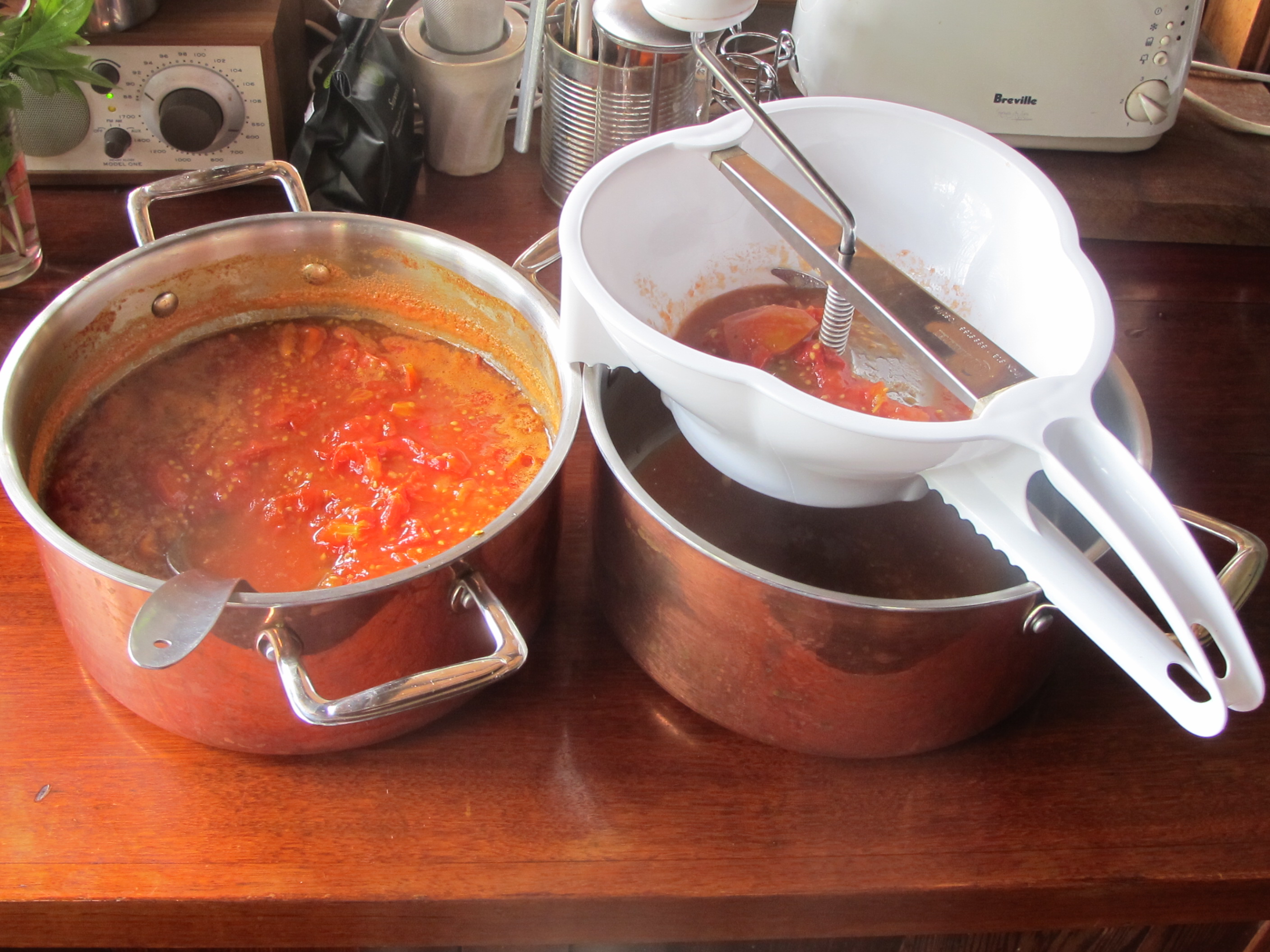
I don’t get all of them, there are just too many, but I fill the basket. it’s enough. We can do this every few days at this time of year, and do. Batch after batch, we slowly fill the pantry cupboard shelves. After cleaning and washing the tomatoes, I simmer them down in the evenings when we light the stove. I make them into tomato passata, some times just straight tomatoes if I’m pressed for time, but on other evenings, when I can make the extra time. I brown our own onions in good EV olive oil and then add garlic, capsicums and basil with the tomatoes. It makes a richer flavour, but the extra fibre takes a lot longer to pass through the mouli sieve. Sometimes it’s just a batch of the prolific little yellow tomatoes, they don’t have the same level of acidity in them, so the piquancy is somewhat less, but they are still worth the effort. A more usual batch is a mix of all of the above. It just depends on what there is the most of on the day. Every batch is slightly different and makes for a natural variety throughout the coming year.
After sieving out the skins and seeds, the sauce is placed back on the stove to be reduced and concentrated a bit more, by about a third. This intensifies the flavour considerably. I try to make enough passata to last the whole year, so that we don’t have to buy any later on. This has been the case for a long time now. I haven’t needed to buy any pasta sauce for some years. This is one of the few things that we have been completely successful at achieving during our long experiment here. Self-reliance in passata!
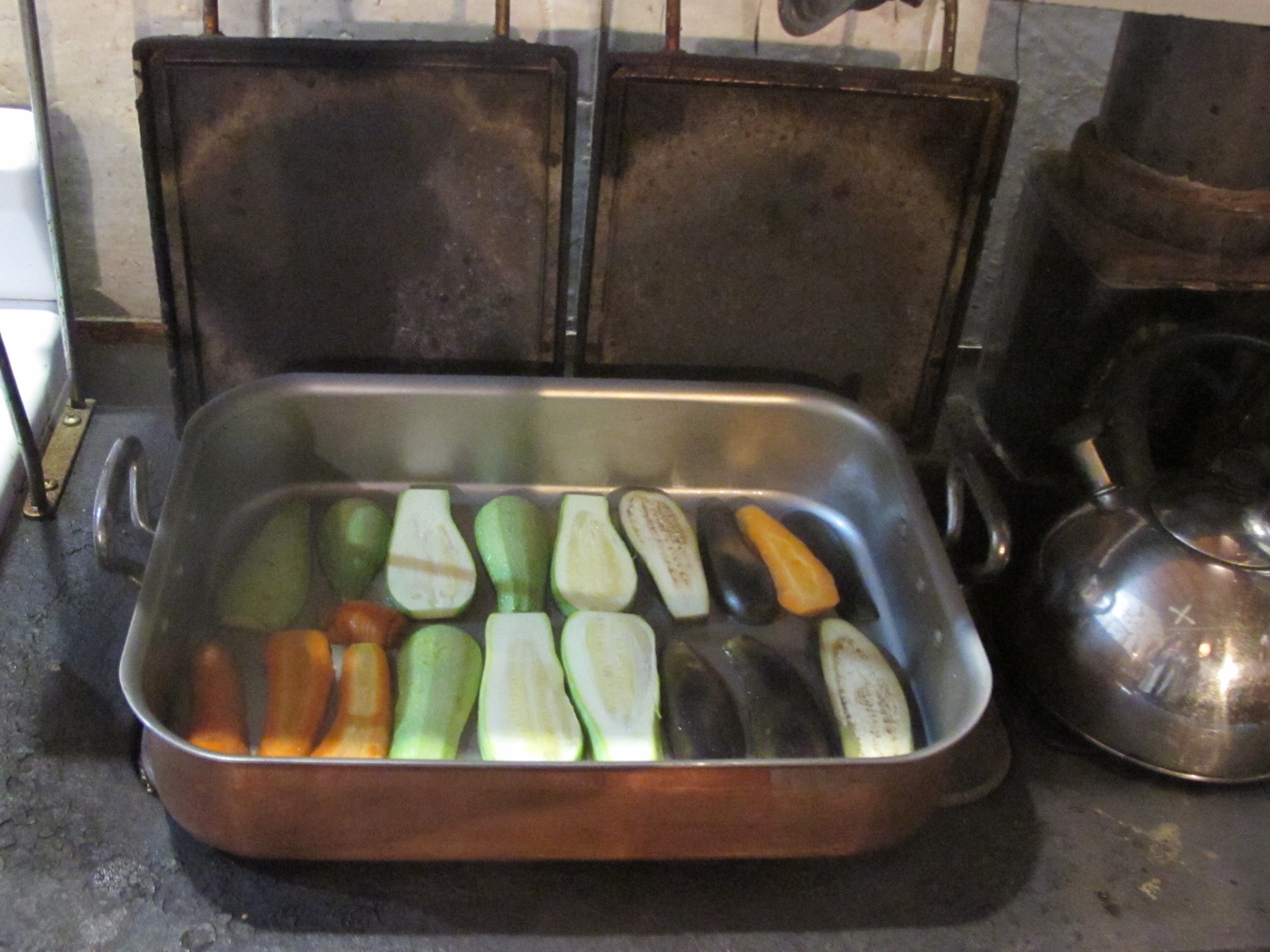
For dinner this night, I bake some carrots, zucchini and aubergines, fresh from the garden and serve it with a helping of tuna steamed with fresh Thai basil leaves, wasabi and a squeeze of lemon. While the oven is hot I use the heat to dry some of the small tomatoes. After an evening when we have guests and make a dozen pizzas. I use the remaining heat to dry a few trays of tomatoes. Dried tomatoes are great, full of concentrated sweet acid flavour. They keep really well without any extra energy needing to be applied. We use them in stews and soups and where-ever we need that little extra hit of added flavour.
Indulging myself in this kind of self-produced and preserved, essential larder-filling activity is one of the reasons that I came here, to a place like this, miles away from services, where there was clean air and a lot of space to live out an imagined ideal. It takes a few hours a day of extra work and then occupies our evenings after dinner at the stove, but what could be better and more rewarding? I could of course be sitting, watching some brain-dead and fake commercial television show about how the cook?
It seems to have worked out OK for us. We have managed to earn a living from various and diverse means, all more or less associated with pottery making. We have tried making and selling pots, ceramic tiles, making and selling clay to other potters, building kilns, writing books, doing weekend workshops and part-time teaching. None have proved to be sufficient in their own right, but all combined together, has provided us with a self-reliant, if unreliable income through most of the years. This combined with gardening and orcharding, as well as eliminating most tradesmen from our budget by doing all our own building and maintenance, means we have been able to continue to live out this self-reliant, utopian, creative adventure for the past 40 years together.
I beats working for a living.
Best wishes from Dr. Do-Little and his Ms Abundance
A Skutch in Time Saves Nine
Now that my show at Watters Gallery is up and the opening is over, it is time to get stuck into rebuilding my kiln for the coming year of firings, starting next week.
<http://www.wattersgallery.com/artists/HARRISON/Harrison.html>
We are into the cooler weather now (in theory) and the summer fire bans will soon be over. The fire box is the part of the kiln that takes the most wear and tear, the greatest heat, the most ash deposit and the greatest heat shock from cold air dunting. The fire bricks in the fire box take quite a beating, so there is always maintenance after every firing, but then a big job once a year to replace dunted, chipped, broken and slagged-up firebricks. As well as chipping out lumps of built-up slag and ash glaze deposits, that if left unattended, will eventually flow like lava into important air inlet holes and seal them over, causing trouble during later firings. I get stuck into it with the skutch hammer and cold chisel.
Some years ago I didn’t get around to doing sufficient firebox maintenance, skipping a maintenance session, as we were very busy at the time. Unpacking the kiln and re-packing it ready for the next firing. But then, during that firing, towards the end, at the highest temperature, a lava-like flow of ash glaze came pouring out of one of the floor-level air-inlet holes. It pooled onto the floor into a sluggish, thick, brown, viscous, turd and piled up there, before freezing at room temperature. I kept that ceramic turd on the pottery window sill in front of my wheel for a few years. It disappeared when our pottery burnt down in 1983. It hasn’t ever happened again.
A while ago, I collected all the chipped out fire box floor ash glaze slag and crushed it up and ground it in my ball mill, into a fine powder, then made a glaze test out of it. It would have been a lovely completion of ‘joining the circle’, kind of thinking. But tragically it was so very dark and dull and brown and slightly crystalline, that I couldn’t find a use for it on my work. So, going on the theory that a skutch in time saves nine. We get stuck into the job at hand. Which is cleaning and rebuilding the worn bricks in the firebox. It’s not a very nice job, but has to be done, and needs to be done NOW!
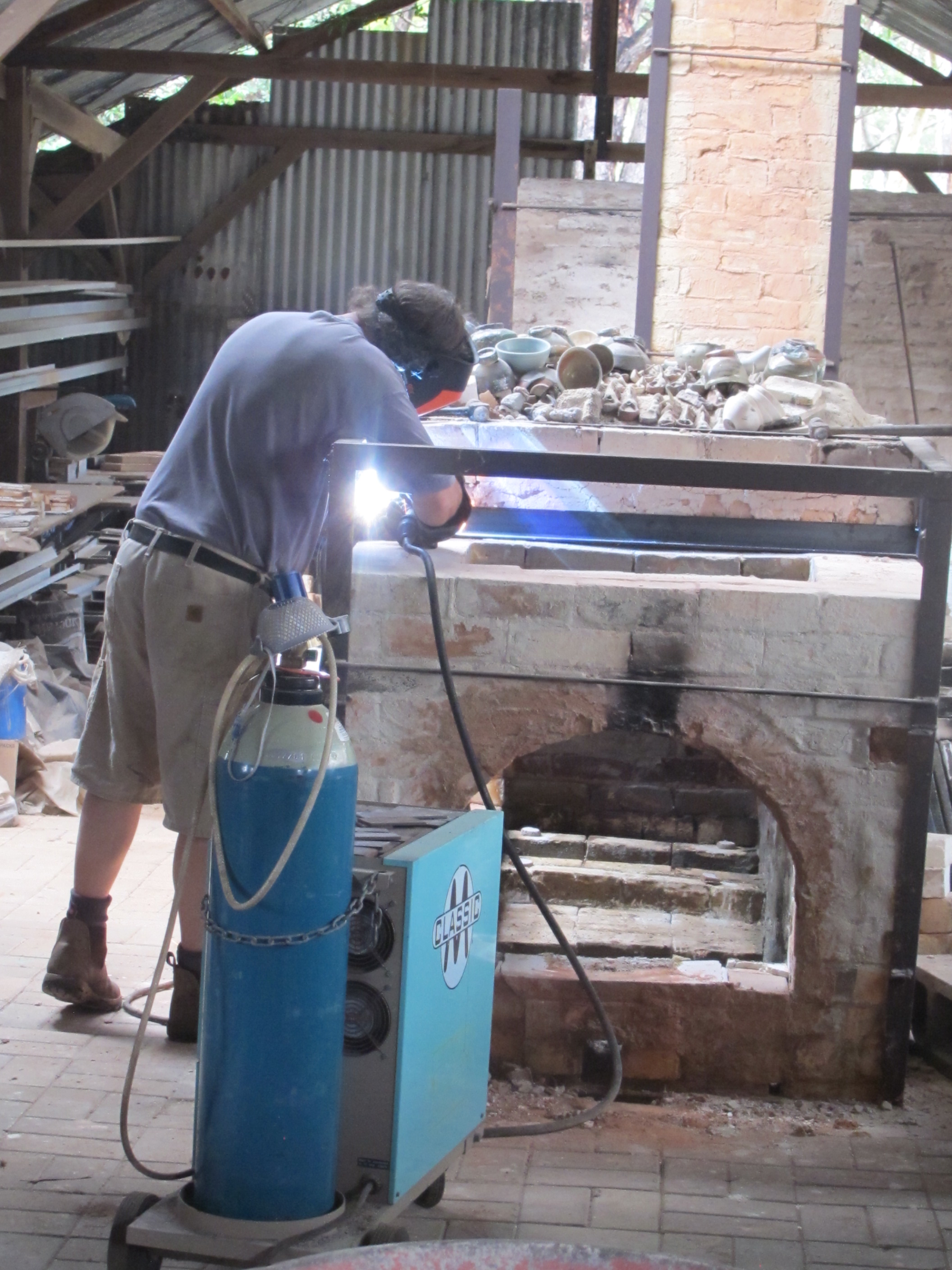
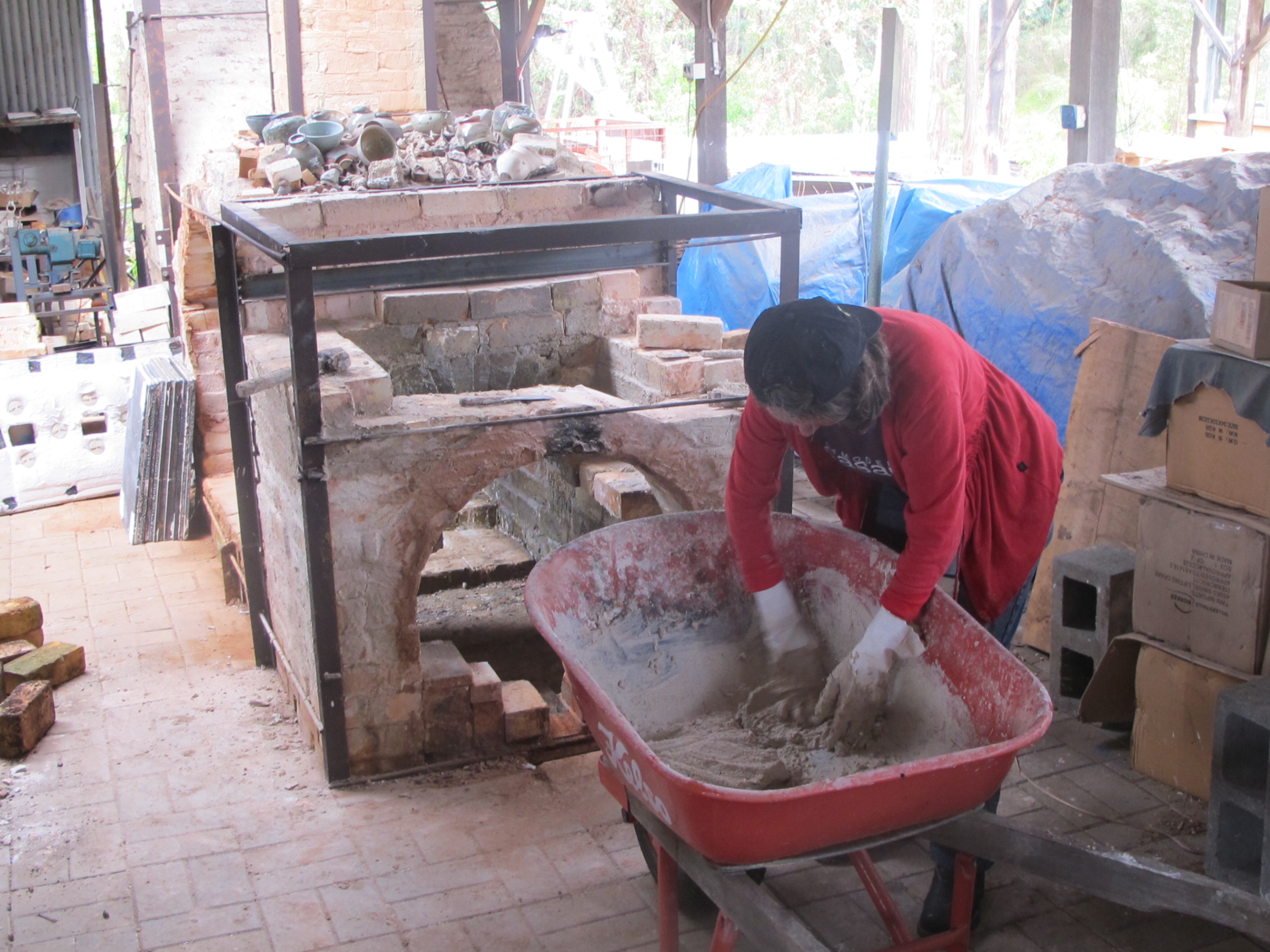
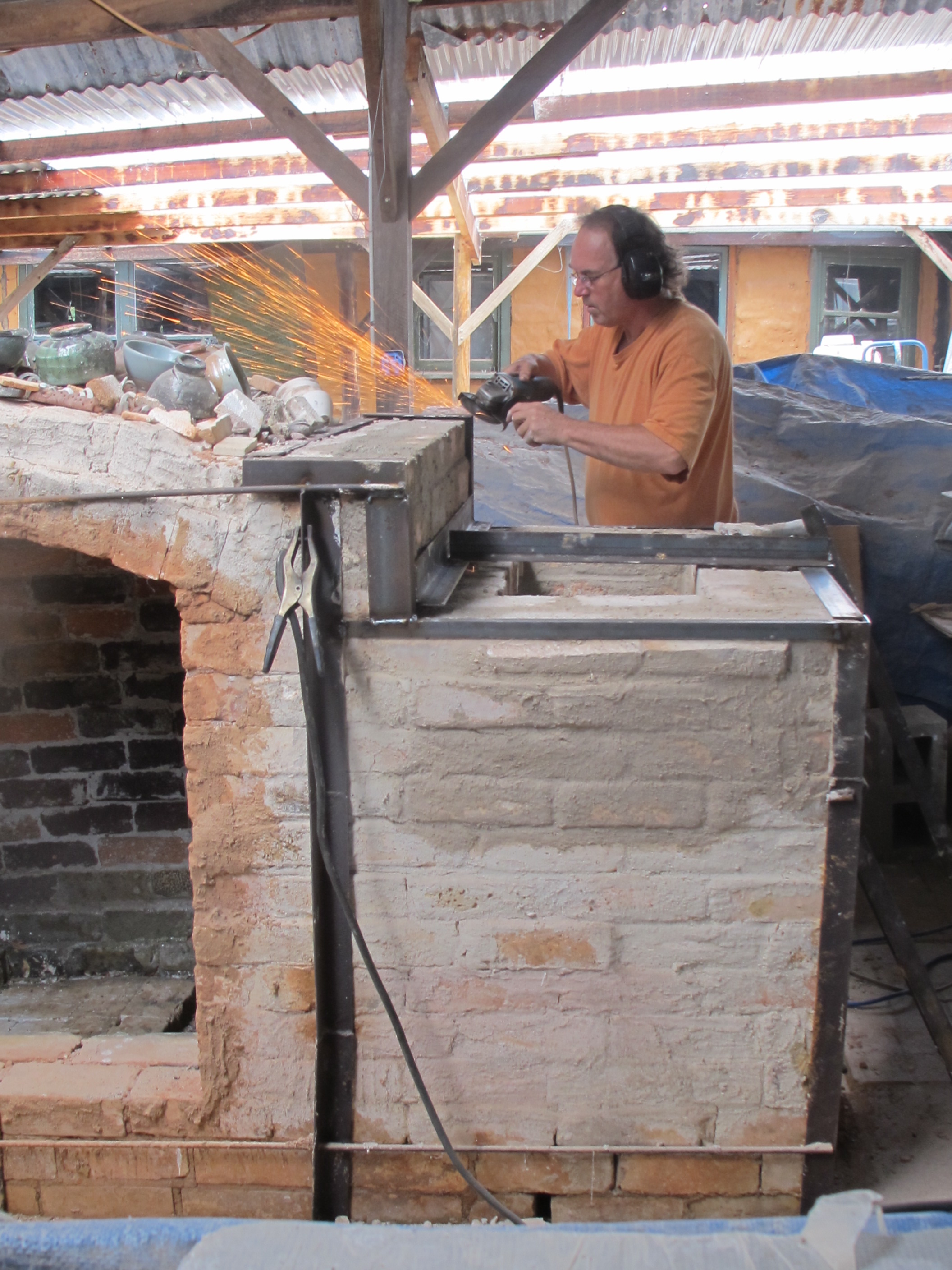
However, Like all jobs, it expands and as we work. We realise that it would be far better and more economic of our time and efforts, to do a lot more rather than less, while we are at it. So we take down a lot of the fire box brickwork and re-design the ratio of hobs to ash-pit, to test out an old idea that I haven’t tried before. It is interesting to me that after building and firing well over a hundred of these kilns, for individuals, Potters Groups, TAFE’s and Unis, both here and overseas, there are still some variations and combinations of factors that I still haven’t tried. This idea needs to be tested. So off we go. It’s a new adventure now, and becomes more interesting because of it. It takes us two days to pull it down and brick it all back up again, then re-weld all the metal bracing, so that it is well supported during the stresses of the high temperature stoneware firing.
Ms Versatile is a very competent brick layer afters all these years of practice. We have built so many kilns together. Both here and overseas. I don’t know how many bricks we have laid together, but it must be in the many, tens of thousands. 900 to 1500 bricks per kiln, and over a hundred wood fired kilns built on-site in 40 odd years. When we first came here in the seventies. We were building our kiln when the local bull dozer driver called in to see about digging our dam for us. He walked into the pottery and saw Janine laying bricks on our kiln by herself. He stopped dead in his tracks and did a double take. Then said. “F%&k me! Now I’ve seen everything, a chick laying bricks”!
It was an usual sight in those days to see female bricklayers and he was a bit of an unreconstructed chauvinist.
We’re still at it. Nothing’s changed!
The renewed, slightly lower firebox. All finished and ready to go for another year..
fond regards from Dr. Skutch and Ms Versatile
Equinox to Equinox
The Best Laid Plans
The mild steel frame is stripped down and sent off to be hot dipped galvanised, which means that it is dipped into a bath of molten zinc. After this it is almost permanently rust proofed. While the kiln frame is away, I silver solder all the heavy gauge copper pipe gas manifold and commence building the gas burners and safety train from basic rough castings. When the frame has been galvanised. It all gets assembled and put together, so that it is ready for the brick lining to be laid inside.Dig-it-all Native
I have a new show of my work coming up at Watters Gallery next week, so I thought that I’d preview it with some text and images.
As you will already know, if you have been reading these pages, I have always been interested in living gently. All my ceramic work incorporates this philosophy, this respect for the environment. My lifestyle choices include growing my own food, generating my own solar power, collecting my own drinking water, building my own hand-made house from local materials, and growing my own fuel for my kiln. So when it comes to making my work. I choose to make it from locally available materials that I can find around me, in my immediate locality. This grounds me in my environment. It also severely limits what I can make, however, this is not a problem, it is an intriguing challenge that engages me on many levels physically, mentally and spiritually.
I dig all my native ceramic materials locally, within a 50 km radius of where I live. This has enabled me to develop my own unique quality of wood fired porcelain, proto-porcelains and blackware made from these special native stones. The Essential nature of this enterprise is about a respectful interaction with my environment, in this locality.
When I was young I wanted to believe that there were some absolutes in life. I wanted to believe that there could be a definition of such concepts as truth and beauty. I’ve come to realise that there will not be any absolutes in my life other than old age, incontinence and death, possibly taxes. I have had to come to terms with the fact that good and evil, truth and lies, beauty and ugliness are all relative and coexist in each of us, all of the time. I accept this duality and embrace the angst that comes with the rejection of false certainties.
We have lost our bush land, we are loosing our native animals. The corner shop has gone. We are forced to drive in a car to a distant, edge of town, shopping mall to get to a bank and supermarket. Our neighbours houses have locked gates and shuttered windows. In short we are loosing our society. Everything has changed in my lifetime, and I don’t see it as better. I go to great lengths to avoid supporting the shopping mall. I search out the remaining family owned small businesses, the butcher, baker, fish monger and the greengrocer, to do my trade We have worked to become largely self-reliant in most of our food from our garden and orchards, but we still need to buy some protein.
We are no longer a nation of makers, we are all being corralled into becoming a nation of consumers. I reject this coercion. I will not buy vinyl coated chip-board and plastic, throw-away rubbish from Ikea or the hyper-mall. This apparent convenience is ruining the world. I want real things in my life, things that are beautiful as well as useful and that will last a lifetime if needed. I enjoy engaging with the patina of age and the mundane chips and tears of a life well lived on objects that I have come to love and respect.
Being brought up in a loosely Buddhist/Quaker household, I was probably the only 7 year old in my primary school who knew the whereabouts of the Dalai Lama, not that I thought that this was in any way important at the time, but looking back now it seems a bit weird? Given this starting point, it should be no surprise that my first pot in 1959 was an interpretation of a Tibetan butter lamp. It’s amazing what kids pick up from parents conversations. Not that I knew much about Tibetan butter lamps, but it is quite interesting to me on reflection, that this is what I chose to make, sitting in the gutter of the dirt road in front of where we lived and picking out fresh wet clay from the gutter after a rain storm. I suppose that it supports Loloya’s assertion that the man is made in the child before his seventh year.
My mother kept that pot all her life and after her death, I discovered it amongst her personal treasures, tucked safely away and so it came back to me and I still have it. At that time, in this family setting, it was not the pot that was important, but the activity of its making and the effect that the pot and its creation would have on the maker and the people who used it, which was up for discussion and appreciation. Around this time it became clear to me that the best things in life were not things at all.
Rachel Carson was a hot topic in 1962. I was 10 and old enough to be expected to help shovel manure into the ‘turned’ compost heap for the large extended-family vegetable plot that fed us all. In 1972 I had decided that I wanted to be a professional potter and was at Art School, starting to wonder where I would be living and how I could achieve a passive, independent existence as an artist. The Vietnam War was in full swing. I registered as a Conscientious Objector and the ‘The Club Of Rome’ released ‘Limits to Growth’.
I decided that I could only hope to achieve financial, artistic and food security if I chose to live out in the country where land was cheaper and the air and water cleaner. These events and others like them ground my cultural lens and set its focal length. So now when I think about firing my kiln, I first think how important it is to fire as cleanly as possible, as I would be the first one to be concerned, if my neighbour were to create a lot of unnecessary smoke and pollution in his day to day life. I don’t see that being involved in a creative activity gives us some sort of carte blanche or ‘get out of jail free card’ to pollute.
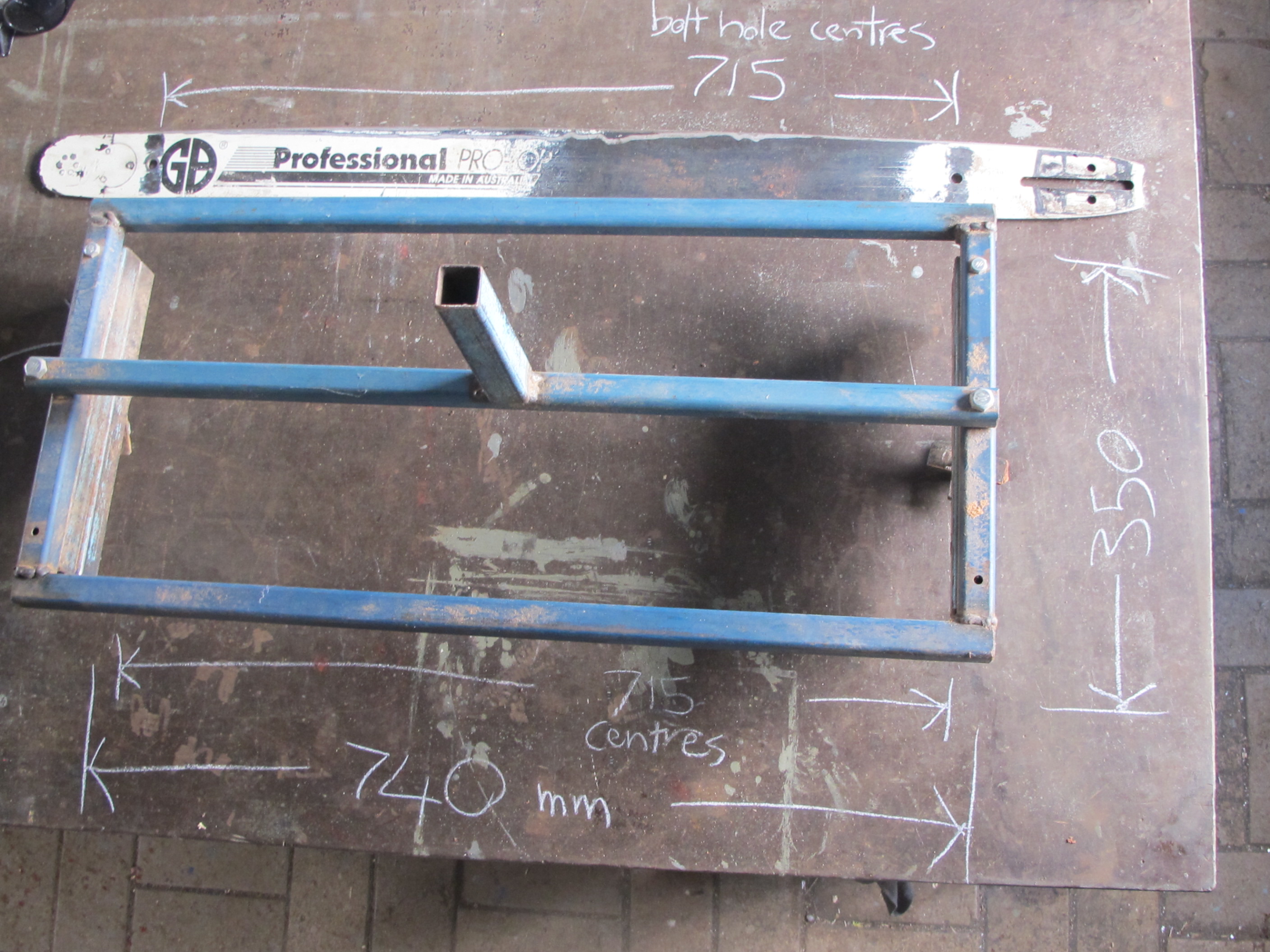
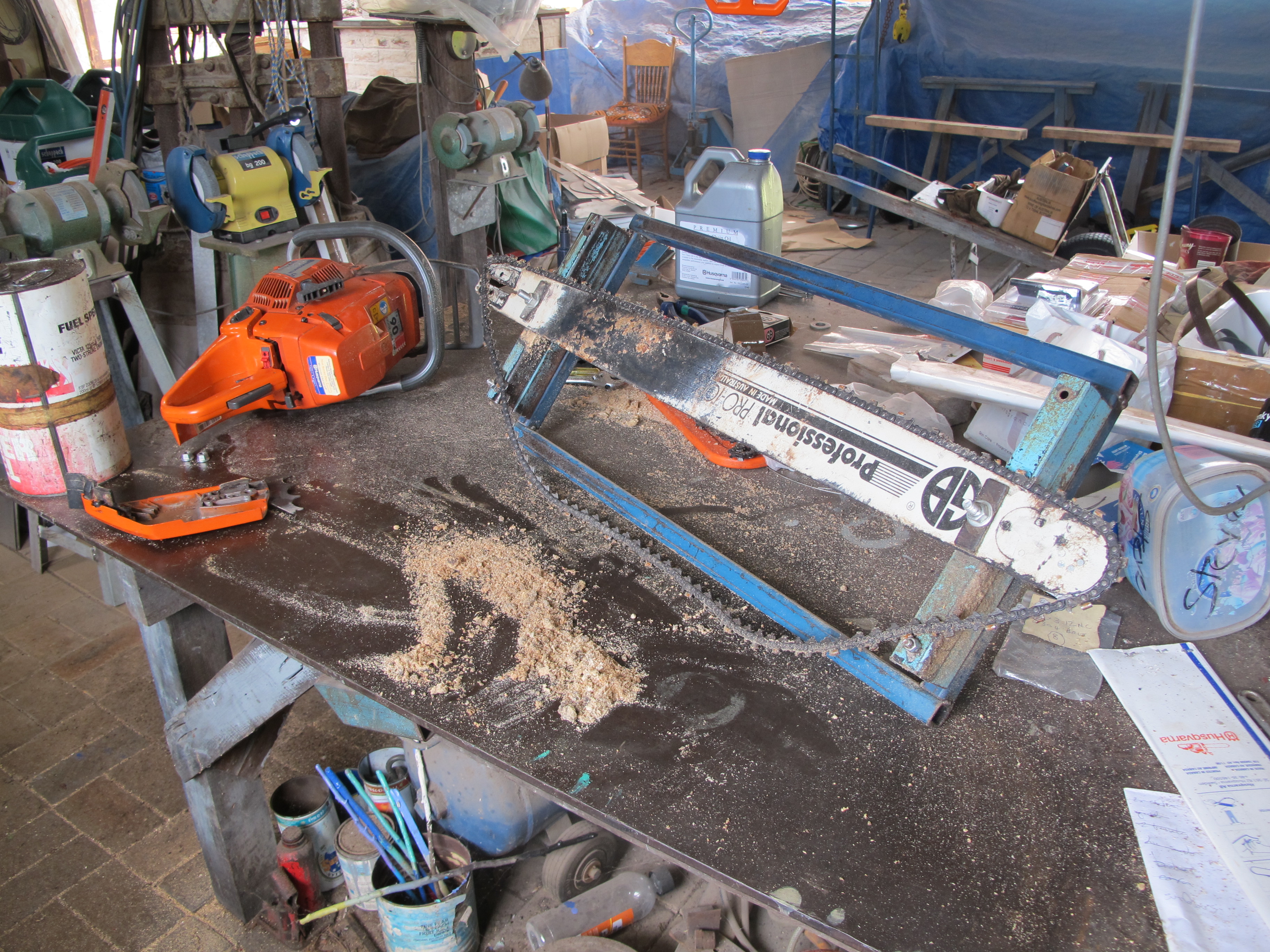
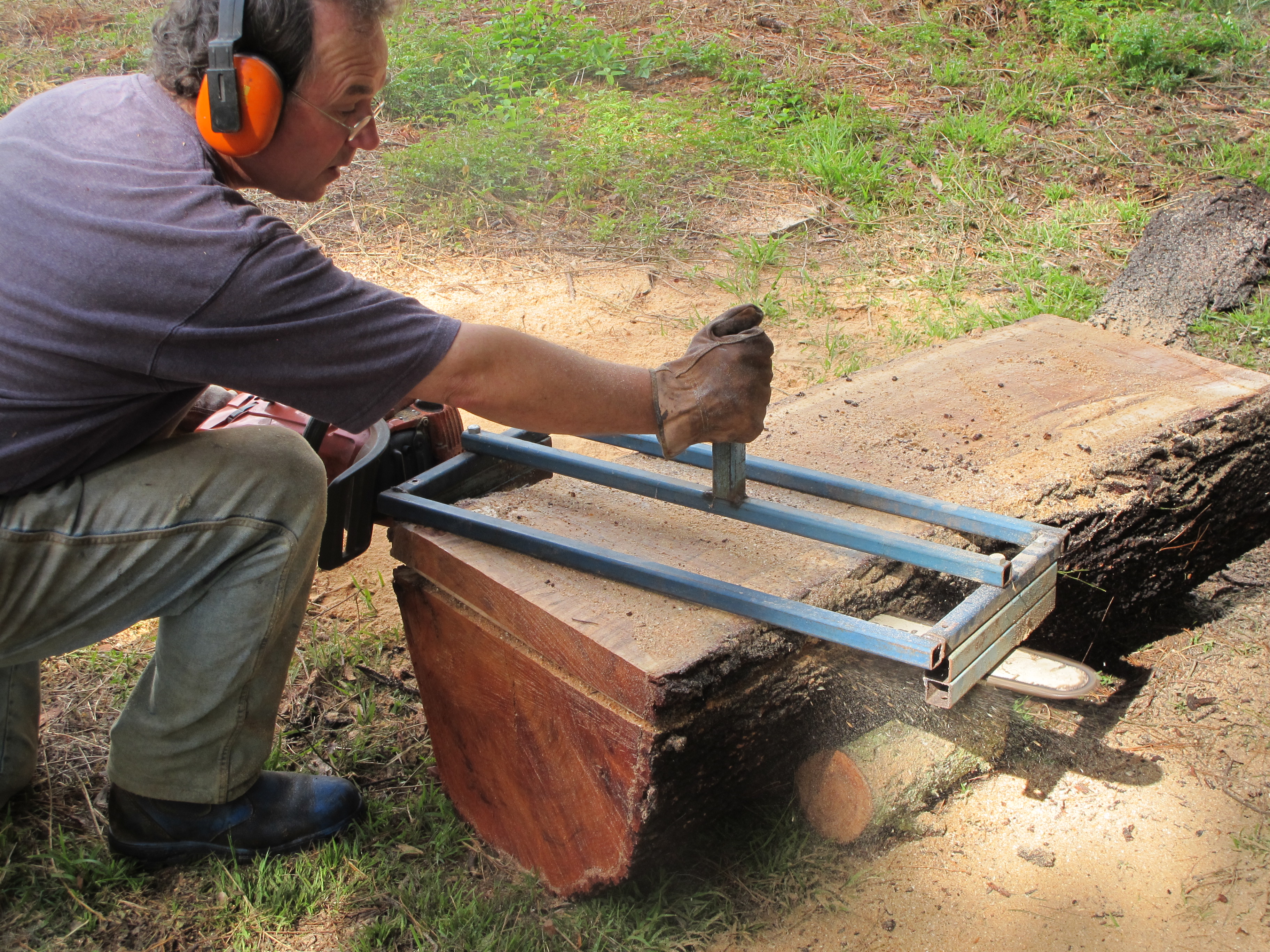
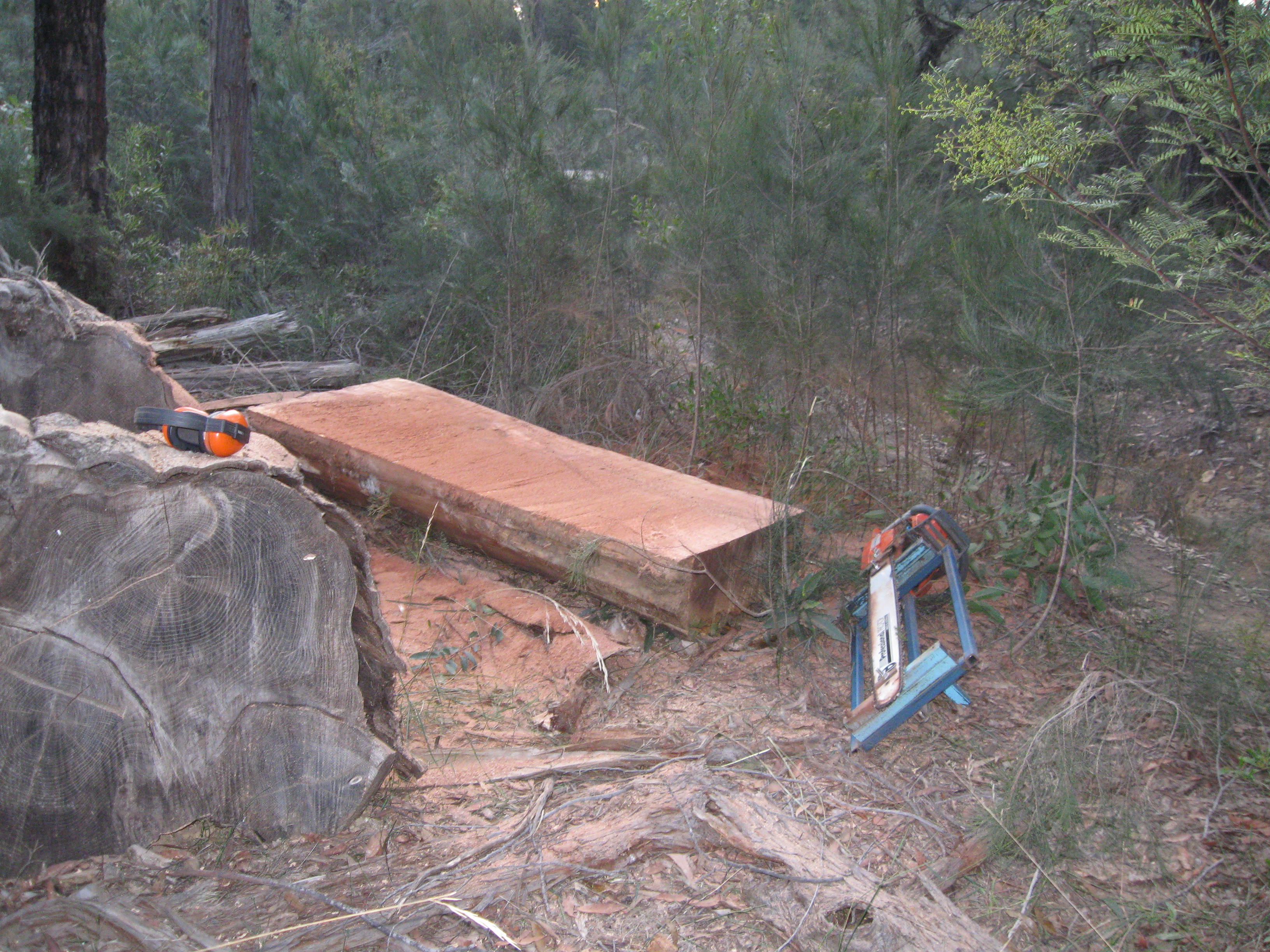
I also think about how I can use as little wood as possible while still being able to see that my pot is obviously wood fired. I don’t buy my wood from a merchant. I grow it, cut it and split it myself. I have a finite amount of energy, everything that happens here is facilitated by human effort. However, I do use a few machines these days to help me do the heavy work as I get older. I have replaced my original old cross-cut saw with a chain saw. The block buster with a hydraulic splitter. I am not a luddite, but I am aware that everything has an environmental cost. However, as I age I need to reduce the physical strain on my body if I’m to continue to keep working and creating beautiful objects into the future.
I have an image of what I want to create. I chase it. It is beautiful, but elusive. I can never achieve what is in my minds eye, but I keep prosecuting the illusion that it is possible. I like the intimacy of the bowl form. It is small, round and engaging when cupped in the hands. I love them as objects, the symbolism of sharing, the embedded meaning of the food container, nourishment and sustenance. I love the rich history of the peasant rice bowl and the Japanese tea bowl. They are omnipresent at every level of my life. I eat and drink from my bowls every day
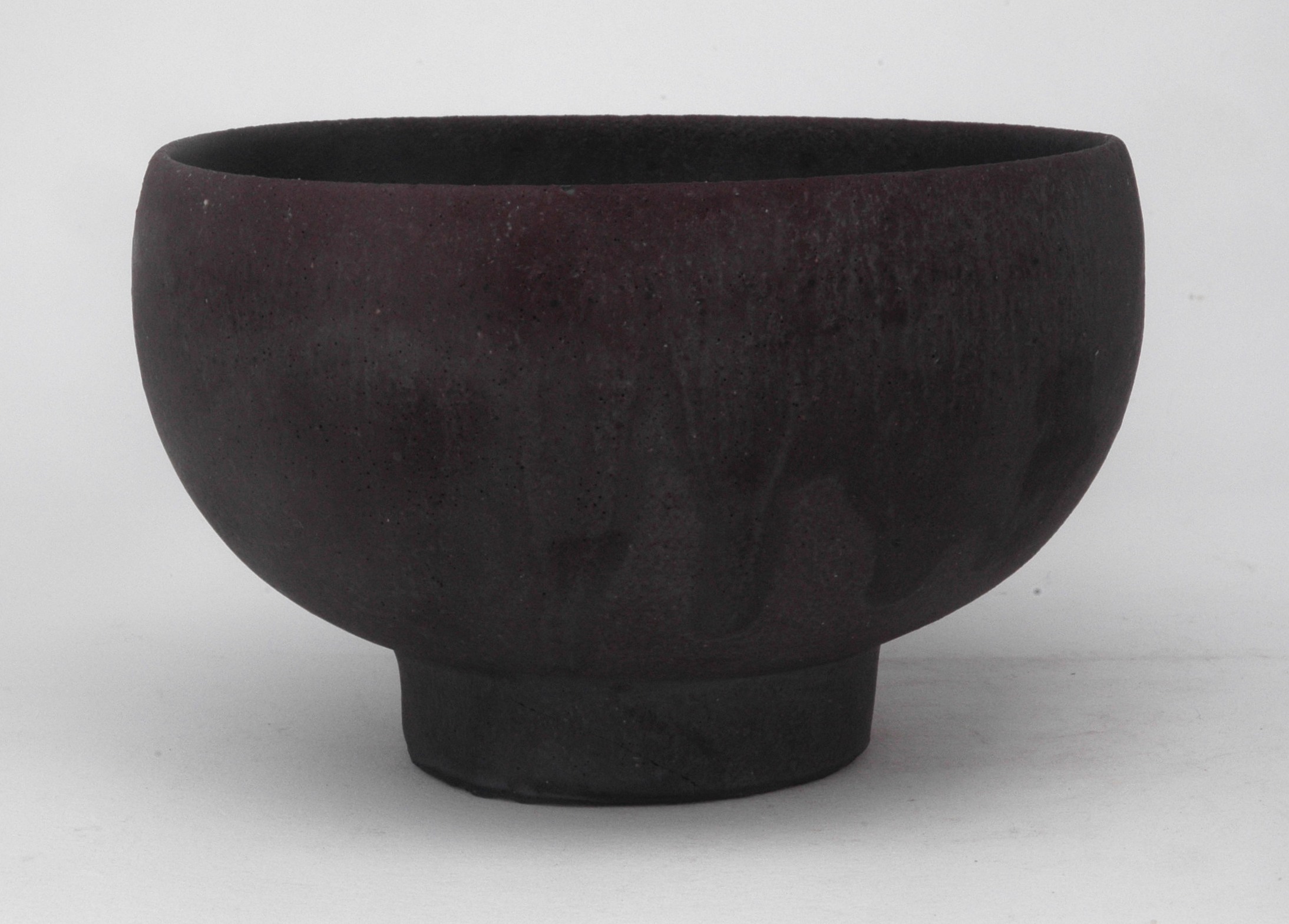
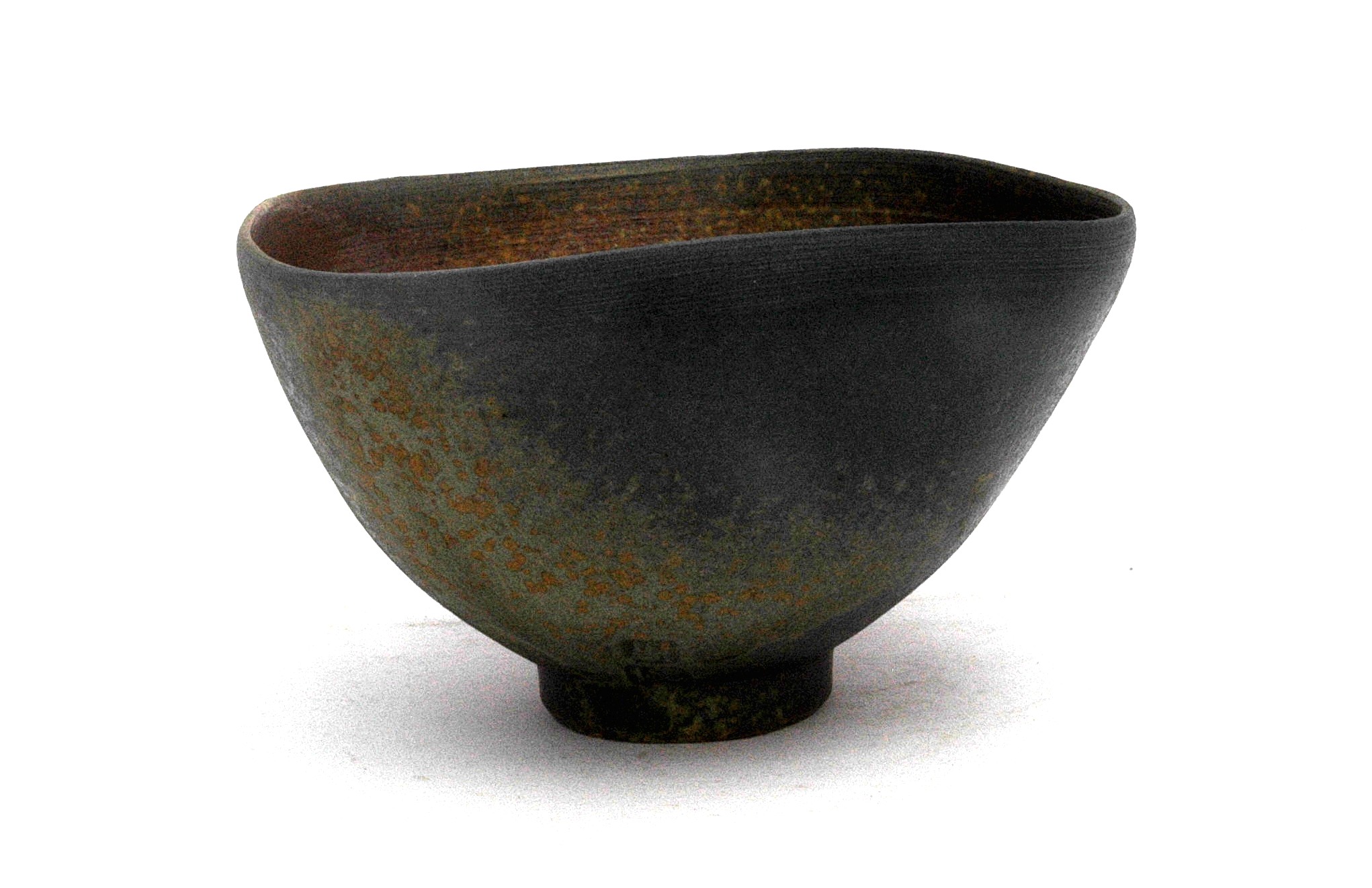
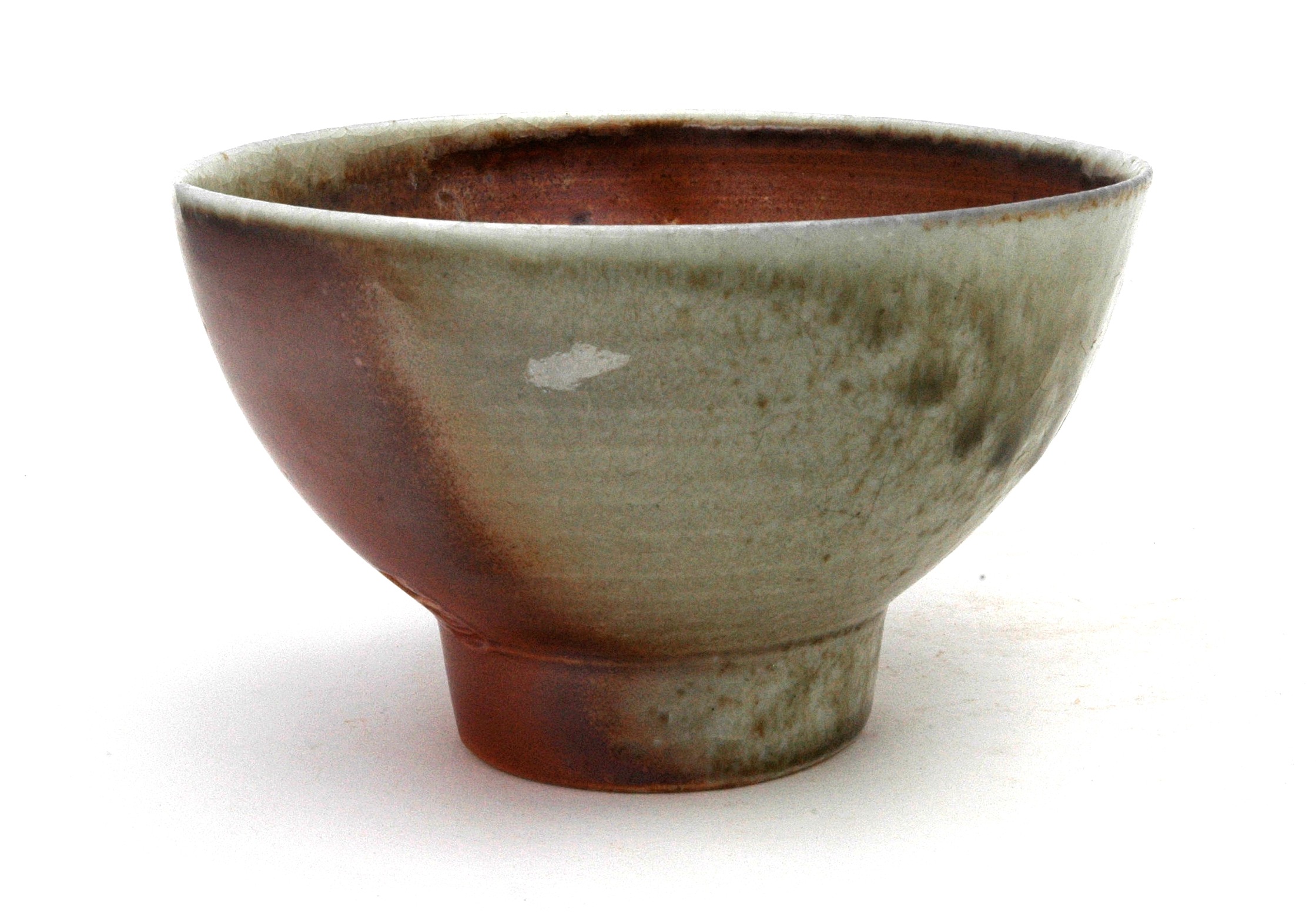
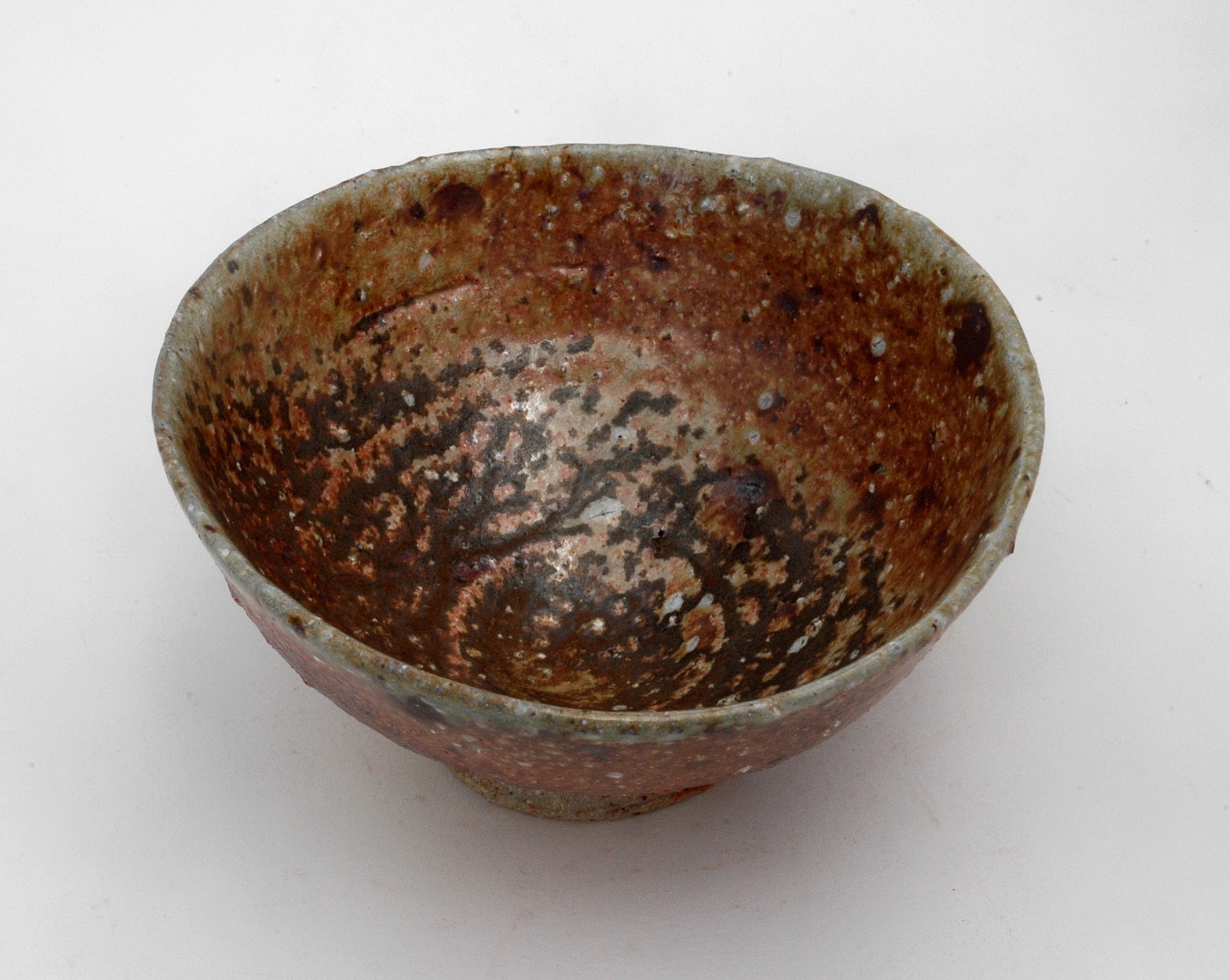
This image that I have of a beautiful bowl worthy of contemplation has a gentle wood fired and flashed surface. A surface that I have worked at developing over the past forty five years of my creative practice, where my selected local timbers, when burnt in my hand made kiln, leave their delicate ash patterns on the surface of my locally sourced, water-ground native porcelain stone clay bodies. This subtle wood fired ash glazing of the ceramic surfaces at high temperatures develops a wide range of colours, textures and patinas that are not usually seen on porcelain.
I think a lot about my firing process and the best way to get the soft, delicate and engaging surfaces that are tactile and suited to being hand held and smoothly functional as well as endeavoring to exploit Asian aesthetic concepts of irregularity. This porcelain is not from the molds of Sèvres or Meissen. This work has a proud Southern Hemisphere heritage.
I also think about the effect that my firing will have on others, my neighbours and finally myself and my family. Will these small bowls that I am making have any genuine useful place in society? Will the viewer appreciate the philosophical meaning embedded in their making? I certainly hope so, but nothing is certain.
It has been said that the most rare and expensive commodity today is time. My methods are fully hands-on, antiquated, quaint and oh, so very slow, so my output is quite small. These objects are time solidified and made manifest. Beautiful, unique things like these take time to be brought to life, and more time to be given a useful life in daily use, so that they develop their mundane scars and patina of use. They grow and develop with time, just as they require time to be fully appreciated by use and enquiry.
The unexamined bowl, is a bowl not worth living with.
You can buy those bowls at Ikea.
The Luxury of Frugal Simplicity
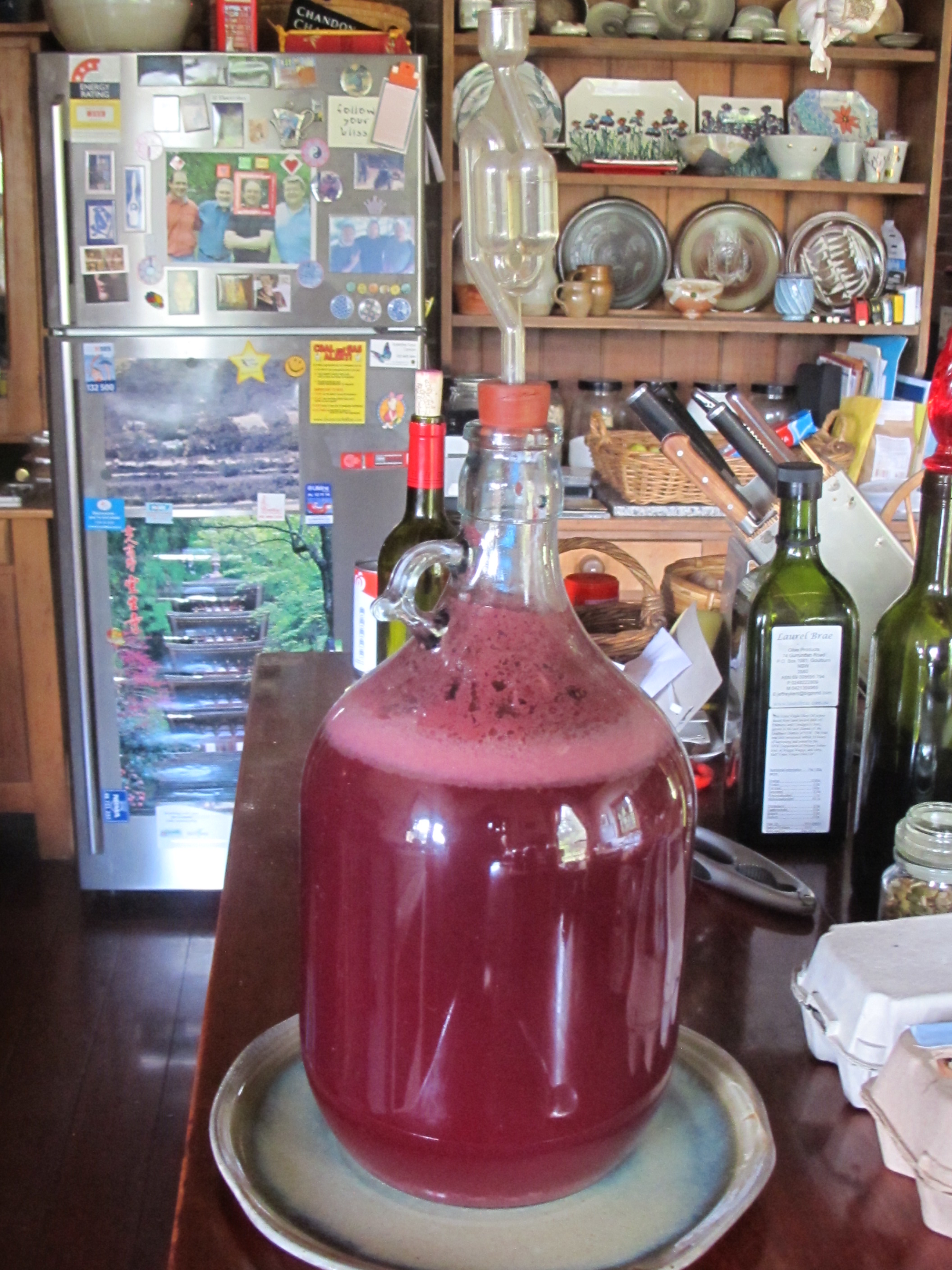
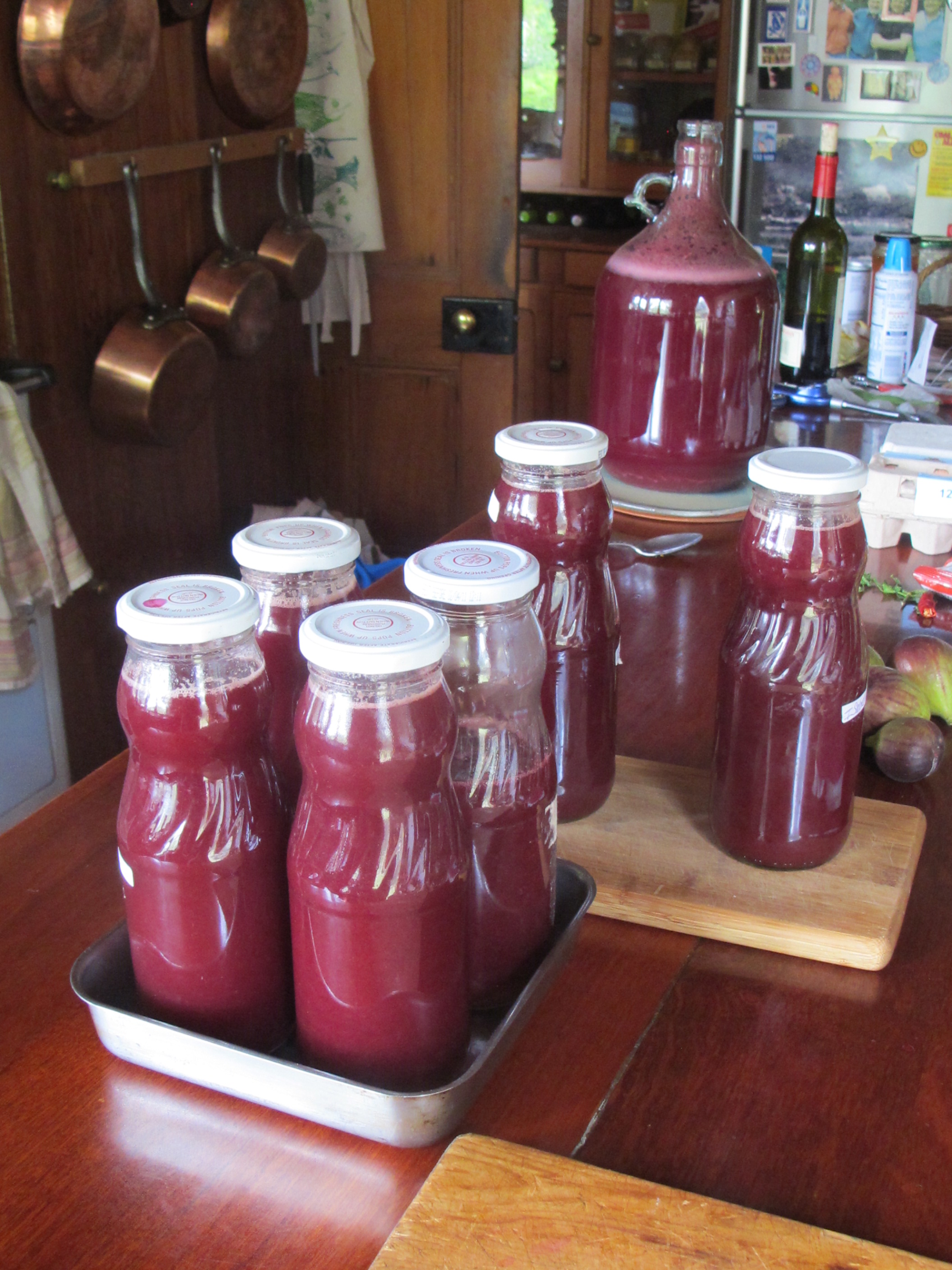
We’ve been making wine, making clay, making kilns, making pots, making preserves and in general making a living, in all the various and diverse ways that we have grown into during this big long experiment called life.
New Show of my pots at Watters Gallery
The luscious excess of the summer garden
We have been experimenting with a few new ways of dealing with our excesses from the garden. We have our favourites that we love to cook every season with all the usual suspects as they front up in quantity. It’s just amazing how much I look forward to that first tomato of the season to get ripe enough to pick and eat, right there in the garden. It truly explodes in the mouth with sweet, acidity. Such a flavour. Then all those vitamins that I am obviously in need of, because I crave that first tomato so much. Just brushing the leaves of the tomato plants while weeding is nostalgic and gives me the Pablov’s Dog reaction. i can’t wait. I’m craving a fresh tomato after 6 months without having any. However, after a month of tomatoes with everything, I seem to have enough of the vitamins and minerals that tomatoes offer, and they lose some of their charm. They are still fantastically delicious, but there is no longer any urgency to eat them. They just become part of the menu landscape. In fact, so much so, that while I’m weeding and watering the plants, I try to avoid brushing the leaves, as the smell is no longer appetising, but slightly off-putting even. What is this reaction? How does it work? My body is telling me what I need to eat and when I’ve had enough. Time to move on, try something different.
The same can be said for zucchinis, capsicum and aubergines as well I suppose, but not with the same urgency.
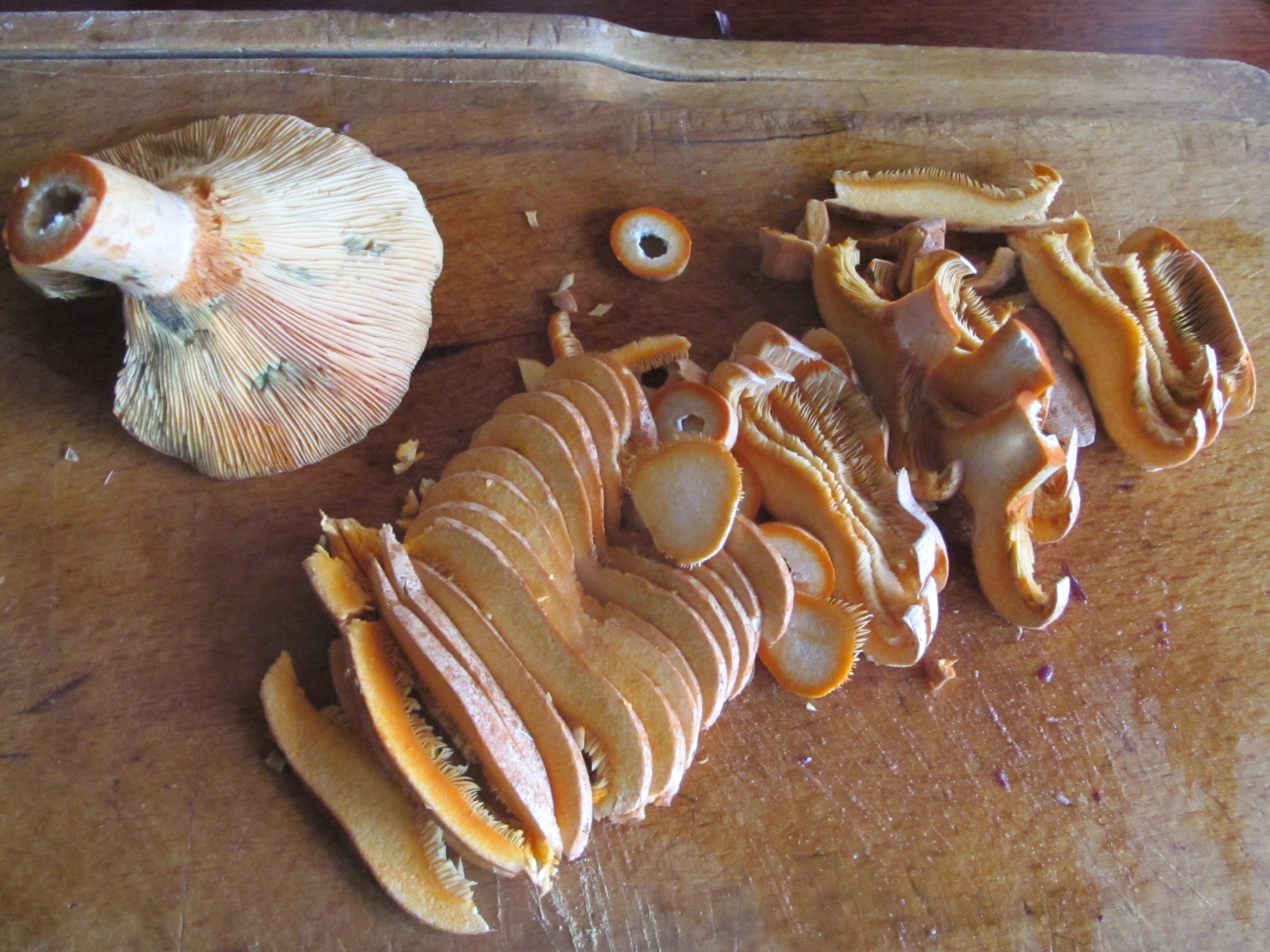
After we have cooked and eaten all the usual favourite dishes a few times, we start to consider other ways of thinking about what we have and how we can be creative with it.







You must be logged in to post a comment.