
I have satisfied myself now that I have ‘caught-up’ with the vegetable garden and orchard work for the time being. Of course, there is always on-going maintenance to deal with, especially with spring just around the corner. A garden is a perpetual source of pleasure and bounty, If you are that way inclined? But that reward requires a lot of work. Being able to have extensive vegetable gardens and orchards, growing all of our own organic food is the reason that we live here. It’s a choice that I made 55 years ago. I haven’t looked back. However, I’m incredibly lucky to have found a fantastic partner in Janine, who holds similar values and aspirations.
I’m back from my 3 months in Korea, just in time to get the late winter work done in preparation for spring. As spring is coming earlier and earlier each decade, as we, as a species, continue to cook the earth with our carbon pollution. I find it hard to accept that the collective ‘we’ are moving so slowly on this. Obviously there is incredible push back from the big carbon energy producers, amplified by their big media puppets, but I would imagine that it would be becoming clearer by the year and by each natural disaster; droughts, fires and floods. all made worse by the extreme heating. But NO. Everybody seems quite sanguine about it all.
The Trump followers say its all fake news, and one of the people that I happen to have to deal with, says that the exact opposite is happening. ie. its getting colder every year, flying in the face of obvious reality, but he is actually ill! While most people don’t seem to give a rats. What can you do? It’s a democracy! I accept the majority decision, but decline to follow the masses. Janine and I have instead, chosen our path of self reliance, minimal consumption and a low carbon lifestyle. I keep thinking of what else I can do, but we have covered all the obvious and achievable items like going fully solar starting back almost 20 years ago, in 2007. Driving an electric car, starting back 8 years ago in 2018. Recently we changed all the window glass in our Kitchen to double glazed and vacuum sealed panes. We are net exporters of clean solar electricity to our neighbours.
On a brighter note. Various fruit tress in the orchards are flowering beautifully just now, and have been since I came back. The earliest of the plums is the most striking at the moment. It’s a red skinned and red fleshed variety, even the bark on the smaller upper branches is red. It’s called “O-Kay” plum and is really prolific. We bought it grafted onto dwarfing rootstock, so it won’t grow more than 2.5 metres high. That is, if it bothers to read its own label! And then agrees to comply! Not all trees comply with their labelling! We also have an early peach just starting to flower, as well as an early nectarine and a few almonds. They all think that it’s spring now, and are bursting into flower, even though it’s still winter.
Just a reminder to those who have fruit tress. Now (or even a month ago) is the time to spray lime sulphur, and do your pruning, before bud burst,

The early maturing varieties that we have chosen will mature and ripen before the bugs and fruit flies breed up into large numbers and spoil the fruit. We only use organic methods here, so no toxic sprays. We use a range of methods to control and limit the numbers of bugs. Starting now, we use ’DAK’ pots to lure the male fruit flies before they can mate. We use a protein based female fruit fly lure to help limit their numbers as well. We also deploy a simulated fruit based lure, marketed as ‘ecolure’ along with ‘spinosad’ soil fungus as well as garlic spray in various forms. Be aware that garlic spray can only be used after flowering is finished. Bees won’t go near flowers that have garlic spray on them. I learnt this the hard way. Everything helps, but once the weather warms up into full-on summer. The fruit fly numbers build up to the point that these efforts aren’t enough. So this year, I’ll be experimenting with using fine while nylon netting to cover the late maturing fruit, such as pears and quinces. Always trying something new.
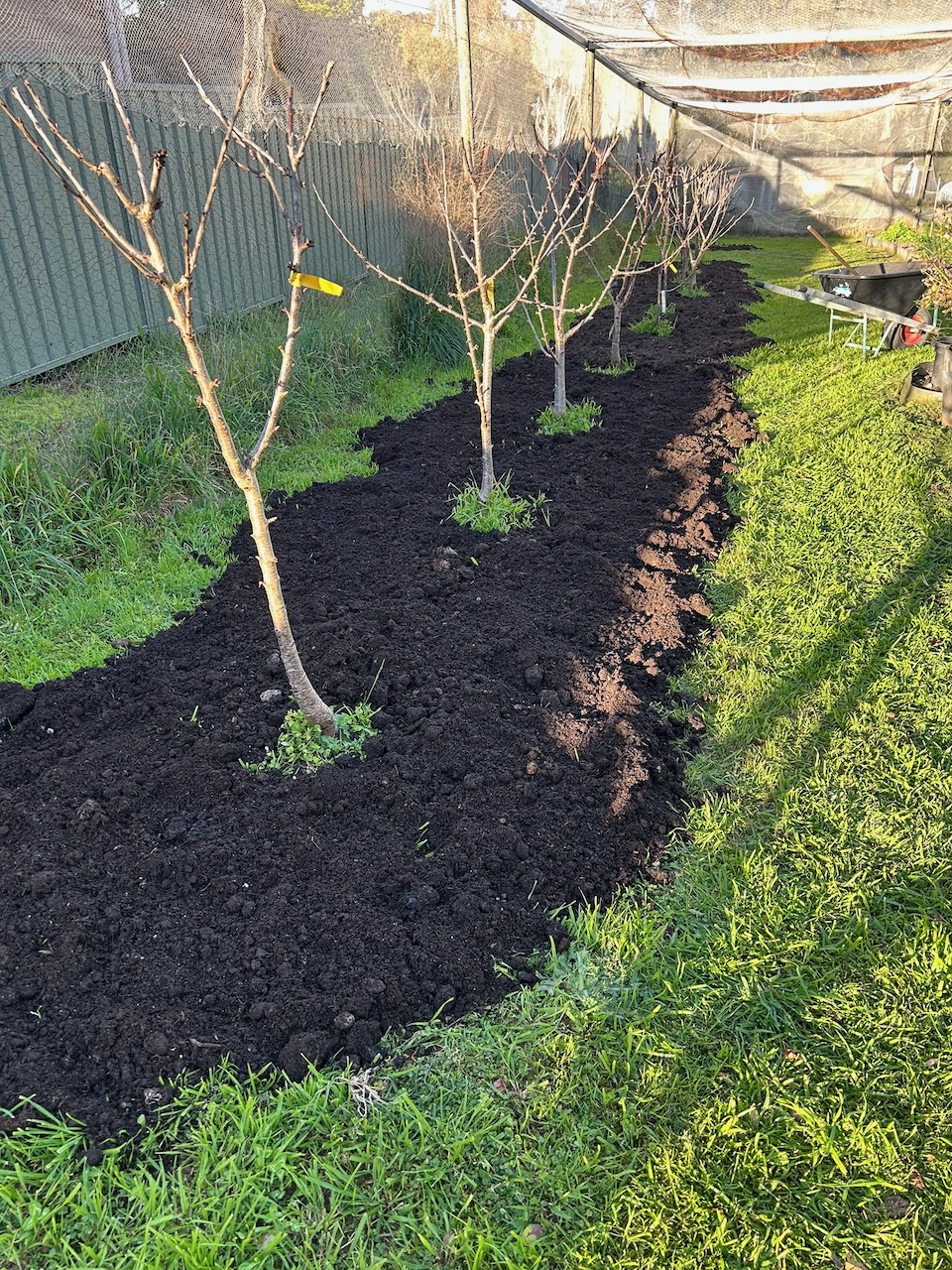
This week I finally finished spreading the last of the bonfire ashes and sooty charcoal dust from the orchard prunings burn pile. Burning the prunings eliminates any chance of spreading diseases, or overwintering pests. The ash has nutrients in it like potassium that are good for the trees as fertiliser, the carbon enriches the soil, and the fine charcoal and helps to retain moisture. Win, win!


Only once the gardening work is done, can I get back to work in the pottery. Growing food comes first.
I started with the basics, by cleaning out the pug mill that hasn’t been used for several months while I’ve been away in Korea. Even though I seal up the various orifices with plastic, air still seems to get in and dry out some parts, so these bits get too dry and stiff to go through the pug mill vacuum screens, and block it up. I spent a morning doing this maintenance cleaning and other jobs required to get the pottery back into a working studio again. Only then could I start throwing. Everything in its own time and place, and in order.

I started by throwing the rough stoneware body that I make for wood firing. It is designed to ‘flash’ to a warm orange/red colour in the wood firing kiln. As it is quite rough in texture, having a lot of coarse fireclay in the recipe, it is very suitable for use as oven proof cookware. So I started by making baking dishes, casserole dishes, large kitchen mixing bowls with pouring spouts and rough textured mortars and pestles.
Next I started throwing some of the fine textured wood firing clay body. I made 4 pot boards of cafe latte cups, short, wide and open in form. I am using one of the measuring pointer gadgets that I have been making for sale to potters wanting to improve their skills and accuracy. I will be offering a weekend workshop on throwing skills and accuracy in the coming months. The pointer has a rubber tip, so that it will not damage the soft, delicate rim of any pot that comes too close and touches the tip.

Before I left for Korea, I read ‘Enshitification’ by Cory Doctorow. A really good read, very informative about the abuse of power exercised by the big digital marketing corporations like Amazon and Apple, and how they start out doing good for their customers, but as they gain market share, soon become too powerful and turn against their customers and start to rip them off. A real education. I don’t use Amazon at all, as it is usually more expensive than other places that I support. But now that I know how corrupt, underhanded and devious bezos is. I feel somehow pleased by my past decision. Highly recommended.


The other book that I have just finished deals with the mining and supply of exotic elements like lithium and cobalt that make the new, powerful, light weight batteries possible. Batteries that are essential in the production of all the new portable devices like power tools, phones and laptops, but also electric cars. The Congo seems to be the epicentre of this mining, and the book goes into great detail examining the corruption of the series of governments there. The Congo is potentially one of the wealthiest countries on earth. But its people are some of the poorest, because of the corruption, bribery and straight out theft of the minerals industry.
Reading this book, I felt some guilt, as I own battery powered power tools, a phone, a laptop and 2 electric cars. However, my home storage battery and my car both use Lithium/iron/phosphate technology and so avoid the use of cobalt. There is some hope on the horizon in terms of avoiding the lithium/cobalt trap. Sodium battery technology has just reached mass production level of reliability in China, with the release of the first sodium powered storage batteries and electric car by CATL in China. CATL is the largest manufacturer of lithium batteries used in electric cars. So a sodium battery breakthrough is some sort of good news. As sodium is not expensive or rare, or hard to work with, or prone to burst into flames. Sodium is readily available everywhere, so is much cheaper and its extraction and processing are less polluting. It is heavier and less energy dense than lithium, so is better suited to stationary battery storage solutions, but will be OK for small suburban run about cars, for people who don’t need so much power. This first mass produced sodium battery can be recharged 10,000 cycles and can be recharged from 10% to 98% in 6 minutes. Sounds great. However Lithium will still be the battery of choice for light weight, power hungry applications for the foreseeable future.
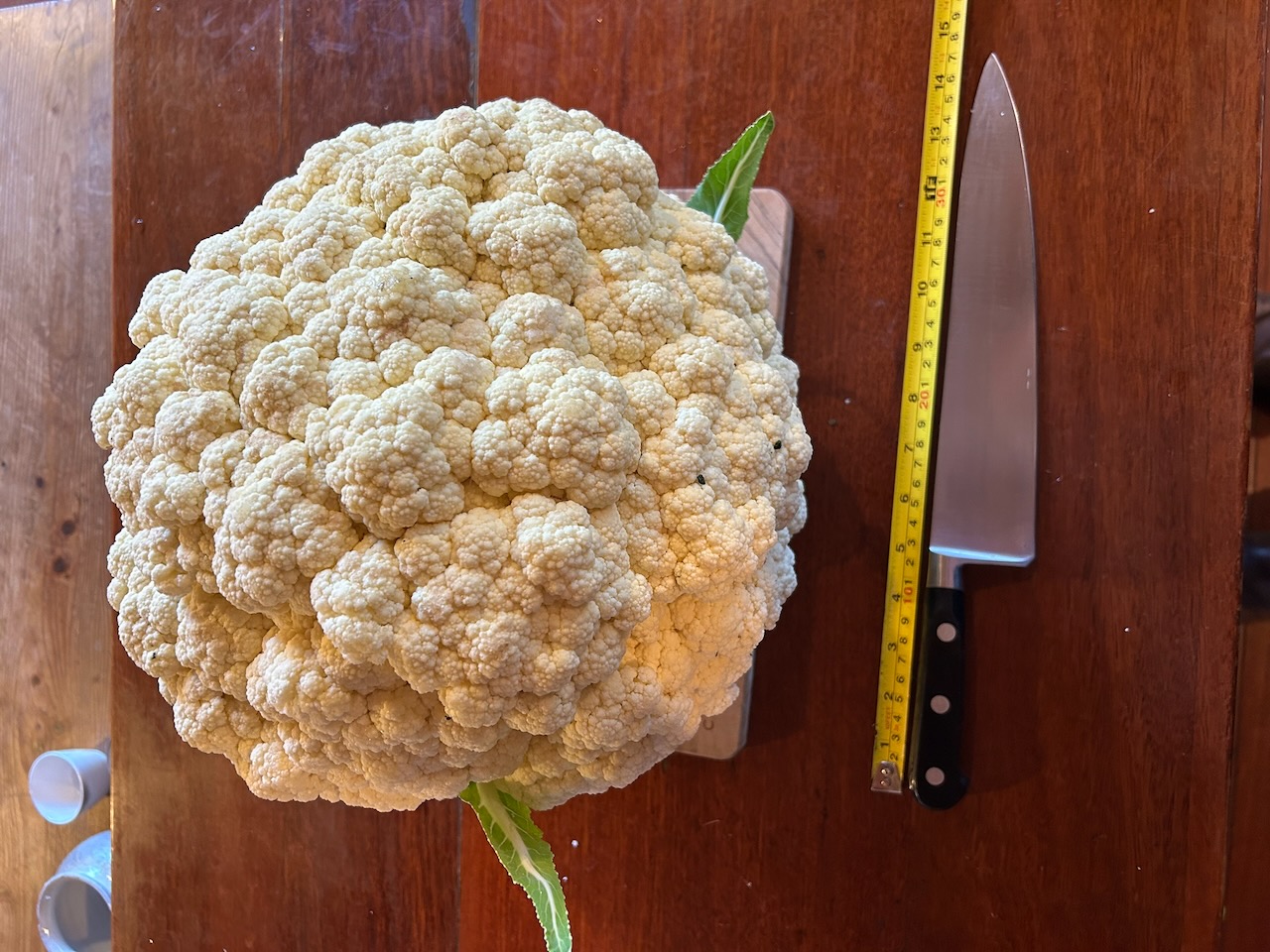
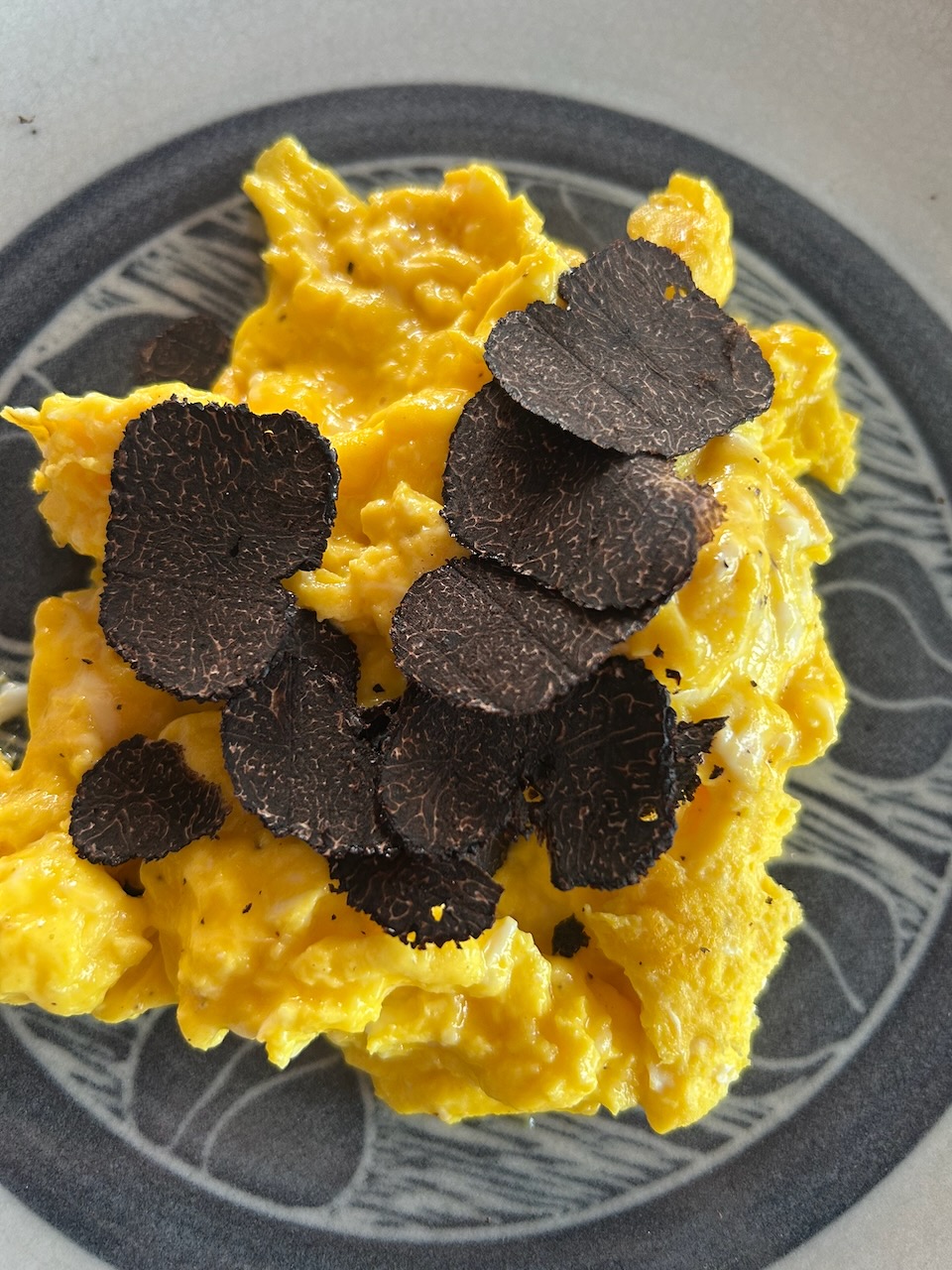
In the kitchen we are eating a lot of winter vegetables. In particular, finding as many ways as possible to use up the huge flush of cauliflowers. Baked, fried, steamed and gratin’d, and in soups. We have probably eaten our last black French truffle for the year. and very lovely and flavoursome it was too. Can’t wait till next year now. As we live and grow with the seasons, we have a slow rotation of vegetables on our menu as the year progresses through the seasons.


We will soon be approaching what the peasants used to call ’the hungry gap’. When the winter crops are coming to an end and the spring plantings of the summer crops is completed, but there was always a gap before the summer crops were mature.
Over the next couple of months, we will be coming to the end of the carrots, beetroots and parsnips, as well as the cauliflowers, our diet will be narrowing down to leeks, cabbage and potatoes. Radishes, lettuce and onions. The spring peas are flowering, but haven’t set yet. We have plenty of bottled tomato passata along with loads of stewed fruit in the pantry from last summer, and dried mushrooms in jars. We are in peak citrus season just now, so no shortage of vitamin ‘C’. I’m making a batch of Seville orange marmalade each week for use later in the year and the there are the first asparagus shoots coming up. So we don’t go too hungry.
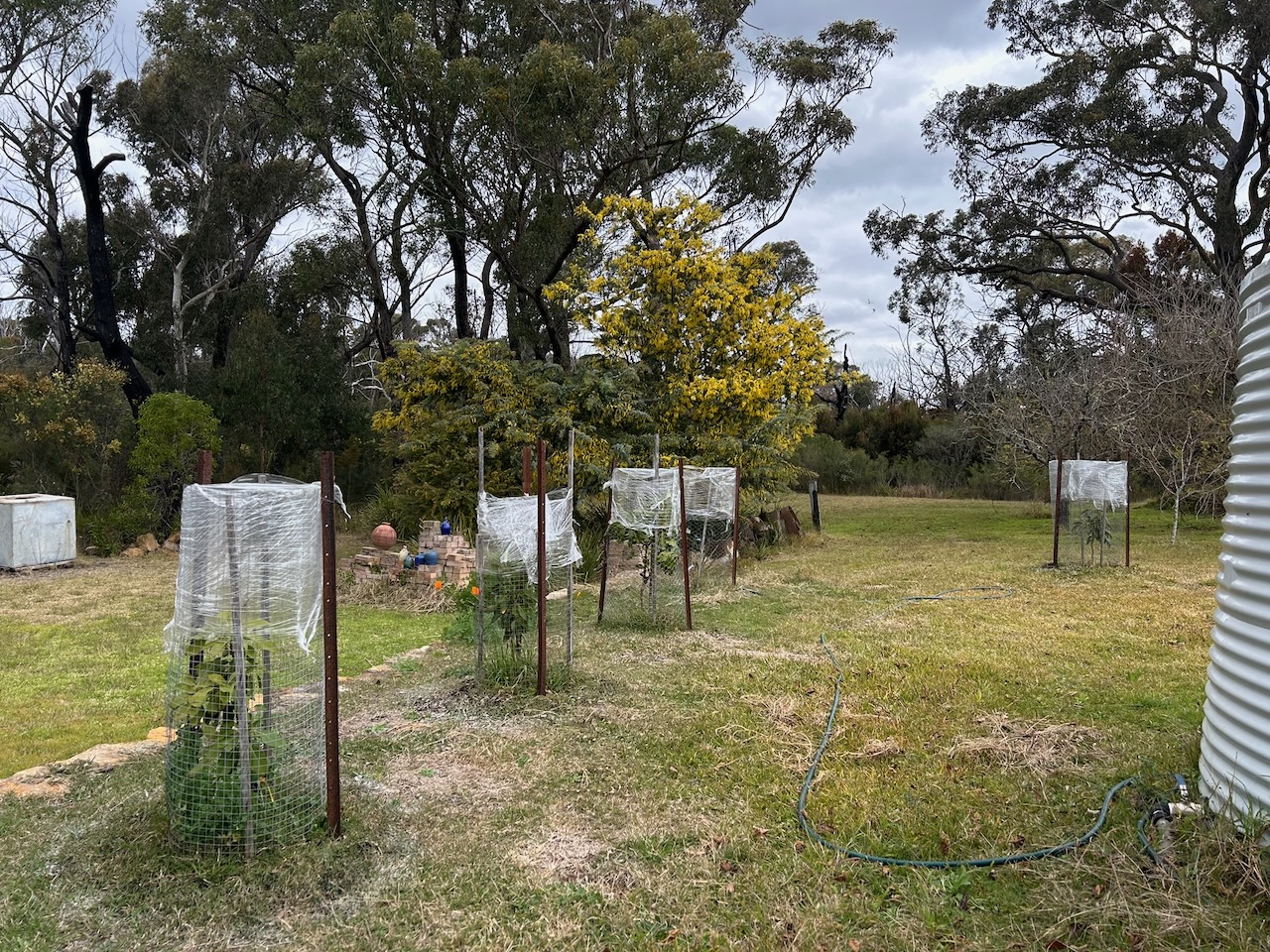
I’m planting tomato seeds now and in a few weeks time I’ll be planting them out under cover of a temporary closh, made by wrapping some clear plastic around a light weight wire frame. This will be just for the first month in case of late frosts. As last year, I didn’t bother, and I lost all my early plantings to a late frost and had to start again. A lesson well learnt.
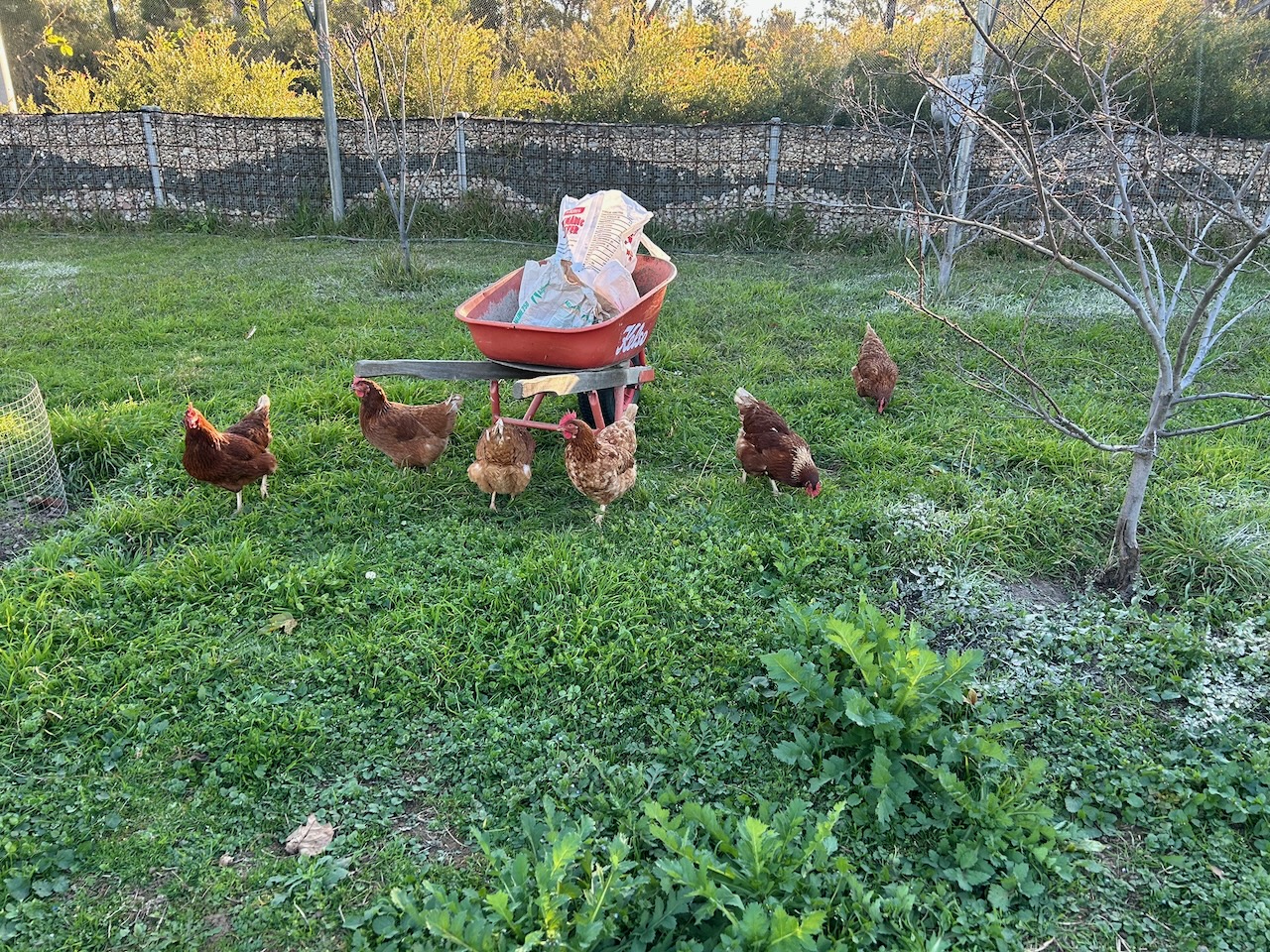
I’m really glad to be back home and doing all this focused and meaningful self-reliant work again. People say to me that my life must be such hard work, and there is a little bit of that, but only to a certain extent. However, being the ‘Artist in Residence’ was a great honour, and also fun, and even though I grew a vegetable garden and built a wood fired oven at the studio, it lacked the completeness that I have come to consider normal here in this life. So I really appreciate being back in a complete meaningful and supportive life/growing cycle here with Janine, Geordie and the chickens! Happy to be home.



You must be logged in to post a comment.