I have spent the last two days firing my kiln here in the Porcelain Residency. 30 hours of my life that was hopefully well spent? Starting at 4:00 am on Tuesday and finishing at 9:00 am on the following day – Wednesday.
I put a bit of time and effort preparing, splitting and stacking wood, so that everything would go as smoothly as possible. But, as always, the best laid plans…
One of the things that I have no control over is the weather. It rained heavily for a lot of the time. The monsoon has arrived! ‘Uji’ in Korean. Luckily, the kiln shed is well built and water proof, as far as it goes, but it’s an open, well ventilated shed. The kiln is situated on the edge of the building and the heavy rain can blow in sideways. There has been some discussion of adding a verandah to this side of the building. It will probably happen in due course, but I dare say that I won’t see it in my lifetime. It will have to be presented into next year’s forward estimates, be considered by the city governors. Proceed through the various stages of process, eventually approved for quotes to be sent out in 2028, then contractors selected, contracts developed and then reconsidered, re-drafted, re-estimated, re-quoted, new contractors selected. Approval granted for fiscal year 2030!
Delays, holdups, bankruptcies, heritage listing investigations, archaeological contingencies. All this just for an awning!
You may laugh. But I was first asked to come here and build this little kiln 8 years ago. Later, I was even sent progress shots of the foundations being dug. But the catastrophic bush fires in 2019, then covid in ’20/’21, and various other events intervened and the kiln was eventually built in 2024. Such is life.
Anyway. I’m here now, in the here and now! Good thing that I began this project in 2016!
Like climbing ladders, it’s the sort of thing that it is not recommended that old, fat, balding, grey haired guys over 60 should be doing. They should know better and get it out of their system in their mid-life-crisis years! However, at 74 I’m still climbing ladders as well as building wood kilns in foreign climes and doing 30 hour wood firings, well past my use-by date. What went wrong?
I have a friend, who I admire enormously, who has only recently given up doing 100 hour wood firings in his mid 70’s, but he did have helpers!
Janine and I usually fire more or less alone, with Janine’s assistance coming and going through the day. We have developed a firing schedule where I start the kiln off at 4:00 am and Janine comes down with some toast and coffee at 8 or 9. We fire through the day and into the evening, through into the night. I have found that I can do a 15 to 18 hour firing this way without missing a nights sleep. Working from early till late, and going to bed on the same day as I woke up, so that I don’t feel ‘wreaked’ the next day. With luck, I can see myself being able to continue potting and wood firing in this way for a long time.
Because these 14 to 18 hr firings are relatively short, compared to what some other well known potters do, there isn’t the kind of ash buildup with the glossy, runny ash glaze, that some people attribute to wood fired pots. So I have developed a range of clay bodies and glazes that look their best in these shorter, and more manageable wood firings. Ideally suited to domestic wares, with colour variation and flashing on the surface. Interestingly, even some of the pots from my friends 100 hour firings, the ones at the very back of the kiln, come out with surfaces not too dissimilar to my 15 hour pots. Only a very well educated eye can tell. Having said all that, the pots at the front of the setting in my short firings do get a lot of ash on them, but that space in the kiln is relatively small in my kiln, so there are not too many of them in my repertoire.
This is a pot from the front of the setting that was in my last firing here of just 14 hrs. This is as much ash as I need to see and deal with in the cleaning of the foot and rim.
I tried 30 and 50 hour firings in my youth, but decided that the returns aesthetically for my kind of domestic pots weren’t worth the bodily wear and tear on me – even then! So this firing is a major effort for me. I can only do it here in this kiln with assistance from some of the other residents. I really need someone to keep me awake through the night. I was fortunate to have a two helpers to look after the kiln for a couple of hours between midnight and 2:00 am. Hours 20 to 22, so that I could have a nap to get me through the night. Thank you!
Luckily, the truck load of oak wood turned up just in time. One arrived the day before and another during the firing. It is very fresh! to the point of still have birds sitting on its branches 🙂
I say luckily, because we ended up using about 2/3 of it. Along with some well seasoned old pine. Blending about 1 to 4 pine to oak. When I tried burning just the oak, it was too slow to burn well. It needed the very flammable pine to keep it burning fiercely. After 1150oC, wet wood isn’t a problem, in fact it is even better for reduced firings.
The chemistry is too complex to deal with here, but in essence, Water dissociates to a hydrogen ion and an OH radical. These both eventually reform, back to water, along the way having cleaned up the atmosphere a little. The energy required to crack the water is such that the fire needs to be above 1100 degrees Centigrade to get a positive return. The chemical action still takes place below this temperature, down to about 800 C, but there is a negative energy return.
Using water vapour to create an energy rich and highly desirable hydrogen gas from carbon monoxide is called the water-gas shift. It takes energy to do the shift, but the return is equal to or greater than the input. from 134 btu per cu. ft. of gas to 156 btu per cu. ft. of gas produced under ideal conditions. Enough! I don’t want to loose readers by boring you with too much reality. One person I spoke to was amazed. Having been told that wood needed to be seasoned and very well dried for up to 5 years before burning in a kiln. And that is true for some wood in some kilns, but it is clearly not universal.
So this truck load of wood was very freshly felled and full of sap, This made it slow to combust until we got it up to 1000oC. Which we did by using a bit of dry pine mixed in. No problem, because I had sorted, split and stacked enough dry pine – just in case – a couple of days before. I was very pleased that the air temperature dropped down with the rain over night and made the conditions more comfortable, although it was quite humid, it was also quite cool. As we only need to stoke the kiln every half hour. There is a lot of sitting around doing very little. I’ve heard it described as ‘Laid Back Wood Firing! in French as ‘Le gran feu au bois sans effort’. and Korean as ‘ Pyeon-anhan jangjagbul piugi’ – relaxed wood firing!
I spent the ‘dull’ time teaching my helpers some chemistry and physics – in disguise of course! I made it invisible and more palatable by dressing it up as anecdotes about growing a forest and my choice of fuel, stoking, identifying atmosphere, pitfalls of temperature measurement and glaze colour development. I don’t think that they noticed. Notes were taken, kiln logs recorded, references ‘googled’, images examined and techniques demonstrated. The time passed quicker and I stayed awake. Everyone wins.
The kiln at full fire in reduction. No one can tell! I’m very pleased about that. Silent and clean.
We fired through the night with the rain until 10 am. Then amazingly, it cleared up for us, just in time to get back down to the residence for a well earned shower and some desperately needed sleep.
I finished throwing all of my left over re-claimed trimmings into smaller jars, just to use up the clay. I forced dried them out in the sun and wind, thrown one day turned the next and into the kiln on the 4th day. This other batch of sericite is very forgiving!
I bisque fired all my jars last week and loaded them into the Museum’s truck for the slow drive up to the wood kiln area, a few hundred metres up the hill from the residency. I can walk there direct, cross country, a much shorter route, but the truck has to take the gentle road more traveled.
Everything arrived intact, with me sitting in the back cuddling the rear row, to stop them rolling out the back. I glazed them all in one day and then packed the kiln over 2 days. It was very nice to be there on my own, taking my time, thinking it through as I go. I stopped and unpacked parts of it twice to get it right, or at least better – hopefully?
I didn’t get everything in, but about 2/3 of the big jars and half of the smaller ones. I have booked the kiln for another firing for next Tuesday. I won’t have enough to fill the kiln, but about half. I will share the space with the other resident artists.
I bricked the door up in the evening and got it all sealed and slurried over ready to fire yesterday. Today I spent time splitting pine into some quite fine sticks. The size usually associated with side stoking. For the non-potters reading, that means split into very thin sticks about 50mm sq. I will need this small size of wood to start the fire gently, eventually building up to using larger pieces and then logs.
I went out early this morning to water my garden and do a bit of weeding, as it wasn’t raining. I picked my green leaves, chilli, tomato and red radish for my salad lunch. When I gazed down the road, I saw a truck parked in the village driveway with what looked like a load of oak firewood. I was hoping that it was for me, as I was promised it in time for tomorrow’s firing. Later on in the day it disappeared? I was hoping that it was moved up to the kiln area and tipped off into the kiln shed. I had to walk up there this afternoon in the rain to check, and, Yes, it is all in there. So everything is ready for the 2nd firing tomorrow. I will have a couple of the other residents calling in on me to keep me awake through the graveyard shift.
I spent the middle of the day cooking 3 meals to pack away into plastic food containers for the firing, as it will go all day and over night, I’ll need food, as it’s my firing. I’m not at home now. So can’t just slip into the house to make a cuppa and make a sandwich.
I’ll need to be here with the kiln most, if not all of the time. No time to go back down to the studio to make a meal. I made chick peas in tomatoes sauce, brown rice with tuna, and stir-fried veggies with brown rice and tofu. I also have 2 bananas, an apple and an orange. That should see me through. People who drop in the watch the firing often bring stuff. last firing, Uhkwan dropped in with a box full of ice creams for us all to share. Most welcome on a hot afternoon in front of the kiln.
I’m always so surprised, when I cycle into town along the road through the valley. to see just how economical and thrifty the local farmers are here. No useful space is wasted. They go to the trouble of hand cultivating the small gap of soil along the curb and guttering, to squeeze in just a few more plants. This is all hand weeded, as there is no room for a cultivator in these narrow beds.
They all have bigger crops of rice and soy beans in the big paddocks and paddies, but can’t bear to see a good piece of dirt go un-cultivated. These are nearly all grandmas and grandpas doing all this work. The average age of the Korean farmer is almost 70 years old. As it is in Japan. That compares to 58 in Australia and the USA and 59 in the UK. Whereas it is 45 in China.
It seems that with the Korean economy doing well, all the kids want professions in the city? Not too many young couples are staying on the farm and even less are having children. The population is shrinking. They just aren’t that many children about. For instance, the school at the bottom of the hill that I cycle past on my way to the shops has only 10 students this year. I can’t see it staying open for much longer with those numbers?
We have just unpacked the first of the wood fired kiln firings. It didn’t turn out well. I was disappointed, but well prepared for the result. I had spent the first month here making pots from one particular clay body, it turns out that it isn’t at all suitable for my purpose. Everything that I made from it either cracked in the bisque firing, or if it survived the bisque, it either had invisible, hair-line cracks that I couldn’t see, or new cracks were formed which opened up in the glaze. So everything that I made in the first month has gone to the kiln gods, all cracked, sometimes spectacularly so in the glaze. A tragic combination of several things combined .
I’m reminded that a bad workman blames his tools! I can’t get away with that. I’m fully responsible.
I had to make an installation of ‘3 inseparable pots’!
However, there were some nice pieces in the kiln, but not enough to justify a show. I had 6 large jars and 12 smaller ones, half of each cracked. I’ll need a better firing next time round to get the bulk of the work for a show. Luckily, all of that ’sus’ clay is now gone. All my remaining jars are made from a different batch of sericite. It turns out that I’m the first and only user of that first batch of clay. There are only 3 bags left. No one else will touch it now! Bummer batch.
Although this is a set-back, it wont stop me trying to get a good result.
You have to concentrate on the positive, look for the up-side, even if it is a little difficult to see in a dark place. I’m lucky to have got what I have. The forms are good, elegant, open mouthed, small footed, well rounded, and the glaze well melted. The glaze is a mix of the local sericite porcelain stone of the clay body and ash. A believe that it is a very authentic approach to a cultural icon. My interpretation of an ancient concept of aesthetics. My pots are not pure white and unadorned, but rather boldly showing their wood fired heritage. A good but limited outcome. No hammer needed here just now.
Only half the work in the kiln was mine, as I shared the space in the kiln with the other residency artists. They were waiting for me to arrive to fire the wood kiln, as they were keen to have the experience included in their time here. No one else here at the moment wood fires. Just me. They have all seen the kiln standing there and wanted to experience a firing of it. Most of them are making hand built sculptures, some quite delicate. They wanted to limit the firing to lower stoneware temperatures, in case their work slumped. I want to fire a bit higher and longer. We agreed on cone 8 over, starting cone 9. We only reduced lightly to minimise the smoke and the chance of bloating the larger dark, irony clay sculptures. I stopped at cone 9. Next firing will be all my work, so I will fire hotter and longer. Hopefully using local Korean Oak hard wood. That is if it gets delivered before I have to leave? If not, it will be another dirty pine firing. I only have 3 weeks remaining, so fingers crossed!
I just managed to fit this firing in for the previous residents. One left the next morning and hasn’t seen the results, only photos that we sent to her. 2 others waited the extra days to stay for the unpacking and then drove off with their hot pots. Only one of those scheduled to leave that day stayed on to help with the cleaning up. Always the same person! There are just 3 of us left here now, with the new residents arriving in the next couple of days. I leave in just 3 weeks, along with the artist from Taiwan who is next door. Almost a clean sweep.I have plenty of work to pack the kiln again, but there isn’t any ‘Korean oak’ hard wood in stock. I’m waiting for a new delivery. I don’t want to fire with pine again. It’s filthy, it isn’t the life I want to live. I can’t be proud of firing like that. Making huge plumes of black smoke from my kiln. I know that it is my particular problem. I own it. No one else here that I know thinks like this, everyone who wood fires makes smoke. But I’d feel better if I fired with minimal smoke. At home in Australia, I have also fitted a scrubber to wash out a lot of the PM 2.5 carcinogenic carbon particulates as well. Again, it’s my philosophical issue. I won’t call it a problem again. It shouldn’t be thought of as a problem. It’s an issue. An issue that needs to be recognised, accepted, and dealt with. Eliminating pollution should be normalised at every point of our day to day experience. I can only do my bit and promote my research to as wide an audience as I can reach. The solution lies in community action, and whole of society engagement.
I am fully aware that potters kilns are not even equal to a pimple on the arse of World War Two, when it comes to the amount of carbon pollution we generate. But nevertheless. It all adds up. Getting rid of the ever increasing number of diesel 4WD SUV’s would be a lot more effective. They are scheduled to be phased out in the next couple of decades, starting in 2035, or so I’ve read.
Janine and I have never owned a diesel, and don’t ever intend to. We replaced our petrol engined cars when they came up for renewal with electric models. We now drive as well as fire all our electric kilns, on our own solar.
I’ve been telling people here that this is how we live and they stare at me as if I’m lying to them. “NO! That isn’t possible!” Well actually yes, it is, and I’m doing it. Here are my photos. This is my web site. Here is my card. That is my book in the shop over there. Check it out. It is possible. One resident said “No Way!” my reply was ‘Yes Way!” He laughed.
Don’t let people who are poorly informed by facebook, with no real knowledge, or worse, possible ulterior motives, dissuade you. Look for yourself. Do your research! False information and lies are being disseminated by questionable actors in the media all the time, saying how we can’t stop using, coal, oil and gas, even while many countries are now successfully producing over half of their energy from renewables. There is steady progress. Until a few years ago, they were still burning coal briquettes here in this little village for cooking. Progress is happening, but it is glacially slow. No one wants to make the change until it is forced on them. Because change may affect profits? Analysis that I’ve read says that not doing anything will cost us all way more than fixing it.
Children and the elderly are currently dying of heat stroke in France and Europe. Flash floods in Spain, fire storms in California. Glacial melt causing a massive landslide obliterating a Swiss village. All made worse by carbon pollution and global heating.
Crisis, What crisis? We need to do more faster. If not now. When?
So the smoke from my kiln is probably immaterial in the bigger picture, but I still believe that every effort matters. We all need to do what we can.
Q1. You are known around the world not only as a potter, but also as a kiln builder. What fascinates you most about building kilns?
Initially, I just wanted a way to get my pots fired. But kilns are very expensive pieces of equipment, so I decided to learn how to build my own, as I couldn’t afford to buy a commercial one. I learn a lot over the first few years, and found that I could build very good quality kilns for my self. However, my friends and colleagues all wanted me to build kilns for them, too so I started a kiln building business as a side project to help me to pay the mortgage. I’ve found it hard to make my entire living from just selling pots its too unreliable.
As time went on, I realised the carbon debt that I was building up, so I decided to try and find ways to minimise the damage that I was doing by making my ceramics and selling kilns. So I have spent 50 years developing my low emission/no smoke wood firing designs. One other aspect of wood firing besides the aesthetic qualities that are specifically inherent in the process, Which I love and admire so much about the fired surface, is that wood fuel is a carbon neutral fuel. This is so important these days in our carbon constrained, globally heated society. In a very small way, I’m trying to make the world a better place through my work.
Q2. Tomorrow, your new works will be loaded into the kiln here in Yanggu. What thoughts and emotions do you have before a firing?
I am always a bit anxious. There is so much at stake. So many hours have been spent making this work. I always hope for the best, but I am also ready to accept that there will be some disasters as well. There is two months of work at stake here. Am I mad? or is there some kind of poetry being created here? I’m hoping so! However, Nothing is perfect. Nothing is ever finished, and Nothing lasts!
Q3. You have worked with clay from many places around the world. What makes Yanggu clay special to you?
I was so impressed when I came here for the first time 10 years ago, to find a place with such a strong unbroken tradition and history of porcelain making going back 700 years. However, the main thing that struck me was the amazing quality of the porcelain clay that is found here. It is so responsive and beautiful to work with, but also it can be so beautifully subtle when it is glazed and fired.
Q4. After spending time as an artist-in-residence at the Yanggu White Porcelain Museum, what has inspired you most here?
Besides the clay. It’s the people! The management, the staff and the other residents. It is such a collegiate environment. Everybody working in together but while also working independently on their own projects.
Q5. You have often expressed your admiration for the Korean Moon Jar. What first drew you to it?
I first saw images of moon jars when I was a ceramic student at Art School and was impressed with their beauty, but didn’t really understand them and their inner meaning and symbolism until later. I was brought up in a family strongly influenced by Buddhist/Quaker values. A very thoughtful and spiritual environment. As I matured and found my own way in the world. I developed an interest in living not just an organic and wholesome life style, but an environmentally sustainable one as well. It was at this time that the spiritual side of making art came into focus for me. It was about this time that I re-discovered the Korean moon jar, and finally understood their special place in the world as a symbol of not just beauty, but also spiritual content. So I started to read up on Confucian philosophy and found that I already had so much in common with this way of thinking and being, from my childhood upbringing.
Q6. What do you think the Moon Jar can teach people today, in our modern and fast-paced world?
I believe that all the tenets of Confucian philosophy are just as important today as they ever were. If not more so! We need to slow down, and consider our actions and their implications for the world as a whole and the others in it. We are desperately in need of a more ethical, calm and considered approach to life. Modern politics has failed us in this regard. It has been corrupted by commercial interests.
Considering the simplicity, restraint and elegance of the Korean big white jar helps to create a state of mind where the really important things in life become more evident. Because the most important things in life are not ’THINGS’!
Q7. Your exhibition will open at the Yanggu White Porcelain Museum this October. What do you hope visitors will feel when they see your work?
I would like to think that they might feel the sense of respect and calm that I have tried to embed in the making of these simple, elegant objects. However, I am reconciled to the fact that most people will rush past them without really seeing them, just as I did, before I stopped to consider the essence of living a well examined life. I have tried to live a life of minimal consumption and ethical values. I try and do everything that I can to be independent, self-reliant, organic and sustainable. Whether of not any of this is conveyed in the final work is probably doubtful, unless they read my artists statement.
I think that I have made my last big jar. There may be a few more smaller size jars to come, to use up my leftover turnings, after I have re-cycled them. As I will have to clean out my studio, back to spotlessly empty in a few weeks time. I can’t leave anything behind. So waste not!Recycling turnings as a thick slurry out in the wind, before pugging.
I have been finding that it is just too dangerous for me to keep flipping 10 to 15 kg bowls over, whilst held out in front of me, doing the top-hatting technique. Too much stress on my lower back, arms, shoulders and solar plexus. I was afeared of getting some sort of hernia.
Earlier, a week ago, I had a minor miss-hap on the bike. Riding down into the village of Bangsan, (2km.) to do a little shopping in the micro-market. So called because it’s much smaller than a mini-mart. They stock nothing fresh, just dried and canned goods, but they do have fresh milk.
I was just coming to a gentle halt outside the shop, when my tyre got caught in an invisible, perfectly sized, small groove in the gap between tarmac and curb. I was almost stationary, but as I arrived at a slight angle to the kerb, it flipped me off my bike sideways, causing a rather nasty stretch of my solar plexus muscles and around to my rib cage side. I thought that it would just mend itself and go away if I ignored it and didn’t stress it any more. And it has – very, very, slowly. I can do everything except lift heavy weights out in front of me, or swivel sideways!
So I have made the last few big jars by coil and throw technique. Years ago, I developed my version of this technique, a form of throwing without water. A sort of hand building on the wheel method. I needed another way of making larger work back then, After I damaged myself during the re-building the burnt-out pottery that we lost in the 1983 fire. My wrists and arms were so damaged from jack hammering out stone from the footing trenches, and then followed that up spending a few months pounding 4 inch nails into solid hardwood frames. My wrists have never been the same since!
So I’m back to the gentle basics of coiling. Something more appropriate for an old man with a worn out body. I pinch on the coil, evenly, all around the rim. Then with the wheel turning very slowly, I allow the coil of clay to pass between my fingers and thumb, very gently and slowly thinning it a little and coaxing it up wards. I repeat this slow, gentle, thinning process, until the clay is ’thrown’ into the correct shape. Finishing it off with a metal rib to smooth out my finger marks. If I use a heat gun to warm it, and have it rotating in the door way in a gentle warm breeze, I can add up to 6 coils in a day and finish the jar off. As there is no water used in the process, the clay stiffens quickly and is ready to take another coil every hour or so, if the weather is warm. Which it has been here.
Not the traditional way here, but my way, and the one that works best for me at this time. Creative variation?
We had a demonstration here yesterday of moon jar making by a well respected maker. I did notice though, that he only used 6 kgs of clay, kept the demo small, and only made a very vertical version of the shape. All well thought out and considered variations to make the demo easily achieved with little chance of a collapse or any failure in public. He was definitely not pushing any boundaries! he was beautiful to watch, very skilful and assured.
This demo was all part of the 20th birthday celebrations here at the Yanggu Porcelain Museum. There is something happening every day, all week. I don’t go into town for everything. I have too much to get done here in the studio, but I sometimes go in there for the afternoon session.
I had just about run out of coffee, and was thinking of how to buy some more. It’s a problem here. Everyone drinks instant. Just a few of us want percolated real coffee made from roasted beans. The problem is that no one sells coffee beans! You can’t buy roasted ground coffee, or roasted whole beans. not here in Bangsan from the micro mart – not too surprising for such a small village shop. BUT, I can’t find it in the near by city of Yanggu either. Not even in the big supermarkets there. You can only buy whole roasted beans online from Seoul. I can’t buy online from Seoul, as I don’t have an on-line account. I can’t get an account without a bank account. I can’t get a bank account without a resident visa. I can’t get a resident visa…..
So I asked my neighbouring artist in Studio 4, to buy it for me, and have it delivered. Everything arrives next day here. It’s an amazingly efficient service. But, My lovely neighbour has now left. Her time was up and she has gone. She was so busy in the last few hectic days here cleaning and packing up, that she forgot to order the coffee for me. So what to do?
Fortunately, the artist in studio 2 is back. She has been away for the past few weeks. It just so happens that her mother is a chef and has run a restaurant, so her daughter has borrowed her mini coffee bean roasting machine. She gets the raw beans from her Mum too. She suggests that we do a batch together and share the result. I’m in! It is such a very cute little machine. I want one! It sits on top of a portable camping stove. It has a tiny motor to keep it rotating slowly. It takes 2 cups of beans at a time. We roast them until the outer ‘paper’ shell cracks and get blown off with a gentle ‘popping ‘ sound. We continue until there is a continuous crackling/popping sound and smoke starts to come out of the opening. Then it’s off with the gas flame and pour the smoking dark beans out of the roaster and into a food sieve or woven basket, and shake and pour the hot beans from one to the other through the air, blowing on them to cool them down. It takes a few minutes and smells so amazing. I always say that the best part of coffee is the smell of the freshly ground beans in the morning! This is it, turned up to eleven! We have to do it outside on the verandah, otherwise the smoke would take us out.
My garden is growing very well, I have been harvesting lettuces, rocket, sweet basil and cucumbers, so far. And I have my first tomato turning red.
I planted this garden for all the residents. So salads are on the menu everyday in this hot weather. My cucumber plants have climbed up their stakes and reached the fence, from now on they can grow along the fence rail.
Everything has grown so much faster than I imagined it would. I have planted more seeds to take the place of the vegetables that I harvested. as soon as a space becomes available. It’s the smallest garden that I have ever tended., but its quite appropriate. It’s such a cute little garden, It’s so poetic !
I have just done to first of my two planned wood kiln firings. We packed the kiln with a mix of all the residents work on Tuesday. Everyone turned up with their foam boxes of precious wares to be committed to the kiln. It’s always a bit of a dilemma packing other peoples work into the wood kiln, or any kiln for that matter. I have an idea of how I would like to pack the kiln, and if it were just my work, it would all go to plan – more or less. However, when working with a group, there is such a diversity of shapes and sizes, all bets are off, and we just have to make the best pack that we can with what has turned up.
I think that we did pretty well, combining my big round moon jars with 4 foot high sculptures and shelves of domestic items. I have to keep in mind how the flames will pass thorough all this work, so I’m constantly mindful of not just the shapes of the pots, but equally, and perhaps more importantly, the shapes of the gaps between the works that will determine how the kiln fires with regards to even heat distribution. I think that we did pretty well.
The chamber was all packed with pots by early afternoon. There was a little delay before finishing, as the film crew that made a documentary about me and my interest in Moon Jars, when I was here last year, have returned to make a 2nd doco about my residency here. I didn’t know anything about this until the day before, when I was told that they’d be here. They spent half a day filming me at work in the studio last week and are now back to get footage of the packing, then firing. I can only suppose that they’ll be returning to film the unpacking as well? I’m not involved, only to the extent that I’m in the film. It has all been organised by the Porcelain Museum Director and the Residency Manager, as a way of promoting Museum? I gather that it’s for television and local promotion for tourism? Not too sure? I’m completely in the dark with so little language. I just do what I’m asked to do on the day.
So this brings me back to the kiln packing. The kiln was almost full when they arrived, so I had to unpack the top shelf and repack it for the camera – 6 times! All from different angles, close up and distance. “That’s great, just one more time please!” etc. Then there was the interview. My talking head close-up, and then “could we just repeat that with a distance view? Now we’ll use 3 cameras, left, right and just off centre. No don’t look at the camera, just straight ahead over there. Talk to the wall! OK, but the truck just drove past, so we’ll do that again.” After an hour of this I had completely forgotten what I had planned to say and I really don’t know which parts will be cut together, so I hope that it makes some sort of sense in the final cut?
While they were filming, my colleagues were measuring and stacking wood for the firing, then wheel barrowing it over from the wood store to the kiln site. They all worked hard and made up for the lack of attendance the day before. The last bit of filming was me bricking up the door and smearing the clay slip over the cracks to seal it and make it more or less air tight, ready for firing. We arranged to start the fire at 6 am the next day.
I woke up at 3:45, I knew that i wouldn’t go back to sleep, so got up and made my way to the kiln and lit it by 4:00 am. I really like the quiet of the very early morning, pitch black and silent, an hour later, there is a pale glow in the sky and the bird song starts up. minimal at first, just a couple of tweets, but slowly builds to a crazy racket of intensity, then it subsides again as they all depart for their day of foraging.
One by one my colleagues turn up. First is Yoju, from the studio next to mine. She is a night bird, and has been up all night working. Then the others drift in. We have all brought something to share for breakfast. There is some discussion and a general plan for the day is developed. As we plan to fire through to about midnight. Yoju and I will take a break in the middle of the day for a quick snooze, so that we will be OK for the late finish. The firing goes well and I feel that it is in safe hands when I depart at 2:00. I sleep for 1 1/2 hours and wake refreshed. So good to go for the late night finish.
We ran out of oak 1/2 way through, as we knew we would, so fired on 2/3 pine and 1/3 oak until we ran out, then finished on just pine. The pine made a lot of smoke at times. Not at all to my liking, but what else could I do? I didn’t want to oxidise to reduce smoke and ruin 2 months of my work and of the others also. So we made smoke just like a local! Far from Ideal. Mr Choi the Residency manager turn up for a lot of the 2nd half of the firing. He told me that he had finally got a reply from the wood supplier, that the new delivery of oak will be here next week. Hopefully in time for my next firing? No one else has these philosophical issues about smoke, pollution, global warming, etc. PM2.5 particles are more or less unknown here. It’s my issue and I have to deal with it. So I do as much as I can without being difficult to my hosts and boring to my colleagues. I state my concerns and leave it at that.
The firing finishes up at 10pm. 18 hours total, 2 hours earlier than I had scheduled for. But the kiln was firing easily and going up well with no real effort. Perfect. Just the way I would like it to be. So I didn’t interfere. I could have closed the damper and stalled it, but for what? Everything seemed to be good and 18 hours is long enough, 20 wouldn’t make a lot of difference, as most of the work is glazed. My next wood kiln firing in 2 weeks time will be only my work, as 3 of the residents are leaving here tomorrow, and another is away. So the next firing will only really be my work and mostly unglazed outside, so I can do what I like.
After we burnt down and closed everything up, opened the air damper in the chimney, and cleaned any left over wood from around the kiln, we all adjourned to my studio for a bottle of Champagne, some nibbles and a de-brief on the days events. We finished up at 11.30.
The Yanggu Creative craft Residency is calling for applications for the coming year 2027.
The Residency has 6 studios, 2 or which are open to international artist applications for a period of 3 months. The residency is free of charge, but you must pay for your own expenses like food, transport, electricity etc.
Call for International Artist: Yanggu Baekto Village Craft Studio Residency Program
Residency Overview A. Eligibility
International applicants: University with a 4-year or higher major in art B. Length of Residence
C. Number of recruits 8 international artists in total D. Residence Yanggu Baekto Craft Creation Studio – Private Studio : 37.44㎡ per artist – Kiln Room: 72.72㎡ – Laboratory: 53.10㎡ – Common corridor and terrace
Application Period and Submission
A. Application Period June 10, 2026 – June 30, 2026 B. Submission Method Email: dldrkdl@korea.kr ※ Please write the “Yanggu Baekto Village Craft Studio Residency Application Form
Required Documents
Applicants must submit the following documents: Residency Application Form Residency Work Plan Artist Statement / Self-Introduction Consent Form for Collection and Use of Personal Information Certificate of Graduation (or Expected Graduation Certificate) Portfolio including: Curriculum Vitae (CV) Approximately 10 recent artworks Artwork descriptions Artist statement Any additional relevant materials Certificate of Foreigner Registration (if applicable) Submitted materials will not be returned. Additional documents may be requested if necessary.
Responsibilities of the Artist in Residence
Selected artists are required to: Use the studio primarily for artistic creation and research. Maintain and care for studio facilities and surrounding environments. Comply with residency regulations and contractual obligations. Donate approximately one artwork upon completion of the residency, subject to review and approval by the Yanggu White Porcelain Museum Collection Committee. Utility Costs: Each resident artist is responsible for paying their individual electricity expenses. Residency Fee There is no residency fee.
Selection Process
Document Review July 2 – July 10, 2026 Results Announcement Applicants will be notified individually by email during July 2026. Residency Agreement Residency agreements will be signed during July 2026. As the residency program is organized into four separate sessions, selected artists will be admitted according to their designated residency period.
Provide support
A. Use of kilns and equipment B. Opportunity to participate in exhibitions organized by the Yanggu Ceramics Museum (based on the review of the Advisory Committee) C. Supporting the firing of traditional wooden kilns D. Provided by Yanggu White Clay E. Access to research materials on white clay and white ceramics F. Utilization of Museum Equipment and Facilities
Additional Information
A. If the submitted information is found to be false, the period of residence may be canceled. B. The applicant is responsible for any errors or omissions in the application form or any penalties caused by failure to contact them. C. Application timeline is subject to change. Applicants will be notified individually of any changes. D. Inquiries: Yanggu Ceramics Museum Office ☎ +82-33-480-7237 이메일 : dldrkdl@korea.kr
Yanggu Baekto Village Craft Studio Residency Program Application Application
Pursuant to the public notice for the artist residency program at the “Yanggu Baekto Village Craft Studio” established by Yanggu-gun, I hereby submit my application and agree not to raise any objections to the outcome of the selection process.
Date: 2026. . .
Applicant: (Signature)
To: Governor of Yanggu County
※ Submitted documents will not be returned. Work Plan for the Residency Period
Please provide a detailed and specific annual work plan. Applicants may use a separate or self-prepared format.
Examples:
Creative Activities: Working with White clay to explore and expand the material’s unique characteristics. Exhibition Plan: Scheduled for 0000 at 00 Gallery, Seoul – aimed at expanding the discourse on 00. Activity Plan: Planning and conducting cultural art lectures at the museum; engaging in exchange with 00. Others: Another exhibition scheduled for 0000, aiming to deepen the dialogue on 00. Personal Statement
※ Writing Guidelines
Please write freely in the given format, ensuring to include your academic background, professional and research experiences, and notable achievements. The statement must be written using a word processor and should not exceed two A4 pages.
Date: 2026. . .
Applicant: (Signature) Artist CV
Consent to Collection and Use of Personal Information
Data Collection Organization: Yanggu Porcelain Museum Scope and Purpose of Collection: Name, Date of Birth, Address, Email, Contact Information
Purpose of Use: Verification of submitted supporting documents
I hereby apply for the Yanggu Baekto Village Craft Studio residency program and give my consent for the collection and use of my personal information.
Date: 2026. . .
Applicant: (Signature)
To: Governor of Yanggu County
※ Submitted documents will not be returned.
2026 Yanggu Craft Creation Studio Resident Artist Agreement Article 1 (Contracting Parties)
Provider: Yanggu County (Yanggu White Porcelain Museum)
Resident Artist: Article 2 (Contract Period)
The contract period shall be as follows: From , 2026 to , 20___.
The initial contract start date for Resident Artist is , 2026. - Domestic Artists: The contract is valid for one year and may be extended for up to two years upon review by the selection committee. - International Artists: The contract period shall be three (3) months.
If the result of the review or the renewal date falls within the designated move-out period after contract expiration, it shall be included in the extension period. (However, if renewal is not approved within the move-out period, the artist must vacate within 10 days from the date of notification.) Article 3 (Facility Usage Fee)
Facility rental for the operation of the Yanggu Craft Creation Studio shall be provided free of charge.
All operational costs and material expenses, including utilities (excluding water), shall be borne entirely by the resident artist. Article 4 (Cooperation Obligations) Resident artists must actively support and cooperate with various programs planned and operated by the Yanggu White Porcelain Museum, including:
Development and operation of programs necessary for the advancement of Yanggu Baekto Village.
Development and operation of educational programs in collaboration with local residents and students.
Participation in programs for the promotion of regional ceramic culture.
Other related support and cooperation activities. Article 5 (Obligations)
Must reside at the studio for at least 20 days each month.
Must maintain decorum appropriate to the use of public facilities.
If a violation of obligations is discovered, residency may be revoked, and various supports may be restricted. Article 6 (Facility Management)
Responsible for the maintenance and care of all equipment and furnishings in the used facilities.
Must thoroughly manage all ceramic production equipment provided and installed by Yanggu County.
Must ensure proper environmental maintenance around the facilities. Article 7 (Support Provisions)
Support for repairs and defects in buildings or facilities used by the resident artist.
Support for selling resident artists’ works or products through the museum shop of the Yanggu White Porcelain Museum.
Access to equipment owned by the Yanggu White Porcelain Museum.
Provision of research materials related to Yanggu White Clay and Yanggu White Porcelain.
Yanggu White Clay may be provided for a fee (up to 210 kg per year). Unauthorized transport outside Yanggu is prohibited; violations will result in confiscation and future restrictions.
Participation in exhibitions planned by the Yanggu White Porcelain Museum may be granted following deliberation by the advisory committee.
Additional support necessary for studio operation may be provided through prior consultation. Article 8 (Artwork Donation) Resident artists may donate one piece of work annually or upon completion of the residency period. Donated works shall be subject to acceptance by the Yanggu White Porcelain Museum’s acquisition review committee. Article 9 (Contract Termination and Departure)
If the resident artist wishes to terminate the contract.
If the artist violates the terms of the contract or becomes incapable of fulfilling obligations.
If the Governor of Yanggu deems contract termination appropriate.
Resident artists must vacate the premises within 10 days of receiving notice.
Upon departure, all facilities and equipment must be restored to their original condition. Article 10 (Responsibility for Disputes) Yanggu White Porcelain Museum shall bear no responsibility for any civil or criminal disputes arising between resident artists or between a resident artist and a third party. Any such disputes shall be resolved by the parties concerned at their own responsibility and expense. Article 11 (Contract Execution) This contract is prepared in duplicate, with one copy retained by each party. It takes effect from the date of signing. Date: _, 2026 Resident Artist Name: ______ (Signature) Address: ______ Yanggu County Name: Director, Yanggu White Porcelain Museum (Signature) Address: 5182, Pyeonghwa-ro, Bangsan-myeon, Yanggu-gun
I have been in Korea for a couple of weeks now. I have been awarded a 3 month Artist in Residency position at the Porcelain Research Centre in Yanggu. This is the site of the original deposits of sericite porcelain that have been in use more of less consistently for the past 700 years. Most importantly, it is the source of the porcelain clay that was used by the old potters to make the famous Moon Jars of antiquity.
The little town of Bangsan has one of the original sericite deposits, worked since at least the 1300’s. It also has an ancient kiln site and a very large and modern Museum, dedicated to the local porcelain history. It is this Museum and Porcelain Research Centre that makes this place so accessible and special, but there is also a small porcelain village just out of town, in a little valley of it’s own. Well, along with a few farms as well. It isn’t isolated. Everyone here in the village is an artist working with a view to the history of the site but making their own contemporary work.
There are a spread of residential houses/buildings over the site incorporating a studio on the ground floor and living quarters above. These are ideal for a family to live and work, but there is also a large new boomerang shaped complex incorporating 6 smaller, self-contained artists studios with a tiny apartment on a small mezzanine above. I’m located in one of this group, These apartments are small, so quite ideal for a single artist.
In the centre of the two wings are located the kiln room and the clay processing room. These are shared spaces. With 3 studios on either side. Each self-contained studio/flat, has its own kitchen, washing machine, toilet/shower room. As I’m a thrower, I have two electric wheels at one end in front of the glass wall leading out onto a very wide verandah. There is a large work table and banks of shelves/storage racks on either side of the room. It turns out that I am the only ’thrower’ here at the moment.
There are 2 pug mills in the central clay room and a slab roller. There is one 100mm dia vacuum pug for the studio fine clay body, and the other is a shimpo style barrel mixer, vacuum pug, not unlike a ‘peter pugger’ only fully stainless steel construction. This is for anybody to mix up or re-process their own special clay body. After use it is stripped down and left empty for the next person. It only needs 4 bolts to completely strip it down for cleaning. There is no screen for the vacuum, so that makes it so much faster, It’s such a clever little machine. I actually have one of these machines a home in my own studio, so I’m fully up to speed with it. I have been able to help one of the other residents with the strip down and re-assemble process already, as I have developed a couple of time saving tricks to make the job very quick.
The kiln room has 3 electric kilns, small, medium and large. There is a space for a humungous gas kiln that hasn’t been delivered yet, as this is the first year of occupation in this 6 studio complex, the mechanics of running this building are still being developed. There is a large gas kiln available for use in another building 200 metres up the hill a little way, that is shared by all residents of the village.
Up there also, there are 5 wood fired kilns. A couple of 5 chambered climbing kilns built from raw clay bricks made on site, in the full traditional manner, plus an anagama and a very old fashioned traditional earthenware temp kiln for the firing of traditional ‘ongi pots. There is also one of my single chambered twin bourry box wood kilns that I built here onsite 2 years ago as a paid job. Because it is the smallest of all the kilns here. It is fired the most often, simply because it is easier to fill and fire by a smaller crew, or even by just one person. Whereas the large 5 chambered climbing kilns require a village effort.
There are 13 residents artists here in Bangsan at the present time. Local Korean artists can apply to come and work here for periods of 3 to 5 years. Whereas international residents like myself, can apply for periods of 1 to 3 months. However, when I applied, the paperwork that arrived only had the 3 month option, with a possibility of another 3 month extension. I’m OK with just the 3 months. It is a little longer than I might have chosen, but I will get a lot done. In fact, because I’m here for 3 months, I’m actually starting a small vegetable garden just outside my studio for salad greens, lettuces, shallots and radishes etc.
The other residents will get most of the benefit, as I will be going just as it comes into productivity. There are two other residents here in this building that are keen to share in the garden work and rewards.
I had only been here for 2 days, when I was asked to go to a wood kiln firing in the nearby city of Yanggu.
This firing was in a kiln that I built here during one of last years 2 trips. I have been to Korea a few times now. In fact this is my 9th trip here. I always make sure to include a stay here in Bangsan/Yanggu in every trip. Although Seoul has a lot, great galleries etc. It is this small place that attracts me. Actually, it is always the very reason for the trip in every case. I discovered this special place on my first trip here back in 2016. I was searching for all the places in the world where porcelain was first discovered from first principals, by digging local sericite mica minerals from the ground and firing them. My search eventually lead me here. And I guess, that a tiny part of me has never really left.
I get invited back here once or sometimes twice a year to speak at conferences, take part in exhibitions, do demonstrations, and generally act as an international voice in the porcelain research conversation. As, I appear to be one of only very few people in the world who have gone out and foraged for unique local sources of porcelain raw materials. I suppose that I am very lucky in that I stumbled upon the local weathered Aplite version of porcelain stone around here and was able to decipher what it was and grind it up to make a single stone, porcelain body. The Director of the Porcelain Museum here in Bangsan, is one other of those very few people who has the same interest. We are porcelain brothers.
If I am the keynote speaker at the conference, as has happened twice, then I get my airfare paid for me. Which is nice but i would come anyway. I always come to do some job or other. It’s always work, some kind of work, to give a workshop, to speak at a conference, or build a kiln. This is the first time that I have come to just sit and enjoy making some pots for my own satisfaction. I intend to get some deeper insights into the very specific Korean Culture of Moon Jars. If I can make anything meaningful, I can show my work in the Art Gallery attached to the Museum at the end.
Because I arrived here in Korea at night, after an all day flight. I had to stay in Seoul overnight. I made use of this by staying for two days and visiting the four Museums that hold Moon Jars in their collections. The one in the National Museum is the best. A really lovely example. Next best is the Bernard Leach/Lucy Rie jar in the British Museum. I’ve visited it twice over the years, and although not quite as perfect in form. It is a much better example for me, as it has a couple of chips on the rim and foot that let me see inside the clay body composition. I really learnt more from this jar than the others. My Lovely Friend, Anne was in London recently, so I asked her to take some close-up images of the chips for me. Thank you Anne!
As it happens, there is a conference on Monday in a big city half way between here and Seoul, a few hours away. The Museum Director told me about it a week before I left to come here. It is titled ‘Clean and Smokeless Wood Firing’. I said, “that sounds like something that I’d be very interested in attending! Are you going? and if so can I get a life with you?. His answer was, “You are the keynote speaker!” So I quickly had to write a paper to explain my recent research in Korea, in a ‘PowerPoint Presentation’. Not too hard for me to do, as I know the subject very well.
I suppose that The Director is using the conference to promote his Museum and Research Facility and the work being carried out here by the staff and artist residents?
I really like the people here and have made so many friends, there is always a bit of initial bowing, then a hug, and finally a lot of chatter, most of which escapes me. However, if there is something that I need to know, out come the phones and translation apps. A conversation here for me is spent talking into my phone and listening to other peoples phones for the response. So different from my first trips to Japan 40 years ago, when I only had a paper dictionary. A conversation in progress
That first firing went very well, we spent 36 hours doing an extended stoneware firing with mostly unglazed pots, building up carbon inclusions and ash deposits on the fire face. I’m much too old to be staying awake for that length of time, I headed for bed at 11pm. and surfaced again at 4 am. to allow others to get a bit of sleep. The results turned out to be very good. I am always relieved first and foremost, before I’m pleased. I carry a lot of responsibility just simply because I designed and built the thing, and every one thinks that I can perform magic. There is no magic. I’m not gifted or special, I just have a lot of experience with these kinds of kilns.
Last year, I got a phone call late in the evening in Australia, it was from one of the residents here in Bangsan who was firing my wood kiln and it had stopped going up in temperature. They were perplexed, so one of them rang me on FaceTime video. She said that the kiln wasn’t going up and that The Museum Director – Mr Jung, told them to ring me for advice. She said that he told them that this had happened when I was there once, and they asked me to come and look. Mr Jung told them that I just walked up to the kiln and performed some sort of magic and it started to go up again straight way. We need to know your magic please!
I am here to learn something about moon jars. A three month, in-depth, infusion of Korean Culture, food, language and Moon Jars. I set to straight away have almost completed 9 so far, I still have to turn the feet on the last 4. It’s coming along OK for the initial attempts. I have 5 others finished, decorated and waiting for the kiln for a bisque firing. It’s quite full-on, but a great experience!
Janine and I have been down in Canberra for the past week for the National Folk Festival. So many great performances, not to mention the many surprising and engaging side acts performing on the green and in the little spaces between venues.
The Spooky Men’s Chorale are always keenly anticipated to see what they have come up with over the past year, but I love all of their back catalogue too. A huge delight was a group of school kids from Tate in Victoria, playing amazing music with such enthusiasm on home made wooden marimbas. Amazingly uplifting and energising. While we were in Canberra, we took the time to visit the National Gallery and see the Aboriginal painting show.
Since we have been back, it was straight into the garden to do a big cleanup and compost all the spent summer plants and make room for the autumn planting of carrots, beetroot and peas. Plus more cabbages and cauliflowers.
I have made a special effort to select the larges knobs of our own home grown garlic, but as last years crop was a bit poor, I decided to buy in a couple of cloves of a few different new garlic varieties to help bolster our range. During the drought years, a decade or more, I collected and grew a range of different garlic varieties some did better than others in different years, but all did reasonably OK. I got used to selecting the largest and healthiest knobs for re-planting. I had a good range in my collection. hard stem, soft stem, large white, small purple, plus red skin and crimson and pink varieties. Then the weather changed, and it has been above average rain for the past 7 years since the fire and covid. Now, in these wetter years, my old reliable varieties aren’t as reliable any more and have almost disappeared. The knobs so small that, there isn’t any use in replanting them. So I’m back to buying in seed garlic again.
This year I’ve planted; Dynamite, dungansky, early purple and Spanish roja, as well as Moulin Rouge.
We’ll know in September what the best adapted varieties are for this year. I guess that it all depends on the weather.
We have been shelling and roasting hazelnuts, then picking the first of our huge crop of avocados and Kiwifruits.
The planted out rows or garlic in the new bed. 260 cloves planted out. Not every one will grow to fruition. I try and grow enough garlic to last us all year, but it never quite works out that way.
I always seem to need to buy a couple of knobs to see us through to the first harvest of the new crop. I suspect that it is because we use an awful lot of garlic when it is fresh and oily and gorgeous. We indulge ourselves, we perhaps get through half of the crop in a 1/4 or the year. Then, as it dries out and there is less of it, we use less, not so spend thrift. But we have already eaten too much of it, so we fall short at the end.
I have been given an old electric kiln that is 44 years old. The frame is still in OK condition, but the ceramic fibre lining has collapsed, it is all cracked, shrunken, and falling to bits. The fibre in the roof and back wall has sagged, broken up and half of it has fallen in. Most of the element rods are also cracked and broken. It looks like it has had a hell of a life. I was told that it was once in use in a school, but I don’t know where it was originally from or it’s history before that. But it ended up being last used to slump glass. We were given the kiln when it finally became unworkable and the glass artist, (a relative of Janine), retired. And, I believe, spent its last years laying on it’s back and used as a top loader.
I’ve been given lots of things that don’t work in my time here, especially since the fire. I’m used to it. People say. “Steve, your handy. I’ve got this thing that doesn’t go, but I’m sure that you will be able to fix it. You can have it!” And occasionally, I can actually fix it! I surprise myself sometimes!
Most things only need a different way of thinking to get around the huge problem of built in obsolescence. To find the creative alternative. It doesn’t have to look like new or be perfect. It just needs to work. Our pottery is full of old gear that I have rebuilt like this. In fact, there are less than half-a-dozen items that were bought ‘off the shelf’, as it were, brand new. We just don’t buy new stuff very often. Even my recently purchased ‘new’ electric car, was actually a used car, but new to me.
That is how we survived financially all these years, we rarely buy anything new. Only 2nd hand stuff, that no one else wants, or is less desirable. Second hand car, second hand house, second hand tools and equipment, we were always being offered stuff cheaply, or free, because it needed repair or just didn’t go anymore. However, If nothing turned up, I just built things from up scratch, using recycled material, or re-purposed from another job. The first two pottery studios that we built here, were made from re-cycled and scrounged materials, mostly wood. Tragically, they both burnt in fires. So no more building with wood for us. It is only this last studio that we built using a metal frame, but we spent a year scrounging sufficient old recycled corrugated iron to both clad it and line it, inside and out. Along with 2nd hand fittings and doors.
I decided to include a big arched window for the South wall of the new pottery facing the house. I wanted it to reflect the arch window that I made for the house back in the 80’s. No chance of finding something like that on the side of the road, so I welded one up out of marine grade aluminium for just a few hundred dollars. It actually turned out OK. I’ve never done that before. And can’t see myself ever needing to do it again. I never seem to get any good at anything much, as I only ever seem to do these jobs once, or maybe twice, but a couple of decades apart, just after I’ve forgotten how to do it.
The first thing that I did to get this old freebie kiln on the mend, was to make some new element mounting rods. As far as I’m aware, no one makes these ceramic kiln rods anymore in Australia. They are not hard to make, just time consuming. But I guess that you do need to know what you are doing. And in this case I just happen to know just enough to to it. That is to say, that I have had a go at home made kiln furniture/home made refractories about 50 years ago.
I needed to get these rods made early, as the only kiln that I now own that can fit in 650mm long ceramic element rods, is the big wood fired kiln. I can only fire the wood kiln in the cooler months, avoiding summer for obvious reasons. So I needed these rods made back in March, last year, so as to be dried out and ready to fire in May/June. As I was planning to do the rebuild of the electric kiln over this last summer break. I got a lot done, but it has taken me a long time. Principally because I don’t really like doing kiln work. I’m over it!
I mixed up a small batch of 10kgs of refractory clay body suitable for use as element rods. I used some old refractory ‘Puggoon’ kaolin, along with 3 sizes of high alumina grog. For years, I used to make all our wadding for the big wood fired kiln out of ‘Puggoon’ high alumina kaolin from Gulgong. I still have one big jute sack of it left in the barn. This special High Alumina wadding (HA) that I made up, after firing to stoneware, wasn’t just rubbish to be thrown out, but instead, I had created very useful, high value, HA grog. Converting what would normally be any one else’s waste product into a valuable asset worth over $6,000 per tonne.
I can also crush a very good quality HA fire brick down to dust in the rock crusher to make excellent grog.
This is not just re-use, re-cycle, but rather up-scale and value-add as well! Over a year, it’s amazing how much wadding/grog you can accumulate. A very long time ago, way back in the 70’s. Janine and I managed to buy 12,000 mixed fire bricks for a few hundred dollars, from a metal bath tub enameling factory that was being de-commissioned. This meant that we were able to build a very large 3 chamber wood fired climbing kiln. The biggest problem we faced at that time was that kiln shelves were so incredibly expensive. Without kiln shelves we couldn’t fire the kiln, so I taught myself how to make our own kiln shelves and props. Most of which, I still have! I developed a reliable recipe using crude ‘Puggoon’ HA Kaolin 50%, mixed with our own home made HA grog 50%. Our own crushed wadding and fire brick grog gave us a range of sizes straight from the crusher, coarse, medium and fine, It proved to be a good blend of sized aggregate. I learnt this technique when Janine and I worked with Harry and May Davis in New Zealand way back in the early 70’s.
My recipes and pictures of me making the kiln shelves and props were all illustrated in the book ‘Handbook for Australian Potters’ published in the early 80’s. Pages, 206 to 212. Below, I’m shown in my youth, in these images, taken by Janine, of me making kiln shelves, fearlessly declaring my independence and learning to be self-reliant. I’m a lot older and fatter now, but nothing else has changed. I’m still enthusiastically practicing self reliance!
These home-made kiln shelves weren’t very good. But they worked, and were good enough to get us going and in business, because we certainly didn’t have the money to buy enough of them to fill such a big kiln. So I taught myself how to make refractories way back then out of necessity. Now I’m financially secure enough to afford to buy element rods, but as a Nation, we don’t make anything in Australia anymore. Such items may be available from China? But I know how to make my own, So I do.
The refractory clay and grog mixture is so non-plastic and short, that it doesn’t hold together much at all. The clay is naturally short, crumbly and non-plastic, and when mixed 50/50% with fine grog it is, not too surprisingly, totally short, crumbly, floppy and useless. A bit like working with sand castles. I can’t extrude the rods vertically, they just snap off under their own weight. I have to extrude them down an inclined stainless steel ‘V’ shaped ramp, lubricated with a little used engine oil brushed on to it to ‘lube’ the process. The clay has to be pushed down the ramp to keep it compressed and avoid hair line cracks. If it can slide easily, it will distort, stretch, weaken and break. The thick engine oil, allows the clay to slide, but is sufficiently viscous to stop it from sliding easily. I use the thin stainless steel ‘V’ angle slide to carry the soft rods to the drying table.
Once dry, the rods have to be carefully carried and placed in the kiln very gently. The clay body is so ‘short’ that they snap so easily. It has NO dry strength. NONE! I broke a couple packing them, even taking care. Once fired to stoneware, they are more resilient. The final strength is achieved when they are used in the kiln. Each firing to stoneware, helps to develop the matrix of primary mullite crystals in the body that gives it high temperature strength and thermal shock resistance.
Now, with the element rods in stock, I recovered 2 rolls of ceramic fibre that went through the fire, (completely unaffected, but just a bit blackened, and now without their cardboard boxes), a box of 2nd hand refractory insulating bricks, slightly burnt, blackened and box-less, and a box of recycled and charred ceramic anchors, that also survived the fire. I only needed to buy some new stainless steel bolts to hold the anchors in place.
The largest expense in rebuilding an old kiln like this is my labour, so I’m saving a lot of money there. The other big expense is the cost of the bulk Kanthal wire, so that I can wind up a new set of electrical heating elements on the lathe. I have done all the calculations and decided to design the new elements to use the best grade Kanthal A1 resistance wire, and run the whole thing at very low ’watts per sq. millimetre’ rating. This requires using more of the most expensive wire, but gives a set of elements that will last a very long time and make the kiln more or less maintenance free. The wholesale cost to me to purchase the bulk wire is close to $900! Before spending time to wind them on the lathe and form them into hairpin element units.
I once had a phone call from a kiln maintenance guy who’s job was to go around the Schools, Colleges and Art Schools servicing pottery kilns. He told me that he had been doing this job for over a decade and had seen my kilns sitting there in the various kiln rooms, and he had never been asked to look at them. Constantly working on other kilns in those facilities. Apparently, my kilns had never needed any servicing.
It’s pretty unheard of for a pottery kiln like that to go for 10 years, fired 2 or 3 times a week, and not need any elements replacing or other work. He asked me directly, “What are you doing?” “How come they last so long?” I was pleased to hear that he was so impressed. I told him that I simply used the best material available and plenty of it, and did the best good job that I could. I don’t want to be going out doing maintenance. I want the things to last forever. There was one brand of kiln that had the reputation for having a certain degree of built in obsolescence. Those were his bread and butter, he told me. He loved the fact that they were rubbish,
I built around 300 kilns in my time over the 50 years. When I started my kiln building business decades ago, and rang the ‘Kanthal’ wire distributor, to order their best quality A1 high temperature wire. I often got the message that they would have to order it in, “as no one uses that wire in Australia very much, so we don’t carry very much in stock!” I’d have to wait up to 2 months for the next shipment. It opened my eyes to the fact that other kilns being made here at that time, didn’t have the best grade of wire in their elements, possibly ensuring a certain degree of ongoing maintenance calls into the future?
I don’t actually like doing kiln work. I did it out of necessity. It was one of the ways that we found to earn the extra money that we needed to pay off the mortgage. Making pots was so much more fun, but financially unreliable. However, although I didn’t enjoy the kiln work. I found ways to make it more mentally challenging, by always looking to do things a different, or better way. I developed all my own designs. Got both a gas license and an electrical license to keep it all legal. Taught myself how to weld both stainless steel and aluminium, using a sophisticated solid state, AC/DC, pulse, TIG welder, and do all the sheet metal, as well as the electronics and learnt CAD design software. There was always something challenging to learn to keep it ‘alive’ and interesting. So although it wasn’t my first choice, it was better than all the other alternatives. Like packing the shelves at the supermarket, being a delivery driver, or becoming a full time ceramics teacher. I was happy to just go into town one day a week to teach my special subjects at the Art School. I really enjoyed that. But it was only one day a week. I could cope with the driving once a week. I couldn’t see myself doing it every day. It was a 2 to 3 hour trip each way. A waste of my life if I was to do it full time. I couldn’t bear the thought!
So we found half a dozen creative ways to cobble together a risky, uneven, slightly stressful, but fully committed and involved creative life. It turned out that we ‘got away with it’! We managed to get through life without ever having to get a ‘real’ job! I was never on the dole either! Completely independent. Most of the other potters that we knew had a partner who had a full time job to smooth out the economics. But we were one of only a few couples, who survived working together with no one earning a safe ’salary’. We were both fully involved in this erratic, ceramic based, artistic engagement with self reliance and creative mini-capitalism. It taxed our inner resources both physically and intellectually, but was ultimately very rewarding in exact proportion to the effort that we put into it! I’ve never been motivated by the desire for money in itself. It’s necessary for a basic level of comfort, but after that it consumes people. Someone once told me that money is like manure. It has a great fertilizing effect when spread evenly, but stinks when it’s piled up in great heaps!
So all this life experience has now come in handy in the refurbishment of this ‘free’ kiln that was destined for the tip. Is anything ever really free?
I laid the kiln over onto it’s back, so that I could take out the broken and collapsing roof fibre and replace it, without the whole brittle ceramic fibre roof collapsing down on me. I only replaced the hot face and the 1st of the damaged back-up layers of fibre. However, I changed the overall layout of the ceramic anchors to triple the number. It was the lack of sufficient anchors that lead to the roof sagging and collapsing. Next, I stood the kiln up and added another hot face layer of 1400oC ceramic fibre on top of the shattered and spalling existing back wall. Best not to muck around with old fibre where possible, so I just covered it with a new layer. I also added double the number of ceramic anchors to support it. Plus, the extra 25mm of hot face fibre that I added will make the wall more thermally efficient.
I made a set of tools to do the fibre work. I made a special little plunger out of fruit tree pruning wood, to hold the stainless steel bolts in place while being installed. Its a gorgeous little home made improvisation to make a fiddly job a lot easier. I took the trouble to make a tapered mortise joint to hold it together. Sweet! No one knows it exists, just me. I know how beautiful such an unimportant tool like this can be. I enjoy the fact that it exists, that’s enough.
I added another layer of fibre to the floor, but didn’t touch the side walls, as they are intact, and well supported by the element rod support brackets. They will last for a while yet. 3 of the element rod support hooks are broken off. As these where custom made, and are no longer available, rather than go back to basics and make a new set from scratch. I will make 3 small support blocks to hold the rods in-situ in those spots.
I was lucky that we found a few old re-cycled ceramic anchors in the ashes and rubble after the fire. Janine and our friend Trudie hunted around for them at some point when I was fully occupied doing something else during the chaos. She knew that they had a value and might come in handy in the future. Now 6 years later, they have. Thank you Janine and Trudie ! Some are chipped and have a bit broken from the rim, but still perfectly functional, if used with care.
I have wound the new heating elements on my old lathe. I bought it 4th hand. It was at one time in use at the naval shipyards in Sydney harbour – a very long time ago. It was actually made in Melbourne by McPhersons, most probably in the 50’s or 60’s? So it’s as old as me!. That’s old! But very solid and reliable. (it, – not me!)
The next job was to renew the door seal, to create a secure tight fit during firing to protect the metal around the door frame. Once that is done I will use the oxy torch to form the heating element coils into ‘hair-pins’, I get them red hot , so that they become pliable, then I can bend them over and double them up into ‘hair-pins’. I can then fit them into the kiln on the ceramic rods, with both terminal ends sticking out the back of the kiln where they can be linked up to make full circuits.
New door lining and door seal installed
Forming the ‘hair-pin’ heating elements from the straight coils.
Heating and bending the rear element ‘tails’ into paired ‘loops’, so that I can link them together to make heating circuits of pre-calculated ampage and resistance to give precise heating of the kiln.
I have all the stainless bolts that I need, but I realised that I didn’t have enough of the correct stainless steel washers to do the connections. So I made some! As you do!
I’ve cobbled together this refurbished electric kiln for a little bit over $1100 for parts only. It is a bit less than 400 litres with a packing space of 320 litres, or 12 cu. ft. in the old units. I’ve upped the power from 16 to 20 amps x 3 phase, and used the very best quality Kanthal A1 element wire.
I have seen new kilns of this size for sale online for over $20,000. Quite a saving. This is how we survive, by the generosity of others, to whom I am eternally grateful, plus some good luck and a lot of scrounging.
I consider myself so lucky to be given this ‘free’ kiln. I have had to dig deep into my past skills and recover them from memory. I haven’t made kiln elements since before the fire, maybe 8 years ago, when I retired from building electric kilns. I am very lucky that my ancient old lathe survived the fire! Lucky, because it was in the old barn that burnt in the fire. Fortunately, because I stayed to defend, I was there and able to put most of the fire out, and control it to some extent, so that only half of the barn burnt. I said lucky, because the lathe could have been in the other half. What I lost was a lot of dried ceramic materials in paper ply bags.
I can’t remember the last time that I made kiln elements. But it’s all coming back to me, bit by bit, as I think about what the next step is. Luckily, I haven’t made any drastic mistakes!
My last job was to link up the element tails at the back of the kiln with stainless steel bolts and washers to complete the circuits. That done, I was able to pug it in and give it a run. My ‘tong’ tester revealed that I made a very slight error in my calcs, as the ampage on each circuit turns out to be 21 amps rather than the 20 that I had calculated. No problem. The kiln will be 4% more powerful.
This kiln isn’t beautiful. It just has to work! And as of now it does. Time will tell. I have had this ruin for a couple of years now. I didn’t do anything with it for the first year and a half, as I didn’t really need it. However, Now that I’m keen to make big, round, fat, pots inspired by Moon Jars. I need a larger kiln. This kiln has a 600 x 600 floor, and 750mm high. So plenty of scope to make a larger, fat, round jars.
I’ve out grown the small 450mm x 450mm. cubed electric kiln that Len Smith gave me to help me get re-started. I have been using it for the past few years and it works just OK, but is worn out and struggles to get to cone 8. I have purchased new element wire for that kiln, but I haven’t got round to making the new elements yet. I had to re-wire the old lathe after the fire burnt out the barn, so I’m working on lots of projects all at once. But now that I have the lathe back in working order. I can proceed on to the next job, which is Lens old kiln.
Nothing is ever finished, nothing lasts and nothing is perfect.
Nothing is affordable, nothing stays new, and nothing does exactly what you were promised that it would in the add!

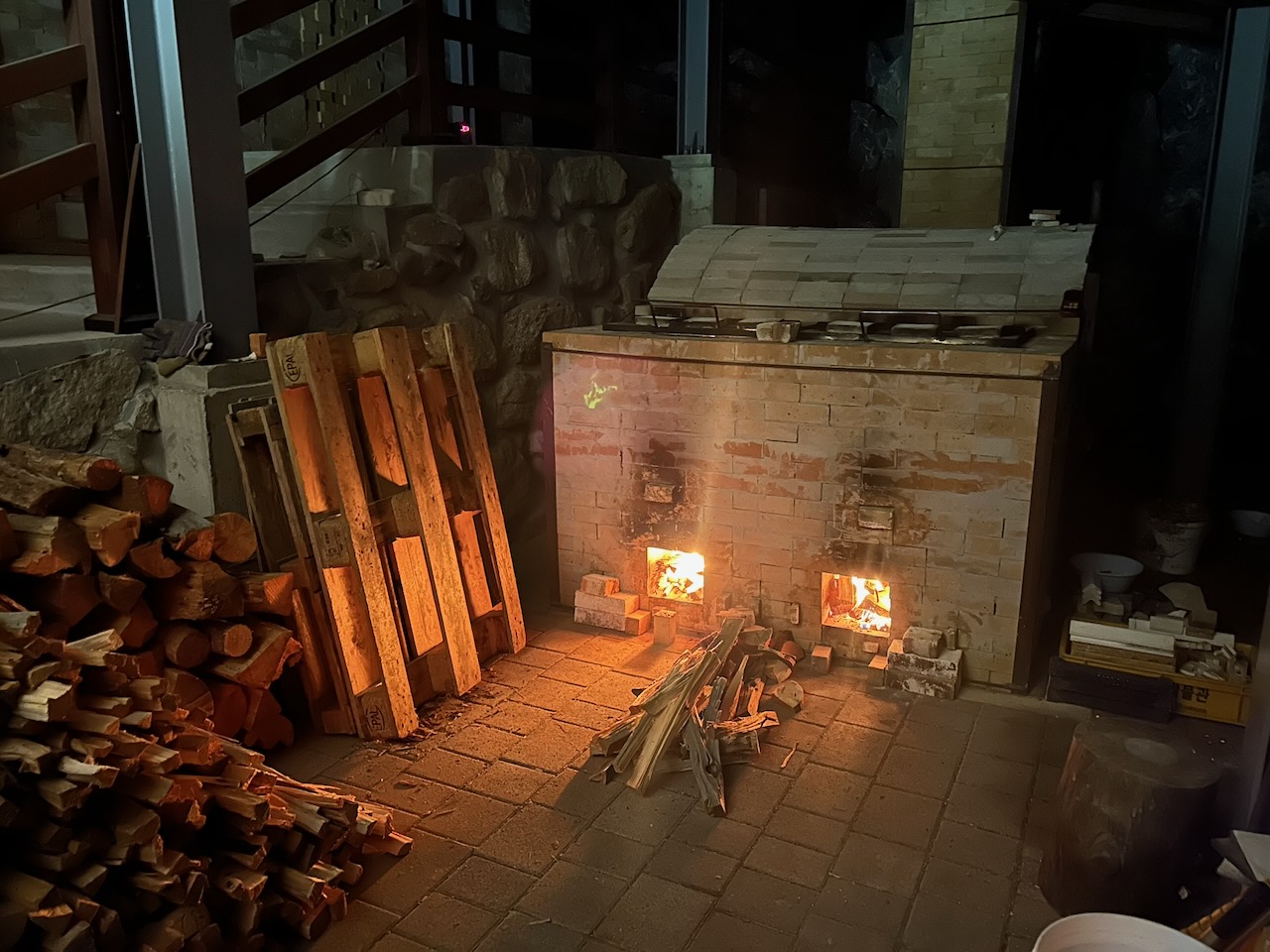

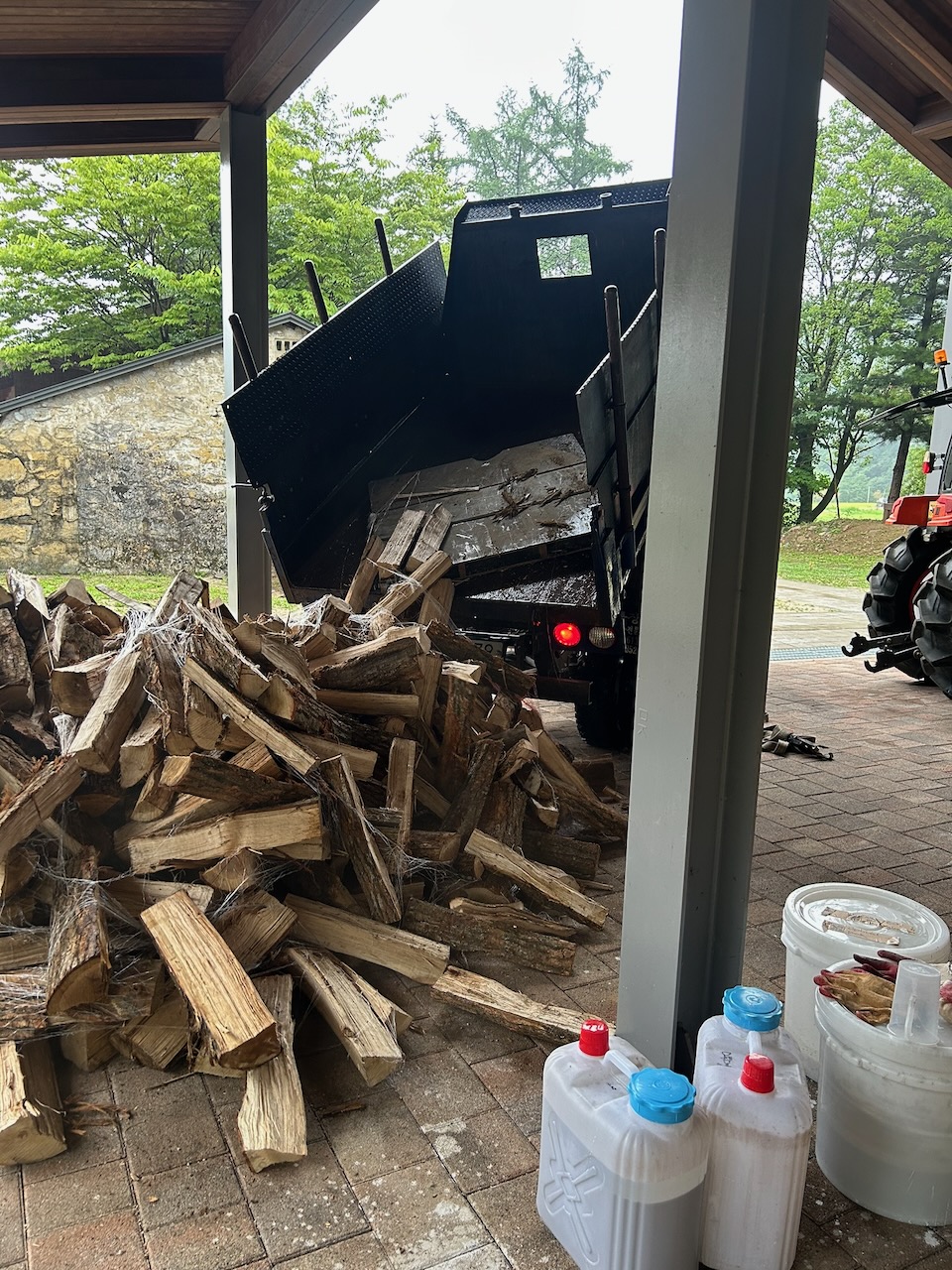
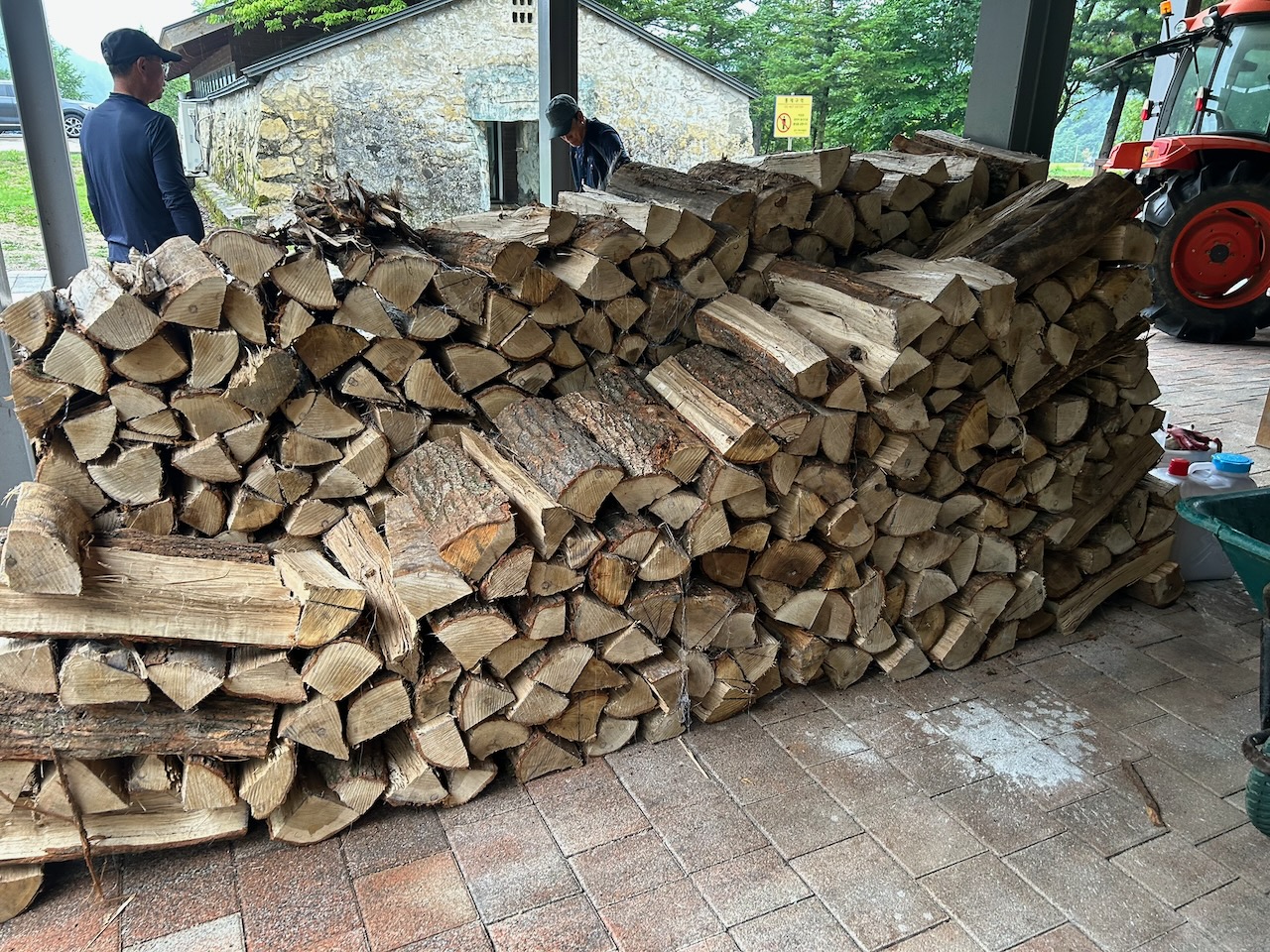
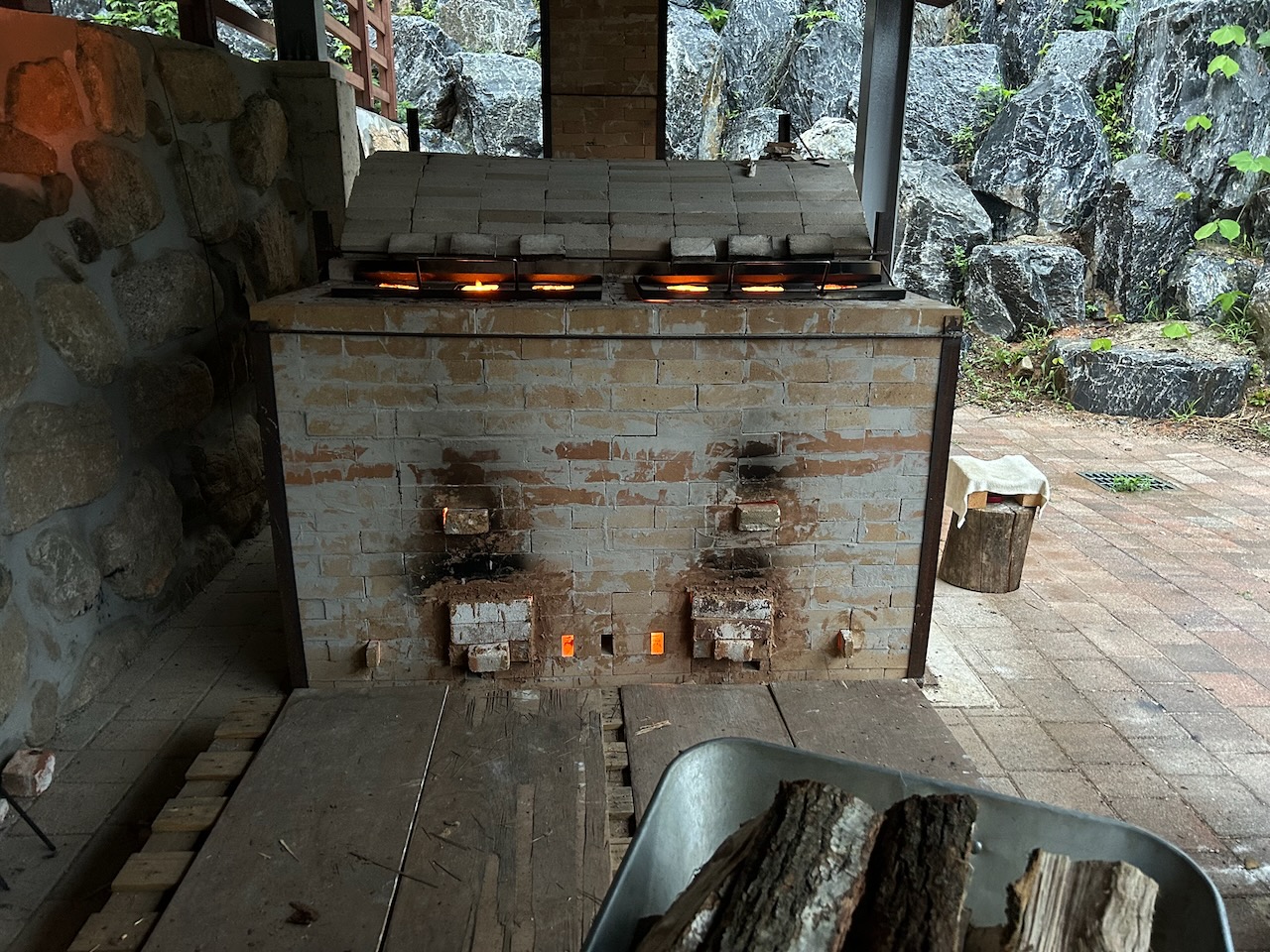
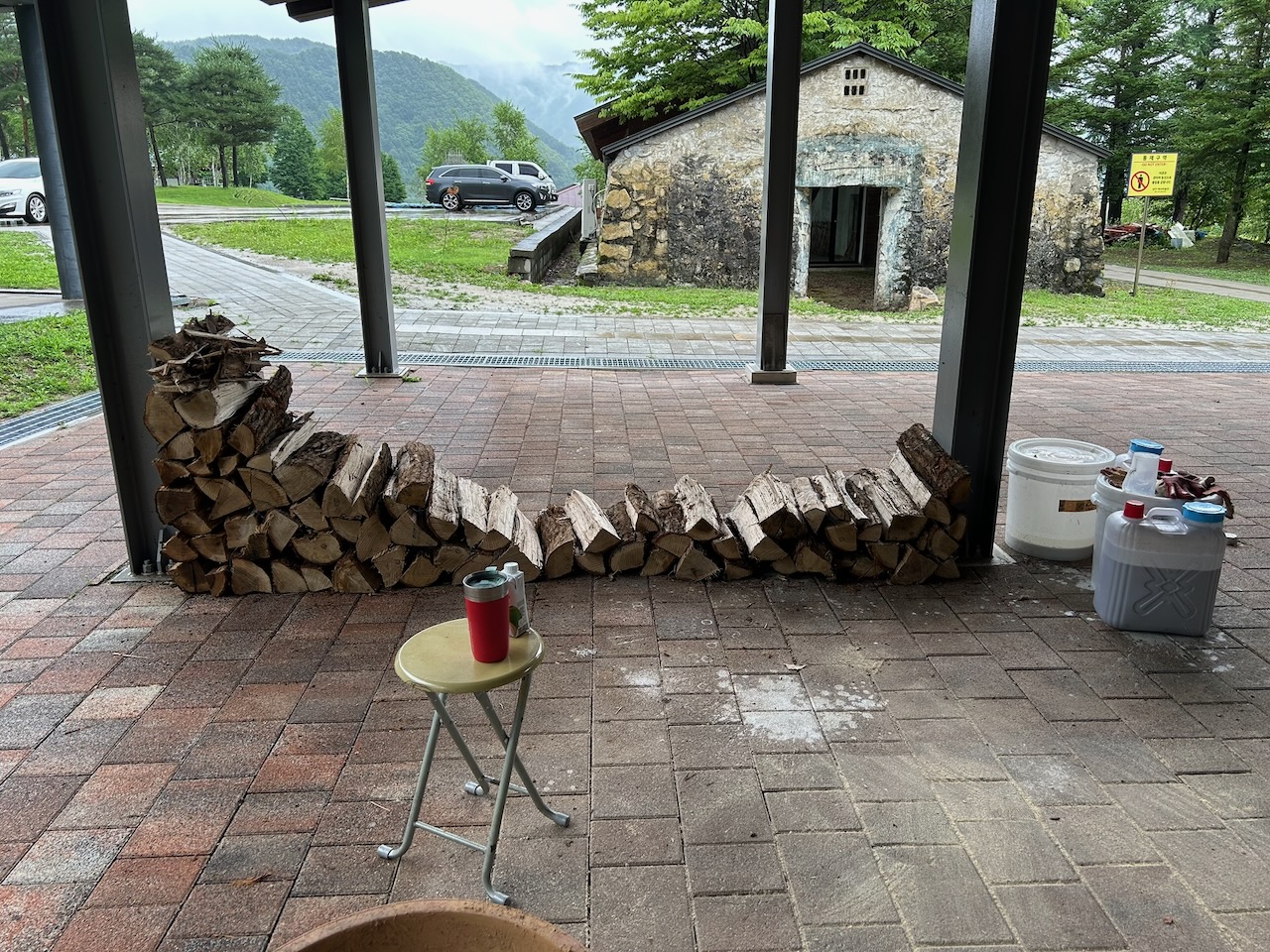
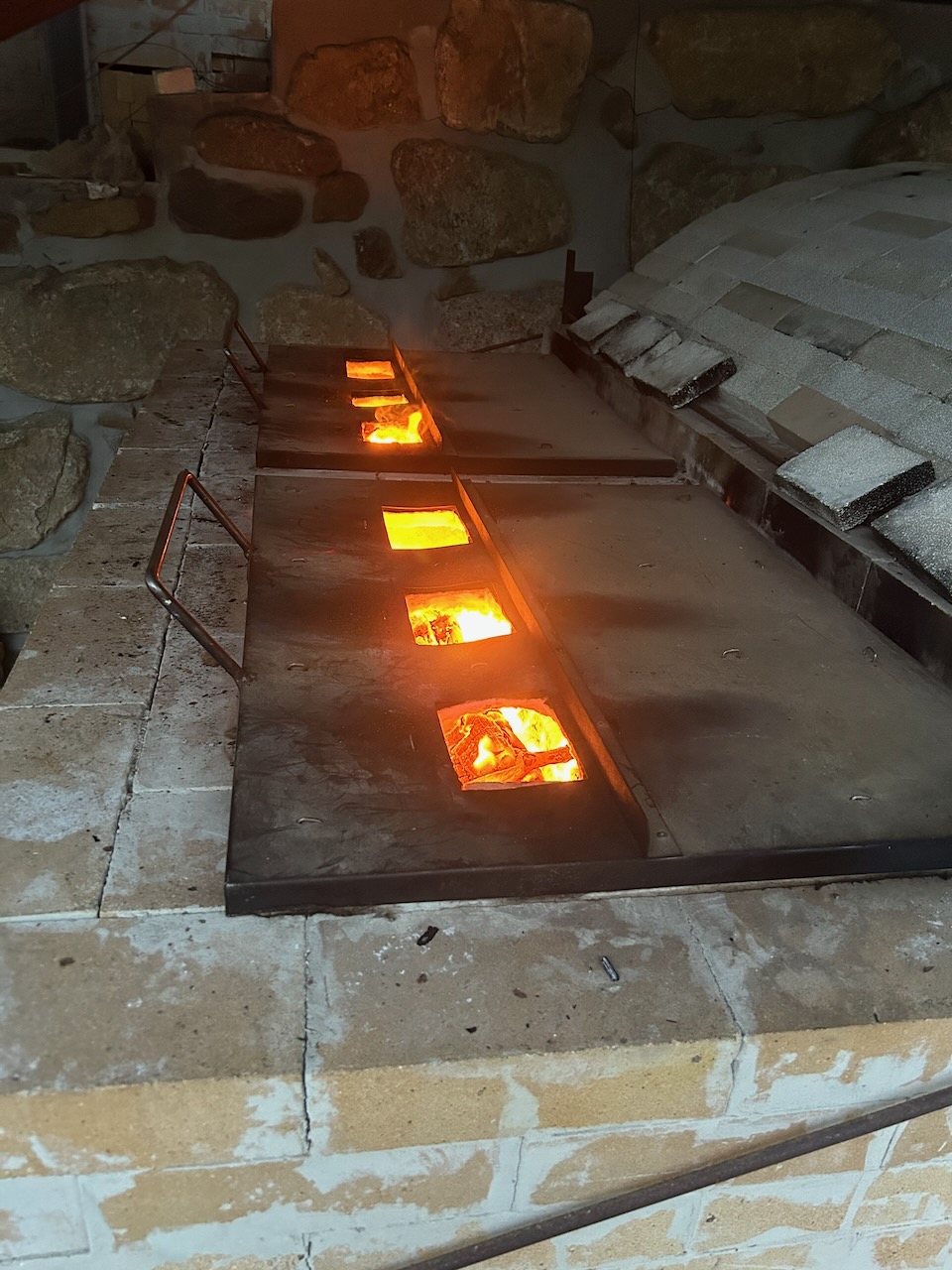
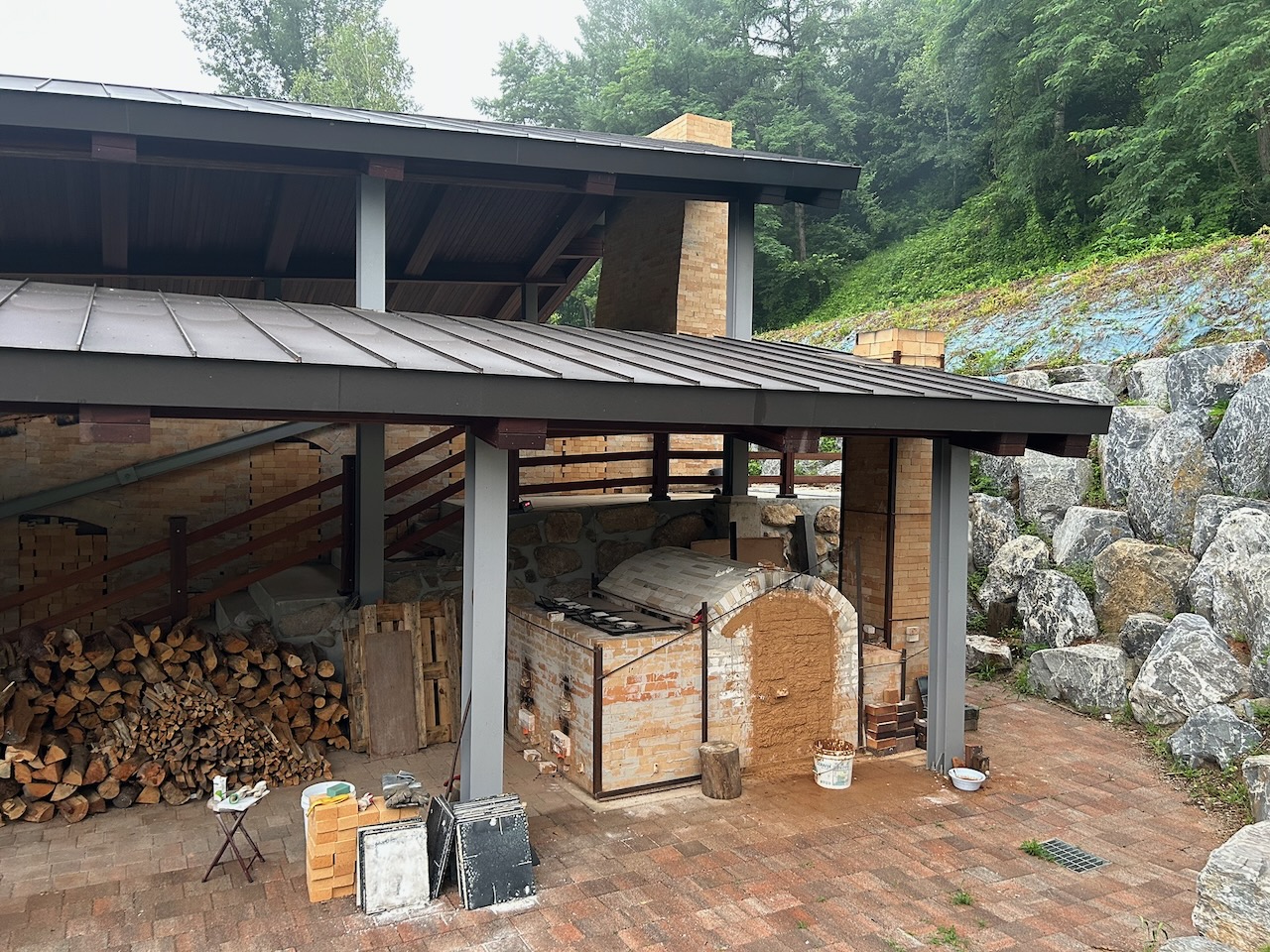
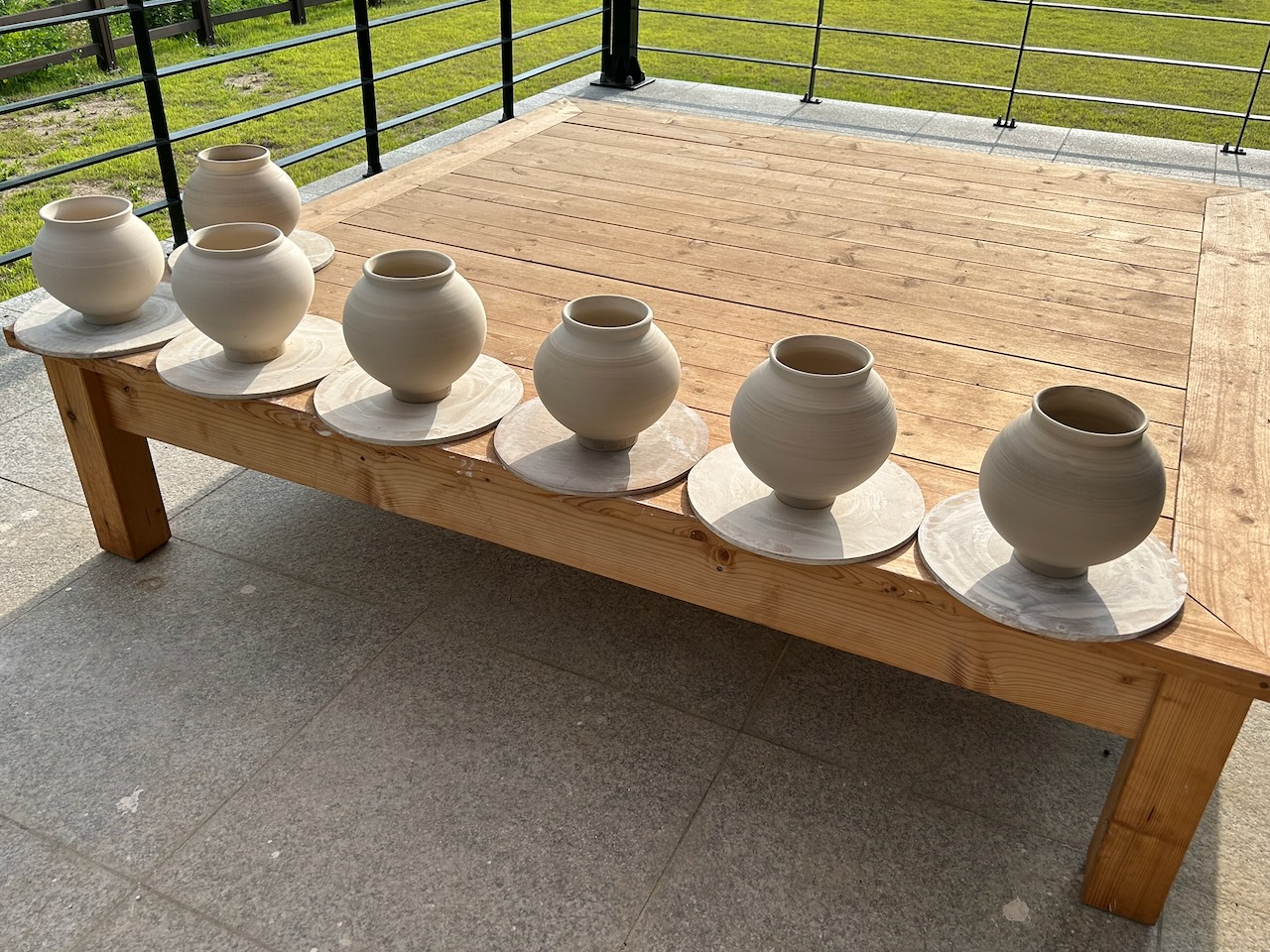
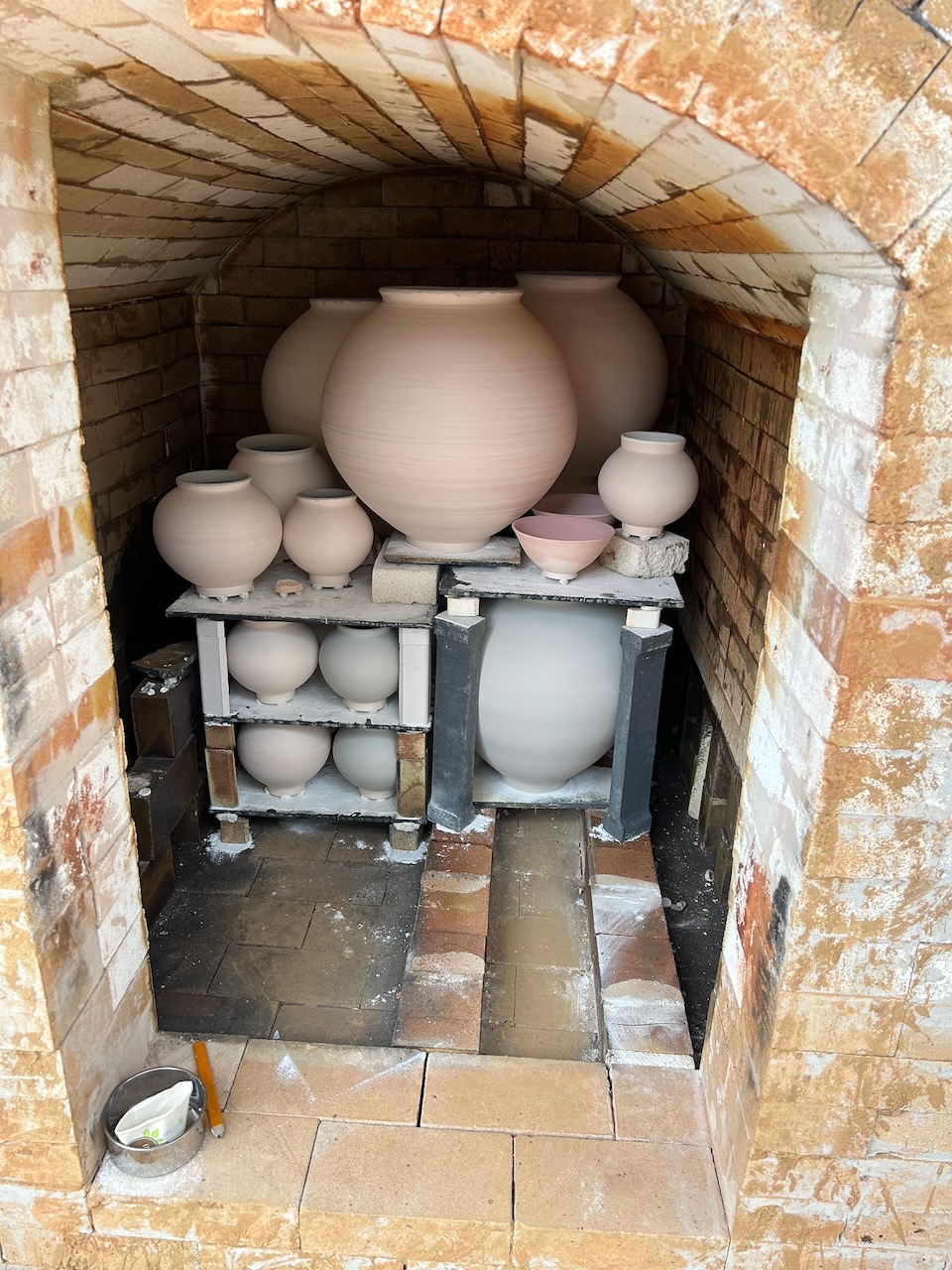
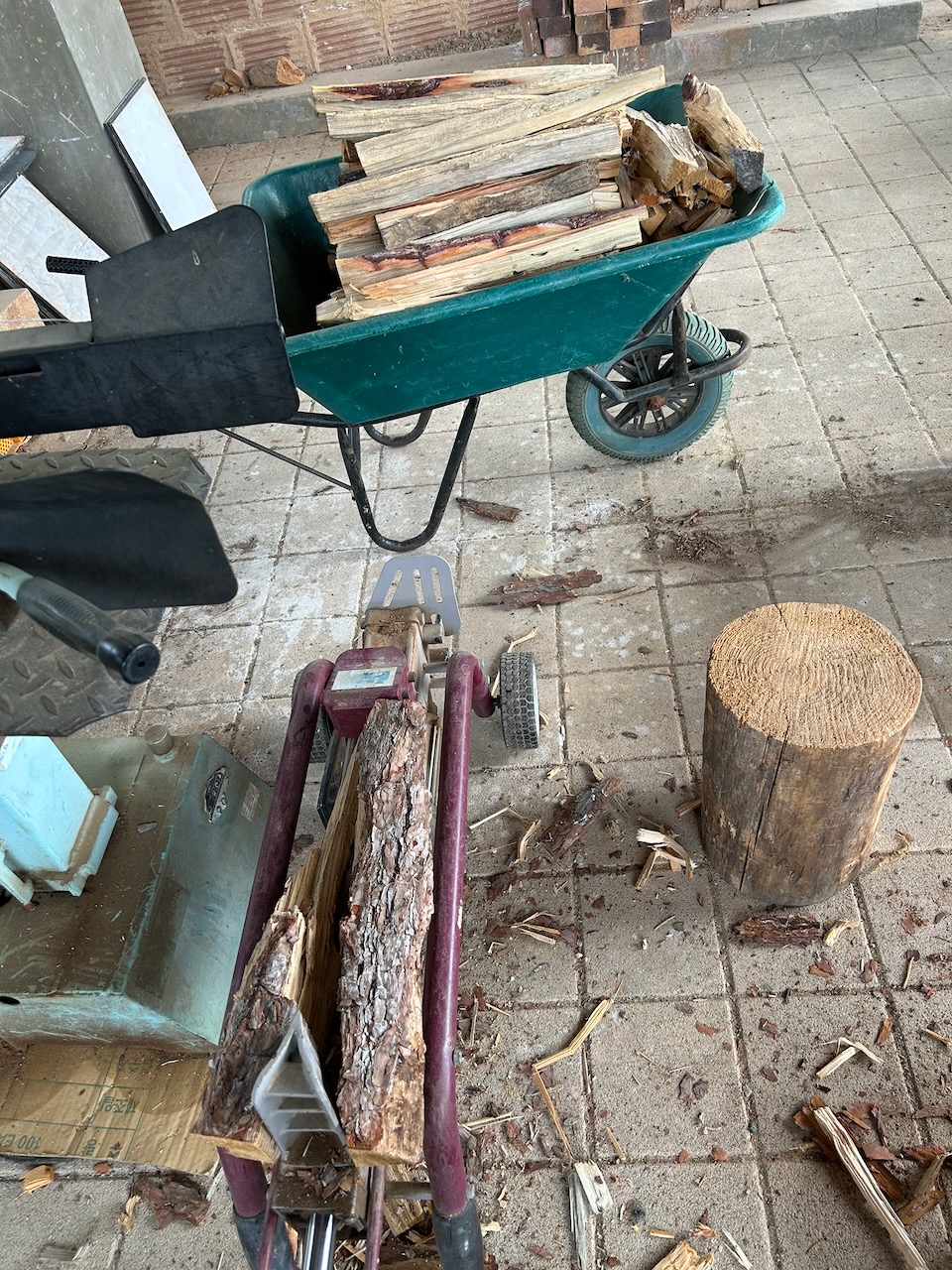
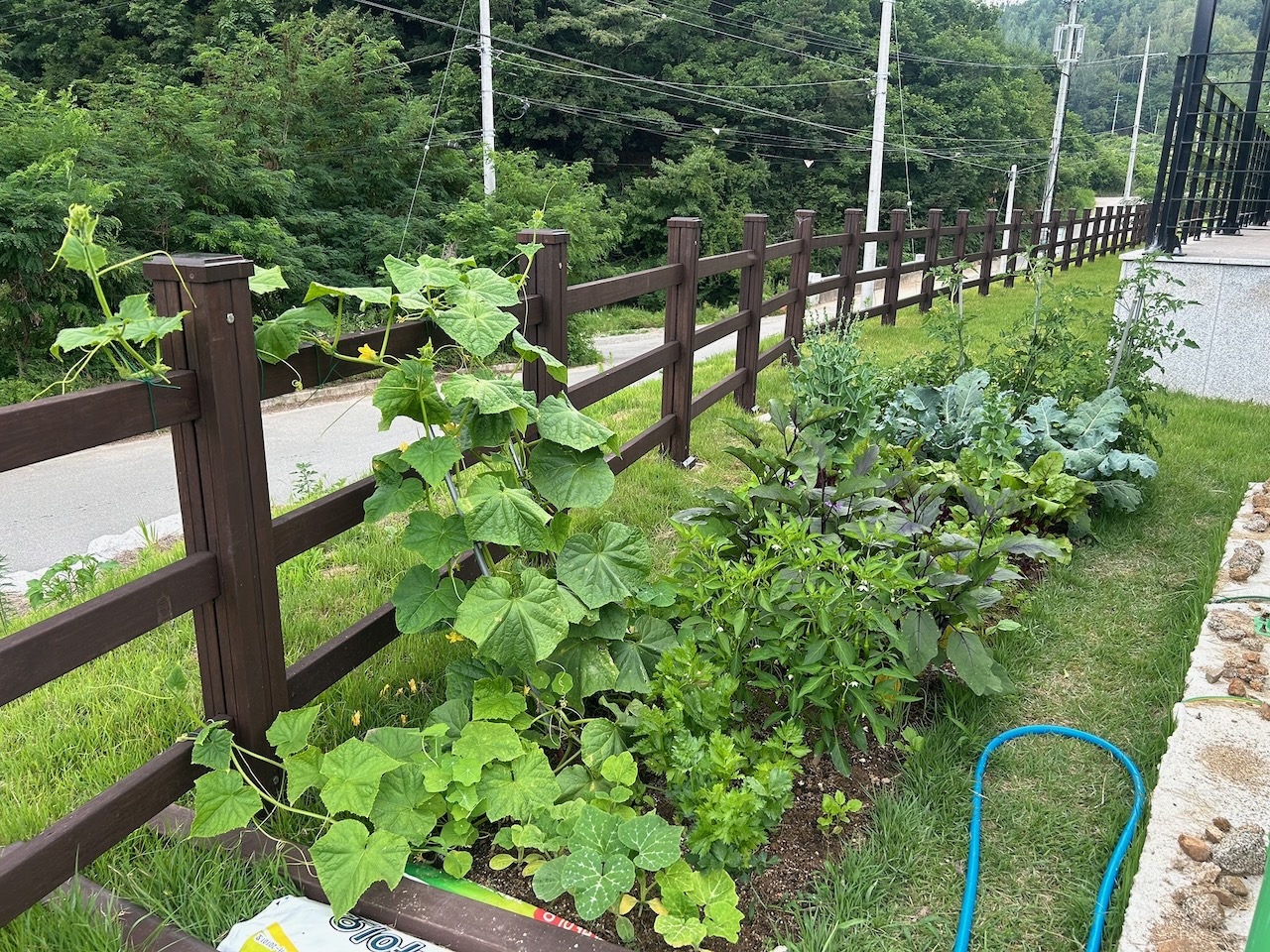
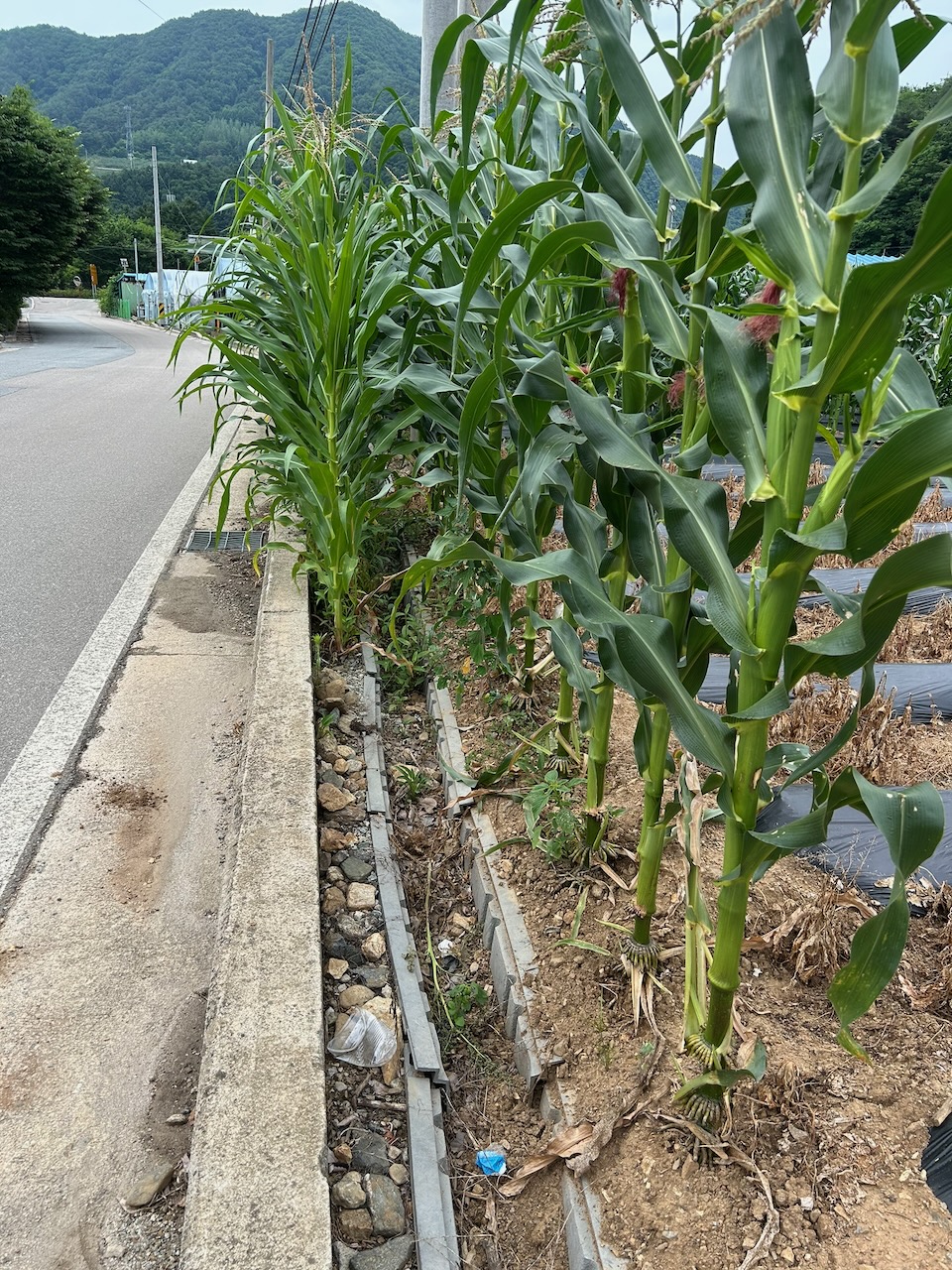
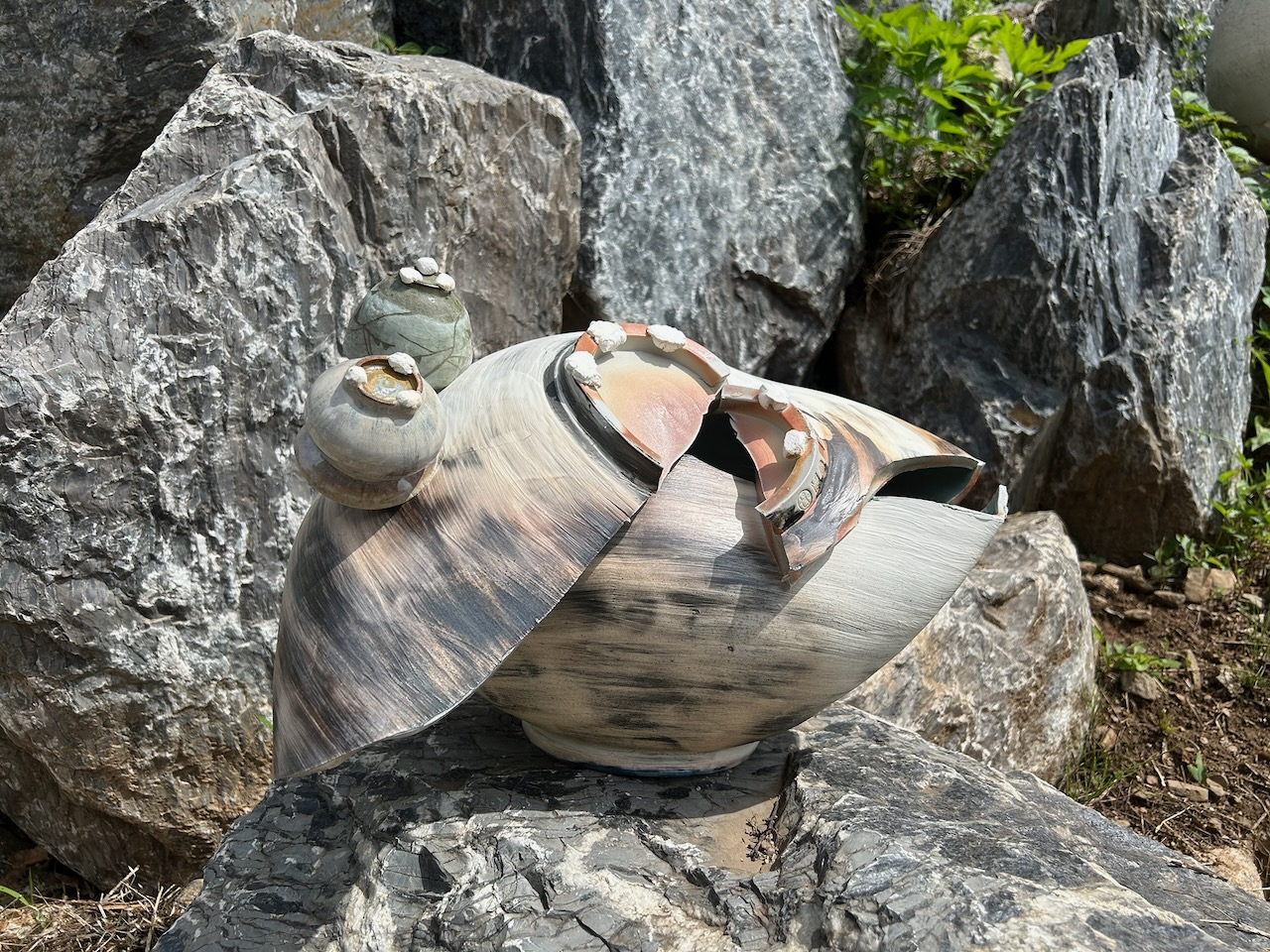
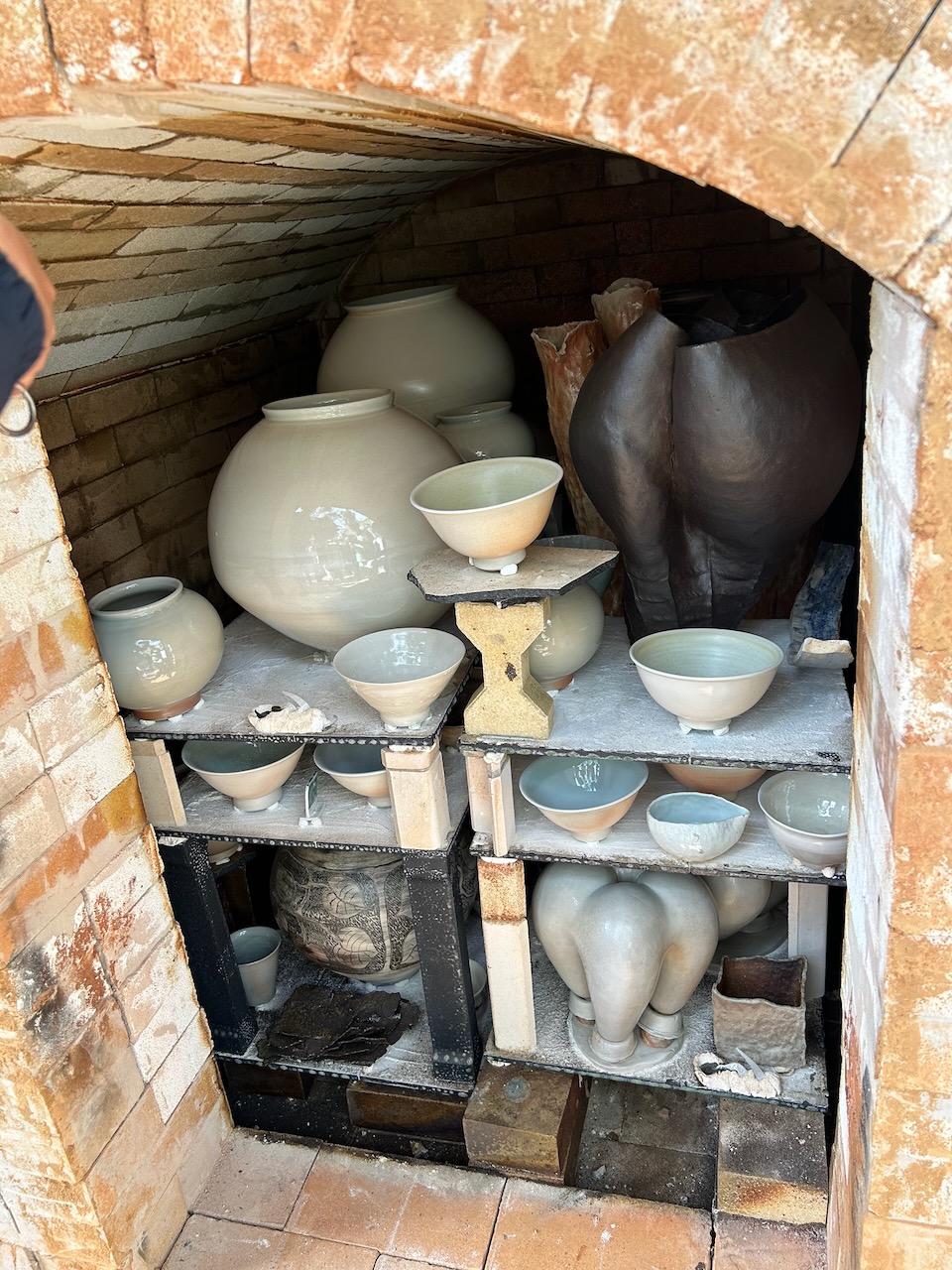
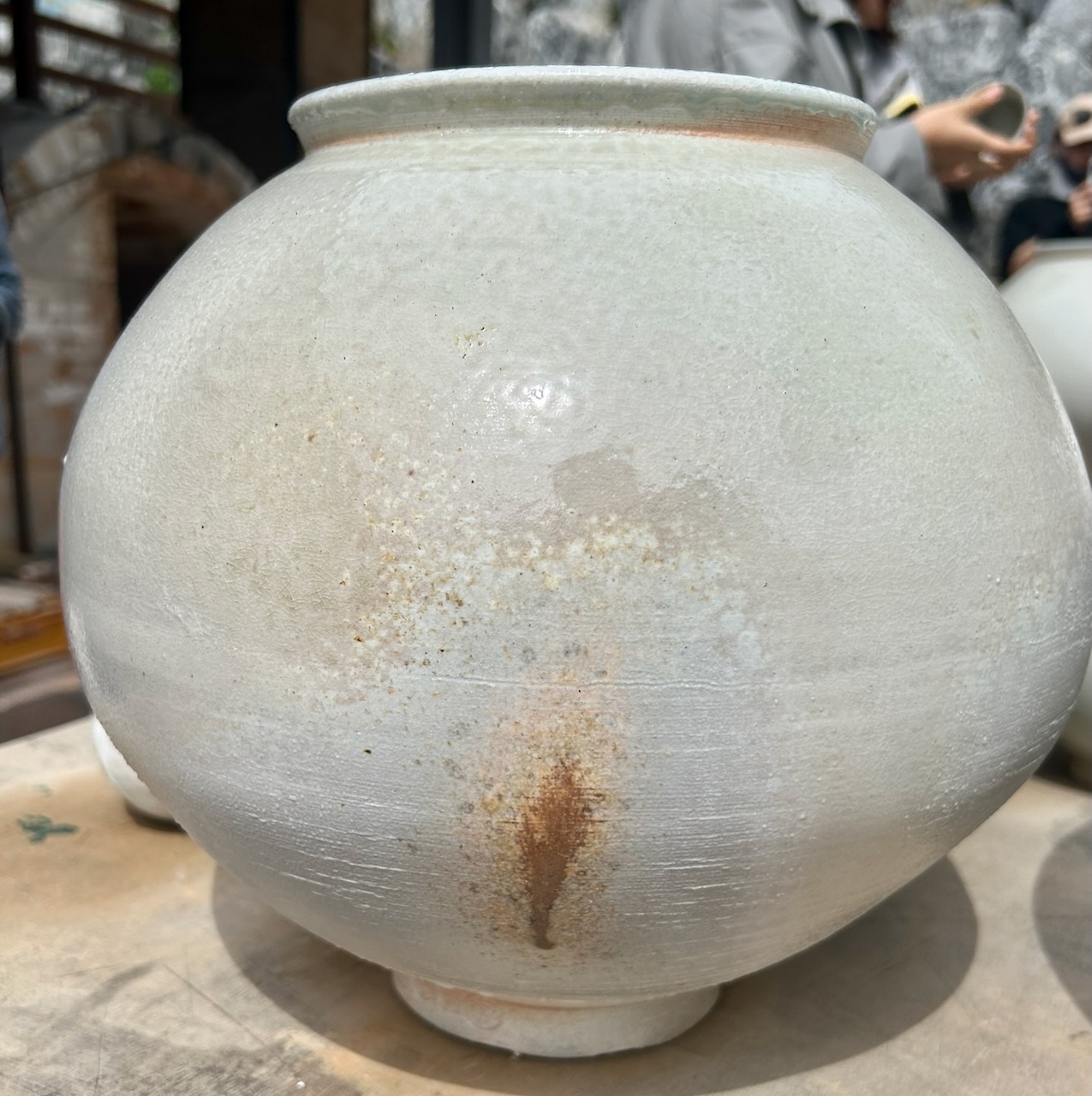
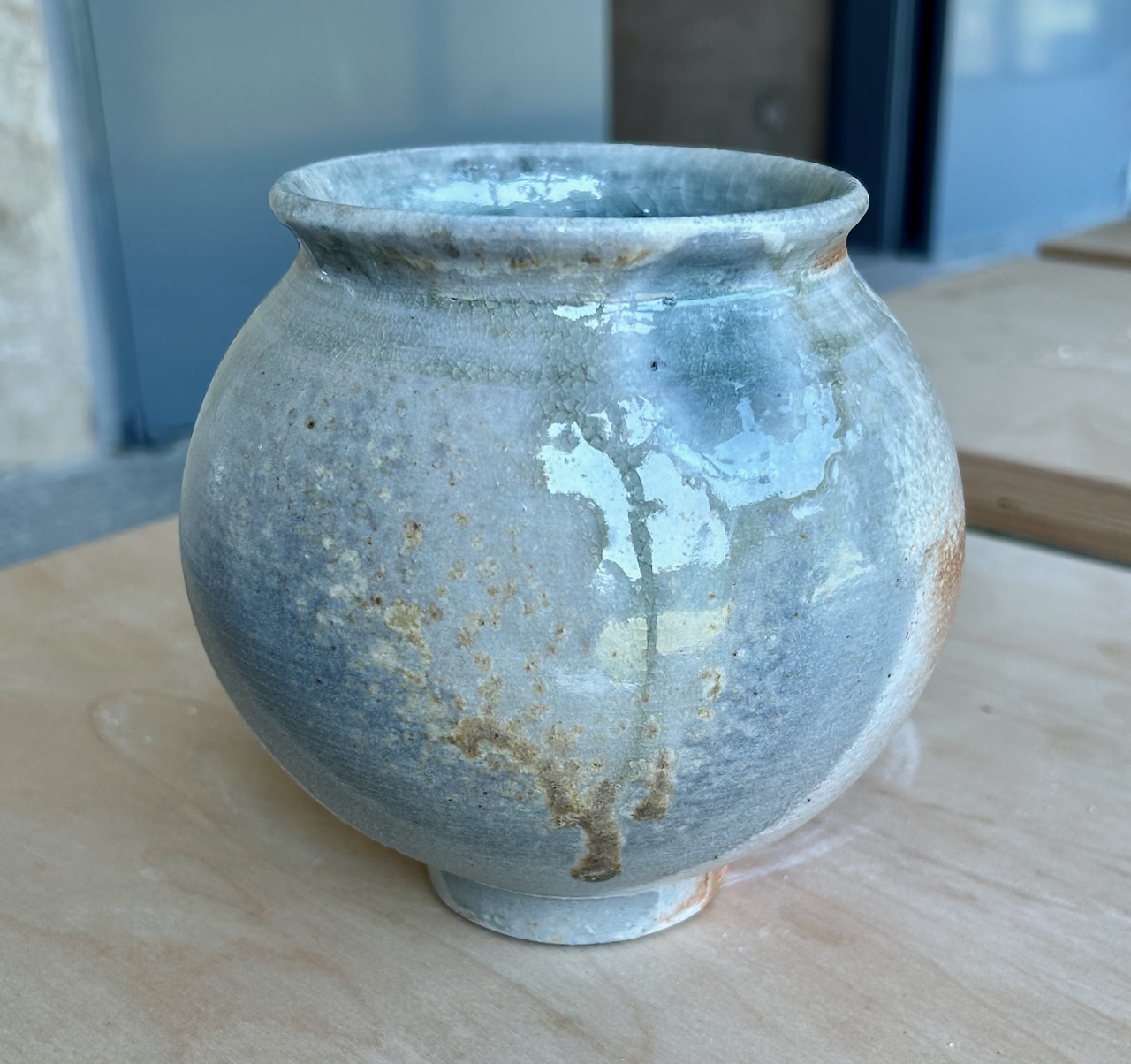
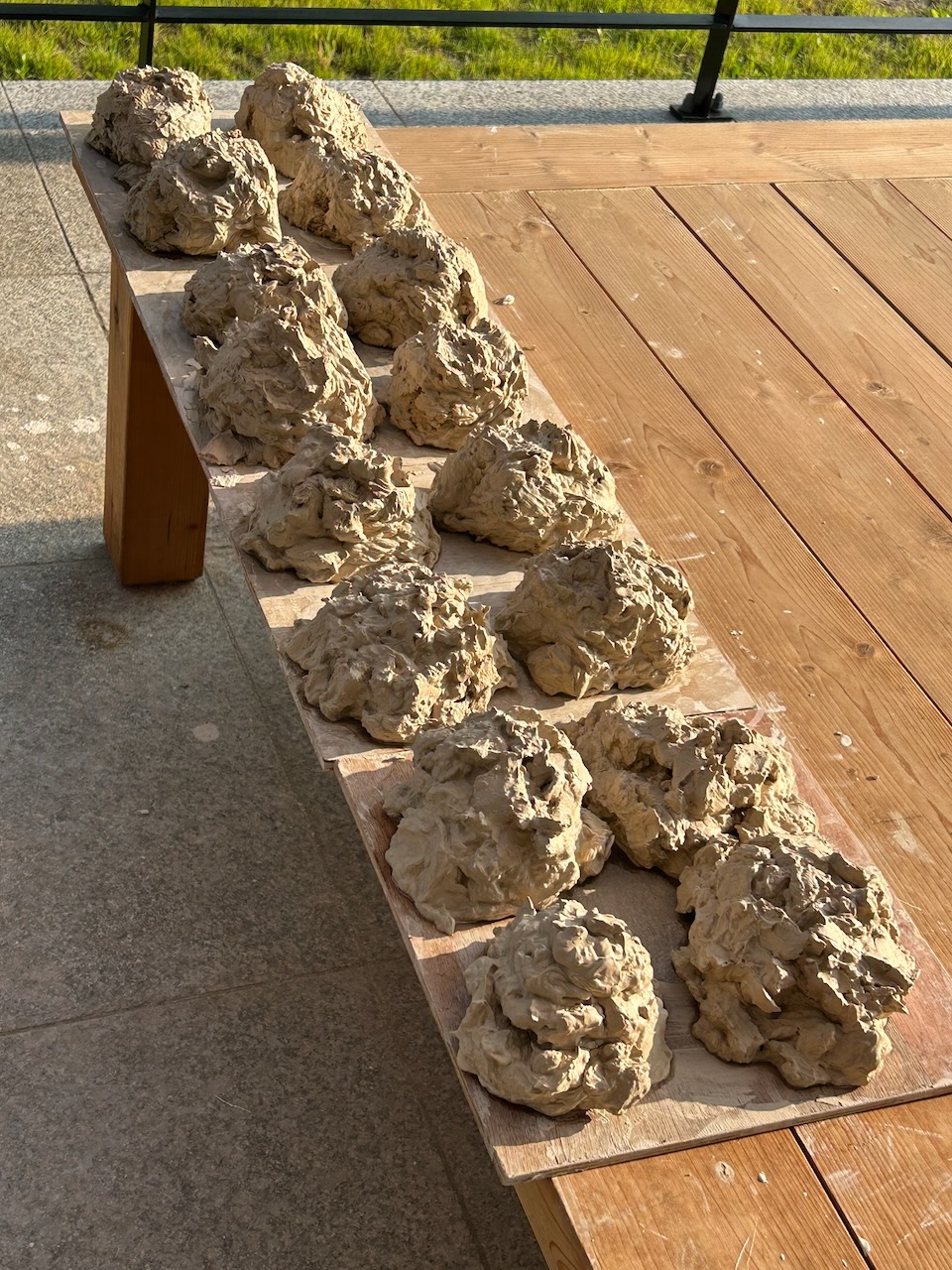
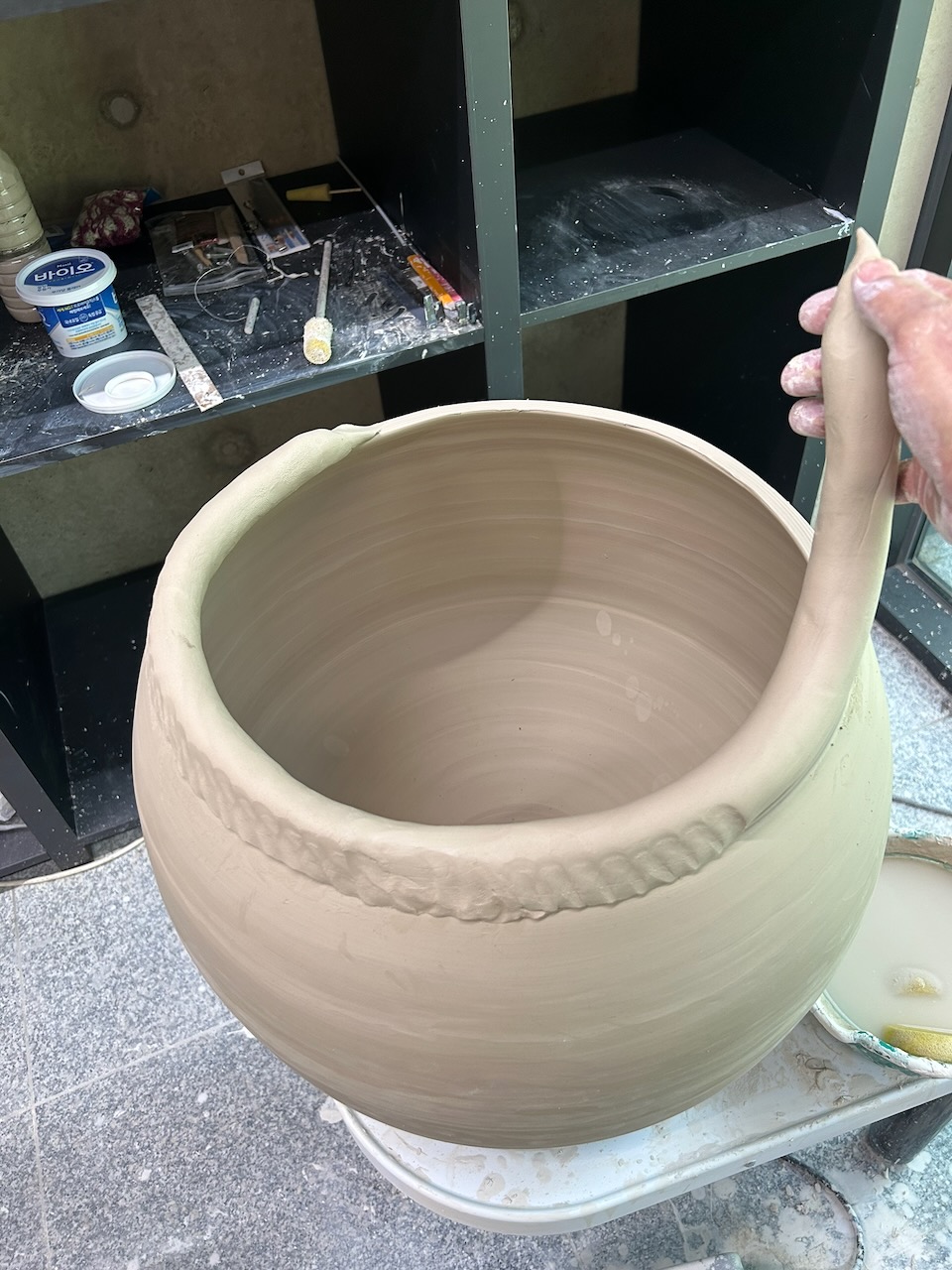
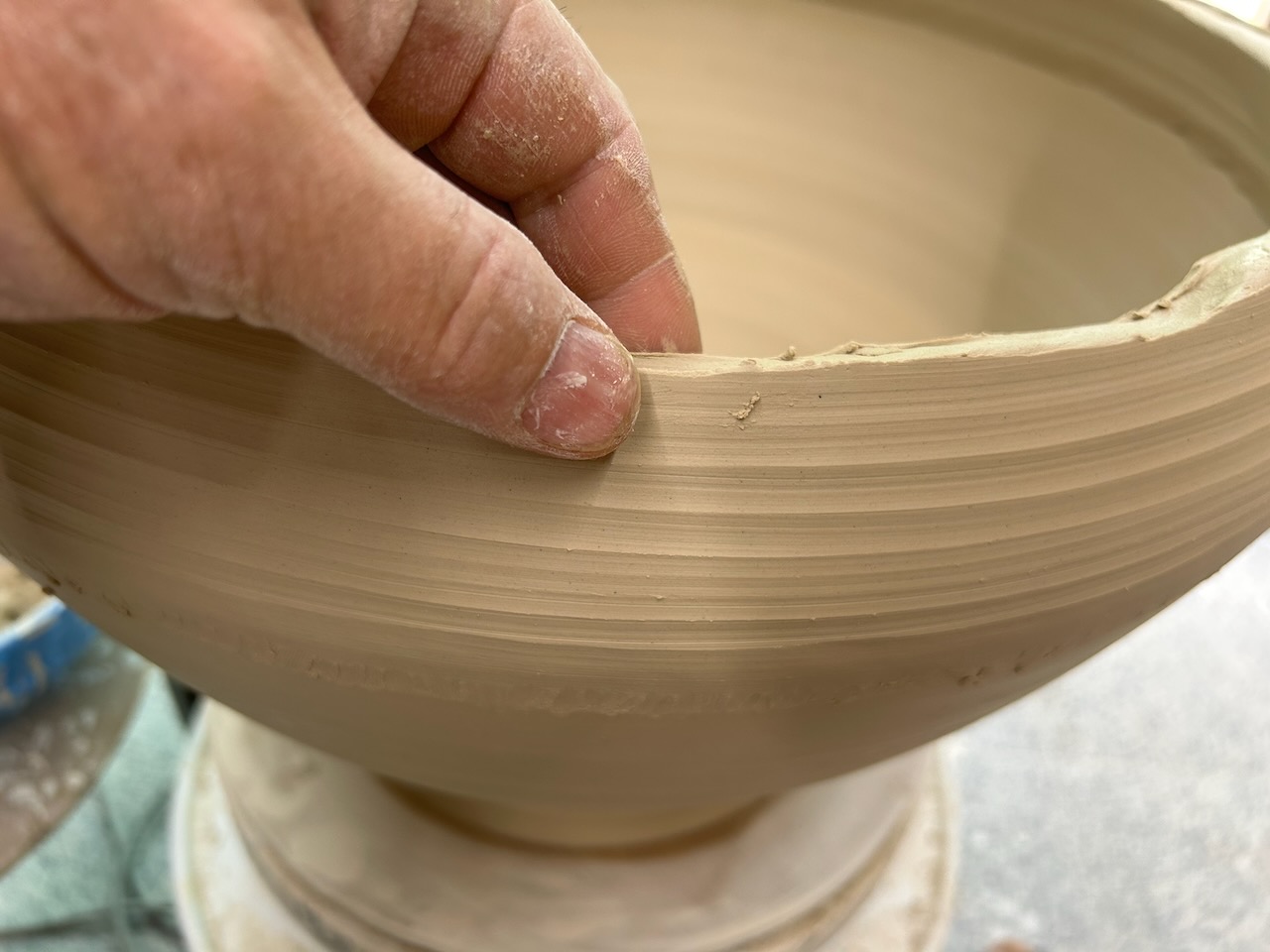
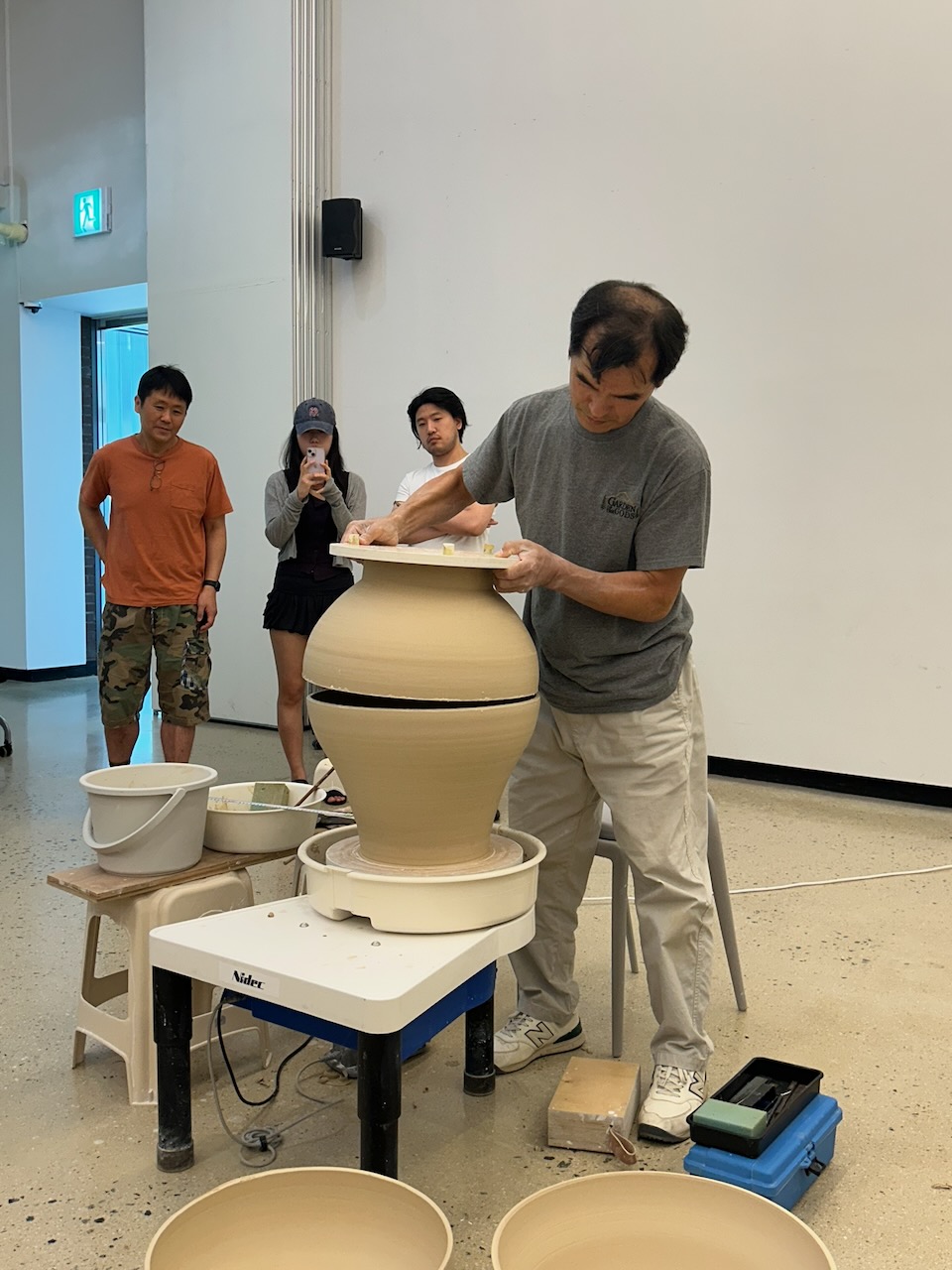
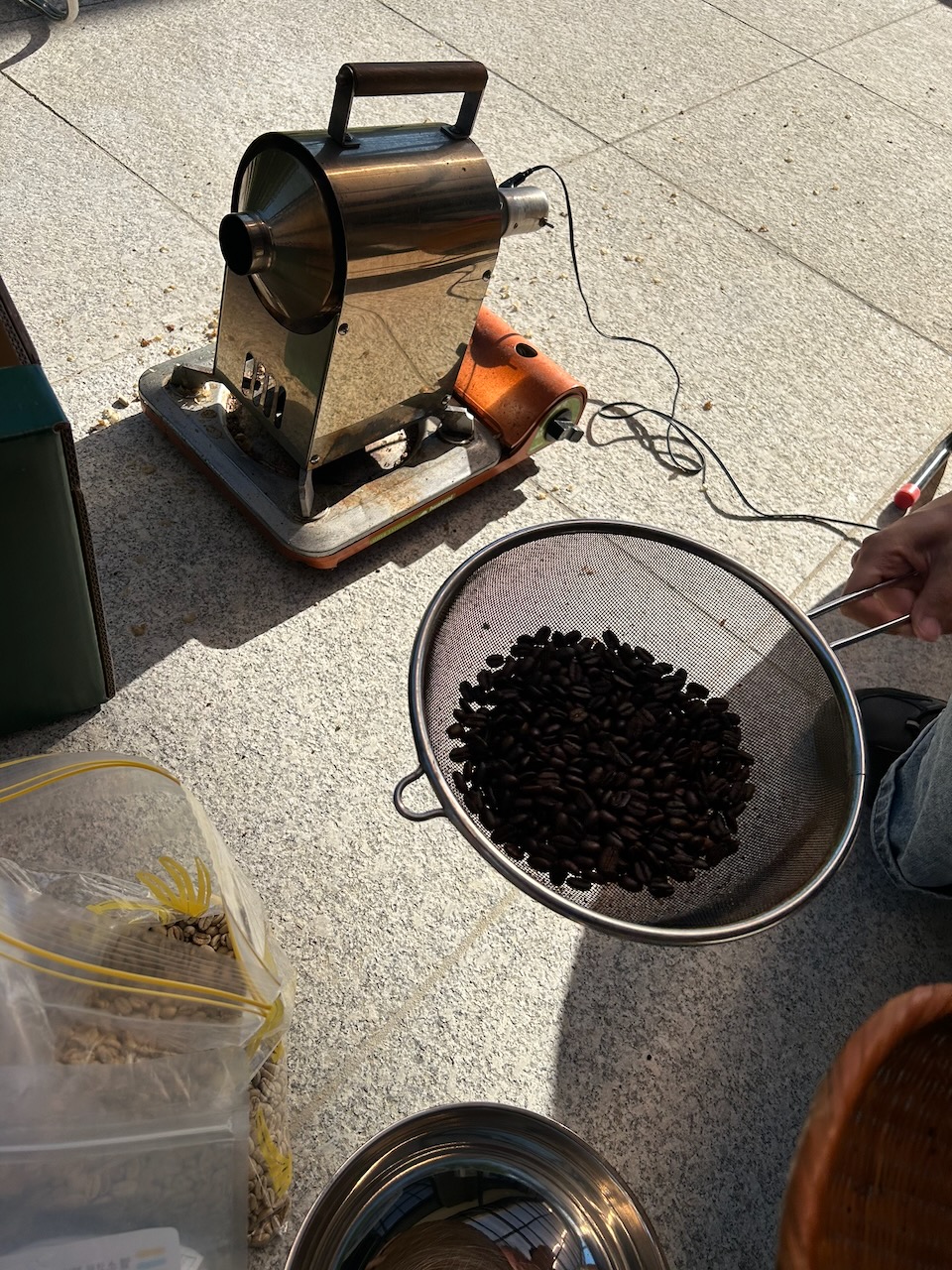
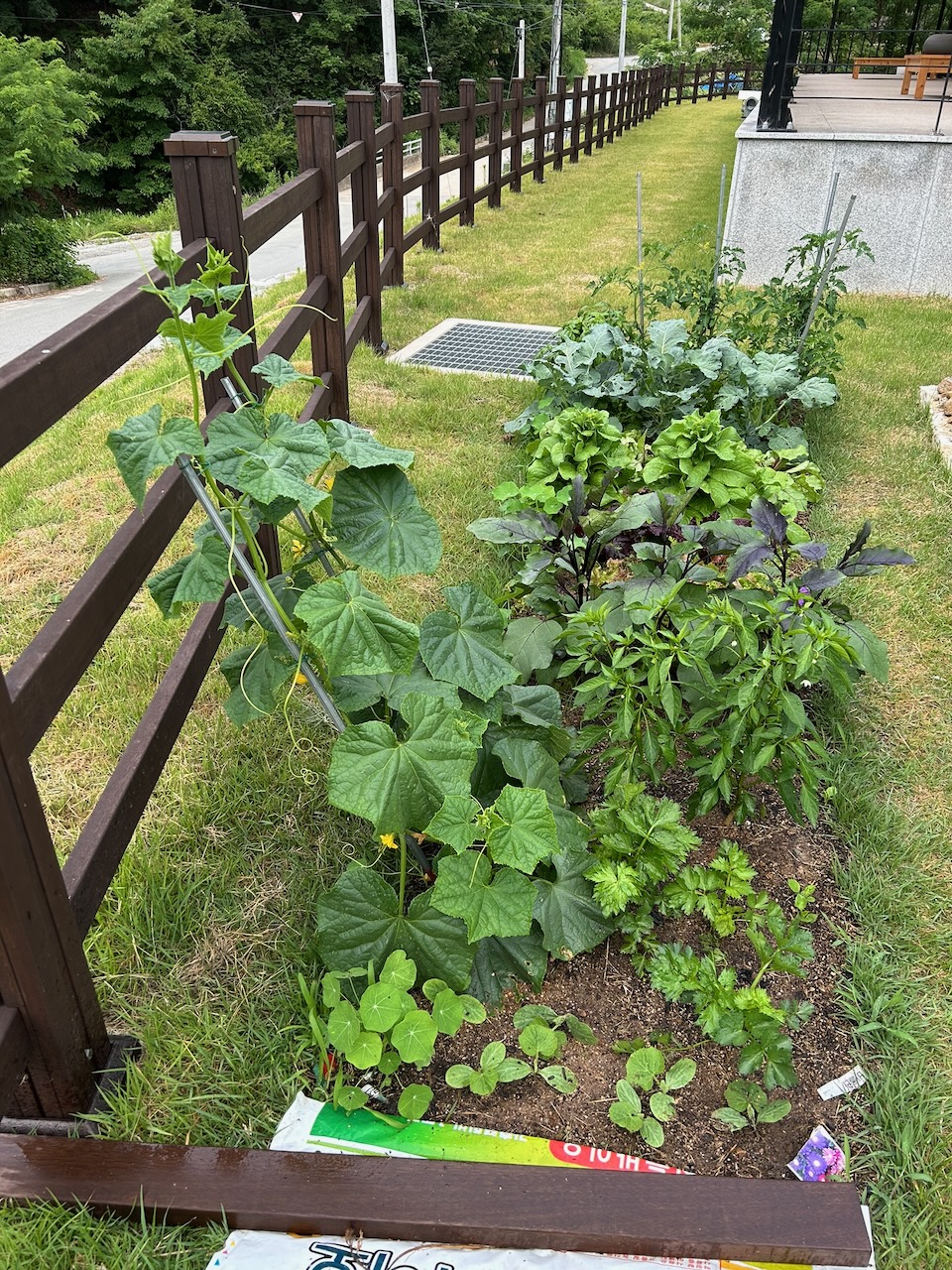
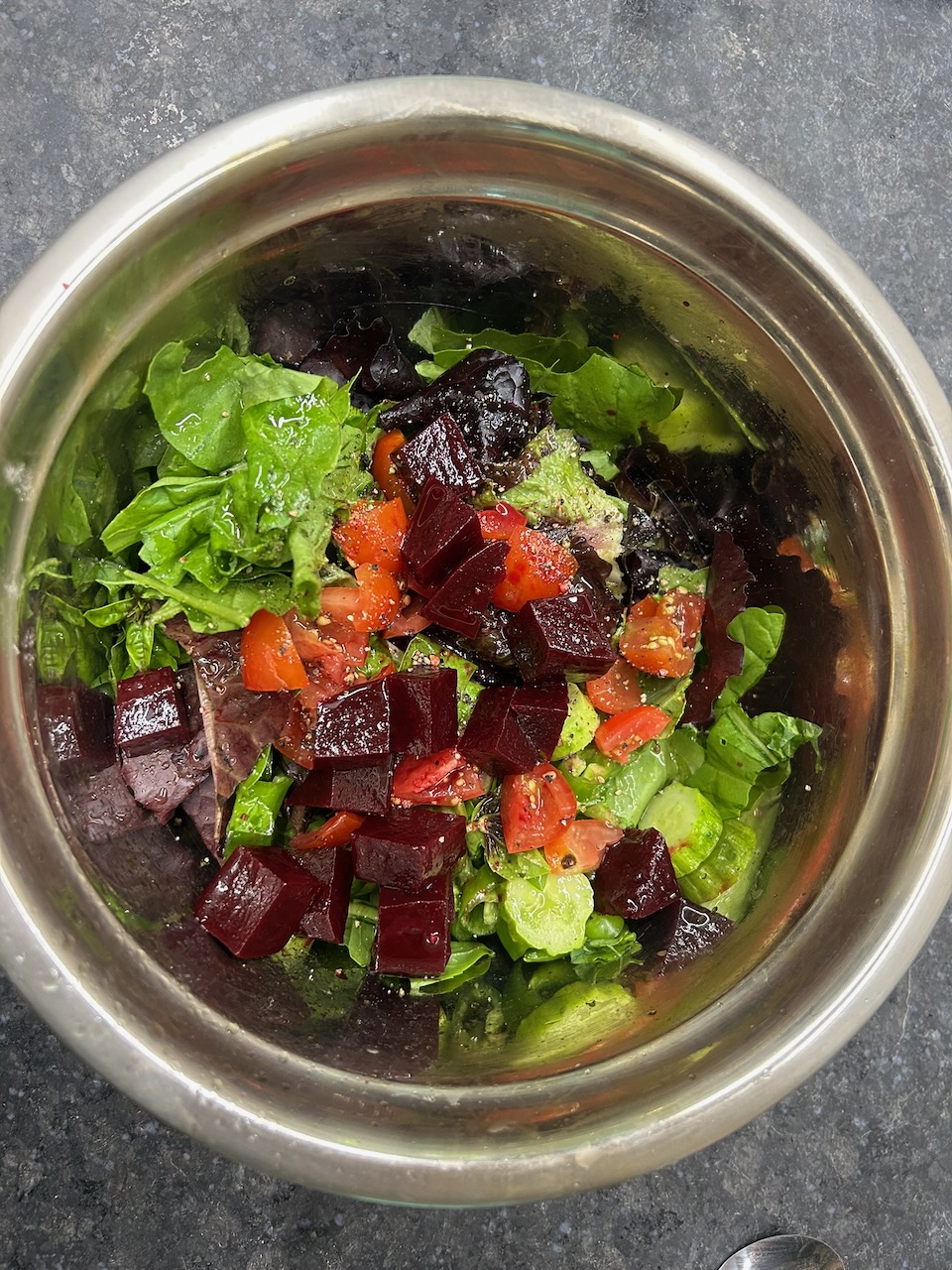
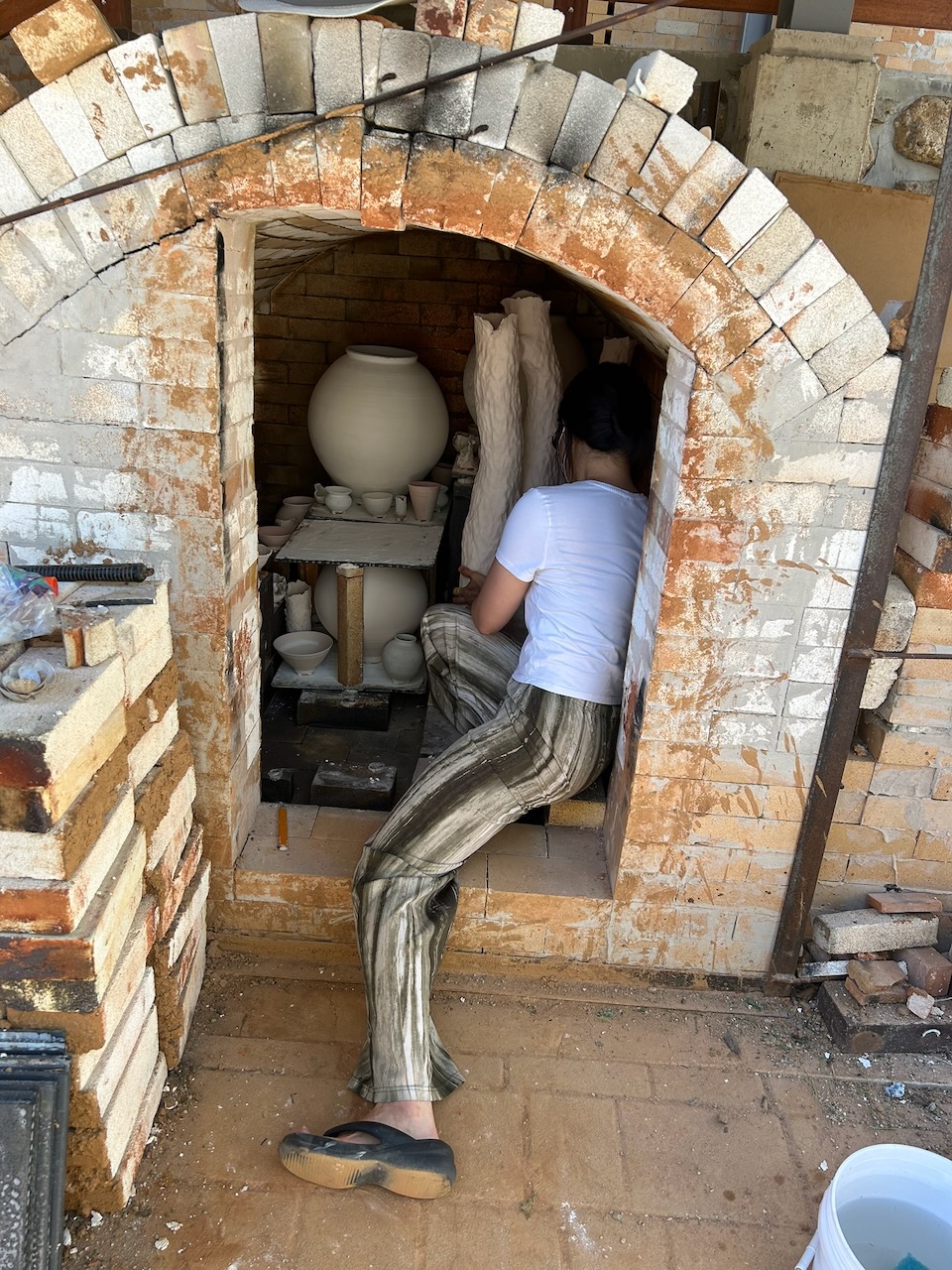
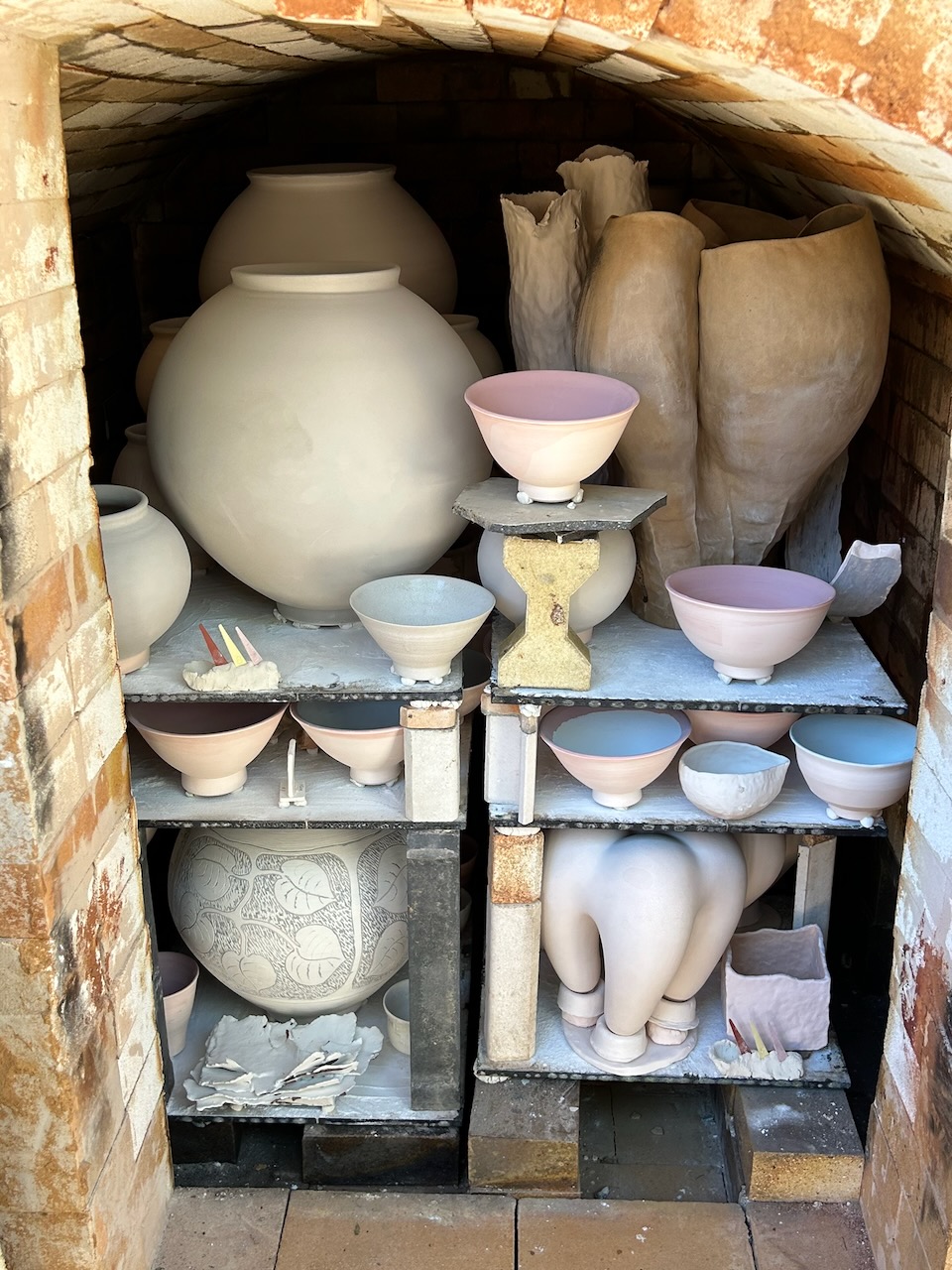
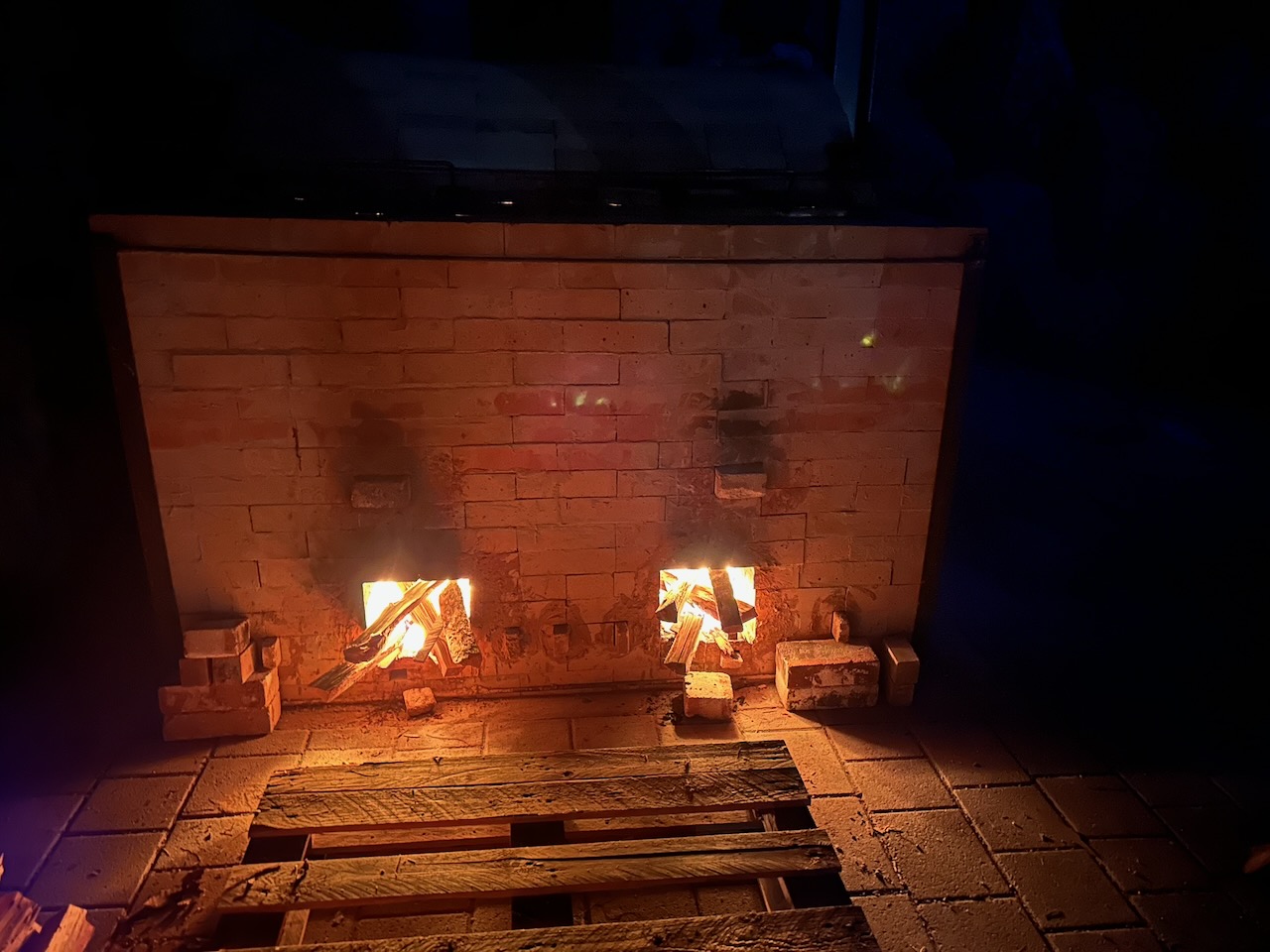
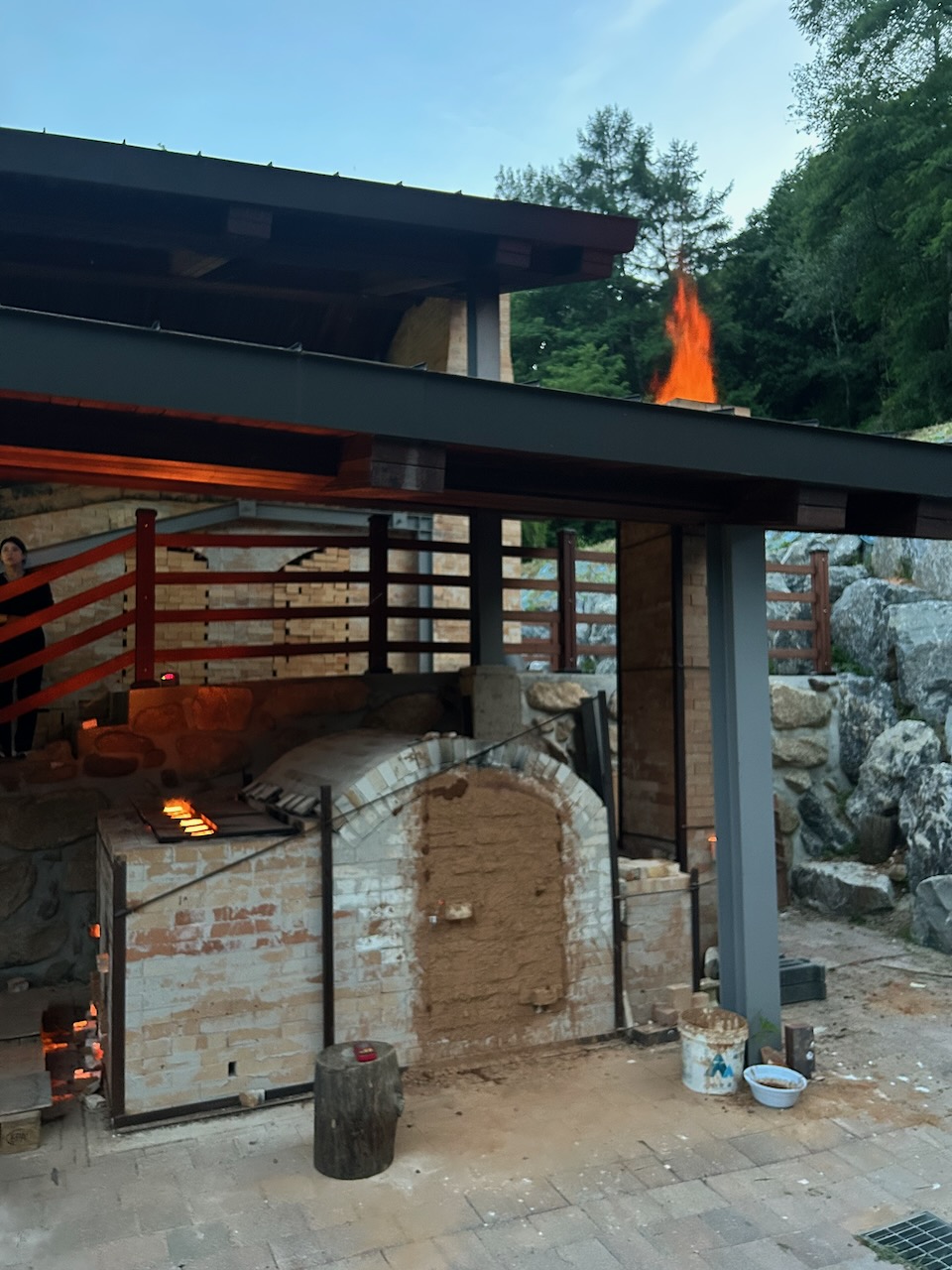
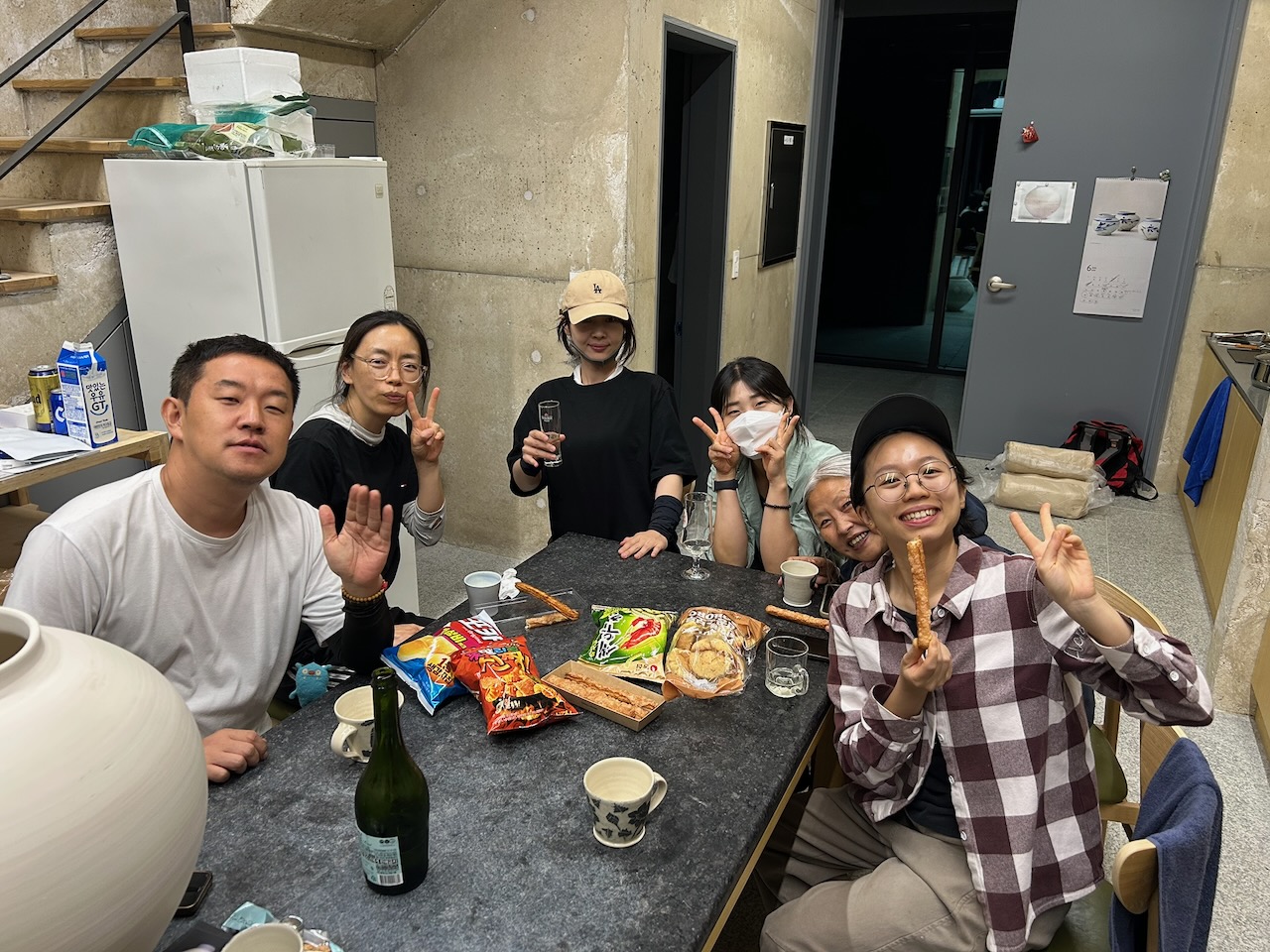
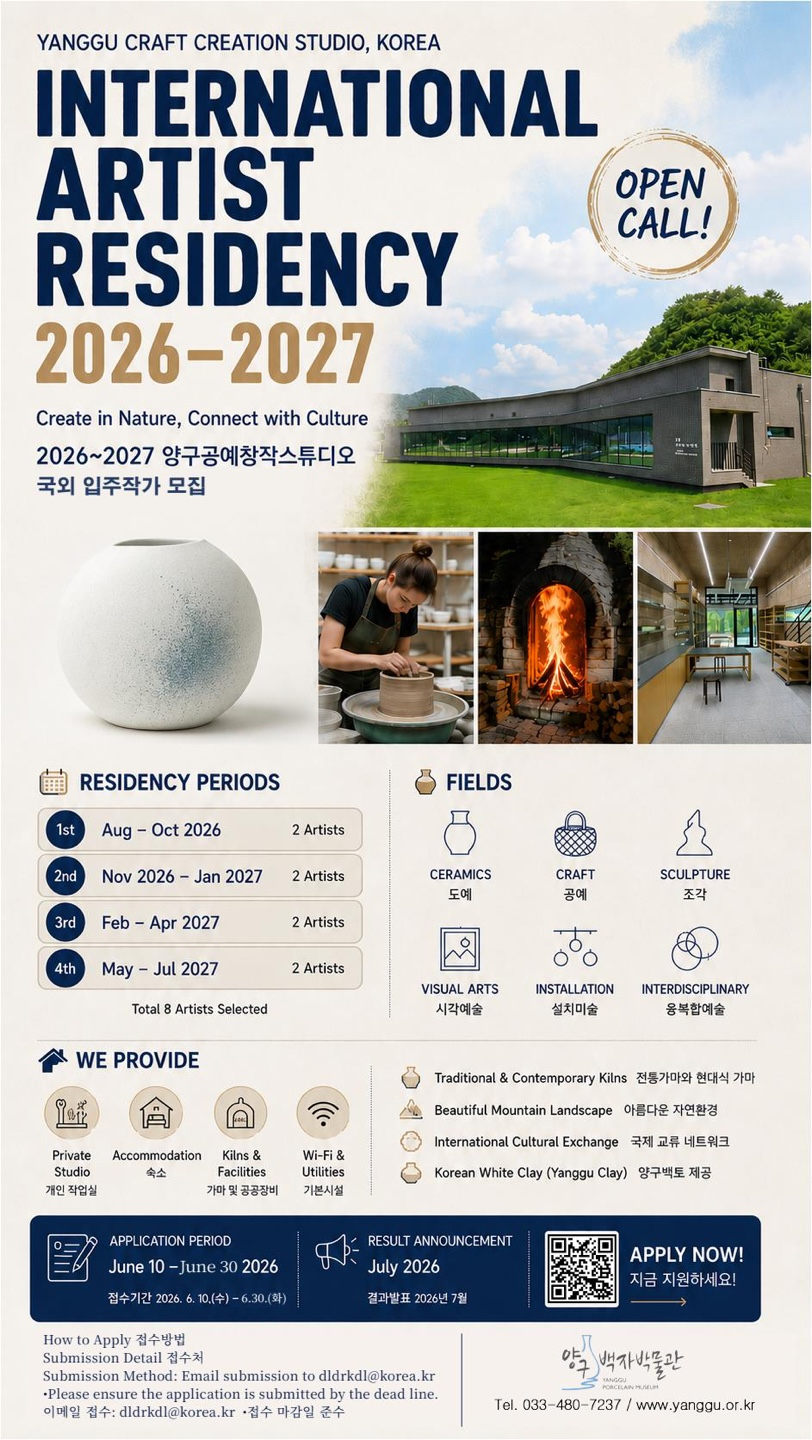
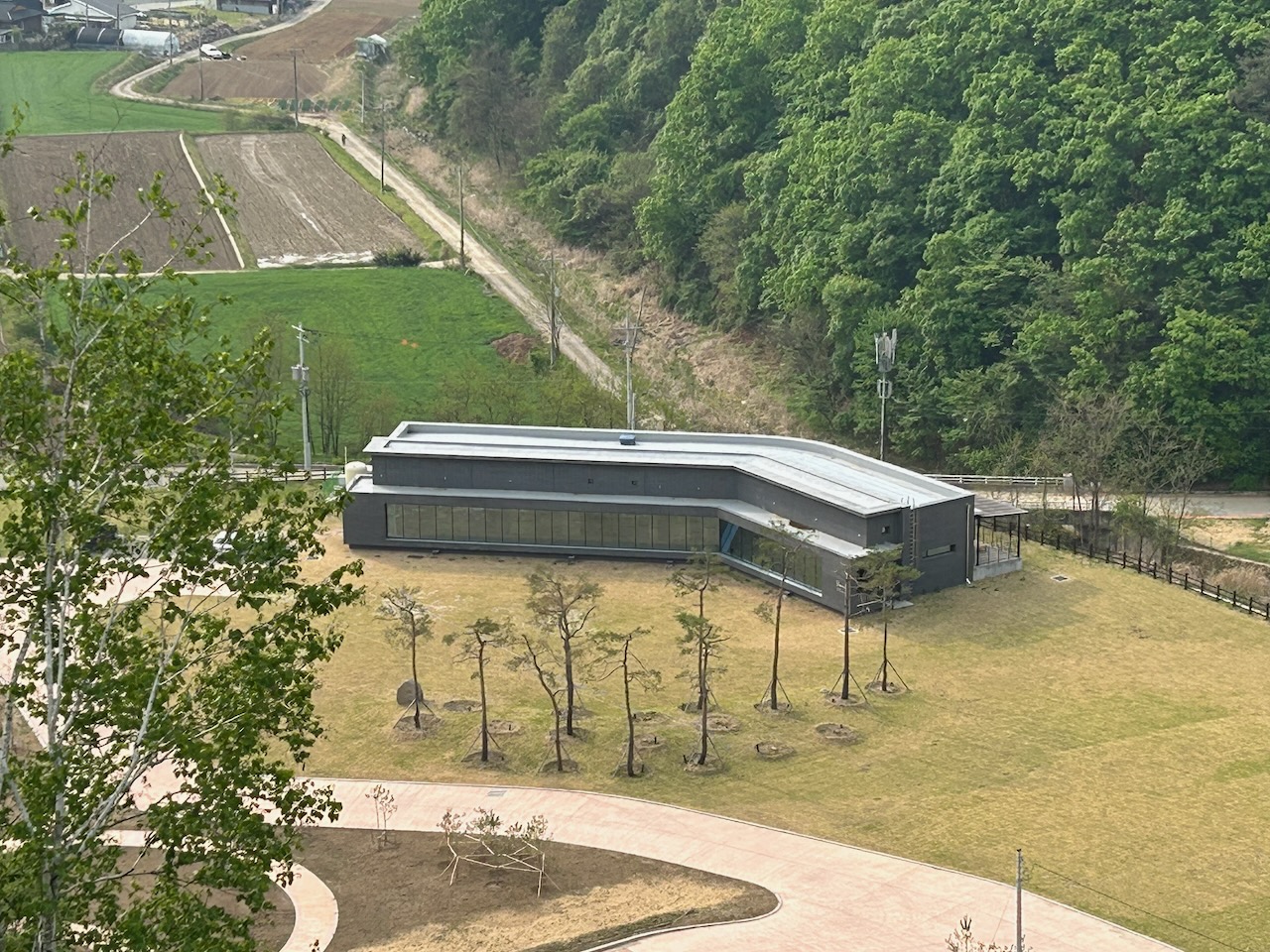
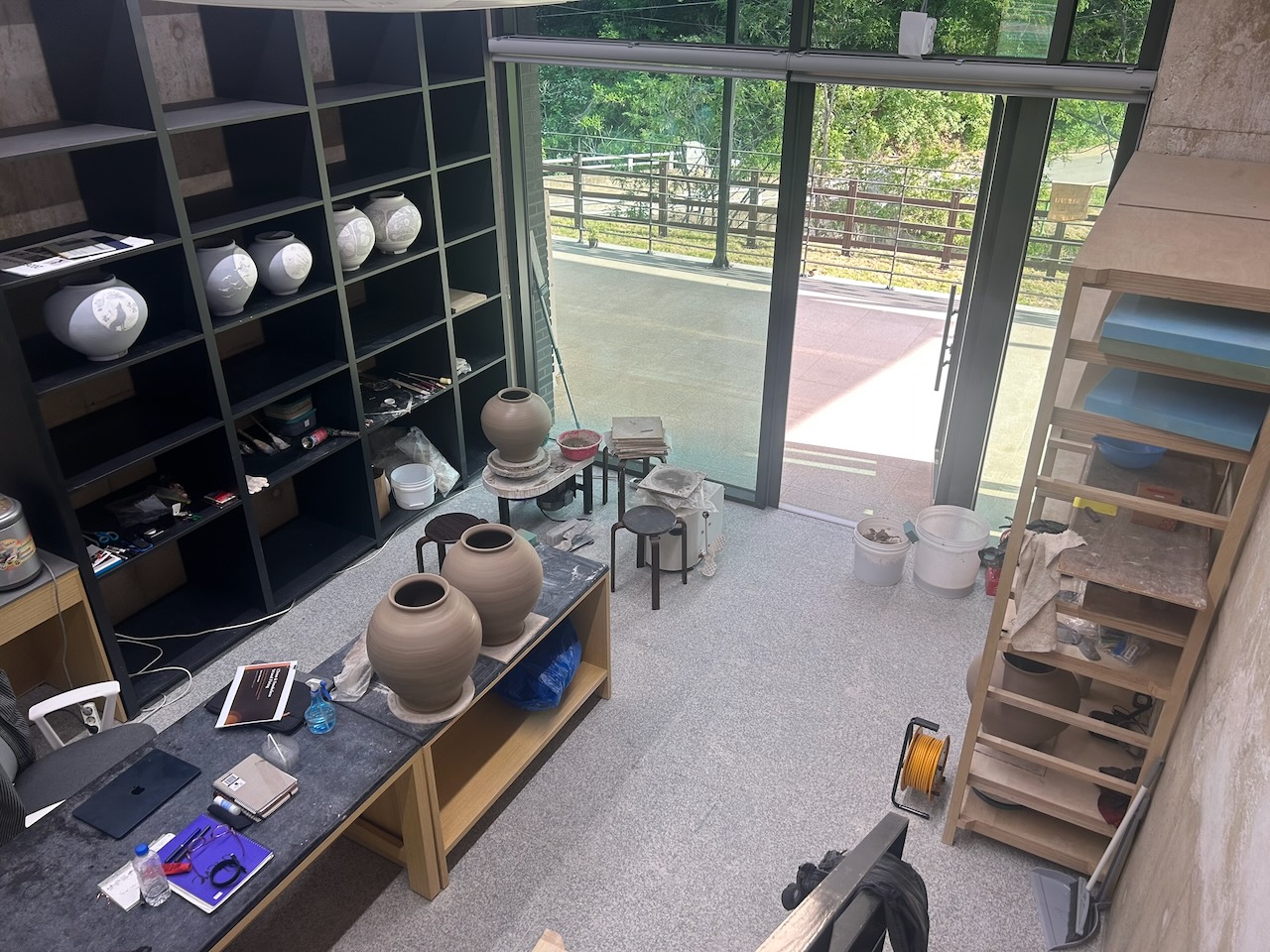
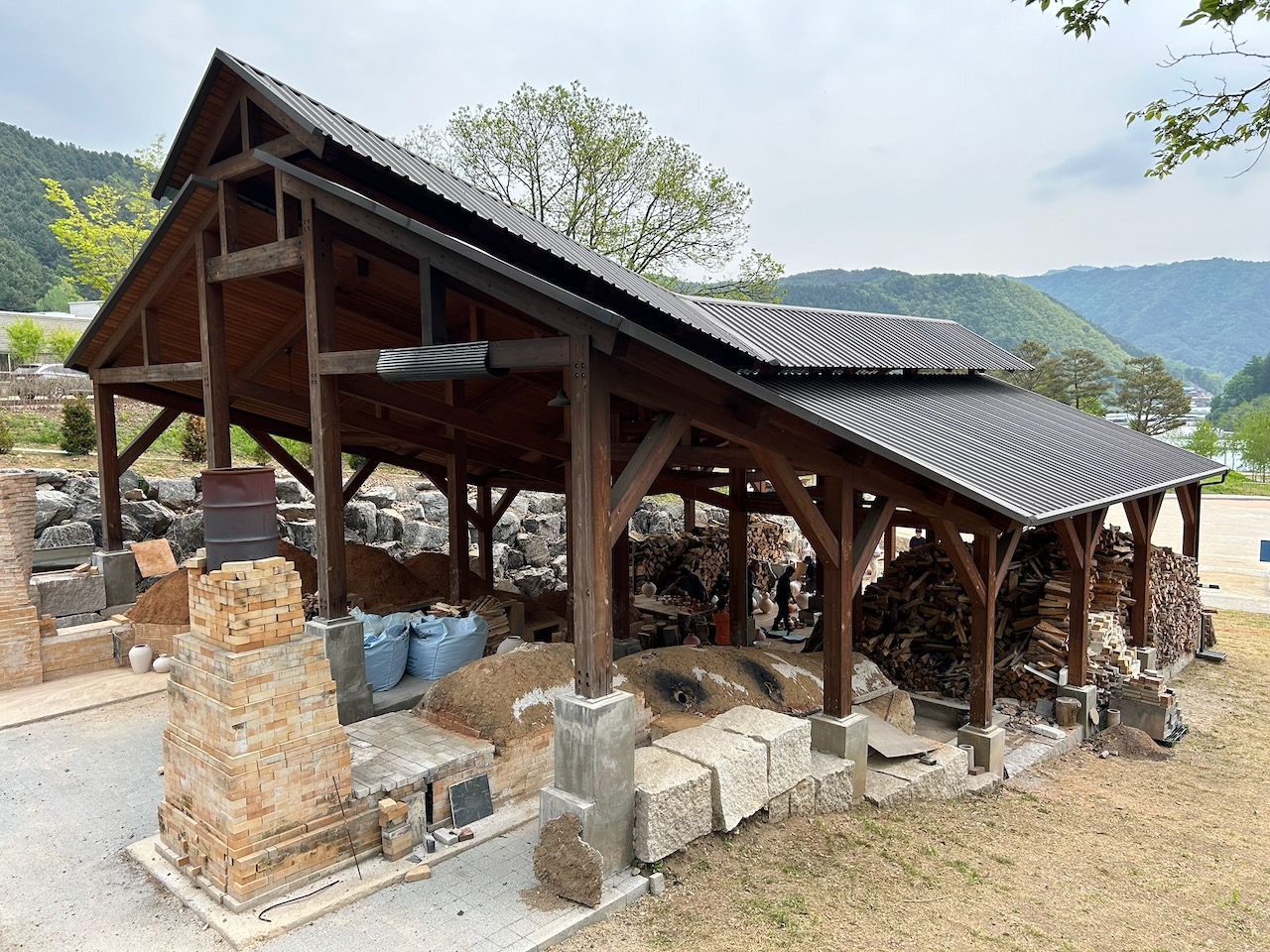
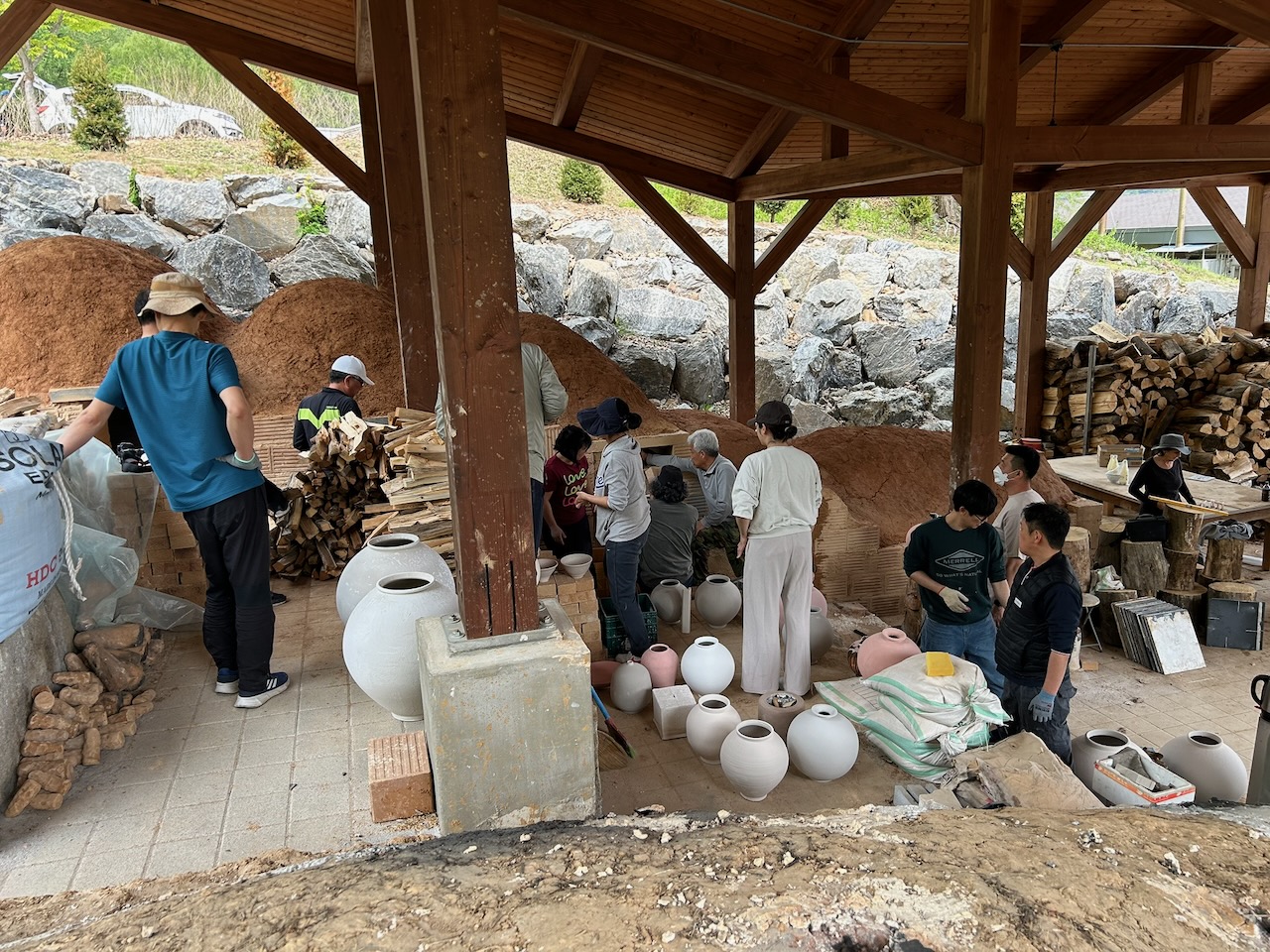
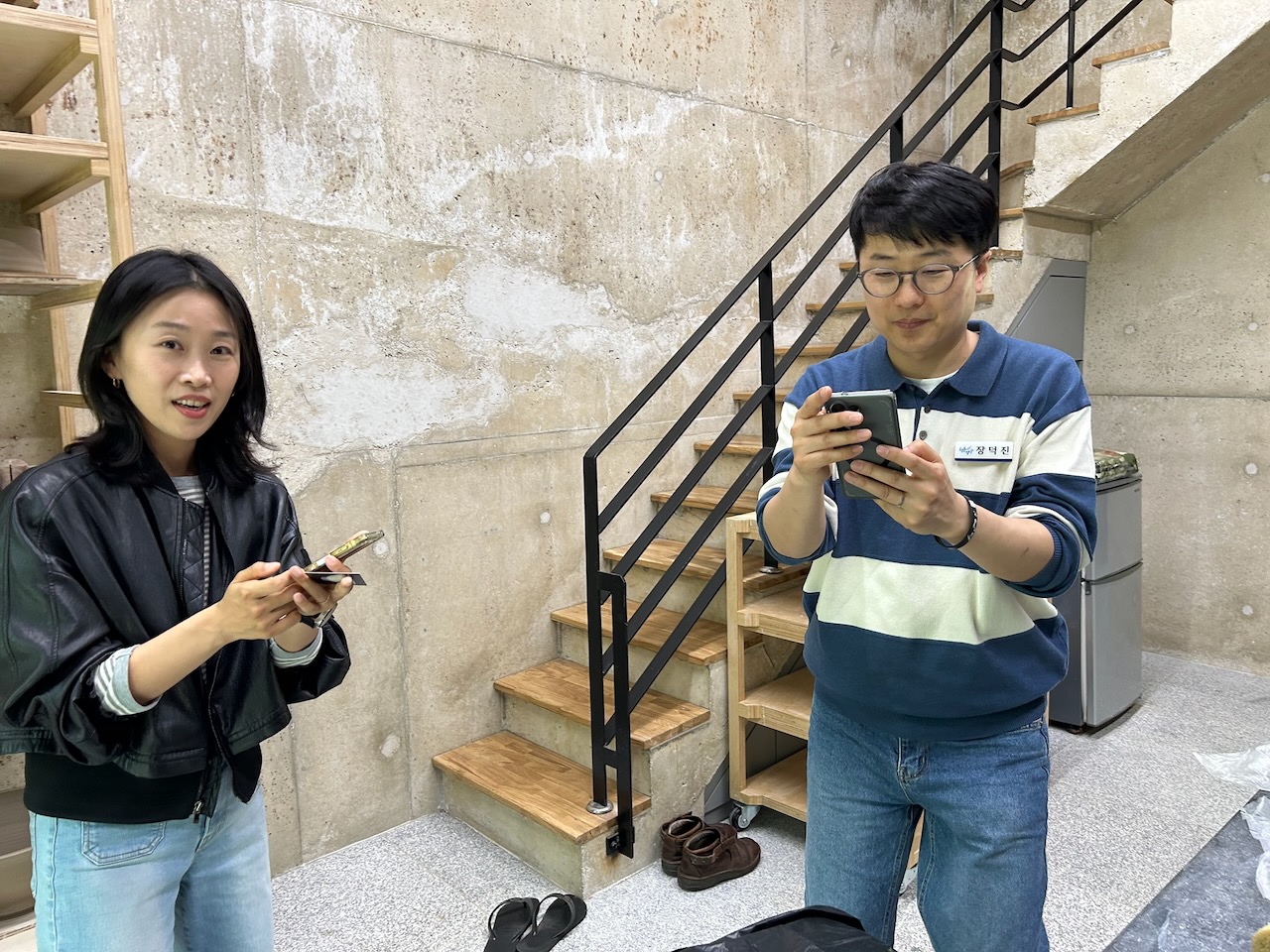
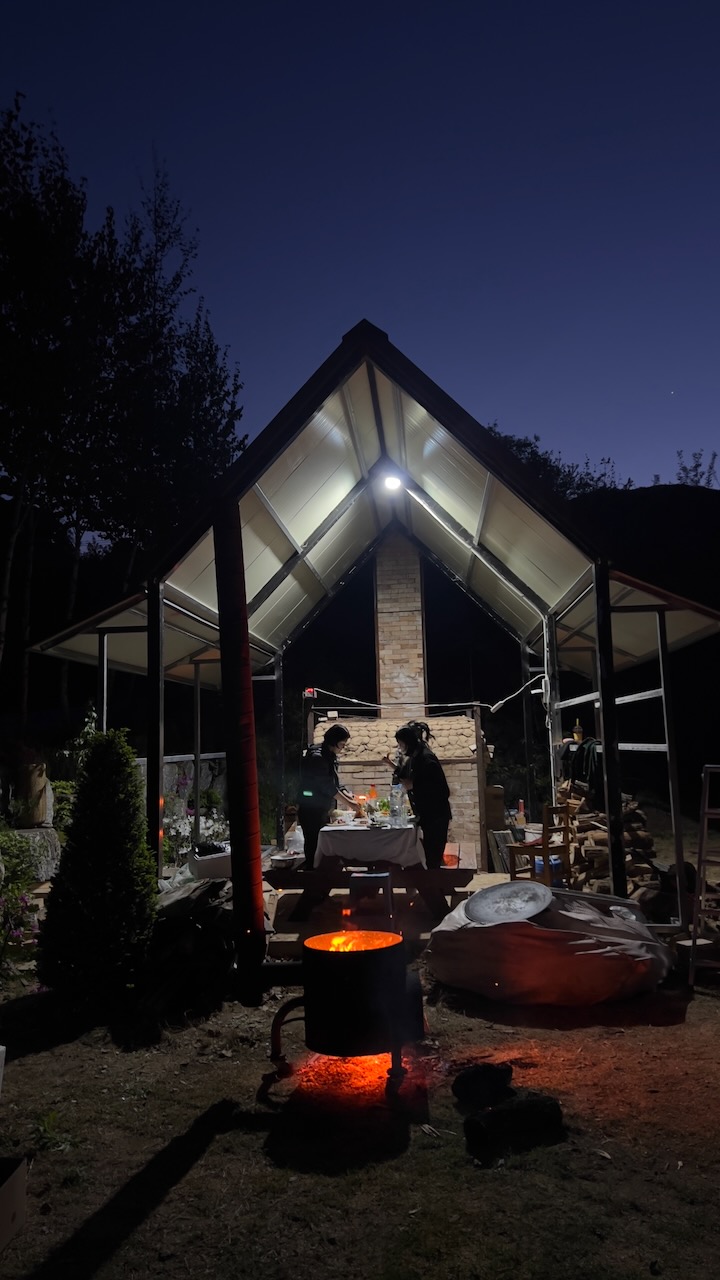
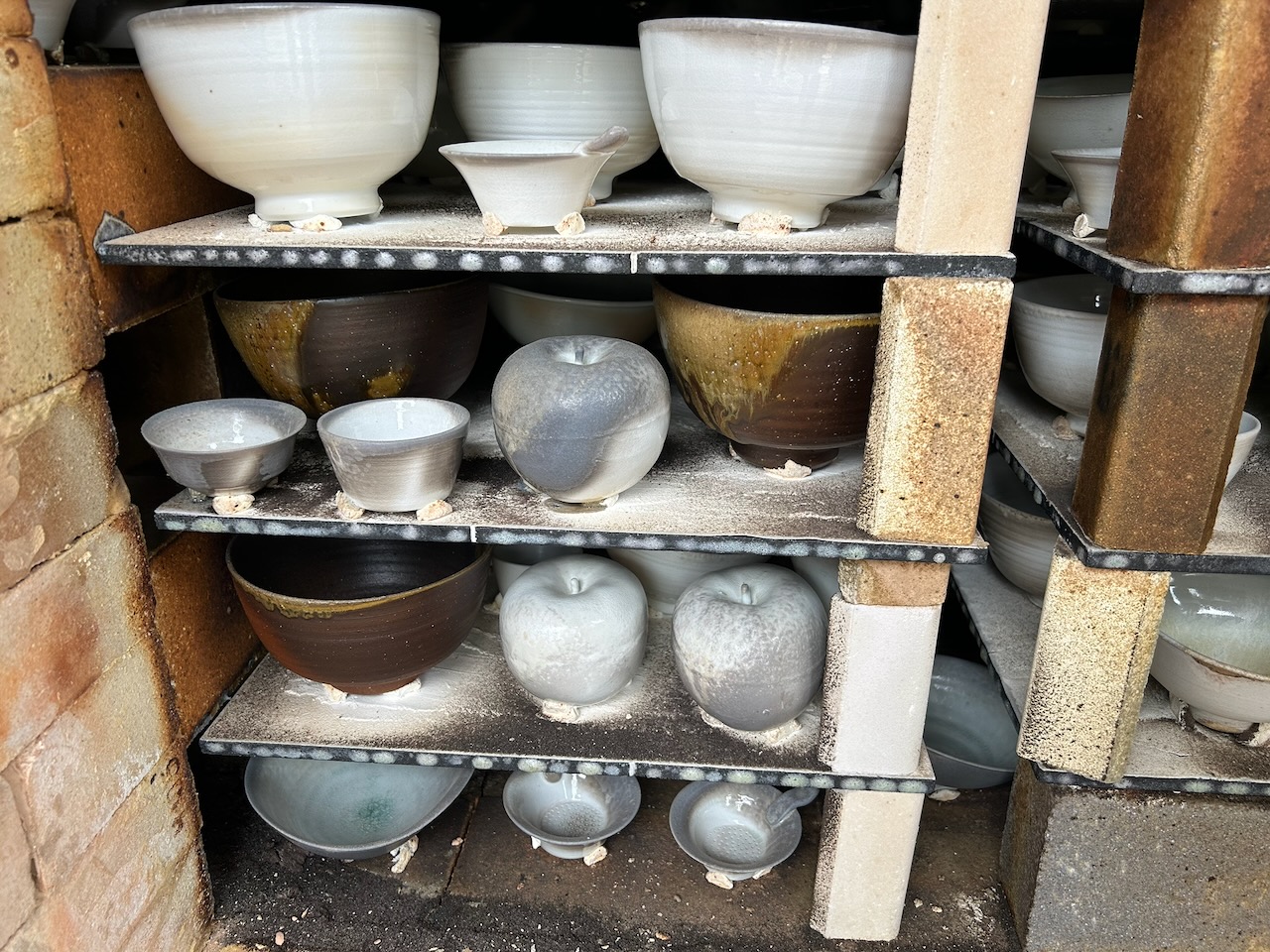
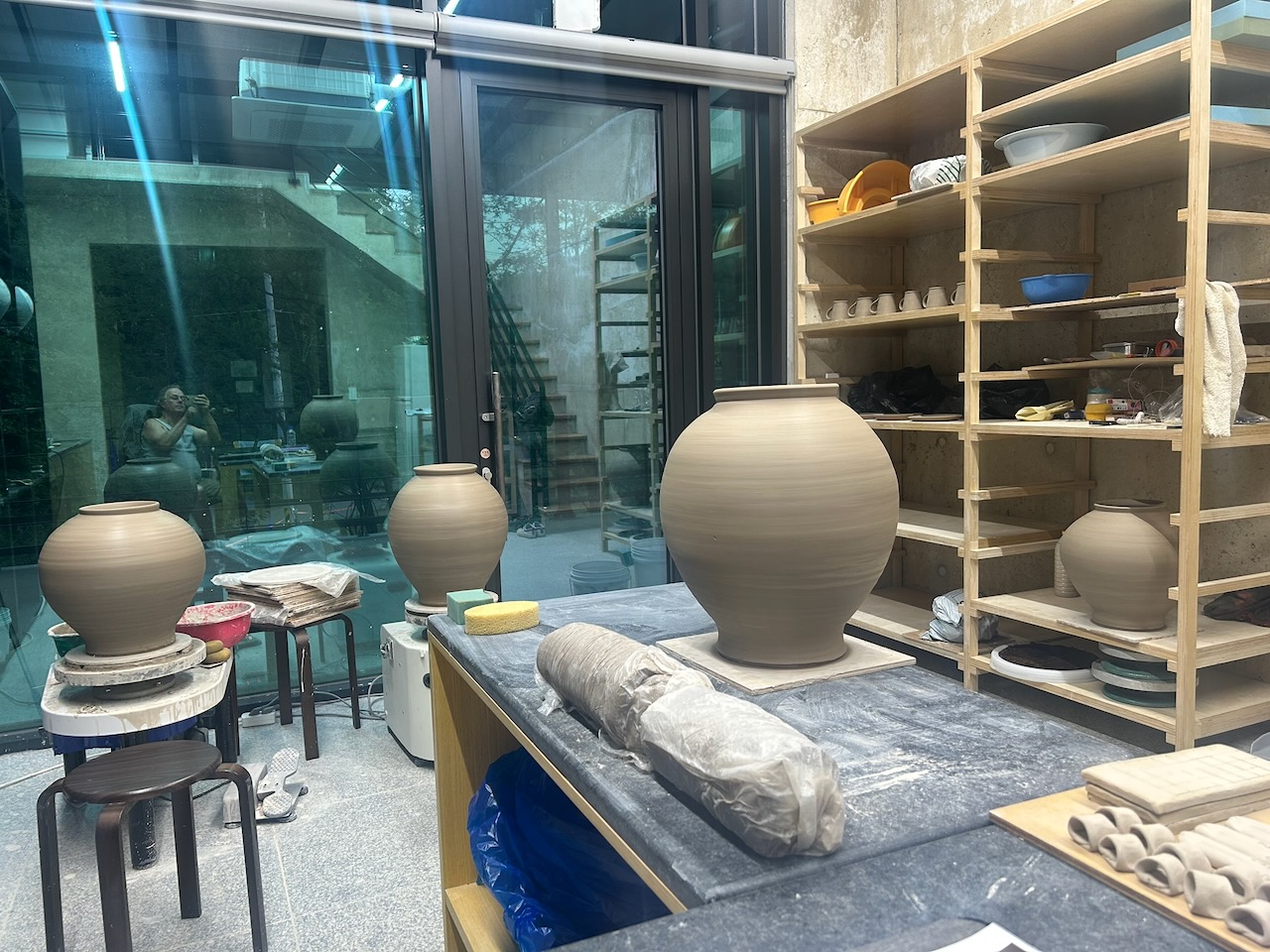
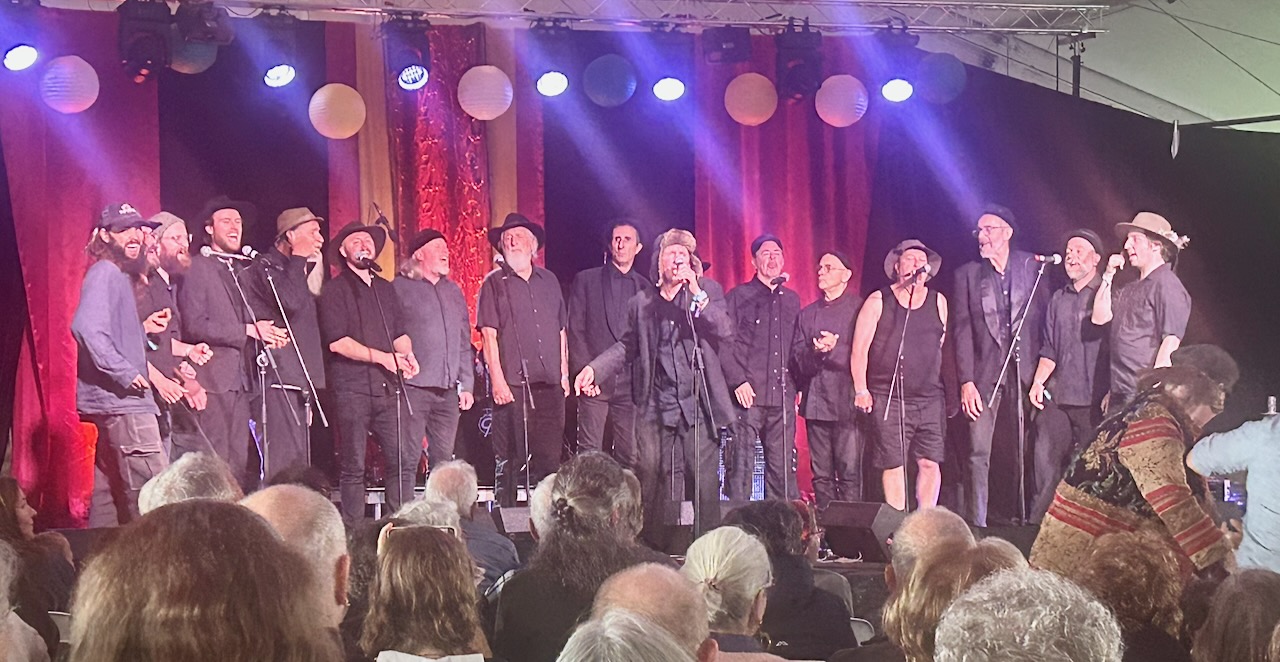
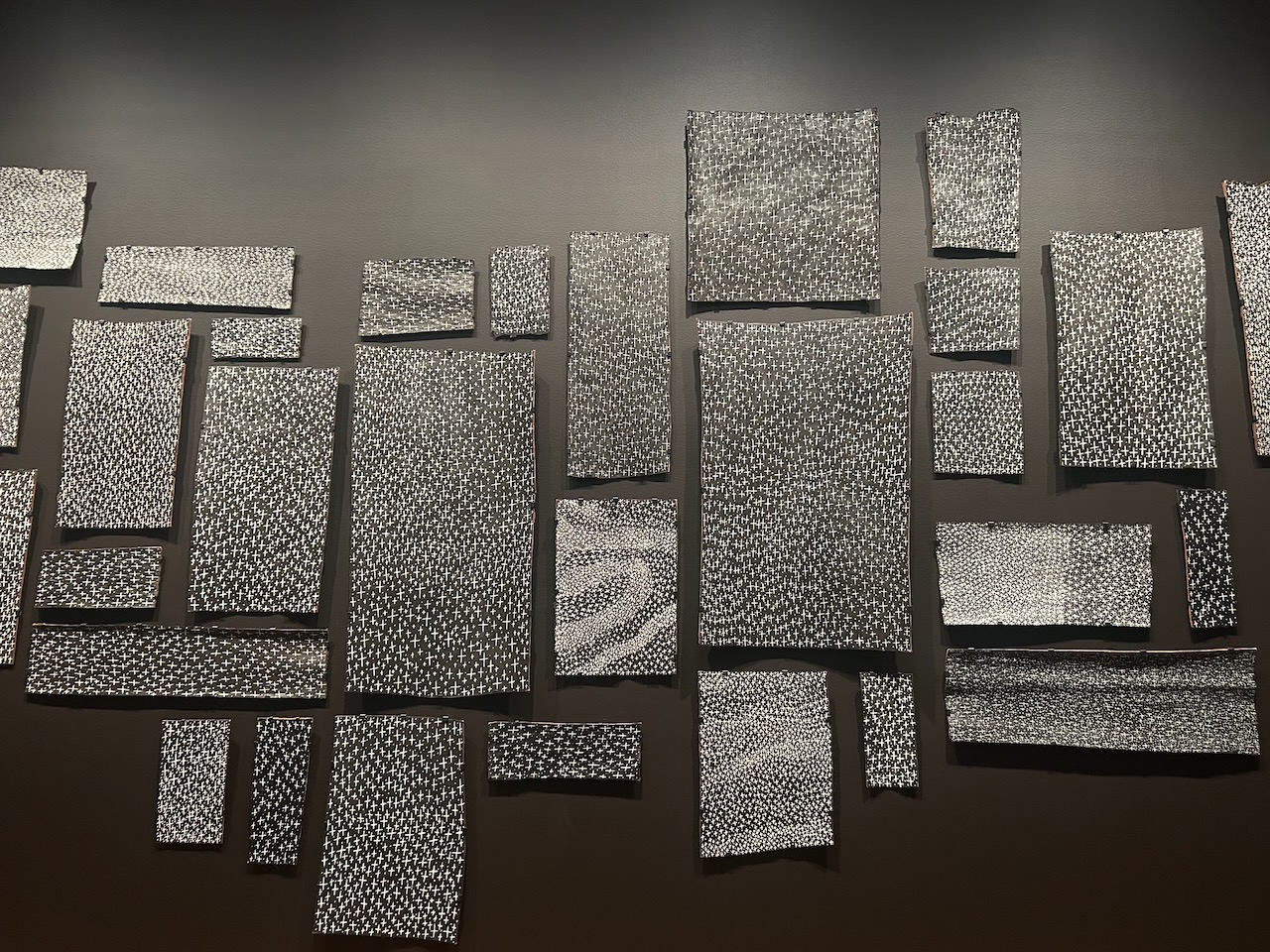
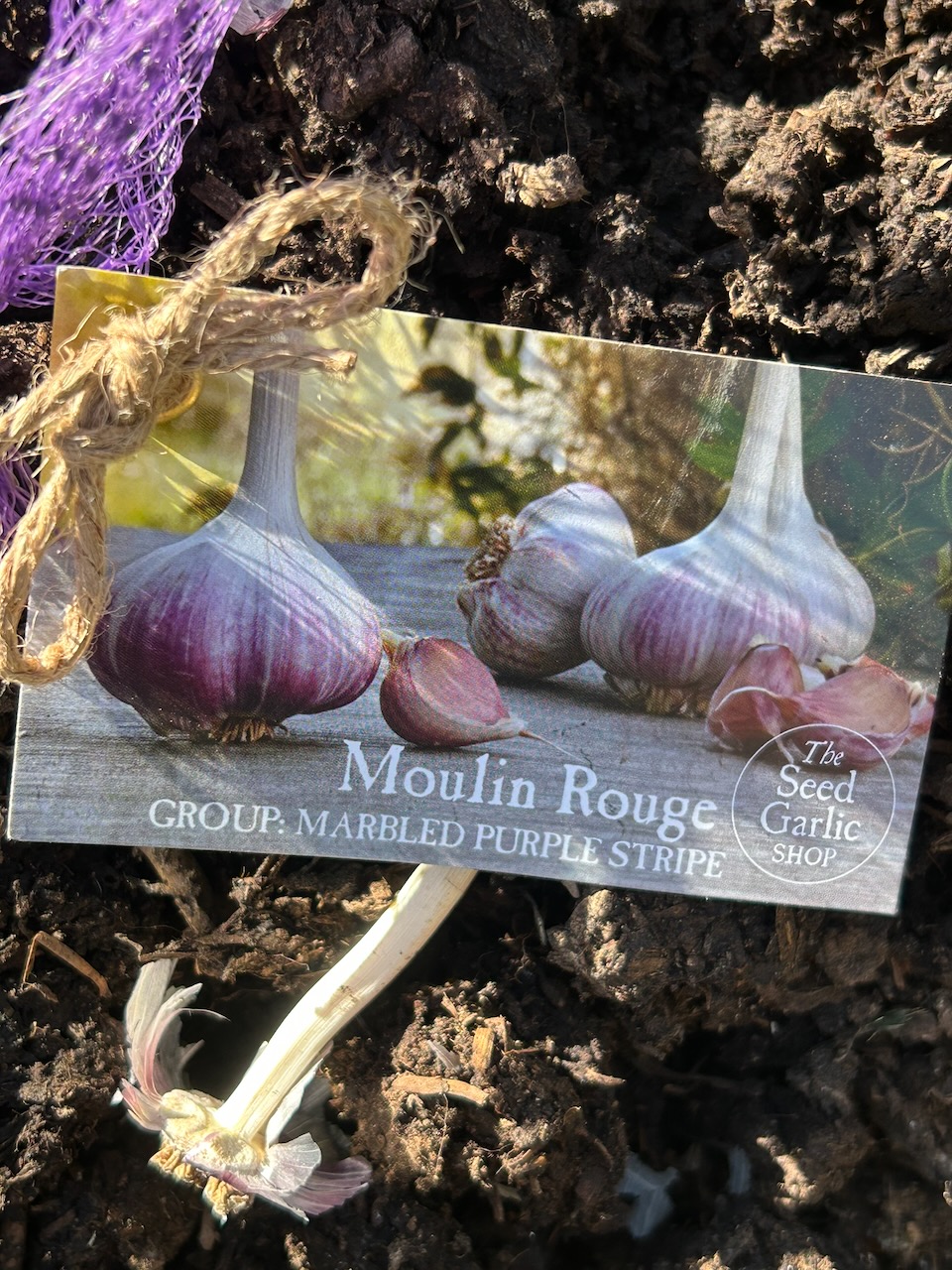
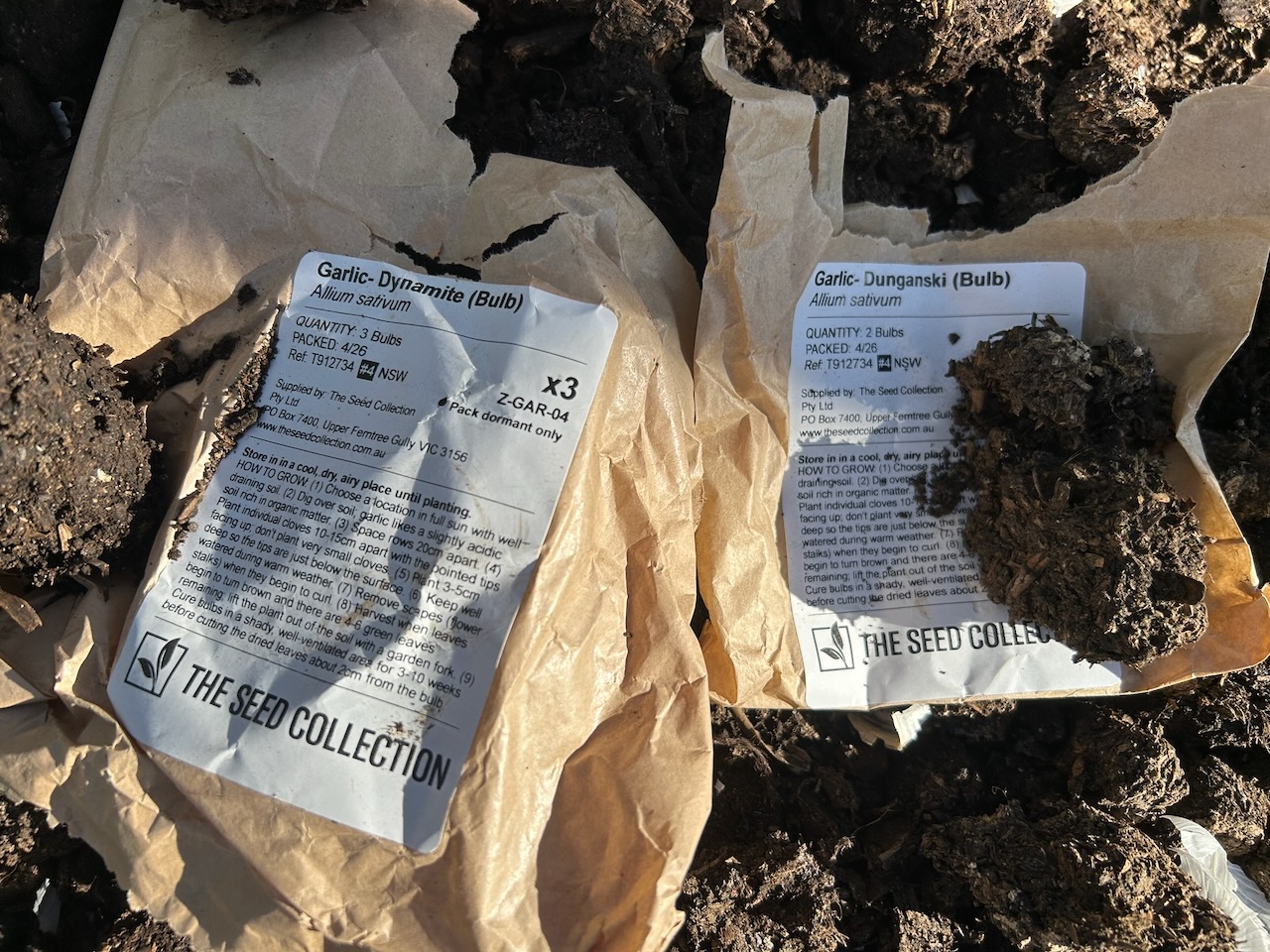
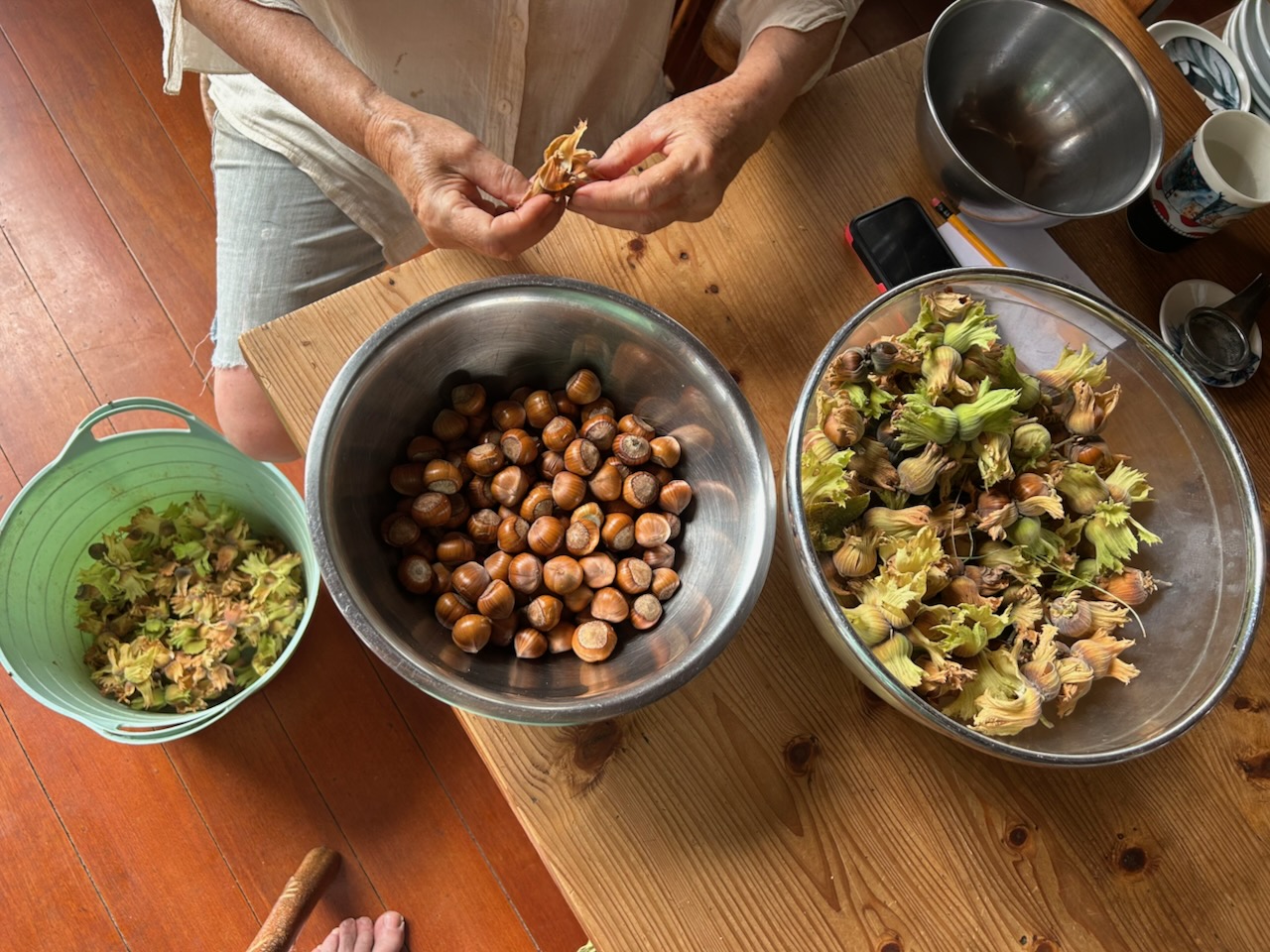
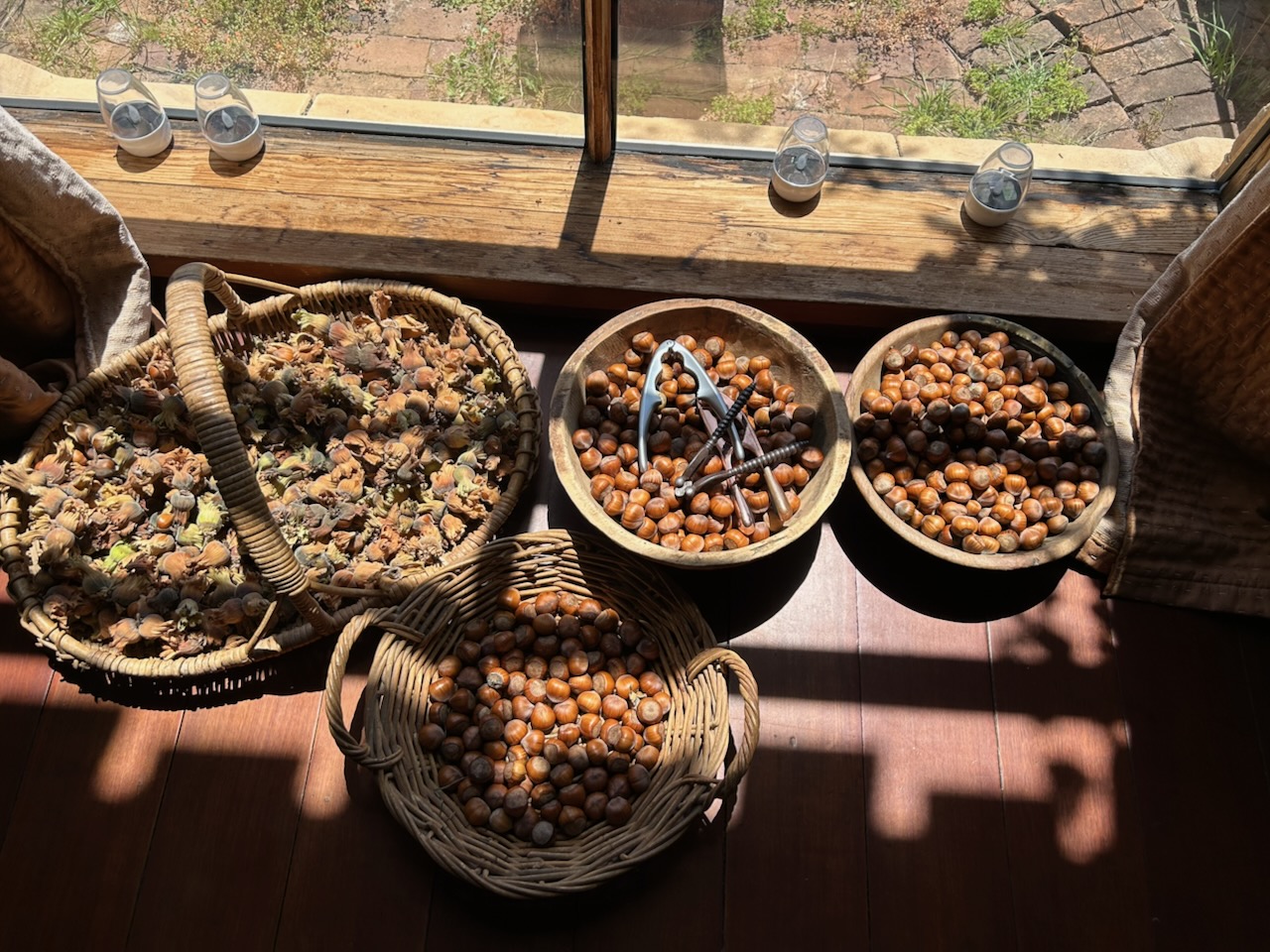

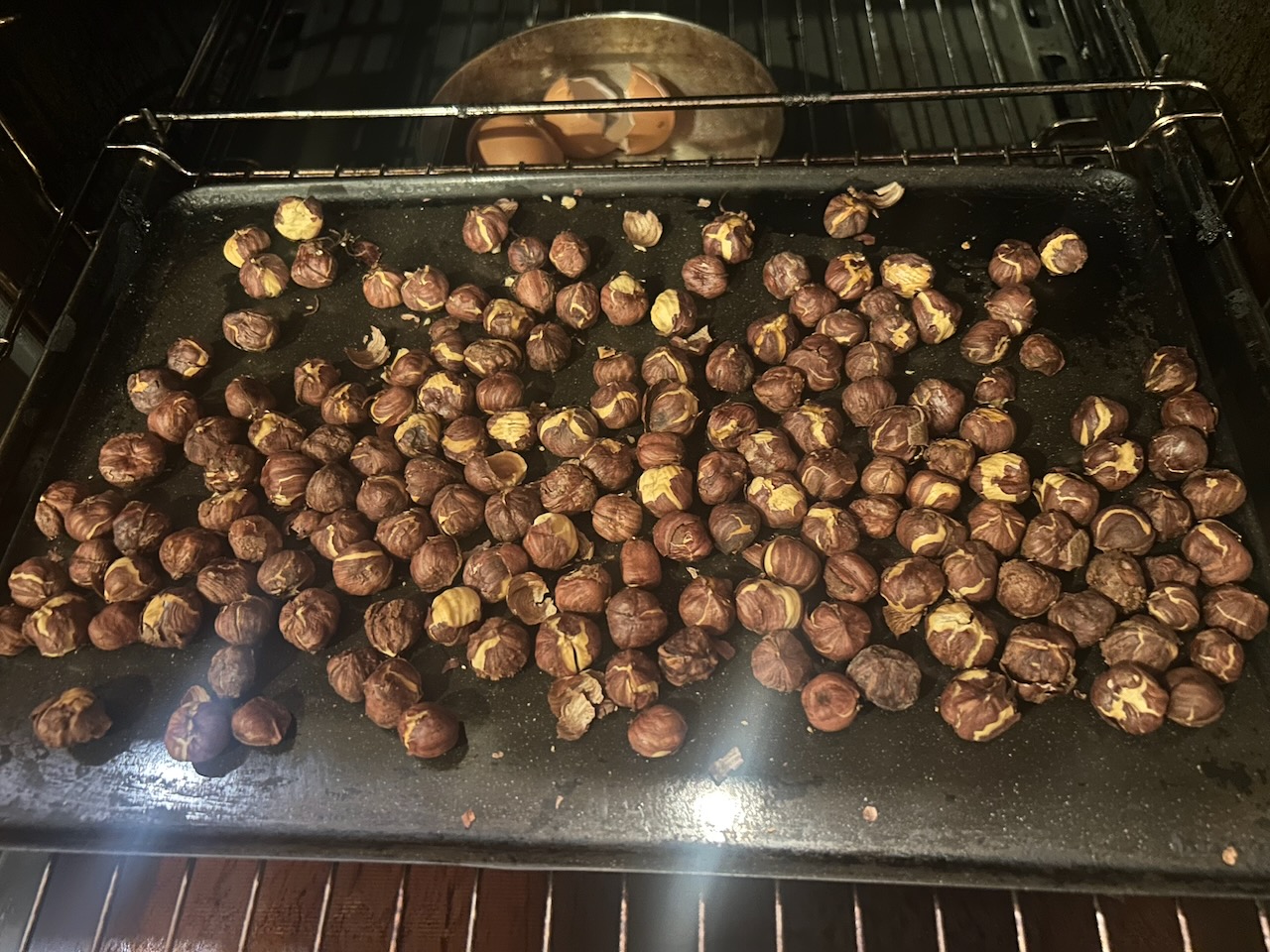
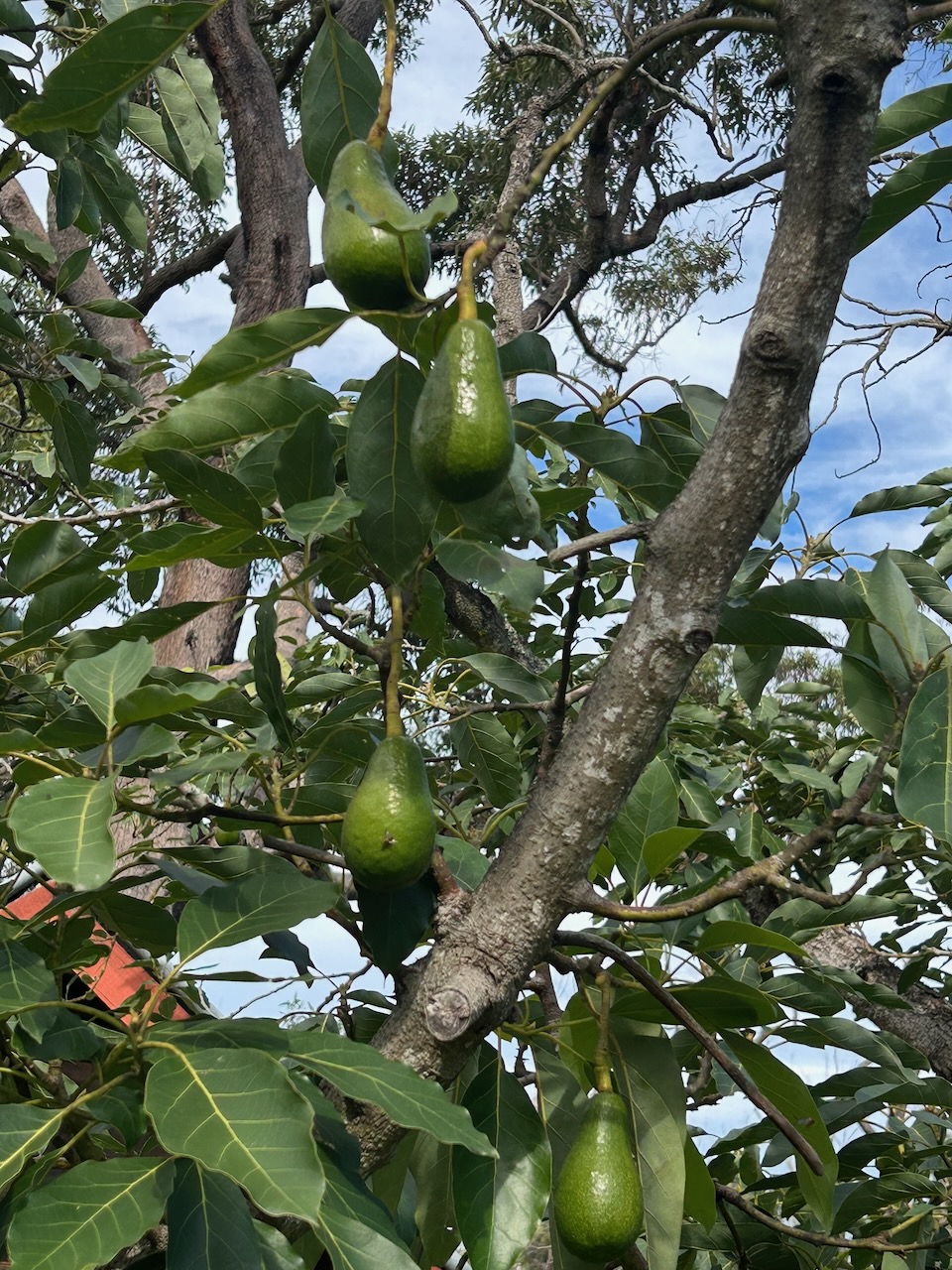
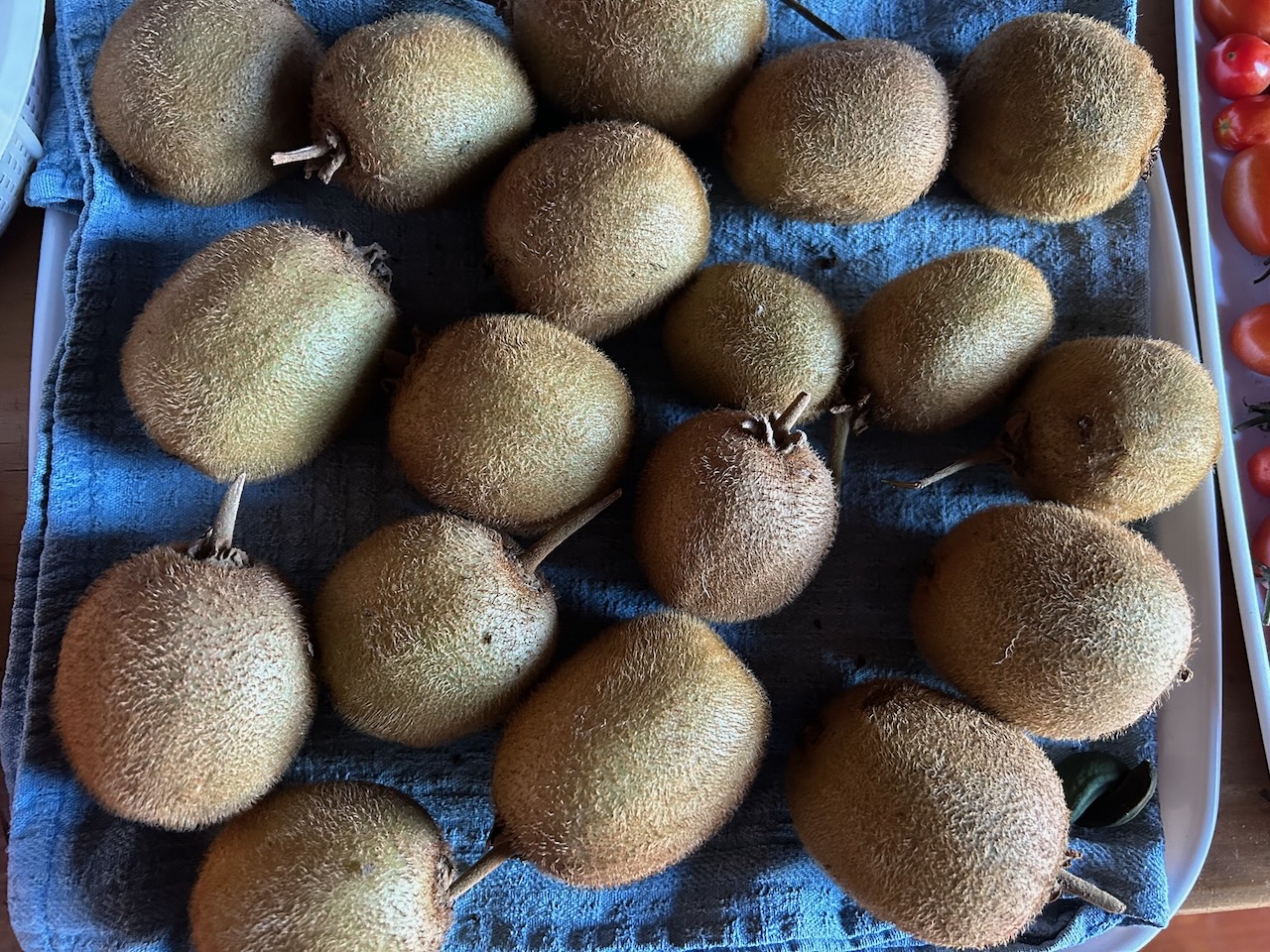
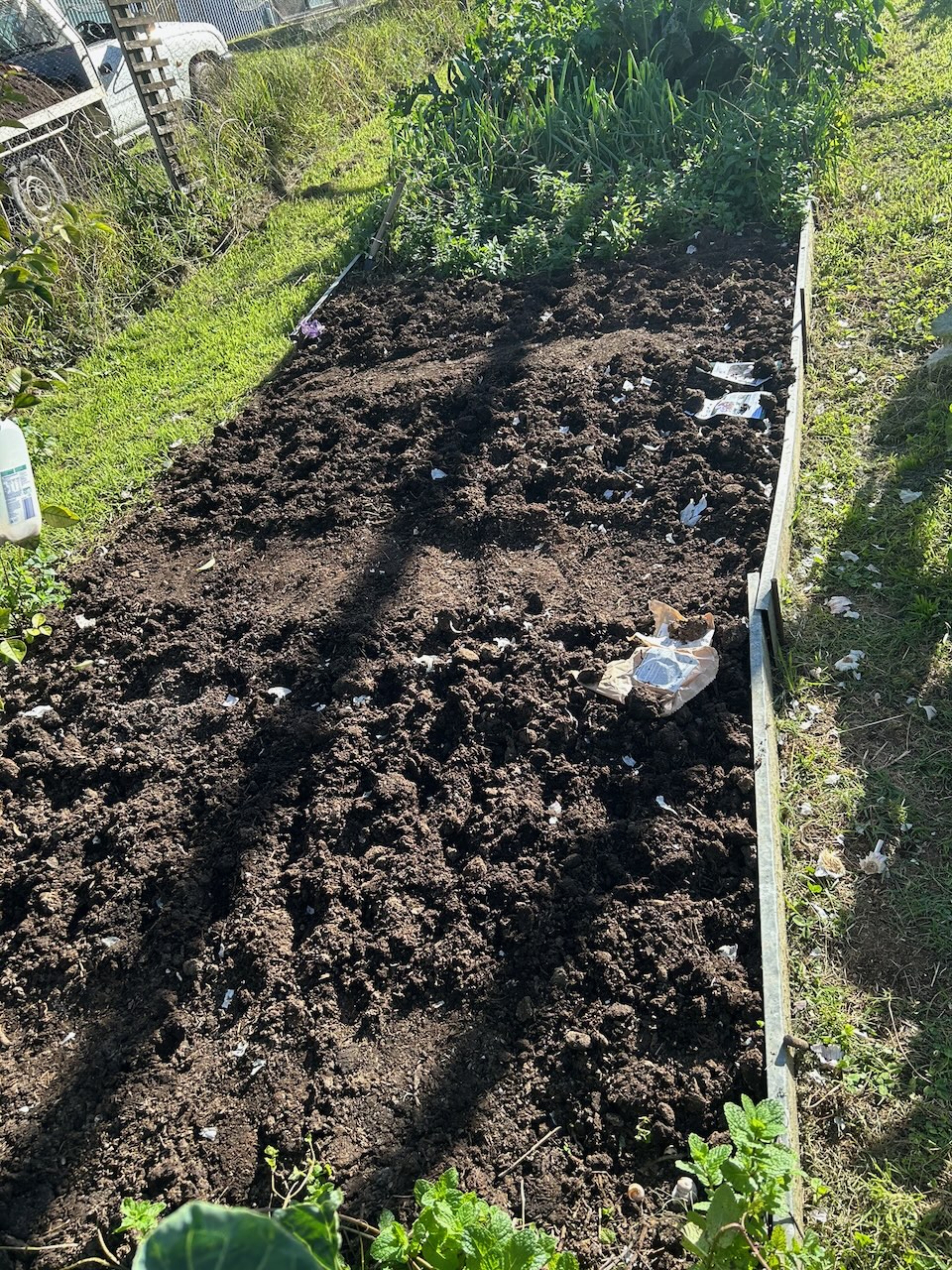
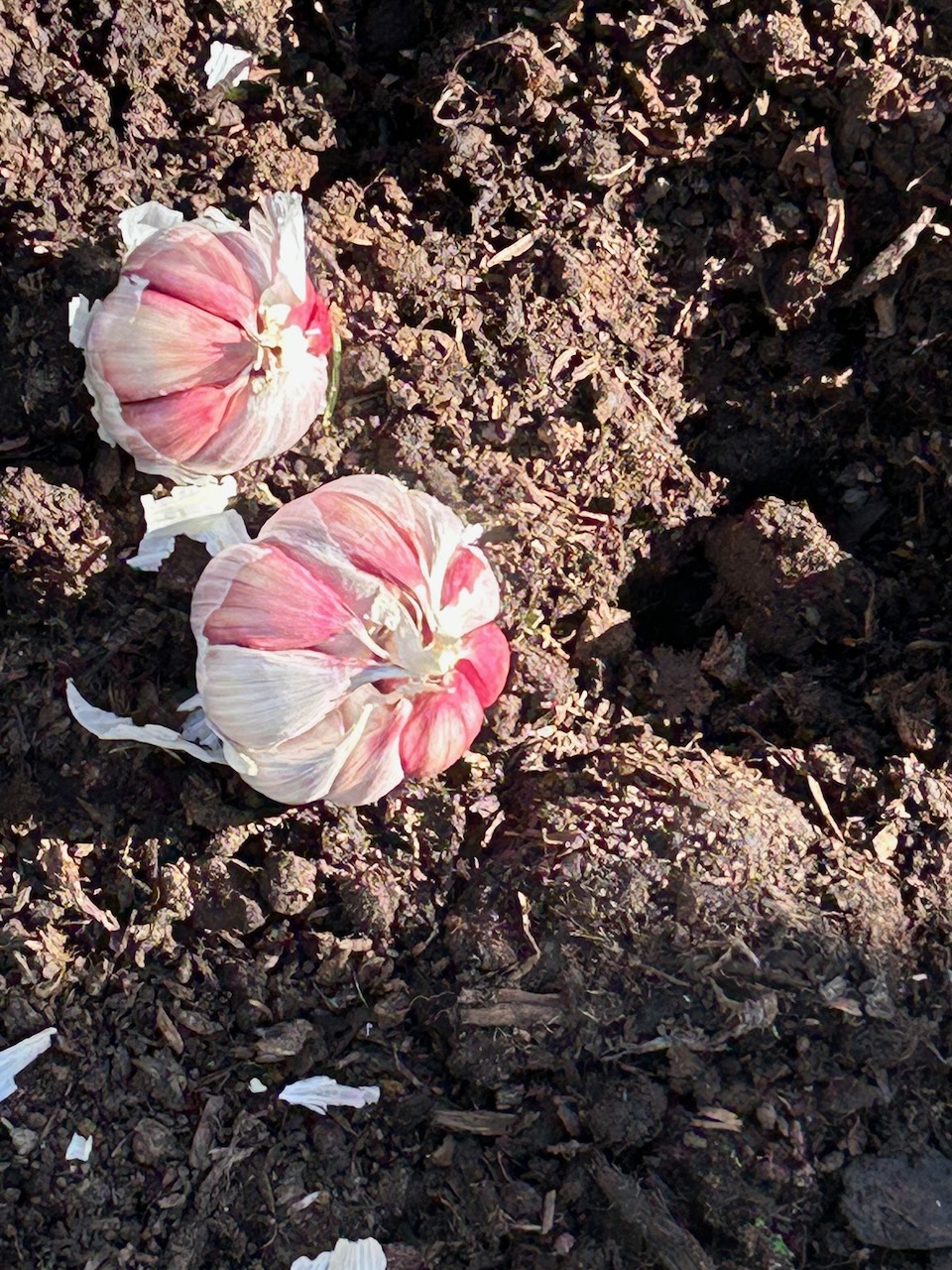
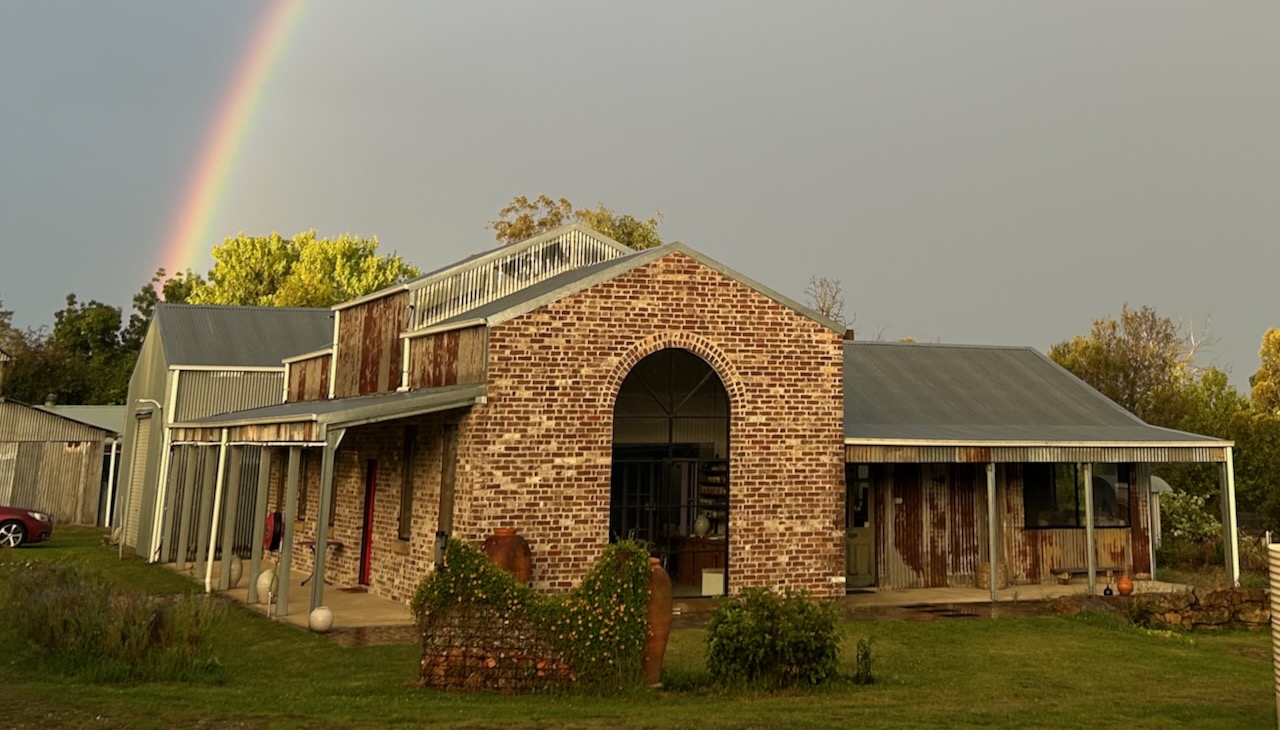
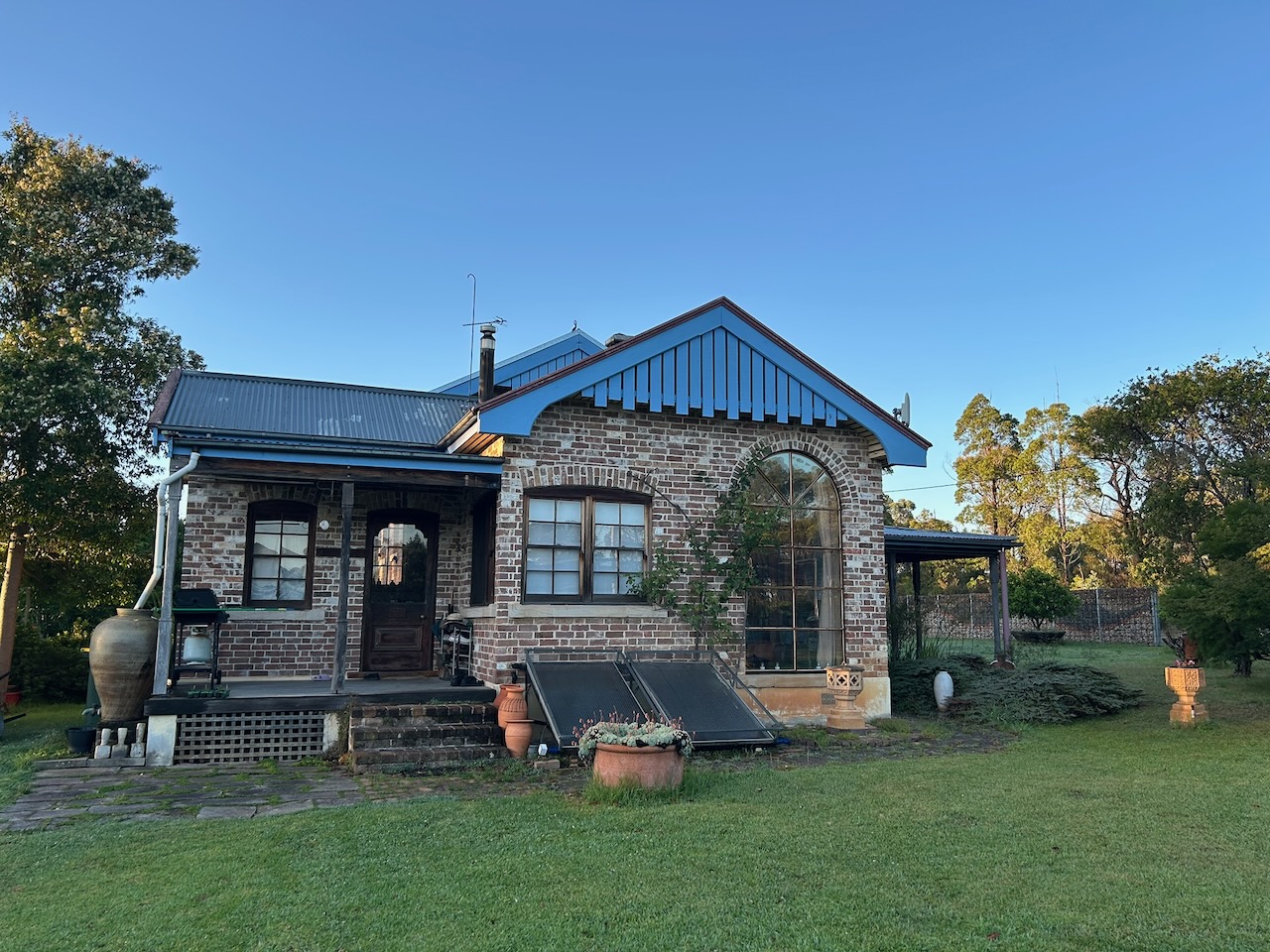
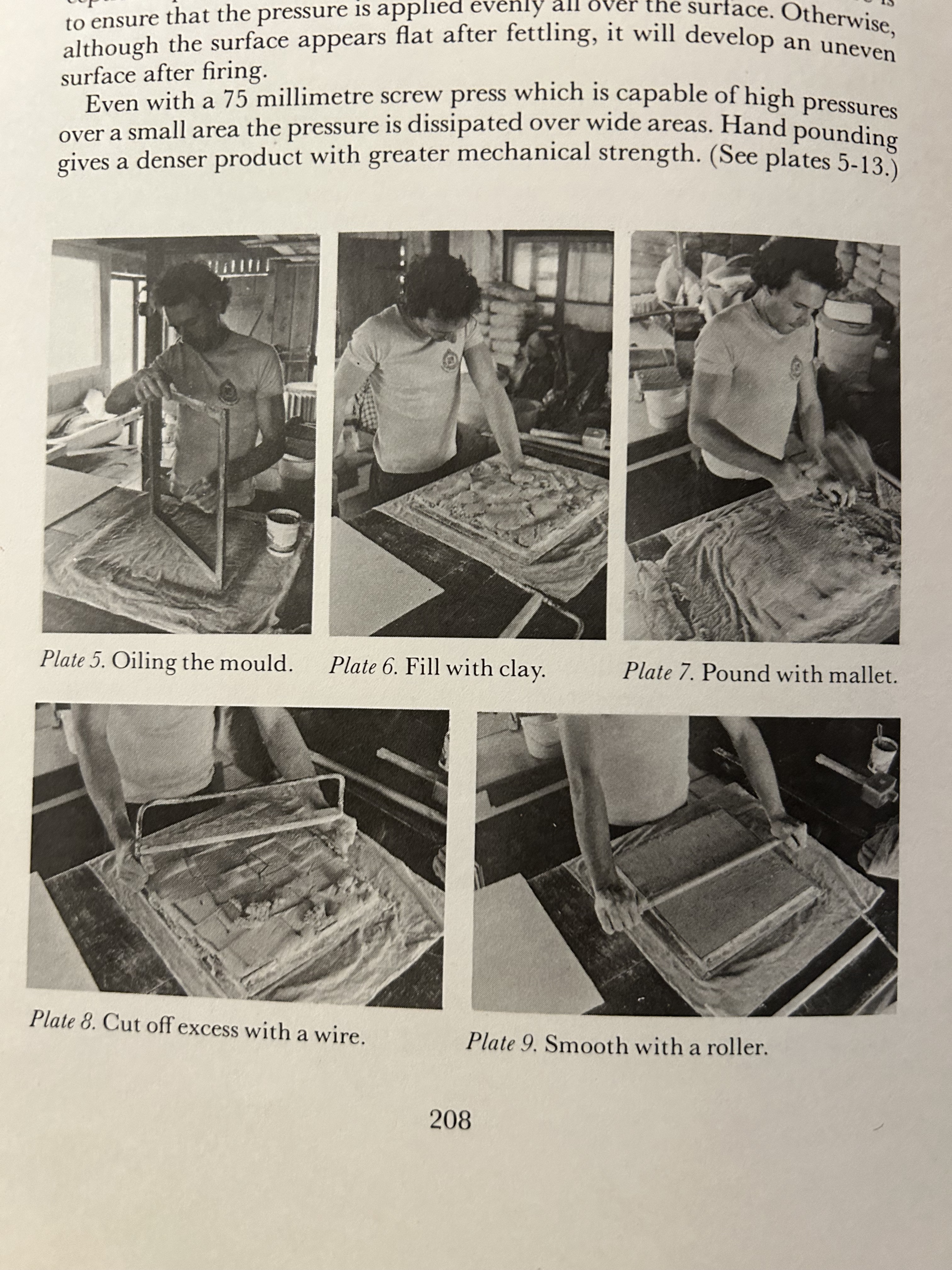
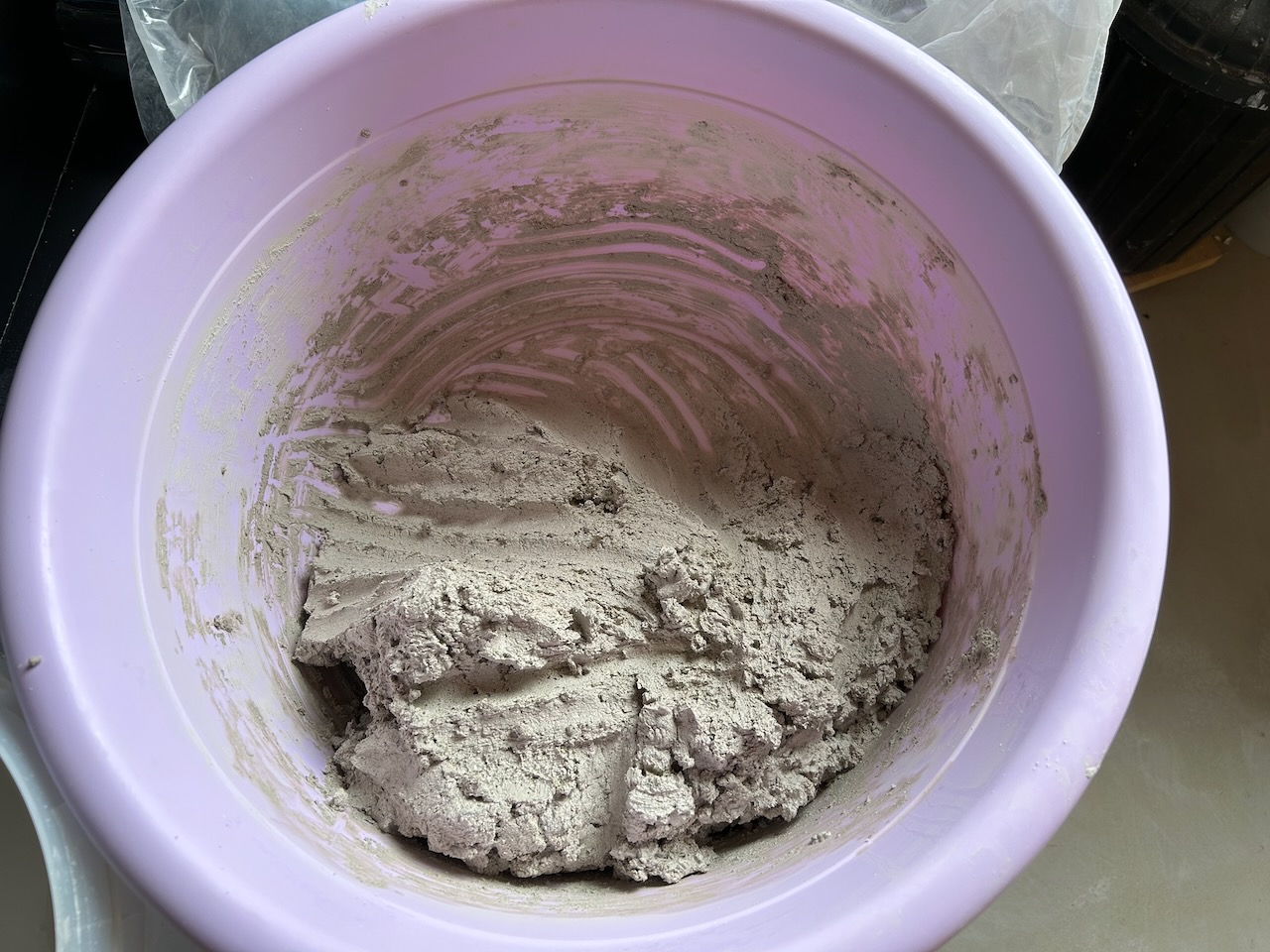
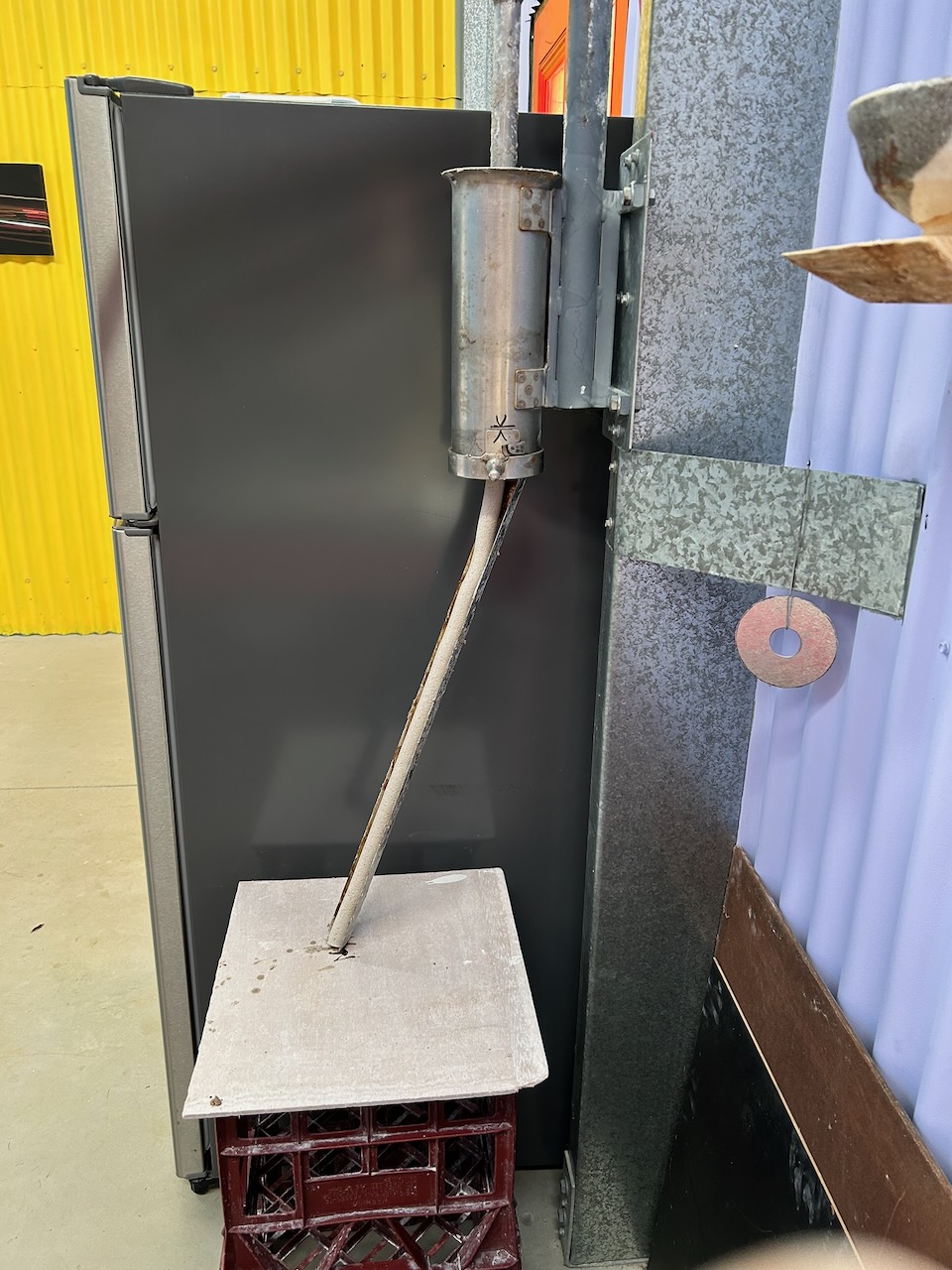
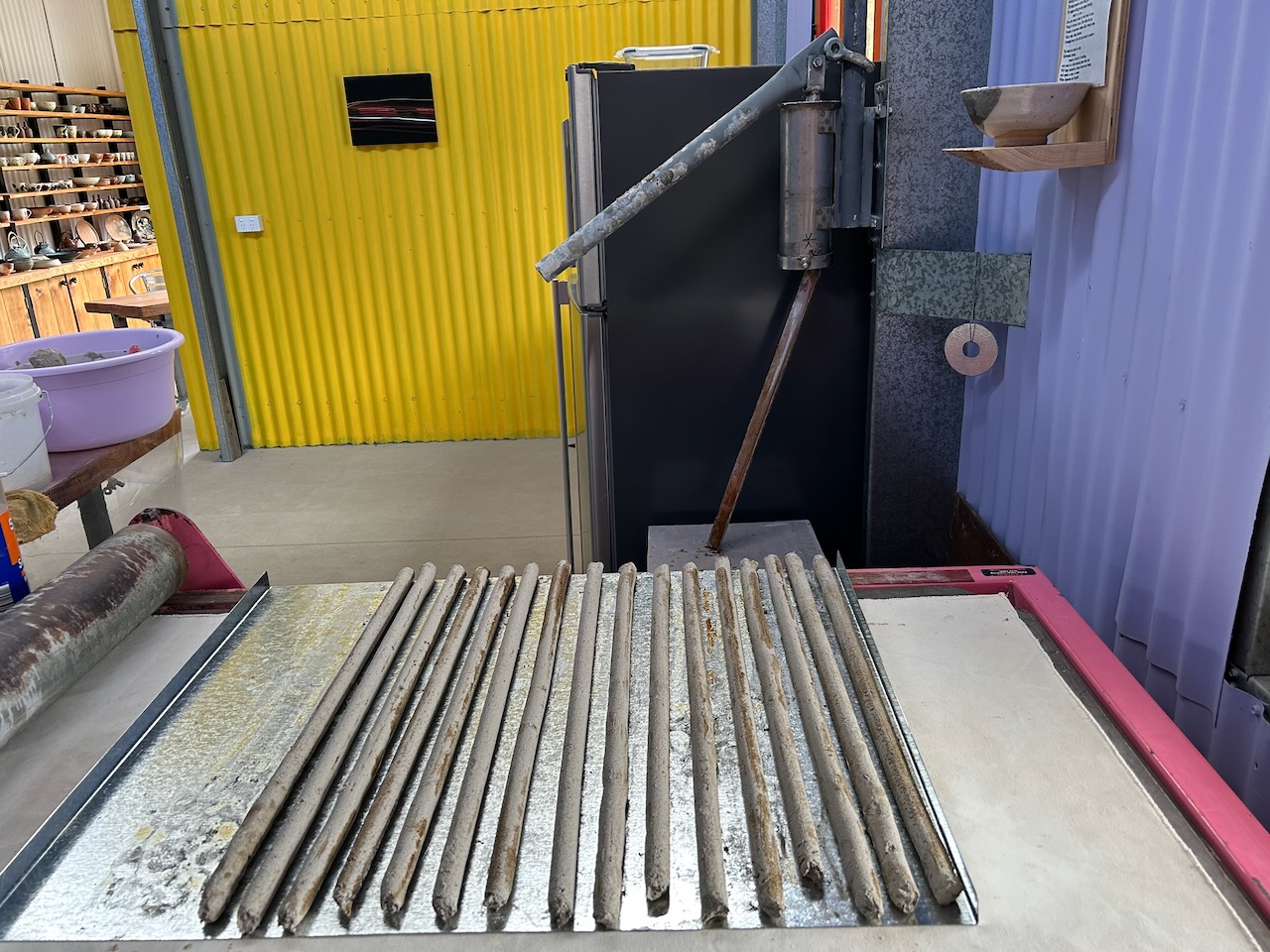
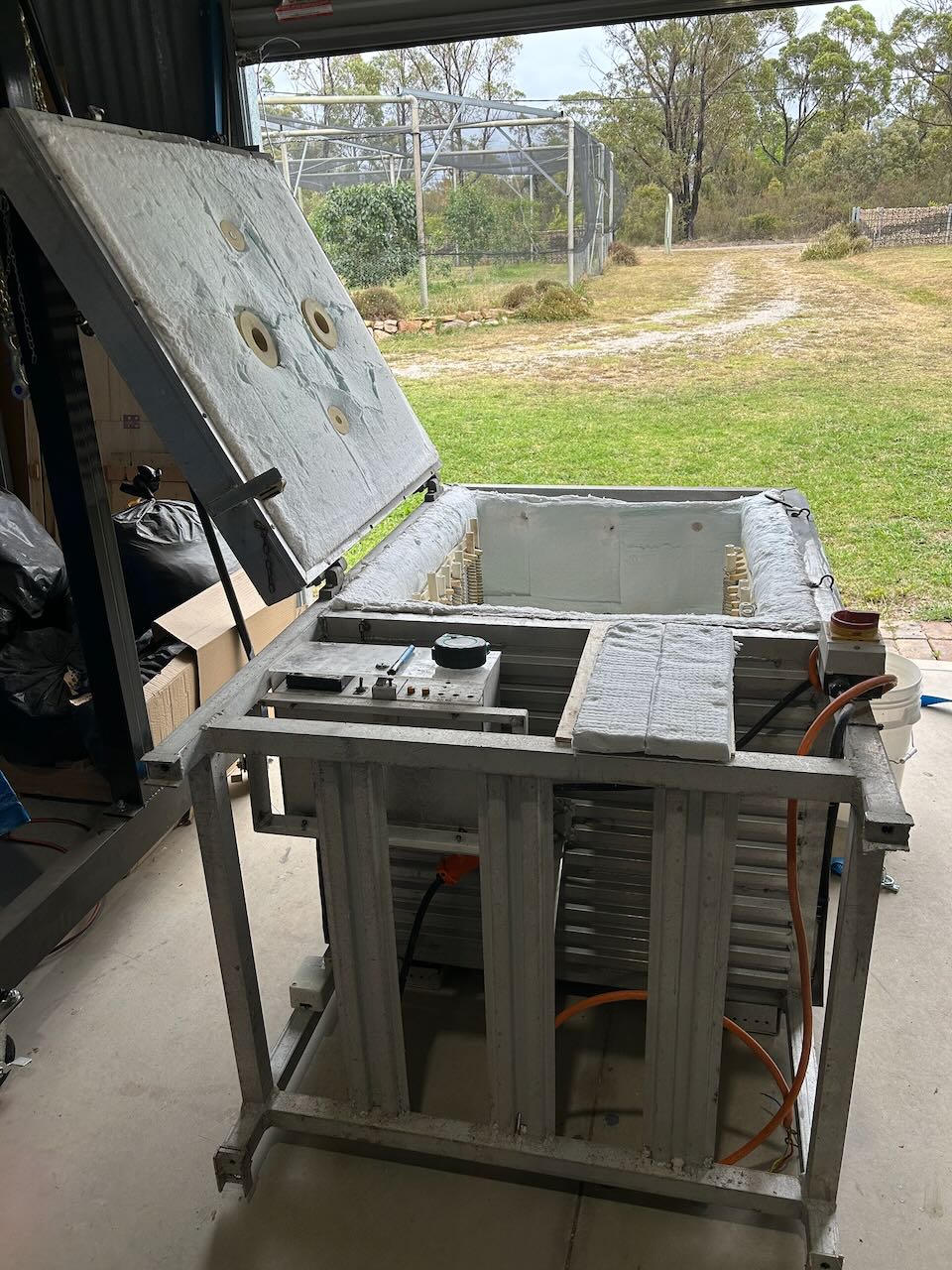
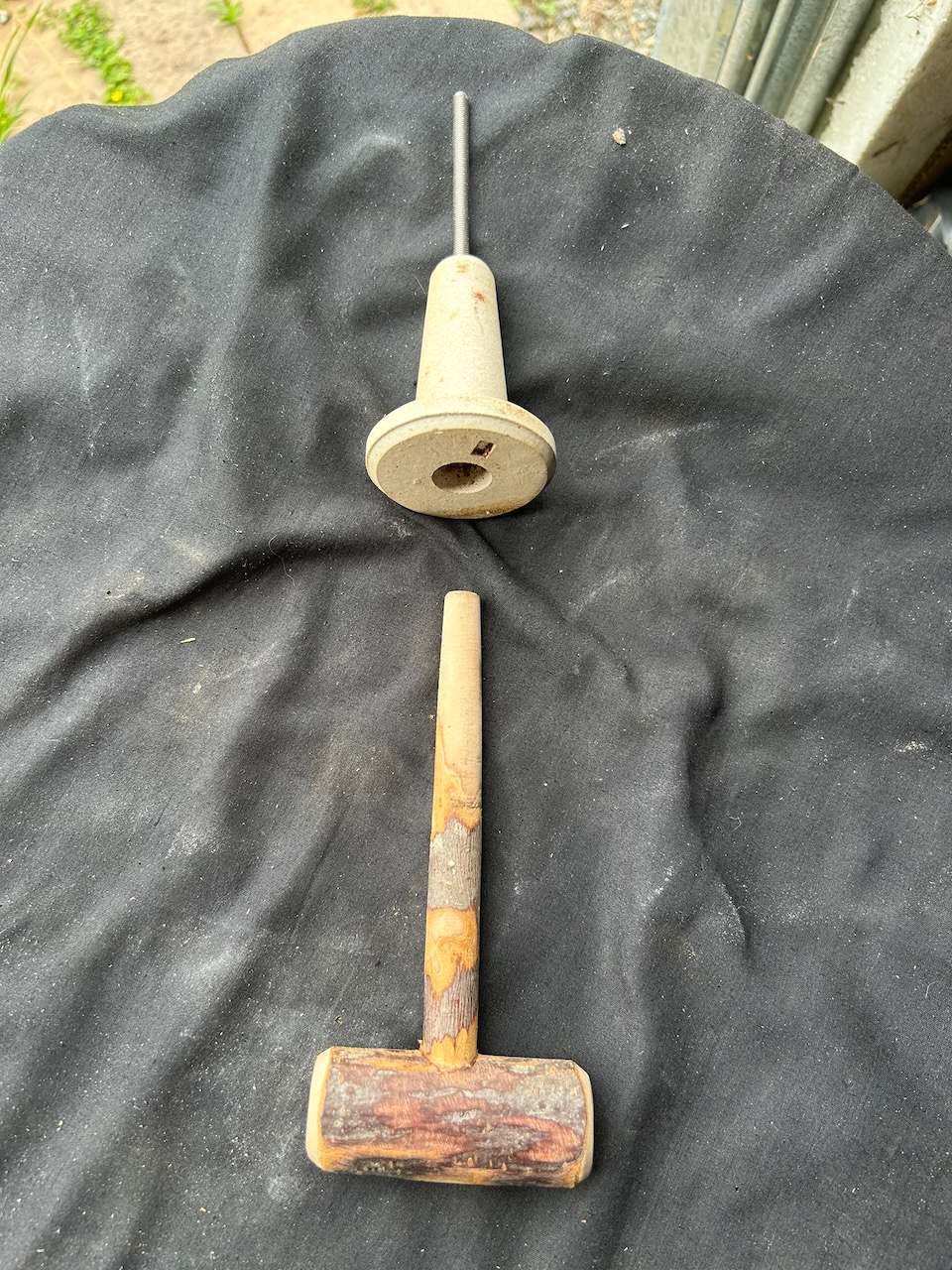
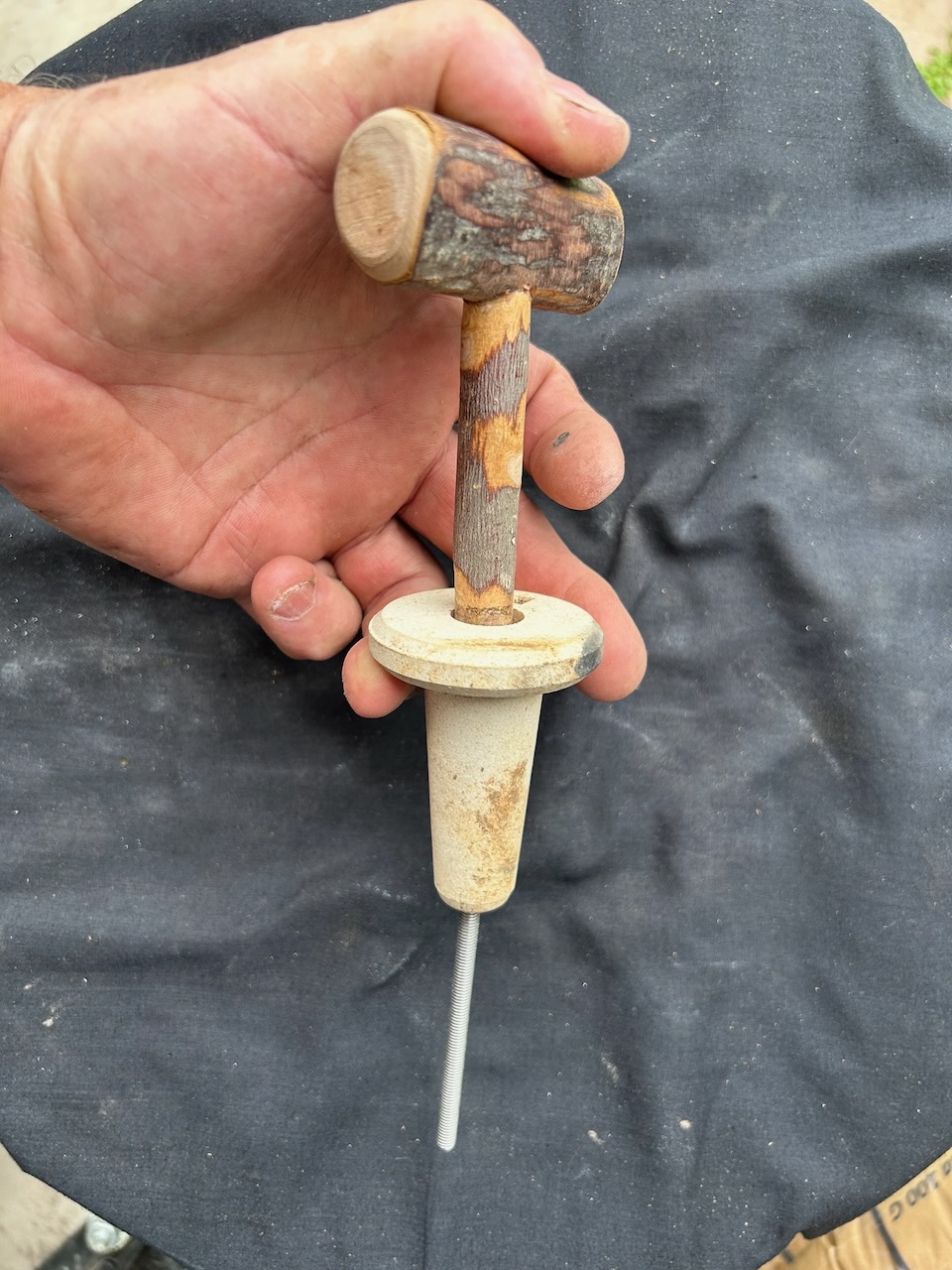
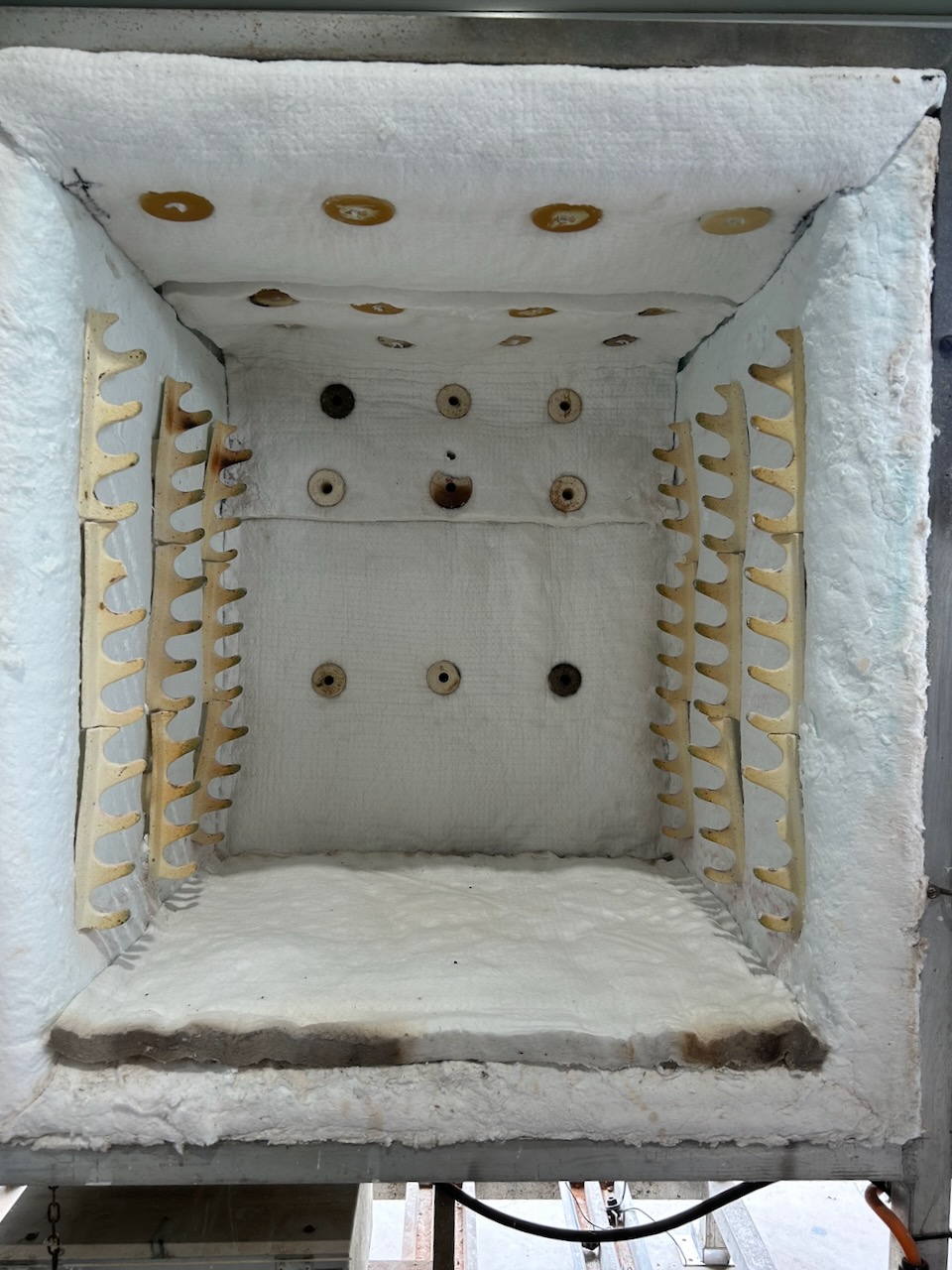
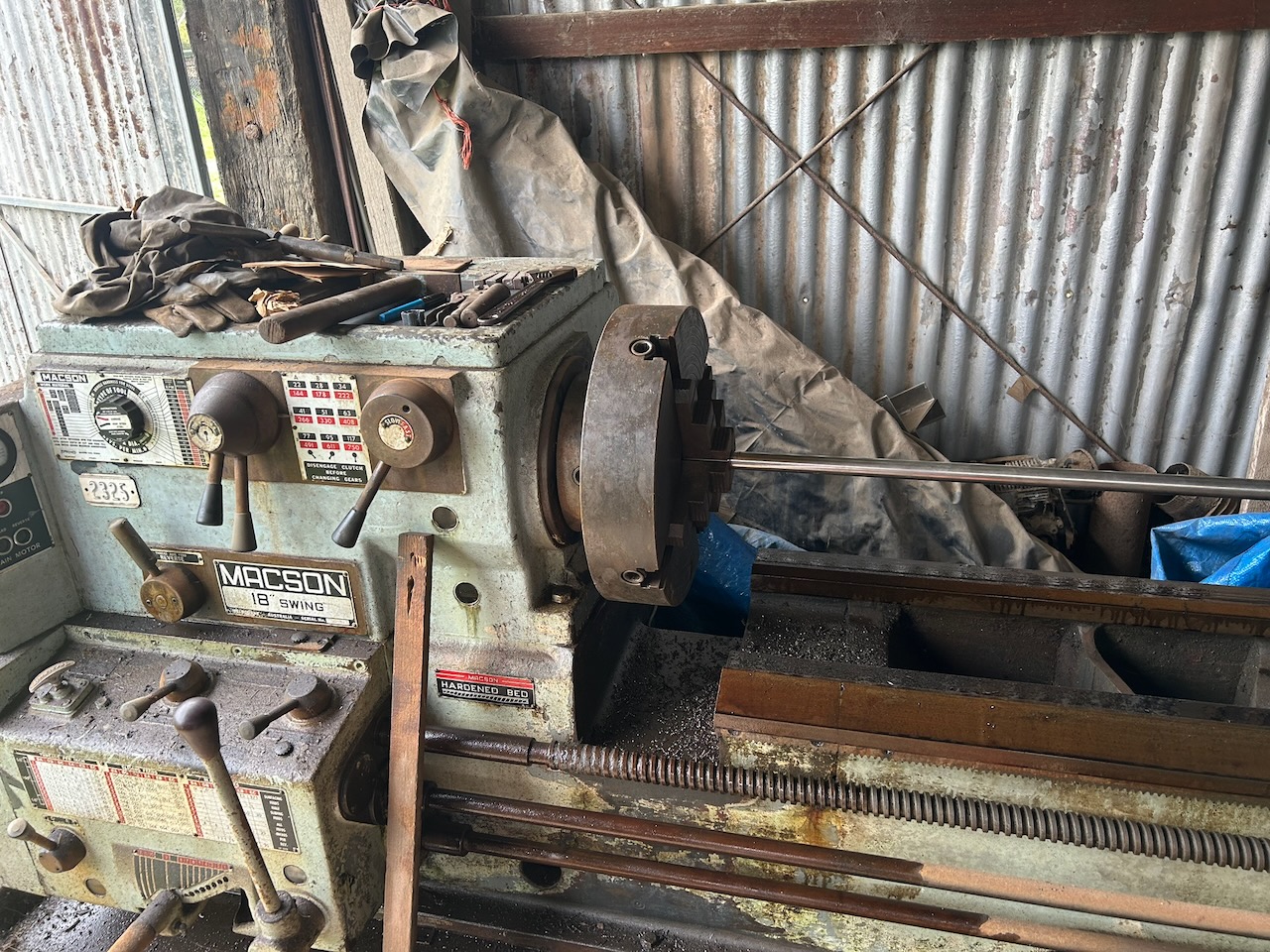
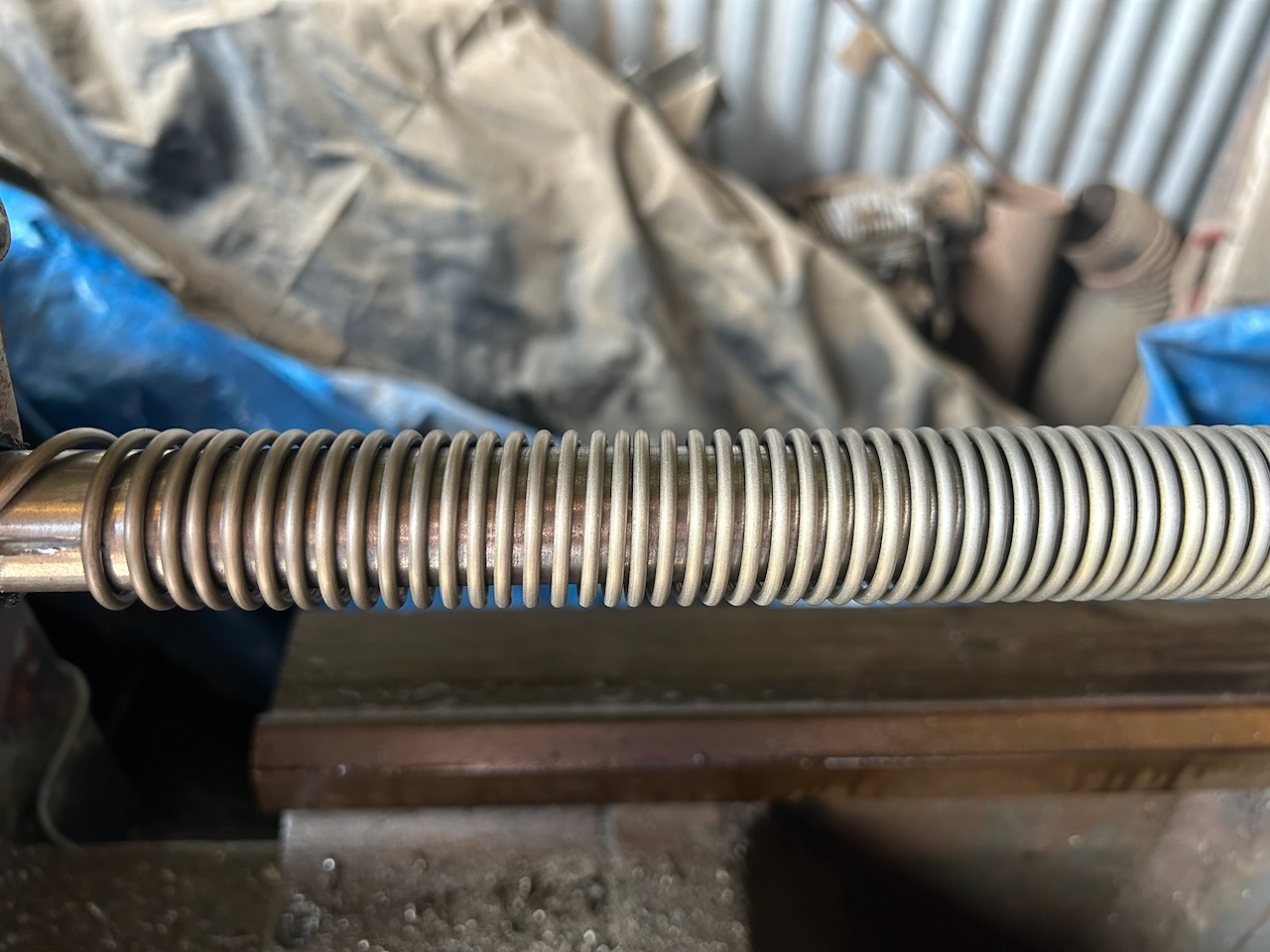
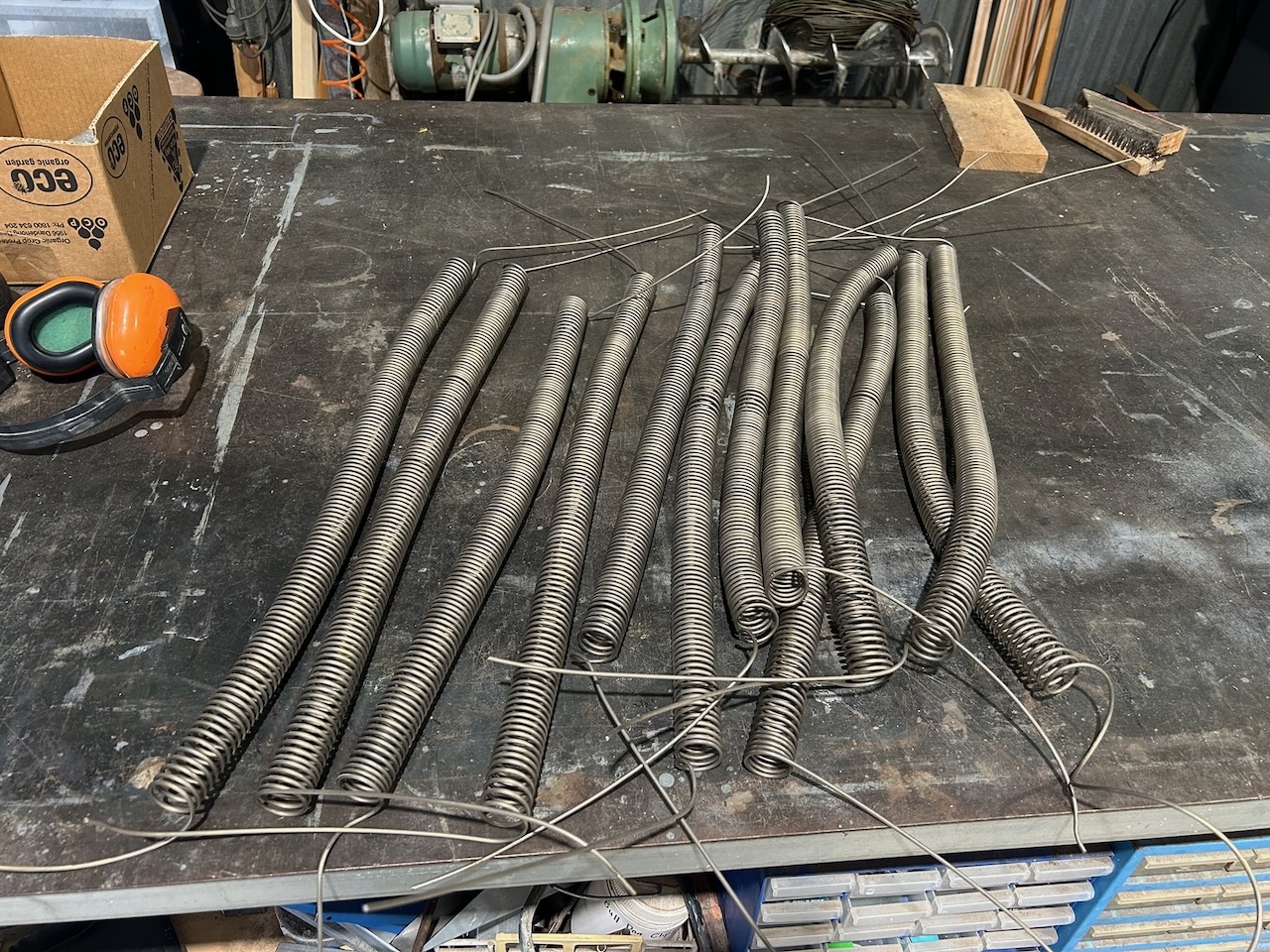
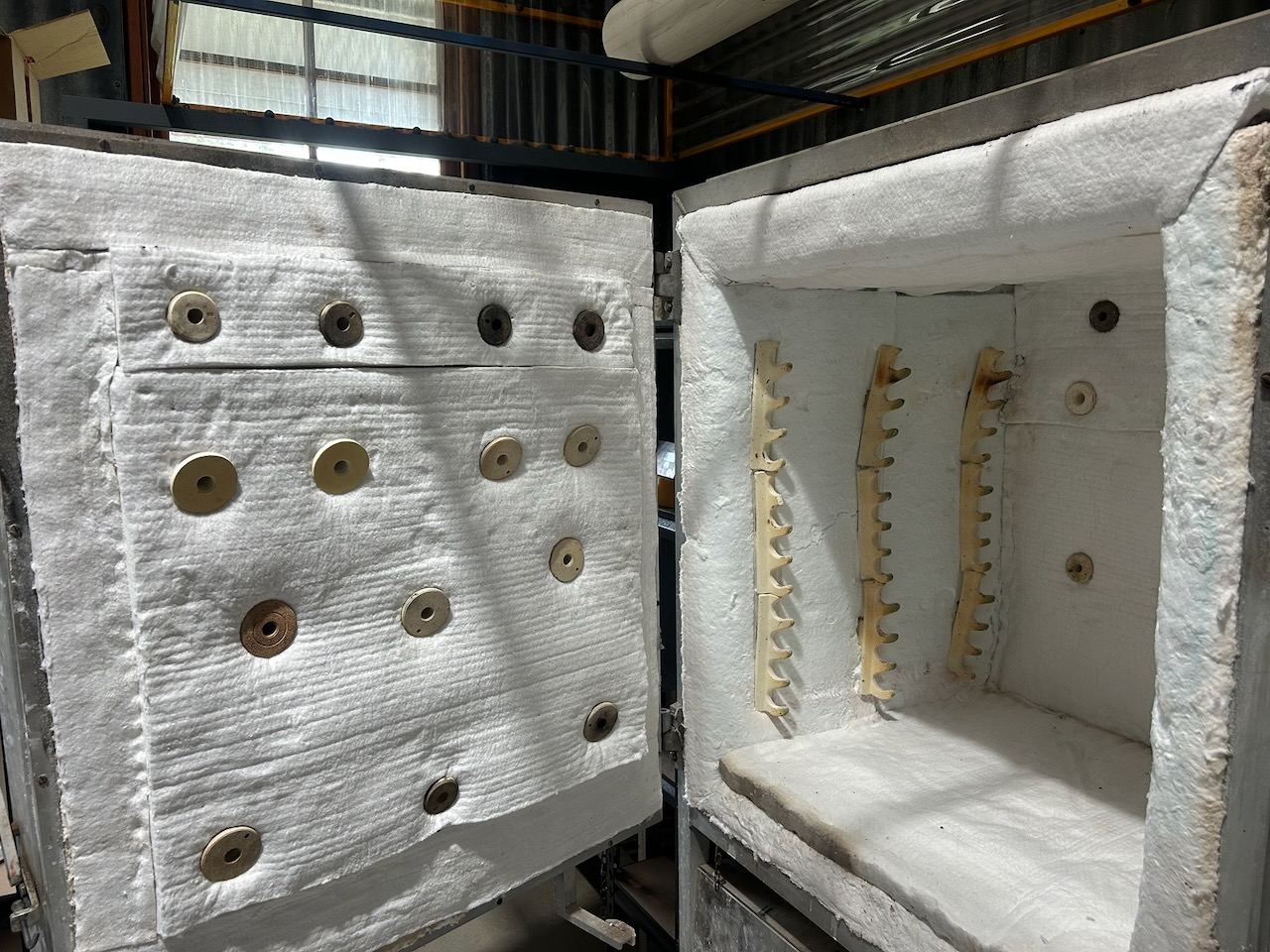
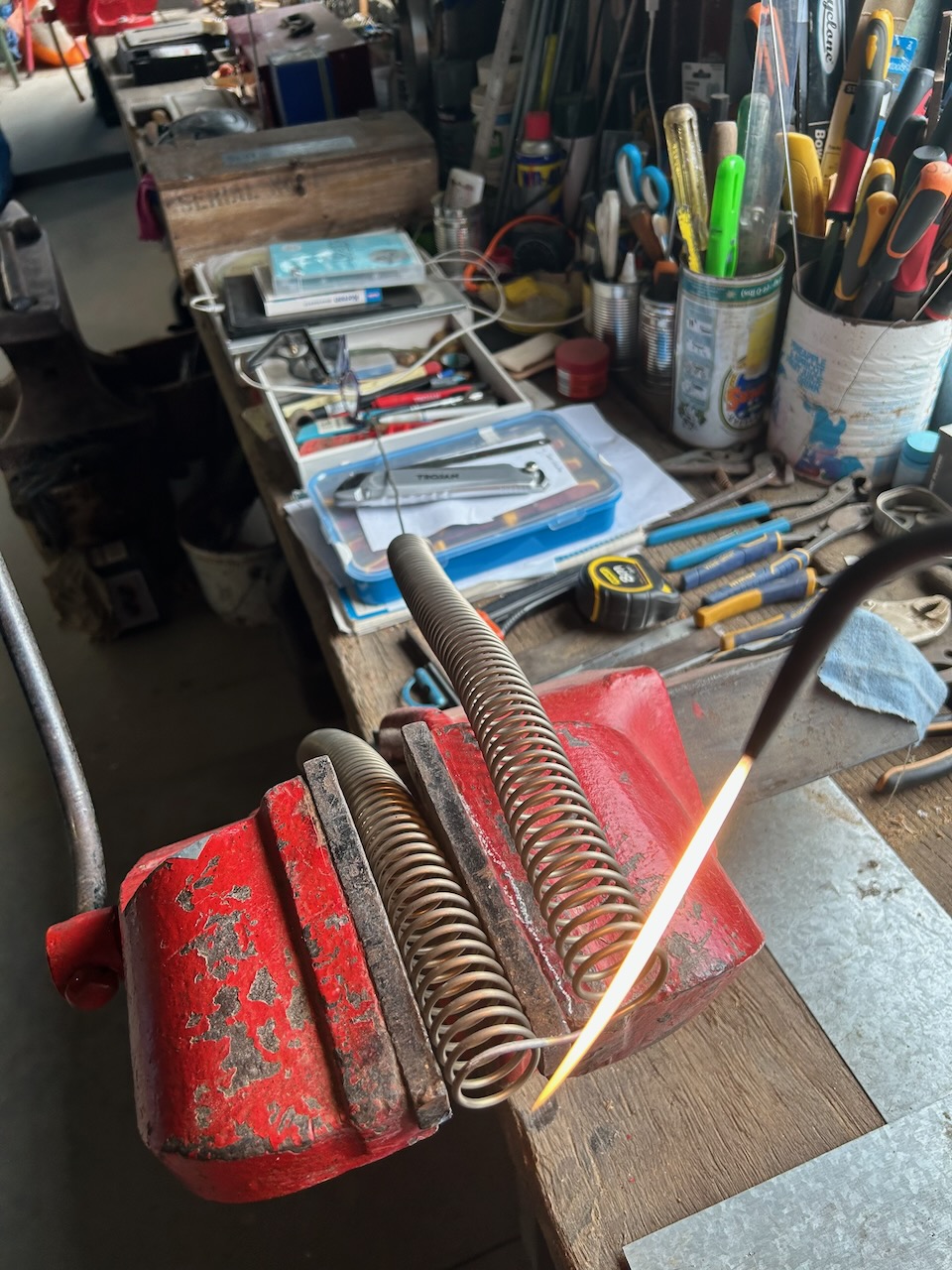
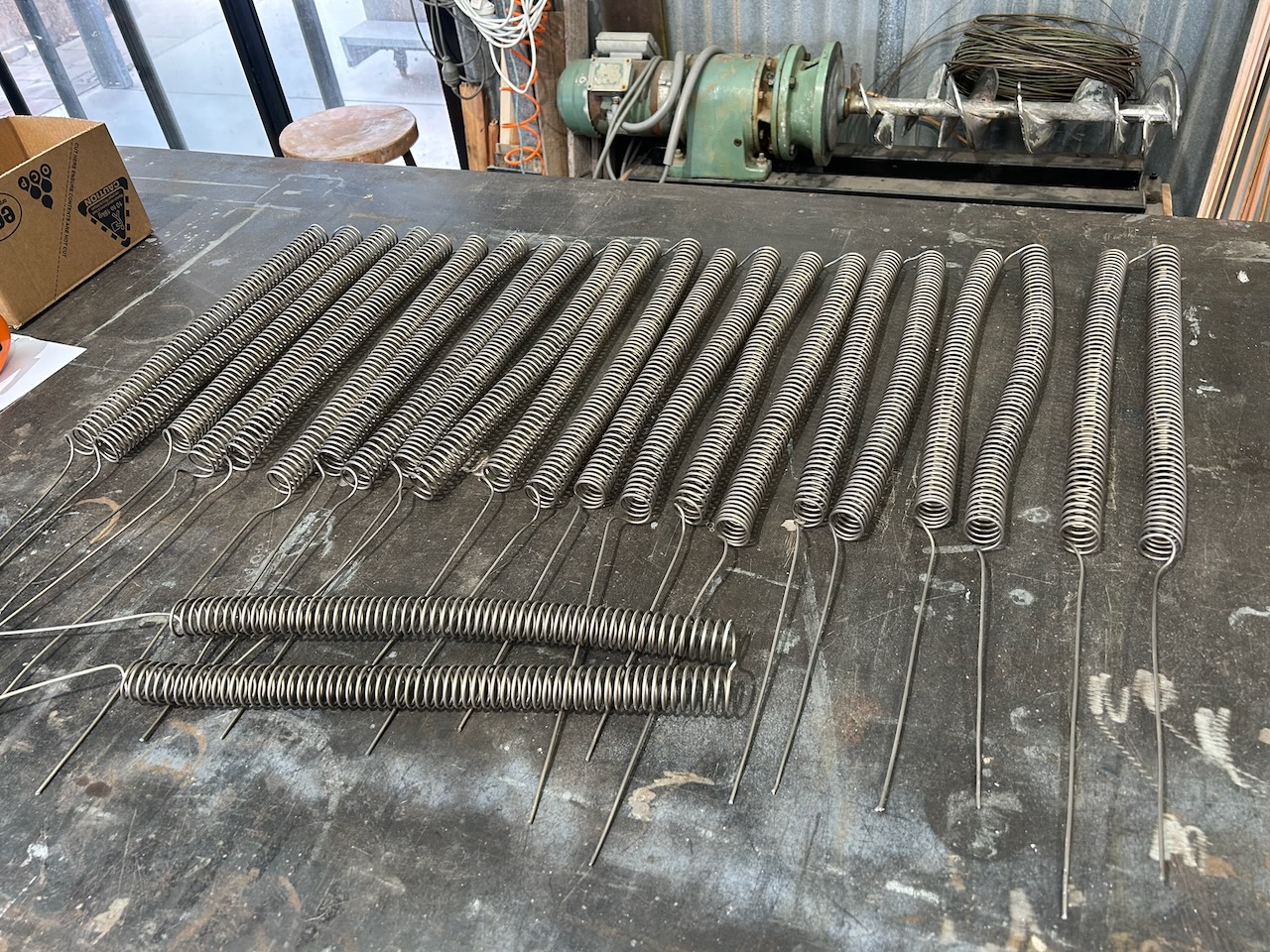
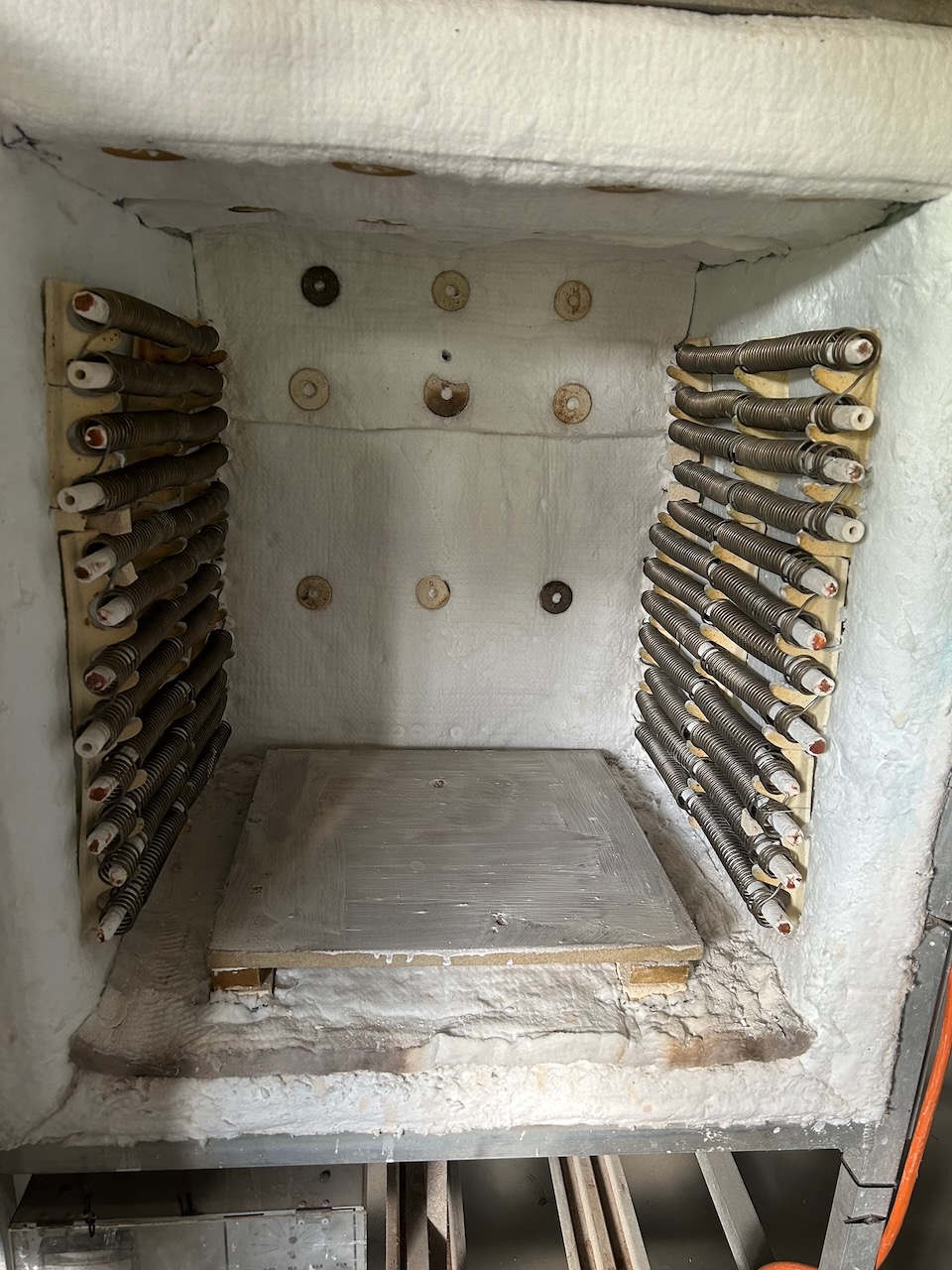
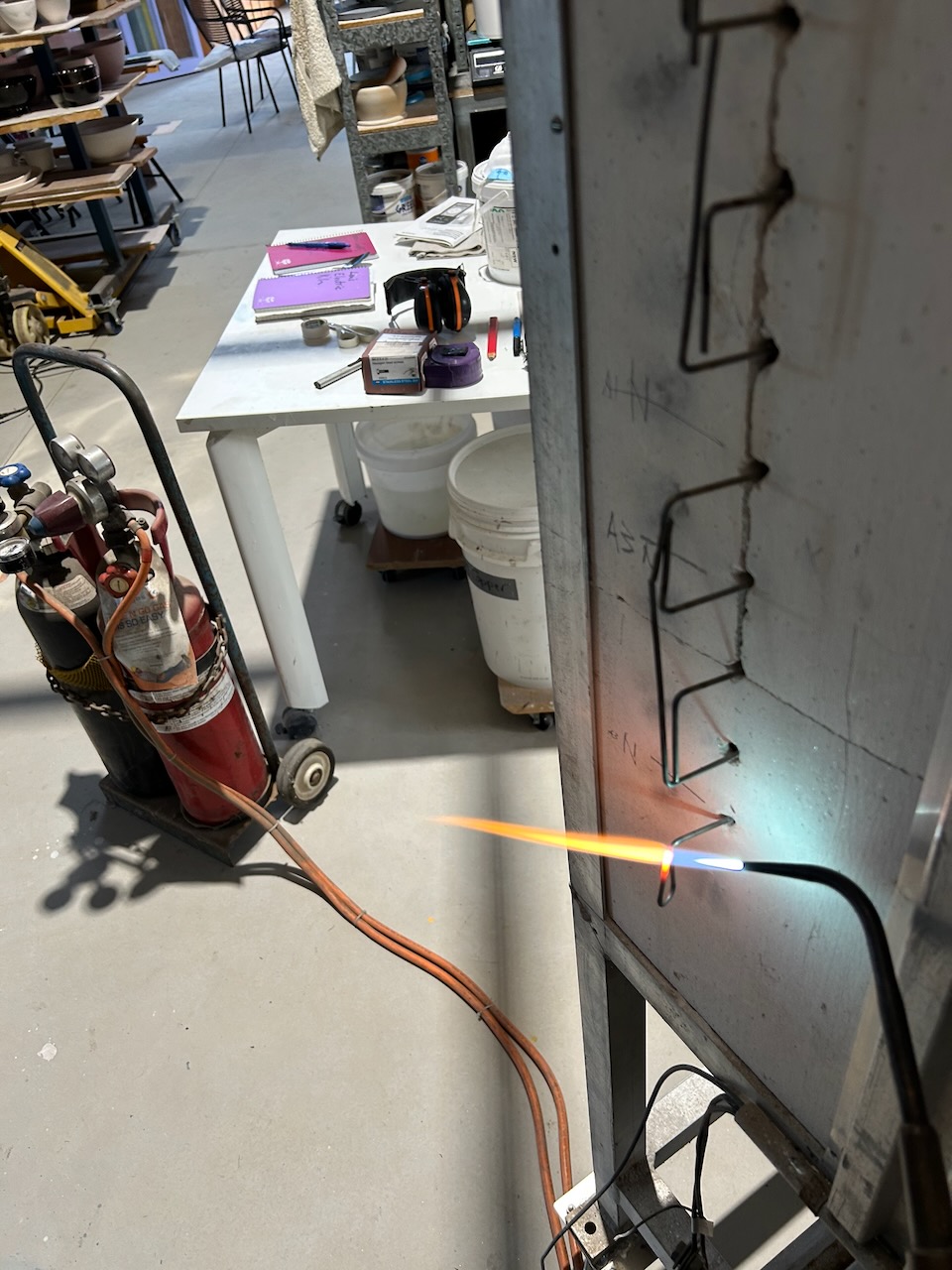
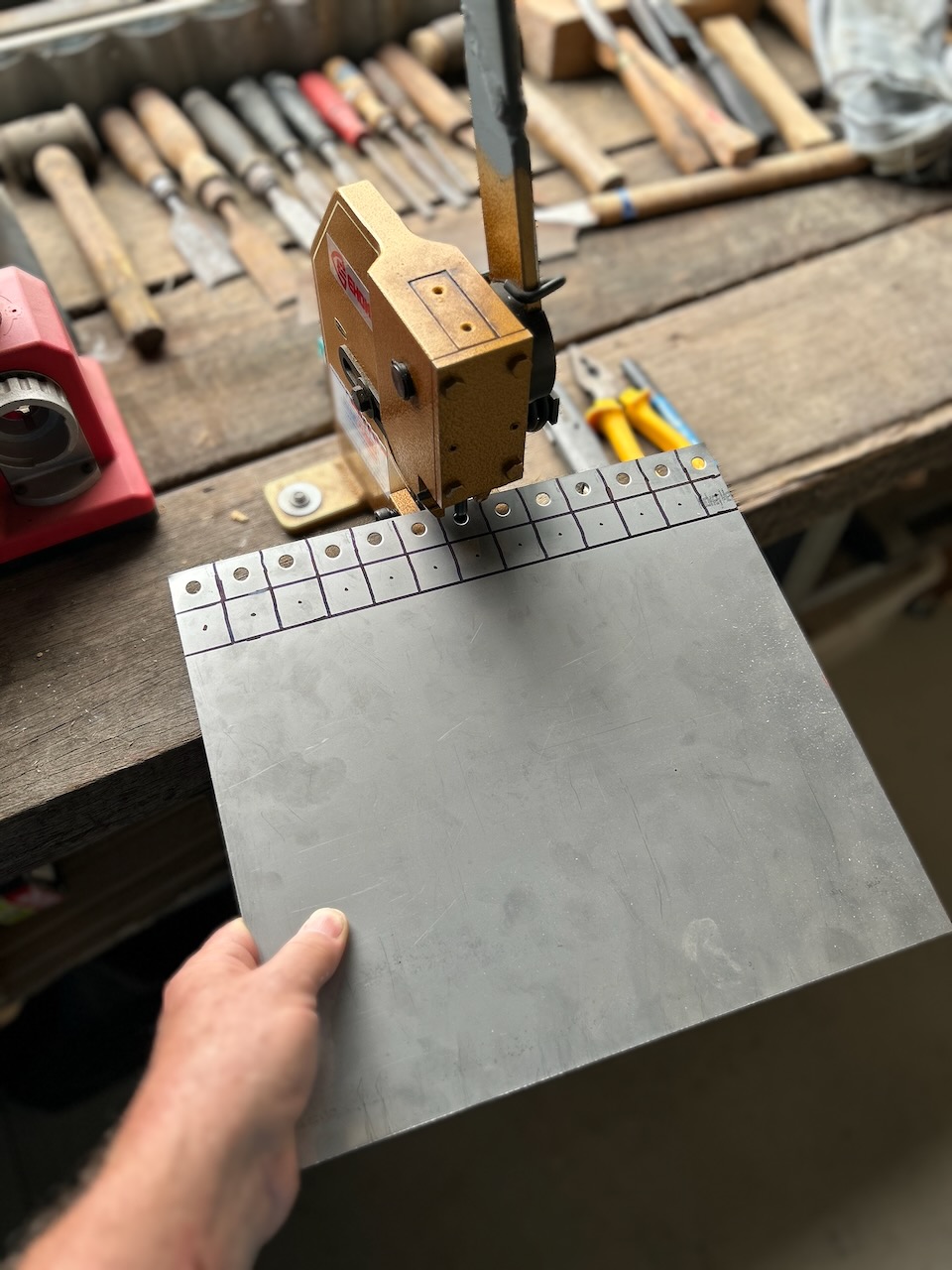
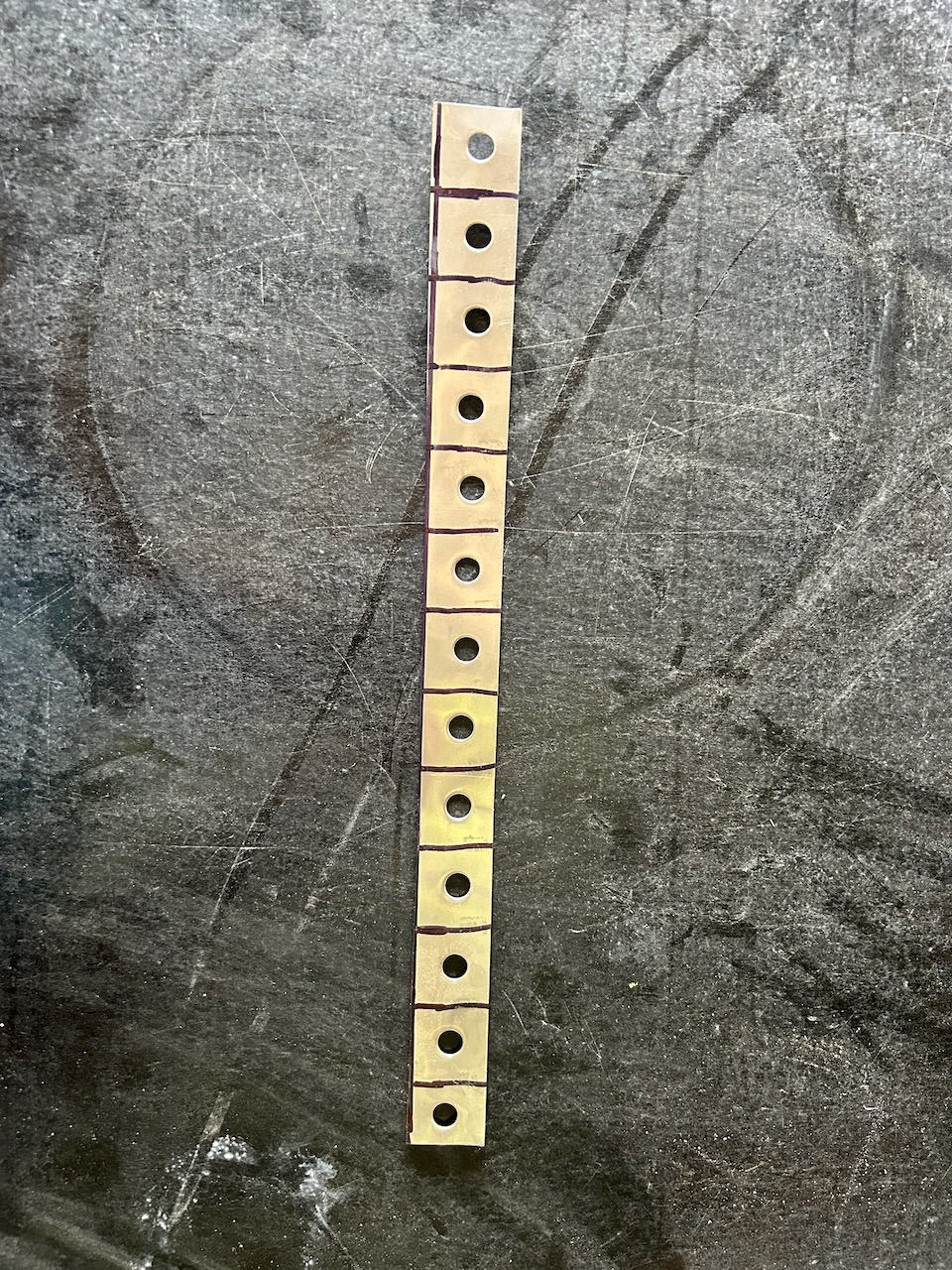
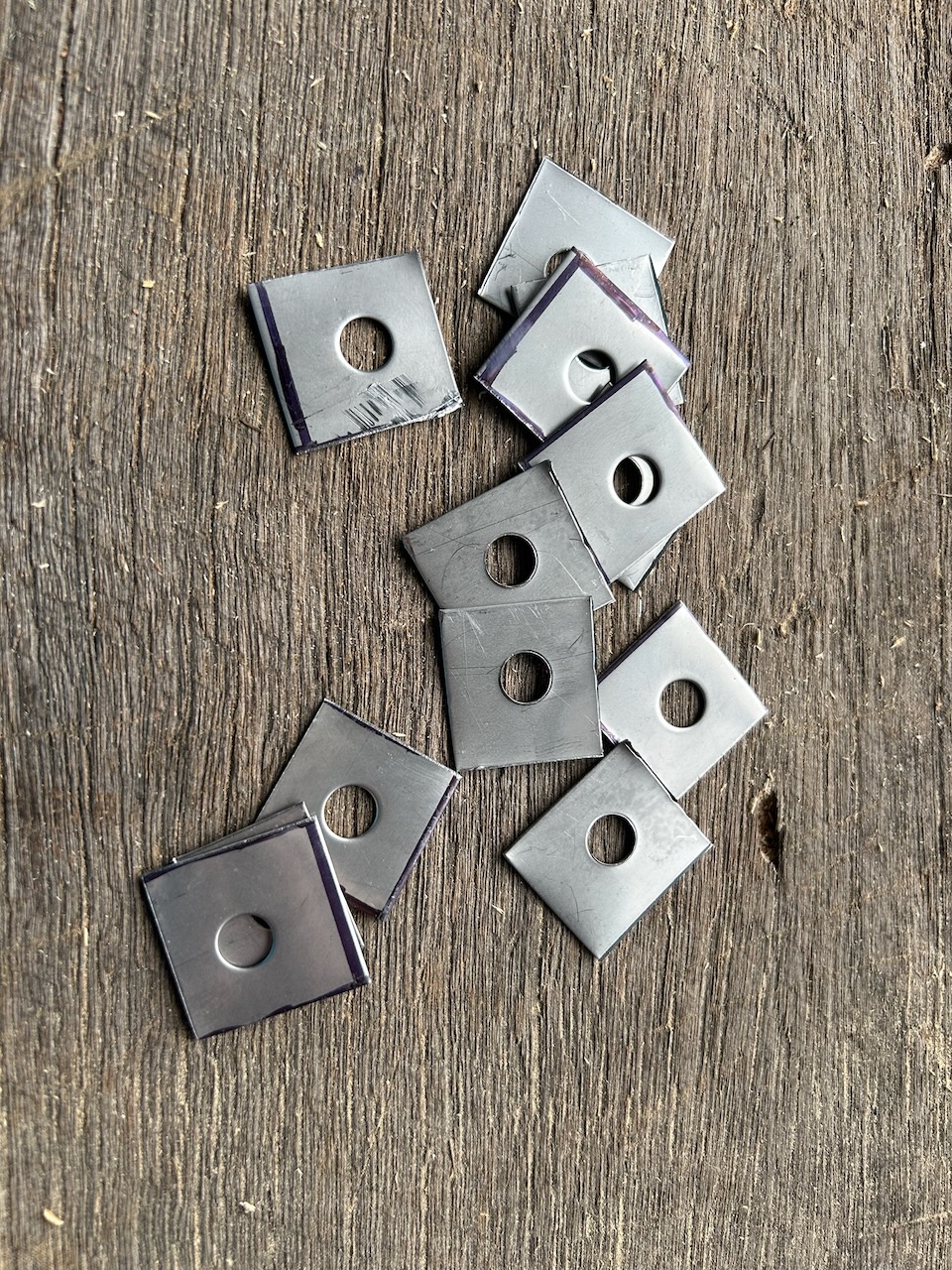
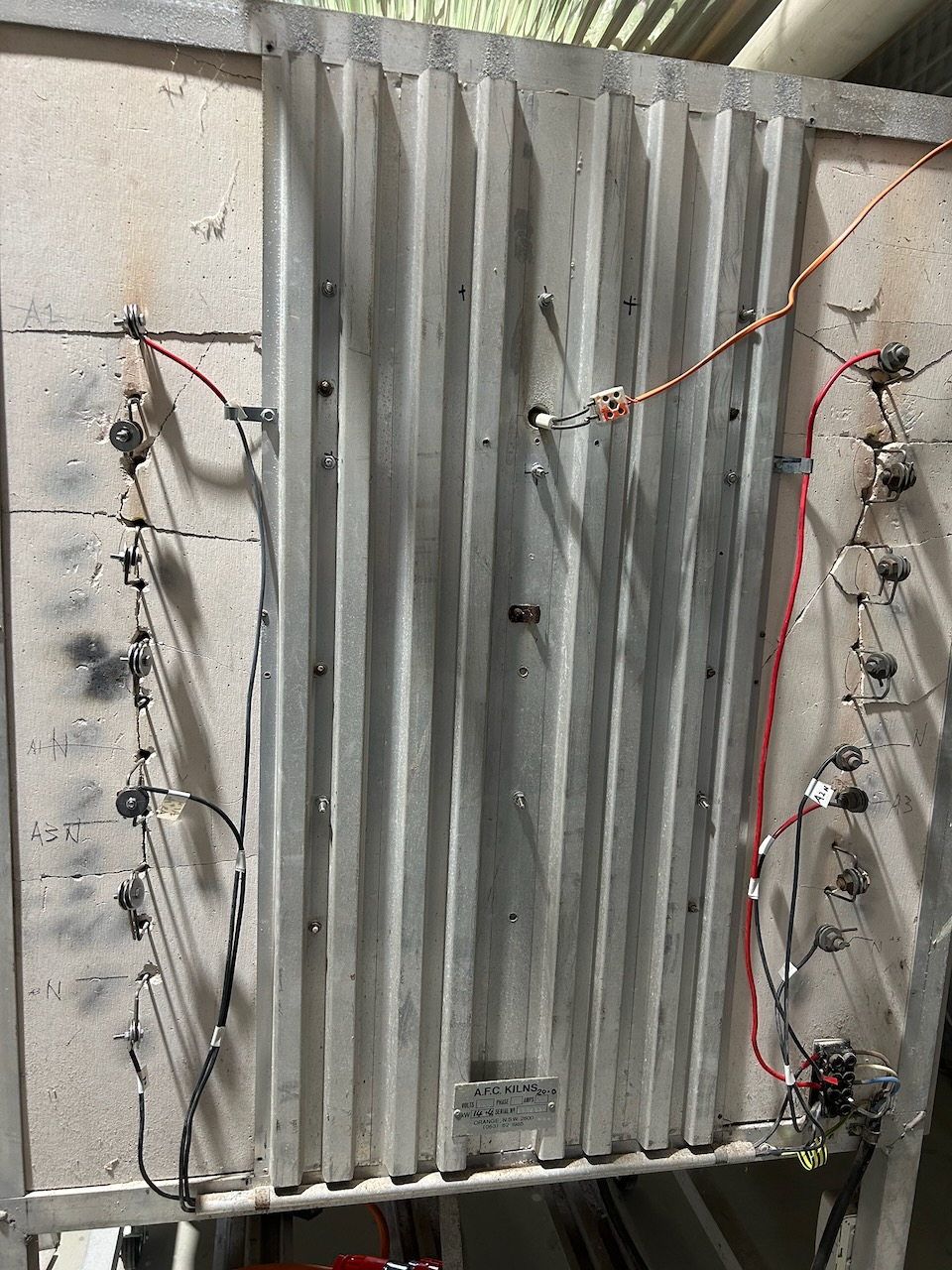
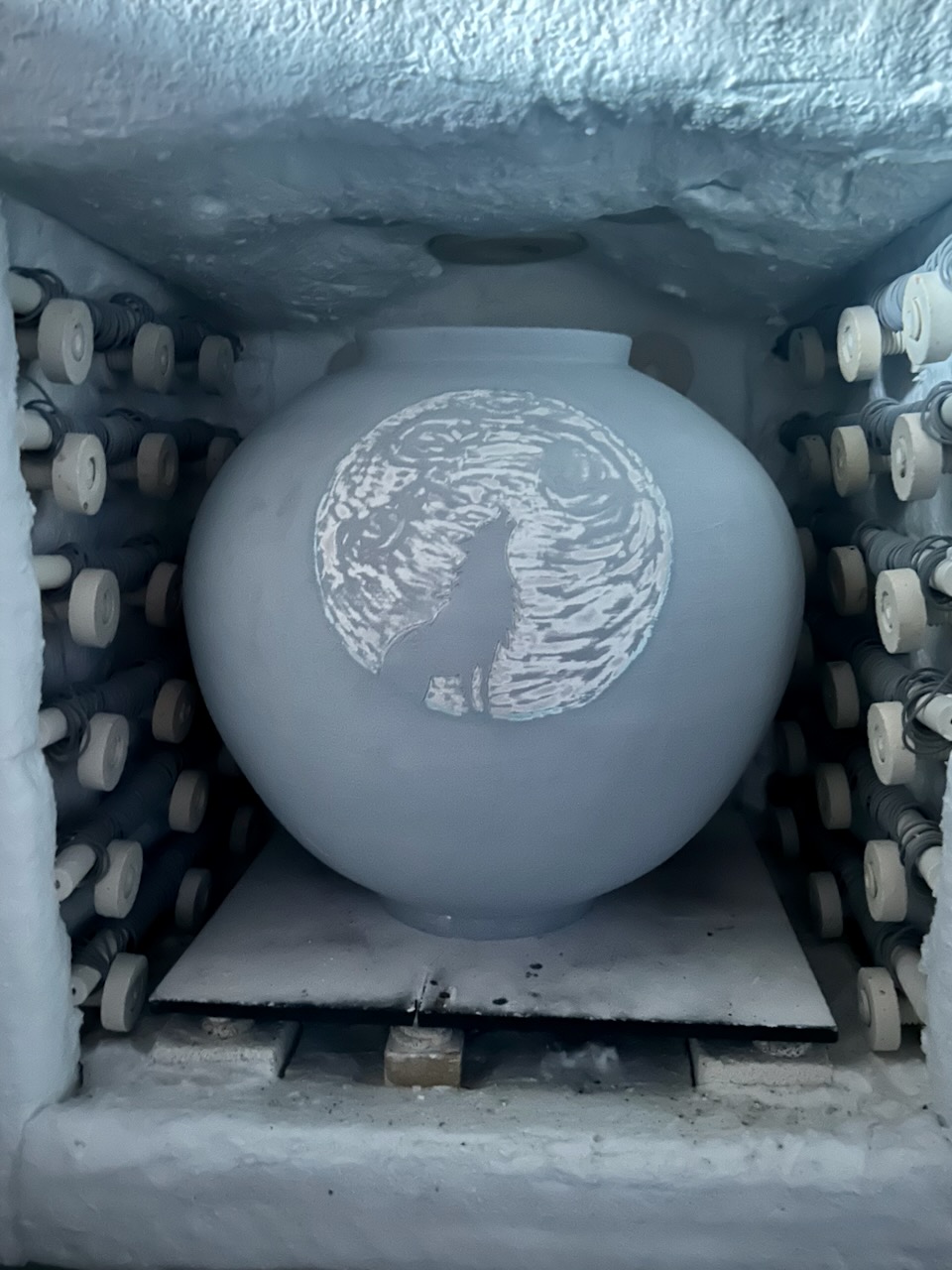


You must be logged in to post a comment.