A Free Kiln ?

I have been given an old electric kiln that is 44 years old. The frame is still in OK condition, but the ceramic fibre lining has collapsed, it is all cracked, shrunken, and falling to bits. The fibre in the roof and back wall has sagged, broken up and half of it has fallen in. Most of the element rods are also cracked and broken. It looks like it has had a hell of a life. I was told that it was once in use in a school, but I don’t know where it was originally from or it’s history before that. But it ended up being last used to slump glass. We were given the kiln when it finally became unworkable and the glass artist, (a relative of Janine), retired. And, I believe, spent its last years laying on it’s back and used as a top loader.

I’ve been given lots of things that don’t work in my time here, especially since the fire. I’m used to it. People say. “Steve, your handy. I’ve got this thing that doesn’t go, but I’m sure that you will be able to fix it. You can have it!” And occasionally, I can actually fix it! I surprise myself sometimes!  

Most things only need a different way of thinking to get around the huge problem of built in obsolescence. To find the creative alternative. It doesn’t have to look like new or be perfect. It just needs to work. Our pottery is full of old gear that I have rebuilt like this. In fact, there are less than half-a-dozen items that were bought ‘off the shelf’, as it were, brand new. We just don’t buy new stuff very often. Even my recently purchased ‘new’ electric car, was actually a used car, but new to me.

That is how we survived financially all these years, we rarely buy anything new. Only 2nd hand stuff, that no one else wants, or is less desirable. Second hand car, second hand house, second hand tools and equipment, we were always being offered stuff cheaply, or free, because it needed repair or just didn’t go anymore. However, If nothing turned up, I just built things from up scratch, using recycled material, or re-purposed from another job. The first two pottery studios that we built here, were made from re-cycled and scrounged materials, mostly wood. Tragically, they both burnt in fires. So no more building with wood for us. It is only this last studio that we built using a metal frame, but we spent a year scrounging sufficient old recycled corrugated iron to both clad it and line it, inside and out. Along with 2nd hand fittings and doors.

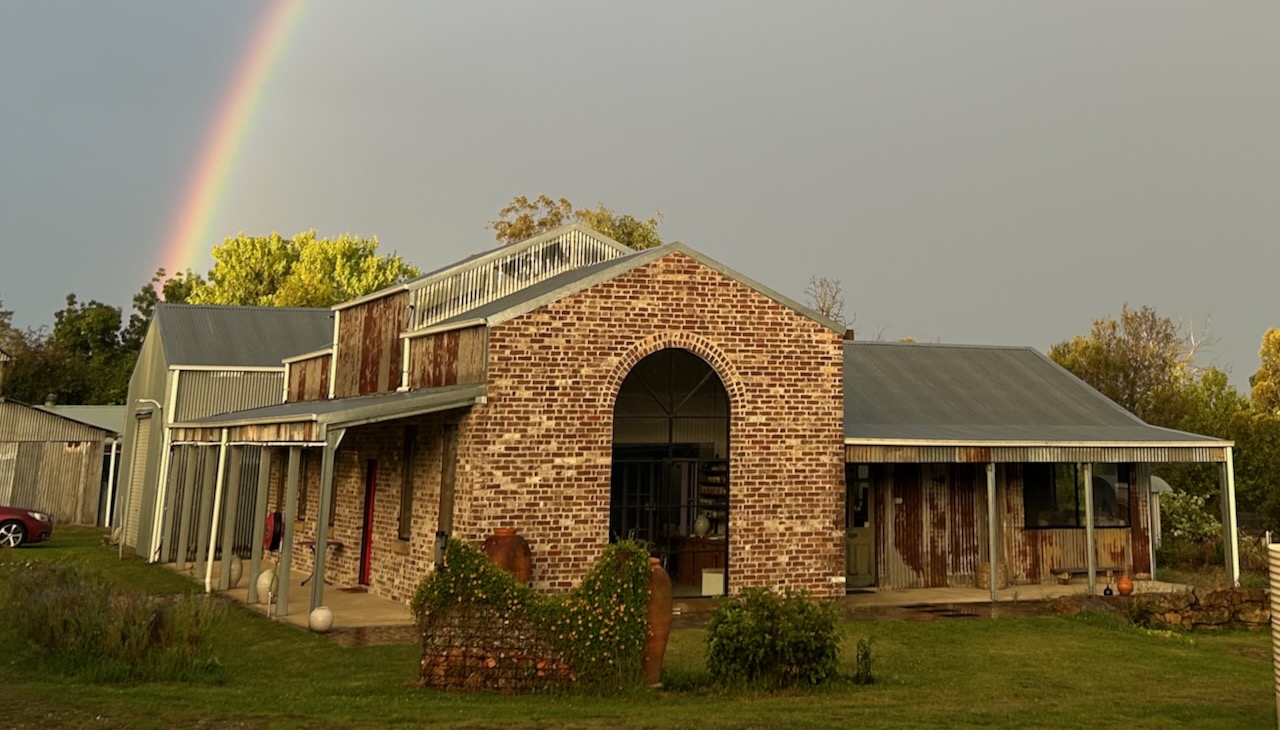
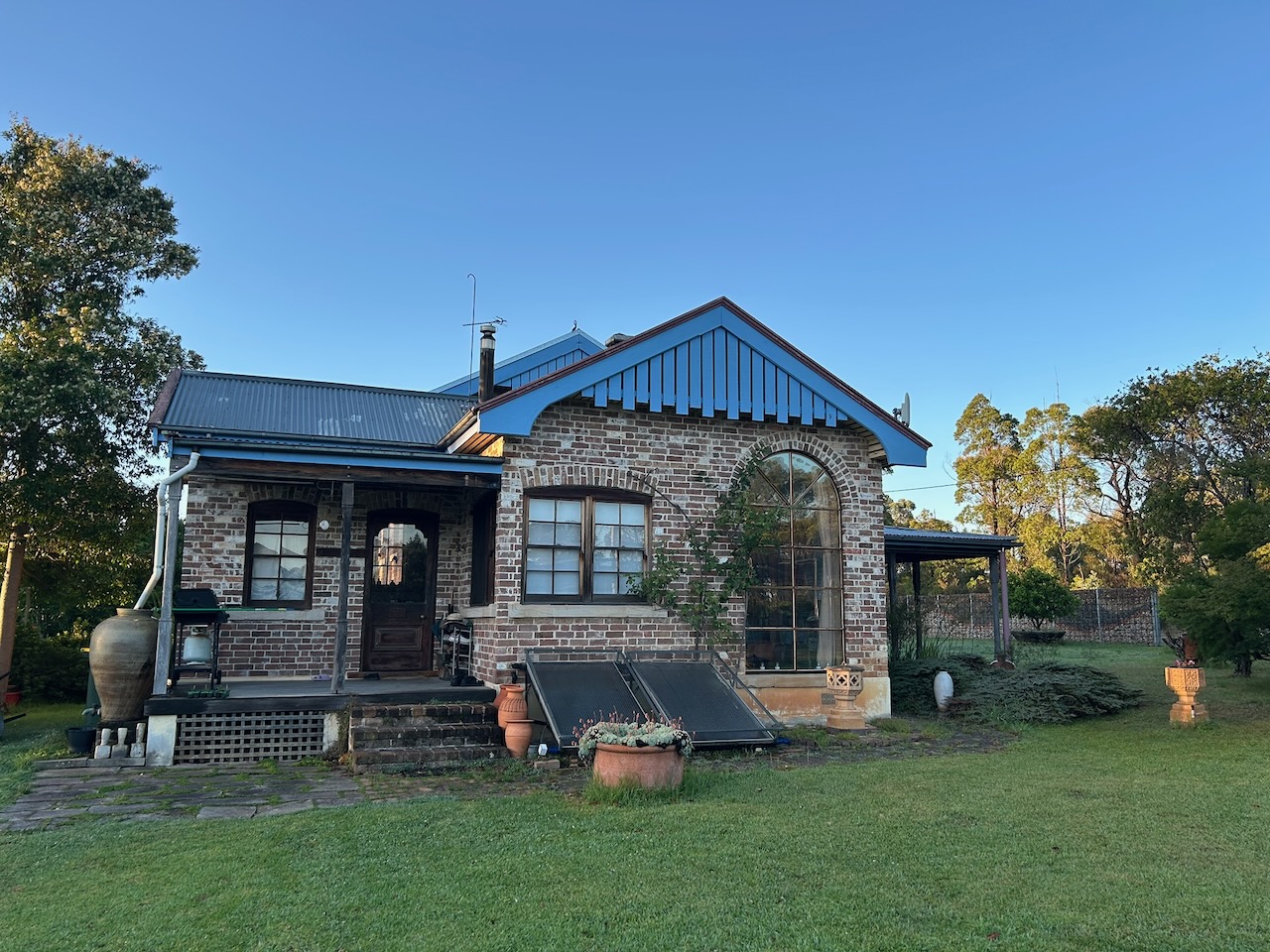
I decided to include a big arched window for the South wall of the new pottery facing the house. I wanted it to reflect the arch window that I made for the house back in the 80’s. No chance of finding something like that on the side of the road, so I welded one up out of marine grade aluminium for just a few hundred dollars. It actually turned out OK. I’ve never done that before. And can’t see myself ever needing to do it again. I never seem to get any good at anything much, as I only ever seem to do these jobs once, or maybe twice, but a couple of decades apart, just after I’ve forgotten how to do it.
The first thing that I did to get this old freebie kiln on the mend, was to make some new element mounting rods. As far as I’m aware, no one makes these ceramic kiln rods anymore in Australia. They are not hard to make, just time consuming. But I guess that you do need to know what you are doing. And in this case I just happen to know just enough to to it. That is to say, that I have had a go at home made kiln furniture/home made refractories about 50 years ago.

I needed to get these rods made early, as the only kiln that I now own that can fit in 650mm long ceramic element rods, is the big wood fired kiln. I can only fire the wood kiln in the cooler months, avoiding summer for obvious reasons. So I needed these rods made back in March, last year, so as to be dried out and ready to fire in May/June. As I was planning to do the rebuild of the electric kiln over this last summer break. I got a lot done, but it has taken me a long time. Principally because I don’t really like doing kiln work. I’m over it!

I mixed up a small batch of 10kgs of refractory clay body suitable for use as element rods. I used some old refractory ‘Puggoon’ kaolin, along with 3 sizes of high alumina grog. For years, I used to make all our wadding for the big wood fired kiln out of ‘Puggoon’ high alumina kaolin from Gulgong. I still have one big jute sack of it left in the barn. This special High Alumina wadding (HA) that I made up, after firing to stoneware, wasn’t just rubbish to be thrown out, but instead, I had created very useful, high value, HA grog. Converting what would normally be any one else’s waste product into a valuable asset worth over $6,000 per tonne.

I can also crush a very good quality HA fire brick down to dust in the rock crusher to make excellent grog.

This is not just re-use, re-cycle, but rather up-scale and value-add as well! Over a year, it’s amazing how much wadding/grog you can accumulate. A very long time ago, way back in the 70’s. Janine and I managed to buy 12,000 mixed fire bricks for a few hundred dollars, from a metal bath tub enameling factory that was being de-commissioned. This meant that we were able to build a very large 3 chamber wood fired climbing kiln. The biggest problem we faced at that time was that kiln shelves were so incredibly expensive. Without kiln shelves we couldn’t fire the kiln, so I taught myself how to make our own kiln shelves and props. Most of which, I still have! I developed a reliable recipe using crude ‘Puggoon’ HA Kaolin 50%, mixed with our own home made HA grog 50%. Our own crushed wadding and fire brick grog gave us a range of sizes straight from the crusher, coarse, medium and fine, It proved to be a good blend of sized aggregate. I learnt this technique when Janine and I worked with Harry and May Davis in New Zealand way back in the early 70’s.

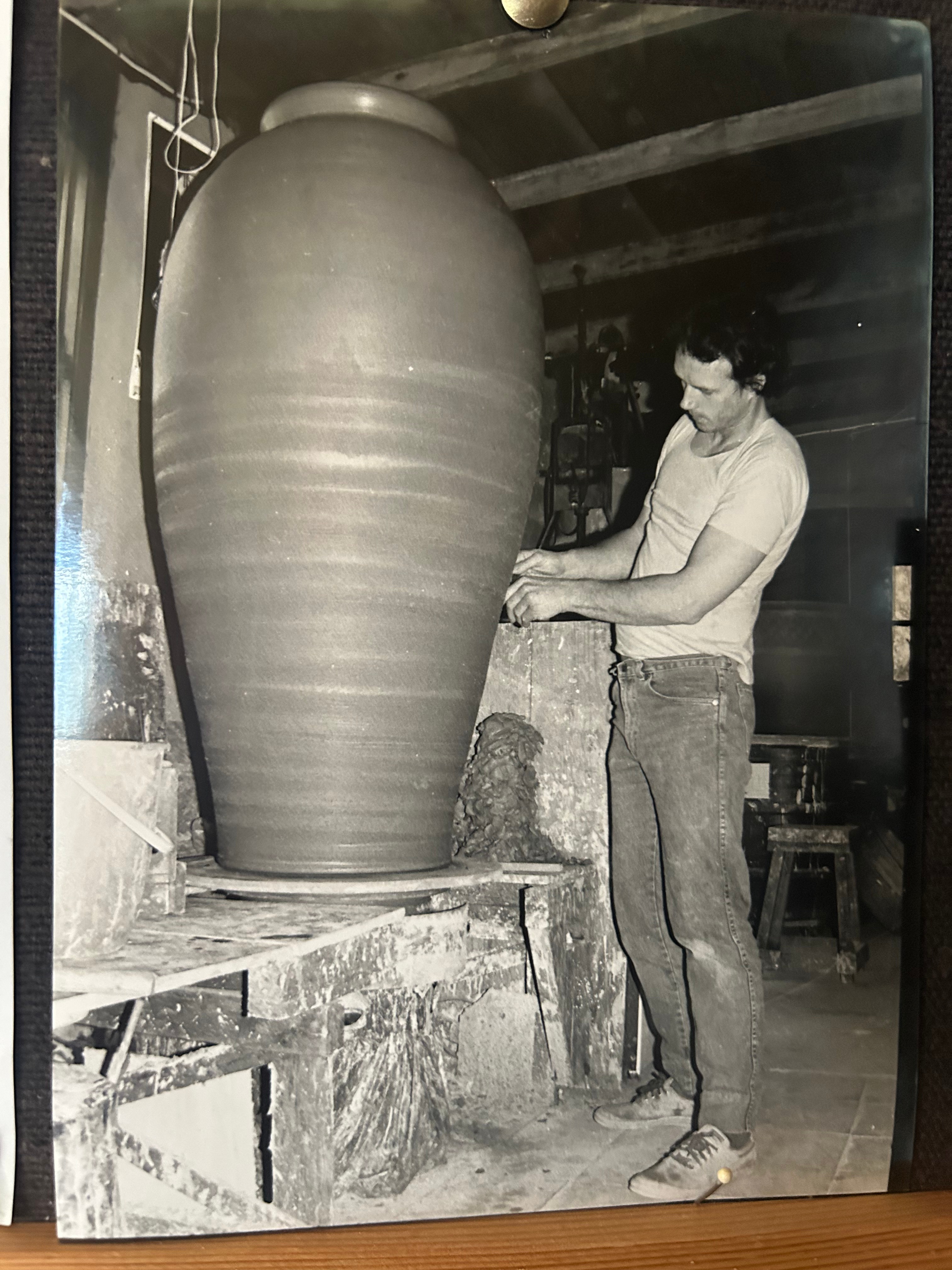
My recipes and pictures of me making the kiln shelves and props were all illustrated in the book ‘Handbook for Australian Potters’ published in the early 80’s. Pages, 206 to 212. Below, I’m shown in my youth, in these images, taken by Janine, of me making kiln shelves, fearlessly declaring my independence and learning to be self-reliant. I’m a lot older and fatter now, but nothing else has changed. I’m still enthusiastically practicing self reliance!
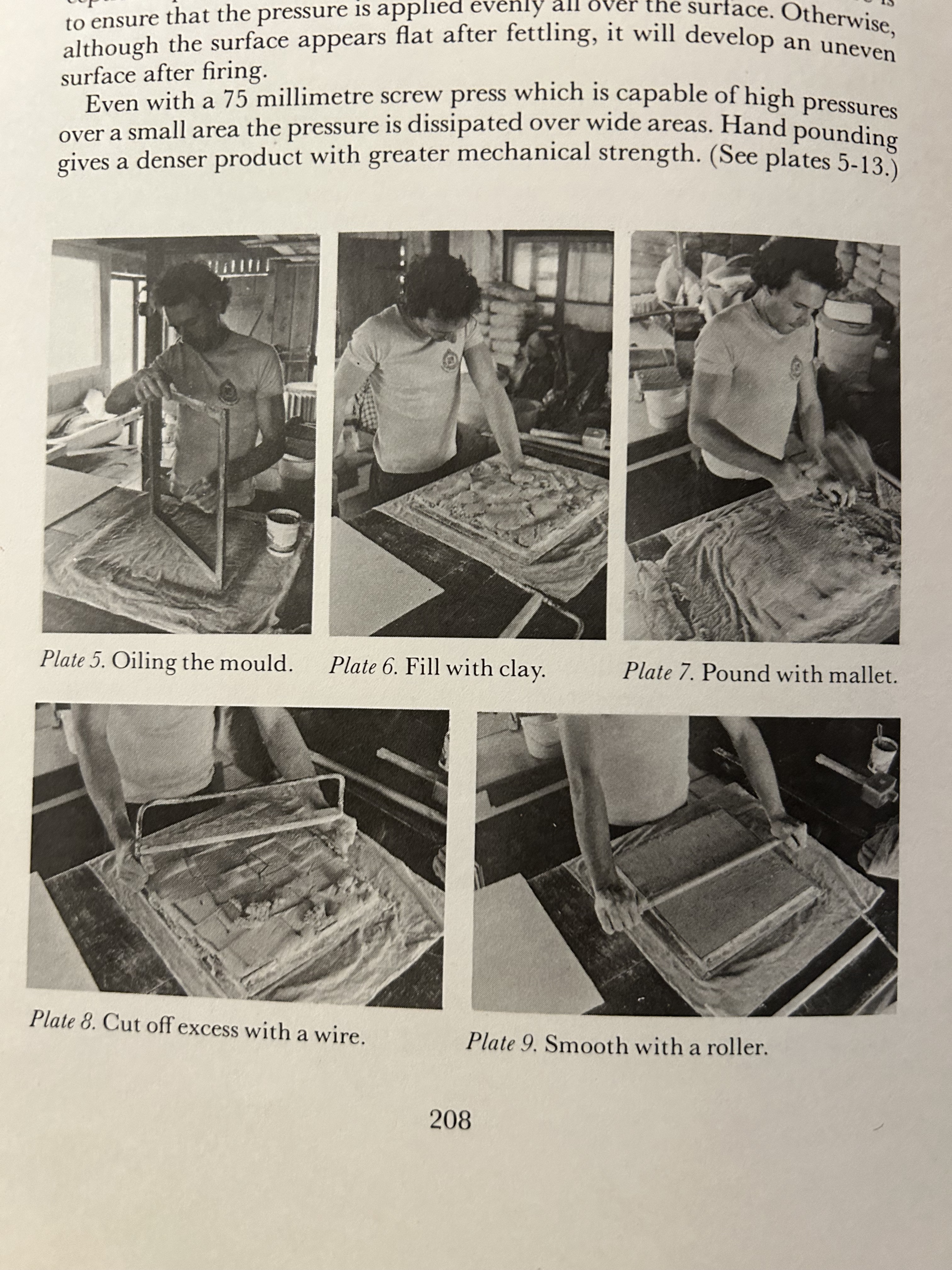
These home-made kiln shelves weren’t very good. But they worked, and were good enough to get us going and in business, because we certainly didn’t have the money to buy enough of them to fill such a big kiln. So I taught myself how to make refractories way back then out of necessity. Now I’m financially secure enough to afford to buy element rods, but as a Nation, we don’t make anything in Australia anymore. Such items may be available from China? But I know how to make my own, So I do.
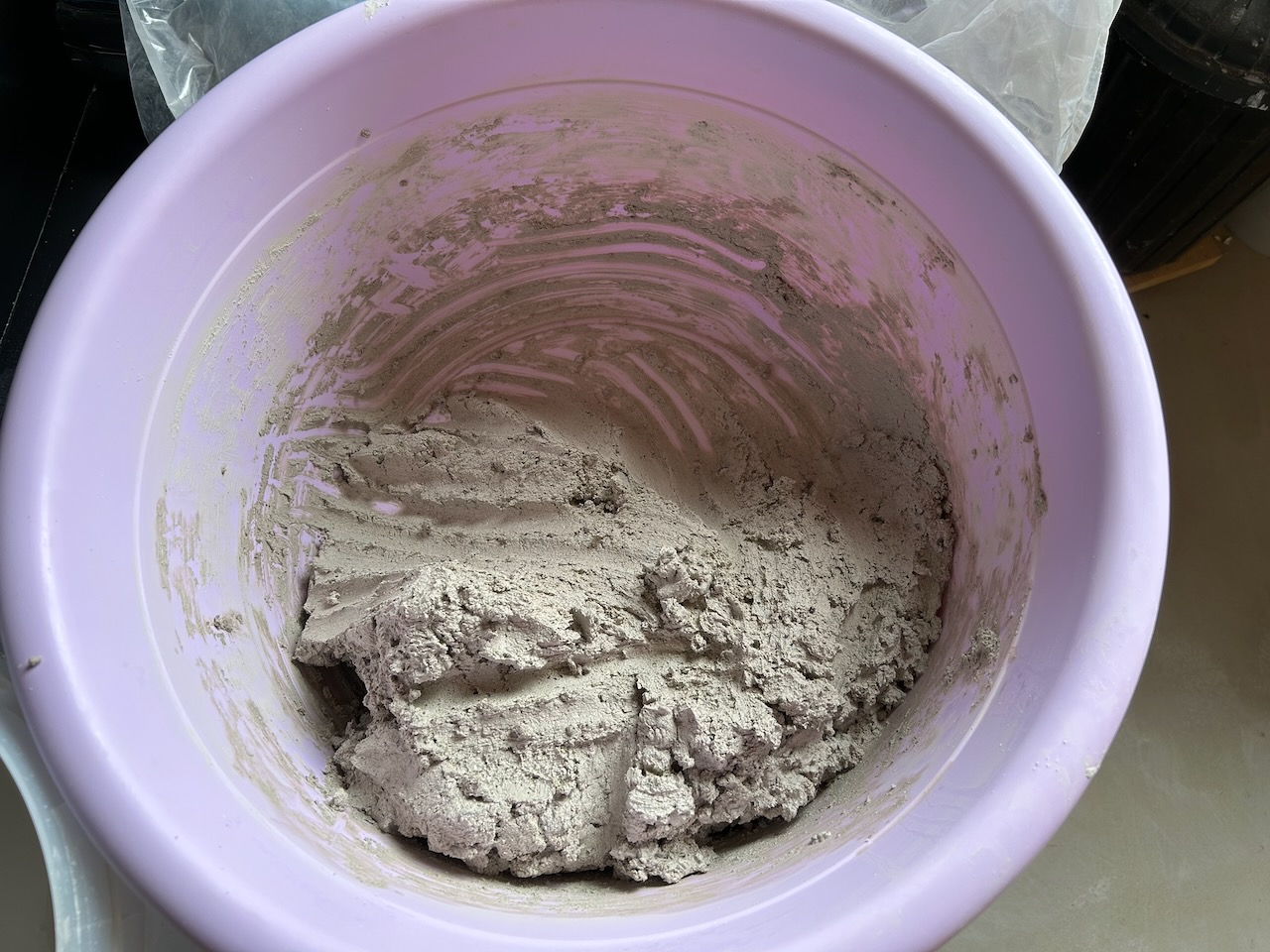
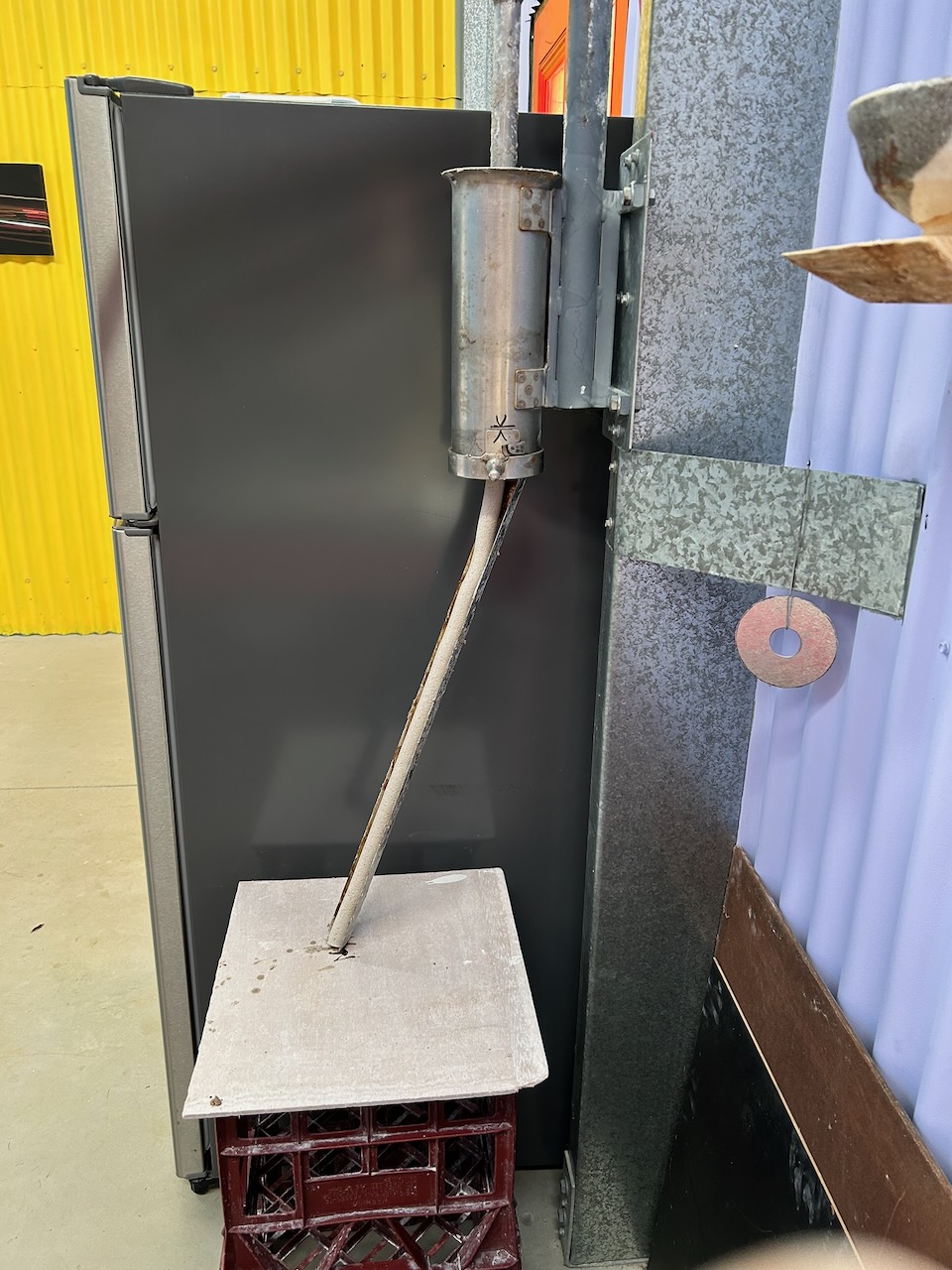
The refractory clay and grog mixture is so non-plastic and short, that it doesn’t hold together much at all. The clay is naturally short, crumbly and non-plastic, and when mixed 50/50% with fine grog it is, not too surprisingly, totally short, crumbly, floppy and useless. A bit like working with sand castles. I can’t extrude the rods vertically, they just snap off under their own weight. I have to extrude them down an inclined stainless steel ‘V’ shaped ramp, lubricated with a little used engine oil brushed on to it to ‘lube’ the process. The clay has to be pushed down the ramp to keep it compressed and avoid hair line cracks. If it can slide easily, it will distort, stretch, weaken and break. The thick engine oil, allows the clay to slide, but is sufficiently viscous to stop it from sliding easily. I use the thin stainless steel ‘V’ angle slide to carry the soft rods to the drying table.
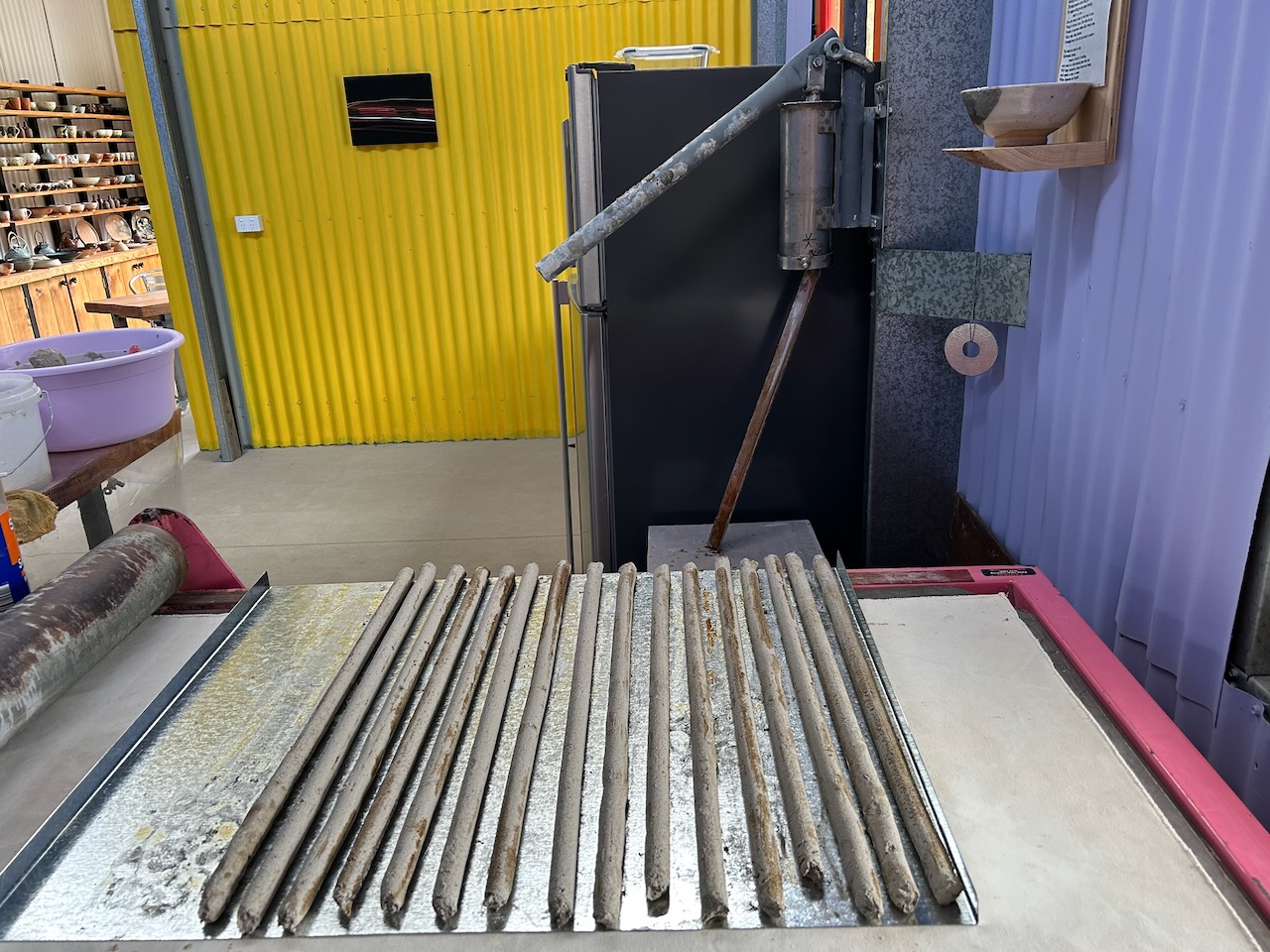
Once dry, the rods have to be carefully carried and placed in the kiln very gently. The clay body is so ‘short’ that they snap so easily. It has NO dry strength. NONE! I broke a couple packing them, even taking care. Once fired to stoneware, they are more resilient. The final strength is achieved when they are used in the kiln. Each firing to stoneware, helps to develop the matrix of primary mullite crystals in the body that gives it high temperature strength and thermal shock resistance.

Now, with the element rods in stock, I recovered 2 rolls of ceramic fibre that went through the fire, (completely unaffected, but just a bit blackened, and now without their cardboard boxes), a box of 2nd hand refractory insulating bricks, slightly burnt, blackened and box-less, and a box of recycled and charred ceramic anchors, that also survived the fire. I only needed to buy some new stainless steel bolts to hold the anchors in place. 

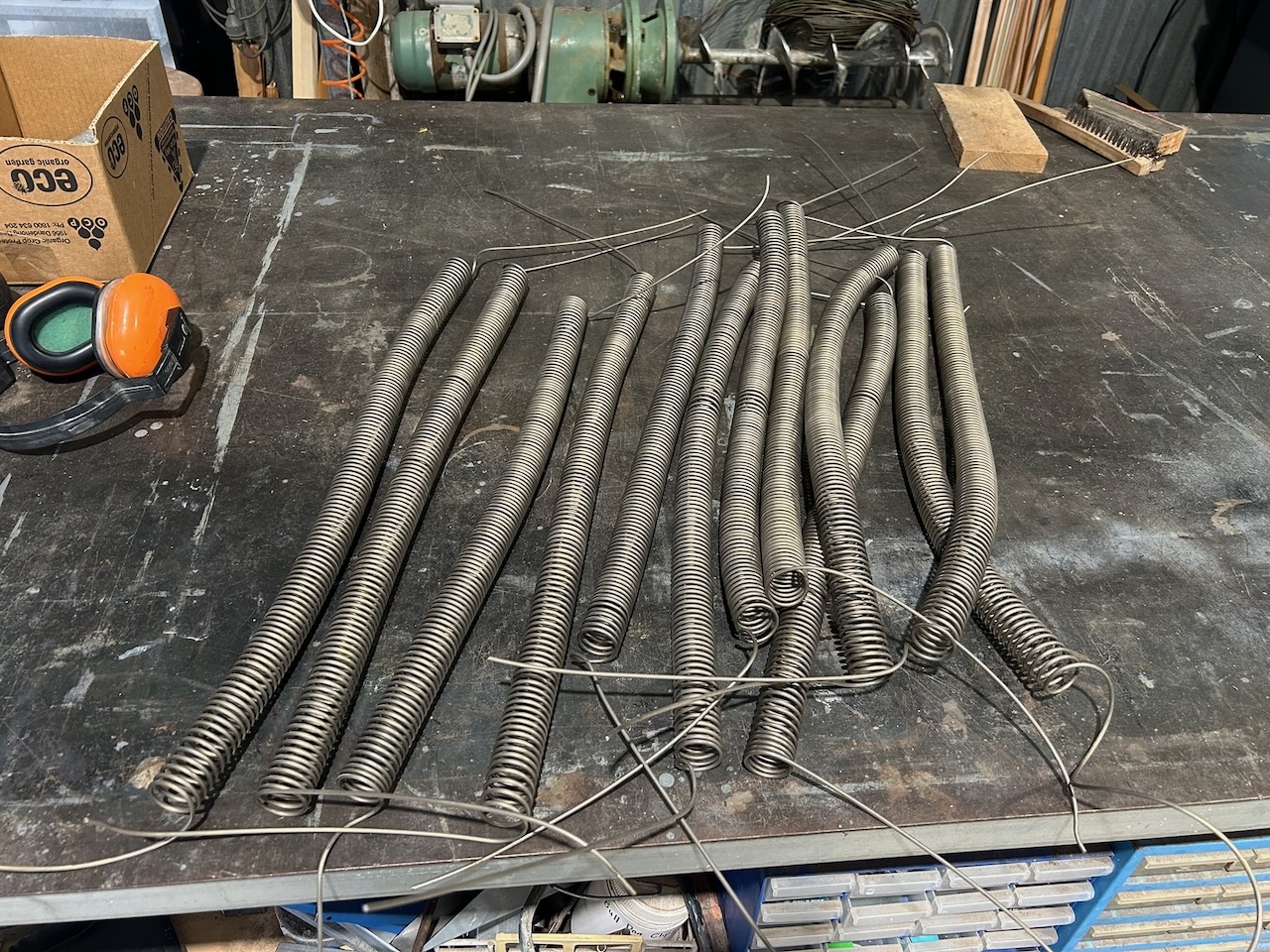
The largest expense in rebuilding an old kiln like this is my labour, so I’m saving a lot of money there. The other big expense is the cost of the bulk Kanthal wire, so that I can wind up a new set of electrical heating elements on the lathe. I have done all the calculations and decided to design the new elements to use the best grade Kanthal A1 resistance wire, and run the whole thing at very low ’watts per sq. millimetre’ rating. This requires using more of the most expensive wire, but gives a set of elements that will last a very long time and make the kiln more or less maintenance free. The wholesale cost to me to purchase the bulk wire is close to $900!  Before spending time to wind them on the lathe and form them into hairpin element units.

I once had a phone call from a kiln maintenance guy who’s job was to go around the Schools, Colleges and Art Schools servicing pottery kilns. He told me that he had been doing this job for over a decade and had seen my kilns sitting there in the various kiln rooms, and he had never been asked to look at them. Constantly working on other kilns in those facilities. Apparently, my kilns had never needed any servicing.

It’s pretty unheard of for a pottery kiln like that to go for 10 years, fired 2 or 3 times a week, and not need any elements replacing or other work. He asked me directly, “What are you doing?” “How come they last so long?” I was pleased to hear that he was so impressed. I told him that I simply used the best material available and plenty of it, and did the best good job that I could. I don’t want to be going out doing maintenance. I want the things to last forever. There was one brand of kiln that had the reputation for having a certain degree of built in obsolescence. Those were his bread and butter, he told me. He loved the fact that they were rubbish,

I built around 300 kilns in my time over the 50 years. When I started my kiln building business decades ago, and rang the ‘Kanthal’ wire distributor, to order their best quality A1  high temperature wire. I often got the message that they would have to order it in, “as no one uses that wire in Australia very much, so we don’t carry very much in stock!”  I’d have to wait up to 2 months for the next shipment. It opened my eyes to the fact that other kilns being made here at that time, didn’t have the best grade of wire in their elements, possibly ensuring a certain degree of ongoing maintenance calls into the future?

I don’t actually like doing kiln work. I did it out of necessity. It was one of the ways that we found to earn the extra money that we needed to pay off the mortgage. Making pots was so much more fun, but financially unreliable. However, although I didn’t enjoy the kiln work. I found ways to make it more mentally challenging, by always looking to do things a different, or better way. I developed all my own designs. Got both a gas license and an electrical license to keep it all legal. Taught myself how to weld both stainless steel and aluminium, using a sophisticated solid state, AC/DC, pulse, TIG welder, and do all the sheet metal, as well as the electronics and learnt CAD design software. There was always something challenging to learn to keep it ‘alive’ and interesting. So although it wasn’t my first choice,  it was better than all the other alternatives. Like packing the shelves at the supermarket, being a delivery driver, or becoming a full time ceramics teacher. I was happy to just go into town one day a week to teach my special subjects at the Art School. I really enjoyed that. But it was only one day a week. I could cope with the driving once a week. I couldn’t see myself doing it every day. It was a 2 to 3 hour trip each way. A waste of my life if I was to do it full time. I couldn’t bear the thought! 

So we found half a dozen creative ways to cobble together a risky, uneven, slightly stressful, but fully committed and involved creative life. It turned out that we ‘got away with it’!  We managed to get through life without ever having to get a ‘real’ job! I was never on the dole either! Completely independent. Most of the other potters that we knew had a partner who had a full time job to smooth out the economics. But we were one of only a few couples, who survived working together with no one earning a safe ’salary’. We were both fully involved in this erratic, ceramic based, artistic engagement with self reliance and creative mini-capitalism. It taxed our inner resources both physically and intellectually, but was ultimately very rewarding in exact proportion to the effort that we put into it! I’ve never been motivated by the desire for money in itself. It’s necessary for a basic level of comfort, but after that it consumes people. Someone once told me that money is like manure. It has a great fertilizing effect when spread evenly, but stinks when it’s piled up in great heaps!

So all this life experience has now come in handy in the refurbishment of this ‘free’ kiln that was destined for the tip. Is anything ever really free?
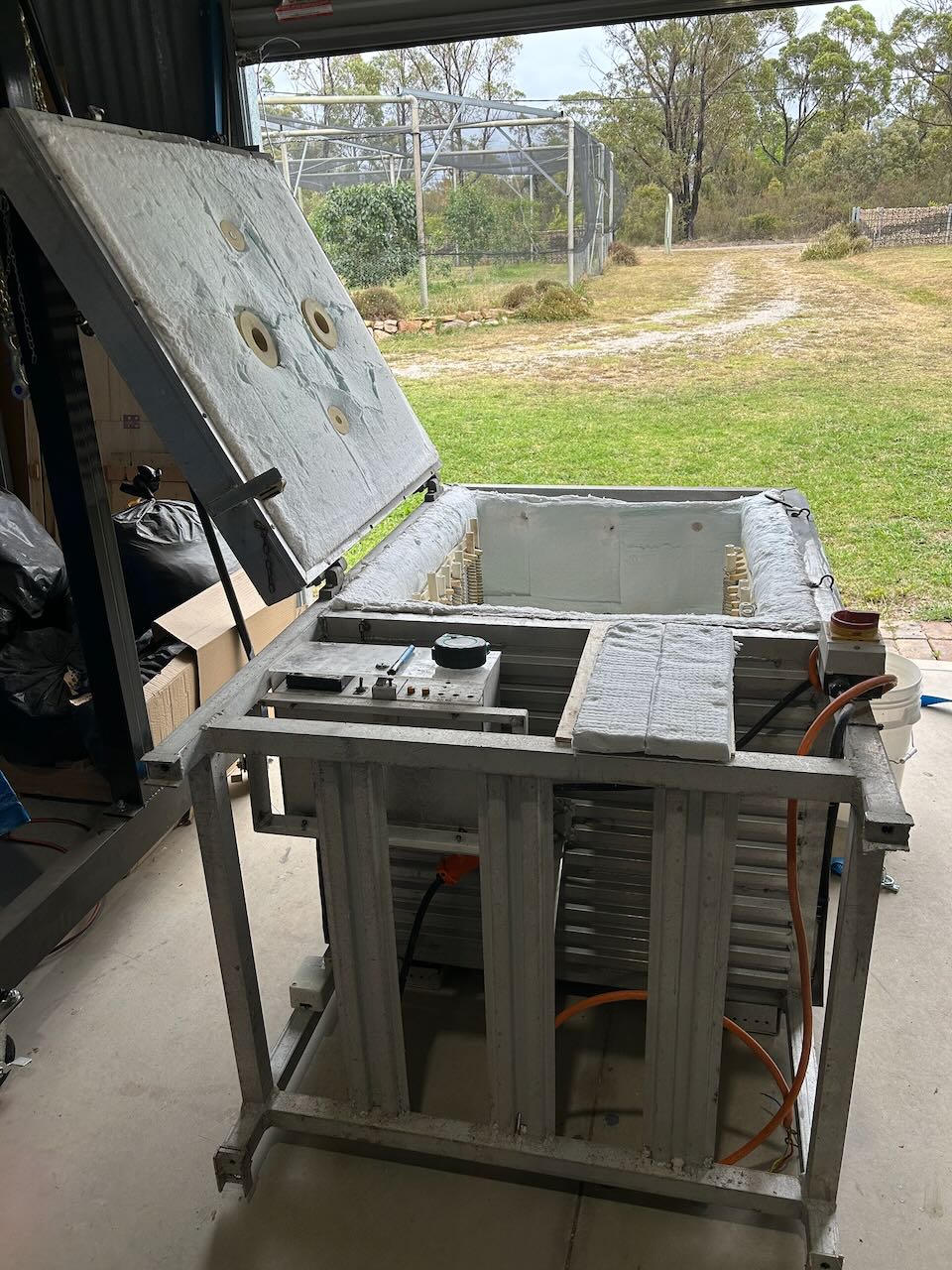
I laid the kiln over onto it’s back, so that I could take out the broken and collapsing roof fibre and replace it, without the whole brittle ceramic fibre roof collapsing down on me. I only replaced the hot face and the 1st of the damaged back-up layers of fibre. However, I changed the overall layout of the ceramic anchors to triple the number. It was the lack of sufficient anchors that lead to the roof sagging and collapsing. Next, I stood the kiln up and added another hot face layer of 1400oC ceramic fibre on top of the shattered and spalling existing back wall. Best not to muck around with old fibre where possible, so I just covered it with a new layer. I also added double the number of ceramic anchors to support it. Plus, the extra 25mm of hot face fibre that I added will make the wall more thermally efficient.

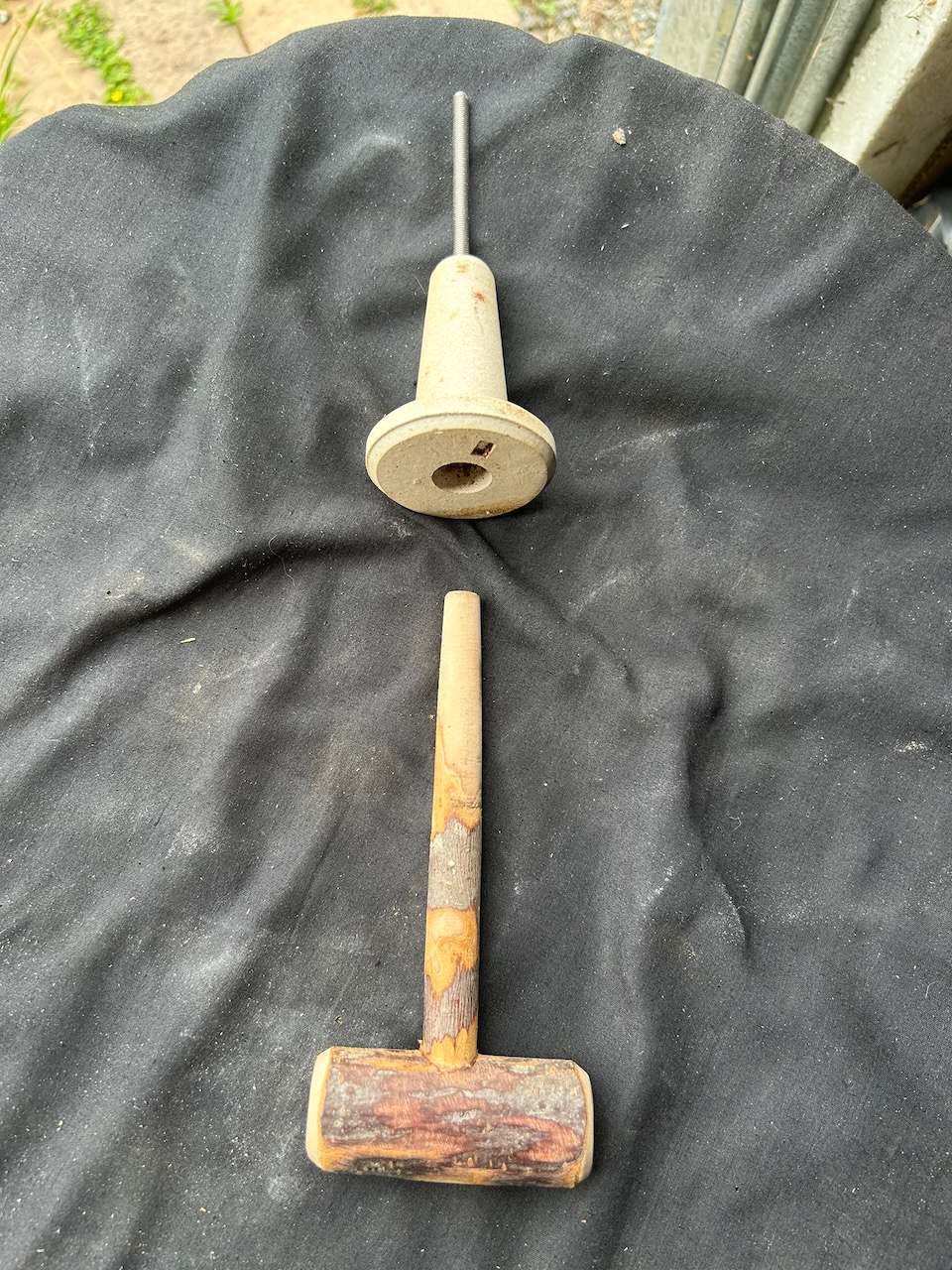
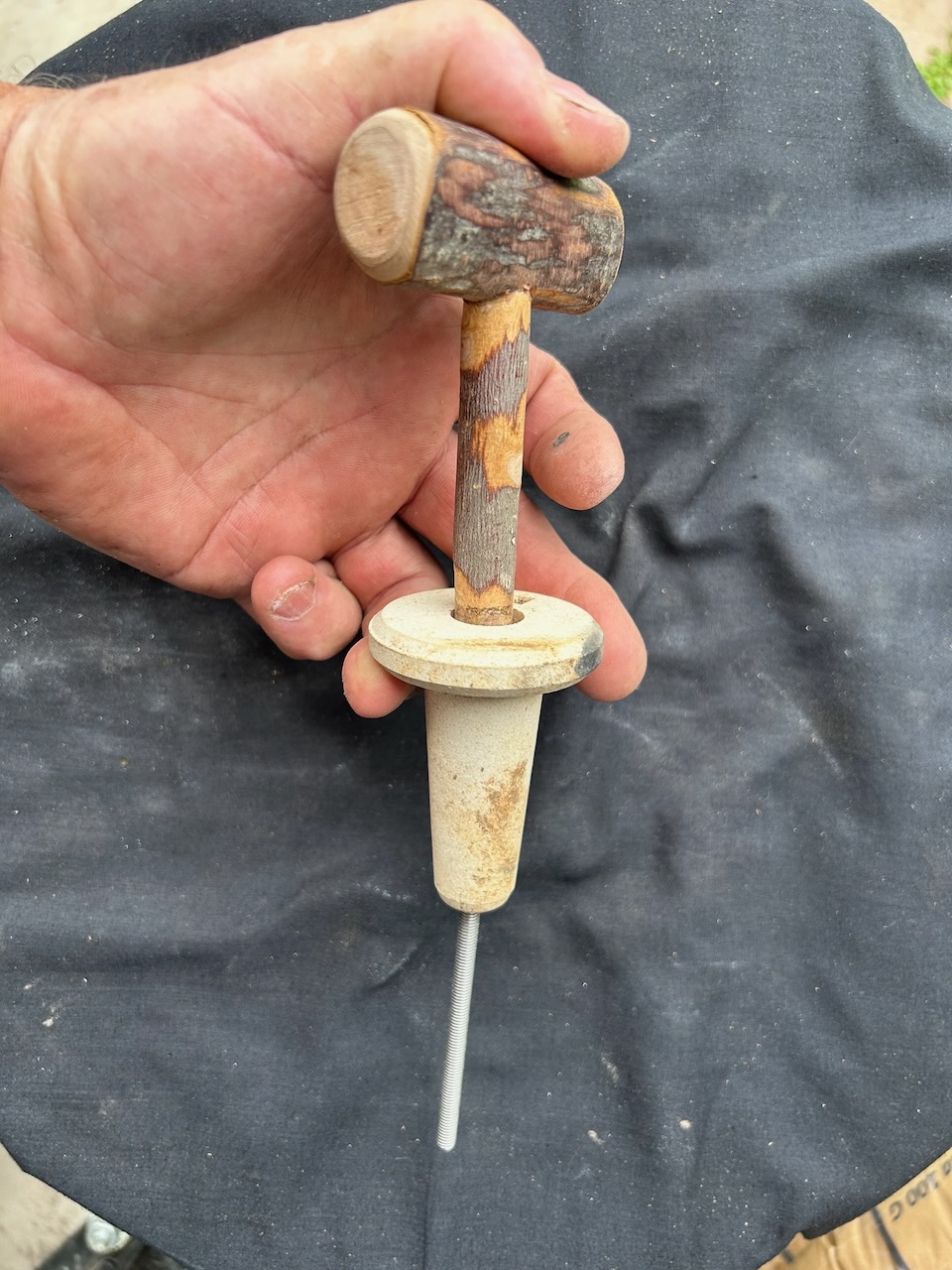
I made a set of tools to do the fibre work. I made a special little plunger out of fruit tree pruning wood, to hold the stainless steel bolts in place while being installed. Its a gorgeous little home made improvisation to make a fiddly job a lot easier. I took the trouble to make a tapered mortise joint to hold it together. Sweet! No one knows it exists, just me. I know how beautiful such an unimportant tool like this can be. I enjoy the fact that it exists, that’s enough.
I added another layer of fibre to the floor, but didn’t touch the side walls, as they are intact, and well supported by the element rod support brackets. They will last for a while yet. 3 of the element rod support hooks are broken off. As these where custom made, and are no longer available, rather than go back to basics and make a new set from scratch. I will make 3 small support blocks to hold the rods in-situ in those spots.
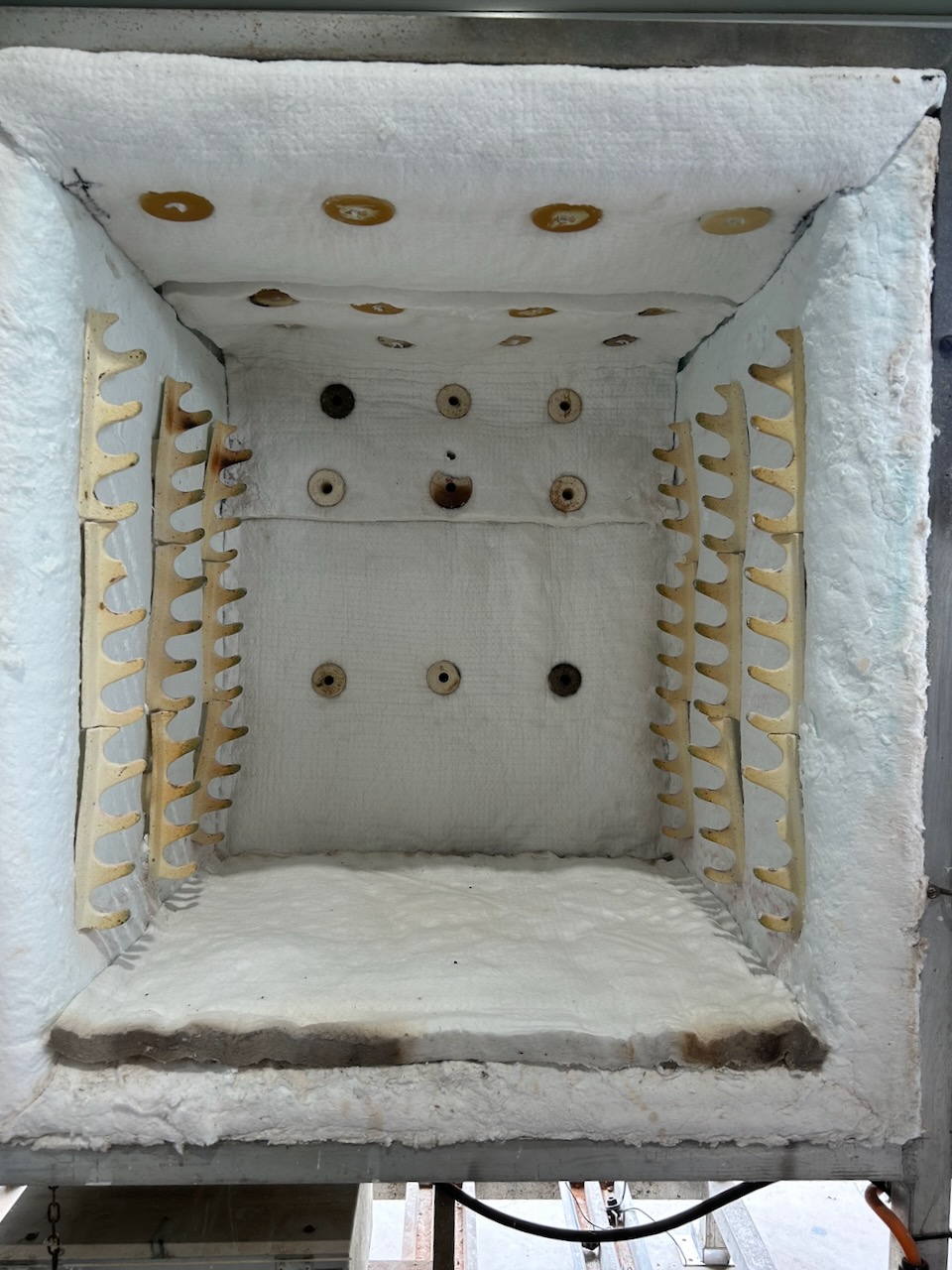
I was lucky that we found a few old re-cycled ceramic anchors in the ashes and rubble after the fire. Janine and our friend Trudie hunted around for them at some point when I was fully occupied doing something else during the chaos. She knew that they had a value and might come in handy in the future. Now 6 years later, they have. Thank you Janine and Trudie ! Some are chipped and have a bit broken from the rim, but still perfectly functional, if used with care.

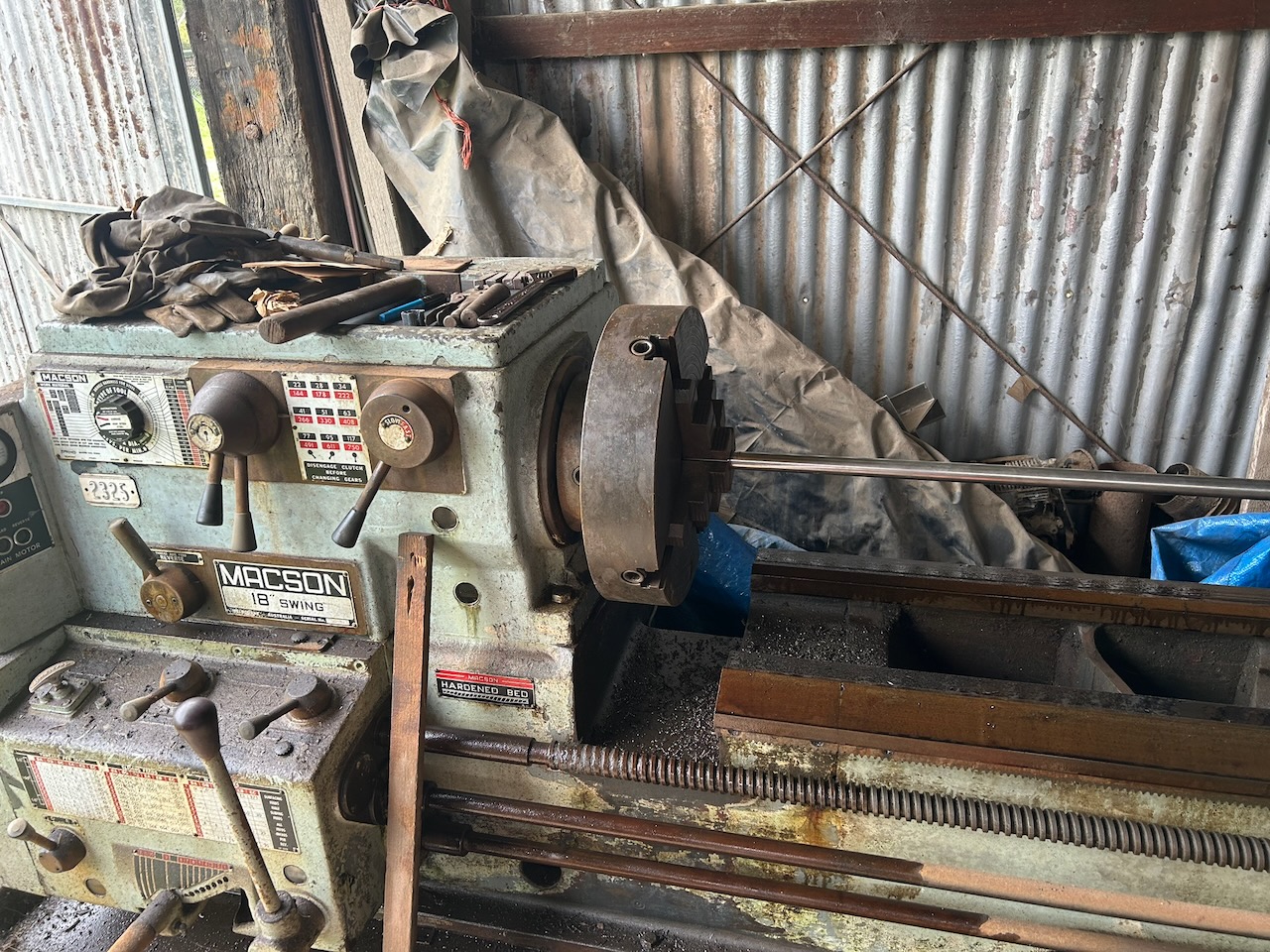
I have wound the new heating elements on my old lathe. I bought it 4th hand. It was at one time in use at the naval shipyards in Sydney harbour – a very long time ago. It was actually made in Melbourne by McPhersons, most probably in the 50’s or 60’s? So it’s as old as me!. That’s old! But very solid and reliable. (it, – not me!)
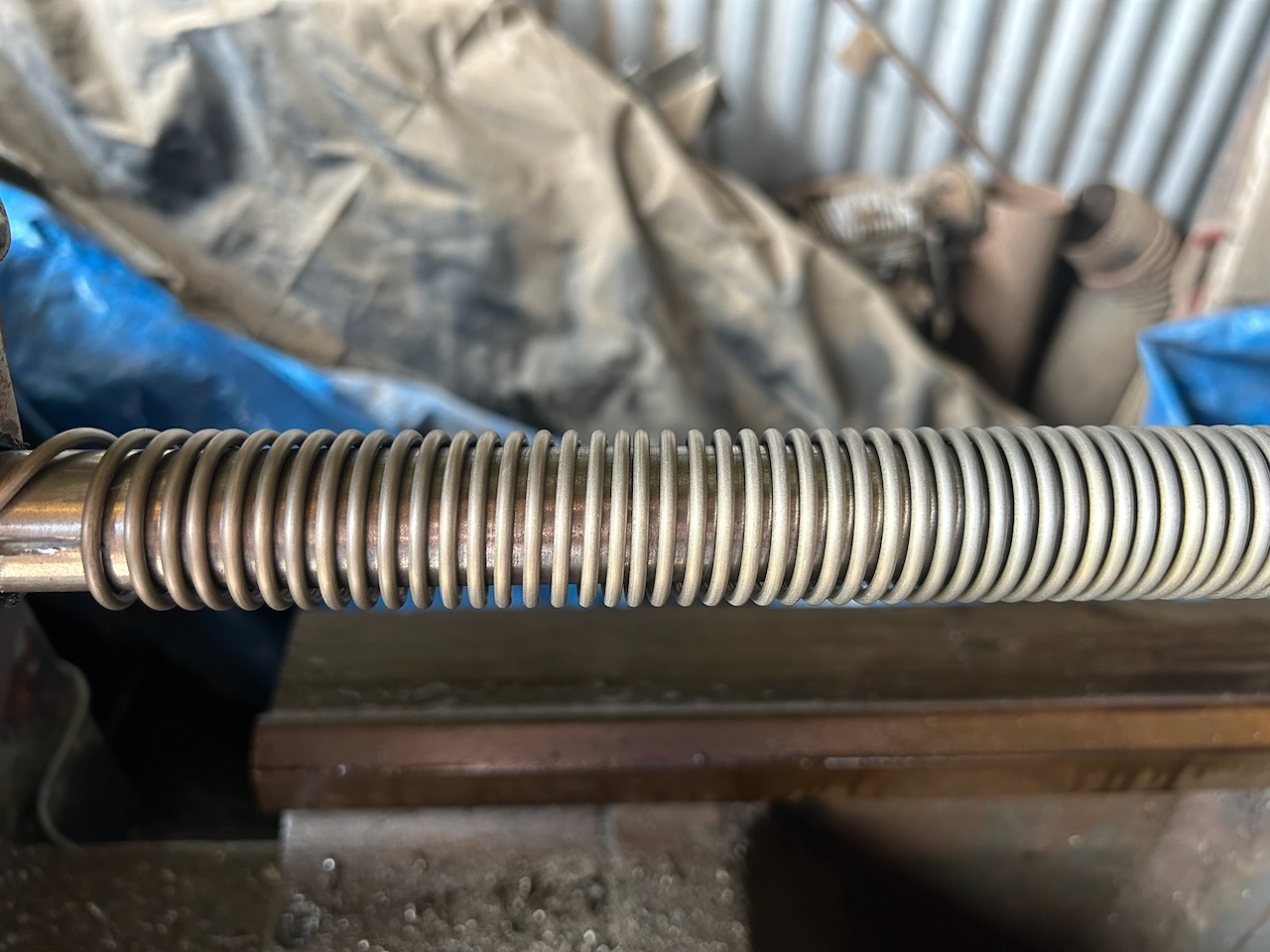
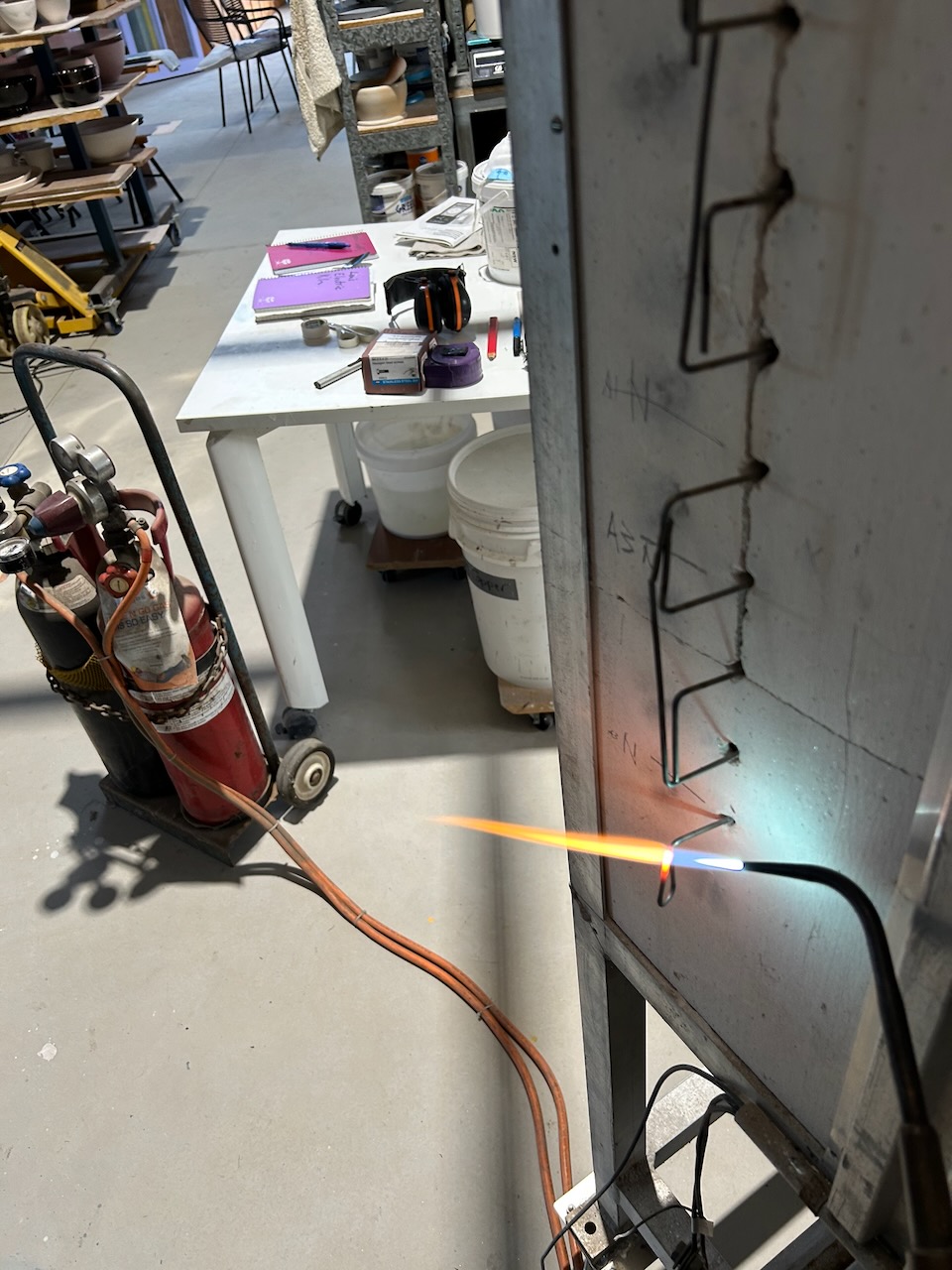
The next job was to renew the door seal, to create a secure tight fit during firing to protect the metal around the door frame. Once that is done I will use the oxy torch to form the heating element coils into ‘hair-pins’, I get them red hot , so that they become pliable, then I can bend them over and double them up into ‘hair-pins’. I can then fit them into the kiln on the ceramic rods, with both terminal ends sticking out the back of the kiln where they can be linked up to make full circuits.
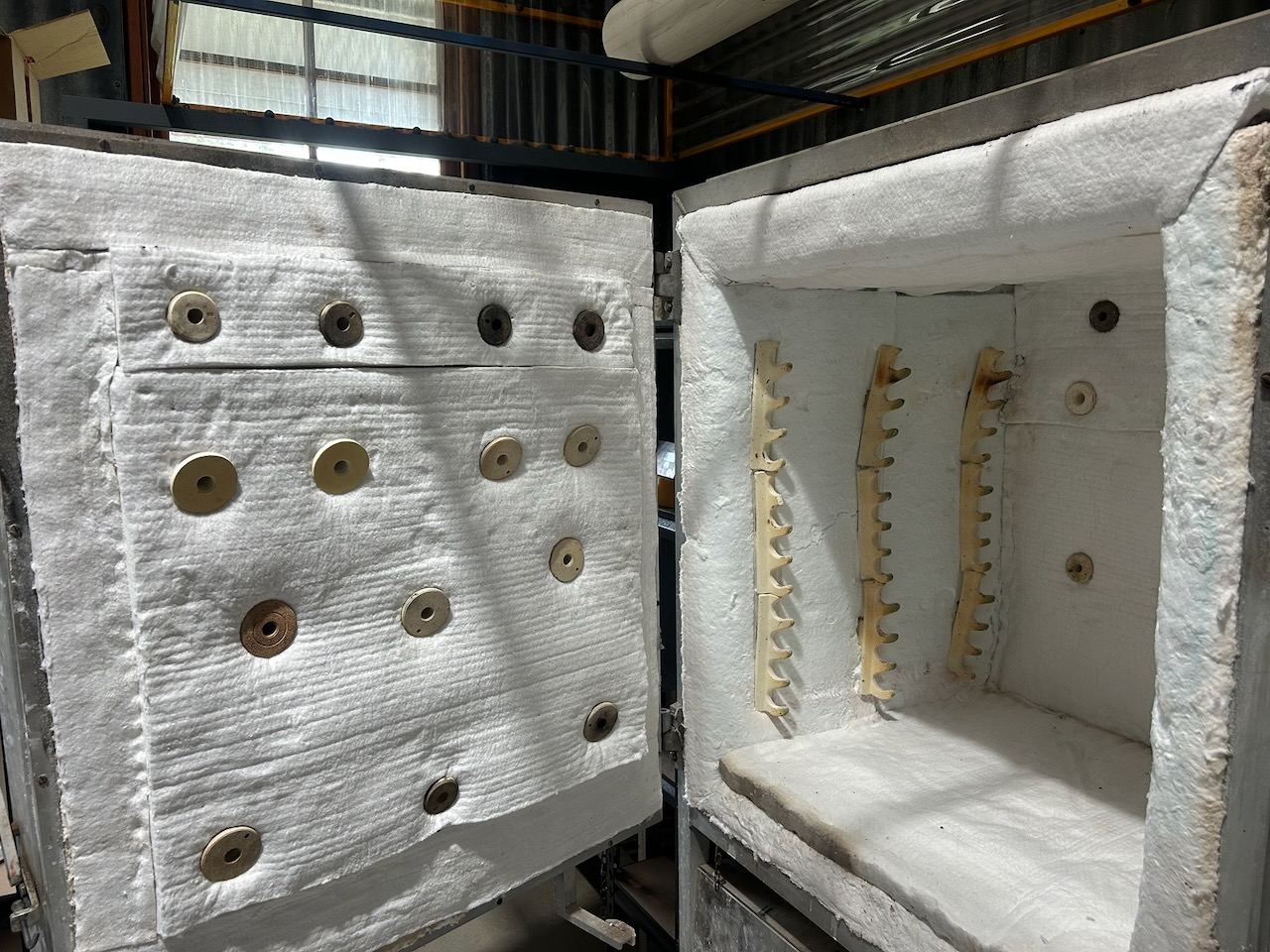
New door lining and door seal installed
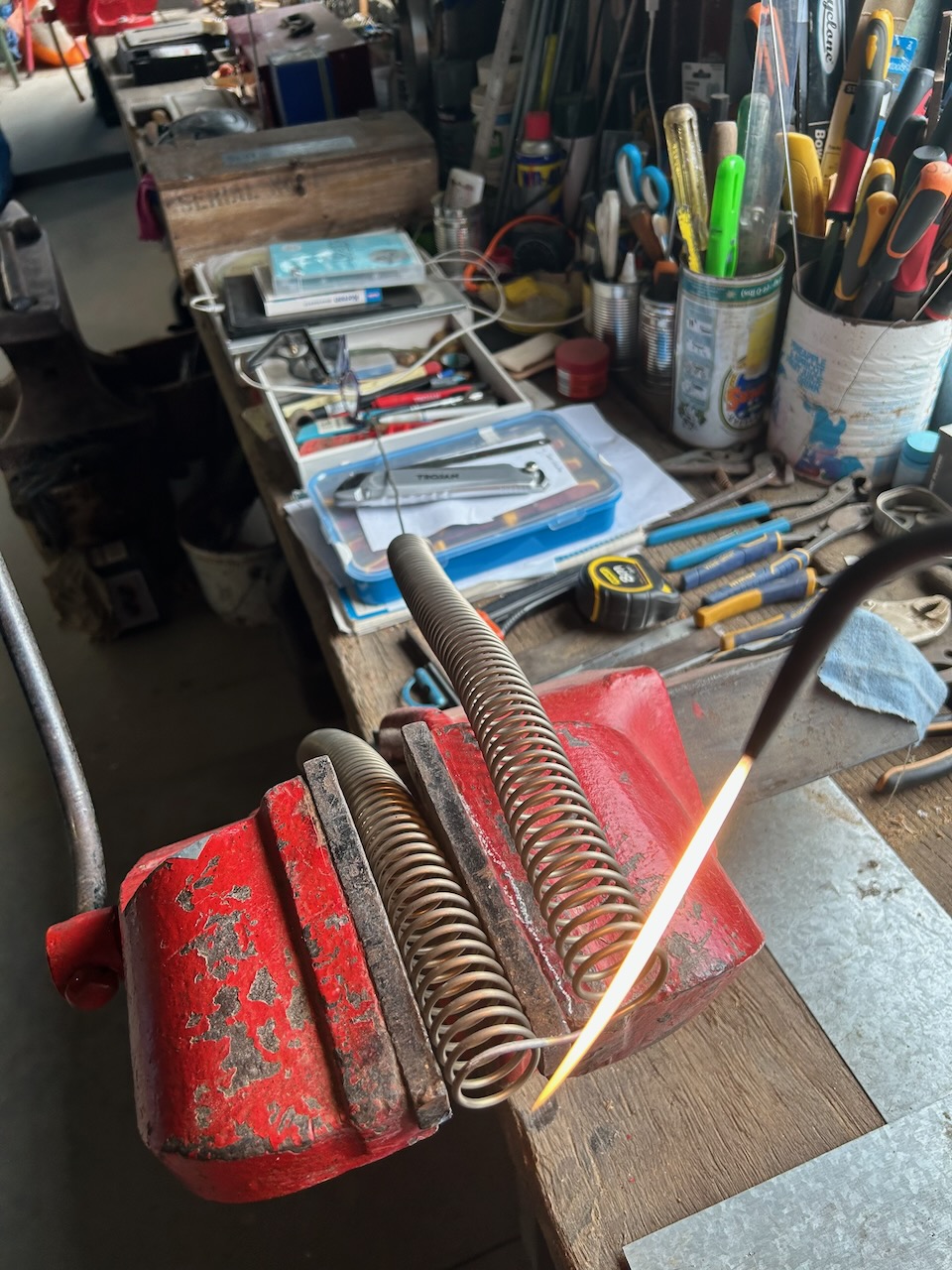
Forming the ‘hair-pin’ heating elements from the straight coils.
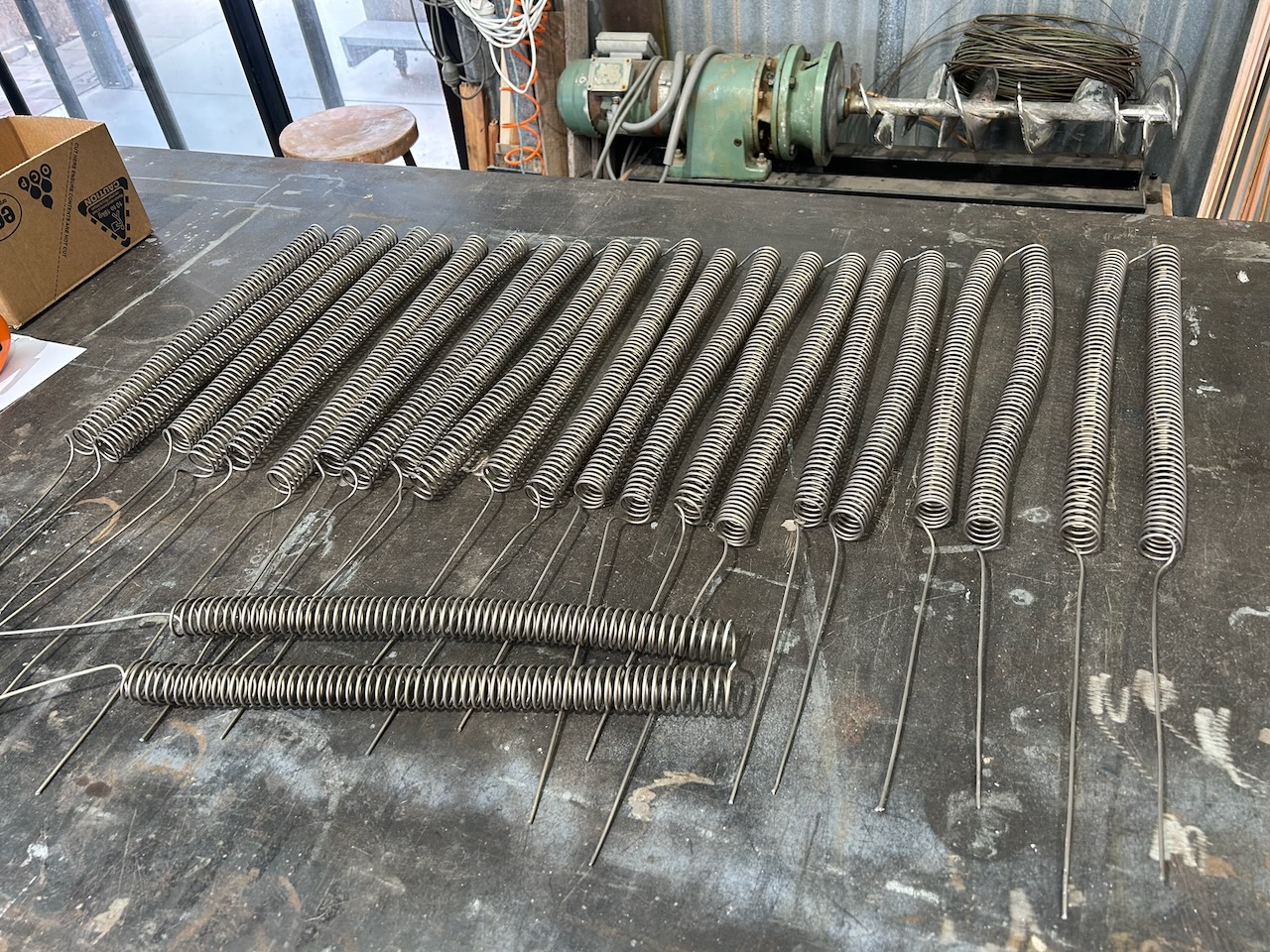
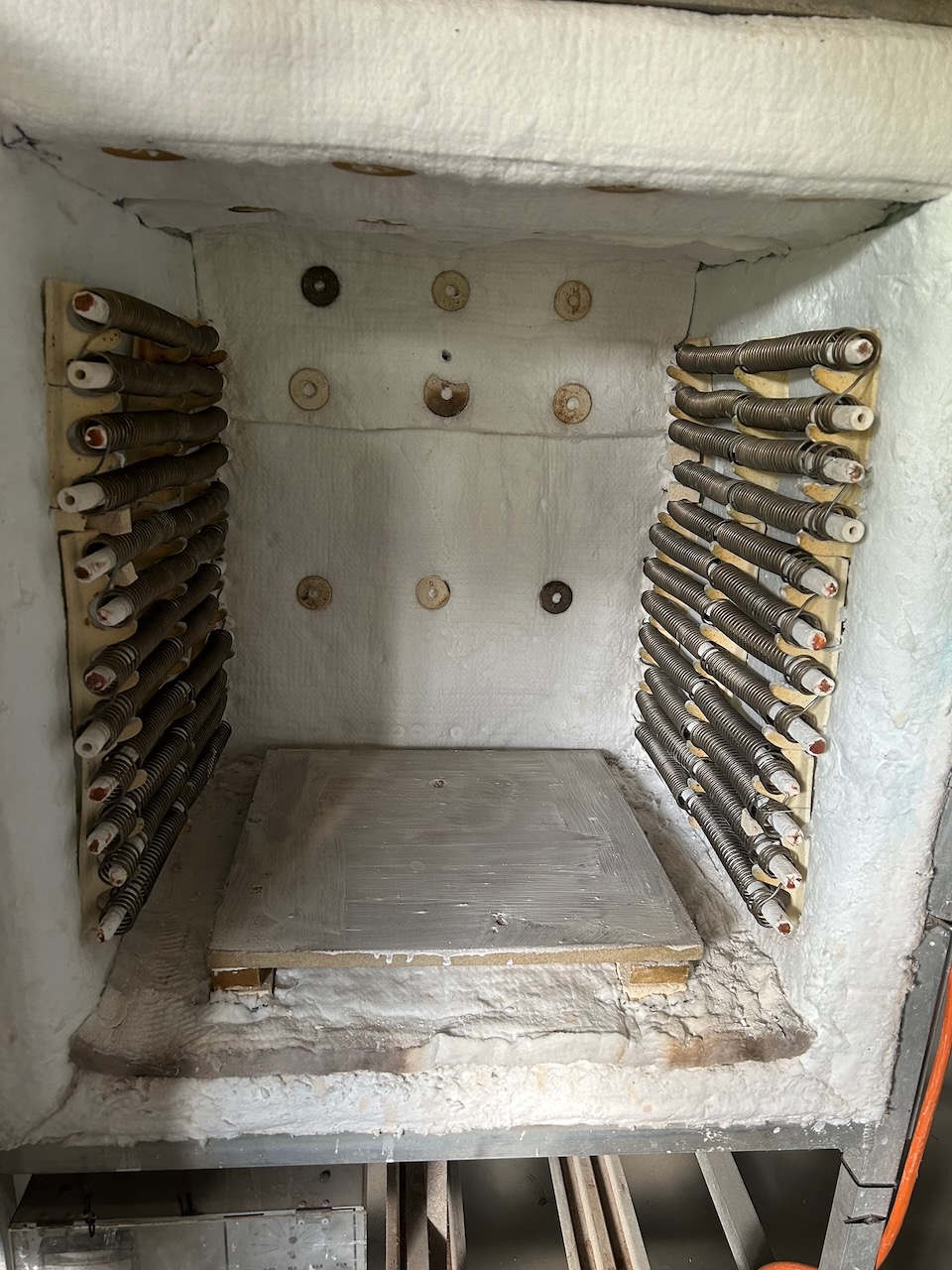
Heating and bending the rear element ‘tails’ into paired ‘loops’, so that I can link them together to make heating circuits of pre-calculated ampage and resistance to give precise heating of the kiln.

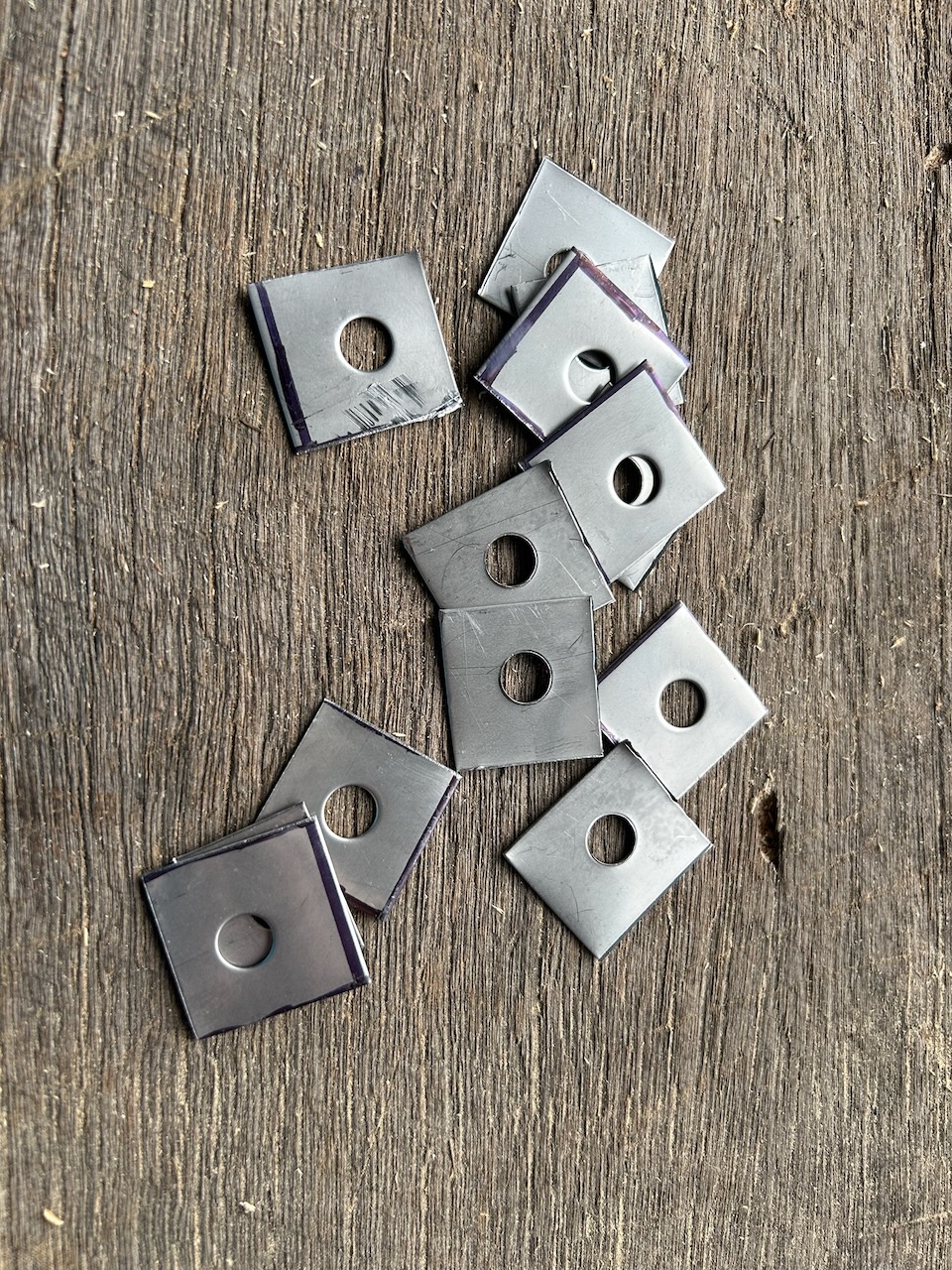
I have all the stainless bolts that I need, but I realised that I didn’t have enough of the correct stainless steel washers to do the connections. So I made some! As you do!
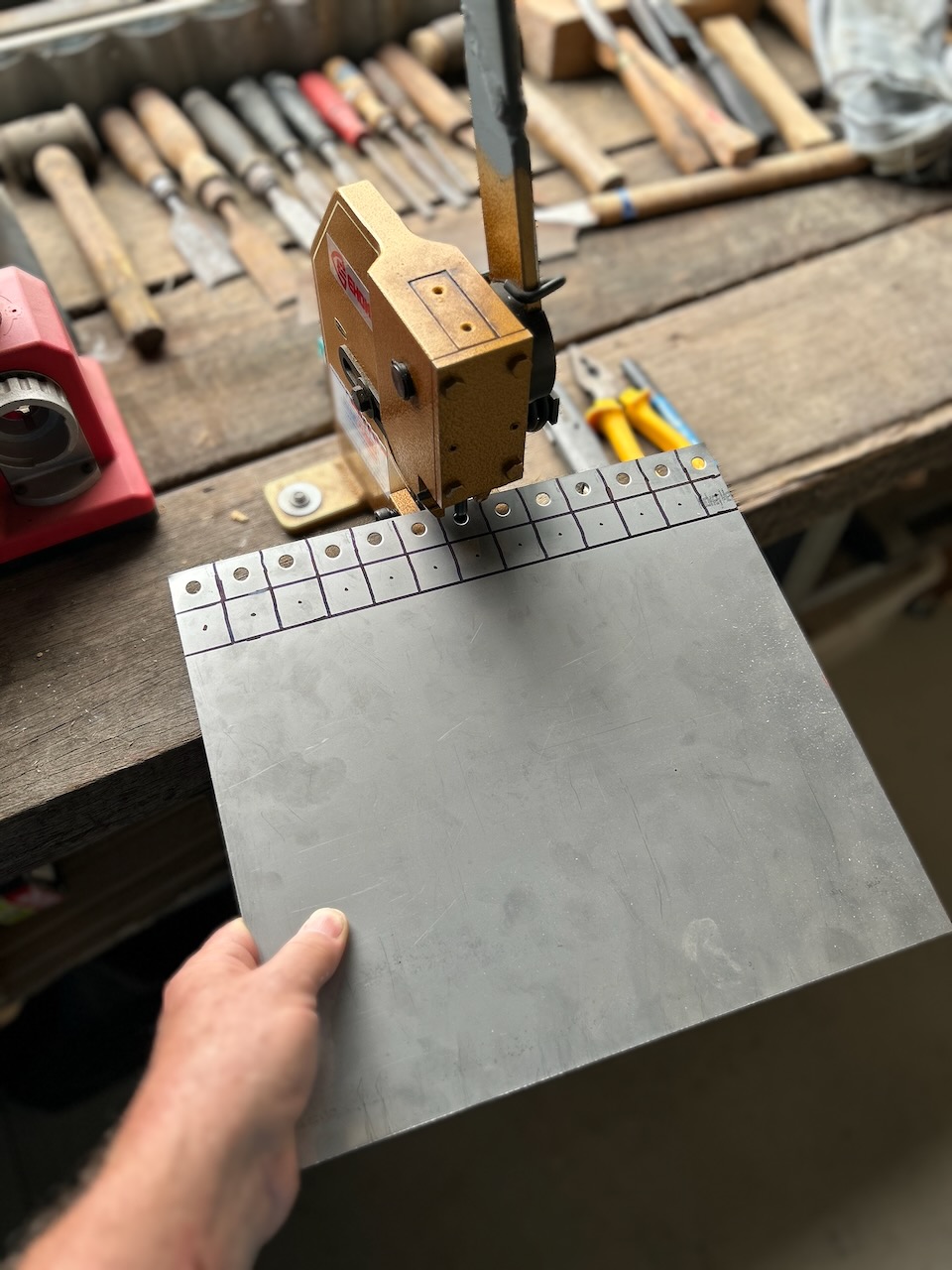
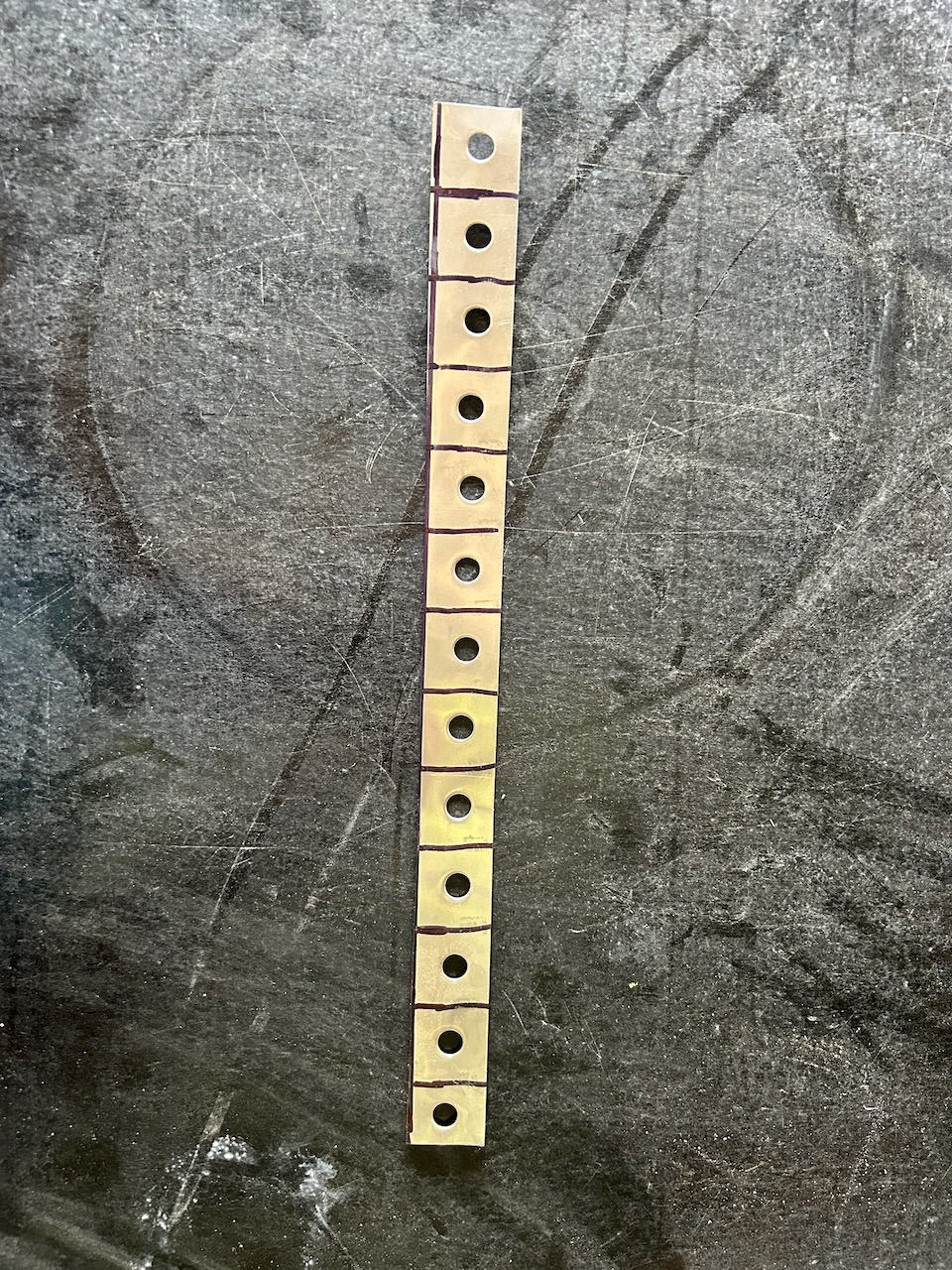
I’ve cobbled together this refurbished electric kiln for a little bit over $1100 for parts only. It is a bit less than 400 litres with a packing space of 320 litres, or 12 cu. ft. in the old units. I’ve upped the power from 16 to 20 amps x 3 phase, and used the very best quality Kanthal A1 element wire.

I have seen new kilns of this size for sale online for over $20,000. Quite a saving. This is how we survive, by the generosity of others, to whom I am eternally grateful, plus some good luck and a lot of scrounging.

I consider myself so lucky to be given this ‘free’ kiln. I have had to dig deep into my past skills and recover them from memory. I haven’t made kiln elements since before the fire, maybe 8 years ago, when I retired from building electric kilns. I am very lucky that my ancient old lathe survived the fire! Lucky, because it was in the old barn that burnt in the fire. Fortunately, because I stayed to defend, I was there and able to put most of the fire out, and control it to some extent, so that only half of the barn burnt. I said lucky, because the lathe could have been in the other half. What I lost was a lot of dried ceramic materials in paper ply bags.

I can’t remember the last time that I made kiln elements. But it’s all coming back to me, bit by bit, as I think about what the next step is. Luckily, I haven’t made any drastic mistakes!

My last job was to link up the element tails at the back of the kiln with stainless steel bolts and washers to complete the circuits. That done, I was able to pug it in and give it a run. My ‘tong’ tester revealed that I made a very slight error in my calcs, as the ampage on each circuit turns out to be 21 amps rather than the 20 that I had calculated. No problem. The kiln will be 4% more powerful.
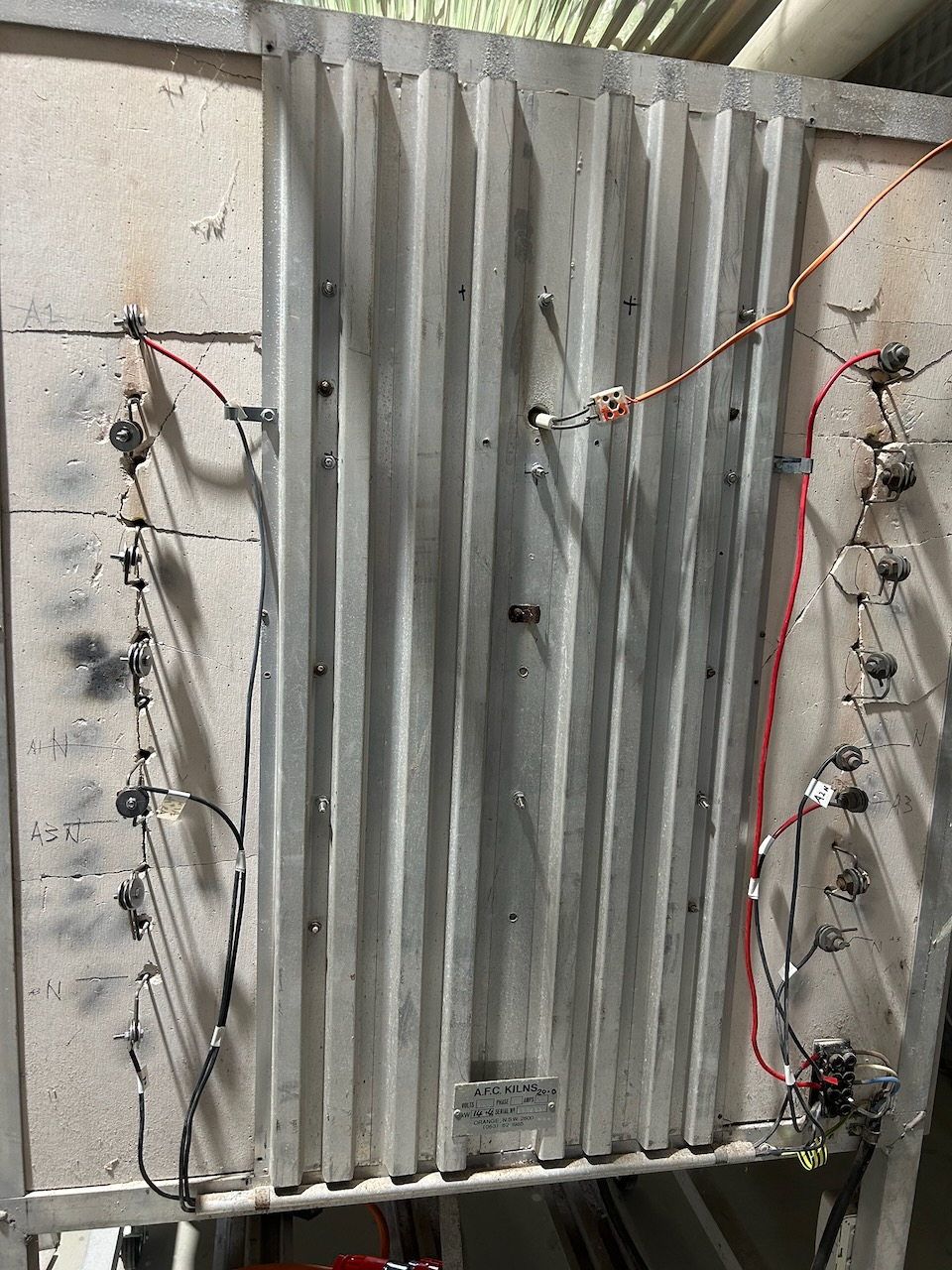
This kiln isn’t beautiful. It just has to work! And as of now it does. Time will tell. I have had this ruin for a couple of years now. I didn’t do anything with it for the first year and a half, as I didn’t really need it. However, Now that I’m keen to make big, round, fat, pots inspired by Moon Jars. I need a larger kiln. This kiln has a 600 x 600 floor, and 750mm high. So plenty of scope to make a larger, fat, round jars.
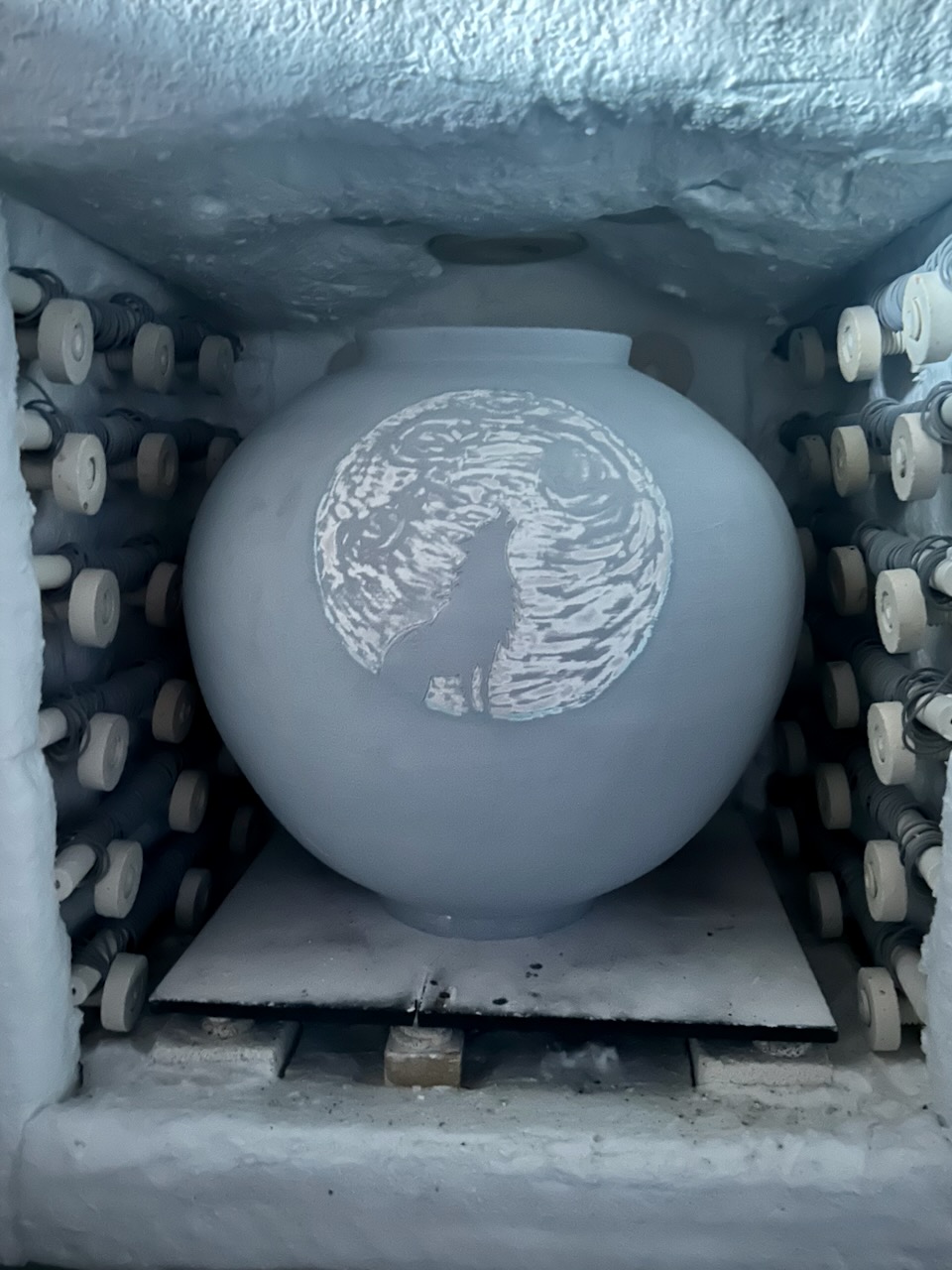
I’ve out grown the small 450mm x 450mm. cubed electric kiln that Len Smith gave me to help me get re-started. I have been using it for the past few years and it works just OK, but is worn out and struggles to get to cone 8. I have purchased new element wire for that kiln, but I haven’t got round to making the new elements yet. I had to re-wire the old lathe after the fire burnt out the barn, so I’m working on lots of projects all at once. But now that I have the lathe back in working order. I can proceed on to the next job, which is Lens old kiln.

Nothing is ever finished, nothing lasts and nothing is perfect.

Nothing is affordable, nothing stays new, and nothing does exactly what you were promised that it would in the add!
Middle East War, The Price of Petrol and being a Fully Electric Solar Household

With the Middle East War, Everybody is worried about petrol! 

Except us.It has been over 12 months since I last up-dated my electric car review. I’ve also added all the other electric devices that we have included in our life over the past 20 years, just to fill in the picture a little bit more.

We first installed solar panels back in 2007, as soon as we could. We had to wait for the price to come down to a level where we could afford them. That price point came for us in 2005, but there were no licensed solar electricians to be found around us here in the Southern Highlands. Our electrician was enrolled to do the course and up-date his license, but we had to wait for him to finish his course and get qualified. We were his first job!. We started with just 3000 watts. 3 kW. We chose to buy Australian made PV panels from BP solar, made in Sydney. It cost more to buy Australian made panels, but we thought that it was the ethical thing to do to employ other Australians. Simplistic, naive? but socially aware, environmentally engaged, optimistic, Greenie thinking. Call me stupid, but who else is going to employ (y)our kids if we don’t choose to do it ourselves?

We have since expanded our PV up to 17 kW in 3 stages over the 20 years, as the price came down we went from 3 to 6 to 12 to 17.5.  BP solar is gone – turned evil and departed for the dark side. Our later panels we made in Adelaide by ’Tindo’ solar. Again more expensive than the Chinese options, but, as above, Simplistic, naive, socially aware…

We have been slowly converting our life over to solar electric power since then, replacing older worn out appliances with electric versions as it became necessary. 40 years ago all electricity was generated from coal, so we made sure not to use very much. When solar and wind power began to become available in the Australian market. We asked our supplier to sign us up. They told us that there was a waiting list that we could go on. We’d have to wait. Eventually we were allowed to subscribe up to only 10% of our bill to ‘green’ power. Which turned out to be a bit of a con-job, as a lot of that electricity was coming from Snowy hydro, which is actually coal power. 

Water is pumped up hill over-night using excess off-peak coal power to top up the reservoirs, then dropped down during peak periods to supply the breakfast and dinner peak needs. The coal generators run day and night at a steady rate which meets the average needs of the system. The coal lifted extra water is used to top up the deficit during peak times.

As more wind and solar farms were installed. We were told that we could increase the green power percentage of our bill. I rang and spoke to a representative of the power company and asked to be sent out the ‘green’ contract to sign. They posted me a dirty, black, coal-power 100% coal contract! I rang again and repeated the fiasco. Again they sent out the cheaper dirty coal power contract. It was many percentage points cheaper than the expensive green option. I guess that most customers would see that and stay dirty? 

I was told that the green power contract requests were over subscribed, so they were desperately trying to get people stay with the coal. As they were financially committed very long term to coal generation, and hadn’t seen the green revolution coming, then when it was biting at their heels, they then had to try desperately to dissuade people from changing.

We changed! And we paid.

We didn’t trash any working appliance or vehicle. We changed slowly as the need became apparent. One appliance at a time. To date we have change both cars over to electric vehicles. We now have an electric ride-on mower, an electric push mower, and an electric whipper snipper gadget for the edges and tight spots. 

We have also installed induction cook tops in the house and pottery. There is very little here that still uses carbon based power. We do still have the petrol powered fire fighting pumps, for safety reasons to do with being totally independent with high powered pumps. The equivalent electric powered fire pump would need to be 3 phase, and that would mean digging a lot of trenches around the block to install underground power cables. But crucially, we don’t have a 3 phase battery, so we would be very vulnerable when the grid goes down in a fire. NOT an Option!

So the petrol pumps remain. However, we only ever put one, or possible two, litres in them each year. They don’t need very much petrol. Unless there is a fire! I start them up every now and then to do irrigation, just to know that they are in good nik. They just sit there as an insurance policy against disaster. It’s instructive to know that a 4 litre tank-full of petrol in one of our 6.5 HP fire fighting pumps lasts about 4 hours on full throttle. The fire peak of a bush fire lasts about 30 minutes. Having done this research in person in a real life(or death) situation. I can tell you that one litre of petrol is all you need to save your life!

So back to a review of our electric cars; 

We have had our Hyundai ‘Ioniq – 1’, plug-in electric hybrid car for over 7 years now and everything about it has been a very good experience! It’s a very old design these days compared to modern standards. We were early adopters. The Ioniq series is now up to Ioniq 9!

This car has exceeded our expectations. We have settled into a routine with it now. We can drive anywhere locally on the battery, doing our local shopping and social visits very comfortably. If we need to go further afield, no problem, the petrol engine will bring us home. This car design is a decade old, so the battery is small compared to more recent arrivals. The battery takes us between 40 and 70 kms, depending on load and whether we are driving up hill or down dale. In comparison, the recently released Kia EV 4, does over 600 kms!

We have always charged the car at home from our solar PV panels. We have never been to a charging station. We have taken it on longer trips up the Queensland twice and down to Canberra several times. For these trips, we rely on the petrol engine. However, these trips are seldom done and are the exception.

For those interested in facts and figures. My log book tells me that by March 2026, we had travelled 67,400kms and spent a total of $2,143 on fuel. That’s about 1.5 to 2 litres per 100km, depending on how much you pay for fuel.

We are in the habit of putting $20 to $30 dollars worth of fuel in the car about 4 times a year. When we first purchased it. I filled the tank on the way home, as per normal practice with a new car. Big mistake! It took us almost a year to use up that fuel. It was sitting there going stale in the tank for most of the time. Stale fuel can be a big problem, so we have not done that since, unless we are planning a long trip.

When fully fuelled up with a full battery and a full tank. The fuel/trip computer tells me that we can go 1,150 kms!  It’s so smooth, quiet and comfortable to drive. I love it. I’d have no hesitation in buying another.

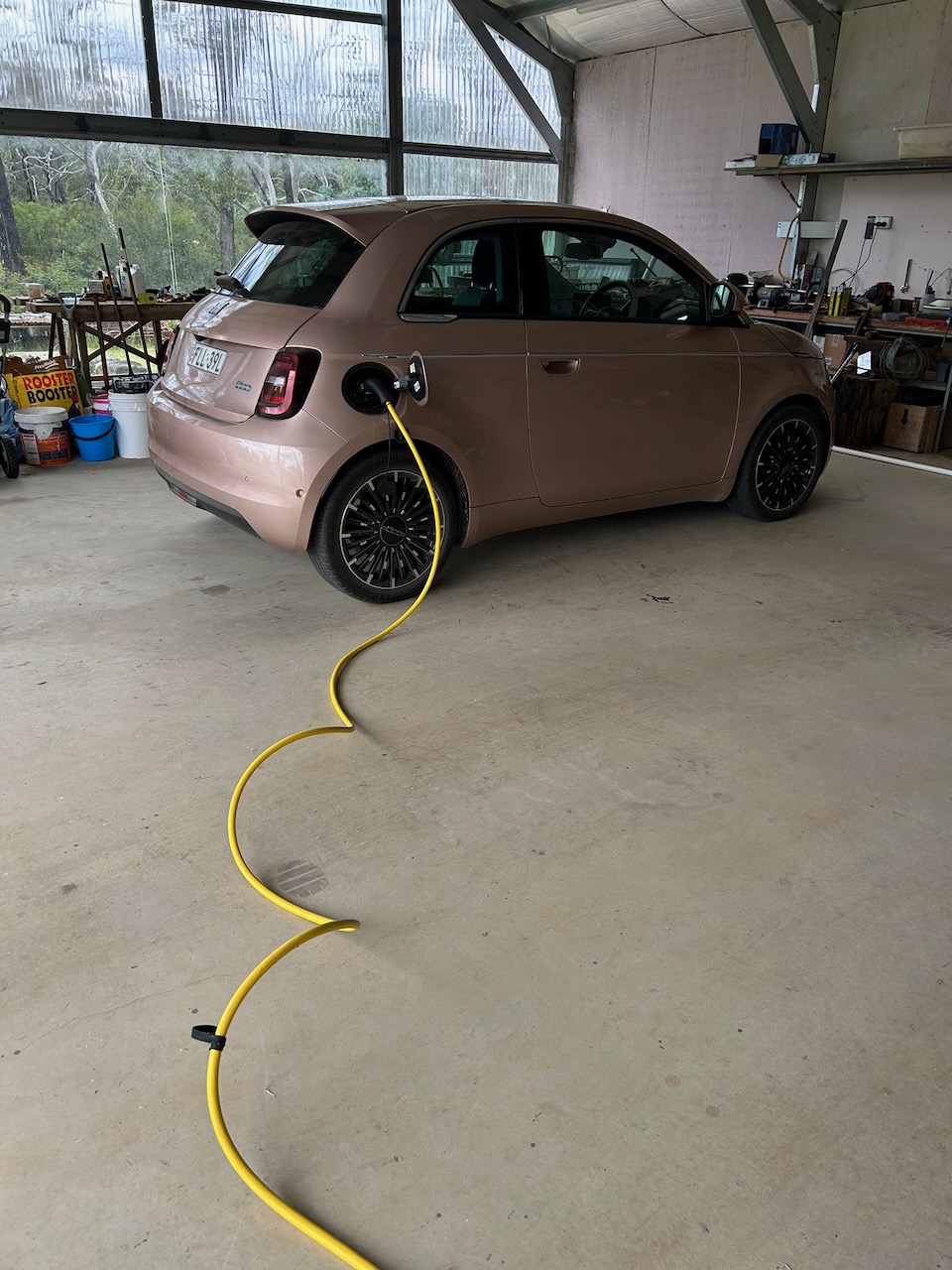
I love Janine’s plug-in electric car, so much so, that in December 2024 I bought a used, fully electric Fiat 500e ‘bambino’.  This recent electric version of the old classic ’50’s design is incredibly cute. It can go 300kms on a full charge, which is enough to drive to Sydney and back. 
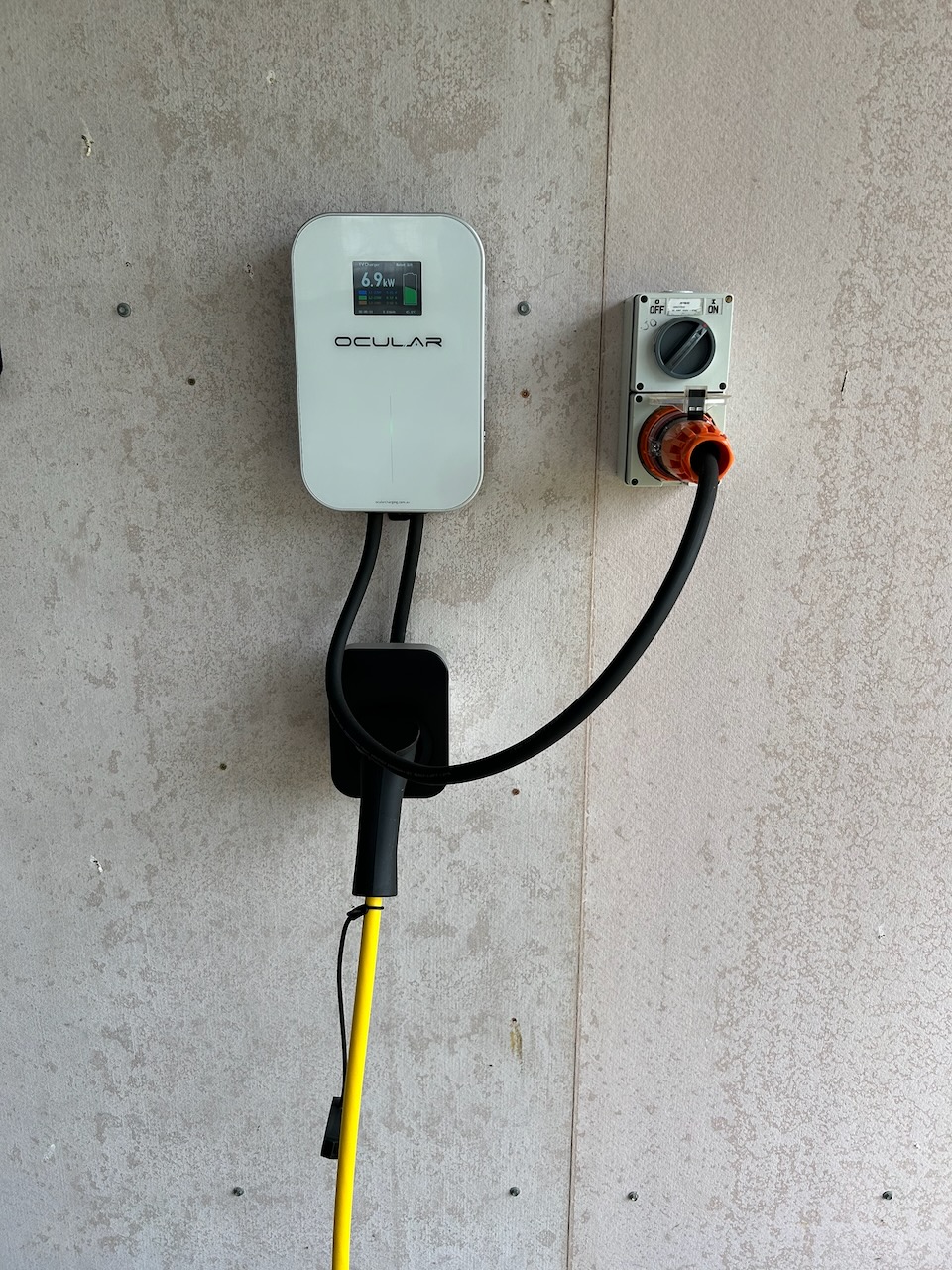
It charges in 3 hours from 20% up to 80% on my roof top solar, but can also charge overnight from our battery if needed. I usually plug the cars in mid-morning, when there is plenty of sun that we are only getting 5 cents per kW/hr for when we sell to the grid. So it’s better off in my car. I charge it up about once a week. With the two back seats folded down, I can stuff an amazingly large packing case in the back. I surprised myself what I can get in there.

When you install solar, its like pre-paying all your electricity bills into the future all at once. In that way, my Solar power is completely free, but if you want to consider the price of the power I’m using myself instead of selling it, then the cost foregone, at 5cents kWh, that is $2 per fill. or about $100 per year for fuel, instead of buying petrol at who knows what price these days, as it goes up every week. That’s the new Trump price!

This little Fiat is the classic small, nippy car that I have always loved to drive, but now I drive on sunshine! Very tiny, very nippy and I can find a parking space anywhere. I like the engaged driving feel of this small car.
So now, after a year and a half of ownership, I can say that it is fantastic, and does everything that I need to, and want to do. And, it has only cost me approximately $100 in solar electricity each year. Fuel Crisis! What fuel crisis? I think that Trump’s war in the Middle East might push a few more people who were thinking about getting an electric car, to now make the change?

One new development for us is the fact that our local mechanic is now a fully qualified electric vehicle workshop. So the once a year check up is only a few kms away. We also know Paul very well, as he went to school with our son Geordie.

We are very pleased to be a fully solar powered household. We can run the house, the pottery, 3 electric Kilns and 2 cars on our solar. We even get a small payment every 3 months from the electricity company, for all our unused excess. We have not paid an electricity bill since 2006/7, when we installed the first solar PV panels.

The middle east war disaster will definitely affect us, but not as much as it otherwise might have.

We are careful to manage our solar power each day, or week, depending on what we are planning to do in the coming days, and what the weather holds. I choose when it will be best to fire the kilns, as kilns chew up a lot of power, so we try not to charge the car and fire the biggest of the electric kilns at the same time. If there is going to be rainy or cloudy weather. I stagger our usage to minimise our wasted excess. I have learnt that I can fire 2 bisques at the same time, or just one glaze, same power more or less, or I can fire one bisque and charge one car. etc. Having the 2 batteries also helps us to manage the odd spot of poor weather, as we can use yesterday’s sunshine to top up what we are doing.

I find it an interesting challenge, to use all of our solar power, so I don’t have to sell much at the low price. But, at the same time, I don’t want to have to buy any power from the grid. Even though I have a 100% green power contract. When I buy in electricity it costs me over 40 cents kWh. That’s the cost of green energy these days. So I would have to sell 8 times more electricity back to the grid to cover my usage.

The quest is to get to be as close to break even point as possible, without going over at all. I don’t want to give any excess away if I can, but worse would be to have to buy some back in. So I juggle the kiln firings and the car charging to fit the available sunshine.

Even when the fire burnt down our pottery in 2019. With our first PV installation gone, we were without solar for almost 3 quarters of billing periods. However, we had such a good unclaimed credit on our bill at the time, that we were able to go that whole time just using up our credit. We had new solar panels installed before the end of the year, and we were back on deck before the credit ran out. Of course, we only had the one electric car back then and no pottery workshop. So no kiln firings!

We have always been very conscious of living sustainably, so have built a very energy-efficient household over the decades. If we were not potters, I think that we could run our house on 3kW of solar PV quite comfortably. But with 2 electric cars, that would be better at 6kW. I’ve seen adds for 6 kW of Solar PV for $3,000. Can’t say if the deal was any good or not, but the price of solar is always coming down.

The Poetry and Madness of a Moon Jar Facination

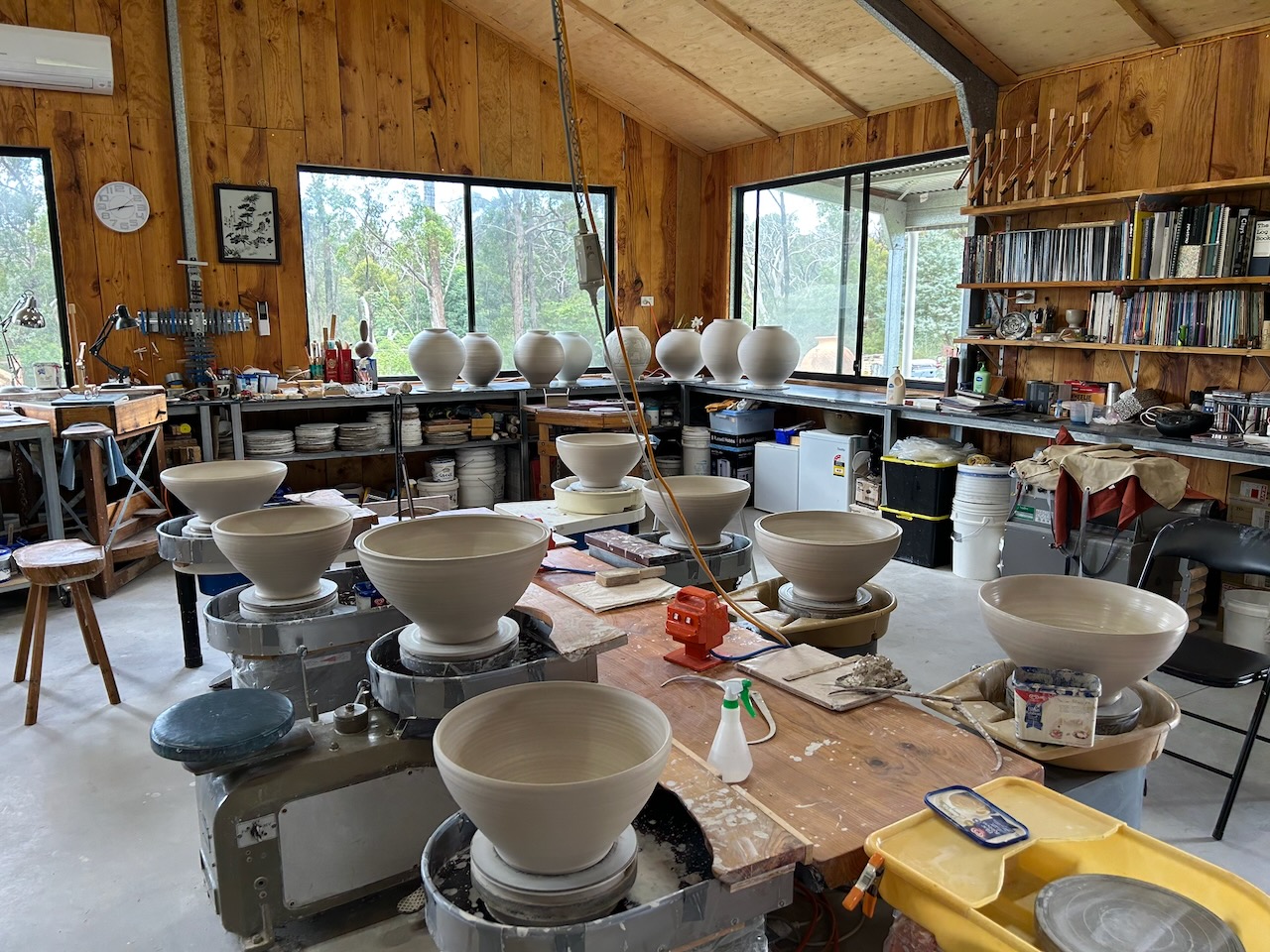
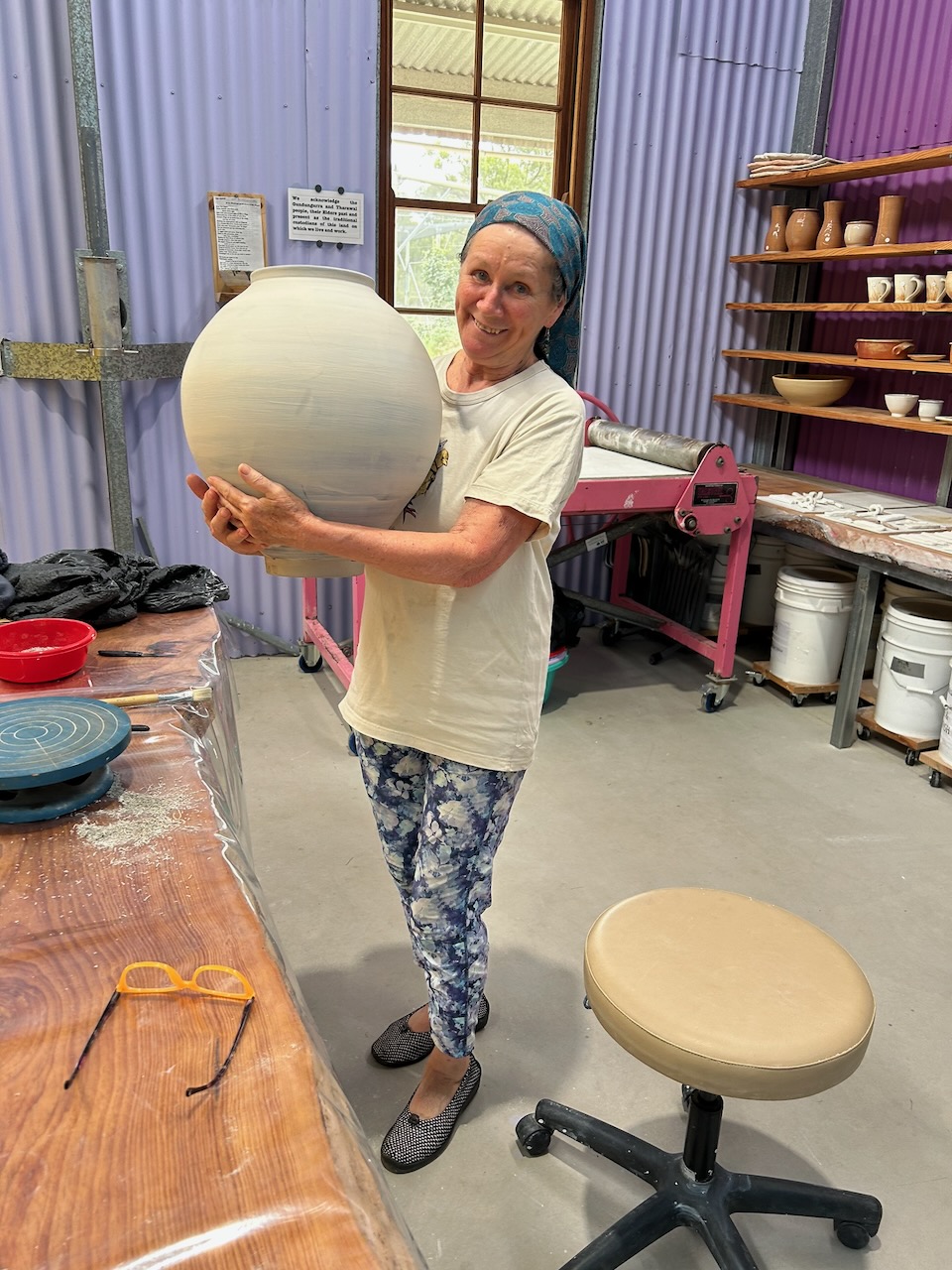
I’ve been making of big round jars influenced by Korean ‘Moon Jars’. I’ve been fascinated by them for years, ever since I traveled and studied in Korea when I got to see them up close in the National Museum and also in potters workshops. I tried my hand at making my own version when I came back and have dabbled in making something inspired by them since.

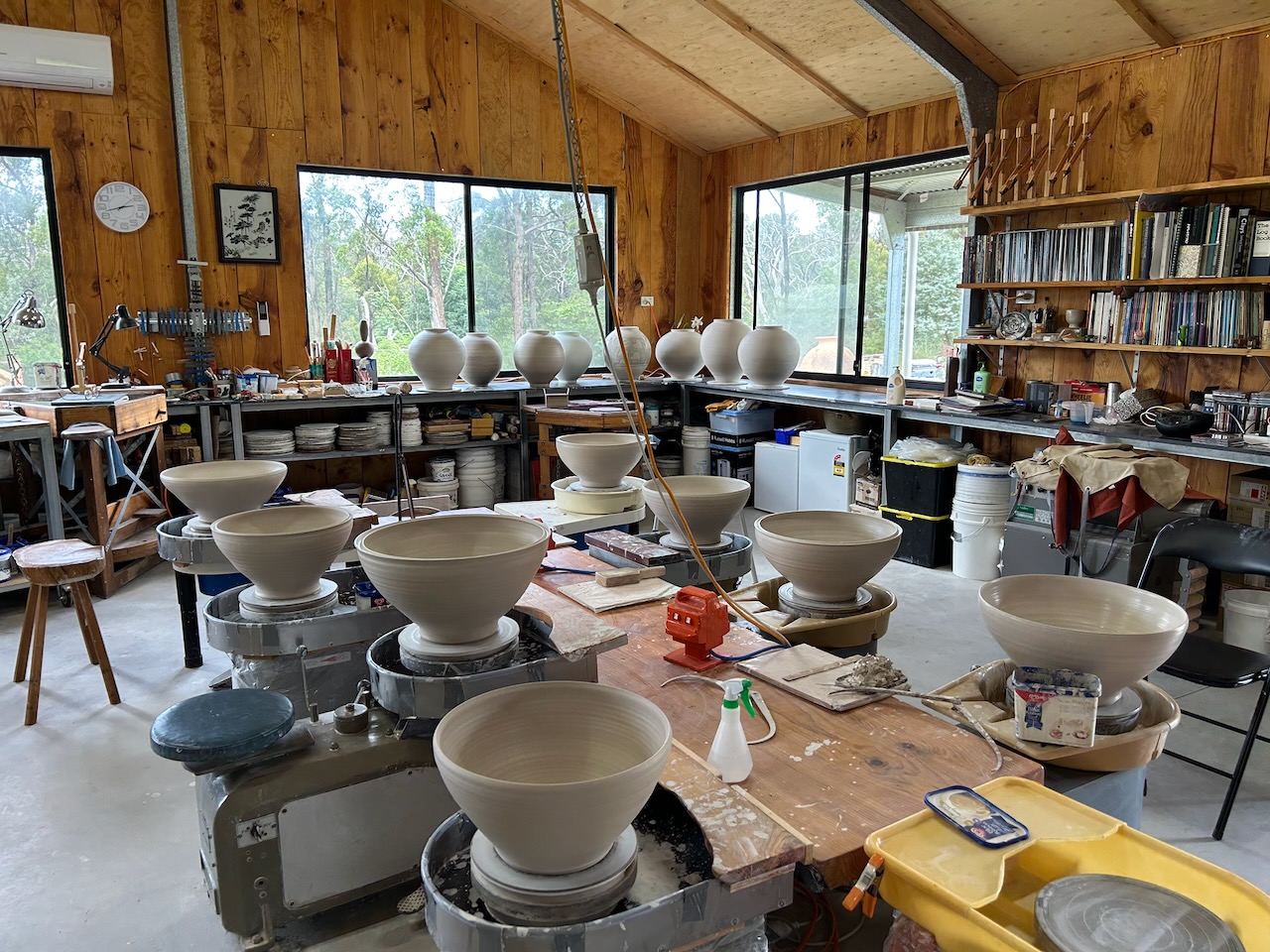
Recently I taught a couple of workshops on the techniques that are used to create big round jars. After the workshops were over, I kept on going.

In the workshops, I made it easier and more achievable for everyone involved, by setting the starting point at 1.5 kgs. Nearly everyone enrolled in the workshops could manage this weight of clay. A lot of nice pots were made, but nothing too big. The more advanced throwers, were encouraged to progress in 1 kg increments, some reaching up to 4 or 5 kgs. Excellent! So encouraging for everyone in the room there to see that develop. However, we all progressed at our own rate.

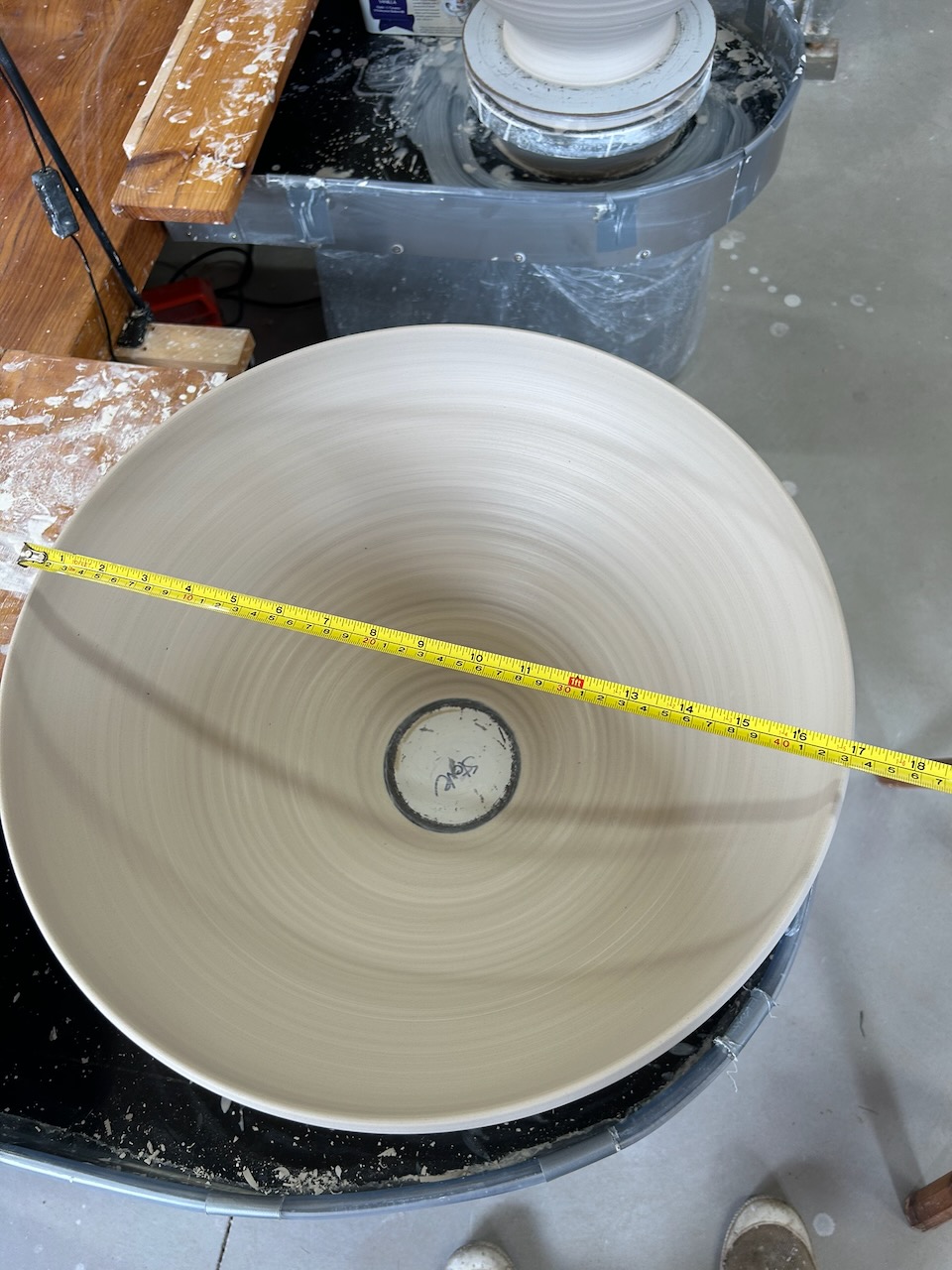
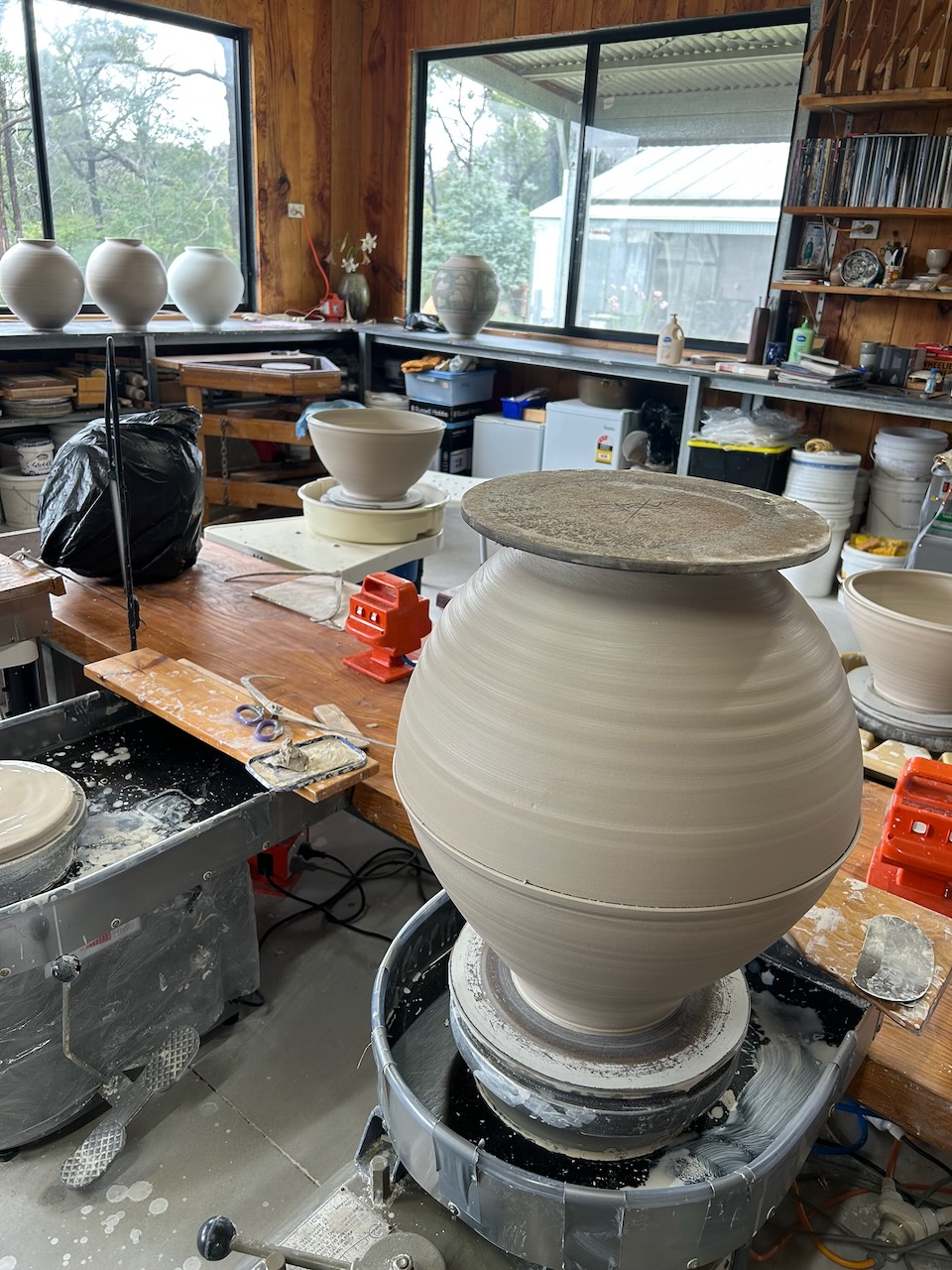
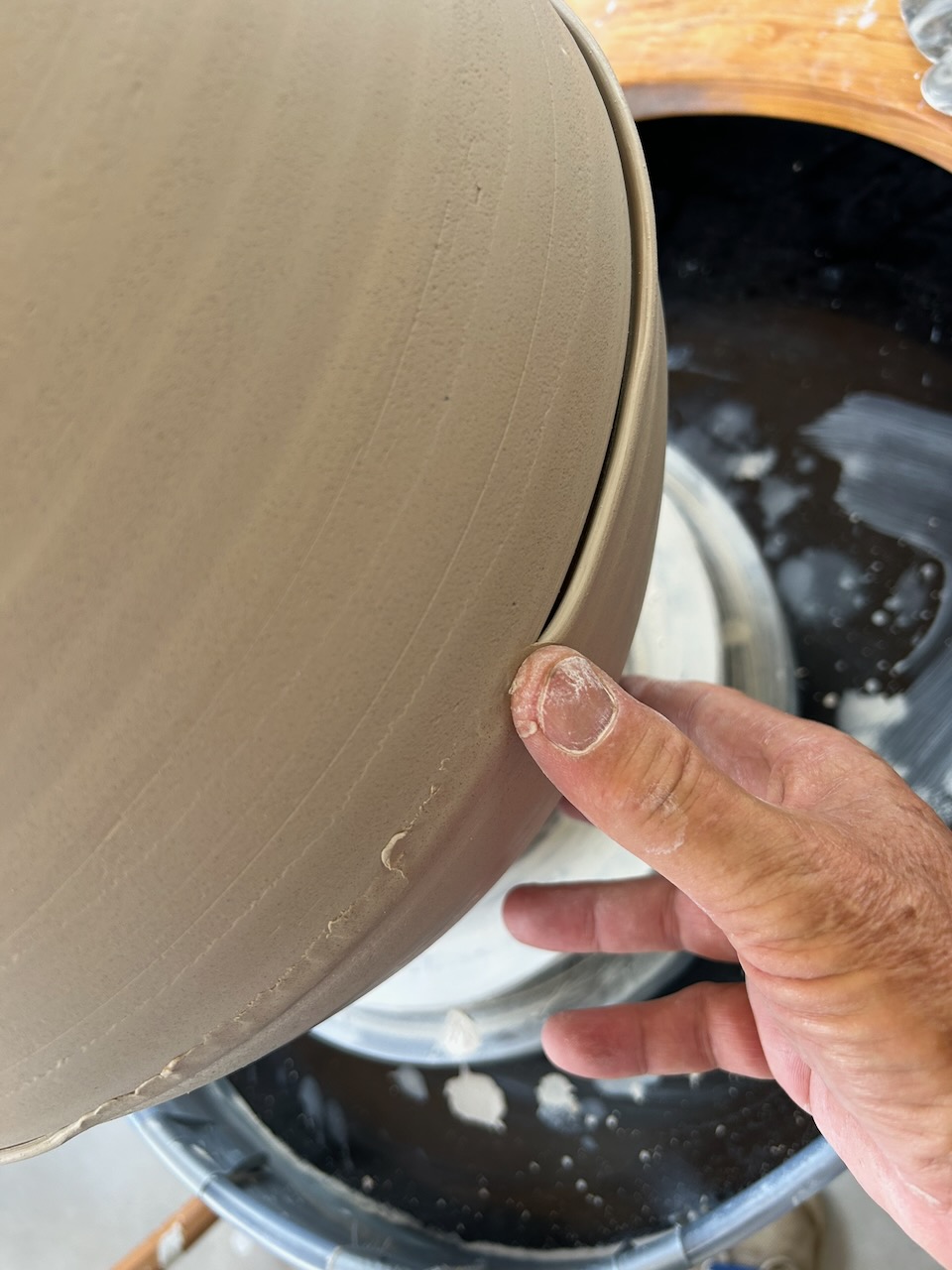
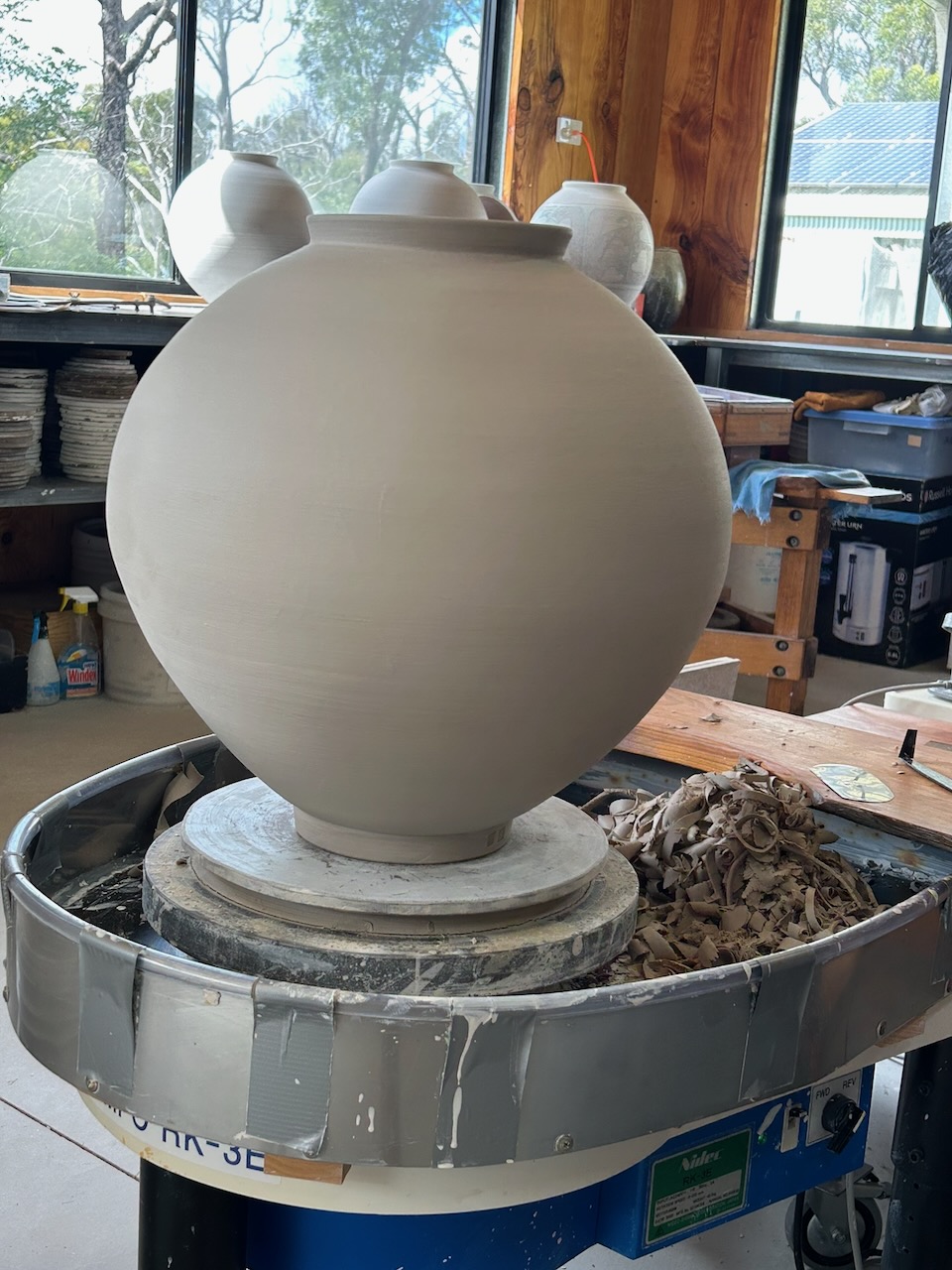
After the workshops were over, I kept on practising. I worked my way up from 4 kgs to 5, 6 and 7, then 8 kgs. over a week or two. I could feel my skill level, confidence and success rate increasing and as I focussed on the end point of the big, open, wide bowl, that becomes 1/2 of the finished big round form. I made over 40 of these multi-kilo half-pot bowl forms and then a day later, I flipped one bowl over onto the other half, and assembled a (hopefully) beautiful sphere shape. As this is the technique used by the ancient potters.  Finally turning a small foot to give the form lift and elegance. Some of my attempts were more successful than others. A few were pretty good, but not sufficiently elegant enough. but that is what keeps me trying.

I’ve sold most of last years jars, so I’ve been keeping on with this now for another 5 weeks and made good progress. Well, as far as I’m concerned, I have. Others may differ! I haven’t ever been, and never will be, a ‘gun’ thrower. I never wanted to be. However, when I was younger and stronger, I did make large jars for a few years, and taught big pot throwing workshops, but these were mostly always in terracotta, using the coil and throw technique, a very different technique and medium. Those pots were all garden pots. That technique was ideal for someone like me who needed to take my time. To work slowly and intuitively. I’m never quite sure what I’m doing and if I’m making progress. I need time to absorb and evaluate. It doesn’t come naturally to me. I struggle. I’m not a performer. I hate the lime light. I need to make my mistakes in private. Learn from them and try again. I wish I was talented or gifted like some of my peers. But I’m not and I’ve come to be OK with that. I’m a slogger, who battles on and learns slowly through my misadventures. Slow learner! But I get there.

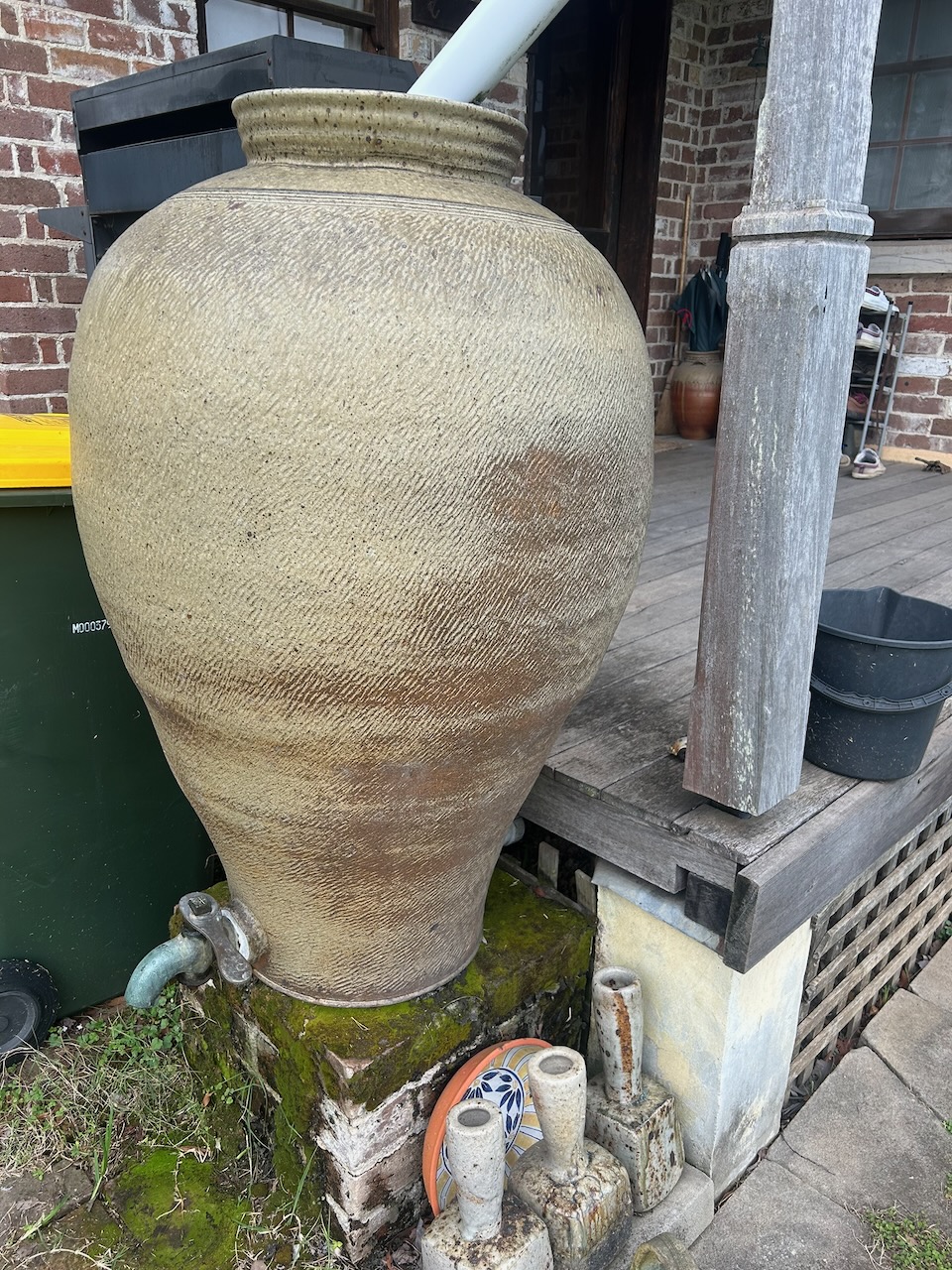
I did eventually make a stoneware, vitreous,  water tank for the house, that is still in use today. 40 years old and it hasn’t rusted out like all the other old tin tanks!

Other than that, I’ve always made small delicate porcelain bowls and other domestic wares. But now, after a decade and 8 visits to Korea, and much thought and study. I have, at this late stage in my life, become interested in the ancient cultural pottery form of the traditional Moon Jar. So exquisite, so impressive, so big, yet subtle. Fat, round, fecund and feminine. I love them. I love the poetry inherent in the form. They are so romantic and impossible! But also scary! Such a challenge.

Who could have imagined making the impossible? A huge, possibly 18 to 20 kilo jar, out of the most difficult and unpromising non-plastic material like fine white porcelain? Someone hundreds of years ago. Not only that. But they threw those impossible forms on a wooden kick wheel with very little momentum! This is the work of Masters.

Moon Jars weren’t called Moon Jars way back in time when they were made. The name is a recent addition. Originally, they were simply called ‘big white jars’. They were made exclusively for the Emperor and his entourage. They are said to embody the main elements of Joseon Dynasty Confucian philosophy, frugality, austerity and purity. I can identify with the first two.

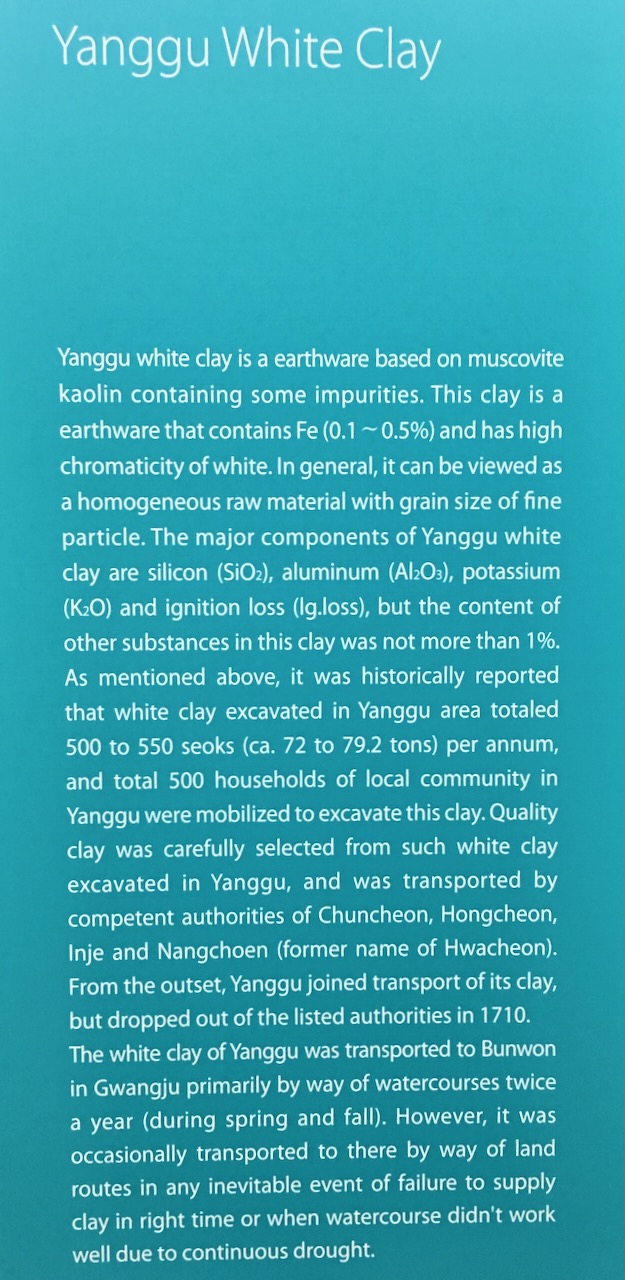
They were eye wateringly expensive in their time. The clay was mined in and around the tiny village of Bangsan, way up in the mountains. A remote place, hundreds of kilometres away from Seoul. Where the only activity was growing rice and vegetables along the river flats – that is until the porcelain stone was discovered. 

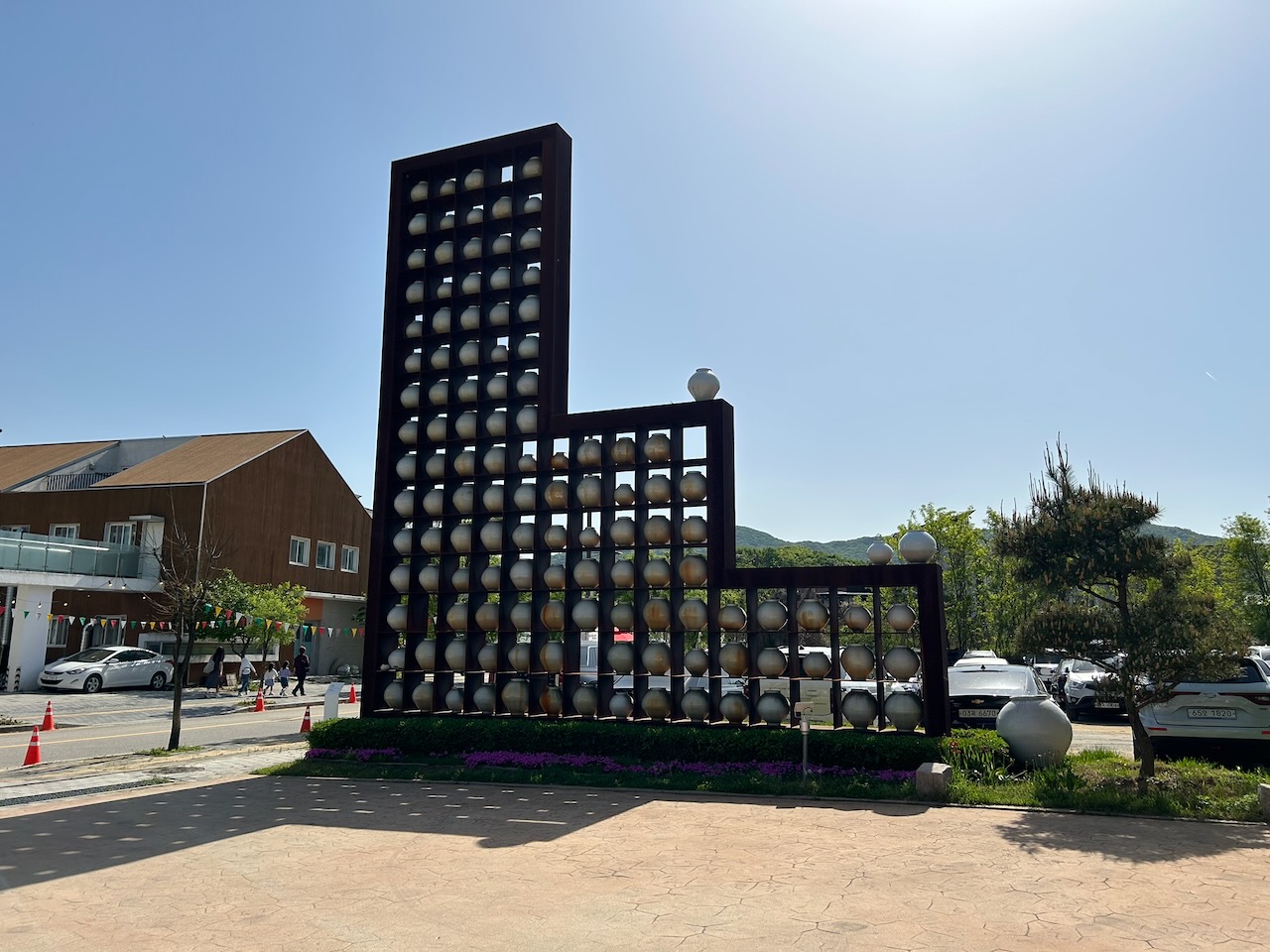
Information board from the Yanggu Porcelain Museum.

Over time, an industry developed in mining, processing, testing and then shipping the pure ‘sericite’ stone, all the way to Seoul. There was no direct road route. So in the wet season, the clay was shipped down the river, on a very long, circuitous route, around and around, from one river to another, and eventually across the country, to Seoul. In the dry season, it was carried by porters overland, which was more expensive and took even longer. It made the production of ‘Court’ porcelain very exclusive, highly desirable and very expensive. Such pots were not for the general population. Not even merchant use. This was the realm of royalty, it’s privileges and excesses.

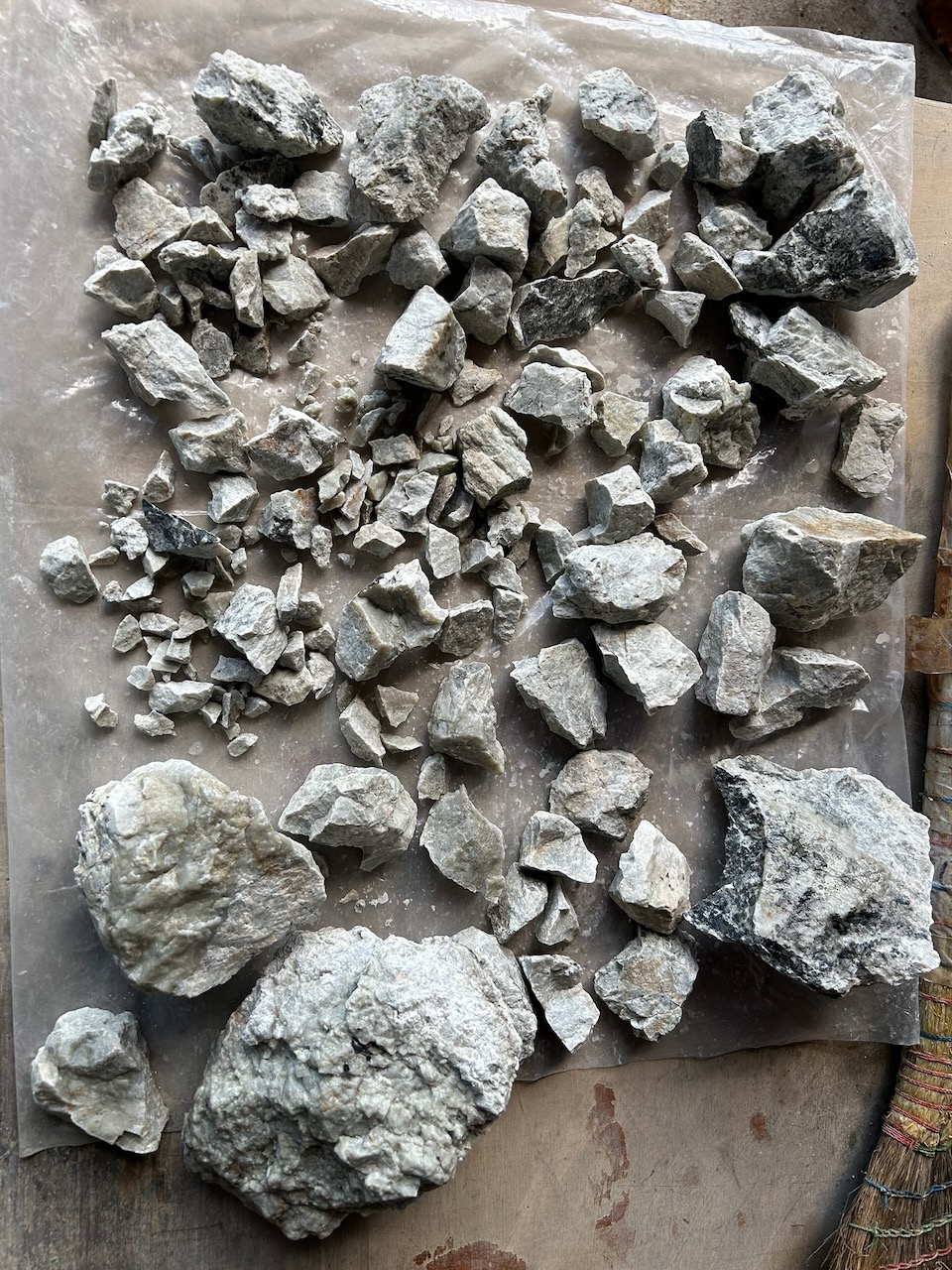
Records show that the clay, actually weathered sericite stone, for the making of white porcelain in Korea has been mined for the past 650 years, since 1371 in the one location. This unique porcelain stone was mined in an area/county called ‘Yanggu’. Right in the centre of Korea, and not too far from the current DMZ. Luckily for me. It is located on the southern side of the border. Who knows what is on the other side of the hill? Other than land mines! I have come across notices on fences up there, written in Korean, that when translated using my phone app. Read ‘Beware of land mines’. Do not cross!

I’ve visited this place many times over the past decade. Collected geological samples. Had them analysed, studied and compared the stones with others from different sites in Korea and also from sites in other countries. China, Japan, Cornwall and Australia. I have collected over a dozen different porcelain stones over the years, from 5 different countries. I’ve examined them, worked with them, ground them up and made porcelain bodies from them. Thrown them and turned them. Eventually, when I had achieved some success in this epic 15 years struggle to understand ’sericite’, I had a major exhibition of this Artistic Research in Watters Gallery back in 2017, that show was 15 years in the making, and some of those special, unique, pieces of my hand made, single stone, ground porcelain ended up in the New South Wales Art Gallery collection as well as in the Powerhouse Museum in Sydney. I’m really thrilled about that!

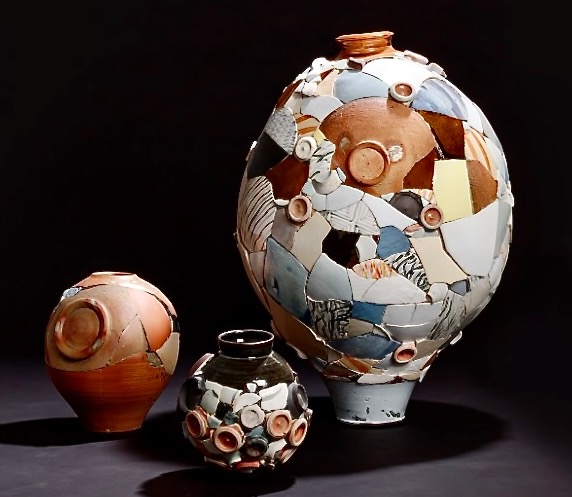
Korean sericite stones.   3 jars constructed from broken shards, collected from the old pottery studio ashes after the fire. 

Image from the Powerhouse Museum collection.

I’m thinking that I might keep on making these big round jars for some time. Until I’m satisfied that I really understand them. Eventually, if I’m lucky, I may end up with enough good ones to get an exhibition together. I love the form. It’s so full, round and generous. The Koreans revere them. Every potter there has a go at it. It’s a perennial project in Ceramic Art School courses. Some students continue on and make a name for themselves as Moon jar makers. There are a lot of very beautiful pots out there made by younger highly skilled, competent makers. I was lucky to spend a week watching Mr Chul Shin making his version of Moon Jars. Mr Chul has a very distinctive studio in the icheon Pottery village.

He told me through an interpreter, that it was not until he had made a thousand that he became confident.

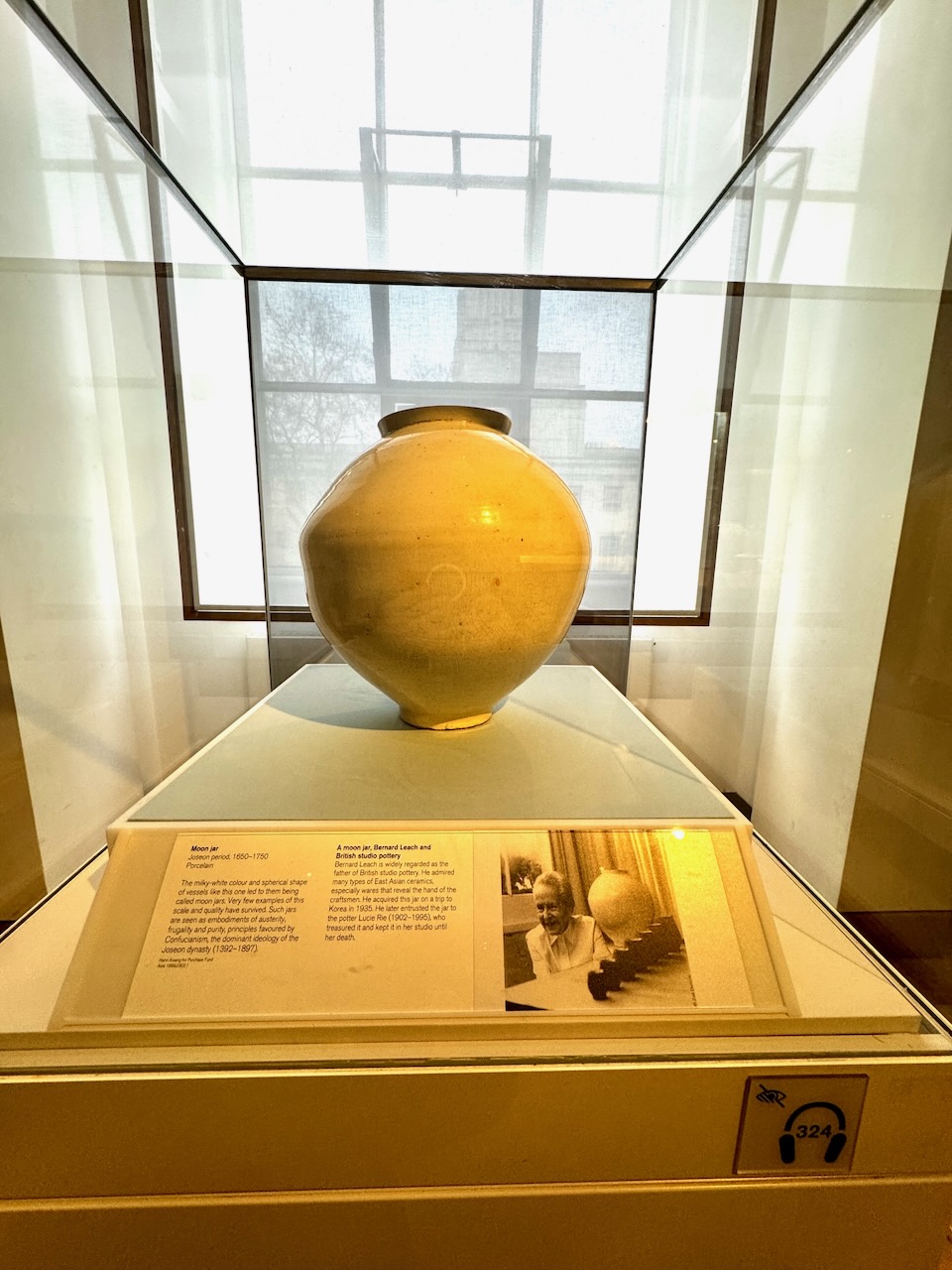
These jars have become Korean cultural icons. It wasn’t always so, When Bernard Leach visited Korea in the early part of last century, he found one for sale in a bric-a-brac shop for a few hundred won. Today they sell for 4.5 million US dollars. His bargain purchase jar is now housed these days in the British Museum. But spent most of it’s life in Britain in the home of Lucie Rie on loan from Leach, until her death. 

My artist friend Anne was in the British Museum yesterday and sent me some images back. I have been there twice to see this jar myself over the years, but it wasn’t until I started to get seriously interested in them and started to try and understand them and make them that I wanted to learn more. I have looked at Anne’s images quite closely now and can see so much more that I hadn’t taken in, in my previous visits there. Images by Anne Spencer.

Isn’t it interesting how we travel through life in a kind of blur, not really taking in all that we see. Just impressions. It takes intense scrutiny to really see with intent. I know that I can only spend a couple of hours in any gallery or museum, before I start to develop Museum blindness or fatigue. I need to go out and sit outside. Go for a coffee or have lunch, then I can go back in and look for another hour. Then that’s it. If I stay longer, I’ve learnt that I’m just wasting my time. I need a couple of days or more, to really see the parts of a museum that really interest me. To really take it in! Maybe it’s just me? My limited ability to really see and understand? My acuity and skills of perception are apparently stuck in first gear.

I learnt more from Anne’s photos this morning than I did in my previous 2 visits to London to see the actual jar. The difference being that I am now totally involved in trying to really ’see’ them completely, to understand them, as I try to make something of my own, that has that unique special quality. My insights have expanded exponentially. This is directly related to my attempts to re-created the fullness of the form on the wheel – and failing, then doing it all over again. Slowly burning in those necessary synapse connections and pathways.

I have to admit that I really still don’t quite know what it is that I need to know. I haven’t quite ‘got it’ yet. Maybe another 40 ‘halves’ will get me closer. Half a tonne of clay may not be enough. I’m feeling more and more like I will need another half tonne and another 40 goes to really get to grips with it?

Looking closely at Anne’s Images, I can now see more of the subtleties that I missed before. I’m taken particularly with the rough texture of the body, the inclusions of organics that have burnt out. The subtle crazing where the glaze is just a bit thicker. I can also make out the slight differences in the atmospheric body and glaze colour development across the pot due to differences in the firing. I’m suspecting at this stage that this pot was possibly fired in an oxidising atmosphere early on in the firing, then going through a period of neutral atmosphere, eventually ending up in a reducing atmosphere towards the end of the firing. That’s my guess. Based on my knowledge of how ancient multi-chamber kilns were often fired.

I’ll only know once I’ve given it a go with my own clay and kiln, then I can re-asses and maybe try something else. And for what really? Just the academic reward of figuring some thing so esoteric out to a level of my own satisfaction. If I ever get a show together. I’m prepared to witness people walking past them and not taking much of it in. Just as I have done all my life up until now!

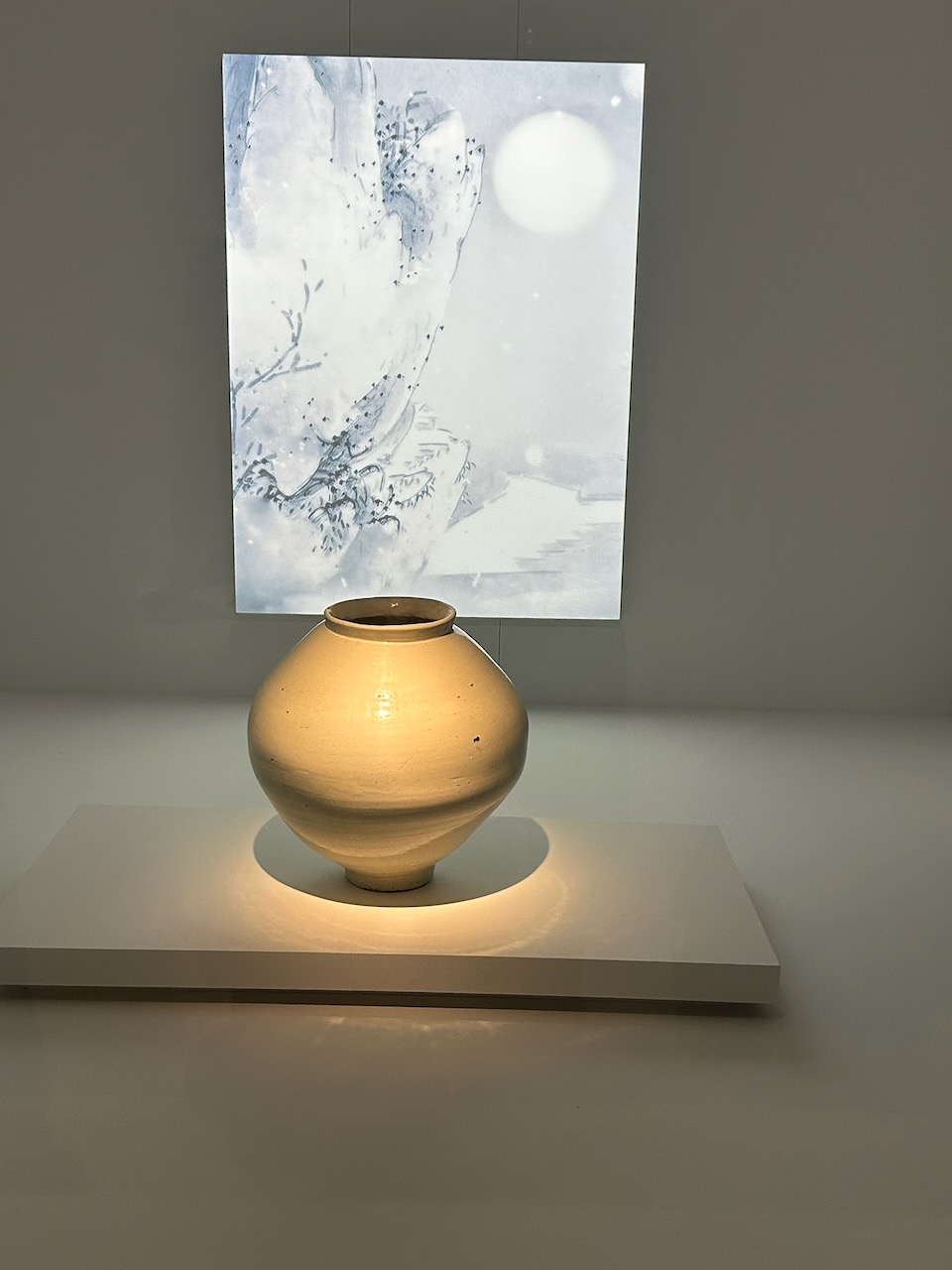
I’m fully aware that studying just one pot will not tell me enough. I need to see as many as I can to make a more balanced judgement. So far I’ve seen 3 in real life. not enough. There are about 20 or so of them out there, but they are all spread all over the world. The one I saw in the Yanggu Museum two years ago was more reduced, with the glaze showing a pale limpid celadon where it was thicker around the rim. Unfortunately, the only photo I could get was under a very yellow artificial light, so the jar looks rather blond.

However, in the end it doesn’t really matter how many I can see and study. What is most important, is that I can make something that I’m happy with and which represents my relationship with the this iconic piece of pottery. It’s hard to define the ‘feeling’ of a pot. Its neigh impossible to recreate that ‘feeling’ in ceramics. Principally because it is so ephemeral, so always changing with the light and with my moods. Always varied and different. It’s not the destination any more really, it’s all about the journey. This is the madness, looking for poetry in a ceramic form.

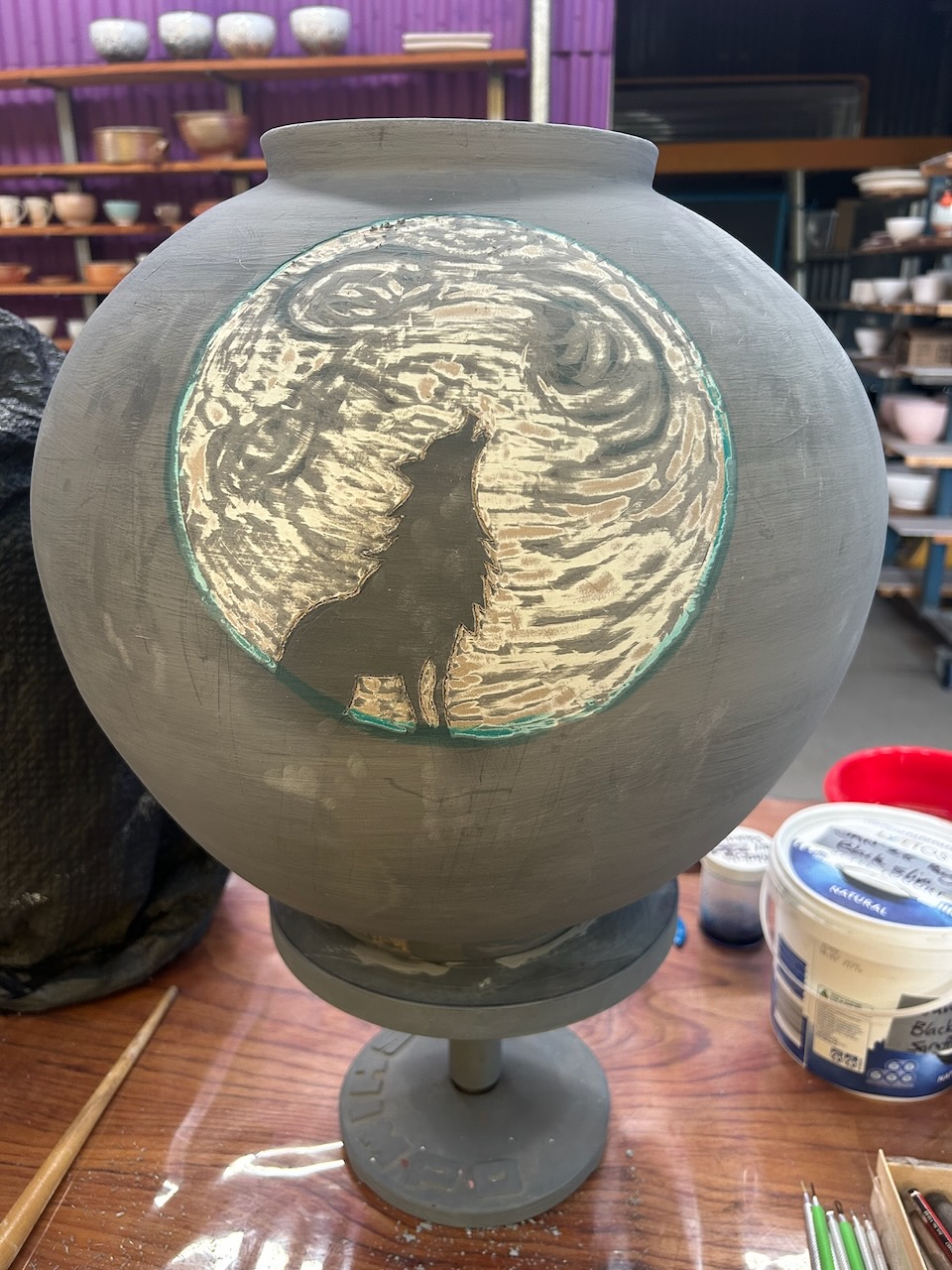
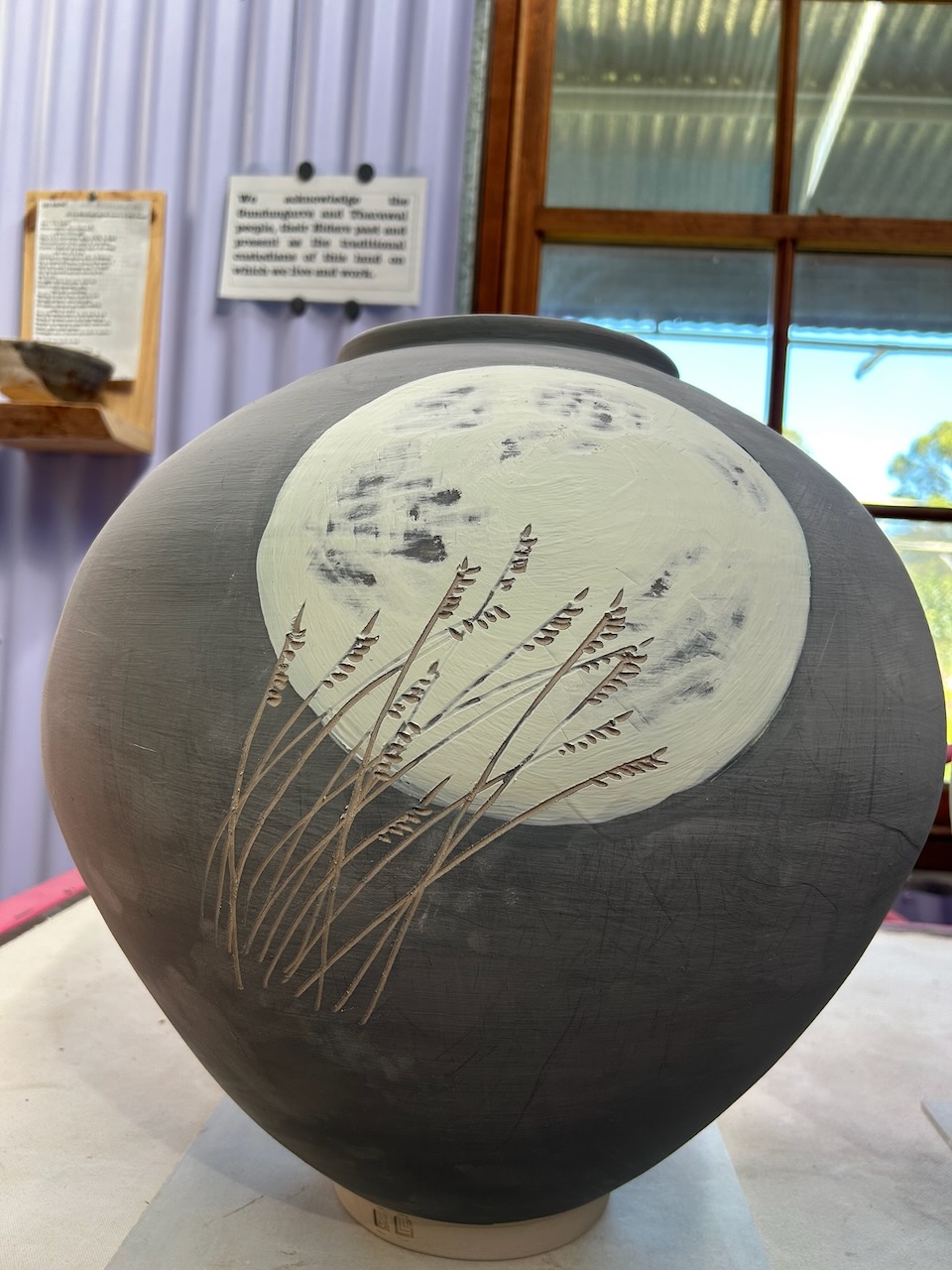
I’m also very aware that it is important not to make some sort of poor copy, or worse, a pastiche. I need to develop my own Australian version of this big round fat form. I’m working on that. Janine and I have been treating the surface of these full, round forms with black and white slips, then carving through them sgraffito style, to create our own version of the form. Something that relates to the original and shows it some respect and honour, but is in essence some thing of mine too. At the moment, I’m making them all black with black slip, then carving back to relieve a pale moon in the night sky. A moon within the moon jar form. Working in reverse like this came to me as I pondered the fact that we are here in the opposite hemisphere, up-side down and with the seasons reversed. So a reversal of the aesthetic seemed appropriate. I might call the show “a view from below”, or maybe not?

‘Howling at the Moon’  –  Jar.    A self portrait!

‘Autumn Moon’ – Jar.    A jar for this season right now.

We are working collaboratively on some of the forms, and others I’m finishing on my own. I am certainly doing all the throwing of these recent forms. It’s a great journey and we have no idea where it is all going, and that’s good.  I like that.

Nothing is ever finished, nothing is perfect and nothing lasts.

Double glazing old timber windows

This is a little story about how we came to be replacing our old 3mm plain glass window panes with new double glazing units.

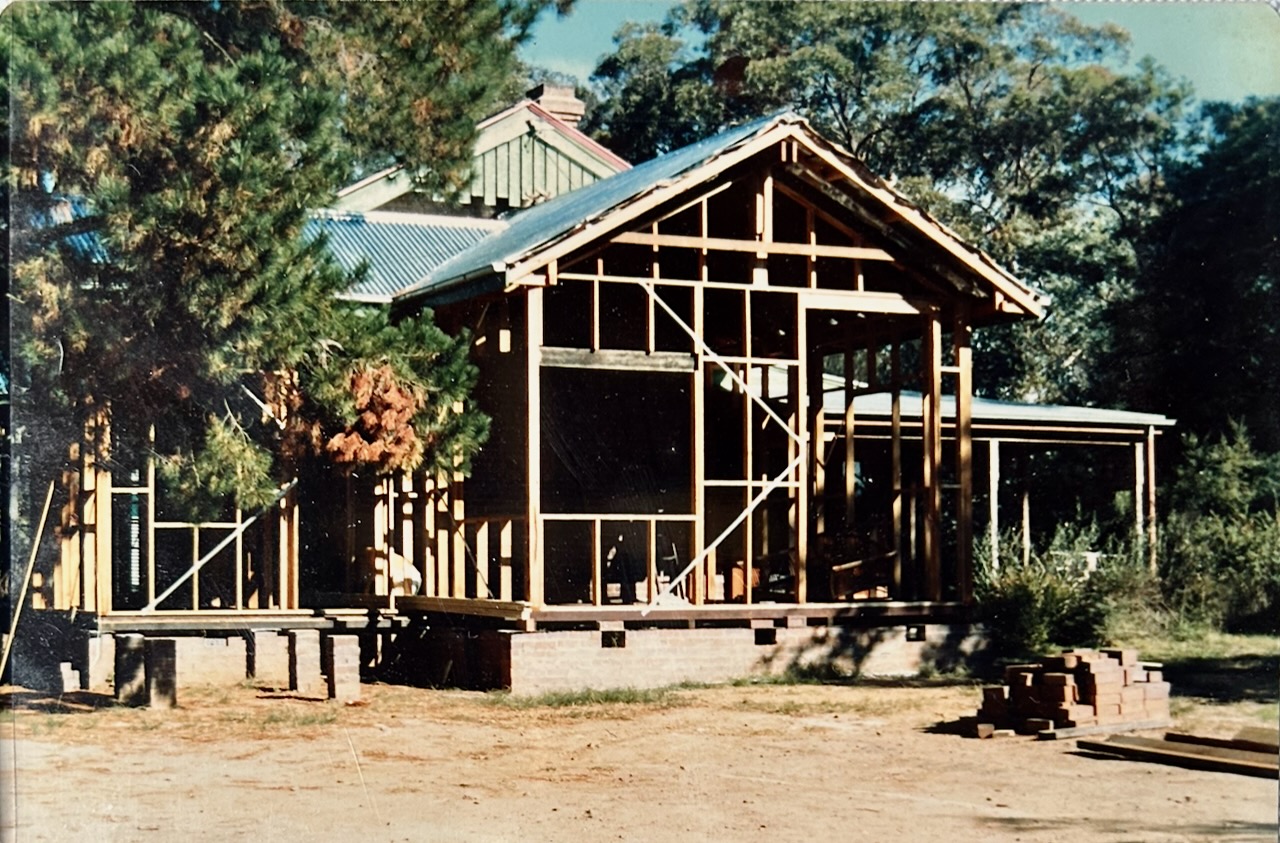
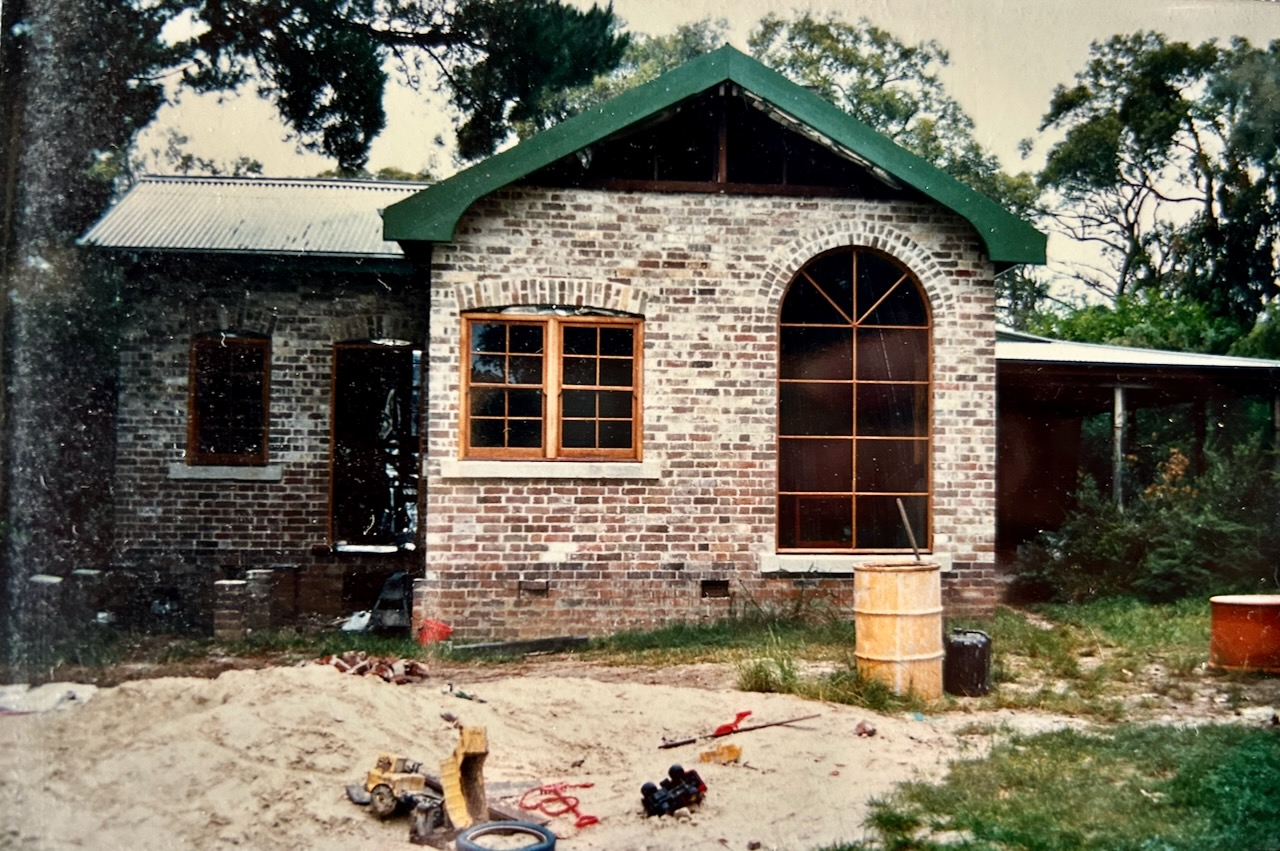
Janine and I built our own house here in Balmoral Village, back in 1976. We were lucky to be able to find and then purchased the old derelict school class room, built in 1893. It wasn’t a house, just a single room school classroom. The last time that the school operated was during the 2nd World War. 

When we discovered it, it had squatters in it. It was in a very poor state, but structurally sound, being built of very solid double brick construction. However most of the timber work had been eaten out by white ants/termites.

We lived in that single room for almost a decade, camping in there while we bought and installed new guttering on the roof and a water tank to collect our drinking water. Originally, we cooked on the open fire and heated our bath water on there too. We learnt to sponge-bath our selves in a galvanised metal tub, in front of the fire in Winter, but we had an outside bucket shower for the summer. We dug a deep pit latrine and eventually installed a small cast iron wood fired stove to cook our vegetables. All very romantic – for a while! But we were young and full of hubris, so everything was exciting and comfy enough. We planted a vegetable garden and started an orchard. That was our first year.

Not too much else really happened for some time as we were crippled by the cost of the mortgage. The interest rate at that time was an unbelievable 23%. per annum. We couldn’t get a housing loan from a bank. They wouldn’t touch us, because we were artists. Very unreliable apparently! We couldn’t take on anything else until we managed to pay off that exorbitant 2nd mortgage, which was the most expensive of the two. Our other mortgage was only 17.5%. So fantastic! we were so lucky to get that 5% reduction. It made our life so much easier!. As luck would have it, I earned a reputation for doing weekend workshops all over the state, so what started as an occasional weekend job soon became a regular event. I was also very fortunate to get intermittent teaching at 3 or 4 different Art Schools on 4 days and 2 nights a week. Janine worked two days and one night. That was how we managed the mortgage. For two and a half years, I had just one day at home each week during term time, it was quite exhausting. I had to get up before dawn to get the very early 6:00 o’clock bus down to Picton station for the early quarter to 7:00 am. train into Sydney. Then another bus up to the Art School, to arrive at 9:00. Then the return journey of bus, train, bus back home after dark at about 8 at night, Except for the nights that I taught the night class, in which case I didn’t finish til after 9 pm, so slept over on a friend’s floor on a camp stretcher. I am forever grateful to those beautiful people, Marg and Graham, who helped me to get started during those first years.

After a decade of ‘camping’ in that one room class room, we had paid off both of our loans. I gave up one of my teaching jobs, the 2 days at Alexander Mackie College, and the one night class at St George college. I also halved the number of weekend workshops that I took on.

We started to think about extending our single room house, adding a kitchen, a bathroom and a couple of bedrooms. It ended up taking us about 10 years to build, quite simply because we did everything ourselves, slowly, manually, to save money. We managed to do it all without extending the mortgage.

We did all the construction work on our own to save employing trades. I drew up our own house extension plans myself and got them through Council’s planning dept (after a few corrections). We dug the footings and cast the concrete. We had a wheel barrow brigade of friends and neighbours on that day to help move the concrete. In the 70’s we all pitched in together on each others building projects around the village. 

I learnt how to lay bricks to build the footings. I wasn’t very good at it, but that didn’t matter, as all the brickwork below floor level was going to be cement rendered to match the old building. That design feature was such a stroke of luck, as it hid a multitude of my not so good bricklaying mistakes as I learnt the skills needed.

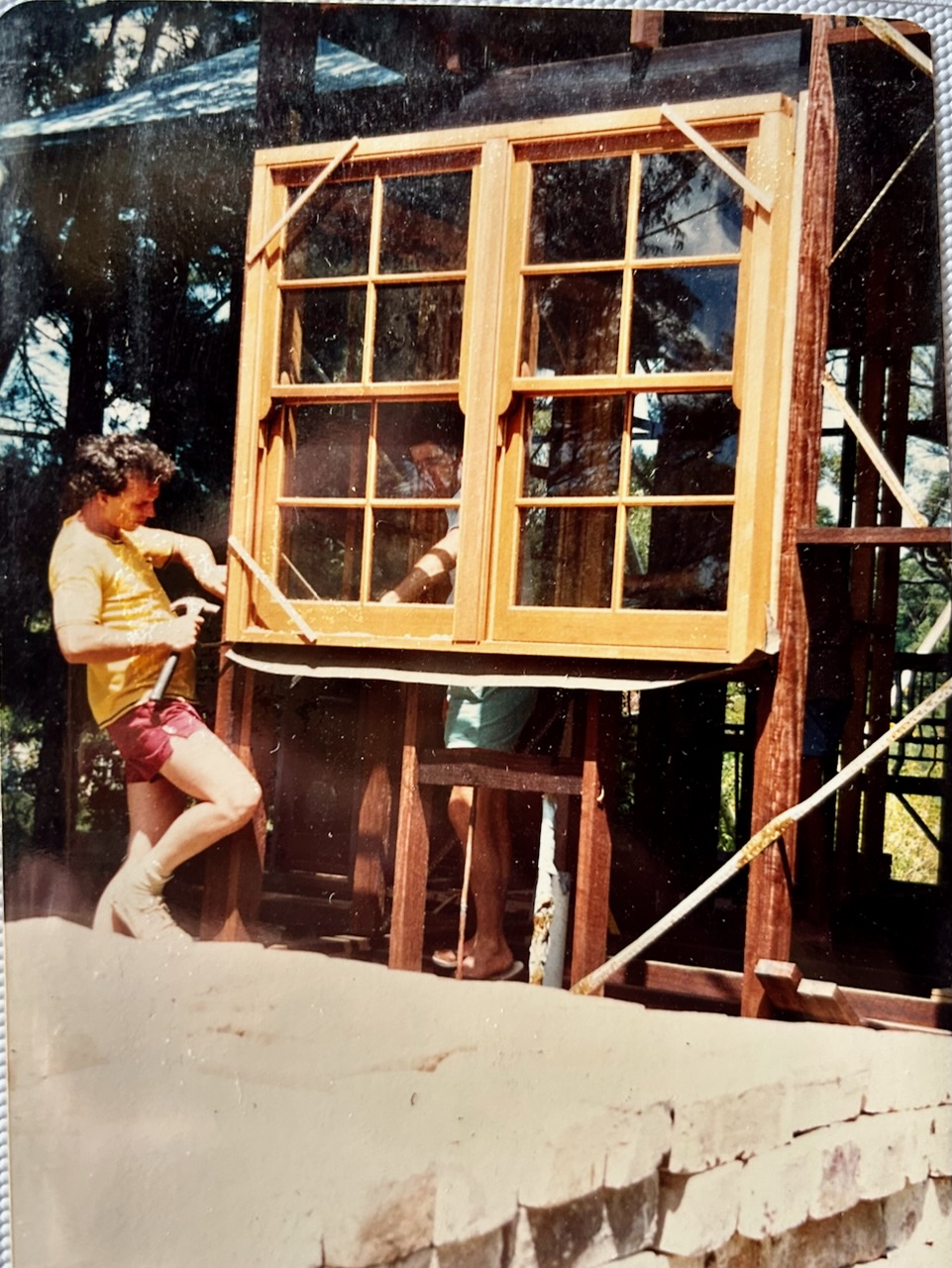
I taught myself how to construct a timber frame out of local hard wood supplied by the local Mittagong sawmill. Some of the eucalyptus trees were even felled down in the deep creek gullies behind the village here in Balmoral. We were lucky that Janine’s brother, who was a builder, came to live in Wollongong for a while, about an hours drive away on the coast. He would come up occasionally to help me lay out the footings, or level up and square the frame, then later help me to set the windows that I had made over the 6 months prior. Everything took time, but time was free, we had enough of it if we waited… Paying trades was prohibitively expensive. The only tradesman that we had to employ by law was the electrician. I managed to find a friendly one who let me run all the cables myself, leaving the tufts of wires hanging out where power points and switches were needed. He came back later and did all the connections and testing. Money was the one thing that we didn’t have much of, so we learnt to be frugal. Recycle, repurpose, reuse.

As we were both part-time/casual teachers working 2 days a week during the 36 week term time. That limited us to a total income of 150 days of paid income per year. Neither of us has ever had a full time job or earned a salary. Nor have I ever been on the dole either. These part time/casual jobs didn’t really earn enough money. So I kept on doing the weekend workshops all over the state, and even a few interstate, even in New Zealand! So as to make more money. Our income was so small and unreliable that we couldn’t borrow any more money. This meant that we had to build our house slowly, very slowly, using our meagre wages to pay for materials only. We would save for a month or two and then buy the concrete for the footings. Wait and save again, then buy the bricks for the footings. Wait and save until we could afford the timber for the bearers and joists. Bit by bit. Step by step. All the while spending the time in-between, whilst saving, using the materials that we had acquired to complete the next phase. So it went on like this over a few years, until the frame was complete and we had a roof on, but no walls! I wrapped the walls in silver paper to protect the timber from the weather, but the sisalation got blown to pieces in the huge winds that we experienced over the next couple of years. I finally had to nail plywood over the top of the sisalation to hold it in place.

We had a fantasy dream to build the house out of sandstock bricks to match the old school room. It would look best if it was in some sort of harmony with the original. Either that, or build a steel and glass cube box that was totally different, as is the modern way. But steel and glass cubes cost enormous amounts of money. Needing architects, engineers, cranes and structural steel ‘I’ beams and plate glass are priced like gold. All so far out of our reach, we didn’t even bother getting quotes. So we stuck with what we could manage on our own and could afford. 

I kept buying small numbers of sandstock bricks here and there from garage sales and demotion sites where ever I saw them, but only in tiny numbers. What we needed was 10,000 bricks. The years dragged on.

One day we were down in Mittagong on a Friday afternoon doing the shopping, when we saw that a huge excavator was starting to pull down the old Railway Station building. It was being demolished to widen the platform for the introduction of the new ’so-called’ high speed train, the XPT. It wasn’t high speed! It was actually slower than the steam trains. I asked the station master what was going to happen to all the demolition rubble. He told me that it was going to be buried at the local tip! WHAT!

I told him that I would finish the demolition and clean up the site and remove all the demolished building materials for them free of charge. I’d even be prepared to buy the station off him. He asked how much and I said $10 ! He laughed. Said try again. I said $100 and he said OK. That was it. We shook hands on it. I bought the ruins of the old railway station that importantly for us was built out of the same old local sandstock bricks as our school. I paid a coupe of friends and we spent a week, sorting, cleaning, stacking bricks onto pallets and had them picked up and taken to our place each evening, so that no one would steal them from the side of the road. Each day our friend Robert helped Janine, who had just given birth to our son Geordie, to unstack the bricks on the side of our driveway, so that I could use the same pallets over again the next day to move more bricks. That is how we managed to build our house out of matching old sandstock bricks. So fortunate. So lucky, Such a fluke!

The house had laid idle for a year or so while we solved the brick problem. I had spent the time making all the windows for the house, including two quite lovely arched feature windows. It took the best part of a year to get all the windows made, as I had no idea how to make a window when I started. I didn’t know anything about glazing windows either. I had to teach myself how to steam wood and bend it to make the timber arches. I wanted to use double glazed glass, but it didn’t really exist here in those early years. I was told that it had to be imported from Germany at eye watering expense. So I settled for plain 3mm glass, and even that set me back a bit at the time. Glass was always so expensive.

The total cost of the house was $23,000 spread over 10 years. Made up of little quantities of money that we saved up in small amounts over months to buy the materials as needed. Our ability to save this money, set the pace at which we could build the house. The other limitation, was that I was doing all the work. I only employed my friends for a day or two here and there when the job at hand was just too heavy or difficult for me and Janine to manage alone. At the end of the decade, we had a more conventional house with a kitchen, a bathroom and 3 bedrooms, and we achieved this outcome with no extra debt.

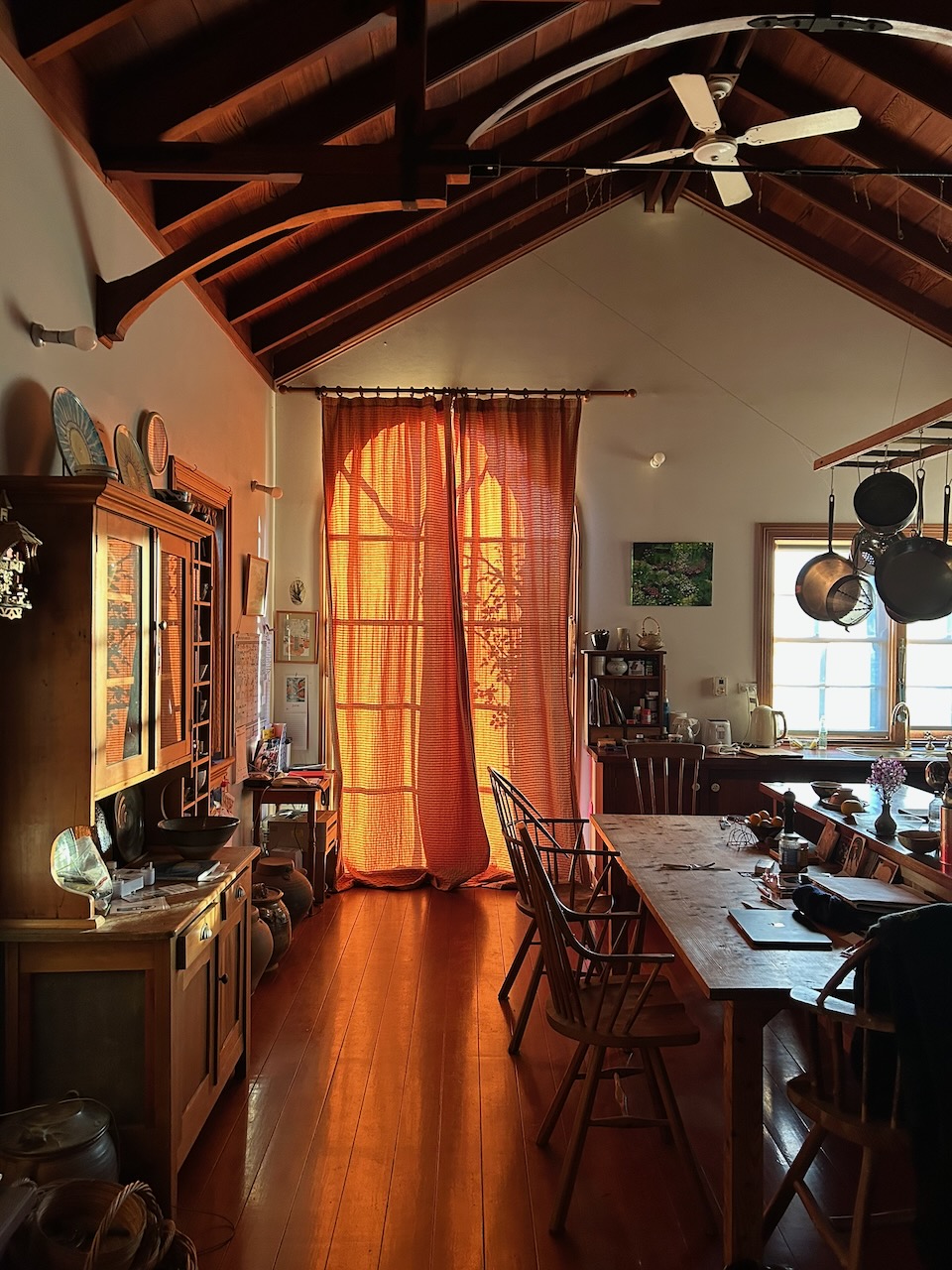
Janine had come up with the final design concept that we used. The old school faces West, so Janine had the idea to add the kitchen extension on to the north side making the new kitchen/living-room/dining room north facing and therefore solar passive. She conceived of flipping the orientation of the new addition to the school 90 degrees on its axis, facing it north. It was a great idea. Thank you Janine. 

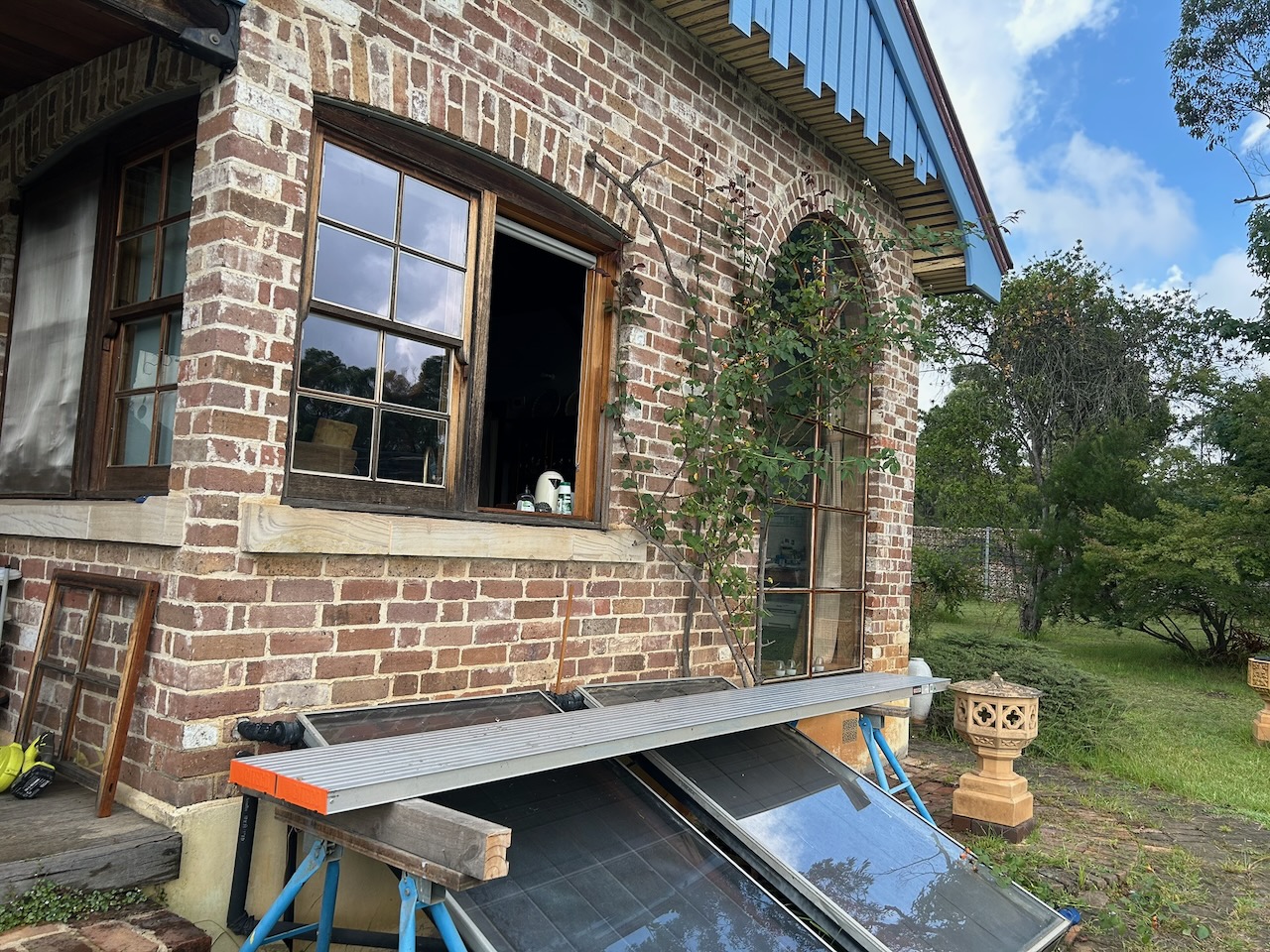
After almost 40 years now, we are finding the kitchen is getting too hot in summer. We had to close the old heavy winter curtains during the day in summer to try and keep the heat out. I added a huge sheet of perspex onto the inside to try and create a poor mans sort of double glazing, It didn’t really work that well. It helped a bit in winter with retaining the heating, but summer is our big new problem here with the huge increases in global heating.

Last year I decided to replace the old single pain 3mm. glass with new argon filled, double glazing. There is now a factory in the local town of Moss Vale that manufactures them. I spent $1800 on 12 new panes of thick double glazed glass. The inner pane has a special metallic ‘low-e’ coating that reflects back the infra red wave lengths of light that used to carry heat into the room. I had to rebuild the old 3 metre high arch window frame glazing bars. I glued and screwed on new 30 mm x 10 mm. extensions to the glazing bars, using some old cedar that I had scrounged many years ago for nothing, sure that it would come in handy for something eventually. These glazing bar extensions made it possible to accommodate the new 20mm. thick double glazed glass units. That was 12 months ago. We really noticed the difference this last hot summer. The kitchen was really cool – without curtains. So different!. That month long, part time exercise of rebuilding the big arch window was spectacularly successful. I managed to do it all in-situ, so there was never a big hole in the wall.  I did rely heavily on my friend Andy, who did the ladder work outside, while I did the inside work. Together, we got it all done in a day.

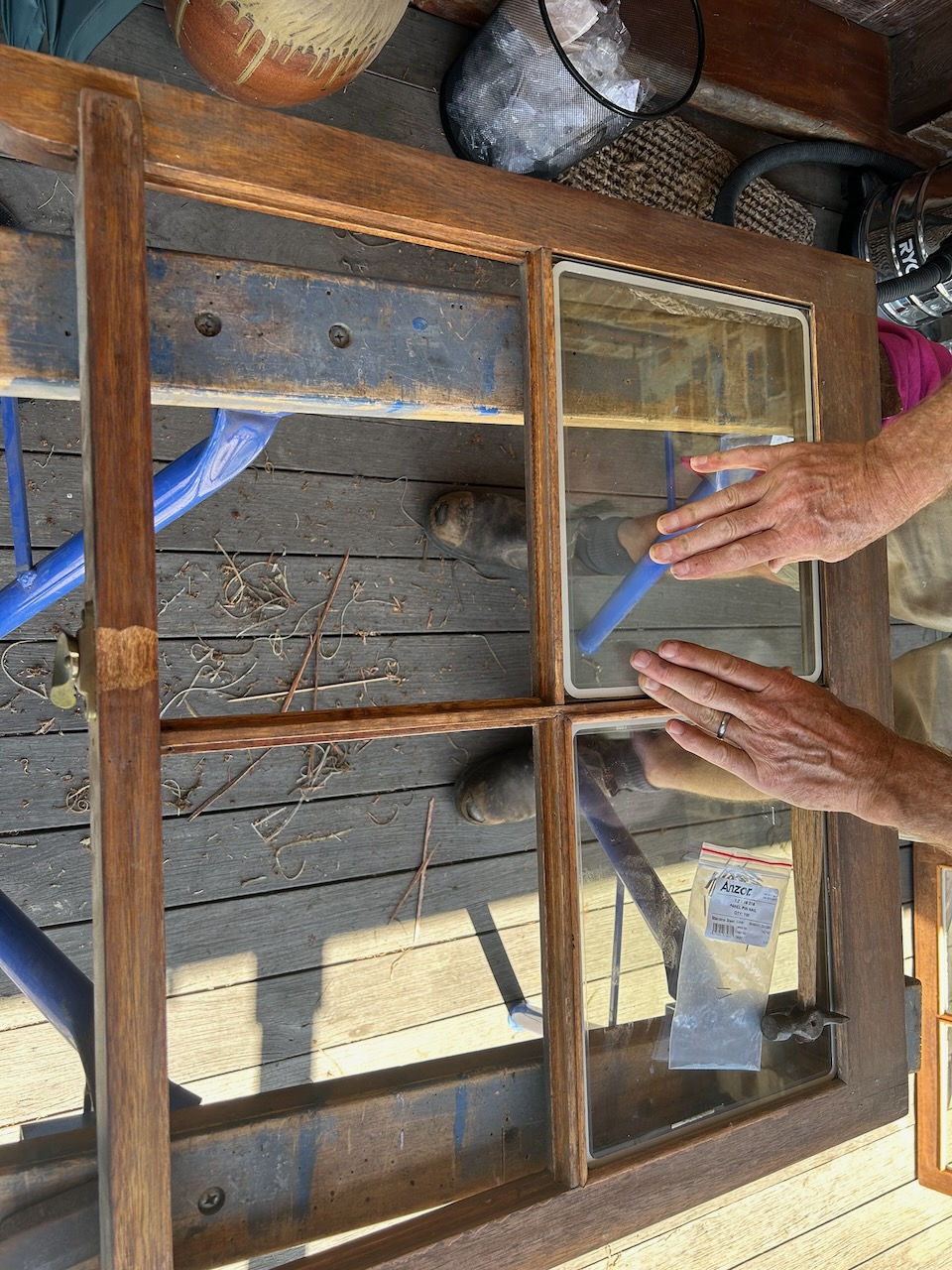
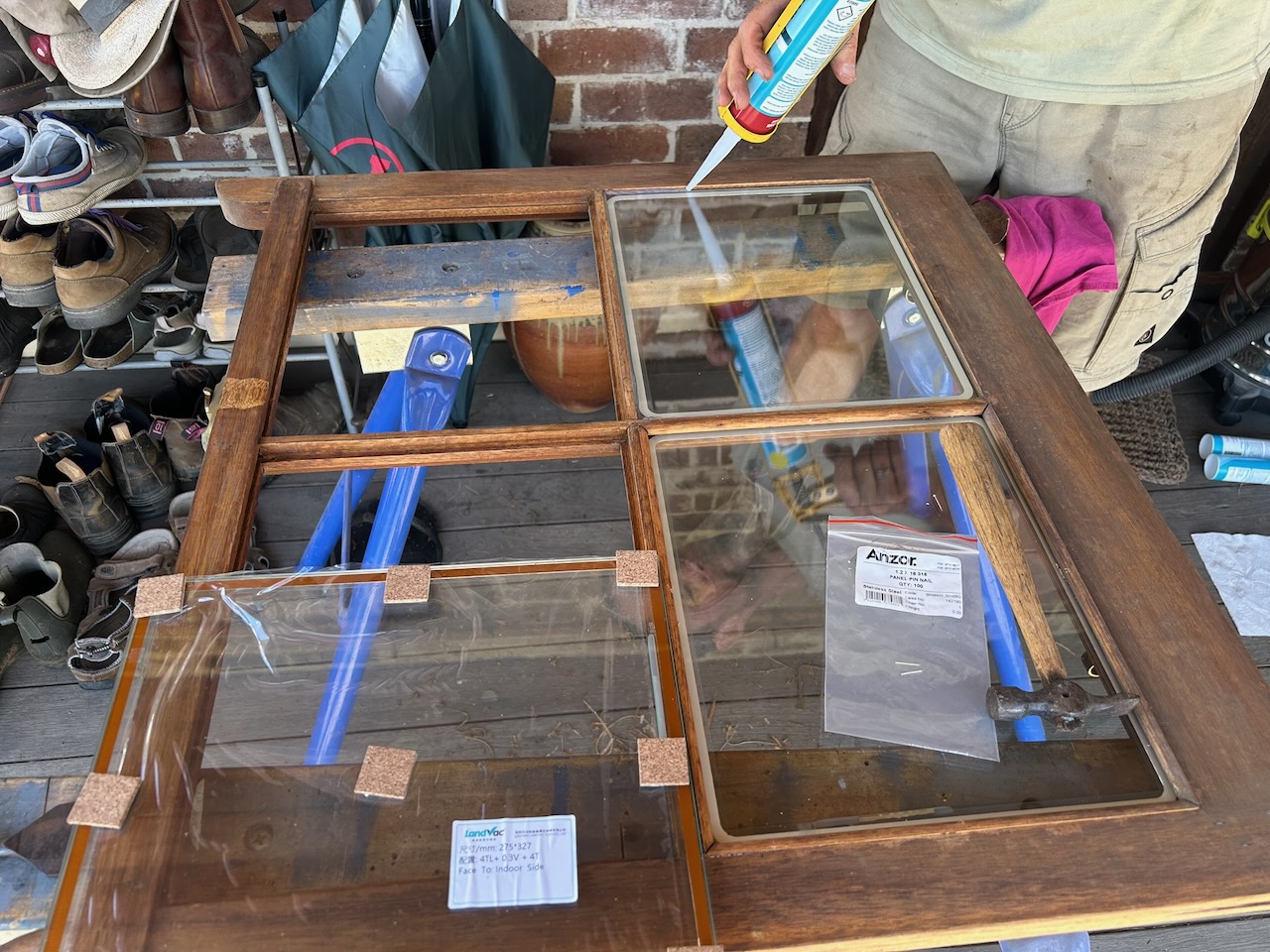
Going on the success of last summers window glass up-grade. This year, I decided to replace all the small panes in the multi-pane double hung windows all around the rest of the kitchen. I couldn’t fit double glazing in them, as there is no room in the double hung timber frames to allow for a 20mm thick argon-filled double glazed glass pane. I did a bit of research, some years ago now, and came across vacuum filled double glazing. (or should that read vacuum emptied, double glazing?) I kept my eye on the concept over the years, and as the price slowly came down. I was encouraged to take the leap! 

The gap between the two glass panes is only 0.3mm., that is like the thickness of a human hair. The big difference is that the gap is filled with nothing. ABSOLUTELY NOTHING! It’s a vacuum! So its like having a thermos flask in between the glass. These 4mm thick hardened glass panes also have a ‘low-e’ infra-red reflecting coating on the inner sheet facing out. Being only 8.3 mm thick in total. I thought that I could fit them into the old, wooden, double hung, frames that I made 40 years ago, and they could still be lifted up and down in the same runner slots. Or so I thought. As it turned out, they certainly could fit – just. I’m thrilled that it was possible. I paid my friend Andy to help me again, as I didn’t know if it was going to be possible, and time was of the essence, as rain was threatening. Andy is great. He has so much building experience and he adds a sense of calm and professionalism to the situation. He is also younger than me and doesn’t mind working on a scaffold or a ladder. Thank you Andy!

We had to take out the old windows, leaving a hole in the kitchen wall while we figured it all out. As the panes were so much thicker, going from 3mm up to 8.3 mm. We had to carve out the seating groove in one place in each wooden frame to allow for the thicker glass. It all went surprisingly well in the end. So I consider myself very lucky. I thought about it a lot before hand and planned it well, but didn’t know until the day, if it would actually work. Such good luck! AND the rain held off too.

We’ll know this time next year if was as worthwhile as the argon filled double glazing was. We have completely re-engineered the thermal efficiency of the house now. Re-imagine, re-furbish and re-new!

I’m still somewhat amazed that we were able to carry it off without any serious glitches.

Life is a work in progress. We’re working on it. We have been very lucky all along the way, but I’m very aware of the old saying. The harder you work, the luckier you get! I’m also very aware that I’m incredibly fortunate to be living in a civilised, peaceful, first world country like this, where opportunities do arise. We are also very lucky to live in a land with no missiles or bombs. 

I’ve been told that the most important choice that you make in life is to choose the right parents. Choosing the right country where those parents live also helps!

Nothing is ever finished, nothing is perfect and nothing lasts.