
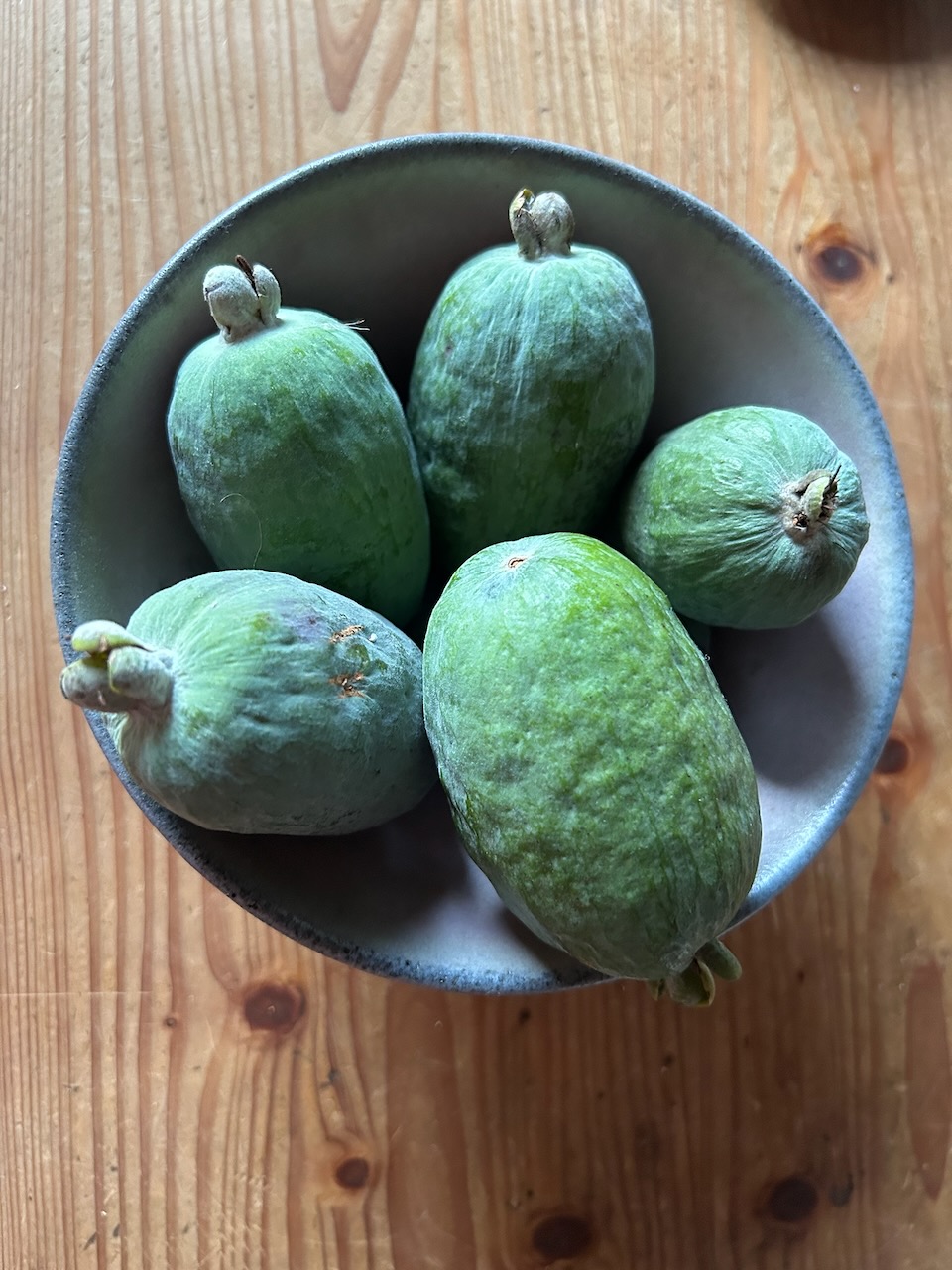
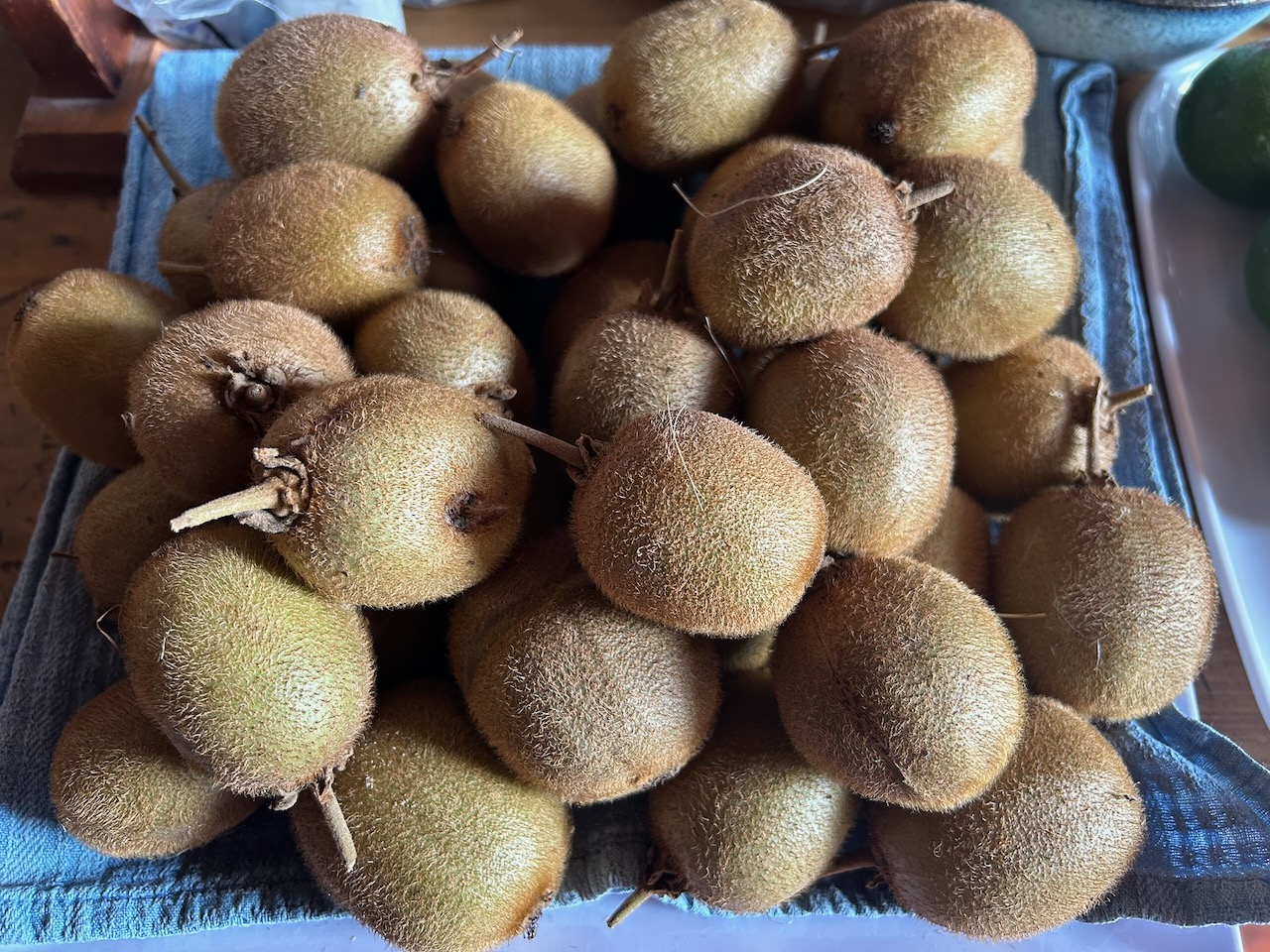
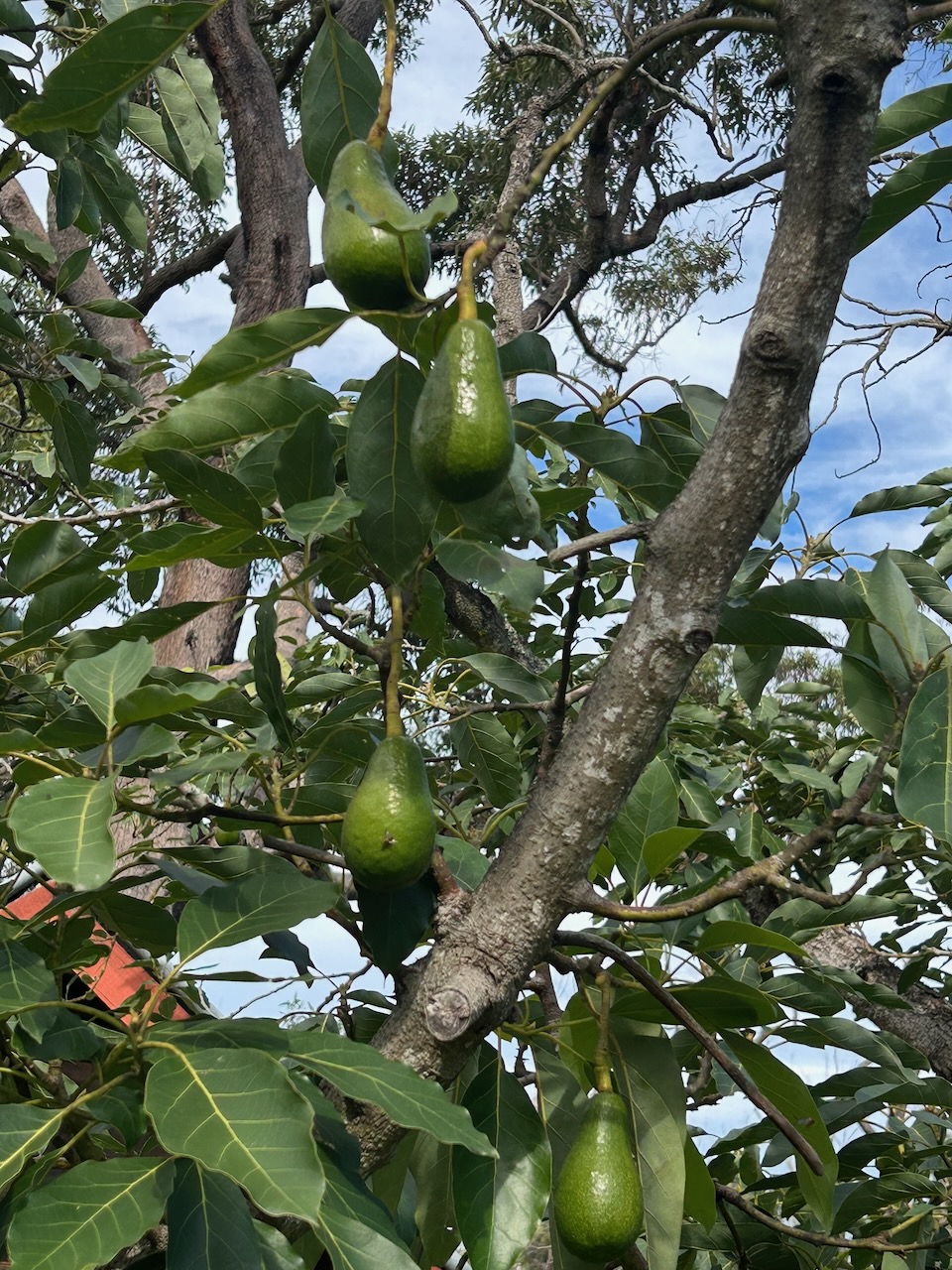
We are currently picking avocados, kiwi fruit and feijoas. Non of these fruits ripen on the tree.
Avocados stay on the tree until they drop months later, possibly over-ripe by then. We never intentionally leave them on the tree that long, but there have been times when we missed seeing them and only found them when they drop to the ground, as late as Xmas! These need to be eaten immediately.
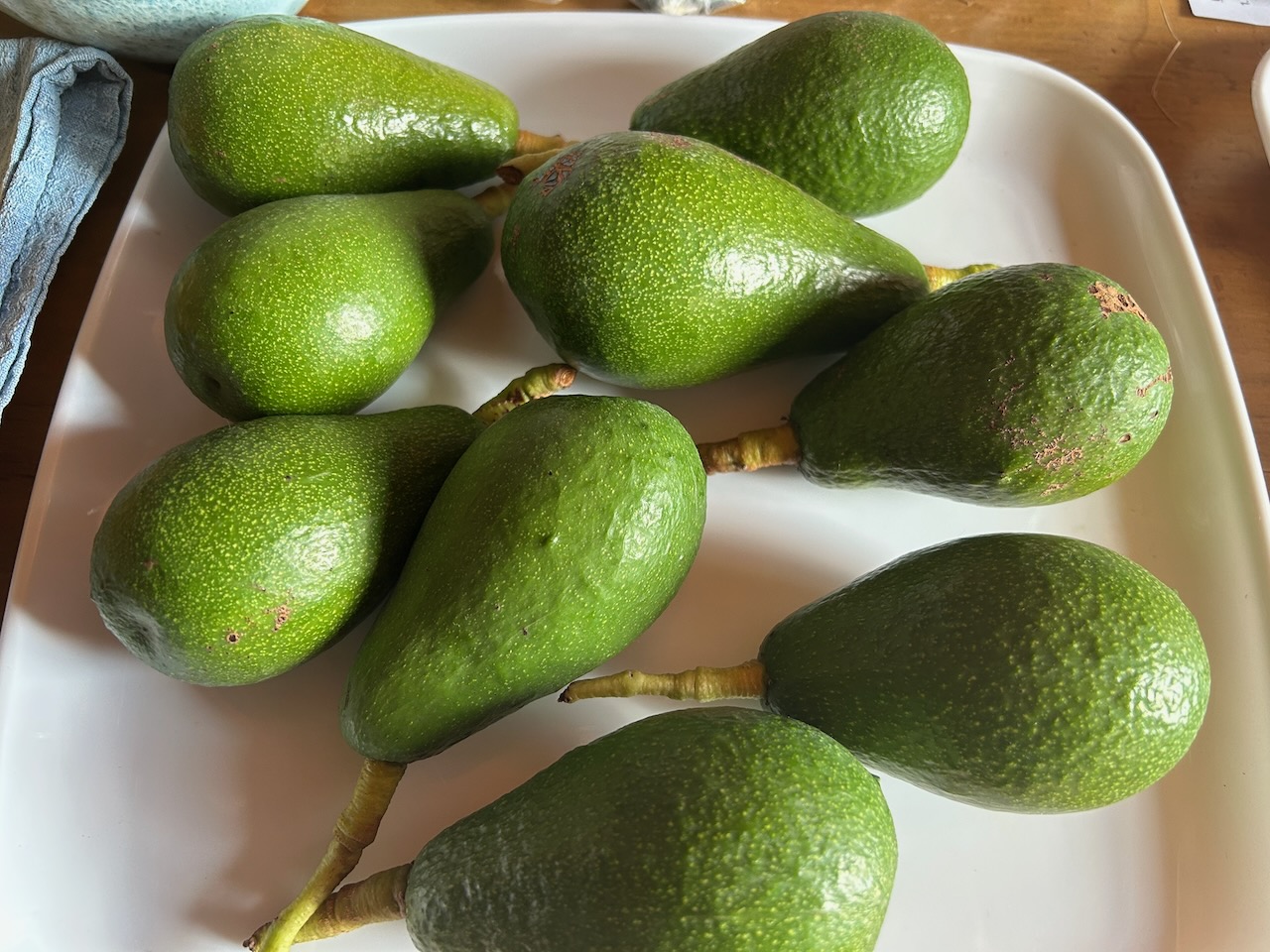
We usually start to pick them around the start of April, once they have reached a good size. That’s now! Our tree is a fuerte. They start to ripen about 2 weeks after you pick them. There are a load of other varieties out there that come on throughout the year. Theoretically, you can eat avocados throughout the entire year from your own garden. I’m looking forward to that.
I have planted 4 new avocado varieties this year, to cross pollinate our original 45 year old Fuerte (B). Avocados come in 2 tribes, Type ‘A’ and Type ’B’. You need one of each Type A and B to ensure a good crop set. I have planted 2 of each. Avocados are marginally self fertile, but do better if paired with an opposite A or B type. I have written about this previously on this blog. (In the Eye of the Storm, 7/11/25)
They are, Wurtz (A), Shepard (B), Hass (A), and Bacon (B), so that in the future we will have our own avocados through most of the year.
Shepards ripen from Feb to April,
Fuertes and Bacons ripen from April to July,
Hass ripens from July to December,
Wurtz ripen from August to November.
This will leave us with some avocado respite over the summer in January – except for the few fruit that we didn’t see and will be falling from the Hass and Wurtz trees by then. Beware of Falling Fruit!
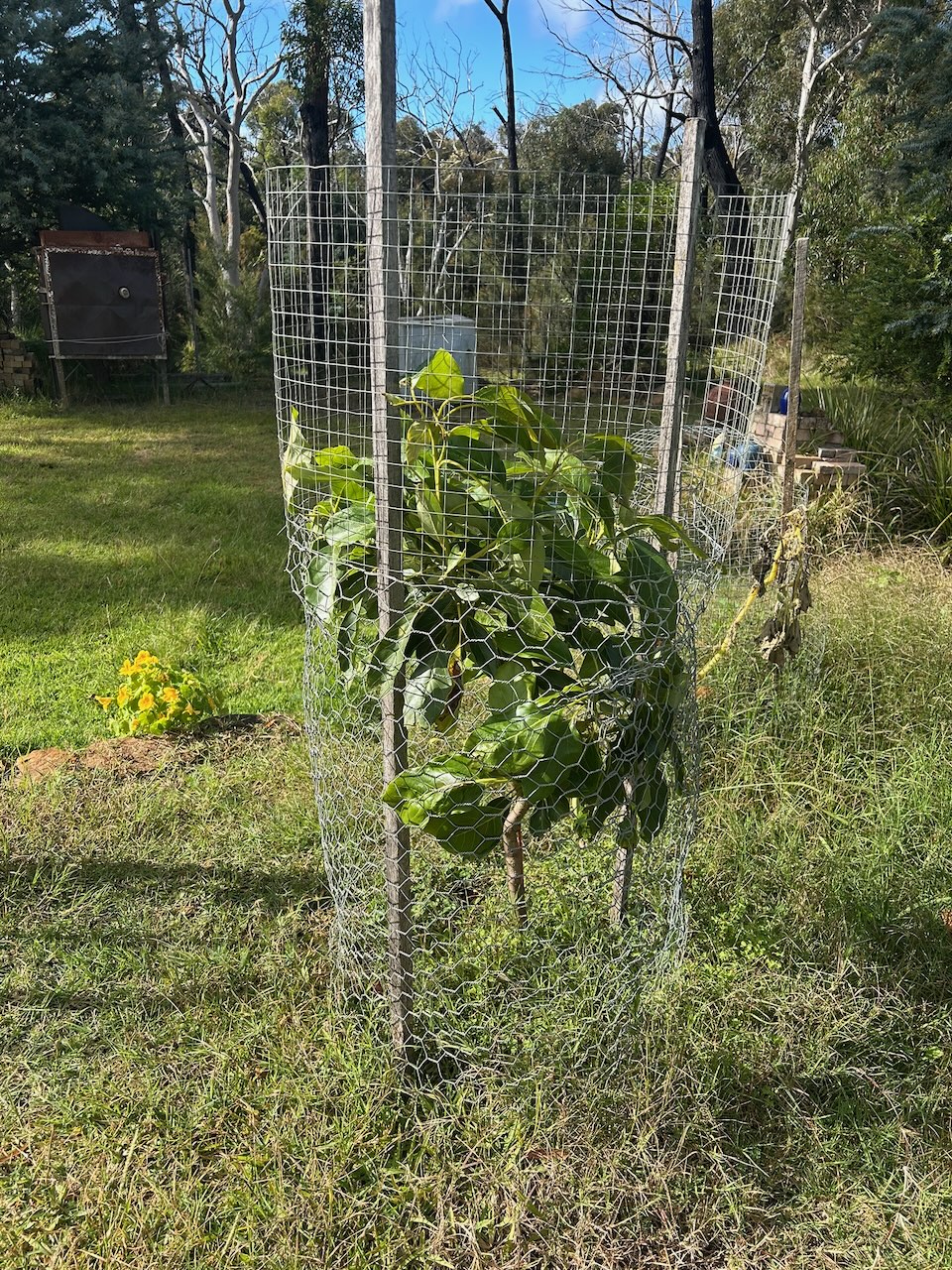
These new trees have doubled in size over the past 5 months since they were planted growing from ‘whip-sticks’ into small trees full of small branches and a load of leaves. I have them well protected from the bush wallabies and grey kangaroos. The little bush wallaby seems particularly fond of them. Wallabies don’t graze much grass, but seem to prefer to browse on leafy foliage.I know that the grey kangaroos are the ones that love to browse on cherry tress, as they will reach up over the 1200 high netting to pull down branches and strip them of leaves. The little bush wallabies can’t reach that high.
6 years ago, the last time that I planted out some new avocado trees. I thought that I’d put the netting around them the next day as I was a little bit tired out from the digging, planting and watering etc. BIG mistake! The little wallabies stripped the trees bare over night. Never again! I’ve learnt. I know the mantra of ‘No net – no fruit’, but I now have to add to that, No Net – No Tree!
Procure your netting first thing, then dig your holes and do your planting later. The other important thing about having some gal-mesh netting around the tree, is that it can be used to attach a cover of gladwrap over the top of the tree for it’s first winter, to minimise the effect of the frosts while the trees are still young and tender.
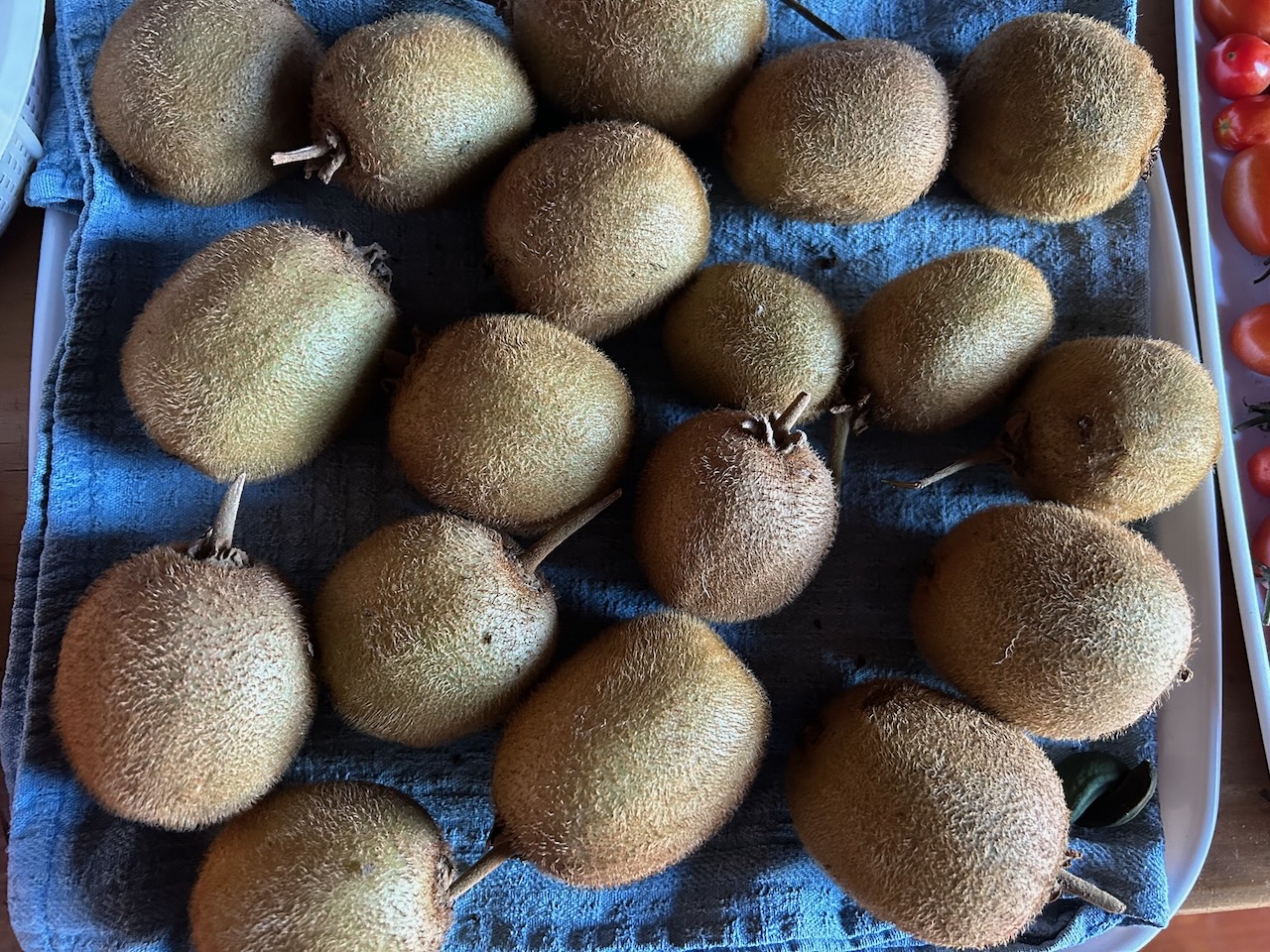
We are also picking Kiwi Fruit. A native plant from central China, possibly more correctly called Chinese Gooseberries. We have hundreds of fruit on the vines this year, it’s our best crop. These plants were all burnt to the ground in the big fire 7 years ago. They had a year under ground recovering, then popped up some suckers and haven’t looked back. The fruit are picked at this time of year, but don’t ripen until about 2 weeks after picking. They don’t ripen on the bush/vine, in the same way as the avocados. We pick and wait. We have to pick them in stages as we need them, but 2 weeks in advance, so there are piles of autumn fruit in various stages of ripening in the kitchen. As these Kiwifruit bushes/vines have re-grown from the root stock. I don’t know what variety they are, but they are lovely, sweet and ever so slightly acidic, just enough to tickle the taste buds. If they get over ripe and soft, they start to become translucent inside, all the romance evaporates, and they become mushy and slightly winey.
Feijoas likewise, don’t ripen on the tree, but will eventually fall to the ground when they are ready to fall, but not yet ripe enough to eat, as they are still hard and not ripe. They ripen on the ground. We collect them from under the trees and leave them to ripen for a week or two inside the house. When fully ripe, they do have the most amazing taste and fragrance that enriches the kitchen at this time of year. A sort of all-in summer fruit-salad flavour. It is a native of the northern parts of South America, but does well here.
We have 4 feijoa trees in our garden, but Geordie went to visit his friend ‘Mel’ at her nursery in Mittagong. She lives and farms on the site of the old Mittagong brickworks pits. Her plant seedling nursery is called ‘Brickworks Farm’. She even lives in the original owners daughter’s house. I turned up there to help Geordie harvest feijoas from under her hedge of these trees along the edge of the nursery. While I was there, Mel asked if I wanted some of her clay from the brickworks site. She had recently had a big hole dug and had kept a good pile of whiteish clay put aside for me, knowing that Geordie’s Dad is a potter.
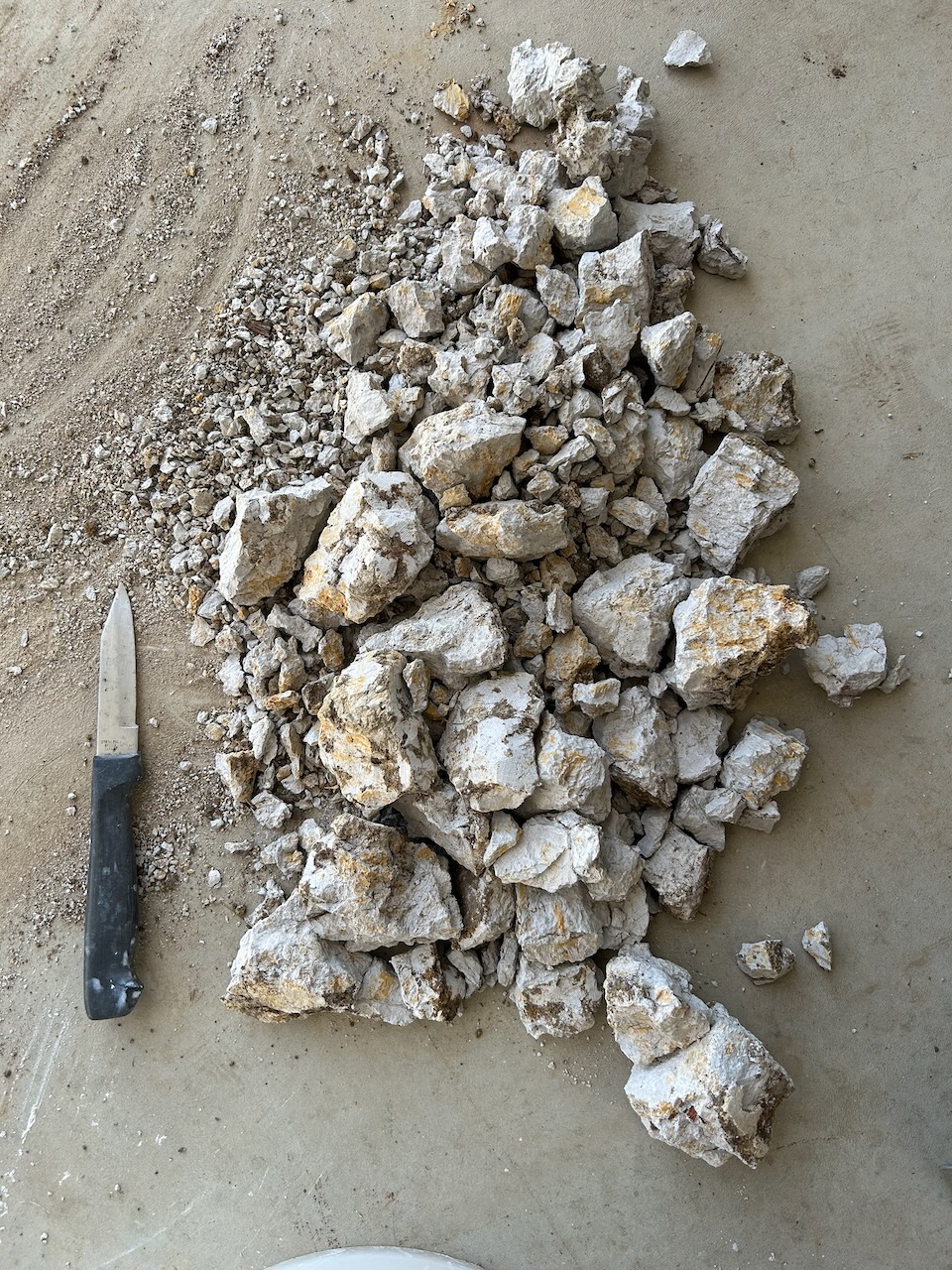
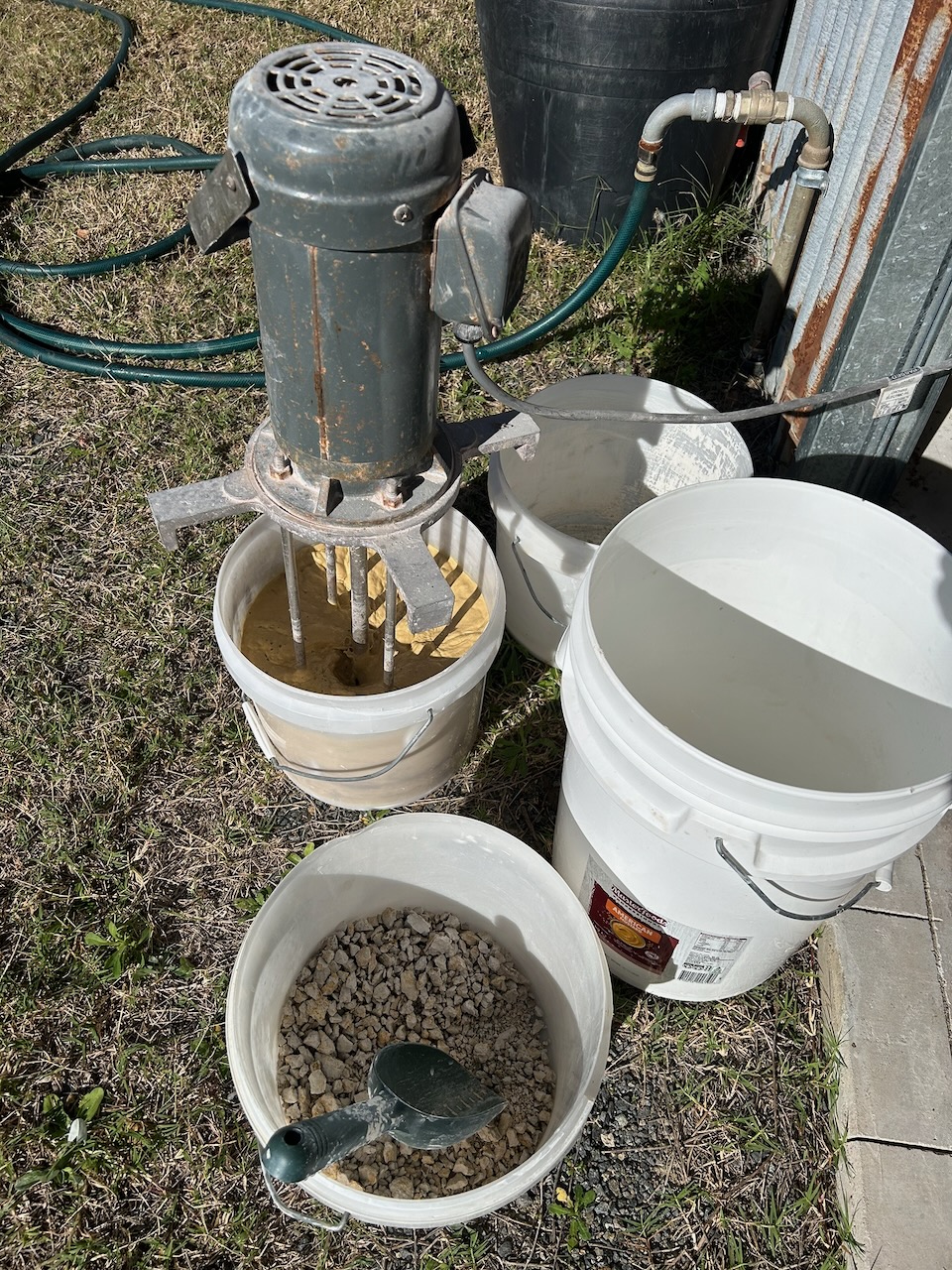
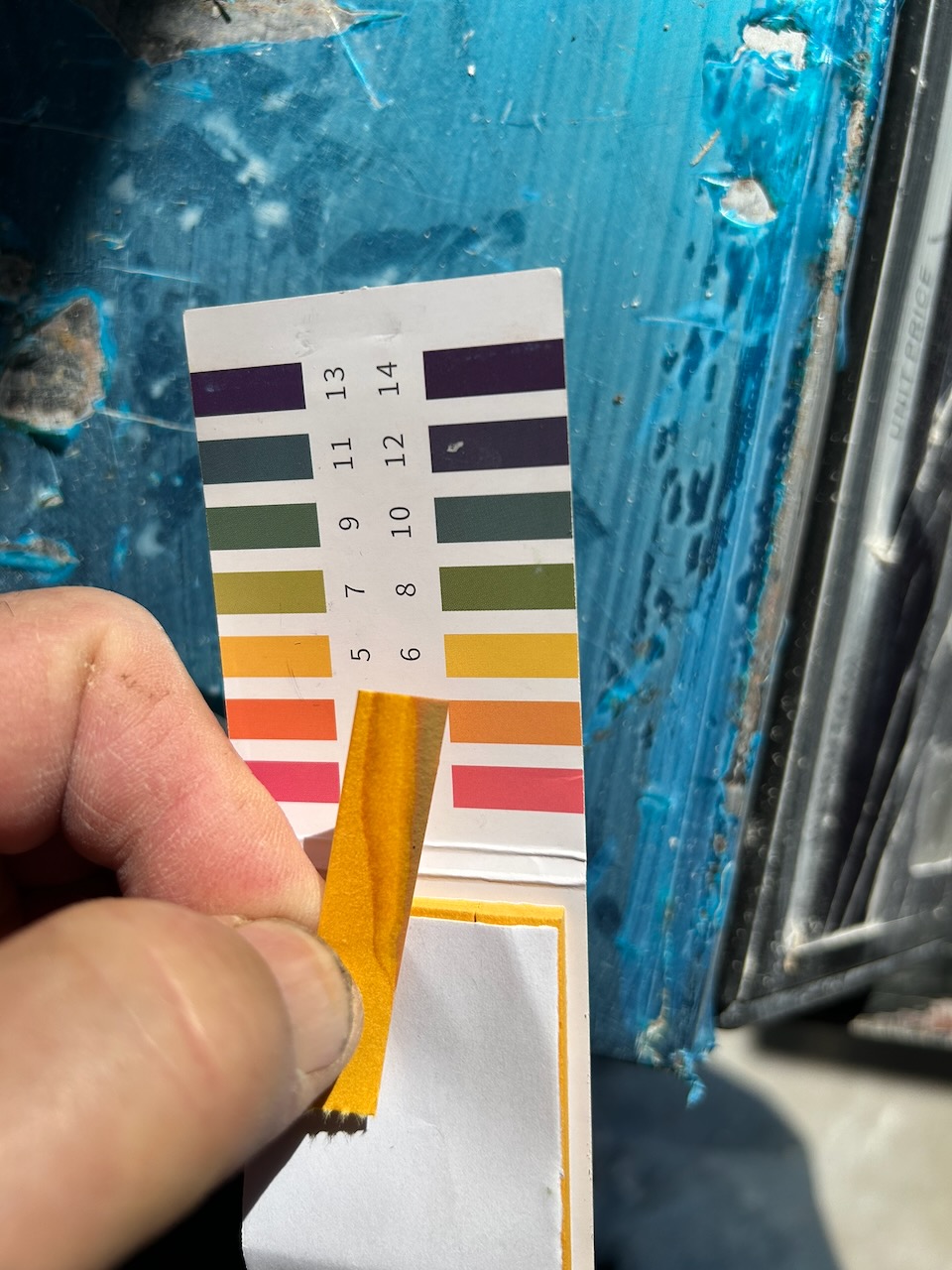
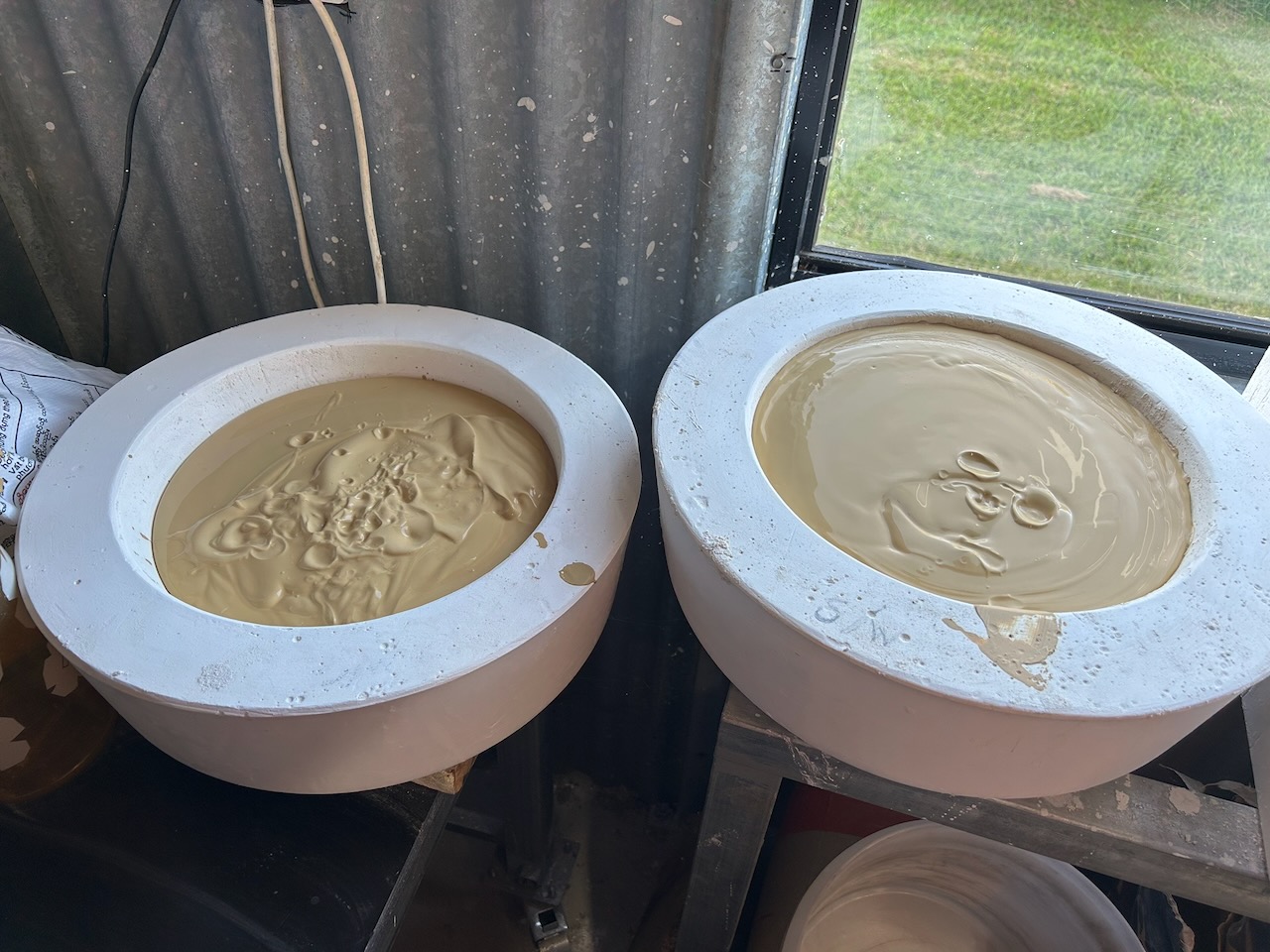
I dried the apparently white clay sample in the sun and then trimmed off all the darker soil and organics with a kitchen knife, so as to get as clean a sample as possible. I crushed the remaining pale clay down to grape size or smaller, then blunged it in water. 7 kgs of clay in 7 litres of water, using a mechanical stirrer. The slip turned out to be a dark yellow colour once all the irony clay particles got dissolved in the water. I sieved the resulting slip through a 40 # mesh sieve, and then again through an 80# mesh fine screen. I left the slip to sit and settle for a few hours, but there was no separation of clay and water, so I tested the pH of the clay slip solution and it was 5.5 pH, slightly acidic. I poured it out onto a plaster bat to stiffen up for testing. Once it is plastic, I will put it through a series of tests to ascertain if it is useful.
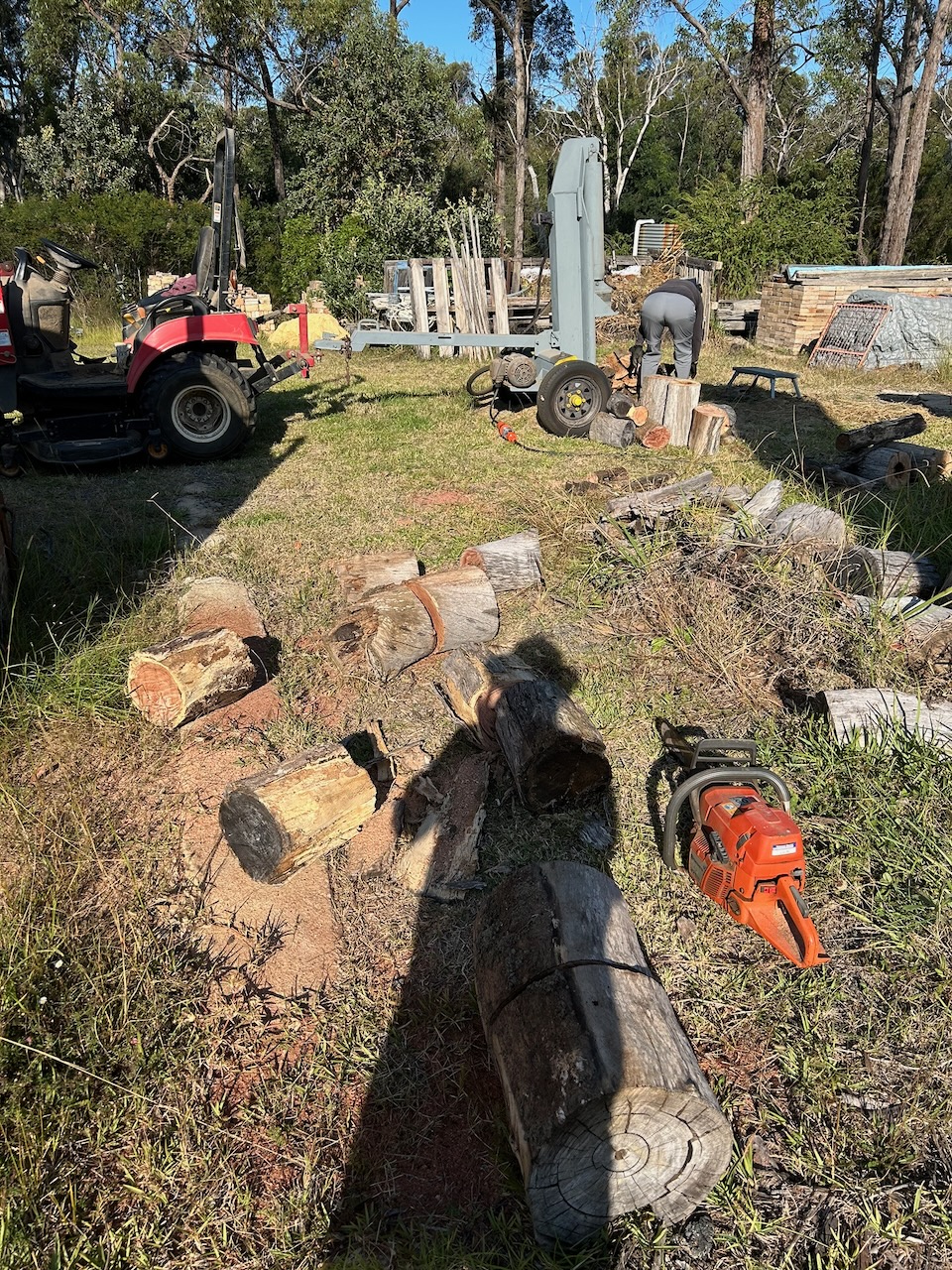
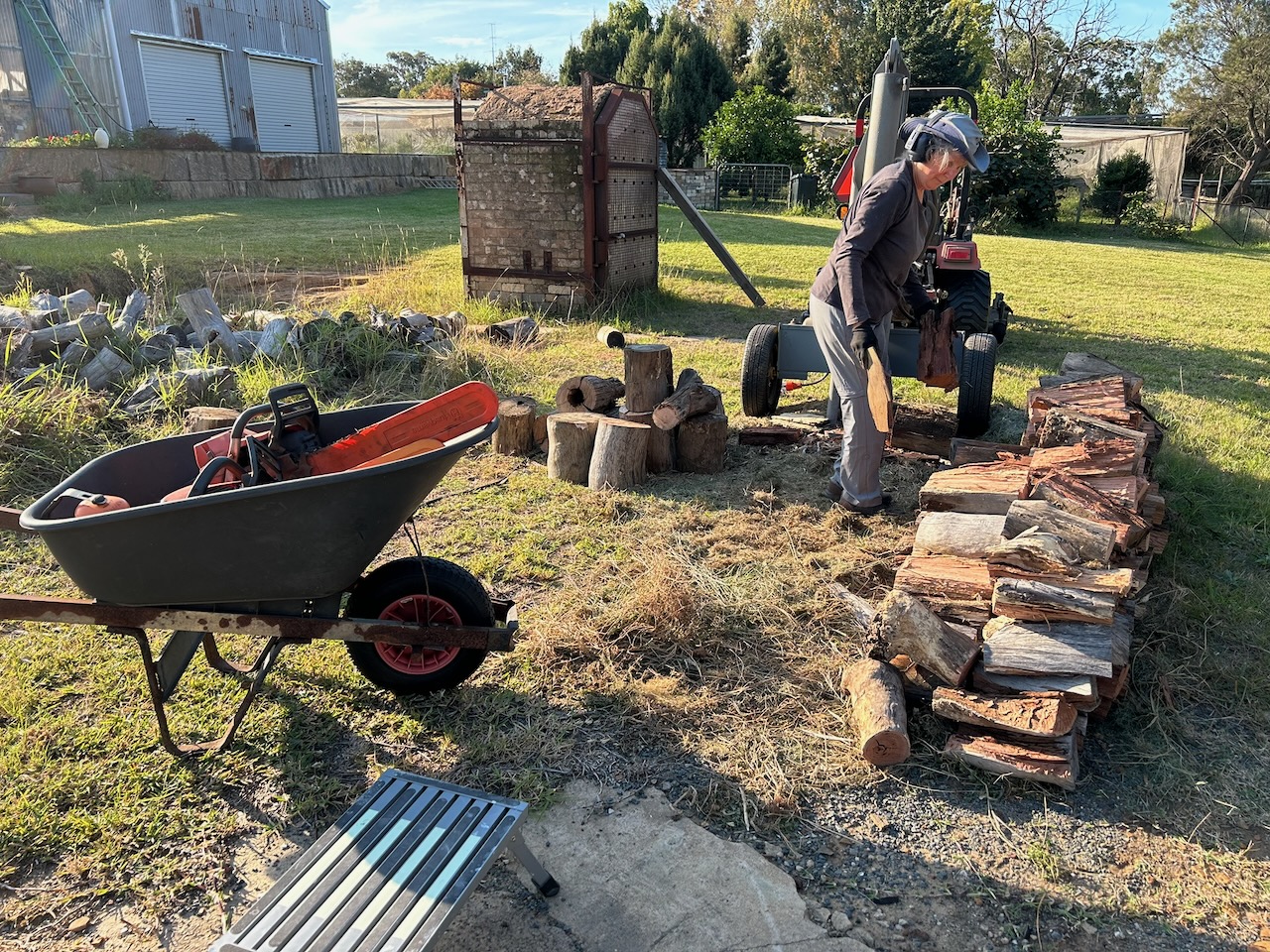
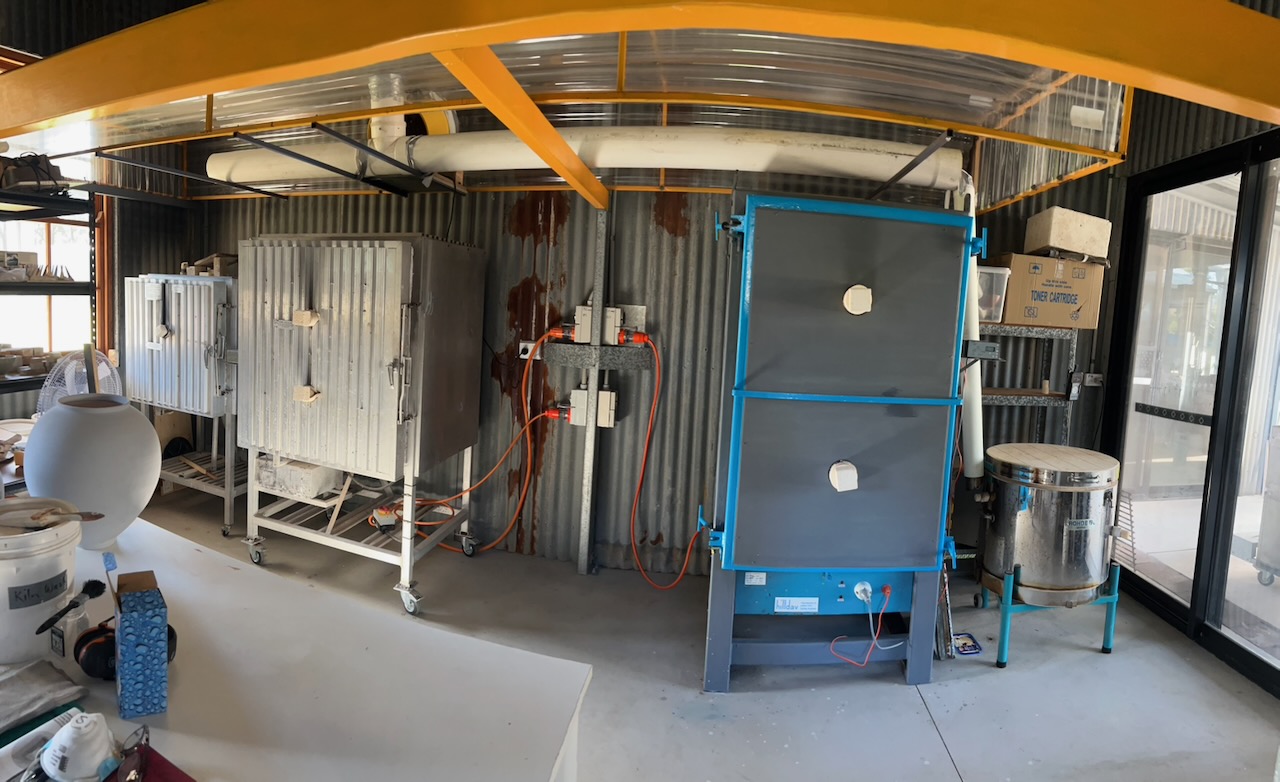
I put the glaze kiln on early in the morning, and fired a moon jar in one of the electric kilns, the firing finished just after lunch, then I charged the car in the afternoon. As there was plenty of autumn sun. We finished the day with a couple of hours of wood cutting and splitting fire wood using the last of the solar power from the waning sun. This stack of split hardwood will keep Janine warm over the winter.
We went to the monthly organic gardeners meeting on Saturday. A lot of people there were telling us that there are no longer any honey bees in their garden (This is 10 km south of here). To the point that 2 gardeners told us that the only way that they could get zucchinis to set any fruit, was to hand pollinate the flowers using a fine haired brush. They had NO bees in their garden. It’s become a common story recently. I’ve heard it from others as well.
Luckily, for us, we still have European honey bees in our garden. But for how long? I decided to spend a bit of time in the garden and did a bee count. I found that we have about equal numbers of European honey bees and native blue banded bees.
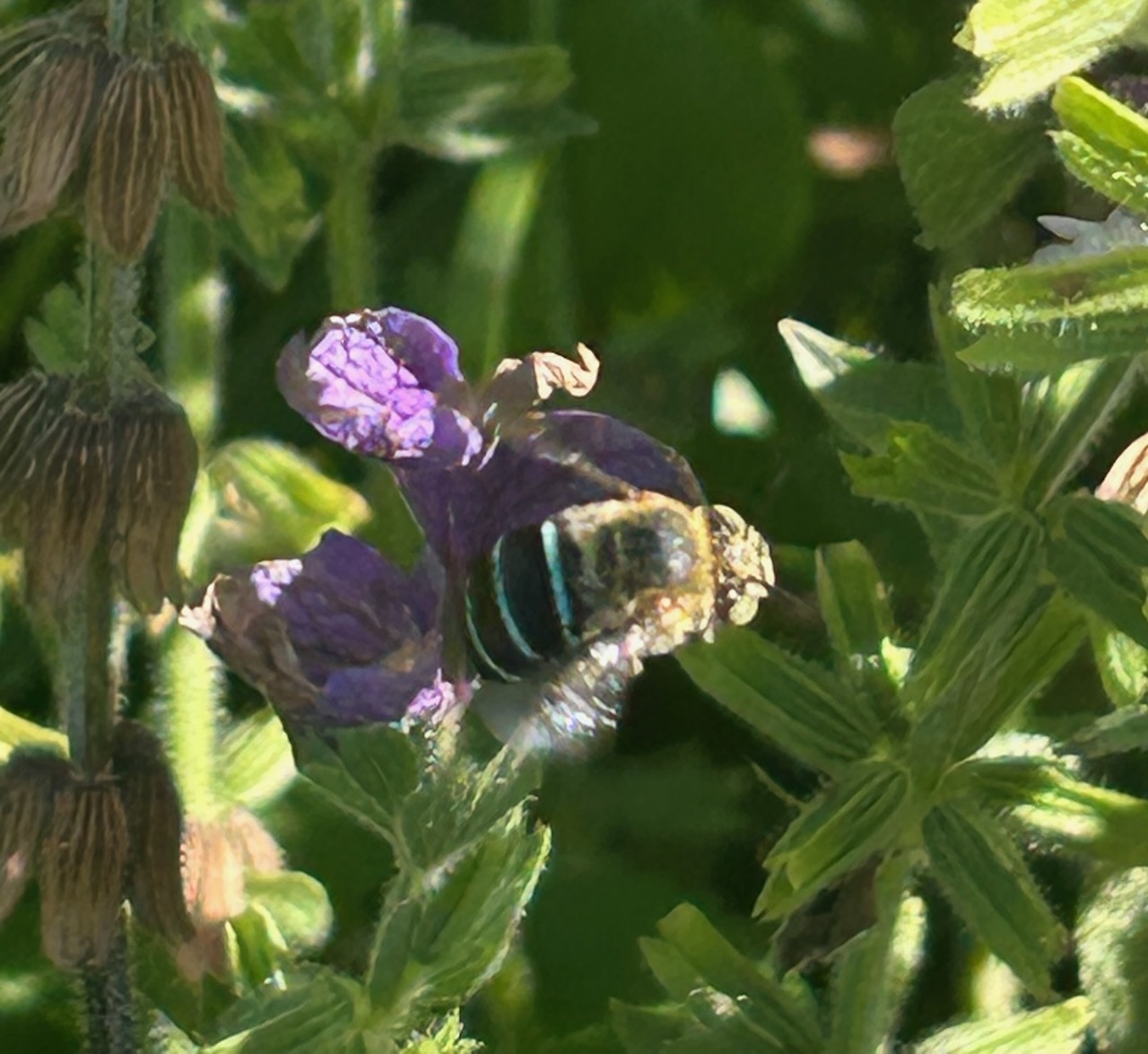
Blue banded bee.
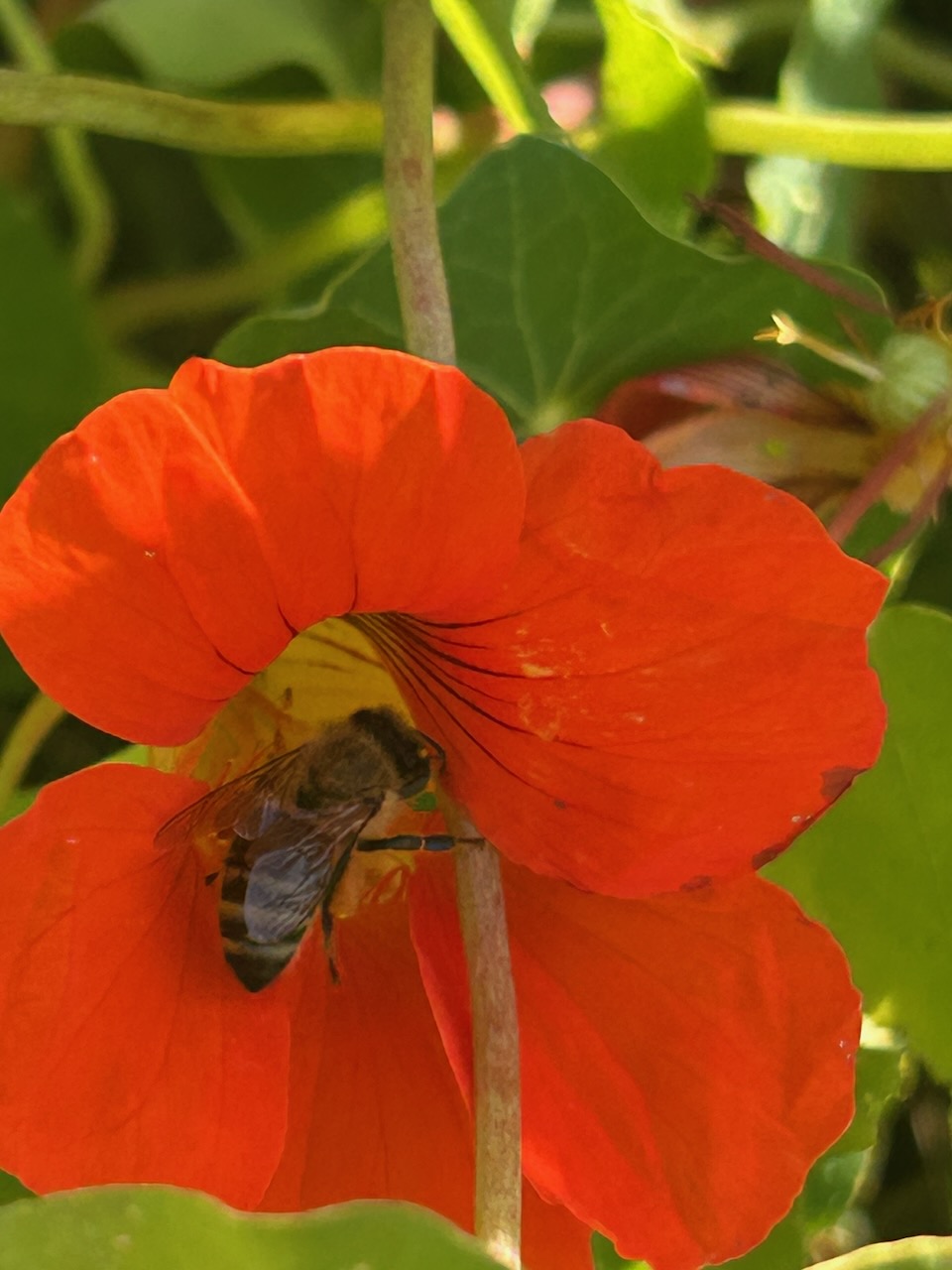
Honey bee
I don’t know the reason for this sudden decline in honey bee numbers, but from a quick scan of the current info, it seems to be a combination of CCD, Colony Collapse Disorder, varroa mite infestation, small hive beetle attack, the increasing use of pesticides like neonicotinoids and habitat loss due to rapid expansion of subdivisions in the area? Balmoral Village doesn’t have any large scale land clearing – (yet), industrial intensive farming or new, large scale, suburban subdivisions, but they are creeping closer. So we are lucky to still have both our honey bees and our native bees in our garden.
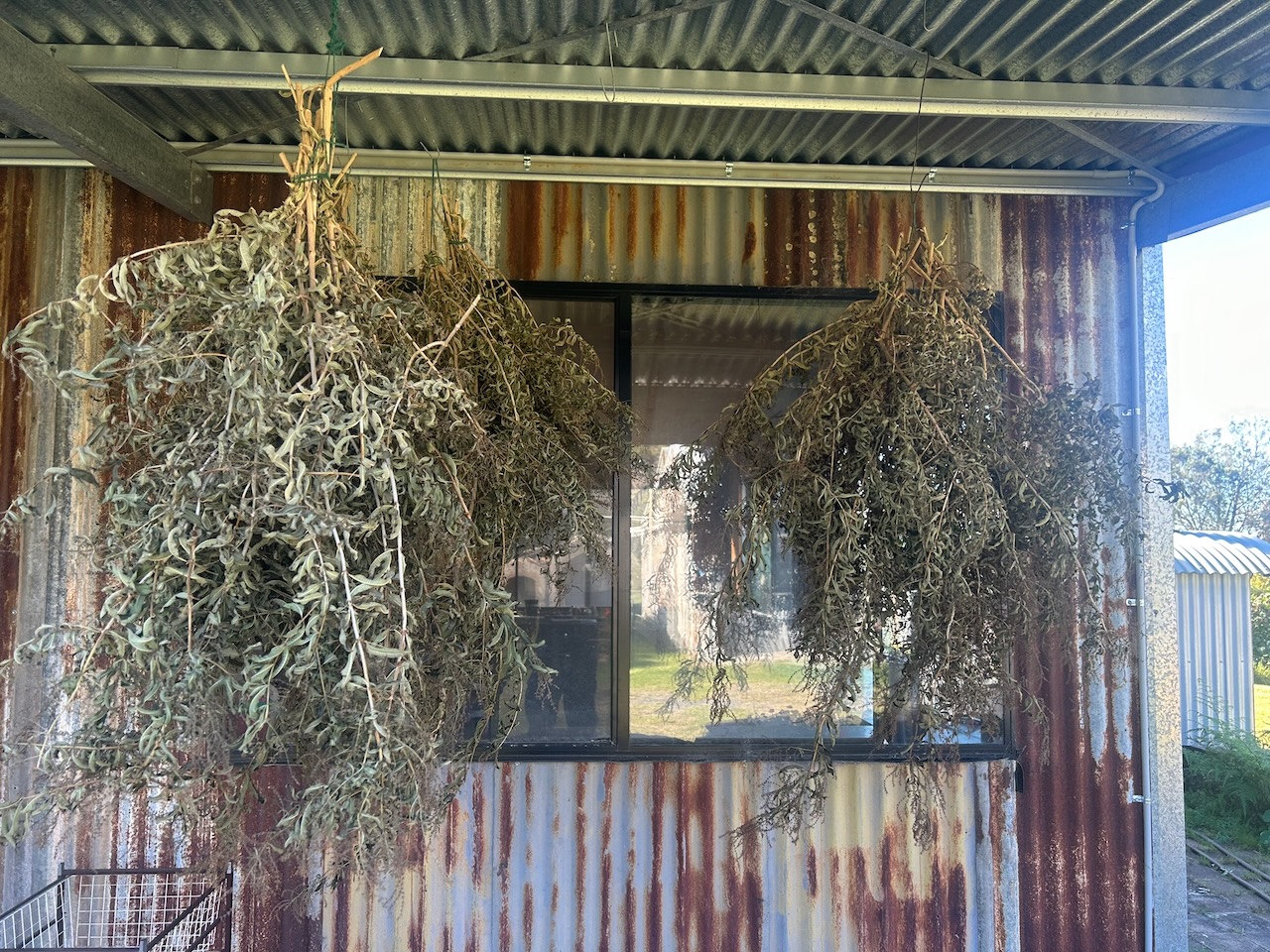
But for how long I’m wondering? Obviously, Janine and I don’t use any pesticides, we limit our interaction with the garden and orchards to organic methods of composting and mulching and only use approved sprays. I do use a bacterial spray called ‘Dipel’ that contains bacillus thuringiensis, to limit green caterpillar and white cabbage moth damage, but I only use it when the numbers breed up to high levels. Once or twice a year seems to work well enough. I also use some pyrethrum insecticide, made from chrysanthemum flowers. Our neighbour John Meredith, used to grow the special variety of chrysanthemum flowers, then soak the flowers in alcohol to extract the active constituent, and once watered down appropriately, used it as his home grown insecticide. That was back in 1976, before you could buy it in the garden shops.
I don’t spray the pyrethrum! I only use it inside fruit fly lures. I mix a few drops of detergent in water with sugar and Vegemite, then a few drops of pyrethrum. It works OK, but only marginally, as there aren’t that many dead fruit flys floating in the trap, but every one helps. I also use ‘DAK’ pots that lure only the males. They are sensationally effective. The bottom of the lure is littered with dead male fruit flys. Then I also buy in a lure designed specifically to attract female fruit flys based on a protein attractant. That works too, But we still get damage to our fruit from fruit flys. For the past couple of years, I have purchased ‘bugs for bugs’ parasitic wasp larvae. I can’t say that I have seen any worthwhile effect from those. Of course it is hard to measure, not like a ‘dak pot’ that holds its success rate inside for inspection. So we do a lot of different things to be as effective as we can be, but we still get fruit fly damage. Maybe this next season, I might try using some very fine mesh nylon netting over individual trees?
Always ready to engage with something new, organic and labour intensive, rather than resort to poisons!






You must be logged in to post a comment.