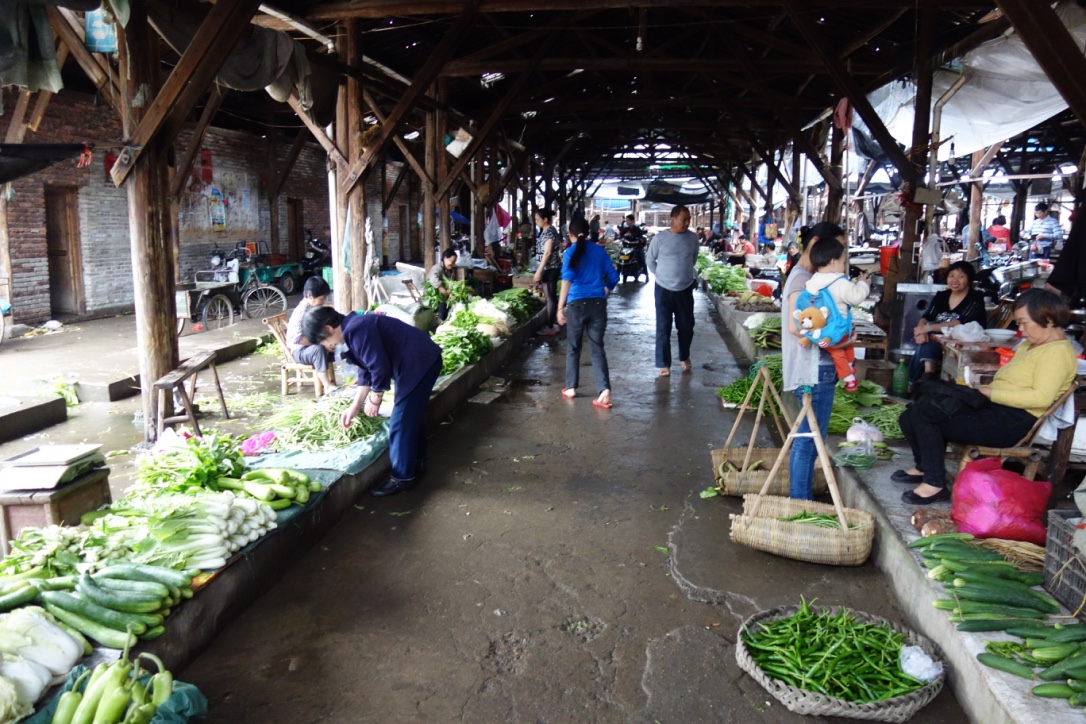
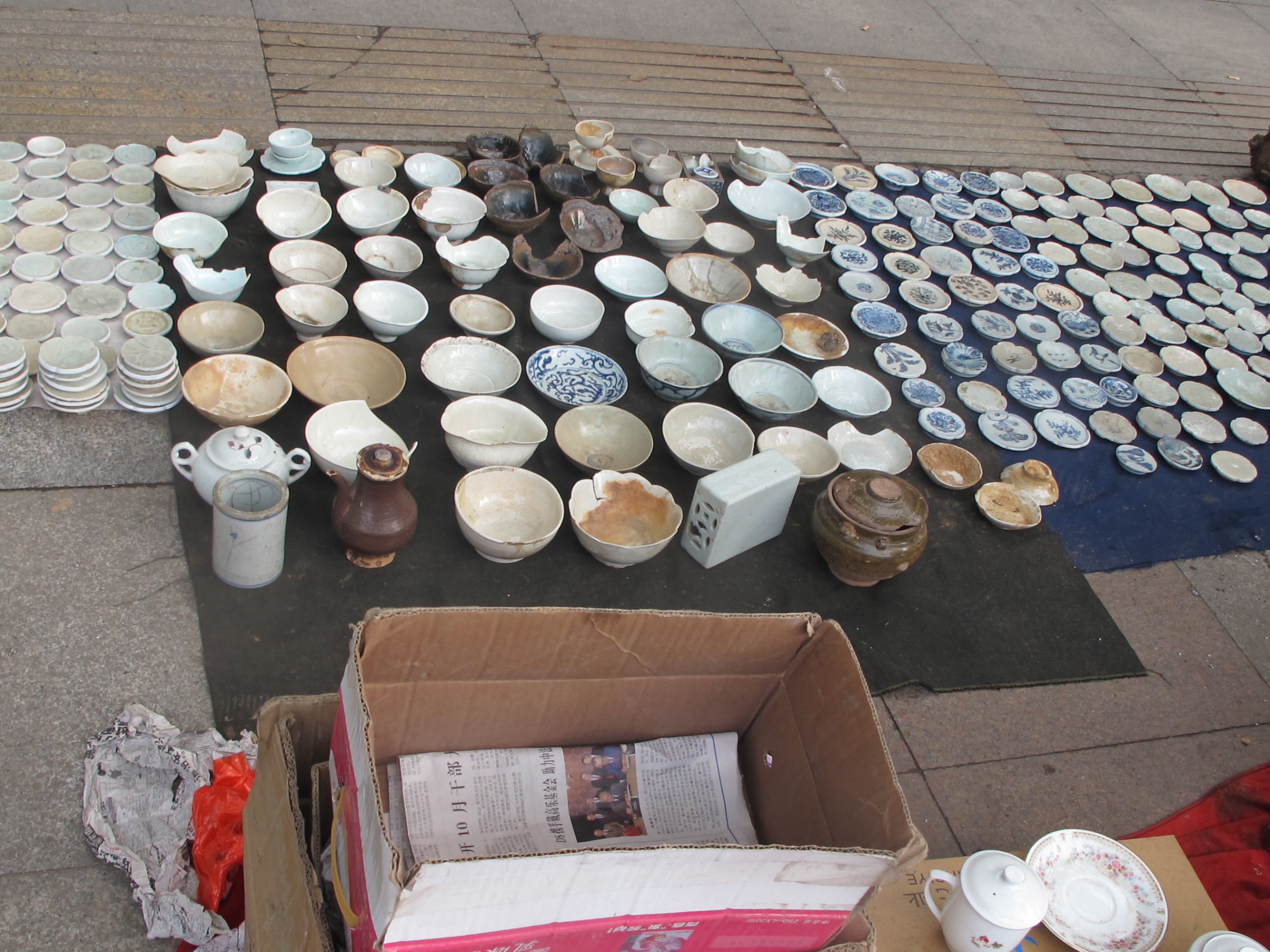
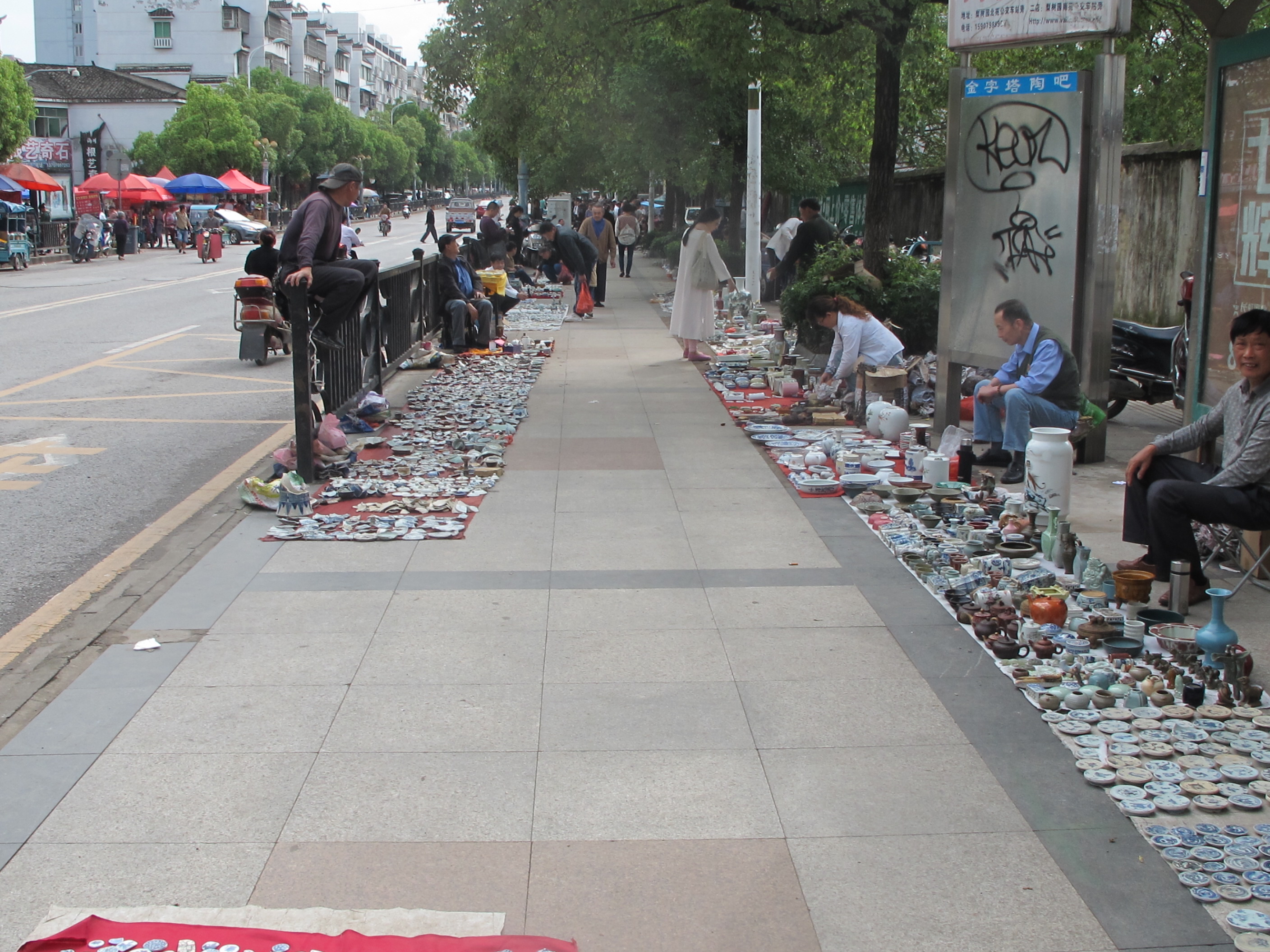
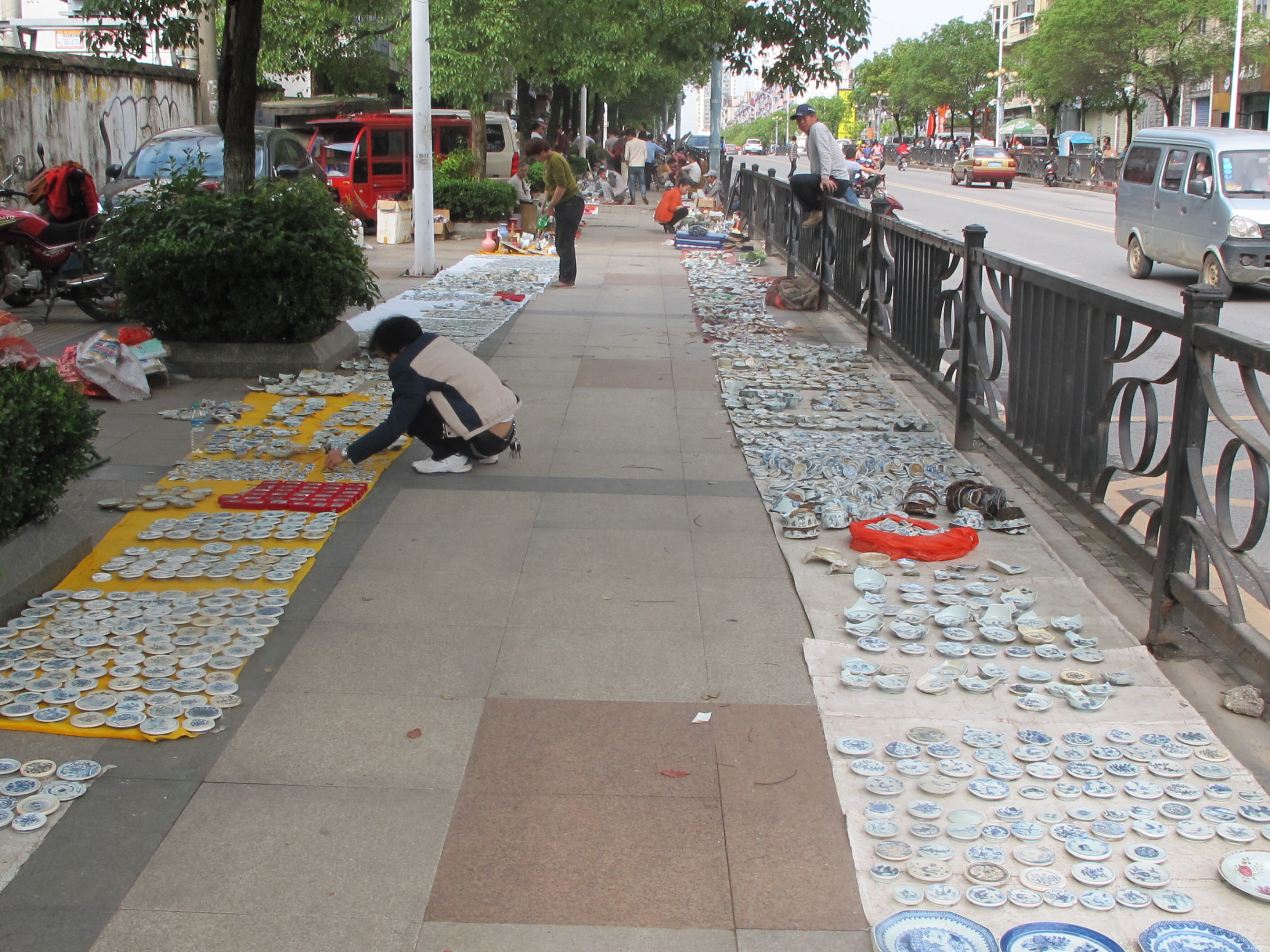
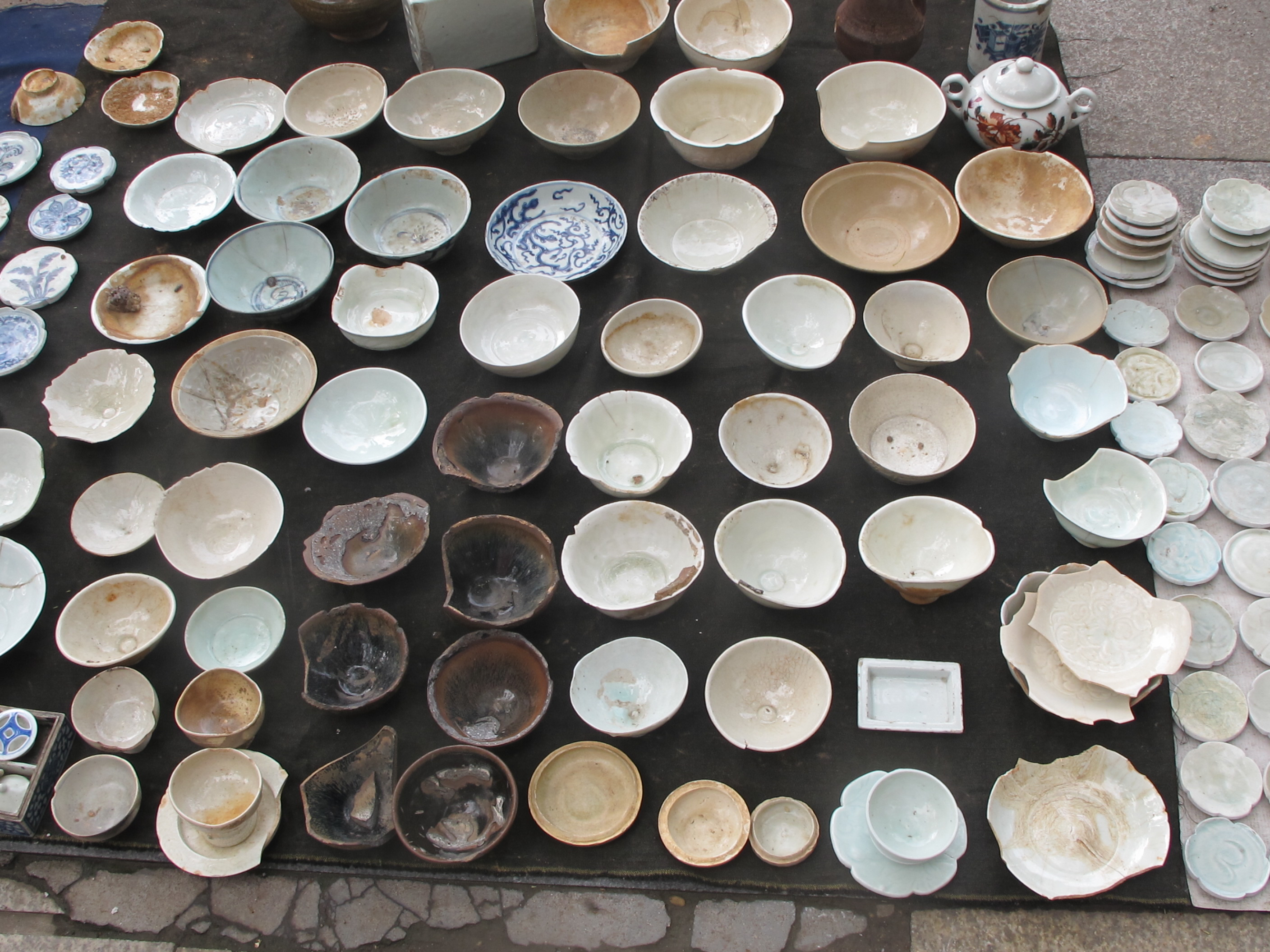
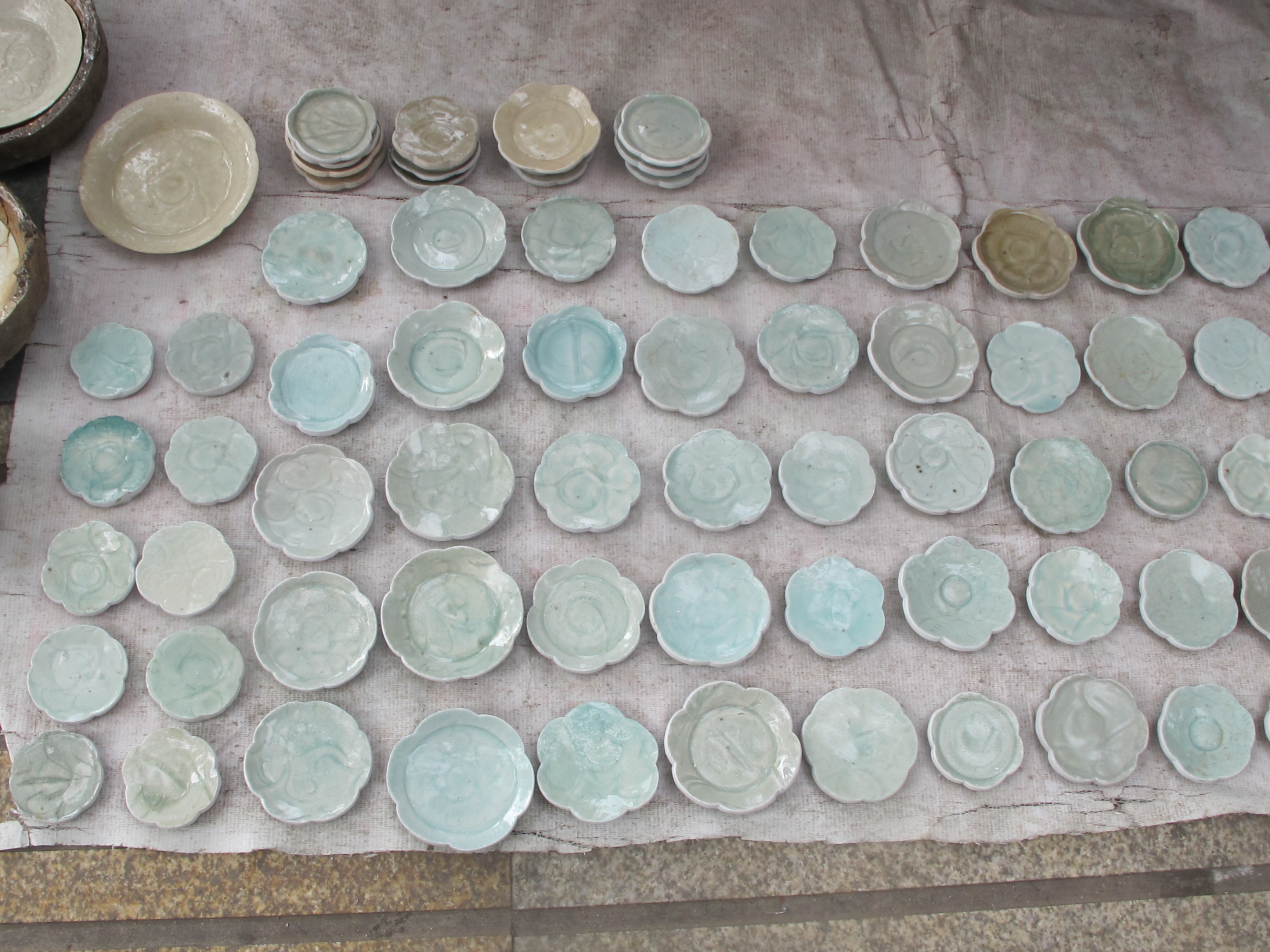
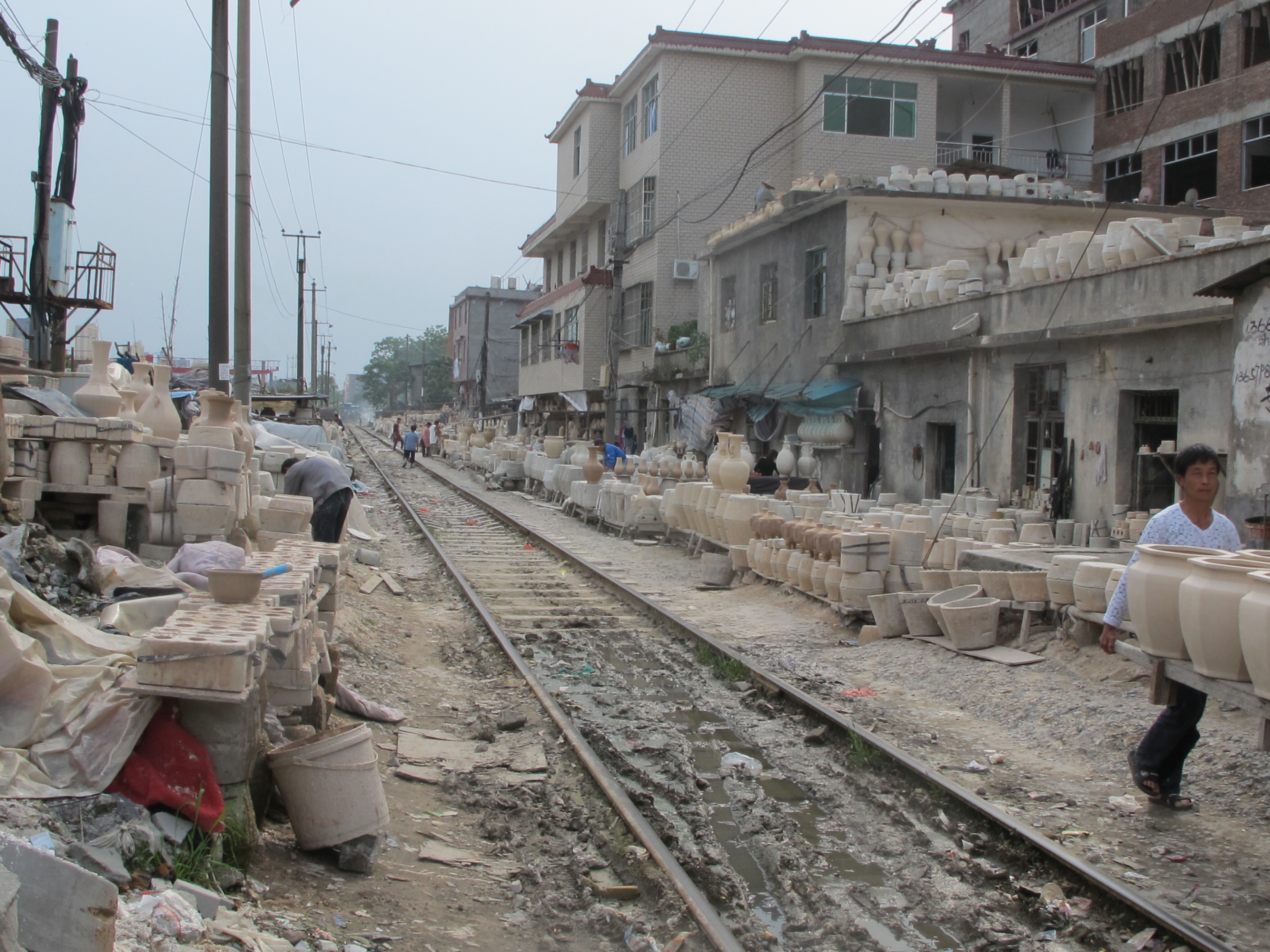
Our time is running out here and it will soon be time to move on. We have planned a tight schedule to fit in with our other ‘ordinary’ lives back home. Being able to steal this time away from the usual routine is a huge luxury. I am a very privileged person. Although we must be getting along, there is always time to visit the local markets. There is a street market every weekend along the main road starting just outside the pottery precinct gates. It goes up and over the hill, I don’t know just how far over the hill it might go. There were just so many stalls and so much ‘stuff’ out there that I got overload before I came to the end. Such a lot of it was really interesting, hence not getting to the end. In fact, it is just so interesting and crowded and with so many vendors every couple of metres or so. it takes an hour to walk up a few hundred metres and back down the other side. The market spans both sides of the street. I venture out for a quick reconnoitre before breakfast. A brisk walk, as brisk as you can go stepping between the pots on the ground and the stream of humanity wandering in amongst the wares.
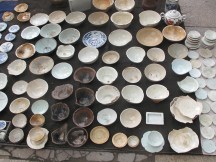



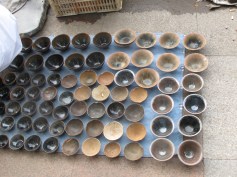
I have spied a few things that I rather fancy, but when I ask the price, it is way too high. Obviously I haven’t miraculously learnt Mandarin in the week that I’ve been here so far. I know only two words. ‘G-Day’ or ‘Hello’ and ‘Thank you’. Everything else is a mystery to me. So I ask the price by pointing at the item and looking quizzical, while rubbing my fingers together and pointing at my wallet pocket. This may seem a bit obscure, but in the situation it works very well. They tell me the price in Mandarin at high speed, that I have no hope of understanding, so the next step is to hold out my phone, open to the page with the calculator. They just type in the number of Yuan that they want and I say ‘Yes’ or ‘No’. It’s pretty simple and it works. Usually the price is way too high for what I have to spend. I don’t haggle. I know that I’m supposed to. I know that the price is inflated to allow for it, but I just can’t. It’s not that I’m incapable. It’s more a matter of politics and equity. I’m a millionaire compared to these people. I can hop on a plane and fly here to their town and buy things from them. The opposite can’t be said. It is so uneven. There is no way that they could get on a plane and come to my workshop and try to beat me down on price. The situation is far to out-of-balance. I ask the price, if I think that I want it that much, I pay it. If I don’t, I just move on along the row.


I see a nice piece of blue celadon, probably a modern fake, possibly only 30 to 50 years old, possibly made during Mao’s time as fake export antique wares. Yes! It was a government sponsored institution. A way to gain much needed foreign currency during the years of isolation. What ever it is. It is very subtle and beautiful and I want it. It has that matt, micro worn, scratched surface and glorious deep blue with a hint of opalescence that I love so much in my own work when it all comes together unexpectedly well.
He takes a long time to type the numbers, that’s sad. I know it’s going to be a big number, and it is . He has typed out Y15,000.00. That is about Au$3,750. That is heaps more than I will spend on the whole trip including spending money, air fares and insurance. I decline gracefully. The next person along the row where I stop has obviously heard what has transpired and the next pot that I look at is offered at the equivalent of Au$500. I move on politely with a smile and a thank you, but no thank you. A little farther along I look and ask again, now its $80 and I’m starting to feel a little more comfortable with that, but It means that I can only buy one, possibly two, things if I do.
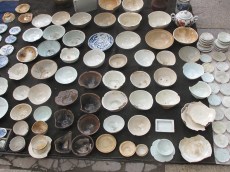
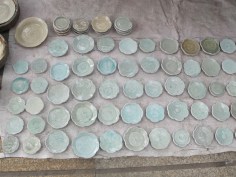
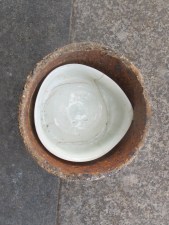
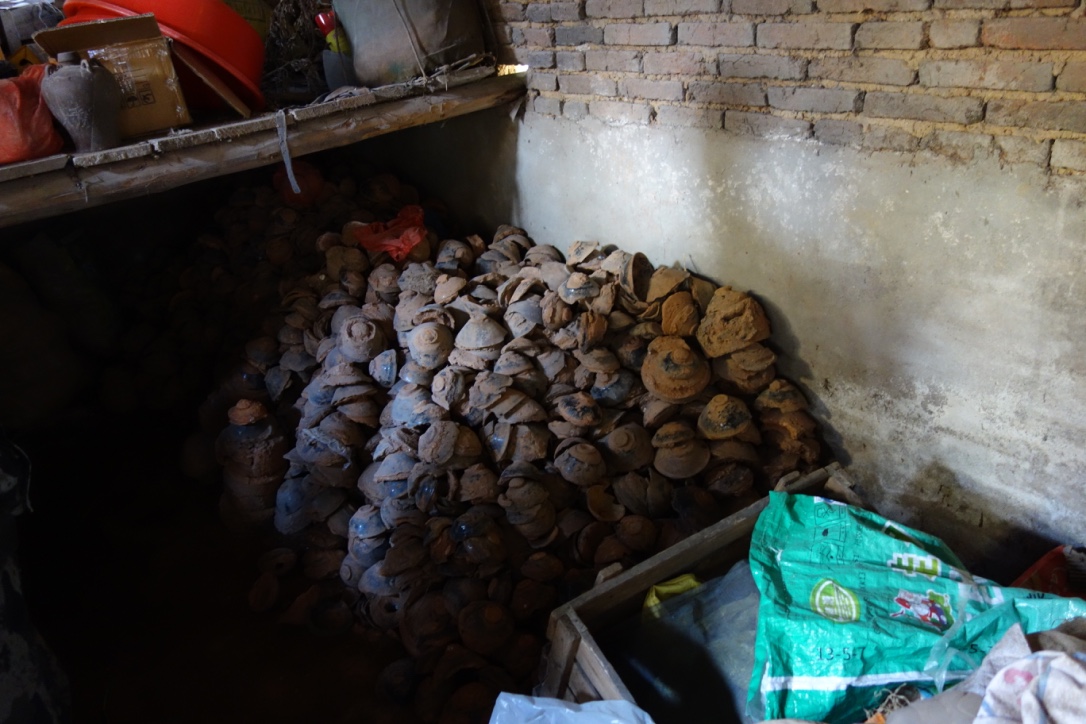
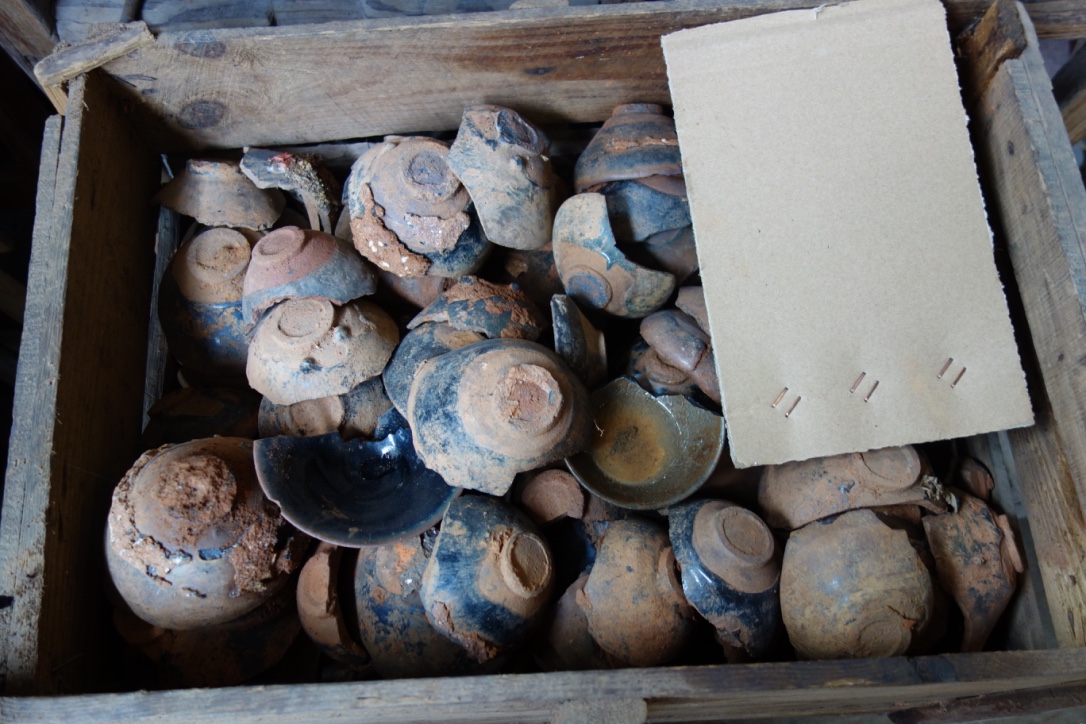
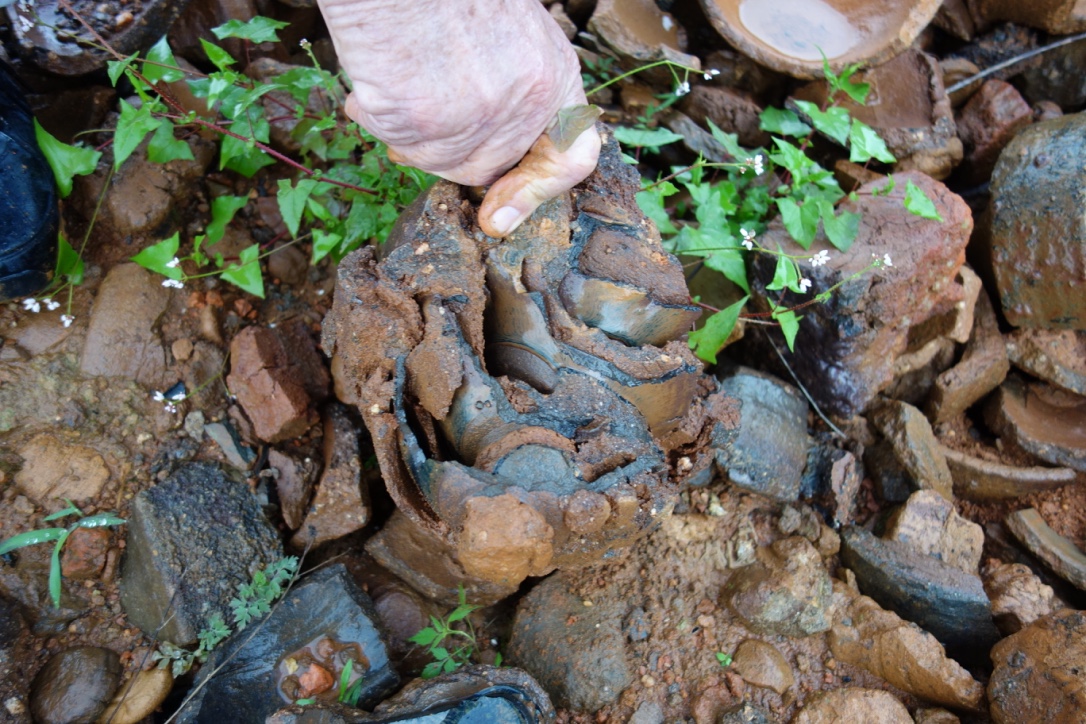
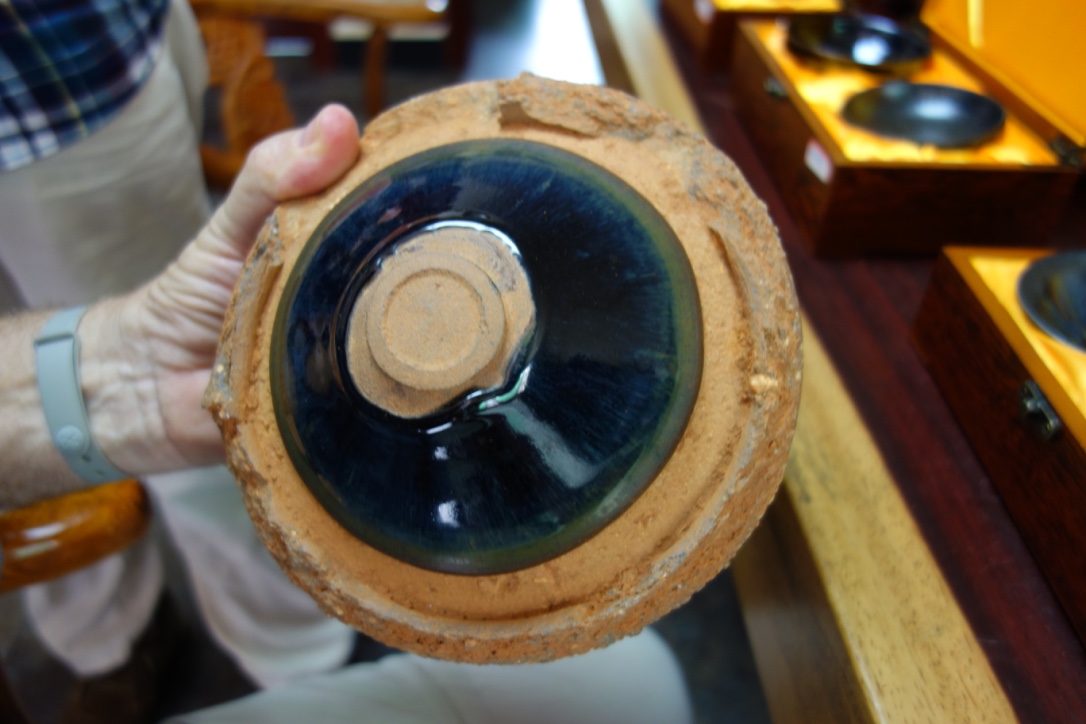
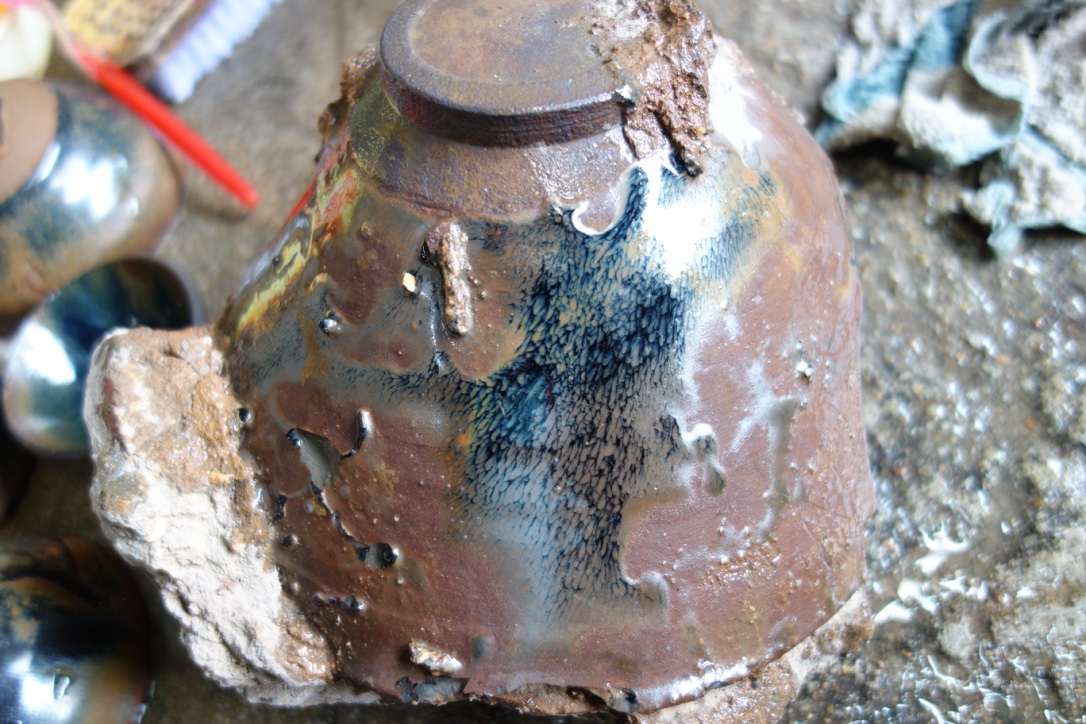
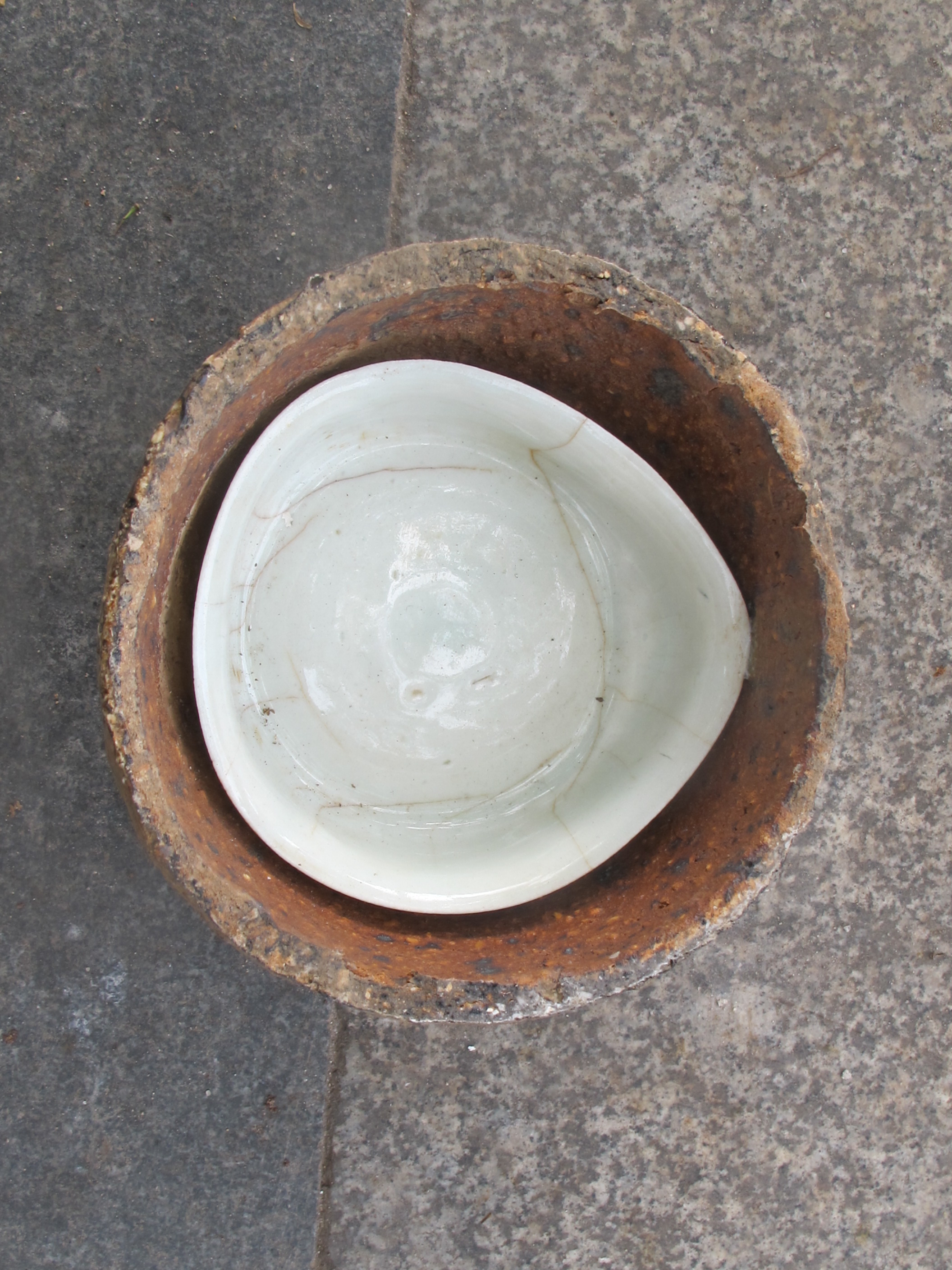
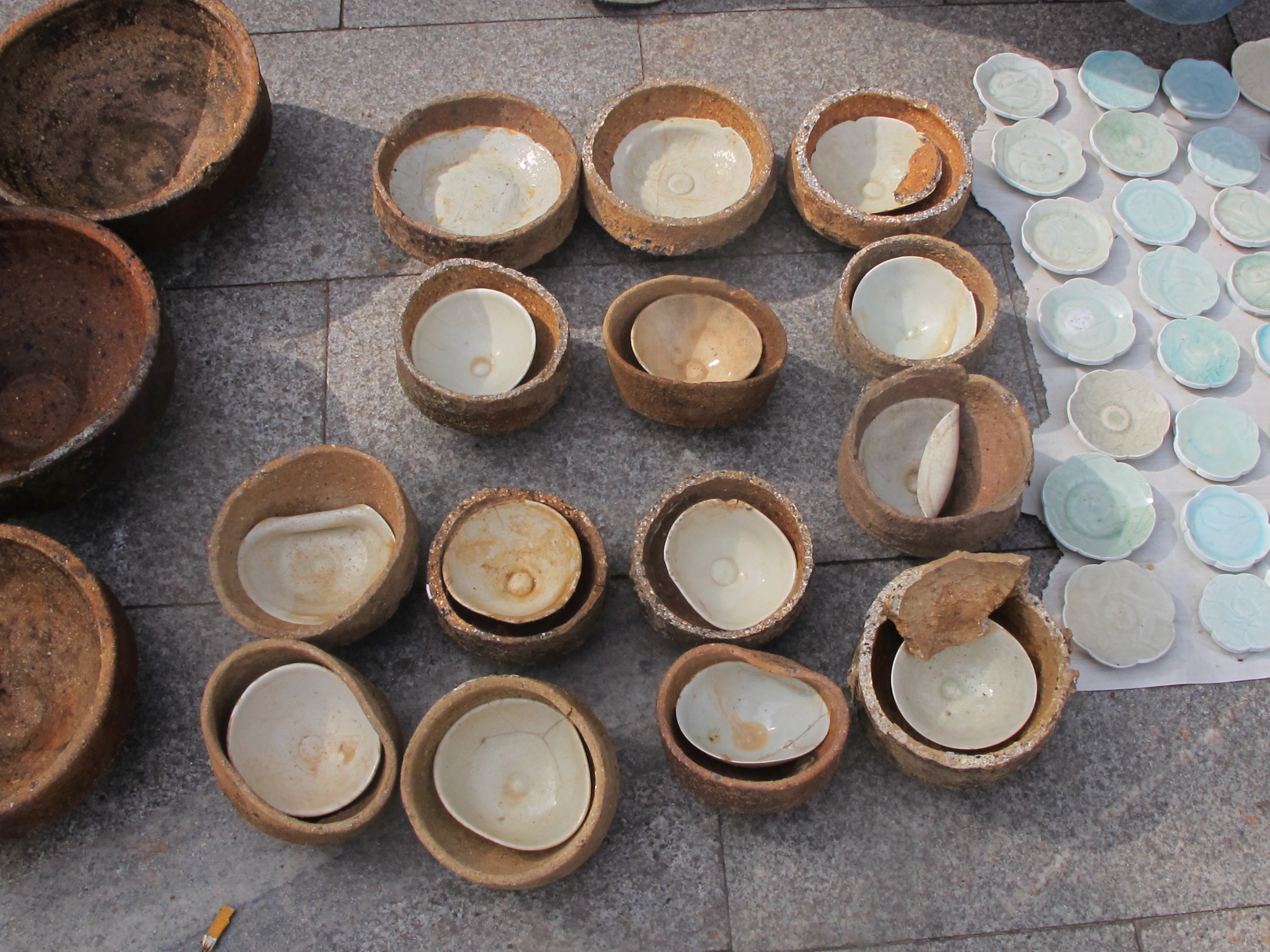
I retreat back to our room and we go to breakfast. After brekky we are busy all day, but the next morning, I venture out again. I see that the two pieces that I had my eye on are still there. I’d rather like to buy a collapsed sagger with its pot firmly melted into it. There are loads of them to choose from. It’s a quirky, unusual thing and I rather like the idea, but it is way too bulky and heavy to carry home, and I still have a long way to go on this trip. When I have travelled in Europe, I buy things here and there along the way, and when I have enough to fill a post pack box. I bundle them all up in there with loads of bubble wrap and the odd bit of spare clothing that I feel that I no longer need and I post it all home. We seem to average about one box per week when The Lovely and I are travelling. On this occasion I decide to pass on the sagger, lovely and interesting as it is. I return to the original pot that I looked at. It is a small, delicate and extremely thinly potted dish in limpid pale celadon. A little over fired and slightly warped, but ever so delicate. I ask the price again and hold out the calculator. It is no longer first thing on the first morning of the market, time has passed and the pot is still sitting there. It is now Yuan Y50, the equivalent of Au$10. Quite a discount! I nod and we have a deal. The pot is duly wrapped in a single sheet of yesterdays news print and money changes hands. I don’t even look at the paper at all. Not until a few days later. Everyone is happy! News travels fast, no one is offering me prices like yesterdays. In the thousands or even hundreds. I have just agreed to Y50 and a sale has transpired. It seems that I have set the ‘Muggins’ price. Now, everything that I touch is Y50. I’m happy with that I can afford it, so I buy the other little beauty that I had my eye on as well. It is very ordinary, subtle and quite sweet. slightly triangular in its warping and with a discoloured rim. It has a certain, soft, irregular charm about it. I’m a happy man.
Later, I see a little wine cup in egg shell thin porcelain, but it has two cracks in it and is rather dirty from spending some time buried under ground. I like the absolute whiteness and transparency of it. It’s tiny and ever-so delicate. He holds up his hand, 5 fingers. Of course its Y50! Everything else has been. I pay up. Suddenly all hell breaks loose, Everyone standing there crowds in and gathers around, pushing and shoving at me all offering something, anything! All calling out loudly. I’m shocked and taken aback somewhat. It takes me some few seconds to realise that I have just been done, and that he was literally only asking for Y5 or Au$1 and even then there was probably room to haggle him down a bit! I have given him Y50 with a smile and he has called out. Hey! look here! here’s an idiot with too much money. Don’t let him get away! I decline all other offers. I don’t really know what happened, but I can only think back and this is my best guess. These people are grindingly poor and I’m the billionaire tourist in their midst. I’m happy with my little cup for Au$10.
No matter where I go from now on in the market, I’m offered small wine cups – for Y50! The trouble is that they are all polychrome and garish and probably only made last week. None of them has the soft, gentle subtle charm of the one I have in my pack. I got the one that I appreciate for it’s subtleties and quiet simplicity. To me it’s worth Au$10. I’m very lucky and privileged.
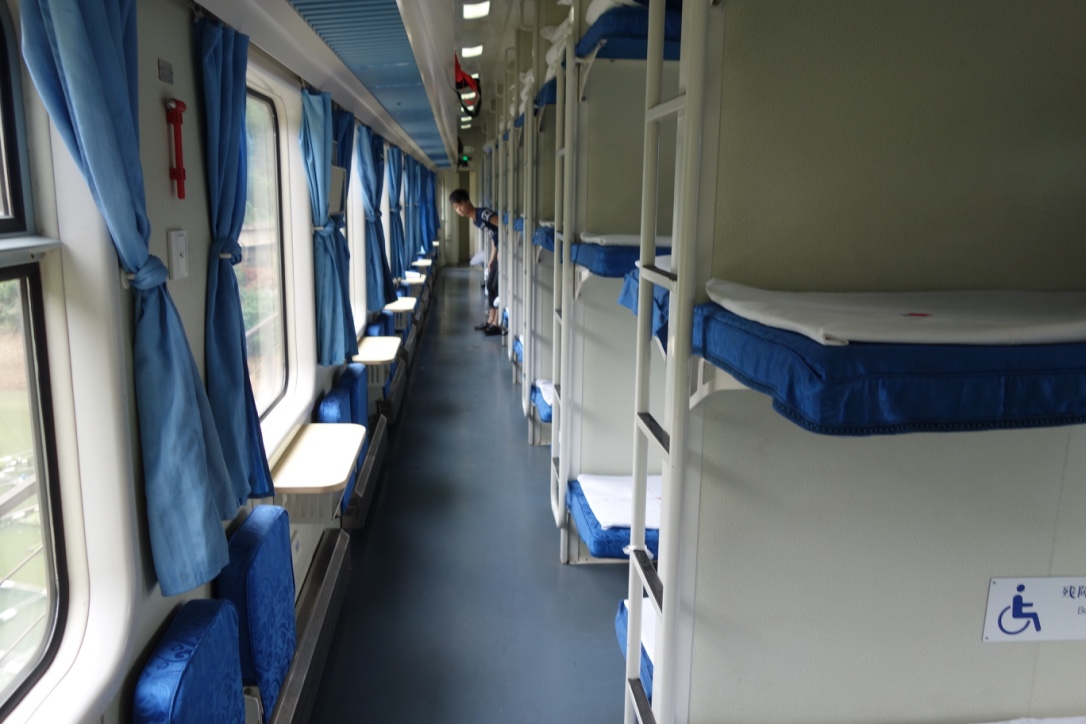
I pack my miniature horde into my small suitcase and pack my own dozen Jingdezhen translucent one-stone porcelain bowls into my back pack and we set off on the second part of our quest, into the Heart of Darkness, we are venturing up-river into ‘tenmoku’ territory. To the village where all of the Southern Song Dynasty, Oil Spot and Hares Fur tea bowls were once made. We have been studying. We are ‘The Readers of the Lost Art‘ – of Tenmoku, We have quite a way to go, and without Steven Spielberg or Francis Ford Coppola to get us there quickly with a few ‘jump-cuts’. We decide that we had better take the plane and fly the internal airline route to the next big city and then take the long train trip that follows the river up stream, as far as it will go. We don’t want any apocalypse now, or later. We have booked a sleeper, so that we can travel in comfort. My name is Harrison and I can afFord it. We arrive in the city at dusk and try to find our hotel. We can’t. We are in the right street but the hotel name escapes us. We wonder on, until we exhaust all our options. We must be looking pretty forlorn, because suddenly a lovely lady walks up to us and asks in perfect English, “Can I help you?”. We yes, she can, and does. We have already walked our suitcases past it. Our savour walks back with us and stops outside one of the hotels that we have thought to be the wrong one. We think this because it has a different name from the Hotel that we have booked into online just a couple of days before. Apparently it has changed its name without mentioning this to us in our booking. Our helper points out that both names are up in lights on the front of the hotel in Chinese characters.
‘The New Fashion Hotel’, formerly know as ‘Marco Polo’s Lodge’ ! Clearly, it was very remiss of me not to learn to read, write and speak Mandarin in the two weeks I had before leaving on this trip. This young lady has saved us. Such a lovely gesture. we want to pay her! Give her something as a gift, but No! She will take nothing. The goodness of human nature shines through!
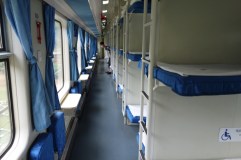

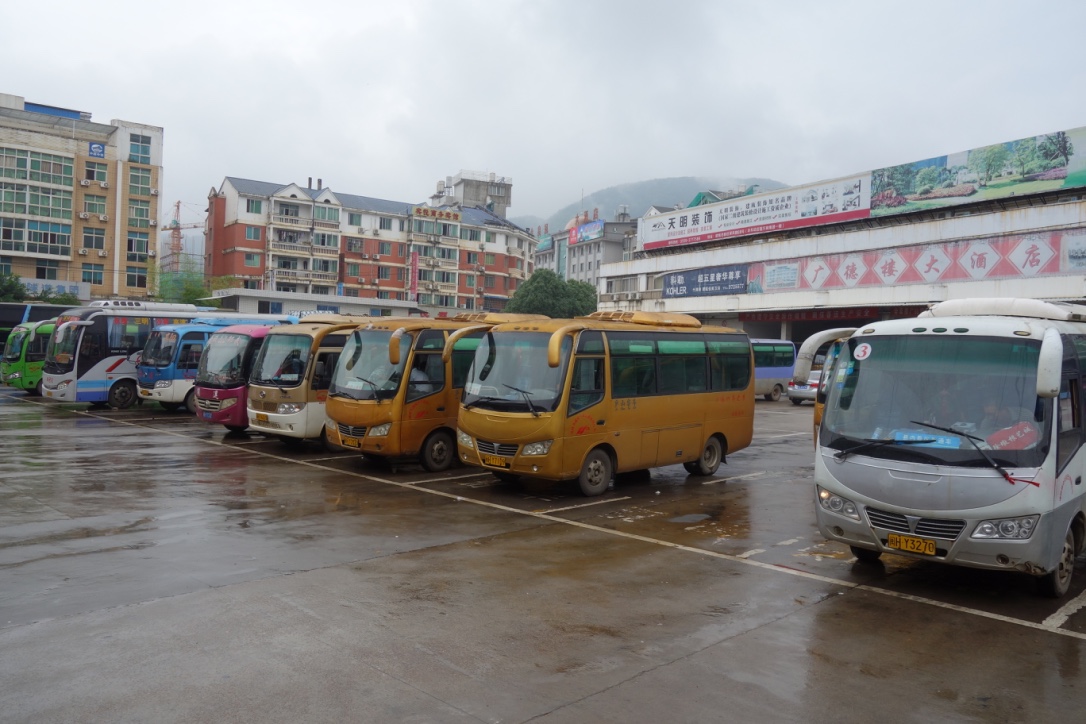
The next day, we set off ‘up-river’, it’s exciting. So I spend most of the time sitting up at the very narrow and uncomfortable window seat, so as to get the most out of the scenery that we are passing. When we arrive in this provincial town, we are faced with any number of small and large busses outside the station. We need to find the one that will take us further up-river. But which one? So many busses to choose from and so little time! Some of them are now fully loaded with passengers as the stream of humanity pours out of the station and onto them. Some are starting to pull out. All the names are in Chinese characters and the best I can do is make lame jokes about Hollywood characters in bold type face. I need to save face quickly and boldly!
Use ‘The Force’ Luke! No, that’s the wrong movie, it won’t work on this set. Perhaps I could have another look at the strange piece of paper that the old lady in the street market gave me to wrap the old porcelain pot in?
Yes! The secret map printed on old newsprint routine. That old chestnut!
Unfortunately this isn’t a movie script. It was just a piece of chip-wrapping-grade newsprint. However. I did take the precaution of asking my friend in Jingdezhen, to write out the words, ‘plane’, ‘train’, ‘bus’ and ‘station’, and the names of the locations that we needed to go, all in Chinese characters, before we left Jingdezhen. I run to the closest bus, that is starting to reverse out and show the driver the name of the town that we need to go to next, to get us on our way, further inland. He looks, reads, nods, and stops the bus and motions to get in. We are on-board and off on our way again! It’s all too easy!
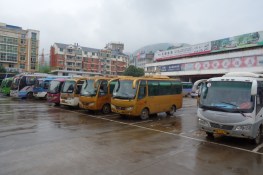
The fare is only Y1, that is only Au$ 0.20 cents, so we are a little suspicious. Travelling in China is cheap, but that is ridiculous. We have no idea where we are. We don’t speak the language and all we have is a few words, hand-written on the back page of my travel diary. We motor our way through the town, recognising nothing. We start to exchange nervous glances. Where are we? Suddenly, the bus stops and the driver motions us to get off. We were expecting a journey of some hours into the hinterland, not to be dumped-off on the side of the road in the middle of no-where. We are reluctant to get off. I feel that it might be wise to return to the station and find someone who can point us in the correct direction. We must be looking very perplexed and nervous, because all the passengers are starting to call out together and motion to us with friendly smiling faces, to get off here. We don’t quite realise what is going on, but everyone is acting in unison, so we go with it. They are all pointing across the road at a nondescript building. The bus roars off and we cross the street. We venture into the building a little warily. It’s a bus depot! Once inside, we can see the busses all lined up on the other side of the building. We use the the back page of my travel diary to indicate our intensions and amazingly what we get are a couple of tickets and a long wait, for the next bus in that direction.
My colleague dropped his new iPhone 6 in a bucket of slip on the first day and it is totally dead. My old early model iPhone doesn’t work in China. it is just too old it seems. It won’t even take any of the new Chinese sim cards. It’s just dead here too. So much for technology. I have my series One iPad with me and it accepted the new Chinese sim card with grace and so we can get some email every now and then. However, due to the Great Wisdom of the Illustrious Chairman, Following on along the straight and true path, set and laid out by the even Greater, Great Helmsman, and with the total agreement of ‘The Party’. There is, set here in the ether, a Great Fire Wall of China that prevents almost all information of an unregulated capitalist nature, such as that practiced by ‘The Running Dogs’, to penetrate the iCloud of Heaven. Such is the life of intellectual freedom that is endured here. Because of this stricture on my electronic connections, I can sometime get email and at other time not, but always with the images removed. There is no chance to connect to any Western based server, such as Google, Yahoo, Face Book, and WordPress. These are all totally forbidden. Any search returns the result; ‘unable to connect with the server’. So we sit in total ignorance of what is happening in the outside world. Not that I care really, it’s just about all meaningless rubbish, but at times like this. I’d appreciate being able to read something in English to pass the time.
Instead I pass the time writing a few sentences about my time spent at the Old East Sydney Tech, for an up-coming exhibition that I will have a few pots in.
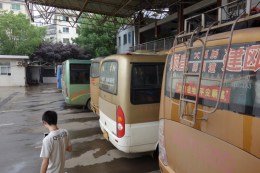
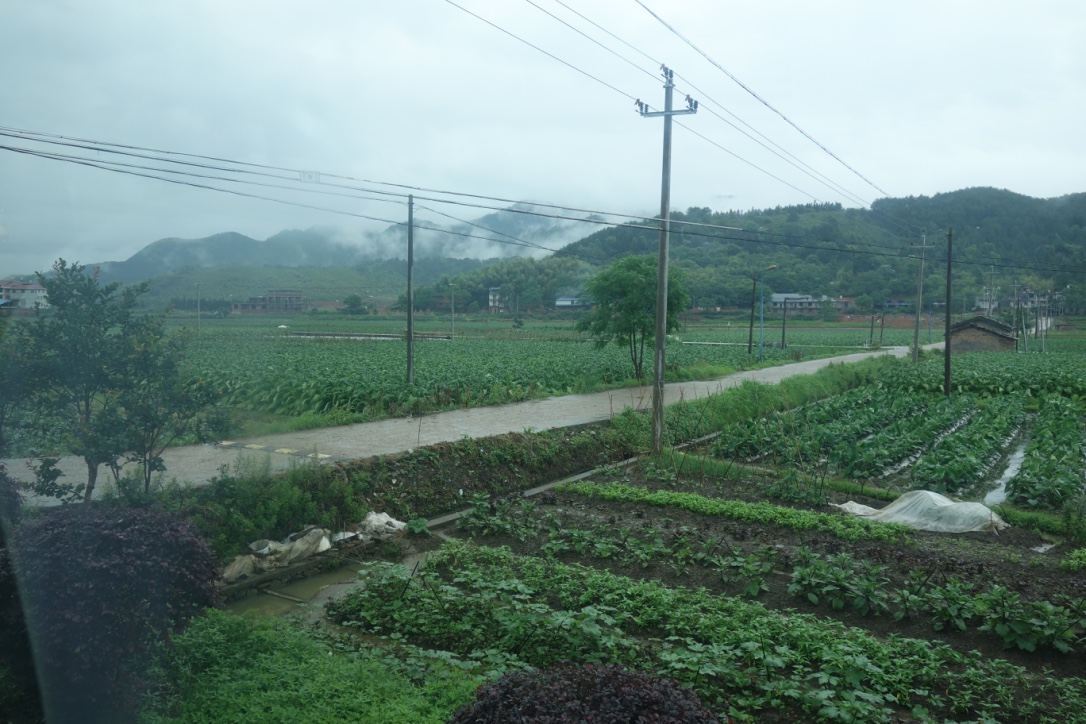
Our mini-bus arrives and we set off on the penultimate leg of our sojourn with 6 or 8 other passengers. A few hours spent looking out the window as the bus winds its way up the ever decreasing valley, along yet another river. Just as before the bus suddenly lurches to a standstill in the middle of nowhere. There is an open paddock of vegetables on one side of the road and then a laneway through more vegetables leading to a village. This must be it! We walk into the village and wander around until we find a small hotel. We meet some of the locals and make the sign of two hands placed against the side of my inclined head. A place to sleep! It works and they point us around the corner to the hotel.

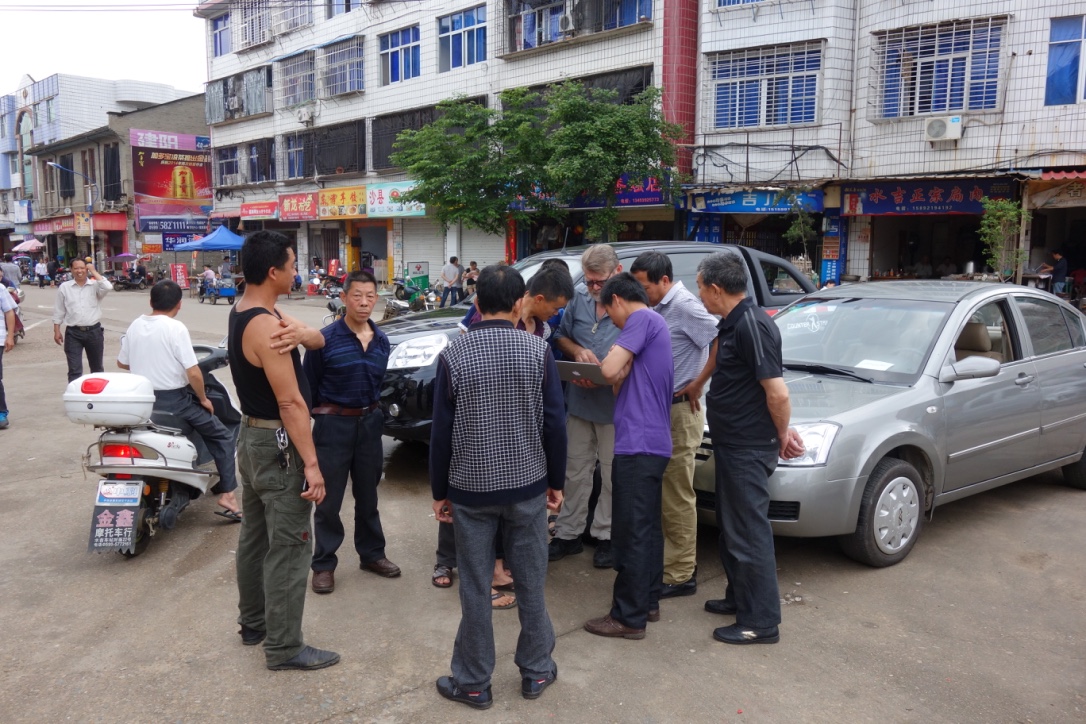
We dump our stuff and waste no time going out into the street to look for a car and driver that we can hire for a few hours. There are several cars parked around the central monument in the village. Some have drivers inside others not, some are asleep on the seat. All just waiting for someone to hire them for an hour, or a specific trip. Soon there is a huddle of potential drivers crowding around us. No one speaks English. We choose the man with the open smile. He seems nice. We negotiate a price using drawings of clock faces, some numerals and a lot of charades.
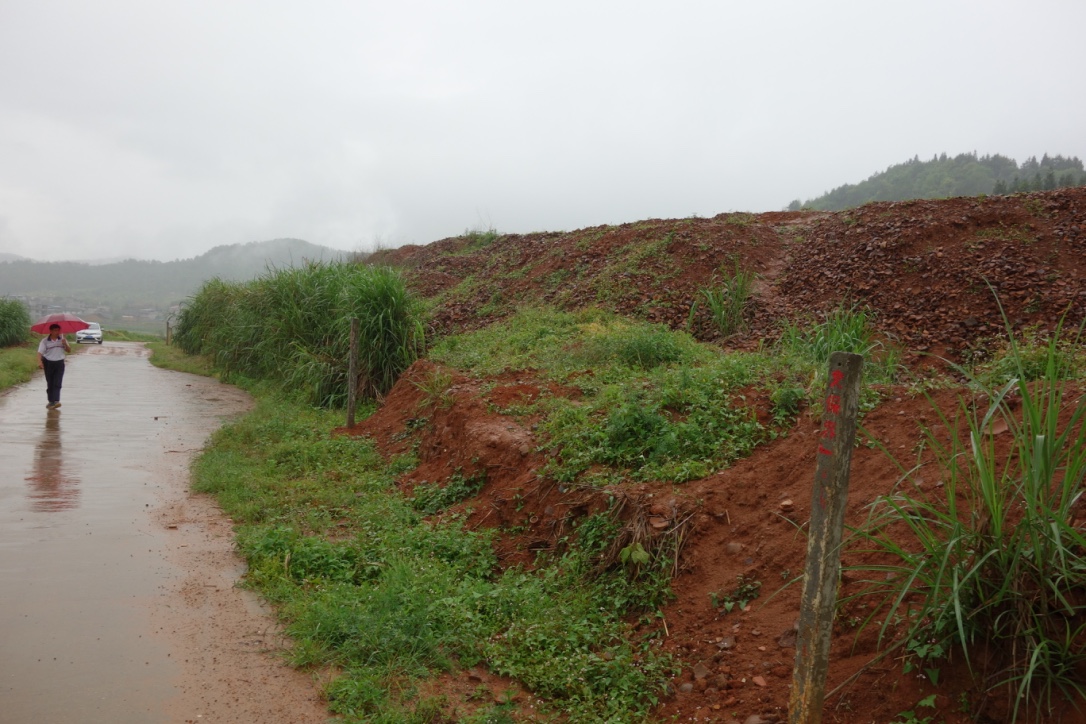
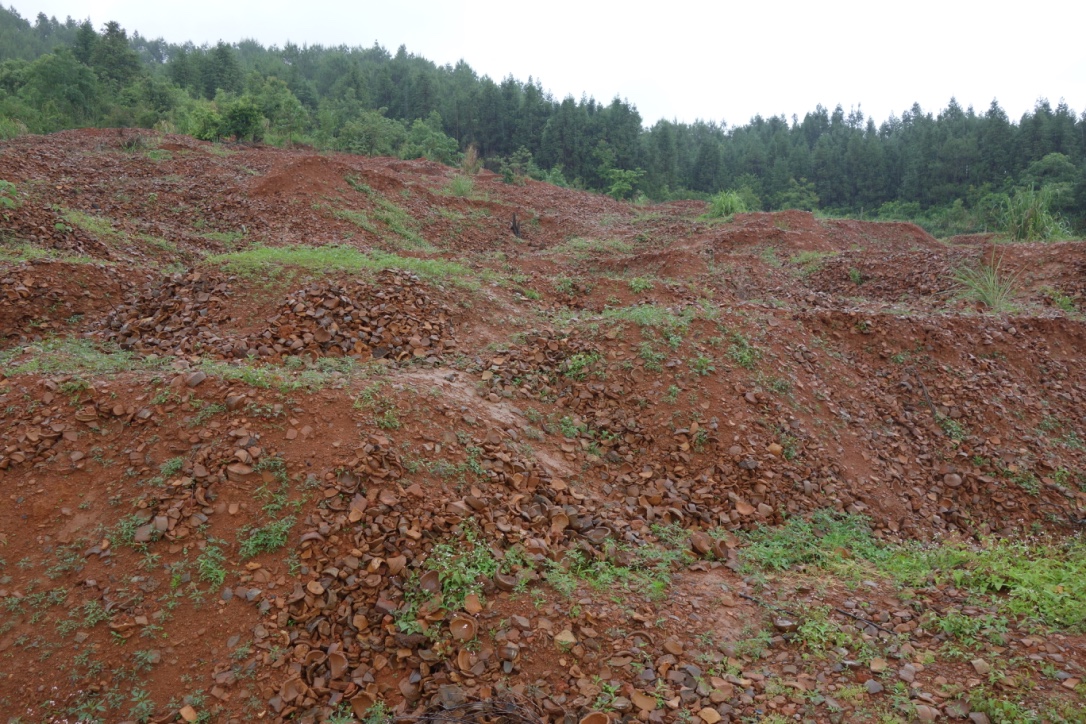
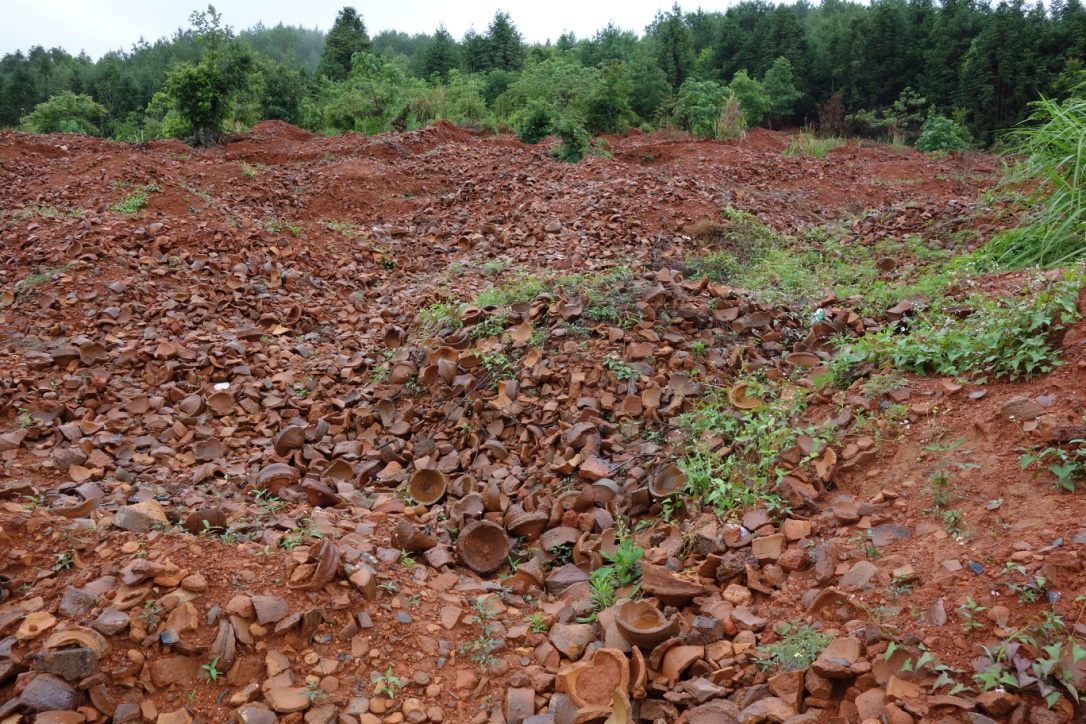
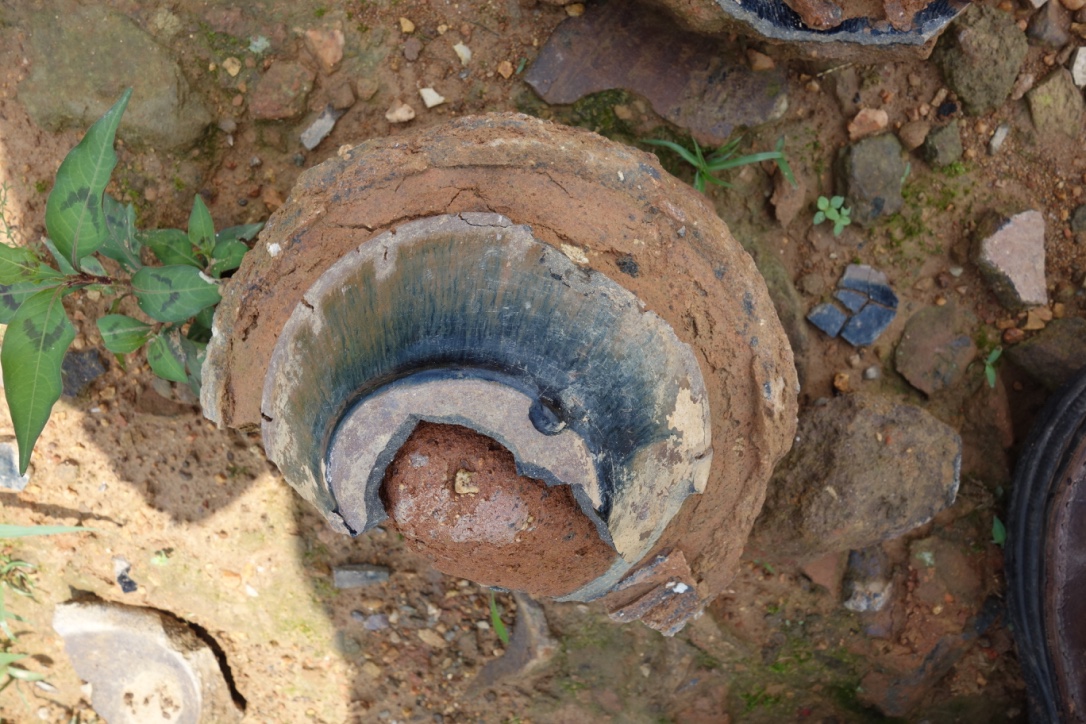
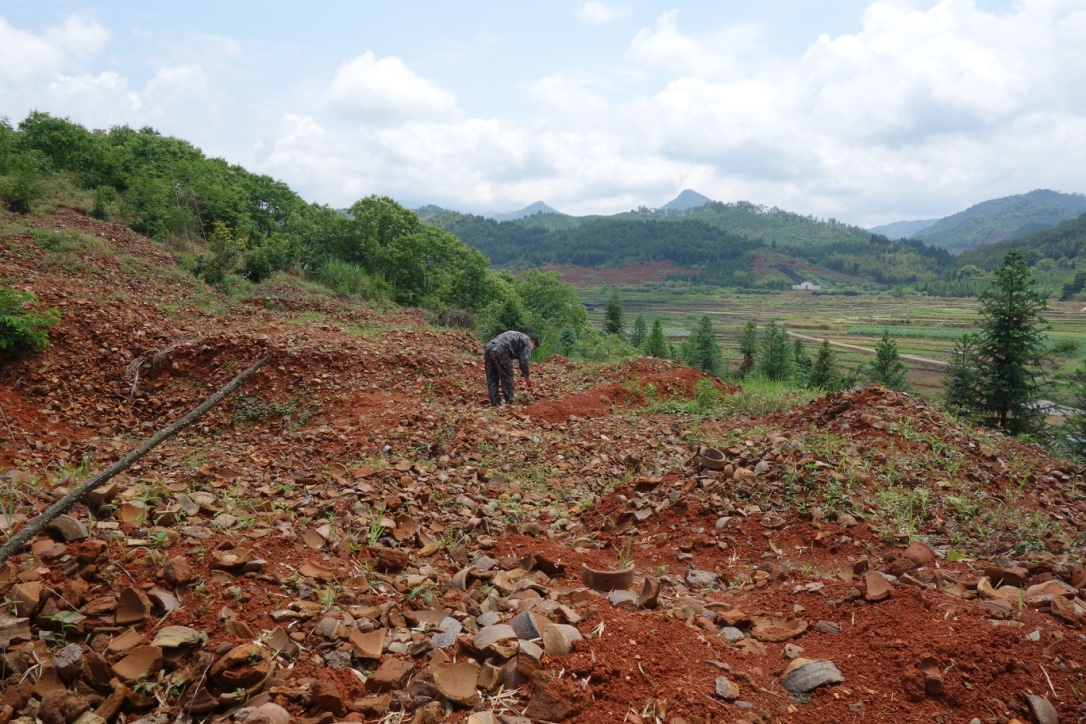
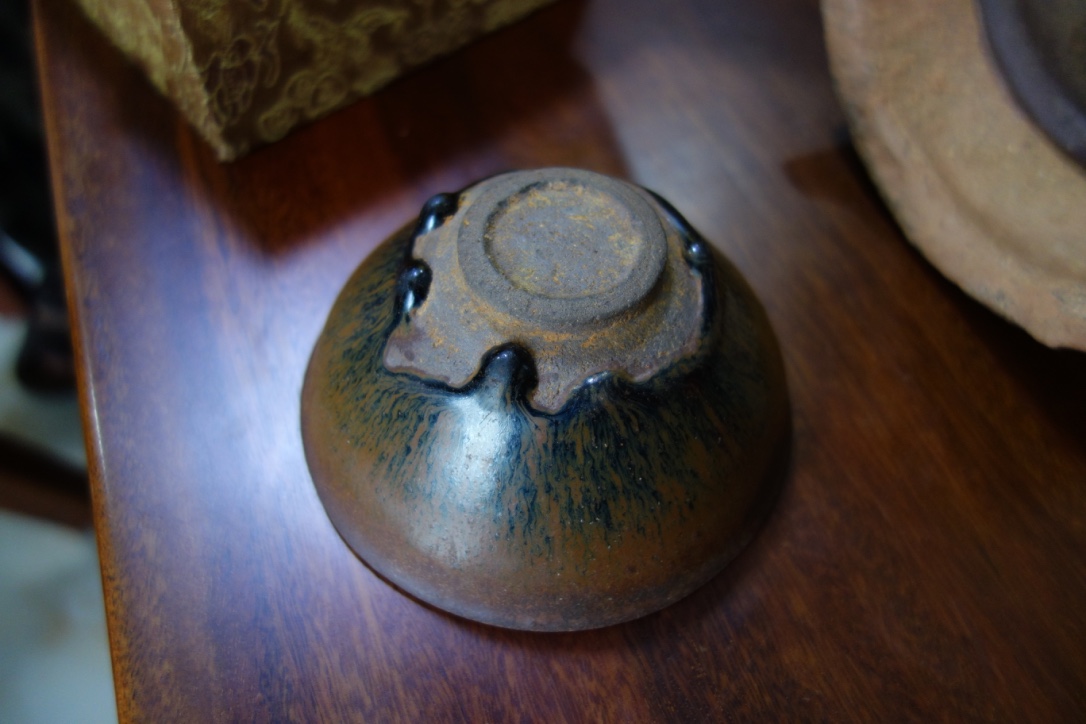
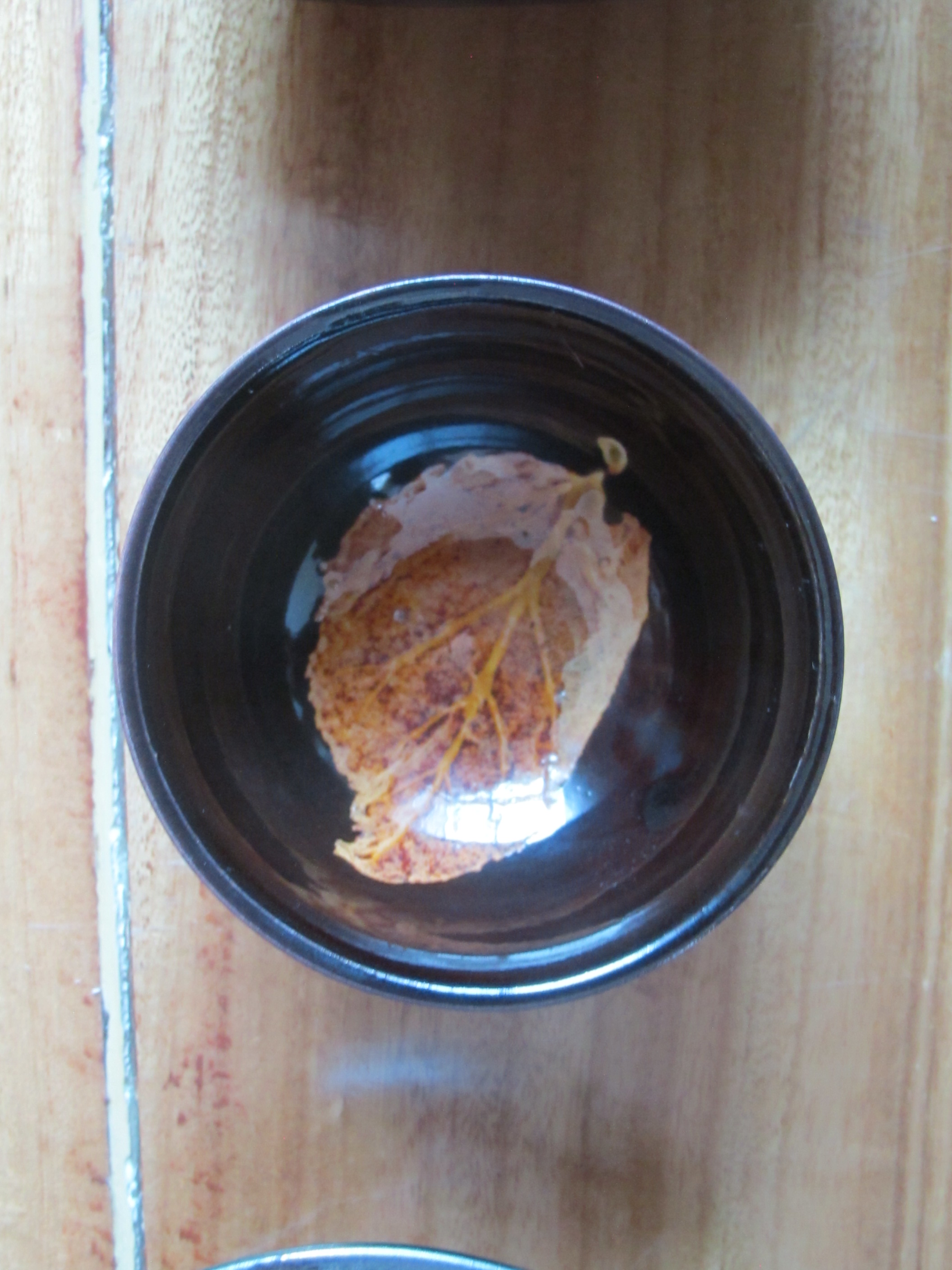
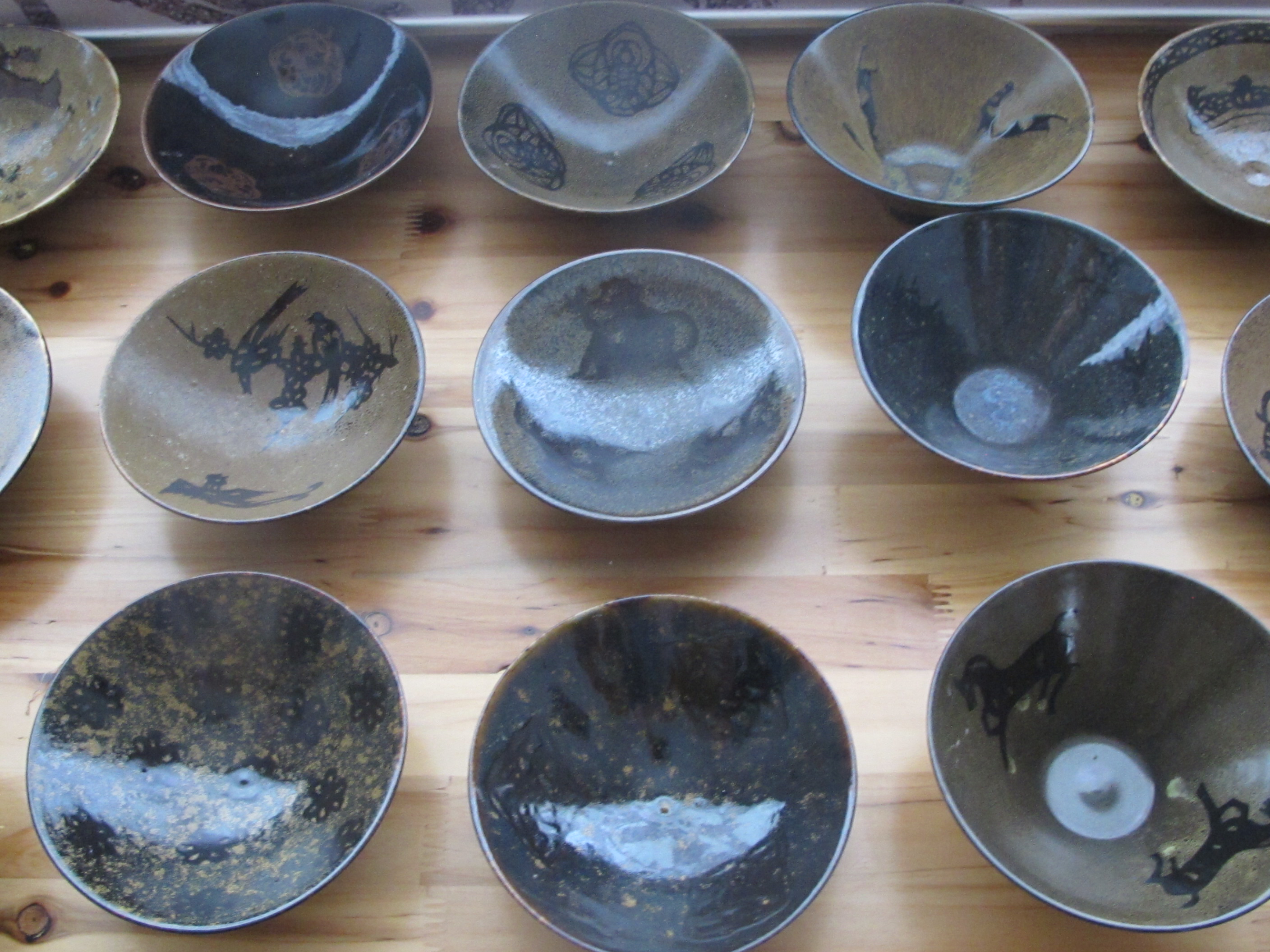
Our driver takes us out of town and into the back blocks to the remote valley and it’s little village where every Southern Song Dynasty tenmoku bowl was ever made. There must have been millions of them made over the 400 years when this place was the centre of the tenmoku universe, from 950 to 1350, more or less. The particularly special thing that defines this little valley and village, is that this is the place where the famous blue oil spot tenmoku bowls are said to have been made. There are only half a dozen of them in the world. If fact any really authentic old oil spot glazed pot of any nature is very rare. Extremely rare! What there is plenty of is hare’s fur. Hares fur tenmoku seems to have been about 99.9% of the production from here.
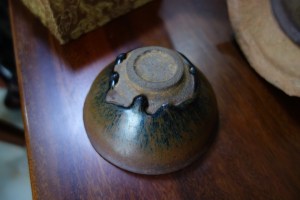
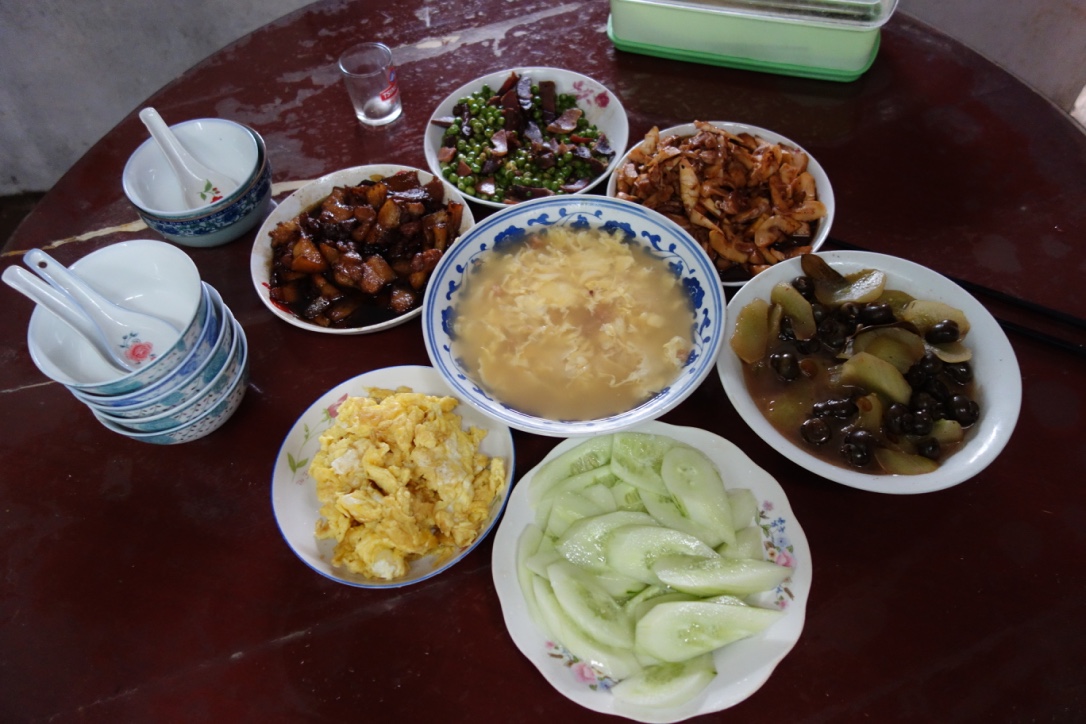
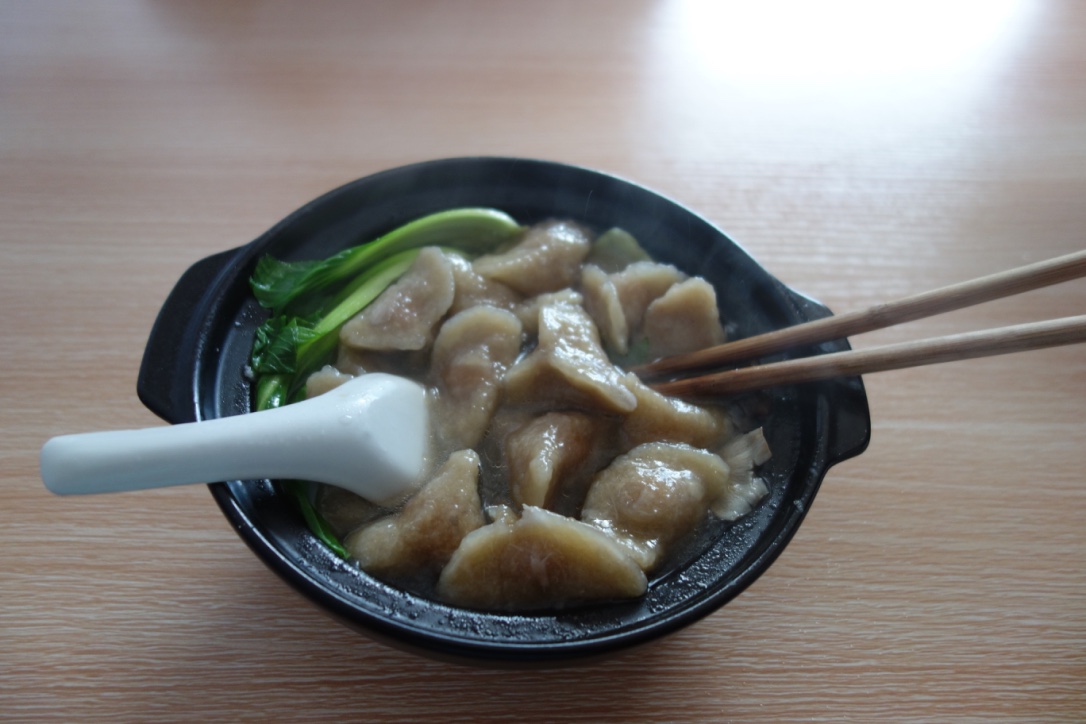
After a quick look around, our driver returns us back to the nearest town where we are staying. We have plenty of time, so will return again tomorrow. We pay him and he is gone. We eat dinner in the street in a small cafe. Intestines, lotus root, green stalks of a vegetable that I don’t recognise but is delicious and plenty of chilli! Later that night in our room, we are writing up our journals and there is a knock at the door. It’s The Driver. He has come looking for us. We mustn’t have been too hard to find! The only two foreigners in the village. Everyone knows that we are here in this room tonight. We open the door to find our Driver holding out my colleagues’s wallet. Apparently he left it in the car this afternoon. The Driver has found it and has come back to return it. We thank him as best we can without any words that he can understand. But he gets it.
When he’s gone, we check the wallet and all Y600 is still in there. Such honesty!
I am touched yet again by the Goodness of People.
Best wishes
from Steve, somewhere up-river in the back-blocks







































































You must be logged in to post a comment.