A good job well done

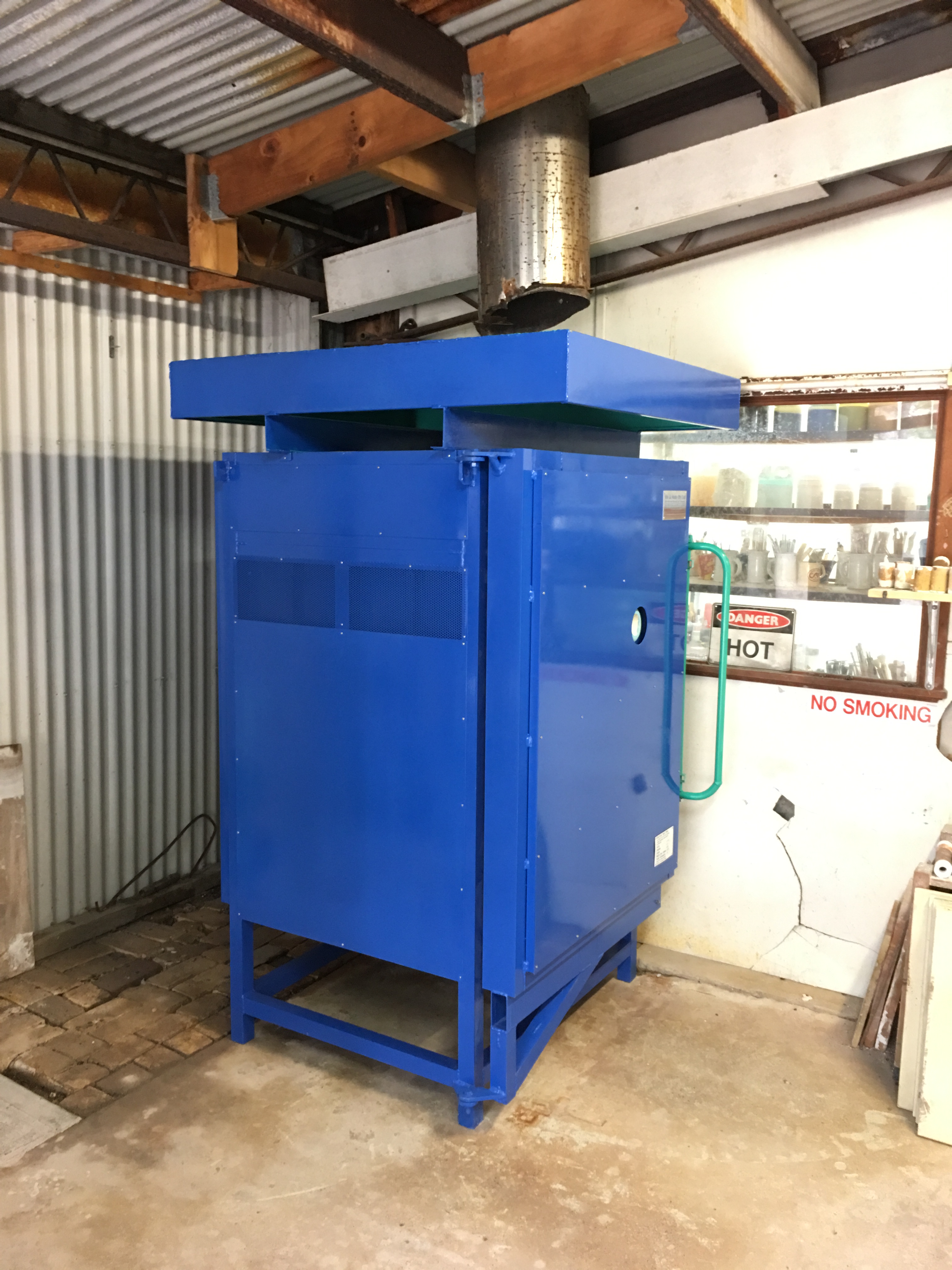
Last week, I delivered the latest kiln to its new home at the Sturt Pottery in Mittagong. Fortunately, everything went as it should, no drunks coming along to ‘help’. No neighbours off their ‘meds’, no visits from the police. Everything went just as it should.

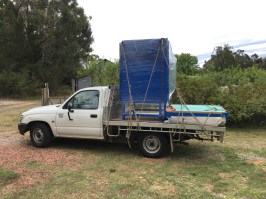
I loaded the kiln on my truck and delivered it to the site. Dave turned up and met me there with his big crane truck, That crane is just the most amazing piece of technology. Every ten years, when Dave replaces his truck, he gets a new crane and it gets bigger and bigger each time. This one is so powerful that he doesn’t even have to turn the truck around to get the crane closer. It reaches right over the truck and lifts the kiln into position perfectly and without effort – but not without cost!

Dave is fitting me into his busy Xmas schedule, between other loads that he has booked in for the day.  The old kiln was moved out and the new one lifted off my truck and onto the lifter trolley. While we push the kiln into position, Dave packs up his crane and it is all over in 30 mins. Just as it should.

A big think you to Mark, Simon and Dave for all doing their essential parts. The kiln now has a new home for many years to come.

img_4222 img_4225

img_4229 img_4230

img_4233

Get your Claus off me

It’s that time of year again and the Village is having its Xmas party for the residents and the emphasis is on the children as always. That’s what Xmas is all about.

It’s my turn to be Santa again this year. This job is rotated around all the fathers about once a decade. This is my third turn. The first time, Santa turned up in a horse and cart. The next I was delivered in the Village Toyota Land Cruiser Ute from the fire shed. This year I’m in the big, shiny new, all wheel drive, 10 tonne tanker, fire trick. I arrive with sirens blazing and lights flashing.

It’s funny that they choose a Bah Humbug person like me to be Santa, but every other compliant father has already done it a couple of times too, so It’s my turn again. I remember the first or second time that I did it. I was wearing hand painted pink sand shoes that were visible from under the long red pants. My little son spotted them and the Jig was up, the game was over. Santa was really his Dad in disguise. Word soon spread through the kiddies in his milieu , that’s Geordie’s Dad under there. Look at the shoes!

Geordie is now in his 30’s, so no one will recognise me this time. I don’t know many of these little toddlers. My job is to turn up in the truck, say “Ho, Ho, Ho” and “Merry Xmas”, “Have you been good?” etcetera, etcetera. I hand out the presents and a bag of lollies each. Pink parcels for the girls and blue wrapped presents for the boys. It all goes off smoothly and my civic Santa duty is over for another year or two – or ten. Someone else’s turn next year.

Once all the kiddies have their presents and are gorging themselves on the lollies. I’m asked  to stay and sit for the photo shoot. I do, and this lovely grown-up girl comes and sits on my lap. I put my arm around her and she tells me to “get your Claus off me”.

IMG_6682.jpeg

Winter brings on the citrus

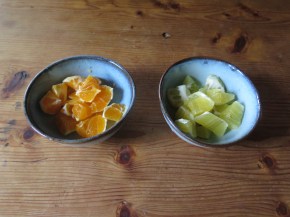
We are in the middle of the coldest time of the year. This cold weather ripens the citrus. Up until we got the frosts, the citrus were all green, but now the chill has sweetened them and made them turn yellow, or orange, or tangerine!IMG_2492 (1)
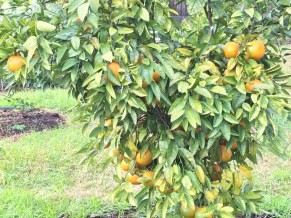
We planted the citrus grove only 4 years ago and it has grown well. Nearly all the trees are thriving. It’s just he native finger-lime that is finding the going hard. We are quite a bit out of it’s natural growing zone, so it’s to be expected.
IMG_3876

With loads of fruit ripening all at once, eating three pieces of fruit each day each isn’t going to make a dint on the harvest. I decide that it’s time to make marmalade. I make a few batches of pure Seville orange marmalade, but I must say that I’ve made better. It’s all a bit dull. Good enough OK, but could be better. The purists say that only Seville oranges can be made into true marmalade, but I disagree.

I’ve learnt over the years that I prefer the taste of a mixed fruit marmalade. Something that has Seville orange as a base, but also has a good quantity of  other citrus fruits like,  blood grapefruit, tangelo, lemon, lime and Italian Chinotto.

IMG_4024

IMG_4003

Our variety of Seville orange has loads of pips, and this is very good! Not so good if it were an navel orange for eating, it would be a pain. But as a Seville orange that we specifically grow for the purpose of making marmalade, then pips are a bonus.

Citrus pips, especially those of the  Seville orange, contain massive amounts of pectin, and they are large and there are loads of them. Pectin is what sets the marmalade into a gel, along with the large amount of sugar that is recommended.

IMG_3983 IMG_3982

I prefer to use very little sugar, as too much sugar is not at all good for you. One of the ways that Janine and I control our sugar levels, is to limit our carbs intake. I love marmalade, so I decided long ago to make my marmalade not too sweet and more fruity and bitter, with a lot of peel. In fact a lot of varied peels from all sorts of different citrus.

I have developed a recipe that limits the sugar down to very low levels and yet still ‘gels’ OK as a condiment. I do this by using the pectin from the pips, following this recipe;

1.2 kg of mixed whole citrus fruit

Juice the fruit to get 465g of juice

Clean the white pith off the peel to get 550g of sliced peel

add 300g of sugar and the pectin gel water off the boiled and simmered pips

Cut the citrus in half and squeeze all the juice out of the fruit. Save all the seeds. Seville fruit has loads of seeds. Ours does anyway, but I’m told that citrus fruit varies in the quantity of seeds. It all depends on which other citrus tree flower pollinates the fruit.

I put the pips in a small sauce pan with a minimum of water to just cover them and simmered to extract the pectin. This can be going on while you are slicing the peel. Push the resulting gel through a small sieve into the jam making pan. Add more water and boil again for a few minutes. Again, press all the gel through a sieve and then discard the seeds.

Save the juice and weigh it. It should bet about 455 to 465g. If there is too much, then pour some off into your mouth, or if there is too little, squeeze another piece of fruit to make up the total amount of juice, but don’t use the peel. Both options have happened to me. it all depends on the quality of the fruit. Fruit that has been picked for some time get juicier. Fresh picked fruit is a little dryer.

Cut the empty squeezed half citrus skins into 1/4s and scrape all the pith out of them then discard the pith. Save the clean peel and cut it into very fine, thin, slices. The peel should add up to about 550 to 560g of peel, add it into the bread maker machine and set to ‘jam’ setting. Add 300g of sugar and the 460 g of juice.

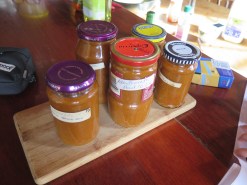
Turn on the machine and go about your other very important business for over an hour and come back to perfect marmalade. This week I unpacked a bisque firing and repacked another with this useful time saved.
IMG_3795 IMG_3988

Heat a few glass jars and lids to sterilise them and bottle the marmalade while hot. It can keep for years, but never gets a chance to.

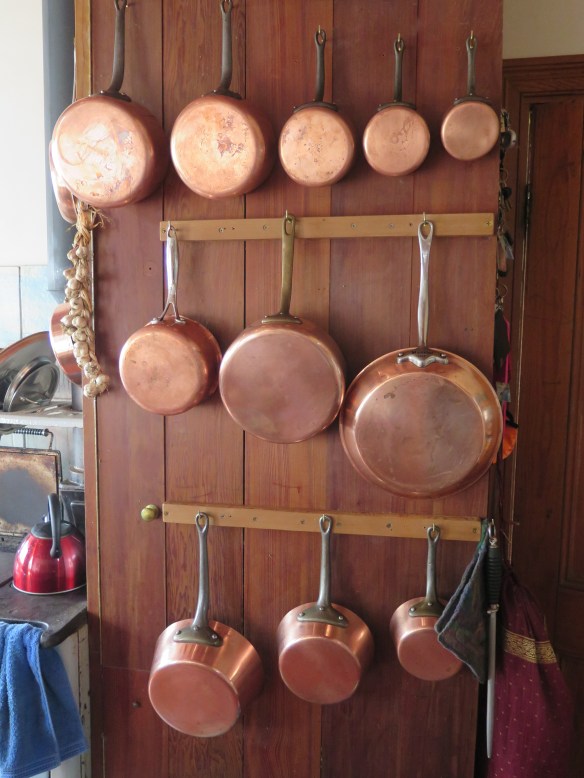
While the citrus rush is on and there are plenty of fruit being eaten and juiced. I take the  opportunity to use the discarded skins to clean all the copper pans thoroughly and get them all shiny once more. A discarded, squeezed 1/2 citrus peel with a dash of salt sprinkled on cuts the developing verdigris oxide layer and gets copper pans looking new again.
IMG_3976

Mushrooming

The weather has been quite wet for the past month, but with a few warm, still days. The warmth seems to have brought on a last, end of season, flush of mushrooms. Usually the mushroom season here is from late summer through autumn into the beginning of winter, but this is a very late-blooming of fungal trove.

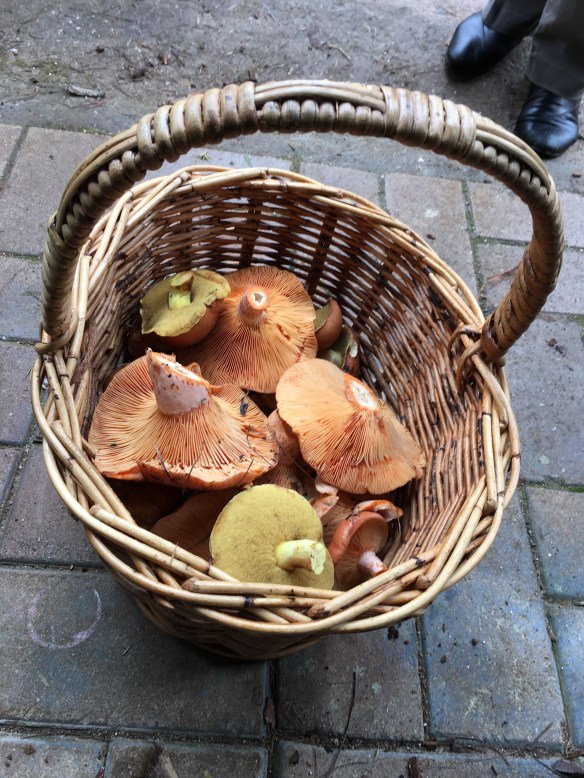
We have 10 potters here with us to pack and fire the wood fired kiln. Rochelle, one of our guests, decides to take a walk among the pines and comes back to ask for a knife to cut some mushrooms that she has found. Half the team suddenly take off. Janine tells them that she not only has a dedicated mushroom knife, but also a mushroom collecting basket. They’re all off and gone, returning half an hour later with the basket half full of fungi.

IMG_2499

Around here we get edible mushrooms growing on the pine tree roots. We have saffron milk caps and slippery jacks. There are lots of other fungi growing here, but these are the only ones that we know are edible and safe.

The fun-guys set to work cleaning and peeling the fungi. We cook up a couple of dishes for lunch. The saffron milk caps with olive oil and garlic. Then the peeled slippery Jacks tossed in butter with white wine and blue cheese. They are both pretty amazing dishes and couldn’t be fresher or more delicious.

Mushrooms are best cut from the stipe or stem, so as not to damage the rest of the ectomycorrhizal underground structure of the fungus. The less damage done, the better chance of a good crop next season – or so I’m told. Better safe than sorry. So much better to tread softly on the earth where ever possible, it costs us nothing and can reap great rewards.

This is self-reliance.

IMG_2501

Truffle Risotto

We have our truffle safely ensconced in the fridge in a tub of rice and a couple of eggs. They will absorb the flavour of the truffle. Even though they are all tightly sealed in the plastic tub. The smell of the truffle gently wafts out every time we open the fridge door.

IMG_3990

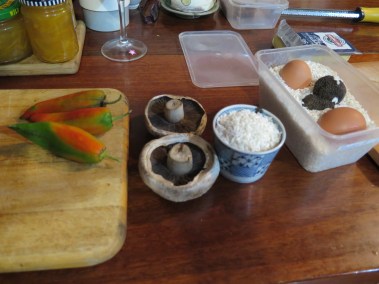
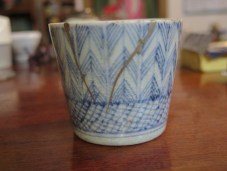
I decide to make a mushroom and truffle risotto for dinner. I have a couple of big brown mushrooms and I pick a few hot red peppers from the garden to go along with it. I have an ancient porcelain soba cup that I use to measure out the rice. One soba cup of dried rice is the correct amount of rice to make a risotto for the two of us. I bought this old soba cup at the Toji markets in Kyoto. My old cup is repaired with gold kintsugi and lacquer. It really deserves a bit of respect, because it is a beautiful thing. It was made in an important family workshop at the turn of the last century.

IMG_3991 IMG_3992

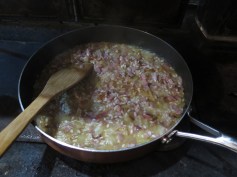
I still have a small amount of my marrow bone stock left in the freezer. Made before I went to Japan. It’s a beautiful, rich concentrated block of flavour. I do all the usual things, coating the rice in oil, browning the onions, deglaze with a cup of wine and then stir the carnaroli rice constantly in the stock until it cooks down and goes all thick and creamy. I finish it off by melting a good dollop of butter into the pan and stirring it through. It gives a lovely soft and creamy mouth feel and rich taste. Towards the end I grate a lot of truffle into the mix, little bit of very good cheese and then after plating-up, I grate a lot more truffle on top. A little bit of salt and pepper completes the dish.

IMG_3993 IMG_3997

Know that it is good when Janine asks if there is any more.

Mussels for lunch

I have managed to get into the pottery briefly. In between building all the new sheds that we need and organising the weekend wood firing workshops. I want to have my own firing in-between the winter wood firing workshops, if I can.

IMG_2417

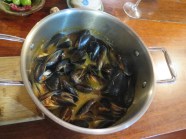
The fish-truck man has some nice fresh mussels, so that is what we will have tonight. We have everything else in the vegetable garden or the pantry. I don’t attempt anything weird or out-there. Mussels in white wine and tomato sauce. Simple.

IMG_3960

IMG_3961 IMG_3962 IMG_3963

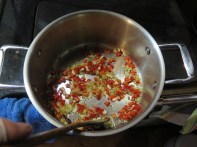
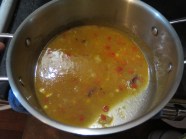
Onions, garlic and chilli in olive oil. White wine, mussels and tomato passata. A few minutes on high heat. Presto!

It’s so delicious, quick and simple. We have no trouble in finishing off a kilo of mussels between us. It’s a fantastic, warming and fortifying lunch to get us back out there  in the cold and miserable weather to get everything ready for the weekend workshop.

IMG_3968 IMG_3969

Before and After.

The Lost Nabashima Clan Kaolin Mine

Mr  Kanaiwa tells me story about the Lost Kaolin mine of the ancient Nabashima Clan. The Nabashima clan were very well known for the excellence of their white porcelain with overglaze enamel decoration. The tough men of the clan marched into Arita one day, 350 years ago and stole the kidnapped Korean potters away from Arita and took them to the hidden valley of Okawachiyama, where they put them to work making the most excellent shirajiki – super fine white porcelain, that was destined for the exclusive use of the leaders of the clan and their cronies. This porcelain had to be the whitest and finest of any that it was possible to make under the threat of death. These twice kidnapped Korean potters did just that and to achieve it they had to find some very white materials to do the job.

So, the legend has it according to Kanaiwa san, that they found a source of ultra pure, white porcelain stone and kaolin somewhere to the south East of Arita village up in a tributary valley. As I understand it, and I could have this wrong, but what I thought that I was told, was that this lost mine was located at a place called Iwatanikawachi.

Kanaiwa san has spent a lot of his life researching the special milky white glaze quality of the early Nabishima wares and has analysed samples of the ware. He shows me the analysis sheets and the Seger formulas that he has derived from them. It’s a wonderfull and extensive piece of research. I’m Impressed. It’s the sort of thing that I would have done if I were here doing his job. I can read the formula and know the general glaze that he is describing. It’s not anything special, with no surprise ingredients. I know it well. As with so many things in life and particularly in ceramics. It’s not the secret formula that is important, but the materials that are used and how it is all fired that creates the special quality.

Kanaiwa san suggests that we go for an expedition into the Iwatanikawachi valley and look for the stuff of legends. I agree enthusiastically. So we set off and park the car at the foot of the valley where we make a ‘habakari’ stop. Tsuru san who is my translator on this venture, reads out from a memorial plaque set in a stone in the pack. She exclaims with excitement that this is the very site of an early kiln. One of the first in the valley 400 years ago. This kiln made imitation Ming Dynasty wares for export to Europe. When the civil war in China closed off the export trade in porcelain to the Dutch Traders, they came to Arita to see if they could make similar porcelain wares for their export trade. The potters here were given sample of the Ming porcelain to copy, and they did that exactly. Even to the extant of writing “Made in China in the Ming Dynasty” on the bottom of the pots in ‘gosu’ cobalt blue pigment. Some of these ‘fake’ Ming wares are on show here in the local museum. Tsuru san is very excited to see this sign and reads it out to me. She knows the story well and has seen the wares, as she works in the museum part time. So this is the very spot where the archeologists discovered the shards!

Everywhere around here reeks of history and can surprise even the locals it seems.

IMG_3572

We set off on our walk up the valley. As we go Tsuru san translates for me the story that Kanaiwa san is telling me in his local Arita dialect. This walking track was once upon a time the main road from Sasebo to Hasani and would have been the very road that Ri SamPei would have walked along to get to Arita where he discovers the special porcelain stone that has made this place rich over the 400 years since. We walk. He talks. Tsuru san translates. I listen. It’s a nice warm day and the sun is out, but we are walking all the way in the shade of the dense forest canopy. There are beautiful samples of porcelain stone all along the track, but none of it is ultra white and pure. There must be, or have been, a particularly pure vein of pegmatite somewhere along here that could produce such a stunningly white and clear product. I can’t see any sign of it. I’m supposing that others must have looked. If Kanaiwa san has found old documents that indicate that this is the place, then others must know this too and have been along here with the same intension.

IMG_3575

I don’t find the pegmatite dyke, but I do stop and admire the exquisite beauty of the small gurgling stream as it passes over some small falls. The word shibui comes to mind.

Eventually, we arrive at the top of the mountain, to find a reservoir under repair and maintenance. There have been heavy trucks and earthmoving equipment coming and going in the last few days from the other direction. I ask where they come from. Kanaiwa san tells me that this is the end of the Utan street. I’m amazed. We have almost half circumnavigated the Arita valley from South to North on the East side. Utan street is where Tatsuya San’s workshop is located and where I worked briefly last year.

IMG_3571

We set off back along the old Edo period road. Its been a beautiful, if largely uneventful day. We discuss where the deposit might have been, as we haven’t seen any sign of extensive excavations anywhere along our path. We come to the conclusion that any workings that might still remain, must be well covered with the dense undergrowth of the valley and are most likely on the other side of the river to the path that we have taken. As it is late in the afternoon now, we decide that we will need to make another trip with more preparation to slash our way through some of the denser thickets on the other side.

Nothing is ever finished.

Best wishes from Steve in the Iwatanikawachi valley of the Nabeshima Clan

A Brief Visit to Tamba

The small village of Tamba is situated up in the hills somewhere inland between Kyoto and Osaka. It is more or less indistinct, except for the fact that it has a very long tradition of pottery making going back 800 hundred years.

The village lies along strangling secluded valley. It isn’t really close to anywhere in particular and is about an hour and a half from Kyoto by train to Aino station and then a 25 min bus trip to the village of Tachikui. Tachikui is the name of the village where the tradition of Tamba pottery technique is centered.

There are about 35 pottery workshops speed out along the valley. This valley doesn’t look all that different from any other Japanese farming valley, with a small river flowing along the valley, with paddy fields along either side. The small winding road hugs the bottom of the surrounding hills to maximise the area available for growing crops and vegetables in the fertile soil of the valley floor. The big difference in this valley is that there are lots of chimneys sprouting from the various sheds along the hill-side. These sheds are unique in that their roofs follow the contour of the slope of the hill to maximise the draught available for the firing of the kilns.

IMG_3105

The kilns here are unique, in that they are essentially ‘Korean’ style kilns. Shaped like long tunnels sitting on the side of the hill. They are known locally as ‘snake’ kilns or ‘split bamboo’ kilns, as this is a reasonable description of their shape. They have a door way every few metres along the tunnel to allow access for the pots to be passed in during the packing of the kiln and then again during the unloading after firing. There are 9 doorways all together and the whole kiln is 47 metres long.

IMG_3109

The kiln is fired with wood in the old fashioned way. After all, it is an 800 year old tradition. The fire is kindled from the fire mouth at the front of the kiln and the fire is progressively increased in intensity, with more and more wood being introduced into the front fire mouth until the full heat is achieved at the front of the long tunnel.

IMG_3110

IMG_3112

Once the top temperature is reached at the front, then wood is introduced into the small circular stoke holes situated all along the kiln, every 50 cm. or so. This takes the temperature of each subsequent section of kiln up to the top temperature required to melt the glazes in a short time and is very efficient of wood fuel. The whole process from start to finish takes just 48 hours.  12 hours of gently steaming. Then 24 hours of firing the main stoke hole at the front of the kiln and another 12 hours of side stoking.

IMG_3123 IMG_3125

IMG_3124

Because this kiln is situated on such a steep slope, there is no need for a chimney as such. The whole steeply inclined tunnel kiln chamber creates its own draught up the slope. The end of the kiln is fashioned into a kind of ceramic colander, so the flames just escape to the atmosphere from the grid of holes at the back off the kiln.

IMG_3132

IMG_3131

This is the village community kiln, has been on this site for hundreds of years. This particular construction is just a year old. The old kiln on this site threatened to fall down from lots of use over many years, so was demolished and rebuilt as a community effort less than a year ago. This is its 2nd firing. It is fired just twice a year, with many potters contributing work  to fill it, and taking turns in the firing schedule shifts.

IMG_3113

IMG_3106IMG_3137

It is a wonderful community effort and we are pleased to be here to witness it at this time. We are very lucky. Tamba is one of the 6 ancient kiln sites of Japan. It is a special place, but well past its prime just now. But still, it’s great to be here to witness this community event.

best wishes from the two ancient potters from Australia, doing their ceramic hajj.

Two Special pots

I’ve been able to spend a bit of time to clean up a couple of doubtful pots from the ‘zone of death’. They cleaned up rather well  I think. I was a quite surprised. I thought that they were stuck to the kin shelf. the pots from the floor were covered in charcoal too early and are just too dull and lacking interest. However there are always a few nice surprises. These are they.

DSC_0035_01DSC_0034_01DSC_0025_01DSC_0029_01


Blessed are the Cheese Makers

We live out our quiet days here in the Southern Highlands. On most days, nothing much happens. I turn the stiffening porcelain slip on the drying area. We throw or turn pots. We mow, weed and water the gardens and orchards. We harvest, preserve and cook our vegetables. We make clay and glazes from the rocks, ashes and shales that I collect out and about in the local environment. Some of it is 100% sourced off our own special little piece of land, right here.
We like to support local endeavours and a while ago we were invited to visit the local sheeps milk dairy. The pecora dairy has about 120 milking sheep of the East Friesian breed variety. The dairy isn’t open to visitors, but our son buys their sheeps milk, pecorino cheese for the Biota restaurant where he works.
The dairy makes a range of pecorino cheeses from their sheeps milk. We have bought 3 of them over the years that they have operated here. Apparently there are only two flocks of milking sheep in Australia. This one here locally and another one in a different state.
IMG_3679
We arrive with our son just before milking time and all the sheep have made their way down from the hills and far pastures to the dairy, ready for the milking. It takes about an hour to milk  the 120 odd sheep in groups of about 10 in the milking stalls. The sheep come in for the milking twice a day, morning and night. Each one gets closely examined and scrutinised while in the care of the milk maid. She examines them closely and makes remarks on the progress of a pregnancy or anything else unusual that might appear.
IMG_3672
The sheep get a feed of a high protein supplement while they are being milked. There is an ingenious contraption that feeds them while they are being milked. They are very keen to get their noses into the trough as soon as the gates open and allow them in for the milking. The contraption allocates a place at the feeding trough and a pair of suction milking cups to each animal individually. As they take their place at the trough, they push a bar that opens the gate for the next sheep to enter, and so in turn the whole row is neatly filled. The complete arrangement is raised up, so that the milkers don’t have to bend. Once milked and fed, the whole calliope folds in on itself and rises up to allow the sheep to walk through and out of the building, allowing the next batch of 10 sheep to enter. They anticipate the workings of the milking sequence and cue up and wait on the race. Waiting their turn.
IMG_3682 IMG_3681
It’s a beautiful thing to see and experience. These organic, wholesome people love their sheep and care for them lovingly. They take a lot of time over their charges and treat them with care and affection.
We are very privileged to be allowed to tag along with our son on this special occasion and we are grateful.
We come home to a light supper of, you guessed it,  some local pecorino cheeses, a few of our hazel nuts and some fresh garden veggies.
IMG_2353 Copying
The Lovely asks if we should think about making cheese again.
I say No Whey!