Homemade Kitchen Knives

As part of my long-term ambition to live a life as self-reliant as possible, I am continually trying new things that might help achieve that aim. We have built our own house from scratch, making our own windows, french doors, roof trusses and floor boards. We bought and demolished the old Mittagong Railway station, then cleaned all the old sandstock bricks to use to build our house. I even excavated the sand stone footings and carved them into the new window sills for the house. Over the years, we grew trees here, then felled them to make all the kitchen furniture, chairs and tables.

IMG_7298web IMG_7245

IMG_3742

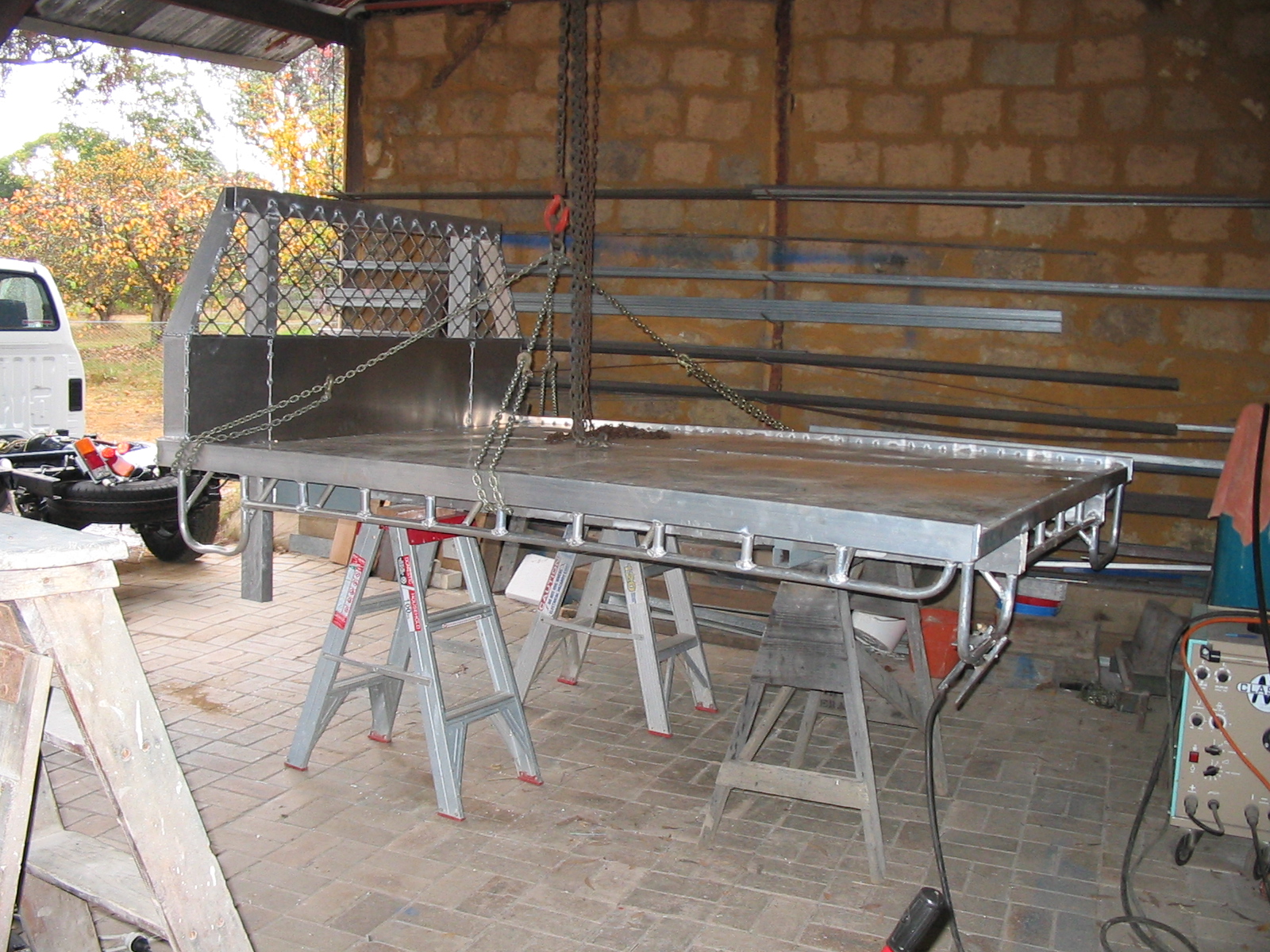
If you have been reading this blog for any period of time, you will know that we make all our own clay bodies and glazes from stones that we collect locally and then crush and grind them to make all the various mixtures that we use in the pottery. I try not to buy anything that I could do myself. This frugal life style of self-reliance and simplicity has worked out quite well for us. I even had a go at building my own aluminium truck body. It didn’t turn out to be that hard. I welded it together from all the left over off-cuts from building electric kilns. It was a most rewarding well-spent week.

IMG_1807

So this last few weeks leading up to the summer holiday gap between Xmas and New Year,  I decided to have a go at making some kitchen knives. I have quite a few worn out or broken hack law blades from my mechanical power hack saw. These blades are made from excellent quality high Speed steel. This steel is quite exotic, being an iron based carbon steel alloy composed of varying degrees of tungsten, vanadium, cobalt and molybdenum. It is extremely hard and long wearing.

This stuff has such a high degree of embedded energy that I couldn’t bring myself to throw them out after they were worn out and blunt. I have worn my way through  quite a few of these large 350mm blades over the past 40 years. Now I have made use of them. I hate to put anything in the recycling bin until it is really, truly worn out, or broken beyond repair.

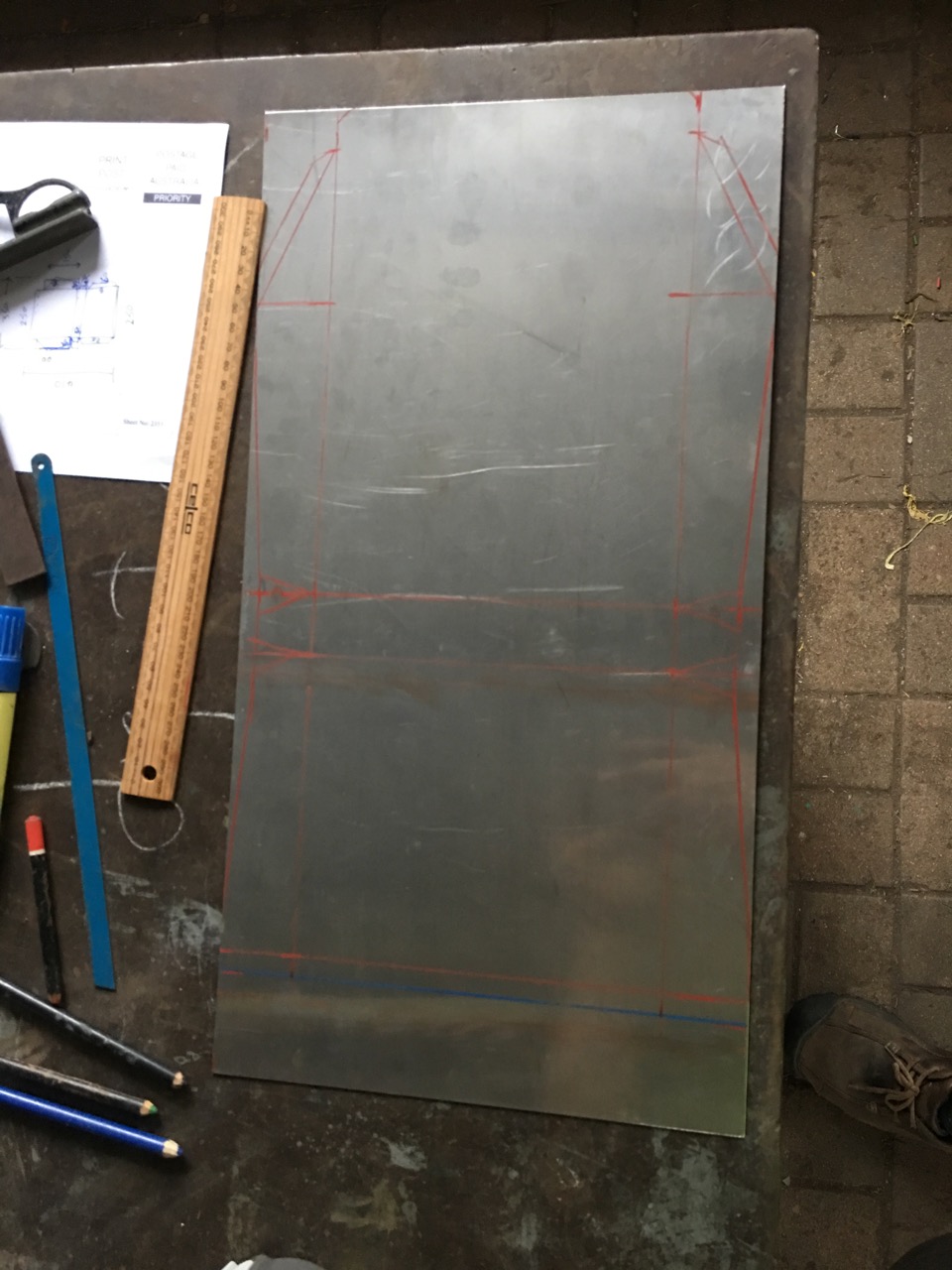
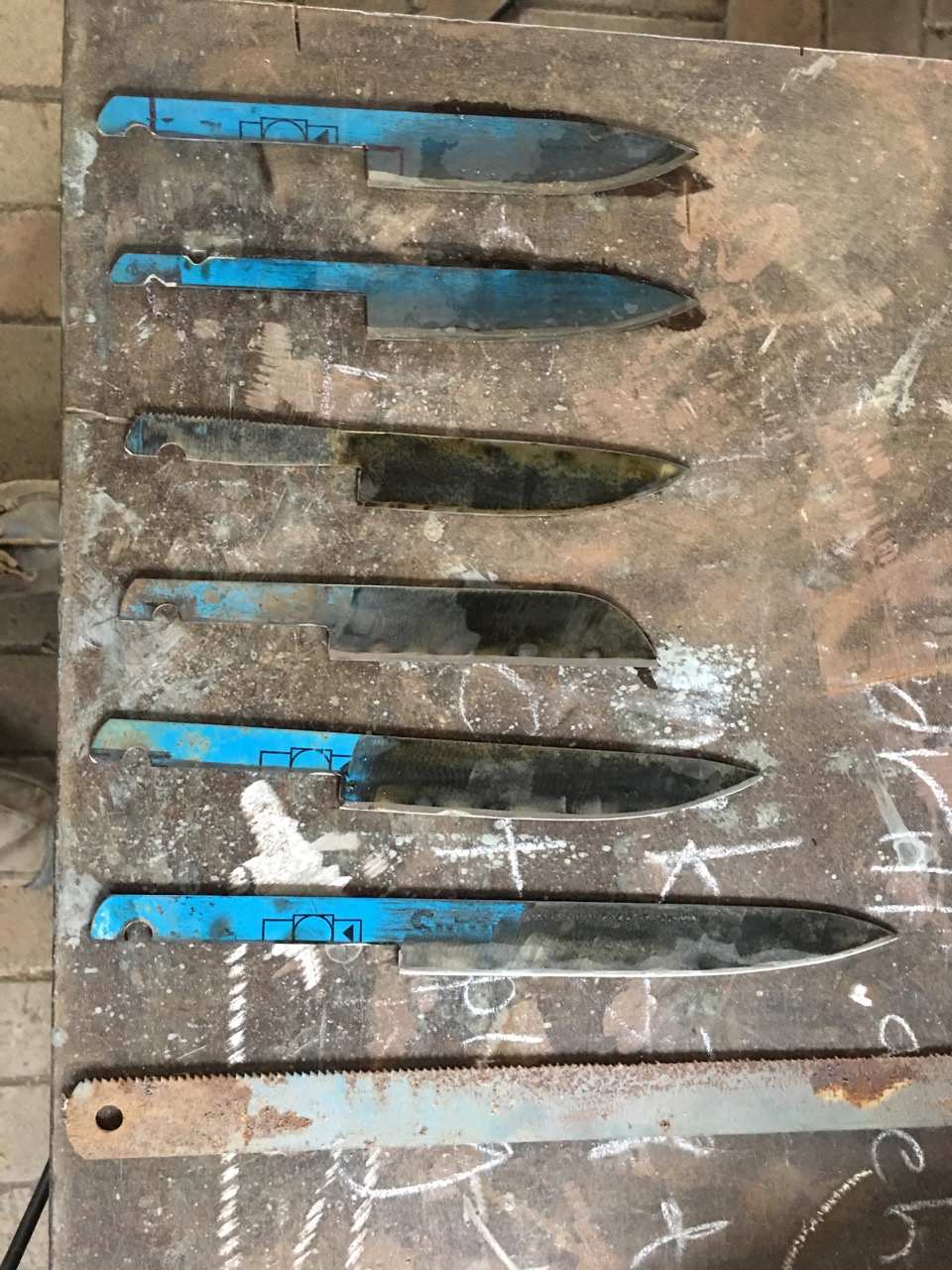
I have spent a couple of hours each day working on them, whenever I got bored with what I was supposed to be doing. I cut out and profiled the blades using the angle grinder, ground them to a taper on the bench grinder and this can take at least an hour, if not more, depending on the size. A bench grinder is a very powerful tool. It grinds away the excess metal to create the tapered shape, but leaves significant scratches/scars in the surface. I have found that it is best to use 3 different bench grinders. I just happen to own them for other purposes over the years. I start with the coarsest, this removes the metal fastest, but leaves the surface looking very scratched. I work through medium to fine, each grindstone cuts less, but leaves the surface smoother.

IMG_3700

I them move to the work bench and finish the blades off by honing them on a series of flat stones. I work through a series of grades of grind stones starting with 60# and 200# grit carborundum oil stones. The purpose of these stones is to try to polish off the scratches that are embedded in the steel from the bench grinder, then moving on to 400# and 1000# water stones and finishing on an 8000# grit Japanese synthetic water stone that puts a very fine finish on the blades.

This hand finishing is a labour of love. It takes ages to get a nice even surface and finishing with a very sharp edge without damaging that ultra fine edge. Always keeping it even. This is done entirely freehand without the use of jigs. I wouldn’t like to do this for a living, but it is very good to do it this once, because the reward is to re-purpose something that was once, only a few days ago, just a piece of rubbish. Now they are beautiful hand-made kitchen knives.

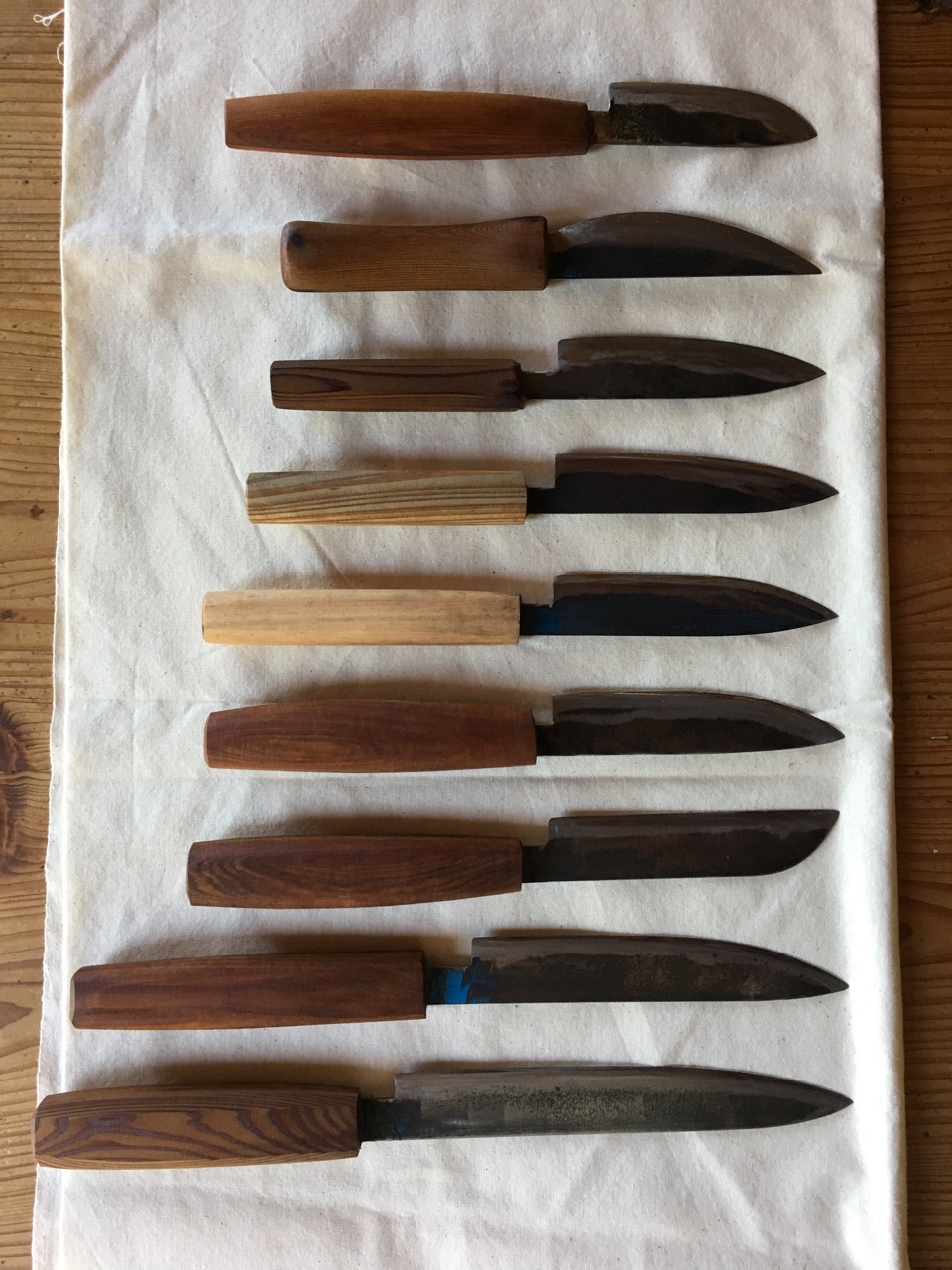
The last step is to make a wooden handle for each blade. 30 years ago, when I built my kitchen, I kept the best off-cuts of cedar wood for making pottery tools, which I have been using to make my own tools ever since. This is very nice straight-grained timber. but is useless for anything else, as the pieces are so short. They just happen to be perfect for knife handles though. These small bits of wood also need to be carved and then polished using sand paper to get a nice smooth finish. I prefer working with wood, rather than metal. It’s a gentler and softer process. Cedar also smells very nice.
The handles are finished with olive oil. I could use boiled linseed oil, but as they are kitchen knives, olive oil seemed more appropriate.

IMG_3713

Nothing is ever finished, nothing is perfect and nothing lasts. Although the quality of this steel means that they probably won’t need to revisit the water stones for a year or more. Steel like this can’t be sharpened using a butcher’s ‘steel’ to touch up the fine edge intermittently. This high-speed steel alloy is so hard, that it is harder than the butcher’s ‘steel’. These knives have to be ground on a stone the same way that I sharpen my Japanese knives.
I have tried making a few different sizes and shapes. I don’t know which ones I will prefer to use yet. Maybe non of them will prove to be very good. I may have to go back and make some more. I’m still learning. I do have a few more worn-out hack saw blades left in my cupboard, so it is possible. I could just have been wasting my time this last couple of weeks, but even if they don’t prove to be useful to me or appropriate for purpose, I have really quite enjoyed the process of creating them. I’m pretty certain that a couple of them will be OK, but only using them will tell. Anyway, it beats working for a living. I’ll do anything to avoid getting a job!


Vegetable Pasta

In this very hot weather, we don’t feel like eating much. Extreme heat kills apatite, but while we are wilting, the garden is flourishing. Yesterday, in the afternoon, we got a terrific storm and for 15 minutes, we got 15mm of rain. It came down hard and fast. All the gutters over flowed as the rain couldn’t get into the down pipes past the mesh sieves quickly enough. The fierce flow of water washes gum tree leaves off the roof and into the gutters and these end up blocking the sieve. If it rains steadily, the water can get through, but not as fast as this today. I clean the gutters regularly, but it takes too much time the sweep all the roofs, so we put up with the leaves in the gutter sieves. It works most of the time. Anyway all our tanks are full, so we need not worry about this small loss of water.

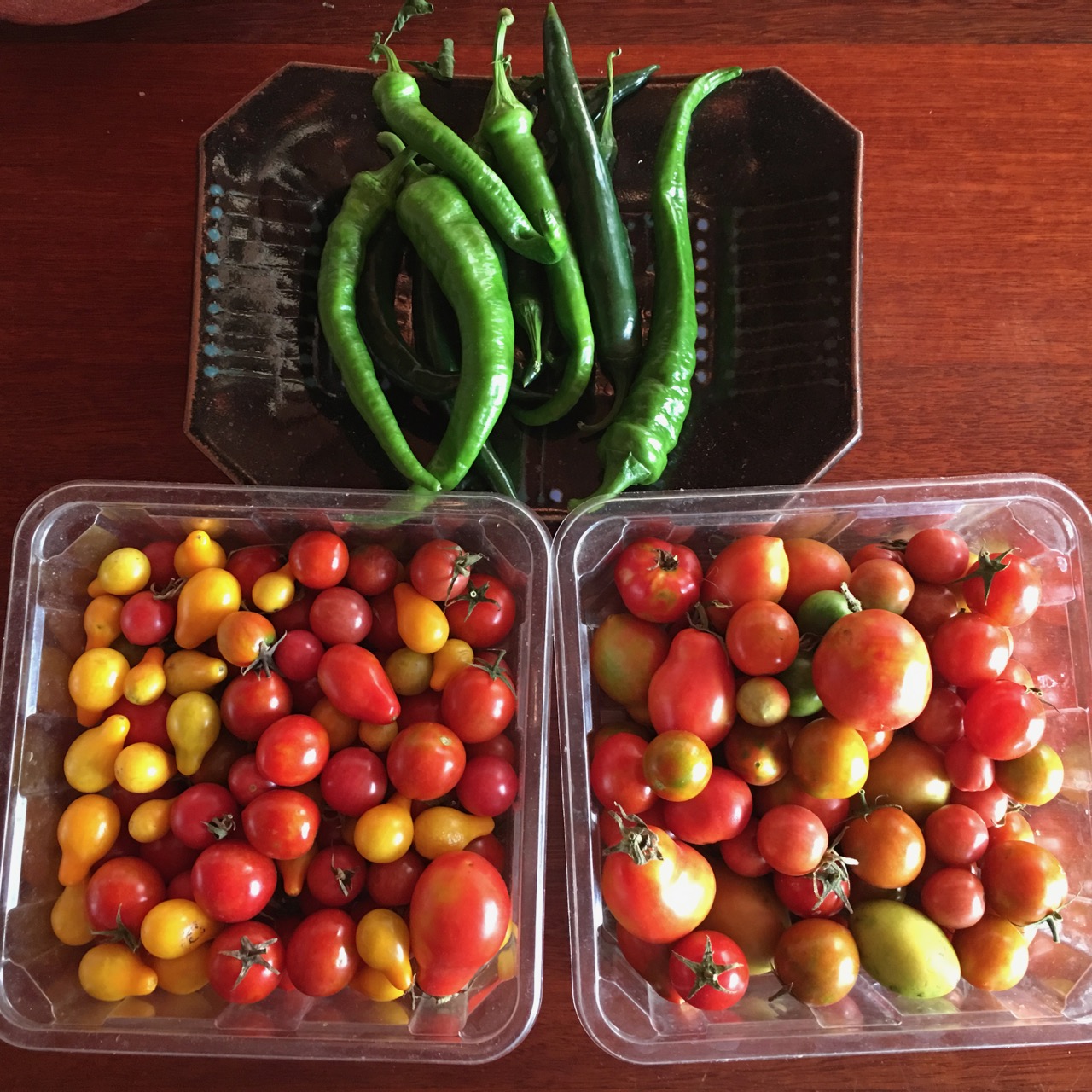
Now that it is a bit cooler, momentarily, We feel like eating something nice for dinner. I decide to make a vegetable pasta. We have lots of things coming along in the garden besides fruit. Today we have a load of capsicums and tomatoes, so pasta sounds good.

IMG_3725

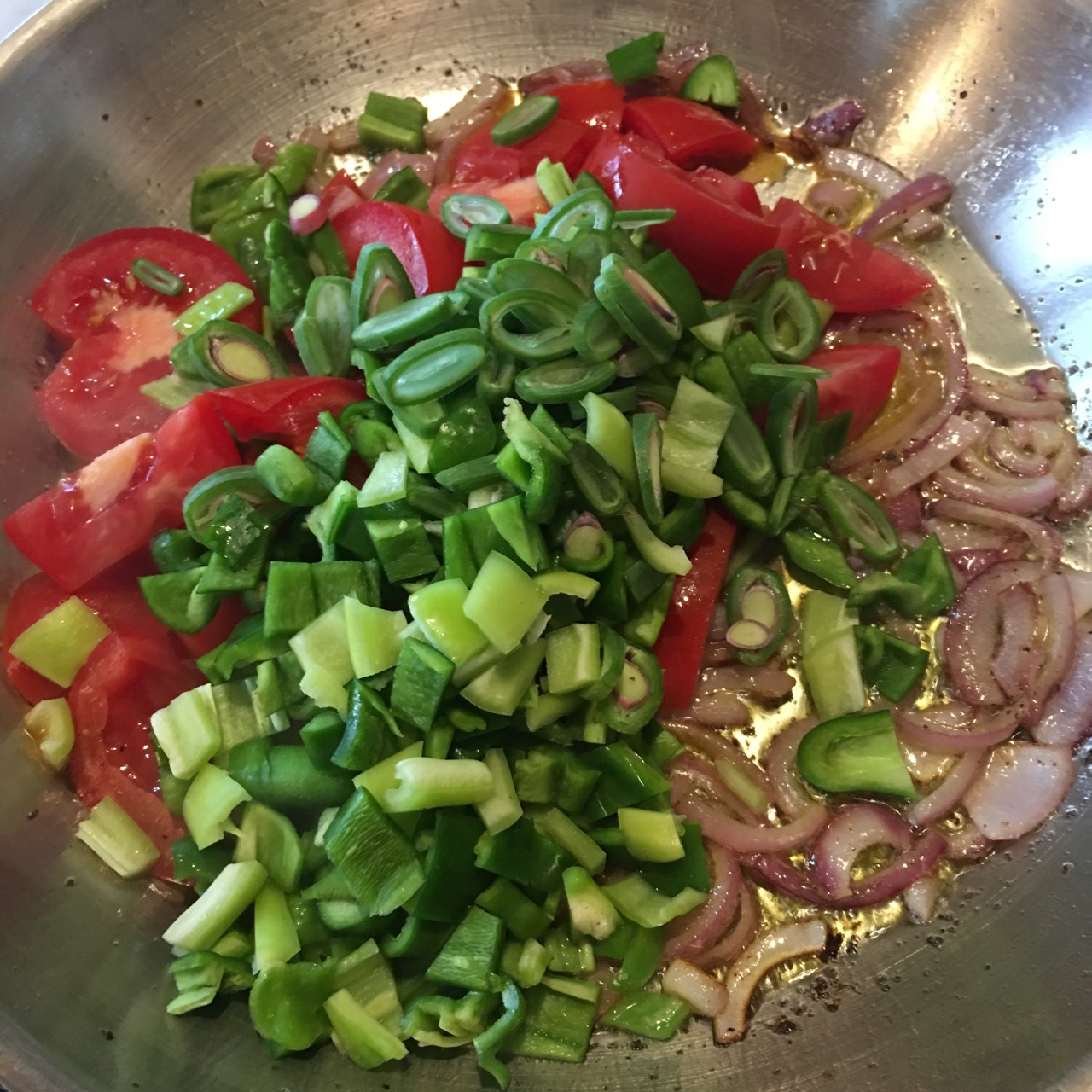
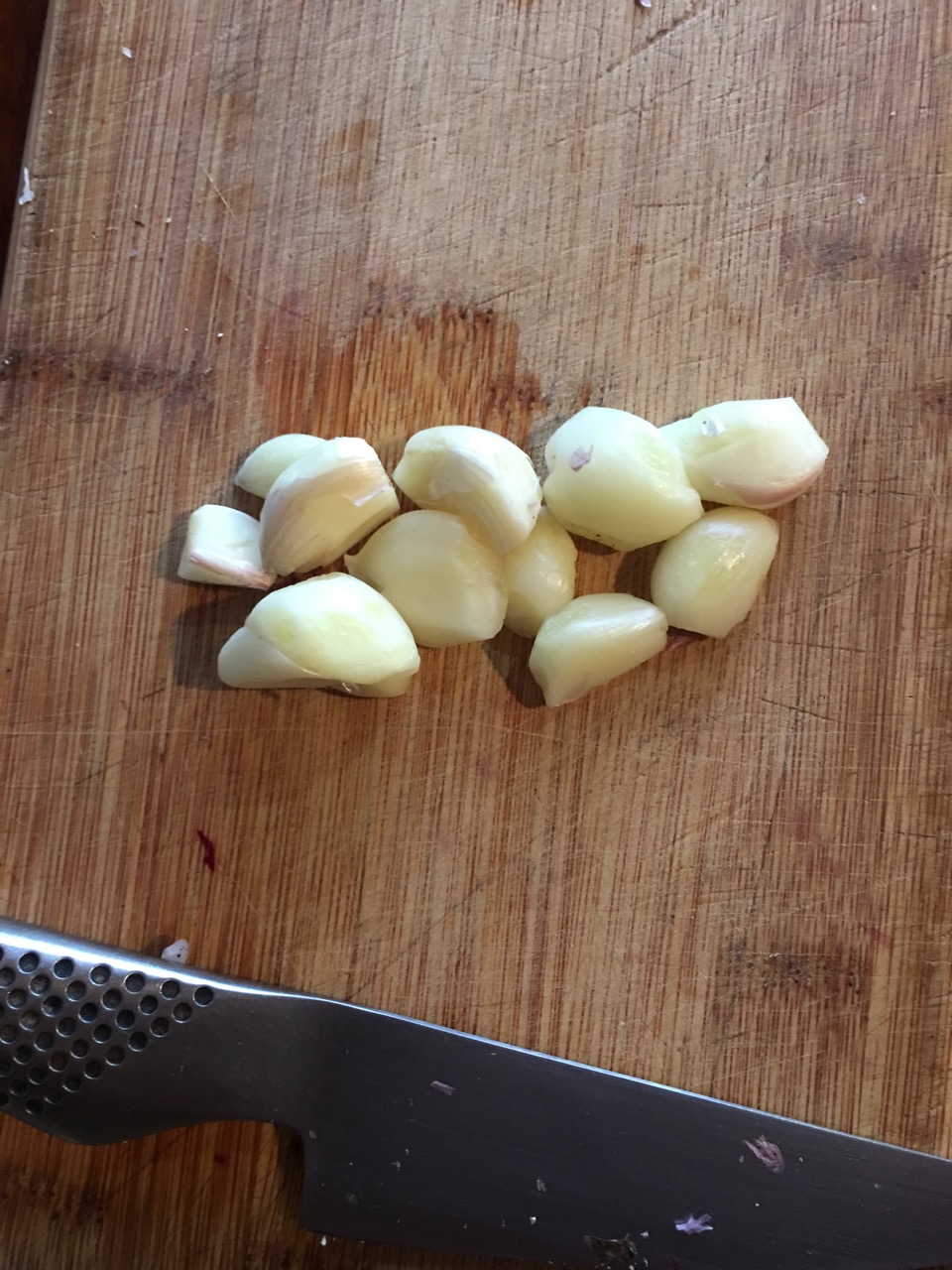
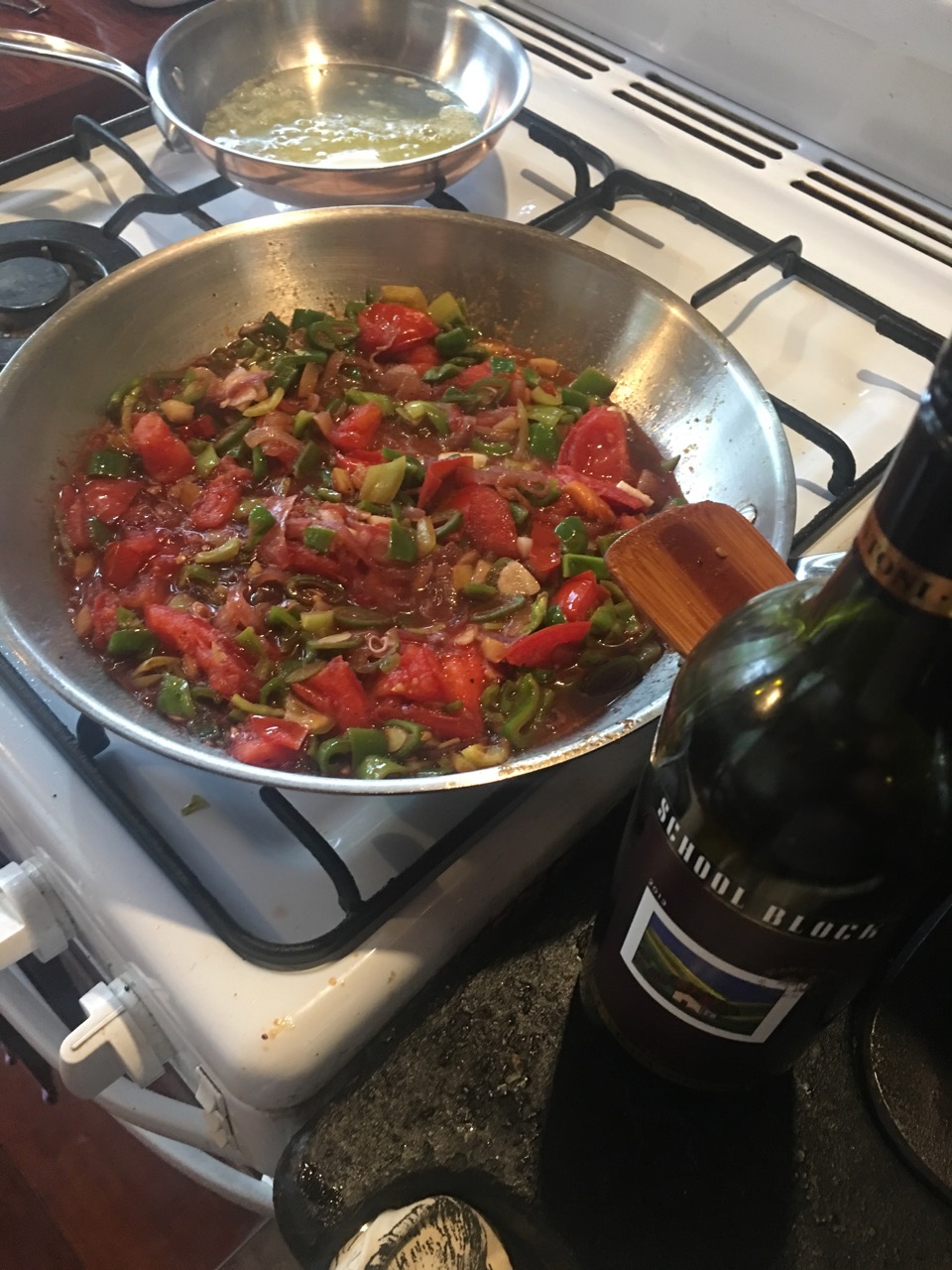
I brown an onion in olive oil and then add in a small knob of garlic, roughly chopped. What an amazing smell this is. It smells good enough to eat just by itself. next the 4 different types of green peppers. We have round bell capsicums, long thin yellow banana capsicums and two different long tapered green ones. I also finely slice a couple of huge green 7-year beans. They look a bit rough, being coarse and a bit hairy looking, but taste delicious. We eat them whole, raw or cooked, like French beans when they are young, slice them like this when they are full-sized and leave a lot on the vine to dry for use in bean stews over winter. They are a perennial bean, re-shooting from the root in the spring. I can’t say that they last 7 years or not. I think not. But at least half of them seem to come back to life each year. We move the bean tresses every few years anyway to spread the nitrogen-fixing capacity of the beans around the garden. SO I end up replanting a few each year. They grow from seed as an annual crop just like any other bean.

IMG_3726  IMG_3727

IMG_3728  IMG_3731

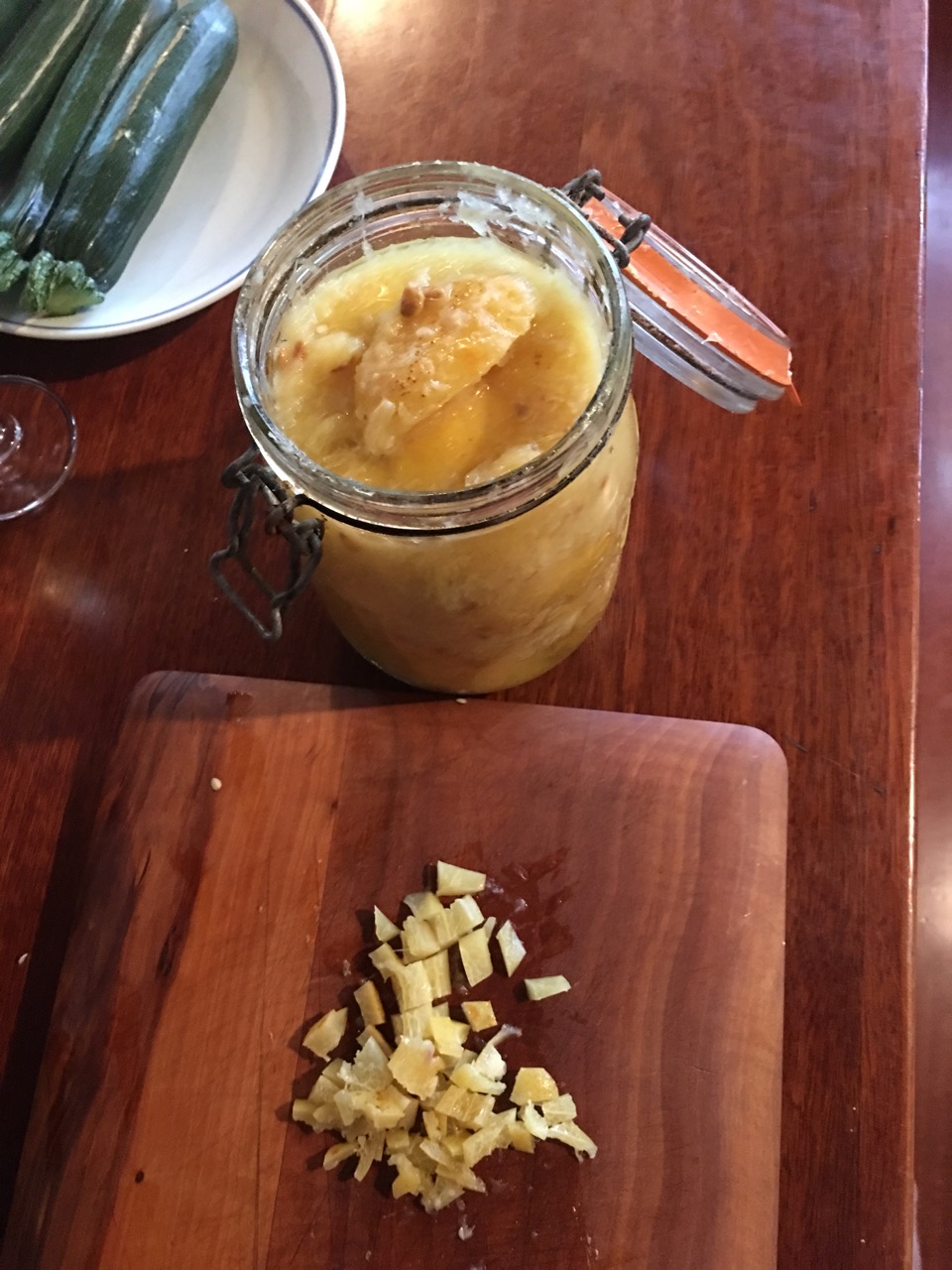
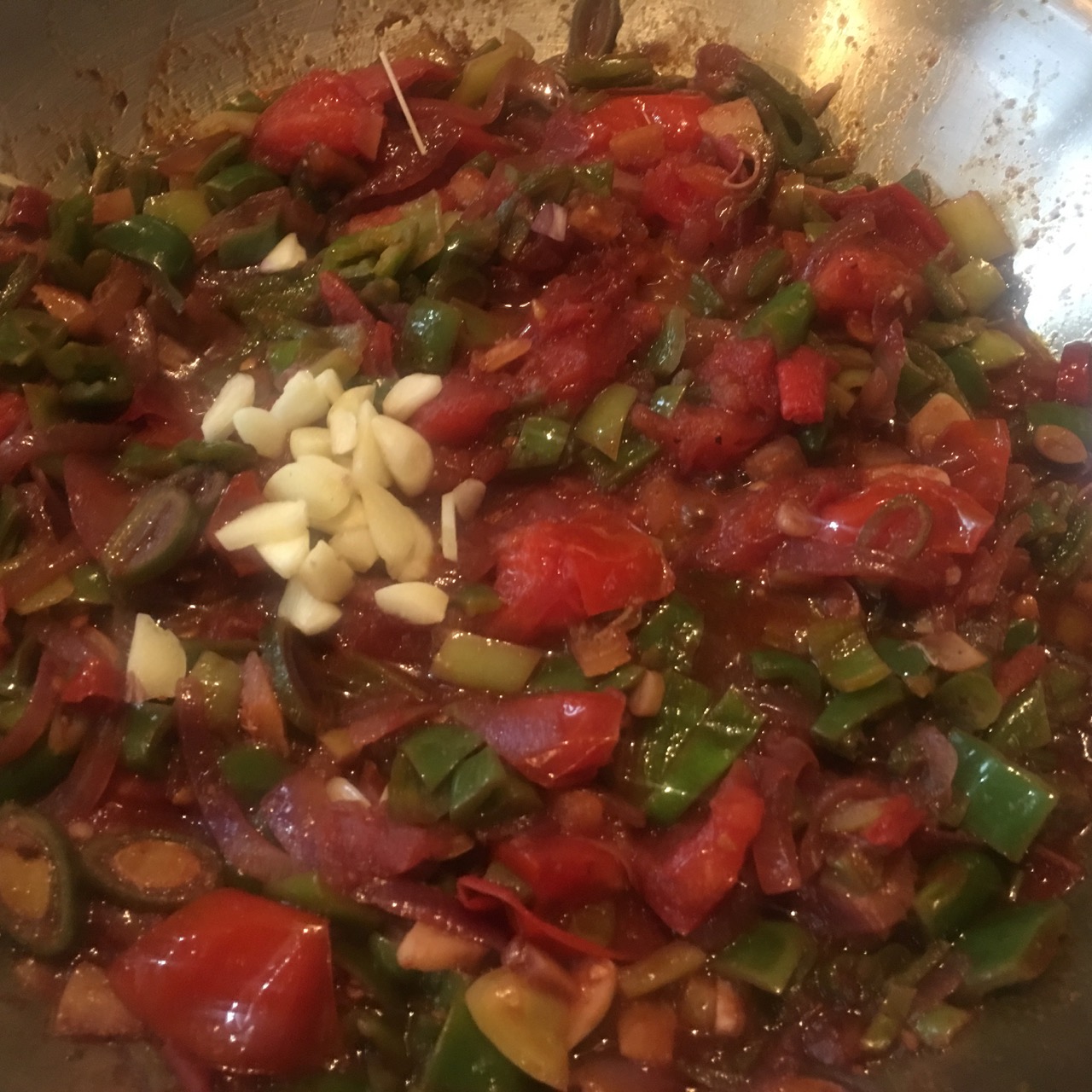
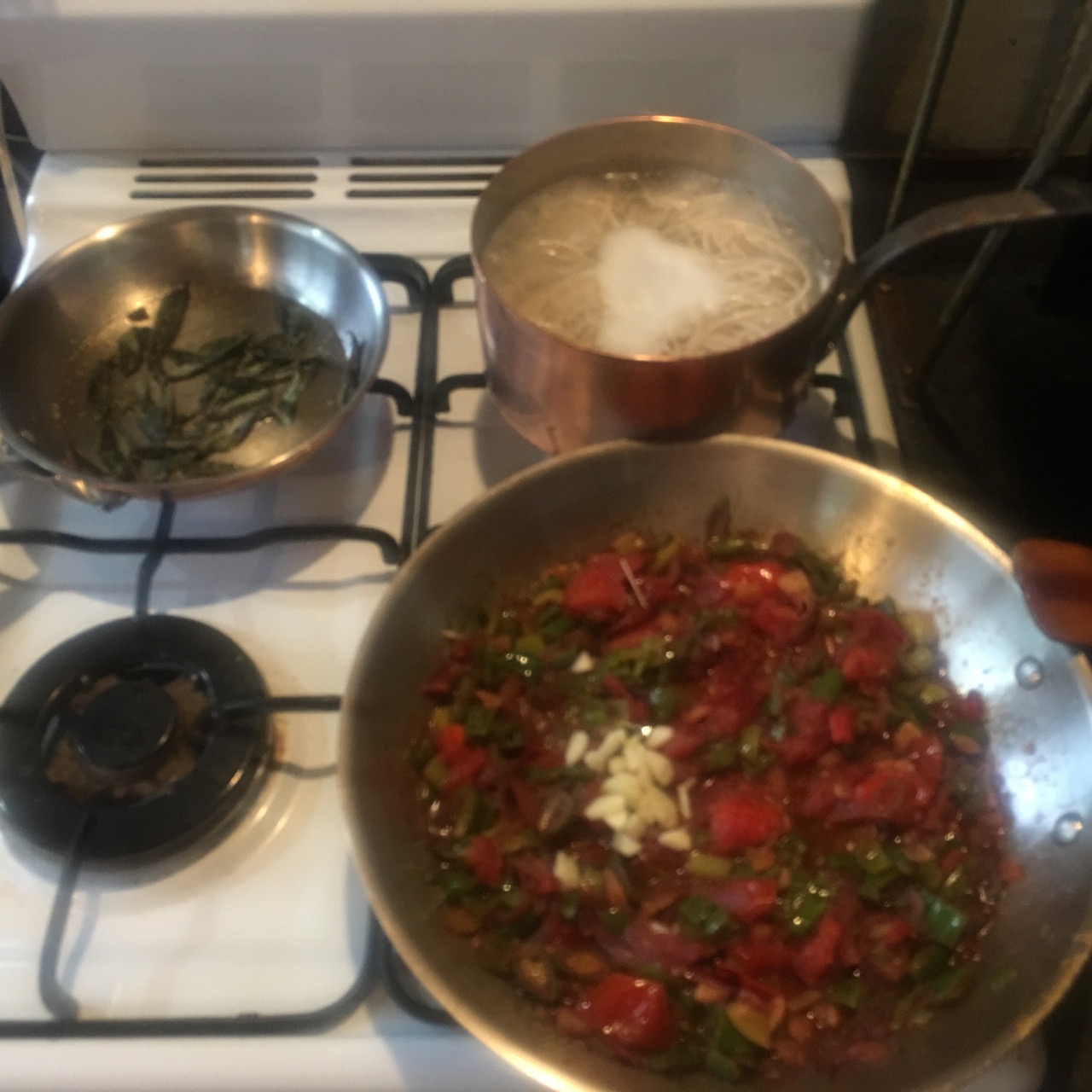
As all this simmers down into a sauce, I add in some chopped preserved lemons that I made just a couple of months ago, and then de-glaze with a large swig of good red wine. right at the end i throw in the other half of the garlic, so that it remains a firm and retains some pleasant crunch.

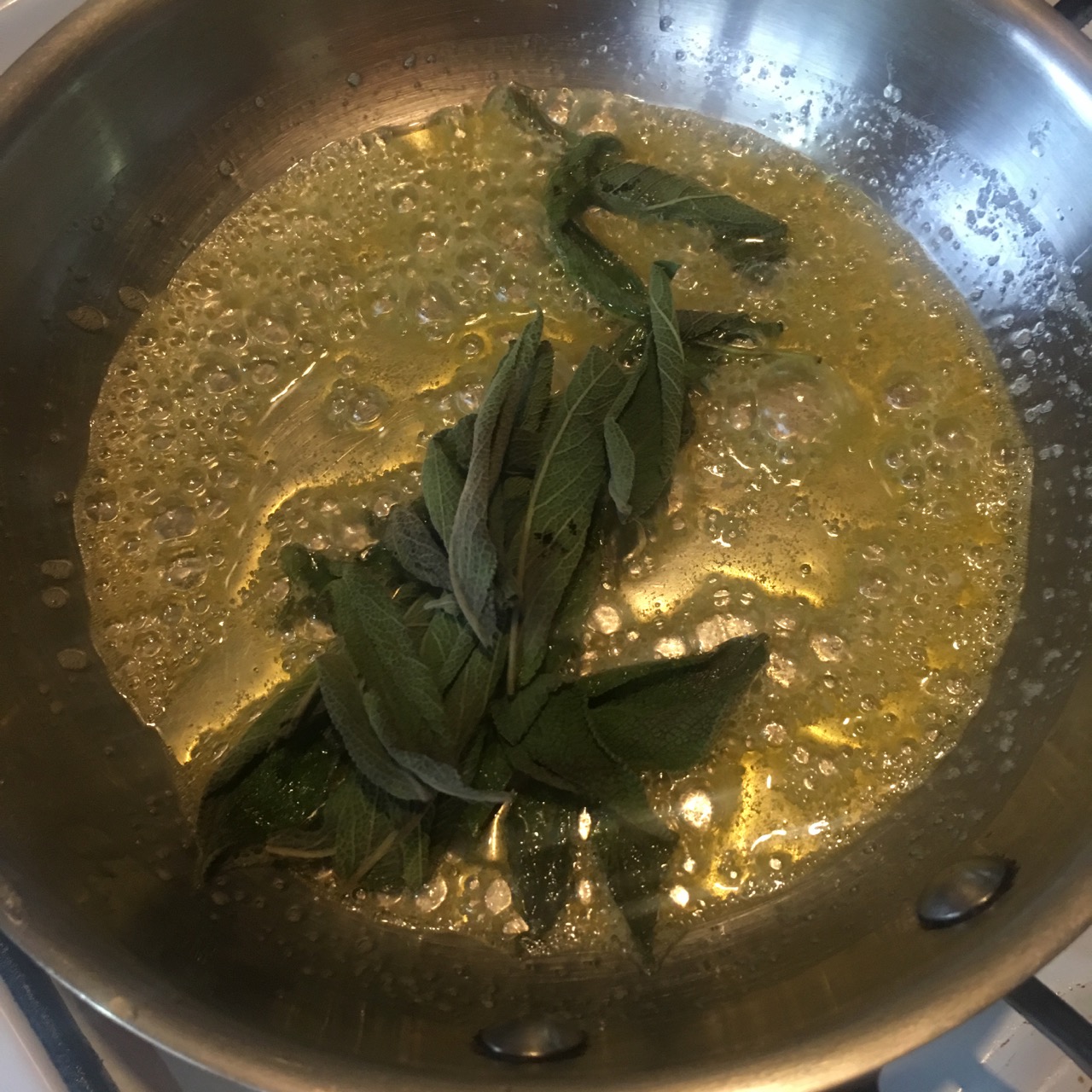
I garnish this simple passata sauce with some sage leaves fried in butter. These just take a couple of minutes. We use Australian grown but Japanese style soba noodles. These just need a few minutes to soften in boiling water. I don’t use salt in the water, nor do I cook with salt either. As a result Janine and I both retain our youthful low blood pressure.

IMG_3729  IMG_3732

IMG_3733

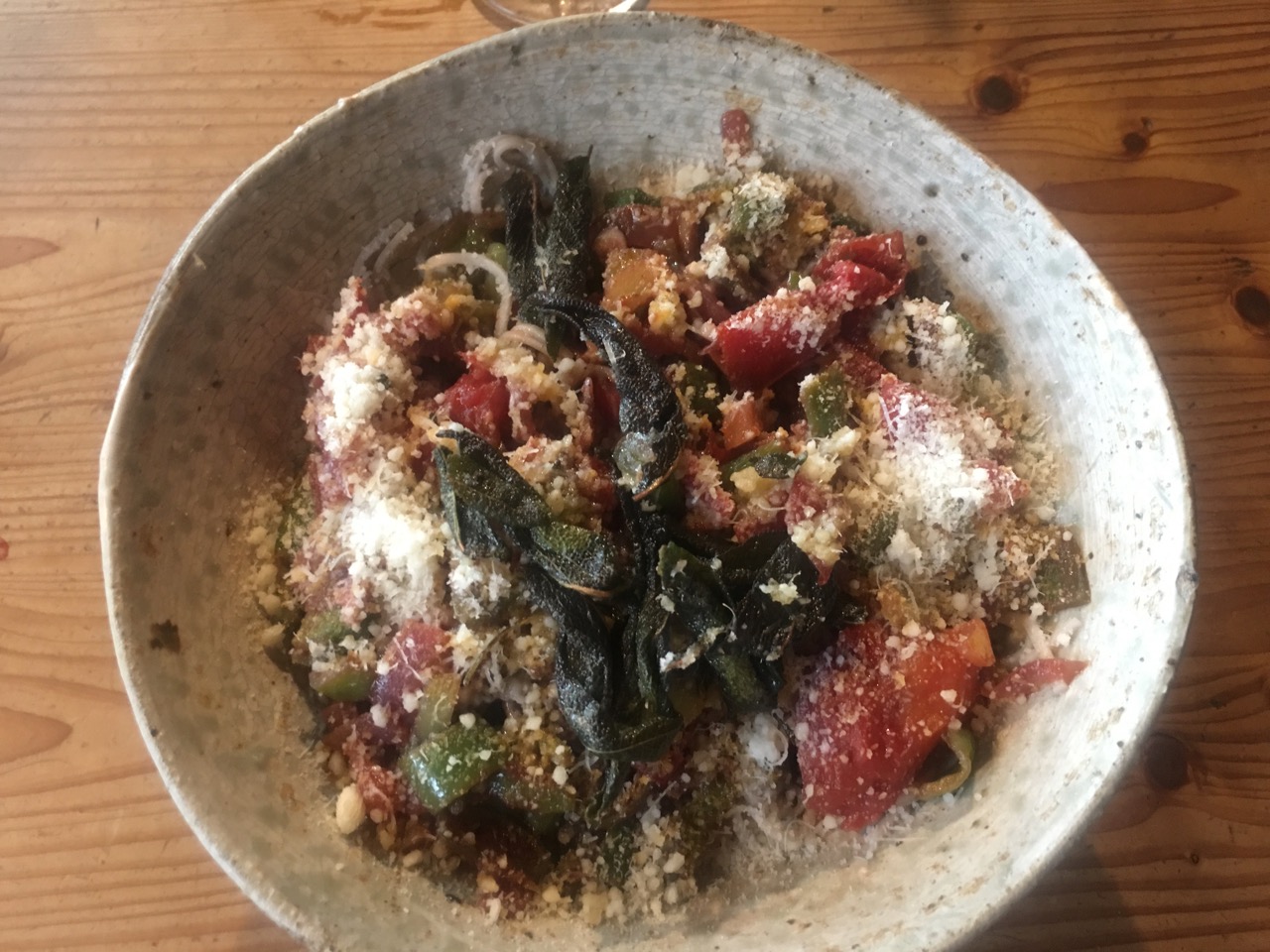
Served with a sprinkle of parmesan and a glass of chilled white wine. it tastes delicious. and it was nearly all from our garden just hours earlier.

I bought in the pasta, olive oil and the parmesan cheese. The rest is all our own work.

Best wishes from the Post Modern Peasants

Nice wood fired pot

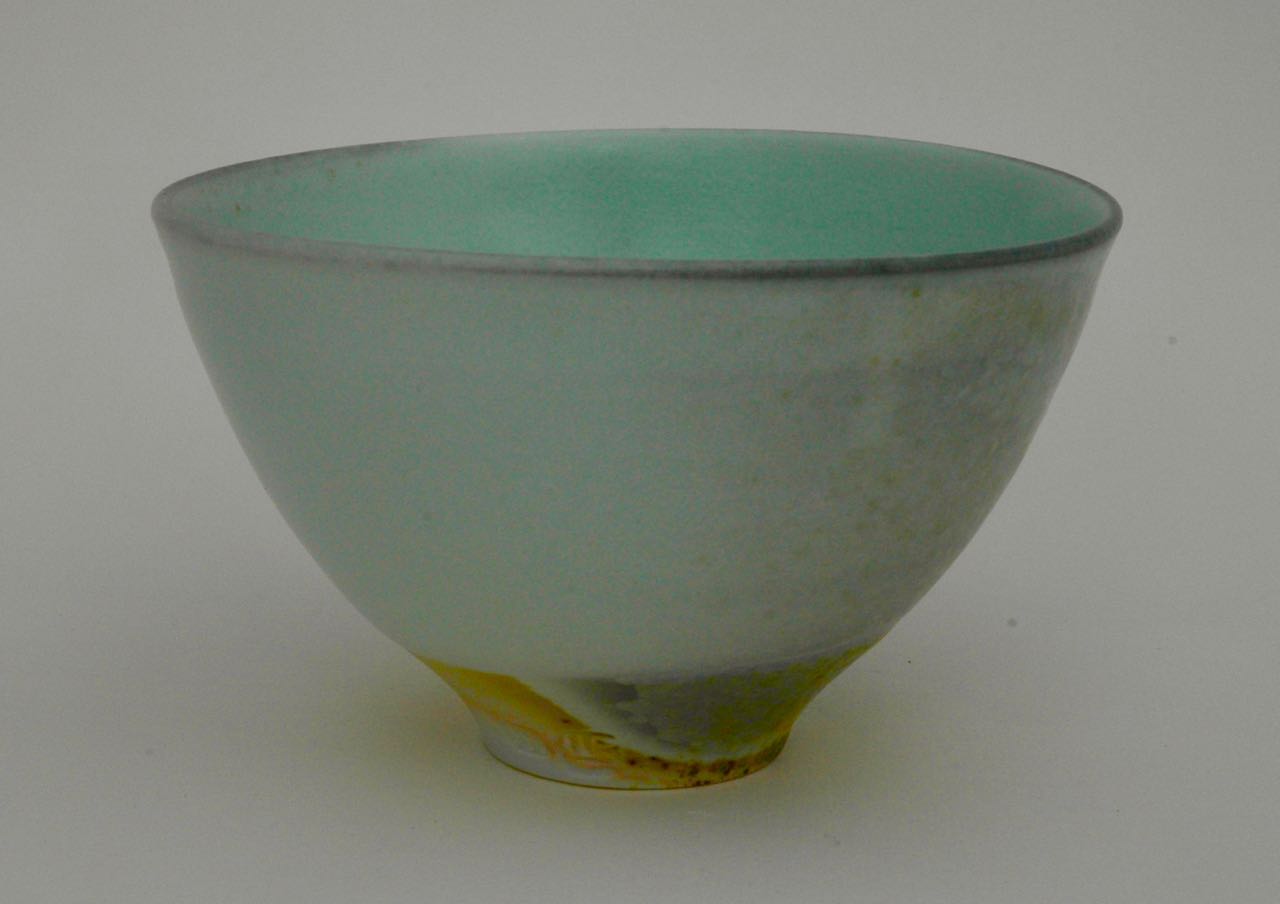
This is a nice bowl from our wood kiln firing. Wood fired porcelain bowl with pale celadon showing some light ash deposit on the fire face with a little ash glaze crystal growth build-up on the exposed clay at the foot with carbon inclusion. The celadon style glaze is limpid pale green on the inside and grey/green on the out side with a little yellow ash deposit and some grey carbon inclusion at the rim.

A very nice little pot. What more could you want from a simple rice bowl? You couls even drink tea from this little beauty.

DSC_0016 (1)

The Long Dry Continues

It has now been 1 1/4 years since the last significant rain here. Soaking rain that flowed across the ground and filled the dams. We have had only showers and light rain that we harvest on our tin roofs and then collect in our water tanks.

When is the best time to buy a new water tank?  – Last year!

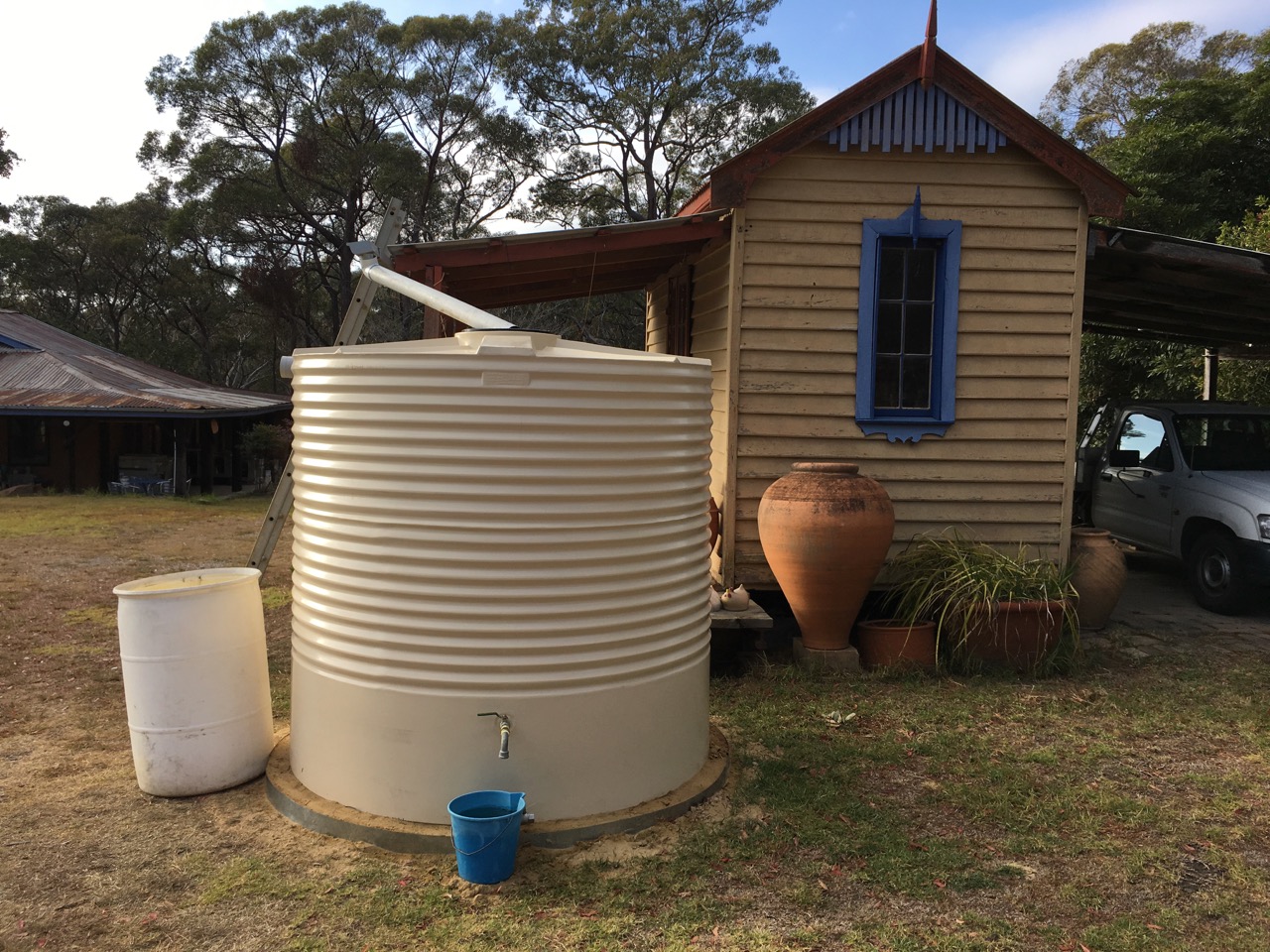
We have just added a new water tank to the little railway station that we bought 40 years ago and moved here to sit next to The Old School building that we live in.

IMG_1058

The new water tank is made out of plastic. I’m not too keen on holding water in plastic, even if it is guaranteed to be virgin, food grade, plastic. All the old water tanks were made from galvanised steel and soldered at the joints with lead solder – not good! Then the later metal tanks were made from zincalume plated steel with silicon rubber sealed joints. I wasn’t too happy about that either. They rusted out very fast too. A complete waste of money. The last metal tank that we bought was made from galvanised steel sheet, but the metal surface had plastic sheeting melted onto it. A process called ‘aquaplate’ , and it was still sealed with silicon.  With these options all being less than perfect, we decided to try a plastic tank this time, as it’s no different to plastic lined steel – and the plastic tanks are half the price of the galvanised steel ones now.

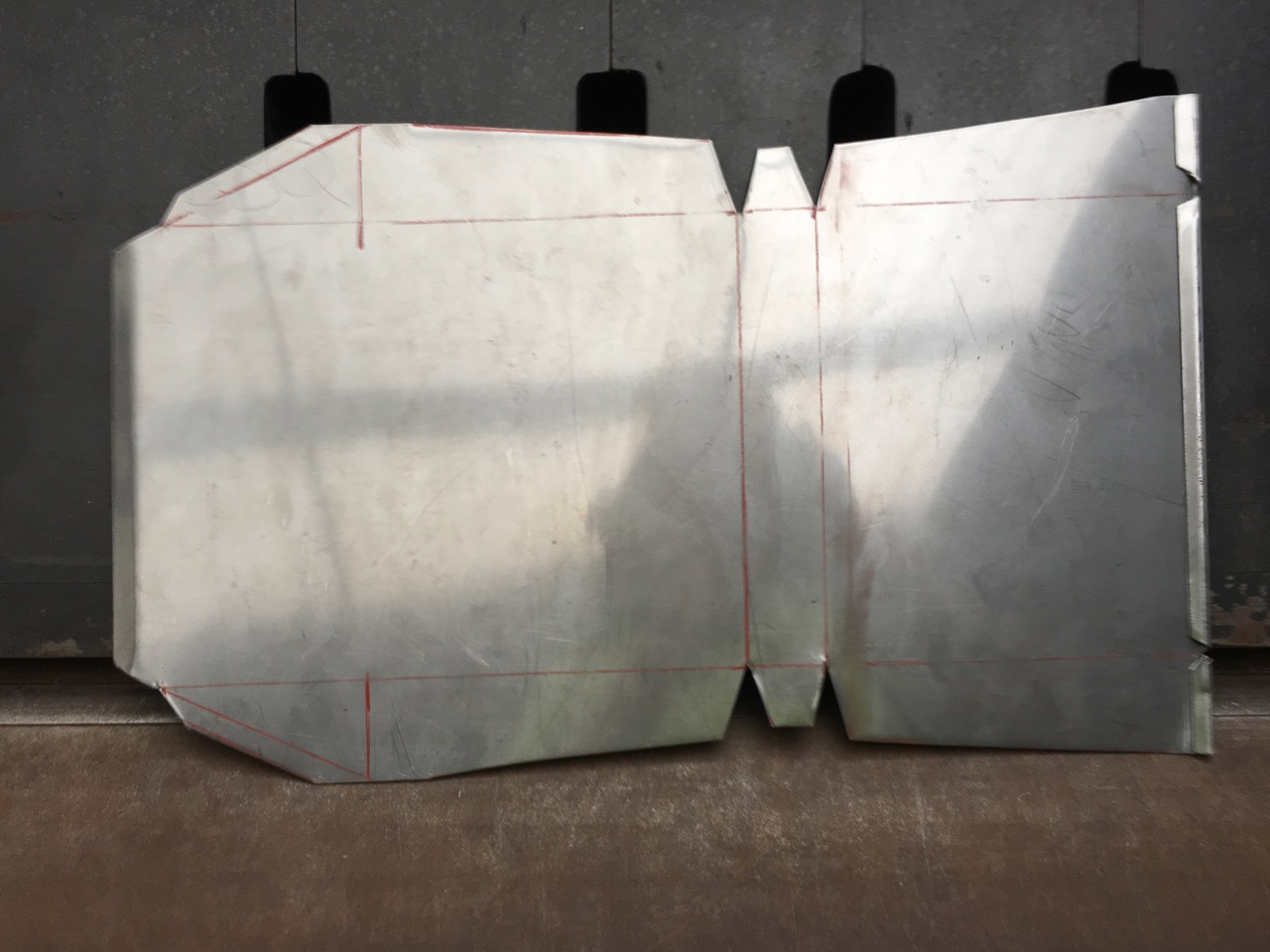
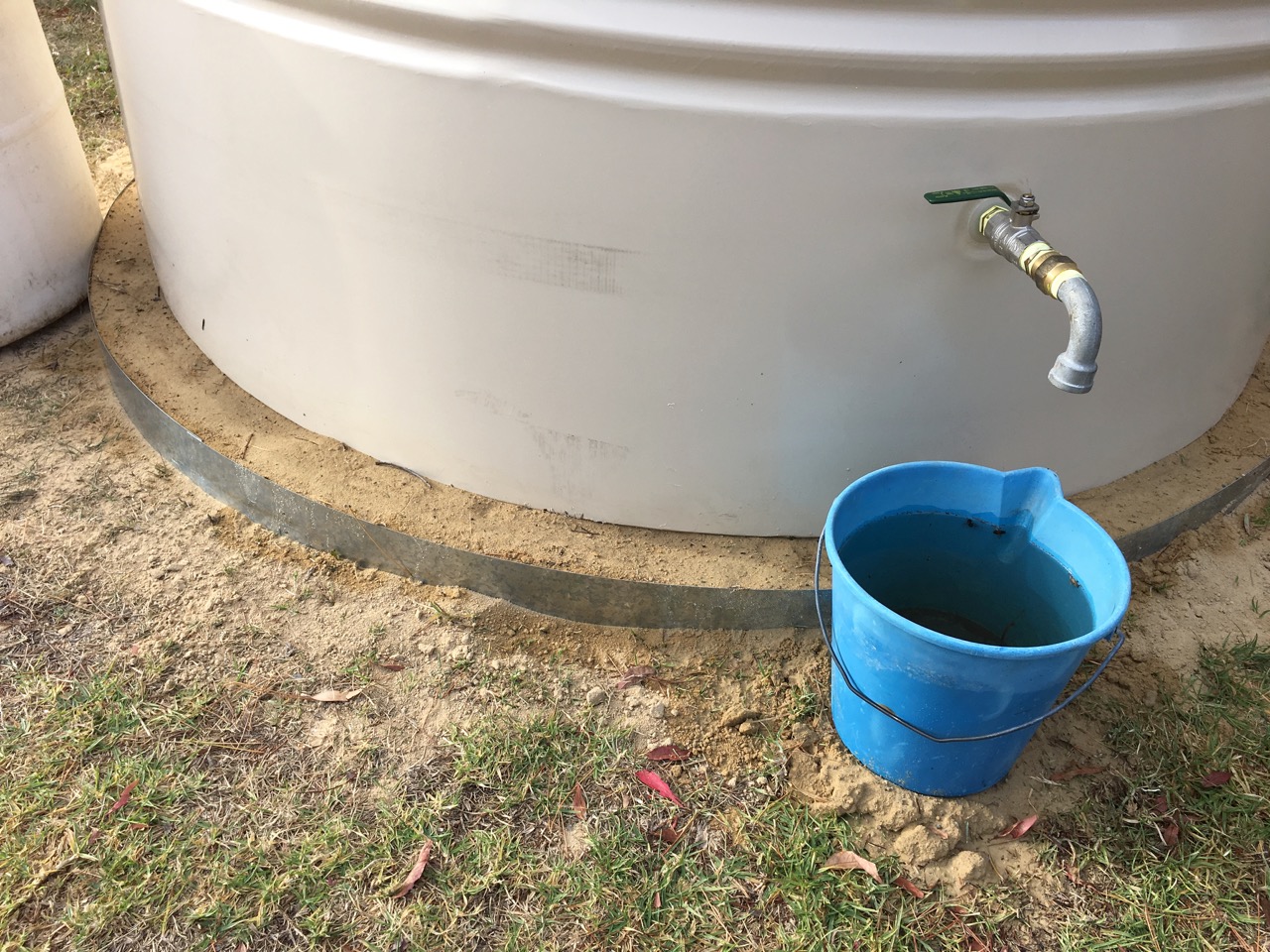
I made a galvanised steel ring to hold the 100 mm. of coarse sand base in place. I cut up a small piece of 1m galvanised steel scrap sheetmetal and guillotine it into 6 long, thin strips. Then I welded them all together end to end, to make a 6 metre long strip and loop it around to join it back into a 2 metre diameter ring. It looks like it’s almost professional.

IMG_1059

I bodgie up a makeshift tap out of parts that I have in the shed. Within an hour of deleivery, the tank is installed, connected and half full of water pumped from another tank, to keep it from blowing away. Which is a distinct possibility it were to be left empty for any length of time.

If this is the future of our weather that we are experiencing. We need to get ourselves prepared. After the last long drought we installed a huge 120,000 litre water tank that collected water from the over-flows from the 3 big roofs. The pottery, the kiln shed and the barn. All that water used to just over-flow from the small tanks on each roof and was then lost onto the ground. We now collect all that excess and it is this water that we are now relying on for the house and also for watering the garden and orchard trees. This can’t last, we will eventually run out. We have so far used 1/4 of our water storage. Eventually we will have to buy drinking water, just like our neighbours on both sides are doing now. Every couple of weeks we hear the water truck grind up the dusty dirt road and then the petrol motor pump starts up and roars into life for the 30 minutes or so that it takes to discharge its precious load into their empty water tanks.

IMG_1020 IMG_1022

IMG_1023

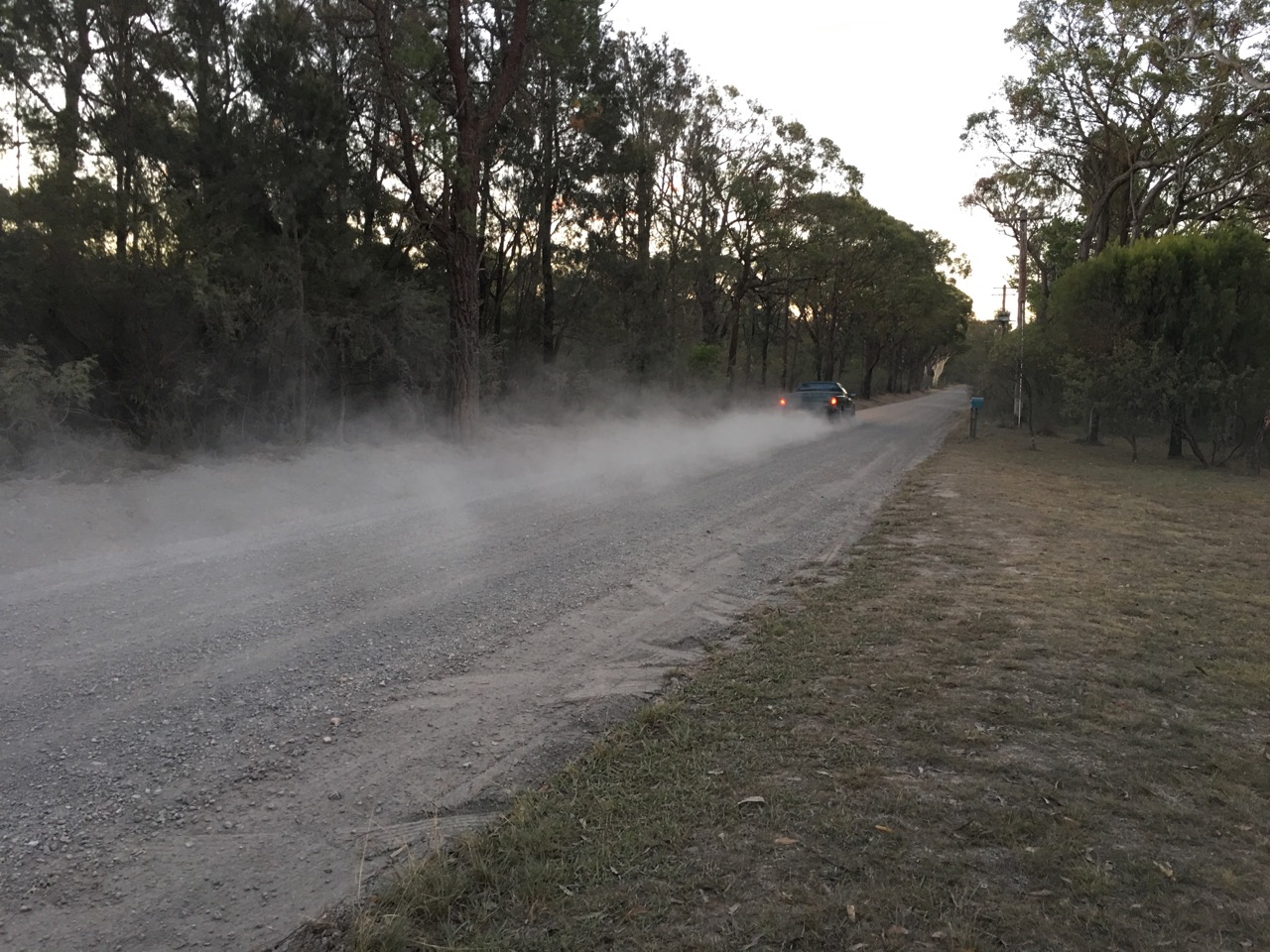
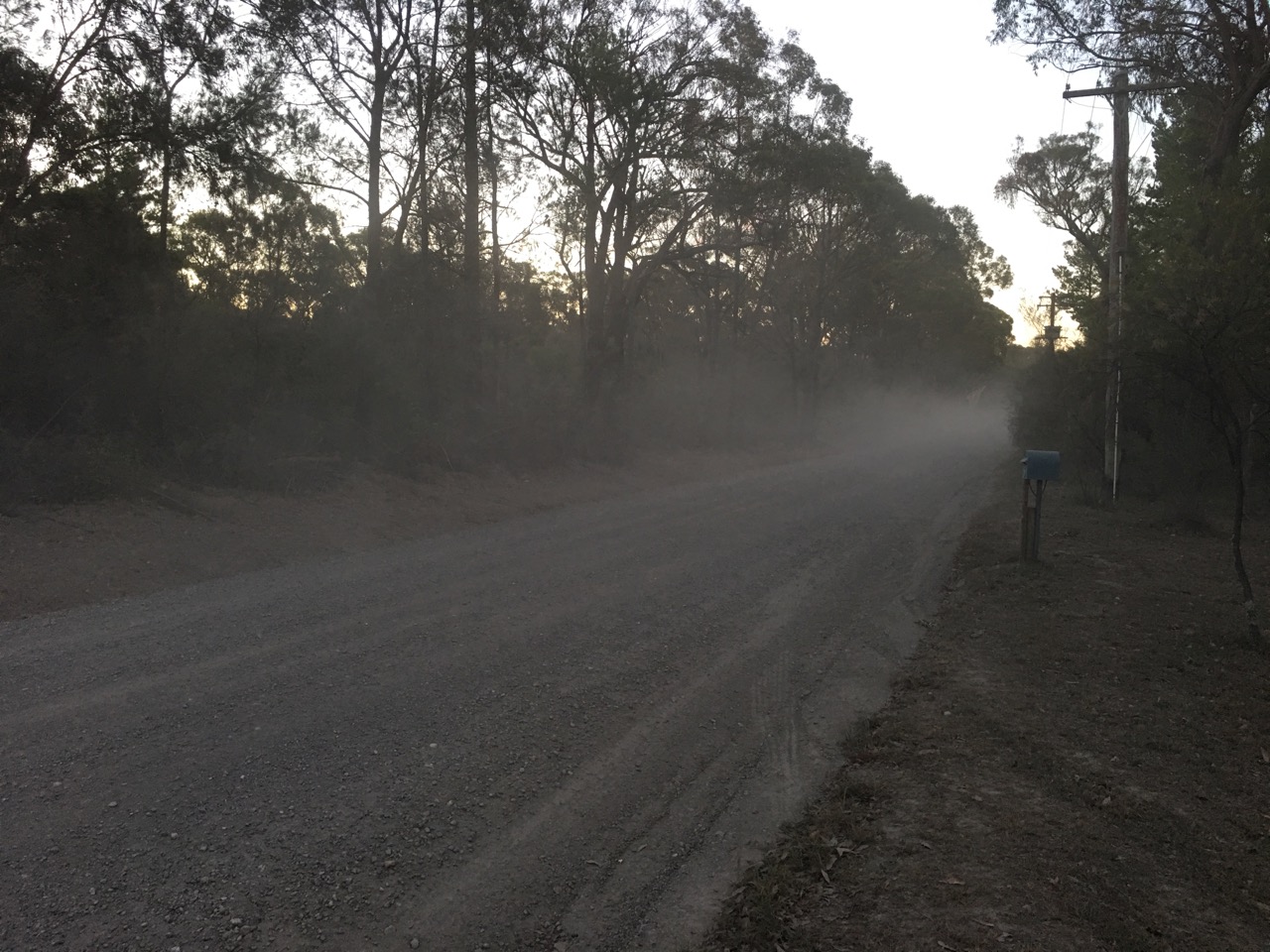
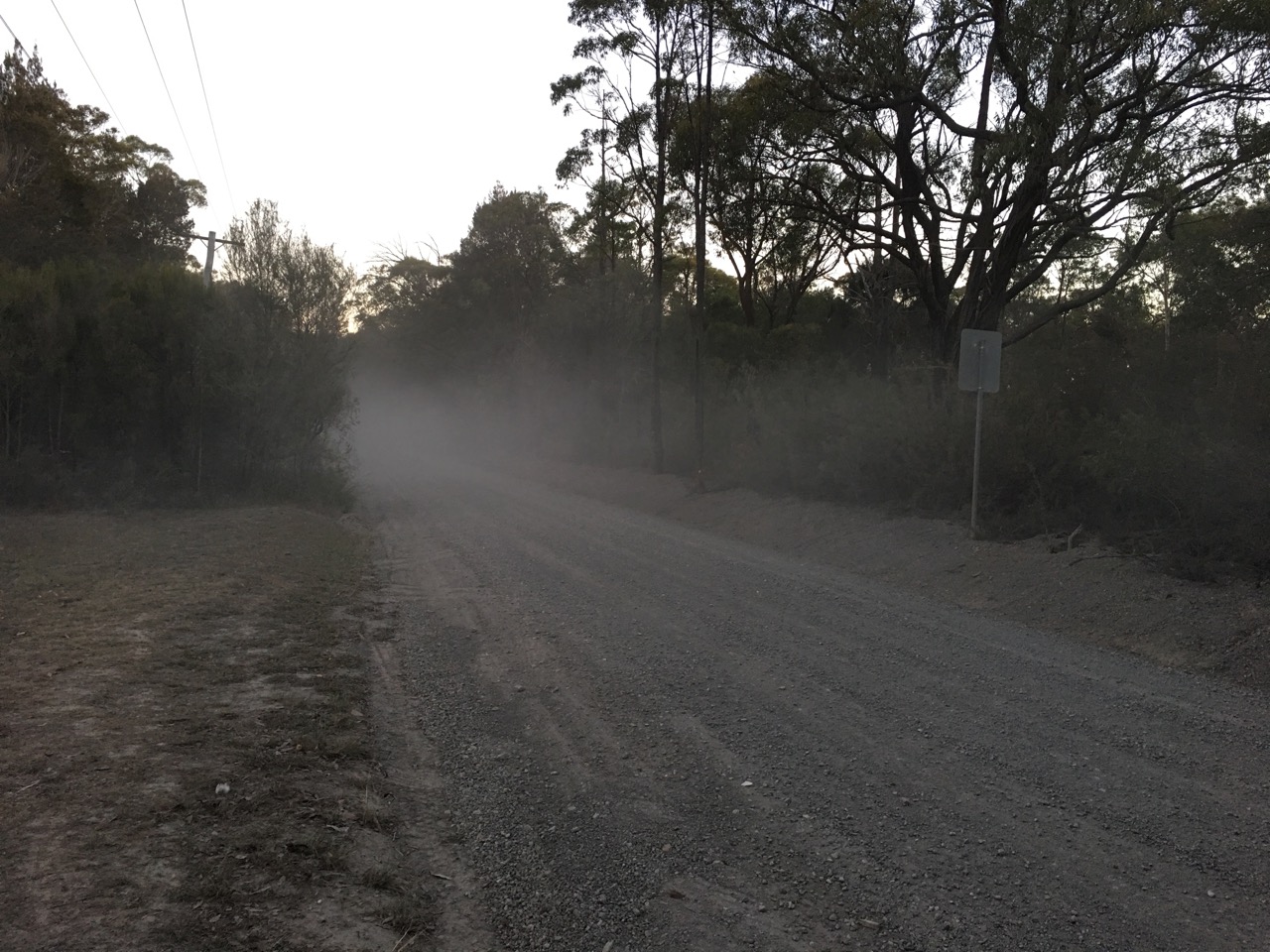
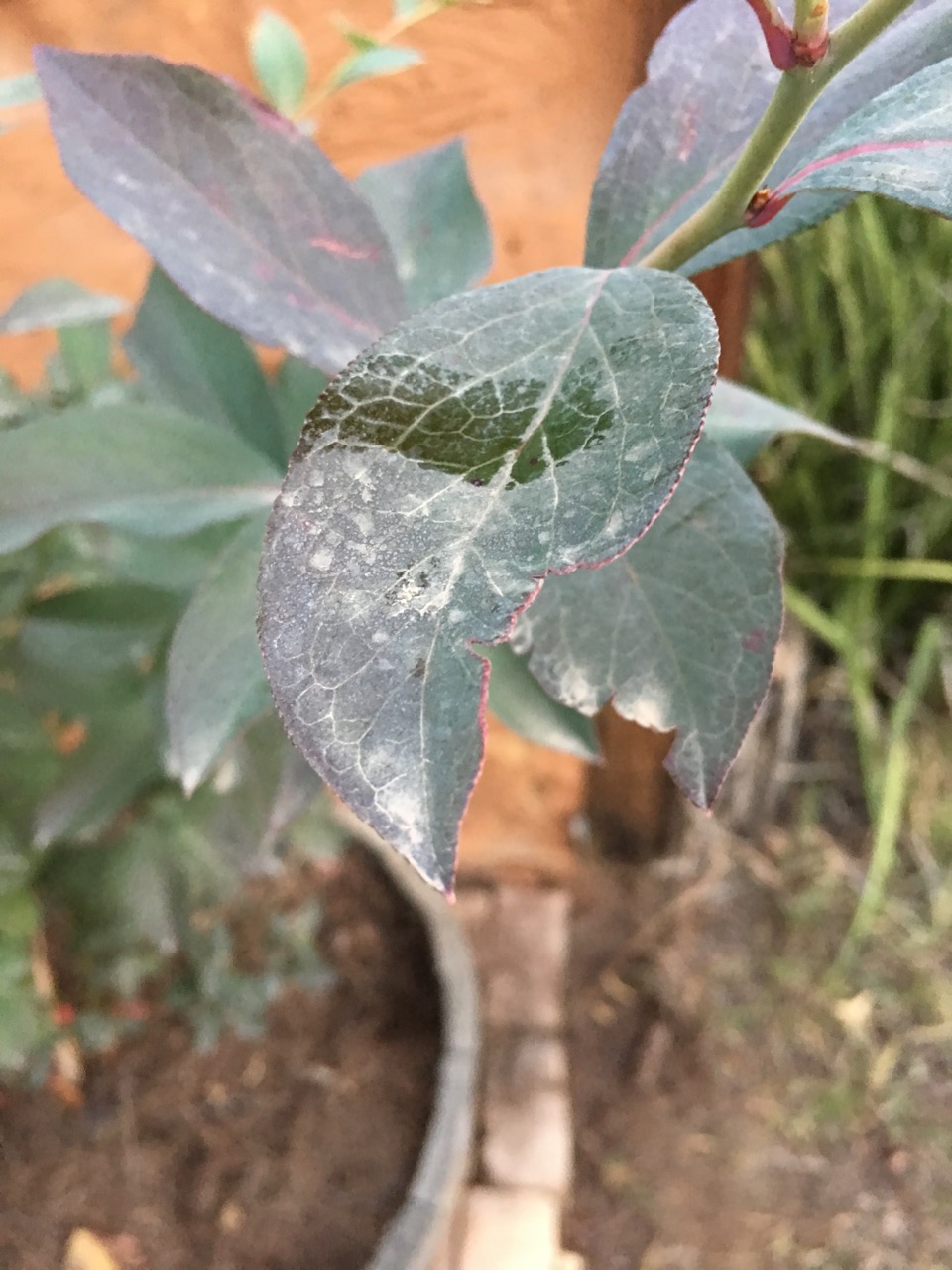
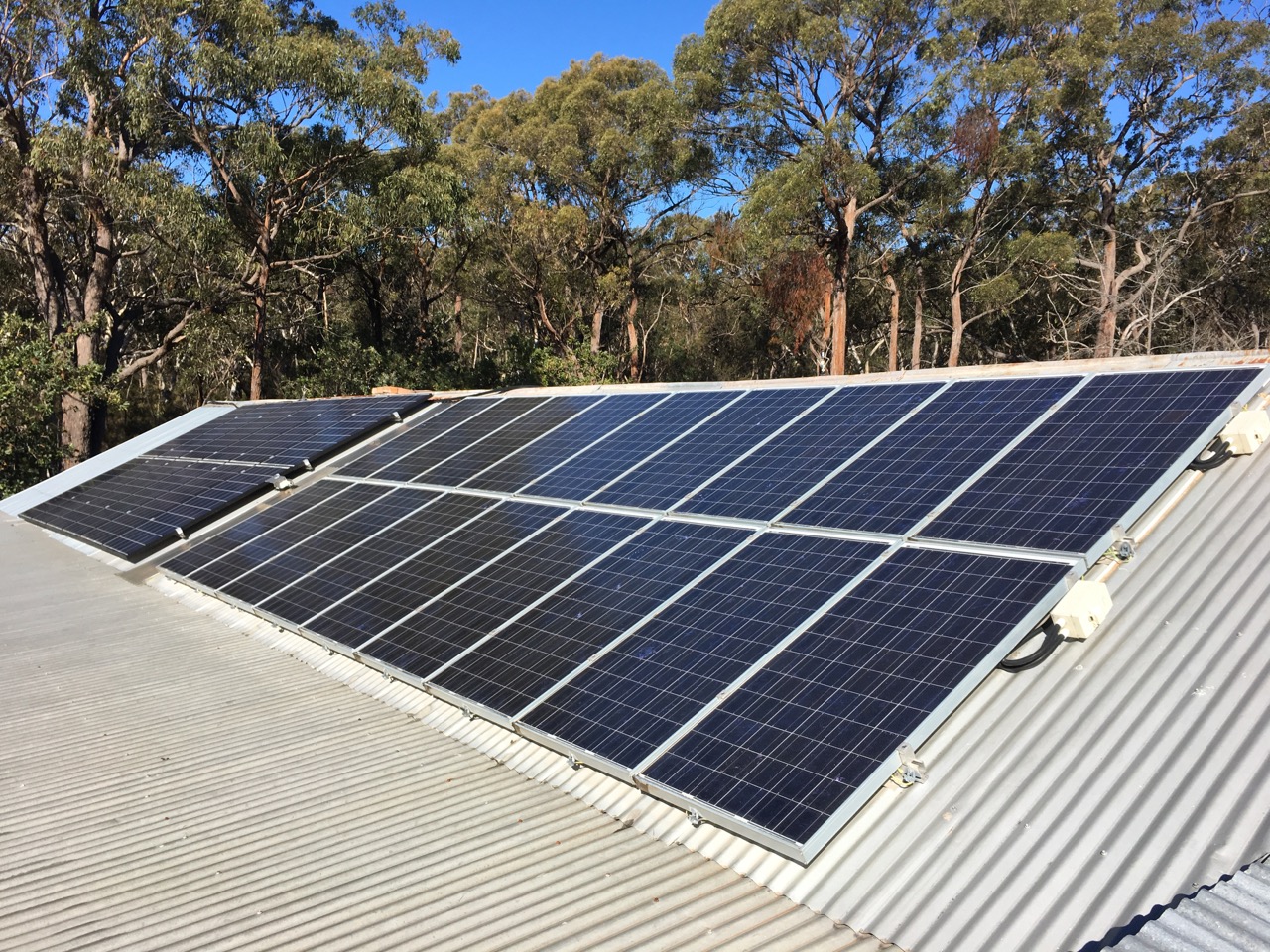
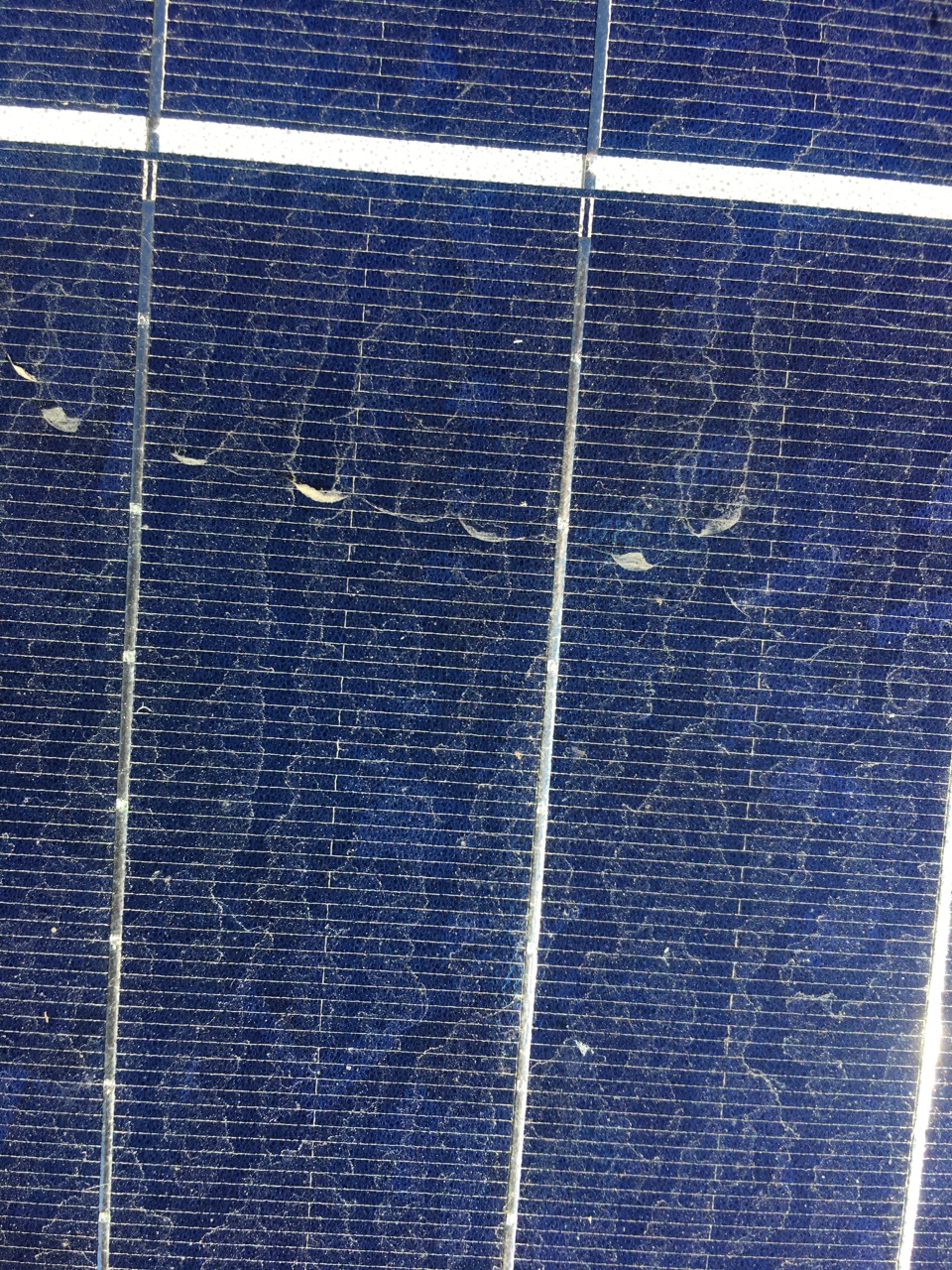
Each time a car drives past our house along the dirt road these days, it stirs up the dust which rolls across the front of our land and settles on everything coating the whole of our land in a very fine airborne silicosis causing layer of fine dust. It’s in our hair and our lungs, you can’t filter it out. It creeps in under the doors and in through the cracks around the windows. Everything in the house slowly gets coated in it. We have to mop the floor every couple of days and wipe down the shelves. It also settles on all the leaves of the trees and particularly on the solar panels. I need to wash them down every week to keep up their performance.  I wipe the Blueberry leaves with a wet finger, and you can see the layer of dust become more apparent.

IMG_1017

IMG_1045

IMG_1047 IMG_1048

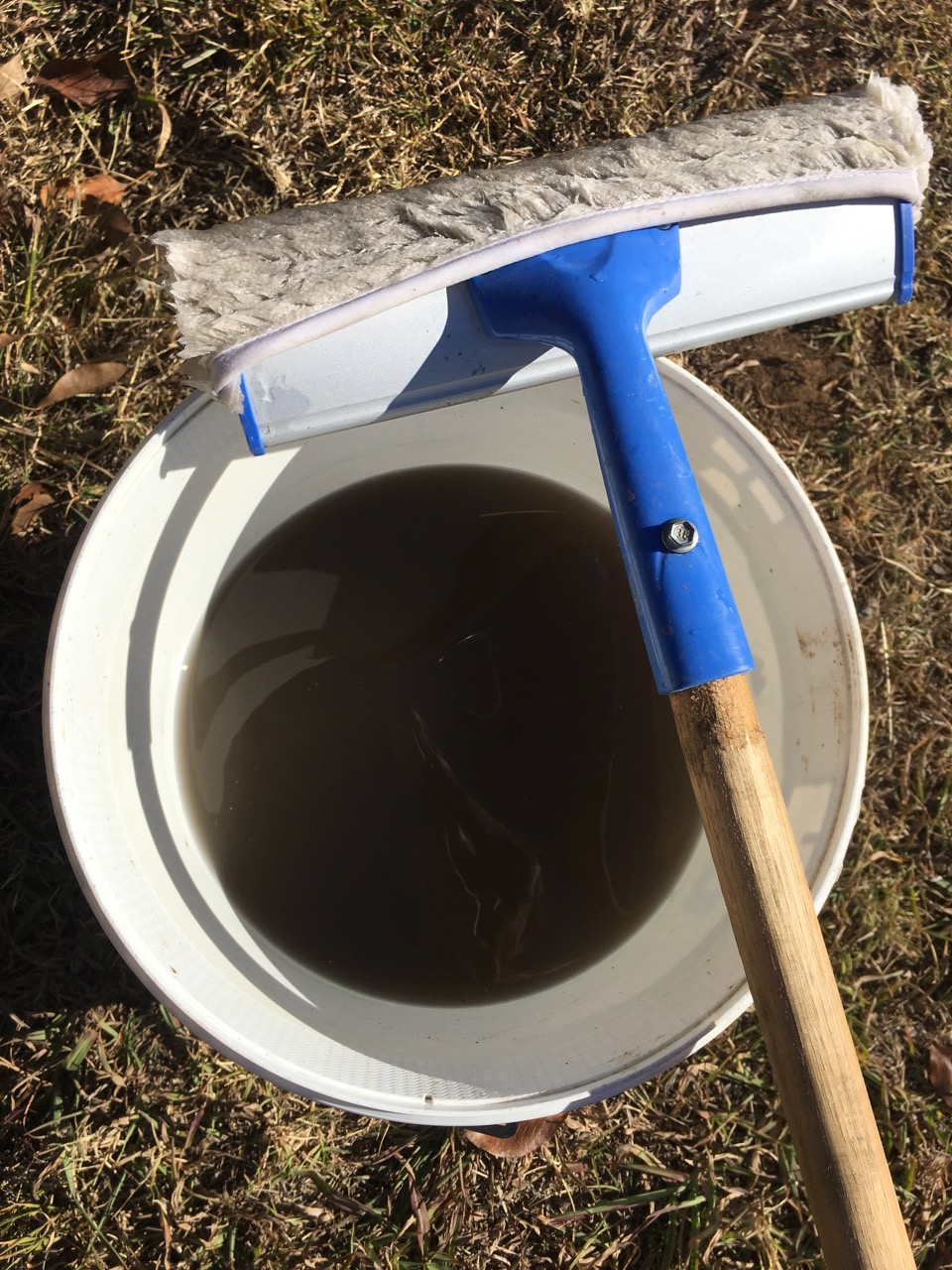
After I finish washing the panels, the water in the bucket is black.

This road didn’t used to be this bad, but recently the local council graded the dirt road and applied a thick layer of what looks like steel-works slag. It has broken down to a very fine dusty substance – whatever it is. It’s horrible. I wrote to the council and complained, but after ten days I got a phone call to say that this road isn’t on their 10 year plan for re-surfacing, so we will have to live with it for the next decade at least. The council man suggested that it might be wise to expect a wait of 15 years! As there are many other country roads ahead of us on their list.

I’m not too sure that I’ll live that long, especially with all this dust in my lungs!

Chillies

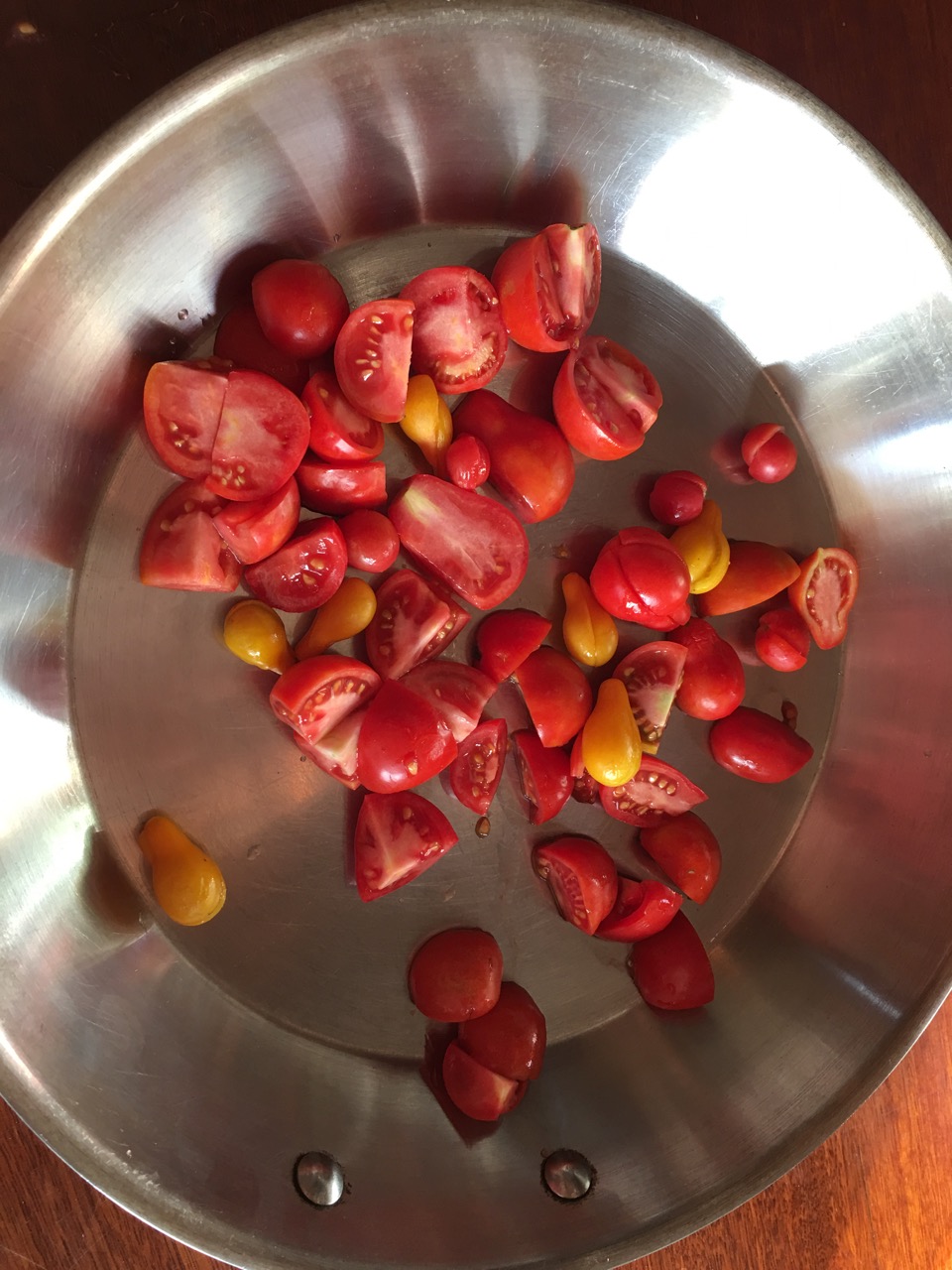
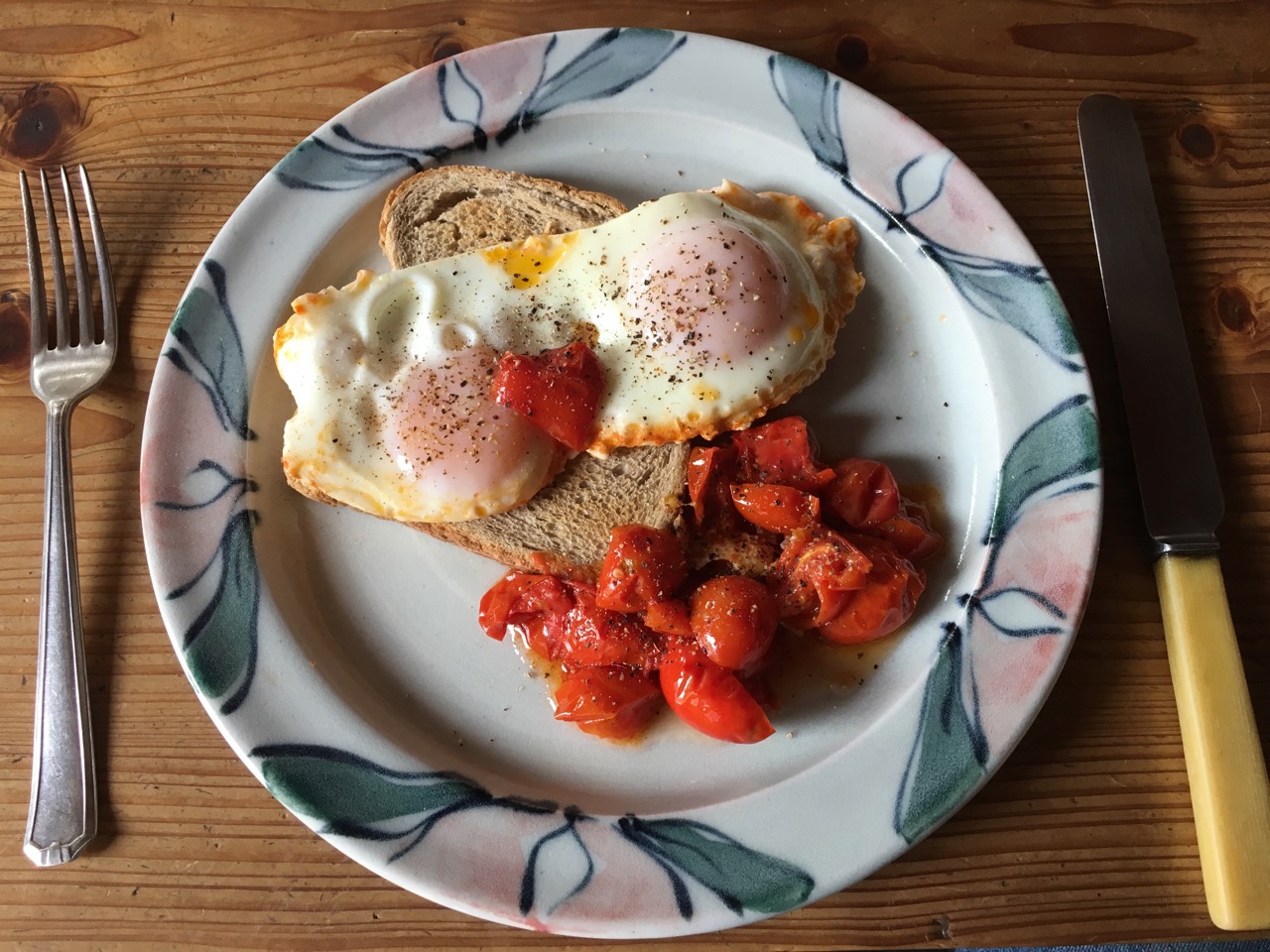
Even though we are just two weeks away from winter, we are still managing to harvest a small bowl of little ripe tomatoes every few days. There are loads of chillies too. The chickens are still laying an egg each, almost every day, so we decide to have tomatoes and eggs on toast – with some chilli.

IMG_0878

IMG_0822 IMG_0831

Tomatoes with chilli simmered in a little olive oil has to be the best accompaniment for fried eggs. It’s so aromatic and tangy. It has to be one of my favourite winter breakfasts, and the pan juices are just crying out to be mopped up with some nice bread.

IMG_0833

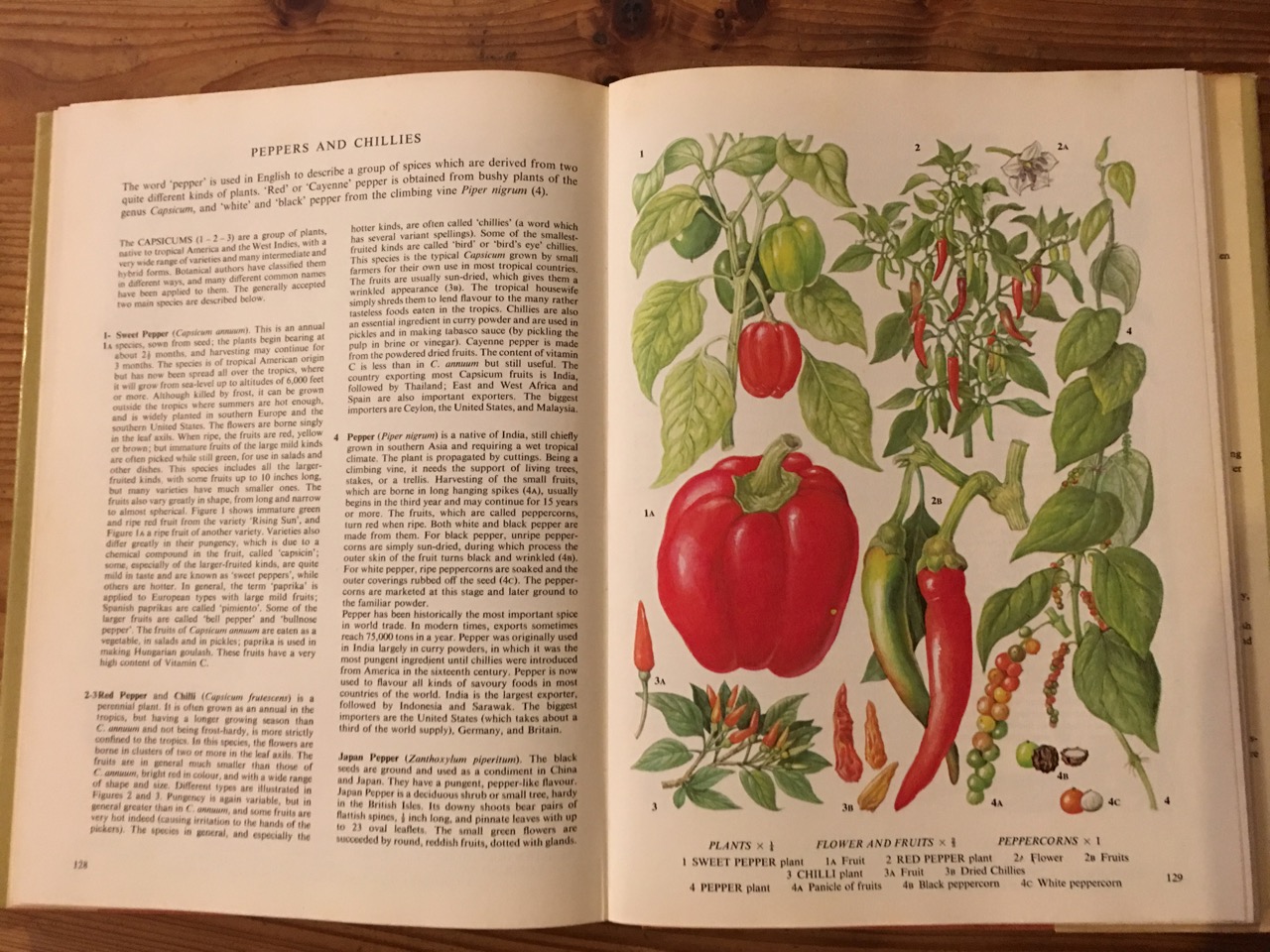
Chilli seems to make so many dishes sing. We grow a range of chillies and capsicums each spring, but they are quite slow to grow for us and don’t decide to fully ripen the whole crop until autumn. I decide to look them up in my favourite plant book, “The Oxford Book Of Food Plants”. We were given our copy as a gift from the late John Meredith in The seventies and it has been an invaluable guide to information on the origins of food plants. I google this book and find that it is still available 2nd hand;

Oxford Book of Food Plants by S. G. Harrison (1970, Hardcover)

Pre-owned: lowest price

 $5.04
+ $2.99 Shipping
  • Get it by Tue, May 22 – Wed, May 30 from South East, United Kingdom
  • Good condition

With an authoritative name like S. Harrison, it would have to be a good read!

Pages 128/129 are all about peppers and chillies, including black pepper.

IMG_0921

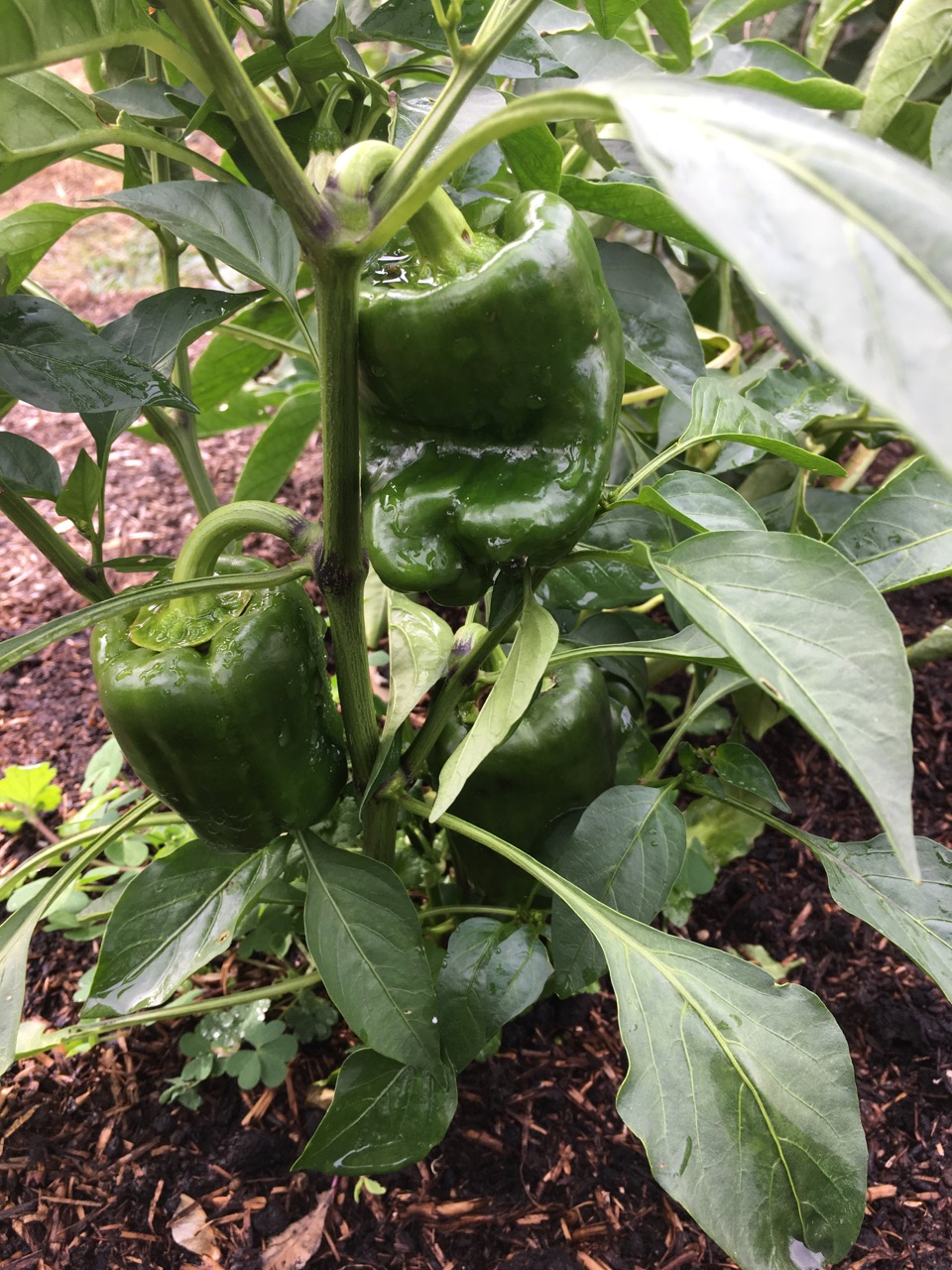
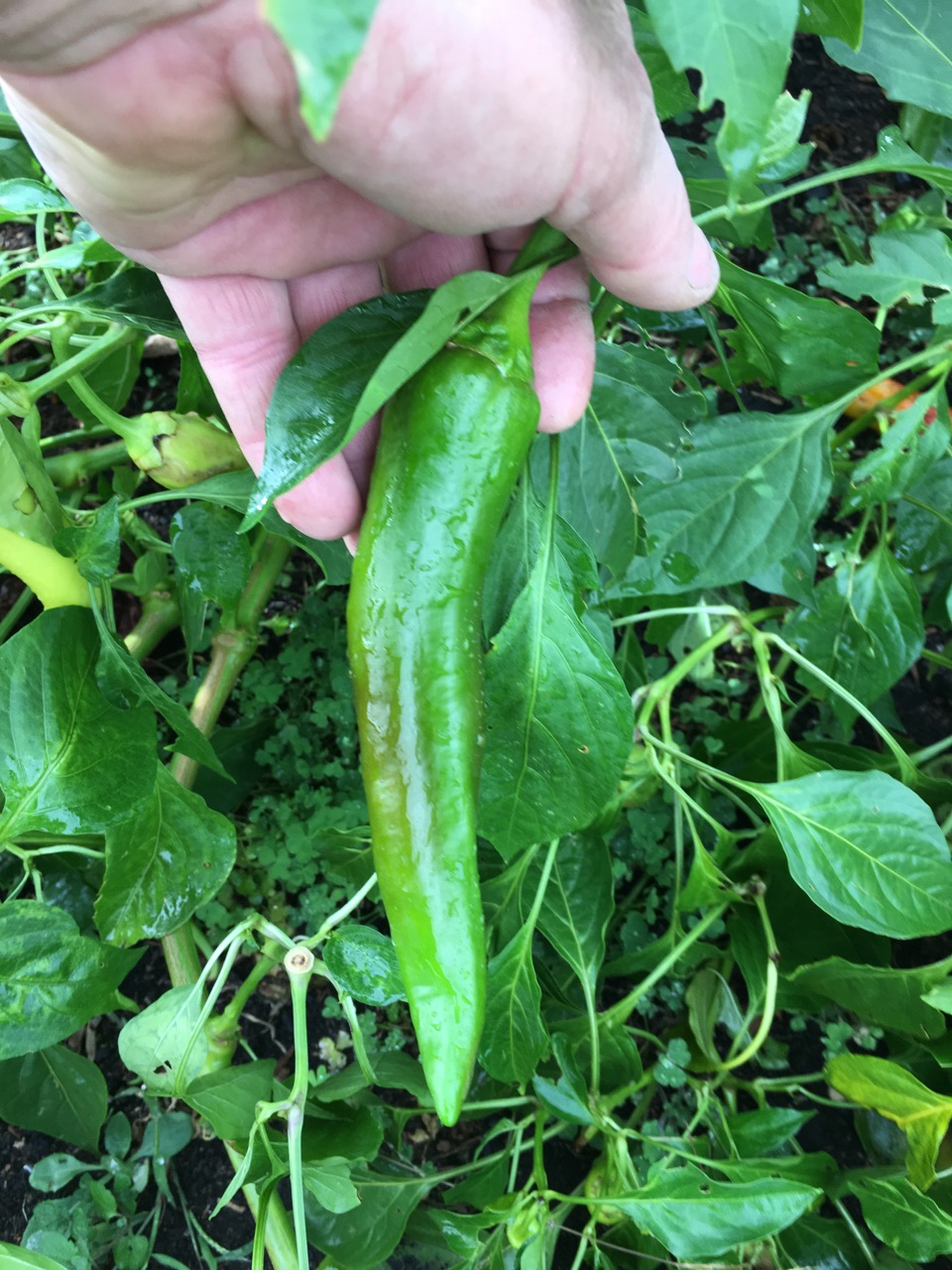
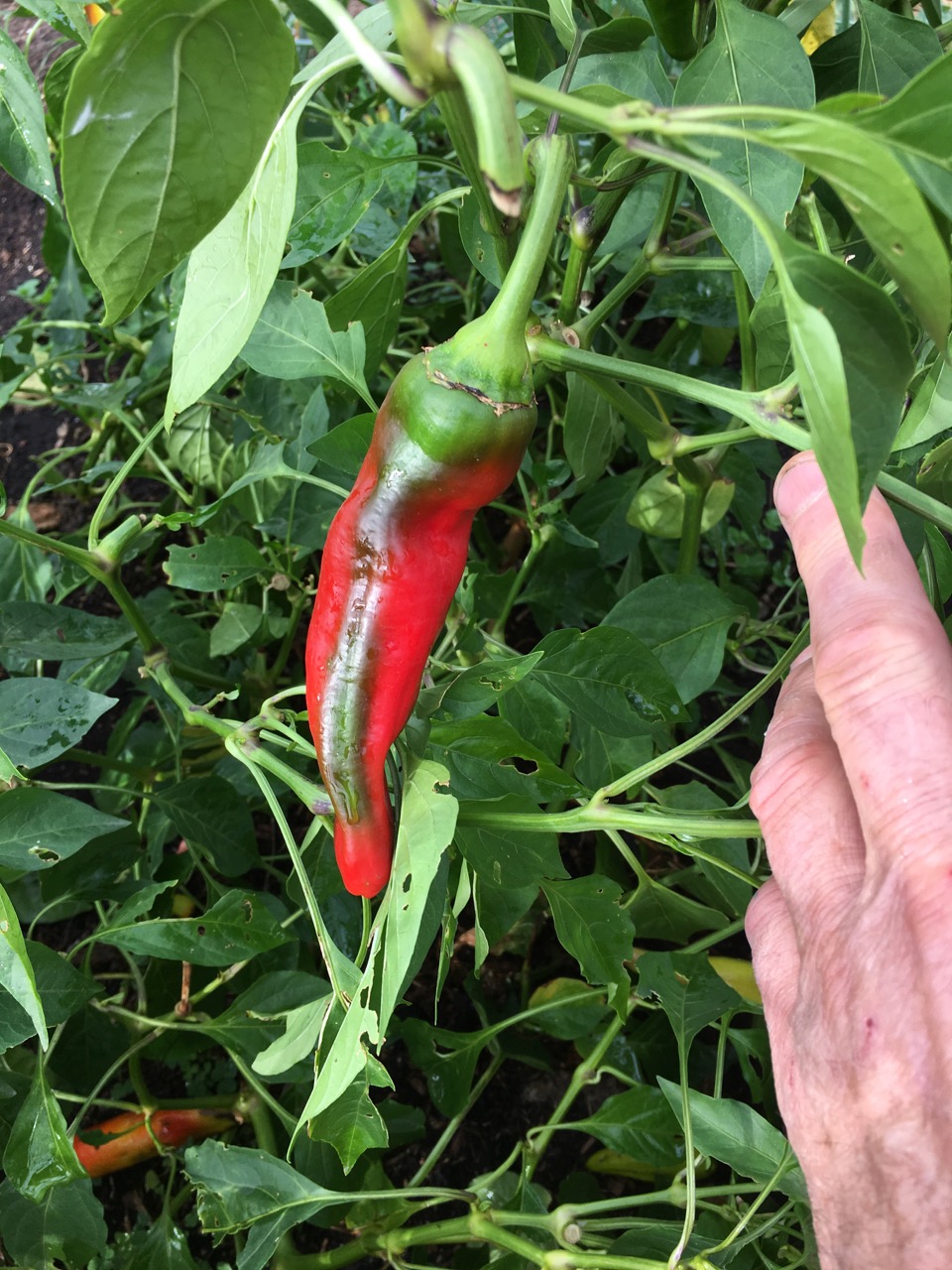
Capsicums or sweet peppers (Capsicum Annum) are described as an annual plant grown from seed and originated in tropical America. This spices includes all the larger fruited kinds and are often picked while still green. These ‘peppers’ vary greatly in their pungency. In General, the larger the variety, the milder the flavour. In some parts of Europe, these fruits are called ‘Paprika’, while in Spain they are called ‘pimento’. The fruits  can be very high in vitamin ‘C’. Although often quite round in shape like the ‘bell’ pepper, they can be long and pointed. I don’t know what they are called in Korea, but there were huge quantities in the street markets, sold by the sack full. I believe that they were the hot variety of the annum family. They were quite large, long, tapered and pointed, and ripened to a very dark mahogany red colour.

IMG_0890 IMG_0882 IMG_0883

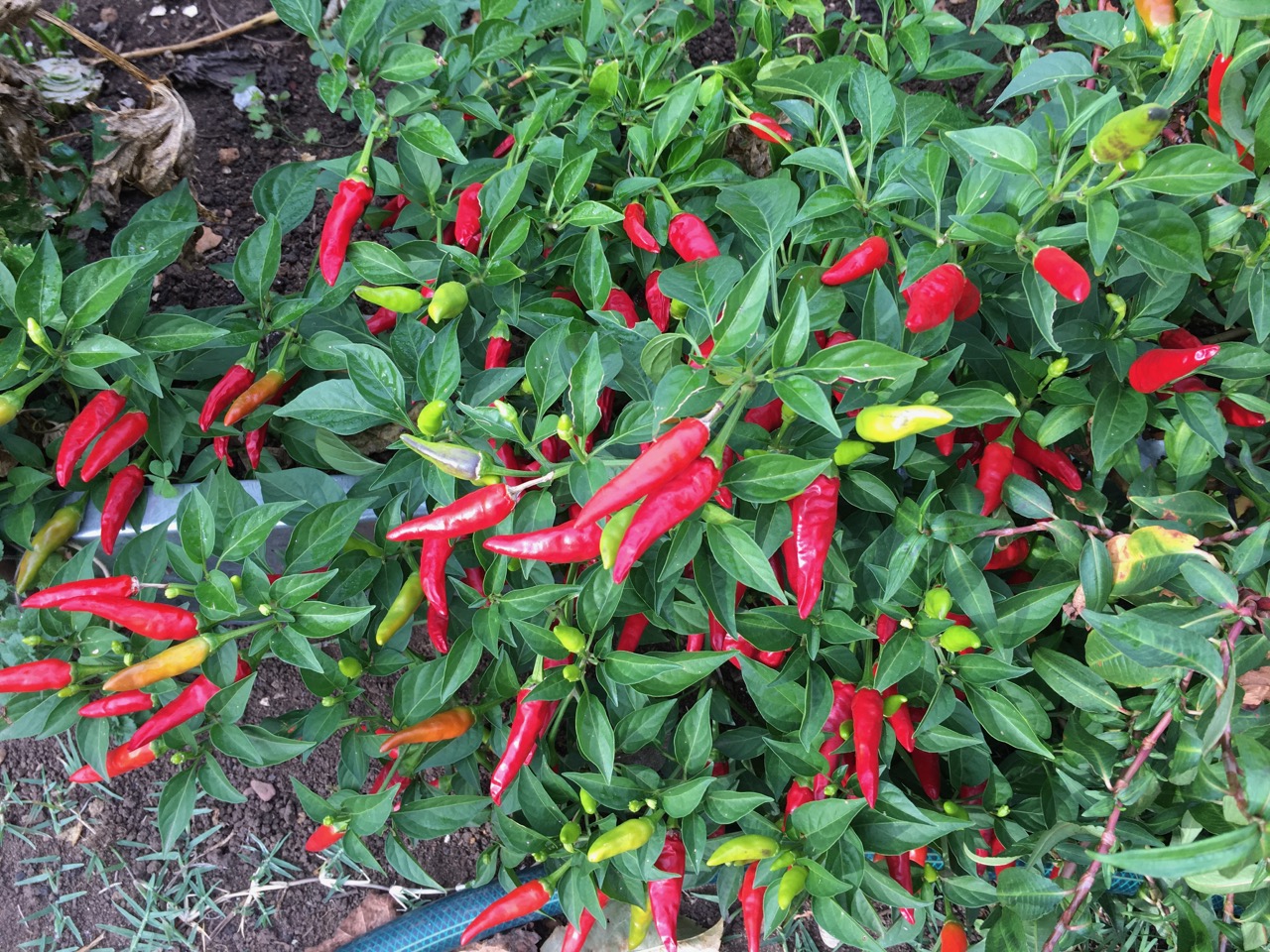
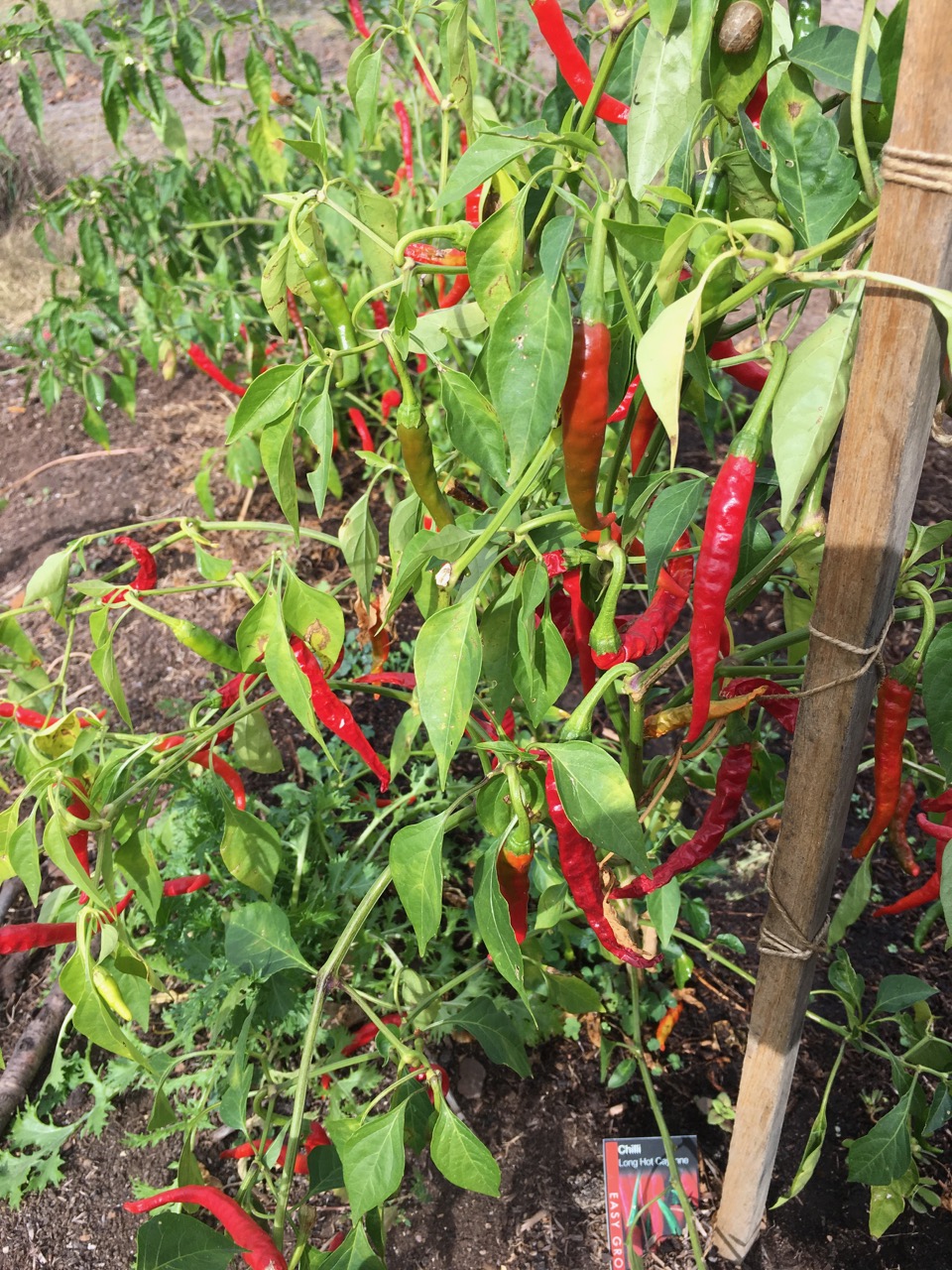
On the other hand, ‘Red pepper’ or ‘Chilli’ (Capsicum Frutescens) is a perennial plant or can be in the tropics, but the frost kills it here. It has less vitamin ‘C’ than capsicums. Pungency is described as being variable, but in general, it is much greater than in the capsicums. There are two main forms. The short spiky variety where the fruit often stick upwards. Sometimes called ‘birds eye’. These a smaller and smooth skinned.

The other main variety is longer and narrow with undulating skin and the fruit hang down. S Harrison in The Oxford Book Of Food Plants describes the longer gravitationally influenced variety as ‘red peppers’ while the short spiky gravitationally resistant variety he calls ‘chillies’. We grow them both and call them both chillies – long or short.

IMG_0722 IMG_0885

I like the flavour of chillies , but I’m not any kind of masochist, just hot is hot enough. once I break out in a sweat, that’s hot enough. Two of our small hot chillies is about my comfort level in a meal.

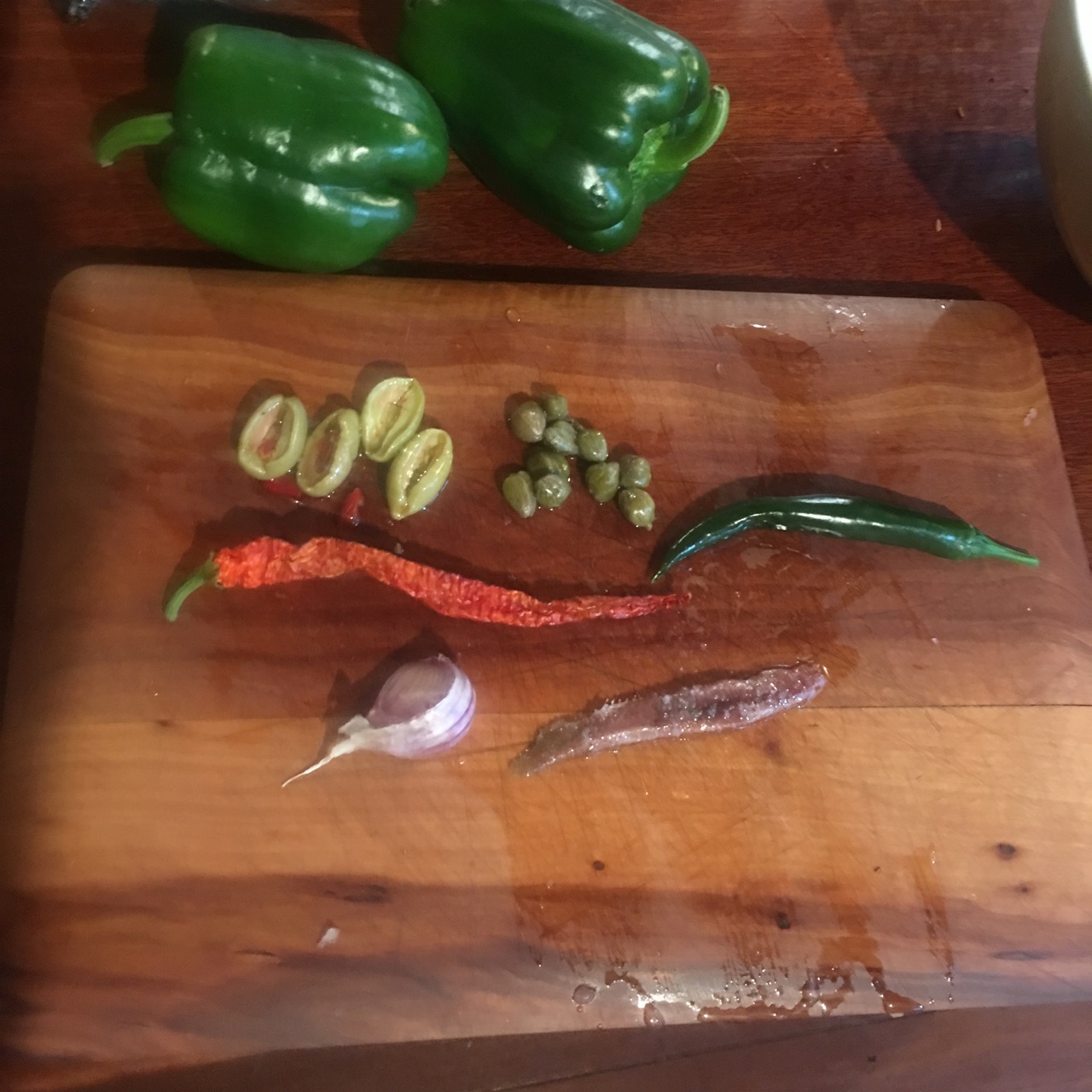
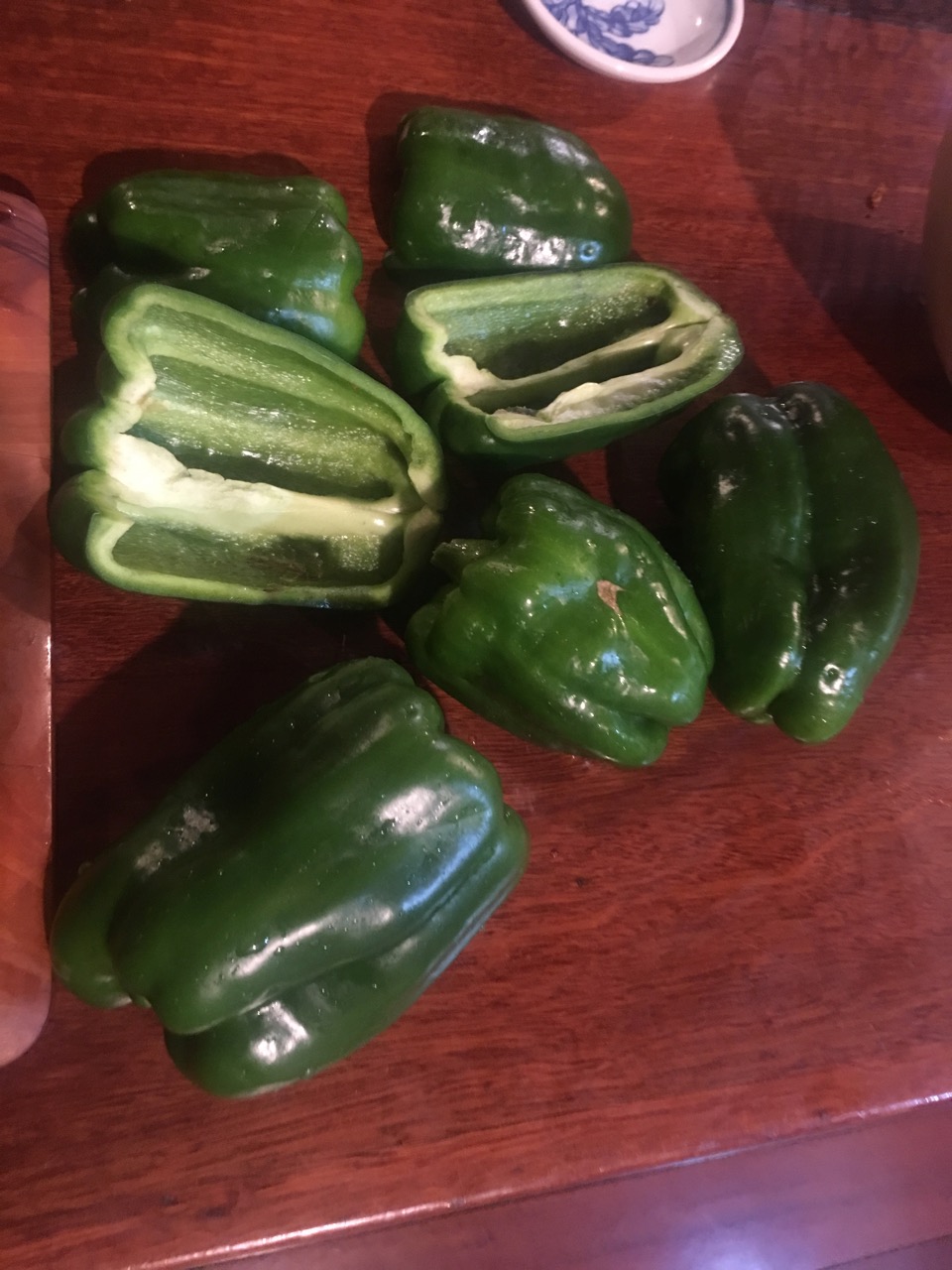
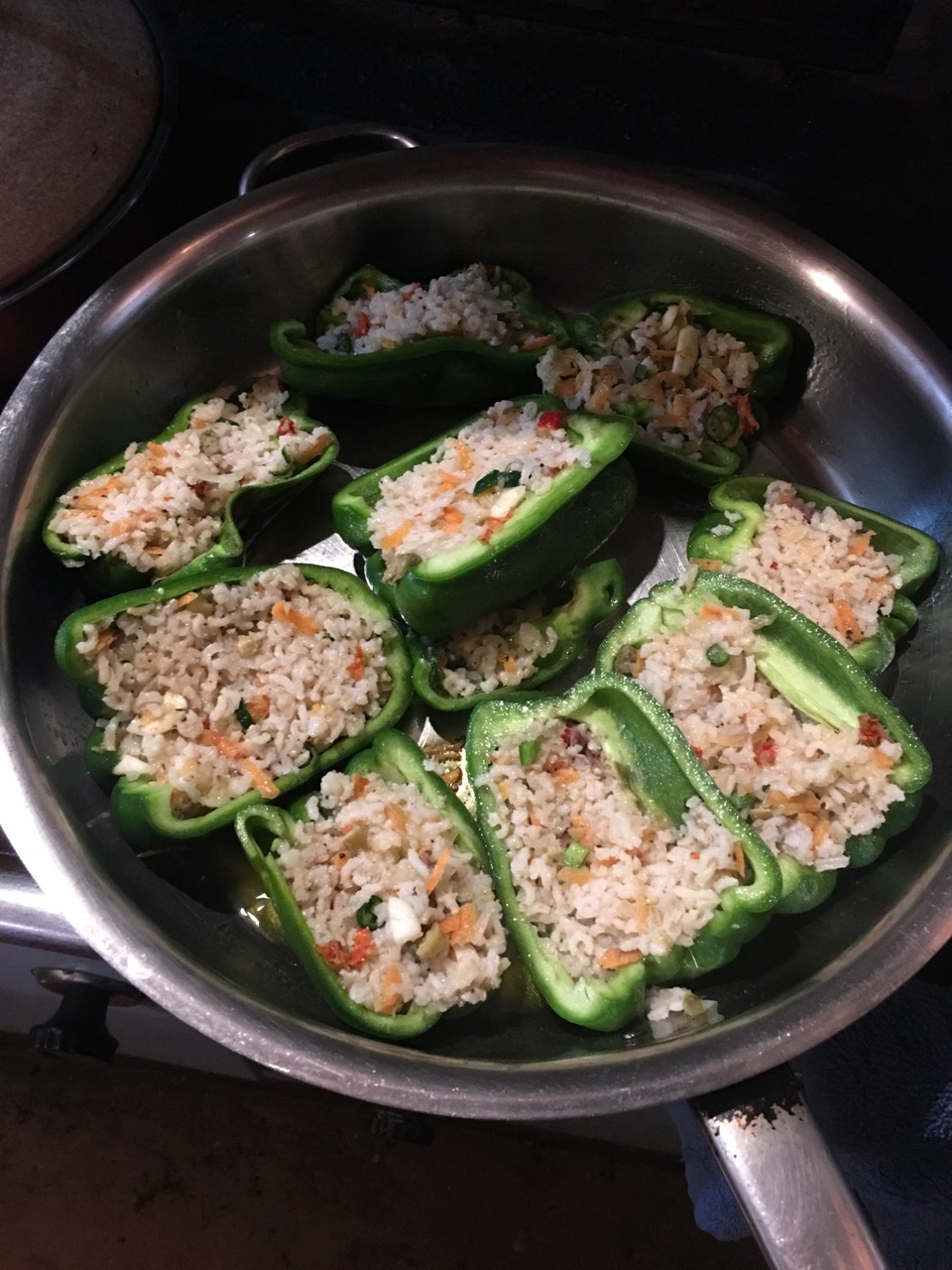
Last night we had steamed capsicums stuffed with both red and green chillies, along with brown rice and some other condiments! Keeping it all the family!

IMG_0863 IMG_0867

IMG_0868


One Minute in My Life

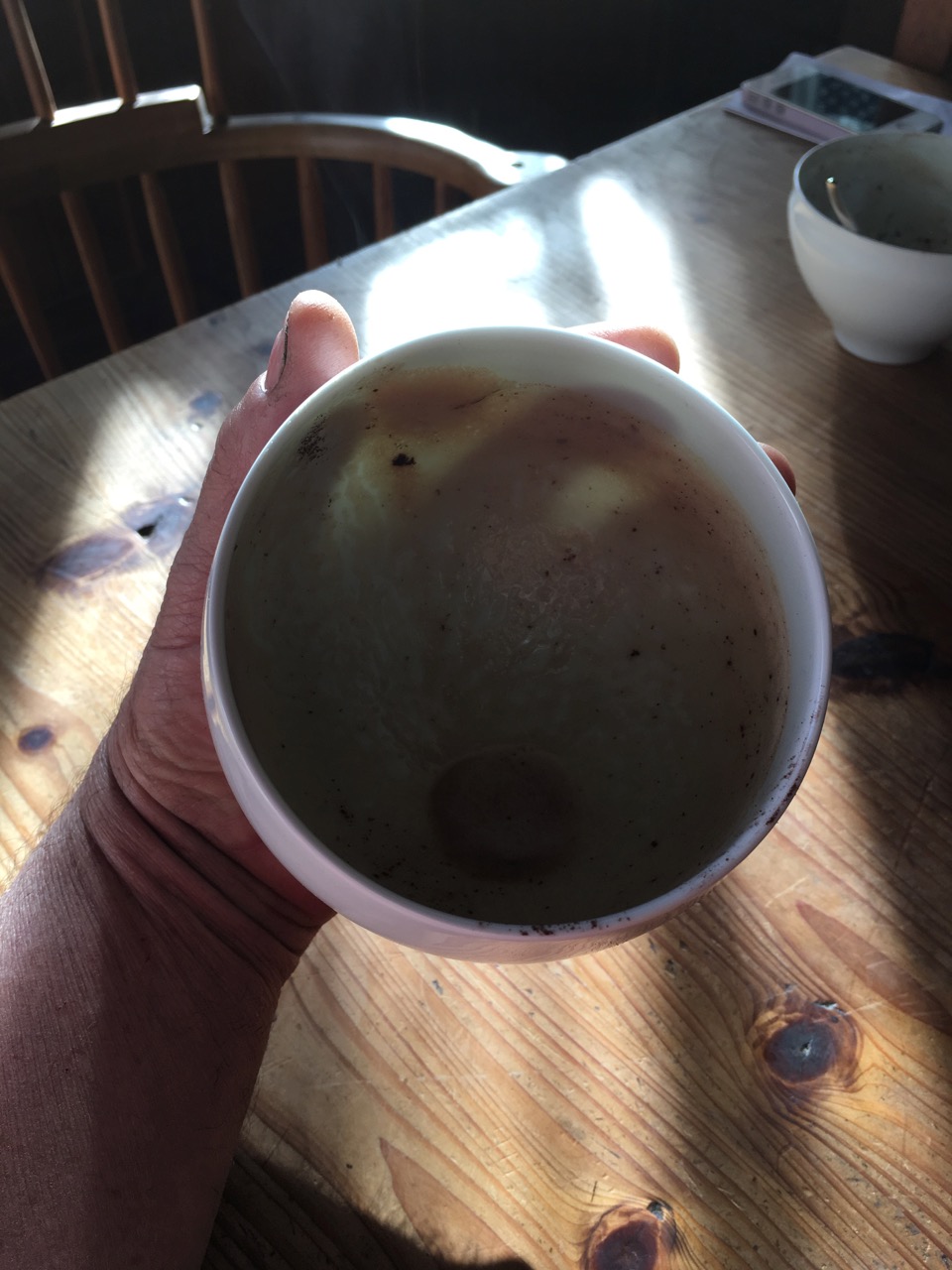
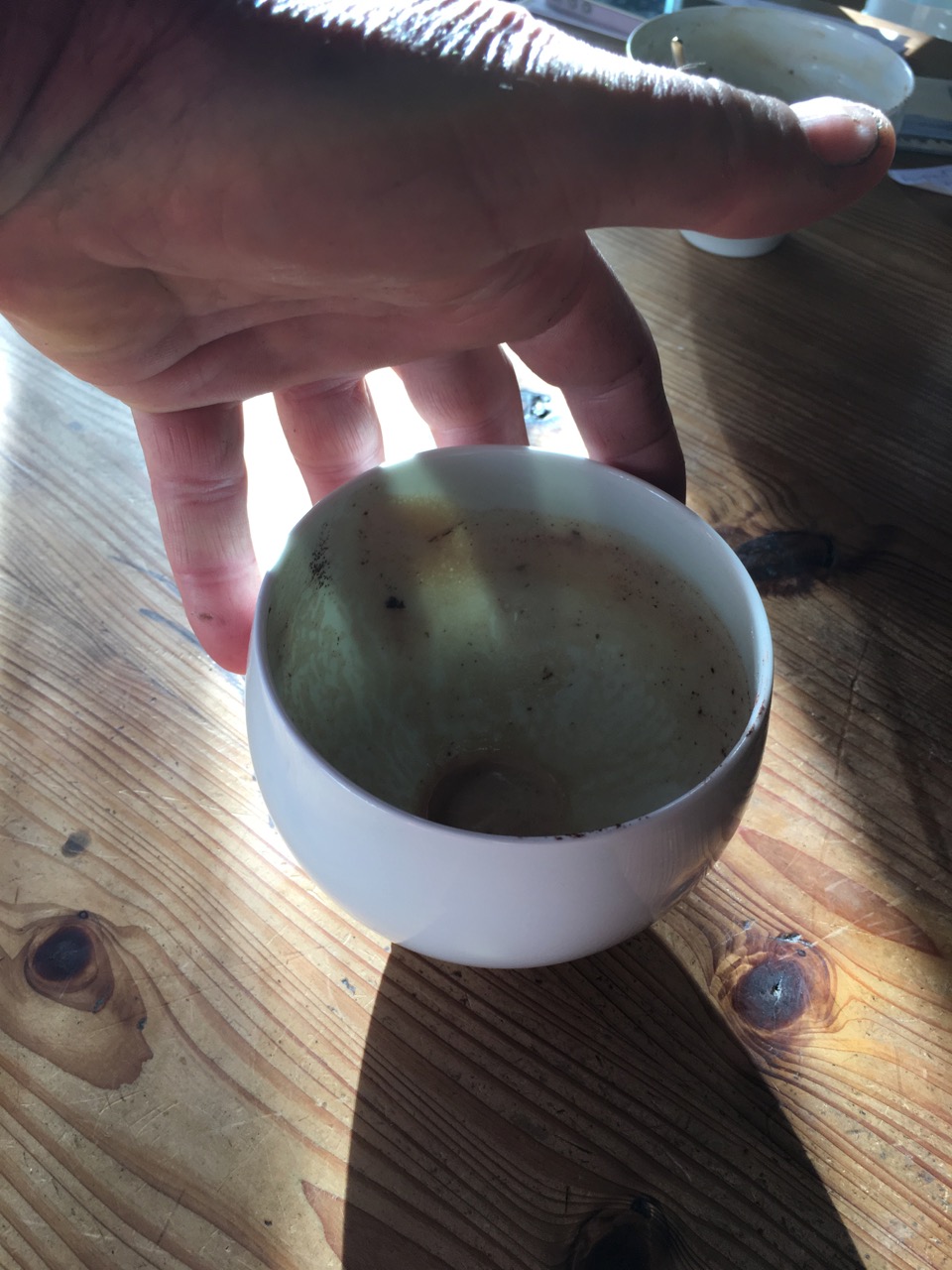
At breakfast I finish my coffee and see the shadow of my fingers through the porcelain bowl that I’m drinking from.

I’m moved to capture the fleeting moment on my phone.

IMG_0823

IMG_0827

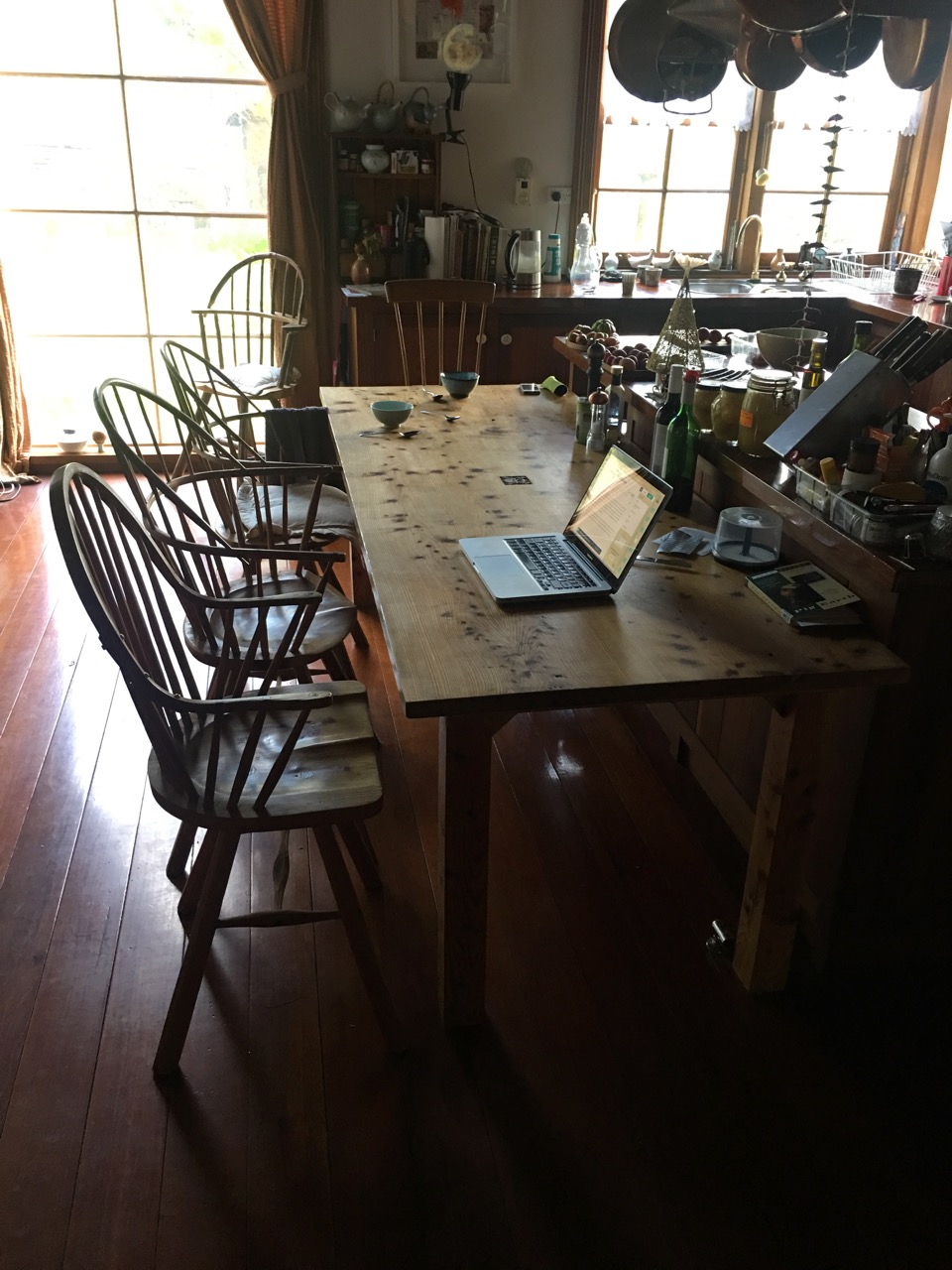
I realise that it is a bit of a multicultural moment. I’m drinking Italian style coffee grown in New Guinea in the French style with milk at breakfast from a bowl made by and Englishman living in Australia, thrown and fired while in China. The table is made from Japanese cedar, grown in Australia.

At least the organic full cream milk was produced locally in Picton from our local dairy, but the cows are Friesian and Jersey.


Stihl Crazy After all These Years

As we have been whittling our way through this epic journey of felling, cutting, splitting and stacking all the wood from the 5 huge, dead, eucalyptus trees in and around our 7 acres. We experience a curious sense of exhausted comfort in working our way through the last tree. Tomorrow should see the end of it.

We couldn’t have done this so quickly without the help of friends and students to do some of the carrying and stacking. We worked quite hard today in the light showery sprinkles of rain to get half-way through the last tree. It’s hard to say exactly how much wood we have processed and stacked to season in the last 3 weeks of part-time labour, but I imagine that it must be somewhere approaching 20 tonnes. I’ve gone through almost 8 litres of bar and chain oil and the same of two-stroke mix in maintaining the saws. Chain saws are such a great invention. They make so much work possible. I couldn’t have done all this without them.

IMG_0788

IMG_0792 IMG_0795

IMG_0736

IMG_0794

Of course we were aided at every moment by the chickens. They know the sound of the chain saw and the splitter, and as they are free ranging all day, every day. They know where we are and what we are doing from the sounds that we make. It only takes minutes for them to turn up. Freshly split wood means fresh bugs and termites.

IMG_0796

After all this work, we reward our selves with a high carb, but low GI meal of solid wholemeal pasta topped with a home-made tomato passata sauce and a side dish of lightly steamed broccoli from the garden. All this without the addition of oil, salt or sugar. Not to mention, there are no preservatives, pesticides, or fertilisers used along the way. This is wholesome, fresh, homemade, nutritious food. Simple and plain, but not boring. A green garnish of fresh-picked basil and parsley completes the meal.

IMG_0800 IMG_0802

IMG_0803

Our little small holding here produces fuel for our stove and kilns, but also fuel for our bodies. Real work with a defined and obvious purpose, that leads to a positive and creative outcome along with home-grown and home made whole foods, these are all part of a well-considered complete life. I’m not sure if all this is working, but we are certainly having a good go at it.

Autumn has finally arrived

The weather is finally taking the calendar seriously. We have had our first seriously cold evening of the year. We even lit the fire, and although it was nice, it wasn’t really necessary and we hardly stoked it as we weren’t that cold, but it was a nice thing to do, quite comforting. It seems that summer has lasted 7 months now. I’m sort of pleased that we can now have some cooler weather.

I have been finishing off half a dozen little wood fired kilns, but have been held up waiting for some parts. So in the mean time, we have continued our wood cutting epic effort. We have almost finished cutting up, removing and stacking all the timber from the dead trees that we had taken down by the arborist. It’s been a mammoth job and will provide us with wood fuel for some years to come.

Having burnt off so much energy during the day, we feel that we can afford the calories and have pizza for dinner. I make up some rye flour dough during the afternoon and it is risen and proved by evening. I roll you a couple of thin bases and we use what we have in the fridge as toppings.


I start with a very basic wash of tomato passata sauce and then a sprinkling of finely chopped garlic. We build up the pizza with a few olives, capers and sliced artichoke hearts, topped with some cheese.

10 mins in a very hot oven does the trick.

IMG_0781

We make another one with sour cream, smoked salmon and red onion.

IMG_0783

We have a couple of slices from each one and put the rest in the fridge for lunch tomorrow. Home-made comfort junk-food is very nice once in a while.

Lucie Thorne House Concert

We held another of our house concerts again on Saturday night. This time with Lucie Thorne. We have a couple of attempts to get her here in the past year, and this time all the stars were in alignment.

It was a very enjoyable afternoon/evening/night. Lucie is a very talented singer songwriter. We have all of her CD’s and enjoy listening to them a lot. So it is really nice to be able to have her here in our house for a few hours.

We particularly enjoyed our private performance when Lucie did her sound check.

IMG_0329 IMG_5494

and everybody else enjoyed the full performance, later that night.

Lucie has developed her own individual style, a soft breathy vocal style and such a gentle lyrical guitar sound that she has developed from her hollow body electric guitar, but turned down to the lowest possible level, so that the sound just gently washes over you with a soft reverb effect. She doesn’t really strum the strings, but emotes through her fingers in keeping with the vocal line of the songs. It so individual and idiosyncratic. She is a totally engaging performer.  The music critic from the age described her music as “some of the most simple and beautiful songs you will hear” The Age.

We consider ourselves so lucky to be able to host her here in our house.

IMG_5497

We have already invited her to come back again next year.

Check out her links below for more information on Lucie and her music.

http://www.facebook.com/lucie.thorne

http://www.luciethorne.com

These hot days

We have been enjoying, or perhaps suffering, a few hot days this week.

The mercury hit 44oC on the back verandah yesterday. Far too hot to try and very much that was physical out side or even in the kiln shed. I stayed inside after watering the vegetable garden in the morning. I read a book instead. It was really the only sensible thing do.We had watered everything the night before as well, but as the heat set in and built up, the plants wilted and lay down. By the afternoon the sweet corn was frazzled and its leaves white and papery dry. I hope that it survives!

IMG_0017 IMG_0019

IMG_0018

It was so hot that even the candles suffered erectile disfunction!