ART Gallery of NSW

I’ve had some very good news to end this year. A couple of months ago the Art Gallery of NSW purchased 12 pieces of my ceramics for the collection.

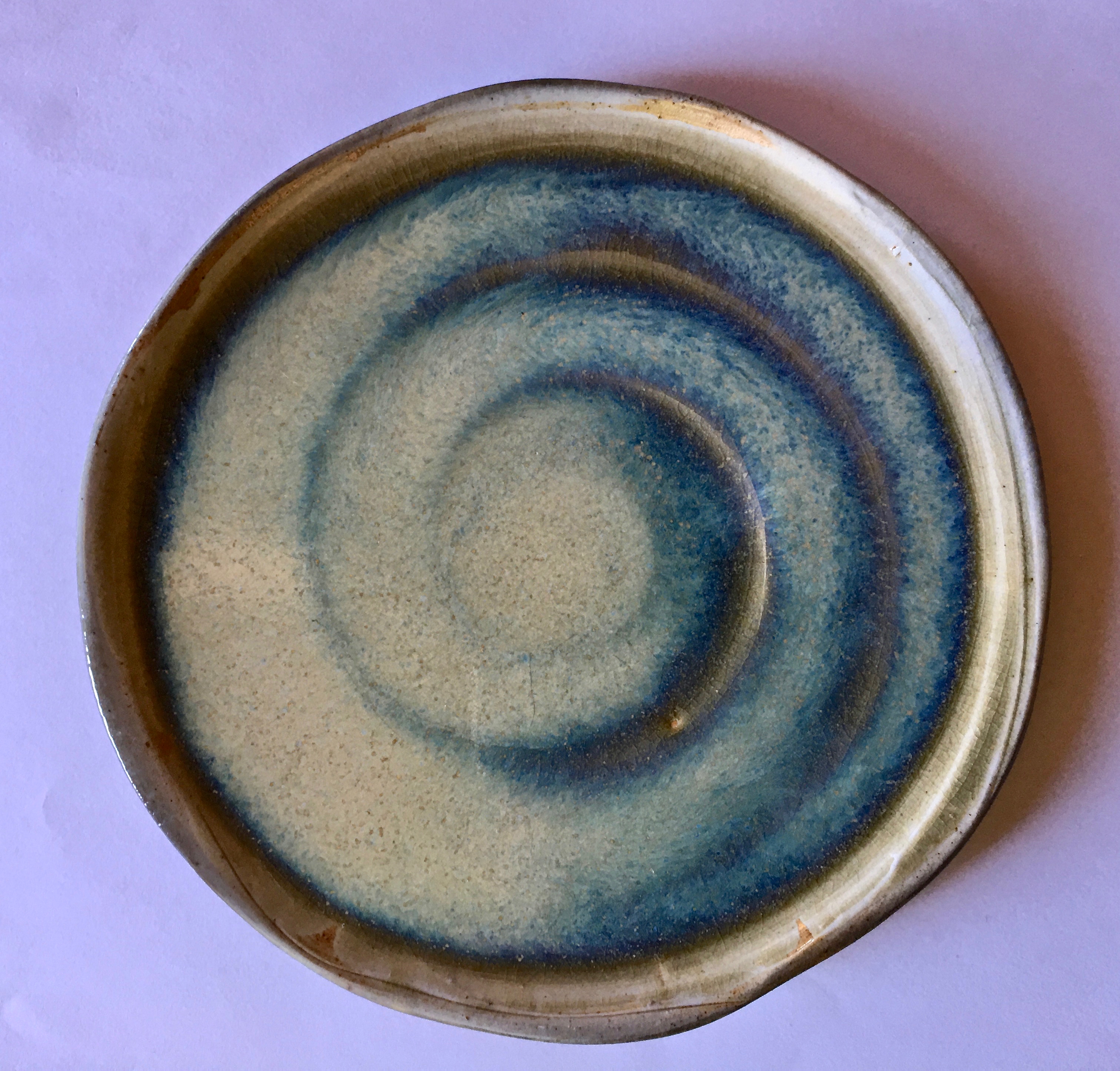
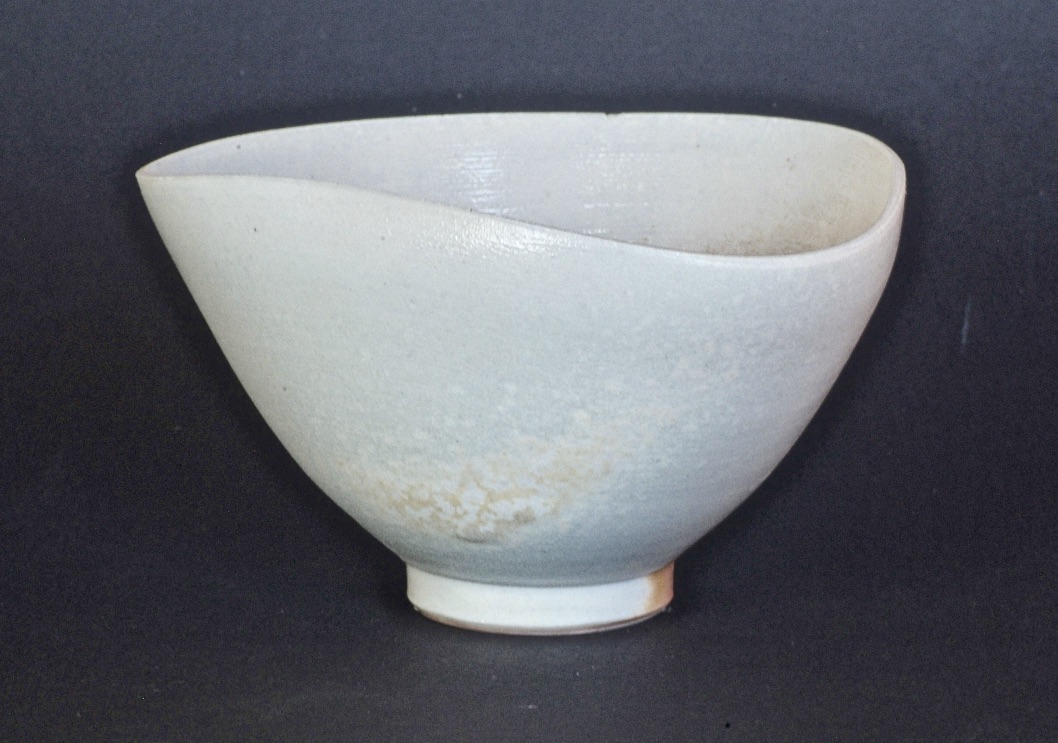
They wanted a selection of my ‘5 Stones’ sericite porcelain stone bowls. A pair of bowls from each of the two Australian sites that I discovered and developed over the past 20 years, and 2 each from the other sites in Korea, China, Japan and Cornwall in the UK, where I spent time researching and collecting samples from ancient sites and quarries over that time

I’m very pleased to be in the Art Gallery of New South Wales collection. When I started out on this experiment almost 20 years ago I had no idea how it would pan out and change my life. I’ve always worked I was brought up without formal religion in a loosely buddhist/Quaker background, in a ‘green’ household, long before ‘The Greens’ were invented. Where the values of Humanism and environmental concerns were high on the agenda. The saying, atributed to Aristotle, “Give me the boy till he is seven, and I’ll give you the man”, couldn’t be truer in my case. I am that man.

So, thinking of the environmental/humanitarian consequences of my actions is in the fore-front of my mind in every activity each day. It is the way that I approach everything in my life, so using what is naturally available around me for free, has always seemed preferable to buying some sort of imported, manufactured, product from a shop. Hence my self-reliant lifestyle, from food to fuel, to shelter, all the way through to my creative aspirations.

I seem to have become an expert on hand made sericite porcelain, with a few of my books being translated into both French and Korean. It’s not that what I do is so hard to achieve, it’s more a case of it being so ‘out-there’ in a weird and exotic kind of way, such that no body else in their right mind would want to do it.

Now, as I said before, I’m so very pleased to have this important 2 decades of research and creative work in the AG NSW collection. I think that it will be an important resource for future generations who might want to know more about this holistic approach to living, thinking and making.

I have to thank several people, my agent, Sonia Legge, and particularly Glenn Barkley for proposing the development of a ceramics acquisition program for the gallery here in NSW in his Presentation on the ‘Red Clay Rambler’ podcast. Then I have to thank Vicki Grimma for donating a significant amount of money to the Gallery to fund some of the acquisitions. Lastly but not least, I have to thank Wayne Tunnicliffe at the Art Gallery of NSW for his support. There are of course others that need to be thanked, like my partner Janine King and friends and associates that gave advice and support along the way too numerous to name individually, but thank you to you also.

I don’t know the full story of how it all came to pass. I don’t move in those sorts of circles. I grow fruit and vegetables, make pots from stones and do a bit of writing. However, I’m really pleased that my work has been recognised. I didn’t set out to do something ‘special’. I just started following my inclination and my inquisitive nature led me here, to explore and research on and on, and this is where I’ve ended up.

It’s a good place to be.
First Peaches of the Summer

We are only 10 days into summer and we already have both our first tomatoes and now our first peaches. We’ve been picking zucchinis and cucumbers for weeks already. Nothing quite like the flavours, tastes and aromas of the summer garden. Although this all sounds idyllic, it’s possible because of the worlds unabated consumption of carbon based energy. With global heating racing away, unabated like it is and coupled with an embarrassing total lack of political will here in Australia. We also have to accept the changing weather patterns associated with all this heat, like catastrophic bush fires and massive storms. From someone who has lived through a catastrophic fire event. I can clearly say that I’d rather not have to experience it again and the early tomatoes are not worth it.

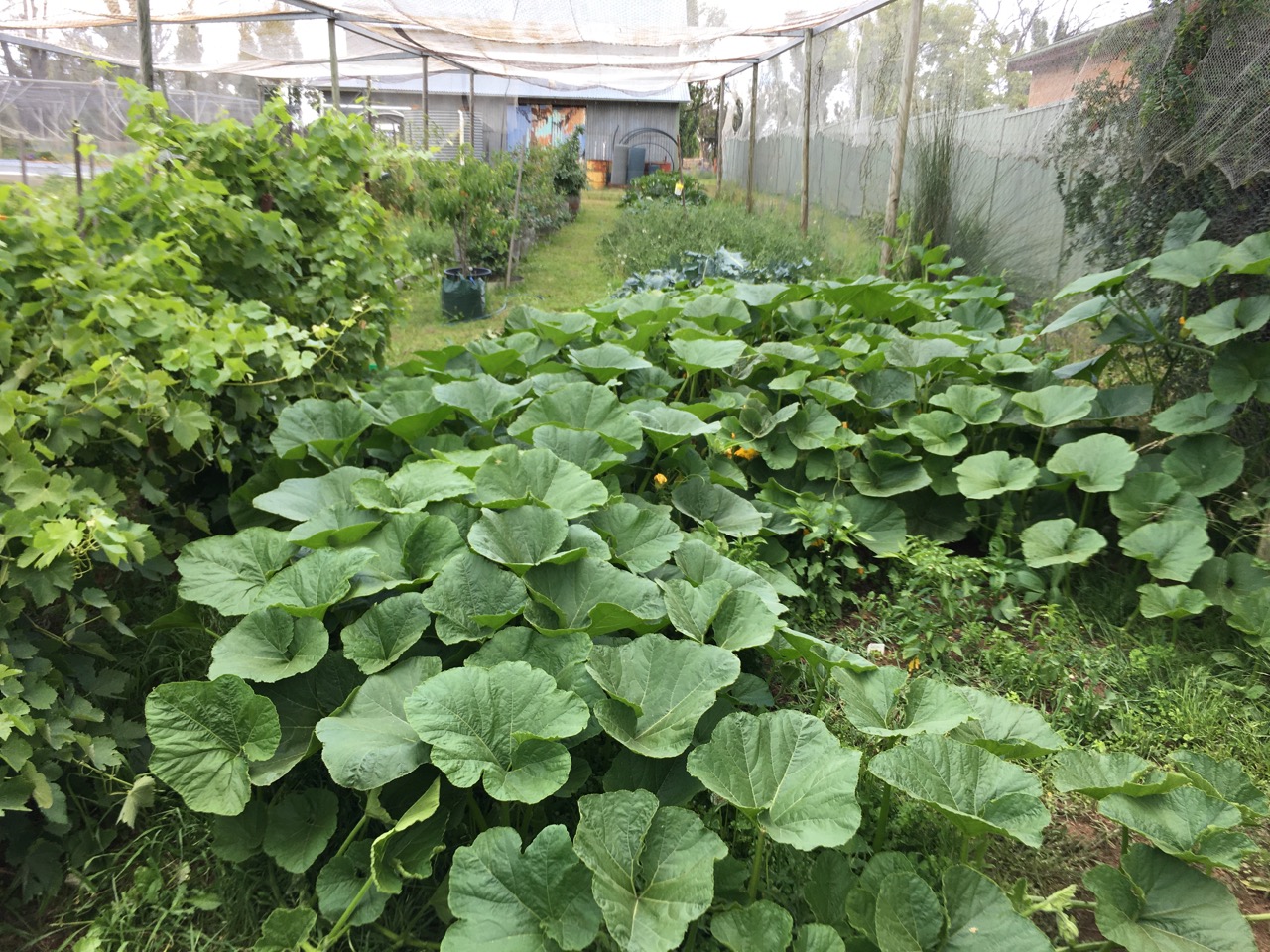
Back in the garden, the pumpkins that I planted on the 12th of September are now 3 months old and taking over the bottom of the garden.

From this to…
to this!
They are setting a nice crop.

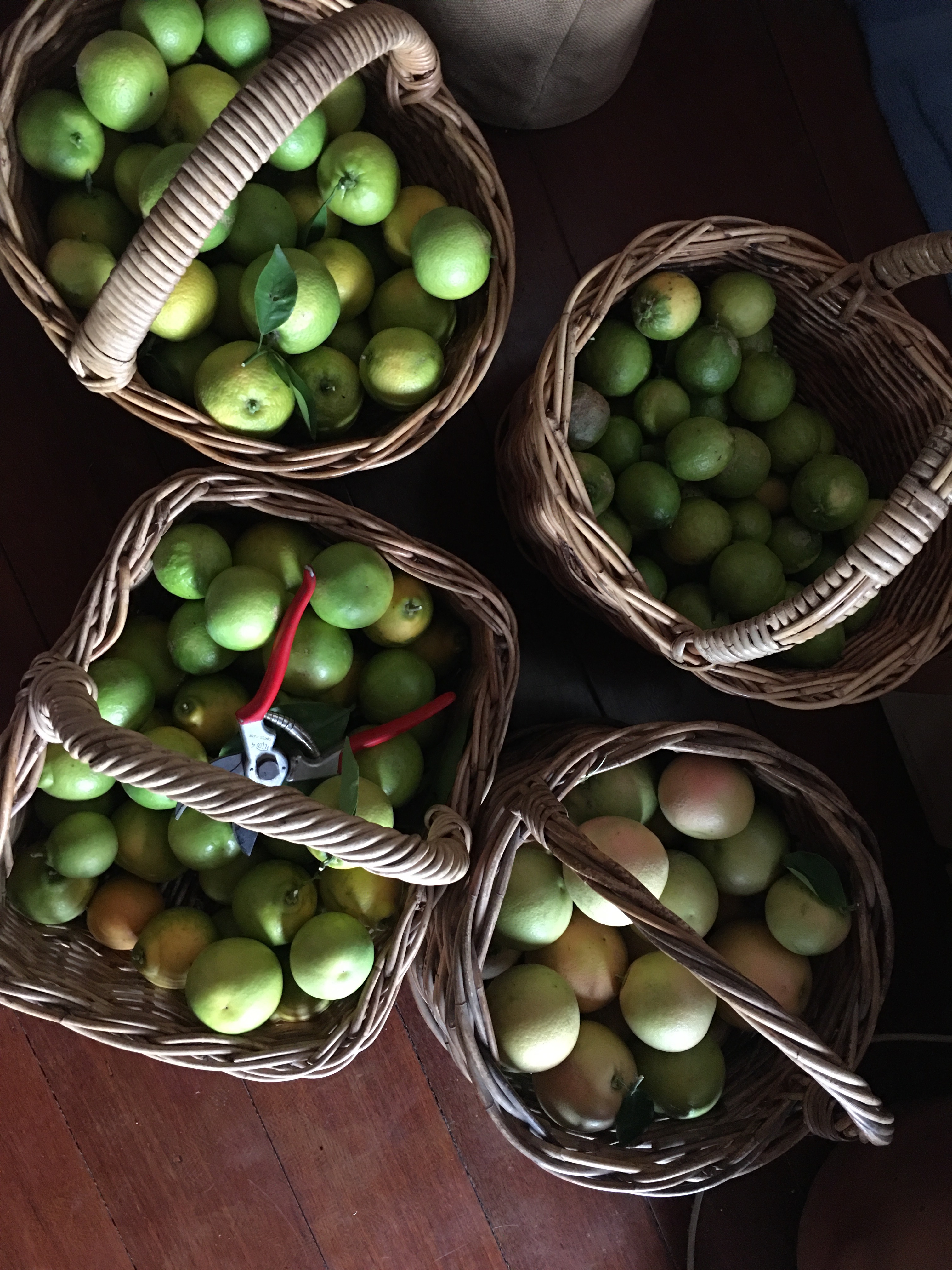
Strangely, we are just harvesting our citrus crop now almost half a year out of seasonal sync. We should be picking them in the winter. Everything has been dislocated by the extreme weather and the catastrophic fire event. All the citrus got burnt, some very badly, such that we lost half of the trees facing the pottery as it burnt. The citrus grove was planted next to, and on the north side of the pottery, using the building to protect the trees from the worst of the winter’s southerly winds. Sheilded in this way and facing the north winter sun, they were in a bit of a sun trap and it suited them very well. We had good crops.

After the fire we watered them well for the first few weeks, whenever we could find the time during the clean-up. Sometimes this meant in the dark before dinner at 9.00pm. The result was that they all re-shot leaves, some only on half the tree that wasn’t so badly burnt. They went on to flower again as if it was a new year, but totally out of sync. We got the strange out of season crop and they then flowered again out of sync, such that we are now harvesting again in summer and not winter.

The entire right hand side of this tree was so badly burnt that it has remained completely dead and needs pruning off. I’m hoping that the tree will eventually put out new shoots on the right hand side and balance itself up.

Apart from the strangeness of it all. They are probably suffering from PTCD. Post Traumatic Citrus Disorder! Also, when the fruit is ready, it isn’t the usual colour. For instance, the tangelos are pale yellow like lemons instead of bright orange. While the lemonades are green like limes instead of yellow. Strange times. I assume that they will slowly revert to the normal seasonal flowering and fruiting regime over time?
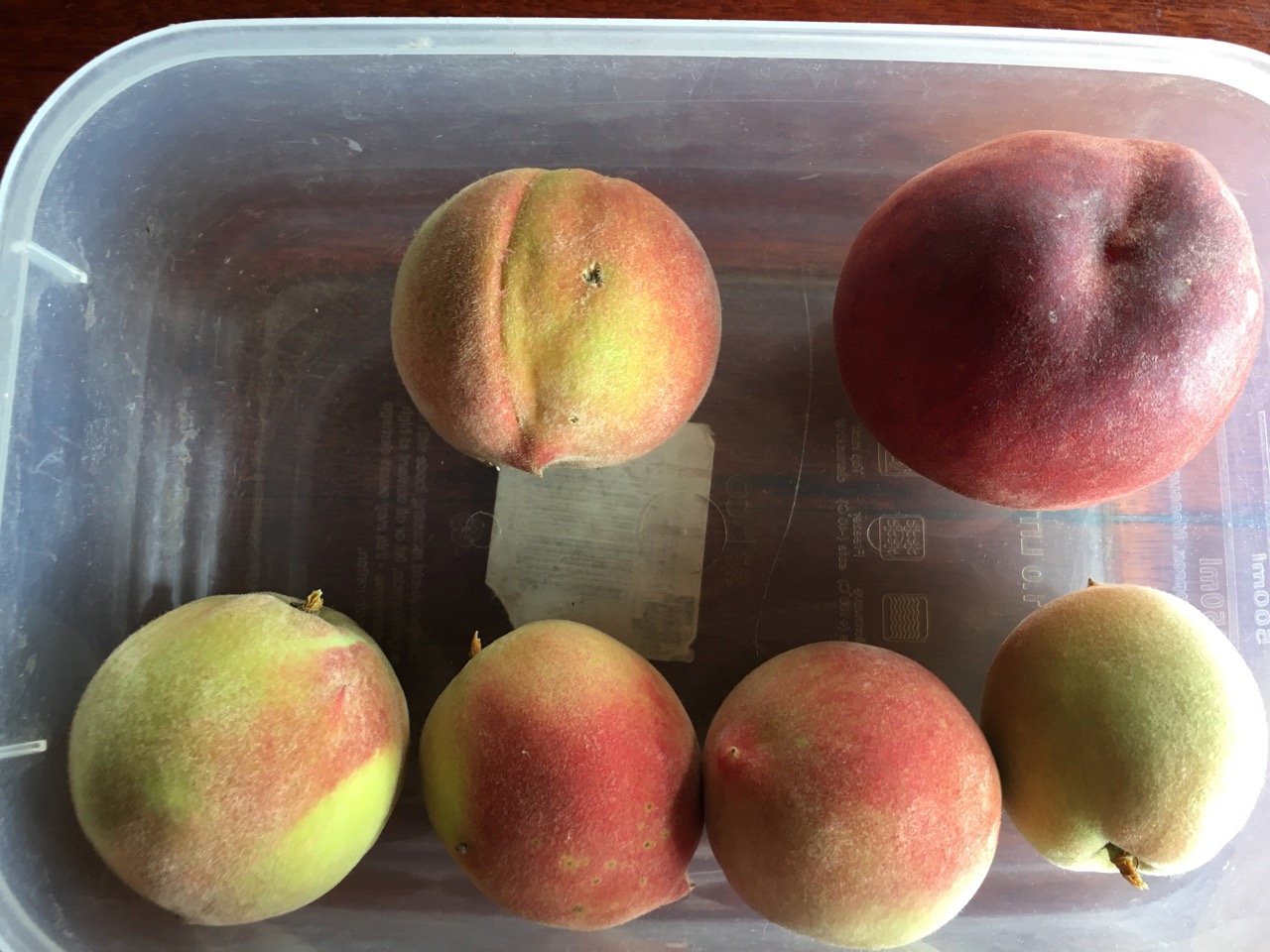
All the peach trees were burnt in the stone fruit orchard, but just before the fire. I had lifted two of the smaller trees that were doing very badly in the draught, as I couldn’t keep enough water up to them. I put one of them into a big plastic tub that was hanging around and the other into a large synthetic plastic fibre plant bag that someone had given us. I placed them in the veggie garden where I could water them better, just to see if they would survive. They had recovered well and are now ready to plant out again, but because they had flowered and set fruit, we thought it better to let the fruit ripen and plant them out next winter when they will be dormant.

The out come is that we have a dozen small peaches ripening. Amazing!

The out come is that we have a dozen small peaches ripening. Amazing! And so unexpected. Janine also picked the first apricot off one of the newly planted stone fruit orchard trees. Where the trees were doing well and growing strongly, I left one piece of fruit on each tree that I thought could cope with a ripening fruit and still grow well. That applied to one apricot, one almond and two apple trees. I just couldn’t resist the temptation of seeing and tasting the new fruit varieties.

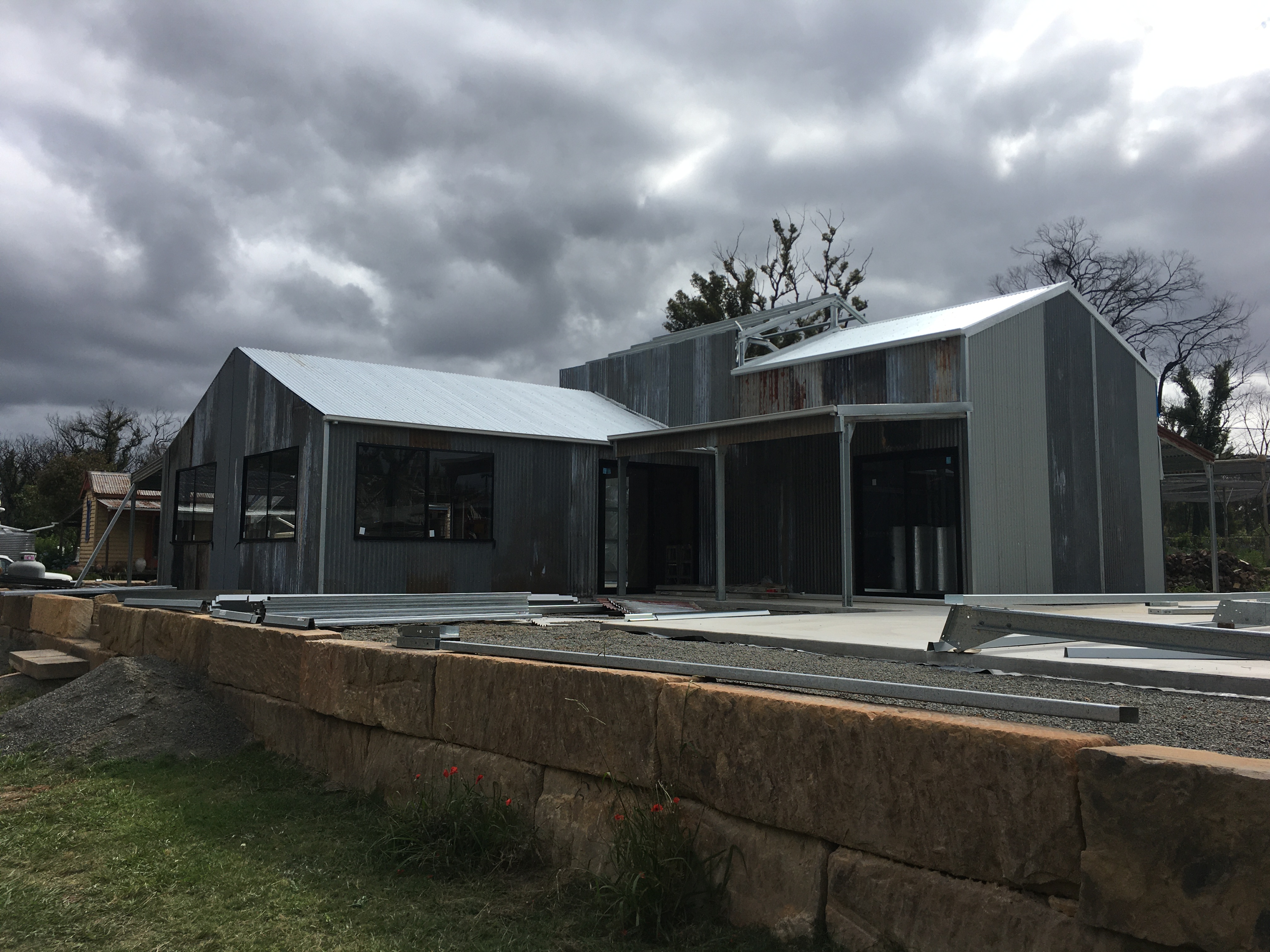
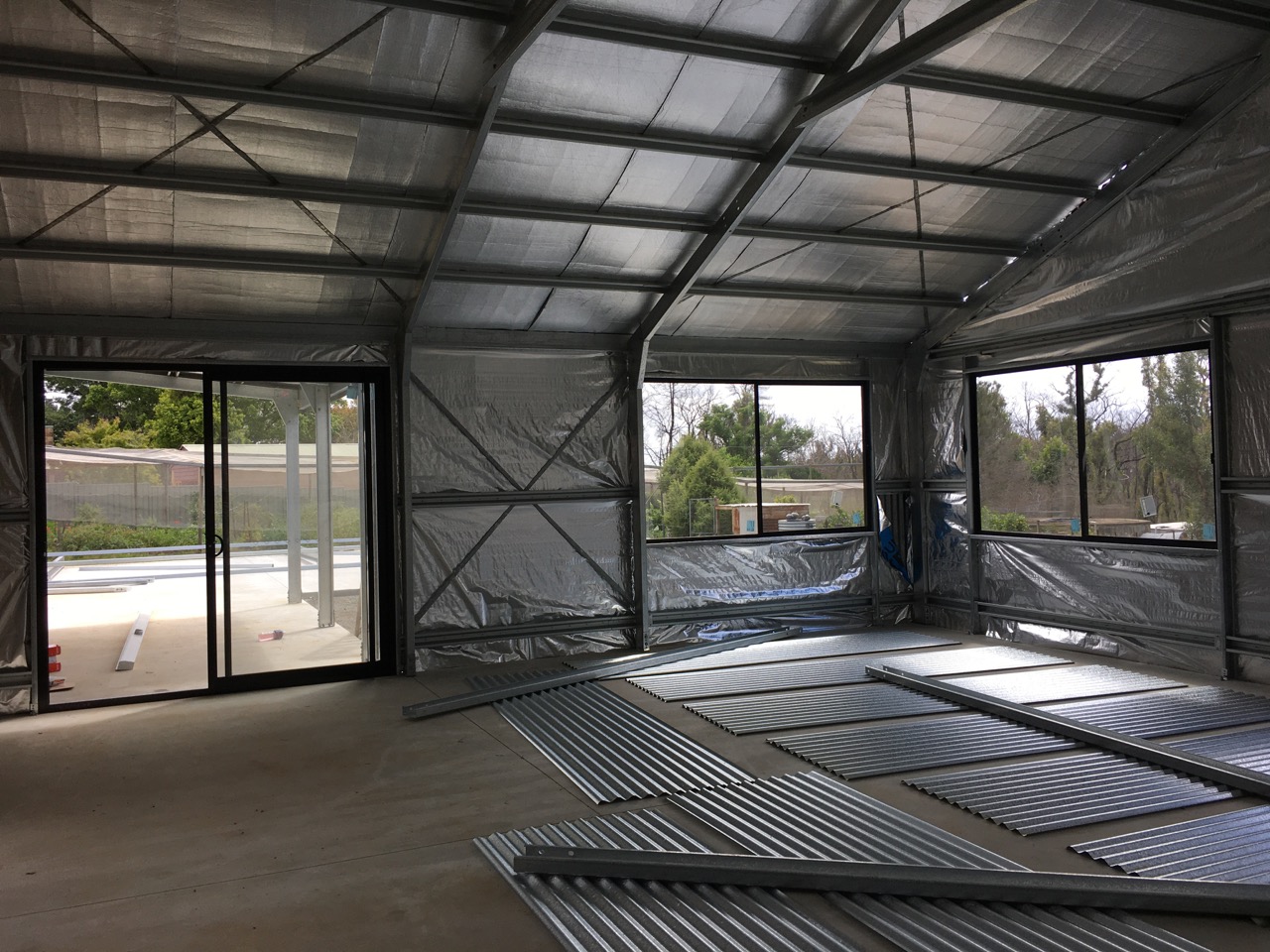
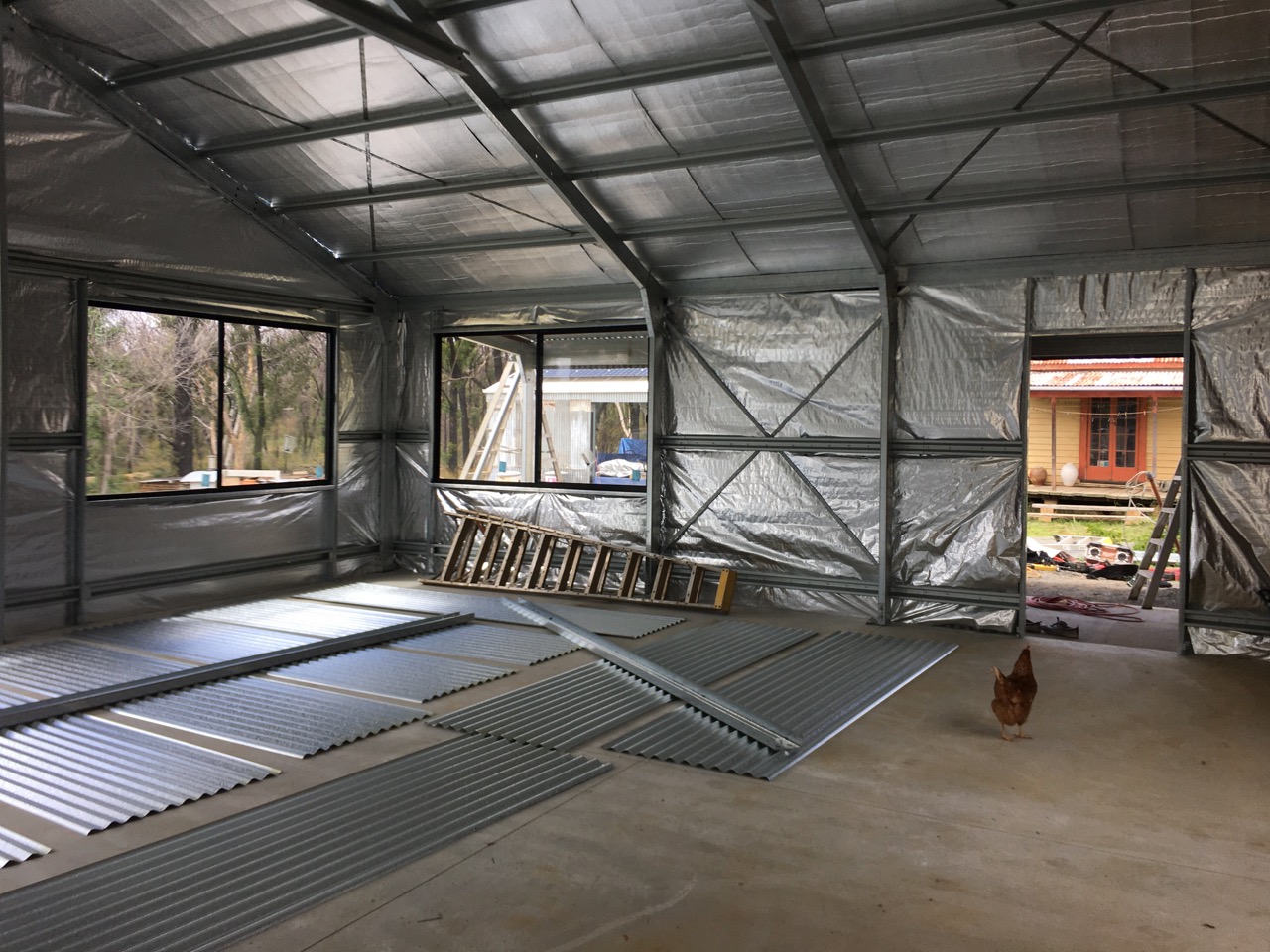
The pottery shed is slowly progressing. Today the builders are putting the roof on the pottery studio. That is really good to see. It was ready to roof yesterday, but it was windy and slightly foggy and damp, making it too slippery and too difficult to roll out the silver roofing insulation in the wind. Today is calm and overcast but not wet, so it’s all go on the roof. I can hardly wait to get inside and see how the light is in there. We now have two roofs on. the kiln room and the creative studio.

I spent a long time working out how to get the best light, at the lowest cost, but not interfering with the structural strength, allowing for enough metal strap ‘X’ bracing, covered with corrugated sheeting to provide sufficient structural wind resistance strength. I’m no engineer, but the shed company’s computer program allowed me to input different options, increasing the glass area until the ‘Computer says No!’

Edna the Chook, came in to check out the new studio too.

I then worked backwards from there, to find the biggest size of standard ‘off-the-shelf’ cheap aluminium windows that would fit the space. No use in paying double to get a custom window made that is only 100mm larger. So I back-tracked down to the best available size. We ended up with 4 windows that are 2.4m. x 1.2m. (8 feet x 4 feet) plus a sliding glass door that is 2.4m x 2.4m.

It will end up darker inside when it is lined and not so oppressively metallic and shiny.

First Tomatoes of the Summer

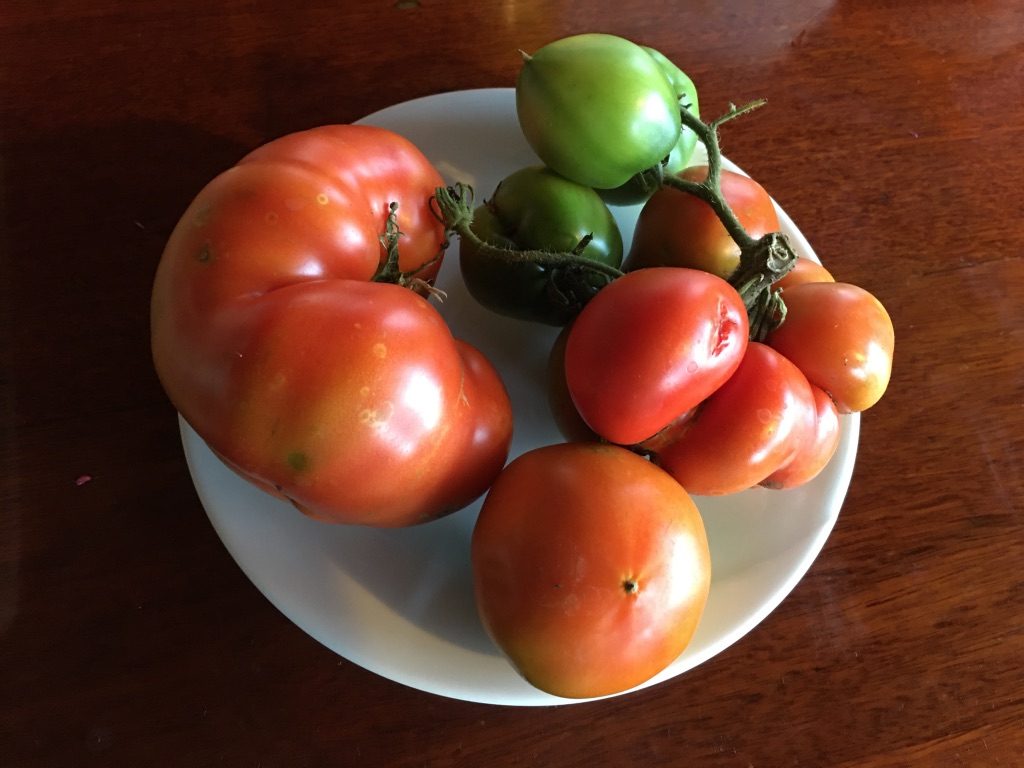
We harvested our first few tomatoes on Friday, 4th December. That is so early for us, reflecting on our more than 40 years of history here.

This variety is all folded wrinkly and is called Rouge de Marmande. It’s one of several different varieties that I planted this season. There a many more on the way just turning colour now. I’m really looking forward to cooking up some of our summer garden ‘passata’ or ‘sugo’ sauce.

The thing that I really enjoy most at this early stage of the season, is just brushing past the tomato bushes while weeding or watering and getting that distinctive smell, that the leaves give off when touched. That’s the promise of summer. My mouth is watering at the thought of it.

The New Pottery Arch Window

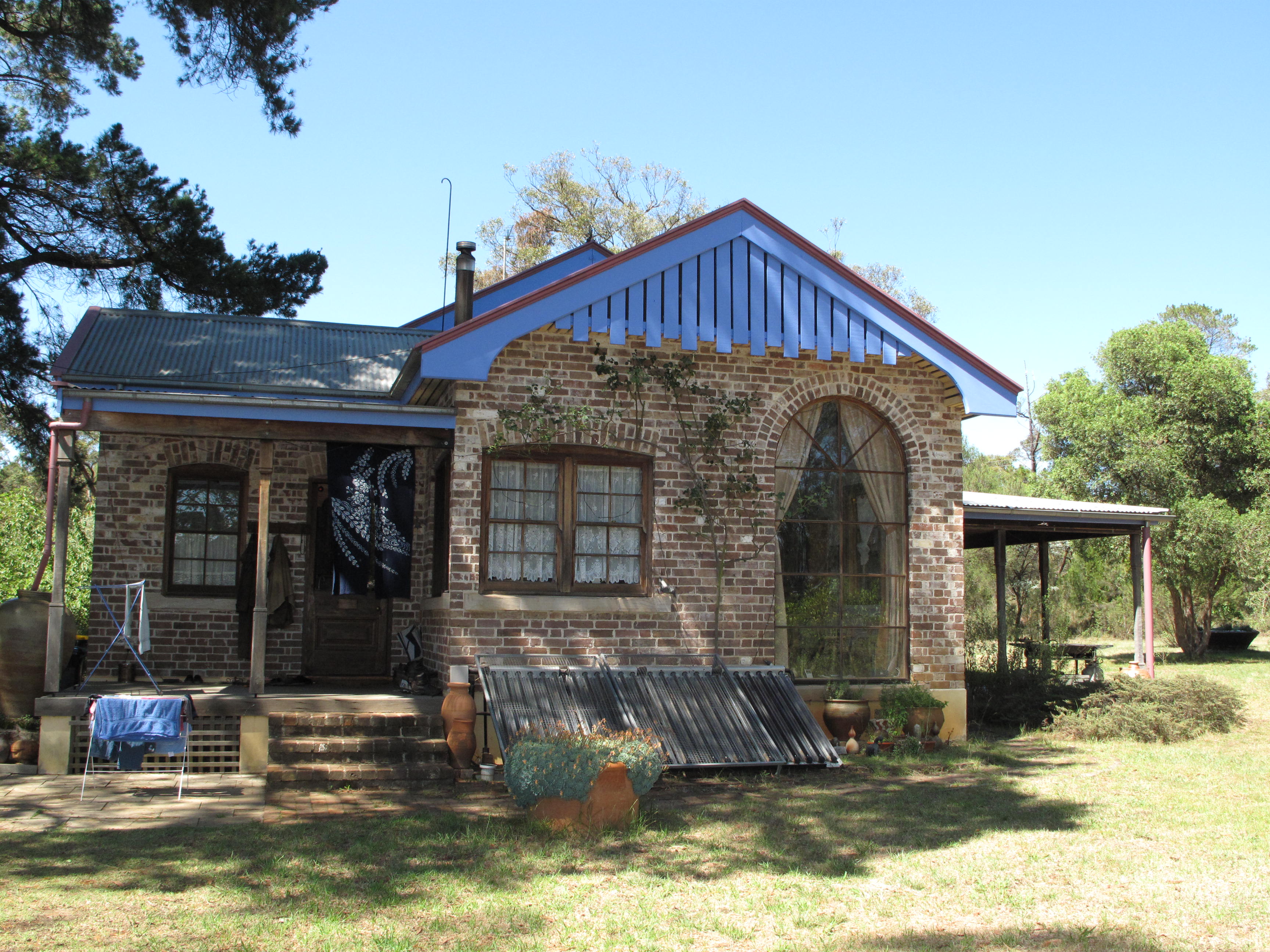
I’ve spent the last few weeks working on an arch window for the new pottery workshop. I want to make a window that reflects the existing window in the house opposite to the new pottery. I have a plan to brick up the external west and south walls of the new pottery building, those that face the street and the house. We have a lot of leftover sand stock bricks from when we built the house. We put in a large arched window in the north face of the new kitchen. It worked well and I’m very happy with it. I built that window out of western red cedar. I taught my self to steam wood so that I could bend the sections to make the arch window. I want to reflect this architectural conceit in the new pottery. My idea is to have the 2 windows facing each other.

There is a slight problem with the original idea and that is that a cedar wood window might be quite flammable. I want to try and build this new pottery with a fire resistance rating ‘BAL40’. 50 being the highest possible rating. One way to do this is to make the window frame out of metal. I decided to give it a go using aluminium, as most of the other windows in the pottery will be black aluminium framed. One of the benefits of aluminium is that it can be obtained in extruded forms like hollow sections, ‘T’ sections and angles. It is also very light and not too expensive compared to ‘merbau’ timber. I was able to buy a series of sections that I could weld together to make a complex frame that could be both light and strong – and fire resistant!

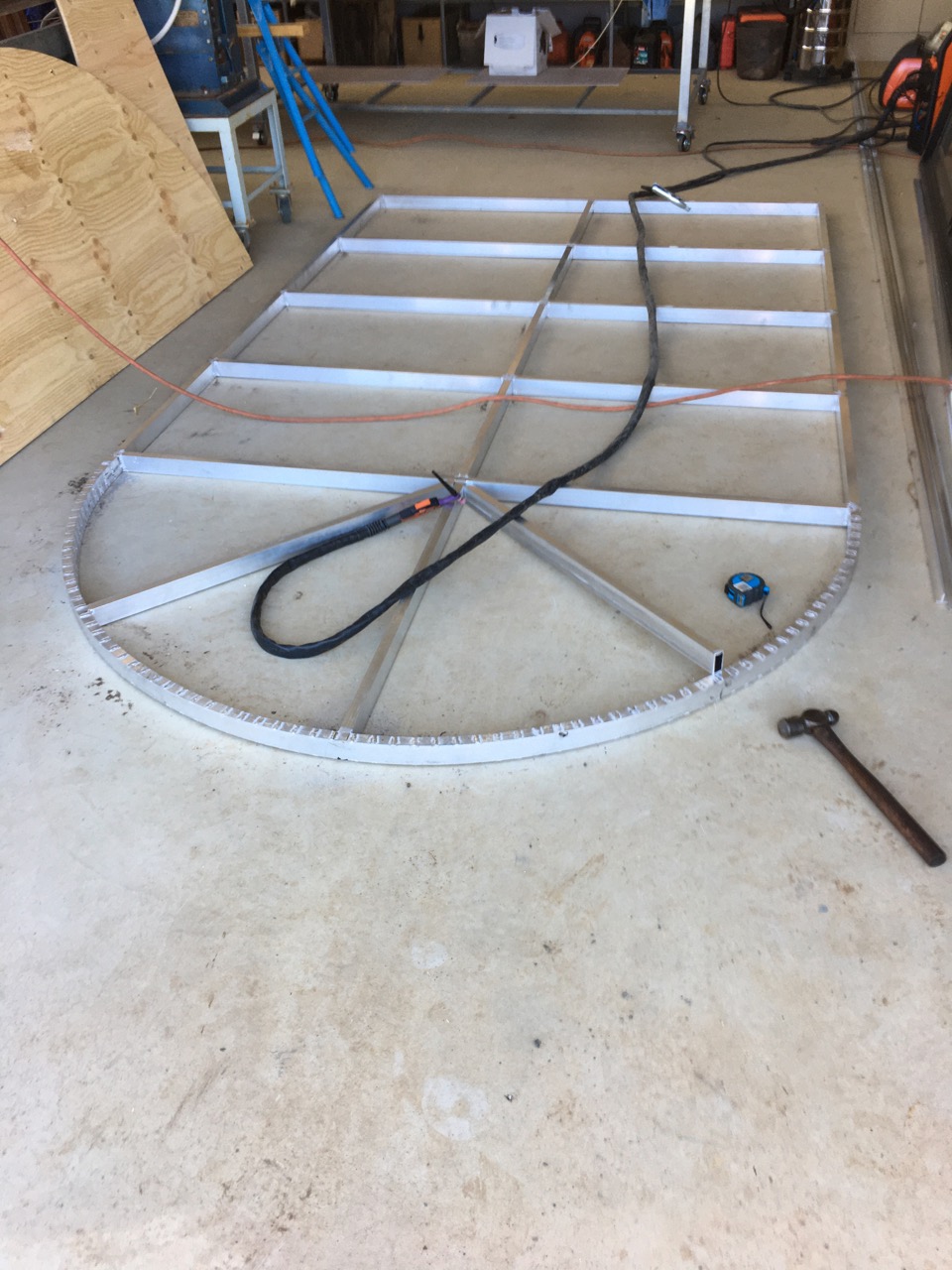
The other important issue is that aluminium is tricky to weld, but fortunately I taught myself to weld it years ago when I was building electric potters kilns, as marine aluminium is one of the longest lasting kiln frame materials for electric kilns. So the welding problem was not a problem. The difficult part in welding a big window of this size, 4 metres by 2 metres, is that aluminium expands and contracts a lot with heat, so it can very quickly warp our of shape. I usually clamp aluminium down onto my steel welding bench to keep it straight. However, in this case, the window is bigger than my bench, more than twice as big, so I had to weld it on the floor. This meant that I couldn’t clamp it down. So I have had to weld it intermittently with long gaps to allow the window to cool dawn so that it would remain flat and straight. This is why it has taken me so long, with just two welding sessions each day.

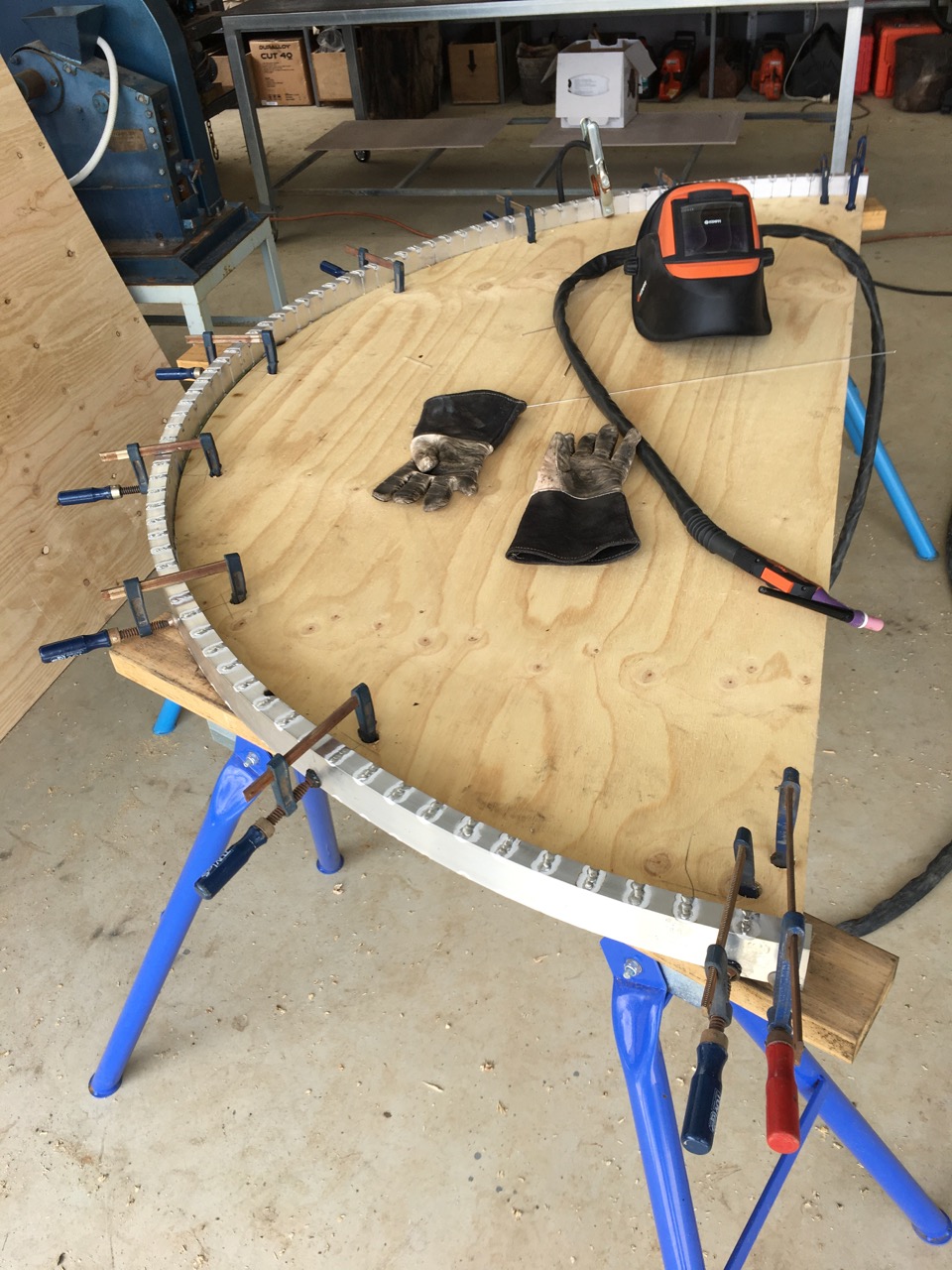
I made a wooden former to shape the arch

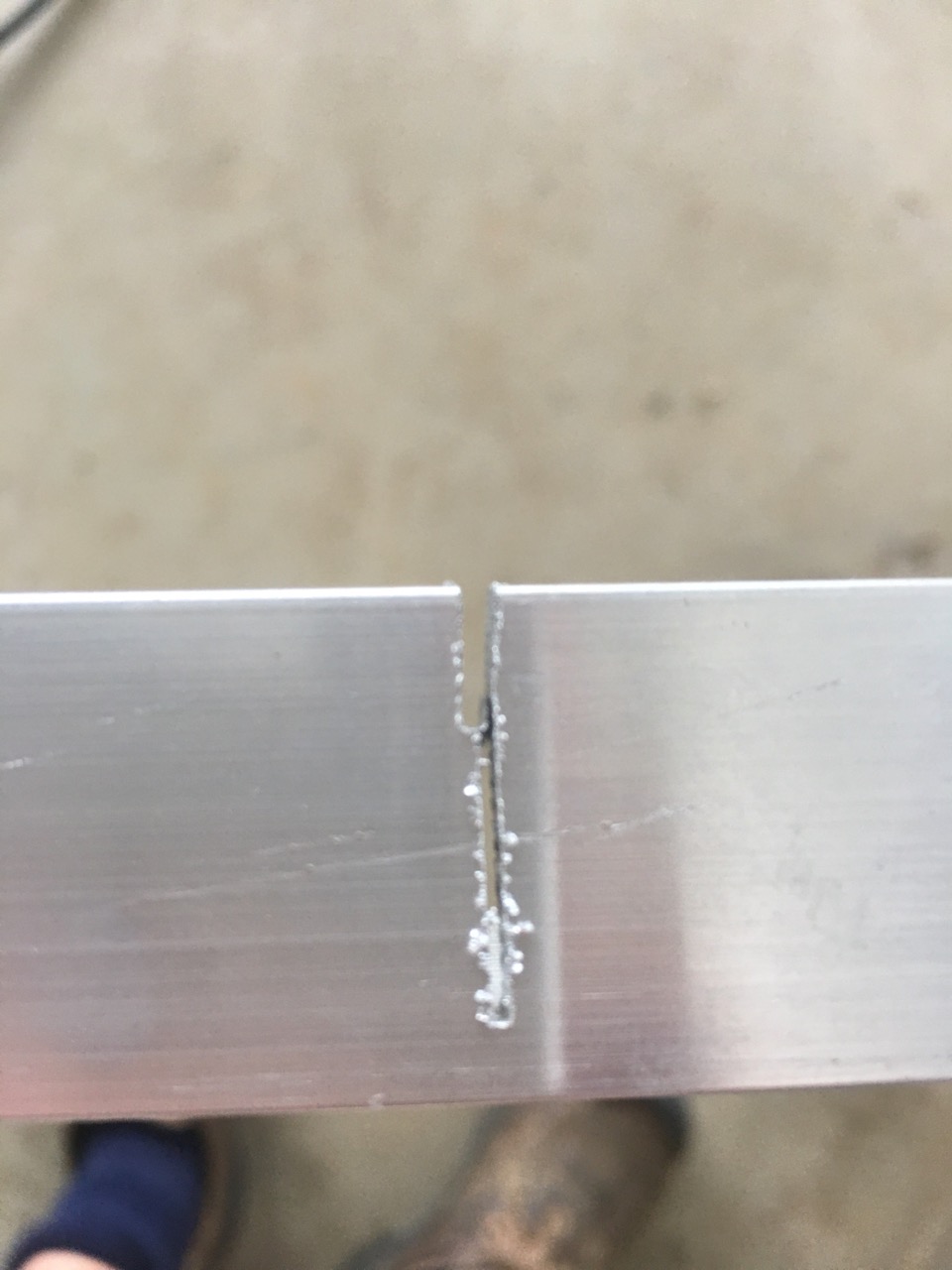
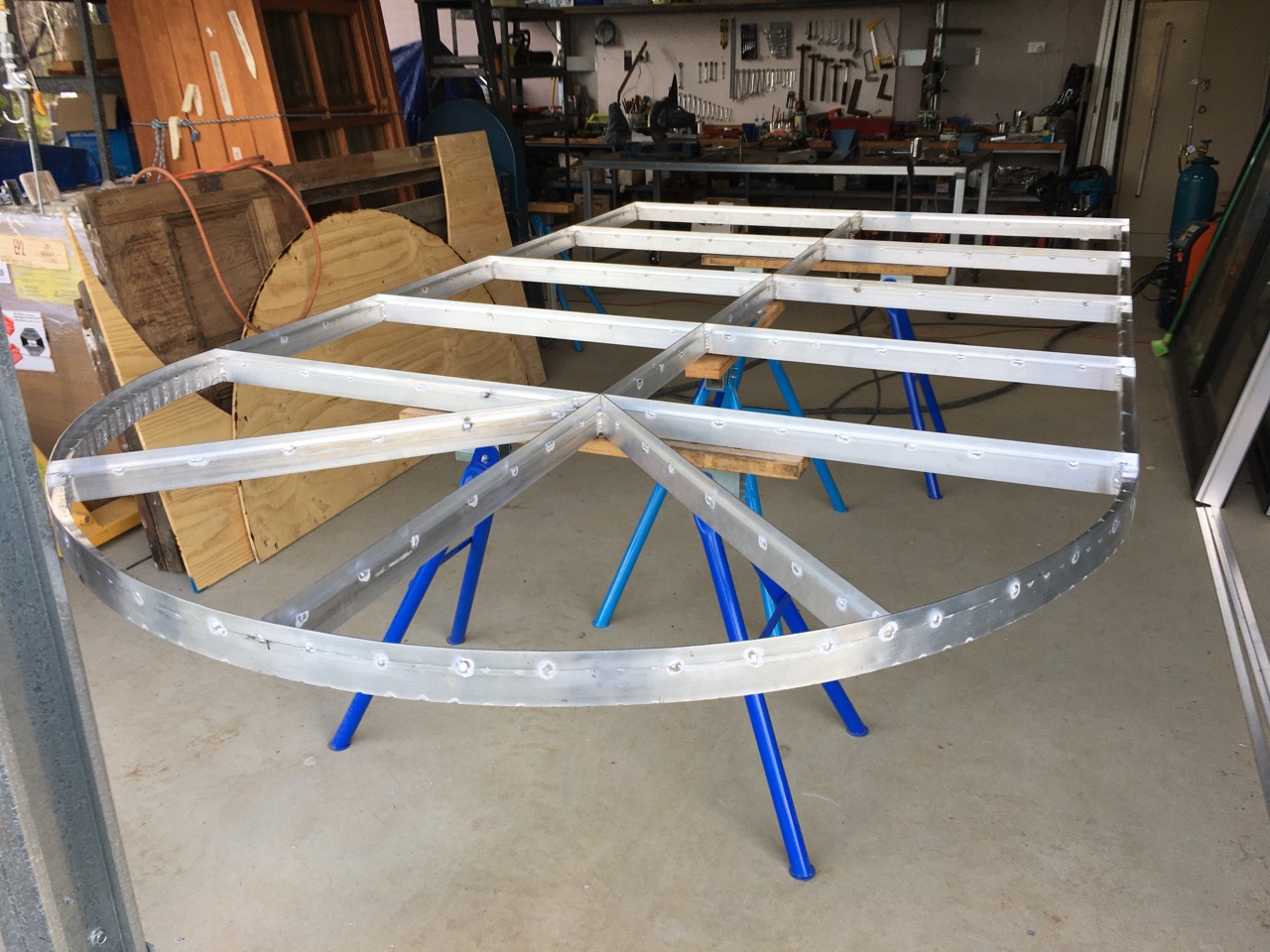
In order to bend the hollow section, I needed to make some cuts in the metal so that I could bend it round in an arc. I worked out that the difference between the inner and outer circumferences of a two metre arc was about 80mm. So I made 80 equally spaced cuts into the frame with a hacksaw, these were about 1mm across. It ought to have worked, but it didn’t. It wasn’t enough, the bend was too difficult to make by hand. I decided that I needed to make another cut with a thin blade angle grinder of about 1.5 mm wide. I made this cut just about 6 mm deep. The combination of the two allowed me to bend the arc easily by hand. I then clamped it to a plywood form, so that it would stay put while it expanded and contracted during welding. I welded the cuts back together. The whole section is now just as strong as it was before it was cut.

There are rolling machines that do this sort of thing easily, but I don’t know of any here in the Highlands. Besides, I am happy to do all the work myself in my own way, finding my own solutions. Using what I know and using what i have at hand. This is self reliance.

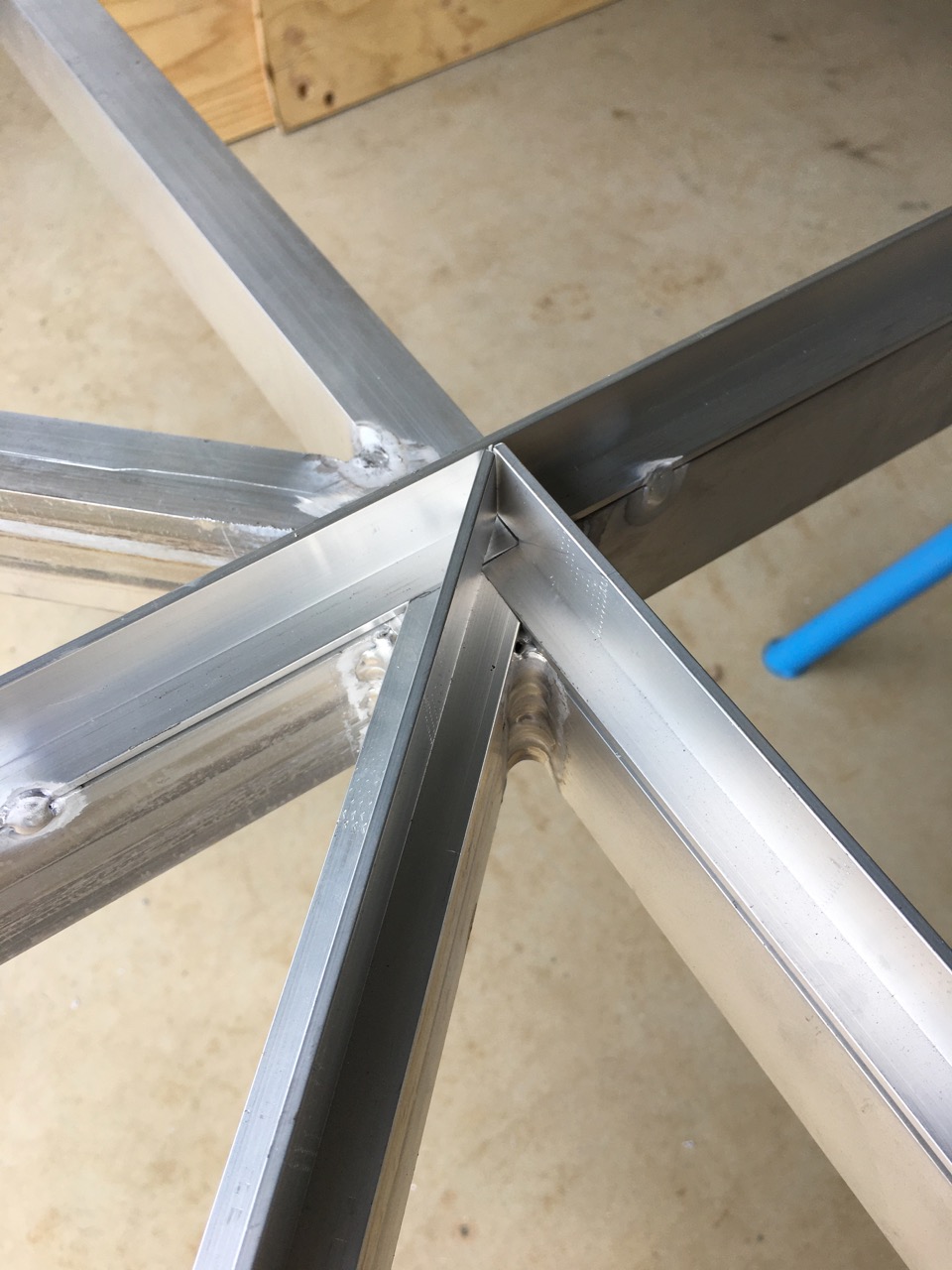
I tacked the arc onto the square section and it started to look like a window. Once the box sections were assembled, I needed to add the ‘T’ sections on top and an angle section around the edges. These are essentially the glazing bars. The rectangular hollow section is just a supporting frame to resist the wind pressure. These ‘T’ sections needed a little bit of fine cutting and filing to get to fit nicely, but it worked out OK. Clamping everything all the time is essential to keep it all flat and straight during welding.

Its taken many hours of thinking, measuring, cutting, fitting, clamping, tacking, cooling and then welding to get to this stage.

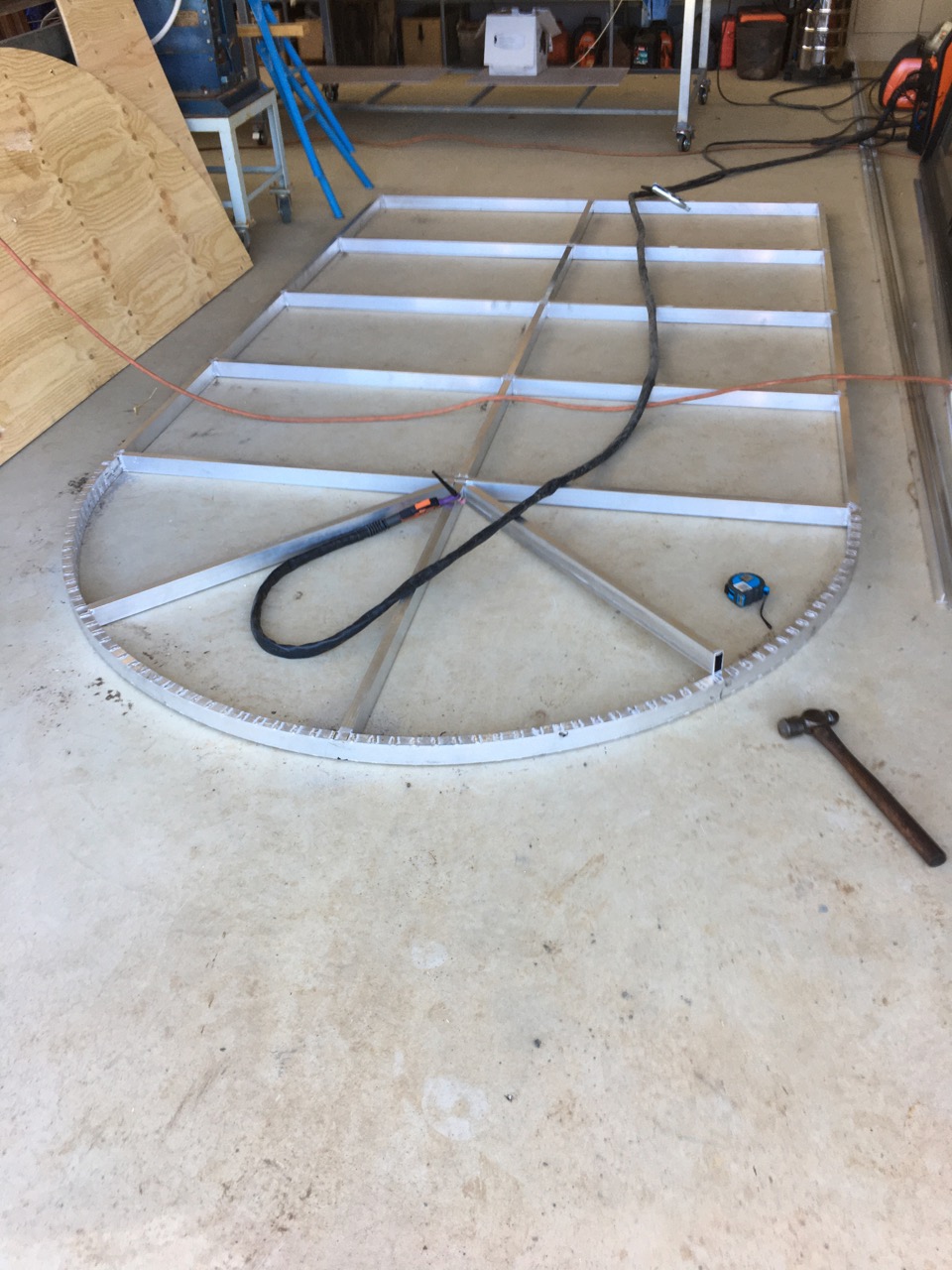
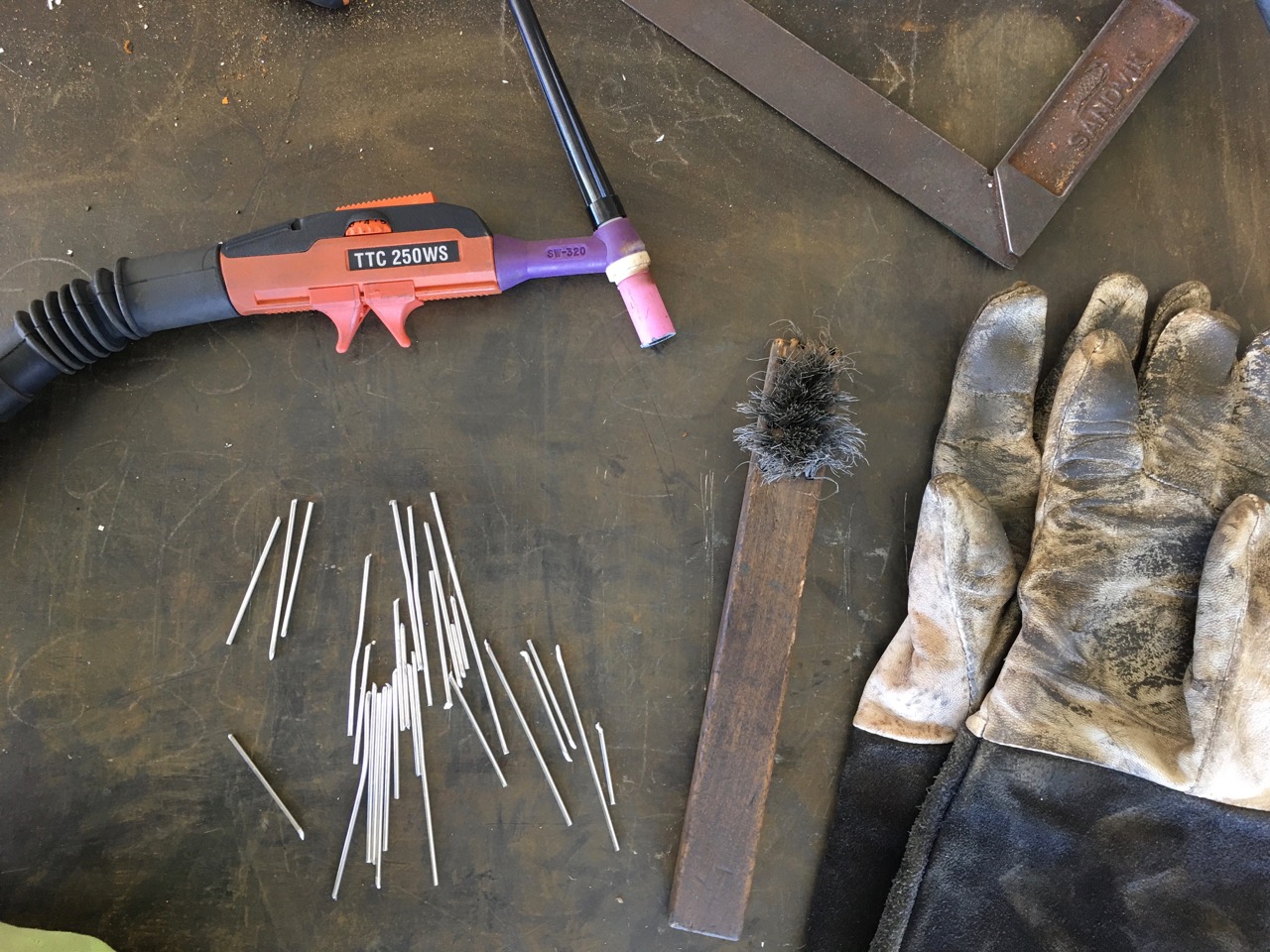
So far I have used over 50 metres of filler rod in all the tacks and box section welds. It’s a slow business, I’m hoping that it will work. each of these little butt-end rods was once a metre long.

In this image, the structure is complete, but it’s not a window yet, however, I started to think that it just might work. There is still a way to go at this stage. I still have to fit the architrave around it and then a fixing fin, but it’s almost there.

The builders finally turned up months late. We paid our deposit on the first of July, straight after the Council passed our DA. They told us that it would take 5 weeks for the kit to be delivered, There was some sort of stuff-up and the kit eventually took 12 weeks to be delivered. That was 2 months ago on the 23rd of September.

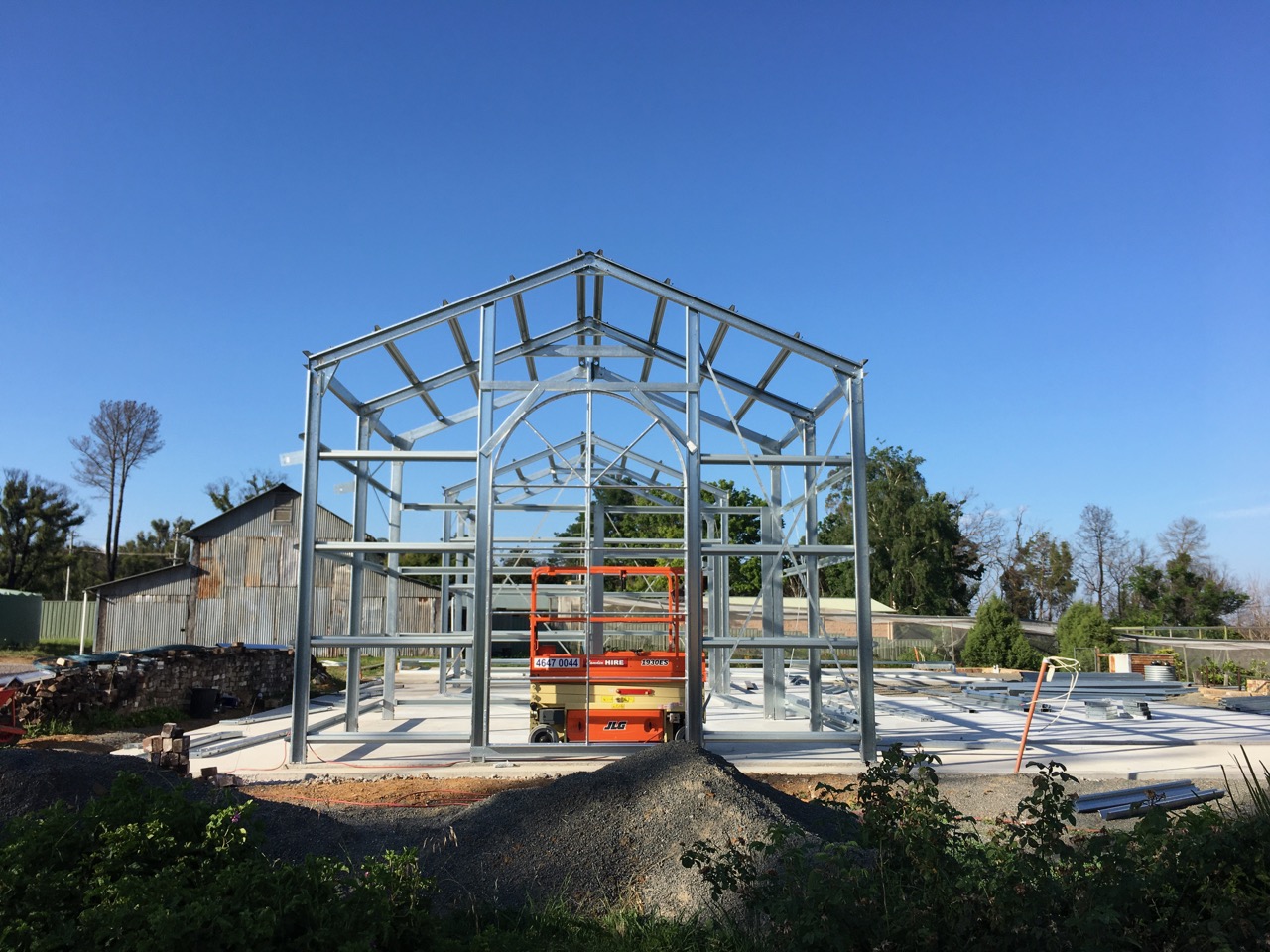
The builders have eventually arrived.

On the positive side. All the waiting around gave us the time to work on the yard and the clean-up, the orchard and the garden.

So the beginnings of a frame have appeared. Certainly enough to fit my big arch window in the end wall.

With any luck, we might be at lock-up stage before Xmas?

Seasonal Dining, Stuffed Zucchinis

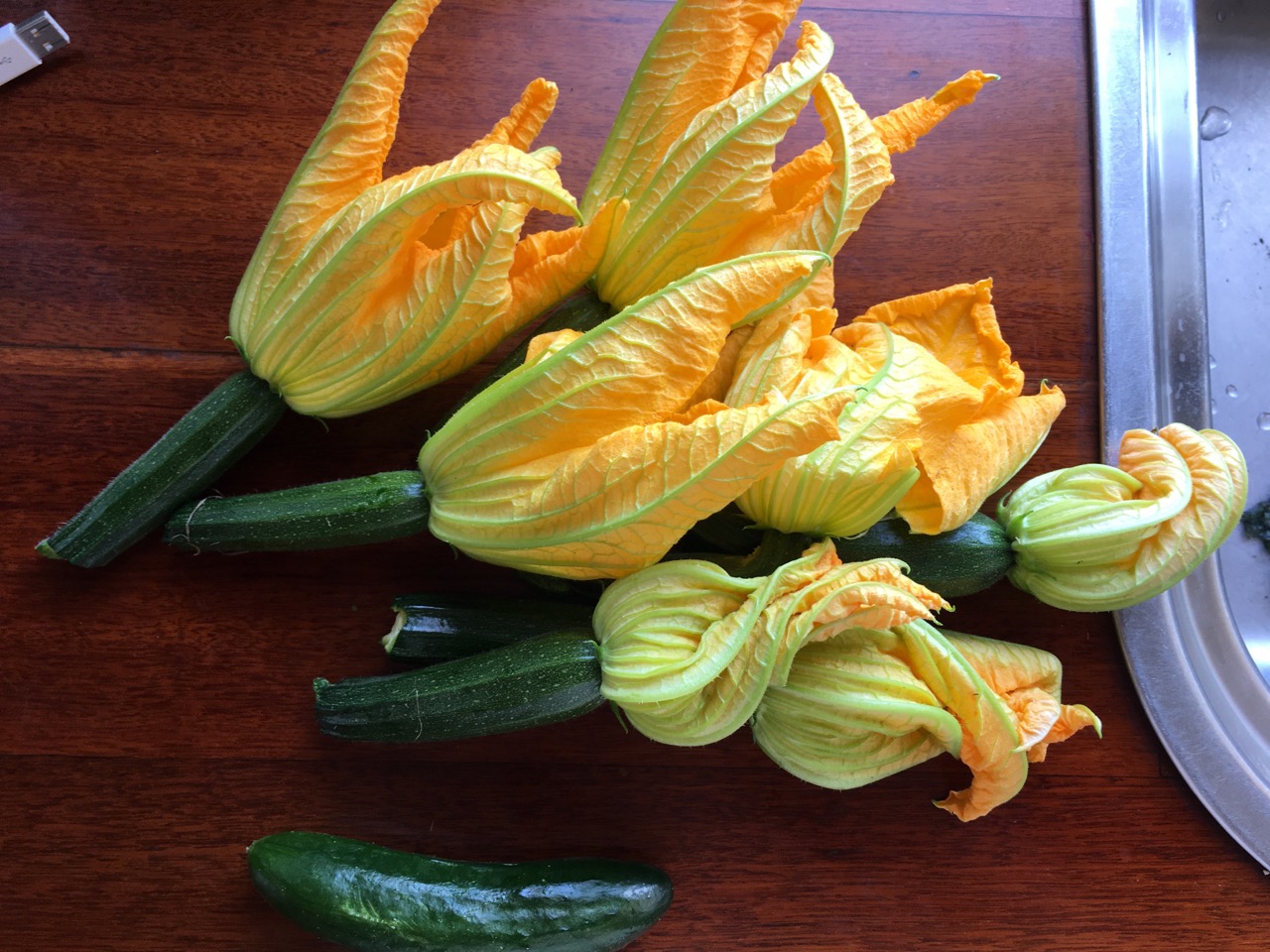
Now that the new crop of zucchinis is starting to produce in earnest, we are able to pick half a dozen small, day old, or even just hours old, flowers with small fruit attached every morning. So we are enjoying the experience of stuffed zucchinis every second day.

Of course we don’t have to pick them so young, but there are so many in this very fertile early period, that we don’t want them to get any bigger, or we won’t be able to eat them all.

We have 7 plants. That’s too many, but when you plant the seeds, you just don’t know how many are going to germinate, and then of those how many will survive the onslaught of the snails and slugs, to grow to maturity and fertility. This year every plant seems to have grown well, with a few others lagging behind as late germinators which are still coming up.

I’ll have to do a cull. But in the mean time, we have plenty of zucchinis to stuff for lunches or light suppers.

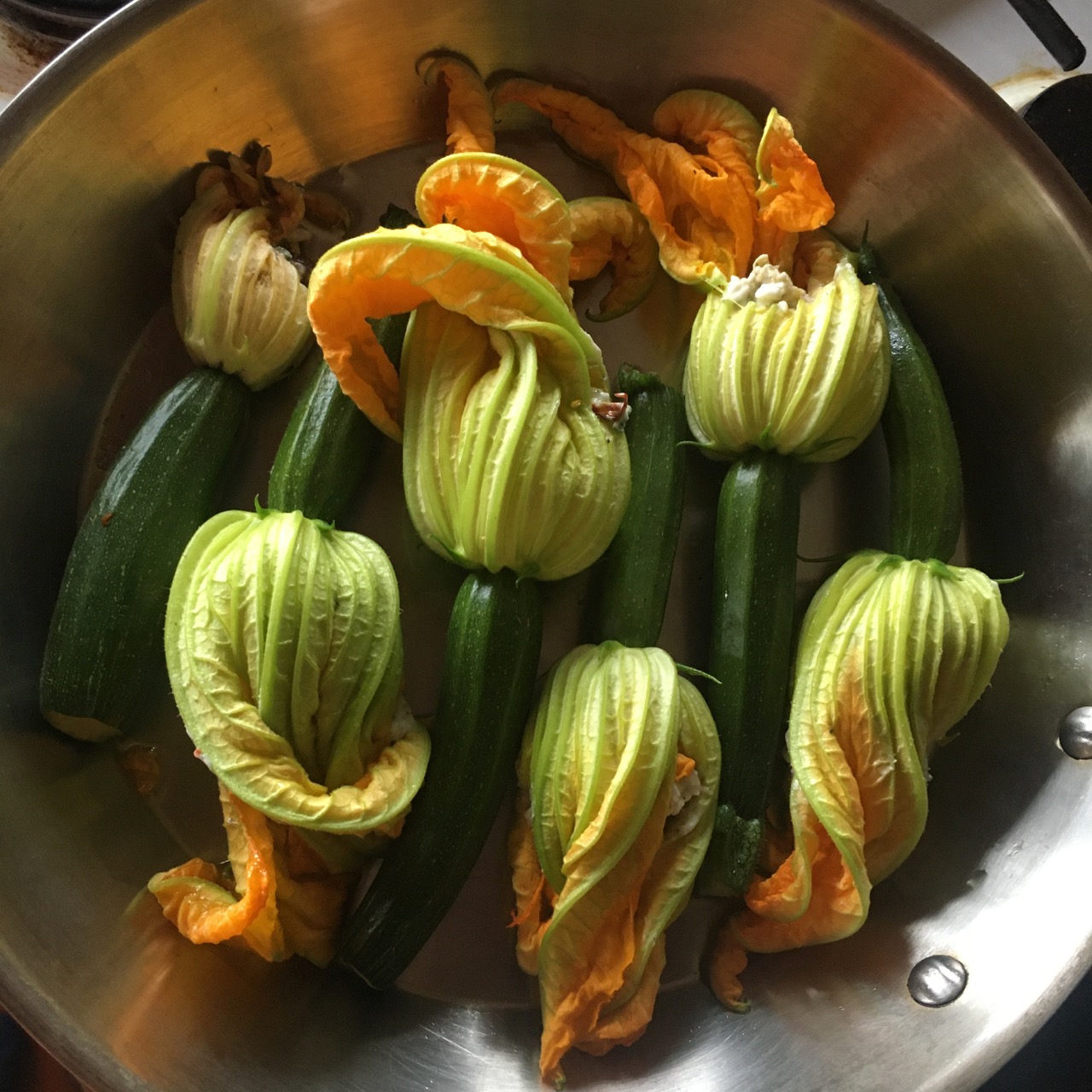
These flowers were picked later in the day and have been fertilised, so the flowers have closed up, and if left on the plant the flower will drop off as the fruit grows.

On the other hand, these flowers were picked first thing in the morning and are still wide open. In this form they are much easier to fill with the cheesy stuffing.

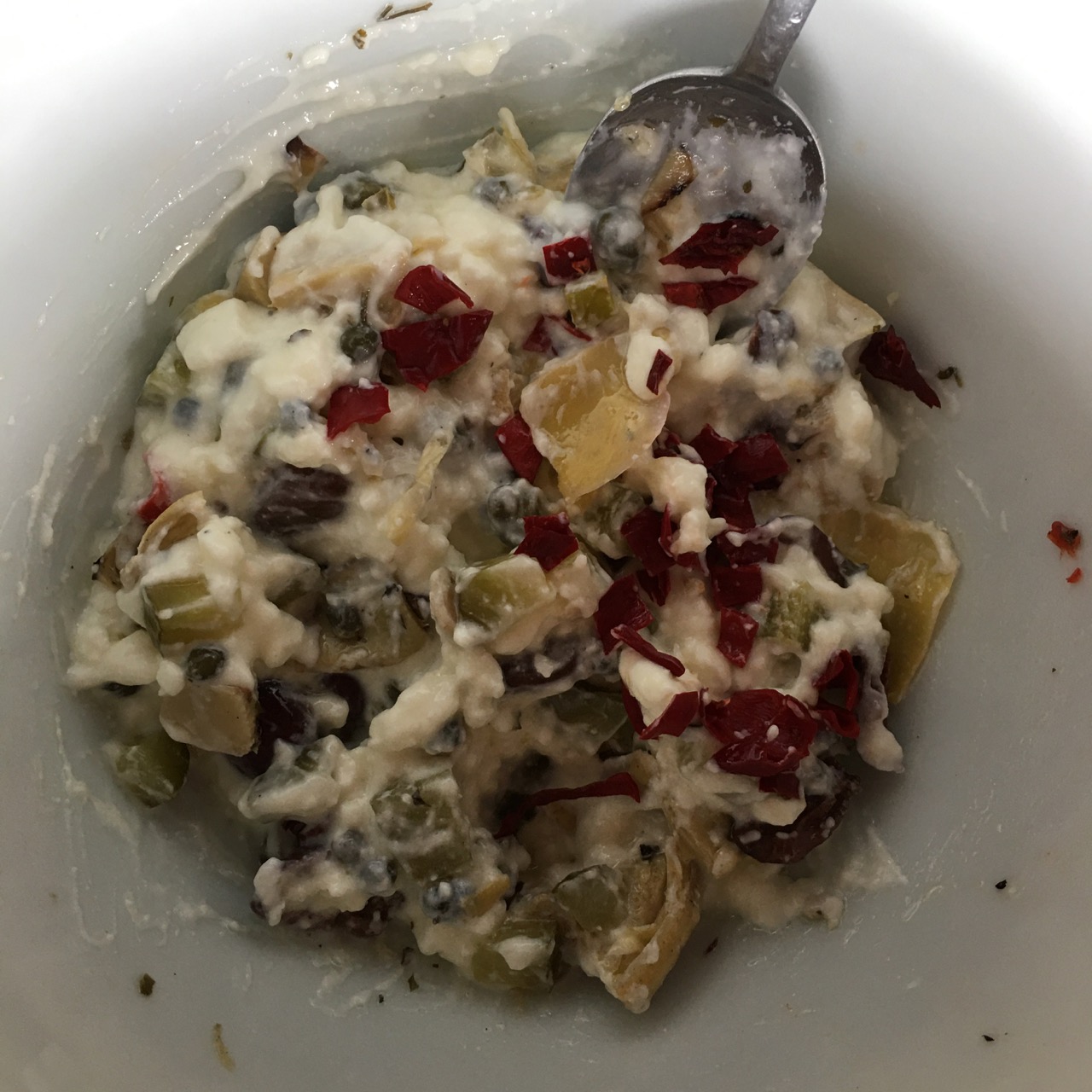
So what’s in the stuffing? I like to mix cottage cheese or ricotta with any or all of the following; chopped garlic, chopped olives, chopped up dried tomatoes, preserved artichoke hearts, split and diced into smaller bits, capers, a diced chilli and perhaps even some finely diced chorizo. I also sometimes add sage or thyme leaves, even preserved capsicum section. What ever you have in the fridge or pantry. Give it a good stir and spoon it into the flowers. Squeeze them closed onto the stuffing and place in a wide pan with a little olive oil and a dash of white wine. cover and steam them for 6 minutes.

This results in the zucchinis being just cooked, sort of firm snappy fresh, but heated through. The filling will have cooked together into an homogenous mass inside the flower, which will have wilted completely. I don’t use salt. There is quite enough in the preserved veggies, but a grind of pepper is nice.

You know when summer is about to arrive when the zucchinis are coming on. They are the first of the plantings that we made in the garden mid way through September to start to produce. Zucchinis are the first summer veggies to produce fruit. The tomatoes are still small and green. The capsicums still haven’t flowered yet, nor have the aubergines. But the nights are getting shorter and the days hotter. I just brushed past the tomatoes plants yesterday, and the aroma of tomato foliage was so strong and promising. I can hardly wait.

I can eat these every other day for a week, but them I hit the wall and I don’t want to see another zucchini for a while. That’s when it’s time to slice them longways and BBQ them. Then there is always cut into rounds and steamed with a few sprigs of mint. Or grated and mixed with a little grated potato and an egg to make zucchini fritters.

By the end of summer, we’ll be sick of them and hanging out for some Brussels sprouts! you know that it’s autumn when we start to think about zucchini bread and zucchini cake! Just to use them up!

This is seasonal dining

Summer approaches, hot days of fruit and fenestration

It’s not quite a week since I wrote that we picked the first youngberries of the season. Now, 6 days later we are in full harvest mode. This morning we picked 4 kilos of berries, we also picked 250 grams of blue berries and half a dozen strawberries.

Up until today we have been keeping up with the harvest. Eating them as we go in morning fruit salad. Then Janine made a sorbet/icecream sort of thing with just fruit and fresh cream, whipped up by hand intermittently every hour or so through the day as she took the batch out of the freezer as it stiffened. It made a pretty delicious dessert after dinner.

We have been up since early to do the watering and picking before the heat of the day set in. We are expecting 30oC today, so will spend the middle part of the day inside and out of the sun.

I also picked half a dozen hours old zucchinis with their flowers still attached. I will stuff these with cottage cheese and olives for lunch. This is our simple seasonal cuisine.

My inside work will be trying to finish off the big 4 metre x 2 metre arched window for the gallery space in the new pottery building. I’ve been plodding away on it for a couple of weeks now. It’s slow work as TIG welding aluminium creates a lot of heat in the metal frame, and aluminium expands and contracts a lot, which can lead to warping. Usually I would clamp a smaller job down onto a heavy steel-plate bench. but this window is so large, its bigger than my welding bench. so I have to be patient and allow it to cool down and shrink back to size between welding sessions. Hence the slow progress.

So far, I’ve been lucky, and it hasn’t warped much and is still within 1mm of square. That’s pretty good for my low level of skill.

Living with the seasons – the first youngberries

We used to say the first ypungberries of the summer, but over the years of global heating progressing apace and nobody in government prepared to admit it or do anything to cut carbon emissions, we are almost certainly heading for a difficult future.

You can’t fix a problem, until you admit that you have one. The carbon industries through their financial leverage on both political parties and continued deceptive advertising have brought us to this critical point and show no signs of letting up.

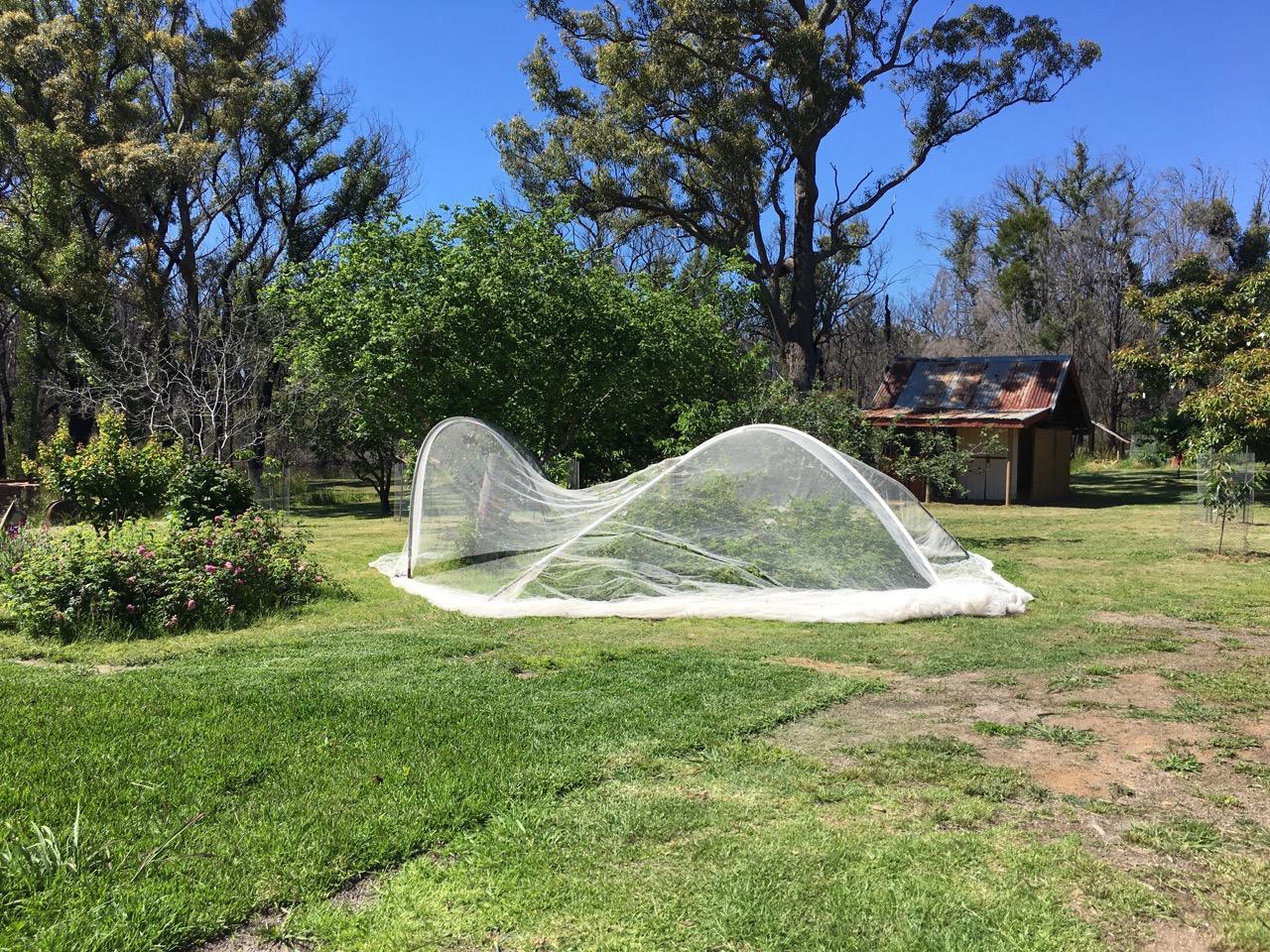
So now we have to say the first young berries of the season, because it’s nearly all over in the late spring. We only have to put put one net up this year, as all the other fruit trees are either burnt , or badly damaged and cut back very hard to remove the damaged wood, so there will be no cherries or peaches, no apples, pears or plums, no avocados. Just the youngberries. They survived the fire because they were directly behind the house. I am grateful for what I have.

Youngberries are so special, just the right balance of sugar and acid. Unlike the mulberries that we have been feasting on for the past few weeks that have a mild sweetness, but with virtually no acid. They need lemon juice and zest to give them a bit of a kick. See previous recipes.

These berries are so nice, that we will be just eating them fresh off the canes for the first few days, until the crop overwhelms us and then we start to bottle them for later in the winter. We’re pretty lucky to have something so simple and so special fresh from the garden.

Eating Seasonally – fresh spring eggs and asparagus

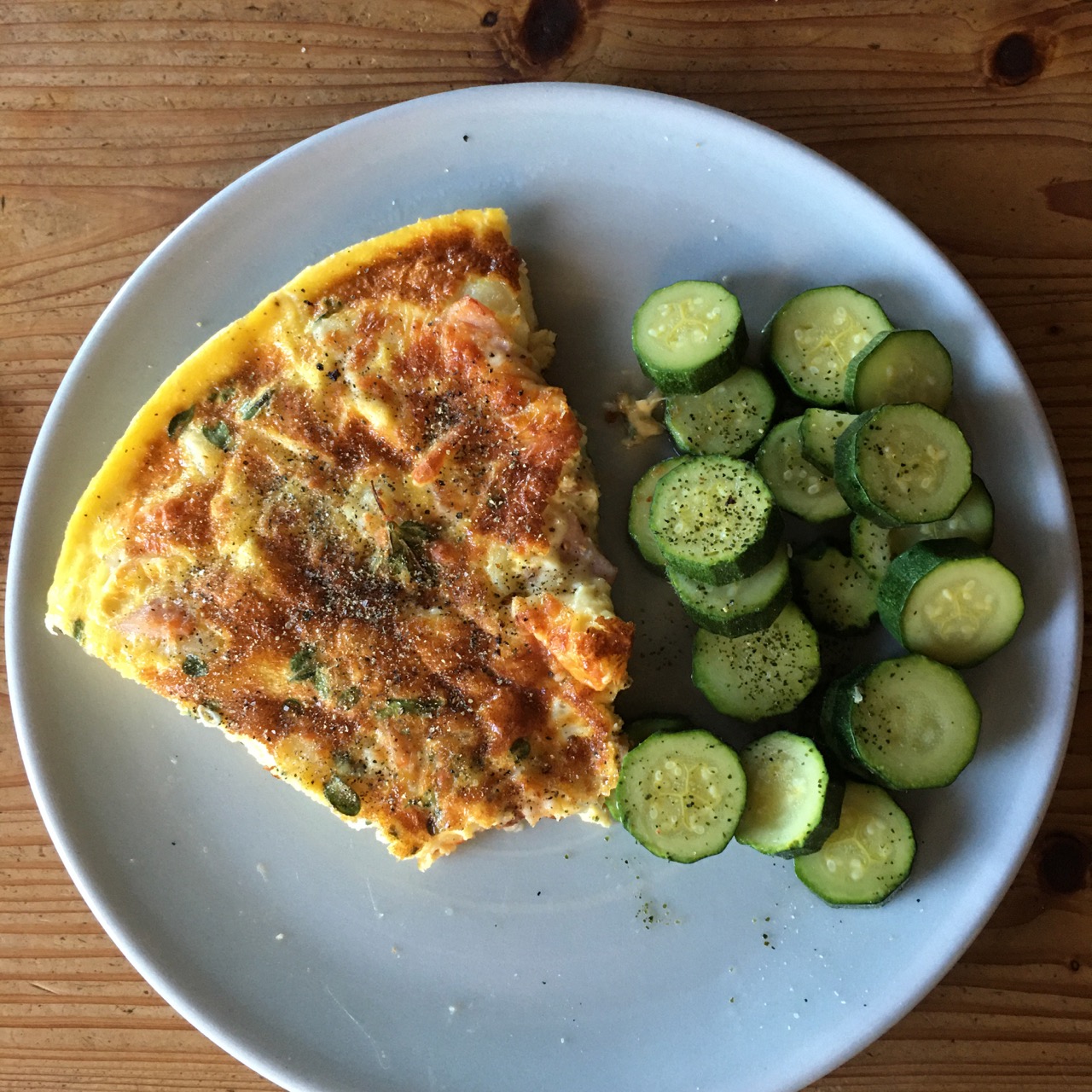
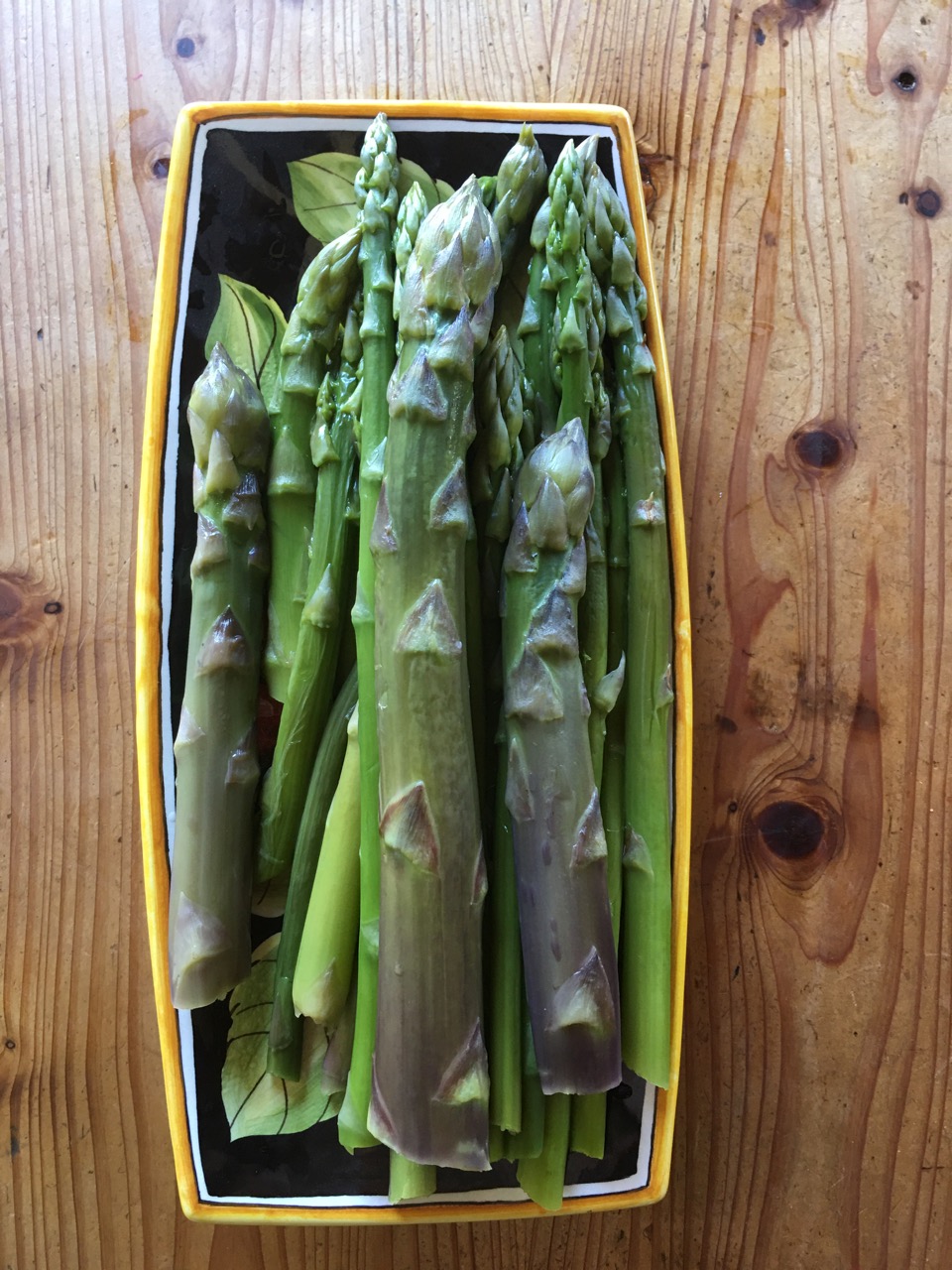
Our new chooks, Edna and Gladys, have been laying an egg a day for us this last week, so tonight we are ejoying a garden frittata with steamed zuchinis. At lunch we enjoyed a garden salad with steamed asparagus.


The best lunch isn’t perfect, The best lunch doesn’t last forever, but the best lunch is never finished.

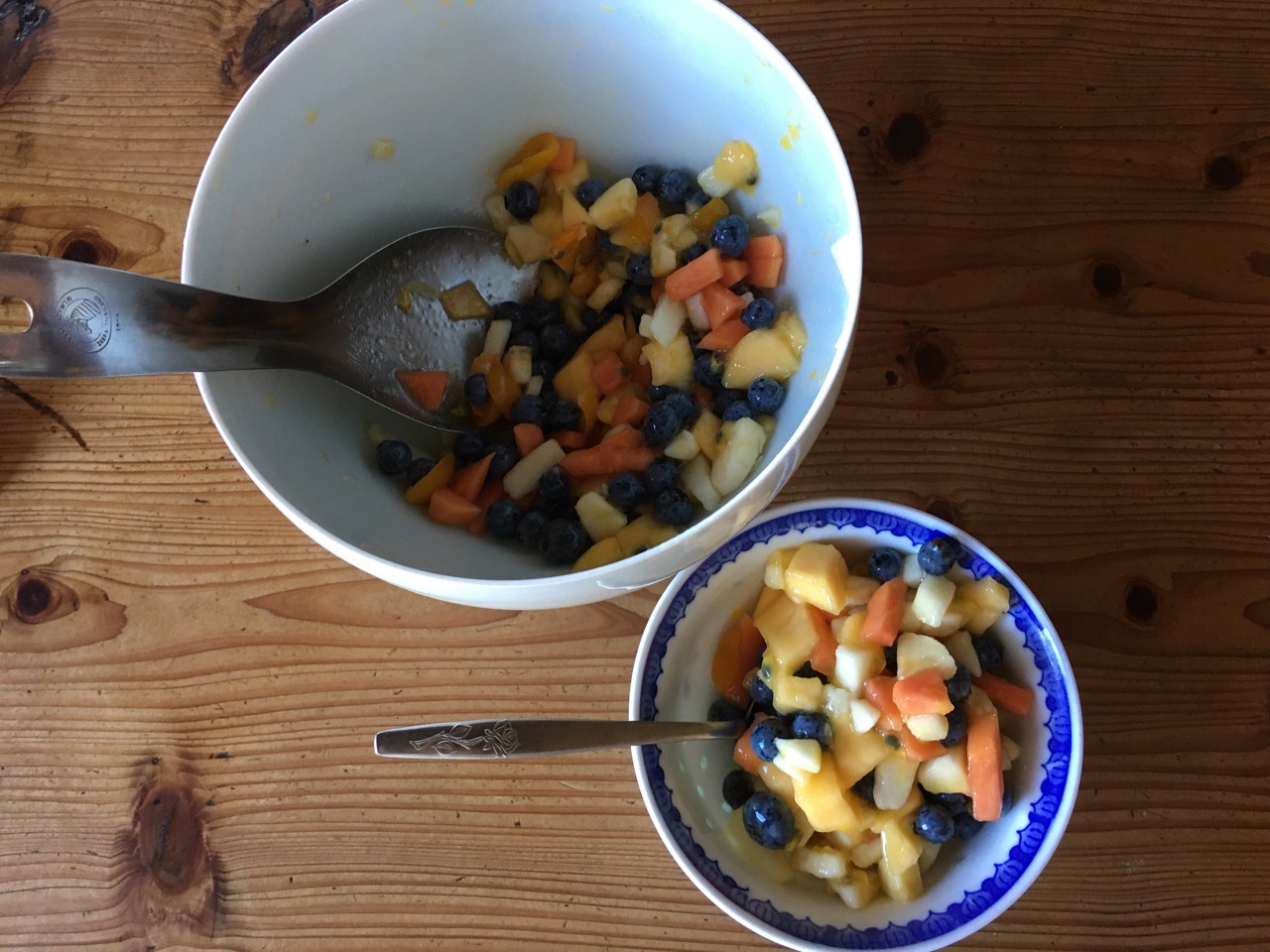
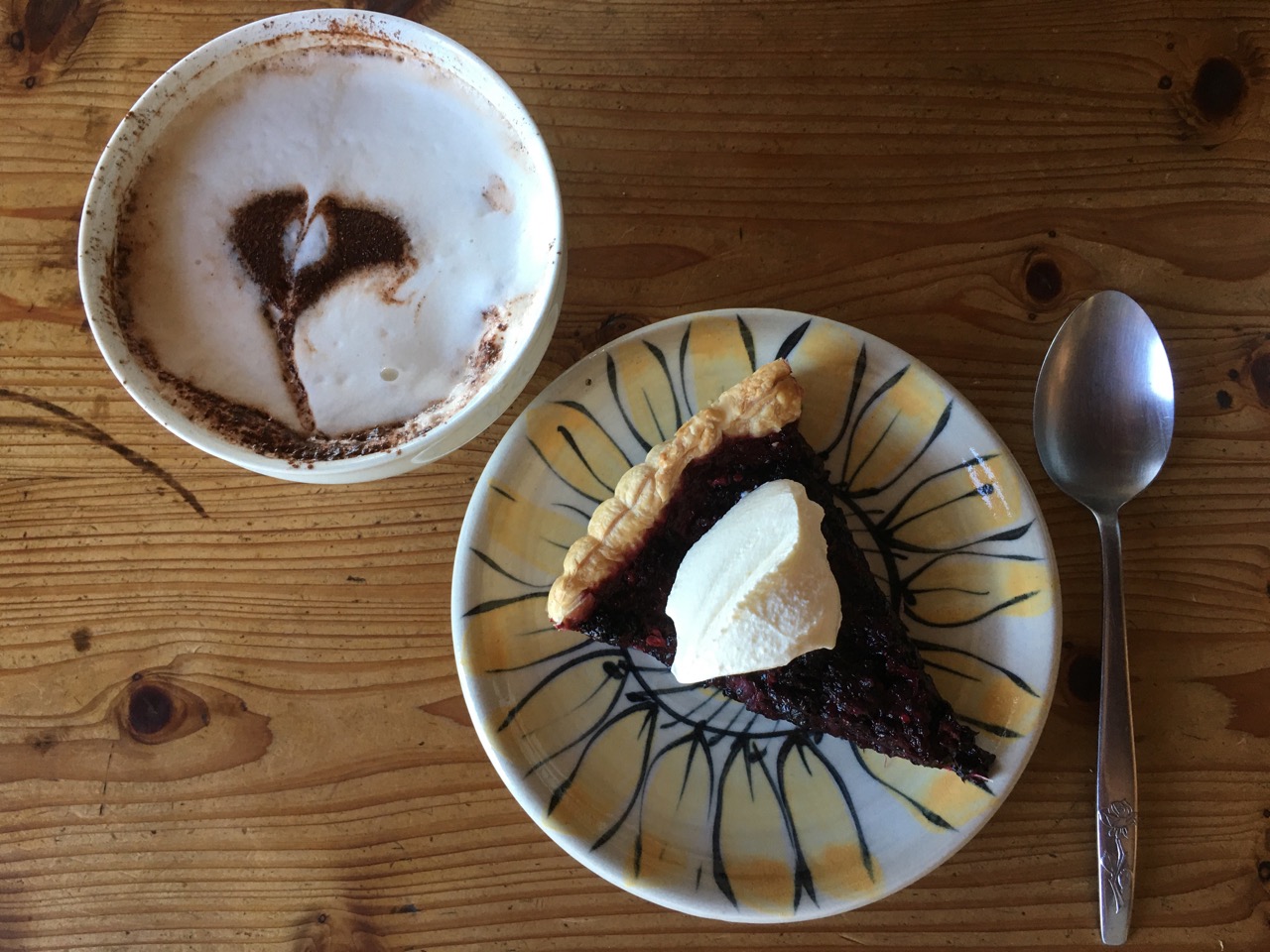
However, Breakfast is always good, especially when it is fruit salad followed by coffee and mulberry tart.

Its a tough life, but someone has to live it.

Mulberry tart. vol 5

The mulberries are still holding up against the marauding birds. I guess that this is because there are so few of them that have survived the catastrophic bush fires. We have 2 bower birds and friarbird in the tree fairly constantly, The crop has been very good because of the rains, so There is still some to go around.

I made my 5th attempt at the mulberry tart. I’m getting better at it and faster now with practice.

I’ve abandoned the lattice top, but added ‘lemonade’ lemon juice and zest to the recipe.

I’ve settled into a reliable recipe of

500g de-stemmed mulberries

140g sugar

40g plain flour

A shake of cinnamon powder and a dash of vanilla essence.

Juice and pulp of half a large lemon or all of a small one, plus grated zest, also juice of one small ‘lemonade’ lemon and zest of the skin.

Mix all these together in a mixing bowl. Blind bake the crust, add filling, and bake for 25 mins at 180oC. It seems to be fairly reliable. And delicious!

Serve on a beautiful hand made, ash glazed, wood fired platter.

Gladys and Edna Change Trees

Our new ‘Tree Change’ Chickens Gladys and Edna have landed.

We have been given a couple of young pullets. This was a nice surprise for us, as I was missing Hillary’s presence in and around the garden these last few weeks. She always kept me company whenever I was working outside – which was often. We had intended to get another coupe of chooks in the fullness of time. I had gone in and cleaned out the chicken house pretty thoroughly, then limed the soil to sweeten it. I took the laying box out into the sun and cleaned it pretty well and left it to bake in the sun to help clean it of any mould or fungus etc. I locked the house up and left it to sit. I thought that that would be it for some time. As we are flat out busy, The thought of getting new chickens was quite low on my agenda.


Last week, our very good friends Warren and Trudie asked us if we were interested in some more chickens, as one of Warrens clients had two to give away. They were living in a small hutch in a carport in Balmain. A small, densely populated, inner city suburb. I gather that their life was largely spent on concrete. We said yes, the time was right for us and they arrived here serendipitously on the weekend. We put them in their new house and they seemed to settle in straight away. They didn’t even explore their new surroundings. The first thing that they did was scratch at the earth floor, start to excavate a small hole, scratch out a few worms, which they ate with gusto, eat some soil and then take a dust bath, laying on their side and flicking dirt all over themselves and each other.They knew they were chooks and this is what chooks are programmed to do.


We brought them snails from the vegetable garden, which they fought over and snaffled down without hesitation. We also brought them a load of chickweed, lettuce leaves, spinach and cabbage leaves, which they torn to bits and downed feverishly. They weren’t very interested in the dried feed ‘layer Pellets’ and scratch mix of grains that we had in there for them. They seem to be very happy with the dirt. I hope so.


We will have to wean them off their inner city Balmain diet of sipping Chardonnay and eating smashed avocado on organic sour dough rye. From now on it’s going to be snails, worms and free range weeds and grasses and whatever else they can find for themselves. The move doesn’t seem to have bothered them one bit. They have both laid an egg a day, without interruption since they arrived. Going from a small inner city flat to 7 acres of garden, orchards and grassland bordered by bush will give them plenty of scope to live out a more ‘natural’ chooks life.


I’ve shown my self to be very shallow and fickle. These chooks have completely taken my mind off missing Hillary and I am now quite happy with the ‘transference’ of emotion. Welcome to your change of trees Gladys and Edna! Happy scratching.

Janine delivers snails fresh from the veggie patch.
Gladys and Edna explore the laying boxes
Cottage garden flowers in the stone fruit orchard.