The Last Day of Winter

Here we are already at the last day of winter. The day starts with a witheringly cold morning. We wake to find ourselves cold even under the sheets in our bed. There is a very healthy frost laying all around. No point in trying to water the garden too early, as nothing will work out there.

I have had this last week ‘off’ to try and catch up on jobs that have needed attending to for some time. Everything got a bit neglected while I concentrated on getting my book printed and my big exhibition up at Watters Gallery. The show is in its final week now and will come down on Saturday. It’s a really good show, if I can say that about something that I have done myself. I’m pleased with it. It couldn’t have been completed or have been as successful without the total support of my partner Janine King, as well as all the help from all the people that I collaborated with over the 15 years of the research. Thankyou Janine!

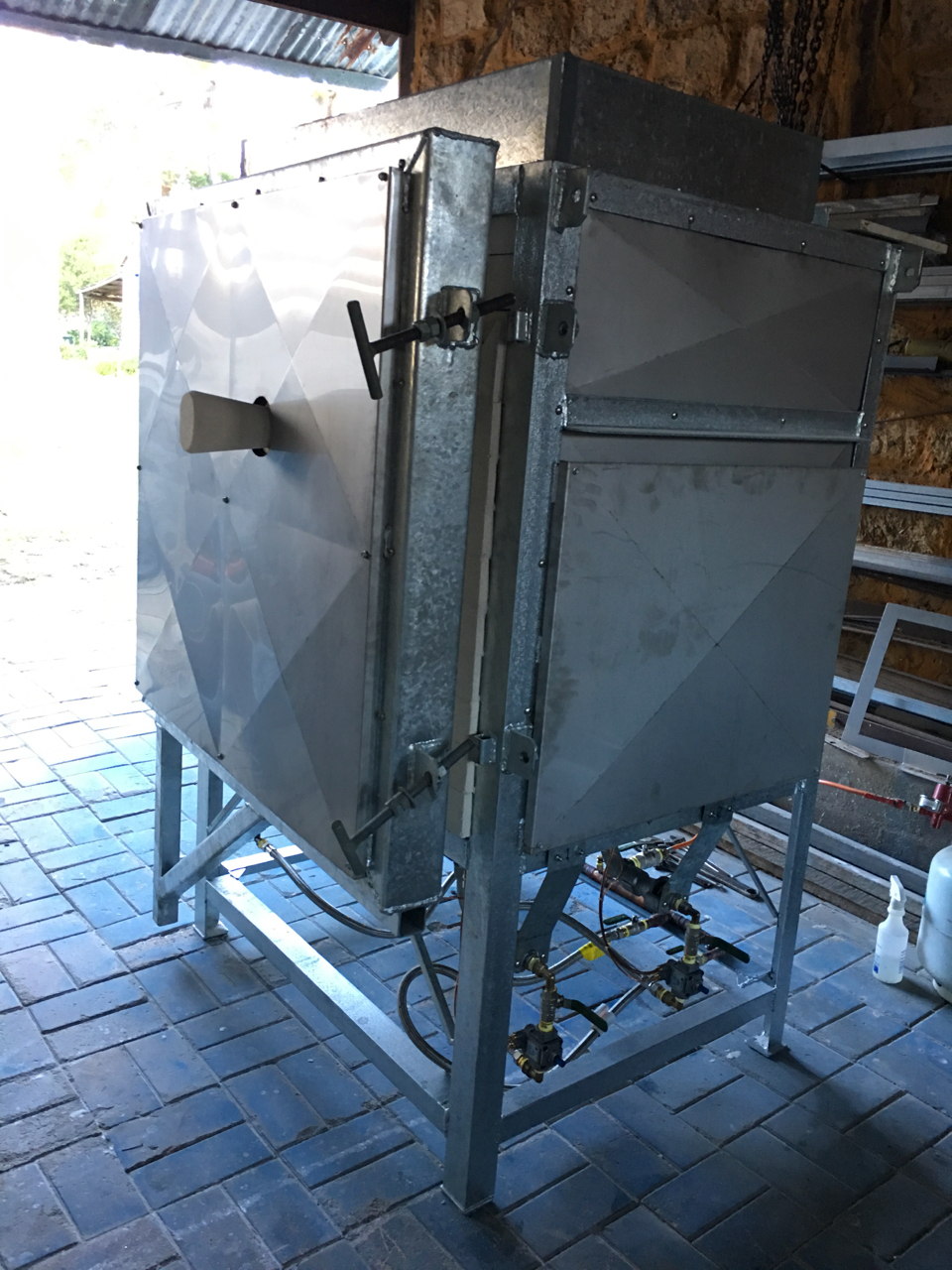
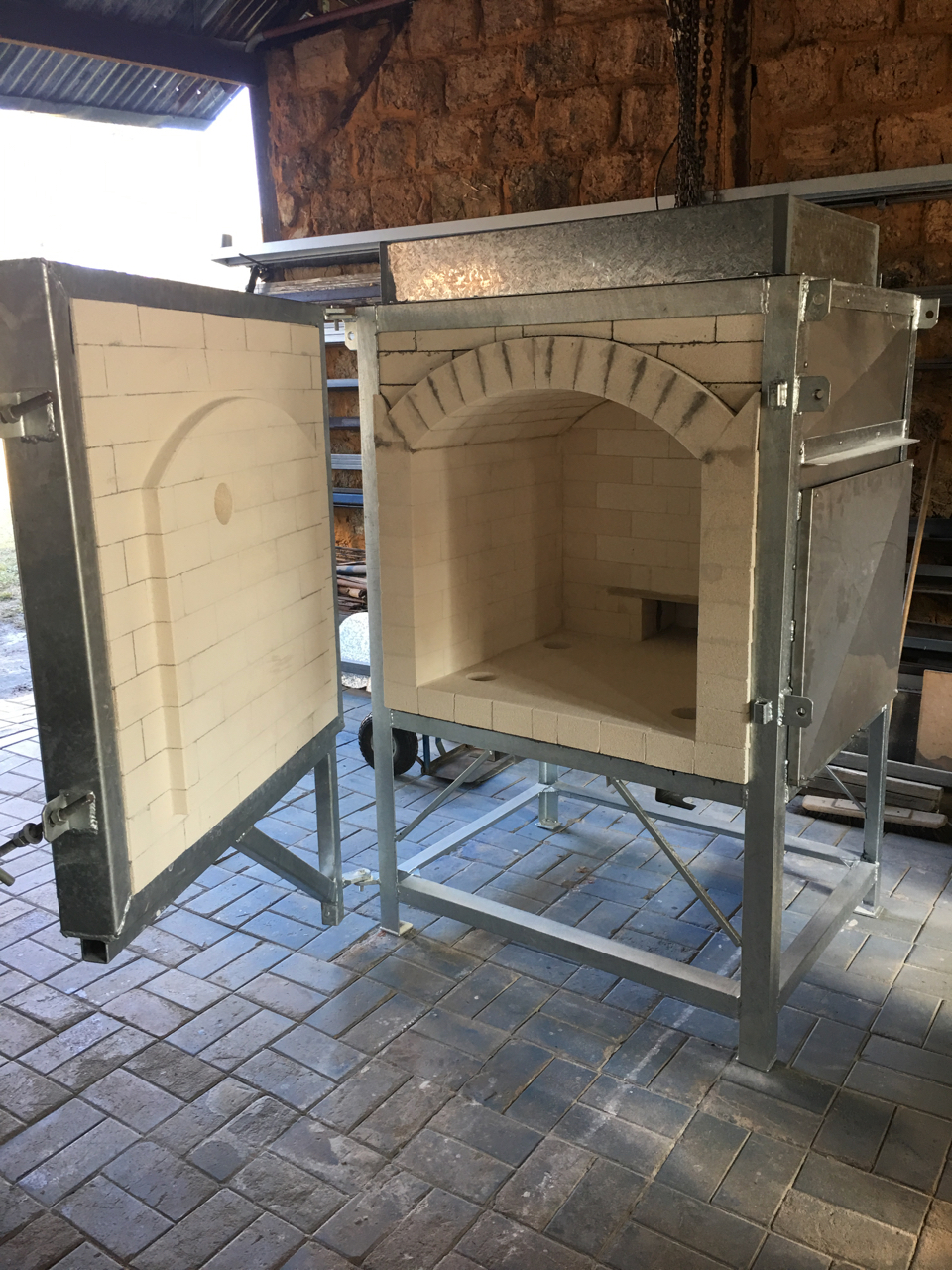
On Monday, I will start to weld up my 300th kiln! I have one more big kiln booked in after that, with deposit paid, to be welded before the end of the year. I will then be 66 years old and it’s time to retire from building the bigger, heavy kilns. I will continue to make the smaller, lighter, monocoque stainless steel framed ‘dual-fuel’, wood fired and gas fired kilns for a while.

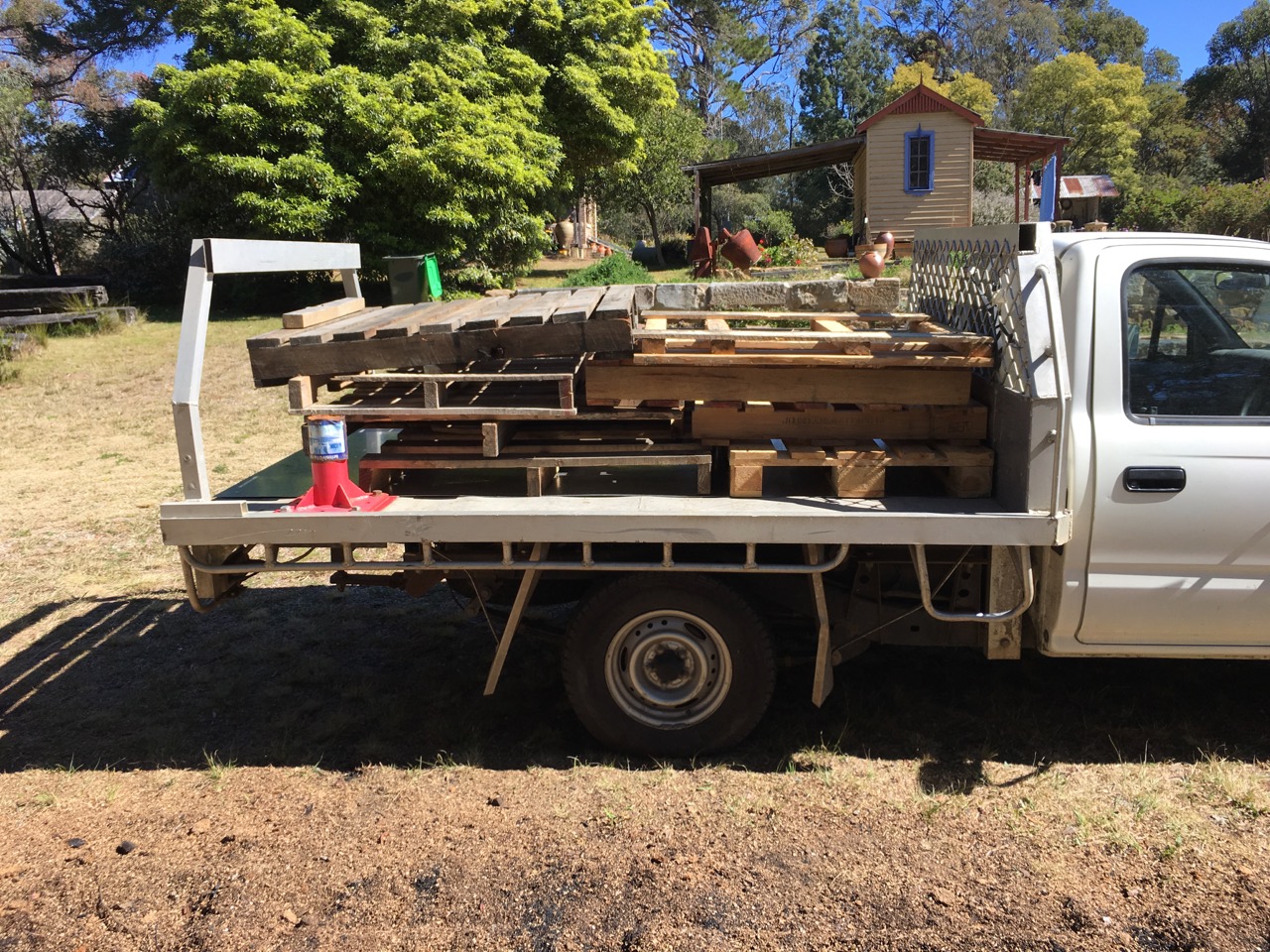
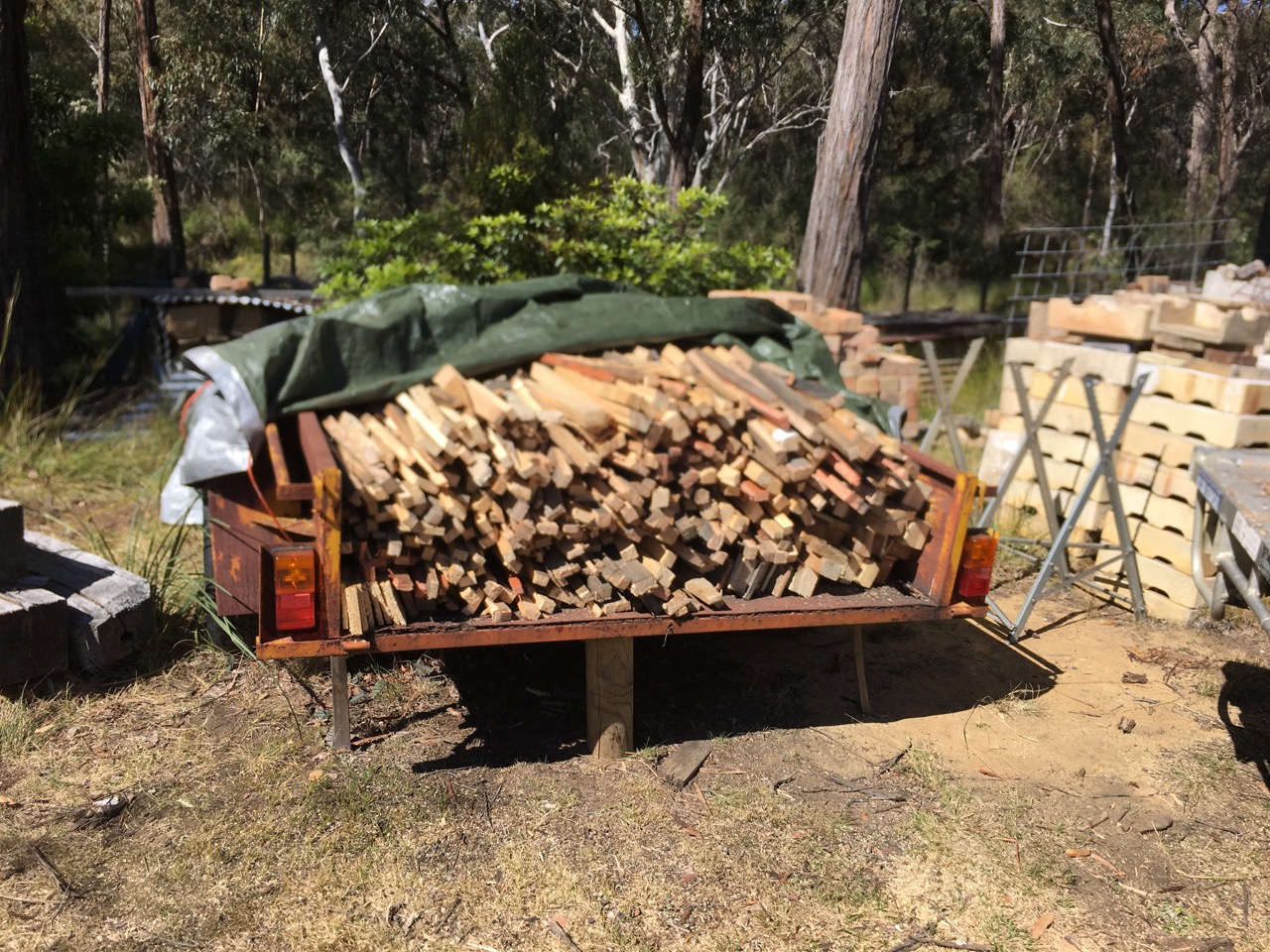
I went down to the steel yard to buy the required steel sections, so that I will be ready to start work on time next week, and while there noticed that they had a load of used pallets that needed to be taken away. As I had the truck and all the steel was up on the racks. I decided to fill the tray with pallets. These can be broken down into small, thin sections that are very good for firing the small ‘dual-fuel’ kilns in wood fired mode. After I get all the steel off the carry racks, I take the truck to the kiln firing area and unload, then cut them all up with the chain saw, into shorter, straight, sections. These are then taken to the wood shed where they are split into thin pieces and loaded back onto the truck and stacked into the trailer standing at the edge of the raku firing space, ready for use in the next 4 low temp wood firing workshops. We have almost enough wood in stock now. It will need just one more day or two to collect enough to see us through to October and the end of the firing season.


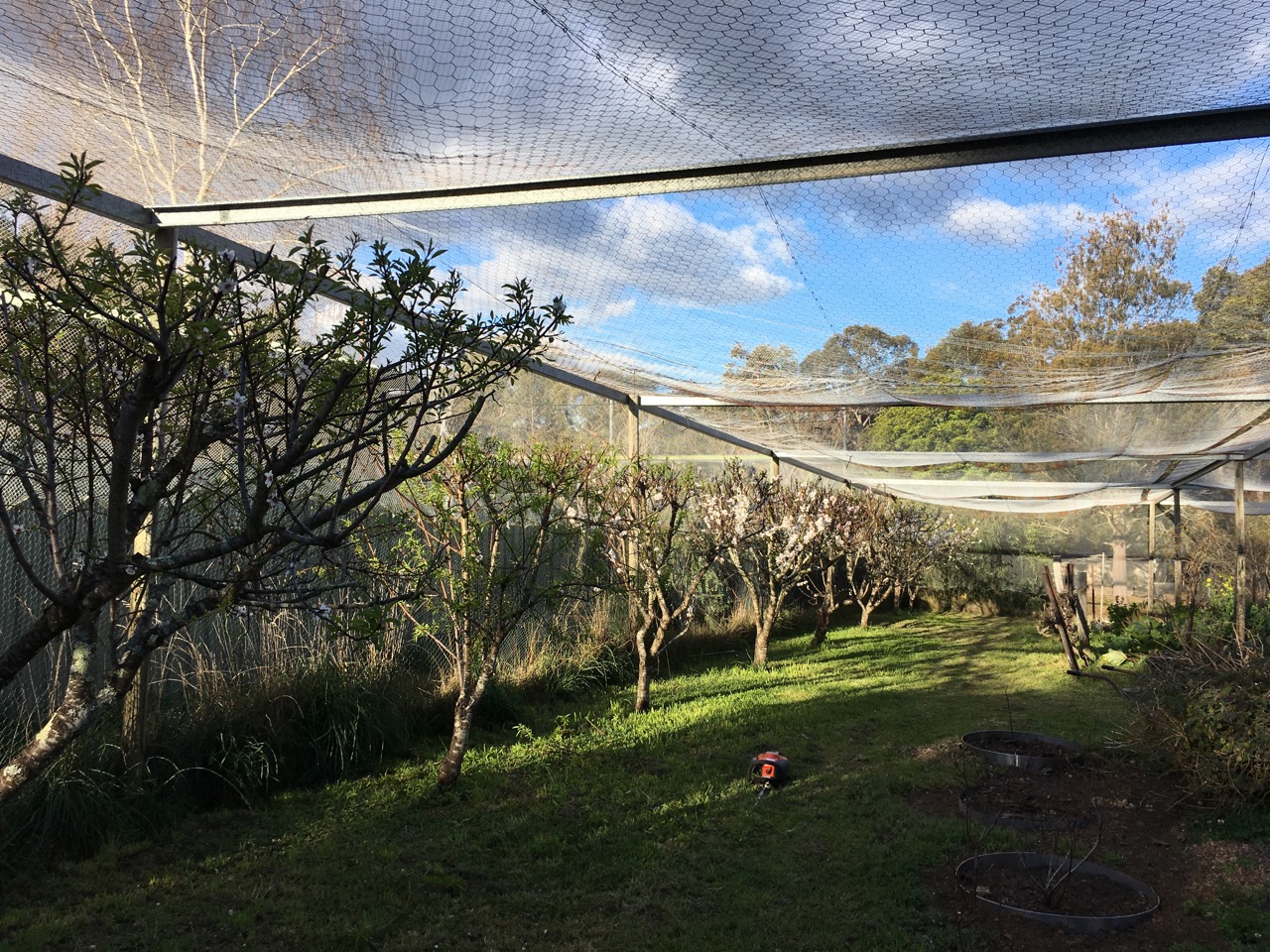
During this last week ‘off’, I have also pruned the peaches, almonds and shiraz grape vines. All these jobs have needed doing for some months, but now is their time. I also need to be getting stuck into the cherry trees, but time is running out. In small moments each day at lunch time, I get up on the Old School House roof and fix the flashing, repair the fascia and paint, prime, and top coat a series of rusty patches where pine needles have collected over the years and caused the galvanising to corrode. I notice these rusty patches every time I get up on the tall extension ladder to clean the gutters. This job can’t wait another week, so I manage to fit it in.


One other job that has been waiting almost a year now, is the water tank on the chicken shed roof. I was given this galvanised water tank for free, because someone? Built it very badly and put the water inlet filter hole in the base, rather than the top. Useless! i managed to silicone and pop rivet a gal patch over the hole and make a new hole in the top where it belonged. All too easy, but when it filled up with water, my patch held well, but there were 3 other places where it sprang little spouts of water leaks. It’s been very dry , with no rain for several weeks now. So, I take the tank down off its stand and dry it out completely by cutting the entire top out, so that it can fully drain and get sufficient air movement to completely dry out. When it’s dry, I can crawl inside and brush it out and clean it well, then apply 4 tubes of silicone rubber to all the internal joints and seams. That should do it!

i use up a lot of small off-cuts of galvanised steel sheet to make a flange on top of the tank and replace the original lid, all pop-riveted back into its old place. No one will ever know!

The last job this week, which we have tackled each morning and evening, is to wheel barrow 5 tonnes of mushroom compost into the orchard and spread it around all the stone fruit trees. I started the week by mowing, then spreading wood ashes from the fire all around the drip line of the trees. I find that all the old marrow bones from the stock have been calcined in the fire and are now reduced to a soft crumbly, powdery state. I spread it all evenly around. The wood ashes will provide potassium, the calcined cow bones will provide phosphate, and the chicken manure that  I add will provide the nitrogen. Its a home made, balanced diet, of naturally produced fertiliser for the fruit trees. It just couldn’t be more natural and organic.


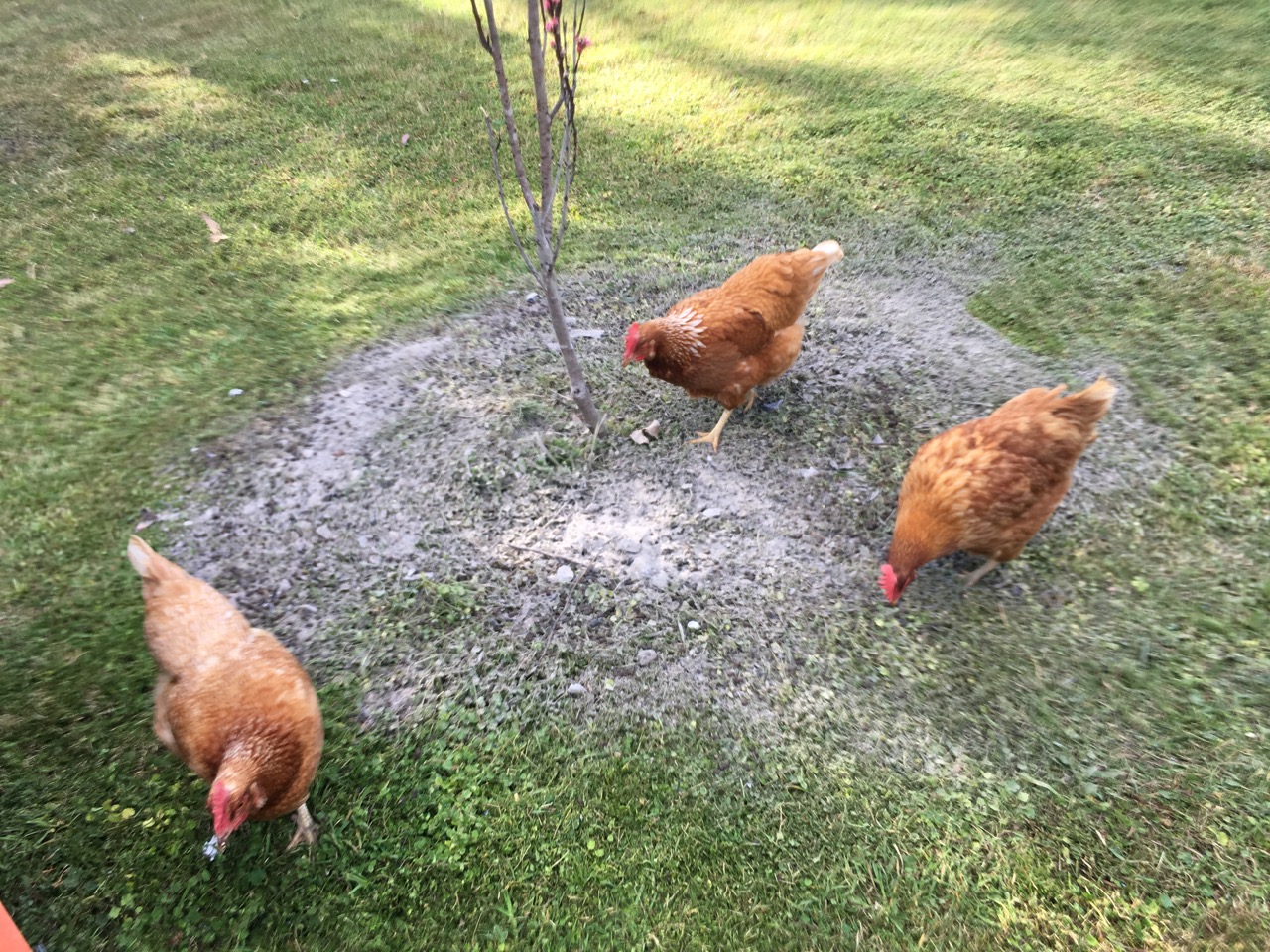
The chickens come and help to spread the ashes and compost and get a cuddle for their work efforts from Janine.


Low Temp Wood Firing Workshop

We have just completed our 4th wood firing workshop for the season. We still have 4 or 5 to go before spring, the hot weather and possible fire bans arrive.


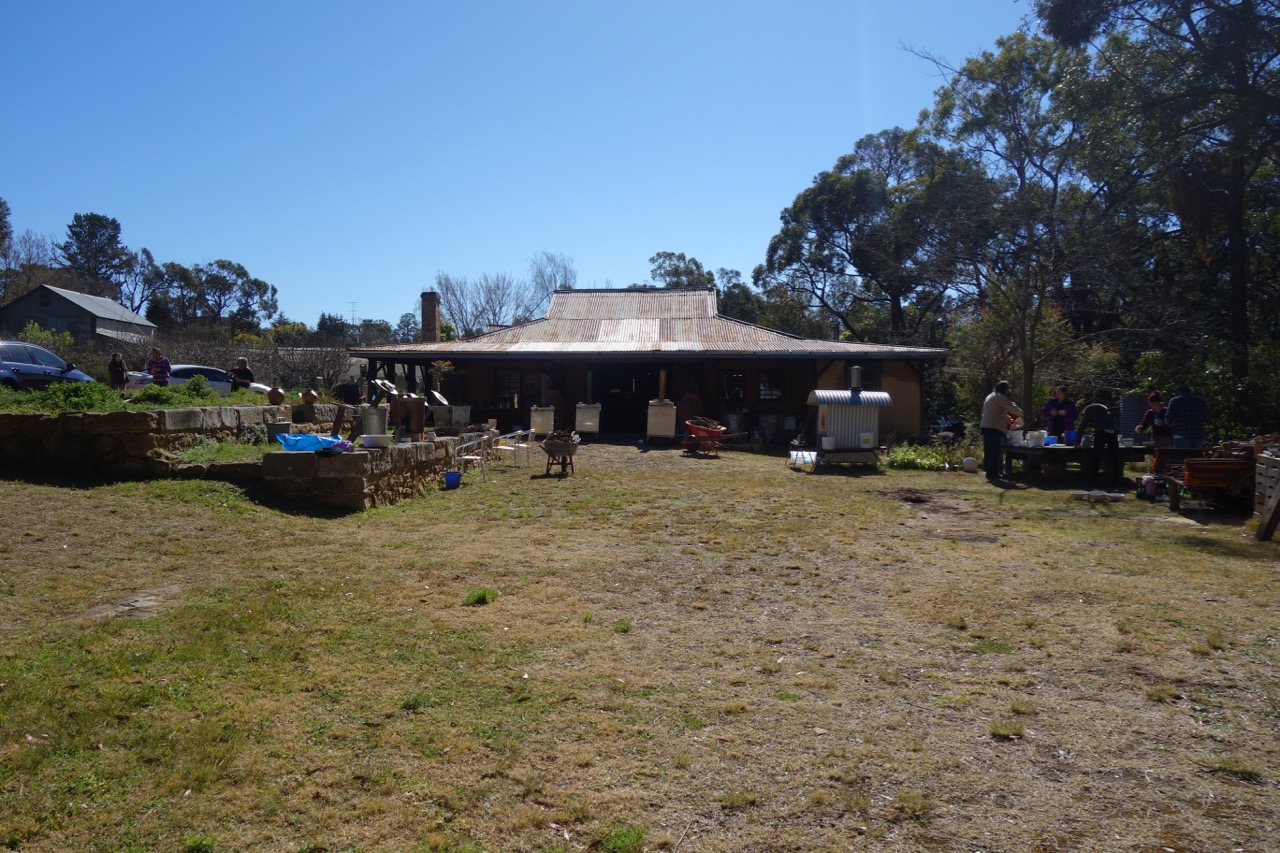
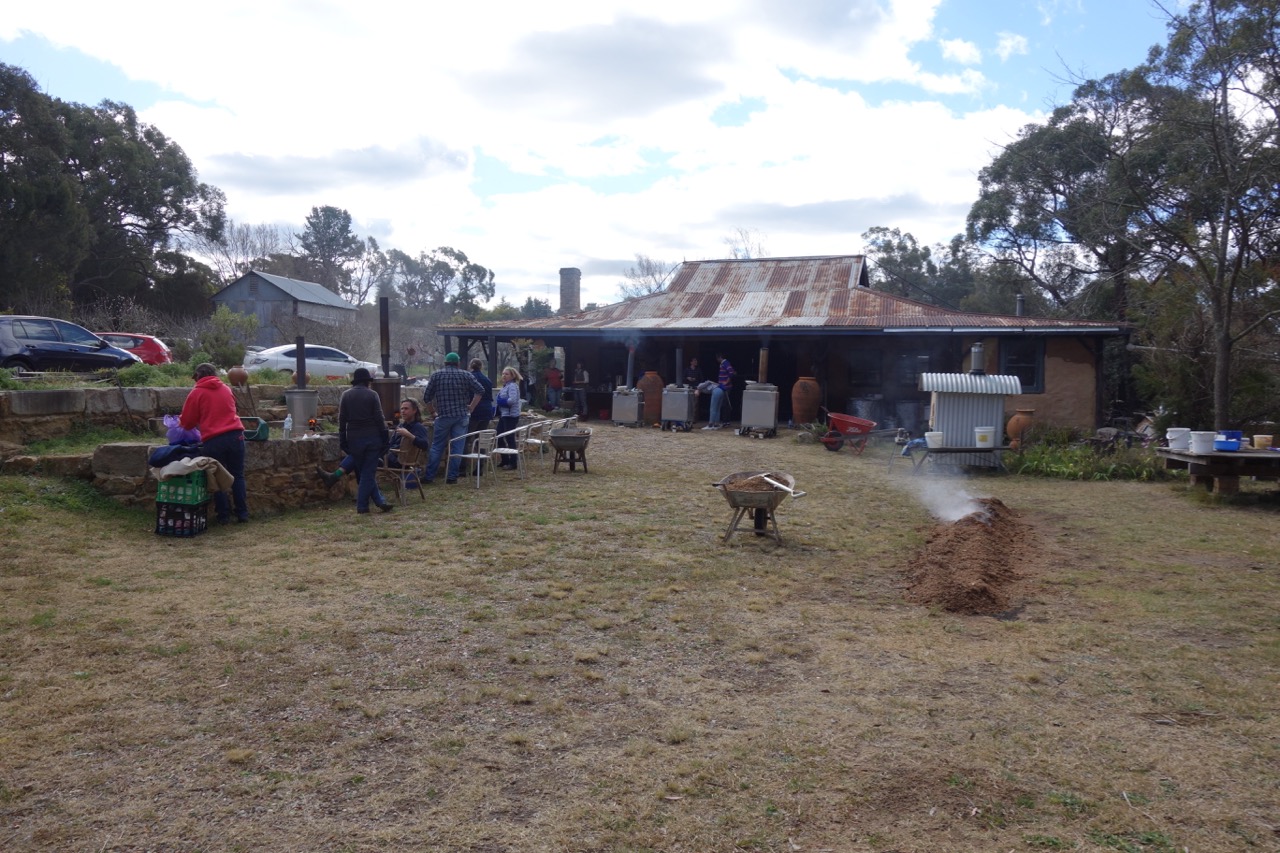
We hosted 11 potters in our workshop for a low temperature ‘raku style’ firing day. We have re-arranged the order of the kilns for this event, placing all the small ‘Stefan Jakob’ style ‘IKEA’ Garbage can kilns up on the stone wall. In this way the potter doesn’t have to bend down to stoke the firebox, but instead, can sit in a more relaxed fashion in a chair while stoking the kiln. This is much easier for some of us of advancing years.


The larger and heavier brick lined portable kilns have to stay firmly on the ground where we can wheel then out for firing and then back again under cover for storage.

We were blessed with a beautiful day with no wind and beautiful sunshine – almost hot. Such a great day for an out door workshop. The week preceding had been dreadful with strong, icy southerly winds blowing off the snow.

Everyone seems to be happy and some excellent results are achieved. We are now about half way through our firing workshops for this year. 4 down and 6 to go.


My New Book – 5 Stones

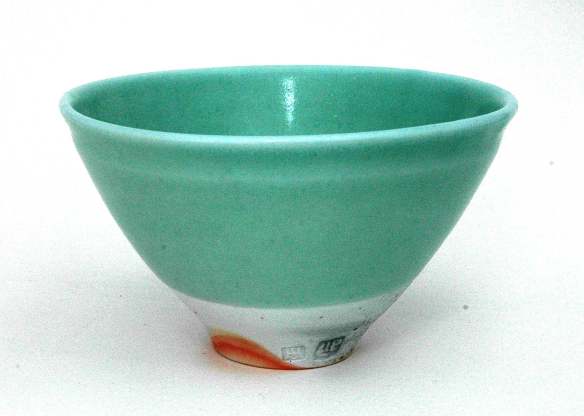
IMG_7383205 pages, 125,000 words, full colour, soft cover. Written, collated, printed and bound on the kitchen table. A very limited edition hand made book.
I have spent the last few weeks and months editing and formatting my new book. This will be my 6th book and 7th if I include my contribution to Handbook for Australian Potters.

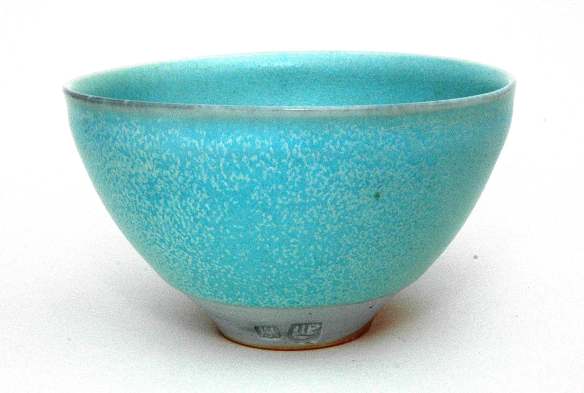
This new Book is titled 5 Stones, and details my recent research into single stone porcelain. The book will be launched by Grace Cochrane at the opening of my show at Watters Gallery on Wednesday 16th of August from 6 to 8 pm. I have a selection of single stone porcelain from all 11 sites on show in the exhibition.

15 years ago, I discovered a white porcelain stone near where I live. It made me think about where else porcelain has been discovered and when. Over the past 15 years, I have travelled to each of the places in the world where porcelain was originally discovered/invented independently from first principles and found that they all had something in common, and that thing was a stone called ‘sericite’. It turns out that originally, porcelain wasn’t made from the white clay at all. Kaolin wasn’t involved. All the original porcelains were made from a special type of stone called mica.
My travels led me to China, Korea, Japan, Cornwall, France and Germany. I even developed communications with academics in California, Alaska and London. Then finally back to Mittagong in Australia. Near to where I started.  I have made my porcelain pieces out of these weird and interesting materials in remote villages, artist studios, back rooms, workshops, even factories. Where-ever I could track down and find amenable people using this ancient technique who were open to collaboration. 
At each site that I visited I made works out of the local porcelain stone, but I also used the opportunity to collect samples of their stone and posted these rocks back to Australia where I could process them myself and make local, contemporary versions of these ancient porcelains. I collected native porcelain stone material from 11 sites around the world and have made what I think are beautiful pots from them, both on-site, where that was still possible and back at home in my own workshop. 
This exhibition shows results of my firings and 15 years of research into these single-stone native porcelains. To coincide with this show I have written a travel journal documenting my travels. My book, titled ‘5 Stones’ will be launched at the opening by Grace Cochrane. The book stands alone in its own right as a travellers tale, as it has its own characters and arc of narrative, but also helps to illuminate the story behind the actual works on display in the show.
I have works in the show that were fired on-site in clean conditions to give very white and translucent pieces and I also have the same materials fired at home in my wood fired kiln with very different results.
4 of the 11 examples are made from porcelain that is no longer available, as 2 of the sites are lost forever and another two have complications.
I consider my self very lucky to have been able to get my hands on all of these ancient and very special porcelain materials. This will be the first and only time that all these porcelain ‘clays’ have ever been shown together in the one place.
DSC_0002_00004
Unglazed and flashed wood fired Arita porcelain
DSC_0003_01_00005
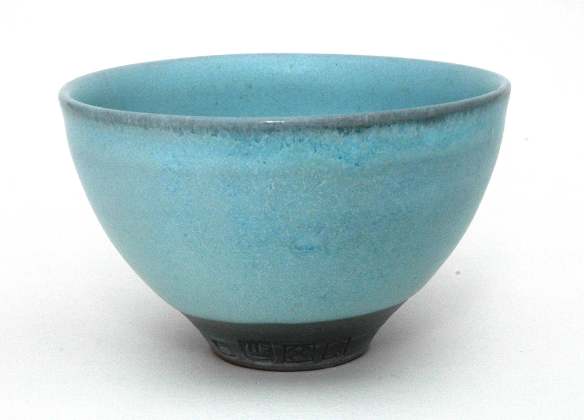
Wood fired and celadon glazed Japanese porcelain, fired in my kiln in Balamoral.
DSC_0022
Korean porcelain made onsite in Korea
DSC_0006_01_00007
Woodfired Japanese porcelain
DSC_0005_01_00006
My woodfired local Joadja porcelain, showing some carbon inclusion on rim and base.
DSC02831
Korean porcelain stone body, woodfired in my studio.
IMG_7238
Amakusa porcelain from Japan, made in Arita.
DSC_0025_01_00009
My local Joadja Aplite porcelain, wood fired with a lot of ember and ash contact. The intense carbon inclusion reduces the translucency.
DSC_0029_01_00010
My local Joadja Aplite porcelain, wood fired with ember and ash contact.

A Rainy Day in Bangsan

I wake up and its raining, not too heavy, but I can hear it on the roof and dripping from the overflowing gutters. I walk to the workshop in a light drizzly mist. I spend the day turning my bowls. It’s perfect slow drying weather.

Mr Jung is the man who runs the Bangsan/Yang gu Porcelain Museum and Research Centre. He is extremely open-minded and has a very inclusive policy of engaging with outsiders, so as to make The Research Centre relevant, lively, contemporary and internationally recognised. This is exactly what I have experienced here. I must say that while I have been here there has been a steady stream of local, interstate and foreign visitors coming through the place. The level of creative work that is being produced by the research students is excellent.

I get all my pots roughed out and almost finished. They will need just one more thinning out when they are almost dry – but not quite bone dry.

I have a little time before closing, so I go to the Museum gallery and display area, to look at some of their stock and browse some of the literature. There isn’t anything there in English, but there is a thick, hard-cover book on the archaeology of the Yang gu/Bangsan area. I browse through it looking at the pictures. It looks pretty interesting. Shame that there is no English translation. Then it crosses my mind that there is. I have it in my pocket. I use ‘word lens’ on my phone. I select the app and hover the phone over the required Korean text and it magically appears in English on the screen in real-time as I move it along. I make my way through the first part of the book, looking at and reading the captions of the pictures. That way, I get another free thousand words, sans effort!

IMG_6955

It looks like there might be something in there worth taking in. The book is just too big, too heavy and a bit expensive to buy and take home, or post. I want to save my weight limit for my pots. I just photograph some of the more interesting pages and decide to read them later.

It’s time to go, but the weather has turned pretty nasty with thunder and lightning. I rug up in a plastic bag poncho and open my umbrella, but I fear that the wind will destroy it, before I reach my digs. On the way home, I stop to try and capture the lovely image of the rain buffeting the rice seedlings.  I have 2 goes at it, the second being a short video. But I fear for the safety of my umbrella and my phone, so stop at that.

Later in the evening, when I have time back in my room. I down-load the Korean language images to my lap top and read them back off the screen in English using my phone language translation app. It’s a slow way to read a book in another language, but I muddle through, as I have lots of time in the evenings. It even surprises ME! as being one of the weirdest things that I have ever done to get research information!

DSC02743

The next morning the weather is all clear again and I see that the river is running brown with silt washed down off the higher fields, possibly even silt washed down from North Korea over the border. I don’t know how far the catchment of this river extends into the North. There are a couple of hardy blokes fishing with a net, down by the stepping stone crossing. I stop and watch them for a while, but they don’t seem to catch anything. The technique that

IMG_7090 IMG_7086

they are using seems to be for one man to stir up the stones and sediment on the bottom and try to dislodge something into the flow and then the other man tries to catch it in their net. It doesn’t seem to be working. Perhaps they are fishing for some sort of shell fish or yabbie/crustacean?

IMG_6910 IMG_6982

My bowls are finished now and ready for the bisque kiln tomorrow. I have ordered a stamp that says ‘Yang gu’ in Korean text, and have marked all my work with this and my own personal seal. I ordered it through the mail order service of the amazing Miss Kang, who arranged everything for me and had it ready for me when I arrived at her house on the way here.

Tomorrow comes soon enough. I see the kiln packed during the day and started firing last thing before we all leave for the evening.  The next day, after cleaning up my work space, I go over to the kiln room to see how the firing is progressing? I assume that it was set to steam all the pots dry overnight and will be firing properly now, possibly reaching temperature in the afternoon?

IMG_7004

When I get over there, they are already unpacking the kiln! it has fired up and cooled down over night! I’m staggered. How is this possible? It doesn’t fit in with all my other pottery experience, where we molly-coddle the pots through the difficult trauma of the firing process, taking it quite slowly, making sure that we don’t blow anything up by going too fast or causing cracks. I guess that they do this all the time and they know what their clay will take. The kiln is electric fired and has a computer ramp controller, so it fires exactly the way that they have set it to. By the feel of the bisque, I’m guessing that it was only fired to 800 or 900oC.

I can only assume that because everything was dry before packing the firing could proceed quickly. It is summer here and very warm days and nights. And all the pots are made of powdered stone and not sticky plastic clay, so they can breath quite easily. Any way, most things come out OK. I have 5 out of my 40 or so with minor cracks, most inflicted before packing, by me I think. One has a crack around the edge of the foot, which I haven’t seen in my work before and another has a tiny hair line crack in the centre of the foot, underneath. This is a remnant clay shrinkage/drying problem.
I’m happy. I have 36 pot to be going on with. I said at the beginning that I would like to get 12 good pieces to take home if I can. Looks like I’m on track at the moment, but never count your chickens!

I spend the day glazing and fettling. I go over them 3 times to get them as smooth and dribble free as possible. The glaze looks to be a mixture of porcelain stone and possibly limestone?  I also feel that there might be some wood ash in there too? I think this because it has a definite grey cast to it and micro tiny black flecks that I some times see coming through my 60 or 80# mesh screen when I sieve our ash. The glaze seems to be very thin, so I dip them twice. It also helps to get a more even coating.

IMG_6967

When they are dry, my pots go over to the gas kiln shed for glaze firing. The packing seems to take all day on and off, with so many other things happening throughout the day. It’s all packed by 6.00 and ready for firing.  The gas kiln is fired manually, so it will have to wait until tomorrow to be fired through the day. It’s about an 11 hour firing to cone 7 or 1230/1240oC. in reduction. They use a digital pyrometer and draw trials to measure the temperature and heat work. They told me that they fire too cone 7, but they don’t use cones here?

IMG_7006 IMG_7010 IMG_7050

This facility has a comprehensive range of very good equipment and the staff are really hard-working, efficient and friendly. I couldn’t have found a more fertile and supportive place to study.

best wishes from Steve in Bangsan, Korea.

Damn those Omega 3’s

I have just finished my latest kiln. It’s a thing of beauty and will be someones joy, if not forever, then for probably somewhere around 30 years. All of my earlier kilns. The ones that I continue to know the whereabouts of, are still performing well after this length of time and a bit more.


We have been working on the winter fire wood supply. I help Janine to move a few loads of big round blocks of wood from the wood pile yard into the wood shed for splitting to keep up the winter wood supply.

Just when you least expect it, the worst thing happens. I just manage to trap my little finger in-between a big block of hard wood and the steel frame of the lifter. Bang! my little finger on my left hand is crushed. I flick off the leather glove and blood is flowing freely from the end. I think that I’ve lost the nail. It’s one of those events that is so painful that I can’t speak. I just head for the house. I’m nauseous and a bit dizzy. It really hurts now. I wash it under the sink in flowing cold water to make sure that it is clean of any debris or foreign matter. I had a glove on, so it ought to be pretty free of grit. I wash it in disinfectant and put a bandage on it, but it won’t stop bleeding. It keeps on seeping through.

I’m feeling a bit weird. I need to lay down.


Luckily, I had just finished turning the last of my recent batch of sericite porcelain stone pots. The shelves are full and I can pack a bisque tomorrow with the driest pieces. Luckily they are not very heavy, so I can do it one-handed.

I have a night of fitful sleep, as I keep waking up when ever I touch anything with that hand. In the morning I change the dressing and it is still bleeding. It hasn’t clotted yet. Damn all that oily fish!. Fortunately, it stops by the afternoon, that’s 24 hrs! It’s not aching now either. It only hurts now when I touch it. So I’m starting to feel a lot more confident about it.

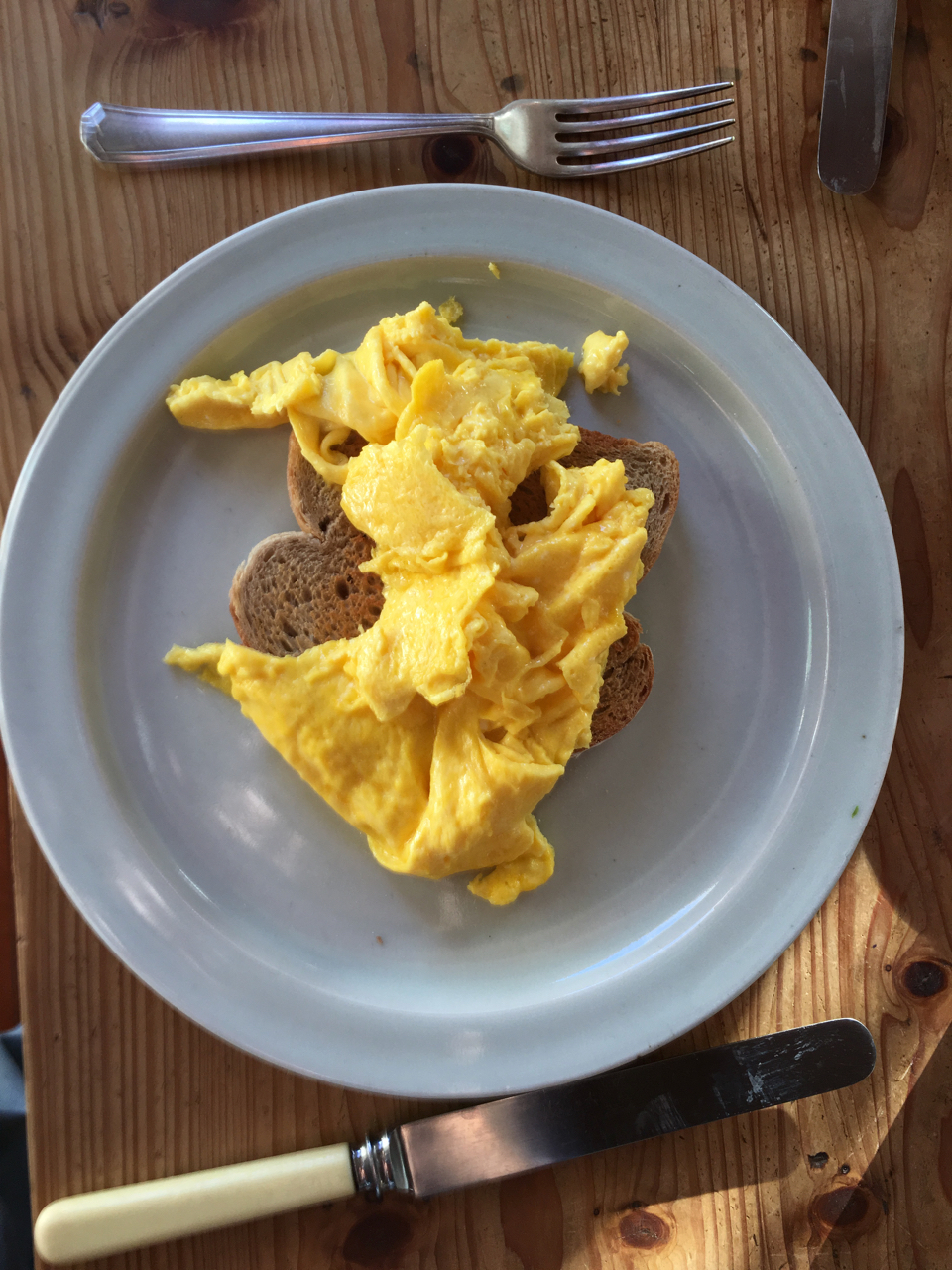
Janine makes a super-nice omelette with our eggs to cheer me up. They are so amazingly rich and yellow.

Welcome home

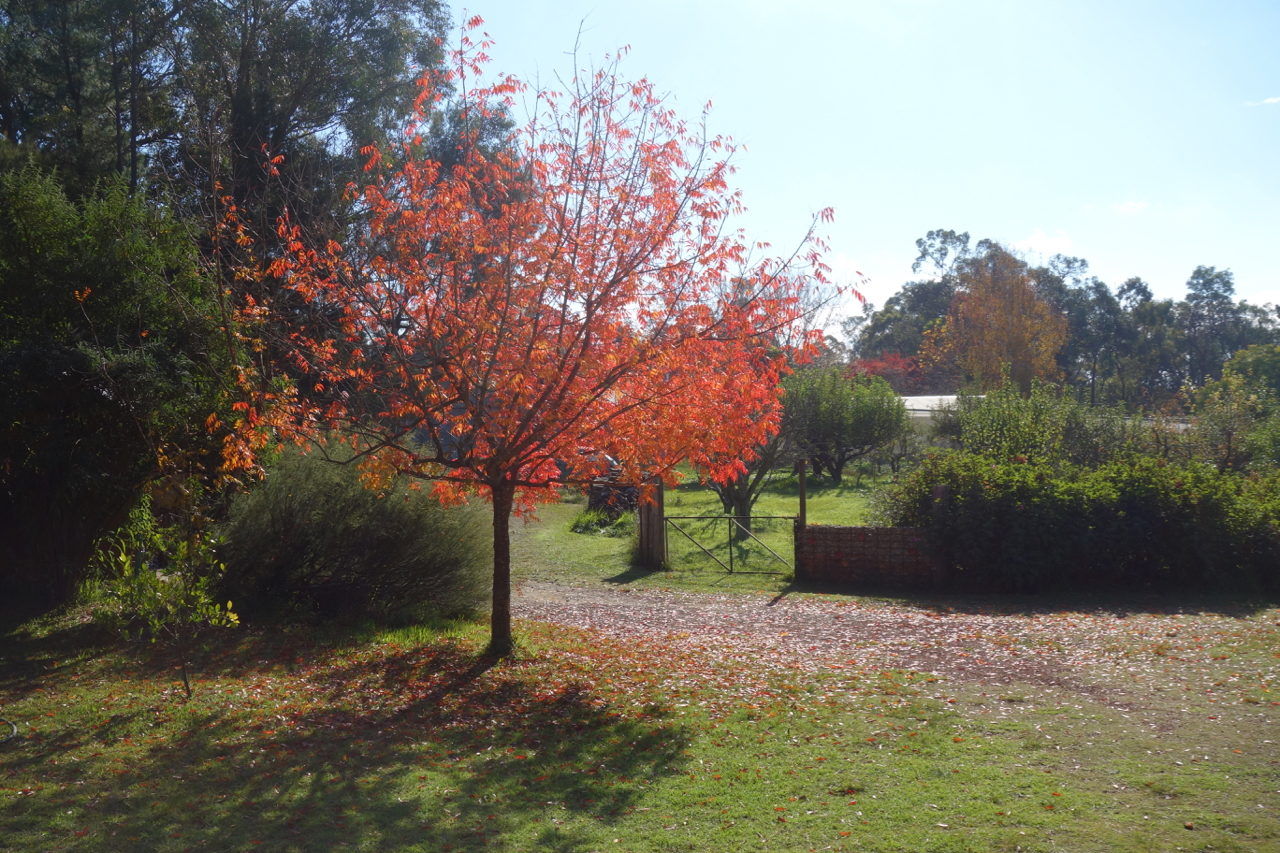
We arrive back home at the end of Autumn. The pistachio tree has turned red in our absence and the liquid ambers are loosing their leaves. We head straight to the chook house to see how the girls have been faring without us. Perfectly well it appears. They have changed their allegiance to Annabelle Slugette, because she has been living here, working in the pottery and feeding them treats for the past few weeks. Hens live for food! I know that it is only cupboard love, but I do feel a little bit abandoned. I’ll need to find them a few snails or other special treats to win their hearts ( and stomachs) back.


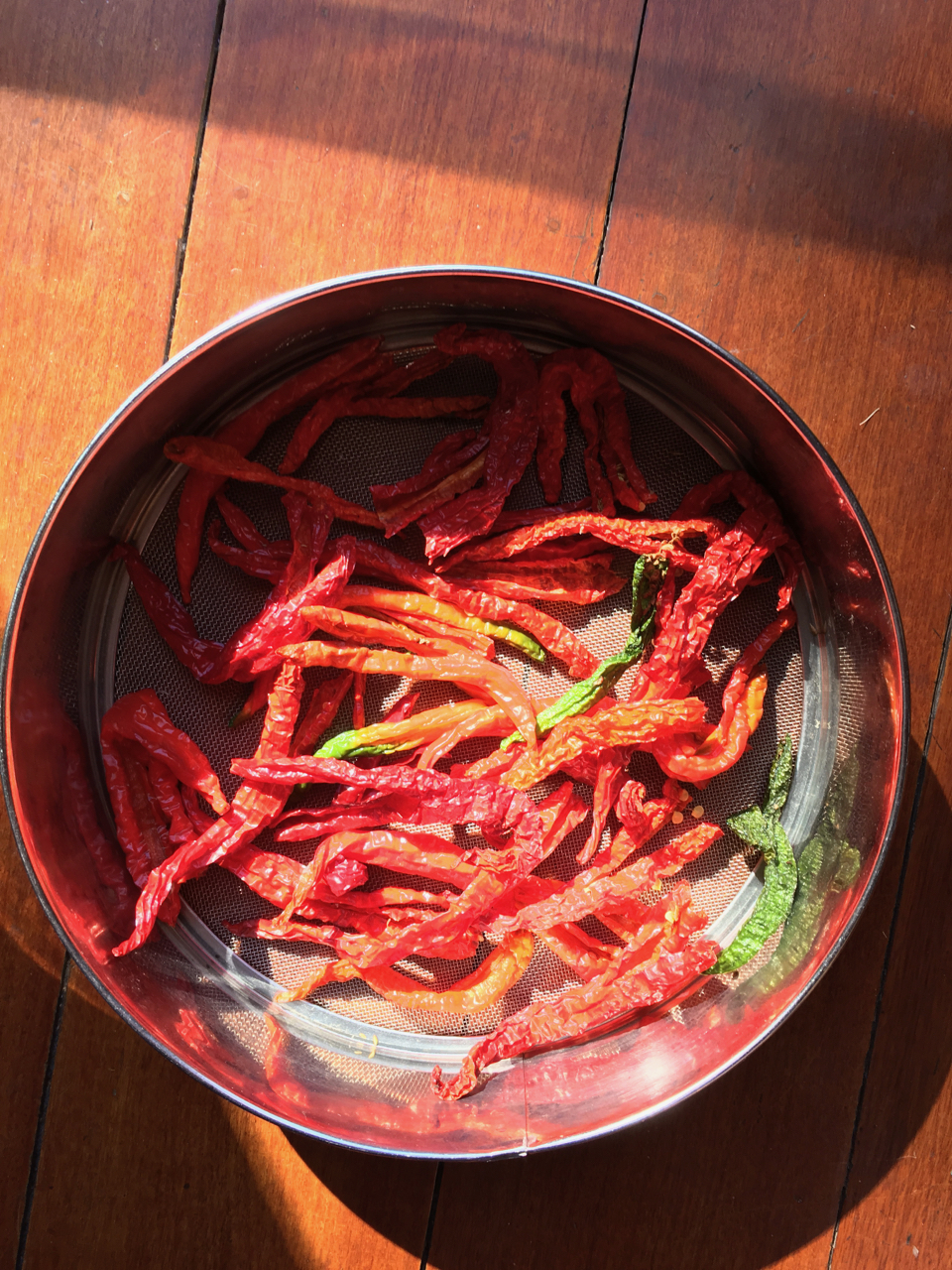
We head to the garden to see what there is for dinner. We find our selves in that special period of the year when there are just a few summer vegetables hanging on, while the winter crops are just starting, so we pick the last zucchini and the first cauliflower. There are only a couple of weeks when you can eat this combination of garden produce. The chillis have ripened a lot more while we have been away, so we pick some and dry them.


The next day I’m back at work in the pottery. I have  to slake down all my turnings that have dried out while I’ve been away. Clay slakes down so much faster when it is bone dry. I have lots of small batches to deal with. I have been working on my collected samples of porcelain stones from all around the world and I have to keep all the turnings from each batch of pots made from each special rock completely separate and well-marked, so that I don’t get mixed up or confused about which is which. I have 10 buckets marked with masking tape and felt fen, so as to keep it all under control.

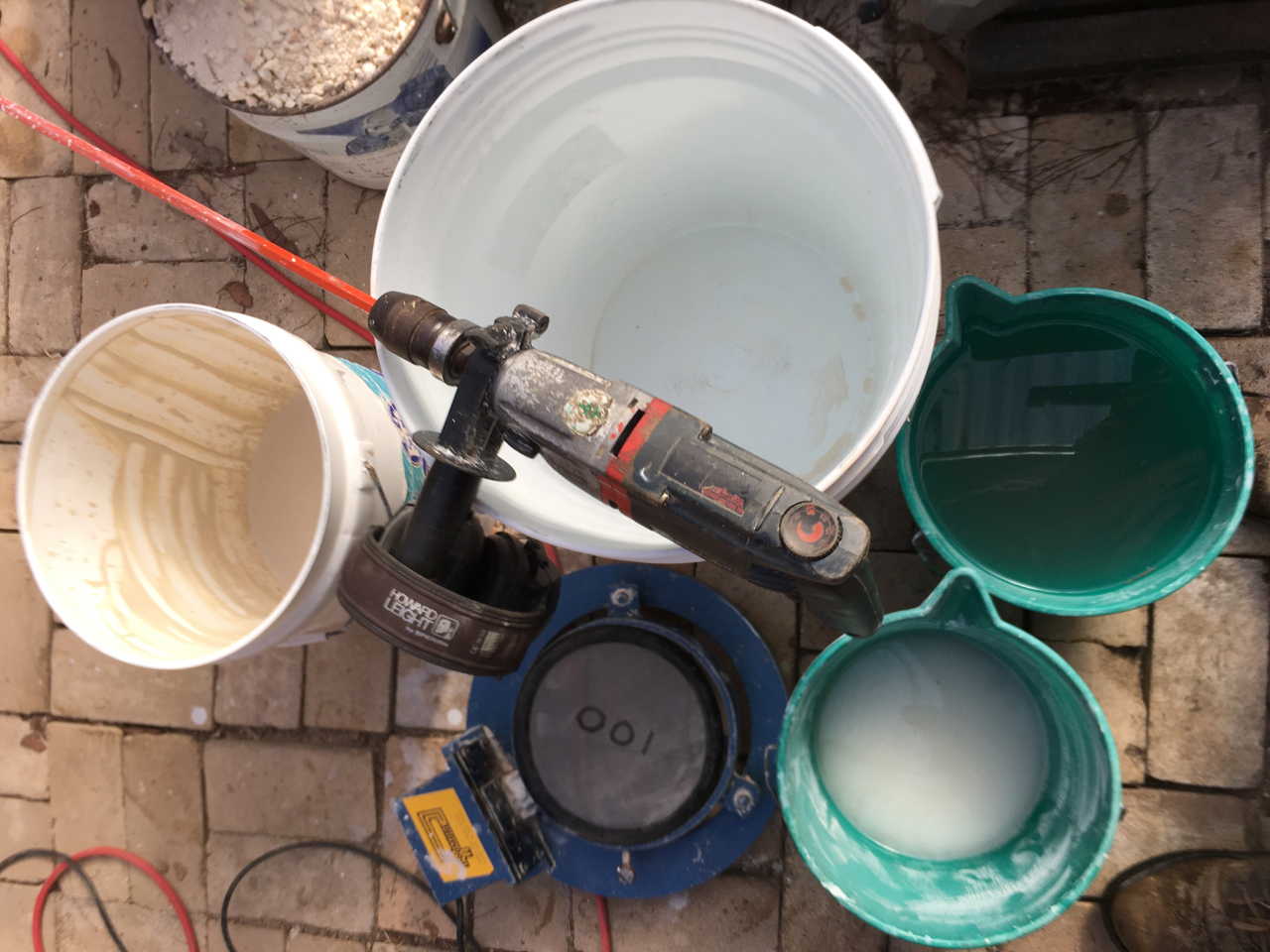
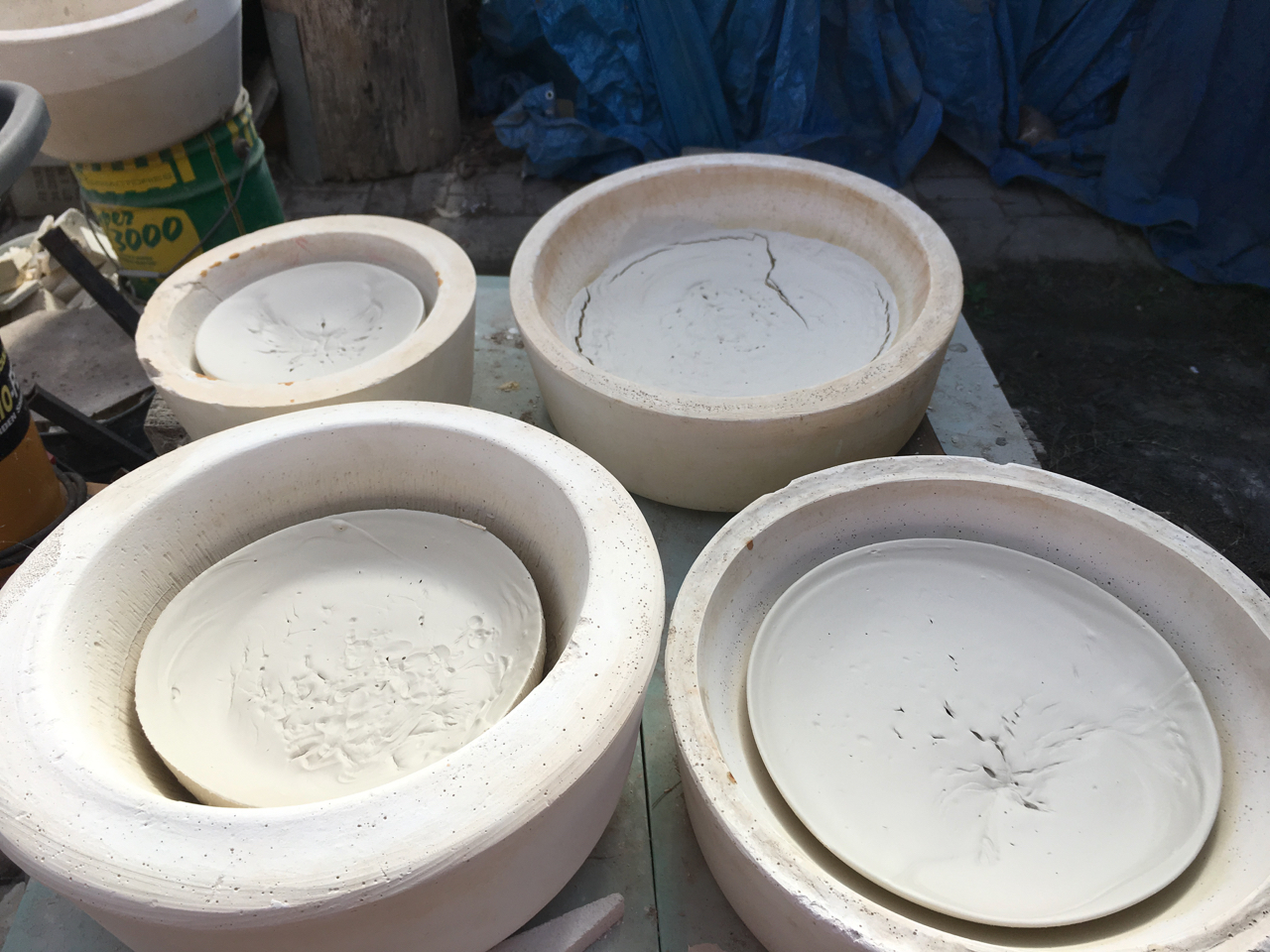
I start with the first 5 batches. I slake, blunge and sieve them all through a 100# mesh screen, then flocculate them and decant the excess water, it takes a while to get its all done. Eventually, they make it out onto the plaster drying tubs that I use for small batches of re-cycling like this..


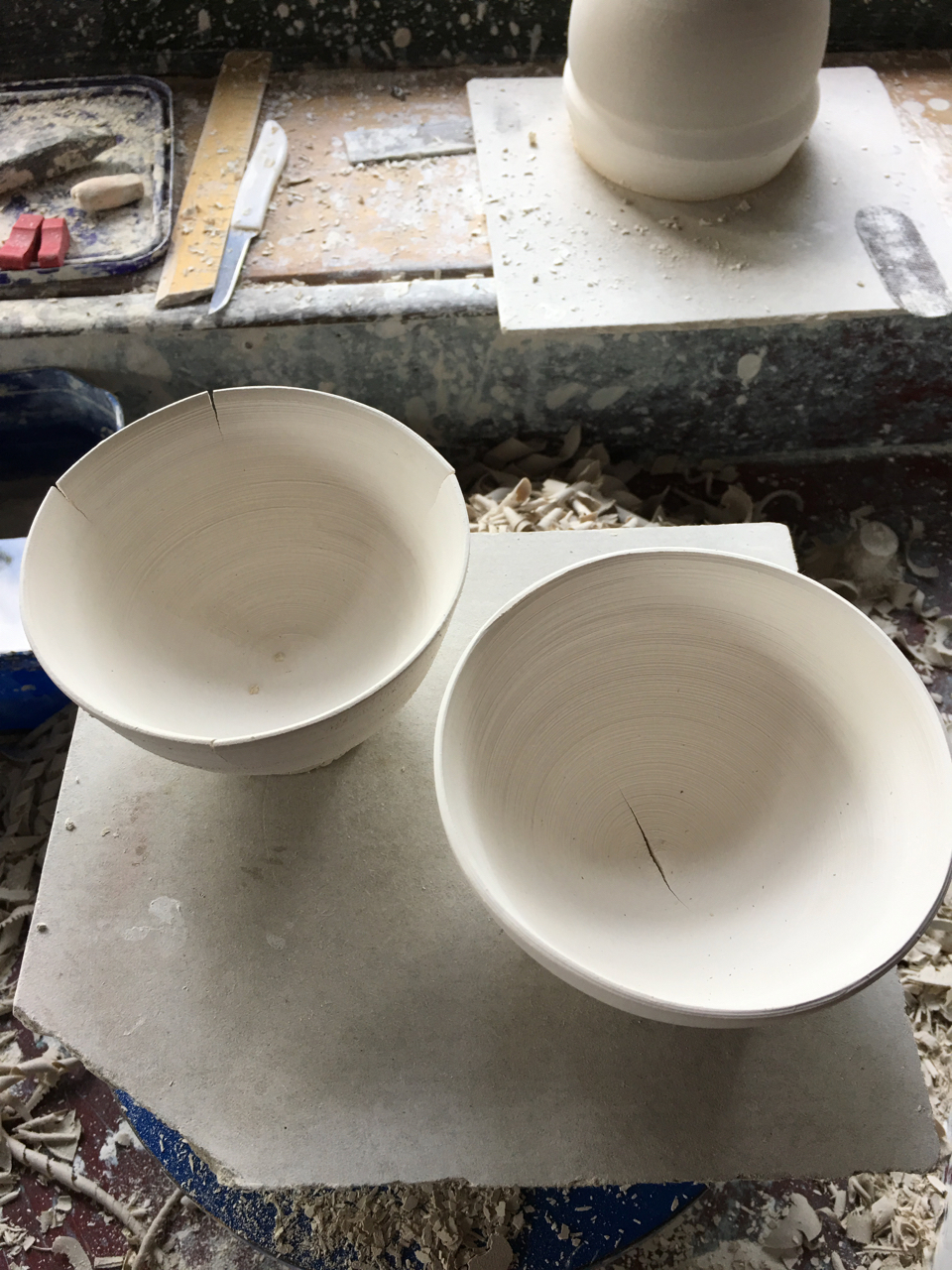
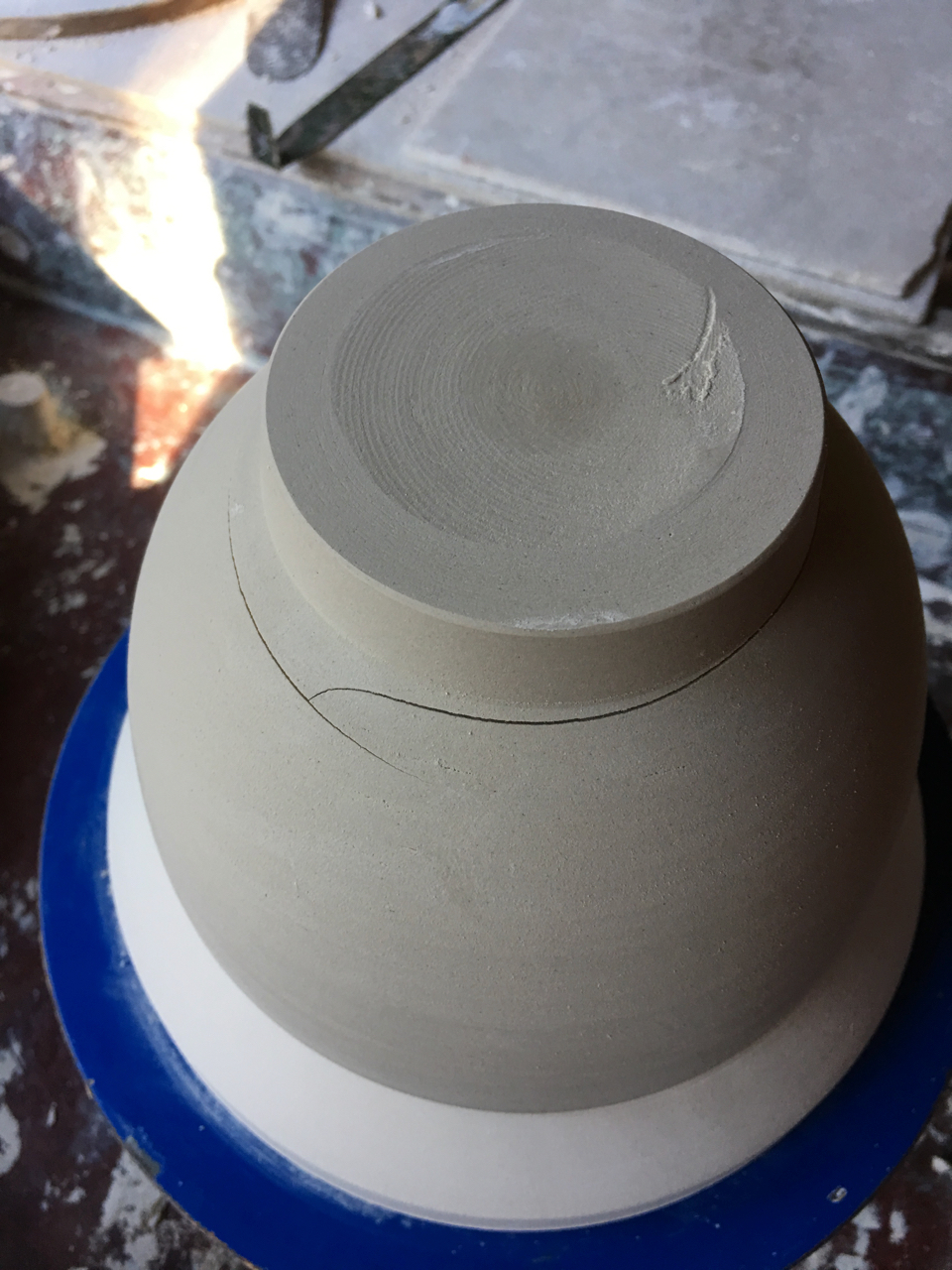
I’m not just dealing only with turnings here. Many of my pots don’t even get to the turning stage. These ultra-fine, ground stone bodies, with virtually no real ‘clay’ content, based solely on mica and quartz, with just a little illitic material. Consequently, they have no dry strength. They sometimes just split as soon as they are placed on the chuck, some don’t even get to the chuck, as they split during drying. Other decide to part company with themselves after the first turning at the ‘roughing out’ stage.


Some others tear themselves apart after the second trimming. Only a few make it to the final turning and bisque kiln. The only good thing about pots cracking during drying, is that at least I can re-work the material and have another go at making something that might survive to the kiln. What happens in the glaze kiln is another matter. I’ll find that out for these samples soon enough!


45 seconds in the life of China

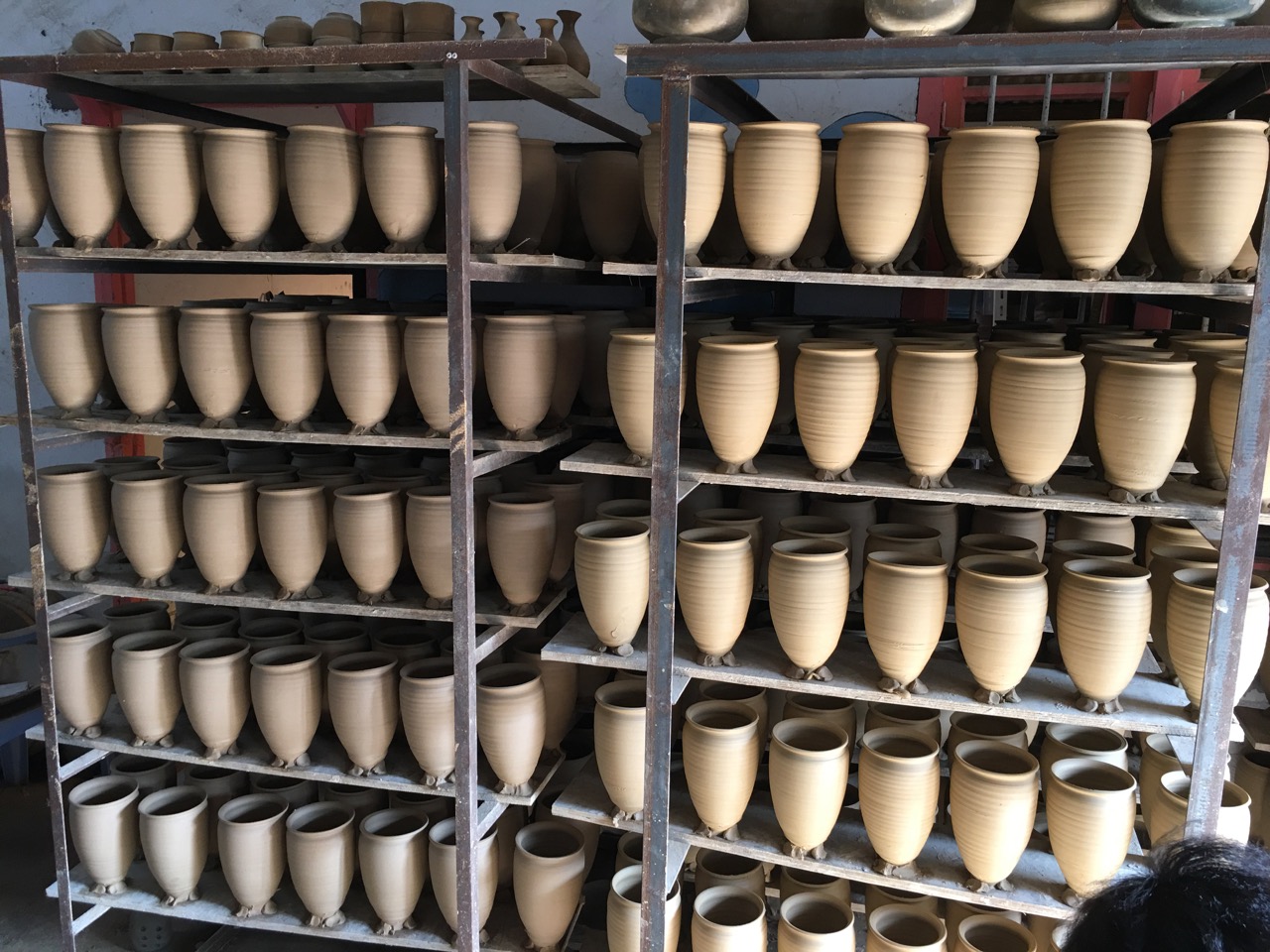
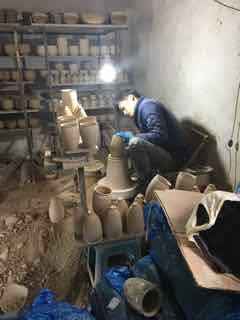
We have just watched an amazingly skillful potter make upwards of 700 pots in a day without seeming to put any effort into it, and without getting any clay splatter on himself either. Amazing!

This potter fills the workshop shelving to capacity in one day, then moves on to another workshop. He’s a professional thrower. Everyone here is a specialist. I explain to my guide and translator, Chen, that I do everything myself. He is amazed when I tell him that I do everything myself from digging the clay(stone), crushing and grinding it, to making the fire bricks for my kiln by hand. He just can’t get his head around it. Why don’t I just employ a specialist to do the boring bits? I tell him that it isn’t like that in Australia. There aren’t any specialists to call on.

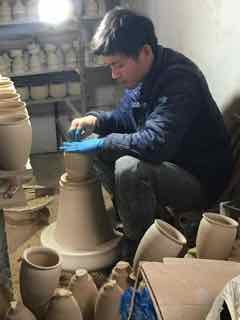
Two days later we are back in the same workshop to see the ‘turner’ at work. He has arrived now that the pots are firmed up to trim the bases. He works in tandem with the ‘thrower’, following on behind him with a 2 day gap. They work together but never meet. Always separated by the drying period. The thrower has thrown 3/4 of a tonne of clay into these flower pots on this occasion. The turner guy has to trim them up into shape, removing the excess clay from the base and correcting the form if necessary around the rim and foot. He gets through 10 double-ended turning tools each day. Wearing them down to a level of bluntness where they no longer work efficiently enough and slow him down. He travels with a bag full of them.

I ask the turner guy through my friend and interpreter, Chen, how all this works out. The turner removes about a 1/4 of the weight of the pot. The bases are thick when thrown off the hump. The thrower doesn’t use a wire. It slows him down too much. He just twists the pot off the hump with a flick of his fingers, leaving a very thick base. The turner has to remove all of this. It takes the turner almost twice as long to turn the bases, as it takes the thrower to make the pot. However, the turner gets paid almost twice as much. The thrower gets 1.5 rmb. per pot. That’s 30 cents. The turner gets 2.5 rmb per pot. That’s 50 cents. The turner will be here for almost 2 days to clear the shelves.

It works out that these highly skilled guys are earning about Au$200 each day. That’s really good money in China. But their job-life expectancy is very low. They burn out fast. I ask politely through Chen, how long will he be doing this? 10 years is enough. It’s far too boring to do it for very long! What will he do next? He is saving money to start his own business. This is only a means to an end. A better future awaits him somewhere.

I ask what he does at night i.e. does he have a hobby or other interests? No! He just watches television while he sharpens all his blunt tools ready for the next day. I ask why he doesn’t use tungsten tipped tools? He replies that he doesn’t understand the question. After some probing, it transpires that he hasn’t even heard of such a thing. Everyone here uses these cheap, locally made, mild steel, black-smithed turning tools. They are cheap and readily available and easily sharpened with a hand file. They also go blunt very fast. He is used to spending a few hours each night filing them sharp.

IMG_5261
IMG_5265


I notice that he uses a rubber glove and the cut-off fingers of a rubber glove on the other hand to stop the abrasion of the clay from wearing out the skin on his hands, just the same as I do. However, I only use the rubber finger stall on one finger

I ask him what he thinks about all the dry clay dust floating off the turnings. Why isn’t he wearing a mask? He is generating a small mountain of dust all around himself. I can’t even see the wheel, as all the turnings are piled up and flowing down and away in a cascade of dust. He doesn’t understand this question either. I explain, through Chen, that clay dust causes lung disease if inhaled over a long period of time. He replies that he has never heard of this theory. Neither has Chen. I leave it there. I have sown the seed.

When these pots are bone dry the glazer will turn up and spray the glaze on them. That will take a couple of days. Finally they will be passed on to the decorating girl. She seems to work 7 days a week and hand paints each one. She does about 100 per day. It’s a never ending job. The thrower will be back next week, as soon as the shelves are emptied. This team seem to keep half a dozen potteries busy.

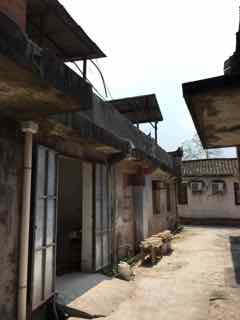
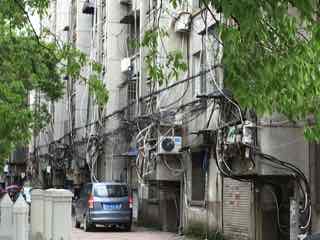
On the way home I can’t help but photograph the amazing wiring that is in use here. As the holder of a limited electrical licence, I’m quite in awe. I love the dual function of clothes line and high voltage wiring.

IMG_5586
IMG_5585
IMG_5602
IMG_5295

China is an amazing place. I’ve been thinking about these amazing potter specialists here. As I place my own few pots out in the laneway, in the sun to dry. I’m thinking, one pot every 45 seconds! I reflect that I have been here for 2 weeks and so far only managed to make forty-five pots that are second grade. That’s 45  2nds! I live in hope.

Environmental fellowship

We have had a Danish potter staying with us for the past month. He won the Environmental Ceramics Fellowship for for 2016, but for both of us it was just too difficult to complete it last year, so we postponed to this year.

He is a potter from Denmark who is interested in sustainability and new ways of exploring how to make a living in this new digital age. He has his own web presence in Denmark where he markets Potters wheels, kilns and clay bodies, as well as making his own work. He is a digital native. Whereas, I am, on the other hand, a dig-it-all-native. Making everything myself from the ground up – and that is what he is here to learn.

We crushed porcelain stone in the big jaw crusher to make single-stone porcelain body. We made clay tests to investigate unknown clays. We worked in the gardens and orchards. Ate all our own produce. Cooked up some wonderful meals. Lauge is a great cook, so that helped. We went on a geology excursion to look at some of the local stone deposits. Harvested the shiraz grape crop and made dark grape juice from the grapes.

IMG_4683 IMG_4684.jpg

All in all, the month flew by and it all went too fast, leaving so many things un-explored. A month just isn’t enough time to experience everything that we do here.

Janine and I are planning to do some volunteer aid work overseas soon. So we are working towards this by making clay tests out of the local clay that has been posted over to us to process. Our Guest lends a hand in everything that we do.

IMG_4764  IMG_4766

We decide to go exploring and looking at a few rocks for making glazes. Then, to complete the true ‘Australian’ experience, we take him to the local micro-brewery and have a meat pie with tomato sauce, accompanied by a tray of the brewery’s sample beers for lunch. Fantastic! I haven’t eaten a meat pie since I was a kid, so it was an experience for me too!

 IMG_5065 (1)IMG_5068

IMG_5006 (1)

You have to look closely at the image of the analcime basanite deposit above to focus on the small figure in the foreground.

We cook and eat what is in season in the garden this autumn equinox. An autumn garden risotto, a fresh garden salad of shaved beetroot, cucumber, raddish, quince. Served with wasabi rocket, lettuce, beetroot tops, chilli and crunchy pan-roasted almonds.

IMG_4977 (1) IMG_5076

We also make an alternate version of okonomiaki, using some very firm, third pick, red cabbage, our own home grown eggs, garlic, chilli and shiso. Everything from the garden. Red cabbage is too slow to cook straight off as a cabbage pancake. So I pre-cook the cabbage to soften it down before I blend in the pancake mix and all the other ingredients. It’s not really a traditional Japanese okonomiaki. It’s an improvised Aussie OKA-nomiaka. Served with mayonnaise and Japanese okonomi sauce. Topped with bonito flakes and some Japanese pickled ginger.

IMG_5072 (1) IMG_5074 (1)

We finish the meal with fresh figs and soft white cheese. We do this desert a lot at this time of year while the figs are coming on. We try it with all manner of different soft cheeses. Boconcini isn’t the best, but you don’t know these things until you try them out. We’ve tried it with blue cheese, fetta and soft white goats cheese which was best.

IMG_5073

Lauge helps me finish off the internal fittings for the 8 little dalek kilns. These are now  almost all delivered, leaving space for me to start welding up my 2nd kiln job of the year. There is just enough room to get both jobs in the factory at the same time, but it takes a little bit of planning and maneuvering to get everything into the tight space.

Now the shed is almost empty, with the big new frame gone off to be galvanised and all the little ones gone to good homes:)

IMG_4999 (1) IMG_4998 (1)

IMG_4997 (1)

Between a Rock and a Hard Paste

We have been sweltering here in 40 oC heat for a couple of weeks now. We were very fortunate to be blessed with 3 days of rain in the middle. It saved a lot of our plants from just shrivelling up. Fortunately, we don’t have any bush fires near here this time. However, I did start up the fire fighting water pump and sprayed water through the sprinkler system that I have installed on all the building here, in this case, on the pottery tin roof. I used it on the worst couple of days, to cool it down a little. It is good to run the pump every now and again to keep it in good working condition and cycle the fuel through the carburettor to make sure that it doesn’t ‘gum’ up.

I’ve been making use of the hot weather to crush and grind my collected porcelain stones. They have to be put through the big jaw crusher first, then the small crusher, then sieved to remove any over sized pieces and these are put back through the crusher again. Once it’s all of a suitable size, it goes into the ball mill to be ground down to a very fine paste.

pastedgraphic-4 pastedgraphic-3

unadjustednonraw_thumb_2b3a

Once it’s out of the mill. I let it settle and flocculate for a few days and then remove any excess water from the top and it goes into a plaster basin to dry out until it is firm – sort of plastic. Except that it never really gets to be fully plastic. This is because it is just ground up rock dust and not clay. It does have a very small percentage of clay in the stone due to weathering of the minerals, but it is not a lot. It really takes years for this stuff to become workable in any normal sense of the word as potters might understand it.

If I were making bulk clay for stock, I’d be using the big ball mill and pour out the slip onto the drying bed on filter cloth. Once firm, I’d lay it down for several years in a cool dark place, but I don’t have that luxury on this occasion. I have posted these stones back from overseas on my recent trip. there are only just a few kilos of each sample, so the batches are quite small. Just enough to make a few pots out of each. I’d like to have more mineral to work with, but it costs about $100 to post a few kilos of stones back from places like Cornwall, Korea, China and Japan. So I have to work within my budget, as many countries have abandoned sea mail postage and the only option is now air mail. On one occasion, I was offered a cheaper option of ‘slow’ air mail. It made me wonder how the plane stayed up in the air if it was flying slowly?

img_4656 img_4657

As these bodies are not aged, they respond to being worked something like ‘halva’! it just snaps if you bend it. It has to be coaxed along very slowly and gently, sort of seduced into changing shape.  I can’t even cut it in any normal way with a wire, it just tears! I can’t throw anything large out of this stuff, but I don’t need to. I only need a few excellent fired examples of the stuff to include in my exhibition at Watters Gallery in August, called ‘5 Stones’. This will be an exhibition of single-porcelain from all around the world, from the five places where single-stone porcelain was independently discovered and developed.

img_4662 img_4664
When it comes time to trim the shapes into some sort of elegant form. The paste just tears and chips, instead of turning off in fine strips. The pot has to be very firm and almost bone dry to turn to a fine finish. However, I do need to remove some of the bulk of the weight from the base to get it to dry without cracking, so some leather hard trimming is necessary, and what a mess it looks to begin with! But it does clean up OK when it is dryer. I do struggle with some of these rock-paste porcelain bodies. I’d be a much better potter if I could spend all my time working with this stuff, but I have to do other things, like building kilns, to make a living. No complaints! I have a wonderfully creative, independent life. I’m very lucky. But I do suffer from the feeling that I could always do better. Nothing is ever finished, nothing is perfect and nothing lasts! This is reality.
img_4660 img_4658
img_4661 img_4659
These dry rock dust bodies are so aggressive and abrasive, they make normal turning tools go blunt after just one pots is turned. I have to use tungsten carbide tipped tools to withstand the grinding effect on the cutting edge. The ‘clay’ is really just rock dust paste, so it is very abrasive to my fingers too! I have had to start wearing rubber finger stalls to protect my finger tips. Otherwise the ‘clay’ grinds off the skin from my fingers and they wear through and start to bleed.
img_4670
I’ve spent the past 15 years researching these places and going there, making contact with individuals and working in-situ, where that is still possible and also posting home the raw stones to be processed here in my workshop then fired in my kiln. This will produce a very different look and feel from the work made on-site.
I have written a book about my travels and porcelain experiences during this research. I have 90,000 words written, with just two more chapters left to write. It will be around 150/160 pages, in full colour, soft cover. I hope to have it for sale for under $50
It will be launched at the opening of my show at Watters Gallery in August.

Of Passata and Porcelain

The summertime heat brings on the tomatoes, zucchini, chillis, aubergines and sweet basil. They love this hot weather, as long as they get the water that they need. This means I have to start making passata sauce. We are now harvesting more than we can eat each day. This is just the start. At the moment we have to harvest the tomatoes each day in the small numbers that are ripening. It has taken a week to build up sufficient quantity to fill the boiler. This is the first batch of passata. Soon it will build up to 2 batches a week. I will continue to make this sort of tomato sauce right through the summer and into the autumn.

Tonight I’m making a small batch to start with for our dinner, so I’m including a lot of zucchinis and aubergines as well. This will be a sort of variation on the ratatouille theme. All these vegetables grow together, they ripen together and they taste so good together.

img_4528 img_4529 img_4533img_4534 img_4535

I bring it all to the boil and simmer it for a few minutes, just enough to soften the zucchinis and egg plant chunks, then scoop out a bowl full each for dinner. It’s summer on a plate!

After dinner, I add in all of the other chopped tomatoes and cook it down into a sauce. After it cools I put it all through the mouli sieve to remove all the seeds and skins, then reheat and seal in pre-heated jars to keep for the winter.

img_4531 img_4538 img_4539

The other thing that I like to do in this summer heat is to make porcelain from my collected stones. They are so hard that I need to put them through the rock crusher first thing to reduce them down to grit, then I can sieve the grit and re-process the larger pieces to get it all to pass through a 3 mm screen, then into the ball mill to be reduced to ultra fine grade.

 From this I can make glazes and/or more throwing body, as required.

img_4444