Home Again

We haven’t been home long and we are able to get most of our meals from the garden. We start with a very fresh and crisp green garden salad. IMG_3713

We find that there are a few ripe avocados still on the tree, so we pick one and add it to the salad. It’s a special bonus. We wouldn’t have any left at all due to the birds and possums if it weren’t for Janine getting out there and bagging the last of the fruit before we left.

I manage to find some time to get out into the garden and pull out all the spent corn stalks and dead tomatoes vines. I have a few goes at it over a couple of days and eventually make a bit of a difference. I lime the soil with dolomite. A natural mixture of calcium carbonate and magnesium carbonate in about a 50/50 ratio. It sweetens the soil and negates some of the natural buildup of acidity through our use of a wide range of organic composts. We make compost from everything that we have on our place here, including pine needles and gum leaves. Everything that is organic and can rot is composted down to a black/brown peaty compost and used as mulch somewhere on the block. Pine needles and gum leaves tend to be acid, so are good for strawberries and blue berries, but bad for other plants that like a more neutral or alkaline pH.

IMG_3781  IMG_3784

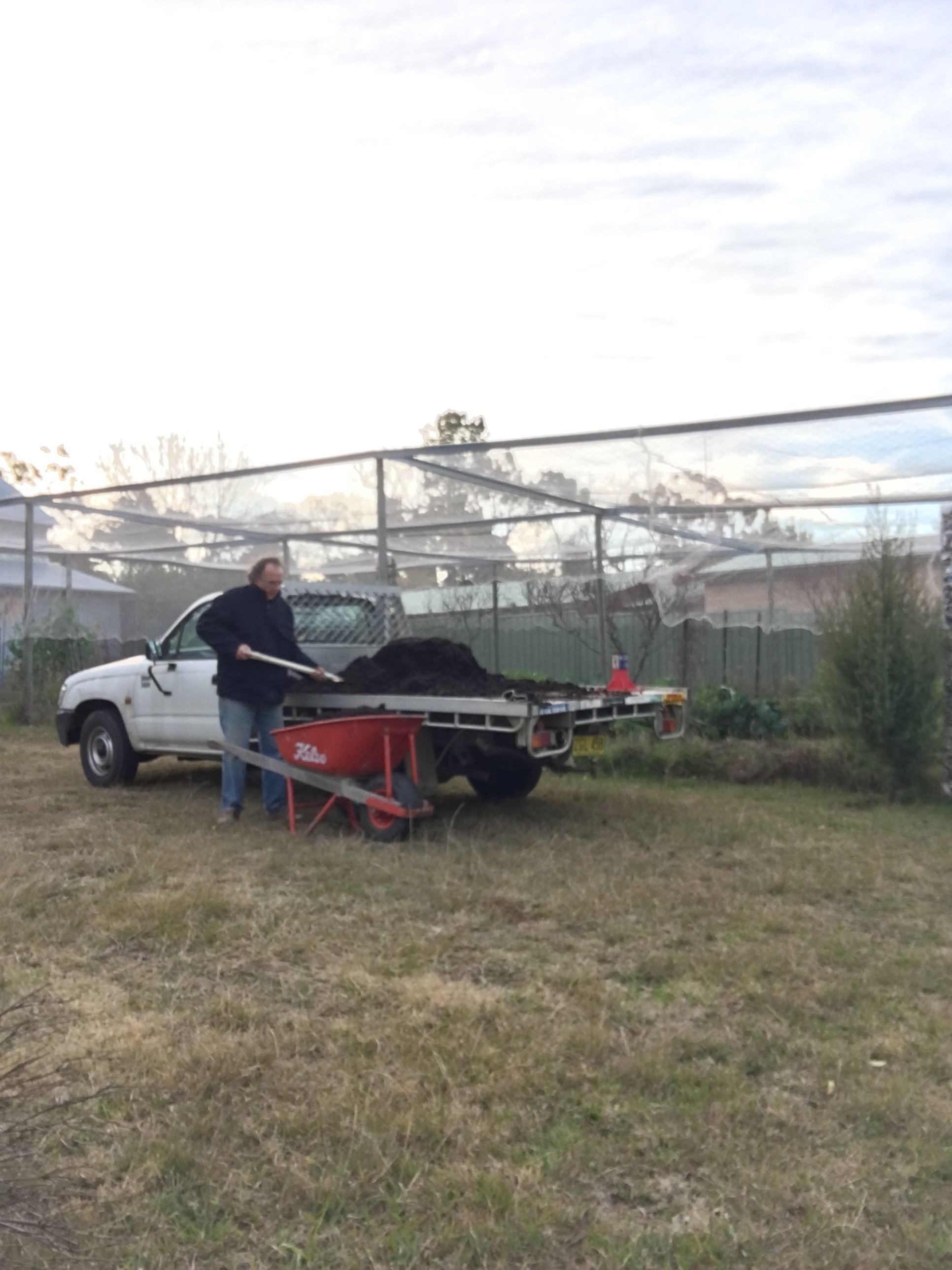
We also add a layer of composted chicken manure on top of the freshly exposed, weeded soil, then cover it all with more compost. I try not to dig unless I have to. The worms seem to do that for us, If left to their own devices.

IMG_3783  IMG_3782

I pick a cabbage and make our first home made okonomiyaki at home here after our return. The cabbage is a whopper. It has grown well while we have been away. I only use a 1/4 for 4 pancakes. I add in some other vegetables that we have including a grated carrot and a finely sliced red capsicum;. These wouldn’t usually be included in such a dish in Japan, but we aren’t in Japan anymore. We are home and this is what we have. And after all, okonomiyaki actually translates as something like ‘add what you like’. So I do!

IMG_3789  IMG_3788 IMG_3787

IMG_3791 IMG_3793

The washing machine decides that it will only do one more wash and then burns out. It stops mid-wash and goes no-more. We have to drain out the water from the unit before we can open the door of the front loader. This machine has done well. Over twenty four years of continuous service. I can thoroughly recommend the ASCO ASEA brand for a quality, reliable, long lasting product. All you have to do is find a brand new and unused model from 20 years ago and you’ll have a good quality machine. God only knows what the current products are like in terms of long lasting quality. Anyway, I’m very pleased with our choice from two and a half decades ago. There is a lot of embodied energy in a thing like this and it really needs to have a long life to justify its existence, otherwise it just becomes more of the same old land fill junk that the big companies want us to cycle through endlessly at great expanse to the planet. Built in obsolescence is a crime against society. So good on you ASCO, for still stocking spare parts for this old model.

I knew that the water pump in the washing machine was wearing out for some time and I ordered a new one a few months ago. It took a couple of months to get here, as it had to come from Sweden. The new pump arrived just before we left on our travels, so we were lucky that it didn’t fail while we were away and cause Annabelle, our house-sitter, any problems. The local agent doesn’t carry spares for 24 year old products. I can understand. I’m pleased to get one at all after all this time.

I set to work to replace it, but like all these jobs, it turns out to be a bigger, longer, more complex job than I imagined. Firstly, the new pump isn’t complete, I have to take some parts off the old one to make it fit. Second, the old parts are quite well settled into place after 24 years in wet, humid conditions and take quite a bit of un-doing. I am forced to retreat from the laundry and go down to the workshop to get my hands on some serious tools. The Swiss army knife isn’t going to cut it on this job on its own.

IMG_3761 IMG_3765

I manage to get all the parts swapped over including the fan on the pump motor. I’m amazed that this isn’t included. It’s only a simple plastic part worth just a few cents. it has the be prised off the old shaft and it’s a tight press-fit on the new one. I had to pay $250 for this little pump. I’m amazed that they can’t supply a mounting plate and plastic fan for that money!

IMG_3768

The electrical cable is just long enough for the factory technician to fit the pump, while it is up-side-down in the factory, in good light and with the correct tools, and plenty of practice. When I’m working down in a dark corner, on my back, in a confined space, holding a torch in one hand, a pair of pliers in the other and then with my other 2 free hands I am able to manipulate the electrical clips in the correct order, otherwise the last one won’t fit!!!!! I question the logic of this thriftiness. This all has to be accomplished in just 100 x 300 mm. of access space. I’m finding it quite difficult to get both my arms in there at the same time, never mind to be able to see what I’m doing and work accurately.

The last minor annoyance is that the rubber hoses are all crimped on with single-use metal clamps that need to be broken to get them off. Luckily, I keep a lot of different sizes of adjustable hose clamps in stock here for other uses. Fortunately I have 50mm, 35mm and 25mm dia clamps in my tool box. Eventually it’s all done. The only real joy that I can take from this is that I didn’t have to pay a technician another $250 to come out here and do it for me and most importantly, I have forestalled waste by keeping this old appliance going for another few years. So this is self reliance.

While I’m in maintenance mode, I set about rebuilding a Venco potters wheel destined for an aid project in Cambodia. It arrived here completely disassembled and in a few different cardboard boxes of loose parts. it has a reconditioned motor and all new grommets as well as a new rubber drive wheel. Everything reconditioned for a long life ahead.

It takes me an hour or two just to figure out the order in which I must do the job to get it all to work out. I have one false start and then it goes smoothly. If I had taken it apart myself. I would have remembered the sequence, but as it has all been completely disassembled by someone else, I have no memories to call on. I have to work it out using only logic.

IMG_3770 IMG_3779

It goes and it works OK, so I am happy with that. This old wheel will now have a new life ahead if it in Cambodia in a village pottery workshop for many years to come. More waste forestalled.


Tomatoes for 5 Months

We are now just back from our 5 weeks in Japan continuing our research into single stone porcelain. We were lucky enough to get to many more sites on this visit, where porcelain stone is, or has been mined. See my earlier posts below.

I have been able to make a few nice pots while I’ve been here. Actually, I made a lot of pots, but destroyed all of inferior work that wasn’t up to scratch and didn’t make the cut.  I’m not here to make rubbish. I want to make things that I can be proud of, nothing less. My rejected pots have all been crushed up to dry powder, packed into boxes and shipped back home for a possible 2nd life. My best work was glazed and fired onsite and also shipped home. All my efforts are currently in containers at the port or on the high seas. I will see them again in 2 months. Hopefully they will still look as good when we are reunited.

This work is all a part of my 10 year project to go to all the places in the world where single stone porcelain has been made and then make some work at each of these places, out of the material that is to be found there. These works will then be shipped back here to Australia, where I will exhibit the whole body of work from all the sites along-side my own single stone porcelain pots, that I have made here, in one big show. I’m rather hoping that it will look good when all amassed together in one show. Only time will tell. I’m almost finished. Next year should see the end of it.

As soon as we are back home and settled in. We unpack our bags and put on a load of our soiled clothes into the washing machine, which grumbles and squeeks as it grinds along. I can’t complain, this machine is over twenty years old and still going – just. I think that it is the leaking water pump that is the problem. I have a new one in stock. I ordered it months ago when I noticed the water starting to leak from underneath. It took months to get here. It arrived just a week before we left on our long trip. I didn’t have time to install it before we left. Now that I’m back, I will have to make time.

After the basics are dealt with, then it’s straight out into the garden to check out how all the plants have fared while we have been away. Apparently it has been very dry for most of the time, with just one proper fall of rain. Annabelle Slougetté has been living here in our absence and has kept everything alive for us.

IMG_3723  IMG_3717

The first thing that I notice when I get into the garden, is how dead so much of the garden is. The last of the summer corn, has finished, dried out and turned up its fibrous toes. We made an effort to mulch as much of it as we could in the week before we left and this has really paid off for us. There are so few weeds now. A couple of days of intensive work will bring it all back into healthy production again, as there are loads of winter vegetables coming on. I made an effort to get all these planted early in the season, at the end of summer/early autumn. So, now we have broccoli, brussels sprouts, cabbage and spinach ready to pick.

Surprisingly, many of the late summer plants are still lingering on and still producing food. Others, their time being up, have gone to the big veggie patch in the sky. They will soon be headed into the compost bin, where they will rot down and be fertiliser for next seasons crop of summer vegetables.

As I look around, I see that there are still some little yellow tomatoes ripening on the old, almost dead, vines. We have been picking tomatoes now for 5 months, pretty amazing for us. So this is global warming?

This will likely be the last pick, as the plants have lost all their leaves and are pretty much dead now. Interestingly though, there are still some small new tomato plants germinating and growing up. One is even flowering, but I can’t believe that this will amount to anything, as the first day of winter is only 2 days away. The first frosts can’t be too long after that.

We  used to get our first frosts at the beginning of May, now its the end of May or early June and possibly later? A couple of years ago, we went right through winter with only minimal frosts, to the point that we didn’t get any apples on any of the trees the following summer. Apples need a minimum number of frosts (or winter chilling hours) to develop the hormones that are necessary to make the flowers fertile.

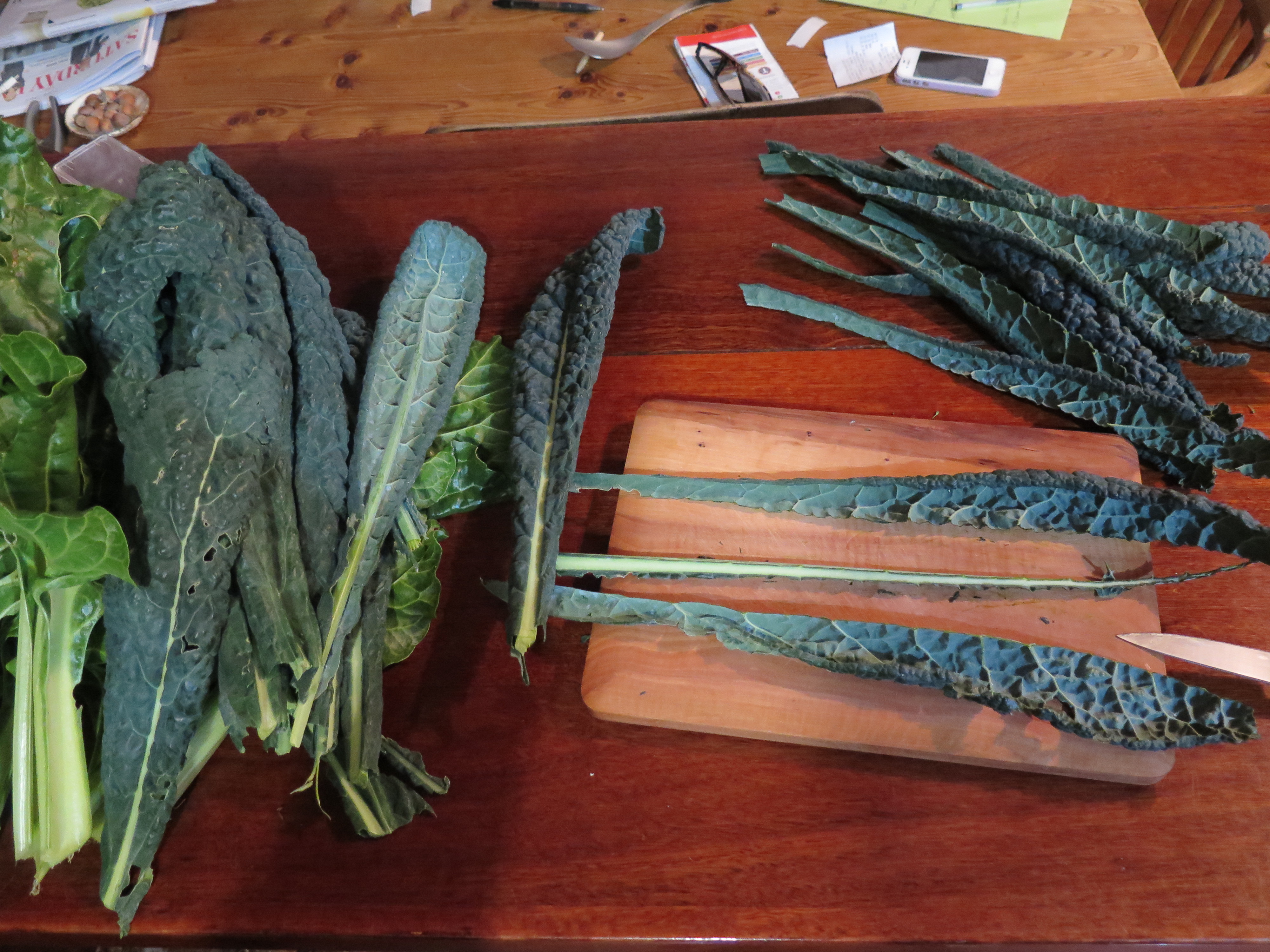
I go straight back out into the garden with my basket and fill it with little yellow tomatoes, the last of the lingering sweet basil and a load of capsicums and chillis.

IMG_3749

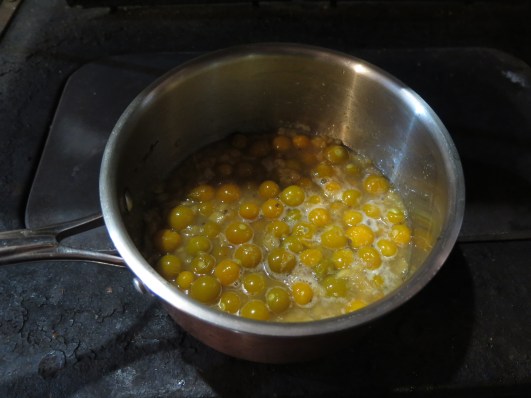
I set about making a tomato/caps/chilli salsa by browning a few onions in good olive oil and adding 6 small knobs of garlic. The ones that are so small at 20 to 30mm. dia. that it really isn’t worth peeling them. They will add heaps of flavour to this mix and the small amount of skins and paper will be removed when I strain the whole batch. I let them softening down along with all the diced fruit over a long time at low heat on the wood fired kitchen stove.

IMG_3750

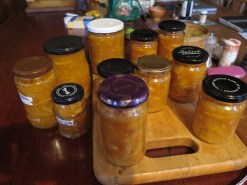
I will  pass it all through the kitchen mouli sieve to take out all the tomato and capsicum  skins and seeds, then reheat it to sterilise it and bottle it in heated glass jars. It will keep for a year or so, but probably won’t last that long. It’s too delicious, although very ‘hot’ with chilli flavour. It will make a great addition to winter stocks and sauces over the coming cooler months.

This little effort marks the end of our summer preserving for this year. I’m very pleased, as I wasn’t expecting there to be any fruit left to preserve. This simple garden-to-kitchen-to-pantry excercise grounds me and resets my emotional and spirituual compass to ‘home’ after being away. This is what I do. This is what I live for. This is me. The self-reliant potter/gardener.

A close inspection of the garden beds reveals a lot of little germinating seedlings of onions, carrots, beetroot and rocket. I planted these seeds just the week before we left. I also planted a few hundred cloves of garlic. Most of which have now germinated and are showing their green shoots. Peas are also up and growing quite strongly, I hope to see them flowering soon.

IMG_3718  IMG_3722

IMG_3721

There are a lot of capsicums ready to pick, so I decide to stuff them with ricotta and bake them in the oven, as the stove is lit, we are making hot water and warming the house up as well, seeing that we are now home and the weather is so windy and cold. Such a change from the weather in southern Japan, where it was almost summer and the weather was balmy to hot.

IMG_3726

IMG_3725 IMG_3728

I make a stuffing out of whatever we have at hand in the fridge. Before we left I had bottled some little cucumbers and some dried tomatoes. I add these into a lump of fresh ricotta. I add a few cloves of our garlic, along with a few capers and an anchovy or two, a few olives, a shallot and some parsley. I dice it all up and mash it together with some veggie and herb salt substitute. I would like to add a little bit of finely diced feta cheese to give it a little bit of chewy texture to the cheesey mix, but I don’t have any at this time. I’ll add to my shopping list for next trip into town. There are plenty of capsicums left to pick, so we will be having a meal, not unlike this one again in the coming days or weeks. I like to use what I have in the garden and pantry. Our main food expense these days since we lost our chickens and ducks is protein, which these days consists mostly of fish.

The fresh fish truck is up from the coast today, so I buy a small piece of super-fresh sashimi grade kingfish, we have a small fillet for lunch. I skin it and slice it up and we have it with a little soy sauce, wasabi and pickled ginger in vinegar. Yum. Itadakimas!

IMG_3746

Teppanyaki

On our way home, we let our hair down and go out for dinner a few times. Just cheap places, mostly okonomiyaki. We get three different meals in 3 different cities. We get to try okonomiyaki in Kyoto, Osaka and Tokyo.

Although the technique varies from city to city, from restaurant to restaurant. The general taste is pretty much the same, because most of the ingredients are the same. The overriding flavour is that of the brown okonomiyaki sauce and cabbage. The sauce, which is not unlike brown BBQ sauce and the smothering of kewpie mayonnaise add a very distinctive character. These tend to be the dominant flavours.

There is however, a noticeable variation in texture from place to place. In Osaka the texture of the batter is a little bit creamier. In Tokyo, it was a bit more dense and solid in texture. In Kyoto we saw one place where so little batter was used, that it was mostly the egg holding the whole thing  together. Yet in another, there was plenty of flour in the mix.

Of course, I realise that you can’t just eat half a dozen meals and say that these represent the whole of each locality. We were eating at the markets and in cheap cafes and restaurants while in transit around the country. So what I write has to be taken with a sprinkle of bonito flakes and a pinch of salt!

DSC01369

It was an amazing series of taste and textural experiences in a short period of time. The  Tokyo version was quite firm with what seemed like a lot of flour in the batter. I noticed that when the chef flipped it over to cook on the other side, the thing bounced a bit like rubber! Very dense indeed. I watched the other chefs cooking other varieties for other customers at the long teppanyaki grill table, and they were all of the same dense texture.

I Kyoto, the batter was a lot thinner and the resulting texture was a lot more fibrous with the cabbage showing a major influence on the finished dish. There is a very slim layer of batter applied to the hot plate first. Then a big pile of cabbage is placed on top. a dressing of some sort of liquid is ladled onto it and after some time a little hole is made in the pile and an egg is cracked into it.

IMG_2241 IMG_2242 IMG_2266 IMG_2268

Some more batter is ladled onto the cabbage pile and then the whole thing is flipped over and the other side is cooked. If bacon is to be included, it is added on top just before flipping over.

IMG_2269 IMG_2270 IMG_2254 IMG_2277

While in Osaka, the texture was soft and creamy. I’m told that they use a local mountain potato or yam, that when it is grated, it turns directly into a thick, sticky liquid and it is this that defines the taste and texture. I don’t know, so I can’t say. This is just what I was told, so I’m repeating it.

IMG_3699 IMG_3702

At the Toji markets in Kyoto we make a point of always having the okonomiyaki from the same stall. It’s a hot day this time around and the pancake goes down very well with a chilled beer. It’s a filling cheap and cheerful respite from the crowds and all the hussle and bussle and delicious with it.

IMG_2855 IMG_2857 IMG_0845

In Arita, down in Kyushu, we were served a special okonomiyaki, made at the table of our friend, for a dinner party of mixed international visitors. This was the most rewarding to eat, because of the circumstances and company. We are very fond of the friends that we have made here in Japan and we value their friendship highly.

IMG_5881

I get it!

The only bad thing about travel is the travelling! We have got used to traveling light. we can both pack bags that are under weight at 12  to 14 kgs. This is quite enough to sustain us for the 5 weeks that we will be away. Some of the extra weight that I carry above Janine’s slim baggage, is all the electronic garbage that we tote along to ‘keep in touch’. Taking all the necessary electronic chargers and adaptors to be able to keep more or less in touch while we travel is an extra few kilos that aren’t really essential, but optional. We travel  prepared for all situations, communications wise.

Of course, we could just travel ultra-light with no ‘telecoms’, but I do like to upload our on-going adventures to our blog as we go and to do that we need cameras, phones and a lap top. This is of course showing our age. If I were a young person, I’d just have a modern phone and that would do all of that in one go. I must think seriously about updating and get with the light-weight modern option.

IMG_3667 IMG_0119

Janine has a rather more capable phone than I do. Hers is an iphone4 and it has a remarkably good camera on it. As good as my small pocket-sized Canon handy cam.

Another important thing that I have learnt to take on a long trip is a comfortable pair of shoes. I can’t go past these old leather ‘Walking shoes’ from Adelaide company ‘Slatters’. They are very comfortable for walking around in, something that we do a lot of when we are away. Slatters don’t make this model of shoe any more. They are now a discontinued line and this is very sad. They are not good-looking at all, but by gee, they are comfy!  These are my second pair and have lasted quite a few years. The new range that replace them are not as good for me. They don’t suit me or fit as well, nor are they as soft and snug fitting. From now on, I will be looking out for some other solution for the comfortable footwear conundrum.

IMG_3711

While we have been in Japan, we have been renting some studio space and making some work. This is all part of my 10 year long project to go to each place in the world where they make single stone porcelain and make some work there in each of those places. I want to have a show of this collected work next year at Watters Gallery in Sydney. I only have one more place to go now, so I’m getting quite excited at the prospect of seeing such a long term project mature to some kind of completion.

IMG_5943 IMG_5947 IMG_5948 IMG_5944

Some of my work, before and after glaze firing.

IMG_3600 Copying

IMG_3610

Outside the studio, the bamboo is putting up new shoots. Its spring time here and everything is so green and luscious. The bamboo grows about a foot or 300mm. per day, so in a few days, it’s as high as Janine. We consider collecting some of the new small shoots, while they are still just 100mm. high, but there just isn’t enough time if we want to get our ceramic work done. And after all, this is what we have come all this way for. We see some fresh picked bamboo shoots in the local organic farmers market and this is excellent, as it is just as good and saves us so much time. It’s delicious added to a simple stir-fry/steamed mix of vegetables and brown rice.

Just finding brown rice at all in the supermarket here is such a breakthrough. I’ve never seen it for sale before. It’s a sign! However, it is only available in little slim 500 gram packs for extremists and health food weirdos, whereas white rice still comes in bags and sacks of 5 and 10kgs, up to 20kgs!

The next night I find some sole in the fresh fish mongers little shop, just down the road from our lodgings. He’s a lovely guy, so helpful and sweet. His wife is so lovely too. They operate this little business 10 hours a day, 6 days a week. Nothing is too much trouble. They tell all about the days best choices and possibly all about how to cook it too, but I don’t speak any Arita dialect and very little Japanese, so little, that I can only just pick out a few words. This couple are so patient with me though, I can’t help being totally grateful to them for persevering with me.

Each day they have something else different in their shop, whatever is the best option for the day, plus all the usual offerings. We get some super-fresh sashimi from them when-ever we pass the shop. One day, I call in a bit early in the afternoon and I suddenly get it. There is no sashimi in the ice tray display counter as yet. He hasn’t got around to it, too busy preparing all his other orders? He says to me a sentence that includes two words that I recognise. “sashimi” and “mata” and I get it!  “The sashimi will be ready later on in the afternoon. I haven’t had time to do it yet” at least that is what I take from it. I nod, “mata” I reply and sure enough it is all there to choose from 2 hours later. I’m a bit chuffed at this little exchange. I suddenly feel like I’m starting to fit in a bit. I have experienced this sense of being able to hear more than I can speak on other visits to Japan. After a few weeks, I start to get my memory cells activated and somehow, I seem to know what people are talking about, without knowing all of the words that they are speaking. Freaky, but it happens consistently on each of my 6 visits here over the years.

IMG_3611

I also choose some lovely lemon sole, or that is what I think that I am buying. I have no way of telling, but that is what it looks like. Mr Fish Monger San tells me a lot about it. I nod appreciatively, so then he cleans it and guts it, trims the fins, etc. His wife, Mrs Monger Okesama wraps it and then shows me the price on her calculator. I pay and then they pack some ice in a plastic bag for me to carry it with in my back pack, as they know all about me and where I am working and living. I haven’t told them a thing about me, but they know. The grapevine is working. They know that I’m walking, it’s a hot day and that I have a way to go. It’s all so civilised and pleasant and inclusive. I feel like a little part of me really belongs here. I serve the sole, steamed in a little olive oil, lemon juice and pepper with some steamed, fresh, hot, still crisp, broccoli on a bed of fresh finely shredded cabbage with some shiso dressing. Yum!

The next day at Mr Fish Monger San’s there are a dozen slim garfish sitting there on the ice. I buy them all, and cook them under the grill. They are so fresh that they don’t even smell of fish, just ocean!  I share them with the others in the kitchen.

IMG_3416

Now for something entirely different!

When I get a lift to go to the big supermarket in another town, I’m suddenly aware that there are pictures of whales on the freezer cabinet. I look closer and see lumps of frozen whale meat in vac-packs. I can’t say that I’ve ever seen whale for sale anywhere before, ever! I can’t resist taking a picture of it. So, this is where it eventually ends up. In little towns and villages, in the freezer section.

IMG_3643 IMG_3645

Later, when we are about to leave the supermarket, someone says to me that they saw me taking pictures of the freezer section with the whale meat in it.

Why?

I say that whaling isn’t approved of in Australia. We stopped doing it 40 years ago. They know precisely what I’m saying and put their hands over their mouths in a shy embarrassed sort of way. Oh yes! Australia doesn’t like it. With that, they let it pass.

I’m pretty sure that they know that Australia took Japan to Court and won the case. A little bit embarrassing for them, but they brought up the subject not me. Japan then withdrew from the court and refused to recognise the decision.  They have been ostracised and have decided to go it alone. An environmental pariah. It was made clear in the legal case evidence, that there isn’t and never was, any scientific basis for killing hundreds of minke whales each year. It was just an embarrassing lie, and they have been caught out. Where does the conversation go from here? It doesn’t!

The Japanese government obviously decided that there was more political mileage to be made by going feral and pleasing its political backers with this unjustified whale slaughter circus, than there was in being a good global citizen. Even if it is all done at a loss and isn’t universally popular. We both probably know that there isn’t any profit in whaling. As I understand the situation, no company wants to fund it, to take the financial risk. It is entirely funded by the government, simply because it’s a loss-making operation. The decision is completely political. It’s desecration at a loss, funded by the political interests. We both decide to let it pass at that and we make our way out of the market. My own position on this is that Japan is an independent country and can probably do as it likes. As it is doing. However, they should be brave enough to tell the truth about it and not lie about the fake science.

IMG_3599

Our time is up now and we have finished our time here. I crush all of my pots that were not good enough make the cut. About 50% of what I have made here this time. I burn my poetry. I clean up my wheel. I dry all of my turnings. I pack them into strong plastic bags and pack them securely into strong cardboard boxes and post them back to Australia. I’ll see them again after 2 months spent at sea in the cheap surface to surface mail system. It’s so much cheaper to post dry turnings than fresh wet plastic clay with 30% water content. We have perfectly good water back home in Australia to make good clay from these dry fragments. They may yet have another life?

IMG_3682 IMG_3683

As we catch the train out of Arita, I see the fields of over-winter barley are being harvested now. They were looking very ripe and going to head when we trained into here 5 weeks ago. The stubble is being ploughed in in preparation for the next crop. The other fallow fields are being flooded and ploughed ready for the next rice crop. The weeds and purple flowering, nitrogen-fixing ‘vetch’ that has been allowed to grow in the fallow period needs to be turned in as a green manure. It all looks good from the window of the train as we speed by.

IMG_3709

When I was here 8 months ago the rice was being harvested, now it’s the early, over-wintered’ barly coming in, with the summer rice being planted.

The circle of life turns. I suddenly feel the need to get back to my own garden and do all of the weeding and planting that I know will now be needing to be done. Annabelle Slougette has been working in our pottery and keeping the place under care-and-maintenance for the past 5 weeks.

I can hardly wait to get home, now that I’m starting on the way back. I’m consoled by the beautiful bento box lunch on the train. It helps!

IMG_3685

fond regards from Southern Japan


A Visit to the Organic Sake Brewery

Having taken an interest in drinking sake. Well, you have to don’t you? I’m in Japan and I just want to fit in, so I’m keen to learn about sake. After doing the workshop in Kintsugi gold lacquer porcelain repair. We got to talking with our teacher about all things Japanese, and it turns out that he and his wife have a friend locally that owns and runs an organic sake brewery.

We have arranged a date and they are expecting us. We get the full tour. This lovely old wooden building is the original structure, but the thatch roof has been replaced now. The building is over 150 years old and the young man who shows us around is the 5th generation of his family to be running it.

The water for the sake fermentation is drawn up from a deep well down under the brewery.

The water here is really clean, as it is located well away from any industry, surrounded by steep hills and deep valleys. It rains a lot and the rivers here run powerfully. The granite hills are flawed with millions of tiny cracks and fissures. The water percolates deep into the granite hills and seeps down into the water table.

IMG_3620 IMG_3622

The rice used for sake making comes from all over Japan. Each district has its own specific character and is used to make different styles of sake. Some are polished more then others to improve the taste and mouth-feel. We also learn that there are innumerable different strains of sake yeast. The life long training and study of Sake making is just like the study of vinology. Learning to match the different yeasts and rice strains to get the best result from the current years rice crop.

As this brewery is a small family affair, they are very flexible in their approach to getting the best result. Everything is done in small batches, so many different brews can be produced during the season.

IMG_3625 IMG_3635

The equipment used is a combination of the antique and the hi-tech. The giant press is still the original one, where as some of the modern filtering and pumping equipment is stat of the art.

IMG_3633 IMG_3634

It’s a beautiful old wooden structure. I love the antiquity, the wabi/sabi well-used and loved atmosphere of it all. The sake is excellent too!

IMG_3637

We buy two different bottles one medium and the other dry. We are warned that because there are no preservatives used in the manufacture and bottling, unlike commercial sakes, we should keep the sake in the fridge until use and then drink it fairly quickly after it is opened.

That won’t be a problem!

Back From The Mountain

We spend a bit of time looking closely at the Nabeshima pots on display, and it is true that there is very little texture in the pale blue gosu, natural cobalt ore, background pigment.

IMG_3471

We make our way back down the mountain past the noborigama kilns and other pottery workshops and display rooms. As it has been raining for a day or two, the stream is running quite noisily. Our guide, Tsuru san is very knowledgeable about the ceramic history of this area. Born and bred here, she knows more than we can take in.

IMG_3475 IMG_3458

The water driven clay crushing hammers are working hard, unattended, pounding the soft porcelain stone to powder all through the day and night without a power bill.

IMG_3452 IMG_3463

The fish seem unperturbed.

From Okawachi, we drive to another interesting site of early Arita porcelain development. We go to visit the re-constructed Korean climbing that is said to be the one used by the originator of the porcelain industry here, Li Sampei or Ri Sam Pei.

Its a magnificent kiln stretching all the way to the top of the hill, with a slight bend in it  to suit the lay of the land form, just as the original one did, as excavated by the archeologists.

IMG_3493 IMG_3495

IMG_3497 IMG_3504

IMG_3506

On our way home, we call in to visit the Rice Field Potters Kiln. Unsurprisingly, it is set in the middle of some rice fields on a gentle side slope. It has also been reconstructed recently from the information gleaned from an archeological dig on the site. This kiln dates from the time when potters didn’t work full time, but fitted their firings into the rhythm  of the season along with rice and vegetable farming. They were the original self-reliant potters.

IMG_3522

I really love the way that this old kiln wriggles and snakes its way up the slope. If I were a self-reliant, wood-firing gardener/potter, I’d love to own a kiln like this one. Come to think of it. I am, and I do!

IMG_3526

Both of these kilns were built with dog-legs in them to follow the natural surface contours of the local terrain. They are both used intermittently by the local potters groups to keep them working and alive.

It’s been a long day and we have just enough energy left to visit the local sake brewery for a tasting. I can’t decide which one is best, so I am forced to taste them all before I can decide. A total lack of knowledge about sake can be an advantage sometimes?

A Trip to the Mountain

We are taken on an excursion to the mountains. It’s a foggy moist kind of day with intermittent rain showers. On the way we pass a really obvious white pegmatite dyke in the side of one of the hills near the road. I’m keen to stop and look, but it appears to be on private land and there is no easy access to it. We drive into a trucking company’s yard to get a closer look, but it is still a bit too far away and it is raining. I don’t fancy bush bashing in my good ‘going out’ clothes. So we let it pass for today. I may try to come back here if there is time on a fine day.

IMG_3436 IMG_3440

IMG_3430 IMG_3431

We press on over the mountain top, past a very pretty water fall. Yesterdays rain has brought it to life today. It wasn’t flowing like this the last time that I was here.

IMG_3444

We go to Okawachiyama for a 2nd visit. I don’t mind, I’ve been here before, but Janine hasn’t. It’s a pretty place and there is always more to see. You can’t see everything on one visit. There are still lots of lanes and little walkways to explore. This remote valley once housed the Nabeshima Clans’ potters. They were held here in captivity to create the finest, whitest, polychrome enamelled porcelain. They managed to find the whitest of materials and restrict their use for the shogunate only. The creamy white clay glaze combination that they created is still a wonder to this day. It’s purity and translucency is just remarkable. I went on a geology tour of the local porcelain stone sites last week with Kanaiwa san. We visited many places around this district, but we couldn’t find the lost kaolin mine of the Nabeshimas. Kanaiwa san has made a life long study of the ‘nigoshide’ white effect. He has managed to make a modern synthesised version using 3 of the local varieties of porcelain stones. I don’t know his technique, but his knowledge of froth flotation technique that be came obvious to me during one of our early conversations, leads me to believe that there might be some fertile ground there for experimentation. I have certainly found it an essential way to remove iron from otherwise ‘dirty’ rock samples back home in Australia.

IMG_3457

On our walk up the steep Okawachiyama Valley road, we call in to see one of the last ladies that  can do the seamless cobalt background brushwork. It is a very difficult technique and is now almost lost. These days this kind of background is either sprayed on, or transfer printed. Of those who still hand paint the ‘gosu’ cobalt blue background. and there are only a few of  these left as well, the technique used these days is to gently squeeze the ‘fude’, pronounced ‘foo-day’, brush to control the flow of the gosu pigment and loop the brush tip back and forth, producing a layered, slightly overlapping, background pattern. The Nabeshima technique used here is to hold the brush by the handle, not the hair, so no squeezing is used, They tilt the brush, up and down, to control the flow of the pigment. It is a truly astonishing technique.

IMG_3473

IMG_3488

IMG_3490

400 Years of Porcelain History

We have arrived in Arita, the famous porcelain town in the Southern Japanese Island of Kyushu. Japanese porcelain was first made here in this village 400 years ago this year. It is the site of the naturally occurring, weathered porcelain stone, which was discovered here by the Korean Prisoner-of-War, Ri Sam Pei. He was a trained pottery who was captured by the war Lord Hideyoshi and brought to Kyushu. He was familiar with the techniques of making porcelain from a single stone back in Korea and the story that is told here says that he recognised the special cloudy quality of the water that was running out of the nearby hills. I’m presuming that it was a cloudy white colour because it contains some dissolved kaolin and white sericite mica. The river that runs through the town here is called the ‘shirakawa’ river, which translates as ‘white river’. He presumably also recognised the shape of the local hills and the special look of the local stone, once you get up close and personal with it. Weathered acid volcanics of this kind have a particular set of fracture angles that is quite specific.

This porcelain stone occurs all around these hills where the local white granite has weathered down into a softer white to off white, mixture of kaolin, silica, felspar and specifically sericite. Sericite is a white, plastic mica. This means that it is throwable on the potters wheel as well as vitrifying to a translucent glassy matrix when fired.

This week is the special Spring Festival week called Golden week. It has been traditional for the Arita town Council to have a Ceramic Fair on this week. They close off the main part of the Old Street and all the local pottery businesses set up pop-up stalls all along the street, selling everything that you can imagine that is made from ceramics. There is something for everyone, with pots starting from 10 cents going up to tens of thousands of dollars.

It is very busy. I am told that there will be about one and a half million visitors coming through here over the holiday period.

IMG_3286 IMG_3393

IMG_3395 IMG_3401

IMG_3402 IMG_3404

We stop for coffee in the back lane where it is a bit more relaxed and not so busy and the disposable coffee cups are made of waxed paper, but have been specially printed in blue and white Arita porcelain coloured  print.

IMG_3289

We don’t need any more pots, but with millions of pots on display, we manage to restrain ourselves to 2 beautiful little sake cups and a small pickle dish. Quite a good effort. It takes at least 6 hours to walk up the main street and we still don’t manage to look at every stall. We need to go back 3 times, over three days, to get a reasonable coverage of what is there, but still we miss a lot.

We suffer ceramic shopper blindness after a couple of hours and need a break. It’s just like gallery blindness and museum blindness. You just can’t take it all in in one go without a break. Coffee helps!

Best wishes from the two dropped shoppers

The Lost Nabashima Clan Kaolin Mine

Mr  Kanaiwa tells me story about the Lost Kaolin mine of the ancient Nabashima Clan. The Nabashima clan were very well known for the excellence of their white porcelain with overglaze enamel decoration. The tough men of the clan marched into Arita one day, 350 years ago and stole the kidnapped Korean potters away from Arita and took them to the hidden valley of Okawachiyama, where they put them to work making the most excellent shirajiki – super fine white porcelain, that was destined for the exclusive use of the leaders of the clan and their cronies. This porcelain had to be the whitest and finest of any that it was possible to make under the threat of death. These twice kidnapped Korean potters did just that and to achieve it they had to find some very white materials to do the job.

So, the legend has it according to Kanaiwa san, that they found a source of ultra pure, white porcelain stone and kaolin somewhere to the south East of Arita village up in a tributary valley. As I understand it, and I could have this wrong, but what I thought that I was told, was that this lost mine was located at a place called Iwatanikawachi.

Kanaiwa san has spent a lot of his life researching the special milky white glaze quality of the early Nabishima wares and has analysed samples of the ware. He shows me the analysis sheets and the Seger formulas that he has derived from them. It’s a wonderfull and extensive piece of research. I’m Impressed. It’s the sort of thing that I would have done if I were here doing his job. I can read the formula and know the general glaze that he is describing. It’s not anything special, with no surprise ingredients. I know it well. As with so many things in life and particularly in ceramics. It’s not the secret formula that is important, but the materials that are used and how it is all fired that creates the special quality.

Kanaiwa san suggests that we go for an expedition into the Iwatanikawachi valley and look for the stuff of legends. I agree enthusiastically. So we set off and park the car at the foot of the valley where we make a ‘habakari’ stop. Tsuru san who is my translator on this venture, reads out from a memorial plaque set in a stone in the pack. She exclaims with excitement that this is the very site of an early kiln. One of the first in the valley 400 years ago. This kiln made imitation Ming Dynasty wares for export to Europe. When the civil war in China closed off the export trade in porcelain to the Dutch Traders, they came to Arita to see if they could make similar porcelain wares for their export trade. The potters here were given sample of the Ming porcelain to copy, and they did that exactly. Even to the extant of writing “Made in China in the Ming Dynasty” on the bottom of the pots in ‘gosu’ cobalt blue pigment. Some of these ‘fake’ Ming wares are on show here in the local museum. Tsuru san is very excited to see this sign and reads it out to me. She knows the story well and has seen the wares, as she works in the museum part time. So this is the very spot where the archeologists discovered the shards!

Everywhere around here reeks of history and can surprise even the locals it seems.

IMG_3572

We set off on our walk up the valley. As we go Tsuru san translates for me the story that Kanaiwa san is telling me in his local Arita dialect. This walking track was once upon a time the main road from Sasebo to Hasani and would have been the very road that Ri SamPei would have walked along to get to Arita where he discovers the special porcelain stone that has made this place rich over the 400 years since. We walk. He talks. Tsuru san translates. I listen. It’s a nice warm day and the sun is out, but we are walking all the way in the shade of the dense forest canopy. There are beautiful samples of porcelain stone all along the track, but none of it is ultra white and pure. There must be, or have been, a particularly pure vein of pegmatite somewhere along here that could produce such a stunningly white and clear product. I can’t see any sign of it. I’m supposing that others must have looked. If Kanaiwa san has found old documents that indicate that this is the place, then others must know this too and have been along here with the same intension.

IMG_3575

I don’t find the pegmatite dyke, but I do stop and admire the exquisite beauty of the small gurgling stream as it passes over some small falls. The word shibui comes to mind.

Eventually, we arrive at the top of the mountain, to find a reservoir under repair and maintenance. There have been heavy trucks and earthmoving equipment coming and going in the last few days from the other direction. I ask where they come from. Kanaiwa san tells me that this is the end of the Utan street. I’m amazed. We have almost half circumnavigated the Arita valley from South to North on the East side. Utan street is where Tatsuya San’s workshop is located and where I worked briefly last year.

IMG_3571

We set off back along the old Edo period road. Its been a beautiful, if largely uneventful day. We discuss where the deposit might have been, as we haven’t seen any sign of extensive excavations anywhere along our path. We come to the conclusion that any workings that might still remain, must be well covered with the dense undergrowth of the valley and are most likely on the other side of the river to the path that we have taken. As it is late in the afternoon now, we decide that we will need to make another trip with more preparation to slash our way through some of the denser thickets on the other side.

Nothing is ever finished.

Best wishes from Steve in the Iwatanikawachi valley of the Nabeshima Clan

Tracking the Elusive Wild Felspar

Porcelain stone occurs in many of the hills around here in Arita, where the local white granite has weathered down into a softer white to off-white, mixture of kaolin, silica, felspar and specifically sericite. Sericite is a white, plastic mica. This means that it is throwable on the potters wheel as well as vitrifying to a translucent glassy matrix when fired. A very rare and specific combination of qualities.

Today I ventured up into the hills to look for some felspar/porcelain stone deposits that I’m told are all around here. Most were closed because they were worked out of the most precious ultra white material. The deposits around here were very small and used by the potters in the immediate locality. Each little district had its own small mine. This used to give the different villages a slightly different quality to their work. However, ultimately, none of them could compete with the large-scale and very high quality sericite that is being mined at Amukusa, just a couple of hours from here. Economies of scale and the quality of the product, along with increased specialisation of the work force made every one concentrate on producing saleable product and abandon self-reliance.

We can drive up the mountain to the scenic lookout and then park the car and go on foot. This is the ‘Black Hair Mountain’ and I’m told that it is a very spooky place. It’s a dark, wet and cloudy day and the Mountain is shrouded in mist. I’m not spooked, because I don’t believe in ROUS ‘Rodents of Unusual Size’ ‘Fire Swamps’ and ‘ Lightning Quicksand’. The Princess and I press on, the track is very wet and slippery after last weeks constant rain. In dry weather we could have gone a bit farther by car, but not today. So we walk. The little track wanders around the contour of the hill and would have been quite manageable at the time when it was in use and repaired to handle constant traffic of the ore down hill. We head off up the hill on a stone staircase to get to the top. It takes some time before we realise that we are on the wrong track. We go back and try again.

IMG_3541

This time with more luck. We find a diagrammatic map along the way that shows us the location of the old mine, but not in much detail. Up the hill, over the bridge across the river. Through the ‘Fire Swamp’ and the valley of ‘Lightning  Quicksand’. We keep going until we reach the water fall and then it shouldn’t be too far, according to the map, and then there ought to be another bridge to cross back to the other side of the river. Through Dead Mans Gulch. Then up along The Valley of No Return,  up the sacred mountain to the water falls and then a righthand fork should lead you straight to it. We do and it does – more or less.

Except that I lost my nerve when we didn’t find any sign of a mine after such a long trek. The road became very narrow and washed out after some very heavy rain. There were trees across the track. The sound of crunching twigs under foot coming from the forest around us and an owl hooted, while a black raven swooped overhead. It was quite obvious that nobody had come this way for a long time. This was indeed the path less trodden!

We retraced our steps and consulted the map. This time I photographed it. It seemed that we were almost there when we turned back. We tried again and this time found that the turn off to the old mine was just another 100 metres up and around the side of the mountain. What we found was a rusty steel mesh gate with large red warning signs all over it. I can’t read Japanese, so what I read into it, was that this is the place that you are looking for. ‘Keep going, it’s just a little way on from here”. Almost there!
Of course it could also have said. “This is the old dangerous mine site. No Entry! or  “proceed with caution!” Or maybe it said that the bridge is closed because if you tread on it, it will collapse!

IMG_3550 IMG_3551

So we did. It meant swinging out over the stream to get around the gate. Then onward and upward. We knew that we had reached the correct place when we found the boarded up mine shaft entrance.

There was plenty of spalls all around on the ground outside. So no need to go in. The material looks just the same all over the world. Similar colour and texture, similar fracture angles, but the hardness varies due to the amount of weathering and decomposition of the felspars down into kaolin.
IMG_3548 IMG_3554

The softer the stone, the greater the degree of weathering and the more refractory it will be with an increased kaolin content. so it will be more plastic, but less fusible at high temperature. The harder it is, the more fusible it will be and the more vitreous at high temps, but the less plastic to work with. Somewhere half way between is a good compromise, or a blend of two different stones will achieve the same result.

This stone is quite hard to break and is probably quite high in felspar, sericite and quartz. It feels to me to be a useful glaze stone. We walk back down the mountain, happy trekkers with a pocketful of samples. I learn the next day that the reason that this site was closed, was because there was a mine collapse 30 years ago and a number of miners were killed there. Very sad, but not spooky.

News travels fast. The next day, Mr. Akio Kanaiwa san. A retired geologist and lecturer in ceramic chemistry from the Ceramic University here, specialising in porcelain stone, calls in to see me. Miyuri san, the local cultural guide here in Arita has met him and mentioned me and my special interests to him. We get along very well and in just a few minutes we manage, even with so little language, to exchange our views and knowledge about porcelain stones. We both can read chemical analysis, X-ray micrographs, SEM data files and ceramic Seger formulas. He shows me some of his research that he has brought along. As he flips through his files. All in Japanese. I can read them out to him. He realises that I know exactly what he is trying to tell me in chemical terms. The only  thing that I can’t do is understand his excited Japanese Arita dialect. It turns out that I am the only person that he has met that has his own Denver cell for froth floatation separation and purification of ceramic minerals. The only difference in our techniques is that he uses pine oil and I use kerosene. Amazing!

We arrange to go on a geology excursion the very next day with Tsuru Miyuri san as our translator. It turns out to be a very full day, as Akio Kanaiwa san has a quite a few sites that he plans to take me to. I am thrilled. We both really enjoy our time together with Miyuri san. She is amazing, such good value. She is so knowledgeable about ceramics in Arita and her English is excellent, so she is so good to have along on a trip like this. We go to site after site. He really knows his stuff. Through Miyuri, we exchange ideas and analysis data.

At one point we all have to stop and laugh, as Kanaiwa san and I find ourselves agreeing on the importance of secondary mullet crystals in the development of strength, translucency and slump resistance in porcelain bodies. Miyuri san, who is quite faithfully translating our conversation, back and forth, is stunned and mystified by what she is having to say, as she doesn’t understand a word of the technology involved. When Miyuri doesn’t know the word or a suitable work-around sentence to convey the meaning, Kanaiwa san and I revert to writing the chemical symbol or formula. It’s a wonderful, positive, cultural exchange.

IMG_3555 IMG_3557

Miyuri san explains to Kanaiwa san how I collect most of my materials where I live in Australia and my amazement at how similar they all are to these minerals that we are looking at there. The only difference is that these minerals are mostly much cleaner and lower in iron. Only one of the sites is still being used, an open-cut quarry where an interesting felspar/quartz stone is being mined for use in electrical insulators and industrial tiles. It is called ‘The Dragon Gate’ mine. There is a lot of iron present here, but it is in bands and veins, so could be sorted out or extracted.

IMG_3561  IMG_3566

IMG_3563

Our last visit in the afternoon was to a glaze stone mine in Takeo. The ‘3 splits’ mine. This name causes a lot of muffed laughter. Apparently it is not really the true name of the mine. It is named after the combination of hills and valleys that look like the gap between someone legs. This is a name that can’t be said by a lady. A more literal translation might be ‘fork’, as in ‘a fork in the road’, but more likely ‘crutch’, as in the gap between a persons legs? I don’t end up knowing what it is called. Perhaps it’s 3 cracks? Because if you go up the crack it ends in a tunnel?

No one will say it in English. So I’m calling it the 3 splits mine.

Kanaiwa san says that I look like Indiana Jones or Harrison Ford in my hat. I reply that I can’t afford a whip, but my name is Harrison.

IMG_3585 IMG_3586

There had been several attempts at mining here over the last few hundred years. Some open-cut and others in deep shafts and drives. All closed now. Again, the shaft is barred by a wire fence that declares that this is the correct place alright. The fence seems to have fallen over at one of the mine shafts, so I can’t read the sign that might say ‘don’t enter’. So there is nothing to stop me. – Except the fact that it is all flooded inside.

IMG_3588 IMG_3589 IMG_3592

IMG_3593

The water is a pretty translucent  pale blue. Just like blue celadon over porcelain!

I explain that this is the most dangerous site that we have visited yet. Not because of the risk of mine collapse, scrambling through flooded water or drowning, but because of the crumbly asbestos fence!