I have arrived in Korea to spend some time refining my interest in sericite porcelain stone, researching and making a few pots too. I am spending the first few days in Seoul to begin with to catch up with a few friends.
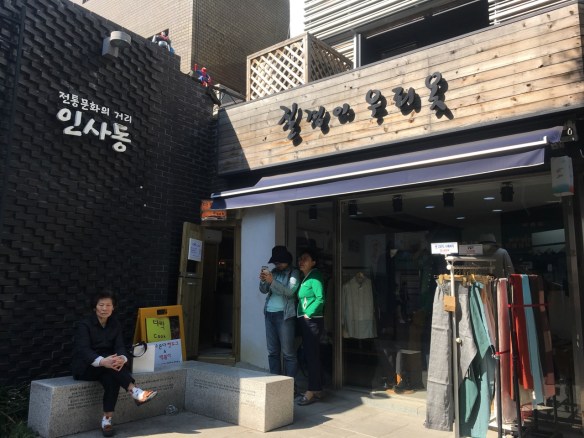
I spend the first day wandering around to get my bearings and just seeing what turns up. I spot a very narrow door tucked into a small corner between a department store and a clothes shop. I investigate and it turns out to be a tiny restaurant .
Every little space is utilised!
![]()
![]()
I meet up with my friend Ms Kang and her partner, she takes me to a part of Seoul that I haven’t been to before. It’s the trendy ‘hip’ part. There are a number of streets full of eateries. In the evening, after work, all the restaurants spill out onto the streets in fine weather. It’s May and the weather is balmy, so every space is utilised. We spend the night walking the streets looking for a ‘cool’ wine bar that she has read about, but don’t find what we want. We walk down many laneways, dingy small alleys and descend into dimly lit basements or up flights of stairs to single darkened rooms, windows blacked out. Rooms that might once have been small office spaces, and presumably very cheaply rented. They masquerade as ‘hip’, ‘cool’ night spots now.
![]()

![]()
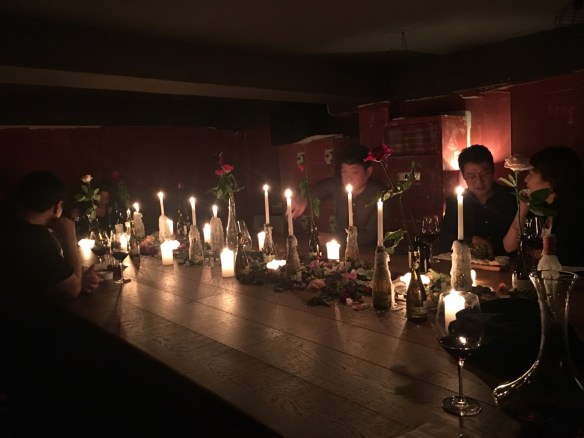
We find three wine bars. But they are all up-themselves with too much ‘cool’ and not enough wine! The wine is priced at a ridiculously expensive rate, for unknown cheap Chilian or South African quaffing grade vino, you have to buy the bottle, there are no tasting notes, or a price by the glass. We are in a group and against my better judgement, the consensus is to buy a bottle. The owner goes to great lengths to decant the wine into an airing flask. It’s all so pretentious. This wine has nothing to loose to the air, it doesn’t need airing, no aroma. In fact the sulphates are the only flavour it has. It has no nose, no taste and no finish. It’s completely flat throughout. I’d rate it as a $3.00 ‘Aldi’ cooking wine. Pity we had to pay over $60 to find out. I offer to pay, as these people are my friends, But Ms Kang is very generous and covers the bill, speaking in Korean to the bar owner, telling him to ignore my plastic card and take hers.
Lesson, don’t bother going to a Seoul wine bar. We are so spoilt in Australia with so much affordable, good wine to choose from. I’m guessing that wine tasting is new to Seoul. The next day I find some Australian wine for sale in a small local convenience store, so I buy a bottle that I recognise from home, I buy it as a present for my friends. It is not top notch, but I know it and know that it will be 10 times better than the ‘vin ordinaire’ that we were meant to appreciate in the bar. Had the wine been OK, the ambience was quite interesting in a retro kind of way. All candle lit, it reminded me of the beatnik clubs of the late 60’s.
![]()
![]()
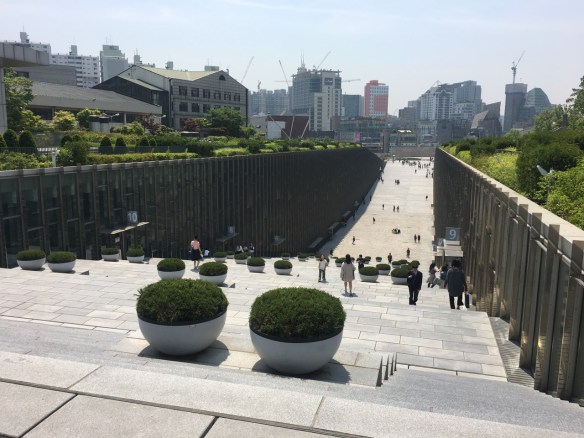
The next day, I’m off to the Ewha Womens University, where I’m to meet a professor of Ceramics. We are organising for me to do some teaching to her students. Ewha is the oldest university in Korea, as I understand it. It’s a nice campus with a mixture of new and old buildings. Open and seemingly spacious, as the most modern example of its architecture is entirely under ground, leaving a large space above for gardens and greenery. Every little space is utilised! I like it. I am invited to give a presentation of my research to the students.
![]()
In the afternoon, we wander the old market district. I seem to find myself in what feels like a kilometre long avenue of dried fish stalls. It goes on and on and on! I’ve never seen so much dried fish.

![]()
![]()
![]()
Then it’s the chilli isle.

![]()
![]()
![]()
Though the dried vegetables whet my appetite, I don’t buy, as I have nowhere to cook. Then through the food hall isle and into the fashion lanes.
![]()

![]()
![]()
I find some very nice open-weave natural ‘ramae’ fabric, and although I’m tempted, I resist. I find a ready made, long sleeved, ramae shirt, but it costs a lot more than I can afford. Over $150. If it were my last day here and I still had some money on me I might be tempted, but this Is only my 3rd day and I haven’t done any work yet, so I need to make my budget stretch.
The next day, Ms Kang takes me to icheon, the potters village, to visit my friend Lee Jun Beom. It is the May Ceramics Festival time and all the studios have their stalls out. There are some very impressive pieces, some less impressive and some amazing miniatures .
![]()
![]()
![]()
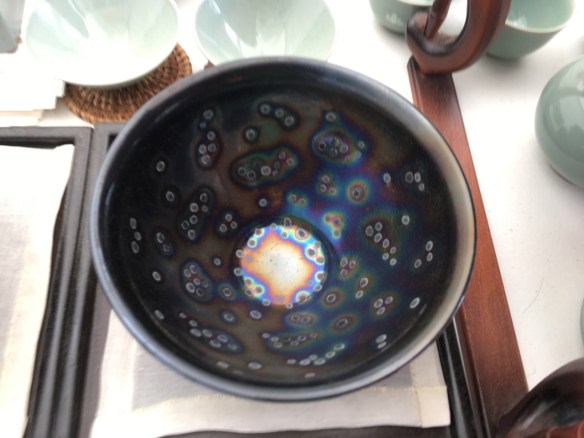
I was quite taken with the ‘fake’ irridescent blue oil spot tenmoku. I imagine that is was made by painting on the dots with something like a bismuth lustre?

![]()
It is a really interesting day, aimlessly wandering from shop to shop, studio to studio. The last time I was here, my friends took me to the local Ceramic Art Gallery and Museum. In conversation with the Director, it transpired that my research was of interest to him. He asked to see my work. I only had small images on my phone to show him. I didn’t come prepared to represent myself. I was taken off guard. My friends talked me up quite a bit to him it seems. I can’t speak Korean, so don’t know the content of their conversations, but it transpired that he became interested in collecting a piece of mine for the international section of the collection in the Museum. Regrettably, we didn’t seem to wander to that part of town on this trip. However, instead, we found our selves somewhere completely different.
I walk into a small studio, quite unpretentious, there is nothing outside to give the game away. Suddenly, I realise that I know this work. I recognise it. I’m sure that I know the maker. I have met her before. In another place and at another time. I’m almost certain. This lady does the most intricate carving on porcelain. I saw her demonstrate two years ago at the Yanggu Porcelain Museum Conference. I was very busy at the time, demonstrating and preparing give my own presentation, so I only had time for a cursory glance around the demonstrators. Janine had more time and got to speak to this lady at length. Her name is Shin Lee, going on her visiting card that I can see on the table. Luckily she can speak some English.
I walk up to her with my friends and say that “I think that I know you from Yanggu.” She replies straight away. “Yes, is your wife with you today”!
How amazing is that? She remembered meeting Janine and speaking with her from two years previously. This potter, or should I say artist/carver/decorator is a real master! It appears that her husband throws the pieces and she incises the intricate images, particularly of Hydrangeas.
![]()
![]()
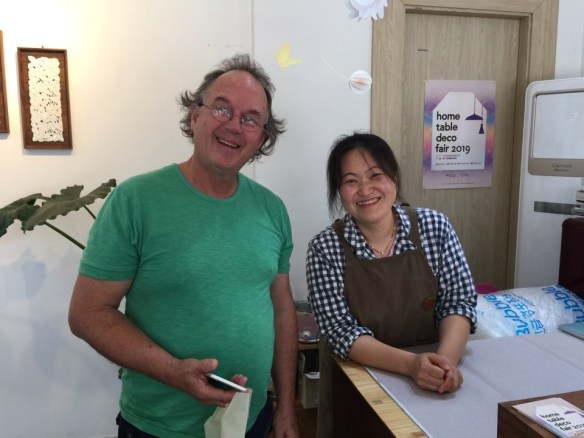
I like her heaps, it’s a real joy to meet her again. She is lovely and her work is impossible to fully appreciate until you get up close and handle it, feel the intricacies, appreciate the subtleties of the carving that highlights the shading effects of the bass relief carving. Again, If this were my last day, I’d buy a piece, but my suitcase and back pack are already chokers with stuff that I need to unload when I get to Bangsan.
I haven’t even reached Yanggu yet, so my cargo of porcelain pieces that I made at home during the last 12 months from the ‘borrowed’ Bangsan sericite porcelain stones takes up a lot of space and weight. I’m returning the stones I ‘borrowed’ as finished pieces, shaped from the 100% Korean sericite, crushed, milled and made plastic in my workshop. I transform them from mere stones, into porcelain clay body, by crushing, grinding and milling them into a wet, plastic, malleable clay-like substance. I form them into pots on my old wooden potters wheel, then bisque and glaze fire them into permanence. I glost fire them using pure Australian sunshine, glazed with my own porcelain stone celadon/guan style glaze made from my local weathered white granite glaze stone, enhanced with the addition of some local kangaroo bone ash. I’m donating the pieces to the Yanggu Porcelain Museum as a gift that represents the meeting of two minds, myself and that of Mr Jung the Director of the Museum.
As both of our cultures enjoy drinking beer. I see it as a ‘Cultural Shandy’. A contemporary melding of Korean and Australian ceramic cultures. Well, that is my take on it anyway.
![]()

![]()
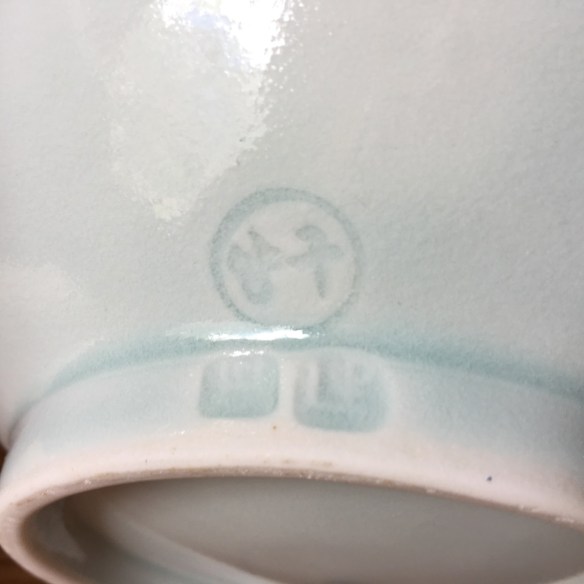
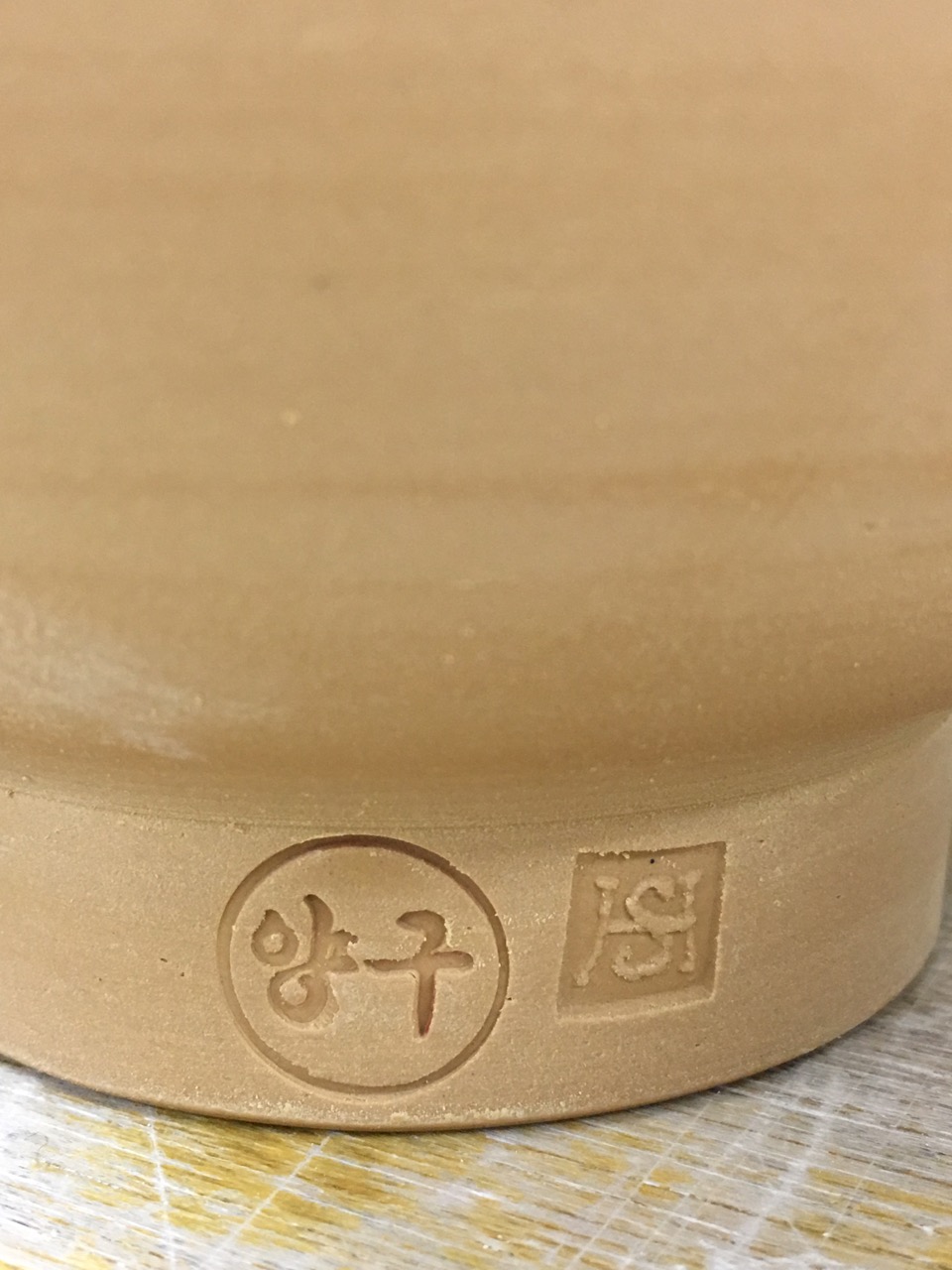
I signed the bowls with both my usual initials stamp, my workshop seal, but also the ‘Yanggu’ chop in Korean lettering, to identify its true origin. It represents the journey from Bangsan to Balmoral and back again.
The next day, I spend some time in the Namdaemun market area of Seoul. There are some astounding figures quoted about the number of stalls and number of visitors that the area gets each day. The market site is a very ancient one, but during and after the Korean War, there was a thriving black market in renditioned military goods. The economy was in ruins. The country was largely destroyed. Society was in turmoil and almost everyone was living in hardship or poverty. The market offered a way for the necessary transfer of goods, services and information in an informal and I believe quite efficient way. The site has persevered and sustained itself through necessity, it’s quite simply very popular. Even as the concrete high rise of the city encloses it, it still continues to exist. I wonder how long a market like this will survive against the pressures of development?
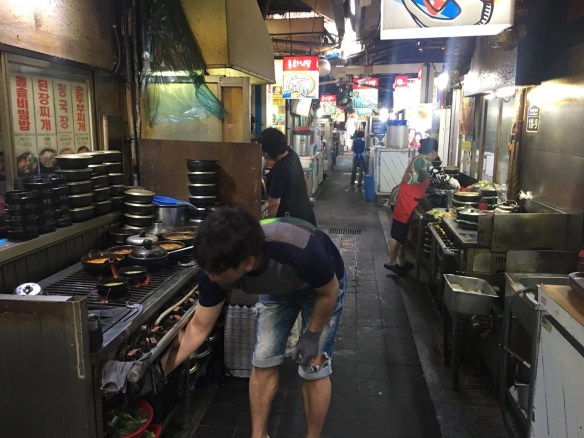
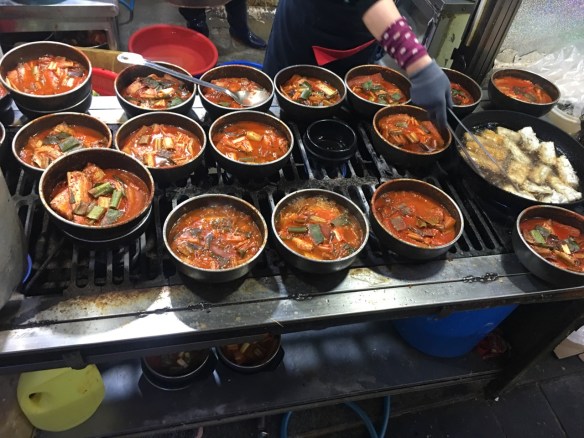
I wander the very narrow and intensely interesting back lanes. I come across a narrow lane of kitchens. Every one calling to me to step past and around the hot stove and into the seated area to have a very freshly prepared lunch. It’s enticing, but it’s also only 11.30, so a bit early for a cooked lunch. Instead, I take a photo and keep walking.
![]()
![]()
![]()
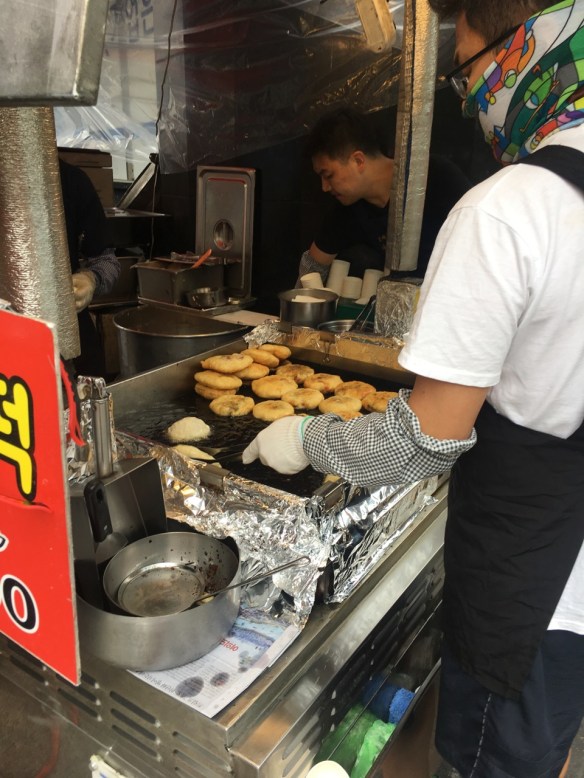
I eventually decide to buy a small ‘Panjun’ style round handheld pancake. Korean style walking fast-food. I choose this place simply because it has a queue of 30 people waiting to buy one. If the locals are prepared to queue and wait for it, it must be good. Or so my thinking goes. This time last year, when I was in Seoul, I had a meal in a restaurant with loads of other respectable citizens at lunch time peak hour in Insadong. I knew as I ate it that something wasn’t right. As I left, I felt quite unsettled in the stomach, half an hour later, I almost blacked out, got quite dizzy and threw up in the street at the bus stop. Janine and I shared the meal together. However, I was the only one to eat the pickled chilli relish in the jar on the table, Janine didn’t. It was a respectable, busy restaurant, in a posh part of town. How can you tell?
I’m pleased to repot that the pancake was delicious, followed by no unpleasant side effects – and only $1 great value!
![]()
![]()
![]()
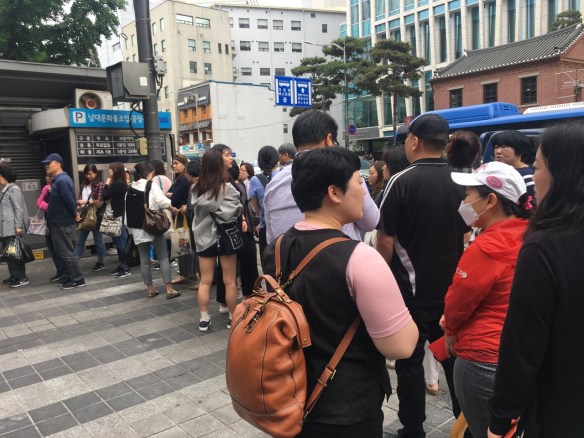
While I’m here in this place where so much is possible, I decide to get one more name stamp carved with my initials. I find a tiny shop with a young lady that does such things and draft out my design, but regrettably, she doesn’t get it or doesn’t care, or perhaps she has no inherent sense of design flare? I don’t know. But my own hand-made wooden stamp that I cut myself at home has a better look to my mind.
Mine is a bit wobbly, but looks better overall. However, it doesn’t really matter, as it is so small and is only on the foot ring, such that no-one will ever really see it.
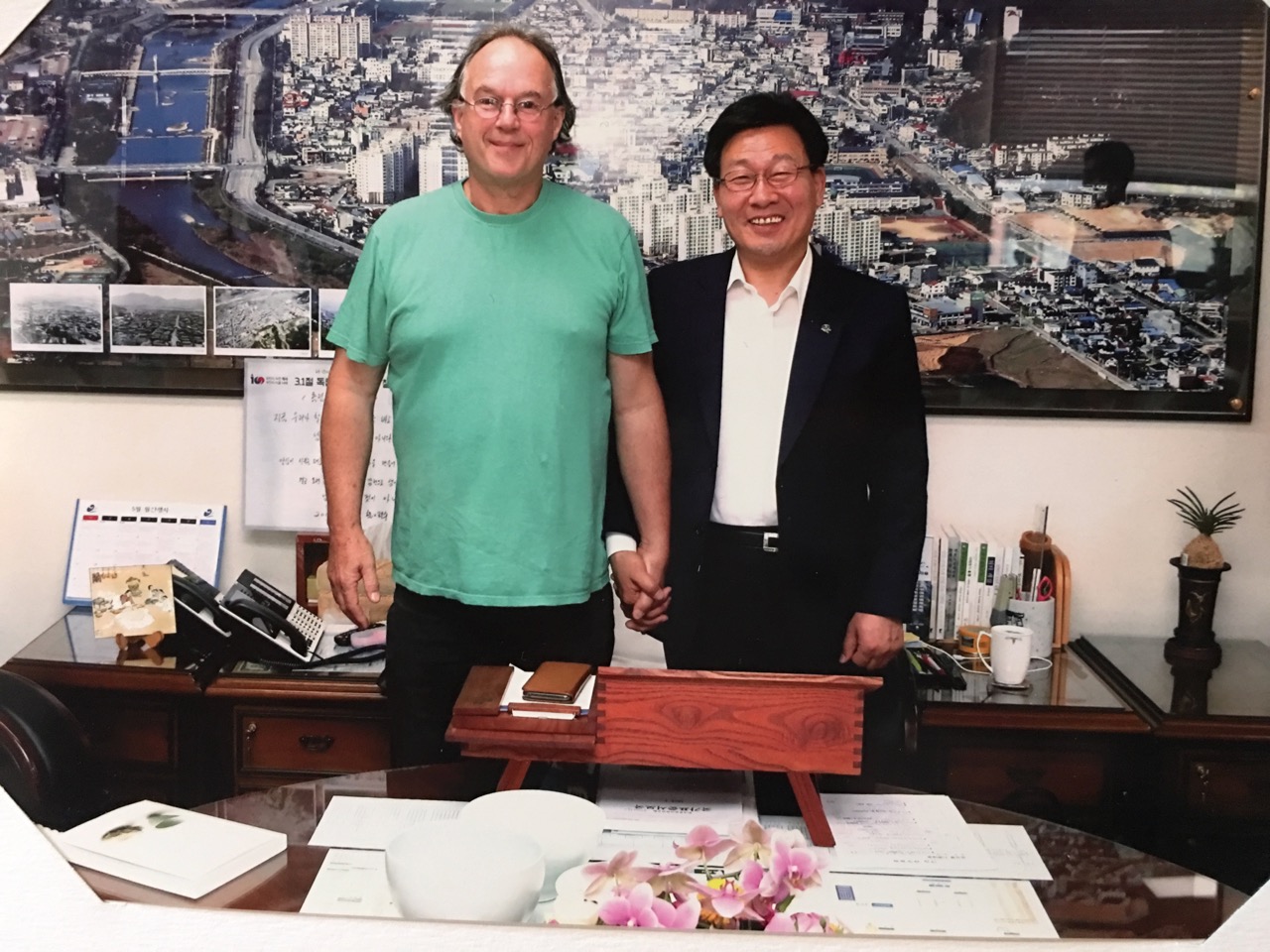
The next day I leave Seoul and take the train and bus to Chuncheon where I am destined to meet up with the director of the Yanggu Porcelain Museum. I have texted him an image of my buss ticket, so that he will know where I am and at what time.
Over my 5 visits to Korea, we have become friends. United by our common interest in sericite porcelain.
On this visit, my fifth, I am invited to stay with Mr Jung and his wife in their home. I’m flattered and feel really honoured by this gesture of generosity at a very personal level.
The next day it’s down to work in the Porcelain Research Centre. My time is limited, so I must get busy. The Yanggu Porcelain Museum is situated in the tiny village of Bangsan right up near the DMZ, in the geographical centre of (the unified) Korea. The site has a history going back 700 years. ‘Sericite’ mica has been mined here for that long. Sericite is otherwise known as ‘Porcelain Stone’, ‘Do-suk’, in Korea, ’Bai-tunze’ or ‘Pai-tun-ze’ in China, ‘Groan’ in Cornwall, sometimes ‘Muscovite’ Mica or ‘white mica’ in Australia. This is the stuff of the original porcelains that were independently discovered and developed, long before kaolin and felspar was added into the mix. It seems that porcelain was invented wherever sericite was plentiful.
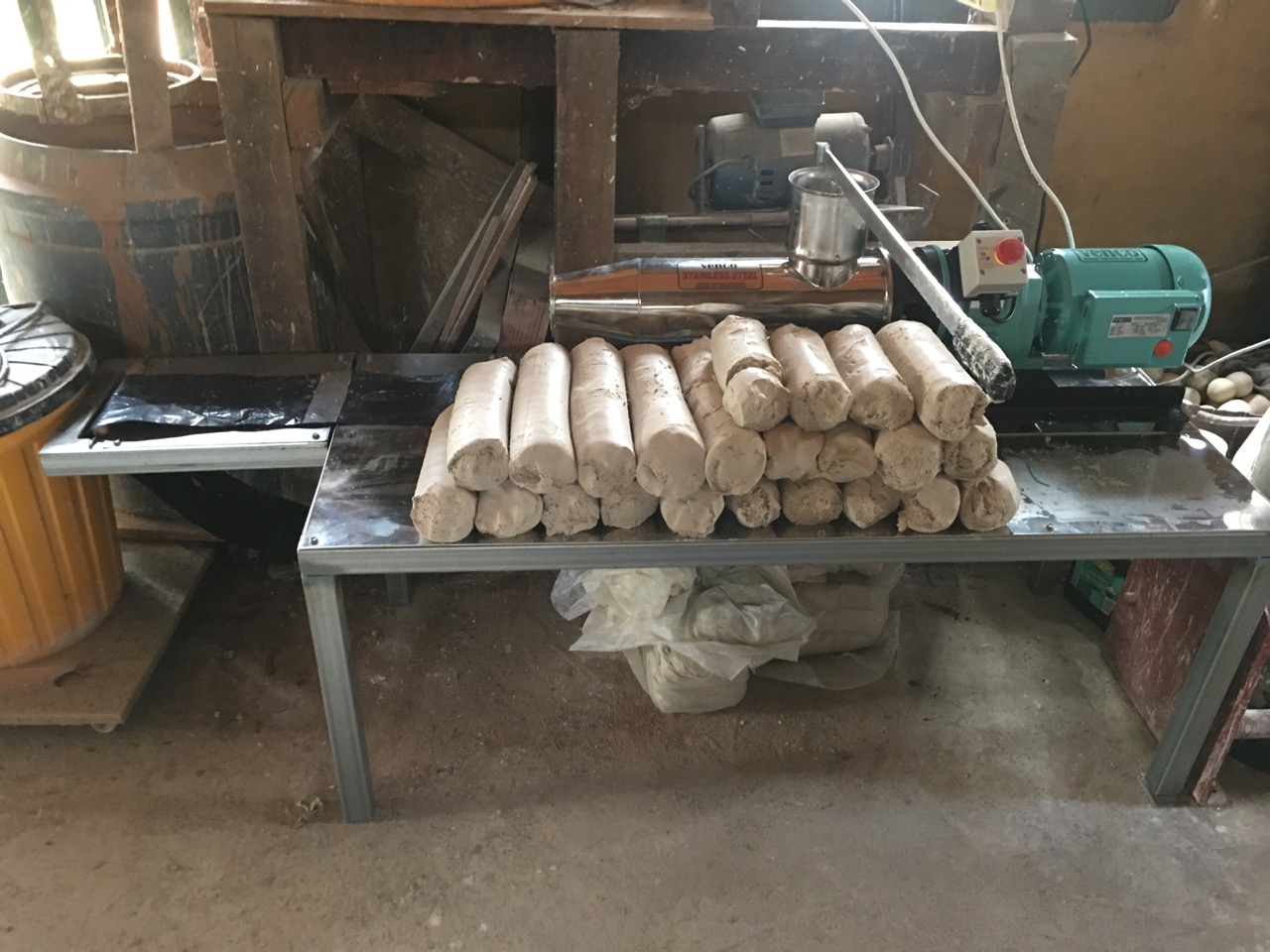
The Museum here has several bodies available. All based on sericite, most of them are available to be used individually, but the Porcelain Centre also has a couple of blended bodies that are much easier to use. These are prepared for use by the part-time students and visitors who come on cultural tours. The blended sericite bodies have been cleverly developed by Mr Jung to over-come the various short comings of each of the individual materials.
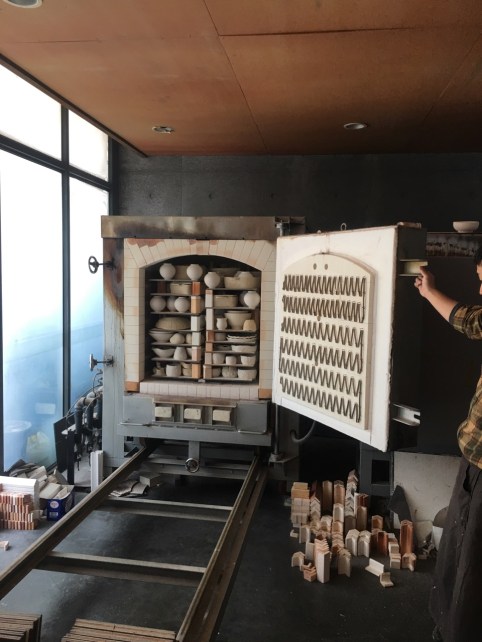
There is a 2 material blend that combines a very low temperature maturing mica With a more refractory one. Individually they need special attention and different firing temperatures, but combined they work very well together. There is also a 3 way sericite blend. These blends have the advantage of all firing at the same temperature, which makes life a lot easier for the staff.
Like me, Mr Jung, the Director of the Porcelain Museum, has a life long interest in sericite porcelain, He being born and raised here in Yanggu County.
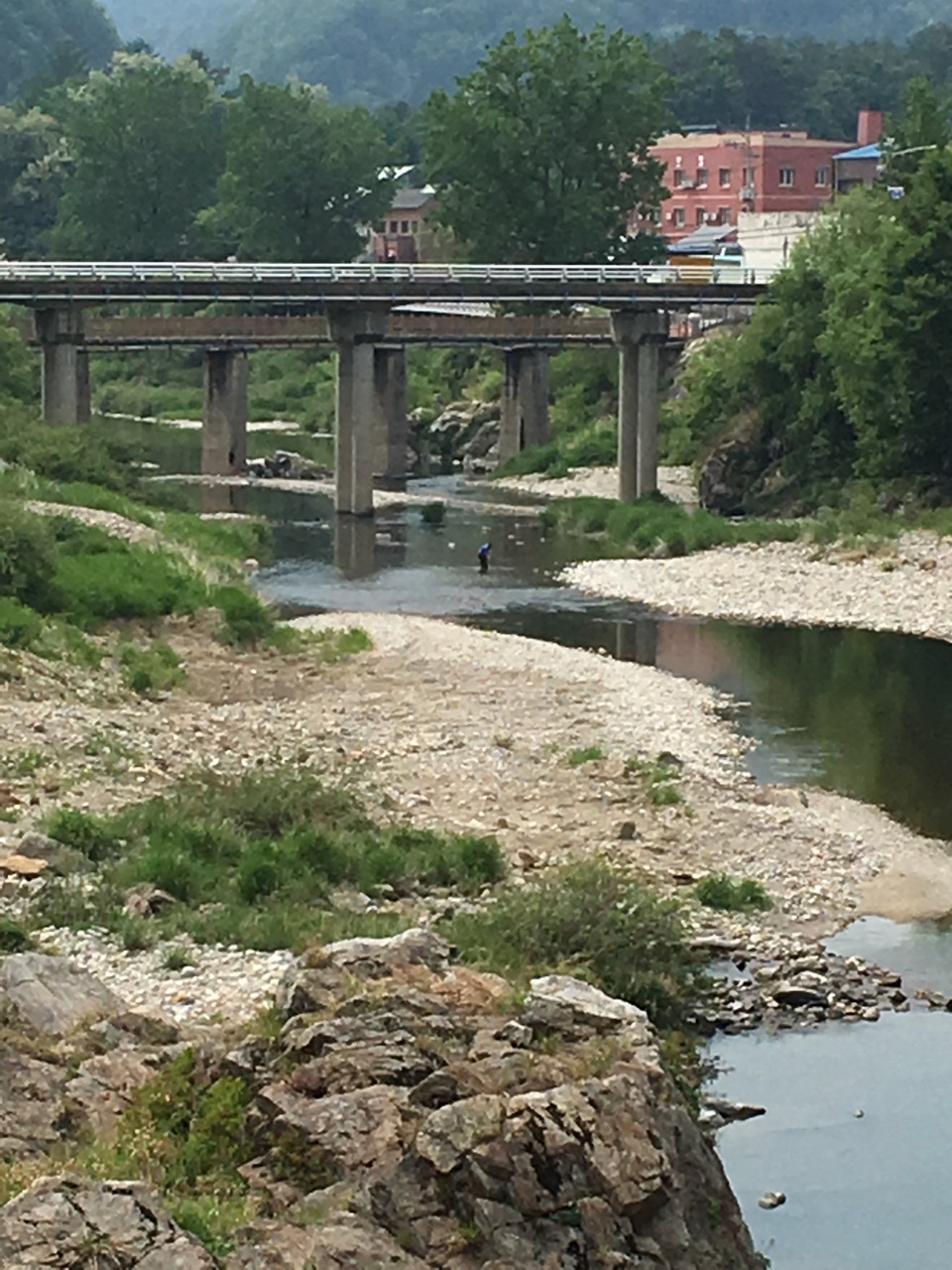
They no longer use the original mined sericite from 700 years ago. The mine site is now lost. No-one knows where it once was. I suspect that it is probably over the border in North Korea a couple of kilometres away to the North. Just over the hill from the Museum. There is however a site, closer to the border, where the mined sericite or Do-suk, was sorted into different grades and stored, before being carted down the valley to the river to be shipped to Seoul and the Royal Porcelain Works. Ancient documents name the site and list how 70 tonnes of material was shipped out in each 12 month period, usually in spring and autumn, at high water, when the river was not either in flood or dried up.
I have visited the ancient storage site on 3 occasions to investigate and collect samples for my research. I have had my samples analysed at the University of New South Wales in Sydney. The results are published in my recent book ‘5 Stones’. The ancient material is indeed almost pure sericite with some silica. It is beautifully plastic to throw on the wheel even without ageing. I was thrilled to discover this when I got my box of stones home and processed them into a plastic body.
There isn’t much to be seen these days. And I wouldn’t know that it was there, except that I was shown the remote site. On my last visit, I arrived just after torrential rains had caused havoc in this part of the country. On arrival at the site, I found that the rain had caused some quite deep erosion in the gutters of the dirt track leading up to the site. Because I knew what I was looking for, I was able to identify small white fragments of the stone that had washed down the road in the gutter. I rescued these, washed and cleaned them, and ‘borrowed’ them to make the work that I am now returning to the Museum as fired pots.
No-one here seems to be interested in collecting ‘in-situ’ materials for making ceramics. It’s not taught in the schools or Universities here, so no one knows how to do it. Added to that is the fact that you can buy almost anything you want already prepared from a pottery supply shop. There is no incentive to try unknown and untested wild materials.
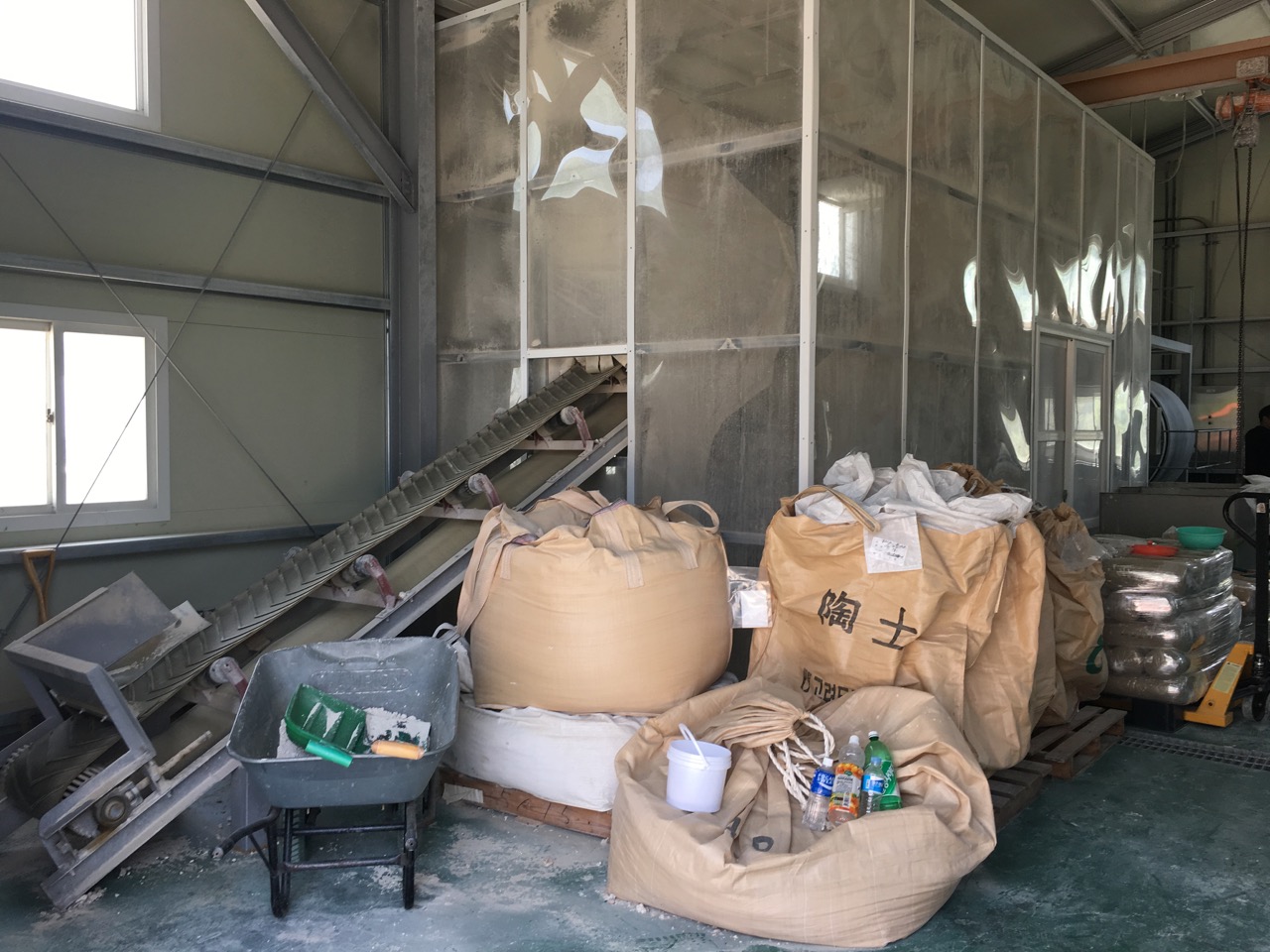
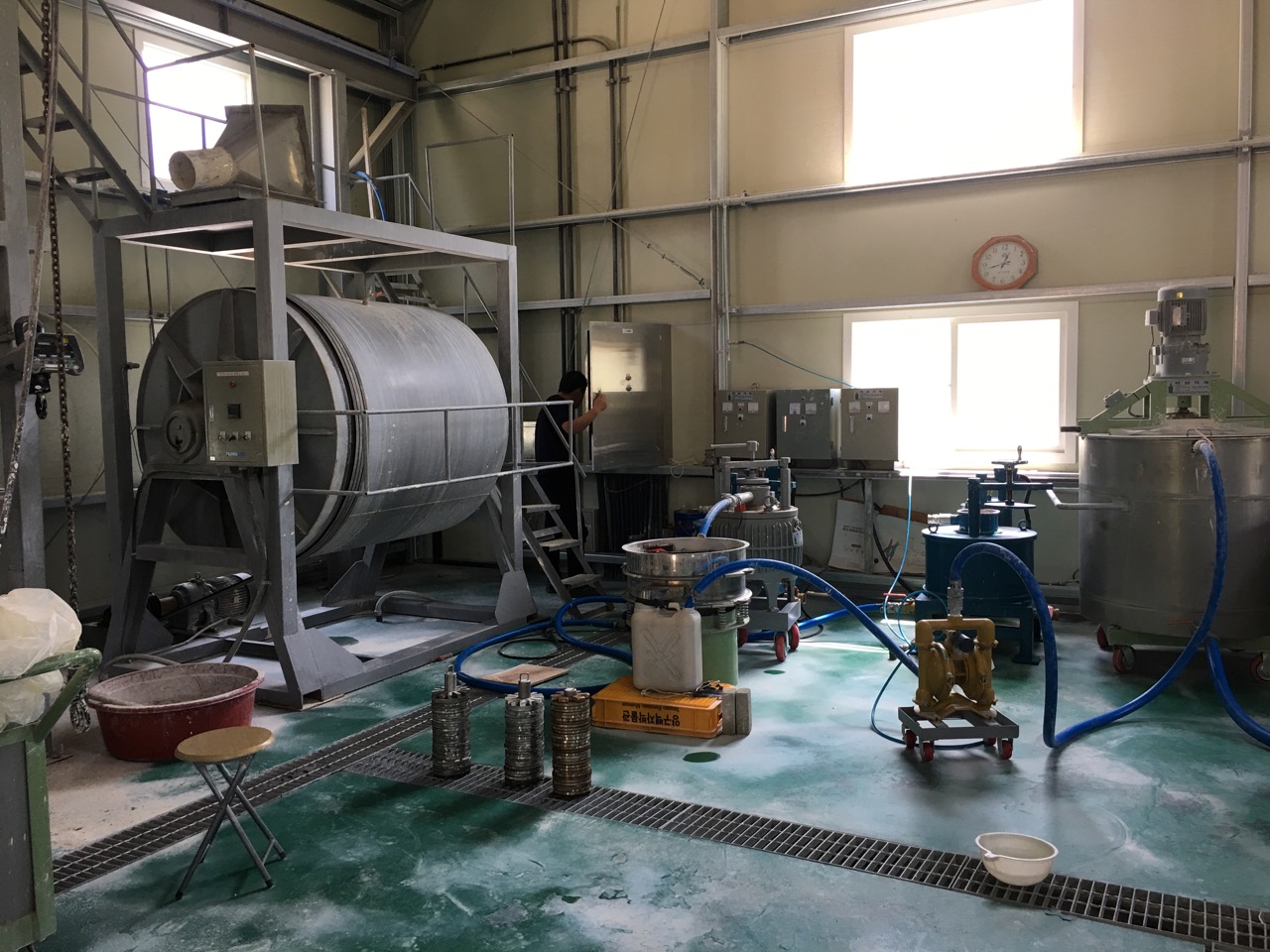
I’m lead to believe that I am the only person to attempt to make work from these ancient stones in the past few hundred years. All the current sericite comes from an industrial sized mine site a few kilometres away up the river. Korea it seems is very geologically rich in Sericite sites.
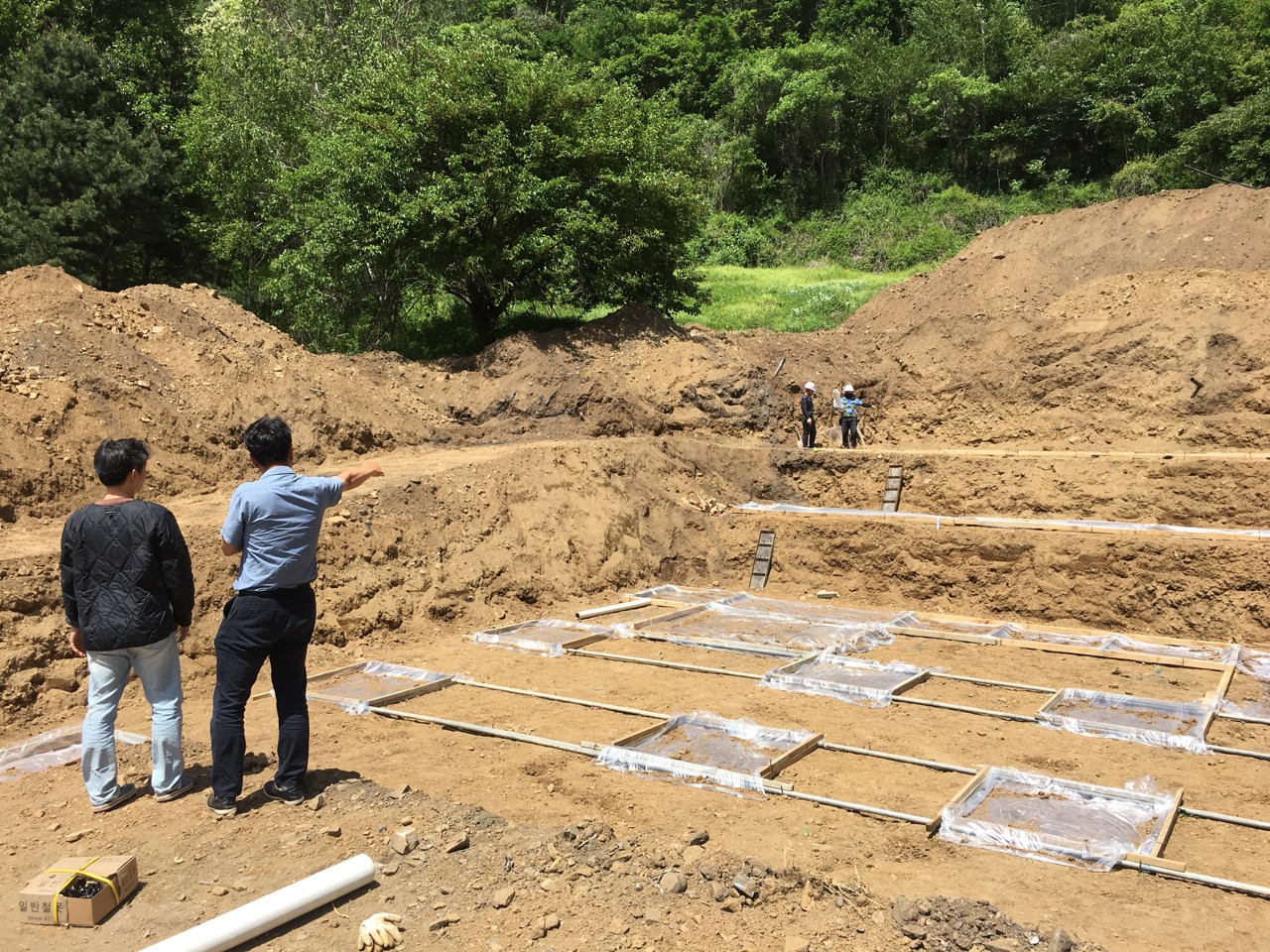
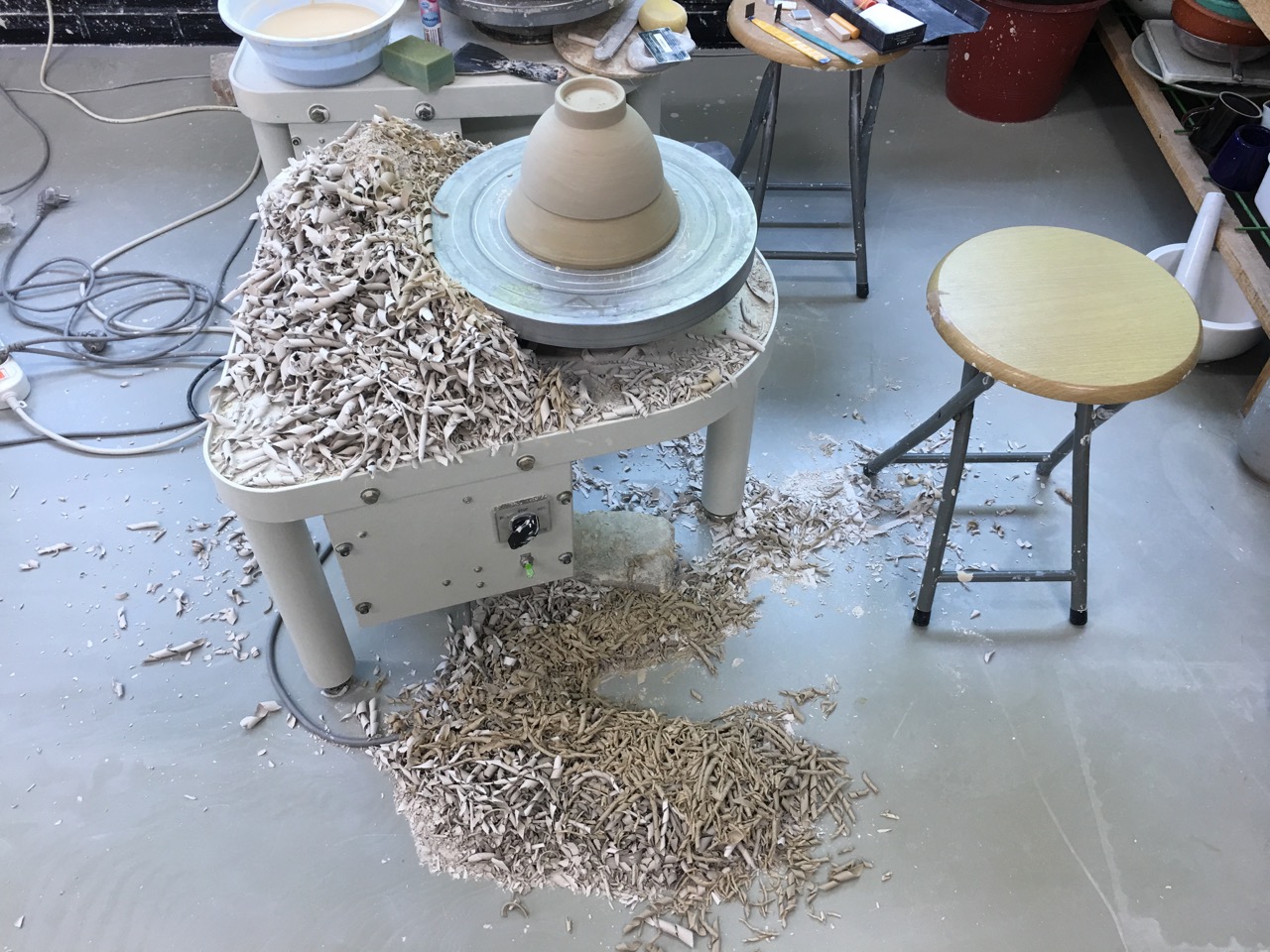
However, things may be about to change. Since I was here last. Mr Jung, the Museum Director, has taken an interest in my research and reads my occasional emails about my prospecting and mineral processing with interest. He was recently out bush-walking in the hills behind his home and has discovered what he thinks might be a seam of sericite in the side of a road cutting used by loggers. We have hatched a plan to go up there and investigate. We will go as soon as I have finished throwing and turning my pots. Perhaps while they are drying prior to bisque firing.
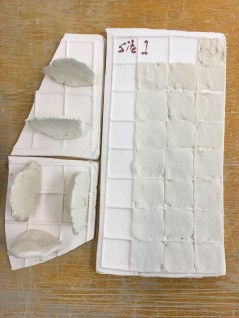
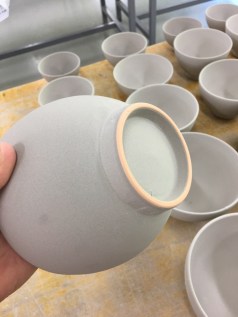
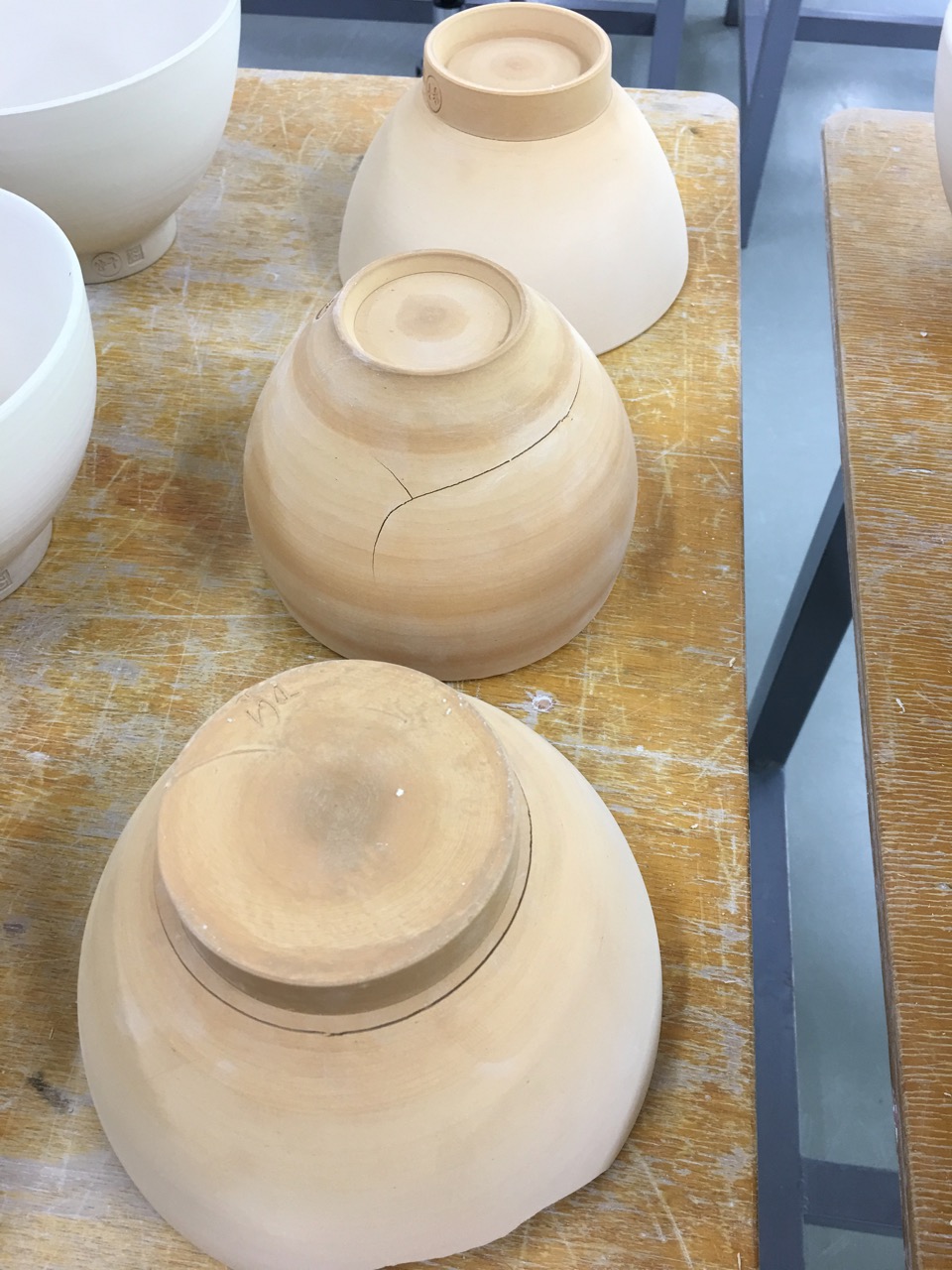
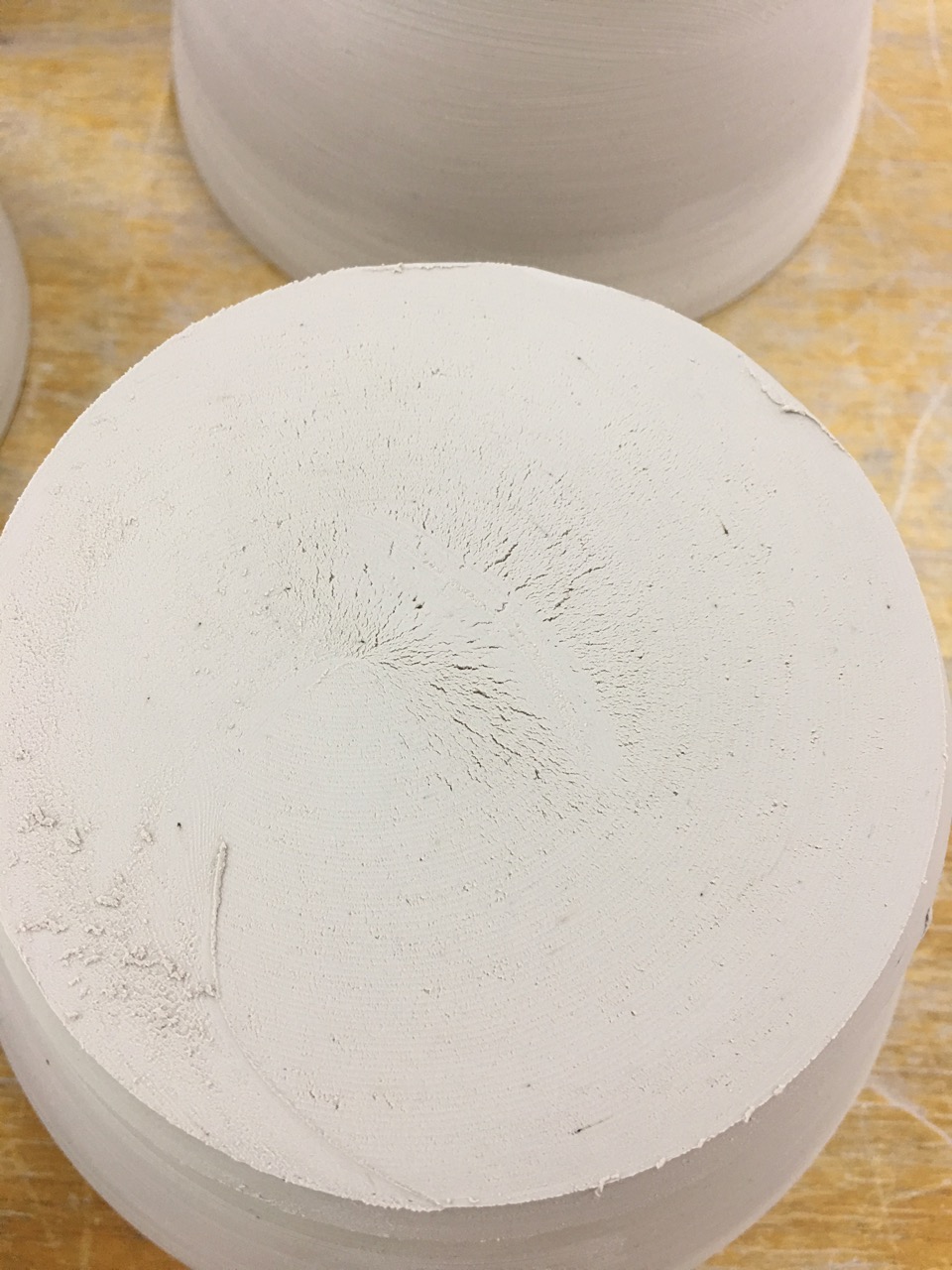
So far I have tried the two blends and 3 individual sericite bodies that Mr Jung has prepared. There are two new materials that I haven’t seen before. The raw material appears just off white when raw and dry, but develops into a beige to khaki colour when wetted down. The other is slightly pinkish when raw, but develops into an apricot, to pale terra cotta colour after processing. They are both quite plastic to throw, the apricot one has a tendency to split though. I feel that a little addition of ‘Calgon’ to the slip during processing might help ameliorate this?
I have seen the fired samples and they both seem to be good, firing just off white, but not too translucent. I think that they may be quite good in wood firing, with the lowish iron content, they may flash well.
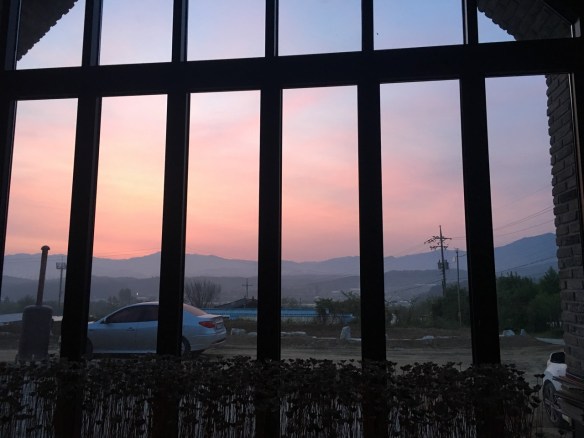
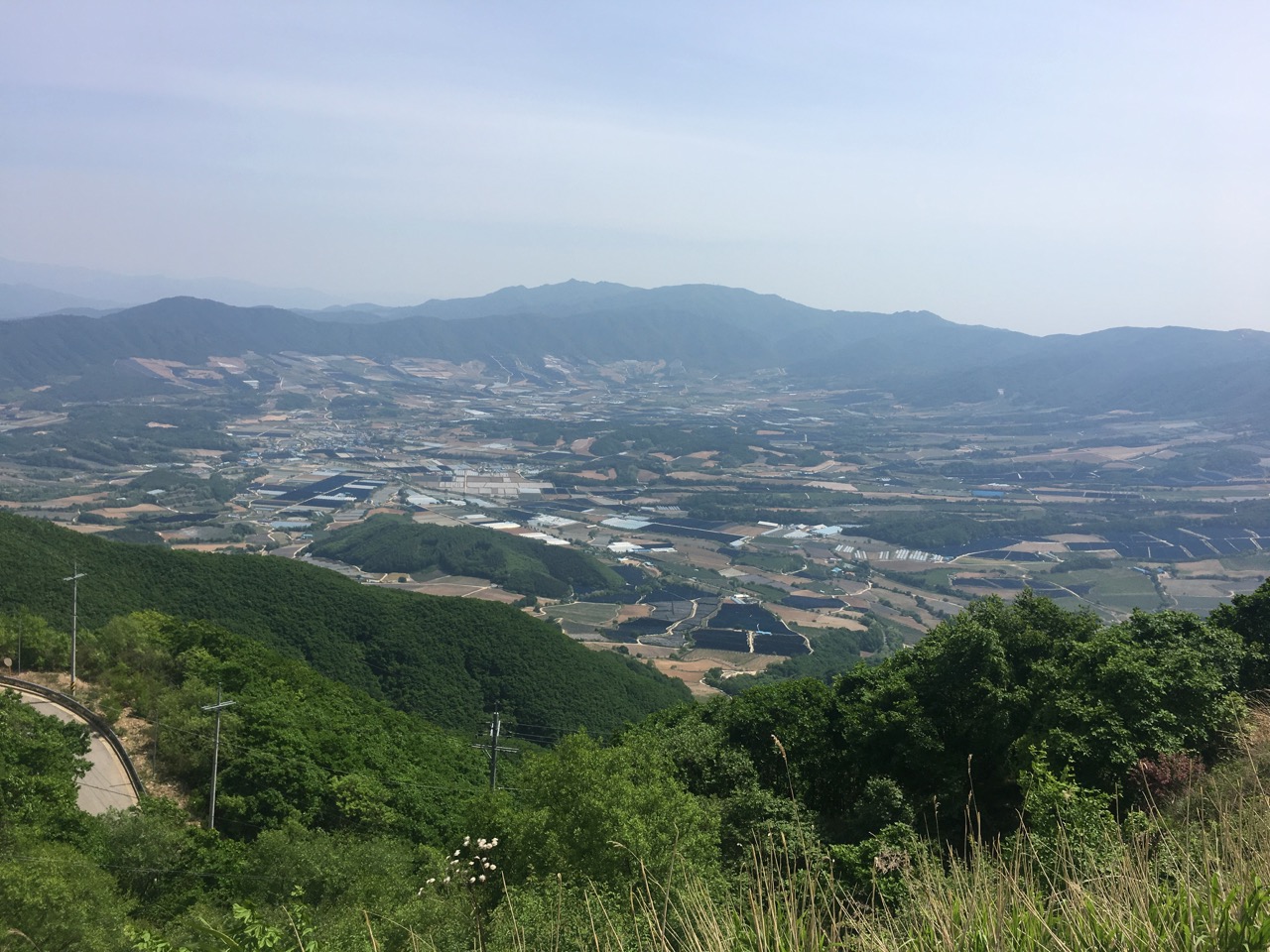
The view from my room in the early morning, just after sunrise at 6.00am is not a Shepards Delight, but just a sign of the filthy air quality here, and this is way out in the far countryside. Hours away from the centres of heavy industry and Seoul. The locals claim that all this polluted air is blown over from China, and some of it probably is, but Korea is a highly industrialised country with a majority of cars and certainly all trucks being diesel powered. My Jung and I are in agreement that the origin of the pollution is probably somewhere around 50/50. Whatever the origin, the air most certainly has to be cleaned up. People will be dying young with lung diseases growing up breathing this toxic mess.
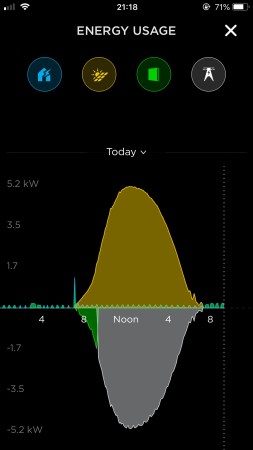
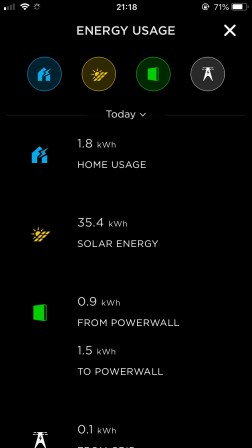
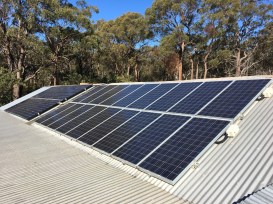
World wide, we need to phase out diesel engines and coal fired power stations as an easy first step to cleaning up the environment. I say easy in this case, simply because there already exist cleaner alternatives such as solar and wind power to generate electricity. Of course it won’t be politically easy. The UK spent a whole week this month, May 2019, with all its coal thermal power stations off line, relying entirely on its non-coal sources of energy. It can be done now.
Of course there will be screams of denial, loads of hand wringing and calls for extensions by the very powerful vested interests and their political allies who get generous ‘black’ donations from the carbon intensive industries. The Murdoch press will wail and nash their teeth, publishing hysterical headlines, based on untruths, if the past is anything to go by.
Change is over due, Cleaning up our environment has to be done. We desperately need to clean up the disgusting mess that we have made in this generation. It’s our responsibility to start to fix what we have largely broken. The climate crisis has already gone too far. We are going to need a combination of government regulation and free market solutions to claw back the global heating to manageable levels. Profitable business opportunities await the entrepreneurs who dare to make the change and forge the way. The broken old vested interests are simply being lazy. It’s time for them to step aside, stop holding us back and let the future begin.














































You must be logged in to post a comment.