Driving on Sunshine

I’ve been telling people that 2019 is going to be the year of the electric car. Yes, I’ve said it before, just a week or so ago. Well, It really is now. We have just taken delivery of our  electric car.

It’s a beauty, totally silent running. It’s quite a wonderful experience to behold a powerful, yet simple, quiet and elegant car perform so well. And mostly running on sunshine too! Why has it taken so long for this type of car to become available in Australia?

Our new electric car is a Hyundai Ioniq, plug-in electric car. We ordered it a few weeks ago. The first to be delivered here in Australia, or so I’m told by the dealer. We had to order it and wait for it to be built in Korea, then shipped to Australia. The local dealership system doesn’t carry the ‘basic’ model in stock, only the premium model. This car has been available in Korea and other countries like New Zealand for 2 years. Why so long to get to Australia?

The Hyundai Ioniq electric car is available in 3 models. Fully electric, Normal hybrid (like a Toyota Prius), and a plug-in hybrid. After considerable research, we decided to choose the plug-in hybrid model. A fully electric car has a limited range of 230 kms. Not enough for us to live here out in the country and travel to Sydney and back for the day. Maybe in another few years there will be more recharge stations and better batteries? As it stands, we would need to own two cars, a petrol car and an electric one. For this reason we chose the plug-in electric hybrid, because we can do 95% of our trips on fully electric, battery-powered, solar generated electricity. But also be able to drive longer distances on petrol power when we need to go the long distances occasionally. Like our once a year trip to Canberra or up the North coast.

It’s a very modest car. Nothing showy. I have only owned it for one day so far, so very early days. The company claims 63 kms of fully electric power with ‘normal’ driving and 1000 more on a full tank of petrol. The blurb claims something like 110 kms per litre of fuel. I drove it around and reduced the battery down to 20%, where the petrol engine started to cut in occasionally, acting like a hybrid does. I plugged it into the standard 3-pin, 10 amp power point at home and it recharged itself in 3 and a bit hours using the built-in charger. Fully recharged on solar power.

The onboard computer keeps a track of how you drive. I have always driven carefully and steadily to conserve petrol in all my previous cars. Which have always been very small, fuel-efficient cars. Mostly 3 cylinder, 1 litre cars. This is the biggest car that we have ever owned, but it is still classed as a small car. A 5 seater 1.6 litre hatch-back. After charging the battery the computer tells me the distance I can travel on the battery and even shows me on the built-in sat nav screen, the radius of the places I can reach on the map + where all the nearest charging stations are.

We live 25 ks from the nearest towns where we do our shopping and banking, where we have all our accounts etc. So I expect that I can do 100% of our local trips on solar power in future.

So the first day has gone very well. The car does everything that I expected, It comes with an 8 year warranty on the battery and mechanical parts. I look forward to only visiting the fuel pump a few times a year in future. It’s a nice feeling to look forward to driving mostly on sunshine for the rest of my life. Because we already own a Tesla Powerwall II battery, we can always recharge the car on stored sunshine, even on dull over cast days.


Solar PV Fired Pottery Kiln

We have been creating a life here for over 40 years, living as much possible as off our few acres of forrest, orchards and gardens. We have spent a lot of personal energy in converting all our energy needs, to wood fired everything. We have chosen to leave half of our land as forest, and there are always trees that are maturing, dying and falling over in that forest.

We haven’t harvested all the trees that have fallen on our land, as there are too many, so we have left the ones in the most remote locations to rot, as it was just too much effort to make a track into the bush to get to them out. If a tree falls in the forrest – does anybody hear? No! That is line from a song. If a tree falls and we let it rot, then it ends up the same as if we cut it up and burnt it in the house oven or kiln. The carbon that was taken from the air and soil, returns to the air and soil, only just a bit slower with composting than burning it in the kiln. Composting is a slow form of combustion.

Having spent a lot of thought and energy converting our life over to non-fossil fuel energy, we now find that with global warming, the fire bans start a month earlier and go on for a whole month or more longer in the autumn. This has caused us some trouble lately, as we have had to cancel the last few, late winter/early spring wood firing workshops here in the past couple of years.

So, if this new warmer future is to be our new reality, we had better make plans to adapt. Well we have. Starting 13 years ago we decided to go fully solar on our house and workshop and haven’t paid an electricity bill since. Those early Australian made solar PV panels have now paid for themselves, and from now-on we will have free electricity for the rest of our lives.

We live so frugally in our home these days, that we have found that we can now live on a quarter of the electricity that we used to. We have done this very simply by introducing efficiencies. As old appliances wore out, we replaced them with very low energy newer models. It’s not hard to do, but it takes time and a lot of research. It has taken time because we didn’t just throw out working appliances. We waited until they died of old age. There is so much embedded energy in electrical goods, that it is a crime to replace them before they are worn out. We have reduced our daily energy consumption in the house from 11 kW/hrs per day down to 2.5 kW/hrs. This means that there is now a lot of excess, clean, solar electricity that we can use to fire our kilns cleanly and efficiently.

As we now have a problem with firing the wood kilns all year. I have decided to convert all our Electric firing over to solar PV.  I have built a new light weight, portable electric kiln from very low thermal mass materials. I have included a couple of small LP gas pilot burners into the design, to allow me to create reduction atmospheres after 1000oC with tiny amounts of LP gas while the solar panels and the battery fire the kiln load of pots up to Stoneware.

There is nothing earth shattering about this. Korean, Japanese, and Chinese potters that I have met and worked with have been using a combination of LP gas or wood fired electric kilns for years.

This is my version of the idea. Light, flexible, portable, low energy and suitable for solar PV and battery firing.

It didn’t hurt that I was able to build it totally from spare parts and waste material that was left over from my many years as a kiln builder. I only had to buy a thermocouple for this kiln, as the old-fashioned temperature controller unit that I had sitting in a box for the past 20 years, needed a specific thermocouple to make it work.

I find it amazing and very rewarding to be able to convert a few boxes of  old ‘rubbish’ that other people had thrown out, plus some left over material, and turn it into an amazing, functional, energy-efficient, working kiln.

img_3557  img_3561

I had a couple of sheets of stainless steel left over from other jobs.

img_3563  img_3600

img_3737  img_3745

I have been storring a few sheets of ceramic fiber for over fifteen years. They are left over from a glass kiln job that I did many, many years ago. They are pre-fired, pre-shrunk, hardened and ready to use for a job just like this

img_3784

I even find that I have a shrink-wrappped coil of Kanthal A1, element wire sitting in my store.  It’s been there for years. It was left over from a job that I tended for, but which never materialised. I spend sever days working on these new heat flow and emisivity calculations to get the best answer for what I have in stock, compared to what I really want to achieve. After 5 goes at the problem, I have generated many pages of mathsand enough energy to warm the kitchen when I’m working and re-working out all the perameters. I eventually get a good answer that I can live with. I have to make a new mandrel for my lathe to suit this job.  I find that I can use some of the left-over stainless steel fire-bar material that I still have from the little portable wood fired kilns jobs of the last few years. It turns out to be just about the exact size that I need. I alter my calculations and go ahead and use it.

img_3785

img_3817  img_3864

When I go looking, I even find that I have a few control pyrometers and a couple of infinity switches to do the basic job of controlling the kiln. It’s not an electronic, solid state, ramp controller, but it will do nicely. I will have to do the first few firings in conjunction with pyrometric cones viewed from the small circular spy hole.

IMG_3885.jpg

After a few weeks of part-time work, fiddling away in my spare time. I have what I think might be a functional kiln. I have sifted through several piles of ancient junk, destined for the re-cyclers. I have discovered a lot of functional bits and parts that I wasn’t very interested in using 20 years ago, but which I can see potential in now. So many potters wanted to have their kilns converted to electronic ramp controllers in the past. I did the conversions for them, but couldn’t bring myself to throw out a perfectly good, working order, analogue kiln control unit. I’m now glad that I persevered, and storred all this junk for so many years.

I’ve found that I have enough parts to build two kilns, so I probably will. This first kiln is designed to be very low thermal mass, firing to stoneware on solar PV + with some back-up later in the day, as the sun goes down, from our Tesla Battery. I have a couple of very old, but un-used, brand new, pilot burners, these are so old that the company that built them has now ceased to exist. My plan is to use these two tiny pilot burners to create just enough CO atmosphere to give me adequate reduction, while the elements powered by the solar PV fire the kiln.

img_3886

I’m hoping that it will work as I planned. Only time will tell. Watch this space.

It’s been quite good slowly fading into semi-retirement. Cleaning out years of old boxes that I had forgotten about on that dusty top shelf. There were two whole kilns stored away in the form of spare parts.


Note to self, don’t buy plastic crap – again!

I wanted a simple dust pan and hand broom to clean up in the workshop. The only choice in the shop was between 2 similar styled plastic ones. What happened to wooden handled hand brooms with stiff bristles? And metal dust pans!

Long gone in the race to the bottom of quality and price. Couldn’t someone at least produce something of quality that would last? I hate having no choice but to have to buy plastic junk. this is just land fill in waiting. Well, as there was no choice I had to choose a plastic one and lo-n-behold, what happened, but the handle broke in two in the first few weeks. I refuse to be so insulted with such blatant built-in obsolescence, so I determined to fix things.

I made a pair of reinforcing brackets out of some scrap pieces of aluminium and bent them to fit snugly into and onto both sides of the broken handle, then pop riveted them into place. This is still a piece of plastic crap, but at least I have fore-stalled its trip to land fill for a while.


I still want to buy a wooden handled, natural bristled, long-lasting broom. I’ll have to look harder. This impromptu repair won’t stop the rest of the plastic from collapsing in time.. Maybe I can dismantle it and reuse the bristles?

Watch this space.

The old dust pan too is on its last legs. At least this one has seen a bit of use to justify its existence.

I decided to make a dust pan that will last couple of hundred years out of a piece of Stainless steel scrap. The off-cut is a bit smaller than I would have liked, but I use what I have.

It all sort-of goes to plan. It’s a bit narrow. The next one will be better. This is my first attempt after all. When I get a bigger piece of off-cut, I’ll make a wider one.

Home Made Ice Cream

Over the summer Miss Sweet Tooth has been making home-made ice-cream with our excess of fruit from the orchards. Never a dull moment.

Her latest experiment was lemon grass ice cream. That was pretty nice. She crushed some lemongrass shoots. Home-grown, organic, free range, lemon grass. It grows wild under the tank stand these days. She boiled it with a couple of tea spoons of sugar to give it a little sweetness. Then, after cooling it down she whisked it together with a 300 ml. jar of our local dairy’s fresh cream. She did it the simple, old-fashioned way, just using a fork.  The mixture has to be put in the freezer and taken out twice or three times during that day to re-whisk it to get it fluffy and light while it is freezing.

She has made all sorts of fruit based ice creams this season. What ever is in excess gets pulped, boiled, sieved, creamed, whisked and frozen.

So far she has made youngberry, yellow plum, peach, red plum, Japanese green tea, cumquat and now lemongrass. If it’s got a nice flavour, if you can boil it and freeze it, then it can be made into ice-cream. Don’t stand still for too long in this kitchen!

img_3867

img_3869

Simple and very interesting, tangy, fruity, sweet and delicious stuff. Lovely mouthfeel and with that ultimately satisfying hint of saturated fat on the finish! A lovely way to end a meal on these hot days.
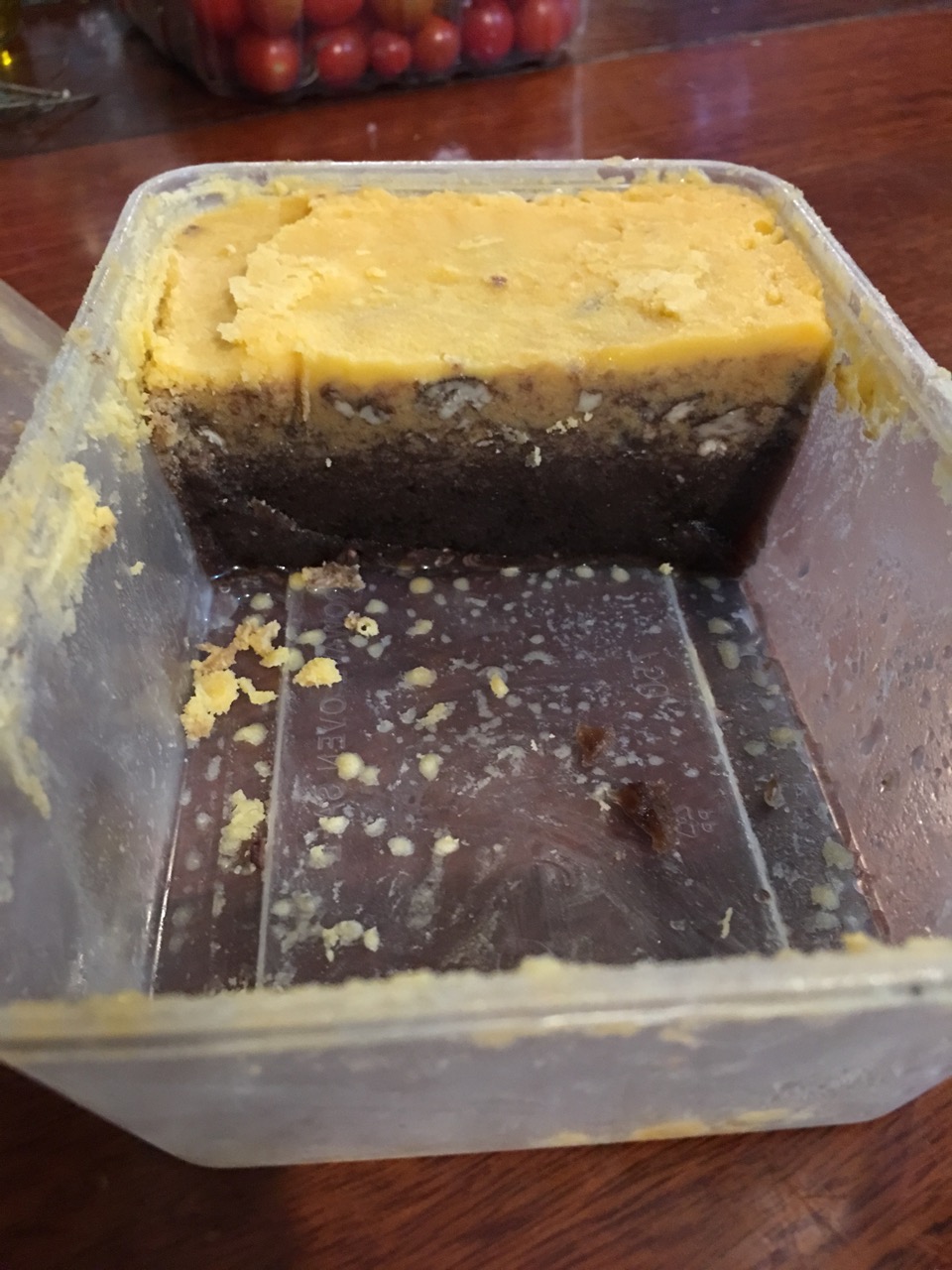
She used to make her icecream using an egg custard base to make the ice cream richer. I believe that this might be the traditional way. However, this straight forward simple recipe is quicker and works well enough for us. The only thing to be carefull of is to not use too much water in the fruit juice syrup, or you will get a lot of ice crysytals forming.

Health warning – don’t eat ice-cream. It contains sugar and saturated fat.

Life advice – Chase more butterflies , eat more ice-cream!
Driving on Sunshine

I’ve been telling people that 2019 is going to be the year of the electric car.

Well, It is.

I have just taken delivery of my first electric car.

We took delivery on Friday.

It’s a beauty, totally silent running.

Amazing torque.

It’s quite a wonderful experience to behold a powerful, yet simple, quiet and elegant car perform so well.

And running on sunshine too!

No petrol tank to fill.

Why has it taken so long for the powers that be to get on board.

I’m a very proud owner.

I love it.

img_3826

All they need to do now is to scale it up.

Seasonal Vegetable Pasta

We are now harvesting the late yellow peaches and although the early youngberries are long gone now and just a memory for another year, the thornless blackberries are in full swing and they integrate very pleasingly with the constant supply of blueberries. All the early season blueberries have finished, but the crop seamlessly flows into the mid season varieties and we still have un-ripe late-season berries slowly colouring up in the bushes. Either it’s a very good season for the blueberries, or after 10 years, the bushes are hitting their stride.

img_3828 IMG_3829.jpg

img_3833 img_3845

Breakfast is just the freshest and most delicious meal of the day. Mouthwateringly vitamin C tangy, crunchy, succulent and sweet. Each mouthful bursting with sunlight and vitamins. All the ingredients picked fresh every day, straight from the garden. They couldn’t be fresher or more vibrant. Such a refreshingly interesting way to wake up the taste buds and kick-start the day. We are now vegetarian this month, as the fish truck that comes up from the South Coast 2 days a week, is now on summer break for the whole month. We won’t be seeing him again until February. But as there is so much coming in from the garden each day, we haven’t noticed any lack in our diet.

img_3831

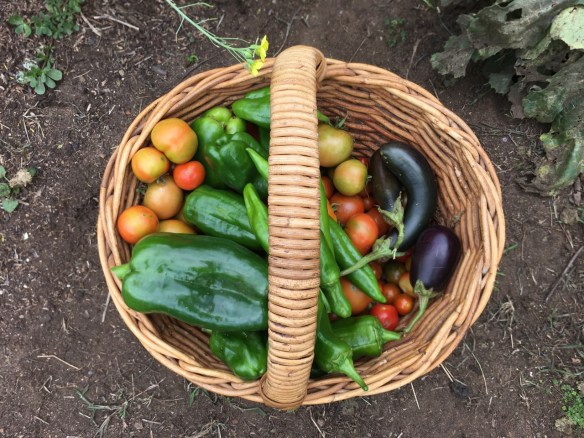
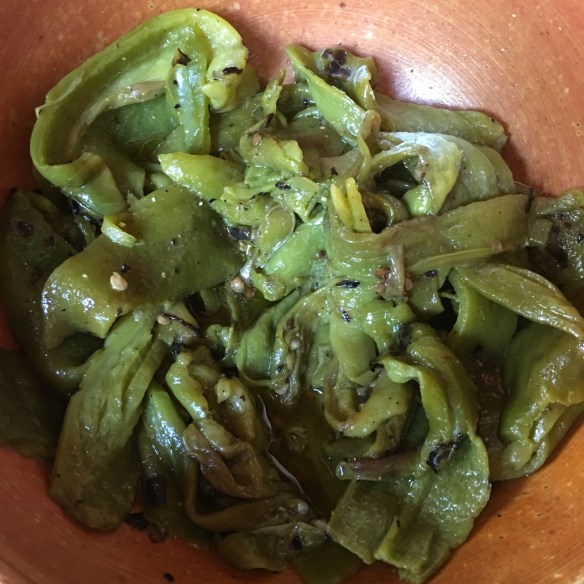
Last night we picked tomatoes, capsicums, chillis, Zucchinis and fully formed scarlet runner beans. These are too coarse to eat whole now, so I peeled them and we added the fresh beans to the vegetable marsala mix. Starting off with my Xmas present of lemon myrtle infused olive oil, onion and garlic, then sweating down the vegetables in the juice of the tomatoes, aided by a little dash of white wine. To keep the lemony theme going I add a little sprig of lemon thyme, some basil leaves and two quarters of diced, preserved lemon rind. This is simmered down to a delicate crunchy softness.

img_3835 img_3837

I served this super-fresh garden passata-like sauce over soba noodles. I love watching soba noodles cook. They take one minute to soften, then as they loosen up, they start to roll in the boiling water, for about 2 minutes, and then as they swell and expand, they slowly stop rolling and tumbling, about one minute, and they are ready. To keep the fresh lemony zangy flavour profile going, I served the meal topped with a very tiny sprinkling of Japanese Sansho pepper. 

img_3841

This stuff is exceptional. It has a delicate lemony fragrance and initial taste. The taste is so good and so complex that I want to taste more, zingy, zesty, bright, savoury citrus-like flavour. It is so more-ish, but when you have that little bit more, it starts to make your tongue go numb. So I restrain my self adding just the very smallest amount. We buy this pepper in the markets in Japan each visit, freshly ground each day and then vacuum sealed in a foil sachet. We buy it on our last day before flying out and take it straight to the freezer compartment of out fridge. Here it keeps its freshness and full flavour for a year, or until we run out. last trip I bought several packets, some as gifts, but mostly because I’m greedy.

img_3838 img_3840

img_3848

Now it just so happens that I have the perfect pot to serve the right amount of sansho pepper in. This tiny little dish was once an ancient, broken Chinese Bowl. The only part left in tact was the foot rim. The remnants of the bowl body was ground away down to just the undamaged foot itself. Measuring about 30mm across and 25 mm inside and just 6 mm deep. It is ideal for presenting just the smallest amount of sansho pepper. A perfect re-imagining, reworking and re-use of a remnant of a gorgeous ancient Chinese bowl. Perfect!


Homemade Kitchen Knives

As part of my long-term ambition to live a life as self-reliant as possible, I am continually trying new things that might help achieve that aim. We have built our own house from scratch, making our own windows, french doors, roof trusses and floor boards. We bought and demolished the old Mittagong Railway station, then cleaned all the old sandstock bricks to use to build our house. I even excavated the sand stone footings and carved them into the new window sills for the house. Over the years, we grew trees here, then felled them to make all the kitchen furniture, chairs and tables.

IMG_7298web IMG_7245

IMG_3742

If you have been reading this blog for any period of time, you will know that we make all our own clay bodies and glazes from stones that we collect locally and then crush and grind them to make all the various mixtures that we use in the pottery. I try not to buy anything that I could do myself. This frugal life style of self-reliance and simplicity has worked out quite well for us. I even had a go at building my own aluminium truck body. It didn’t turn out to be that hard. I welded it together from all the left over off-cuts from building electric kilns. It was a most rewarding well-spent week.

IMG_1807

So this last few weeks leading up to the summer holiday gap between Xmas and New Year,  I decided to have a go at making some kitchen knives. I have quite a few worn out or broken hack law blades from my mechanical power hack saw. These blades are made from excellent quality high Speed steel. This steel is quite exotic, being an iron based carbon steel alloy composed of varying degrees of tungsten, vanadium, cobalt and molybdenum. It is extremely hard and long wearing.

This stuff has such a high degree of embedded energy that I couldn’t bring myself to throw them out after they were worn out and blunt. I have worn my way through  quite a few of these large 350mm blades over the past 40 years. Now I have made use of them. I hate to put anything in the recycling bin until it is really, truly worn out, or broken beyond repair.

I have spent a couple of hours each day working on them, whenever I got bored with what I was supposed to be doing. I cut out and profiled the blades using the angle grinder, ground them to a taper on the bench grinder and this can take at least an hour, if not more, depending on the size. A bench grinder is a very powerful tool. It grinds away the excess metal to create the tapered shape, but leaves significant scratches/scars in the surface. I have found that it is best to use 3 different bench grinders. I just happen to own them for other purposes over the years. I start with the coarsest, this removes the metal fastest, but leaves the surface looking very scratched. I work through medium to fine, each grindstone cuts less, but leaves the surface smoother.

IMG_3700

I them move to the work bench and finish the blades off by honing them on a series of flat stones. I work through a series of grades of grind stones starting with 60# and 200# grit carborundum oil stones. The purpose of these stones is to try to polish off the scratches that are embedded in the steel from the bench grinder, then moving on to 400# and 1000# water stones and finishing on an 8000# grit Japanese synthetic water stone that puts a very fine finish on the blades.

This hand finishing is a labour of love. It takes ages to get a nice even surface and finishing with a very sharp edge without damaging that ultra fine edge. Always keeping it even. This is done entirely freehand without the use of jigs. I wouldn’t like to do this for a living, but it is very good to do it this once, because the reward is to re-purpose something that was once, only a few days ago, just a piece of rubbish. Now they are beautiful hand-made kitchen knives.

The last step is to make a wooden handle for each blade. 30 years ago, when I built my kitchen, I kept the best off-cuts of cedar wood for making pottery tools, which I have been using to make my own tools ever since. This is very nice straight-grained timber. but is useless for anything else, as the pieces are so short. They just happen to be perfect for knife handles though. These small bits of wood also need to be carved and then polished using sand paper to get a nice smooth finish. I prefer working with wood, rather than metal. It’s a gentler and softer process. Cedar also smells very nice.

The handles are finished with olive oil. I could use boiled linseed oil, but as they are kitchen knives, olive oil seemed more appropriate.

IMG_3713

Nothing is ever finished, nothing is perfect and nothing lasts. Although the quality of this steel means that they probably won’t need to revisit the water stones for a year or more. Steel like this can’t be sharpened using a butcher’s ‘steel’ to touch up the fine edge intermittently. This high-speed steel alloy is so hard, that it is harder than the butcher’s ‘steel’. These knives have to be ground on a stone the same way that I sharpen my Japanese knives.

I have tried making a few different sizes and shapes. I don’t know which ones I will prefer to use yet. Maybe non of them will prove to be very good. I may have to go back and make some more. I’m still learning. I do have a few more worn-out hack saw blades left in my cupboard, so it is possible. I could just have been wasting my time this last couple of weeks, but even if they don’t prove to be useful to me or appropriate for purpose, I have really quite enjoyed the process of creating them. I’m pretty certain that a couple of them will be OK, but only using them will tell. Anyway, it beats working for a living. I’ll do anything to avoid getting a job!


Vegetable Pasta

In this very hot weather, we don’t feel like eating much. Extreme heat kills apatite, but while we are wilting, the garden is flourishing. Yesterday, in the afternoon, we got a terrific storm and for 15 minutes, we got 15mm of rain. It came down hard and fast. All the gutters over flowed as the rain couldn’t get into the down pipes past the mesh sieves quickly enough. The fierce flow of water washes gum tree leaves off the roof and into the gutters and these end up blocking the sieve. If it rains steadily, the water can get through, but not as fast as this today. I clean the gutters regularly, but it takes too much time the sweep all the roofs, so we put up with the leaves in the gutter sieves. It works most of the time. Anyway all our tanks are full, so we need not worry about this small loss of water.

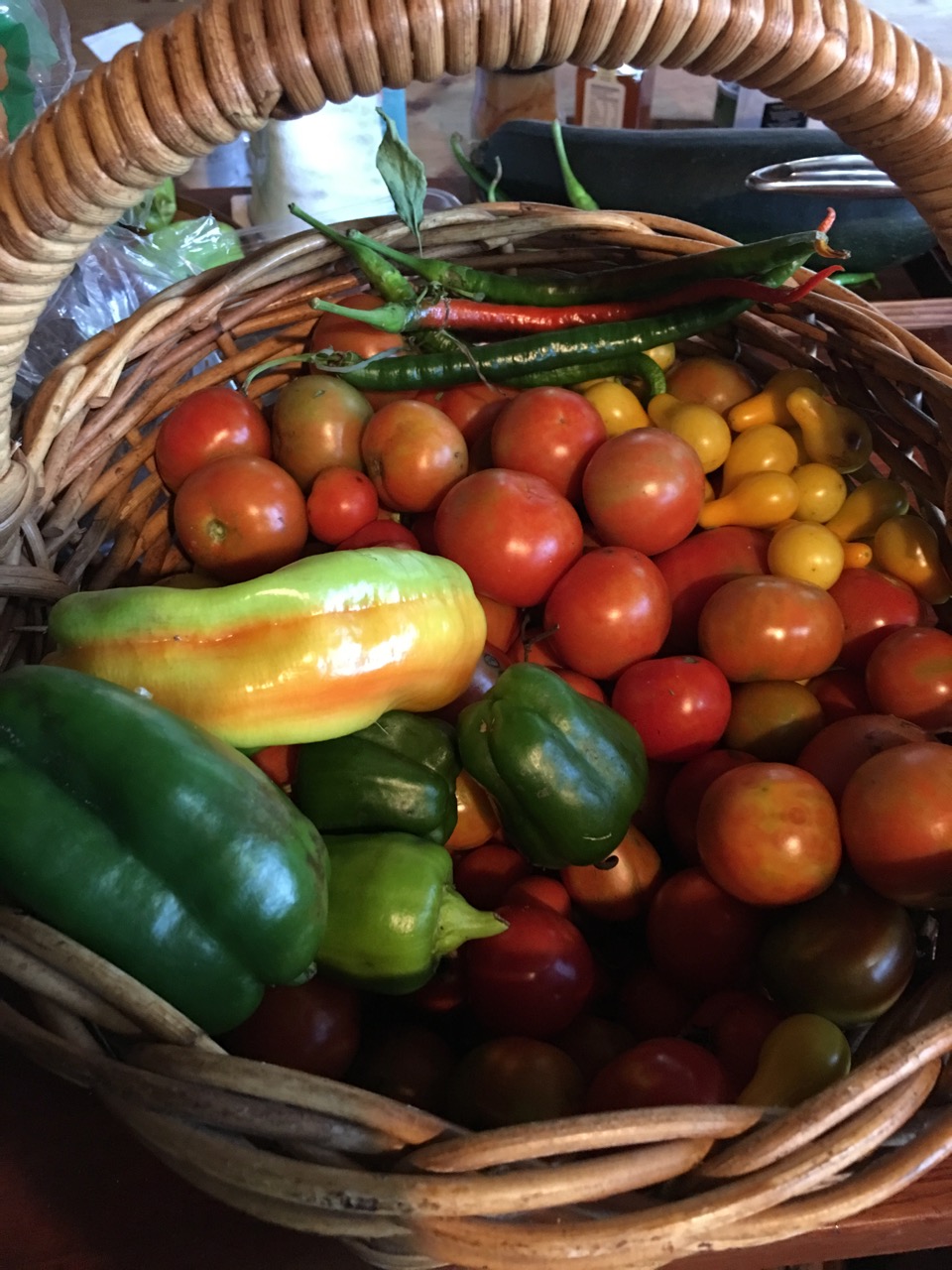
Now that it is a bit cooler, momentarily, We feel like eating something nice for dinner. I decide to make a vegetable pasta. We have lots of things coming along in the garden besides fruit. Today we have a load of capsicums and tomatoes, so pasta sounds good.

IMG_3725

I brown an onion in olive oil and then add in a small knob of garlic, roughly chopped. What an amazing smell this is. It smells good enough to eat just by itself. next the 4 different types of green peppers. We have round bell capsicums, long thin yellow banana capsicums and two different long tapered green ones. I also finely slice a couple of huge green 7-year beans. They look a bit rough, being coarse and a bit hairy looking, but taste delicious. We eat them whole, raw or cooked, like French beans when they are young, slice them like this when they are full-sized and leave a lot on the vine to dry for use in bean stews over winter. They are a perennial bean, re-shooting from the root in the spring. I can’t say that they last 7 years or not. I think not. But at least half of them seem to come back to life each year. We move the bean tresses every few years anyway to spread the nitrogen-fixing capacity of the beans around the garden. SO I end up replanting a few each year. They grow from seed as an annual crop just like any other bean.

IMG_3726  IMG_3727

IMG_3728  IMG_3731

As all this simmers down into a sauce, I add in some chopped preserved lemons that I made just a couple of months ago, and then de-glaze with a large swig of good red wine. right at the end i throw in the other half of the garlic, so that it remains a firm and retains some pleasant crunch.

I garnish this simple passata sauce with some sage leaves fried in butter. These just take a couple of minutes. We use Australian grown but Japanese style soba noodles. These just need a few minutes to soften in boiling water. I don’t use salt in the water, nor do I cook with salt either. As a result Janine and I both retain our youthful low blood pressure.

IMG_3729  IMG_3732

IMG_3733

Served with a sprinkle of parmesan and a glass of chilled white wine. it tastes delicious. and it was nearly all from our garden just hours earlier.

I bought in the pasta, olive oil and the parmesan cheese. The rest is all our own work.

Best wishes from the Post Modern Peasants

Summer Solstice Activity

The young berries never make it to Xmas theses days, the summer season is arriving earlier each year with the heat hanging on longer, so we have taken the nets off the berry canes, rolled them up and put them away for another year. Another job in our seasonal timetable ticked off.

We bought a 100 metre x 9 metres roll of netting 25 years ago. It had a 10 year warranty against ultraviolet sunlight damage. We have got two and a half times its life expectancy out of it, principally because we only expose it to sunlight for a 1/4 of the year. So maybe we will get 40 years out of it? It’s still holding up well and isn’t going brittle yet.

IMG_3693  IMG_3691

IMG_3692  IMG_3695

As we eat with the seasons, These days our breakfast fruit salad has turned from Yellow to red. We are picking red berries, red plums, red strawberries and blue berries, with pink peaches from the fridge. The only pale ingredient is a pale banana (that we shamelessly bought from a shop) to soften out the flavour by countering the acidity of the other fruits.

IMG_3698

Such is our summer breakfast variety. All these seasonal changes in our diet must play havoc with our alimentary canal biotic floc. Constantly on the change. The only constant in our diet is the lack of red meat and preserved meats. Almost the only time that we seem to eat red meat is when we are invited out to dinner.

We are not vegetarians, we just choose to eat very little meat. Doing so just might be good for us? I don’t know. Certainly, raising so many cattle and sheep isn’t good for the soil or the planet as a whole system. There are too many affluent people consuming too much. We are trying to tread a little bit lighter on our land. At this time of year, in our society  that worships conspicuous consumption, it all gets pretty gross. Consuming less is our gift to everybody for Xmas.

Life is one big experiment. This is ours.

The Glorious Weeks of High Summer

We have entered the glorious weeks of high summer, where it’s just too hot to do much physical activity in the middle of the day. Having both had skin cancers removed – fortunately at early stages, we are careful to wear long sleeves and a hat when we are out. We start early in the garden and orchards, as we want to be out of the sun before it gets too hot in the middle of the day. We work until lunch time and then stay inside until the heat has passed in the afternoon, then we get back out there and do some more.

The jobs vary, but they are never-ending. There is always something to be done, often needed in a hurry. The morning starts with picking fruit. We have passed peak young berry and although we are still getting some each day, we are no longer picking kilos a day. At the peak, our biggest day was 3 kg. We will continue to get less and less, picking only every second day now, up until Xmas day, or thereabouts.

We have reached peak blueberry season today with 2 x 200mm. plastic containers of blueberries. We have about 20 plants, some doing well and others not so well. They are high maintenance and very demanding.

IMG_3688

Blueberries won’t do well unless all their demanding criteria are met. They need to grow in a bog of fresh seeping, acid water, or at least watered every second day. They also need to grow in acid conditions, preferably a very well-drained situation. So here, where we are, up on top of this dry, stoney, drought ridden ridge, there is no natural place for them. We have tried them in the ground in a couple of places, even mulching with huge amounts of acidic leaf litter and the addition of a little sulphur powder to the soil, but they are not happy, even though we water them well, I suspect that they are not sufficiently well drained. They are growing, but not too well, hardly putting on any growth. They do flower and set fruit, but only in moderate amounts. They have only grown 700 mm. high in half a dozen years. Our second attempt, also in the ground in the vegetable garden, where we dug in copious quantities of acidic leaf litter and she-oak mulch, they did much the same, they didn’t thrive, but we do get some fruit from them.

Our best effort to date was to plant them in tubs filled only with naturally acidic leaf litter and detritus from the wood pile and from around the wood splitter, this being almost entirely made up of coarse, fibrous woody compost-like material. These 7 plants have grown 1.2 metres in one year and have flowered and set a great crop. They still need to be watered regularly, but boy are they productive. I’m still finding it hard to believe that a plant can grow so well in nothing but tree bark and saw dust! A medium that has no soil in it. It’s certainly well-drained and is naturally acidic. It seems to be just a matter of keeping up the water to them.

IMG_3685 IMG_3680

We have just started to pick the first santarosa plums along with the last of the apricots. Now that the apricots are over for us, the net is no longer needed there and we have decided to move this big net off the apricot tree this morning and along with its poly-pipe hoops and have set it up over the second plum-tree. The elephant heart plum.  These plums are still green now, but will be turning red soon, and that red colour always attracts the birds. So far we have managed well with the birds this season.

IMG_3679 IMG_3684

Once the poly hoops are set up and the netting transferred, I drag the last of the netting over and manage to trap one luscious Janine and two chooks under the net. Now we can relax a bit. All that is left to do is to move the DAK pots and fruit fly lures across from the other tree. I try and keep at least one fruit fly lure inside every net. I spend $50 each year on fruit fly trap re-fills and a bag of dynamic lifter. Even growing your own fruit isn’t free + the hundreds of hours spent in the maintenance and watering, but this isn’t really work. It’s better described as fun and recreation, otherwise you wouldn’t do it.

IMG_3677 IMG_3674

The late peaches are ripening, I suspect that it won’t be long and we will have these on the menu too. The late peaches are luscious, dense, yellow fleshed and so flavorsome. They put the super early white peaches to shame for flavour, but the early peaches are always first, so we are so glad to get them and really appreciate them for their sweetness. We don’t realise how thin the flavour is because we are so looking forward to eating them after 12 months without peaches. Now in the midst of the high summer heat and ever so long days, the solstice is just a few days away, we are getting picky. For instance, we have stopped picking and eating the mulberries, there is always so much more and better fruit at this time of year. We let the birds have most of those, we just take the easy low hanging fruit these days.

IMG_3687

The strawberries are still continuing to produce regular pickings since spring, never too many, but just regular and steady, we have the strawberries mulched with pine needles that Janine sweeps up from under the big pine trees after every storm. We have a constant pile of it down where the truffle trees are growing. We use it for litter in the chook run and in their nesting boxes. After I rake it out of the chook rum every few weeks, along with a load of pooh all mixed in with it, it gets wheel-barrowed to the citrus grove and used for mulch around the trees in there. Nothing is wasted, everything has a use and a re-use.

IMG_3682 IMG_3686

Looking back at our mornings work, I can see that there is a lot of grass grown up under where the netting has been. I get out the whipper-snipper thing and see to it, then think that I should also do all the paths in the veggie garden while I’m out here and into it. Couch grass never sleeps in this hot weather. I can’t afford to let it get a hold in the garden beds. One thing leads to another. There is no end to jobs. But the sun is right up there now and its almost 12-ish and time to put the mower away and go inside for lunch and then some inside work till it cools off. It’s a good thing that the days are so long right now, otherwise we wouldn’t be able to get it all done.

I get out there again and dig out a nasty patch of couch grass that has got a hold of part of the garden path. I set too with the mattock and dig it out roots and all. It’s hot sweaty work, but very rewarding when you look back after you’ve finished!

IMG_3639 IMG_3646

This is a job that won’t need doing again for another year in this spot, but there are still 3 more patches just like it at the other ends of the pathways.

I must have been wicked!