The First Ripe Tomato of the Summer

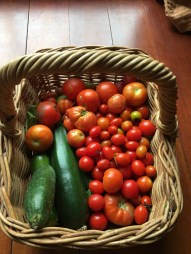
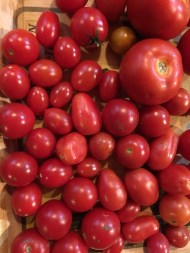
This is a special occasion for us. To get the first red ripe tomato on the 16th of December!

We have had a ripe tomato before Xmas before, maybe a couple of times in the last 5 years, but usually either just a day or two before Xmas or more likely in the week before New Year.

This is very early for us. I did buy 6 seedlings from the nursery when we returned from Korea in October and planted them out under our temporary closhe to beat the frosts and get them started extra early. See a previous posting;
Back Home in the Garden   Posted on
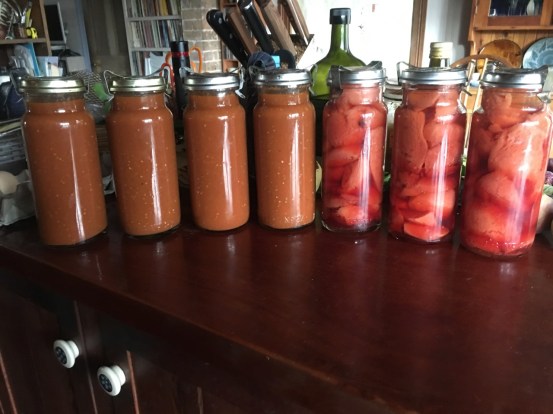
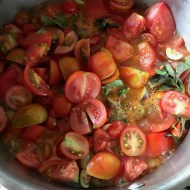
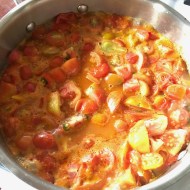
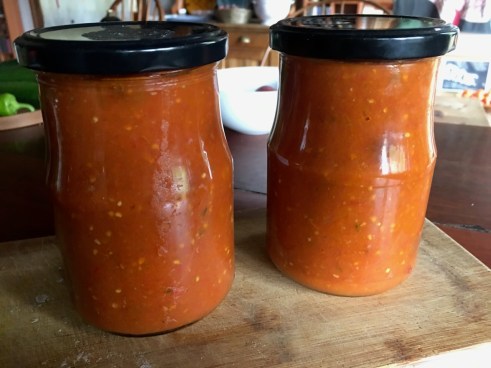
I have since planted another 20 plants, the most recent as recently as last week. I want to have plenty of fruit for making tomato passata in the summer. We are down to our last 4 jars from last summers harvest left in the pantry now. We’ll just make it through the year. perfect!

IMG_3629  IMG_3630


The deliciously sweet tang of vitamin ‘C’

After the early peaches have peaked, it is time for the maxed-out berry season. This week we will pick a couple of kilos of youngberries from our canes each day, some times its 3 kgs in a pick. Janine has developed several recipes for using these deliciously tangy, sweet acidy berries, but there are so many that come into season so quickly, we can’t eat them all fresh from the canes. The best way to cope with the peak is to preserve them in vacuum jars. We use them later to make fruit jelly desert, or a jar of the preserved pulp is used in a berry baked sponge desert in the winter.

IMG_2567 IMG_4027

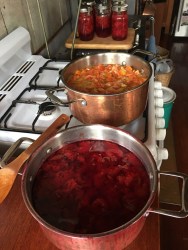
Yesterday we picked just over 3 kgs. The panty is already well stocked, she made red berry juice by heating the berries in a big pan. No added water, just simmered in their own juice, sieved through a kitchen mouli, to remove the seeds, then bottled while still hot. It’ll keep for a year in the pantry.

Another favourite at this time is to use the berry juice to make a fruit/suger syrup for use in icecream. Berry ice cream is a very nice desert. Janine makes this very simply by mixing some berry juice sryup in with a packet of pure cream, then whipping it and freezing it. The mixture needs to be taken out of the freezer twice a day and re-whisked the next day to make it more fluffy. That’s it, cream suger and berries. Couldn’t be more basic, simple and deliciously fruity and tangy, totally natural and no added chemicals. Maybe the sugar and the dairy fat content of this recipe should carry a warning not to over-do it! A very small bowl of this after a nice meal in summer is pretty special.

IMG_3573  IMG_3574

IMG_3608  IMG_3611

IMG_3626

Peak Peach

We have reached peak early-peach season now. We are picking more than we can eat for breakfast and desert each day. When we get to this point of the harvest, it’s time to start preserving the excess for later in the year.

We still use the very old-fashioned vacuum preserving jars that we bought 2nd hand in the 1970’s. They are easy to use and keep the food well-preserved for a very long time without any extra energy being applied to keep them. Once heated and sealed, we store them in the pantry for the winter months when there is no fresh fruit from the orchards.

To store them most efficiently, we should segment them to get more into the jar, but preserving them whole retains the stone and the lovely marzipan flavour that comes with that. Marzipan flavour from peach stones and almonds is actually a very weak kind of cyanide. How can anything so poisonous be so delicious? Clearly there isn’t very much of it in there.

Janine poaches them for a few minutes before placing them in the jars and sealing them, followed by a slow-rolling simmer. Hey presto.

IMG_3601IMG_3602IMG_3603IMG_3604IMG_3605

The ‘Vacola’ company hand book  tells us that to get the first quality result necessary to win a prize at the local agricultural show or to take out a first at the CWA meeting. The fruit should never quite be brought to the boil, but kept at 99oC for an hour or so to sterilize it, but not overheat it and cause possible shrinkage  of the beautiful geometric packing order of the fruit!!!

Country women must have had a lot of spare time on their hands?

Kangaroo Blue

Last week we found a dead kangaroo skeleton in one of the dams. It was very dead and had been picked clean over the last few days, Just the bones were left. It must have been there for some time to be so totally gleaned of every skerrick of meaty substance.

This was a tragedy for the kangaroo, obviously, but I can’t change the past. I need to get it out of the dried-up dam bed ASAP, just in case it ever rains, which it hasn’t. But I had to deal with it just the same.

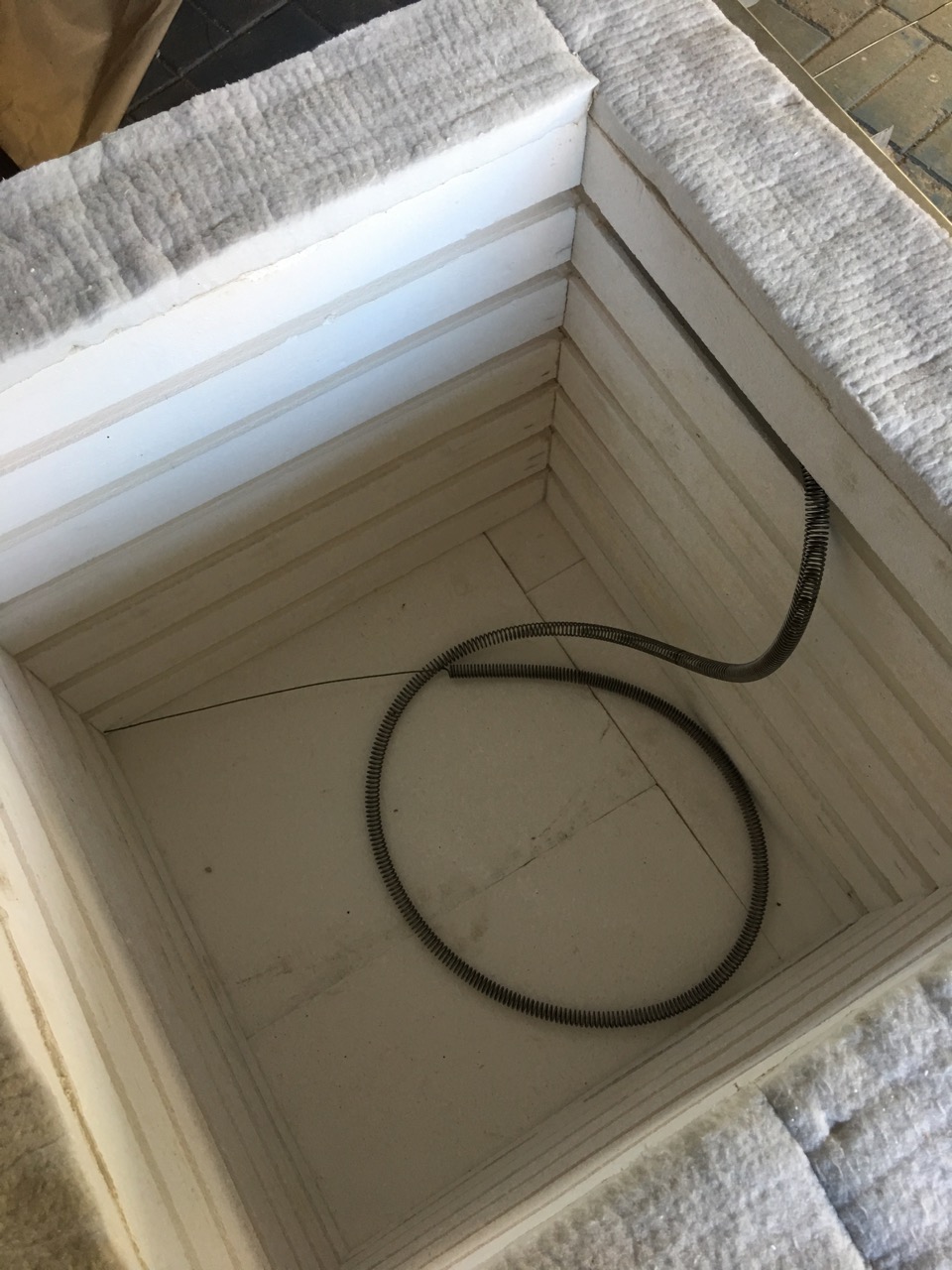
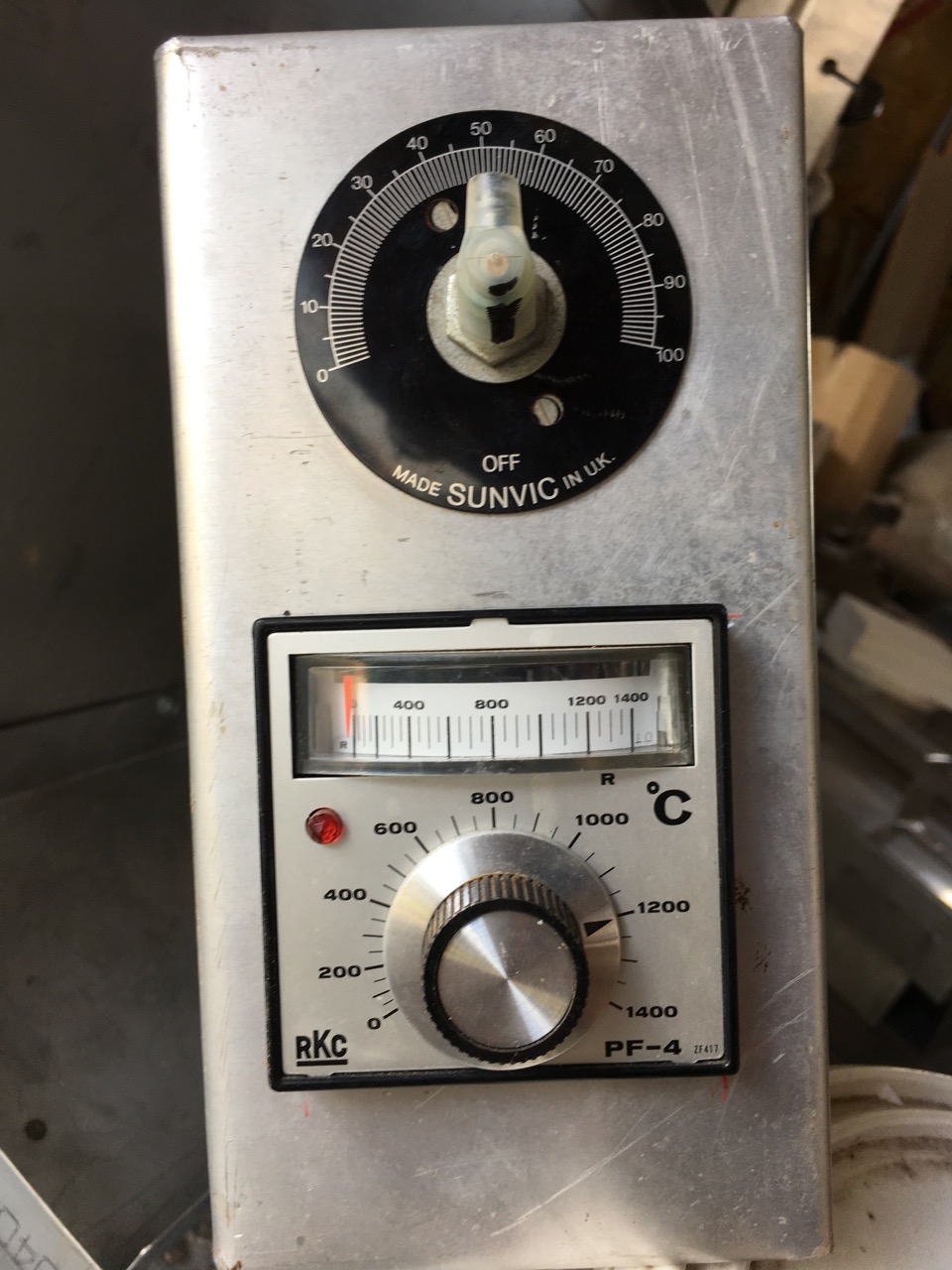
I decided to take it to the pottery and put it in the solar-powered electric kiln and calcine it to 800oC. I know from past experience that calcined animal bones are very useful as a glaze ingredient in stoneware glazes. Bones contain the minerals calcium and phosphorous, both of which are very appropriate additions to opalescent blue ‘Jun’ glazes. I have used my pet cow bones in the past to make a lovely opalescent blue glaze. That was part of a project to use only local ingredients in my glazes. Using my own home-grown kangaroo bone ash might make a good glaze additive. It couldn’t be more local, being found just 100 metres from the pottery.

However, I haven’t made the glazes yet.

Watch this space

IMG_3499

IMG_3501 IMG_3500

IMG_3512

The white, calcined bones fresh from the firing, and ready for milling down to a soft white powder capable of being added to the next batch of ‘Kangaroo Blue’ opal glaze.

Some of my friends have observed that I must be mad to work like this.
Maybe I’m hopping mad?

The First Week of Summer – Salad Days

We have just finished our first week of summer. Wow! bush fires and heat waves. What a way to start. Of course it’s not the earliest that we have had bushfires here with the new weather pattern of global warming bringing on regime of 9 months of summer. We have had a bush fire here in our village a few years back in October 2013. That is so early in the season for a wild-fire. So this is our new life, we think that we are prepared. We have done what we can.

I heard on the news that they had 47oC in the north. How can you live with that? I’m sure that it would kill off our vegetable garden. I have been constantly sowing and re-sowing successive plantings of salad greens so that we can always have a few green leaves in our salads. We have planted several types of rocket this year; normal, narrow leaf, broad leaf, red leaf and wasabi rockets varieties. These along with 3 varieties of radishes, Japanese Mizuma greens, baby spinach, shiso, and 3 types of lettuces. it makes for an interesting variety of salads.

IMG_3513 IMG_3514

IMG_3515 IMG_3516

IMG_3518 IMG_3519IMG_3520

Korean Sericite

A couple of months ago, Janine and I were lucky enough to be invited to Korea to speak at a Porcelain  conference. We made the most of our opportunity and spent time in Seoul on our way to the conference to visit friends. I also made the most of this once-off, free travel opportunity, to re-visit one of the remote Sericite Porcelain Stone mining sites in Korea. This site dates back into the 1300’s. Sericite Porcelain has been mined there for over 700 years. I have visited this site before during my research trips, so I don’t need to put on my Indiana Jones hat and consult the ancient parchment map to get there. I know the way, at least I think that I do. I do have trouble convincing Janine of this though when we come to unexpected junctions in the track. We are tramping with our back-packs and although I have found my way here before, we just take the time to walk up a few dead ends into the hills, and retrace our steps a bit, before regaining the correct path. I managed to find my way here after the last conference and re-discover the site. I know that I can do it.

I must say that even though I’ve been here before, it’s amazing how easy it is to forget all the details of the way when you are out in the bush. I remember all the twists and turns in the various tracks that I need to follow to get there, but over time, things have change and the bush has grown over some landmarks, however, there are enough clues that come to mind at each change of direction, so that from time to time I recognise specific points along the way and I am convinced that I am still on the right path.

Eventually we find our way there. This ancient site is pretty damaged now, as the stone hasn’t been obtained from here for some time. I don’t know how long, but perhaps a couple of hundred years. However, there is still a small amount of the sericite embedded in the ground. There had been some heavy rain since I was last here and quite a few good large chunky samples have been exposed, so that I had no trouble filling my small pack with a couple of kilos of good clean samples. I hand pick the best and whitest bits from the dross that it is mixed with.

IMG_6886

IMG_3095Now that I’m home and have caught up with all my other more pressing life events. I have time to deal with this most recent research. I set about crushing and grinding these new samples. Prior to this, I have only collected a few hundred grams of stone, purely for analysis and academic research. This time I have enough to be able to throw a few pots.
IMG_3096  IMG_3097

Seiveing the fines from the crusher, before going to the mill.

IMG_3101  IMG_6535

I put the stones through the jaw crusher and then the disc mill, then finally through the ball mill. If I had more to deal with I would put the slurry out on the drying bed. But as I only have a couple of kilos of material, I put in into the plaster drying tubs to stiffen up.

This turns out to be a really fantastically plastic sericite. I can wedge it up using spiral kneading straight from the drying tub with no ageing. Amazing for 100% milled stone. It seems that Sericite can be as plastic as any other ‘clay’ – even though it isn’t! (clay, that is).

I was very impressed with the plastic sericite from Cheongsong in south Korea. That was the best single stone porcelain that I had ever experienced up to that time. However, I wasn’t allowed to see the mine site or any of the processing that was carried out, so I couldn’t draw any conclusion, other than to say that the experience of throwing it was excellent.

This time I’m absolutely sure of what I have in my hands and on the wheel in front of me as I have collected it direct from the soil with my own hands and done all the processing myself. It is very slightly floppy on the wheel, but this is to be expected for a very pure primary ‘clay’ – ground stone actually, with no ageing. It certainly works infinitely better than an ‘Eckalite’ china clay body prepared under the same conditions. I’ve been there and done that.

I might just add here that I have a batch of ‘Eckalite’ kaolin based porcelain body that I made 25 years ago. It was un-usable straight from the pug at that time. Floppy and useless. However, it has been ageing in the cool dark clay store now for all this time and it is quite plastic to throw with now. As good as anything else on the market these days. I only wish that I had made 10 tonnes of the stuff back then. It would have been totally worth it. I don’t have 25 years left in me now, so it’s pointless speculating as to what might have been.

Any young potters out there interested in materials and porcelain. I’ve done the research for you. Make use of it.

IMG_3356  IMG_3487

IMG_3488  IMG_3490img_3489.jpg

I have no trouble throwing it on the wheel, it is smooth, fine and creamy and stands up well for small items, keeping its shape and not slumping. If only I had discovered this stuff  20 years ago too! It would be amazing by now.

As far as I can ascertain, from what I have been told through translation. Nobody has used this stone for a few hundred years. It has almost archaeological significance, embedded in its remote, hidden hillside home. No-one in Korea has taken an interest in it as far as I can tell. There is only myself and the local Porcelain Museum Director who seem to have any fascination for ancient sericite porcelain. You’d have to be mad to go about doing research like this strictly for the sake of academic interest. It appears that I am that person who is mad enough. So I am going to donate the best of any successful pots from the firing to the Porcelain Museum for their collection. It will be the only pot made from this stuff for the past few hundred years. Here’s hoping that the firing is a good one.

.

For an extensive discussion of Sericite porcelain, I refer the reader to my book ‘5 Stones’ which details my 16 year research into sericite porcelain around the world.

Peak Cherry Season

In this last week of spring, we are in peak cherry season here. We made the effort to cover the trees with netting a few weeks ago, so now we are reaping the benefits. If we don’t cover the fruit trees as the crops come into season and ripens, then the birds will take it all. We have learnt that we need to get the nets over the trees before the fruit colours – about a month in advance. We move the nets from tree to tree as the season progresses. Now, this week, there are simply too many cherries for the two of us to eat fresh at this time.

We eat as many as we can straight from the trees each day, but at this time of year we can’t keep up. If this is the worst problem that I have to cope with in my life, I have nothing to complain about.

IMG_3186 IMG_3465

These last few days we have been stoning the excess of cherries and cooking them to preserve them. We have tried a couple of different recipes. For the first batch we de-pipped them and then brought them to a low simmer and added a spoonful of honey, a dash of white wine and a little squeeze of lemon juice. By blanching like this we can preserve them by either freezing them or keep them in the fridge for some days. We also tried blanching them in a small amount of cheap supermarket moscato wine. It is sweet and slightly acidic and does much the same job. much of a muchness.

We sit and work together at this time-consuming but very rewarding job. If you don’t put the effort in, you can’t claim the reward. Although it isn’t at the fore-front of our thinking at all times, we are cognisant of this very important attitude to life in general every day as  we plan our days work. We work with our hands, but also with our minds engaged in this self-reliant, mundane, seasonal work, quite simply because we have a long-term philosophy. We will continue to enjoy this beautiful after-dinner desert treat several times over the coming months.

IMG_3470

IMG_3471 IMG_3457

IMG_3491 IMG_3459 IMG_3492 (1)

Hard work is it’s own reward. The real hard work was put in 40 years ago, when we dug the dams and installed the irregation lines, then  fenced the orchards.
It was only then that we could plant the cherry trees. Now we can enjoy the litteral fruits of our labours.

Veggies and Flowers

When we came here 43 years ago. There was next to nothing here, Only the derelict shell of the old school classroom. We had to work 7 days a week for the first few years just to pay the 23% interest rate on our money-lender mortgage on the property. It was a huge impost, an exorbitant interest rate, but they were the only people who would lend us the money.

Because of this huge level of debt, In those first few years I had to work the equivalent of 8 working days in each week. Seven full days and two nights, that equaled an extra day. I got part time work at 4 different art schools, then on Saturdays and Sundays, I flew out into western New South Wales each weekend to different towns, all over the state to build pottery kilns on-site as weekend workshops. Janine worked a couple of days and one night at Liverpool TAFE college. It was a killing work load, but we managed to pay off the first of the two mortgages early and save a load of interest.

During the school holidays, we were able to establish an orchard and a vegetable garden around the house. We were complete novices in the vegetable garden, but learnt by doing. The gardens started out as a way of growing wholesome, fresh food cheaply on site.

A few years later, I got to see a few French period films set in the south of France. “My Father’s Glory and My Mother’s Castle”, based on books by Marcel Pagnol. These films and others like it, (Jean de Florette) opened my eyes to the possibility of growing both flowers, vegetables and fruit trees, all in the same garden. Our life is much more under control now, and we are finally solvent, with more time to relax and enjoy the fruits of our labours.

In the past few decades we have introduced a lot more flowers into the edges of the garden beds and these are now self seeding and well established year on year.

IMG_3157 IMG_3232

IMG_3250

IMG_3281

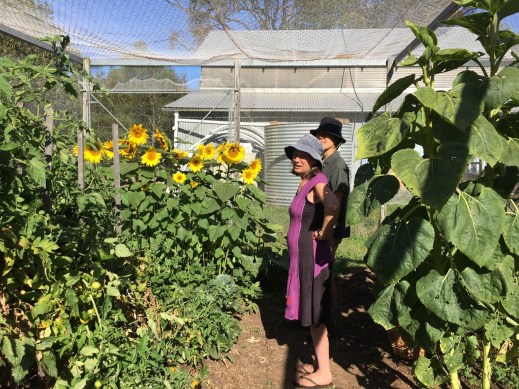
So now we grow herbs, grape vines, fruit trees and vegetables all in the same space. It is all netted over now, mostly with hail proof, fine bird netting. However, we have incorporated side panels of 35 mm hexagonal, galvanised wire mesh in the walls that allows all the little insect feeding birds easy access. We get all maner of finches, fire-tails and wrens flittering through in waves thoughout the day. They do a great job of cleaning up all the little pests and grubs, without touching the food crops. It this way we don’t have to use any insecticides.

So here we are arriving at some sort of way station on the journey that we set out on together over 40 years ago.

It’s nice, but I keep in mind that nothing is ever finished, nothing is perfect and nothing lasts.

Chair bodger

One of my hand-made steamed and bent Windsor chairs has suffered a broken arm recently. I made this chair from the one piece of wood, cut from a Japanese cedar tree that died in the drought in our garden. It was probably about 80 years old. It was a fine tree and the wood was too good to waste. So I decided to make a chair out of it.

As this tree was only small. It was hard to find a good piece of straight grained timber. for the lang arm. There was a fault in the way that I made it. I couldn’t find a piece of straight-grained timber that was of the correct dimensions for the job, so I used what I had. There is only so much straight grained timber in one tree. My tree had quite wavy grain. I compensated a little by sawing it out along the grain on the band saw, instead of just in a straight line on the table saw, but there just wasn’t a long enough section for me to use without the grain running off along the grain.

I used this piece where the grain ran off on the bend. It worked really well for almost a decade, but finally split when someone put a bit too much pressure on it, possibly leaning back on the back two legs and stressing the bent back. (I wasn’t home at the time)

I glued the broken arm back together, but it started to part company on the bend and split again within a year, even with careful use. I re-glued it, clamped it securely for 24 hrs. until the glue was well and truly set, then decided to reinforce it with a brass strip behind, where the split had re-started.

IMG_3297 IMG_3295

It’s a broken chair, no doubt about it, but its a well-loved and valued chair that I spent a lot of time building, all the way from cutting down the tree, seasoning, sawing, cutting out, carving the seat base and spindles then fabrecating and assembling the whole thing. This chair has an added history. It means something to me so I used brass to give the repair some added value. A bit like the way that I use gold to repair one of my beautiful, but damaged bowls. What I’ve done here is like kinsugi, but it isn’t kinsugi, because kinsugi means gold repair.

Maybe this is some kind of brass chair bodging variation on kinsugi. Perhaps I should call it brassugi?

IMG_3298 IMG_3299

Garlic Harvest Time

It’s the first of November and it’s time to harvest the early garlic crop. We plant garlic from March through to June and it takes about 6 months for the crop to mature. Over the years, we have tried many different varieties of garlic as they became available to us, but a few have always done better than others for us here with our specific terroir. The large ‘Russian’ garlic does well here, but I don’t particularly like the flavour. I find that it has a somewhat metallic aftertaste, which I find unpleasant. So although it grows well here I don’t plant it. The large white ‘Melbourne market’ variety does well, but is a little bland. The smaller growing red skinned variety, which I was told came from China after the opening-up to the West in the 70’s, does well and although it is only small, it is quite intense in flavour. I like the taste, but it is so fiddley to peel. Last year was not a good year for garlic for us and this variety grew so poorly to be only just worth harvesting. I didn’t bother to even attempt to peel it. I just put it whole into the garlic press and expressed the pulp as best I could and used it straight like this, even mixed with a little of its paper coating. The Italian pink seems to grow quite well and its of medium size and medium flavour. I plant the mall each year and let them fight it out, to see which one does best in each years different climate and rainfall conditions.

We have lifted half of the crop and have about 70 good knobs to hang up to dry from this first plot. There are also another 20 or 30 smaller bulbs that aren’t worth plaiting or hanging. We put them in a small basket on the kitchen bench top for use straight away.

IMG_3277

IMG_3278

IMG_3306