
Janine and I have been in Korea for the past couple of weeks. I was there earlier in the year for 3 months from April to July, as the Artist in Residence at the Yanggu Porcelain Museum and Research Centre. This time I went back for the opening of my big show in the Museum. It will be on for 3 months, until the end of February.
While I was there earlier in the year, I made about 100 Moon Jars from the local Porcelain Stone. This place has an 800 year history of porcelain making. In fact, all the famous Moon Jars in all the major world collections were made from this special Yanggu porcelain.
I did 4 firings in my Bourry box down-draught wood fired kiln, and ended up with 64 jars that were showable.
I introduced the down drought wood kiln firebox design to Korea a few years ago and this has since been embraced by half a dozen potters who have come to see it work. During my residency, I also introduced the use of hardwood for stoneware firing, as everyone here uses very dry seasoned pine. I chose to use Korean oak as the fuel in my kiln, as a way to minimise smoke pollution during reduction, which was spectacularly successful. These innovations are starting to be accepted by the Korean wood firing community farther afield, as at least half a dozen of my kilns have been built since I built and demonstrated my kiln there.
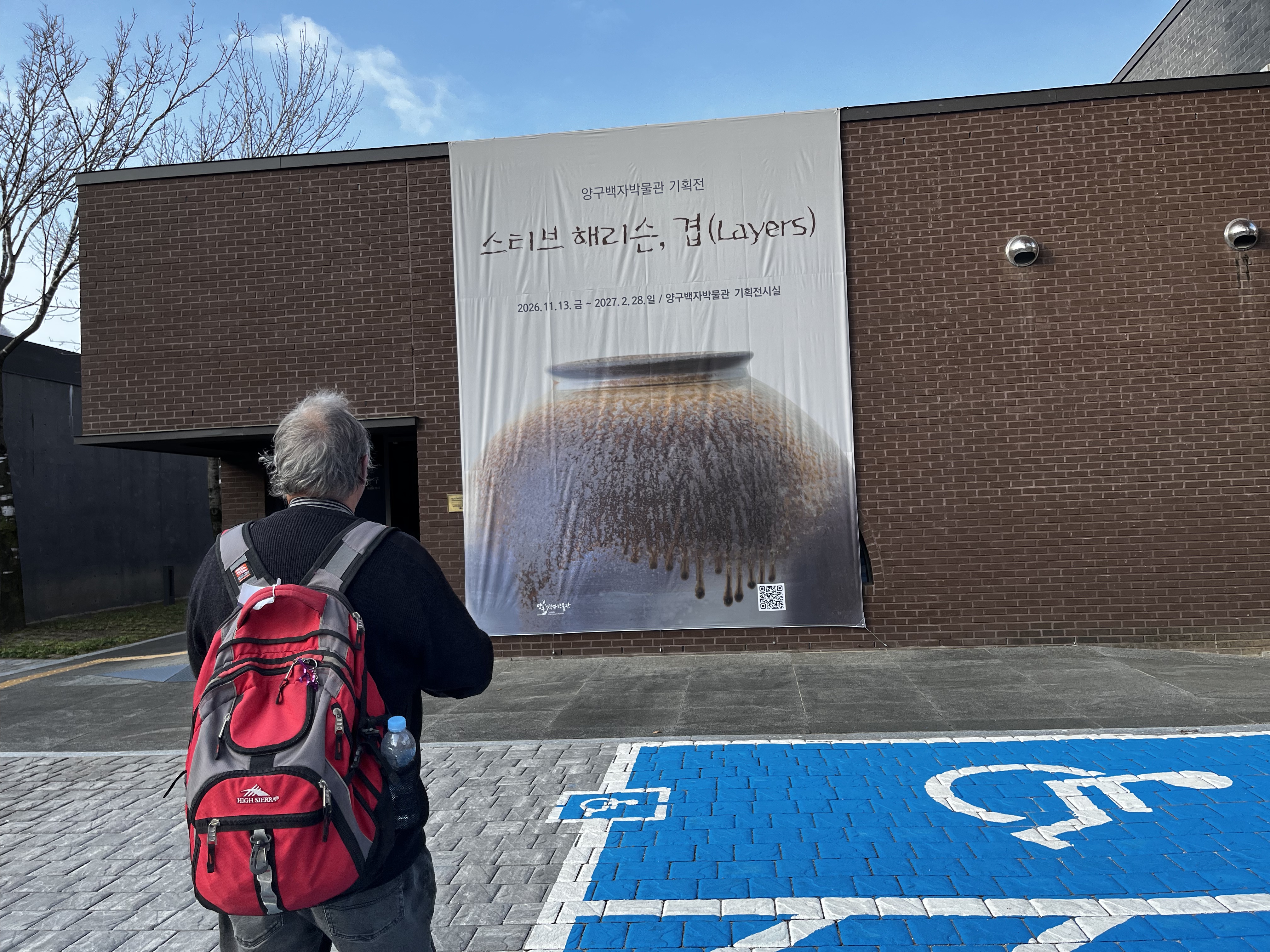
We arrived to find the Gallery building adorned with a large banner announcing my exhibition.
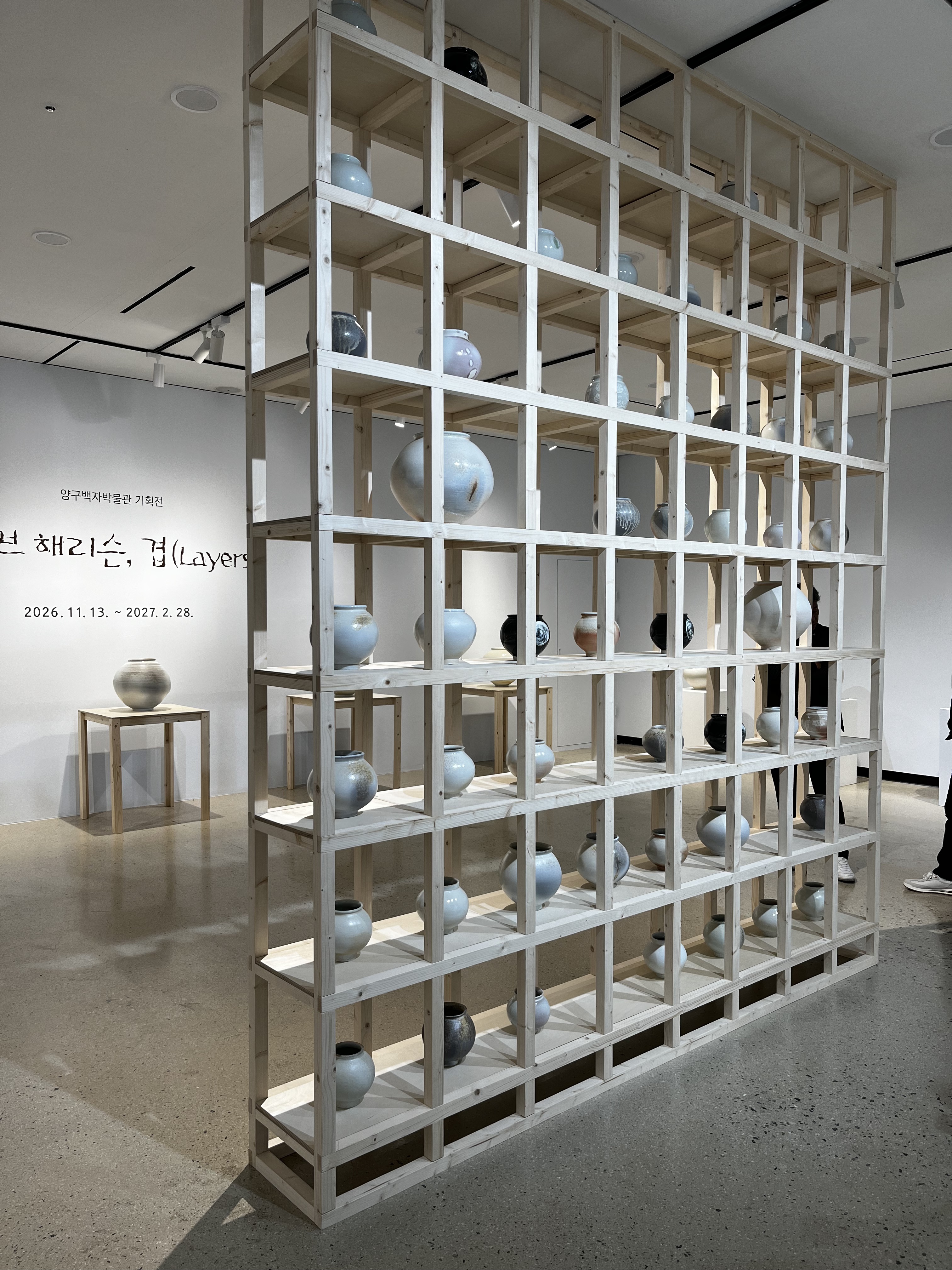
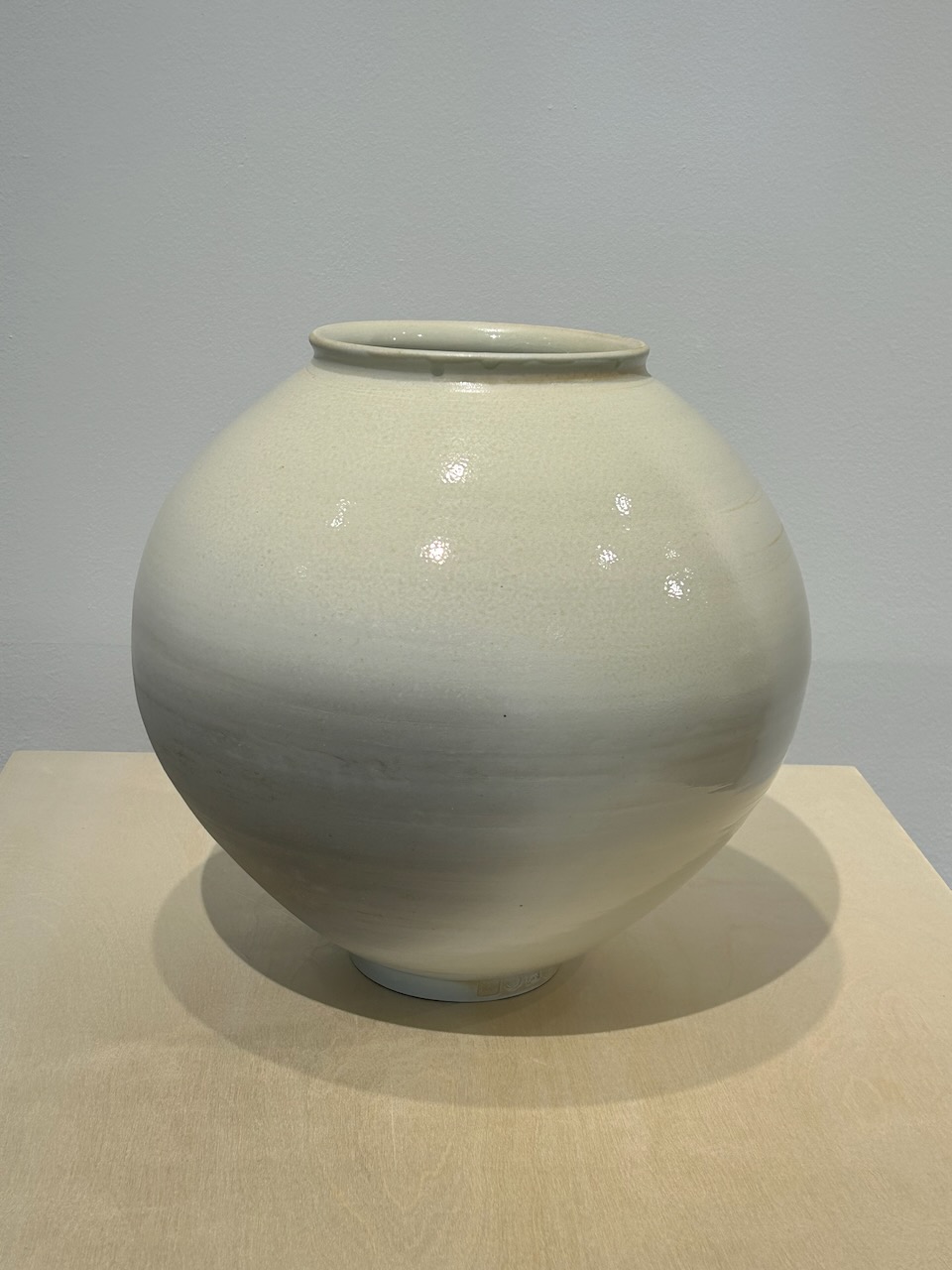
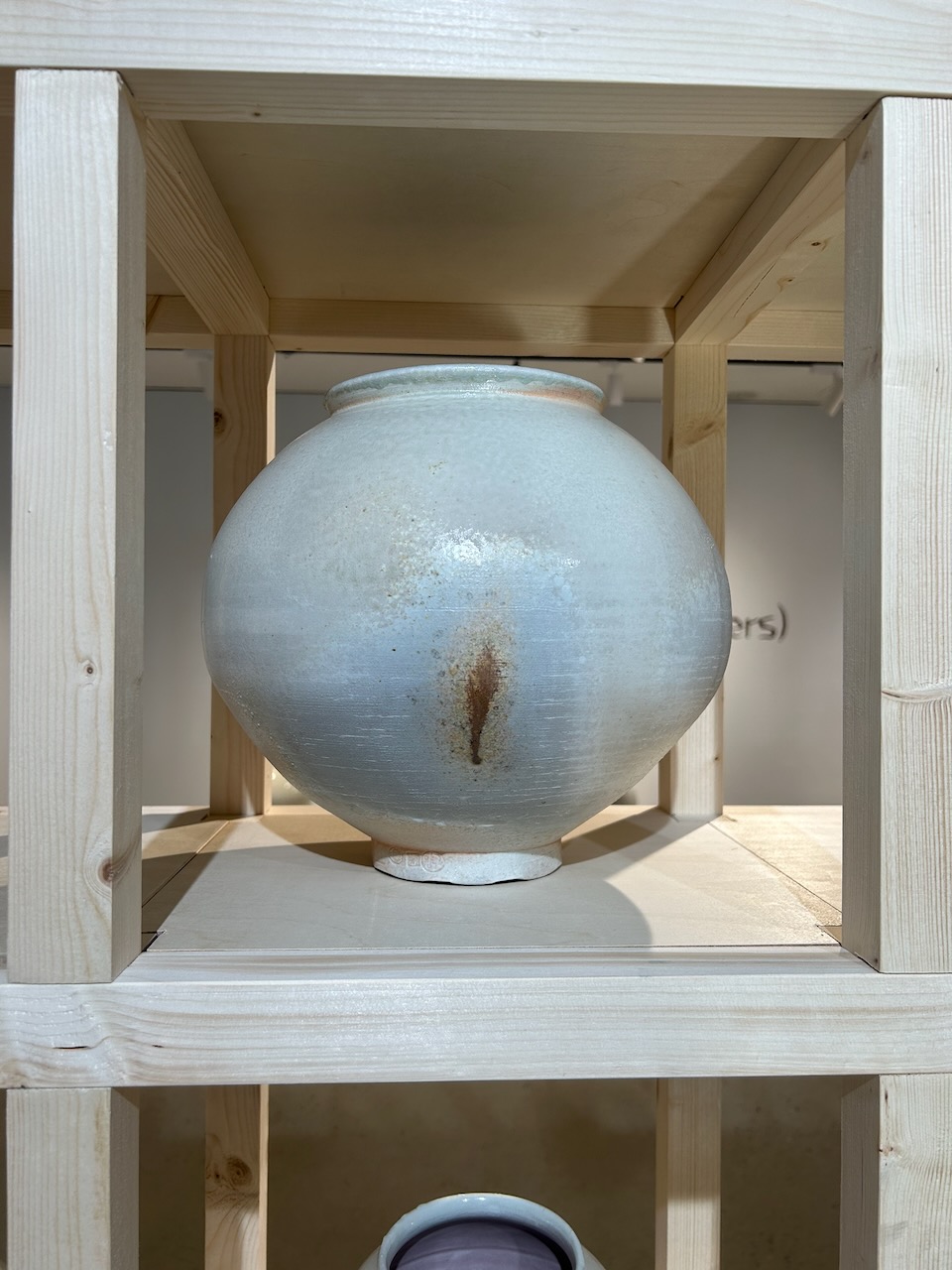
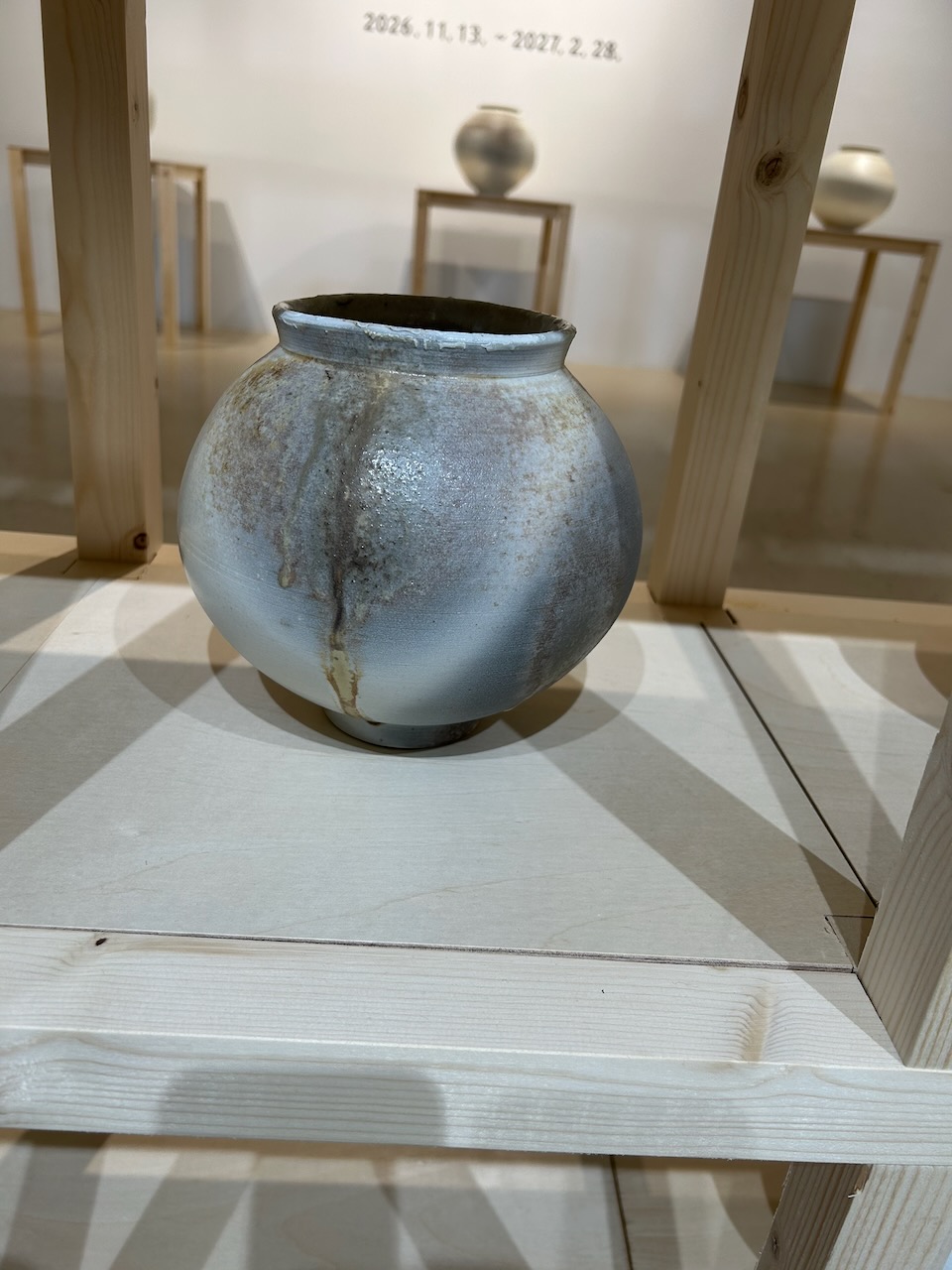
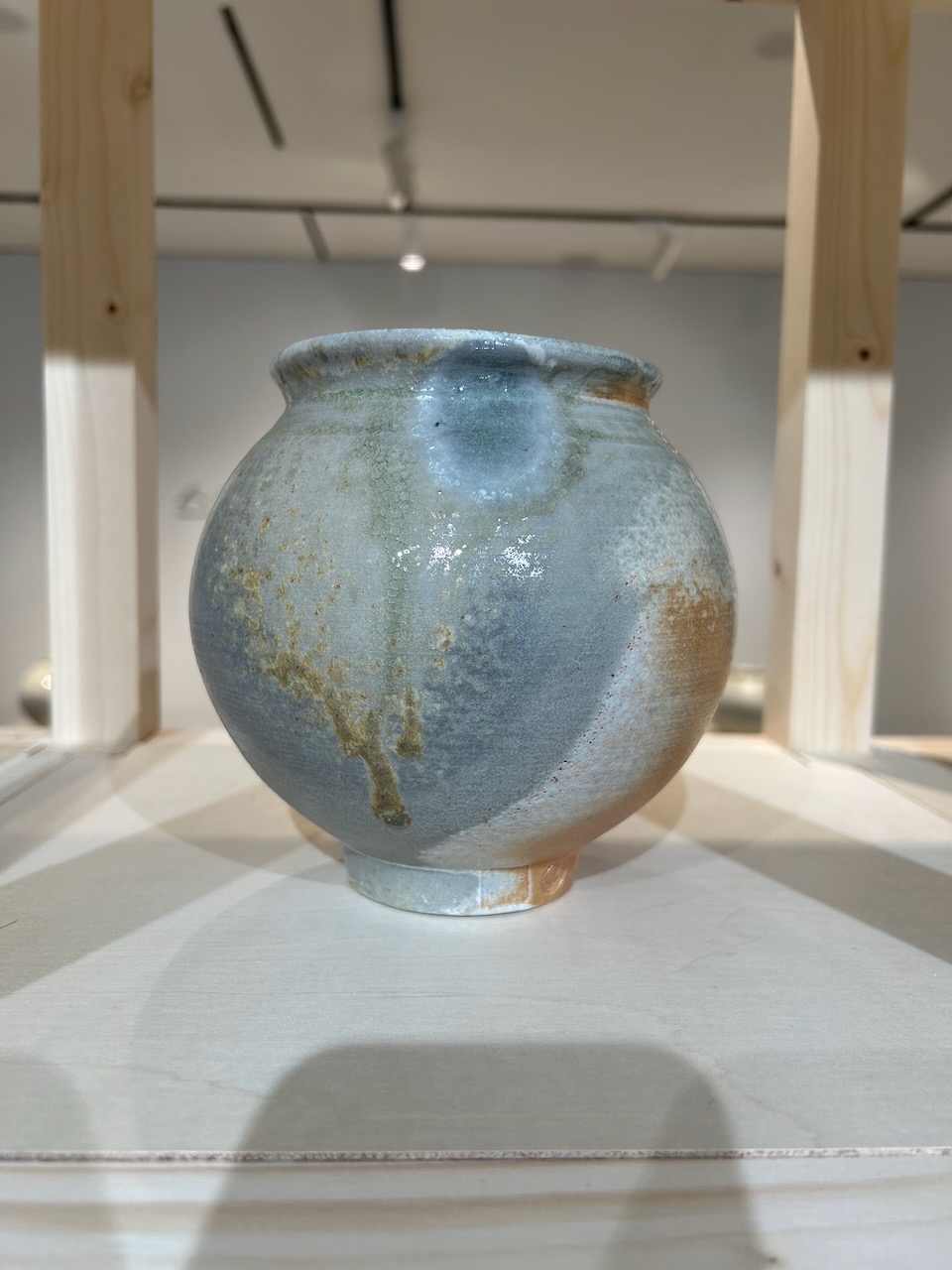
The Directors of both the Museum and the Gallery had gone to some trouble to have a wooden display case made to show all the smaller jars straight in front of the doorway as you enter the space, all the larger jars were displayed on plinths around the walls.
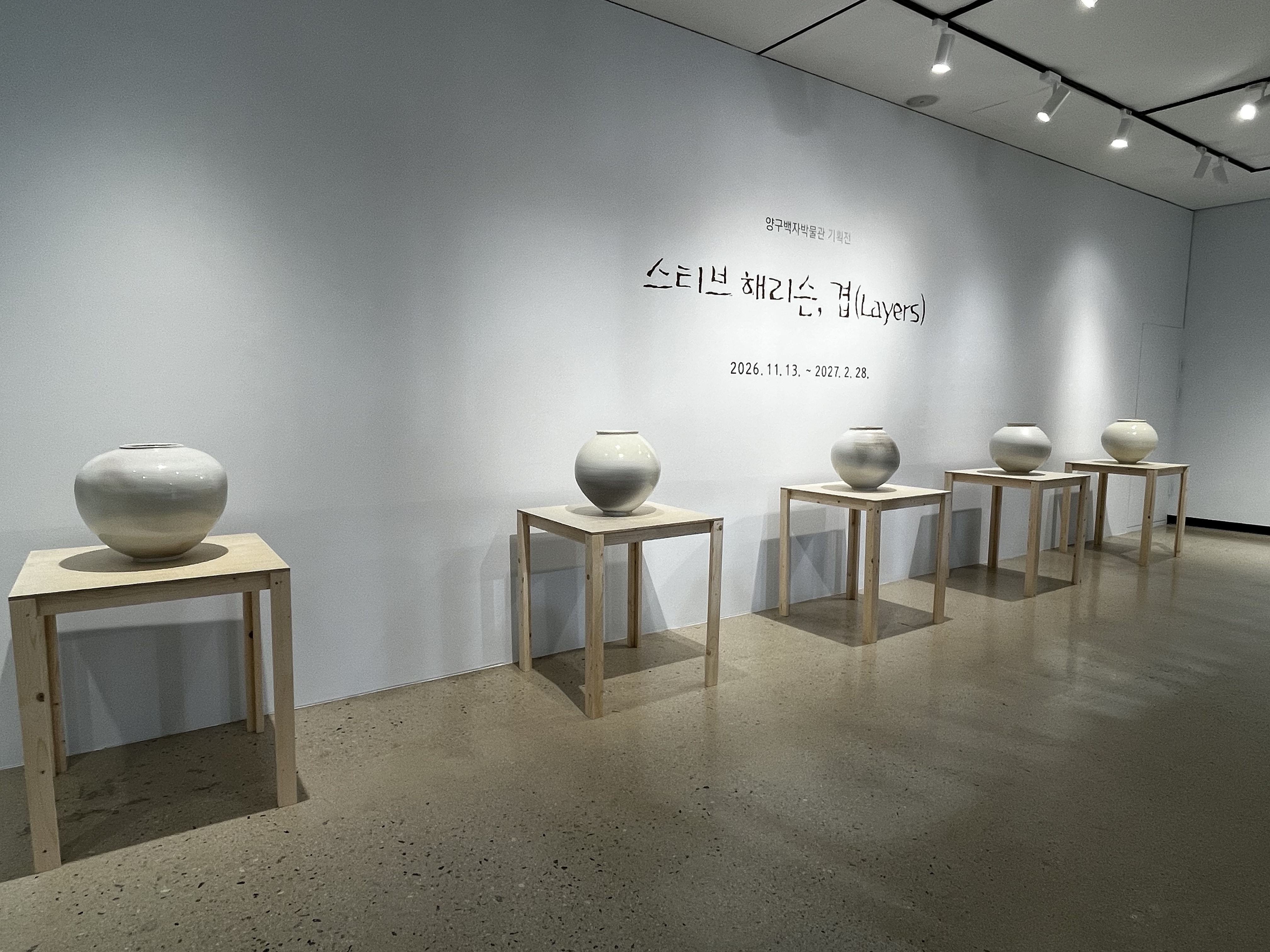
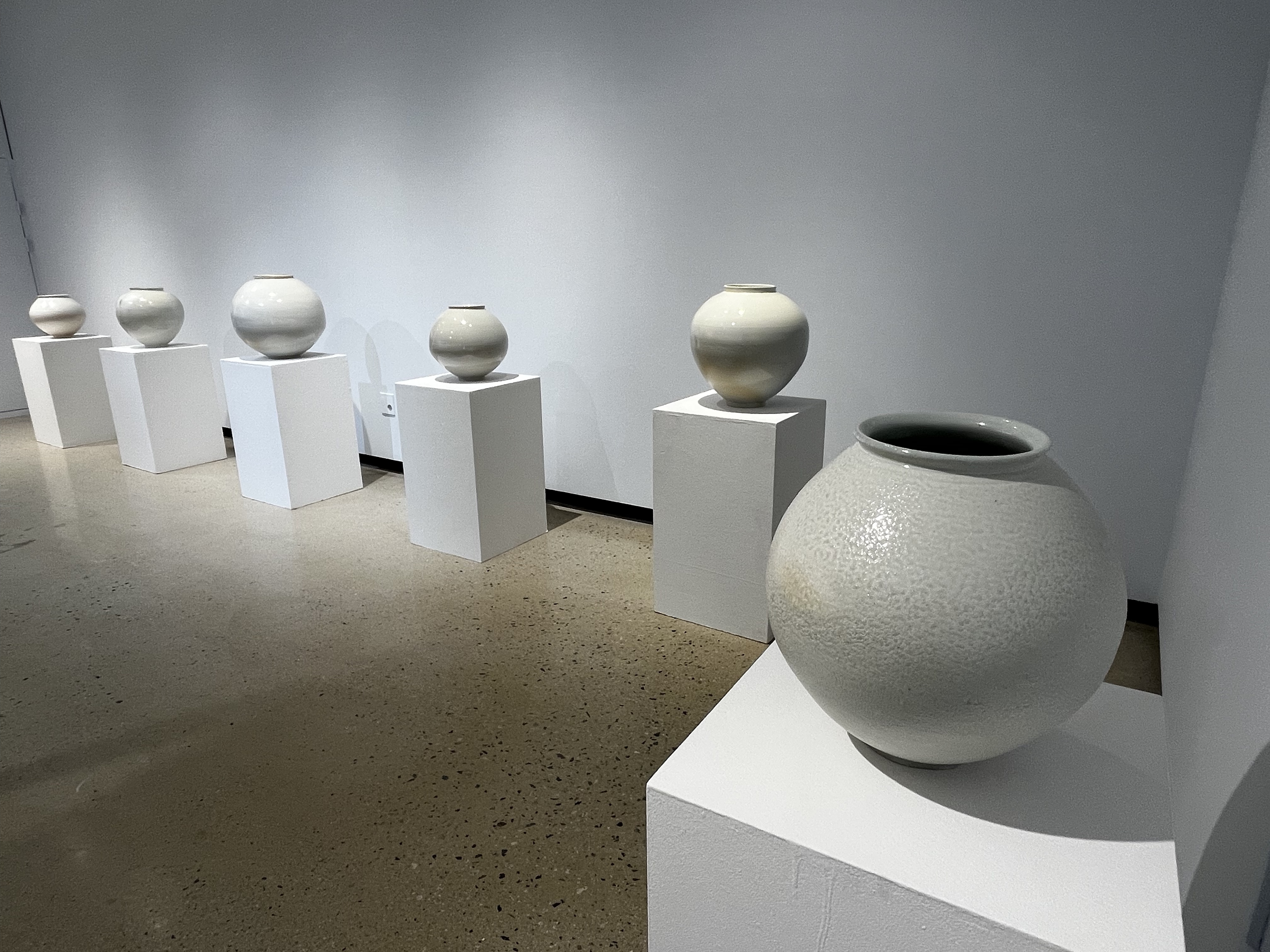
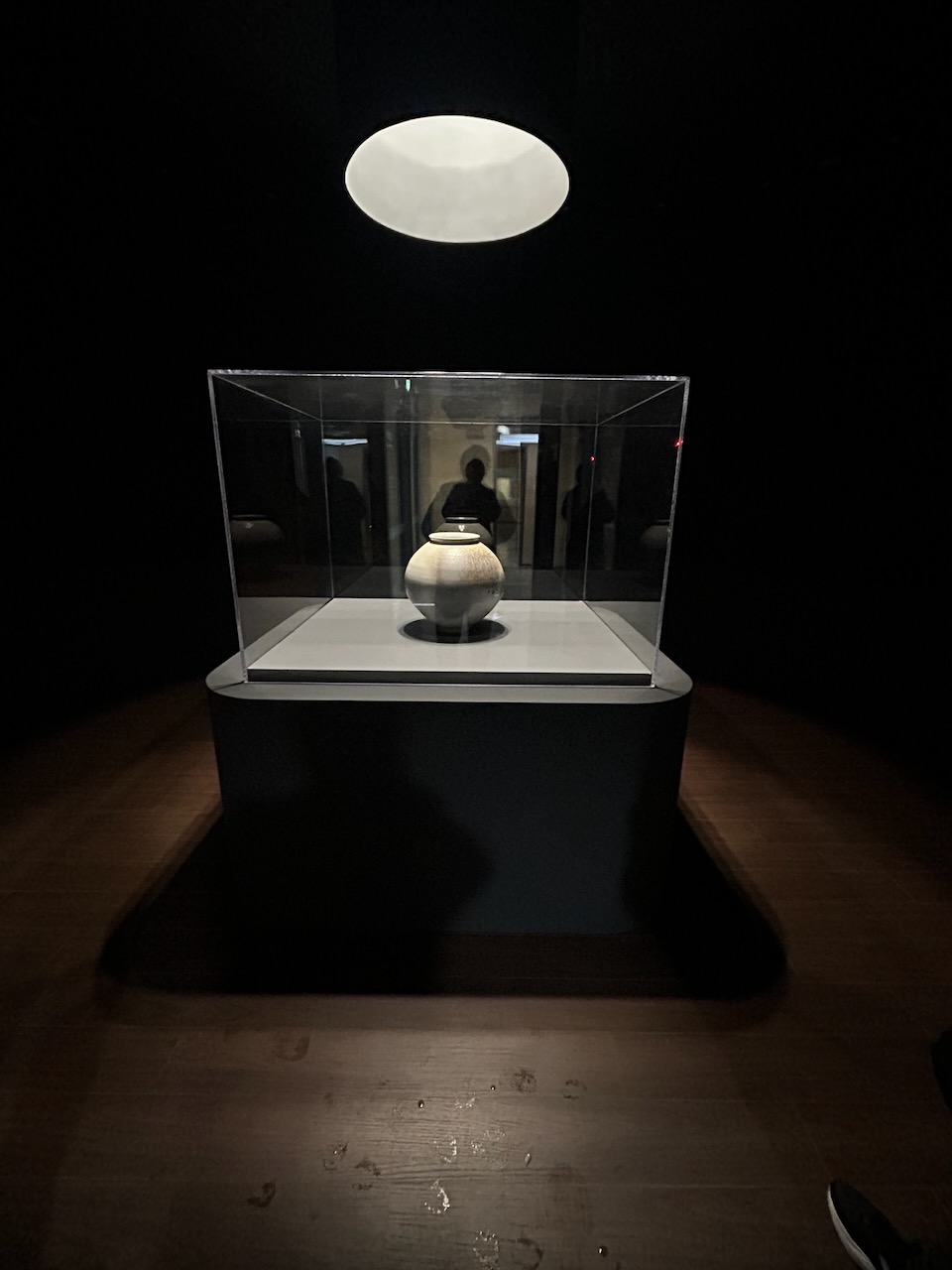
My best jar is installed in the main entrance foyer in a special case, spot lit. I think that it looks pretty good if I’m allowed to say so. This large jar has a lovely naturally undulating, bold round form, with slight and very gentle variations. Very much in keeping with most of the ancient jars that I have visited in International Museum collections. Non of them are perfect. They are all ‘human’ in their imperfections. Which aren’t imperfections at all, but rather something that makes them naturally perfect and relatable. I love their natural undulations and variations in the flow of the curve. Most have obvious joint lines.
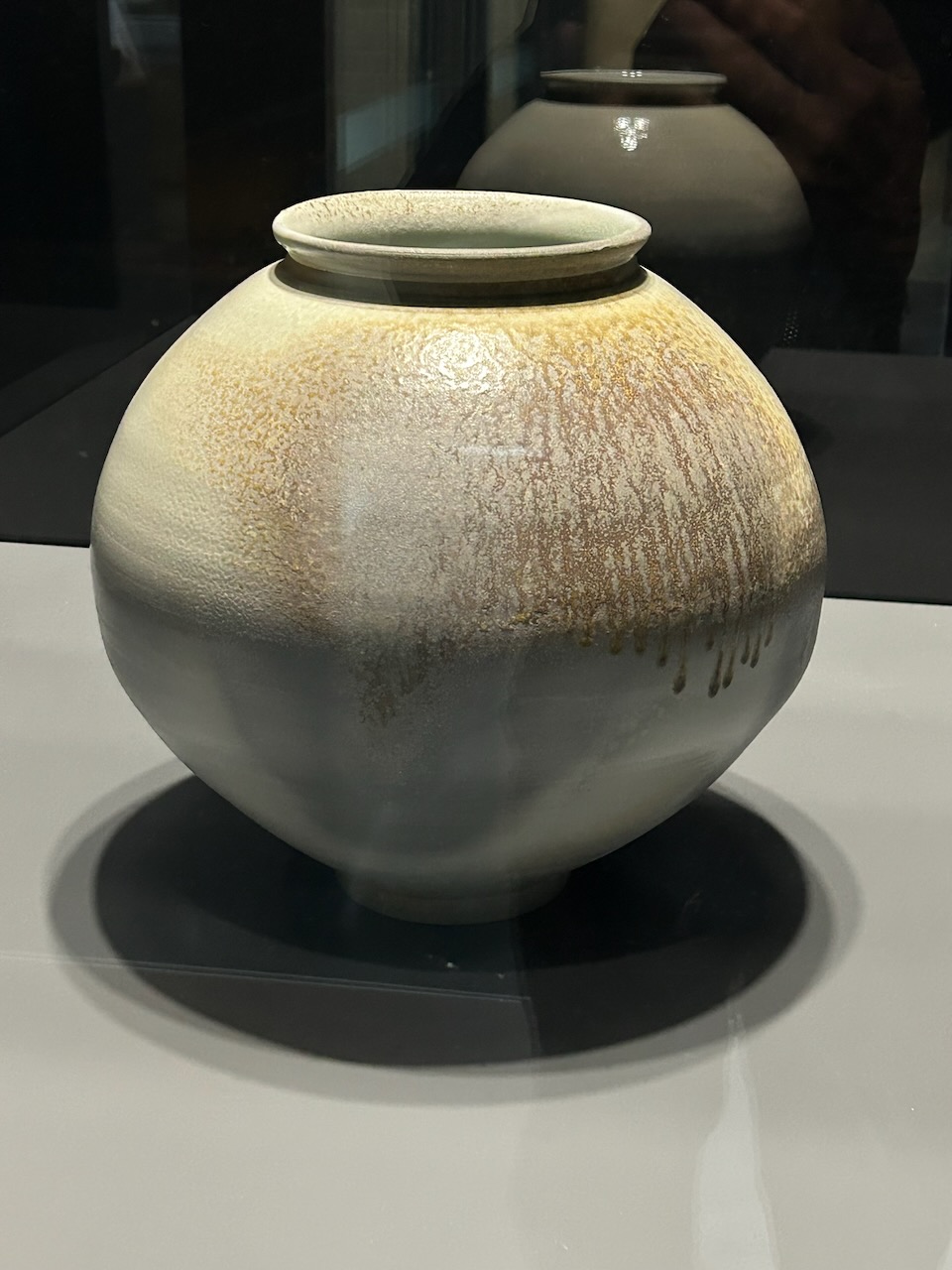
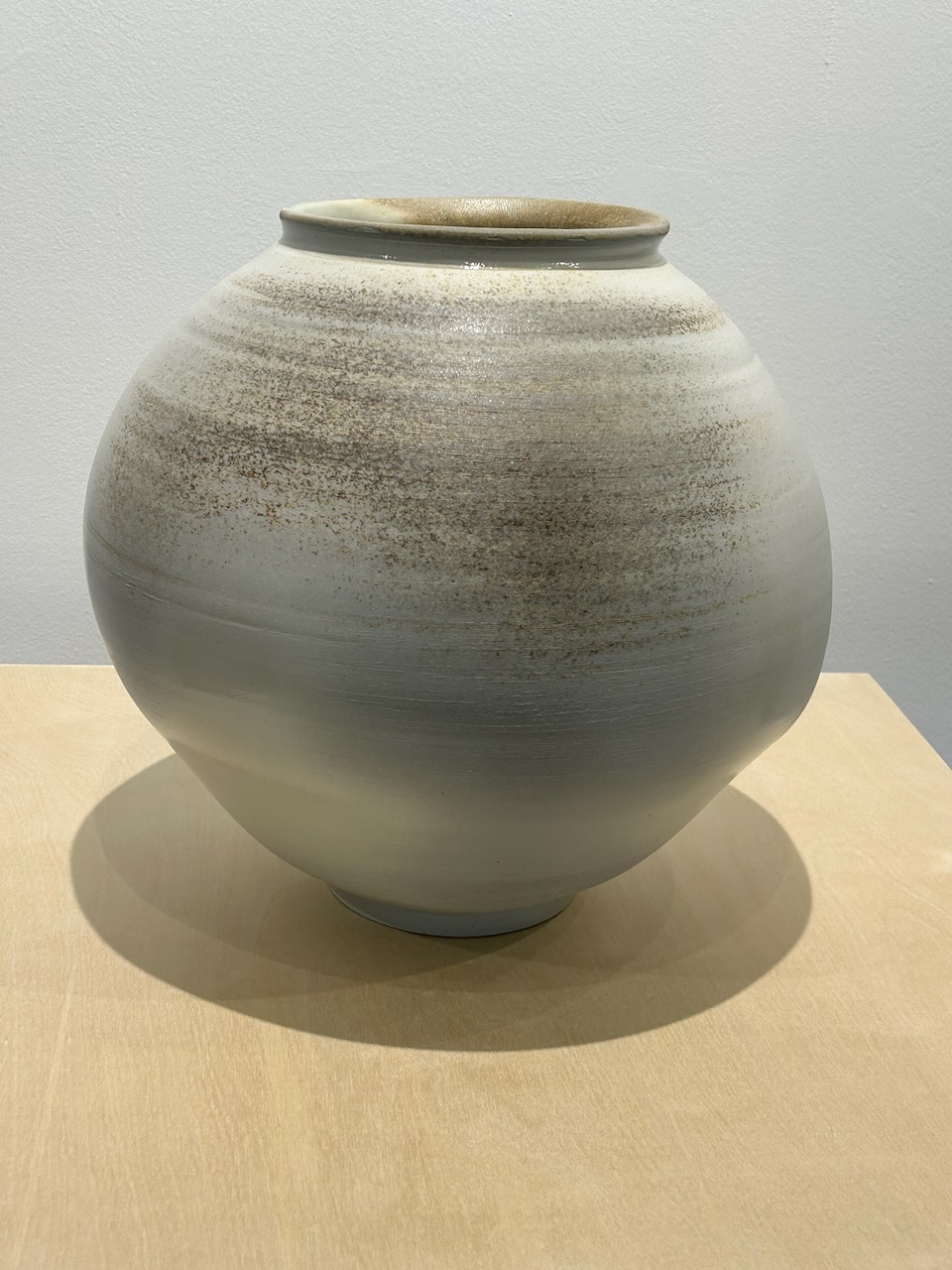
The ancient crushed sericite stone porcelain bodies are full of organic ‘burnouts’, pits and grit scratches. In other words just plain normal. I have tried to capture some of this natural human-like charisma in the character of the porcelain bodies that I altered for my own purposes. Because the clay here is these days made by a mechanical machine based, industrial process of crushing, ball milling, filter-pressing and vacuum pugging. This is through necessity, as they get through a lot of clay in the museum workshop and experience centre. This makes the clay reliable and consistent. Everything is pretty much perfect. But perfection was not what I wanted. I wanted some individual character in the clay for my jars.
To this end. I hiked up into the hills surrounding the Porcelain Village, and hunted out some remnant samples of the natural sericite stones that can still be found up in these hills. Still laying around to be picked up, off the ground after 800 years.
I collected a bag full of these stones and took them back to my studio and hand crushed them in a mortar and pestle, then hand sieved the dust through 3 different grades of mesh to get a fair representative sample of texture that echoed the texture of the clay body that I can see in the chips and scratches in the ancient jars.
It is not my intension to make any kind of replica jar, but rather to make a contemporary piece that honours the ancient jars honestly, while also being a modern artist’s contribution to the on-going oeuvre of the big white jar.
My jars vary considerably from the archetype, by being wood fired in the open, collecting a significant amount of wood ash in the process, and carrying a significant inclusion of fixed carbon in the surface of the clay body, sufficient to turn it grey/black in places. There is also a delicate pink/mauve blush in the ash glaze surface. All these aesthetic qualities are individual to my process and clay/glaze/firing methods. Very Australian and quite unique there in the little village of bangsan
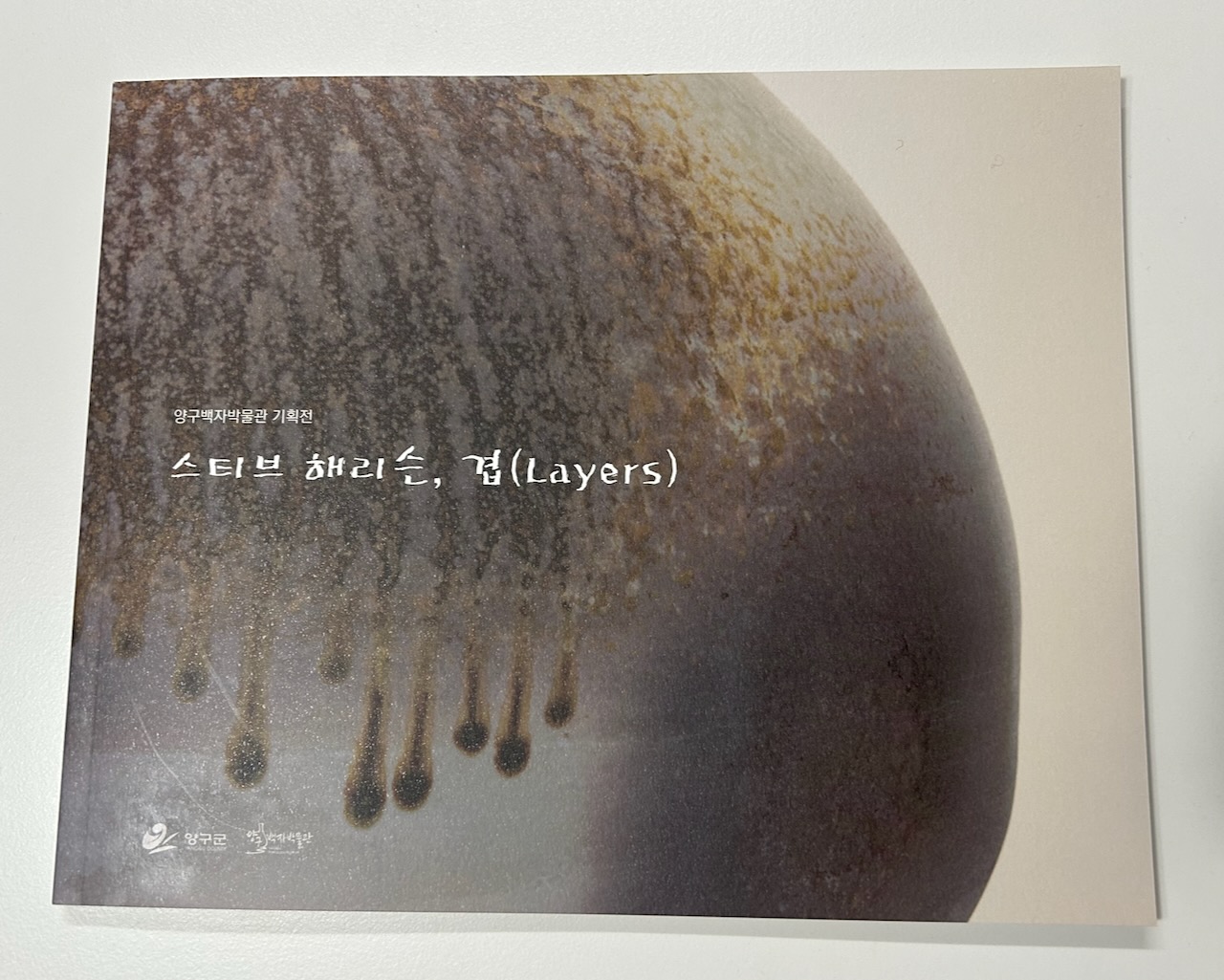
The gallery has produced a beautiful 50 page full colour catalogue of my show. I’m thrilled and honoured to have such a special memento of my time there.
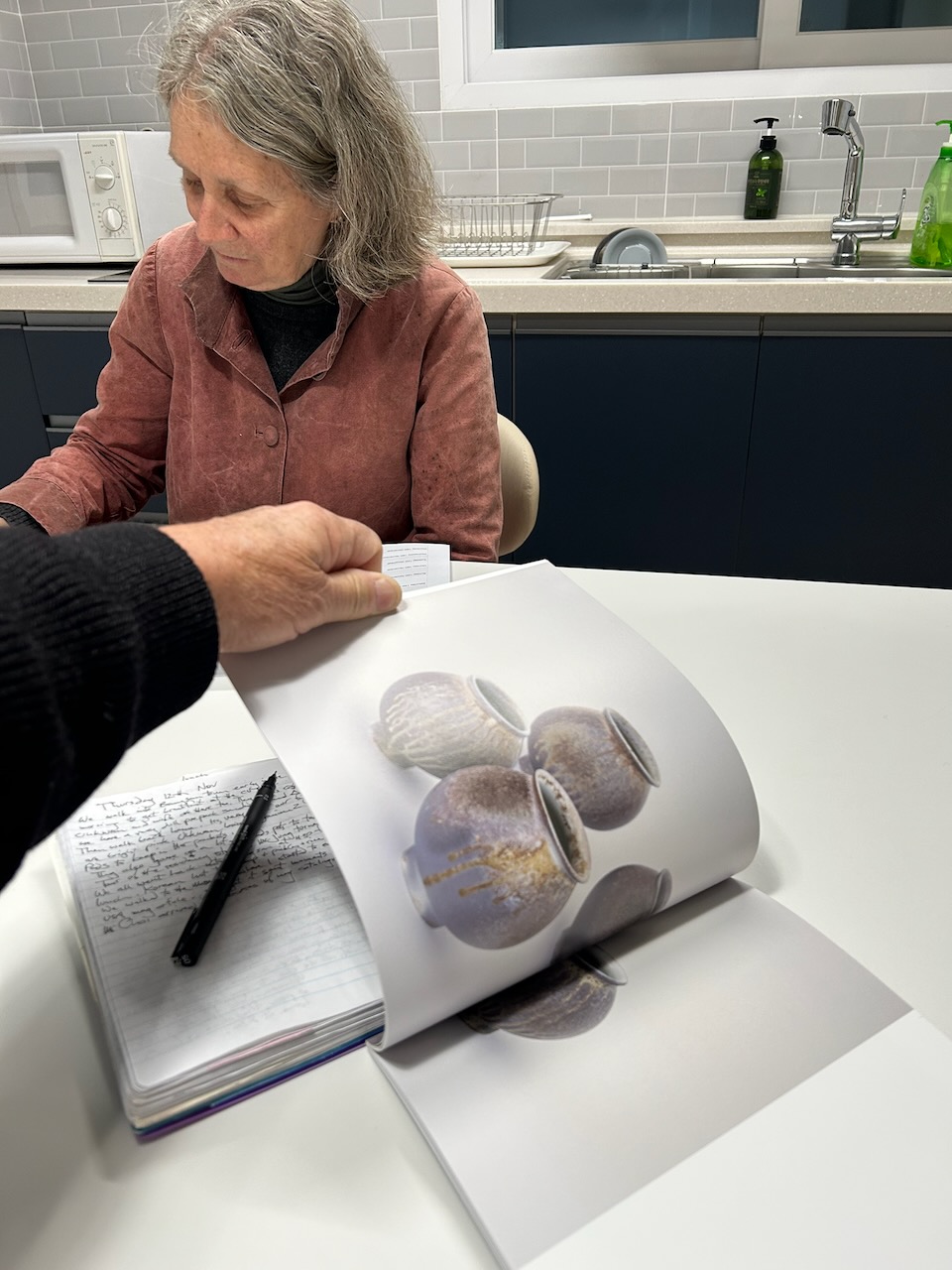
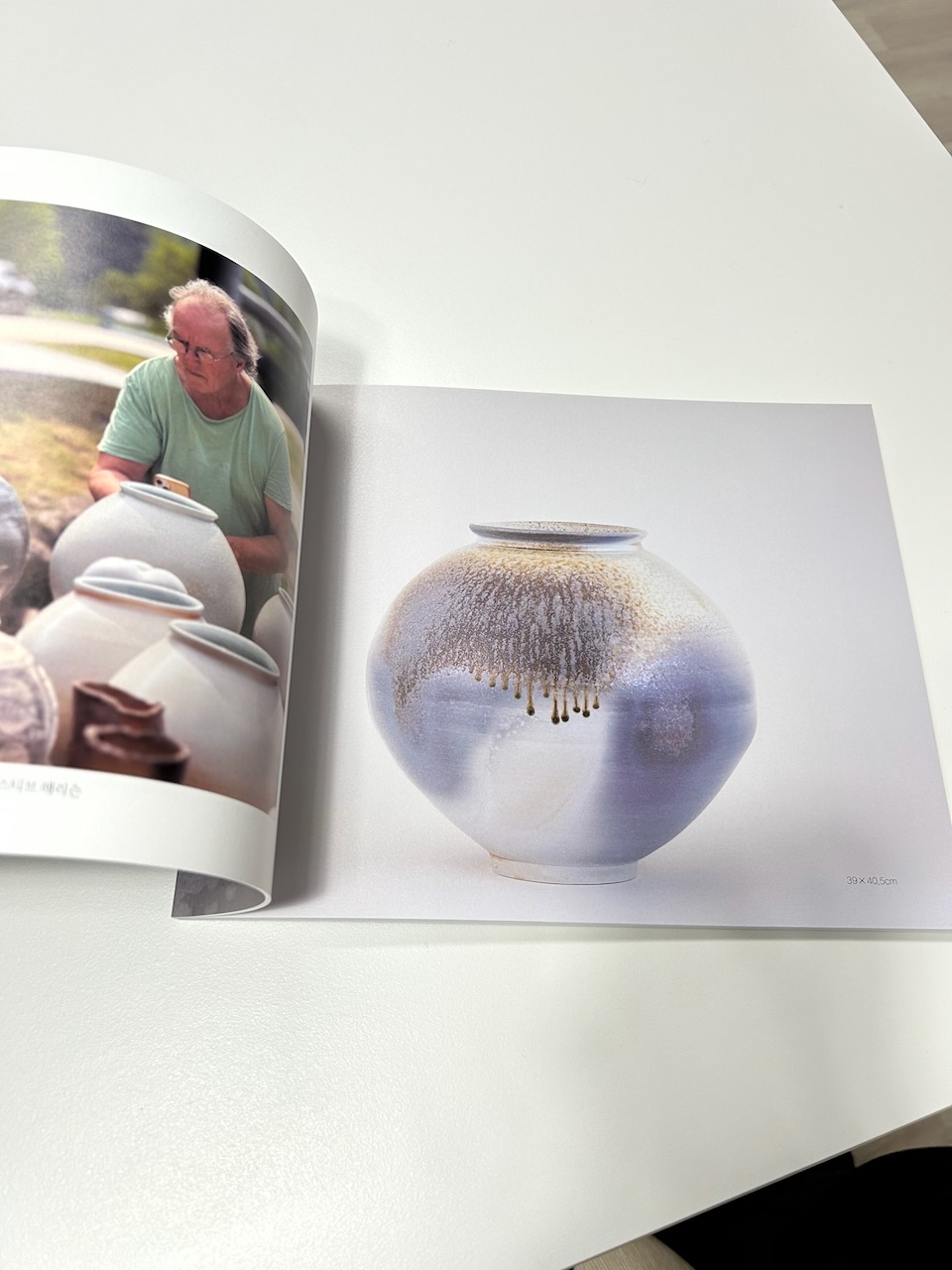
It all seems a little bit weird and unbelievable. As if it is happening to someone else, as this kind of thing doesn’t happen to me. Still. I’m very glad that has happened to me. I’m very proud of the jars that I was able to make there. 7 of them have been acquired into the Museum collection.


You must be logged in to post a comment.