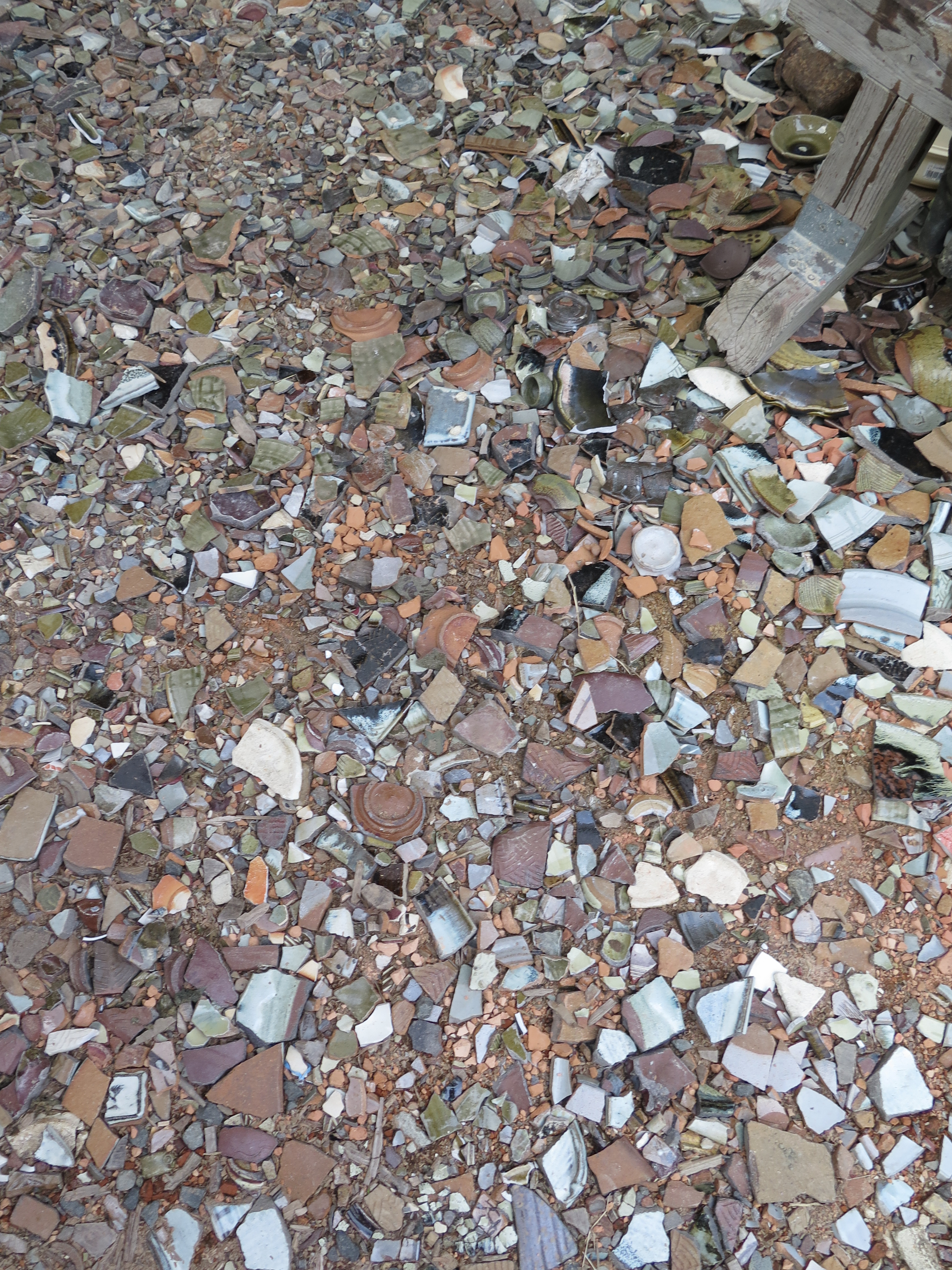
Yes Way! – A Walk Along the old Tombai Walls

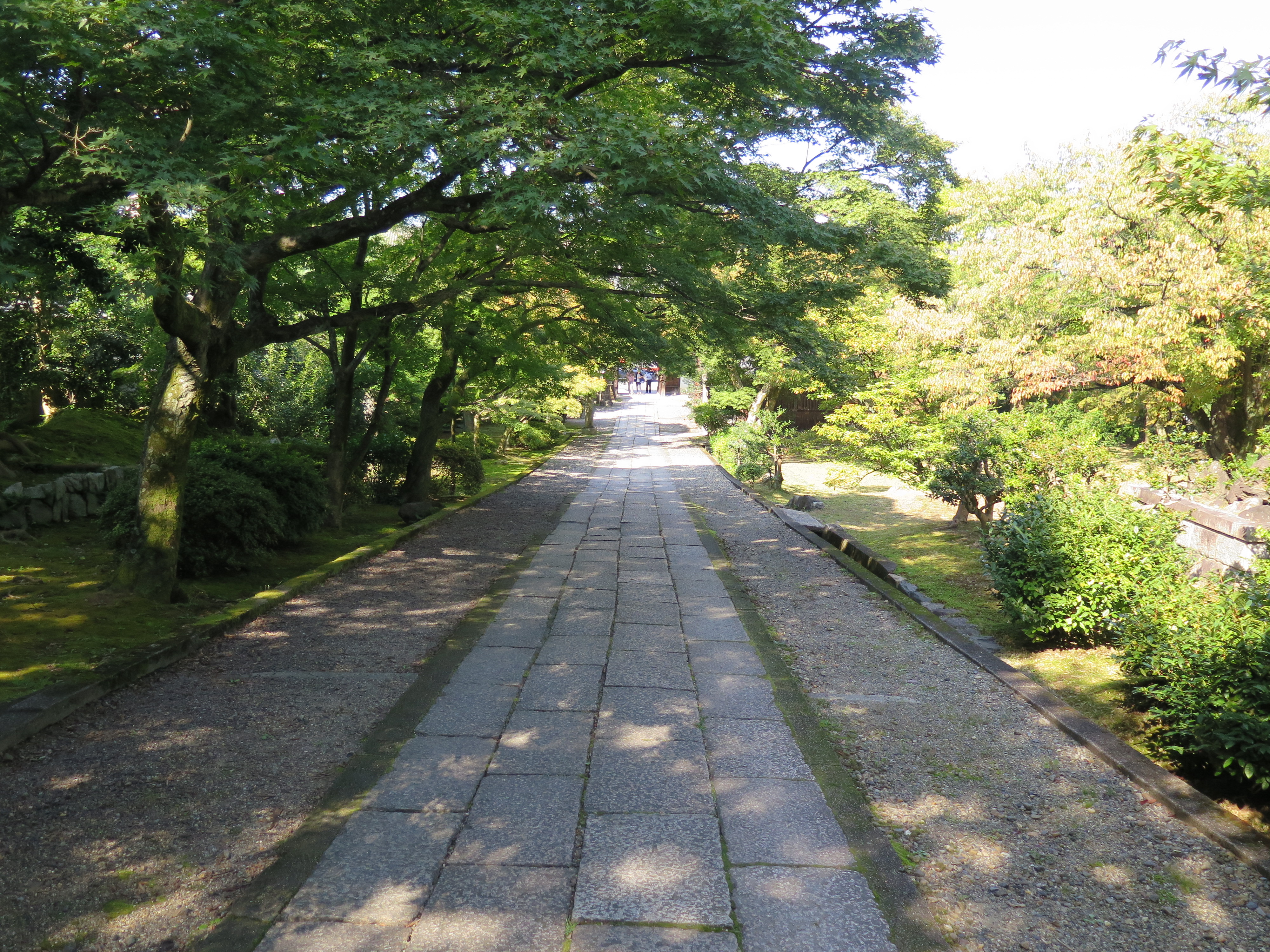
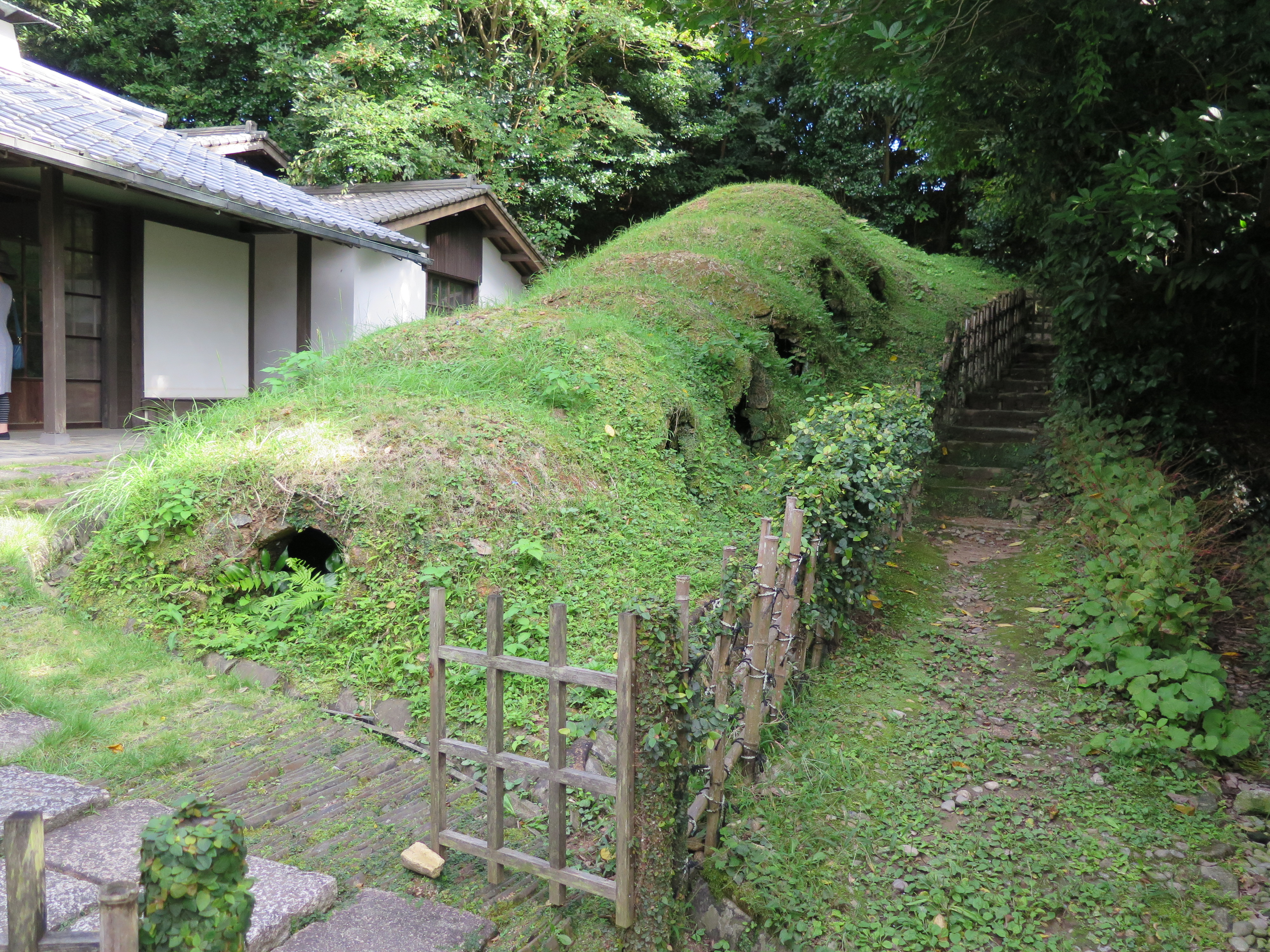
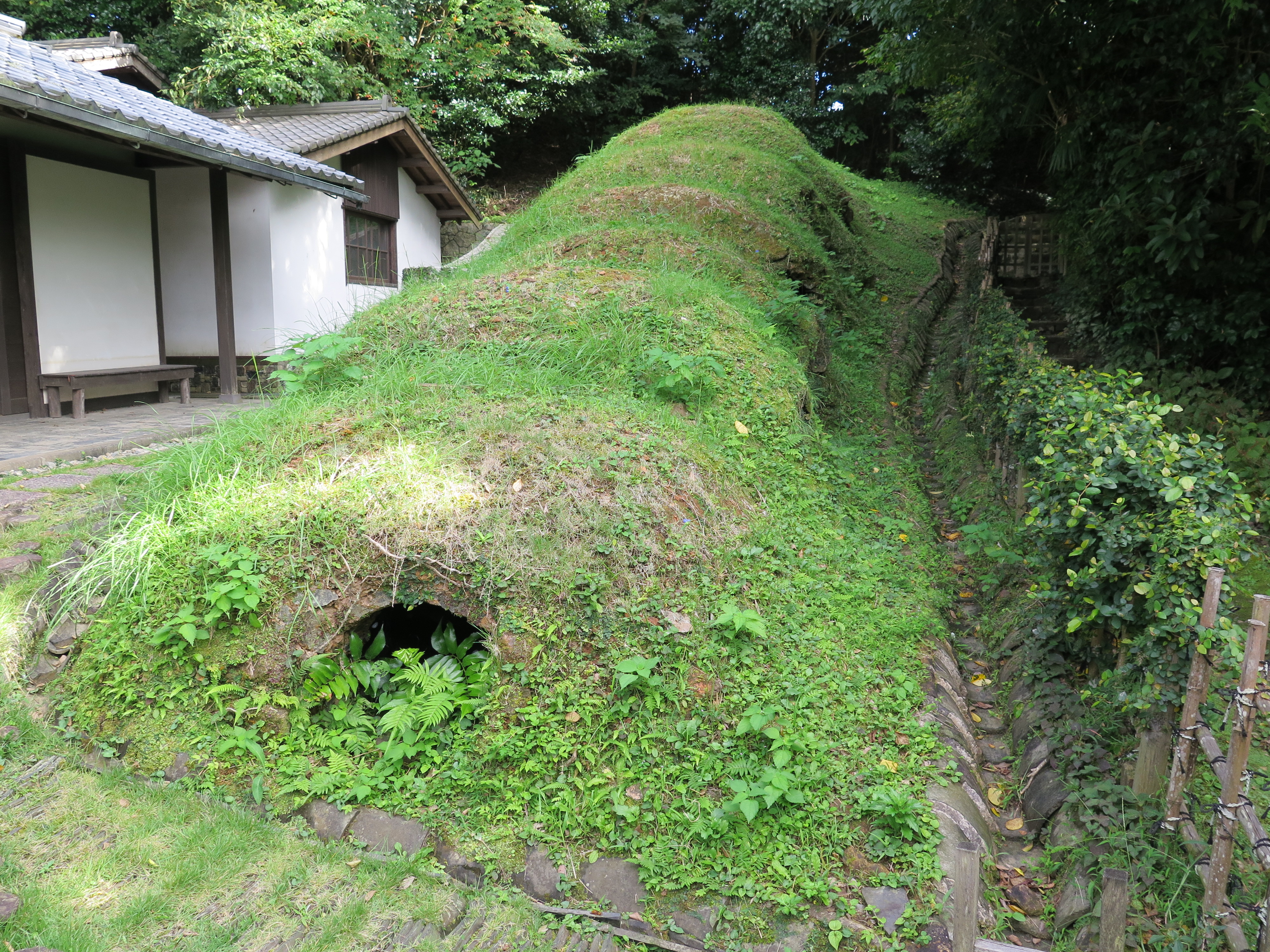
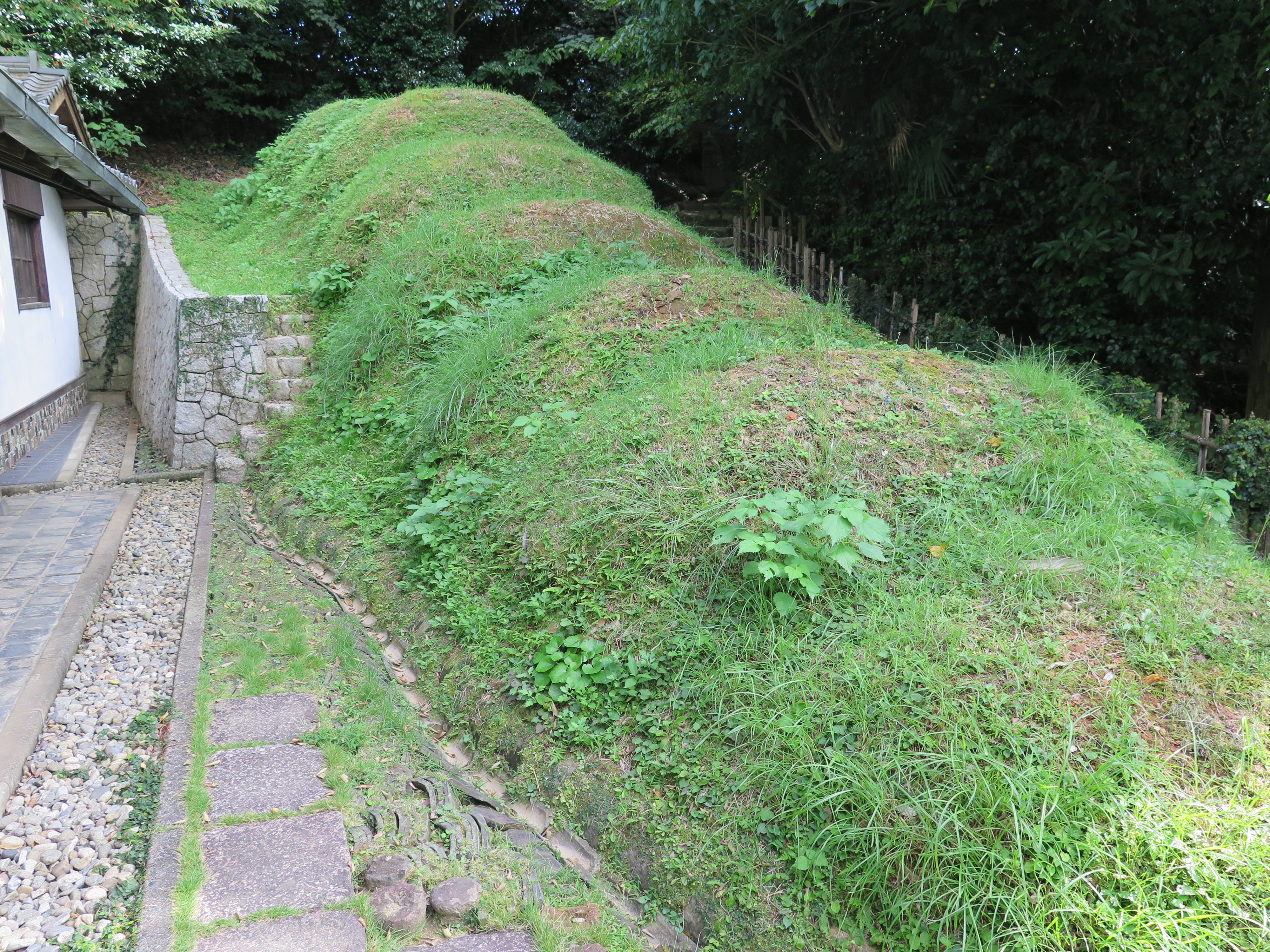
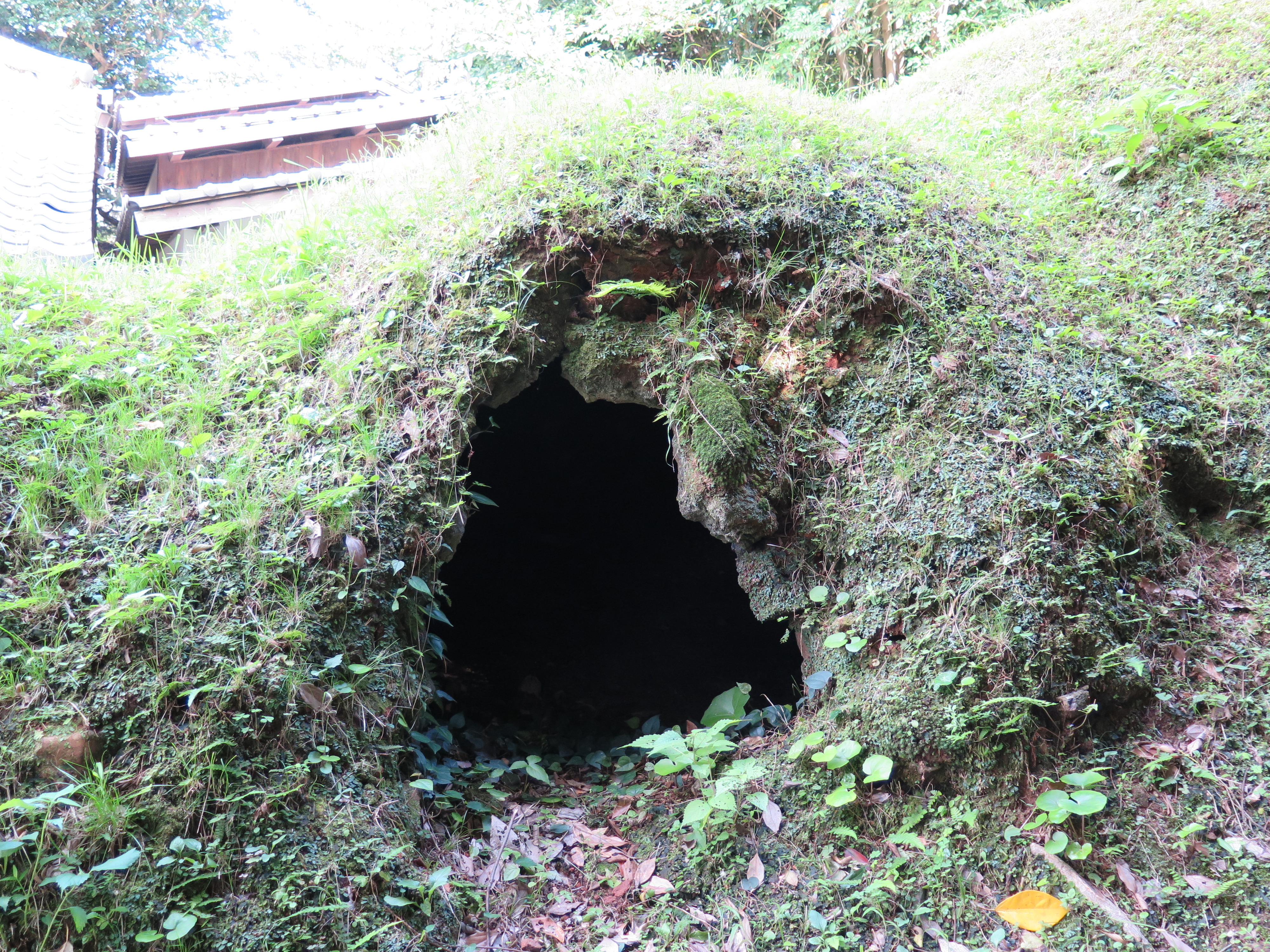
I decide to take a walk up to the old Izumiyama Quarry and visit the Folklore Museum that is situated just by its entrance. The upper part of the Kami-Arita street isn’t that interesting as most of the galleries and shops peter out towards the top of the hill and I’ve walked that way plenty of times. So I decide to detour off the beaten track and take a walk along the little stream and stroll what was once the old main street through the town. It winds and meanders its narrow way between the workshops, gardens and backyards, as it follows the course of the stream and its natural contours. There are several detours and by-passes, little bridges that take the walkway along the opposite side of the stream for a while, for no apparent reason.

IMG_0311IMG_0339

IMG_0338

These criss-crossings of the stream had their reasons in the deep past, but today just seem strange and quaint in a world of hi-tech engineering and straight lines conceived on paper and then engineered into reality, regardless of the local contours and conditions on the ground.

IMG_0329IMG_0330

IMG_0331

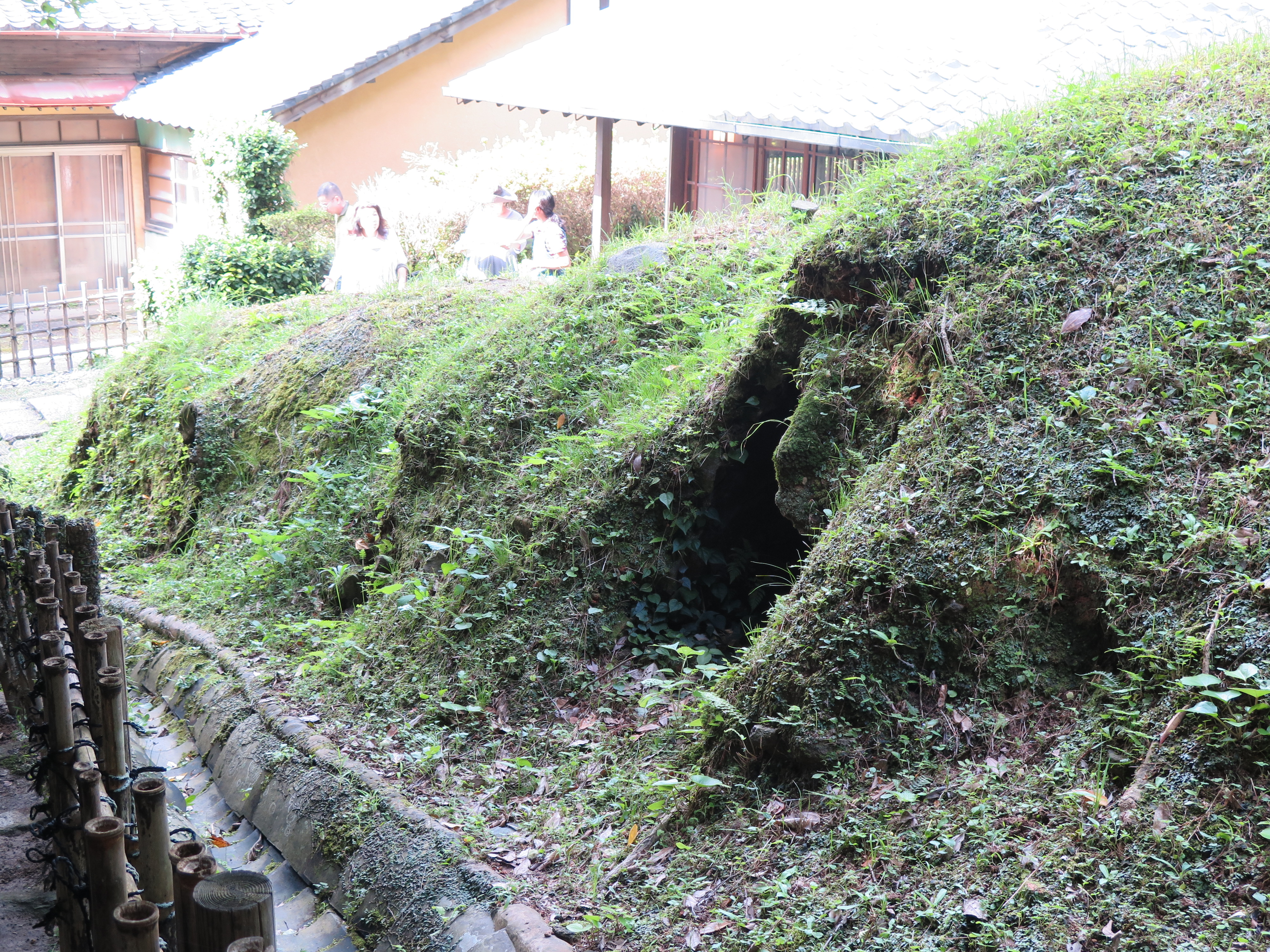
I really like the lovely, ancient, quality of the neighbourhood.  A lot of this area still has the old brick walls laid with mud called ‘Tombai’ walls. Tombai is the local dialect word for firebrick as a lot of the walls along this old road have been built from recycled

firebricks recovered from demolished kilns over the centuries. Their mottled surfaces variably shiny glazed, blistered and pock-marked from their years of productive work in the ancient wood fired kilns.

IMG_0321IMG_0322

IMG_0323

This old main road was little more than a walking track for people with baskets and hand carts and was so windy and convoluted that it was eventually replaced with a new road, capable of carrying traffic in the modern world. The old road remained because it wasn’t just a thoroughfare, but a vital constituent of the local economy, because all along the little stream, there were situated huge, water powered, timber stamp mills, called ‘Karausu-ato’ These mills were used for crushing the local porcelain stone that was the life blood of the local economy. At it’s peak, there were over two hundred and seventy of these water driven pounding mills, creaking, groaning and thumping their way through the day and night. siphoning water from the stream slightly higher up and directing it along leats to the mills, then discharging it back into the main flow to be used again lower down. In this way, the local economy was directly linked to the weather and rain fall patterns. There are no longer any working water-powered stamp mills operating along this stream. They have all been replaced by electrically driven machines. There are two of these mills preserved in the locality as educational tourists attractions. However, water powered clay crusher mills just like these are still in use in the pottery village of Onda, in the north of Kyushu.

see <“A Mecca called Onda” – revisited, for the first time Posted on 12/11/2014>

Not only are there no longer any water-powered stamp mills still working in Arita, but potters don’t do their own milling or clay prep at all anymore. That all finished a long time ago, with the specialisation of labour and business efficiencies. Just as all the pots are no longer thrown on foot powered, wooden, kick wheels, so all the clay for the potters of Arita is now made in just two large mechanised factories and one very small, husband and wife, family business.

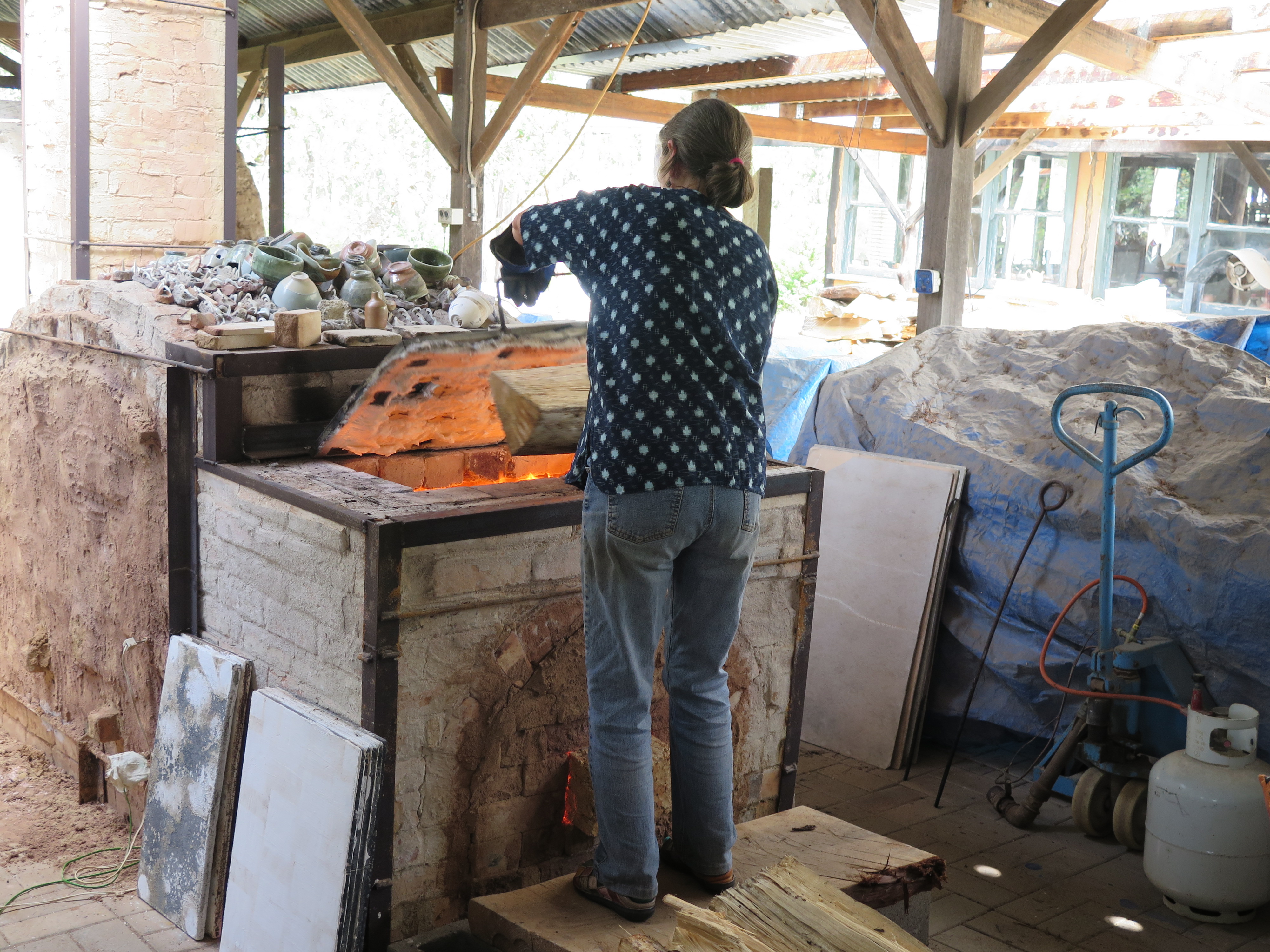
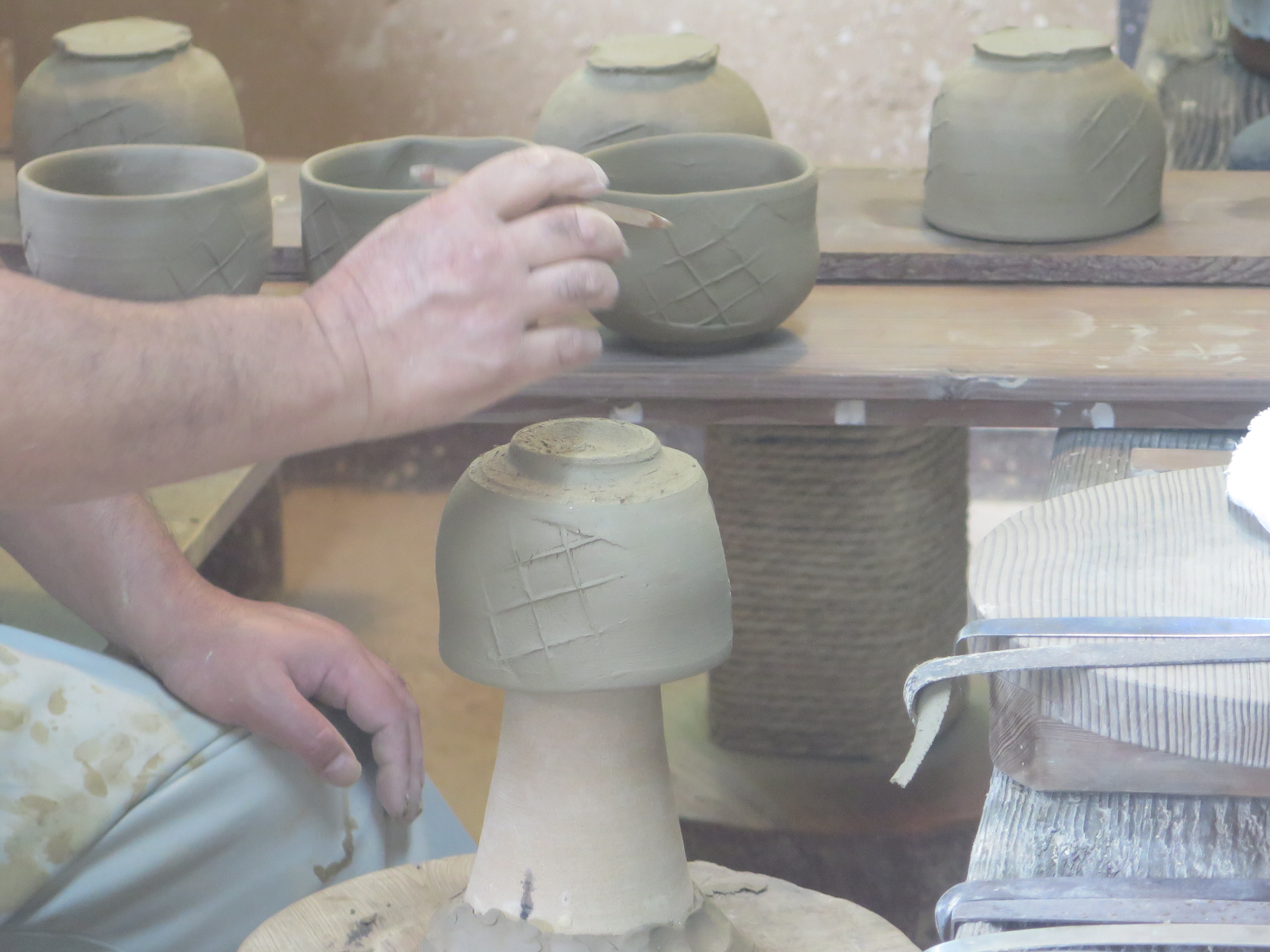
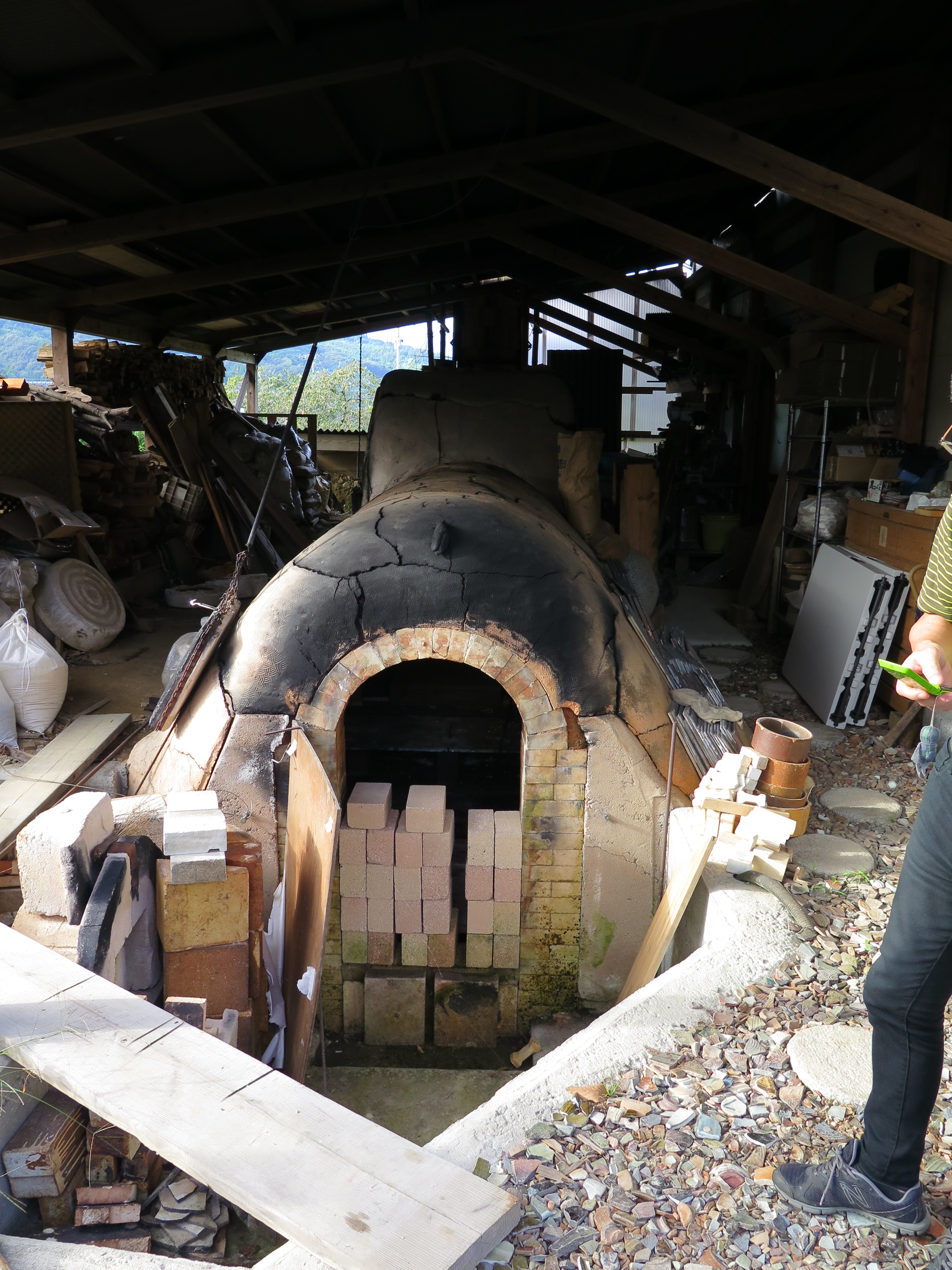
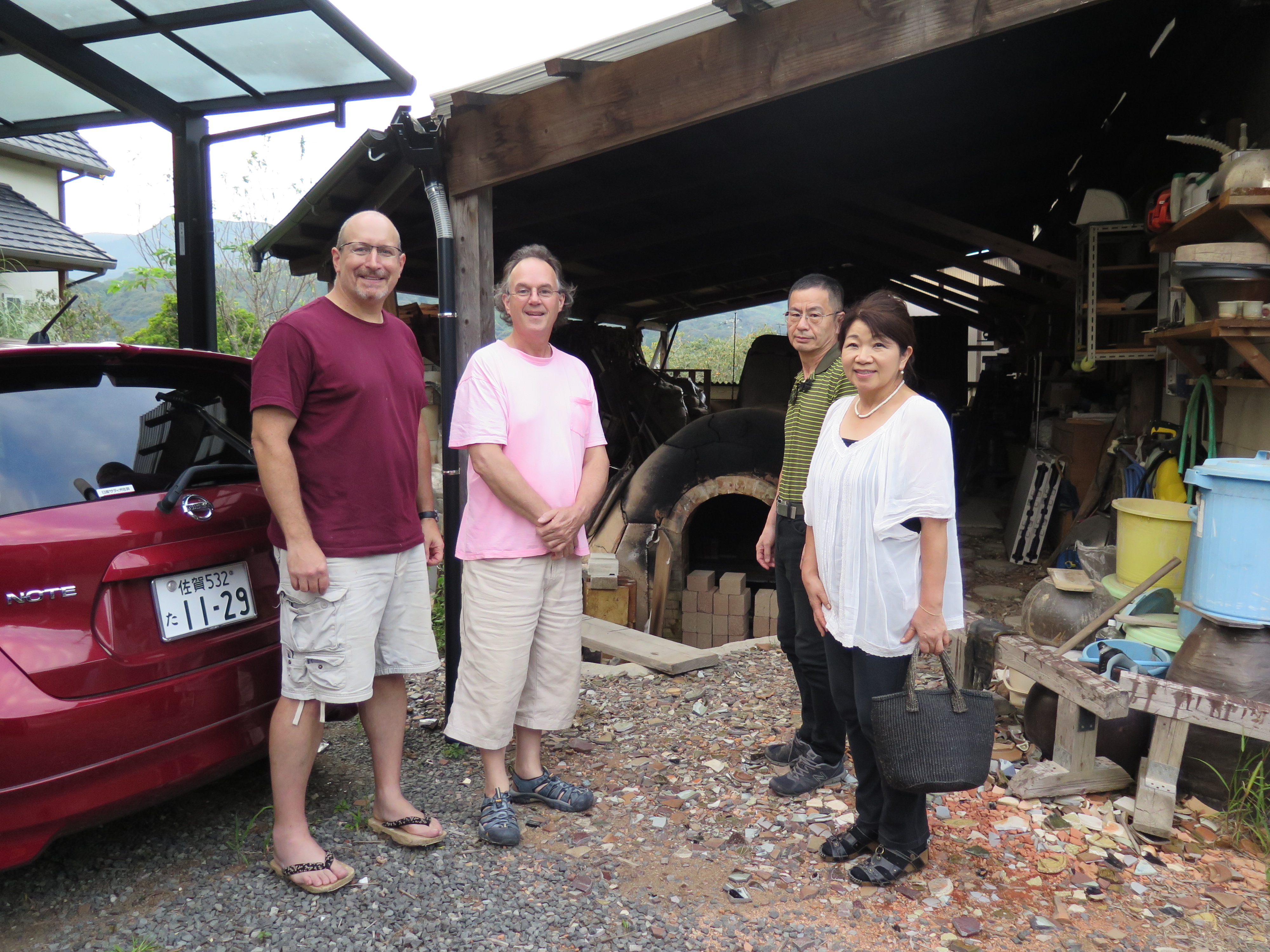
It looks like I’m the anachronism. One of the last guys standing who chooses to try and do everything for himself, from digging the stone, through crushing and grinding the minerals, then ageing the clay and then finally throwing the pots on an antiquated, wooden, foot powered, kick wheel. Then firing the pots in a wood fired kiln, that I built myself with my own hand made bricks and fired with wood that I cut and split myself.

When the people here ask me how I work and I tell them. They shake their heads in disbelief. One looked gob-smacked and  just said “No Way”!

I reply “Yes way”!

IMG_0132

The Temple Bell

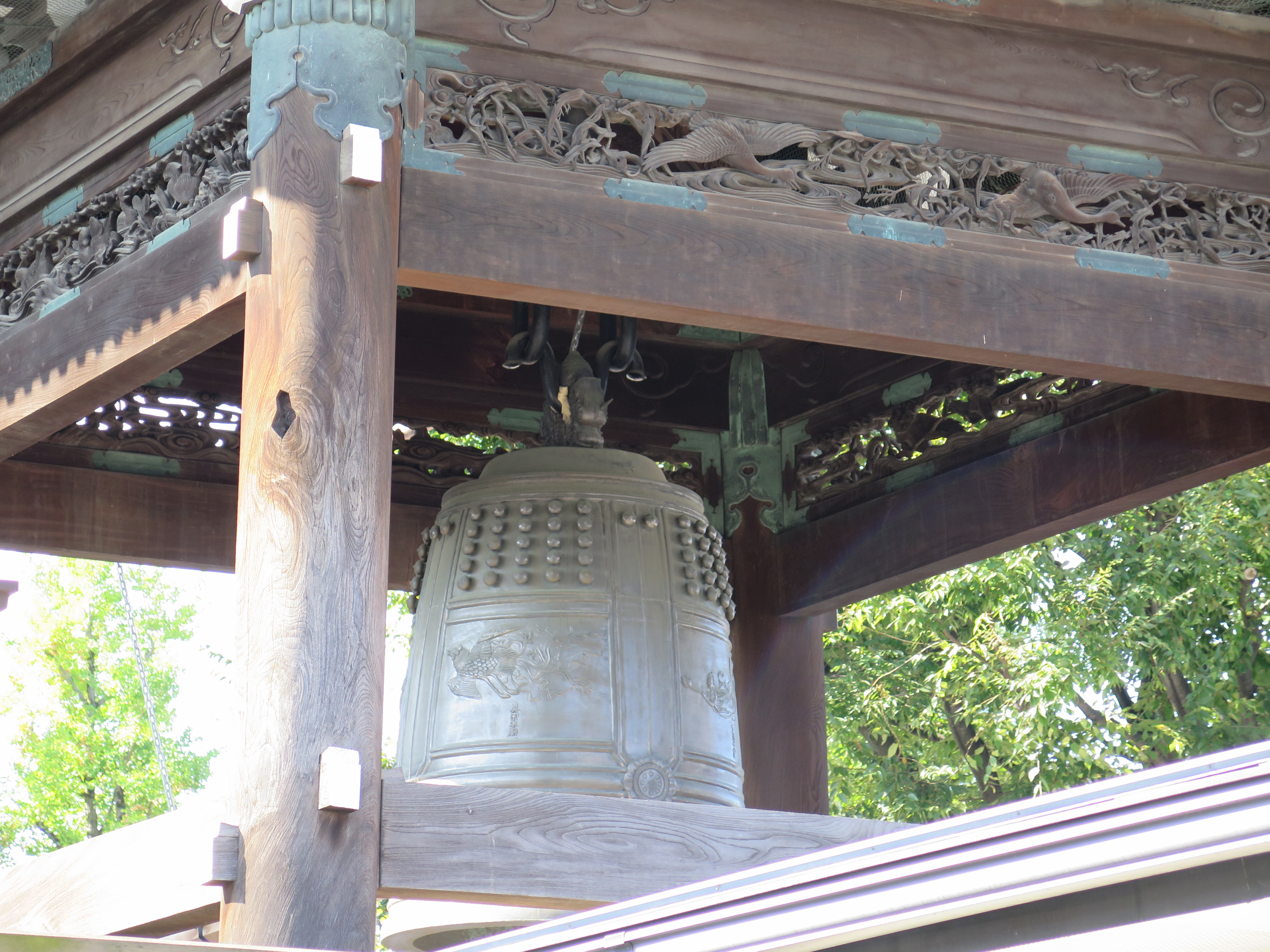
Every morning at dawn, the temple bell rings. It makes its first gong at 6.00am and then about every 35 seconds until ten past. The next strike comes just as the last one has died away. It is a very gentle way to be reminded that the day is about to begin.

Luckily for me, I live some distance from the temple. if I lived right next to the giant bell, I might have a very different opinion. I lay in bed and ponder just where this temple is. There a so many temples and shrines around here. Everywhere in fact. The streets and lanes are crowded with them. I have some idea of the direction of the sound. But sounds are funny things, so influenced by the surrounding buildings and the hill, that I’m not too sure if i’m hearing the sound directly or as it bounces off another building.

Today, I wake just as the dawn in breaking and the new pale light illuminates the shoji screens of my room. It’s 5.30 am. A while before the bell is due to ring this morning. I decide to go out into the street and listen more closely to determine where the sound is coming from.

IMG_0158

I’m up, washed and dressed. If I move fast, I will be able to find to source of the bell. It’s not that important, but I’m inquisitive. My instinct is that it will be coming from the higher temple, above the train line, up on the hill. but my ears have been telling me each morning that it is emanating from the opposite direction. I’m never really sure when I hear the first gong, but once I’m awake they enter my consciousness and become real.

I start by heading to where I feel that it has been coming from in the past. I have 15 minutes to find it before the monk starts his morning task. I walk down the street, I pass a gap between two buildings, there is a little lane way. I can see straight away that it leads up to some temple buildings. I walk up the lane as quietly as possible. I don’t want to disturb the Monk in his daily rituals, he might be meditating?

IMG_0267IMG_0257IMG_0264

When I get up there, there is no-one to be seen. The temple is beautifully kept. It has a raked gravel garden with some large stones. I still have several minutes before the first sound is due to ring. I take a moment to look around the garden and courtyard where the bell house is situated. We are quite well elevated here, above the buildings in the street. The sound would carry well from here. It’s not as hight as the other temple up on the hill, but high enough.

IMG_0261

Only a minute to go and there is no sign of anyone around. Suddenly the sound of a bell sounds out. It isn’t this bell at all. I was completely fooled. I could have sworn that the sounds were coming from the direction of this temple. I head off down the lane and out into the street. It must be the hight temple then.

I head off in that direction, up the street, then up the side street towards the temple. Just then it strikes again. I’m completely wrong! What’s happening?  The sound is coming

from the other end of the street now, back where I just came from. I turn and hurry back with as much dignity as I can muster, as I rush down the street, back past my place and further down the hill towards the sound. I want to get there before the monk or priest finishes his work. I only have 10 minutes max. to find it. Of course, I could always try again tomorrow morning, but I’m up now and on the job.

IMG_0267

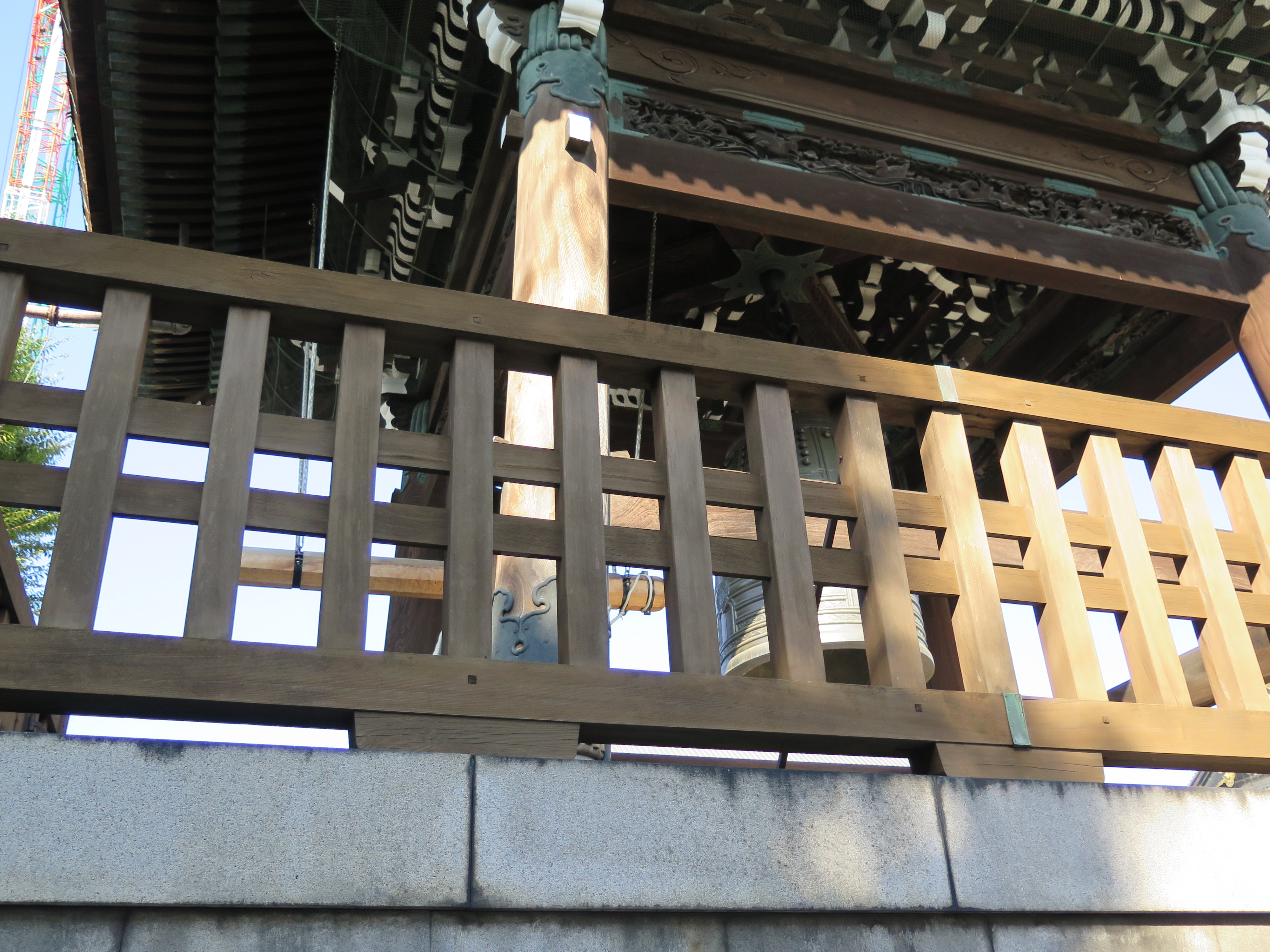
The sound is definitely coming from here. I walk up the lane and there it is, right in front of me. As I approach, the bell strikes again. Actually, that is wrong. The bell sounds as the log that is suspended on 4 chains swings back and strikes the bell, producing that marvellous resounding gong sound. I can’t see the monk in  underneath the supporting structure, so I walk around the garden wall to

IMG_0260

where I can see the bell house most clearly. There is no-one there!  As I watch, the log swings back and strikes the bell again. It is an automated system, run mechanically. I have to say that I’m just a bit shocked and disappointed, for some reason, I was sure that there would be a person here doing some sort of ritual daily devotion.

So now I know, or at least I think that I do, but what do we ever really know? There are two temples and two bells. The first strike seems to come from up on high, then all the subsequent rings are from the lower one.

I’m sufficiently satisfied with this explanation to go home and prepare my breakfast of unsweetened natural yoghurt and fruit. The day has begun. No time to dally. There are porcelain bowls to be turned using my new hi-tech, tungsten carbide tipped kanna turning tools. If I have no problem adopting this brand-new technology for my work to make my life easier, then why shouldn’t a monk do the same?

Oka-No-Mi-Yaki

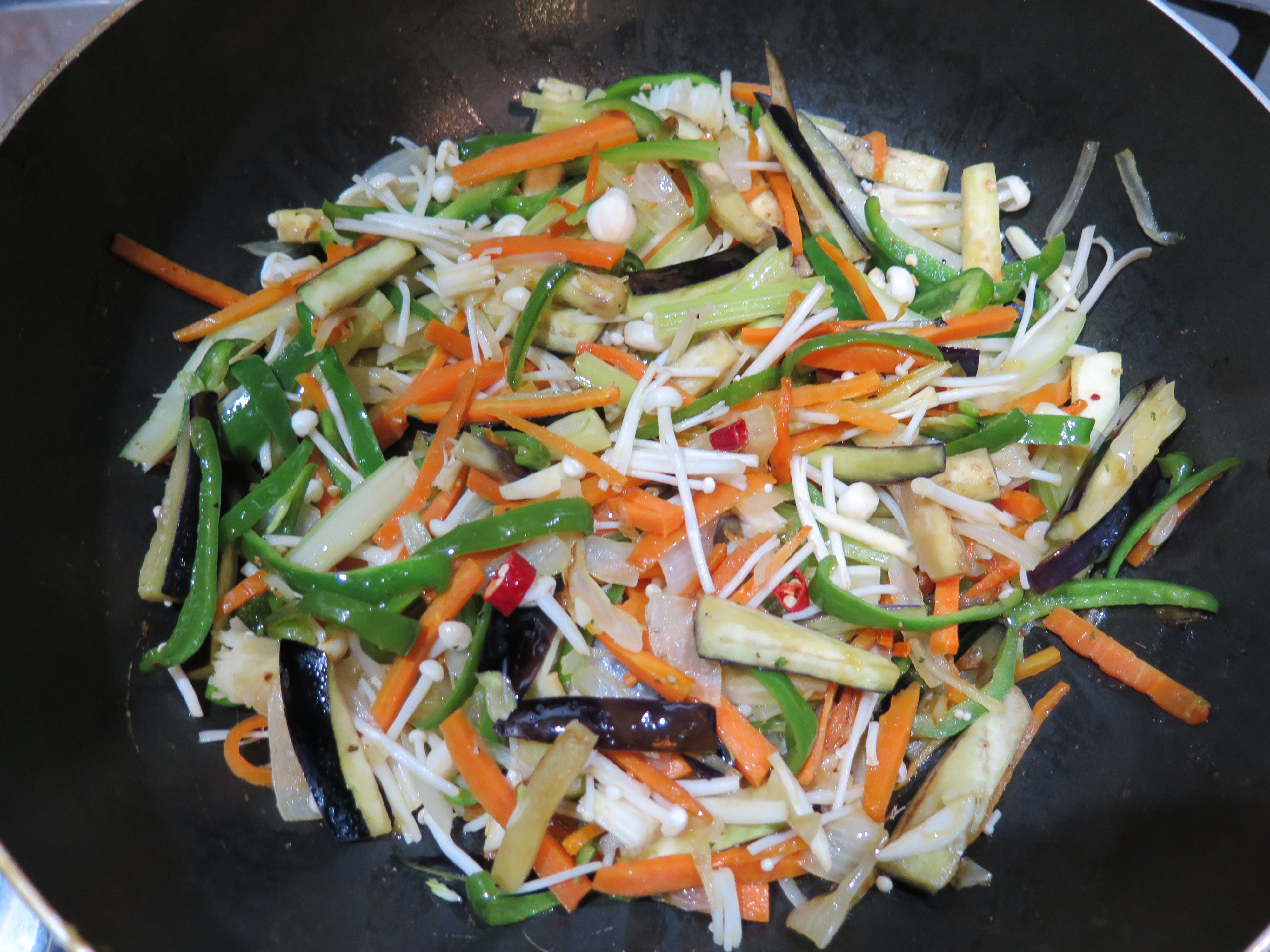
I’ve just finished working on my stretchy stick, ‘nobebera’, and now the mossies are driving me inside. It’s time for dinner and I have most of the makings of an okonomiyaki pancake on hand, but I’m going to make an  Oka version.

IMG_0303

Okonomiyaki is an interesting compound word, that has come to mean ‘pancake’ in common parlance, but if you break it down, okonomi can mean ‘your choice’, and yaki can mean ‘cooked’. So it has come to mean that you can make a pancake out of what ever you want to put in it.

I like that kind of recipe. I don’t have all the things that usually go into an okonomiyaki, but it’s my choice, so I will use what I have. Plenty of vegetables, held together with a bit of egg.

Okonomiyaki, can also mean ‘a stupid thing, of, my, pottery’. This could be a term used to describe my meagre efforts on the potters wheel here in Arita, so I have an affinity.

It’s quick, it’s fresh and it’s reasonably healthy. What more can you ask? I don’t have some of the normal essentials here in my tiny kitchen. I haven’t bought any mayonnaise and I don’t have any Japanese ‘tonkatsu’, BBQ style sauce, or any nagaimo, long yam root, but as the name implies, it’s my choice so I have what I want.

What I really like about this is that, apart from being really tasty, it is a one pan meal, so just right for my tiny kitchen, and so little washing up!

IMG_0304IMG_0305

IMG_0306IMG_0307

IMG_0308

This could be enough for 2 helpings, but I manage to eat it all. I even have some bonito flakes to put on top. I love the way that they quiver around in excitement at the thought of being eaten! They know that they are delicious.

Itadakimas.

from Steve in Arita

Te sukuri nobebera

The hand made stretchy stick!

Following on from my visit to the maker of Kanna turning tools and other wooden pottery tools. This afternoon, I have just found the time to make my commitment to my new hand-made stretchy stick. An implement used here for throwing the inside of open forms. This particular one is specifically made for throwing and opening up bowl forms, stretching them out, as it were. So why would I want one? 🙂

IMG_0297

It was impressed upon me at the time of purchase that this tool is a partnership for life. A tool made of superior, old, well seasoned, azalea wood, that will last my whole lifetime if looked after, but it needs to be customised to my hand and my feel for the clay, then adjusted for my technique and the specific bowls that I am making. I will probably end up needing several of these tools in various subtlely different iterations. I may make some of my own once I have got used to this one, and if I find that it can be accommodated to my own preferences for throwing. I have plenty of fruit tree pruning wood at home, some in reasonably large enough cross-section to be useful for this application. I also have some very old, well seasoned, red grained, eucalyptus. That might be good to experiment with?

IMG_0296

This afternoon I went to the hardware shop and had a sort of conversation, if you can call charades with funny noises a conversation? I don’t have sufficient vocabulary for this situation and they didn’t have much English, but together we managed to laugh our way through all the options until we arrived at the objective which was sand paper. If I were at home, I have all this stuff on tap in the workshop, but here every little job, becomes a much larger exercise in communication and perseverance, as well as good will and humour.
I ended up buying two sheets of sand paper. No. 60# and 240# mesh, to sand my new nobebera, This tool looks like a shoe-horn sort of shape.
I spent 2 hours working on it, so that it would fit my hand better, and now it’s looking and feeling pretty special and a lot more comfortable. Smooth as glass. This old seasoned azalea wood is really tough and hard to work. I wasn’t expecting it to take 2 hours, but it did, and it isn’t finished yet.
After I was reasonably happy with the fit and contour, I wet it and let it dry to rise the grain. Then sanded it all over again with the fine grade paper, to get it very smooth, so that the raised wood grain won’t leave streaky scratch lines inside the bowl during throwing.
I need to throw with it for a few hours to get a better feel for what else I need to do to get the best out of it. Once it was mostly right, or as right as I can imagine to begin with, all the roughness sanded off and the tip smoothed out, made silky smooth and with an even curve. I gave it a thin rub over with some olive oil to finish it off ready for some work. It looks and feels good. When you buy these tools from the maker, they are only roughly shaped and need a lot of finishing to bring them up to your personal preference for the precise shape and finish.
IMG_0301
IMG_0302
Tatsuya san took me to the maker’s workshop last week and chose what he thought was the best one for me. He also drew on it with a pencil, to indicate what he thought should be the correct finished shape.
It was $50 bucks and not even finished!
IMG_0098
IMG_6304
IMG_6305
Tatsuya demonstrated using his when we were there at his place this time last year and he threw for us. He has had his for the 40 years that he has been a potter. His are nicely wabi,sabi now and well-worn in. The azalea wood is very hard to sand. I can tell that it will be a good, hard-working tool with a long life.
Thank you Tatsuya. I am grateful!
Best wishes from Steve in the very special porcelain town of Arita

The Closest Thing to Perfect

I’m at the wheel, turning my bowls in the workshop, when two Japanese lady visitors come in to see what is going on. They come over to watch and start to ask questions in local, rapid fire Japanese. I can’t make out a word of it. It’s all too fast for me. I respond that I’m a potter from Australia and just here for a short time to study Arita porcelain techniques. I apologise for the fact that I can’t speak Japanese. They can tell straight away from my appalling grammar and strange accent that I can’t speak Japanese, but I’m apparently doing it well enough for them to look quizzically at the workshop manager and ask. “If he says he can’t speak Japanese, how come he is telling us all this in Japanese”? He explains to me what they have just said and we all get a good laugh out of it.

Today I had some time, as my last batch of pots are not dry enough to turn as yet, because it has been raining almost every day this week. I use my spare time to go out to visit the Gen-emon kiln studio. This is the last and only workshop that still does everything by hand.

IMG_0200

The pottery was founded in 1753 and has been producing exquisite multicoloured porcelain ever since. They have worked continuously on this site since 1868, and the earth floor looks the part. I believe that these floors are made from a pounded down mixture of local sandy/gravelly clay mixed with salt.

IMG_0215IMG_0216

The forms are all thrown and turned by hand on the wheel. I spent an hour there watching the thrower and the turner completing one form each. Everything is measured and then measured again. Everything is made to the most exacting standards, precise measurements are consulted for each part of every piece. All aspects of production are measured and checked, then rechecked, at every stage. Once the pots are finished, they are placed in the drying room to wait for the bisquet firing.

IMG_0222IMG_0208

The turners precious tungsten tipped Kanna turning tools.

After the bisque firing, all the glazing and decorating is also done painstakingly and laboriously by hand. The decorating is quite complex. The initial design is roughed out in pencil, then laid out on the surface in brief detail in charcoal. Then it is passed to the decorators for the heavy line work, then the lighter line work, finally it is passed to the infill specialist, to complete the design by filling all the otherwise white, blank space with a dilute cobalt wash, as required to fulfil the pattern, leaving specific parts of the design in micro-detail left blank and therefore still white. It is an amazing skill to see done. The huge, heavily loaded brush, is filled with dilute ‘gosu’ pigment of cobalt.

IMG_0197IMG_0199

I count 11 people busy working in the decorating room while I’m there.

Gosu used to be a natural cobalt ore, consisting mainly of iron and manganese, with just a little bit of cobalt content. The cobalt being such a strong colourant, that it over powers all the other oxides in the ore and still turns out blue. A soft blue admittedly. This is so much more preferable to straight 100% pure, modern cobalt oxide, extracted chemically from its complex cohort of other minerals. The older natural ores were a very impure blend and because of this, they tended to be a rather softer and washed-out tone of blue. These days potters like this tend to mix their own dilute cobalt pigments to break down the intensity of the royal cobalt blue.

I have discovered cobalt bearing ores where I live, and they are only 1 to 1.5% cobalt with twice that amount of manganese and a load of iron. The remainder being silicates that make up the ore. They give a soft pale blue pigment. I can imagine that the original cobalt ‘Smalt’ or ‘Gosu’ pigments were very similar materials to this?

Here the fully loaded huge ‘fudo’ brush just keeps moving, never stopping, working its way around the surface of the pot, draining it’s precious contents of gosu into the design in a carefully controlled and steadily flowing movement of the brush. It’s just like magic, it is an amazing and very impressive skill, every drop goes exactly where it is intended. It never overlaps where it shouldn’t go. Years of practice have gone into this level of achievement. I’m beyond impressed, I’m gob-smacked. I’m amazed that it can be done, in what appears to be such an effortless way.

I want one!

The glaze firing is done in a huge, single-chambered, wood fired kiln. It was told that it takes 1000 bundles of wood, at $7.00 dollars each, to fire up this big kiln. I’ve double checked the details, and this is the correct figure, or what I’m told is the correct figure. I find it hard to believe that you can spend that much on fuel on one firing of a kiln. No wonder that the prices are so high.

IMG_0232IMG_0191

IMG_0193IMG_0192

However, when I get into the gallery/sales room. it’s another matter. These prices are not for me. They start in the thousands. I’m completely out of my league here. The work is so impressive and so complex and the closest thing that I can imagine to perfection by hand methods. I’m absolutely convinced that these pots are worth every cent of the price. It’s just right out of my budget, for me on this trip. I eventually find a tiny dish that I can afford, in single tone blue and white. It’s tiny and exquisite and I can afford it at $35!  I can’t see anything that I can afford in 4 colour, over glaze enamel and under glaze cobalt, with a final firing of gold detailing.

IMG_0243

IMG_0234IMG_0235

It’s all pretty impressive, and I’m so glad that someone is still doing it, and even more glad that that someone isn’t me! I really admire the skills, I just don’t what to be the person doing it. I’m even more impressed that they can get the high prices that they are getting. They need to, to be able to employ all these amazing craftsmen and women.

Good on them!

IMG_5903

Unless I had seen it done with my own eyes. I wouldn’t, couldn’t believe that it were possible to paint the negative space out like this in straight lines, without using some sort of resist to keep the pattern so clean, perfect and regular.

IMG_5905

Eat Your Heart In

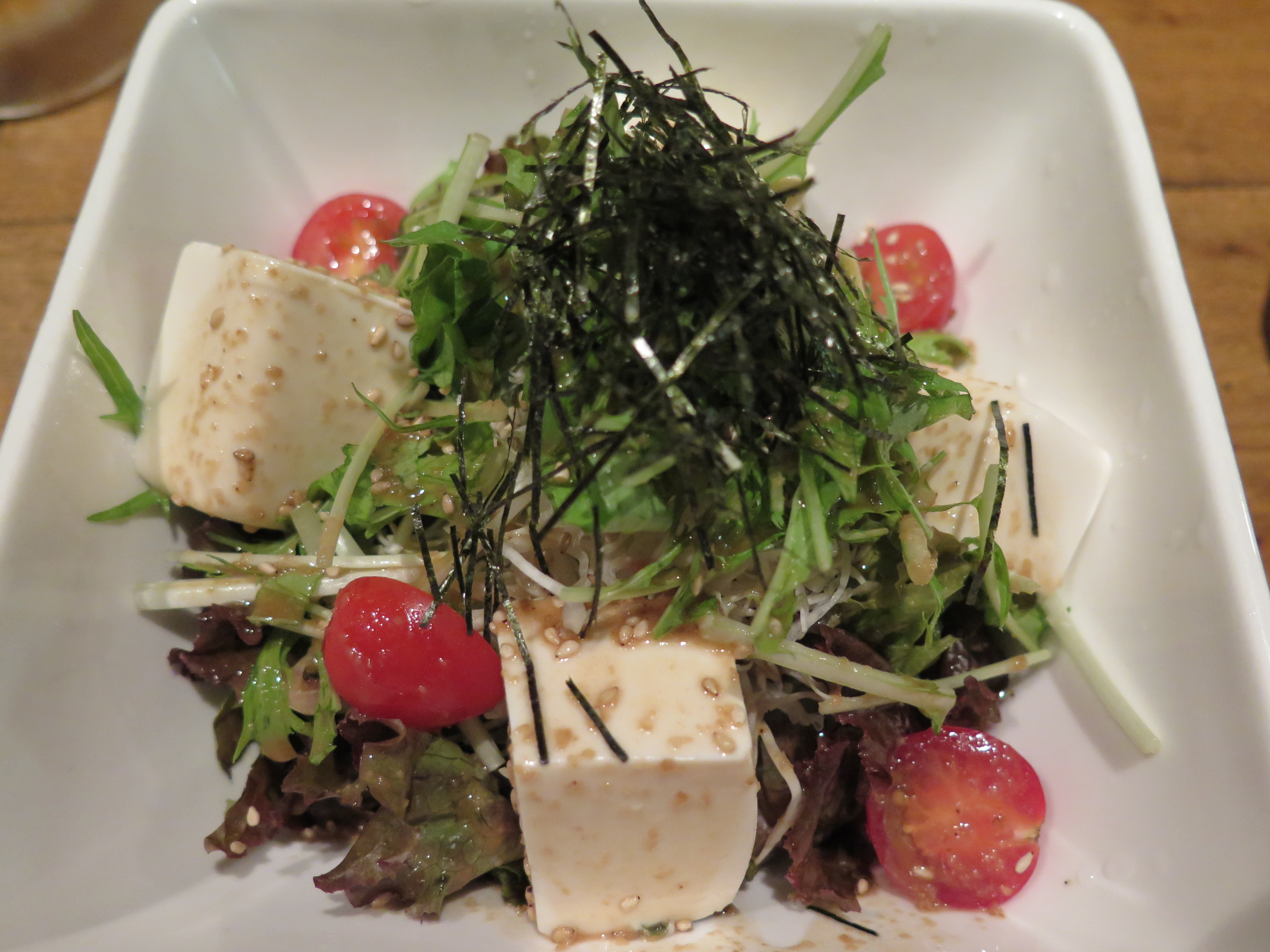
It is very easy to get used to the food here. For a start, everything is delicious and it is usually so well presented. It looks as good as it tastes. It the past I have found a little difficulty in finding somewhere that will serve a salad, most light meals seem to involve rice, noodles or something deep-fried of some kind. However, on this trip I seem to have no problem finding straight salad on the menu. Is there some kind of change going on here now? Or am I slow to figure these things out?

IMG_0044DSC01401

My main way to obtain a salad has been to go to the 7/11 or Lawson and find a  bag of shrink-wrapped, pre-shreded, cabbage salad in the fridge section. Cost $1 for what I think is a single serve, but may be intended for a family of 4? I have no problem putting it all away easily enough. Another favourite is sashimi, and this is always readily available in the supermarket fridge, fresh packed daily, at about $3 for 4 or 5 slices, or a larger tray costs $6 for 10 to 12 slices. All nicely arranged on a tray with a couple shiso leaves and some grated daikon and carrot. A healthy and nutritious light meal for $4.

IMG_0063IMG_0064

When I eat out, which isn’t often, I always choose the cheaper places. Even so, the food is always so beautifully presented. While the interactions with the people are always so friendly, engaging and ever so polite.

DSC01399DSC01402

I feel so inadequate and clumsy here. I don’t know all the rules and feel like a baby elephant crashing through sensitive cultural barriers without noticing and then shitting on the floor. But what can you do? I’m learning on the job as it were!

There isn’t much that I can about it either, except apologise. I do a lot of that these days. I’m enjoying myself, even if my hosts are finding me somewhat trying.

My supermarket supplied dinner for tonight. As I’m a ‘chunga’ here at the moment (bachelor). This kind of dinner is easily obtained, cheap, nutritious, fresh, and healthy. It’s just right for me at the moment in my unsettled circumstances.

IMG_0185

The only processed food here is the natural yoghurt.

Lots of vegetables with some fish, is thought to be a very healthy diet. The Japanese are some of the healthiest and longest lived people on the planet, particularly the women. So something is right! Is it genetics, or is it the diet? Only time will tell, as younger people are adopting a more western diet and lifestyle.

This is pretty close to what I would be eating at home. Except that at home, all the fruit and vegetables would be home-grown in our extensive vegetable garden and orchards.

Best wishes from Steve in Arita

The Taste of Water

I have been in Japan for a while now, continuing my studies into single-stone porcelain making.
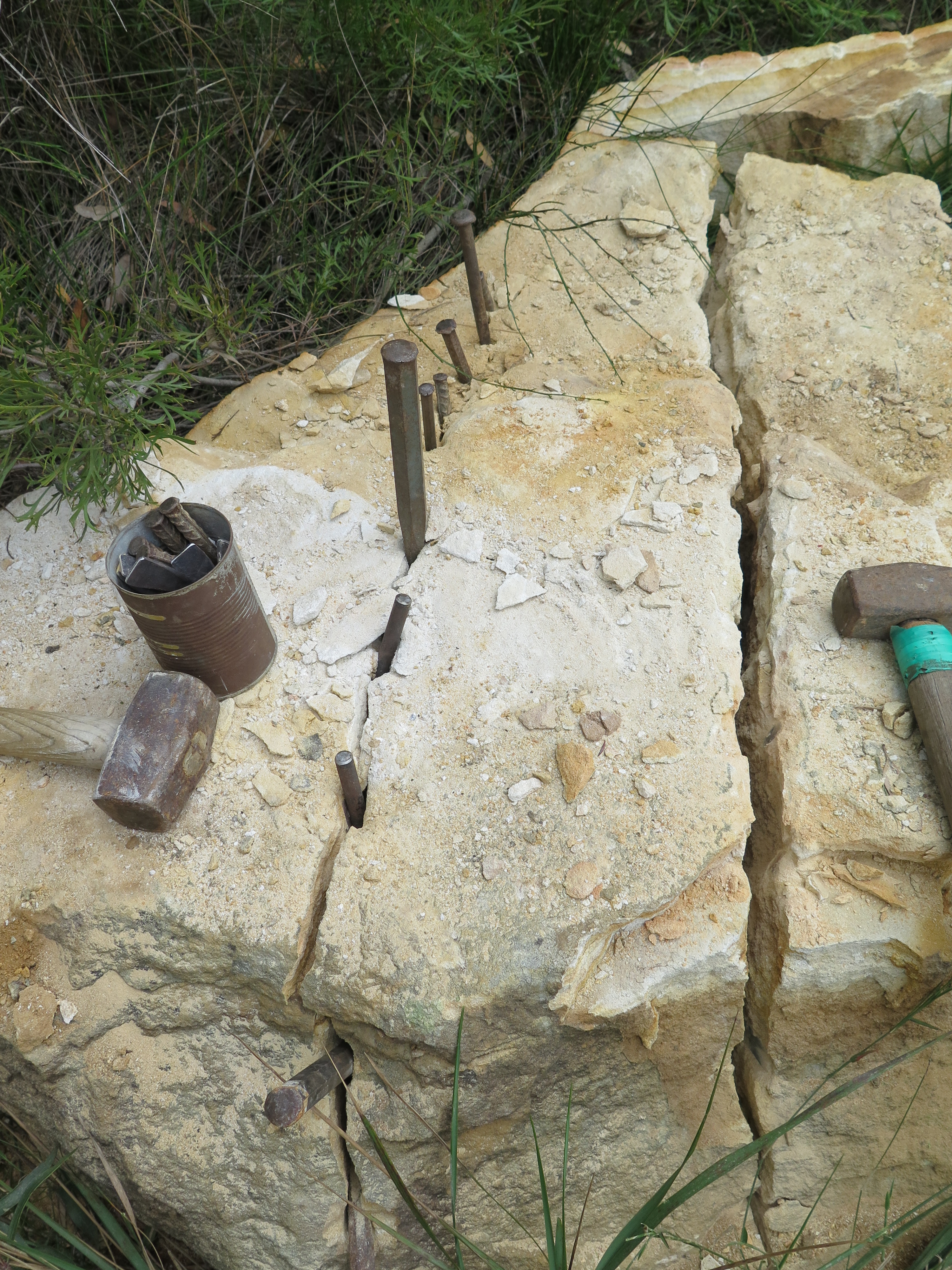
I have made my way from Kyoto, where they make amazing porcelain, and am now heading down south to Kyushu. Another place that is known for its porcelain. This is the home of the Izumiyama mountain and its rotten, read kaolinised, porcelain stone. They have been making porcelain from this local stone here for 400 years. In fact their 400th year birthday celebrations will be held next year. The local mine is all but worked out now, with all the high quality white material all quarried out and safely stored away in reserve for the family that makes the Royal dinner-ware for the Emperor and his family.
IMG_5700
There is still plenty of yellowish, iron stained material left here. If I lived here, I’d be using that low grade stuff and firing it to a bright crimson flash in the wood kiln, but they don’t seem to value that look, or they just don’t know about it. I suspect that they do know all about it, but perhaps it just isn’t thought to be a good look here? But I love it!
I love the way that the red flash develops on my supposedly white porcelain clay. It contrasts so well with the perlucent blue proto-celadon. Especially when it is off-set by some jet black carbon inclusion from the intense reduction in the wood fired kiln. Anyway, it doesn’t matter, because I don’t have my kiln here to make this kind of pot. That is for me to do back in Australia. Here I’m a cultural tourist, taking it as it comes and learning what I can as I go.
DSC_0012
The quarry site is now a Preserved National Monument and protected from further extraction. It’s all a part of the local and national history now, and like all National Parks, it will be worth more in the future as it is, than the clay value of the low grade material that remains.
The current supply of single stone porcelain now comes from a couple of hours south of here, from near Kumamoto, and is called Amakusa stone. There are three grades in use here in the potteries. A low grade yellow, ground stone body, that is quite short and a little difficult to work with. It requires some patience and understanding to coax it into shape. This body is almost just like my own milled rock, native porcelain stone body, that I collect and mill at home in Australia. This being the case, I have no real problem working with it. It is just so very familiar to me. An ocean away and another island, but so, so, similar. This body is used by all the commercial potteries for their standard production. It isn’t really translucent and fires greyish white.
IMG_0091
The second grade, which is used by all the better workshops for their production and some artists work, is a creamy off-white and fires almost white. It has reasonable plasticity as porcelains go, I found it easy to throw to a fine finish. It shows reasonable translucency when thrown and turned thin.
The highest grade is very white and quite plastic as translucent porcelains go. It is very translucent and fires ultra-white. It is a very good blend of plastic kaolinised material and flux materials. I can tell that there isn’t too much stone in this blend. I really like it. I wish my clay was this white and plastic. It’s hard to come to terms with, I can’t imagine it, after all these years of working with my own iron-stained, plasticity-challenged, hard, milled, native stone porcelain body. Short, tearing and crumbly. This stuff here is really great.
IMG_0149
I’ve been visiting a few potteries and looking at what they make and how they do it. Of course nearly all the production here is pressure cast. But it’s the hand worked studios that I’m more interested in. The production outlets here sell their product for next to nothing. I don’t know how they can stay in business? They sell small cups, dishes and plates for $1 or $2 each. Unbelievably cheap. Insane prices. Today I saw 500mm. dia platters, in decorated white porcelain, on sale in huge piles, for just $42 each.
IMG_0125IMG_0127
This couldn’t possibly pay the gas bill, never mind pay for porcelain clay, rent, or wages! One explanation is that they get their gas very cheap from some far away place that is stupid enough to sell their exports too cheap – Australia!
I’ve watched some of these potters work with this high-grade, ultra-white, stuff. Their workshops are very clean and neat, as you’d expect. The pace is measured. They throw quite thick, but then spend a lot of time turning. They trim both inside and out. It results in a very fine finish and absolute accuracy. They use profiles in both throwing and turning to gauge the form precisely. In one workshop, they even weighed the individual pieces as a final check of accuracy. I’m enthralled, I’m amazed, I’m incredulous. I’m just a little bit appalled. Why waste your life competing with a computerised machine. The machine always wins, John Henry!
IMG_5882
I just don’t want to work like this. Not to this level of perfection. I’m quite imperfect as an individual. I feel that my pots should reflect this imperfection, this quality of humanity. I’m sure that there are machines that can do all this better, quicker and cheaper. However, what I have already come to terms with after working here for only such a short time, is that I’m a complete amateur. I know so little. What I have discovered for myself after 40 years of intensive practice at home in Australia, isn’t even a pimple on the arse of the knowledge base here.
I look at what I am making, the finish that I’m getting, the slight finger marks and wobbles in my forms. Suddenly it has ceased to appear as ‘character’, a gently imperfect, human creation, but rather, just plain naive and childish, and not in a good way, almost crass in its incompetence. I can see that I’ll have to get stuck in and remake all these pots, if I want anything at all to take home and feel justified in showing anyone this work from my trip.
I use to feel that my work had it’s own particular flavour, but now I realise that it is the flavour of water.
That’s it for now, from Steve in Japan

Stalking the wild Kanna

I came to Japan with a few projects in mind and as my stay here develops some of my plans have fallen into place, while it has become apparent that others will not be achievable on this trip. But there will always be the possibility of another time?

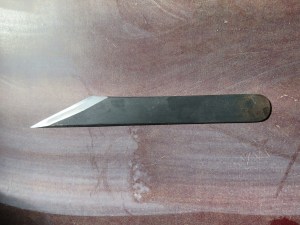
One of the little side projects that I had in mind was to buy some ‘kanna’. Kanna is the Japanese word for sharp edged tool, so it can be applied to razors, knives, wood working planes as well as potters turning tools. In particular, I’m here to find the source of the very special and quite rare, tungsten carbide tipped turning tools that the porcelain potters here use.

I have tracked down and visited 4 potters supply shops now, I find something of interest in each one. Today I followed a lead up into the hills to find a small workshop where I’m told that there is a man who actually makes the tools from scratch. I’ve been lucky enough to meet someone, who knows someone who can take me there

My guides took me to visit this special tool maker in his workshop right up in the hills, into the next provence. In a small shed in the bush, down a little lane, in a gully, under the huge concrete pylons of the freeway, that passes straight over the valley. Finally I have found the unremarkable workshop of the humble tungsten carbide turning tool maker. It’s a small unprepossessing shed. You wouldn’t look at it twice, and it’s ever so small to boot. No signage, no identification. You just have to know!
IMG_0103
We go in and straight away I can see that this is a real metal workers workshop. It has the taste and flavour of metal all about it. The types of machines, the black metal dust on the floor. The smell of burnt resin binder on the carbide cutting disks. It all seems, looks and smells  so familiar. Parts of it could be my metal working shed. So I finally get to track the shy and elusive, wild Kanna to its source. So this is it’s natural and unspoilt habitat. Don’t know what I was expecting, but it wasn’t this. Something corporate, larger and more commercial/industrial. It all seems so humble and small scale and it is!
IMG_0100IMG_0099
This is Japanese artisanal work. The sort of thing that is slowly dying out here. At least it has lasted this long. I am a very lucky man to get here now. In this place and this time. I am grateful. This lovely man is quietly spoken and very humble, as far as I can tell with no language to communicate with at a deep level. But you can sense a person’s character from their demeanour, even without words. I only have greetings and platitudes. I’m so glad that I have my friends and guides here to translate for me. Because I want to know more about the process and how he works.
IMG_0101IMG_0102
Apparently this workshop is only open in the mornings. After that he has other things to do?? Maybe a second job? or out on the road selling his wares, because not too many people will find him here in the this unmarked shed on an unsign-posted lane, out of the way from a small town. Although people in the know do find him here. While we are there a young girl drove up with two tools she bought a while ago. She wants them re-sharpened.
I looked through his boxes of stock and find two tools that will be of use to me. it’s a bit difficult for me, because firstly, I’m left handed and secondly I work in the reverse rotation to the Japanese style. So not all tools will be suitable for me. I can commission some to be custom-made, but this won’t be necessary. I can find everything that I need in symmetrically shaped Kanna. I buy two of his tools from him. That just about completes my set.
Then to my surprise, I’m told that he also makes wooden tools as well. A real renaissance man! So I can’t resist buying a hand carved ‘nobebera’, or ‘nijiki’ throwing profile from him as well. He has boxes of these in stock too. Different shapes for different pots. Funnily enough I want one for throwing small bowls! I don’t know which one to choose from his stock, as I am so inexperienced and naive the these matters, so I buy the one recommended by my friend. I get a quick lesson along the way about what to look for in an ideal nobebera.
I had no idea that this guy we were going visit was a complete all-rounder.  He also makes these special wooden throwing tools himself. It’s a very long process, 12 months in the making. Sometimes longer, it all depends on the cross-section of the wood, that has to be seasoned properly. Some of the thicker sections need  to be seasoned for up to three years in water, before starting the process. He uses ancient, thick cross-section, Azalea wood, called ‘nijiki’ here. 125mm in dia. that is up to 50 years old. He roughs out the shape and then soaks the wooden proto-form in water for several months, then slowly dries it for another few more, before shaping it to almost-right. It has to be cut from the branch in such a way that the eye of the grain is centrally located in the tip of the curve. He then lets it warp as it dries completely. As it finishes its drying and settles into shape it needs a bit more re-shaping. Finally, a few months later, when it has stabilised, comes his final shaping and it’s now ready to sell. 12 to 24 months to the day after it was cut.
IMG_0096IMG_0097
IMG_0098
My friend is at pains to point out that this is only the beginning of my mutual contract with the maker and this tool. It will warp to suit my methods and the humidity in Australia, when I get it home, so don’t expect that this is it. You have to use it and then re-shape it a little yourself, to get it just right for your purpose. It will probably need a little thinning out as well when you get tit home, to get it just thin enough to be flexible, but not so thin that it breaks under pressure. It is starting to sound like the making of a good cello, all the intricacies of the living wood and how it is never really stable, constantly responding to its circumstances and environment.
I buy the one that my friend has selected for me out of a box of about 50. He knows what to look for, He has some of these tools that are 40 years old in use in his studio.
Its a beautiful thing. I am proud to own it, and consider myself especially fortunate, to have met the maker in his native environment and seen where it is made. In-situ as it were.  It is such a privilege!

Best wishes from Steve at home in the natural habitat of the hand made Kanna and nobebera.

Being a Tourist in Kyoto

Kyoto is a marvellous city for someone like me who loves Japanese culture. It has so much to offer. I just love to spend some time detouring around the back streets and lanes on my way to what-ever project I have on for that day. It’s easy to navigate, as it is all set out on a grid system, it’s flat for the most part and very safe, even at night.

Wandering around in Kyoto is a very interesting way to spend time. One place that I always have to visit on my way to the antique sellers district is the Terramachi covered market and the cross street Nishiki market where all the traditional foods were sold.

DSC01363

Nishiki still has a lot of tradition there, but the tourist shops are creeping in, specifically because of people like me visiting. I try not to buy plastic crap, but others do apparently, so the foods sellers are being slowly squeezed out in favour of tourist junk, and as a tourist, I’m responsible in part. Isn’t it amazing how we kill that what we most cherish!

Still, although I don’t buy much food here, only finger food to eat on the go. I just don’t have a kitchen here, so there isn’t much point. I still can’t resist the stroll up and back along the Nishki street, taking in all the exotic sights and smells.

 DSC01352DSC01355

DSC01623 DSC01613

DSC01618

I love the smell of the pickle stand and the grilled fish stall, but one of my favourite shops is the knife makers shop, Aritsugu. They have been in Kyoto forever. Since the 1500’s I believe, this is currently the 18th generation. I wonder if his son will carry on? No pressure! The family used to be samurai sword makers, but when peace broke out, they changed to making domestic kitchen knives instead. I have bought a few knives here over the years, and one of the lovely things about it is that the knives on display are only samples. Each one represents a tray-ful of others. All waiting in their series ranks to be chosen and finished off. Each knife is almost ready tho sell, but needs that final honing and polish on the wet stone to get the edge extra fine and ready for work. Then, you can also get your name engraved in the blade to personalise it. At no extra cost. I have bought a few knives here, mostly for my chef son and other friends, but not today. I’m on a tight budget and I’m only here for the entertainment.

DSC01359DSC01629

When I emerge from the markets, Karate. Empty handed. I have to wait to cross the street, because there is an anti-war demonstration going on. It is about a kilometre long all the way down the street. Very orderly, with precise breaks, so that we can cross the road. I can’t read any of the verbiage, but I gather that they are protesting against the new changes proposed to go before the Diet – parliament. That will allow the Japanese military to change their role from a strictly defense force to something else, somewhat more ‘off-shore’ and possibly aggressive?

DSC01633 DSC01636

No trip to Kyoto would be complete for a potter without a visit to Kanjiro Kawai’s House and Museum. Secluded away in a back lane just off the main road. It is a quiet, tranquil respite from the traffic and a chance to go back 50 years or so to its heyday. It doesn’t seem to be as impressive this time around as it was the first time I went there 30 years ago. But is still good. I’m amazed that they could fire the 7 chamber climbing kiln smack in the middle of the city like this, right up until 1979. It must have been filthy!

DSC01550 DSC01317

DSC01538DSC01541  DSC01562

I stumble across a giggling twitter of girls who have just emerged from having a Maiko-makeover and are out to enjoy the Gion district in a mufti-reversal.

DSC01606

After a long days walk, I reward myself with a cup of tea at the temple in the afternoon. It’s a great caffeine hit to keep me going for the rest of the afternoon.

DSC01596

Fond regards from Steve in Kyoto

Kitano Markets

It’s the 25th of the month here in Kyoto, so that means it the day for the Kitano markets.

The markets are held in the outer grounds and parking area of the Kitano Tenmangu Shrine in north-west Kyoto, it’s about 40 mins on the bus. The bus leaves the Kyoto station bus terminal pretty regularly, from stand B2. cast Y230.
As I set off to walk to the station bus terminal, a ginkgo leaf is blown from a tree in the nearby Higashi-honganji temple and lands at my feet. Surely a good sign for the day to come.

IMG_0037

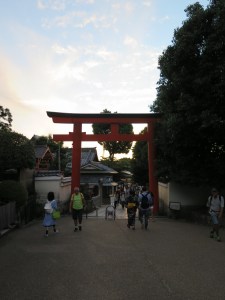
The Kitano Tenmangu Shrine is a lovely complex of old buildings and the gates and gate house are very nice.

IMG_0022IMG_0004

IMG_0008IMG_0017

IMG_0019IMG_0014

It’s been raining all night and now sporadically in the morning. When I get there, the market is a small, sad, version of what it is usually. In better weather, there can be upwards of 800 stall-holders, but just now you’d be lucky to count 200. It’s a wet affair today. This market has a bit of a focus on old wares and ‘antiques’, as well as all the other paraphernalia that turns up at markets. There is quite a bit of pottery here today, possibly because, pottery doesn’t matter if it gets wet. All the fabric stalls are pretty well shrouded in plastic tarps.

IMG_0029IMG_0032

IMG_0034IMG_0036

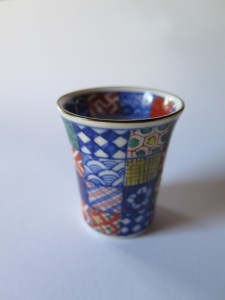
There isn’t anything really special here for me today. However, I do buy a small porcelain soba noodle cup, from the Edo period. A nice little object. and I bought it stone, cold, soba.

IMG_0047