We have been busy – always busy, but we have managed to organise a few impromptu get-together parties with our neighbours, the ‘creatives’ of Balmoral Village. We have all been fire-affected in some way, some more than others, but we have survived and we are looking forward. We organised these dinners to ‘catch-up’, share news and ideas, but mostly to take some time out to celebrate each others company. We cleared out the big central room in the new pottery because it has beautiful light and plenty of space. We can fit 10 at the big glazing bench, 11 or even 12 at a pinch. It’s been very enjoyable to share time and food in this way. Although just as much work preparing and then washing up and cleaning, then setting everything back in its place, as it is building the space.
This week I booked the electric car in for its third service. It been amazing driving around these past 3 years on sunshine. It’s a plug-in hybrid, so it does have a petrol engine in there as well as the battery and electric motor. We can do all our local running around entirely on sunshine, but every now and then we go a little farther afield and we come home on petrol. When the battery is fully charged and the fuel tank is full, it has a range of over 1100 kms. However since that first fill 3 years ago, we have not filled the tank since, as it took us the best part of half a year to use the fuel up. It’s not good to store petrol for so long. It can go gummy, or ‘off’. Since then we have only put $20 in the car every 3 months or so, even that is a bit long, but it seems mean to pull into the service station and only put $5 in each month. We seem to have settled into some sort of routine of going to the petrol station quarterly.
We charge the car and our Tesla battery from our solar panels on the shed roof. We produce a maximum of 5.3 kW of electricity on the best sunny days, but much less in overcast and rainy weather. However, this size of Solar PV installation is enough to charge our car, run our house and pottery, even fire the electric kiln, AND we still have some excess to sell to the grid on an average day. These days, we earn over $1000 per year, (it used to be double that) while living, driving and firing our kiln for free. We went solar in 2007. We haven’t paid an electricity bill since. The system has well and truely paid itself off over that time. Interestingly, as more and more people connect SolarPV to the grid, the price that the utility pays us for our power has progressively gone down. Years ago, we used to get 60c or 70c kWh. Over the past 4 years the price that we get has dropped from 21 cents per kW/hr, down to 19, then 17 and now 10 cents. I can see it being 7 or even 5c next year. It’s great that more and more people are going solar. If not fully, like we have, but every little bit helps get more coal power and its pollution out of the system.We didn’t go solar to make money, but it has turned out that we have. We went solar to try and minimise our reliance on the fossil fuel economy. That has certainly worked out very well. Our power bill tells the story.
We consume less than 1 kWh per day on average over the year. We have spent our life here honing our self-reliant skills to consume everything minimally. Our 0.91kWh is about 1.5% of the ‘average’ 2 person household, yet we live in a very old house, (128 years old) not a new solar passive one, and don’t ‘want’ for anything. It can be done.
The utility charges us about $1 per day to be connected to the grid. Their ‘access’ charge. This has been steadily increasing over the years, while the feed-in tariff has been gradually dropping. At the moment we pay $1 a day to be connected to earn $3 per day. I can see a time when this balance reverses. I guess that’s when we start to think about the 2nd battery and disconnect from the grid. I’ve read that this is called the death spiral of the electricity industry, but I can’t see it happening, as it takes a lot of effort and planning to live a life of minimal consumption like we do.
All this rain has the garden growing very well. I’ve been putting in a lot of effort in the veggie patch recently. It’s looking more loved now and providing us with all our green food. The warmer weather combined with the rain has the grass growing it’s head off. Janine and I spent half a day each yesterday mowing to keep it under control. We haven’t had to mow this much for years. All the greenery is very soothing on the eyes. All in all, the COVID plague aside, it’s looking like a pretty rosy year ahead.
Now that the pressure is off for taking part in the Open Studio events, we can relax a little. We were lucky. We managed to get sufficient glazed work finished to put on a reasonable show.The next big job is to re-build our wood fried kiln, so that I can make the work for the PowerHouse Willoughby Bequest commission. As we are in need a bit of a rest after two years of constant work and anxiety about finances, materials, parts, Local Council regs, electricians and final inspections. It’s good to have this time before Xmas to do a lot less.
Janine is spending a few hours each day back in our lovely new and very comfortable pottery studio, making a few orders from the Open Studio weekends, but principally because I have promised to make a bathroom vanity sink for our neighbours new house. As we were fully occupied recovering from our own bush fire ordeal, we couldn’t help them rebuild their house very much. So making them a bathroom basin is my best gesture towards recovery. The basin is too large for our tiny electric kiln, so will need to be bisque fired in the bigger gas kiln. We can’t afford to fire the kiln with just one pot in it, so Janine is making work to fill the kiln and make the firing more economical We are not pushing ourselves, just taking it slowly. A few hours a day is enough. There are so many other jobs that need our attention, just to keep the veggie garden and orchards in good nik and under control. Mowing is the main job these days, as it keeps on raining and getting warmer, so the grass grows quicker.
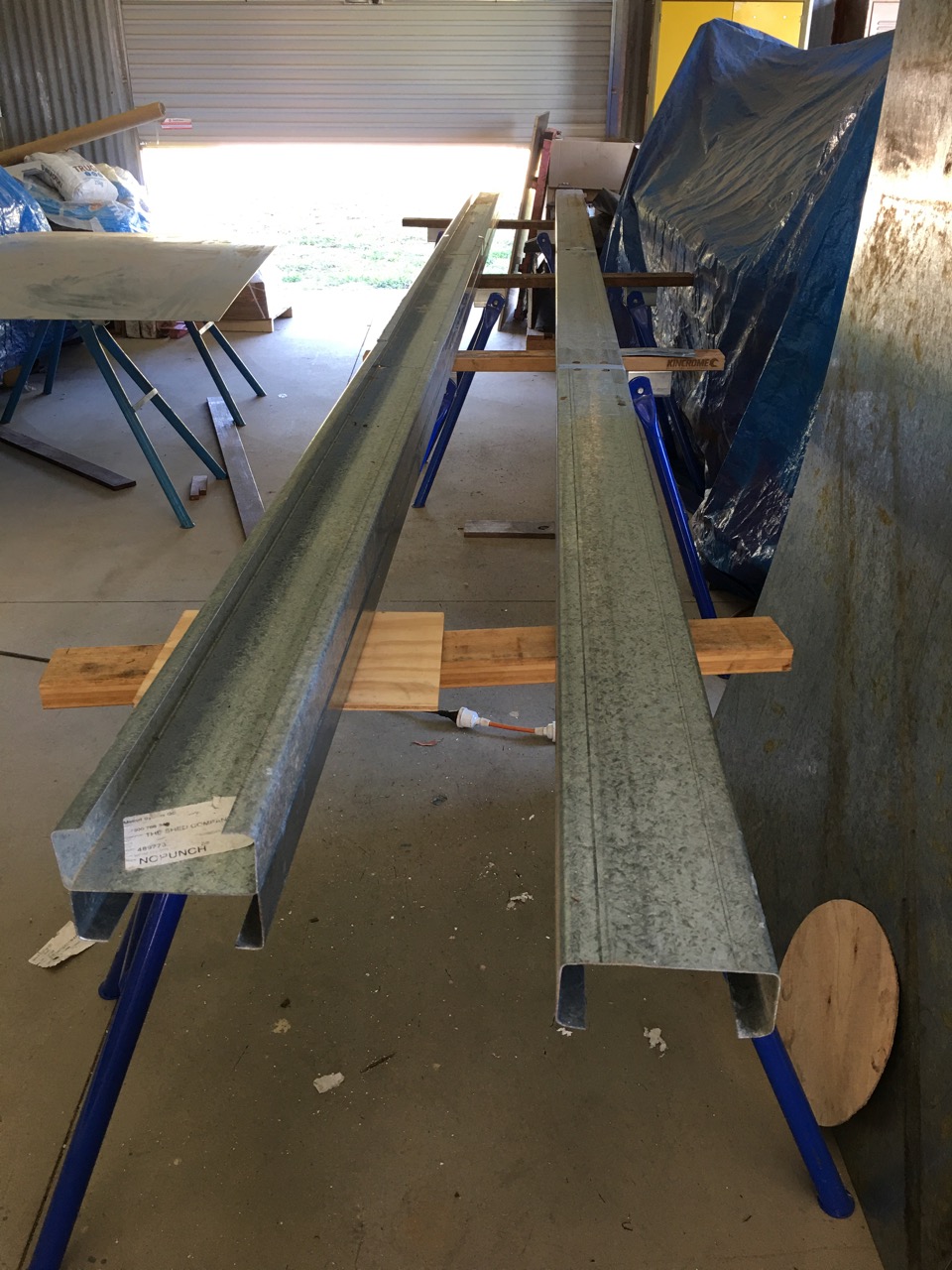
While Janine enjoys the luxury of the new pottery. I am out in the maintenance shed welding together a pile of pressed metal ‘C’ purlin off-cuts. joining them together to make useful longer lengths. I am joining up to 7 small bits into one 6 metre length that is more useful. I will bolt these ‘recovered’ lengths back to back with some new material to make a composite ‘H’ section. These will make very strong uprights and purlins for the new wood kiln roof.
I don’t particularly like working with steel. It’s heavy, sharp, noisy and dangerous stuff to move around, but it surely does a great job of being strong and resilient These thin beams will span great distances. The specific thing that I love about steel is its ability to be welded back together to make it larger and stronger. I’m told that a 25mm weld can hold over a tonne. That’s strong. And if I accidentally make a mistake and cut a piece of steel too short. Well, if it were a piece of wood, it would be wasted. I would have to use it up in another job where a shorter length was needed. You can’t join timber back together. However in the case of steel. It can be welded back together and the joined pieces can be stronger than the original – if its done properly!So I have saved all the off cuts from the pottery shed frame that the builders threw onto the rubbish pile. I put them aside and Janine later stacked them carefully so that now they can be put to good use making the kiln shed frame and roof. Reuse, recycle, up-cycle waste not want not. etc. I take a great deal of pleasure in being able to forestall waste in this way with this kind of ‘thrifty’ building work. It has been being self reliant like this that has got us to where we are now in life on our small income from our creative endeavours. In the mornings we work in the vegetable garden, clearing out swathes of overgrown weedy stuff that has more or less finished its productive life.
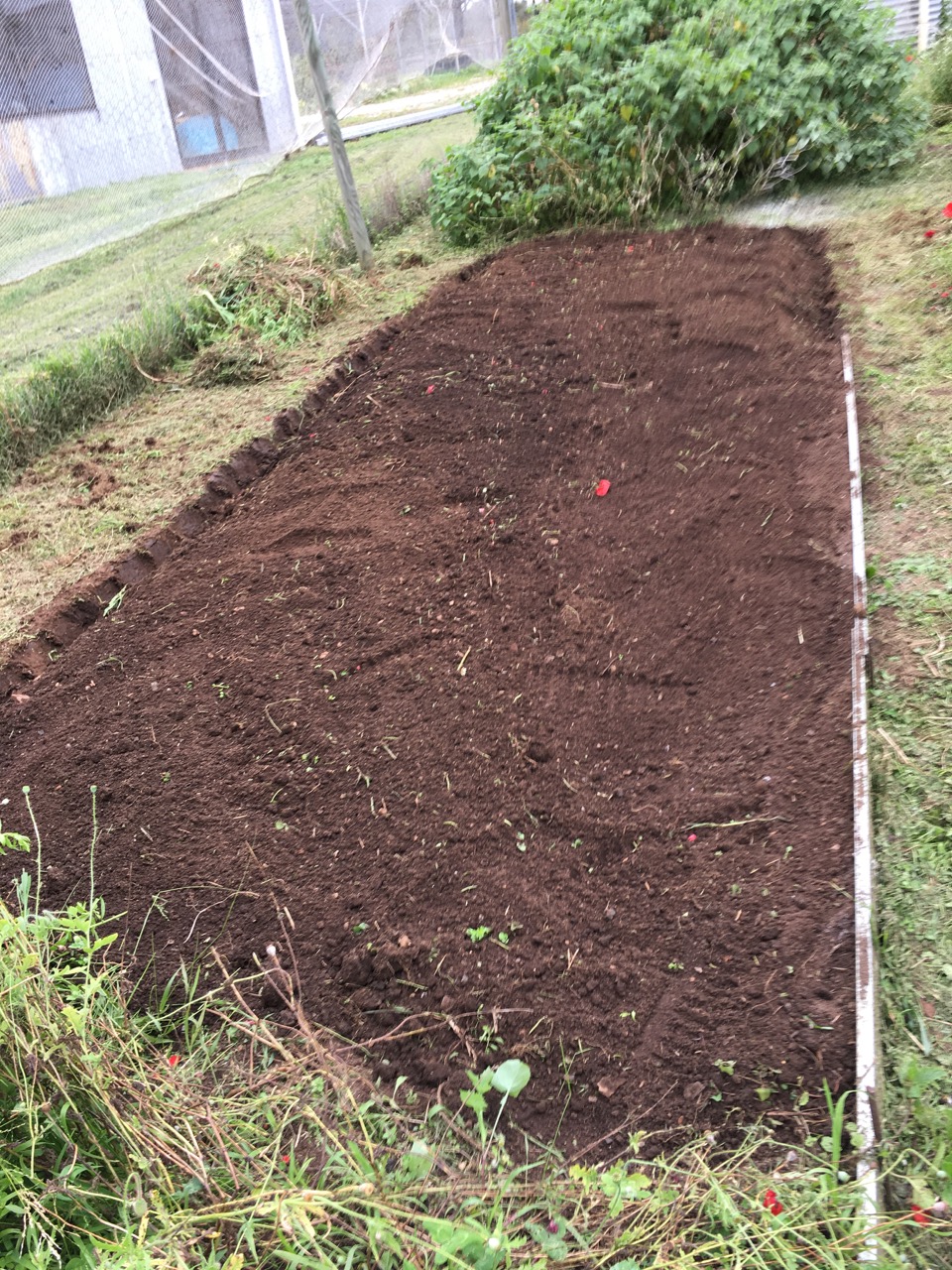
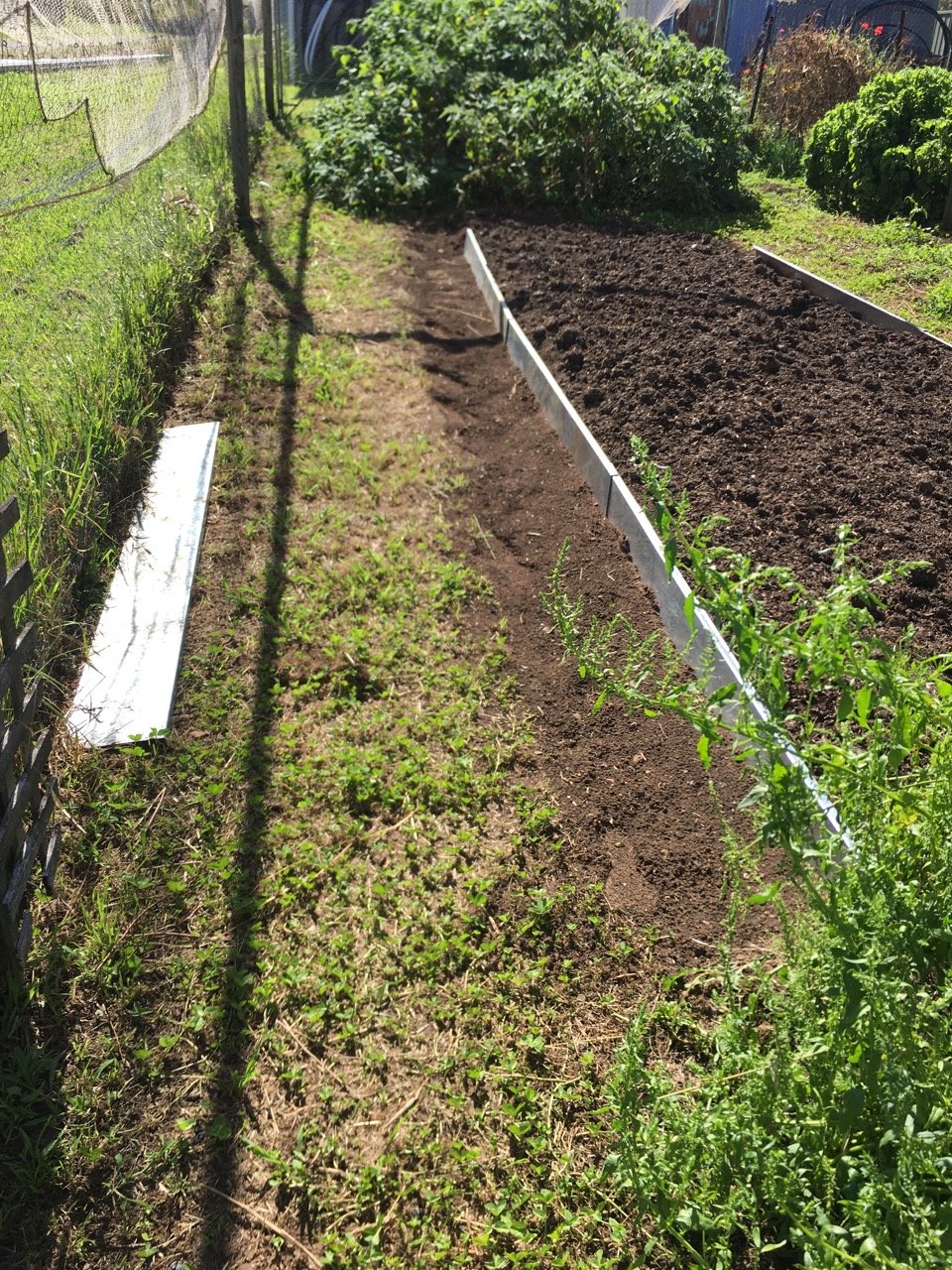
Then when the sun gets up higher, we have lunch and stay inside for the afternoon doing our ‘inside’ jobs until the heat of the day has subsided. Sometimes this heat culminates in a thunderstorm, two days ago we had hail with the thunder storm. This is something like the summer weather that we used to get decades ago. Possibly the last time that we had strong La Nina conditions? If I have to be stuck inside at these times, I spend time making something useful that will improve our lives. Today it was some garden bed edging that I cut and folded out of scrap galvanised sheet steel that had been laying about since the fire. We have decided to shrink the garden beds a little bit to make them narrower. This will result in making the garden paths wider. Once this is completed, we will be able to drive the ride-on mower through the veggie garden and save hours manhandling the whipper snipper around the current narrow paths which is becoming quite tiring work for me these days. Especially as it needs doing almost every week.
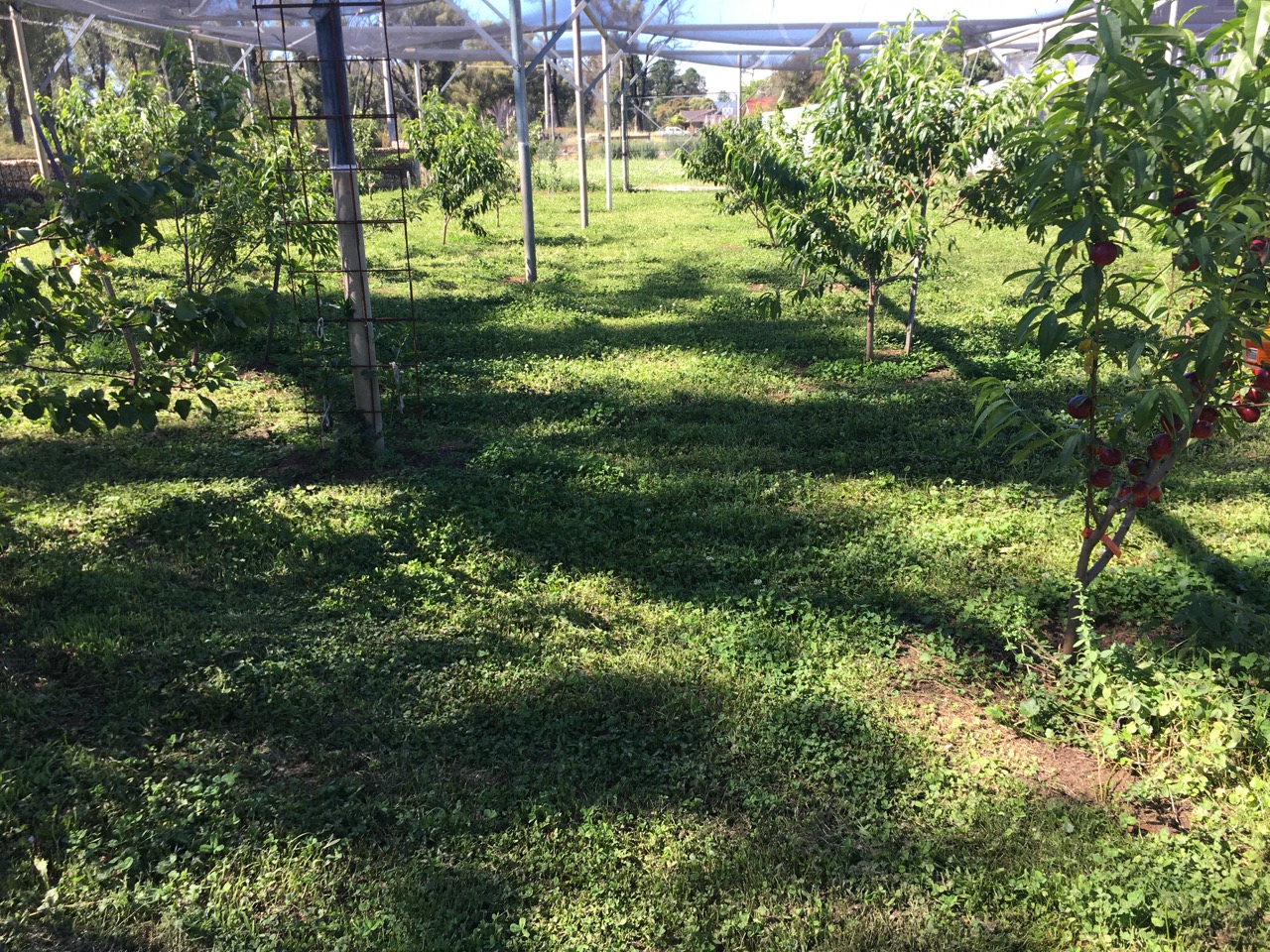
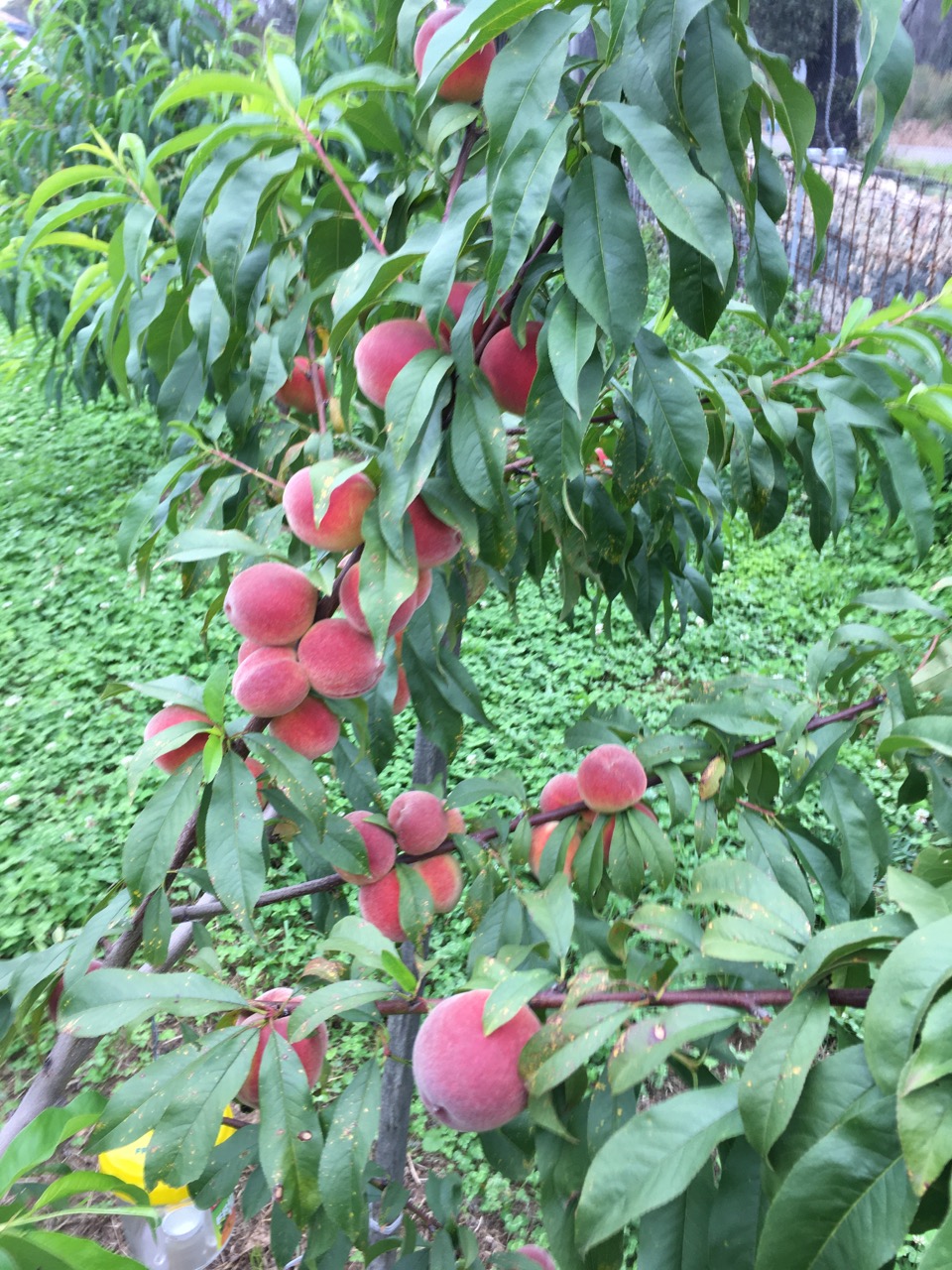
Everything that we have done since the fire has been oriented towards making our future life here easier. Building the new pottery on a cement slab floor for the first time, so everything can be on wheels – possibly including us in our dotage! We have chosen all dwarf root stock grafted fruit trees for the new orchard, so no more climbing up step ladders to prune and harvest fruit. We planted these dwarf grafted whip-sticks in August 2020. These trees are now 16 months old and in their second summer. Some of them are doing really well and have set plenty of fruit. So much so that I had to go around a month ago and pick off half of the crop and compost it before it drained the vitality from the young trees. I picked off over 100 small apples, peaches and necturines. I also did a summer pruning of some of the tallest leggy shoots to keep the trees in a sound open vase shape to promote good growth and development in the future.
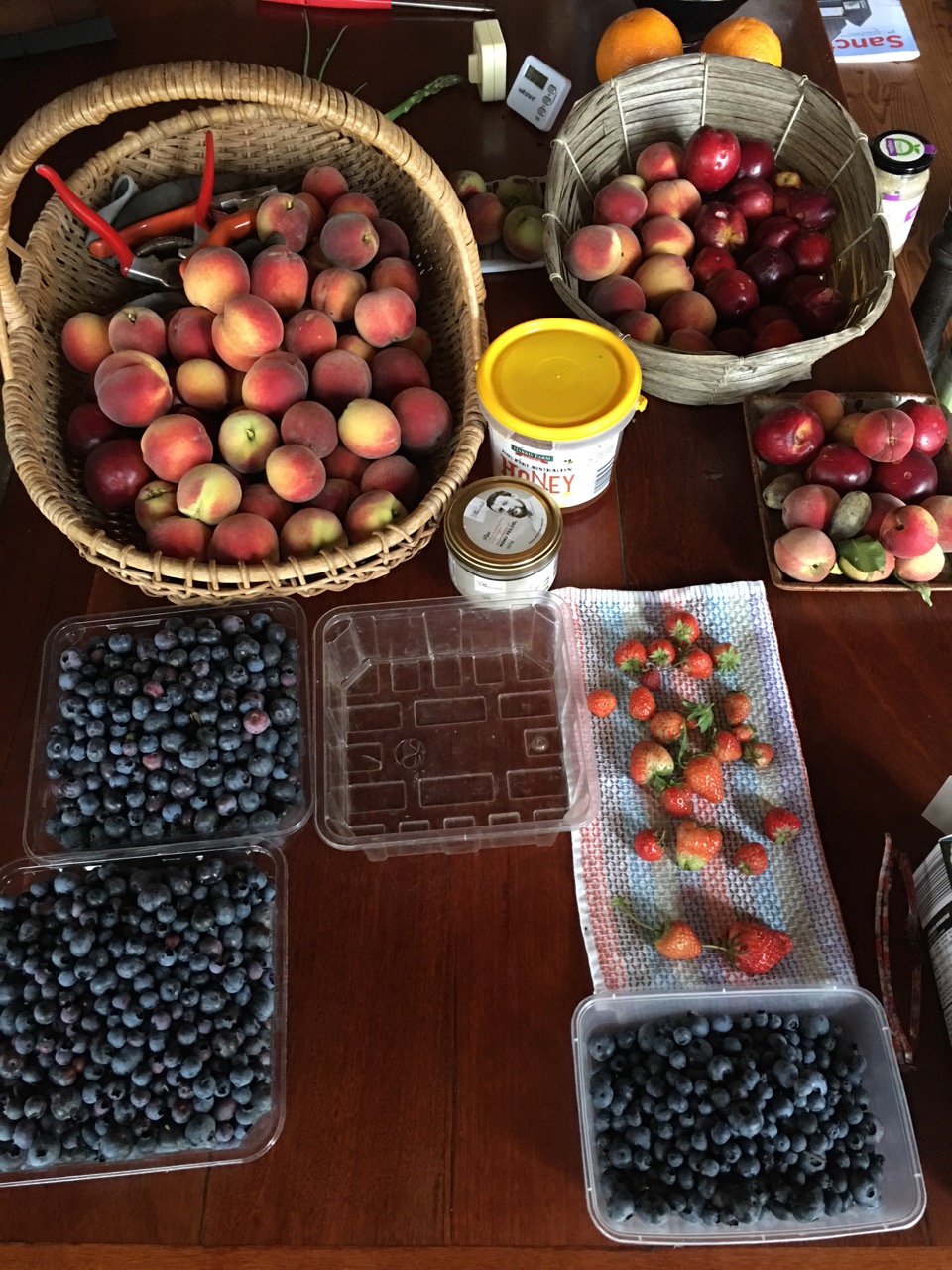
Even though I thinned out the crop, we were still able to pick about 40 peaches and twenty necturines this last week.
We are also picking loads of blue berries at the moment. Half a kilo every second day. We have to find ways to use them up, as there are too many to eat as fruit salad in the mornings now. We preserve some and I have started to make blue berry tarts now, as the youngberry and logan berry crops are more or less finished. They never make it past Xmas. But this year in particular the constant rain and the hail really ruined the usual large harvest. Who’d be a farmer or an orchardist? Two years on we have worked ourselves into a really good place. It can only get better. The past is the past. We are not looking back. Everything is in place to create some beautiful and meaningful moments in our life.
The seasons turn around and the old familiar meals come back onto the table. We’ve waited half a year for these yummy tastes and flavours to come back into our lives. When I weed in amongst the new tomatoes plants and brush the leaves, I get that amazing tomato leaf fragrance wafting up. It makes me hungry just to smell it. Funnily, after 3 or 4 months of summer picking tomatoes, that smell starts to become a little oppressive?
We are still waiting for most of the summer veggies to arrive. The tomatoes are flowering and the zucchinis have set some fruit, but they are slow developing. We have plenty of lettuces and radish. I have managed to find the time to get a few things planted during this last few months of hectic work.
I found the inspiration and therefore time, to make 3 mulberry tarts during the short 3 to 4 weeks of the mulberry season. They are now all long gone, all finished off by the birds. However, the youngberries are now back in season and I made the first youngberry tart on Monday. So delicious! I’ve missed the sharp sweetness of the youngberries for the past 11 months. Their season is just as short as the mulberries. We make the most of it while the fruit is here for the picking. They’ll be all gone before Xmas. I think that this small window of availability for special seasonal fruits makes them all the more special. We notice it particularly because we eat what we grow. Everything, every unique flavour, every special aroma and specific texture and taste is here for such a short time. We have learnt to really appreciate these gifts when we can.
We are naturally busy kinds of people. There is always so much that we want to do. So it’s important to take the time out to enjoy these little gifts from the garden and orchard while they are there.
By the end of the season for each fruit variety we have usually had our fill and are ready for the next special treat. If these fruits were available all year for us, we would become somewhat blasé about it all, our enthusiasm killed off by over indulgence, then perpetual availability. This doesn’t happen when you grow your own. For most people, everything is available all year round in the supermarkets, if not fresh then frozen. Modern grocery shopping has no seasonal calendar anymore. Everything is demanded all the time. So it’s always there in one form or another. I tend to avoid this as much as I can. I’m not pretending that I don’t eat out of season, of course not. I’m human. I still go to the supermarket. But I go with a list and a purpose. Eyes straight ahead. I buy what I don’t grow. Cheese, lentils, chick peas, bread flour, coconut milk, olive oil and fish. Things that I can’t grow, or not efficiently.
Of course I don’t buy all these things every week. A three litre tin of Olive oil is once every 2 to 3 months. Bread flour is once a month. I make one loaf a week. coconut milk is a couple of tins once a month, etc. and so it goes. Things like tofu, Janine learnt how to make it herself, but there is no time to do everything that you want, something has to give. So our life is an ongoing, shifting, grey scale of compromise of what we want to do and what we absolutely need to do. We’re flexible, so it’s working out pretty well.
I bought a packet of frozen short crust pasty recently, a dozen sheets. That will be enough to get me through the fresh fruit season for making fruit tarts. From the first mulberry tart, to the youngberries, then the cherries, onto the blue berries, followed by the early peaches, plums, apples and then pears and finally the quinces. That’s our summer calendar from November through to March/April.Just writing about it is making my mouth water. I can hardly wait.
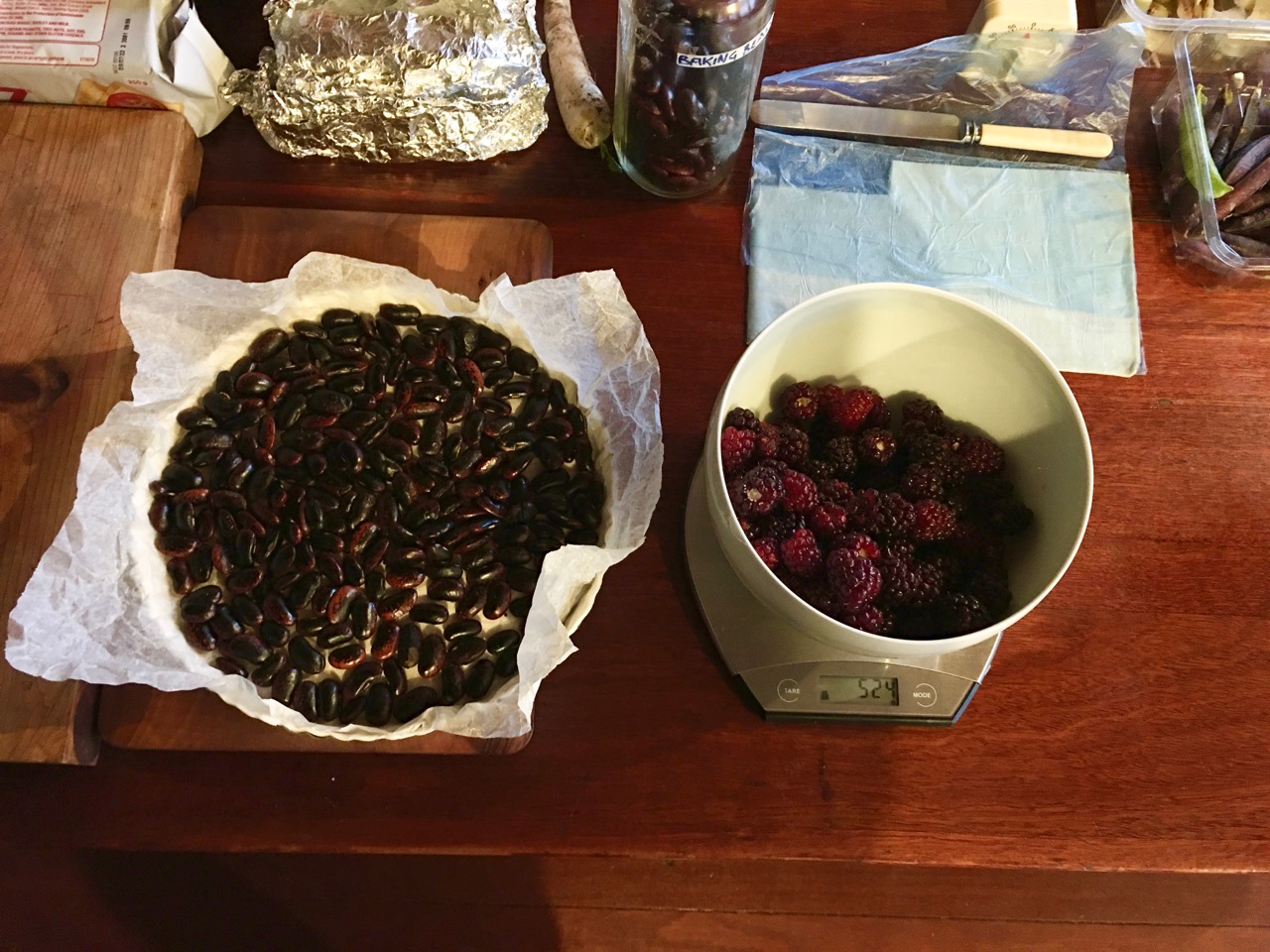
To day I’m making the 2nd youngberry tart of the season.
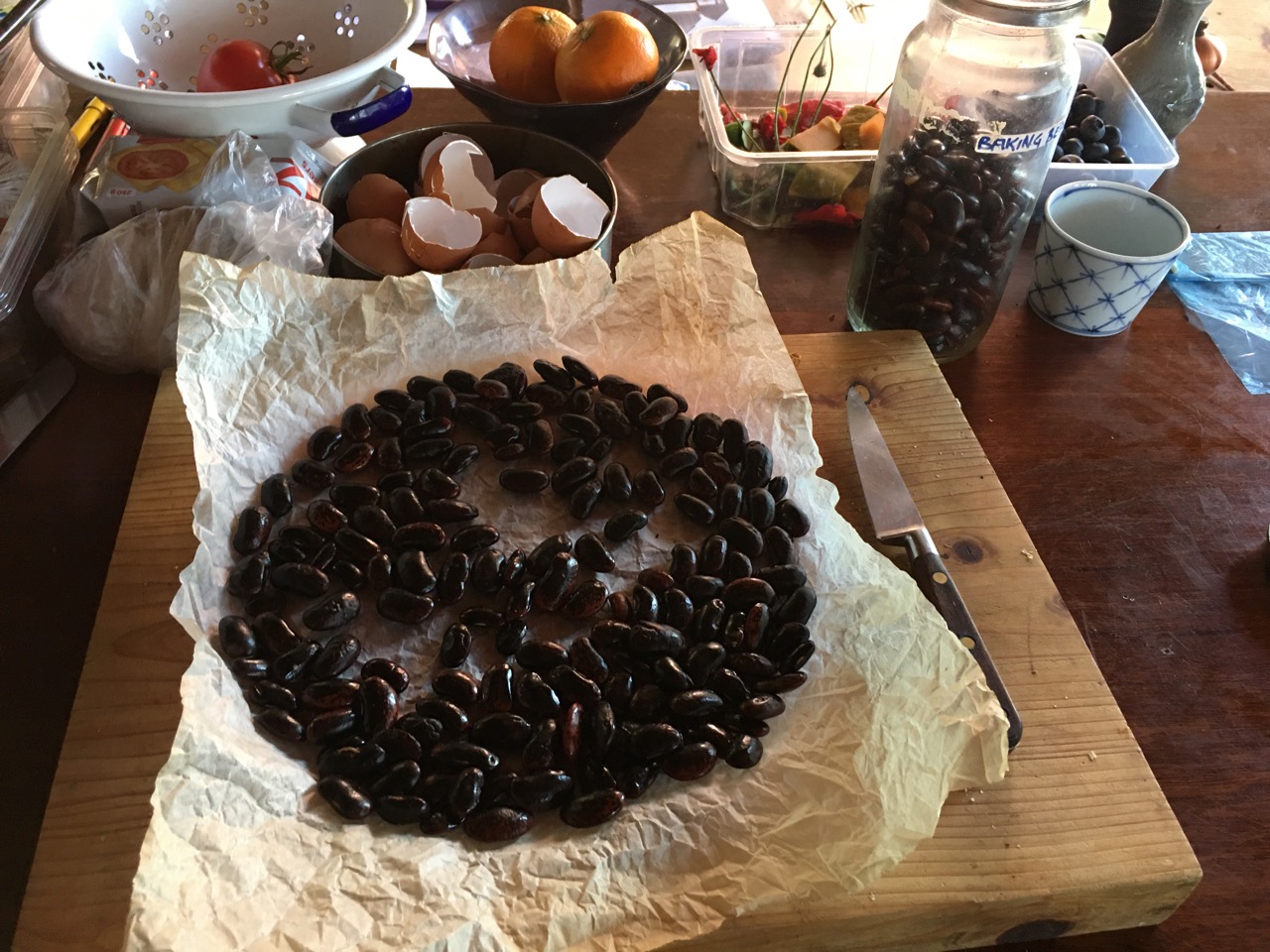
The berries are picked and weighed. The pastry sheet is in the pre-buttered pan and the blind baking beans are in the shell ready for the oven.
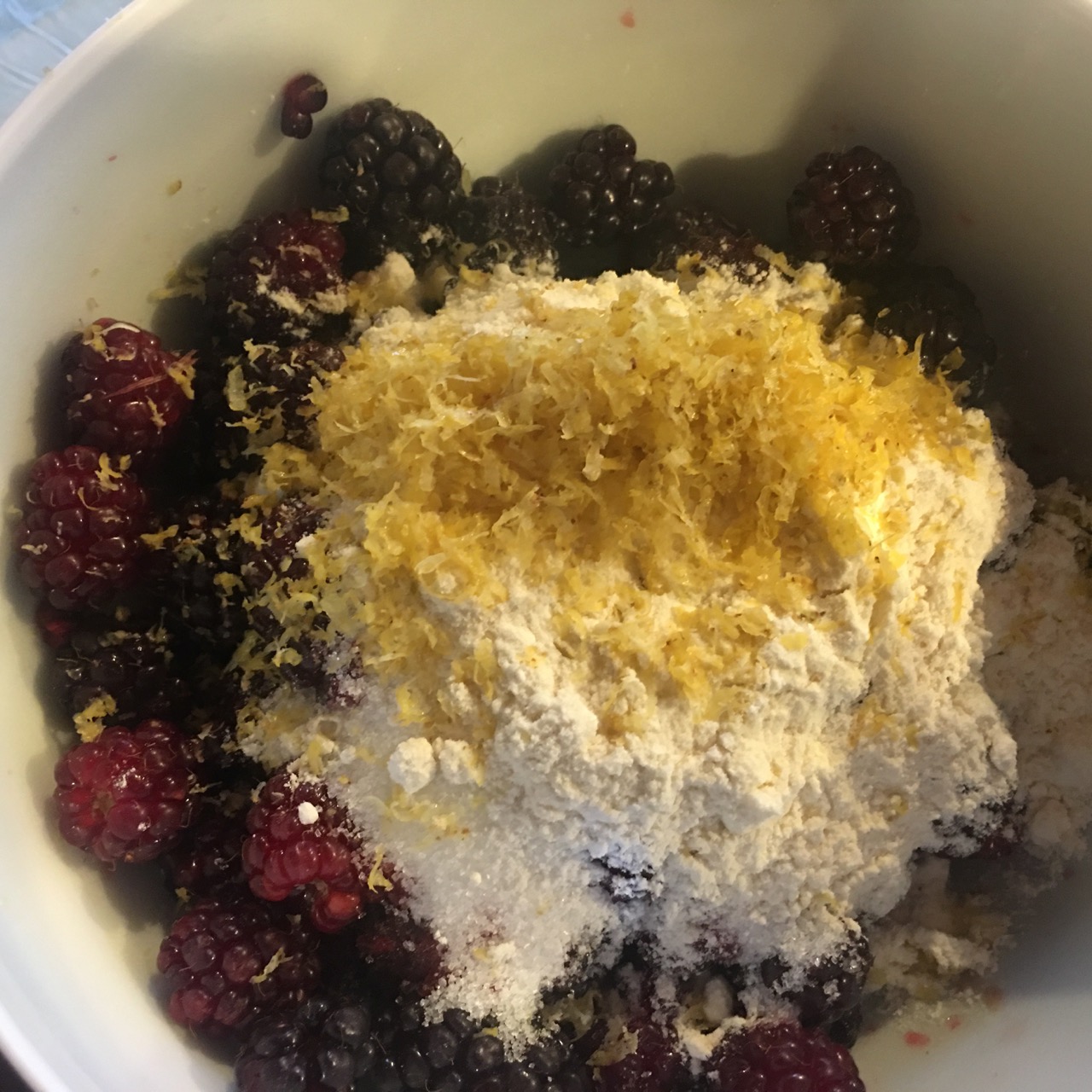
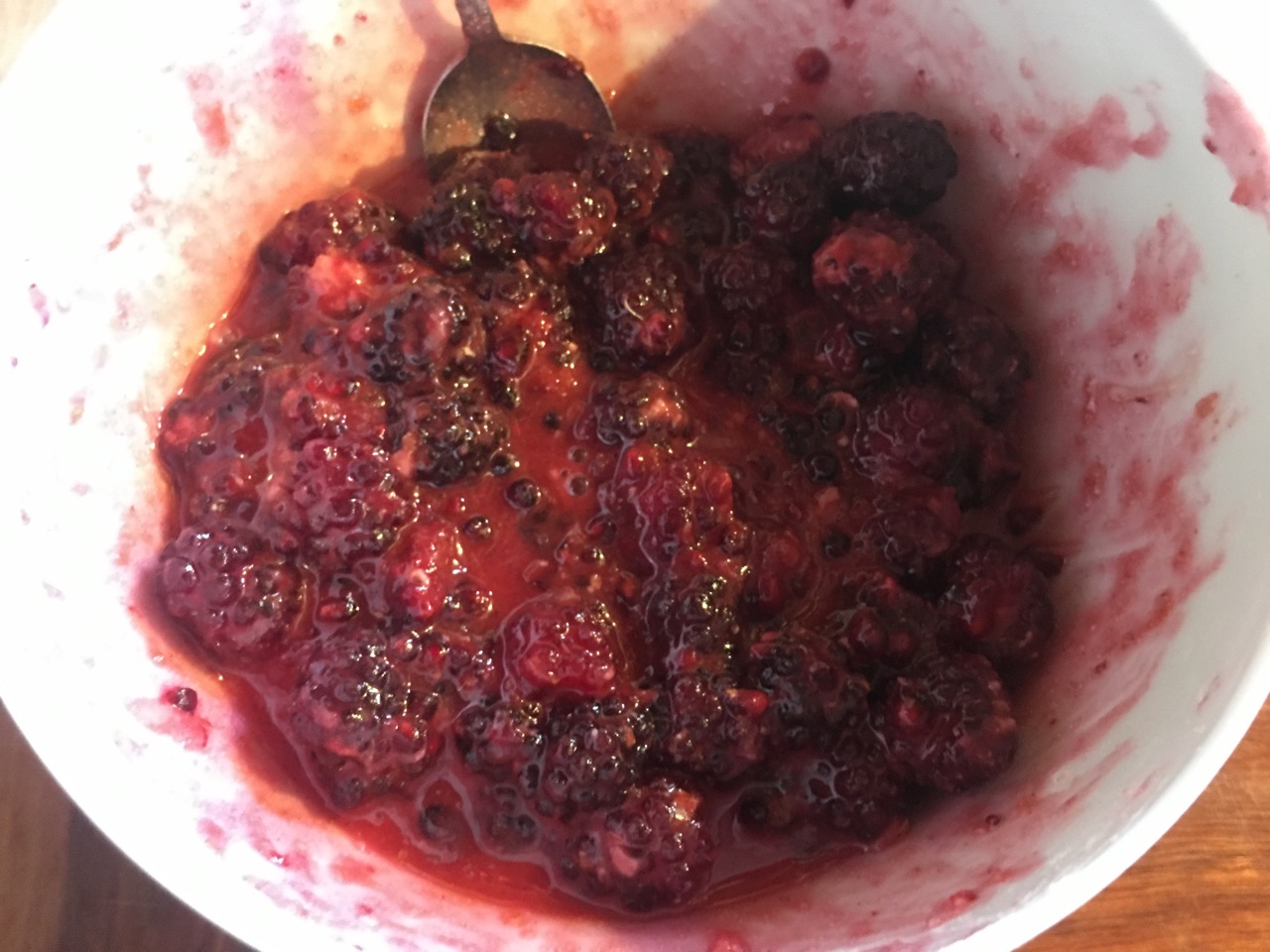
While the base is baking at 180 for 10 mins add 140g of sugar, 40g of plain flour, zest and juice of one lemon, some vanilla and cinnamon, then stir.
It looks a mess, but its delicious. Lift out the paper with the beans and continue to bake for another 10 mins
I re-use the crumpled paper over and over for all the tarts throughout the season. Reuse , then recycle.
Pour the fruit mixture into the baked case and bake for another 20 to 25 mins at 180, or until its ready. Depending on your oven.It’s ready when you can see the liquid fruit gel bubbling. When I open the oven door, the fragrance bursts into the kitchen. It’s the warmest most homely smell. Quite appropriate really, as this is a warm, friendly home.
You could add lattice work pastry if you are inclined to and have extra pastry to use up, I sometimes do. Or dust with icing sugar for visual effect, but it’s sweet enough for this post modern peasant.
.
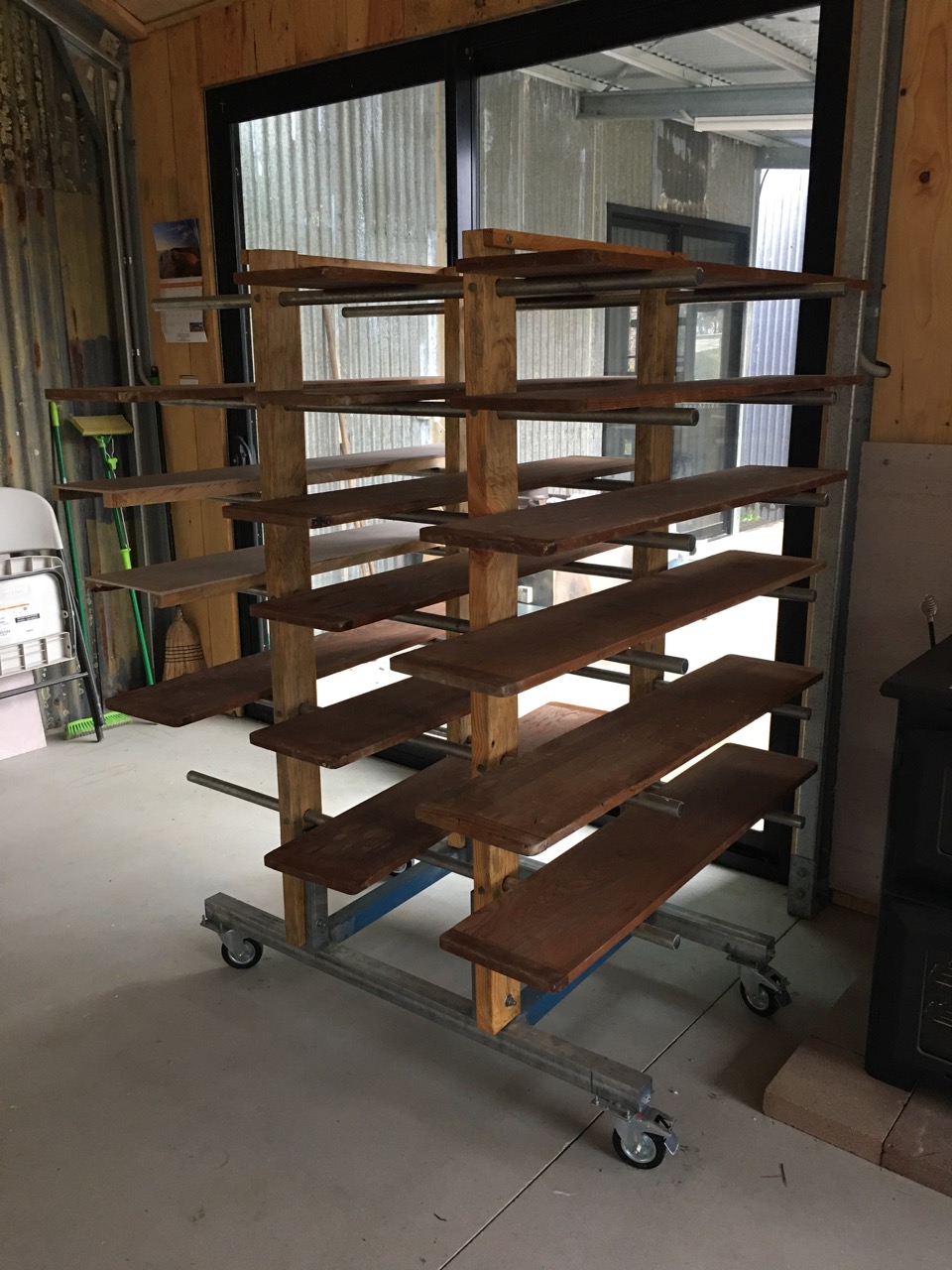
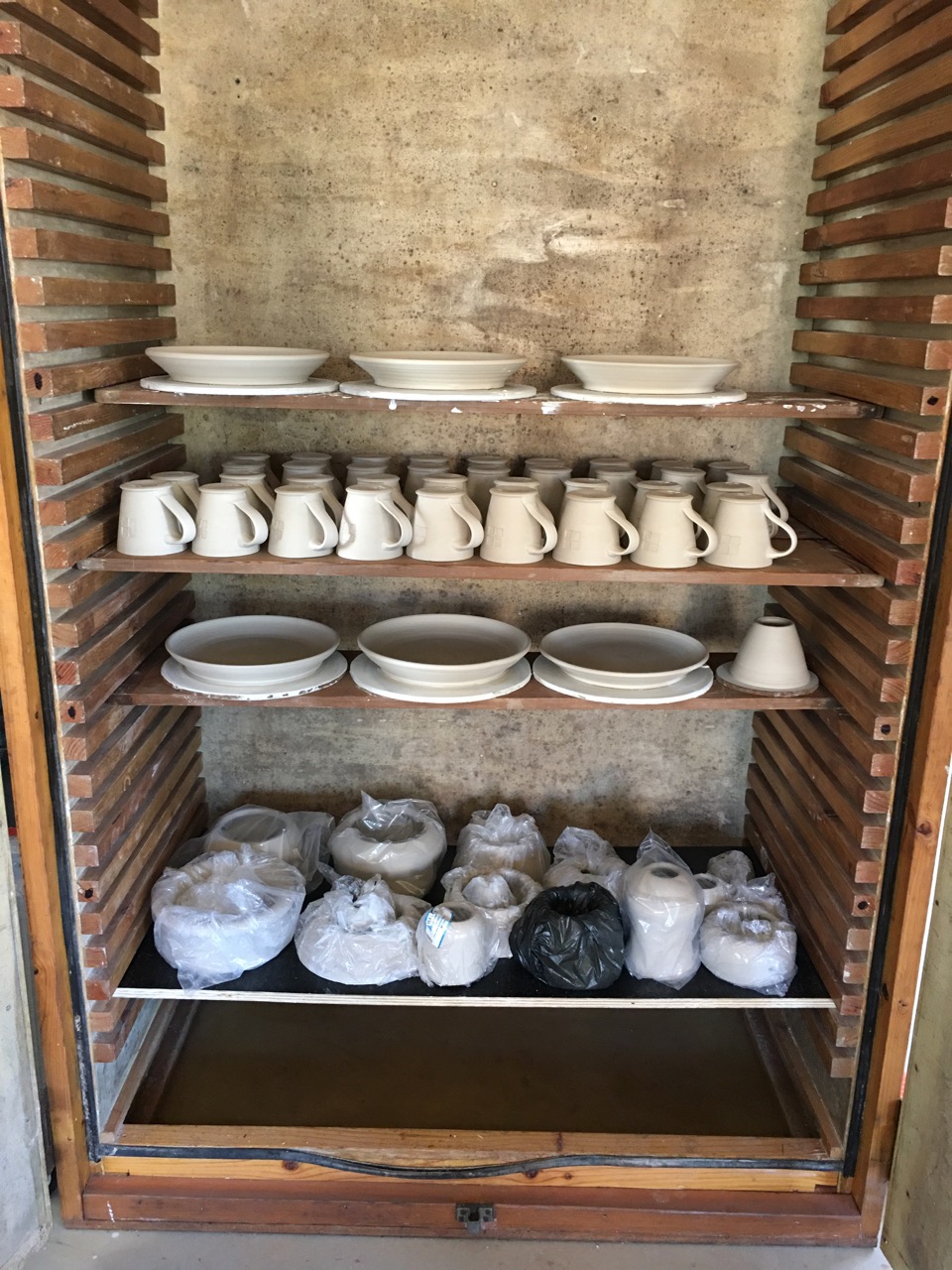
In the pottery, all the drying shelves are now empty.
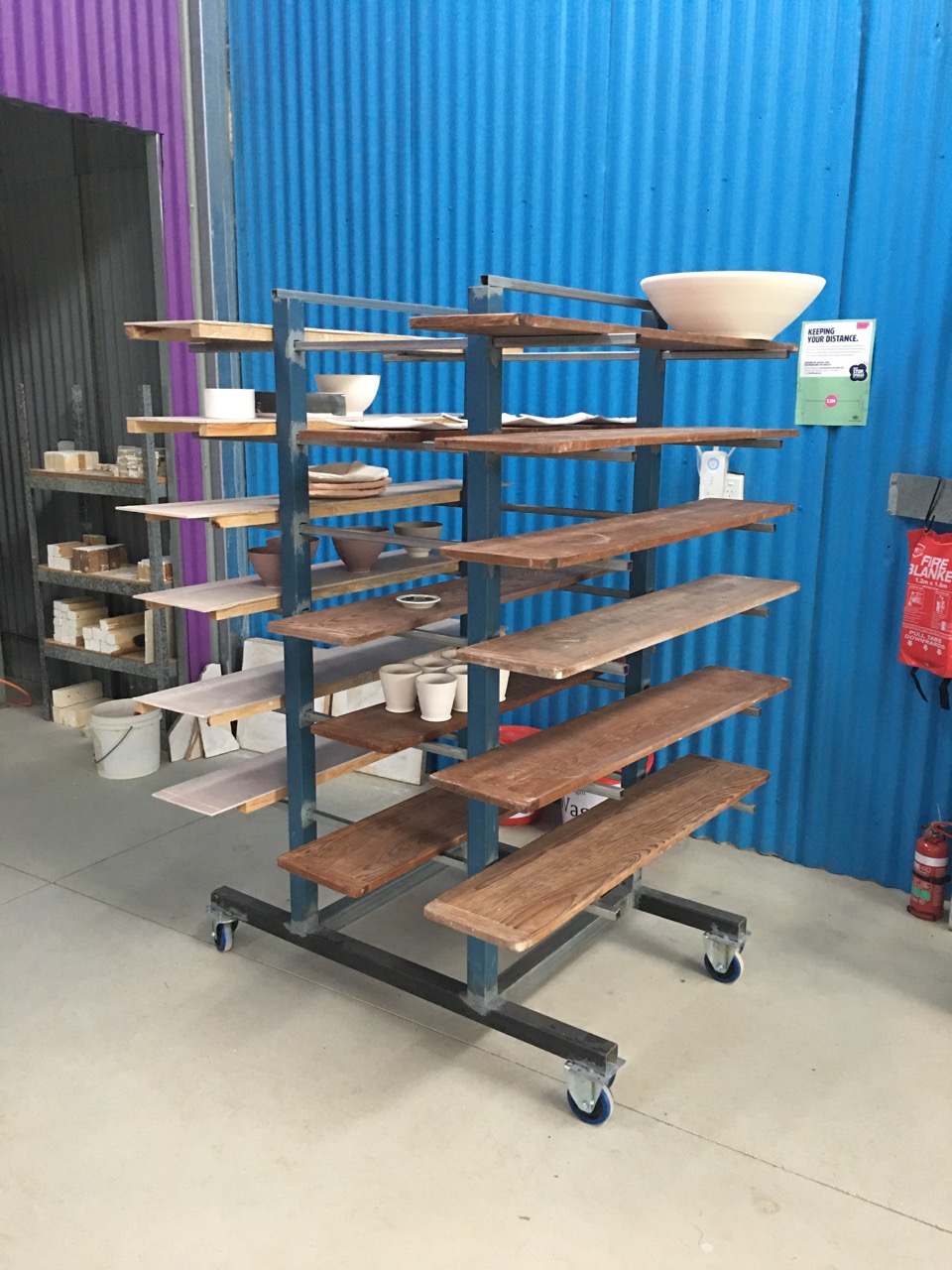
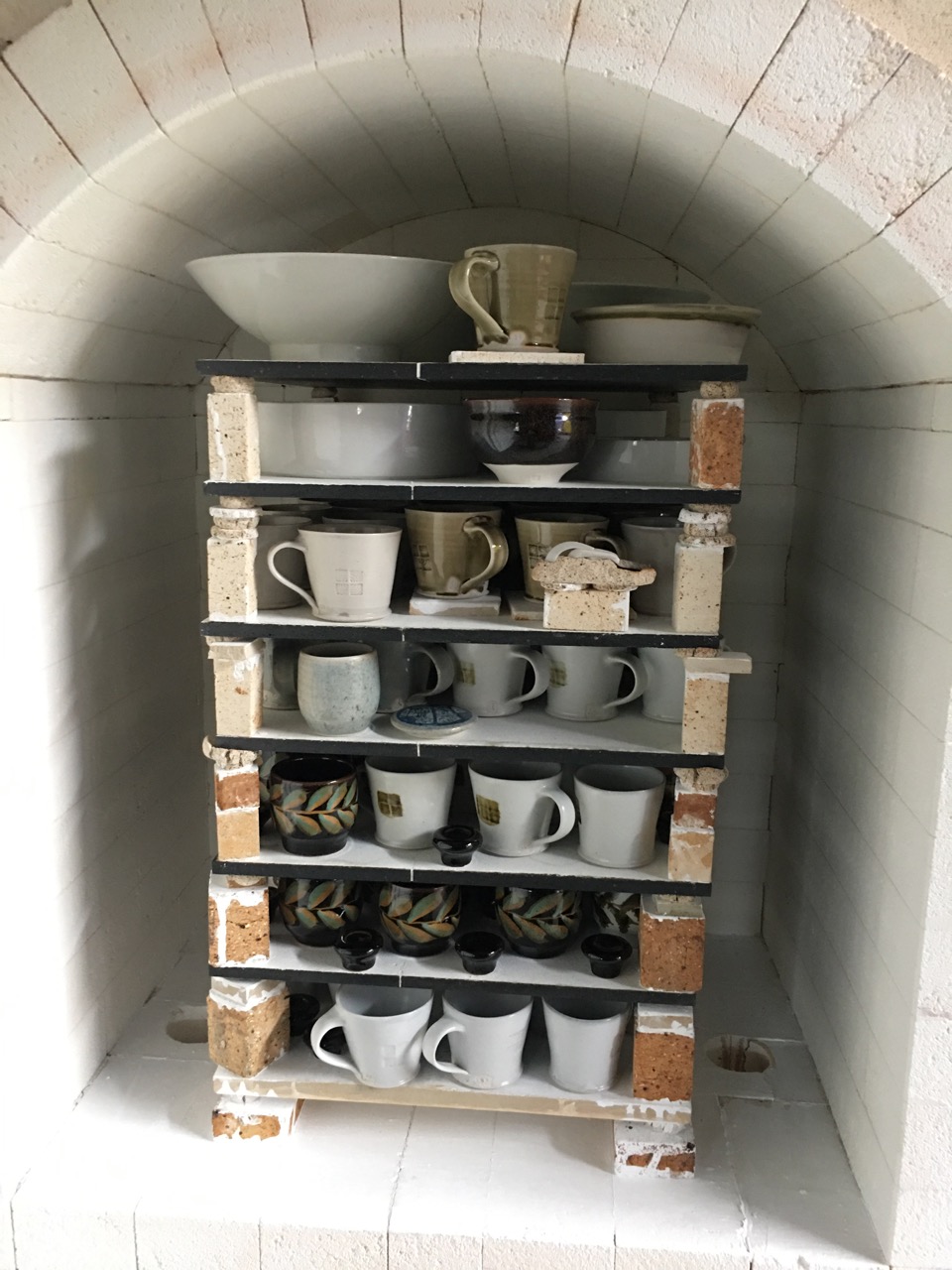
In the glaze room, all the bisque shelves are just about empty, as all the pots are in the last two firings. Due to be unpacked tomorrow.We have done 3 bisques and 2 stoneware firings in the small electric kiln and two stoneware reduction firings in the bigger gas kiln in the past 10 days. it’s been all go.
Now the shelves in the gallery are mostly re-stocked and ready for the next two weekends of Open Studio Sales.
Today was a day off while the kilns cool. We did some badly needed weeding in the garden and orchard, then we had a little snooze after lunch as it turned out to be quite hot and the predicted rain didn’t eventuate. Janine spent the afternoon at her friends house for some catchup, R&R, chat and afternoon tea.I baked a tart and a loaf of bread. Same sort of thing really!
Janine and I are back in the studio making more pots to re-stock the shelves for the next Open Studio Weekends coming up on the first two weekends of December.
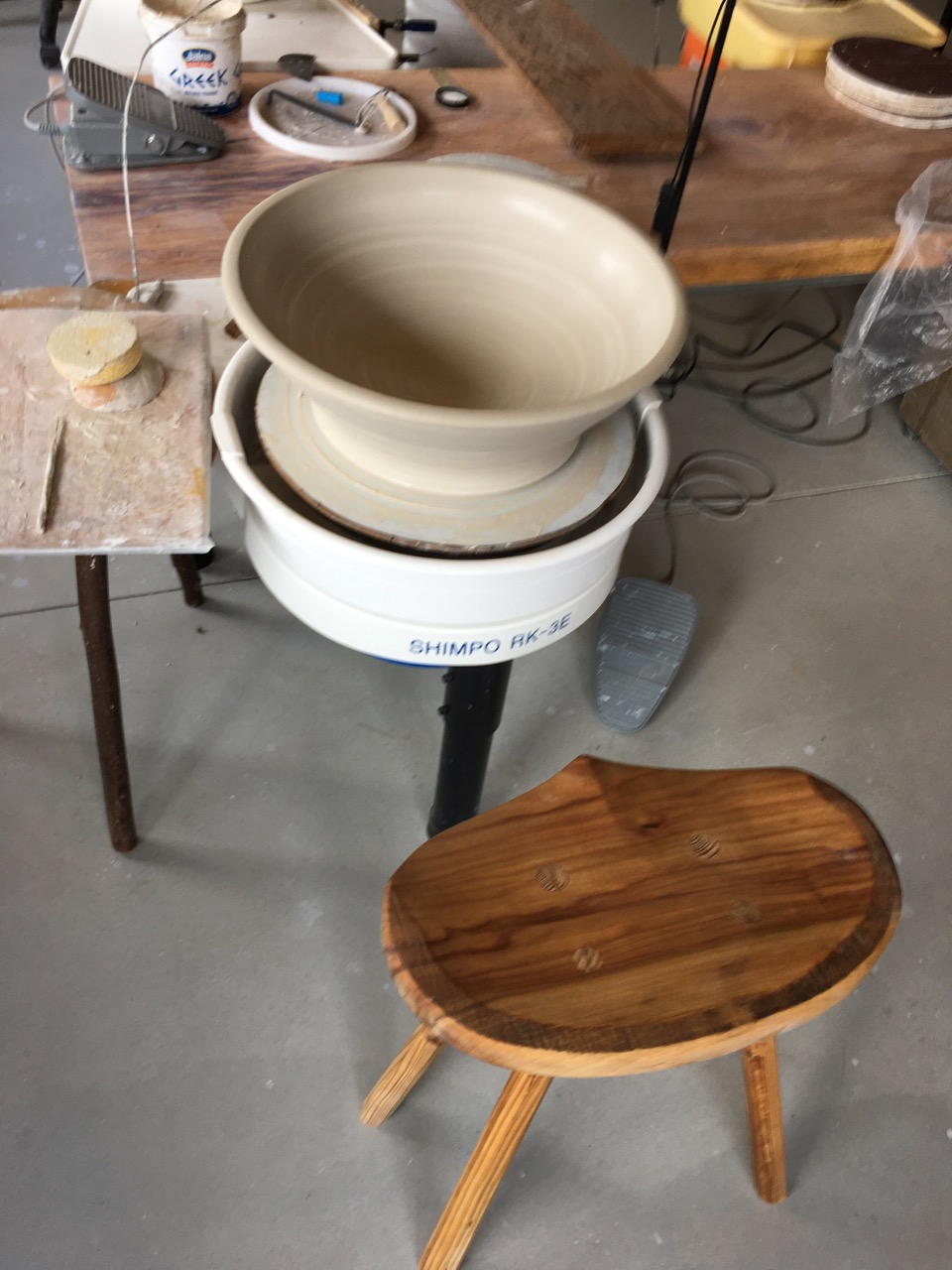
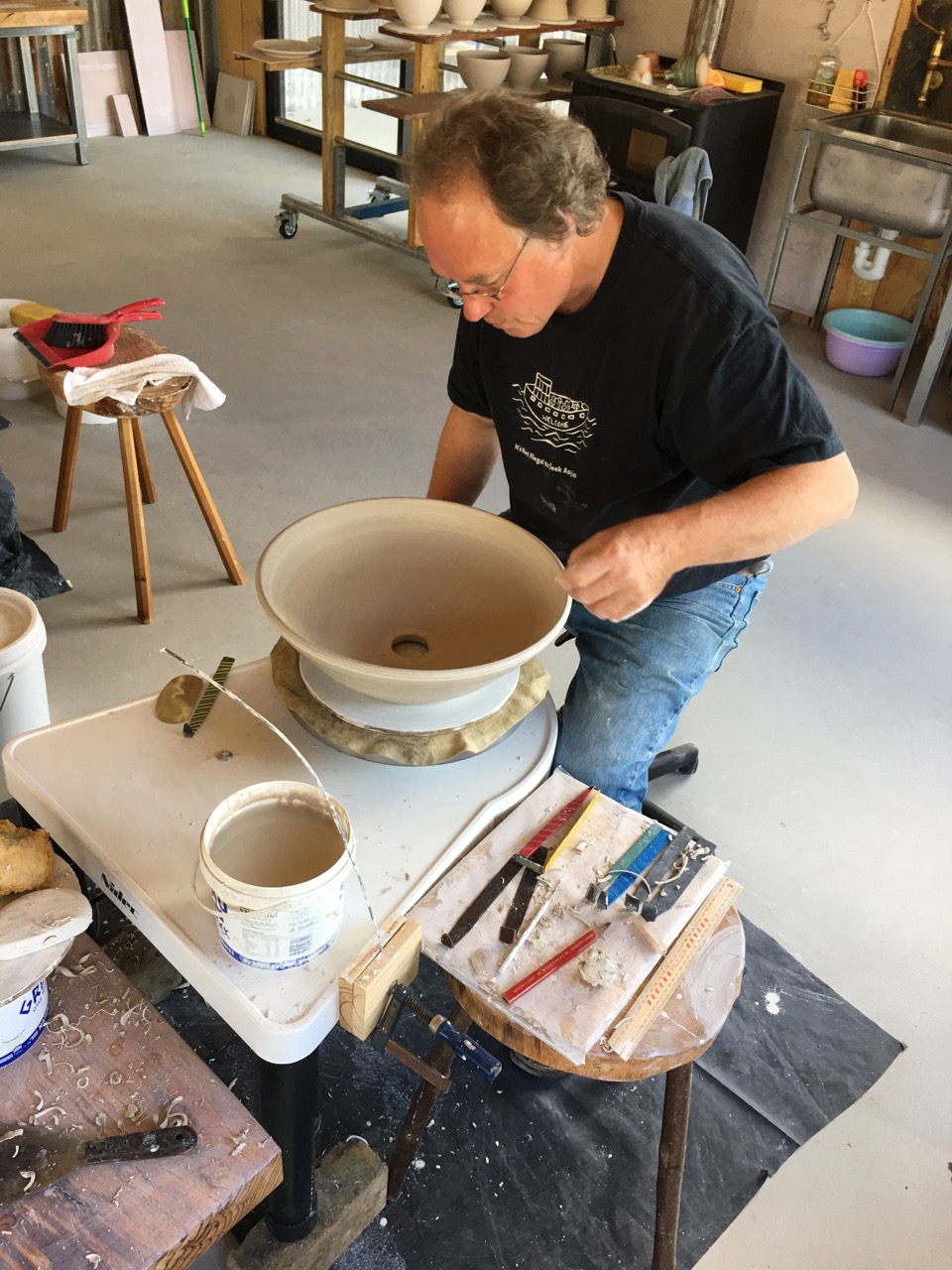
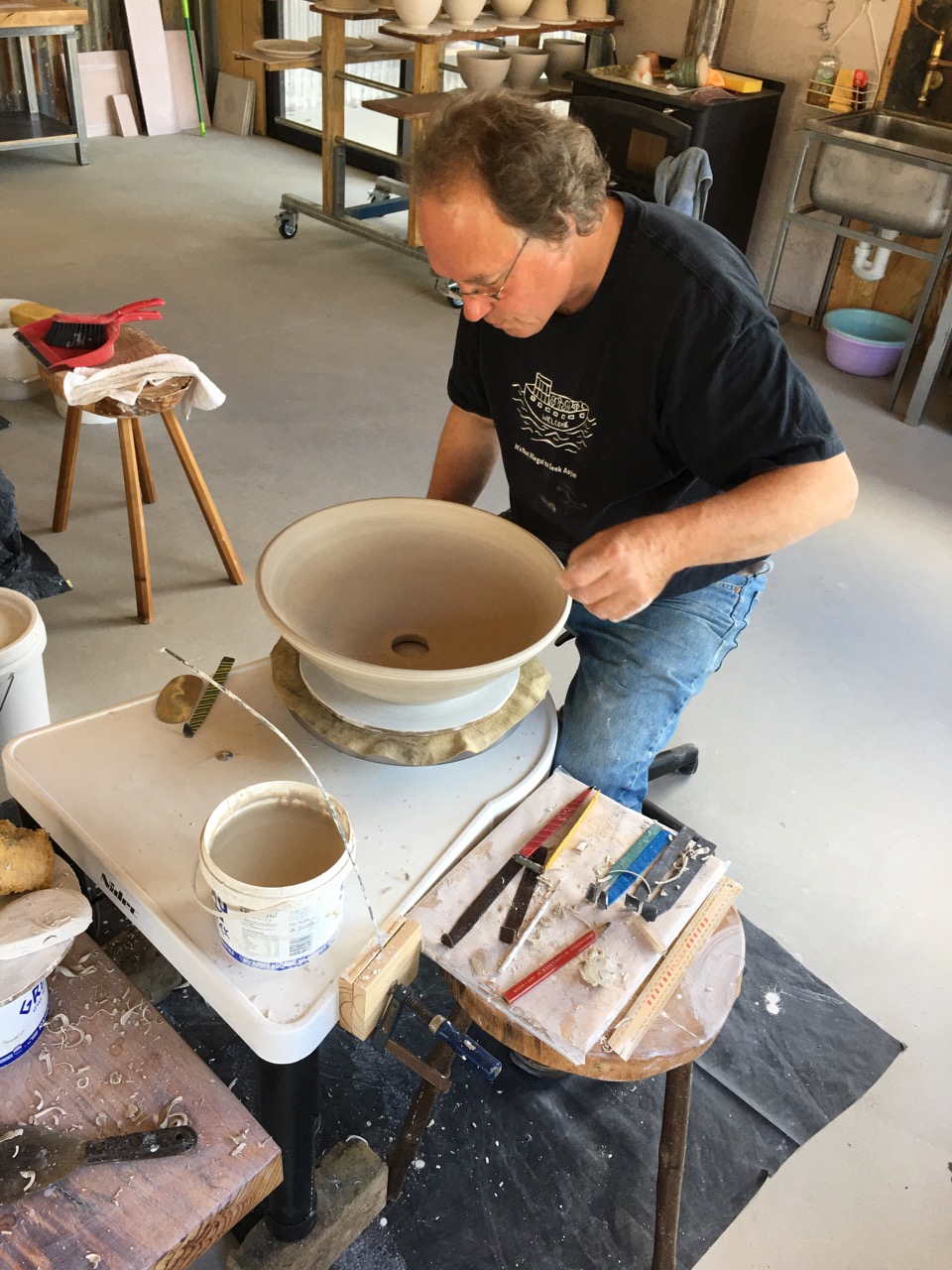
While I am back throwing on the wheel. I am making a vanity basin for my friends Roxanne and John Lillis who lost their house in the Black Summer Fires, on the same day that we lost all our pottery, sheds, orchard etc.
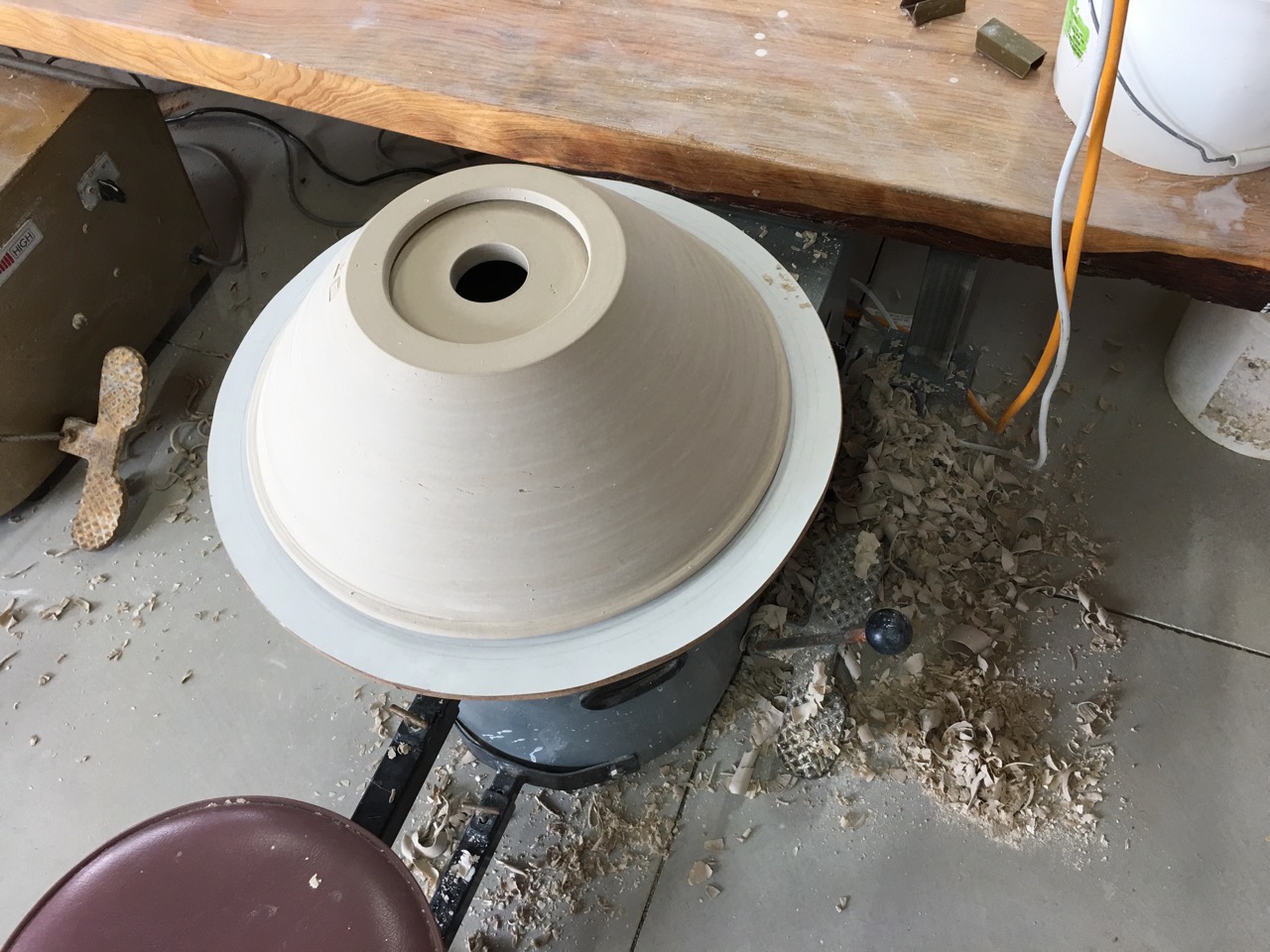
I wanted to do something nice for them and their new house which is currently nearing completion. I wasn’t able to be of much assistance during the construction, as we were flat out working here to get our building done. So I promised that I would make them a bathroom vanity basin. This is my 2nd attempt, as the first one cracked. I will use it as a pot planter, as it has a hole in the bottom ready to go.
I have to make the hole in the base 12.5% larger then the plug fitting, as this clay shrinks that much. Actually, I’m making it 13.5% bigger , just to make sure that it will fit easily. Silicon hides all manner of sloppiness, if it turns out to be a little bit too big 🙂
With all this warm wet rainy weather, the garden is growing faster than we can find the time to weed it. So it’s looking a little bit neglected and over grown. I will have a garden blitz as soon as the open studio weekends are over.
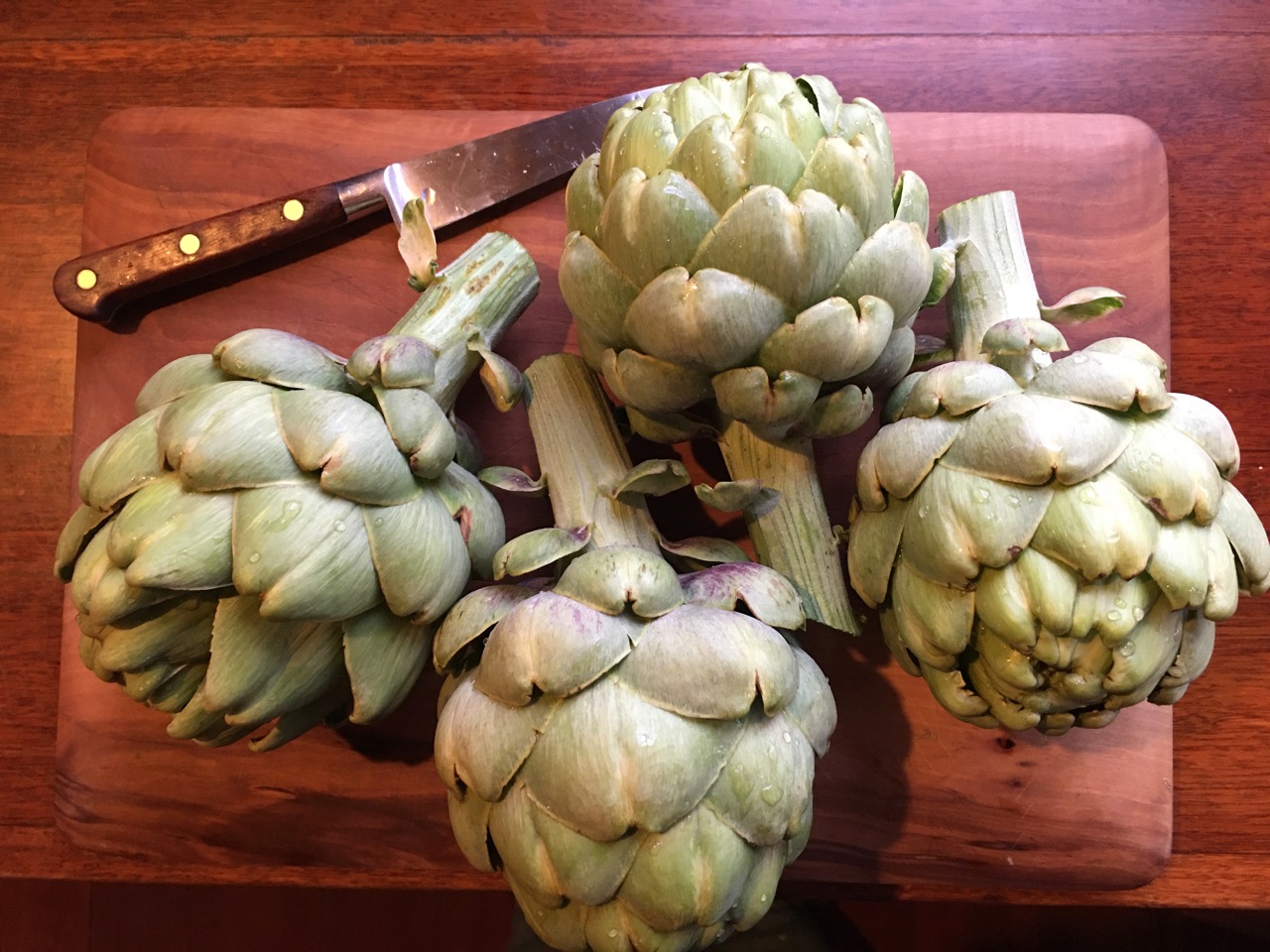
In the mean time there has been a wonderful crop of artichokes. The just kept on coming and coming. These last few were a little bit past their best and getting a little bit wooly with lots of choke fluff. I peeled them, split them and extracted the ‘choke’ them boiled them and dressed them with a slightly soft mustard flavoured mayonnaise like sauce. something new for me. I liked it and will try it again.
I mixed a pretty standard olive oil and sherry vinegar dressing, added a spoonful of mayonnaise and a spoonful of dijon mustard, whisked it all together. Instant, easy and very delicately flavoured to go with the artichoke hearts.
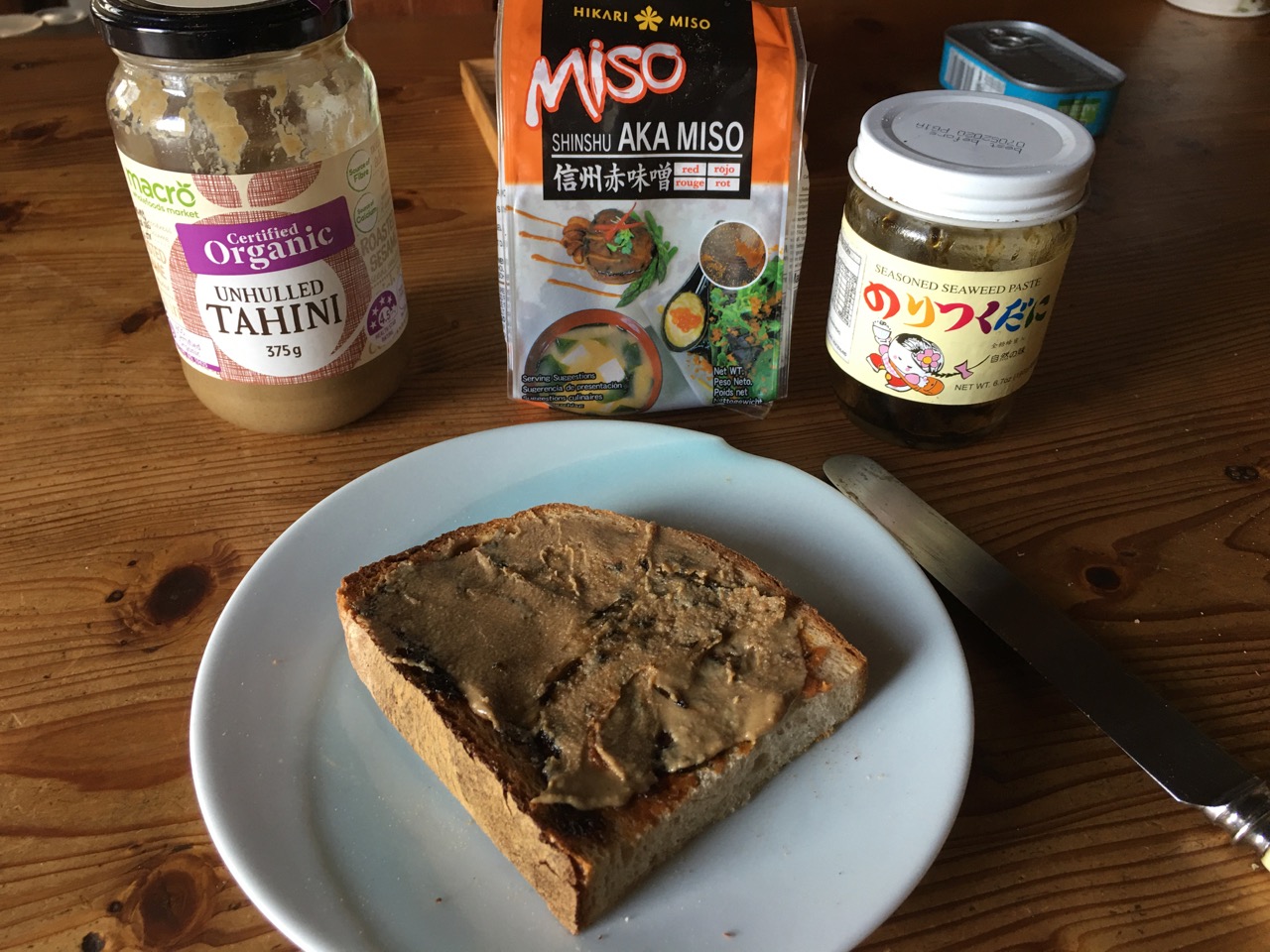
For breakfast I’ve recently got a taste for an unusual combination of umami flavours. I toast a slice of my home baked rye bread and spread a little bit of aka miso over the toast, then a thin spread of Japanese fermented seaweed paste, and finally some organic, un-hulled tahini. It’s really savoury and very nice. I wonder if I’m lacking some sort of mineral in my diet, to make me want to eat this unusual combination?
We picked the last of the broad beans yesterday. They are such a wonderful springtime treat. The season is so short. Broadbeans are so particular. If I plant them too early, they flower and flower, but refuse to set any beans. If I plant them too late, they refuse to germinate in the cooler soil. I don’t know if it is my particular situation here and my terroir, or if other veggie gardeners find the same thing? I have just got used to them flowering for some time until the conditions are right for them to set beans. The ripening of the beans always seems to coincide with the winter/spring (sprinter) winds. Just when they are tall and laden with a heavy crop of beans, the winds come and knock them all over. I’ve learnt to stake the plot and run some rope around the plants to keep them vertical.
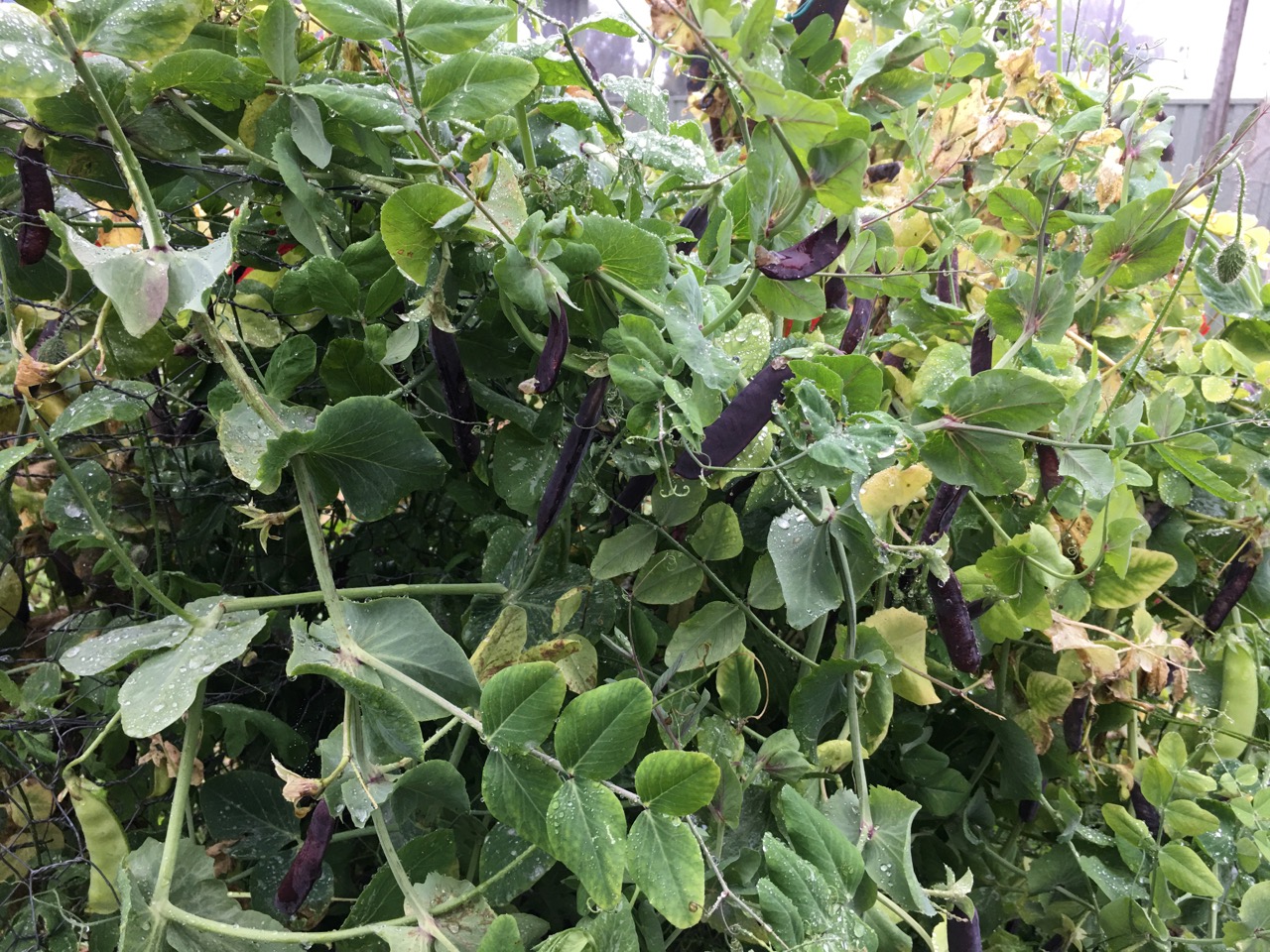
This spring I grew the same red flowering and purple podded peas that we have been growing here for years. Collecting our own seeds each summer as the plants dry off, so as to replant the following year.
We probably have just one more picking of the peas before the hot weather arrives to desiccate them. However, it seems that this year is declared to be a La Nina event year, so the onset of the heat mat be delayed. Apparently we can look forward to a wet and steamy beginning to summer. Even though the garden looks like it is more or less abandoned, there is always something to pick for dinner in amongst the weeds. The blue berry bushes are loaded and just starting to ripen. we can pick a punnet every other day at the moment, but there will soon come a time are the season peaks that we will be eating blueberries in everything and even preserving some.
Even though the garden looks like it is more or less abandoned, there is always something to pick for dinner in amongst the weeds. We are always so busy. There is always something to do. I can’t imagine that I will ever find my self being bored!
We have just had our first Open Studio weekend. It was good. Not too busy, just right. We had an influx on Saturday morning with half a dozen cars in the first hour. We even had a queue at the wrapping table for a short time. but after that it settled down to just one car after another until lunch time and then a long spell of quiet. In the afternoon we had several more visitors spread out more or less evenly until just after 3pm when it stopped.
We were lucky that there was a big function on at Sturt Workshops in Mittagong all day Saturday, so we picked up a few car loads of visitors that called in here on the way past, coming from Sydney and going to Sturt.
We have had only 4 stoneware glaze firings in the 3rd hand gas kiln that I bought back after 26 years out in the wild. It’s now back in captivity and working well.
Sunday was quieter, but still good. We had the same lull in the middle of the day but a much quieter afternoon. It was a great start to this 4th pottery iteration after loosing the first 3 to fires, we have been a lot more cautious about what sort of garden and just how much foliage we can accept near our house and workshop. As this new 4th pottery is almost entirely made of steel, it is a lot less flammable. Steel building can still be ruined by intense fire – they bend and collapse in intense heat. So that is why we have decided to build this new studio in the middle of our block well away from any bush. I have already plumbed the building with fire fighting sprinkler lines. Although as it is so wet they year. I haven’t got around to fitting the sprinklers yet.
I decided to spend those couple of days in the pottery making work for the sale. Everything in it’s own time.
We almost sold out of Janines painted unomi beakers and inlaid lidded boxes, as well as my breakfast bowls.
So on Monday morning we were both back on the wheel making new stock for the up-coming December Open Studio weekends as we have elected to be part of the Southern Highlands ‘Pop-up’ Artists Open Studios on the first two weekends on December, – 4th and 5th, then the 11th and 12th.
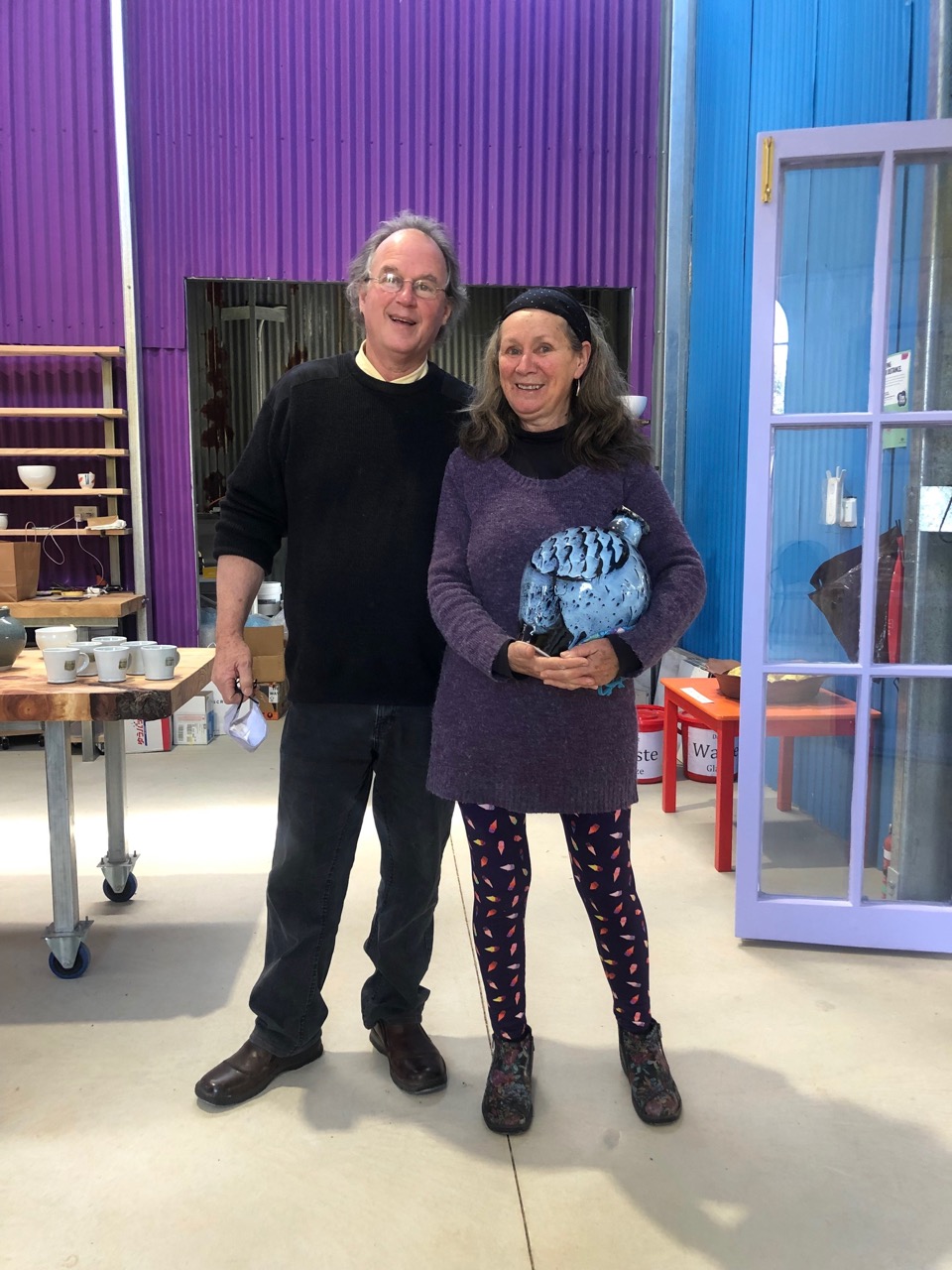
This image of us by Eva Czernis-Ryl. Thank you Eva.
Yesterday we had all three kilns firing at once. A bisque in the little electric kiln, a stoneware reduction glaze in the big gas kiln and another stoneware reduction firing going on in the old relocatable mini wood fired kiln. I recovered it from the ashes of the fire. As it was built from a stainless steel monocoque frame with insulation brick lining, it mostly survived the fire, because it was stored out on the verandah and didn’t get too badly burnt. It just needed some cosmetic TLC on the frame and a new set of castor wheels. Lucky!
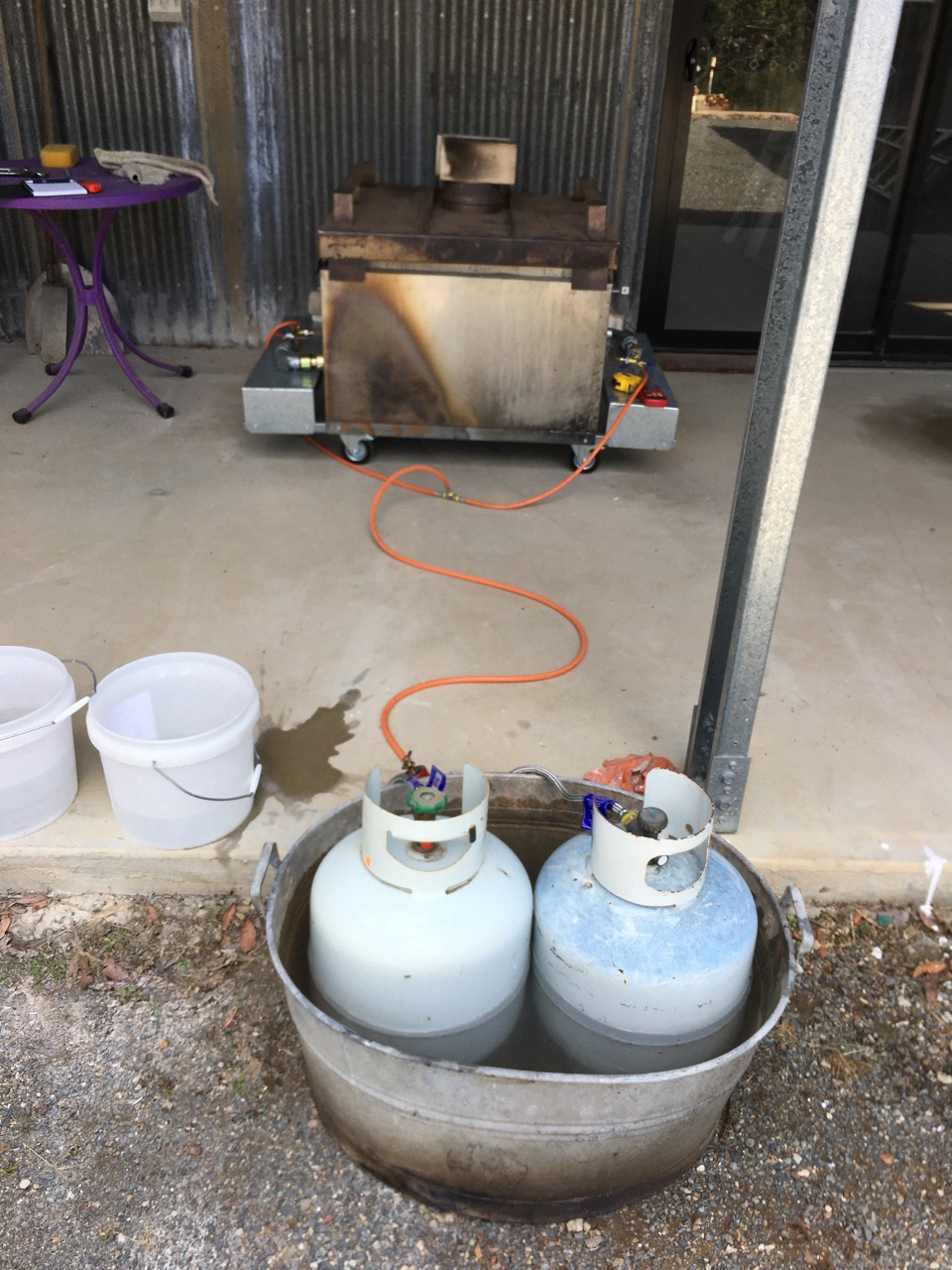
It was designed and built as a possible dual fuel kiln to be fired with either wood or LP gas from BBQ bottles. However I had never fitted it with burners and only fired it with wood previously. Now is the time to finish fitting it out with burners. I spent a day making shiny new burners and gal steel mountings. I chose to only pack and fire the bottom half of the kiln , as it is designed to be in two sections. A bottom half with the fire box opening and burner holes – which ever is chosen to be used. Then a top half composed of a removable ceramic fibre ring and lid. The ring can be removed and the lid placed on the base section to make a smaller half sized kiln. Which is what I did yesterday. As it was the first test firing of the kiln, I thought it best to go small for a first firing.
After an initial tweaking and tuning, It worked perfectly and fired to stoneware in reduction easily in 2 1/2 hrs. using less than one 9kg bottle of BBQ gas. I had 2 set up ready with a change over switch just in case, but the 2nd bottle wasn’t needed. I also set them up in a tub of water that can be warmed. In this way I can fire them to dead empty without them freezing. But none of this was necessary yesterday.
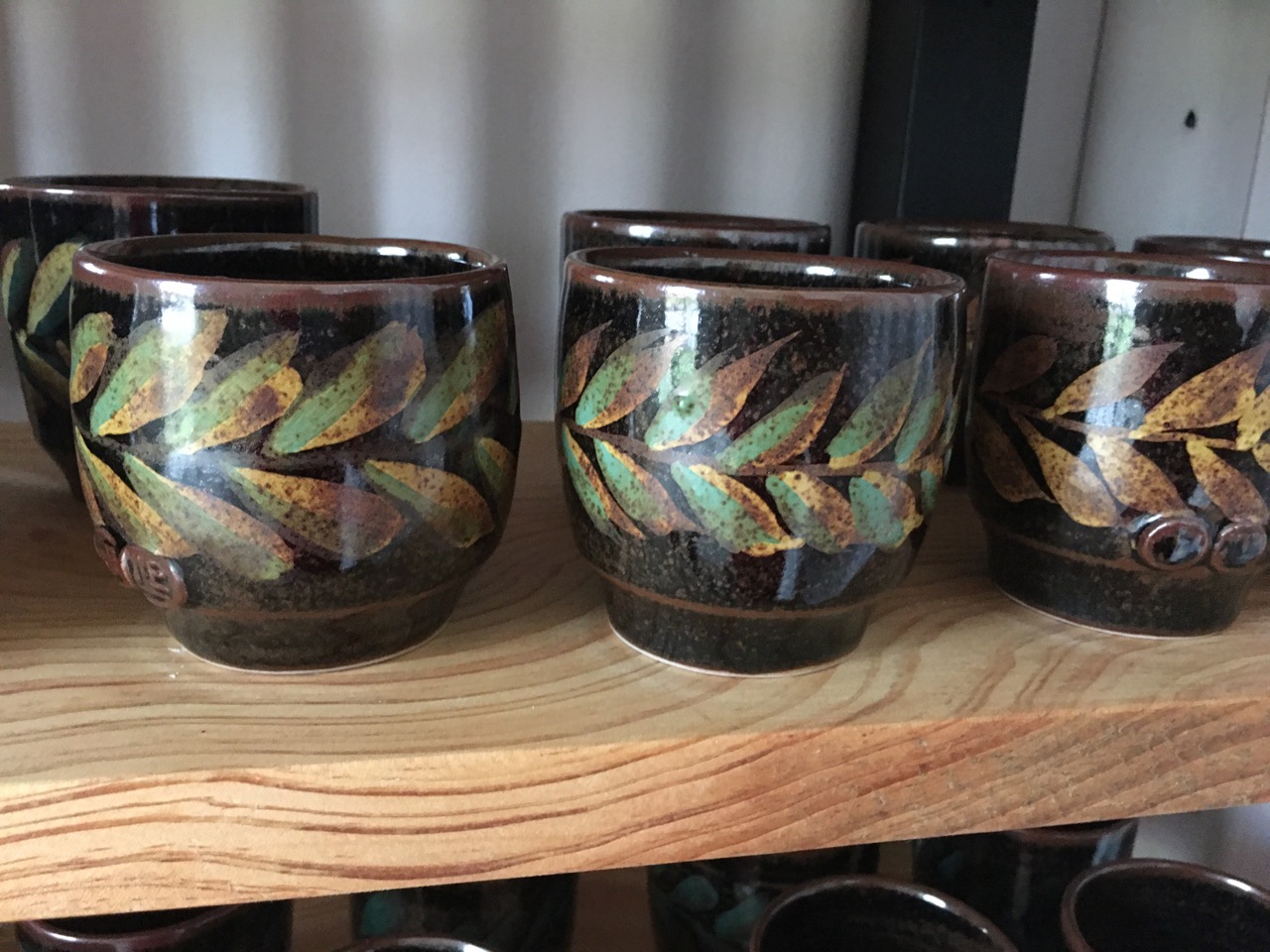
I’m a bit more confident about our local rock glazes now after 3 rounds of test firings. The hares fur/teadust tenmoku is a little more stable.
Both Janine and I have been investigating the use of colours over tenmoku.
and I have managed to stabilise the local Balmoral dirty feldspathic stone and wood ash opalescent Jun glaze.
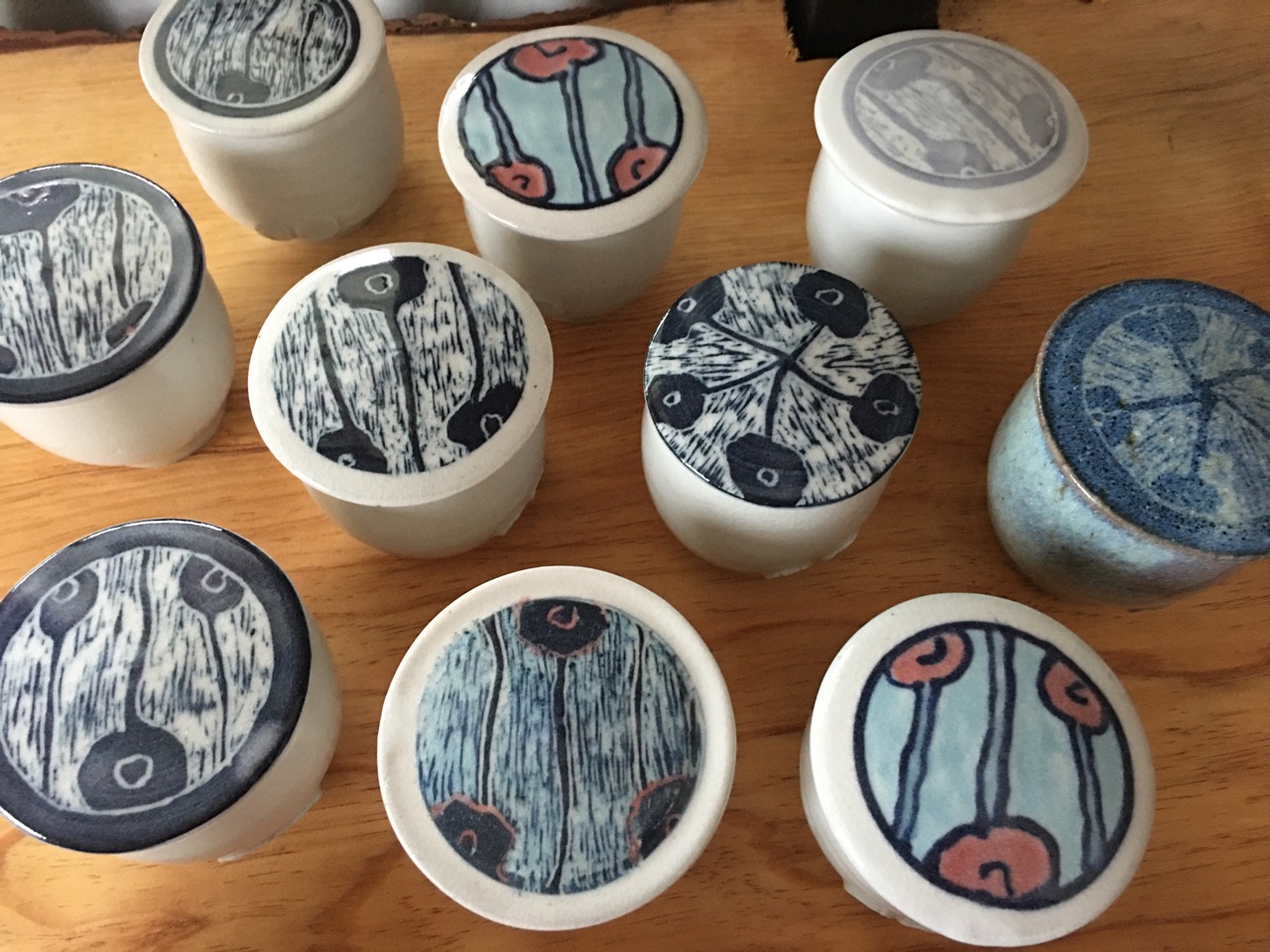
Janine has made some slip decorated lidded boxes.
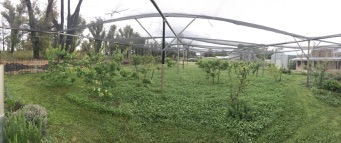
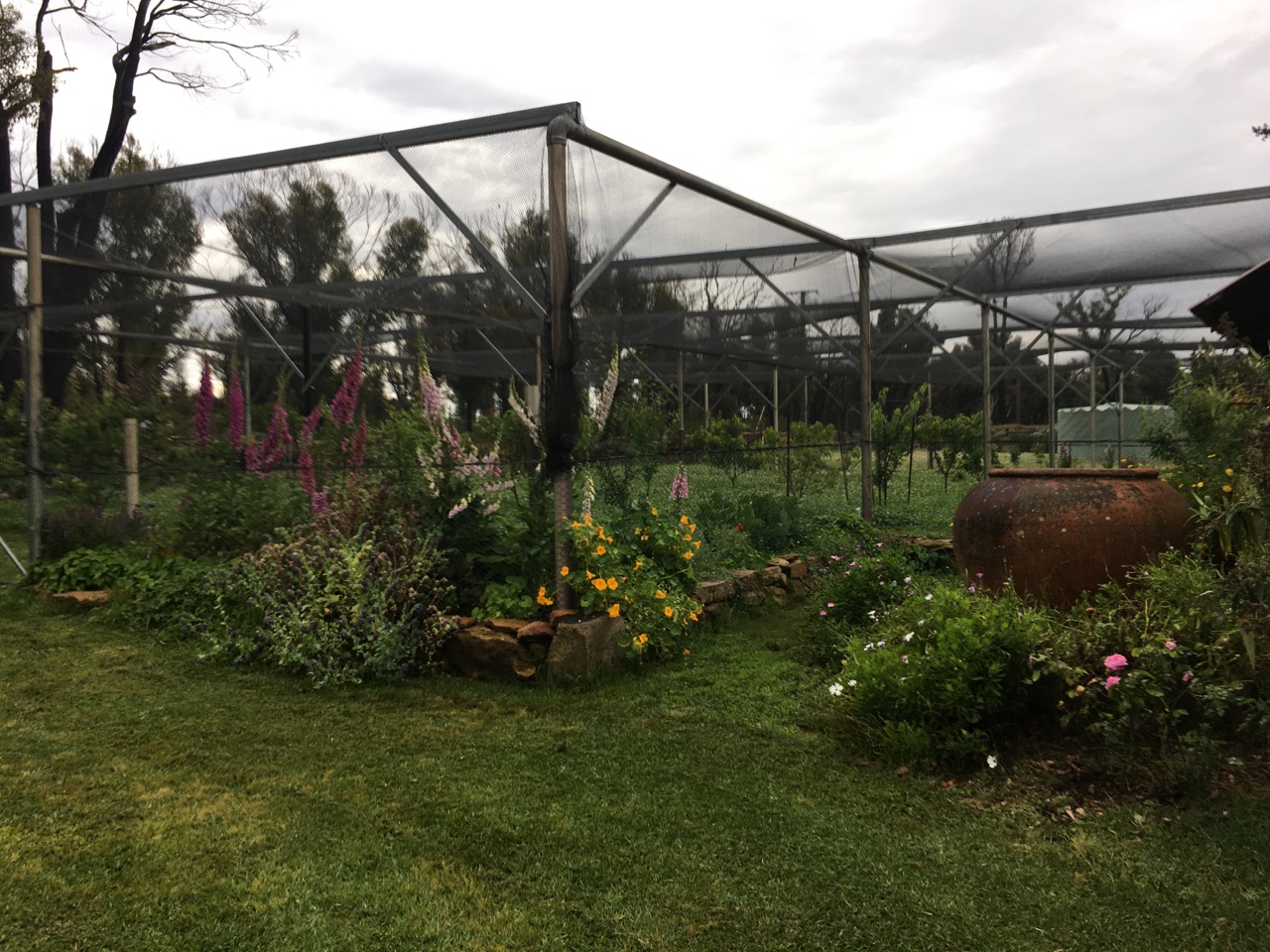
The stone fruit orchard is looking great after a wet start to the spring season and everything is green and luscious.
The almond grove is also very lush and green. All these mature almond trees were burnt and transplanted into this area that was formally a native garden. We have decided to keep the more flammable native bush at a much safer distance from the house now.
The pottery will be open this coming weekend, the 13th and 14th of November as part of the Australian Ceramics Assn. Open Studios weekend that will operate nationally. We will be open in conjunction with Megan Patey in Colo Vale. Megan makes beautiful Majolica and Smoked Arab lustre.
click on the QR code to find your local potter.
Janine and I will be also open on the first two weekends in December and the Southern Highlands Artists Pop-Up Open Studios group.
We will be open on the 4th/5th and in conjunction with Sandy Lockwood, on the 11th/12th of December.
We look forward to being able to show you around the new pottery on one of these 6 days.
We will be following the government recommended COVID19 safety protocols. So please come if you are double vaccinated and have your vaccination certificate. There is our Service NSW, QR code poster on the door for login
We have a covid-safe plan that includes keeping the space very well ventilated and limiting numbers to 4 sq.m. per person.
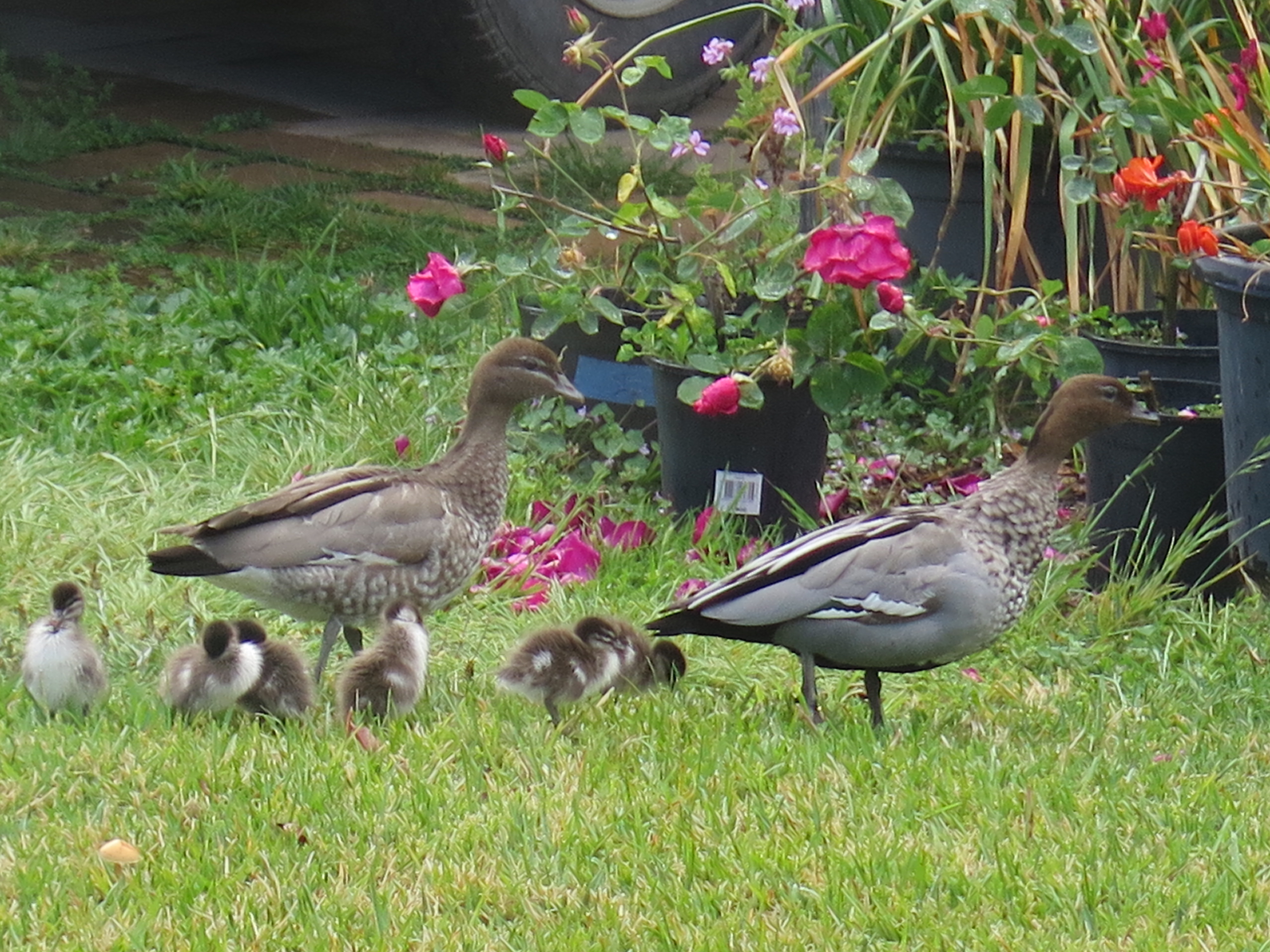
Please don’t bring dogs, as we have recently had both wood ducks and brown ducks hatching clutches of little ducklings that waddle all around the property with their parents feeding on the lush grass. These are timid wild animals and we have no control over where they wander. So please keep a respectful distance if you are walking around the garden.
Dear Friends, We will be opening our pottery on the weekend of 13th and 14th of November. We are informed that on the 1st of November, the state will be opening up to allow people from the Greater Sydney Region to travel to the regions like ours in the Southern Highlands. We have joined the Open Studio Weekend organised by the Australian Ceramics Assn. and accordingly, we will be open from 10 am to 4.00 pm on both Saturday 13th Nov. and Sunday 14th Nov. We are looking forward to seeing our friends again after such a long time in lock down.
We must remind you all that we will be observing strict Government COVID safe protocols.
Please don’t come unless you are double immunised, and have a vaccine certificate to show us.
We will need to see your vaccination certificate before you can come in and there will be a strict 4 Sq. M. rule applied. That’s 7 people max. in the gallery. Although I can’t imagine that we will get more than 7 people all day, never mind all at one time 🙂 We will have all the doors and windows open for good ventilation and to keep the CO2 levels down to around 450 ppm. As this is considered good practice to minimise the chances of infection. We won’t have a lot of work fired and for sale by that time, as we have only now just had our first stoneware reduction glaze firing full of glaze tests. I have been very busy working on the 3 local igneous rocks that I could collect within 5 km of our home here, or near the supermarket and Post Office on our once a week shopping excursion. That has limited my choices, but it’s a challenge to make the best I can out of what I have available in my immediate vicinity.
Its shaping up to look like we can make a tenmoku and tea dust glazes from the Hill Top basalt found in the next village. A green celadon from some washed felspathic gutter sand, A pale blue celadon, a yellow matt glaze, Blue/yellow mottled glaze, also made from the local ‘Living Waters’ Basalt intrusion, and a pink matt glaze made from the sericite porcelain body. As well as something resembling a pink/orange shino style of glaze made from the Balmoral dirty felspathic igneous stone. Nothing special, but a workable mix to get us started. As long as you are double vaxed, We’d love to see you here at some stage, once we are all allowed to travel inter-regionally. Even if there is only a small selection of our our work on the shelves, we welcome you to call in and see the new shed. I’ll be pleased to give you a tour of the Workshop, Pottery studio and Gallery, as well as the raw material processing facilities that we are in the midst of developing – for those so inclined.
We will probably also be open from then on, each weekend, through until Xmas, but please ring beforehand, just to make sure that we are in and open, and not out doing shopping.
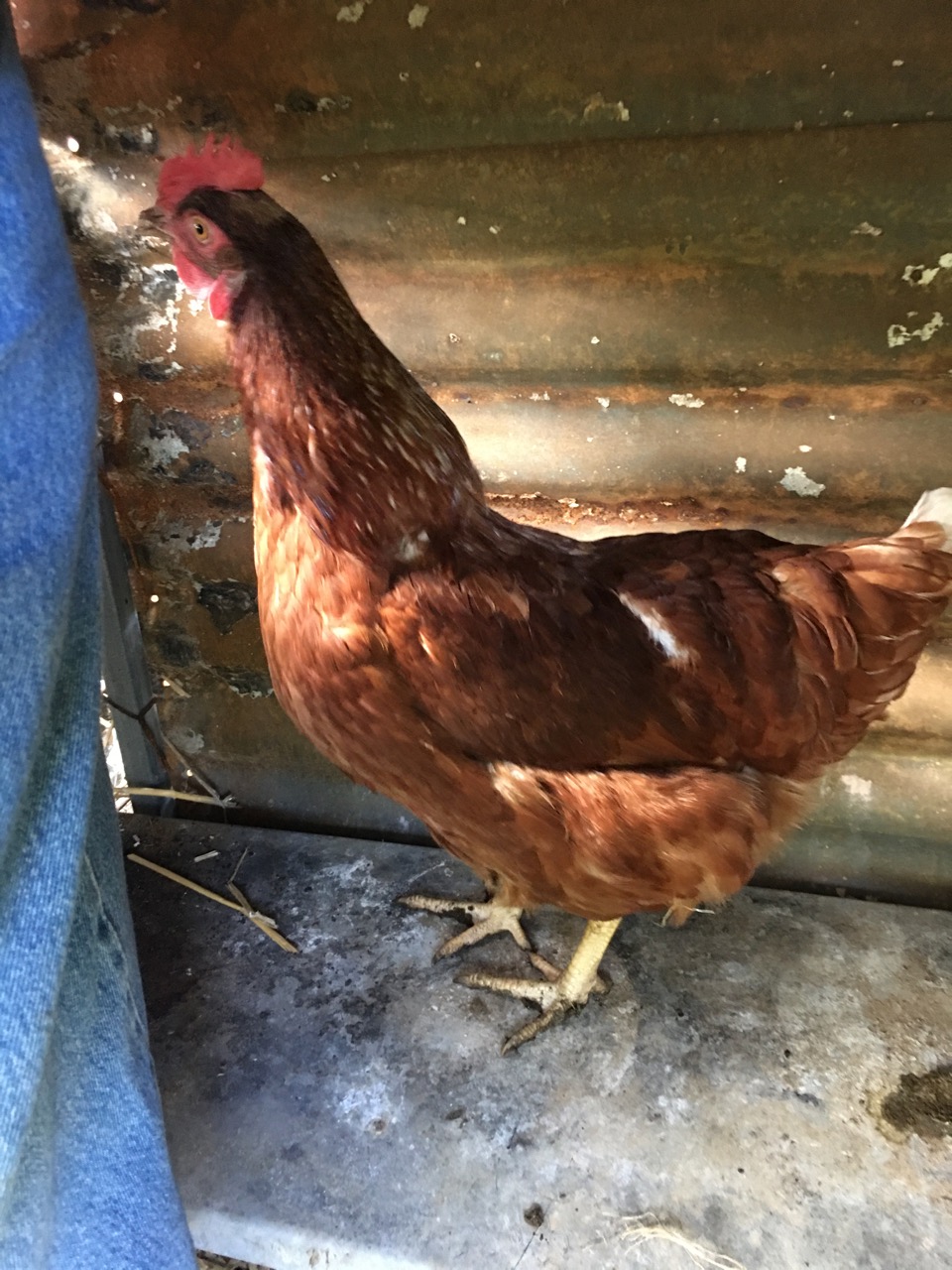
With the news last week that the State Premier, Gladys Berejiklian, had resigned under a cloud of corruption allegations and had been called to appear before ICAC, there was some very disturbing cackling noises coming from the chook house. Our two chickens, given to us after the fire by out 2 very thoughtful friends Warren and Trudie, were making a bit of a fuss. These two lovely chooks arrived here from Balmain as tree change chook refugees. We had to wean them off their previous diet of smashed avo on chia sourdough rye and sipping chardonnay! They arrived with names already given, assigned to them by their previous owner. They are Edna and Gladys. We decided to call Gladys Berechickenlian, it seemed funny at the time. Now all of a sudden it isn’t appropriate any more! and Gladys is a bit upset.
So we have re-named her as Gladys ICACkle !
With the longer days and warmer weather creeping in in fits and starts, in-between cooler days and bouts of rain, everything is growing very well.All the seeds that I planted a month ago are now up and starting to grow.
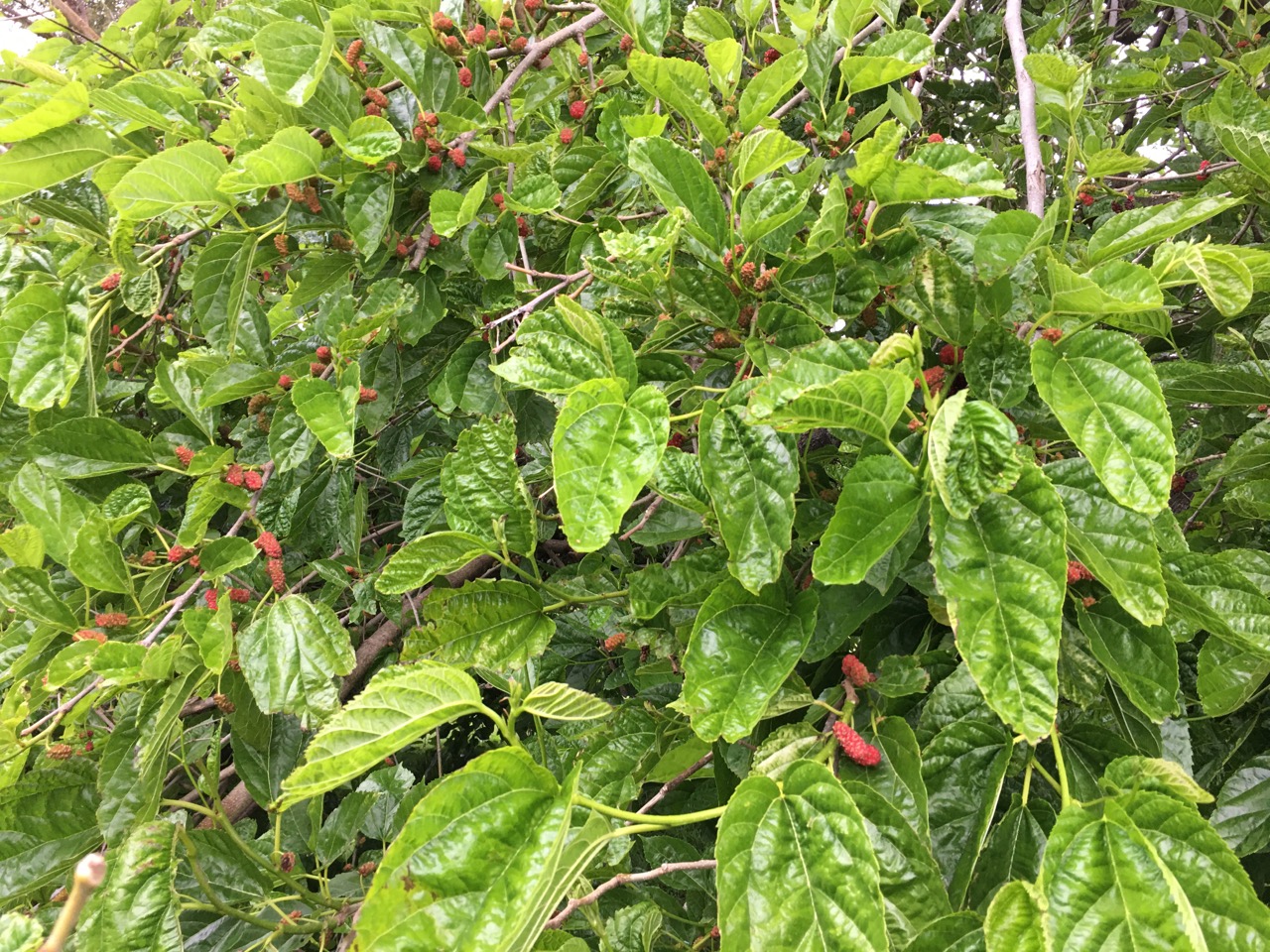
The mulberry tree has set a good crop and the berries are starting to turn red. We will be eating them in about another two weeks.
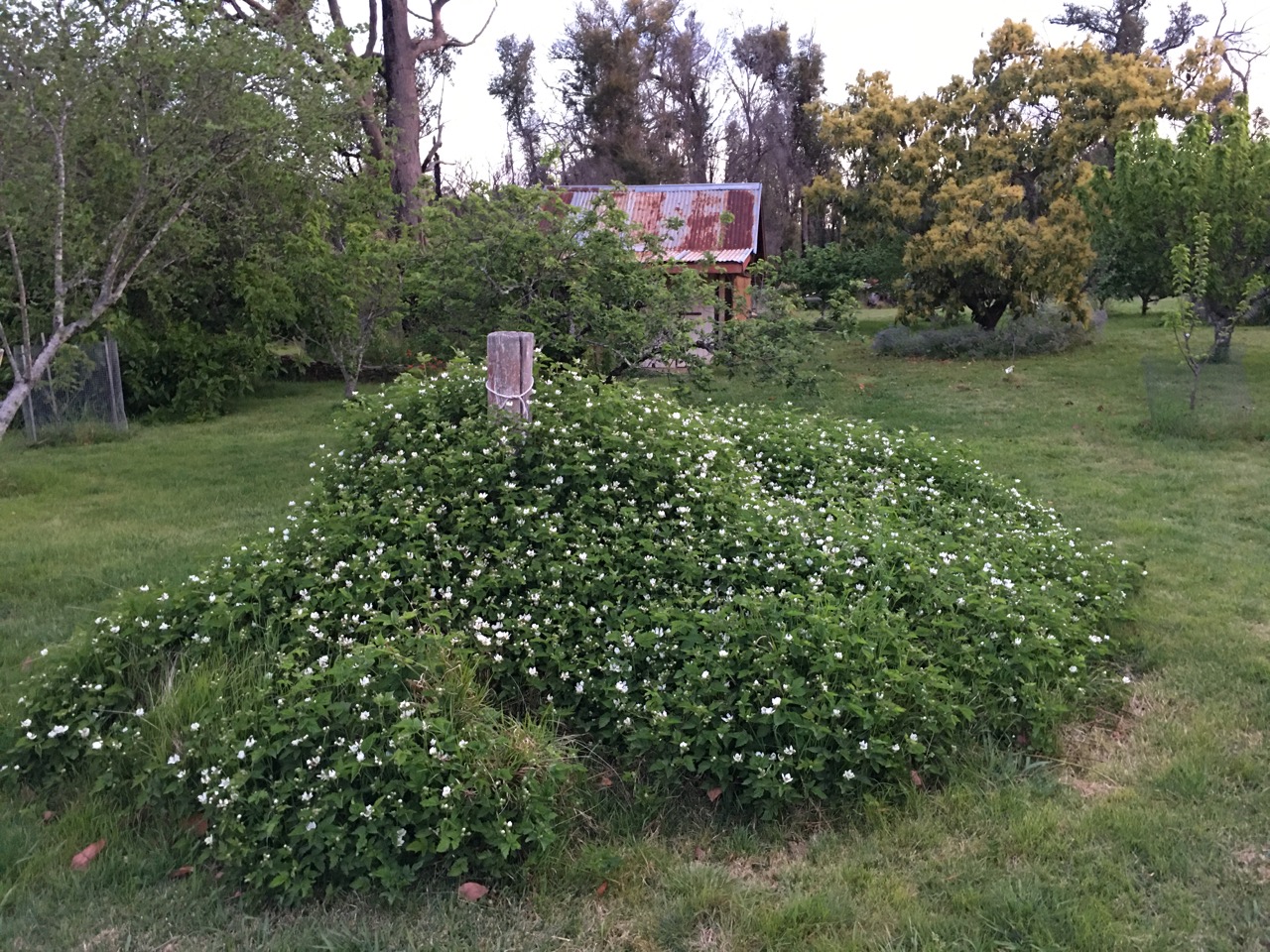
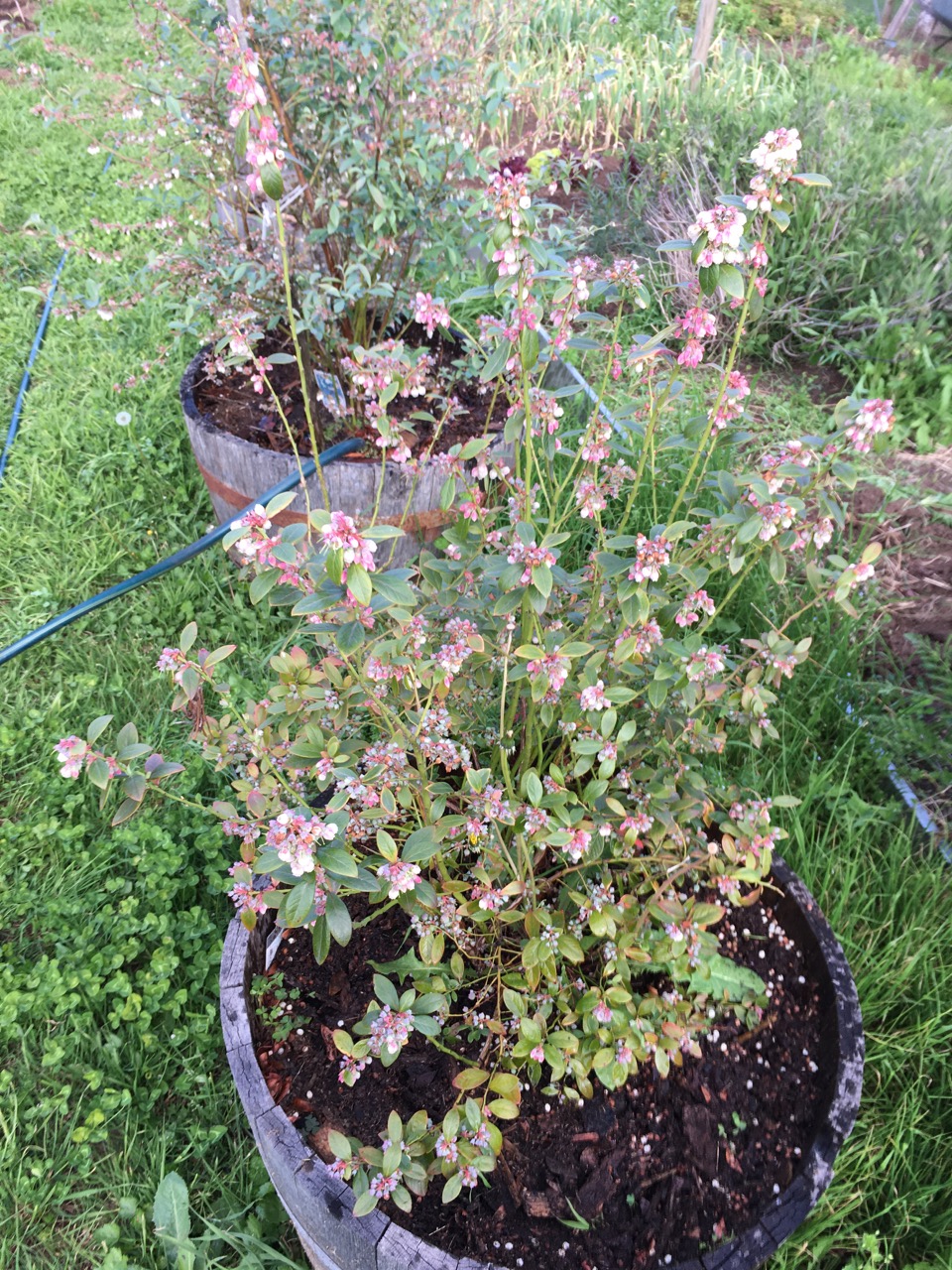
The young berries are in full flower as well and the blueberry crop is just about ripe. We have already eaten our first few blueberries.
The avocado tree seen behind the youngberries is in full bloom, so much so that it has turned from green to yellow with all the flowers obscuring the leaves.Hopefully, there will be a good crop of avocados in the autumn/winter. This tree was badly burnt in the fire and lost all its leaves, completely scorched off. Many of the small branches were killed by the heat. It still has a lot of dead wood that I need to prune off, but it is a long way down on my jobs list. There will be no ‘hungry gap’ this spring. The hungry gap is a time in the year, when long ago, there was a gap in the food production from peasants gardens at the end of winter, when the winter vegetables were mostly consumed, and the spring planting was done, but no eatable food was ready to harvest until the beginning of summer.
We harvested the last of our 3rd or 4th pick of little broccolini shoots last week, and managed to pick the first of the new season large round broccoli heads this week. Excellent timing on my part. And although I’m flat out busy building the pottery and starting to make the first of our new work, testing clay bodies and glazes. I’m proud to say that I have still managed to get into the garden every now and then to do some weeding, watering and planting. Janine goes to the garden every evening to pick what is available and ready for dinner. We have no money, but we eat well and healthily, because we don’t buy most of our food. We grow it.
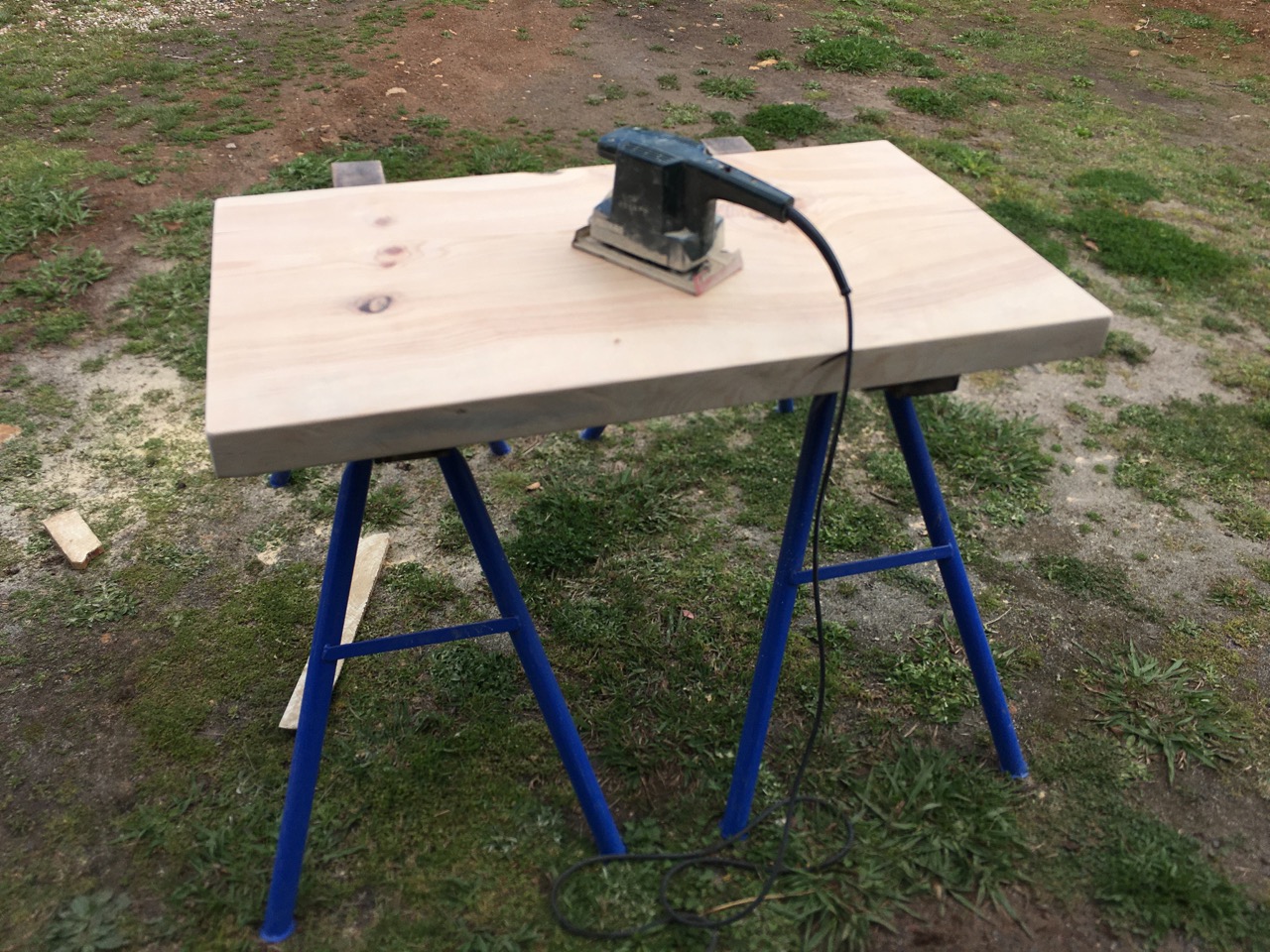
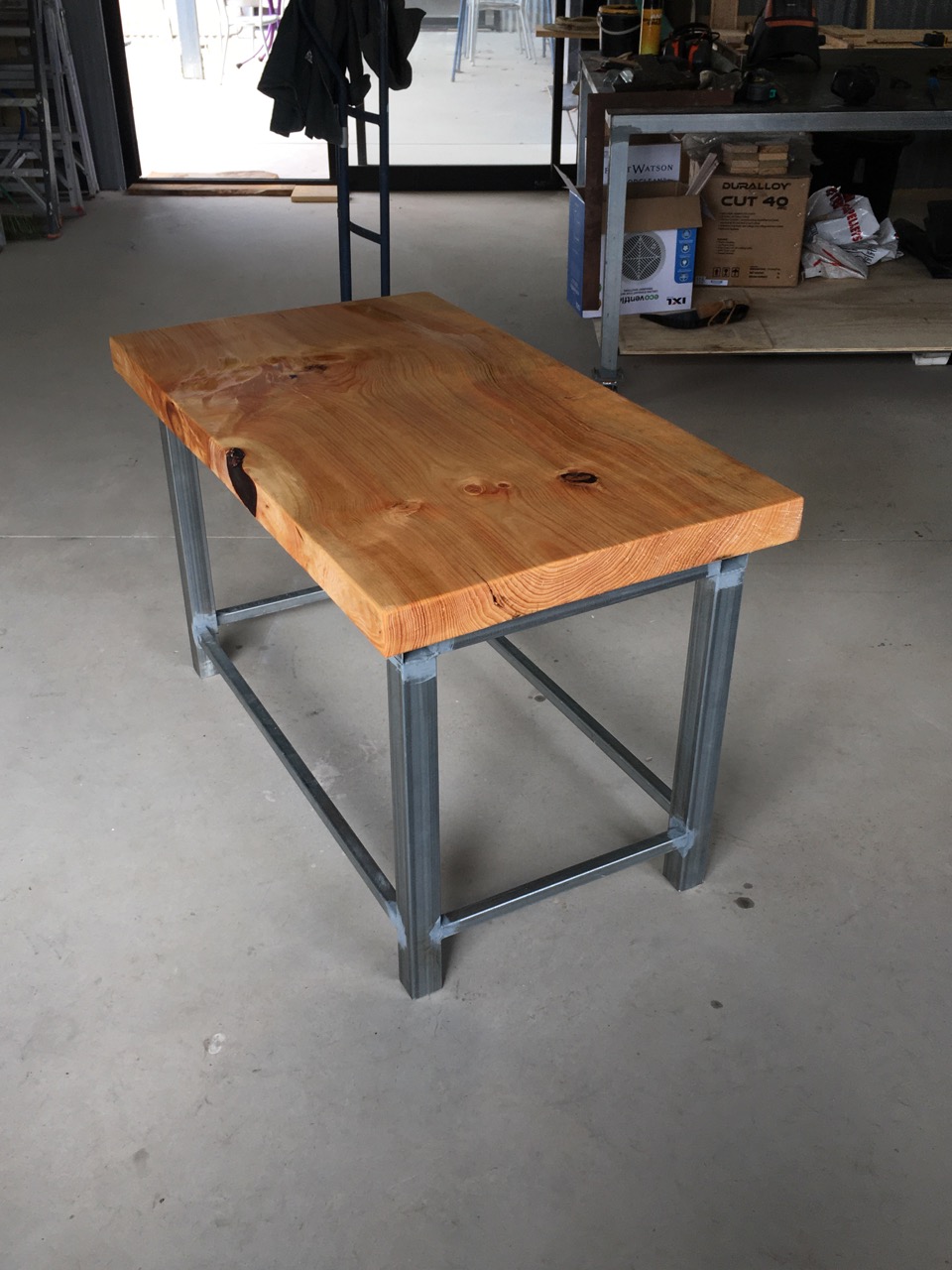
Our biggest expense each week is protein, ie, fish from the fish truck that comes up from the south coast on Thursdays and Fridays. We go to town and do all our food shopping on one of these days to coincide with the fish truck. We also make up a list of things that we need to get from the other shops like hardware, iron mongers, and plumbers supplies. As I’m building a lot of this building myself and doing 100% of the fitting out, I always have a list of steel, bolts and screws etc. that I need to make all the tables, benches, shelves, racks, stools etc. etc. This last week, I made a dedicated wedging bench to sit against the wall in the pottery. I used one of the massive slabs of pine that we milled a year ago from our own burnt pine trees that we felled. Waste not, want not. This is beautiful timber. I’m really pleased to be able to make my bench form such lovely stuff.
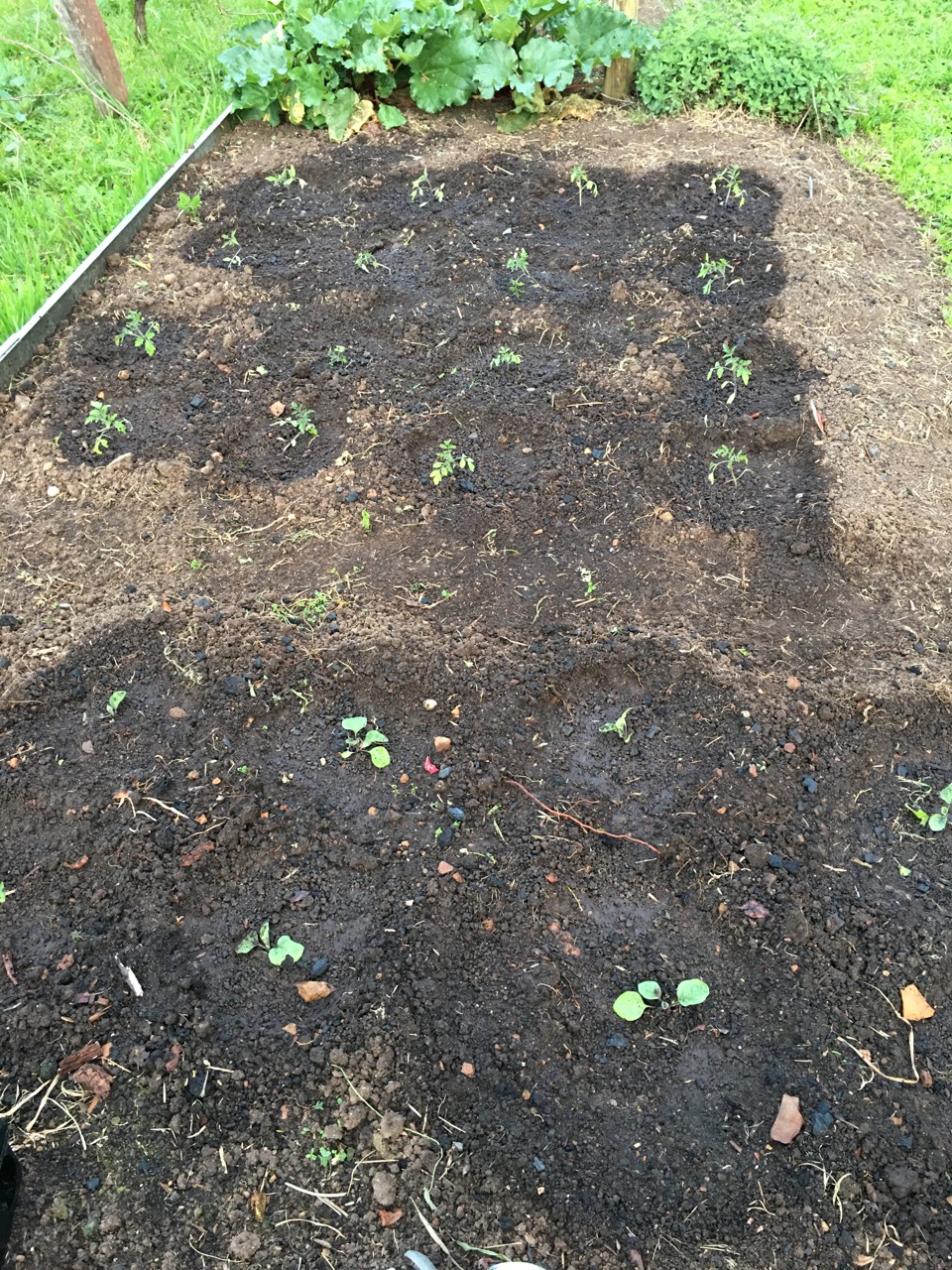
We are past the equinox now and firmly in spring. I have planted out the summer garden seeds and even a few seedlings to get things started a little early. Things like tomatoes and squash. I’m never really sure when it will be safe to plant out those tender summer vegetables, just in case there is a late frost, but as the years go by, the chances of a late frost get more remote. Global heating is running rampant and no one seems to want to do anything about it. We seem to have some of the laziest and most corrupt and stupid politicians in the world. Firmly welded onto burning coal and gas as the solution to everything. Still refusing to commit to zero carbon economy by 2050. Pathetic!
On the bright side. The cherries have started t flower, always a safe sign that I can plant to the summer veggies. I checked my diary and found that I planted out the first summer seedlings last year on the 11th of Sept. This year I got into the garden and planted the first seeds on the 13th. pretty similar.
The quinces are also flowering.
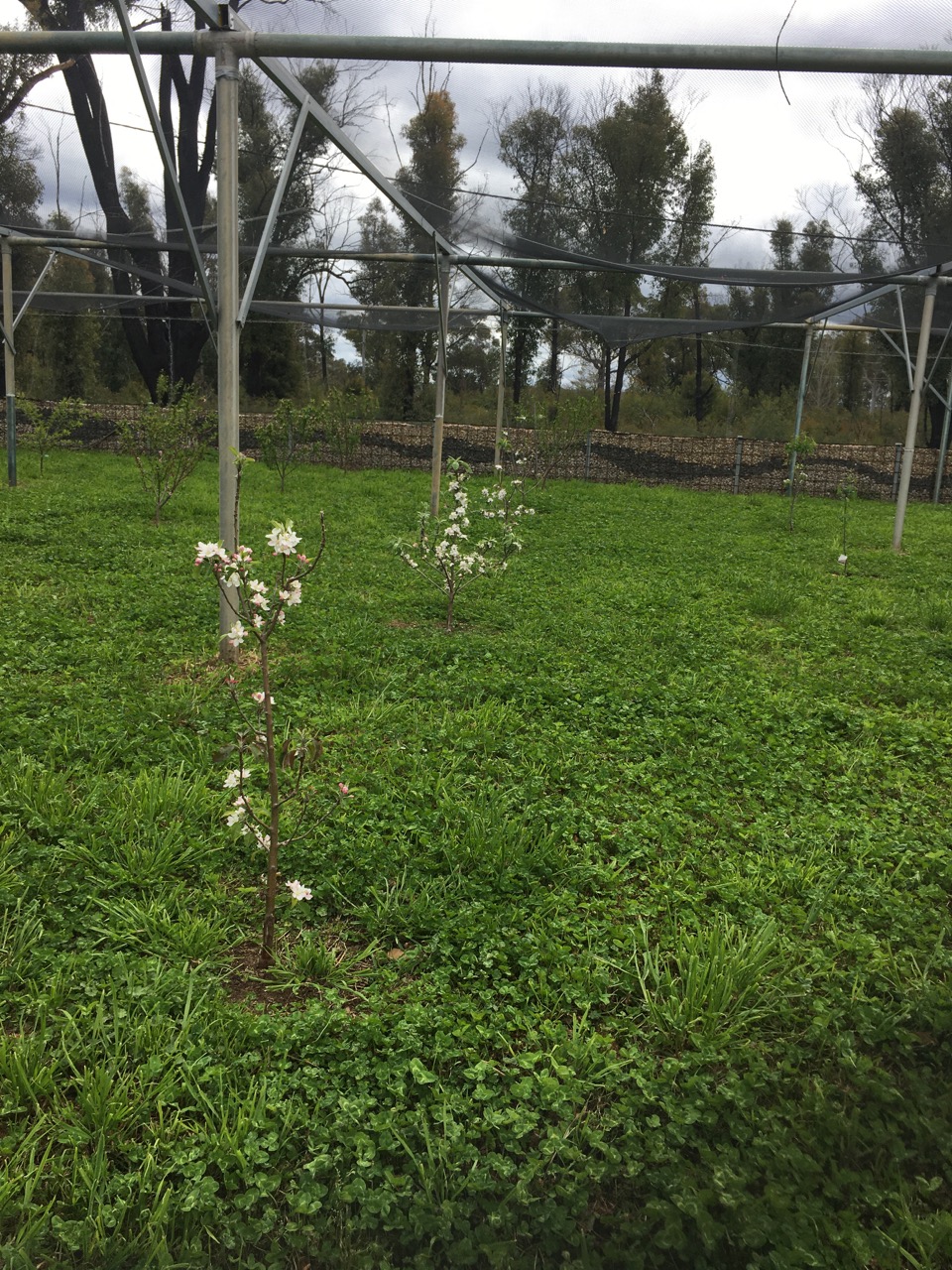
Even the young little apple trees, only I planted last year in the new orchard that we built after the fire, These are also flowering.
I pick off the small fruits as they form, so as to allow the tree to grow vigorously and develop a sound structure. However, I can’t help myself from leaving just one fruit on each tree to develop to maturity, just to see what the fruit looks and tastes like. It’s exciting to see the fruit swell up and mature. There is so much anticipation in the wait for them to become ripe.
All the seeds and seedlings are planted out and watered in. Now we wait and weed.
I spent a few hours each day for the past week weeding the poor neglected vegetable patch. We have been so busy in the pottery making pots and glaze tests, preparing for our first glaze firing, that I haven’t spent very much time in the garden over winter. No its catch-up time. I really have to spend some time in there, or the weeds will taker over with the coming warmth and longer day light hours and all the vegetables will be smothered.
In the past, I used to be in the garden everyday. Whenever I got a bit bored doing whatever it was, I could just walk out the door and around the shed, and into the garden. I’d pick something to chew on and do a bit of weeding and watering, enjoy the creative and productive break, then go back to work refreshed. There is just so much to do these days, that the list is longer than the piece of paper I try to write it all down on. I work until I’m too tired to do more, and the garden gets forgotten. At least I’m smart enough to know when to stop. I don’t want to wear my self out. I know that I can come back to it the next day and finish whatever it is that I didn’t get done the day before.
This week I took time out and weeded the asparagus bed. I desperately needed to be cleaned out to allow the new season growth to get a chance to thrive.
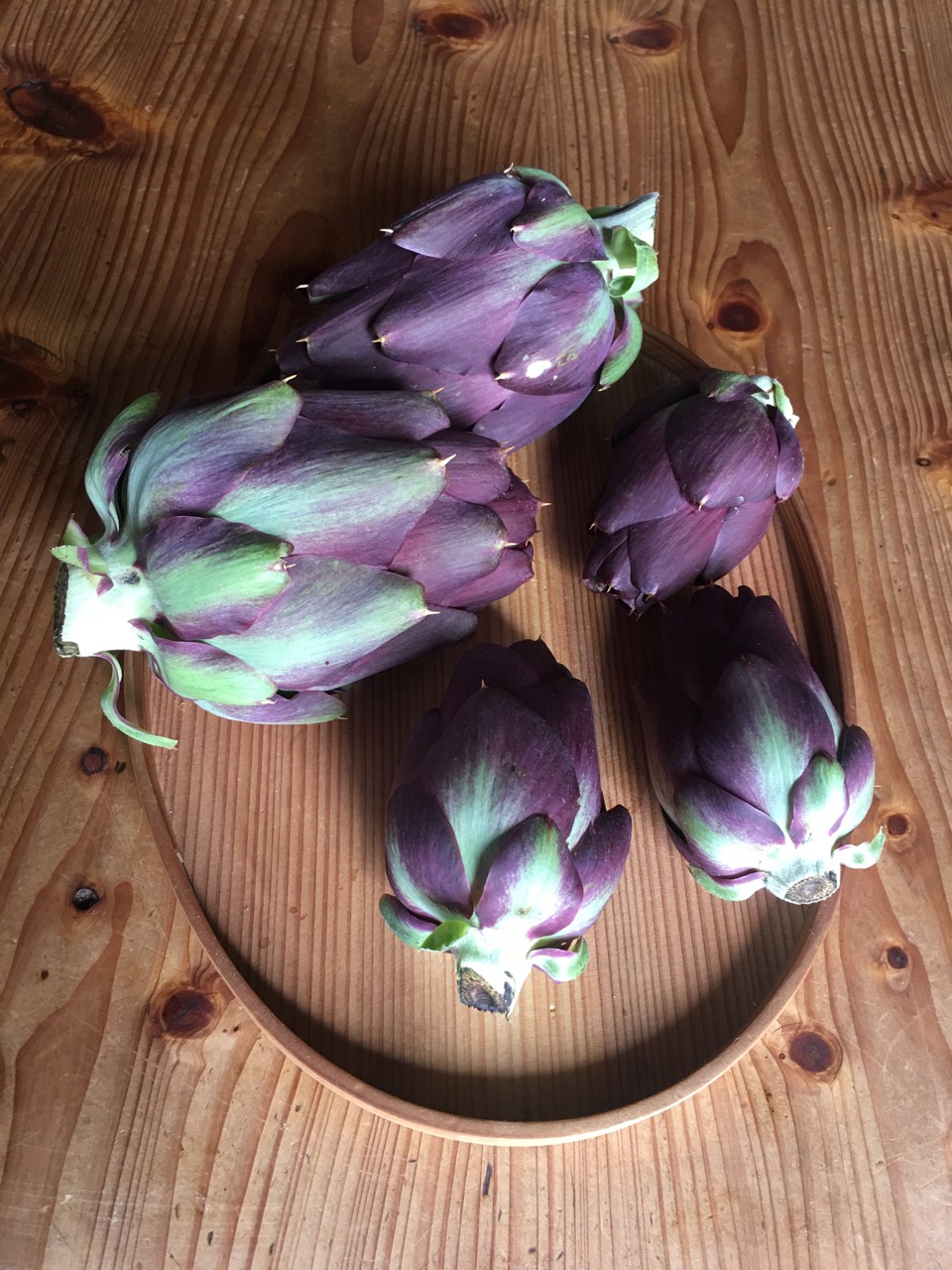
There are two beds, right at the bottom of the garden. They look great all cleaned out. I can’t wait for the new spears to come through. The artichokes behind them are just coming into head. The earliest variety is the early Italian purple. We ate them for lunch.
I grew these plants from seeds, they turned out to be quite spiky, it didn’t mention that on the packet! I just cut the top 1/3 off and peel the first row of outer leaves away, then there is no problem.
Janine and I have each spent a few hours here and there over the winter months weeding the garlic beds. Garlic doesn’t tolerate too much competition. it really impedes the development of good sized bulbs. So because it really needed t one done, we cancelled pottery work and did it – a few hours at a time, then 6 weeks later, we did it again. It has been a mild and somewhat damp winter, so all the weeds out grew the garlic. Now it’s done, it looks good and the garlic is pushing up and filling out. We may not need to weed it again before it matures in the next 6 to 8 weeks.
I try and grow all the garlic that we will need for the whole year, but rarely manage it. This year I managed to find the time to clear 5 beds and plant out about 200 cloves between March and May. Most of them came up, but not every one develops into a big strong knob. Some only grow to a small fiddly size that is rather a lot of effort to peel, but we work our way through them first. Janine doesn’t even bother to plait them, she just pours them all into a wicker basket that we keep on the kitchen work bench. Only when they are used up, do we proceed to bring down the bigger and easier to peel larger knobs. These plaits are hung up in the kitchen ceiling space where they are kept dry and well aired until we need them.
We have just one small bulb left of last years harvest, so I bought 3 knobs from the green grocers last week. These are imported from the northern hemisphere where they are in the opposite season. Janine also picked one very small bulb that had fallen over near the garden path. It wasn’t going to do well, so it’s our first bulb of the new season.
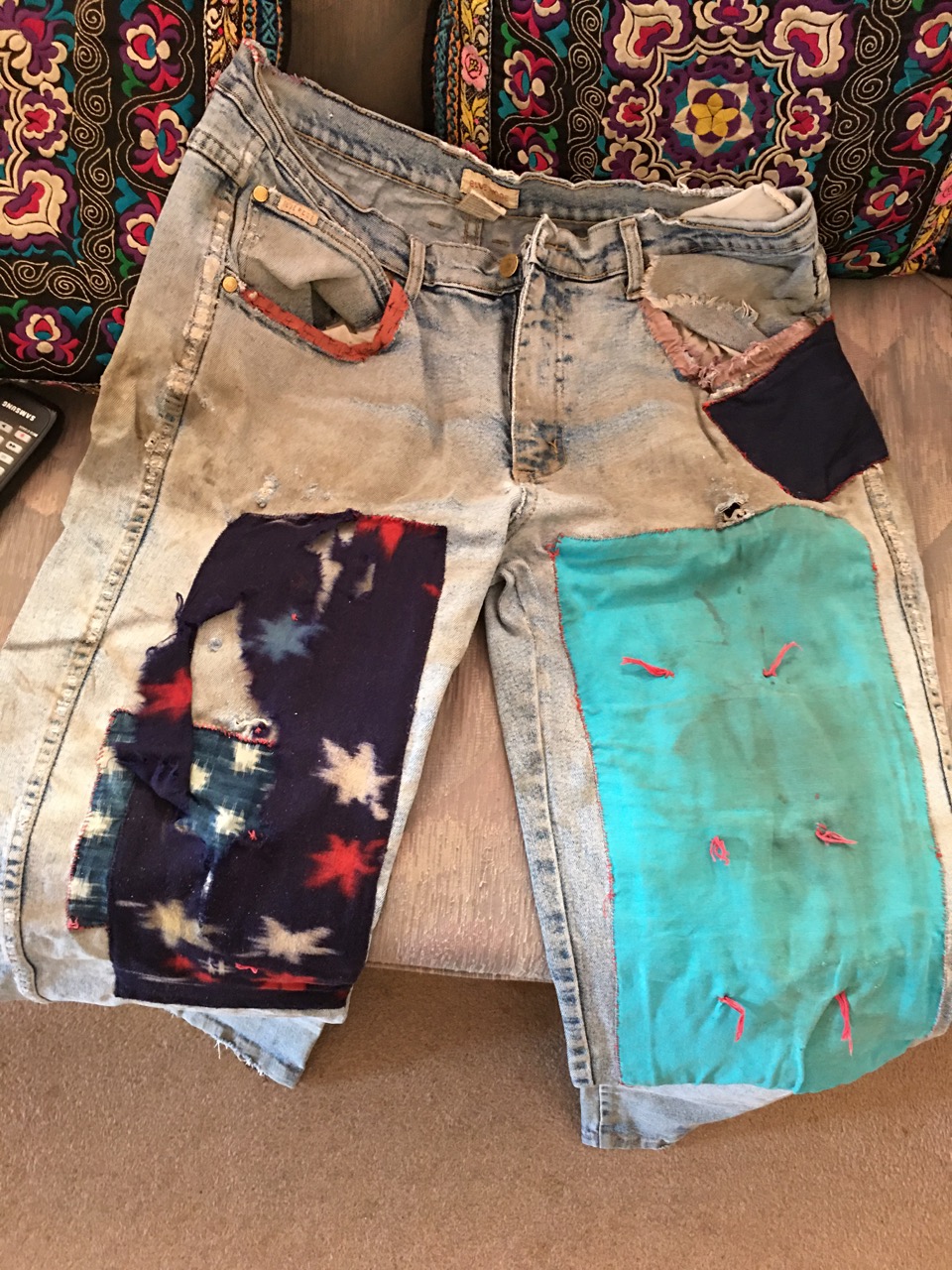
Each week I attempt to crush and mill another local igneous rock for use as a glaze ingredient.This week I stopped off on the way to Mittagong Post Office to collect another stone, on the hill behind the post office.I passed it through the rock crushers that I have pains-takingly restored after the fire. Luckily, all these machines are made of very solid steel plate or cast iron, but more importantly, they were situated in the breezeway between the two buildings. Being largely out in the open with very little flammable material around them, just a polycarbonate roof over them. So they didn’t get too hot.They weren’t warped or melted. This meant that I was able to restore them, not just scrap them.New motors, bearings, seals, pullies and belts were required. The metal work was largely saved because I poured used engine oil all over them, straight after the fire and before it rained on them. With the assistance of my friends Warren Hogden and Len Smith, Along with my friend Dave and his crane truck, we were able to lift them out of the rubble and up to a safe place, out of the way of the demolition crew and then tarp them in their oily state. This was just enough protection to stop them from rusting and flaking really badly. One very important aspect of my philosophy of self-reliance is never throwing anything out simply because it is no longer fashionable or is showing signs of wear. I keep working on my possessions, maintaining and repairing them, until they are really worn out, or past repair. In this regard, I have spent a lot of time patching and stitching my worn out work clothes and repairing some of my treasured pottery machines. Particularly the rock crushers. These things are as scarce as hen’s teeth and really worth working on. The Japanese have a word, ‘mortainai’ that means ‘making do’, I have written about it on this blog previously. It really sums up this repair and reuse philosophy.A year of part-time evenings has seen both my work jeans and the rock crushers back at work. These jeans are many years old and have patches over their patches, over their patches, especially on the knees.
My jeans mostly wear out at the knees and thighs, I have also had to reline the pockets, as the pockets are made from the lightest grade of cotton cloth that wears out in no time flat if you keep your car keys in there.
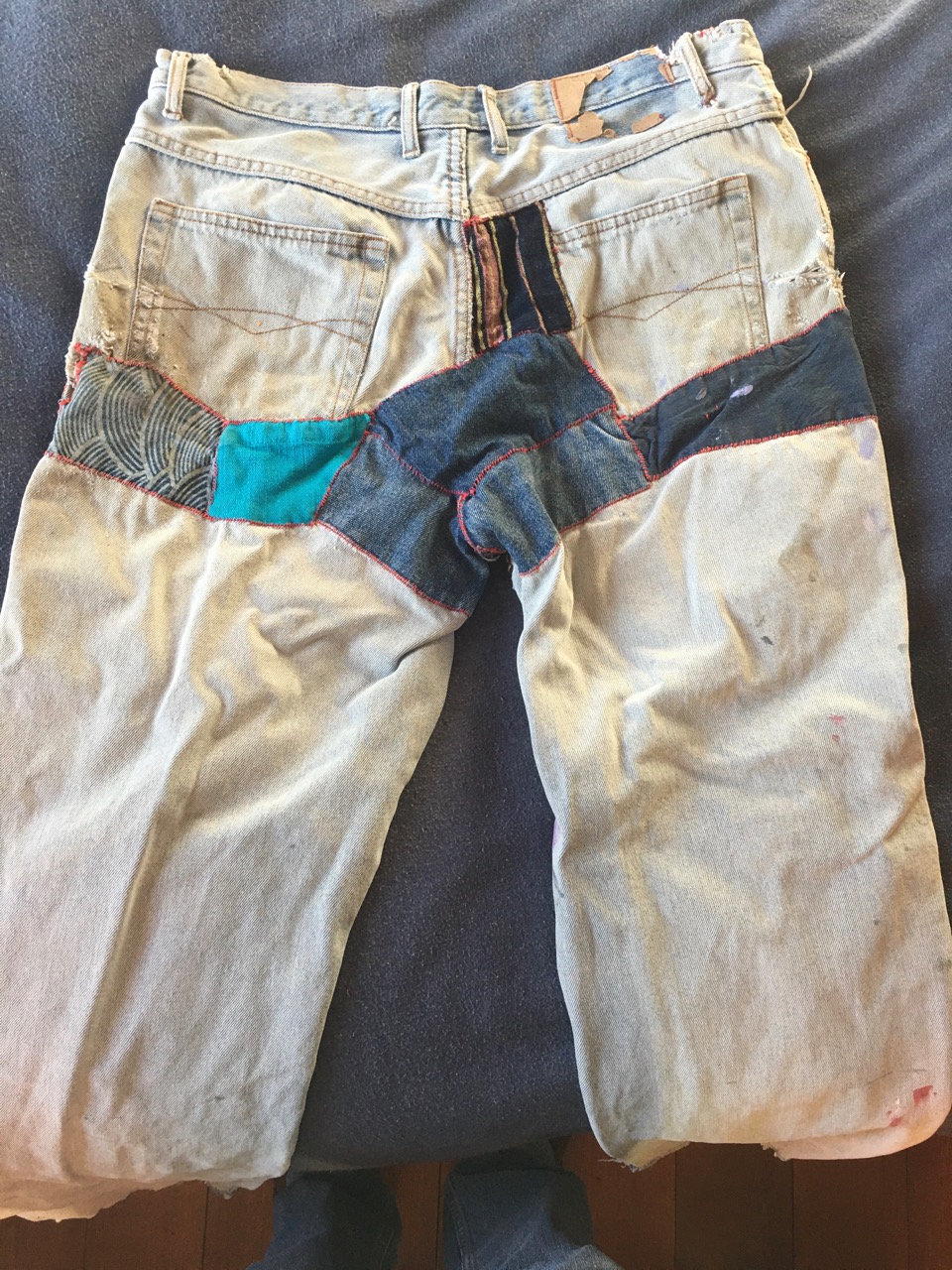
It’s just one more example of built in obsolescence. A product designed to fail. The retailers hope that i will just ditch the whole pair and buy another – in the latest fashion style! Well I won’t and don’t. I repair, re-use and re-cycle. I like to make them last me a decade. They start out as being for ‘best’ , going out etc. Then after a couple of years, they start to get a bit past their shiny best, they are worm in the pottery and for gardening. Finally after another 3 or 4 years, they are reduced to the welding workshop, rock crushing and angle grinding. This really takes it’s toll and they require more patches more often. In the past I have finally given up on them when I grew out of them and had to go up to another size. Then they became rags for painting and cleaning. These days I don’t get any bigger, so size isn’t the death knock that it used to be. Hence I a back log of three pairs of these patched jeans that just keep on being repaired and worn again and again.
But its not just the pockets, knees and thighs. They also wear out in the butt.
I think that ongoing hand stitched repairs like this are an important aspect of my creative expression. I exhibit my pots , but no one ever sees these creative endeavours. They are strictly utilitarian and for home use only, but this doesn’t meant that they are any less important. I kintsugi my pots and I patch my clothes. It’s the same thing.
After I had got the rock crushers going. I left it at that, as I wasn’t ready to crush any stones at that time. But the machines were ready. At least I thought so. I didn’t have the time to test them all out with rocks. I didn’t even have any rocks at hand to try out. I was satisfied when the new motors were installed and the new drive belts were fitted in place, just to see the machines rotate successfully. That was all I got to do. Now is the testing time.
Straight off, there was one casualty. The smallest laboratory jaw crusher just doesn’t seem to work at all. I got it 2nd hand from a junk yard. I tested it, the motor ran, the shaft turned, it whirred and clanked, but now that I go to use it, nothing happens when I put rocks in. They just sit there bouncing around. Luckily, I only paid $250 for it. I’ll need to pull it to bits and find out why. But that will have to wait till later, much Later… I have other machines that do actually work and they are enough to get me started. What’s most important is that I can get some local stones powdered so that I can get a glaze firing full of test pieces done.
There were a few hiccups with the other machines before I got them all working. The big jaw crusher was found to be running back wards. I hadn’t noticed this when I first wired it up, as the degree of oscillation movement is very slight, but the first time I put stones in it, I noticed that it was very slow to engage with the rocks, it still crushed the chunks down to blue metal sized pieces, but very slowly. It was really only because I know this machine very well as I have rebuilt it previously over years and am familiar with it, such that I noticed its lack of performance. Luckily, it is a simple exercise to reverse polarity of a 3 phase motor. It works properly now.
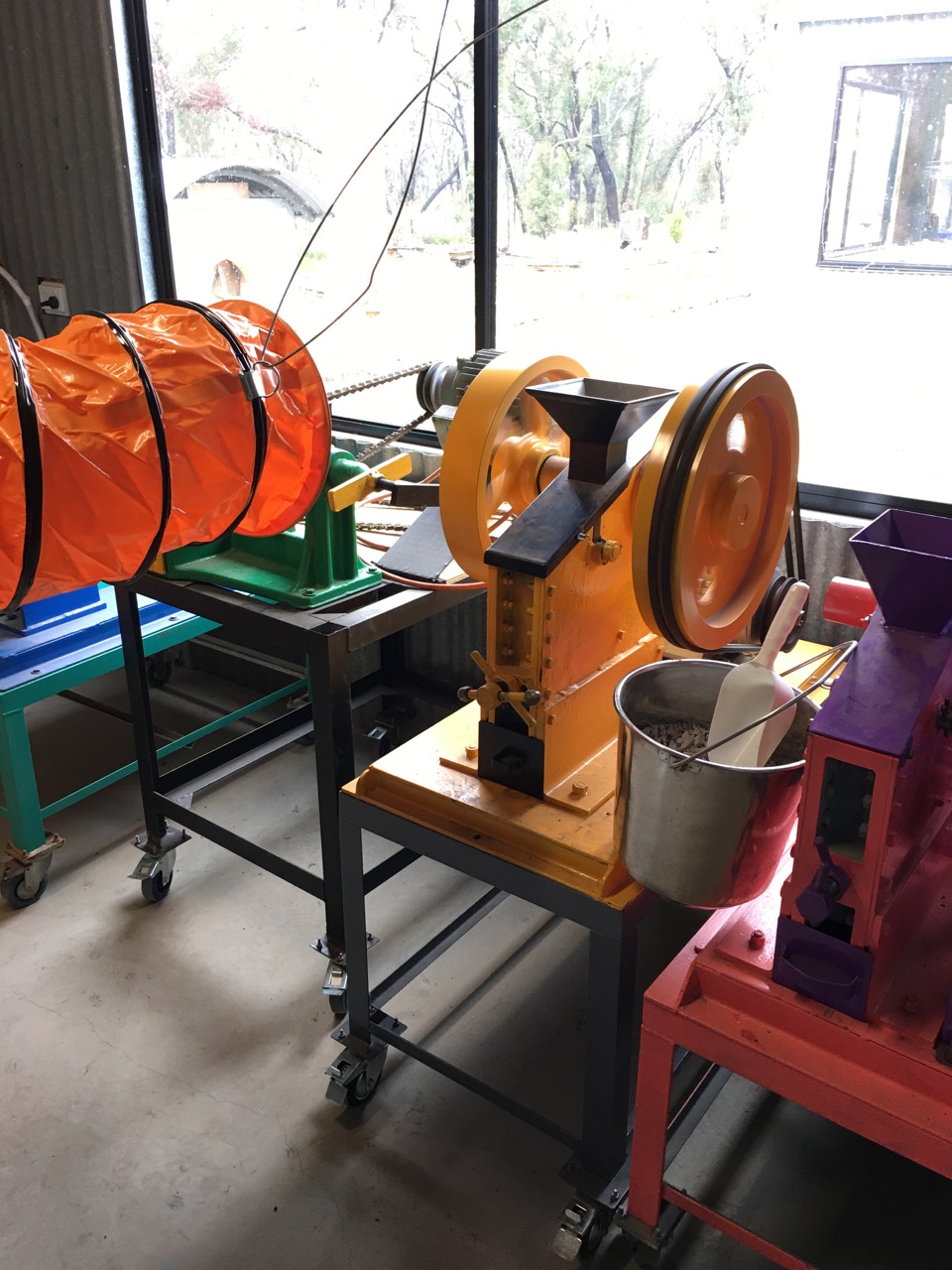
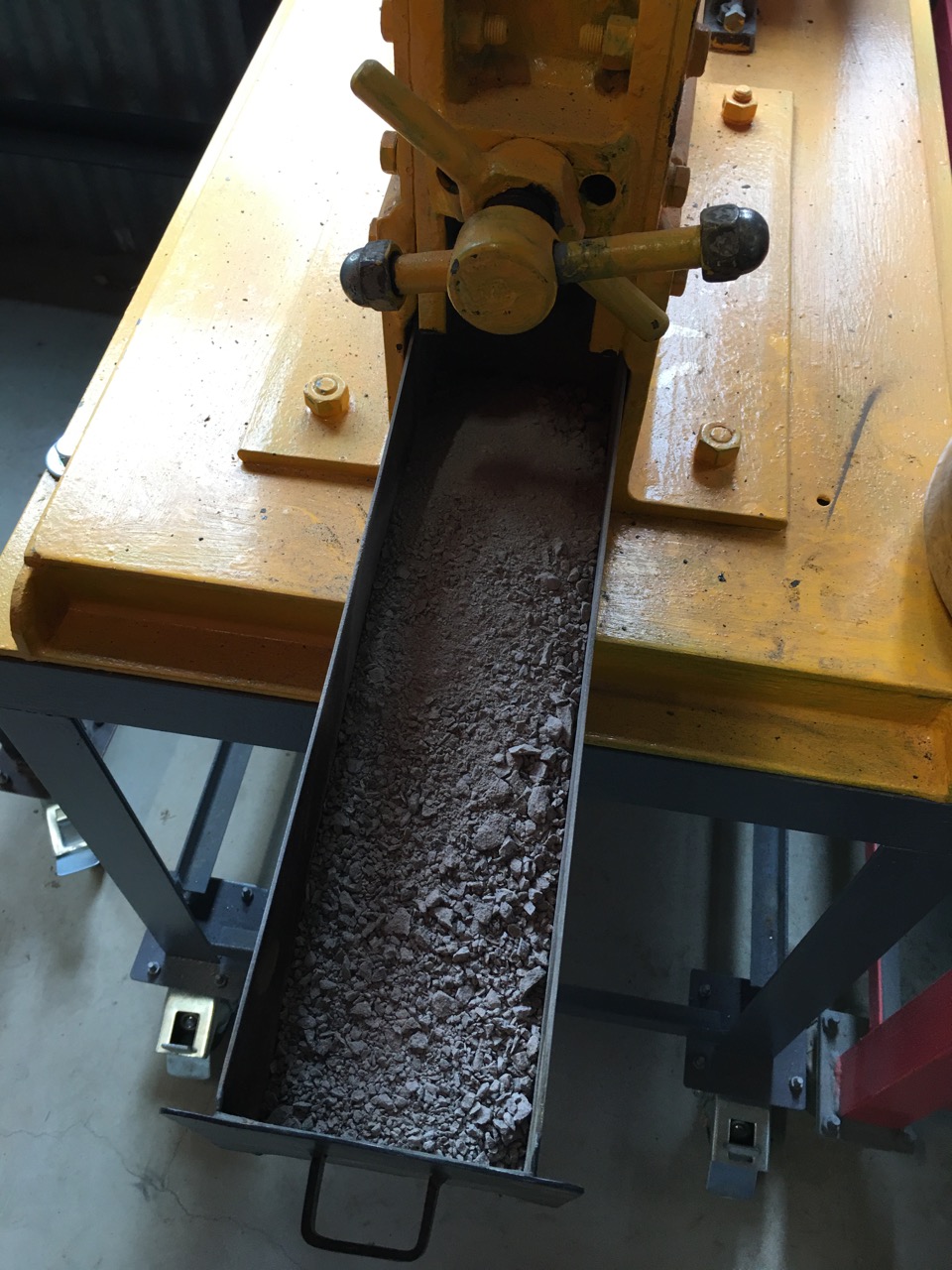
The small jaw crusher, which I use as a 2nd stage crusher, takes the blue metal sized lumps and reduces them to grit.
This little machine is now painted industrial yellow, but was formerly dark blue and orange in the old pottery. Me painting my machines a different colour is a bit like a lady dyeing her hair. A change is as good as a holiday. It cheers me up to see all the brightly coloured machines. Like big kid’s toys!
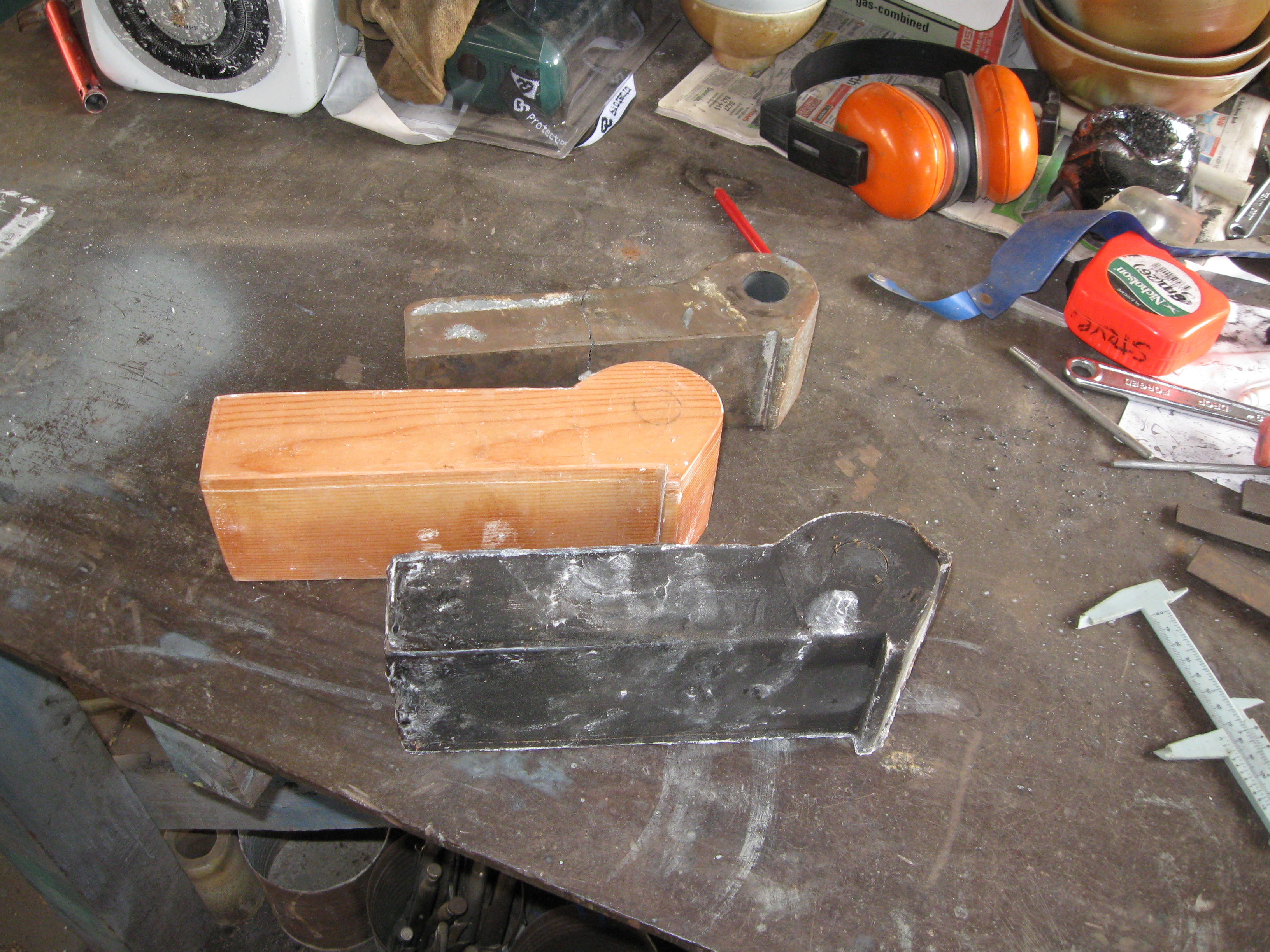
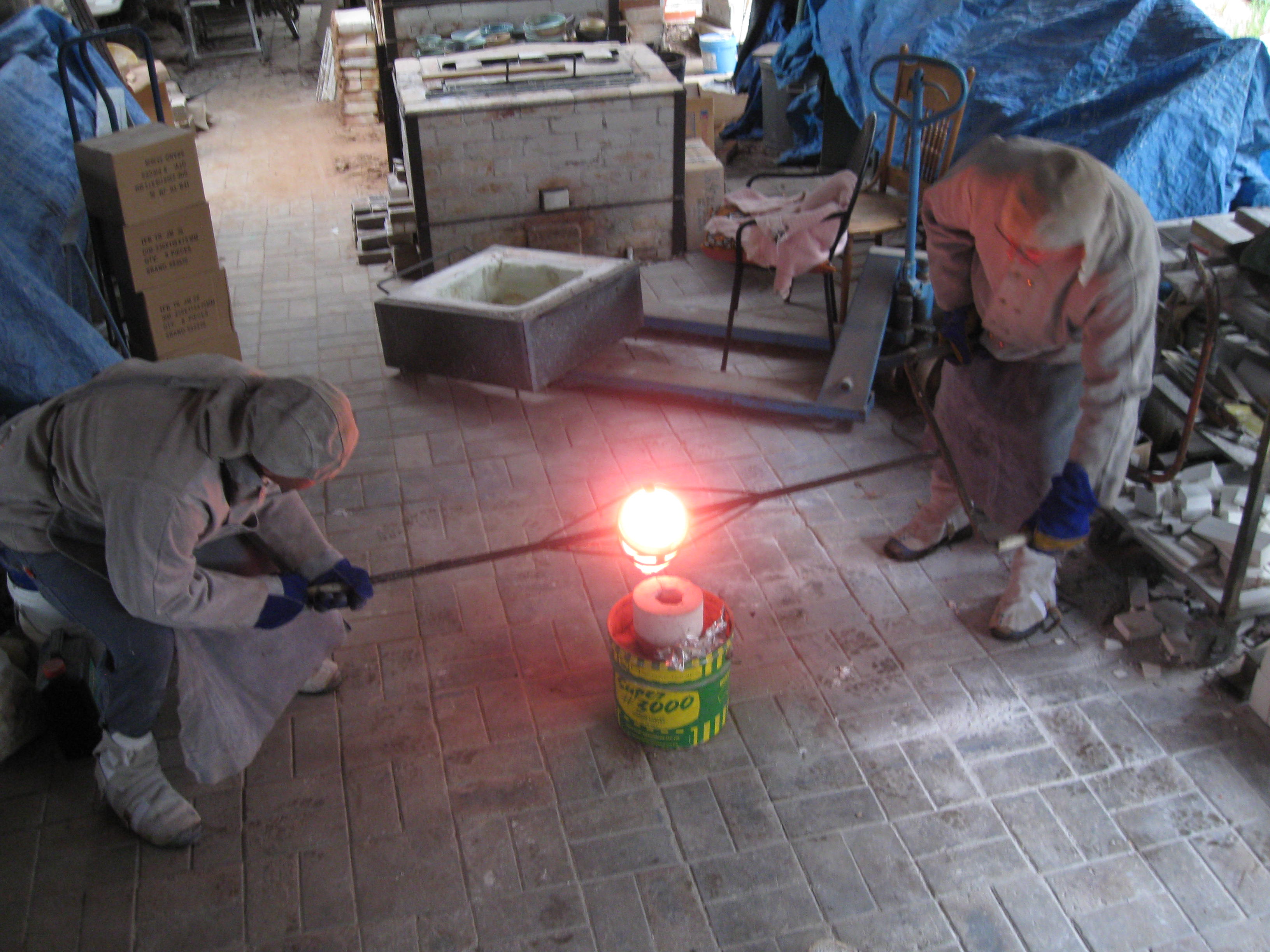
I move the negative-pressure ventilation, dust extraction hose from machine to machine. I have found that the end of the tube is quite friendly and affectionate. If I get too close to the end of the bright orange ducting, it attaches itself to me with the pressure of the suction. It’s not too strong and easy to remove from my shirt, but it is very friendly and persists in wanting to get attached to me. It’s quite amusing. It keeps on seeking out my shirt every time I get close while I’m working. I keep brushing it off, it keeps wanting to nuzzle-up and attach itself to me. Maybe it’s my pottery-workshop-cabin-fevor, after all these months of lock-down. Janine says that I need to get out more! But it’s nice to be wanted! 🙂 The output of this machine is from 6mm down to dust. I bought the little, now-yellow, crusher direct from the manufacturer, ‘Van Gelder’ back in 1983. When we used to make things here in Australia back in those days. This company has now gone to the wall. It’s a shame, as it was established back in the 1800’s to support the late gold rush and the follow-on mining activities here. They were located in Silverwater in what used to be Sydney’s industrial manufacturing heartland. The owner at the time said that they were just hanging on, all the workers were getting old and heading for retirement. He wasn’t sure how he was going to pay out all the retirement funds. He told me that he would probably sell the site and move out of the city to some where much cheaper. Before I left with my brand new crusher – which is still the most expensive piece of pottery equipment that I ever bought. He added my name and the serial number of my machine into his manufacturing log book. It was a quarto sized, beautiful old leather bound journal, that was showing a lot of wear around the edges. It contained a list of every machine that had ever been built by that company. I felt honoured to be on that historical list. It has occurred to me since then, whatever happened to that company’s records and in particular, to that journal? In 2009, the cast iron static jaw broke in half, presumably from metal fatigue? I googled ‘Van Gelder’ and found them up in Gosford. We had an email exchange, but the new owner was completely disinterested in helping me out by selling a new jaw. In fact almost rude. Such a different experience from the old owner! So I decided that I’d make my own – only better than the original. Cast iron is brittle and not the best choice for a machine part that is under constant impact. I decided to make a new one myself. I tried casting one in bronze. I started out by making a wooden replica that was 17% larger. Making a plaster cast of that wooden piece, then casting a copy of that wooden one in wax, so that I could do a lost wax bronze casting.
The original is at the top. the larger wooden model is in the centre. The cast wax model is at the bottom. I built a small foundry, and with the assistance of my good friend Warren, we cast a blank, which needed a lot of machining.
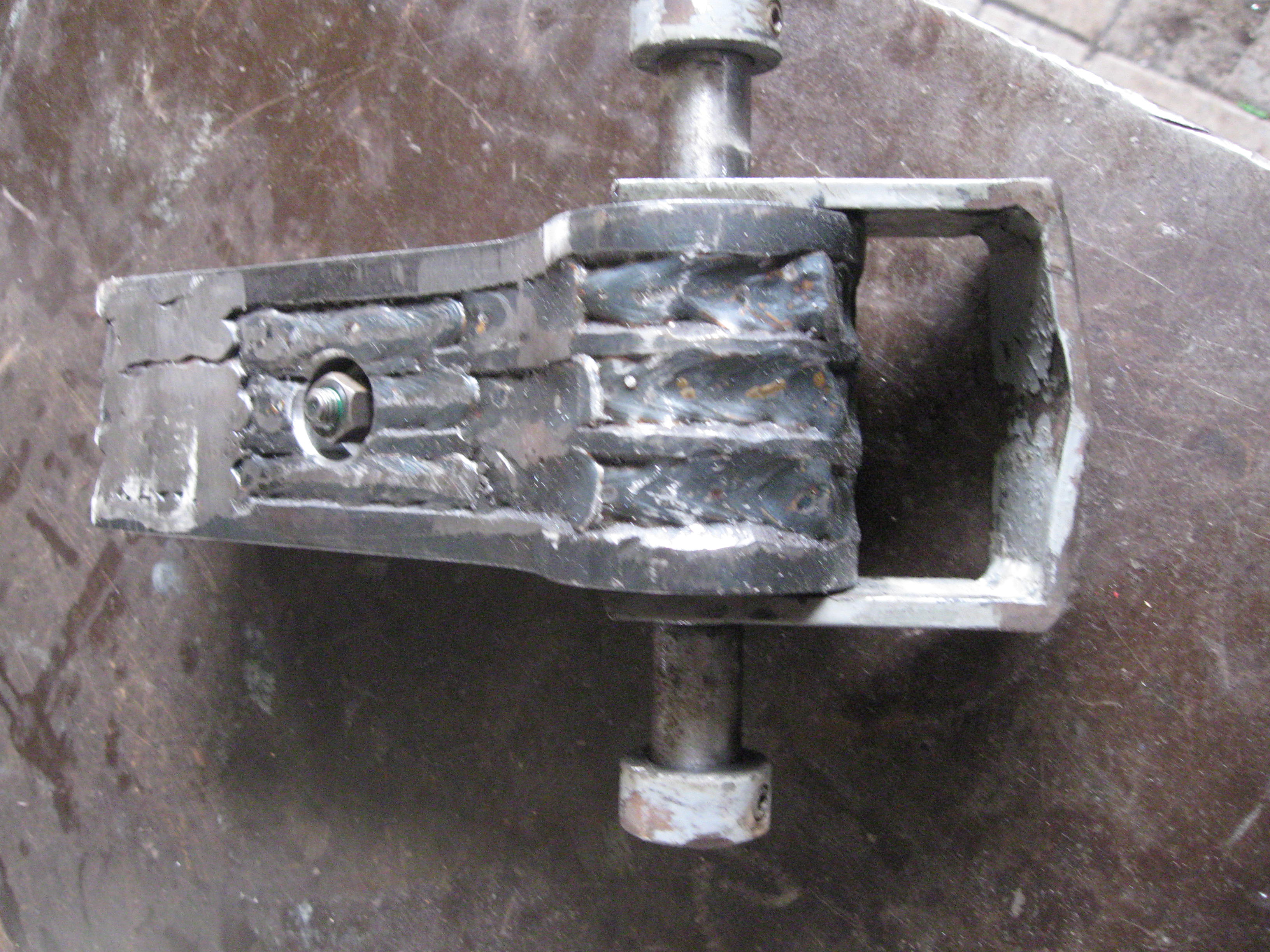
I decided to also make another jaw out of steel. I made the steel jaw out of a series of 3/4” or 19mm. steel plates welded together to make up the 3” or 76mm thickness of the jaw. I was able to drill out the hole for the shaft in each plate before I welded the plates together and then ground them down to a smooth finish where it was necessary to fit the housing. This was quicker and easier for me to complete. This new jaw is still going strong. I had never attempted to weld 3/4” steel plate before. I was really chuffed that it worked. I decided to go with the steel jaw instead of the bronze jaw.
So it’s working again now beautifully. Producing a grit that is suitable to go into the disc mill.
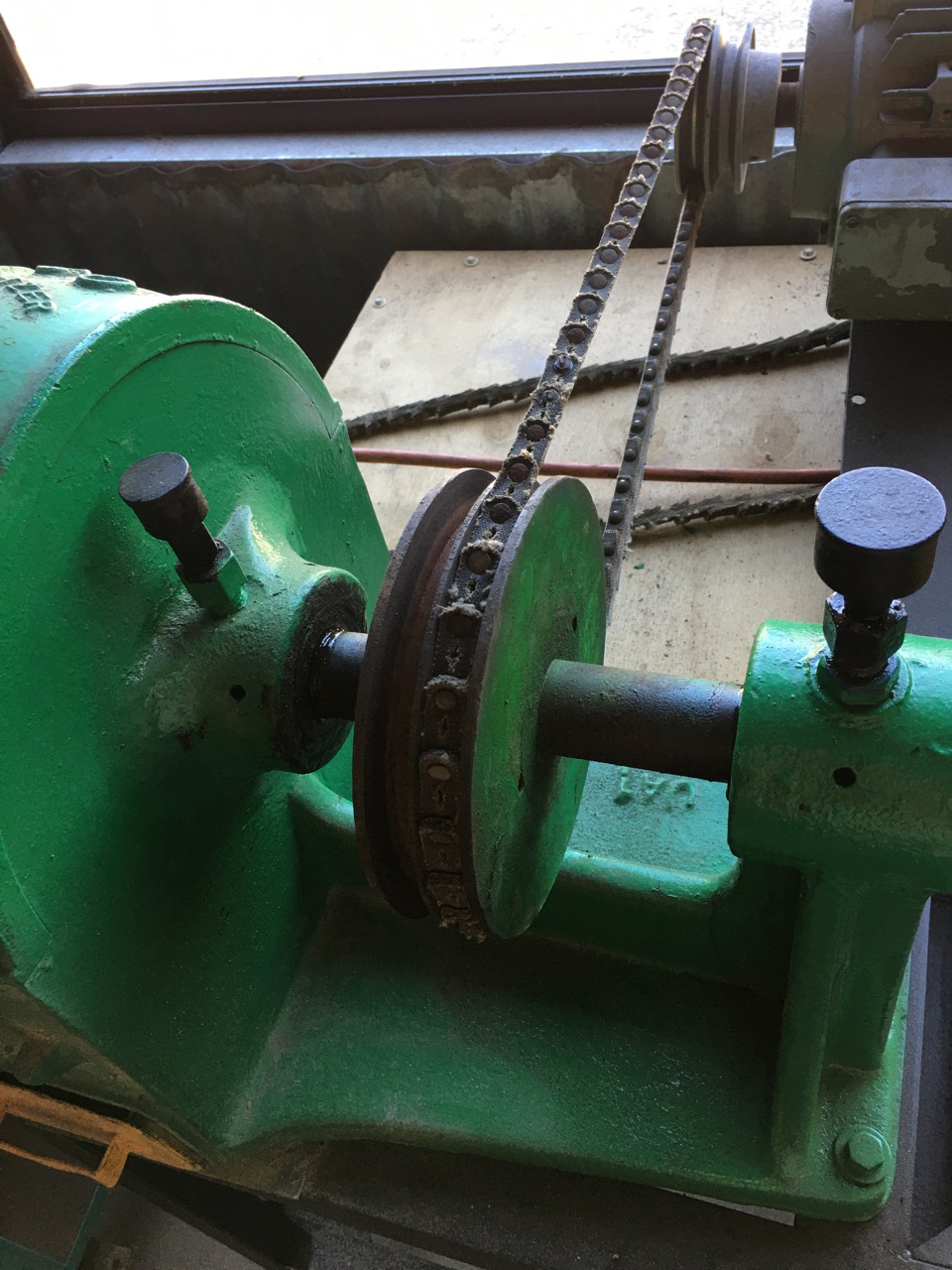
The grit from this small Van Gelder crusher is then reduced further in the ‘Bico’ disc disintegrator mill, down to something close to a sand-like size. Interestingly, ‘Bico’ crushers are still available in the USA. I googled them, they are still in business and the identical machine is still for sale on their web site in a slightly newer version. I bought mine many years ago 3rd or 4th hand, no history and unmounted. It obviously hadn’t been used for a long time and was seized up, but I managed to get it moving again after a bit of work.
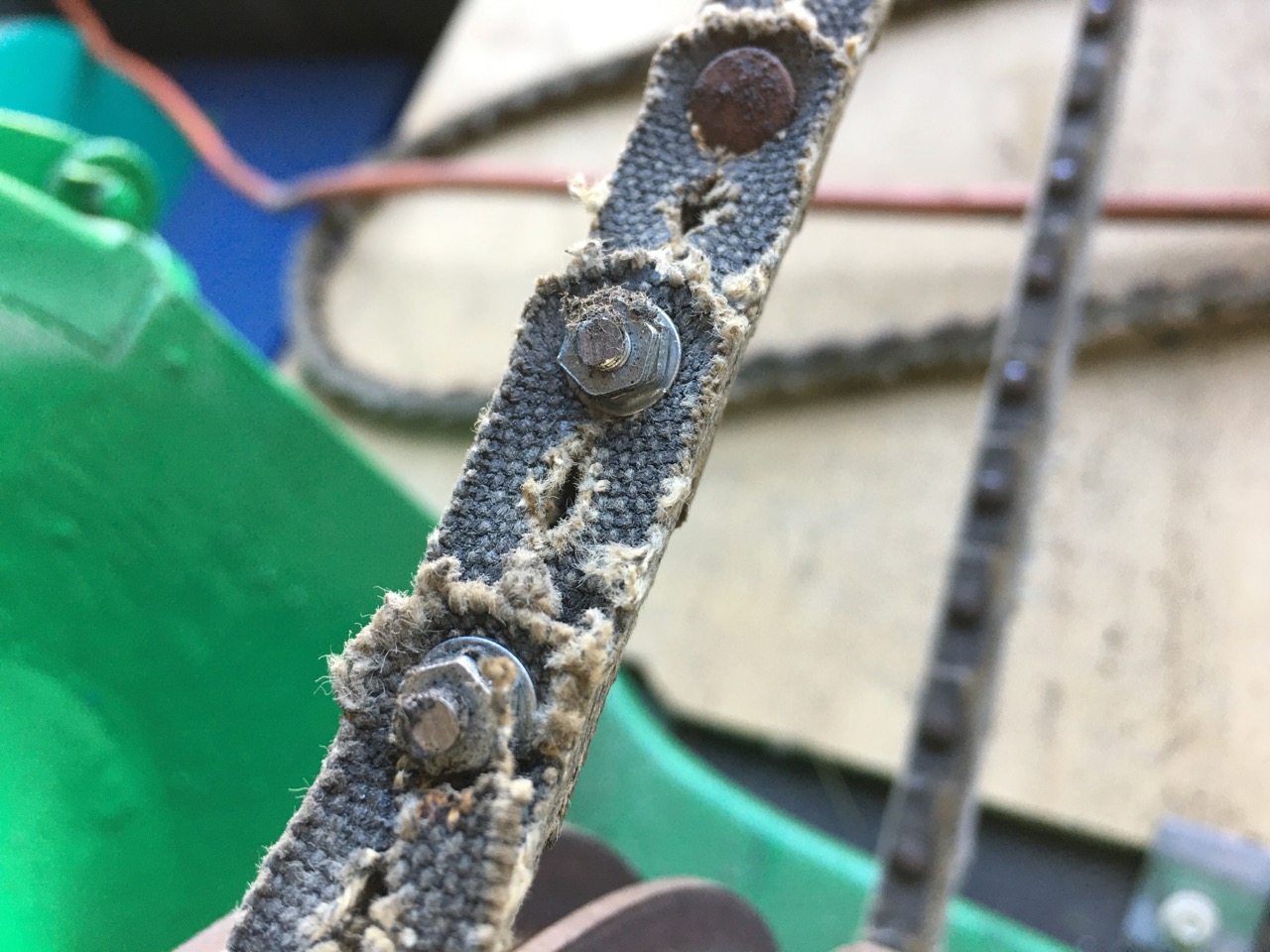
To get this disc mill working again, I also had to learn how to make, break and fit segmented leather drive belts, as the drive pulley is completely enclosed within the cast iron frame of the machine. I had to thread one open end of the broken belt through the frame and then rejoin the belt. I couldn’t find any way to extract the rivets easily from the segmented belt, so I just cut the head off two of the rivets and then replaced them with small bolts and washers. It seems to have been successful. It works! But I’m not too sure for how long?
I put ‘locktite’ on the threads, so I’m hoping that they won’t come loose during work.
This sandy stone grit then goes into the ball mill for 4 hours to be ground down to fine dust, ready to be made into glaze.
It’s quite a process and takes all day. And just like a time-saving kitchen appliance, it needs to be cleaned up after use. This cleaning and relocating of the ‘friendly’ dust extractor proboscis from machine to machine takes more time than the actual crushing.Such is modern convenience.














































You must be logged in to post a comment.