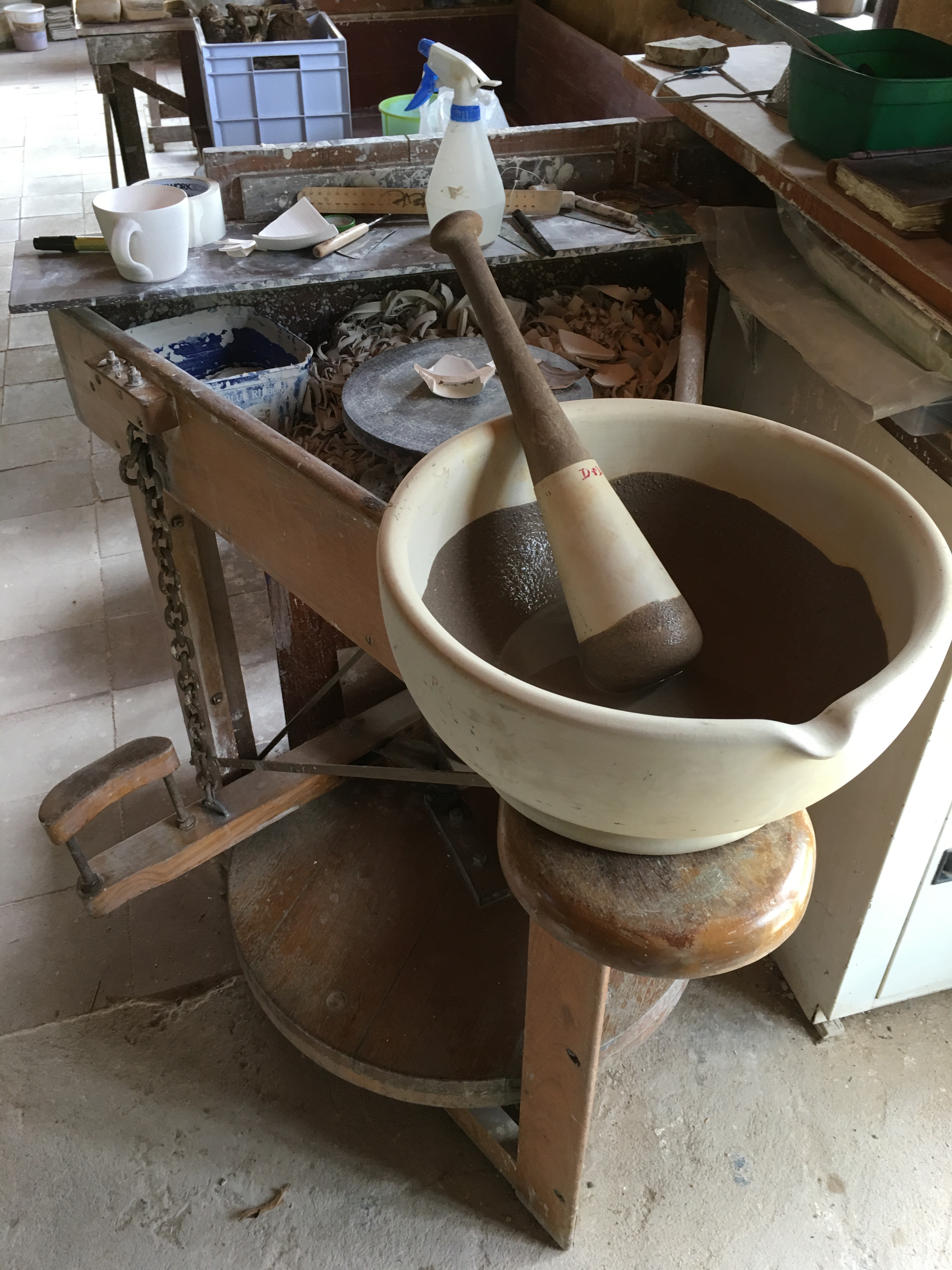
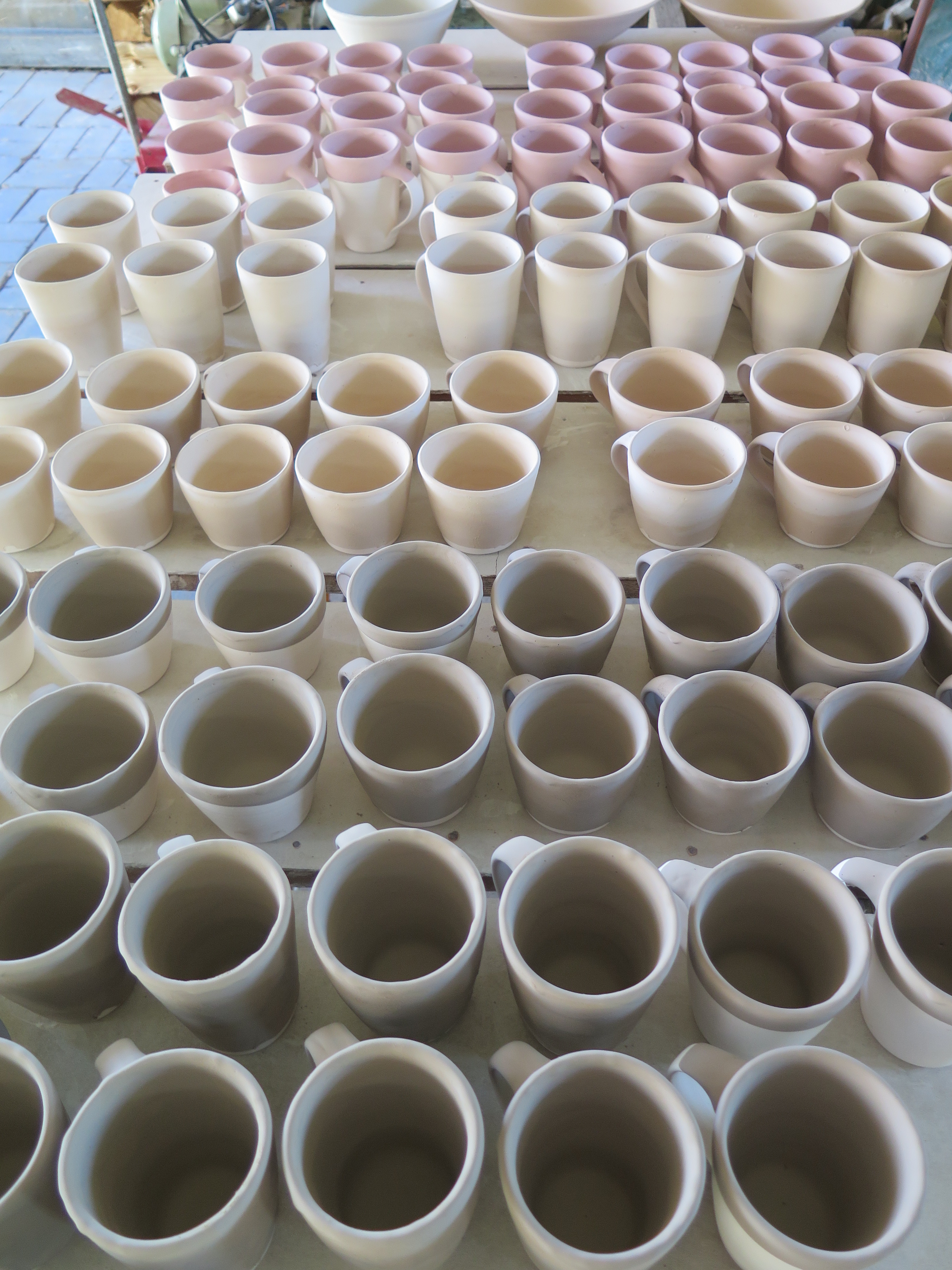
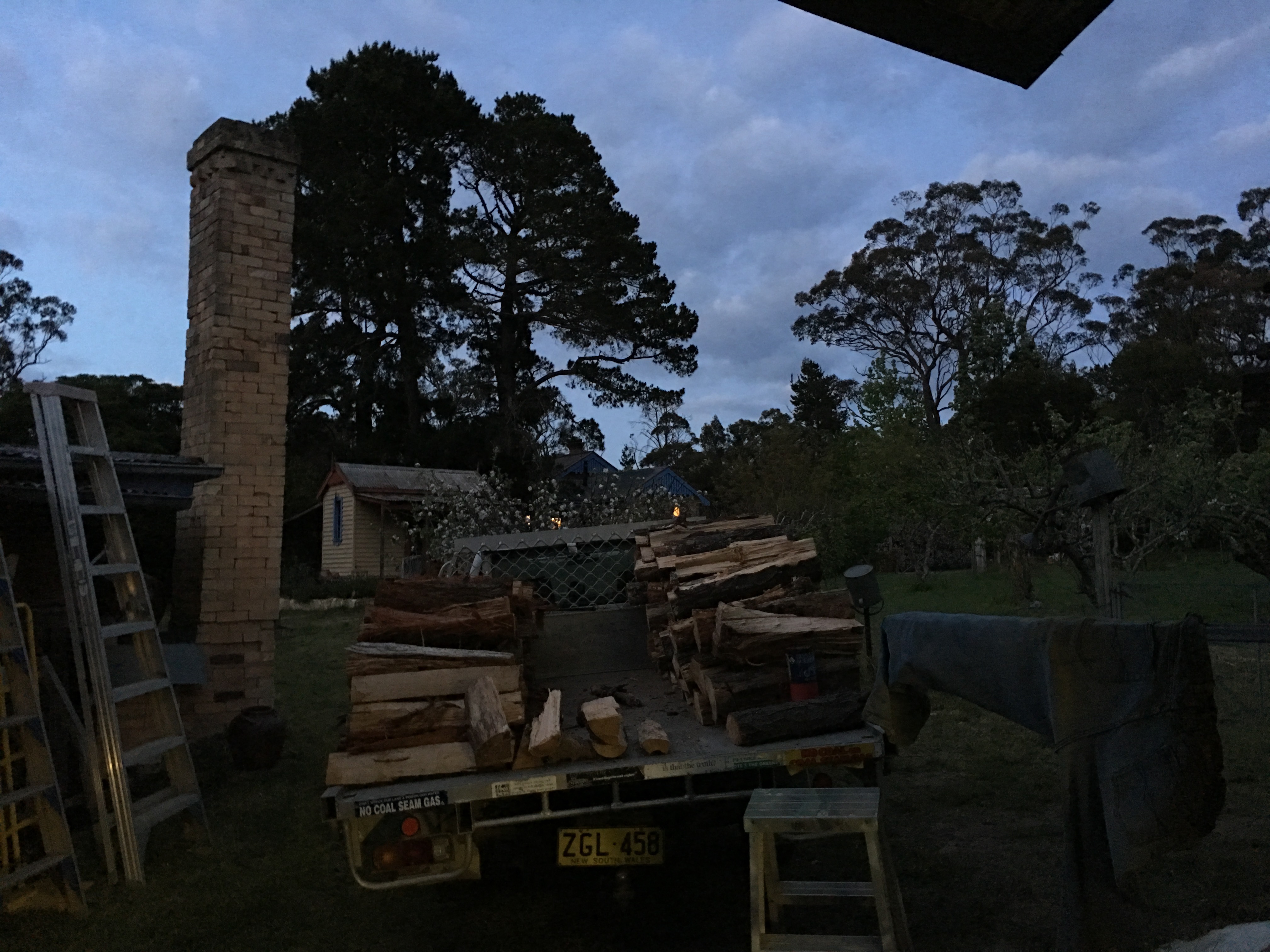
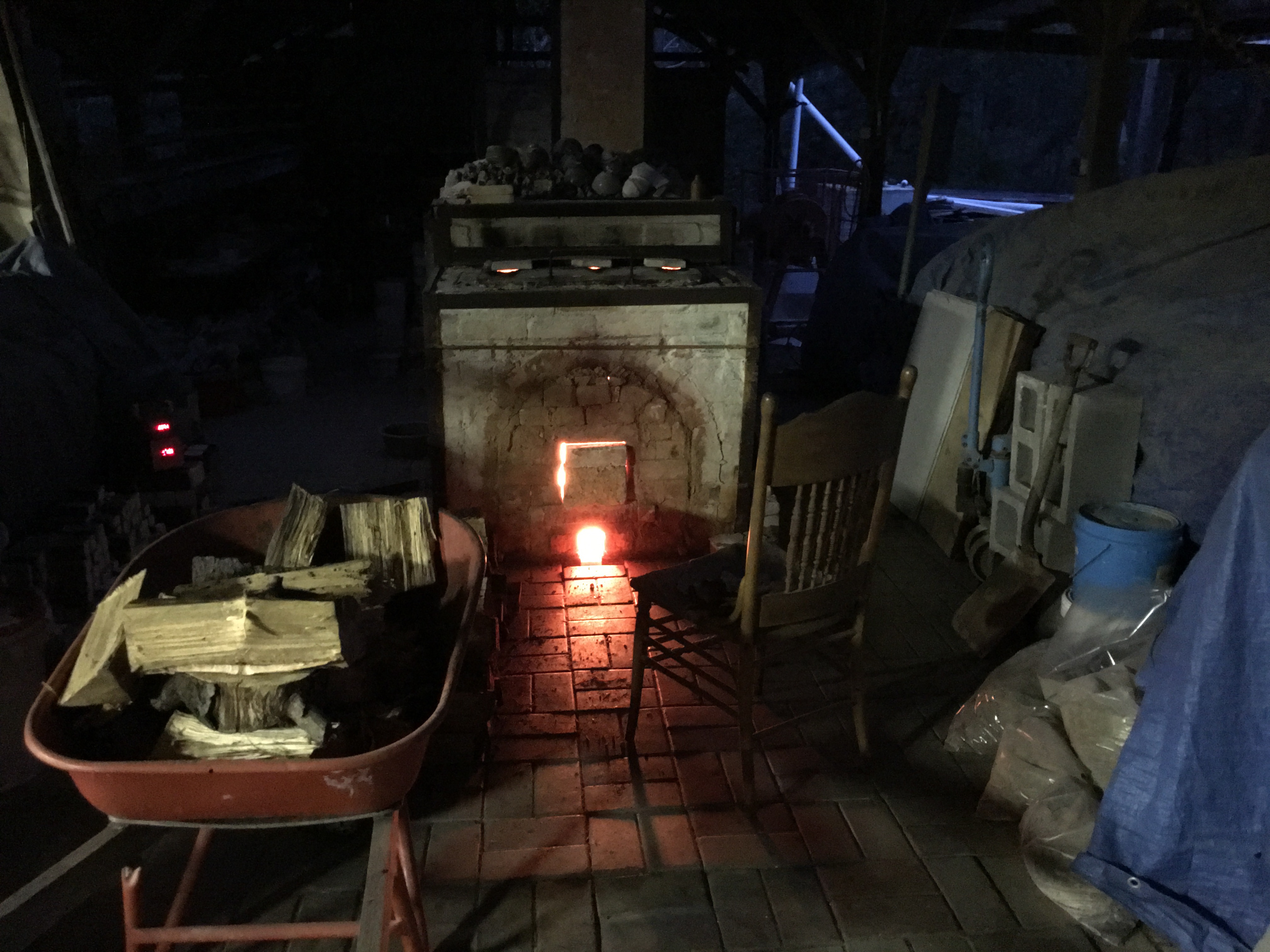
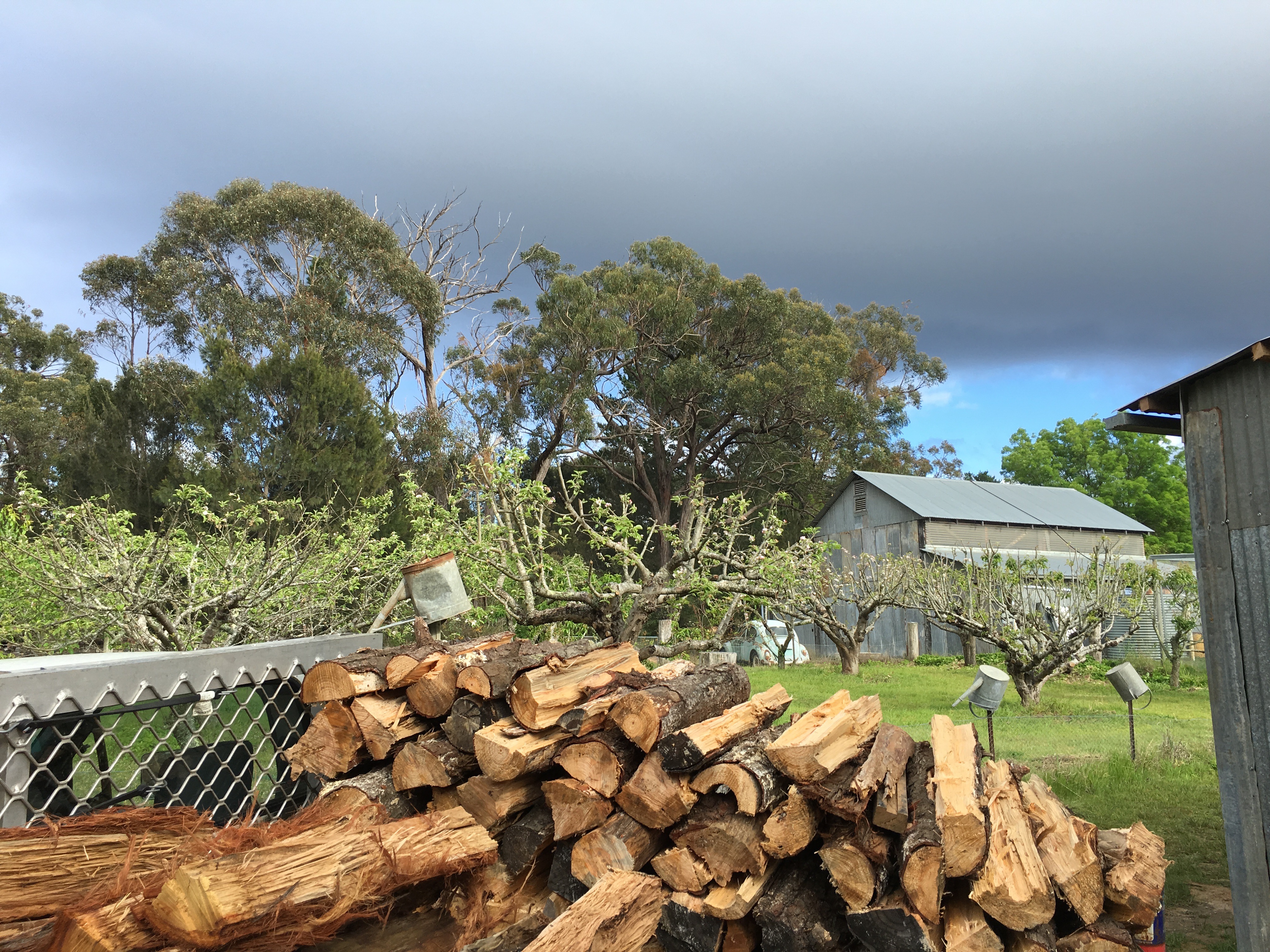
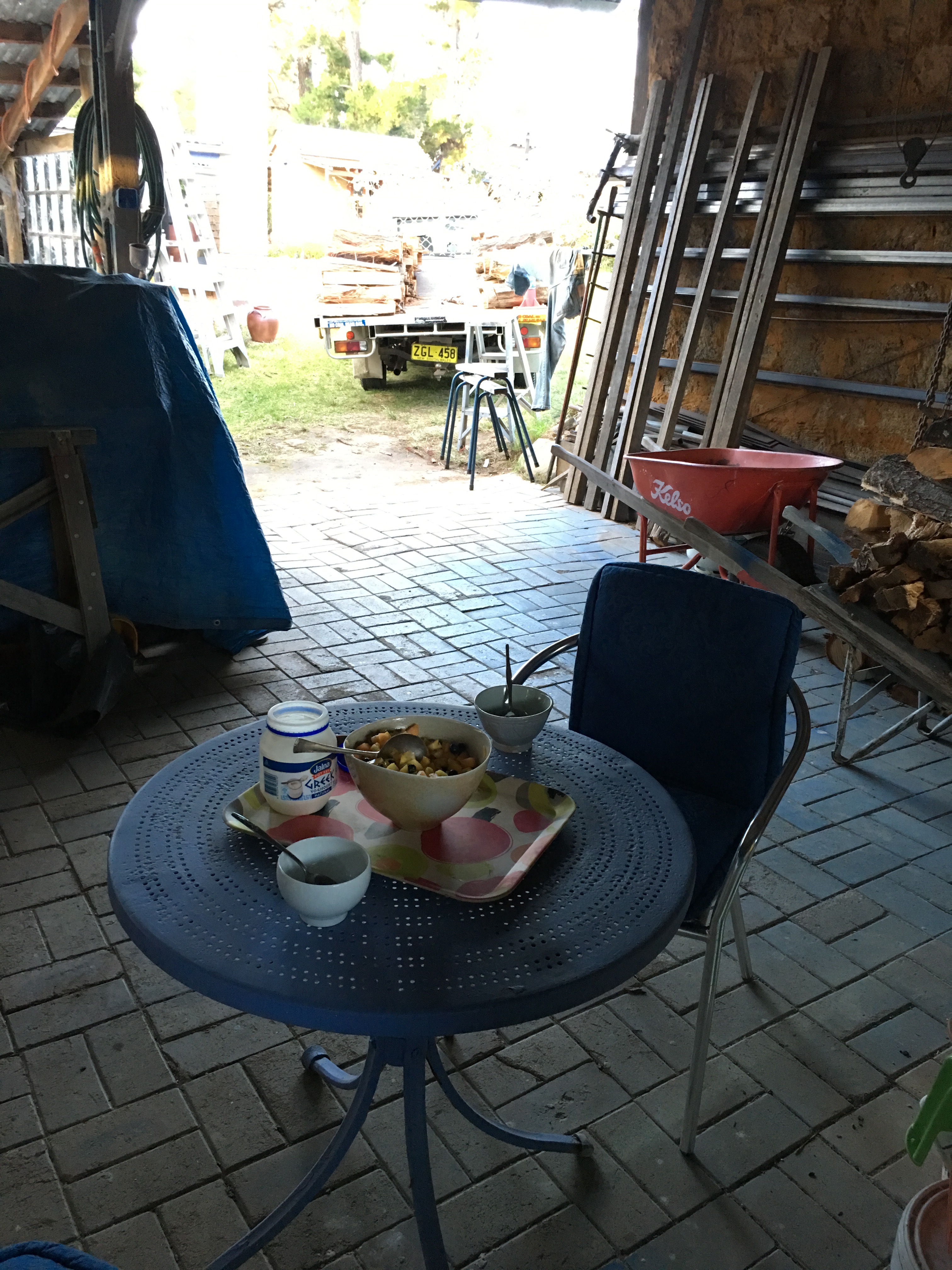
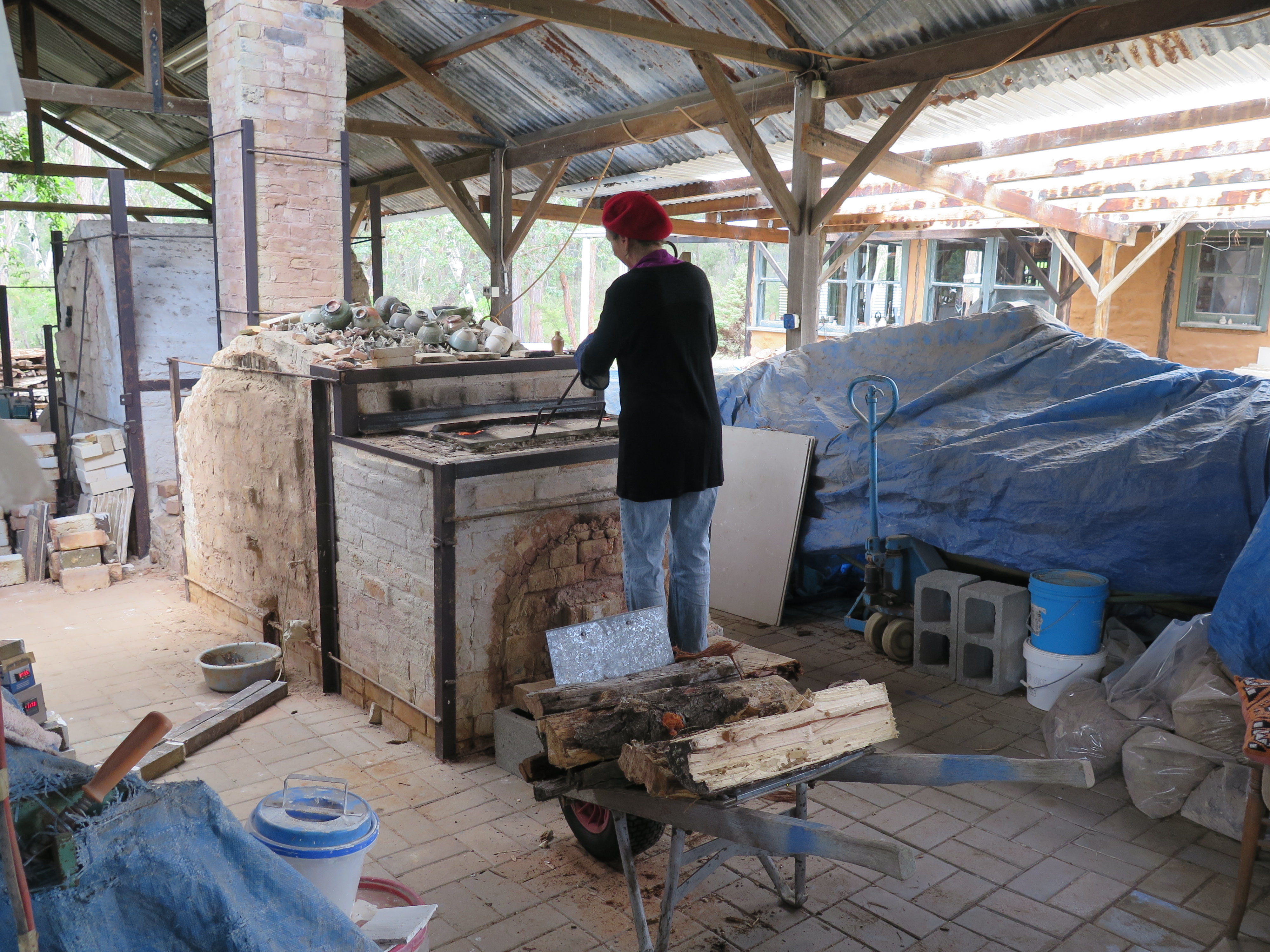
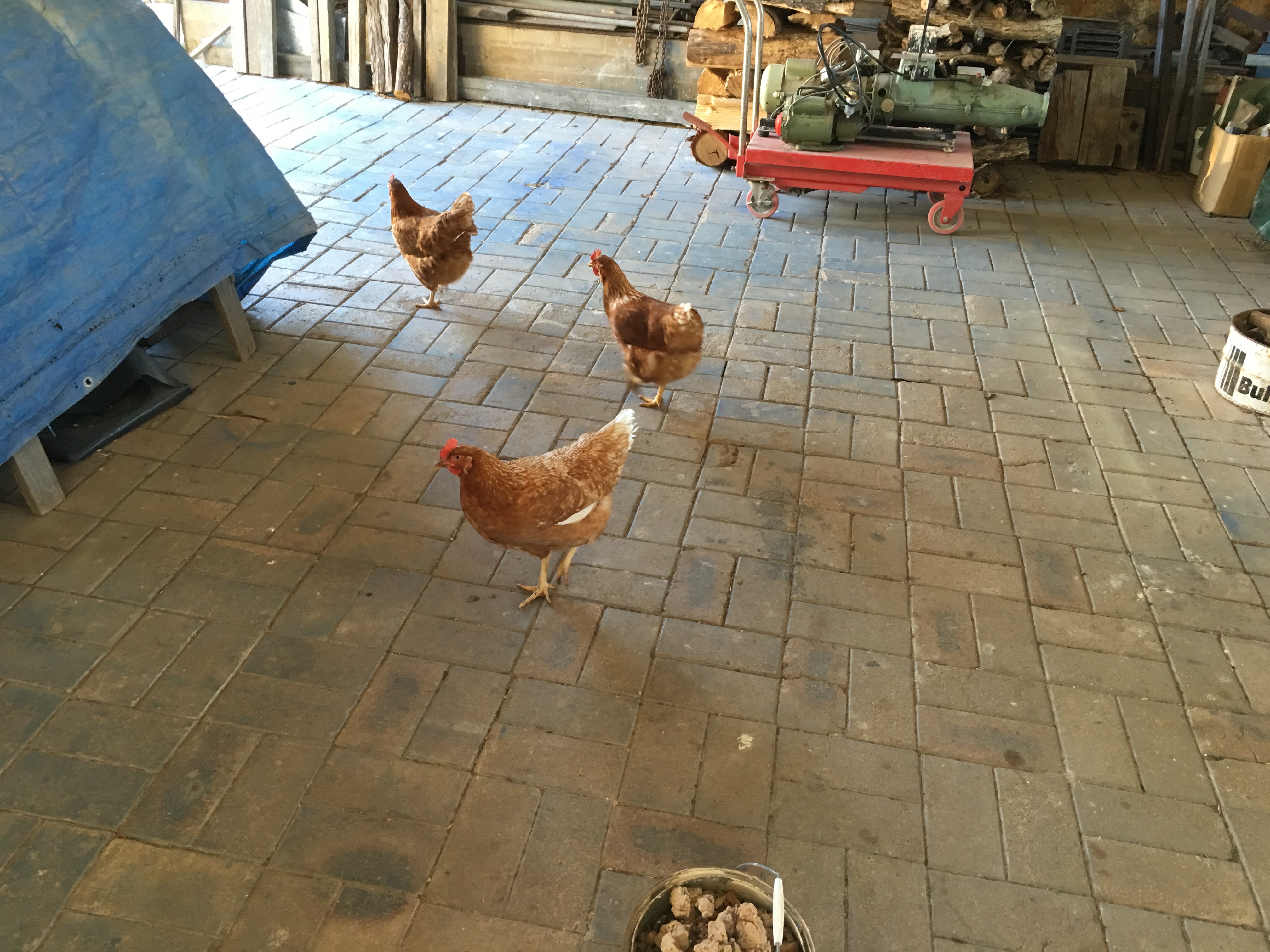
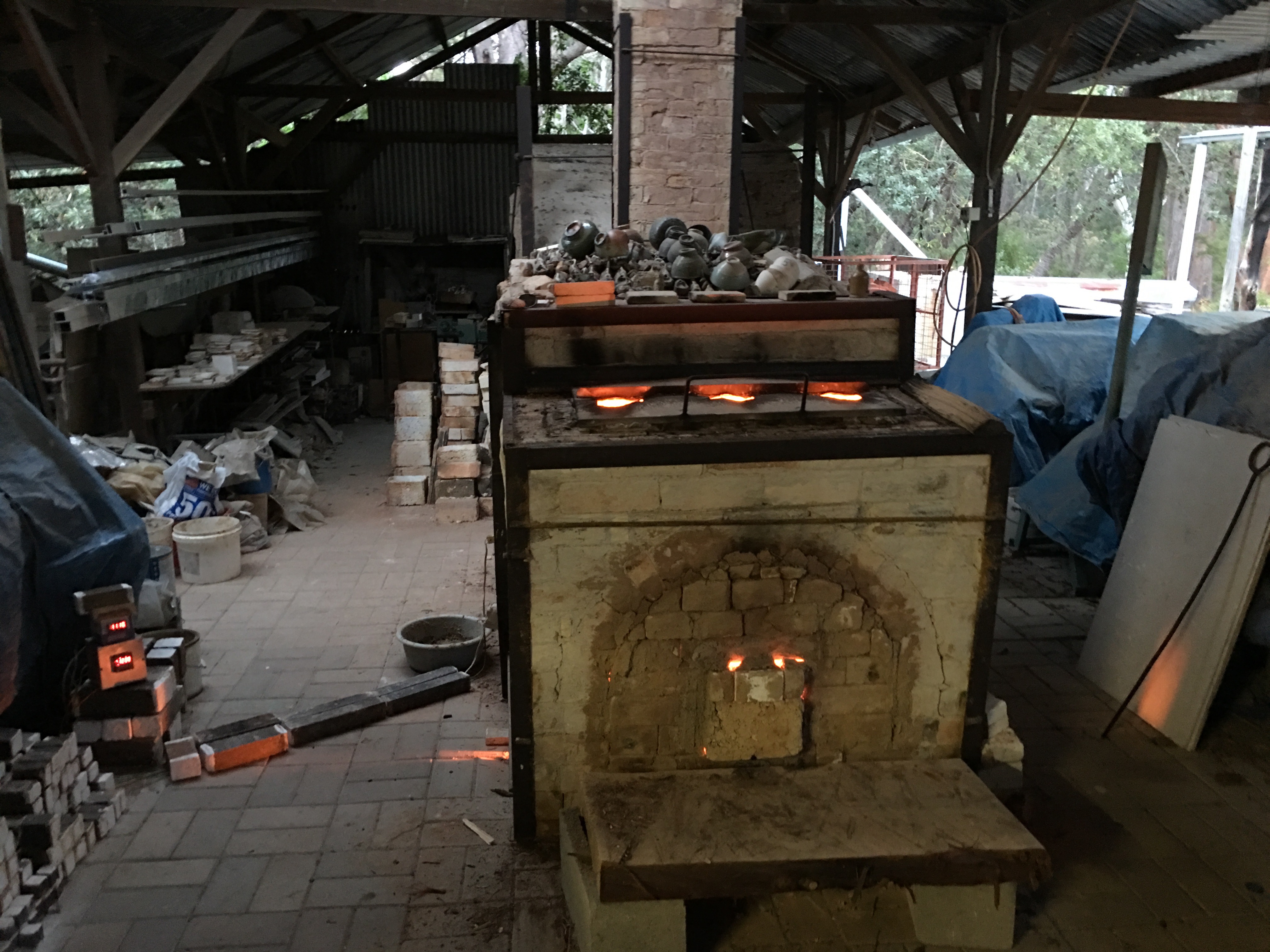
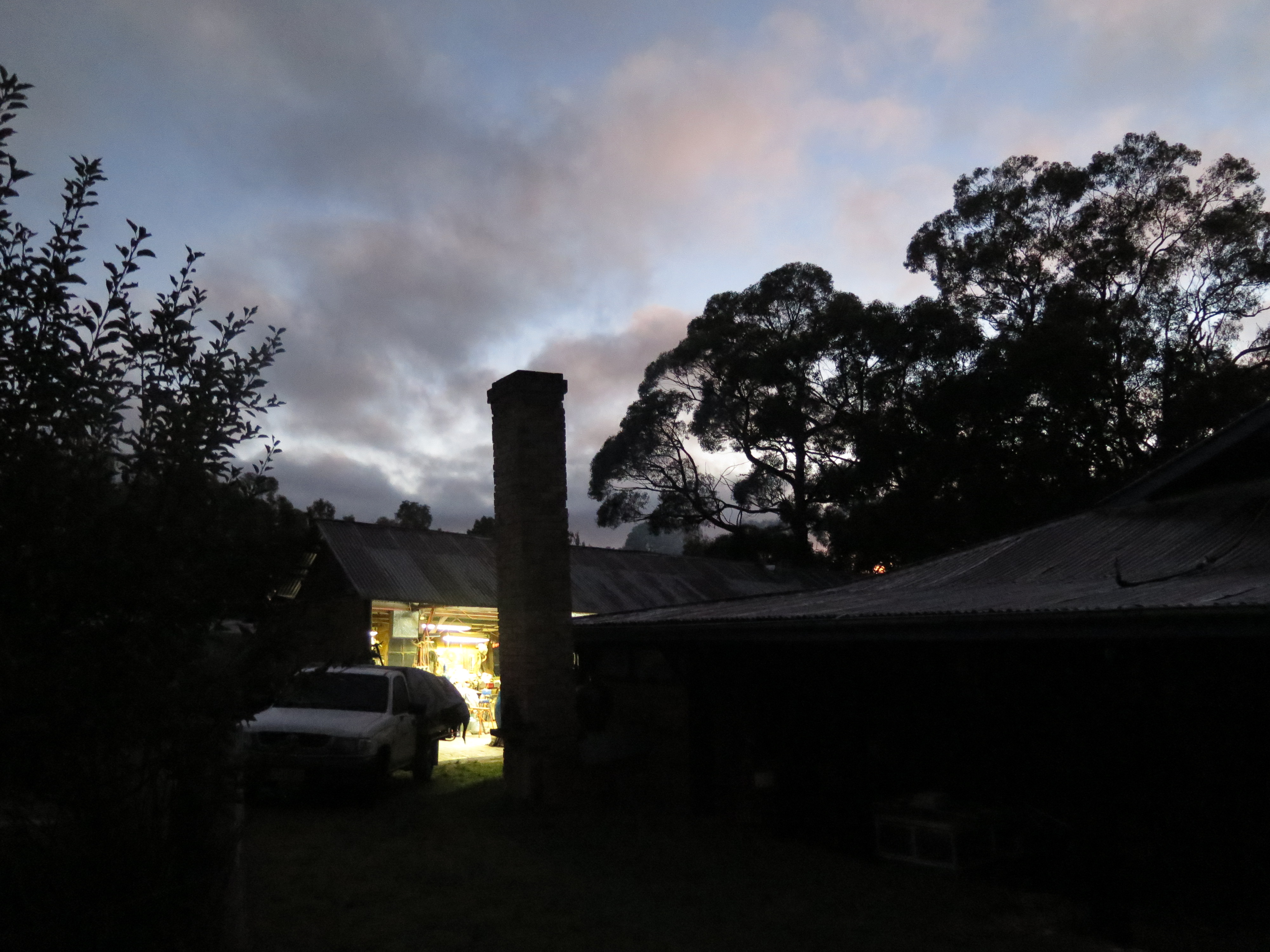
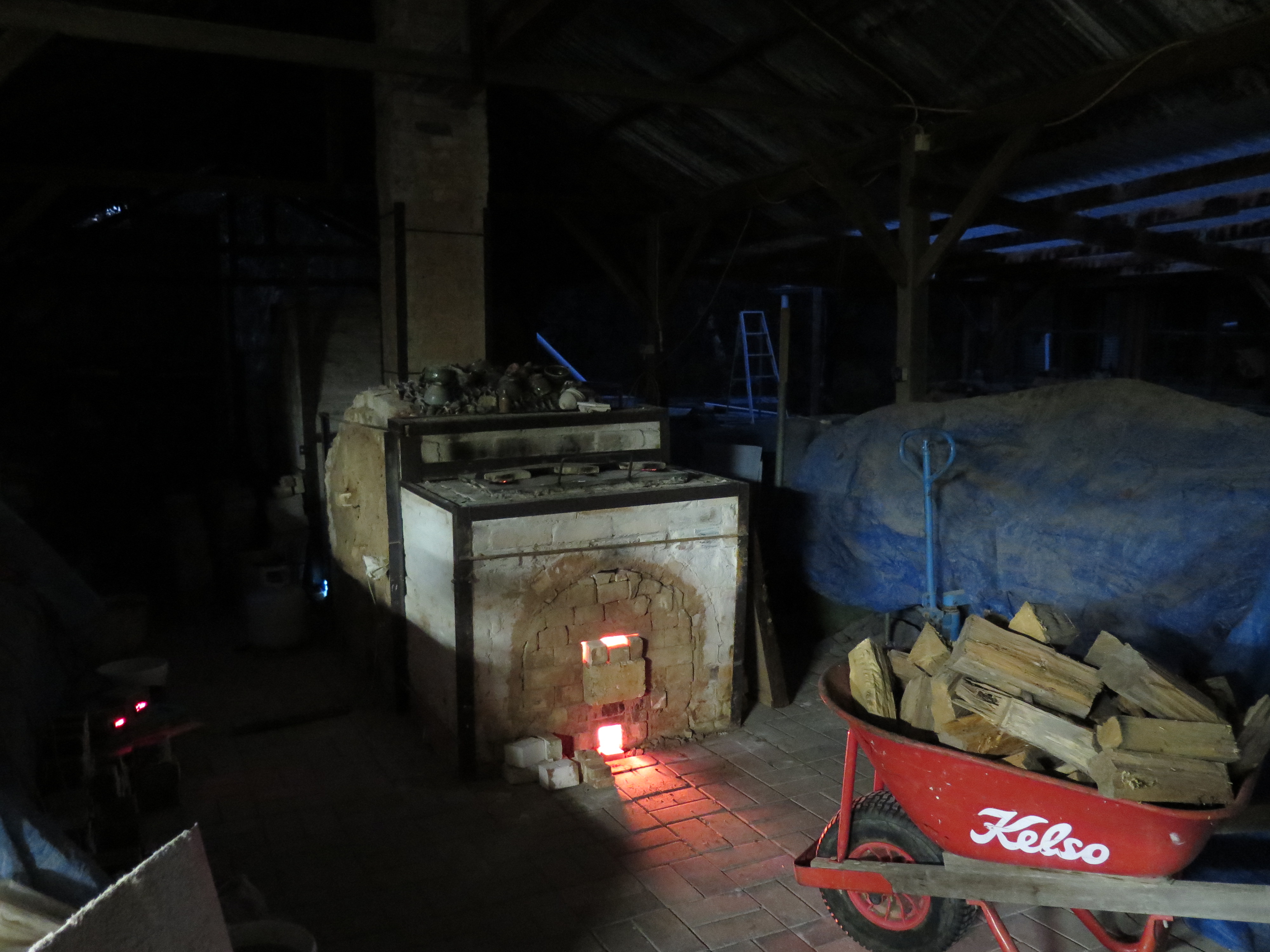
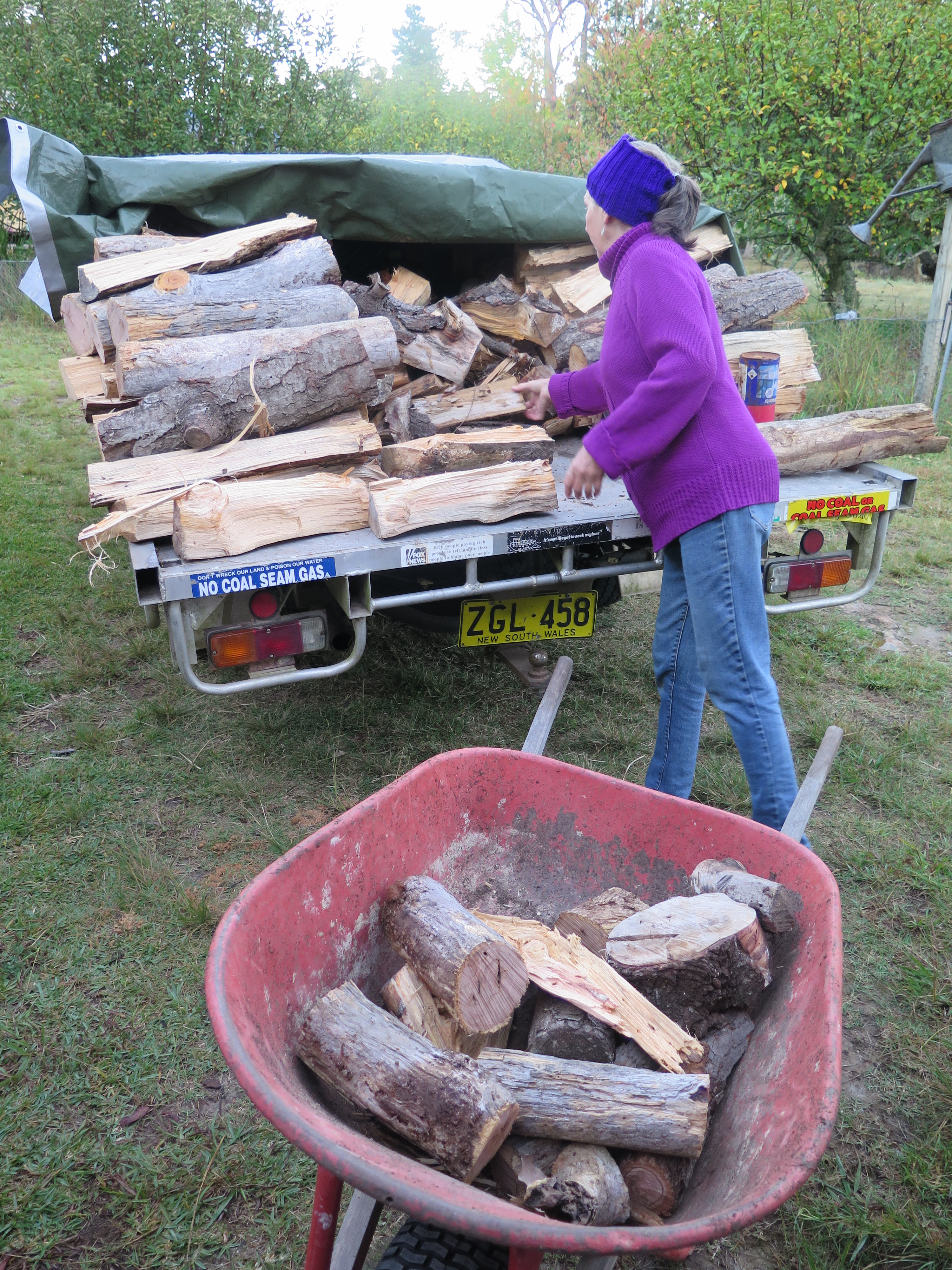
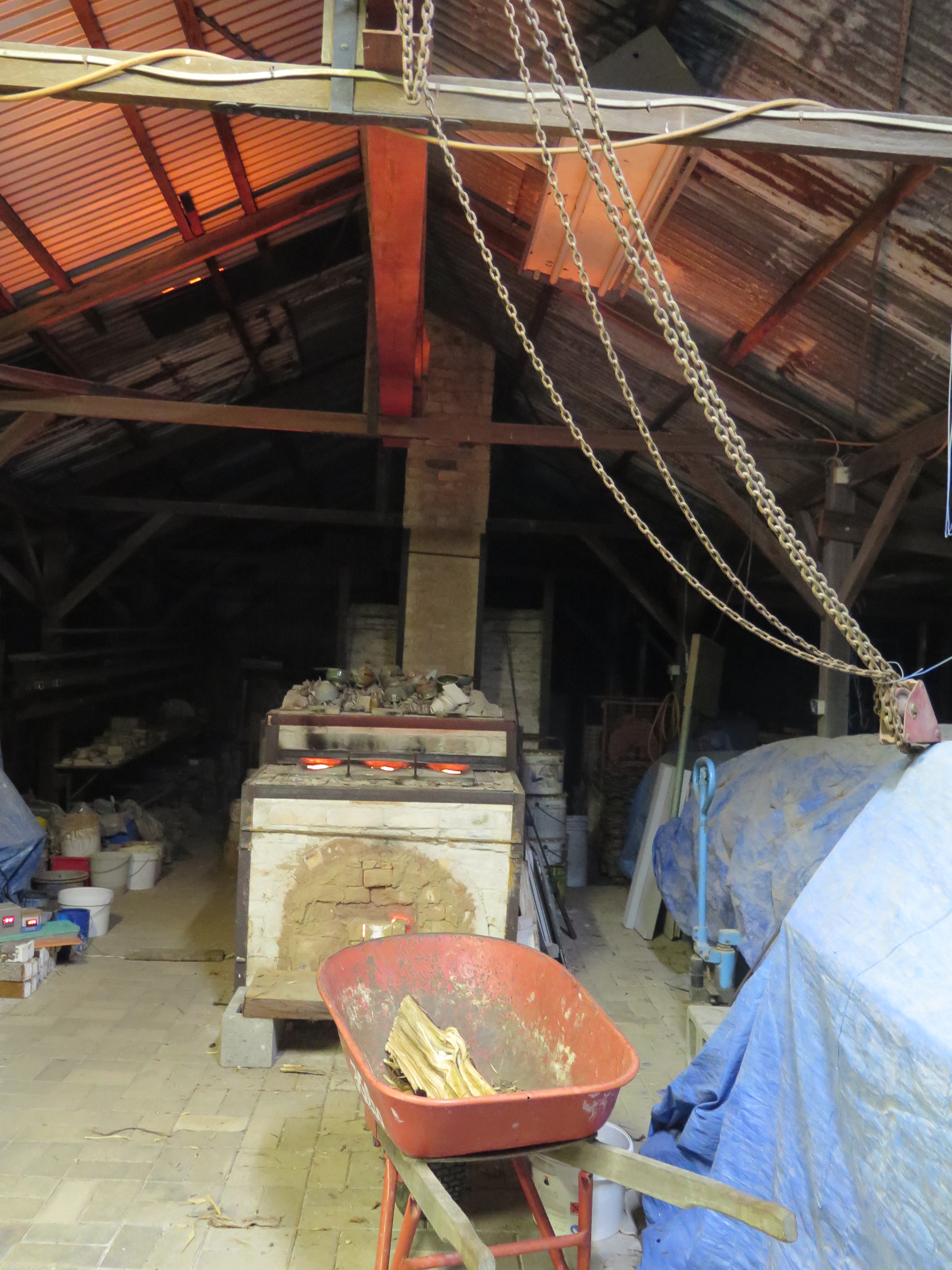
I realise that I’m awake and I’m not going to get back to sleep. It’s 4.00 am and we are all ready to fire the kiln today. I usually wake up at about this time on firing days. It’s a habit that I have got into. I like to start early. I love the quiet of the early morning. It’s beautiful. There is a very special time. Just a half hour, when the birds start to wake up and so does the sun in response to their chippering and calling. They have very fine senses. They are awake and calling when it is still dark. I can’t tell the difference with my old worn out eyes. but they know and call out to tell each other. They summon the sun.
Category Archives: kilns
Hit The Ground Running
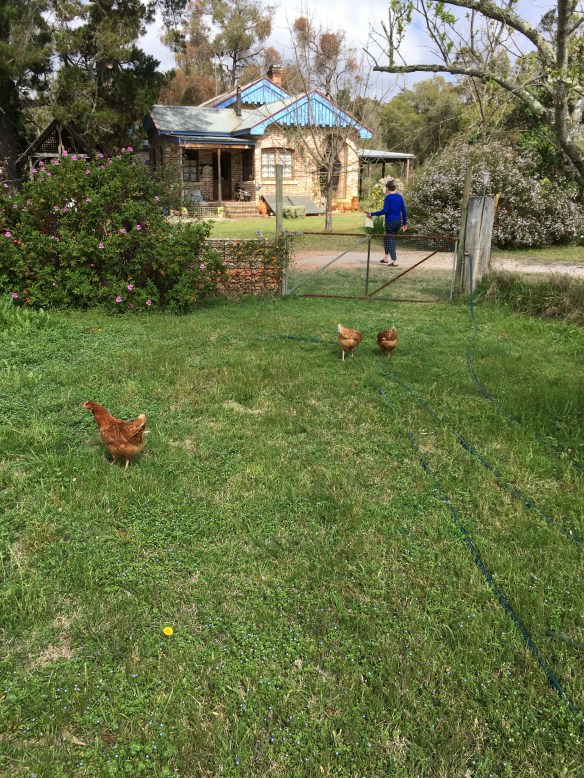
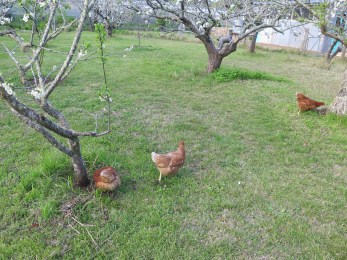
It’s always good to be home and re-united with my 4 girls.

I have a lot to do. Jobs that have built up while I’ve been away. I hit the ground running. We have 3 weekend workshop booked in for wood firings over the next 3 weekends. We have a lot of bisque-ware ready to be glazed for the Southern Highlands Arts Trail Open Studio Weekends that are coming up, but we can’t get access to our wood kiln until we finish all the workshops.
The effort that we put in to preparation pays off, as all the weekends go smoothly and everyone leaves with something nice to make all the effort worthwhile. And we are lucky with the weather too. It blows a gale all week, and then it settles down and we have a glorious weekend of still, sunny days.
We fire the big wood kiln overnight through the weekend, taking shifts of 4 hours and overlapping each change of personal by 2 hours, so that there is always some continuity. The nights are cold and we huddle near the firebox for warmth. This is a downdraught ‘Bourry’ style firebox, so there isn’t very much to do most of the time.
If we stoke with big pieces of hardwood. It might take up to one hour for those logs to burn down sufficiently to allow another stoke. The kiln climbs slowly in an even, steady, reducing atmosphere.
The next weekend we have a low temperature wood firing workshop. We have half a dozen small wood fired kilns that we use throughout the day. We have 10 participants, who each bring 5 or 6 pots to fire, depending on size. We get through them all in the day, along with half a dozen wheel-barrow loads of wood.
When the day is over, we pack away all the little kilns, except for one. I leave it out and pack it with my glaze tests for all the new batches of glazes that have made up for the next big wood firing. It will have a lot of work in there for the ArtsTrail Open Studios Weekends. I want to make sure that I haven’t made any mistakes or poor assumptions, when making-up these glazes.
I pack the kiln in the morning and start to fire straight away. I push it along, as I have other things to do this afternoon. This little beauty breaks all previous records and cruises up the cone 10 in just 2 1/2 hours in reduction. The results are really quite good. Everything is well melted. There is no flashing in such a short firing. Nor is there very intense reduction colour, but all the colours are there – only paler than I would expect from a longer wood firing. I’m finished by lunchtime and can get on with other things.
I even surprise my self! I didn’t know that this sort of speed was possible for a stoneware firing, and with so little effort.
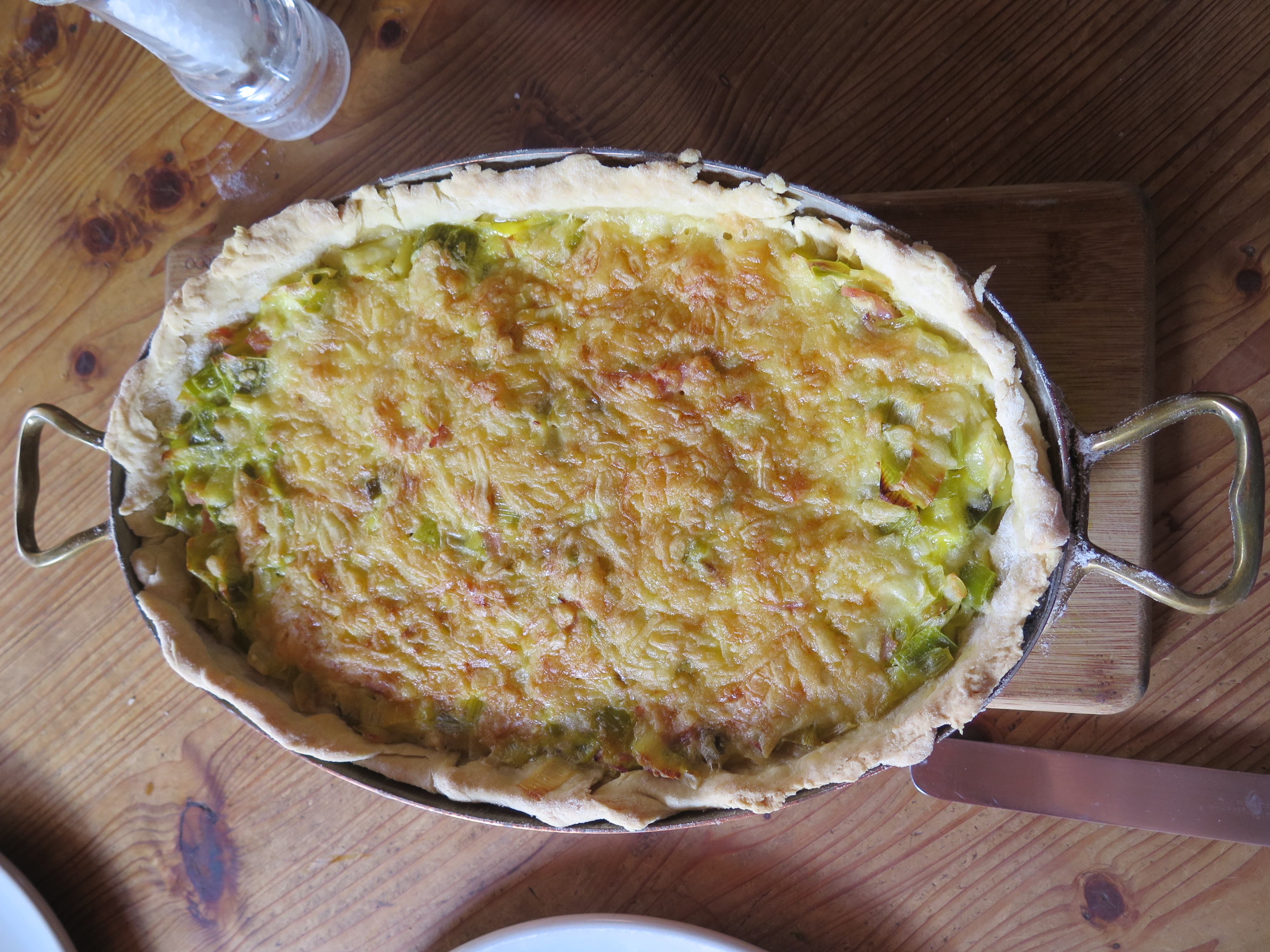
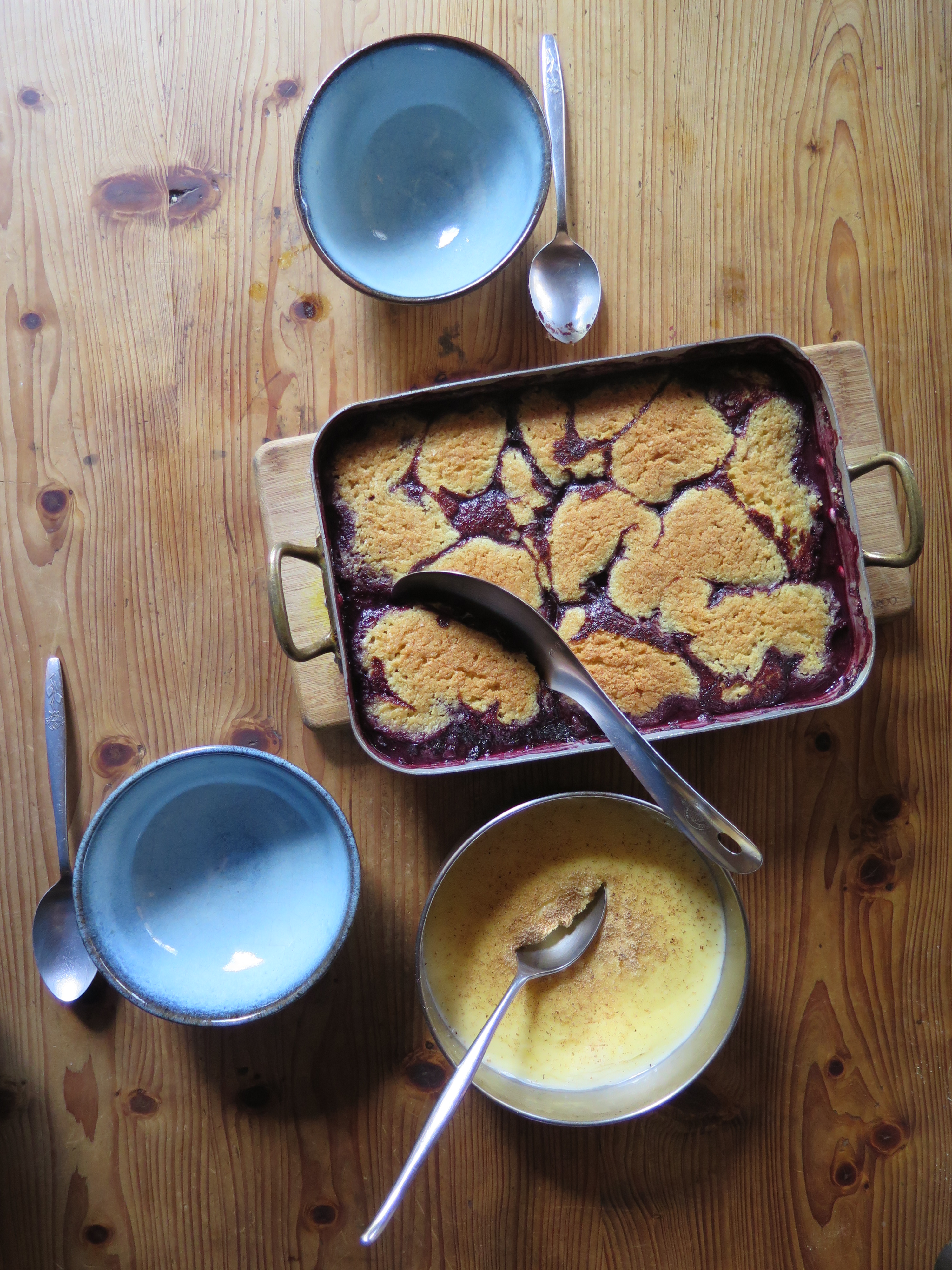
The garden is producing well, with Nina in charge in my absence, she decides to have the evening baking and makes a couple of lovely dishes. A leek pie with a little bit of sour cream and a wholemeal crust, topped with some grated tasty cheese, which is amazing, followed with a berry pie with a baked sponge topping. Served with Edmonds custard. Yum! It’s an economical, warming, dinner on a cold evening. All this garden produce is a fitting reward for all the hours of weeding and watering. However, we don’t do it to save money, but to enjoy wholesome, unpolluted, fresh food.
Over the years, we have made decisions that have allowed us to be in control of much of our lives, but nothing is perfect, nothing is finished and nothing lasts!
Enjoy the moment.
Delivering a Kiln, What Could Possibly go Wrong?
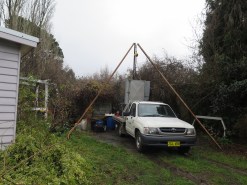
I have just finished refurbishing an old 2nd hand kiln for a friend. It’s one that I built 20 years ago and although has suffered some neglect. It is in remarkably good condition. We delivered it to our friend in some very inclement weather. Fortunately the sleet cleared just before we arrived and the frost and ice was melted by the steady drizzle that set in, so the drive was uneventful. The driveway into the property was a bit wet and mushy after all the rain, so it was a slippery slidey reverse up the wet grassy driveway and up onto the concrete slab.

As we are way out into the country side here, there are no facilities to call on. Any sort of assistance would have to come a long way and at great expense. So we are on our own. Two ladies and me.
So, if all goes well, it should only be a matter of lifting the kiln up off the truck and then driving away. What could possibly go wrong? The kiln should then be able to be gently lowered down into the exact position on the slab. A builder has been commissioned to come along later and build a garden shed over to the top of the kiln in-situ.
I think that I have thought of everything. I have lifting gear, slings, chains, shackles, gloves, pallet truck and crow bar. All the parts to built a tripod and a chain block to do the lifting.
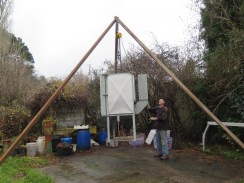
Amazingly, it all goes exactly to plan. The rain stops. I take the wooden poles off the truck and build the tripod, walking each leg inwards towards the centre, raising the chin block to a height, high enough to clear the kiln when it is on the back of the ute.
I manage to position the truck with the kiln on the back, more or less in the correct position on the site. Directly under the centre of the tripod and we are ready to lift.

This technique only works on soil or gravel. I have learnt from bitter experience that the legs of the tripod tend to slide outwards from the centre as soon as the load is applied, when they are sitting on concrete, or other flat , smooth surface. On soil, then settle in and dig down, locking them firmly in place. My only concern here is that the soil is so saturated, that they may just keep on sinking in. The soil is absolutely saturated here.
I try a slight test of the gear. The chain block takes the weight and the tripod settles in. I lift a little bit more and the ute raises up on its springs. A little bit more and the kiln starts to move a little and swing to one side a fraction as the weight comes off the legs. Finally its hanging free in mid-air. Just as it’s supposed to, success! While I steady the kiln and keep a hand on the lifting chain. The Lovely releases the hand brake and the ute suddenly zooms off….!

We are all a bit surprised at the speed. The slope was sufficient to allow the truck to freewheel away quite fast. Without the engine running, the power assisted braking doesn’t work and Janine had to press very hard on the truck’s brake pedal to bring the ute to a stop. Nothing went wrong, but no matter how much planning you do, there is always something else that you haven’t considered.
We wrap the kiln and I load all the gear back onto the truck just as the rain returns.
Perfect!
The simple pleasure of a dull job
It’s that time of year again. I need to make some more wadding for packing the kilns. Making wadding isn’t fun. It isn’t even interesting really. If truth be told, it’s a rather dull job. It just has to be done. So, to make it as bearable as possible, I make it up in a monster size batch, so that the pain is all in one go and then there is the relief of knowing that it won’t need to be done again for another year.
Wadding is used to seperate the pots from the kiln shelves and the kiln props from the kiln shelves. It has to be refractory and remain crumbly and friable after being fired to stoneware temperatures, so that it can be removed easily, even allowing for the deposition of the fluxing effect of wood ash during the firing.
I make it up in big batches of 120 to 150 kilos. Every wood-firer has their own ‘secret’ recipe. I don’t have any secrets. They’re all up here on this blog. Some potters use various mixtures of silica and clay, but I don’t want to use fine silica dust anywhere if I can help it, because of the risks of silicosis. Others use alumina powder and clay, which is very refractory, but expensive and in my opinion it is overkill. There is too much of an embedded energy debt tied up in aluminium and alumina processing. It takes massive quantities of electricity to extract aluminium from bauxite, most of which comes from burning coal, so it is rather unethical to use alumina powder, unless it is absolutely necessary. We use a small amount in shelf wash, but it amounts to just a kilo a year. I can live with that. The other thing that I really dislike about alumina in wadding is that unless you are particularly careful, you end up putting stark white finger prints on the pots that are being packed after handling the wadding. You really have to wash your hands after every time you touch the stuff.

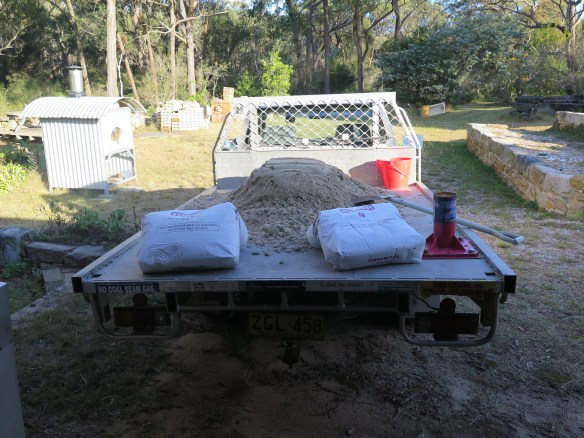
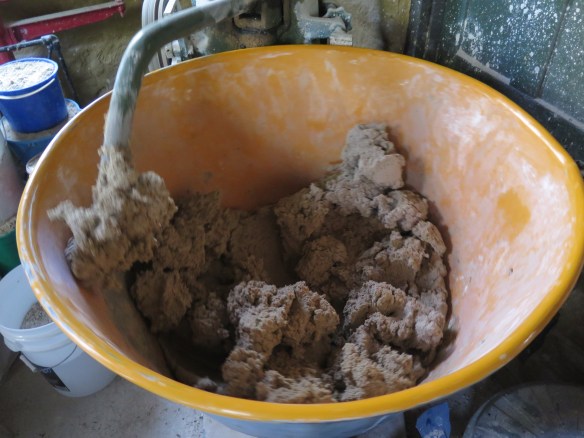
I have decided to make this batch of wadding out of ‘fat’ sand. Fat sand is also called ‘bush sand’, ‘brickies sand’ or ‘bush loam’. It’s a coarse quartz sand with a fair amount of clay in it. It also contains some limonite or hydrated iron oxide, so it looks a bit yellowish. I mix this with some powdered kaolin. This is a great use for powdered kaolin. I don’t use a lot of it, but is is very useful for this purpose. I mix it in the ratio of one 25kg bag of kaolin to 4.5 buckets of damp washed sand and one bucket of water. When I can get clean saw dust I also add two buckets of saw dust, but this is getting harder to find these days. The last time I visited the local timber yard, they had been cutting some synthetic wood products that were a rich canary yellow. This stuff looked like it was loaded with resin glue. I thought that it might be particularly toxic if it were burnt in the kiln as wadding. So I didn’t collect any. So, this batch of wadding is just going to be sand and clay.

Adding saw dust is great for wadding that use on new pots that are once fired, as it can leave an interesting charcoal grey to black shadow mark. It doesn’t work on bisque, only once fired work.
When it is freshly made wadding like this is rather short or non-plastic, being so sandy, but after ageing for a few months it develops quite good plasticity and after a year or so, the last few bags are plastic enough to throw with. Not that you would want to, but I think that it might be possible. I’m down to my last bag of the old batch now and it is very easily worked into coils and small balls. This new batch will have a month or two before I need to use it.

I make it up in a couple of batches in the dough mixer and then bag it up into 15 kg packs and store it away.
Security is a years supply of wadding. Now, when I look down on my stash of wadding I get the simple pleasure of knowing that I won’t have to do this job again for another 12 months. It’s a nice feeling!
fond regards from the well wadded potter.
Back From The Mountain
We spend a bit of time looking closely at the Nabeshima pots on display, and it is true that there is very little texture in the pale blue gosu, natural cobalt ore, background pigment.

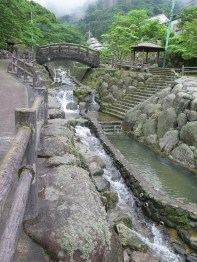
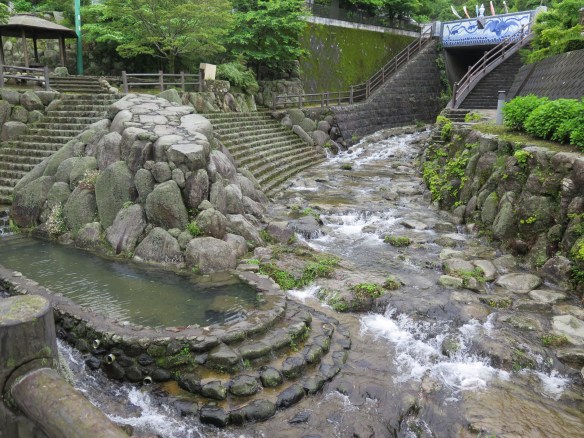
We make our way back down the mountain past the noborigama kilns and other pottery workshops and display rooms. As it has been raining for a day or two, the stream is running quite noisily. Our guide, Tsuru san is very knowledgeable about the ceramic history of this area. Born and bred here, she knows more than we can take in.

The water driven clay crushing hammers are working hard, unattended, pounding the soft porcelain stone to powder all through the day and night without a power bill.

The fish seem unperturbed.
From Okawachi, we drive to another interesting site of early Arita porcelain development. We go to visit the re-constructed Korean climbing that is said to be the one used by the originator of the porcelain industry here, Li Sampei or Ri Sam Pei.
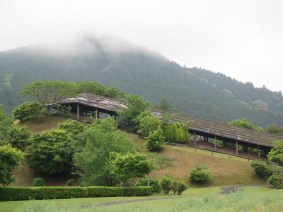
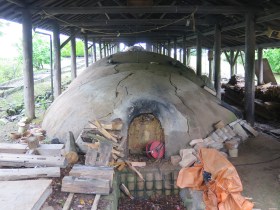
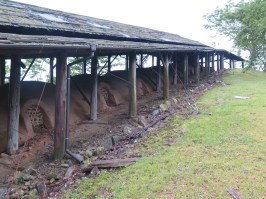
Its a magnificent kiln stretching all the way to the top of the hill, with a slight bend in it to suit the lay of the land form, just as the original one did, as excavated by the archeologists.


On our way home, we call in to visit the Rice Field Potters Kiln. Unsurprisingly, it is set in the middle of some rice fields on a gentle side slope. It has also been reconstructed recently from the information gleaned from an archeological dig on the site. This kiln dates from the time when potters didn’t work full time, but fitted their firings into the rhythm of the season along with rice and vegetable farming. They were the original self-reliant potters.

I really love the way that this old kiln wriggles and snakes its way up the slope. If I were a self-reliant, wood-firing gardener/potter, I’d love to own a kiln like this one. Come to think of it. I am, and I do!

Both of these kilns were built with dog-legs in them to follow the natural surface contours of the local terrain. They are both used intermittently by the local potters groups to keep them working and alive.
It’s been a long day and we have just enough energy left to visit the local sake brewery for a tasting. I can’t decide which one is best, so I am forced to taste them all before I can decide. A total lack of knowledge about sake can be an advantage sometimes?
A Trip to the Mountain
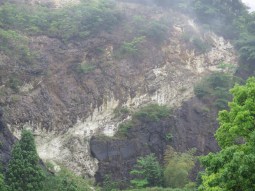
We are taken on an excursion to the mountains. It’s a foggy moist kind of day with intermittent rain showers. On the way we pass a really obvious white pegmatite dyke in the side of one of the hills near the road. I’m keen to stop and look, but it appears to be on private land and there is no easy access to it. We drive into a trucking company’s yard to get a closer look, but it is still a bit too far away and it is raining. I don’t fancy bush bashing in my good ‘going out’ clothes. So we let it pass for today. I may try to come back here if there is time on a fine day.


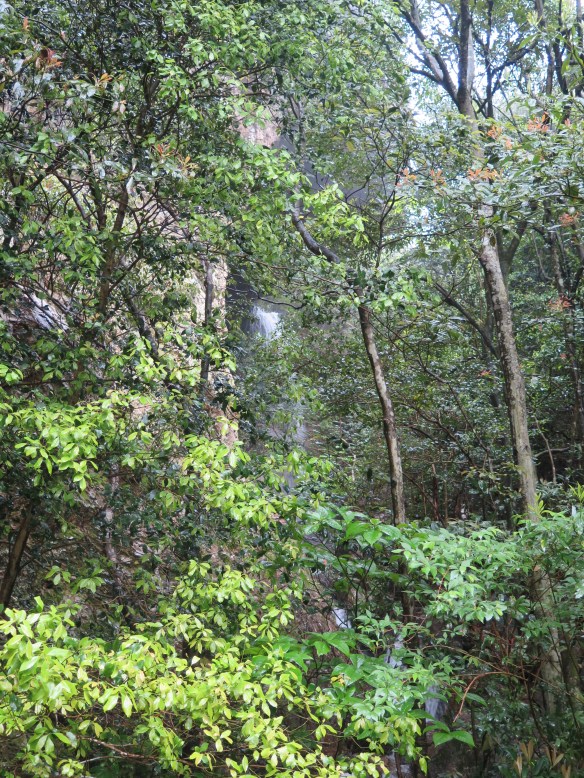
We press on over the mountain top, past a very pretty water fall. Yesterdays rain has brought it to life today. It wasn’t flowing like this the last time that I was here.

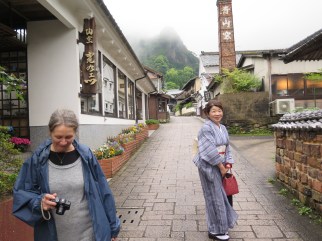
We go to Okawachiyama for a 2nd visit. I don’t mind, I’ve been here before, but Janine hasn’t. It’s a pretty place and there is always more to see. You can’t see everything on one visit. There are still lots of lanes and little walkways to explore. This remote valley once housed the Nabeshima Clans’ potters. They were held here in captivity to create the finest, whitest, polychrome enamelled porcelain. They managed to find the whitest of materials and restrict their use for the shogunate only. The creamy white clay glaze combination that they created is still a wonder to this day. It’s purity and translucency is just remarkable. I went on a geology tour of the local porcelain stone sites last week with Kanaiwa san. We visited many places around this district, but we couldn’t find the lost kaolin mine of the Nabeshimas. Kanaiwa san has made a life long study of the ‘nigoshide’ white effect. He has managed to make a modern synthesised version using 3 of the local varieties of porcelain stones. I don’t know his technique, but his knowledge of froth flotation technique that be came obvious to me during one of our early conversations, leads me to believe that there might be some fertile ground there for experimentation. I have certainly found it an essential way to remove iron from otherwise ‘dirty’ rock samples back home in Australia.

On our walk up the steep Okawachiyama Valley road, we call in to see one of the last ladies that can do the seamless cobalt background brushwork. It is a very difficult technique and is now almost lost. These days this kind of background is either sprayed on, or transfer printed. Of those who still hand paint the ‘gosu’ cobalt blue background. and there are only a few of these left as well, the technique used these days is to gently squeeze the ‘fude’, pronounced ‘foo-day’, brush to control the flow of the gosu pigment and loop the brush tip back and forth, producing a layered, slightly overlapping, background pattern. The Nabeshima technique used here is to hold the brush by the handle, not the hair, so no squeezing is used, They tilt the brush, up and down, to control the flow of the pigment. It is a truly astonishing technique.


Traveling South to Kyushu
We say a temporary good-bye to Kyoto with its cherry blossoms all finishing up. Mostly on the ground. Its raked gravel gardens and Maiko make-over girls. We’ll be back, we always seem t find an excuse to return here.

We take the long train ride south to Kyushu. We leave Kyoto, and after a while the concrete high-rise scenery starts to diminish slightly and is replaced with low-rise. After a very long while we realise that the buildings are far less common and there is farm land starting to appear. It’s not that there isn’t any farmland near the bigger cities. There is a small, very small, plot of rice being farmed only 1 kilometre from Kyoto’s main central station. Amazing!
As we rumble on, we pass through farming districts and extensive fields of golden crops already for harvest with their heads golden of bearded barley ripening in the sun. I can’t imagine that harvest time for these crops is very far off.

We also see farmers out in the flooded fields with their mini tractors and rotary hoes, working up the inundated mud, presumably preparing the silt for the coming planting of the rice crop. Ploughing now, if you can call this ploughing, is to kill off the weeds and any competition for the young rice seedlings that will be planted soon.
When I was last here 6 months ago, they were smack in the middle of rice harvest in the autumn. We arrive in the far south in Kyushu, not too far from Kumamoto, about an hour away. Everything here is OK, different strata or geological sequence? We only had a level 2 shake up here. So the kilns are still standing and all the pots are still on their shelves.
It’s all foggy, rainy and damp when we arrive and the hills are coated in a beautiful mist.
Our first visit here is to a place near Karatsu on the North West coast. We visit an old pottery studio that has existed in this little secluded valley for a couple of hundred years. The old lady tells us that her family have always been potters here since the arrival of the Korean potters 400 years ago. The war Lord Toyotomi Hideyoshi launched 2 failed invasions of Korea in 1592 and 98. Each time he captured and brought back prisoners of war. Some of whom were potters. One in particular found and developed the first porcelain pottery in Japan in 1616. Exactly four hundred years ago this week.
She is a sweet old thing and at 83, has seen a bit of life. Her son is now the resident potter here. She tells us that there were once 300 houses in this valley, most of them making pottery and farming rice and vegetables. Now there are only 5 houses here and only one potter.
They are in the middle of packing the kiln when we arrive. It’s a well-loved old nobori-gama wood fired, 3 chambered climbing kiln.

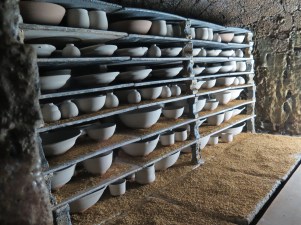
They pack the pots on rice husks to stop them sticking to the kiln shelf during firing, as rice husk is composed mostly of silica, which is refractory. It also creates a shiny ‘flash’ of colour on the exposed clay at the foot of the pots.

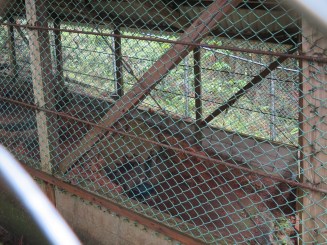
Later, we travel home to Arita via the ‘Hitakata’ ancient kiln site. This little valley once had a number of korean potter families working and farming here. But they are all gone now and only the archaeology remains. This site has been fenced off now to stop looters from stripping the site of old artefacts.


It was one of the first Korean kilns built here way back in the late 1500’s. It is set in a beautiful forested glade with a small but fast flowing stream nearby. Quite idyllic! This kiln was built without the use of fire bricks. It was constructed out of rammed earth. The local soil here doesn’t look particularly refractory, so it probably had a short life and needed to be rebuilt often.
I can’t read the Japanese on the information board, but the illustration shows 9 steps or doorways into the tunnel-like chamber. My teacher back in 1973, the Japanese potter Shiga shigeo, to whom I was apprenticed, trained near Kyoto after the war and his teacher, Saburo Saito had a 3 chambered climbing kiln, all made from rammed local refractory clay and home-made bricks. I was told that the fire-box needed rebuilding after every firing and the first chamber arch was likewise re-built after every 2nd or 3rd firing. This was the traditional way back them and is still used by some potters even today, if they are keen on reproducing the old effects.
Janine and I made all of our own fire bricks to build our wood fired kiln. The current kiln has had twenty firings and is still going strong. However the time will come when it needs to be pulled down and rebuilt.
Such is the way of the world.
Nothing is ever finished, nothing is perfect, and nothing lasts!
Fond regards from Steve and Janine in the shaky isle of Kyushu.
Free Fuel
Steve
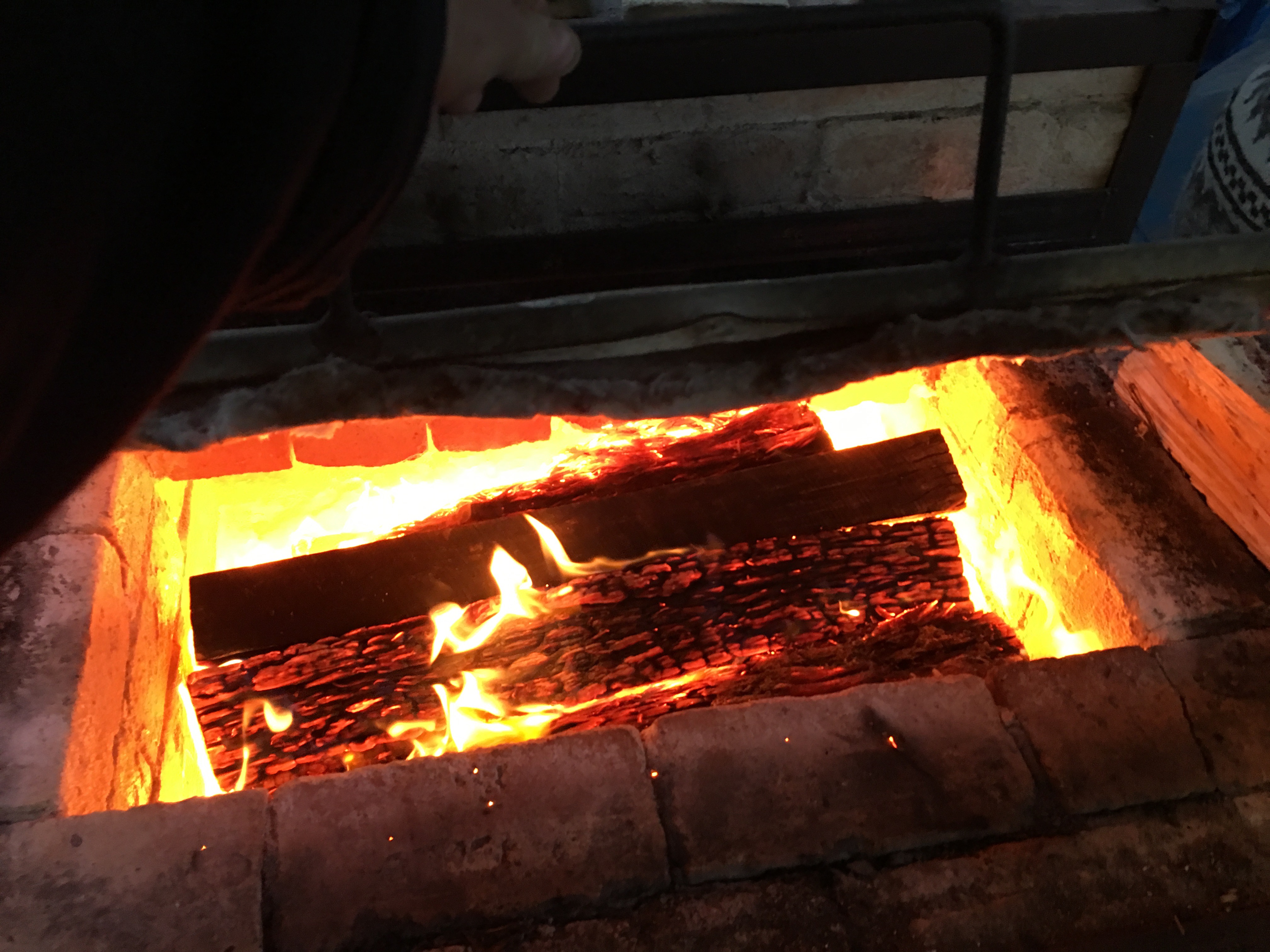
Small portable stoneware wood fired kiln. cont.
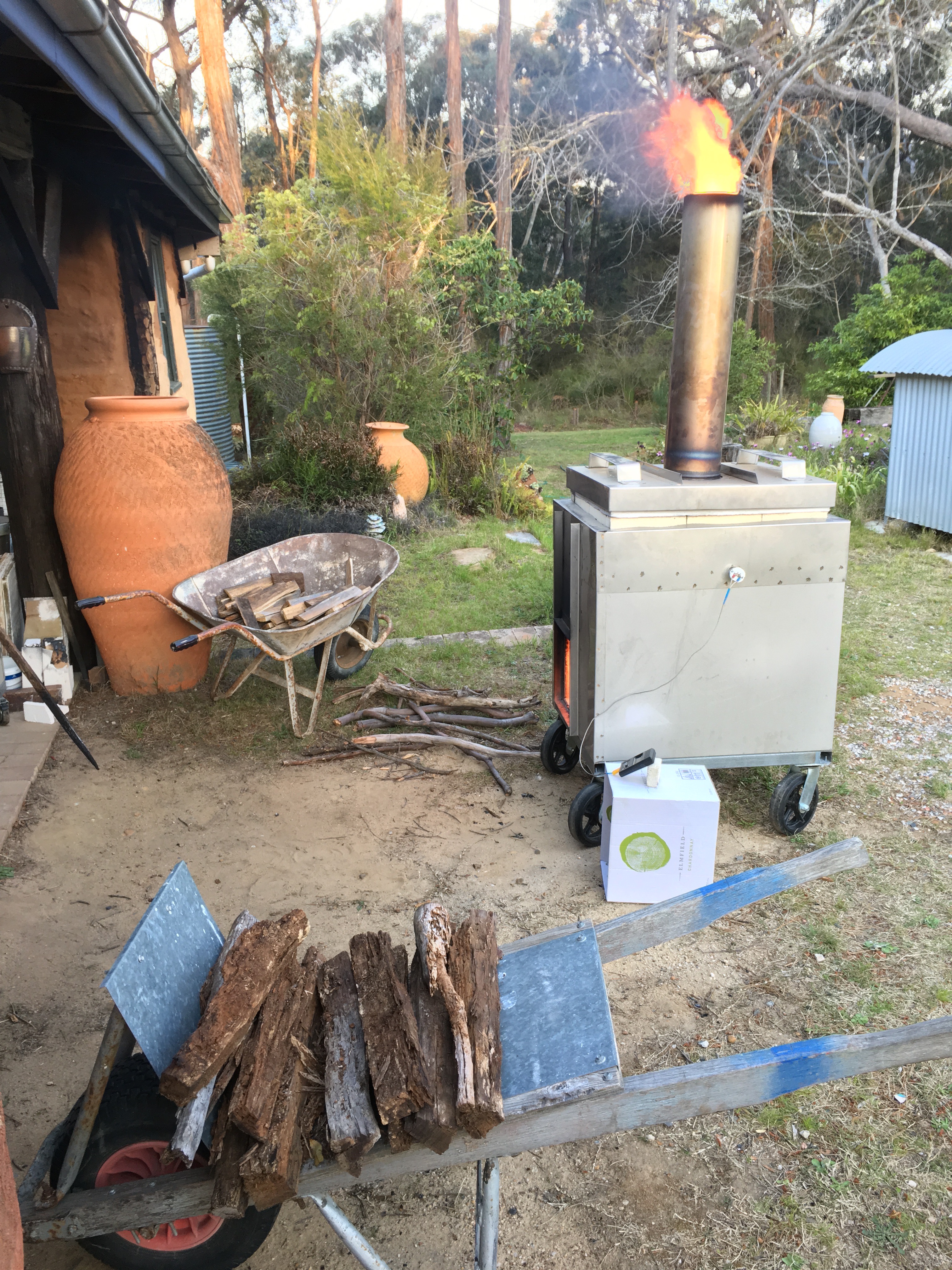
We have just fired the 5th incarnation of our little, portable, stoneware capable, wood fired kiln. It fired very well, again easily in 3 hours. It just cruises along at its own pace. 1 hr to 1000 oC and then 2 hrs to 2 1/2 hrs in reduction to stoneware cone 10 over.
This variation was to test out the new chimney arrangement and that worked perfectly, some much better than the previous one. I am very happy with that. Another problem solved!
The hard-working firing team, going at it flat out. Half way through the wood stack in the barrow. Going for the big final effort, no holes barred! Go for it ladies!

I have it adjusted now so that as the temperature reaches 1000 oC. The kiln automatically goes into reduction. I don’t have to use a damper to make this happen. The kiln continues to rise steadily over the next two hours without having to alter any settings in the firebox. It’s lovely.
However, I notice slight difference in the fired surfaces around the setting, so I conceive of another experiment to try and even out this anomaly. I have everything that I need in stock in the spare parts shelf in the pottery, so no need to go out and buy anything. I spend the morning cutting, grinding and painting all the new bits and the kiln is primed and ready to fire again. I need to glaze some more work for this firing, so there will be a days delay while they dry out. This will be variation/refinement firing number 6.
I’ve learnt from bitter experience that if I fire fast with freshly applied glazes. I can blow them off the pot on the underneath side. All my bodies and glazes are currently made here onsite from locally collected and processed rocks, shales and ashes. Everything is made onsite and it takes a month of Sundays to get it all organised, dried, crushed and milled and then bagged ready for inclusion in the glazes. These are weighed out and then sometimes re-milled. and at other times, just passed through a very fine sieve to extract any small detritus that was caught in a gap around the lid of the ball mill and didn’t get fully ground. Glazes with no clay in them are notoriously delicate and friable to handle once dry and very prone to just falling off from the underneath side of pots. Of course i use a little bentonite to help stabilise them and shrink them on as well as creating a little bit of dry strength, but I have found that I can only add 1 or 2 % before it starts to change some of the glazes.
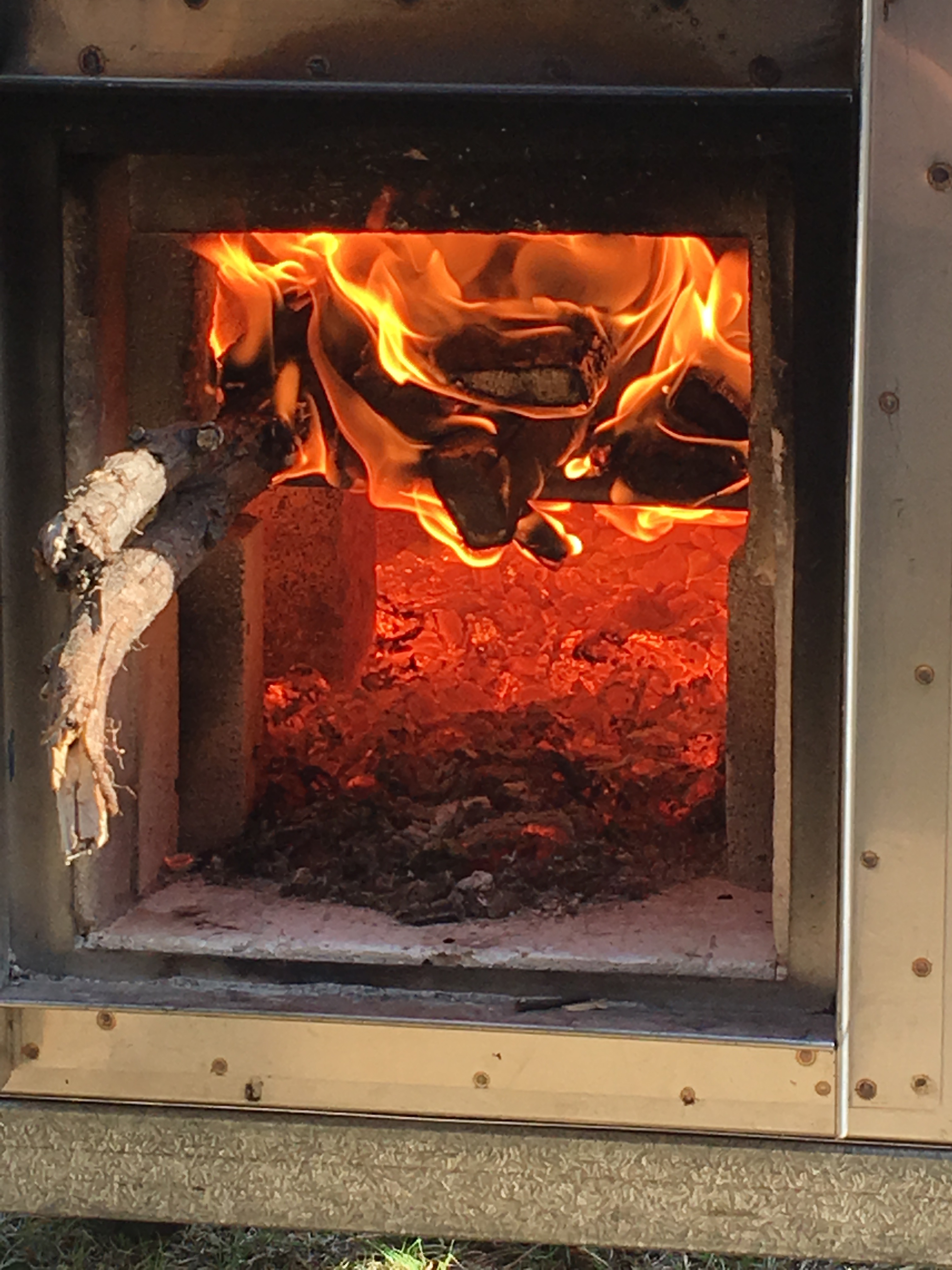
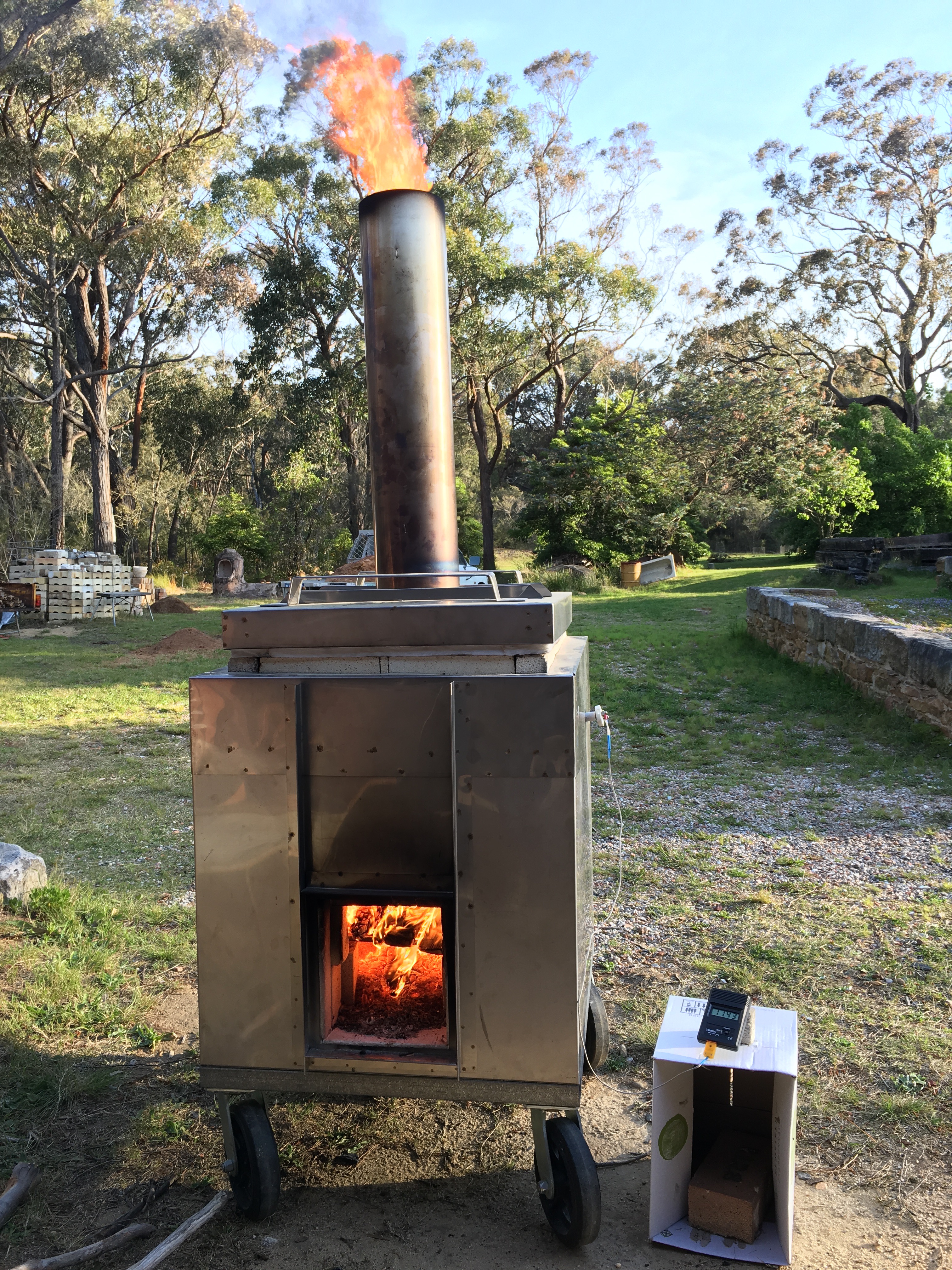
Tragically, as always seems to happen. I found yet one more issue with this configuration that needs a little more thought. During this last firing, I notice that I could improve the kiln shelf and stainless steel grating arrangement. So it’s back to the drawing board, or in this case, the work bench and I make a new set of one-piece ceramic supports that I hope will work a lot better. I pull the kiln to pieces and start again from scratch, right back to floor level and create a new setting design.
Maybe this will be the last of the beta firings?
We will fire again today with a load of Janine’s work in it this time. As she has a load glazed and dried ready to go.
Always so much more to learn.


You must be logged in to post a comment.