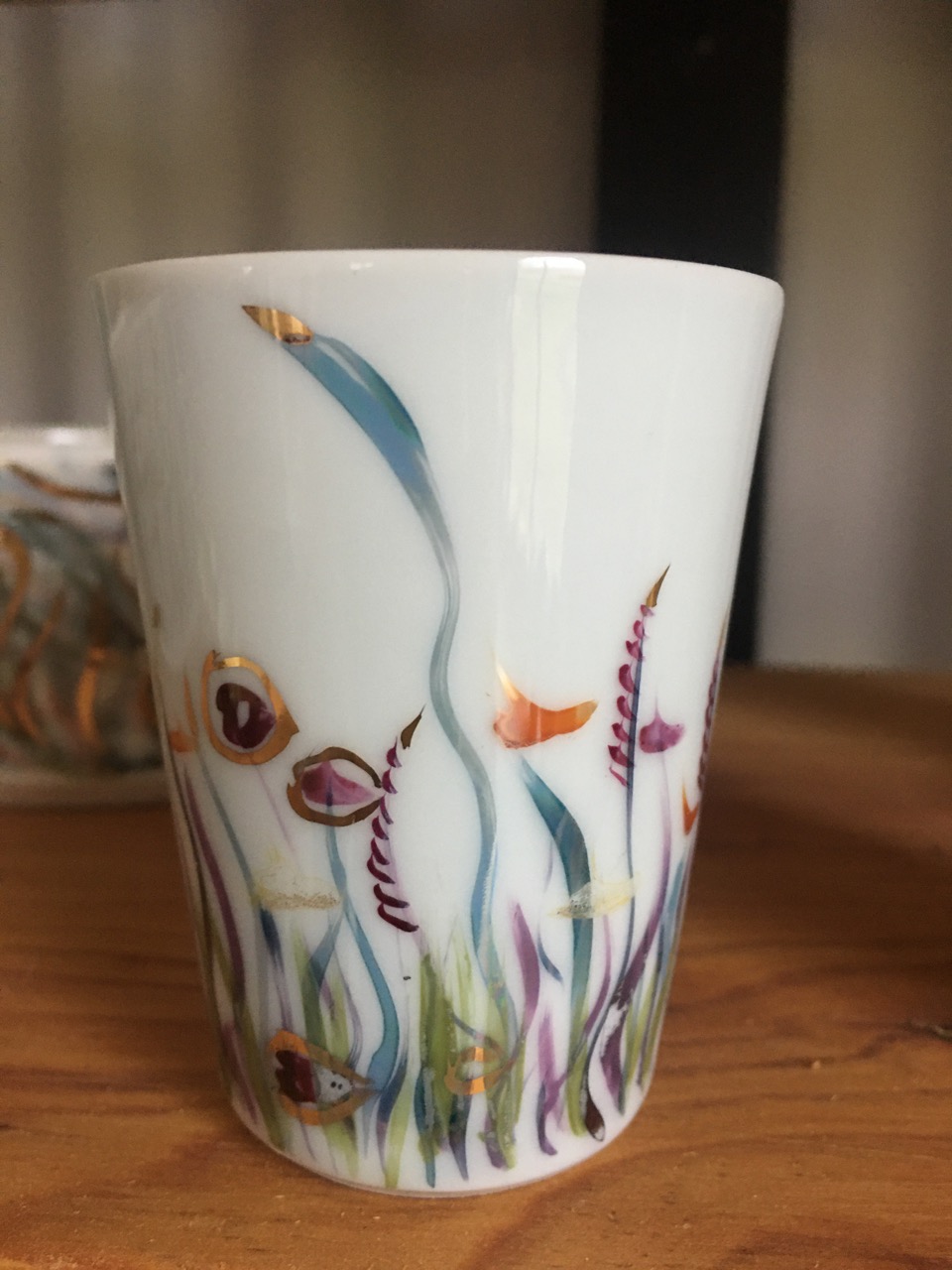
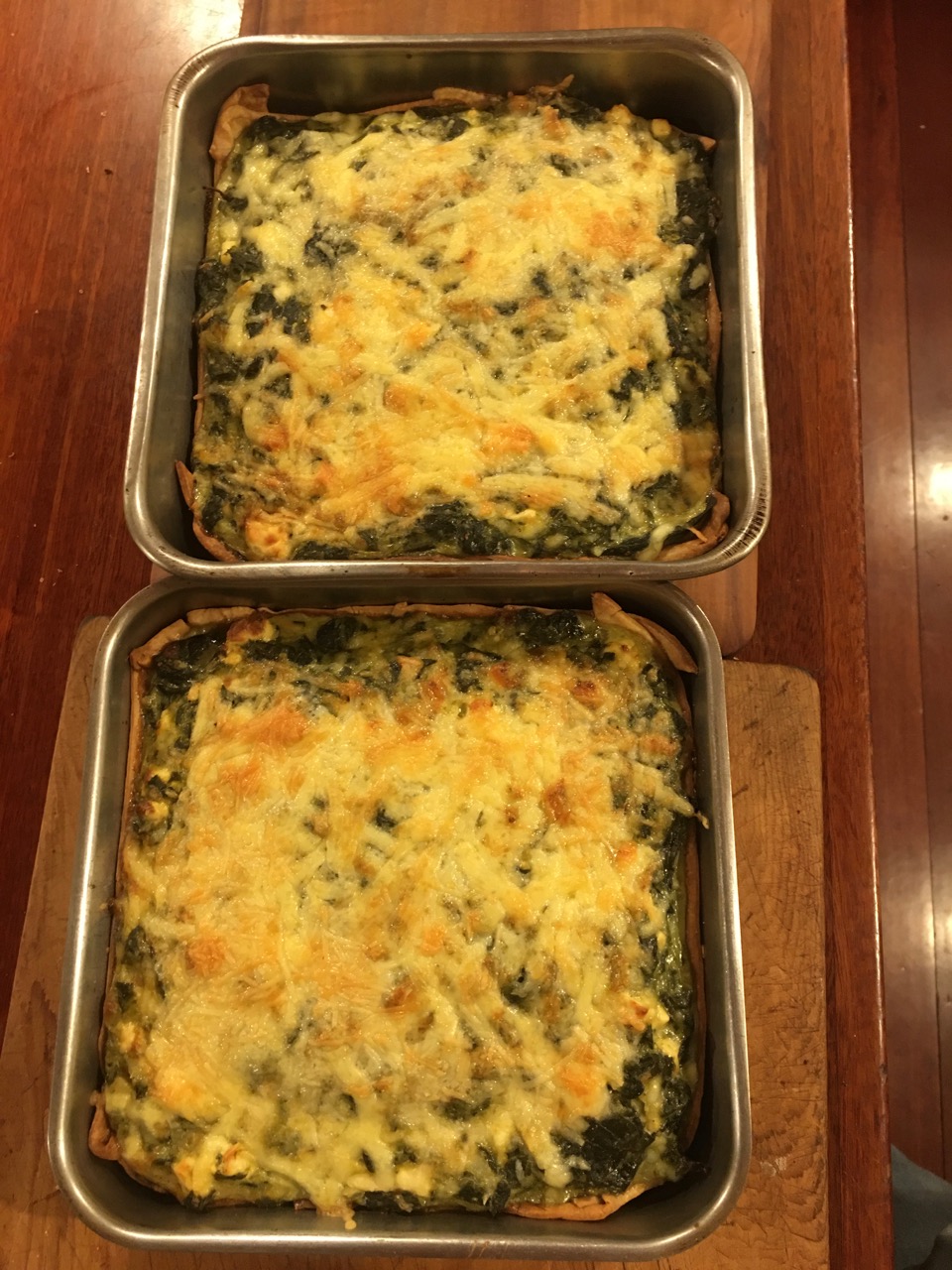
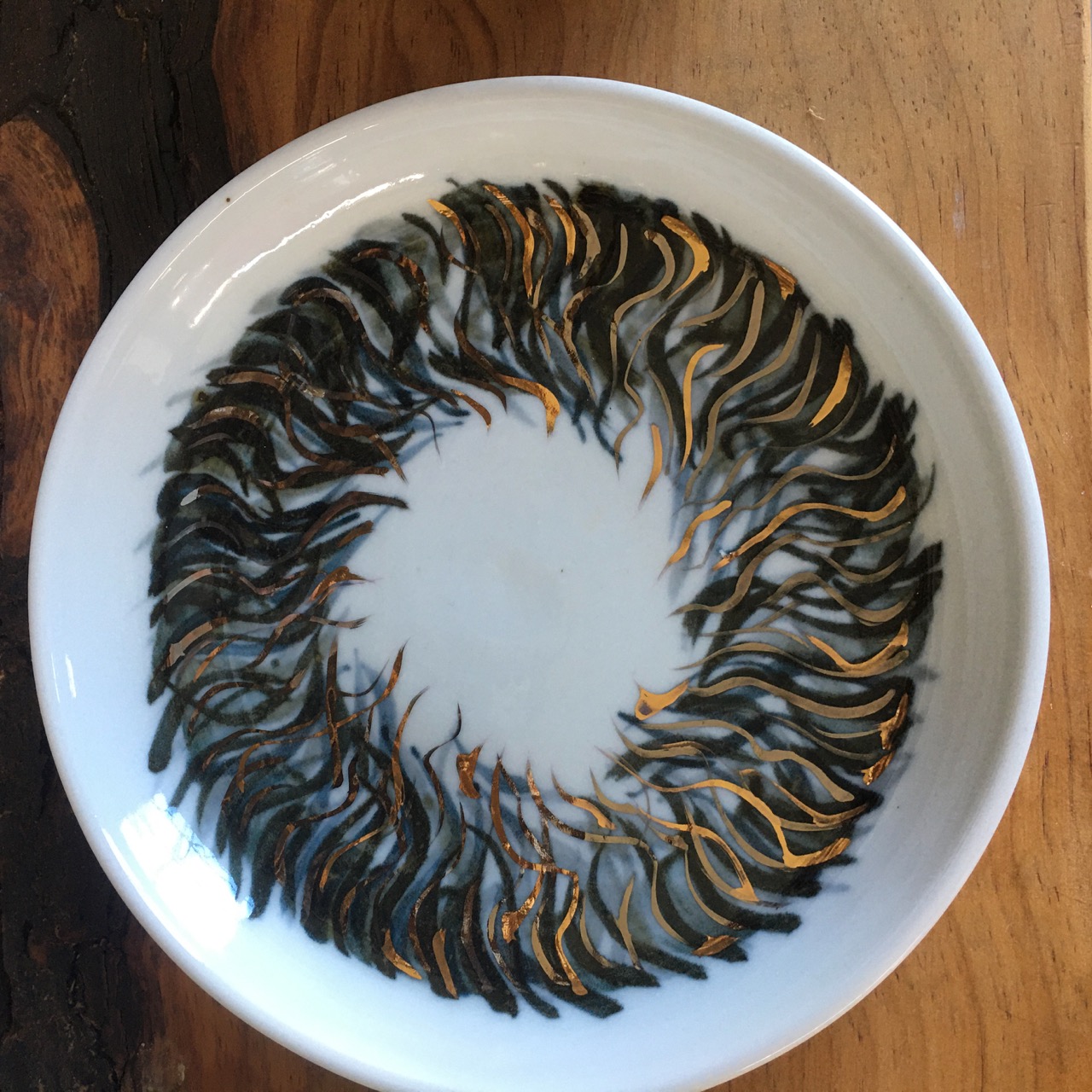
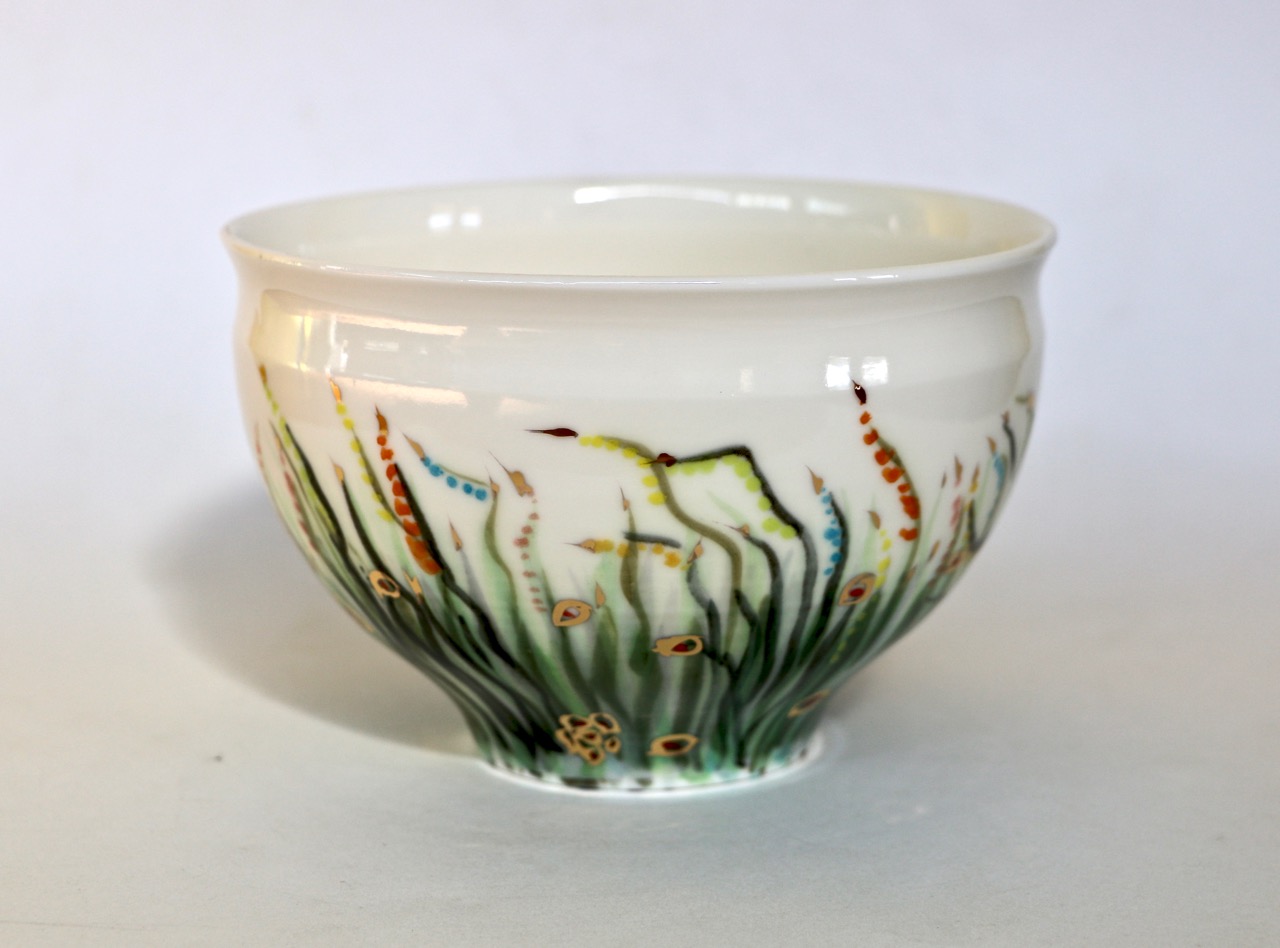
Back to work in the pottery

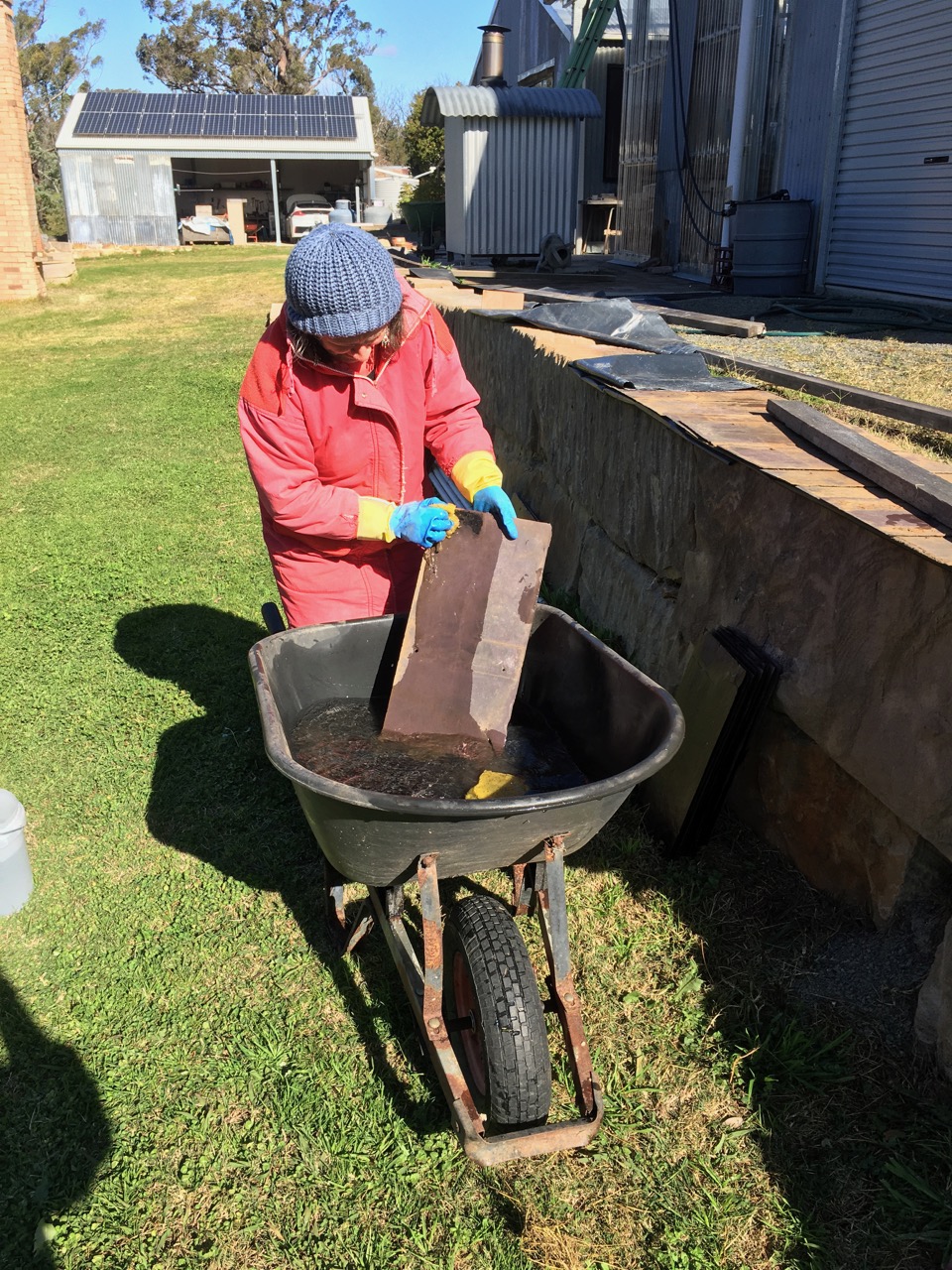
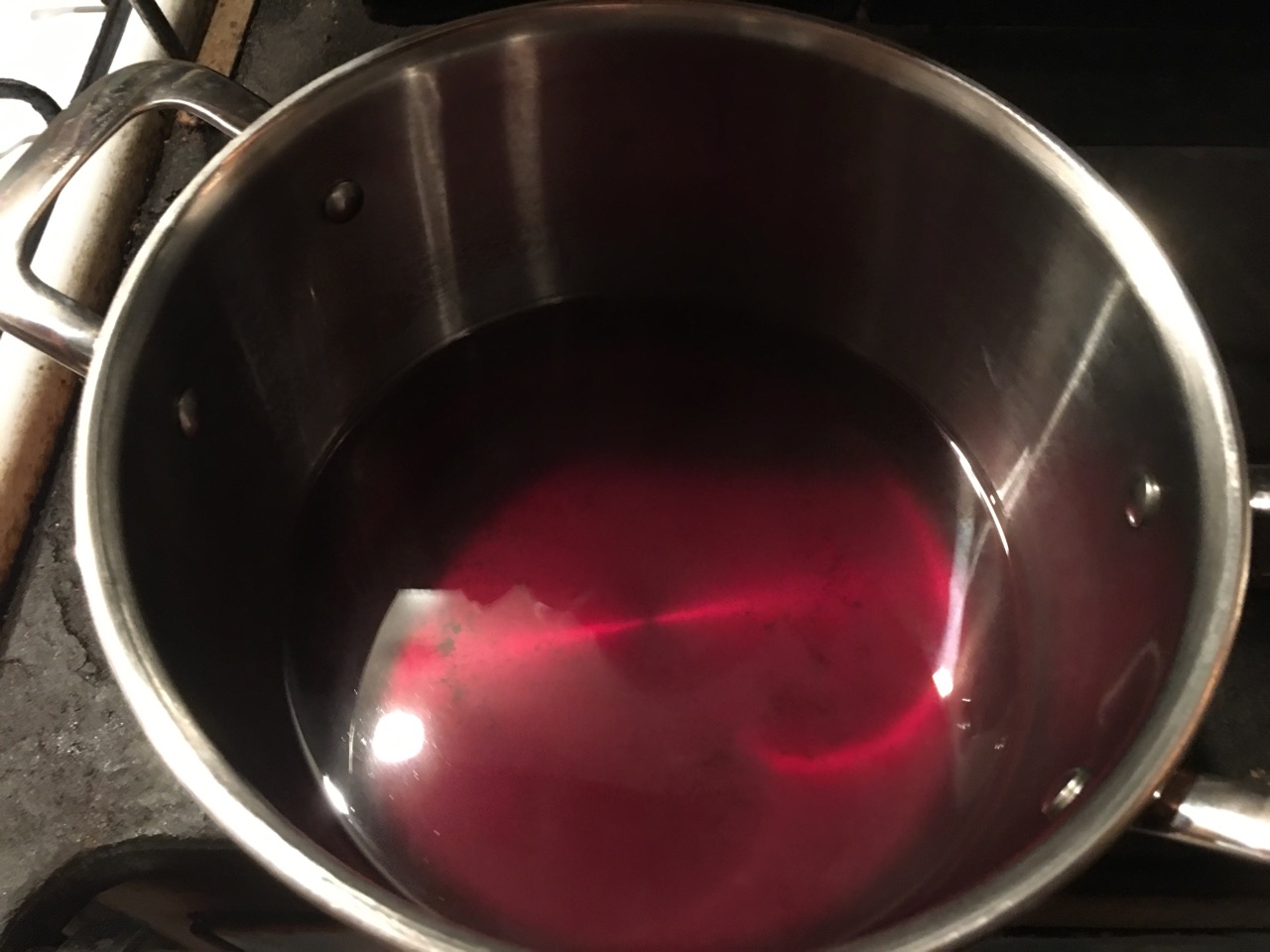
Since half way through February, I have been back at work in the pottery. I started back by making terracotta slip from dark shale that I have collected and had stored in the barn. The half of the barn that didn’t burn. So that was lucky. I carried water in buckets for several hours to keep the fire under control as it slowly spread. 2 of my 4 pumps failed, so I was left with the only option being to carry buckets from the railway station and throw them onto the burning frame. The fire wasn’t finally extinguished until late in the evening, around dusk, when the first fire truck arrived, seven hours after the fire had passed through. I have no idea what they had been doing for all that time, but they never managed to get to my end of the village until dusk.

So now I am making clay slip to mix with some powdered kaolin so as to make a dark stoneware body. Some of the materials that I collect have a lot of iron in them. So much so, to the point that they melt at stoneware temperatures in reduction. I had to be so careful not to over-fire them, or reduce too heavily in the past. This time round I’m adding kaolin to the mix to strengthen the body so that it will be a lot easier to fire without losses, but every new clay body is a bit of an experiment.

I collected some dark shale from the local brickworks shale pit. I was taken there by a local geologist when we were having a day out together exploring the clay/shale resources of the local shire. He was keen to point out that there is a significant amount of coal embedded in layers within the shale beds at this location. I imagine that it starts to fire itself once it reaches ignition temperature of the coal fraction. They must need to hold temperature and allow plenty of excess air into the kiln to counter ‘black heart’ or bloating?

He pointed out that the carbon content was so high, that if it were just a touch higher, they would have to pay a coal mining royalty to the State Government, instead of just a shale royalty. When milled up it can turn out to be almost black, very dark grey to charcoal colour.

I could just buy black clay from a pottery supply shop like everyone else. But I just can’t bring myself to do it. It’s not in my psyche. I love to make everything my self. Even if it is not as good as a bought one. At least it is mine and it is low carbon miles and made entirely with my own hands and on my solar electricity. However, sometimes my own home made stuff actually turns out to be better, certainly more individual and sustainable. So it is much better in my mind.

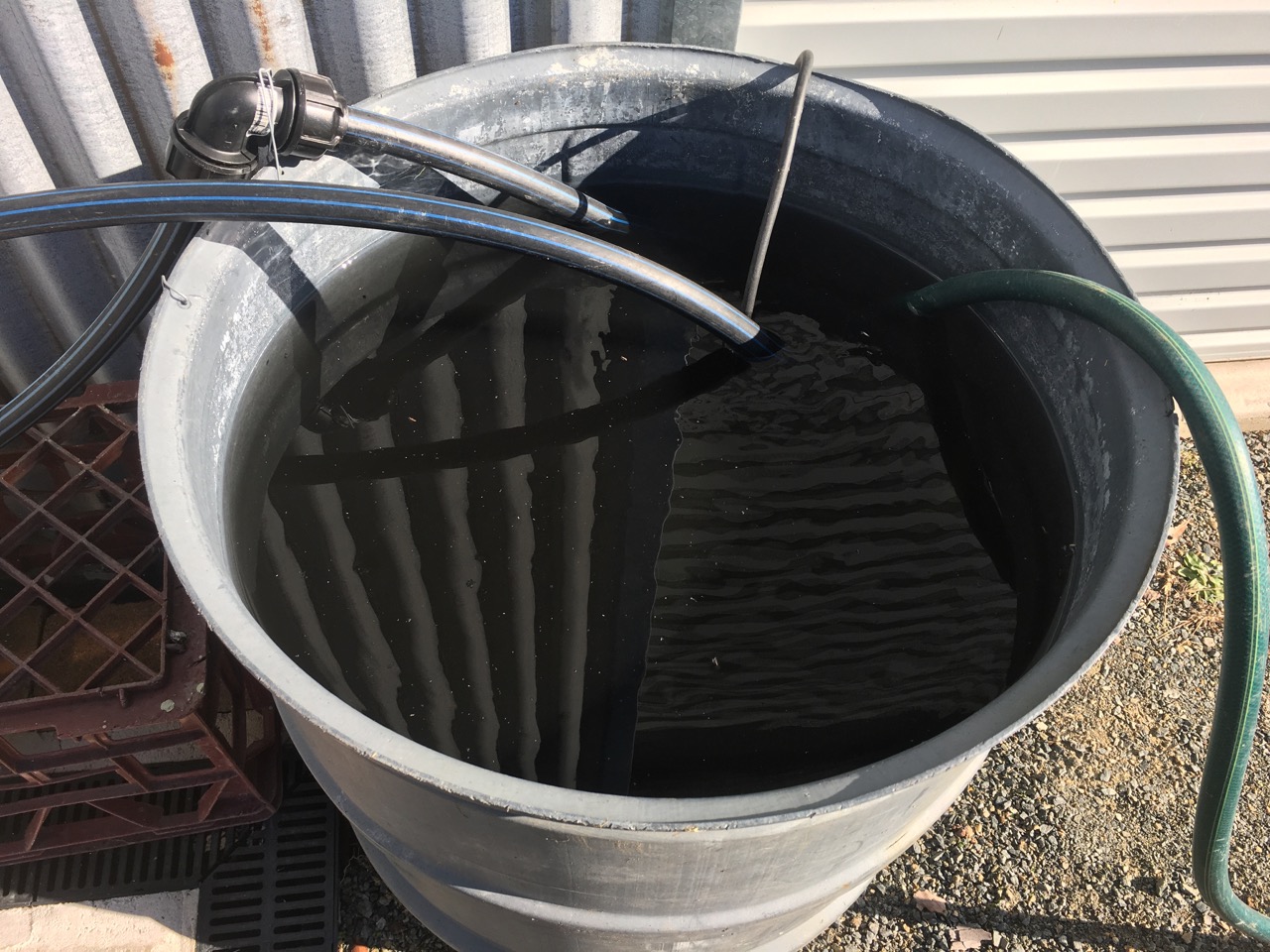
I only bother to rough crush the shale to allow it to go into the blunger. Then I add plenty of water and blunge it through a first pass of 60 mesh. I take out the harder non-plastic shale particles and they can be ball milled to a finer size. They are the concentrated lumps of coal and iron intimately mixed.  The slip is then passed through the sieve again at 80 mesh to get a fine slip. This is left to flocculate over a few days and then decanted to give a thick slurry. It’s a slow process, so time has to be created to allow for the natural process of flocculation to occur. This is slow clay, not fast convenience clay making, not so much ‘pret-a-porter’ clay, as L’argile-à-porter. 

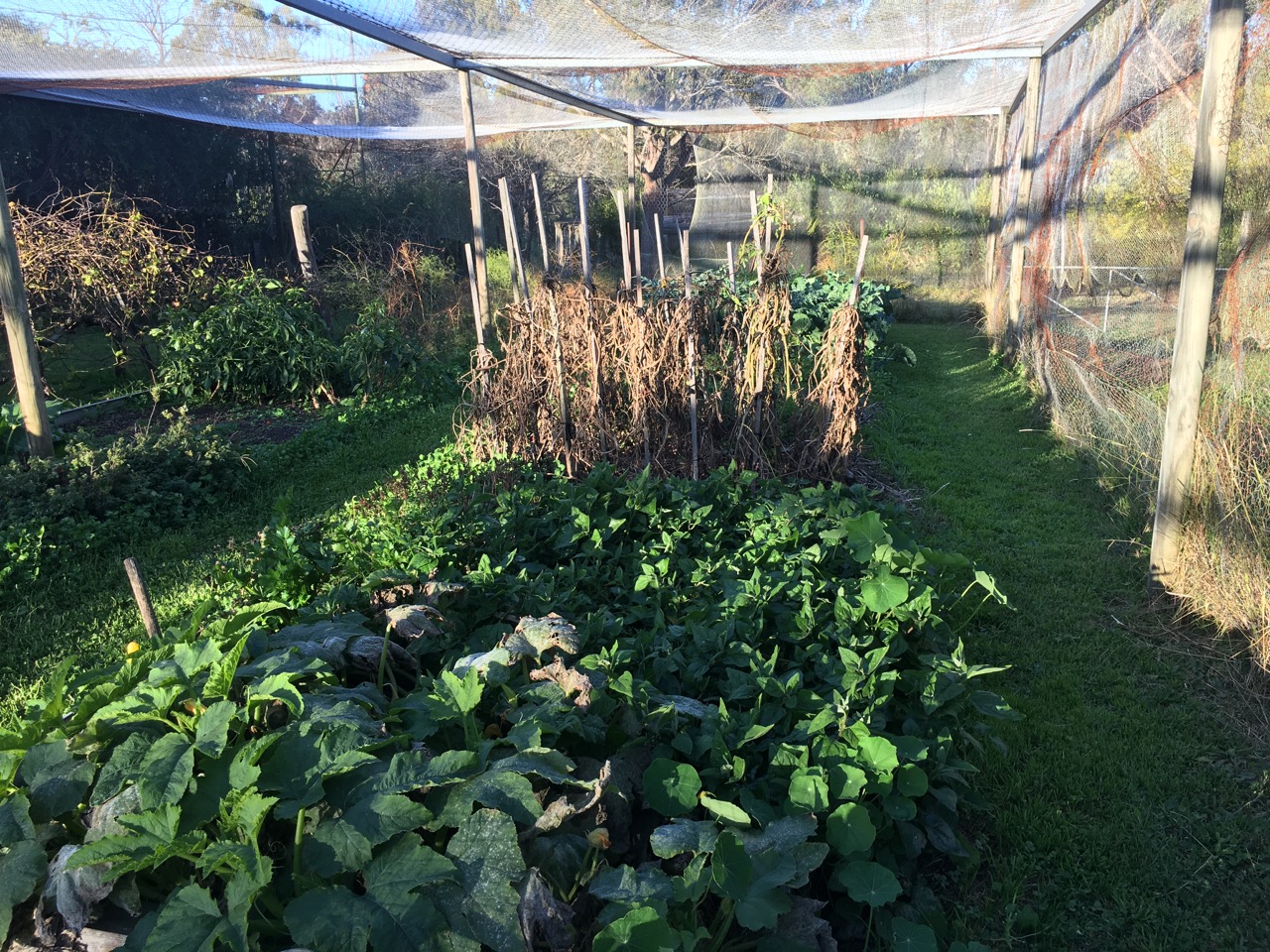
I also make a coarse textured stoneware from another shale that fires buff to brown, and a finer off-white clay for wood firing that flashes quite nicely given the right firing. All this clay making has been going on since January, interspersed with gardening and fencing work. Important jobs that just had to be done at a certain time and couldn’t be put off.

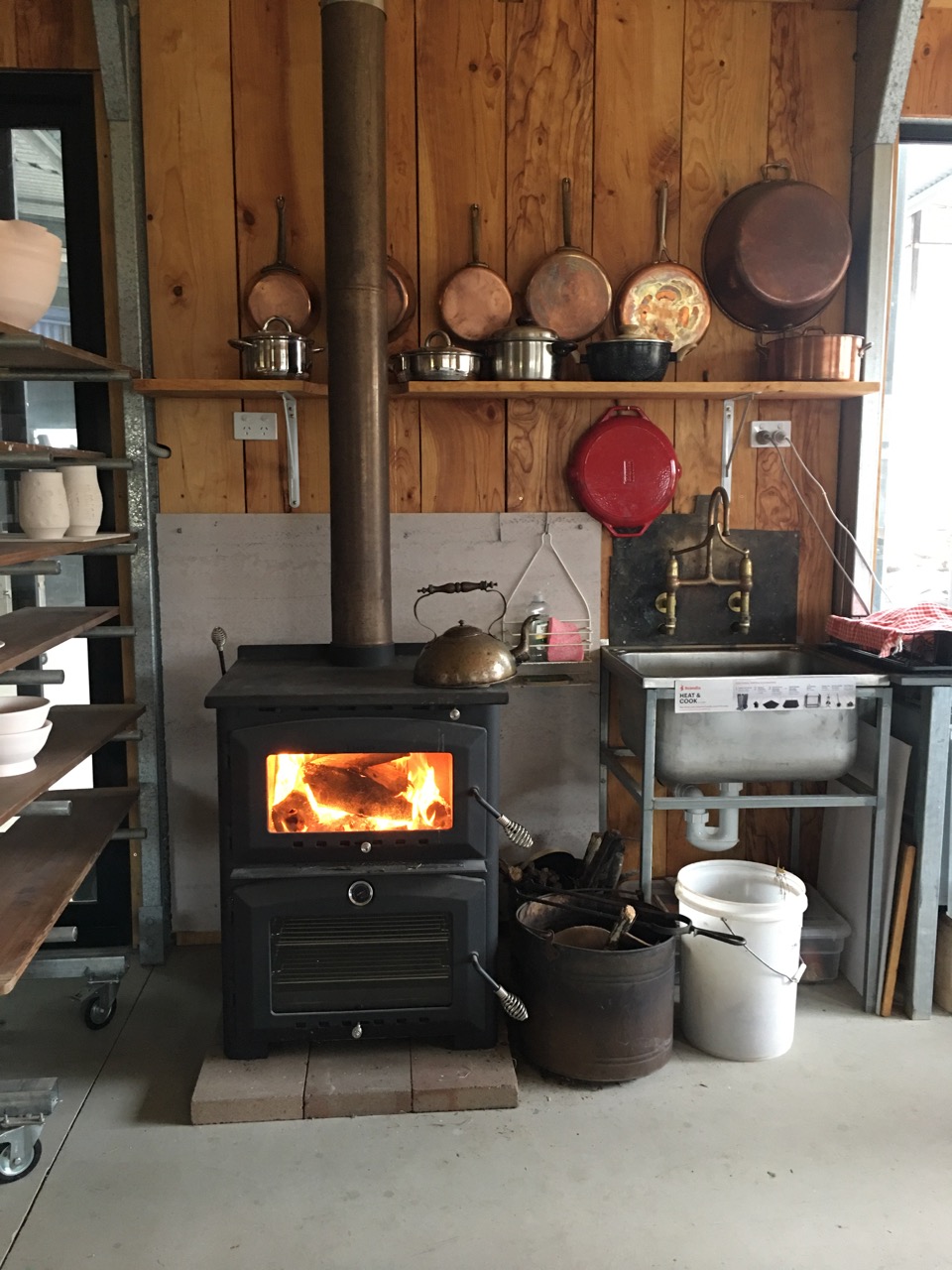
Finally, three weeks ago I managed to get back on the wheel again. Hurrah!

After the previous pottery burnt down in 1983. I spent a year jack hammering out stone foundations to get a more level site and making mud bricks, then hammering 4 inch nails into hard wood beams to create the new studio. The outcome was a beautiful ‘organic’ pottery workshop made of local natural materials at virtually no cost, but the true cost was the severe damage to my wrists, that still persists to this day if I over do it. I had wanted to make some bigger size pots for some time, but couldn’t throw any large lumps of clay due to my wrist damage, so I taught myself how to hand build on the wheel by the ‘coil-and-throw’ technique. I wasn’t taught by anyone. I had only ever seen it done in pictures, so I had to invent my own way. A few years later, when I was doing a demonstration of my technique to an art school class. One of the students called out. “You’re not doing it right. That’s not how Andrew Halford does it”!  Andrew was a local Sydney potter who had studied in Japan with a big pot throwing master potter. “You’re supposed to drape the coil of clay over your shoulder!”

One of the differences in my invented technique is that I don’t like to use a gas burner to dry my pots in-between the addition of coils. I can see that it is necessary if you want to complete a large pot with multiple coil additions in just one day or even less to fit into a school schedule. I have been forced to do this myself at times. But I don’t like to if I don’t have to. I prefer to let the pot sit over night, often wrapped in plastic, and for the clay to go ’thixotropic’ and ’set’ instead of drying out and shrinking due to applied heat. I think that I get a better, and more continuous form if I do it this way. Of course, I’m no expert, and as I haven’t made any big pots for quite some years before the fire. I do still get some undulations in my forms. That is where the ‘hammer and anvil’ paddling technique comes in handy. It corrects the form, but disturbs the thixotropic set of the clay particles and therefore delays the addition of the next coil for half a day or even over night.

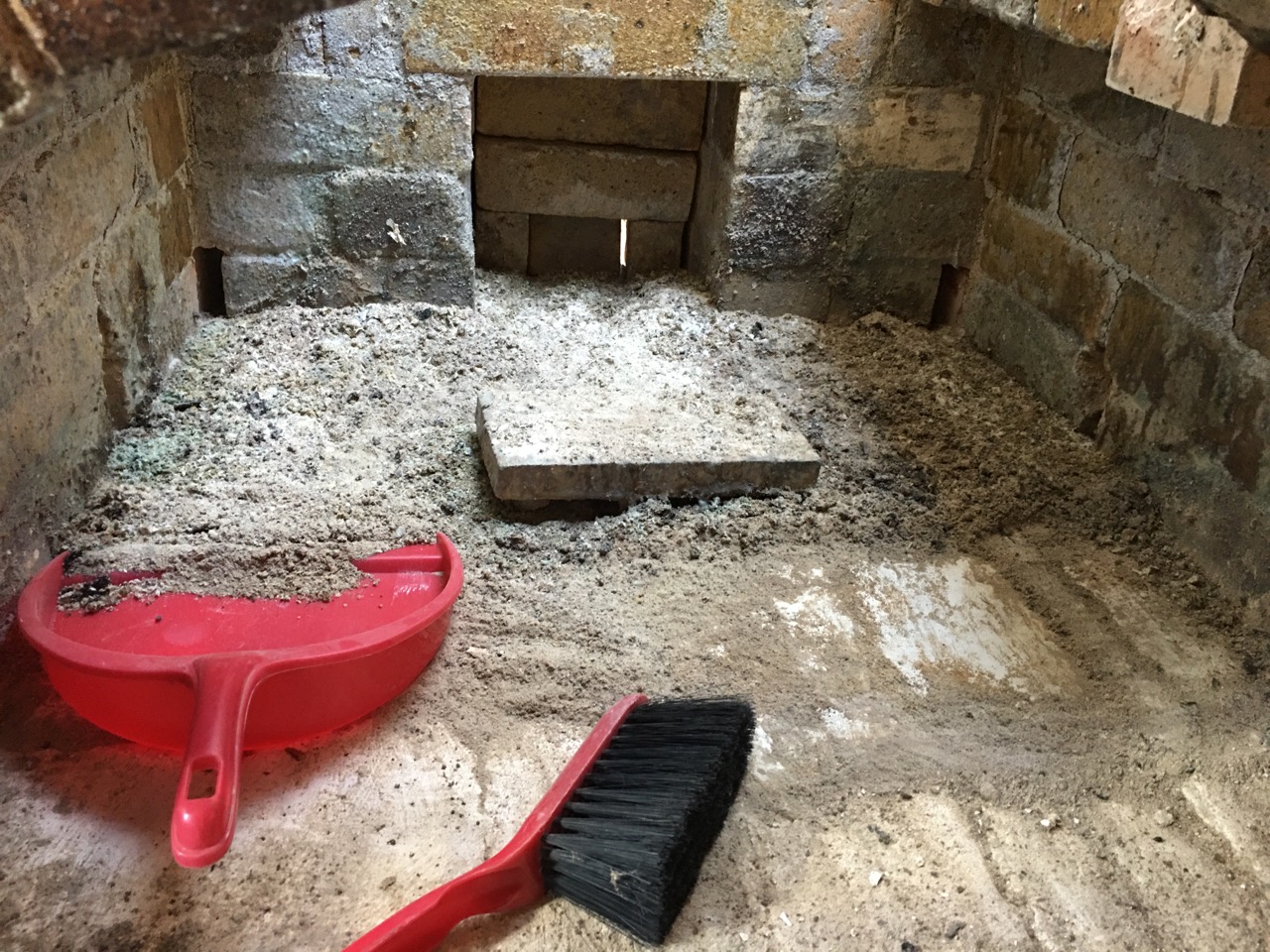
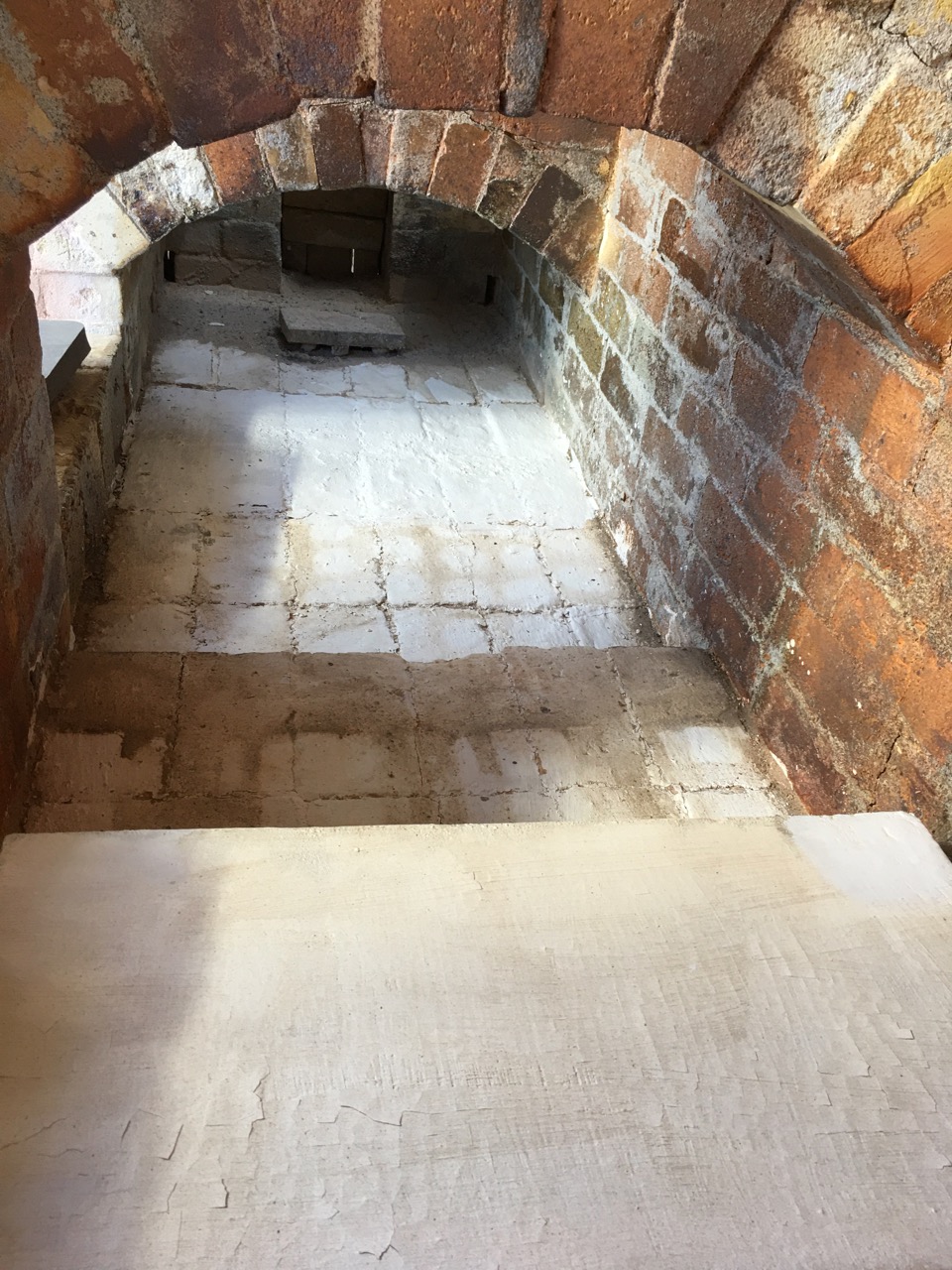
So here I am back on the wheel in a new pottery. I have built and test fired the new wood kiln a few times, albeit with some difficult learning going on due to the nature of my wood. And I’m now ready to make a few big pots again. My wrists are still a bit delicate, so I’m going with coil and throw again. I have to start small, as I have to remember what I had learnt the last time that I did it. I’ve forgotten so much due to the trauma. It seems that my mind has dumped any superfluous information and wiped its hard drive clean, to eliminate traumatic memories and make way for the ongoing cleanup and rebuilding learning and knowledge. Recovering old files takes time it seems, but it is mostly coming back to me. Bit by Bit.

I started with smaller pieces, then worked up to taller narrow forms, as these are easier, and my 2nd hand wheels don’t do so well going really, really slowly, as the drive is a bit worn.

I’ll start to work on a couple of wider forms next week.

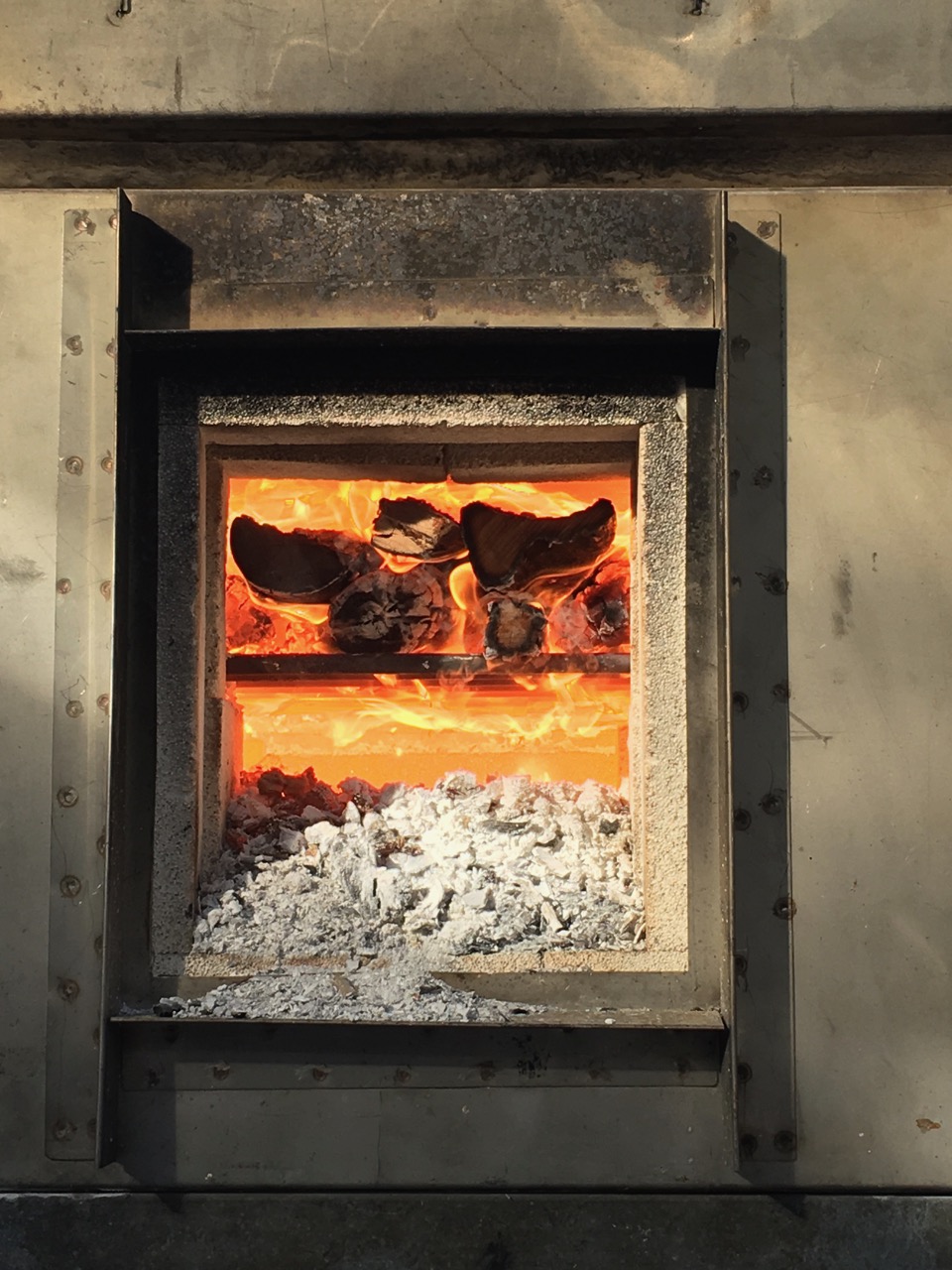
So far so good. That’s the easy bit, it’s the firing that will be the big test.

March is peak tomato season

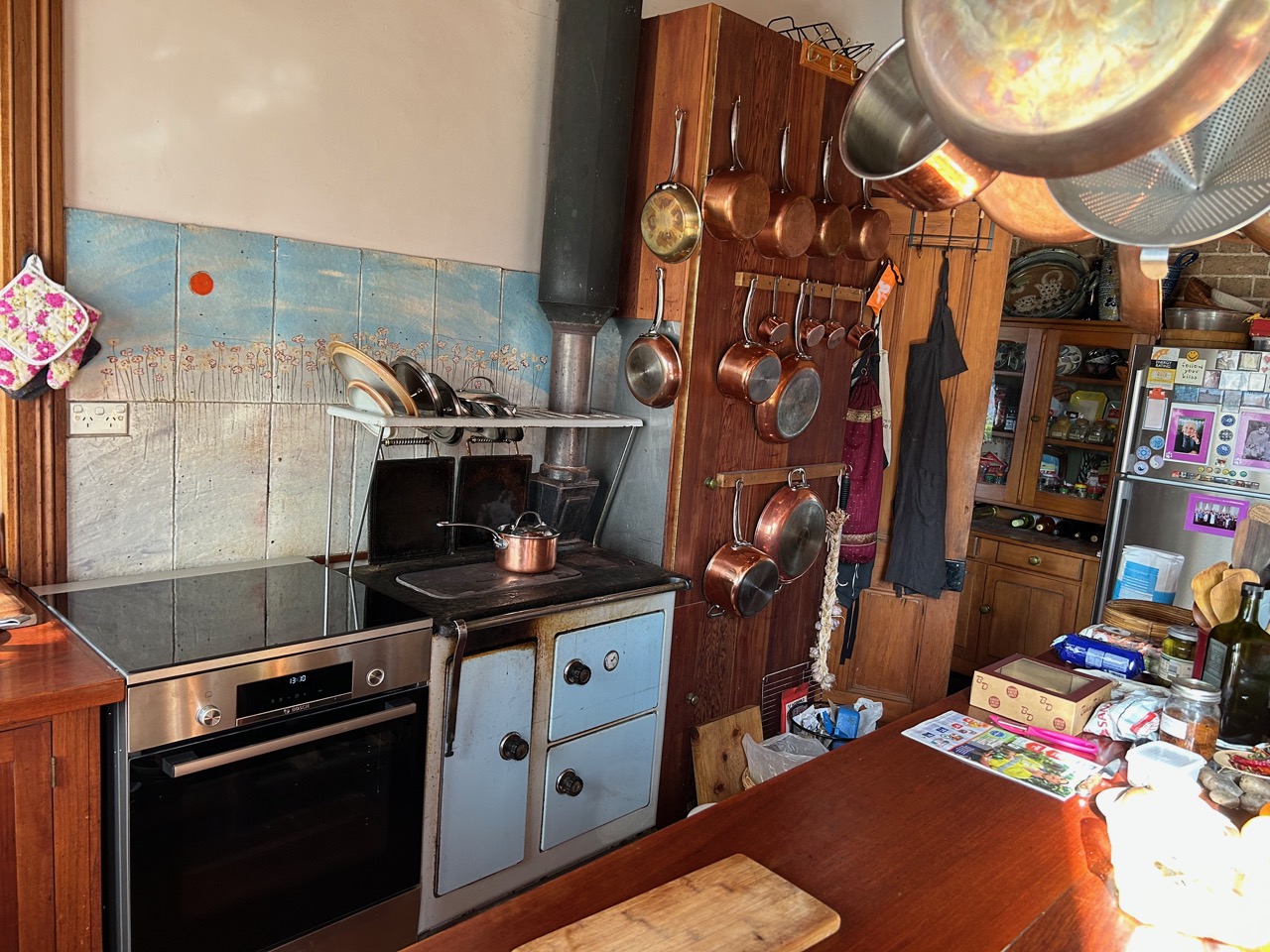
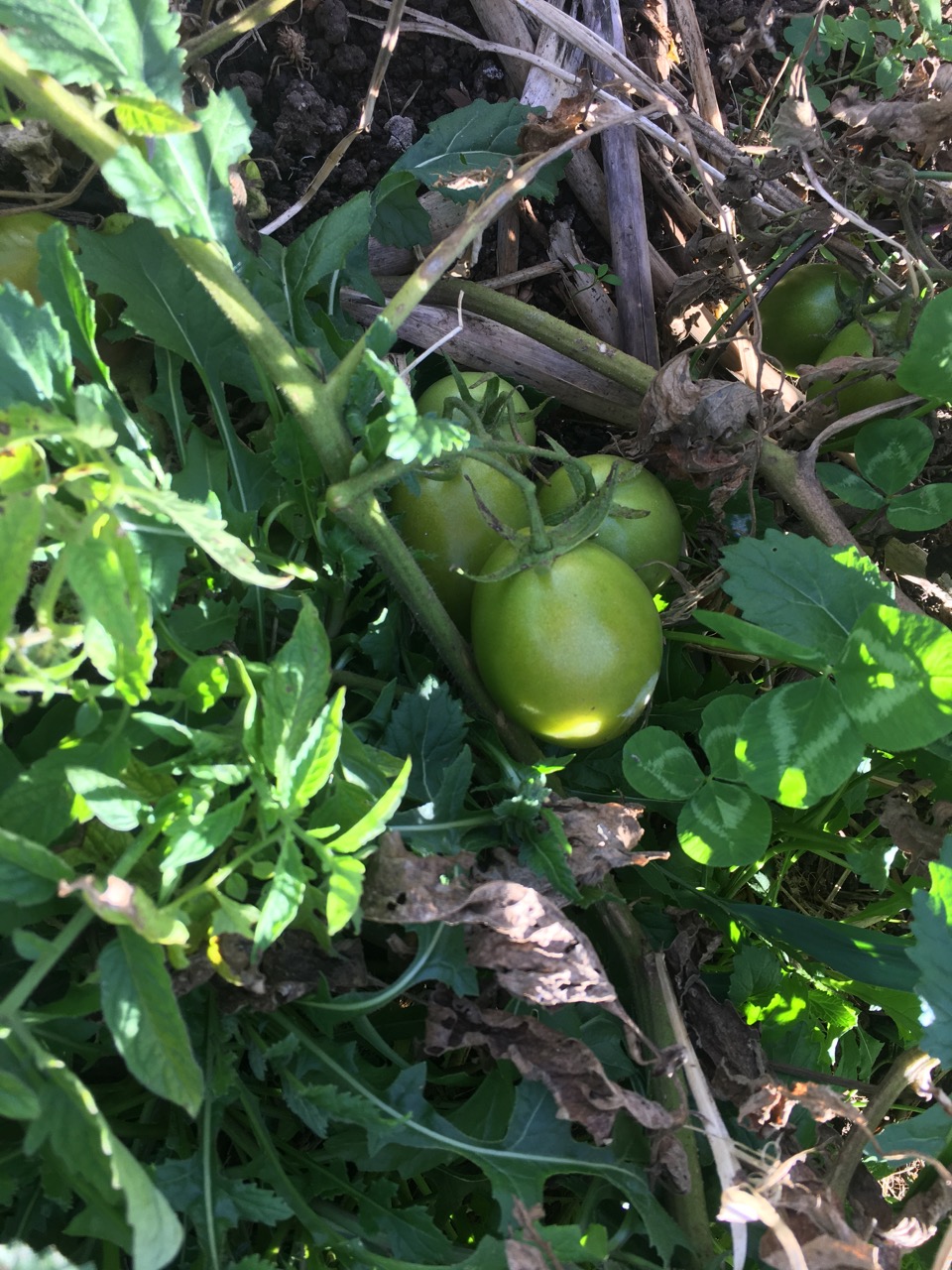
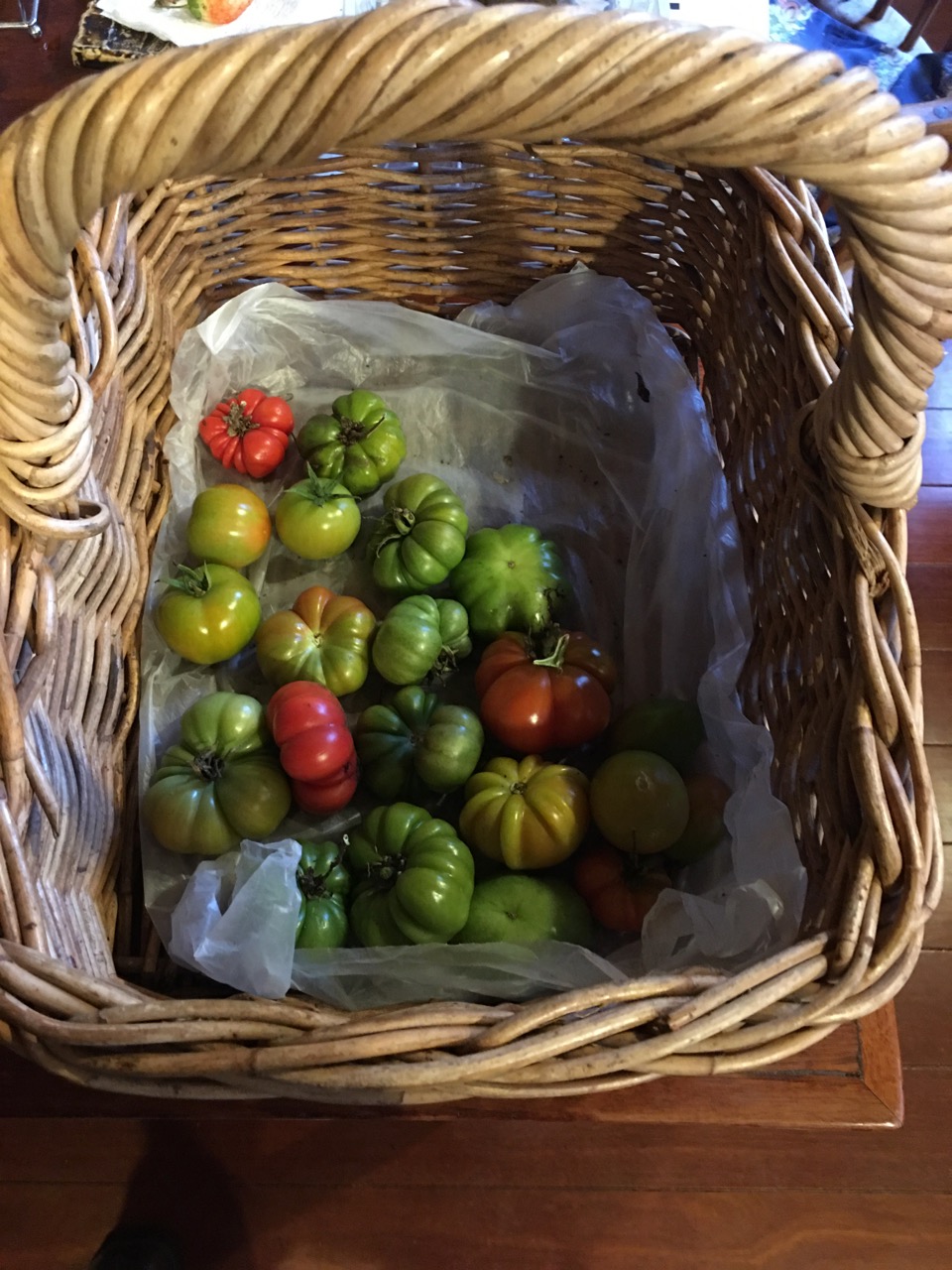
Autumn is peak tomato season. The crop starts to ramp up in February, but really hits its stride in autumn. We are picking a couple of baskets full of red, ripe tomatoes twice a week, with smaller picks in-between for lunches and salads as needed. The big pick goes straight into the large 5 litre copper boilers on the stove with herbs, onions and garlic, to be reduced down to pulp and preserved in sterilised glass jars as tomato passata for use throughout the year in all sorts of meals from pasta sauce to a lovely flavourful addition to soups and stews.

I always start with good olive oil, onions and garlic. I can’t think of anything more delicious than the smell of hot olive oil, and then the salivating addition of the onions and garlic heating and lightly browning as I toss the pan to keep it all moving so that nothing burns. It’s like foreplay. It fills the kitchen with such a wonderful aroma. When Janine comes in from the garden, she always comments how delicious the kitchen smells, and it’s true. I remember years ago when I used to work at the National Arts School in East Sydney. I would cook lunch for the students on Fridays. It was the only day that I came in as a part timer. All the full time staff took their rostered day off on Friday to get a long weekend. They all taught Throwing and hand-building, all the easy enjoyable subjects. So I got the day to teach all the difficult stuff that nobody else wanted to teach, like kiln and firing technology, glaze technology, clay body chemistry and OH&S.

I attempted to make the day more enjoyable by cooking lunch for them, otherwise, many of them wouldn’t bother to turn up at all. I had to keep to a strict budget of $1 per student or less, as no one was funding this exercise. I also noticed that some of the younger student were running perilously short of money by late in the week. So had to resort to going to the Hari Krishna’s in the evening and sit through an hour of indoctrination, so as to get a free veggie meal at the end. That was the real incentive to start cooking for them. One really good cheap brown rice and vegetable meal each week to make sure that they got some proper food with minerals and fresh vitamins. It was fresh, filling, tasty, and free. So they nearly all turned up, as did some of the staff from the library and office on occasions.

Art students don’t usually enrol in Art School to learn technical stuff. They want to express themselves creatively. My subjects weren’t that popular. They mostly turned up because they wanted to get a pass mark. But there were a few quite keen ones. One day while starting to cook lunch, we had a famous chef and restauranteur as a student at the time and he stuck his head over the upstairs rail from the room next door and yelled out how delicious the smells wafting up to his studio were. He offered the analysis that he might be detecting truffles sautéed in cultured butter with thyme and bay leaves. I said NO. Then he suggested some other exotic combination. Again, NO!

I told him that it was just olive oil and garlic so far, nothing else added – yet. He was amazed. It really is that flavoursome.So that is how I start most batches of tomato passata, once the onions are just starting to brown, I add the garlic half way through so that it doesn’t burn. I add in the basket load of tomatoes. It takes about 30 minutes to chop my way through two basketsful of soft ripe tomatoes. Once they are in and heating up, I add in the chopped capsicums, a chilli, pepper corns, loads of sweet basil, a couple of bay leaves, some thyme and or sage and or marjoram, even parsley, whatever is in abundance.

Once all the boilers are full to the brim, I let them simmer for half and hour, to make sure that everything is very soft, as the next step is to pass it all through the kitchen mouli sieve. I wait, usually until the next evening, when its all cooled down before attempting to sieve it. This removes all the herb stalks and tomato skins , etc. 

What is left is then reheated on the stove on a low heat to simmer and reduce by about 1/4 to concentrate it. Once this is ready, then I wash and sterilise the glass jars in the oven and bottle the sauce while it is still very hot. If the hot jars are immediately sealed with ‘pop’ top lids that have also been simmered for a few minutes, then the jars will self vacuum seal on cooling  and the sauce will keep for a year or more without any more energy needing to be applied to it. They never last a year. It’s too delicious.

It’s been a very good tomato crop so far this year, so we have already bottled about 30 bottles, our best ever harvest, and still a long way to go. We are already giving away our excess when people call in or if I go out visiting, I take tomatoes as presents. We will soon run out of the ’normal’ glass jars that we have collected over the years, so we will start to use half size jars.

We get about three to four 700 ml. jars of concentrated passata from each basket full of fruit, and a basket fills a 5 litre boiler with chopped fruit, so 5 litres of boiled pulp is reduced to about 2 1/2 litres of concentrate.

I always look forward to making passata, but at this stage the initial novelty of the cooking and preserving of tomatoes is starting to wear off. However, I still really enjoy it. It’s why I live here like this. To live out of our garden for most of the year. Preserving excess is essential to providing our own food for the entire year.

It’s Post Modern Peasant 101.

Electric car, 4 year review

On the 20th of January, a month ago, we notched up 4 years in our Hyundai Ioniq plug-in electric hybrid car.

In the past 4 years, we have driven 37,763 kms. That’s a little under 10,000 kms per year.  9,440 to be exact.

During that time we have spent exactly $771.05 on petrol.

That means that we are getting about 50 km to the dollar, or 75 km to the litre, or 1.33 litres to 100 kms.

This is very fuel efficient for a car that weighs almost 2 tonnes. (because of the battery)

We go to the petrol station about every 3 months and put in $30, plus when we go on a long trip, say down the coast, we put $50 in there.

Needless to say that we are very happy with these results, because I actually spend more money putting petrol in the lawn mowers each year!

We have had 2 very minor issues with the plug. Once it wouldn’t dis-connect, I had to do it manually rather than electronically.

Then another time it wouldn’t engage with the plug electronically, so I had to do it with the manual switch.

Very minor issues. I don’t know why and it never happened again. 

However it is disconcerting when something that is a standard everyday event suddenly doesn’t happen as usual. The first time that it happened, I had to read the manual!  

If in doubt, read the instructions!

We do all our local driving on our own solar PV from the roof, we don’t need to use any petrol. Hence the name ‘Plug-in hybrid’.

We can go to town in the morning, come home and plug it in, 2 hours later, after lunch, we can go out again. It’s so simple. 

If we come home at night and need to use the car first thing the next day. I can still plug it in and charge it up in the dark from our own stored sunshine in our battery.

However, when we go on long trips. Then we need to come home on petrol. But that isn’t very often.

This style of electric car suits us perfectly. As yet, we haven’t ever used a charging station. On 2 occasions we have plugged in at a friends house to allow us to drive home on electricity.

We paid just over $40,000 for this car. The most expensive car we have ever bought, and the second most expensive thing after our house at the time.

If I’d known that we were about to be burnt out. I wouldn’t have dared to spend so much money on a car. But as I can’t foretell the future. I’m now very glad that I did. Because we now own it and enjoy the benefits.

The current version of the ioniq, due to be released tomorrow, is priced at $80,000! Unbelievably expensive. I’m so glad that we bought this ‘cheap’ one when we did.

I’m also very proud to be able to drive nearly all of the time on our own sunshine.

More Mea Culpa

More info on recycled sewage.One of my other PhD friends, Bill, a retired biologist sent me this little snippet from ‘The Conversation’. 

The thick plottens! 

They may have to do further treatments to BioWaste to cope with increasing amounts of PFAS, or ‘Forever Chemicals’ that are showing up in our waste stream.

file-20221123-26-7k8rr1.jpg
‘Forever chemicals’ have made their way to farms. For now, levels in your food are low – but there’s no time to wastetheconversation.com

The author, Ravi Naidu, from Newcastle Uni, Points out that there are treatments to neutralise PFAS chemicals, but isn’t very forth coming on what they are.

He does recommend heating the boiwaste to create biochar, which would destroy or break down the chemicals.

However, later on in the article, he recommends reading the following link;

Read more: ‘Forever chemicals’ are everywhere – here’s what you need to know about them

Which points out that they are very high temperature stable, and aren’t easily broken down by heat. It’s a worry. and far beyond my ken, but then later there is this link to another publication about the breakdown of PFAS.  break down Which is more positive.

Bio char is well known to be very beneficial to soil health and fertility. We use it. We make our own. Janine sieves out all the charcoal pieces from our fire place ash when we make ash glaze. I add the charcoal ‘crumb’  to the soil in the veggie garden. Being extremely porous, it absorbs and holds water releasing it slowly over time, as well as its nutrient value. I believe that it helped our garden survive the recent drought. 

As all the wood that we burn is collected from our own land, there is little chance of it concentrating any heavy metals and /or PFAS in our garden soil.

PFAS are a major ingredient in non-stick kitchen pans. Luckily I like to collect and re-use old stainless steel lined copper pans for cooking, so we only own one non-stick item, a modern copper fry pan with a non-stick coating. I only use it for poaching/steaming delicate soft white fish, as it doesn’t stick and break up when lifted out of the pan. I’ll have to try harder. I’ll need to put it away and go back to plain stainless steel lined copper.

If nothing else, it makes me feel a lot better about growing all our own vegetables and fruit here, using our own compost. However, our system fails when I use chicken manure from outside as a fertiliser! No easy solutions. Mea Culpa again.

Mea Culpa. Update on Pee Poo and Phosphates

My friend Stan, a retired scientist, with a PhD in chemistry, has corrected me on my post about all of our ’Night soil’ being pumped out to sea.

Apparently, the sewerage treatment works located around Sydney and Melbourne, do in fact seperate, compost and then sell-on the processed sewerage

This processed human poo is called ‘biosolids’ and has been supplied to specific farms in a very controlled and supervised manner for a long time. Who knew?

“Melbourne Water (MW) produces sufficient biosolids each year to provide a useful soil supplement for approximately 30,000Ha of farm land, based on a re-application every 5 years in accordance with Environmental Protection Authority Victoria (EPAV) Guidelines.”

“Farmer demand for Sydney Water’s biosolids program – which turns human waste into nutrient-rich fertiliser – is currently outstripping supply. The program, which has now been running for 20 years, is known to increase crop yields by 20-30%. “

You can read the full article here ; <https://www.melbournewater.com.au/media/10026/download>

Thank you Stan. I found it really interesting. I like to be corrected when I get things wrong, because then I can pass on the correct information, so that we all have a better grasp what is going on. Perhaps everyone else out there in the ‘real’ world knew all about this? I live in a self made, environmentally sustainable, romantic bubble here, fairly well insulated from the lies, grossness, violence and political corruption stories that fill the nightly news. I just don’t want to watch it. I look instead for more positive and uplifting stories, but they are harder to find. If it bleeds, it leads, was never so true.

I googled Sydney Water and found this simple diagrammatic explanation;

<https://www.sydneywater.com.au/content/dam/sydneywater/documents/how-biosolids-are-produced.pdf>

I remember swimming in the ocean off manly when I was a kid, and there being visible particulates of raw sewage in the ocean at certain times depending on the tide and currents at the time. It was pretty gross. Sewage was still being dumped into the ocean off Sydney, up until around the year 2020. Somehow, I missed seeing these news items at the time.“Surveyor Daniel Fitzhenry said before the deep ocean outfalls, Sydney’s sewage was pumped off cliffs near some of Sydney’s most famous beaches.”  “ Manly was like a septic tank, it was dreadful,” he said.  

“There were huge surface plumes and the beaches adjacent were really polluted.”

<https://www.abc.net.au/news/2015-11-16/where-sydney-sends-its-sewerage/6945904>

“A spokesperson for Utilities Minister Don Harwin said work would start in 2019 and finish in 2020.”  https://thenewdaily.com.au/finance/finance-news/2023/02/14/nbn-bonuses-labor/

So there is very slow progress and things are getting better bit by bit. But it appears to be glacial in its progress at times.

Pee, Pooh, and the Phosphorous Fertilizer Crisis

I have been reading an interesting article in a recent edition of the ‘New Scientist’ magazine. 28/2/23, P17. No. 3423.

Some genius has come up with an astonishingly new idea to solve the worlds fertiliser shortage crisis.

You can use human and animal faeces as fertiliser!!!  Who’d have thought!  Amazing!

And it’s safe.

It is apparently being used in some 3rd world countries at this very moment.  🙂

Just in case you hadn’t realised. We (Australians) pump all our precious phosphorous and nitrogen out to sea. No one ever thought that we would ever run out of anything.

After-all, it’s only shit isn’t it.  Well, It seems that we have, or are, running out of lots of things. The days of plenty are coming to an end, or have ended. We have to take account.

Now ’super’ (super phosphate) is in short supply and crop yields are dropping. International shipping is in dis-array. So many shortages, and we are still pumping all of our own good fertiliser out to sea. It’s going to take years to turn it all around.

A few years ago, I posted on my blog a brief review of a book called ‘Farmers of 40 Centuries’

This book is basically a review of Asian farmers use of manure and compost to keep their soils fertile for over 4,000 years of continuous agriculture.

There are no new ideas. 

It was first published in 1911. I read the facsimile re-print in the mid seventies. 

Janine and I have been using composted manures, mostly chicken manure, in our gardens and orchards for 40 years without any ill effects, that’s just 1% of the history in the above book, but we do what we can.

We pump our septic tank over flow into trenches in, around and under our fruit trees in our orchards, instead of just allowing it to seep into the lawn area.

There is a lot of good nitrogen and phosphorus in that effluent, we don’t want to see it go to waste.

I have also been re-reading ‘Famine on the Wind’, another book that I first read in the ’70’s. a history of agriculture and plant diseases, and ‘The Seed Detective’. A history of seed collecting and seed merchants. He looks back as far as Pliny the Elder for info on plants, seeds and the development of our most common vegetables. Both really interesting reads.

I don’t know where I find the time to read, but it is usually in those few minutes before going to sleep.

Clay and Soufflé

We are finally back at work in the pottery. Proper work.

There was still so much to finish off in and around the pottery. We have been trying to achieve the impossible. 

To rebuild in a few years what it took us 40 years to build up over a lifetime of potting, collecting and restoring.

There is still a lot to do, but most of all the pressingly urgent stuff is complete and in place. The extraction hood over the electric kilns was the last really necessary thing.

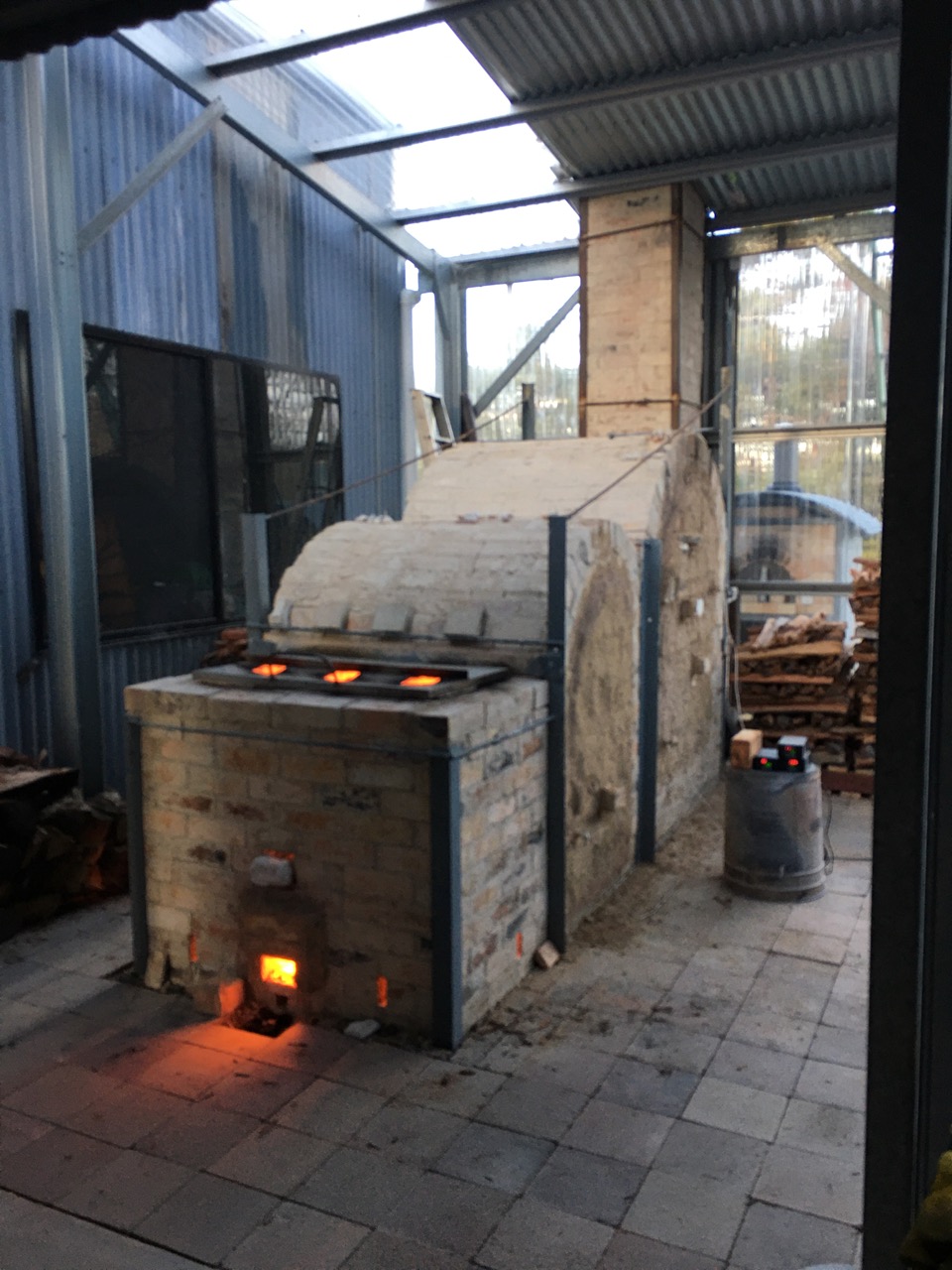
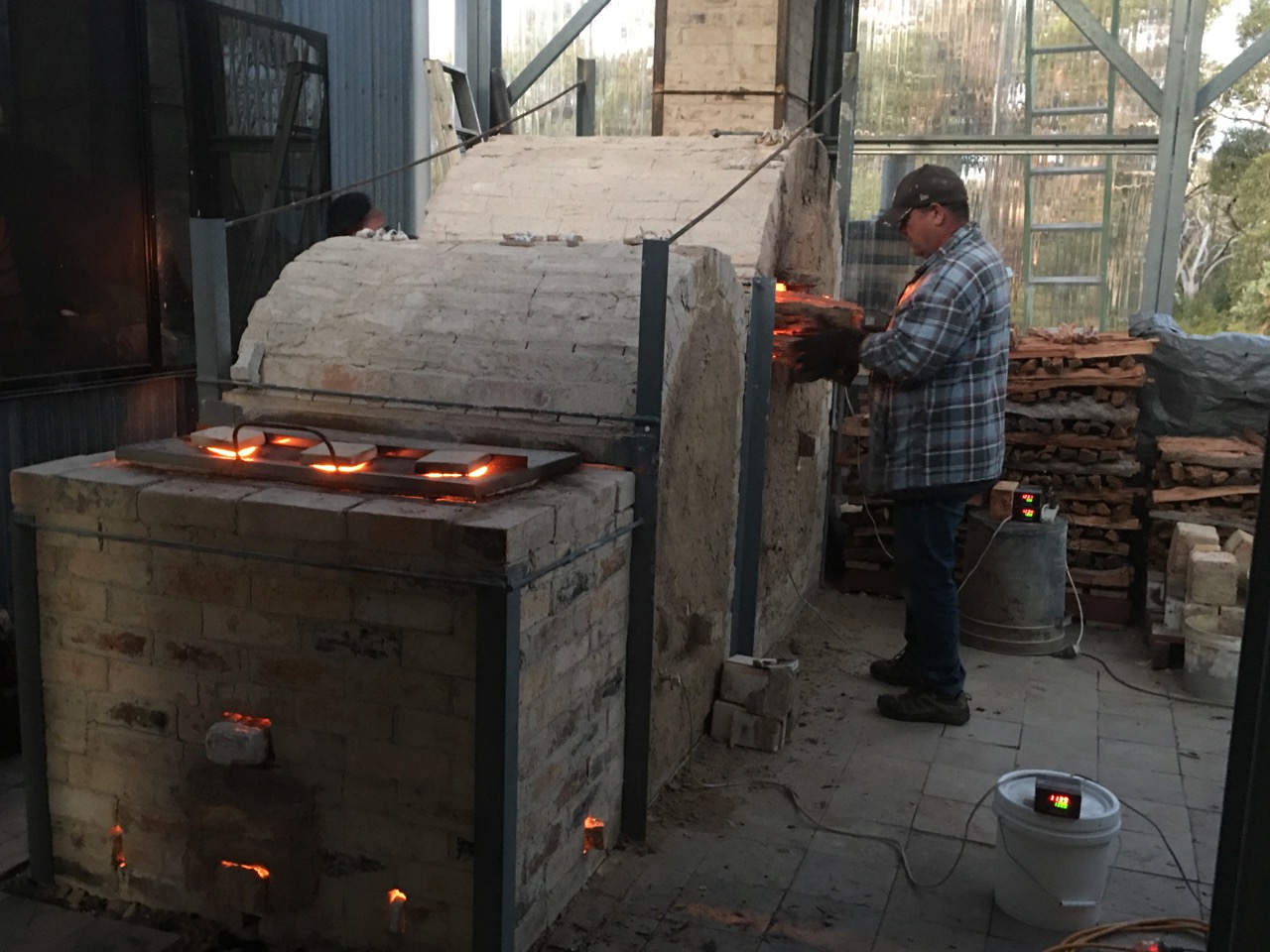
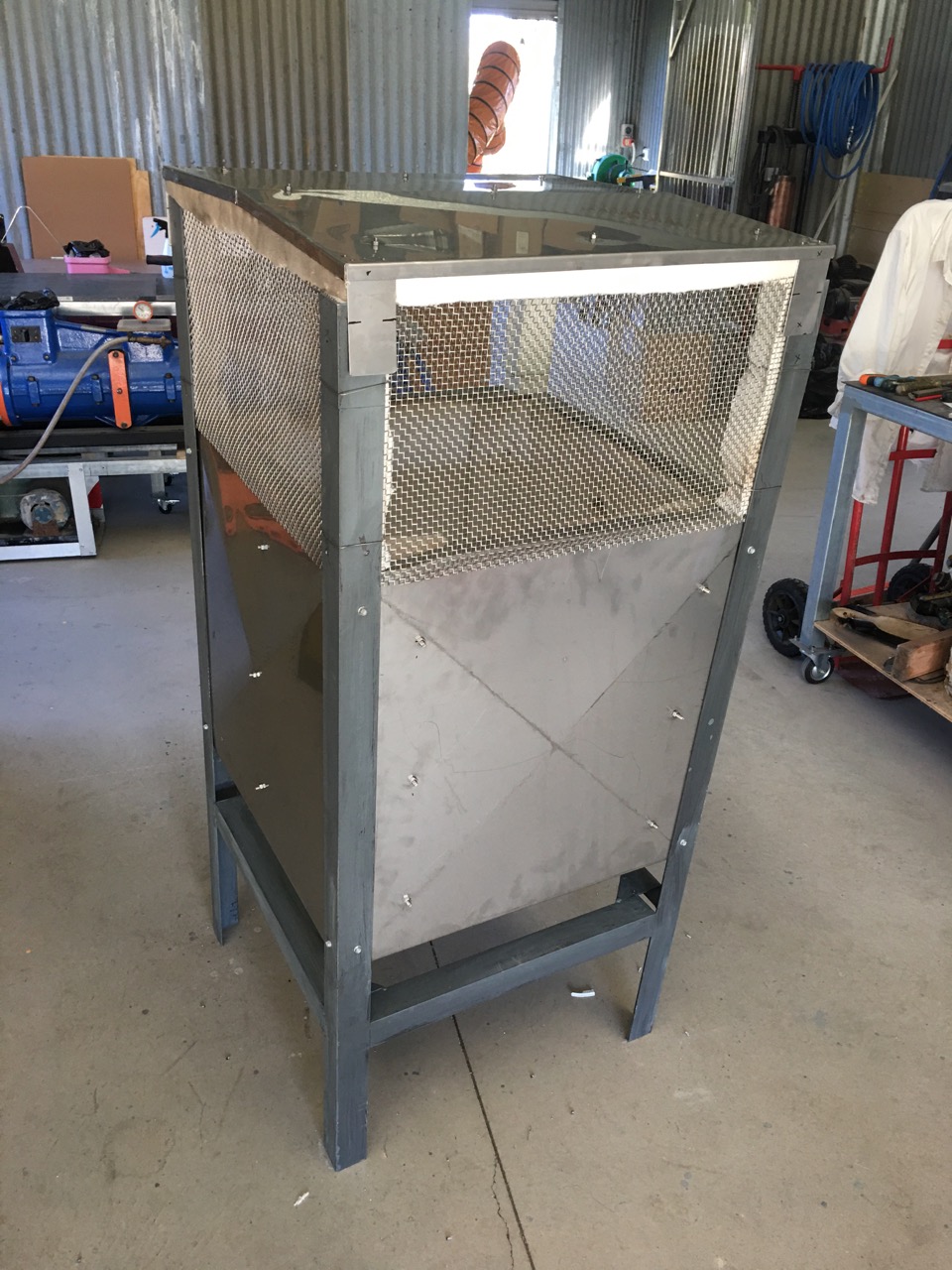
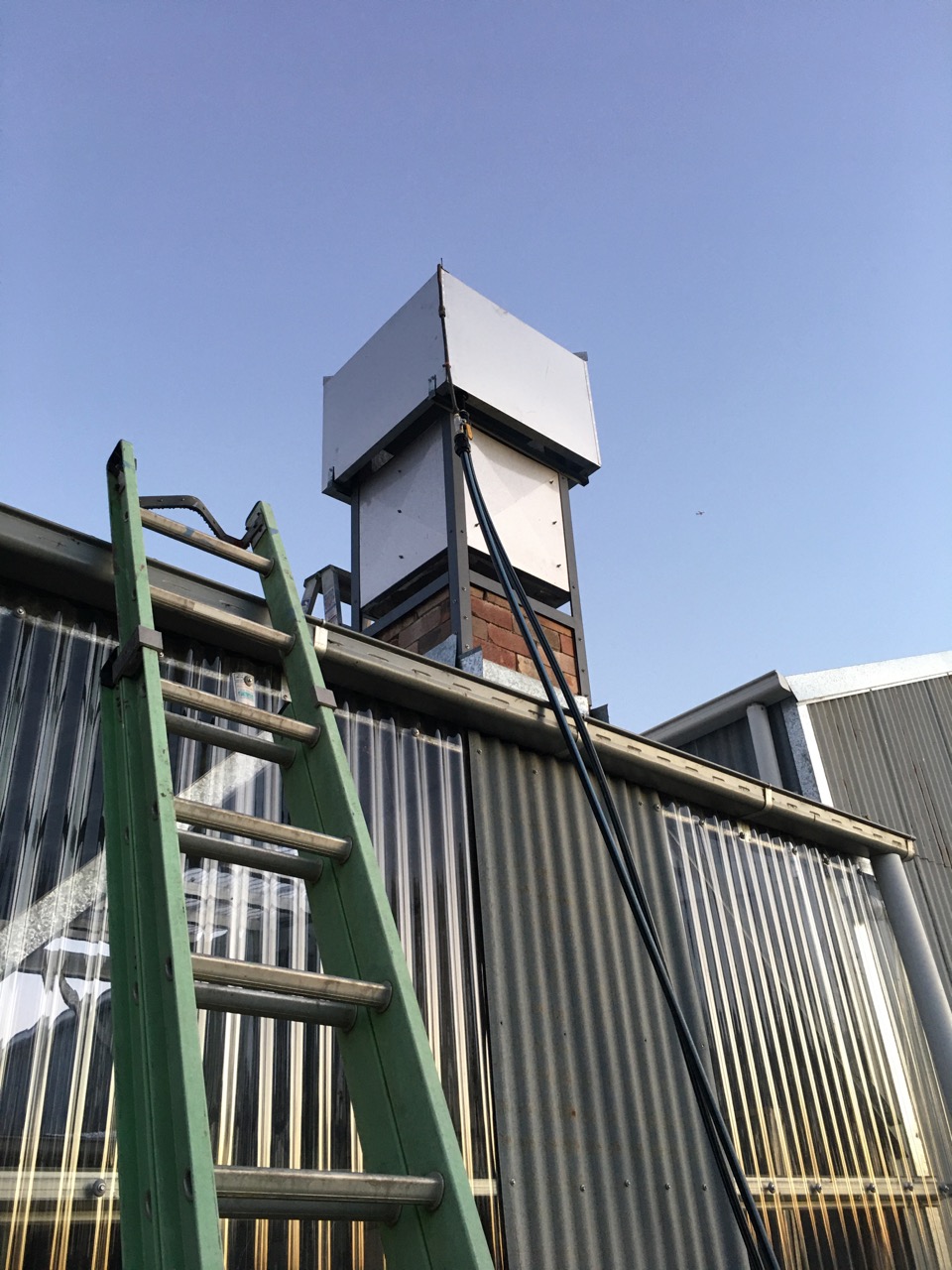
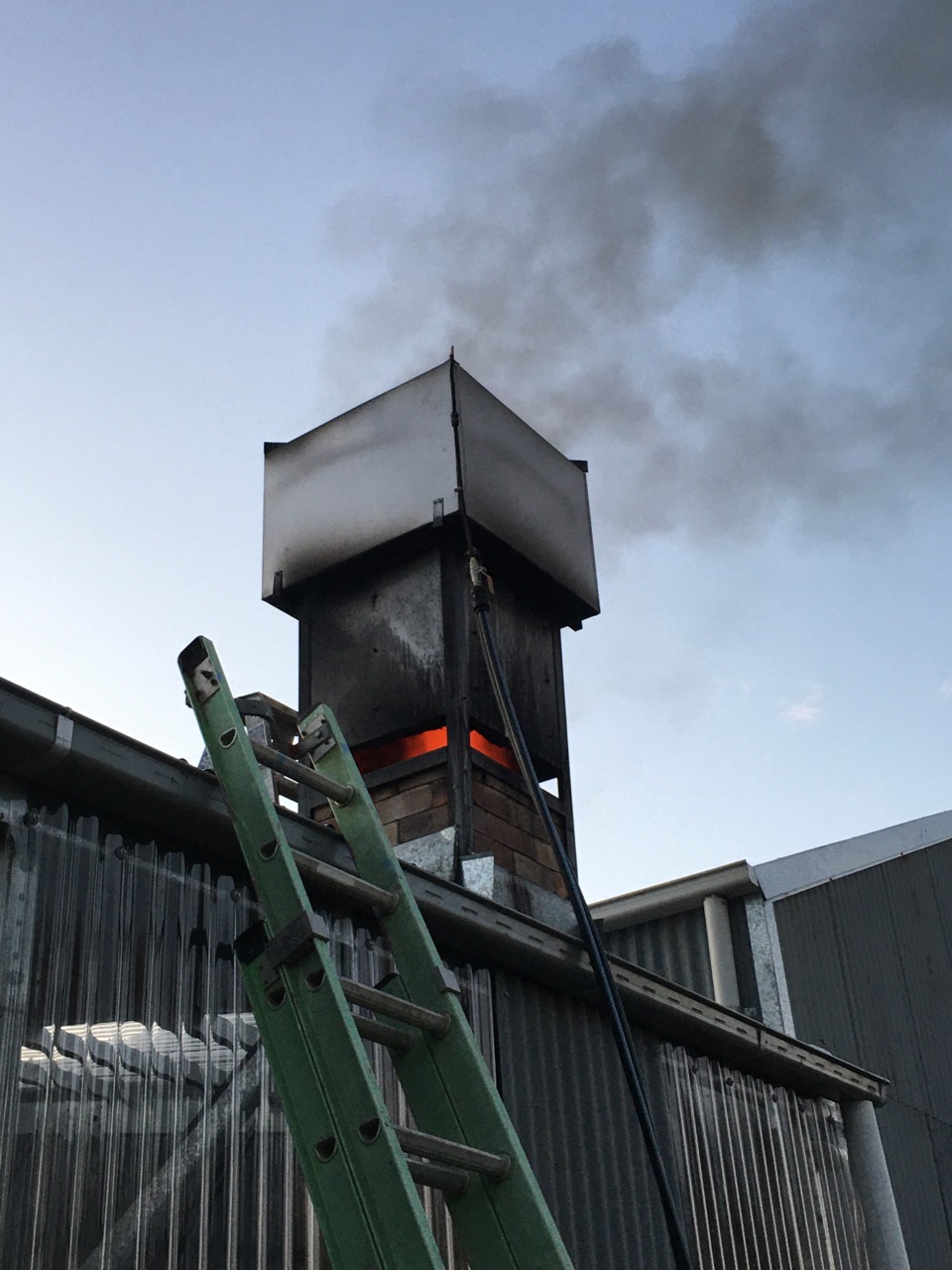
I am currently working part time on a flame combustor, spark arrestor and scrubber for the top of the wood kiln chimney. That will be completed in the next few months in time for the cooler weather and the first wood kiln firing of the season.

This week I made up a batch of rough stoneware body made from crushed shale. I had to spend some time crushing and sieving the shale. I have had this stuff for some time. It had come through the fire and is full of charcoal from the fire. It wasn’t too arduous, as it was only through a coarse mesh.

After mixing the two x 125 kg batches of body, we pugged all the clay twice. Once all through the pug and then stacked on the pug table in a pyramid stack. We then cut off all the ends of the sausages and re-pug it all another time, such that each sausage that comes out of the pug is comprised of a mix of all the previous pugs of clay. This is to ensure that there is very little variability from the first to last sausage of clay.

After finishing up, the pug mills and tables are all washed and wheeled out of the way and all the floors are wet scrubbed and mopped to clean off any small amount of clay that finds it way onto the floor, which it inevitably does. The floor is scrupulously clean all through. All the clay is bagged and boxed. Everything ship shape.

This is the best pottery workshop that we have ever had. Having been burnt out 3 times over our careers. I have designed and built this 4th workshop/studio with every piece of equipment on wheels to facilitate flexibility and cleanliness.

We have been picking lots of food from the garden, then cooking and preserving all the excess. We are up to our 5th batch of tomato passata.

Oven baked pumpkin is great on its own and can be used up all week in all sorts of ways from frittata to salads.

Tomatoes, basil, capsicums, chilli and pepper corns go into the passata.

We had an over ripe banana and a few eggs, so I made us a banana soufflé for desert. It worked out really well.

All part of our attempts at self-reliance. It seems to be working out OK.

Half a Kilometre of Fencing Completed

A little while ago, I was travelling along in this chaotically hectic life thinking that I’d be making pots in the 2nd half of January.

But the appearance of the deer in our yard have changed everything.

Out neighbour saw a large buck with antlers in his yard last week. We have had the doe and fawn. So if there is a doe and a buck… then there will soon be a lot more. 

We needed to act quickly.

We have now completed the complete perimeter fence of one half of our land. A few years ago we only had one side fence put up by our only neighbour to keep their dog in.

Then after the fire, while we were waiting for the council to approve our re-building plans and waiting for our tin shed kits to be delivered, we decided to use the time to put up the stone and steel gabion wall out the front. This is to act as a radiation barrier in the next fire event. 

Now we are the proud owners of just over 510 meters of perimeter fence. It’s been a lot of work. At first, I thought that I might not be up to it, But it went well enough because I didn’t over-do it. I paced myself. However, I wouldn’t want to do it again. I was working close to my limit. In the end the effort was worth it to preserve our fruit trees and garden that we have spent over 45 years cultivating. Only time will tell if it is enough of a deterrent to encourage them to dine elsewhere?

I’m really glad that it’s over.

  Starting at the gabion wall on the street front, we had to cross the culvert ditch and make it deeply deer proof. So we installed a swinging gate to allow for the clearance of flood debris.

Then down between the two dams.

Then down to the back lane/firetrail.

Then along the back boundry, and through the key-line dam system overflow.

And finally up to the existing neighbours fence.

Having completed the fencing the only weak spot in our defences were the openings in the gabion wall where I never got around to making the gates. There are 2 drive in gateways, and two walk through openings. One directly in front of our front door, and the other next to the electrical meter box for access for the electrical services people.

I have spent the last few days making gates for those vulnerable openings. I now have 3 completed. The last one will have to wait, as I really need to get back to work in the pottery.

If the deer arrive in the mean time. I’ll just have to drop everything and weld up that last set of double gates to close off the 7.6 meter wide main drive way.

Now that the gates are in, it made me look closely at the gabion wall, which I hadn’t being paying much attention to recently.

I noticed that the stones had settled down in some places.

We’ve all read the warning label that “Contents may settle during transport”

Well, our stones have settled while stationary.

The only thing to be done was to make a trip down to the sand and gravel yard and buy another tonne of stones to fill it up again.

Now that it is topped up, it should be all good now for another decade?

Fence Work and Garden Produce

We have spent the past week continuing to work on the new fence.

The fence is now finished the construction phase and we have been getting on with cutting up the dead trees that had to be removed to clear a straight line for the fence.

I had to have a few days off to rest my back and forearms that got a bit over worked.

I estimate that I have now cut and stacked 1200 to 1500 billets of timber. Enough for 2 years firewood, if not more. Of course some of them are only small, down to 50mm dia.

But some are up to 450mm dia. I cut up the whole tree. Nothing wasted.

All the felled trees that were within 50 metres of the house are now cleaned up, cut to stove lengths and stacked near the wood shed, ready for use in the winter.

The other trees that were felled are all still stacked along side the fence line. I may get around to getting out there, right down the back and cutting them up. 

However, experience has taught me that by the time I have used up all these stacked timber billets, All the logs laying on the ground will have been degraded by the white ants.

There are still so many standing dead trees within just a few metres of the gateway through the new fence that I will most likely be choosing to work on those trees.

Each morning we get up early and do a few hours work wheelbarrowing broken bricks down the back to fill in the deep gaps under the fence.

This is to stop animals from shinnying underneath the fence in the lowest spots. We have almost finished this job. Maybe just one more cool morning’s work.

Once all the gaps are filled with brick bats and rubble, I start carting some left over crushed gravel from the pottery site footings, down to the fence line.

This gravel and dirt mix will cover the crushed bricks and level out the surface to make it easier in the future to keep the fence line mowed and clear of re-growth.

After lunch, it’s too hot to work outdoors in the full sun for us oldies. So we retire indoors to work on other projects in the shade.

I’m currently working on welding up a set of 3 gates to complete the fence line securely. Our neighbour on the back fence line saw a full size stag in his yard the other day.

I really need to get this unscripted and unfunded crisis done and dusted as soon as I can, so that I can get back to my real work in the pottery.

In the evenings we make Tomato passata, Plum sauce and Onion jam. These all need to be made and stored away for later use to make the best of our excess produce.

Bottling tomato passata

Plum sauce bottled and cooling.

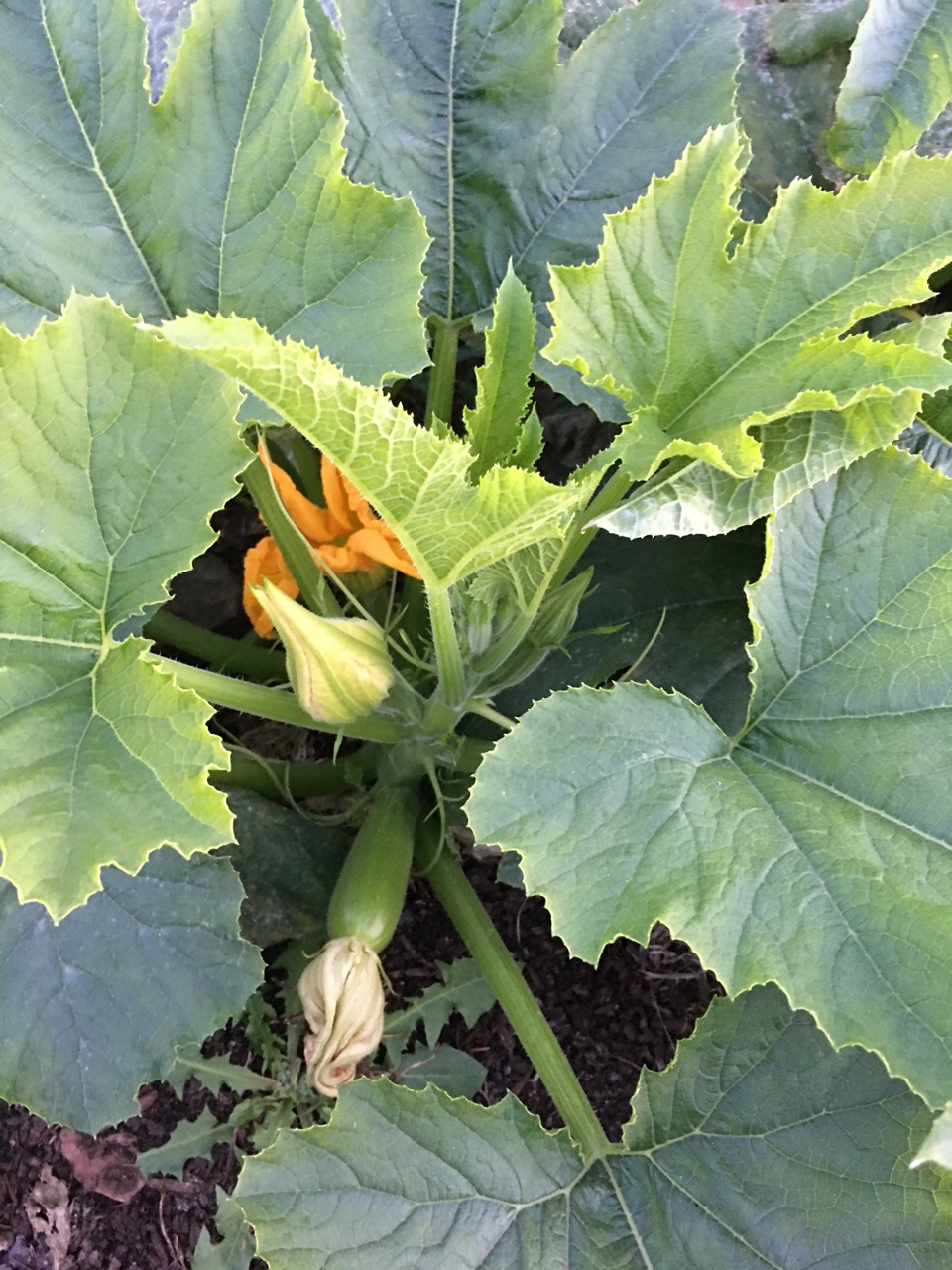
At this time of year every meal starts to take on a certain ratatouille aspect. Tomatoes, basil, capsicum, zucchini, and squash.

Summer garden Ratatouille with steamed fish and hand picked capers in a white wine reduction.

Garden beetroot, home made onion jam, and 2 cheeses tart.

Desert is freshly picked blueberries baked into a tart. We are picking 3 kgs every few days at this time of year. Some get preserved for later in the year. Some eaten fresh for breakfast, some are used in cooking like this and the rest are given away to neighbors and friends.

It’s a tough life, but we just have to work our way through it.

A Deer Fence

A month or so ago, Our neighbour saw two deer crossing our road and entering our land.

We have never fenced our land. I rather liked the concept that all the local wild life could come in and graze on our grass and drink at the dam quite freely.

After-all, the wallabies, kangaroos and wombats were all here before us.

However, feral deer are another matter. They have been breeding up in extreme numbers out in the Buragorang Valley National Park for years, so now they have reached Balmoral Village.

We live in a small hamlet or village, on a very old road and disused railway line that is situated between two National Parks. 

Whether the deer got here from either the East or the West side parks, doesn’t matter. The big problem is that they are here now.

We have been so lucky to have had 46 years of living here without this problem, but now we have to deal with it.

Luckily for us, There is this guy I know who does fencing all summer and sells firewood all winter. His family have lived and worked here since 1906. AND, he’s a really nice guy to boot.

I had been talking to him about getting some help with a fence along the back lane, as some kids had been coming in and yahooing about down the back there.

We have already put a fire-proof steel and stone ‘gabion’ fence along our front boundary as a kind of heat shield for the ground fire in the next big bush fire event, whenever that comes.

We asked our neighbours on the South side if they wanted a fence 30 years ago. They didn’t. So no fence was ever built. We got on really well together as neighbours, so didn’t need one.

Those neighbours were burnt out in the last big fire, and wont be rebuilding or returning to live here.

So now we have deer in the back orchard eating our fruit trees. They particularly like cherry tree leaves. They leave their turds on the grass around the trees as they nibble, and their hoof prints in the soft muddy soil around the edge of the dam where we were clearing out the dead trees and undergrowth from the water yesterday.

 Mother turds,    

and Baby turds, so there are at least two of them eating our trees.

Monday the 16th of January, is the first day back at work for most tradies and small businesses around here. So Phil turned up with his two sons to get a bit of a start on our fance.

A lot has changed since I spoke to him in late October last year. The fence now needs to be twice as long, to seal off the property, and twice as high with the arrival of the feral deer, as they can jump very high. We originally discussed a wire mesh fence 1200 mm. high with 3 strands of barbed wire on top. This is apparently the basic, standard rural fence these days around here. I wouldn’t know. I’ve lived here for 46 years and never spoken to a fencer before. I have done all my own internal fences around the gardens and orchards over the years, cut my own fence posts, crow-barred and shovelled my own holes. Rammed my own posts solid in the ground. But now I am a bit too old for all that hard work these days, as the fence will end up having to be 250 metres long to keep the deer out. I’m learning to relax and to compromise my standards by letting someone else do some of the hard yakka this time. Basically, I trust Phil to do a thorough job.

The new deer fence will now be 1800mm high, at a greater extra expense and a very dear fence it will be.

We cleared a track through the bush that had never been cleared before. I tried to keep as many trees a possible, allowing the fence to wander a bit to find the line of least destruction of the bigger trees. The first thing that Phil said after walking the fence line, was that some more trees will have to go. It needs to be straight, otherwise you’ll be up for the added expense of extra strainer posts and stays.

All the trees in question are already dead. Standing blackened, leafless and burnt dead. Victims of the catastrophic bush fire that raged through here 3 years ago. I have no idea why I wanted to ’save’ them. Just habit I guess? So out they come and the line of the fence is straightened. They drag the trunks out of the way and into the clearing where we stack our fire wood. A place well away from the house. I spend a day chain-sawing. I stop regularly to refuel, re-oil and sharpen each of the three chainsaws. Large, medium and small. I spend all day at it, but can’t keep up with the delivery rate that the fences are dragging the dead wood out.
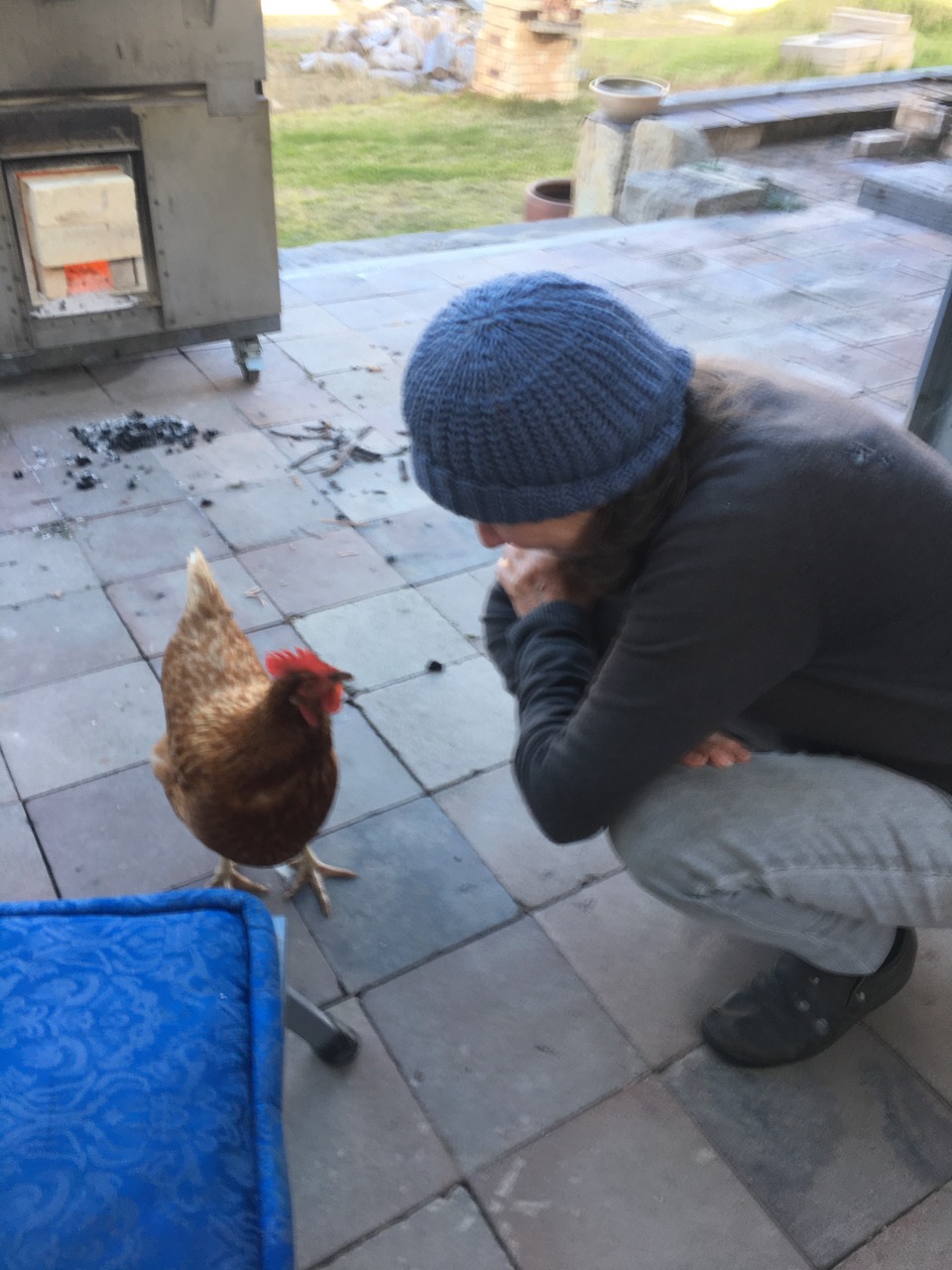
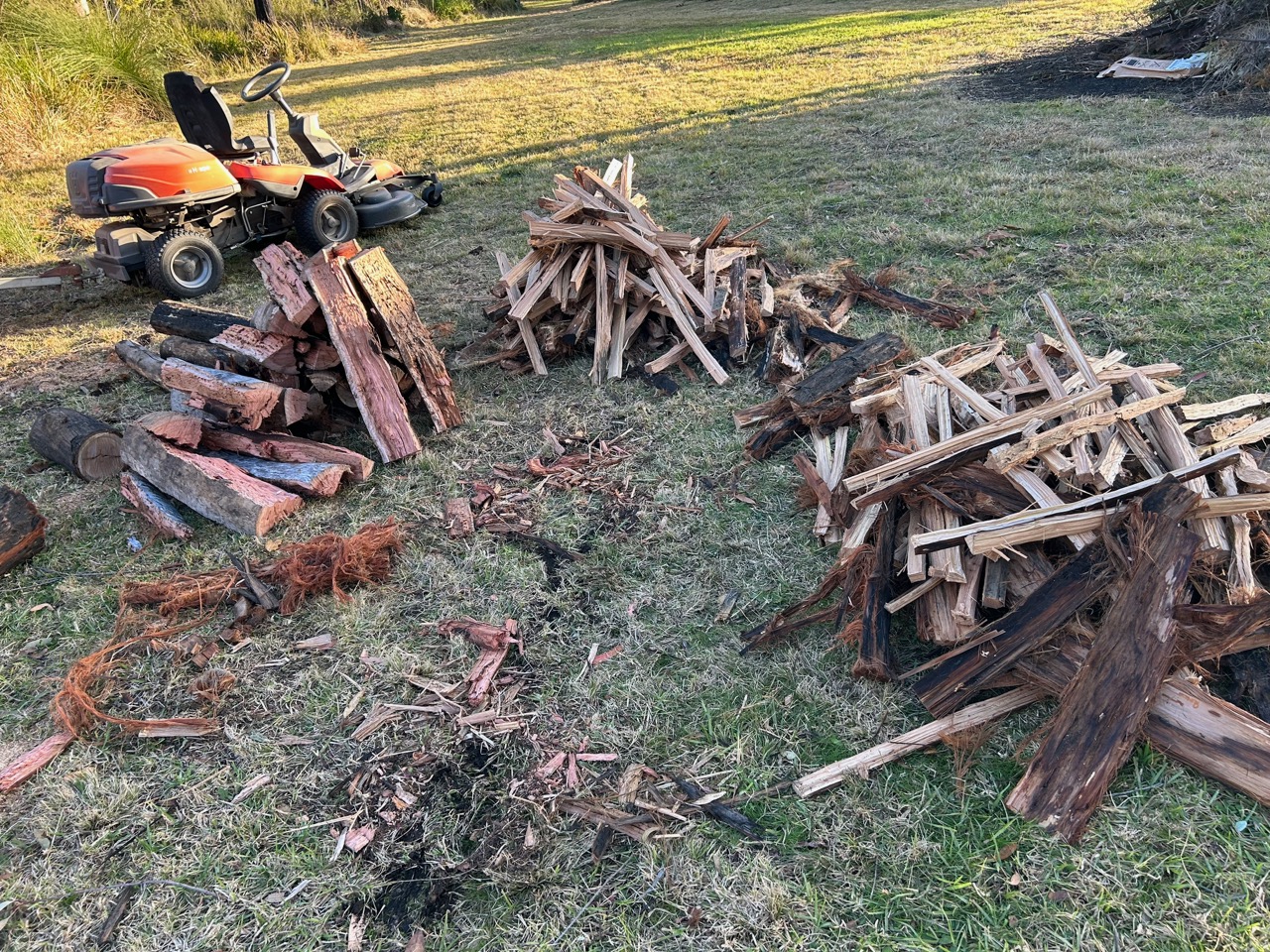
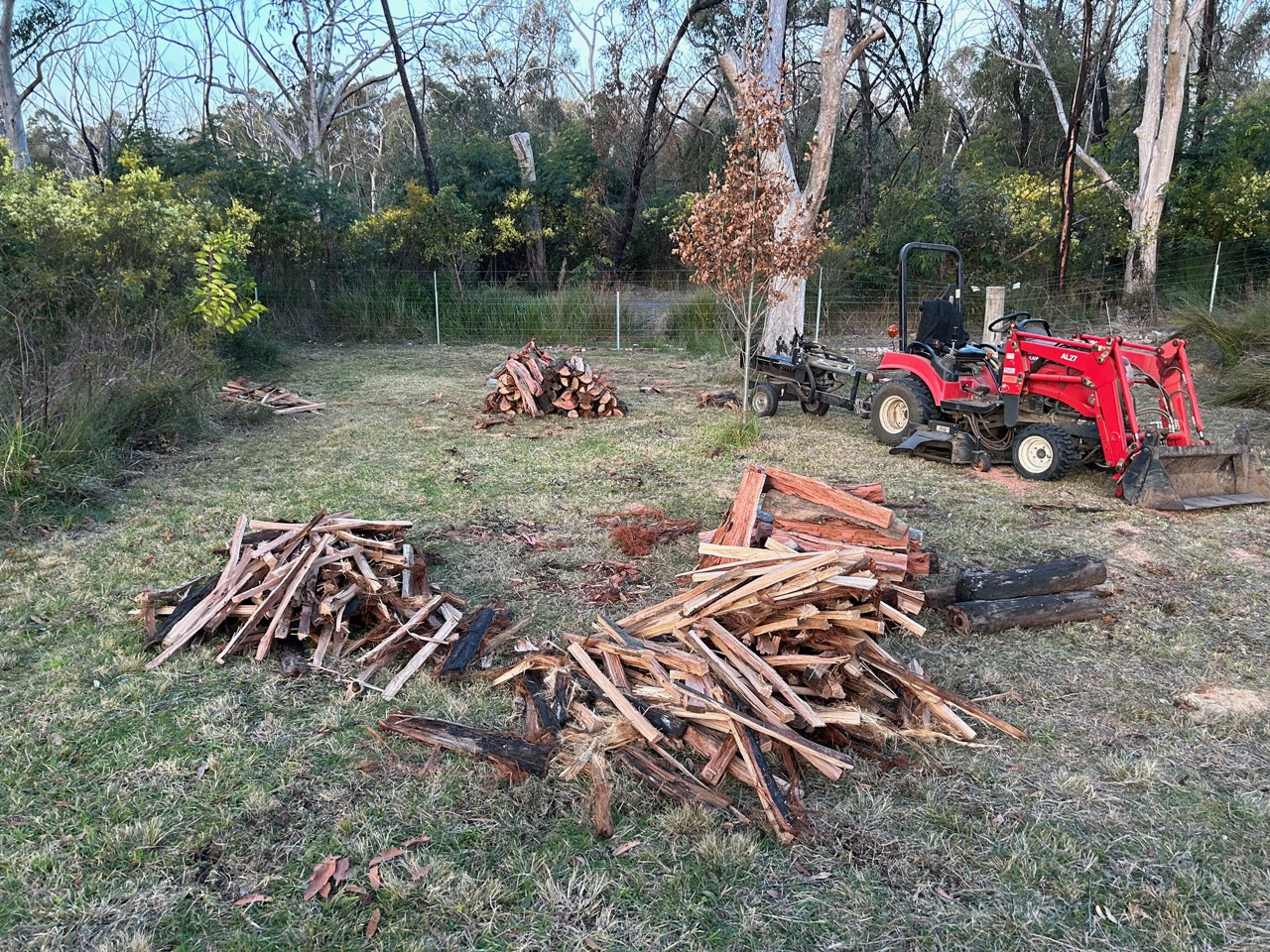
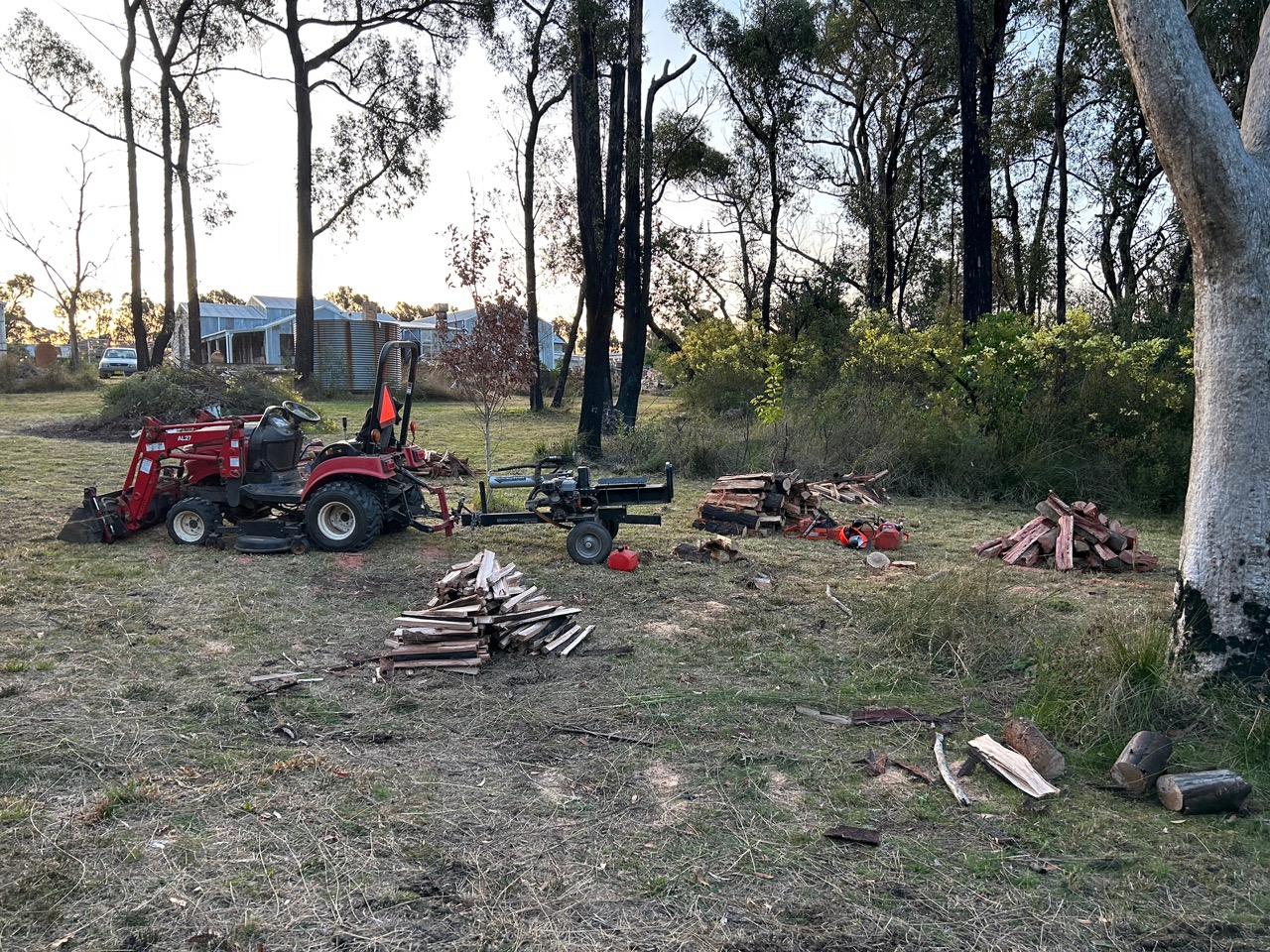
I cut them up into usable sizes for the pottery oven/heater, the kitchen stove and the lounge room heater. The trees with the largest diameter butts are cut into just 150 mm. long slabs. This is to make them lighter, and easier to lift and stack them, and eventually move them to the hydraulic splitter. Large diameter hardwood logs can be very heavy. The skinny logs and tapered top branches, anything less than 150 mm. dia. are cut to the longer lengths, as their weight doesn’t matter at that size. All the intermediates are cut to 300 mm long. It all works out quite well, but the site looks like a bomb site with timber and branches everywhere. 

Phil and the boys have already got most of the iron bark timber posts in the ground by the end of day one. Phil acknowledges that I have worked all day on the saws cutting up the 14 trees that he has dragged out this morning. There a still more to come. He asks if I ever want a job, he’ll give me one as a fencer. He tells me that he has watched me work and says that I work harder than most of the young fellas half my age that he has employed!

They have an antique tractor, fitted with an antique post hole drill and fence post rammer. They drive the iron bark posts 900 mm. into the ground. The gear may be a bit old, but they work fast and efficiently.

Tuesday, the fencers don’t turn up. They have told me already that they need to finish off another job from last year that was waiting for some more parts to be delivered. They are keen to get it finished and get paid. I was pretty tired and achey after working on the chainsaws all day yesterday. So in the morning I weeded some of the garden beds in the veggie garden, then picked just over 3 kgs of blue berries. I sharpen and service the saws from yesterday, then after lunch, I’m back into it, collecting up all the short cut billets of wood and taking them around to the new firewood stack. Once I’ve cleared away all the cut wood from yesterday, I start the cutting again. I want to get at least one side of the site cleared of tree trunks, branches and twigs ready for tomorrows task of doing it all over again, cutting, carting, stacking and splitting. 

The wood is stacked more or less 20 billets wide x 6 or 7 billets high x 7 stacks deep.

We have several tonnes, possibly 10 tonnes, of wood cut and stacked, with just 4 more trees to work on tomorrow. I’m trying to get all the logs and timber detritus out of the way of the fencers, so that they can work efficiently and un-interrupted tomorrow. I also get a lot of satisfaction in seeing it all cleared away and neatly stacked.

I’m assuming that the fencers would normally like to take all these trees away with them each day and sell the wood as fire wood over the coming winter? However, we have a need for it, so I’ve kept it for our own winter needs.

We celebrate with an eye fillet mini roast, just for the two of us. Janine makes a traditional Yorkshire pudding with the left over meat juices in the little roasting pan.

It’s one of the best that she has ever made. It’s a beauty!

Their big old tractor almost gets bogged in the low spot where the dam over-flow water seeps down to the back lane. It was almost dry enough to drive over, but we had 30 mm. of rain overnight and on their last pass over the soggy bit, they sank in.

Wednesday morning we spent a few hours loading barrows with broken bricks , left over from the brickwork on the facade of the new pottery building. I knew that all those broken bricks would come in handy one day. I fill the deep muddy tyre gouged trenches with the brickbats and stomp them down into the mud. This may not be enough, but I’ve filled the deep trenches, so we’ll see how the tractor goes over this lot before I barrow another 20 loads down there. I’ll try and finish off with all the smaller pieces and mortar sand and gravel when this is all over.

Enough for now.

The first layer of mesh is tied onto the strained high tensile wire. There will be another 600 mm. of barbed wire on post extensions that fit on top of the steel posts to make the fence more Deer resistant. The extensions are not often called for, so are not in stock and will have to be ordered in. 

A very Dear fence indeed.

Phil and his sons have done a very nice job of staying the strainer posts with a mortice and tenon joint in the iron bark posts and a huge flat stone embedded into the soil to buttress the other end of the stay. A very impressive and thorough job.

Thursday morning sees more rain, so I’m putting off doing the last of the wood carting and stacking till later in the day, when the weather is forecast to clear. I’ll spend the morning writing. While Janine is sorting the hazel nuts.

I wasn’t planning on spending my first week back at work after the summer break on chainsawing and wood stacking. I imagined that I was going to be making new batches of clay bodies for the coming year. That will be next week now. The fencers can fit me in just now, between other jobs, so that is what we will be doing. We are lucky to get them. 

John Lennon said that life is what happens to you while you are busy making other plans. So true.

Life goes on. As my friend Anne says; “How we spend our days, is how we spend our lives”.

In my case, that appears to be lurching form one crisis to another.

Nothing is ever finished, nothing is perfect and nothing lasts.

Life is good!