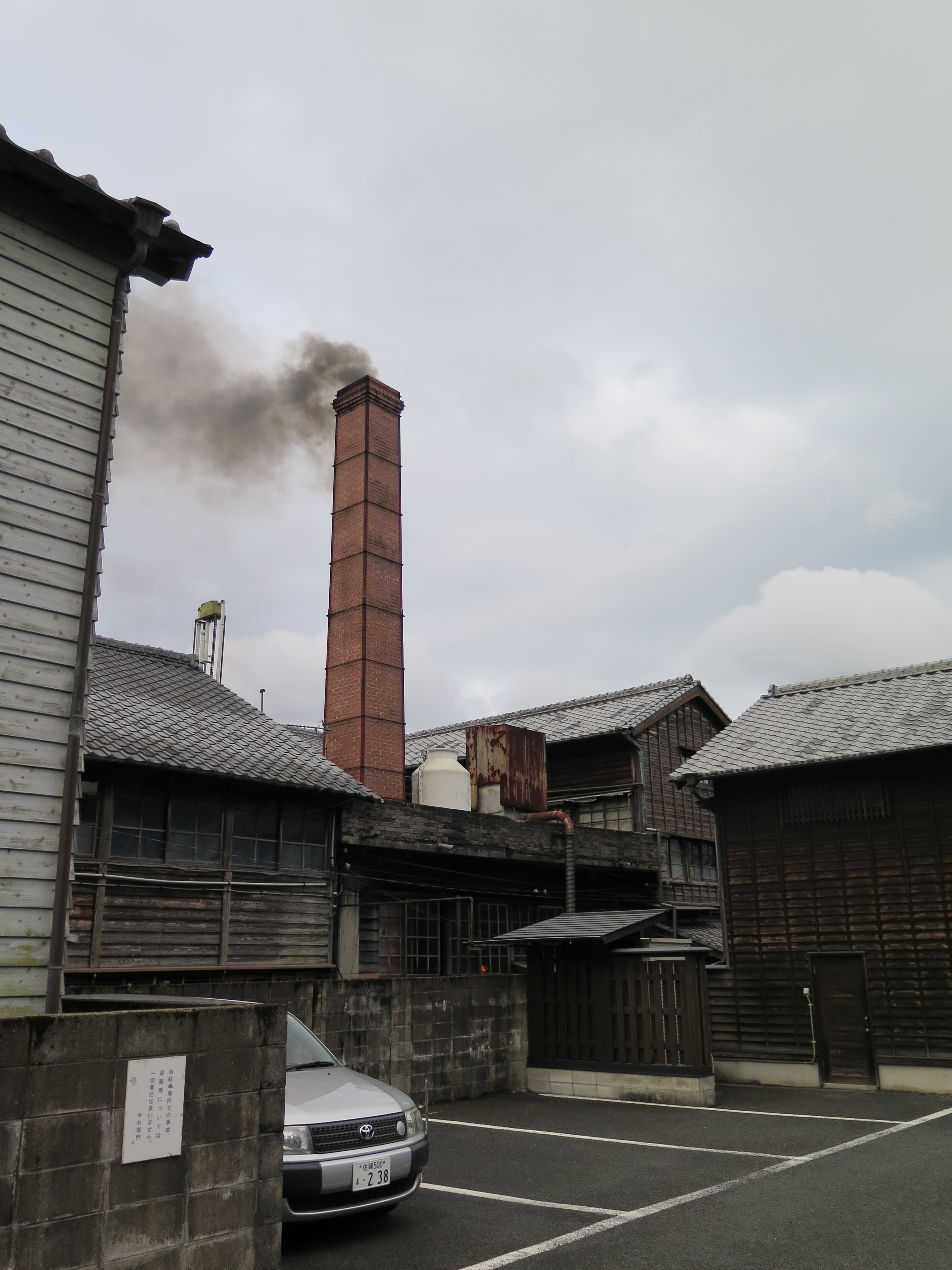
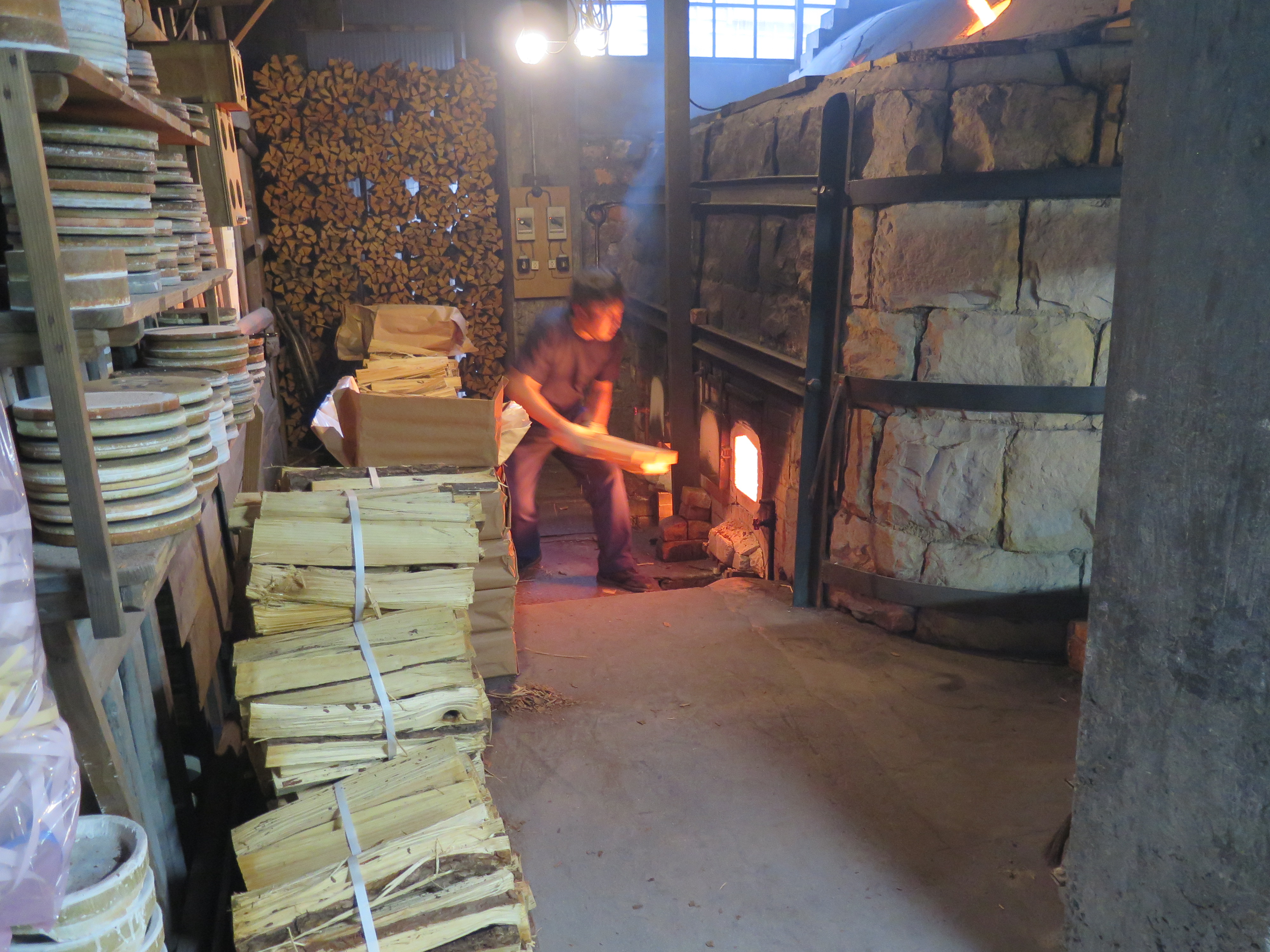
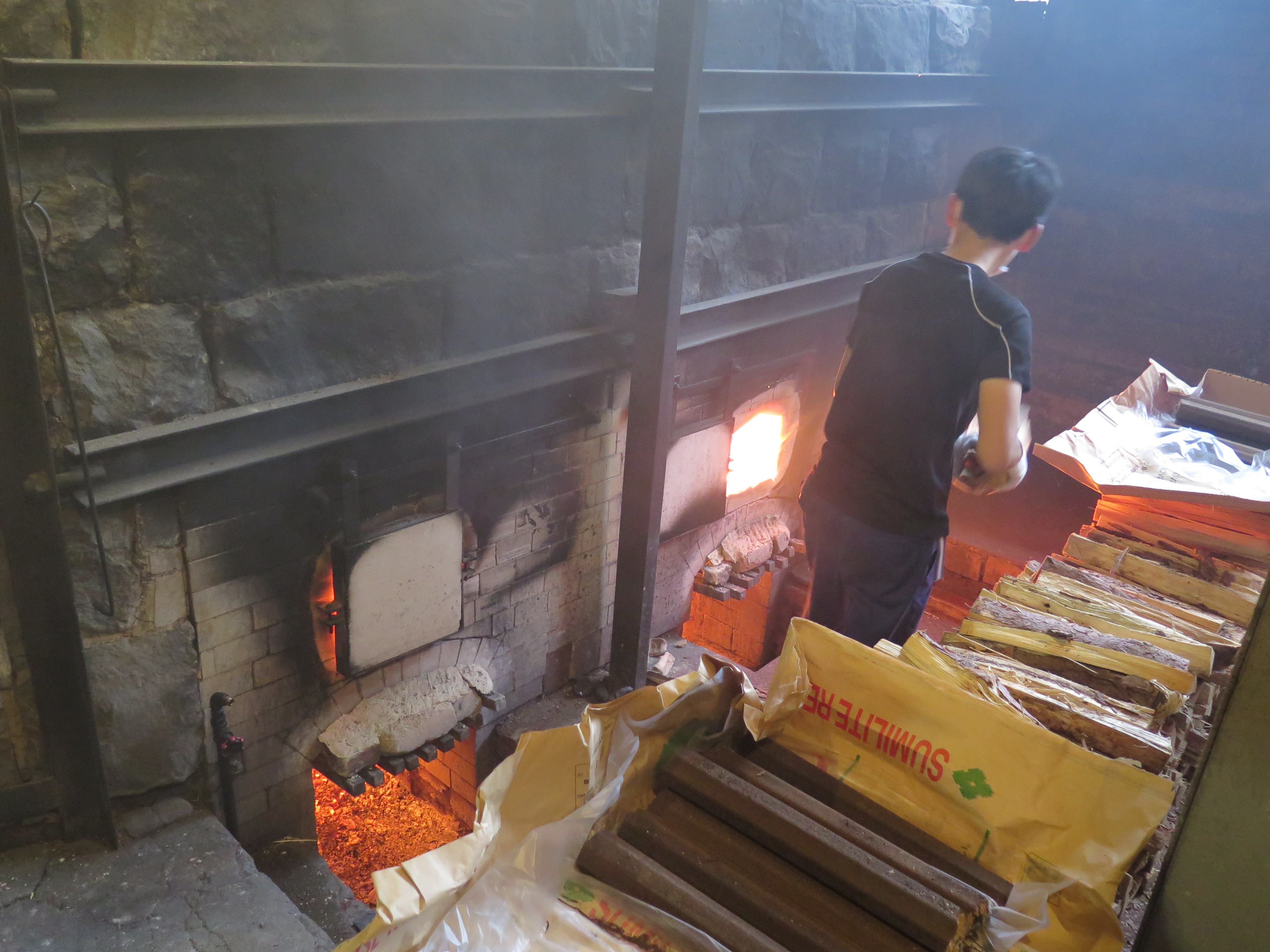
Four Generations of Porcelain Stone Clay Makers

Today I am going out to visit the very smallest of small-scale porcelain stone clay making workshops. This family have been crushing and grinding the local porcelain stone here for four generations. The building is located so far out of town and in such an isolated place, that even my friend and driver, who is a local, has difficulty finding his way there. So many little winding roads and intersection.

IMG_0589IMG_0569

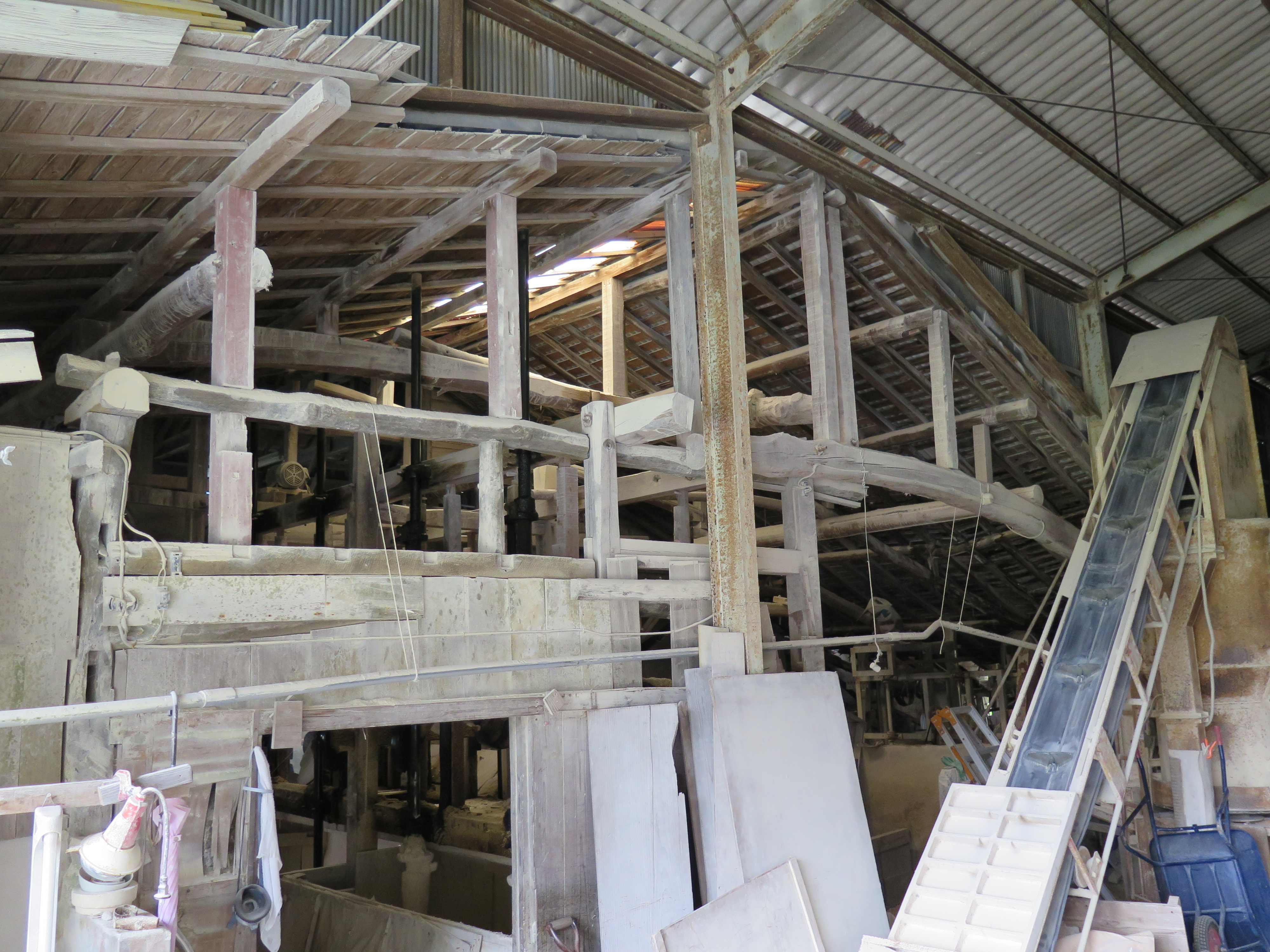
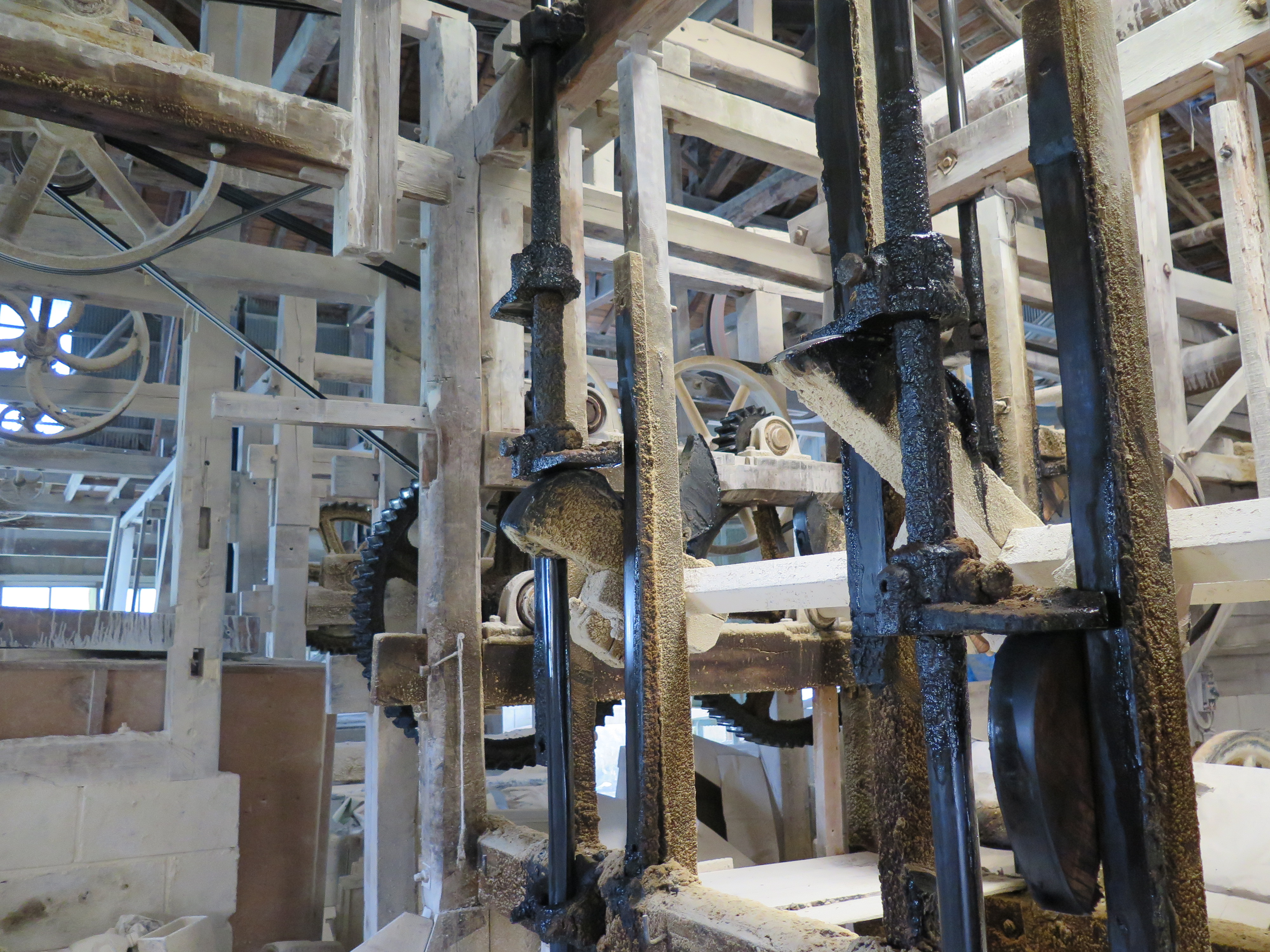
Eventually we arrive. Another liminal site, perched just above the edge of the rice paddies, on the edge of the farm track and just below the tea plantations higher up the hill. The family building is absolutely original and built by the great-grandfather here over 100 years ago. It’s a beautiful old wooden structure. Even the supporting frame-work for the stamp mills is completely original and made of wood. The machinery looks pretty original too, especially the stamp mills. The only real concession to modernity here now are the filter presses and the vacuum pug mills.

IMG_0581

IMG_0588IMG_0564

IMG_0566

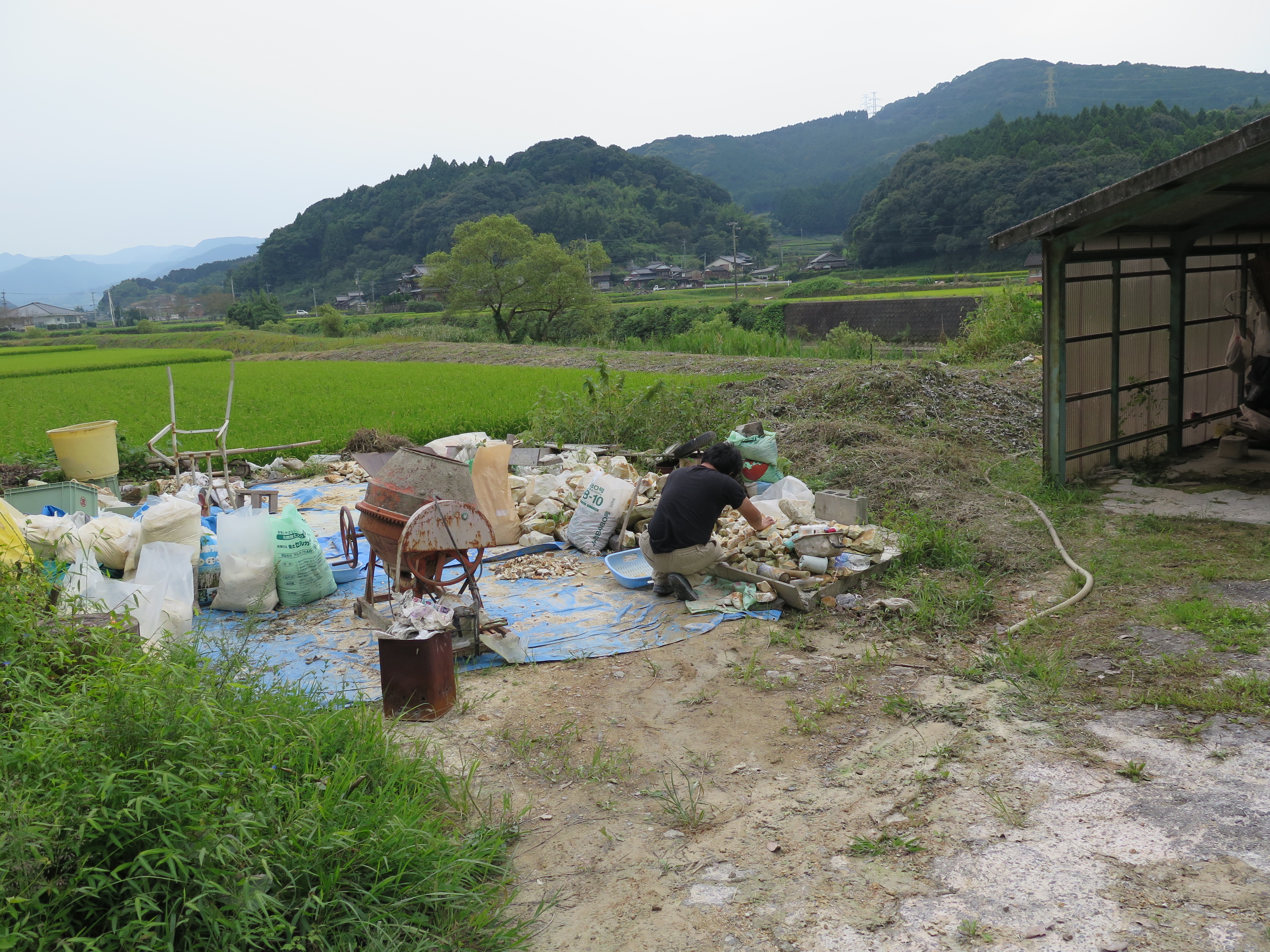
The family, Mother, father and son still do all of the initial work of sorting and selecting by hand. It is the only way to get the very best quality result. And the result is exceptional. No one else does this to every piece of stone that enters the workshop. One other factory, The Coda Factory, can put through small special batches of hand cleaned superior white stone body, but it is very expensive and only occasionally done these days. The other factories, like Tajima san’s, appear to just take the stone as it comes, wash it and run it all through the jaw crusher. (see, “More, not less, from Japan Posted on 16/11/2014)

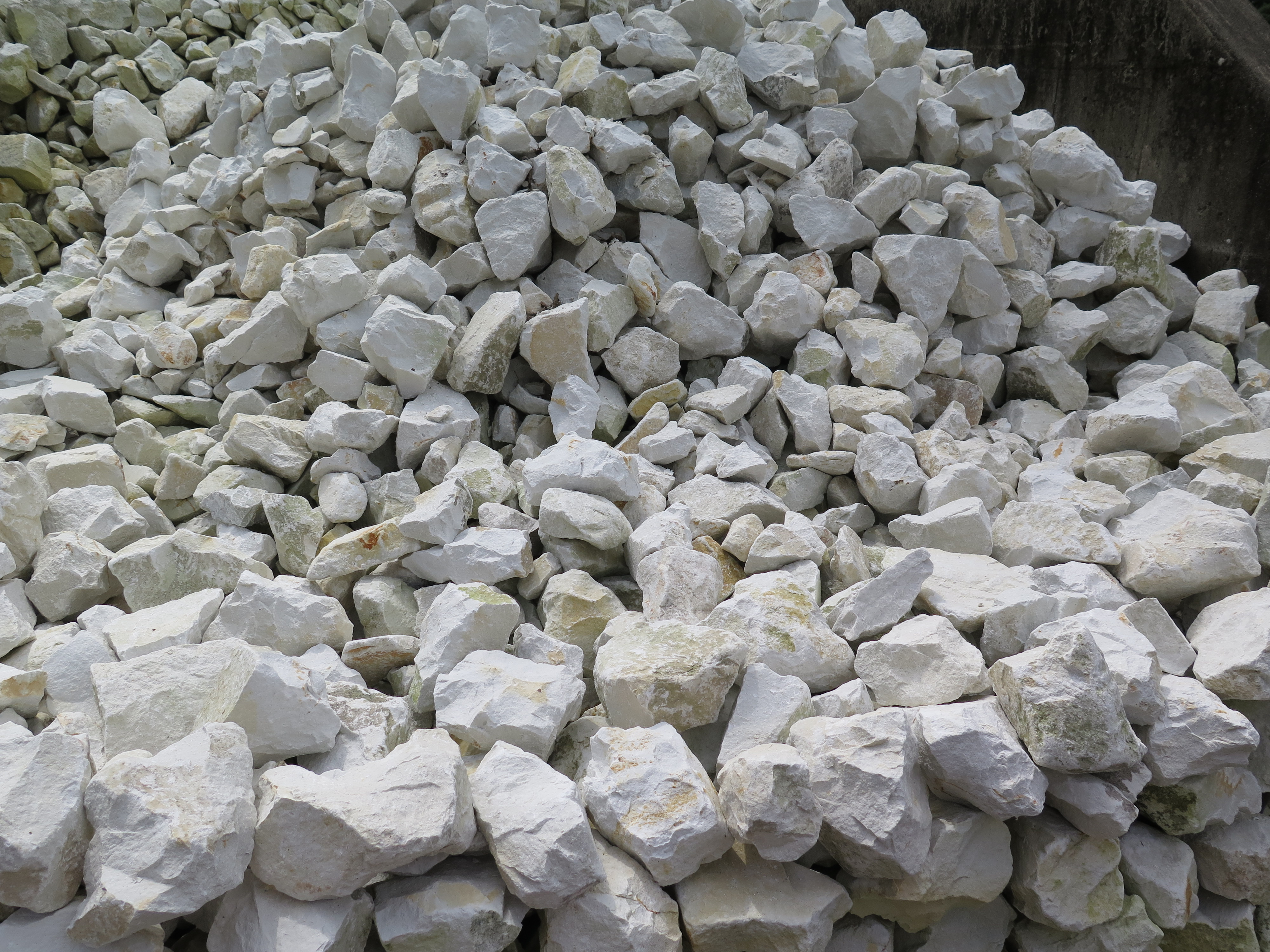
On the other hand, this small ‘Fuchino’ family run business puts in a lot of effort to hand sort and classify all the minerals as they are all dumped in a 14 tonne pile straight from the tip truck that delivers the stone from the quarry.

IMG_0565

IMG_0567

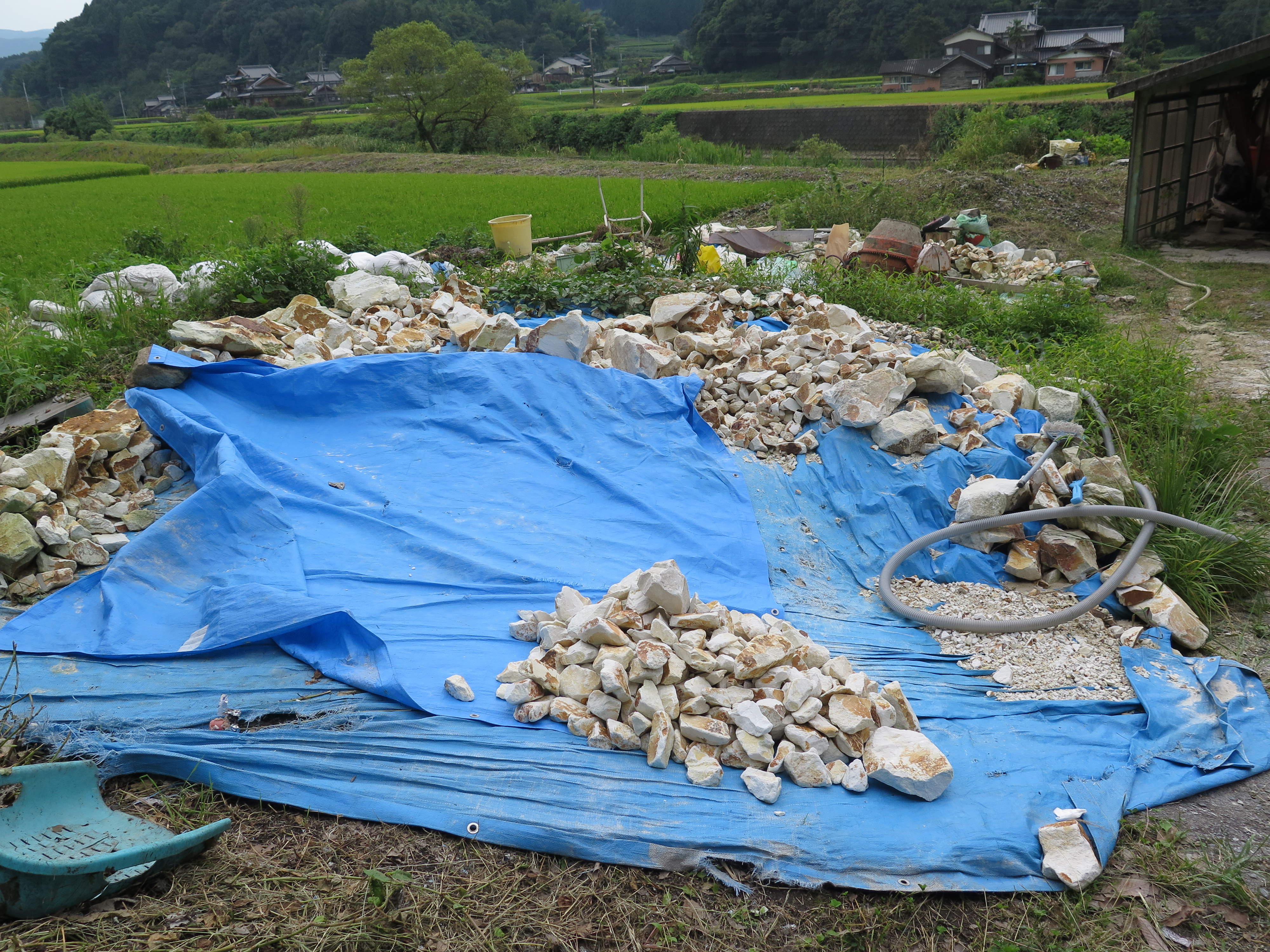
First all the stones are sorted and classified into one of 3 groups. The native Amakusa stone is quite varied in its mineralogy with bands of various minerals throughout the deposit. The quarry doesn’t really discriminate that much. A truck load of this mixture can be processed all together as one composite material, as happens at the ‘Tajimi’ and other two clay makers. Here they spend an enormous amount of time sorting and classifying the mixed load into its components. There is felspar, silica and mica. The silica is deeply inter mixed with the felspar and looks for all intents and purposes, the same as the white sericite mica. However, there is a subtle difference in colour and weight. Added to this there is a very slight difference in hardness. Going on these minor differences alone and using 40 years of experience. The miller can tell the difference instantly and throws each of the stones onto a different pile as it passes through his hands.

IMG_0574

To complicate matters, there are veins of iron, that have been leached from the parent material over the millions of years and found itsself concentrated in the cracks that permeate the mass of rock. The iron is slowly leached from the degrading stone as it weathers and concentrates there in the cracks and fissures in wet periods and then dries out and becomes insoluble. This concentrate of iron in the cracks, builds up over the millennia and makes for a red, orange, brown, blackish surface coating around each lump of rock.

IMG_0575

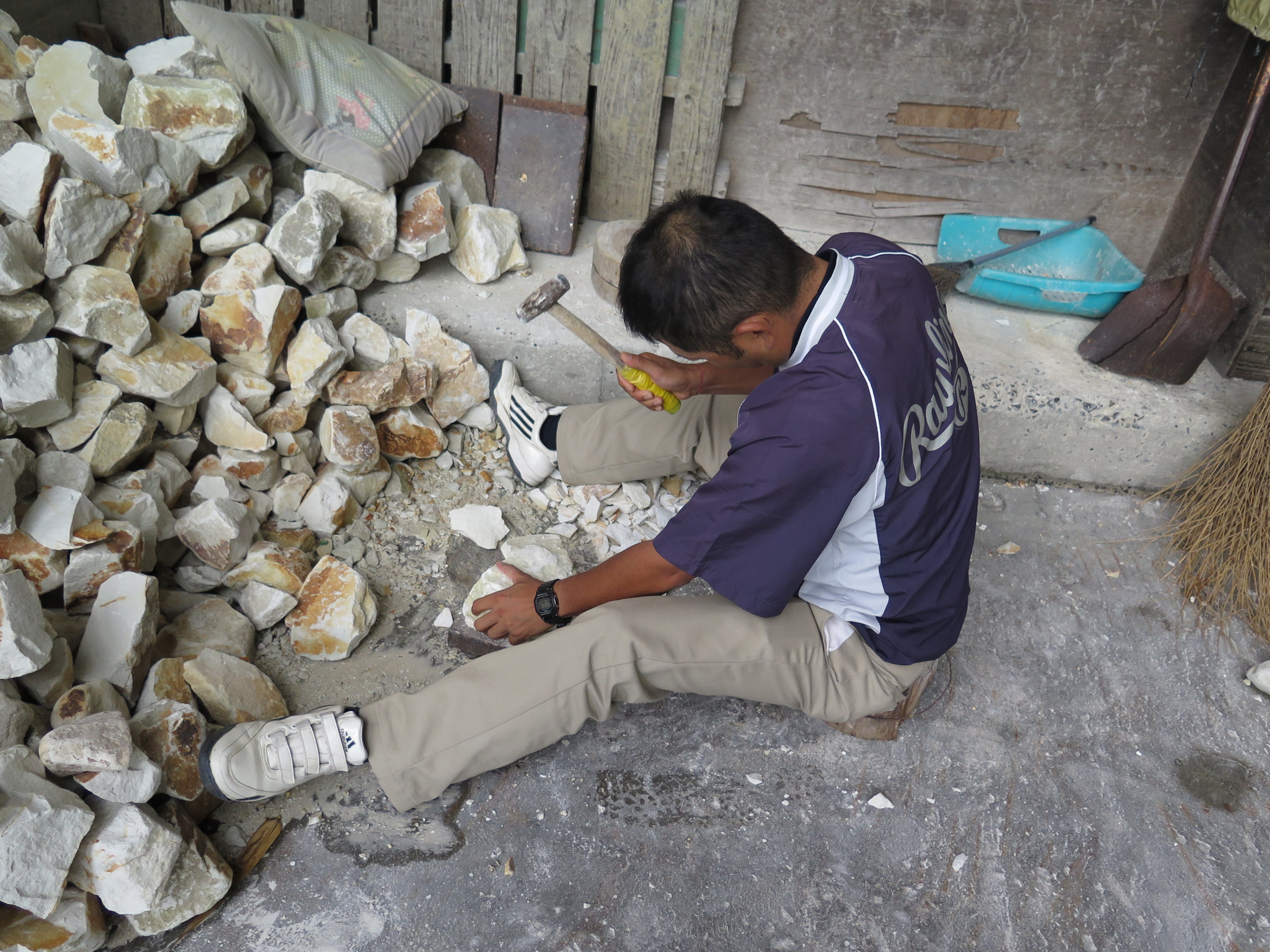
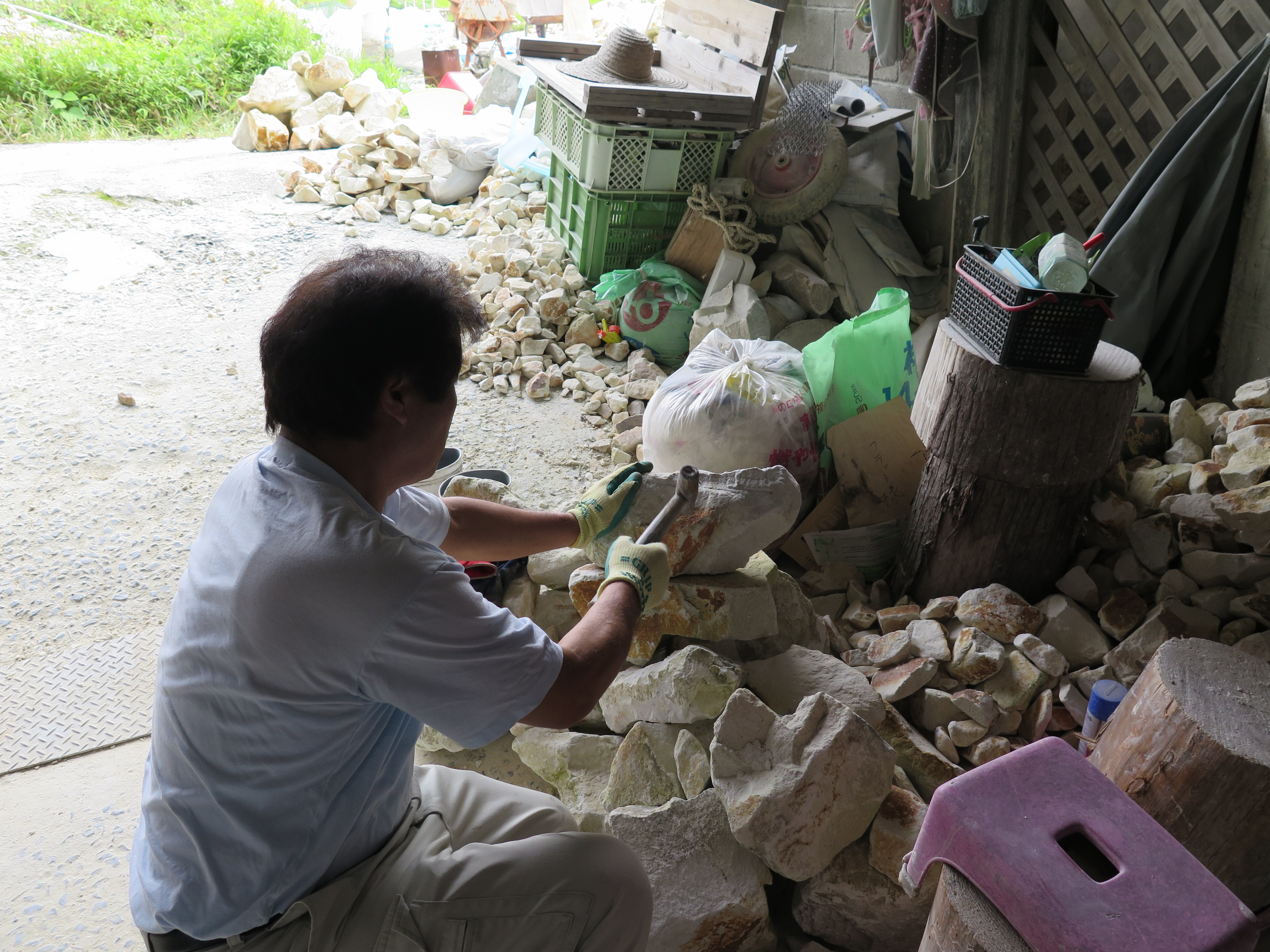
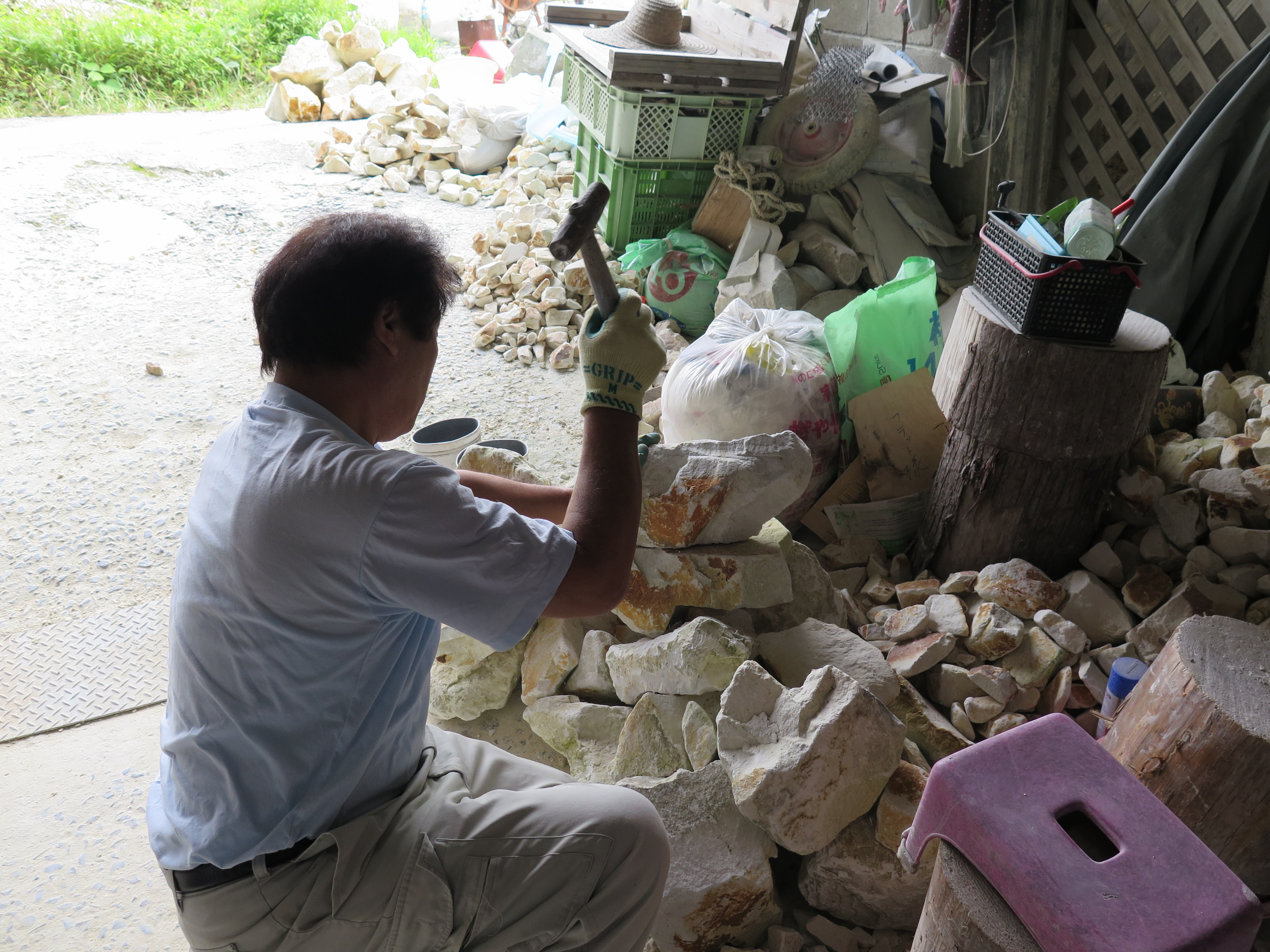
To get the best result. The miller sits and patiently chips away the iron coating on each stone, to reveal the white mineral content inside. Hour by hour, day by day. The miller and his wife and son chip and scrape their way through the entire 14 tonnes of hard rock, until it is all sorted and cleaned. It takes them one month to process the 14 tonnes of stone. The result of this gargantuan effort of exacting perfection is three piles of stones which are processed separately.

IMG_0578IMG_0579

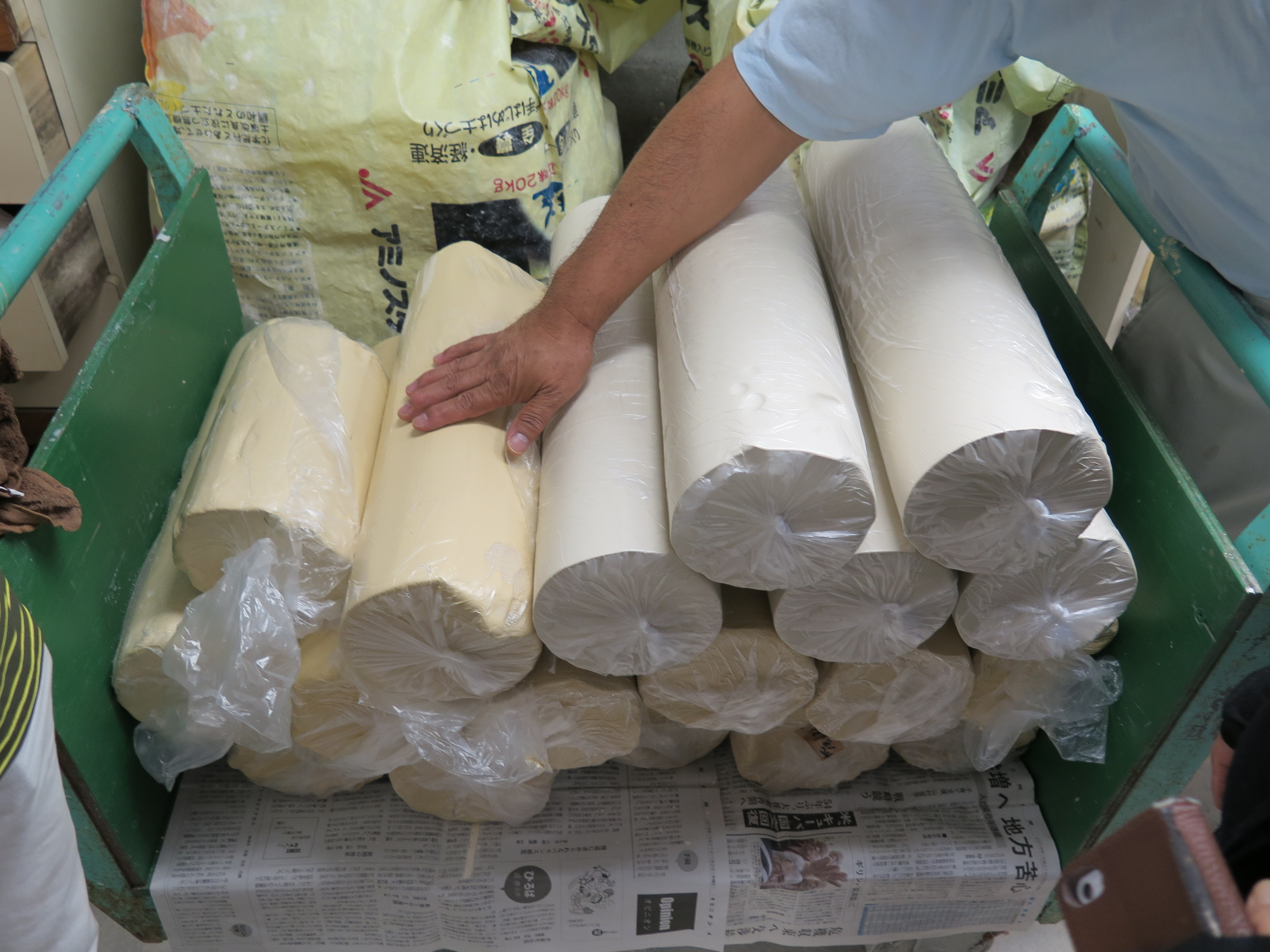
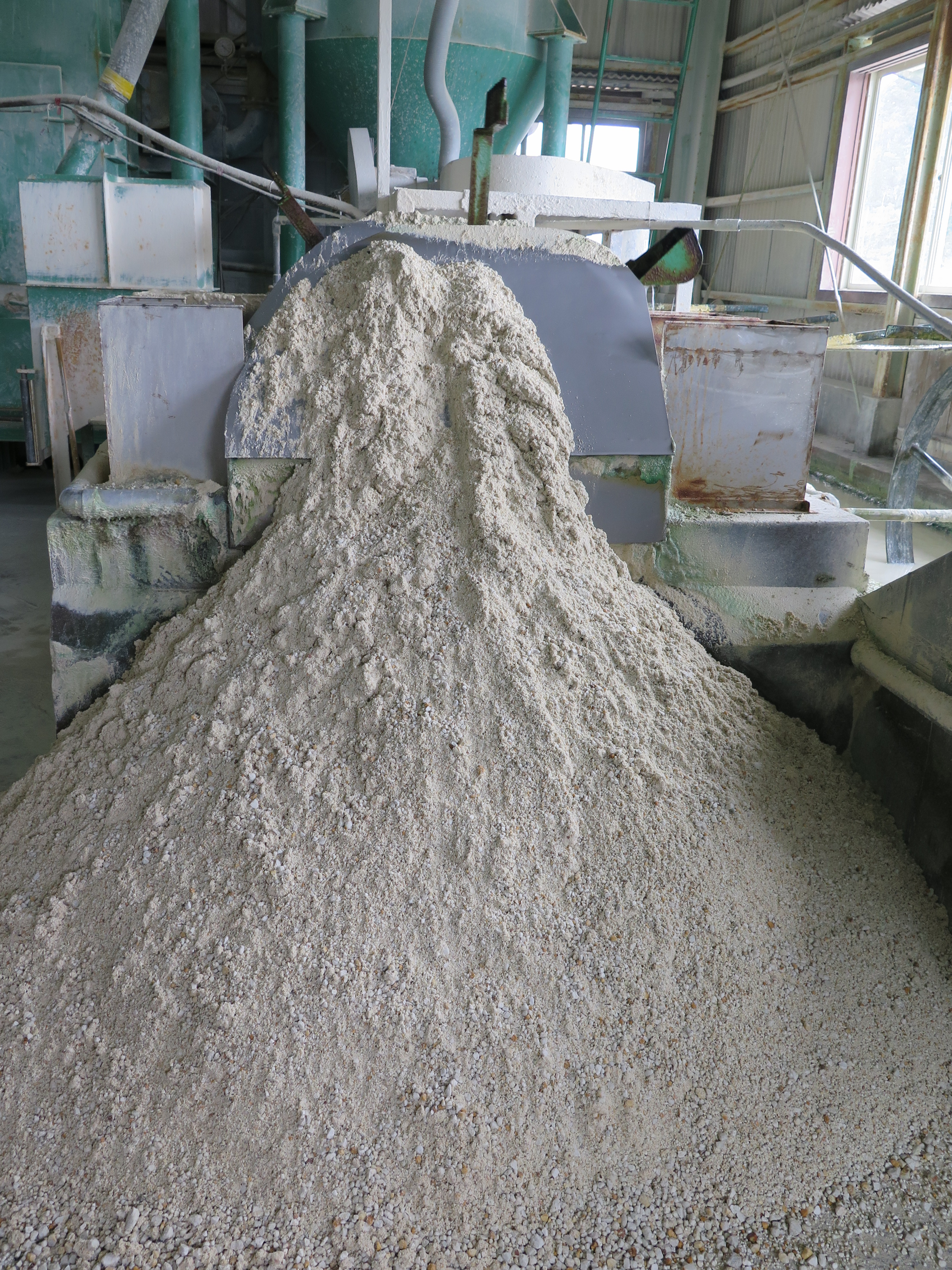
First they are put through the stamp mills and reduced to a fine powder. It is then sieved and sorted again before blunging and sent to the levigation tanks, where the heavier, coarser silica particles are sedimented out and the finer clay and sericite mica fraction is floated off. This slurry is then concentrated and stiffened using a filter press, the only concession to modernity introduced since the great-grandfather built the operation over a hundred years ago. The stiffened filter cakes are then vacuum pugged and bagged ready for delivery.
IMG_0570

The number one product is a very fine white sericite and kaolin based body perfect for the creation of the wheel thrown items. It fires pure white and translucent with perfect glaze fit. This is obviously the most expensive grade and is in very limited supply. The second grade material is creamy white, with a slight iron contamination, but only very slight. It fires white and translucent with perfect glaze fit. Number 2 body is plastic and throwable, just like number 1 body, just not as pure white. The third grade is somewhat yellowish and is made up of all the chipped, hammered, and scraped off iron fragments from the surface of the coloured stones. This is the cheapest grade and the least white, firing a bit grey, with reduced translucency and low plasticity, but with excellent glaze fit.

IMG_0573

During my life as a potter, I’ve spent years, cleaning and sorting my collected native porcelain stones. I never really mentioned this to anybody lest they thought that I was mad. Now I know that I’m not. There are at least three other people in the world who are as committed to excellence as I am. The difference is that this family are well paid to produce this special clay for the most famous pottery families in Japan, and can boast that they supply clay to at least three ‘National Treasure’ category potters. These famous, Nationally awarded potters couldn’t have gained their unique status without the sustained diligence and commitment to excellence of this family.

It is an amazing experience to be able to be with these people, if only briefly. To see this old Wabi/sabi building. To learn of it’s long history. To speak with this couple. It’s all a bit amazing. They are so special and yet so ordinary and humble and uncomplicated. Just dedicated to their exacting work and very proud of their achievement. There is no other place like it in all of Japan, that I am aware of, and as this kind of work is pretty special to Japan. It might be safe to say the entire world. The effort that they have put in is rewarded with the status that they have achieved.

Myself, Tatsuya and Fuchino san

Myself, Tatsuya and Fuchino san

I’m thrilled to get to meet someone a little bit like me and to be able to throw my pots out of this unique material. Needless to say there is a months long waiting list for this couple’s product. There should be a National Treasure Award just for clay makers like these, who work at a very unsexy job, but who have elevated it to stratospheric levels of excellence.

I still find it hard to believe that it is possible to do what I have just seen with my very own eyes. I just didn’t really think that people still worked like this in a modern world. Taking so much time to be the best in the world, while not caring that anybody, other than their customers even know what they do. While we are there we buy 5 bags of this amazing stuff, but only the No.2 creamy white body today. There isn’t a skerrick of No.1 to be had for months yet. It appears to be all sold on advance order to the 3 National Treasure potters. I guess that this is one way of cementing your advantage over your other porcelaineous competitors?

I consider my self so lucky to be associated with Tatsuya san, and therefore able to use both the creamy white and hand selected, ultra-pure white varieties of this family’s clay while I am here. Tatsuya san has had a 40 year relationship with this clay making family and I am lucky to be able to tag along and reap that benefit.

I am grateful.

Best wishes from Steve on the outskirts of Arita

The White River Box Maker

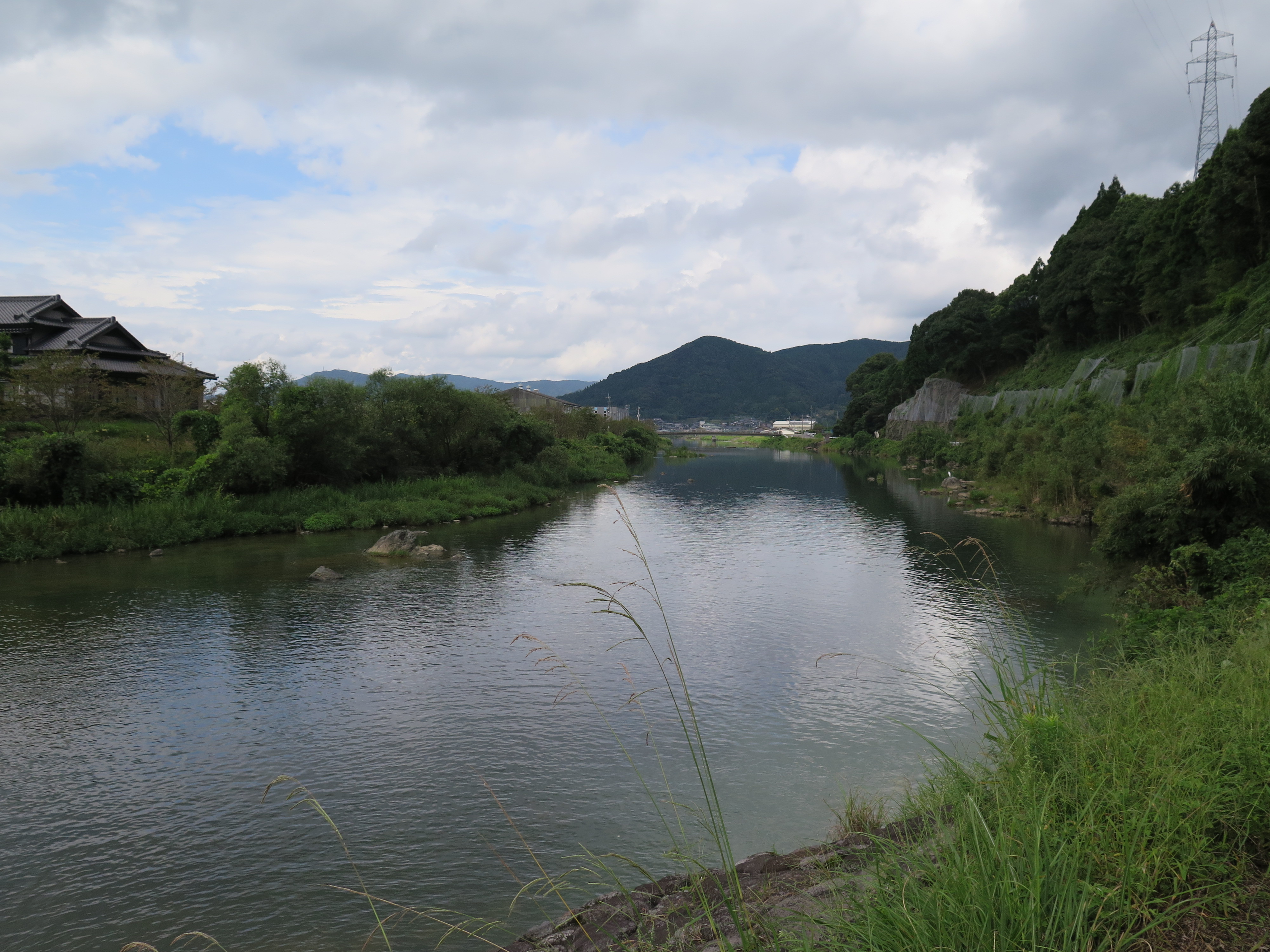
I’m here in Arita and the layout of the little town follows the meanderings of the river and its feeder streams. This is a modern Japanese town, perhaps city? That has developed over its ancient foundation of porcelain footings. The little river that has prescribed the subsequent development has a few stories attached to it. I was told that the first Korean potter to come to this area, as a prisoner of war, called Ri Sam Pei, noted the absence of fish in the smaller upper river and that this was one of the signs of being in the vicinity of a porcelain stone area that he recognised from back at home in Korea. The water of this stream or upper river drains down from the rotten granite mountain of Izumiyama.

This water, as it drains through the fissures in the granite, leaches out both soluble potash alkali from the decomposing felspars in the granite, but also a tiny amount of kaolinized clay particles from that breakdown process. The mountain was once a molten granite pluton that was pushed up during a very ancient volcanic event, leaving the molten rock to cool slowly just below the surface. Once cooled and slightly eroded by surface weathering the exposed granite would normally take millions of years to degrade by normal surface weathering through the action of wind, rain and winter frosts and snow. What makes this place so unique is that something else happened here.

In just a few places in the world an event called hydrothermal-weathering take place. This involves the passage of superheated steam at hundreds of degrees centigrade rising upwards through the earths crust and passing out through cracks in the rocks of the mantle. In this particular case, it passed up through cracks in the granite mountain. The superheated steam strips out the soluble alkalis from the parent rock.  In this case, the felspars in the granite, reducing it to pure white kaolin clay and altering the micas present in the granite, stripping them of their iron oxide and creating a unique form of white ‘plastic’ mica called ‘sericite’. This special combination of pure white plastic kaolin and pure white plastic mica, is a very rare find indeed and makes the perfect combination of minerals to create white, translucent porcelain.

The small amount of this pure white material that then slowly leached out of the rotten granite and into the stream killed the fish and turned the water a milky white. So the river became known as the ‘white river’, or ‘Shira-kawa’.

I don’t know how complete, accurate or even true these details about fish and sericite  are? This is just what I was told.

IMG_0521

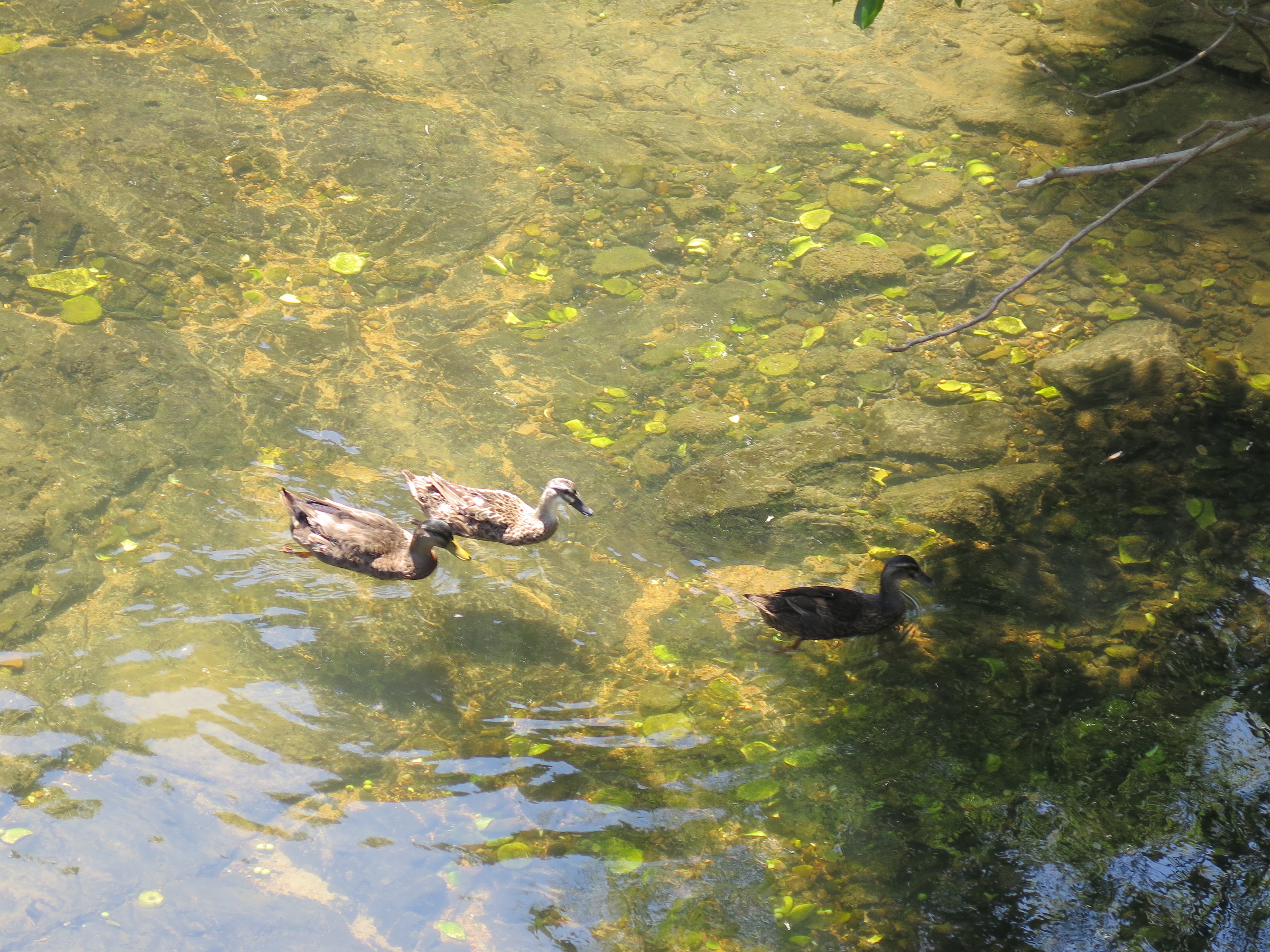
I walk or bike along the Shirakawa river every day, just like all the locals who now drive along it here. The river doesn’t run white any more. Perhaps because the quarry is all but mined out now. Perhaps because of stringent, anti-pollution laws? I don’t know. There are ducks making living on the stream these days. I can’t say that I have seen any fish in the river.

IMG_0522

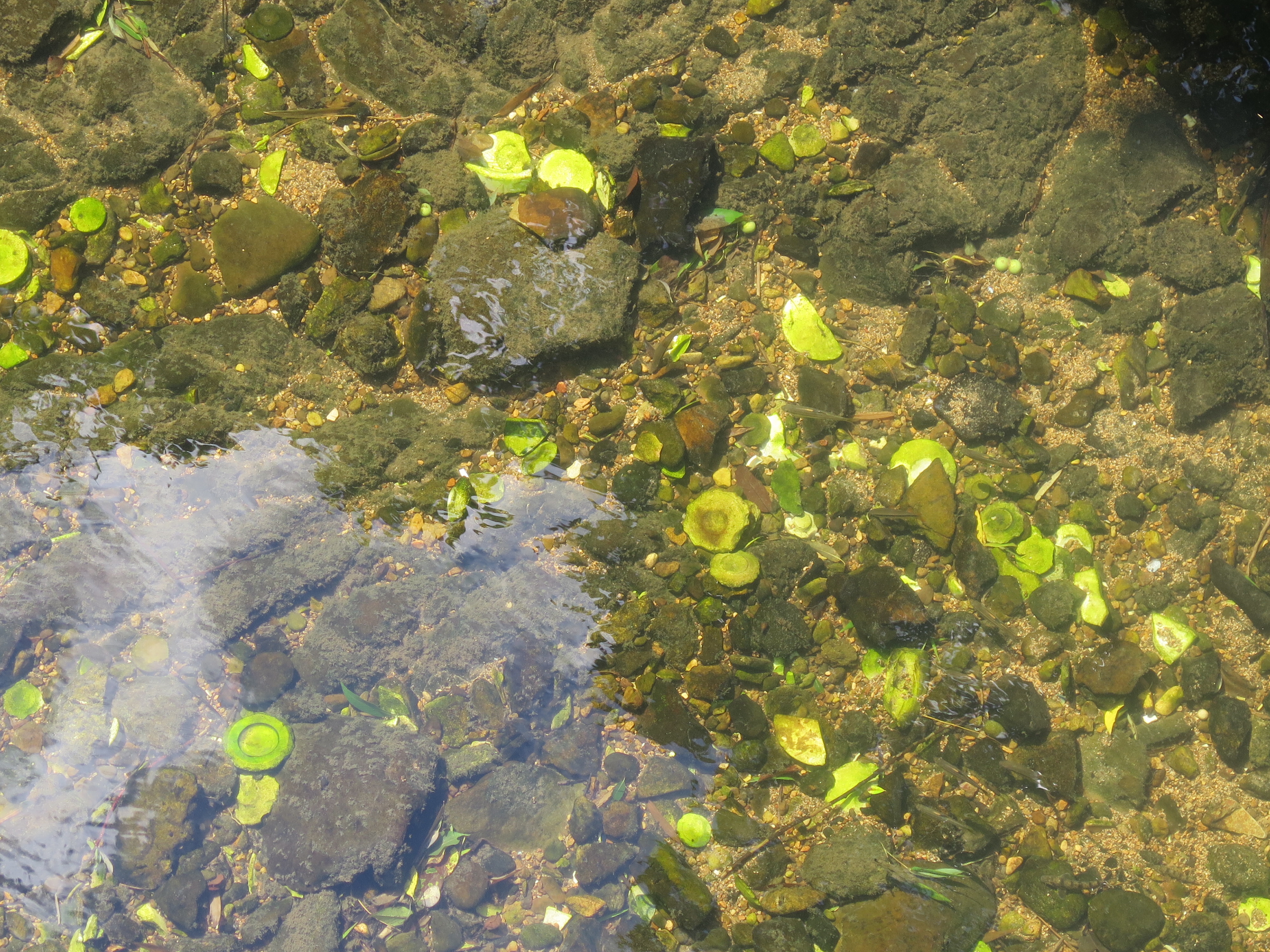
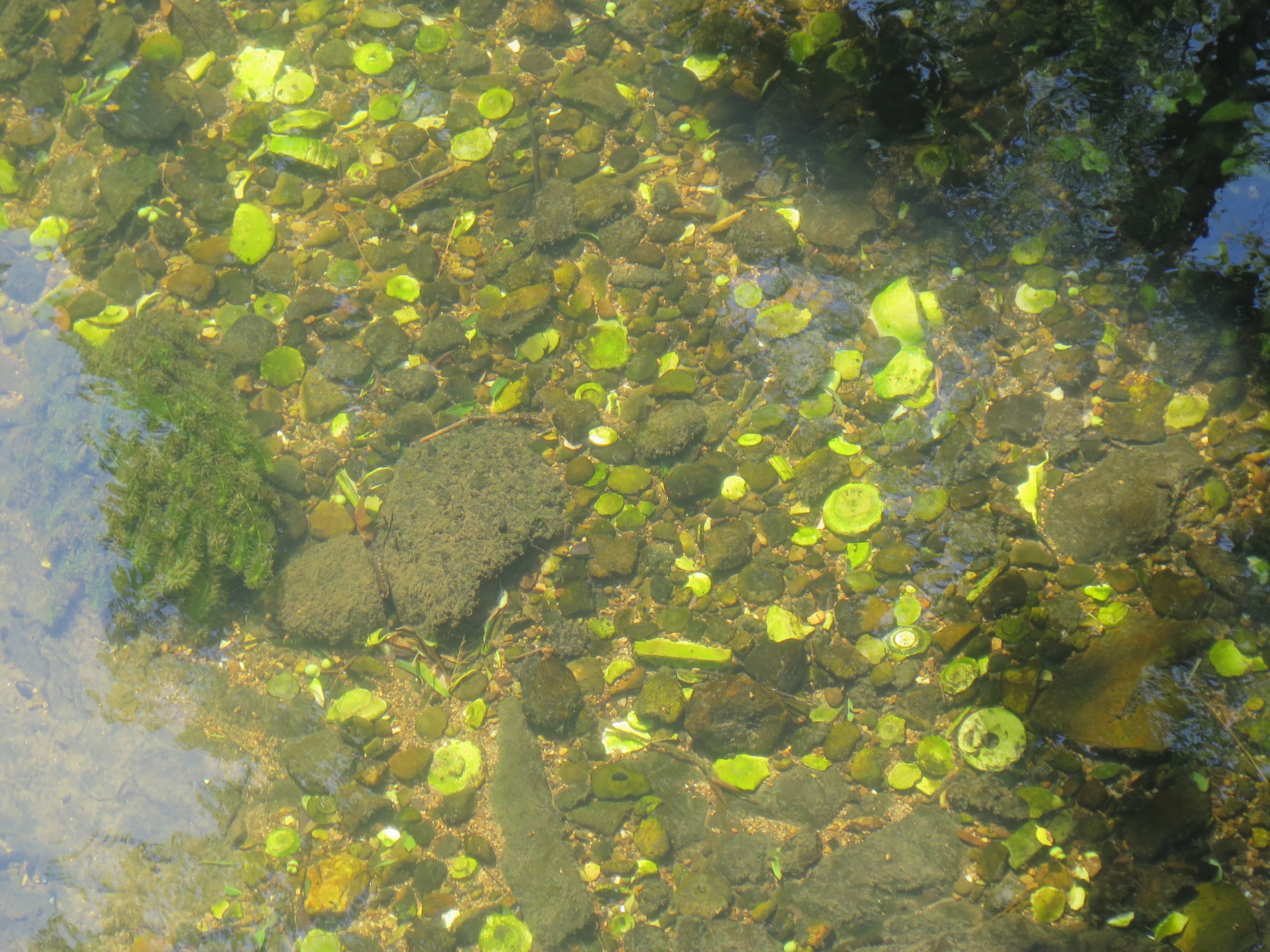
However, I can see that there is a pretty good deposit of porcelain shards in the river bed now. At each bridge that I come to, there are shards to be seen in the shallows below. It would be interesting to walk the river bed and do a sampling of the various dates of those shards, at some dry period in the seasons. I’m sure that it must have already been done. There’s a PhD or MA Hons in there for sure, just waiting to be retrieved and analysed!

IMG_0523IMG_0524

Today we are travelling along the stream on our way to visit the box maker. He lives a little out of town. On a beautiful little winding road, up through the forest. It’s all covered in moss and is deep in shade from all the tall trees on each side and the abundant humidity. There are springs trickling out of the rocks on the roadside. I call this part of the road the ‘shibui-dori’. It’s caught on with Miyuri and Tatsuya. It made them laugh. Now they are both calling it ‘shibui-dori’.

Working from home on the liminal edge, where the rice paddies stop and the forest begins. The box-maker has a small, humble house and next to it, large, industrial work shed, where he has all the machinery to make the boxes. The timber planks go in one end and the milled boards are planed and thicknessed, then edge glued to make large sheets, which are subsequently sawn back down to smaller sizes for the individual boxes required dimensions. The four sides fitted and glued together, then squared up and the bottoms installed, then the lids made. It’s all very exacting and precise work. Just like making the Arita style porcelain that goes inside them.

IMG_0554

Although the shed is a bit ordinary looking from the outside. Everything inside is modern, and up-to-date, hand-fed, but electrically driven woodworking machinery. Its a pleasure to see the modern workings of someone’s workshop, involved in such modern, yet ancient craft skill. The boxes are just the same as they once were, but now, most of the processes are mechanised to reduce the labour cost. It’s an honour and a privilege to be allowed in here to see and watch the process first-hand. Hand made boxes like these are a bit expensive. You need to know that you will be able to sell quite a few of the pots packed in them, before engaging in ordering a full set for the all the work in a show. There is no way out. It is expected that a decent pot will come in a decent box here. It’s all part of the social contract.

IMG_0557

In Australia, unlike Japan. Pots generally sell so cheaply, even in exhibitions these days in Oz, that it just isn’t possible to fund a good, hand-made box, from exotic timbers for each pot. But even here the pressure is on and the box maker now has to compete against cheap Chinese imported boxes. These of course are not custom-made for each pot, but imported in container loads of the most common sizes, for fast-moving items. What can he do. His only option is to aim higher for the high-end art market and hope that he can keep finding enough work to keep himself employed until he retires.

Globalisation is everywhere, affecting everyone. Even the box-maker.

The Soba Noodle Potter

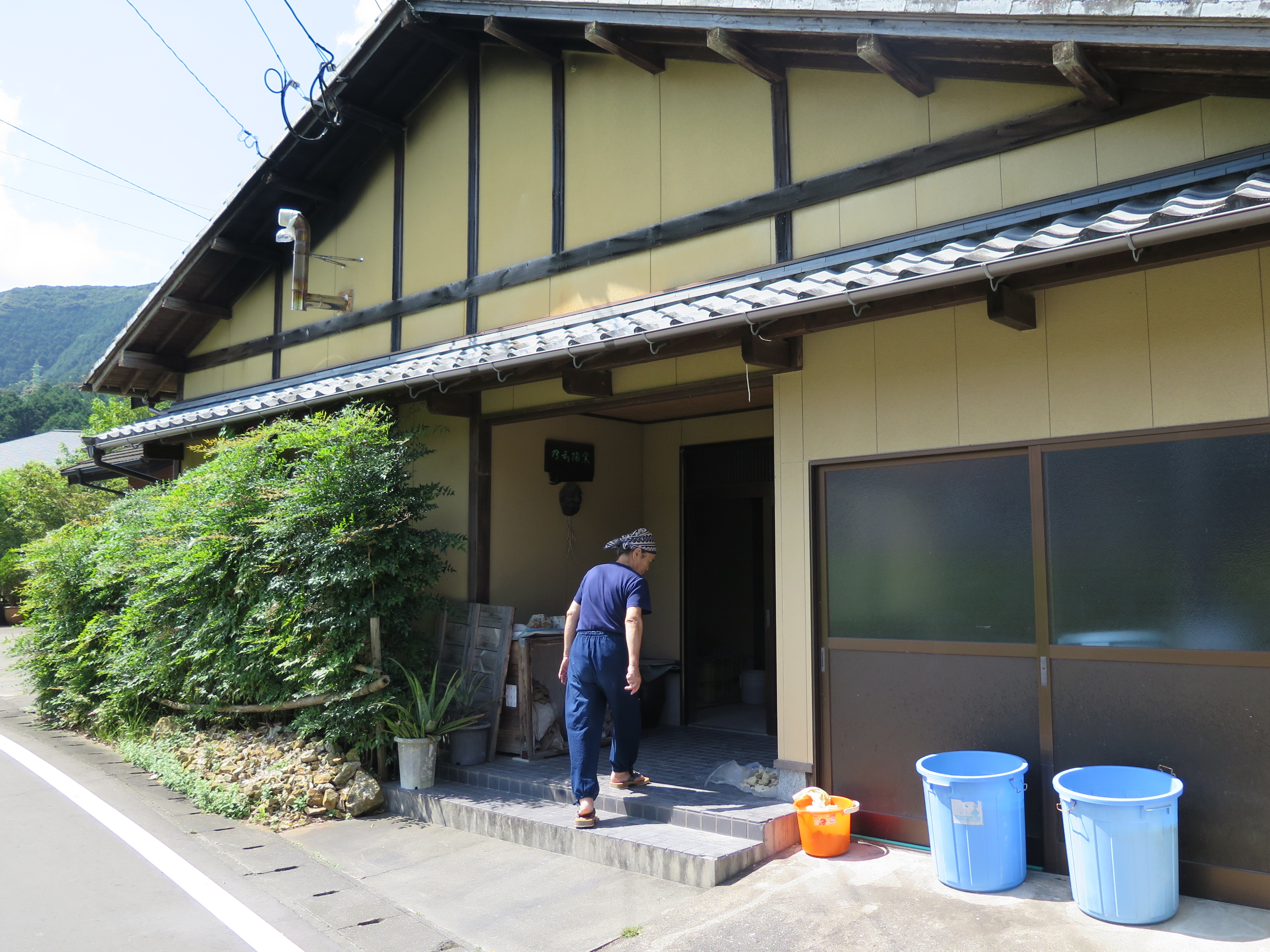
I decide that today is my only chance to go and visit Mr Norito, or Noritou, or Noritow. I’ve seen it written in different ways. In Romanji it’s written as Norito, His web site is ,  but on his card, the hiragana ends in a ‘u’. So I think that Noritou is the best approximation that I can make.

I first met Noritou san when I was taken to his workshop for a brief  mid-week visit. He is in his late 80’s I think, although he doesn’t look it. He’d pass for 60’s any time, but I’m told that he was selected as a very young kamikaze pilot at the end of the war. Not unlike my former teacher Shiga Shigeo, they only survived, because the military ran out of planes.

IMG_0512

Noritou san is a very gentle character. I can tell from his manner and tone of voice.

He is also a very interesting potter. He is the only person that I have been introduced to so far that makes his own single stone porcelain body for his pots here in Arita. Regrettably I can’t speak Japanese well enough to understand any of the technical information that he is offering directly from him. However, I have Miyuri san with me on my first visit and she is a very competent translator. It was she who brought me here and told me that I really ought to meet this guy. “He’s a bit like you. he makes his own clay from stone”. So of course I had to come. He has no machinery, it’s all very hands on and time-consuming, as all clay making is, but he selects the softest, kaolin/sericite material that he can still find – I didn’t ask where, directly, but I got the impression from Miyuri san that it is from the old Izumiyama quarry. Even though it is now a preserved Historical site, apparently, there is a group of potters who want to preserve the old traditional ways, and Noritou san is one of them. They appear to have privileged access to collect small quantities of porcelain stone from the site. The archaeologist at the Historical Museum on site, maintains that there is still plenty of material in the quarry. This fits with my understanding of the nature of hydro-thermal weathering. it creates an inverted cone shape of ore body. So it should go down a long way, like an inverted image of the mountain that was formally there, now all mined away

Noritou san simply slakes his collected material in water and ashes for a year. Yes, that’s right ashes! He is telling me through Miyuri san that the ash-water, lye perhaps? is necessary to break down the clayey particles and remove the iron staining from the various contaminants? It doesn’t make a lot of sense to me  – but!

IMG_0514IMG_0516

That is what I was told, or what I think that I heard, but there could be some loss in translation, Ne! He shows me his slaking tubs. I dip my hand into the water. It is certainly slippery, just like lye. This is exactly the opposite of my understanding of clay making. I know from my own experiments, that when I grind the porcelain stone down to powder, it breaks some the chemical bonds of the alkali in the felspars, releasing some soluble alkali. This makes the resulting clay rather ‘floppy’ to use. Sort of thixotropic in nature, becoming softer and more fluid as it is worked, making it difficult to hold its form on the potters wheel. The counter to this is to add some acidic material into the mix to counter the release of alkalis and neutralise them. I choose to use the roof water from my water tank connected to the pottery roof, which has loads of eucalyptus leaves in the gutters, and makes the water naturally acidic. I also add vinegar. As I understand it, clay develops its plasticity better under slightly acid conditions as it ages. The low pH encourages the growth of beneficial bacteria that increases the workability of the mix. Maybe Noritou san knows this too, but is talking about something else entirely. And all this through an interpreter. Imagine what is happening now that I’m here alone this time?

Actually, I don’t always need a lot of words. I’ve spent close to 50 years as a potter, so I have a fair understanding of what is happening in the pottery just through observation. It’s mostly all I need. My limited Japanese is only just greetings and platitudes, in-depth, technical discussion is beyond me, but I manage.

The other very interesting thing about Noritou san, is that he does many things, just like me. We don’t just share a love of fossicking and clay making. He also teaches pottery to visitors on one or two days during the week to bolster his income, because you can imagine, his income from making ceramics by his chosen, slow, hands-on method is very low. That part of the conversation we both agree on! So, a little bit of teaching from home, just like me. The really interesting bit is that he opens his home on Friday, Saturday and Sunday for lunch and early dinner, something like 11am to 7 pm. He operates a hand-made soba noodle shop and is very famous locally. I’m warned to go early as he is usually booked out, so I do. Naughtily, I arrive 15 mins before he is due to open. I’m first in.

He and his wife make all the buckwheat noodles themselves by hand in the old-fashioned traditional manner, allowing them to sit over-night before cooking them, in the time-honoured way. This ageing maximises the buckwheat flavour. I can’t wait to get back there again. It’s Sunday today, so you can guess where I’m going. It’s my last chance, as I’m leaving next Sunday and am booked with other things planned on the other two days.

IMG_0500IMG_0508

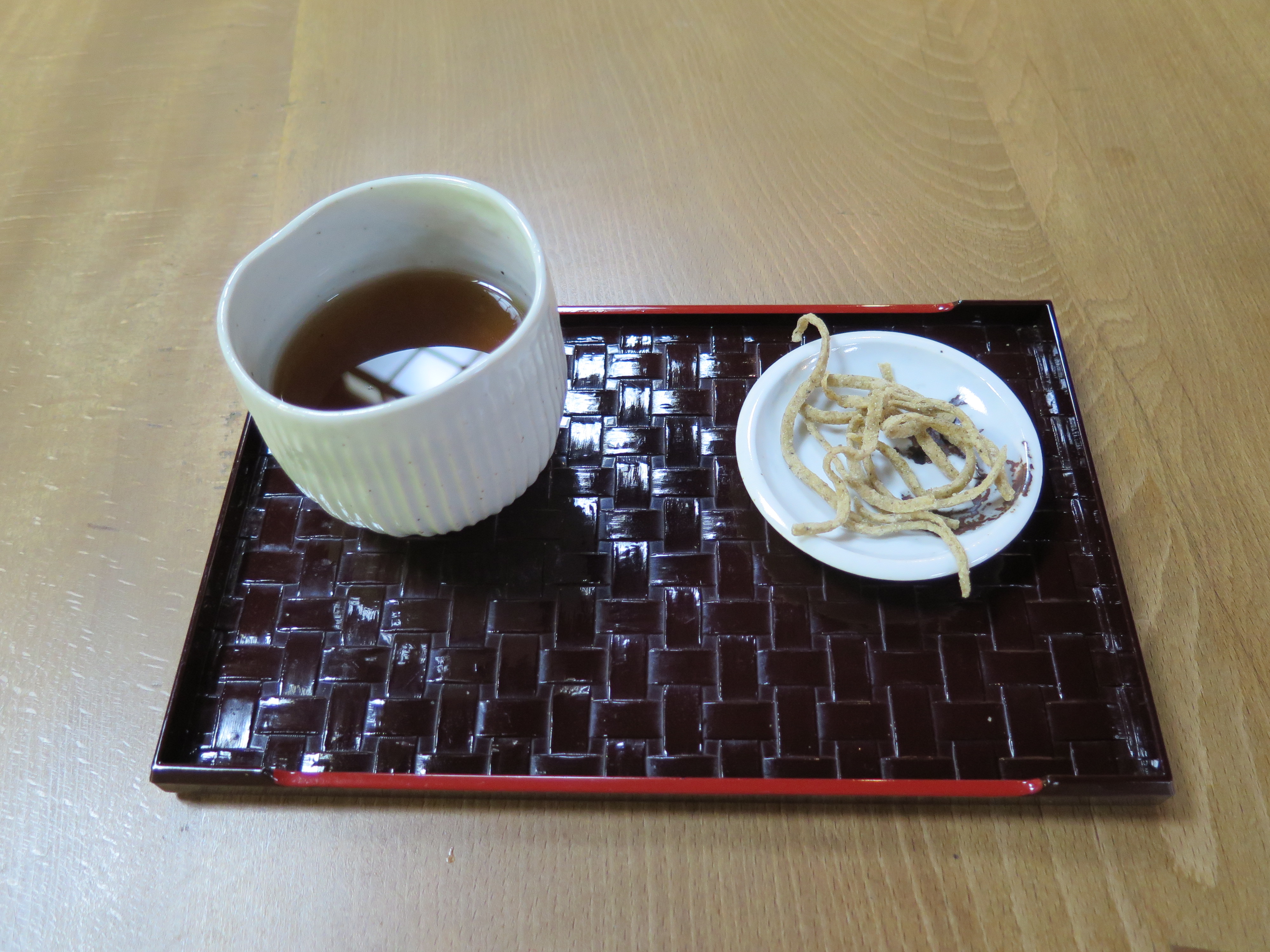
The meal comes in 3 servings, an amuse of tea and room temperature, crisp, fried buckwheat noodles, with just a hint of salt. Then the main course of cold, handmade noodles with an adjunct of warm soup to follow. There are some condiments of grated daikon radish, finely chopped green onions and wasabi, with a small separate dish of pink salt. Finally, there is a desert of sweetened buckwheat paste. It’s all terribly yummy. All this for Y800. That’s less than $10.

We exchange gifts, I have brought him a jar of Australian honey and he gives me one of his pots.

IMG_0510IMG_0509

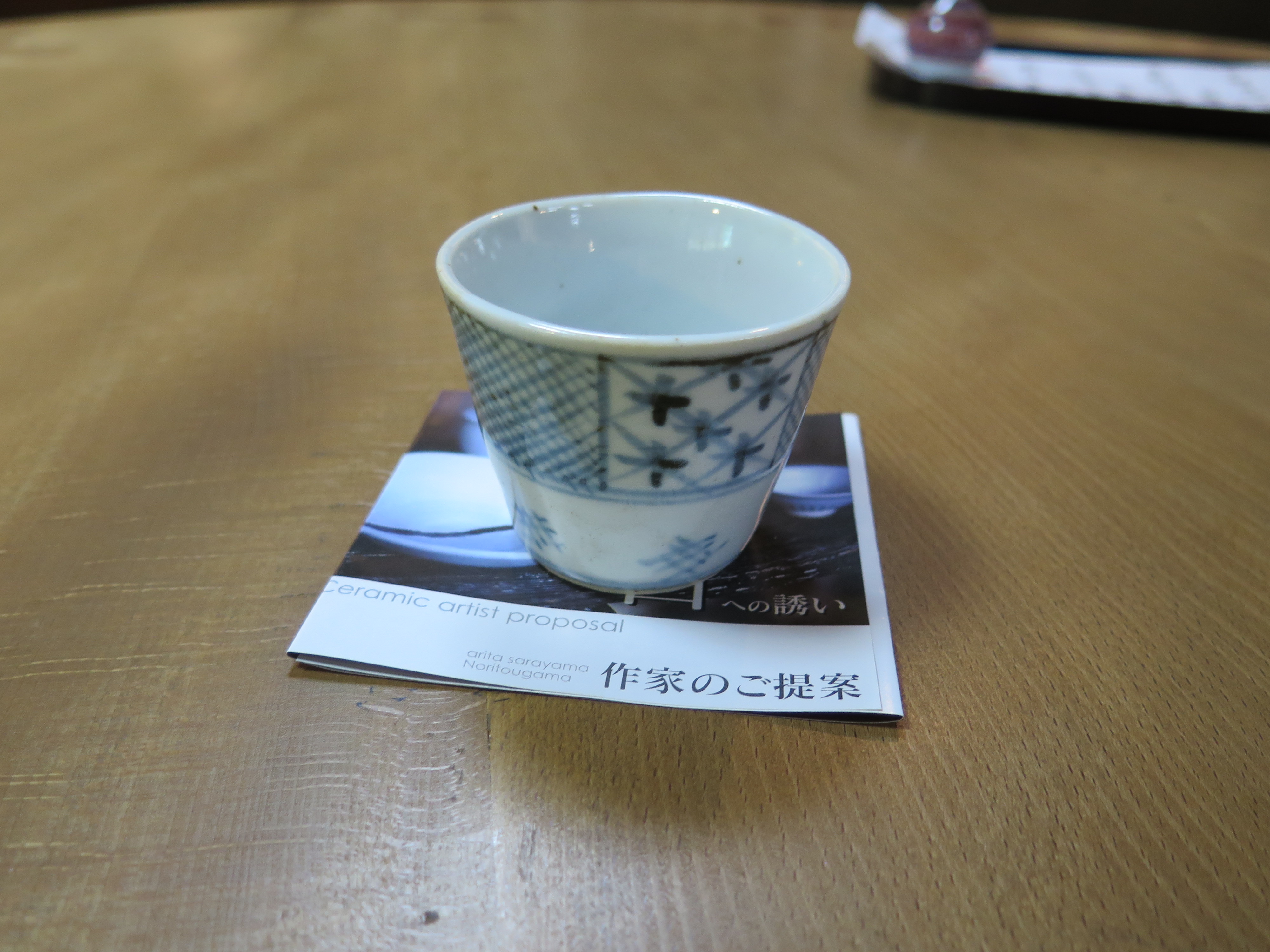
His advertising says that you can eat your handmade soba noodle lunch from his hand-made porcelain-stone, soba cup/bowl and them buy the cup. I do just that. It’s a warm autumn day and just right for cold soba.

from Steve in Arita, enjoying the food, porcelain-stone cold soba

Izumiyama and the Shira Jiki

I’m working in a workshop in Arita, in Kyushu. I’m trying to learn something about working with single stone porcelain. The potters of Arita in Japan have been making porcelain ‘jiki’ pots out of this single crushed stone from the izumiyama mountain quarry for four hundred years and they have developed a technique or two in that time. I’m keen to learn just a fraction of that knowledge in the very brief 5 weeks that I have here.

Arita is famous for being the first place in Japan where porcelain stone was discovered and white porcelain was subsequently made here. This place has a very long history. The first porcelain being made here in 1616. Since then the industry has had it’s highs and lows. We are currently in a low. Just like everywhere else in the world, the industry here is facing steep competition from China. Only a couple of decades ago, there were 300 studios here in this little town. Now there are only 100 and falling steadily. No country or industry can compete with the low cost-base of China. The best hope that they have is to engage with people like me, cultural tourists. I’m prepared to pay for the experience of working here in this amazing place, with this unique material that they have here. Merging traditional porcelain manufacture with paid workshop access for artists could be the difference between financial survival in the future. This town needs more accommodation and restaurants, if it is to encourage more longer-stay cultural tourism. Something more than the usual casual day-visit for shopping.

I don’t think that they really understand how rare and amazing this stuff really is on a global scale. So don’t fully understand its true value and what they have to offer. It’s just so normal for them here, after so many centuries. They don’t realise the special nature of what they have. It’s bred by familiarity! As all the workshops seem to be struggling financially, People like me could be the cash cows of the future, or at least part of the fiscal solution.

In the early 1600’s, the great Japanese Warlord Hideoshi invaded Korean. He captured potters and repatriated them to Japan. Rendition! It sounds familiar? A potter, named Ri Sampei, he was actually a part time potter and part time vegetable grower (farmer). Sounds familiar. He was captured and brought to this place. He soon discovered the special porcelain stone in the mountain of Izumiyama just outside of the village of Arita. He recognised it for what it was and began to make the first white porcelain in Japan, called Shira Jiki. The rest is history.

First day, I start with a clean wheel and pot boards, + a few lumps of porcelain clay.

IMG_0426

So I’ve come to this place to experience the special southern Japanese porcelain techniques that have been developed here. This stuff is amazing, sufficiently plastic to throw well enough, so that you don’t really think that you are throwing with a ground up piece of stone. It is quite strong and stands up well on the wheel. Not vigorous, but sufficiently robust to make reasonable forms easily. For me anyway.

It is miles away from what I’m used to. The hard rock that I grind up at Home is a solid, non-plastic affair. I know from my reading that this stone here, is highly weathered. In a form known to geologists as ‘hydrothermal weathering’, where hot steam has passed through fissures in the parent rock, reducing what was formerly hard granite, to a soft crumbly type of soft white mica called Sericite. Sericite is both slightly plastic, throwable and highly fluxed at the same time. Plus, it is very low in iron oxide. A very unusual combination of characteristics. Only a few places in the world have materials like this at hand.

I find that the clay is used so soft here in this workshop, that I can’t separate my pots from the wheel-head using a conventional cutting string and lifting technique that I’m used to. I find that I have to use so much force to allow air in under the pot to lift it, that it distorts the bowl. I take a moment to make myself an extra thick, double twisted, multi-stranded, cutting string. The texture that it creates as it passes through the ultra-fine porcelain clay allows air to penetrate, so breaking the vacuum seal and allowing the pot to be easily removed from the wheel head.

IMG_0456IMG_0457

I settle in for a few of weeks of intensive work. We work together, side by side.

IMG_0429

I’m, in the workshop of Tsutsui Tatsuya. He is very experienced, having spent 40 years in this workshop. Purpose built, up on the hill overlooking Arita’s U-Tan district. I spend half a day throwing my pots and then spend a week turning them, and so it goes for the rest of my time here. I soon fill my shelves and then I’m looking for more storage space in the overhead racks, above the wheels.

IMG_0437IMG_0468

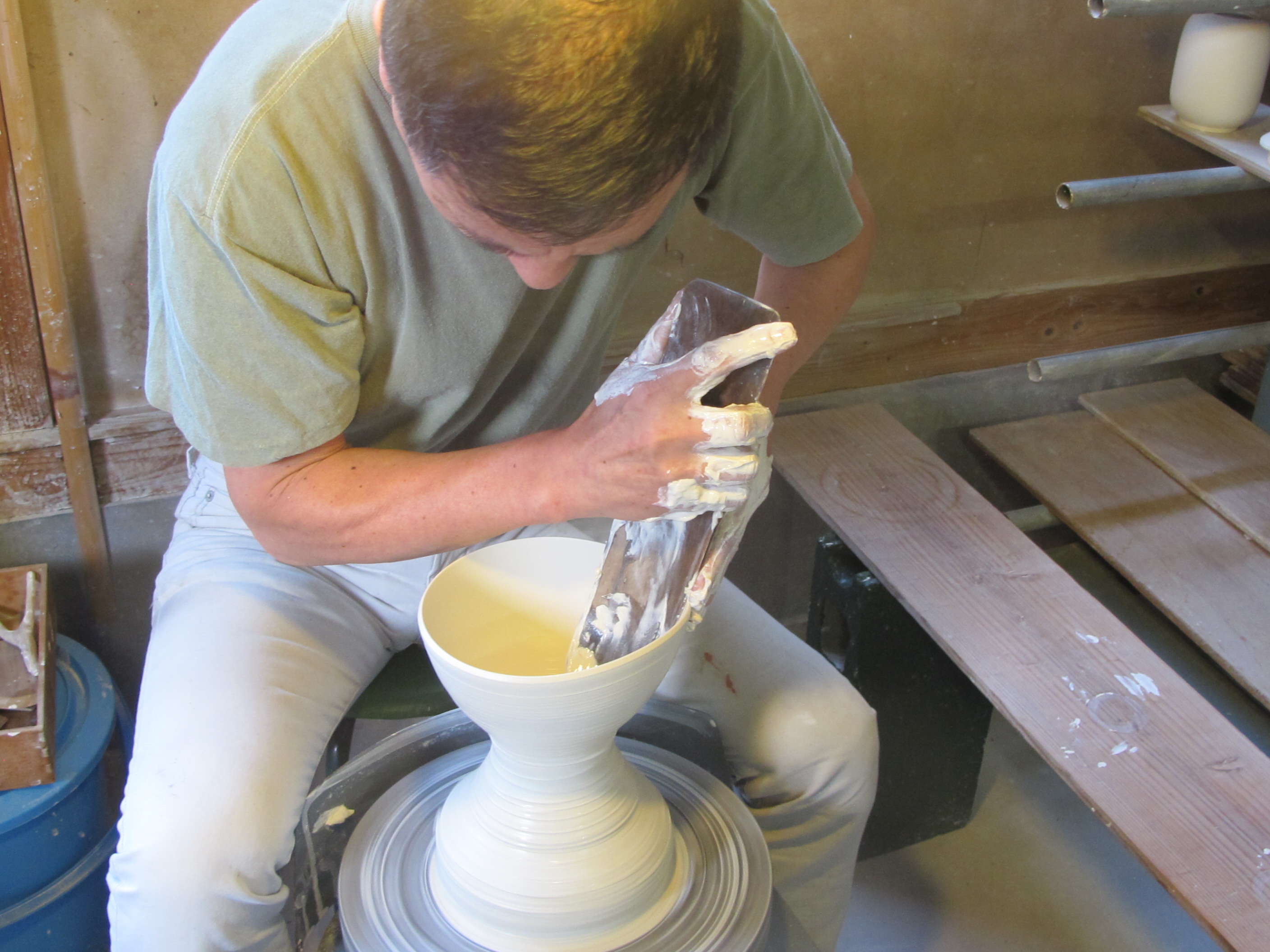
The turning here is a different story to what I’m used to. It takes me back to my student days working for the Japanese Potter Shiga Shigeo. He was trained in the porcelain techniques of Kyoto and worked for the ‘Nation Treasure’ potter Tomimoto in Kyoto, another porcelain centre of excellence in Japan. Here they turn not just outside, but inside as well. I’m not used to that. I have tried in the past to get my form just about right on the wheel, so that there would be as little turning as possible. Here they all seem to use the ‘nobebere’ profile stick to throw the forms. Another thing that I’m not used to. But I’m here to learn and to experiment.

IMG_0464IMG_0477

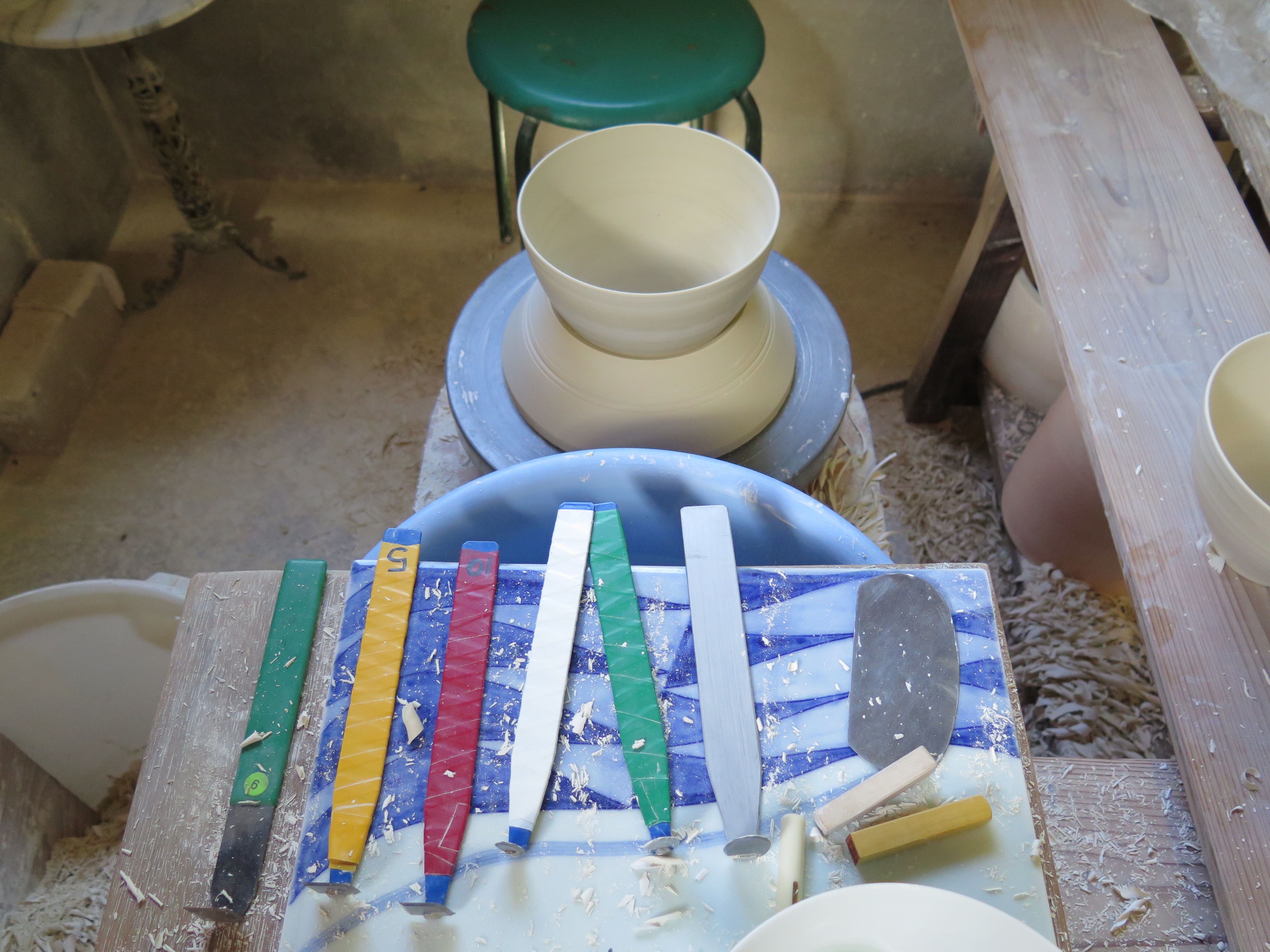
This work requires you to be both meticulous in detail and therefore precise in your hand-eye co-ordination, I’m not too sure if I’m up to it, but I give it my best, roughing out on the next day and turning down to form on the third, then the precise thinning and finishing when it is bone dry on the next, or any time after really. It doesn’t matter once it is fully dried out. I get to use my new tungsten-carbide-tipped turning tools for the job. I’ve colour-coded them. I need to get out more!

IMG_0471made by Steve in Arita

IMG_0449First pot finished, 89 to go.

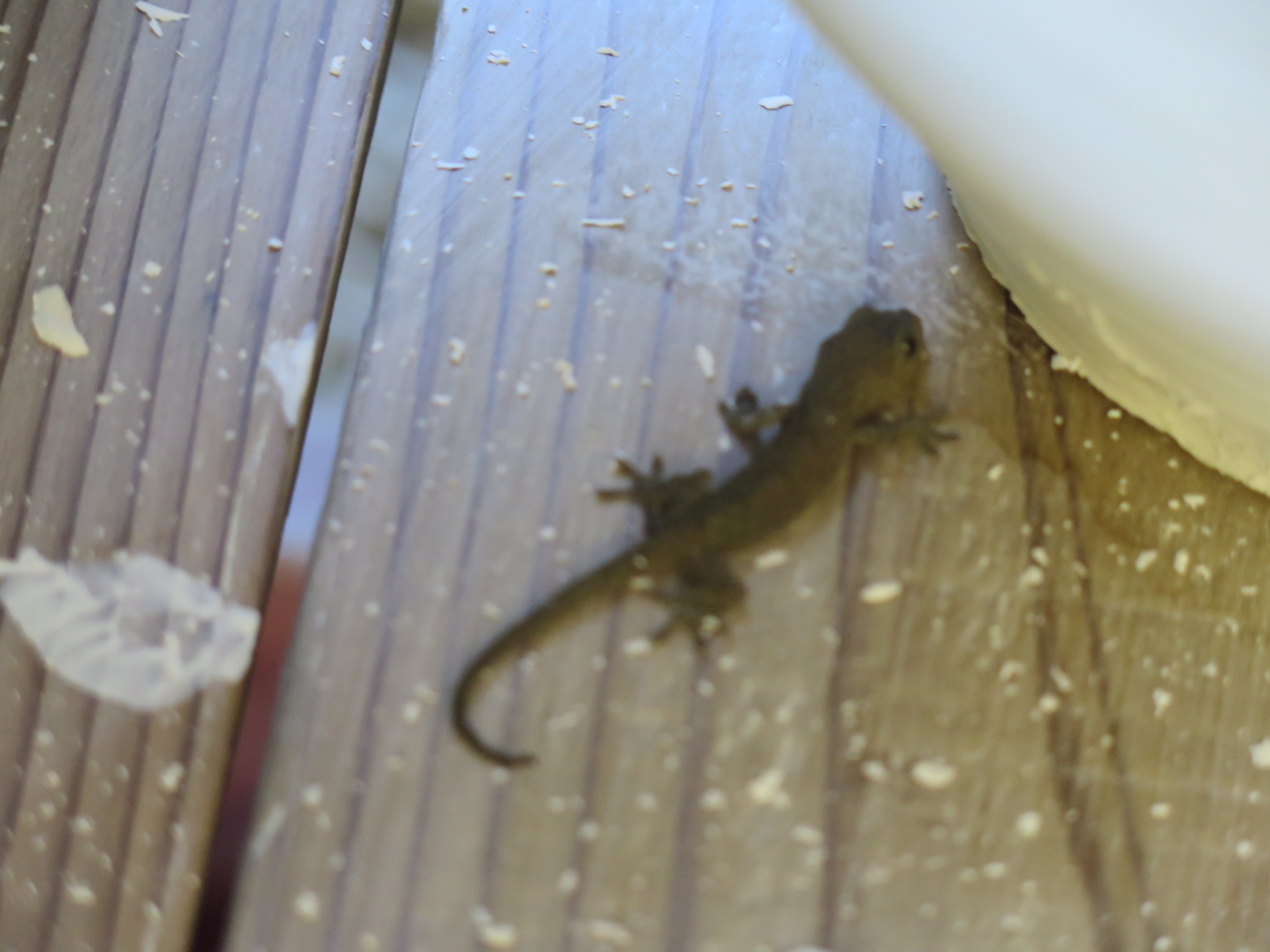
A gecko comes to visit me while I’m turning.

IMG_0466

Today Tatsuya made us a cup of matcha for afternoon tea break. It was amazing. He offered me his father’s Karatsu tea bowl and chose to use the bowl that I had recently given him as a gift, for himself. The tea looked really good in them. We both reached for our cameras at the same time. We laughed! So funny!. We were both thinking that we ought to record the special image of this very particular event on our cameras.

IMG_0473IMG_0475

IMG_0476

It’s a modern world, in this ancient place. So full of history, you can taste it!

The perfect juxtaposition of then and now.

fond regards from Old Steve in the New Arita, Japan

Yes Way! – A Walk Along the old Tombai Walls

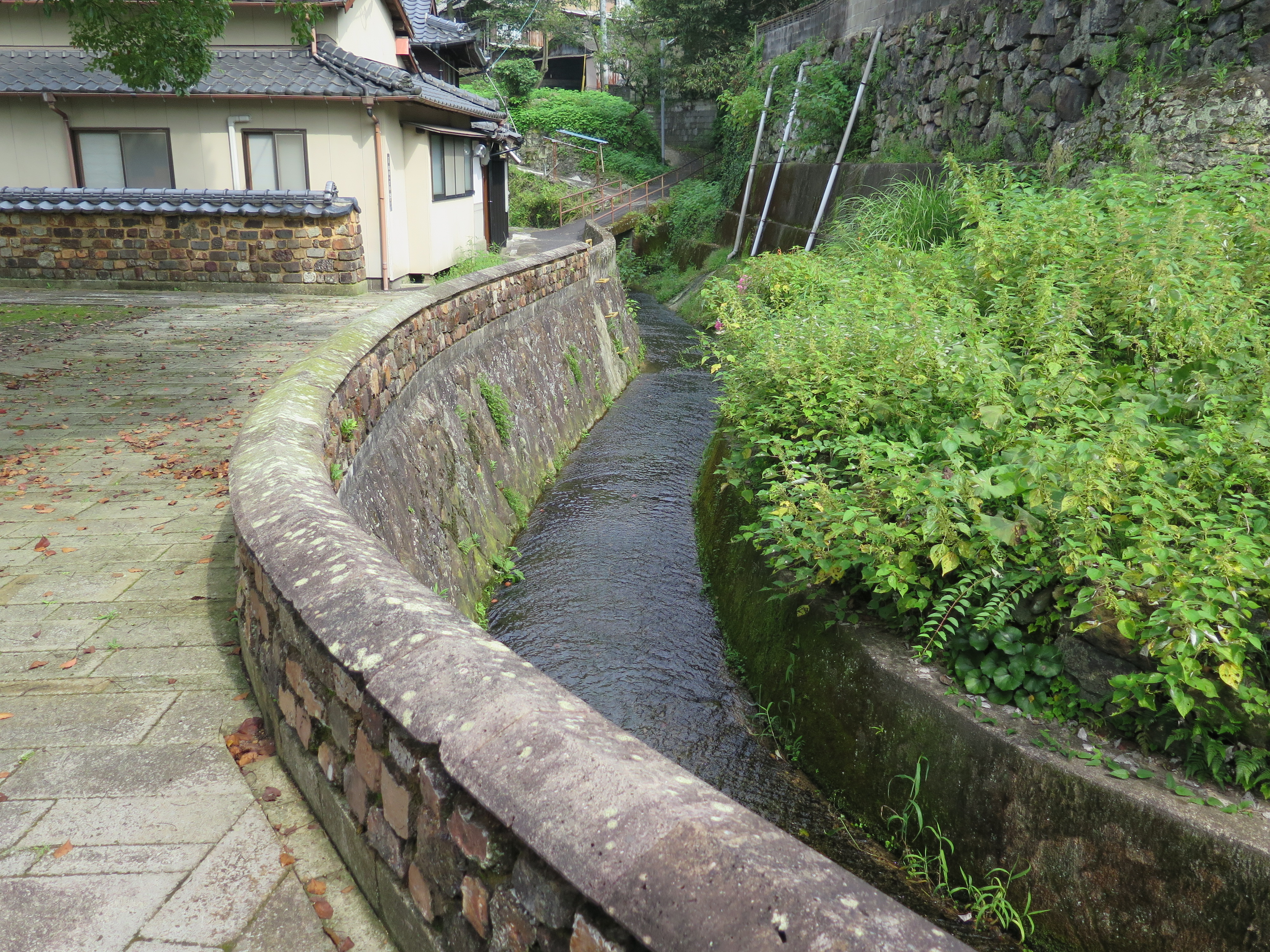
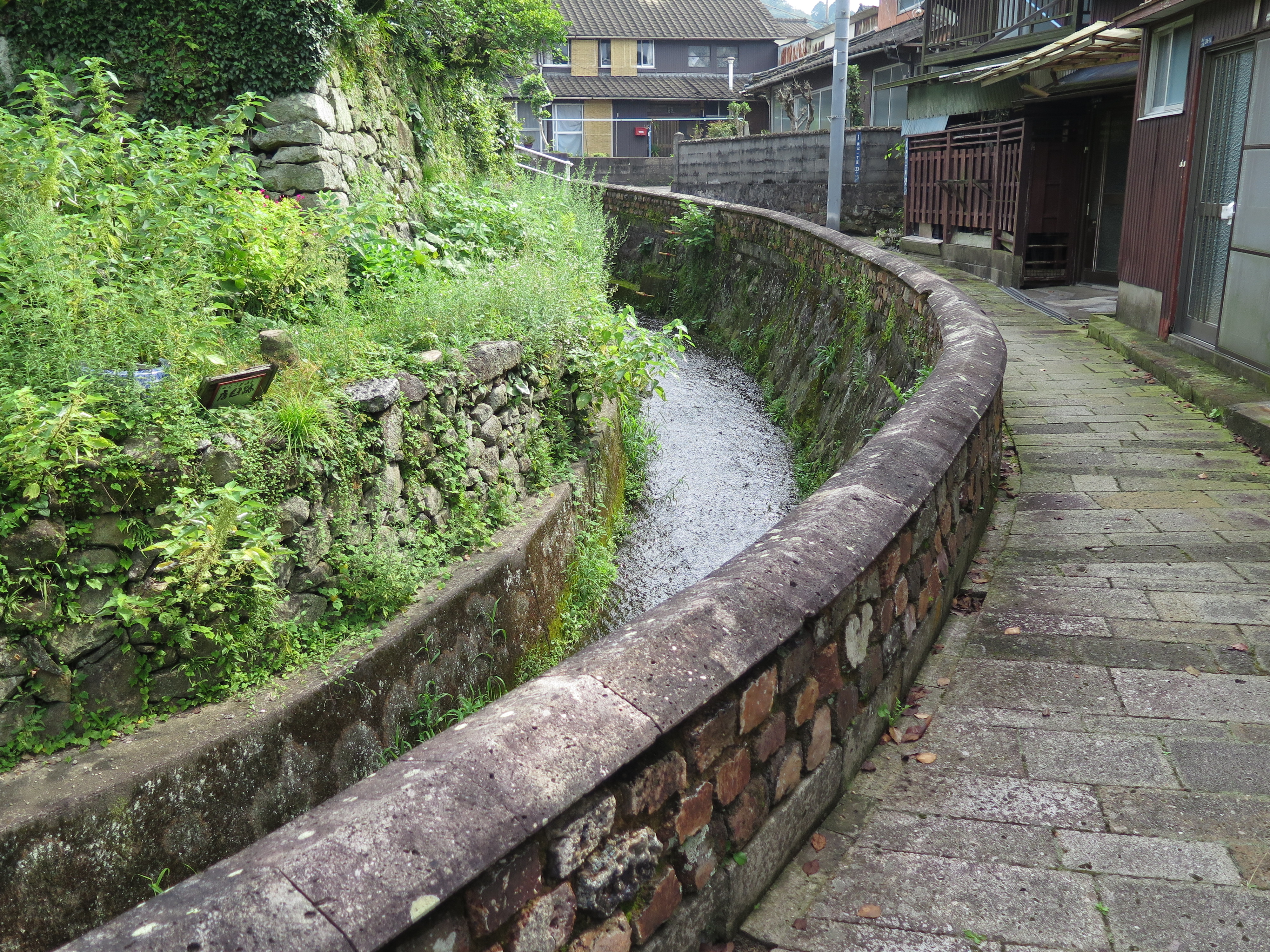
I decide to take a walk up to the old Izumiyama Quarry and visit the Folklore Museum that is situated just by its entrance. The upper part of the Kami-Arita street isn’t that interesting as most of the galleries and shops peter out towards the top of the hill and I’ve walked that way plenty of times. So I decide to detour off the beaten track and take a walk along the little stream and stroll what was once the old main street through the town. It winds and meanders its narrow way between the workshops, gardens and backyards, as it follows the course of the stream and its natural contours. There are several detours and by-passes, little bridges that take the walkway along the opposite side of the stream for a while, for no apparent reason.

IMG_0311IMG_0339

IMG_0338

These criss-crossings of the stream had their reasons in the deep past, but today just seem strange and quaint in a world of hi-tech engineering and straight lines conceived on paper and then engineered into reality, regardless of the local contours and conditions on the ground.

IMG_0329IMG_0330

IMG_0331

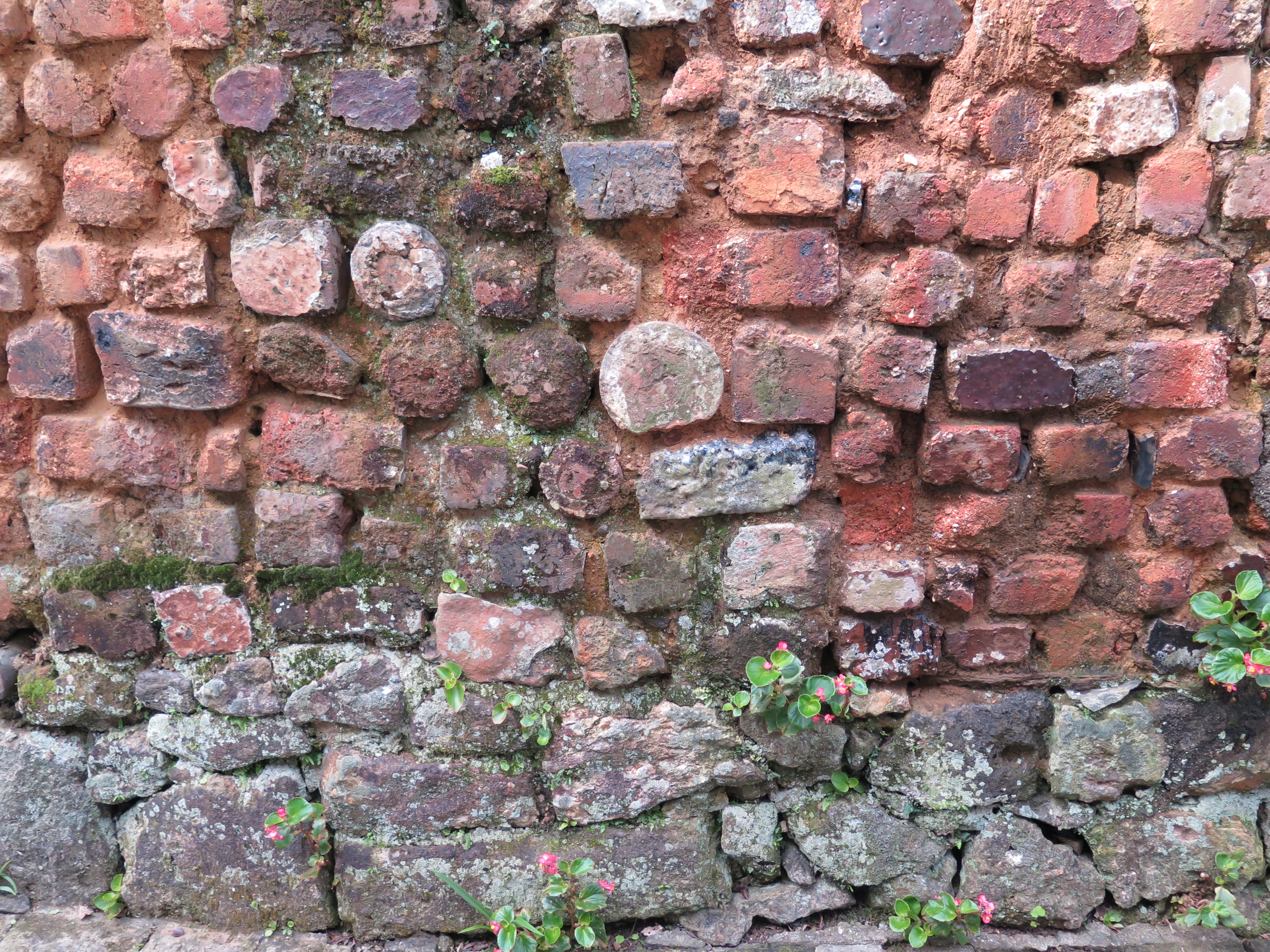
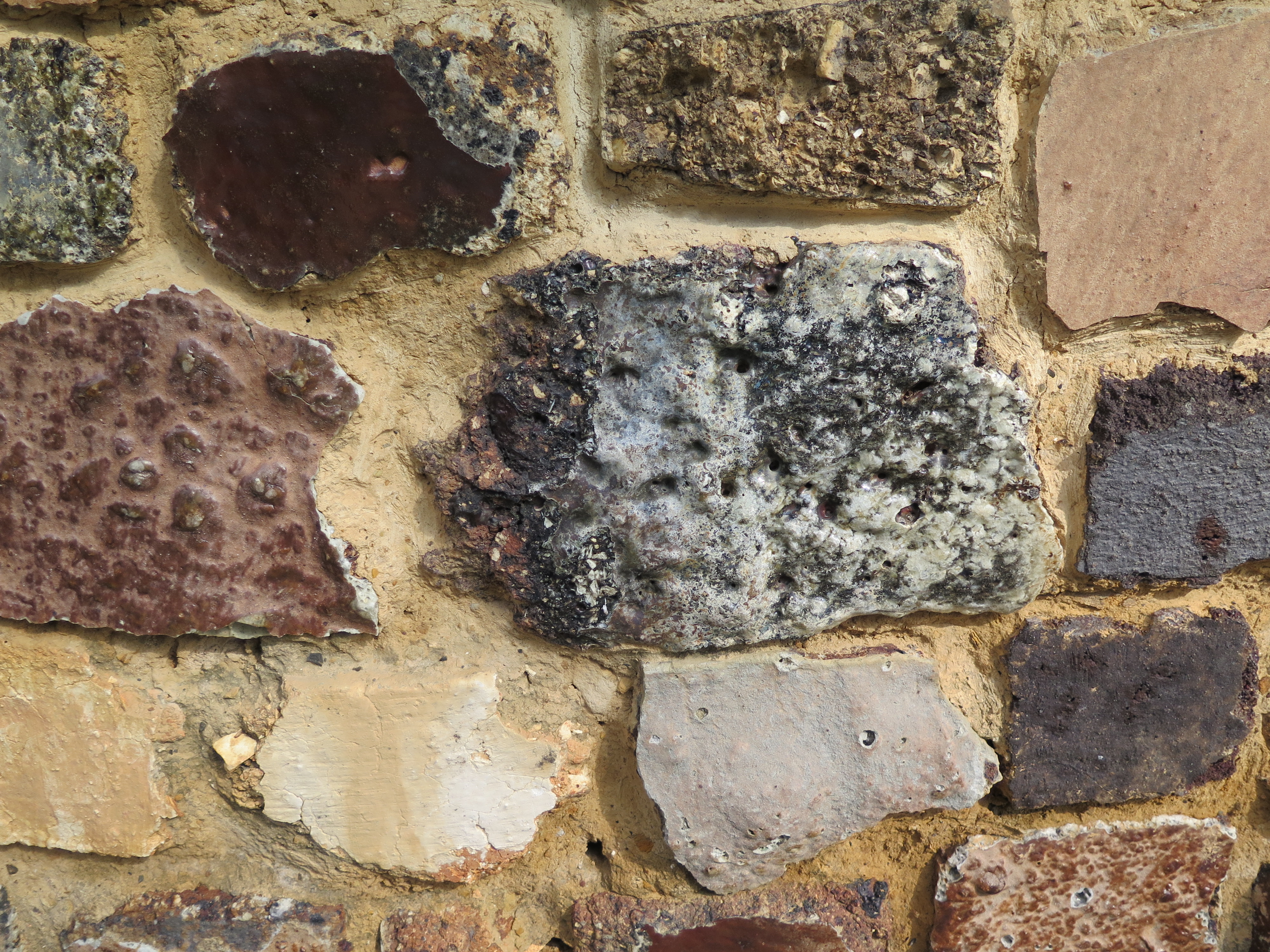
I really like the lovely, ancient, quality of the neighbourhood.  A lot of this area still has the old brick walls laid with mud called ‘Tombai’ walls. Tombai is the local dialect word for firebrick as a lot of the walls along this old road have been built from recycled

firebricks recovered from demolished kilns over the centuries. Their mottled surfaces variably shiny glazed, blistered and pock-marked from their years of productive work in the ancient wood fired kilns.

IMG_0321IMG_0322

IMG_0323

This old main road was little more than a walking track for people with baskets and hand carts and was so windy and convoluted that it was eventually replaced with a new road, capable of carrying traffic in the modern world. The old road remained because it wasn’t just a thoroughfare, but a vital constituent of the local economy, because all along the little stream, there were situated huge, water powered, timber stamp mills, called ‘Karausu-ato’ These mills were used for crushing the local porcelain stone that was the life blood of the local economy. At it’s peak, there were over two hundred and seventy of these water driven pounding mills, creaking, groaning and thumping their way through the day and night. siphoning water from the stream slightly higher up and directing it along leats to the mills, then discharging it back into the main flow to be used again lower down. In this way, the local economy was directly linked to the weather and rain fall patterns. There are no longer any working water-powered stamp mills operating along this stream. They have all been replaced by electrically driven machines. There are two of these mills preserved in the locality as educational tourists attractions. However, water powered clay crusher mills just like these are still in use in the pottery village of Onda, in the north of Kyushu.

see <“A Mecca called Onda” – revisited, for the first time Posted on 12/11/2014>

Not only are there no longer any water-powered stamp mills still working in Arita, but potters don’t do their own milling or clay prep at all anymore. That all finished a long time ago, with the specialisation of labour and business efficiencies. Just as all the pots are no longer thrown on foot powered, wooden, kick wheels, so all the clay for the potters of Arita is now made in just two large mechanised factories and one very small, husband and wife, family business.

It looks like I’m the anachronism. One of the last guys standing who chooses to try and do everything for himself, from digging the stone, through crushing and grinding the minerals, then ageing the clay and then finally throwing the pots on an antiquated, wooden, foot powered, kick wheel. Then firing the pots in a wood fired kiln, that I built myself with my own hand made bricks and fired with wood that I cut and split myself.

When the people here ask me how I work and I tell them. They shake their heads in disbelief. One looked gob-smacked and  just said “No Way”!

I reply “Yes way”!

IMG_0132

The Temple Bell

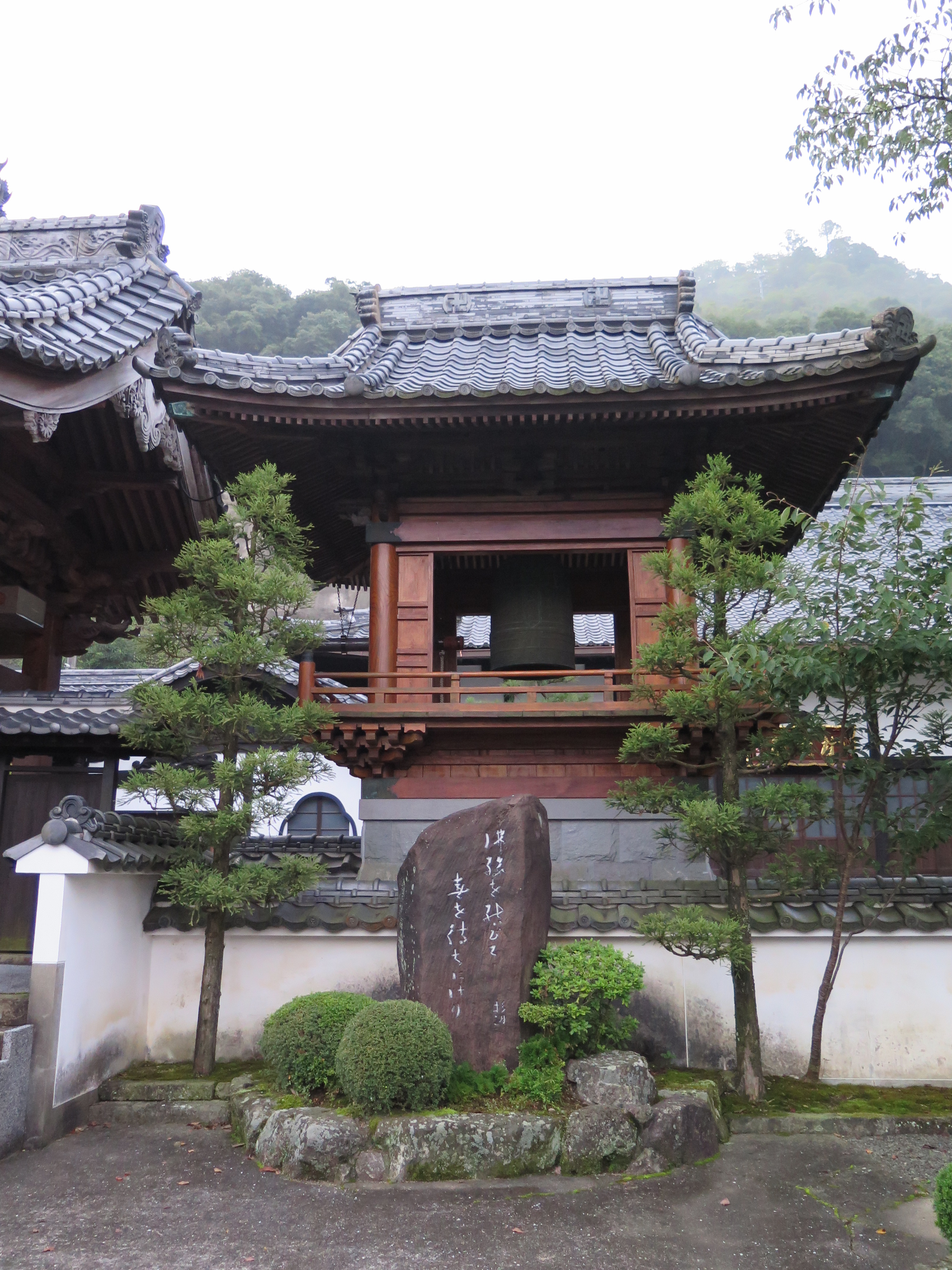
Every morning at dawn, the temple bell rings. It makes its first gong at 6.00am and then about every 35 seconds until ten past. The next strike comes just as the last one has died away. It is a very gentle way to be reminded that the day is about to begin.

Luckily for me, I live some distance from the temple. if I lived right next to the giant bell, I might have a very different opinion. I lay in bed and ponder just where this temple is. There a so many temples and shrines around here. Everywhere in fact. The streets and lanes are crowded with them. I have some idea of the direction of the sound. But sounds are funny things, so influenced by the surrounding buildings and the hill, that I’m not too sure if i’m hearing the sound directly or as it bounces off another building.

Today, I wake just as the dawn in breaking and the new pale light illuminates the shoji screens of my room. It’s 5.30 am. A while before the bell is due to ring this morning. I decide to go out into the street and listen more closely to determine where the sound is coming from.

IMG_0158

I’m up, washed and dressed. If I move fast, I will be able to find to source of the bell. It’s not that important, but I’m inquisitive. My instinct is that it will be coming from the higher temple, above the train line, up on the hill. but my ears have been telling me each morning that it is emanating from the opposite direction. I’m never really sure when I hear the first gong, but once I’m awake they enter my consciousness and become real.

I start by heading to where I feel that it has been coming from in the past. I have 15 minutes to find it before the monk starts his morning task. I walk down the street, I pass a gap between two buildings, there is a little lane way. I can see straight away that it leads up to some temple buildings. I walk up the lane as quietly as possible. I don’t want to disturb the Monk in his daily rituals, he might be meditating?

IMG_0267IMG_0257IMG_0264

When I get up there, there is no-one to be seen. The temple is beautifully kept. It has a raked gravel garden with some large stones. I still have several minutes before the first sound is due to ring. I take a moment to look around the garden and courtyard where the bell house is situated. We are quite well elevated here, above the buildings in the street. The sound would carry well from here. It’s not as hight as the other temple up on the hill, but high enough.

IMG_0261

Only a minute to go and there is no sign of anyone around. Suddenly the sound of a bell sounds out. It isn’t this bell at all. I was completely fooled. I could have sworn that the sounds were coming from the direction of this temple. I head off down the lane and out into the street. It must be the hight temple then.

I head off in that direction, up the street, then up the side street towards the temple. Just then it strikes again. I’m completely wrong! What’s happening?  The sound is coming

from the other end of the street now, back where I just came from. I turn and hurry back with as much dignity as I can muster, as I rush down the street, back past my place and further down the hill towards the sound. I want to get there before the monk or priest finishes his work. I only have 10 minutes max. to find it. Of course, I could always try again tomorrow morning, but I’m up now and on the job.

IMG_0267

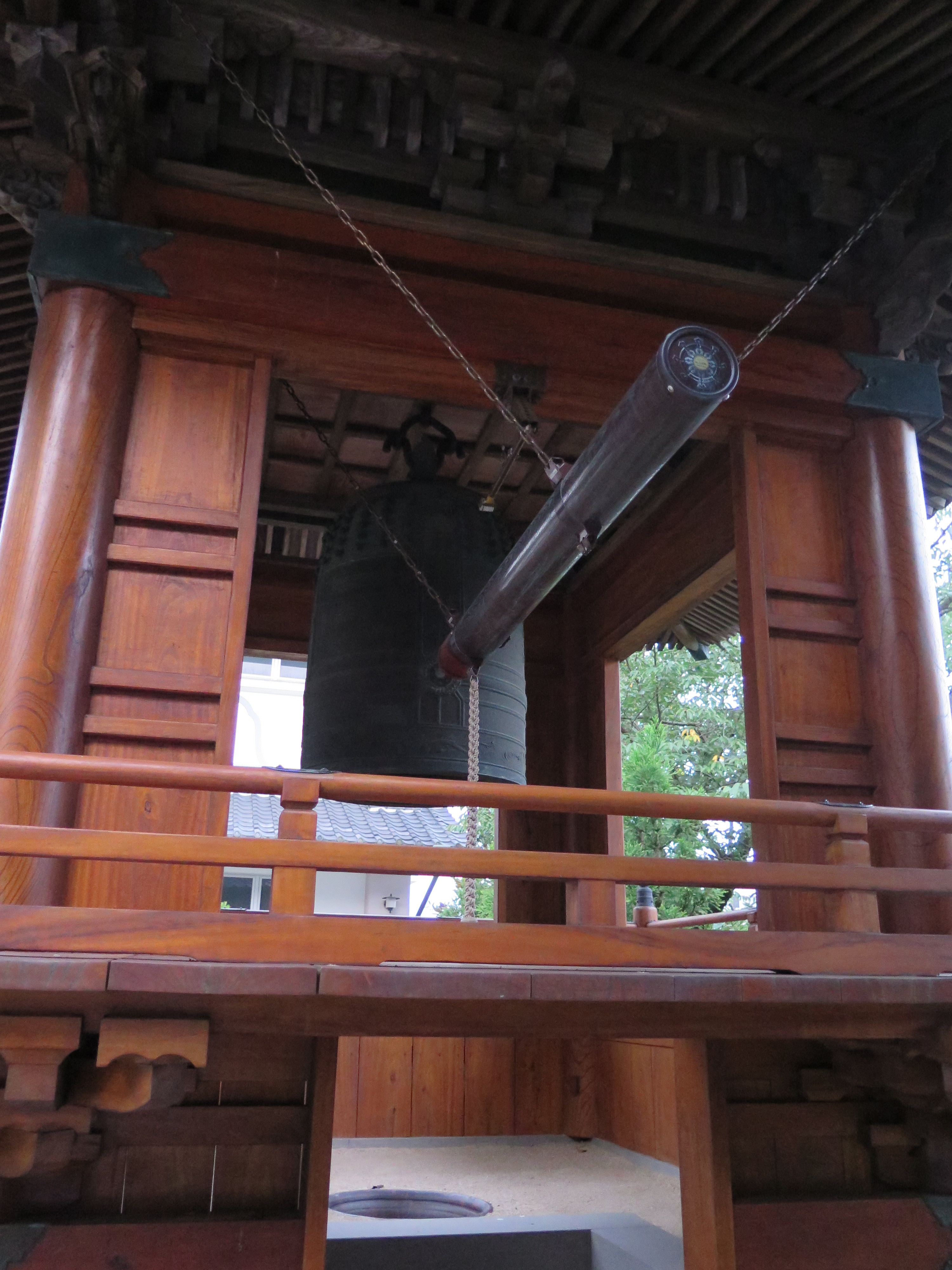
The sound is definitely coming from here. I walk up the lane and there it is, right in front of me. As I approach, the bell strikes again. Actually, that is wrong. The bell sounds as the log that is suspended on 4 chains swings back and strikes the bell, producing that marvellous resounding gong sound. I can’t see the monk in  underneath the supporting structure, so I walk around the garden wall to

IMG_0260

where I can see the bell house most clearly. There is no-one there!  As I watch, the log swings back and strikes the bell again. It is an automated system, run mechanically. I have to say that I’m just a bit shocked and disappointed, for some reason, I was sure that there would be a person here doing some sort of ritual daily devotion.

So now I know, or at least I think that I do, but what do we ever really know? There are two temples and two bells. The first strike seems to come from up on high, then all the subsequent rings are from the lower one.

I’m sufficiently satisfied with this explanation to go home and prepare my breakfast of unsweetened natural yoghurt and fruit. The day has begun. No time to dally. There are porcelain bowls to be turned using my new hi-tech, tungsten carbide tipped kanna turning tools. If I have no problem adopting this brand-new technology for my work to make my life easier, then why shouldn’t a monk do the same?

Oka-No-Mi-Yaki

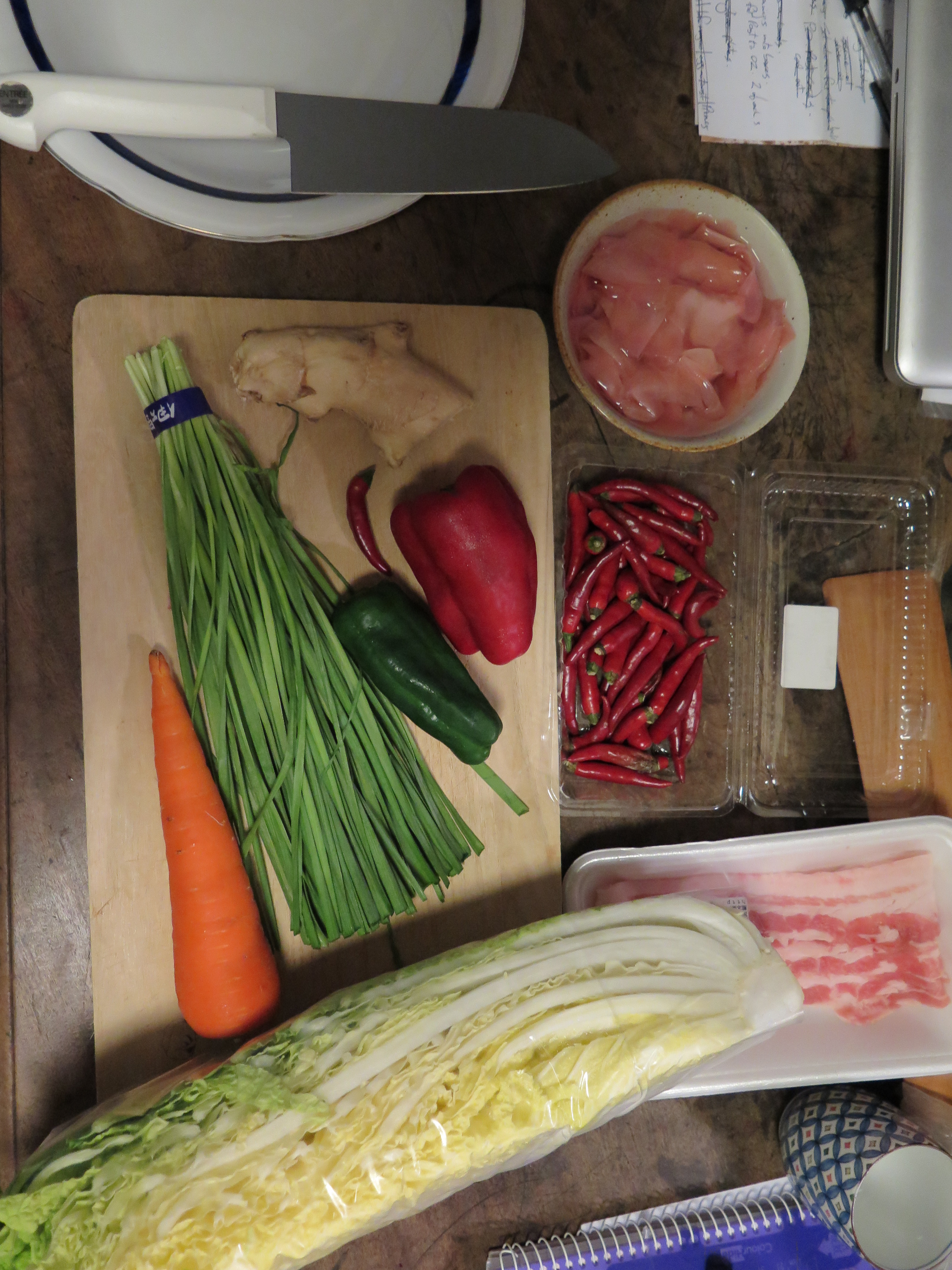
I’ve just finished working on my stretchy stick, ‘nobebera’, and now the mossies are driving me inside. It’s time for dinner and I have most of the makings of an okonomiyaki pancake on hand, but I’m going to make an  Oka version.

IMG_0303

Okonomiyaki is an interesting compound word, that has come to mean ‘pancake’ in common parlance, but if you break it down, okonomi can mean ‘your choice’, and yaki can mean ‘cooked’. So it has come to mean that you can make a pancake out of what ever you want to put in it.

I like that kind of recipe. I don’t have all the things that usually go into an okonomiyaki, but it’s my choice, so I will use what I have. Plenty of vegetables, held together with a bit of egg.

Okonomiyaki, can also mean ‘a stupid thing, of, my, pottery’. This could be a term used to describe my meagre efforts on the potters wheel here in Arita, so I have an affinity.

It’s quick, it’s fresh and it’s reasonably healthy. What more can you ask? I don’t have some of the normal essentials here in my tiny kitchen. I haven’t bought any mayonnaise and I don’t have any Japanese ‘tonkatsu’, BBQ style sauce, or any nagaimo, long yam root, but as the name implies, it’s my choice so I have what I want.

What I really like about this is that, apart from being really tasty, it is a one pan meal, so just right for my tiny kitchen, and so little washing up!

IMG_0304IMG_0305

IMG_0306IMG_0307

IMG_0308

This could be enough for 2 helpings, but I manage to eat it all. I even have some bonito flakes to put on top. I love the way that they quiver around in excitement at the thought of being eaten! They know that they are delicious.

Itadakimas.

from Steve in Arita

Te sukuri nobebera

The hand made stretchy stick!

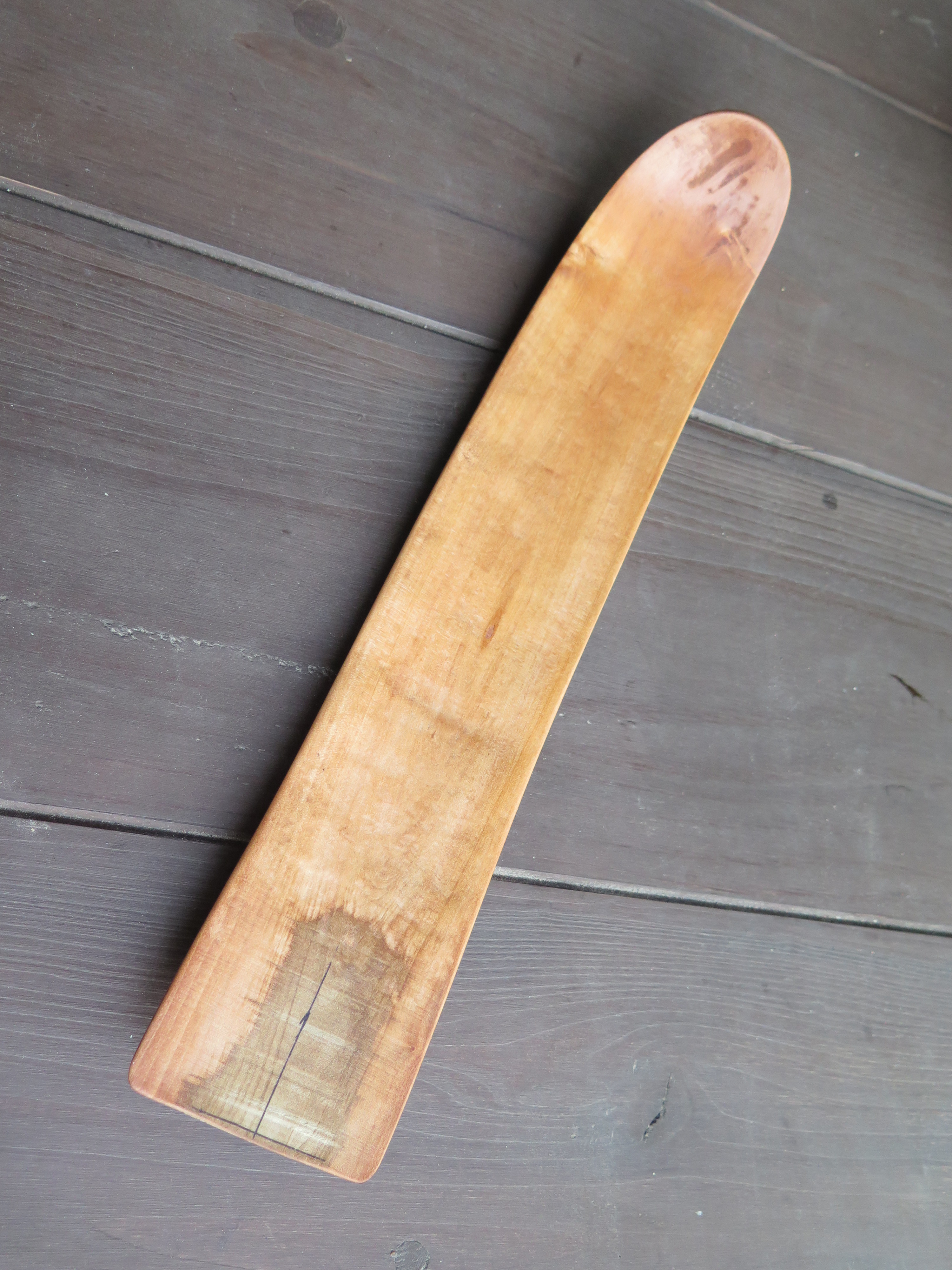
Following on from my visit to the maker of Kanna turning tools and other wooden pottery tools. This afternoon, I have just found the time to make my commitment to my new hand-made stretchy stick. An implement used here for throwing the inside of open forms. This particular one is specifically made for throwing and opening up bowl forms, stretching them out, as it were. So why would I want one? 🙂

IMG_0297

It was impressed upon me at the time of purchase that this tool is a partnership for life. A tool made of superior, old, well seasoned, azalea wood, that will last my whole lifetime if looked after, but it needs to be customised to my hand and my feel for the clay, then adjusted for my technique and the specific bowls that I am making. I will probably end up needing several of these tools in various subtlely different iterations. I may make some of my own once I have got used to this one, and if I find that it can be accommodated to my own preferences for throwing. I have plenty of fruit tree pruning wood at home, some in reasonably large enough cross-section to be useful for this application. I also have some very old, well seasoned, red grained, eucalyptus. That might be good to experiment with?

IMG_0296

This afternoon I went to the hardware shop and had a sort of conversation, if you can call charades with funny noises a conversation? I don’t have sufficient vocabulary for this situation and they didn’t have much English, but together we managed to laugh our way through all the options until we arrived at the objective which was sand paper. If I were at home, I have all this stuff on tap in the workshop, but here every little job, becomes a much larger exercise in communication and perseverance, as well as good will and humour.
I ended up buying two sheets of sand paper. No. 60# and 240# mesh, to sand my new nobebera, This tool looks like a shoe-horn sort of shape.
I spent 2 hours working on it, so that it would fit my hand better, and now it’s looking and feeling pretty special and a lot more comfortable. Smooth as glass. This old seasoned azalea wood is really tough and hard to work. I wasn’t expecting it to take 2 hours, but it did, and it isn’t finished yet.
After I was reasonably happy with the fit and contour, I wet it and let it dry to rise the grain. Then sanded it all over again with the fine grade paper, to get it very smooth, so that the raised wood grain won’t leave streaky scratch lines inside the bowl during throwing.
I need to throw with it for a few hours to get a better feel for what else I need to do to get the best out of it. Once it was mostly right, or as right as I can imagine to begin with, all the roughness sanded off and the tip smoothed out, made silky smooth and with an even curve. I gave it a thin rub over with some olive oil to finish it off ready for some work. It looks and feels good. When you buy these tools from the maker, they are only roughly shaped and need a lot of finishing to bring them up to your personal preference for the precise shape and finish.
IMG_0301
IMG_0302
Tatsuya san took me to the maker’s workshop last week and chose what he thought was the best one for me. He also drew on it with a pencil, to indicate what he thought should be the correct finished shape.
It was $50 bucks and not even finished!
IMG_0098
IMG_6304
IMG_6305
Tatsuya demonstrated using his when we were there at his place this time last year and he threw for us. He has had his for the 40 years that he has been a potter. His are nicely wabi,sabi now and well-worn in. The azalea wood is very hard to sand. I can tell that it will be a good, hard-working tool with a long life.
Thank you Tatsuya. I am grateful!
Best wishes from Steve in the very special porcelain town of Arita

The Closest Thing to Perfect

I’m at the wheel, turning my bowls in the workshop, when two Japanese lady visitors come in to see what is going on. They come over to watch and start to ask questions in local, rapid fire Japanese. I can’t make out a word of it. It’s all too fast for me. I respond that I’m a potter from Australia and just here for a short time to study Arita porcelain techniques. I apologise for the fact that I can’t speak Japanese. They can tell straight away from my appalling grammar and strange accent that I can’t speak Japanese, but I’m apparently doing it well enough for them to look quizzically at the workshop manager and ask. “If he says he can’t speak Japanese, how come he is telling us all this in Japanese”? He explains to me what they have just said and we all get a good laugh out of it.

Today I had some time, as my last batch of pots are not dry enough to turn as yet, because it has been raining almost every day this week. I use my spare time to go out to visit the Gen-emon kiln studio. This is the last and only workshop that still does everything by hand.

IMG_0200

The pottery was founded in 1753 and has been producing exquisite multicoloured porcelain ever since. They have worked continuously on this site since 1868, and the earth floor looks the part. I believe that these floors are made from a pounded down mixture of local sandy/gravelly clay mixed with salt.

IMG_0215IMG_0216

The forms are all thrown and turned by hand on the wheel. I spent an hour there watching the thrower and the turner completing one form each. Everything is measured and then measured again. Everything is made to the most exacting standards, precise measurements are consulted for each part of every piece. All aspects of production are measured and checked, then rechecked, at every stage. Once the pots are finished, they are placed in the drying room to wait for the bisquet firing.

IMG_0222IMG_0208

The turners precious tungsten tipped Kanna turning tools.

After the bisque firing, all the glazing and decorating is also done painstakingly and laboriously by hand. The decorating is quite complex. The initial design is roughed out in pencil, then laid out on the surface in brief detail in charcoal. Then it is passed to the decorators for the heavy line work, then the lighter line work, finally it is passed to the infill specialist, to complete the design by filling all the otherwise white, blank space with a dilute cobalt wash, as required to fulfil the pattern, leaving specific parts of the design in micro-detail left blank and therefore still white. It is an amazing skill to see done. The huge, heavily loaded brush, is filled with dilute ‘gosu’ pigment of cobalt.

IMG_0197IMG_0199

I count 11 people busy working in the decorating room while I’m there.

Gosu used to be a natural cobalt ore, consisting mainly of iron and manganese, with just a little bit of cobalt content. The cobalt being such a strong colourant, that it over powers all the other oxides in the ore and still turns out blue. A soft blue admittedly. This is so much more preferable to straight 100% pure, modern cobalt oxide, extracted chemically from its complex cohort of other minerals. The older natural ores were a very impure blend and because of this, they tended to be a rather softer and washed-out tone of blue. These days potters like this tend to mix their own dilute cobalt pigments to break down the intensity of the royal cobalt blue.

I have discovered cobalt bearing ores where I live, and they are only 1 to 1.5% cobalt with twice that amount of manganese and a load of iron. The remainder being silicates that make up the ore. They give a soft pale blue pigment. I can imagine that the original cobalt ‘Smalt’ or ‘Gosu’ pigments were very similar materials to this?

Here the fully loaded huge ‘fudo’ brush just keeps moving, never stopping, working its way around the surface of the pot, draining it’s precious contents of gosu into the design in a carefully controlled and steadily flowing movement of the brush. It’s just like magic, it is an amazing and very impressive skill, every drop goes exactly where it is intended. It never overlaps where it shouldn’t go. Years of practice have gone into this level of achievement. I’m beyond impressed, I’m gob-smacked. I’m amazed that it can be done, in what appears to be such an effortless way.

I want one!

The glaze firing is done in a huge, single-chambered, wood fired kiln. It was told that it takes 1000 bundles of wood, at $7.00 dollars each, to fire up this big kiln. I’ve double checked the details, and this is the correct figure, or what I’m told is the correct figure. I find it hard to believe that you can spend that much on fuel on one firing of a kiln. No wonder that the prices are so high.

IMG_0232IMG_0191

IMG_0193IMG_0192

However, when I get into the gallery/sales room. it’s another matter. These prices are not for me. They start in the thousands. I’m completely out of my league here. The work is so impressive and so complex and the closest thing that I can imagine to perfection by hand methods. I’m absolutely convinced that these pots are worth every cent of the price. It’s just right out of my budget, for me on this trip. I eventually find a tiny dish that I can afford, in single tone blue and white. It’s tiny and exquisite and I can afford it at $35!  I can’t see anything that I can afford in 4 colour, over glaze enamel and under glaze cobalt, with a final firing of gold detailing.

IMG_0243

IMG_0234IMG_0235

It’s all pretty impressive, and I’m so glad that someone is still doing it, and even more glad that that someone isn’t me! I really admire the skills, I just don’t what to be the person doing it. I’m even more impressed that they can get the high prices that they are getting. They need to, to be able to employ all these amazing craftsmen and women.

Good on them!

IMG_5903

Unless I had seen it done with my own eyes. I wouldn’t, couldn’t believe that it were possible to paint the negative space out like this in straight lines, without using some sort of resist to keep the pattern so clean, perfect and regular.

IMG_5905

Eat Your Heart In

It is very easy to get used to the food here. For a start, everything is delicious and it is usually so well presented. It looks as good as it tastes. It the past I have found a little difficulty in finding somewhere that will serve a salad, most light meals seem to involve rice, noodles or something deep-fried of some kind. However, on this trip I seem to have no problem finding straight salad on the menu. Is there some kind of change going on here now? Or am I slow to figure these things out?

IMG_0044DSC01401

My main way to obtain a salad has been to go to the 7/11 or Lawson and find a  bag of shrink-wrapped, pre-shreded, cabbage salad in the fridge section. Cost $1 for what I think is a single serve, but may be intended for a family of 4? I have no problem putting it all away easily enough. Another favourite is sashimi, and this is always readily available in the supermarket fridge, fresh packed daily, at about $3 for 4 or 5 slices, or a larger tray costs $6 for 10 to 12 slices. All nicely arranged on a tray with a couple shiso leaves and some grated daikon and carrot. A healthy and nutritious light meal for $4.

IMG_0063IMG_0064

When I eat out, which isn’t often, I always choose the cheaper places. Even so, the food is always so beautifully presented. While the interactions with the people are always so friendly, engaging and ever so polite.

DSC01399DSC01402

I feel so inadequate and clumsy here. I don’t know all the rules and feel like a baby elephant crashing through sensitive cultural barriers without noticing and then shitting on the floor. But what can you do? I’m learning on the job as it were!

There isn’t much that I can about it either, except apologise. I do a lot of that these days. I’m enjoying myself, even if my hosts are finding me somewhat trying.

My supermarket supplied dinner for tonight. As I’m a ‘chunga’ here at the moment (bachelor). This kind of dinner is easily obtained, cheap, nutritious, fresh, and healthy. It’s just right for me at the moment in my unsettled circumstances.

IMG_0185

The only processed food here is the natural yoghurt.

Lots of vegetables with some fish, is thought to be a very healthy diet. The Japanese are some of the healthiest and longest lived people on the planet, particularly the women. So something is right! Is it genetics, or is it the diet? Only time will tell, as younger people are adopting a more western diet and lifestyle.

This is pretty close to what I would be eating at home. Except that at home, all the fruit and vegetables would be home-grown in our extensive vegetable garden and orchards.

Best wishes from Steve in Arita