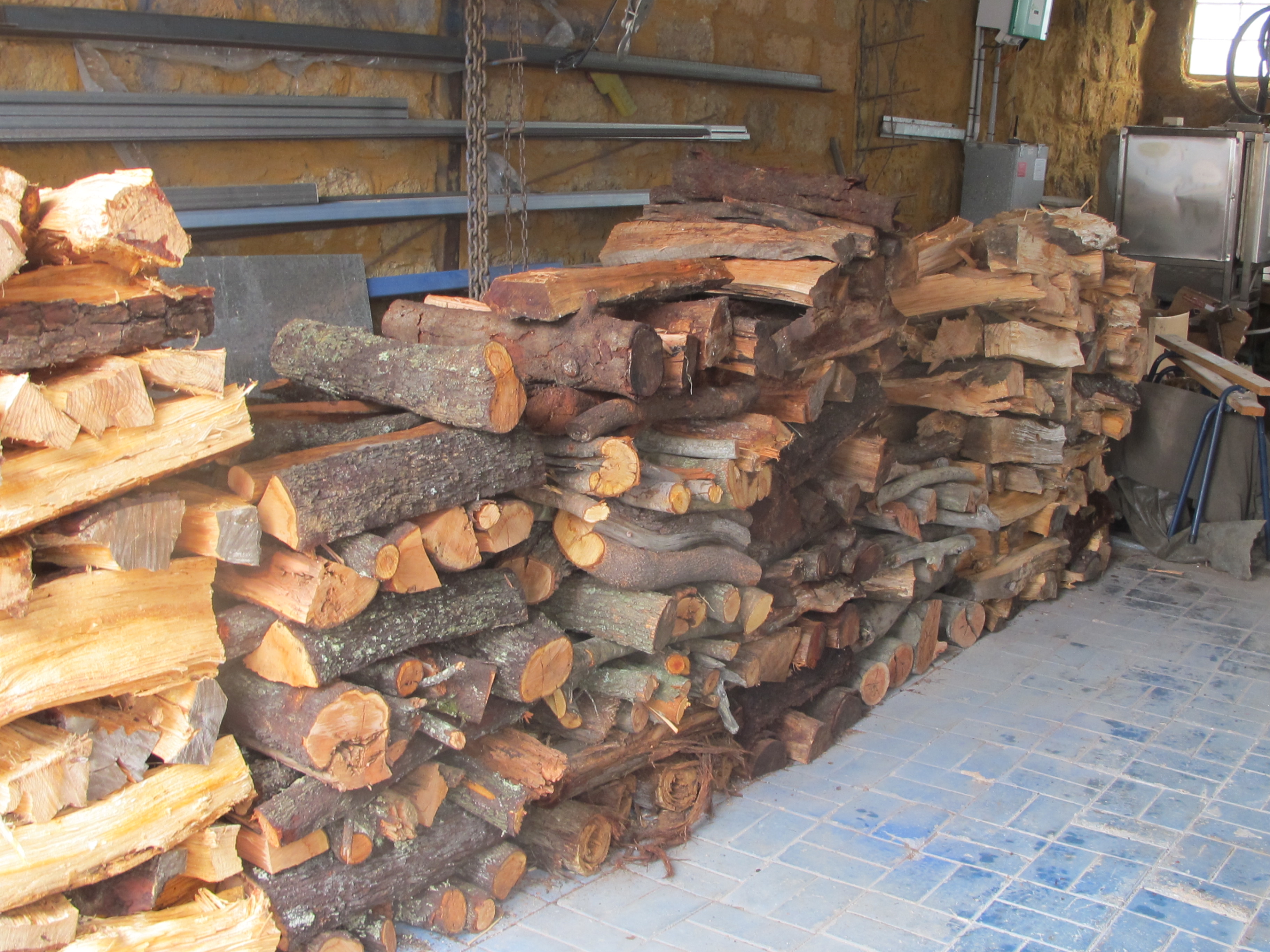
The thrice-warming winter-solstice wood pile.

The thrice-warming winter-solstice wood pile.
It’s the winter solstice and we need to keep ourselves warm in front of the fire every night now. So a continuous supply of wood is needed to keep the home fires burning. “Cut your own wood and warm yourself twice”. We do a lot of wood cutting , splitting and stacking. Then wheel-barrowing and re-stacking. There is a sense of satisfaction and security in a generously stacked wood shed. As we change and get increasingly older, we have had to adapt and change from the initial brute strength and enthusiasm to a more considered longer-term approach of working smarter. Some might say that to be still living here like this in our sixties might be  proof that we aren’t so smart, and maybe we’re not, but this life of minimal consumption that we’ve chosen is still working for us, or should I say that we are still working for it!

IMG_4091

I’m so naive!  

I try to do all sorts of things that I can’t do and have little expectation of succeeding at, bit I have a go at it because that is what self-reliance is all about. Sometimes things actually work out well and I’m surprised and thrilled at the end of it. Other times not. Take the wood splitter for example. Just about everything here runs on wood or solar power – except the car. (If only! I’m still waiting for the cheap solar/electric car). We cut and split a lot of wood each year to run the house and most of it is grown here on this little 2.5 hectare (7 acre) bit of land. I do the chainsawing and manhandling to the truck. These days I use a cheap, hand-pumped hydraulic crane to lift the logs up onto the truck. Then they are driven to the wood shed and the biggest ’rounds’ are stacked inside the shed ready for splitting. These days The Lovely does the splitting, but it wasn’t always so.

It’s not as bad as it sounds, because we have a hydraulic wood splitter.

I used to do it all with a block buster and axe. Janine would collect all the sticks and kindling up to sizes that she couldn’t snap and then stack it all near the wood pile. All the larger, unsnapable branches were dragged to the wood pile for me to cut up with the chain saw.
Initially we couldn’t afford a chain saw, but we came across a 2m. long two-man cross-cut saw. Our friend, fellow potter and experienced bush man, Mike Pridmore, called in one day and showed me how to sharpen and set it. We fashioned two wooden peg handles for the metal sockets at each end and we were away! Janine and I, one on each end of the ‘two-man’ saw. Rather oddly and badly named. In our case it was a two person, husband and wife saw. We would do 1 hour of cutting together before breakfast. Later we found a smaller 1.2 metre single handled variation of that saw, which I could use alone. But after 20 years of this my back got too worn out to continue with the block busting and heavy lifting, so eventually we bought a chain saw and a hydraulic wood splitter at great expense and the two big cross-cut saws are hung up in the barn for good now. These purchases were our second concession to the modern world, after the ride-on mower. It revolutionised our wood preparation efforts. The splitter had a 5 HP Briggs and Stratton petrol engine on it, and the motor lasted about 15 years, with minor work to keep it going, but eventually it was worn out and packed it in. I spent a hundred dollars on it , new rings and ground the valves and it went for another few years, but that was it.
Nothing last for ever.
I decided that now we had solar power installed, it would be good if we could convert any petrol usage to solar electricity. The splitter was a great candidate because it was stationary and could run on an extension cord from the house. The wood shed is only 20 metres from the house. I asked a bloke who was very experienced with machinery matters about this and he said it would be a ‘piece of piss’, nothing to it. Just get a three phase, 5 horse power electric motor of the same size as the petrol engine and swap it over. Having no background in things mechanical I wasn’t sure what to think, but I was sure that it wouldn’t be that easy.
We didn’t have 3 phase electricity anyway, so that was out of the question. The best that I could do was to buy a 3.25 HP single phase 240 volt motor. This would draw all of the available 10 amps of current to run it and even more on start-up. But 3.25 isn’t 5, and was way too small. I asked another bloke with farm machinery background and he told me not to worry, Petrol motors have very small horses powering them! Something to do with only one of the 4 strokes in a 4 stroke motor being powered, leaving a gap in the power curve being un-powered for 3/4 of the time. Or words to that effect. Whereas, electric motors have very strong horses powering them continuously and evenly. The word ‘torque’ comes to mind? He told me that a 3 HP electric motor would do what a 5 HP petrol engine would do!
I was sceptical, so I asked my friend Dave Hunt, who is a real engineer, if that was true and he told me that he’d never heard of that. Fair enough, it sounded a bit bodgy to me too. Nothing could be that easy!
IMG_4096

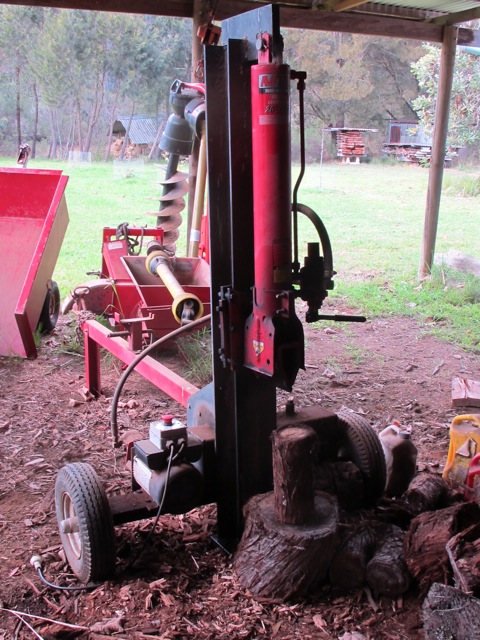
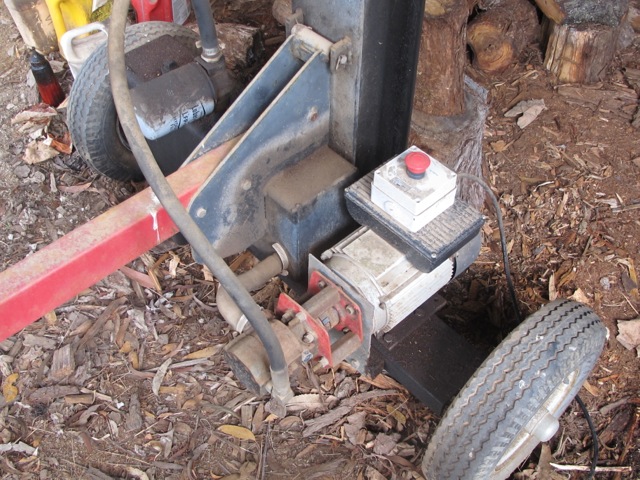
However, as I had no other real alternative, except buying another petrol engine, and this was quite unpalatable to me, knowing that small petrol powered engines are the most inefficient, polluting and wasteful of all motors. I though that I’d give a small solar powered electric motor a go. I bought the small single phase motor and managed to weld up a home made adaptor that suspended the old hydraulic pump in front of the new electric motor. The old system had the oil pump directly bolted onto the petrol engine. This was not possible with the small electric motor. My amateurish piece of bodged home-made engineering linked the old hydraulic pump from the old petrol motor to the new electric motor, even though they are completely different in configuration.
Amazingly it worked!
I didn’t know that it couldn’t be done, so there was a slim possibility that it could work. I may be naive, but I’m prepared to ask questions and give things a try. “Don’t believe anything you read, nothing you’re told and only half of what you see!” – Mark Twain. This one worked for us. It’s not quite as elegant as it was, or as powerful as the old 5 HP petrol engine, but almost. It can split almost everything that we put under it, and it has been working perfectly now for almost 10 years. Janine can start the motor just by switching it on at the power point. So I’m now redundant in the splitting process. She doesn’t even need me anymore to start the motor — which, at the end, had become quite troublesome and difficult with the petrol engine.
Nothing is perfect.
IMG_4094

 So now we use sunshine to split the wood to heat the house and cook the dinner. It’s nice.
Just the thought of it is warming.
Install solar panels to power the wood splitter and warm yourself thrice.
Luckily, although now mostly redundant, I can still be useful to herself for killing spiders and loosening tight jam jar lids, so she still feeds me. Otherwise I might expect to be pushed outside for the winter, like one of the drone bees! Actually I am still more competent than The Lovely when it comes to the big chain saw and using the hand pumped imitation ‘Hi-ab crane’ and fibre slings for lifting the biggest logs onto the back of the truck for delivery to the splitter.
I might just be safe for the time-being.
Nothing is ever finished.
Fond regards from the thrice-warmed, Mr Redundant and his competent Mrs. – Who haven’t split up.

Give Peas a Chance

Give peas a chance

The Lovely and I have been doing a bit of community service down at the Moss Vale Community garden. It was a joint meeting of the seedsavers, Permaculture and community gardeners groups. We went along to hear David Murray talk to us about preserving older ‘heritage’ varieties of peas and beans. He’s an ex-academic from Wollongong who’s specialty is peas and beans. I don’t want to pea in his pocket, but he was good! He really knows his stuff and now we know more than we probably need to about peas, beans, their propagation and the safe storage of the seeds. He has quite a complicated rigmarole of drying and desiccation using repeated applications of silica gel. Followed by a few days in the freezer to kill weevils and then double storage in glass jars with more silica gel in the intermediate space. Very thorough!  After the talk we spent a couple of hours fettling, sorting, winnowing and sieving various seeds for the community seed bank. We took along a big bag of our own vegetable seeds that we had saved and packeted for our own use in recycled envelopes, but as always, we live with abundance, so we have far too many seeds left over, more than we need, and as we collect more seeds every year, we end up with such a lot that we have to throw the older ones out eventually to make room for this seasons fresh seeds.

We’re not very thorough about it. We just let one of the biggest and healthiest plants grow on to seed after all the other plants in that bed have been harvested. I prefer a plant that is close to the end of the row so that it is more or less out of the way. In this way, I can reuse the bed without disturbing the roots of the seeding plant. These selected plants often grow into small trees and need to be staked to keep them upright. One plant like this can carry enough seed for the whole village. We only collect a small selection for our own use. There is always a lot that blows away and spreads all over the garden, the paths and the lawn.
We put the seeds into big paper bags along with some of the stems that they are attached to and place them in the linen cupboard in the laundry that has the hot water tank in it. The gentle warmth in there dries them out nicely over a few weeks or a month or so. This seems to have eliminated the need for the silica gel for us.
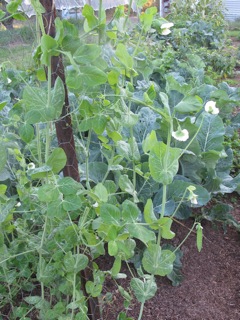
On this occasion, we donated coriander seeds to the seed bank and came home with some extra tall growing ‘skyscraper’ climbing peas. We haven’t grown these before, they are new to me. Apparently they can grow up to 3 metres tall! We’ll see what happens. I hope that they don’t as my trellis isn’t high enough. Growing this tall doesn’t sound like an advantage to me. The plant must put a lot of energy into making such a tall frame and then it might be  vulnerable to strong winds? However, we are promised that they are very tasty to eat. The seeds that we get are a couple of years old now and need to be ‘refreshed’ for the bank. So this will be our contribution back to the seed bank later in the year. We have tended to be pretty slack about our labelling up to this point. We have so much to get done each day that somethings don’t get done very well. As it turns out labelling the exact variety of seeds tends to be one of the things that we don’t always record. We just write something like “climbing peas 2014,” or ‘bush peas 2014’. This is enough information for us, but doesn’t make them very useful to a seed bank. The plants seem to grow well enough for us, we just don’t always know which variety that it is exactly and we haven’t needed to care about it either.
From now on we will try and be a little bit more attentive to detail, so that our efforts won’t be wasted and our seeds can be useful to others through the seed bank.

IMG_4084IMG_3603

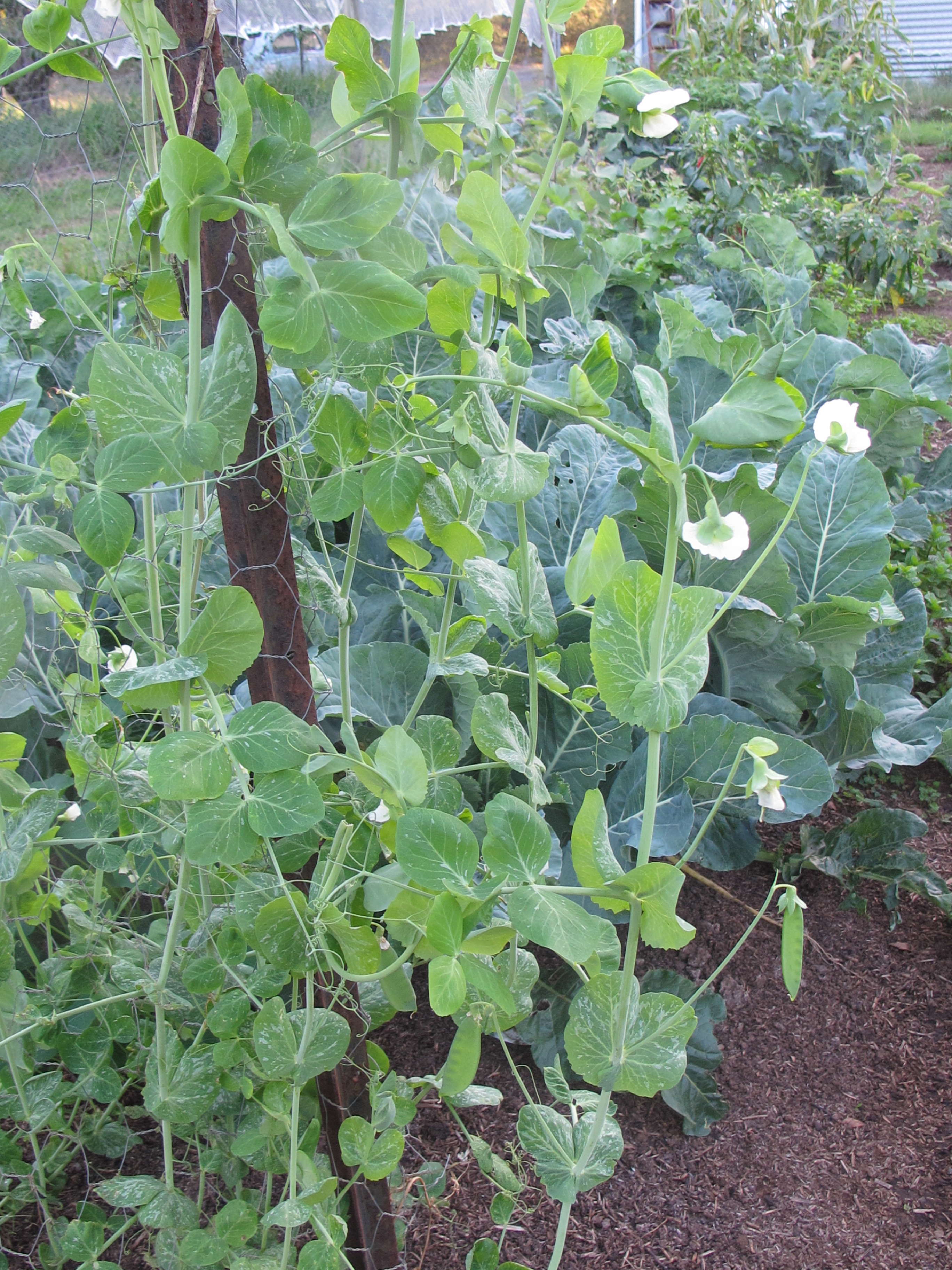
I can’t help eating a few peas every time I go to the garden at this time of year. I can’t walk past them. They have to be one of the most delicious vegetables that can be eaten raw directly in the garden. They are such a sweet treat.
In the Oxford Book of Food Plants, I read that there is a variety called ‘Harrison’s Glory,’ now that is the variety that I ought to be growing! But alas, I haven’t seen it anywhere as yet. It could be one of those older varieties that has slipped from general usage over time and probably only exists in a seed bank now? On the other hand, there is a variety called ‘Balmoral,’ listed in the CSIRO book, ‘The small food Garden,’ I certainly should be growing that variety here. But again, I haven’t seen it anywhere around as yet.

IMG_4082

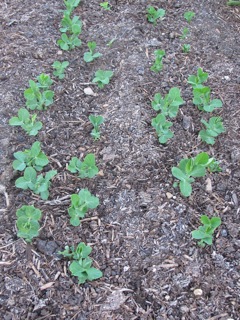
The follow-on crop of peas is just emerging. I’m determined to give peas a chance.
We also grow coriander on and off all through the year, just like everyone else does I suppose? I don’t know how many varieties of coriander there might be, but I can only surmise that there might be quite a few, especially in Asia. I don’t know which one we grow. We just grow our own ‘generic’ coriander and always have recycled our seed in this way. It’s a very prolific seeder.  Some years ago I bought some ‘cilantro’ coriander, that was supposed to be slow to bolt to seed and be more leafy, but it grew just the same as our ordinary variety, so I didn’t save any seed from it. We added our multi-generational ‘generic’ coriander to the seed bank as well.
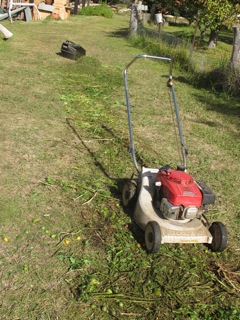
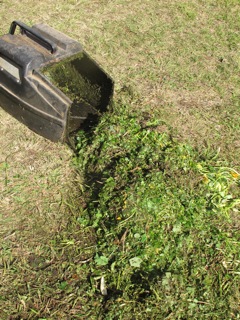
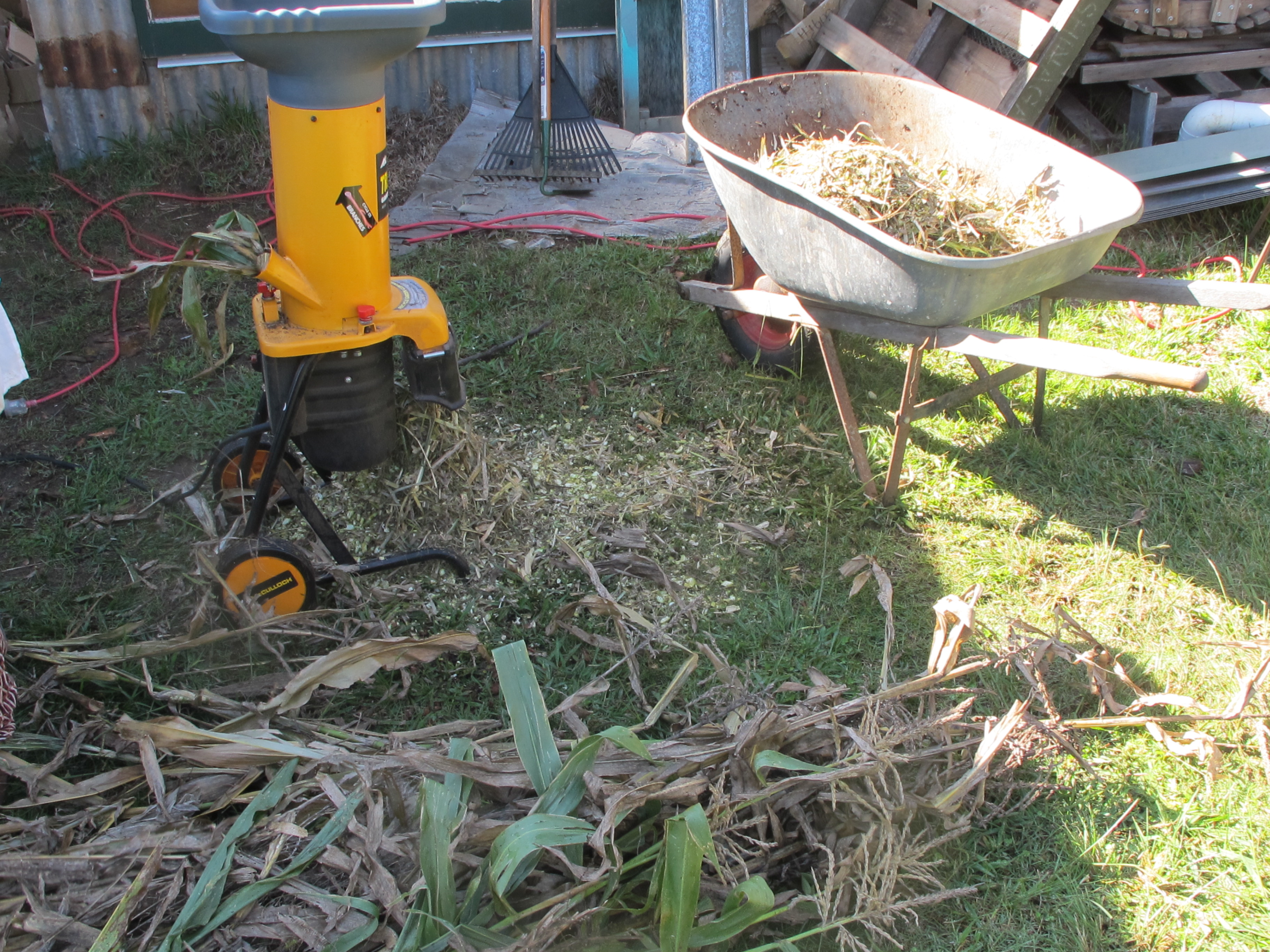
We have pulled out a lot of late summer/autumn stragglers from the garden and composted them. Firm dry material like corn stalks go through the shredder really well and make good compost, but anything that is at all damp just clogs it up, so I’ve found that piling it all up on the lawn and run the mower over it
gets it all shredded pretty fast.
IMG_3829
 IMG_3832

IMG_3833

 IMG_3834
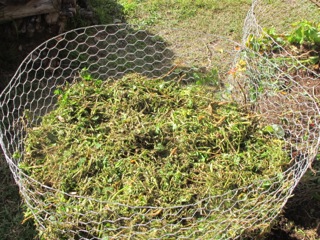
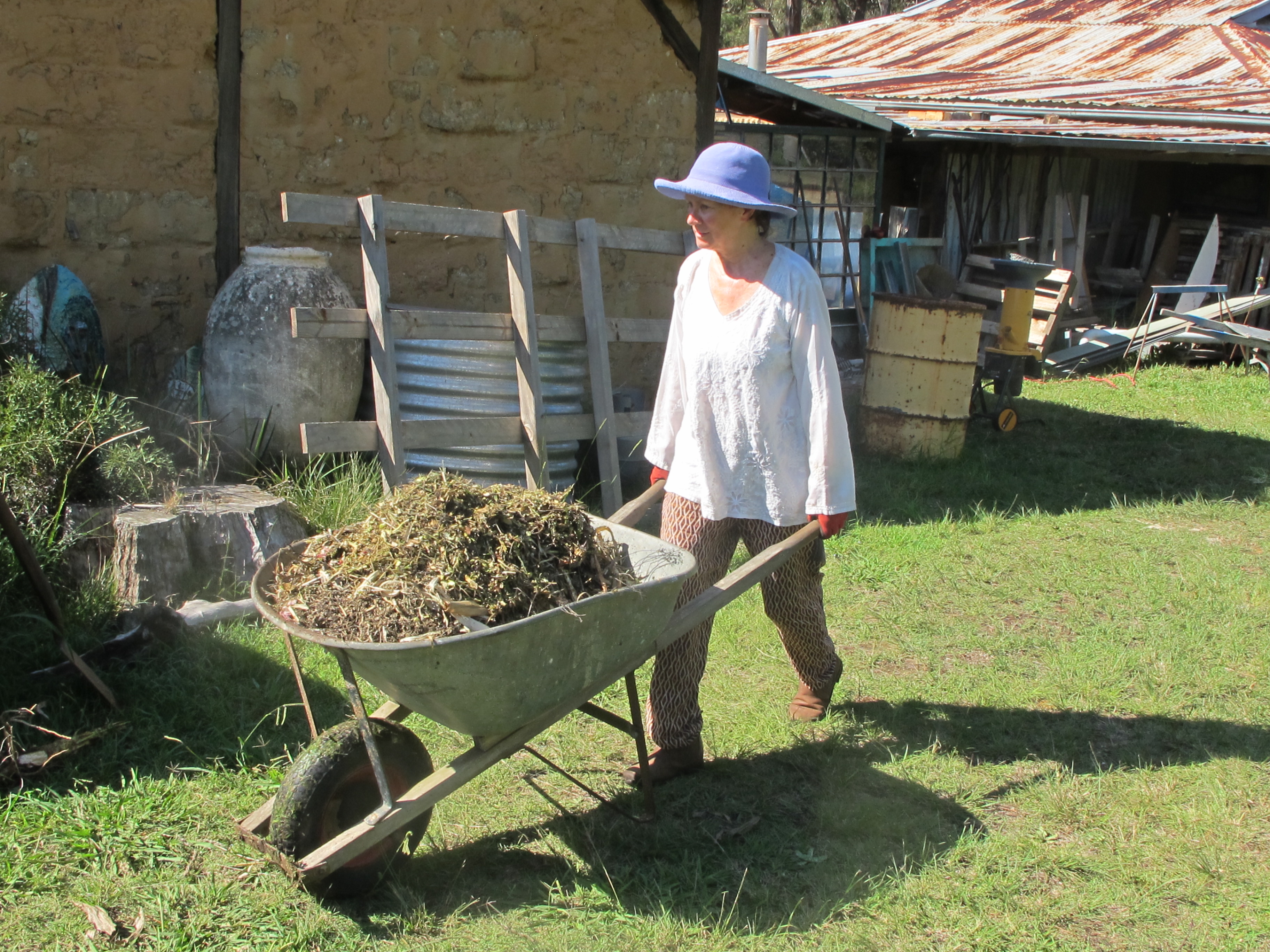
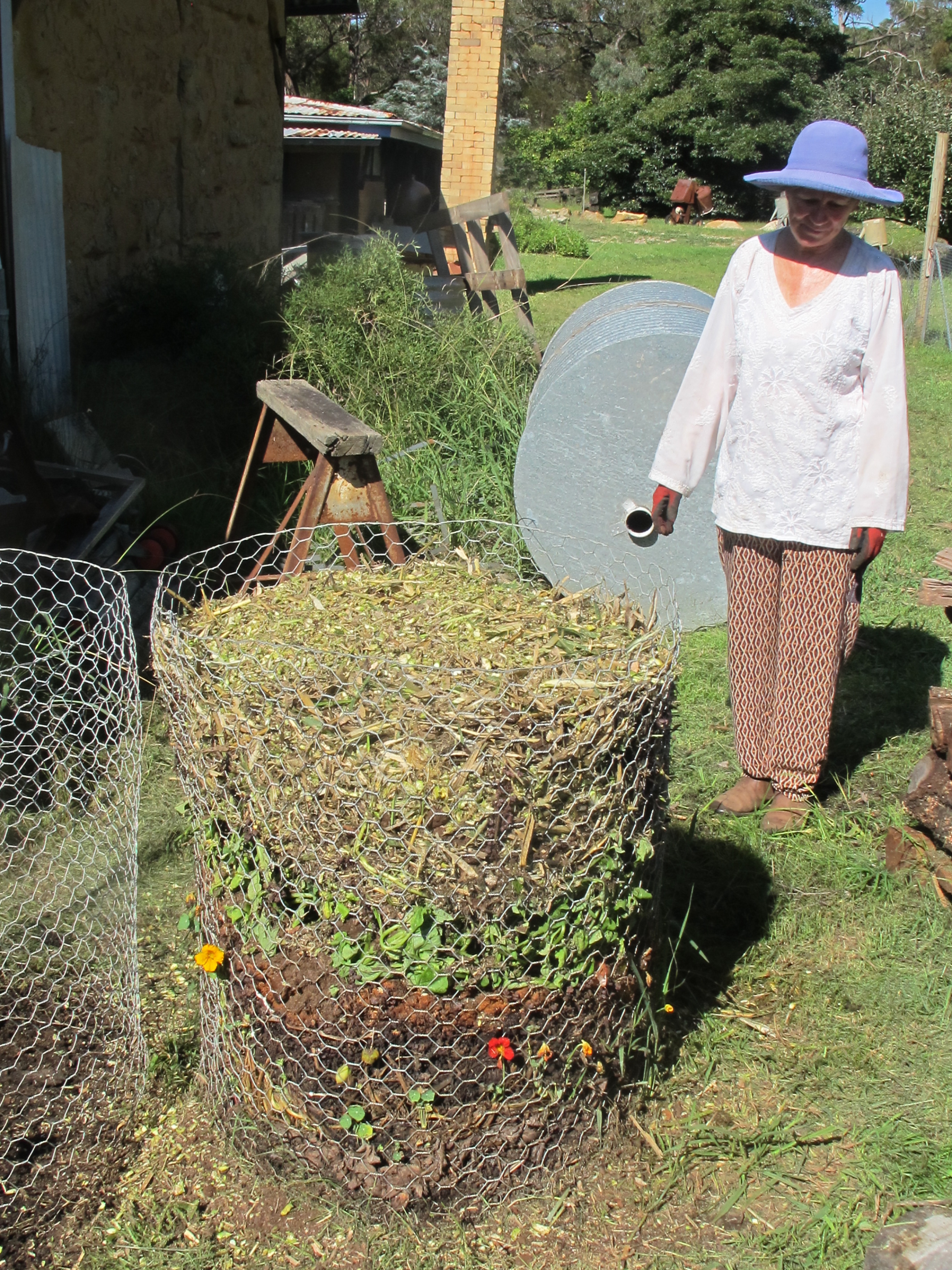
Once it has all been mown over a few times, it’s reduced to damp mush in the catcher, it then mixes really well with the dry material and a bit of chook poo to make very fast rotting compost. We fill the bin to the top in layers and it gets hot in hours, in a few weeks it’s rotted down to half way. We have 3 sites around the garden and orchards where we have these wire rings located. They are constantly being filled, rotted and emptied, every few weeks, as we need the compost for planting out. Shredding and mulching like this breaks down the plant fibre structures and they compost so much faster than if they are just all piled up without shredding.
 IMG_3835IMG_3838
This Honda Buffalo mower has given us terrific service for the past 25 years. It’s always easy to start and works hard all day, when it is used. I change the air cleaner and oil once each year, a spark plug each decade and new blades as required. It was a good quality brand and quite expensive in 1989 when we bought it. But it was a good investment and has paid off. This is one of the few things that we own that hasn’t needed to be re-built at some stage during its life. It just keeps on working.
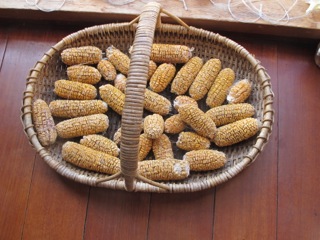
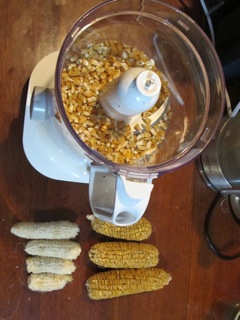
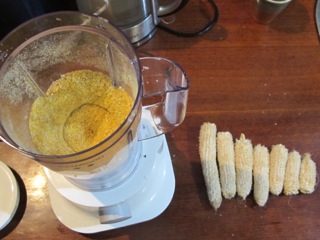
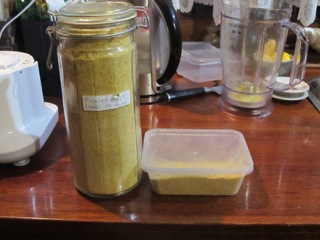
The last few cobs that were left on the corn plants were 2nd cobs. These are usually a lot smaller than the first cob. We left them on and allowed them to dry off, then collected them before we shredded the stalks. I finished drying the cobs in the sun in front of the kitchen window. After a few weeks they appear to be quite dry and shrivelled. I decide to put the kernels through the blender and make some corn meal for polenta. I end up with two very nice meals of ragu and polenta, plus a bit more than a large jar full of corn meal for more warming meals over the coming winter. Two cups of water to one cup of polenta, seems to work quite well and makes enough polenta for the two of us. It’s a bit dull and dry by itself. It needs some sort of sauce to lubricate it. I’ve tried it a few different ways and I like it better with a little cheese added in.

IMG_3955

 IMG_4070

IMG_4072

 IMG_4075

IMG_4076

 IMG_4077

IMG_4078

 IMG_4079
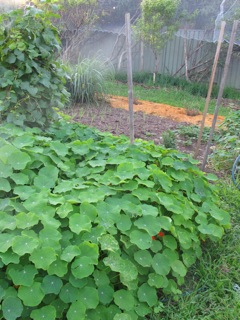
One more thing that we have done recently with the stripped out garden plants before mulching them all into compost, was to pick all the seeds from the nasturtium plants to make fake capers. After washing them well, I soaked them in salt water for a day, and after rinsing them well. I poured lightly salted pickling vinegar over them. They taste different from capers, but they are a very good substitute and it’s good to be able to use every part of the plant. Nothing wasted.

IMG_3605

 IMG_3604

IMG_3983

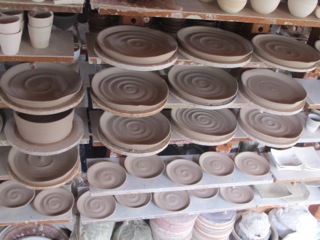
 Back in the pottery we’ve both been making plates. The lovely is making slab dishes and I am throwing plates on the kick wheel. I have a few very nice glaze tests coming along using wood ashes and ball-milled granite. They look good but need a flat surface because they are very fluid. When I stiffen them up to eliminate the running,  they aren’t the same glaze any more. The best looking glaze tests need to be very fluid to get the most attractive result. So that is why I’ve decided to make plates just now.Plates with a slight turn up at the edge, to allow for the very fluid glaze to pool without running off. Janine has wood fired raku workshops booked for the next 3 weekends so she is busy making pieces for demonstrating during those workshops.

IMG_4056

 IMG_4059

IMG_4016

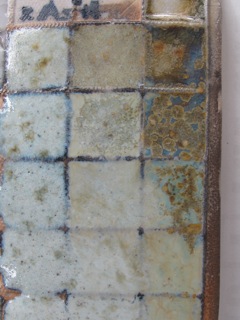
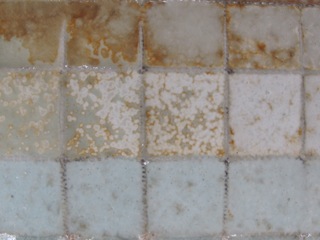
Wood ash and rock glaze tests, showing some interesting results with nice crystals

IMG_0535

IMG_0540

IMG_0542

IMG_0543
from the seed savers and wannabe self-reliant post modern peasants.
With love from Steve and Janine who are getting along together like two peas in a pod.


Nothing lasts forever

Nothing lasts forever.
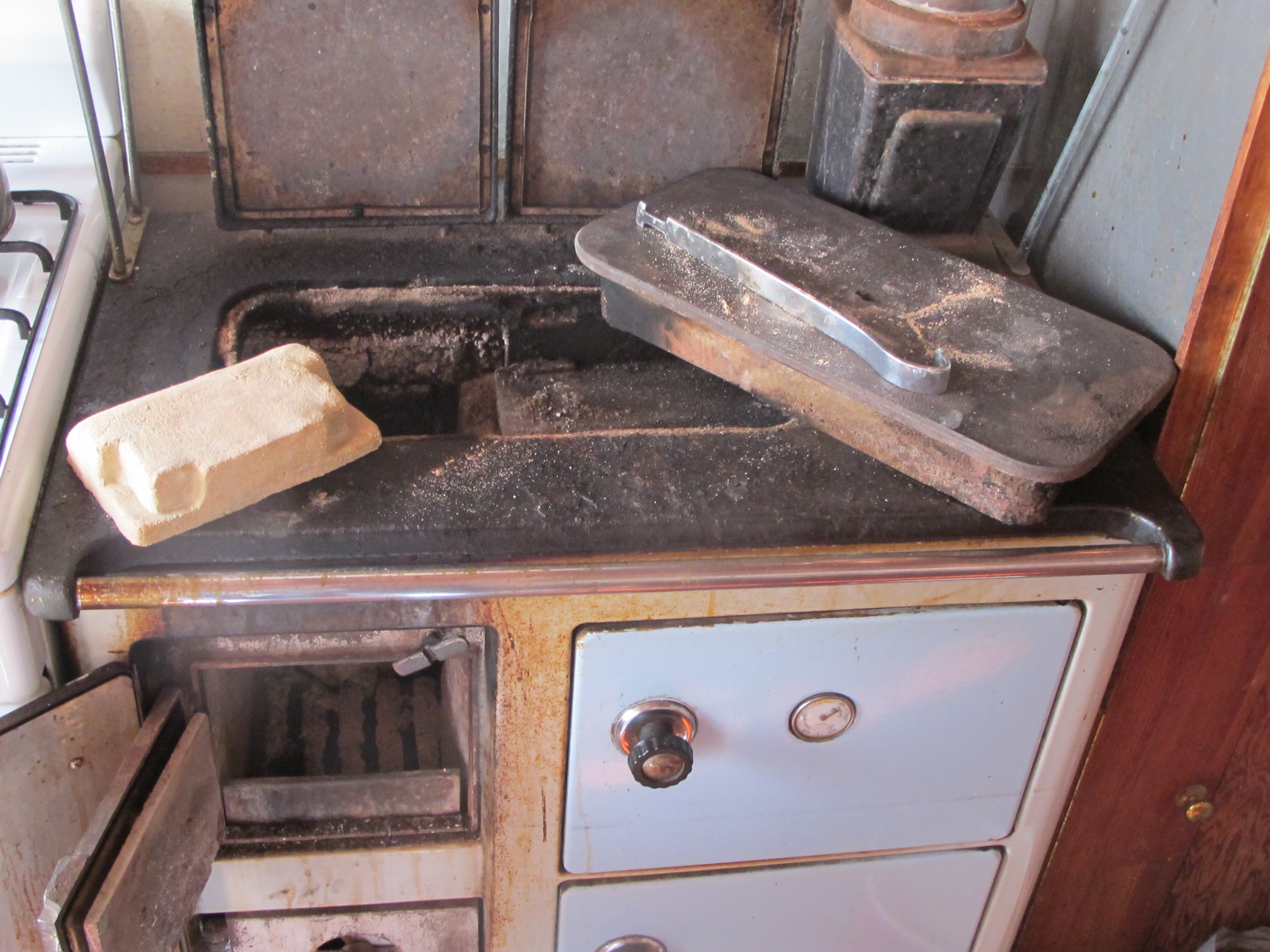
We wake up on the first day of winter to a foggy, wet, drizzly morning. I’m glad that it’s rained finally, the garden needs it. It’s been a month without rain now. We have been enjoying the prolonged Indian Summer of warm balmy days, but nothing lasts for ever. How true that is, is suddenly made very apparent when the front firebrick in the kitchen stove spalls into several pieces that fall into the fire box. It’s not a catastrophe as It’s happened before, nothing lasts forever. I know that. 
 
IMG_3994
 
I recently wrote a piece telling how this old stove has lasted us for close to 40 years and we bought it second hand even then. I shouldn’t have shot my mouth off!  Suddenly I’m up for a repair job again. I say again, because the original fire brick only lasted a few years and I had to quickly make a new one from our own refractory clay mix that I used for making fire bricks, kiln shelves and props to repair the kiln. I had to piece the old stove liner brick back together from the shards to approximate the shape and size needed. I hand formed the first brick into what I thought was the shape of the original one, with all its curves and cut-outs, such that it locks into place and is held there by gravity. Luckily, I made a plaster cast of that first hand made fire brick, so I could easily make some more. It was also lucky that Janine and I had made all of our own kiln shelves and props to support the pottery in our kiln during firing and so we had some special refractory fire brick mix already in stock. 
When we started out here we had no money and the kiln shelves used to load all the pots into the kiln were very, very, expensive. We were able to buy 2nd hand fire bricks to build our first big kiln for next to nothing, but the kiln furniture to fill it was prohibitively expensive. Our kiln was also quite large at 120 cu. ft. or 3.5 cu. m. This meant that we would need a lot of kiln shelves to be able to fill it with a load of small functional pots. Some potters got around this by making big planter garden pots that stacked on top of each other to fill the kiln, others made special shapes that sat inside each other, sitting on little wads,  still others cut special foot ring shaped grooves into the glaze surface so that  they could be stacked inside each other and didn’t stick during firing, and a few others tried making saggars, like ceramic cake tins, that held the pots and stacked on top of each other, but their life was short as they cracked easily and it was a lot of work to re-make them. We tried all of these singly and in combination.
IMG_3993
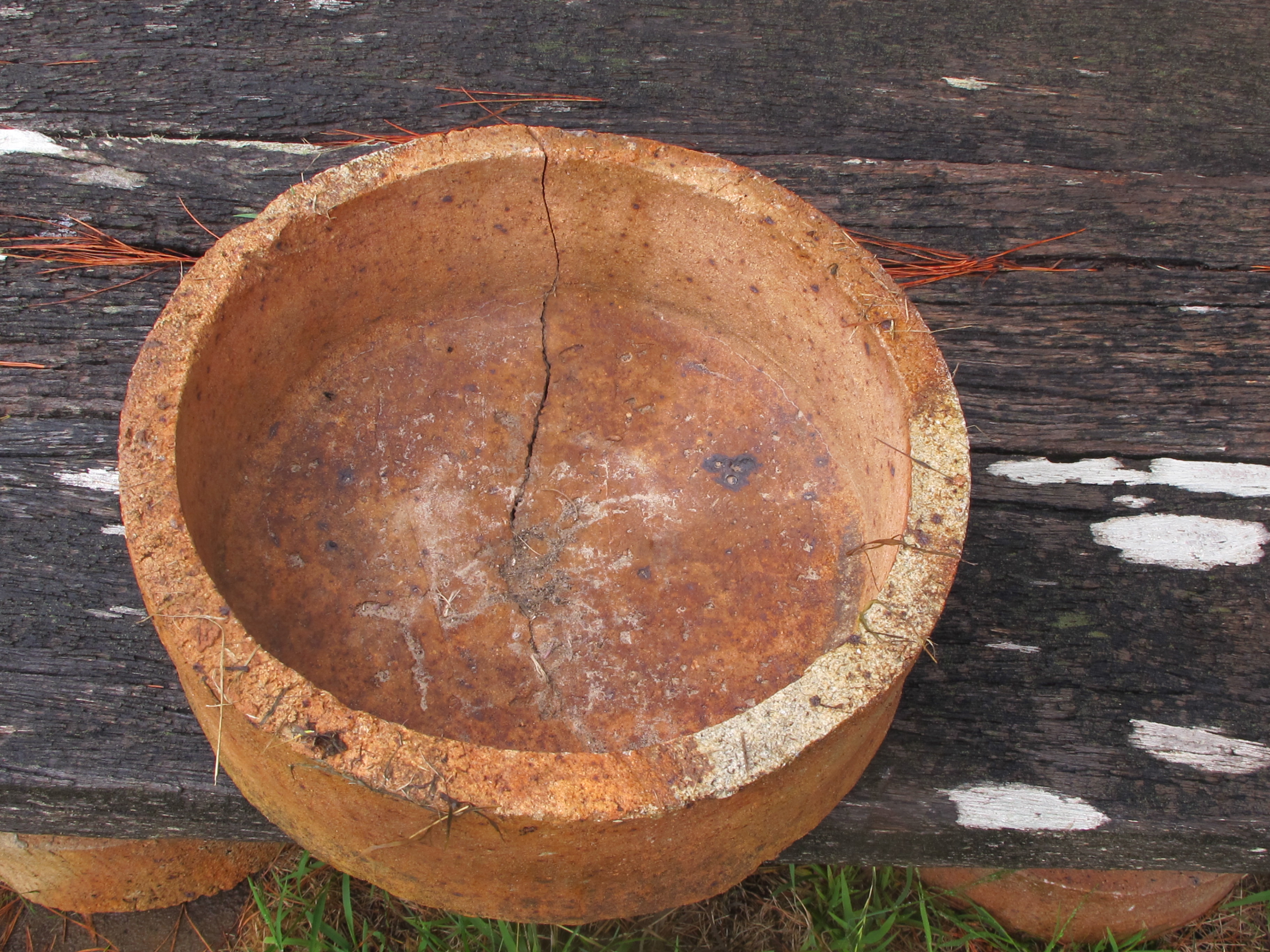
A failed, cracked, old-fashioned sagger. These cracks are typical of what happens to this kind of one-piece sagger.
IMG_3988
A dish with cut-out glaze ring in the centre, for the next pot’s foot ring to fit on top. Making for a vertical stack of bowls. In this way many bowls can be set on top of each other in the kiln without kiln shelves.
round kiln pack 6
Adding small fine wads to the foot ring of a dish. These are needed to allow for the slightly uneven surface of our ‘rough’ home made shelves.
Luckily, we got to work with Harry and May Davis in New Zealand in 1980, where we saw how they made their own kiln furniture quite successfully, so I just applied here, what I learned there, from the Davis’s. See; The Potters Alternative, Harry Davis, Methuen Australia, 1987. Harry had already been there and done that. He had already figured it all out and come to a very clever solution. As was his way. He used separate square kiln shelves and square corner props to make his saggars. Because they were already made in 5 pieces, they couldn’t crack apart like the old style one-piece saggars did. The Davis’s were a very impressive and admirable couple. Very ethical and socially minded.
To get the best outcome for hand made refractories we needed good kaolin. So we bought a train goods-car load of bulk, unprocessed, refractory kaolin, No157. from Phil Crossley, at ‘Puggoon’, near Gulgong. Approximately 10 tonnes. It was excellent quality, high alumina,  refractory kaolin, normally sold to firebrick companies to make high alumina fire bricks. The hardest part was having to climb into the rail car and shovel all the clay out into a hired tipper truck. Paying demurrage on the train car and paying the truck to wait for a few hours while I shovelled it all out was the most expensive part. It turned out that it would have been cheaper to have it trucked directly down to us and tipped out on site.
Nothing is what it seems.
round kiln pack 1round kiln pack 2 round kiln pack 3 round kiln pack 4
Packing our first kiln here with home made kiln furniture.
We were able to make all our own ‘inferior’ quality, hand formed, kiln refractories for many years. I say ‘inferior’ because we were not able to fire them high enough to make them really strong, but they were OK. Not brilliant, but just OK. I still have a little bit of this clay left. I stopped using it when I discovered my own local white bauxite clay substance, that although not as good as the ‘Puggoon’ kaolin, was local and within my 50 km radius, from where I have prospected nearly all of my materials. This is my equivalent of the 100 Mile Diet, applied to ceramics, the 50 km palette. It has become all part of our attempt to live as sustainably as we can manage.
In the past year I have extended this area a little to include a few more materials, as I find them on little trips into the countryside. I have also again bought some Gulgong kaolin to help to plasticise my local ground stone and washed gravel clay bodies. I must say it is such a relief to be able to throw almost normally again after ten years of struggling with the virtually non-plastic ground stone powder pastes. I’m changing and becoming a little more pragmatic in my old age. A step back from total self-reliance.
Nothing is perfect.

So I take one of the pre-fired stove fire bricks out of stock from under the hot water tank cupboard in the kitchen and replace the crumbled one with a brand new one. I make a mental note that the next time I see the stove firebrick mould down in the pottery. I must make two more stove bricks for stock.
Next it will be the cast iron grate that needs replacing. I can see that it is almost done in, but still has a few more months of life left in it yet. It is rusting away and is badly buckled up. I have two more of these home made replacements in the cupboard waiting in stock. so all is well there. The current one will stay in place until this one finally fails.
I found out very early on that cast iron driveway grating sections, when cut into 3 pieces with an angle grinder, work very well as replacement parts for the grate. They only cost $3 each and last longer than the original cast iron ‘raddle’ grate ever did.
I never like to throw out anything that isn’t completely worn out. So the old buckled grate stays for the time being. It’s not such a big job to replace this part when it’s had it. Self reliant maintenance is an on-going job that never ends.
Nothing is ever finished.
IMG_3853
So now the stove is back in working order again. In time for this cool, damp, first day of winter.
With respect, from the wannabe-self-reliant post modern peasant potters
Steve and Janine


The Look

More than a look
A letter from the pottery and the late autumn garden

I heard a couple of young designers talking about sustainability and recycling, as if they had invented it.

Aparently, it’s the new hot topic in design. It’s so interesting to listen to young people talk about things that they know very little about.
I must have sounded like such a twat when I was young  –  and probably still do for that matter.
These people were talking about sustainable design as a ‘feature’ of design. It wasn’t the effect of consumerism, or its consequences, that was of interest to them.  It was the look of things. It was all about design and The Look!
Real sustainability didn’t seem to be the core issue.
Being a baby boomer, I grew up through the sixties and seventies and was very involved in the ‘do-it-yourself’ kind of sustainability. The grass roots approach.
When I met ‘The Lovely’ at Art School and we set up house together in a flat in Bondi, I promised her, not a lovely home or plain comfortable house, not even a shed. I knew that I would never be able to buy a house earning the sort of money that potter could earn, so I was only looking for vacant land. I initially promised her a life in a tent!
Fortunately she said OK! Count me in! She didn’t mind a bit of hard work.
I thought that I would find some little piece of bushland and pitch a tent while I built a mud brick shed, a pottery, a kiln and then, at a later date, a house.
This was what a lot of people did here in Australia in the past. Especially the returned solders in the post war period. My own father bought a vacant bush block and cleared it with a mattock, and hand cut a track to get trucks to the site. Then we all lived in a caravan for a year while he built the first two rooms. After that, we all lived in that cramped building, while he built the next few rooms. The house was only just finished a few years before my older brother left home.
Everything was paid for, bit by bit, as you went along. There was no credit, or ‘LendLease’ in those days. No plastic card credit.
I was interested in living what I thought would be a less-complicated life. I was wrong. All lives are complicated. However, in my youthful enthusiasm. I considered that living directly on the land and eating from the that land as much as possible by way of gardens and orchards, then making pots to sell that were made out of the land, should all be doable. Well, as I said, I was naive and full of youthful hubris. For someone interested in DIY sustainability, the obvious choice was to build with earth, dug free from the land and turned into capital by sheer effort and will power. Creating capital out of virtually nothing is a pretty neat trick. So all but one of our buildings are made from mud bricks. Of course, keeping chickens and ducks and eating the vegetables that we grew ourselves in an organic garden were all part of that daydream.
Well, it all came true. It wasn’t a dream. It was made real by dogged hard work of two dedicated people who teamed up and concentrated in a single-minded effort to make it reality. Of course it didn’t all happen as planned. There were detours and setbacks. Lots of little hiccups along the way. But we made it happen. Janine turned out to be one hell of a tough girl. I’m so glad that she accepted my offer. And as it turned out, we didn’t need the tent.
A kiln was built and pots were made and sold, but we always had a big vegetable garden and one of the first things we did, was to plant fruit trees for the future. Once we were a little more secure. I made pots and glazes from the raw materials that occurred in the landscape around us. It took time to research and uncover all the potential of the local geology, but bit by bit, I found one material after another that I could use to replace a previously bought ingredient in my recipes. These days we buy very little, but I do still buy some ingredients that are very hard to find, or make from what we have here to work with, like bentonite and alumina powder. Recently, I have even bought some plastic kaolin to add to my mixtures to make them a lot more potter friendly on the wheel.
Unlike young designers in the inner city, we are not interested in ‘The Look’ of things so much as the reality in total, their cost, both in money terms but in particular the cost to the environment, their carbon debt and their running costs. That is why we have chosen not to own a big car, an air conditioner, a microwave, a large plasma screen and other energy hungry appliances. So we don’t have The Look, we have chosen not to buy into it. We have a busy sustainable life which takes a lot of time and personal effort  to maintain. We just don’t have enough time or energy to have a real job to pay for ‘The Look’. We’ve ended up with the blisters, the gritty, real, sustainability part, but without ‘The Look’.
One very good outcome of all this DIY, is that we don’t have a mortgage and we can afford to live this small life.
IMG_3944

IMG_3938

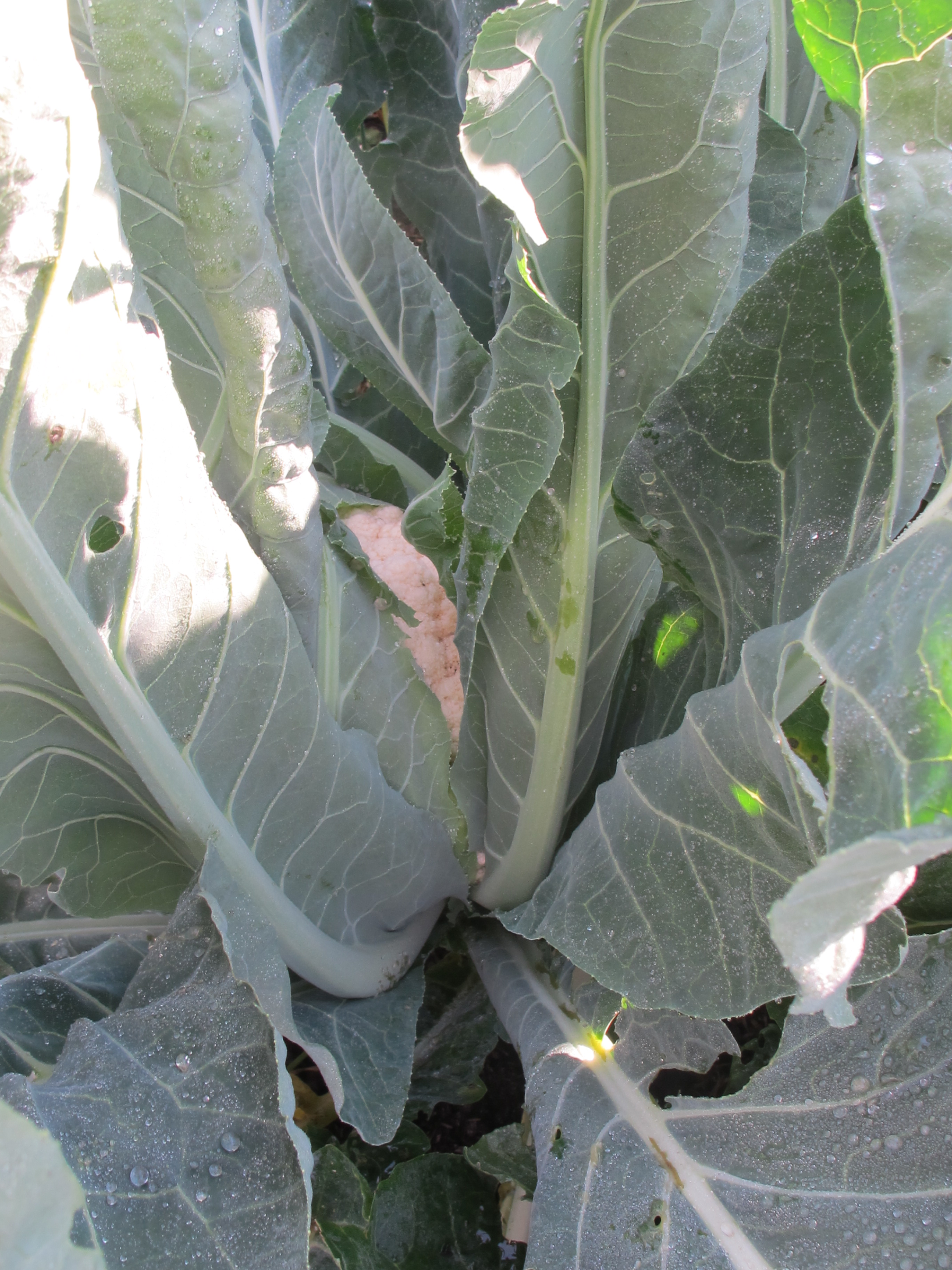
In the garden, the cauliflowers are in full flower just now, so we are finding ways to use them up. One of our long time favourites is to cut it into bit sized chunks and eat it raw dipped in aioli made from our own garlic, lemons, local organic eggs and locally produced olive oil. Thats an entrée that is worth waiting all year for. It’s just terrific, great flavours and textures. Almost a meal in itself.
IMG_3917IMG_3915
Aioli
1 egg
1 lemon
1 cup of olive oil
5 or 6 or 10 cloves of garlic, depending on size.
Chop up the garlic and add the egg, whip it up into a thick yellow frenzy with half of the oil and the lemon juice, lastly add the remaining oil and mix it into the emulsion, add pepper to taste and a little salt if you like. I don’t.
If your eggs are small, use less oil, or add a second egg.
At the end of the summer, we ended up with a silver beet ‘tree’ that grew on the edge of the garden path. It grew as tall as me and finally had to be held up with a tall wooden stake. It finally ripened its seeds and the wind blew them all over the garden. We now have loads of the green stemmed silver beet growing everywhere. I’ve been mowing it to keep it down to a manageable amount. The Lovely transplanted a dozen or so seedlings into a bed, where they will be safe from my whipper snipper and garden chipper hoe.
IMG_3947
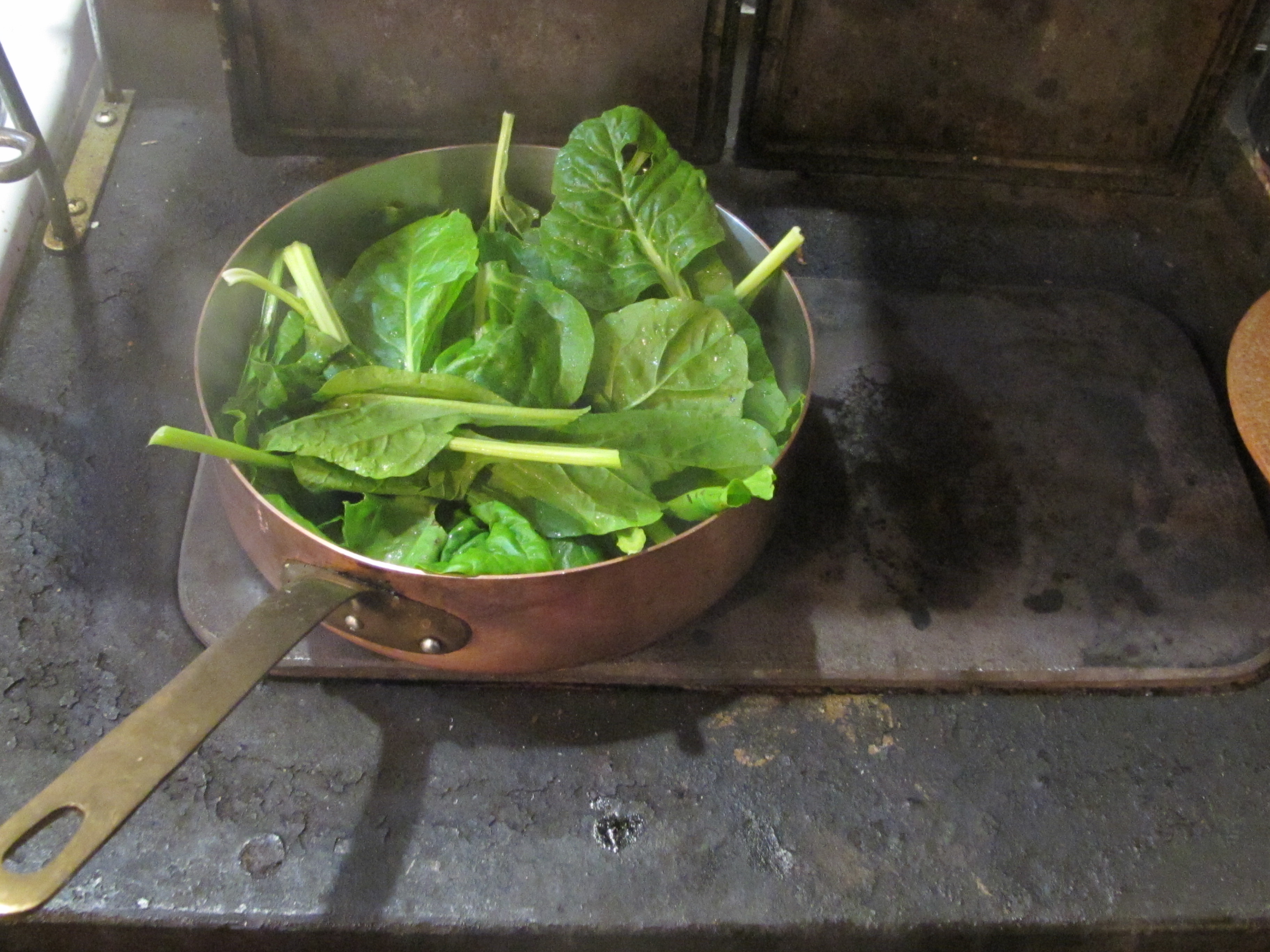
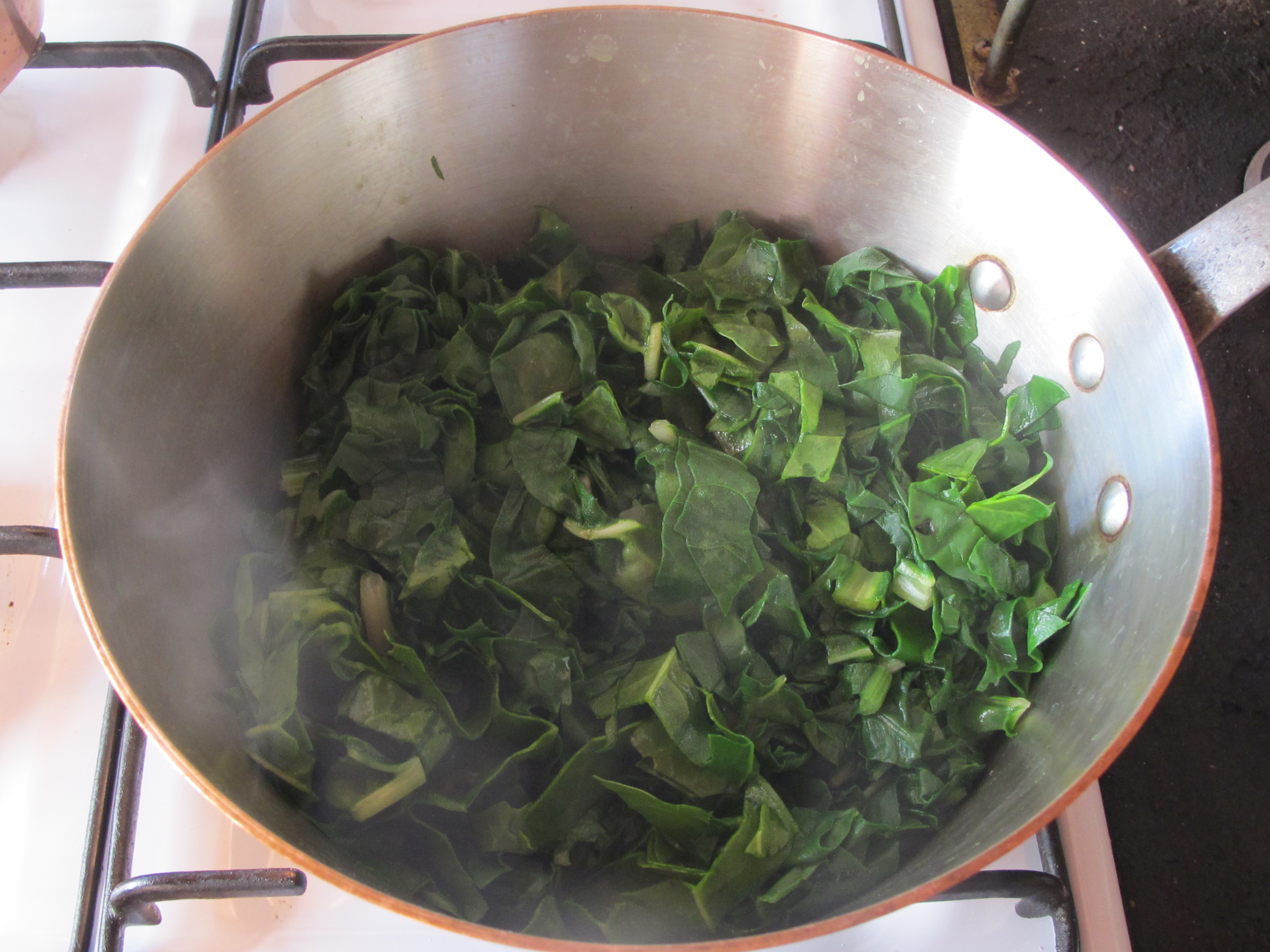
They grow so fast at this time of year, so we have to find ways eat it with out getting too bored. The usual way is to just scorch it in a fry pan and sweat it down to a small warm mass. I believe that it’s called ‘whilted’ spinach. What is nice about it is that it doesn’t involve any oil or even water, just some heat. We serve it with a little lemon juice or alternatively with a dash of white wine vinegar. It seems to go quite well with most things that we eat.
IMG_3749IMG_3752
Because these plants are so prolific just now we are constantly trying new ways to use it up. Not unlike the situation with zucchinis in the summer time.
It makes a lovely fresh side dish that is really quick to make and no washing up. just rinse the pan and it’s back up on the hook. A more substantial dinner at this time of year that is warm, satisfying and low fat is spinach and ricotta pie.
IMG_3918IMG_3921
IMG_3922IMG_3924
IMG_3925
Wilt the spinach, as above. You can make ricotta very easily from milk that is past it’s use-by date by heating it gently and adding some lemon juice to it. It will separate into curds and whey, drain off the whey and add the curds to the spinach and place into the pie crust, cap it off and add a little grated cheese and /or brush with the whey or milk to get a nice brown top.
Janine was given a really simple recipe for pastry from Marta Armarda, a ceramic artist from Spain, who was in residence at Sturt workshops in Mittagong.
Marta’s recipe for pastry is quick and easy – and foolproof!
1 tbspn oil
2 tbspn water
2 tbspnwhite wine
Add enough flour to make the correct consistency, which is about 1 cup, but this will vary with the choice of flour.
This amount makes enough for a spinach pie. 30 to 45 mins in the oven at 160 to 180. Until it browns and looks right The wood fired kitchen stove doesn’t have a reliable temperature measurement , and it depends whether the fire has been going all day, or whether it has only  been lit for a few hours.
We have completed 2 of our 5 wood firing, weekend workshops and had work shown in the Manly Regional Gallery and at Ivy Hill Gallery down the south coast to coincide with the International Wood firing Conference. I couldn’t afford the time to go for the whole thing, but managed to get down there for a couple of days. So now it’s back into the workshop to start throwing more work. I have shows coming up in Singapore and Taiwan in the next few months, so I need to get productive.
IMG_0350IMG_0347
IMG_0356IMG_0353
IMG_0359
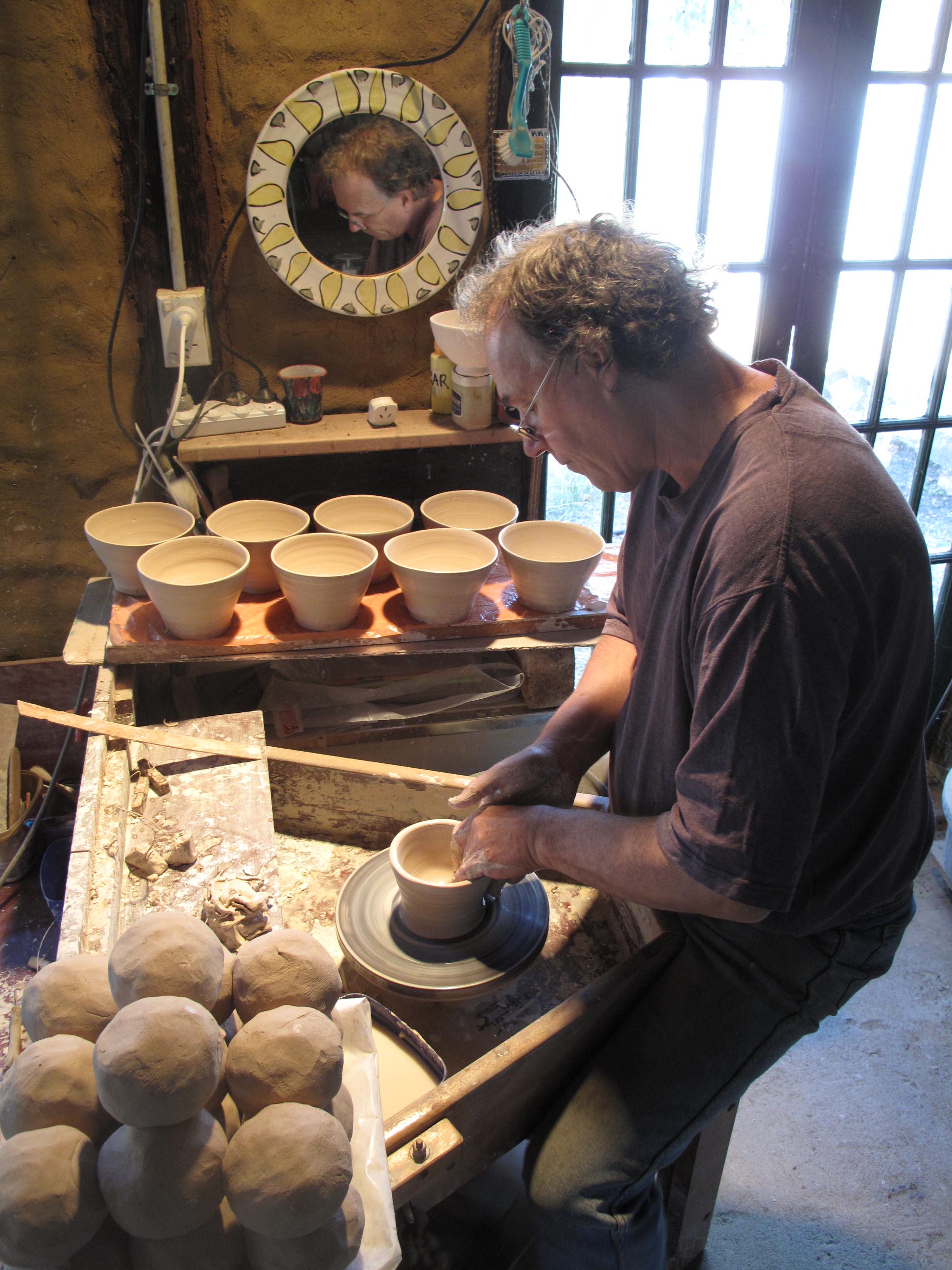
The Lovely, catches my visage in the mirror, so that it shows my bald spot.
It’s not a good look.
Its not ‘The Look’ either.
It’s just a look and that’s how I am.
Best wishes from the thinning potter, and I don’t mean waistline, and his happy snapper


I’m a clarevoiant, and what do you do?

Something fishy about the clairvoyant

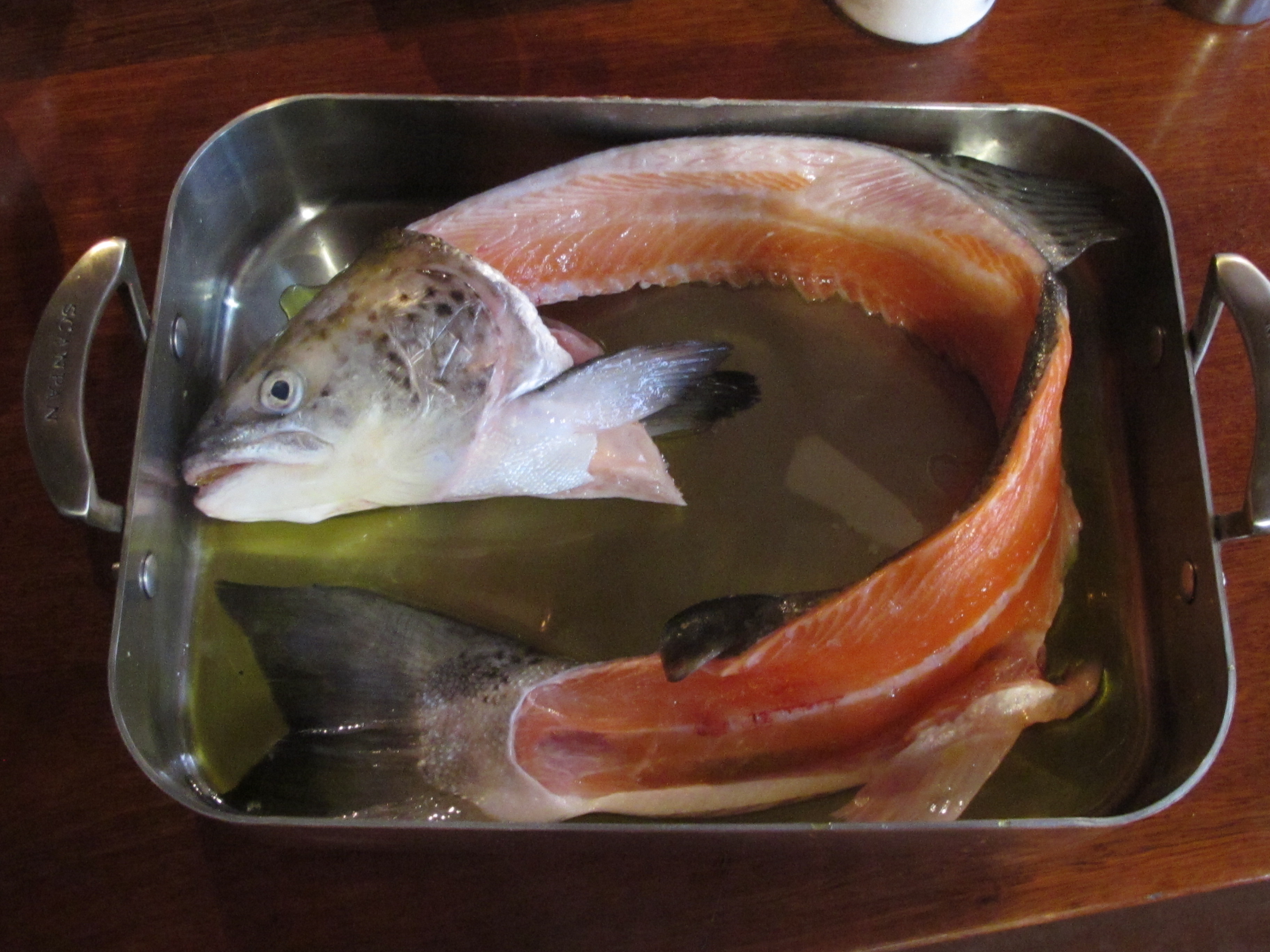
I am at the fish market and see that filleted salmon frames are only $4. They appear to have a lot of meat still on them, so I decide to give it a try. It’s a big fish, or at least it was. It’s still a long frame.

Even though we grow most of our own food. Protein is the most expensive part of any meal for us. Good quality meat or fish costs upwards of $30 per kilo. Of course there are cheaper alternatives, but I refuse to eat sausages. I’m trying to limit my fat, preservatives and salt intake and stay reasonably healthy, so I want to buy lean meat. Anyway, I only buy red meat once a month and I want to be able to feel good about what I’m eating when I do eat it.

IMG_3802

Last month it was lamb shanks, cheap, flavoursome and when cooked slowly in red wine and reduced stock, the meat just falls off the bone and is quite delicious. I also buy chicken once a month as well. Some times its the whole bird. ‘The Lovely,’ skins it and boils it and from this she makes a great stock and the meat is separated and used for a number of meals. I’m not religious, so I also buy pork occasionally. Sometimes it’s the belly flap, boiled in our own home made cider and later, roasted to get that great crackling. This is a once a year treat. At other times I buy minced lean pork and we make gyoza from, pork, garlic and vegetable dumplings, in the Japanese style. Sometimes pan fried in our own homemade stock or otherwise steamed.
For the most part though, we prefer fish as our major source of protein and we eat it 2 or 3 times a week, two days I fast and the other days we eat vegetarian directly from the vegetable garden, with or without tofu. I’m not a vegetarian, certainly not a vegan. I’m an omnivore, but within limits. For 35 years we kept ducks and chickens. They are such good company and a lot of fun to watch and interact with. We ate them on a regular basis. That is why we kept them. I feel that the only way in which I can justify eating meat is if I kill it myself. Only then do you realise the significance of what you are doing and fully appreciate the meal. I never found it easy. I always had to steal myself for the act. It’s all about living in reality. Taking responsibility for your actions. Being independant and self reliant.
I don’t wish harm on any other living thing in general. But I’m not a Buddhist either. I think that if I take responsibility for the meat that I eat then, I’ve earned the meal.
One of the cheapest fish at the market here is the local coastal Leather Jacket, usually at or around $5 to $9 per kilo. It’s a lovely fish, firm and tasty meat, but it can’t be filleted. It must be cooked whole, so people seem to avoid it. I love it. I have no trouble in steaming it or pan fry/steaming it. I really like it, but you can’t eat it all the time. The small local blackfish are also good value too. Always economical, as the fillets are too small for most peoples taste. I also like to buy sardines or garfish when they are in season and appear in the market. However they only appear intermittently.
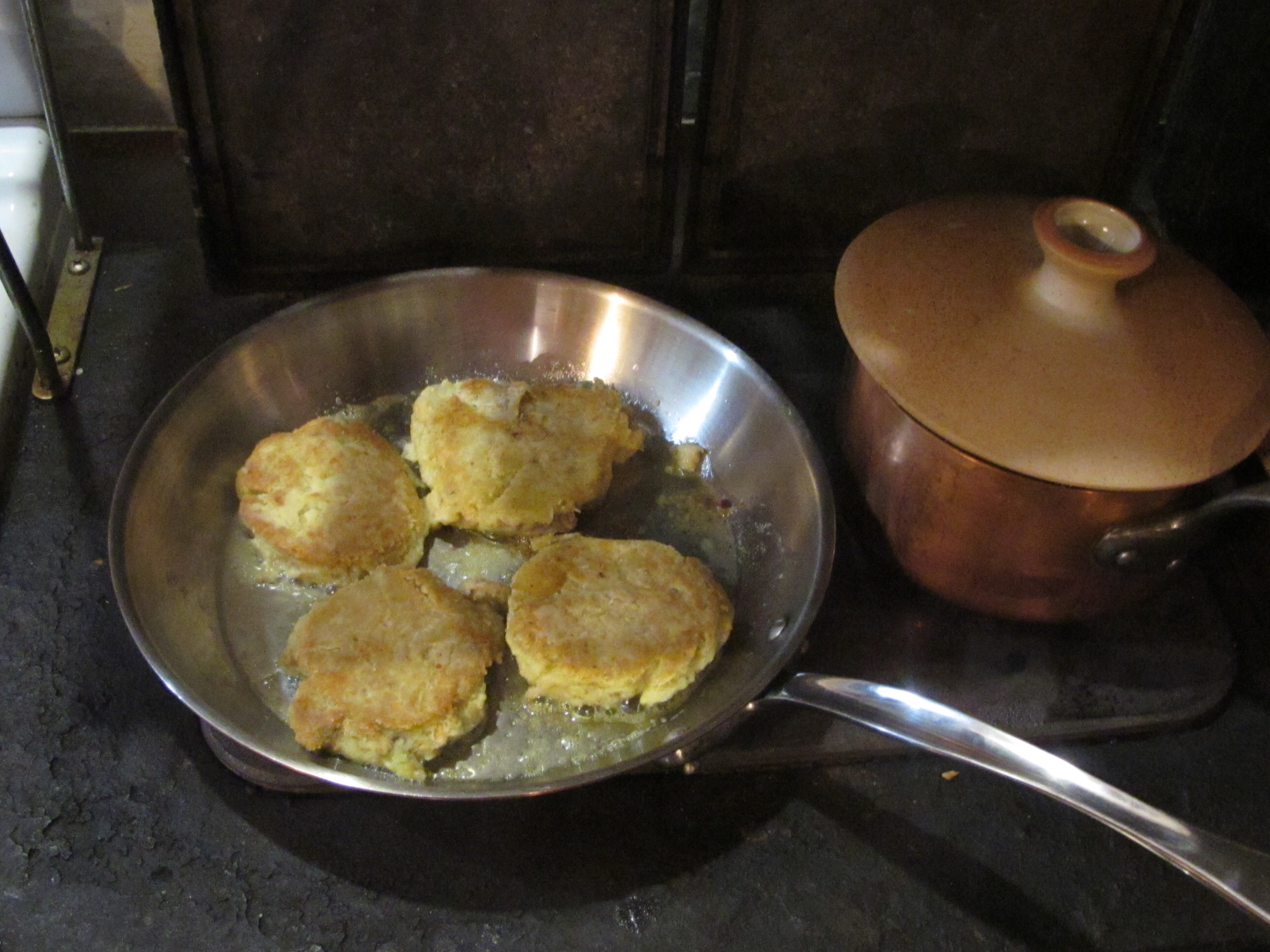
So tonight it’s going to be ’empty’ salmon bone fish cakes. I simmer the frame for a while, leave it to cool and then separate the meat from the bones. The bones are then returned to the ‘soup’ and boiled again to make a stock. I plan to make fishcakes with our own potatoes and with a hint of wasabe fresh from the garden.

IMG_3799

IMG_3800
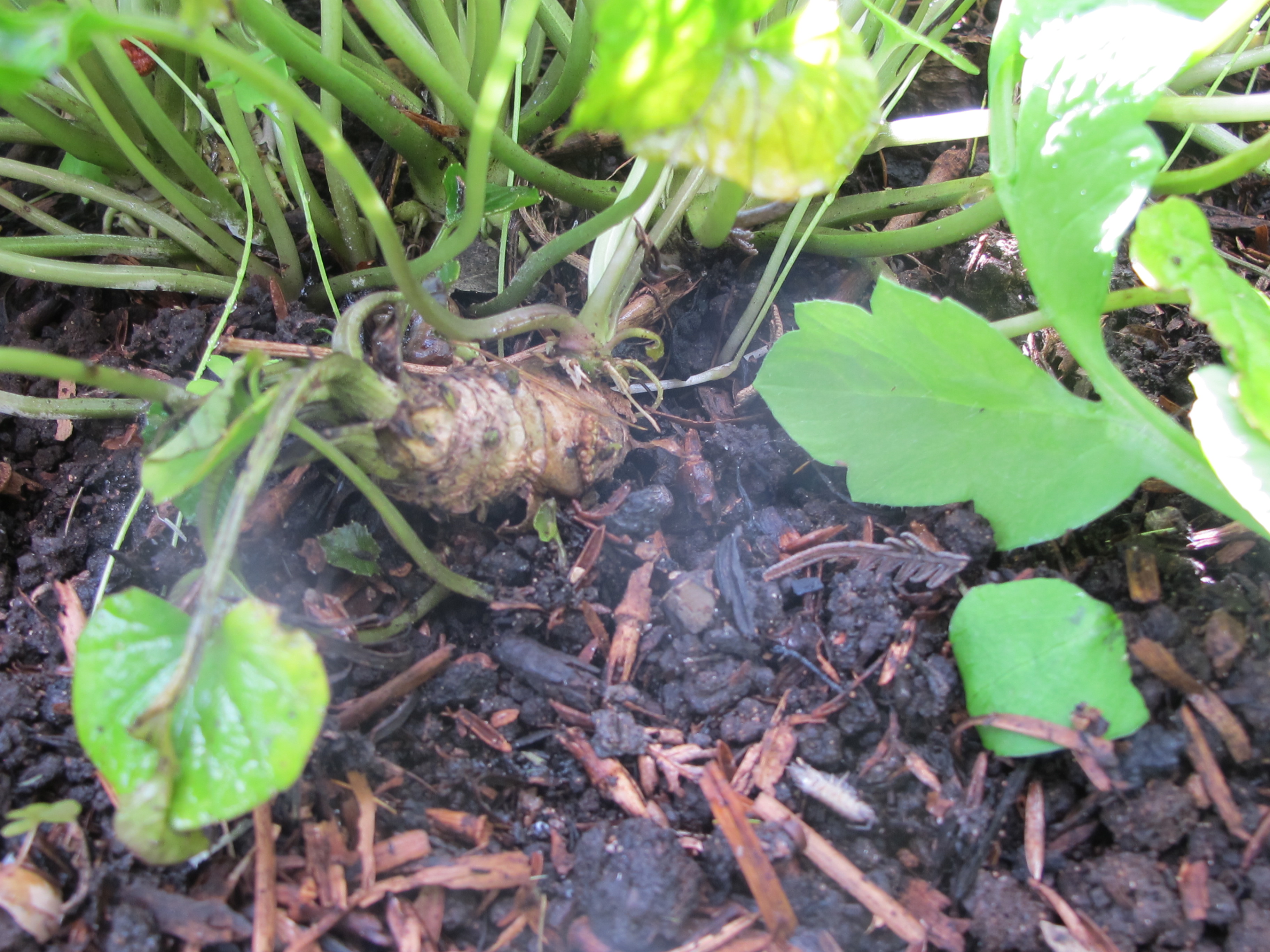
Now wasabe is an interesting vegetable/herb/condiment plant. It is supposed to only grow in the high clear environment of the Japanese mountains, washed by regular misty rain and growing in among the rocks and stones of fast flowing mountain streams, never allowed to dry out, always moist and well irrigated with crystal clear mountain water, growing in the shaded environment of the deep rocky ravines.
Here in Australia, there is a small producer in Tasmania, down south in the clear mountain environment where all the stringent conditions of cool dampness prevail. We once saw a small tray of fresh wasabe roots for sale in the green grocers. They had had a power failure and all the fridges and coolers were broken down over the weekend, so everything was on sale or being thrown out. We grabbed the tray of wasabe. Our initial thinking was the grate it up to make our own wasabe paste, and we did do this with part of it, but I thought, why don’t we give it a try in the garden, it’s already sprouting from it’s warm weekend spent wrapped in plastic on the tray.
We planted it out in our hot dry exposed summer garden, but we did give it some shade cover, by cutting bracken ferns and sticking them all around to create some dappled shade. We also gave it a disproportionate share of the cloudy dam water from the hose when we were watering. Now three years on we have a small tough little patch of wasabe permanently in the veggie patch. It couldn’t be farther from its home or desired environment, but it lives on, even if it isn’t thriving.

IMG_3812

I get to make 10 good sized fish cakes from my efforts. We eat half for dinner leaving some for tomorrow. Served with garden vegetables, they go down a treat. Two main meals and two litres of stock for a risotto another day. All very good value for $4.
We have been to a couple of music festivals recently. The highlight of the National Folk Festival music for me was Heath Cullen from the South Coast. He is really interesting and very talented. I really like the feel of his music, his style and presence. He’s like the love child of Nick Cave and Paul Kelly – if that were possible? With the breathiness, but sans the basso profondo, of Tom Waits. That sounds like a very strange description, but I think that it is kind of right. I bought both of his CD’s from him. This is wonderfully emotive music. It speaks to me. My favourite track is silver wings. Although at first listen, it appeared deceptively simple. However, on subsequent playing, I found it deeply moving once I got to listen to it more closely. It’s immediate musicality and catchy melodic line is eventually surpassed by the touching, slightly dark idly of the lyric. It has gothic references. “The black corn fields”, “The old grain silo by the railway track” and “magpies perched on power lines”, but ultimately there is some optimism. “I’m gunna to rise up”.
It’s as if it is a hymn to loss.
I like it heaps!

IMG_3628

Try googling him;
I can’t wait to hear some more from him, as he has a new album on the way.
At Womad we saw and heard a lot of world music. The act that I liked the most at WOMAD was the Balanescu Quartet, really interesting and engaging. I enjoyed them immensely. I went to see them twice and was really interested and surprised to hear that each performance was different, playing completely separate pieces. I bought both of their CD’s that they had available.
I was thinking that I hadn’t heard of this quartet before, however, on inspection of some of my other CD’s when I got home. I thought that there was something a little familiar about their music, I realise that they are playing on the Michael Nyman CD that I have.
Try googling them;
This is what I downloaded from the WOMAD website;
Romanian virtuoso violinist and composer Alexander Balanescu boldly leads his string quartet across musical frontiers into uncharted territory. Pushing the limits over 25 years has resulted in the world-renowned Quartet collaborating with artists as diverse as Michael Nyman, Ornette Coleman, David Byrne, the Pet Shop Boys, Kate Bush and Kraftwerk.
 
and wikipedia tells me that;

The Balanescu Quartet is an avant-garde string quartet founded in 1987 by Alexander Balanescu that achieved fame through the release of several complex cover versions of songs by German experimental electronic music band ‘Kraftwerk’ on their album ‘Possessed’.

The quartet are mainly notable for their very distinctive style of music, which encompasses odd time rhythms, sound dissonances and complex arrangements. They have performed multiple works with a variety of other artists, including Philip GlassDavid ByrneGavin BryarsMichael NymanRabih Abou-KhalilKevin VolansHector ZazouUn Drame Musical InstantanéSpiritualizedYellow Magic Orchestra and the Pet Shop Boys.

These CD’s are on high rotation in the kitchen, pottery workshop and/or the car. I’m really enjoying them.
On another occasion, while we were listening to a concert a person came and sat down next to us and we got to talking. He told us that he was a clairvoyant. He travels to all the country fairs with a soothsaying tent. The clairvoyant asked me what I did for a living and I couldn’t help myself from saying, that if you are a clairvoyant, you should already know that, surely?
That didn’t go down too well!
I’m so cruel!
What is it that I actually do again?
love from the uncertain sceptic and his lovely and talented assistant

Mark my words, the days of digital are numbered!

I spent a day and a bit fixing my crashed hard drive. Luckily I had a back-up drive. In fact I have two. Double redundancy. This has happened to me once before when I wasn’t so well prepared and at that time I did loose a bit of past data, because I hadn’t manually backed up for a few weeks.
I managed to rebuild my hard drive this time, using digital chewing gum and analogue string. It’s all a bit bodgey, so I have ordered a new drive and will swap it over when it comes.
The very next day the laser printer died. I’m not too surprised, it is 15 years old and gets through 4 toners a year with all the printing of the books. I rang up a laser repair bloke and he just laughed at me and hung up. At the next one I left a message and he never did ring back. The next call was more informative, he politely explained to me that at a $100 call-out fee and a minimum $45 service repair quote fee I could get 3 new printers including a new toner and drum in each, so why was I bothering?
I’m a bit appalled at first, but I guess that it is 15 years old, and that’s a long time in digital evolution. I’m lucky that the man down at the toner refill shop in our town still carries the stuff I need to put in them.
Still, I don’t like to throw out anything that isn’t fully worn out. I have another go at the old printer, blowing it out with compressed air and washing the paper lifting roller fingers with metho to make it sticky again, but to no avail. Although the paper handling parts are shot, I work out that I can pull out  the paper tray and manually feed one sheet at a time into the mechanism and it will print it, before it goes into jam up mode with the second sheet.  If I pull out the toner unit and the paper tray and then re-insert them, it clears the blockage signal. It will then take another sheet. I battle on from page 69 through to page 119 to finish one copy of Australian Wood Firing. Every ten to fifteen sheets or so, it starts to print out garbled garbage all over the page instead of text. I have to shut down the soft ware and re-boot, switch of the printer and re-start it. It does work, but I just can’t bear it.
I admit defeat. I’ve wasted 3 hours. It’s an ancient Brother printer, I google to find the model closest to this one that is currently available, and lo!  There is one available for sale in Mittagong, so close. I call in and buy it the next time I’m down the street. $79 which is 50 dollars cheaper than buying the toner and drum separately. The machine is therefore free and they are paying me the equivalent of $50 to take it out of the shop. If I was not the person that I am, I could consider just buying a brand new printer each month instead of buying toner refills. It would be cheaper. What a stupid world we have created for ourselves! So mindlessly wasteful.
Anyway, I just can’t bring myself to think like that.  I can’t do it. All that embedded energy, all that perfectly good stuff going to land fill.
I really hate built-in obsolescence.
Does trouble really come in three’s?
Well, No. Not digitally, surely it would be one’s and zero’s. So three’s would have to be 010101 in some sort of binary digital speak similar to this. In actual fact it is 0011, but that doesn’t look very funny, unless you are a mathematician. Most of us aren’t. And mathematicians aren’t know for their humour.
So Yes, trouble does come in 010101’s
I get it home to find that the new printer doesn’t have driver software that goes back 14 years to the age of our old computer. The system software is so old that it isn’t supported anymore.
Snookered!
I’ll have to update the operating system on the old desk top computer. It can be done apparently, you just down-load it from the cloud. Yeah sure. This computer is so old that it doesn’t even have a modem in it!
It’ll just take more time. Until then I will run everything off my laptop. We had already decided that we would not replace the desk top computer, once we got used to owning a laptop that does everything that the old desktop did, only better, faster and more conveniently. The old desk top computer doesn’t know it yet, but its digital days are numbered.
As the orders for my books keep coming in and I’m the person most amazed by this. I need to have a reliable working system to get them printed. I have been toying with stripping all the text to ASCI format and converting it to html for conversion to Apple iPad book format or Amazon Kindle format. In this way I can sell them digitally through the cloud. I can’t imagine that it is too much work to get that done, but then I still have the problem of the hundreds of images that are embedded in the text at the moment. They can’t be included in the Kindle format, so I will have to set up a data base and make the images available for down load to registered customers. It’s all starting to sound like a lot of work now, and not the kind of work that I enjoy.  I certainly can’t afford to pay to have it done professionally, so that is why I’m still printing and binding books one day a month on the kitchen table.
I don’t like the idea of cutting down trees and shipping them here as paper, then me shipping that paper back across the globe to my customers in the US, Canada, UK and Europe. I do choose recycled paper to print on, but I’m noticing that it is getting quite hard to find these days. Instead, they are selling ‘certified green’ paper. It smells of bullshit to me. I was never really confident that 100% recycled paper really was, but what can you do? I choose the best from a bad bunch of options.
My sincere thanks to Len Smith, who is always a trove of good advice and amazing information about computers. I couldn’t do it without you Len!
Thanks!

I’m sure that you’ve heard enough about our grubby financial dealings, private teaching classes and our digital detours. 

The other thing that happens in our kitchen is the cooking of all the green food from our garden.

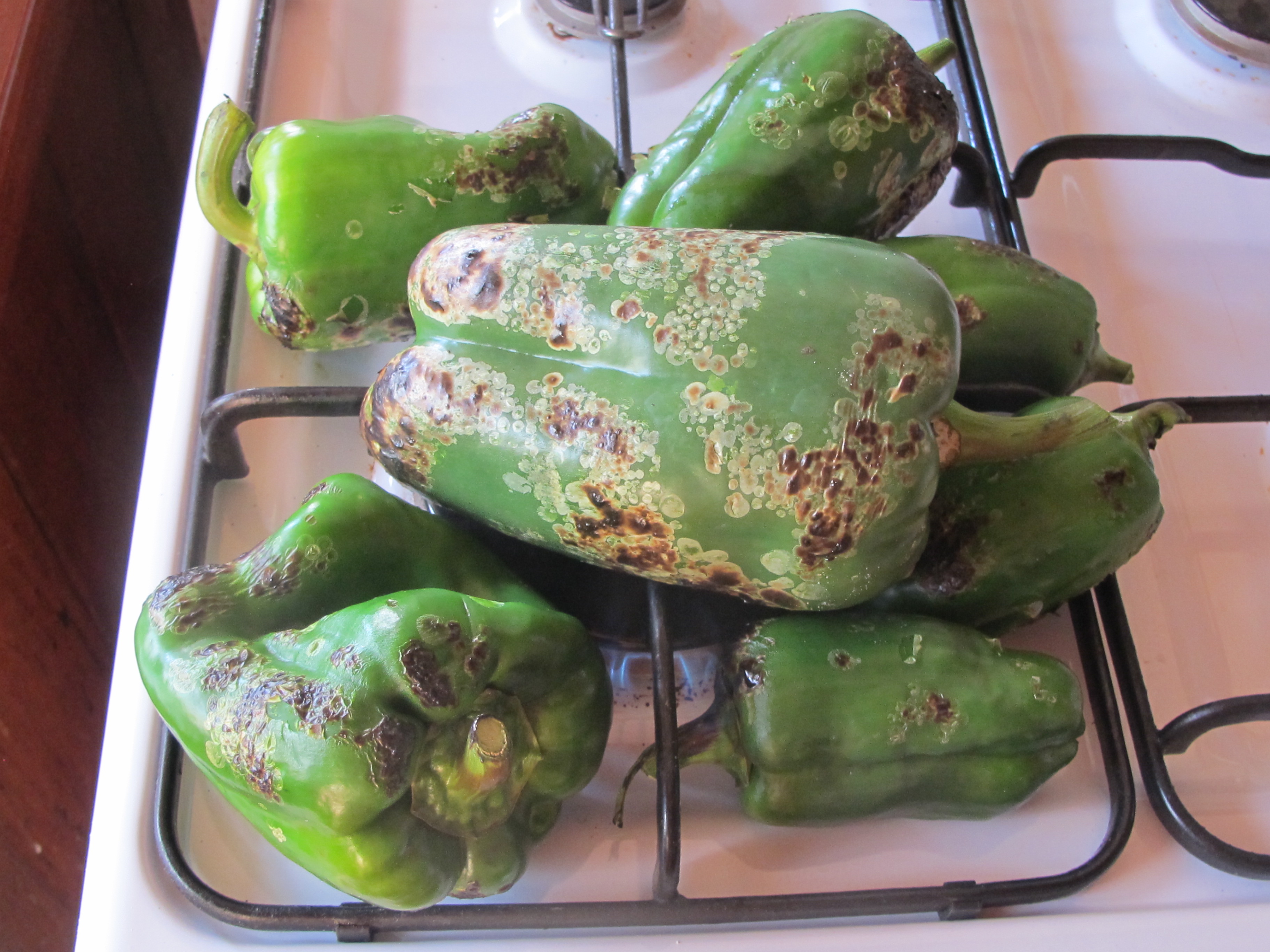
We have been making some nice meals from our garden, dealing with our excesses, using up some of our many capsicums at this time of year, I have been roasting them and pickling them. They are delicious.

Even better after a day or so of ageing in the jar.

IMG_3517IMG_3668

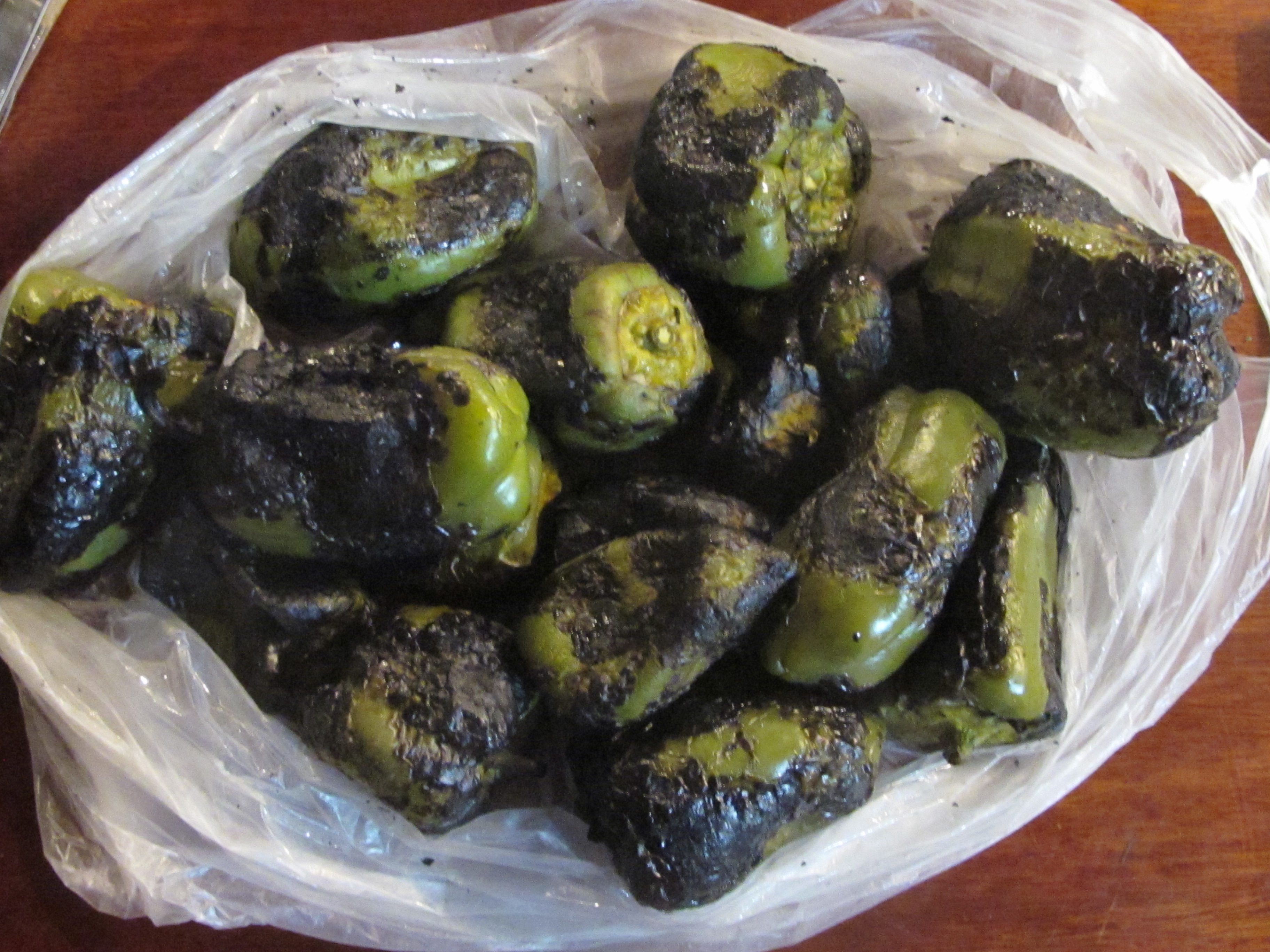
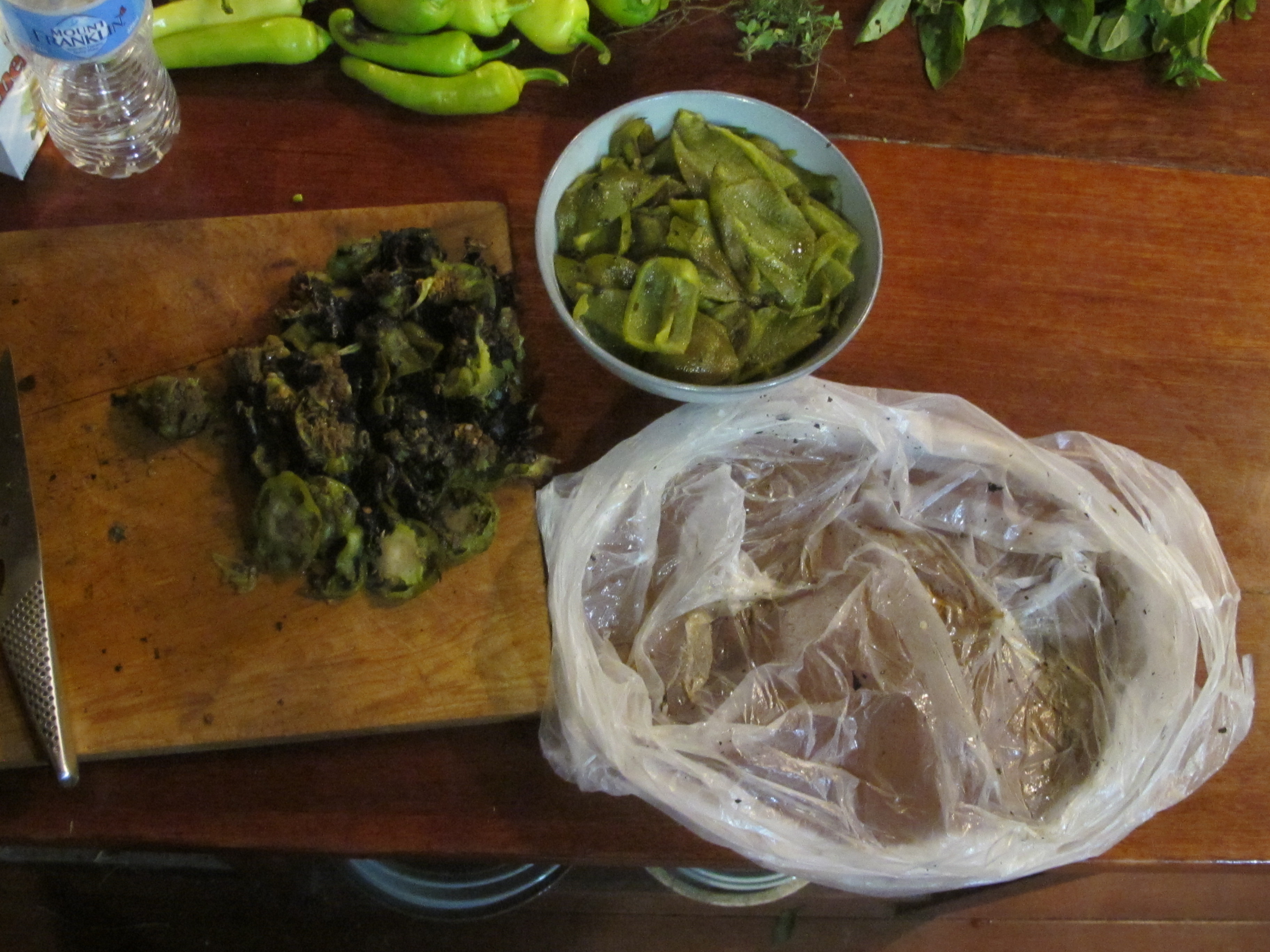
Roasting green caps over the burner flame on the stove top and after roasting the caps are placed in a plastic bag to sweat for twenty minutes

 IMG_3670

After sweating, the charred coating is scraped off and they are sliced into strips, placed in a bowl and covered in oil and vinegar dressing. I served them at the wood firing workshop and they disappeared very quickly.
It’s time to make more stock for general use. I enjoy taking stock and making stock. It’s very cheap to make and adds loads of flavour to all sorts of meals through the week.

IMG_3696

IMG_3697
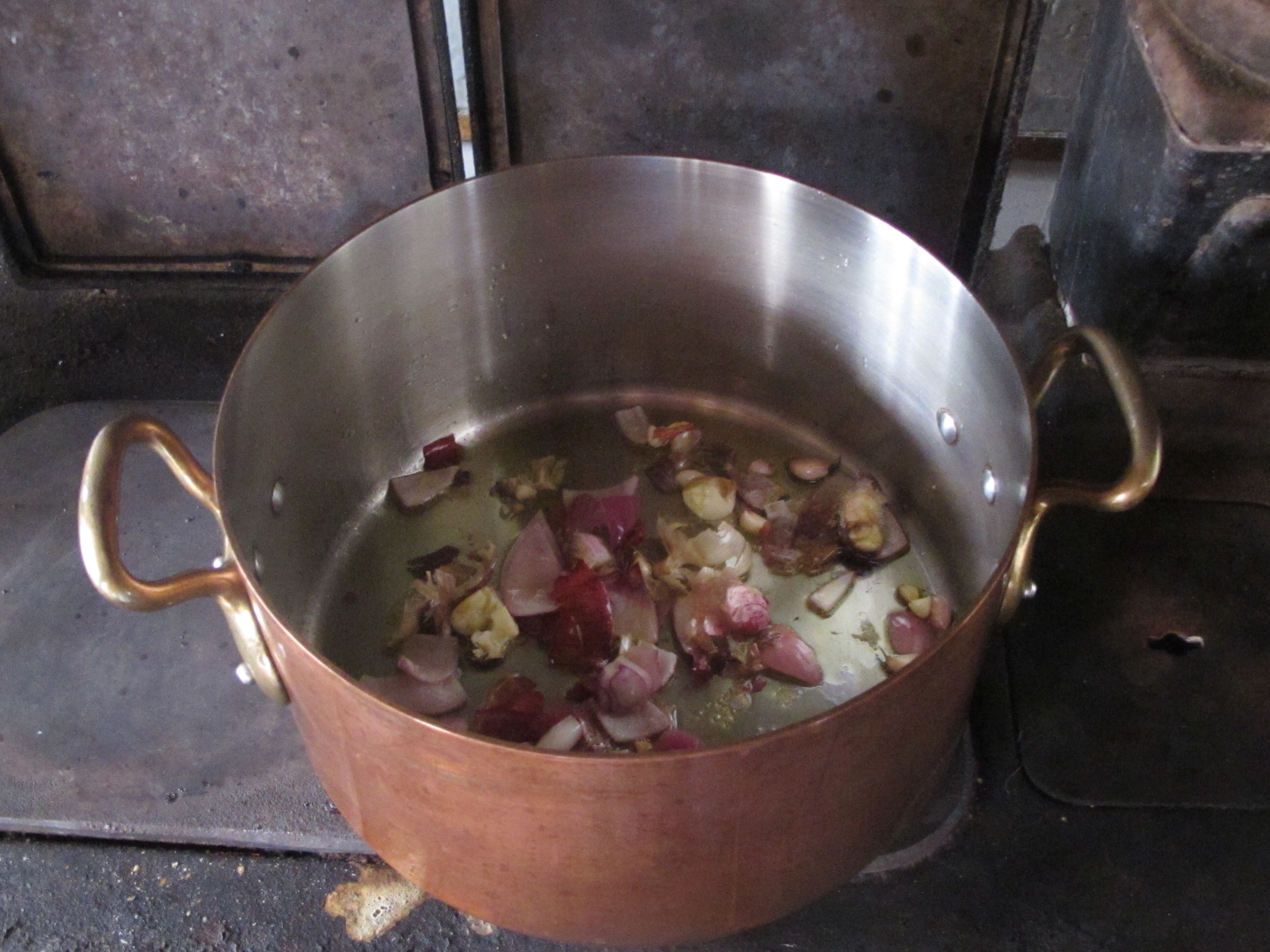
Browning onions and garlic in olive oil and then using what is at hand in the garden to make the mirepoix.
IMG_3700IMG_3701

roasting cheap stock bones from the butcher $3.50 worth

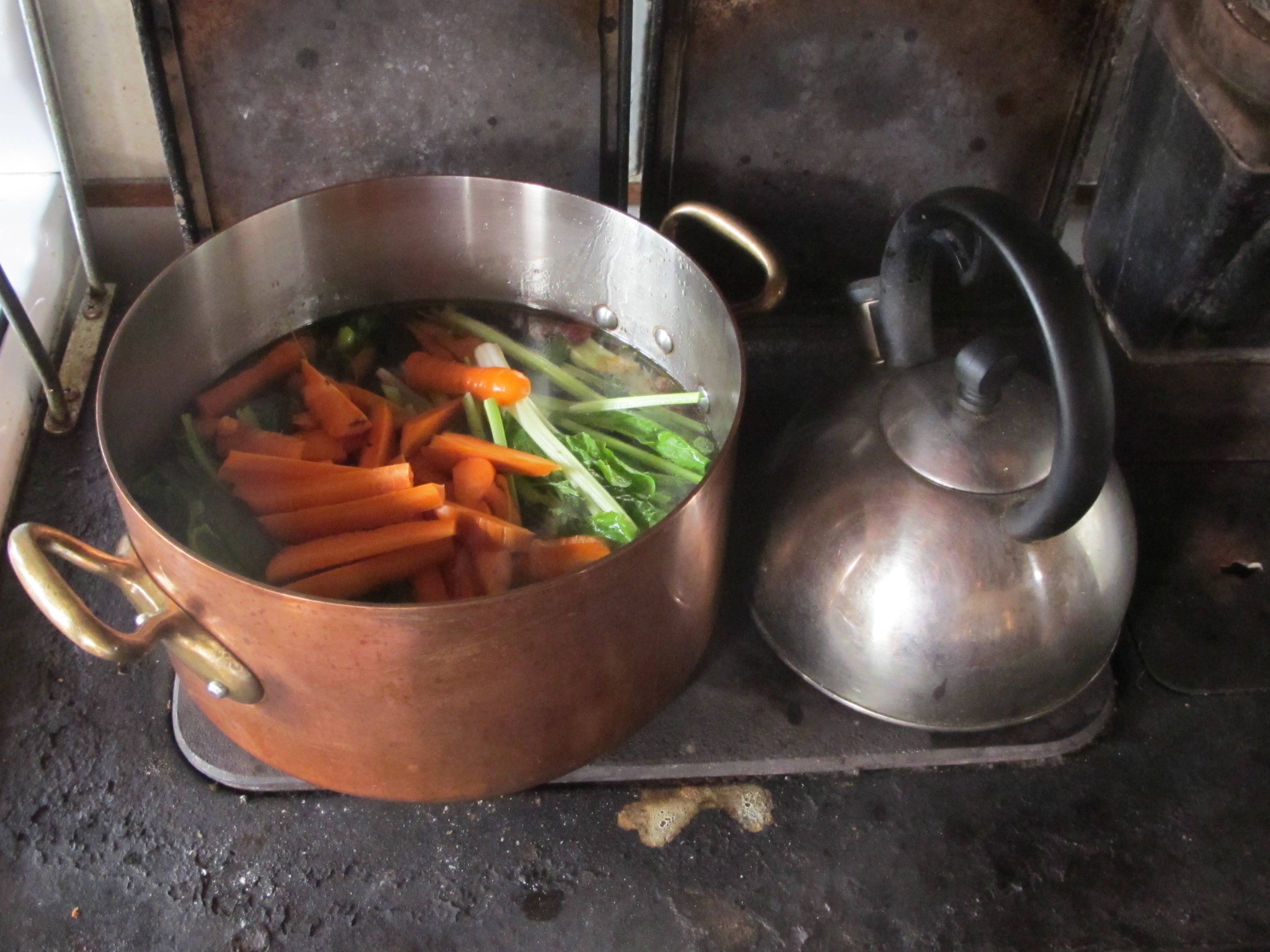
Once roasted the bones and veggies are all boiled down together. The bones and veggies are then removed and the liquor reduced and a bottle of good local red wine from Sally’s Corner Wines in Sutton Forest is added and reduced further.
IMG_3729

Once reduced down to 1 litre, the gel is placed into 2 containers, one frozen for later and one in the fridge for this week.

It’s a fabulous thing to do that is so rewarding and it cost next to nothing and doesn’t have any preservatives or any salt.
It helps us survive and eat well on a limited budget, but most of all it is all made here in the kitchen using as much of our own produce as possible and cooked using the heat from the wood that we grew ourselves, in our own forest and burnt in the kitchen wood fired stove.
IMG_3810
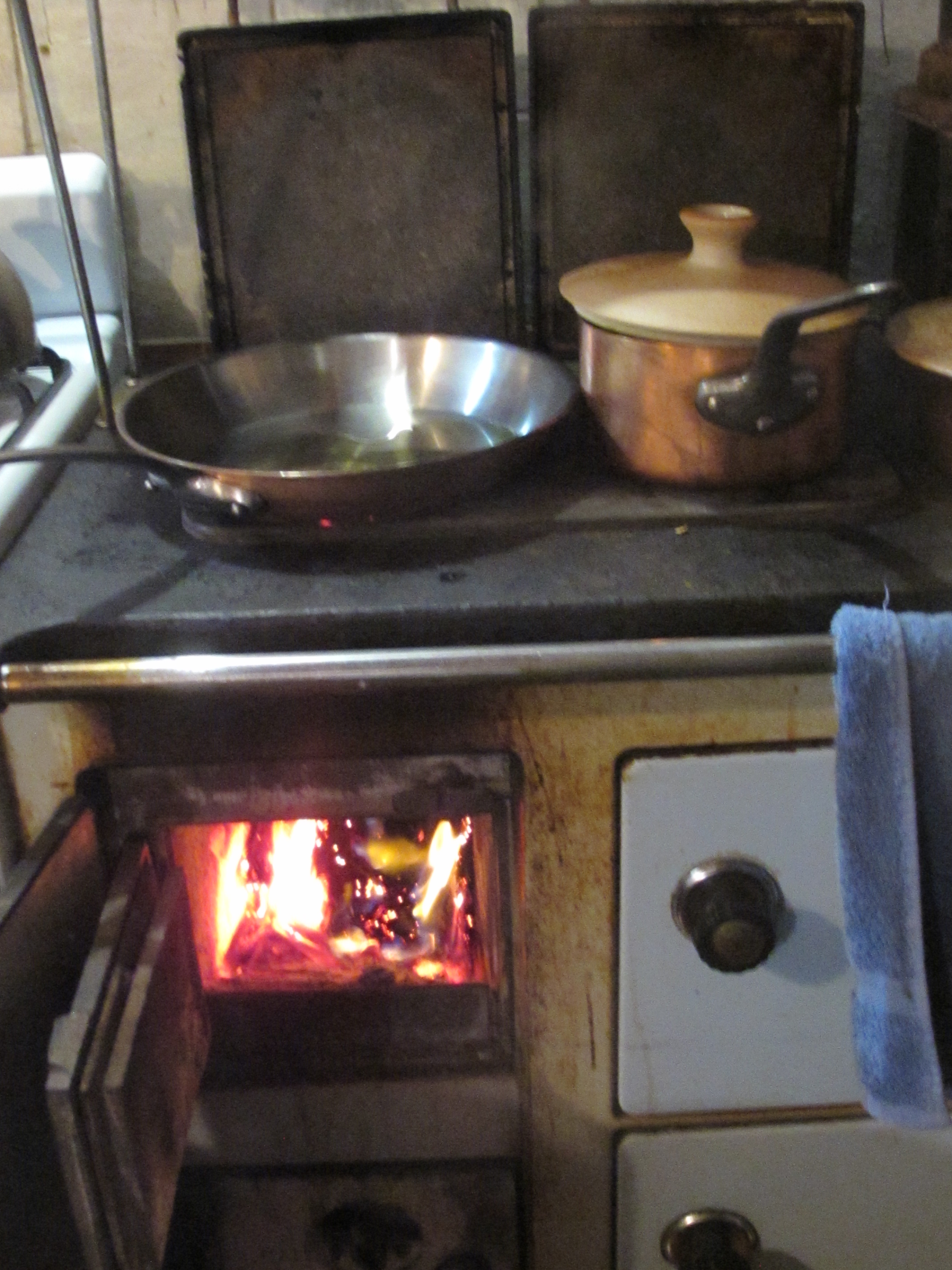
This stove was bought almost 40 years ago, 2nd hand, and is still going strong, heating our hot water , heating the house and cooking our dinner.
IMG_3738
As winter and the cooler weather approaches, we have an excess of lemons. I
Shave off the very thin layer of zest from 25 lemons. It takes about an hour to do it well without disturbing the white pith. I want the zest to make limoncello, a lemon flavoured liquor. All the zest is added to a bottle of Vodka and left to soak for a month. After draining and filtering, it is mixed with sugar/water syrup and is delicious.
We now have 25 skinned lemons to deal with and I don’t want to waste them
IMG_3741IMG_3742
IMG_3746IMG_3748
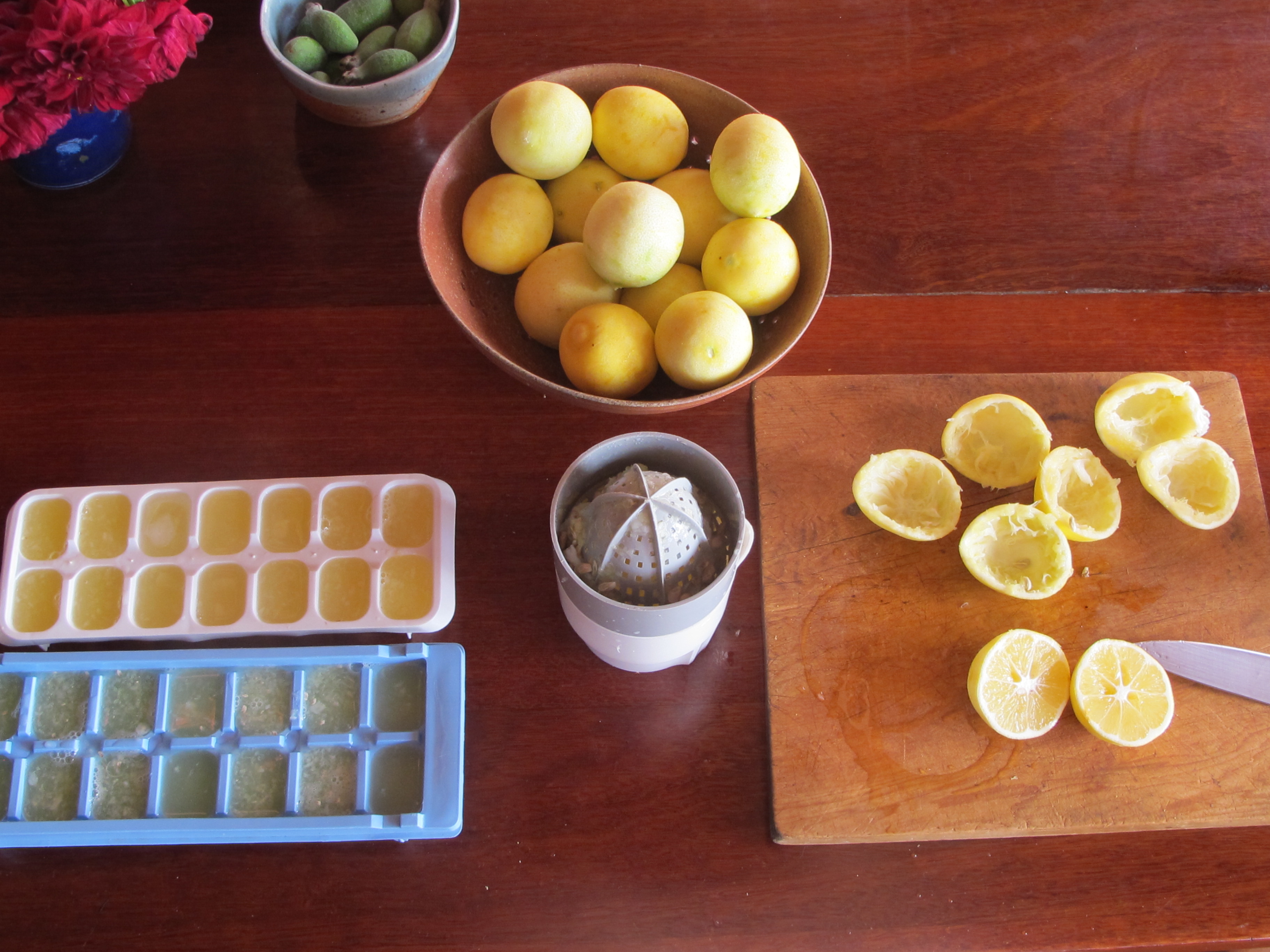
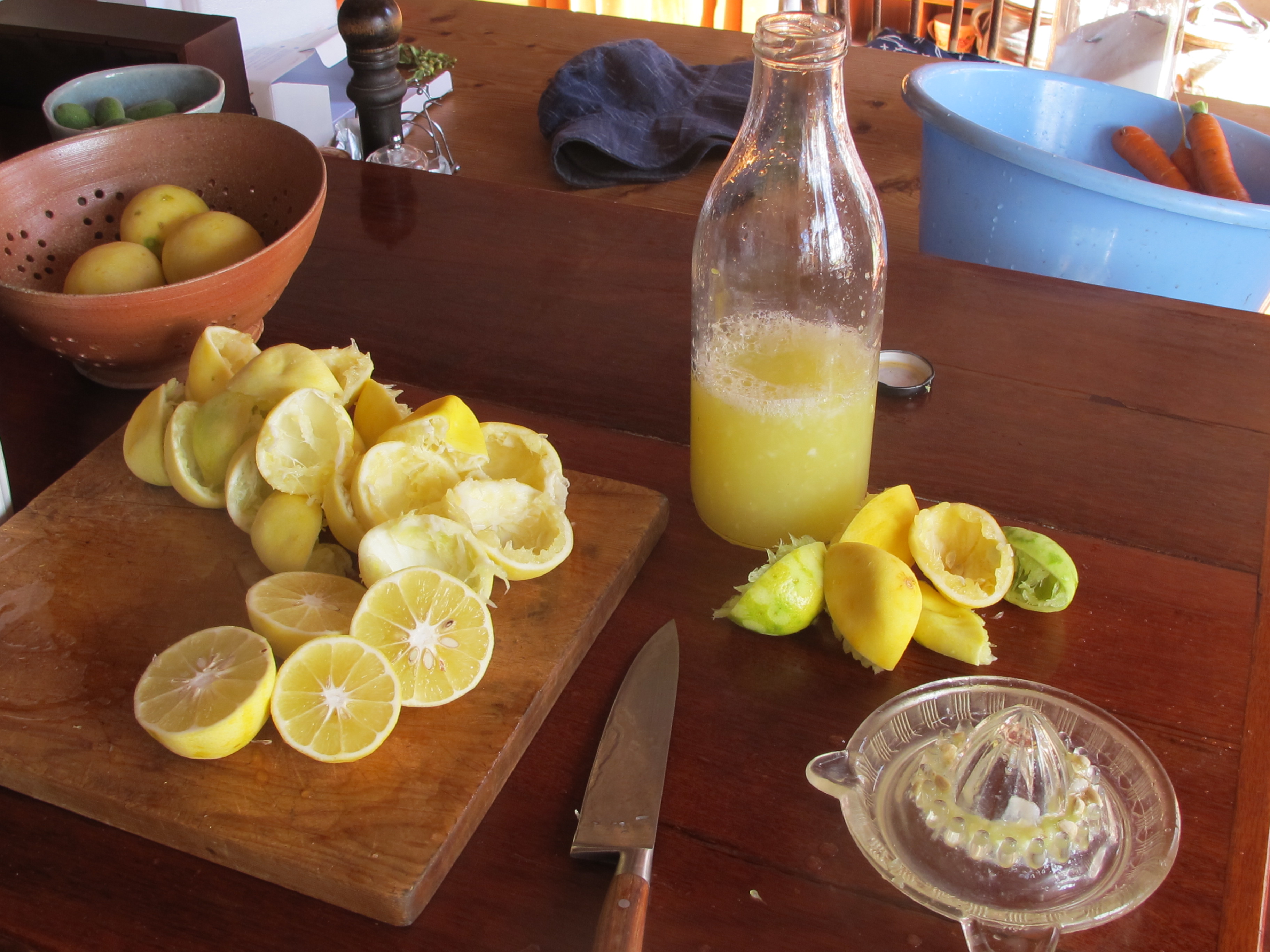
I decide to use half of them for juice to make a lot of lemon juice ice cubes for the freezer. 3 trays should do it. The remaining half of the juice is made into a lemon drink cordial.
Sweet and sharp, it is really thirst quenching and I did it all with my own digits.
Digitally yours,
I am Number 4, you are Number 2
or should that be 0100 and 0010?


Teaching from Home

A letter from the garden, pottery and kitchen.


It’s late April and passing into May, we are very busy as usual. Every month is busy of course. But autumn is a time of the extended Indian summer for the last of the tomatoes, capsicums, egg plants and zucchinis. There is still a lot to pick until the cold nights bring it all to an end. In years gone by, we would be starting to have frost by now, but with global warming, they don’t come as soon as they used to and are not as severe. This warmer climate means that we will be experiencing a lot more bugs in the garden, as the frosts won’t burn them off like they used to.


Autumn is well and truly here. We are now starting to eat the peas that we planted a month or two ago. We’re also starting to eat the earliest broccoli, along with carrots and spinach, all coming along nicely. We have harvested the last of the beans, to dry for the winter soups.

IMG_3603 IMG_3565


The lovely and I  have been making compost for the garden, for the winter mulch. Shredding up all the old corn stalks and other past-their-best veggies and weeds. It all goes int the compost ring with a little manure, the mixture of dried leaves, shredded stalks and soft wet weeds seems to get fermenting pretty rapidly and drops to half its volume in a few weeks. I know that we ought to break up the pile, mix it all up and re-instate it all back into the wire bin to get it fully rotted really fast. But this is real life and we just don’t have the time. It all seems to rot down well enough without the extra effort.

IMG_3544IMG_3549

IMG_3553

IMG_3554


IMG_3530

IMG_3529


IMG_3528

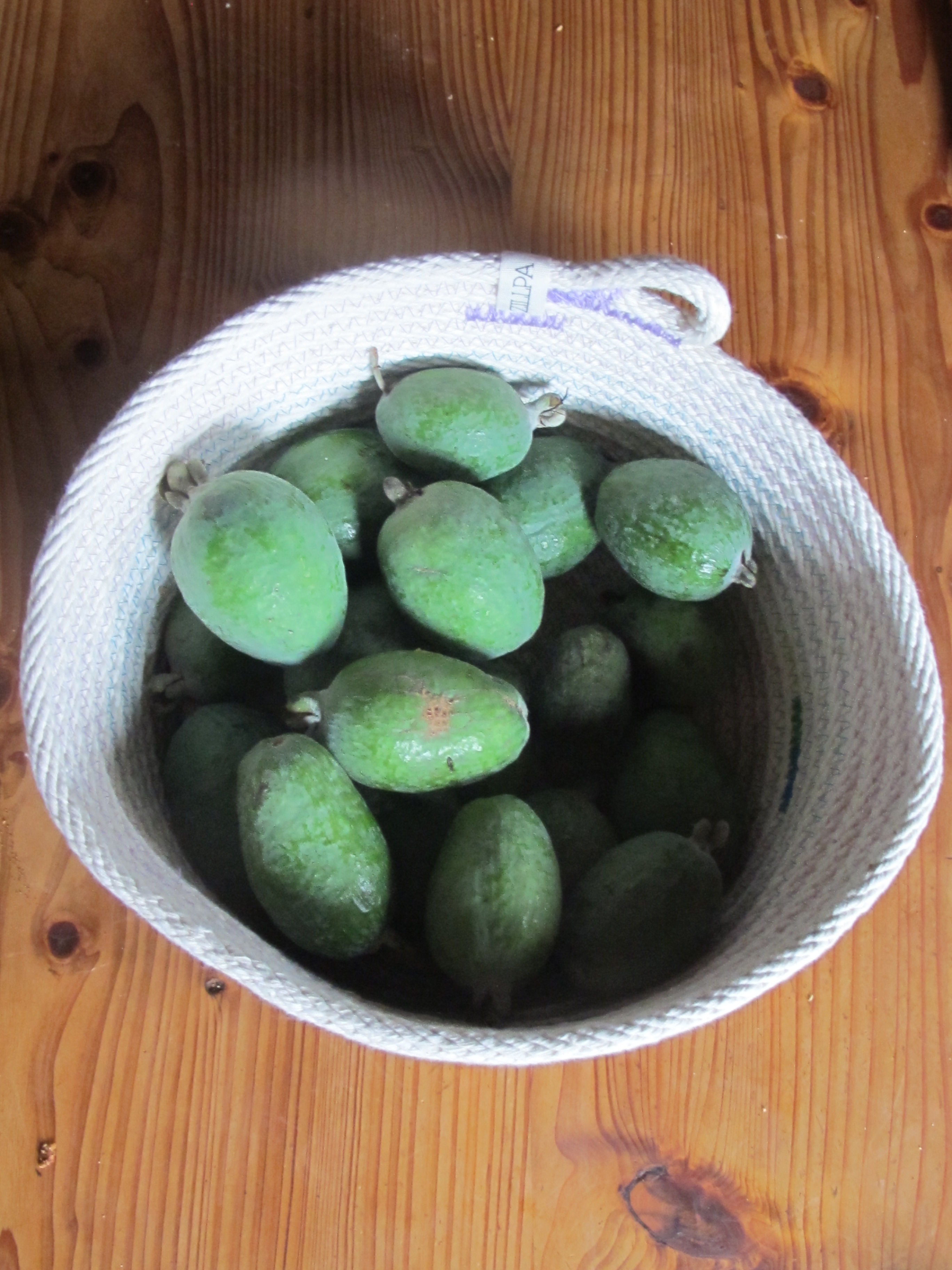
We’ve also been collecting the pine mushrooms, the saffron-milk-caps, from under the pine trees, for our risotto . They appear with the warm weather after the rain. We have also been harvesting feijoas for our breakfast fruit. They are full-on ripe at  this time of year. And starting to fall from the tree.  As we have far too many at this time of year to eat them all fresh every day. The Lovely has started to use them to make a very nice, moist feijoa fruit cake.


This is very moist and tangy. Lovely with morning coffee. It’s a great way to use up lots of feijoas when they are in season.

Here is The Lovely’s recipe.

Feijoa, date (or pear, or prunes) and ginger loaf

Ingredients

▪   1 cup feijoas, peeled and diced

▪   150g dates, though since Janine is not a fan of dates, I used chopped dried pears the first time, prunes the second time and a mix of the two the third time.

▪   100g crystallised ginger, chopped

▪   250mls boiling water

▪   150g brown sugar

▪   50g butter

▪   1 egg, beaten

▪   1 teaspoon vanilla extract

▪   270g flour

▪   1 tablespoon ginger

▪   1 tablespoon baking powder

▪   1 tsp baking soda

Method
1. Pre-heat the oven to 180°C for baking and grease a loaf tin.

2. Place the feijoa, dates, ginger, water, butter and sugar into a saucepan and bring to the boil. Lower the heat and simmer for 5 minutes. Remove from the heat and cool.

3. Sift together the flour, ginger, baking powder and soda and add to the fruit mixture once cooled along with the egg and vanilla. Do not over mix (this mixture is quite thick).

4. Spoon the mixture into the greased tin and bake for 45 minutes or until a skewer comes out clean


IMG_3561

Basically it’s a variation on the old boiled fruit cake recipe and It’s really nice.


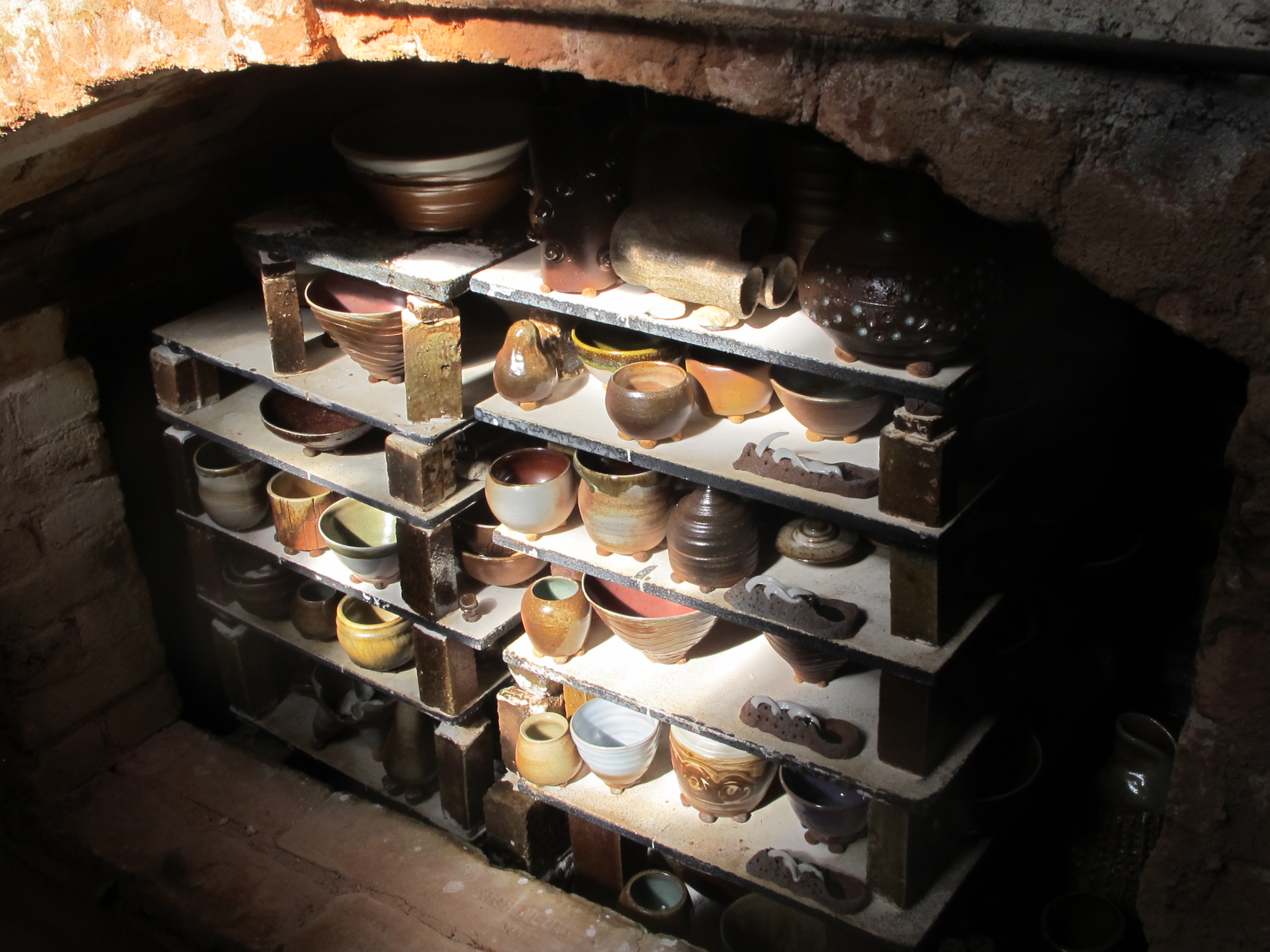
We have decided to take on some private teaching of weekend workshops lately, as a way to bolster our ever decreasing income. We have been having groups of 10 pottery students come here to pack and fire the wood kiln. Both workshops  that we have proposed so far have been immediately, fully booked out, so we will offer a few more in the coming months. The students come on Saturday morning, pitch their tents, then we start to pack the kiln, this goes on all afternoon, until it’s full and then we start the firing in the evening. We fire straight through the night in shifts and finish on the Sunday afternoon/evening. The firing varies between 16 and 20 hours. Everyone seems to enjoy it and the pots come out pretty well, with nice wood flashing and some delicate ash deposit. It seems that everyone is happy, and so therefore so are we.

We have 2 more booked for the autumn/winter, with the possibility of a third to come.

Teaching from home will be our alternate income source since the casual/part-time teaching we had at the art schools has dried up with their sudden closure by the conservative government.


The first few days of the week are taken up with the cutting, splitting and stacking of the wood for the kiln. I have to fill the end wall of the shed with cut and split seasoned wood. It sounds easy to say quickly, but all this work begins a year or two earlier, when we collect the trees and start to season them, so that they will be dry and ready in time for the firing when it comes a year or two hence. Everything has to be thought through, to keep a flow of milled and blunged clay, rock glaze powders and wood fuel continuously in the pipeline so that there won’t be any shortfall.

We have recently been given 8 truck loads of pine trees from the clearing of a house block in a nearby village. I don’t know how much wood this is, possibly 6 to 8 tonnes per load x 8 loads = about 50 tonnes? It will dry out when seasoned to half of this weight. Whatever it is, it will be enough wood to fire the kiln for another 3 years or so. Pine isn’t my favourite timber, but it’s OK and it is much better for us to burn it productively in the kiln and save other fuel, than to see it burnt off in a huge pile. Pine trees are considered weeds in this shire and are recommended for removal to be replaced with native species.

IMG_3654

IMG_3652


IMG_3644

IMG_3648

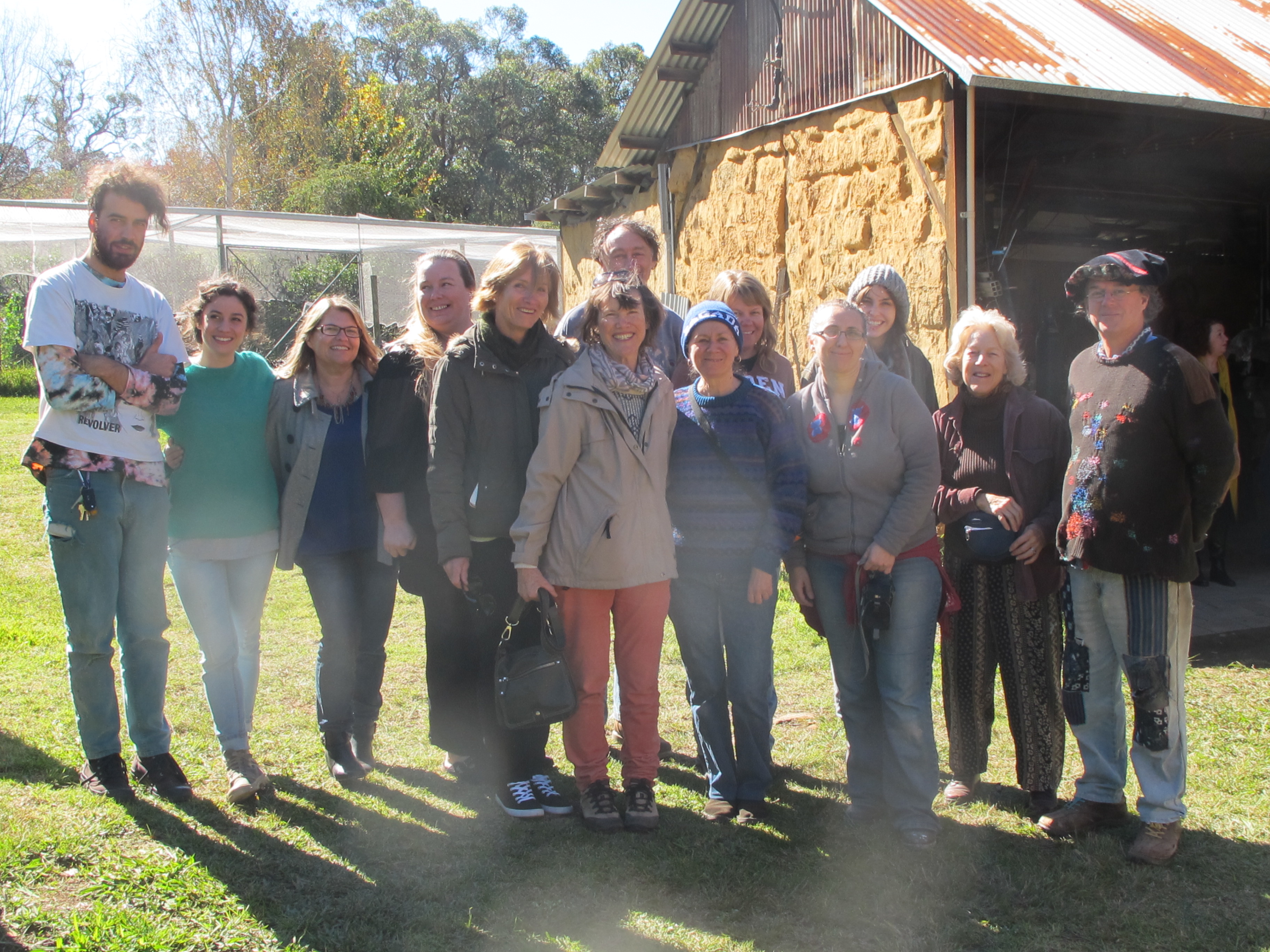
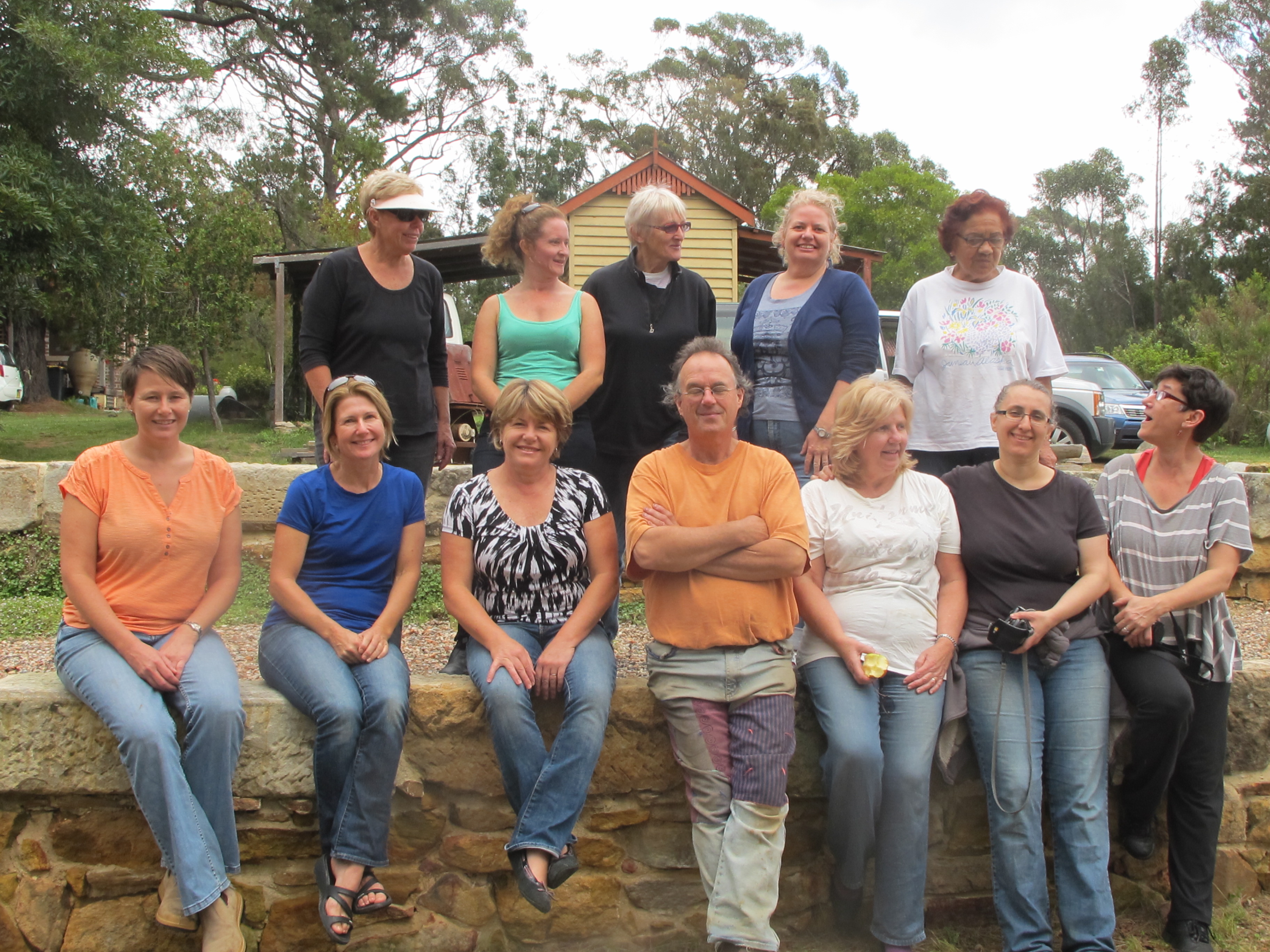
The next thing that you know, our back yard becomes a camping ground with tents of all descriptions and camper vans all around. What a lovely bunch of potters. We have a great time and the firing goes well, the results are great and we make a lot of new friends. There is too much food, as everyone seems to have brought enough for everyone else as well. There is lots of laughter and good will all around. It’s a great vibe!

IMG_3570 IMG_3574

IMG_3680 IMG_3681

IMG_3672

Janine will be offering some low temperature firing workshops in the coming weeks as well. Taking small groups through the whole process of packing and firing a small wood kiln to low temperatures in one day.

Teaching a few workshops from home might be the way that we subsidise our income for the coming few years? There are so few opportunities for modern students to fill in all the enormous gaps that are left in the new ‘free-enterprise’ model of ceramic education. Workshops like these might be one of the ways that professional expertise can be transferred from us to the new generation of potters.

When ceramic training was handled by Technical and Further Education. There was full syllabus including the technical subjects of Glaze technology and kiln firing. The new privately run par-time classes that have replaced them are only a few hours of practical instruction with no structured instruction that follows a full syllabus. The result is an incomplete experience. This probably suits most of the clientele, but for those wanting more…… We will be back to the 50’s and 60’s, where, if you wanted to learn something more fully and completely, you had to go to an artist and work with and for them, most likely as a volunteer. I got my early start with Des Howard at the Argyle art Centre and Nicholas Lidstone at the Berrima Pottery as a volunteer. Later, I worked for Mike Pridmore as a paid labourer. Good times! However, I soon realised that if I wanted to learn all the technology that I realised that I was going to need to be an independent and self-reliant potter, then I would need to go to Art School and later to do an apprenticeship.

This journey worked for me. I was lucky. I think that it is a lot harder now to access all that I was able to get involved in. For a start, life is tougher and far more mercenary. Rents are higher and the cost of living seems to be greater.

IMG_3755IMG_3686

packing the students glazed pots into the kiln.       The fired pots ready to unpack


IMG_3765IMG_3584

So we are starting to teach from home. I don’t think that all this is quite as mercenary as it might seem at first glance. Sure we are interested in earning some money, but we are also providing a service that is not all that easy to access in any other place. Certainly not in a place as interesting, sustainable and carbon aware as this with access to our organic gardens and orchards as a backdrop.


In the gap between the two workshops, the Lillipillis berries are getting ripe in the garden, the birds are very keen on them and we have to be quick to get some of them as well.

We keep a keen eye on them every day as they ripen, and as soon as the birds become active, then we have to get the ladder out and get up there and start to pick, otherwise, there will be none left in a day or two. The tree is 6 or 7 metres high, so I can’t reach them all. I collect all that I can reach from the ladder and leave all the rest at the top for the birds.

We manage to get them picked between episodes of wood gathering, sorting, cutting, splitting and stacking for the next firing.

IMG_3589 IMG_3590

IMG_3769IMG_3770IMG_3594

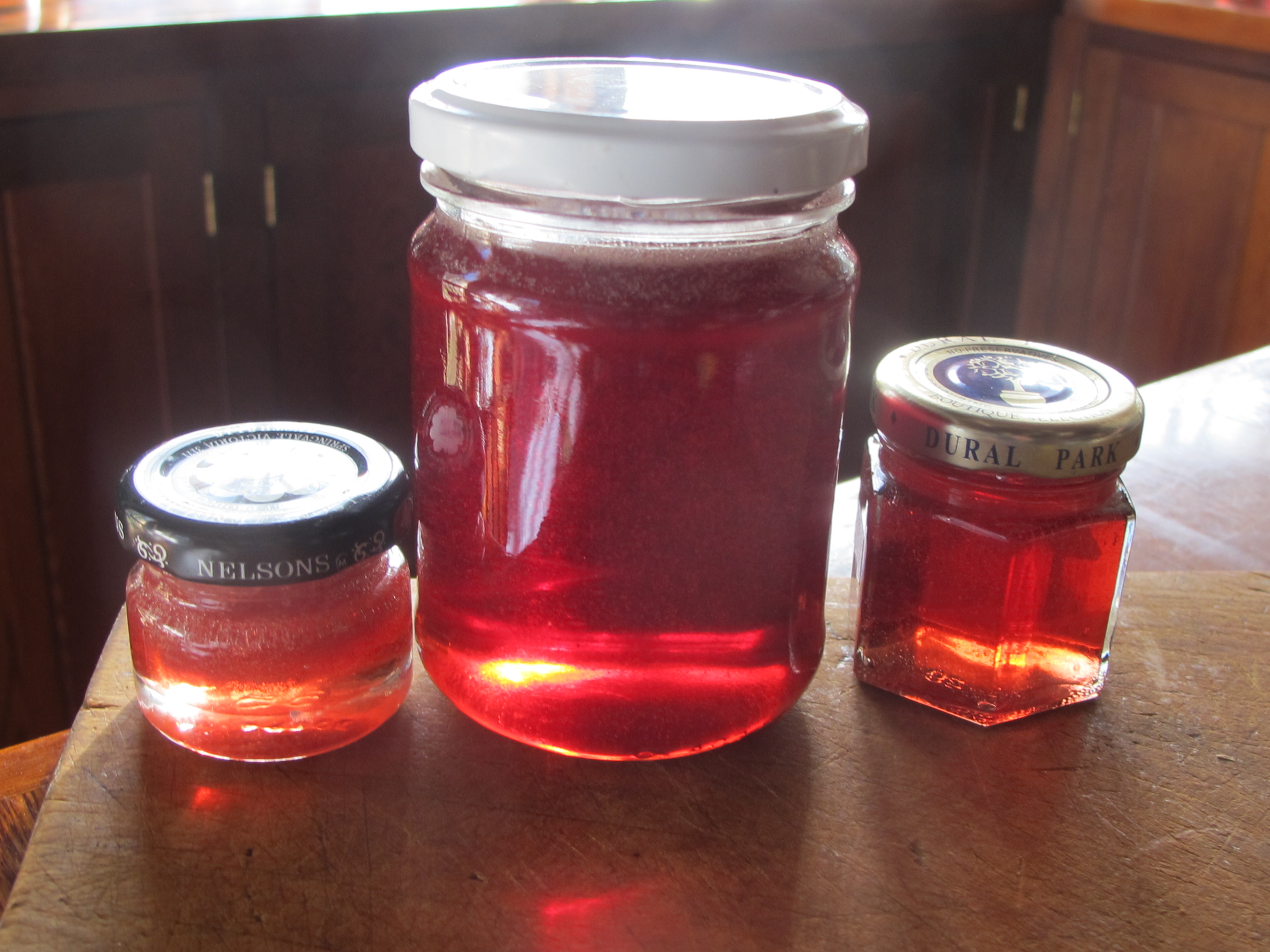
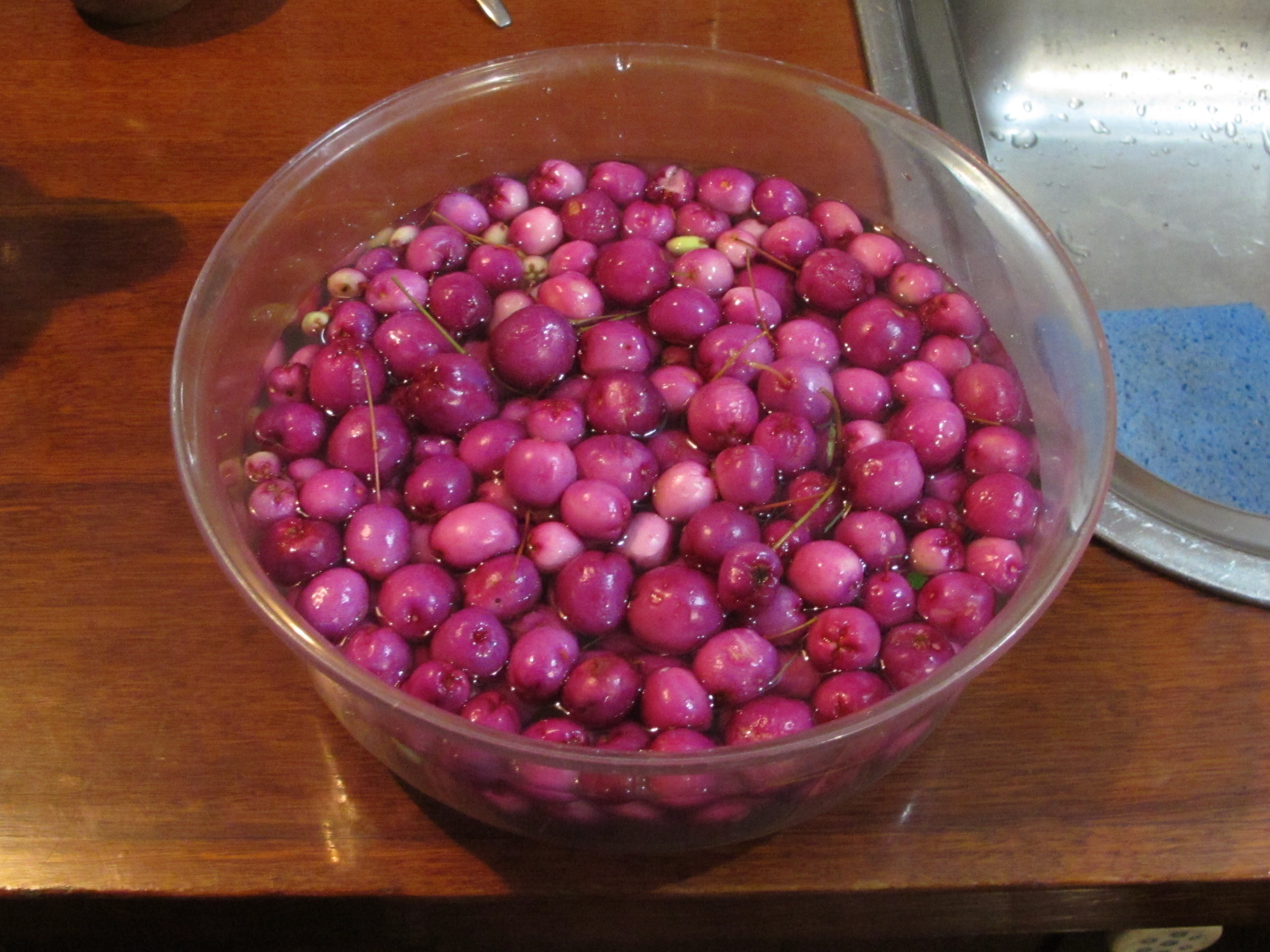
The Lovely makes a few jars of Lillipilli jelly for later on in the season, but we start to eat one of them straight away, it’s just so nice, and all from our garden.This is the result of our two partial days work, picking, washing, boiling, straining, adding sugar and reboiling, then dripping the strained jelly. What wonderful colour and flavour, and from an Australian native fruit as well.

We are so lucky!


Our red-meat meal for this month, was lamb shanks. Browned in olive oil, onions and garlic, then simmered gently in one whole bottle of local red wine – merlot, and two large  table-spoons full of marrow bone jelly stock. (see earlier email) Simmered down to 1/3rd its volume over an hour or so makes the most delicious and intense sauce and served with garden vegetables.

IMG_3782IMG_3783


IMG_3784

It’s hard to believe that anything this simple and effortless could be this delicious.


With love from Mammon, the pantry-raider and garden mercenary


Zen and the Art of Maintenance – Theres a catch to it

Nothing lasts forever. Nothing is ever finished, Nothing is perfect.

I’m very aware of how nothing lasts. I seem to be spending a lot of my time these days in repairing and replacing things that I’ve done before, now I’m doing them again. The only trouble is that it’s so long since I did it last time that I can’t always remember how I did it and I have to re-learn or re-invent what I once knew and have since forgotten. Use it or loose it they say. I’m learning all over again how true that is.


When I built my current pottery workshop in 1883 after the old one was burnt down in a fire, I was shown how to make beautiful corners in the galvanised iron guttering by the local plumber. He was a good man, very careful and caring. He took me under his wing as it were and was prepared to spend a bit of time on me. I worked for him as a labourer when I first came here in 1975/6. I had no income, until I could build a pottery and kiln. He gave me occasional work when he needed  help on larger jobs. He was already 60 at this time and I was just 23. He saw some potential in me and mentored me. So when our work shop burnt down he offered to help in the way that he could by showing me the tricks of the trade of old fashioned roof plumbing, flashing and guttering.


That was 30 years ago now and all that old guttering is worn out, repeatedly patched and repaired, now rusted through and has stopped catching the rain water that we need to exist here in the bush.

It’s a big building and I need to do all of it. It’s 60 metres all around and I have to stretch my memory back to remember what we did back then. As I take the old corners apart carefully, It all starts to come back to me.


Joe never bought any pre-fabbed parts like corners or stop ends. He fabricated everything from the full lengths of gutting sections as needed. It was very impressive to see him cut and fold the guttering section, bend them and make everything fit together into a perfect 90o corner with all the correct overlaps and reinforcing gussets, all just sliding into place. Little tabs sticking out in just the right places to allow secure reinforcing of the joints, just exactly where they needed to be. All this done free hand, without any measurements of marking out. He’d done it so many times during his life, he could do it in his sleep. He was a true master of his trade. I was so impressed watching him work.


After a while of working with him, I could see the patterns in his methods, the sequences that were involved. At one point I could see the next step that was coming and had the right tool ready, so that before Joe could ask for it, I slid the tool forward into his hand at just the right moment before the words left his lips. He turned around and just gave a glance back at me. A small smile. Said nothing, and kept on working. That was all that was needed. We worked well together from that moment on.


I’m struggling to remember all the little subtleties in the making of a gutter corner in the middle of a long run of gutter section. The lengths are 6 metres long and a little bit unwieldy up on a ladder by your self in the wind. I measure from the last joint, allow an over-lap of 250mm. for a slip joint and cut my long section half way through with the tin snips. I make what I think is the right shapes and fold it around. It is almost right, but not quite. The next one will be better. I manage to man-handle the huge unwieldy ‘L’ shaped thing up the ladder and rest it on the roof. It takes some effort to slide it into it’s final position. Joe made it look so easy. I have to do it a little different from last time because in 1983 all the joints were soldered into place. These days it’s all silicon. I didn’t like the idea of having lead solder in my gutters catching drinking water, but even less keen on silicon rubber and plastic down pipes sealed with acetone.


I spend two days doing all this work and now the roof is resealed and catching drinking water again. I’m sore and tired, having used all sorts of mussels that I don’t usually use doing all that ladder work. Janine’s nephew calls in for a visit and is very polite about my roof work. He’s a builder and tells me that no-one makes so much effort in their joints these days. What I’ve done is so old fashioned. He also lets slip that it cost $100 per metre for gutting these days. I’ve just saved myself $6,000 of money that I didn’t have to earn to pay a plumber to do all that work. It’s cost me about $700 in parts. So I suddenly feel a lot better. I like these aches and pains.


Now it’s the lawn mower, the lawn mower that has given us such reliable service for the past 22 years is suddenly all wobbly in the steering. I check it out and find that the front axle is actually made of pressed metal and has fatigued away and started to split and tear in half on one side. A closer inspection reveals that the other side has splits and cracks in it as well. I decide that I will have a go at making a new one to replace it.


One of the first mowers that we had was an old ride-on mower that we were given for $50 by neighbours who decided to sell it when they sold their house to move into a smaller place in another village. They wouldn’t need it on the smaller block. The local mower shop had offered them only $50 for it, but only if they delivered it to them. They asked me to deliver it for them, as I had a trailer which would fit it. I asked them why they would accept only $50 for a valuable ride-on mower? They told me that they had previously been Sir Russell Drysdale’s caretakers up on the Central Coast. He had bought the ride-on for them to use to mow his lawns. When they left to come here 7 years later. He gave it to them and said that as Ron was the only person who could start it and keep it running properly, he should keep it and Sir Russell would get a new one for the new caretaker. Now 7 years later, they are down-sizing and moving onto a small suburban block.


Ron said that as he hadn’t paid anything for it. It was unethical for him to profit from his former boss’s generosity!

I said that I would be prepared to pay him the $50 and just deliver it to my home and keep it to use myself, as we had 4 acres and didn’t have a working mower. He was thrilled that it would go to a good home directly and to someone that he knew and liked. So we got a 15 year old adolescent, difficult, temperamental, fickle, changeable, unreliable and often intermittent working mower.

I don’t know if it was true that only Ron could work it reliably every-time. I doubt it. The problem was that the old Briggs engine was ‘cooked,’ It blew clouds of smoke out the exhaust and took a lot of pulls on the cord before it would begin to ‘kick,’ and then only weakly. Once it did start, it only had enough power to run on the level. It had enough power to actually ‘mow’ while it was going down hill, but it didn’t have enough power to actually carry my trifling weight up hill and mow at the same time, so I could get off and push it up hill while it mowed, or stay on and turn off the mower function so that it could cary me up hill, where I could re-engage the mower and mow another down hill strip, etc.


After a couple of years of this it couldn’t mow and carry my weight at the same time, even down hill! Something had to be done. I looked around and finally found a Honda motor that would suit the fittings on this old mower and wasn’t too expensive. The sales man said that it was identical to the old Briggs motor. Same mounting bolt diameter and spacing, same shaft size. So I bought it.

It didn’t fit!

What he didn’t tell me was that it was an overhead valve motor, while the Briggs was a side valve. This made the new motor 100mm wider.

I had to cut the mower in half and add 100mm. to the length of the chassis and weld it back together again, just to allow the extra space for the longer motor to fit into its housing.

Amazingly, it actually worked!

I was the most surprised of all.

You know, that mower might have been Sir Russell Drysdale’s, but the paint job wasn’t that good — and he never signed it!

I wonder if it was a forgery?

Anyway, I eventually gave that mower to a friend, and we bought the new one. That new one is now the old one and is worn out too, although the motor is still good. See what the years do.

IMG_0381IMG_0382

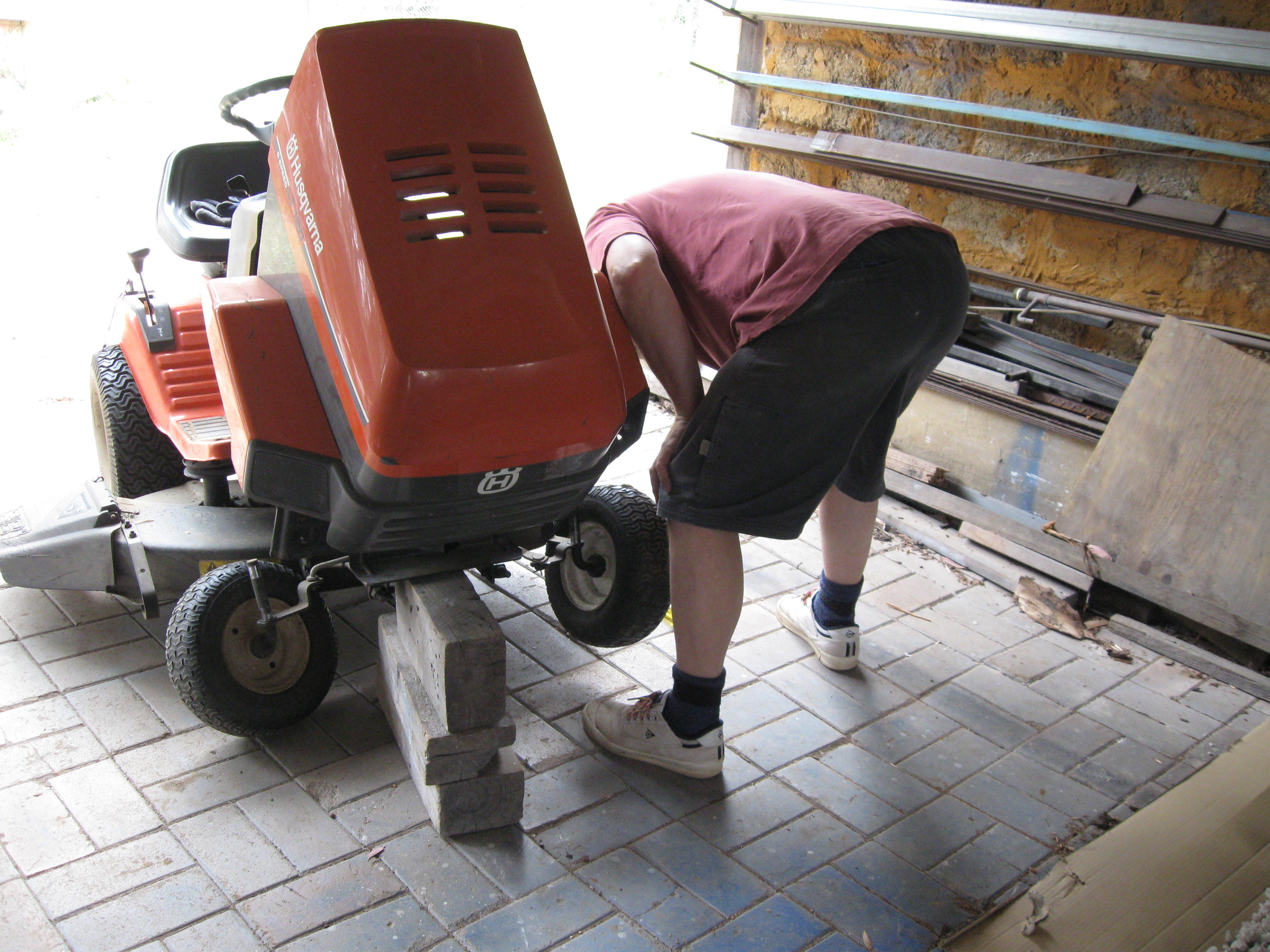
I examine the old axle assembly. It’s pretty much had it, all torn asunder with metal fatigue and stress. I can imagine what my arteries might look like after all these years? I decide that the best thing is to start again and build a new one from scratch. Not a new mower, but just a new front axle. I jack up the mower and take it to bits. Once stripped down of all it’s plastic bling, it doesn’t look too flash. Maybe I should start to wear make-up? It doesn’t appear to be such a big job. I have a small length of thick walled steam pipe and I cut a couple of panels out of 3mm steel plate on the guillo. The jobs almost done.


IMG_0389


I measure the angles, make the final cuts. I need to get the camber and rake correct, and it has to be able to swivel to allow for uneven ground. I plasma cut the necessary holes in all the right places and weld it all together. A coat of primer and it’s ready to go. As good as new — if not better.

I can’t tell you how satisfying it is to restore something vaguely complicated back to working order and forestall waste and save expense like this. I don’t like throwing anything away until it is really worn out. I think that this mower now has another decade in it yet. And it was all made out of bits of scrap, that others may have thrown out. I guess that this is not so much maintenance as rebuilding.

Because things come in threes, the kitchen stove firebox door catch finally gives up the ghost after 35 years. We bought this slow combustion stove 2nd hand in about 1977.  It was out of date when we bought it and there were no spare parts to be had then, never mind now. It has given good service when you consider that we light it almost every day of the year, at least 300 days a year. It cooks our meals, heats our hot water and keeps us and the kitchen warm on cold nights. It’s lovely to come inside on a cold evening after working outside all day, in to a warm house and snuggle up to a hot stove. The only days that we don’t light it is in the heat of summer, when we already have enough solar hot water and lighting up the stove will heat the room too much for comfort.

Now after infinitesimal turns of the screw, it has completely worn the threads off the shaft of the catch, to the point that it won’t catch anymore. If the firebox door can’t be reliably kept closed, we can’t risk burning wood in it at high temperature in a timber floored kitchen.

It’s not a big deal, but I know that I can’t buy one to replace it. We have been making our own specially shaped firebricks to replace the ones that wear out in the firebox for years now. In fact the ones that we make ourselves last much longer than the original ones. I use my good kaolin clay and hard fired high alumina grog from my recycled wadding to make them and fire them in the wood kiln. They turn out remarkably well and last forever.

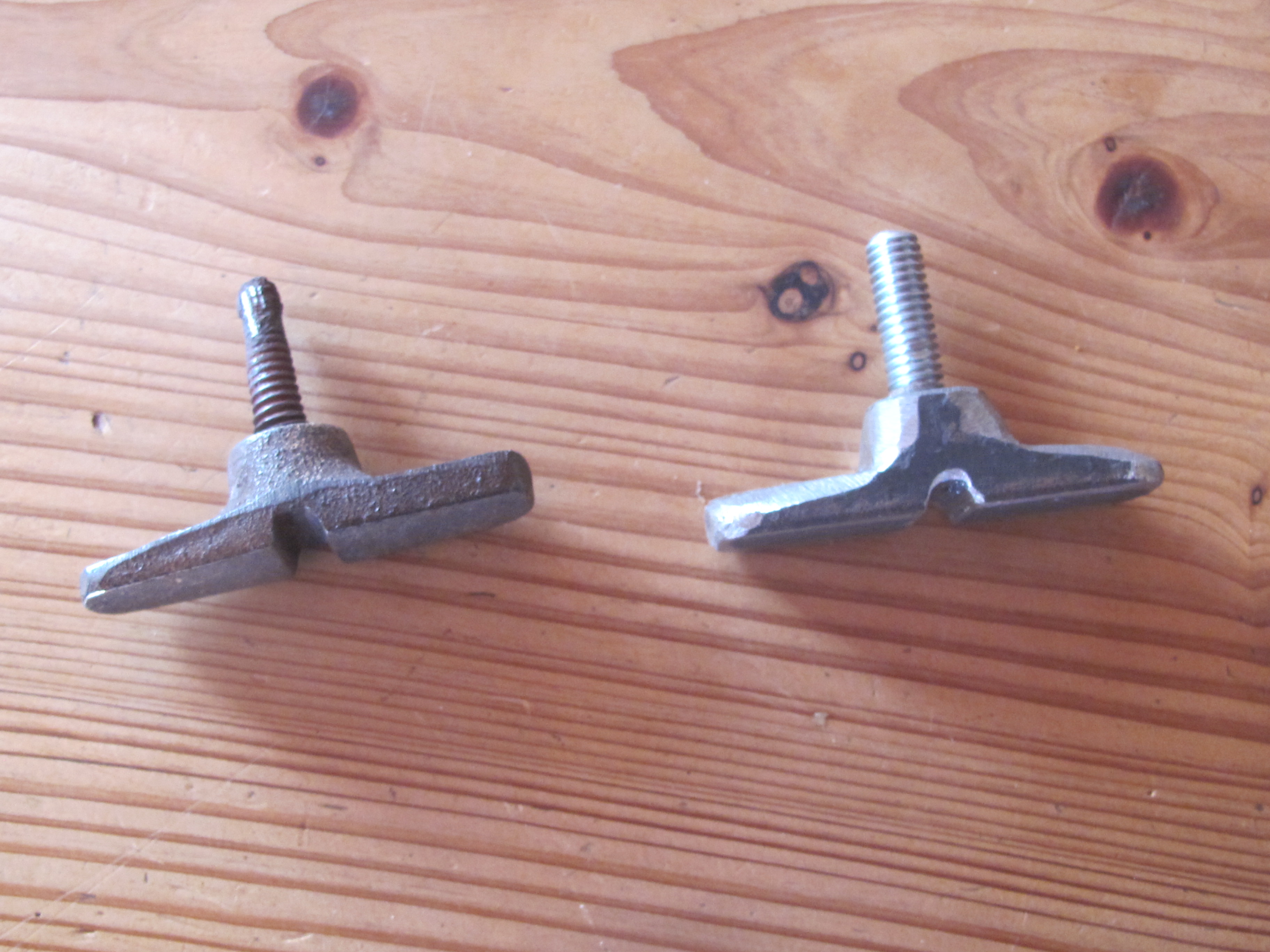
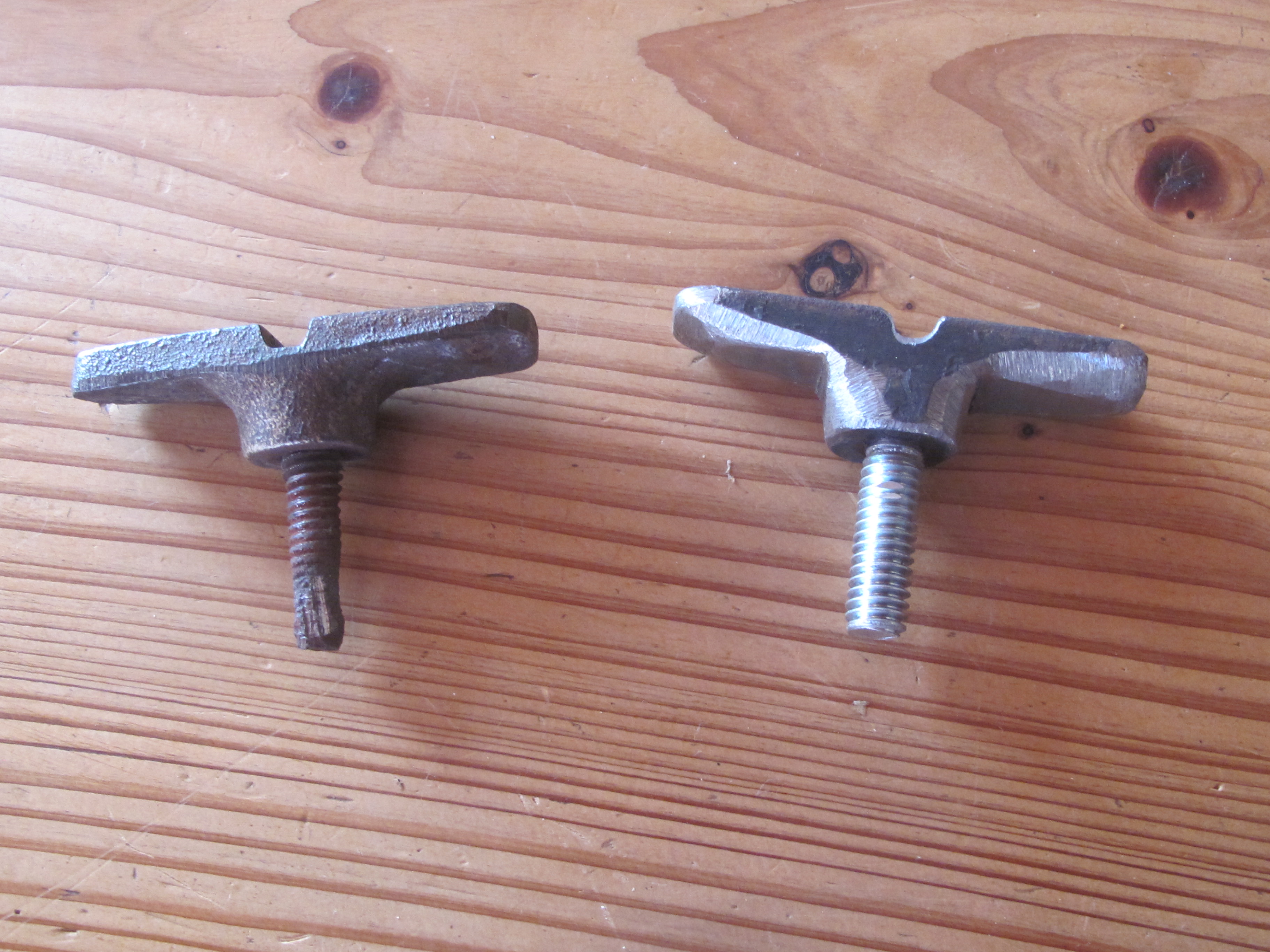
Rather than try to fix the old worn out firebox door catch, I decide to keep it as a pattern and cut a new one out of a block of steel bar. 35 years is a lot of catching and locking. They don’t make appliances like that any more. I spent an hour making the new one to replace it. Cutting out the basic shape and filing it to a nice finish, then tapping a new thread into it.

It looks good and works well. The old one was cast, this new one is fabricated.

No firebox door catch — no dinner! Necessity being the mother. I invent this new one. More waste forestalled by recycling old metal scrap.

Friends of ours recently bought a new kitchen stove like this one. It cost them somewhere around $13,000 + installation!


IMG_0639 IMG_0640


We couldn’t afford to live here if we had to pay for everything. In this case, there’s a catch to living simply.

These repairs aren’t perfect, maintenance is never finished, nothing lasts.


Best wishes from Heath Harrison and his Mother of Invention