10 Million Shards

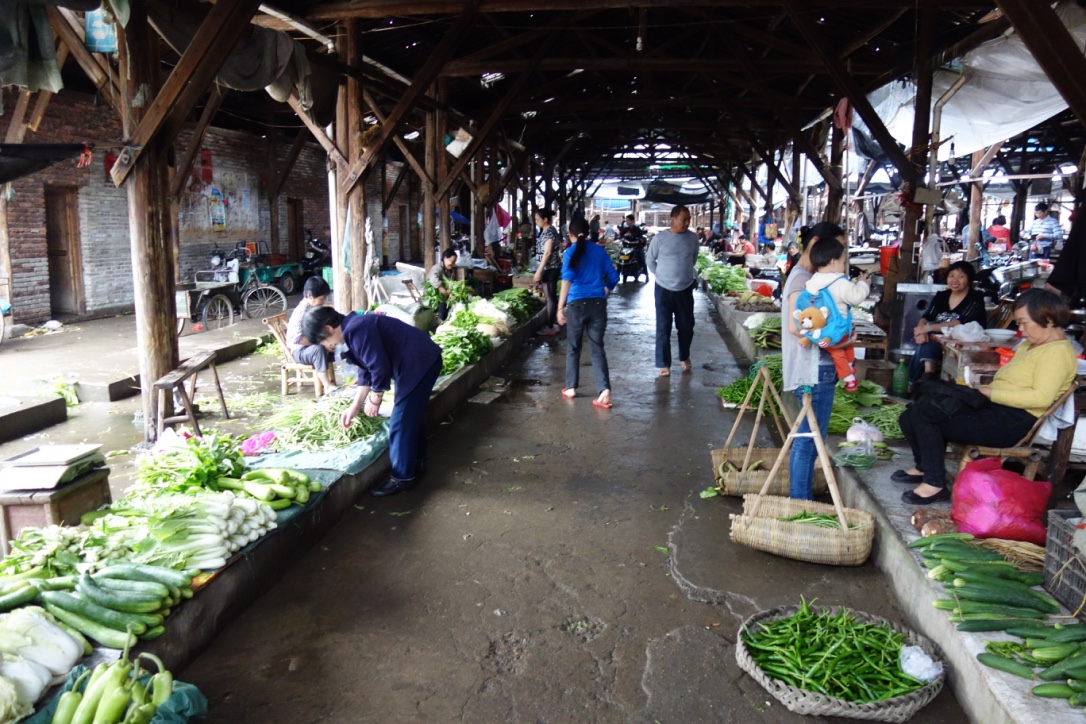
We are up bright and early and out into the street. We are foraging for breakfast. There are any number of street food vendors plus a few cafe style shop fronts open for our custom. We’ve had a gut-full of intestines for now. We are thinking of steamed buns, but this morning there doesn’t seem to be too many about. We take a walk through the local market, that is down a lane and along a walk way which opens up into a covered market in behind the main street. You wouldn’t know that it is there except for the stream of people and motor scooters that are coming and going along the narrow path simultaneously. It looks like total chaos in there, but is just the normal too-ing and fro-ing of humanity. We realise that we just have to push in and shove our way through, just like everyone else. No-one seems to have the Western concept, that we were brought up with, of taking your turn. it just doesn’t happen like that here. People aren’t being rude. it’s just the way that everyone gets about when there is a crush, and there always seems to be a bit of a crush.

thumb_DSC00561_1024The market is amazing and wonderful, everyone here has been up before sparrow-fart to get all this produce dug, washed and cleaned and laid out here for our delectation. The pigs have been slaughtered and their bits are all here for us to examine, all steaming-fresh and quivering-warm.
The vegetables are almost still growing, they haven’t realised that they are out of the ground yet.
thumb_DSC00549_1024thumb_DSC00572_1024
thumb_DSC00563_1024
  thumb_DSC00558_1024
thumb_DSC00576_1024  thumb_DSC00584_1024
thumb_DSC00840_1024
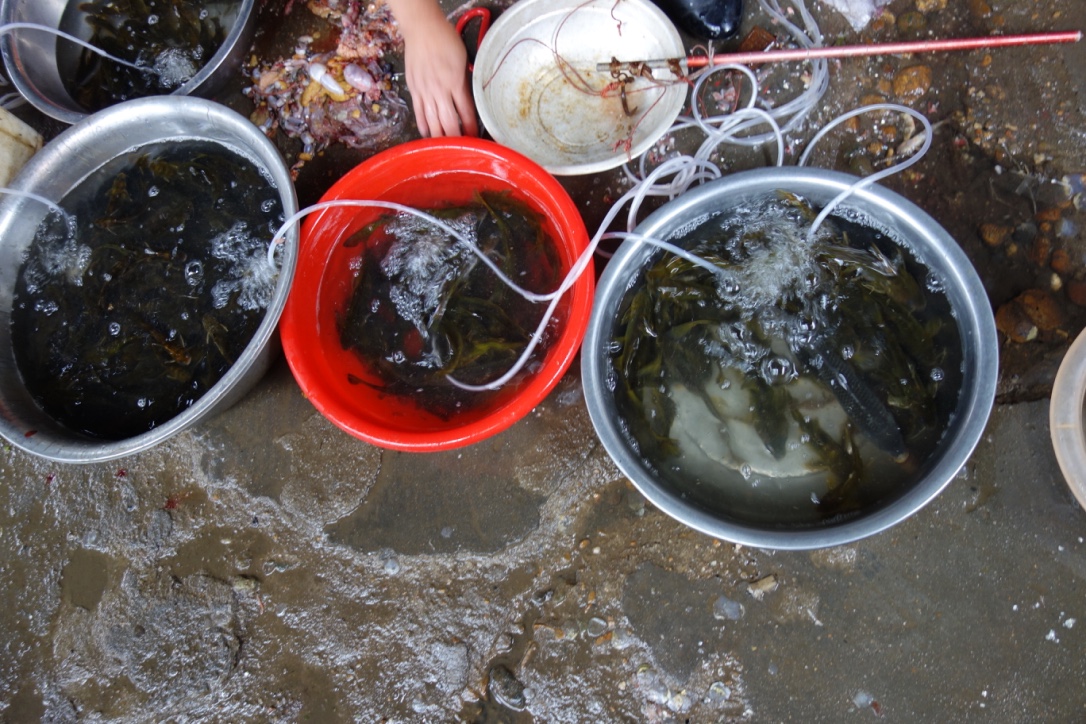
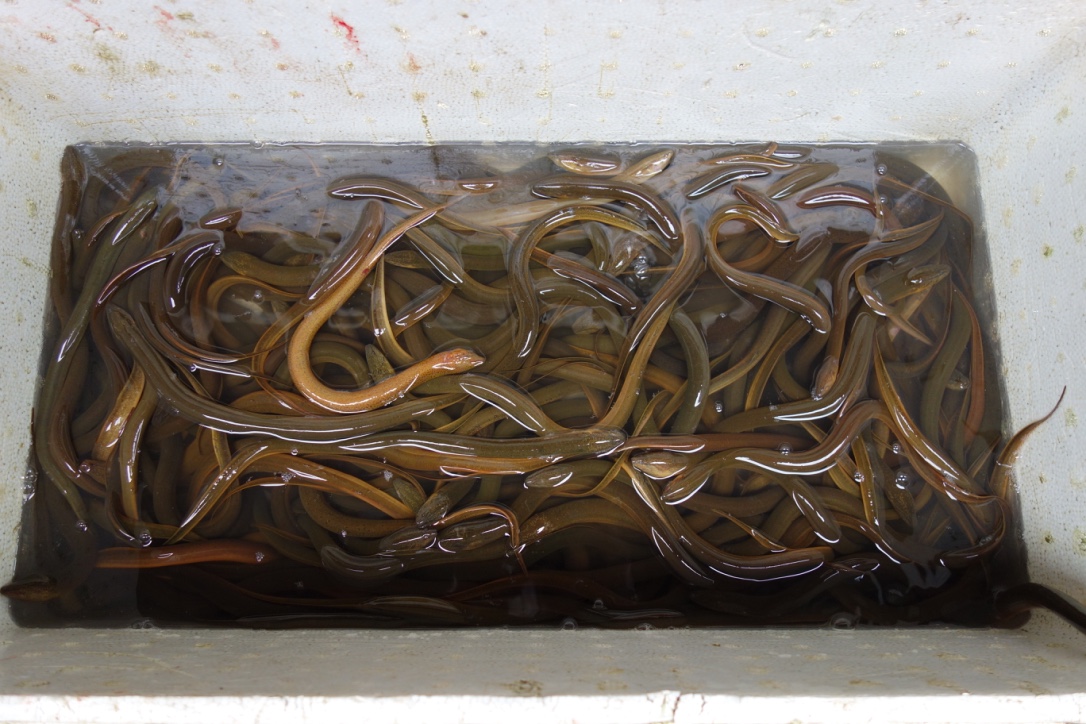
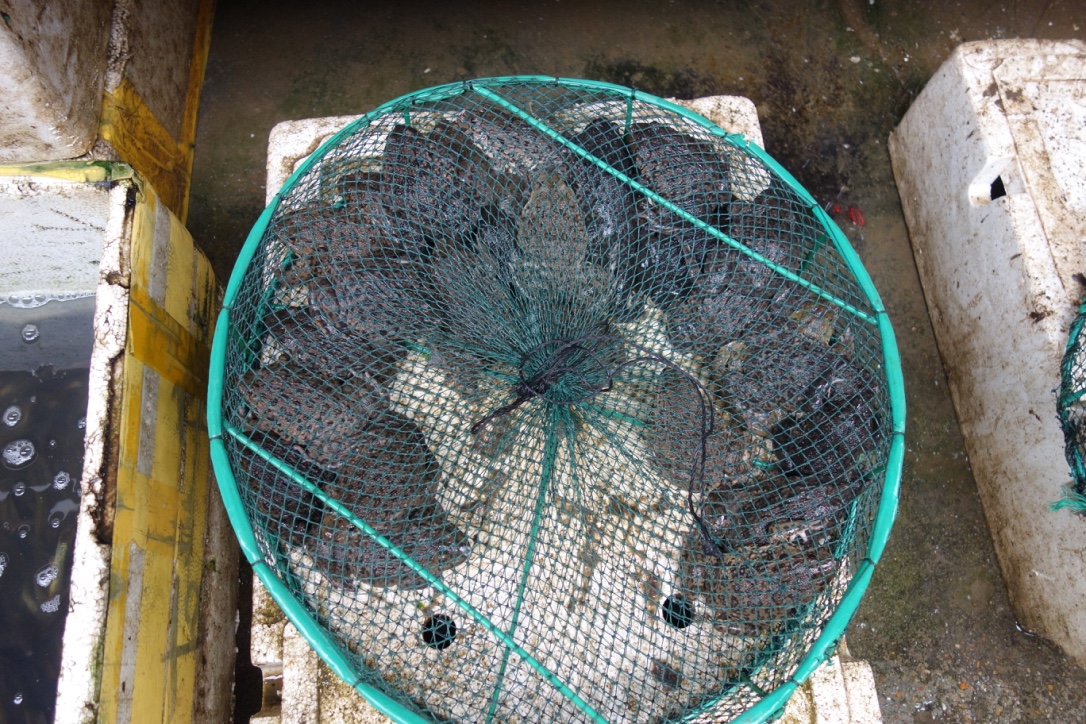
Something that I hadn’t noticed before was that most of the fish are still alive and swimming in their paddling pool ponds. An aquarium air pump is feeding bubbles to some of them that need to be aerated. The carp don’t seem to need it.
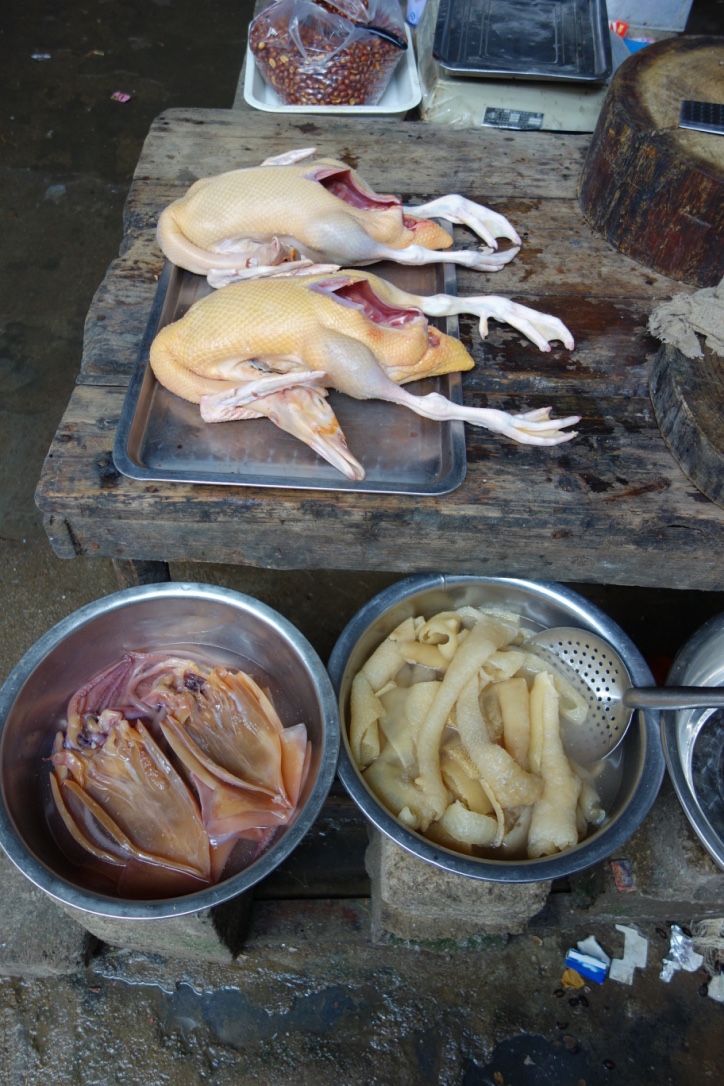
There are bags of toads and live, dressed or cooked ducks, all there together. The ducks are so sweet. I loved my ducks. Always found it hard to wring their necks, but there is no room for sentiment when your survival is on the line. Buying your meat on a plastic bag is a cop out! If you aren’t prepared to see the life drain out of an animal that you have killed with your own hands. Then you don’t have any right to eat meat. toughen up! get over it!. If you aren’t up to it. Become a vegetarian, but don’t live in denial. This is just straight faced honesty. Not nice, difficult, but real.
thumb_DSC00585_1024 thumb_DSC00581_1024
thumb_DSC00540_1024 thumb_DSC00542_1024
 thumb_DSC00538_1024thumb_DSC00539_1024
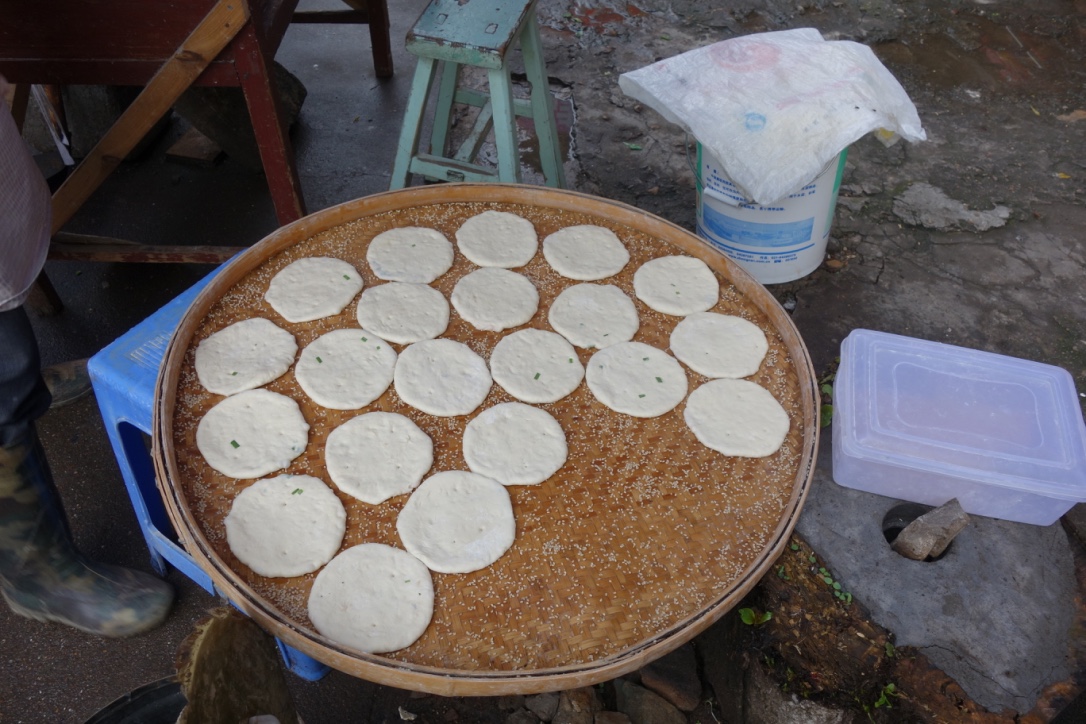
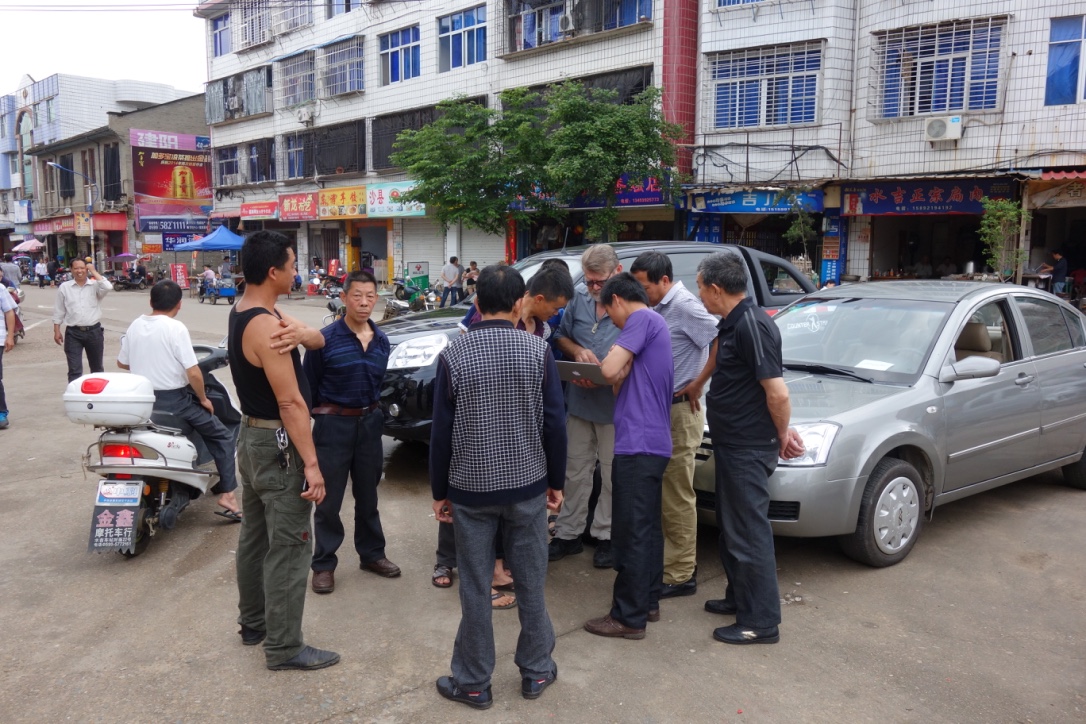
We find our breakfast out on the street as always, we have some sort of bread bun crossed with flat bread. very nice, filled with garlic tops and green onions, with sesame seed on the outside. Then some wantons in a clear broth of MSG, chilli oil and soy. After our breakfast we return to the Village Square and start our negotiations with the local drivers with cars to rent. Out driver from yesterday isn’t available today. All the cars for rent are parked around the village monument at the village centre crossroads, even though there are only 3 roads. It’s a village ‘Y’ road, or 3 ways! the monument celebrates the 12 brave tractor drivers who saved the harvest, or the never ending struggle of the the great helmsman! What ever, We try with all our skills to negotiate an arrangement where by we will be driven around all day and returned here afterwards for a set price. Its not the exact amount that is of concern to me. I can agree or decline any offer. It’s more about knowing what the cost will be and having an agreement that we can all respect and live up to with no surprises or unexpected increases.
 thumb_DSC00848_1024thumb_DSC00478_1024
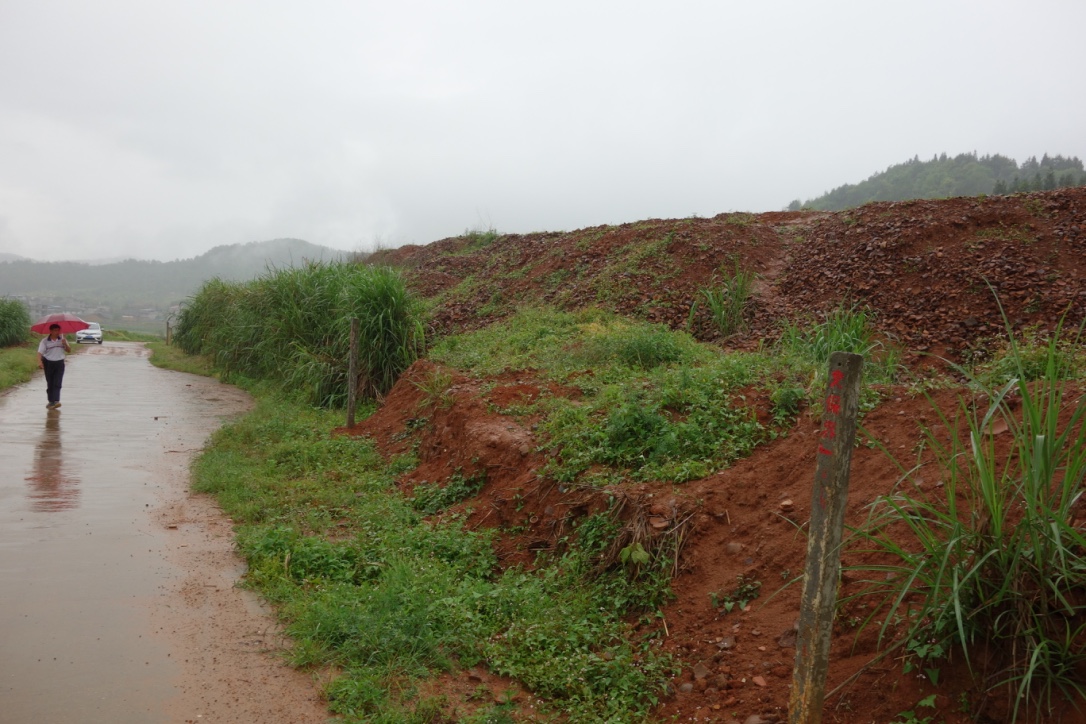
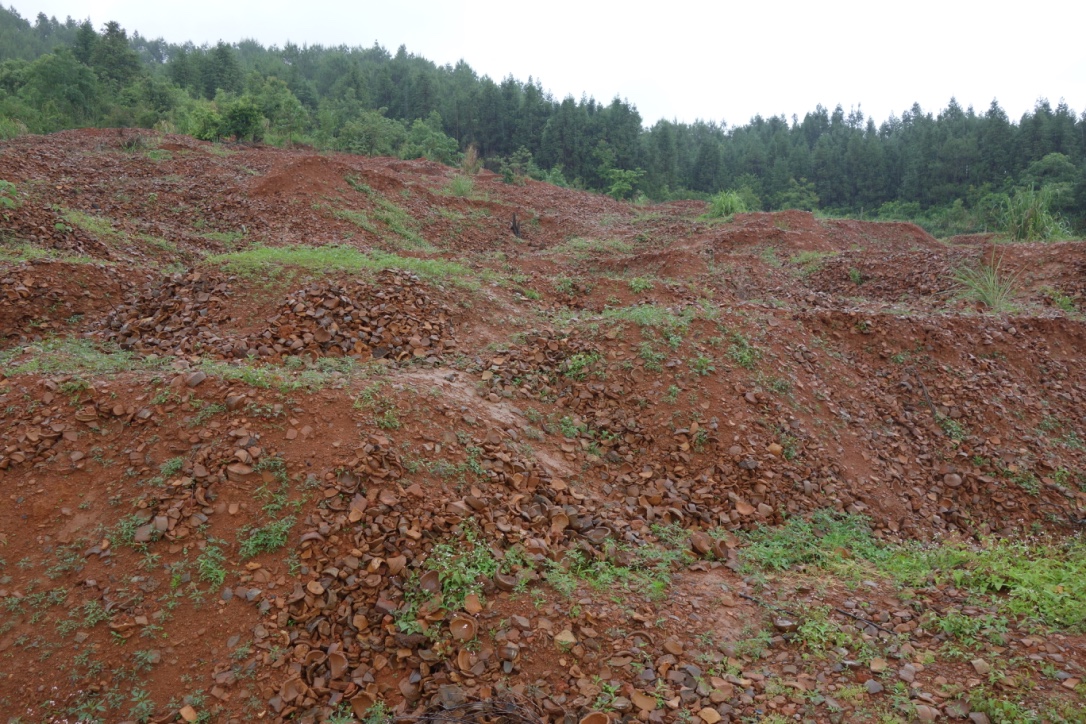
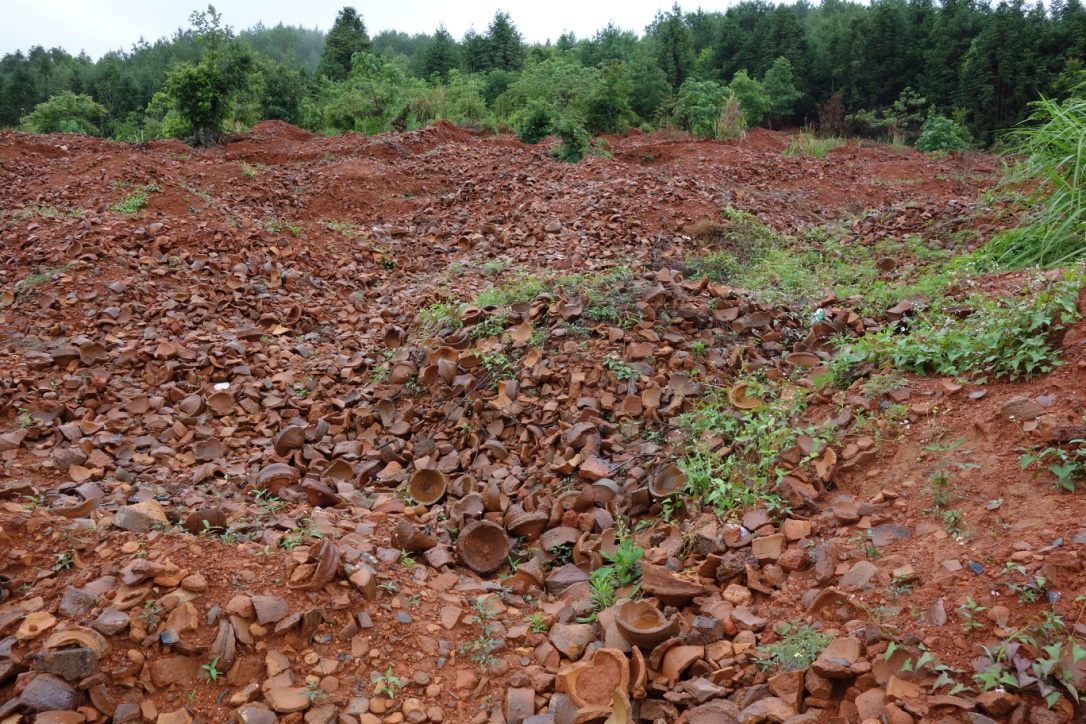
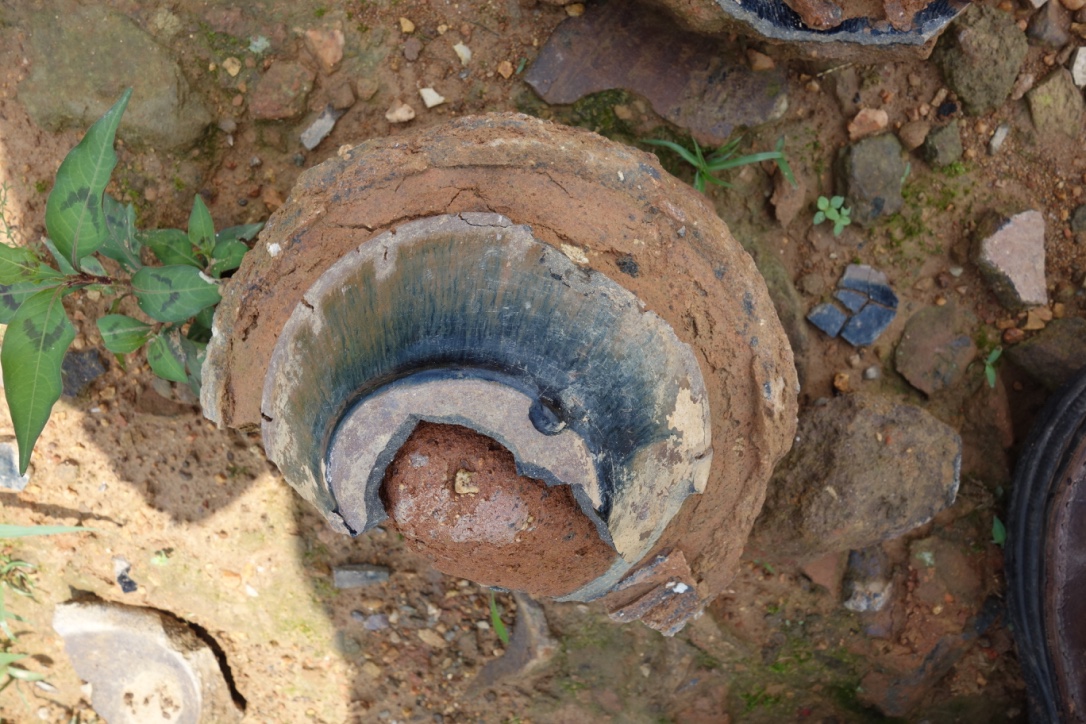
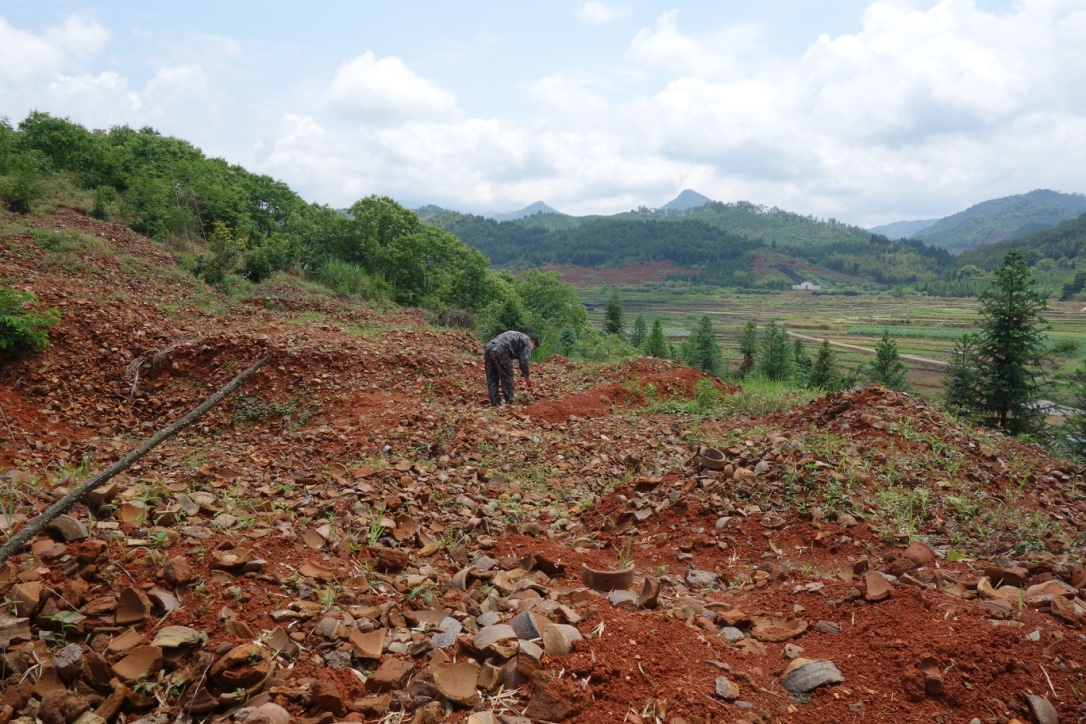
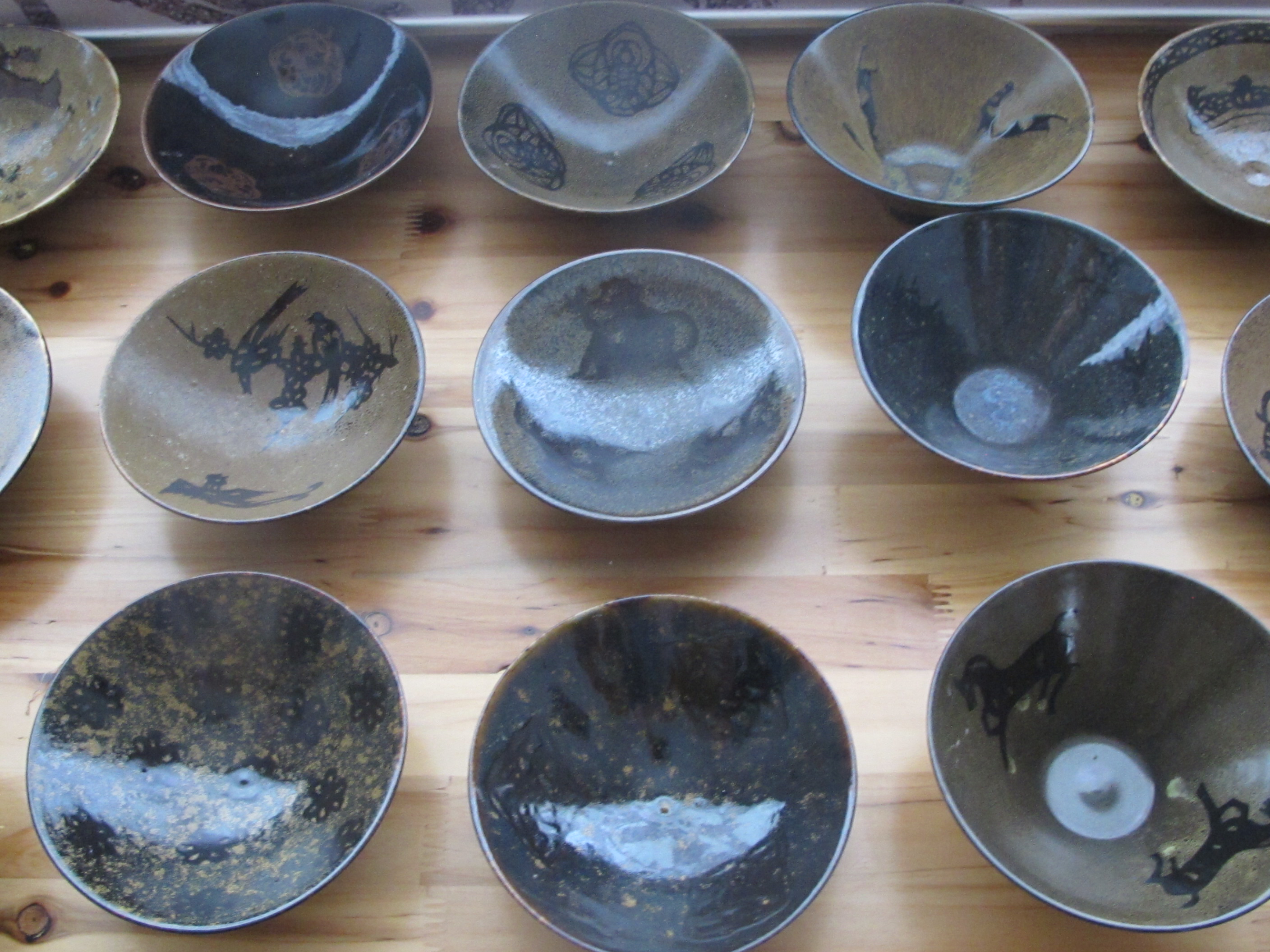
We are soon off to the little secluded valley where all the oil spot and hares fur bowls that were ever made in the Southern tradition were potted. There must have been many millions of them. If you think that a potter might drop  or otherwise ‘loose’ a pot every now and then. Dropping a pot or chipping the rim. Perhaps the setting melted in the kiln because of over-firing? If the losses were 1% of the turn-over, even if they were 5%. It’s hard to conceive of the mass of broken pots and saggars that litter this site of many hectares. Even to the depth of several metres. They must have made many millions of pots here, because they left behind many millions of shards!
thumb_DSC00474_1024
This little valley has been cultivated over 40 centuries to make a flat level centre, contoured to get a steady flow of water across the terraces for irrigation in the growing period and flood mitigation in the wettest part of the year. This area of China, although a long way inland, is still influenced by the monsoon. We are here in this wettest part of the year. We have to get kitted out in our wet weather gear. The valley is surrounded with low wooded hills. We can make out at least 5 sites around the valley edge that have been extensively worked over by looters over many years. As far back as 1930, an American academic was here to do research and the sites were already well and truly dug over by the locals, who are mining the site, extracting what-ever they can to sell to subsidise their meagre living as peasant farmers. When my colleague was last here in November doing research. It was a clear fine day and the sites were covered with locals mining deep into the spoil heaps of shards, some digging down to 3 or 4 metres, all looking for some little gem to sell off at the markets.
thumb_DSC00471_1024 thumb_DSC00473_1024
I walk along the road boundary of the lower edge of the the largest site and start to make a plot of the layout in a very general sense. Just so that I can mentally frame my boundaries, then I start to make a visual survey up one edge of the site. Its not possible to walk straight up the slope. One, it is too wet and slippery, and two, the site is so heavily excavated that I’m forced to zig zag along the high spots in the shard piles avoiding the craters. the ‘workers’ aren’t here today, as it is too wet, but all their paraphernalia is left jotted about the slope. Their woven baskets and plastic bags, including their empty plastic drink bottles and cigarette packets. No one seems to have a lot of respect for the site.
The ‘natural’ base here is sticky red clay, it ‘clags’ to my boots and is very slippery. with an incline of about 1 in 4. I have to be really careful not to slip and fall again. I have already taken one slippery fall and damaged my arm trying to protect myself.
thumb_DSC00476_1024 thumb_DSC00484_1024
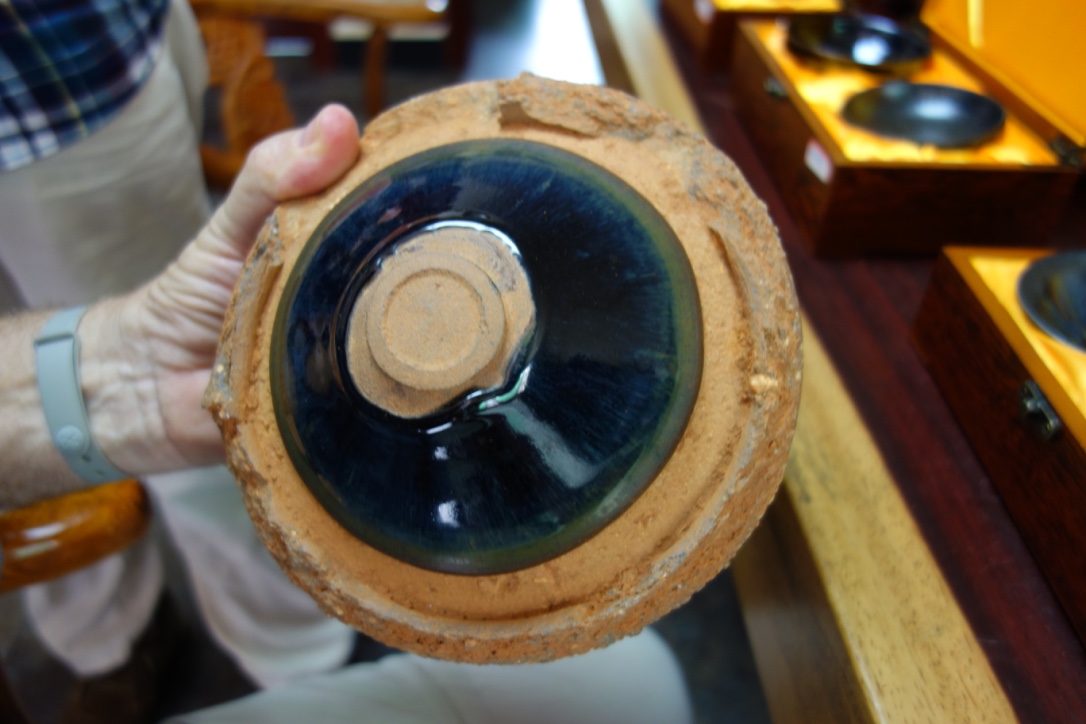
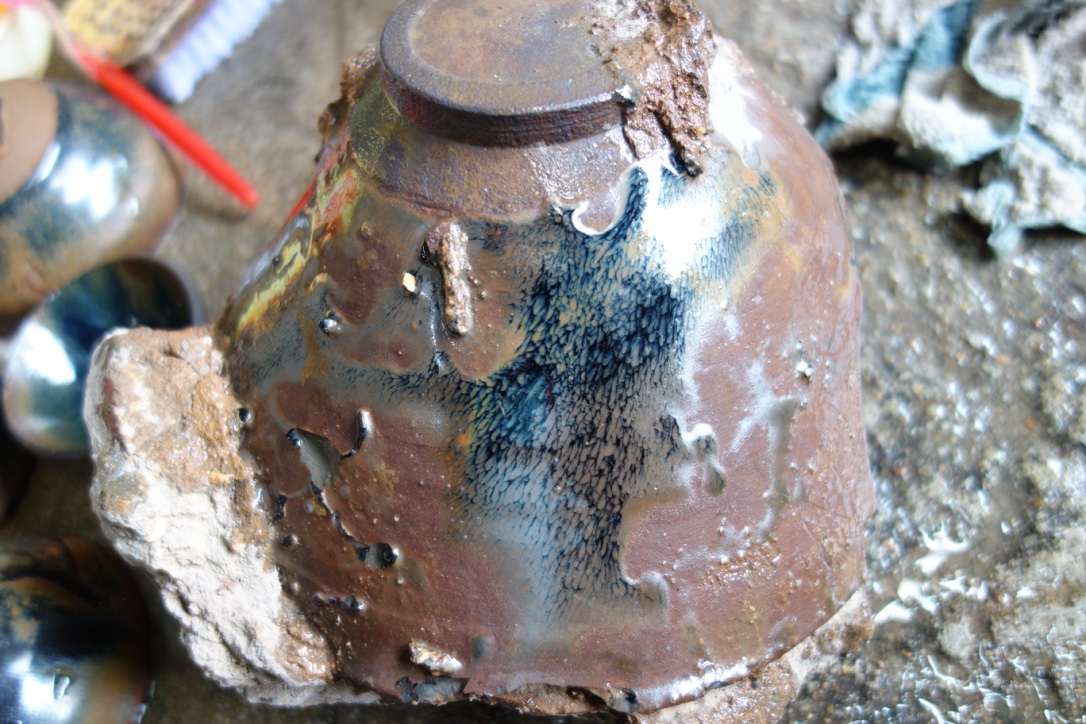
There is no part of the site left undisturbed, so there is no stratification to identify. It’s all in turmoil, and there are some really deep pits that have been excavated to get down to the bottom (early?) layers. I can’t tell. it’s all been dug over so thoroughly that I think that they are now digging through previous rejects, that were not thought to be saleable years ago when the market only wanted intact pots that were slightly damaged, then it was almost whole pots. Now that these gems are all gone, the site is being worked over again to extract large pieces of bowls that are more or less complete on one side. It appears that finding bowls that are melted into their saggar during firing is the prime objective these days. Since the introduction of cheap Chinese manufactured diamond-faced ceramic cutting discs, it is now possible to grind away the saggar to reveal most of the bowl intact. This is something that was not previously possible with just a hammer and chisel.
thumb_DSC00487_1024 thumb_DSC00621_1024
thumb_DSC00933_1024thumb_DSC00931_1024
As I traverse the site I get a ‘feel’ for what was made here over the period. There are no significant bowls left here, but there are surely 10 million small pieces of broken shards. The terrain underfoot is solid with broken saggars, tenmoku and red clay. Presumably the clay that these bowls were made from? These people were peasant potters, part farmers, part potters. They were very isolated. It was a long walk carrying two woven baskets slung on a pole over your shoulder to move anything from A to B, along the walking path that led along the stream and up into the valley. They wouldn’t have moved cheap raw materials like clay very far. The kilns would have been built up on the non-arable slopes, land unusable for cropping and closer to the firewood source. We collect a small sample of the clay for analysis and photograph any ‘interesting’ shards that come to light and I plod along, bent face-down, staring intently at the small fragments, filtering all the visual information looking for ‘pattern’ and building up an idea of the product that was created here over the millennia.
thumb_DSC00630_1024thumb_DSC00708_1024 thumb_DSC00702_1024 thumb_DSC00619_1024
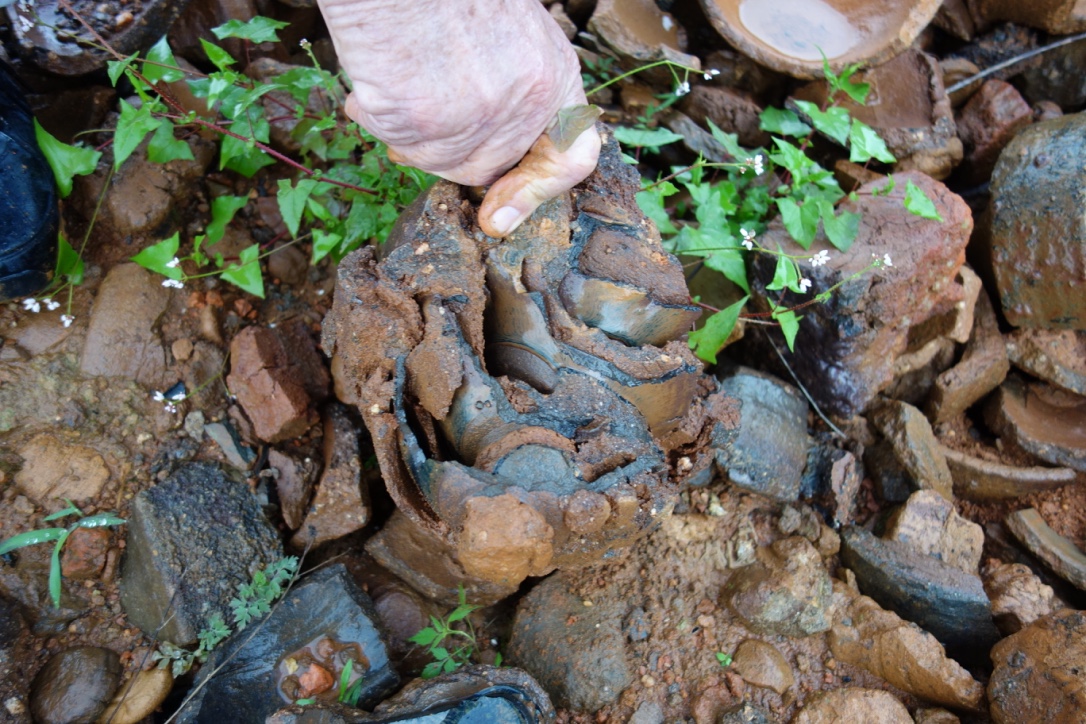
What I’m seeing is a preponderance of brown to black hares fur glaze, with tinges of blue and green where it is thicker and has pooled towards the base. It was applied very thinly and is particularly runny. Hence the only partial application of the glaze on the outside, well up from the foot to allow for running. This kind of glaze smacks of high lime content and low amphoterics. In any ‘normal’ circumstances the high iron content would be the amphoteric, but in this case the glaze and body have been well reduced, so all the iron has become a flux. From the fractured pieces of shards that I examine, I’m getting a picture of an early period of oxidation, lasting well into the firing, thus causing the typical boiling of the glaze, followed by intense reduction, causing the running. The body is dark and sandy textured to rough, through to very rough and examination of the fresh fracture surface is very revealing and quite interesting.
We discover something that has not been previously described in the literature, at least not in English. It will sweeten Leo’s PhD and possibly secure his degree?
thumb_DSC00624_1024 thumb_DSC00635_1024
There is a lot to take in and so much to learn. This will take a while to decipher. For the time being I’m fully occupied in photographing everything that I think might be interesting to reflect back on later.
Best wishes
Steve

Carving Out a Living

While our pots are drying, we go on an expedition to visit a few of the local potteries in the area. This whole city is dedicated to the making of porcelain. there are thousands, if not 10’s of thousands of small workshops all over the city. We go to one of the nearby potters districts. We have come in this direction because there is a potter here that we want to meet. I am travelling with a PhD student from The ANU in Canberra and his interest is in tenmoku. The potter we have come to visit is the local Master of the Northern ‘Leaf’ Tenmoku Style, which they call ‘temu’ around here.

The original dark glazed and buff bodied Northern tenmoku bowls were first made by potters in the Tianmu mountains in Northern China and were used by the buddhist Monks in the near-by monastery for drinking green tea. Monks who came to this monastery left with a knowledge of Buddhism and also a penchant for the drinking of green tea. They also took away the distinctively shaped bowls with the out-turned lip and tiny foot that is the defining character of this style. the ’Tenmoku’ form. The name ‘tenmoku’ seems to be applied to just the dark glaze these days, but it is really the name of this particular shape of bowl. Such that you can have a white tenmoku, or a blue tenmoku, even a hare’s fur tenmoku, because it has a glaze that is a little reminiscent of the fur of the local wild Hare.
IMG_0244_1 IMG_0250_1
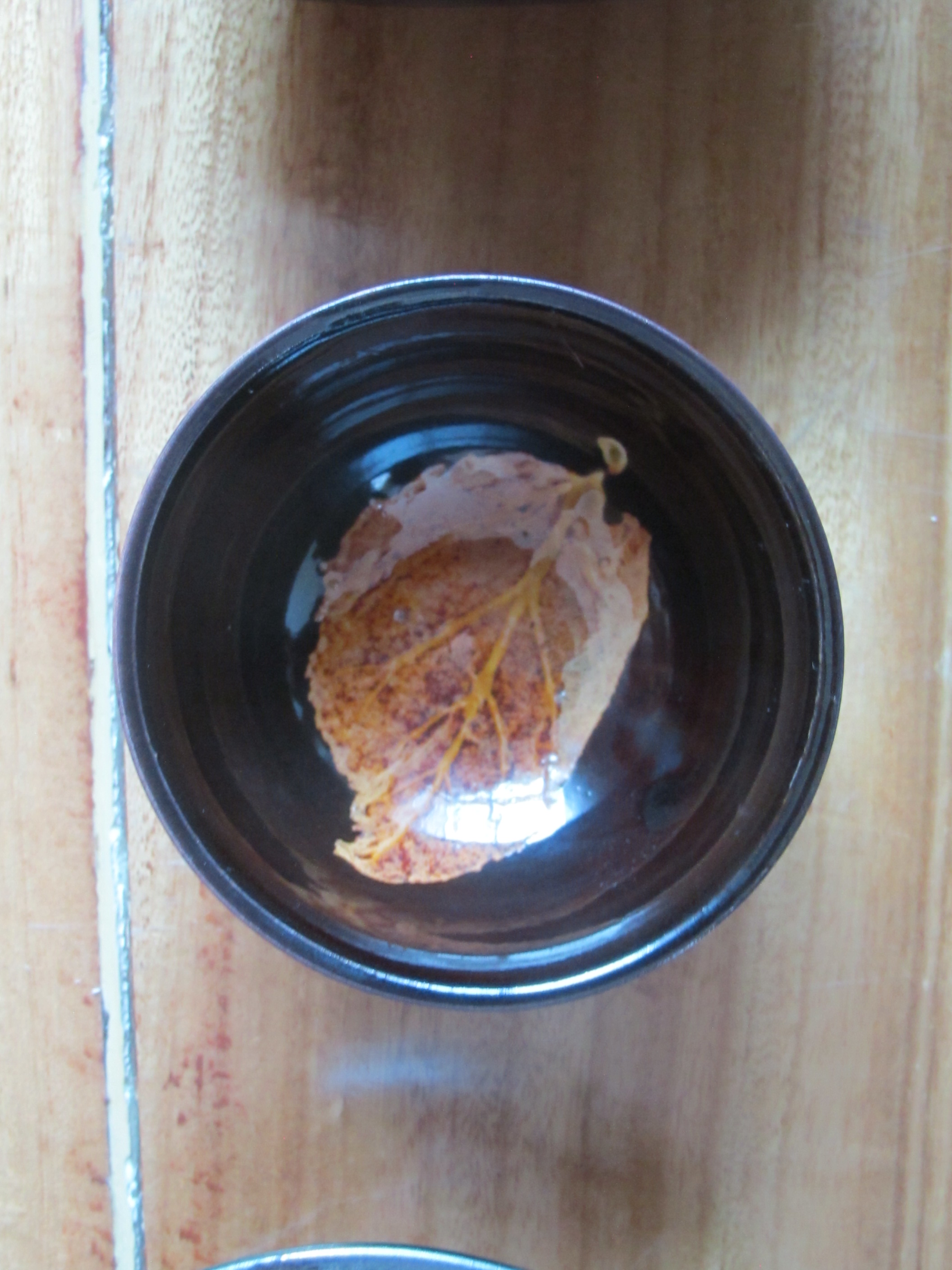
This potter, Master Liu, has dedicated his life to the study of ‘leaf’ tenmoku. a very ancient variant of the form. He seems to be doing quite well for himself these days. He has assistants working in and around the studio. He has his own large gas kiln and a few electric kilns. The show room is new and 5 stories high and quite well appointed, a new two story house, all set in a little ‘muse’, just off the main street. The technique of ‘leaf’ tenmoku is one where a leaf from a particular tree or bush is placed on the surface of the flat black glaze and when fired, the leaf burns out and leaves only a few microns of ash which in this case, contains some special elements that colour the black glaze, so that the imprint of the original leaf can be seen in the glaze surface as a silver or golden ‘X-Ray’ style outline of its radial structure. I ask if any leaf will do and am told, “No, only the leaves of one very special plant will give the effect”. But that’s all I’m told.
IMG_0237_1 IMG_0235
He has taken the old technique to another level, where he can reproduce the effect so reliably that he cuts the leaves into the shape of various animals or even peoples profiles. It’s an acquired taste, but certainly skilful. Clever as hell. Gulley Jimson might say.
IMG_0245 IMG_0247
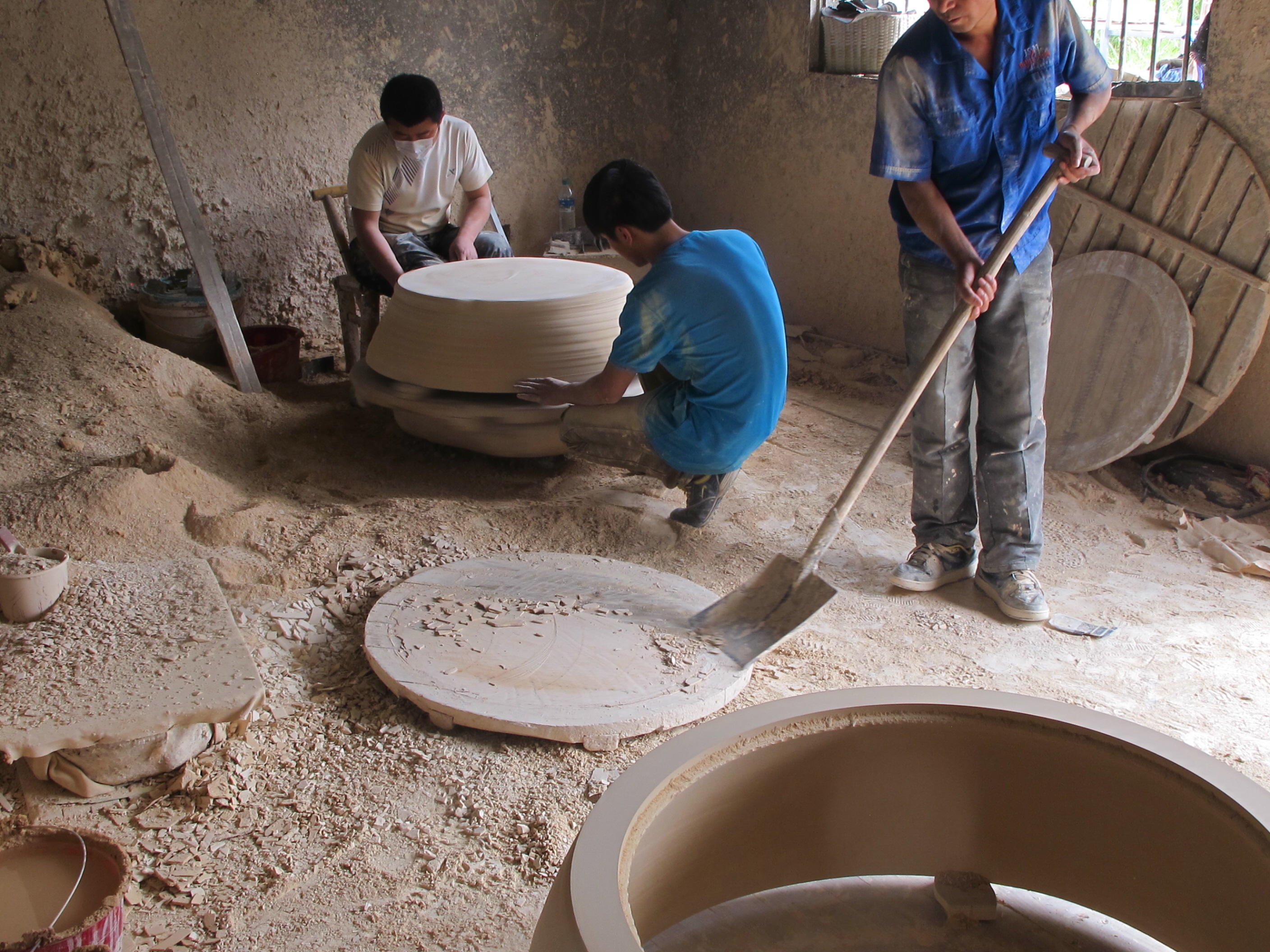
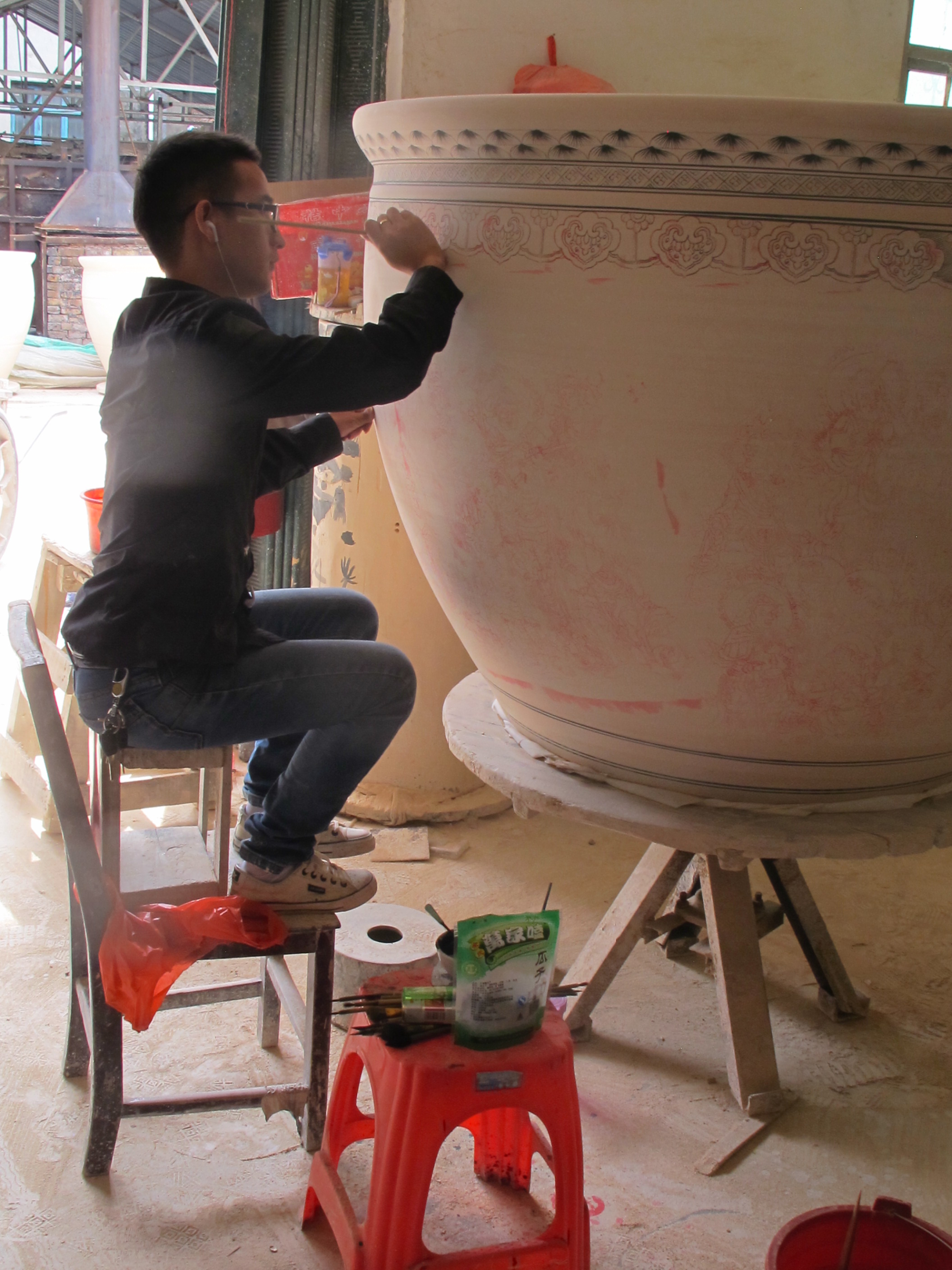
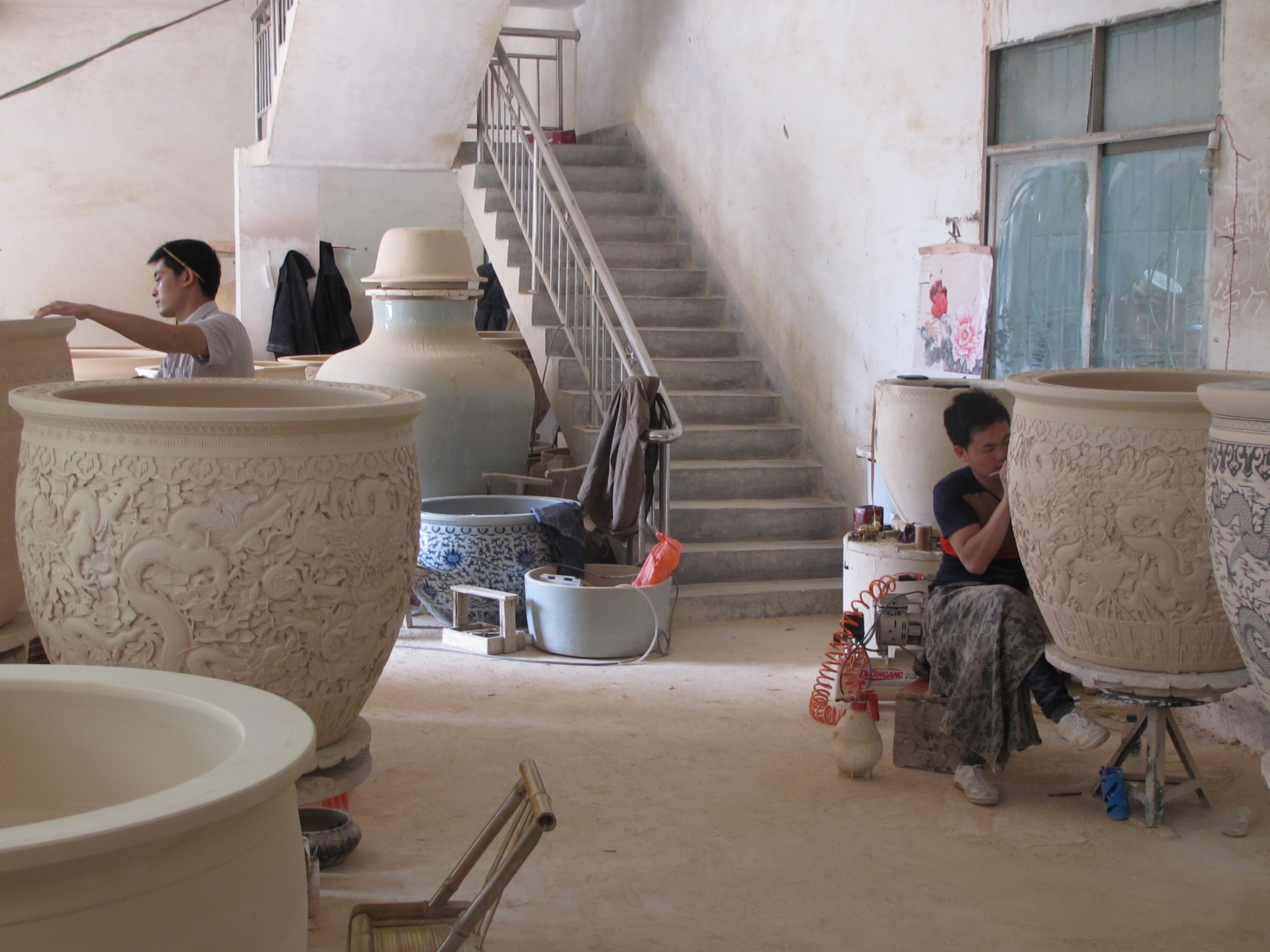
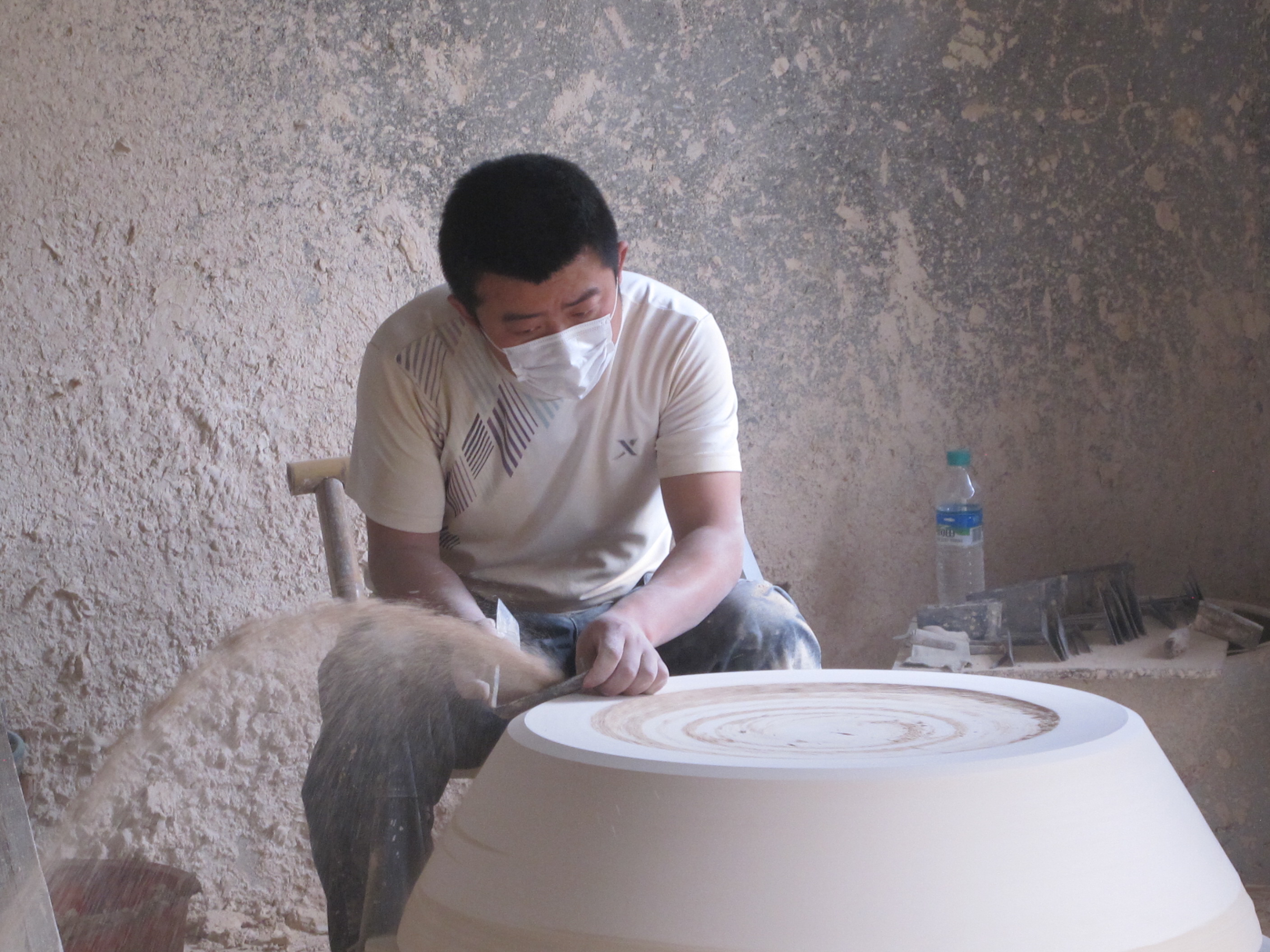
Later, we visit a bunch of local big-pot throwers. Today they are not throwing, but turning their dried, thrown sections of very large planters. It is just an amazing sight to watch these young masters at work. They are just incredible. They make it all look just so simple, and it probably is, if you are born to it and spend all your life involved with it and practising..
IMG_0461 IMG_0464_1
 IMG_0481_1IMG_0485
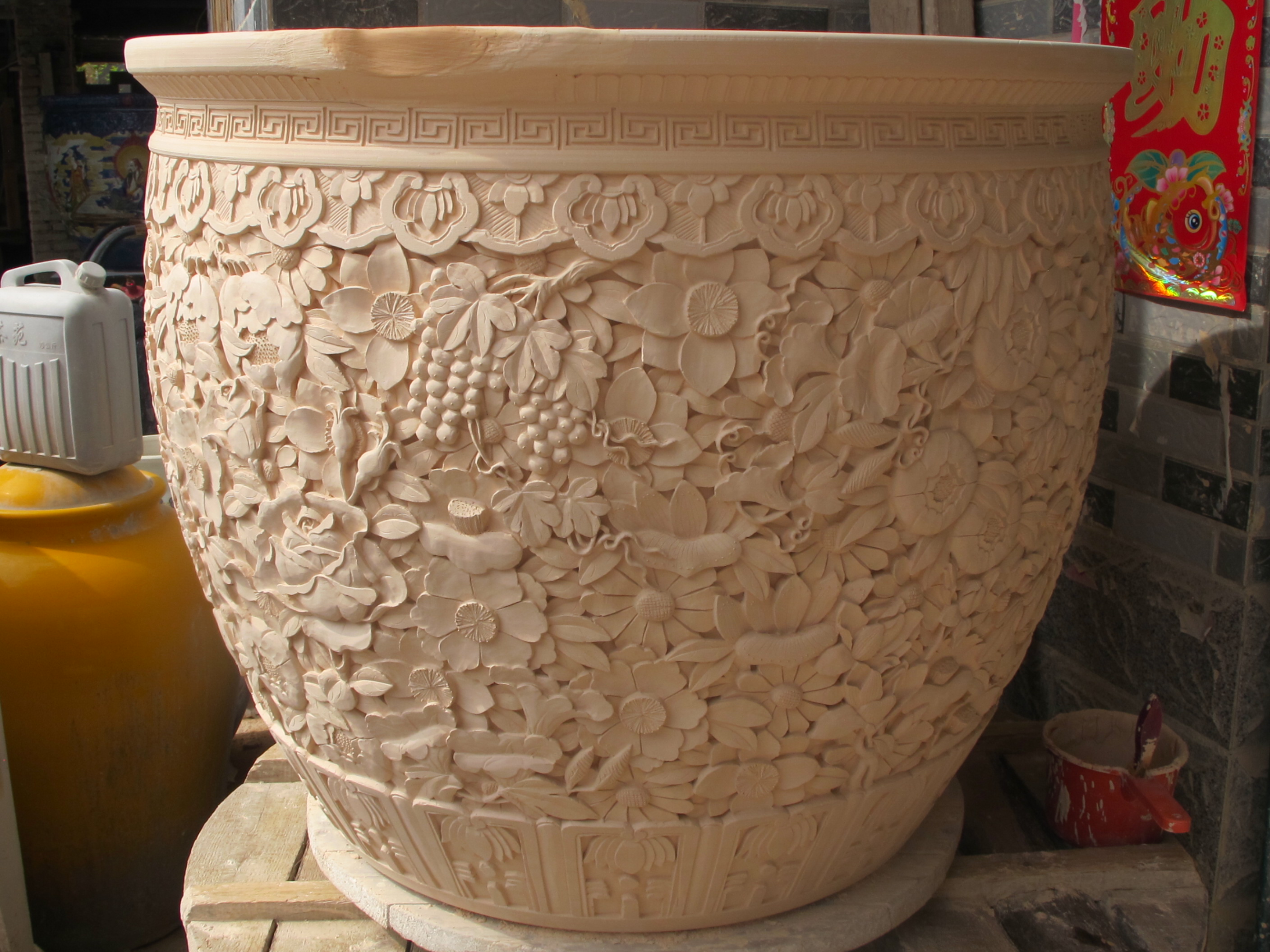
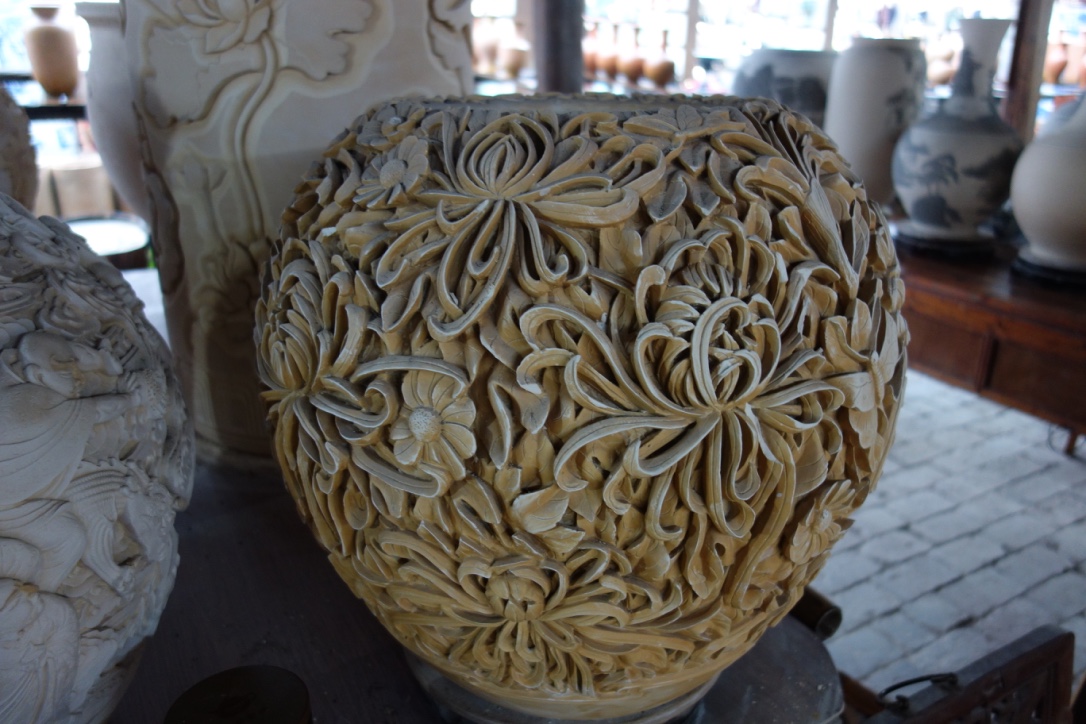
After assembly, they are either carved or painted, then raw glazed. Apparently it takes a week to carve or paint one of these giants with such fine detailed work. Some are just blue on White, while others are polychrome.
Amazing technique!
IMG_0505_1 IMG_0508_1
IMG_0510_1 IMG_0514_1
IMG_0519_1 thumb_DSC00354_1024
After this, there is nowhere else to go, nothing more to see that can top this schwarzenegger-esque extravaganza. I’m exhausted just watching! The amount of material that is churned off in the turning is prodigious. there is a business right there in just collecting all those huge piles of turnings and recycling them, back into clean, iron free, plastic porcelain clay again. We take paradise…..
All that’s left is to have dinner. Egg and tomato stir fry and finely sliced large white radish stir fried with some sort of meat and chilli.

So very nice. Delicious!
thumb_DSC00404_1024 thumb_DSC00405_1024
Best wishes
Steve in Jingdezhen

Note to self: Don’t buy plastic crap

Now that the weather is closing in, it’s a lot cooler and the days are shorter, and for some unknown reason, it keeps on raining. We have gone from bush fire protection and hazard reduction, to digging drainage ditches. Fortunately we have missed the flooding that is happening just now up the north coast and in Queensland. I suppose that it helps that we live on top of a high ridge of hills. We are very well-drained here.

One good thing about constant rain, is that we don’t have to be worried about bush fires or bother to water the garden, but that time saved is now spent in unclogging drains and cleaning gutters and downpipe sieves.
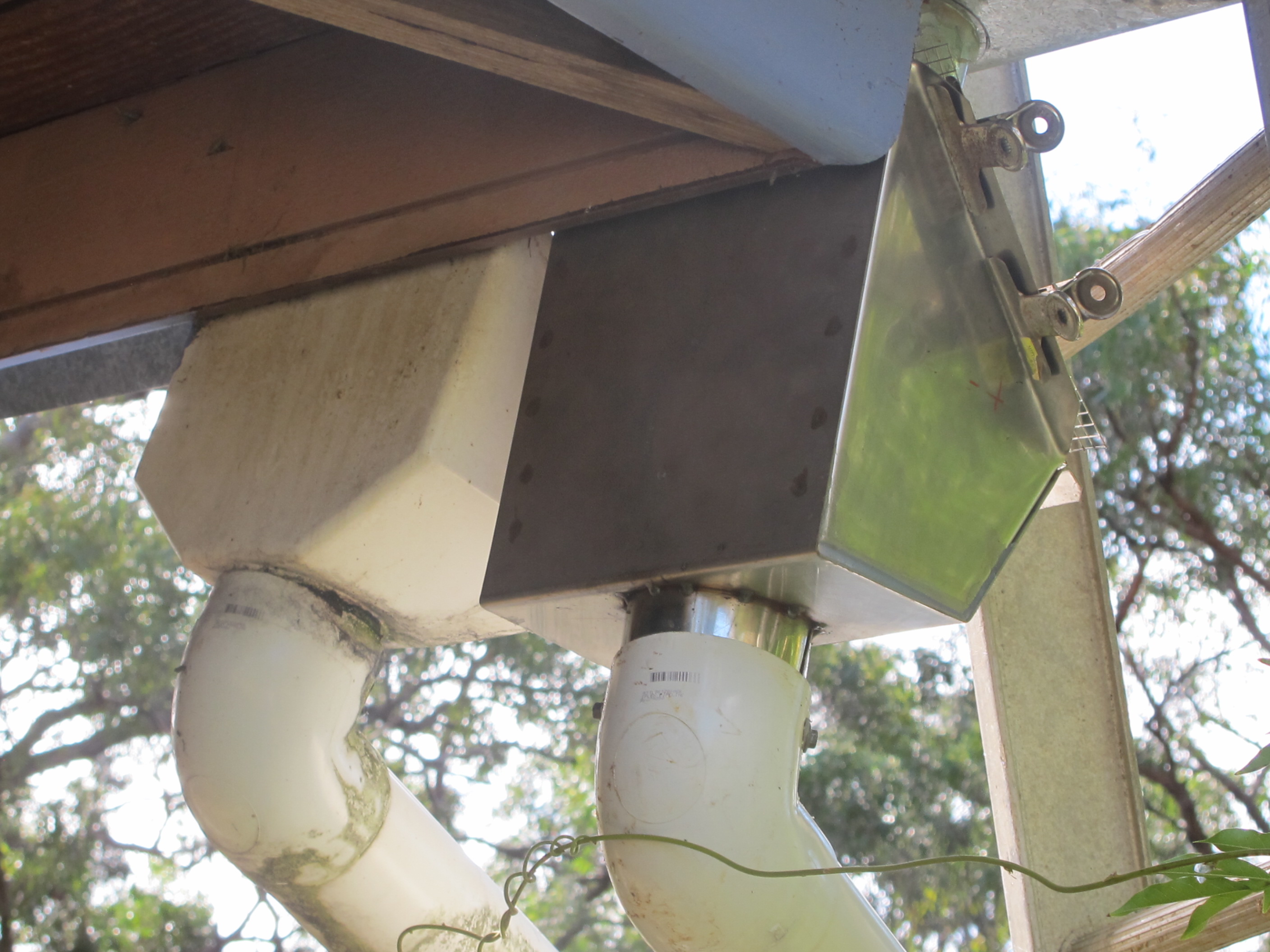
Some years ago, I thought that I’d save some time and buy a plastic gutter sieve/storm water head thing. What a piece of short-term rubbish that turned out to be. I should have known better. Actually, I do know better, but I’m lazy. I just gave in and bought the easy option. I’ve learnt my lesson – yet again. Now just a couple of years later, it’s all cracked and broken and has become an embarrassing piece of plastic junk, destined for land-fill.
IMG_9237
Last week we were at the monthly meeting of the Royal Society. This month’s lecture was from Professor Richard Banati  about the fact that plastic never really decomposes, it just breaks down into smaller and smaller pieces and traces of it can be found in all life forms where it is ingested along with other food, it builds up in the higher order species and all of it is destined to end up in the top predator. Guess who that is?
Here is a reprint of the Royal Society promo.
“The talk by Professor Richard Banati from ANSTO and Sydney University Faculty of Health Sciences. Plastics in our environment.
 
Estimates suggest that the planet could have another 33 billion tonnes of plastic by 2050. 33 billion tonnes of plastic is equivalent to filling 2.75 billion garbage trucks enough to wrap around our planet 800 times if lined up end to end.
 
Scientists estimate that more than 250,000 tonnes of large size plastic litter the ocean surface, this does not take into account  the micro plastics which are  plastic fragments derived from the breakdown of larger plastic debris, both at sea and on land. Over time, a culmination of physical, biological and chemical processes can reduce the structural integrity of plastic debris, resulting in fragmentation of  2-3 mm in length and 0.1mm in diameter.
 
The whole issue of product life cycle analysis has so far focused on the litter aspect and not the contamination that cannot be seen without studying at the atomic scale.
 
Richard and his team at ANSTO are collaborating with scientists from Monash University and University of Tasmania and studying whether the trace elements typically found in plastic and  in the stomach of birds, these trace elements are also found in the growth of young bird feathers like the annual rings in trees, thus indicating the effects of degrading plastics in the food chain may affect birds, marine animals as well as humans.        
 
This is an important chapter of how we deal with plastic waste as hazardous, threatening the health of people and wildlife.?
 
Professor Banati said that the only way out of this mess is to stop producing the stuff. Not too likely I don’t suppose. We are all addicted to the stuff through our ignorance, indifference and/or laziness.
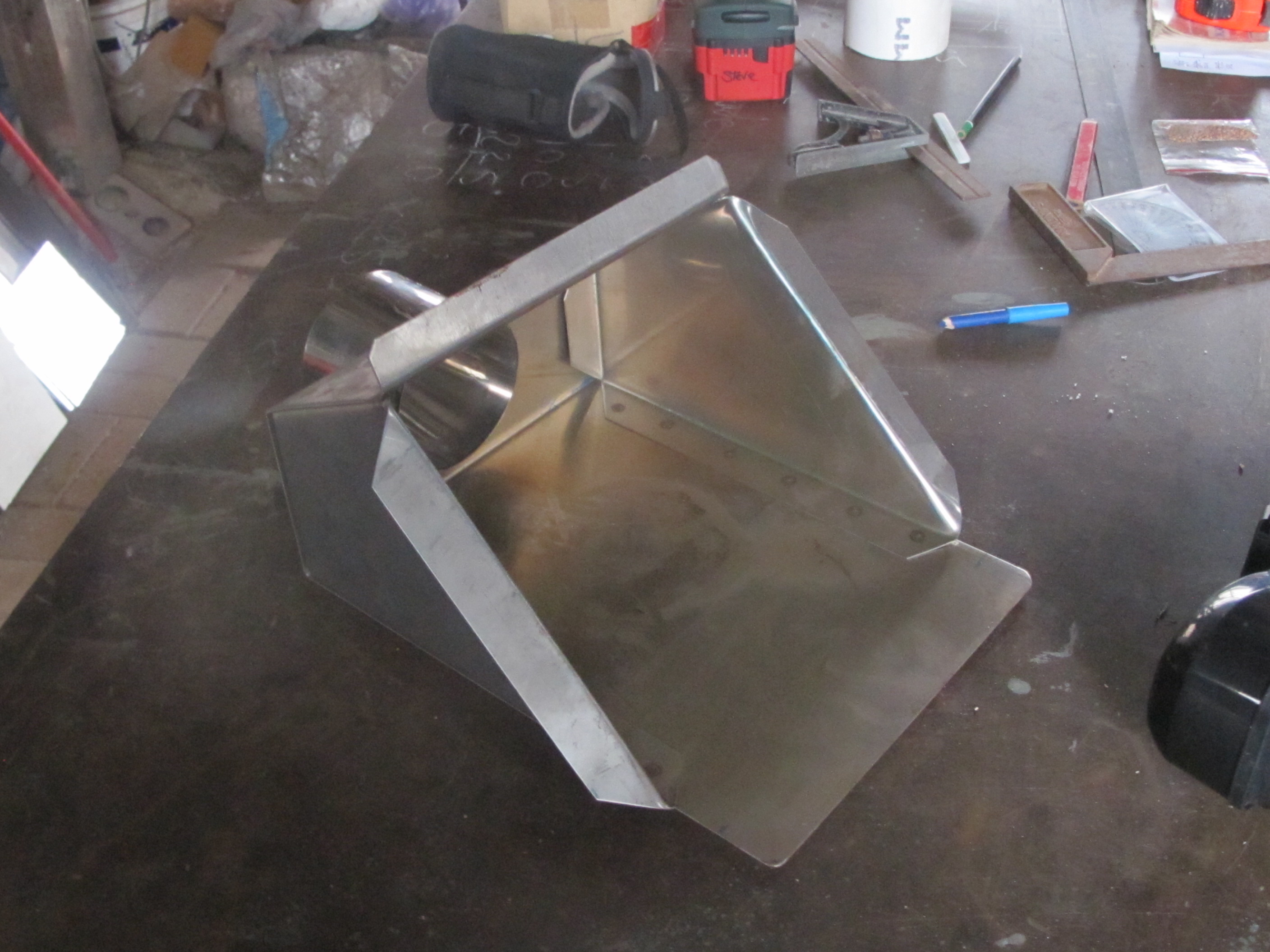
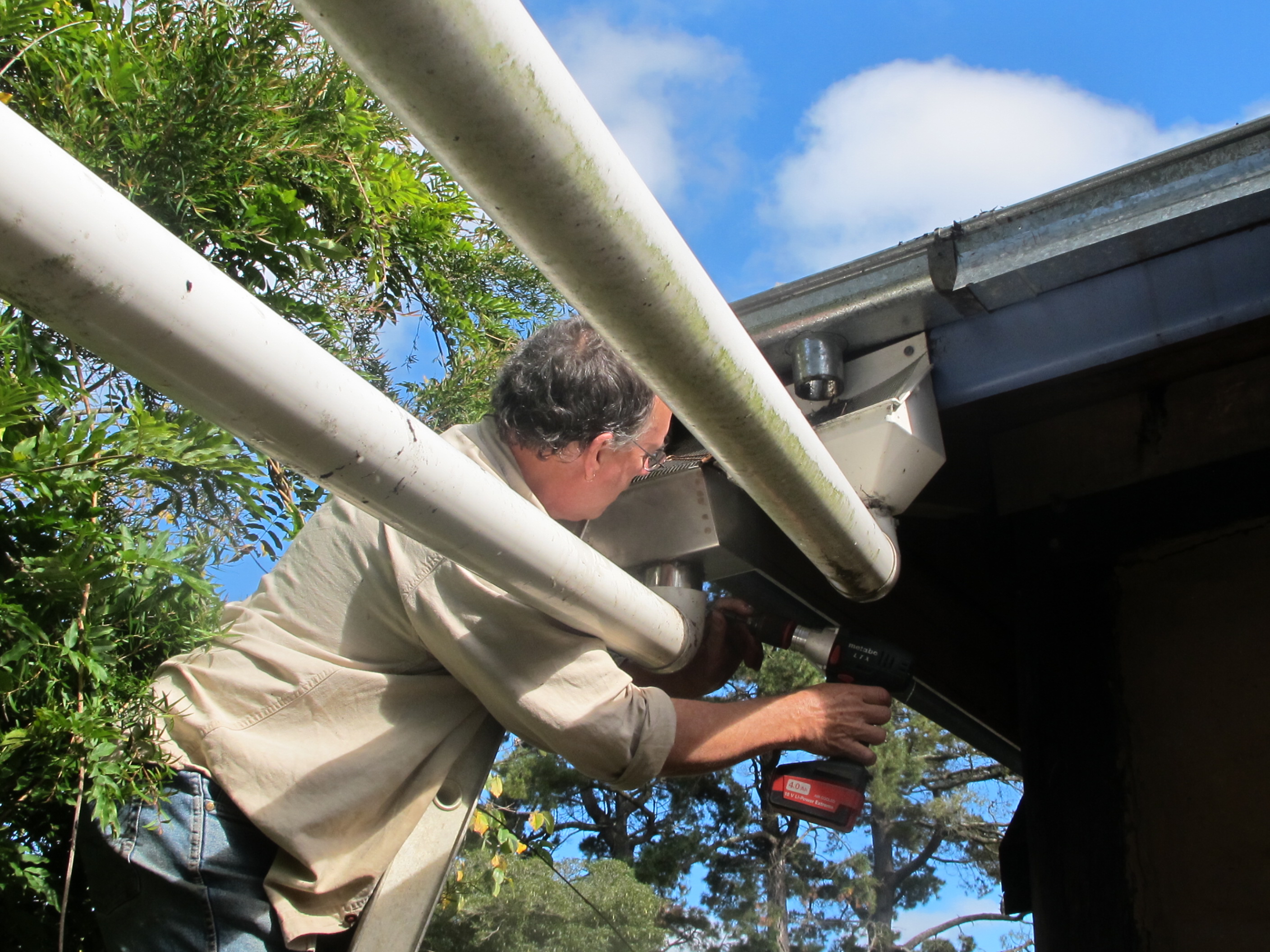
Anyway, I try not to buy too much plastic crap, but I’m only human and I am lazy with it too, so now I have the job of fixing this broken plastic gutter fitting. It’s all cracked and the collar is broken off, it’s dead. It’s going to land fill. My only real option is to replace it. But not with another plastic one, not again! I decide to use some of our left over off-cuts of kiln building material that I am so reluctant to take to the metal recyclers, just in case I can find another useful life for the little bits here and there, around the place. It doesn’t take long and I find just the right piece of off-cut stainless steel sheet. I adapt my idea in my mind at the concept level and change the dimensions of what I was imagining, to suit what I have. I sketch it out in chalk on the welding bench. I re-design it to use all of what I have with no loss through cutting, then I go searching for some other little bits of stainless sheet off-cuts to make the sides.
IMG_9222 IMG_9220
An hour later I have a rather nice stainless steel rain water head with a 45 degrees diagonal stainless steel leaf-sieve clipped on and ready to go up on the roof. It’s rather rough, but a joy to behold for me, because it is waste forestalled and made entirely out of scrap destined to go to the recyclers, except that it has now been re-imagined and re-purposed into something that will last longer than me or the building that it is now attached to.
IMG_9238IMG_9241IMG_9244IMG_9245
I’m no plumber, but this doesn’t have to hold water, just redirect it. I think that it will actually work OK. I don’t have any plumbing training, but I do have a little bit of imagination, some determination and a desire to subvert the system.
Now all I have to do is make a duplicate to replace the one next to it, for when it breaks. Which can’t be too far off?
But then, I’m still stuck with plastic plumbing pipe.
Note to self, don’t buy plastic crap – if there is an alternative.
Nothing lasts, nothing is ever finished and nothing is perfect.
and this could not be more true when applied to plastic roof and gutter fittings.
Best wishes
Steve the lead-free plumber who is trying to reduce his dependance on plastic.
.
Dr. Steve Harrison PhD. MA (Hons)
hotnsticky@ozemail.com.au

blog; tonightmyfingerssmellofgarlic.com

http://www.wattersgallery.com/artists/HARRISON/Harrison.html

Potter, kiln surgeon, clay doctor, wood butcher and Post Modern Peasant.


Play is the Best Part of Work

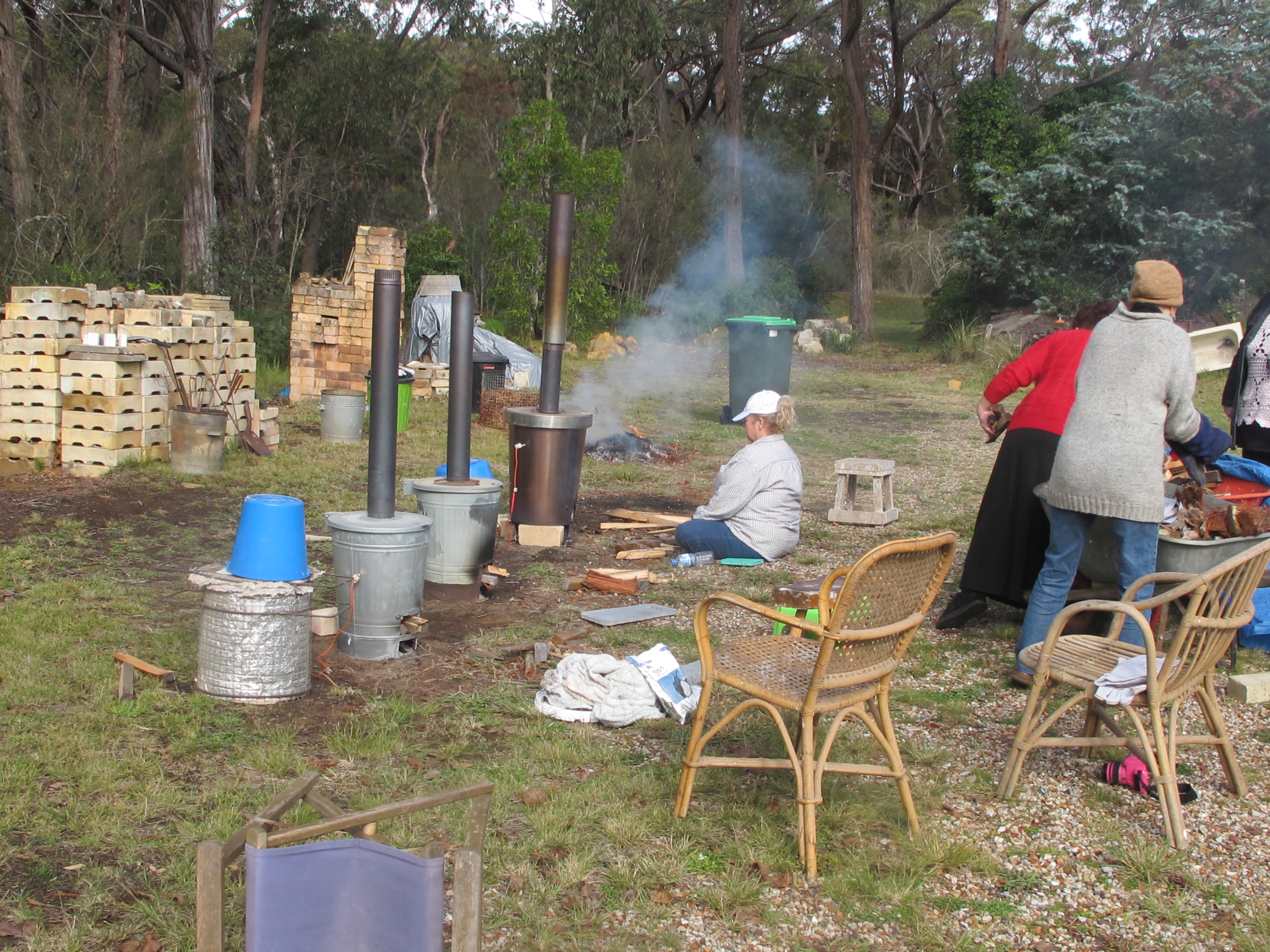
Our New Small Wood Fired Kiln

There is an amazing potter in Switzerland called Stefan Jakob, who specialises in raku firing. <http://www.raku.ch>

He has been to Australia a few times. He is the inventor of the IKEA garbage tin raku kiln. It is a really impressive little kiln that is cheap, compact and very efficient of wood fuel. It fires raku really well and is such great fun.  It is such a great idea that I wish that I had thought of it:)

We organise wood firing weekend workshops here through the winter months and some of them are for wood fired raku. However, Janine uses these little wood fired kilns to do her earthenware glaze firings.

IMG_4202 IMG_0724IMG_4131        IMG_4204

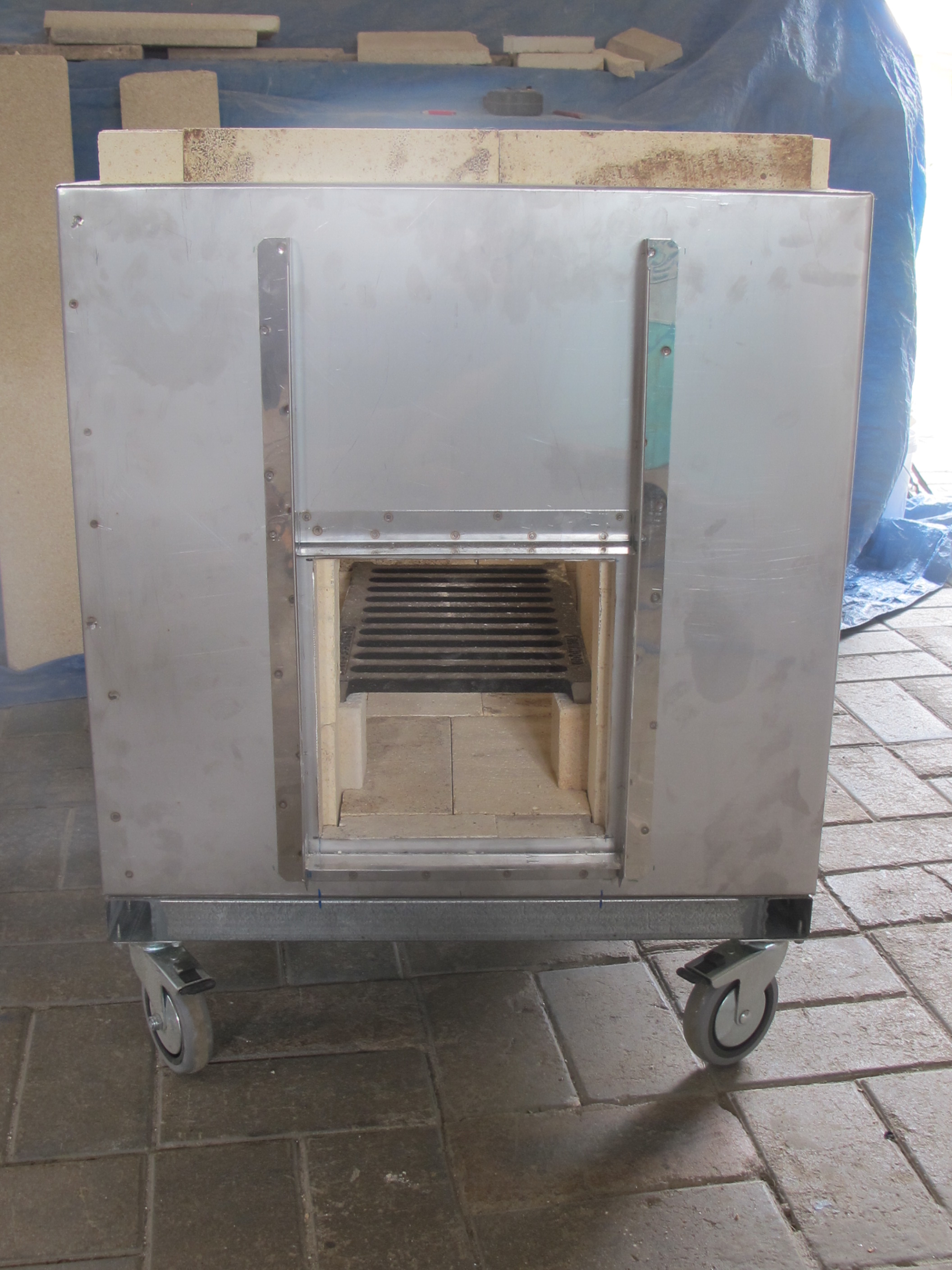
Stefan worked with us here on a few occasions on his visits and he gave us one of his kilns each time he stayed. Having seen them work, it got me thinking that there might be another way of thinking about small efficient, portable, wood fired kilns. The only drawback to his fantastic idea is that the internal size of the garbage can is quite small and limited. So I decided to build a slightly larger size version of his concept. I made one lined in ceramic fibre like his original, but square and about 5 times larger in volume, so that we could fire larger and taller pots for the potters who come here for our raku weekend workshops.  Now I have just finished a couple of slightly larger square ones lined in light weight refractory insulating bricks. The great advantage of custom building the stainless steel box is that it can be whatever size and shape you think you might want.

  IMG_4192

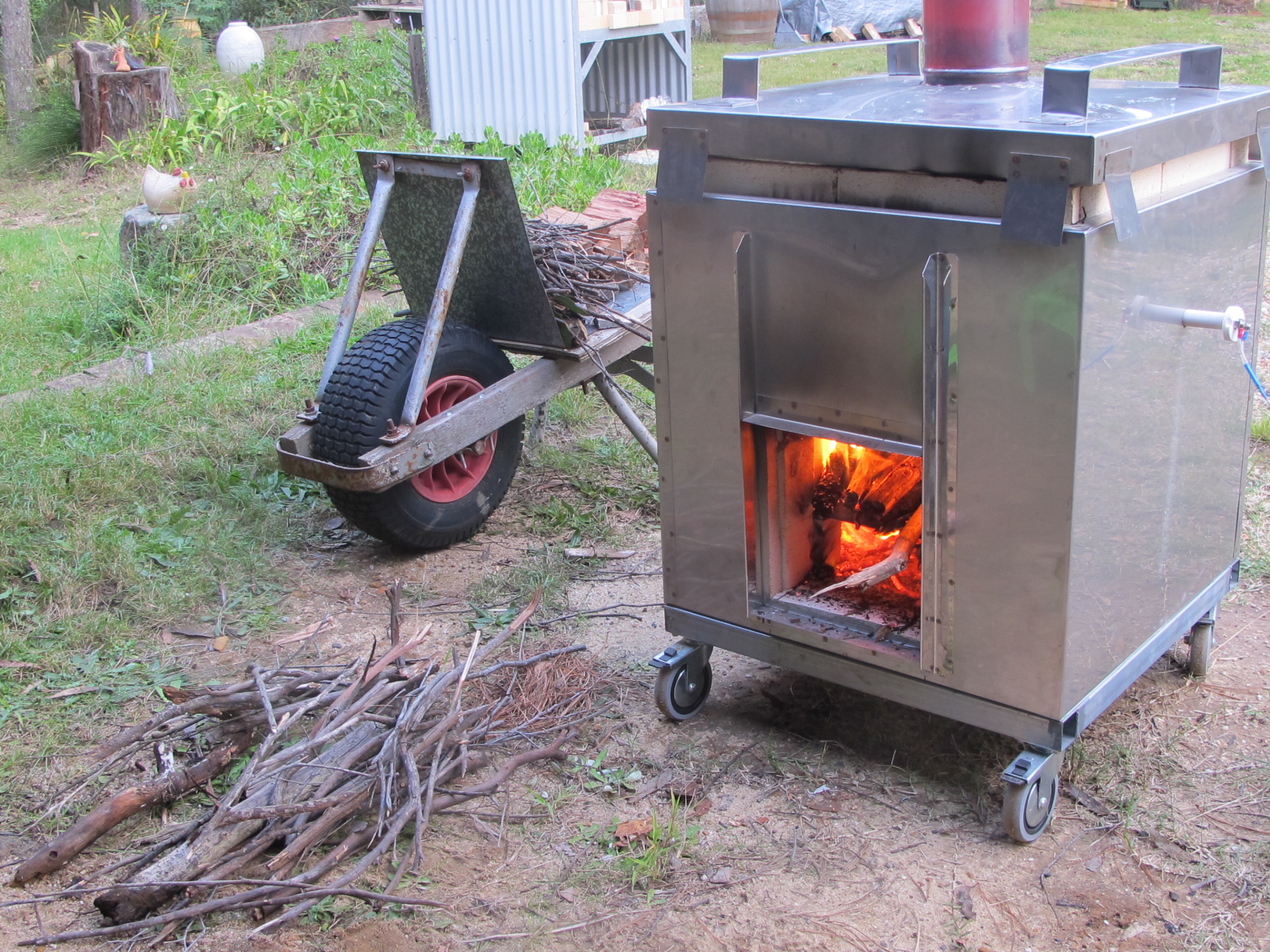
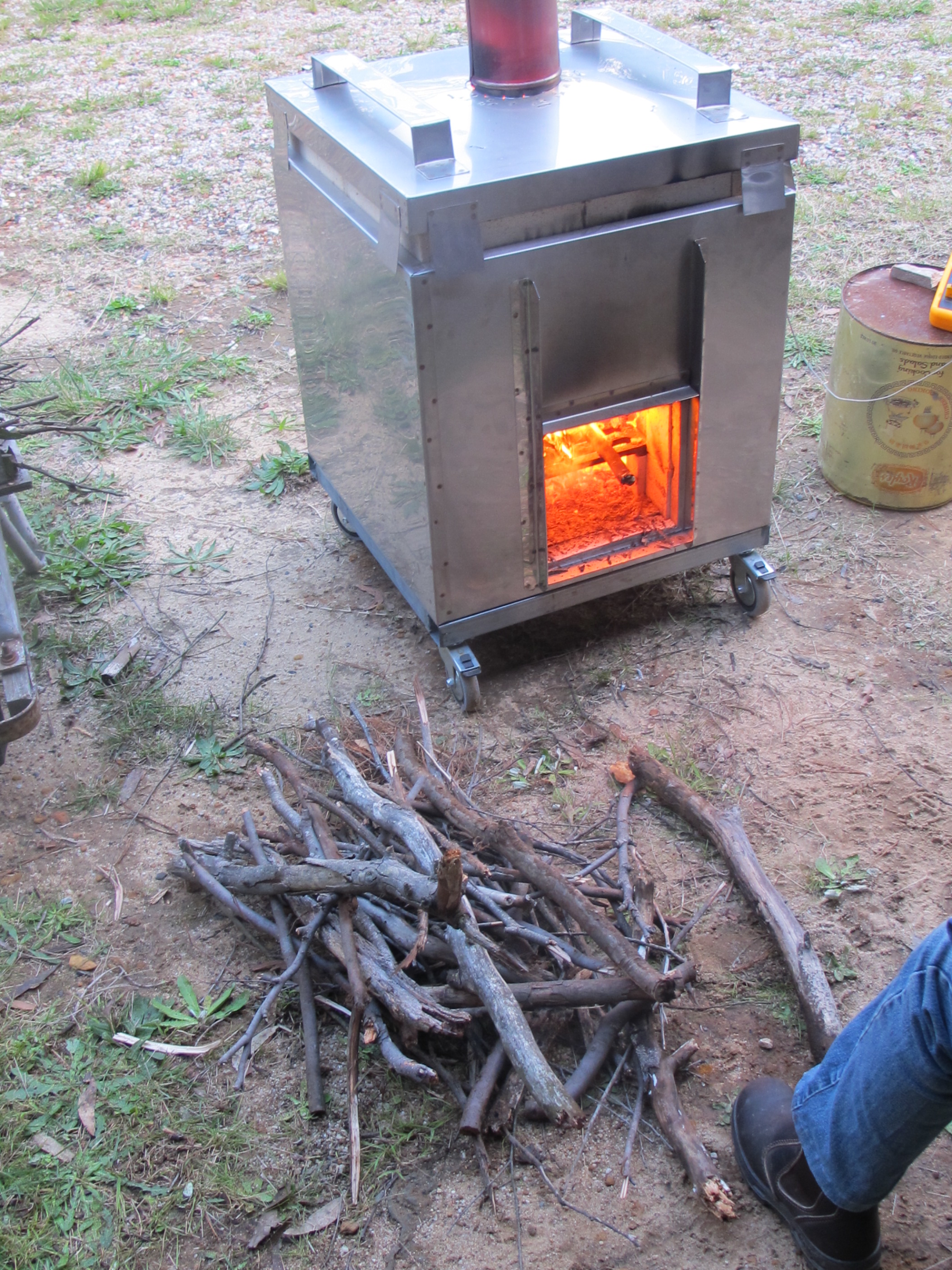
Because this RI brick version is a little too heavy to lift and carry around like the garbage can kilns, I made this one in a custom-built stainless steel box on a galvanised RHS steel tube frame and lockable castor wheels. It has all the same advantages of the smaller fibre lined garbage tin kilns in that it is great fun, portable, very quick to fire, very efficient of the wood fuel and being top loading it is very safe, quick and easy to load and unload for raku.

IMG_8513

I’m always busy. The kiln factory is full with a large gas-fired, front loading kiln, a relocatable top loading gas kiln with an extension ring and two of the new small wood fired raku kilns.

IMG_8510

IMG_8511

We had our first firing in it the other day, just to test it out and it worked really well.  Just 45 minutes up to 1100oC from cold, and then a 15 to 20 minute turn around for the raku. We used such a small amount of fuel, fallen branches/brush wood from the garden. Our big gum trees are alway dropping dead branches around the yard, so it was just 5 minutes work to collect enough for the firing.

IMG_9189IMG_9185IMG_9186

This kiln sailed up to temperature so easily that I think it will be no trouble to take it up to 1200oC mid-fire and even stoneware in the future – when I get a bit more time.

 IMG_9191

This is about half of the amount of fuel that was used to get to 1100oC

IMG_9192

I don’t propose that it will give any wood fired effects in such a short firing time, but it will melt glazes perfectly well. I did some research on one of my locally collected milled stone glazes a while back and I tried firing my little test kiln to stoneware in just 30 minutes with a 10 minute soak. I was able to do 6 firings to stoneware in one day and learnt a lot. If I kept a close eye on the temperature and used test rings to gauge the melting, I was able to get some lovely, soft looking, satiny matt glazes. So it is possible.

With so little at stake in a small kiln and the firing being so quick and easy, there is nothing to loose and everything to gain.  But more than that, it’s important to me to be able to make my ideas come to life and experiment with different concepts in my own way and in my own time. Play is the best part of work.

Home Made Chainsaw Saw Mill

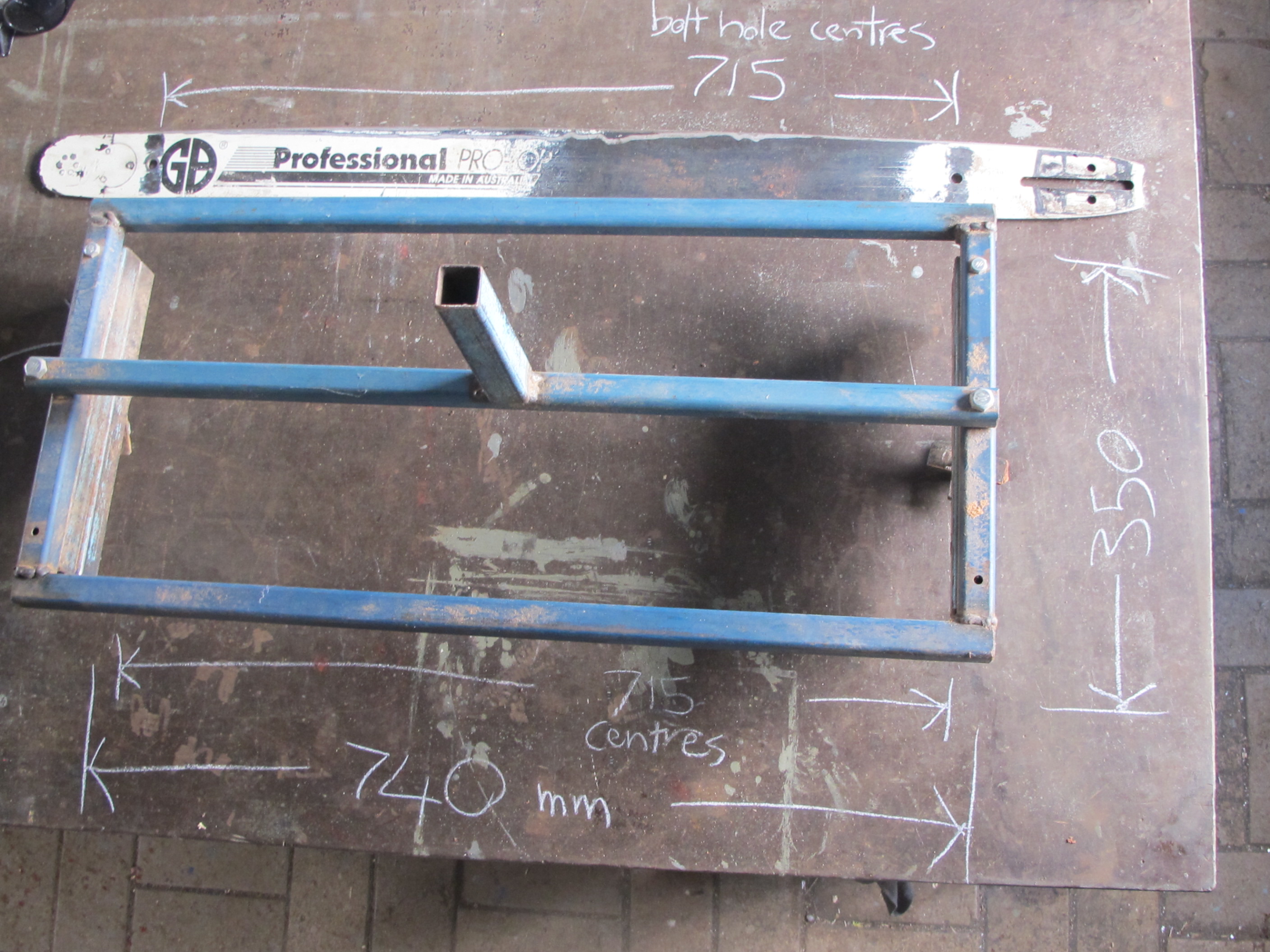
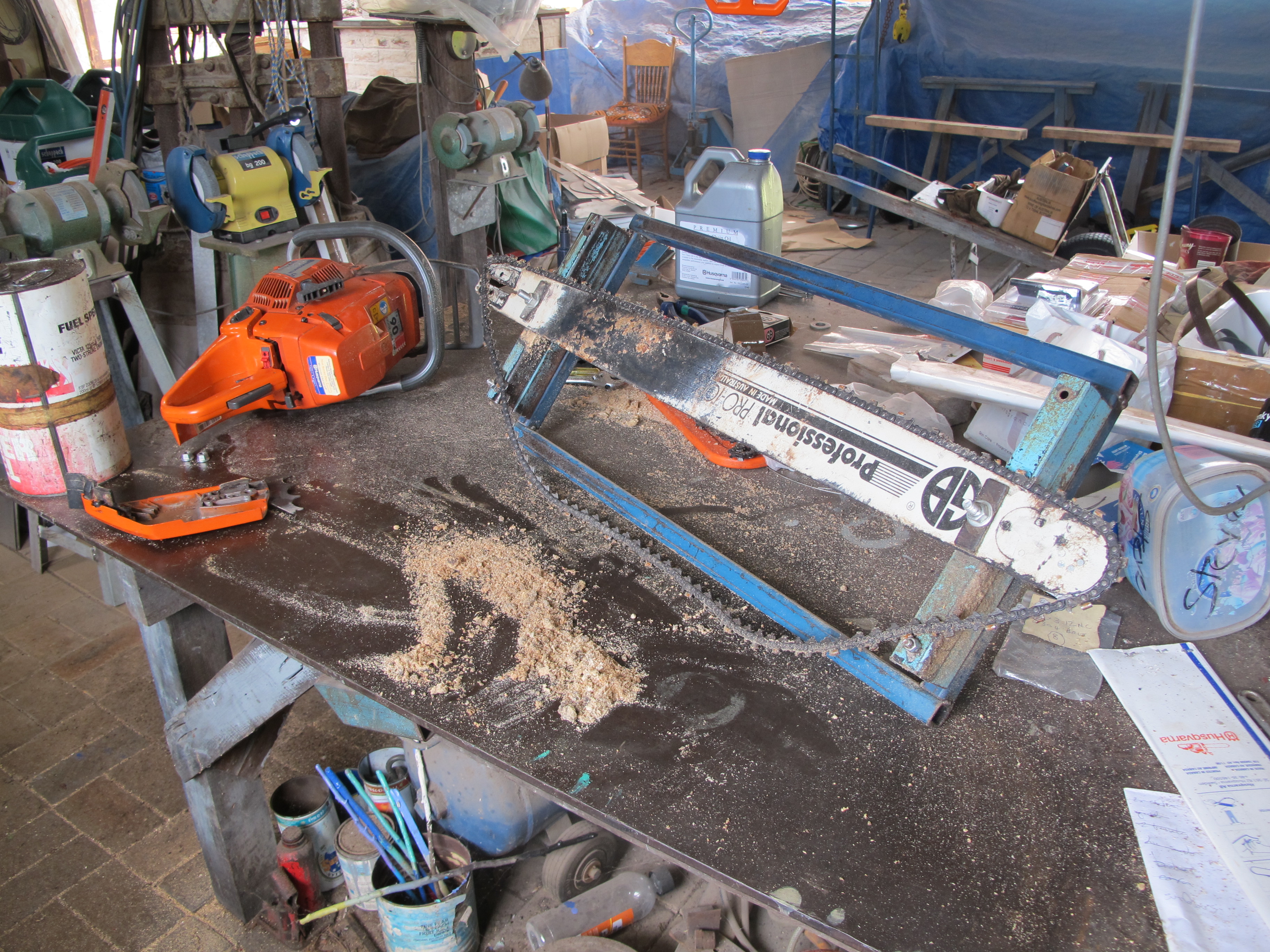
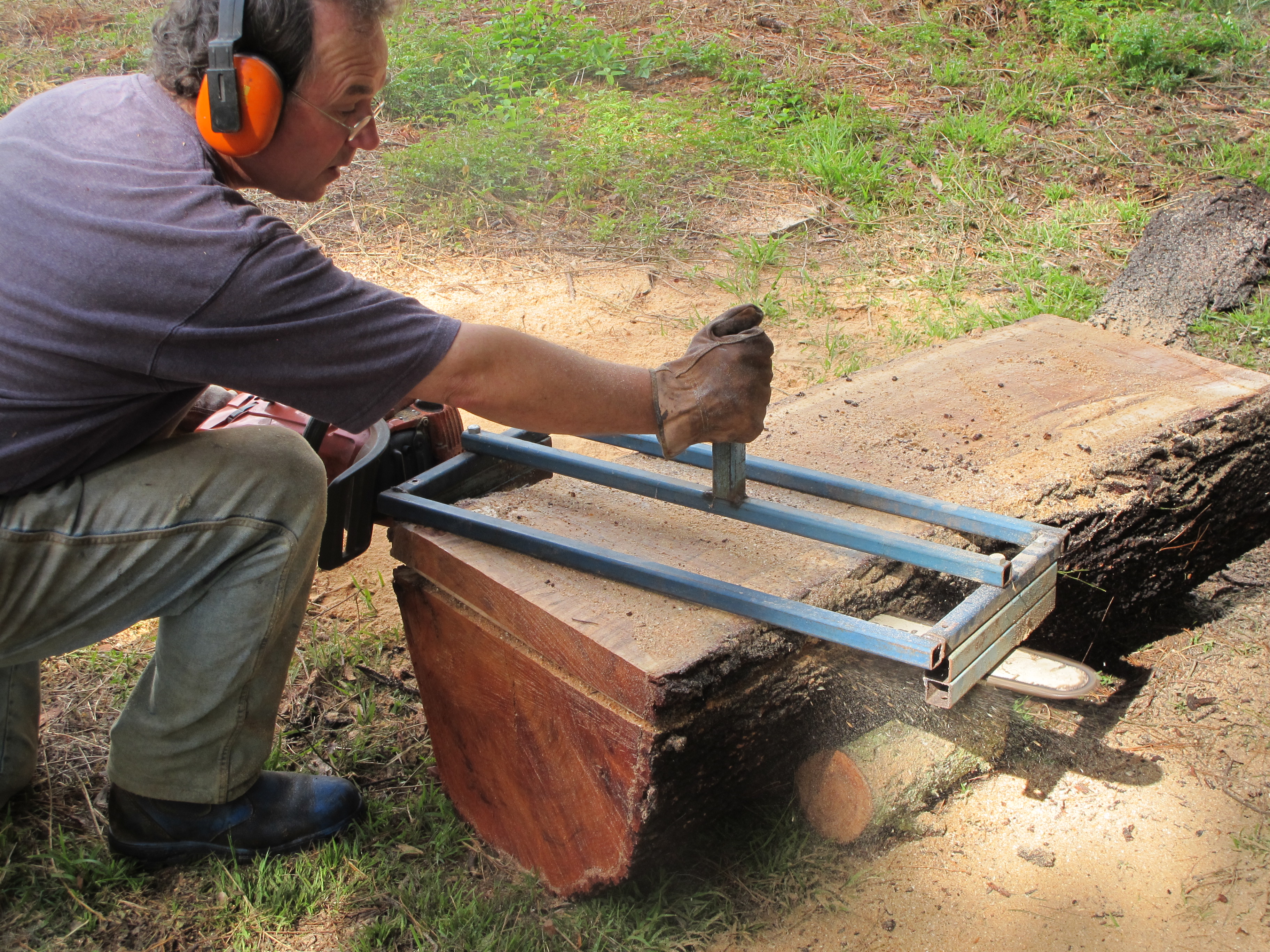
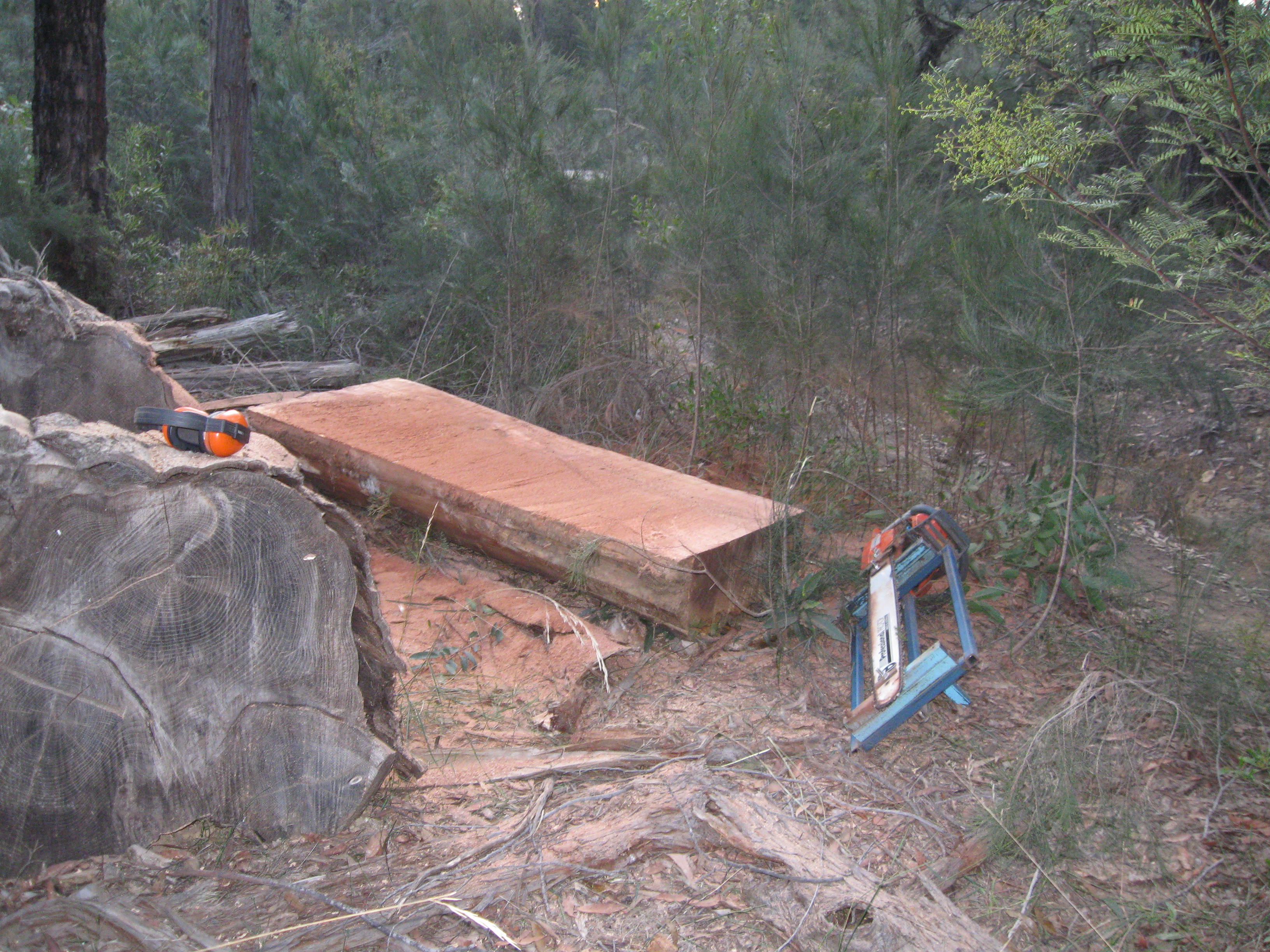
Over the past few weeks I have had over 500 hits on my article on self reliance including a little bit about milling my own timber. So I thought that seeing there is so much interest in building a home made saw mill attachment for a chain saw, I ought to put up a post with some more detailed explanation, including a few dimensions and some images to help explain what I did.

It’s pretty basic unit made out of scrap steel sections that I just happened to have laying about on the day, but it works really well for what I need it to do and that is to turn logs that are too good to burn, into usable milled planks. I haven’t studied this kind of gadget at all. This is my first attempt at building one. It seems to work OK, so i haven’t got around to making another one or changing it. If I was to, I would perhaps add a bit of rubber tube over the upright centre handle, just for comfort.

Since I moved here, I have built my own house and pottery building. We made all our own floor boards and made all the windows and french doors. I also made all of the kitchen furniture to go into it, chairs, tables stools etc.

All you seem to need is a few basic tools, an inquisitive mind, some perseverance and a bit of spare time to figure things out. The saw is an old (15 years) Husqvarna  371 60 cc. and the milling bar is about 900 mm. long. The effective cut is about 600 mm.

So here are a few pictures with measurements chalked onto the bench.

IMG_9167

IMG_9168

IMG_9169IMG_9170IMG_9171

IMG_9166

IMG_6220

IMG_6221

IMG_6208IMG_6209

IMG_6212

IMG_2291IMG_2292

A Sudden Outbreak of Normality

We are just back from Canberra, it’s late afternoon and it’s straight into the garden to see what there is to pick. We’ve been away for 5 days. It has been raining a lot of the time we have been away. The rain gauge has 32 mm in it and there are puddles on the road coming in. It’s the end of the warm weather now and I manage to pick a full basket full of small red and yellow tomatoes. This will be the last picking large enough to fill a boiler and make tomato passata. From now on we will only be able to get a few each day, enough for one meal at a time.

IMG_8995
There is a sudden outbreak of normality, and we find ourselves back at work and play simultaneously.
Nina lights the wood stove to make some hot water and I start to wash and prepare the tomatoes for sauce. There is still some sweet basil lingering on in the garden. I have been keeping it well tip pruned to keep it from flowering. this seems to prolong its productive life right up until it gets so cold that it just drops all its leaves and dies. A huge bunch of sweet basil goes in with a bit of thyme and a chilli, olive oil and onions. In a few months time we will be opening these jars of passata and remembering the summer as we savour the sweet, acid, piquant flavour of the tomatoes in the passata. Each 10 litre boiler reduces down to about 3 or 4 jars of passata after boiling, sieving through the moulii and re-heating and reducing the volume to concentrate the flavours.
IMG_8996
We have to get cracking, we have a kiln ordered and several weekend woodfiring workshops coming up. We unpack the kiln that we fired before we left and get out all our new hand made kiln door bricks, which have fired very well. As the whole side of this kiln is the door, it makes it all a lot easier on my back, knees and neck, to be able to pack most of the pots without having to get inside the kiln, now that I’m starting to feel my age.

I clean out the firebox and check all the new brickwork and bracing for cracks and then clean all the props and shelves, ready for the re-packing for the workshop.

IMG_8985IMG_8988
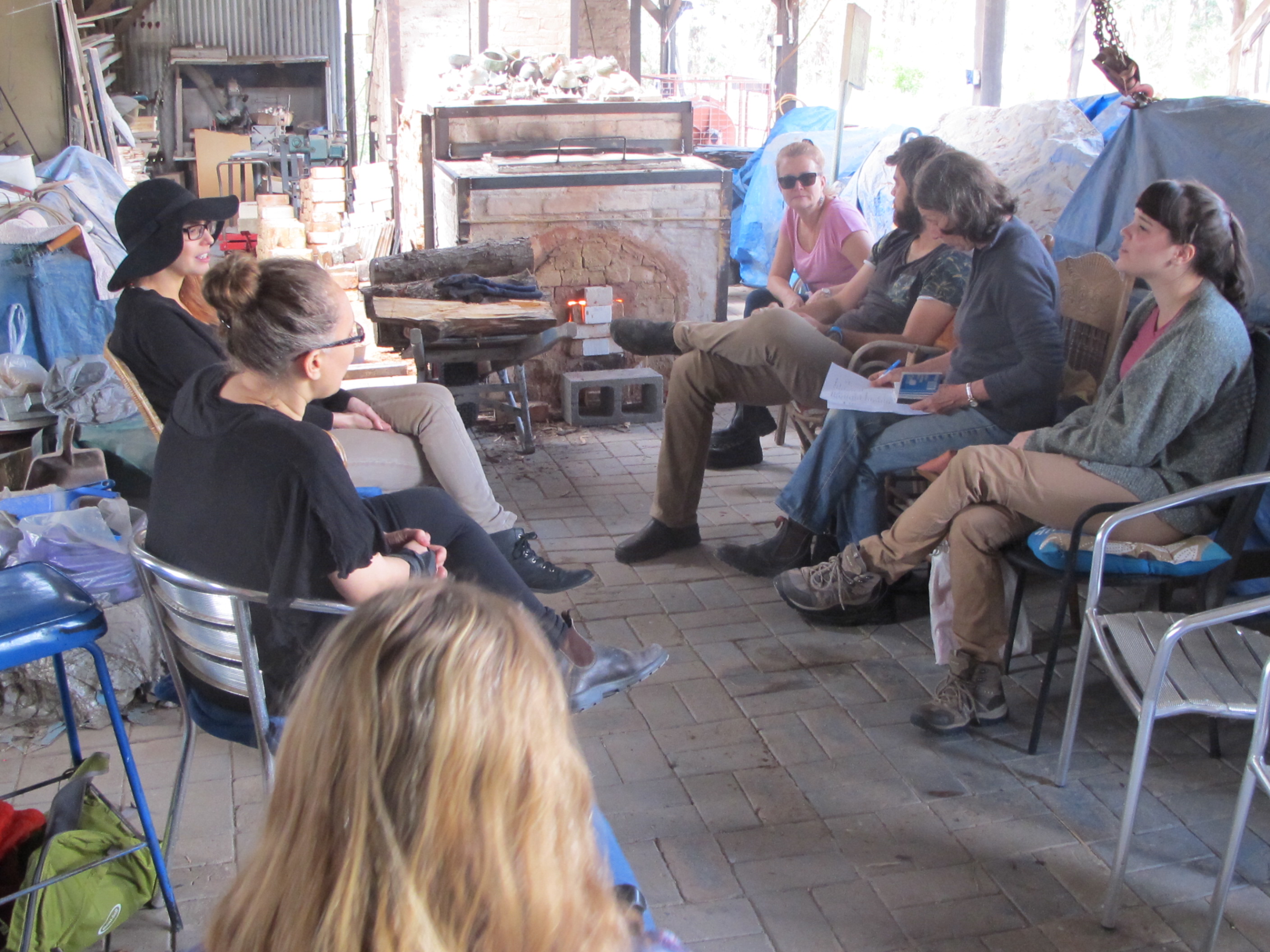
All our wood firing enthusiasts arrive and we pack the kiln and get it on in the early afternoon. With lots of helpers rolling out the little balls of wadding, it all goes smoothly and quickly.
IMG_8999IMG_9007
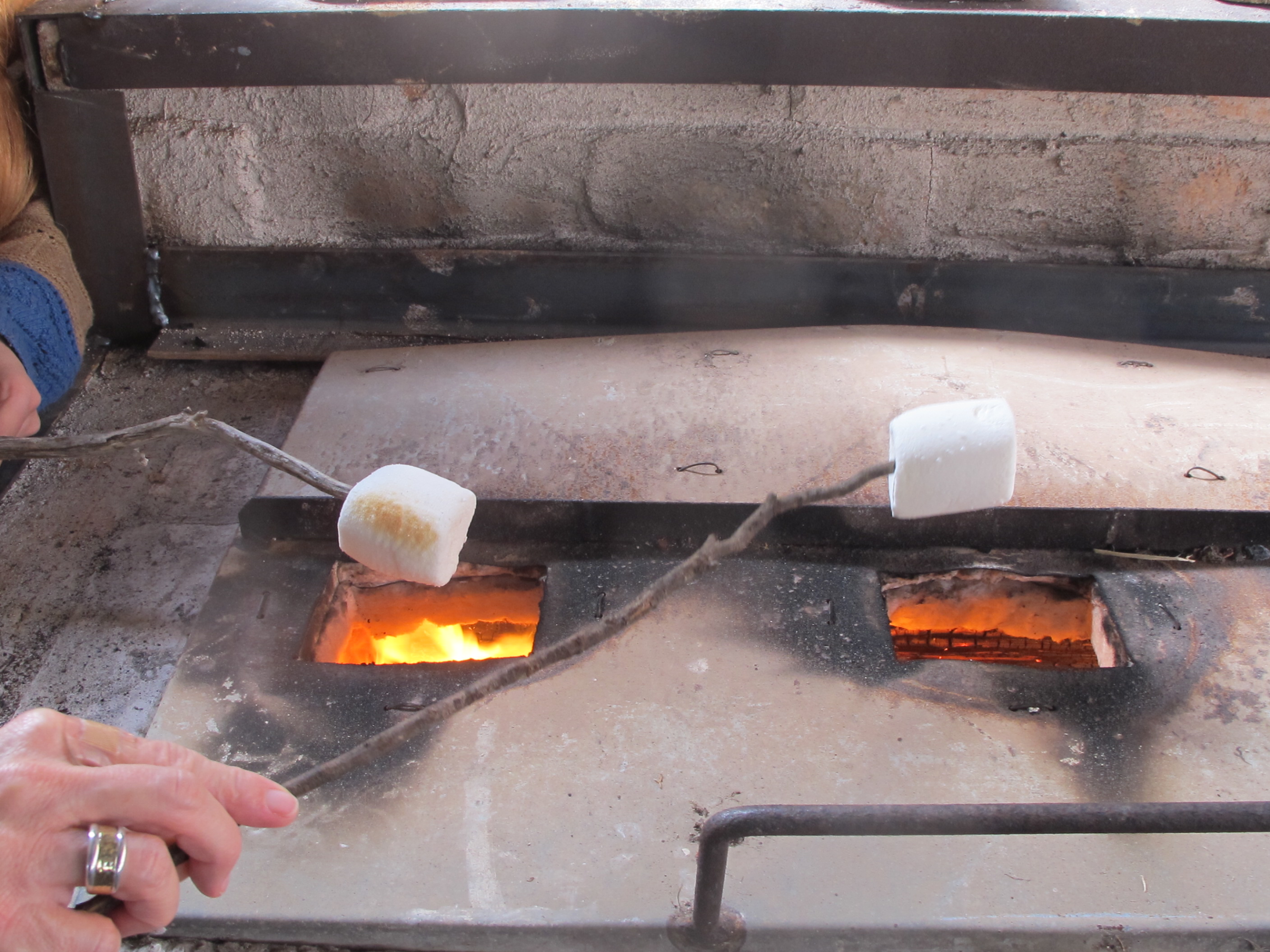
We light up and fire the kiln over-night and into Sunday. There seems to be a ritual developing of cooking marshmallows over the hot firebox on Sunday morning to cap off breakfast. I don’t know where it started, but it seems to be becoming a regular event.
IMG_9011IMG_9010
IMG_9017IMG_9015
IMG_9020
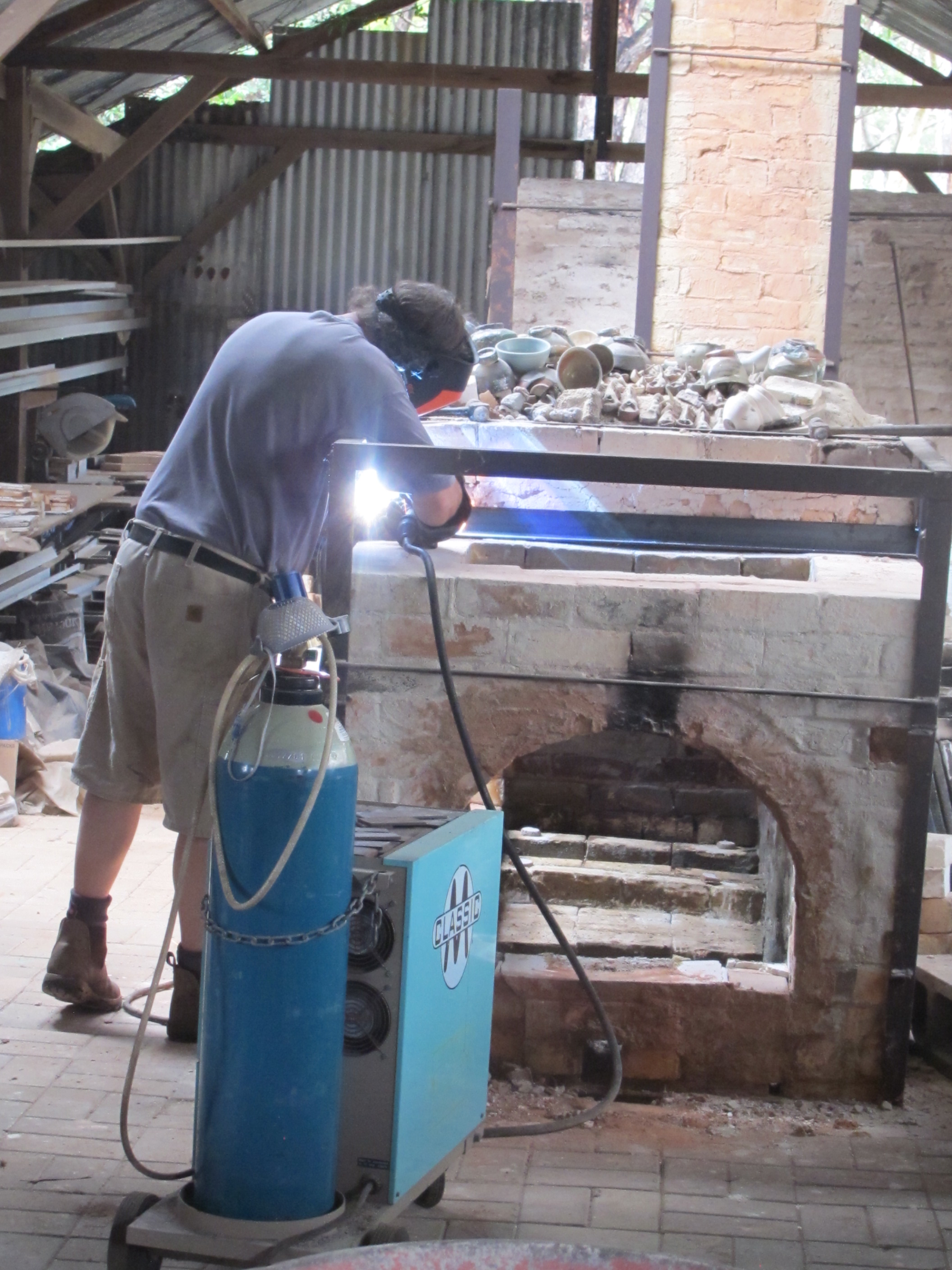
On the Monday, as the kiln cools, I start welding up the metal work for the kiln that I have ordered, now that I have the pottery kiln shed to myself again.
IMG_9026IMG_9024
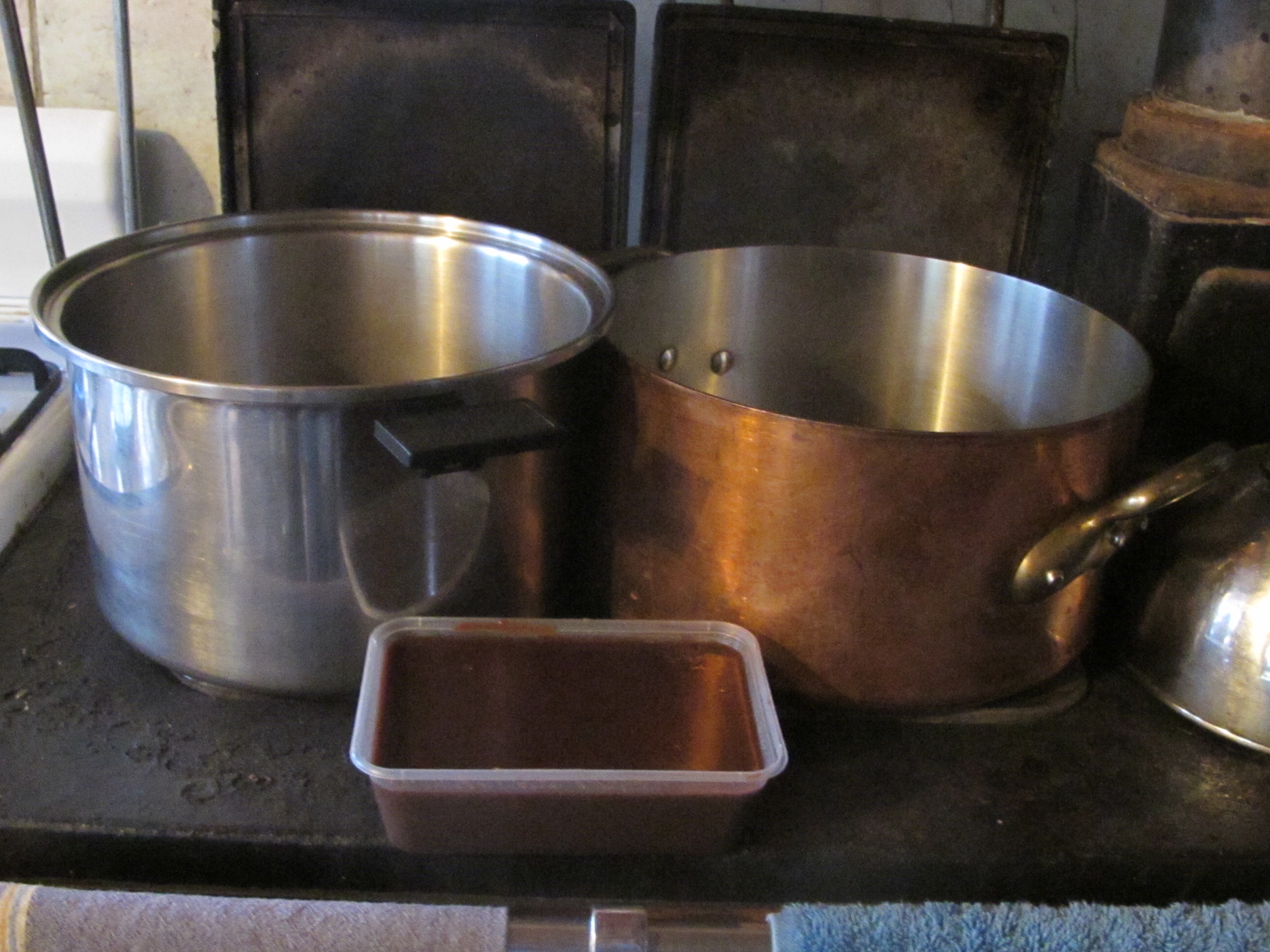
In the evening I start to make a big batch of roasted marrowbone stock. I fill 2 of our 10 litre boilers with the roasted bones and a mirepoix of garden vegetables and herbs. Over the next two evenings,
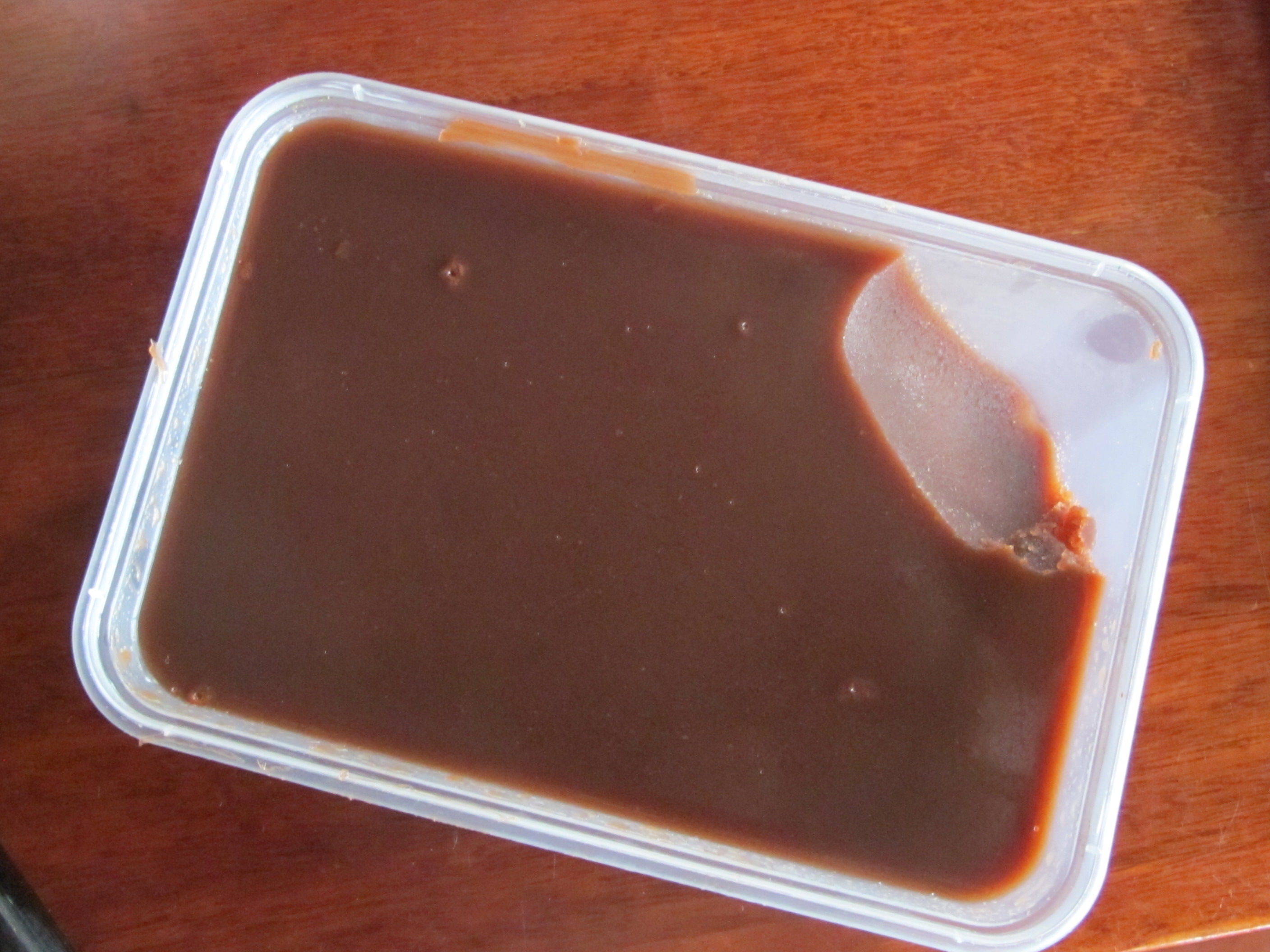
I end up reducing the 20 litres of initial stock down to just 500 mls of luscious concentrated jelly. The addition of a bottle of red wine helps fill out the flavours. It goes into the fridge and I take a spoonful of it when I need it instead of buying stock cubes.
IMG_9035IMG_9064
Firm, jelly-like consistency, intense flavour.
IMG_9029IMG_9032
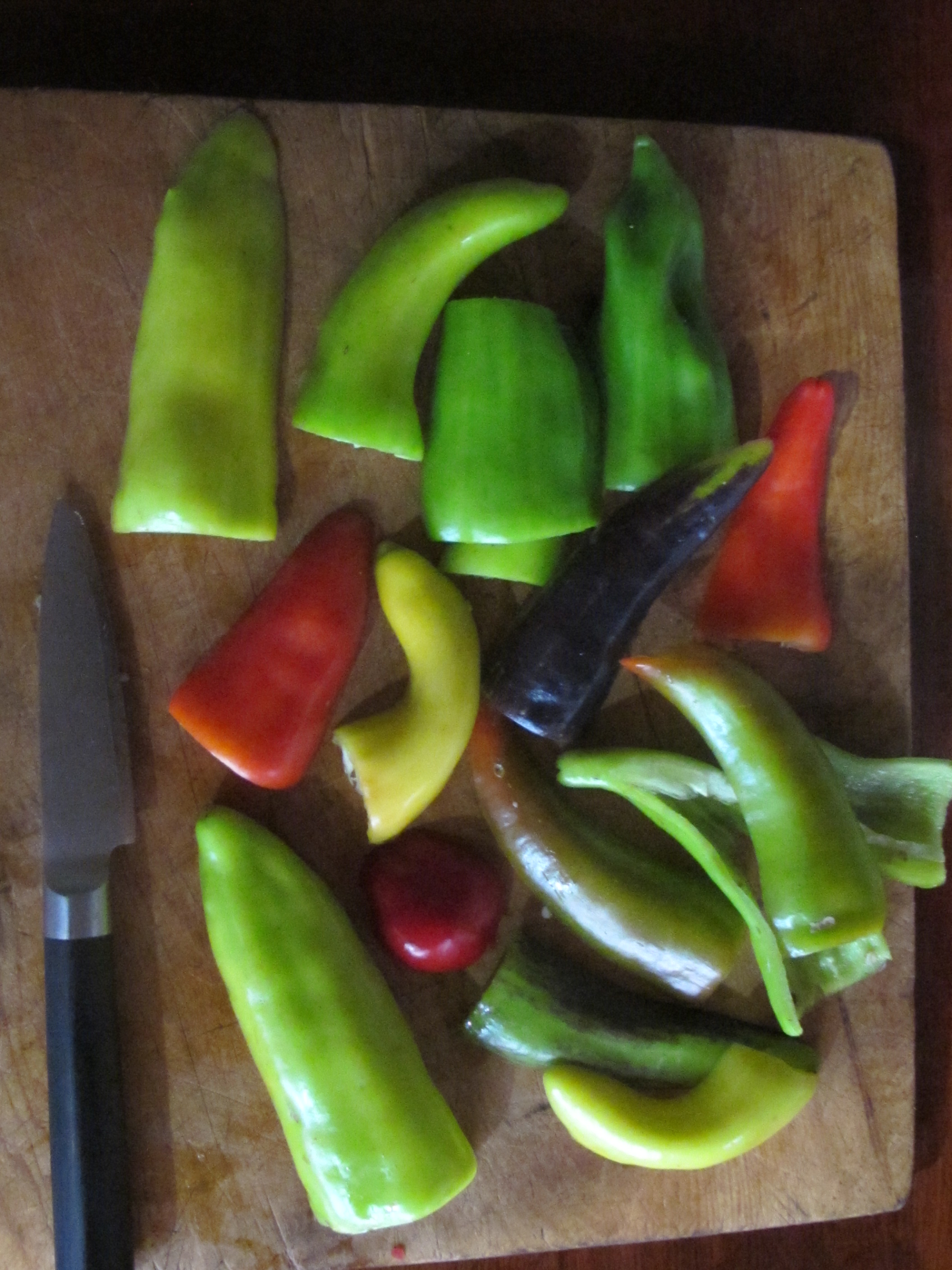
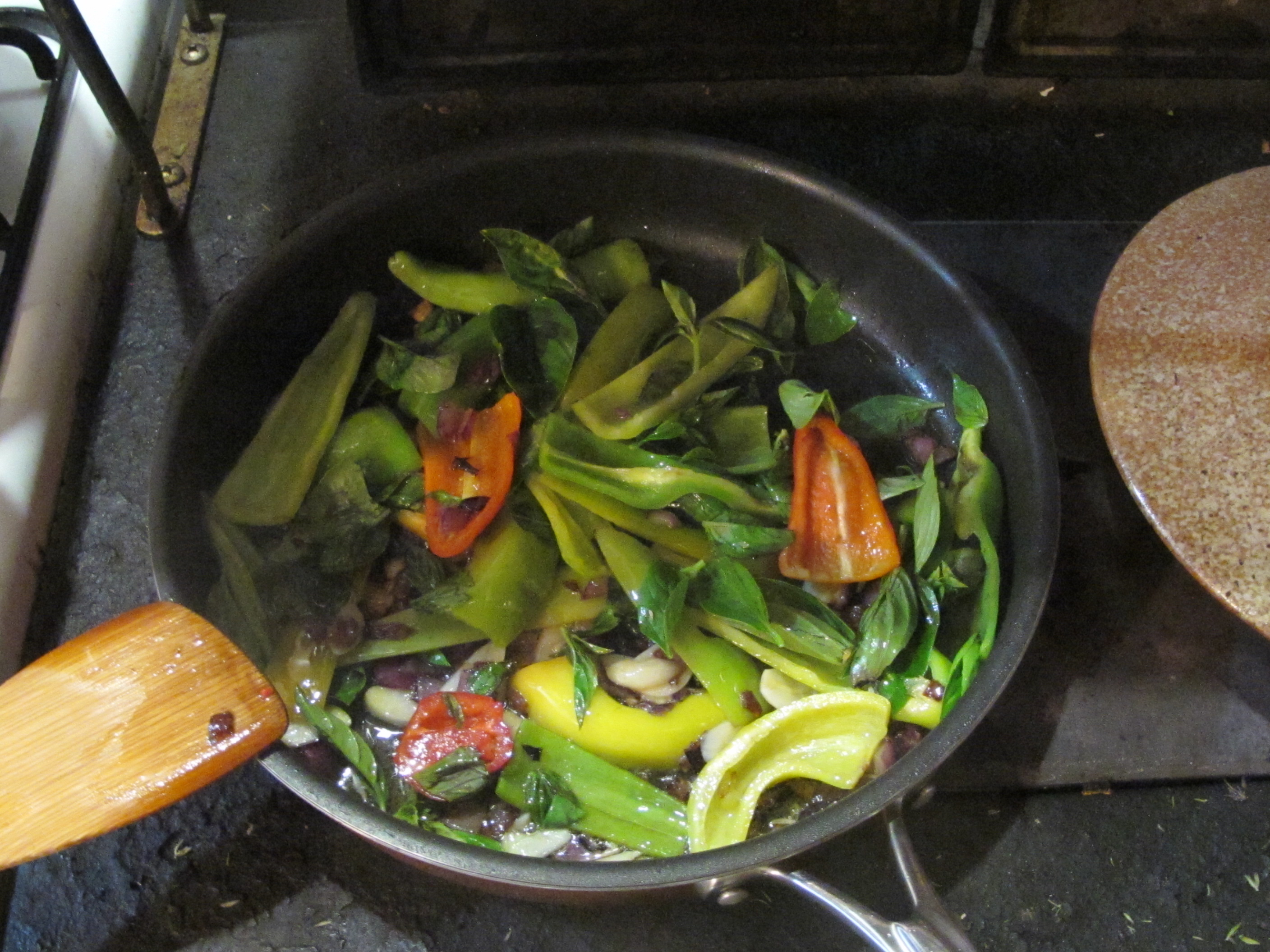
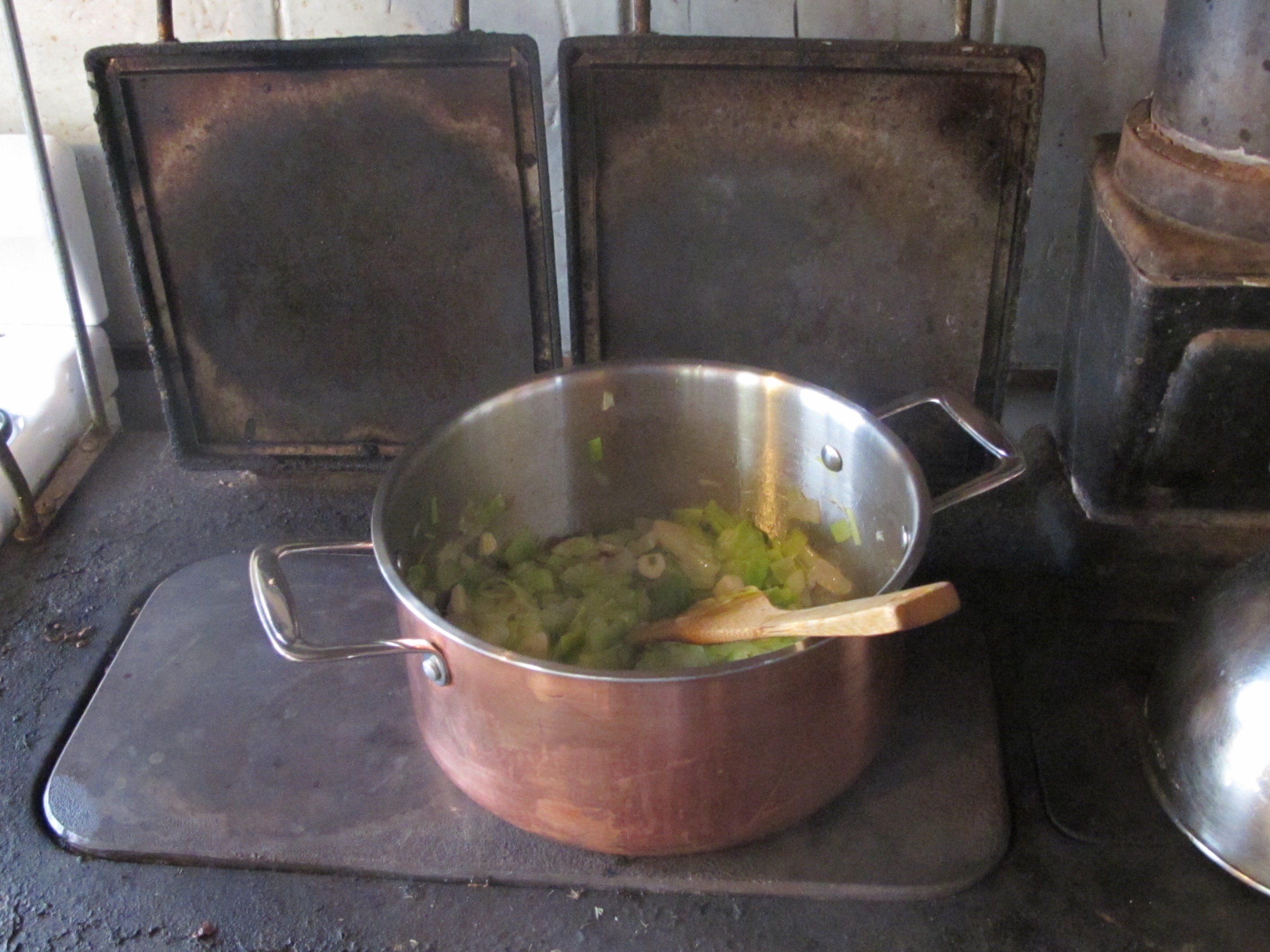
One night we have a dinner of pan fried capsicums with garlic, olive oil, tomato and basil. The next night it is a lot cooler, so the Mademoiselle makes the first minestrone of the season, using our kohlrabi, cabbage and leeks from the garden and our dried beens that we shelled a few nights earlier, with our friend Elizabeth, sitting on the lounge watching the idiot box.
IMG_9045IMG_9048
IMG_9050IMG_9051
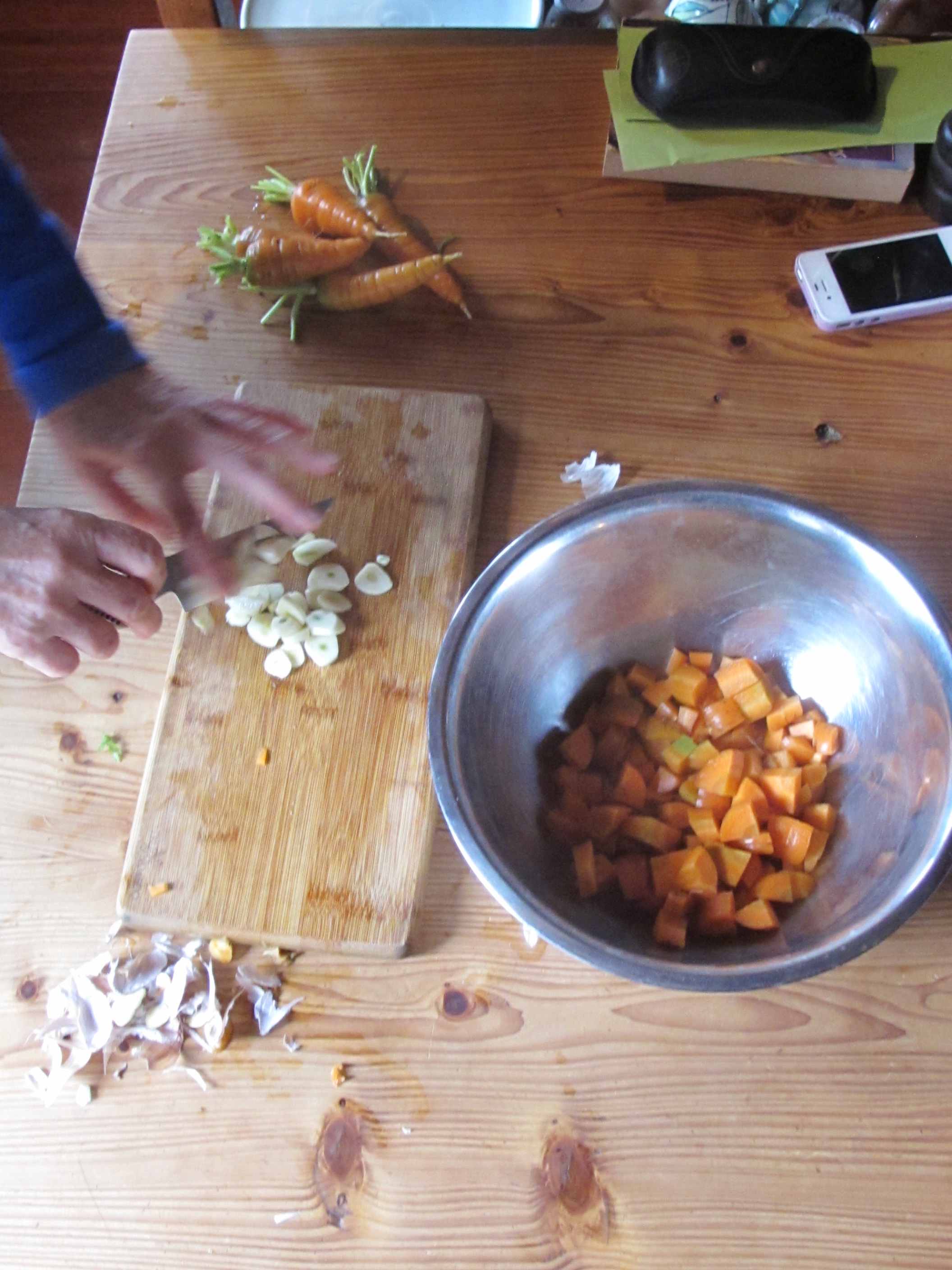
Carrots, celery, leeks. A great base for the minestrone and also for the stock mirepoix.
IMG_9061
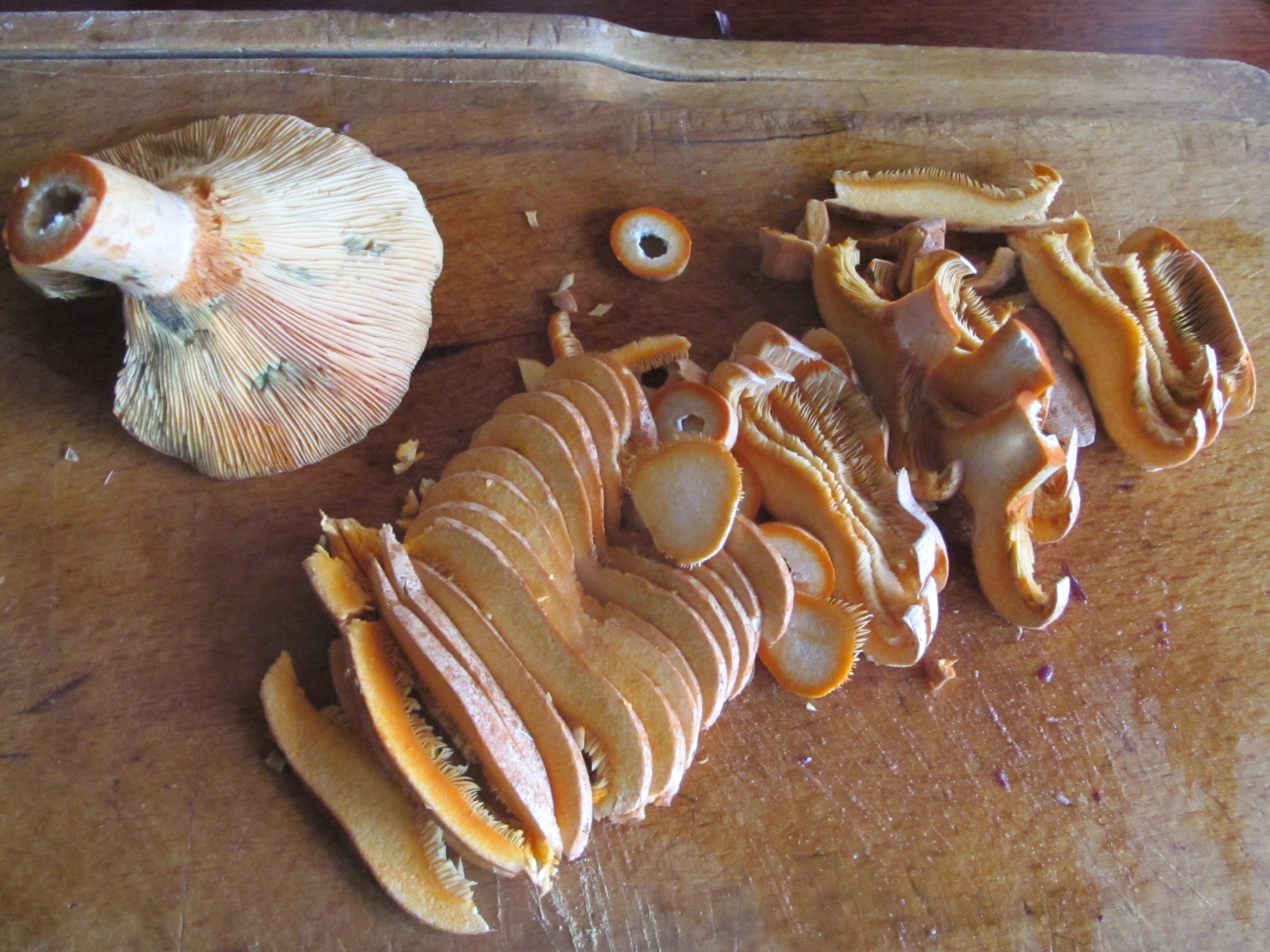
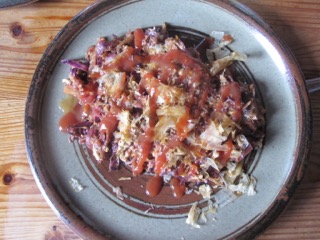
I use the other half of the cabbage to make a kiln builders lunch of okonomiyaki, Japanese style cabbage pan cakes. But on this occasion, without any flour, just held together with a few local organic eggs that we got from our friend Marg, who runs a certified organic garden. I add some saffron milk-cap mushroom from the garden. The first of the season for these mushrooms. I also add some of our pickled ginger and a few of our sun-dried tomatoes in oil. It’s not Kosher Japanese. Just the idea and influence of Japan. We use what we have at hand from the garden and our preserves from the pantry. It reminds us of our Japanese friends and the good times we’ve had together..
IMG_9055IMG_9062
IMG_9068IMG_9067IMG_9069
Best wishes
from the Oka Nomiyaki and his Mini Strone

The Axeman Cometh, but Lucie Takes the Cake

It’s the season for music festivals. Starting with the Goulburn Blues fest, then the Illawarra folk fest. then comes Womad and Port Fairy, which are followed the next weekend with the Blue Mountains Blues and Roots Fest and culminates with the National Folk Fest over the long Easter Weekend for 5 days. It’s a tough life, but someone has to live it. We drove the 2 hours down to Canberra and camped in the back of our van for the 5 days. This year we caught a few interesting performers. There were many, but I can only write about a few.
I particularly liked Lucie Thorne.
I didn’t know what to expect, but straight off. It’s not what I’m not expecting. If I have any preconceptions at all, this isn’t it. Just going on her bio in the program and what I see on stage before she begins. She starts off slow and quiet, and then continues like that. She beguiles us, she lulls us, she woos us and cajoles us, she casts her magic, slowly, we are enveloped in her spell. She coaxes us along with her, we share a small part of her life. The part that she’ll let us see and will sing about. She presents us with her vulnerabilities, her angst, her wishes and dreams. What more could you want? This is both tender, intimate and brutally honest. I’m in.
IMG_8969
She plays an electric guitar, hollow body with an  arch top. But I don’t know anything about guitars. She plays without a pick, with just her fingers, but not folk pattern style, just her own idiosyncratic, sort of erratic, but not, style, guided by the narrative, she emotes through her fingers and the amplified guitar, but Oh! So gently. She has a soft, breathy, low, almost spoken lyric style. Her own voice, her own style. An absolute original talent.
She is backed by a very sensitive drummer, Hamish Stuart, who plays to her strengths and is so minimal that he just fills in the gaps in the music enhancing, and supporting, but never over shadowing her. A great combo. <http://www.luciethorne.com>
This union of low-key elements and understated passion reminds me of the later music of Chris Whitely,
<http://en.wikipedia.org/wiki/Chris_Whitley> The ‘Hotel Vast Horizon’ period. The same breathy vocal style, the minimal guitar, the restrained in-fill drumming. But where-as Chris Whitely was the guitar ‘AxeMan’ in his younger days, she is, in comparison, the young female guitar ‘cake-splade’, softer, gentler, less damaged, more refined, but just as emotive. I say less damaged, but when we caught her performance, it was first thing in the morning. It must have been a very late night for her previously. She looked a bit ragged. I’d never heard of her previously, but now I will keep a look our for her.
IMG_8967
After I saw Chris Whitely burst onto the scene doing his ‘Living with the Law‘ tour early on. I kept an eye out for his tours. He could make his old 1940’s timber resonator guitar talk. Lightning fingers, but as the heroin took its toll over the years, he developed a more abridged and concentrated minimal style. Moving from Robert Johnson to minimalist jazz influences. I saw him half a dozen times and bought 12 albums, before he died, tragically young. I hope she does a lot better.
A Thoroughly enjoyable hour of my life, well spent. I buy 2 of her CD’s direct from her. After the show, we chat. Up close, she is just as I imagined and described. Gentle and vulnerable, but tough. Quite direct and honest when we ask questions. Very genuinely appreciative when we buy the CD’s.
The very last show of the night for us oldies, is the 11.00 to 12.00 slot. It all continues on till after 3 in the morning, but we aren’t up for that. We need our sleep. We are staying up for a couple of old blues men. I haven’t heard of these two blokes either. They are in Canberra at this time because they have just spent 3 days in the National Sound Archive, having their repertoire recorded for the National Estate, so they must be interesting. They are Frank Povah and Chris Cruise. They grew in the country but moved into Darlinghurst/Kings Cross in Sydney in their youth to play in jug bands, then blues bands. They look to be in their late 70’s now and have a few miles on the clock. They were exceptionally good. These guys really knew their stuff. Not always my stuff, but so well done. A repertoire from the 20’s, 30’s and 40’s, acoustic country blues. Wooden music. I’m really glad that I stayed up for it.
It’s a great pity that they didn’t have a CD for sale. Exceptional musicians.
IMG_8965
Another musician that we saw at ‘The National’ was Tift Merritt. She sings her soft rock songs with a slight hint of Country and Western. I think that it’s the lap, or peddle steel guitar backing that gives it that feel. I’ve never been particularly taken by either style, country or western, but she carries it off very well. Beautifully musical and easy listening with some very hummable melodies and memorable riffs. Most enjoyable.
Best wishes
from DJ Nina and her base accompaniment

The April Fools New Firing

I’m awake before dawn. There isn’t even a hint of light through the place where I know the window is. It’s drizzling or raining lightly, because I can hear the drip of the rain on our bedrooms’ tin roof. I reach for my phone in the dark, it’s just 6 minutes before the alarm is due to go off. How do we do this? What sort of clock do we have in our heads that can measure by dead reckoning to within 6 minutes over 8 hours. If I tell myself to wake up at a certain early hour, I usually do it. I just don’t know how. I trained my self when I was a teenager, to wake up every two hours through the night, when I was firing my first gas fired kilns, so that I could turn the gas up, to get a steady temperature rise. That knack has stayed with me it seems.

I walk down to the pottery shed in the pitch dark. No stars tonight. Total cloud cover with some light drizzle. No need for a torch. I’ve walked this path so many times in my life. I know the way by heart. I turn at the corner of the orchard fence. I can’t see it, but I know that it’s there. I know that I’m in the shed now and reach for the light switch and suddenly, It’s all real instead of imagined.

IMG_8946

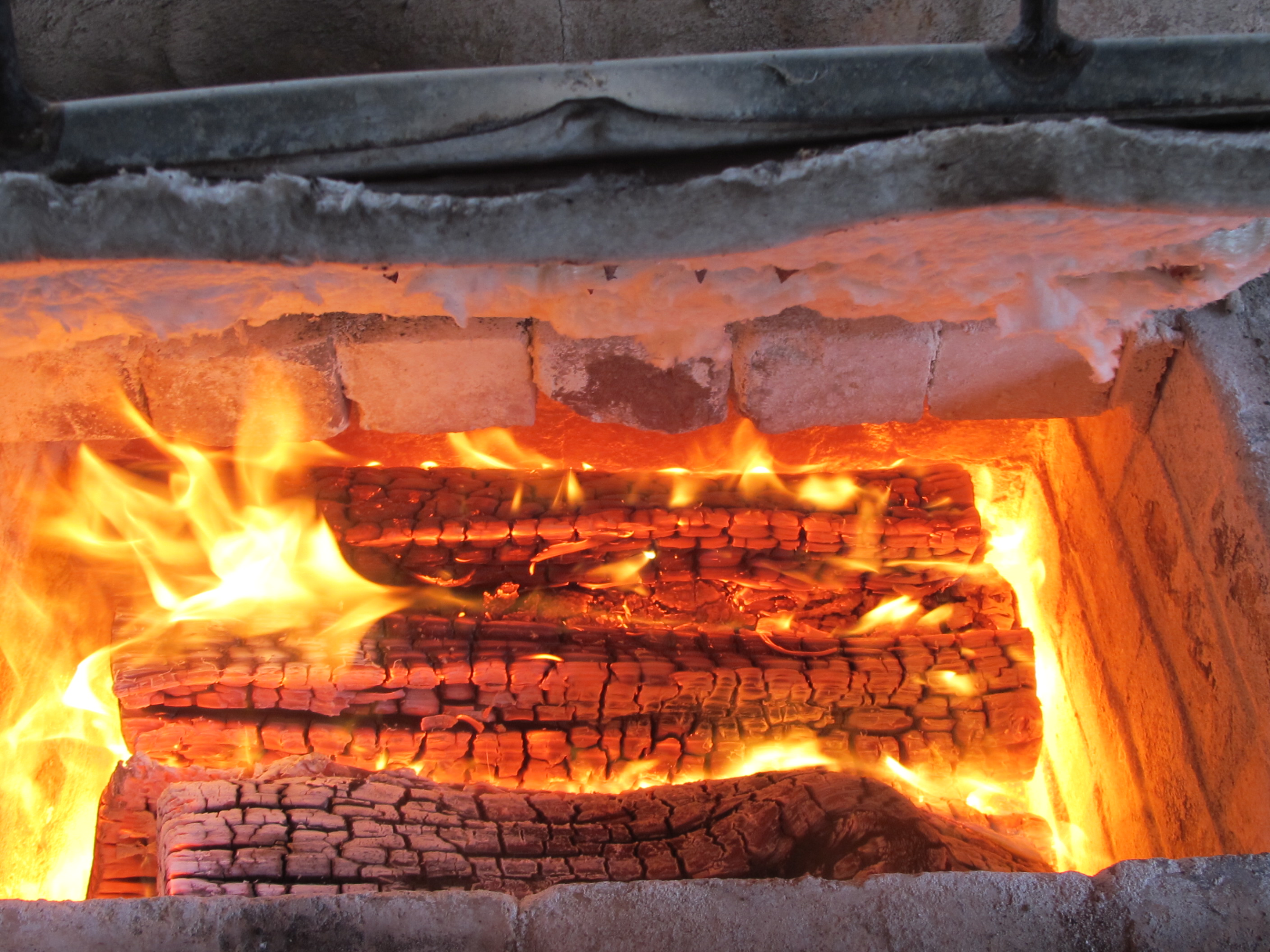
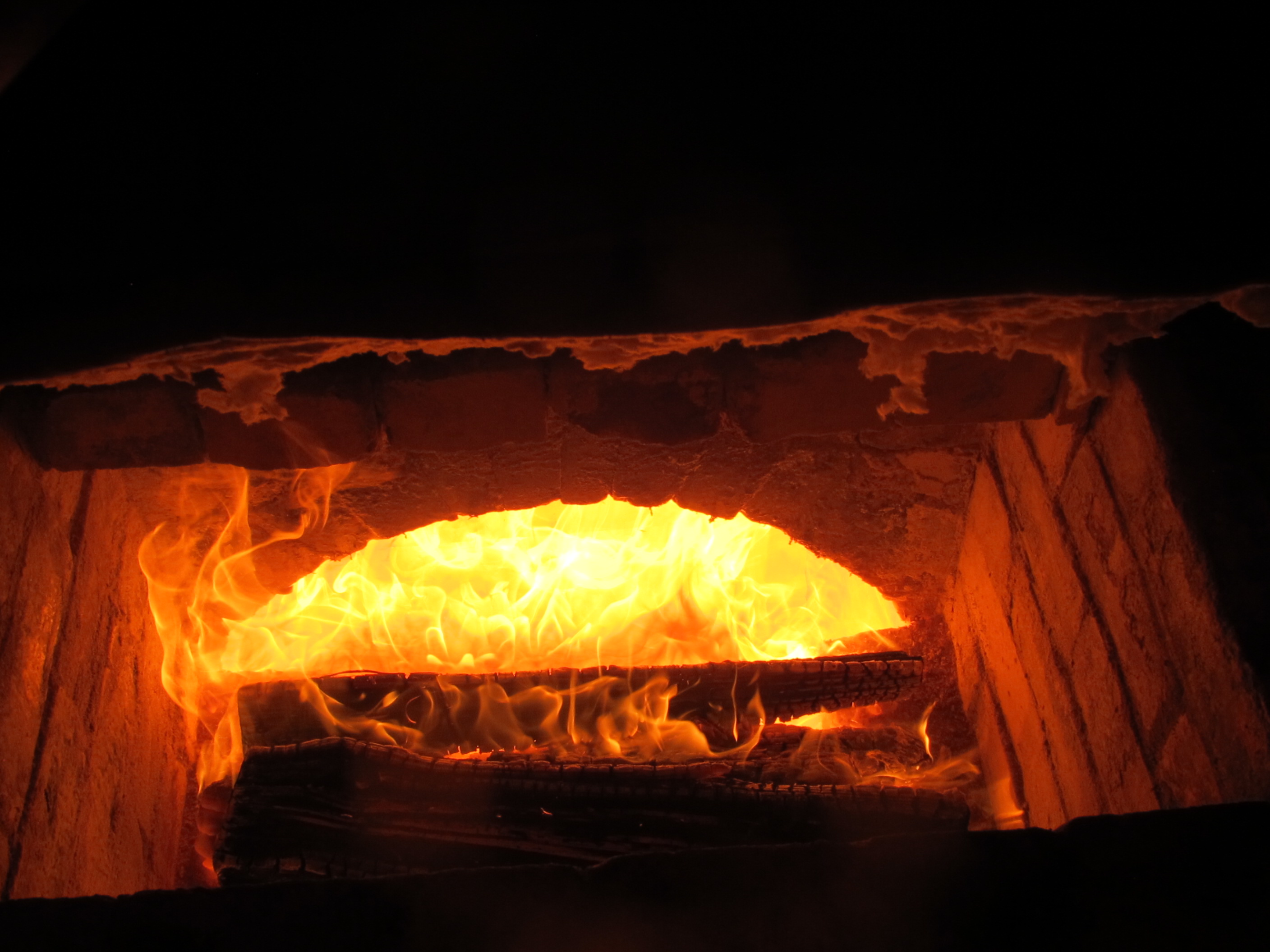
The kiln is packed and was preheated last night. The wood is all split and stacked neatly along the far wall. Everything is ready. I light the match and the kindling crackles into life. I love the smell of the fresh cut and split wood, the smell of the smoke as the fire is slow to catch. I’ve learnt to light a small fire in the base of the chimney to get the chimney hotter quickly to establish the draught. It’s been a few months since I last fired this kiln and the chimney is cold and damp. It has sat idle over the hottest months of the summer, waiting for this day. The first day of Autumn and the official end to the fire bans. We waste no time in getting going. This is the start of the kiln firing season.

IMG_8923IMG_8931

I have spent the last few days cutting, splitting and stacking the wood for these firings. Then carting and re-stacking the logs in the kiln shed. We have had a very wet summer, so we could probably have done a few firings on the wettest days, but I was fully busy making and installing kilns for other potters over the summer. I had plenty of orders, so I sold my soul for the mighty dollar. Paid work has been a bit thin on the ground these last few years, because of the closure of the art schools.

IMG_8936IMG_8940

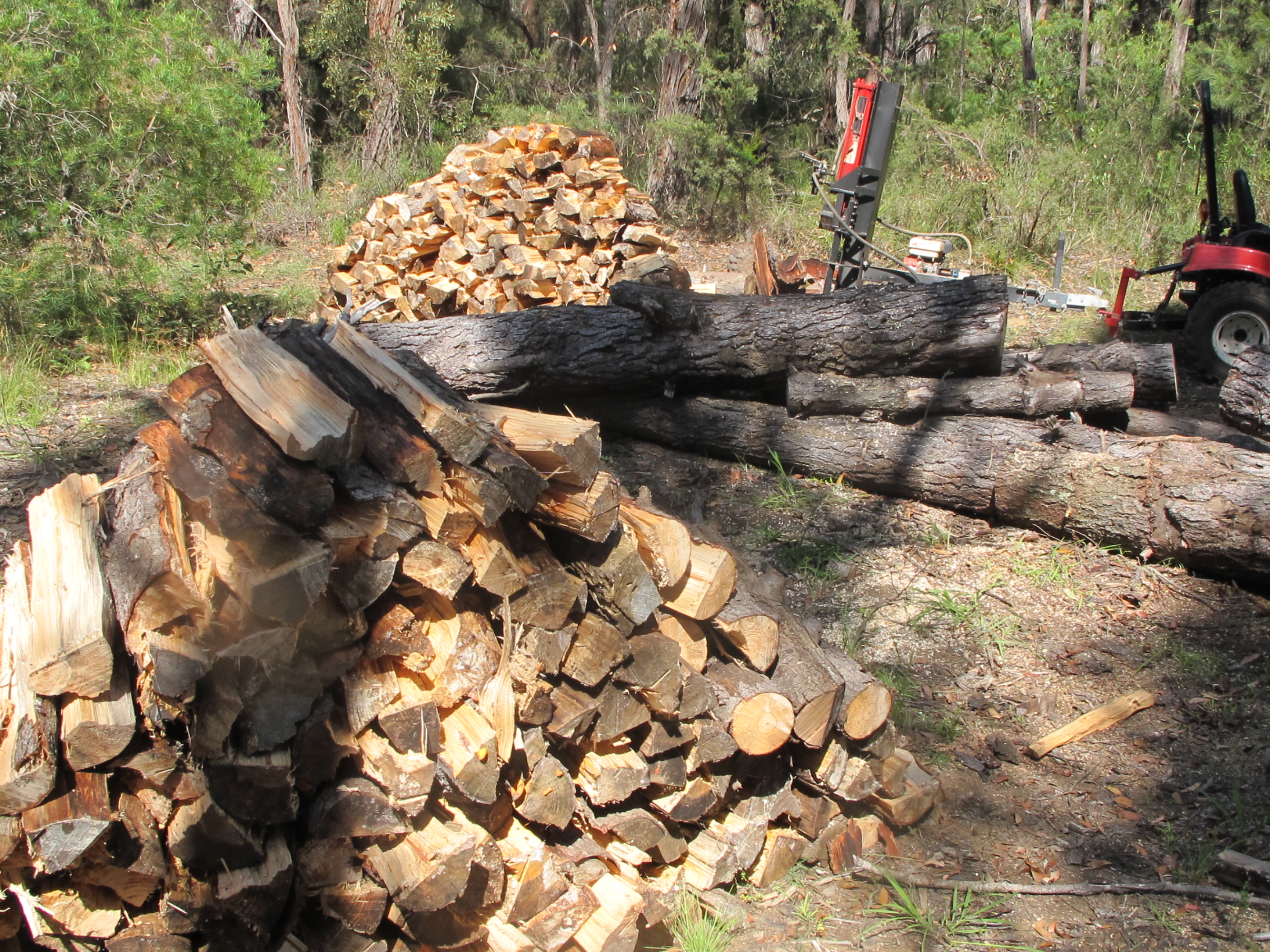
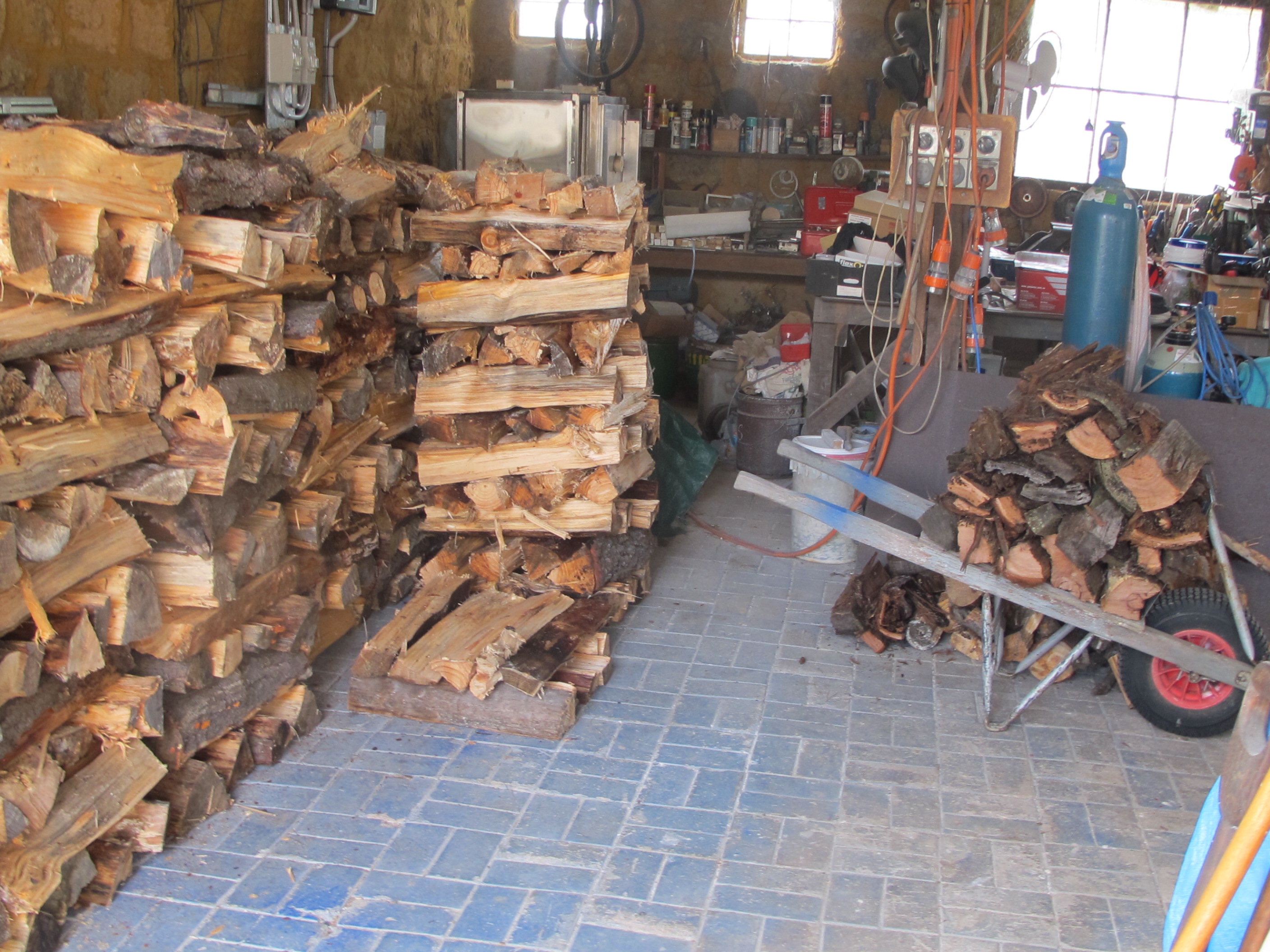
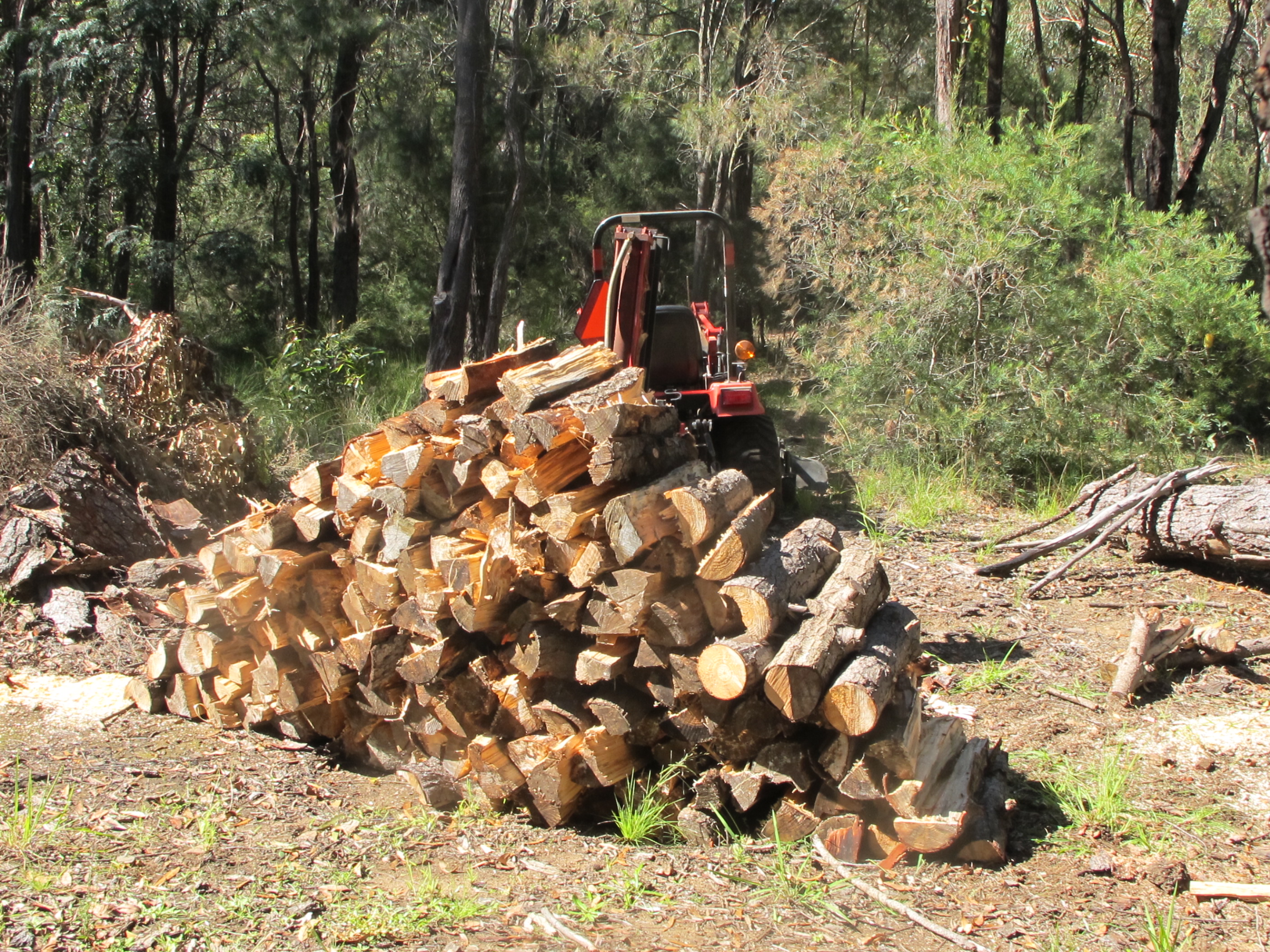
Because of all this wet weather, the wood is still pretty wet inside. It hasn’t dried out much over the summer. So now I have a shed full of wood that won’t get any wetter and will start to dry out a lot faster now that it is under cover. I really need an open walled wood shed over near the wood pile site, where I can safely store the split wood to allow it to season without risk of fire danger to the house or pottery. I was given about 60 or 70 tonnes of logs last year, 8 or 9 tip-truck loads. Enough wood for quite a few years. It all came from a building site in a near-by village.

IMG_8922 IMG_8920

IMG_8918IMG_8924

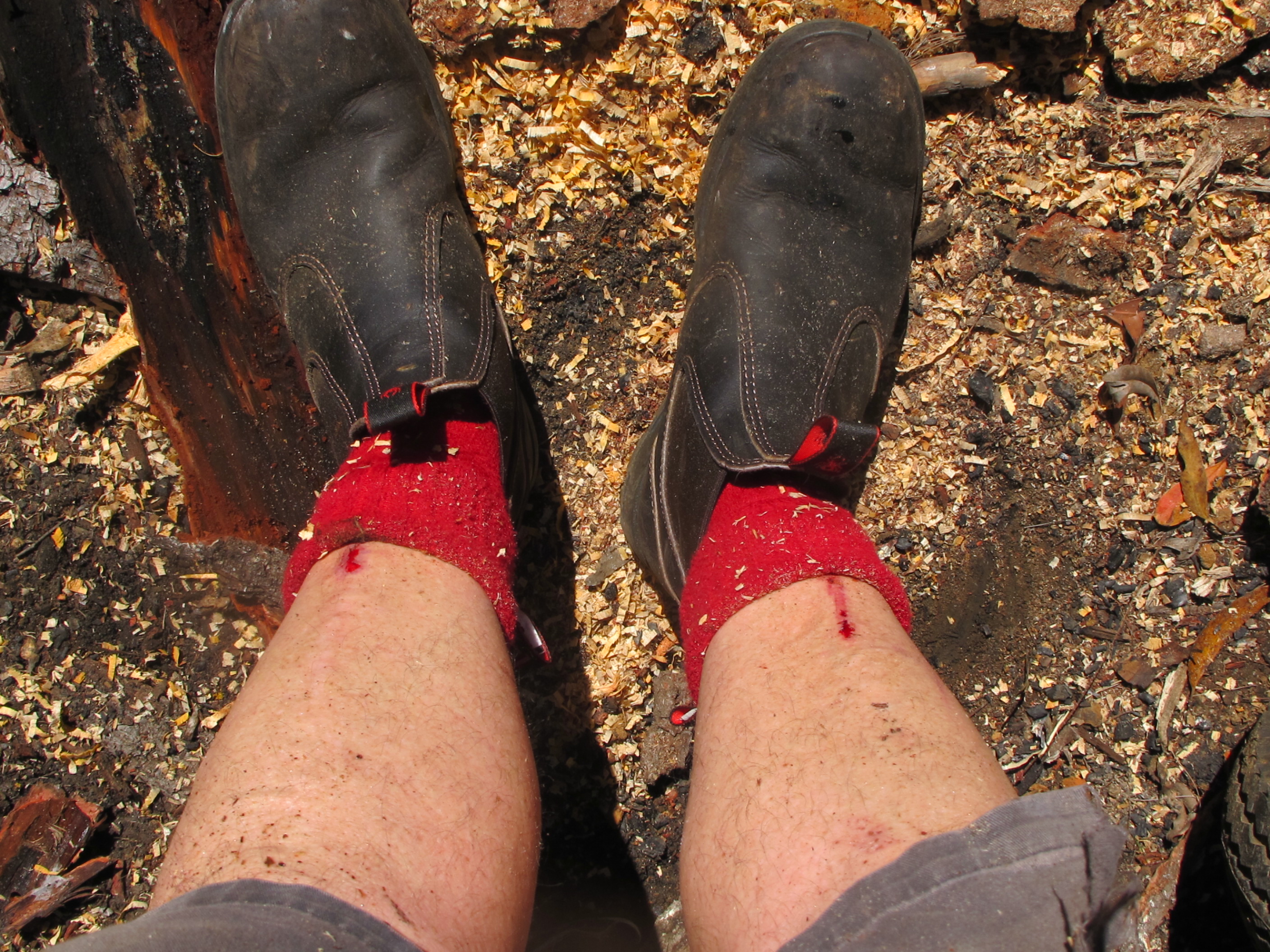
Splitting wood can become quite boring over several hours. I manage to roll a few logs onto my shins during the day. I’m already wearing hard boots, ear muffs, face shield and gloves. It seems that I’ll now have to go out and get some shin-pads as well.

During the dull moments, I worked out that I had cut and split over 500 pieces of wood by the end of the day, then picked them up and stacked them onto the trailer, then unloaded them and re-stacked them in the kiln shed. That’s 1500 wood movements. No wonder that I’m feeling old.

IMG_8892IMG_8906

IMG_8905

We have spent a few days in the pottery throwing some of the fresh new porcelain stone bodies that I made over the summer months. It’s throwing quite well for something that is principally ground rock paste, with an addition of around 15% of plastic clay. It really has made a big difference to the workability. Now it throws more like fresh ricotta rather than wet putty.

IMG_4758IMG_8934

IMG_8943

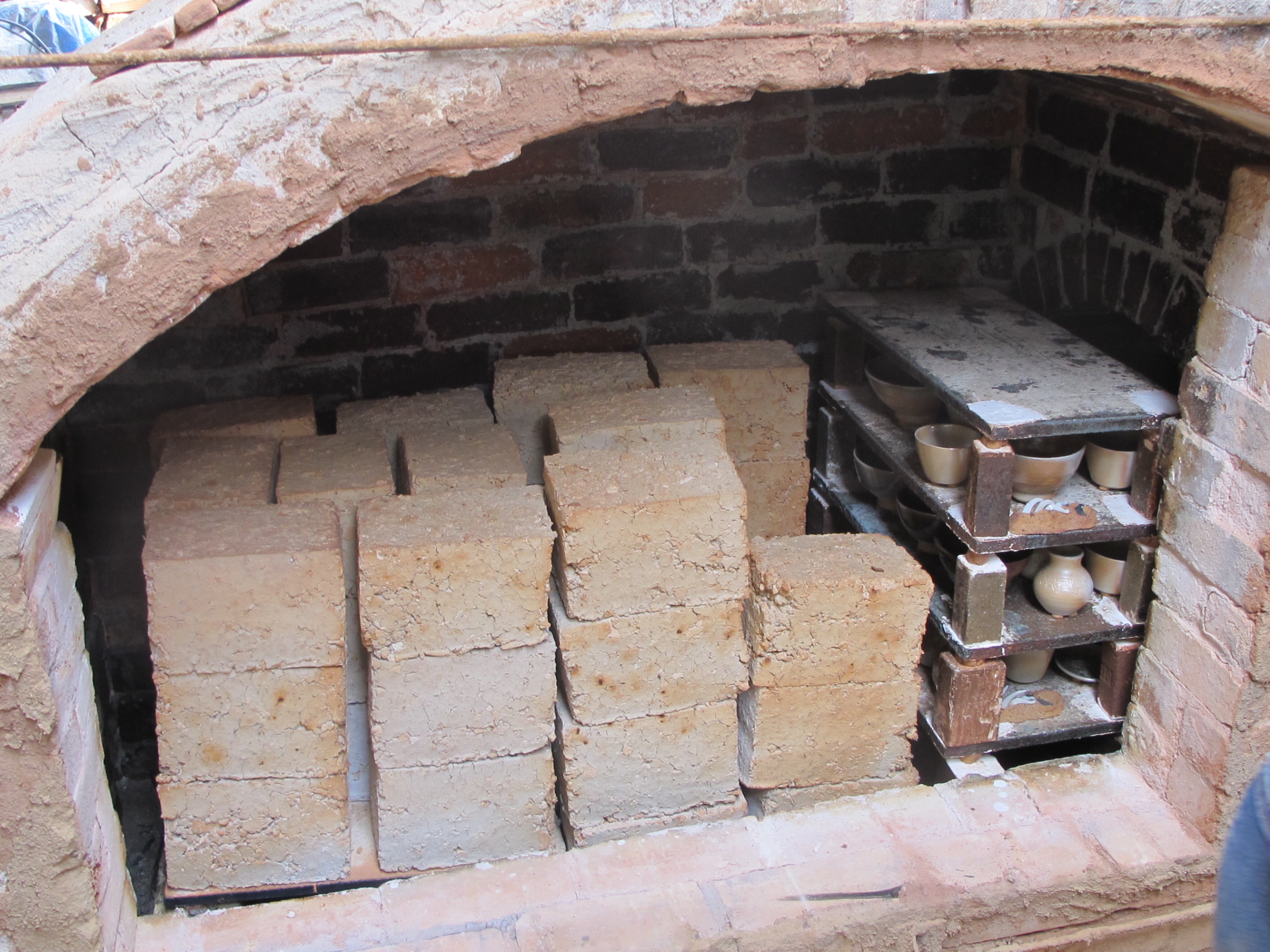
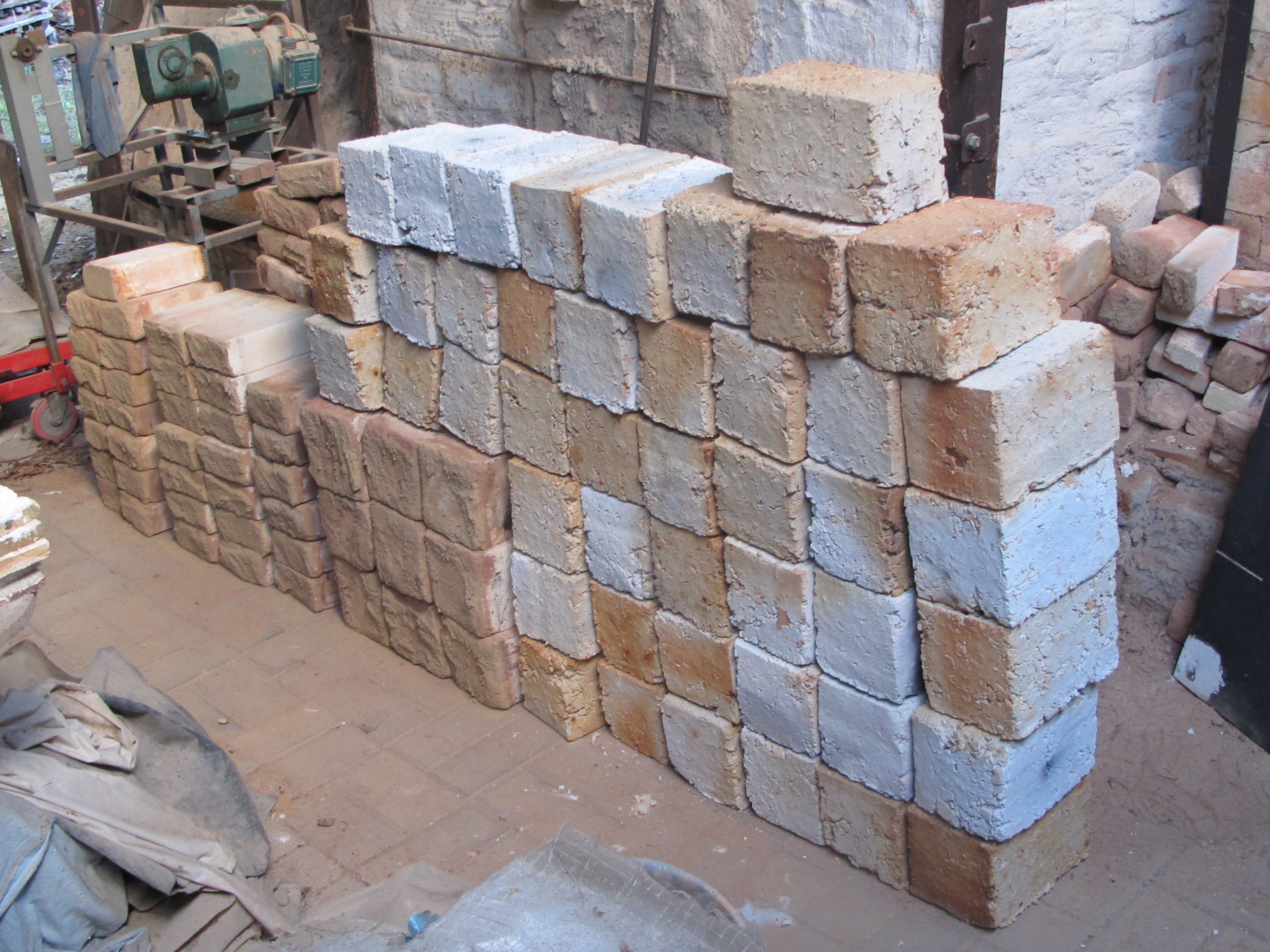
We have a few tests of these new bodies in this firing. We also have the back of the kiln filled with our latest batch of home-made firebricks. These are all larger size blocks 230mm x 150mm x 150mm.

I will use them as door blocks. As the door of this current kiln is quite wide. Using larger blocks will make for faster door bricking-up. I am already using quite a few of these large blocks in the door, but not enough to fill the entire door. After this firing I will have enough and a few spares.

IMG_8950 IMG_8951

IMG_8952 IMG_8953

As the firing progresses into high temperatures, There isn’t a lot to do. While I wait between stokes. I sit and shell dried radish seeds. liberating them from their sticky pods. It takes an inordinately long time to do. It is so very fiddly and tedious. I’m a fool. I don’t know why I don’t just go to the shop and buy a packet of seeds. Well, actually I do know. I want to be a self reliant fool. These are seeds that I have grown and dried myself. They are mine and true to type. They are not hybridised or treated with poisonous anti-fungal treatments. Home-grown, organic and clean. The stuff of real life.

IMG_8949

It’s a great big new experiment. A new firebox, new wood, new fire brick load, new porcelain bodies and new-season radish seeds.

Best wishes from A Pair April Fools

A Skutch in Time Saves Nine

Now that my show at Watters Gallery is up and the opening is over, it is time to get stuck into rebuilding my kiln for the coming year of firings, starting next week.

<http://www.wattersgallery.com/artists/HARRISON/Harrison.html&gt;

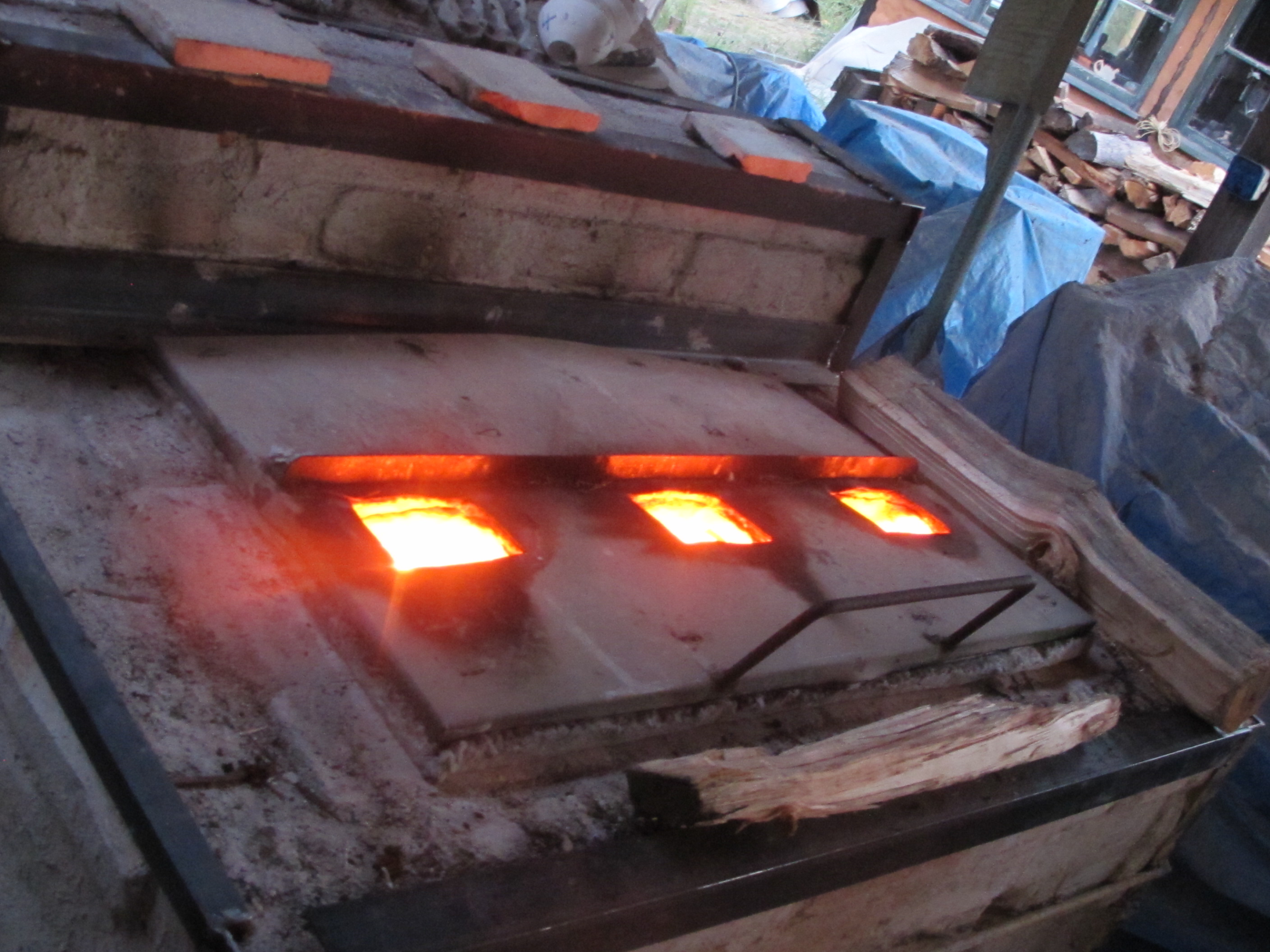
We are into the cooler weather now (in theory) and the summer fire bans will soon be over. The fire box is the part of the kiln that takes the most wear and tear, the greatest heat, the most ash deposit and the greatest heat shock from cold air dunting. The fire bricks in the fire box take quite a beating, so there is always maintenance after every firing, but then a big job once a year to replace dunted, chipped, broken and slagged-up firebricks. As well as chipping out lumps of built-up slag and ash glaze deposits, that if left unattended, will eventually flow like lava into important air inlet holes and seal them over, causing trouble during later firings. I get stuck into it with the skutch hammer and cold chisel.

IMG_0346

IMG_4591

Some years ago I didn’t get around to doing sufficient firebox maintenance, skipping a maintenance session, as we were very busy at the time. Unpacking the kiln and re-packing it ready for the next firing. But then, during that firing, towards the end, at the highest temperature, a lava-like flow of ash glaze came pouring out of one of the floor-level air-inlet holes. It pooled onto the floor into a sluggish, thick, brown, viscous, turd and piled up there, before freezing at room temperature. I kept that ceramic turd on the pottery window sill in front of my wheel for a few years. It disappeared when our pottery burnt down in 1983. It hasn’t ever happened again.

IMG_8851

A while ago, I collected all the chipped out fire box floor ash glaze slag and crushed it up and ground it in my ball mill, into a fine powder, then made a glaze test out of it. It would have been a lovely completion of ‘joining the circle’, kind of thinking. But tragically it was so very dark and dull and brown and slightly crystalline, that I couldn’t find a use for it on my work. So, going on the theory that a skutch in time saves nine. We get stuck into the job at hand. Which is cleaning and rebuilding the worn bricks in the firebox. It’s not a very nice job, but has to be done, and needs to be done NOW!

IMG_8847

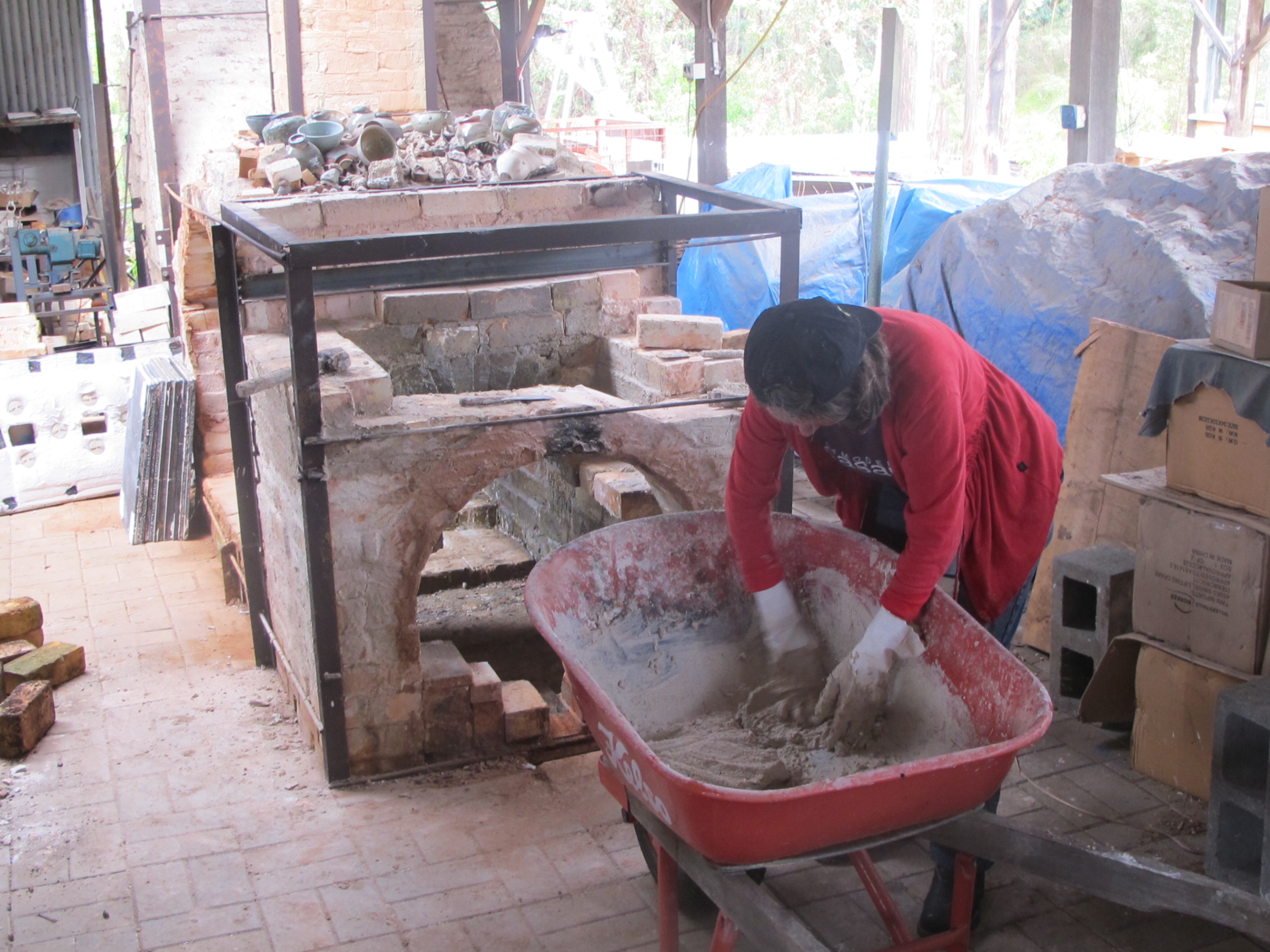
However, Like all jobs, it expands and as we work. We realise that it would be far better and more economic of our time and efforts, to do a lot more rather than less, while we are at it. So we take down a lot of the fire box brickwork and re-design the ratio of hobs to ash-pit, to test out an old idea that I haven’t tried before. It is interesting to me that after building and firing well over a hundred of these kilns, for individuals, Potters Groups, TAFE’s and Unis, both here and overseas, there are still some variations and combinations of factors that I still haven’t tried. This idea needs to be tested. So off we go. It’s a new adventure now, and becomes more interesting because of it. It takes us two days to pull it down and brick it all back up again, then re-weld all the metal bracing, so that it is well supported during the stresses of the high temperature stoneware firing.

IMG_8849

Ms Versatile is a very competent brick layer afters all these years of practice. We have built so many kilns together. Both here and overseas. I don’t know how many bricks we have laid together, but it must be in the many, tens of thousands. 900 to 1500 bricks per kiln, and over a hundred wood fired kilns built on-site in 40 odd years. When we first came here in the seventies. We were building our kiln when the local bull dozer driver called in to see about digging our dam for us. He walked into the pottery and saw Janine laying bricks on our kiln by herself. He stopped dead in his tracks and did a double take. Then said. “F%&k me! Now I’ve seen everything, a chick laying bricks”!

It was an usual sight in those days to see female bricklayers and he was a bit of an unreconstructed chauvinist.

We’re still at it. Nothing’s changed!

IMG_8870IMG_8876

IMG_8877IMG_8881

The renewed, slightly lower firebox. All finished and ready to go for another year..

fond regards from Dr. Skutch and Ms Versatile

Equinox to Equinox

Although the summer hasn’t officially ended, it is certainly drawing to a close, and now on the 21st/22nd we have the change of the season with the equinox. Funnily after all this warm weather, this day dawned all grey and cloudy with a few drops of rain, a cold chill in the air. I just assumed that it was morning mist and blithely went about my business wearing only shorts and a ‘tee’ shirt, preparing for another warm day and a visit from the local Seed Savers Group. The Seed Savers are a loose and variable group of local home gardeners and, I believe, organic growers, who save their own vegetable, fruit and flower seeds. They meet once a month somewhere of common interest to chat, enthuse, swap seeds, fruits, cuttings, seedlings and whatever else, then all sit and share what food they have brought for a casual communal lunch. It’s all very casual, relaxed and cooperative. A very enjoyable day amongst like-minded, caring people with a common interest. This month, they have come to our place.
P3212626
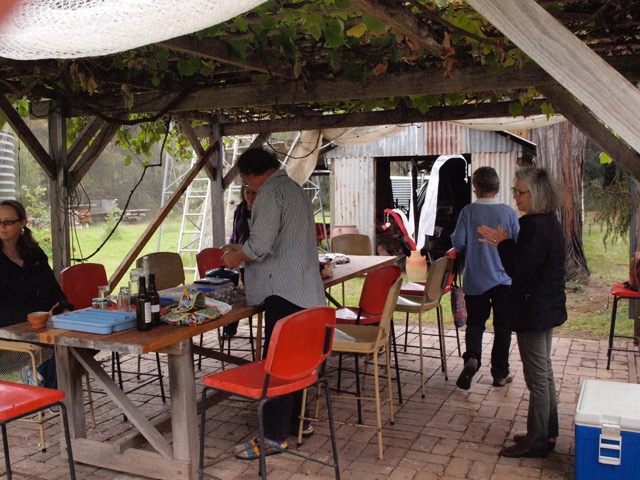
Nina and I had cleaned up the grape vine pergola area of all the dropped red grapes and swept it out, as the remnants of the grapes were being busily worked over by the local honey bee population for the sticky sweet juice. We have an out-side eating area under there, as well as a wood fired pizza oven. The dense canopy of grape vines overhead creates a cool, soft light and shade in the area around the huge 12 seater table. It’s proven an ideal spot to sit and relax with friends. At some point, I realise that it isn’t going to get any warmer, and that smack on the dot of the equinox it is now autumn. I go inside and put on a shirt, then later, a jumper and beret.
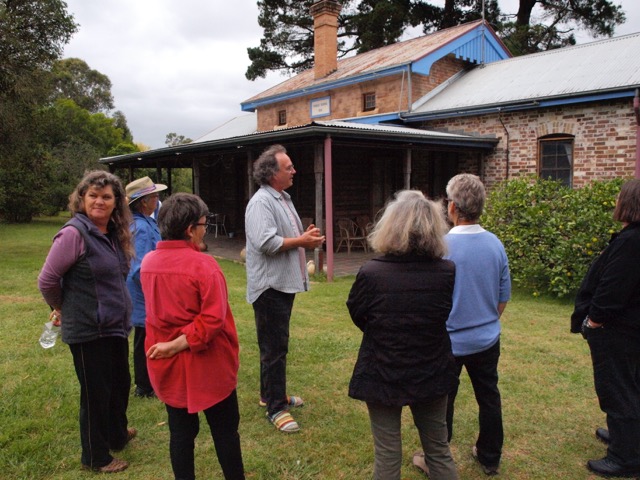
The first of the group arrive and we sit outside and have tea and coffee, while the others arrive. The Seed Savers have been here once before about 18 months ago, so a few things have changed in our garden since then, but not a lot. Still, I take them all for a walk down the garden path, here and there, looking at things that might be of interest in the gardens and orchards. I point out the bush fire fighting sprinkler system that I have installed on the walls of our house, studio and kiln shed.
P3212579P3212598
This is designed to create a wall of water mist on all the western walls and roof of all the buildings. This is to absorb and kill some of the heat energy of the ember attack that will come from this direction in the event of a serious fire. It has it’s own, dedicated, high pressure, petrol driven, fire pump to power it and uses the drinking water that is held in 70,000 litres of storage in our water tanks around the house. We live right out in the bush, on the outskirts of a small village, but it isn’t really a village as such, as we don’t have a shop or post office, a park or a central square where people can congregate. We only have a fire shed. It’s more like a small hamlet and we are 1 km out from its centre. There are no services like town-supply water here. You have to be self-reliant or leave.
I am grateful to say that our fire fighting equipment has never been properly tested in a serious emergency. We fire it up every spring to make sure that it works OK, and then we uses the pump to run a separate line that feeds a few water sprinklers on top of our roof on the very hottest days. This fine shower of water cools the house, or other buildings, down by at least 5 degrees almost instantly. It is so noticeable. Most of the water is recovered from the roof back into the water tanks through the gutters and can be re-used. Some however, is lost through evaporation, which is the exact purpose of the exercise. It is the evaporation of the water on the hot tin roof that causes refrigeration and the drop-off of radiated energy entering the roof space and into the house. It makes the house so much more comfortable on the hottest days, and is a sure way to know that the pump and all its associated systems are working perfectly and in good ‘nik’ ready for any eventuality – should it arise.
PastedGraphic-1
We walk around the orchards and some of the dams, then down to the ‘Pantry Field garden’. This our overflow garden space that we use for larger plantings of food that won’t fit in the vegetable garden. It is named after the farm where our friends in Wales live and farm, much as we do here. It was once the field where the local farm grew their produce to sustain themselves way back when. It was bought by Sally and John Seymour. The pioneers of self sufficiency in the UK back in the 60’s and 70’s. before any of us had even thought of it. They wrote books like  “Self Sufficiency” and “On The Fat Of The Land”.
A link to their web site is here.
and ;
We had bought their books and read them before we actually met Sally on one of her trips to Australia.
Sally still lives at ‘Pantry fields’ with her daughter and son-in-law. A terrific place of inspiration and friendship. Sally lived with us here in Australia for a time, back in the 70’s and taught us a lot. She returned and lived with Janine and helped her to look after our son while I was away studying in Japan in the mid 80’s. We visited them at Pantry Field in the 0’ies. Good times and fond memories.
We started this lower ‘Pantry field’ garden just a few years ago down at the bottom of our land where there is an open space in among the tall eucalypt trees. We tried grapes down there first of all, but there were too many dropping branches and leaf litter falling from the trees to make netting the grapes worthwhile. Without netting we didn’t get any grapes, the birds got the lot. When we used the nets, we got grapes, but not enough to justify the huge amount of work required to clean all the sticks, twigs and leafy detritus out from all the netting, before we could roll them up again.
78
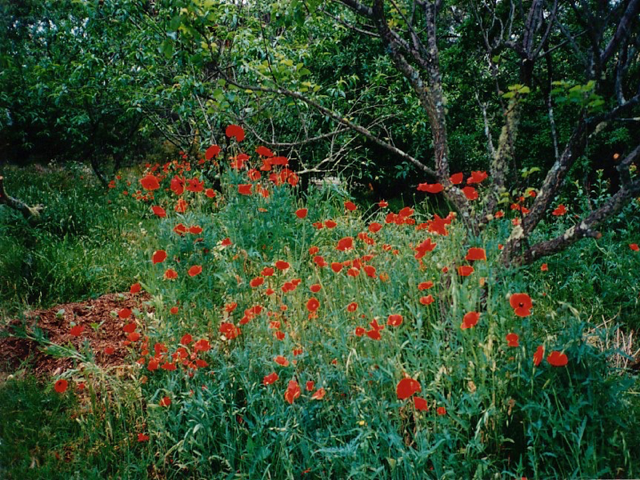
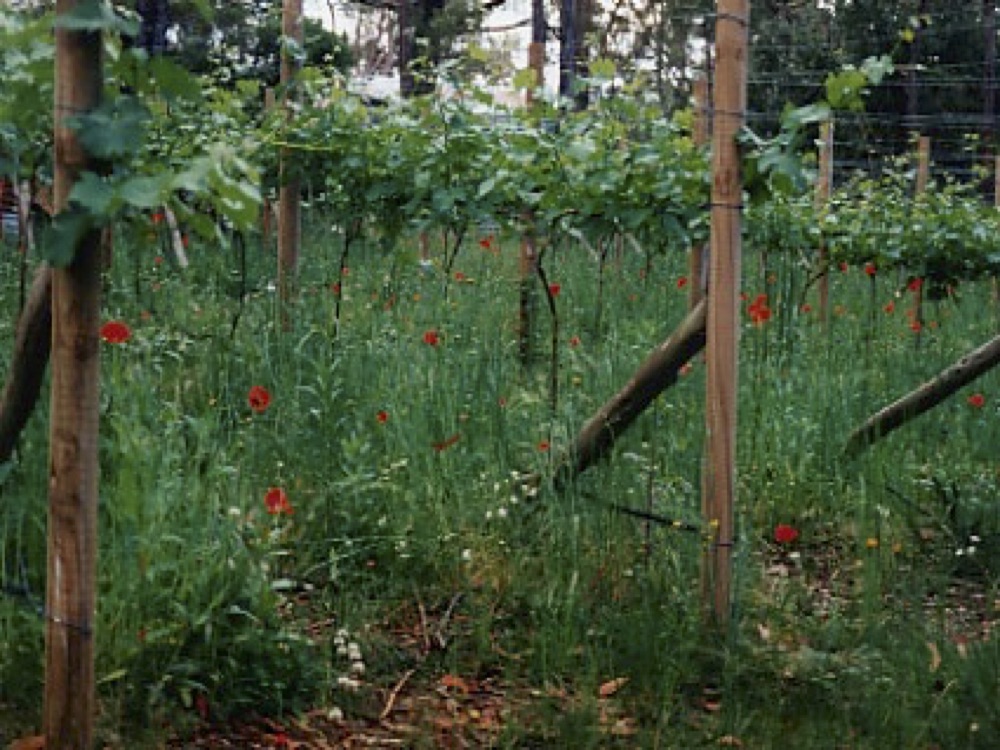
Cabinet sauvignon under-planted with ‘Flanders’ single red poppies.
9
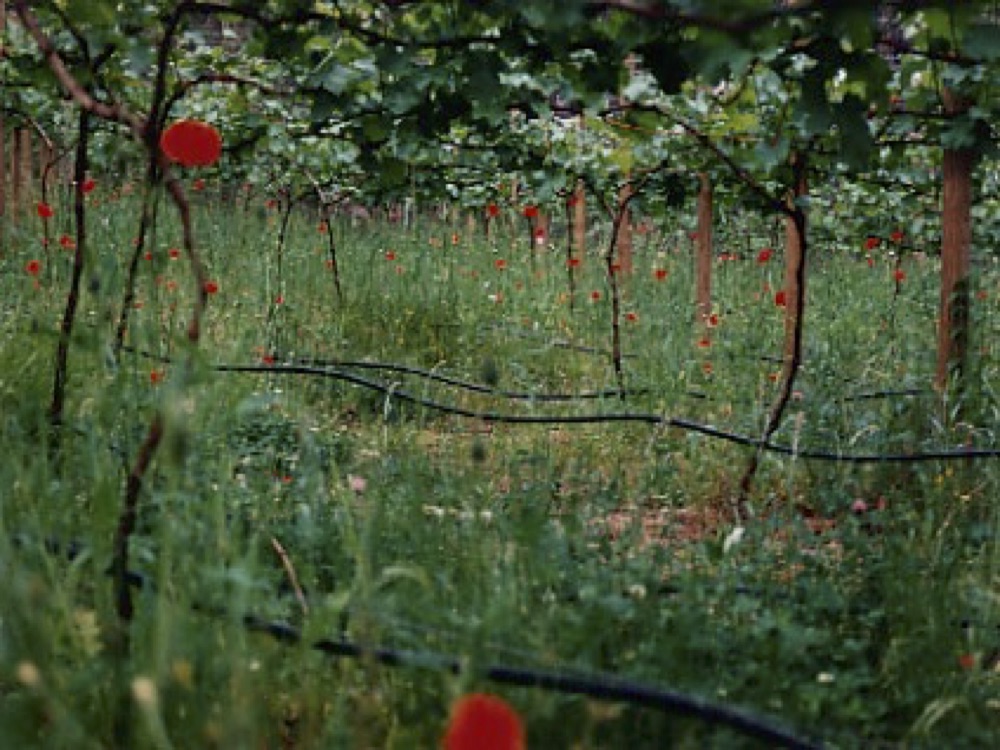
The netted vineyard, with the pottery in the background.
It was a pretty vineyard, but not productive enough to warrant all the time that we had to spend on it for the small return. Wine grapes are susceptible to powdery mildew on their leaves and need to be sprayed regularly with a toxic spray to inhibit this. I refuse to get involved with toxics. The only organic spray is ‘Bordeaux’ spray, more or less equal parts of copper carbonate and lime, but being water based, it washes off in the first rain. so it has to be re-applied regularly. I was concerned about the amount of copper that would build up in the soil, and didn’t enjoy the act of spraying by hand.
So now it has been turned over to vegetables, and remarkably the tree cover disperses any light frosts that we get, so last year we experimented with growing an over-winter potato crop. We had a lot of left over spuds that we didn’t get around to eating from the huge summer crop, and as they all started to run to shoots and wither, we decided to plant them out and just see what would happen. No loss if they didn’t grow, got burned off with the winter cold. What happened was a frost free micro-climate and another huge crop of potatoes that got us through the spring/summer. We are just starting to dig up the summer crop from the regular garden now. So I’ve decided to try another small over-winter potato crop again this year. Using all the shrivelled and sprouting remains of the last crop that need to get into the ground now.
We don’t really know what we are doing, but try all sorts of things and see what the results are, then go with the best outcome and try again. If we lived in a small Italian village or had living grand-parents here, we would be able to gather knowledge through osmosis, and carry on family traditions, but that chance is long past for us.
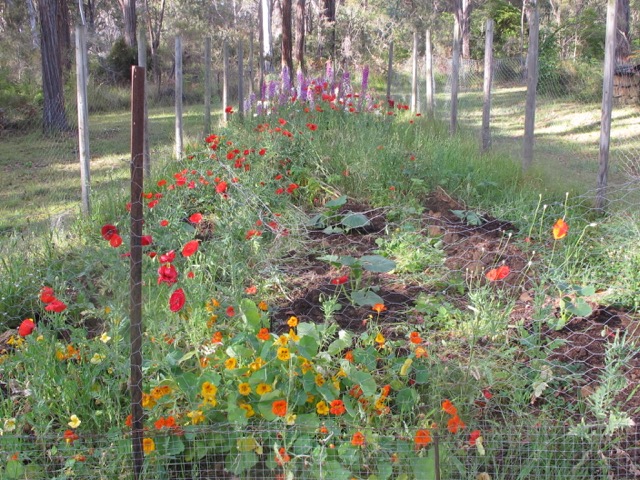
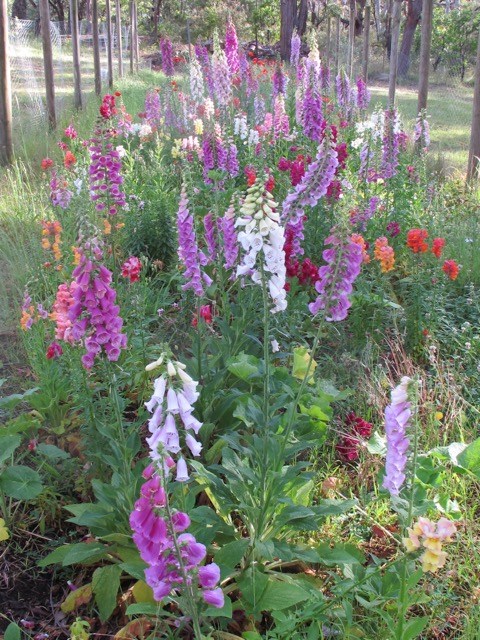
When I started this lower garden, I planted a few packets of English Cottage Garden Flower Mix seeds at one end, it started off slowly, but has matured now over the three year period into a very nice little garden bed. An absolute delight in the full flush of spring.
IMG_7761IMG_7763
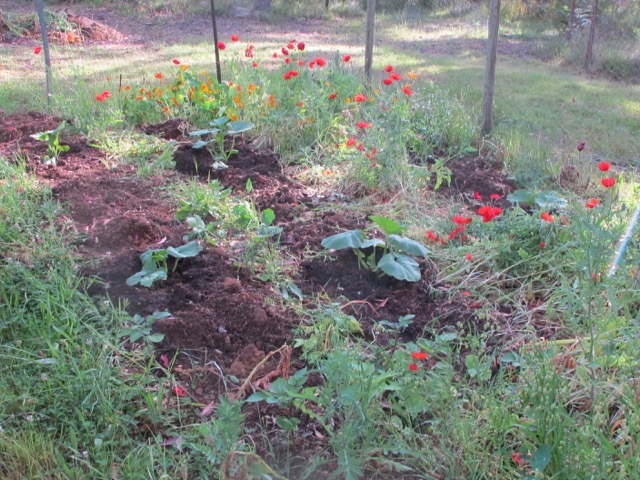
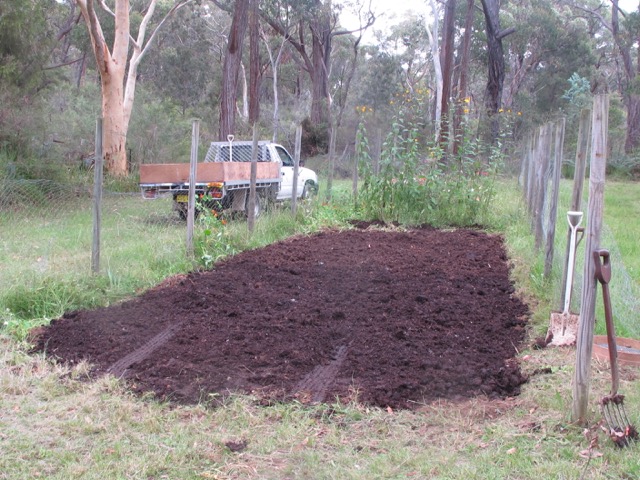
Over the summer, we grew pumpkins in this Pantry field garden, following on from the potatoes and as the pumpkins  are all harvested now and stored away. I spent a day recently, digging it over with a garden fork and getting even more 2nd-crop potatoes from the patch, before cultivating it over with the digger. I bought a tonne of mushroom compost in the ute and spread it over the area, before the cultivating. It has a small fertilising effect, but mostly it provides a lot of organic matter into the soil, that opens the texture and feeds the worms and we do then get a lot of worms coming into the soil after this. Cultivating isn’t good for the soil or the worms, but to convert hard native acid soil into soft, rich, open-textured garden soil needs a lot of compost. Once it’s been well dug-in and incorporated deep into the soil. I just use compost as a top dressing each season after that and the new worm population seems to take it down into the soil.
IMG_7764
The pumpkin crop planted in spring
IMG_8800
The area weeded and dug over with the garden fork and compost all spread out, ready to be dug in.
I have started planting out some new organically grown garlic varieties. I bought 2 knobs of each of 6 different types. Early White, Glamour, Rose De Var, Italian Red, Early Purple, Melbourne Market. We probably already have some or all of these varieties growing up in the veggie garden. We just collected different varieties from our friends and garden groups over the 40+ years of our gardening. I didn’t keep any records of the varieties. However, I know that we have red, pink blushed and white in both soft-stem and hard-stem varieties plus Russian jumbo garlic and an unusual type that sets mini garlic cloves up on top of its flowering stem instead of seeds. We plant them all every year, some do better than others in different years, so it’s good to have a range. In this way, no matter what type of year it is, there is always something to eat.
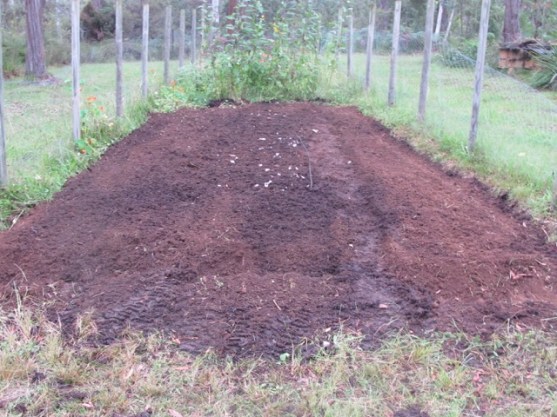
IMG_8820
We know when it is time to plant garlic, because at this time of year, we find that all the cloves that we missed during the harvest last year, start to shoot about now. If the over-summer cloves think that it’s time to shoot, then it is time.
I was told when I was young that all the allium varieties should be planted on the shortest day and harvested on the longest. Solstice to Solstice. I tried that for a few years, but with no real success with the garlic, onions were OK with that, but it is really too late for garlic for us. Garlic seems to do much better for us if it is planted and harvested Equinox to Equinox. As this is when they have chosen to shoot up out of the ground. i think that this is the best indication. So in they go now. Everything is prepared and the timing is perfect.
I will plant early broad beans and peas as well on either side. They are legumes and will help to rejuvenate and re-invigorate the soil with nitrogen as well.
Best wishes from the vampire free zone, that is Steve and Nina’s garden.