A tough decision

It’s now 3 1/2 months since the fire cleaned us out. We have been working hard to clean everything up and bring our life back to some semblance of normality. Well, the sort of ‘normality’ that we chose as normal for us.

I keep thinking, well hoping is probably a more apt term, that I have finished with chainsawing blackened logs. But they are every where and I still find myself at it after all this time. I haven’t even started t think about clearing up the rear section of our land, down the slope behind where the pottery used to be. There is a lot of blackened sticks down there that will have to be tackled one day. For the time being, I’m concentrating on just the front half of our land. The part that will face the next fire in 5 or more years time after the forest grows back.

With global warming increasing at an increasing rate, and world leaders with their heads in the sand, its going to come around again in the next decade. A long dry spell with increasing temperatures, The east coast will burn again. I need to work now to set us up to be better prepared for the next episode. I thought that I was well prepared before, but you learn from experience, and I had never experienced anything like that before. I had no idea what a catastrophic fire event could be. I’m a bit wiser now. No-one should have to go through that.

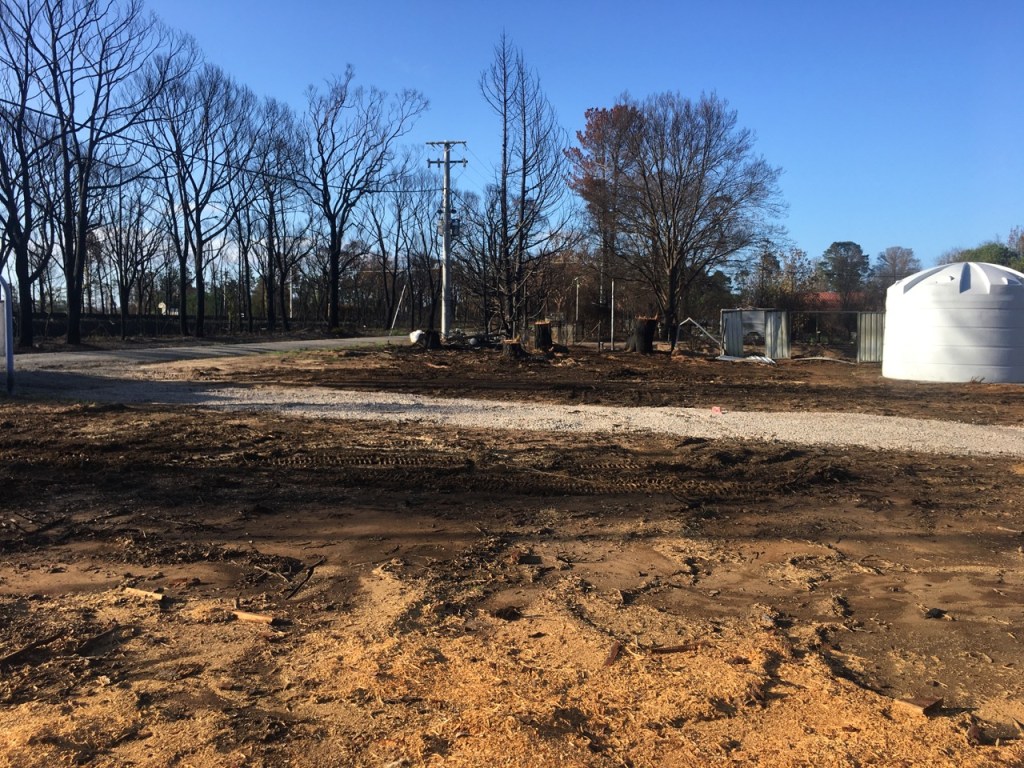
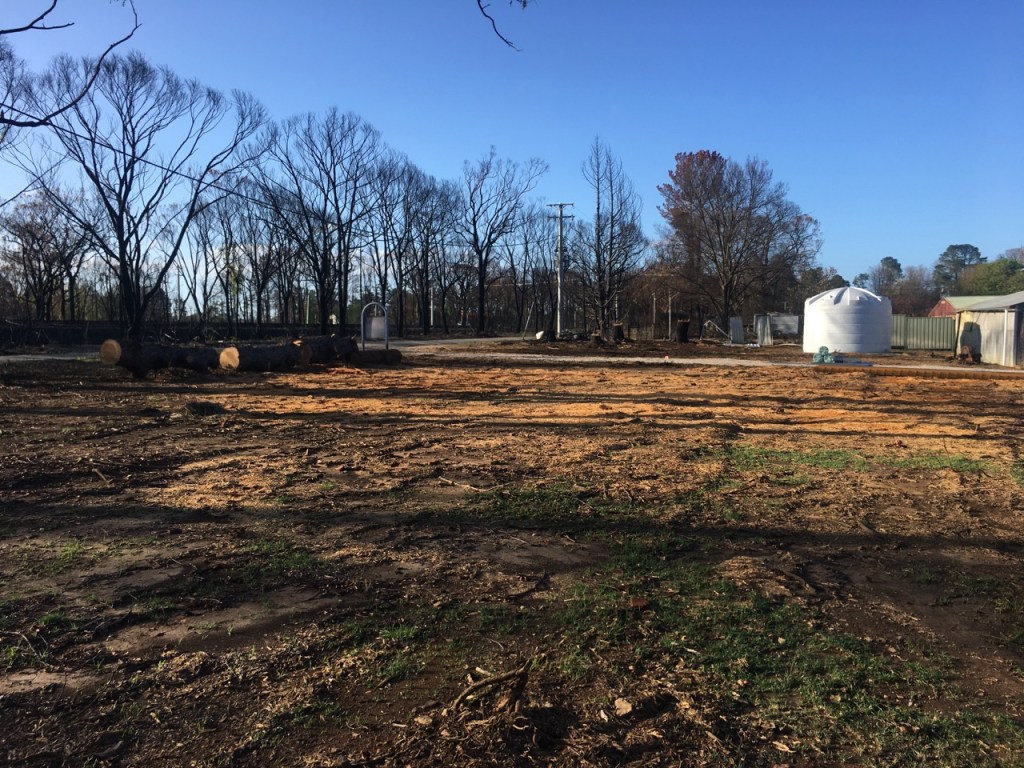
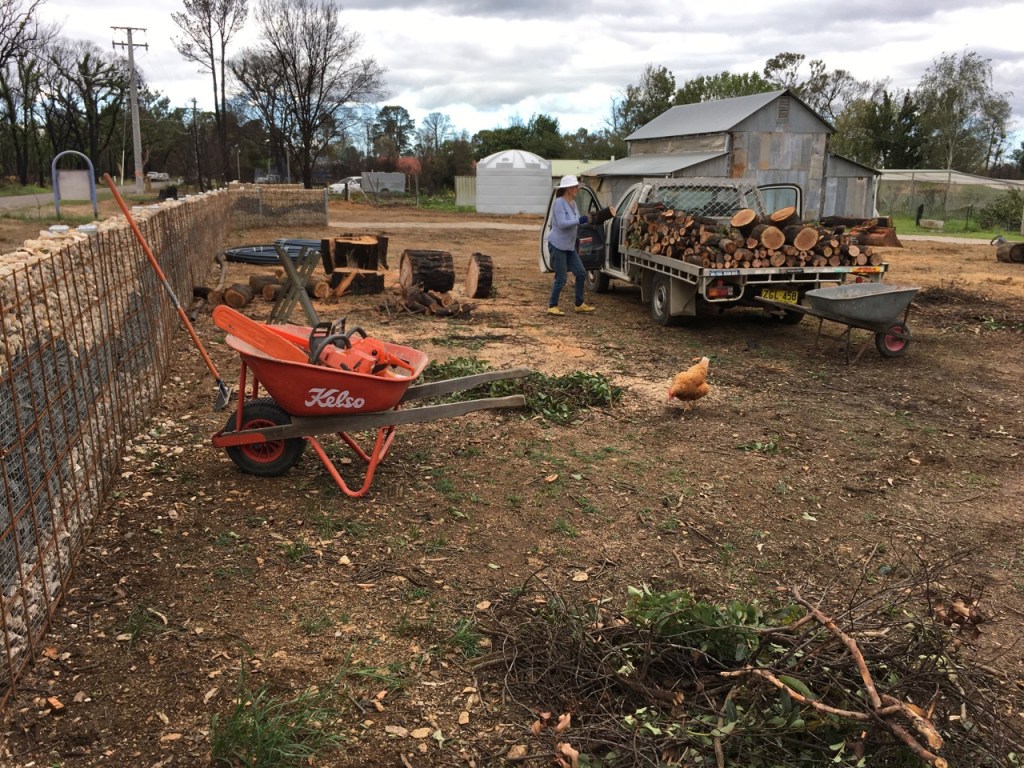
So with this idea firmly fixed in my mind, we are back into it, cutting and stacking the last of the stumps, fallen branches and pruned dead limbs from the front garden. Of course it’s not a front garden any more. It’s now just a front yard of bare scorched earth. We will keep it as a meadow of wild flowers into the future. something that we can mow down when required to keep a clear space to the west, where the next fire will most likely come from.

Janine loads the smaller logs with the help of the chook formally known as ‘Ginger’.

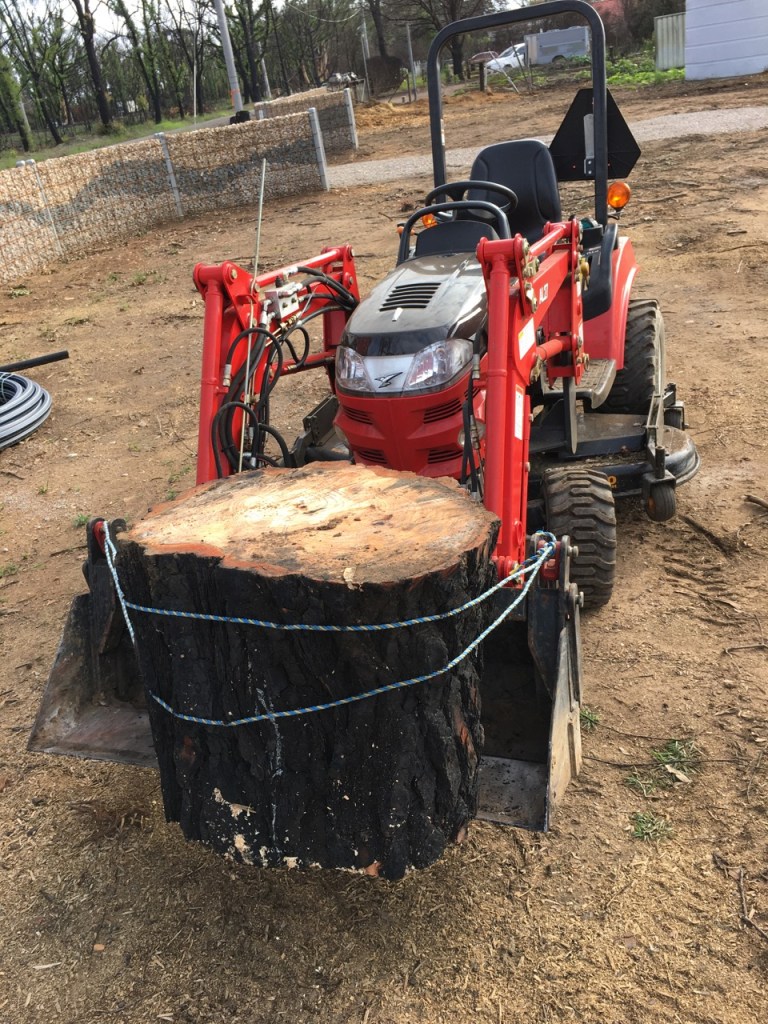
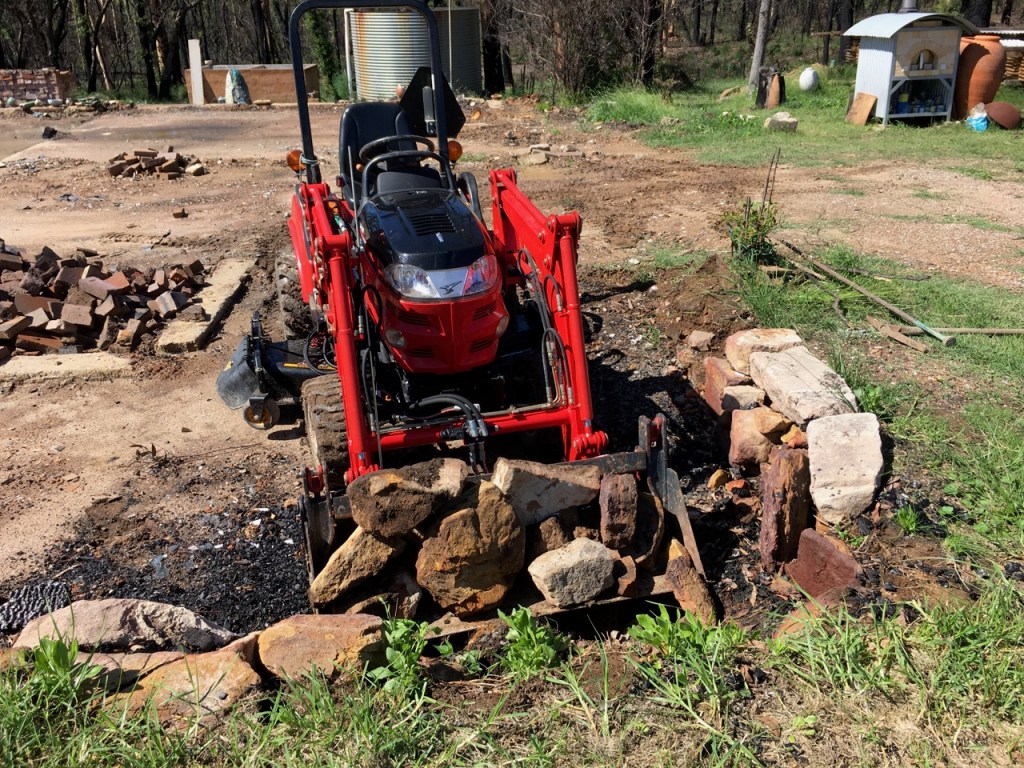
These logs are so heavy that I can’t lift them onto the truck, so I use the tractor to do the lifting, but even then, the tractor has a load limit of just under 200 kgs. and one load was so heavy that I could only get it just 100mm. up off the ground. I learnt to limit the load to just one lump at a time.

So now it has become the time to make that really big decision. it’s one of the toughest decisions that I have had to make. We have decided to take out the stone fruit orchard and move the pottery up the slope a bit onto that site, farther away from the bush at the back of our land and closer to the centre. We will re-plant a new orchard in the front area, on the other side of the entrance driveway. This new ‘orchard’ location will be easier, and therefore cheaper, to build on.

We rented a weathboard pottery studio up in Dural to the north of Sydney when we first started out in the early 70’s. It burnt down in the bush fires of 1976. We moved to Balmoral and built a pottery out of galvanised iron, hoping that it would be more fire proof. It burnt down in 1983. The next pottery was build of mud bricks, I hoped that it would be more fire proof. but it still had a timber ceiling and roof framing. Now it has burnt, I’m slowly getting the message. This time I will build in steel. I’m a slow learner!

The first pottery we built here in 1976 was on 3 levels to accomodate the slope of the land. We build it over several years, one room at a time as we could afford it. When it burnt down in 1983, the next pottery was rebuilt on the same sloping site on the same 3 differing levels. We had no money, or any prospects of earning very much of it, so we worked with the lie of the land to save money.

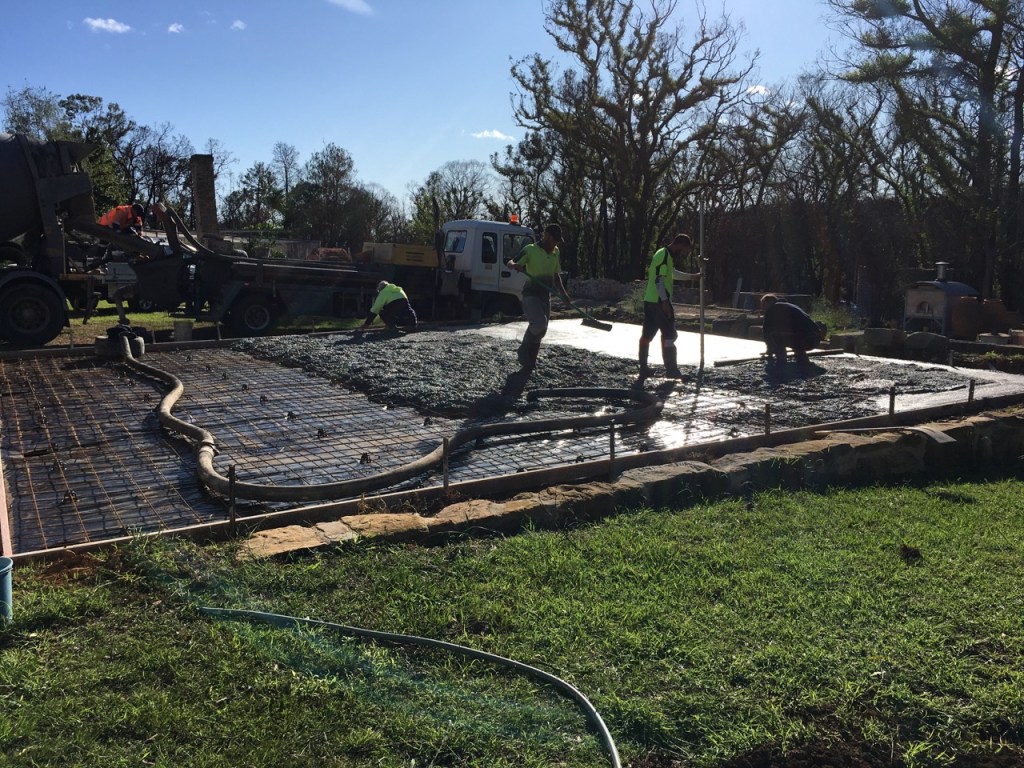
As this will hopefully be my last pottery building. I need it to accomodate me in my zimmer frame and wheel chair in the future. This pottery needs to be all on one level. This also probably means building it on a concrete slab. I have strictly avoided using concrete in the first 3 potteries because of the huge carbon debt that cement incurs, but I need to be both practical and economical. a slab is looking like the smartest option. So I’m selling out my green credentials and going with concrete for the first time in my life, thinking of our old age.

So the orchard is gone. We planted all those trees as bare rooted whip sticks in 1976. That’s 44 years of nurturing, pruning, fertilising, watering and mowing. It’s all gone now!


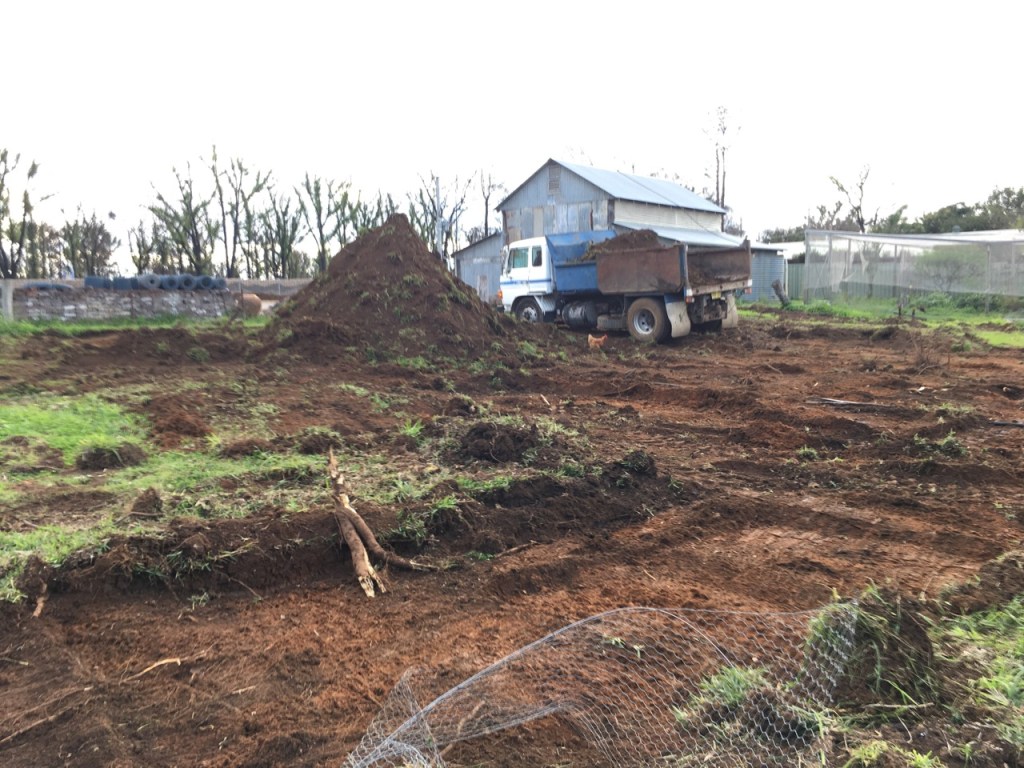
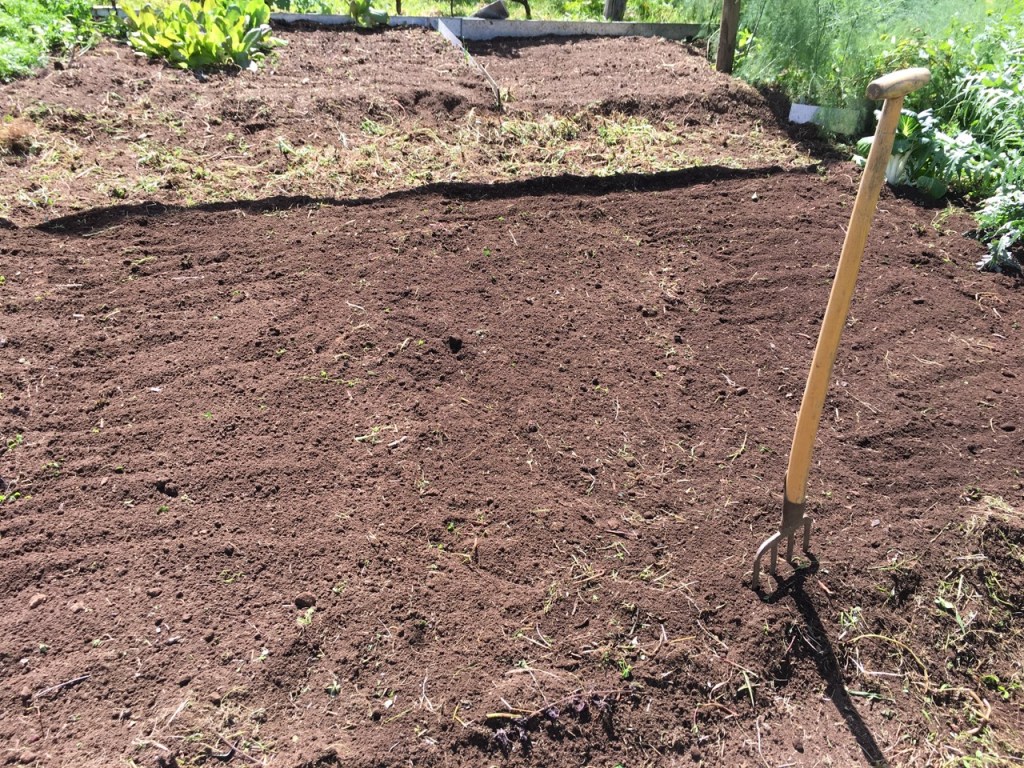
We have engaged our friend Ross, to dig up all the top soil that we lovingly created over the past 4 decades. The top 200mm of soil has become a rich dark brown humus rich soil. Far too good to bury under a concrete slab. The original native soil here was an orange/yellow sandy loam when we started. I was delighted and surprised to see how deep the top soil had become over time. So good in fact that we couldn’t bear to waste it. I decided to ask Ross to dig it up and transport it to the front garden to fertilise and enrich the new orchard site.

We piled up all the best dark soil into a heap, not unlike a mini Mt. Everest in the garden. The chook formally known as ‘Ginger’ decided to climb the mountain of soil looking for bugs and worms. This top soil is extremely rich and alive with life.

I noticed that she attacked the problem from the North Face, the hard way, without ropes or carabinas. She will now be known as the chook called ‘Hillary’!

We will plant another orchard on the new front site, where we will plant all new trees that are mostly grown on dwarf grafted rootstocks. This will make the orchard easier to manage in the future as we grow older and less vigorous ourselves. The opposite of the fruit trees. We will grow the new orchard under a full netting cover, just like the vegetable garden has been now for 15 years. What we have learnt from the veggie garden experiment, is the kind and size of netting to keep out the fruit eating birds and rabbits, but let in the smaller insect eaters.

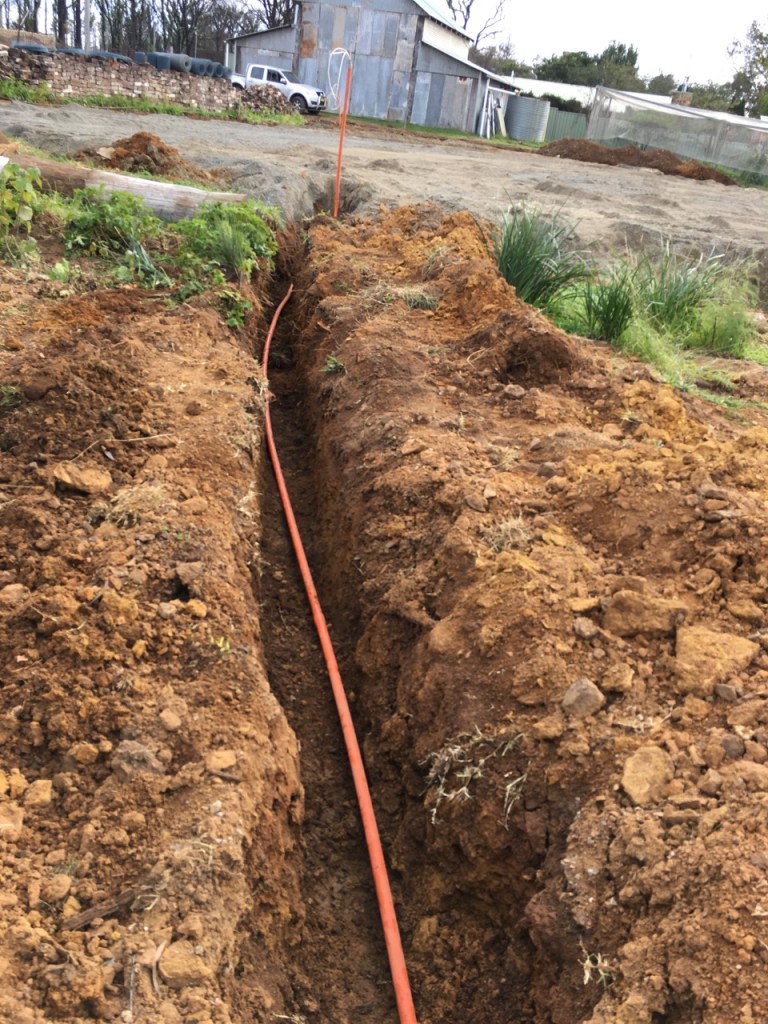
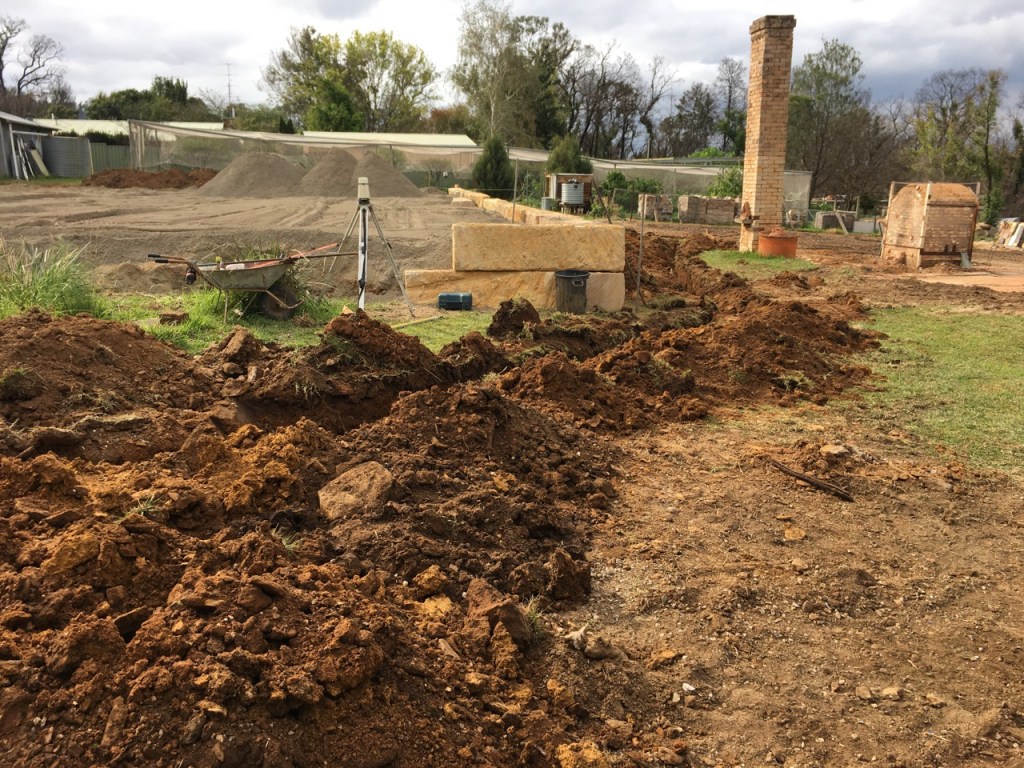
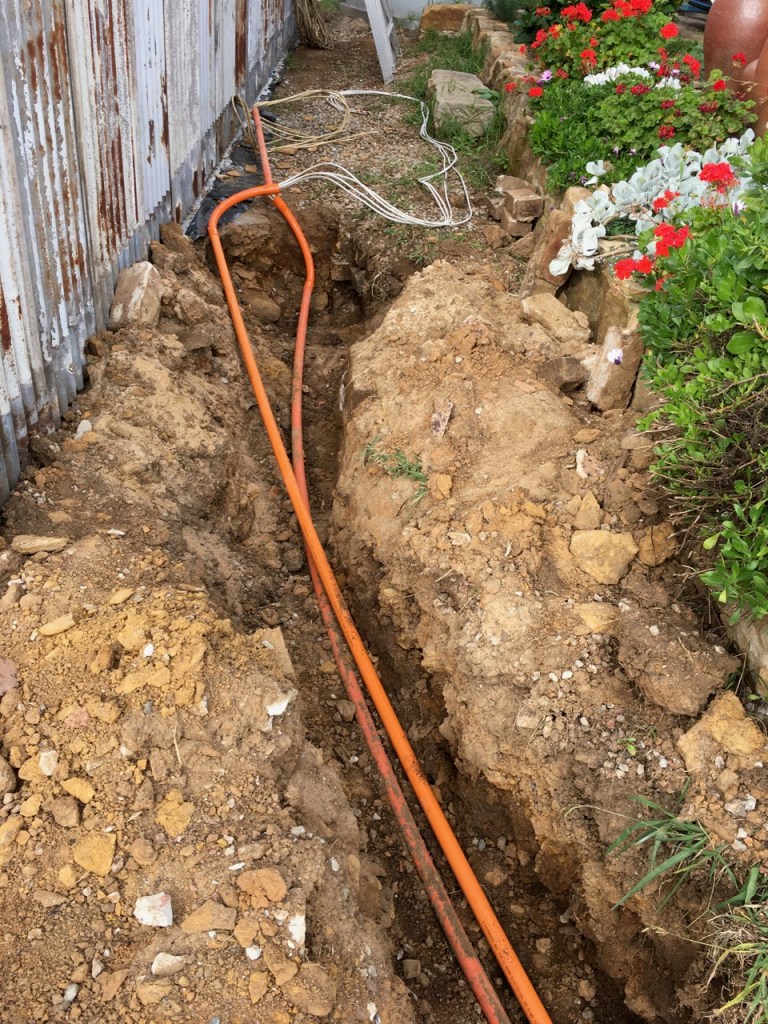
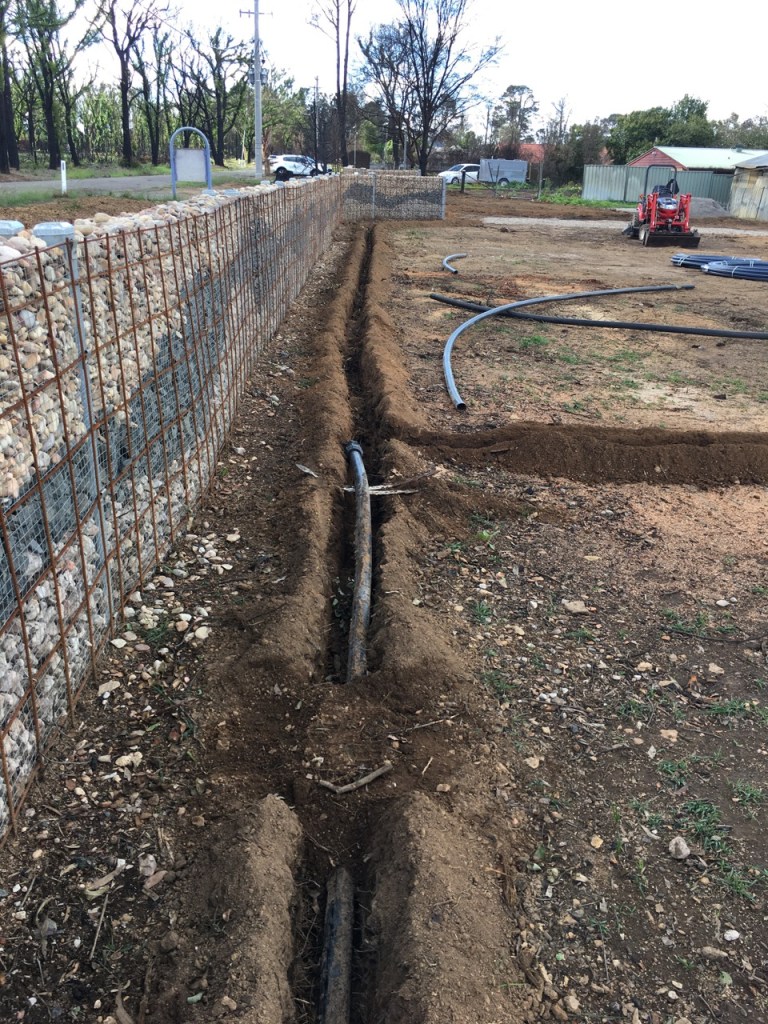
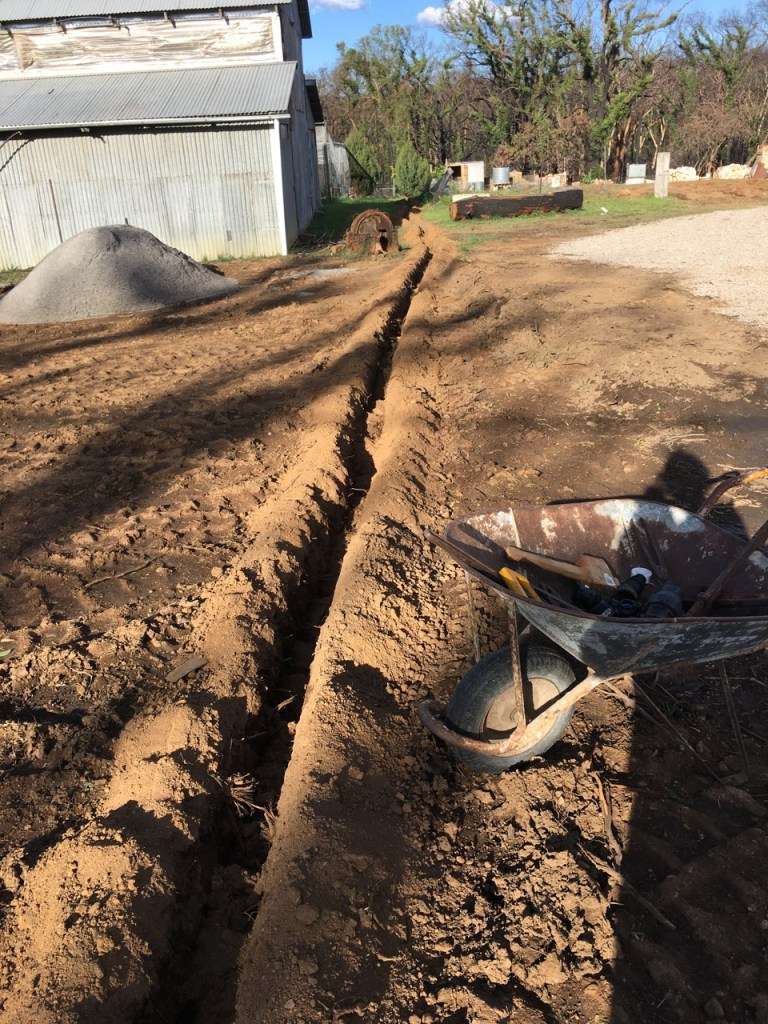
Once all the top soil has been moved to the new site, I will to start extending the poly pipe watering system all around the new orchard site to allow for access to plenty of irrigation water in the future.

So many jobs and so little time. I hardly notice that the rest of the world is in lock-down, we are happy being busy here on our own little piece of land and our self created world. We have been living ‘self-isolation’ voluntarily for decades.

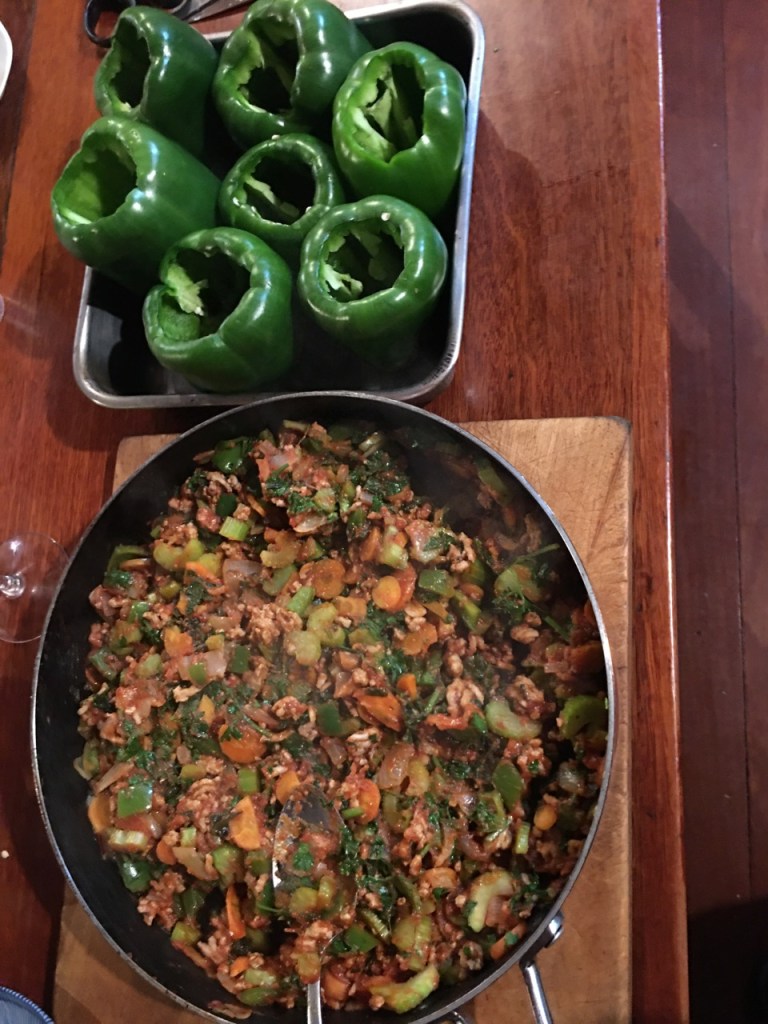
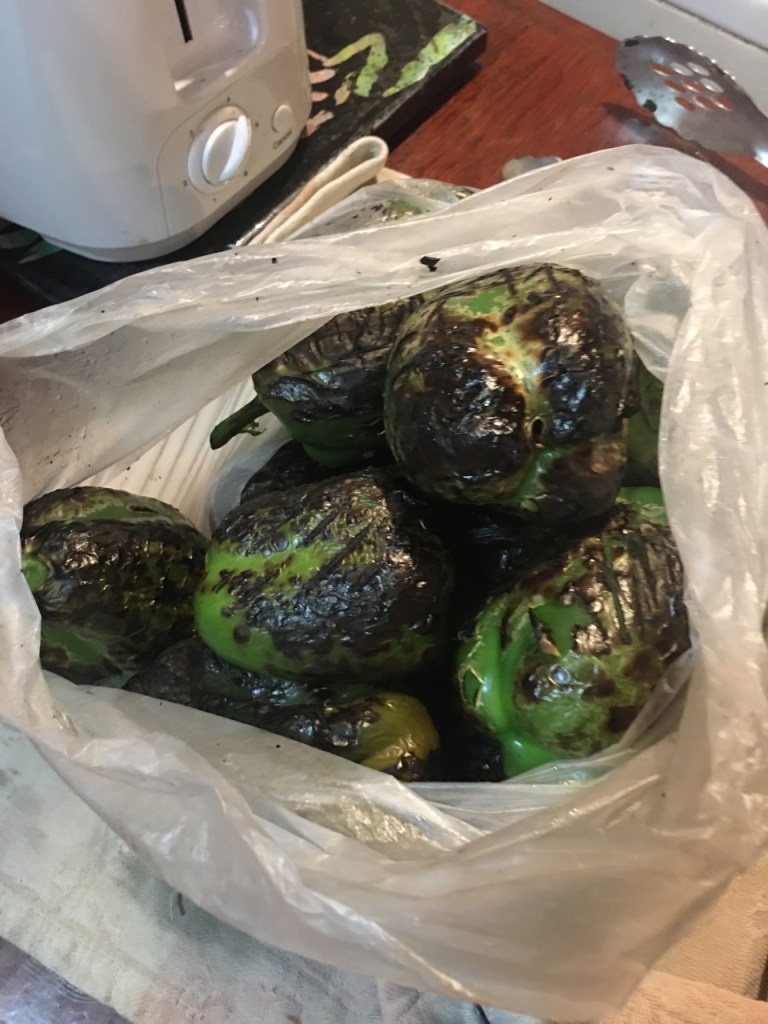
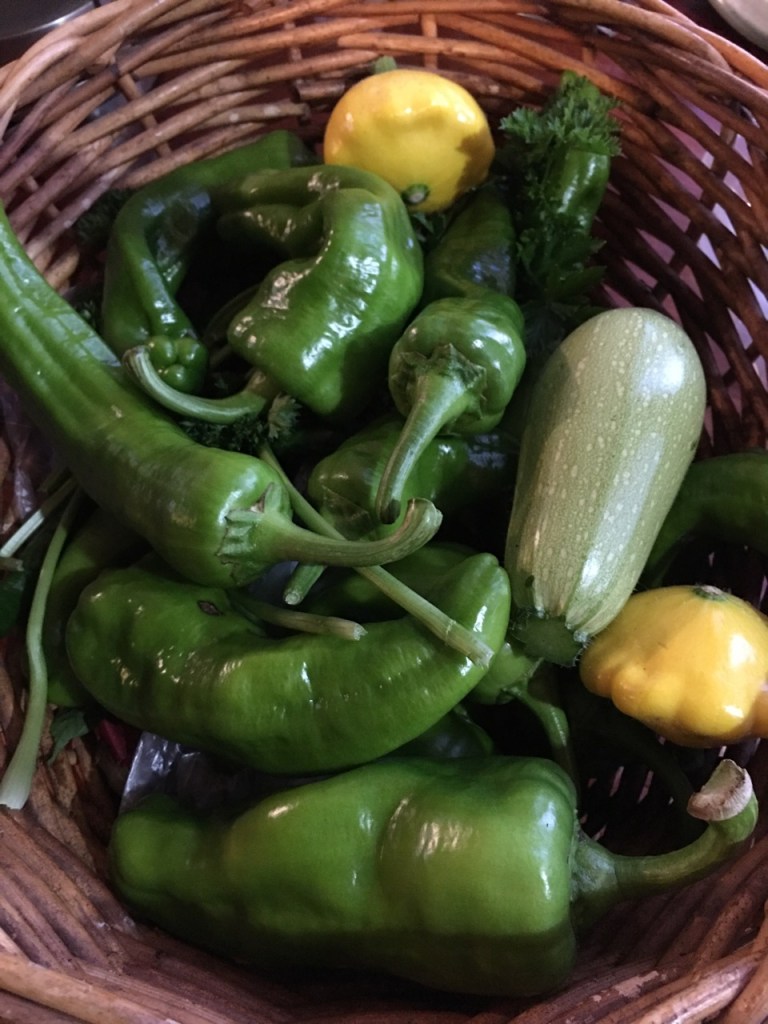
In the afternoon I set fire to one of the many piles of dead trees and branches that we have stacked up, and in the evening after dinner, I roast, sweat, peel and pickle the huge crop of bell capsicums that the recent rains have brought on.


Nothing is perfect, nothing is ever finished and nothing lasts! I’m grateful to be still here doing this. I have to try and creative a positive outcome from the unmittigated disaster that this is. I take up the challenge that has presented itself to me. I could never have pulled down the old pottery to ‘improve’ it for my old age. I couldn’t have ever concieved of digging out our beautiful old orchard that we had worked on for so long. This is an oportunity to re-define ourselves here on this piece of land that we love. We have been offered this once in a lifetime opportunity to make our homestead age sensitive and apropriate to our coming frailties. Gone are the steps and in with the ramps.

We will be better prepared for both natures next holocaust and our old age.

Punishing our old bodies

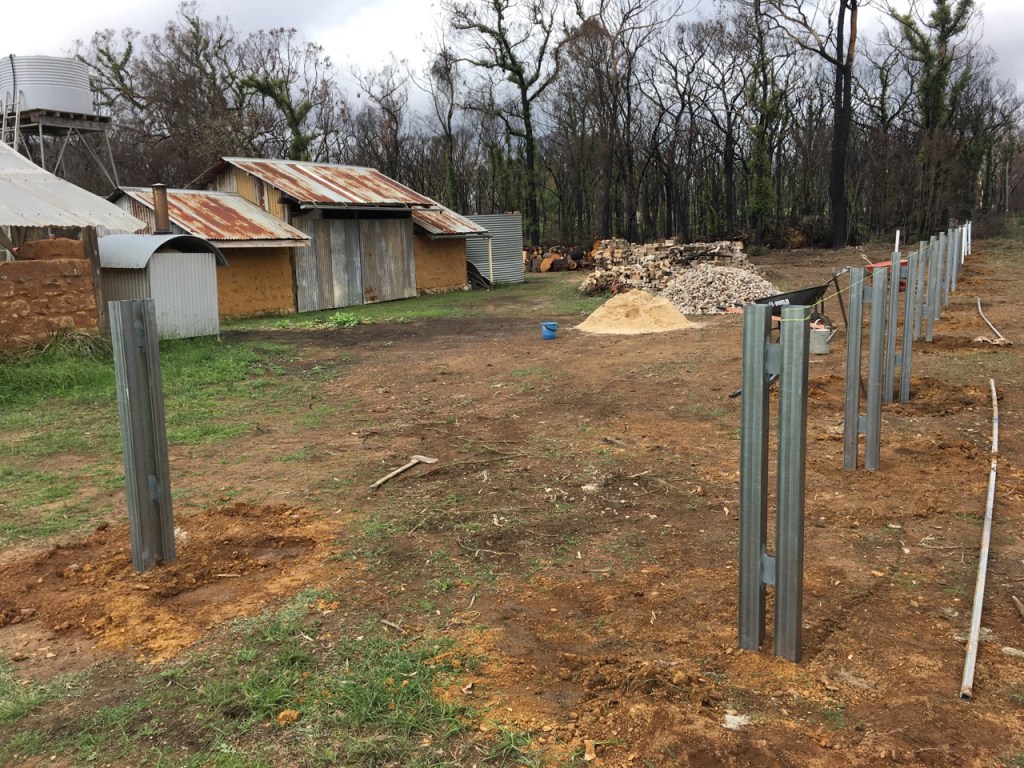
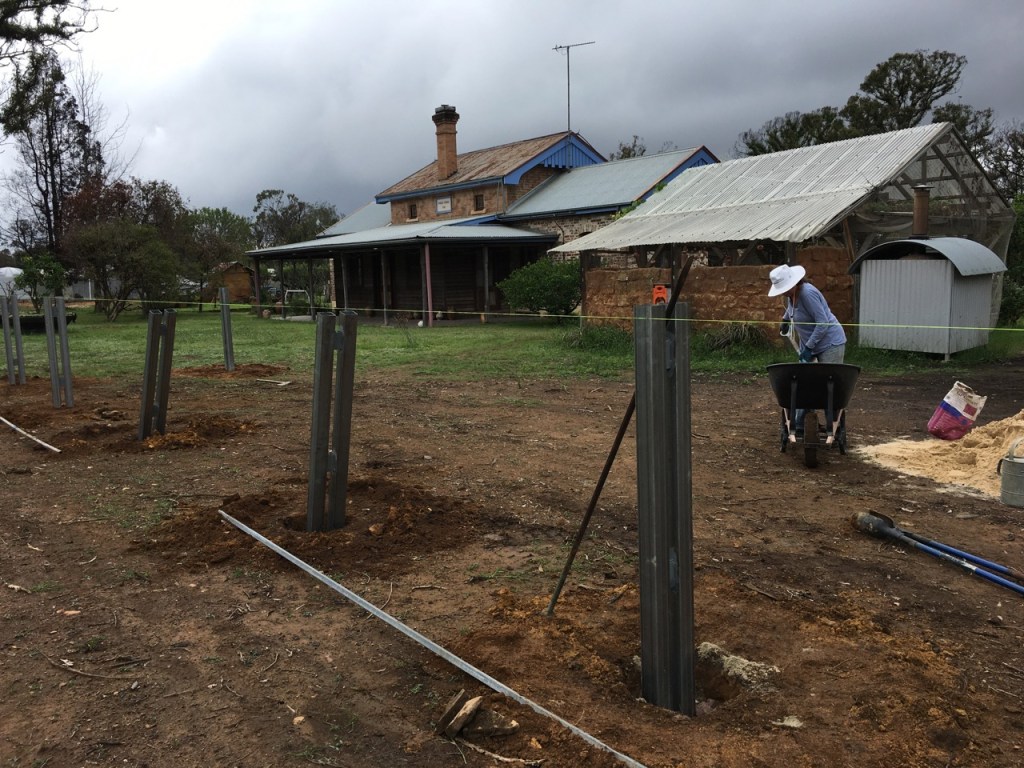
We have spent the last weekend extending the front fence to the south of the house along the road frontage, replacing the old wooden post and rail fence that was originally there a hundred and thirty years ago. We know that there was a post and rail fence, because the massive corner post on the northern boundary, with its 3 mortices in it, was still standing there in 1976 when we came here. I would have kept it there, as i saw it as a bit of heritage, but when the land next door was bought by the new neighbours, they dug it out one day without telling us and replaced it with piece of rusty steel pipe that was obtained from the local coal mine.

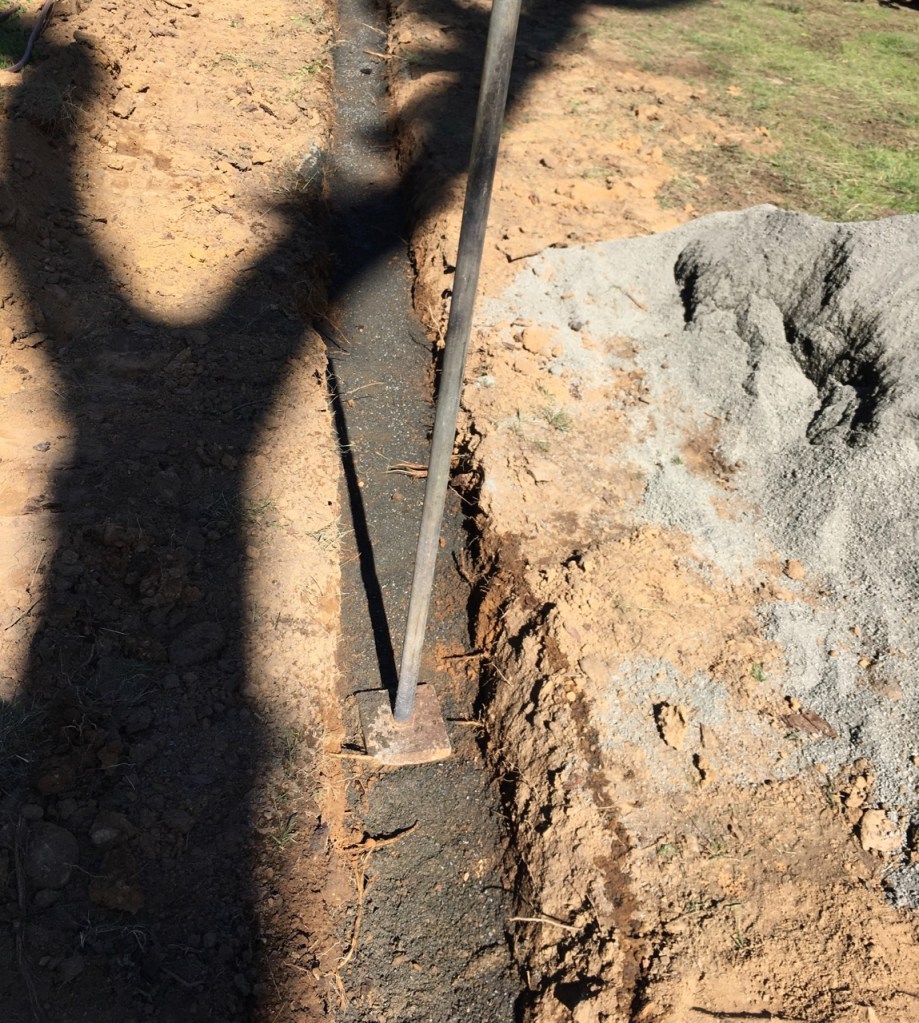
We spent the first day of the weekend digging the 17 post holes down to 600mm depth. I borrowed a ‘kanga’ machine with a post hole auger the make the job easier, but it still took all day, as we kept hitting big rocks and huge tree roots, so many of the holes had to be done by hand with a crow bar and fencing shovel.

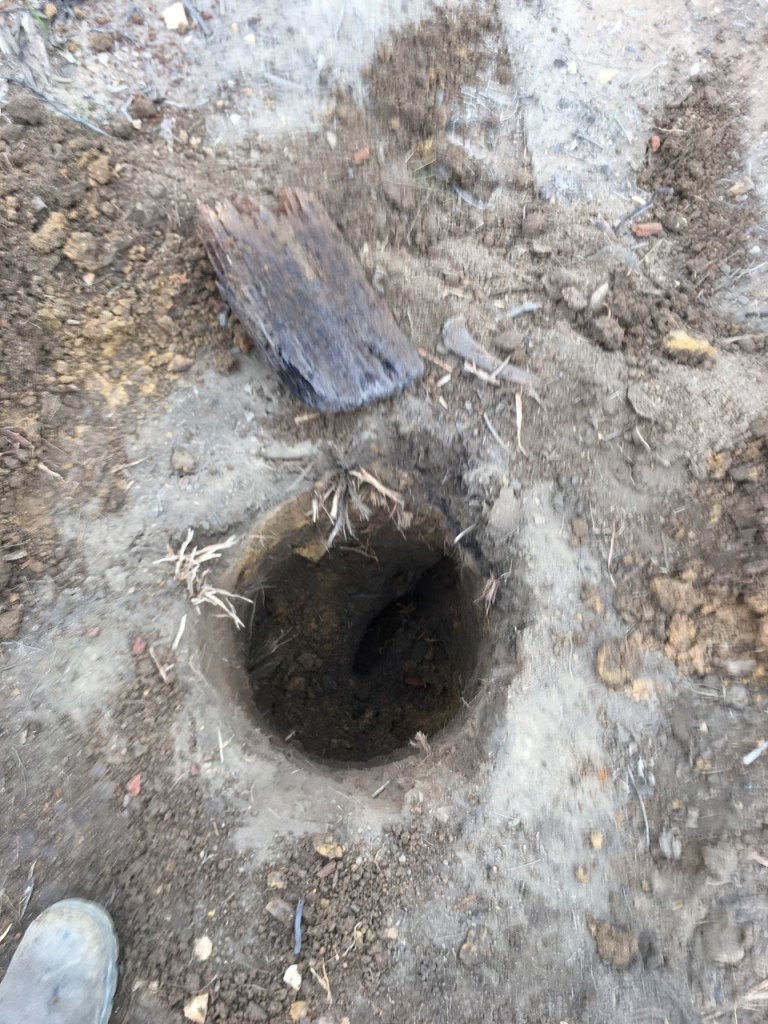
Something quite amazing happened in the 2nd last hole. This is 100 metres from the site of the old wooden corner post. I lined up the position of the fence using a long builders tape and a string line. I really just relied on lining it up visually with the string line, however, I was pretty confident that it was more or less in the correct place. If anything, I was tending to err on the side of caution. maybe 100mm in from the border line?

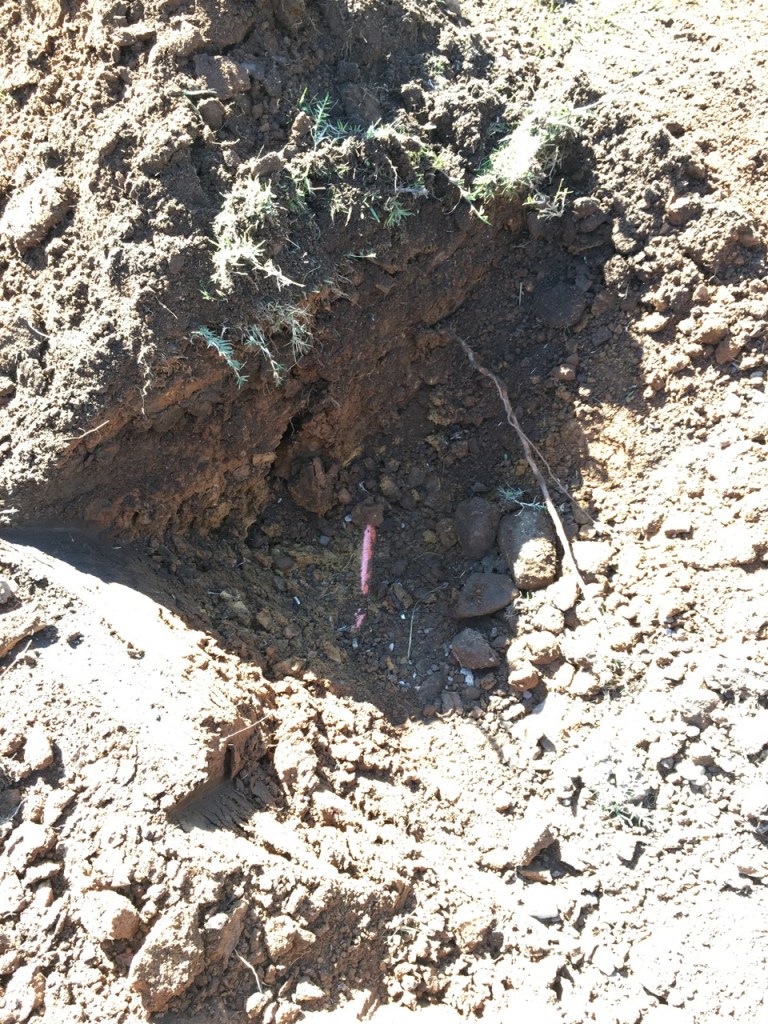
When I tried the bore the 2nd last hole, I hit what appeared to be a tree root, but it was quite vertical. I had to dig it out by hand with the bar and shovel. When I got down to the 600 mm level that I needed, I found that the ‘root’ was a slightly loose, so I managed to pull it up and out. it was only then that I realised that I had found one of the original wooden posts, dating back 127 years. It had rotted off at ground level and down 300 mm below ground level, but was preserved intact between 600mm and 800mm deep in the airless conditions deep down.

What are the odds of keeping the fence line perfectly straight with the old non-existent fence, working down 100 metres from the original corner post. BUT, then to dig a fence post hole directly on top of the original one! I was amazed, staggered actually.

You can see in this image that although the forest around us is still burnt black, some of the trunks off the older eucalypts are starting to re-shoot from epicormic buds on the main trunk of the trees.

Janine mixed the cement and dry sand mix for me to ram into the fence post holes, so as to set the post straight. I did all the ramming and levelling. We even made our own hand made rubble from crushed building waste from the burnt out old pottery building.

After ramming in and concreting the 17 fence posts on the 2nd day with the ramming bar, my hands, wrists, elbows and shoulders were quite strained and sore. I needed to have 2 days off to recover! I’m not used to such heavy and punishing work like this on my body at this older age.

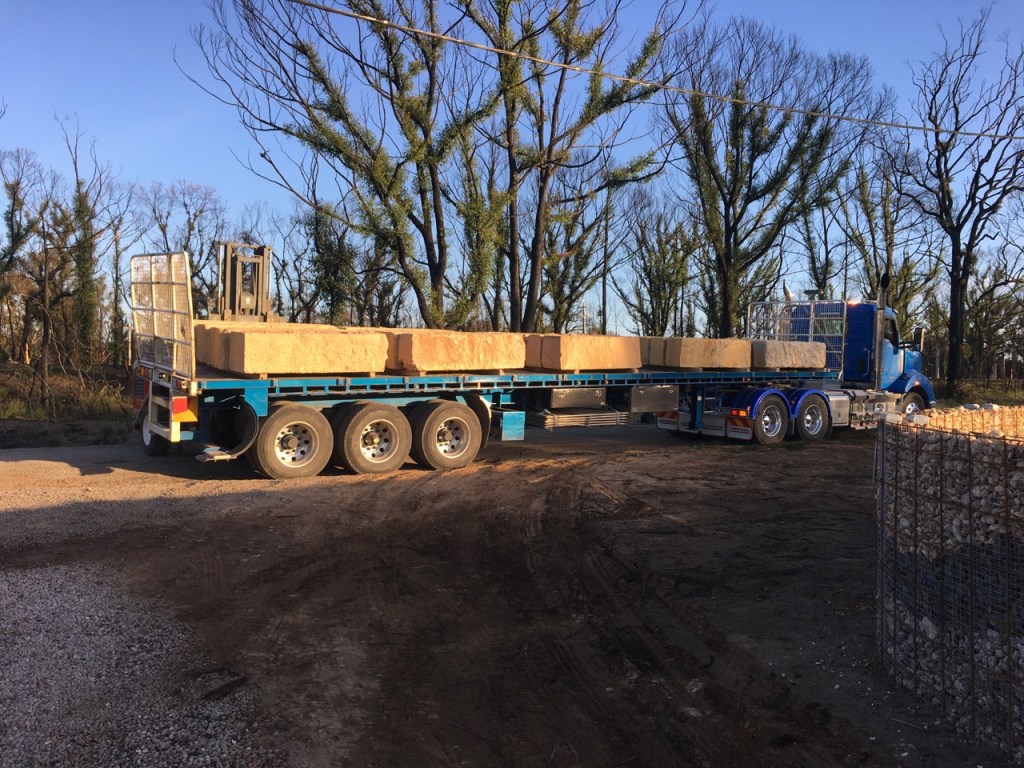
During the week, we lifted, scraped and cleaned 1000 old recycled roofing slates that we had stored along the fence line of the old stone fruit orchard. We are intending to build the new pottery on the stone fruit orchard site, so everything has t one shifted and cleaned up. we moved the slates to a new storage place under the verandah of the old Railway Station. We always intended to use these old roof slates as floor tiles in the old pottery, but as we didn’t have any concrete floors, just pavers set in sand, it was not possible to use them at that time. They will find a place in the new pottery.

That was two days of bending and and scraping, different from post hole ramming, but it still feels like work, just not as brutal on the joints.

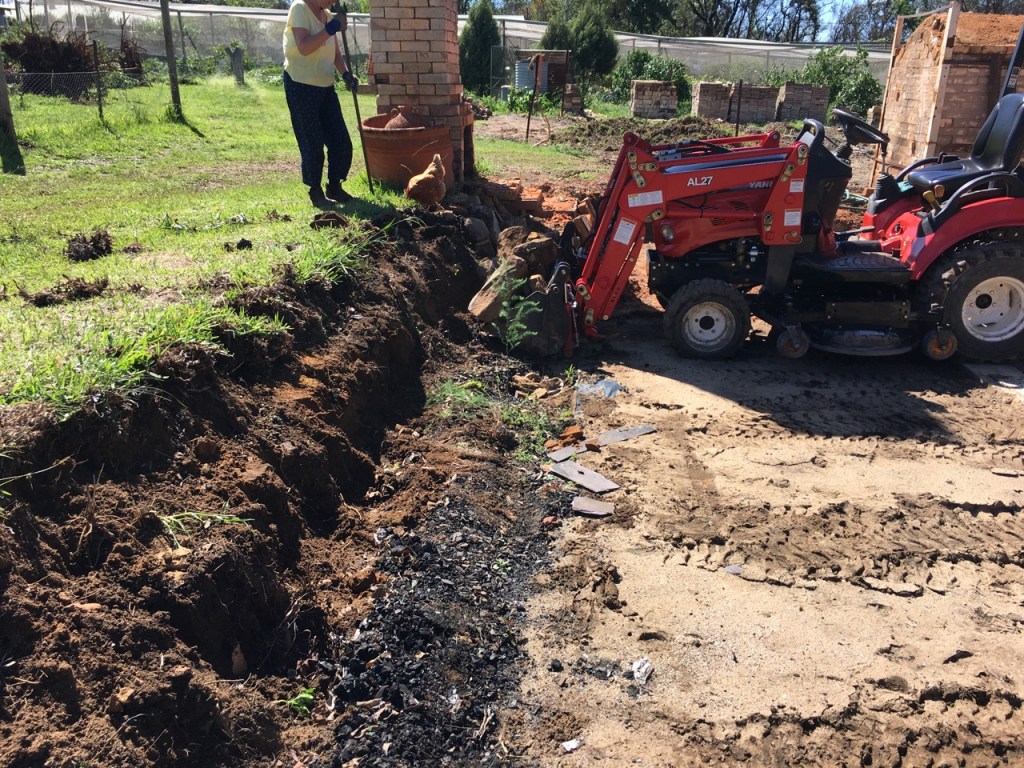
Our next job this week was to dig up all the stone retaining wall along the old pottery site and stack the stones off sit, ready for re-use as a new stone retaining wall for the new pottery, once the site is cleared. We will need to raise the level at the back of the site about 500 to 600 mm high to get a reasonable level.

We need to find sufficient stones to build a wall 600 mm high and 25 metres long. We will be scrounging every stone on the block to get there.

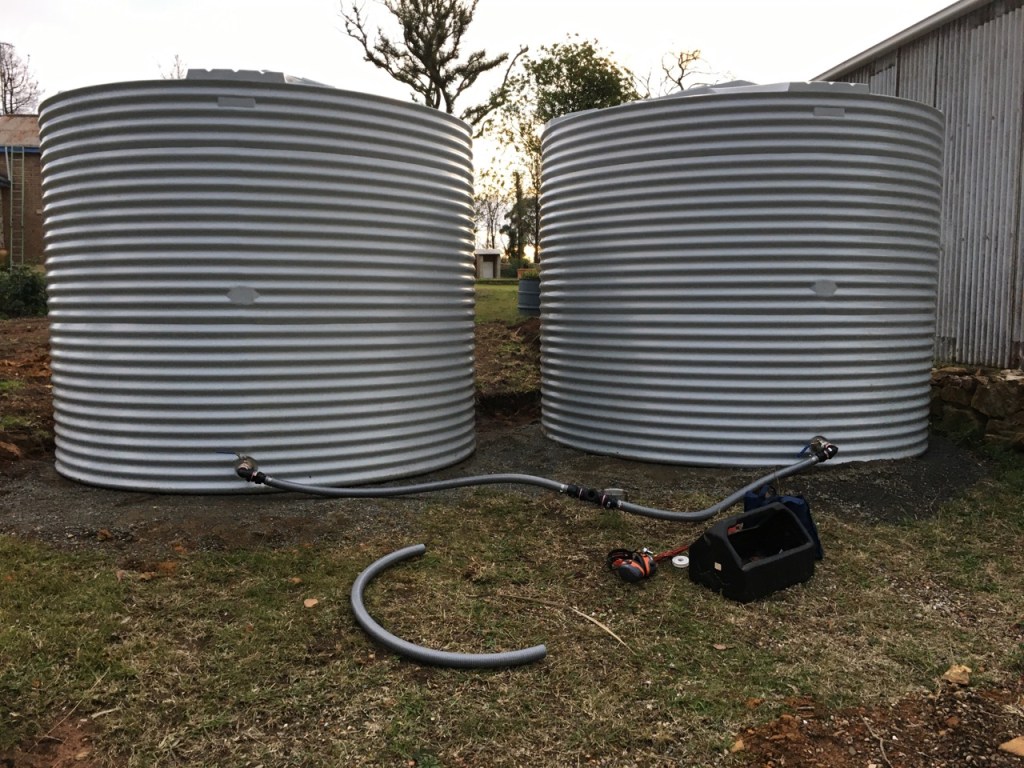
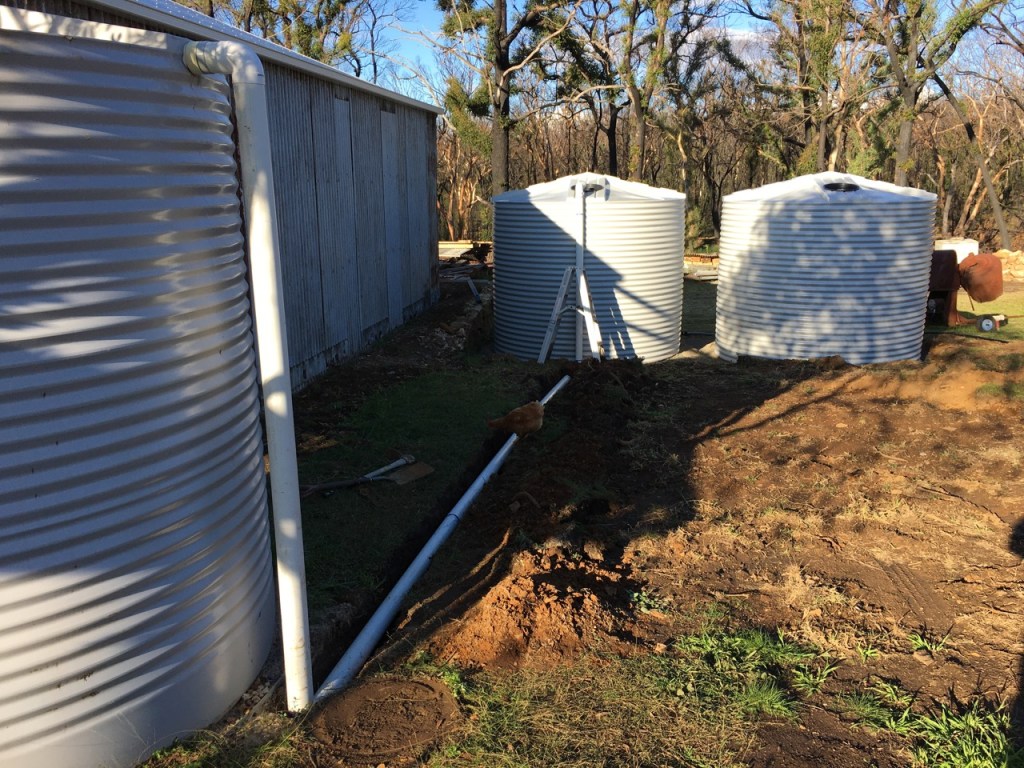
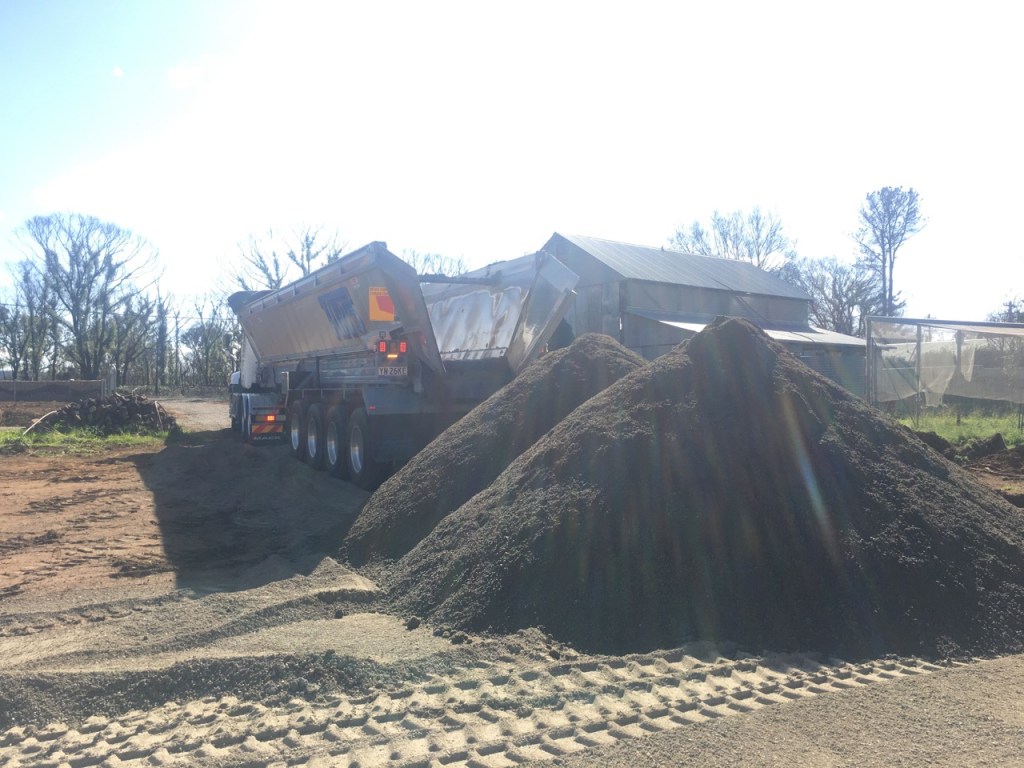
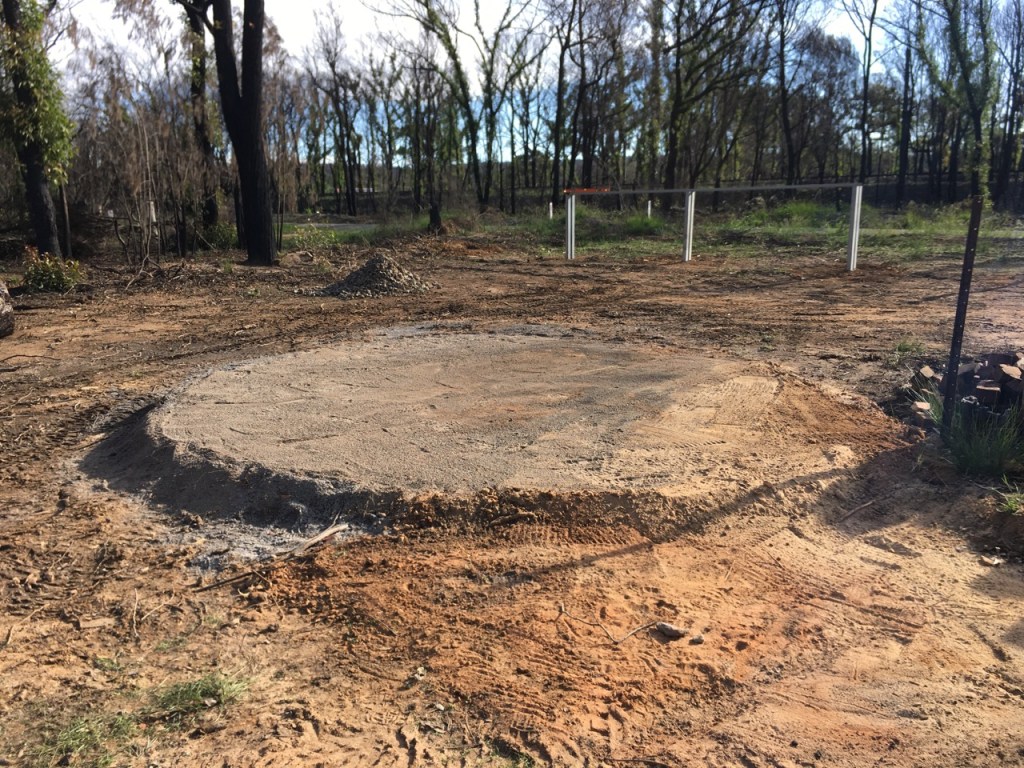
Our last job today was to level out the 5 tonnes of rock dust that we had delivered to make a base for our new water tank. It needs to be 4.5 metres in diameter, solid, well compacted and reasonably level. We have had a couple of goes at it, over the week, in between bouts of rain, which was very good at settling it down and compacting it. This afternoon we got it just about right. One more shower of rain will do it good.

Self-reliance in this time of C19 isolation

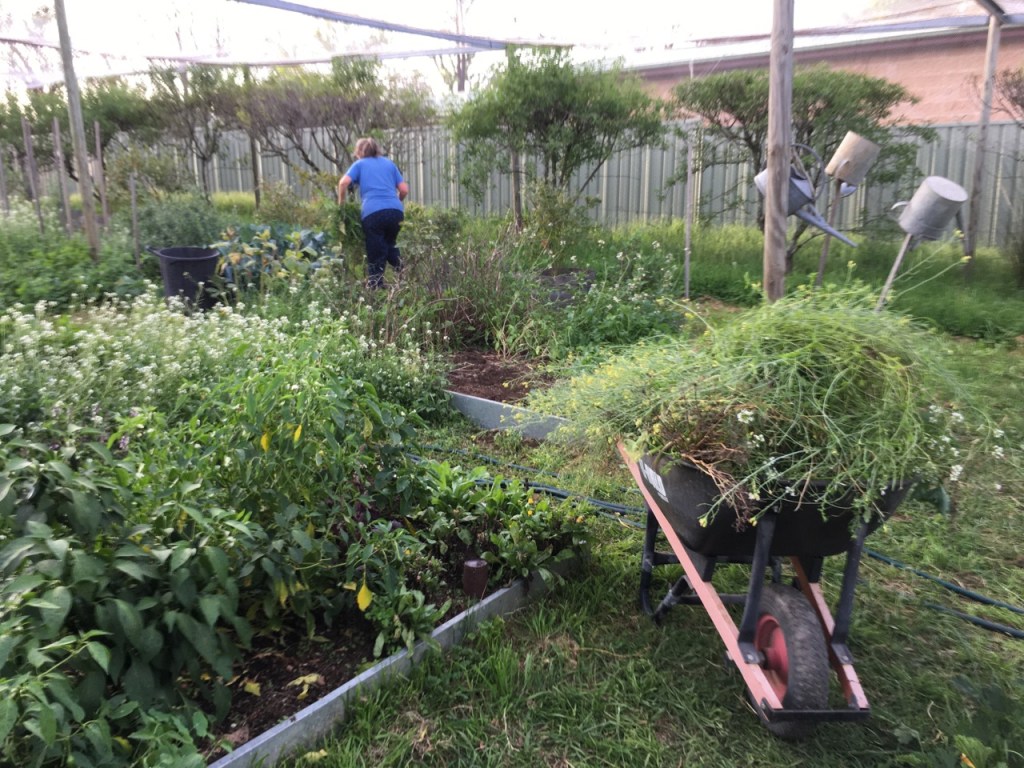
With the recent rain and the last of the summer heat, the vegetable garden has grown like crazy. We came back from WOMAD and the Writers Week to find the garden was totally overgrown.

I had a couple of attempts to tame it with the strimmer, then Janine could get in with the mower. We spent a day pulling out weeds and clearing space for the new plantings. I should have been a lot busier in the garden a lot earlier, but have been distracted with fencing and other jobs around the place. Everything needs doing no! I still haven’t finished chopping up the last of the pine trees in the back of the house. My tractor broke down and needs some work, so it’s gone off to the tractor whisperer to be made good again. So until I get it back, I can’t move those last few huge logs.

I have finally got around to planting out the winter crops of brassicas, quite late, but better late than never. I’m also planting out the garlic, also a bit late, but OK.

we are practicing social distancing !

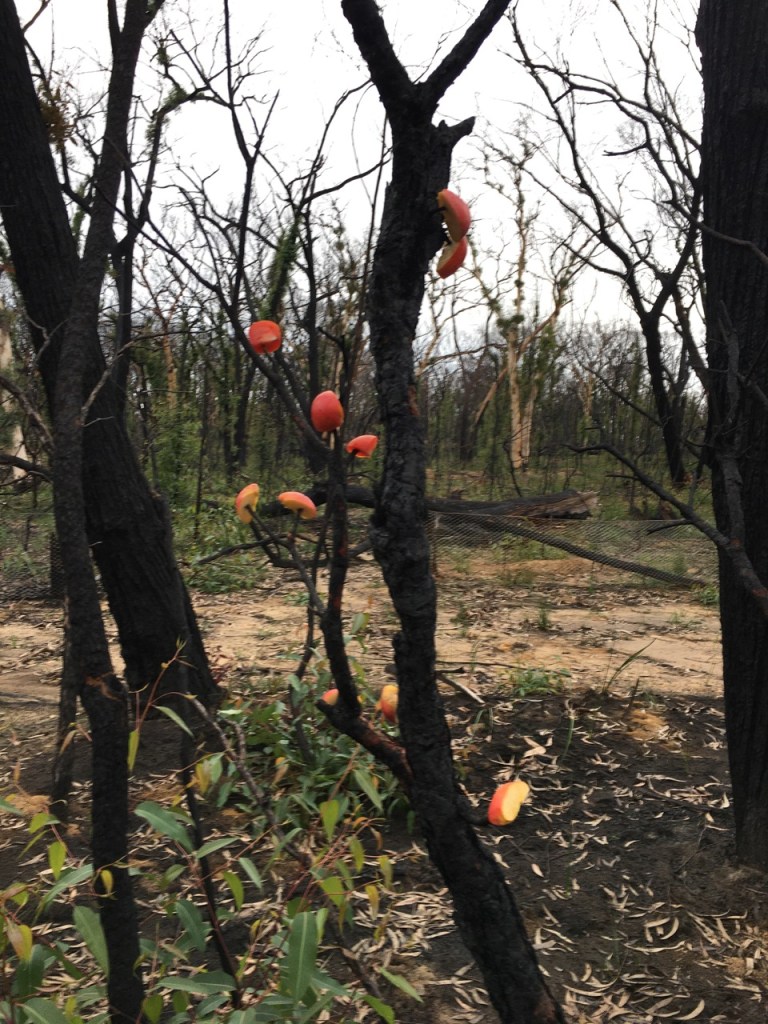
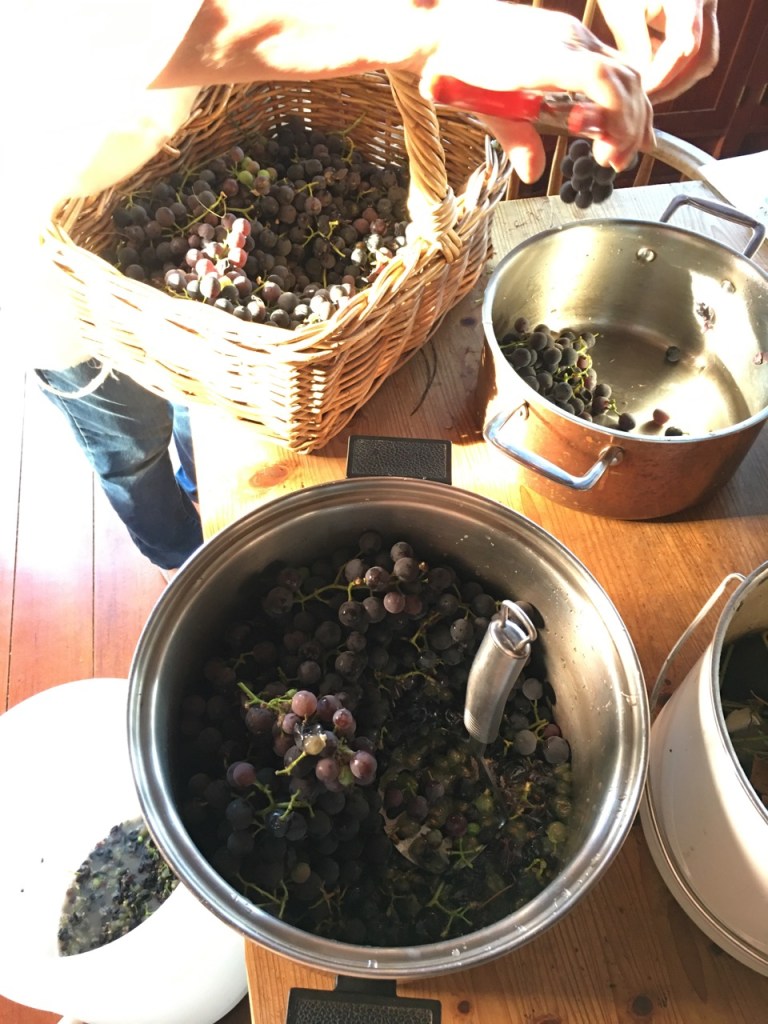
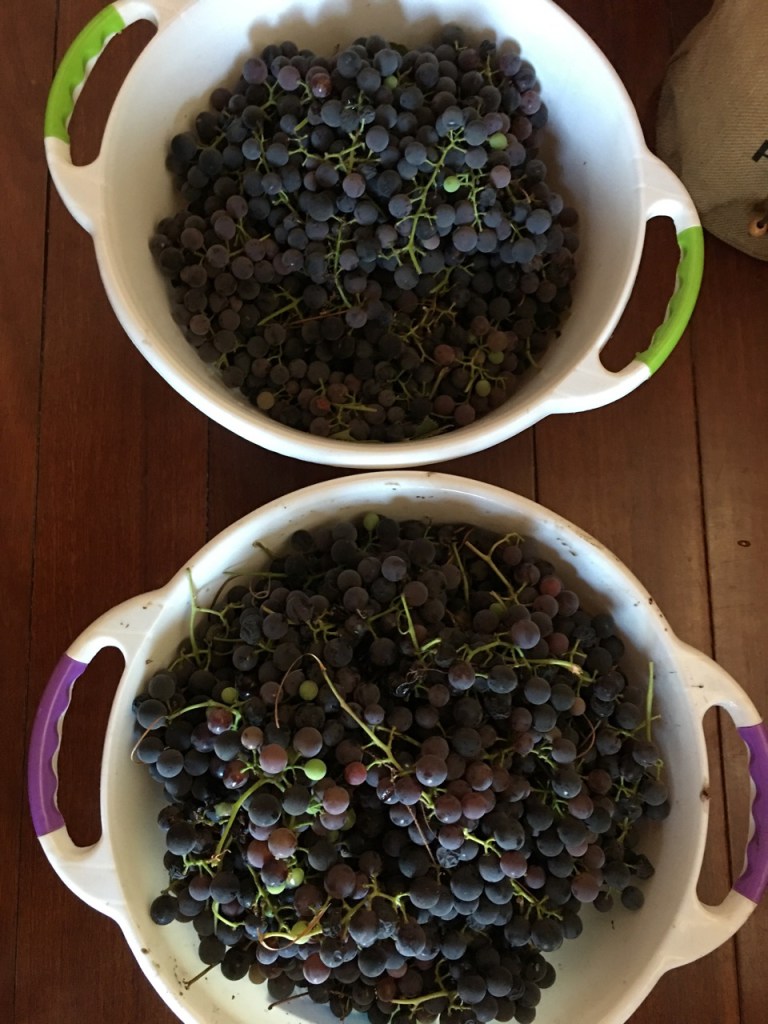
We have recently harvested our rather poor crop of red grapes, What with the drought, then the fire, now the very hungry wild life, and in particular, the bower birds, we were lucky to get any crop. Janine has been maintaining a wildlife feeding station down at the back of our land where there are a few possums and we don’t know what else eating the fruit and veg that we put out for them. She has created a an ‘apple’ tree out of a burnt out native tree and its charred branches.

She places the slices of apple there each afternoon and they are all gone in the morning. There isn’t much else to eat in the burnt out forest, but there are now some green shoot appearing from the trunks and root lignotubers of the blackened trees.

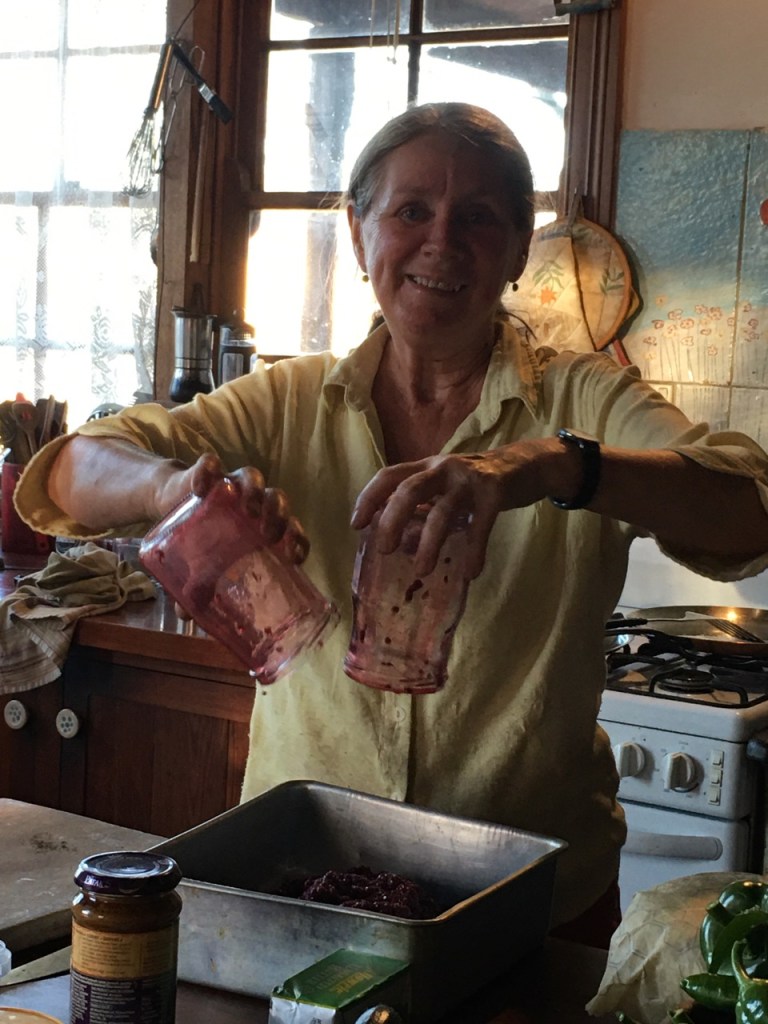
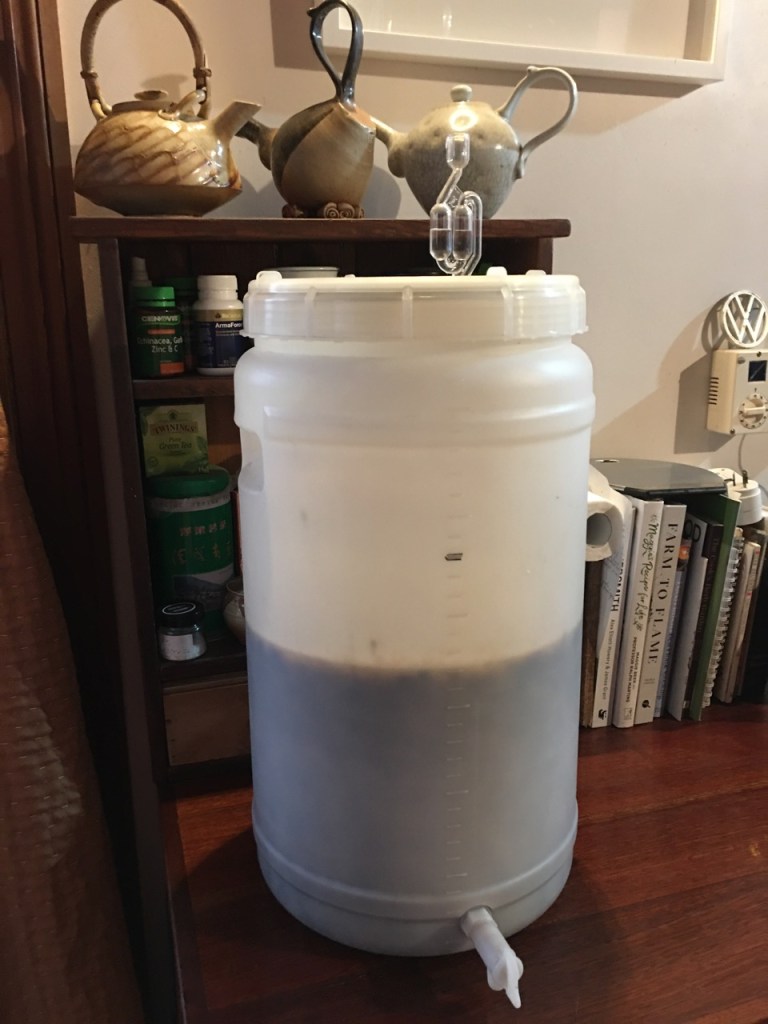
We made a small batch of summer wine from our tiny harvest. Best enjoyed straight from the keg as it ferments after a few days. A delightful combination of sweet grape juice, spritz bubbles and a little alcohol.

We may be burnt out. We may be unemployed. We may be in self imposed C19 isolation, but we are eating well as mostly vegetarian and gifted with an amazing group of tremendous friends that have given us so much support and assistance, up until lock-down.

We wouldn’t be be here now in this lucky position without you!

Thank you. You have been so wonderfull to us and helped us through this testing time.

Gabion Wall

In June 2018 Janine and I were in the UK to teach kiln building at the new ‘Clay College’ in Stoke on Trent. We were lucky to get to work with a great team of students, and one in particular stood out as being very energetic and game to take on all the difficult jobs with enthusiasm, Marius Patriotis asked if he could come and work with us after he finished his course. We take on one trainee or intern each year in January/February. They are invited to work with us in whatever we are doing at the time. Making pots firing kilns, cutting wood, collecting and crushing rocks to make glazes, but also working in the garden, pruning the orchard or building a kiln. It’s all part of our inclusive, self-reliant attempt at living a complete life. We don’t pay anything for their help, but we don’t charge them for the education. We do invite them into our home and feed and house them. It seems to work.
This year we have the energetic Marius from the Clay College in Stoke-on-Trent. When he arrived in Australia, before Xmas, we still had a pottery. By the time he arrived here with us, we only had a smoking ruin. He has been invaluable in assisting us with the clean-up. However, instead of learning to make rock glazes and hand made pots, he has learnt to weld, drive a tractor, use a chain saw and work around a saw mill. Most recently we have been building a front fence.
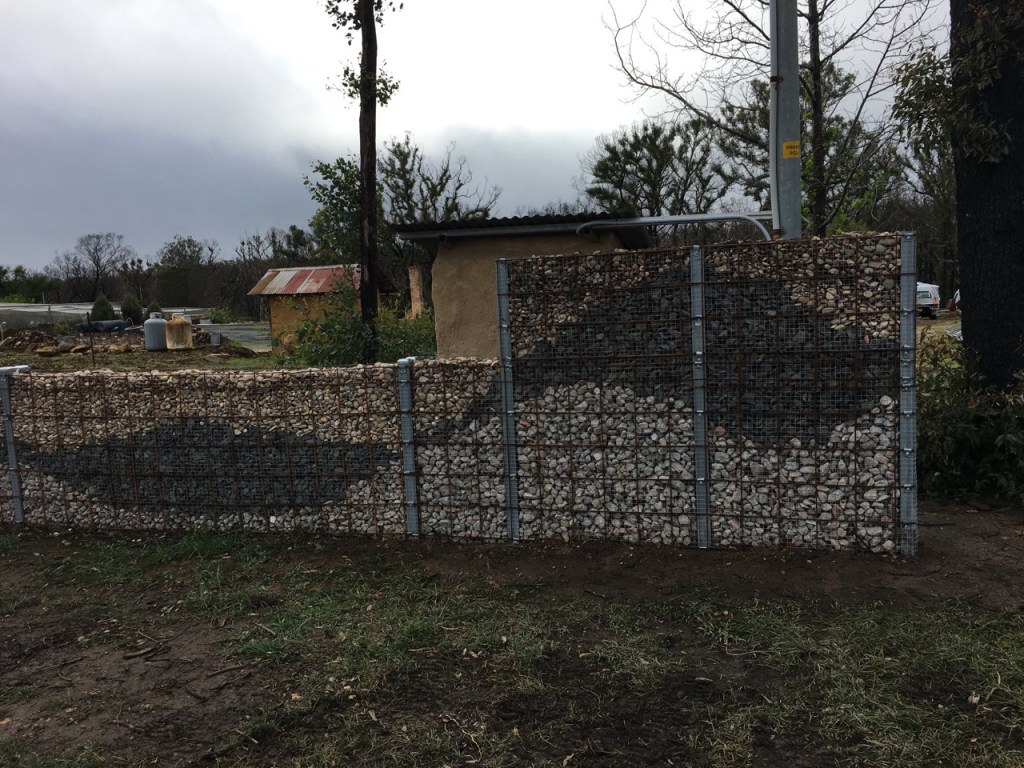
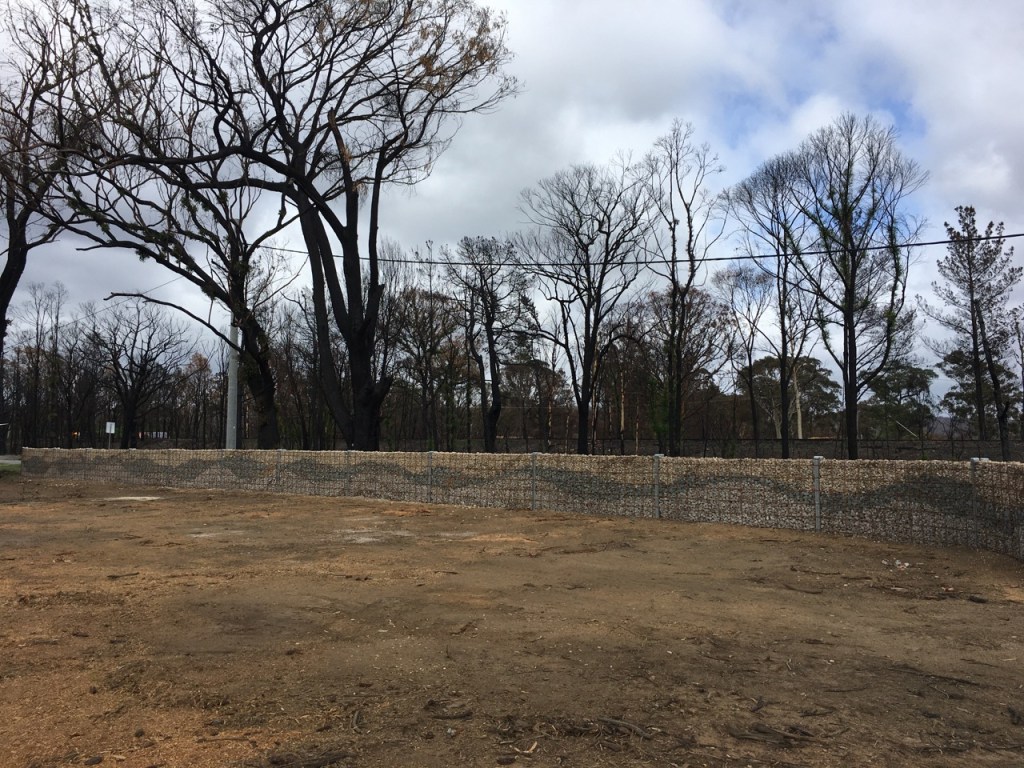
We have built a fire proof ‘ceramic’ front fence. Something that will offer radiation protection from a ground fire from the west. I decided to make it something like a ‘gabion’ wall, but instead of using the expensive wire baskets. I invented my own ‘poor-mans’ version out of rio steel and chook wire. So far we have completed the northern end and I’m very happy with it. I used crushed building rubble, tenmoku glaze stone and quartz pebbles. I decided not to mix in any crushed limestone, as if the next fire gets as hot as this last one – the fence may melt! Because limestone is a powerful flux. 

I made an undulating pattern with the various stones that reflect the ups and downs of my life, with the darker under-currents never far from the surface, but with optimism always on top. It also represents the hilly, undulating landscape of the Southern Highlands.
Over the two weeks it has taken for this job we have also had a lot of help from our son Geordie, also from our friends, Warren, Len and Andy,  my brother Nick plus his son Jeremy, and or course Marius.
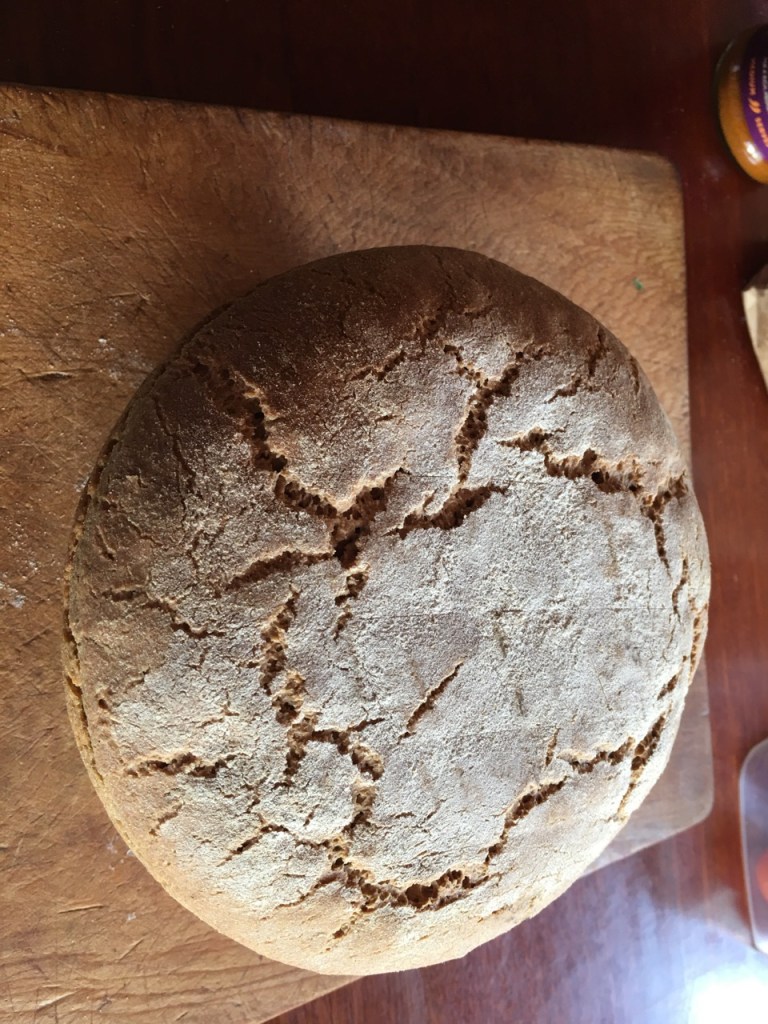
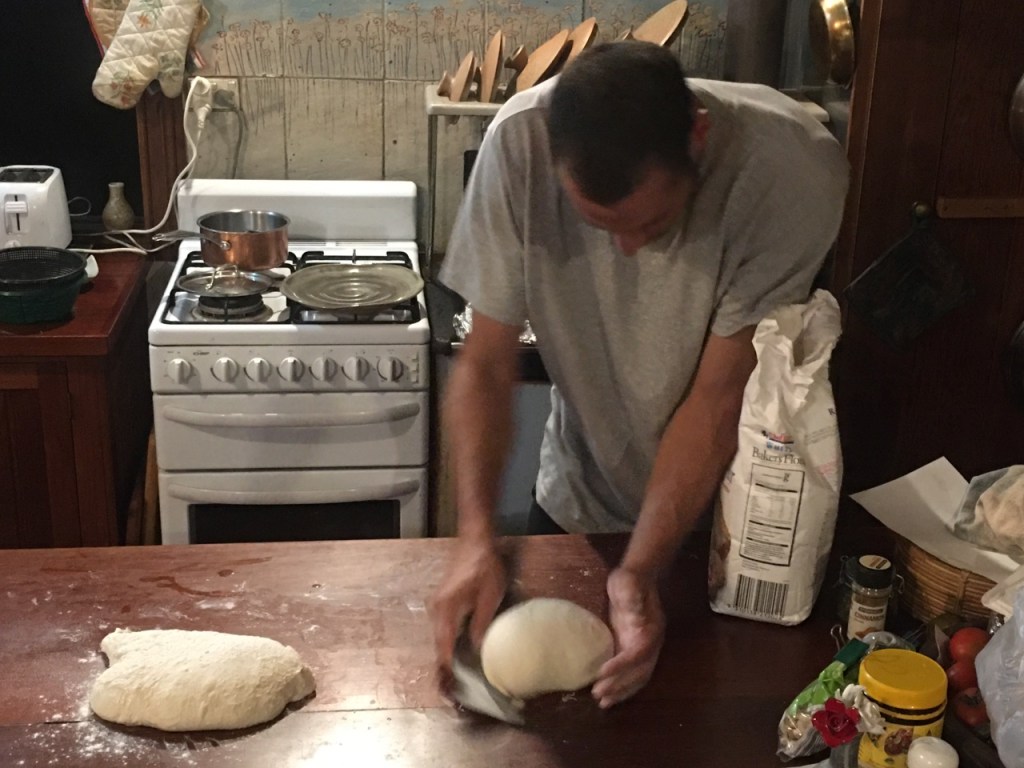
It turns out that Marius makes sourdough bread, so with that and the produce from our veggie garden we have been able to eat pretty well.


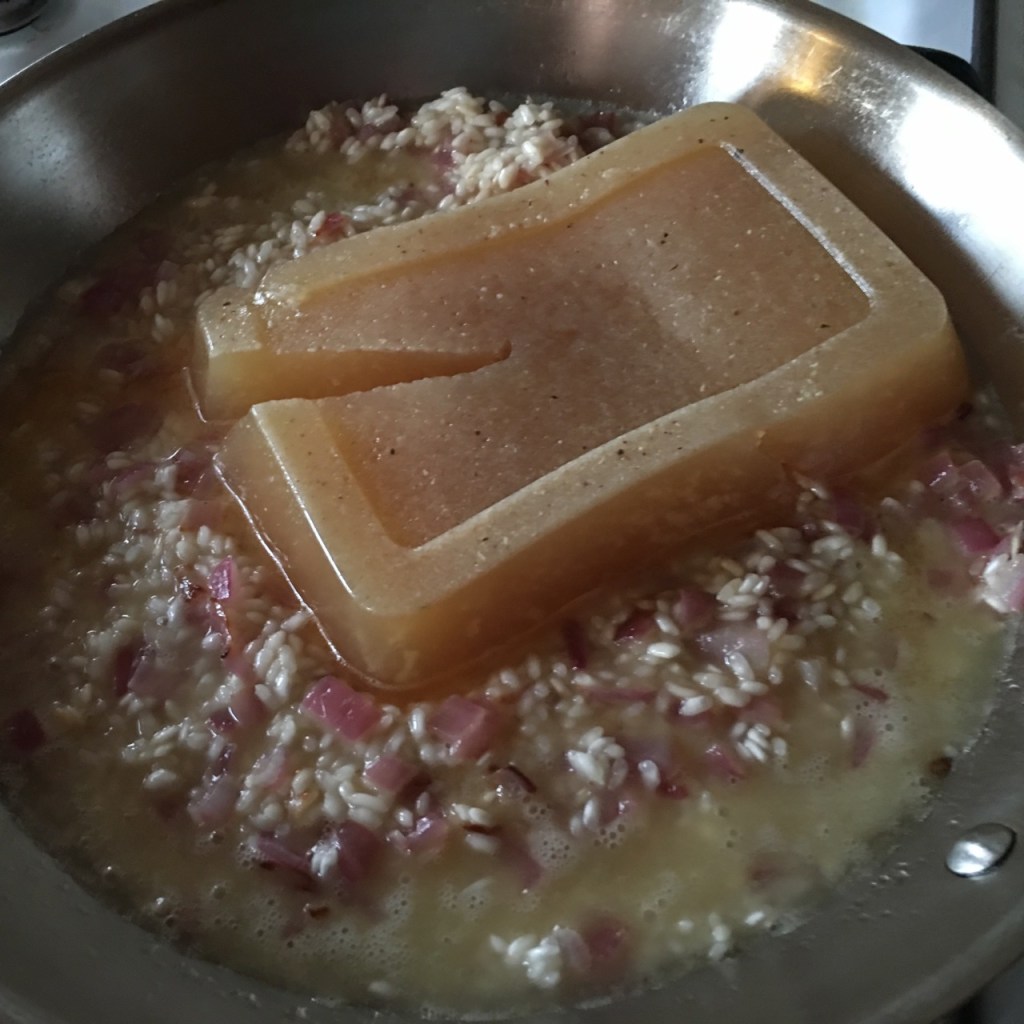
Nothing quite like a very gelatinous stock to make a great risotto

First and Last

I filled our electric, plug-in, hybrid car with petrol for the first time this year. $40 worth, that should keep us going for another 3 months.

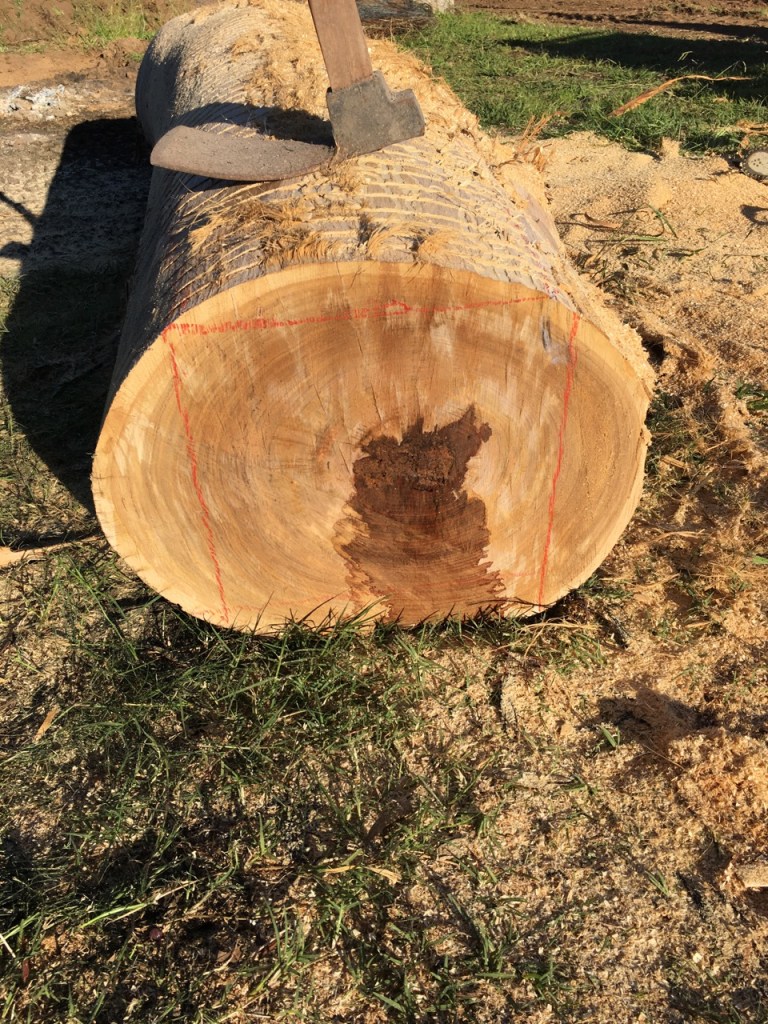
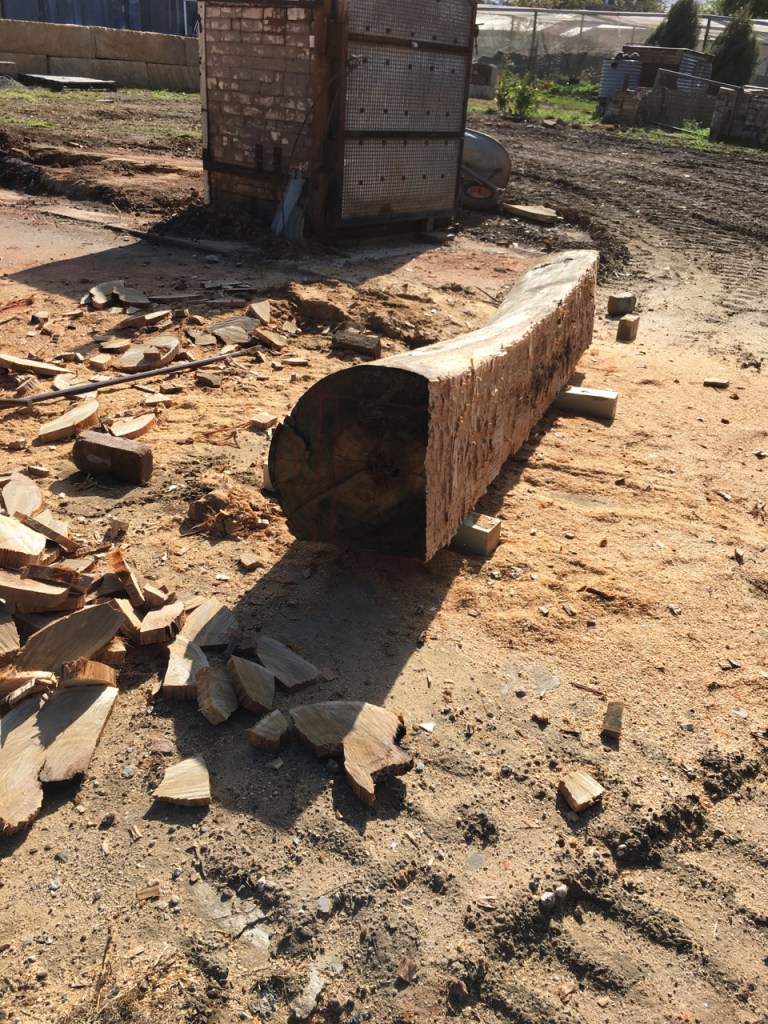
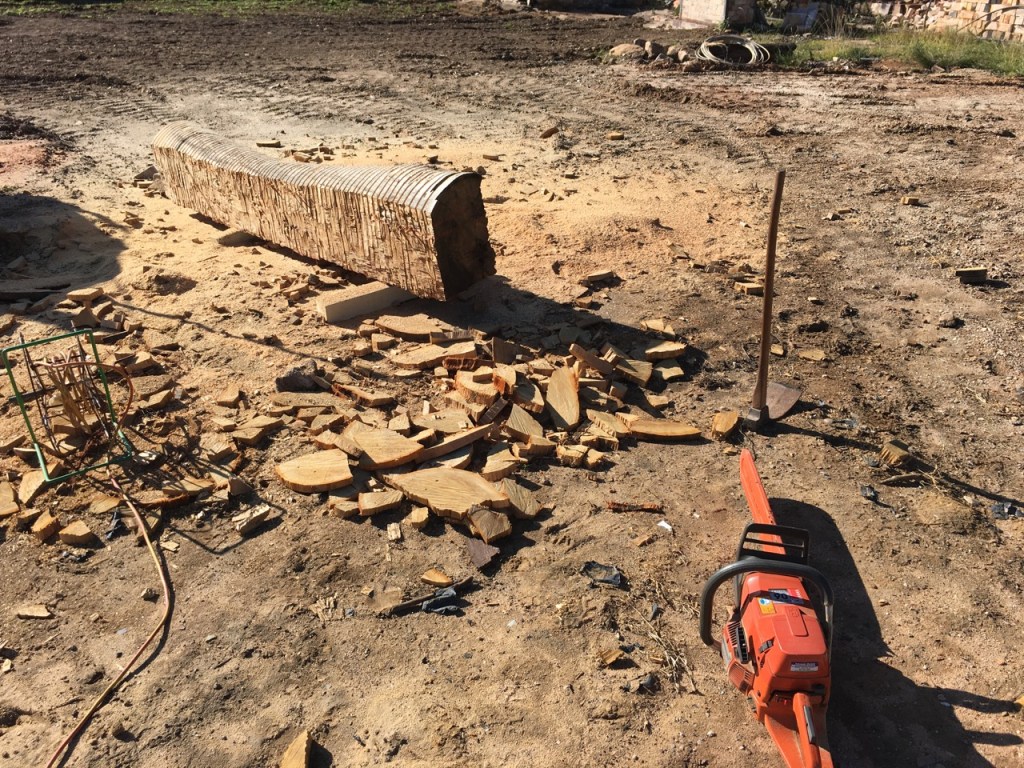
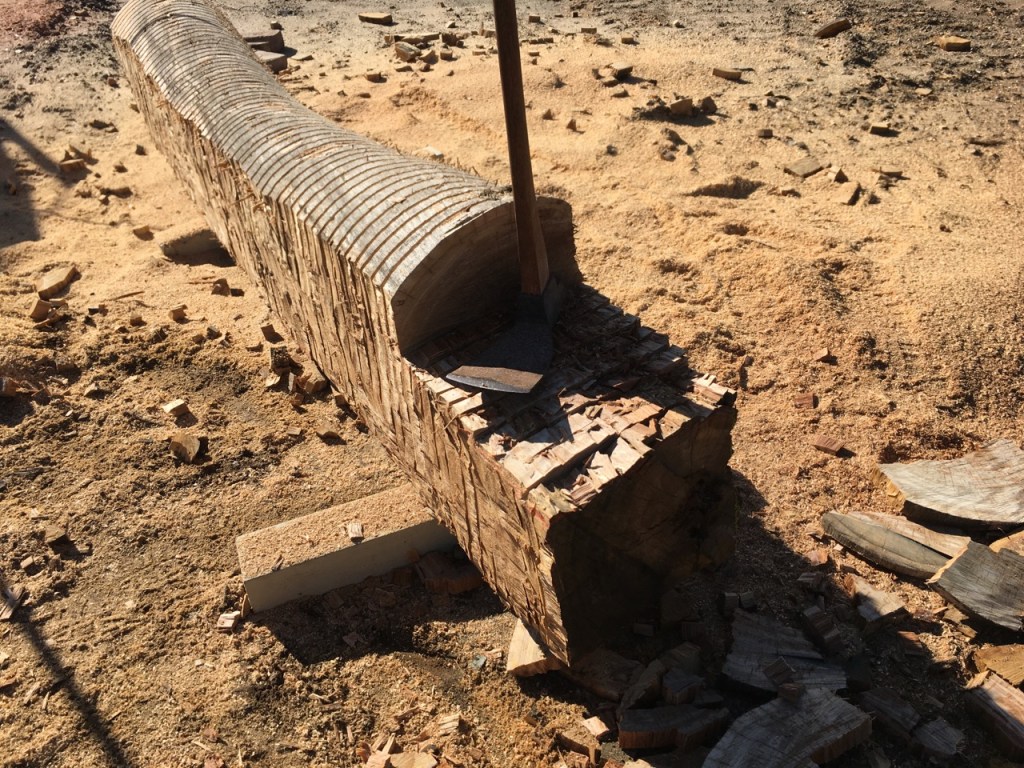
I spent the rest of the day cutting up the last burnt dead tree in the front yard. We almost got it all finished yesterday, but ran out of daylight. I also found out that the bobcat had to go home at the end of the day, so the pressure was on. I got stuck into it and managed to get it all cut up before the truck came to take the loader away. I have been so lucky that my friend Ross was not needing it until now.

Burnt stringy bark really takes the micky out of the chain saw chains. I had to sharpen the chain after every few cuts. Stringybark bark has the ability to blunten a chain in no time flat. perhaps because it is a permanent back that never drops off. It may collect mineral dust and sand grains blown by the wind, and keep the dust and grit embedded in the bark? This is just pure speculation. I really don’t know.

Whatever the reason, it isn’t nice to mill. Very slow and tedious.

I eventually got it all done and packed the saw away as the truck drove it to collect the bobcat. Great timing.

I must say, I was pretty tired by the end of the day.

All quiet on the northern front

The work is never ending. Now I’ve finished with the burnt and blackened dead trees. I still have to deal with the pines that were killed by the heat of the house fire, but not carbonised. Cleaner work, but still as tiring. Using a chain saw all day takes a lot of energy.

We had a working bee today to pull down the big wood kiln. It’s such a shame that kilns take so long to build but are so quick to dismantle. If wish it were the other way around. We got a lot done, but not quite finished the job. We should get it finished tomorrow. Today a friend Walter came to help and brought his chainsaw. Luckily for me he was keen to have a go at the big pine logs. and made a good start. He’ll be back tomorrow to help me get it all done- if we can. If not, there is alway the next day.

Back of the black

I think that we are seeing the last days of the blackened, burnt trees and foliage here. Since it started raining this last week, it has washed a lot of the carbon and ash into the ground and in some cases down into the dam. It has occurred to me that there will now be a record of this catastrophic event permanently laid down in the sedimentary strata of this black event on our land.

The rains have washed a lot of the ground clean. I must say that it won’t be soon enough for me to see the bare earth covered with a coating of green again. Over the past 6 or 7 weeks that we’ve been clearing up all this burnt rubbish that was once our garden and workshop. I have become acutely sensitive to the smell of black carbon, charcoal dust and black ash. I’ll be very pleased to see the back of the black and start to work on things that are not covered in charcoal.

Yesterday I had my friends Colin and Denis come over to help me do what I had hoped would be the last of the chainsawing of the blacked and dead trees from the fire. We didn’t quite finish the job, so there is still one more day in it for me to get it all cleared away.

It’s dirty work and I’m over it.

As a token gesture to the start of the cleaner phase of the clean-up. I bought 12 tonnes of crushed gravel for the driveway. the drive way in had become a dirty squishy, quagmire since the rains with all the heavy machinery and a few trucks coming and going over it, making it a slippery black mess. Two truck loads of gravel have started to fixed that.

Things are starting look better. Everything has started to have a more optimistic look about it. It’s certainly a lot less black.

The rain has finally come. We didn’t get the record levels of rainfall that other places got, thankfully! But it was quite enough for us. 190mm. It filled all 4 dams to overflowing and filled most of our rainwater tanks. The reason that the two biggest tanks didn’t fill, is because the two large roofs that used to feed them are now gone!

It’s nice to see the dams full again, pitty that the water is a rather black/brown colour. This will eventually be diluted and washed out, or settle into the sediment.

We got a surprise phone call from our friends Andy and Cintia last week, to say that they had 4 hours spare and could they give us a hand. We fixed up my blacksmiths vice, anvil and swage block, outside the garden shed. Then we pulled down the last two kiln chimneys . A great surprise and a lot of work achieved. Many hands etc.

Its not a real garden shed, now its a forgery!

Electric car review – 12 months

Janine and I have owned our Hyundai Ioniq hybred, plug-in electric car for one year now.We just got our latest owner statistics down-loaded from the onboard computer.We have driven almost exactly 12,000 kms. over the year.We managed to drive 503 km per litre of fuel used in the last month.500 km to the litre is pretty impressive fuel efficiency by anyones standards!I’m very pleased to see these results come through.The expected Hyundai official results for this model car, by the average driver should be around 22.4 km/litre
Dec. 2019

 My average503.16 km/â„“
 Official22.4 km/â„“
Results of this month’s 400 km trip, the results are shown below;
IONIQ plug-in official fuel consumption should have been; 17.857 litres
My fuel consumption   0.79 litres

Our CO2 emissions : We generated about 1 gram of CO2 per km.

* Driving standard per 1km
IONIQ plug-in Official CO2 emission 26 g.
My average emission CO2 this month1 g

Over the past year, we have filled the petrol tank 4 times, but the fuel tank is still almost half full.So we spent about $170 on petrol this year, to travel 12,000 kms. over the 12 months.We could only achieve these results because we are actively involved in living a ‘green’, low carbon, small foot print life.Up until last month, we could charge the car from our excess solar power. These last 30 days, since the fire, we dont have any more solar PV. So now we are using green power from the grid, and will have to continue to do so for the next few months, until we can get a new building approved by council and built, then have new PV installed. It’s going to take quite a while to get back our energy independance..But the car will still be driving us around very economically and cleanly.
Best wishes
Steve

Boards, Not Bored

We have spent this 5th week continuing on the long journey of cleaning up this tragic mess. Last week we had the 3 big dead pine trees felled professionally. This week we hired a portable ‘Lucas’ saw mill and started milling the biggest of the pine logs into boards, so that we can incorporate this home-grown and home-milled timber into the lining of our new pottery, when we build it.


We cut nine x 75mm. thick slabs in one day and 90 planks of 250mm. x 30mm. on the 2nd day. The big 75mm. thick slabs are 3 metres long, and 700mm. to 900mm. wide. They will make great work bench tops in one single slab. We will use one in the pottery as a work bench and another for a wedging table. Perhaps a third in the gallery room. I intend to use the planks vertically, as lining boards in the throwing room.
We also cleaned up the stone fruit orchard and took the dead peach trees away to the big burn pile. It’s going to be a huge job in the winter time to burn all this fire affected material. That is if we get a winter, that is safe to burn off these piles.

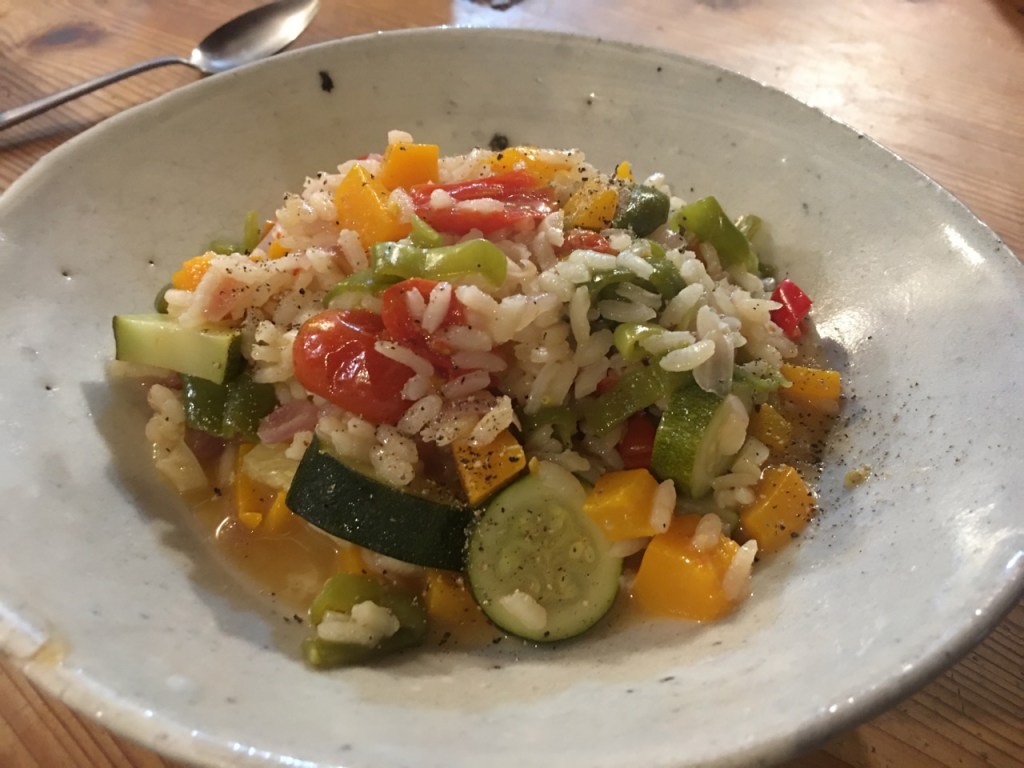
Our vegetable garden, although fire affected, is still just producing a few tomatoes, capsicums and zucchinis. The sweet basil, and chillies on the other hand are booming. They love the hot dry weather.Every meal at the moment is a variation on ratatouille.

At last we are starting to engage ourselves in jobs that have a positive element.

We celebrate a very tough couple of extremely hot days in the full sun, rolling logs and milling them through the whole of these blisteringly hot days. Lathered in sunblock and drinking copious bottles of water, we can’t afford to stop. The mill is expensive to hire at $800 to $1000 per day. Any time spent sitting down eats into our meagre budget. I will be a lot happier after we have heard from the insurance company, and find out what they intend to do. They have emailed us to say that they will payout for the lost equipment in the pottery and kiln shed. but we haven’t seen any money as yet. No mention of the building as yet.
In the mean time, turning dead trees into useful lumber is a rewarding endeavour. I’m hoping that I will sleep better, simply from the effort expended and the exhaustion.

Some Progress

Last week we pulled down the 3 chamber wood kiln and the small single chamber wood kiln. We dismantled these kilns brick by brick and roughly cleaned the bricks, then wheel-barrowed them off the site and stacked them ready for reuse at some date well into the future when we have another pottery built.
We still have the large two chamber wood kiln and the large old brick chambered gas kiln, that I havent fired for 30 years, still to be removed. Although I haven’t fired that old gas fired brick kiln for so many years, I found it to be very useful as a storage vault for paints and thinners. All the dangerous and volotile thinners survived in there intact through the fire, while the building burnt down around them. Kilns are really marvelous things. Heat can’t get out of a kiln very easily when it is firing, and the reverse is also true. Heat can’t get in there either. I’m living proof of that.
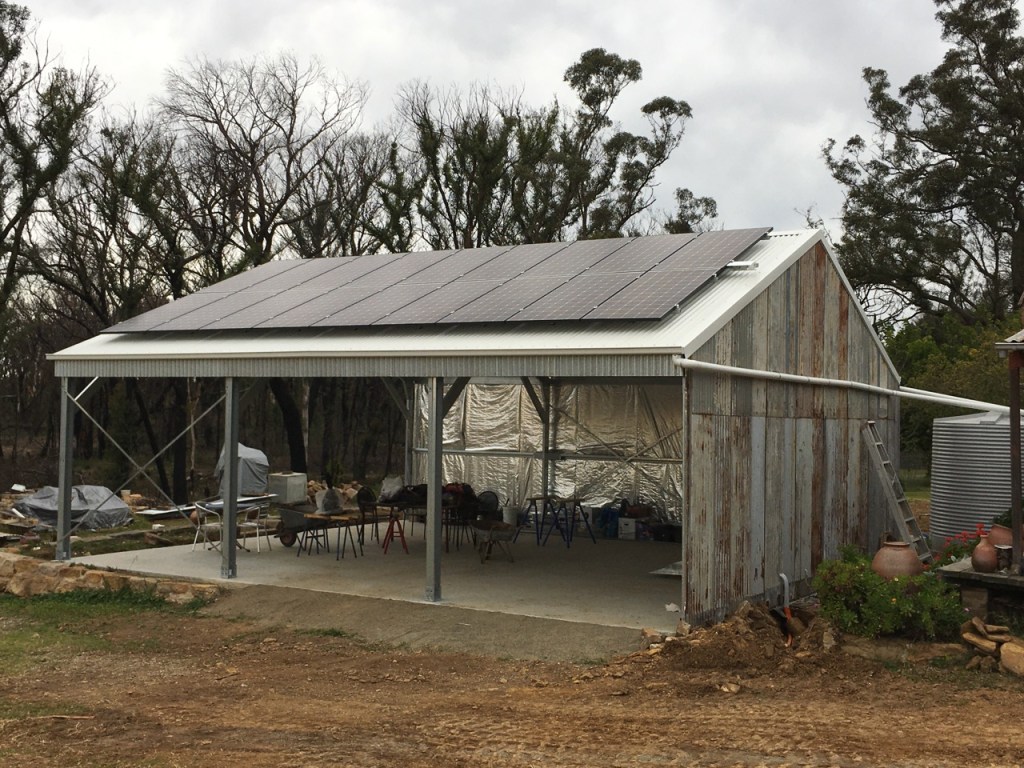
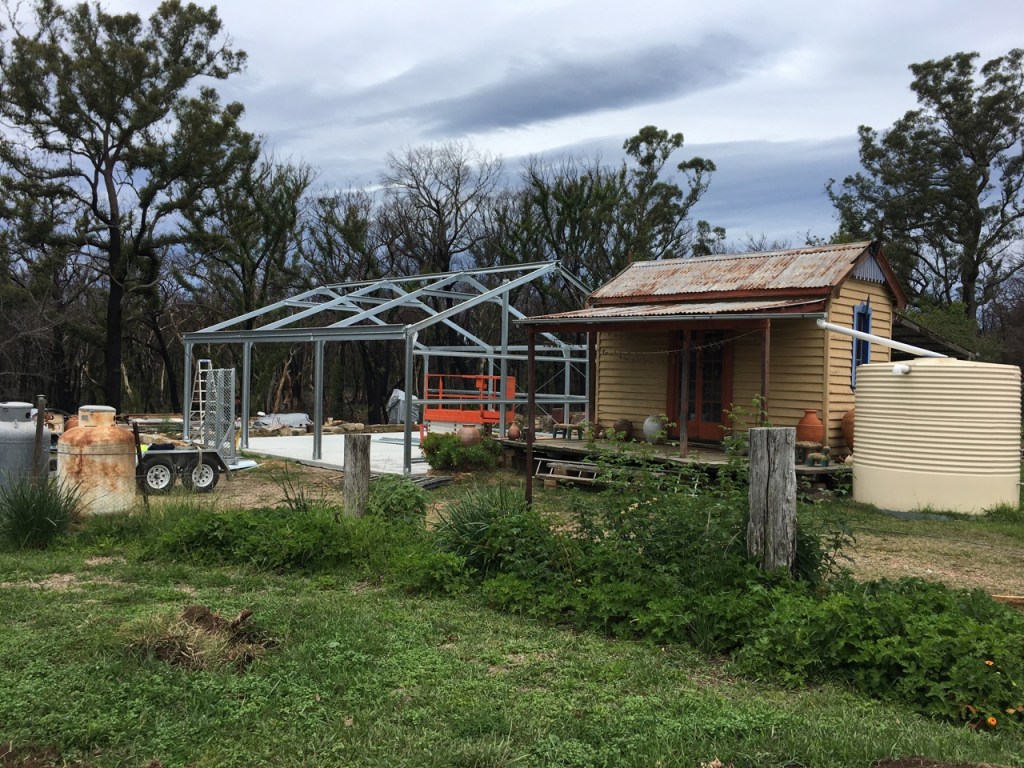
In the coming months we will be building a gabian ceramic wall along the front of the property, facing west as a fire radiation barrier. In preparation the the next fire event in 6 to 10 years.We can’t make any plans about the new pottery building until we hear from the insurance company. The first thing we need, is to know what our budget will be. Then we can make firm plans. In the meantime. I am planning to build a kit-form metal carport that we can use as a temporary work area for the reconstruction of the pottery in due course.


Our son Geordie took some time off work to come and help us cut up some of the big stumps and load them onto the ute to get them off-site and onto the wood pile

The site with the buildings removed and just the kilns remaining.


Starting to dismantle the tunnel kiln

IMG_9209.jpeg
The old brick gas kiln with a full sized, hinged ceramic fibre door.

The old gas kiln. We haven’t fired it in 30 years, as gas is a fossil fuel and adds to global worming. We chose not to use it. We have always been committed wood firers. We have 7 acres and half of this is, or was forest. Wood is a renewable and manageable resourse of atmospheric carbon. Long ago, we decided to move away from the simple convenience of gas as a fuel. 13 years ago we installed solar panels and have been a solar powered household and business since then. Most recently I built a solar powered electric kiln that fired to stoneware in reduction, using a very small amount of LPG, just to create the reduction atmosphere. We used between 250 grams and 450 grams of LPG for reduction. This gave us 20 to 30 firings out of a small 9kg. SwapnGo BBQ bottle .
Both our electric kilns were destroyed in the fire.

A fat stock of thinners, unharmed in the kiln, including turps and acetone.

The stack of paving tiles that we lifted and stacked two weekends ago with a group of pottery students and partners

The stack of kiln bricks that we lifted last weekend. Seperated into light Refractory insulators, heavy solid firebricks and red house bricks.We had a fantastic group of people from the Extinction Rebellion movement here this last weekend. They were totally wonderful people.They are not only committed to making society aware of the danger and ramifications of the global heating crisis, but they are also committed to doing good works in society, helping everyday people in a host of different ways. Helping people like us cope with and recover from the bushfires comes within their gambit.

The pottery site with only 2 kilns left. I’m thinking that I might keep the tall chimney from the tunnel kiln on the left as a totem of our youthfull endeavour and folly.

Strange Times – Different Road

We are now one month into this new life journey. Strange times indeed. A vast expanse of the East coast forest has been burnt over the past couple of months. What I find extraordinary is that most of this destruction happened in spring, this is just the beginning of summer now. We are not into the fire season proper, yet there is so little left to burn. I can’t see it getting any worse when the really hot weather arrives! Certainly not here anyway.

We are so lucky to have such an amazing group of friends, who have gathered around and pitched in to help us with the clean-up. One month in and I have repaired or replaced the water reticulation system. This was all made of cheap plastic ‘poly-pipe’ and was badly effected by the fire. It was almost totally buried underground, however it wasn’t buried deep enough. I dug all the trenches by hand over a long period of time in the 70’s using a spade and a mattock. Six metres per day in the early morning before work. There was around 1000 metres of piping burried in this way over the years. I realise now that I should have put more effort in, but one man can only do so much.

Warren and Trudie came for 4 days of hard work.

We have almost finished clearing away all the burnt trees and shrubs around the house. We won’t re-plant them. With an eye to the future, and the likely-hood of another fire like this returning in the next 6 to 10 years being very high to almost certain. We have decided to keep the front of our land facing West almost completely clear and being just mown grass. With the global heating crisis continuing unabated and both government and the opposition totally in the grip of big carbon business interests, they are all still completely in denial. Even if there was some small degree of change right now, the amount of carbon already in the atmosphere will take all of my life time to filter it’s way through the system. My current circumstances are the living collateral damage of this dinosaur-like attitude of denial.

The way that the under growth litter builds up in this area, it takes around 4 years to develop a depth that can sustain a fire, then up to 6 years for the depth of flammable litter to increas, until it stabilises at around 6 to 7 years. This means that we can expect another fire of this magnitude in as little as 4 years, and certainly within 10 years. We have to live with this reality and plan accordingly. The national parks that surround us here are not going to go away or change radically, so we live in a ticking time bomb of fuel and potential fire hazard. This fire will return. We have been discussing if or how we might build a ceramic wall on the west to protect us from future radiant heat in the next fire. We may build a ‘gabian’ wall to effect this small level of protection. Time will tell.

The insurance company has sent in a demolition team to wreck the old building structure and reduce the site to ground level.

Only the kilns and chimneys are left standing

We have started thinking about how or what we will be able to re-build in the future. We can only think about what we might do at this stage, as we are unable make any decisions at the current time, until we get some sort of decision from the insurance company. We have nothing on paper as yet, just a few phone calls. I’d like a decision so that I can move on and start to be creative, not just stuck in stasis.

As we have nothing to work with, the first priority will be to build a simple carport, so that I can have a covered space to set up a workbench and a vise. This will allow me start to make the parts that I will need to be able to rebuild everything – eventually.

This is quite a different road to travel now. I wasn’t expecting this a few months ago. We had organised to sell our kiln building company – ‘Hot and Sticky Pty Ltd’ to a local couple, and were planning to spend this January working with them, teaching them how to fabricate and fit out our special kiln designs. Luckily for them the transaction was due to take place on the 6th of January, so they didn’t loose any money.

On the plus side, I’m much better at driving a bobcat now. Maybe a potential new career change? ‘Load and Lumpy’. I’m also much more experienced at chain-sawing burnt, dead trees after a month on the saw. ‘Stihl crazy after all these years’.

The tree surgeons have been and taken down the 3 big, dead, pine trees that were growing over the house. Pine trees don’t suffer wildfire very well. They don’t recover from fire the way that eucalypts do.

After the catastrophic fire had passed through here on the 20th and the emergency was almost over. The pottery had burnt down, I had put out the fire in the railway station. I was then fully occupied in carrying buckets of water over to the barn to throw them on the fire there. The pump on the barn failed after an hour or so. So carrying buckets over there was my only option. After two hours of that I was bushed and the fire wasn’t out, but still just smouldering. Whenever I stopped for breath and the wind blew up. The fire re-kindled into life. It wasn’t until I unscrewed the corrugated iron sheeting off the wall, and got the next passing fire truck to stop and squirt water into the smouldering hollow of there large hardwood post, that the fire was finally out over there.

I was so shocked and tired, exhausted really. I wandered back to the house to find that a couple of dead pine tree branches half way up the tree were on fire and were smouldering and bursting into flame when ever the wind gust came from the East. Blowing them into life and a flurry of sparks and flames would emerge from the branch, showering red hot embers down onto the roof of the house. I still had the house pump running on low, just to keep the roof and gutters wet, but I soon realised that I didn’t have enough water or petrol to last the night. I couldn’t sleep in the house with embers dropping on the bedroom roof like that! I had saved my house and escaped death in the conflagration by hiding in my kiln. I couldn’t give up now!

I had to do something. I wasn’t about to let the house burn down after all I had already done. I decided that my only option was to get the big extension ladder and climb the tree, and chop off the offending branches. I have a whipper/ snipper gadget to which I can add an extension bar, plus a small chainsaw attachment on the end. I climbed the ladder and stepped onto the next tree branch up, then held the chain saw as far above my head as I could reach, directly overhead, to saw off the branch. I closed my eyes and cut the branch off. It whistled down past my ear, missing my shoulder, then bounced off the ladder, landing on the ground, shattering and bursting into flames and setting fire to the grass at the foot of the ladder.

I managed to cut off both branches and climb down through the fire to run to the house and wet my clothes. I lay on my bed and starting shaking. This was the most terrifiying thing that I had to do on that day. Indeed, in my entire life. I was pretty shattered by the effort that it took me. It wasn’t like the fire front coming through, I just did that without thinking. Cutting the pine tree branches off was an act of willpower. To really risk my life in real time, to save my house. The effort that it took me at the end of such a traumatic day really broke me.

I went to bed, but couldn’t sleep. I just lay there shivering, but I wasn’t cold. I didn’t know what was happening. I realised later that this was some sort of reaction to the shock of the days events.

I was completely shattered. I had saved my house from the catastrophic wild fire – twice, and now it could have burnt down from the other direction, from a moderate easterly breeze. Unbelievable!

This is certainly a different road!

We will navigate it together.