I think that we are seeing the last days of the blackened, burnt trees and foliage here. Since it started raining this last week, it has washed a lot of the carbon and ash into the ground and in some cases down into the dam. It has occurred to me that there will now be a record of this catastrophic event permanently laid down in the sedimentary strata of this black event on our land.
The rains have washed a lot of the ground clean. I must say that it won’t be soon enough for me to see the bare earth covered with a coating of green again. Over the past 6 or 7 weeks that we’ve been clearing up all this burnt rubbish that was once our garden and workshop. I have become acutely sensitive to the smell of black carbon, charcoal dust and black ash. I’ll be very pleased to see the back of the black and start to work on things that are not covered in charcoal.
Yesterday I had my friends Colin and Denis come over to help me do what I had hoped would be the last of the chainsawing of the blacked and dead trees from the fire. We didn’t quite finish the job, so there is still one more day in it for me to get it all cleared away.
It’s dirty work and I’m over it.
As a token gesture to the start of the cleaner phase of the clean-up. I bought 12 tonnes of crushed gravel for the driveway. the drive way in had become a dirty squishy, quagmire since the rains with all the heavy machinery and a few trucks coming and going over it, making it a slippery black mess. Two truck loads of gravel have started to fixed that.
Things are starting look better. Everything has started to have a more optimistic look about it. It’s certainly a lot less black.
The rain has finally come. We didn’t get the record levels of rainfall that other places got, thankfully! But it was quite enough for us. 190mm. It filled all 4 dams to overflowing and filled most of our rainwater tanks. The reason that the two biggest tanks didn’t fill, is because the two large roofs that used to feed them are now gone!
It’s nice to see the dams full again, pitty that the water is a rather black/brown colour. This will eventually be diluted and washed out, or settle into the sediment.
We got a surprise phone call from our friends Andy and Cintia last week, to say that they had 4 hours spare and could they give us a hand. We fixed up my blacksmiths vice, anvil and swage block, outside the garden shed. Then we pulled down the last two kiln chimneys . A great surprise and a lot of work achieved. Many hands etc.
Janine and I have owned our Hyundai Ioniq hybred, plug-in electric car for one year now.We just got our latest owner statistics down-loaded from the onboard computer.We have driven almost exactly 12,000 kms. over the year.We managed to drive 503 km per litre of fuel used in the last month.500 km to the litre is pretty impressive fuel efficiency by anyones standards!I’m very pleased to see these results come through.The expected Hyundai official results for this model car, by the average driver should be around 22.4 km/litre Dec. 2019
My average
503.16 km/ℓ
Official
22.4 km/ℓ
Results of this month’s 400 km trip, the results are shown below;
IONIQ plug-in official fuel consumption should have been; 17.857 litres My fuel consumption 0.79 litres
Our CO2 emissions : We generated about 1 gram of CO2 per km.
* Driving standard per 1km
IONIQ plug-in Official CO2 emission 26 g. My average emission CO2 this month1 g
Over the past year, we have filled the petrol tank 4 times, but the fuel tank is still almost half full.So we spent about $170 on petrol this year, to travel 12,000 kms. over the 12 months.We could only achieve these results because we are actively involved in living a ‘green’, low carbon, small foot print life.Up until last month, we could charge the car from our excess solar power. These last 30 days, since the fire, we dont have any more solar PV. So now we are using green power from the grid, and will have to continue to do so for the next few months, until we can get a new building approved by council and built, then have new PV installed. It’s going to take quite a while to get back our energy independance..But the car will still be driving us around very economically and cleanly. Best wishes Steve
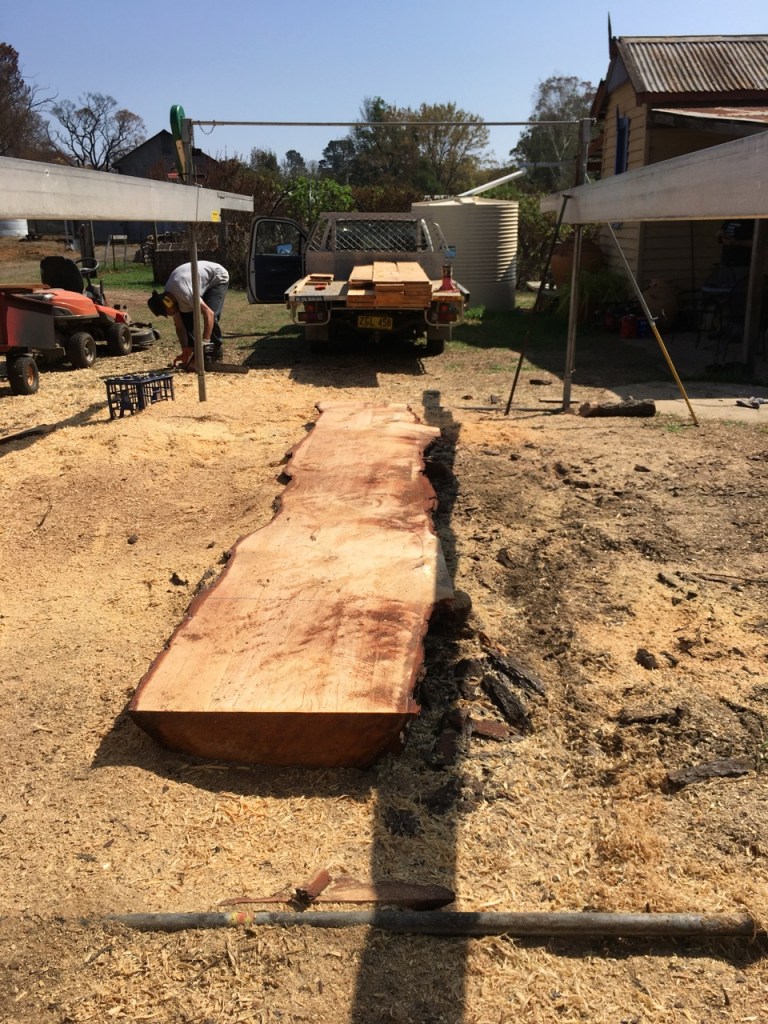
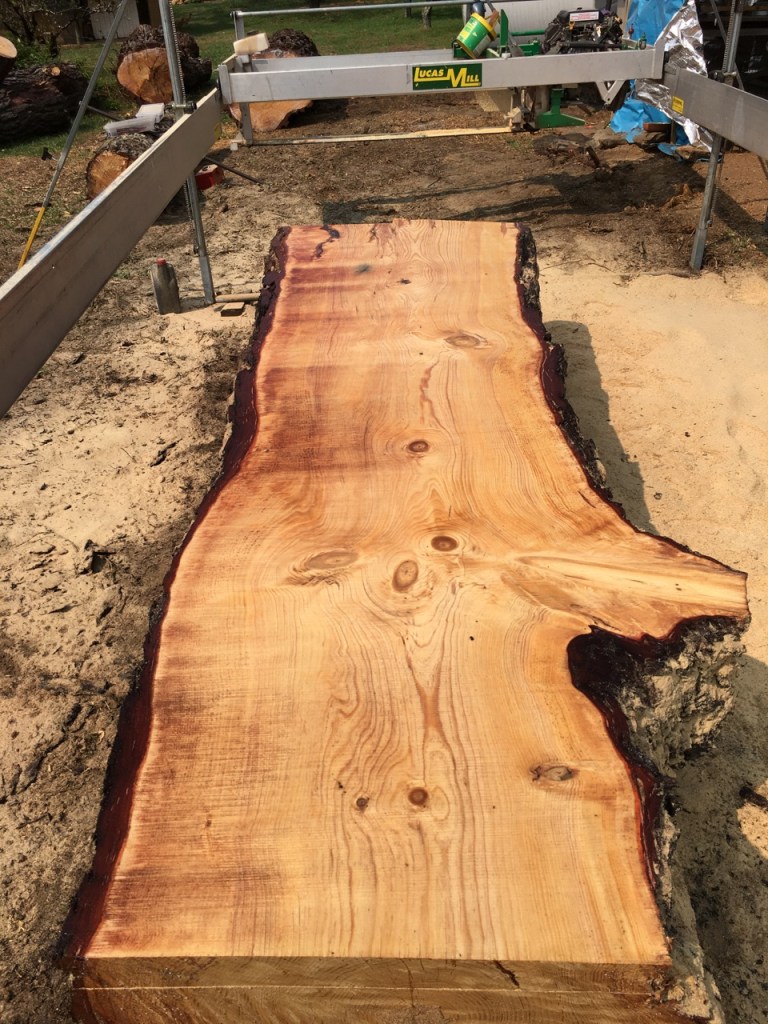
We have spent this 5th week continuing on the long journey of cleaning up this tragic mess. Last week we had the 3 big dead pine trees felled professionally. This week we hired a portable ‘Lucas’ saw mill and started milling the biggest of the pine logs into boards, so that we can incorporate this home-grown and home-milled timber into the lining of our new pottery, when we build it.
We cut nine x 75mm. thick slabs in one day and 90 planks of 250mm. x 30mm. on the 2nd day. The big 75mm. thick slabs are 3 metres long, and 700mm. to 900mm. wide. They will make great work bench tops in one single slab. We will use one in the pottery as a work bench and another for a wedging table. Perhaps a third in the gallery room. I intend to use the planks vertically, as lining boards in the throwing room.
We also cleaned up the stone fruit orchard and took the dead peach trees away to the big burn pile. It’s going to be a huge job in the winter time to burn all this fire affected material. That is if we get a winter, that is safe to burn off these piles.
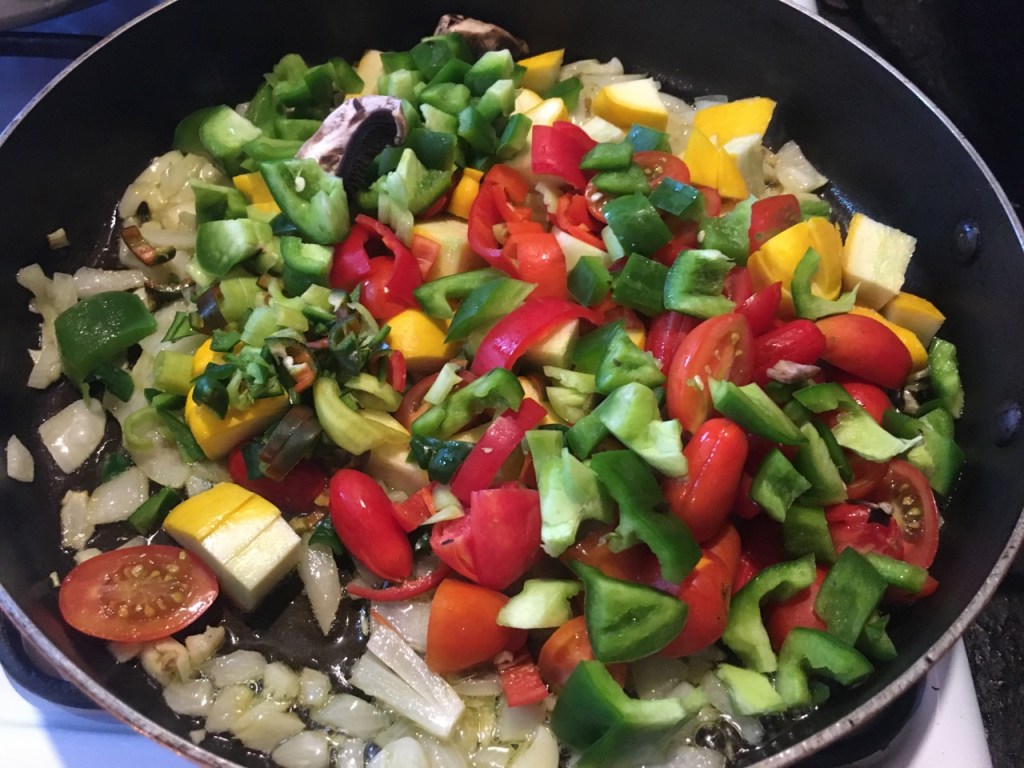
Our vegetable garden, although fire affected, is still just producing a few tomatoes, capsicums and zucchinis. The sweet basil, and chillies on the other hand are booming. They love the hot dry weather.Every meal at the moment is a variation on ratatouille.
At last we are starting to engage ourselves in jobs that have a positive element.
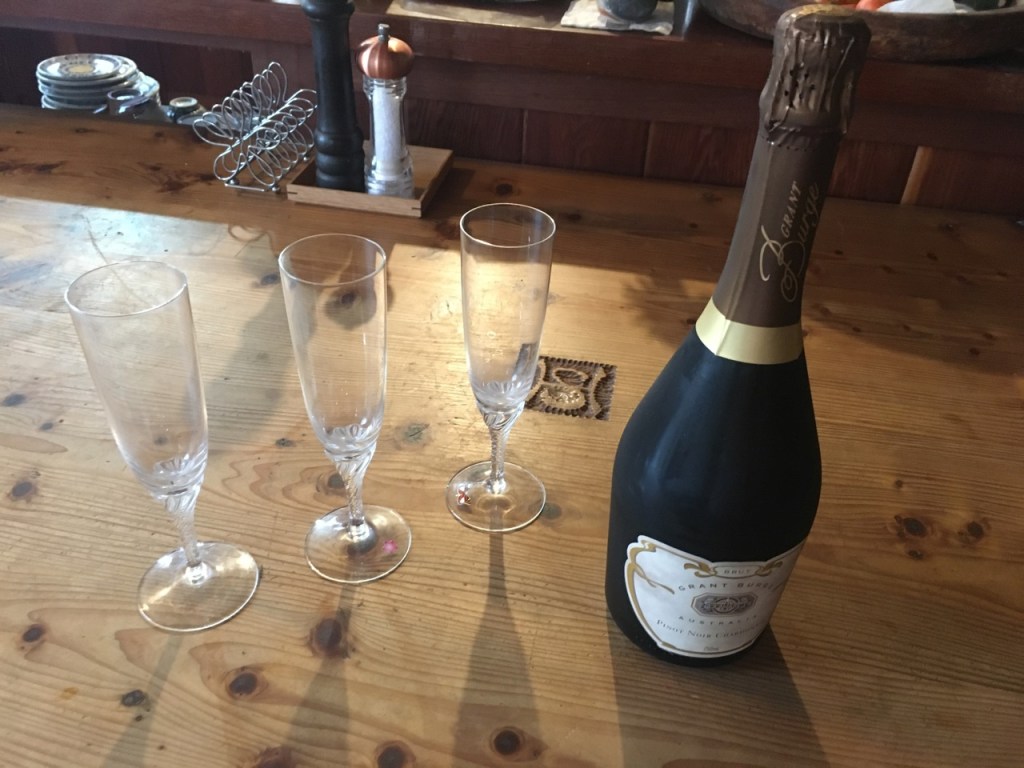
We celebrate a very tough couple of extremely hot days in the full sun, rolling logs and milling them through the whole of these blisteringly hot days. Lathered in sunblock and drinking copious bottles of water, we can’t afford to stop. The mill is expensive to hire at $800 to $1000 per day. Any time spent sitting down eats into our meagre budget. I will be a lot happier after we have heard from the insurance company, and find out what they intend to do. They have emailed us to say that they will payout for the lost equipment in the pottery and kiln shed. but we haven’t seen any money as yet. No mention of the building as yet. In the mean time, turning dead trees into useful lumber is a rewarding endeavour. I’m hoping that I will sleep better, simply from the effort expended and the exhaustion.
As the drought deepens and the climate crisis escalates unchecked, with our politicians heads firmly buried deep in the sand. Crisis, What crisis? We muddle on in our independent, self-reliant, way. With the dam water very low. Actually, extremely low. We are saving what water we have in it for use in the coming weeks with the imminent arrival of the massive bush fire that is ravaging a lot of Eastern New South Wales.
The fire closest to us has burned over 112,000 hectares, or half a million acres, in the last two weeks. It is now just 17 km for our Village. When the next hot, dry, North Westerly wind blows in it will bring it here. Currently, the wind is in our favour and mostly blowing from the west. Inevitably to will swing around at some point. Then our time will come to deal with it Nothing can put out a fire of this scale – only good heavy prolonged rain. That is unlikely in the next month or two. So we just sit and wait.
We have tested all the roof and wall mounted sprinkler systems on the house, pottery, barn and kiln shed. I have even set up temporary, ground mounted, sprinklers on hoses in front of the wood shed and Railway Station building. We have done everything that we can, so now we wait.
The sun is orange because there is so much smoke and fall out from the sky of charred leaves and fine ash, it slowly blankets every thing. The car is covered in fine dust. All the roofs are dusty. Today I had to wash the solar panels 3 times, with mop and squeegee and 3 changes of water in the bucket, in order to get the water to run almost clear. The output from the system jumped up almost 500 watts straight away as I was washing the panels. Not just because they were cleaner, but the washing would have cooled them and made them more efficient.
We have scaled back our summer vegetable garden to just about half its usual size to reduce our water usage and we are only watering the younger and most dependant fruit tress that are one and two years old. All the older trees with deeper and more established root systems are having to fend for themselves. Several garden plants and a couple of older native trees have just keeled over and snuffed it. The times they are a changing. We will emerge from this very dry period with a different garden. When the rains come, it will probably flood. We have been told to expect more extremes in the weather. We will find out which plants can cope with draught and flood.
We have been doleing out our drinking water from the water tanks to keep the blue berries and young berries alive and producing, as well as the early peaches. That will be the sum total of our fruit for this summer. It’s all we can manage to support. Other trees that are not being watered, like the quince trees, have shed all their small partially formed fruit in an effort to save them selves. Ditto, the apples and pears. All four of our fig trees appear to have died, dropped all their leaves, turned brown and lost any sign of green tips at the dried out buds. I spoke to our neighbour at the shopping centre yesterday, and she told me that her parents are buying two truck loads of water each week to keep their garden alive. That’s hundreds of dollars worth of water being trucked in. We have never had to buy water in the past 43 years of our life here. We are frugal and we have planned well in advance. I guess that we will have to learn to live without figs. A small price to ask. But I can’t help but think, which trees are next?
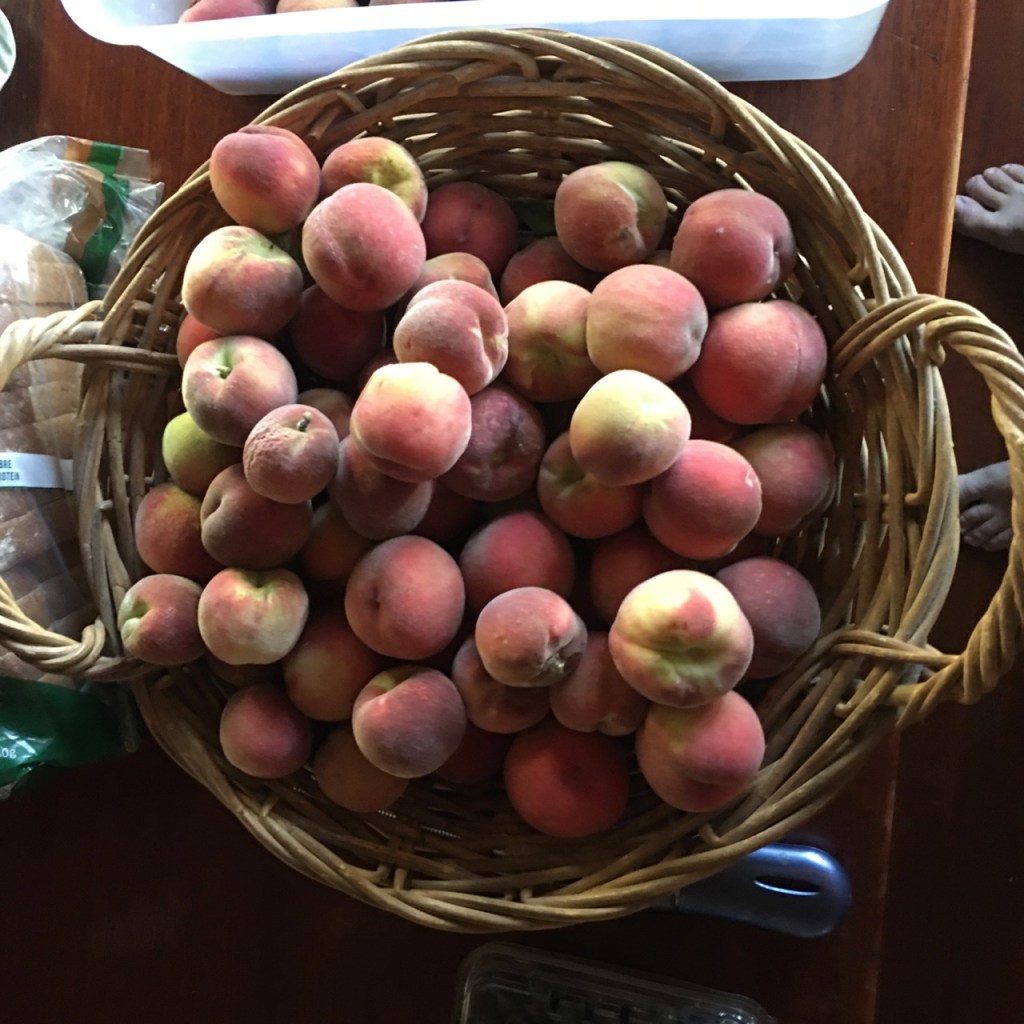
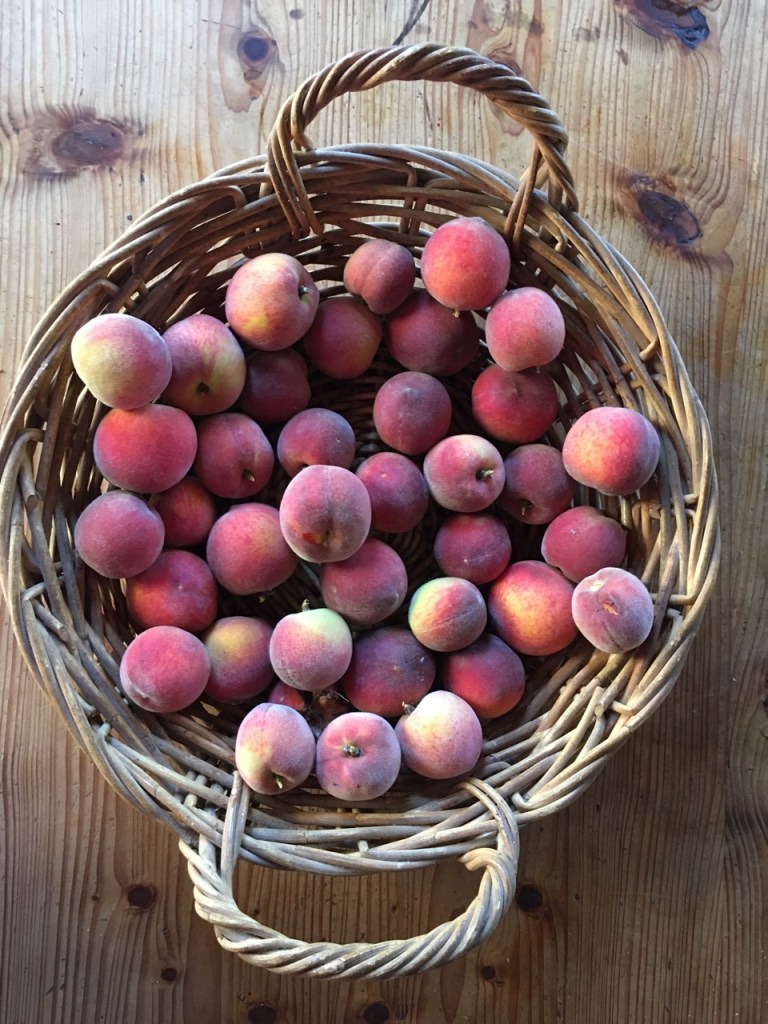
In the mean time we have peaches, youngberries and blue berries to pick and preserve. This last basket full of the early peaches smell divine, fresh off the tree and so warm and fragrant. They are such a treasure, we eat most of them raw for breakfast and deserts, but we also vacuum seal some of them for later.
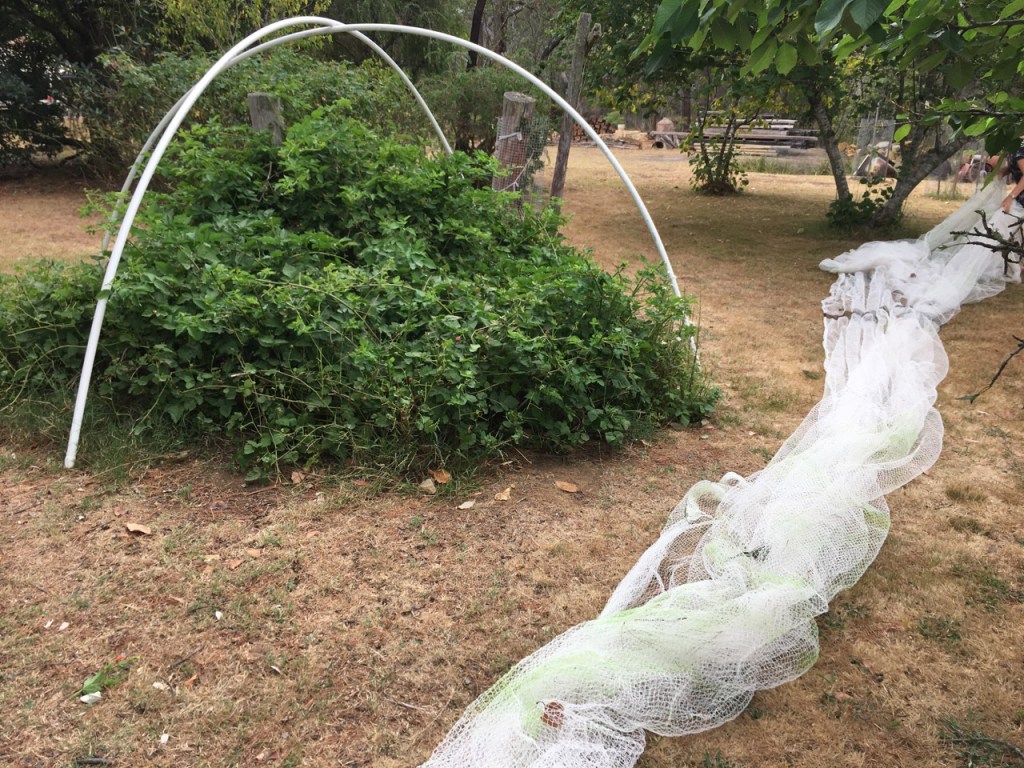
Todays job was to pick the berries. Both Young and blue. This will be the last pick of young berries, the canes started producing on the 24th of November. A whole month earlier than when they were first planted in 1977. We remove the netting and let the chooks in to clean up. The birds will get all the other higher odds and ends. We roll up the net and dismantle the hoop frames. Stored away till this time next year.
This last pick is about 700 g, making a rather small harvest this year, but exceptional, given the difficult conditions. We harvested about 5 to 6 kilos altogether. We have youngberry ice-cream in the freezer and 5 jars of vacuum sealed fruit in the pantry. It’s a pleasing reward for our efforts.
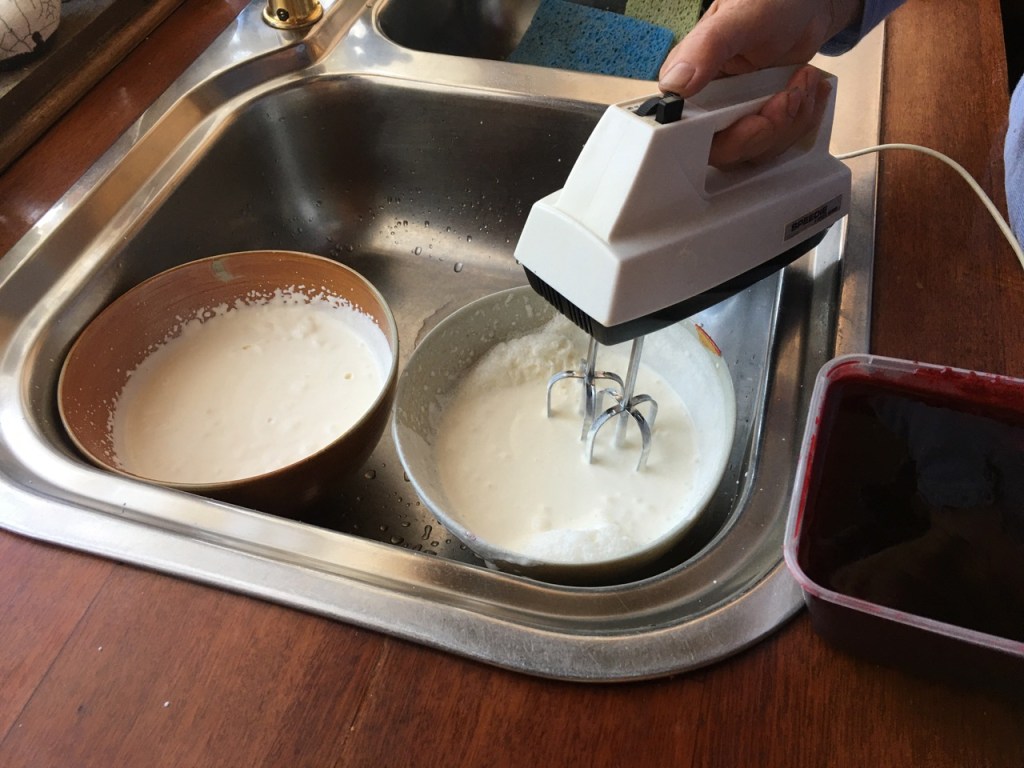
Janine whips berry puree into our local, pure, Picton dairy cream to make ice-cream. Nothing could be more natural and flavoursome. This has to be the most delicious way to get plaque build up in your arteries. At least there are no colours, preservatives, chemicals or artificial substances in there. Not too much sugar either.
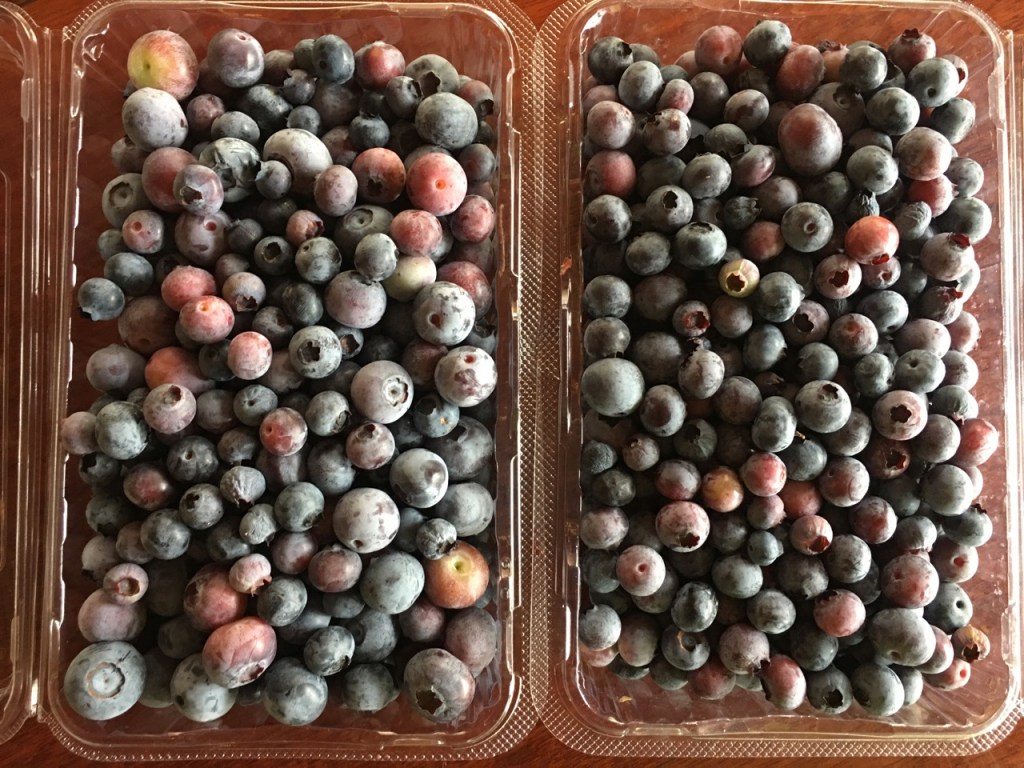
The blue berries haven’t looked back since we potted them and moved them into the netted vegetable garden as a border. This keeps the birds off and makes sure that they get a bit of water every time we water the veggies. They reward us with their fruit. 3 kgs so far this summer and the season has only just begun. The will continue fruiting for a couple of months, into February, as we have chosen early, medium and late varieties.
Blue berries ripen over time, with only just a few ripe blue ones every so often spread out over all the little bunches. They are quite time consuming to pick. But which fruit isn’t? We have to pluck each individual berry from its neighbour in the tight little clusters. Today we manage 700g in half an hour with both of us at it. I have no idea how they produce these things commercially for just a few dollars per punnet. Slave labour?
Its a beautiful and rewarding thing to share this wholesome activity together. We are managing to eat them all fresh for breakfast and desserts so far, but there comes a time when the novelty wears off and we start to freeze some for later. Janine has experimented and learnt to make a beautiful blueberry sauce with a little brandy and cream. We force our selves to eat it 🙂
Banana fritters with berry ice-cream as a second course for breakfast after the berry fruit salad. Someones got to do it!
The transhumance is usually applied to the seasonal movement of livestock in Europe following good the pasture from lowland to highland in the spring for example. Janine and I have been in Europe on two occasions and witnessed a small part of this seasonal, ancient, ritual passage of people and animals. It was a beautiful experience, to witness this event, watching the farmer, his family and their dogs walking the herd of cows down the mountain pass, back to the safety of the lowland farm and its barn with its stocks of hay and silage to sustain the animals through the cold winter.
For Janine and I here on our few acres, we ‘husband’ the passage of water back up hill from the lower dams, up to the higher ‘house’ dam for safe storage over the coming hot dry summer. Back when the weather was more reliable, the winter rains would flow into the upper dam and it would overflow down into the next dam, and then from there, when the 2nd dam filled, it would over flow down into the next dam, etc. etc. We have created what is known as a ‘keyline’ system of dames, so that nothing is wasted. That was of course when it used to rain.
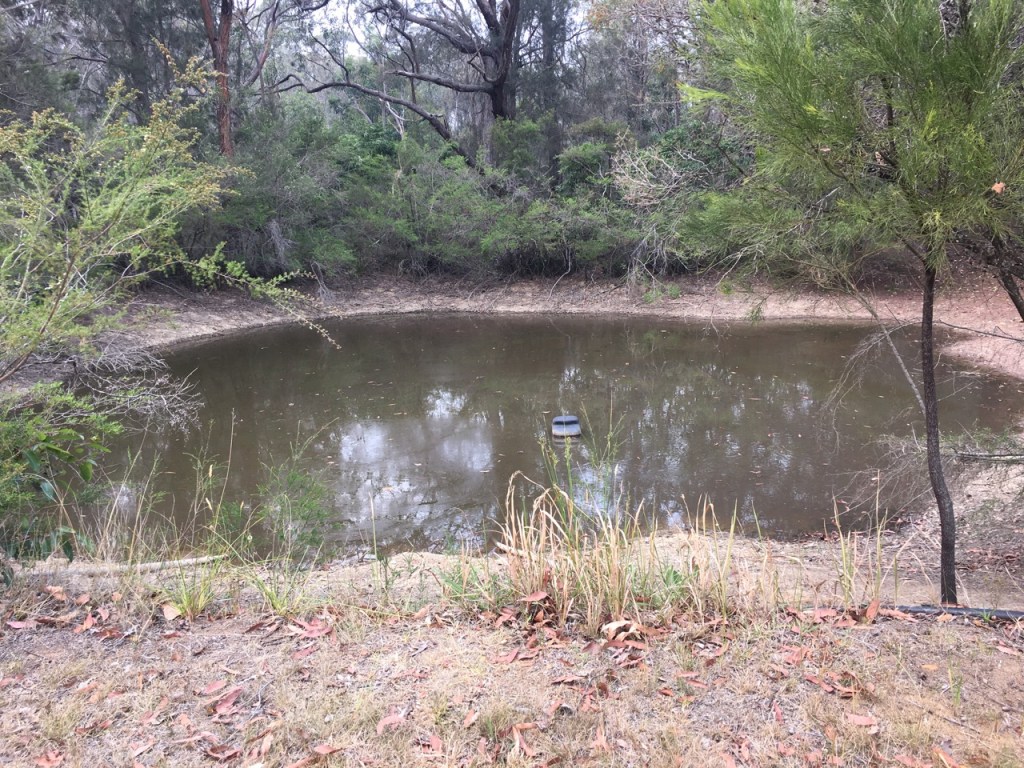
These days it doesn’t rain enough to fill all the dams, but they do have a small amount in each of the 2 lower dams. The big top dam, ‘Max Like’, is totally dry. but it is worth harvesting the water from the two lower dams and collecting it all in one place to minimise evaporation. The surface area is essentially the same, but the water storage is 3 times deeper.
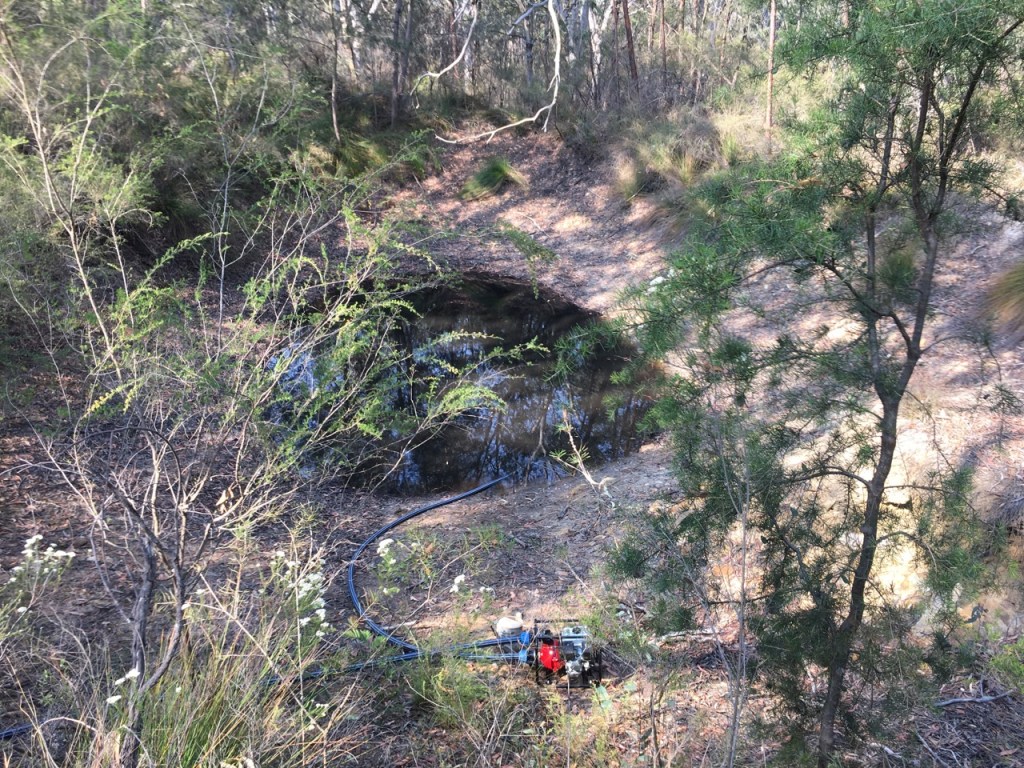
So today I started the water-transhumance for this year. The water is supposed to flow down in the winter and be pumped back in the summer. I don’t have much to work with, but in this way I can get the best out of what I have.
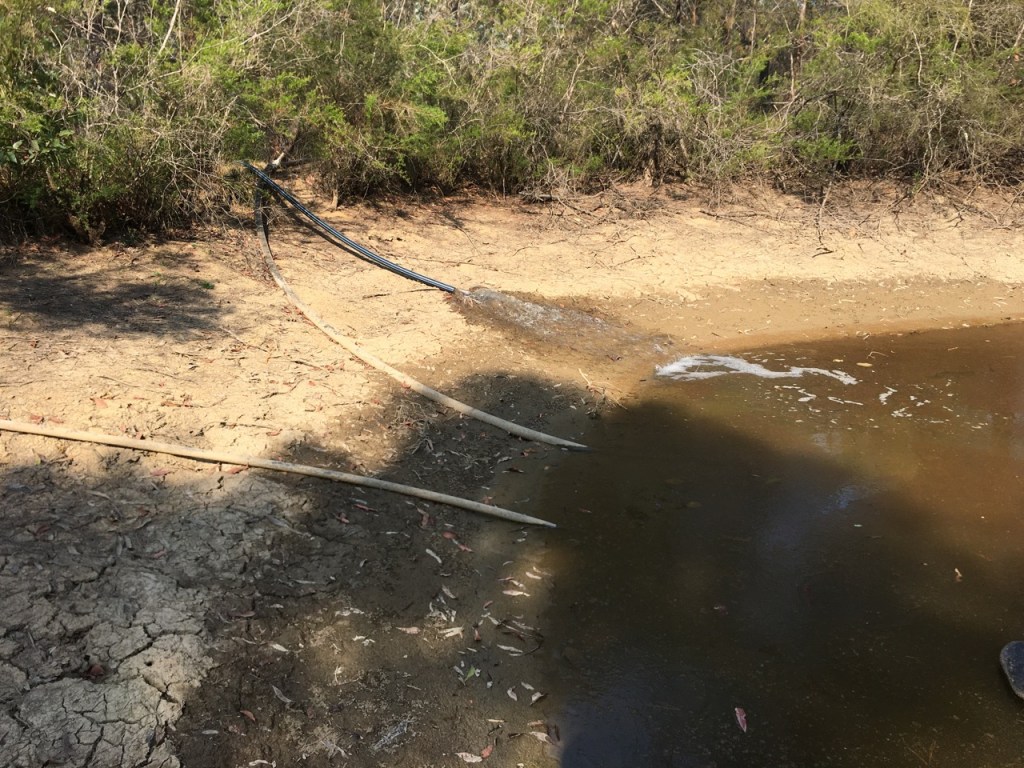
I pumped the bottom dam down to a level that gave me most of the water, but left a little bit for the locals.
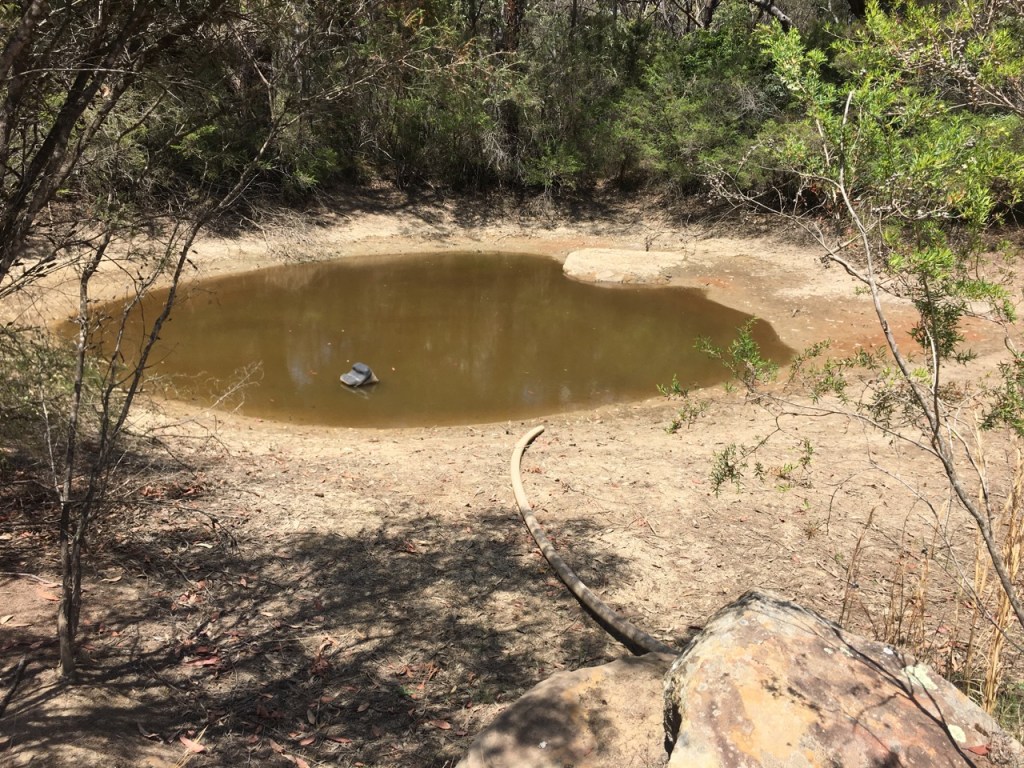
My next job is to move the pump up to the 2nd dam and start shifting it up to the top dam. By the end of the day we should have moved most of the water. There is a big rock in the top dam, when we can see the rock, it means that we are almost out of water. By the time I’ve pumped all this water up to the top dam, the rock will disappear.
Mission accomplished. The home dam is filled sufficiently to cover the rock. That means that we now have over 600mm. deep storage, all in one spot, which minimises the evaporation in there coming hotter weather.
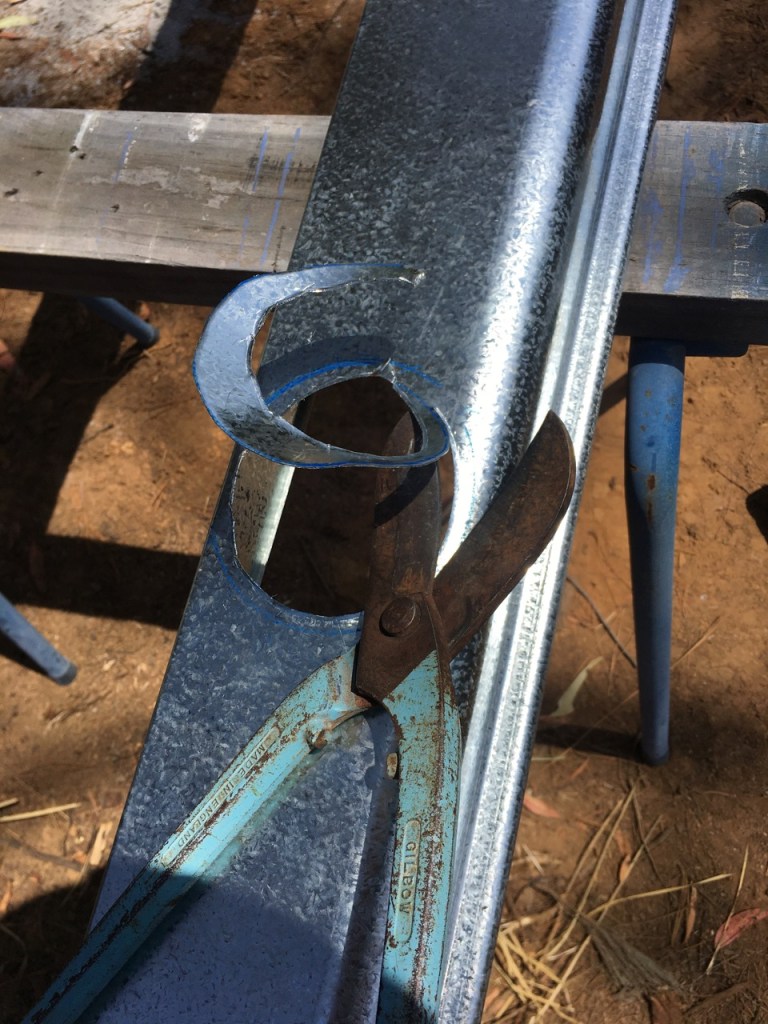
While the water was pumping up by itself. I only need to check it every 15 mins to make sure that all is going well. In the mean time I finish filling in the syphon guttering trench and I make new guttering for the western side of the barn. I was quoted $110 per meter for a professional guttering job. I manage to do it in 3 hours for $147! I just saved myself over $1,000! This is how we can manage to live here on such a small income. Independence through frugal self reliance.
I have spent this long week doing repair and maintenance jobs, from replacing the tin roof on the pottery, renewing the syphon gutter and digging trenches through hard packed dirt, making gutters and down spouts, now shifting water.
Every step I’ve taken this week was involved in water in some way. You never miss your water till your well runs dry!
I’m hoping that I won’t miss any water and that my tanks won’t run dry.
As the weather has slowly dried out over the four and a bit decades that we have lived here, the dams that we dug when we arrived here in 1976, and worked so well for 20 years, are now all dried out. We haven’t had significant rain fall to saturate the ground and flow down the gutters and channels into those dams. So we find ourselves towards the end of spring now with virtually no water in the dams. This is the 3rd year with no significant flows into the dams and the 2nd decade where the dams don’t fill to overflowing. i can’t remember a time when they were all full.
It is quite shocking to me to have to start the year with just 500mm. of water in our main dam. That will only last a couple of hours in a fire situation – if it came today! But there won’t be this much water left in there in a month or twos time, at the height of summer – if any! Evaporation will see an end to that little bit of water that is left.
Our biggest dam, built specially to irrigate the vineyard, we called Max Lake! It is now bone dry since last week, the final little puddles evaporated away in the heat and the wind. No water flowed into it for at least 3 years. It was once a glorious swimming hole in years past. Particularly when our son was young, we had a lot of fun swimming in there over summer. 2 metres deep of serious fun filled water. Now home to just a few dried out reeds.
We used to rely on the dams for our irrigation water and fire fighting reserves. But no more. We have to think differently now. This is now the new normal. We have managed to get through the past few summers using our tank water storage. We have put a lot of effort into installing water tanks on every roof on our land. This has worked very well up until now, But this year we are not quite through spring and we have almost emptied one of our two large water tanks, mostly through watering the garden and orchards. With the global crisis deepening, I can see a time when we will run out of water before the end of summer in coming years.
The most pressing question on my mind right now is what will we use to fight bush fires in late summer and autumn. I guess that we will have to buy water and have it trucked in. Not a happy thought. In particular because when disaster strikes, every one will be wanting water delivered and only the regular customers will be getting service. I know how it works. We have never bought water for 40 years. We don’t even know who sells it these days. So we shouldn’t be relying on that to save us. In a funny quirk of fate, those of us in this village who are poorly prepared and always buy water, will get it, as they must, because they are the most needy. We, on the other hand, have spent our lives trying to be prepared as best that we can be, and are almost totally self-reliant, We will be the the ones to be left to fend for ourselves – as we always have.
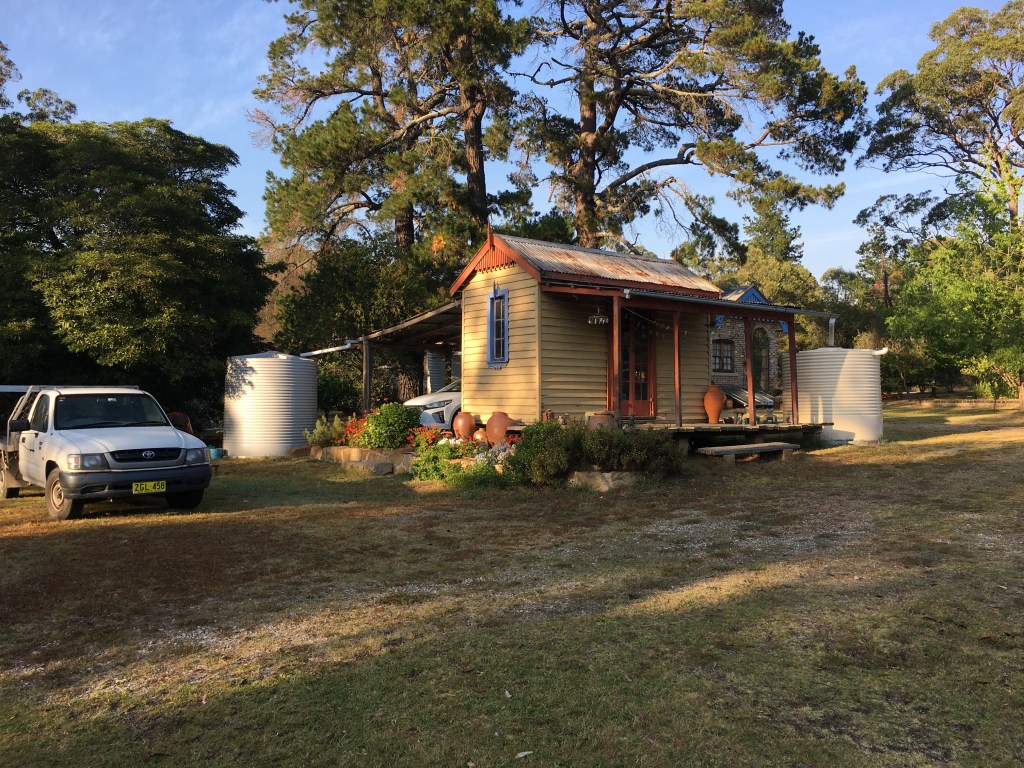
Water storage is very finite and with every roof already having a water tank connected to it. Our options are limited. We have purchased a new, smaller sized, water tank every year now for the past 4 years. Installing those tanks on all the smaller tin roofs on the little sheds, and even the little railway station building has two. Just so that there isn’t any water allowed to be wasted. Once caught and held, then we can use it later at our discretion.
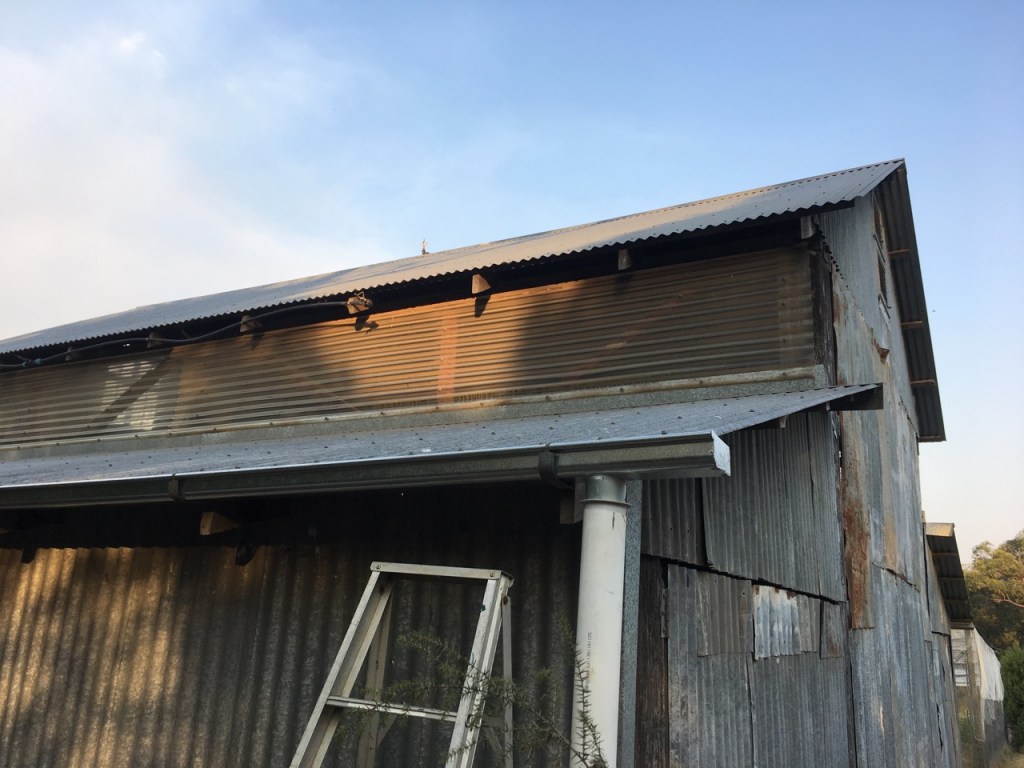
Having thought through the possibilities. We decided to up-grade to a much larger water tank on the barn. The barn has a huge roof, but only a relatively small 1,000 gallon/4,500 litre water tank that we put on there almost 20 years ago when we built the barn, to satisfy the local council building inspectors. We don’t use it for the garden at all. It is there with it’s own independent pump to supply the roof and wall sprinklers that I fitted to the building specifically for fire fighting. As it’s only been used twice in its life. It remains constantly full. However, when it rains and the tank overflows, I have the overflow connected into the plumbing system that delivers the water from all 3 big sheds into the 120,000 litre concrete water tank at the bottom of our block. This is the tank that is now almost empty. I can connect the new proposed tank in parallel with the old one. That way, I only need to do a bit of plumbing.
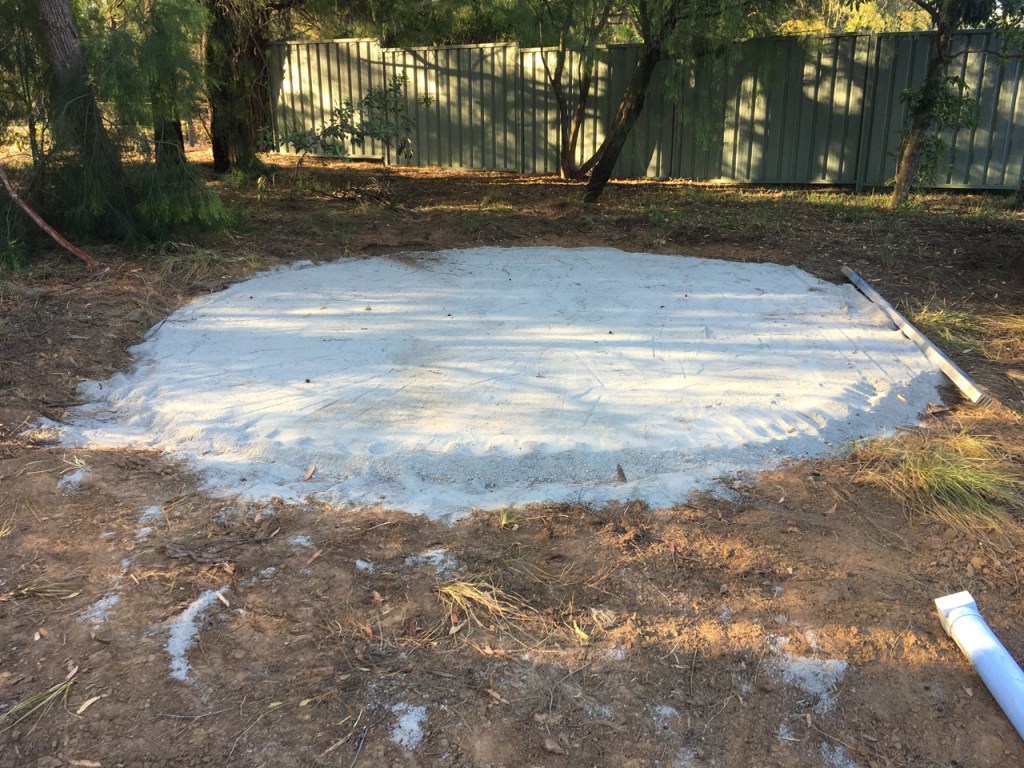
I realise that I can add a 7,500 gallon/35,000 litre water tank on the other side of the building. This is a significant exercise, cutting a 4.5 metre diameter level base through the top soil and placing 2 cubic metres of fine basalt dust, then spreading it and compacting it to make a solid base for the tank to sit on. I’ve been at this job since Friday last week. The base is done now, so I have turned my attention to the roof plumbing. I need to put in a syphon gutter system to take the water to the other side of the shed.
I wonder why it is that I seem to end up doing these jobs in such hot weather. Answer. every day is hot these days. Summer starts 3 months earlier and goes on for another 3 months longer. We are having 9 months of summer these past few years.
The old saying goes, When is the best time to plant a tree? The answer is, 20 years ago! That is also the answer to when I should have put in this larger tank, but I was already fully committed 20 years ago to installing the water tanks that we already do have now. So now is the best time for this new tank! When it rains again, as it most certainly will. We will fill this tank with rain water and be better off in the future. This is just forward planning!
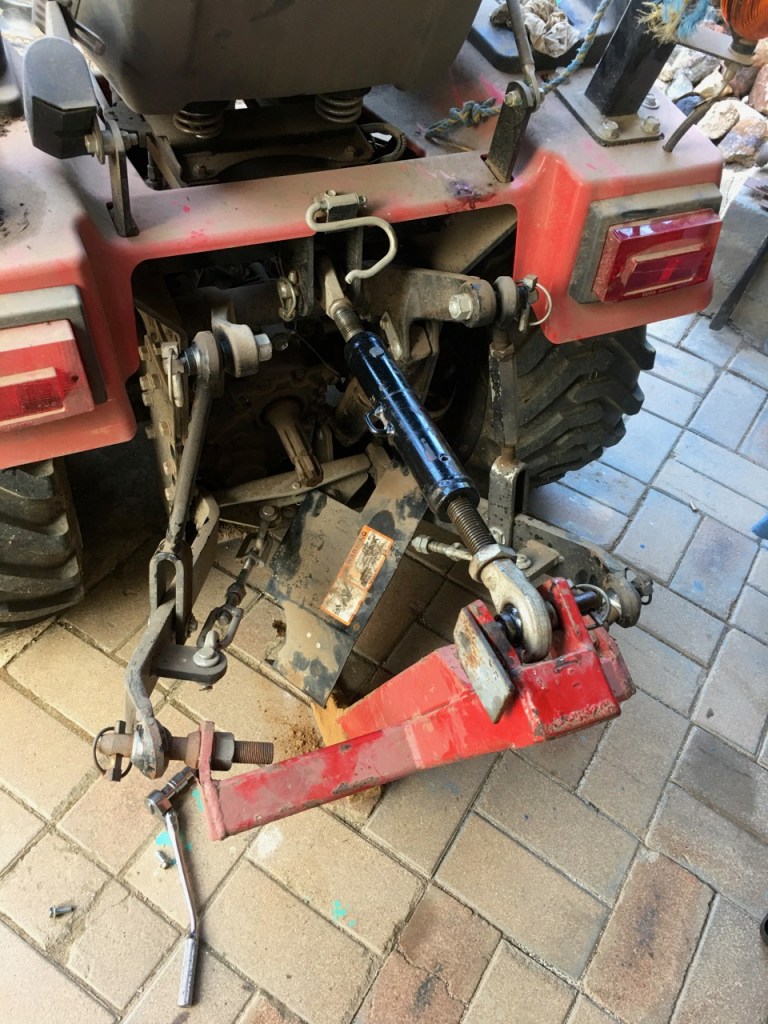
So, today I’m digging this trench into rock hard dirt that is as tough as concrete. I end up having to use a crow bar and a pick to penetrate the soil. I give up pretty quickly and go and get the tractor to try ripping a groove into the hard packed, baked soil. I end up bending parts of the the tractor and need to go to the toy shop, formally known as the kiln factory, to put the bent and broken parts under the hydraulic press and bend them back into shape. If nothing else, I get to spend a few minutes out of the full sun, in the shade, in the shed, making good the repairs. I love the toy shop! I can fix almost anything in there – one way or another.
By the end of the day, I’m pretty rats, but the hole is dug and the pipes are laid and blue-glued together. The new lengths of guttering should be delivered tomorrow?! I should have it all back together by the day after. It can rain by the end of the week and I’ll be OK with that.
As for the new water tank, well, I haven’t even ordered that as yet. First things first. Watch this space !
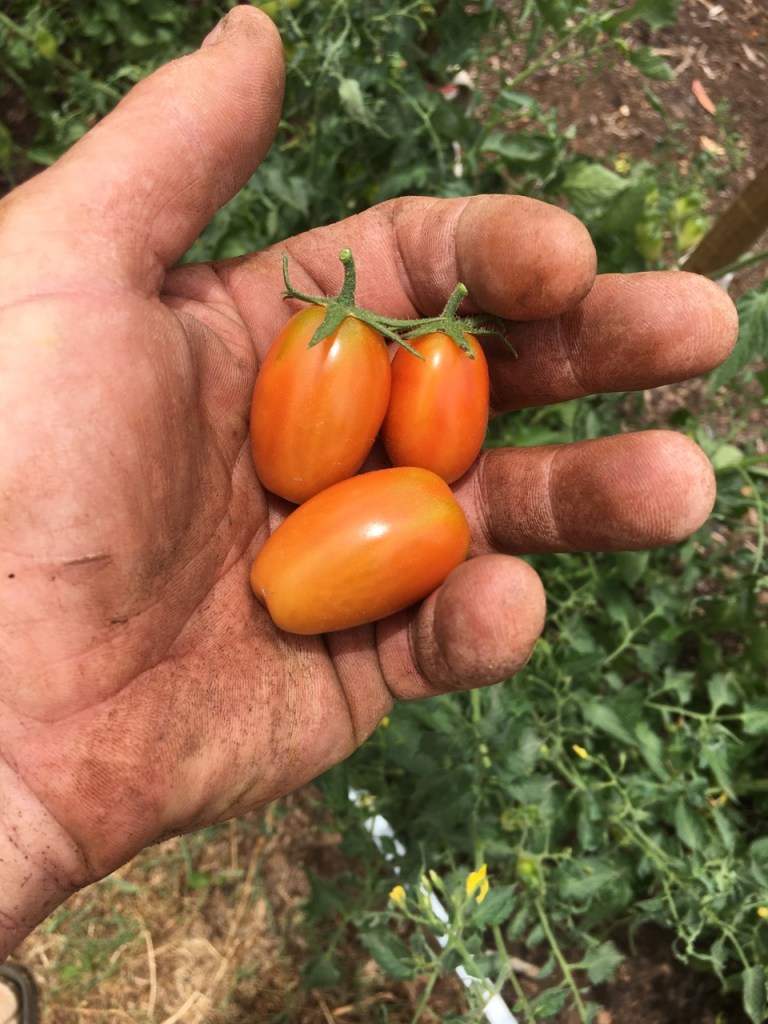
At the end of this days tough work, I go to the garden and find that I can pick the first of this years crop of tomatoes. 3 red tomatoes, It’s the 26th of November. I can’t remember an earlier date for the first red tomato of the season. We can usually get a few before Xmas, but this is a whole month earlier than Xmas. If global warming is a communist plot to disrupt Western economies, as Donald Trump claimed, then, thank you to the Chinese Communist Party for these unseasonably early red tomatoes here in Australia. I wonder how they do it?
Maybe every dark cloud has a silver lining? I’d be happy just to see some clouds! Dark or otherwise.
Janine and I were invited to the Powerhouse Museum last week for a special announcement event. There was free wine and a meal, so of course we went along. 🙂 The Powerhouse Museum recently received a substantial bequest, It was announced that 3 glass artists and 3 ceramic artists have been awarded the inaugural Willoughby bequest award.These artists were chosen by the Powerhouse Museum curators to be included in the museums collection because they are or have been making a contribution to Australian artistic culture through their research and creative work. I am very lucky to be one of the 3 ceramic artists chosen. Among all the Australian potters, I can’t yet reconcile that I am one of the 3 lucky ones chosen. It was quite a shock to me I must say. I can only guess that it is because of my 20 years of consistent research and exhibitions enquiring into the nature of native sericite porcelain around the world? I have known about the award for a couple of weeks, but was unable to say anything about it until now, as there was a media embargo until the presentation awards ceremony last night. I’m humbled, surprised and elated to be chosen. The other 2 ceramic artists chosen are; Renee So, a ceramic artist born in Hong Kong, raised in Australia, and now working in London. Nicolette Johnson is a ceramic artist born in London and raised in Texas, but living in Australia now for 5 years.The 3rd ceramic artIst is me. Wow! How could this happen to me? I don’t know! I don’t have a social media presence on facebook, twitter of watsap. I don’t go to openings and don’t do any networking. So I still don’t know how they found out about me and my research. It’s a mystery to me.The other two ceramic artists are young, talented, hip and sassy women, making terrific cutting edge work, who are winning awards and being represented internationally. On the other hand, I probably represent the old fashioned approach to making pots. Fossicking, digging, processing, then ageing the mica based stones that make my work from. It’s not really done that much – if at all, anymore. I grow most of my green food in my garden and orchards. I also grow most of the wood fuel that I use to fire my wood fired kiln and the kitchen stove and home wood heater. I try and do every step in every part of these processes myself, and do it sustainably.
The selection of such varied and different artists certainly illustrates a depth of research and breadth of scope in the curator, Eva Czernis-Ryl’s decision making process. I’m very grateful and pleased to be honoured. I really hope that I can make something that lives up to this onerous responsibility of receiving my small part in this amazing bequest award. It’s such an honour!I did notice that there are 3 men and 3 women, 3 glass and 3 ceramic artists, with Adelaide, Brisbane, Wollongong, Mittagong, Canberra and London represented, spreading the selection around. Because this is called the Barry Willoughby ‘Inaugural’ Bequest Award, it hints at the possibility that there may be other awards at some time in the future…However, I got the impression that it will not be a regular event. Best wishes Steve
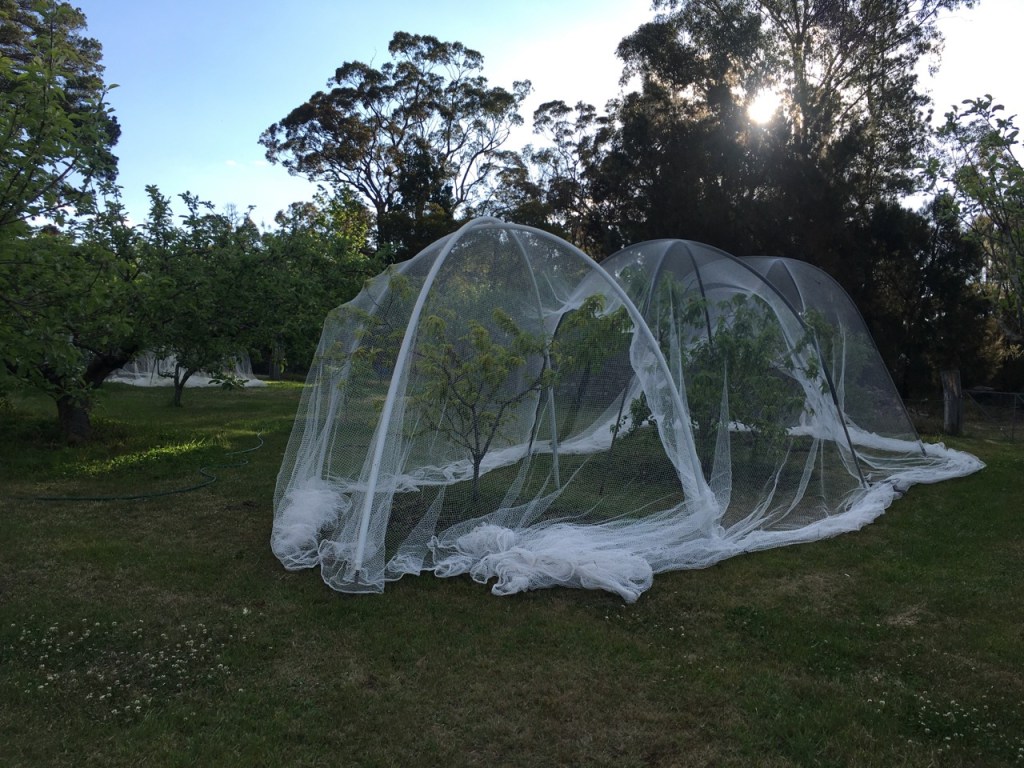
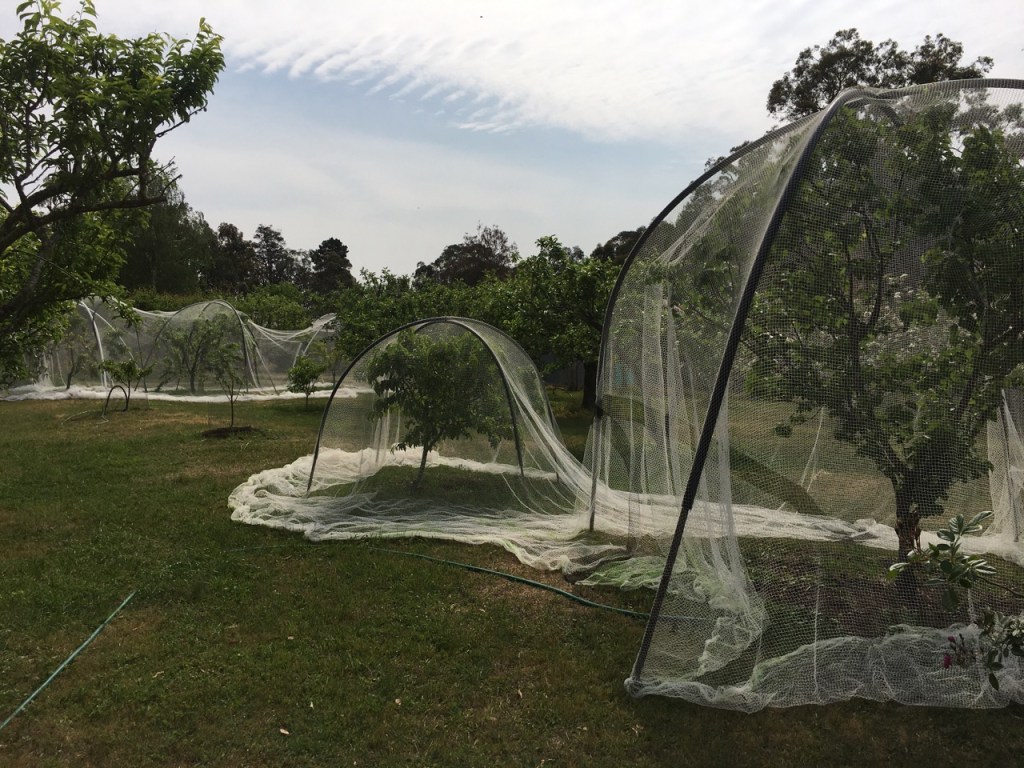
Janine and I set up the plastic pipe hoops and installed the netting over the peach tress in the stone fruit orchard 3 weeks ago as the fruit started to appear. These early peach trees develop their fruit so quickly. They swell from buds in no time flat.
We knew that it was time to cover them when we saw parrots in the trees starting to eat the tiny young green fruit. It’s been so dry here as the drought drags on. Actually I don’t believe that it is a drought – an unusual event, that is just bad luck, as the politicians would have us believe. No! I believe that this is the new normal for us in this continuously developing global heating crisis. The rain fall pattern has been changing and our share of the rain has been steadily decreasing ever since we settled here 43 years ago.
We used to be able to get by here in this place with the water that we collected in our dams. We used to get terrific, short, intense rain storms, that would drop 20 to 25 mm. of water in an hour or two. This sudden flow of water had no time to soak into the soil and just flooded down the road in the gutters and then down the ditches that we had dug to harvest that flow, and into our dams. A good storm like that gave us sufficient water to get us through the best part of summer. We don’t get those storms any more, not for a decade or more now. In the 70’s we could get two or three of those storms in the summer months. Sadly no longer.
I have been a long-term subscriber to ‘NewScientist’ magazine, published out of the UK, but we now have our own branch here in Australia these days, with an Australian edition, so the Australian content has been increasing steadily. Over the 45 years that I have been a subscriber and reading the research published on our increasing emissions of carbon into the atmosphere. I’ve seen the steady increase in certainty in the science behind our understanding of the evolving crisis. I’ve also seen the strenuous denials from the carbon intensive industries lobby, building from straight out denial that the earth is warming at all, to now admitting that there is warming, but it is nothing to do with carbon in the atmosphere. All the denial and fake news claims, even the spurious pseudo scientific fake ‘research’ sponsored by the carbon lobby, is straight out of the cigarette industry playbook.
We are drying out here, slowly but surely. We have some peaches on the early peach trees, but there are no apples and just a few pears, as there wasn’t enough cold nights over winter to build up sufficient ‘winter chill hours’ that the fruit trees require to be able to ‘set’ fruit. We did get a ‘set’ of cherries on the trees, but with the exceptionally dry conditions, it has driven the kangaroos up out of the dense bush in the gullies up into our back yard and right up to the house in search of food. They have begun eating the cherry trees lower branches and the parrots have taken all the fruit while it was still green and hard. I’ve never seen that before. These wild animals are obviously very hungry.
In some ways it’s OK, as now we don’t have to worry about keeping the water up to the orchard, as we are very low in water storage. All 4 dams are close to empty. I need to get the portable petrol pump out and pump all the 3 other dams dry and locate all the remaining water into just one dam to minimise surface area and evaporation. We may need that water to fight fires over the coming summer.
At the moment we are OK, we are managing to water the vegetables and the few peaches from our rain water storage tanks, but this is a finite resource. We are already half way through our main large water tank, and we are still in spring! We still have one more large water tank full. That is our reserve supply. We’ll just have to wait and see how things pan out.
With almost every roof on our property already fitted up with guttering and a rain water tank, it’s hard to imagine how we can increase our storage in the short term. We can only double up on our storage tanks to catch the overflow from the original tanks, should there be a big storm – which there will be one day, bit that isn’t going to be any help just now.
For the time being, we have some early peaches to console us and reward us for our efforts.
We get to spend a day in the Longquan Celadon Museum. I am travelling with my friends Len Smith and Robert Linigan. I am very interested in these old Celadon pots, particularly from my point of view of the inspiration that I can gain from the best pieces and equally importantly from what i can learn from the shards and broken sections. There is so much to glean from being able to see inside the clay body and looking at the interface between the body/glaze layers.
I love these rich and sensuous fatty celadons, guans and ‘ru’-like glazes. These are some of my favourite pots. It’s not too surprising that I like to try my hand a making glazes with this kind of influence. I wish that I could make something as good as this. It’s a quest.
In particular, I am keen to make my clay bodies and glazes as authentically as possible, by digging up all my own minerals, rocks and stones, then mixing them with ashes from my fireplace, where I burn the wood from my own forrest. It’s a complete commitment to my philosophy of self-reliance, not just in ceramics, but in my life. This coupled with a keen interest in the soft delicate beauty of ceramics the way I envision it. Not just the look, but also the feel of the surface. Equally important to me is the tactile impression -‘feel’ and balance of the pot in my hands, as well as how it will function when I eat or drink out of it.
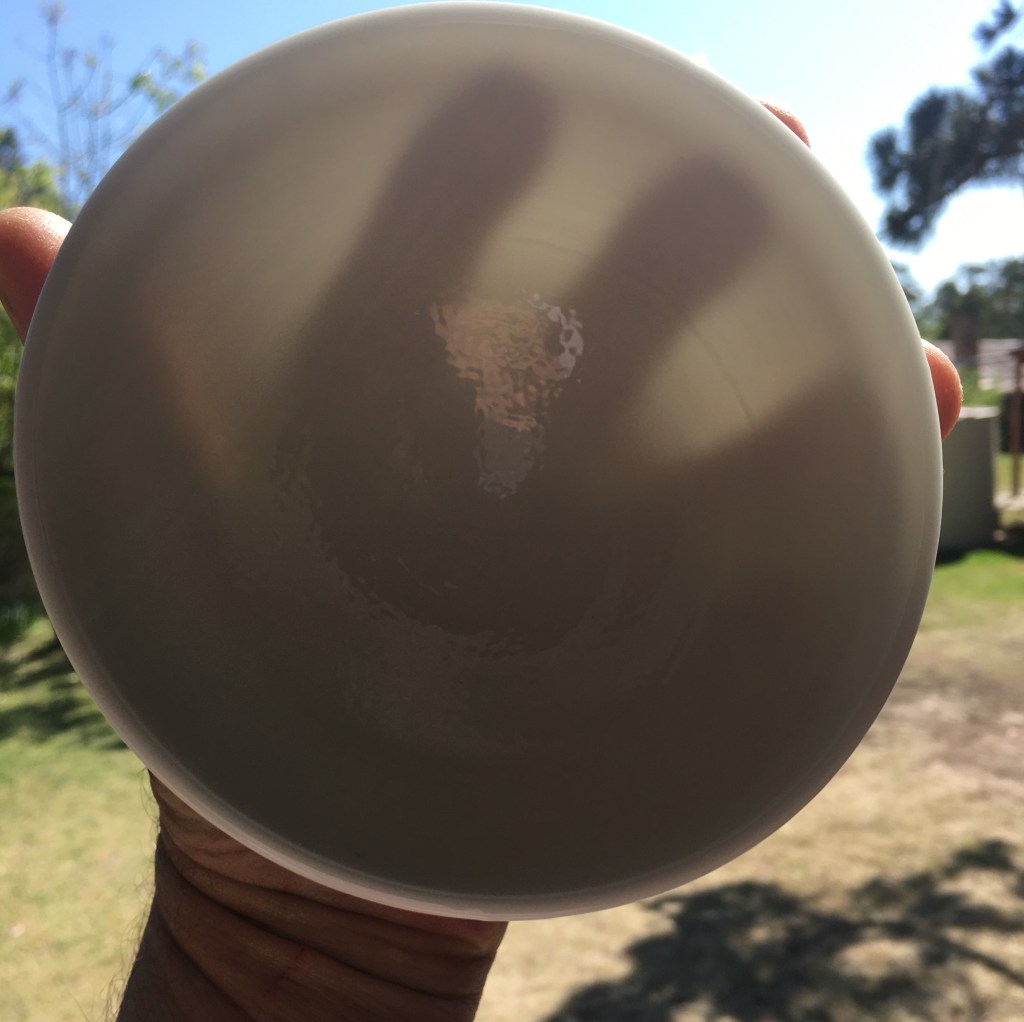
My favourite coffee bowl at the moment, for my morning bowl of coffee, is a small white tenmoku bowl that is very translucent and very white, made from one of the Chinese sericite bodies that I have experimented with. It gives me a lot of pleasure just seeing it and handling it, even before I drink the coffee from it. It is beautifully balanced, only slightly weighted to the lower half for stability. It looks and feels gorgeous. I’m particularly fond of the slightly out-turned rim that is an essential quality of the tenmoku form. I’ve been using it for a year now and I’m still not bored with it.
Some of the unique qualities that I find I really engage with, are all its ‘faults’ – if that is what they are. I prefer to think of them as being part of its unique character. You can’t buy this bowl from Aldi on special for $2. Their white bowls may look superficially similar, but this pot has a story embedded in it that is only very slowly revealed over time as you get to know it.
For instance, because I’m not a very good potter, I don’t go to all the trouble of trying to make things perfect. Simply because I realised long ago that perfection only exists in the mind of the beholder, therefore can never be achieved, so why bother. Better to make things with character. This bowl for instance has a slightly mottled surface to the glaze, it has a very gentle undulation where the very thin clay body saturated during dipping and the glaze didn’t adhere perfectly. I have come to love this slight quirk of its appearance more than the very smooth glazed surfaces that I can sometimes make. This is a special part of this pots own history of its making.
Another point of interest for me is the hint of the remainder of the clay slurry on my hands left embedded in the surface of the clay after I finished throwing the pot on the wheel. I left it there as a reminder of the touch of my fingers. It is almost imperceptible, but it remains. I wasn’t aware of it presence initially, but it slowly became apparent to me as I got to use it, handle it and wash it up often. Not all my pots have this effect left in them, sometimes I wipe the inner surface clean with a fine textured sponge. At other times, I turn the inside of the pot with a trimming tool when I turn the foot. It all depends on how I am feeling about the pot as I make it. I never quite know how I am going to feel about what I make on the day. So its a surprise to me to be reunited with my own pots, post firing, and to re-discover their special qualities.
I can just see this swipe of my fingers in the image above. You won’t find that in a pressure cast or jigger-jollied bowl from IKEA.
This bowl also has a single iron spot in the glaze, just below the rim. It’s a bit like a beauty spot. I didn’t put it there, but I’m OK with it. This is a real object of beauty and interest. It isn’t perfect. It’s just gorgeous. It also shows my two stamp impressions. One is my initials, the other is the workshop stamp.
Finally there is the total lack of an obvious foot ring until you turn the bowl over and look underneath. I hid the foot recess inside the bowl form to minimise the weight, so as to keep this delicate bowl as light as is possible, but still have an elevated form that lifts it up off the table in a continuous elegant curved line. This is not true tenmoku form, but I think the it is better on this pot.
In the Longquan Museum we saw a lot of shards with loads chipped edges, shattered rims and broken bases. I loved this part of the display. It was all real. Many of the perfect examples had long ago been taken away to other larger collections, as this is only a smaller regional Museum. What was left in this Museum were all the other pots. I learnt a lot form looking inside the shards to see the very same qualities, problems and faults that I get in my work, using very similar materials and and almost identical techniques.
What I found particularly reassuring was that I am not alone. Someone else, 800 years ago also went through all these technical trials and difficulties to arrive in a similar place. Ultimately, there is the reward of the occasional lovely piece that survives.
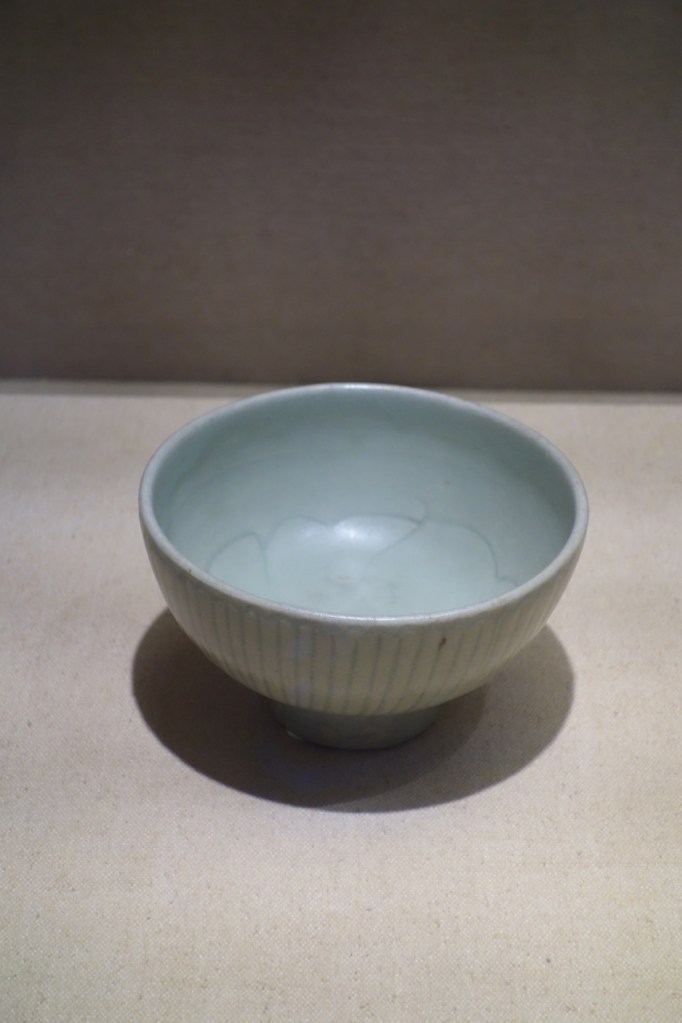
This bowl is lovely, but what others probably don’t see, but I did, was what, at first glance, appears to the an incised line inside the bowl. That is easy to see, but it is in fact not an incised line, but a remnant of its making that appeared in the kiln during firing and wasn’t there when it was packed in the setting. It was formed in the fire. That wavy line is the raw glaze surface drying out and cracking slightly. The crack then doesn’t completely heal over when the glaze surface melts, but remains as a line in the glass. Perfectly fused, but hinting at its life before it became ceramic. I get it often in my glazed surfaces. It used to annoy the hell out of me, as there was no way that I could see to prevent it happening, if you fire long and low to make that particular satiny surface, it’s just what sometimes happens. If you fire hot, it disappears in the fluid melt at top temperature. This ‘scar’ is a relic of its process and making. I now look on these healed over cracks as an authentic product of the unique process that I indulge in.
Nothing is perfect. Nothing lasts. Nothing is ever finished, and that includes learning.
I used a wooden framed, foot operated, treadle, potter wheel. It’s a very old ‘Leach style’ potters kick wheel. Designed by Bernard Leach, way back, early in the last century. That’s almost a hundred years ago, coming up sometime soon. This actual wheel was handmade in Australia under licence sometime in the 1970s. That makes it almost 50 years old.
When I started to learn about hand made pottery in 1969 I bought a 2nd hand ‘Leach’ kick wheel to get me started. I loved it so much, that I have used them ever since. I have tried other pottery wheels, but keep on coming back to this energy efficient, human powered potters wheel. Tragically that first wheel was lost in one of the two fires that have devastated our pottery workshops over the 50 years of my career as a potter.
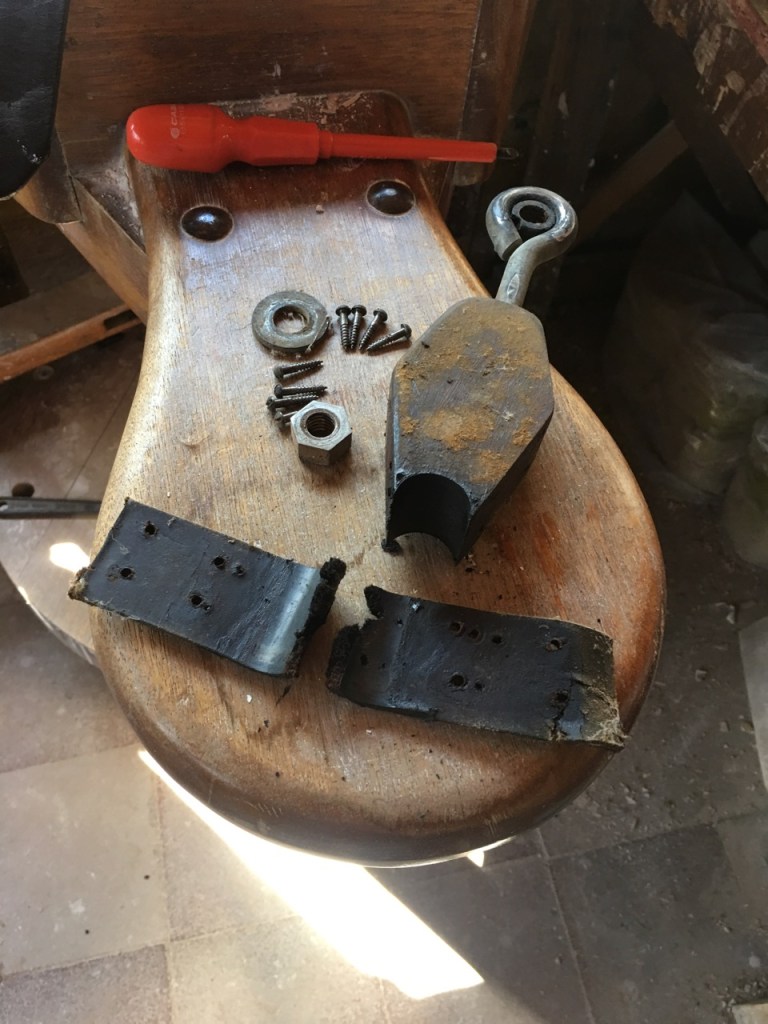
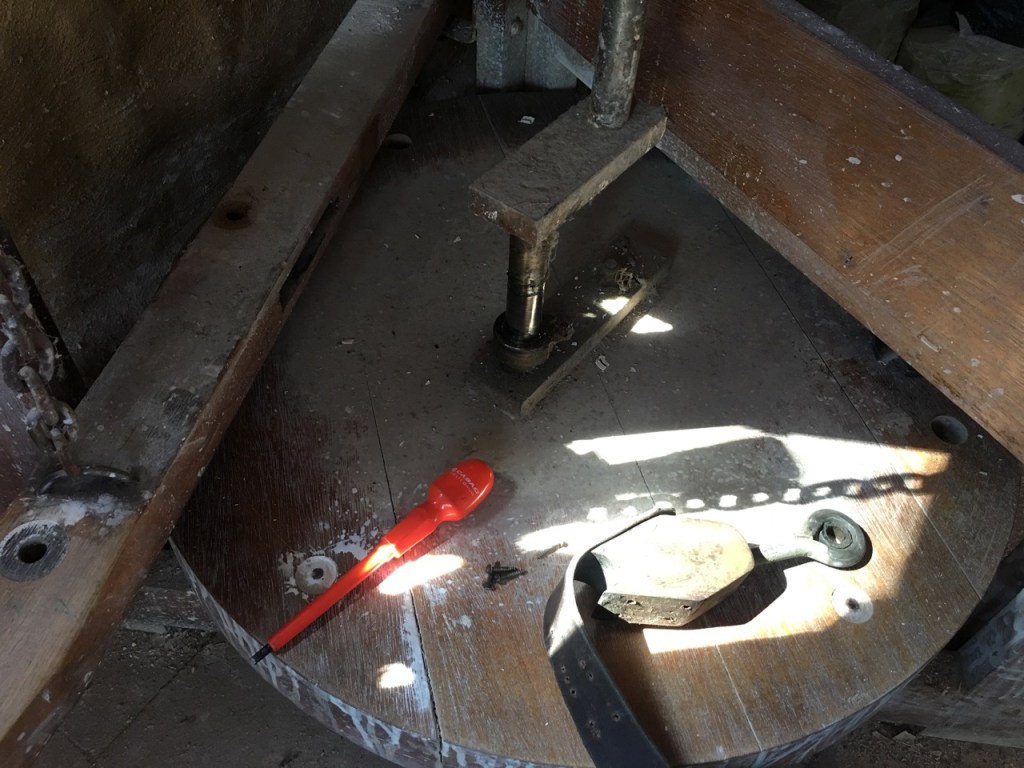
The other day I was throwing a large pot of 3 kgs of clay. Not so big compared to what other younger potters can throw on an electric powered potters wheel. But about as big as I like to go on this old wooden treadle wheel. Well, I was pushing hard to get the mass of clay onto the centre, when ‘CRACK’ ! That was the end of my throwing session. I had busted the leather bearing that connects the foot treadle bar to the steel crank shaft. It was reminiscent of peddling your bike when the chain suddenly comes off the derailleur gears. Everything sins free and there is no response to the effort of peddling.
Now it just so happens that only last weekend I was at a ‘Lost Trades’ weekend market and exhibition and my good friend Warren, the guy who can do anything. Warren decided to buy a hand made leather belt. But his plastic card wouldn’t work on the ancient, lost trade, candle powered, banking machine that was available on the site, so I lent him some money to pay in old fashioned cash. The Lost Trades traders still have the ability to take cash! That is a skill that isn’t lost!
I asked the leather worker if I could have the excess leather from the very long blank belt was was being custom fitted to my friend. I got 300 mm of leather belt material. The leather worker, who I knew, knows that I am a potter, and I have bought my belts from him in the past. He asked me what I wanted the leather for. I told him about my very old potters wheel and its antiquated leather bearing. How amazing that the very same piece of leather bearing would snap just a week later. I am so lucky!
.As good as new – well almost
So I had to stop work and do a running repair. I was prepared. In less than an hour I was up and running again. I bought this potters wheel 2nd hand, after the last fire in 1983. The old leather strap had lasted 36 years! Not too bad for a thin leather strap.
I’m wondering how long this new one will last? I only used half of the piece of leather for the repair, so I still have another piece in reserve for 2055.
I’ll be over a hundred years old by then, so it probably won’t be my problem.




























You must be logged in to post a comment.