Making the Most of Winter

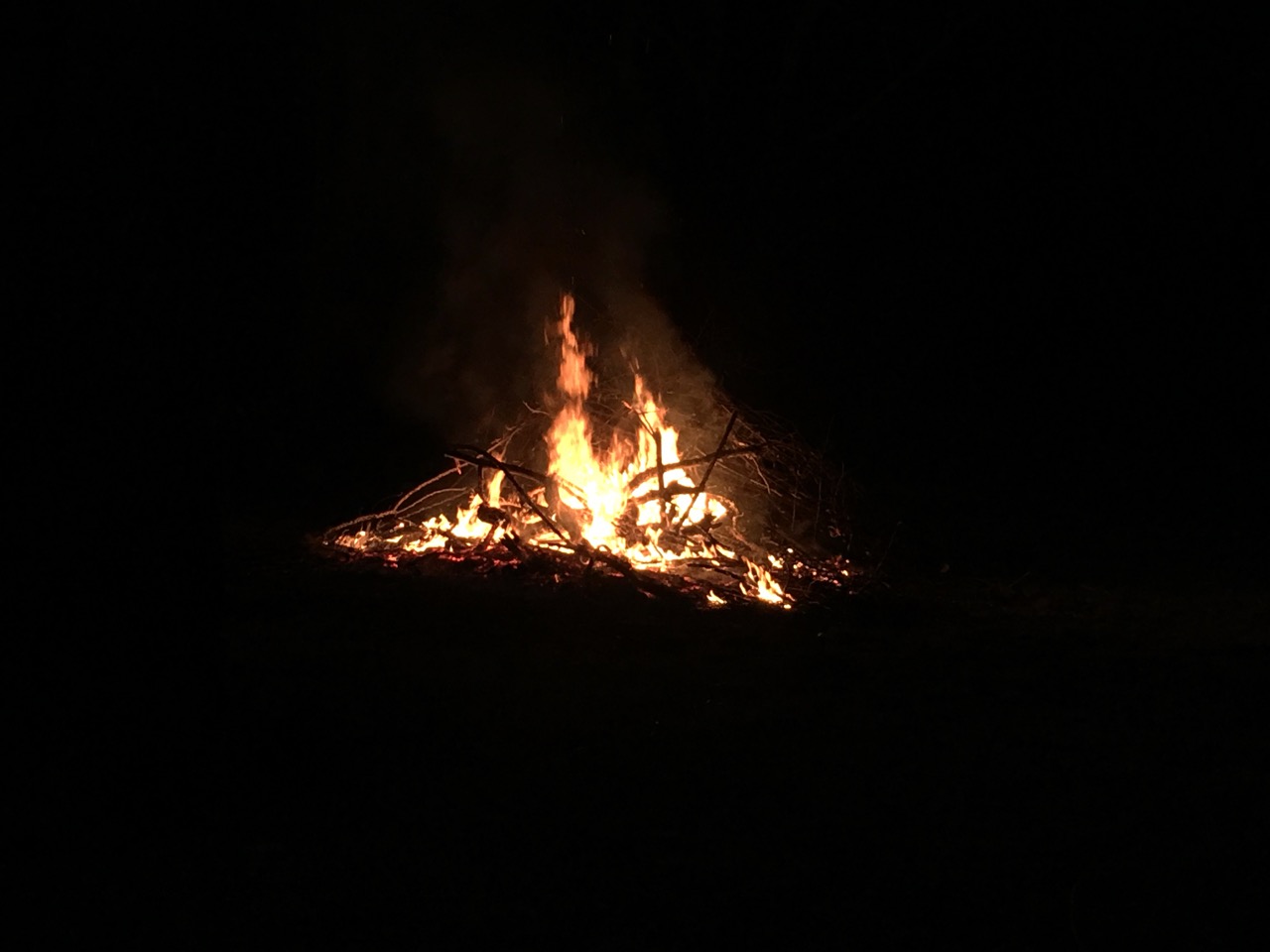
It’s another blowy, blustering cool day, with a wind that is bringing down a few branches. Luckily, it was quite still yesterday evening, so we decided to burn off our pile of garden, orchard and vineyard prunings. We manage to assemble quite a pile of these prunings during the autumn pruning period. We pile them up to dry out for a couple of months and then burn off the pile at the end of winter, just before the spring fire bans come into force. In the past we have waited for a cool damp night after rain, but it just hasn’t rained at all for months, so the pile just sat there. 
Last night was forecast to be damp with the possibility of a slight shower. That was good enough, After dinner we went down to the burn pile site, next to the Pantryfield garden and lit it up. It was a very slow quiet burn that took 3 hours to get through all the sticks, twigs and branches. By 11 pm it was just a pile of white ash and a few glowing embers. It’s a good feeling to get the fire hazard out of the way before summer, otherwise it would have to sit there for another 8 months. Fortunately it started to rain ever so gently later in the night, just half a mm. in the rain gauge this morning, but enough to settle it all down.


 Today a fierce, gusty wind has settled in, so we are back inside, after doing all our jobs, collecting fire wood and stacking it inside ready for tonights fires, watering the small seedlings and cleaning up. Now the sun is fully up, we drove the car down to the high amperage charging station down by the kiln factory. The kiln shed has 3 phase power installed, so we placed the fast charger down there, as there is no electricity in the car port. The kiln shed roof also has 6kW of solar panels on its roof, so direct access to the solar power for charging the car and firing the kiln.
As we’re inside, we decide to deal with kitchen duties. We held our second marmalade making workshop at the weekend, so there are numerous small jars of marmalade to be washed and dried , then labeled and stored away in the pantry. We made 3 batches, each slightly different, but all of them centred on Seville oranges, of which we have a beautiful crop this year. Hard to fathom, as we are currently in a drought. But we have been watering the citrus grove regularly.


Each large boiler, makes between 7 to 10 jars of marmalade, depending on the size of the jars. Our very good friends Toni and Chris turned up and the afternoon eventually wound it’s way into evening and dinner.


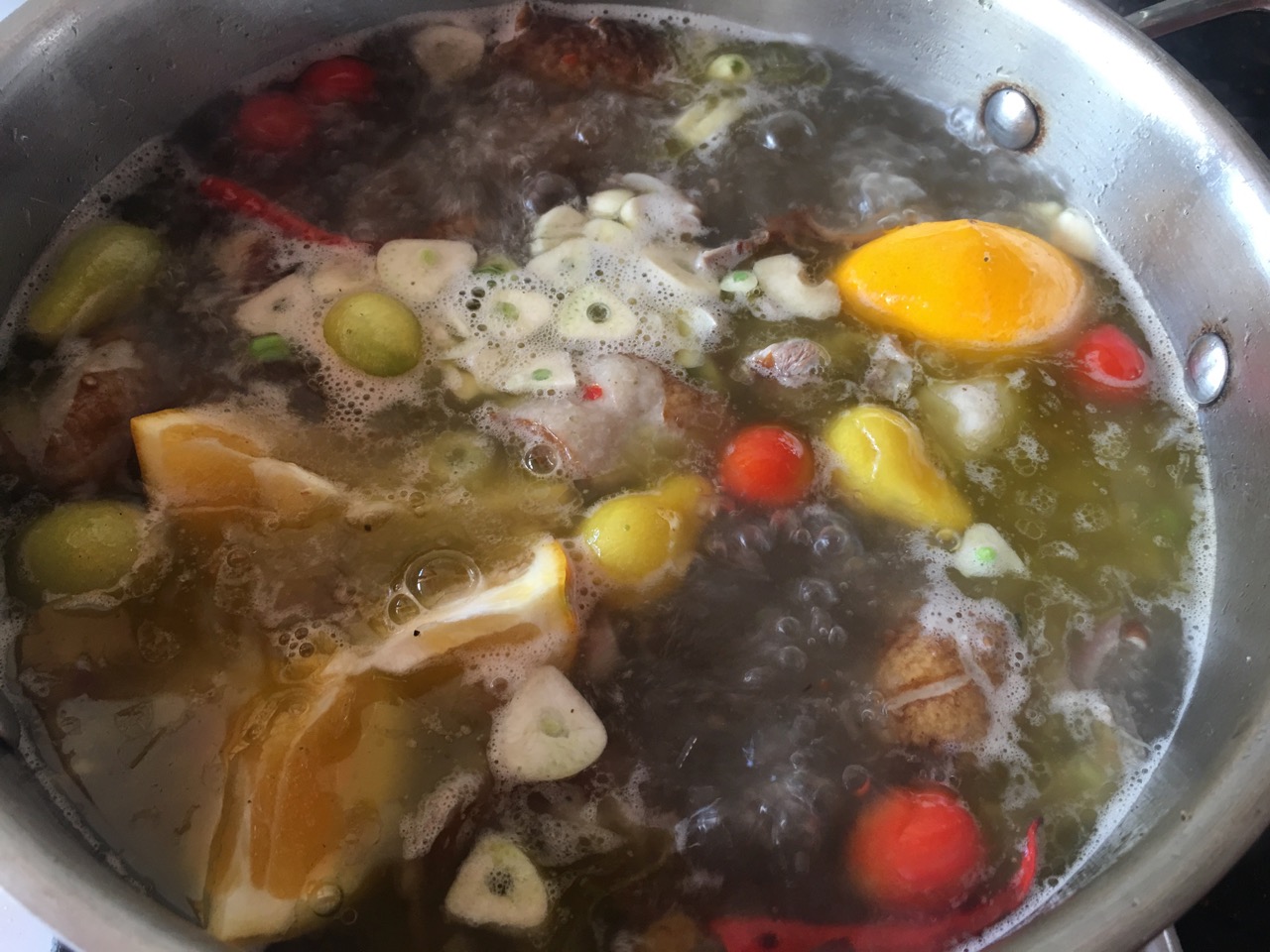
The other job on the kitchen list is to make a stock out of the bones left over from a duck that we have in the fridge. I start by browning some onion in olive oil, then garlic and water. Our organic garden garlic is getting close to the end now as the winter peters-out. What we have left is stored, hung up, outside on the back verandah in long plaits. This is starting to sprout now, but it still gives us the good garlic flavour. The new crop of garlic is filling out in the garden, but is still 3 months away from maturity.


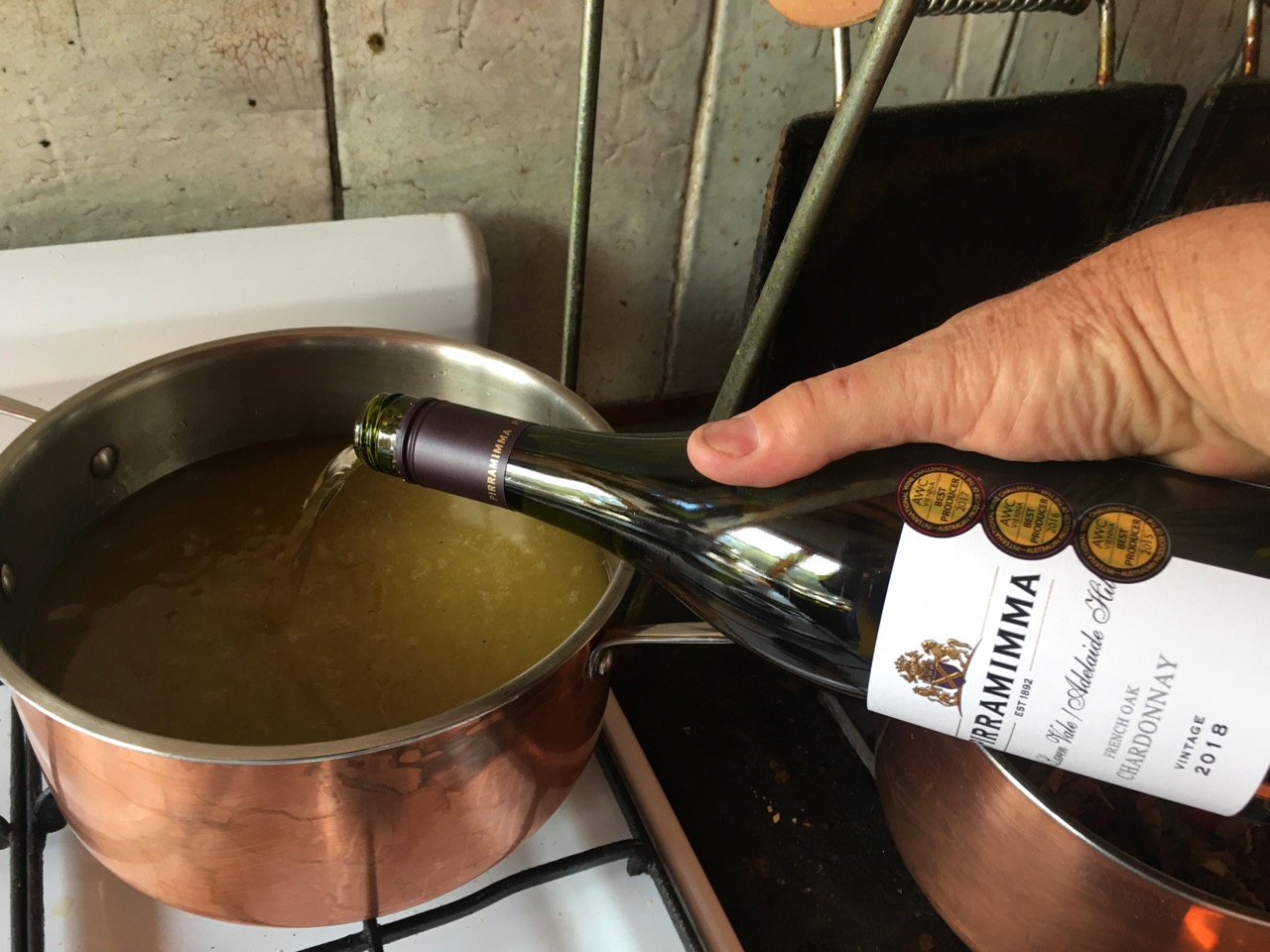
I add water, the bones, a lemon, chillies, the very last of our late season tomatoes that we picked 6 weeks ago when they were still a bit green, as the bushes had been burnt off by the frost, and some pepper. After simmering for an hour, I pass it thorough a sieve to separate the bones and mirepoix from the stock. I add a bottle of ‘fume’ wine and return the clear stock to the stove to reduce. It happens in among all the other jobs, slowly and steadily, filling the kitchen with a warm, delicious fragrance that is so welcoming on a cold windy day.
 Domestic jobs can be really engaging and fulfilling sometimes. This is one of those times.You’ll notice that I don’t write too much about cleaning the grease trap!
Our enigmatic friend Annabelle Sloujé sent me this image that she saw somewhere, after I wrote about making a beef bone stock last week.
Best wishes from Steve who is making the most of winter – while it lasts.

A sudden cold spell

We have just emerged from a sudden cold spell. We were glad to find a few jobs to do inside for a while until the cold winds blew themselves out. Our good friend Annabelle Sloujé lives a little bit farther south of here and a lot higher up, she had a low of -9oC, I’m glad we live here in Camelot where it doesn’t get so cold. My friends in Korea report a range of -35 to + 38oC. They probably think that I’m a wimp for talking about a winters day of -1 oC. They possibly think that -1 is quite warm, in comparison.

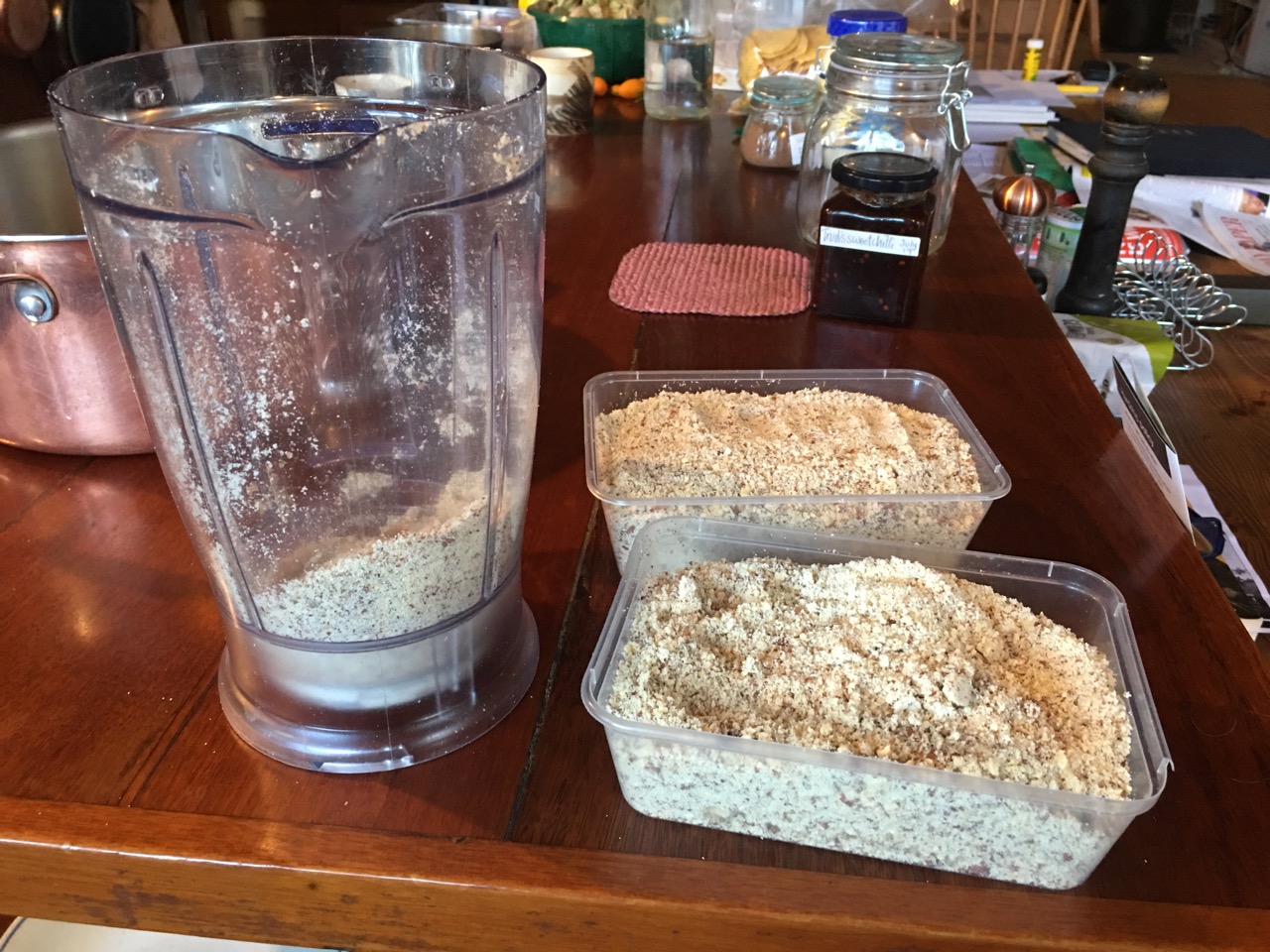
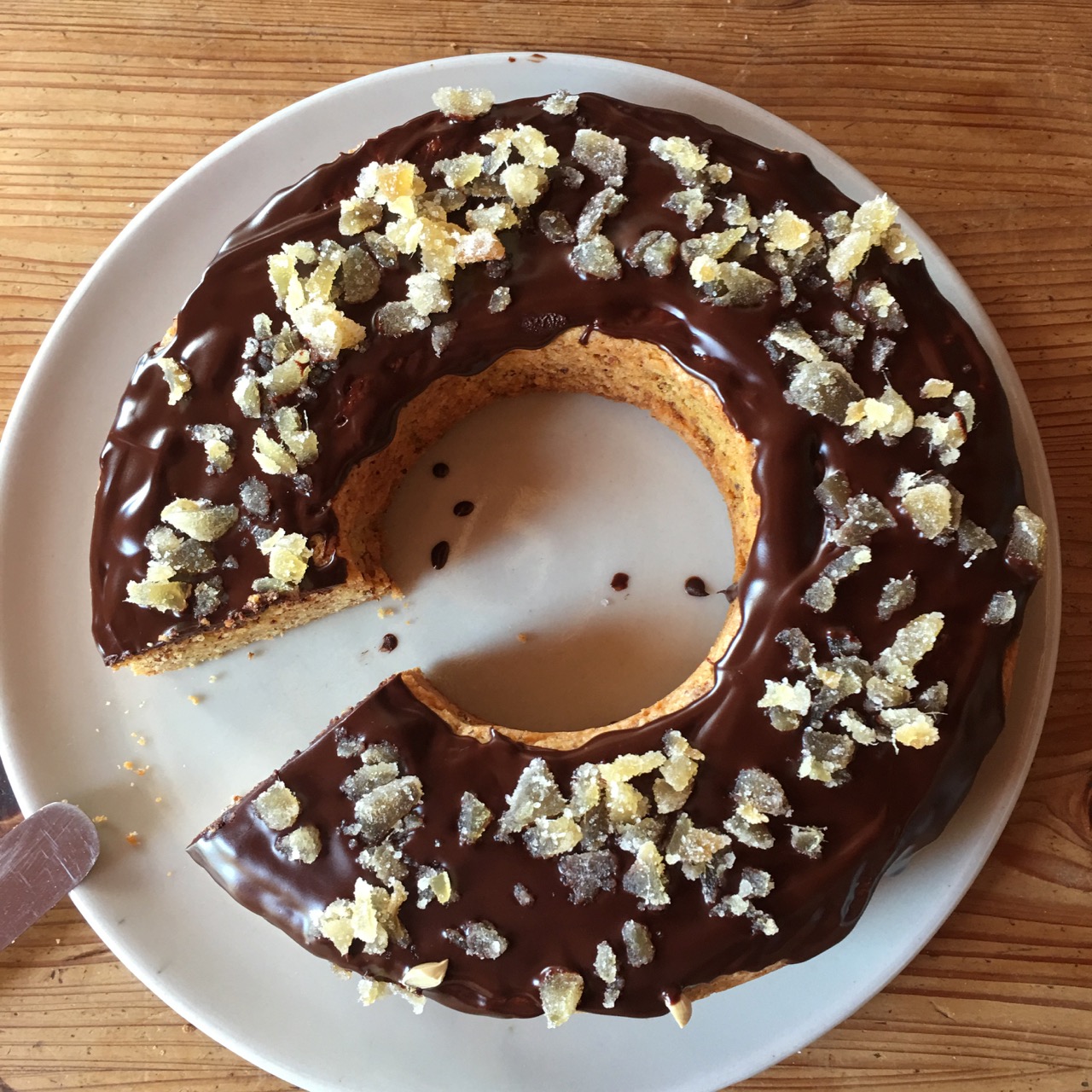
However cold or hot it is, we found things to do out of the wind. I shelled nuts and Janine made a cake from the last of last years hazelnuts that she milled into flour. It’s one of those recipes with reduced flour and usually almond meal. The Lovely down loaded it from the internet, but as we didin’t have any almonds left to shell, she used all hazelnut meal instead. All recipes are just a guide. Living where we do, we have learnt to compromise and use what we have rather than drive for an hour to get something specific. We save all our jobs and shopping list for that weekly trip.

Glazed with melted 85% dark chocolate and a few chunks of chopped crystallised ginger. It was just right for cold weather and didn’t last too long.

For my part, I made a beef marrow bone and vegetable stock over a couple of nights, using the free heat from the wood fired kitchen stove after we cooked dinner.

I make stock like this a few times each year, especially during the colder months when the stove is always on. I have come accustomed to always having our own personal, giant, frozen stock cube in the freezer. We don’t own a dedicated freezer, so we only freeze what can’t be preserved by other means like vacuum sealing ‘Vacola’ jars. The special conditions required for safe preserving in vacuum jars is that the food must be boiled in the jar to seal it, so that counts out pesto. Also, it is best if the food is naturally acidic like fruits and vegetables like tomatoes. Meat can be preserved this way, but it is recommended that the vacuum sealing be done twice to make sure that it is perfectly safe. A bit of a bother.

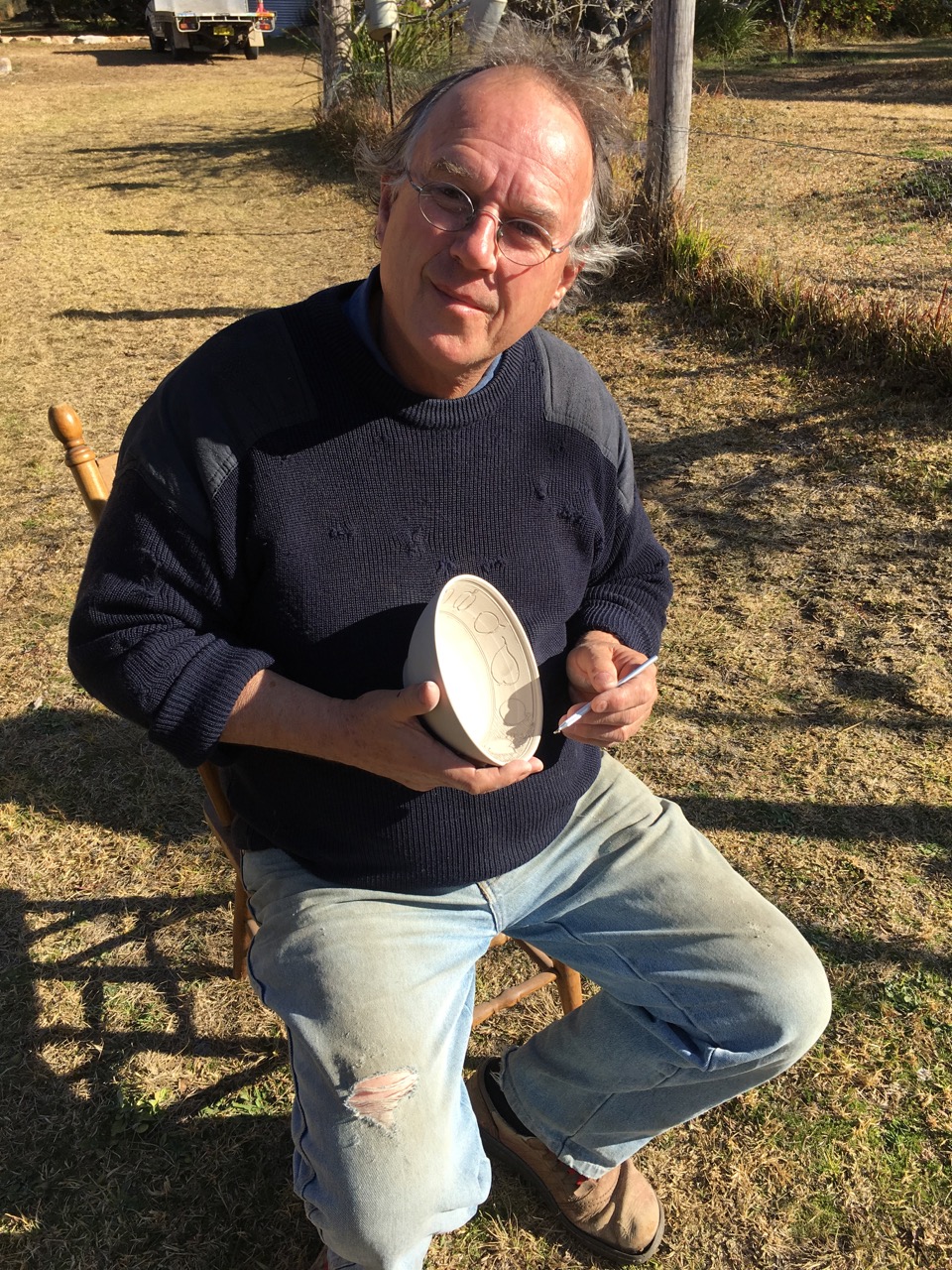
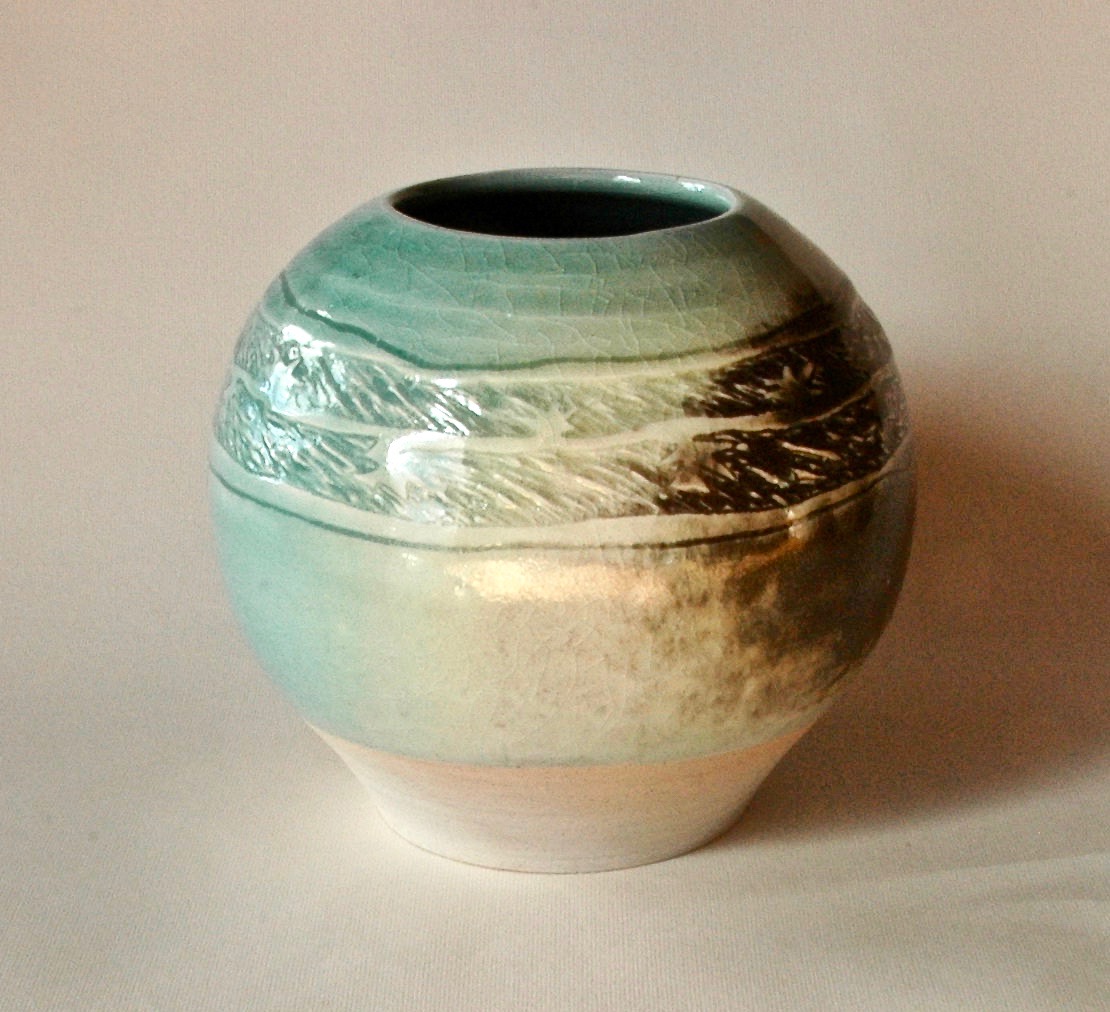
After the cold spell blew itself out, we have had a few glorious cloudless sunny days with no wind. I took the opportunity to move my chair out into the sun and get a little vitamin D and finish decorating my last few pots doing scraffitto, carving into the surface with a sharp tool. This will show the pooling character of my local granite blue celadon style glaze when fired in the reduced solar fired electric kiln.

Spring is almost here

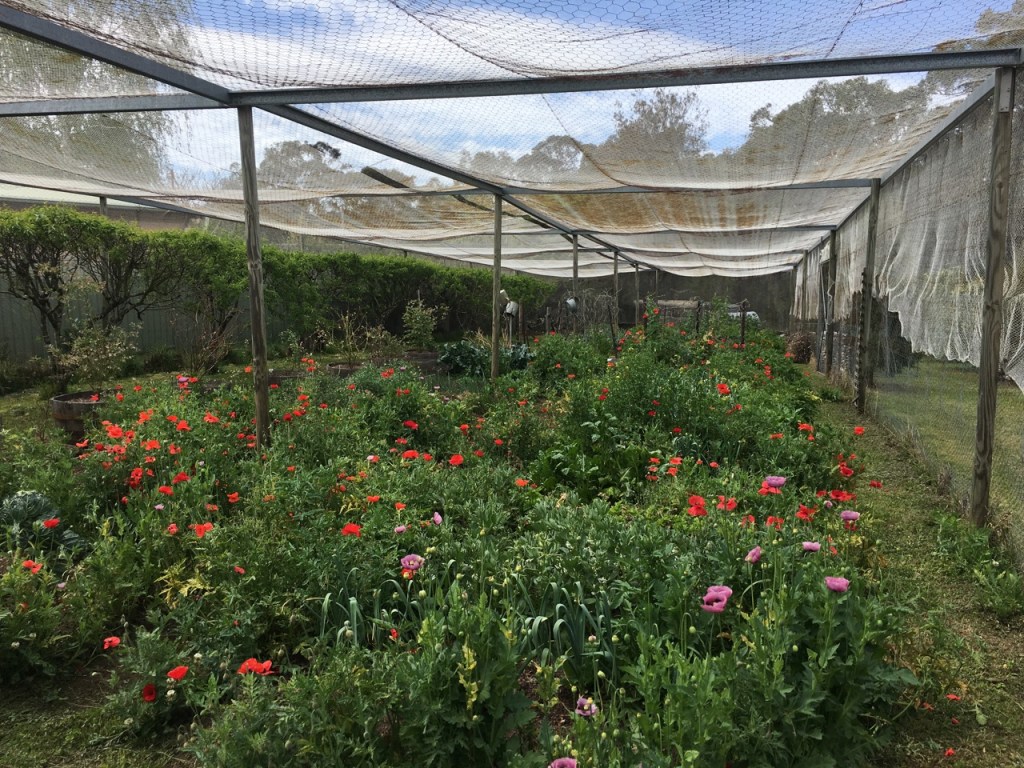
When the poppies arrive, spring is almost here!We still have 2 weeks before spring is officially here, but we have been enjoying a nice steady display of the red Flanders poppies for a few weeks now. The night time frosts are still continuing, but the poppies don’t seem to mind.

They brighten the kitchen breakfast table. The shaft of early morning light illuminates their semi-translucent fragility. They only last such a short time in the vase, but they make us happy while they are here.As it is still winter, we have been enjoying all the varied brassicas that are maturing in the garden. We picked a gigantic cauliflower and had to think up a variety of ways of eating it. Fresh picked, we like it best cut into small florets and dipped in a little mayonnaise and eaten raw. We also add it to stir fry and risottos, but the classic has to be cauliflower au gratin. I have to make it at least once each winter. 
I melt a little bit of butter and add in some flour, for us, that happens to be wholemeal. I make a roux using approximately equal parts of each, but I only cook it to thicken it, I don’t want it to colour up, so I only cook it off on a gentle heat and soon add some milk a little at a time. The first few drops instantly thickens it to a stiff paste. I have to work at dissolving the first few drops of milk into the mucilage, as it is adsorbed, and the mixture loosens, I continue to add the milk slowly while stirring to avoid lumps. I only want a pale sauce for the gratin. I think that it looks most appropriate with the pale cauliflower.

I’m a lazy cook, I don’t have any bread crumbs and I’m not about to start making some, and I certainly won’t ever be buying any ready-mades, so as soon as it comes to a slow, gentle bubbling boil, I add in my steamed cauliflower and I stir in a little grated cheese, with a little more added on top, and the whole lot then goes under the grill.

It’s a lovely warming veggie winter dinner.
We have been in to have dinner at our sons restaurant, Bistro Sociale in Bowral,  <http://www.bistrosociale.com.au>

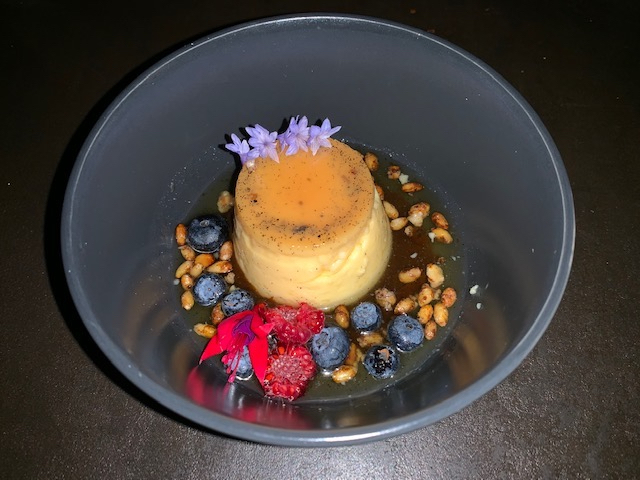
Always a lovely time, good, interesting food and not too expensive. We almost never eat out in restaurants, but we make an exception for our son. He made a beautiful desert for Janine and our friend Annabelle Sloujé.
A prune creme brûlée with fruits and flowers.


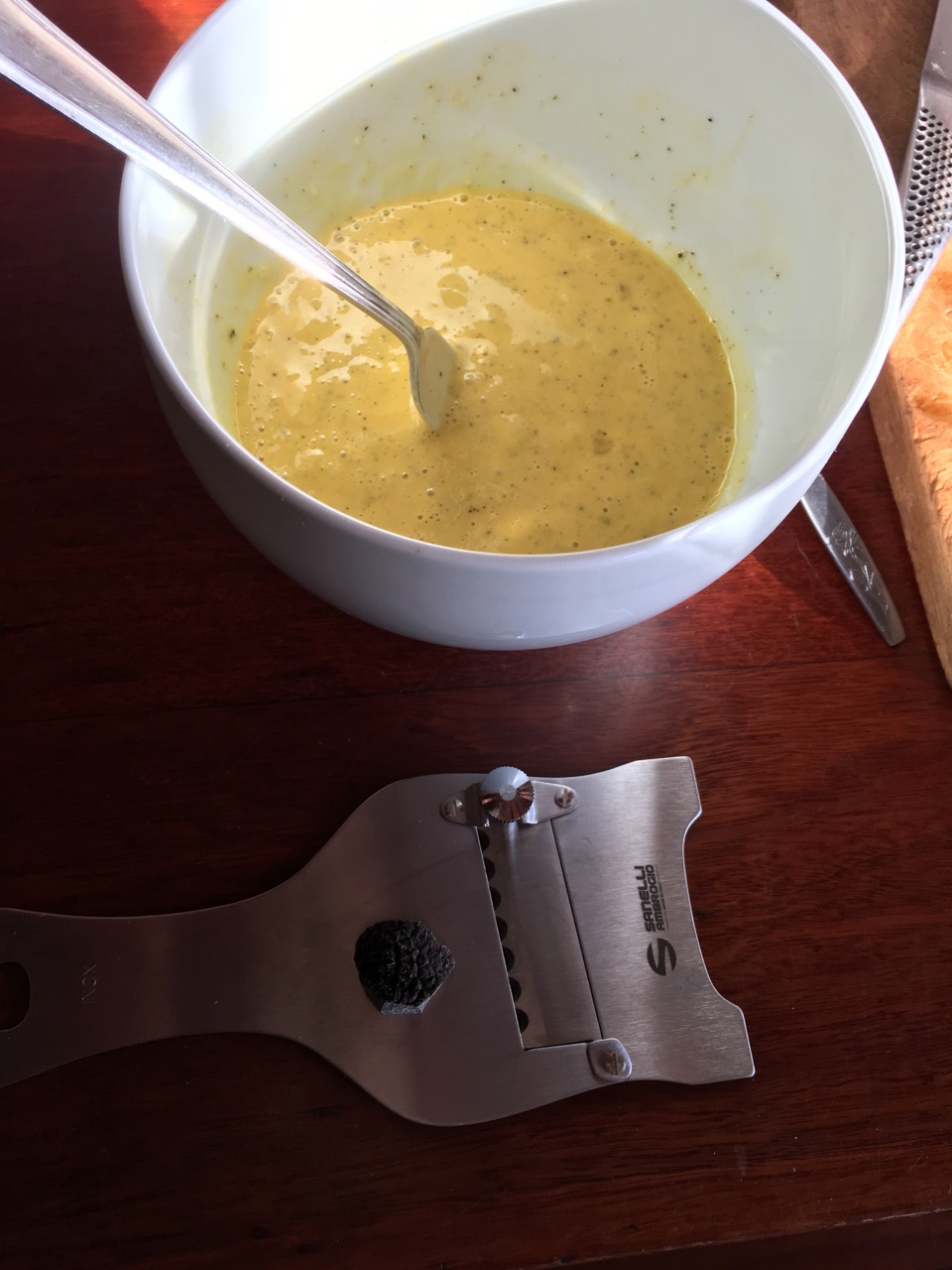
Geordie managed to get me a fresh black French truffle recently. The weather has been so dry here. We are in drought, and this has affected the truffle harvest this year. It turns out that the Southern Highlands is a very good place to grow truffles, but not in a drought. Our own truffle trees have not shown any inclination to produce a truffle as yet, but we live in hope. Maybe in the future, if it ever rains?

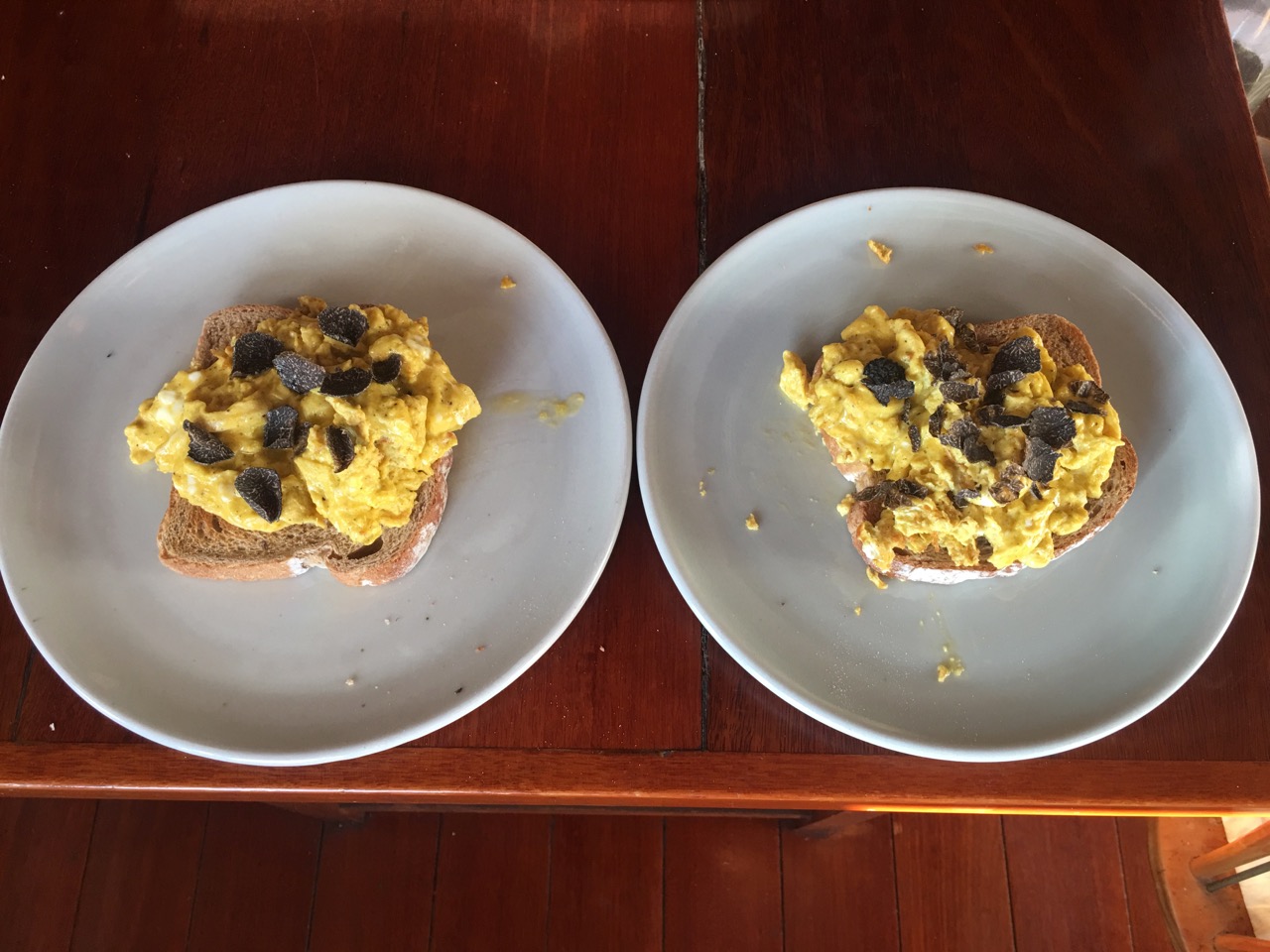
We managed to get just one small truffle. Since Ted retired and sold his truffiere, we have been cut off from our supply. Geordie has contacts though! So we had truffled eggs for breakfast. You can’t be mean with a truffle. They may be expensive at $1.40 per gram, but it’s best not to think about the cost and just inhale deeply and enjoy. We made scrambled eggs with a little cream whipped in and some fresh grated pepper, and then grated the whole truffle over the top. No point in rationing it out over several meals, such that you never really get the full flavour experience. Just go for it and enjoy it to the max. You only live once.

We have had absolutely no mushrooms come up in our garden this winter. It is just so dry. There is still just enough time, if it rained in the next couple of weeks, we could get lucky.


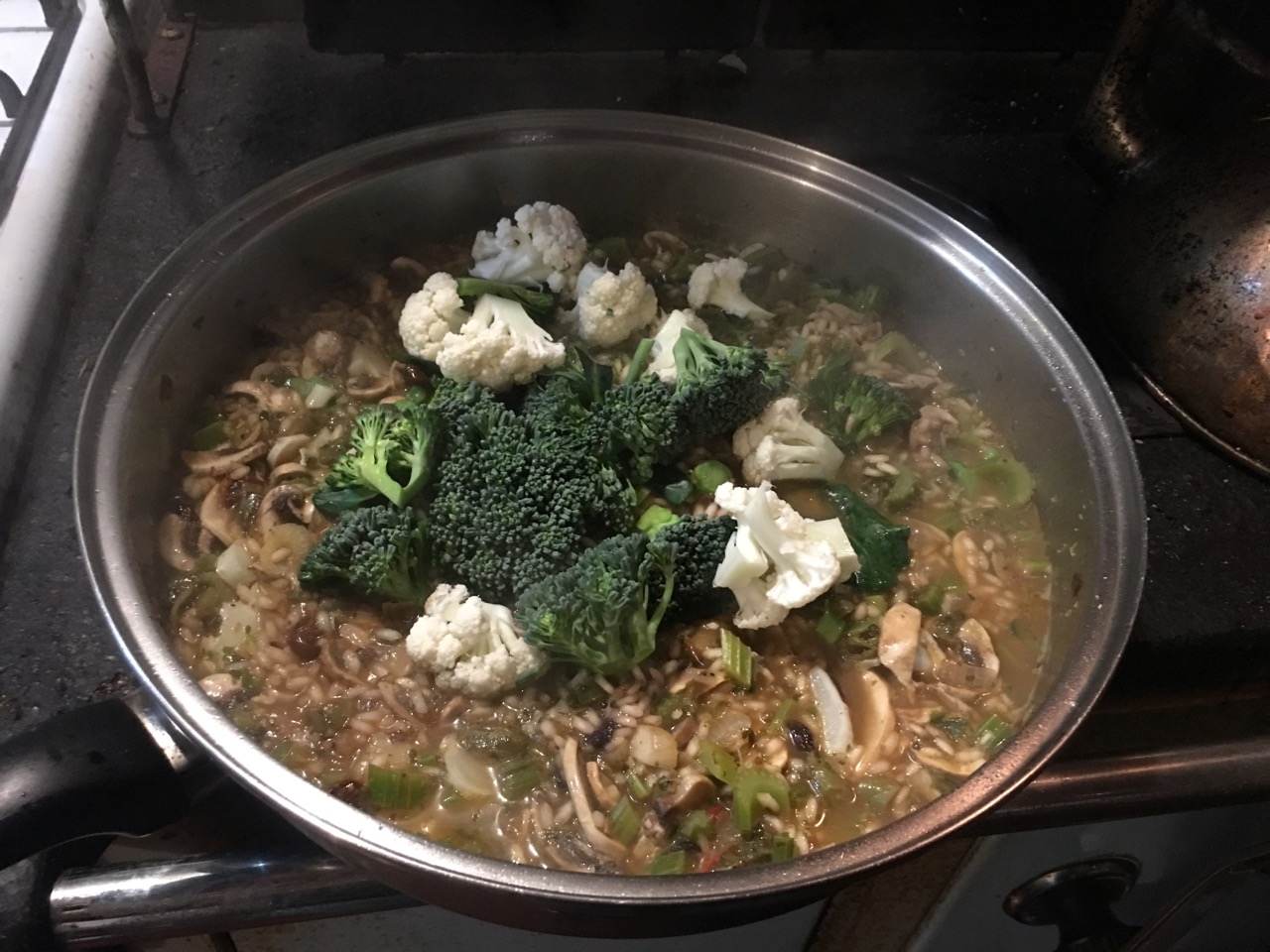
After storing the truffle in the fridge for a few days with the eggs and rice. We used the rice to make a risotto for dinner. It’s amazing that when I opened the container and poured the rice into the big pan to roast it a little before adding the wine. There was a very noticeable smell of French truffle wafting up to me. Beautiful! It became a winter vegetable risotto.


I added a bottle of our preserved, concentrated, summer tomato, sugo as well. It really fills out the flavour like no other vegetable can.


We are lighting both the wood fired stove in the kitchen and the fire in the lounge room to keep the place moderately warm at night. As the kitchen stove also heats our hot water tank in the winter, it is a necessity. But most importantly, its carbon neutral, as we collect all our kitchen stove wood fuel off our own land, from our own forrest. However, it’s also a beautiful way to cook.

The Winter Garden

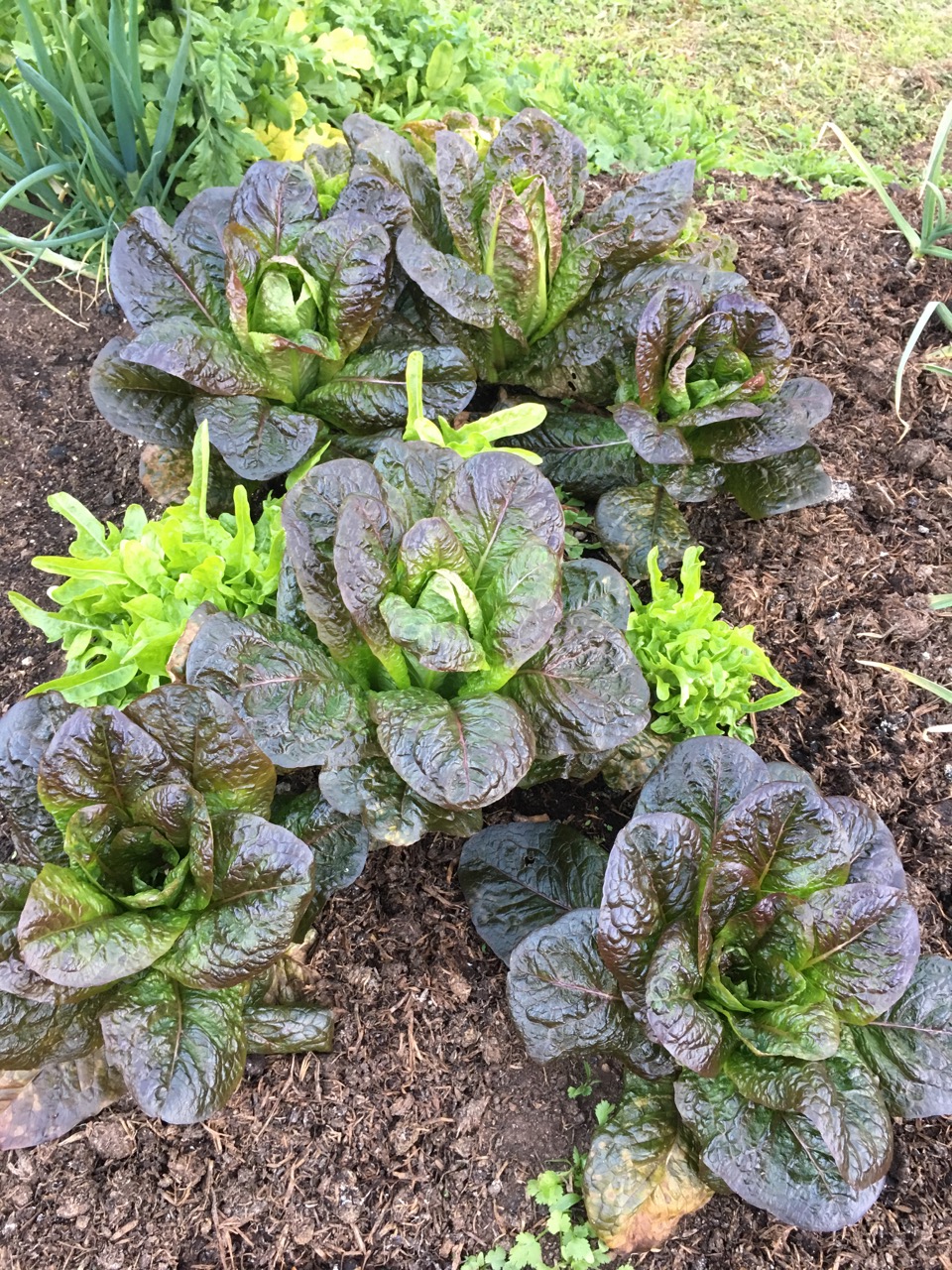
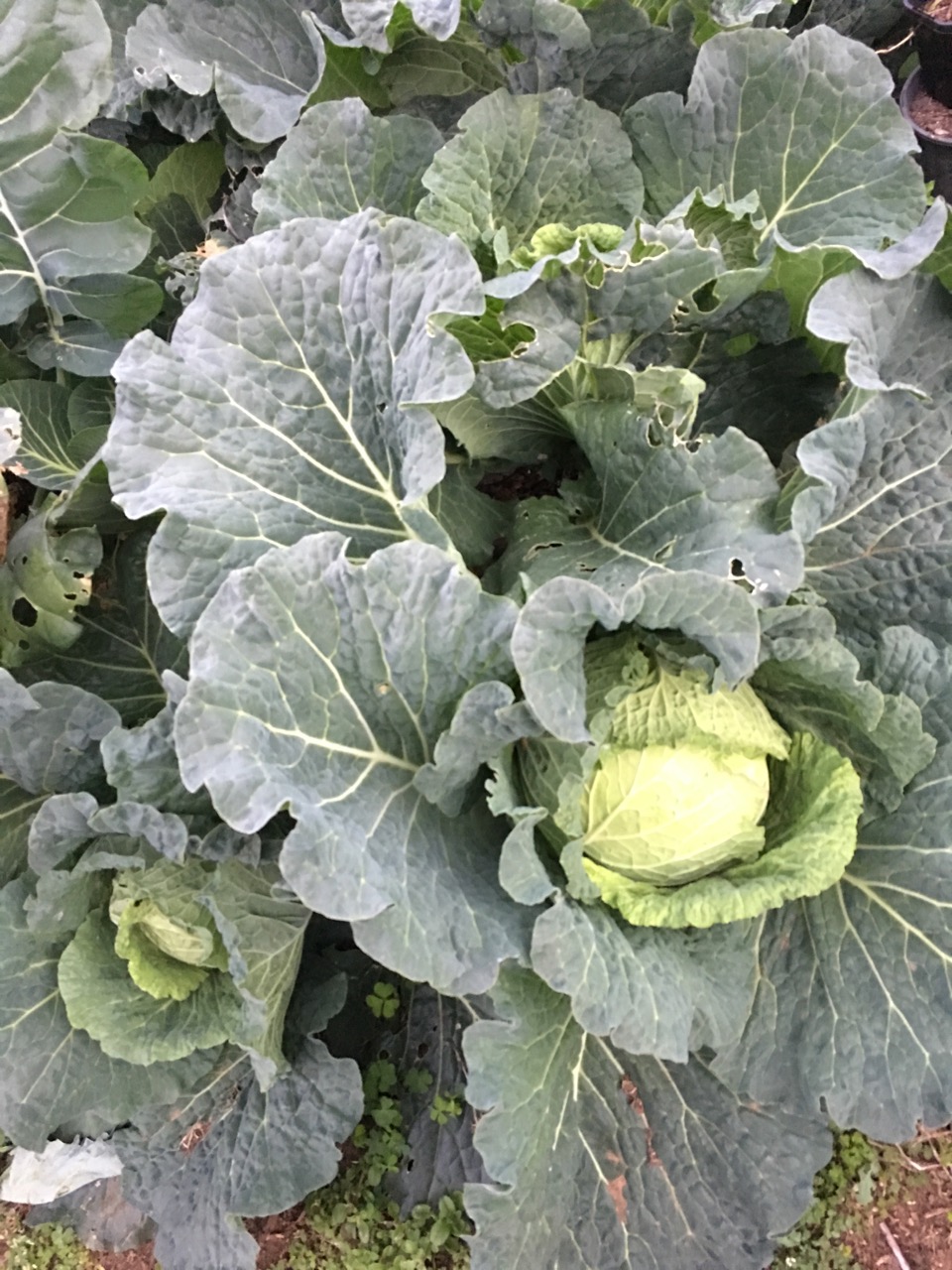
The garden can look a bit barren at this time of year, but there is still plenty to eat. We have all the brassicas doing very well with the frosty nights. Cabbages, cauliflowers, Brussels sprouts, broccoli and kohlrabi all bountiful and gorgeous. We also have leeks and celery, and we have just finished off the last of the autumn/winter crop of carrots. 

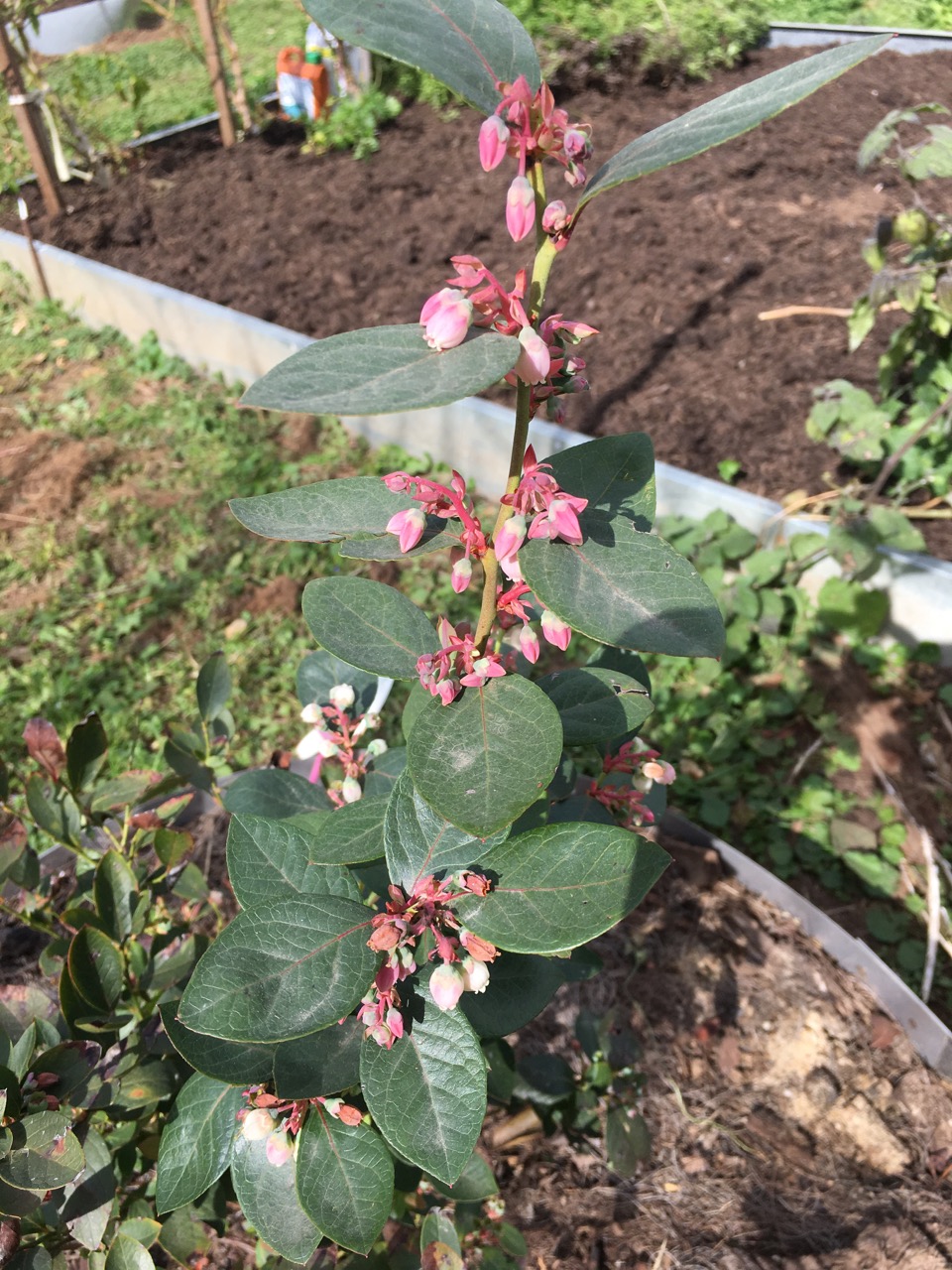
Of course we always have spring onions and lettuces for salads when the days are suitably sunny and warm, as is often the case these days in the global emergency. Winters as we knew them in the 70’s are over. No more snow and many fewer frosts that are much milder in intensity. Fruit trees are flowering now just past mid winter and not in spring. Everything has advanced about 4 to 6 weeks earlier over our 43 years here.

peaches

almonds

blue berries

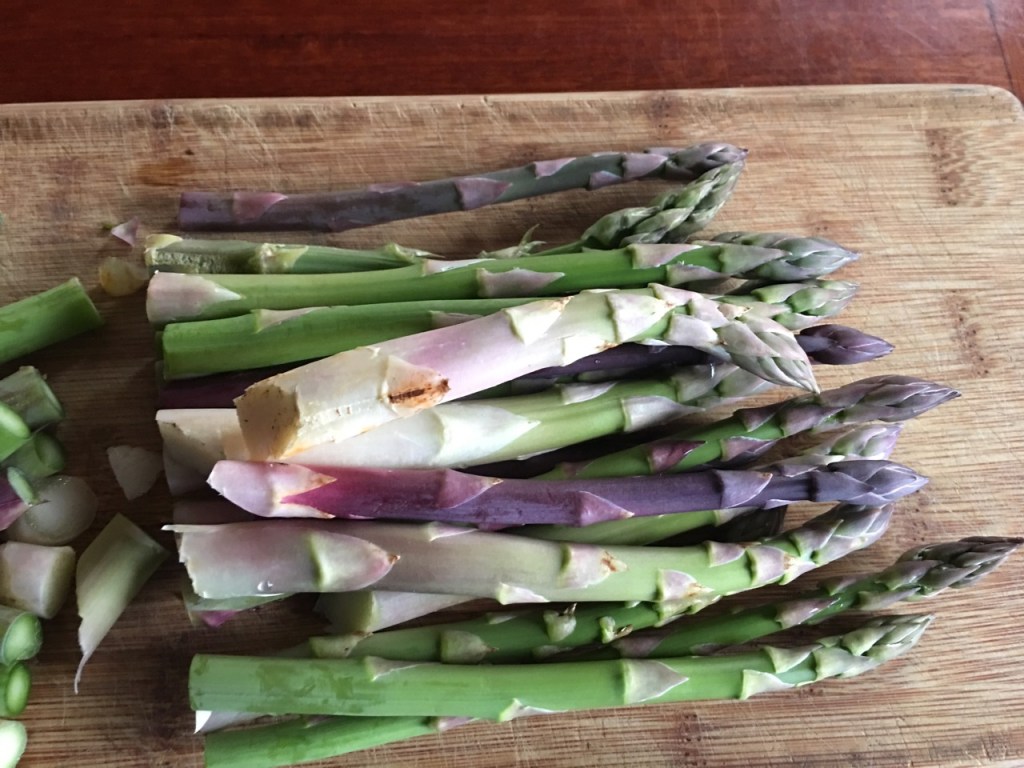
At this time of year, the days are getting longer and the soil temperature is just starting to warm up a little with the soil just starting to hit 10oC. The asparagus is responding to this minuscule change and starting to sprout. We have our first couple of spears poking their heads up.

Although the beds look barren under their winter mulch, there is the beginnings of spring growth.

There may be some benefits to a warmer climate, but the down side for us is the prolonged drought, with only one significant rain event of 30mm over winter. We are preparing our selves for a long dry and very hot summer with July breaking many records for the hottest winter month. This past July being the 3rd hottest July ever recorded.
On the positive side, there are lots of people starting to wake from their media/Murdoch induced stupor, and starting to take action. I am seeing a lot more positive articles in journals indicating creative, affirmative thinking.

Vegan Wood Firing

It is a beautiful clear, sunny day here today. The air is cold and a little fragrant. I’m not too sure what with, but it is crisp and refreshing. We have been up to Sydney and back for the opening of the wood fired show, at Kerrie Lowe Gallery, where we have our work on show.

This is a small white tenmoku bowl with a lovely soft ash deposit on the fire face, showing grey some carbon inclusion on the body and rim.

A very delicate and beautiful object.


These are two of janine’s blossom vases. These two vessels are inspired by Korean ‘Moon’ jars. On this occasion, Janine has incised a sgrafitto, carved band illustrating the phases of the moon, as a way of linking these beautiful pots back to the origin of their inspiration in Korean, where we have spent a bit of time recently doing our research.

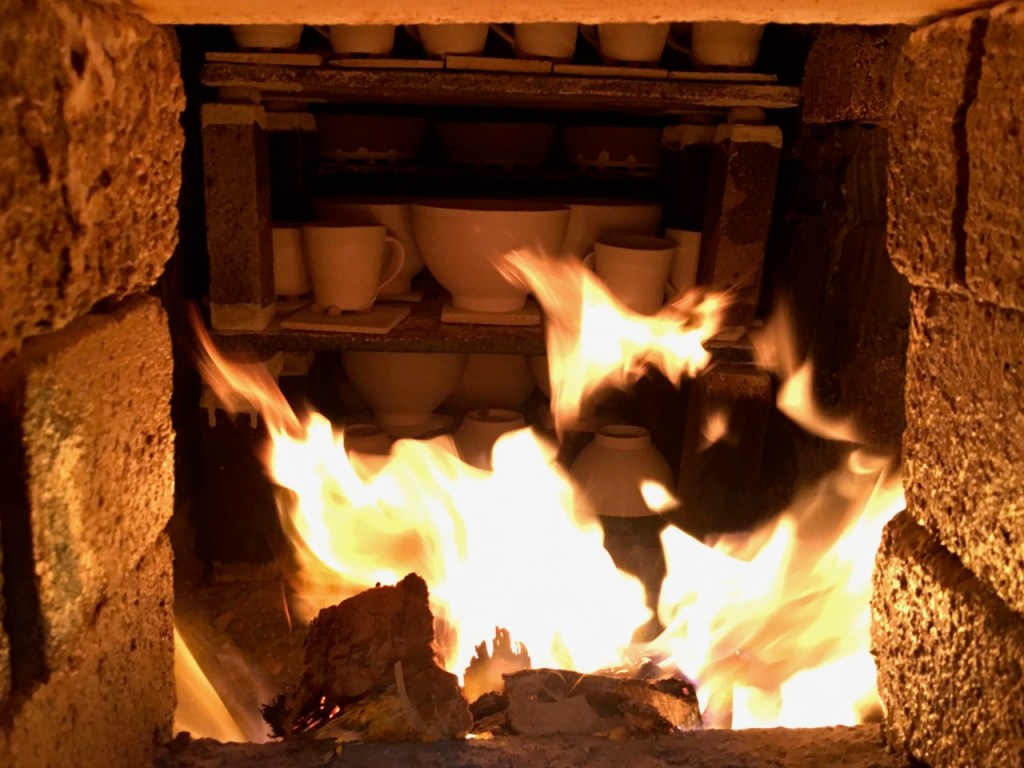
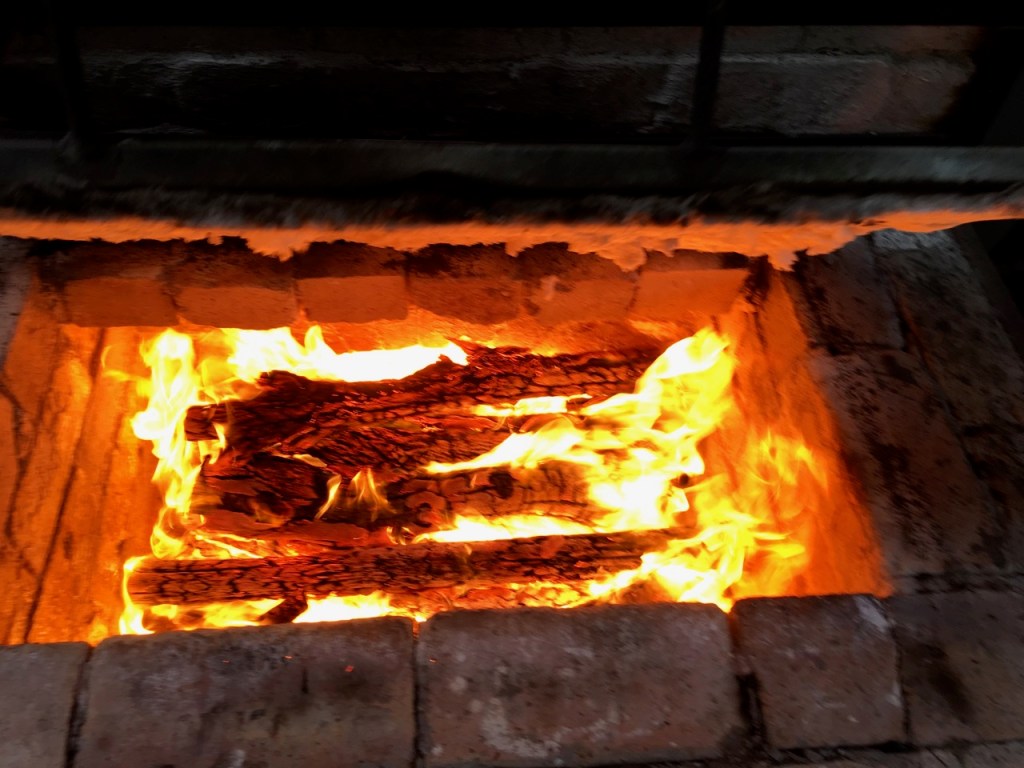
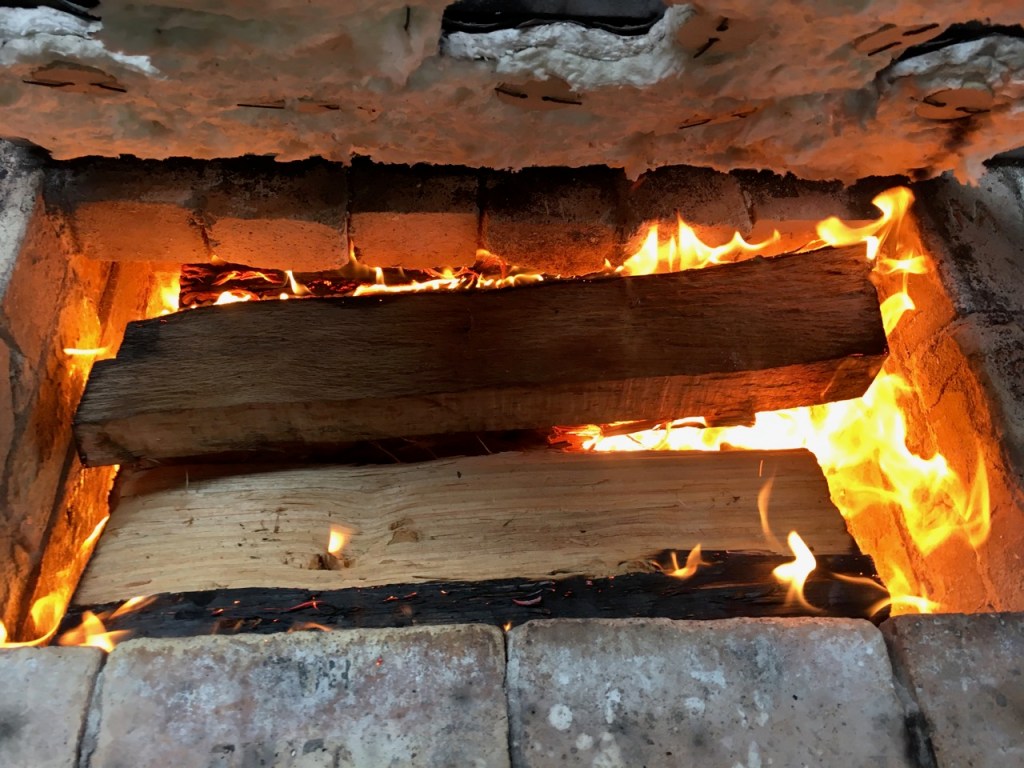
These pots were fired in just 4 hours in our small portable wood fired kiln. This little kiln is so environmentally friendly that I call this type of firing ‘Vegan Wood firing!

All the fuel for this kiln is collected from wind falls in our paddocks. Large old eucalypt trees are constantly dropping dead branches. We have to go around collecting these dead branches to keep the ground clear so that we can mow the dead grass. We have to mow, because in summer, high dead grass is a severe fire hazard. So part of out land management plan is to keep the ground around our house clear of fire hazards, as we live in a very bush fire prone area.
IMG_6127

Having picked up all these dead branches, it seems irresponsible not to use them productively. By firing our wood kiln with wind falls, we are not hurting the trees in any way. No tress were harmed in the making of these pots. Hence ‘Vegan Wood Firing’. As we only use what the tree has rejected and finished with. It is also worth noting that some of the carbon that we collected from the atmosphere through the trees that we have grown here over the past 40 or so years is now encased chemically in our pots, making it securely trapped, more or less forever. So we are doing our bit to reduce the carbon load in the atmosphere. Carbon sequestration and removal on a personal scale.

We each do what we can.

Driving on Sunshine – Six Month Review

We have just reached the half year mark in our ownership of our electric car. We chose the plug-in hybrid version of Hyundai’s Ioniq series of new electric vehicles.

We decided on the plug-in model because it allowed us to be able to charge the car from our solar panels and drive almost entirely on sunshine. This is very important to us as we are committed to lowering our carbon foot print where ever we can — without being silly about it, or being forced to live in a cave and only eat cereals and drink water. The life that we live would be recognisable as being more or less ‘normal’ modern, first world, middle class, living by most.
We chose the plug-in version over the full electric model because we only have the one car and we need to be able to drive long distances a times. Like driving up to Sydney and back, or down to Canberra from the Southern Highlands. It’s not that often, but a few times a year. We didn’t want to be constrained by having to stop and charge the car before being able to drive on, or drive home. The cheaper range of electric cars only offer 200 to 230km range at the moment. Not enough to get us to Sydney and back without having to recharge.
The hybrid version of the Hyundai Ioniq allows us to revert to petrol power to extend our cars range and eliminates ‘range anxiety’ completely. When the fuel tank and battery are both full, the car has a range of over 1,100 kms. No anxiety there, it is in fact twice as far as our old, and very fuel efficient, small car could go on a tank full.
So what have we achieved so far after 6 months of driving. We have filled the petrol tank twice and we are still only half way through the 2nd tank full of petrol. Thats $75 worth of petrol in 6 months. We have driven just short of  6,000kms so far. So nearly all of those kilometres have been driven on sunshine. We filled the car with about $50 worth of petrol at the end of Feb and again at the end of April, again with $50 worth of fuel. We are still using that last tank full. It’s just under half full still. All the rest of the driving has been done on sunshine.
This is possible because we installed solar power in 2007, as soon as it became affordable to do so. It wouldn’t be ethical for me to buy an electric car and plug it into a coal-powered power point. That would be useless. It would be swapping from driving on petrol to driving on coal! An appalling thought in these carbon constrained times of climate crisis and global over heating.
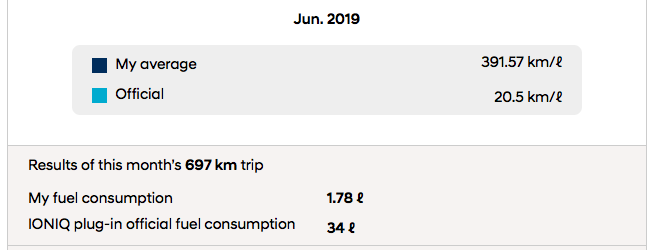
The most recent email ‘monthly report’ that I got from my cars dashboard computer into my phone tells me that we have been driving very efficiently on our sunshine.
So we used 1.78 litres of fuel over the month and drove 697 kms, this equals 391.57 kms per litre of petrol. Pretty impressive, if I do say so myself.
Now that we are more used to owning the car, we have found that we can make two trips in one day easily. We can go to Picton and Tahmoor in the morning and then return home for  lunch and then go to Mittagong and Bowral in the afternoon. The car charges easily in the full sunshine of the middle of the day while we have lunch.
Last week we went out to the movies two nights in a row, and were able to re-charge over night in the dark from our stored sunshine in our ’Tesla’ Battery. The battery then re-charged it self in the morning when the sun rose. I didn’t have to do anything to coordinate this.
Sometimes we recharge the car directly from the sunshine in the morning, if we know that we don’t have to drive anywhere until the afternoon. We can go out again in the afternoon and recharge from the battery on our return
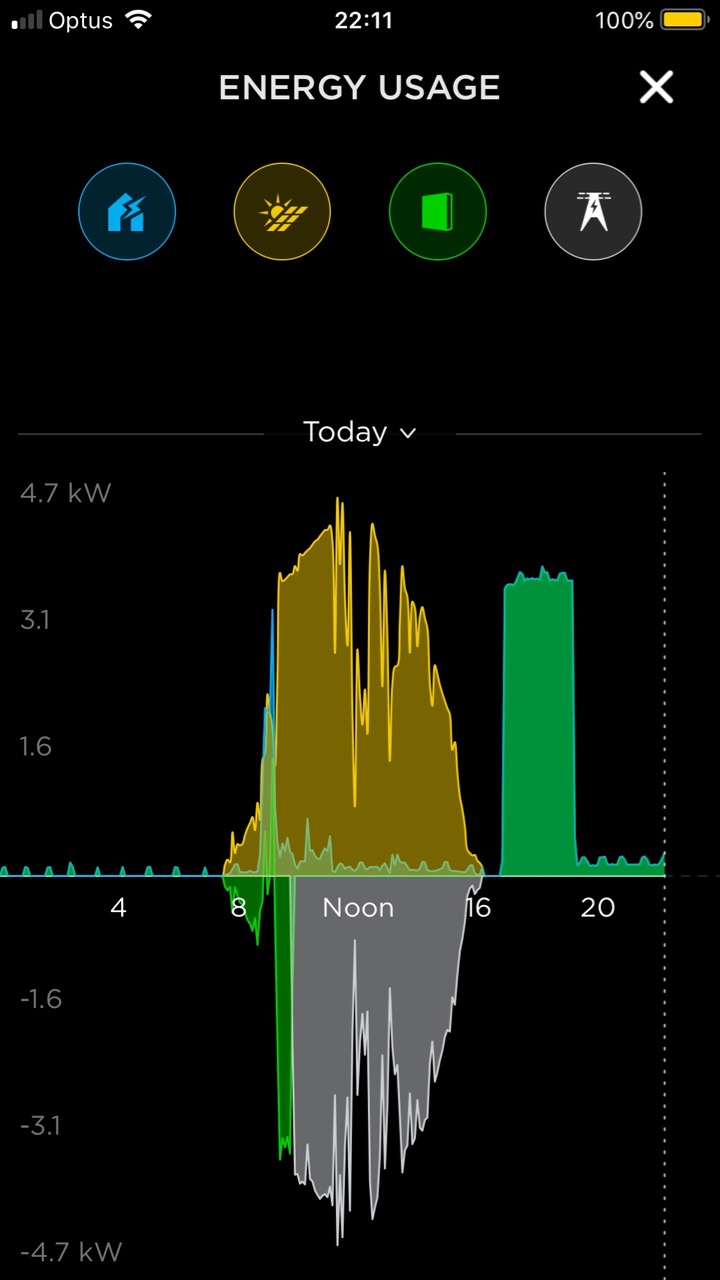
So here we are just past the solstice. The sun is at its lowest angle, for the shortest number of hours and we are still making 4700 watts from our solar panels . This is against the maximum of 6,000 watts that are possible in high summer with the sun up at its apogee. Not too bad!
You can see from the screen-shot below what a winters day looks like and how we charged the car from the battery after sunset.
What is important to notice here is that we sold significant energy to the grid (shown in white) as well as running the house (in blue) and charging the car (in green). The yellow is the sunshine collected, you can see some clouds came over from midday/early afternoon, but we still made a small profit.
This will be the last report about the electric car for 6 months. I will write something more after the first 12 months are completed.
The electric car scene is set to change very rapidly in the next few years as more models come onto the market, But I feel that it will be a very longtime before a fully electric car with a 600 km driving range will be available for the under 40,000 price tag. Maybe by the time this car runs out of warranty in 8 years time, then something better will be available and affordable? I look forward to being spoilt for choice. For the mean time, we are very happy with our decision to go driving on sunshine.

The 1 to 10 of Orchard Pruning

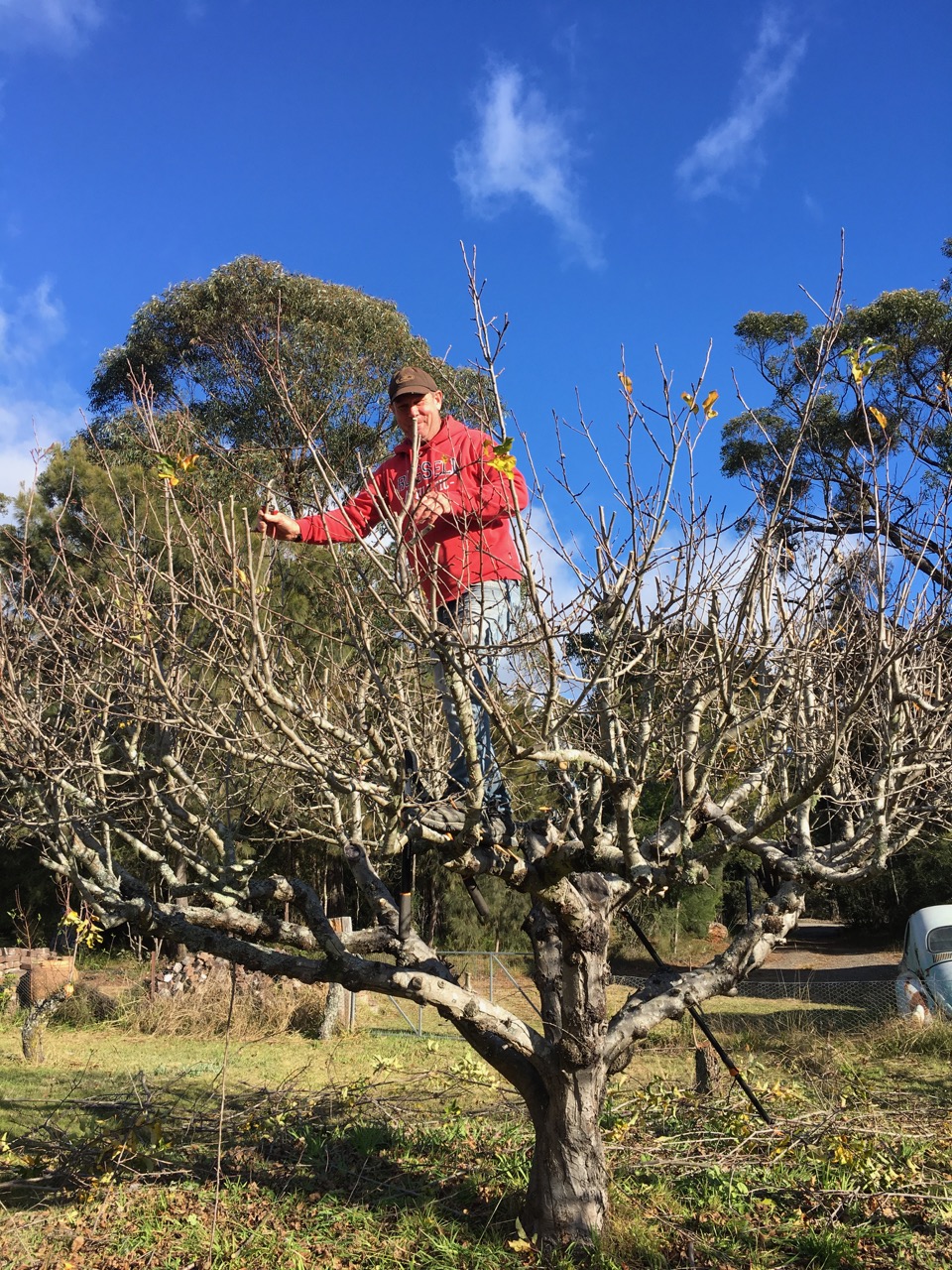
We have spent this winter weekend pruning the fruit trees in the orchards.

I had my good friend Warren over to help me. Warren is the man who a can do almost anything at all, and do it well — with a smile. He is so good to have around.
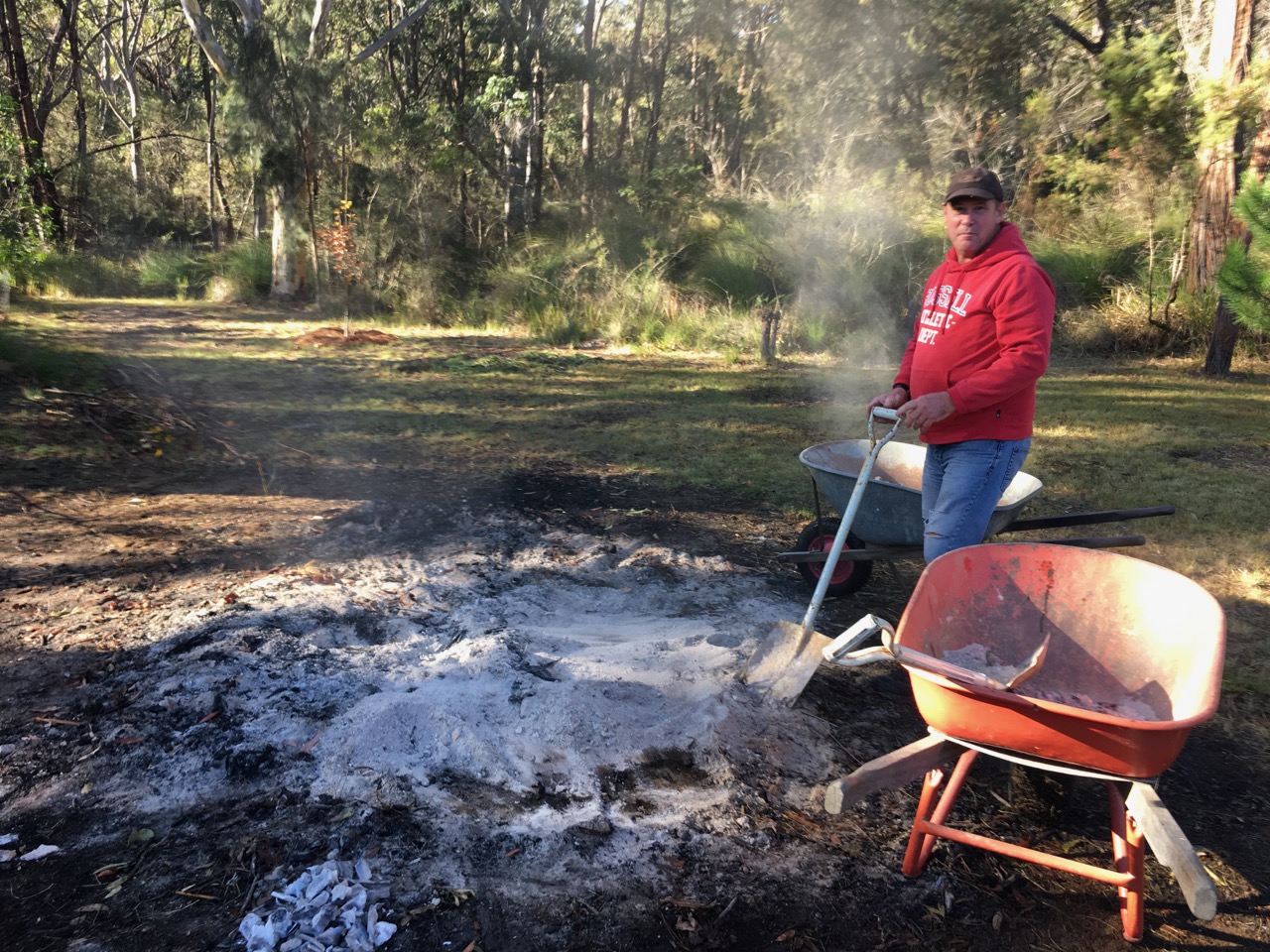
We started by shovelling up all the ash from the past burn piles of garden prunings over the recent season of garden clean-ups. These piles of vegetation grow during the hot months as we slowly accumulate material. Finally when the cool weather arrives and there are no more fire bans we are able to burn the accumulated bushy piles. The amount of ash is amazing. We are able to fill two wheel barrows to the brim. All this ash gets put back into the garden and orchards. Sprinkled around the fruit trees as fertiliser. Ash contains all the nutrients that a plant needs to grow. We don’t use commercial synthetic fertilisers in our gardens and orchards. We are fully committed to growing organically. We only use chicken manure and ashes from our fire place and stove, plus once a year like this, the ash from the burn piles.
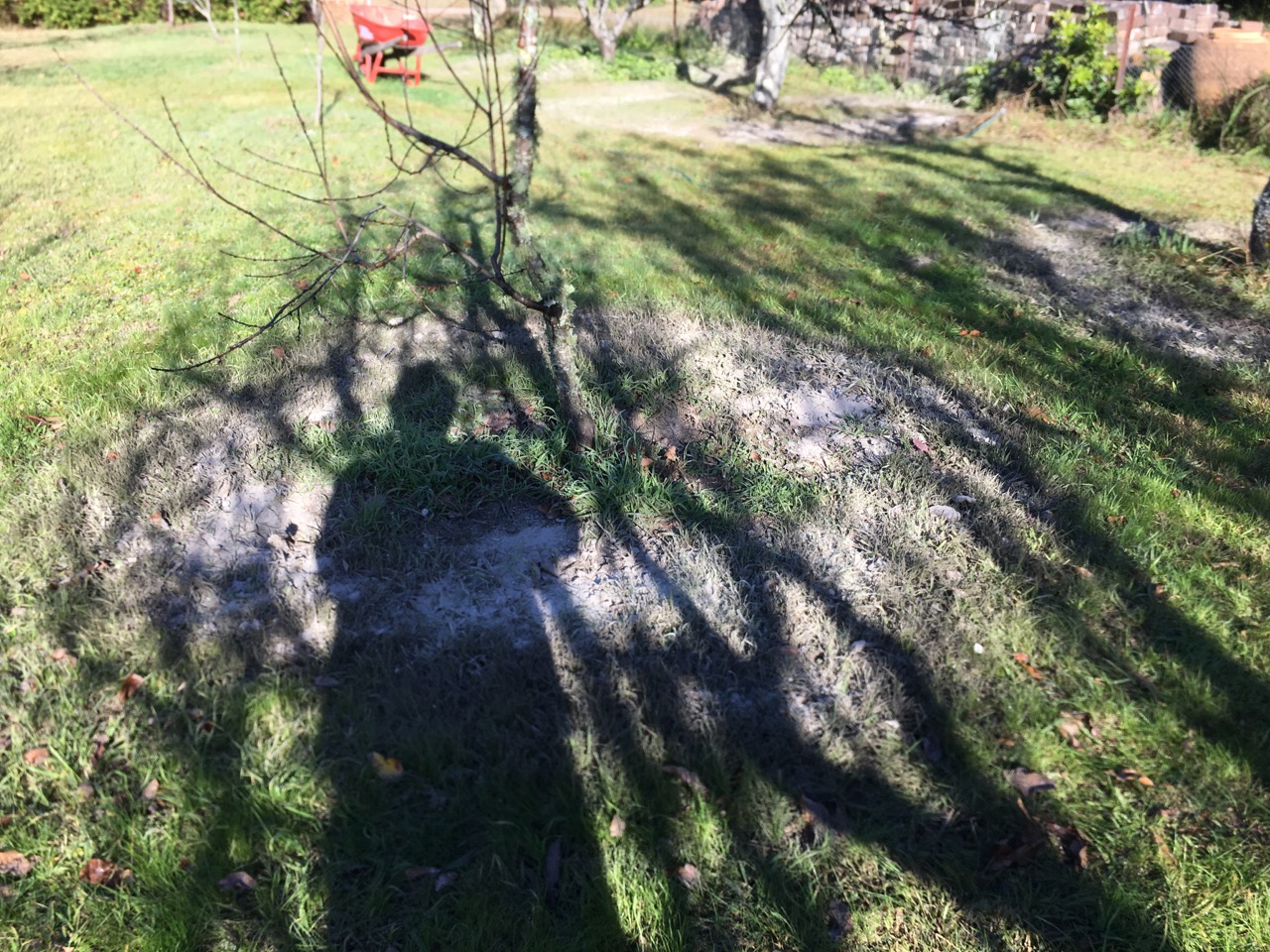
The ash is spread around each of the trees at the drip line and will get watered in when it rains. Ash has sodium and potassium, calcium and magnesium, alumina and silica, plus iron and titanium, all in various proportions depending on the plant material that was burnt.
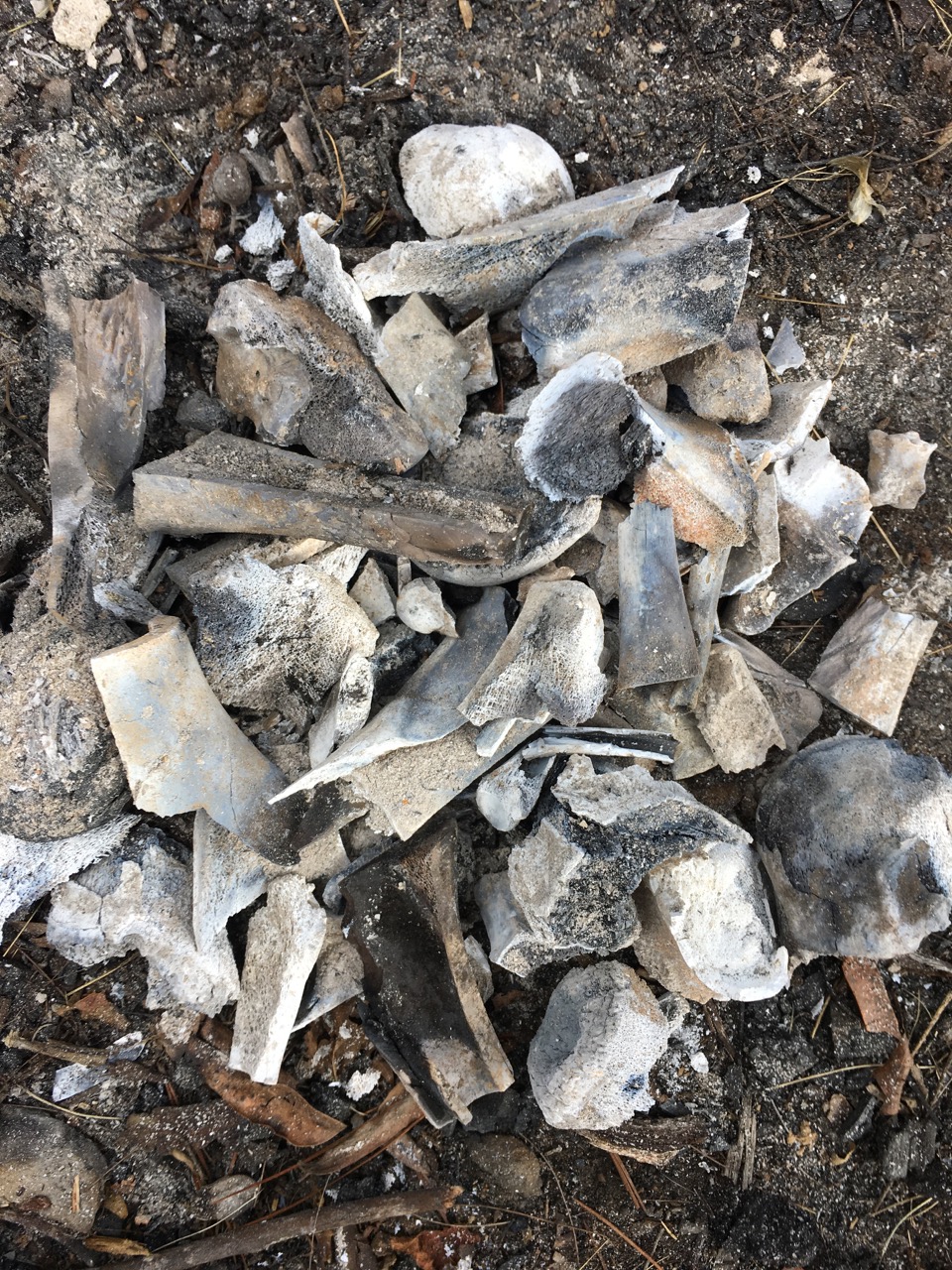
I also throw the beef marrow bones that are left over after making stock in the kitchen. After roasting and boiling the bones with a vegetable stock, the bones are given to the chooks for a day or two to pick over, then they end up on the burn pile. I fish the fragile, brittle, burnt, calcined bone remnants out of the ashes and crush them up to add back to the garden. Calcined bones contain phosphorous, which is severely lacking in our ancient, depleted, Australian soils. Bone ash is a great addition to an organic garden.
The winter pruning weekend has a kind of old English folk tale, come nursery rhyme sort of feel to the work. It’s a very ancient activity to get involved in at this time of year. It’s a must-do occupation if you want healthy trees and more fruit next year. It has to be done and it can’t be put off. It has to be done NOW! Janine and I have been doing this for over 40 years.
We gave it the old one-two. We started by putting on our work boots. Unfortunately no buckles involved on this occasion  just velcro, laughing sided elastic boots and lace-ups.
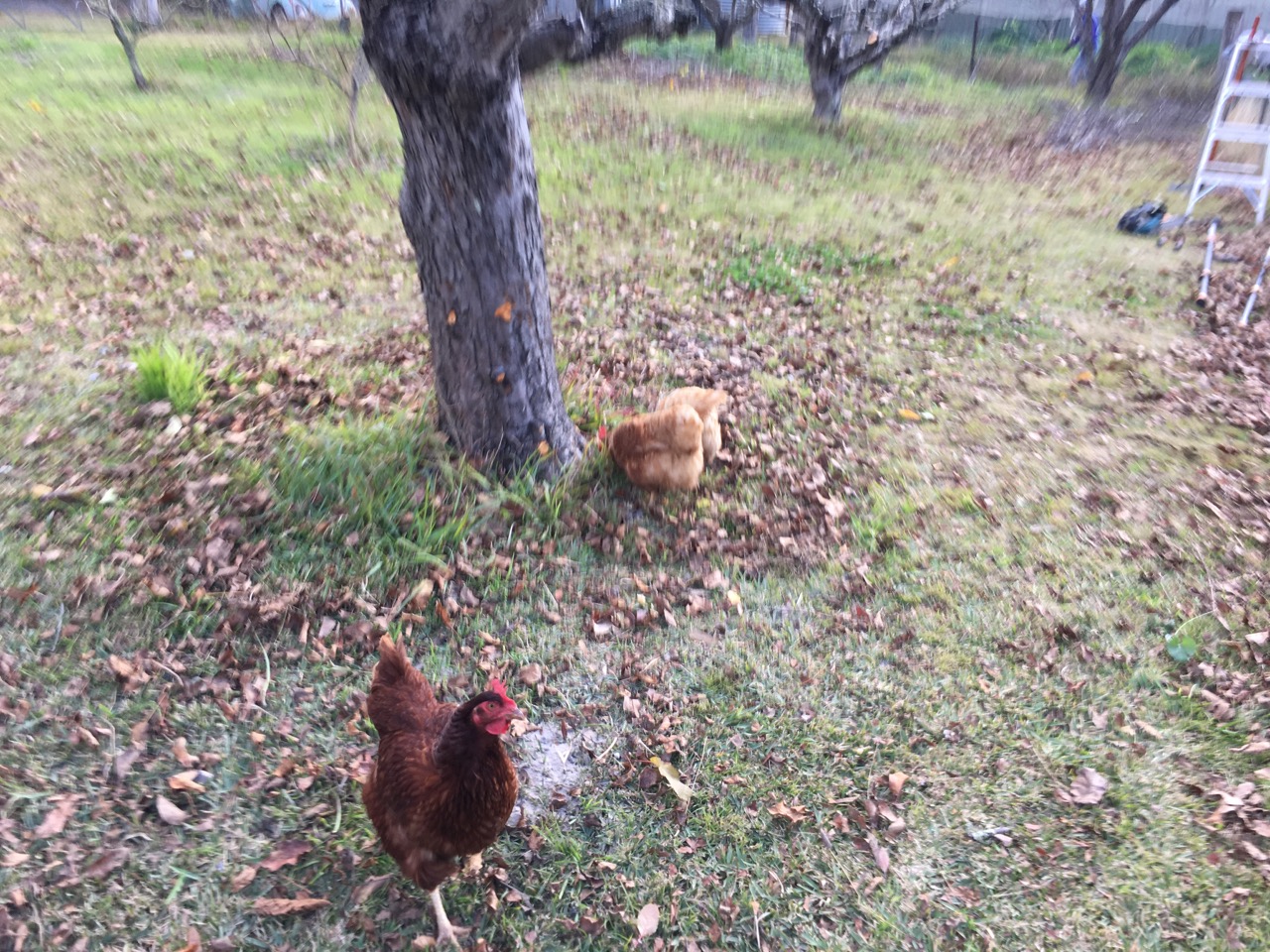
Then it was three four. Open the gate to the orchard. It doesn’t rhyme, like ‘door’ would  but it allowed us to come and go at will, while we pruned the fruit trees back into shape for the coming spring time flush of growth. The chooks take the opportunity of the open gate to come on in and help us work, by getting in under our feet. They come in here about every second day, but only stay for an hour or so before wandering off to look for something more interesting to do. Because we are in here working all day, they stay and work all day too! They just love a bit of human company.
Pruning takes a lot of effort and a lot of thinking and planning too. It’s not mindless. It isn’t just chopping off branches willy nilly. We are constantly conscious that neither willy gets chopped off. Especially since we are using a combination of mini chain saw, pole pruner, secateurs and various lengths of garden loppers. We both drew blood on several occasions from the large spikes on the branches of the yellow plum tree, and other spiky objects and sharpe tools. Luckily our willies and nillies survived intact. We have to treat each tree slightly differently depending on its shape and age, but also its individual habit. As well as considering that each variety of fruit tree fruits and flowers on different wood. Some only on old established fruiting spurs, like cherries, apples and pears, but others on 2nd year growth wood only, so old 3rd year wood is removed after fruiting, 2nd year wood is retained for this years crop and new growth is encouraged for next years fruit.
Probably the most important thing is to remove any dead and decayed wood to minimise disease and this all needs to be picked up, carted off and burnt.
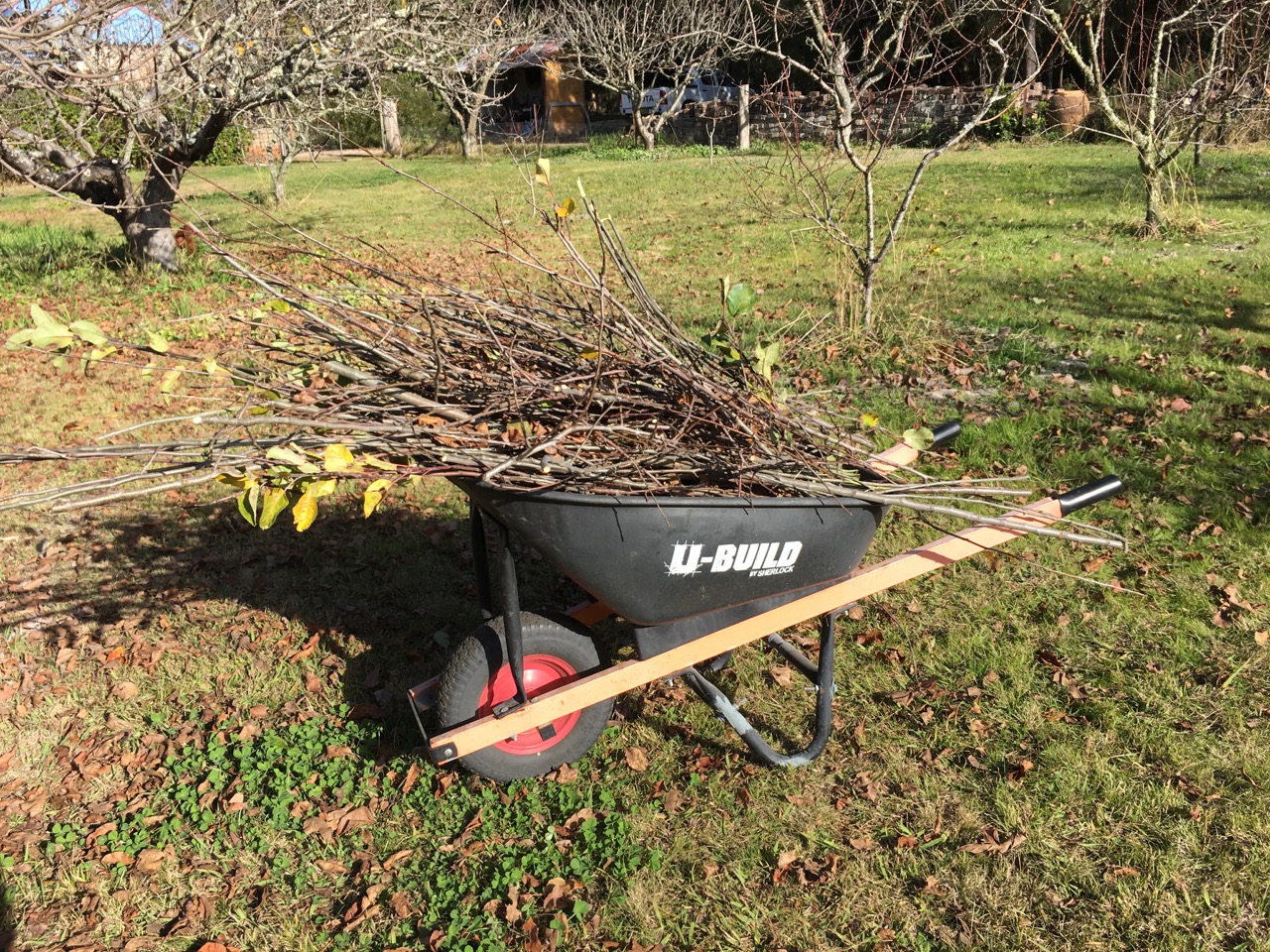
Next it was five six, and we spent a lot of time picking up all our prunings and carting them all down to the burn pile at the back of our block. There are 30 trees in the stone-fruit orchard, a dozen cherry trees in the Chekov orchard, a dozen almonds in the veggie garden, a dozen citrus in the orange grove and a dozen hazel nuts in the old olive grove.  We have over 100 fruit, nut and food bearing trees in total. The picking up of sticks actually takes longer than the climbing up and down the ladder and into the branches of the trees to do the cutting and sawing.
The pruning went pretty well, we are getting better at it these days. However, we totally failed on the next part of seven and eight. Try as we might the burn pile of sticks wouldn’t stay straight. The off-cuts of fruit tree branches are just too forky and twisty to lay straight.
We did however have the constant help and supervision of the ’Spice Girls’ at all times. The big brown hens love a bit of garden activity and are keen to be right in the middle of it scratching and pecking, so nine ten was no problem.
Pruning is one of those jobs that it is really good to finish. See you again next year. Same place, Same time of year. I have a new trimming attachment for my whipper/snipper thing. It goes all the way up to 11!

Winter Citrus and Candied Peel

The citrus crop is now coming into its own. We are harvesting ripe citrus every few days for our breakfast entre.

Because we have so much fruit, I decide to try and preserve some of the citrus in something other than just marmalade or frozen lemon juice ice cubes.
I decide to try and make some citrus candied peel.
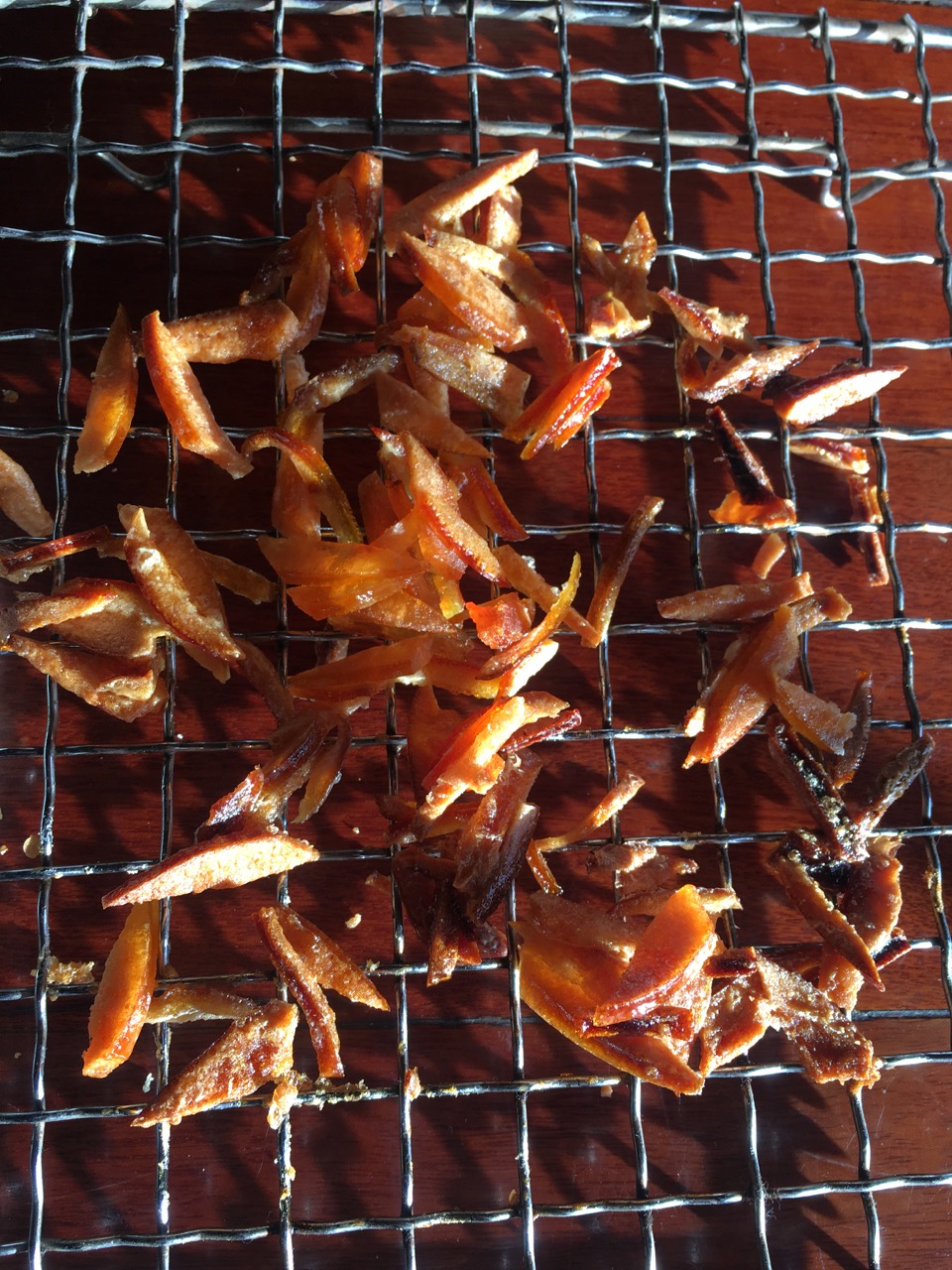
I have a couple of different approaches. First I try amd make some finely sliced candied peel.
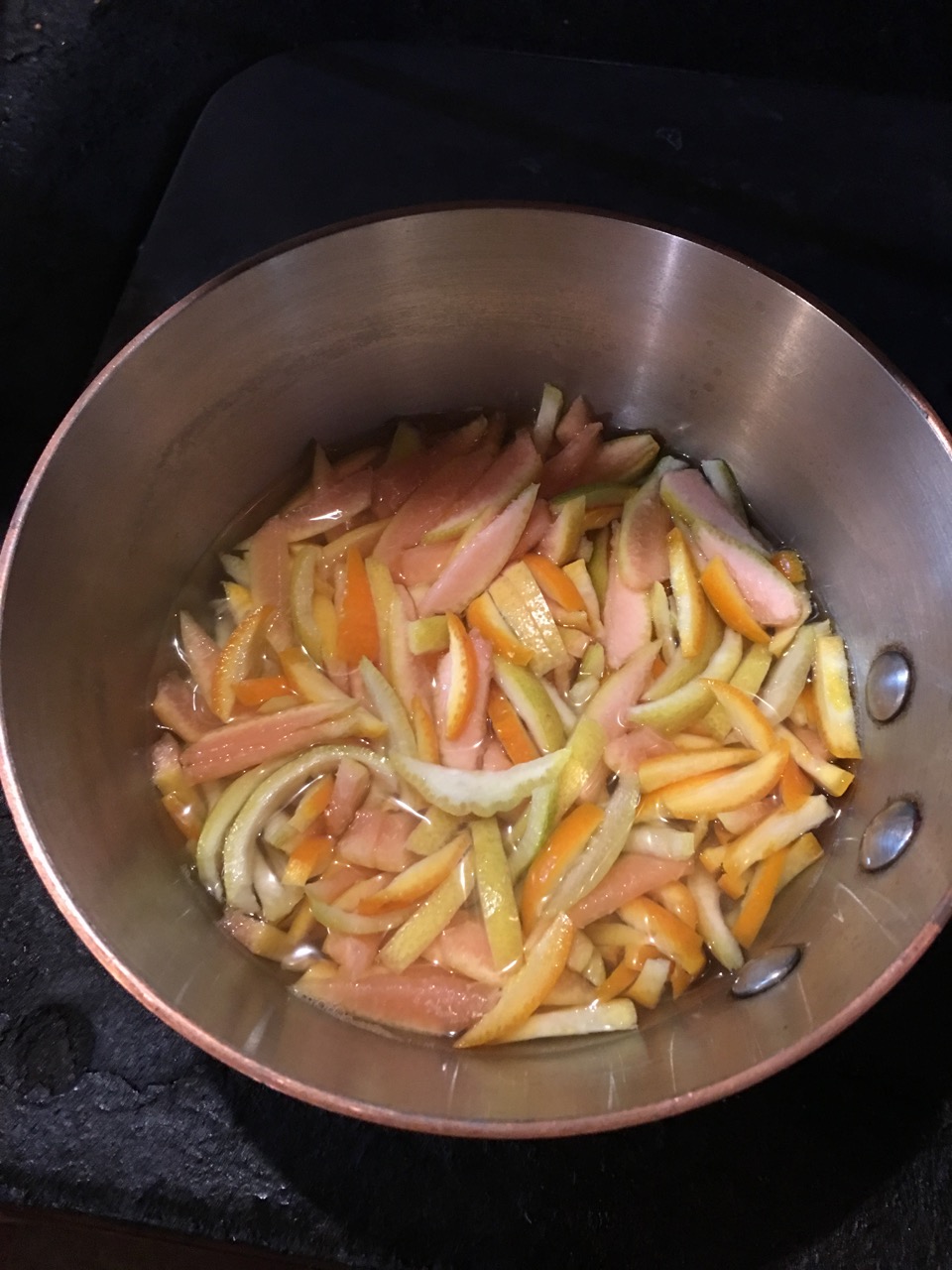
I peel the bright orange peel from the fruit with a standard veggie peeler. I separate it from the pith off the fruit and then slice it finely with a knife.
I’m using grapefruit, lemonade and tangello peel. Why? Because that is the fruit that we shared for breakfast.
I boil the peel in water for a few minutes, then change the water and repeat to reduce the bitterness.
I change the water about 3 times, then let it simmer gently for quite a few minutes to soften the peel.
I drain of the water and weigh the fruit. Add the same amount of sugar as the weight of the damp fruit.
Then return the water to the sauce pan with the fruit and sugar and simmer for 30 mins.
Once they are softened, I drain off the water and put them on a mesh tray to dry.
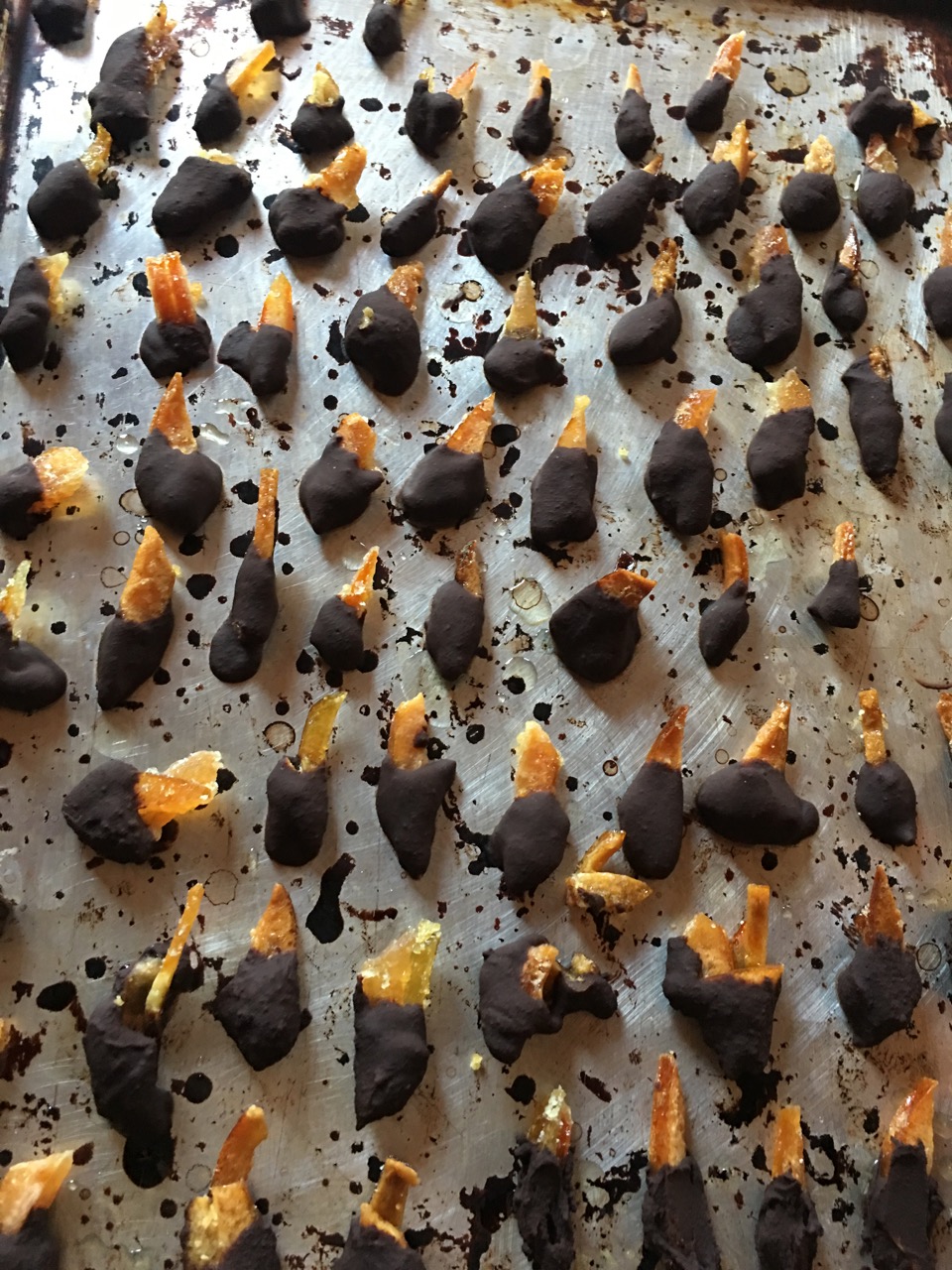
After drying in the wood stove oven that is cooling down overnight with the oven door open, dip them in melted dark chocolate and store in the fridge.
Delicious! They are crisp, crunchy, sweet and citrus sour.
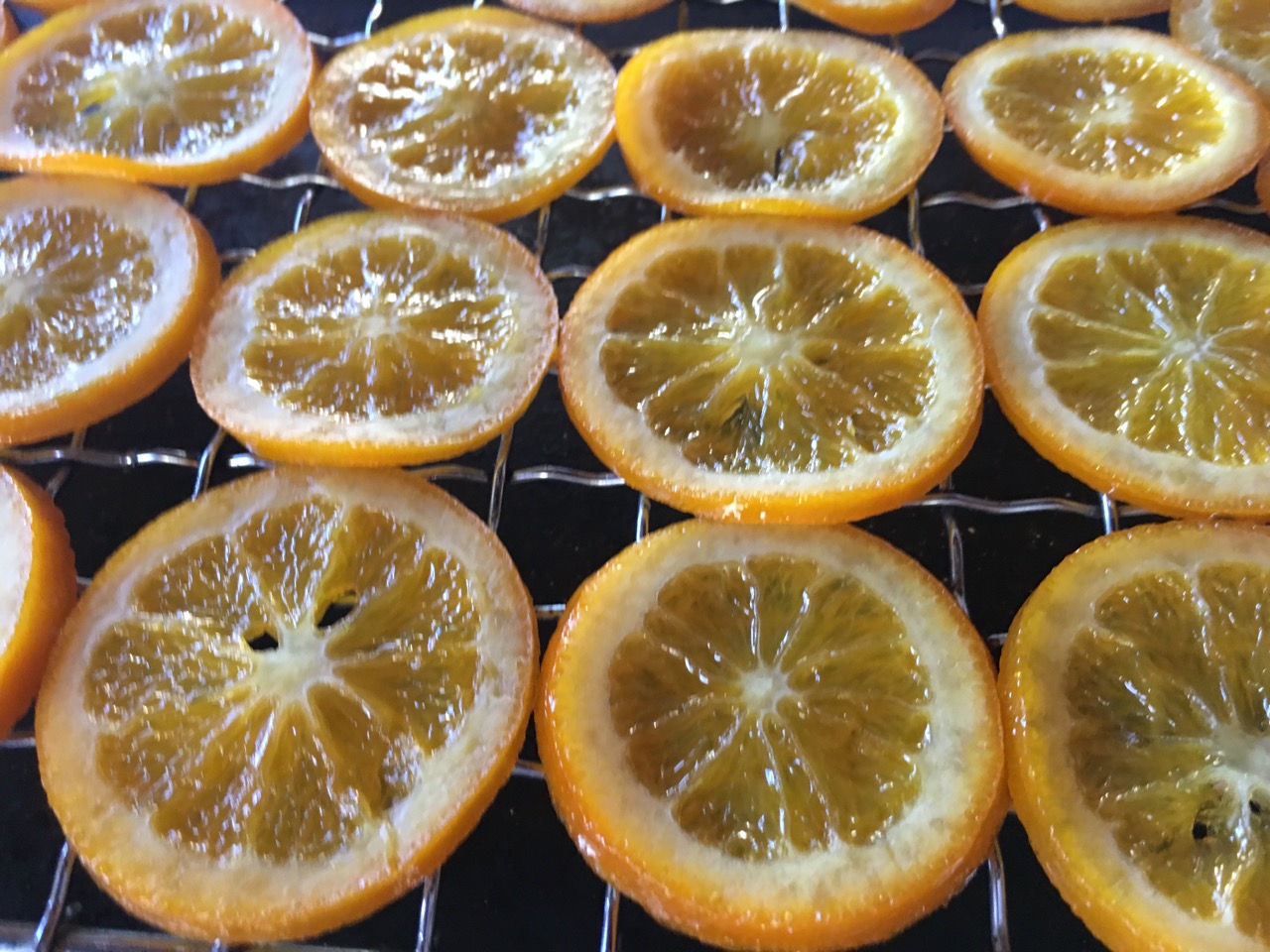
The next night, I try repeating the process using whole slices of navel oranges.
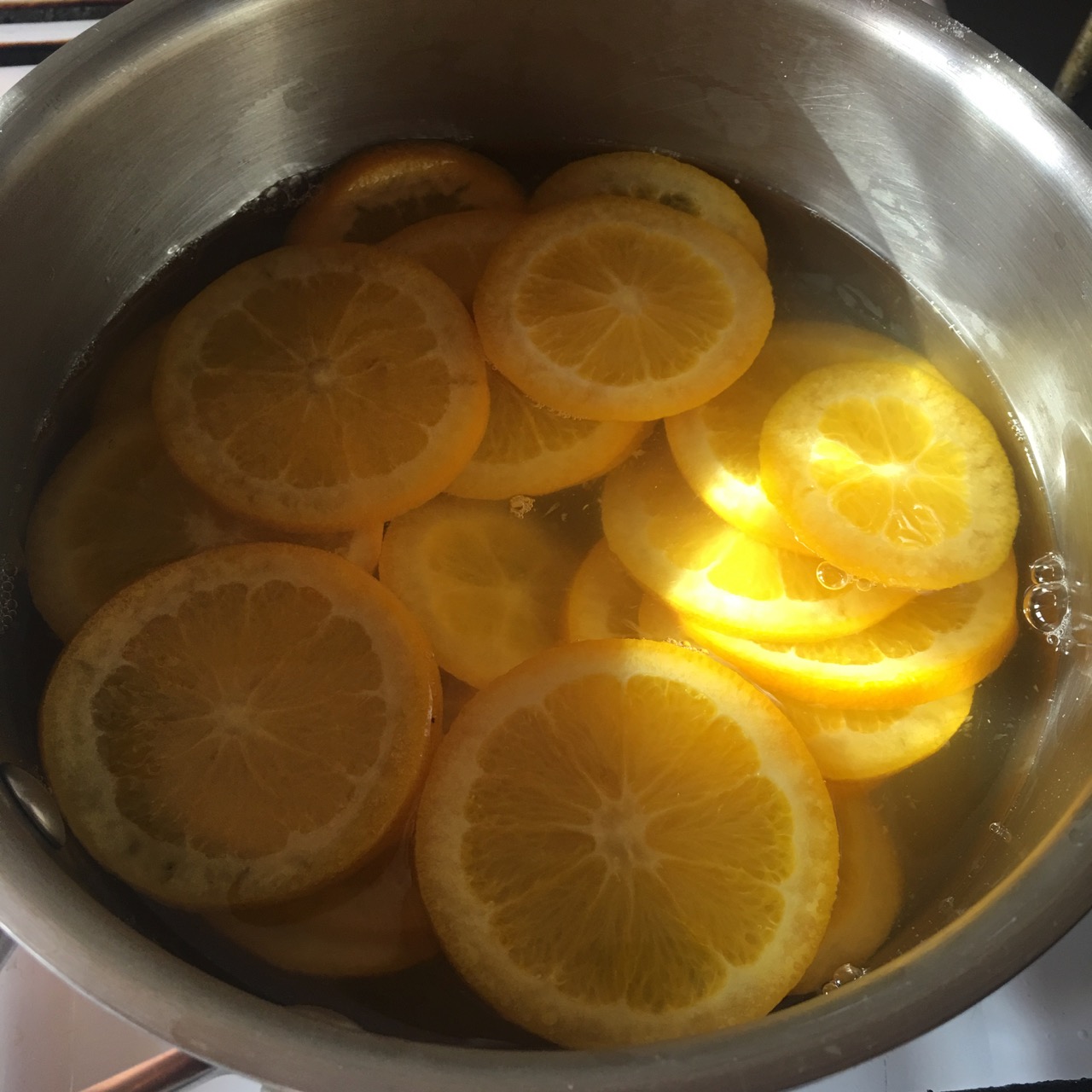
These whole slices are boiled in the same way and then candied as above.
These are very nice after drying and dipped in 80% dark chocolate.
They are particularly nice! They don’t last long.
I’ll have to make another batch using 10 oranges next time, so that they can last a few days.
Winter does have it’s advantages.

Winter Solstice

I can hear Janine talking to someone outside, I can’t quite make out what she is saying, but it is an animated converstion with highs and lows in the flow and sometimes torrent of words. There must be a visitor? I can’t hear the replies to her raised intonation questioning, or the questions that generate her responses. In the end I have to get up from my chair here typing, and go and see who she is talking to.
It’s not a visitor at all, it’s her ‘Spice Girls’. She is talking to Ginger, Maltie and Koko. The chooks!. What is so interesting to me is that they are replying to her with gentle cooing and soft clucking, looking up at her apreciatively and expectantly. She is talking to them as she drops little tit-bits from our kitchen left-overs. She is quite animated in her talk and they are attentive. Of course it isn’t a conversation by any stretch of the imagination, but there is a definite exchange. It’s all about food for them. That’s just about all they seem to think about. If you can call it thinking? However, I’m mindfull that chickens are not just egg layers, they make good pets. They come when they are called and follow us everywhere when we are outside working. They are also very entertaining. So I can appreciate Janine’s engagement with them this sunny morning. I love to hear the lilting rise and fall of her voice drifting into my peripheral hearing.

I’m sitting in the kitchen writing this, it’s a sunny morning and the sun is streaming in through the northern windows flooding the kitchen with bright colour and light. So bright in fact that I can’t see the screen properly. I have to move my chair, so that I’m positioned in the shadow of one of the window pillars, otherwise the light in my face makes me squint and makes typing very unpleasant. I could move to another room, but I love the sunshine on this winter solstice morning. I can look forward to the nights getting shorter and the days longer from now on. Not that it will make any difference in the short term as it always gets colder after the solstice, just as the hottest days are after the summer solstice. It’s more of a mental recognition that things are on the change that is reassuring.

I’m sitting here wearing a woollen jumper, substantial hemp shirt, tee shirt and a merino thermal. I’m comfortable, but all this clothing is essential here at this time of year. We don’t heat our house, this is a conscious choice, specifically to minimise our lifestyle effects on global heating and the climate crisis. Instead, we just rug up. It’s just reaching 12 oC here in the kitchen now that the sun is coming in. It rises from behind the eucalypts down below the big water tanks in the North-East and progresses at a low angle across the northern sky. The angle is so low that it casts its light right across the kitchen at lunchtime reaching 6 metres into the room at its peak.
I’ve been thinking about getting under the floor of the kitchen and insulating the wooden floor boards to help retain this solar heat for longer in the day. We have a wood fired kitchen stove that we cook on in the cooler months. For many years, it was our only form of cooking. It’s a really great piece of equipment. It uses all our tree falls from our 7 acres of native forest as fuel. This means that we are not adding to the carbon load in the atmosphere, as our forest has grown and thickened over the 40 years of our stuardship. This block of land was all cleared when it was a public school in its past life. We have established gardens, orchards and dams for water storage and this increased the bird life from just a few kookaburras and magpies, to what it is now. A thriving environment crowded with all manner of bird life in all sizes from the powerful owl down to the smallest wrens.
Our lovely old enamelled, cast iron, kitchen stove, which we bought for a couple of hundred dollars, 2nd hand, back in 1978, is a beautiful, well thought out, piece of engineering. I have been repairing and maintaining it all these years. It’s beautiful for many reasons, but principally because it is repairable. It’s a very solid thing with a substantial cast iron metal frame that I can work on and make slight changes to, to keep it going and working perfectly for over 40 years now. I looked up the cost of a new one on the web and a new one costs between $15,000 and $22,000!!!!
We can’t buy a new model of our stove. It’s too old now and the company was bought out by AGA. A new Aga is now $22,000 and the cheaper version called Rayburn is now $15,000. That’s the same price that we paid for our Mitsubishi Colt car! It’s hard to believe that a kitchen stove could cost that much, but it does. Such is the modern world. It’s a very good reason to keep the old stove going. It not only cooks our dinner, it heats the room and it also heats the hot water, a job shared with the solar panels. The solar panels work best in summer and the stove is better at heating the water in winter, but they both work together all the time. I set the system up so that they are both connected in parallel.
We only light the stove in the evening. It’s a slow combustion stove, so it is capable of staying alight all day and all night, week in and week out, but we don’t use it that way, because when you turn down the air on a slow combustion fire, it makes it burn very dirty and smokey. This is really bad for the environment and air quality. What we have always done in response to this dilemma, is to light the stove in the evening with full air open and crank the heat up to full, do our cooking for dinner, then do whatever baking, preserving and slow simmering that might be needed. After that, if we need the water to be heated more, then we keep stoking the firebox, but only lightly, still with plenty of air. We try and avoid any smoke, when we are finished, or go to bed, we just let the stove burn down and go out.
This minimises the smoke and air pollution. It satisfies our need to minimise our carbon foot-print and achieves all that we want from a kitchen and a life. It is a very comforting feeling to come inside on a cold evening, into a kitchen that is warm and friendly. Comforting in all its senses, not just the heat. The smell of real food slowly simmering, the kettle quietly rattling and bubbling, the smell of the freshly split firewood. The knowledge that this is a happy home. It’s the kitchen that I wish that I had grown up in. I’ve built my own small creative environment here. A hand made house, with home grown, hand made furniture, the dull gleam of polished copper pans, that I clean with our own lemons and a little salt. Washed under our own wood-heated hot water. It’s a very pleasant idyl, but it has taken and still requires a lot of effort to create and maintain.
It’s no accident that we have ended up living like this. Everything that we have done, every effort, every creative decision in the past 45 years has been edging us towards this point.
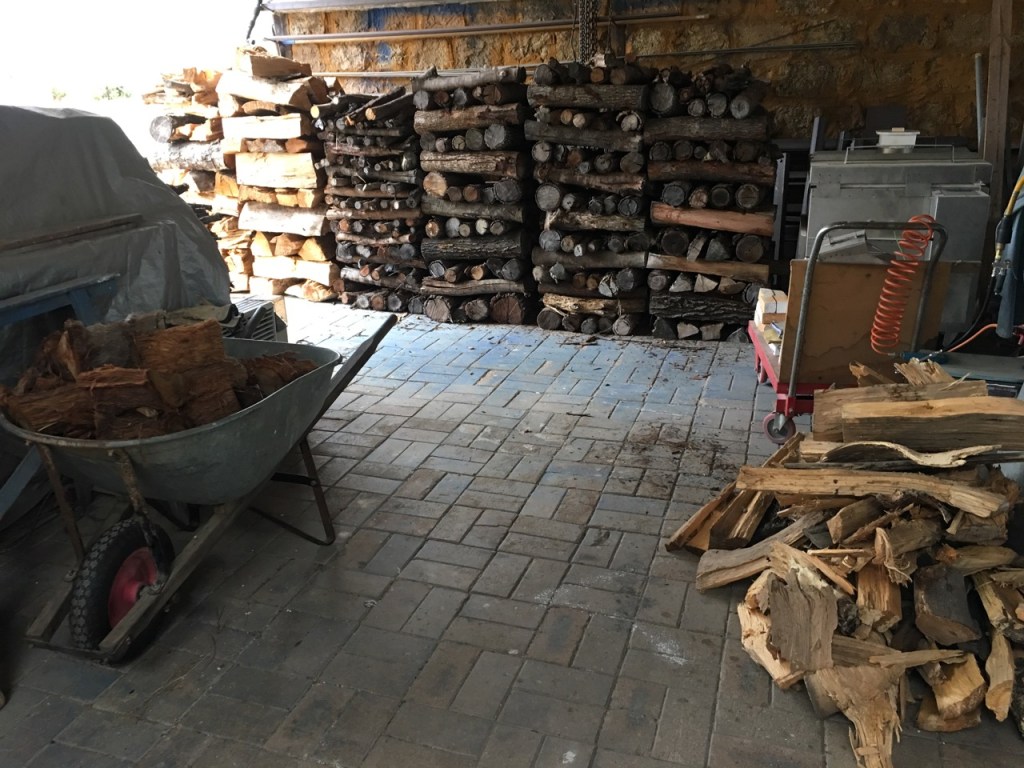
Cutting, carting and stacking wood is of course a constant job, but it needs to be done to clear up all the wind fall branches and fallen dead trees that are constantly coming down in the big winds each year. We also have a wood fired kiln that fires on mostly our own timber from our land here, but once people know that you use wood, they are often offering us fallen trees that they would like cleared away for free. The fact that we are creating some particulate matter in the air from burning our wood is a concern for me. I can only console myself that we are not burning fossil fuels. The fact that we are now driving on sunshine, salves my conscience a bit. One very important step for us was to finally get around to building a wood storage shed for the dry fire wood, after it is all split and stacked ready for use. It only took us 15 years to get around to it, then another 15 years to get around to building the same thing for the kiln wood. Everything gets done eventually, in its own time.
On a different note, I wrote a piece a while back about the crappy plastic dust pans and brooms that are the only choice at the local hardware shop. They are so flimsy, poorly designed and made, that I am embarrassed to own them, but that was all there was in our local shop. In response to that whinge, I got a parcel in the mail from our lovely friend Janna who found a couple of natural bristle, wooden handled, hand brooms in her local hardware shop and posted them to me. Thank you Janna! I was chuffed to say the least. But then I was in the health food shop complaining about the plastic junk that we are forced to choose between at every turn, and the next thing I see is that they now stock wooden handled, coconut fibre bristled ‘fair trade’ brooms from Sri Lanka. So I now have 3 new natural bristled, wooden handled, hand brooms. That should keep us going for a while. However, in the meantime, I had made a stainless steel dust pan from old kiln off-cuts, that I folded up on the pan break and spot welded together. That should last us 100 years, if not more. Next, I re-invented and converted the old broken plastic piece of crap broom back into a functioning item again, by making a new wooden handle for the broken bristle head. By simply drilling a couple of holes in the old head and screwing it too the new handle. It works quite nicely thank you.
Where there’s a way.
Best wishes
from the re-imagined, re-used and resourceful sweeper upperer.

Winter Marmalade Workshop – Everthing Good Takes Time

Winter brings on the lemons and not just on Monday or Friday!

All the citrus a coming on and although it is very early in the season, we have a load of fruit to get through.

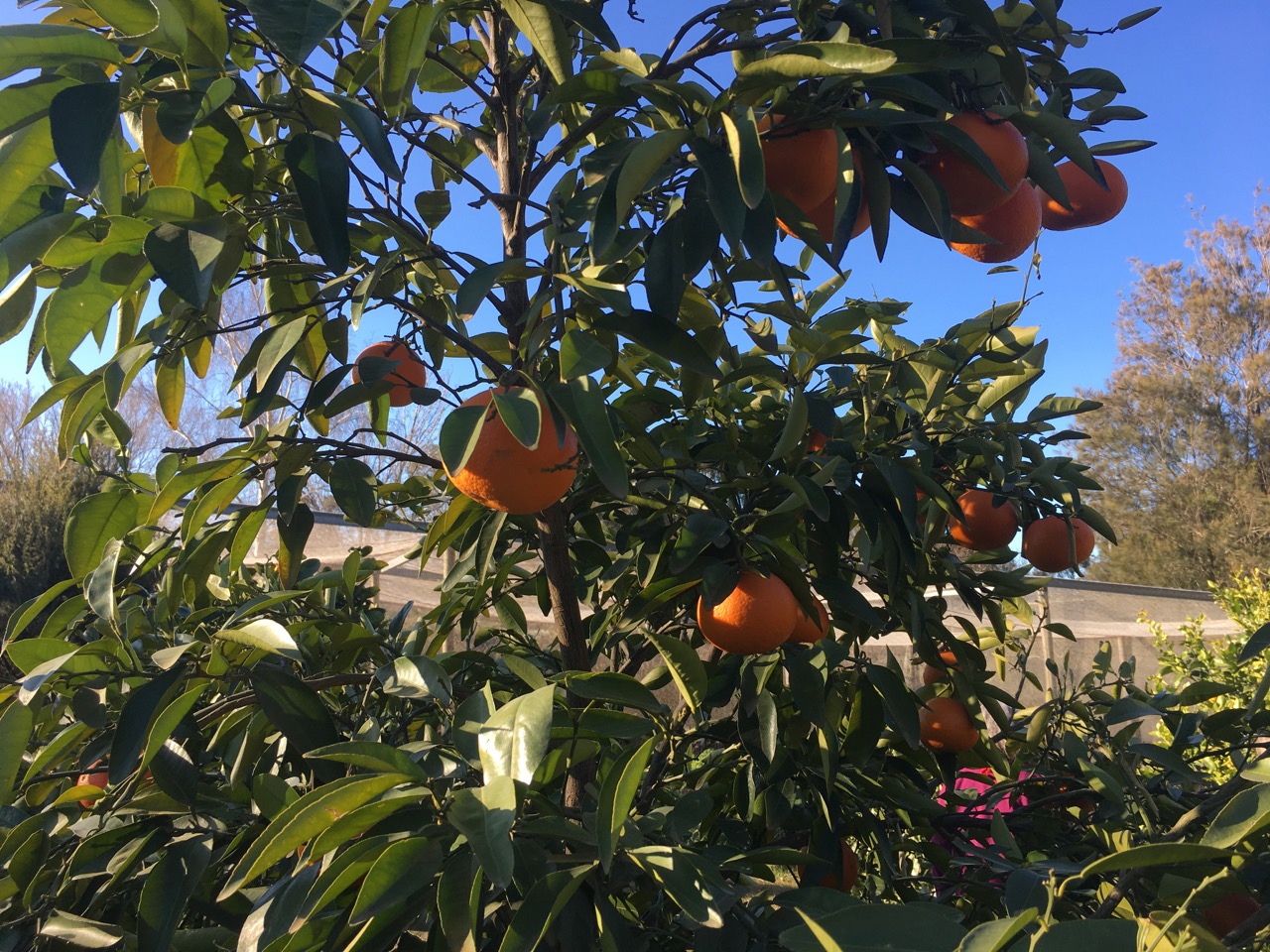
Our citrus grove is now 7 years old and the trees are starting to produce more fruit than we can eat. We could manage it if it were spread out over 12 months, but it’s all coming on in a bit of a rush now. Even though we are in a drought, we did have a surprising down-pour of rain last week that gave us 27mm. Just at the right time to swell out these citrus crops nicely.
The mandarin and cumquat are not really fully ripe yet, but the Seville oranges are almost there, there are just a few ripe fruit on the North facing side of the tree. Everything else is booming. Lemons, lemonades, tangelos, limes, navels and grapefruits. All these are just ripe enough for making marmalade now.
IMG_5865
Janine decided to offer a marmalade making workshop to help us use up this fruit productively. All we ask people to do is turn up with their glass jars, so that they can take home their produce, and something to contribute to a shared lunch. We offer to provide everything else. The fruit, sharp knives, cutting boards, sugar, big copper boilers and a couple of citrus juicers.
Janine spread the word through the local ‘greens’ and the ‘Seed Savers’  + the organic gardeners and the Picton art group. It just so happens that all these contact points are almost exactly the same people! Gentle, creative, thoughtful sensitive caring people have the same interests it seems.
Fortunately for us the Wollondilly Art Group had their monthly meeting postponed a week so that it clashed with our marmalade making workshop. I say fortunately, because we had 8 people and if we had had any more it would have been a bit tight in our little kitchen.
We started by walking down to the citrus grove and picking the fruit. Each person filling one of our wicker baskets with a different fruit.
IMG_2218
We spend the morning peeling, slicing and dicing. Everyone brings along their own individual approach to dissecting the citrus fruit quite finely, some more finely than others. Janine and I have different approaches and we each demonstrate our own way. We also have two vastly different cooking methods and we prepare  batches by both methods.
I get the job of peeling the grapefruits, Seville oranges and eureka lemons, as they have a thick white pith. I have no trouble in being told to ‘pith-off’!
I’m told that the white pith isn’t needed in marmalade. So off it goes, the thin curly ‘peels’ can then be sliced very finely.  To very thinly slice the peel takes a lot longer. But I like it that way,  I don’t mind the time, I’ve set the day aside for this, it’s a pleasant activity and I know that I’ll enjoy the reward. Everything good takes time!
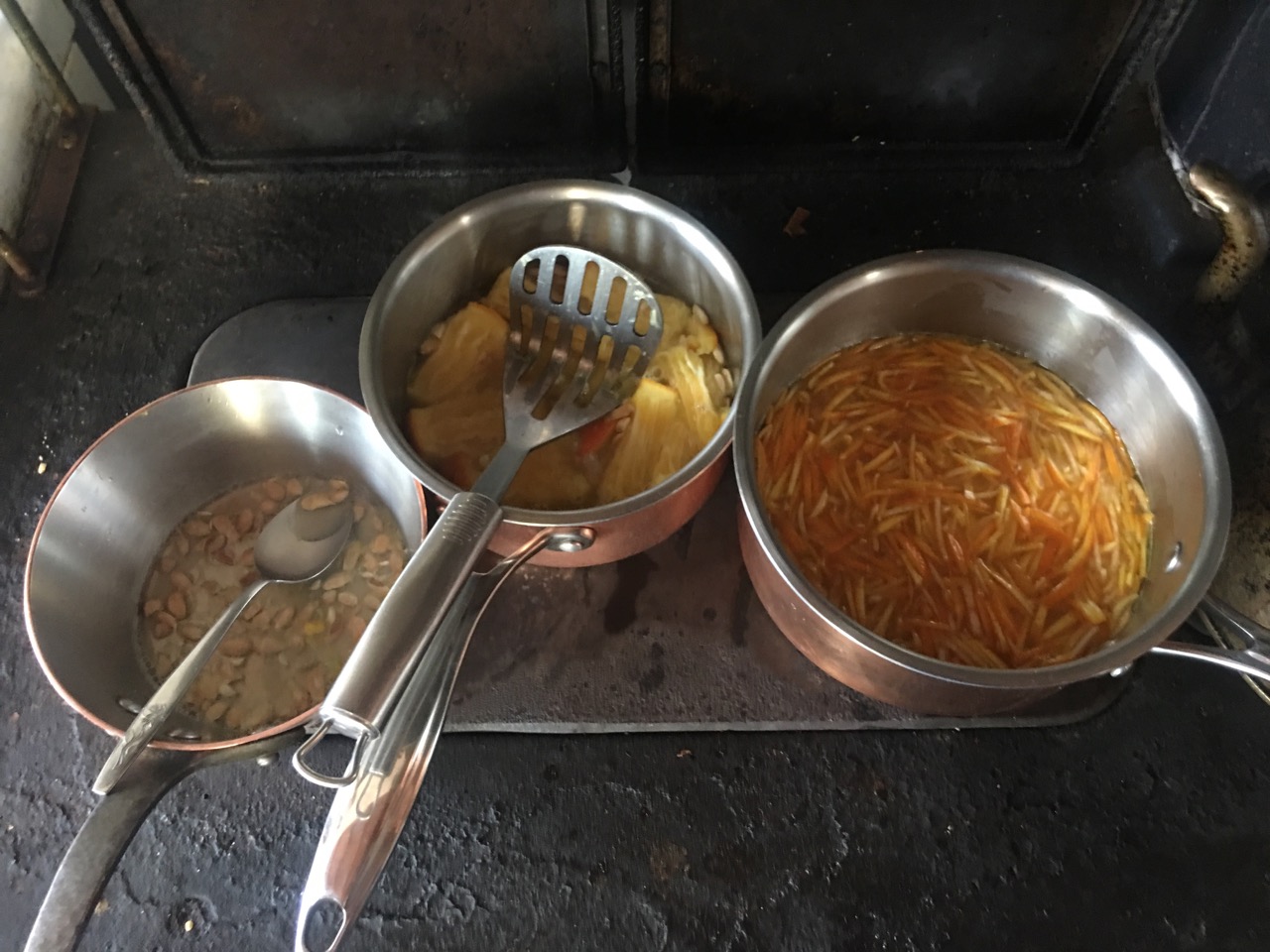
The remaining whole peeled fruit are cut in half and juiced, as we only use the juice, the peel and sugar. We don’t use water, nor do we soak the fruit over night. Just our very own ‘quick and dirty’ whole fruit method.
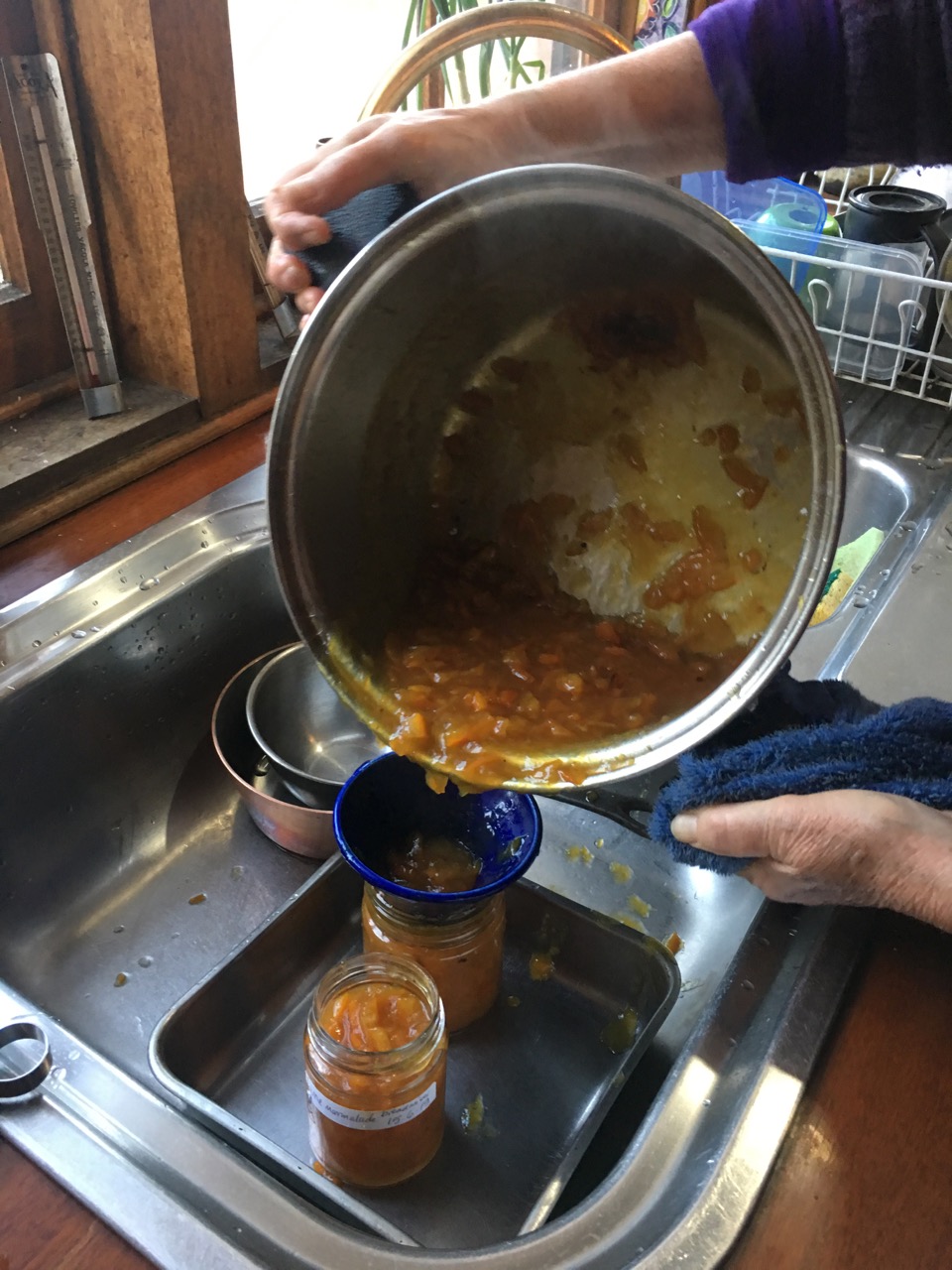
Once the fruit is on the stove, we settle down for a shared lunch and a chat while our handiwork simmers and fills the kitchen with that devine smell. One by one, as each boiler begins to ’gel’, we fill the glass jars as they come straight from the oven where they are sterilised for 10 minutes at 120oC and cap them off with simmered lids.
Everybody got to take home 2 or 3 jars of different marmalade blends. We made 4 different batches altogether.  I think that everyone enjoyed the day. I notice that no one was in a hurry to leave.
We are left with a dozen jars of different blends for our own pantry. It takes all day, but it’s a really pleasant day, well spent. Everything good takes time.
My car has just sent an email to my phone to up-date me on the progress of our driving. We have had our Hyundai Ionic ‘plug-in’ electric hybrid car for 5 months now. We have driven 5,000 kms so far and nearly all of that has been done on our own solar power. We have driven the 5,000 kms on just $70 worth of petrol. We have filled the petrol tank twice with $50 worth of fuel, but we still are only a third of the way through the 2nd tank full.
The first image that I have downloaded here shows that for the time period of one month, and the mileage that we covered over that time, the car should have generated 26grams of CO2 per kilometre. In actual fact we generated only 2 grams! It seems that the Hyundai software aggregates all the information from all the cars of the same make and model in Australia and rates the usage accordingly.
On this basis, we were rated 1st for the month February
This second image shows that our average litres per kilometre. was 845 km/L. Apparently the expected amount for this car should be closer to 20.
For this month our fuel consumption was 0.64 litres to travel 545 km. The expected fuel consumption should have been much higher, closer to 26 litres. So we are achieving 50 times better than the average.
I’m very pleased with this information, as this is just what I hoped to achieve when I bought this plug-in hybrid car. We have demonstrated that we can drive almost totally on sunshine. However, when we need to go on longer trips, there is no ‘range anxiety’, as we can use the small, fuel-efficient, petrol engine to go up to 1,100 km when both the battery and fuel tank are full.
It’s no accident that we can do this. We have spent all our lives working towards this situation. Making our own livelihood from our own small business, growing our own food, collecting our own water supply, dealing with our own sewage, making our own electricity and storing our excess solar power in our battery, all these choices leading up to this point, so that we can simply plug in our electric car and drive on sunshine.
Everything good takes time.
Best wishes
Steve
Dr. Steve Harrison PhD. MA (Hons)
hotnsticky@ozemail.com.au
blog; tonightmyfingerssmellofgarlic.com
Potter, kiln surgeon, clay doctor, wood butcher and Post Modern Peasant.