Finally, the rain comes

We have had a week of swelteringly hot days, all up in the high 30s. Yesterday was 39oC way too hot to work out side, so we got up very early and got started working by 6am. We gave up and came inside at 11.00 am. It was just too hot. We have been watering the vegetables morning and night, but they are still suffering. Many of the plants like beans, celery and  cucumbers have dead, dried patches on their leaves.

IMG_1740IMG_1737

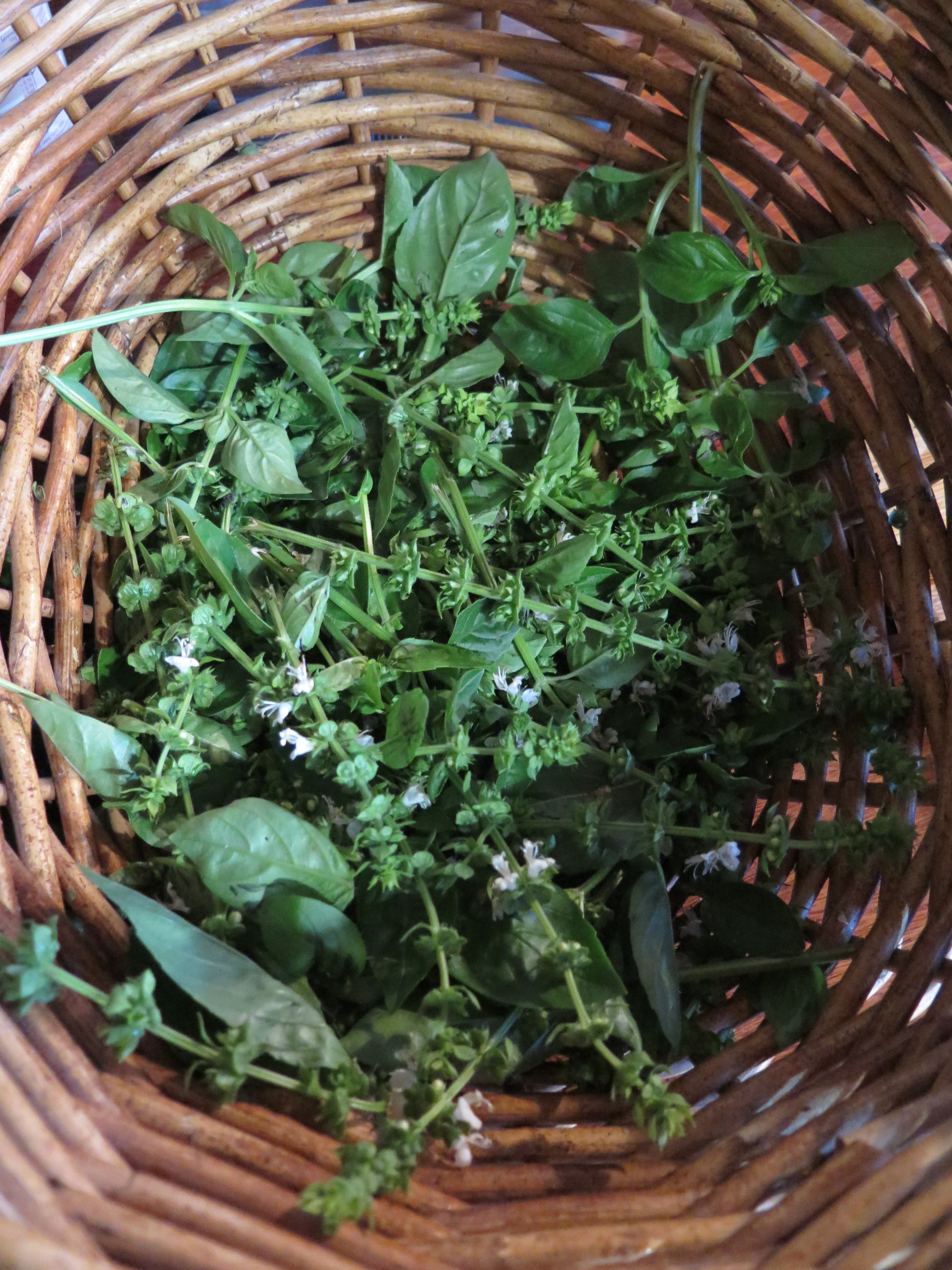
But at least they are still alive, so that is success. I gave the sweet basil its first hair cut. I tip pruned all the florets that were trying to flower and filled a large basket with the leaves. I like to make a kind of pesto-like paste. to go into the freezer, so that there will always be basil to add to sauces later in the year. We also make real pesto with garlic, pine nuts and parmigiano cheese, but what I’m making here now is just basil, garlic, a little salt and olive oil paste. It freezes well and keeps all year, so that when I need some basil flavouring in winter, I can open the freezer and take out the tub of this frozen basil paste, tap it upside down to drop it out of the container and then slice off a block of almost fresh basil concentrate. Beautifully green and flavourful. The rest is returned to the freezer for later.

I’ve been known to make up to six or seven of these half litre containers during the summer. As long as I never let the basil flower and keep pinching out the growing tips, the plants seem to thicken up and keep producing more leaves. Once you let them set flowers, they stop growing.

This stuff is fantastic. I love it. It’s one of there few things that we keep in our small freezer section of our fridge. Because it isn’t cooked, we can’t preserve it any other way, other than drying the leaves, which I have also done, but dried leaves are different. This stuff is magic. So intense. The little bit of garlic and salt really brings it to life. And it is surprisingly easy to slice from the block when frozen. Having very little water content and being mostly oil, it doesn’t set hard like ice, but more sort of leathery?

All the mid season peaches are now gone. We only have one tree of late peaches yet to come on. It is netted and we wait for them to ripen. All the berries are now over with over 20 kilos picked this year and safely all preserved, vacuum sealed and stored in the pantry. This recent heat wave has brought on the plums and they are just wonderful, sweet and tangy with that fabulous combination of acid and sugar that make your mouth water. We eat the first of them straight from the tree. Such a great taste, warmed by the sun, the juice trickles down our chins. They are mouth waveringly good. There are too many ripening all at once, so Janine has been stewing them and we have them for breakfast with a little yoghurt.

IMG_1719

We are in direct competition with all the birds at this time of year. The Lovely and hard working Janine has been moving the nets around and bagging some of the fruit, keeping one step ahead of the birds, while I have been so busy with orders. It’s a lot of work, but worth it. Having beautiful fresh, organic, clean food that we have grown ourselves, is a major part of our enterprise here.

We work outside very early and then again in the late afternoon and evening. Working inside during the heat of the day. Janine has mown the stone fruit orchard and I have mown the citrus grove and vegetable garden. Everything is looking good and now the heat is over for the time being with a cool change arriving and bringing with it some beautiful, cooling rain. I emptied the rain gauge this morning and we have had 33 mm. Just enough to flow down and top up the dam for a few more weeks of hand watering. The combination of cooler temperatures and soaking rain will bring all the plants back to life and put on a growth spurt.

IMG_1722

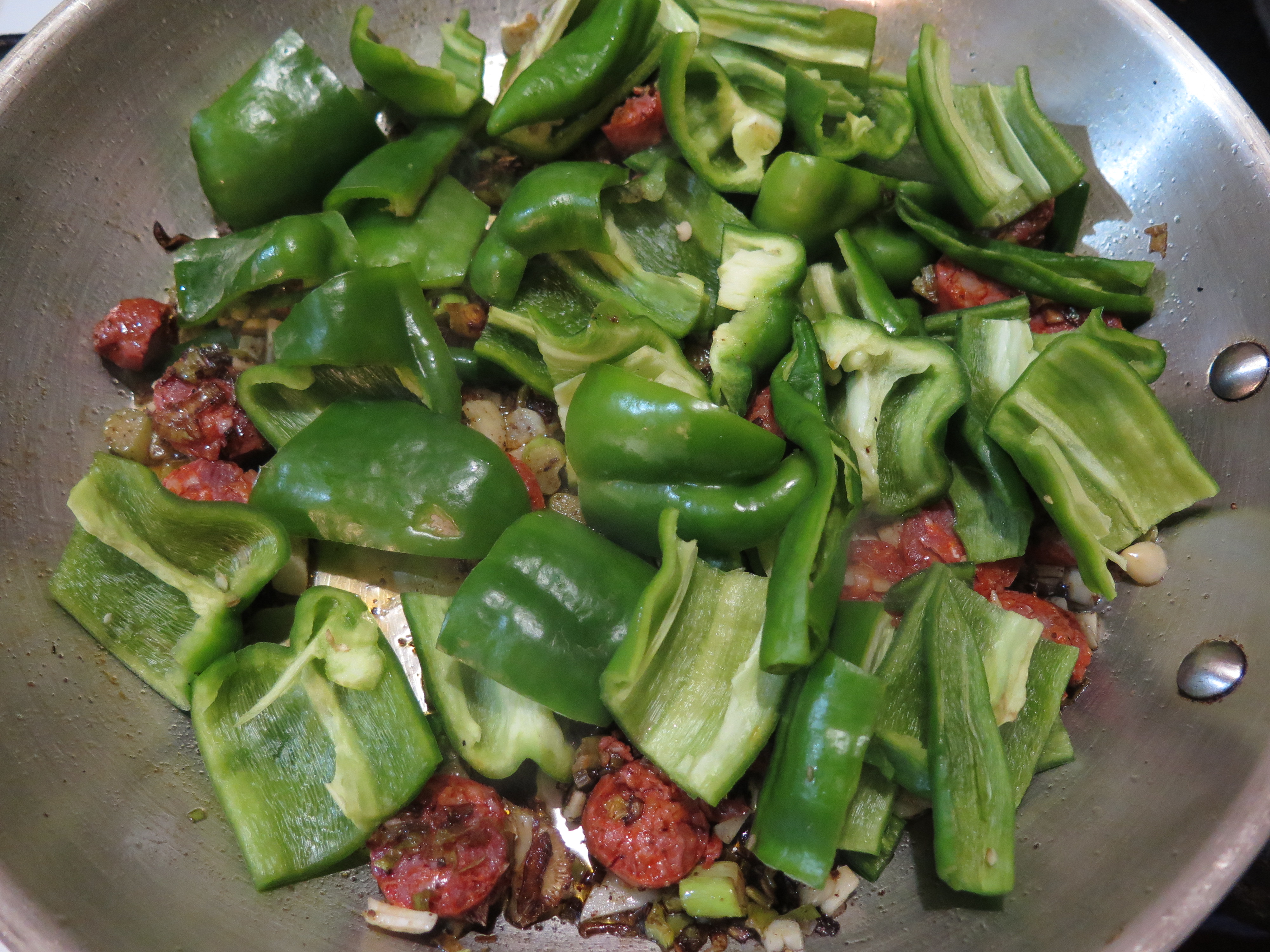
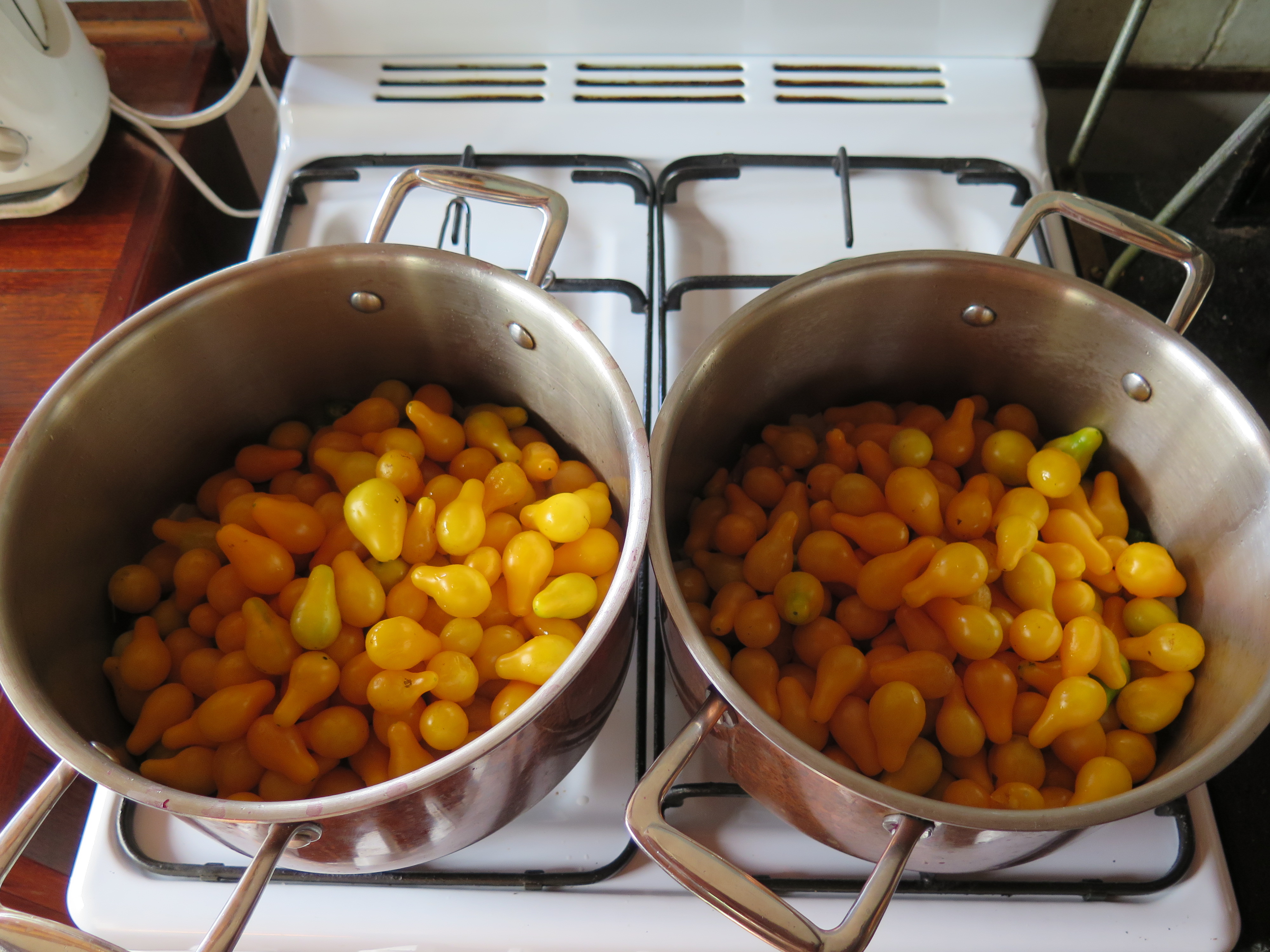
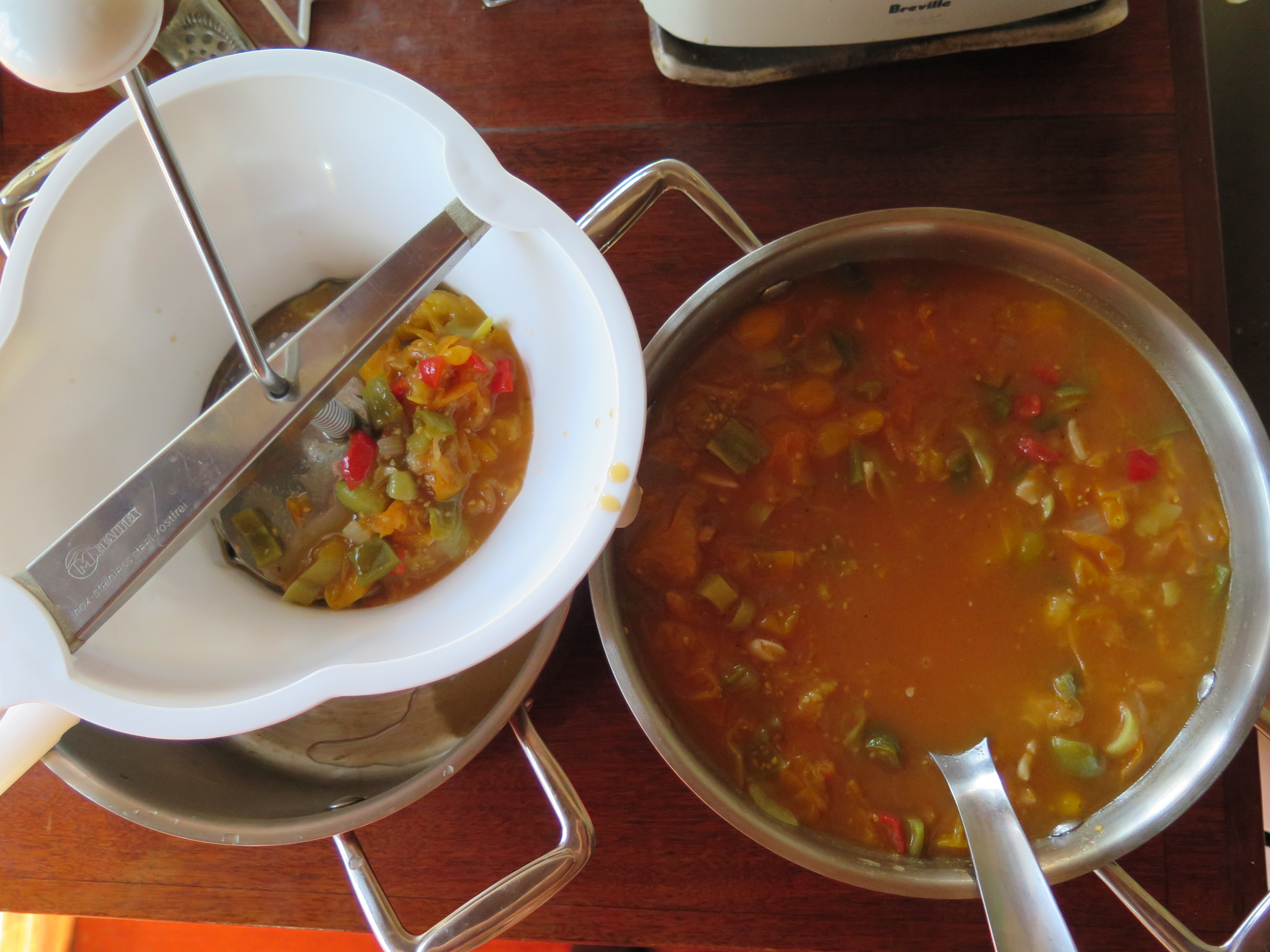
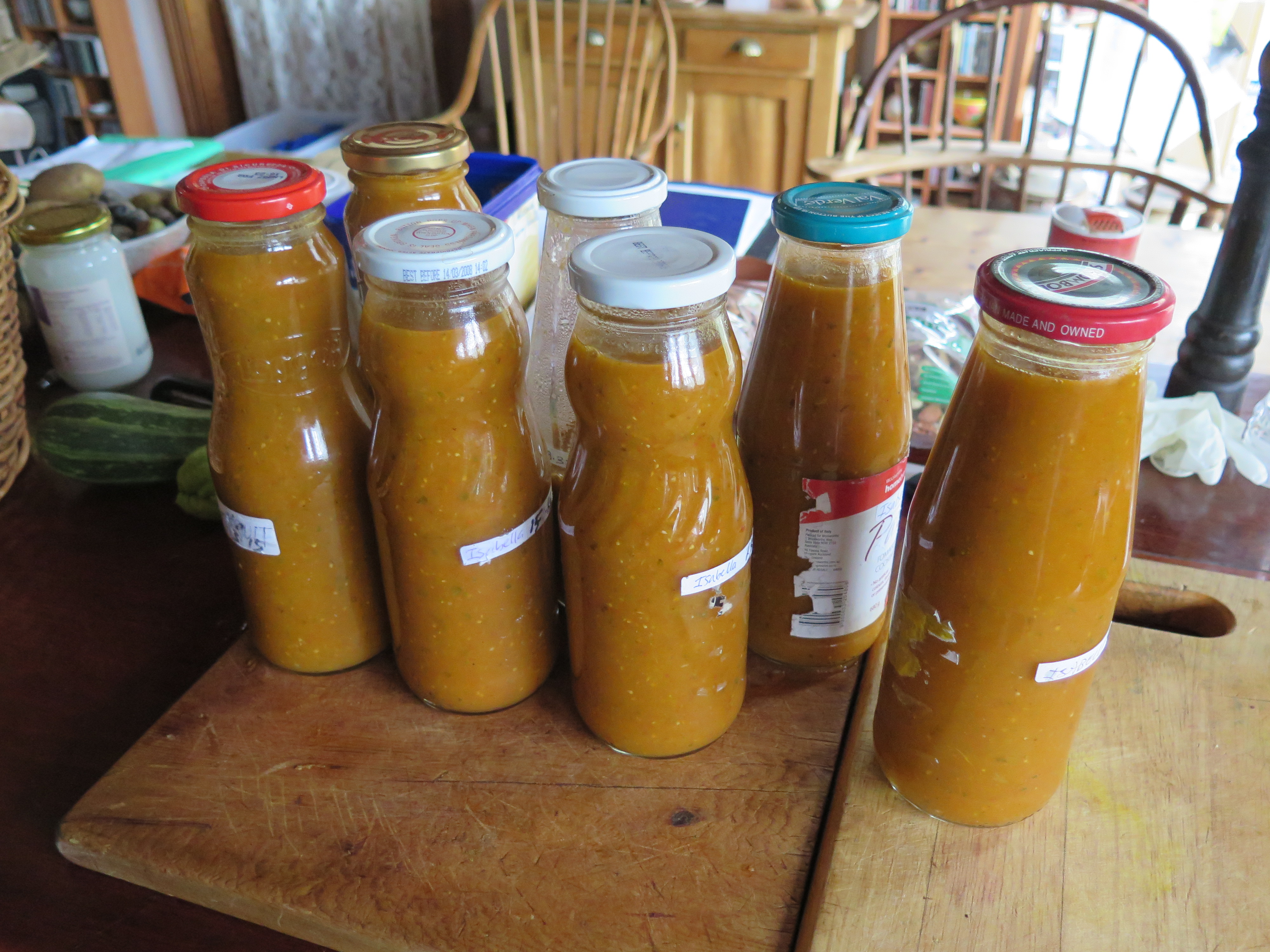
I bought a kilo of live mussels from the fish-truck man, so we are having mussel and vegetable soup for lunch. I usually just do the simple favourite, mussels in white wine, but as we have so many beautiful vegetables at the moment, I make a combination of green peppers, green and yellow zucchinis, red shallots and fresh sweet basil sauce. I bring it all to life with a jar of our preserved tomato passata concentrate from March. This batch was made with tiny yellow tomatoes, onions, capsicum, garlic and olive oil.

I cook it off and add the mussels to the boiling broth. It fills the kitchen with its steamy fragrance. It’s a great indulgence, but we  have earned it. Everything except the mussels from our own labours in the garden.

IMG_1721IMG_1724

IMG_1732

The First Tomatoes of the Year, Ratatouille

Yesterday, we harvested the first ripe tomatoes of the year. This is only the second time that we have managed to get ripe tomatoes before Xmas. The only other time was last year. Global warming, What global warming?

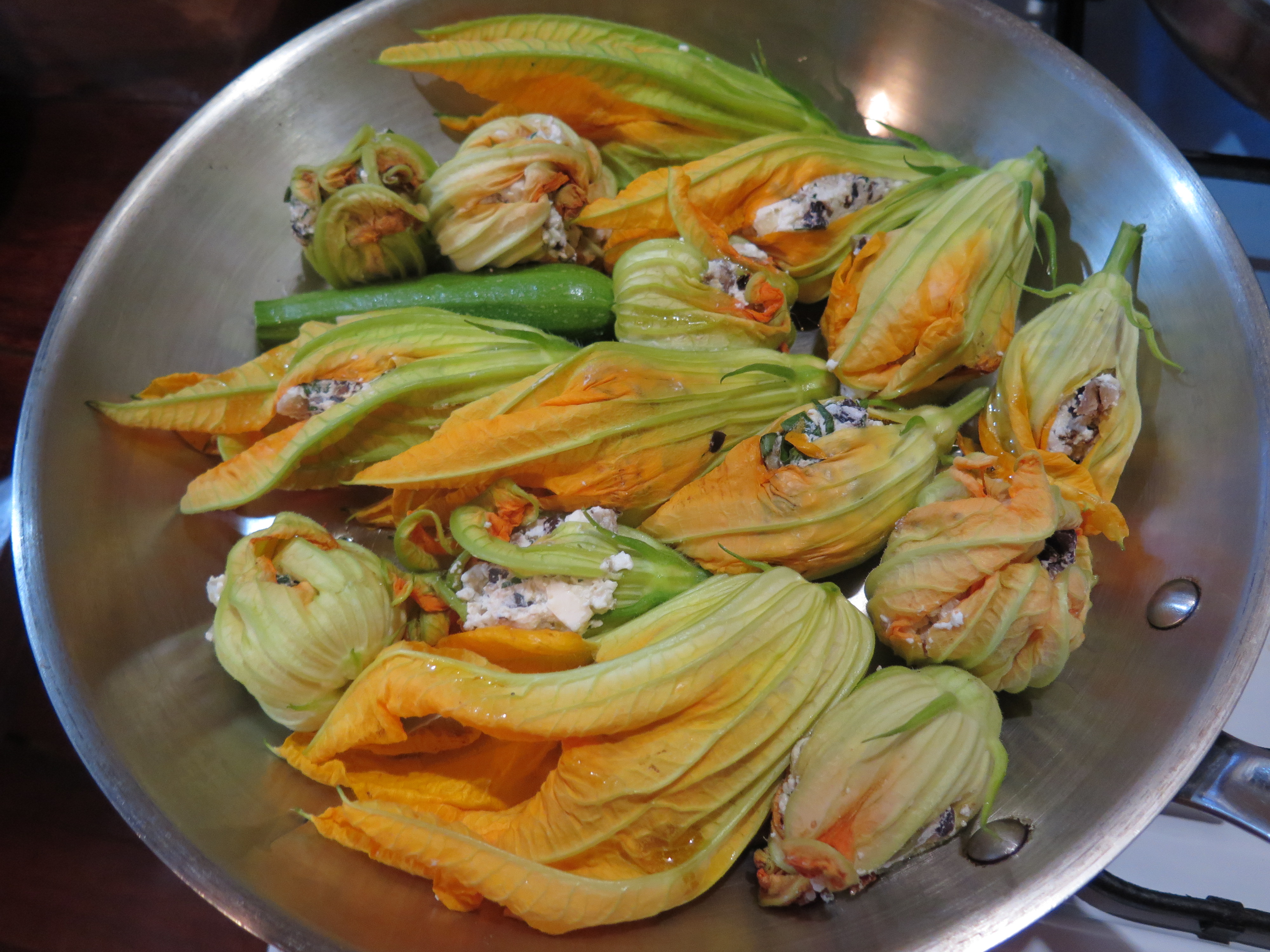
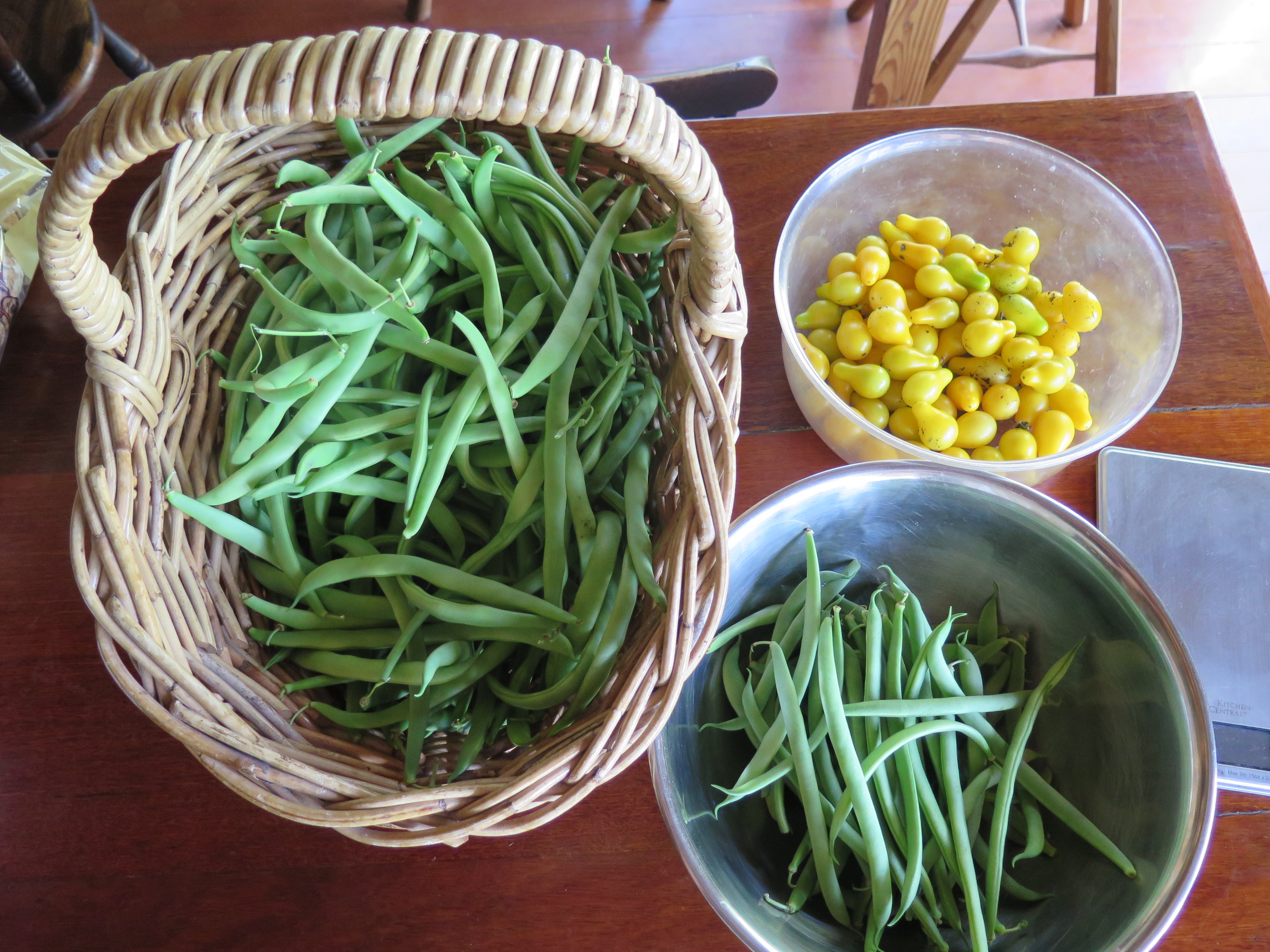
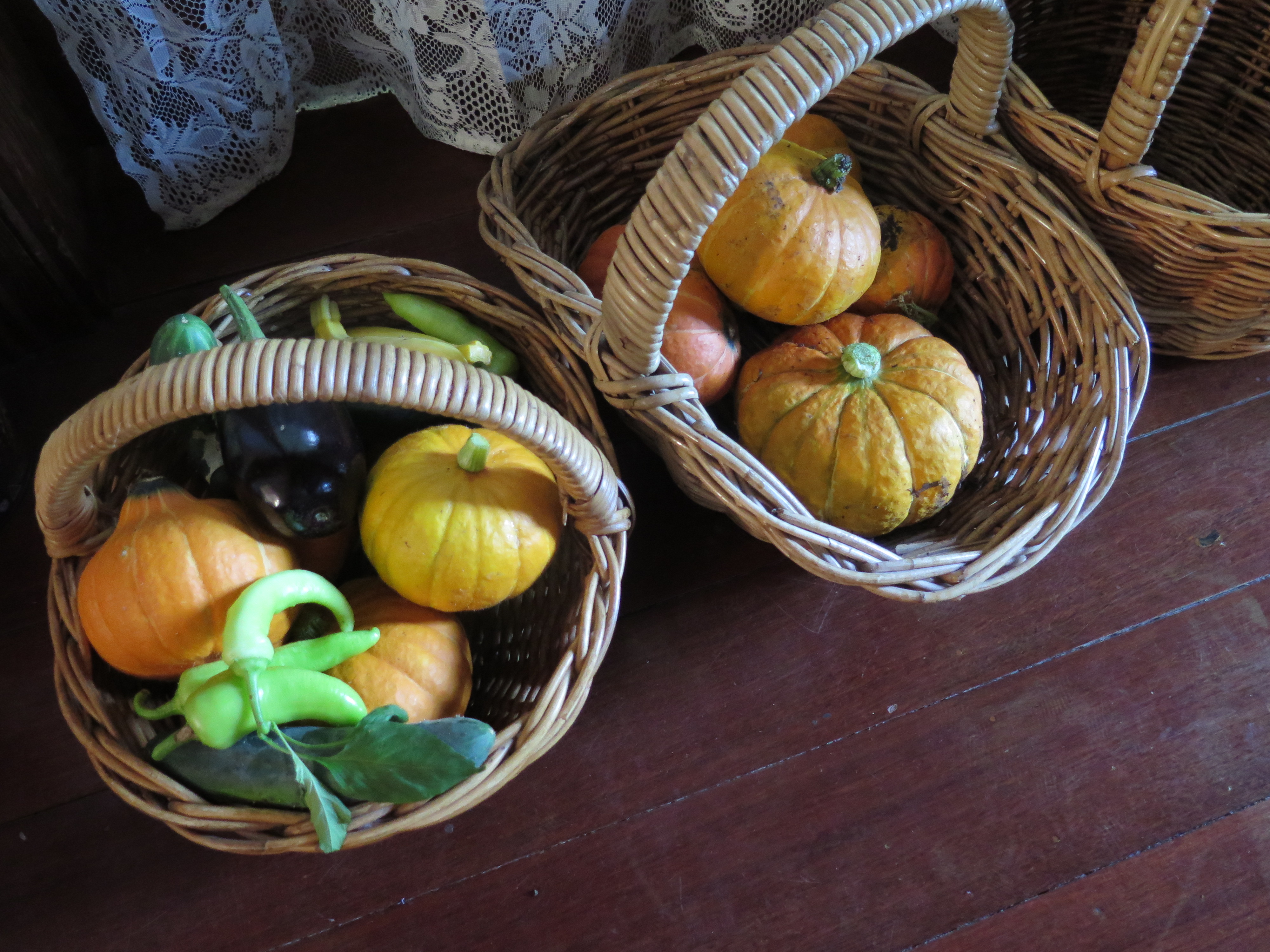
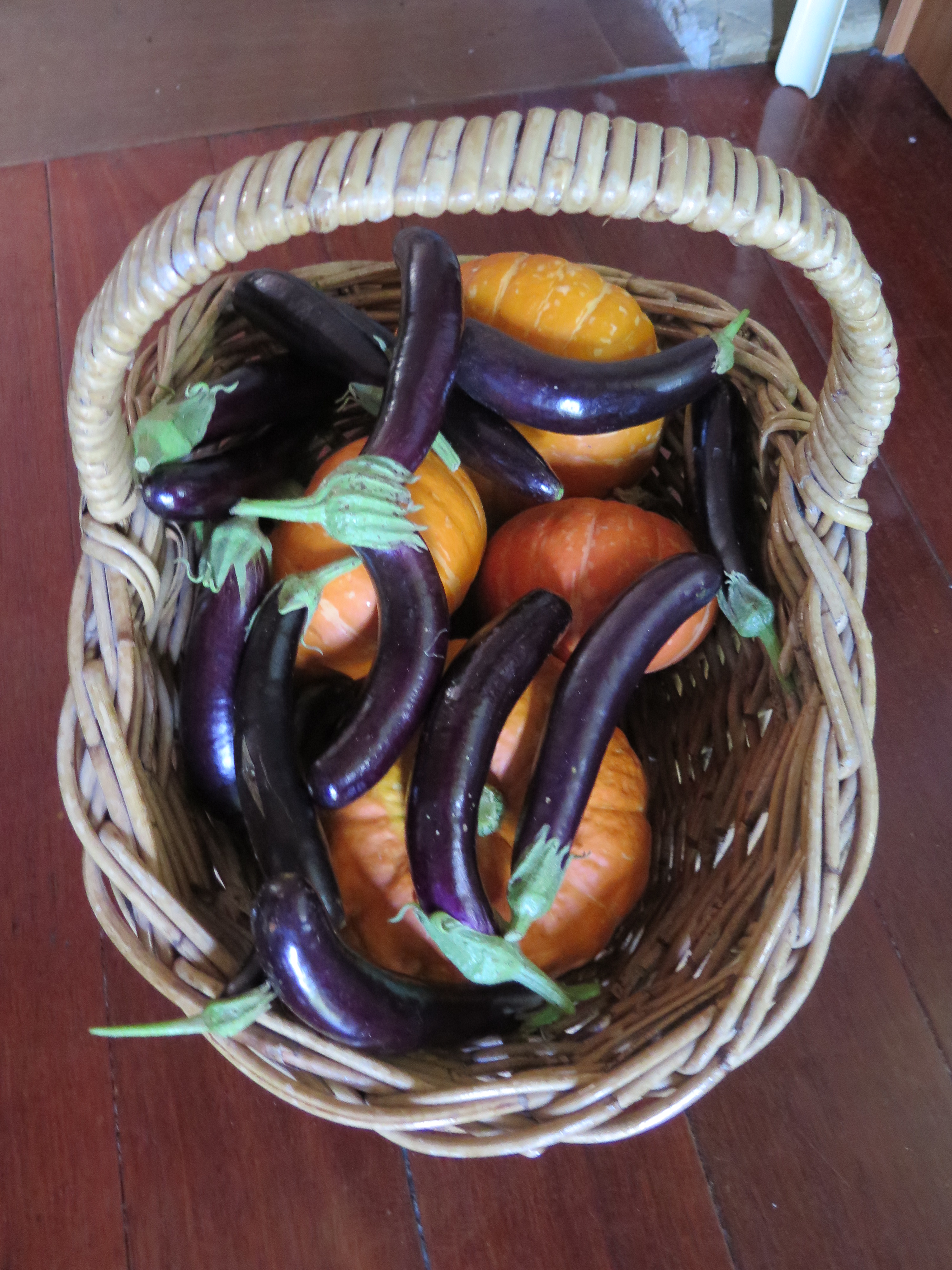
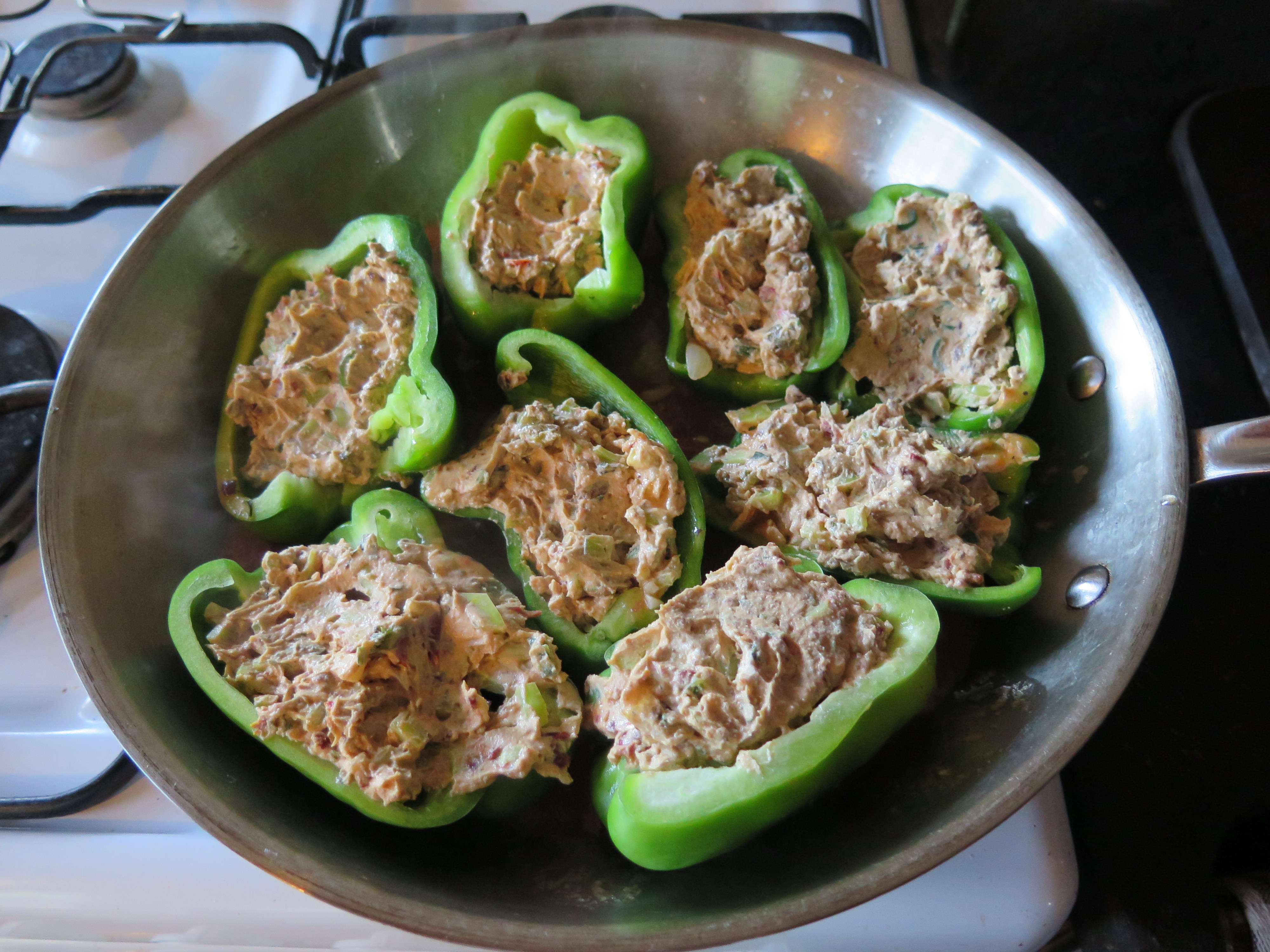
We also made our first pickings of our large green capsicums and smaller yellow banana capsicums, added to the sweet basil and yellow and green zucchinis, we have the makings of the first ratatouille of the summer. The egg plants bushes oblige us with the first few small aubergines and suddenly, there is our dinner in a basket.

The weather is very hot now 39 0C during the day. Our friends in Adelaide have had 4 days in a row of  41,42,43 and 41 oC. Way too hot to be able to work effectively outside. I make clay while the sun shines, inside under cover of a roof, but still sweltering. Porcelain slip dries very well on the drying bed in this weather. It’s a good time to make single-stone porcelain.

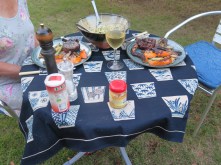
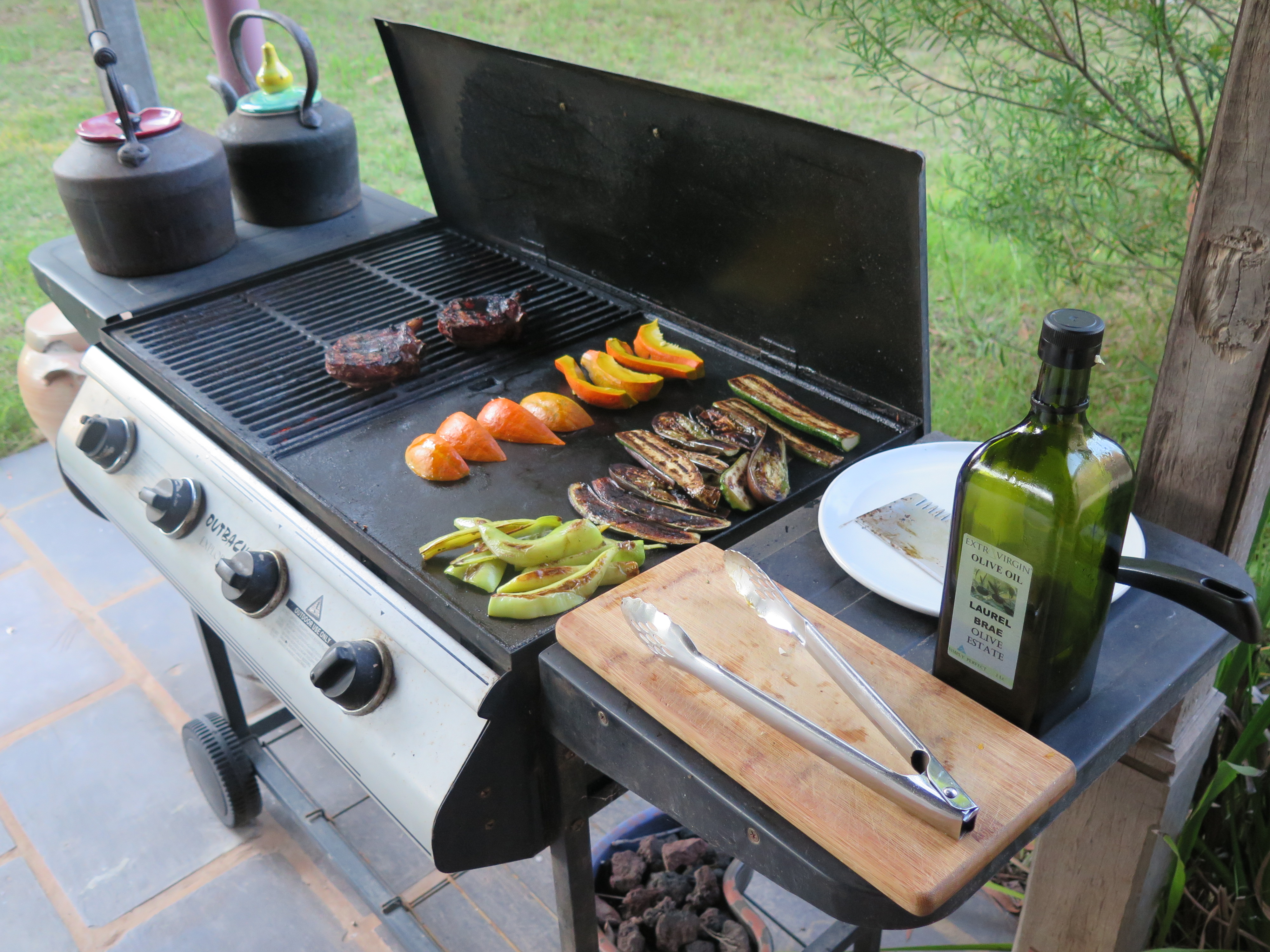
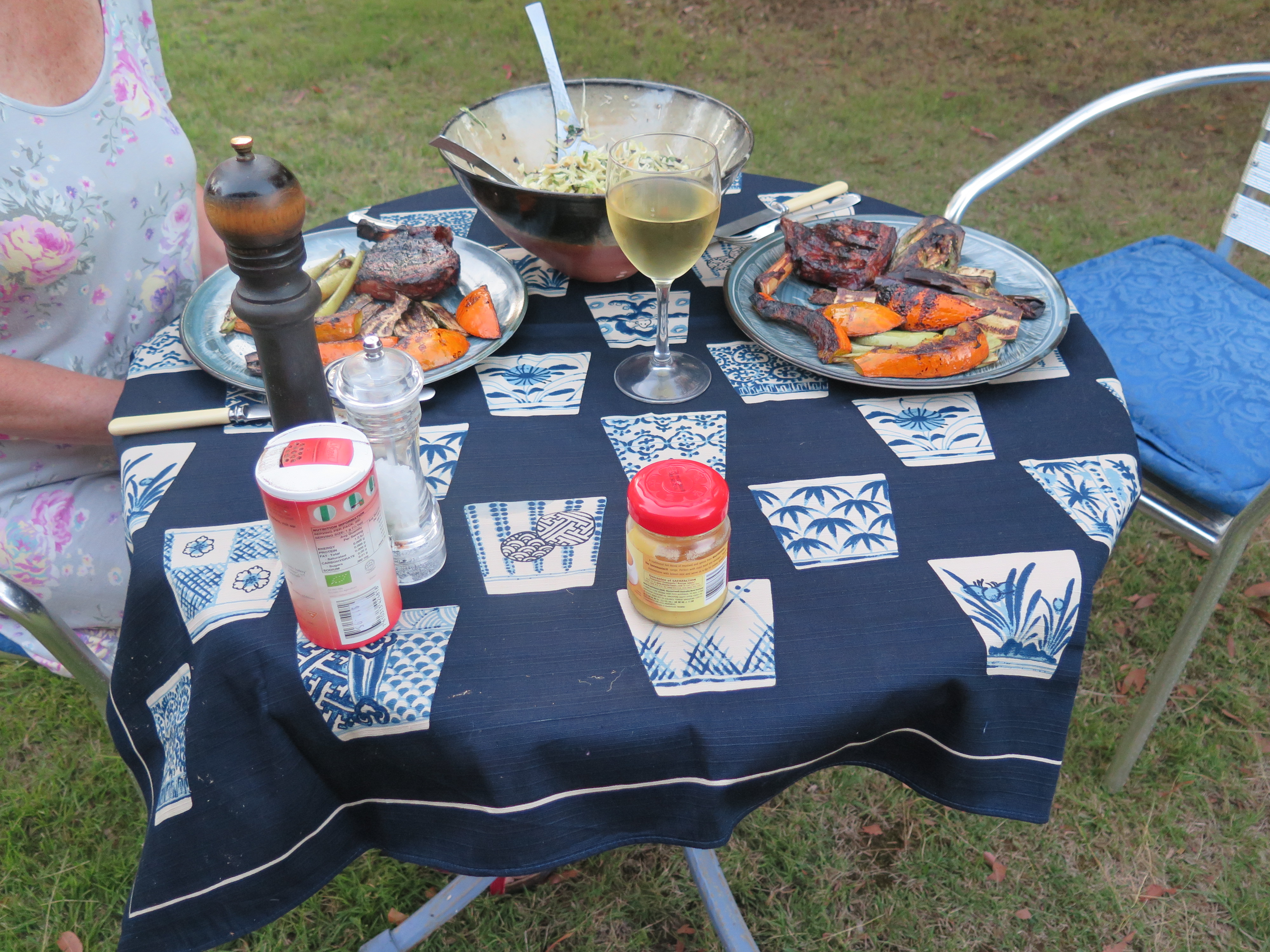
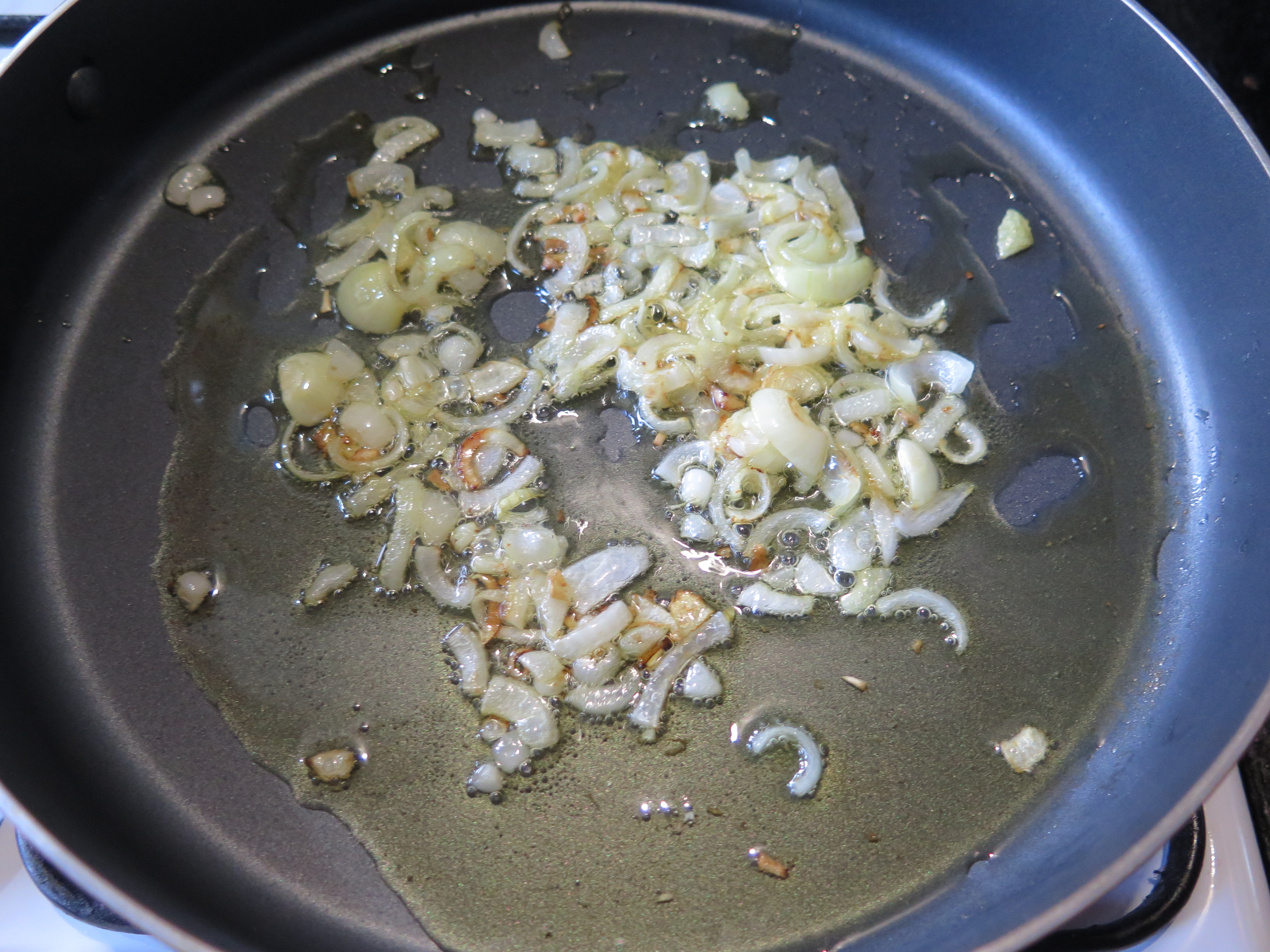
In the evening we sit outside and cook our produce, Ratatouille with the addition of a small jar of last years concentrated tomato, onion and basil ‘sugo’. I lightly brown our new-season onions in olive oil and then add in our crushed garlic. The roughly diced vegetables are added and turned in the oil a few times to coat them, then the sugo is added and the lid placed on to allow it all to simmer and soften for a few minutes.

We sit and chat into the cool of the evening. A nice chilled glass of rosé goes very well with this simple, fresh and very delicious Post Modern Peasants repast. The flavour of summer!

We have really earned this meal. We started making this meal three months ago, when we spread the compost and planted the seedlings. Now it’s payback time. It explodes in our mouths and takes us back to last summer. I can feel myself starting to relax into the idea of taking a little time off over the solstice break. This is a well earned, beautiful moment.

I am grateful!


Approaching the Solstice

As we approach the solstice the weather has turned hot and we are getting days in the mid thirties oC. Everything becomes desiccated very quickly if we don’t water morning and night. As the longest day will soon be here, it’s time to lift the onions and the early potatoes.

We plant most of the onions around the shortest day at the winter solstice and harvest near the summer solstice. So that is now. We aren’t very good gardeners, as we try to do too much, so there isn’t always time to do things ‘properly’, but we manage our time as best we can and everything that needs to get done usually does. We don’t plan things out meticulously and then follow through on the plan with Germanic precision. Rather we kind of lurch from crisis to crisis, doing what really needs to be done NOW and can’t wait any longer. I remember that I planted two packets of brown onion seed in late June,  but only a smattering of seeds germinated. I don’t know why. So I planted another packet in late July, when I realised that I wasn’t going to get any more strike from that first germination. The second attempt was also very patchy. As it takes a few weeks to realise that things haven’t worked out as you planned, there isn’t always time left to get the next planting done and germinated in time. So it was very late, at the beginning of August. The last day before I left for Japan, that I sprinkled two more packs of onion seed, a different brand this time, and then flew out for a month or so. When I returned, the unattended seeds had all struck, but were a bit crowded. I was so busy catching up with everything else on my return, I left them to get on with it. They are now ready to lift, but rather small, as they didn’t get enough cold weather to grow out well. I’m calling them salad onions now, small but juicy and sweet. I’m not too sure how they will keep.

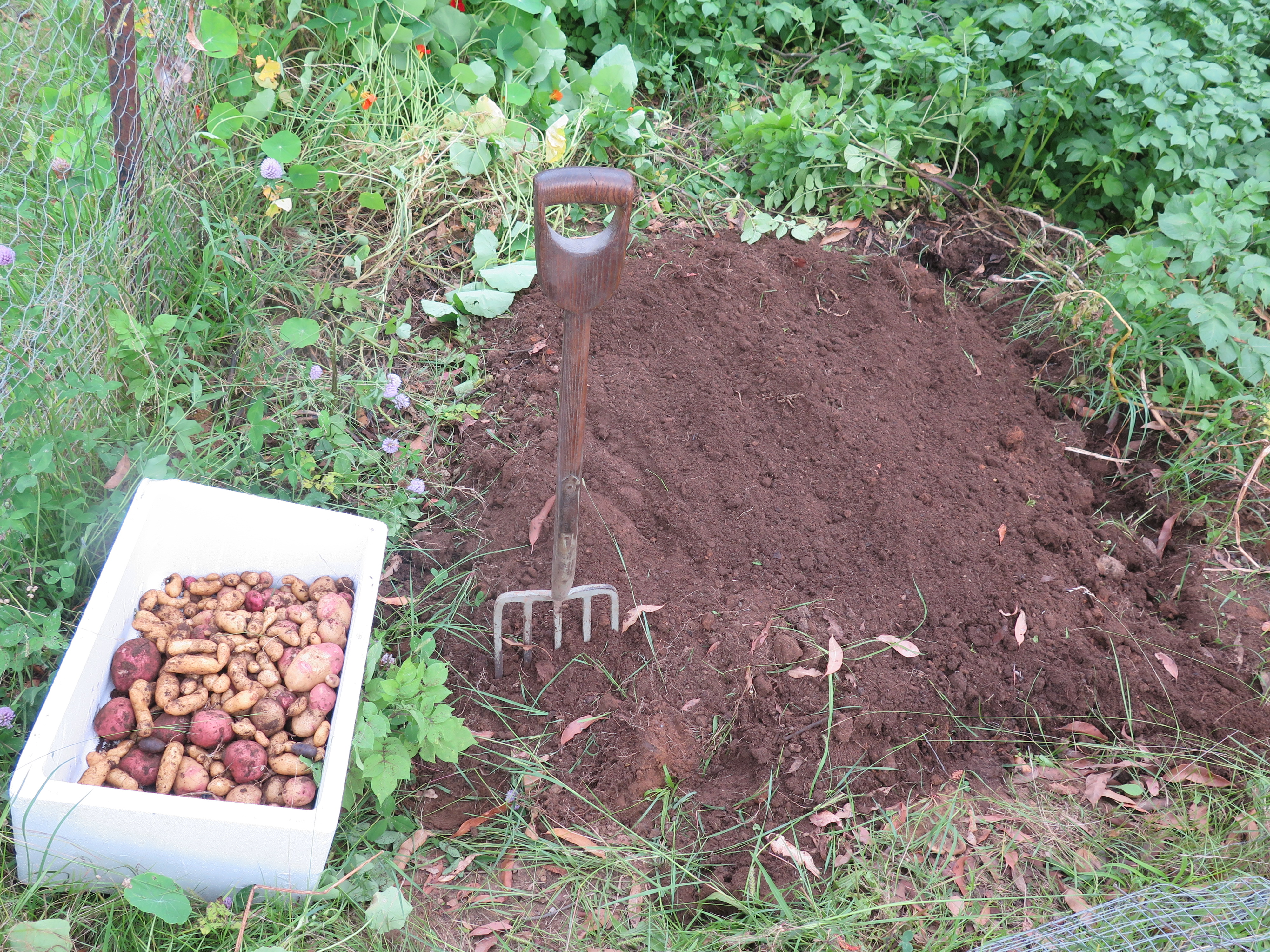
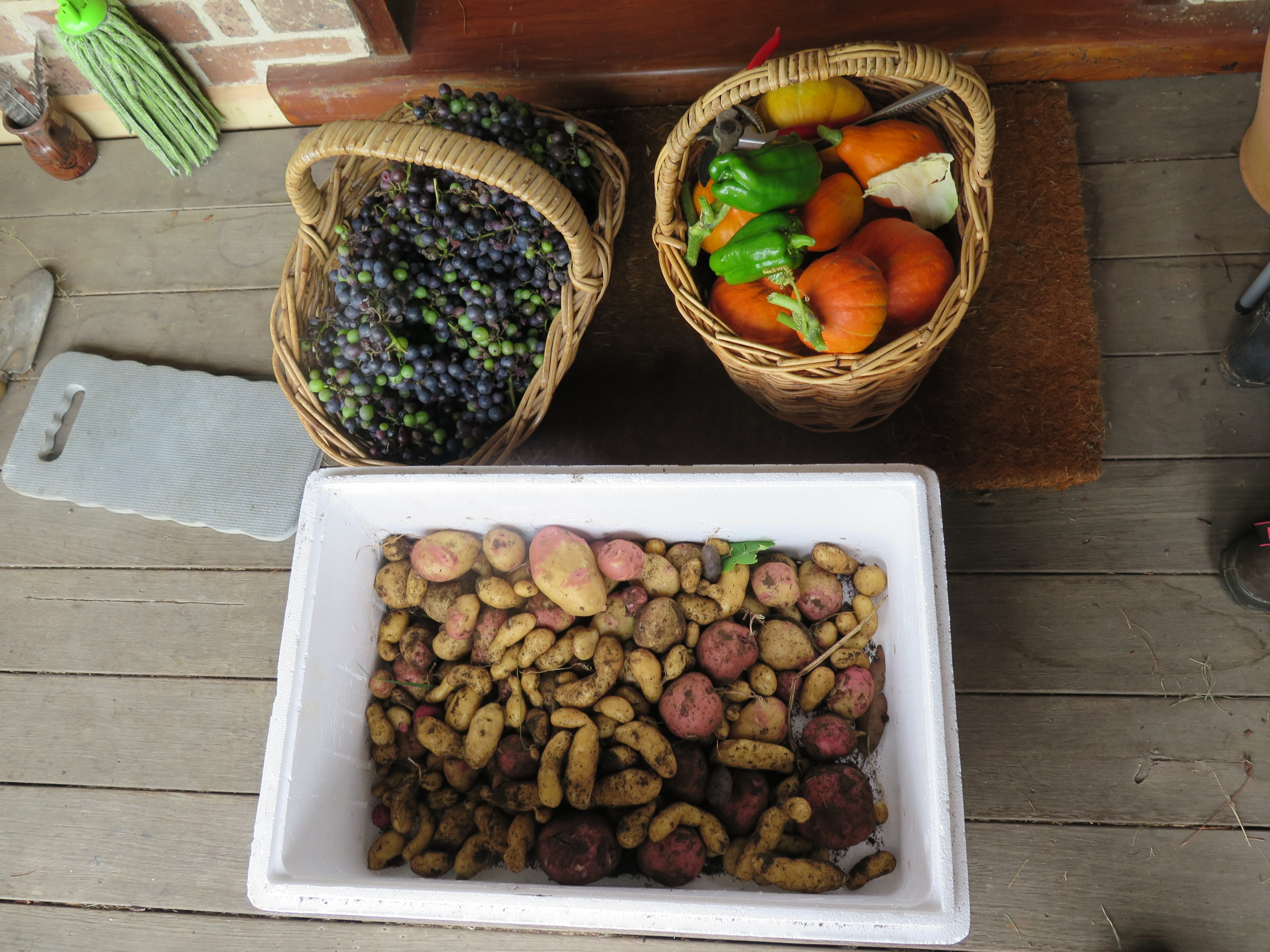
The garden girl has been lifting the early potatoes, Nicola and Maris Piper. We don’t get huge crops, using only compost and some chicken manure to fertilise them. But the soil is soft and fibrous, and rich with worms. It looks and smells great, so I’m happy with that. We get about 8 potatoes for every one that we plant, maybe 1 kg per spud. I’m told that commercially, they get 8 to 10 kgs per plant? I’m not too concerned. We do everything organically with a view to growing just enough to support ourselves. This isn’t a business. It’s real life, a life where we aim to be as sustainable as possible. We get more than enough spuds to keep us going all year, more then we need actually. So the ones that get a bit shrivelled and start to get long sprouts on them after storage for a long time, just simply get replanted, back into the garden. They become the winter crop, down in the frost free area of  the Pantry Field.

All the young berries have finished now, as have the raspberries, there are just a few boysenberries left under netting. We picked over 20 kilos of berries this year. We ate a lot of them, but most of them were sterilised and went into vacuum sealed jars for use later in the year.

We have a good crop of cabbages coming along, so we are developing recipes for using cabbage. Finely sliced and cooked in okonomiyaki, shredded in a salad with mint and vinegar dressing, or served with shiso, rocket, mizuma and roasted nor paper strips and dressed with a sesame oil, mirin, rice wine vinegar, sake and soy.

Annabelle Sloujettè called in and introduced us to a commercial brand of pre-fried Chinese noodles in a plastic pack. Not the sort of thing that we would normally think of buying. She made a cabbage salad with these crunchy noodles and a lovely tangy home made dressing. We were very impressed. It was really delicious. She stayed over and we talked late into the night. In the morning we had coffee with her before she left.

She likes a big coffee to start the day.

IMG_1672

Friday on my mind

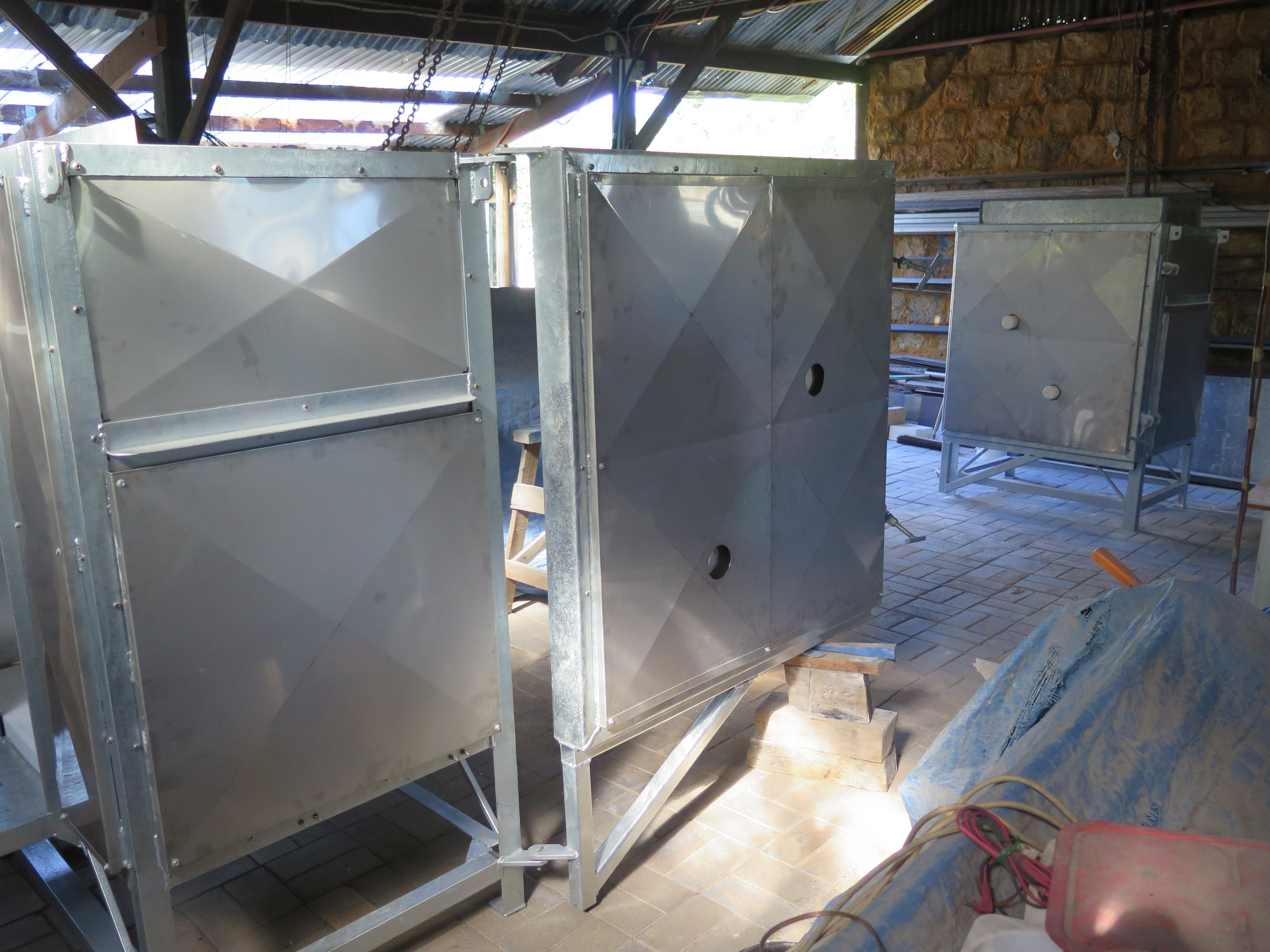
Two weeks ago on Friday I delivered a kiln to Sturt Pottery and then spent the next week welding up another order and delivered it to the Galvanisers on the next Friday. That was last Friday. I spent this week welding up the next kiln order and delivered it to the galvanisers today – this Friday!

Kiln4 (11)Kiln6 (13)

While I was up there, I picked up last weeks kiln, that had been dropped off and dipped this time last week, all in the same trip. It’s good when things work out like that. After all, it’s a 3 or 4 hour round trip up to Sydney and back, so I like to make it pay.

IMG_1599IMG_1613

I swap this weeks black mild steel frame for last weeks shiny, newly galvanised one in the factory. I’m getting a head start on next years orders, so there won’t be any delay, as I know that I’m going to be very busy next year, with a lot of projects planned. So getting in early with all this intense work, is a way of banking time. So now I can take it a bit easier over Xmas and the new year, when we have a lot of guests planned to visit.

IMG_1644

In the mean time, I also picked up a trade-back kiln. One of my kilns that has not had a lot of use, so I will do it up and offer it for sale as a 2nd hand kiln, but with a 12 months, as-new, new kiln warranty. I’d really like two get this job done before Xmas too, if I can squeeze it in.

IMG_3893 IMG_3895

I’m starting to feel a bit tired after all this intense work. I need a couple of days in the garden to ground me and get the vegetables back up to scratch.

It’s been so hot recently, up in the high 30’s recently. We have had to water morning and night to keep everything looking pert. It’s all I can do with all this welding to keep things alive. All the grass has dried-off and started to turn brown now. We have been lucky to have had a green vista for so long. In past years, during the dry times. The grass was all burnt off dry brown and crunchy in late spring.

Yesterday, it was so hot, that I fuelled-up and commissioned the ‘house’ fire-fighting pump for the first time this summer, and used it to wet the roof of the house with rain water to cool the house down. It works like a charm and drops the temperature by 5 degrees inside the house within minutes. Nearly all the water is collected in the roof gutters and runs back into the water tank. It is a productive way to test out the fire fighting system early in the season, and get everything back up to scratch, before it is needed in an emergency, when there is no time to waste.

For dinner I steamed a fillet of taylor and served it with freshly harvested kipfler potatoes and multi-coloured zucchinis, green, black and yellow. This was accompanied with a Japanese inspired green salad of red and green Mizuma leaves, rocket, shiso, red coral lettuce and green spring onion. Dressed with a finely sliced, filaments of roasted nori paper and a shiso dressing. I also salted some sliced cucumber and after draining, dressed it with sesame oil and some lightly roasted sesame seeds.

IMG_1634 IMG_1635

It is all lightly aromatic, crunchy and goes well with freshly picked red French radishes. A multicultural Australian meal, perfect for summer.

All these ingredients fresh from the garden, except the fish and the nori paper. It’s a wonderful reward for our efforts.

It’s a Busy Time of Year

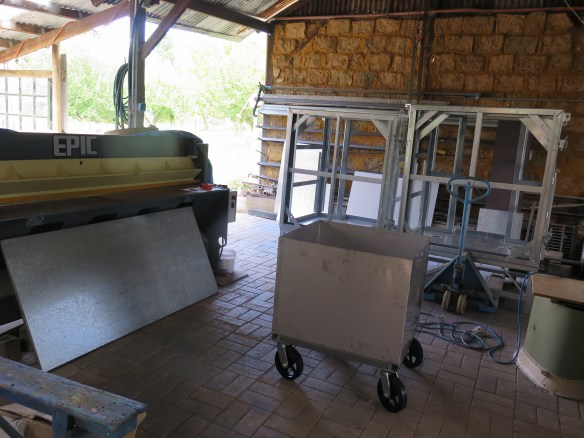
I have only just delivered the last kiln off the factory floor and now I’m back in there welding up the next one. I want to get into and out of the galvanisers before Xmas, so that I can work on it over the summer break, so as to get a head start on next years orders. The galvanisers shut down for a month over the summer as does the local steel supply yard, and many other businesses as well.

IMG_1600

I have the next frame all tacked up already. I can cut the sections and start to weld the bones of it together while the old faithful automatic hacksaw does it’s job, slowly and relentlessly.

IMG_1598

When I made my first kiln. I cut all the steel out with a hacksaw blade by hand. It took two days. I don’t think that I’ve been so bored in all my life. When that initial kiln was sold, the first thing that I did was to spend my profits on a 4″ angle grinder and this wonderful old ‘chug-a-lug’ cast iron automatic hacksaw. It has been the most important thing that I have ever bought, with the possible exception of my home. It has worked continuously and reliably for 35 years. All I have ever had to replace are the blades, about once a year. It is such a fantastic invention. It cuts while I weld. and the angle grinder cleans up the edges.

I don’t want to get caught with no options, so I’m getting in early, as early as I can and doing all the welding and ordering of parts now. Then I will have the luxury of setting my own agenda of work and relaxation over the summer. We have relatives visiting from inter state and also from overseas, so we’ll be busy relaxing as well as working.

There a lot of veggies starting to bolt in the sudden heat, so we are try to eat them as fast as we can. i made a risotto last night with lots of garden produce. I used leeks instead of onions because that is what we have plenty of just now, and loads of fresh veggies, so much so that the result wasn’t really a risotto, as it only contained half cup of carnaroli rice, but a large bowlful of carrots, zucchinis and some mushrooms.

Veggieotto, with a little rice added. Cooked in fish stock from the bones of our dinner from a few nights ago.

IMG_1583 IMG_1586IMG_1590

We are now picking from our 3rd tree of peaces. Well protected by plastic bird netting. We get all the fruit form these trees. they are the newer low chill varieties that we have been forced to grow now. These are the third generation of peach trees that we have grown here now over the 40 years of our Post Modern Peasant Enterprise. Modern varieties of peach trees seem to have a productive life here of 15 years. The Lovely decides to make a peach cobbler for desert to follow our veggieotto.

IMG_1576

IMG_1587

We have also made our first large pick of young berries. Up until now, we have been eating what we picked each day, but the season is suddenly in full swing now, so we get up very early and go out to do the harvesting before it gets too hot. We spend 3/4 of an hour and pick 7 kgs in one go. They are really coming on. The lovely Lady of Household Management, Ms Janine Beeton, can’t be beat’n when it comes to household frugality. She has them all sorted, cleaned, steamed and bottled by mid morning, while I’m cutting steel. The vector of post modern peasantry and petit-capitalism.
IMG_1573

IMG_1574

IMG_1579

It’s a busy time of year.

Kilns, what could possibly go wrong?

We end spring with a very warm day of 39oC. This is the start of Summer. Not as hot a it was last week at 42oC, but still hot enough for the beginning of the season. The vegetable garden needs to be watered twice a day at times like this, if we want all the small seedlings to survive and thrive.

IMG_1347

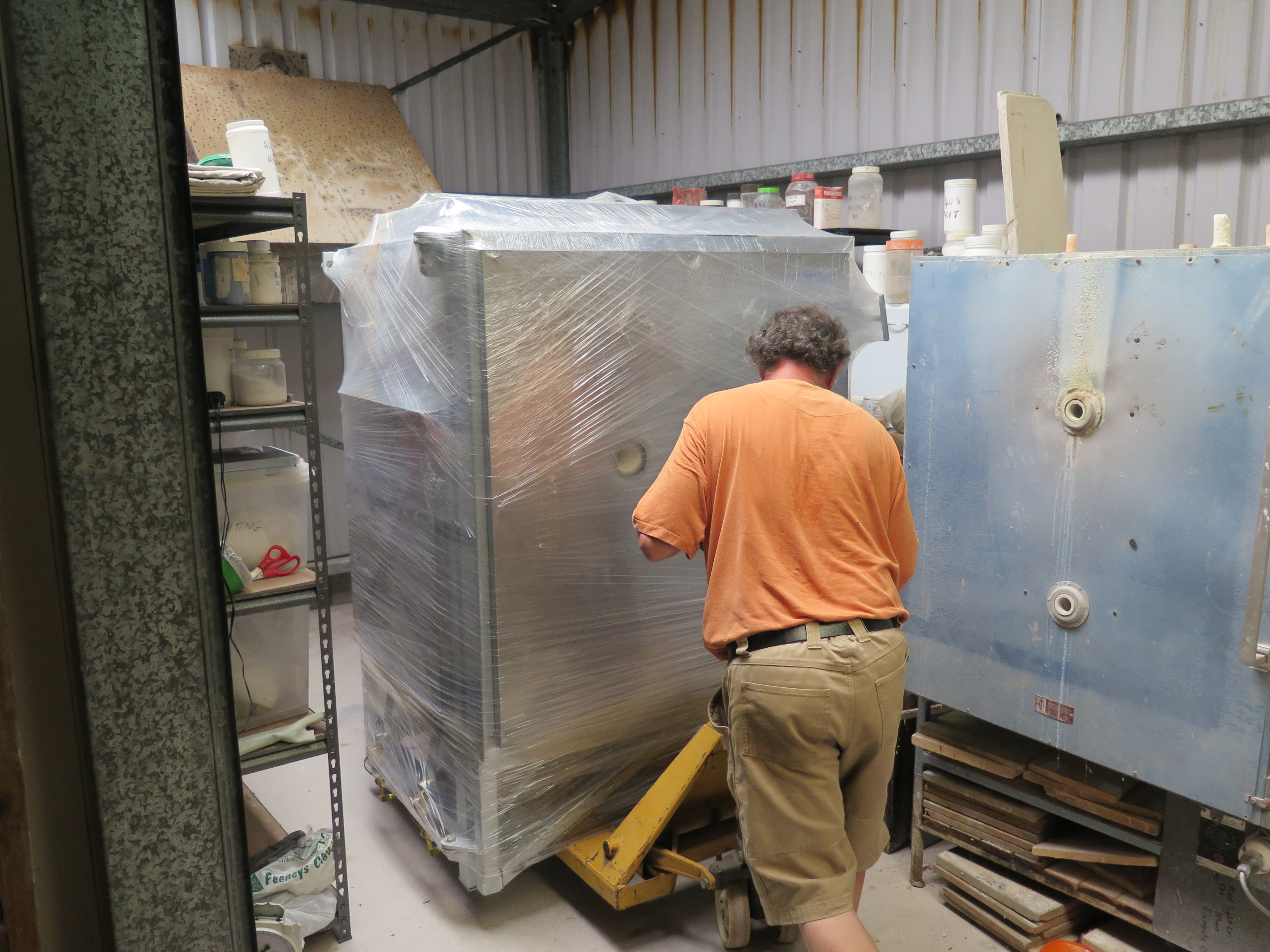
I have finished the big new gas kiln commissioned for the pottery at Sturt Workshops in Mittagong. I spent the last week making the burners and gas manifold, pressure testing and test firing. Then I had to disassemble some of it to get the height down, so that it would fit into its new home under the low wall beam access.

IMG_1336IMG_1334

IMG_1496IMG_1495

IMG_1543IMG_1544

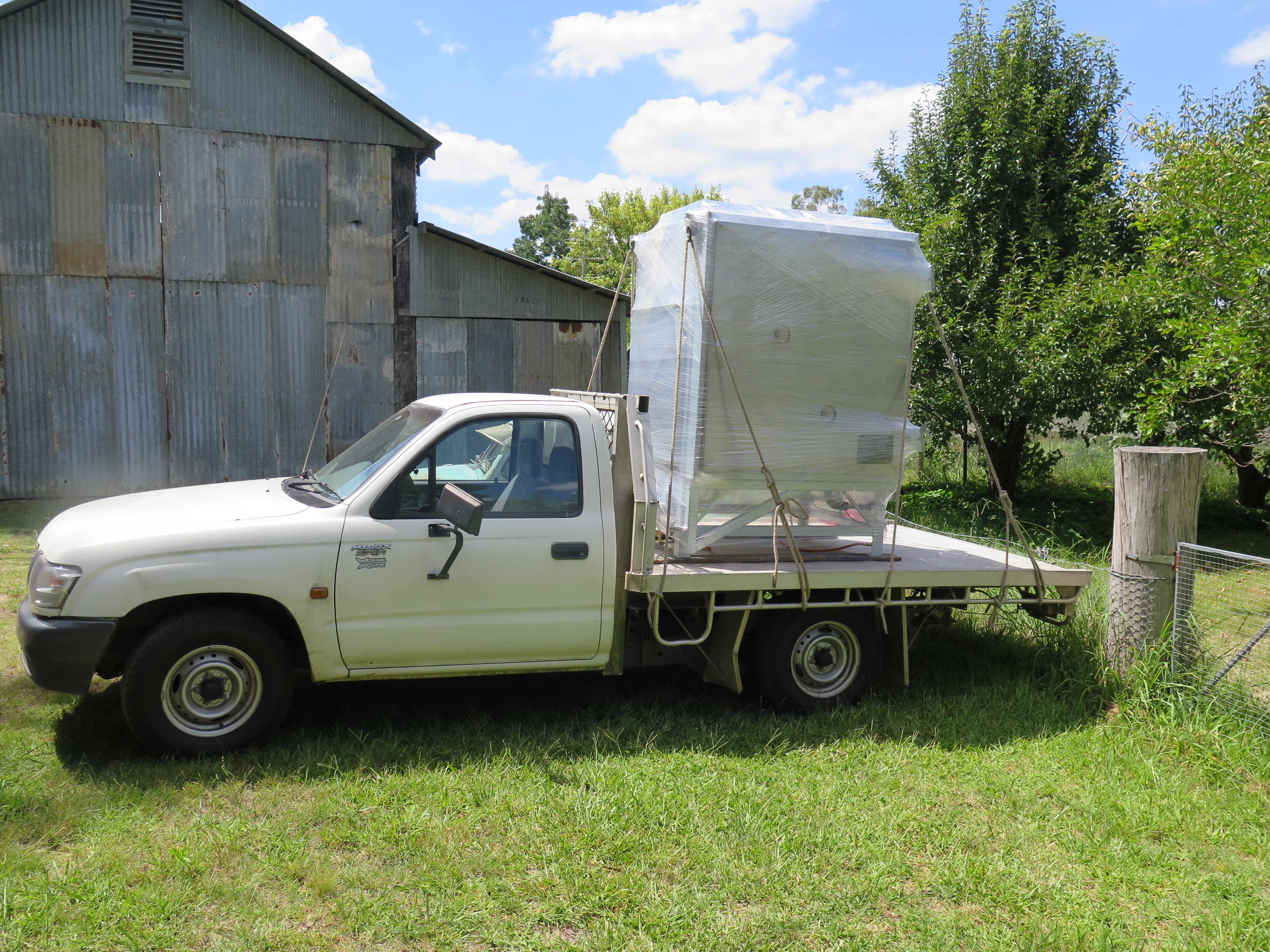
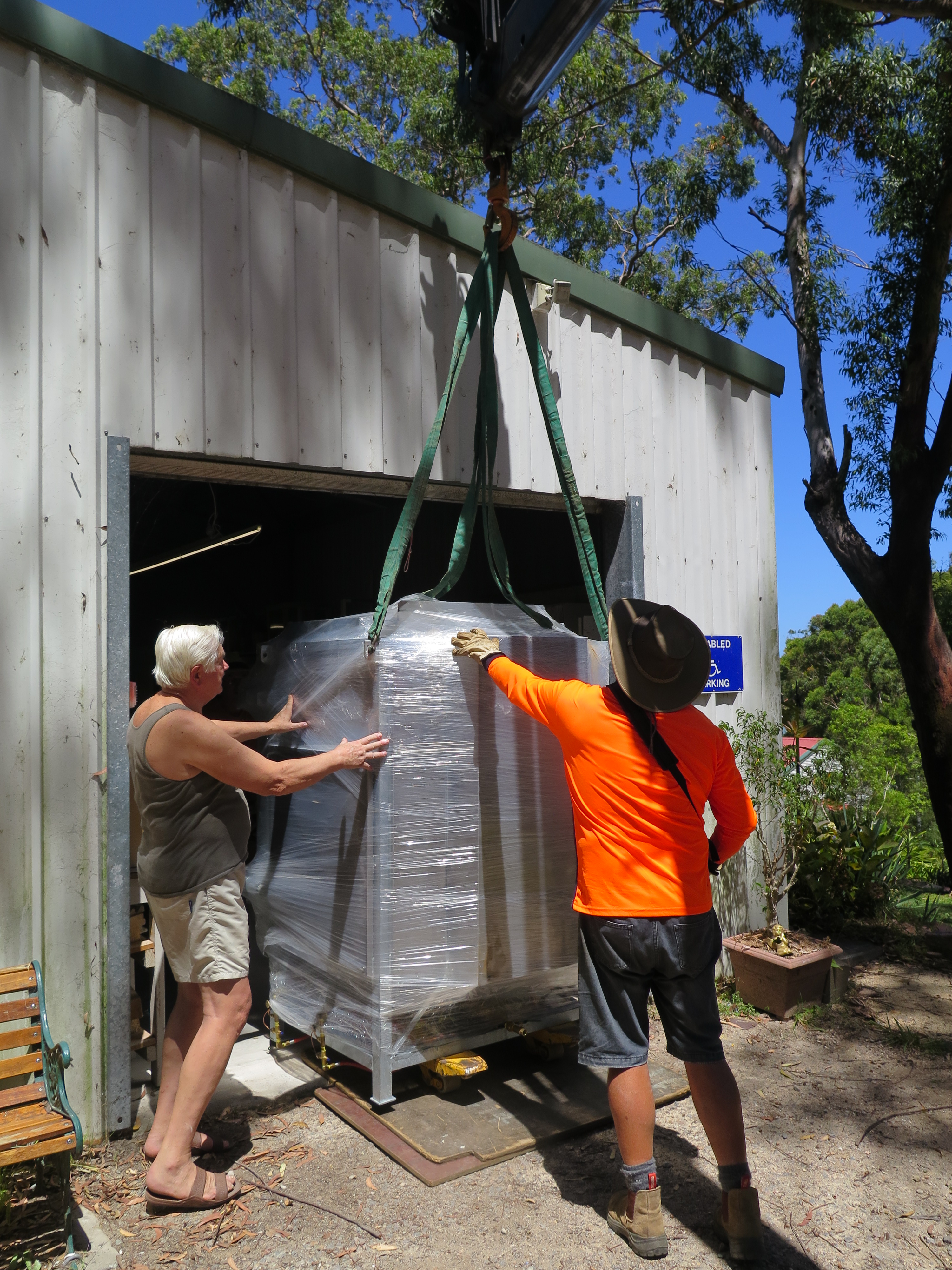
Once it was shrink wrapped and onto my truck, I drove it up to the main drive way to meet up with Dave the truck driver. Mr. ‘Lift and Shift’, with the giant ‘palfinger’ crane. This amazing piece of technology can lift a kiln, or anything else, weighing up to 1  1/2 tonnes from a distance of up to 15 metres away!  All goes to plan. I am always relieved when things go right. They always should, I measure twice and do a lot of prep, but in anything that involves 1,000kgs, slings, chains, shackles and welded brackets, there is always the possibility for unseen eventualities.

Generally speaking, it always goes to plan, but that doesn’t stop me from being concerned, and taking every precaution to make sure that everything is right. There have been times when other forces have intervened and made the job a lot more difficult. See; Delivering a kiln, What could possibly go wrong?

Posted on 26/06/2015
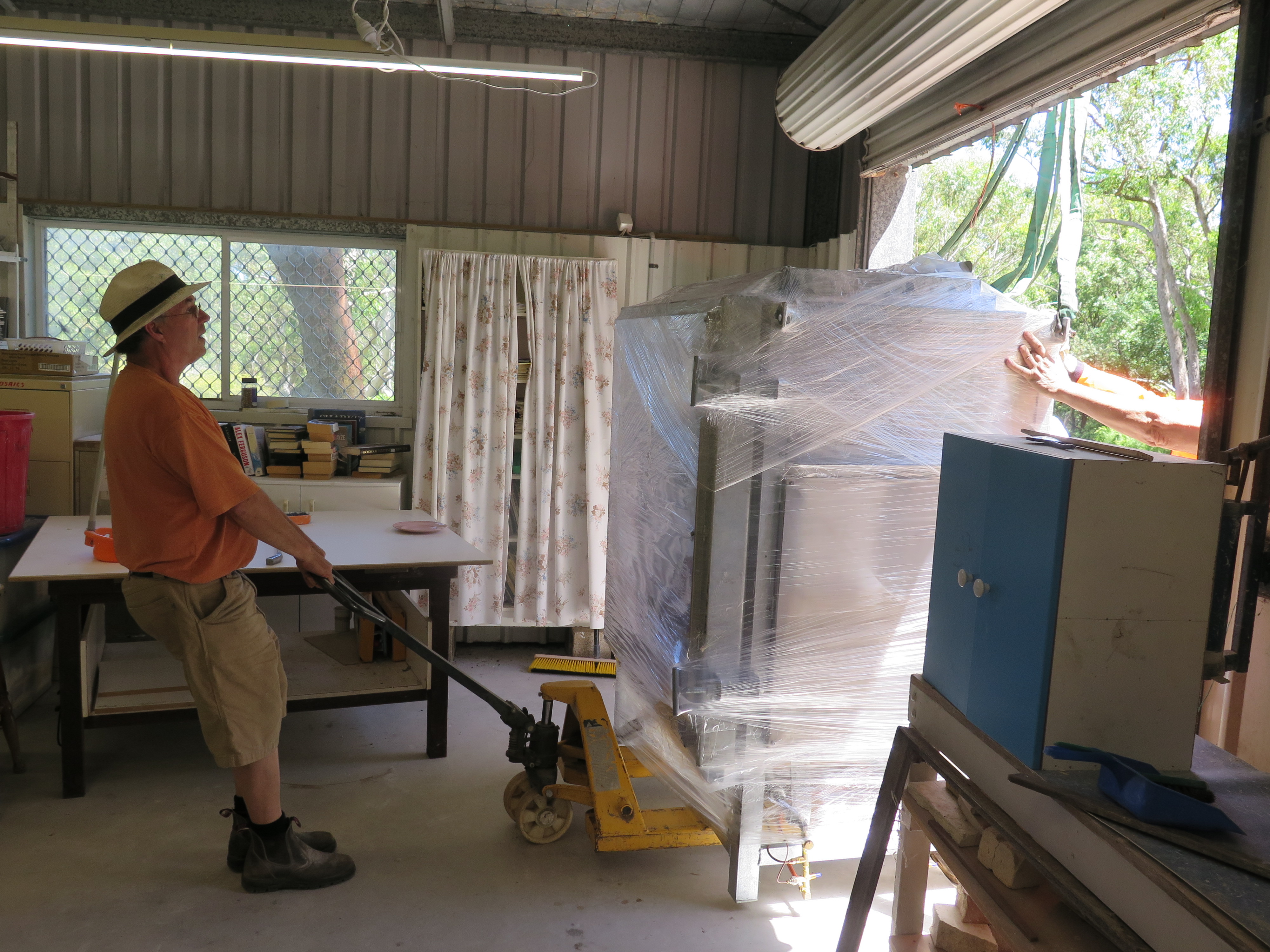
We travel down to Mittagong without a hitch. Slowly and carefully, avoiding the pot holes and bumps, so that the kiln doesn’t get too shaken about. Dave skilfully manoeuvres the kiln into the exact position to fit on to the pallet lifter inside the building. It rolls into position without any problems. Nothing goes wrong!  It’s perfect, just the way it was planned.
IMG_1548
I take off the wrapping and look inside. It’s beautiful. It has travelled well, but there is just a small glitch. In transport, the bouncing and shaking on the truck has caused the brickwork to settle just a fraction of an inch, and now the arch has settled down a millimetre or two and just touches the door seal. I sand it down along a section of 50 mm x 1 mm. It’s perfect! If this this kiln turns out like all the other that i have built for potters, Art Schools and other institutions. It will last for 20 years or so without any major maintenance.
Cleaning the burners of spiders webs or dead insects, occasionally there are mud wasps that build their clay nest in there over the summer break. All small but annoying things that need minor attention. I once had a potter come to me with her burners that she had purchased from me for her own home made kiln. She told me.”These burners don’t work anymore. Not like they used too”. I told her to bring them to me and I would have a look at them. There is usually only one thing that can go wrong. The flame safety sensor gets pushed too far into the flame and gets damaged, then stops working all together, cutting off the supply of gas. I countered this by making a substantial Stainless steel bracket to hold the sensor firmly in place. However, this was not the problem on this occasion, as the gas was still working, but only just apparently.
When the burners arrived, I shook then upside down and lots of things came tumbling out, pieces of blown-up pots, wadding, some fresh and dry, others hard and fired, a bottle cap, even a 100 mm. ( 4″) length of snapped off ceramic pyrometer tube! I would have thought that when that broke off, for whatever reason. I would hear it break and go looking for where it landed. If it wasn’t on the floor of the kiln. I’d go looking elsewhere. I’m amazed that it could have gone straight down a burner flame nozzle and disappeared! Anyway, no matter! No wonder they weren’t producing a clear flame anymore. Simply fixed. It’s amazing what pushing a bottle scrubbing brush down a burner can achieve!
Kilns. What could possibly go wrong?

6 New Bowls

The Xmas show at Watters Gallery opens on Wednesday night at 6 pm.

I have 3 of these new bowls in their end of Year show. I have been developing the Balmoral Blackware body that I make by washing rotten basaltic gravel in water then throwing away the gravel to obtain the micron thin film of hydrated ceramic dust off the surface of the rotten stone fragments.

It takes a long time to prepare, as it takes quite a while to get enough sediment to settle out, so that I can stiffen it up into a plastic state and pretend to throw in on the potters wheel. I throw on an old fashioned, handmade wooden ‘Leach’ style kick wheel.

I ‘throw’ the inside of the form and the rim, leaving the outside and the lower form quite thick, so that it supports the fragile, non-plastic material.

After the forms have stiffened over night, I ‘turn’ away all of the excess material that was necessary to support the form from underneath, then shape the foot ring. Turning away all the excess clay and revealing the form, the way that I had conceived it.

DSC_0050_075DSC_0050steve Harrison 2

I fire these forms at the front of the 2nd tier of kiln setting. If they are fired too close to the front, they melt. Quite literally, the extra heat is enough to make them turn to liquid sludge. i quite like it when they are just caught at their liquid limit, when they are just starting to melt. I particularly like the pots that are very slightly warped in the firing. Their endurance in the contest of the fire sometime brings about a lovely quiet, natural distortion in the precision of my original form that is very appealing. This piece below, has developed a gorgeous satiny surface of deposited natural ash glaze during the firing. The ash has soaked into the body and started to run down into a rivulet near the foot. It is almost invisible to see, but lovely to feel. The ash has also turned the mat black clay surface to ripe plum reddish brown.

DSC_0053

In developing the blackware forms, I have managed to achieve a couple of exquisite  pieces that really exemplify the potential of this material. I have also been spending a lot of time in working on my native bai tunze stone materials. I spent time both in China and Japan this year trying to extend my understanding of single stone porcelain. These initial results are very encouraging , and I feel that this work is starting to pay off.

DSC_0054_077DSC_0054steve Harrison 2

This form above shows a build up of natural  ash glaze deposit that was built up during the firing. It is slightly greenish in colour where it is thicker and there is a very delicate grey/black carbon inclusion trapped around top of the rim. It defines the rim and completes the form.

I have two pieces of single stone white, unglazed porcelain in this show, they are quite subtle and delicate. I have explored both high footed forms as well as seemingly footless forms like the traditional ‘tenmoku’ forms. I was lucky enough to spend time in China earlier this year, studying both single stone porcelain as well as a trip up-river, in China to study the ancient ‘tenmoku’ ware sites.

DSC_0056

These pieces are are both translucent and made from 97% ground native porcelain stone pastes. The remainder being 3% sticky bentonite clay. This helps ‘glue’ all the stone fragments together so that they can be ‘thrown’ on the wheel. What I do isn’t really ‘throwing’ as most potters know it, but rather a soft, gentle, patient, kind of coaxing the ceramic paste into the  bowl form.

I also brought out some ‘archival’ batches of iron stained porcelain stone body. This time I have used a batch of body that is made from all the iron stained fragments of bai tunze that I hand sorted from the larger batches and threw aside. After a while I realised that I had separated enough yellowish, iron stained material to make a 5 kg batch of irony body. This clay is still translucent, but only just so. It has a lovely warm, mellow reddish/brown blush to it that is so warm and inviting.

DSC_0058

I have made some experiments this year with adding some salt to my feldspathic glazes. Instead of turning out the usual, yellow, orange, pink, brown colours, these recent firings have resulted in a few pieces that are defined by their total carbon sequestration, turning the glaze almost totally black. Except for a small area of grey/white down low near the exposed clay foot. This carbon glazed tenmoku form has turned out better than I could have imagined.

DSC_0055


New and Old

We are in that interesting time of year that used to be called the hungry gap. We don’t have any concept of the hungry gap any more these days. Food is continually shipped, back and forth, all around the globe, all year round. This is the age of globalisation. Foods that used to be seasonal are now ever present.

In Australia, we can have all the available foods from the supermarket at all times of year, but Janine and I choose not to subscribe to this paradigm. We stick pretty strictly to eating what we grow ourselves. Here in the Southern Highlands of New South Wales, we find that with global warming, there are so few frosts, so we can grow a whole range of seasonal vegetables that are suitable for this climate. From the coolest Brussels Sprouts, to the warmest avacados.
Tonights dinner is a combination of new and old. Fresh vegetables, zucchinis, onions and garlic from the garden, spiced up with some dried tomatoes from the fridge. These are the old component of the meal. Harvested late last summer from the garden, dried and preserved in oil.

I slowly soften the onions over a low heat in some good olive oil, then later when they are glowing and translucent, I add the garlic, then the sliced zucchinis and finally the preserved, dried tomatoes. I cover the pan and let it sit on a very low heat for some time to let the zucchinis sweat out their juices and slowly soften into the oily, intensely tomato flavoured mixture.

IMG_1526.JPG

While the vegetables are sweating down and softening, I cook two lovely pieces of sword fish. Pan fried in olive oil, turned once and allowed to crisp up a little then steamed in their own juices under a lid for a few moments. while I serve up, I deglaze the pan with a little chardonnay, because it is open, and reduce the sauce a little, then serve. Sword fish, with new and old vegetables from the garden.

IMG_1527.JPG

For a desert, The lovely One has stewed a few of the mid season peaches. All the early peaches are long gone now. These midseason varieties are a little hard to skin, so she blanches them in a minimum of water for a couple of minutes to make them easier to peel. It also preserves them, when they are frozen in the freezer, for later breakfasts.
IMG_1528

She is about to discard the stewing water, when I take it and add a little sugar, then proceed to put it on a very low heat, at the back of the stove, to reduce it down to a near toffee-like thickness and concentration. it is really delicious, poured over the blanched peaches.

Reduced stewing liquor, poured over blanched fresh peaches. An old idea, bringing out the best of the new fruit.


Aioli

As we have an excess of fresh garlic just at the moment. I decided to make aioli sauce as the accompaniment to the steamed fish and new potatoes that we are having for dinner.

Aioli is a very ancient form of sauce, a bit like mayonnaise, but flavoured with garlic. It’s a great addition to lots of meals. Tonight we are having fresh ‘Ling’ off the fish truck that comes up to the Highlands from the coast, 3 days a week. He arrives at 6.00am and is sold out by 1.00 or 2.00 pm. I get there just in time to get the last piece of ling and some fresh mussels.

I decide to steam the Ling with a few drops of olive oil, to stop it sticking, then add a few fresh leaves off the Kaffier lime tree on top. I deglaze with a crisp white wine and serve it with our steamed new potatoes and  zucchini, picked fresh from the garden.

IMG_1512

We have both green and yellow zucchinis at the moment. They are the first of the summer vegetables to come into full production so early on the  the season. It’s still late spring. It isn’t even summer yet, but we have just had our first 40+oC day for the season. It forces us to be out watering both morning and night to keep the young summer vegetables from drying out and being set back.

IMG_1513IMG_1509

I peel and then crush the cloves of one small knob of our fresh garlic, then add the juice of half a lemon, one egg yolk from our son Geordie’s chickens and whisk it all up together into a mucilarge. I then proceed to add just a few drops of olive oil to the mix, a few drops at a time while whisking with the other hand. This continues until a thick white, bulked-up consistency is achieved. It takes quite a lot of oil to bring this about.. Don’t worry if it takes a long time, just keep on adding a few more drops of the oil at a time. Don’t get frustrated and add too much in one go. To make a mayonnaise-like emulsification sauce, you need to be patient. Just add a few drops at a time and keep whisking. It will eventually emulsify.

IMG_1510

This is a very ancient recipe, dating back into prehistory. It is to be found all over the south of Spain, France and northern Italy. It was apparently, originally, just a mix of garlic and olive oil to begin with. It was later found that the addition of a little egg yolk, stabilised the emulsion and thickened it considerably. It benefits from the addition of a little salt and some freshly ground pepper to taste.

IMG_1511

Rick Stein has suggested that the garlic be crushed with the side of a large chef’s knife and then chopped fine, crushed again with the side of the knife and very fine chopped and worked into a paste. A rather nice craftsman-like way to do it. I like it. For those without the patience or the knife skills, a garlic press works well enough. I actually like  it to be a little chunky and rustic. I also like it to have a lot of garlic in it.

Anyone can buy that anonymous, mild, made not-to-offend, finely milled, bland paste from the supermarket. It has too much salt and is loaded with preservative. What I’m making here is real life food, home grown, home made, organic, rough, chunky and strong flavoured.

However it is made, it is just right NOW at this time of year, when the garlic is so fresh and oily. Later in the year when it dries out and goes rather leathery, it just isn’t the same. At this time of year, aioli is a great accompaniment for lots of things that we grow and eat. It goes very well with fish and potatoes.

IMG_1514

Aioli probably lasts quite a long time in the fridge, but we’ve never managed to keep it long enough to find out. It’s deliciously piquant.

We haven’t had any red meat since August, I’m starting to think that it would be nice to have a couple of lamb cutlets with aioli.

Panforte

During our open studio weekends, I made Panforte to serve to guests that stayed on for coffee. Sometimes, however, we were so busy that I didn’t get time for chat and coffee, being constantly engaged in discussing pots,  glazes, forms and firing techniques at the wrapping bench. So two cakes lasted the whole weekend, instead of the usual ten minutes.

I was taught to make panforte with a very simple recipe. It isn’t really a cake, it’s something closer to a bread, but with lots of spices and a little sweetness. The ones that are commercially available here from Italy are a lot sweeter and much softer than this rather traditional version.

I suspect that there are as many different recipes for Sienna cake as there are housewives that cook it in Sienna. However, after watching a recent cooking show from Italy with interviews with some of the locals, it was teased out that in the new/modern Italian household of 2 parents and 1 child, with both parents working, there isn’t a lot of home cooking going on any more. That has been left mostly to Nona. The microwave and pre-packs reign supreme these days in modern busy households , just as they do in Australia.

So here is my variation on an old fashioned, not so sweet, rather chewy, recipe for Panforte. It’s not so surprising that I think that it is a little like a sweet kind of bread, as the name panforte means ‘bread-strong ‘. I think that the strong part refers to the fragrance and flavours of the spices?

I was originally taught to use;

1 cup of flour

1 cup of almonds

1 cup of dried fruit

and one cup of honey – So easy to remember!

What could be more wholesome, natural and simple? Well, that is what attracted me to the recipe, but I found it a little lacking in dried fruit and way too sweet for my taste. So I altered it over time, a little bit at a time, slowly arriving at the following recipe, which I currently use.

1 cup of flour

1 cup of almonds, crushed with the side of a large knife or roughly sliced

1 cup of dried apricots, roughly sliced

1 cup of glacé cherries

1 cup of tiny dried currents

1 cup of other mixed dried fruits and candied peel. I made my own dried candied peel. It keeps really well in the fridge and last for ages. see;

Fruits of the Solstice

1/4 cup of honey, which is then topped up with hot water and dissolved. I use local bush honey. We used to use our own when we had the bees. Sometimes I use Tasmanian ‘Leatherwood’ honey, as it is particularly fragrant and compliments the other spices.

There is a concoction of dried spices added to the mix, and these are not weighed or really measured. I suppose that they may have been once upon a time, but I’ve completely lost track of what that might have been.

These days I add a generous shake or small spoon full of some or all of the following;

Cinnamon powder. This is the most important, so more of this. Maybe 2 level tea spoons. Then there is powdered cloves, also important, but very strong, so a lot less is added. Maybe half to one teaspoon, then there is ginger, nutmeg and mixed spice. Mix and match as you think fit.

All the dry ingredients and spices except the honey water, are dry mixed together in a large hand made pottery mixing bowl.

As soon as the warm honey water is mixed in, stir it all together well to incorporate all the dry fruit and flour, so that it is homogenous. Do this quickly because as the mixture cools down, it starts to ‘set’ as the honey become more viscous, then it becomes harder to pour it out in the the baking ring.

I made a few stainless steel baking rings, some for my sons restaurant, and a few for us. I keep giving them away and making more. I use a ring that is about 200 mm dia and 20mm high.

IMG_1454.JPG

Grease a baking tray and the rings. I use olive oil to avoid using butter. I like butter. No! I love butter, but I’d rather enjoy my small allocation of butter in other ways. Olive oil works well in this way and the strength of the spices masks any minimal olive flavour residue.

I sprinkle a 50/50 mixture of flour and icing sugar, mixed with some cinnamon and clove powder onto the tray and pour the soft cake mixture into the ring onto of the flour mix. Use any left over mix to sprinkle on top.

IMG_1455

Bake for about 40 minutes at 180oC. Check if it’s done by inserting a knife. Allow it to cool on a wire rack, then wrap it up in lunch-wrap paper. It keeps for ages in the fridge, but only if you forget about it. Otherwise it gets eaten very quickly, as it is very popular.

IMG_1457

IMG_1459.JPG

It’s a lovely special treat that I make a couple of times a year, so as to keep it special.

IMG_1505