The Last Batch of Marmalade

We are almost at the end of winter now and the last of the citrus still on the trees are  the Seville oranges. We have been making marmalade steadily through the winter months – and eating it too. We have been only just keeping ahead of our consumption.

For the past few months, I have been working flat out everyday, hardly ever taking any time off to work in the garden and around the house. Only the bare necessities could be done. The garden was looking a bit neglected and there were some essential maintenance jobs that needed seeing to.

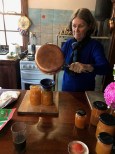
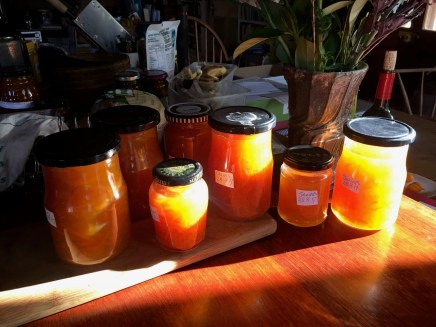
Now my big show is up and I have given my artists talk last Saturday, then run a wood fire weekend workshop on Sunday, Today is a day off. We allow ourselves to sleep in a bit, have a late breakfast, then it is into the garden to harvest the last of the  Seville oranges. I get a couple of baskets full, as well as a few lemons. We spend our ‘day off ‘ making marmalade.

IMG_7635 IMG_7637

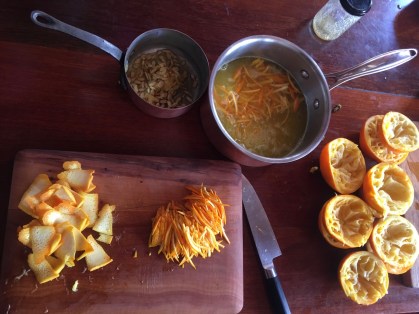
We make something of an effort to make nice marmalade. For us, that means using the orange juice as the only liquid. We take the time to cut away almost all of the white pith, using just the thin strip of coloured fruit skin, and that skin is sliced quite thin. Each of us has our own way of dealing with the process. I like it sliced very thin, as thin as possible, with as little white as possible.

IMG_7641 IMG_7642

IMG_7646

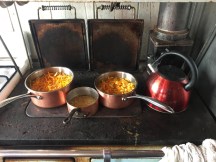
We squeeze out the fruit juice and pour it into a saucepan, all the pips are separated out to another smaller sauce pan and simmered with a minimum of water to extract the pectin. This is pushed through a small kitchen sieve and eventually back into the lager pan of juice and peel. The thinly sliced peel and juice is roughly weighed and about 40% of this weight is added as sugar, but we have experimented with as little as 35% sugar. I like it less sweet and a bit more bitey. I have heard of recipes that say 50% of sugar and even equal parts of sugar. I don’t think that I would like it that sweet.

IMG_7647 IMG_7648

IMG_7656 IMG_7657 IMG_7658

IMG_7651

Janine has made a hand-thrown, glazed, pottery funnel to make the pouring of jams, jellies and marmalade easier.

As we only seem to eat marmalade on toast for breakfast through the winter, we will have enough now in stock to last us through the last of the cool weather and through into the next winter, when the citrus will come back on again.


Winter Weekend Workshop, Wood-fired Raku

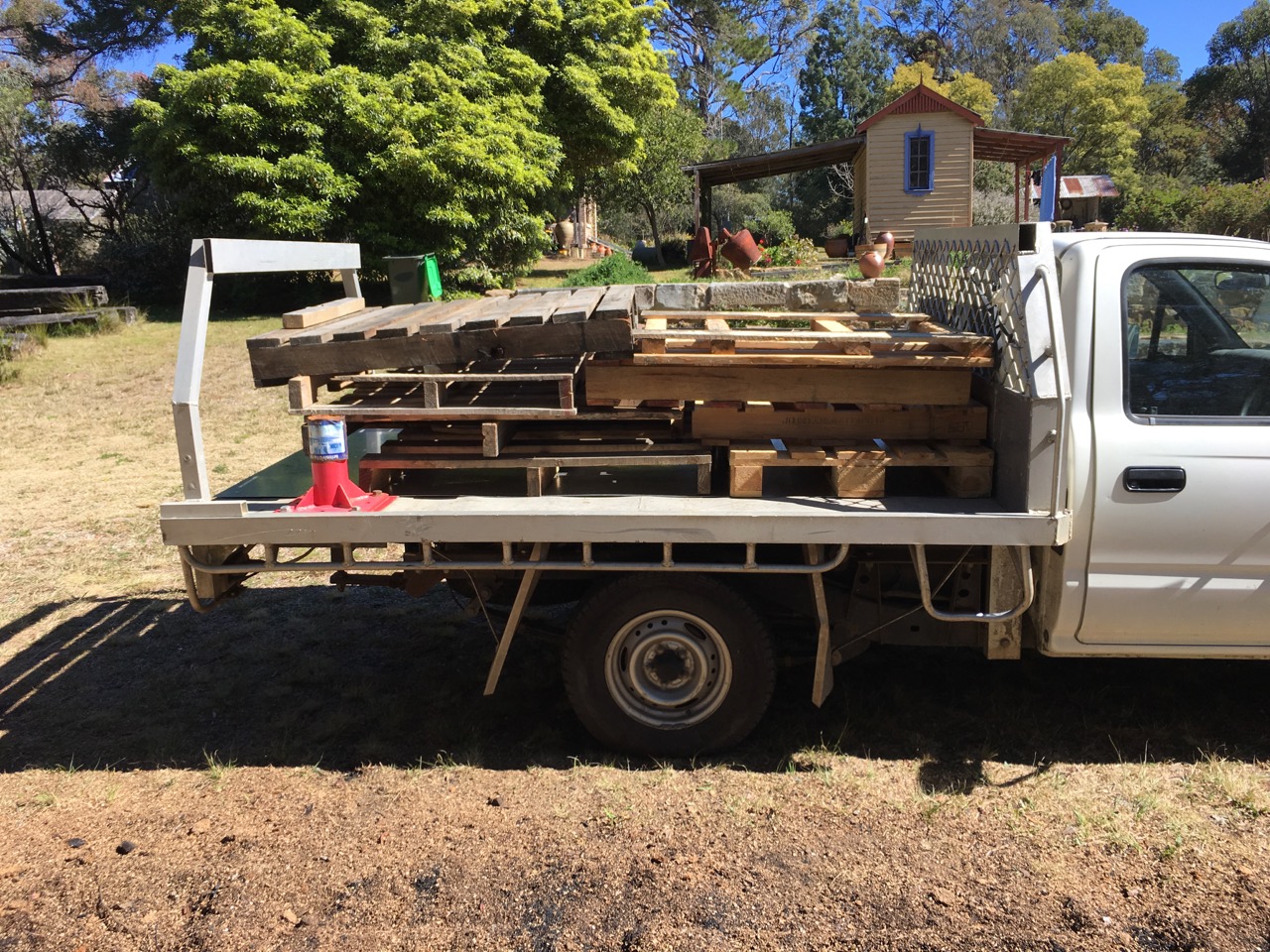
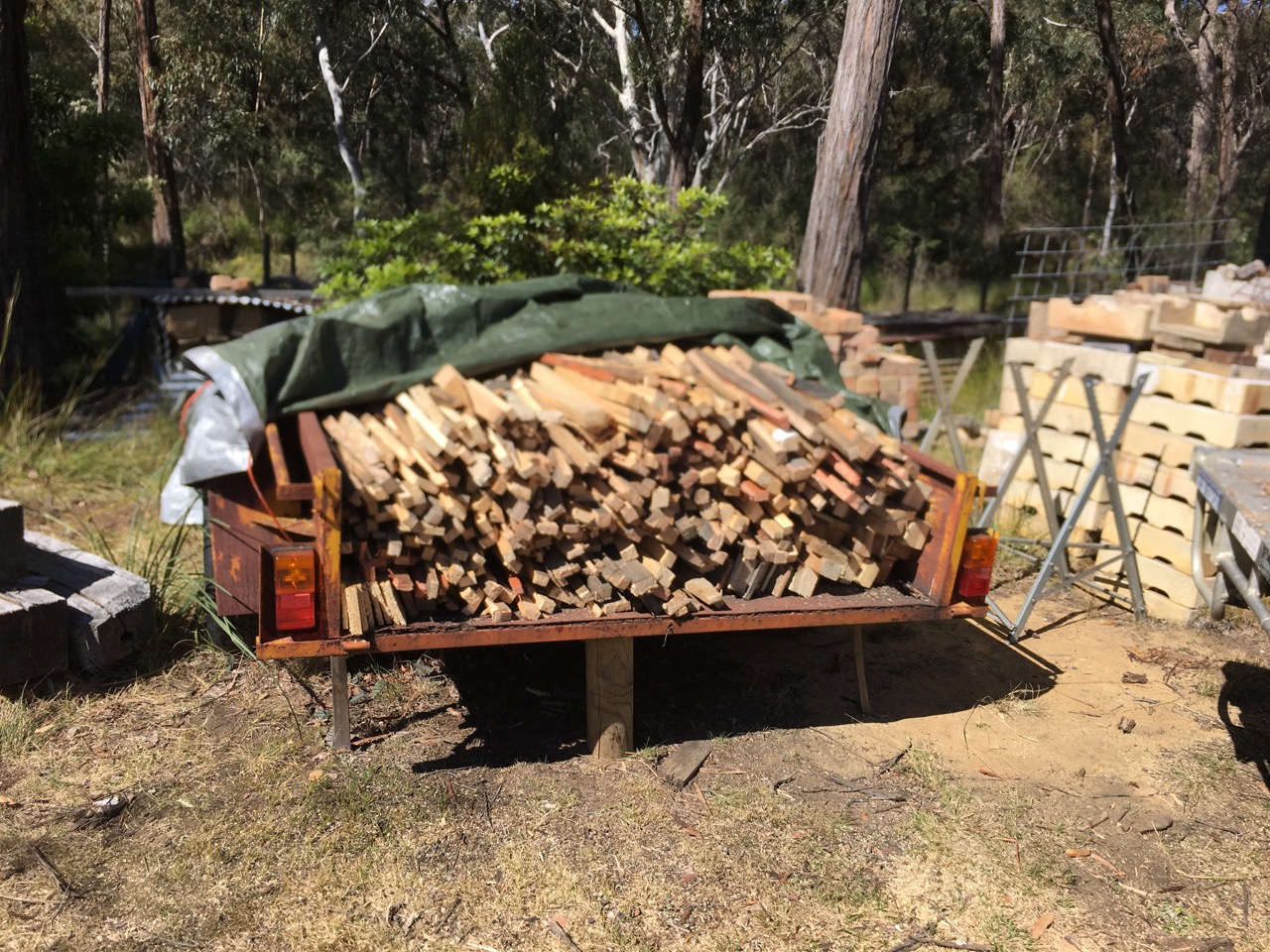
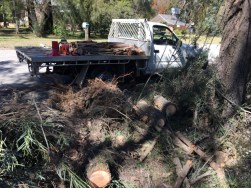
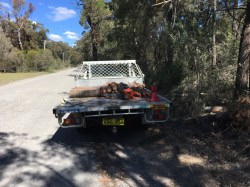
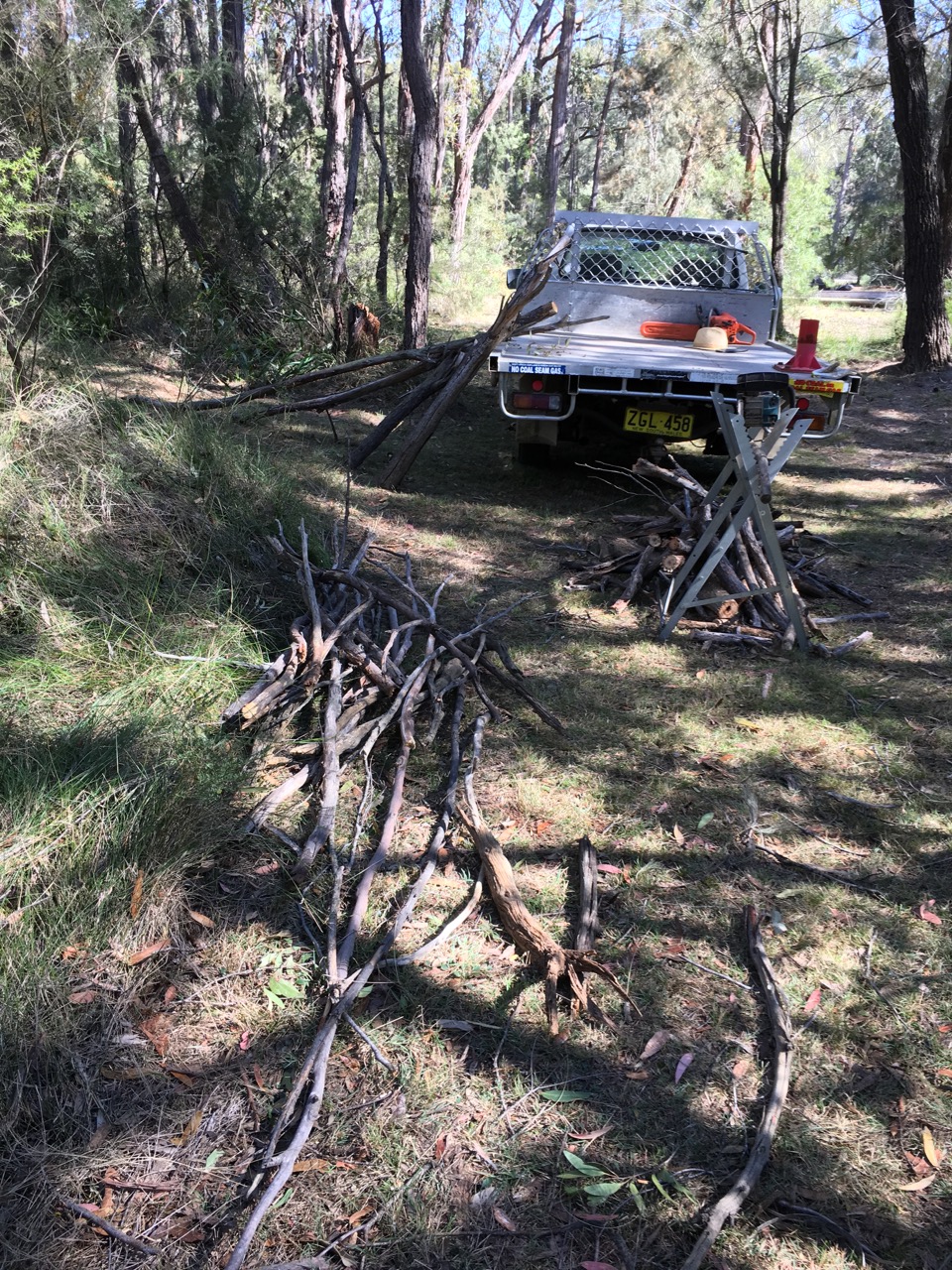
We are smack in the middle of the winter weekend wood firing workshops. 5 down and 5 to go. We have to take the truck down into the bushy part of our land and collect a load of small dead dry branches for the next raku firing workshop. We get through a truck load in one day with 6 wood fired kilns going all day. Collecting all of our own fuel from our own land like this is just one more aspect of our attempt at self-reliance. It’s time consuming, but fit, active, healthy work, and it helps to keep the forest in good condition.


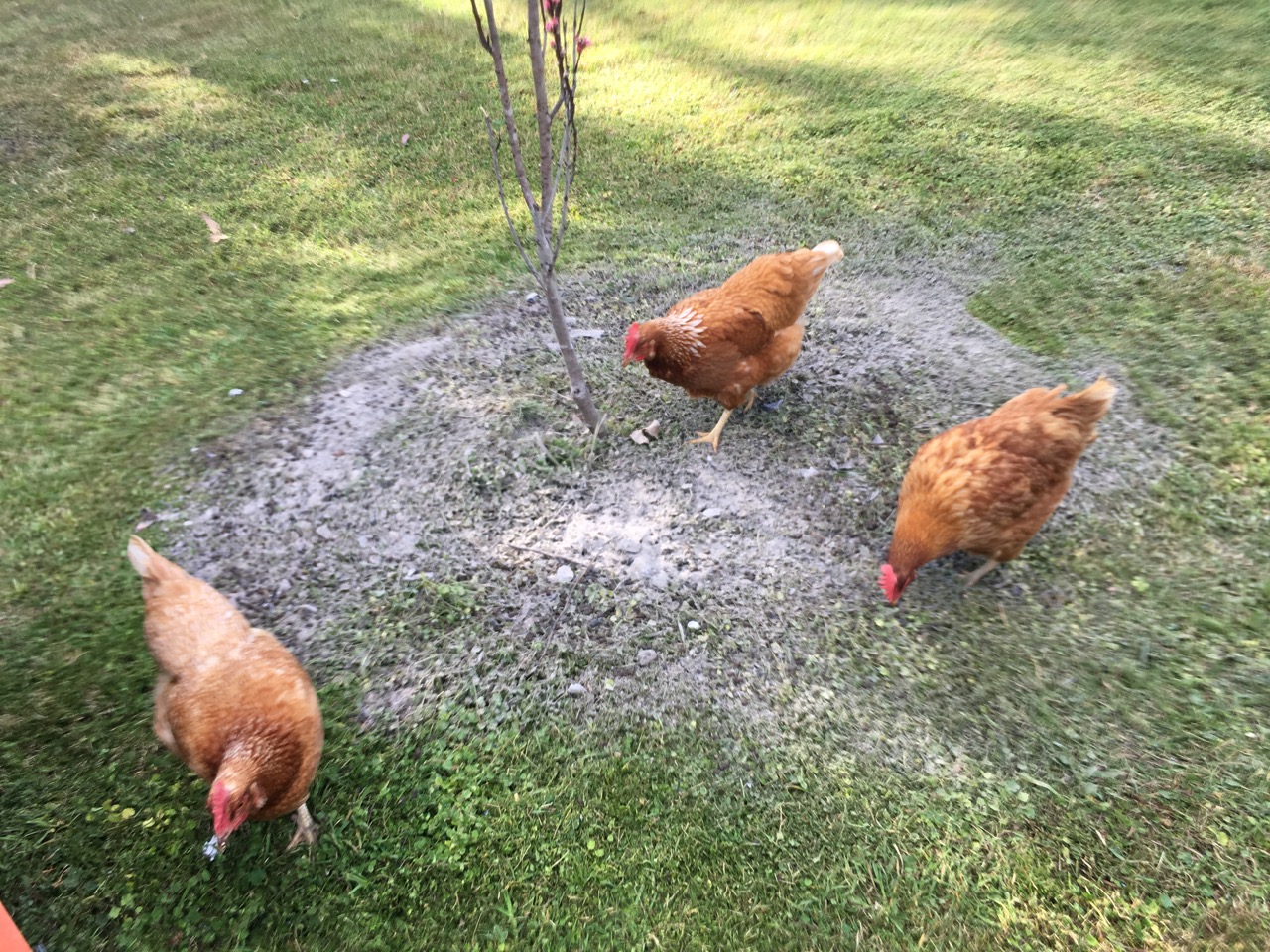
Amazingly, the chickens know the sound of the chainsaw and within minutes they appear, having covered the 100 metres across the block from the garden area where they spend most of their time, through the cherry orchard, the hazelnut grove, past the dam and the wood shed and they find us down the lane. The are motivated by food. They know that the chainsaw means termites, centipedes, under-bark beetles and cockroaches. We aren’t that happy to see them arrive here in this more remote part of our land. It means that they now know that this place exists and that they can roam here at other times. They learn their boundaries by following us. They don’t go where we don’t go. This place is the wild-wood for them and they will be very vulnerable to the fox if they come here alone.


We set about dragging the dead branches out of the forest. Once we have a good pile to get started with. Janine keeps on delivering more sticks and branches to me in the track. The closest place where I can reverse to truck to. I set up the saw horse and start to cut the branches into smaller sized pieces, suitable for use in the little Stefan Jakob style bin kilns. The chickens have no fear, they love to get in right under the saw to catch the falling bugs. I have to persuade them to look elsewhere in a rotten tree stump to excavate for termites. It works for a while but they are soon back in my wood pile, under my feet. They have decided that they love sugar ants and their larvae, that are falling out of some of the hollow rotten logs.

When we have loaded the truck, the chickens don’t want to leave this new exciting site that they hadn’t previously known about. We have to go back and entice them to follow us to safer ground, closer to the house. They wouldn’t last too long out in the bush.

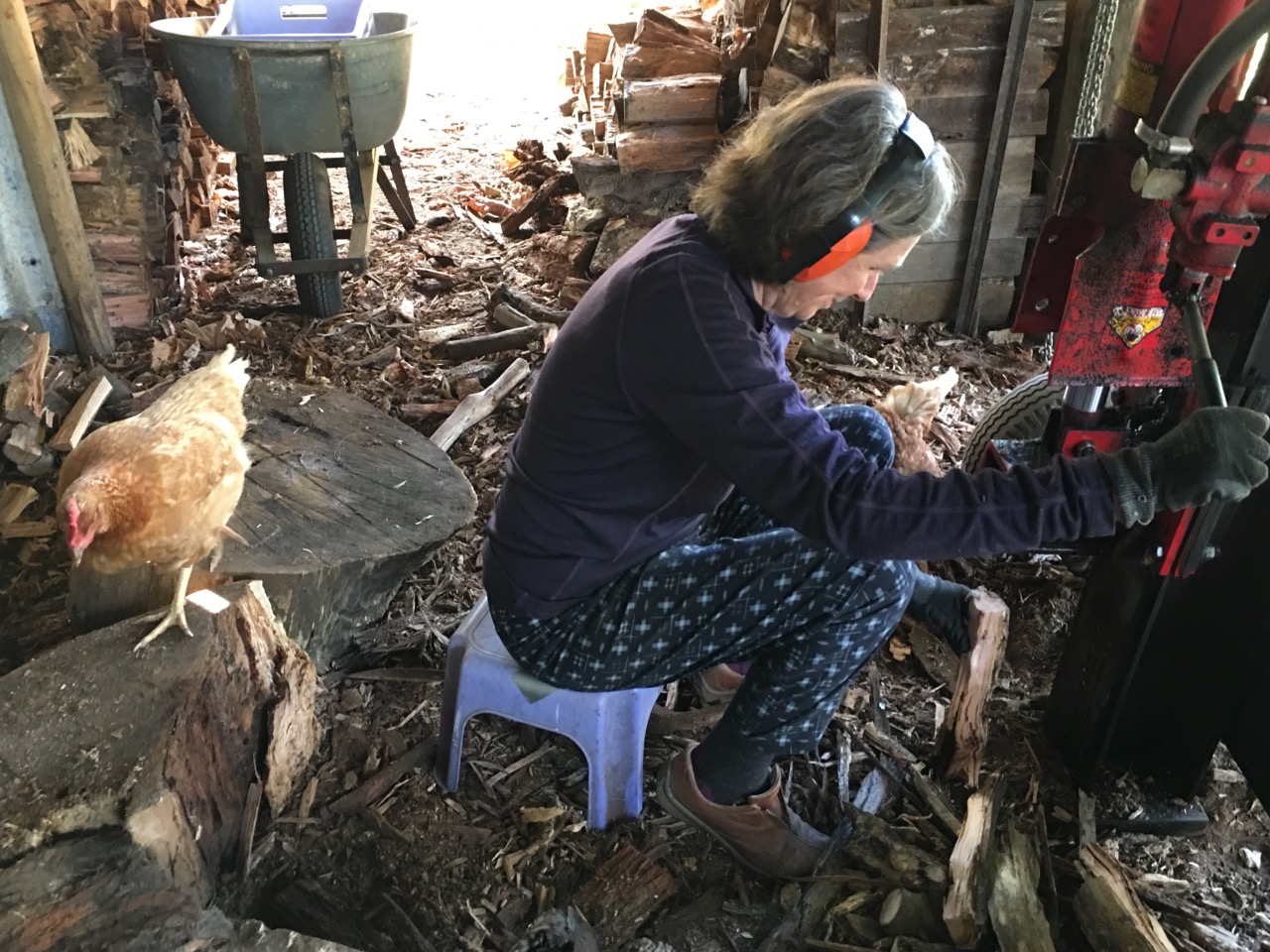
We need to drive the truck up to the wood shed so that we can split the thicker section logs down to thin pieces suitable for the small fireboxes on these little kilns. As soon as the splitter engine starts up, they soon appear, ready to ‘help’ Janine with the wood splitting.

 IMG_7589

I sharpen and service the chain saws, while Janine and her ‘helpers’ finish splitting the last of the wood.

The workshop is a success as they always are. Everyone getting a chance to fire their own work in their own kiln, usually working together in pairs or small groups.


The day ends with a little shower of rain, that sends us under cover for a few minutes, but it soon clears to a light sprinkle and we are all back out there cleaning up and washing the finished pots, raking the saw dust looking for lost pieces or little parts that have broken off.

At the end of the day, the truck is empty and there are just 6 pieces of wood left in the wheel barrow.

A good day.

Avocados and Oysters

What do Avocados and oysters have in common?

Answer; They are both best eaten raw with only a dressing of lemon juice and some freshly ground pepper.

IMG_7607 (1)

We have apparently reached peak avocado season now. We find a freshly fallen avocado each morning on the lawn. We decide that it is tine to do a big pick. We use the tall 2.4 metre step-ladder and the 4 metre long pruning shears, so that I can get to those pesky little critters right at the top of the tree. They have so far escaped picking, being so difficult to reach, right up there.

A little bit of circus work and we fill our basket with a dozen nicely sized fruits. That’ll keep us going for another week or so and save us from being killed by falling fruit.

IMG_7598IMG_7600

IMG_7606

Cold frosty nights, a good time to make stock

I have been sitting with my show at Watters Gallery each Saturday to ‘meetngreet’ and answer questions, if any, from the visitors. I spend some time with a few couples. I tell them stories, recount a joke, offer some insights into the work and its back history. They laugh, we chat, I explain the work, give details of its making, describe the provenance and importance to the overall story, of some specific pieces. I give them a brochure, a colour catalogue and then, after 45 mins., they walk out happily. I look to Frank sitting in the corner. He smiles at me benevolently. “welcome to the life of the gallerist”!

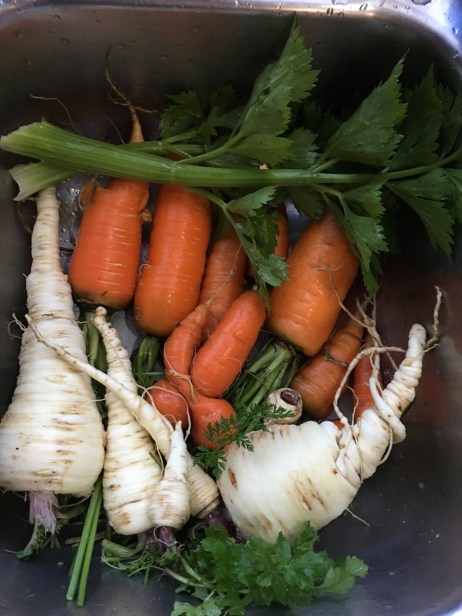
We have had a longish dry spell and the nights are again frosty. Cold evenings are an ideal time to make some stock. I buy a few beef bones and a pigs trotter. We roast them in the wood stove while we cook dinner. Then I boil them down over night on a slow declining fire along with a big boiler of mixed winter vegetables. Some parsnip, carrots, celery, parsley and a hand-full of mixed herbs, bay leaves, chilli, a star anise and a few pepper corns. All the usual suspects. The whole lot is slowly simmered and in the morning each of the big pots is decanted. The marrow extracted from the bones, which are then discarded, the vegetables sieved from the stock and sent to the worm farm.

IMG_7342

DSC02806 IMG_7373

IMG_7378 DSC02808

Both boilers and added together and re-simmered  the next night with a bottle of red wine. This is reduced down to 600mls of thick, gelatinous stock.

This is wonderfully flavoursome stuff. I keep it in the freezer and bring it out when I need a stock cube. This stock is so high in natural gelatine, protein and fat that it doesn’t really freeze. It just sets into a very firm gel that I can slice straight from the freezer. A chunk can be added whenever needed in just a minute. I’m sure that it would keep for a very long time in this frozen state, but it never gets the chance!

What is really good about this stock, which makes it so different from any commercial product is thatches stock is free of salt. Most commercially available stocks are loaded with salt. It’s probably their main ingredient.

This is entirely home made, flavoursome, free of preservatives, insecticides and is almost healthy by comparison. It is also a much better use of my time than watching the idiot box.


Low Temp Wood Firing Workshop

We have just completed our 4th wood firing workshop for the season. We still have 4 or 5 to go before spring, the hot weather and possible fire bans arrive.


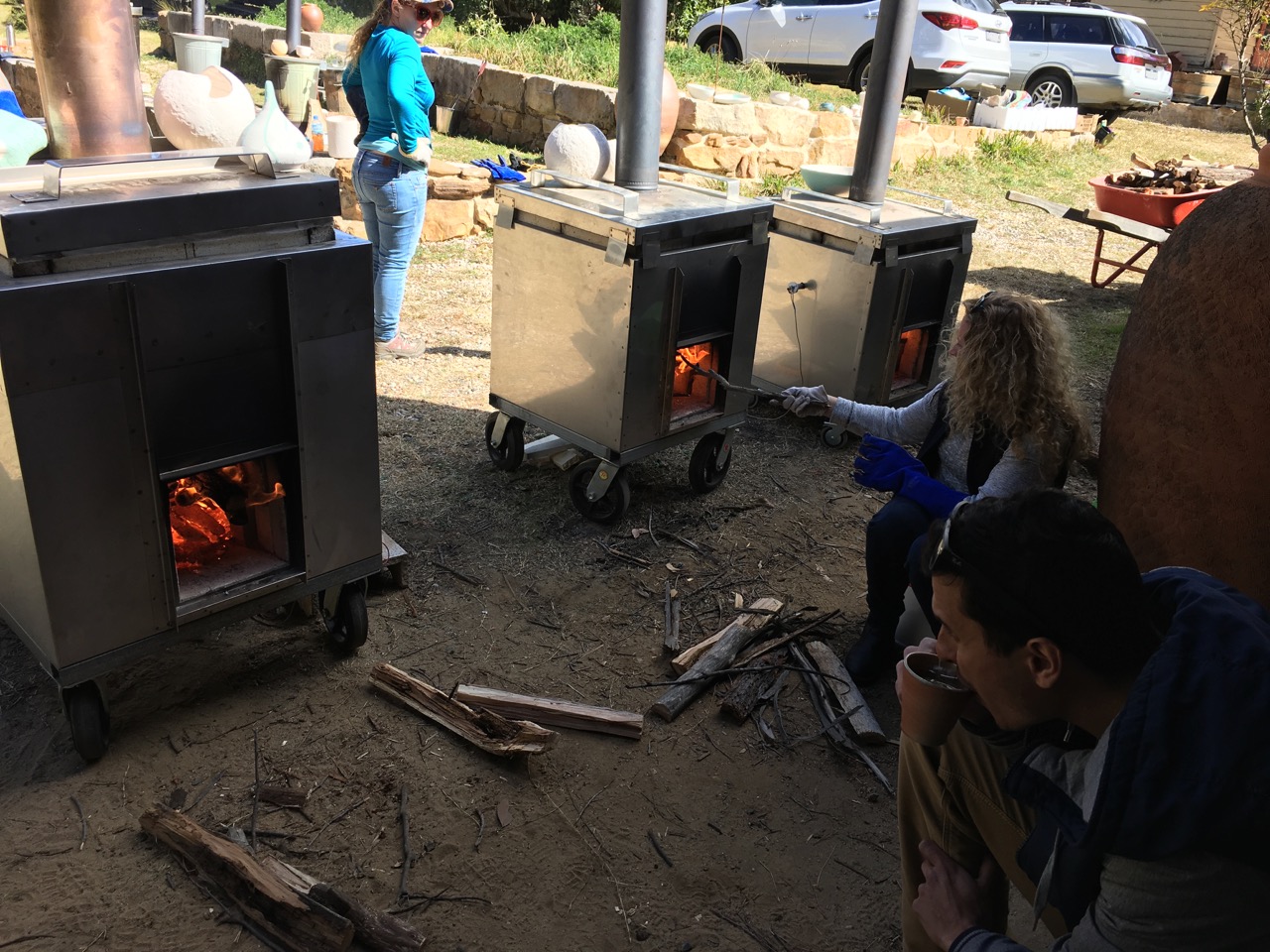
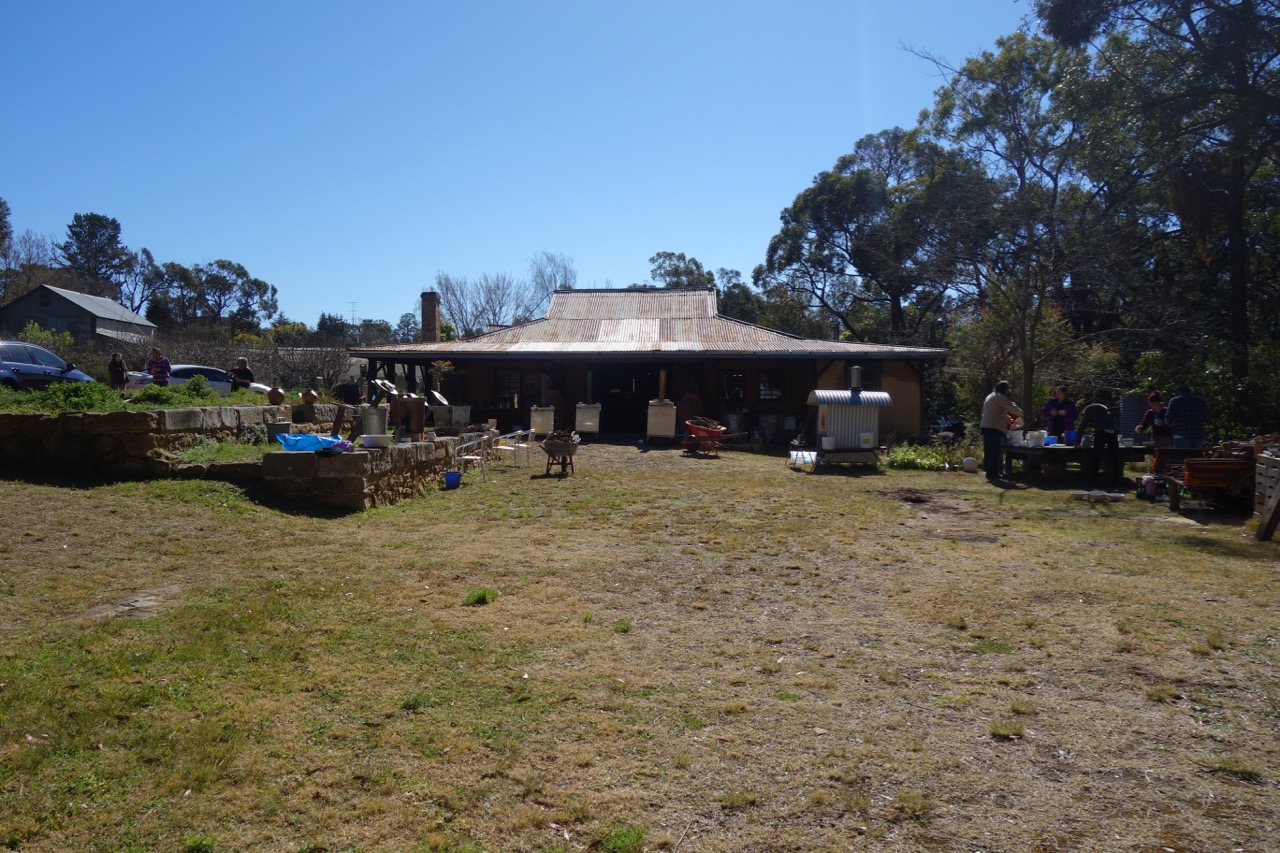
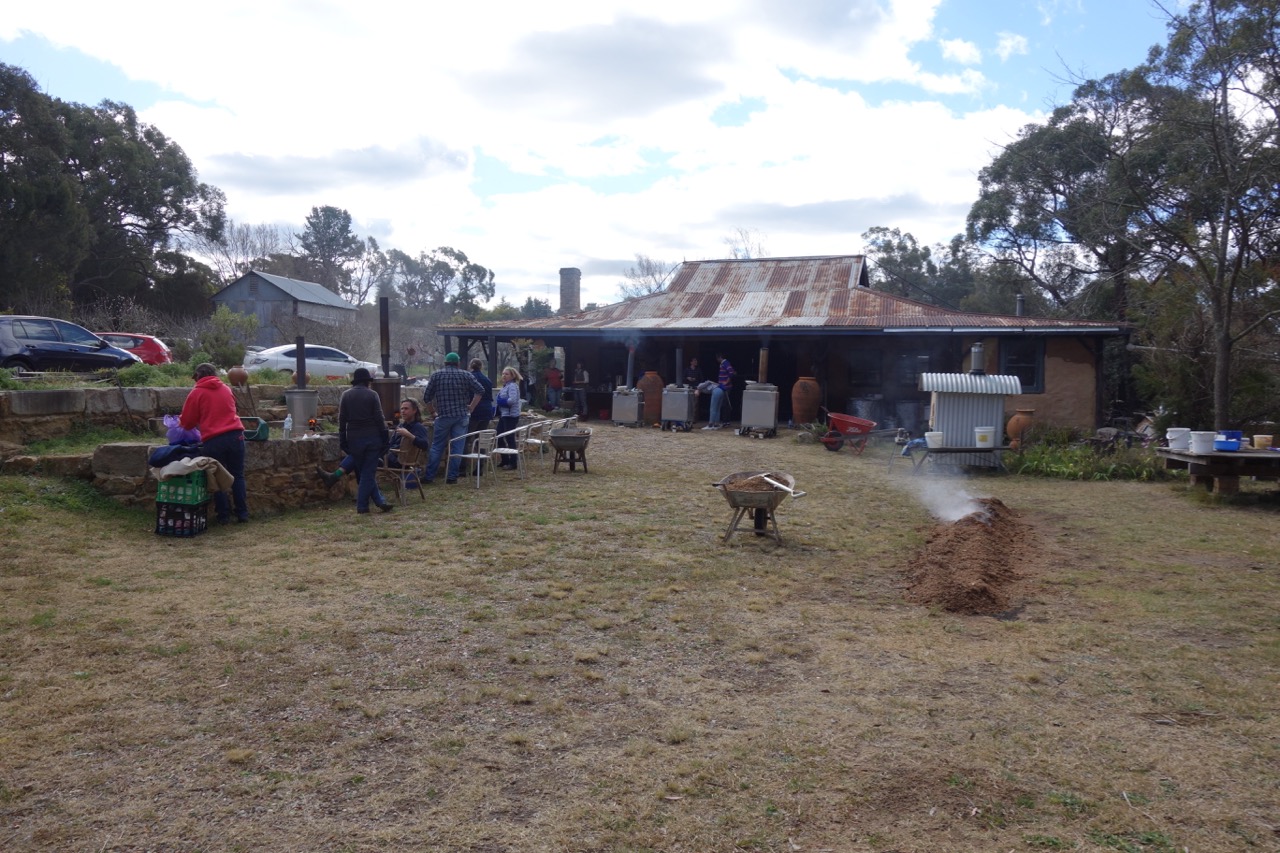
We hosted 11 potters in our workshop for a low temperature ‘raku style’ firing day. We have re-arranged the order of the kilns for this event, placing all the small ‘Stefan Jakob’ style ‘IKEA’ Garbage can kilns up on the stone wall. In this way the potter doesn’t have to bend down to stoke the firebox, but instead, can sit in a more relaxed fashion in a chair while stoking the kiln. This is much easier for some of us of advancing years.


The larger and heavier brick lined portable kilns have to stay firmly on the ground where we can wheel then out for firing and then back again under cover for storage.

We were blessed with a beautiful day with no wind and beautiful sunshine – almost hot. Such a great day for an out door workshop. The week preceding had been dreadful with strong, icy southerly winds blowing off the snow.

Everyone seems to be happy and some excellent results are achieved. We are now about half way through our firing workshops for this year. 4 down and 6 to go.


Have Wheel, Will Barrow

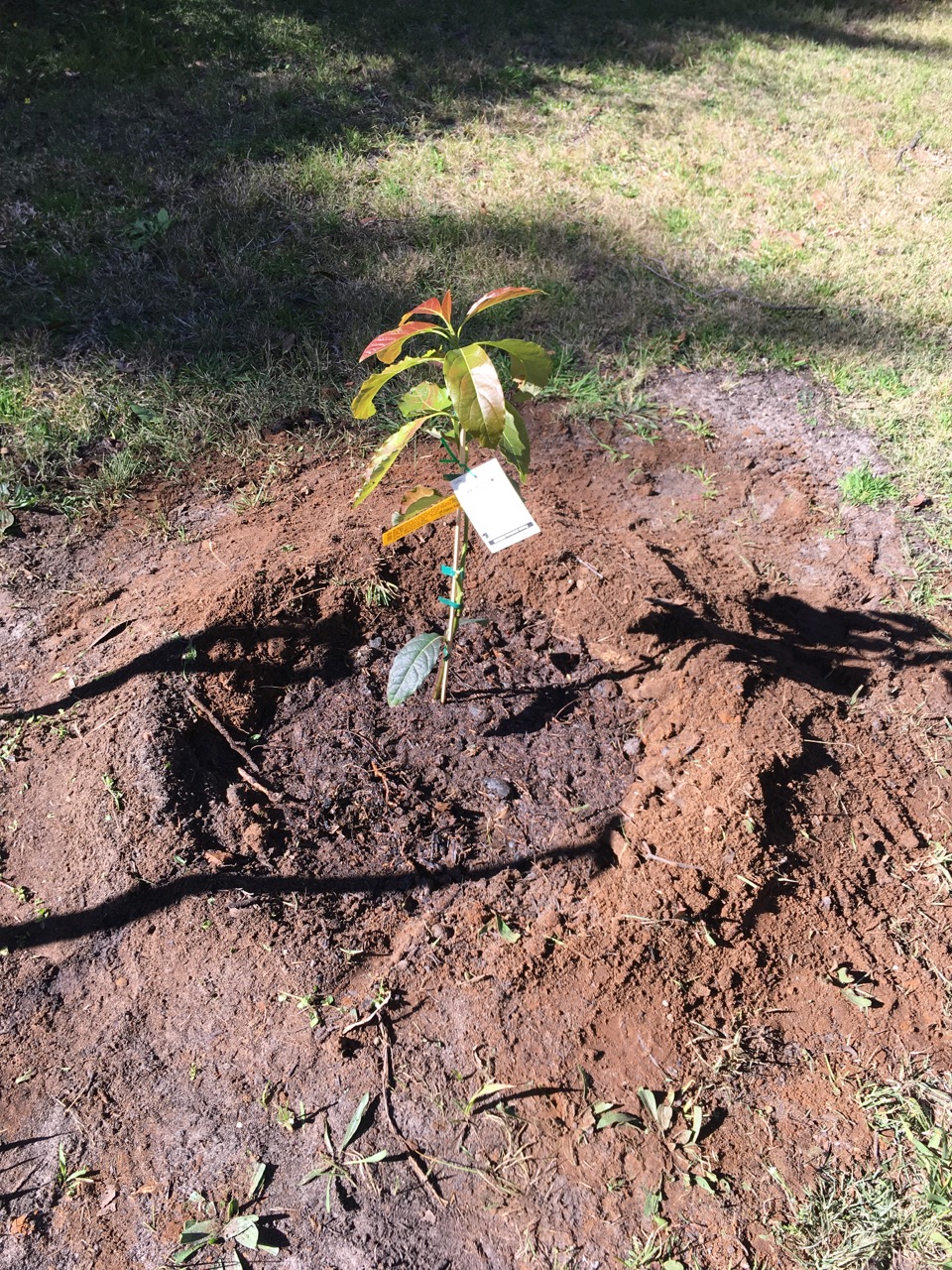
Now that the wheel barrow is back up and running again, and I have some time again. I get around to planting the new avocado tree.

We have an avocado tree. We have had it growing in the yard between the cherry orchard and the hazel nut grove. It’s been growing well for the past 40 years and usually has a good crop of avocados each winter. We pick about half a dozen or so each week. It has to be done at least a week in advance of when you want to eat them, as they take 7 to 10 days to finish ripening up after picking.

IMG_7541 IMG_7545

IMG_7410

The tree has grown quite large over the years, so we now need a step-ladder and  extendable, long-handled, pruning secateurs to reach up to the top to get at them. We get out there, Janine underneath where we think that the fruit will land. I get up close to it with the long secateurs. When fully extended, this gadget gets to fruit up to 6 metres high and is quite unwieldy to handle up above your head with arms outstretched. I cut the stem and Janine catches the fruit in a towel that she has stretched between her arms, like a fireman blanket. It works quite well – usually. Unless the avocado hits a branch on the way down and spins off at a tangent.

We have been eating avocados for the past couple of months now and there are still plenty up there in the upper branches. Because they don’t ripen until they are picked. It’s the best fruit tree that we have. We can decide when we want to eat the fruit at our convenience. We have had an unseen avocado last up in the dizzying heights of the upper branches for 5 months and suddenly dropping off in December.

I learnt a few years ago that avocados are self fertile. BUT, you get a better fruit set if there are other different varieties close at hand. Avocados come in two families. Type A and B. It is best if you have one of each. So I decided to buy another tree. We currently have a variety called ‘bacon’ which is the cool hardy one. Hence it has survived the snow fall and the deep frosts of the early years. However, now with global warming and reduced frosts here, it seems to be doing very well. I don’t know how long avocados live, but 40 years is a good effort for a fruit tree growing at the very edge of its range, and lets face it, they are a tropical fruit. So we have been very lucky as well as industrious.

When I went to buy the second tree, it soon became apparent that you can’t just go out and buy an avocado tree these days in Australia. The fruit is so damn popular (and expensive) that people are planting vast orchards of them and the growers are flat-out keeping up with the demand. Selling thousands at a time to commercial plantations. I had to put my name down with a few growers, then wait a year for the chance to pick up one of the left-overs from large orders.

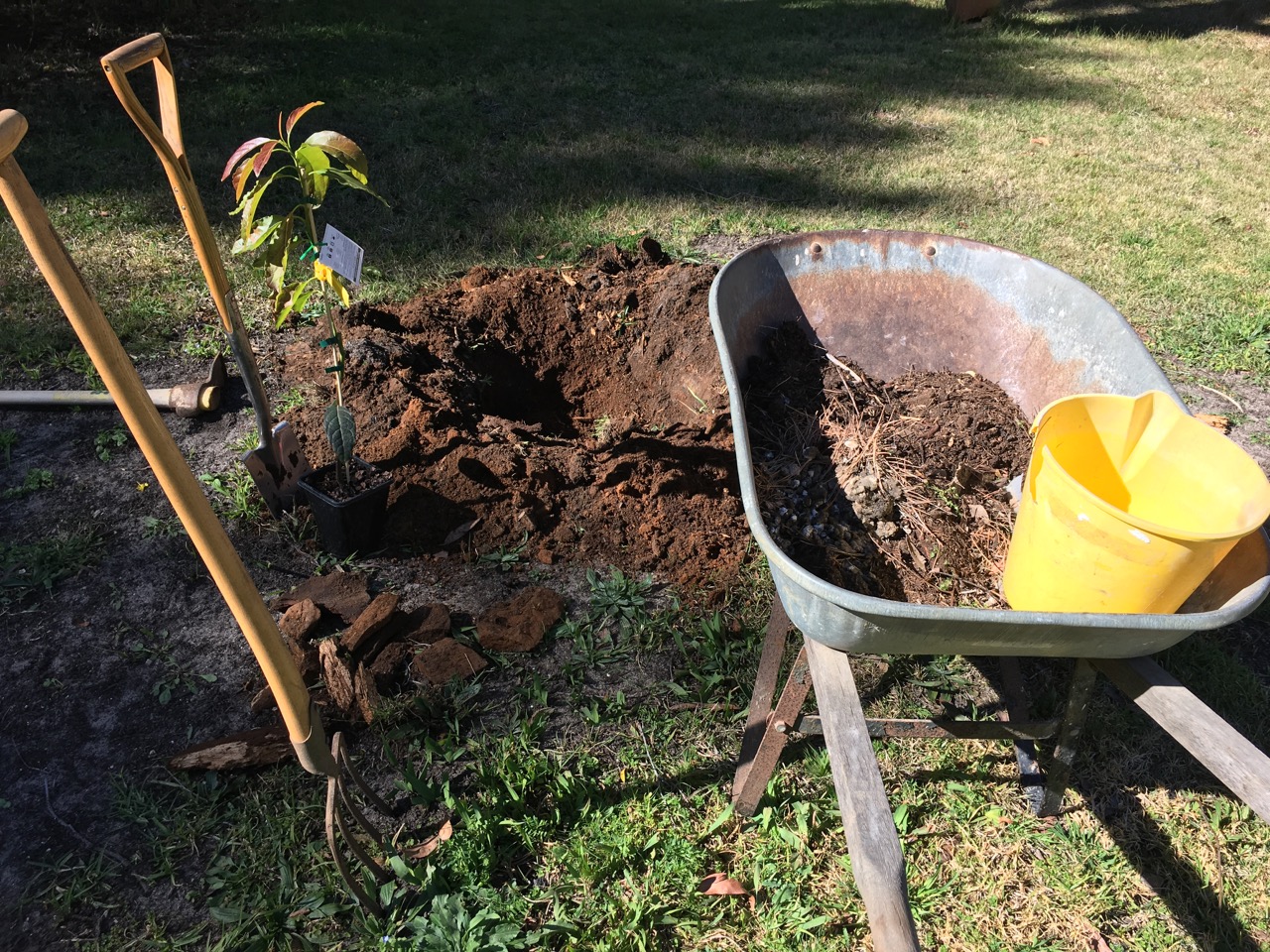
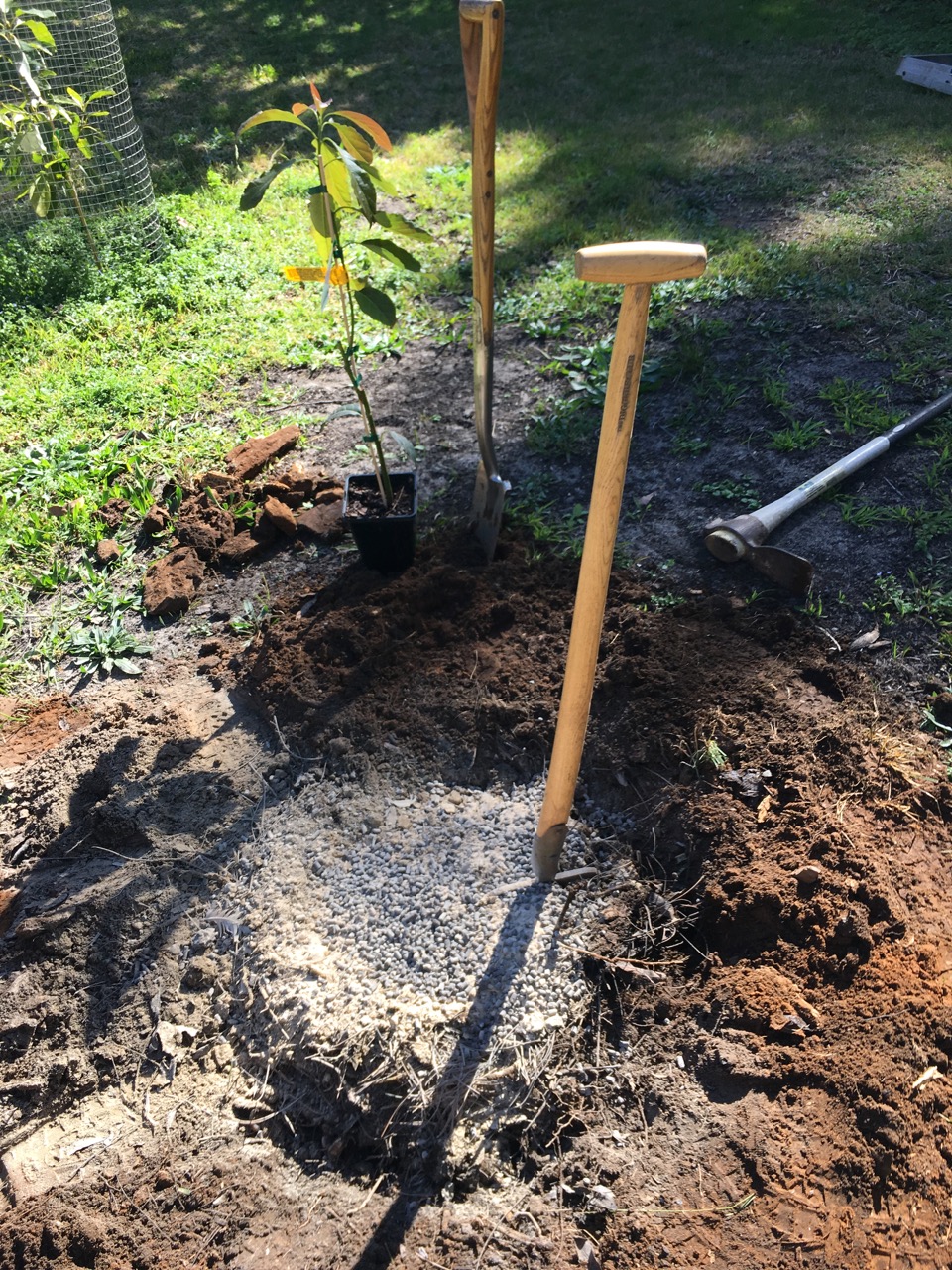
One year on and we now have 5 more trees. Making a balance of early and late fruiters and a balance of 3 of each type A and type B varieties. This latest tree, that was delivery last week, has been harden off by the back door, next to the water tank. It is now ready to plant. This one is a small-sized tree, only expected to grow to 2.5 to 3 metres, and is a bit frost tender. Depending on how big it grows, I’m hoping to be able to keep it protected for the first few years.

It gets a big, wide hole excavated for it and this is then filled with a mixture of old rotted manure and compost into the soil. Avacados are rich feeders. It also gets a steel mesh tree guard up to 1 metre high to stop the kangaroos from eating it in the first few weeks. The kangaroos took the top clean out of another tree that I planted on its first night, before I got the tree guard in place. They love to try anything new.
Some of the earlier trees that I planted in the autumn are now just about to burst their new buds into spring growth. They seem like they are growing very well.

If all goes well. In the future we might expect an avocado season of over 6 months.


 IMG_7547

IMG_7548

I shrink-wrap the wire frame to protect the tender little thing for the next month, until the cold winds blow them selves out and spring starts proper.

Catch-up

I’ve been so busy with the final stages of writing, editing and printing the book. Not to mention the organisation and documenting of all the work in my exhibition. It’s been a busy 15 years and a very hectic last 4 or 5 months.

So now it’s catch-up time. Janine has been carrying the major part of the load of running the house and garden recently. I need to inflate the tyre on the old wheel barrow, that has gone flat. On inspection it looks more like a repair job. But on closer examination, I find that the tyre has completely perished and isn’t worth repairing. It looks like a new tyre and inner tube will be the answer. At the garage, these turn out to be almost as expensive as car tyres! I’m shocked. I decide that the answer is to buy a new Chinese solid rubber, non-inflatable, wheel. $32 sounds like a bargain, until I get it home and find that it is made for the new 25 mm dia. axles that are now standard. My barrow is 30 years old and has a 19mm axle. It doesn’t fit.

Minor hiccup. I just happen to have a length of 25 mm steel bar in the shed. I cut it to length, clean off the flaky rust and hey-presto! It slides through the tyre, but  it doesn’t fit in the mounting brackets on the wheel barrow. Much too big! I have to grind off the old rusty bolts and then hold the brackets in the vice while I heat them up to red-hot with the oxy-torch and re-forge them into shorter, but larger dia. shapes to suit the new axle. It all goes smoothly enough, but then I find that the larger axle/bracket combination needs longer bolts. I don’t have any that are the right length, so I make some out of Stainless steel Boker bar and stainless steel nuts that I have in the kiln factory for kiln repair work. I’ll be retiring very soon from major kiln work. So I won’t be needing this kind of stuff in stock anymore. The last problem is that the spacers that locate the wheel in the centre of the shaft, don’t fit on the new larger axle. No problem. I cut a couple of pieces of sq. RHS to size and we’re away.

What could have been a 15 minute job has taken 2 hours. But it is up and working again. Hopefully, for another 30 years!

IMG_7521 IMG_7520

Book launch and porcelain show opens

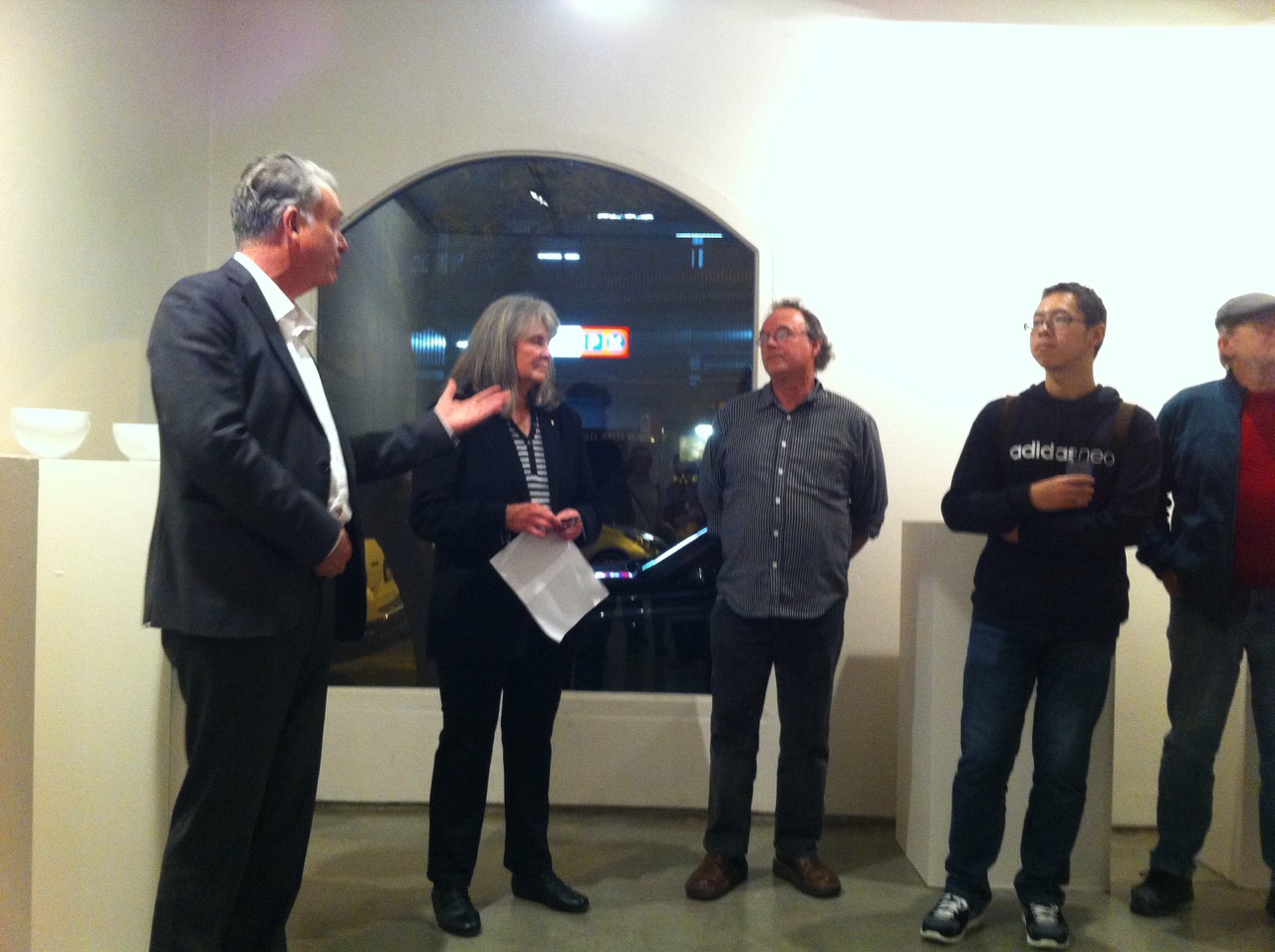
Last night we had the book launch and the opening of my new show at Watters Gallery in Sydney It was well attended, a few red spots appeared and we sold about 20 of the limited first edition print run of 50 copies. A good start.

Grace Cochrane gave a beautiful introduction to the show and the book describing their inter-connectedness. The show looks very well spread out on all the plinths that the gallery could muster. There are 81 works in the show, occupying all the ground floor space in the main gallery.

IMG_7515 (1) IMG_7516

IMG_7519 IMG_7518


It’s a very good feeling to see it all come together at last, and I am very grateful to all the people in half a dozen countries who contributed to the research and through them to a successful conclusion to this creative endeavour.

My New Book – 5 Stones

IMG_7383205 pages, 125,000 words, full colour, soft cover. Written, collated, printed and bound on the kitchen table. A very limited edition hand made book.

I have spent the last few weeks and months editing and formatting my new book. This will be my 6th book and 7th if I include my contribution to Handbook for Australian Potters.

This new Book is titled 5 Stones, and details my recent research into single stone porcelain. The book will be launched by Grace Cochrane at the opening of my show at Watters Gallery on Wednesday 16th of August from 6 to 8 pm. I have a selection of single stone porcelain from all 11 sites on show in the exhibition.

15 years ago, I discovered a white porcelain stone near where I live. It made me think about where else porcelain has been discovered and when. Over the past 15 years, I have travelled to each of the places in the world where porcelain was originally discovered/invented independently from first principles and found that they all had something in common, and that thing was a stone called ‘sericite’. It turns out that originally, porcelain wasn’t made from the white clay at all. Kaolin wasn’t involved. All the original porcelains were made from a special type of stone called mica.
My travels led me to China, Korea, Japan, Cornwall, France and Germany. I even developed communications with academics in California, Alaska and London. Then finally back to Mittagong in Australia. Near to where I started.  I have made my porcelain pieces out of these weird and interesting materials in remote villages, artist studios, back rooms, workshops, even factories. Where-ever I could track down and find amenable people using this ancient technique who were open to collaboration. 
At each site that I visited I made works out of the local porcelain stone, but I also used the opportunity to collect samples of their stone and posted these rocks back to Australia where I could process them myself and make local, contemporary versions of these ancient porcelains. I collected native porcelain stone material from 11 sites around the world and have made what I think are beautiful pots from them, both on-site, where that was still possible and back at home in my own workshop. 
This exhibition shows results of my firings and 15 years of research into these single-stone native porcelains. To coincide with this show I have written a travel journal documenting my travels. My book, titled ‘5 Stones’ will be launched at the opening by Grace Cochrane. The book stands alone in its own right as a travellers tale, as it has its own characters and arc of narrative, but also helps to illuminate the story behind the actual works on display in the show.
I have works in the show that were fired on-site in clean conditions to give very white and translucent pieces and I also have the same materials fired at home in my wood fired kiln with very different results.
4 of the 11 examples are made from porcelain that is no longer available, as 2 of the sites are lost forever and another two have complications.
I consider my self very lucky to have been able to get my hands on all of these ancient and very special porcelain materials. This will be the first and only time that all these porcelain ‘clays’ have ever been shown together in the one place.
DSC_0002_00004
Unglazed and flashed wood fired Arita porcelain
DSC_0003_01_00005
Wood fired and celadon glazed Japanese porcelain, fired in my kiln in Balamoral.
DSC_0022
Korean porcelain made onsite in Korea
DSC_0006_01_00007
Woodfired Japanese porcelain
DSC_0005_01_00006
My woodfired local Joadja porcelain, showing some carbon inclusion on rim and base.
DSC02831
Korean porcelain stone body, woodfired in my studio.
IMG_7238
Amakusa porcelain from Japan, made in Arita.
DSC_0025_01_00009
My local Joadja Aplite porcelain, wood fired with a lot of ember and ash contact. The intense carbon inclusion reduces the translucency.
DSC_0029_01_00010
My local Joadja Aplite porcelain, wood fired with ember and ash contact.

Frosty Mornings, Lovely Days.


We wake to a cracking frost this morning. We have had a few good ones these last few weeks. It’s neither good nor bad, it’s just what it is. The frost has killed off every soft and vulnerable plant in the garden that were struggling on through the cold weather and short days. Plants like basil, just turn up their toes at the slightest hint of cold, quite early on in the season. The first really cool shift in the weather makes them lose a lot of their leaves. The next cold snap, especially if there is a cold wind with it and they are gone till we replant them in the spring.

Tomatoes hang on a lot longer, but the first light frost or near frost makes them lose their leaves. Funnily the lingering un-ripe fruit isn’t affected and can be brought into the kitchen and ripened on the window sill over the next few weeks.

Nasturtiums and capsicums seem to be able to tolerate a light frost and remain intact, although not exactly thriving. However, this mornings beauty has put an end to everything that was gamely battling on. This spells the end of the lingering autumn stragglers.

DSC02767 IMG_7325

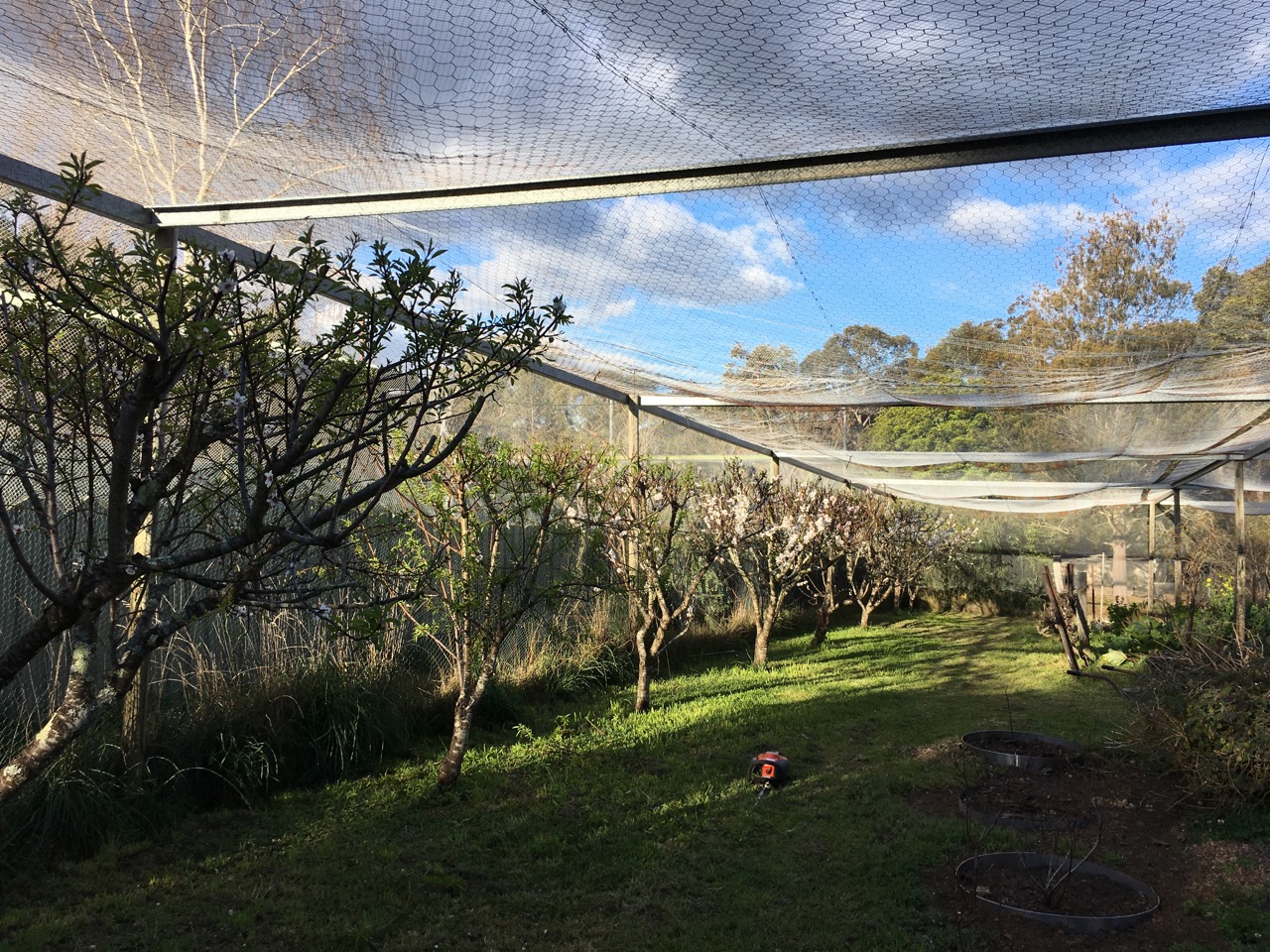
What is great about a period of good solid frosts, is that they benefit the plants that have excellent frost tolerance and even rely on the freezing to establish the ‘chill-factor’ chemicals in the new growth that will emerge as fruiting buds in the spring. Some varieties of fruit trees need a good chill to become fertile. All the older varieties of plants like apples, pears, the stone fruits and particularly hazel nuts, need to get a hundred or more hours of below 4oC temperatures. If they don’t, the flowers cannot become fertile in the next growing season. A few years ago, we had a winter here without frost and didn’t get any fruit set on any of the apples or pears.

Hazels and filberts have slightly different origins, with one being rounder and the other more ovoid. Filberts have a longer skirt on the outer shell. They both seem to have originated in Asia minor/Turkey, but have been developed into stronger and more prolific bearers of larger nuts over the long period of domestication.

Hazel/filbert nuts are reliant on a high number of cold nights to establish their chill factor chemistry. A lot of work has been done on breeding local varieties of low chill factor nuts here in Australian in the post war period. In Australia, we just don’t get the sort of winters that are common in north America and Europe. However, we just happen to have a hazelnut farm research station near us here in the Southern Highlands.

We have been able to buy grafted varieties of local hazels that have been bred to fruit in warmer low chill areas like here. We have these low-chill fruiting hazel/filbert nut trees inter-planted in the nut grove with others that are inoculated with French black Perigord truffle fungus. We are hoping that the spores will spread to all of the other hazel/filbert trees at some time in the future.

IMG_7326

A good bit of cold weather really helps to colour up the citrus and sweetens the Brussel sprouts. In the mean time the frost looks great on the surviving plants until the sun comes up and melts it away.

  DSC02766 DSC02771

DSC02772 DSC02774

DSC02777

The sun shines and the days are glorious, as long as there is no wind.

When the weather changes and the wind blows off the snow. There is no frost but the days can be bleak. When we came here, the locals described it as a lazy wind. It doesn’t blow around you, but rather, straight through you.