In the boro museum we get to understand some of the history of this amazingly time-consuming and beautiful example of enforced creative frugality.
In the north of Japan there was a history of recycled cloth called ‘bodoko’, sometimes shortened to ‘bodo’. Bodo are made by sewing many small pieces of used and worn cloth together to make a larger sheet. Bodoko sheets are primarily used in childbirth to lay the newborn baby on. They were also used as sleeping sheets when laid over layers of dried leaves or straw on the ground. Times were really tough back then! We live in luxury now and look upon these old fabrics today as cultural art objects, but they were originality created out of the necessities of poverty.
The items of the Boro Museum were collected by Mr. Chuzaburo Tanaka from the mid sixties onwards. He had a love of these old fabrics from his earliest days. Some of the museum displays are fortunately written in English and enlighten us as to more of the history. One of the panels tells us that when a baby died in child-birth, it was buried with nothing other than a stone. To make the baby tougher in its next life!
It’s a great thrill to see all these old fabrics in a well-lit, well displayed place. There is a wealth of material here in this museum spread over several floors of the building.
Later we make our way to the local sushi bar for lunch.
The next morning we are up very early and off to Tokyo’s Tsukiji fish market for a wander around. The fish market is only a 15 minute walk from where we are staying in a cheap hotel. There are all sorts of stalls in and around the market. There is a very nice Japanese knife stand, but they are very expensive and out of my price range. However there is an enormous range of all sorts of fish and sea food products on sale. I’m particularly taken by the sea urchin pulp with wasabi paste and pickled ginger served in a lovely wooden box.
There is fresh wasabi root, dried squid and lovely mushrooms. I wish that I had a kitchen, so that I could justify buying some of this.
I’m quite taken with the fish eggs displayed all in a roe.
We spend a few minutes watching a master fish chef de-boning a very large tuna. it’s a very skilful art. A big tuna like this cost thousands of dollars just an hour earlier, and is broken down now into smaller affordable pieces for the days sushi and sashimi restaurants.
We can’t help ourselves. We have to have some more sushi and sashimi after this.
Janine and I have just returned from an extended trip to Japan and Korea.
I was lucky enough to be invited to Korea to represent Australia at a conference in the Yanggu Porcelain Museum and Research Centre in Bangsan in South Korea.
I wouldn’t normally go to conferences, but this one was all about single-stone porcelain, its history and its contemporary applications. A topic close to my heart.
They also offered to pay my air fare, which made it a lot easier to decide to go.
However, I wouldn’t usually consider flying half way around the world for just 2 days at a conference. It’s a lot of environmental damage, for just 2 days of interesting experiences. So to make it more worthwhile Janine and I decided to take the month off and go to Korea for an extended time, so that we could catch up with our friends there and also take in some time in Japan on the way.
I can’t really justify taking a month off just now, as I have a lot of orders booked in and we are very busy. Not to mention that there is a lot to do in the garden at this time of year. However, this was a wonderful opportunity not to be missed, so we made efforts to fit it in.
As we had decided to fly via Japan, we arrived in Tokyo and spent a few days visiting galleries and museums. There is a lot to see in Tokyo, but we only had limited time, so we had to be selective and we kept very busy fitting it all in.
There were a lot of Galleries and a lot of shows, but I will only write about a couple, so as not to bore you.
As I am a keen patch-worker, but not for any fashionable reason. My interest in hand stitching patches onto my worn out work clothes is just to extend their life really. However, it also creates something beautiful and unique out of what would otherwise become a rag. It’s something akin to the kinsugi technique that I use to repair chipped and/or broken pots that are meaningful to me and deserve to be repaired and made more beautiful than they were originally, just because I like them and respect them as objects. A nicely repaired chipped pot is more precious than it was before it was damaged. So, the same applies to my old jeans. They become more interesting, beautiful and precious after I have spent a bit of time on them, and it saves the waste of throwing them out and buying new ones every few years.
I can afford to buy new jeans and new shirts, I just choose to repair and maintain my older clothes as a political statement about over-consumption and our throw-away economy. The fact that these things become gorgeous as well is an added bonus.
So, with all this in mind, Janine and I went looking for the ‘Boro’ museum. Boro, is a traditional Japanese word used to describe old clothes and blankets that have been patched, repaired and maintained for several generations because of poverty, but these days these old clothes fetch hundreds of dollars in the antique markets.
The boro Museum is a small private museum in outer Tokyo. We tracked it down and spend a very interesting afternoon there.
Amazingly, there was an exhibition of contemporary indigo fabrics on show on one of the lower floors. Janine just happened to be wearing her indigo dyed Japanese shirt that she bought some years ago on one of our earlier trips to Japan when we visited Mashiko. We spent a bit of time in the old indigo dying workshop in Mashiko while we were there. The indigo dying workshop in Mashiko dates back about 600 years if I remember correctly. The Lady artist showing the fabrics in the Boro museum contemporary gallery recognised the shirt immediately and told us that it was made by her teacher, who has since died. Such a coincidence.
Janine tries on a few pieces of old boro from the collection.
All these items were simple peasant farmers clothes that were patched out of necessity. A lot of these pieces were made in the north of Japan, in the Aomori Prefecture, where it gets quite cold and the seasons are short. It is too cold to grow cotton up there, so all the clothes were made of hemp and/or other local natural plant fibres, all dyed with indigo to preserve them and make them long wearing. indigo dyed cloth doesn’t rot and insects wont eat it. It is interesting to see old cloth that has both blue and white designs woven into it. In the very old pieces, the white areas have rotted or been eaten away and only the blue indigo dyed areas remain.
Really old and extremely worn out fabric was pulled to pieces and used to stuff bed-clothes, or cut up into strips and rewoven into indigo hemp warp to create new cloth from the old. This recycling, making sure that nothing is wasted, has a term in Japanese. ‘Mottainai’. Which can be literally translated as ‘being too good to waste’.
I have written about my interest in ‘boro’ in the past on this blog. See, “Something boro, something blue”. Posted on
Although we lead a quiet life in a small village. Our wild life was exposed yesterday for all to see. We had a Posse of Parrots, a gaggle of gang gangs, a calamity of black cockatoos, all the usual small silvereyes, fire tails and wrens, swarming and flurrying across our gardens. A very noisey pair of juvenile magpies demanding to be constantly fed and the occasional visiting flock of marauding white cockatoos. Thankfully they moved on.
The king parrots spent a few days with us following us around the house and gardens. I presume, hoping to be fed. But we didn’t, so they eventually moved on to visit someone else who would feed them. We have a bird bath, under cover in the shrubbery which is very popular for washing and drinking by all the birds, but we don’t extend our welcome to feeding. I think that they are much better off working the forest around here for their own wild food.
We also had a visit from an echidna. She/he was only here for the day, just passing through and was gone the next morning. As we have 4 dams for water and a couple of hectares of forested land around them, with loads of dead trees on the ground. I suspect that this is a very suitable habitat for him/her, as they swim as well as burrow. There are plenty of termites in the dead wood all around here.
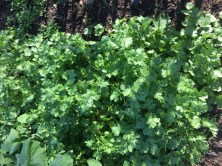
As the weather warms up, we continue to harvest the garlic as it starts to mature and dry off. each different variety comes on at slightly different times, but most of it has been lifted now, with just a few blocks of plants still remaining in the ground.
The citrus are flowering, one of the lemons is flowering so profusely that the ground under the tree is white with fallen petals. The fragrance is beautiful.
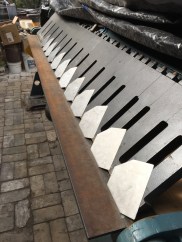
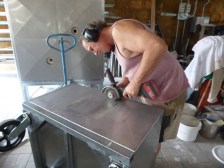
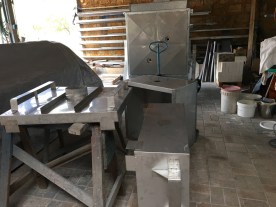
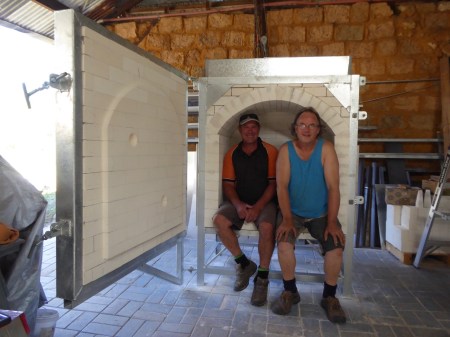
I have spent the last few weeks kiln building, and kiln number 300 is now complete and ready for delivery. This is my penult kiln, kiln number 301 will be my last before I retire from building these larger, heavier kilns. I will continue on in semi-retirement for a few more years building the smaller, lighter, relocatable, mini wood fired kilns, as these are easier on my worn-out body.
The birds have started to destroy the fruit crop – as usual!. After 40 years of organic farming here, all the older stone fruit trees are too big for us to net individually these days. It has crossed my mind, that we could net the whole orchard, but this would be prohibitively expensive. We did net the entire vegetable garden area about 15 years ago and that was there best thing that we ever did. Now we get all of our produce and the birds, rabbits, wallabies, possums and eastern grey kangaroos are no longer a problem.
We spend a day with our good friend Warren, helping us to net all the smaller trees. The parrots have started to hollow out the almonds, looking for the sweet young developing nuts. There is nothing that we can do about it. The tress in the stone fruit orchard are just too big to net. The birds can have them. I planted a dozen new almond trees, in a row down one side of the netted vegetable garden. These are reaching maturity now and depending on the vagaries of the weather, can produce good crops.
We drape nets over the smaller trees, supported with tomato stakes and use irrigation pipe hoops to support the nets over the larger trees. We have been doing this for years, it’s a days job every spring. The nets are getting a bit old now and are getting a little brittle, so holes are starting to appear. I made a huge needle out of TIG wire to use as a repair needle to stich the nets back together using baleing twine, repairing holes and joining seams. It works rather well.
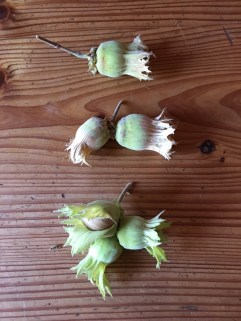
We end the day in the nut grove, by pruning all the suckers from underneath the dozen hazel nut trees on our hands and knees. These trees want to grow as a small wide thicket, so they need constant attention, removing the suckers, to encourage them to grow as upright trees with a single trunk, or two or three trunks. This makes them very much easier to maintain, manage and mow around. It’s a constant job, but the nuts are worth it.
Nothing is perfect, nothing is ever finished, nothing lasts.
Spring hasn’t sprung. It’s sort of crept in very slowly. It hasn’t rained properly since March, so all the dams are very low and as the weather slowly warms up, we are having to water the vegetable garden and potted plants every day.
We have been harvesting the new crop of garlic for the past month as it starts to dry off and wilt. I planted over 100 cloves this year and we have harvest a very good strong crop. However, one of the varieties that I planted has turned out to be a bracing type, initially it grew as one stem, but as it matured, it separated into a dozen separate plants. One stem for each clove. I have no idea what the variety is called, as I bought 2 knobs of this garlic from the health food shop, as Australian grown organic garlic, and that is all I know about it. It has quite a mild flavour.
Each batch of garlic has to be laid out to dry for while before it can be plaited and hung up for storage in the kitchen ceiling truss.
We have had our last wood firing workshop for the year, as the summer fire bans are now in place. The kiln was packed and fired and marshmallows were roasted to get us through the cold night. There was a cracking good frost over night too.
It was a very good firing with excellent results. After the unpacking of the kiln, many of the potters stayed on for a working bee to help us to split wood for the next firing.
It was a fantastic experience to be amongst bright friendly young people who have a lot of energy. In just a few hours we managed to fill the wood shed. This is the first time that t he wood shed has been completely filled to capacity. It a good feeling, but more-so because we were part of the team all working hard to complete an objective.
The chicken had a field day eating all the bugs that were exposed from under the bark of the logs. I’ve never seen them collapse and have to sit and rest in amongst all the hectic activity of wood splitters and chainsaws, because they had eaten too much and were completely full.
We have spent the week chopping and stacking wood for the weekend wood firing workshops. No matter where we are on the 7 acres of bush where we cut the dead wood for kiln and house fuel, the chickens will hear the sound of the chain saw and turn up within minutes. Yesterday I was in the most remote part of our land, after bashing a track through the under growth to get to a fallen dead tree. I hadn’t made more than 3 cuts when the first chicken turned up, then a minute later, 2 more. They just love to get in amongst the dead wood and bark to scratch out the termites and insects.
They show no concern for the noise of the chain saw, the flying wood chips or the falling logs. They are obsessed with being first in to get the bugs. With 3 chickens helping me, it really slows me down. I have to be especially careful when I’m dragging logs out with the tractor and heavy chains. They have no fear of me or the tractor and will get right in front of the wheels if there are insects there. I have to keep a very close eye on them all of the time, to know exactly where they are.
Spring is well and truely here now, with the cherry blossom, but we still had a frost on Saturday night. The temporary cloches will have to remain on the tomatoes and other ‘soft’ seedlings for a few more weeks yet.
We seem to have jumped directly from Winter to summer in one week. Two weeks ago we had a frost then a week later we had to cancel two wood firing workshops because there was a total fire ban declared in our area. The main highway from Sydney to Melbourne was closed for most of the day because of a wild-fire.
We haven’t had any significant rain here since March. That was the last time that water flowed into our dam. The dam is now down to 20% capacity. Not a good way to start the warm weather and we aren’t even into summer yet.
All the seasonal winter food harvests are drawing to a close. Janine made what will be the very last batch of marmalade from ‘eureka’ and ‘myer’ lemons and the last 6 seville oranges. It’s very nice too!
I had a very good look at the avocado tree and could only see 4 remaining pears. That doesn’t mean that there aren’t any more than that. It’s just that this is what I could see. There are bound to be a few more up there hiding in the foliage. We’ll surely find a few more on the ground in the coming weeks. The little buggers are so very hard to spot at the top of the tree in amongst the similar coloured foliage.
The forget-me-nots have suddenly appeared from the mulch under the avocado and started flowering along with the blue borage. They weren’t even there the last time that I was out there harvesting the avocados. They have just shot up with the warmth and the regular watering that the avocado tree gets.
At this stage, we are watering almost everyday. What we’ll do when the dams become empty? We’ll face that when it happens. We could always use some of the drinking water in the tanks? We have never had to do that in the 41 years that we have lived here. At least not yet?
We had two wood firing workshops booked for this weekend.
Sadly we have 29oC and windy conditions. So there is a Total Fire Ban declared for the weekend. The fire season has started early! A total fire ban is a TOTAL fire ban! There is nothing that we can do about it. We have to cancel both workshops. Now that the hot weather has arrived early, it may affect the next two weekends that we have planned on our calendar for a Stoneware wood firing and the last raku firing.
Running workshops right up to the end of the season like this does increase the risk of running into fire bans. Some groups actually ask to be booked right at the end of the firing season to take advantage of the longer day length for travelling here and also the warmer daytime temperatures.
I’m NOT a climate sceptic. I believe that we are experiencing man made climate change caused by our use of fossil fuels.
This winter in Australia was 2oC above average winter temperatures across Australia. If this is our new reality, then we had better get ourselves adapted. In the short term. It means only booking wood firing workshops in the middle of winter when it will still be safe to do so, as I hate letting people down. In the longer term, we have been adapting for many years now. Collecting all our own water for drinking and irrigation, dealing with our own sewerage and generating our own solar electricity. This is all still a work in progress.
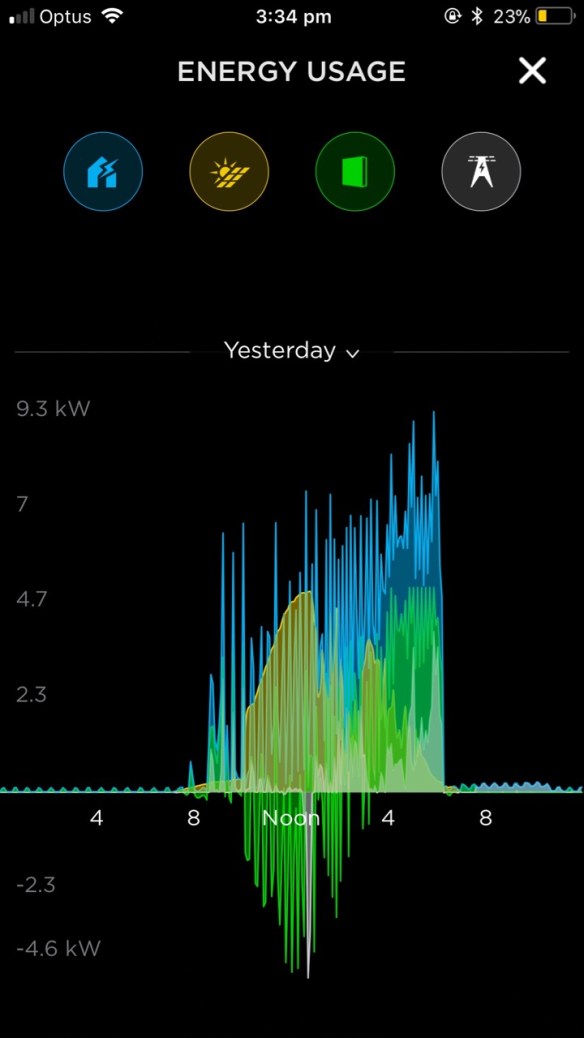
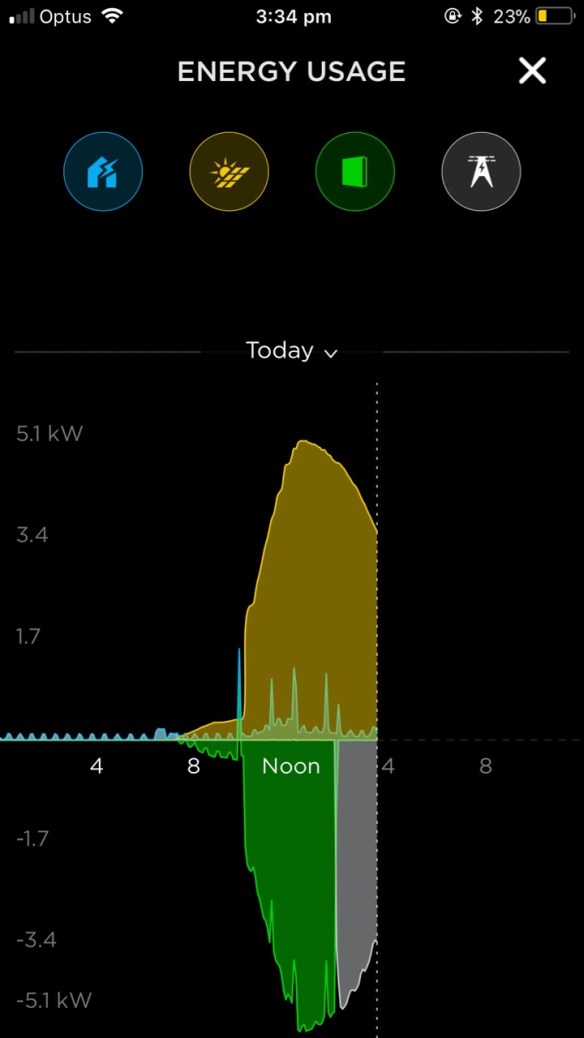
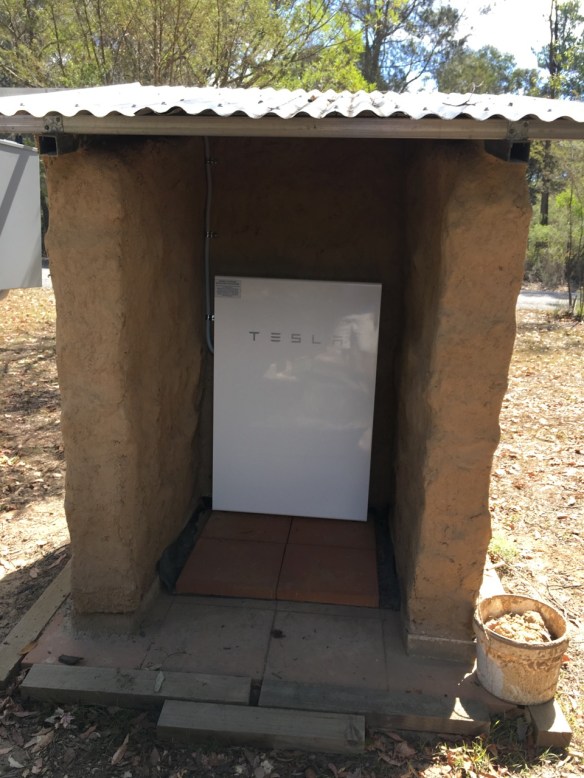
To this end, I suddenly realised that I had an unexpected day ‘off’ yesterday with the sudden cancellation of the workshop. We had been busy all week preparing the site, the glazes, the wood fuel and the sawdust. We have ordered a new, 2nd generation Tesla battery for our house, as we have an excess of electricity during the day from our solar panels. For the past 10 years, we were able to sell this excess power to the grid at a good price. But now with the end of the subsidy. It is better to store that excess and use it ourselves later in the evening, when we usually buy in green wind power back from the grid.
The announcement of the new Tesla battery came at just the right time for us. We are going to electrify all our energy use in the house and pottery. That means no longer using LP gas. Our choice to use an LP gas stove in the kitchen as a fall back position for cooking during the very hottest months, instead of lighting the wood stove, was based on the proposition that LP gas burnt directly, was greener than using dirty black electricity generated from coal.
We totally withdrew from the coal economy 10 years ago. In keeping with this thinking, we have ordered another 3 kW of Australian made solar panels from ‘Tindo’ in Adelaide. These are tier 1 grade panels, made to the highest specifications. Our original 3 kWs of panels were made in Sydney by BP Solar (since closed) and have performed very well for the past 10 years. It is great to know that we can still buy Australian made solar panels. They are 10% more expensive than the best tier 1 panels from China, but we are employing Australians and that makes it worth it.
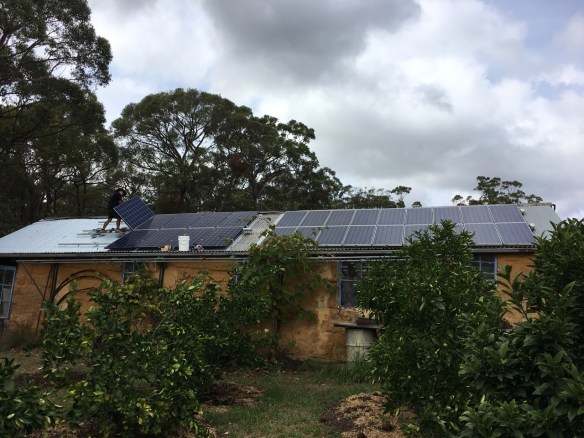
Once our new panels and battery are installed, we will replace the gas stove and go fully electric. We have had solar hot water on the house since we built it in the 80’s. We fire all our glaze work in the wood kilns and bisque in the electric kiln. However, before I can install another 3 kiloWatts of solar cells on the pottery roof. I have to remove all the old rusty ‘galvanised’ roofing and install new ‘zincalume’ sheeting, as these are compatible with the aluminium framed solar panels. I had ordered the new roofing last week and it arrived on Friday, along with the 6 lengths of hardwood beams that I also need to add to the roof structure to accommodate the solar panel mountings.
It wasn’t the nicest job that I have ever attempted. I fact it was up there with the worst. But it was an unexpected day ‘off’. So I didn’t want to waste it. Pulling an iron roof off in a strong wind isn’t good. Doing timber framing up there on your own with heavy hardwood beams isn’t easy either, then finally re-roofing shiny reflective zincalume in 29oC heat isn’t at all nice. But now it’s all done and the new roof is ready for the contractors to come and install our new solar panels.
The ladder work and hard wood roof framing, has really taken it out of me as well as the heat and I have to lay down afterwards. I’m getting too old for this. But the thought of having electrical independance with 6 thousand watts of solar power and a 15 kW/hr battery kept me at it.
The old galvanised roofing on the pottery and kiln shed was 100+ years old when we reclaimed in 1983. It’s doing really well for a 140 year old iron roof.
We had already replaced the top half (right hand side of image) of the roof with new zincalume sheeting in 2007, when we installed the original solar panels. Now it’s time to fill up the remaining roof area. It’s a perfect situation for solar collection of a 30 degree pitch roof facing due north.
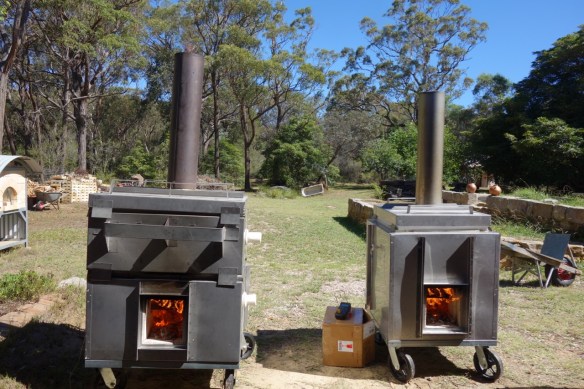
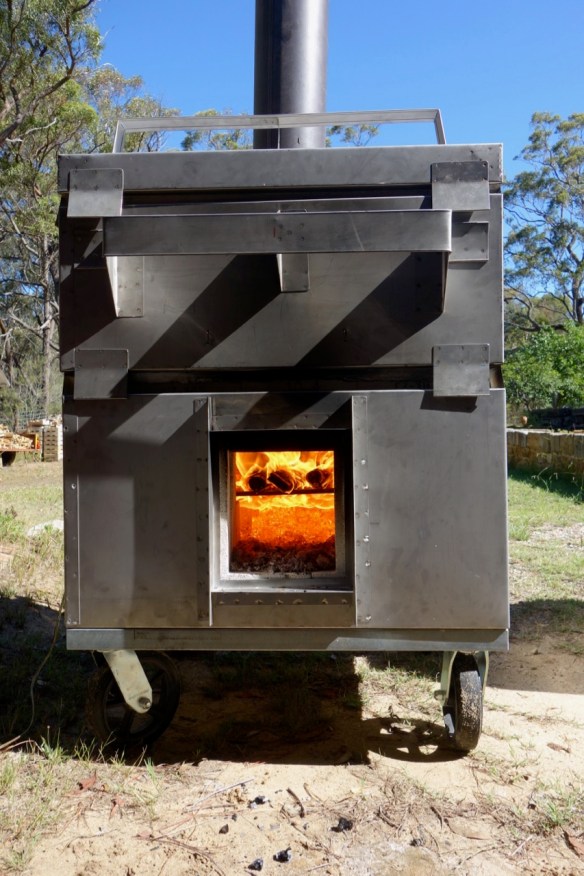
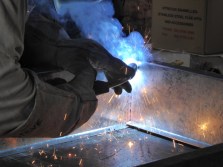
My 300th kiln is all welded and has gone to the galvanisers. The workshop is now empty and ready for the next few weekend wood firing workshops. This last weekend we had our 7th workshop for this winter/spring season. Only 4 more to go and then its all over for this year. Janine and I are fully occupied collecting, cutting and splitting wood during the week to keep up the wood fuel supply. With 6 kilns going all day, we get through the work pretty quickly, as well as the wood.
We glaze, pack and fire continuously all day. With each firing, our participants become more familiar with the glazes and the process. Today we have a majority of students who have not done a raku firing before and who have never fired a kiln by themselves before, not to mention that these are very hands-on wood fired kilns. It’s a steep learning curve, but we take it one step at a time and it all goes smoothly and some really beautiful work get made.
These two pieces made by Jude Keogh from Orange. Photo by Janine
You must be logged in to post a comment.