Bruised Butt Cheek Bones

Over summer we don’t go far. We stick around the house, just in case of bush fires. We concentrate on cleaning the gutters, servicing the fire pumps and working around the house and in the garden. It’s a very productive time of year in the vegetable garden with so much produce to harvest, preserve, cook, dry, bottle, vacuum seal. In March the fire danger is mostly over and we can relax and catch up on some music concerts and the Writers Festival.

We returned from Writes Week and WOMAD to find the garden gone mad and a lot of work needed to be done to get it all sorted out, cleaned up, weeded, mown, whipper snipped and mulched. I have it back in good shape now and most of the winter seeds and seedlings are planted for the approaching cold weather. Over summer, we don’t get into the pottery very much. Instead, it’s a time to use the heat for making clay, crushing rocks and ball milling porcelain stone, then drying that porcelain slip.

Now in April, we can start to think about firing the wood fired kiln again. The summer fire bans will soon be over and we can fire the wood kiln without restriction. We have been doing some firings. I have been firing our solar-powered electric kiln and reducing it with a few hundred grams of LP gas to get the reduced colours.

We have been back in the pottery for the past few weeks and started throwing again. I must say that the first couple of full days on the hard wooden seat of the “Leach” style wooden kick wheel leaves me with a couple of sore butt-cheek bones. I don’t think that they are bruised, but they sure get very tender after that first full day. It seems to take a week or so for them to toughen-up. Then I don’t notice it again till this time next year.

IMG_4719

I bought some sericite stones back with me from my trips to the UK and Korea last year. These stones are now processed and aged sufficiently to be able to consider throwing them. I always think that this time it will be different. This time I will be able to throw something better out of this wet gravel. I can’t! Every time it’s the same, I start off so optimistic. I’m sure I will be better at it. I’m Not! The stuff is just wet rock dust, I shouldn’t be surprised. But I am!

I struggle with it as it is and refrain from adding any bentonite into the mix. I should just get over it and give in, but I really want to make something authentic. Something that has some meaning in this post-truth, bare-faced lying, compromised, new world order of shallow poseurs, where everything is The Image and The Selfie. I know that what I’m living here has no value to anyone else but me, I persist. It’s the life I’ve chosen. It’s a challenge to make a nice pot from these original porcelain stones. Picked from the ground, in-situ by my very own hands, carted off in my back-pack and then brought home here and processed in my own equipment. Maybe if I aged these bodies for a decade, then it would be easier? I’m certain that it would. I have already done those tests a lot earlier in my career. I know it works. However, I’m not too sure that I still have a decade left in me. I strike a compromise and decide to make some very small beakers and some coffee cups. Now, I can almost manage these OK.
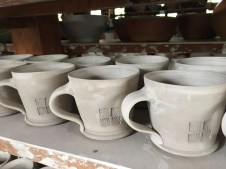
IMG_4693 IMG_4718

Last year, my friend Len and I imported a tonne of Chinese sericite. I have been going to China each year and renting studio space, making work, getting it fired on site – with mixed results, and carrying the best pots back in my hand luggage, to show at Watters Gallery and elsewhere.

Last year I felt so guilty about my carbon miles, making work in this way that I decided to buy the milled sericite in bulk and ship it here, This way I can stay at home and the clay can log up the carbon miles. I feel that it ought to be less damaging environmentally to ship a tonne of milled sericite stone by sea, than fly my meagre 80 kgs to and from China in a plane. Any way, I buy my $400 worth of carbon credits, just the same each year, to appease my conscience for my carbon crimes.

Buying the material in bulk sounded like a good idea at the time, but like all the best laid plans…. The stuff that arrived was totally different from what we had thought that we had bought, or ordered at least. Back in the beginning, we purchased a sample of the sericite and tested it. It was difficult to work with, but OK. White, semi-plastic, just. It fired white and translucent. We ordered a tonne of that thank you very much!

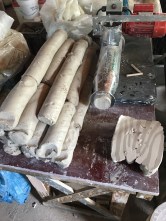
What arrived was grey, short, very soft and soggy, difficult to throw with and split and cracked in drying. Totally different material. I couldn’t see us shipping it back. We had already paid in advance. I had to make it work somehow. I tried throwing it in the usual way that I have learnt to work, but I lost over 90% of my pieces. I took a while, but I thought it over and came up with what I thought was a cunning plan. I thought about the ancient Chinese and how they coped with the short-comings of their early sericite porcelains. This was just the same, only re-located over 600 years in time and 12,000 kilometres in distance. The old tried and true answers are usually the best.

I tried a small batch in a blend with something that I thought had exactly the right characteristics. Hey presto. I now have a way of making a unique white, translucent, Chinese sericite based, porcelain of my own making. It’s one answer. It works for me.
IMG_4661 IMG_4662

What I still find perplexing and inexplicable, is that Len has no trouble in making perfectly fine pots out of his batch of this stuff with no problems, while I struggle. Obviously this sericite stuff responds to the hands of a true master craftsman but dumbfounds and perplexes a blowhard wannabe like me.

Summer Wine

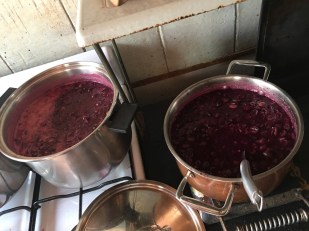
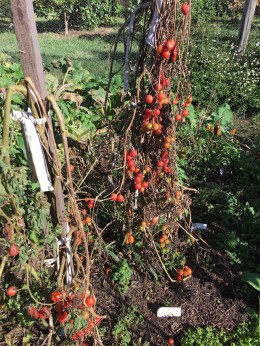
We are harvesting the last of the grape harvest. It’s been a long vintage this year, stretching over 8 weeks. We have been making dark grape juice out of most of the vintage. However, with these last few baskets full of rich dark red sugary deliciousness, we decide to make ‘Summer Wine’. We first came across this wonderful stuff in France, then Germany, followed by Switzerland and finally in northern Italy. As the season developed and the grapes ripened. We had to have the experience introduced to us by our hosts in Germany at that time. We stopped the car on the side of the road to buy vegetables and fruit from a farmers road-side stall. Our friend asked if we had tried ‘Niue Wine’ or ‘summer wine’? We hadn’t, so we did and it was a bit of a revelation.

We have been making our version of concentrated red grape juice for a few decades and always look forward to it. We manage to bottle 20 or so litres each year for us throughout the year. We pasteurise it so that it will keep and not ferment. Then sealed in sterilised glass bottles. It works well. But this was an eye opener.

We don’t make wine from our red grapes, because it is too much work for the reward. Good quality wine is cheap in Australia, why bother, but good organic red grape juice is extremely expensive. So thesis where we put our effort. What we experienced in Europe that autumn was just like our red grape juice, but very slightly fermented, possibly for just a few days. The outcome was a sweet grape juice with all the fruit flavour, but also enhanced with a little sourness and tingley, cabin dioxide induced spritzig. I might hazard a guess that it was fermented to about 2% or so of alcohol. It was a  light,  really refreshing and satisfying draft.

We have since  started to make a small batch of summer wine each year. It has to be drunk within a few days of the fermentation starting, while it still has plenty of sugars left in solution. We asked about the roadside wines that we saw and were told that it will only be available for a few days from each stall. Once the barrel is emptied, then that’s it. find the next farmer’s stall.

They might possibly use the wild natural yeast bloom on the grape skins, but this can be very variable. Because we don’t know what we art doing, and don’t have parents and grandparents on hand with generations of local knowledge about such home based, home-grown, organic production. We decide to pastures the juice as usual and then add a known wine makers yeast to get a more-or-less predictable and reliable outcome.

IMG_4609 IMG_4610

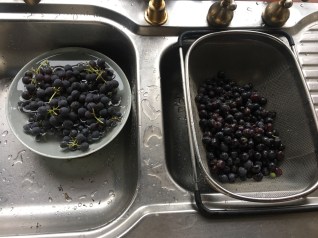
We wash and de-stem the grapes to make the juicing process easier. Either way it is a lot of work. This is just the way that we have got used to doing it over the years. After sterilizing by briefly simmering the juice, we let it cool over night and then add the yeast. , somewhere between 16 and 24 degrees C. We let it sit for a day to allow the ferment to get going and then bottle it. We start to drink it from the 2nd day. After the third day, or when we feel it has reached a good point in the sugar/acid balance, we bottle it and keep it in the fridge to stall any further fermentation. it keeps for a week like this. and then it all gone. If you try this at home, don’t screw the caps on. LEAVE THEM LOOSE.

IMG_4653 IMG_4666

IMG_4667

IMG_4668

One Thing Leads to Another

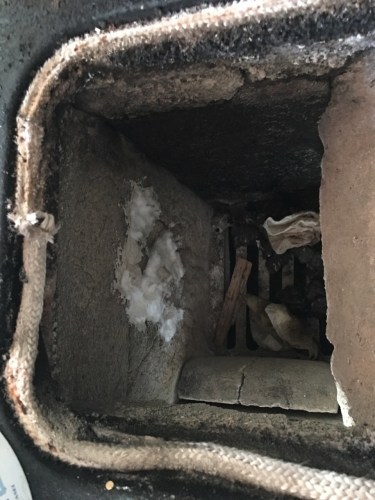
I’ve only just finished repairing the slow combustion heater in the Old School classroom in preparation for the coming winter, when Janine points out that the fire brick in the wall of the wood fired kitchen slow combustion stove is all cracked and spalled away. The metal casing of the cabinet is showing through. We can’t light it again like this. Being over 40 years old, there are no spare parts available. I will have to improvise – as usual.

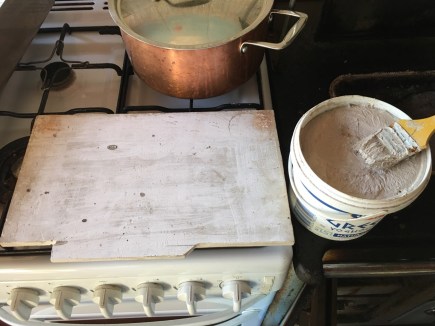
I have no real options here. I don’t want to take the stove apart completely to re fit a new home-made fire brick into the wall, so I do a patch job. I use some of my homemade ceramic fibre glue and fill up all the cracks and spalls with ceramic fibre high temperature insulation.

IMG_4618

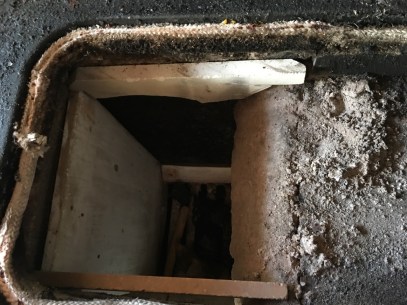
This will have no chance of surviving the intense battering of logs thrown into the fire box. But I have a cunning plan. I find an old piece of kiln shelf down in the pottery that is just about the correct size. So I cut it and shape it with the angle grinder until it fits the bill.

IMG_4619

I wedge it into place with a few off-cuts of similar ceramic kiln shelf material and it all locks into place. Only time will tell how long it will last? However, I am confident that it will protect the fibre insulation stuffed in behind until it cracks or breaks.

IMG_4621

On close examination, I see that he curved fire brick just inside the stoke-hole door is cracked in half. This is a home-made, hand-built, custom-shaped fire brick which we made from a hand-made mould that we cast back in the 70’s.  I made 3 spares at the time.  I can see that I will have to make a few more now, as we have used them all up over the 40 years of constant use. It needs to be special shape, with recessed corners that interlock with the other fire bricks, so that it can just slide into place and be held securely, but not too tight, to allow for expansion.

IMG_4690

Janine finds the mould after almost 25 years, stored away in the third chamber of the climbing kiln that we don’t use anymore. I knock one out with a rubber mallet to get good compression. One down two more to go. The first three that I made lasted 25 years or so. So this lot should last me until 2045! I’ll be well into my 90’s and won’t be cutting too much fire wood by then.

Last year I repaired the other side of the fire-box, the heat shield that protects the oven from getting too hot. That cast iron plate had completely disintegrated. I replaced it with a home-made kiln shelf that we made in 1976. We still have a lot of them left. I didn’t think that it would last very long, but gave it a go. It has one crack in it after 18 months of use and still going strong. Very pleased, but.

Nothing is ever finished, nothing lasts and nothing is perfect.

Peasant Food

I have been doing a bit of reading lately about the life of peasants. Mostly in the recent past as you would be hard pressed to find a peasant these days. I call myself a Post Modern Peasant and have a keen interest in living a sustainable life style in this modern and very complex first-world situation.

I am rather interested in the self-reliant nature of the life of peasants. Some of the books that i have read are by Philip Olyer. His best in my opinion is ‘The Generous Earth’. recounting his life among the French peasants in the Dordogne Valley, early last century.


His second book on the subject wasn’t very good, or at least not as good as the first. It struck me that it was all the rejected anecdotes that were edited out of the first volume.

I’m not saying that I didn’t enjoy it, just that the first volume was so much better. I learnt quite a few things about the way the French peasants of that time prepared and preserved food.


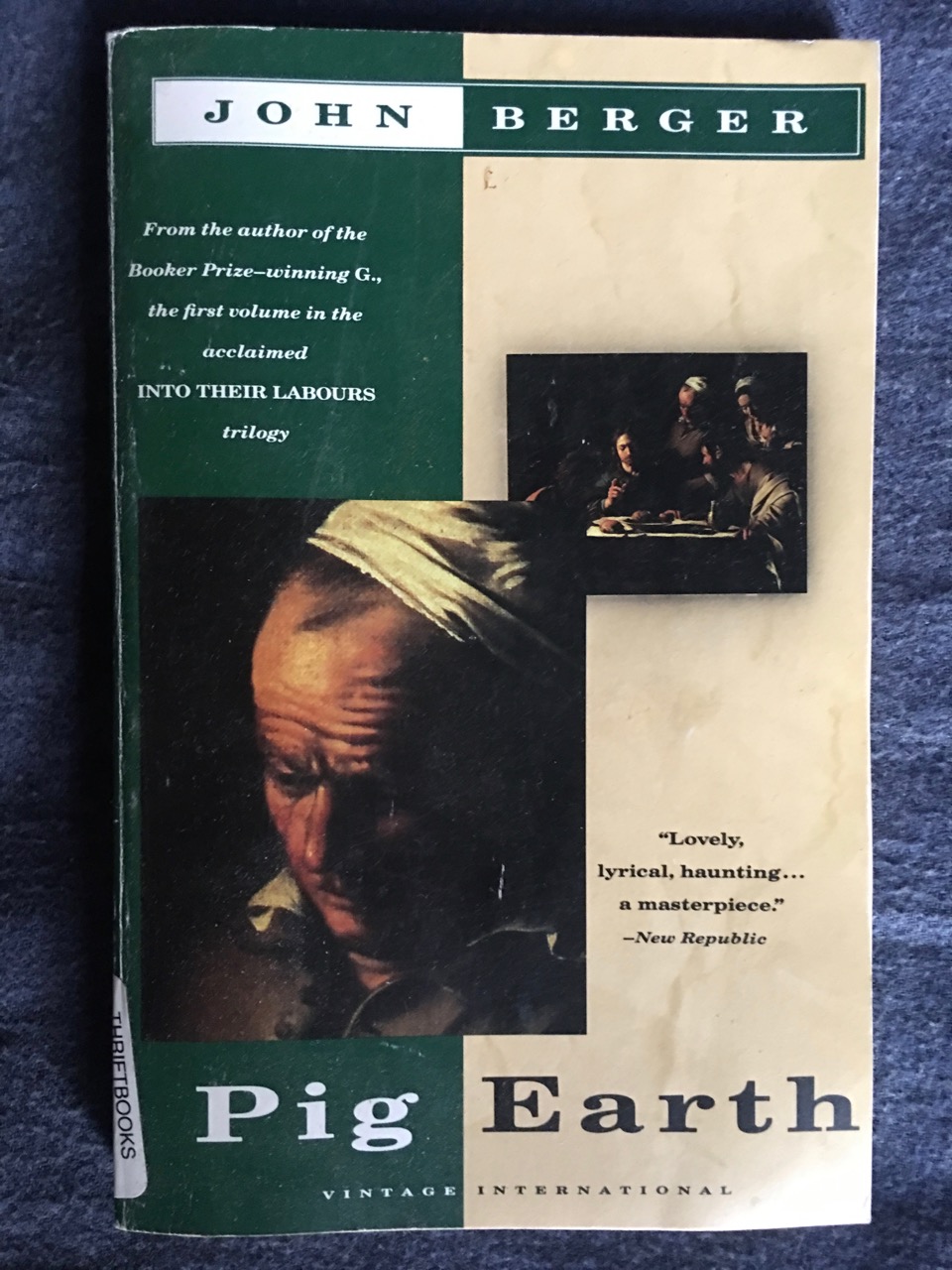
Pig Earth on the other hand has a lot less about the growing, preparation and preserving food, but still a reasonable read with some gritty insights into the harsh reality of their lives.

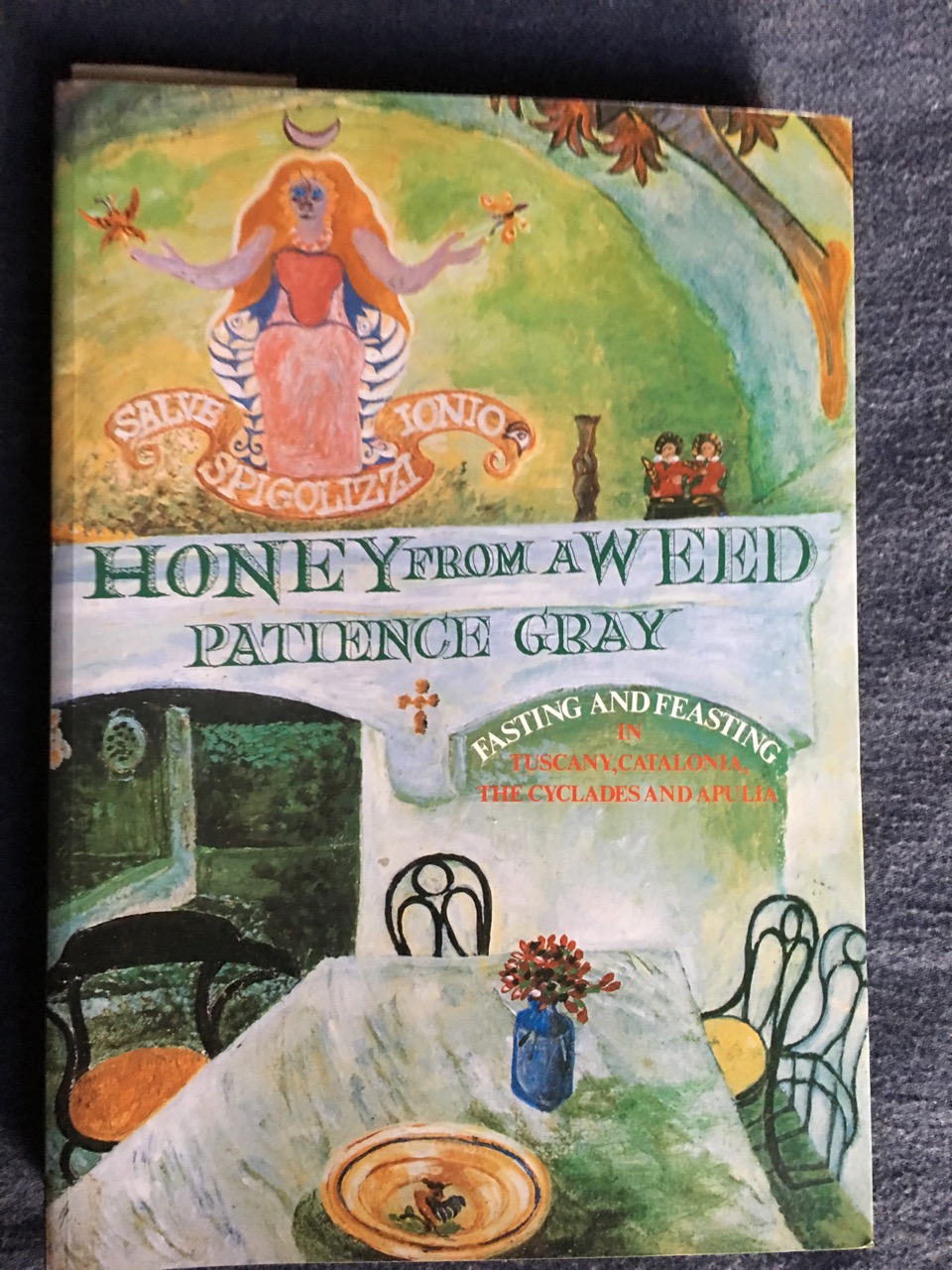
By far the better of these two is Patience Grey’s Auto-biography ‘Honey from the Weed” the story of her life of living with her stone-carving, sculptor-husband in and around the Mediterranean in Spain, Italy and Greece.

They have no money and learn to live with the locals, like the locals, in small, isolated hamlets, way off the beaten track, up in the mountains, close to the marble quarries. Living so close to the local peasantry and quarry workers, in particular to their wives and grandmothers, gains her particular insight into the intimacies of their daily existence.

The writing is a touch clumsy in places and isn’t particularly sequential, more of a series of vignettes strung together under particular headings like cooking with pulses. Here are  several recipes all involving dried beans of varying origins, sizes and form, from fresh to dried. This section is followed by a long passage on farting!

I was moved, pun intended, to cook up a meal of our own dried beans from last summer. We grow a lot more beans than we can ever eat fresh off the bush from the garden. We let them all go to seed and dry on the bush or trellis. This years crop are starting to dry off now and will soon be ready to harvest.

This being the case, I thought about the last couple of jars of dried beans in our pantry cupboard from last year. I used half of them and soaked them over night, changing the water every few hours, or when ever I was passing and thought about it. I boiled them for an hour. The time it takes to boil dried beans varies with their age. One year old beans like these take about and hour. fresh picked and dried beans only take 20 to 30 mins.

After 15 mins I changed the water again. Patience Grey recommends boiling with a pinch of salt or bicarbonate of soda for the first 1/4 hour. This then requires the change of water, she also suggests boiling the beans with bi-carb helps loosen the outer skins, such that they can be rubbed off. This she says that this reduces the ‘fartyness’ of the resulting meal.

Our son is a Chef and has worked in some very high-end restaurants with ‘Chef’s Hat’ awards. He also told me this, that when cooking chick peas for example, pre-boil them until you can rub the outer skins off between two tea towels. then replenish with fresh water and finish the cooking. This is worth the effort, because it results in happier customers the next day, or later in the week!

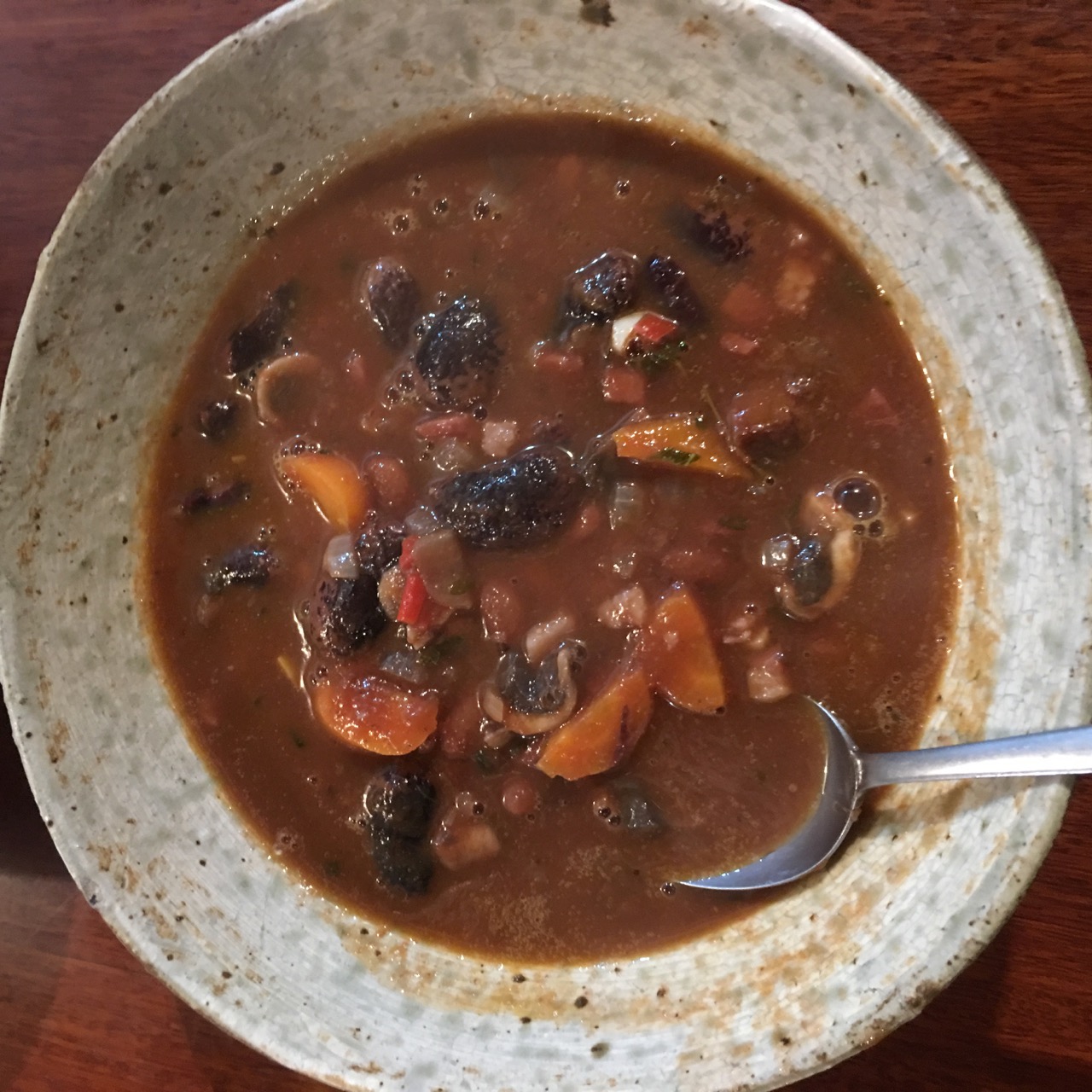
I don’t have customers, so left out the bi-carb and the de-skinning. While the beans are boiling. I make an aromatic oil frying a finely diced onion and some fresh herbs and bay leaves in olive oil, finishing with a few smashed garlic cloves. I add in a small amount of diced, dried, smoked, nitrite-free bacon.

I avoid using ‘ordinary’ bacon where possible as the sodium nitrite that is commonly used is a known carcinogen. I can only find one brand of nitrite free bacon on sale anywhere around here. I’m not recommending this product. I don’t do that. It is just the only one I can find here locally.

Adding a little bit of bacon, speck or porcetta, like this adds heaps of flavour. I don’t use very much. You don’t need to. One slice is enough, it’s only for flavour. Once this is cooked off, I add a couple of spoons of my home-made marrow bone reduced stock to fill out the flavour profile and create a creamy smooth texture. I add the beans in and a cup or two of my home-made tomato sugo concentrated sauce.

The last step is to add a dash of local gold medal winning merlot red wine and let it simmer for a few minutes to meld.

Enjoy.


The Old Wood Heater

As the cooler weather and winter approaches, it is time to have a good look at the slow-combustion wood heater in our Old School Classroom. This is the only source of heating in the Old School. We also have a wood fired stove for cooking in the kitchen, it cooks all our meals, warms the kitchen and heats our hot water over the winter months when the solar hot water panels are less efficient.

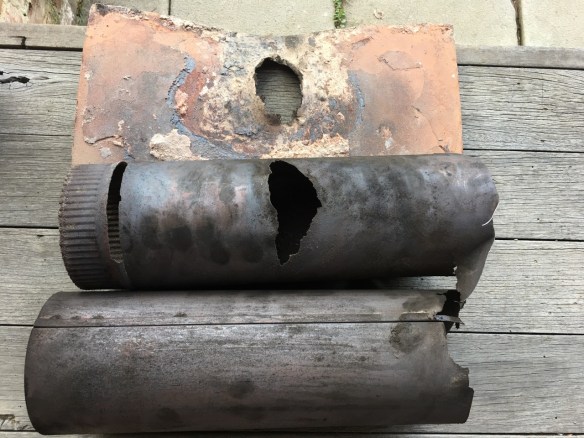
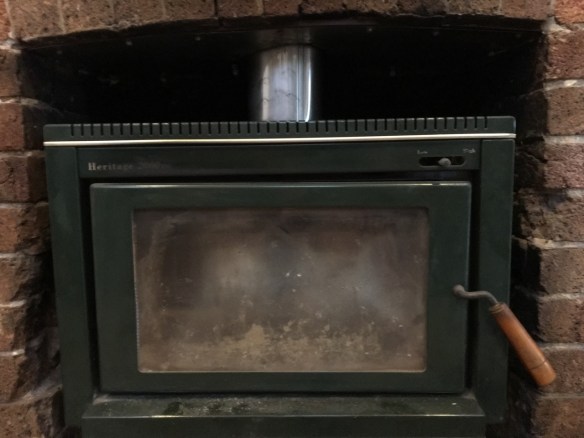
We have owned this old heater for around 25 years, This is the 3rd time that I have had to replace the fire brick lining in the firebox. This time however, I am in for a big overhaul, 25 years is a long time, the stainless steel flue has rusted out. I can see that it has splits and cracks in it where it leaves the heater. It takes a long time and a lot of heat to rust out a stainless steel flue. The stainless steel flue pipes that I use are pretty long lasting. I use them on my kilns as well. It’s the first time that I have ever seen one this badly deteriorated, just rusted away like this.

IMG_4590

While I’m at it, I replace the latest flue baffle too. The metal plates are prone to rust out like this with constant use. I’m not surprised though. This heater is used 6 months of the year constantly. That’s over 12 years of constant heating. So the fire bricks ate all spalled and cracked, the flue pipe rusted out, and the flame baffle has a huge hole rusted through it. It’s long over due for a bit of maintenance.

I replace the melted flue baffle with a used and recycled ceramic kiln shelf. The crumbled fire brick lining with new bricks. I regret that the original ones were Australian made, but there isn’t an Australian alternative available any more. I bought new ones made in China. They are a simple plain brick, so a replacement is easy to find.

IMG_4595

The kitchen cooking stove is another matter entirely. It was made in Scotland last century and was already out of production when bought it 2nd hand in 1977. No parts were ever available, so I have kept it going for the past 42 years by making all our own, specially shaped, fire brick replacement parts.  I have also made a new fire box door. new fire box door locking device, new fire box heat baffle and several new cast iron grates for the ash pit. These I cut down from cast iron gratings that were readily available in the hardware store. These days they are all made of aluminium, which is useless for a fire box. Luckily, I bought half a dozen spares before they disappeared off the market. I’m pretty sure that I have the skills needed to keep this cooker going for the rest of my life.

See older post on repairing this stove;

Zen and the Art of Maintenance – Theres a catch to it

Posted on 04/12/2013

A couple of hours of work, a little bit of tinkering and the stove is good for another few years of faithfuls service. It might even see me out. I hate to throw anything out that isn’t really worn out and past repair. Re-use, re-cycle, re-purpose, and re-pair.

IMG_4592

The same old stove, but with its new stainless steel flue and a completely renewed lining inside. It’s not perfect, but it will do.

Nothing is perfect, nothing lasts and nothing is ever finished!

Preserved Capsicums

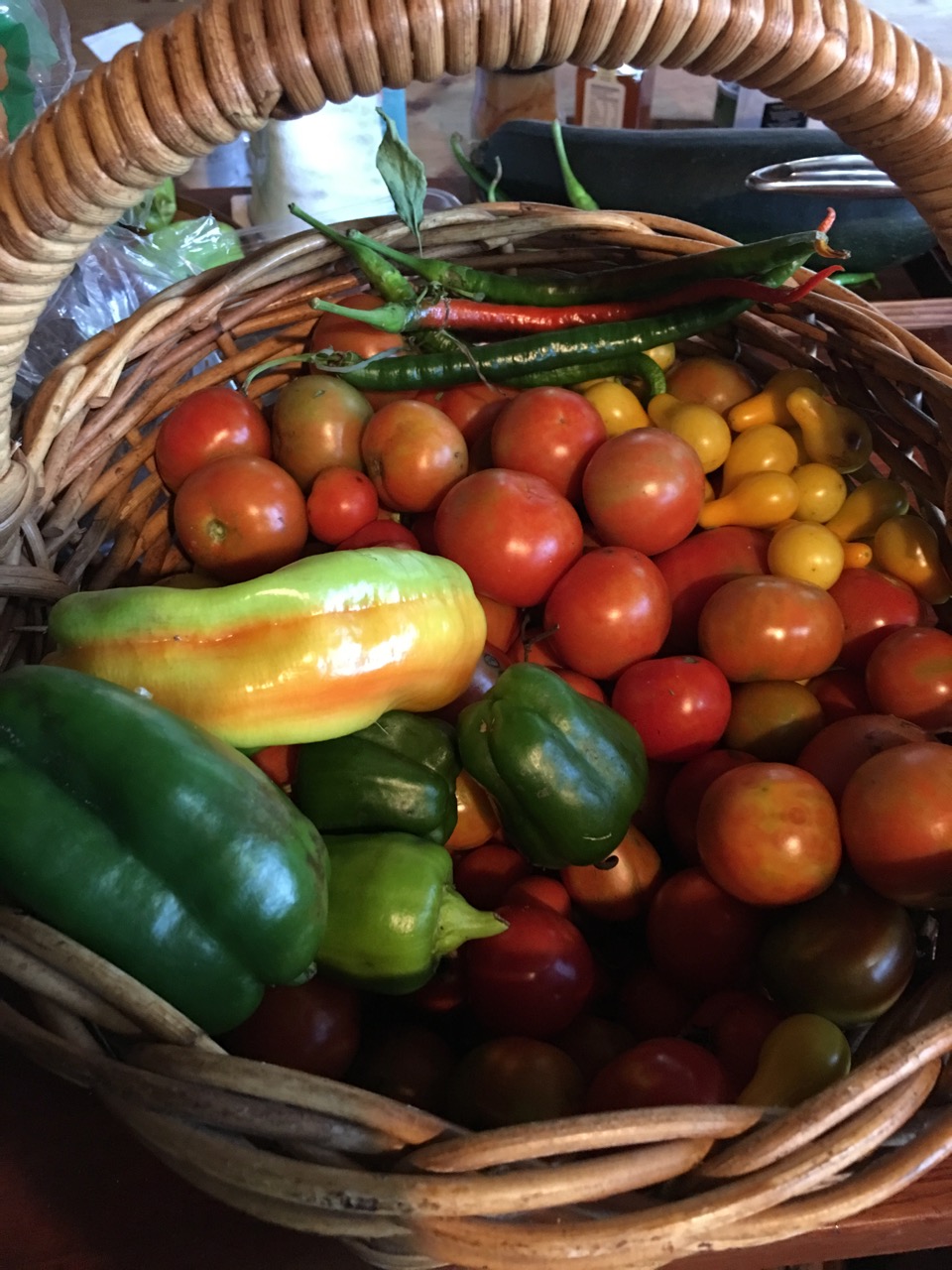
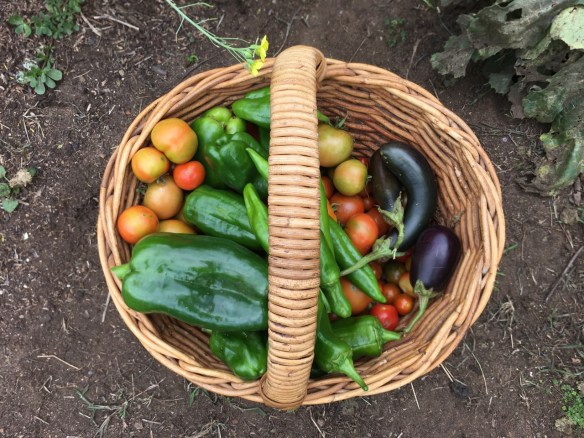
Even though the summer has long passed now, we can still pick the best part of a ratatouille to fill the garden harvest basket.

IMG_4418

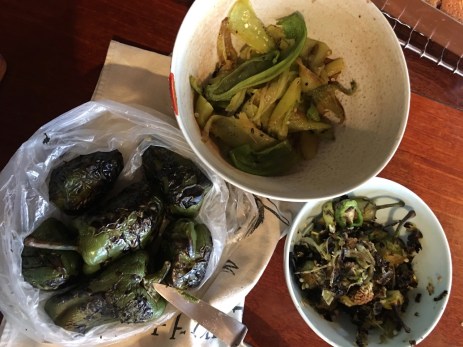
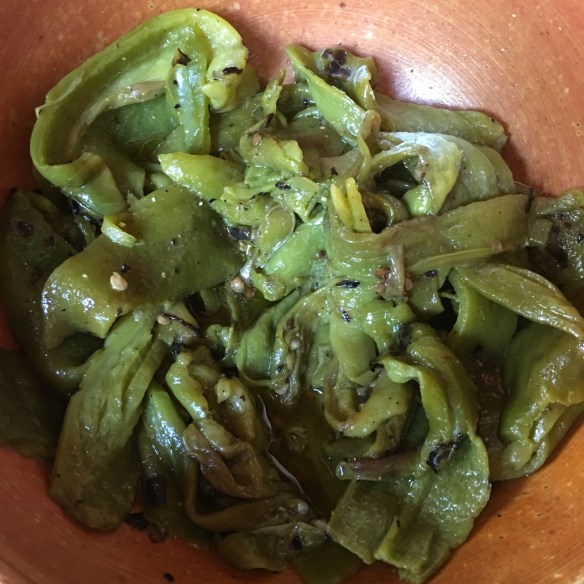
We have plenty of capsicums just now, so its time to preserve a few as a roasted capsicum salsa. They need to be roasted over an open flame and then left to sweat in a bag for 15 mins. This releases the skins where the bitterness is. The resulting strips of sweet flesh are then de-seeded and coated with an olive oil and vinegar dressing.

Pretty yum.

IMG_4419

IMG_4425

Autumn Activities

Here we are in the first few weeks of Autumn and all the usual jobs raise their heads for attention.

First, we spent a couple of weeks in Adelaide for the Writers Week where we finally managed to make good our promise to our selves to buy less than one book per day. A difficult ask when you consider that there are 2 tents to choose from with a new set of authors each hour all day and this goes on for 6 days, that’s 72 sessions and at least half of them are very interesting to me.

We sit under the shade sales and let the ideas and philosophies drift over us and through us.

In the evenings we frequent the Fringe festival, for a meal and a small show. We don’t often buy tickets to the main Festival events, as they are very expensive, but this year we went to see Tim Minchin and the was very good.

WOMAD follows right on from Writers Week and we have been doing here for this combination of events for the past 15 years. It’s alway good. We never know what is going to happen or who we are going to see. Whatever turns up is always good, and with 7 stages, 12 hours day over 4 days, there are over 300 combinations of performances to catch our attention.

I will mention just a few.

5 Angry men, The manic bell ringers, they put on a high energy, entertaining show. Fatoumata Daiwara was excellent, as was Mambali, an aboriginal band from the gulf of Carpentaria. They were really good. Each evening there was a troupe from India throwing coloured dust around. I kept well out-of-the-way of that one, well up wind. I’m sure that breathing in that coloured dust can’t be good for your lungs.

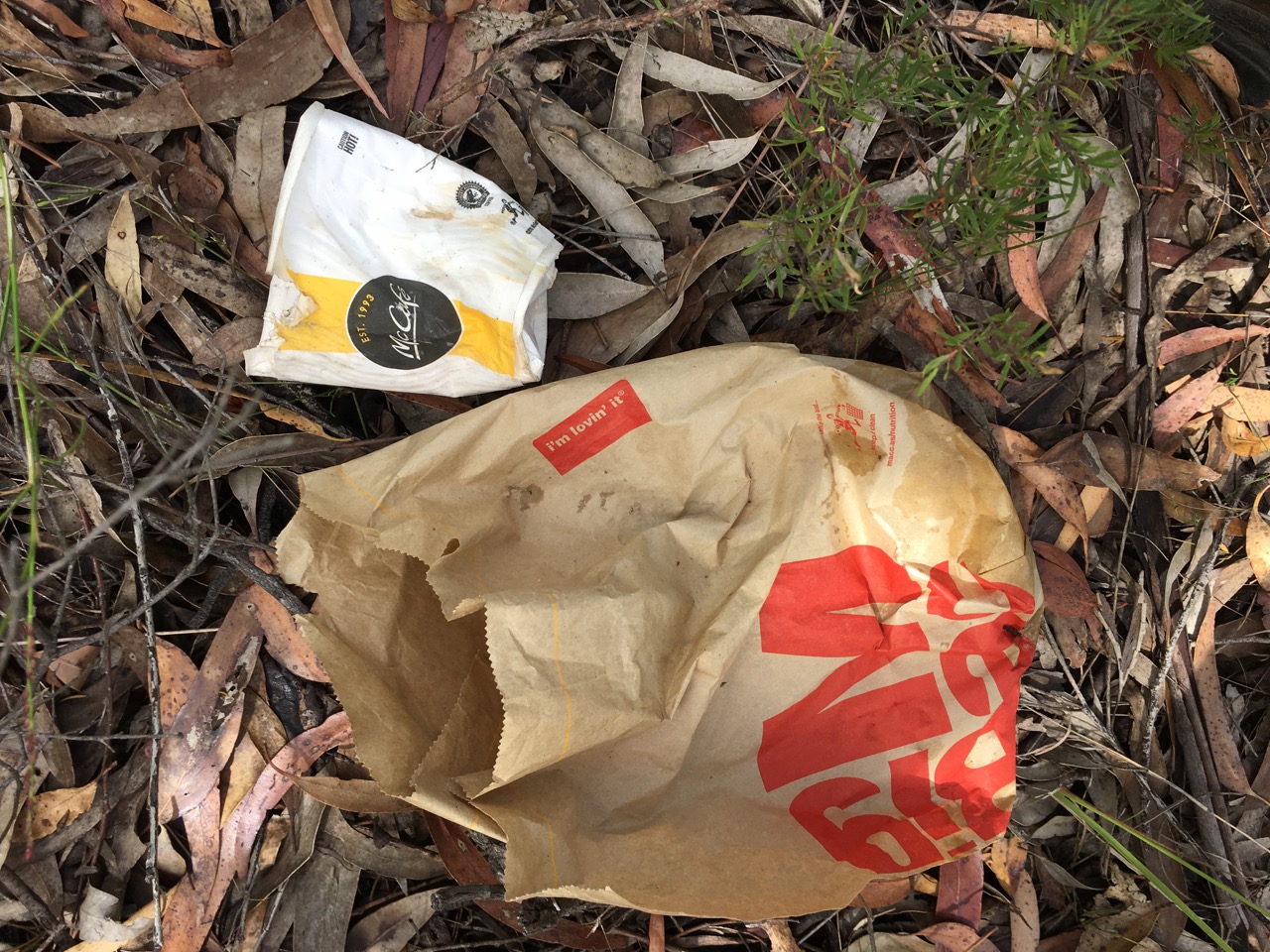
As soon as we are home, it’s time to get stuck into the ‘Clean-up Australia’ Weekend. This  has been organised for the past few years by our neighbour Elizabeth. We get stuck in and drag a couple of ruined tyres from the road side gutters, along with a mass of fast food wrappers and cartons, mostly from MacDonalds. We end up filling a few sacks with rubbish, and that is just from one small section of one road.

Welcome home.
Just Another Day

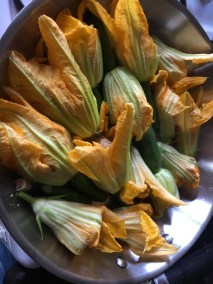
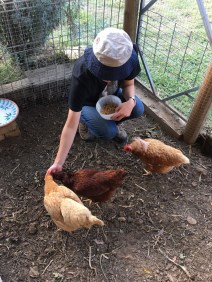
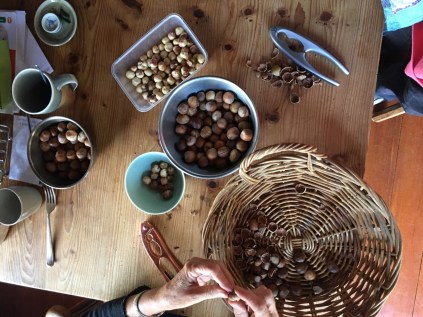
We share our last meal of stuffed Zucchini flowers. This time with a somewhat asian flavour profile, less cheese and more tofu. Ms. Kang feeds the chickens, we say our goodbyes and deliver her to the train station. There is a train service, more or less direct to the airport. We come home and start to shell todays harvest of hazelnuts. Just another day with so many jobs to do.

IMG_4381 IMG_4386

IMG_4393 IMG_4403

IMG_4410

I spend a bit of time weeding and watering in the garden, then harvesting the endless procession of ripening tomatoes. Another batch of passata is on the way. I take the time to grab a handful of bouquet-garni from the garden along the way.

IMG_4415

I finally get some free time to sort out my glaze tests from our recent glaze firing in the solar-fired, electric reduction kiln. They are all quite good, actually very good. These are all glazes made from my local stones, collected around the shire where I live. I’m very pleased with the latest version of my Kangaroo Blue glaze (see earlier post, Kangaroo Blue. 12/12/18) and the Bindook Porphyry pale limpid celadon. Not too bad for a 5 hour solar-powered firing.
IMG_4412

Ms Kang has left the building. We’ll miss her.

From Garden to Glass jars, Preserving our Excess

Our international guest and pottery/environmental living intern, Ms Kang from Korea, is about to leave us. We spend our time in the pottery, garden and kitchen. We put in a big day from early morning through till late night, a 14 hour day. There is a lot to get done at this time of year.

We have glazed our pots and packed the kiln previously, so while we wait for the sun to get up in the sky so that we can start the firing. I get up on the roof and wash the solar panels. We live on a dirt road which is quite dusty in dry weather. We recently had a good rain storm and collected 75mm. (3″) of rain, but then we had 150mm. (6″) of wind and dust, This means that I need to wash the PV panels so that we achieve maximum efficiency. At this time of year, the shadow from the trees doesn’t pass off the last of the panels until 10.00am.

IMG_4334 IMG_4345 IMG_4346

By 10.00am the sun is up in the sky and we are generating good energy, it’s a good time to switch on the electric kiln. I wait until the PV panels are generating enough power before I start the firing. I like to start about 10-ish and finish by 5-ish, thus making the most of the sun. The kiln is very powerful and can easily fire straight through to Stoneware 1300oC in 5 hours if needed. Once the kiln gets to 1000oC, I start reduction with 2 small pilot burners running at 5 kpa. I can’t set the pressure any lower than this and expect it to be reliable. This takes the kiln through to 1300 in reduction using just 300 grams of gas. I’m still experimenting with this kiln.

If we want to fire longer, or on cloudy days when there isn’t enough direct sunlight, we have the Tesla battery to fill the gap. We can, if needed, fire the kiln and charge the car as well on the same day. On a good sunny day, we can charge both car and Kiln, fill the battery and still sell a little to the grid. On the off days when we don’t fire or drive the car, we sell everything to the grid. We sell our excess at 20 cents per kW/hr. occasionally when it is cloudy for a few days we buy back power from the grid. We chose a 100% green power contract and pay the premium price of 35 cents per kW/hr for the privilege. However, we are connected to the grid by a net meter, so we only have to pay for power if our imports exceeds our exports in any given month. It never does.

Once the kiln is on, It fires itself in semi-automatic mode. I only need to check it occasionally. Then its back into the garden to continue the harvest of more tomatoes, chilis, capsicums and aubergines. We are at peak tomatoes now, as we dealt with the last of the late-season plums last week. They are all safely vacuumed sealed in their jars, in the pantry, waiting for later in the year.

IMG_4351 IMG_4360 IMG_4361

While I harvest the tomatoes et al, in the vegetable garden, the ladies, Ms’s King & Kang collect hazel nuts and quinces from the orchard. We are all soon very busy in the kitchen, by the time the heat of the day sets in. All the tomatoes need to be washed and sorted. Even though we have set fruit fly traps all around our garden and orchards, we still get some fruit fly stings in the very ripe tomatoes in this late summer season of hot and damp weather. All the tomatoes are cut open, checked for fly strike and then sorted into two separate pans. A big boiler for the good fruit and a small sauce pan for the fly struck fruit. The spoilt tomatoes are all boiled to kill the grubs and then fed to the chickens, with the remaining skins and detritus composted or fed to the worms.

IMG_4342 IMG_4336

While I’m cooking, Ms Kang is shelling the days pick of hazelnuts. This batch of tomato passata will be cooked with pepper corns, bay leaves and a bottle of good red wine. It looks great and tastes delightfully sweet and sharp, sort of tangy, with just a little bite and lingering heat from a few chilli peppers in the mix.

The quinces are washed, peeled sliced and then boiled with a little sugar, 300g in the big boiler + a couple of litres of water to cover them. I add a stick of cinnamon, a few cloves and two star anise. After they have softened. I transfer them to baking trays, pouring the sweet boiling liqueur over them and add a little bit of Canadian maple syrup into the mix I give them 45 mins at 180 and this reduces the liquer to a sticky gel and turns the fruit to a lovely red colour. I choose to cook them with a minimum of sugar. If I added more sugar, they would turn a deeper/richer shade of claret red. I love that colour, but don’t like the saturated sweetness.

IMG_4380 IMG_4355

We preserve everything in our antique ‘Fowlers’ Preserving jars. We bought this old boiler and a few boxes of glass jars, 2nd hand at a garage sale over 40 years ago and they are still giving good service. We have only had to replace the rubber rings.

IMG_4375 IMG_4376

IMG_4377

It still surprises me that a basket full of quince fruit can fill the sink when being washed, then fill 2 baking dishes in the cooking and finally be reduced to just 3 jars of concentrated sunlight, colour and flavour after a days work. Two baskets of tomatoes fills two boilers, then makes only 4 jars of passata once it has been reduced on the stove for an few hour.

Such is the business of summer.

The Simple Pleasures of Our Mundane Life

As we approach the end of the summer season, we are busy both in the pottery making, but also in the garden and orchards harvesting and preserving. The late summer season brings loads of fruit and vegetables to deal with.

IMG_4261

Ms King and Ms Kang in the garden considering the sunflowers. We grow sunflowers in a series of staggered plantings all through the summer to feed to the chickens. They get one sunflower head each day to supplement their-free range foraging.

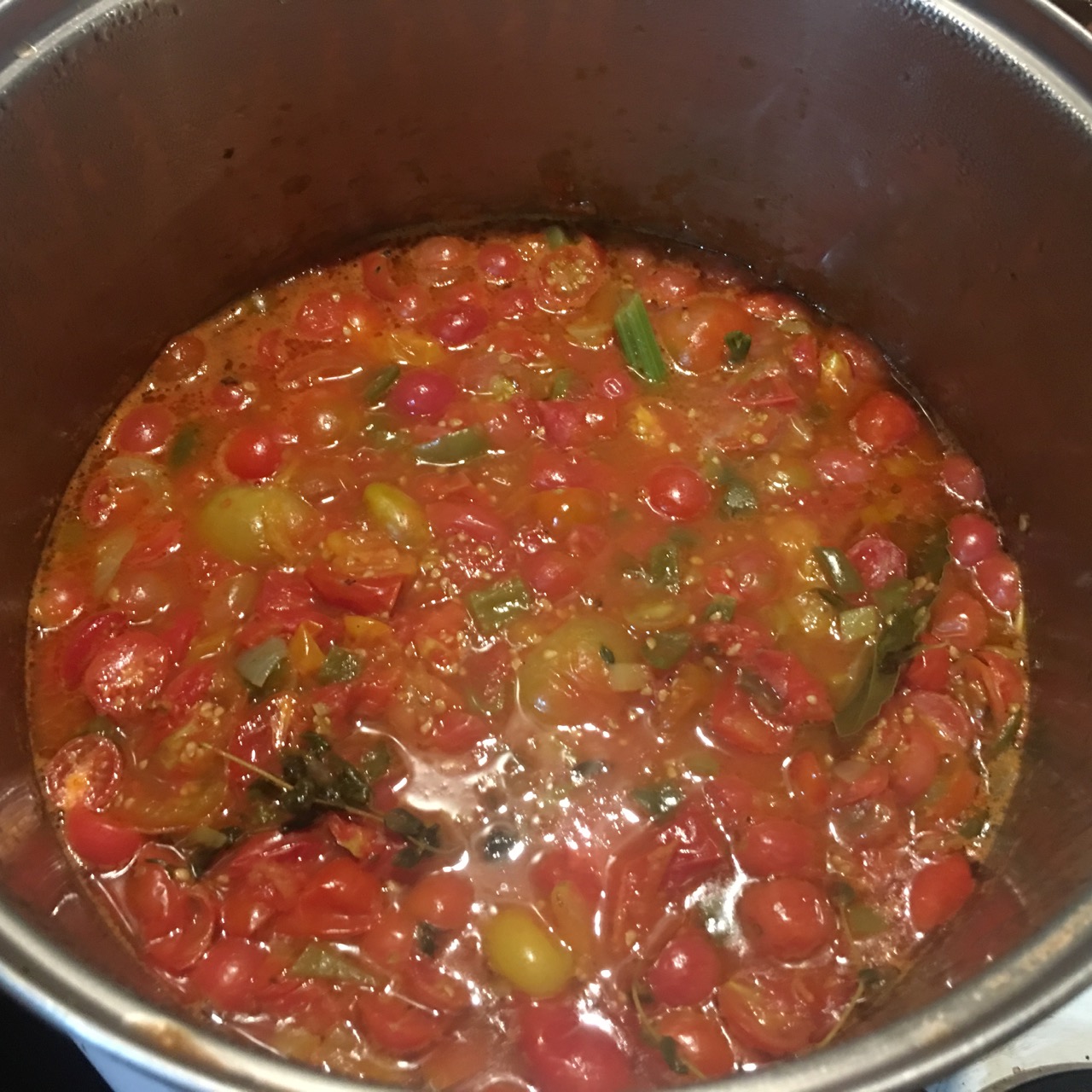
We have made several batches of tomato passatta this summer. This equates to about 2 to 3 jars per week added to the pantry. A basket full of tomatoes, with a few added capsicums and chillies, fills a medium-sized boiler. I add a big handful of sweet basil, few couple of sage leaves and a sprig of lemon thyme. Whatever is on hand, sometimes I add a couple of bay leaves instead, but not this time. Sometimes a dash of red wine.

IMG_4073 IMG_4092

IMG_4285 IMG_4286

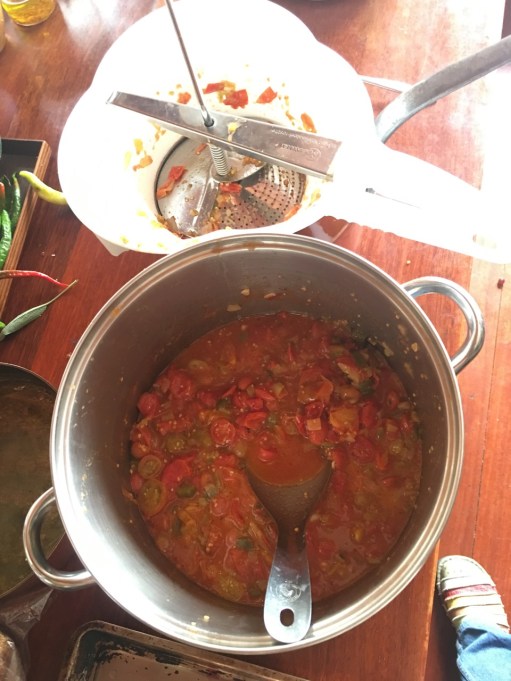
This concentrated tomato concoction is boiled and reduced until it is all softened and a bit mushy. After cooling, I pass it all through the kitchen moulii to remove the skins and seeds, and then bring the resulting liquid to a soft simmer for another hour to reduce the volume and concentrate the flavour.

IMG_4260 IMG_4287

I start the day with a full boiler of tomatoes fresh from the garden and end the night with just 2 half-litre jars of concentrated sauce. By filling the glass jars straight from the oven where they have been pre-heated and capping with their lids that have been simmered for a few minutes, the hot sauce is vacuum sealed as it cools. This will keep all year if needed. Precious little for a days part-time work. Very precious!

IMG_4302

While I’m finishing this latest batch of passatta, Janine has been preserving plums. We are at peak late-seasons plums. She makes a leek pie for dinner. She makes her special easy pastry recipe that she learnt from a visiting Spanish artist-in-residence here, using wine and olive oil with the flour. She improvises with the wine cold bottle straight from the fridge as a roller and pours us both a glass while she is at it.

IMG_4298 IMG_4300

We have a lot of leeks coming on just now. We have learnt to eat what we grow and eat it as it matures. Our life here is not so much what do you fancy tonight, but more a case of this is what we will have tonight because its ripe.

These are the simple pleasures of our mundane life.