Today the fire arrived in our village. Fortunately for me it was just to the north of us with a strong westerly, that turned southwesterly. This blew the blaze away from our house.
Tragically, it appears that a few houses were lost today in that blaze. Two fire fighters were badly burnt and had to be airlifted to hospital for emergency care.
We have been well prepared for this day for the past couple of weeks. The last thing that we waited to do was to wrap the house in al-foil. Just the wooden weatherboard front room, as it is most vulnerable.
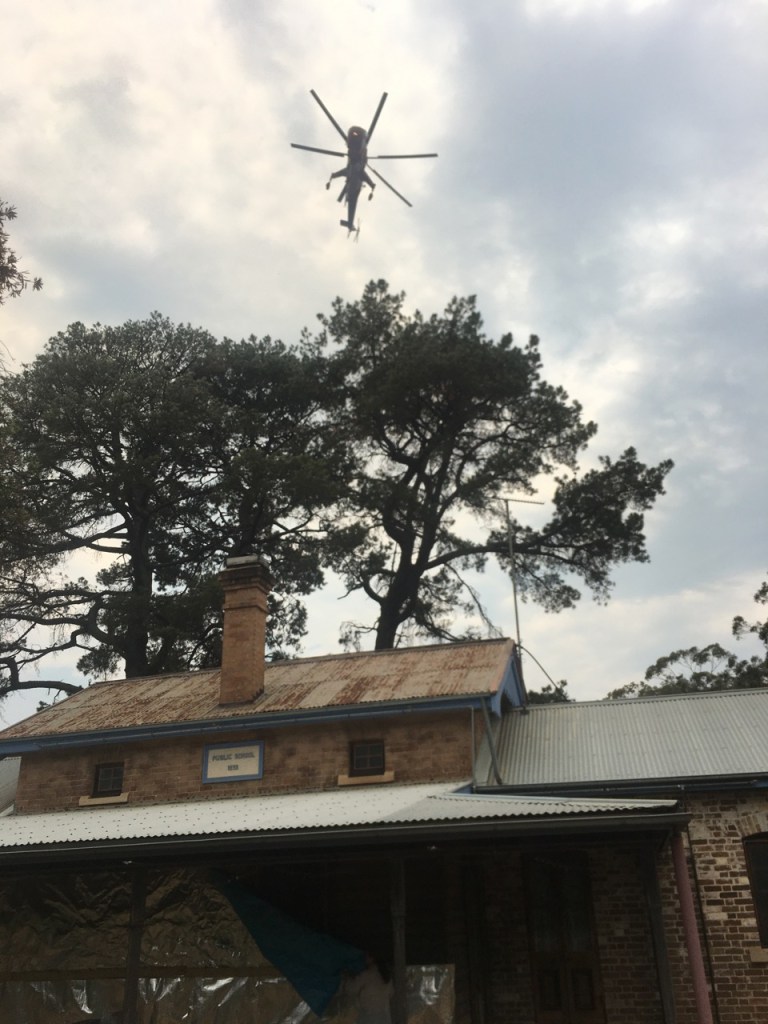
‘Elvis’ the large orange water bombing helicopter that we share with Canada was here and flew over to check us out, just as the fire truck came to tell us to evacuate. I told tham that I was staying to fight. but Janine wisely decided to leave for safety.
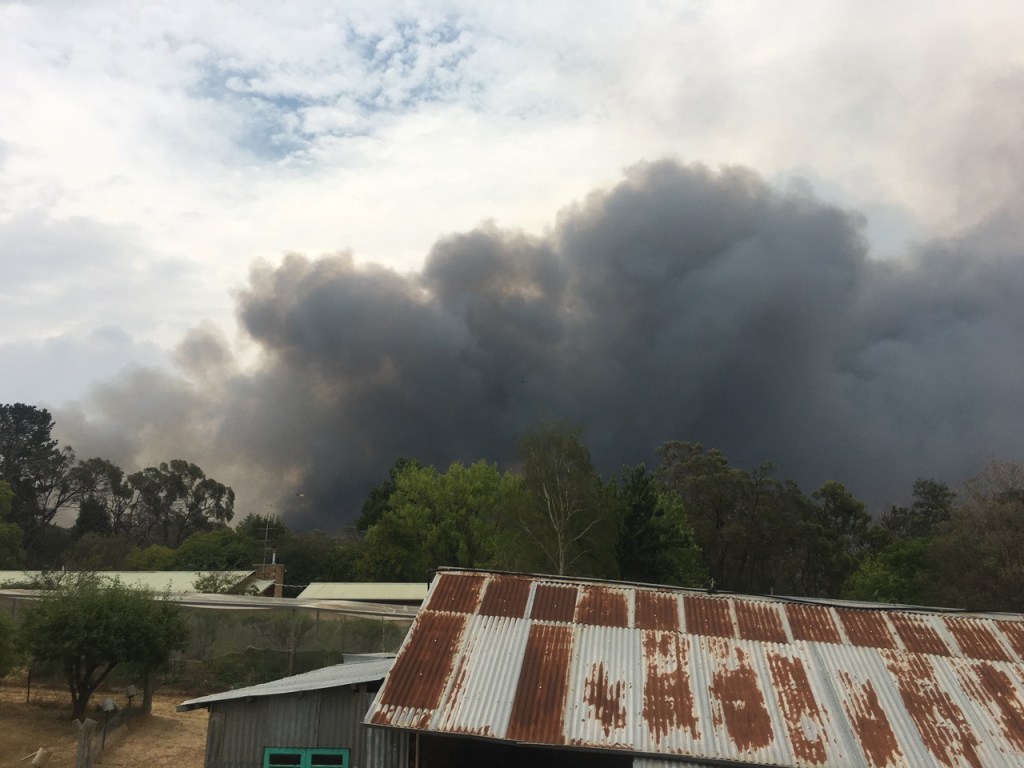
The fire really blew up into a massive plume just after that. It was a bit scary I must admit. but I have 4 different fighting high pressure pumps set up with sprinklers on all the roofs and northern walls on all the sheds and the house. I gave them a run to test them out again, but turned them off to save water, as there was no ember attack, because the wind was blowing it all past us and away.
So now the fire front is to the West, North and East of us. Tomorrows wind is forecast to come from the North East. That is going to be bad for us. The next two days will be make or break for us. It will all depend on the strength of the wind and the temperature. I expect that it will be at its worst from mid day onwards for the following 4 hours.
If it looks to be catastrophic, I’ll start all the pumps and just leave.
Yesterday the village was accosted by the full force of the NSW Rural Fire Service Heavy industrial might. The service has been using the lull in the winds to do a lot of hazard reduction burning along the back road here to reduce the risk of crowning fires when the wind returns. Given that it was also a weekend, there were multiple units from all around the area, even one from Bundeena in the Royal Nation Park a few hours drive away. With so many appliances on hand, a large area of bush between Balmoral village and Buxton was chosen for burning.
All went well until around 1.00 pm when the humidity dropped, the temperature rose and the wind picked up. Suddenly it was all a little bit out of hand and a huge plume of black smoke warned us that something was up. As this operation was to the north of the village, away from us, we were completely unaware of the situation. I was on the pottery roof, still trying to figure out a way to fireproof the old building by sealing all the little gaps here and there with improved galvanised metal flashing, especially to The North Face – The Hard Way. In full sun, at mid day on a hot tin roof.
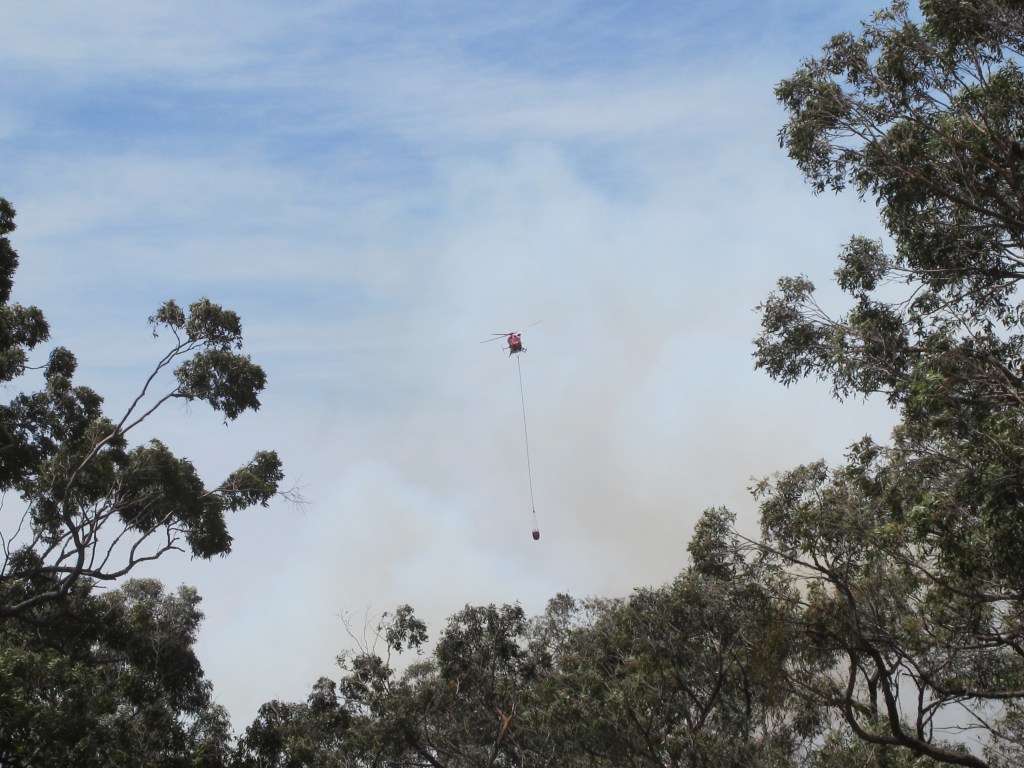
The pottery roof is complex. A mansard configuration with several intersecting planes involving under cuts and deep reveals. All framed in timber and needing to be covered. The first thing that I noticed was the fall of a lot of black ash and burnt leaves arriving on the tin roof around me. Then my neighbour rang my mobile to say his house was under ember attack. He is half a kilometre to the north and closer to the fire ground. It was another 15 minutes before the black plume became obvious to us. But then it was the noise of the helicopters. At first we couldn’t see them. Then one became two, and two became three. There was quite a percussive thrum in the air from the rotors, the smoke in the air, and the smell. It’s all a bit nauseating. Principally because we have lost two potteries to fire in our 45 years together. I hate the smell of wood smoke in the morning. But here we are again, in Coppola’s movie. Only this time it’s Eucalypts Now – reduction. The helicopters, the smoke, the noise. I’m feeling anxious – and bored! It’s weird, I want all this to be over. But I know that it’s not going to go away any time soon. The road in and out is closed in both directions, North and South. We are well prepared, so we are stayingto fight. It’s like we are at war. And in a way we are. We are at war with nature, but it’s more than that. All this is man made, and made by man to be so much worse, 4 1/2 decades on from our first encounters with wild fire. Now it’s not just bad luck or ‘the drought’, as proclaimed by the coal hugging, happy clapper. And yes! Now is the time to talk about it! If not now, then when! We don’t need your prayers. We need leadership. We are at war with ourselves. Society is fractured down the middle. This is actually a subtle form of civil war. The Pro-coal carbon lobby and their profits at any cost, vs, the environment. Black jobs vs Green jobs. This is an extension of the culture wars. Playing loose and fast with the truth and the environment. And all the people who loose their homes are just so much collateral damage to the big institutional share holders.
If the heat, the noise and the smoke, and the embers and the ash weren’t enough.
Then the bombers arrived! Not with napalm, but red retardant, lumbering overhead in slow motion with the deafening, screaming noise from their jet engines thrust. Flaps down, flying so low that I can read the 911 phone number on the tail. Slowly, well as slowly as a jet can fly, and still stay in the air, circling the village. Two of them, huge DC 10 jet liners, water bombing the fire front. stopping the flames from encroaching on the buildings up the ridge, on the north western side of the of the road. They circle and dance in perfect choreography with a couple of other small fixed wing prop aircraft and the smaller helicopters. Someone is coordinating all of this aerial ballet, but I have no idea where from. Possibly from one of the helicopters? I have no idea. I’m certainly glad that they are though. I watch impotently. I have no part to play in this frightening, noisey, hectic scene from a real life war movie.
Life is a tale told by an idiot, full of noise and fury, signifying nothing. The afternoon passes, the planes depart, the noise subsides, we wander next door to take up their invitation for a swim in the pool. We open a bottle of wine and share it together. I can only hear just the one small solitary chopper still working on into the dusk a long way off. The wind has changed and has blown the smoke away. it’s quiet. My mind begins to wander.Life is surreal. Suddenly it is as if nothing has ever happened. We water the veggies and pick some tomatoes for dinner. They are getting ripe earlier and earlier each year.Global Crisis – What global crisis!
As the drought deepens and the climate crisis escalates unchecked, with our politicians heads firmly buried deep in the sand. Crisis, What crisis? We muddle on in our independent, self-reliant, way. With the dam water very low. Actually, extremely low. We are saving what water we have in it for use in the coming weeks with the imminent arrival of the massive bush fire that is ravaging a lot of Eastern New South Wales.
The fire closest to us has burned over 112,000 hectares, or half a million acres, in the last two weeks. It is now just 17 km for our Village. When the next hot, dry, North Westerly wind blows in it will bring it here. Currently, the wind is in our favour and mostly blowing from the west. Inevitably to will swing around at some point. Then our time will come to deal with it Nothing can put out a fire of this scale – only good heavy prolonged rain. That is unlikely in the next month or two. So we just sit and wait.
We have tested all the roof and wall mounted sprinkler systems on the house, pottery, barn and kiln shed. I have even set up temporary, ground mounted, sprinklers on hoses in front of the wood shed and Railway Station building. We have done everything that we can, so now we wait.
The sun is orange because there is so much smoke and fall out from the sky of charred leaves and fine ash, it slowly blankets every thing. The car is covered in fine dust. All the roofs are dusty. Today I had to wash the solar panels 3 times, with mop and squeegee and 3 changes of water in the bucket, in order to get the water to run almost clear. The output from the system jumped up almost 500 watts straight away as I was washing the panels. Not just because they were cleaner, but the washing would have cooled them and made them more efficient.
We have scaled back our summer vegetable garden to just about half its usual size to reduce our water usage and we are only watering the younger and most dependant fruit tress that are one and two years old. All the older trees with deeper and more established root systems are having to fend for themselves. Several garden plants and a couple of older native trees have just keeled over and snuffed it. The times they are a changing. We will emerge from this very dry period with a different garden. When the rains come, it will probably flood. We have been told to expect more extremes in the weather. We will find out which plants can cope with draught and flood.
We have been doleing out our drinking water from the water tanks to keep the blue berries and young berries alive and producing, as well as the early peaches. That will be the sum total of our fruit for this summer. It’s all we can manage to support. Other trees that are not being watered, like the quince trees, have shed all their small partially formed fruit in an effort to save them selves. Ditto, the apples and pears. All four of our fig trees appear to have died, dropped all their leaves, turned brown and lost any sign of green tips at the dried out buds. I spoke to our neighbour at the shopping centre yesterday, and she told me that her parents are buying two truck loads of water each week to keep their garden alive. That’s hundreds of dollars worth of water being trucked in. We have never had to buy water in the past 43 years of our life here. We are frugal and we have planned well in advance. I guess that we will have to learn to live without figs. A small price to ask. But I can’t help but think, which trees are next?
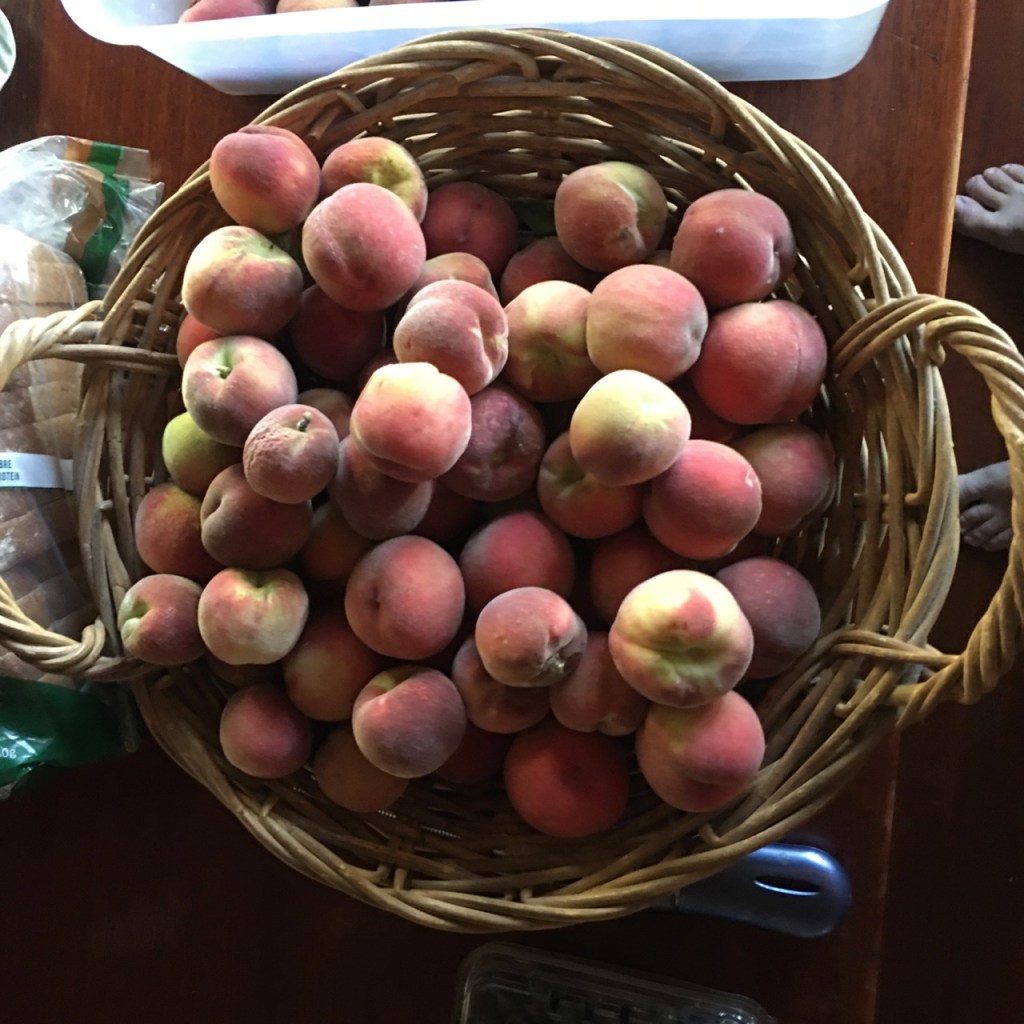
In the mean time we have peaches, youngberries and blue berries to pick and preserve. This last basket full of the early peaches smell divine, fresh off the tree and so warm and fragrant. They are such a treasure, we eat most of them raw for breakfast and deserts, but we also vacuum seal some of them for later.
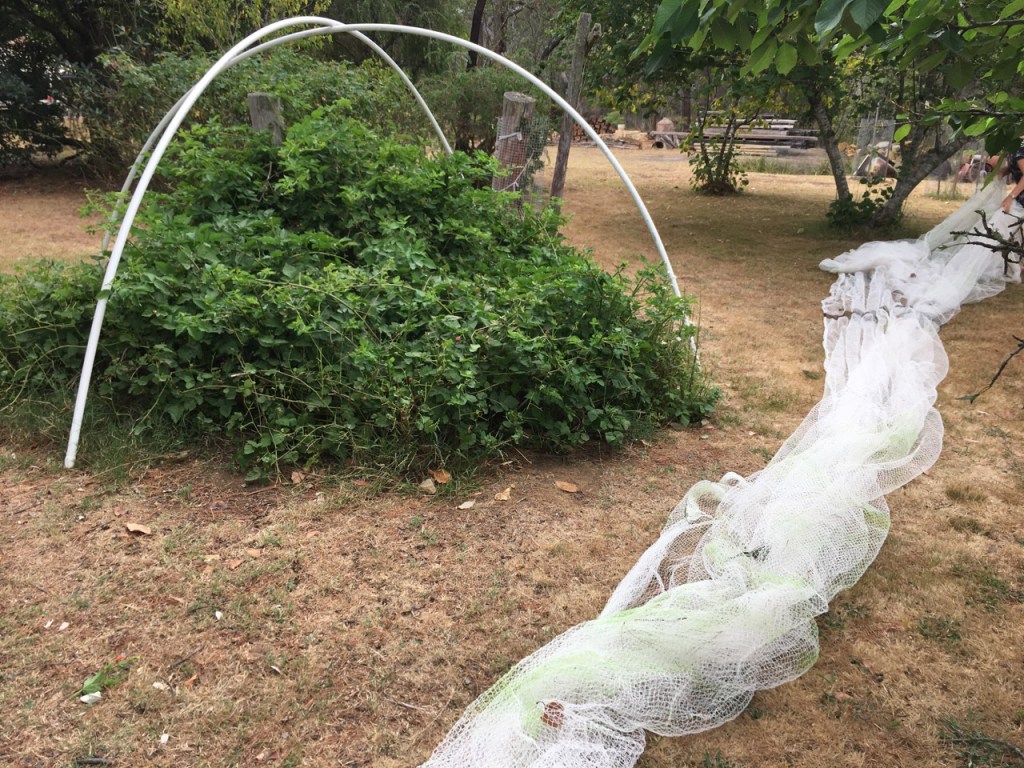
Todays job was to pick the berries. Both Young and blue. This will be the last pick of young berries, the canes started producing on the 24th of November. A whole month earlier than when they were first planted in 1977. We remove the netting and let the chooks in to clean up. The birds will get all the other higher odds and ends. We roll up the net and dismantle the hoop frames. Stored away till this time next year.
This last pick is about 700 g, making a rather small harvest this year, but exceptional, given the difficult conditions. We harvested about 5 to 6 kilos altogether. We have youngberry ice-cream in the freezer and 5 jars of vacuum sealed fruit in the pantry. It’s a pleasing reward for our efforts.
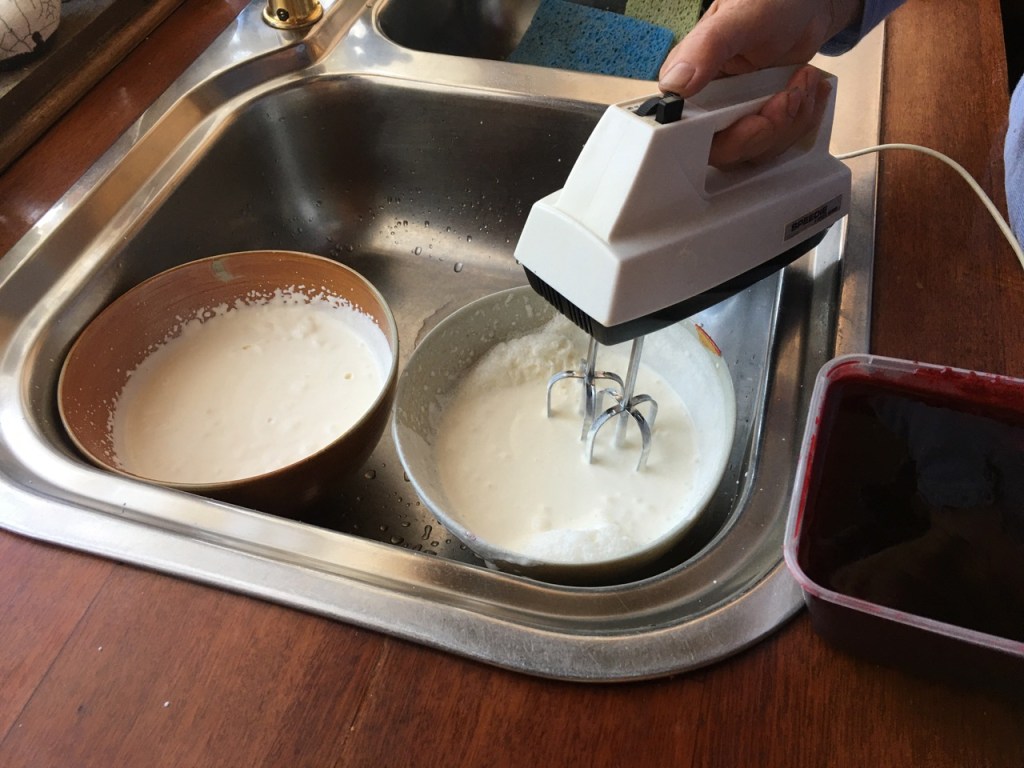
Janine whips berry puree into our local, pure, Picton dairy cream to make ice-cream. Nothing could be more natural and flavoursome. This has to be the most delicious way to get plaque build up in your arteries. At least there are no colours, preservatives, chemicals or artificial substances in there. Not too much sugar either.
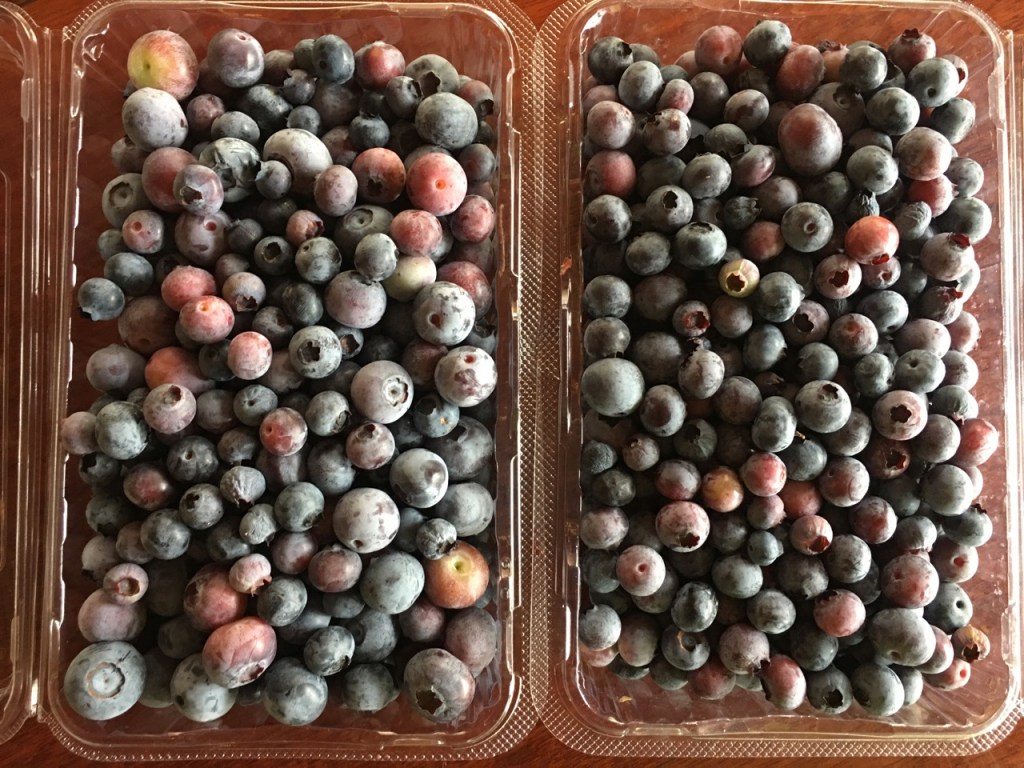
The blue berries haven’t looked back since we potted them and moved them into the netted vegetable garden as a border. This keeps the birds off and makes sure that they get a bit of water every time we water the veggies. They reward us with their fruit. 3 kgs so far this summer and the season has only just begun. The will continue fruiting for a couple of months, into February, as we have chosen early, medium and late varieties.
Blue berries ripen over time, with only just a few ripe blue ones every so often spread out over all the little bunches. They are quite time consuming to pick. But which fruit isn’t? We have to pluck each individual berry from its neighbour in the tight little clusters. Today we manage 700g in half an hour with both of us at it. I have no idea how they produce these things commercially for just a few dollars per punnet. Slave labour?
Its a beautiful and rewarding thing to share this wholesome activity together. We are managing to eat them all fresh for breakfast and desserts so far, but there comes a time when the novelty wears off and we start to freeze some for later. Janine has experimented and learnt to make a beautiful blueberry sauce with a little brandy and cream. We force our selves to eat it 🙂
Banana fritters with berry ice-cream as a second course for breakfast after the berry fruit salad. Someones got to do it!
The transhumance is usually applied to the seasonal movement of livestock in Europe following good the pasture from lowland to highland in the spring for example. Janine and I have been in Europe on two occasions and witnessed a small part of this seasonal, ancient, ritual passage of people and animals. It was a beautiful experience, to witness this event, watching the farmer, his family and their dogs walking the herd of cows down the mountain pass, back to the safety of the lowland farm and its barn with its stocks of hay and silage to sustain the animals through the cold winter.
For Janine and I here on our few acres, we ‘husband’ the passage of water back up hill from the lower dams, up to the higher ‘house’ dam for safe storage over the coming hot dry summer. Back when the weather was more reliable, the winter rains would flow into the upper dam and it would overflow down into the next dam, and then from there, when the 2nd dam filled, it would over flow down into the next dam, etc. etc. We have created what is known as a ‘keyline’ system of dames, so that nothing is wasted. That was of course when it used to rain.
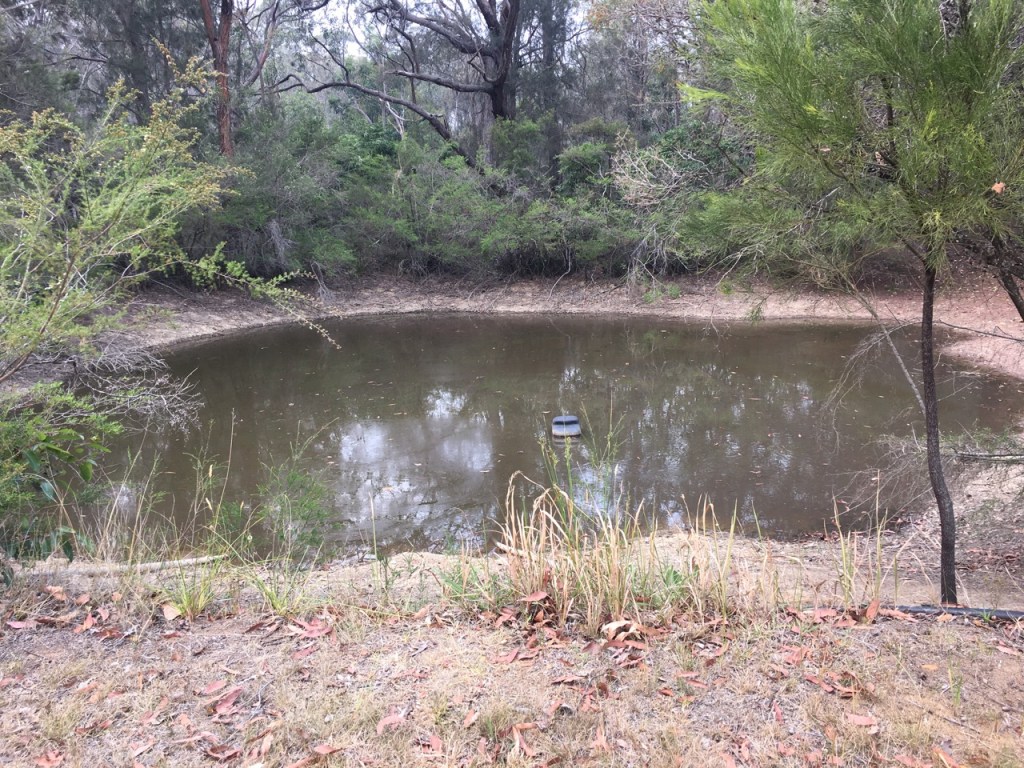
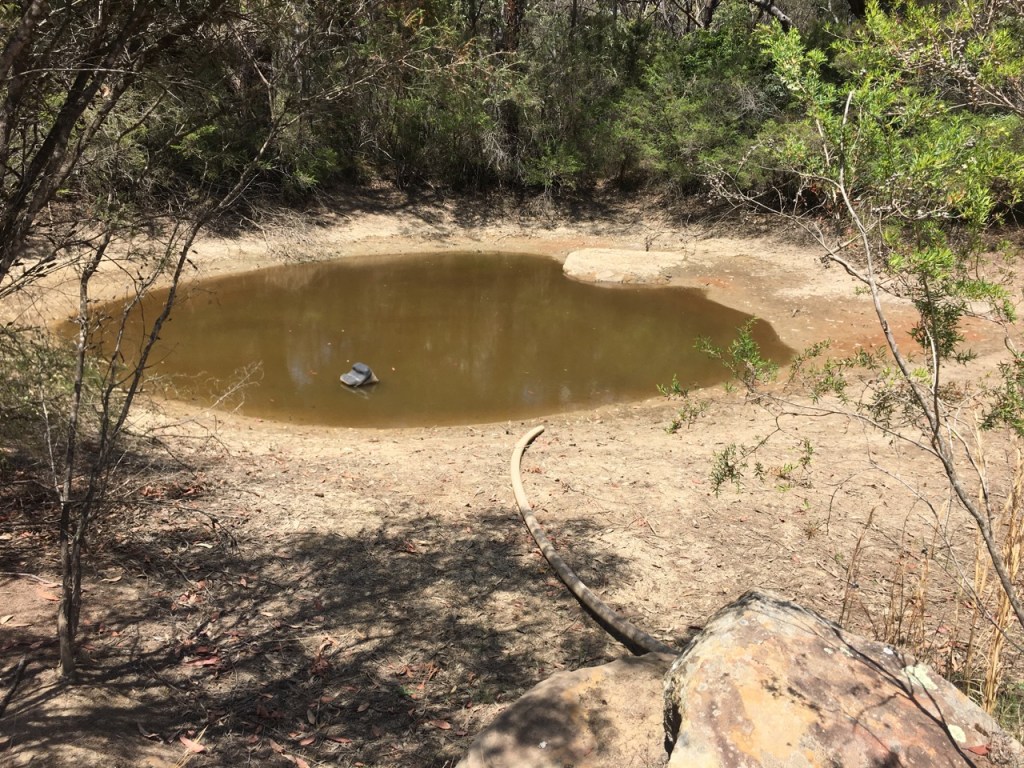
These days it doesn’t rain enough to fill all the dams, but they do have a small amount in each of the 2 lower dams. The big top dam, ‘Max Like’, is totally dry. but it is worth harvesting the water from the two lower dams and collecting it all in one place to minimise evaporation. The surface area is essentially the same, but the water storage is 3 times deeper.
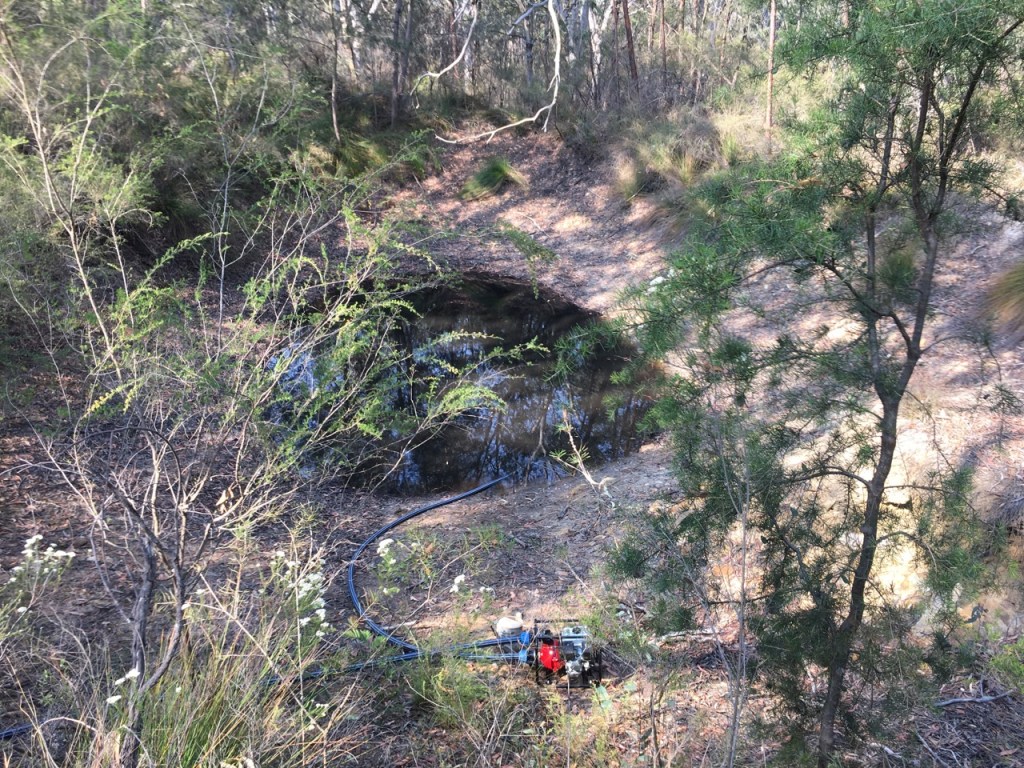
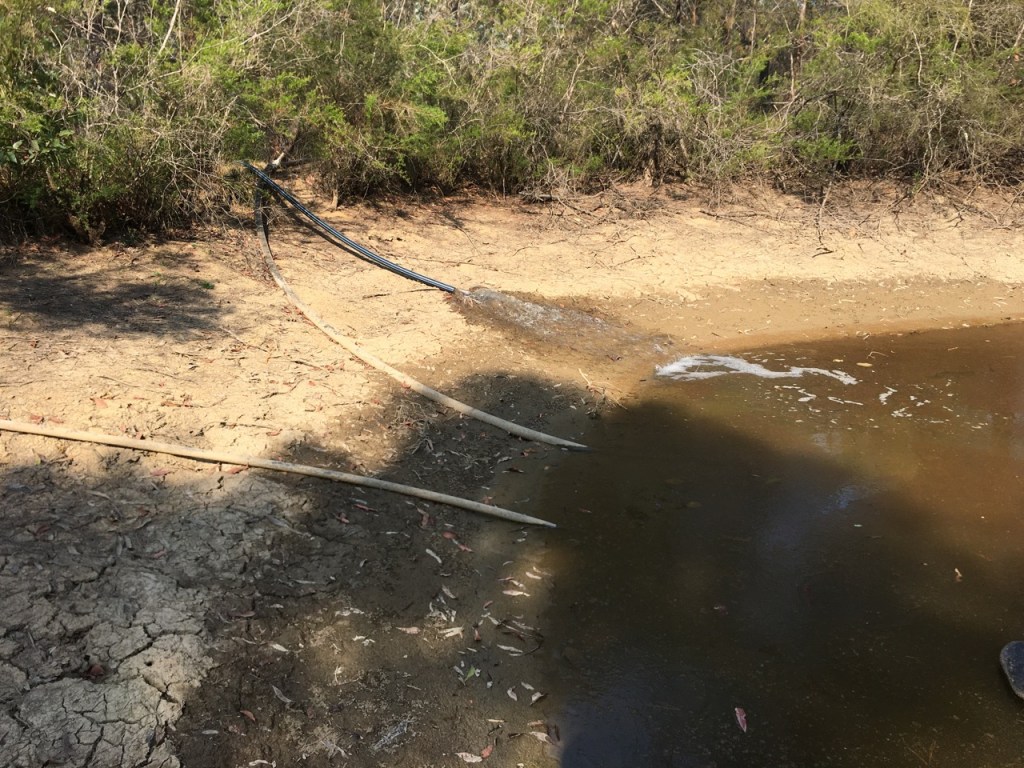
So today I started the water-transhumance for this year. The water is supposed to flow down in the winter and be pumped back in the summer. I don’t have much to work with, but in this way I can get the best out of what I have.
I pumped the bottom dam down to a level that gave me most of the water, but left a little bit for the locals.
My next job is to move the pump up to the 2nd dam and start shifting it up to the top dam. By the end of the day we should have moved most of the water. There is a big rock in the top dam, when we can see the rock, it means that we are almost out of water. By the time I’ve pumped all this water up to the top dam, the rock will disappear.
Mission accomplished. The home dam is filled sufficiently to cover the rock. That means that we now have over 600mm. deep storage, all in one spot, which minimises the evaporation in there coming hotter weather.
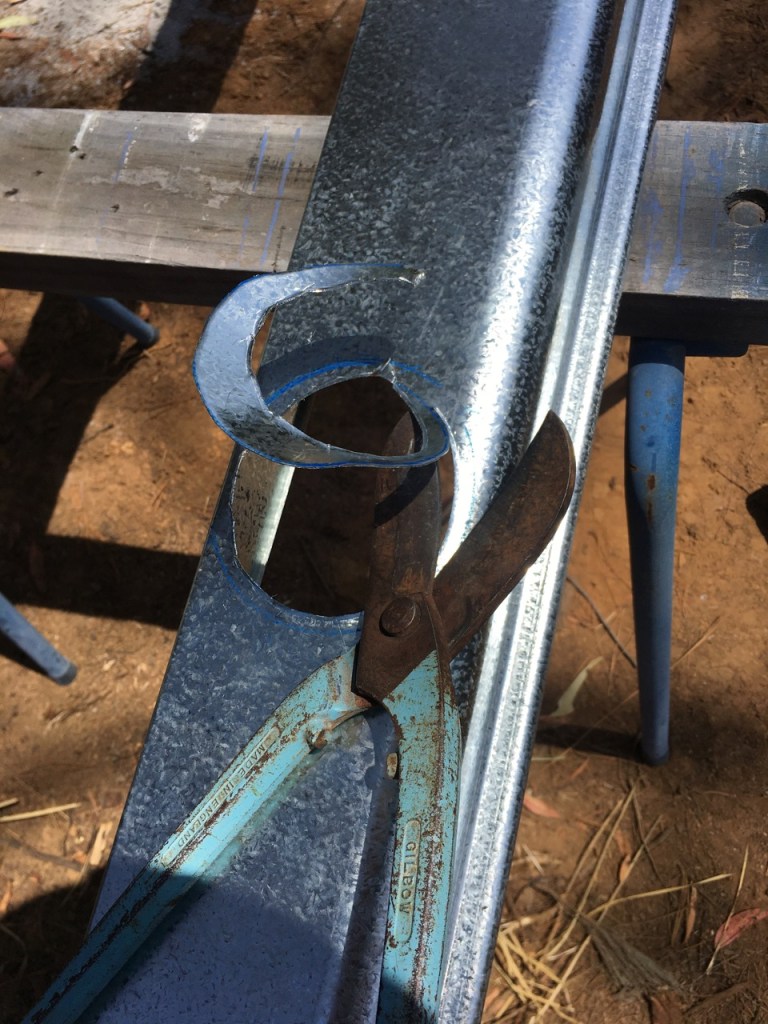
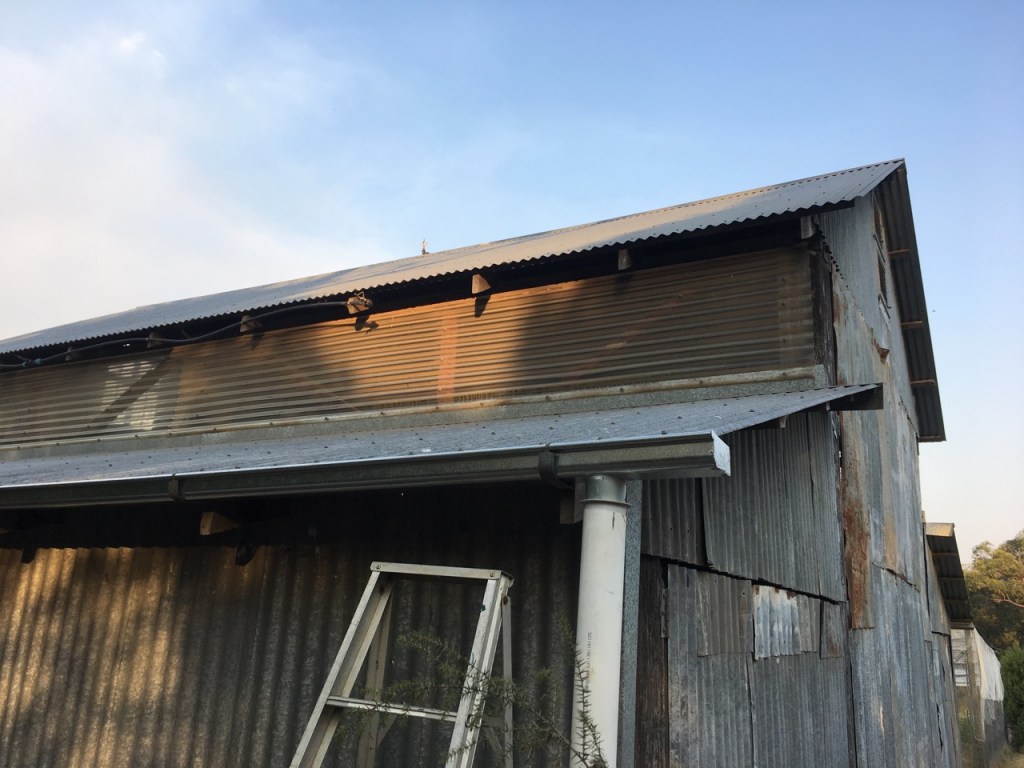
While the water was pumping up by itself. I only need to check it every 15 mins to make sure that all is going well. In the mean time I finish filling in the syphon guttering trench and I make new guttering for the western side of the barn. I was quoted $110 per meter for a professional guttering job. I manage to do it in 3 hours for $147! I just saved myself over $1,000! This is how we can manage to live here on such a small income. Independence through frugal self reliance.
I have spent this long week doing repair and maintenance jobs, from replacing the tin roof on the pottery, renewing the syphon gutter and digging trenches through hard packed dirt, making gutters and down spouts, now shifting water.
Every step I’ve taken this week was involved in water in some way. You never miss your water till your well runs dry!
I’m hoping that I won’t miss any water and that my tanks won’t run dry.
As the weather has slowly dried out over the four and a bit decades that we have lived here, the dams that we dug when we arrived here in 1976, and worked so well for 20 years, are now all dried out. We haven’t had significant rain fall to saturate the ground and flow down the gutters and channels into those dams. So we find ourselves towards the end of spring now with virtually no water in the dams. This is the 3rd year with no significant flows into the dams and the 2nd decade where the dams don’t fill to overflowing. i can’t remember a time when they were all full.
It is quite shocking to me to have to start the year with just 500mm. of water in our main dam. That will only last a couple of hours in a fire situation – if it came today! But there won’t be this much water left in there in a month or twos time, at the height of summer – if any! Evaporation will see an end to that little bit of water that is left.
Our biggest dam, built specially to irrigate the vineyard, we called Max Lake! It is now bone dry since last week, the final little puddles evaporated away in the heat and the wind. No water flowed into it for at least 3 years. It was once a glorious swimming hole in years past. Particularly when our son was young, we had a lot of fun swimming in there over summer. 2 metres deep of serious fun filled water. Now home to just a few dried out reeds.
We used to rely on the dams for our irrigation water and fire fighting reserves. But no more. We have to think differently now. This is now the new normal. We have managed to get through the past few summers using our tank water storage. We have put a lot of effort into installing water tanks on every roof on our land. This has worked very well up until now, But this year we are not quite through spring and we have almost emptied one of our two large water tanks, mostly through watering the garden and orchards. With the global crisis deepening, I can see a time when we will run out of water before the end of summer in coming years.
The most pressing question on my mind right now is what will we use to fight bush fires in late summer and autumn. I guess that we will have to buy water and have it trucked in. Not a happy thought. In particular because when disaster strikes, every one will be wanting water delivered and only the regular customers will be getting service. I know how it works. We have never bought water for 40 years. We don’t even know who sells it these days. So we shouldn’t be relying on that to save us. In a funny quirk of fate, those of us in this village who are poorly prepared and always buy water, will get it, as they must, because they are the most needy. We, on the other hand, have spent our lives trying to be prepared as best that we can be, and are almost totally self-reliant, We will be the the ones to be left to fend for ourselves – as we always have.
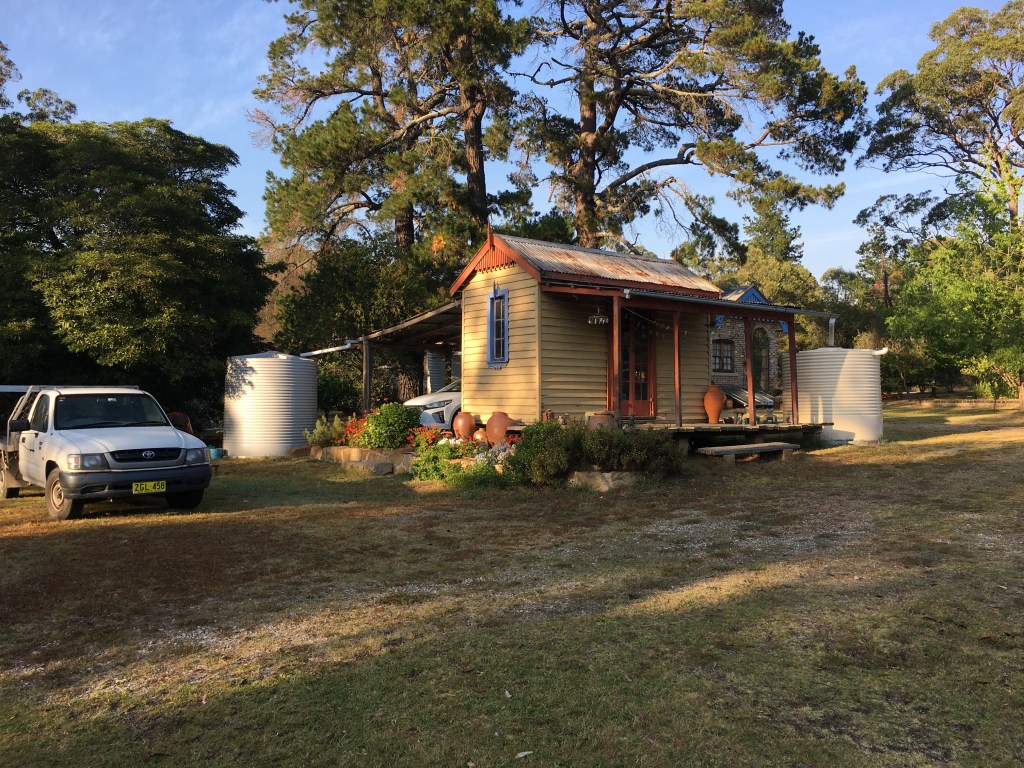
Water storage is very finite and with every roof already having a water tank connected to it. Our options are limited. We have purchased a new, smaller sized, water tank every year now for the past 4 years. Installing those tanks on all the smaller tin roofs on the little sheds, and even the little railway station building has two. Just so that there isn’t any water allowed to be wasted. Once caught and held, then we can use it later at our discretion.
Having thought through the possibilities. We decided to up-grade to a much larger water tank on the barn. The barn has a huge roof, but only a relatively small 1,000 gallon/4,500 litre water tank that we put on there almost 20 years ago when we built the barn, to satisfy the local council building inspectors. We don’t use it for the garden at all. It is there with it’s own independent pump to supply the roof and wall sprinklers that I fitted to the building specifically for fire fighting. As it’s only been used twice in its life. It remains constantly full. However, when it rains and the tank overflows, I have the overflow connected into the plumbing system that delivers the water from all 3 big sheds into the 120,000 litre concrete water tank at the bottom of our block. This is the tank that is now almost empty. I can connect the new proposed tank in parallel with the old one. That way, I only need to do a bit of plumbing.
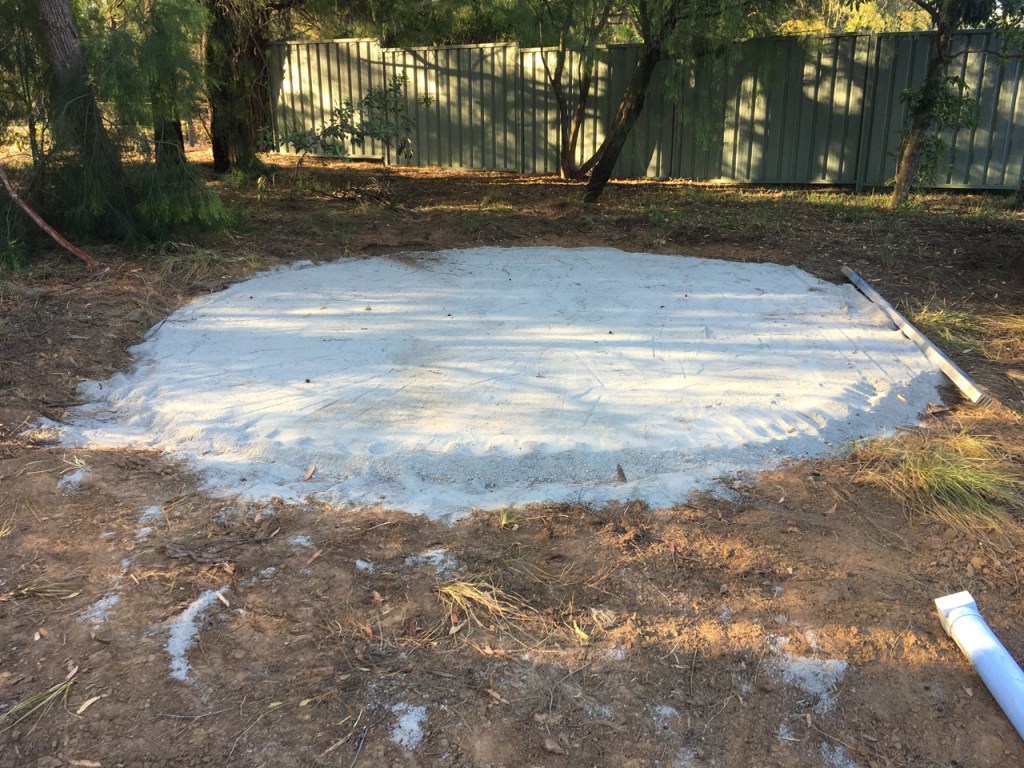
I realise that I can add a 7,500 gallon/35,000 litre water tank on the other side of the building. This is a significant exercise, cutting a 4.5 metre diameter level base through the top soil and placing 2 cubic metres of fine basalt dust, then spreading it and compacting it to make a solid base for the tank to sit on. I’ve been at this job since Friday last week. The base is done now, so I have turned my attention to the roof plumbing. I need to put in a syphon gutter system to take the water to the other side of the shed.
I wonder why it is that I seem to end up doing these jobs in such hot weather. Answer. every day is hot these days. Summer starts 3 months earlier and goes on for another 3 months longer. We are having 9 months of summer these past few years.
The old saying goes, When is the best time to plant a tree? The answer is, 20 years ago! That is also the answer to when I should have put in this larger tank, but I was already fully committed 20 years ago to installing the water tanks that we already do have now. So now is the best time for this new tank! When it rains again, as it most certainly will. We will fill this tank with rain water and be better off in the future. This is just forward planning!
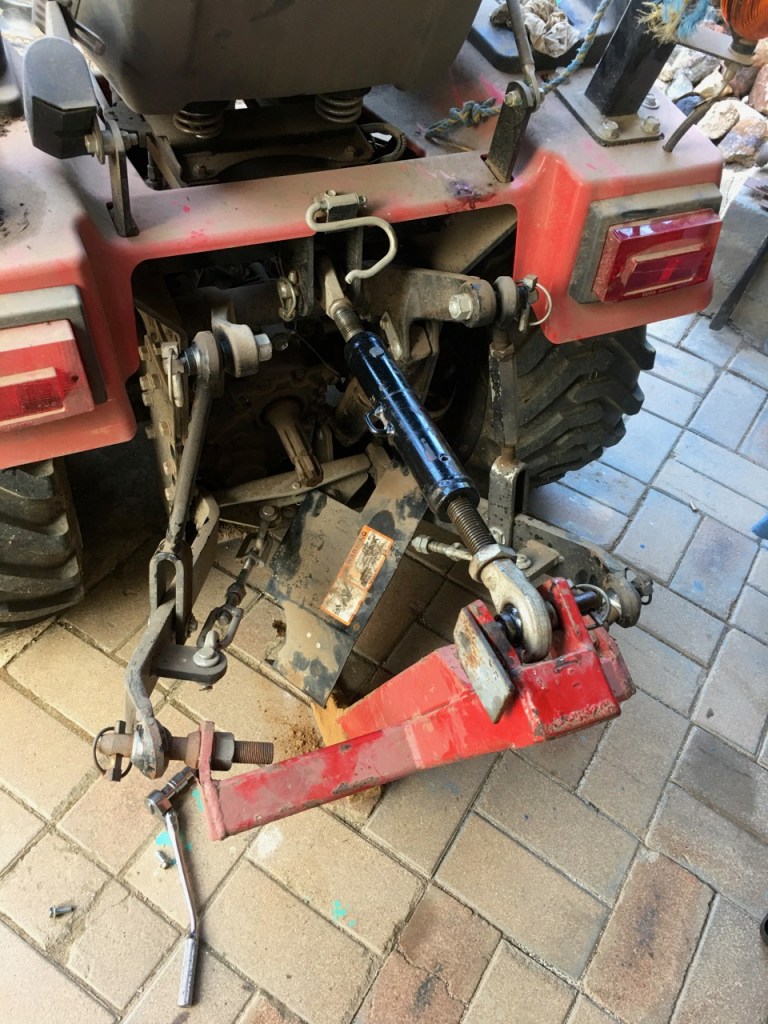
So, today I’m digging this trench into rock hard dirt that is as tough as concrete. I end up having to use a crow bar and a pick to penetrate the soil. I give up pretty quickly and go and get the tractor to try ripping a groove into the hard packed, baked soil. I end up bending parts of the the tractor and need to go to the toy shop, formally known as the kiln factory, to put the bent and broken parts under the hydraulic press and bend them back into shape. If nothing else, I get to spend a few minutes out of the full sun, in the shade, in the shed, making good the repairs. I love the toy shop! I can fix almost anything in there – one way or another.
By the end of the day, I’m pretty rats, but the hole is dug and the pipes are laid and blue-glued together. The new lengths of guttering should be delivered tomorrow?! I should have it all back together by the day after. It can rain by the end of the week and I’ll be OK with that.
As for the new water tank, well, I haven’t even ordered that as yet. First things first. Watch this space !
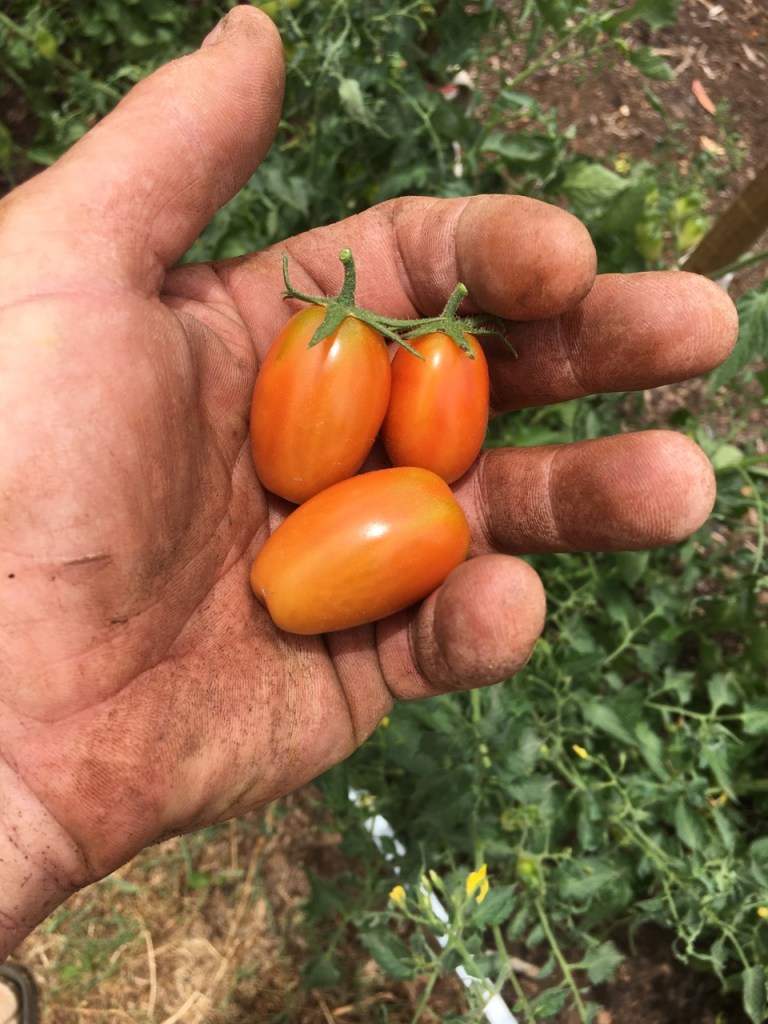
At the end of this days tough work, I go to the garden and find that I can pick the first of this years crop of tomatoes. 3 red tomatoes, It’s the 26th of November. I can’t remember an earlier date for the first red tomato of the season. We can usually get a few before Xmas, but this is a whole month earlier than Xmas. If global warming is a communist plot to disrupt Western economies, as Donald Trump claimed, then, thank you to the Chinese Communist Party for these unseasonably early red tomatoes here in Australia. I wonder how they do it?
Maybe every dark cloud has a silver lining? I’d be happy just to see some clouds! Dark or otherwise.
Janine and I were invited to the Powerhouse Museum last week for a special announcement event. There was free wine and a meal, so of course we went along. 🙂 The Powerhouse Museum recently received a substantial bequest, It was announced that 3 glass artists and 3 ceramic artists have been awarded the inaugural Willoughby bequest award.These artists were chosen by the Powerhouse Museum curators to be included in the museums collection because they are or have been making a contribution to Australian artistic culture through their research and creative work. I am very lucky to be one of the 3 ceramic artists chosen. Among all the Australian potters, I can’t yet reconcile that I am one of the 3 lucky ones chosen. It was quite a shock to me I must say. I can only guess that it is because of my 20 years of consistent research and exhibitions enquiring into the nature of native sericite porcelain around the world? I have known about the award for a couple of weeks, but was unable to say anything about it until now, as there was a media embargo until the presentation awards ceremony last night. I’m humbled, surprised and elated to be chosen. The other 2 ceramic artists chosen are; Renee So, a ceramic artist born in Hong Kong, raised in Australia, and now working in London. Nicolette Johnson is a ceramic artist born in London and raised in Texas, but living in Australia now for 5 years.The 3rd ceramic artIst is me. Wow! How could this happen to me? I don’t know! I don’t have a social media presence on facebook, twitter of watsap. I don’t go to openings and don’t do any networking. So I still don’t know how they found out about me and my research. It’s a mystery to me.The other two ceramic artists are young, talented, hip and sassy women, making terrific cutting edge work, who are winning awards and being represented internationally. On the other hand, I probably represent the old fashioned approach to making pots. Fossicking, digging, processing, then ageing the mica based stones that make my work from. It’s not really done that much – if at all, anymore. I grow most of my green food in my garden and orchards. I also grow most of the wood fuel that I use to fire my wood fired kiln and the kitchen stove and home wood heater. I try and do every step in every part of these processes myself, and do it sustainably.
The selection of such varied and different artists certainly illustrates a depth of research and breadth of scope in the curator, Eva Czernis-Ryl’s decision making process. I’m very grateful and pleased to be honoured. I really hope that I can make something that lives up to this onerous responsibility of receiving my small part in this amazing bequest award. It’s such an honour!I did notice that there are 3 men and 3 women, 3 glass and 3 ceramic artists, with Adelaide, Brisbane, Wollongong, Mittagong, Canberra and London represented, spreading the selection around. Because this is called the Barry Willoughby ‘Inaugural’ Bequest Award, it hints at the possibility that there may be other awards at some time in the future…However, I got the impression that it will not be a regular event. Best wishes Steve
I was recently in China doing some research. I have written a little bit about that, intermittently, in the last month or so. While I was there, I arranged to get my hands on some new and different sericite samples. These have now just arrived here last week and I have done my first tests with them.
I now have 4 different Chinese sericites to compare.
Although it isn’t immediately obvious from the image above. If you look closely, there are 4 different colours of rock samples from top to bottom, white, cream, grey and pale buff. They all look more or less white, but they each have various tints or shades of colour to their whiteness. They all do have one big thing in common. They all throw badly, the palest ones being the least plastic and most difficult. They feel a lot like my local Mittagong porcelain stone, only better behaved.
I felt like I’d gone all the way around the world and come home again when I threw these tests. They felt so familiar.
I’m really looking forward to seeing the results fired. I had a bit of trouble with the usual shrinkage and drying cracking problems, but I did get some of them through successfully. But I lost quite a few. Still, nothing that I’m not used to, and I’m getting good at recycling the turnings and failures.
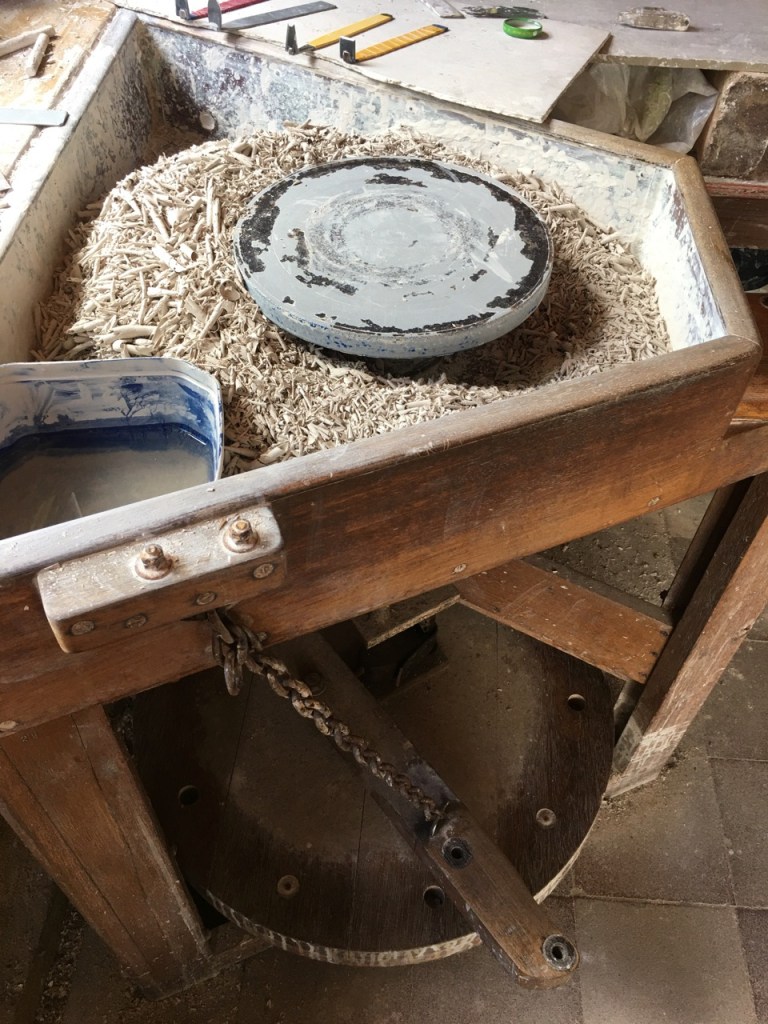
I almost filled the tray on my old wooden kick wheel with turnings after trimming just 12 small bowls. I must be removing at least half of the weight of the original material to get them thin enough to look and feel like porcelain. I aim for 2mm at the rim and 3 mm lower down, graduating 5mm at the foot. This tapered wall thickness allows the best translucency at the rim and higher up the pot, while retaining sufficient strength to hold the pot up against gravity while it sits at 1300oC in the kin to develop enough glass in the body to be come translucent.
If I’ve done it right, the whole finished, fired, ceramic mass, has the correct quantity of primary and secondary mullite crystals to glue it all together, while becoming glassy enough to allow plenty of light to pass through.
Too glassy and/or too thin and it slumps. Too thick or not fired high enough and it stands up straight, but isn’t very translucent. It’s a bit of a fine line to tread.
not too bad.
As I sit and grind away at this damp, ground-up rock dust with my tungsten carbide tools, I realise that I’m truely happy doing just this. There is a gusty wind outside, but I’m in here sitting in the sun and I don’t want for anything more at this moment. This is fun. I can’t wait to get them into the kiln.
It has all the promise of something special about to happen.
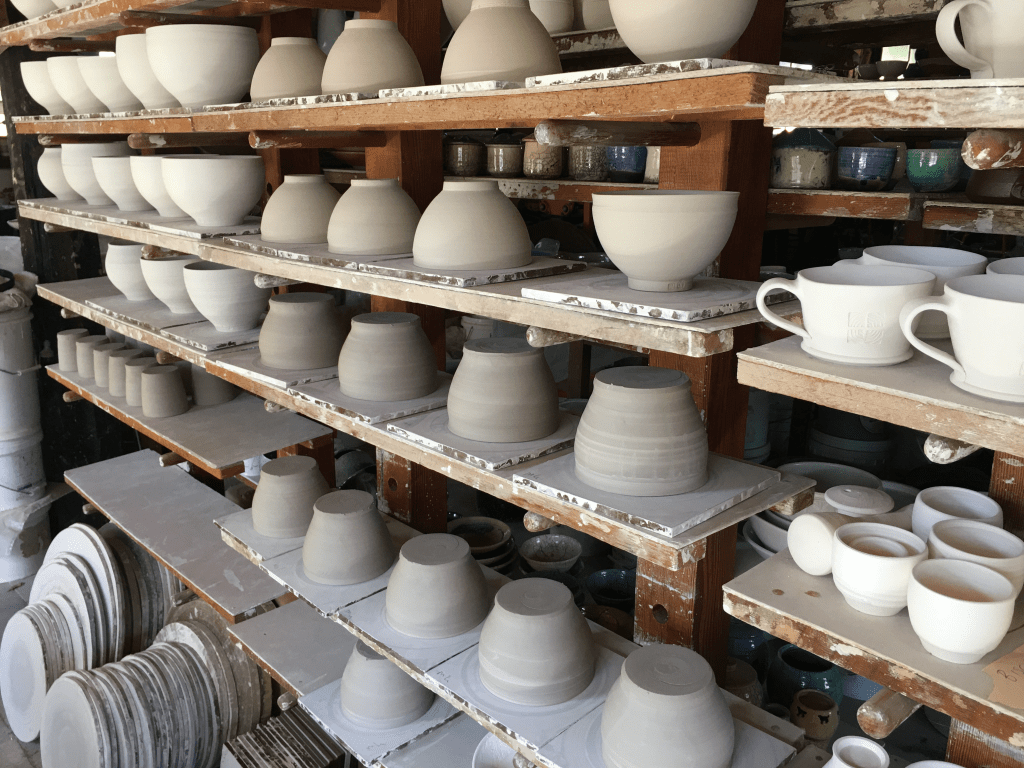
After I had such a terrible firing a couple of weeks ago. I got stuck in and remade all the work. I’ve filled the shelves and had 2 solar fired biscuit firings and I am almost ready for the third. Then I can pack the wood fired kiln again. Hopefully this time with more success.
I had slaked down all the turnings from the last work session and made half of this work from the recycled sericite bodies. I have made test batches of 5 different sericite this time round. I have 2 Chinese minerals, 1 Korean, one English and one Australian in this batch. Although strictly speaking, the local one is a complex mixture of Illite, kaolinite, quartz and felspar.
I’m always looking for something that I don’t know, so the search is a bit difficult as I’m working semi-blind. I know more or less what I want and how to achieve it. After all, I have been doing this research for the past 40 years and more. But getting what I consider excellent results is always elusive and difficult. It doesn’t help when the kiln shelves break and collapse… Still, I’m over that and all the new work is made and drying. I’m just turning the last of the throwing today.
Sericite is funny stuff. It isn’t plastic like other clays, it’s quite short in most cases and has to be coaxed along to get any height in the form. I learnt to throw the inside of the form as I want it, leaving a thick wall to retain the form without it squatting. I then have to turn quite a bit of material off the outside to realise the finished form from the thick lump at the base.
Although sericite isn’t plastic, it still shrinks quite a lot and has a terrible tendency to crack in drying where it is thick. I have developed a few techniques to cope with theses peculiarities. I’ve learn’t to throw everything on batts, as lifting the pot with my fingers causes a memory distortion in the body that shows up later in drying. I’ve learn to ‘polish’ the out side of the clay after I have finished throwing, to seal any possible defects or weak spots that might start a crack during the early stages of drying and stiffening. I have also learnt to turn the bases in stages. Thinning out the clay as soon as it is stiff enough. This stuff can’t be turned like ‘normal’ clay based bodies. It has to be very firm, almost dry to get a smooth finish. If turned too early, it chips and tears, making an awful mess of the fine surface. It’s a bit like cutting soft goats cheese, it just tears.
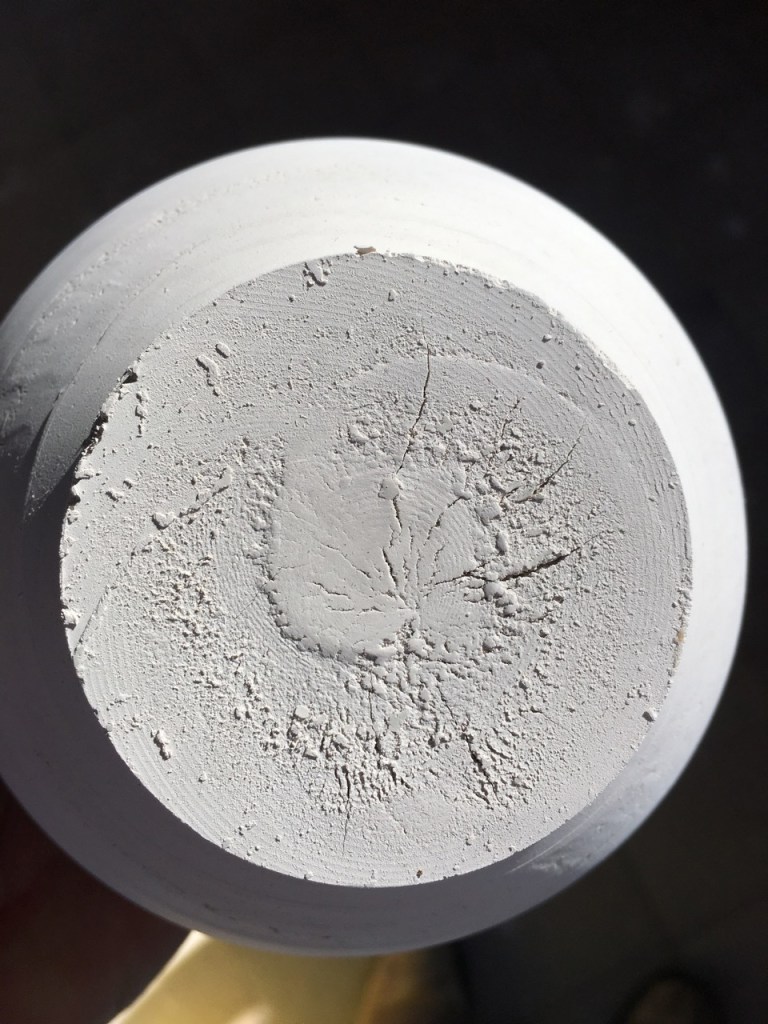
Trimming the base of this pot almost bone dry
I’m getting better success rate these days with each variation and improvement of these techniques. It’s a little frustrating to loose so many pots, but they slake down quickly and can be stiffened in plaster tubs out side, then re-thrown within a week.
It would be better to leave the body to ‘age’ in a cool dark place for a month or two, but with so many variations of sericite porcelain bodies in constant testing and development. I’d loose track. As it is I really have to concentrate and keep very good records, marking every bag with a permanent marker, identifying every bucket of turnings in the same way and carrying this over to the slaked recycled material in the buckets and in the plaster tubs. It’s quite a paper trail of provenance, keeping track of it all. I also keep a daily diary in the workshop of what I’m throwing and what I’m throwing it out of. Every pot gets inscribed with the batch of body and later identified with oxide as to which glaze I used. I also keep log books for the glaze and the body ball mills, so that I know what I made, the date it was done, and what it was made from. I always seem to have a dozen different batches on the go at any one time and they all need their own bucket and bag storage space. It’s organised chaos.
I’m nothing if not thorough. I have to be. With over 3,000 glaze tests and hundreds of clay body tests. I need to keep track. I really want to make simple, elegant, beautiful things. But things with a particular character that I admire. Just a little bit ‘damaged’ or altered by the process of their making. Perhaps I should say ‘enhanced’ by its process and journey, plus the unique quality of its material. I like my pots to have a story embedded in their form and surface. I can pick them up years later and ‘read’ that story. I like that.
I’ve just made a few more white tenmoku bowls. They are slightly bigger, fuller and rounder, more generous in feeling, less austere. I haven’t finished turning them yet. They still need more work over the next few days, but I have high hopes for them.
Unfortunately high hopes are not enough. It’s long term, steady, pains taking, thorough and often boring, consistent research that makes progress for me.
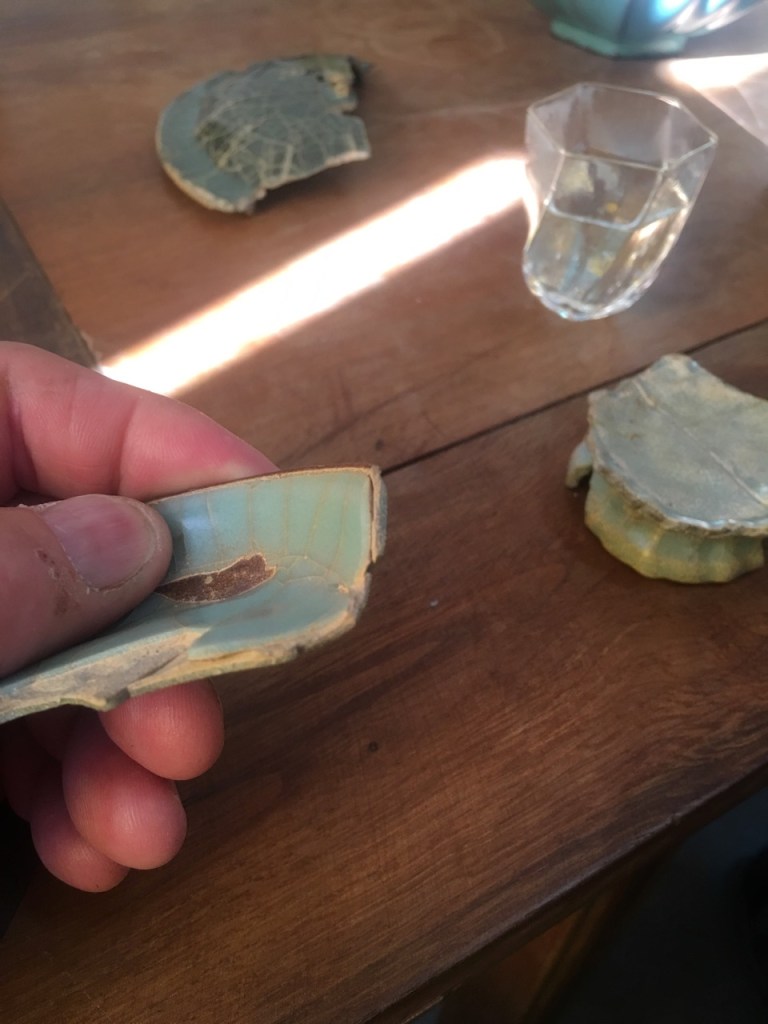
We visit a potter in the Longquan region who specialises in the dark bodied celadon wares of antiquity, but not guan ware. However, he has been and still is a great fossicker and has the most amazing collection of authentic old Chinese shards that I have ever been lucky enough to sit and handle. It’s like being invited into the back room of a museum by the curator and allowed to see all the little gems that never make their way out in the glass cases.
A lot of these shards look to me to have been excavated from out of river beds or streams. Many of them appear to have been water ground on the edges. I see this exact quality on my pots after I have tumbled them in the ball mill to ‘age’ them.
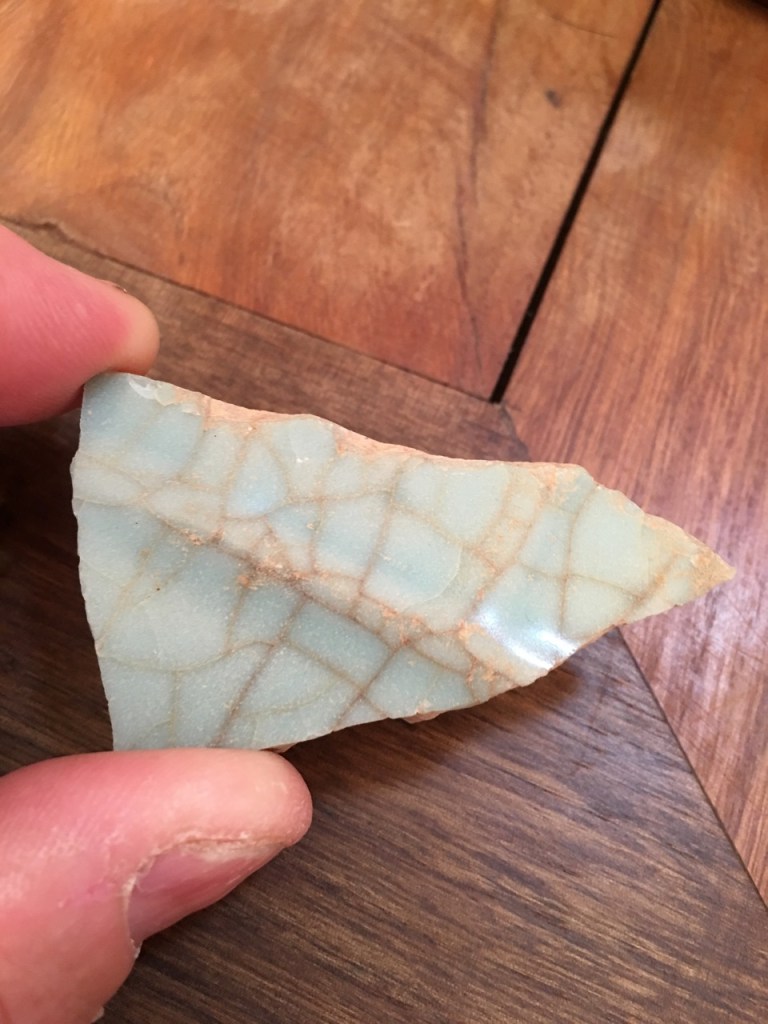
It’s the white impregnated crackle of the crazing lines that give it away, and the soft matted surface, also the rounded edges on some pieces. It all fits. I saw pieces like this in the museum collection in Malaysia. They have a whole section of pots of Chinese origin that were recovered from ship wrecks off their coast, by archaeologists, in recent decades.
Pots that were packed inside other larger pots were left with their glazes largely intact, but pots that were spread out from the cargo hold and scattered around on the sea bed in the sand, were completely relieved of most of their glaze surface except in the crevices around the foot ring. I saw one pot that was only half exposed because it was retained inside something else. The exposed surface was cleared of its glaze, just as if it had been sand blasted.
This private Longquan collection also had a lot of shards that had split, shattered, and for want of a better word ‘delaminated’. That is, the pot had been split down the centre of the clay body, more or less evenly between both layers of glaze, when the thick coating of glaze on each side of the pot exerted massive pressure on the glassy body from each side. The glassy nature of this dense, vitreous, proto-porcelanous clay body was forced to seperate, or shatter, down the centre into two parts. I suffer this exact problem in my work occasionally.
It’s somehow reassuring that the Song Potters of ancient China experienced the same issues that I am grappling with. They managed to solve all these problems in the thousand years that they have been potting. I have just 50 years. I need to work harder.
The problem shows itself, if or when, I apply the rock glaze celadon glaze too thickly over the body. The problem isn’t apparent immediately, but only shows itself after firing, as the difference in the coefficients of expansion and contraction is expressed differently in body and glaze on cooling. At around 230 oC the exotic ‘cristobalite’ form of silica, that is often created in the clay body at high temperatures, undergoes a beta-alpha phase change and shrinks 2 or 3%. This sudden shrinkage at such a low temperature exerts such tremendous pressure on the body-glaze interface, that something has to give and sometimes the pot shatters into pieces. However, in this specific case, the glaze shrinks more than the body and the glaze tears the brittle body asunder.
There is a dramatic variation of this problem that occurs when the glaze is applied to the raw clay pot when it is bone dry. If the pot is glazed on both side simultaneously, the water based glaze entering the pores of the clay is drawn in by capillary attraction. This forces air in towards the centre of the body of the pot. There is such a build up of pressure that the pot can explode with a quite loud ‘POP’! A piece sometimes flies off, or at other times a coin shaped disc flings open, left hanging, with a slight hinge on one side, allowing the air pressure to escape. It really shocked me the first time this happened to me, when I was a student at art school, as I was still holding the pot in my hand, having just lifted it out of the glaze bucket. The solution is to glaze only one side of the pot, let it dry and then glaze the other side. Thus allowing the air to escape harmlessly each time, out from the other side of the surface.
Guan ware on the other hand, has more or less the same glaze, applied even thicker on occasions, but the shattering problem is avoided in this traditional ware because the body is porous and friable. The porosity of the clay allows the cracks that form due to the glaze cooling stresses to dissipate into the porous cavities and terminate quickly without passing straight through the body, as they do in vitrified and glassy porcelaneous clays.
A shard of guan-like crackle glaze.
There is such a lot of chemistry and physics to be learnt in making ceramics! I was at the Royal Society meeting last month and heard the speaker tell the audience that in science, there is only ‘physics’ and everything else is ‘stamp collecting’ or applied physics. A mathematician claimed that there is only ‘Pure’ mathematics and physics and chemistry is just applied maths. It seemed to me that there was some agreement that biology was stamp collecting — except from the biologists. Perhaps psychologists could claim that without ‘mind’, there can be no maths?
Anyway, what would I know, I’m just a stamp collector! A stamp collector who applies chemistry, maths and physics in a creative way to ceramics. I also apply stamps to my pots to identify them as mine.
The potter who had collected all the shards, had a big new concrete double story workshop. He was the leading student of the best student of a very important local potter in this region. Sort of 3rd generation celadon maker. I got the impression that the property that he workshop was built on was his parents land. Whoever’s land it was, it has a beautiful tea plantation covering it. The new workshop has a full wall of glass looking out onto the rows of tea.
A view to die for. So beautiful! I wouldn’t mind a view like that when I’m throwing pots.
We get to spend a day in the Longquan Celadon Museum. I am travelling with my friends Len Smith and Robert Linigan. I am very interested in these old Celadon pots, particularly from my point of view of the inspiration that I can gain from the best pieces and equally importantly from what i can learn from the shards and broken sections. There is so much to glean from being able to see inside the clay body and looking at the interface between the body/glaze layers.
I love these rich and sensuous fatty celadons, guans and ‘ru’-like glazes. These are some of my favourite pots. It’s not too surprising that I like to try my hand a making glazes with this kind of influence. I wish that I could make something as good as this. It’s a quest.
In particular, I am keen to make my clay bodies and glazes as authentically as possible, by digging up all my own minerals, rocks and stones, then mixing them with ashes from my fireplace, where I burn the wood from my own forrest. It’s a complete commitment to my philosophy of self-reliance, not just in ceramics, but in my life. This coupled with a keen interest in the soft delicate beauty of ceramics the way I envision it. Not just the look, but also the feel of the surface. Equally important to me is the tactile impression -‘feel’ and balance of the pot in my hands, as well as how it will function when I eat or drink out of it.
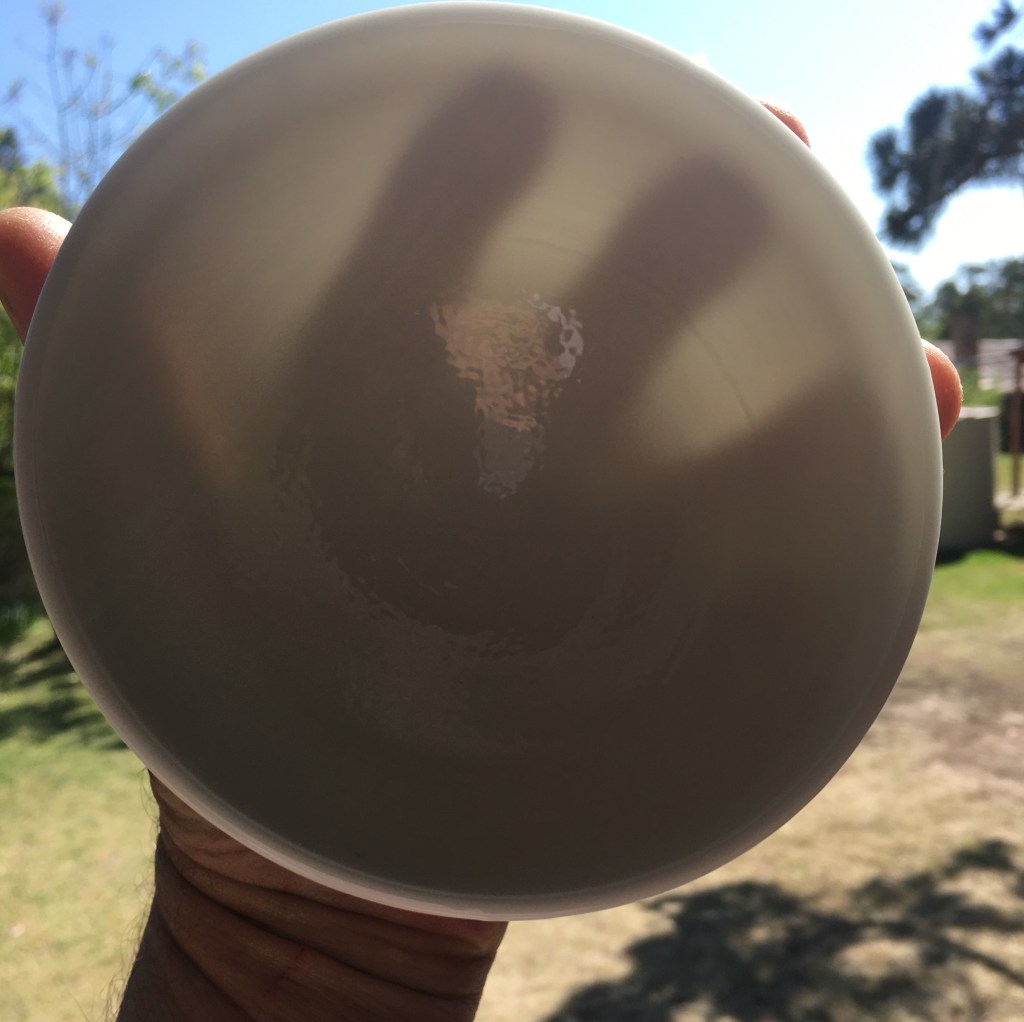
My favourite coffee bowl at the moment, for my morning bowl of coffee, is a small white tenmoku bowl that is very translucent and very white, made from one of the Chinese sericite bodies that I have experimented with. It gives me a lot of pleasure just seeing it and handling it, even before I drink the coffee from it. It is beautifully balanced, only slightly weighted to the lower half for stability. It looks and feels gorgeous. I’m particularly fond of the slightly out-turned rim that is an essential quality of the tenmoku form. I’ve been using it for a year now and I’m still not bored with it.
Some of the unique qualities that I find I really engage with, are all its ‘faults’ – if that is what they are. I prefer to think of them as being part of its unique character. You can’t buy this bowl from Aldi on special for $2. Their white bowls may look superficially similar, but this pot has a story embedded in it that is only very slowly revealed over time as you get to know it.
For instance, because I’m not a very good potter, I don’t go to all the trouble of trying to make things perfect. Simply because I realised long ago that perfection only exists in the mind of the beholder, therefore can never be achieved, so why bother. Better to make things with character. This bowl for instance has a slightly mottled surface to the glaze, it has a very gentle undulation where the very thin clay body saturated during dipping and the glaze didn’t adhere perfectly. I have come to love this slight quirk of its appearance more than the very smooth glazed surfaces that I can sometimes make. This is a special part of this pots own history of its making.
Another point of interest for me is the hint of the remainder of the clay slurry on my hands left embedded in the surface of the clay after I finished throwing the pot on the wheel. I left it there as a reminder of the touch of my fingers. It is almost imperceptible, but it remains. I wasn’t aware of it presence initially, but it slowly became apparent to me as I got to use it, handle it and wash it up often. Not all my pots have this effect left in them, sometimes I wipe the inner surface clean with a fine textured sponge. At other times, I turn the inside of the pot with a trimming tool when I turn the foot. It all depends on how I am feeling about the pot as I make it. I never quite know how I am going to feel about what I make on the day. So its a surprise to me to be reunited with my own pots, post firing, and to re-discover their special qualities.
I can just see this swipe of my fingers in the image above. You won’t find that in a pressure cast or jigger-jollied bowl from IKEA.
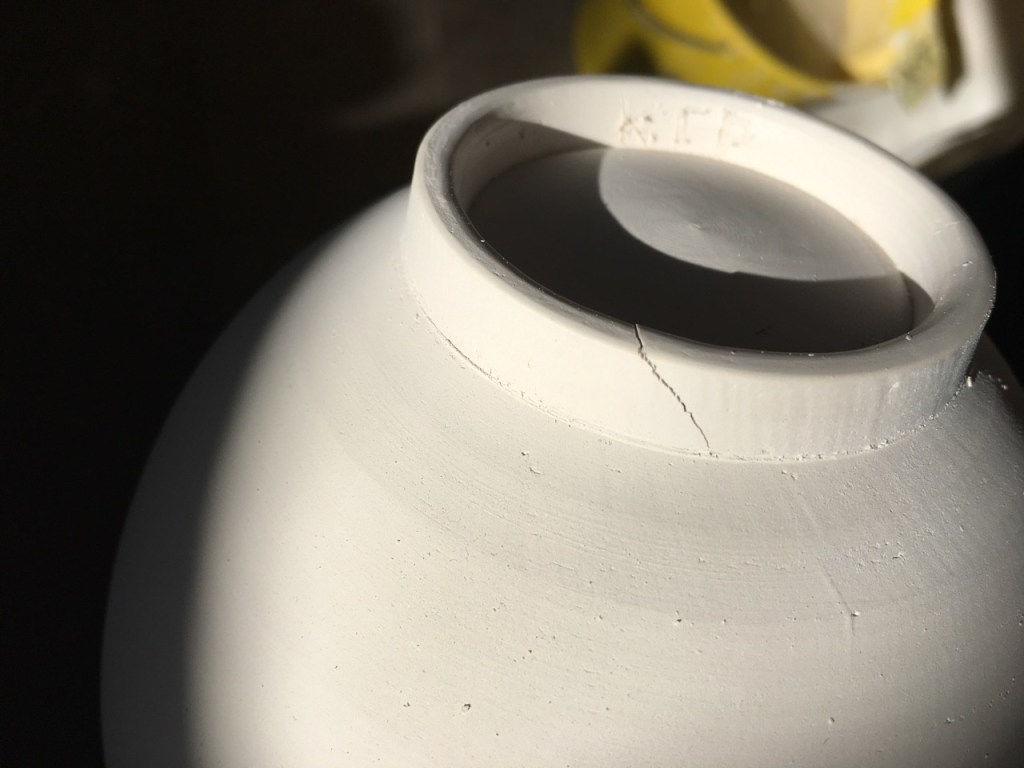
This bowl also has a single iron spot in the glaze, just below the rim. It’s a bit like a beauty spot. I didn’t put it there, but I’m OK with it. This is a real object of beauty and interest. It isn’t perfect. It’s just gorgeous. It also shows my two stamp impressions. One is my initials, the other is the workshop stamp.
Finally there is the total lack of an obvious foot ring until you turn the bowl over and look underneath. I hid the foot recess inside the bowl form to minimise the weight, so as to keep this delicate bowl as light as is possible, but still have an elevated form that lifts it up off the table in a continuous elegant curved line. This is not true tenmoku form, but I think the it is better on this pot.
In the Longquan Museum we saw a lot of shards with loads chipped edges, shattered rims and broken bases. I loved this part of the display. It was all real. Many of the perfect examples had long ago been taken away to other larger collections, as this is only a smaller regional Museum. What was left in this Museum were all the other pots. I learnt a lot form looking inside the shards to see the very same qualities, problems and faults that I get in my work, using very similar materials and and almost identical techniques.
What I found particularly reassuring was that I am not alone. Someone else, 800 years ago also went through all these technical trials and difficulties to arrive in a similar place. Ultimately, there is the reward of the occasional lovely piece that survives.
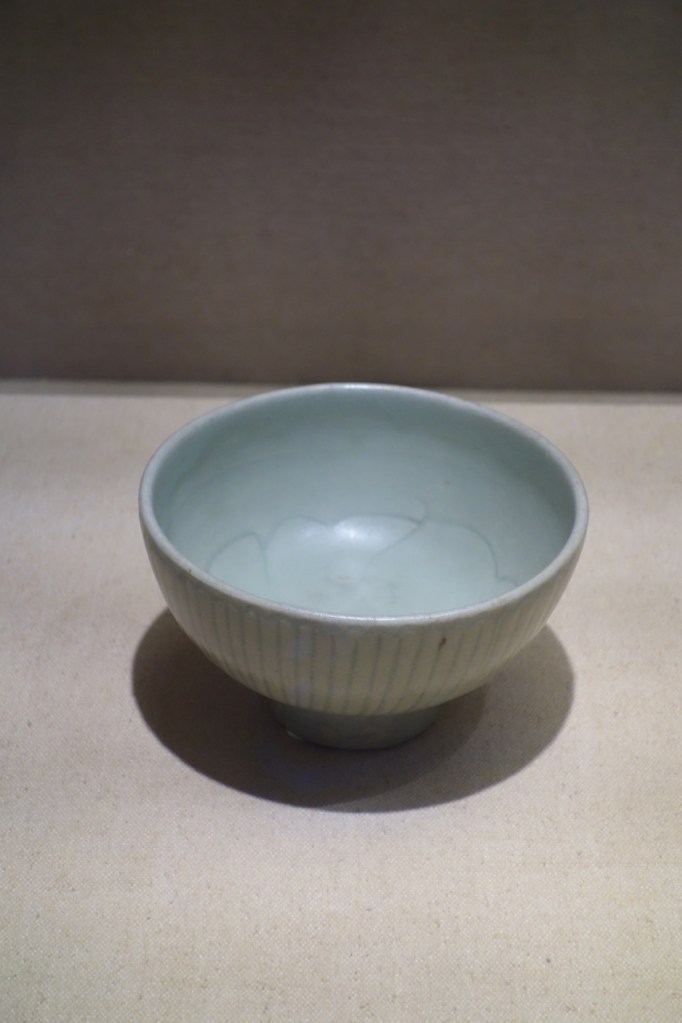
This bowl is lovely, but what others probably don’t see, but I did, was what, at first glance, appears to the an incised line inside the bowl. That is easy to see, but it is in fact not an incised line, but a remnant of its making that appeared in the kiln during firing and wasn’t there when it was packed in the setting. It was formed in the fire. That wavy line is the raw glaze surface drying out and cracking slightly. The crack then doesn’t completely heal over when the glaze surface melts, but remains as a line in the glass. Perfectly fused, but hinting at its life before it became ceramic. I get it often in my glazed surfaces. It used to annoy the hell out of me, as there was no way that I could see to prevent it happening, if you fire long and low to make that particular satiny surface, it’s just what sometimes happens. If you fire hot, it disappears in the fluid melt at top temperature. This ‘scar’ is a relic of its process and making. I now look on these healed over cracks as an authentic product of the unique process that I indulge in.
Nothing is perfect. Nothing lasts. Nothing is ever finished, and that includes learning.







































You must be logged in to post a comment.