Vendange

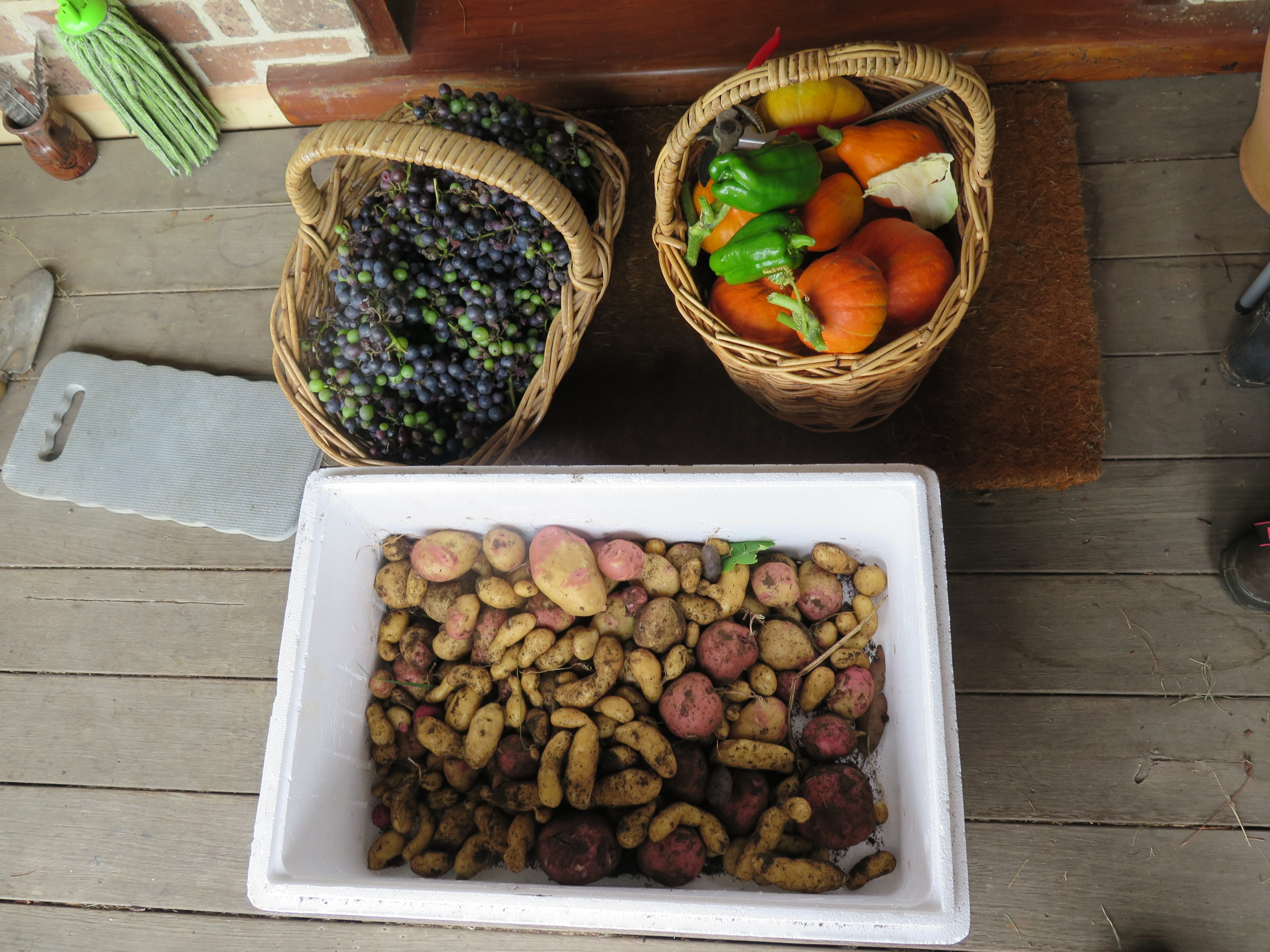
It’s autumn now and the grapes are fully ripe. We have been dealing with them in batches over the last few weeks. Yesterday we made the last pick. The Vendange is over for another year. All safely picked, juiced, heat-treated, sterilised and bottled. The rich red dark grape juice bottled in this way will keep for 12 months easily. We make it now in the autumn and drink most of it as a refreshing cool drink next summer in 9 months time.

We have preserved dark grape juice from both our shiraz grapes as well as our isabella fragolino varieties. They both make good dark grape juice, but I think that I prefer the slightly foxy, aromatic density of the fragolino juice to the somewhat austere and peppery shiraz. We abandoned making wine from our grapes sometime ago, as it takes a lot of effort for something that is just plain ordinary and we can buy good wine quite cheaply here in Australia. We have learnt to be selective about where we expend our limited energies, so as to get the best return on our efforts.
IMG_8529IMG_2106IMG_2107
After a lot of experiments, we have learnt that dark grape juice is the best that we can do with what we’ve got, although, this year, early in the season, The Resourceful One also tried her hand at making very early season verjuice.
IMG_2363 IMG_2364 IMG_2366
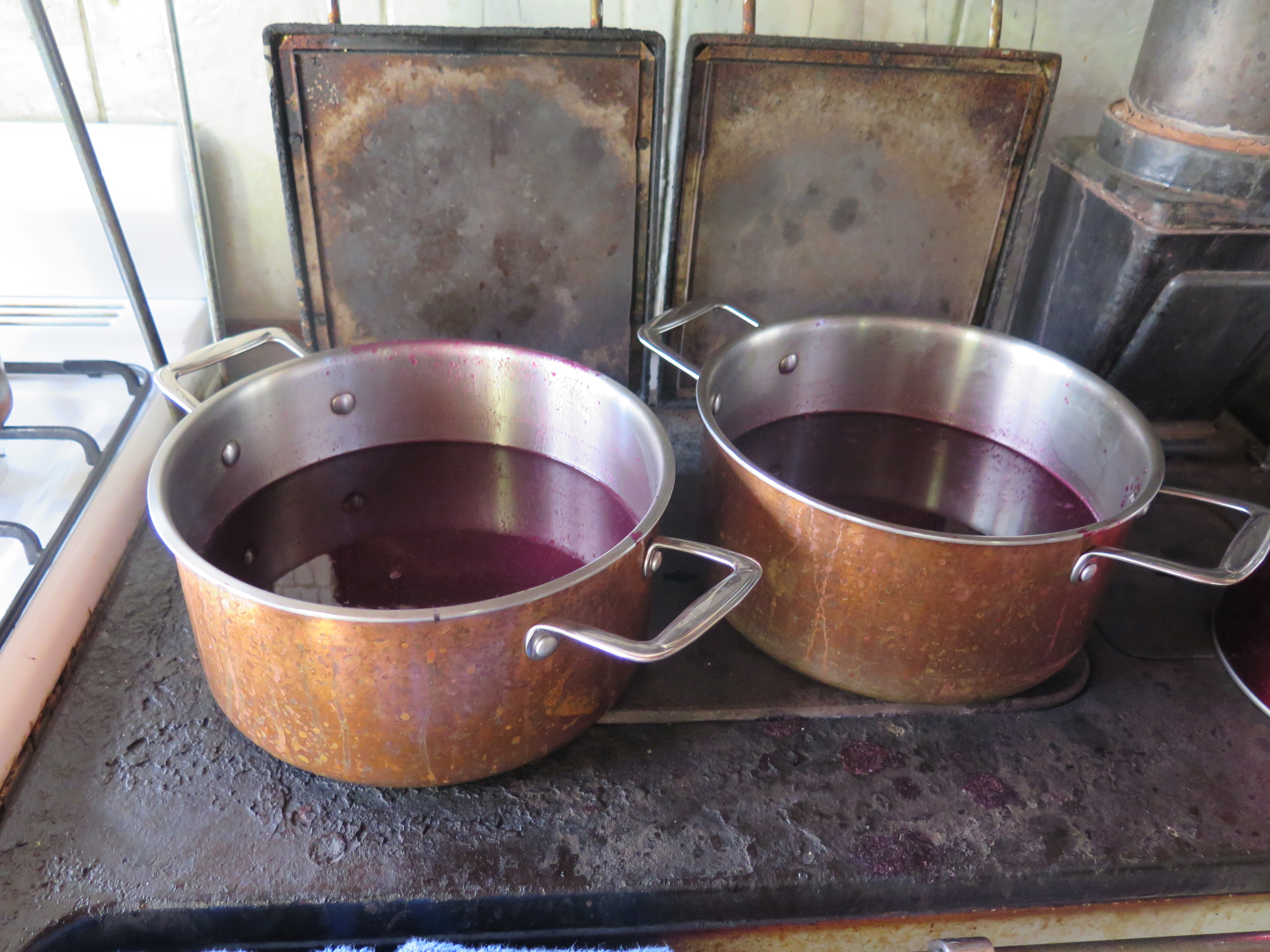
We macerate the grapes and sieve out the fresh unfermented ‘must’, skins and seeds. The pure juice is heated on the stove to sterilise it and then bottled into heated jars, fresh from the oven. It all takes time, but this is the quickest and most efficient way that we have found to deal with the harvest, that gives and exceptional quality of product. It also has the added benefit of requiring no energy to store it for a year and keep it beautifully preserved for when you really appreciate it.
IMG_6349
We have been out and when we return in the evening, we find Annabelle Sloujetté’s ute spread-eagled across the front of our house. She has her own key and has let herself in. She is on her way somewhere, or back, and slides her ute into a sort of parked position in the front garden. She asks where Janine is and I have to say that I don’t know. She was here with me just a minute ago. “Ah! Slougetté responds. ‘Miss Flit’. That is why I call her Miss Flit. She flits in and she flits out, never stays still long enough to carry on a complete conversation. A complete conversation with ‘Miss Flit’ is like a Dickens serialised novel. It takes time and you have to be patient as it evolves.”
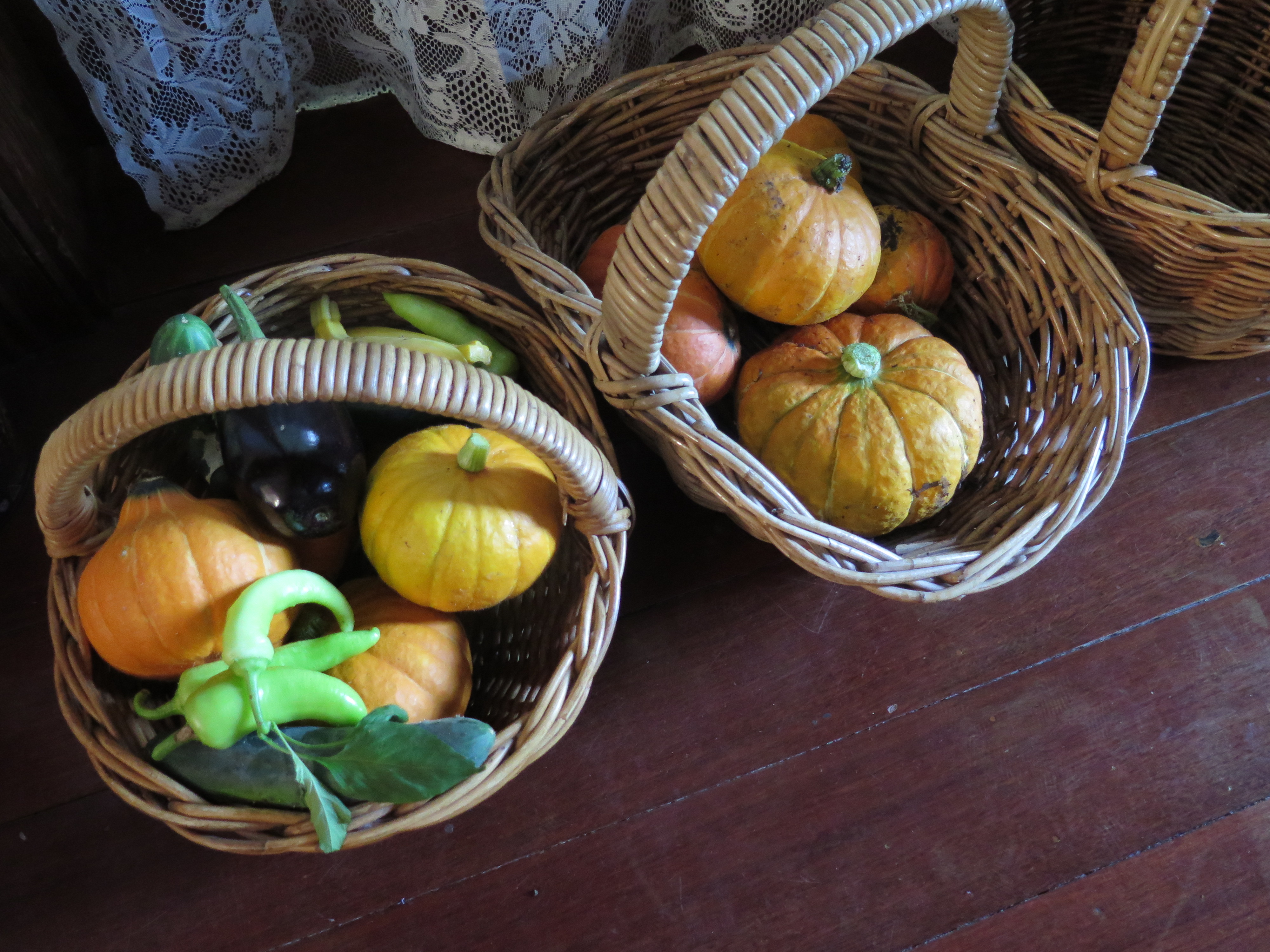
We end the day with a vegetarian BBQ. Nothing special, just quick and simple, place your sliced, freshly picked vegetables on the barbie and turn them when they are softened, Zucchini, aubergines, little golden nugget pumpkin and capsicums. They couldn’t be fresher and cooking outside at this time of year in the evening is a delight. The cooling breeze has arrived and the aromas emanating make my mouth water in anticipation. I make an autumn salsa out of our little, late-season, yellow  tomatoes, some garlic and chillis, while the bbq looks after itself. The girls are tête-à-tête, deep in gossip.
I plate up to table and we eat them with relish. I like a spoonful of my piquant home-made spicy plum sauce on my bbq’d veggies, but quince paste also works well I think.
IMG_2359
When we wake, she is gone. Only her tell-tale signature circle work on the front lawn tells the tale of her visit.
Best wishes
From Mr and Mrs Flit

Another Post From The Running Postman

The wild flowers have been lovely, but they are all gone now. It’s almost autumn and the cherry trees in the Chekov orchard are loosing their leaves. They are the first to fruit and the first to go dormant. We are experiencing a late summer scorching week of high temperatures in the mid 30’s and have had to be out early and late to water the garden. Overall, this summer has been exceptional, although it has been hot, it has also rained a lot and even at this late stage , with all this heat now, we still have green grass outside our window. We are usually looking out at dry, dusty gravel at this stage of the summer.

IMG_3689IMG_2350
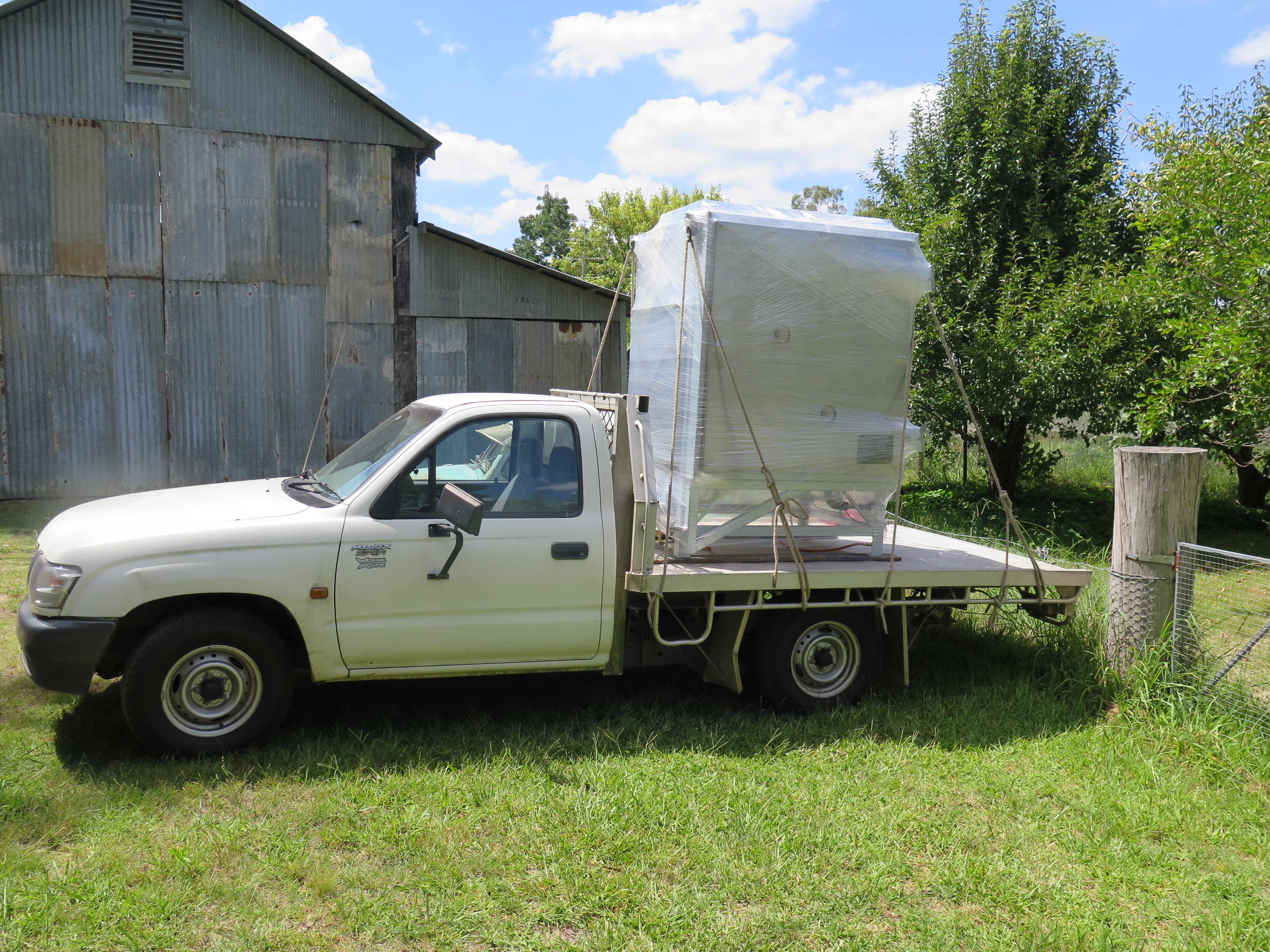
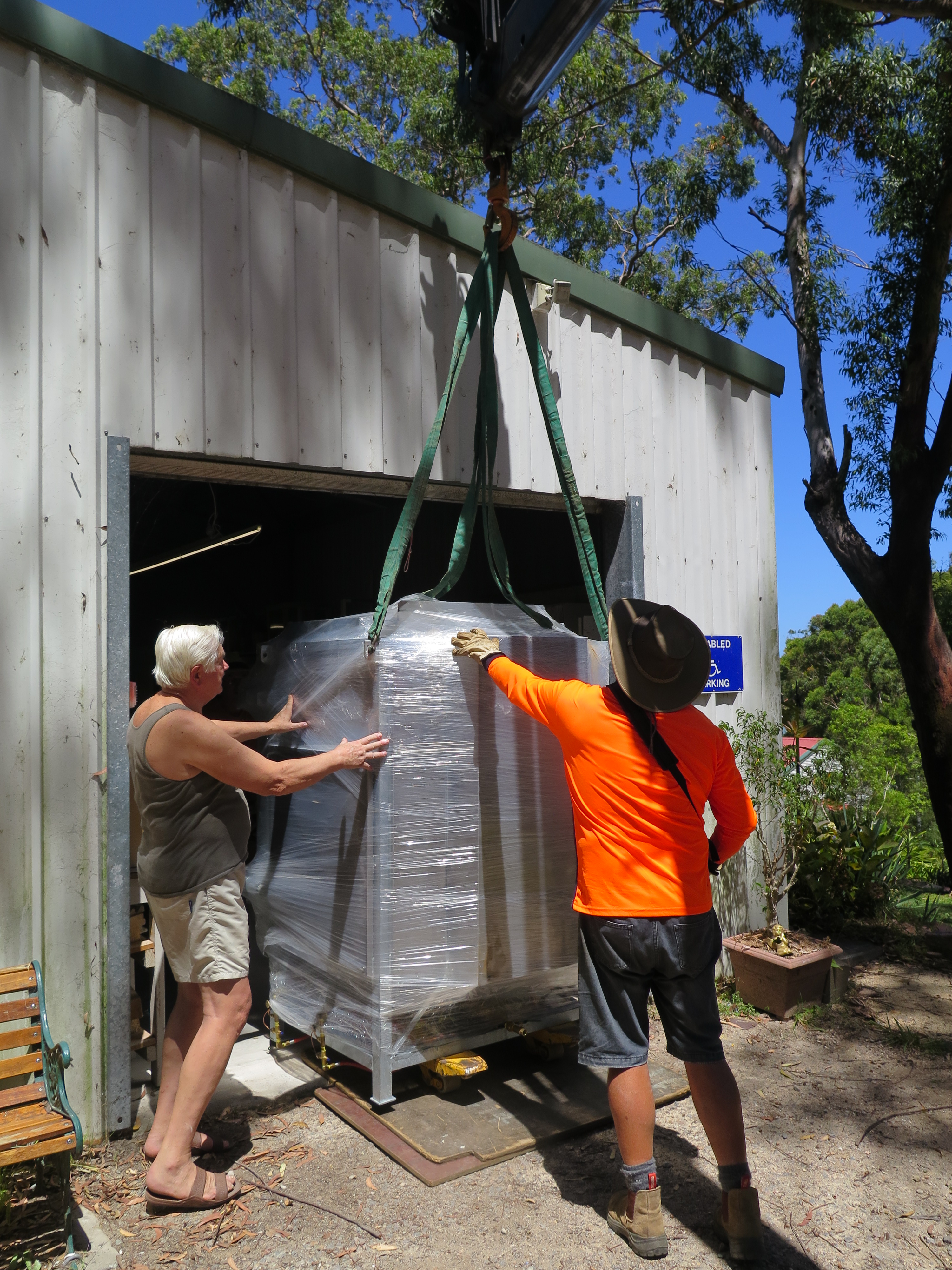
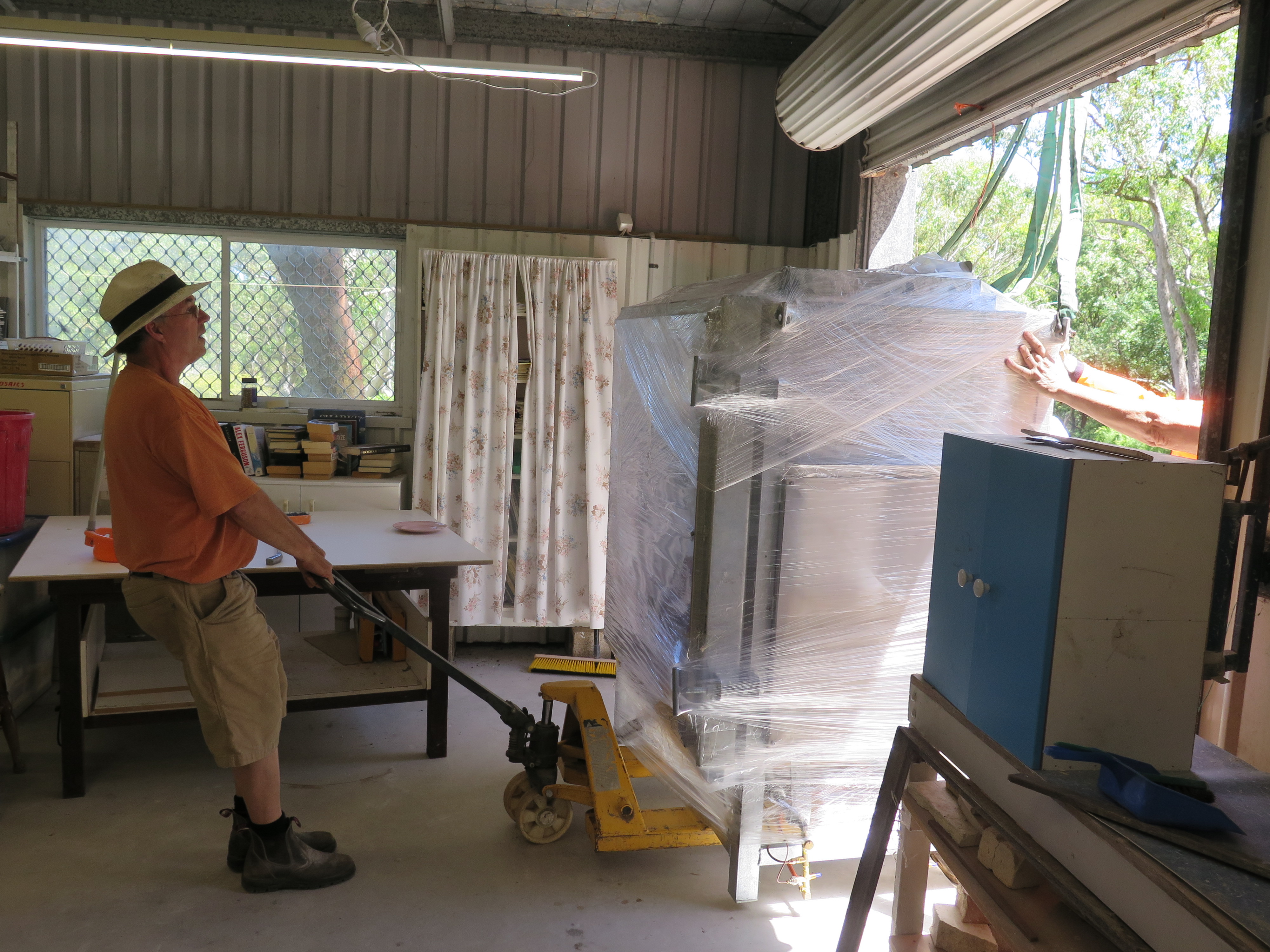
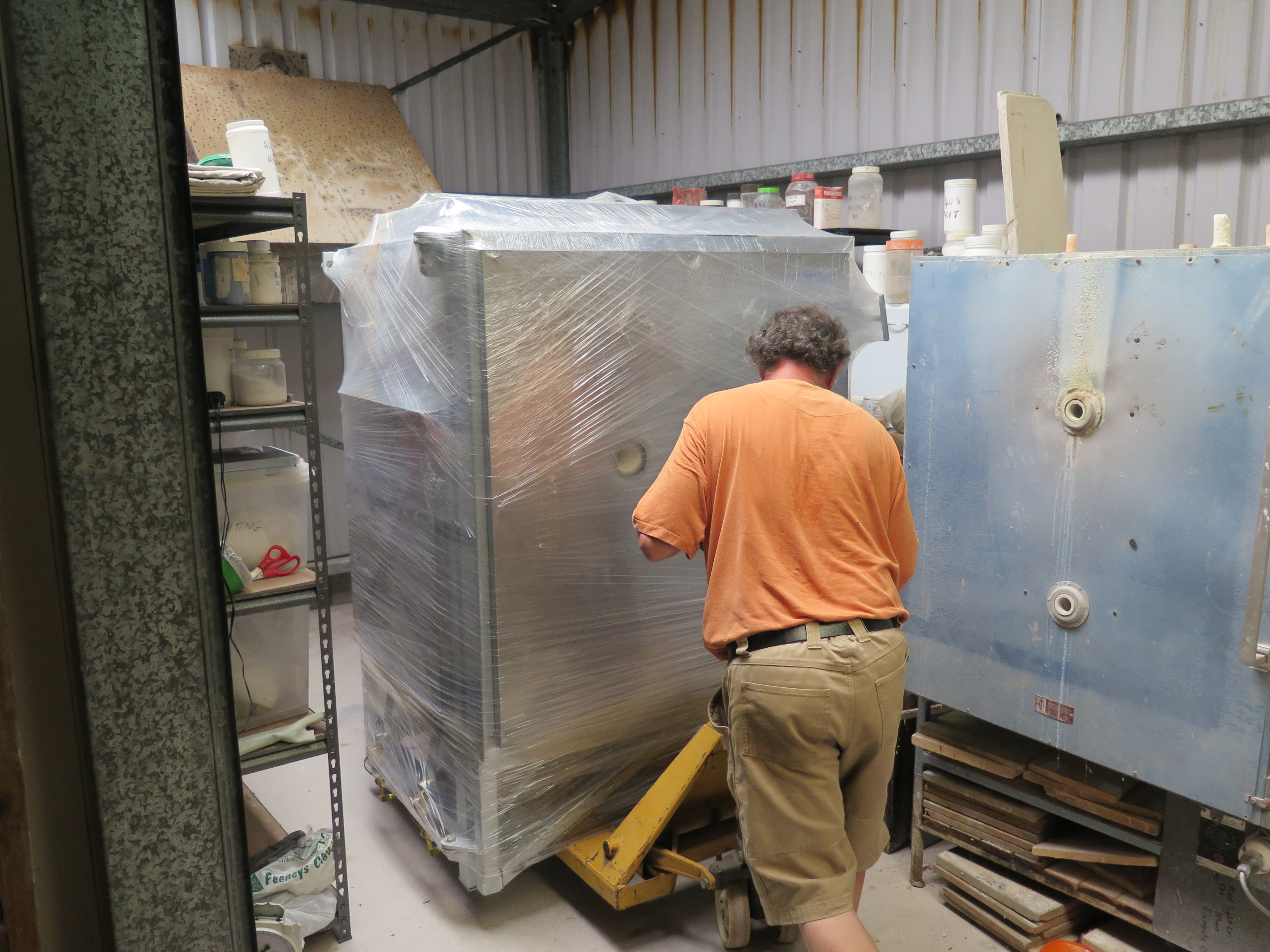
I have delivered the latest kiln to my customer and all went so very smoothly. Just as it should, as we do a planning to get it all just right, but regular readers of this blog will know that the best laid plans can suddenly go terribly wrong at the drop of a hat when a third party lets you down after promising faithfully to turn up on time. This is never the case with Dave, my local crane truck driver. He is amazingly punctual and careful with my jobs. It’s a pleasure to work with someone so professional and creatively competent at moving heavy objects.
IMG_2313IMG_2335 IMG_2336IMG_2338 IMG_2340 IMG_2342
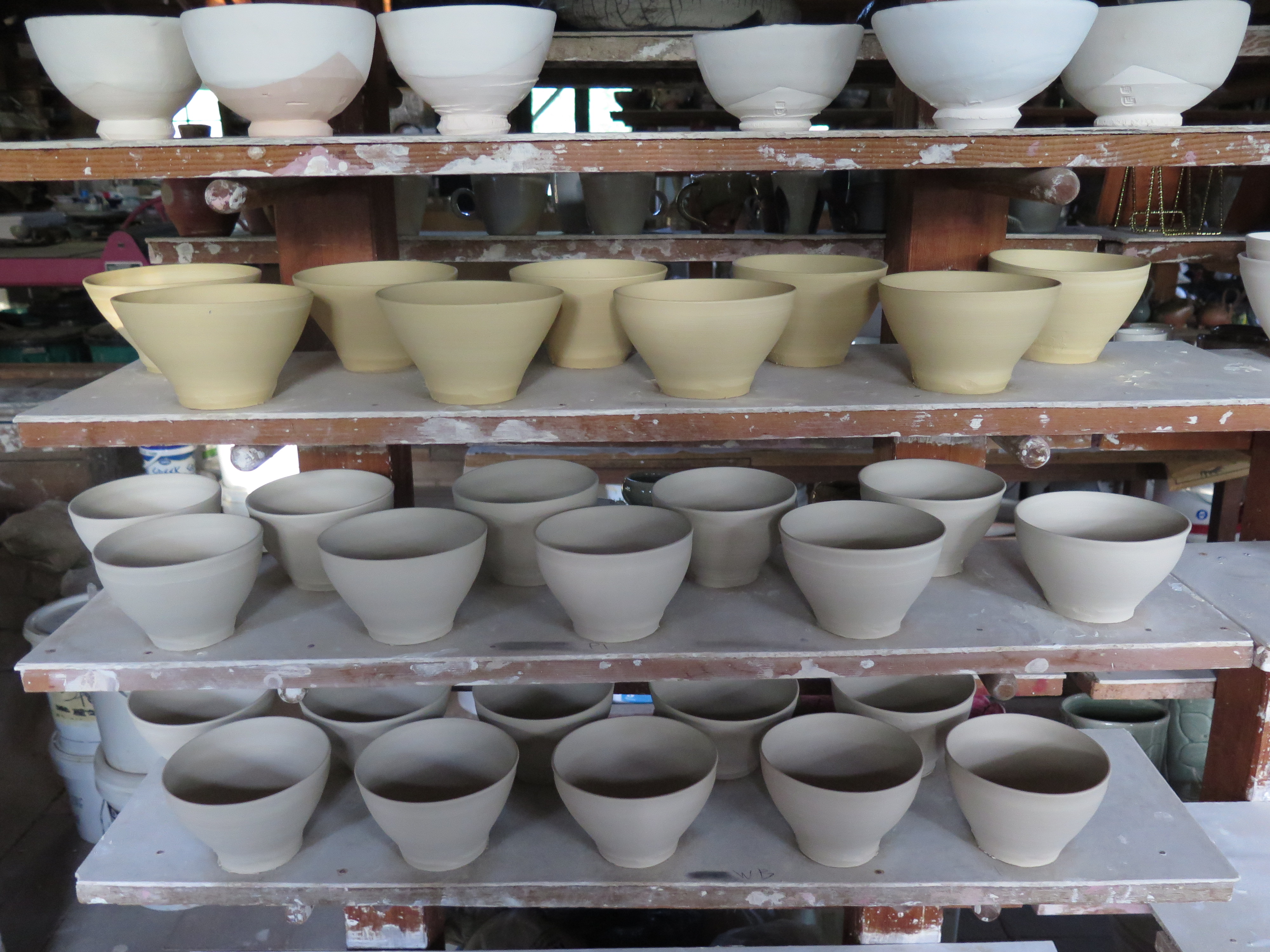
Warren and I have already started the next job and got it well under way. As I am ahead of schedule with my orders, I have been able to spend time in the pottery making some more of my porcelain. Iron stained yellow, pale ochre grey and creamy grey/white bodies.
IMG_2330 IMG_2331
We have also now completed 5 firings in our little new experimental, portable wood fired kiln. It gets better every time we fire it. That is to say we are getting better at understanding it and how it works. I’m also finding out all it’s weak points. All the things that I didn’t expect or imagine might happen have shown them selves and come to pass, so each time we fire, we find a new problem that needs a better solution. I solve each one as it appears and then onto the next. I think that I have it all solved, then something else appears. I’m constantly thinking this next firing will see it all solved and then I can start to produce them. Always the optimist:)
IMG_2292 IMG_2302
Cast iron doesn’t work in this kiln. OK for raku, but not here.
We have tried experiments with different types of fire bars over time and worked out that in this kiln, we can’t use ceramic fire-bars, or mild steel fire-bars, or cast iron bars, but custom welded stainless steel fire bars are the go for this little beauty when fired in reduction. The other fire bars that we have tried have worked well in other kilns at different times, but for this one, it’s going to have to be custom made stainless steel. They have proved to also have their issues, but I have worked thorough these and I now have a workable solution. I just need to try one more variation on the way we use the flue!
I am so confident about this little kiln now, that I am starting to draw up a plan for a larger version. Increasing the kiln shelf area from 300mm. x 455mm. (12’ x 18”) to a kiln shelf of 455mm x 455mm. Sq.  (18” x 18”)!
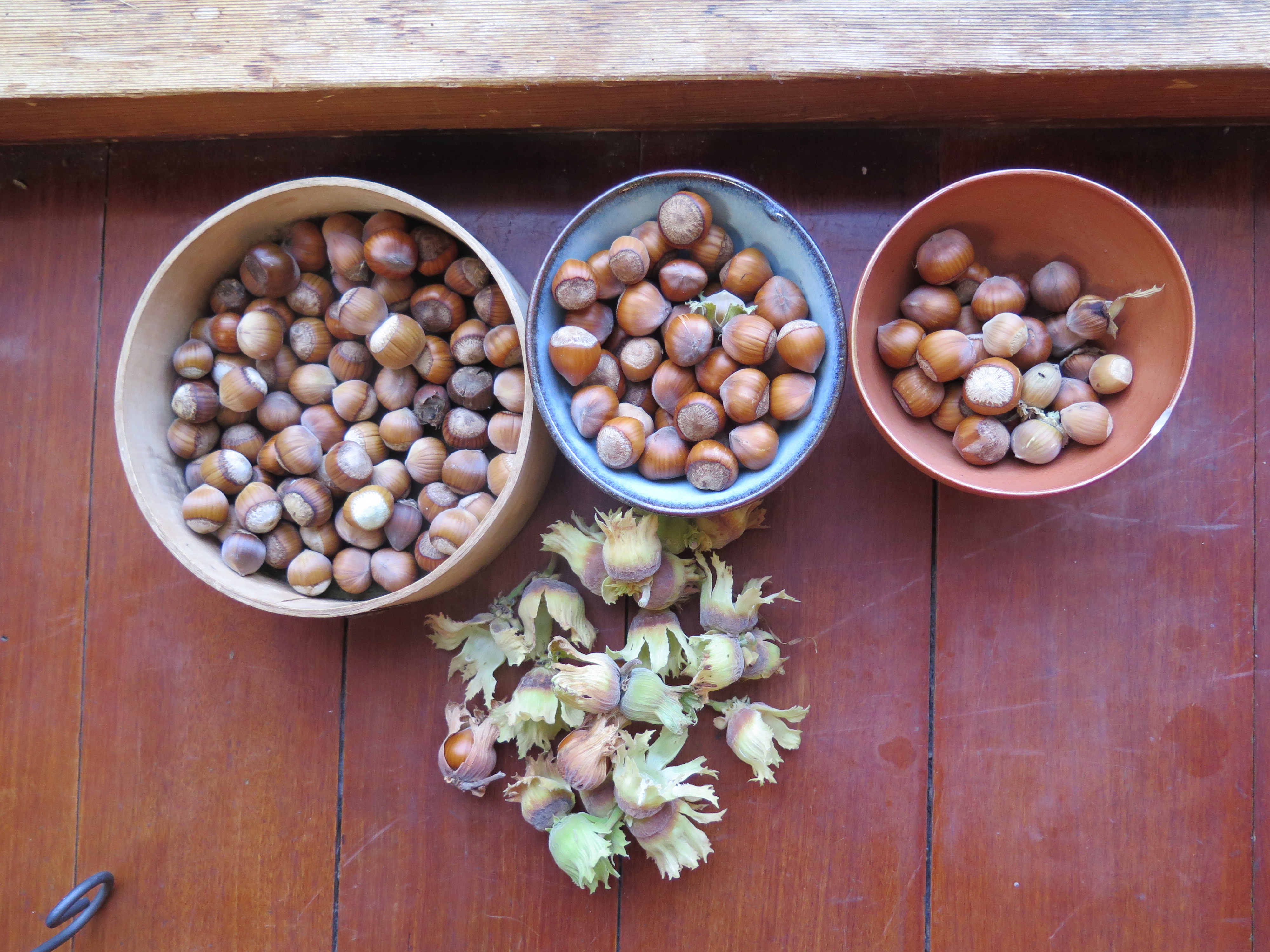
For the last few weeks, the hazelnuts have started to ripen and fall, we dry them in the sun in the kitchen window sill for a week and then they are ready to eat. Unlike our almonds, that always seem to need oven drying and slightly roasting to get the best out of them. The filberts are good to go, straight out of their shell after drying. This is our first good crop from them. We planted 2 year old grafted seedlings about 3 and 4 years ago, so the oldest ones are just starting to come to fruiting now. The first year, all the shells were empty. Last year we only got a few hands-full of nuts and half were hollow, but this year, they seem to have reached maturity, with most casings containing a nut — and they are lovely, crunchy and sweet. We have a few with a piece of nice cheese after dinner.
IMG_2193 IMG_2349
I’ve been in and out of the pottery pushing ahead with making pots for the next firing. We are technically still in fire ban season, so we can’t fire the big kiln easily at this time, as it takes 20 hours and is obvious to passers-by. But the little portable kiln is OK for a quick 3 1/2 hr. firing on the cooler days after some rain or a damp night of heavy dew. We can start early and finish before the day gets hot at mid day and after. It’s very convenient. We have settled into using just one wheel barrow of paddock falls, dry dead branches. I’ll have to try it with fresh split pine, old pallets and eucalypt heartwood in the future, but I can’t see any real problems there. Time will tell.

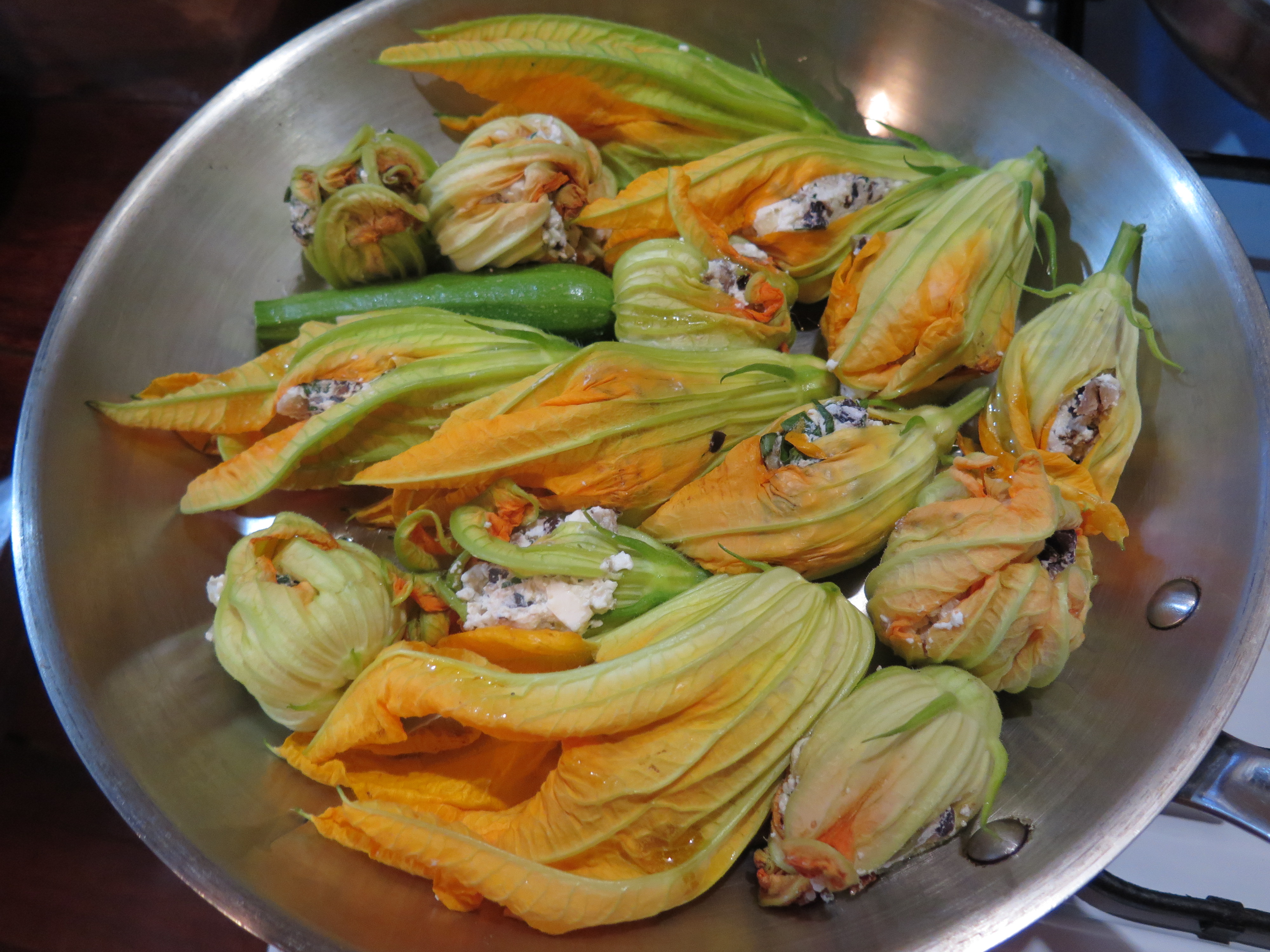
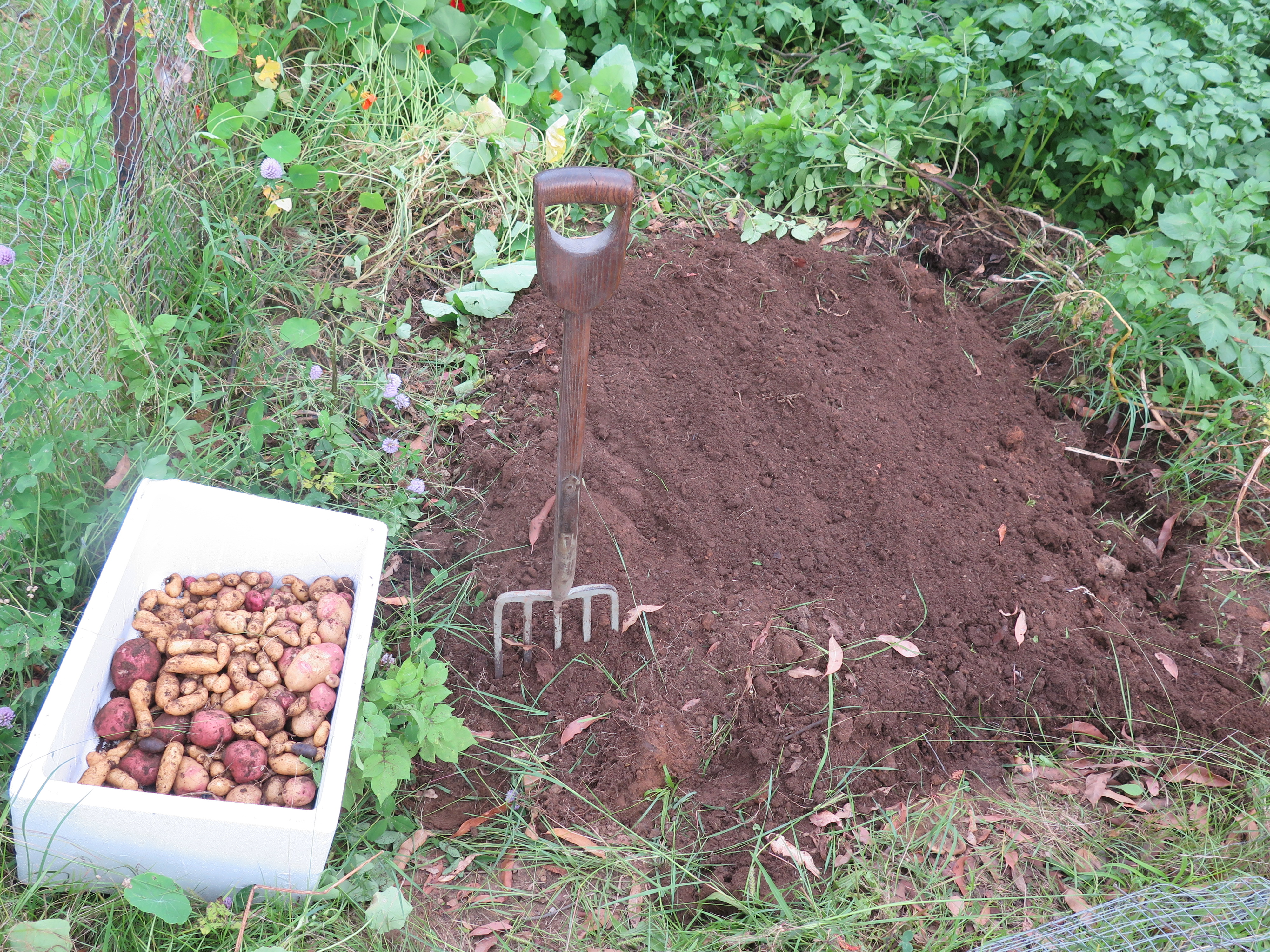
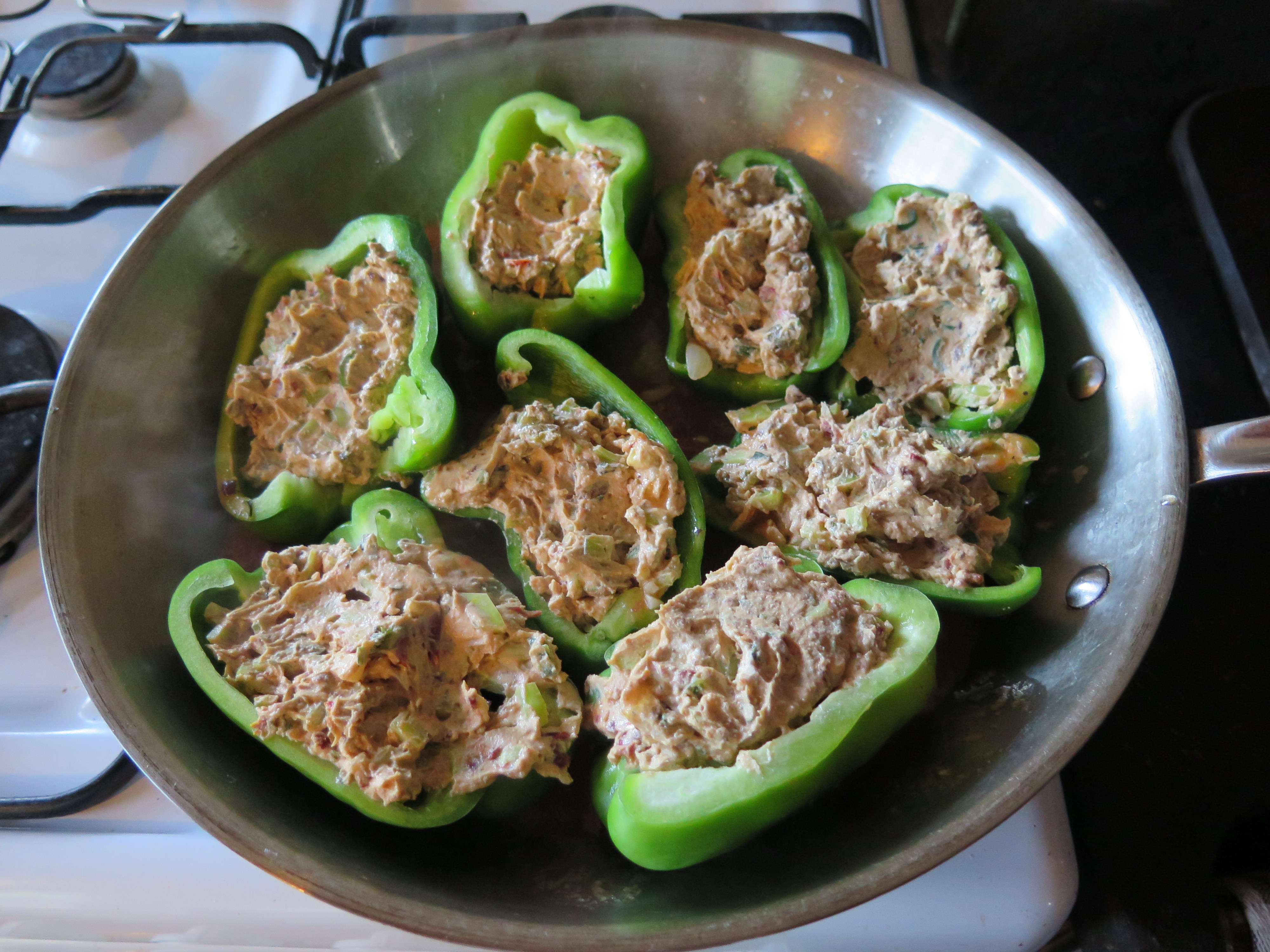
As the garden is thriving we have been eating fresh stuffed zucchini flowers. These are our 2nd planting of zucchinis. We are starting on our third planing of cucumbers, as the extremely hot days really frazzles them, and our 5th planting of raddishes etc.  We are also enjoying capsicums stuffed with ricotta and our own dried tomatoes and herbs. We have started to dig the first 3 rows of the 2nd planting of potatoes. It looks to be a very prolific crop. We fill a box quickly. There are twenty rows to keep us well fed through the winter.

IMG_2277IMG_2276IMG_2202IMG_2204IMG_2206
Regrettably, Janine and I went to the fish markets mid-week for a late sushi lunch on our way to an opening of a friends show at Watters Gallery later in the evening. I say regrettably, because I was struck down with food poisoning during the evening and had to leave early from the show, before my friend even turned up.
I’ve had to have 2 days off with the runs, and stomach cramps, unable to sleep through the first night without interruption. I am chastened and weakened, but starting to recover. An unwelcome surprise. I won’t be eating anything more from the sushi shop at the fish markets! Even now I’m still suffering a delicate stomach and slight head ache that makes it hard to concentrate. I have a load of work to do, but I’m not really up to achieving much just yet.
Best wishes from The Running Postman

Vintage Porcelain Clay and Other Simple Pleasures

Everyone seems to be obsessed with money these days, as if it solves everything. I heard on the news last night that the 3 richest Australians have more money than the bottom 10% of the nation. Pretty shocking! It’s a shame that there isn’t a way of making life a little bit more even and equitable for the disadvantaged. The Lovely and I have done very well for ourselves, being able to have built a simple, largely non-aquisitive, organic lifestyle here, without ever having had a ‘real’ job. We’ve managed to ‘get away with it’ for all this time, living an engaged, creative, self-employed, part-time amalgam of a life. Without credit card debt or interest payments, doing almost everything ourselves. Living within our self-determined means. We’ve never been on the dole and never asked for handouts. Money may be essential in the modern world, but we don’t let it ruin our lives.
 
I think that money is a like a tool. You pick it up when you need it to do a job, and it’s so much easier if the have the right tools at hand. Then you put it down when the job is finished and don’t think about it again, only taking care to make sure that it is well looked after while not in use. Having tools that you don’t use is a useless waste, better that someone else who needs the tool should have it and get good use of it. That is how I believe that it should be for money too.
 
I think that a lot of people have too much ’stuff’ that they don’t appreciate or really need. Probably bought on hire purchase or credit card debt. We’ve made a point of avoiding that as much as possible.
When I’m fasting, I really appreciate a glass of water. It tastes delicious, I’m so happy to be able to drink it. Such a simple pleasure – and so rewarding. When I get to eat that first small simple meal after the fast. It’s really appreciated. I’m so grateful to be able to eat some small simple thing. A salad, a piece of fruit, some steamed vegetables. They are so wonderful, because of my self imposed state of self denial. Everything is relative. In the 5 days between my fasts, when I’m well fed. That same glass of water isn’t very interesting. A glass of wine seems to be so much more appealing with a nice meal from the garden!
 
Fasting isn’t just about food. The controlled, personally-imposed state of self-denial is a state of mind that applies to money and posessions, just as much as it does to food. When  we began to live without a lot of money to pursue our artistic dreams, it was a kind of self-sacrifice. To get the time to make art, we had to forgo paid work. After we had survived like this for long enough, We started to realise that we just didn’t need so much of it. Not buying, renting, or serviceing the loan repayments on ’stuff’ saved us loads of money, to the point that we just didn’t need to go to work every day any more. This is how we have found the time to make pots – but we still needed money. It all changed when we bought our house.
 
It’s pretty clear that you can’t save up enough money to buy a house outright, so we borrowed money for that, just like everyone else, but not since then. We built nearly all of our house and workshop ourselves, over time, paying for parts and materials as we needed them. I did nearly all the trades, except the electricals. Making everything ourselves. It saved us a fortune. We built the house for the cost of the materials, about $25,000 and the workshop for $4,500.
We have managed to live most of our lives without debt. We keep our cars for 10 to 15 years. We save up and buy them when it’s needed. I do all the serviceing and maintenance myself, and by doing all the repairs and maintenance around the house and property, we end up not spending very much money at all. It’s a badge of honor to keep the 40 year old kitchen stove repaired and working, as well as the 25 year old lawn mower, the 22 year old washing machine and the 15 year old truck. I’m not so nieve to think that everybody should life their life this way. I’m not recommending it. It’s suited us and we have been very successful living this rich rewarding life.
 
I think that money is certainly very useful stuff, but the cost of earning it is very high. I have to give up all the things that I really prefer to do to stop and earn money. So, once the basic minimum and a slight little extra for security against the the unexpected is earned and achieved, then it’s time to stop earning money and take time off to do something much more interesting and rewarding. In our case that something is gardening and making pots. Gardening doesn’t earn us any money, but it saves us from spending some. Pots don’t earn very much money, but the returns on investment are exponential, if measured in satisfaction and enjoyment. We don’t have much in the way of superannuation, but I have spent the last 25 years, laying aside special batches of clay whenever I could. This is one peculiar type of super. However, It would be worth a lot more if it were red wine and not clay!
At 64 I realise that I will not be able to lay down clay for anther 25 years, as I have done in the past. I can’t see myself still being here when I’m 90!  I spent the afternoon working up and then throwing some of my oldest porcelain body, made back in 1990. The kneeding of the rather hard paste was a lot of effort. It needed wetting down a little and then re-working, that really mucked up my wrists for the rest of the day.
 
I have other batches of my milled stone pastes that date back 10 years and more. I get them out every now and then and try some of it out all over again. Just to see how they are improving. Slowly whittling away at the original dozen kilos, that I first stored away in these plastic packs. These non-plastic pastes are so much better with a few years of age under their belt. It’s amazing how a little time can cause such a great change in the rheology of these finely ground mineral coctails, and time is cheap anyway. It cost me nothing to leave it there – especially when I was younger!
 
Now that I’m not in a position to take advantage of the cheap option of time any more. I’m making use of some of the banked age that I have been accumulating in my clay store over the 40 years of our time here. This is now the time to make withdrawals from my clay bank. I have been slowly working away on a special project for the past decade and it’s starting to come together now. I’m feeling pretty good about it. Perhaps in another year or two, it will result in a nice show of special work?
 
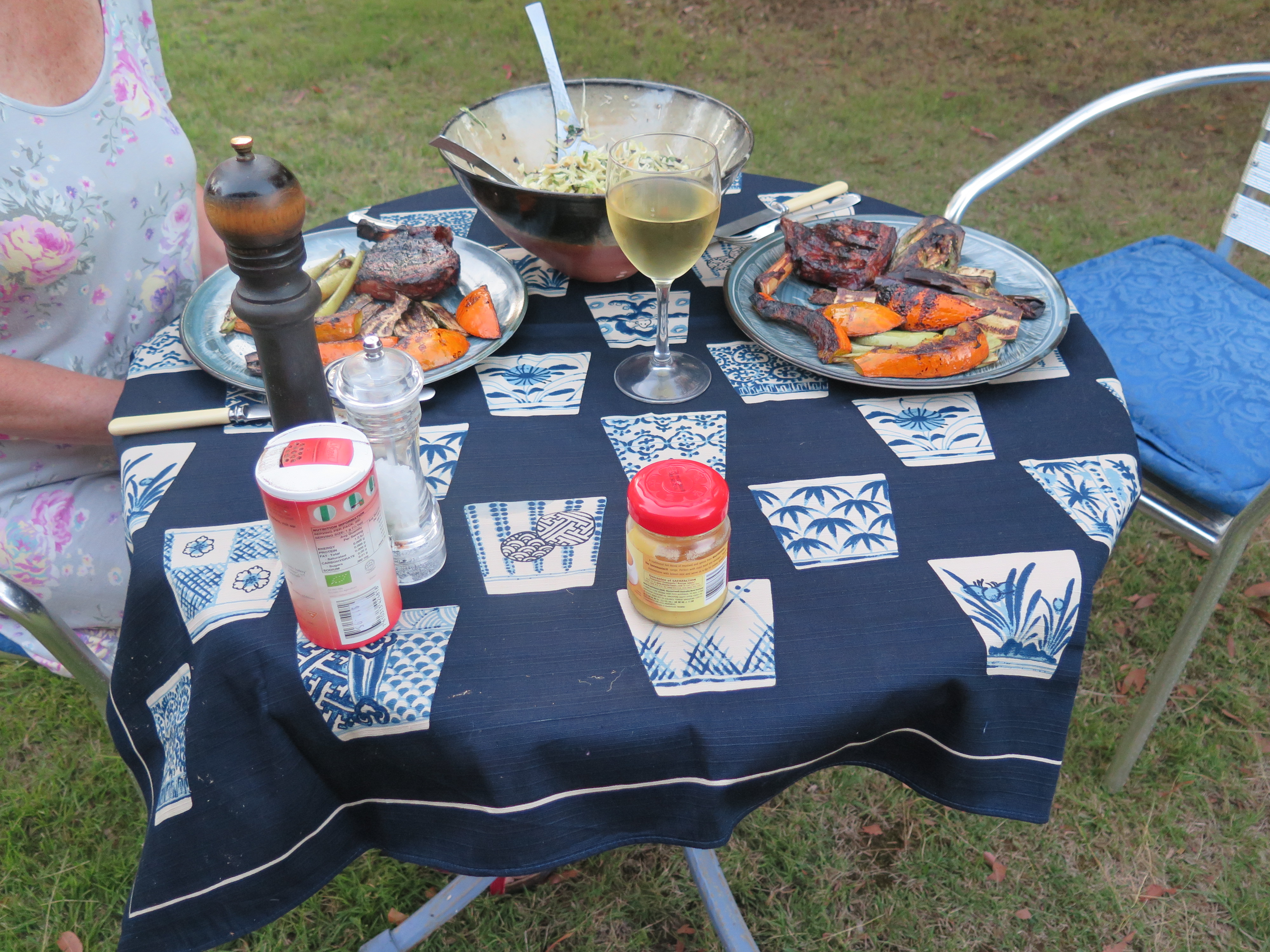
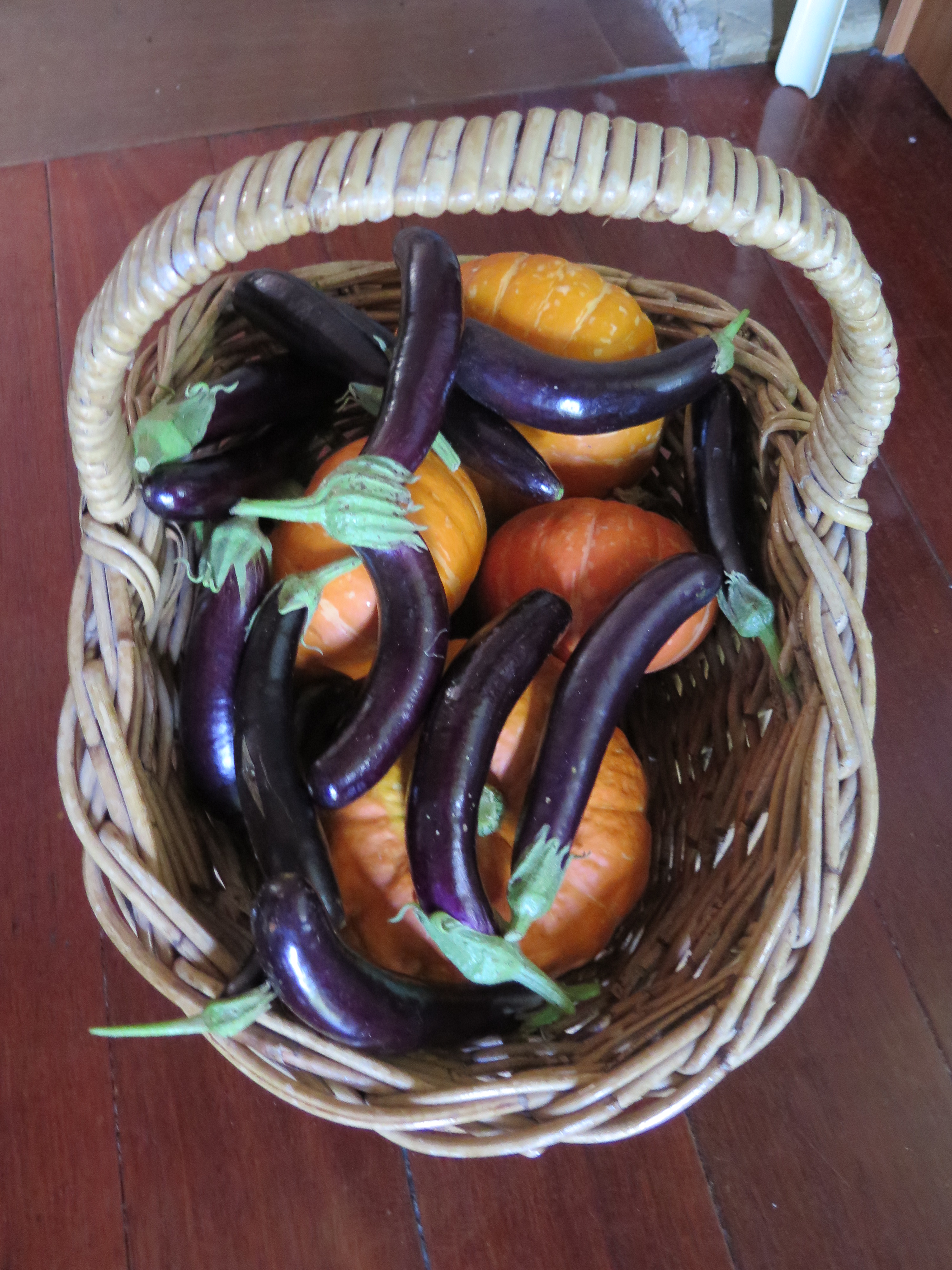
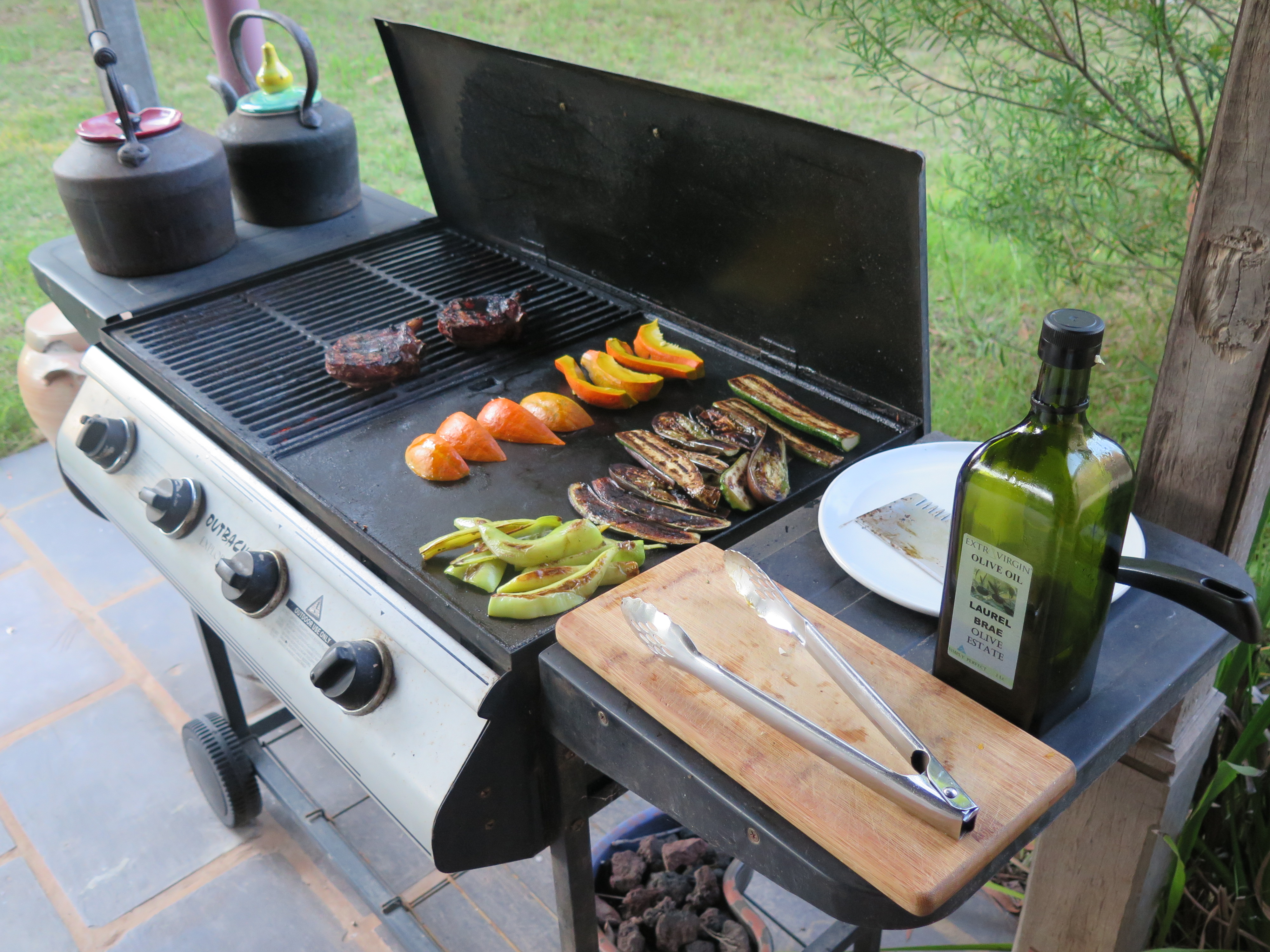
We decide that it would be nice to have this months red meat meal tonight, so I BBQ a couple of choice eye fillet pieces with the bone on, along with slices of zucchini, aubergine, capsicum and trimmed orange pumpkin slices with the skin on. We have been growing these marvelous little orange gems all summer. They have been so prolific that we have taken the majority of them to our son’s restaurant as we can’t deal with them all by ourselves. There are just so many of them, we are harvesting 3 or 4 of them a week. These things are so tasty and delicious when BBQ’d. 
IMG_2253IMG_2262
 
It’s a lovely evening, our visitors have left and we rejoice in the tranquillity of the sunset and our time together as the air cools and settles. We move the table out from under the verandah and on to the lawn, where it is cooler. I do the BBQing while The Lovely finely slices one of our cabbages to make a sort of coleslaw salad, except that it develops as she goes along, adding chillis and shiso leaves and an Asian inspired dressing, using vinegar, soy sauce and sesame oil. Suddenly its all changed and becomes something else, quite exciting and interesting. No mayonaise in sight!
It’s delicious and so appropriate, crunchy, salty, sharpe and very slightly oily. It matches well with the bbq’d meat and veggies
 
I love being able to eat the dividends of our investment in our garden in this way. In so many ways it’s better than what money can buy. It’s all organic and super-fresh. We couldn’t afford to eat like this if we were buying it or going to restarants and eat out.
Small simple pleasures.
Best wishes
from the simple but industrious, cash restricted, but life-quality rich, Steve and Janine

Stealing Time – Guilty Creative Pleasures

I quickly steal a bit of time in the workshop. I want to make some pots out of my aged porcelain stone bodies. I’m supposed to be building gas burners and silver soldering copper gas manifolds, but the lure of the potters wheel is just too strong. I manage to get 30 or so pots made from 3 of my specially prepared and aged porcelain stone clay/stone pastes. It’s a good feeling to be back on the wheel again after a week of brick laying and kiln building. I can only take just so many days of wearing the dust mask, goggles, ear muffs, gloves and all the other OH&S paraphernalia. It’s socially isolating and almost disorienting in its exclusion of the tangible world.

A day back in the pottery grounds me and alows me the fuzzy pleasure of thinking creatively again.

Some of these ground stone pastes of mine are so short that even after 25 years of ageing. I still can’t kneed them by the usual spiral kneading technique. One is just so short that it cracks apart under the rolling stress. I return to the tried and true ‘cut and slap’ wedging method. This has be proven to me to work much better than spiral kneading where finely ground porcelain stone bodies are concerned. The cut and slap method compresses and activates all the clay particles that can respond to this kind of wedging. The rest of the fine, non-plastic stone particles are firmly encased in the weak plastic matrix. It develops a tight workable putty that is almost throwable on the wheel, as long as I take a lot of time to coax it along slowly into the final shape, without expecting anything to happen quickly. The essentially non-plastic, porous,  surface sucks up water and dries out very fast, making the whole soft and floppy, so I have developed a technique of re-using all the wet slip from my fingers to lubricate the paste, thick slip doesn’t absorb so quickly, so that it doesn’t become too floppy, and extends the working time. Still, I have to work fast to get the form into a suitable shape and lift it off the wheel before it collapses.
It’s clumsy and slow, but it eventually delivers a workable open bowl form. Very heavy at the base and only just thrown thinly enough at the rim to pass muster. I rely on doing a lot of turning to get the shape to emerge eventually from the clod of stone paste.
Turning can only be done on bodies like this when they are almost dry. Any time before this, the soft, loosely bonded coagulate of mineral granules, just tears itself apart into crumbly chunks, making the whole pot unusable. Australian readers will recognise this particular torn and crumbly texture if I mention the name of Mersey Valley cheddar cheese. It’s impossible to cut this cheese without it tearing and crumbling against the knife. My milled stone paste porcelain bodies act like this if I try to turn them leather hard. I wait until there are significant white drying rings all over the surface before attempting to start turning.
The stoney grit in the matrix takes the edge off the turning tools in minutes. I have to stop and file the edge on my hardened steel turning tools very regularly. This involves getting off the potters wheel and walking some distance away, where it is safe to create iron filings by filing the edge sharp again, that wont end up in the clay.
Since my last trip to Japan to study single stone porcelain making, I returned with a cluster of tungsten tipped turning tools specially made for turning porcelain. These tools stay sharpe for a very long time. But even they eventually go blunt under constant use. I have found that I can recover the cutting edge back to its pristine sharpness by using a diamond dust impregnated file. This is the closest that I get to bling! I do apparently own quite a few diamonds. It’s just that they are invisibly small and encased in some sort of amalgam. Not sexy, almost as expensive but very useful!
I treat us to a dinner of gyoza, Japanese style pork and vegetable dumplings. I use lots of our garlic along with prime minced pork with very little fat. I get our local butcher to mince up some prime lean pork for me specially. I add in sweet corn niblets, finely shredded cabbage and green onion shoots. I fry it all up to make sure that it is all well cooked through and then work it into the tiny wanton wafers that I buy from the Asian supermarket section. These are pan fried in sesame oil, then when well crisped on one side, turned over and a cup of stock added to the pan with the lid on to steam them for a couple of minutes more.
They are beautifully rewarding, both crisp and yet soft and juicy at the same time. Wonderfull!
A real treat.
Best wishes
from the stone aged (aged stone) man and his wanton Wilma

Recycling

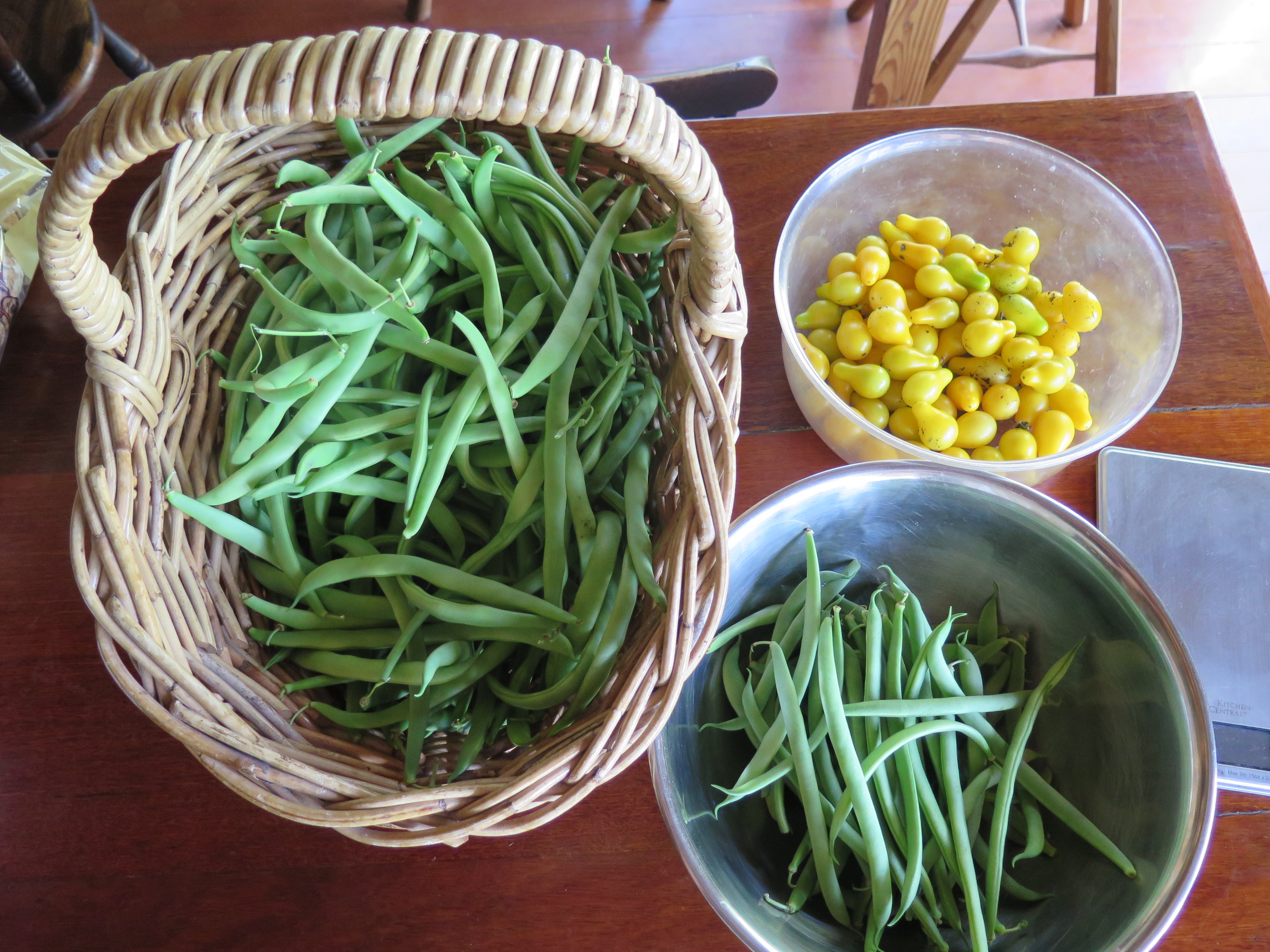
We have been active in the late summer garden, everything is growing it’s head off. The Lovely just picked two and a half kilos of beans. I took most of them straight down to Biota for Geordie to use in the restraunt. We have delivered baskets full of various veggies over the last few weeks, aubegines, zucchinis, mini orange pumpkins, sweet basil and bundles of shiso.

IMG_2188IMG_2127IMG_2102

At this time of year we are getting the full abundance of the late summer heat. We have had regular rain falls all through the summer, so we just can’t eat it all. We bottle, dry and preserve a lot of it, but it is always nice to be able to give away our excess to our neighbours and friends as well.

The chefs at Biota are high-end creative and flexible people, they simply invent a dish for that day that will use what we take in. It’s a one-day special on the menu till it’s all gone.
The summer garden has been feeding us with lots of lovely meals, like pan fried, stuffed zucchini flowers and baked capsicums stuffed with ricotta, our own dried tommatos herbs and spices.
IMG_1926 IMG_2174IMG_2176 IMG_2178
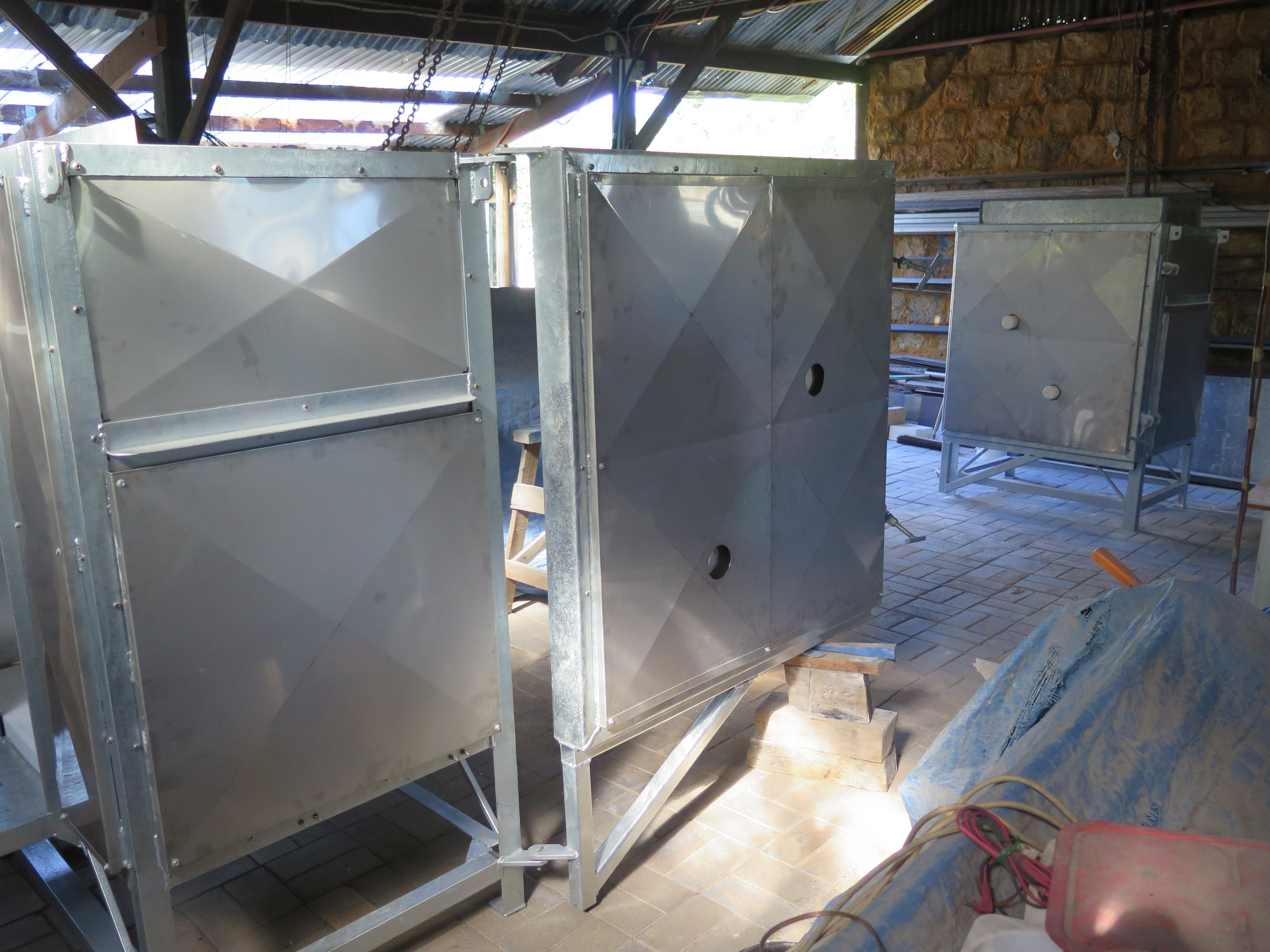
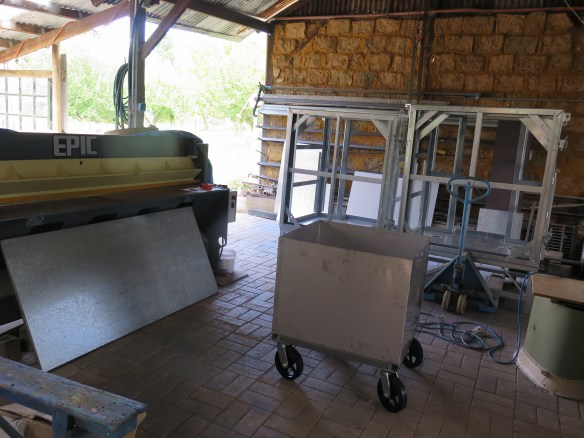
I’m back to work in the kiln factory again now. Warren and I put in a 5 day straight effort and almost finished the first one of the current pair of frames sitting in the shed.
IMG_2092IMG_2131
I make all my own firebricks for my own kilns, but when it comes to building kilns for other potters, then I buy in commercial light weight insulating refractory firebricks. They come all packaged on a wooden pallet. I end up with lots of these used pallets. Some from ‘loscam’ and ‘chep’ are deposited and can be returned or exchanged to retrieve the deposit, but these days a lot more coming in on one-off, single-use, non-returnable pallets. I’ve been thinking how I can get some value out of these pallets. The last resort is to break them up and fire the kiln with them. This is OK, as long as they are only heat treated and not copper chrome treated ‘green’ timber. The ‘green’ treated timber can only be taken to the tip for burrial, and at some expense. A total waste. Fortunately, we don’t see any of these green treated ones turning up anymore, they are all heat-treated these days, so OK for burning.
IMG_2116 IMG_2117IMG_2119 IMG_2118 IMG_2121IMG_2120

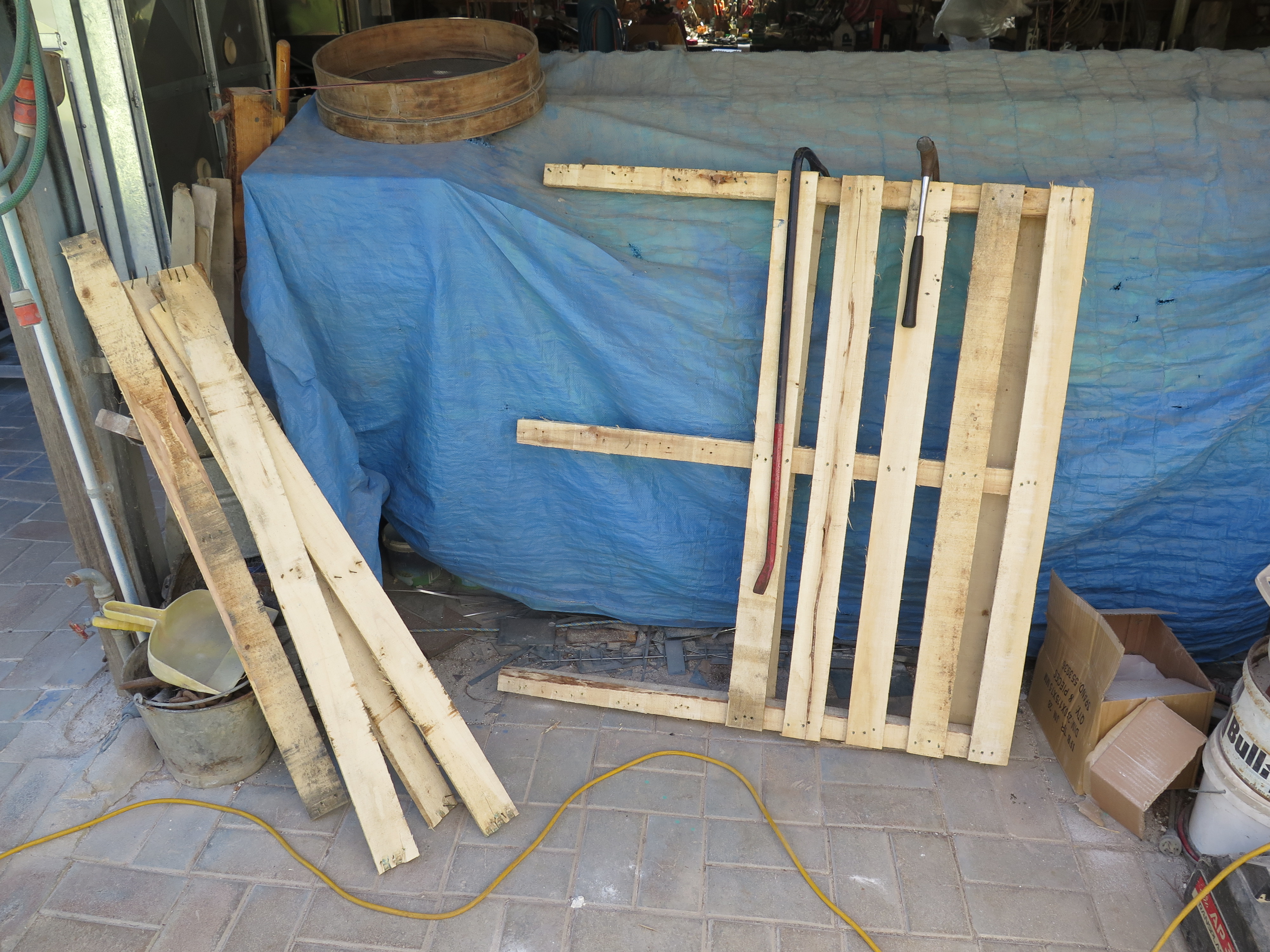
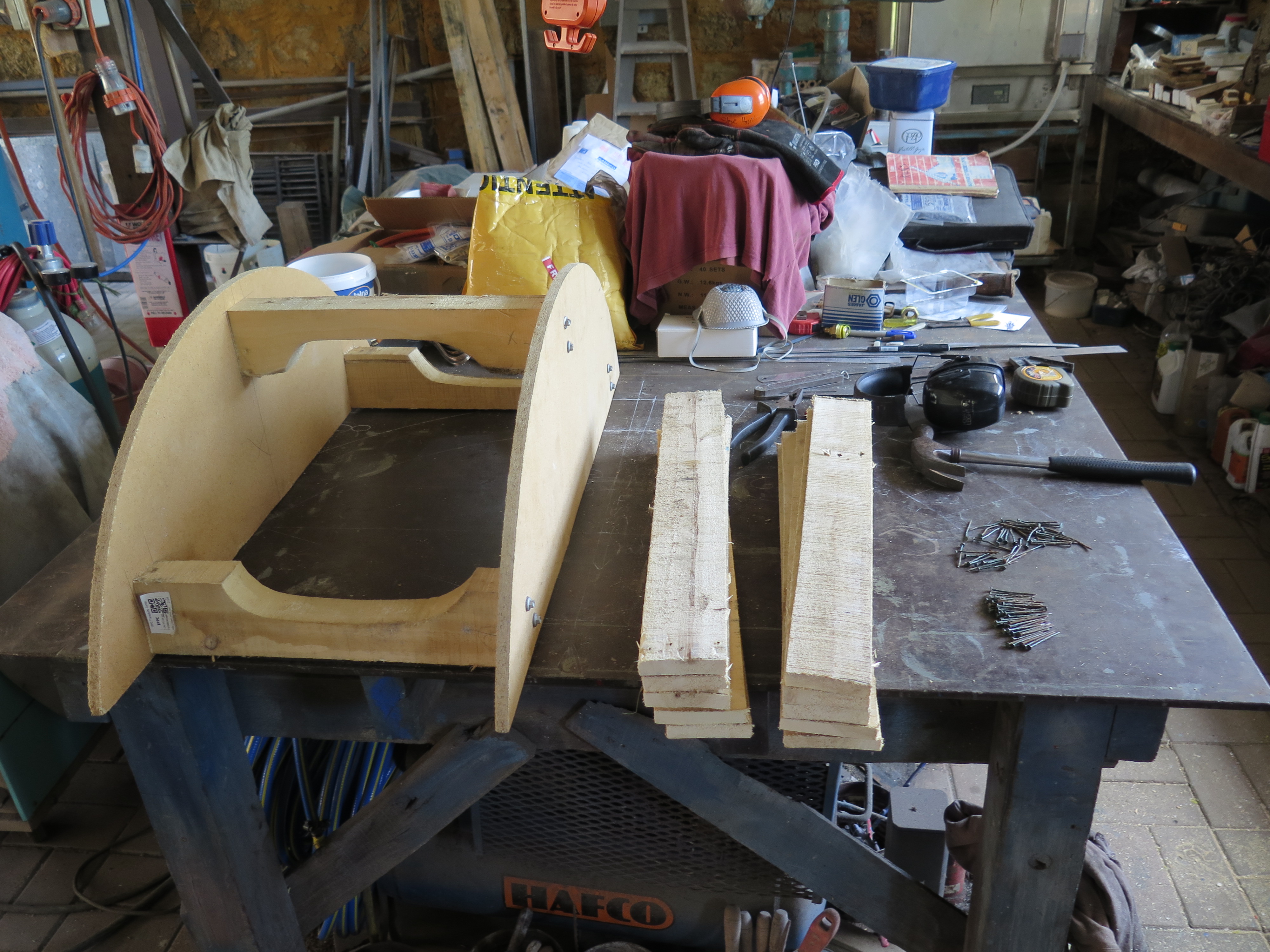
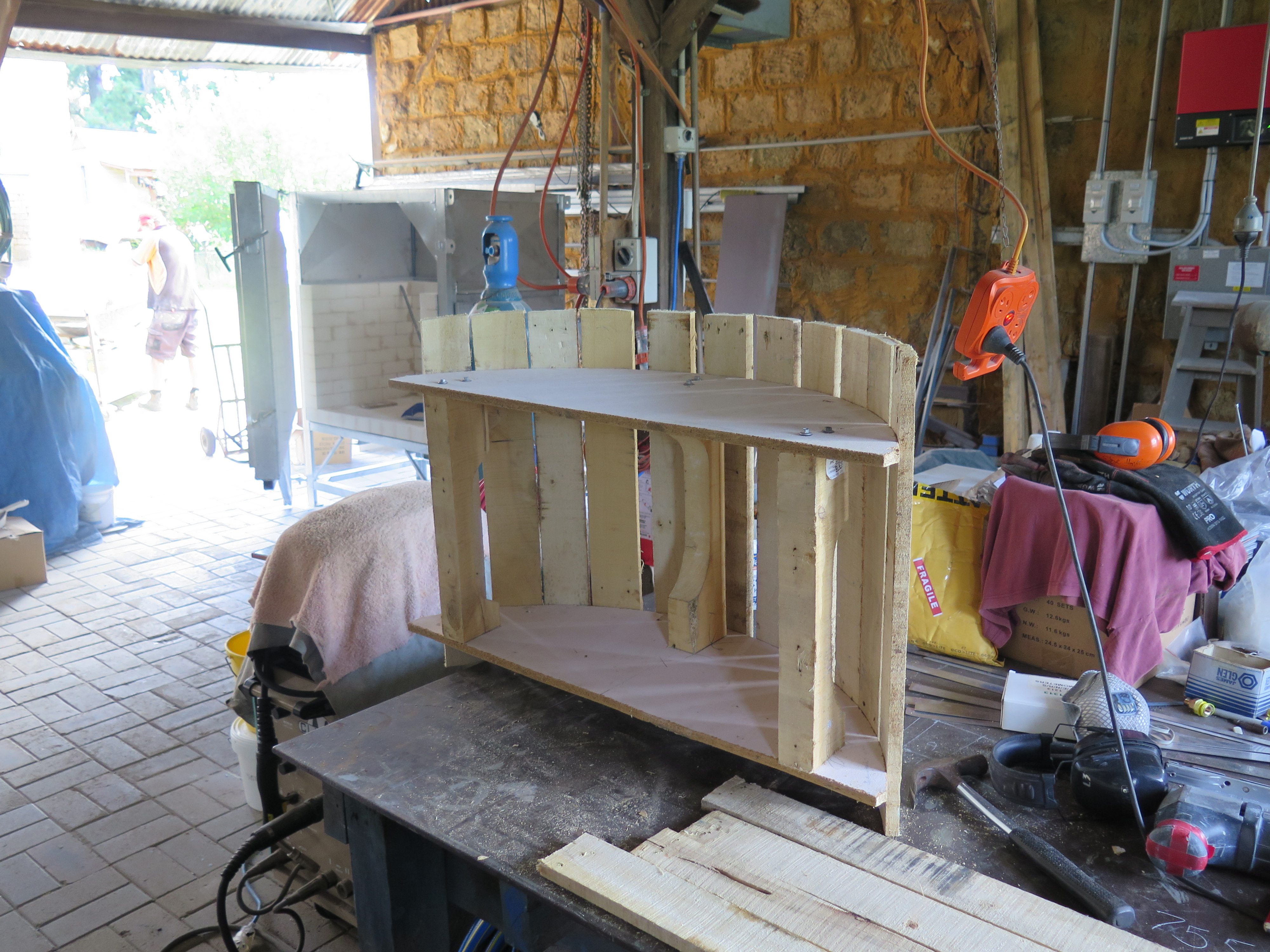
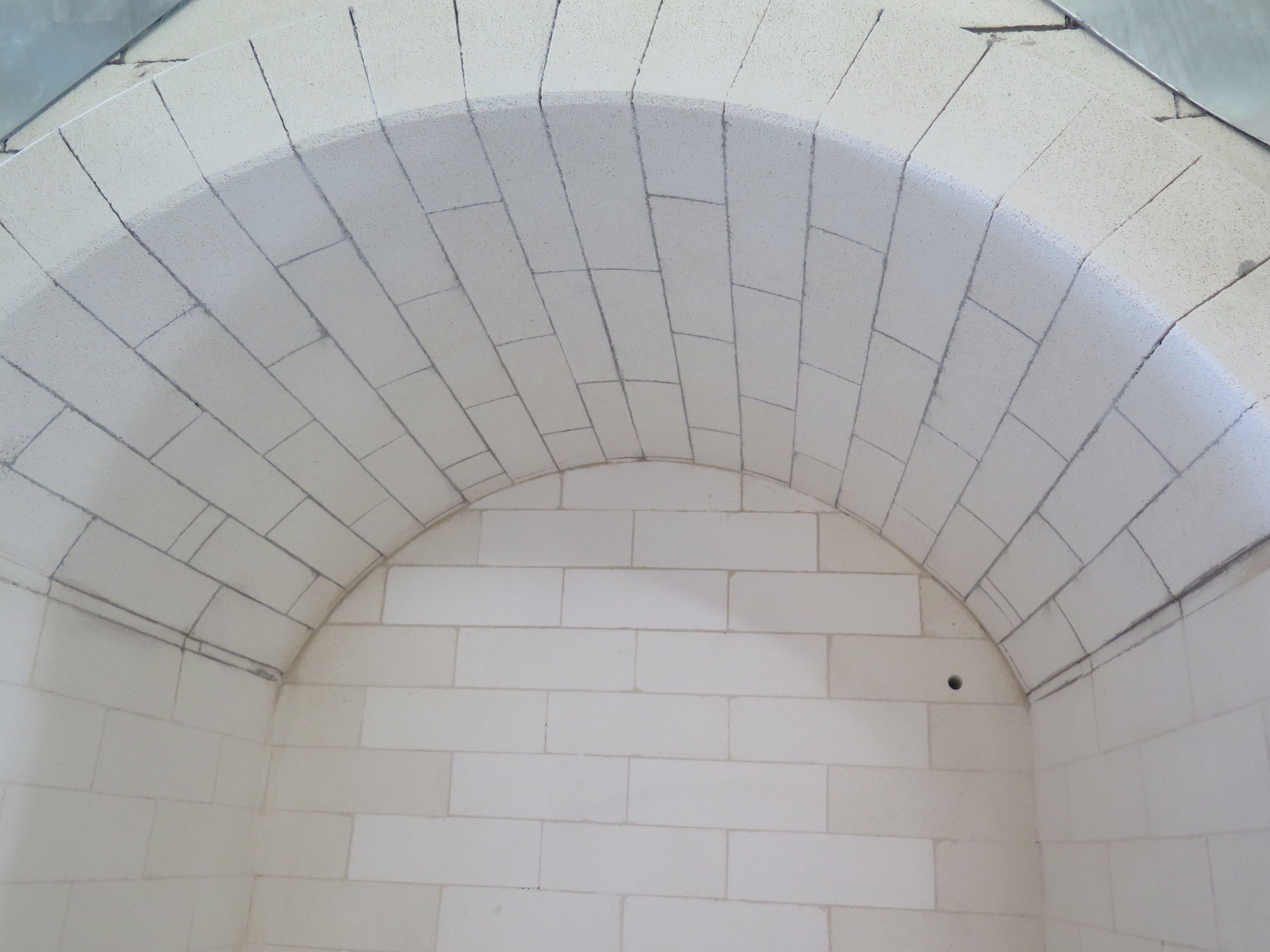
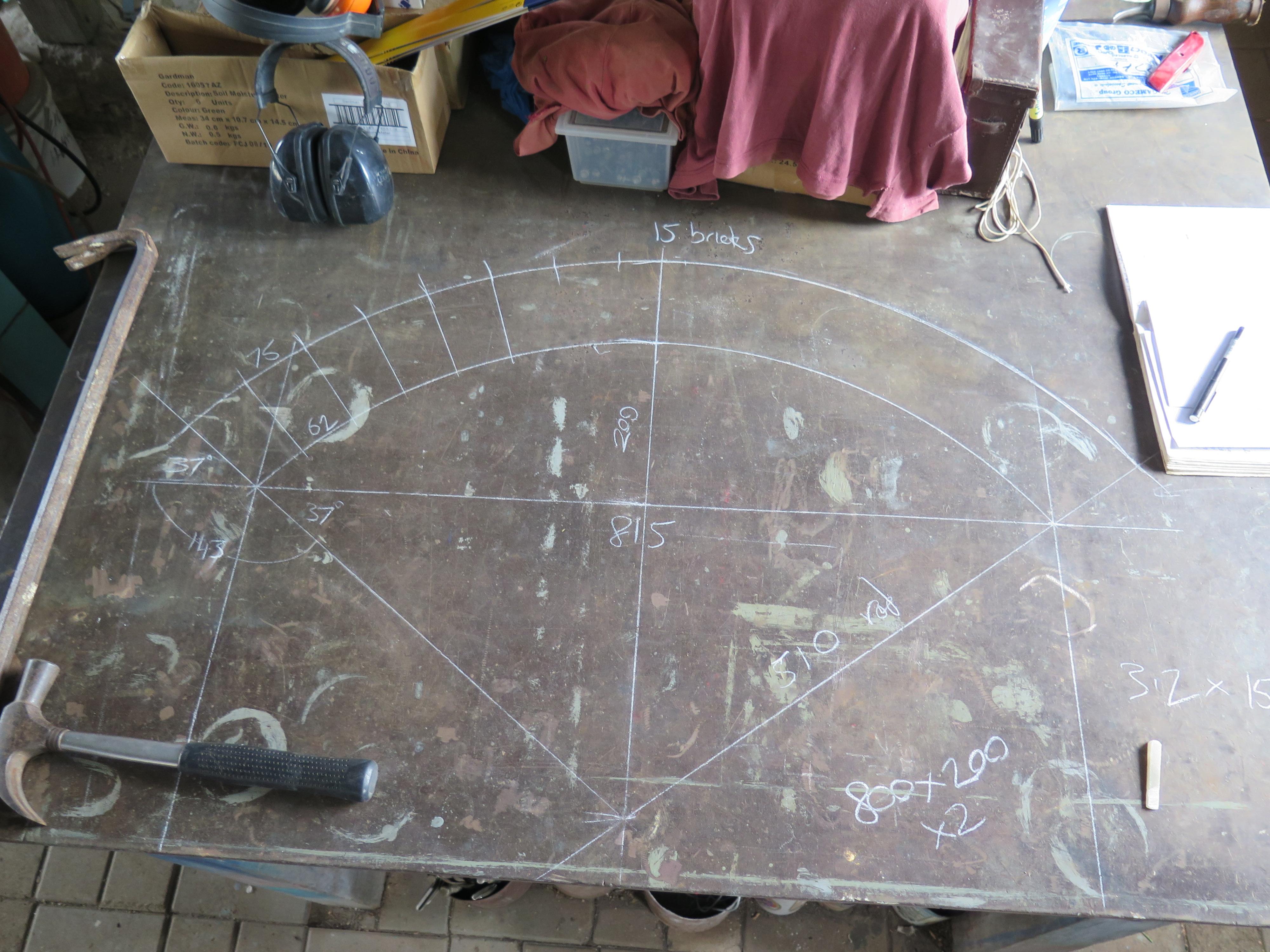
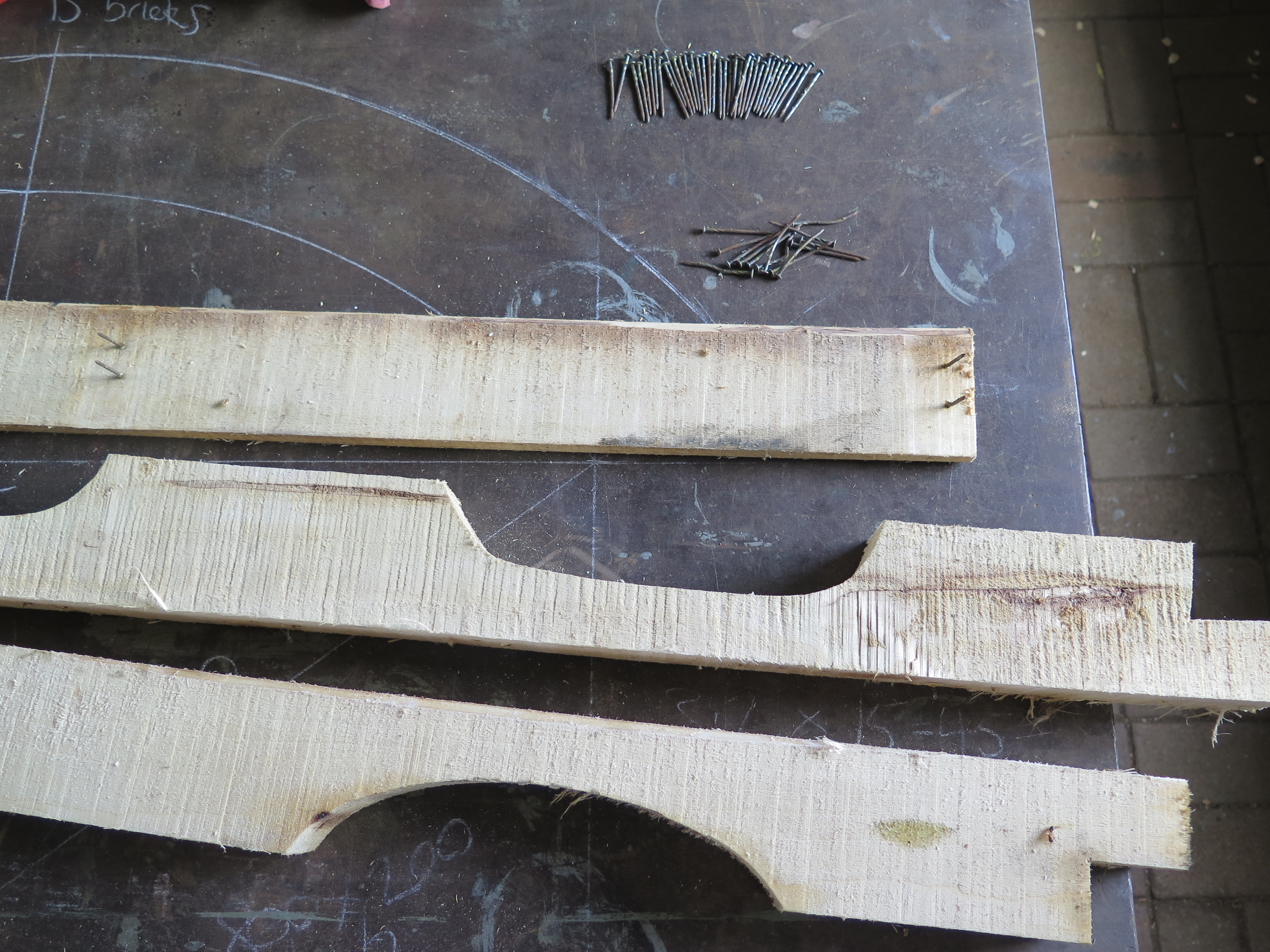
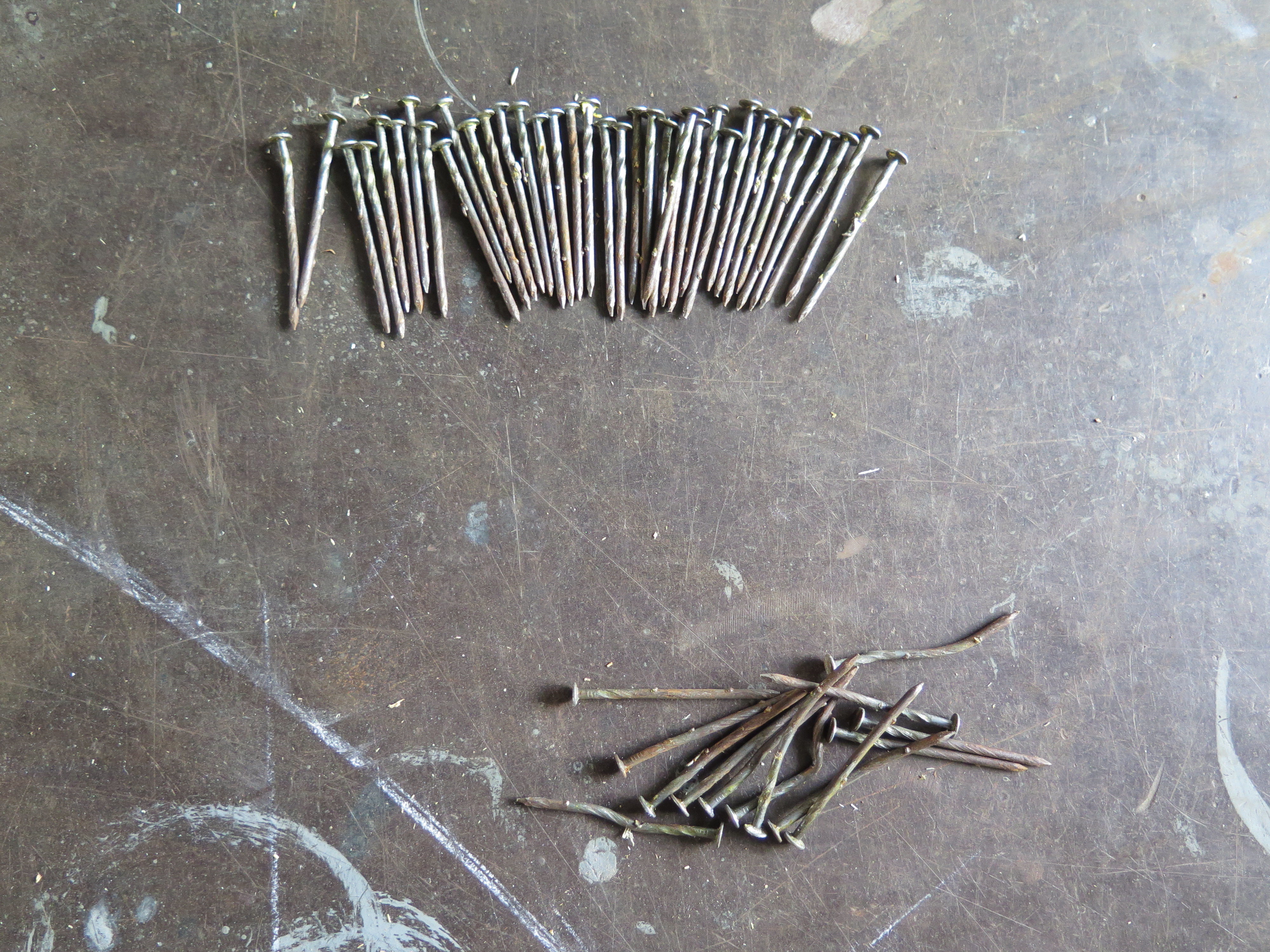
This last week I disembled one after we had used all the bricks off it to build the kiln and them re-cycled the timber into the arch formwork for the kiln. I even recycled all the nails from the pallet to re-assemble the arch form work.

We finish the day with a 3 rice rissoto and summer garden excess.
IMG_2141 IMG_2143
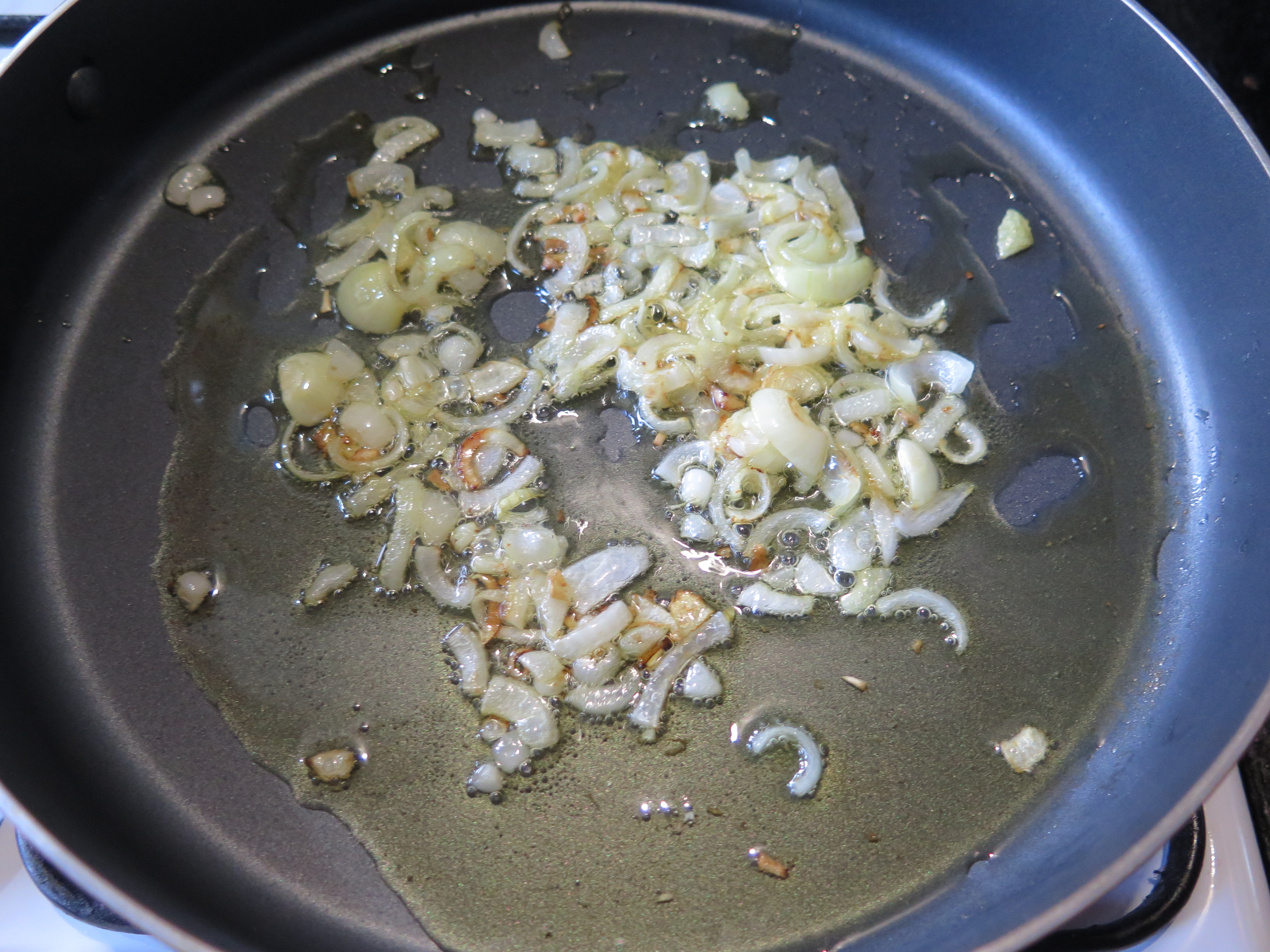
lightly browned home grown onion and garlic in olive oil, red ,brown and white rice, deglazed with a cup of white wine, enriched with a chunk of my frozen marrow bone stock and softened with a pan full of stock, simmered down from what was left from yesterdays baked fish lunch.
IMG_2145IMG_2068 IMG_2146IMG_2148
I serve it on Clive Bowen slipware plates with steamed sword fish and a dollop of Janine’s freshly made basil pesto.
IMG_2149
This latest kiln will be ready by the end of the week, so that I can start on the next one in the queue. I’d rather be making pots just now, but I know that I will need to pay out a lot of bills starting this week. Rego, insurance, council rates, land tax and the BAS statement, are all coming due. Just like so many creative types, I’m caught in the creative dilemma. Working for money to support my habit. My ceramic habit!
 .
Did you hear the one about the potter who won the big lottery?
He said that it wouldn’t change his life at all.
He would just keep on making pots till all the money was used up!
 .
At least we have a great life here working for ourselves, we don’t have to go to work for a boss! We live on a very low income, but have a millionaires quality of life. Last year we got a special tax concession of $500 from the tax dept. because we were living below the poverty line. We don’t think of ourselves as being in poverty. We’ve chosen this frugal austerity.
This Friday we’re having a day ‘off’, This will be our ‘weekend’. The Lovely and I will be firing the little portable wood fired kiln for its second outing. I’ve performed a bit of surgery on it to improve it a little more. At least I hope so. We’ll do a longer firing this time, we want to see if there can be some nice surface flashing if we fire for long enough? We’ll see what happens.
.
best wishes from doctor Steve and his very patient Janine

New Small Wood Fired Kiln

The first of the figs are ripe and we savour it. It is just perfect, sweet and juicy. We wouldn’t have got it or any others if The Lovely Hardworking One, hadn’t been out there early and netted the branch a few weeks ago. If we don’t net the fruit trees or the most laden branches, the birds take everything.

There weren’t any fruit eating birds here in this bushy area when we arrived, but 40 years on and an enormous amount of work later, we have built 4 dams for a secure key-line water supply and open grassy areas between the orchards, with areas of understory native shrubbery. We left all the really big established trees and without knowing it, we created a perfect habitat for all sorts of native bird life, from the very small finches, through to bowerbirds and magpies. There is even a very large white owl, that we haven’t managed to see close-up, so we can’t identify it. It has taken frogs off the kitchen window at night, right in front of our eyes, but moves so quickly and so totally silently that it strikes and removes its prey, without actually touching the glass and is them gone is a flash of pale wings, before we can adjust our eyes to the scene. I’m constantly amazed at how clever our birds are at fossicking out a living from our little property. So the fruit trees have to be enclosed to protect some of the fruit for us. The vegetable garden is now totally enclosed in small (35mm.) hex gal wire and very fine nylon mesh. This keeps out most of the birds that we don’t want in there. Those are the fruit and veg eaters, but allows the little finches in to feed on bugs. It seems to work OK for us now, but has taken a lot of trial and error to work it all out – mostly error.

IMG_1913

I have spent a little time over the summer break building another version of my portable stoneware wood fired kiln. These kilns are a direct response to seeing and working with Stefan Jakob’s ‘Ikea’ garbage bin raku kilns. Such a fun idea! And they work really well too, but only at the lower temperatures used for raku. It made me think about if it would be possible to make a reliable stoneware version of this kiln. Not in an Ikea bin, but in a custom made stainless steel monocoque box frame. The answer that I have been developing over the last half dozen years in my spare time is Yes!

This one solves all the problems identified in the last version, that although it could get to stoneware, some of its components weren’t likely to have a long life. I abandoned the ceramic fibre lining, as it doesn’t last for extended periods of time at very high temperatures where there is a lot of wood ash. The fibre turns glassy and peels off, like glaze shelling off, exposing new fibre, which then dissolves, the ash glaze slowly eats its way through the lining in this way.

We first experimented with a ceramic fibre lined stoneware wood fired kiln back in the late 70’s and early 80’s (see Handbook for Australian Potters P289-291.) In that kiln I used the new material at that time called ‘saffil’ board, that was mostly composed of alumina fibre. A 10 mm. hot face lining of this material lasted 30 stoneware firings before it was eaten away in the hottest part. These new little kilns use light weight refractory insulating bricks as the lining.

I couldn’t allow myself to recommend or to sell anything that wasn’t up to scratch and capable of delivering a long working life, so the development has continued, designing out the apparent flaws as they made them selves known. So now the design is a little closer to completion. I have designed version 5, so I hope that after that is built and fired a few times, everything will be settled down and we will have a very long lived and reliable small portable kiln. I think that we could say that we are now moving from prototype to beta testing stage. Perhap there will be something that we can sell to other potters with like minds. Just like we do with the more substantial gas and electric kilns that we build here – only much cheaper.

The improvements in version 4 meant that we could fire it up to 1,000oC in one hour. This part of the firing could easily go very much faster, but we have cracked kiln shelves in the past by going too fast below red heat. We then took the firing from 1000 to 1280 in another hour, finally soaking at 1280oC to 1300oC for the last hour until cone 10 was over. We got very good reduction colour in the glazes in that time frame. I was amazed what a couple of extra hours could achieve, in terms of quality. After all it’s not all about intense speed. We can already do that. This is more about getting very good quality results with a minimum of expenditure of effort and fuel.

I spent a few days working out how to create this little wonder of a kiln, to enlarge it to use a 12” x 18”  (300mm. x 460mm.) kiln shelf in the setting, and still be able to cut the frame out of one sheet of Stainless steel with no or minimal wastage.

I’m sure that there are a number of potters who are with me and like minded in this regard, potters who are thinking just the same as me. How can I achieve lovely wood fired results without firing for days and creating loads of smokey pollution. I think that this sort of little fun kiln will be very good for potters with an interest in wood firing, but without the large work flow required to fill a larger anagama kiln, or a suitabe place where so much smoke can be created day after day. This little kiln is definately not smoke free, but the smoke is minimal.

As it turned out, this was a very relaxed and easy firing using dead brushwood and small, dead, fallen branches as fuel. There are always loads of eucalypt paddock falls all around our property from season to season. We collected 3 wheel barrow loads, one of kindling twigs and another two barrow loads of small thin branches, up to 50 mm in dia. We ended up using only 2 of them. We will fire it again for a little longer next time, slowing it down a little so that we can not only get the good reduction colour in the glazes but also some surface flashing in the bodies as well. I’m intrigued, what is the minimum length of firing time required to be able to get some pleasing wood fired effects on the surface of our pots?

When we fired up my pots in the first kiln, up to stoneware in just 1 hr. in reduction in the earliest version of this kiln, there was little reduction effect showing in the glazes. The pots looked pasty and palid, as if oxydised, but were in fact very pale grey, so they were reduced. It seemed that 30 minutes of reduction wasn’t enough to get a good response from the clay and glaze chemistry. This time, at 3 hrs. The results have shown very good reduced glaze colour effects, but only a very limited flashing colour on the exposed clay bodies. The work is starting to show some pink flash on the porcelain clay bodies with this slightly longer firing time, so we are getting close now. At least there is something there. The difference between one hour and 3 hours is dramatic. Perhaps the next firing of 4 or 5 hrs to S/W will do the trick and give results that I am better pleased with?

I want every thing now! I just don’t have the time to be able to do it all.

best wishes

from the multi-tasking S&J

8 New Clay Tests

I have been using the warm weather. In-between rain storms. To dry out some of my new batches of single-stone porcelain clay test batches. The 50 litre batch of 12 month aged porcelain slip is now almost stiff enough. It should have been ready to lift off the drying bed a couple of days ago, but with this last series of rain storms, the atmosphere has been very humid lately, so we have slow drying weather. The mornings start with a heavy mist that doesn’t burn off until later in the morning when the sun get up.

I have used the plaster tubs to dry out some small batches and I now have 7 different new clays to test and throw. They are all just about the same on the wheel, not a great deal of difference. I have dug out a bag of special ‘vintage’ porcelain from my clay store. I don’t have a date on the bag, but reference to my clay-making diary tells me that it was made in 199o! This is the oldest clay in my cellar at 26 years of age. It has stiffened a bit too much to be throwable now, so I have to dampen it down a little. I’m amazed how well it throws. The reason that I put it away in the first place was because it was so short that it was unusable. Now after 25 years of ageing, it throws like a normal porcelain. It does have a slightly peculiar ‘grainy’ texture though. A little bit odd for such a finely milled clay. Some sort of bio-chemical change has taken place in the intervening years of ageing.

IMG_2085

I remember co-responding with Harry Davis back in the 80’s. He asked me if I had any experience with clays that went grainy after long periods of ageing. He had left clay in his clay store while he went away for 10 years and worked up in Izcuchaka in the Peruvian Andes on his and May’s private aid project. When he returned, all his clay had changed texture and become grainy. I hadn’t experienced anything like it at that time. I wasn’t old enough to have clay laid down for ten years at that time! Now I am, and I suspect that it is some sort of aggregation of the microscopic clay particles into larger flocs over extremely long periods of time. This happens in slip if left in a slightly acid condition. So, perhaps it’s possible in the plastic state as well?

Of these 7 different bodies, there are 7 different colours, from iron stained yellow, through to almost white. Of the bodies that I have made from my ‘bai tunze’ single-stone porcelain stone. There are variations in colour due to the fact that there are veins of iron running through the rock. I crush the stones through the large, primary jaw crusher  and then spend some time sorting and separating the iron-stained pieces from the white material, these are them processed separately to give yellow, cream and grey clay body mixes.

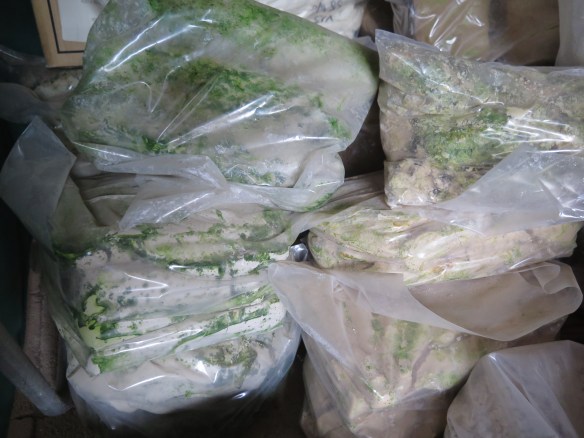
The iron stained bodies respond well to the wood firing by flashing to a mahogany red colour, where the paler coloured mixes flash in the wood kiln to a pale pink to crimson colour. All the milled stone body mixes grow a series of organic algae and/or fungus come moulds of some sort or another. The clear plastic bags that I store them in turn green and/or buff/brown where daylight can get to them. A little bit off-putting, but it seems to increase workability/plasticity rather than decrease it over longer periods of time. I’m not saying that the presence of algal growth increases plasticity, but the time spent ageing the clay increases the plasticity and the algal growth is a natural sign of this extended time taken.

IMG_2084

Because I don’t add anything to my milled local porcelain stone bodies, except a small amount of bentonite and the slightly acidic tanninised tank water. The whole thing is alive with all sorts of organic material from both the natural stone and the water. It’s a living thing! It doesn’t happen straight away, but over time stuff grows in there where-ever the conditions are right.

Commercial clay doesn’t do this. I recently opened a bag of commercially prepared paper clay to find that it smelled of ‘dettol’ antiseptic fluid. Nothing is going to grow in that! I’m an organic gardener and I am trying to live a simple, creative, organic life. If green algal mould is the result in the bags of clay, so be it. At least I know that it is alive, and not dead and even possibly toxic.

One of the batches of my ball milled baitunze, batch JV15db, was milled for a little longer than usual to get it extra fine. However, I seem to have milled it a bit too long this time, 16 hrs. I suspect that this was too long, because when I threw my first bowl out of it, it shrank and cracked in the base where it was thickest. This has happened once before. I will have to blend it with a coarse milled batch now to reduce the shrinkage a little.

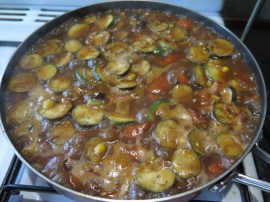
For dinner we try yet another variation of ratatouille with todays pick of  French beans, we par-boil them, so that they are still crisp and then add them into the mix of ingredients from the garden. I partially BarBQ the egg plants and zucchinis while grilling some long yellow capsicums. Janine reduces a boiler full of very ripe tomatoes, onion, garlic, olive oil and basil. We finish it off in the flat flan-pan, then pop it under the grill and melt some grated cheese topping to a golden yellow/brown crispy finish.
This is what we have, so this is what we eat.
Best wishes from the algal greenie and his all greenie gal
Steve

Finally, the rain comes

We have had a week of swelteringly hot days, all up in the high 30s. Yesterday was 39oC way too hot to work out side, so we got up very early and got started working by 6am. We gave up and came inside at 11.00 am. It was just too hot. We have been watering the vegetables morning and night, but they are still suffering. Many of the plants like beans, celery and  cucumbers have dead, dried patches on their leaves.

IMG_1740IMG_1737

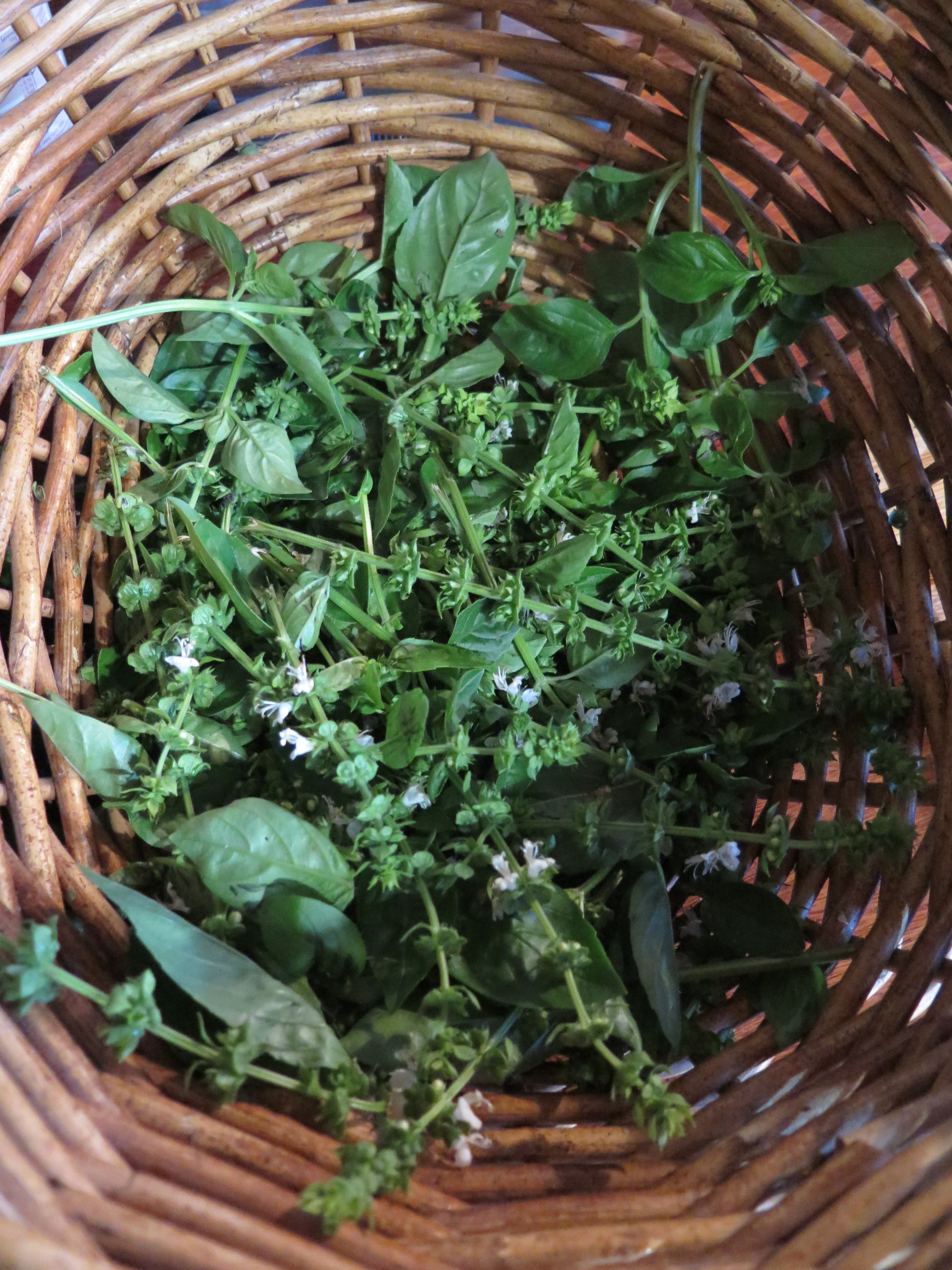
But at least they are still alive, so that is success. I gave the sweet basil its first hair cut. I tip pruned all the florets that were trying to flower and filled a large basket with the leaves. I like to make a kind of pesto-like paste. to go into the freezer, so that there will always be basil to add to sauces later in the year. We also make real pesto with garlic, pine nuts and parmigiano cheese, but what I’m making here now is just basil, garlic, a little salt and olive oil paste. It freezes well and keeps all year, so that when I need some basil flavouring in winter, I can open the freezer and take out the tub of this frozen basil paste, tap it upside down to drop it out of the container and then slice off a block of almost fresh basil concentrate. Beautifully green and flavourful. The rest is returned to the freezer for later.

I’ve been known to make up to six or seven of these half litre containers during the summer. As long as I never let the basil flower and keep pinching out the growing tips, the plants seem to thicken up and keep producing more leaves. Once you let them set flowers, they stop growing.

This stuff is fantastic. I love it. It’s one of there few things that we keep in our small freezer section of our fridge. Because it isn’t cooked, we can’t preserve it any other way, other than drying the leaves, which I have also done, but dried leaves are different. This stuff is magic. So intense. The little bit of garlic and salt really brings it to life. And it is surprisingly easy to slice from the block when frozen. Having very little water content and being mostly oil, it doesn’t set hard like ice, but more sort of leathery?

All the mid season peaches are now gone. We only have one tree of late peaches yet to come on. It is netted and we wait for them to ripen. All the berries are now over with over 20 kilos picked this year and safely all preserved, vacuum sealed and stored in the pantry. This recent heat wave has brought on the plums and they are just wonderful, sweet and tangy with that fabulous combination of acid and sugar that make your mouth water. We eat the first of them straight from the tree. Such a great taste, warmed by the sun, the juice trickles down our chins. They are mouth waveringly good. There are too many ripening all at once, so Janine has been stewing them and we have them for breakfast with a little yoghurt.

IMG_1719

We are in direct competition with all the birds at this time of year. The Lovely and hard working Janine has been moving the nets around and bagging some of the fruit, keeping one step ahead of the birds, while I have been so busy with orders. It’s a lot of work, but worth it. Having beautiful fresh, organic, clean food that we have grown ourselves, is a major part of our enterprise here.

We work outside very early and then again in the late afternoon and evening. Working inside during the heat of the day. Janine has mown the stone fruit orchard and I have mown the citrus grove and vegetable garden. Everything is looking good and now the heat is over for the time being with a cool change arriving and bringing with it some beautiful, cooling rain. I emptied the rain gauge this morning and we have had 33 mm. Just enough to flow down and top up the dam for a few more weeks of hand watering. The combination of cooler temperatures and soaking rain will bring all the plants back to life and put on a growth spurt.

IMG_1722

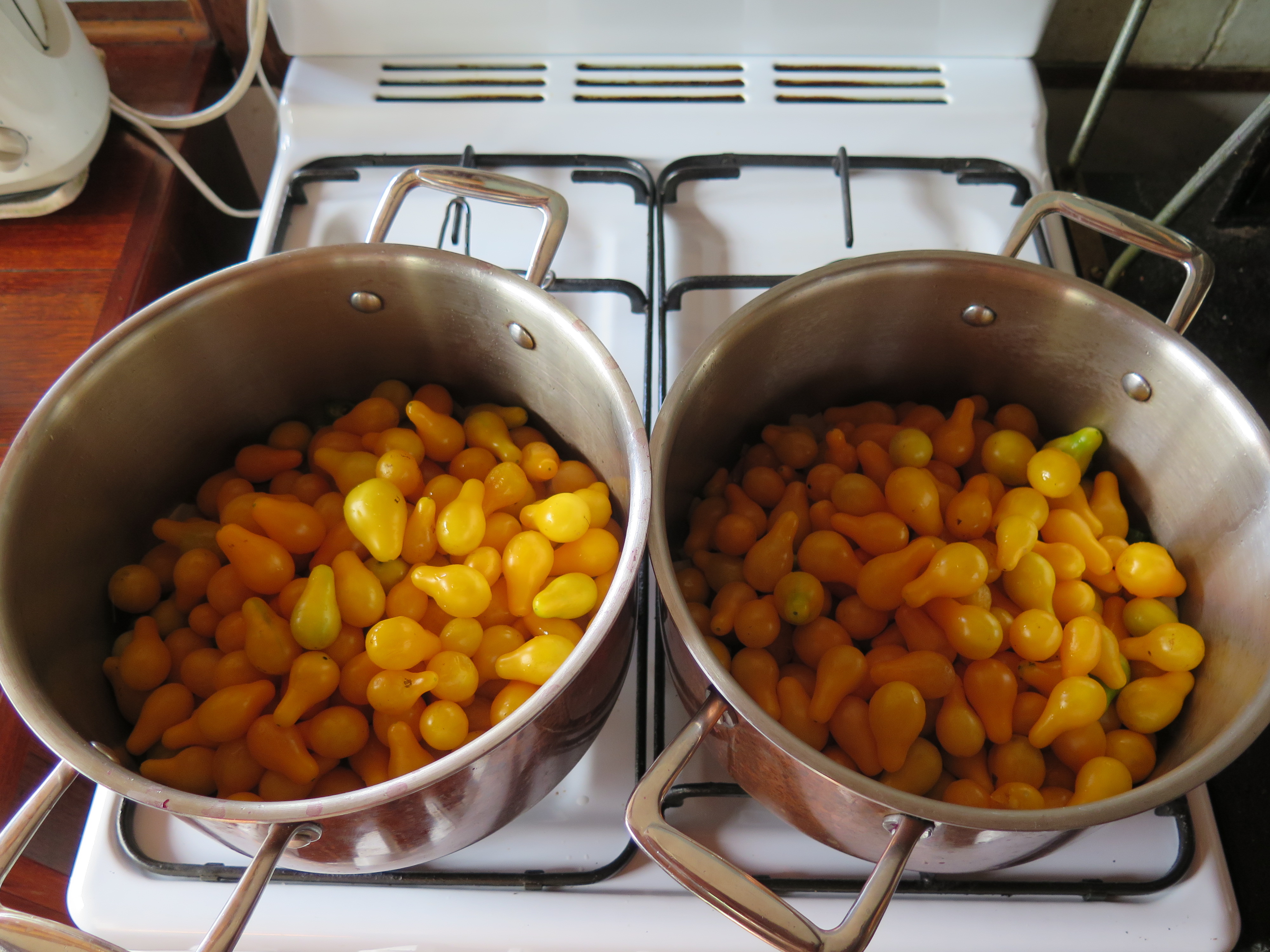
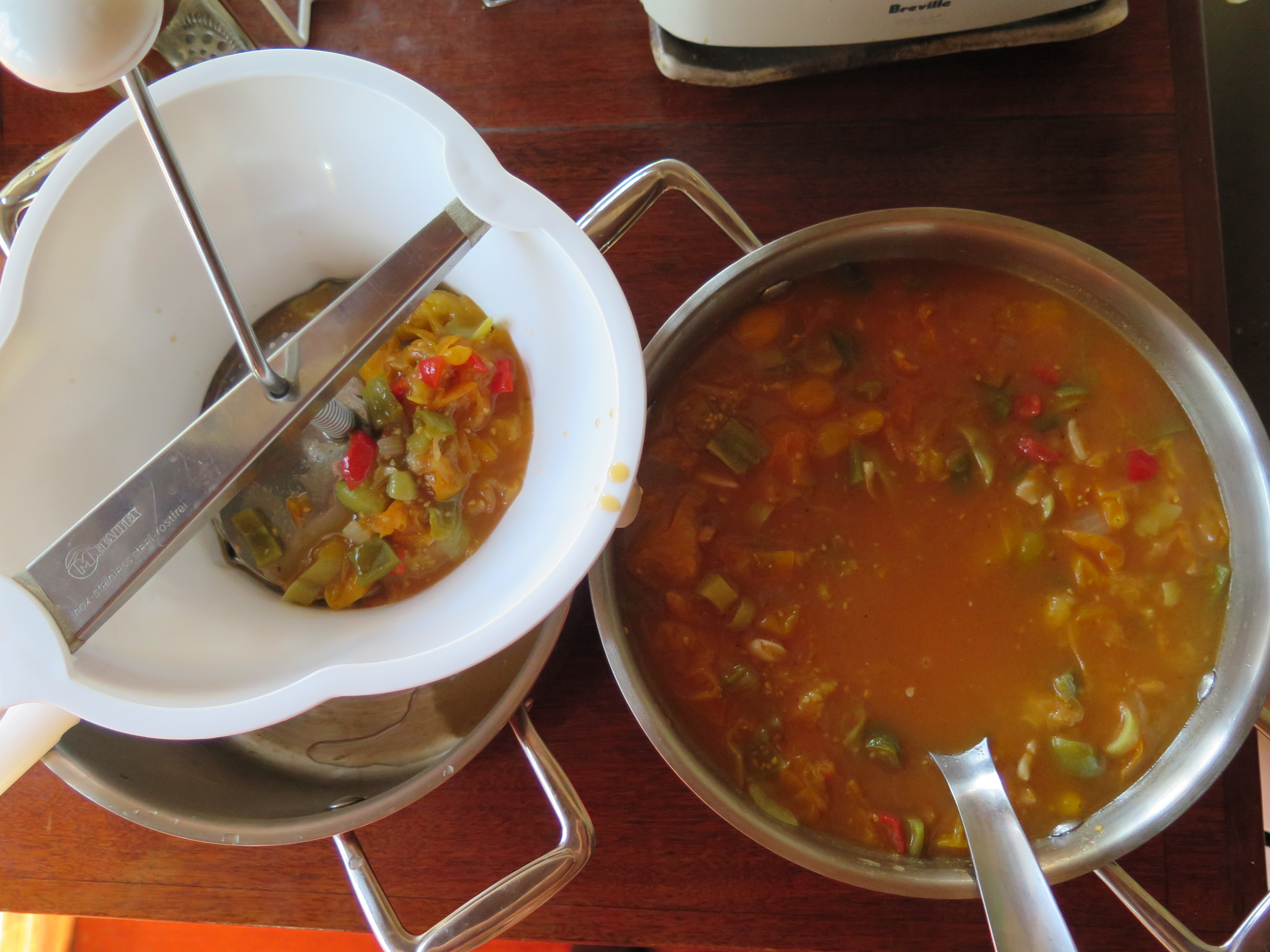
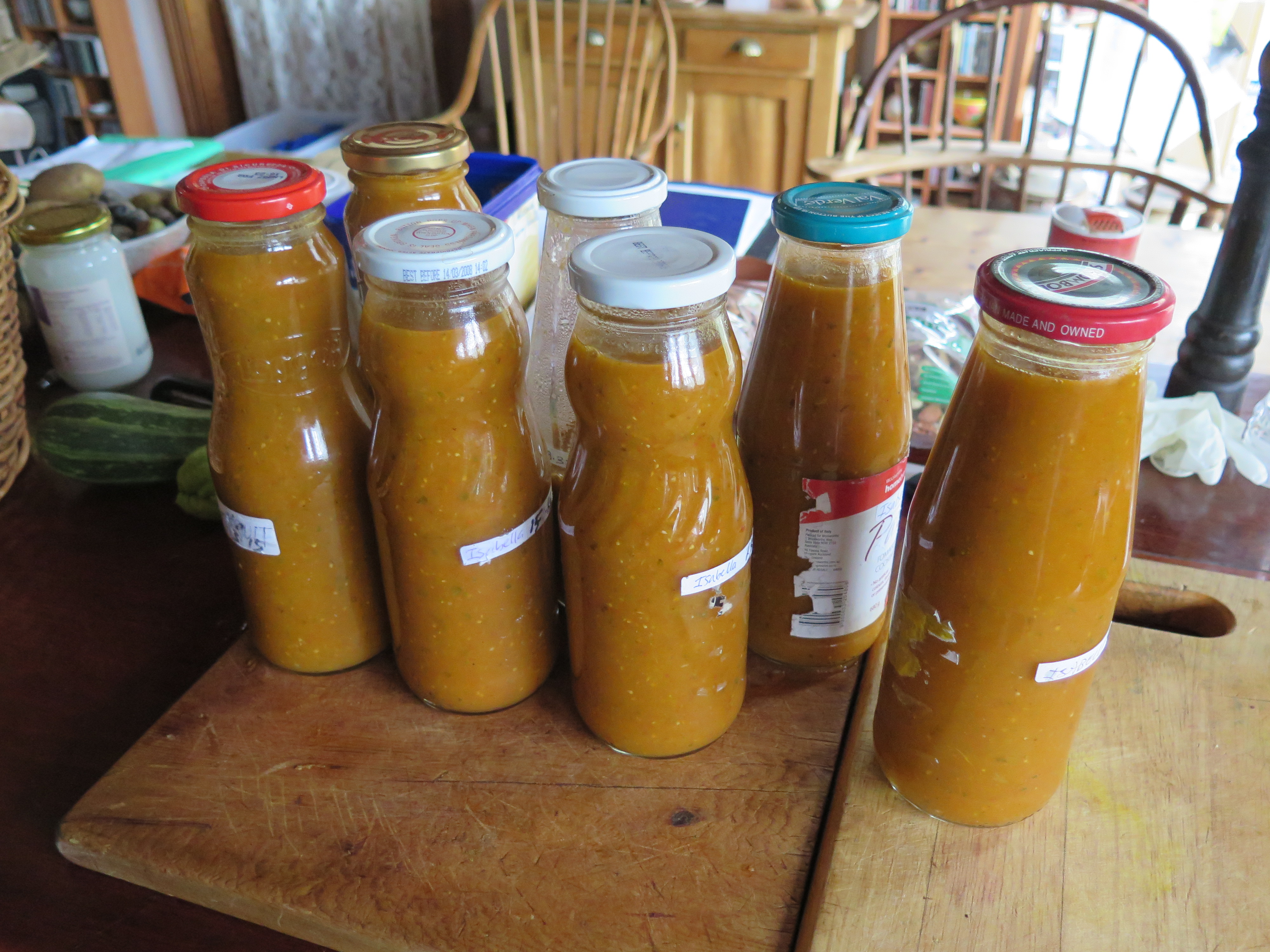
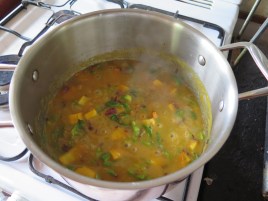
I bought a kilo of live mussels from the fish-truck man, so we are having mussel and vegetable soup for lunch. I usually just do the simple favourite, mussels in white wine, but as we have so many beautiful vegetables at the moment, I make a combination of green peppers, green and yellow zucchinis, red shallots and fresh sweet basil sauce. I bring it all to life with a jar of our preserved tomato passata concentrate from March. This batch was made with tiny yellow tomatoes, onions, capsicum, garlic and olive oil.
I cook it off and add the mussels to the boiling broth. It fills the kitchen with its steamy fragrance. It’s a great indulgence, but we  have earned it. Everything except the mussels from our own labours in the garden.

IMG_1721IMG_1724

IMG_1732

The First Tomatoes of the Year, Ratatouille

Yesterday, we harvested the first ripe tomatoes of the year. This is only the second time that we have managed to get ripe tomatoes before Xmas. The only other time was last year. Global warming, What global warming?

We also made our first pickings of our large green capsicums and smaller yellow banana capsicums, added to the sweet basil and yellow and green zucchinis, we have the makings of the first ratatouille of the summer. The egg plants bushes oblige us with the first few small aubergines and suddenly, there is our dinner in a basket.
The weather is very hot now 39 0C during the day. Our friends in Adelaide have had 4 days in a row of  41,42,43 and 41 oC. Way too hot to be able to work effectively outside. I make clay while the sun shines, inside under cover of a roof, but still sweltering. Porcelain slip dries very well on the drying bed in this weather. It’s a good time to make single-stone porcelain.

In the evening we sit outside and cook our produce, Ratatouille with the addition of a small jar of last years concentrated tomato, onion and basil ‘sugo’. I lightly brown our new-season onions in olive oil and then add in our crushed garlic. The roughly diced vegetables are added and turned in the oil a few times to coat them, then the sugo is added and the lid placed on to allow it all to simmer and soften for a few minutes.

We sit and chat into the cool of the evening. A nice chilled glass of rosé goes very well with this simple, fresh and very delicious Post Modern Peasants repast. The flavour of summer!

We have really earned this meal. We started making this meal three months ago, when we spread the compost and planted the seedlings. Now it’s payback time. It explodes in our mouths and takes us back to last summer. I can feel myself starting to relax into the idea of taking a little time off over the solstice break. This is a well earned, beautiful moment.

I am grateful!


Approaching the Solstice

As we approach the solstice the weather has turned hot and we are getting days in the mid thirties oC. Everything becomes desiccated very quickly if we don’t water morning and night. As the longest day will soon be here, it’s time to lift the onions and the early potatoes.

We plant most of the onions around the shortest day at the winter solstice and harvest near the summer solstice. So that is now. We aren’t very good gardeners, as we try to do too much, so there isn’t always time to do things ‘properly’, but we manage our time as best we can and everything that needs to get done usually does. We don’t plan things out meticulously and then follow through on the plan with Germanic precision. Rather we kind of lurch from crisis to crisis, doing what really needs to be done NOW and can’t wait any longer. I remember that I planted two packets of brown onion seed in late June,  but only a smattering of seeds germinated. I don’t know why. So I planted another packet in late July, when I realised that I wasn’t going to get any more strike from that first germination. The second attempt was also very patchy. As it takes a few weeks to realise that things haven’t worked out as you planned, there isn’t always time left to get the next planting done and germinated in time. So it was very late, at the beginning of August. The last day before I left for Japan, that I sprinkled two more packs of onion seed, a different brand this time, and then flew out for a month or so. When I returned, the unattended seeds had all struck, but were a bit crowded. I was so busy catching up with everything else on my return, I left them to get on with it. They are now ready to lift, but rather small, as they didn’t get enough cold weather to grow out well. I’m calling them salad onions now, small but juicy and sweet. I’m not too sure how they will keep.

The garden girl has been lifting the early potatoes, Nicola and Maris Piper. We don’t get huge crops, using only compost and some chicken manure to fertilise them. But the soil is soft and fibrous, and rich with worms. It looks and smells great, so I’m happy with that. We get about 8 potatoes for every one that we plant, maybe 1 kg per spud. I’m told that commercially, they get 8 to 10 kgs per plant? I’m not too concerned. We do everything organically with a view to growing just enough to support ourselves. This isn’t a business. It’s real life, a life where we aim to be as sustainable as possible. We get more than enough spuds to keep us going all year, more then we need actually. So the ones that get a bit shrivelled and start to get long sprouts on them after storage for a long time, just simply get replanted, back into the garden. They become the winter crop, down in the frost free area of  the Pantry Field.

All the young berries have finished now, as have the raspberries, there are just a few boysenberries left under netting. We picked over 20 kilos of berries this year. We ate a lot of them, but most of them were sterilised and went into vacuum sealed jars for use later in the year.

We have a good crop of cabbages coming along, so we are developing recipes for using cabbage. Finely sliced and cooked in okonomiyaki, shredded in a salad with mint and vinegar dressing, or served with shiso, rocket, mizuma and roasted nor paper strips and dressed with a sesame oil, mirin, rice wine vinegar, sake and soy.

Annabelle Sloujettè called in and introduced us to a commercial brand of pre-fried Chinese noodles in a plastic pack. Not the sort of thing that we would normally think of buying. She made a cabbage salad with these crunchy noodles and a lovely tangy home made dressing. We were very impressed. It was really delicious. She stayed over and we talked late into the night. In the morning we had coffee with her before she left.

She likes a big coffee to start the day.

IMG_1672