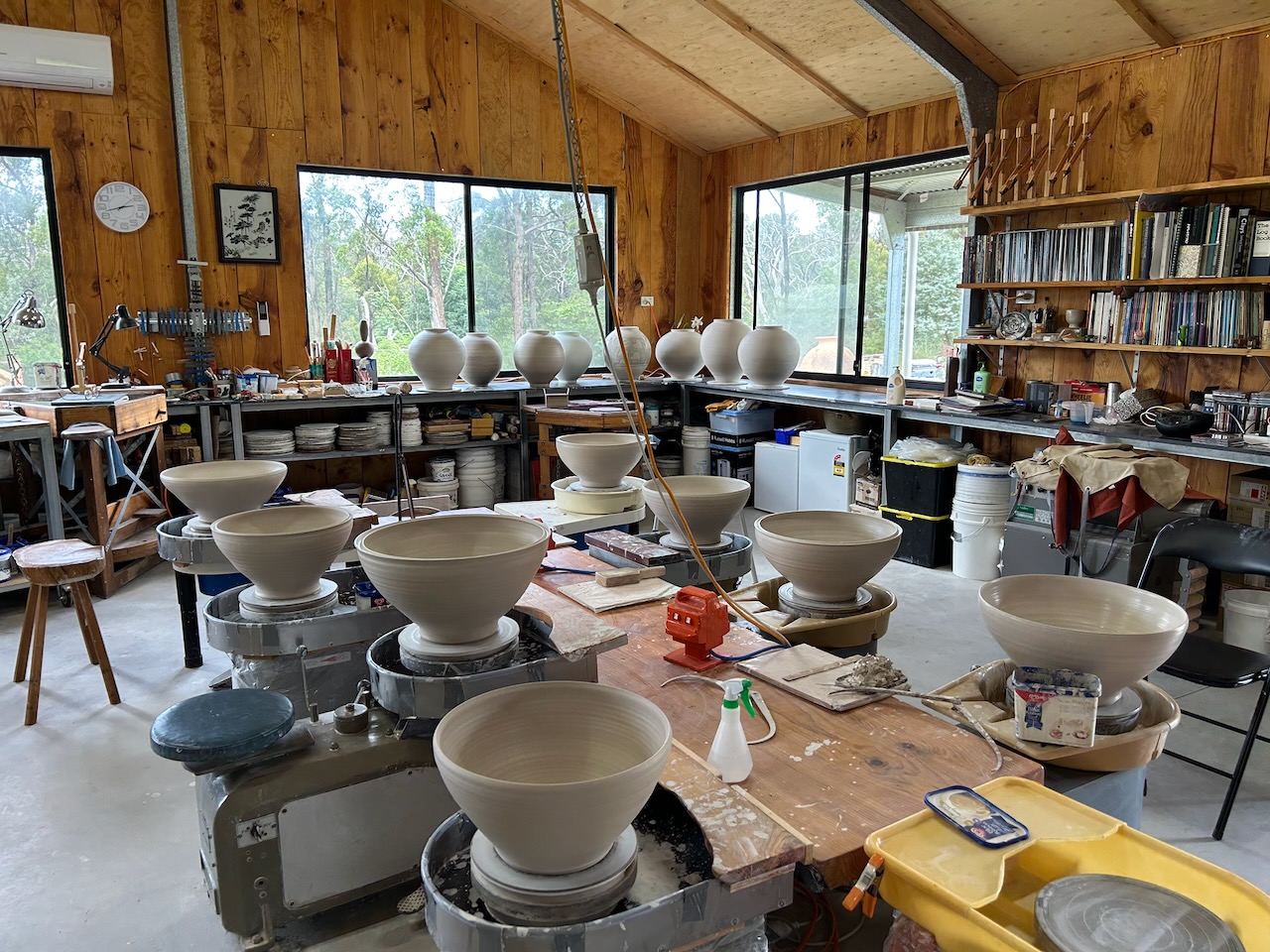
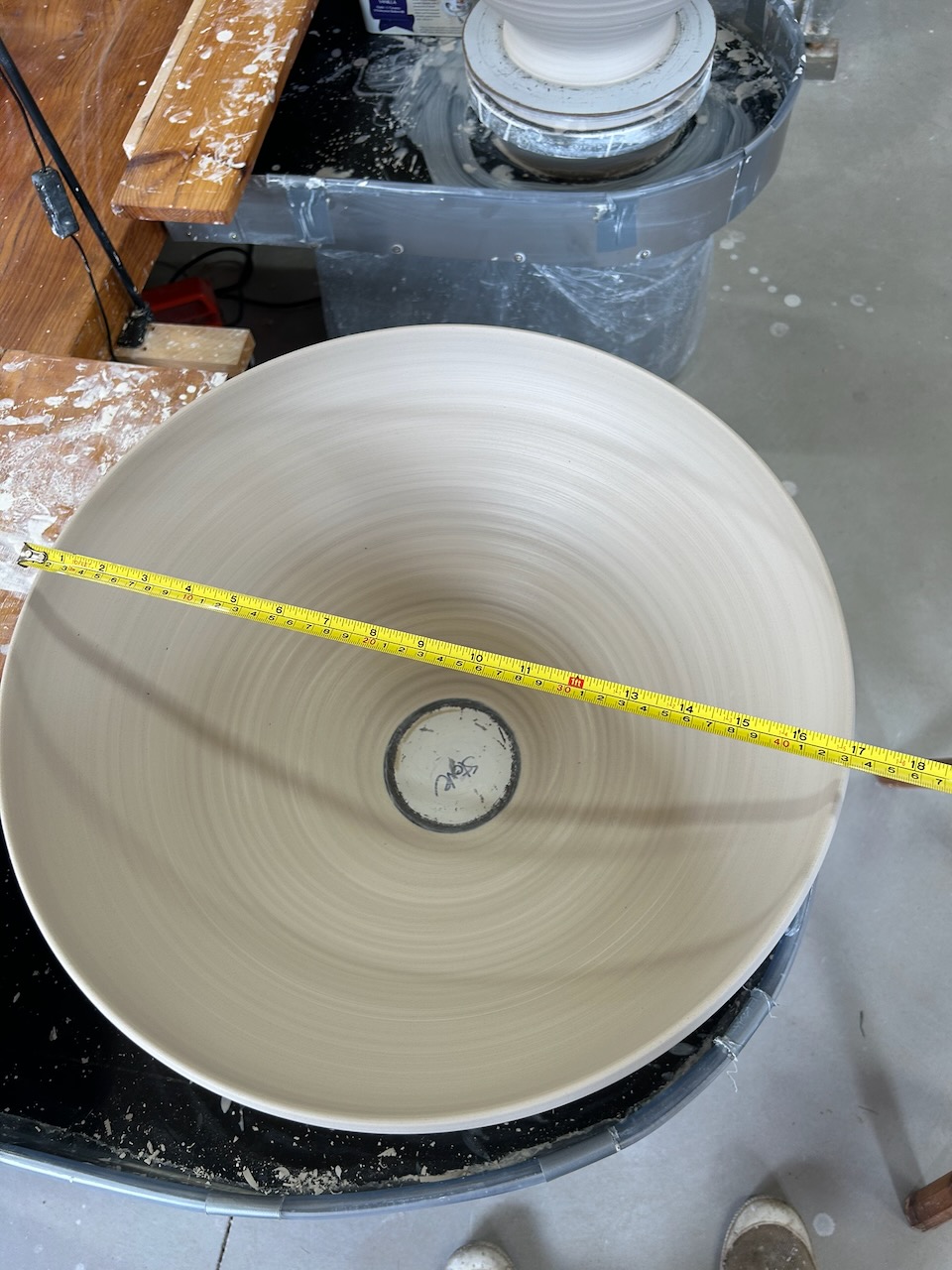
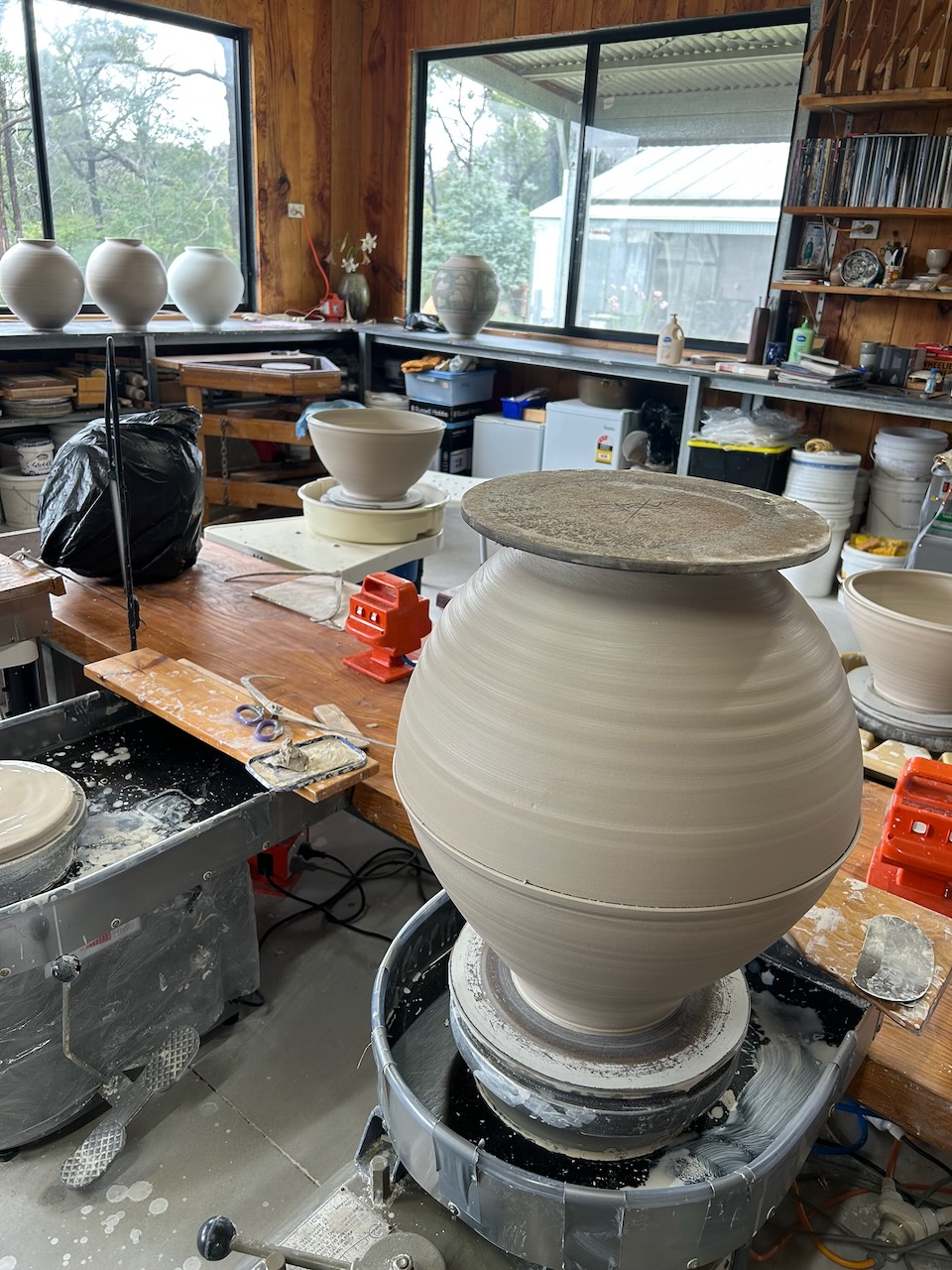
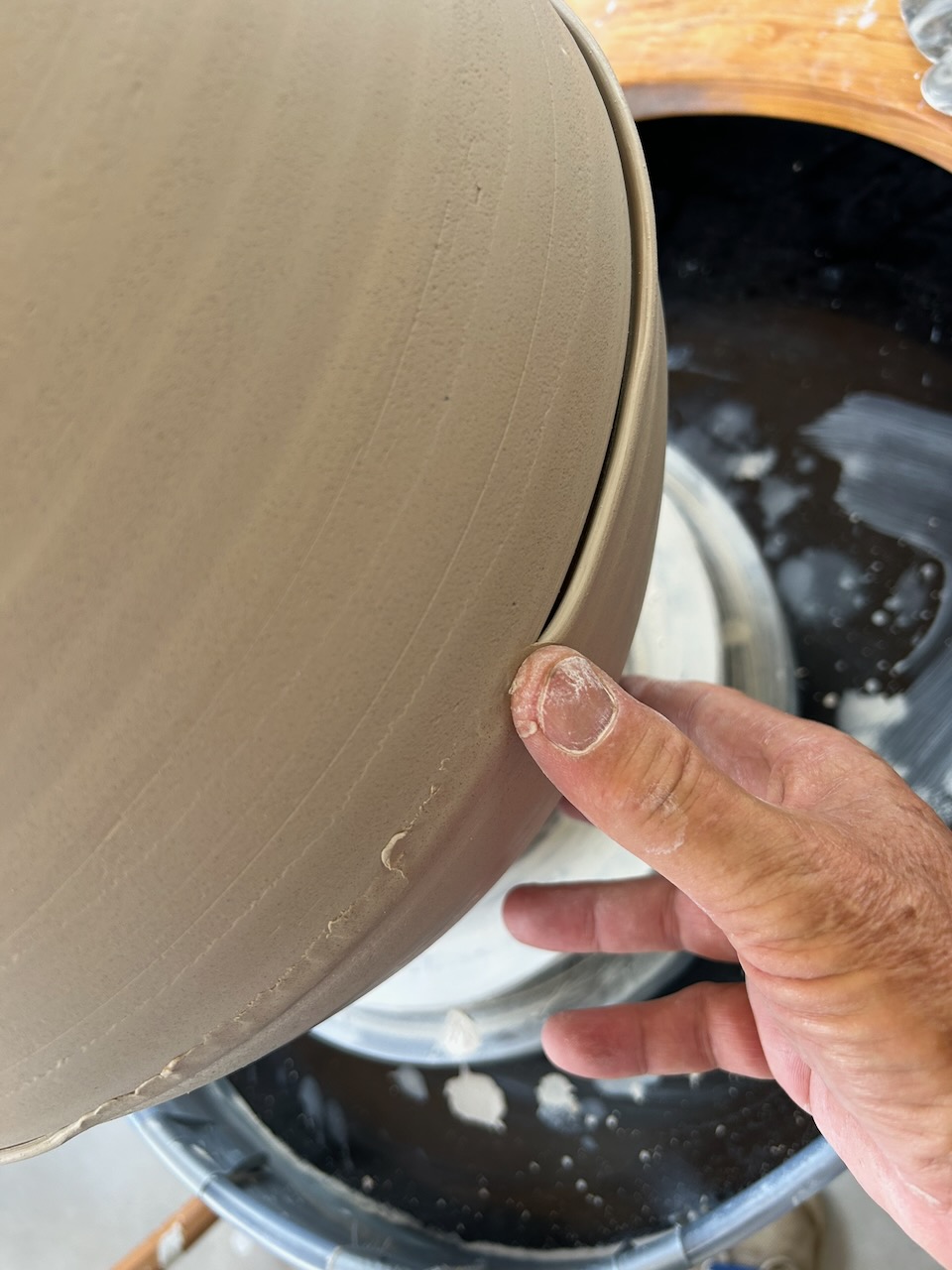
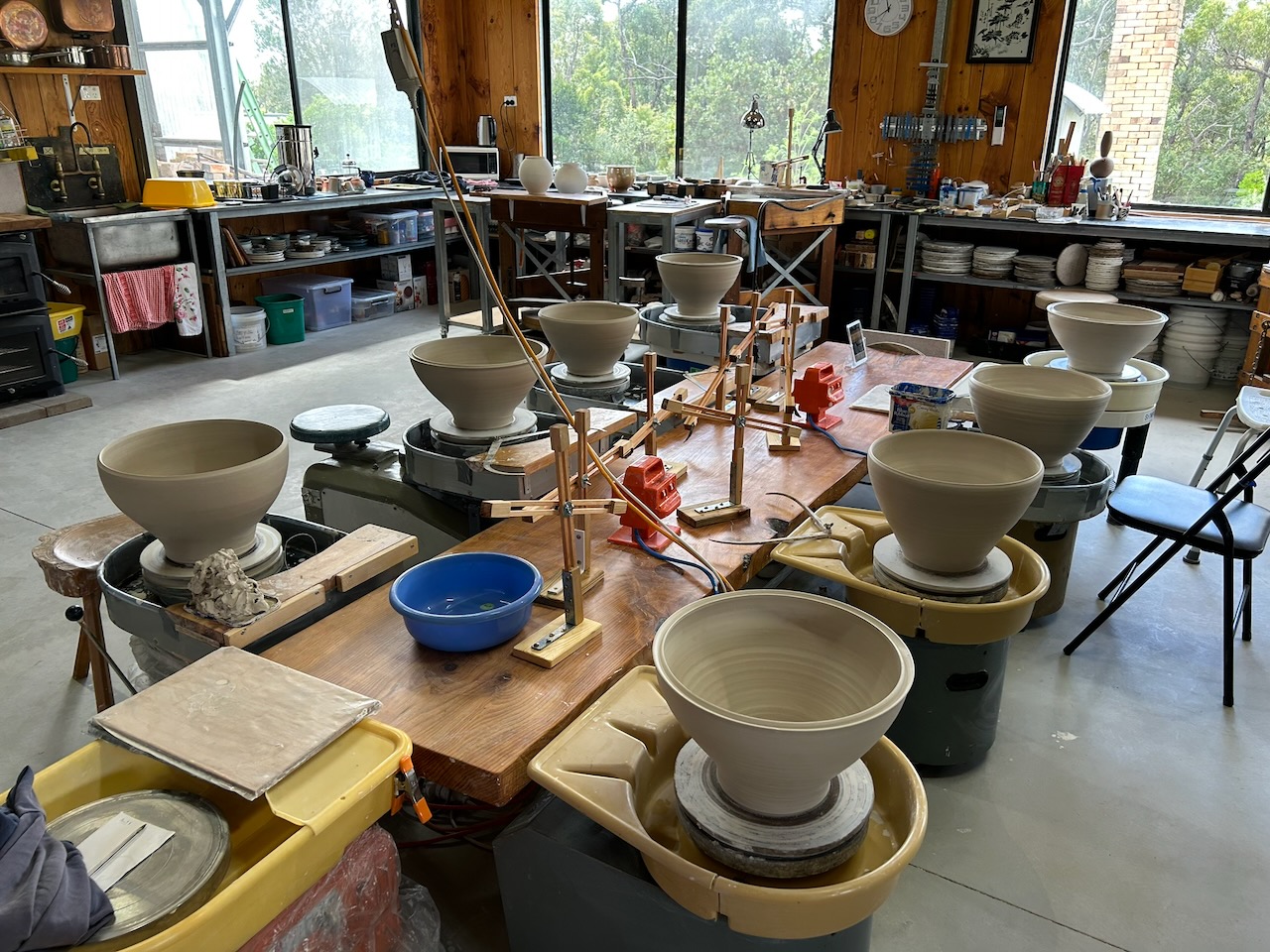
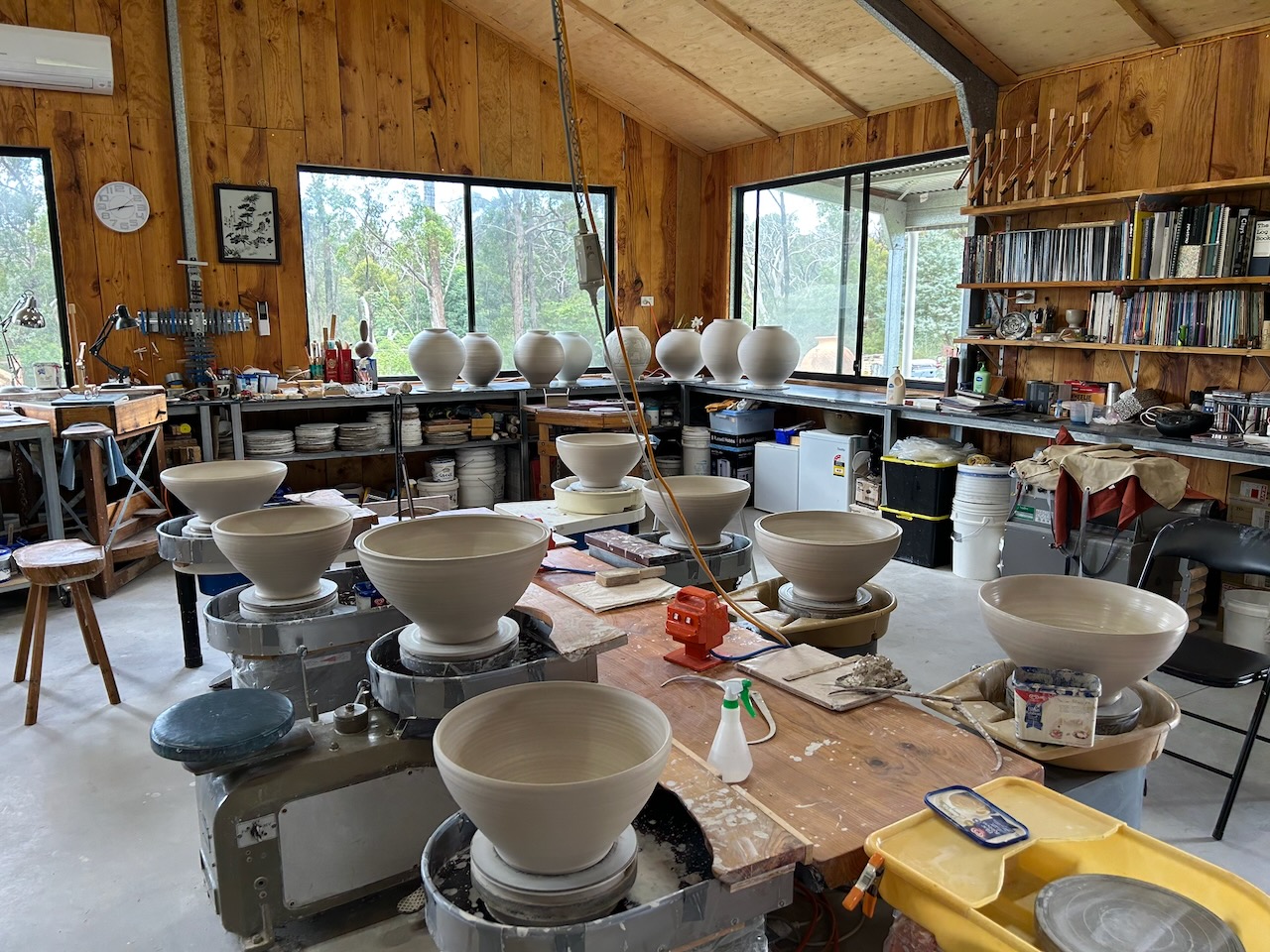
K-Pot Journal 3

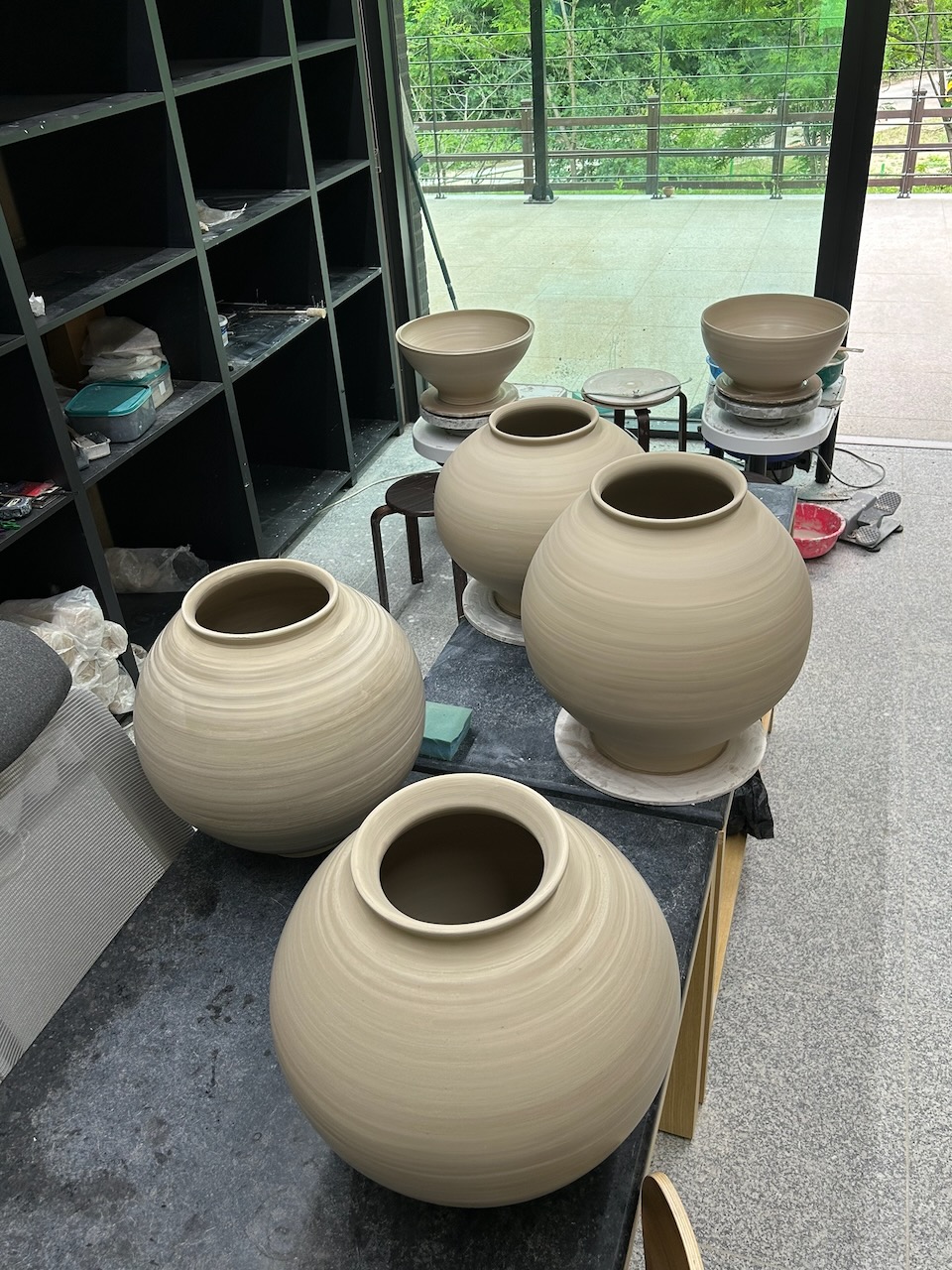
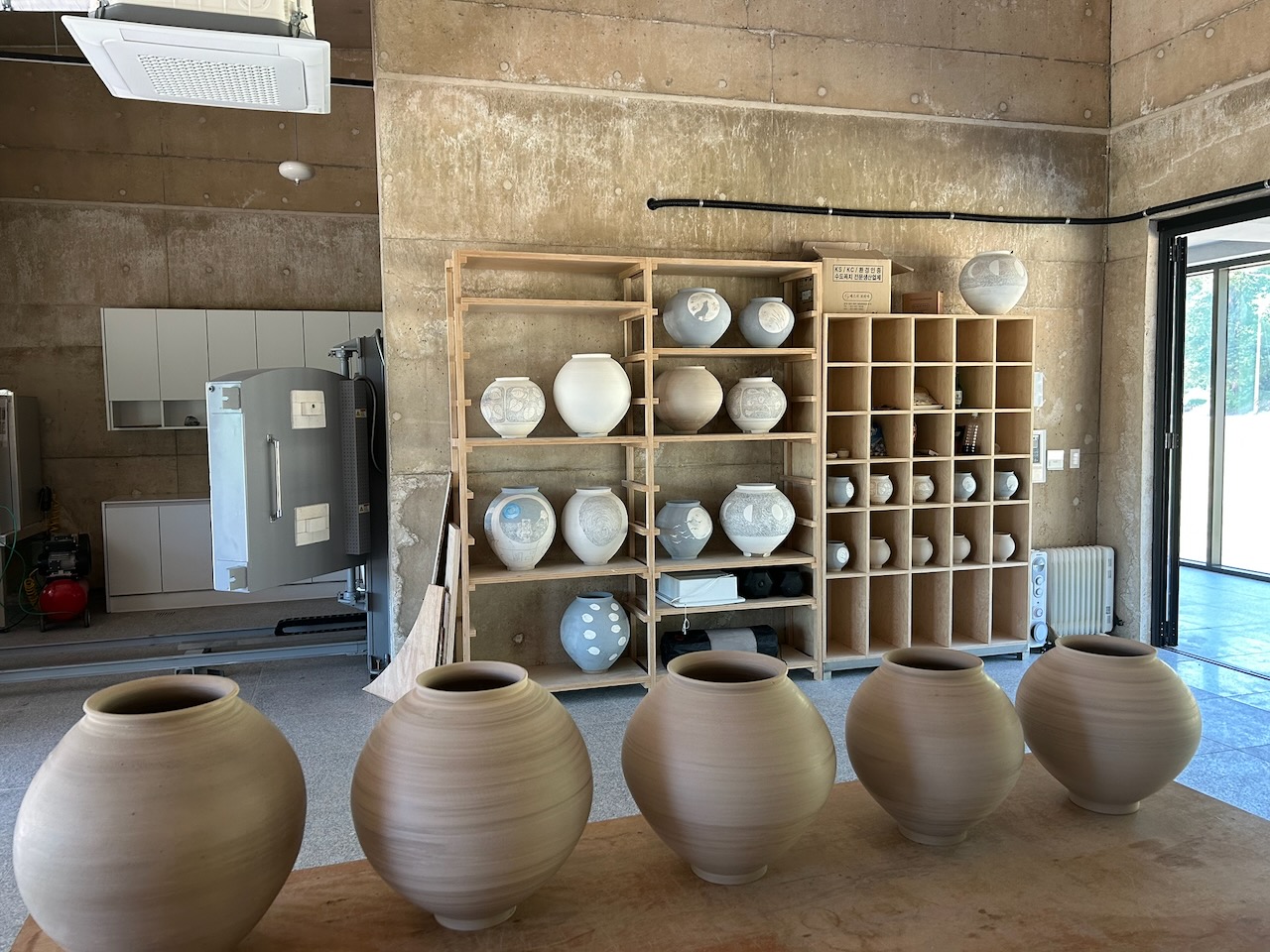
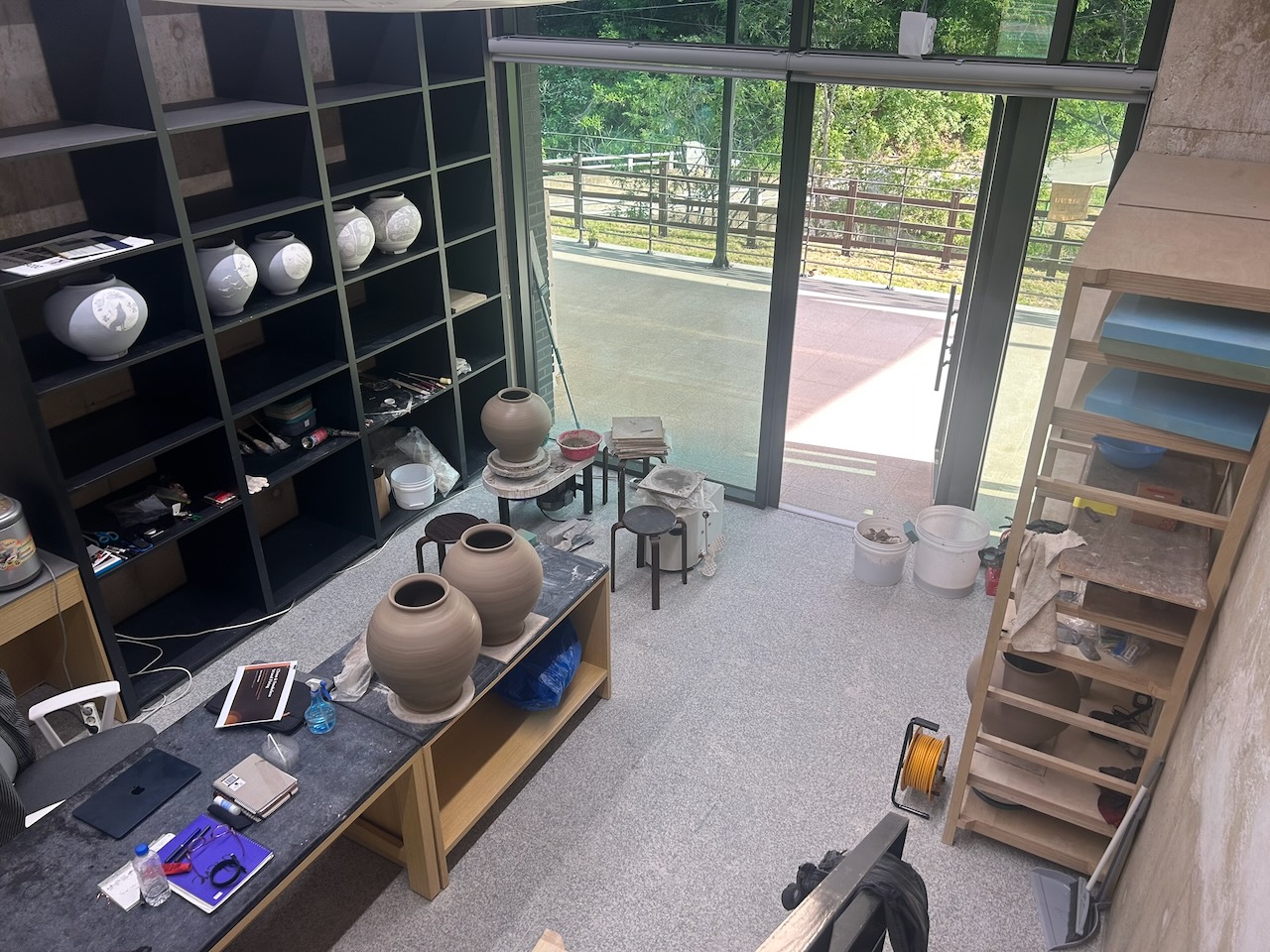
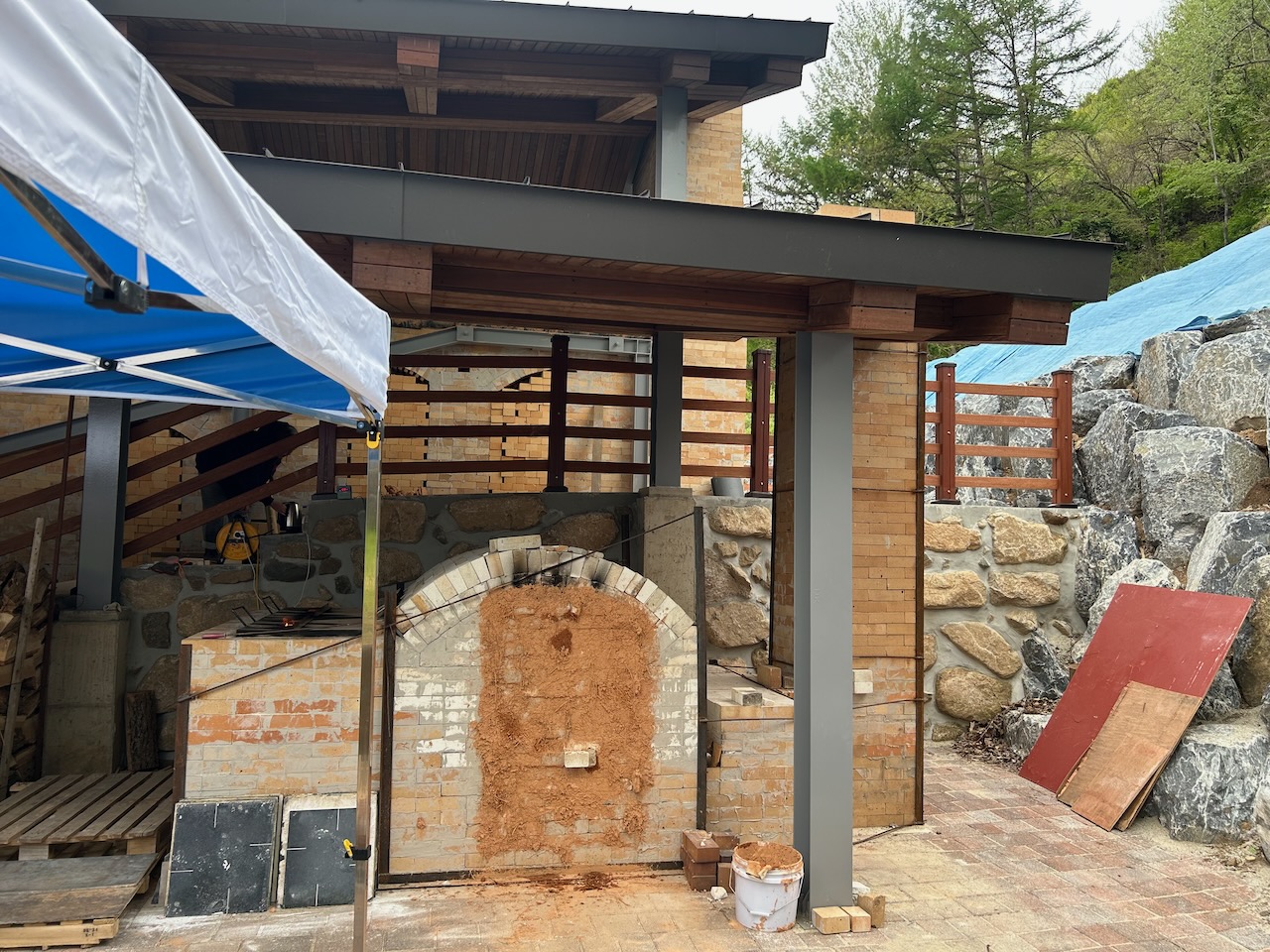
In the evenings after the days kiln work and dinner, we are all allowed into the Porcelain Museum pottery room, so that we can all make some pots to put in the first firing of my kiln. I don’t know whose idea this was, but it’s a very good one. Everyone has contributed to its construction, and as it’s such an unusual kiln for these parts. It’s a very good idea for everyone to get to see a pot of theirs fired in it. NO Pressure!

It turns out that there are two ‘National Treasure’ potters in our crew here. But everyone is a famous potter from their own regional district. They all come together to do these big kiln building events at special places around the country. A loose conglomerate of like minded and highly skilled artists all contributing their own particular skill set to these big projects.

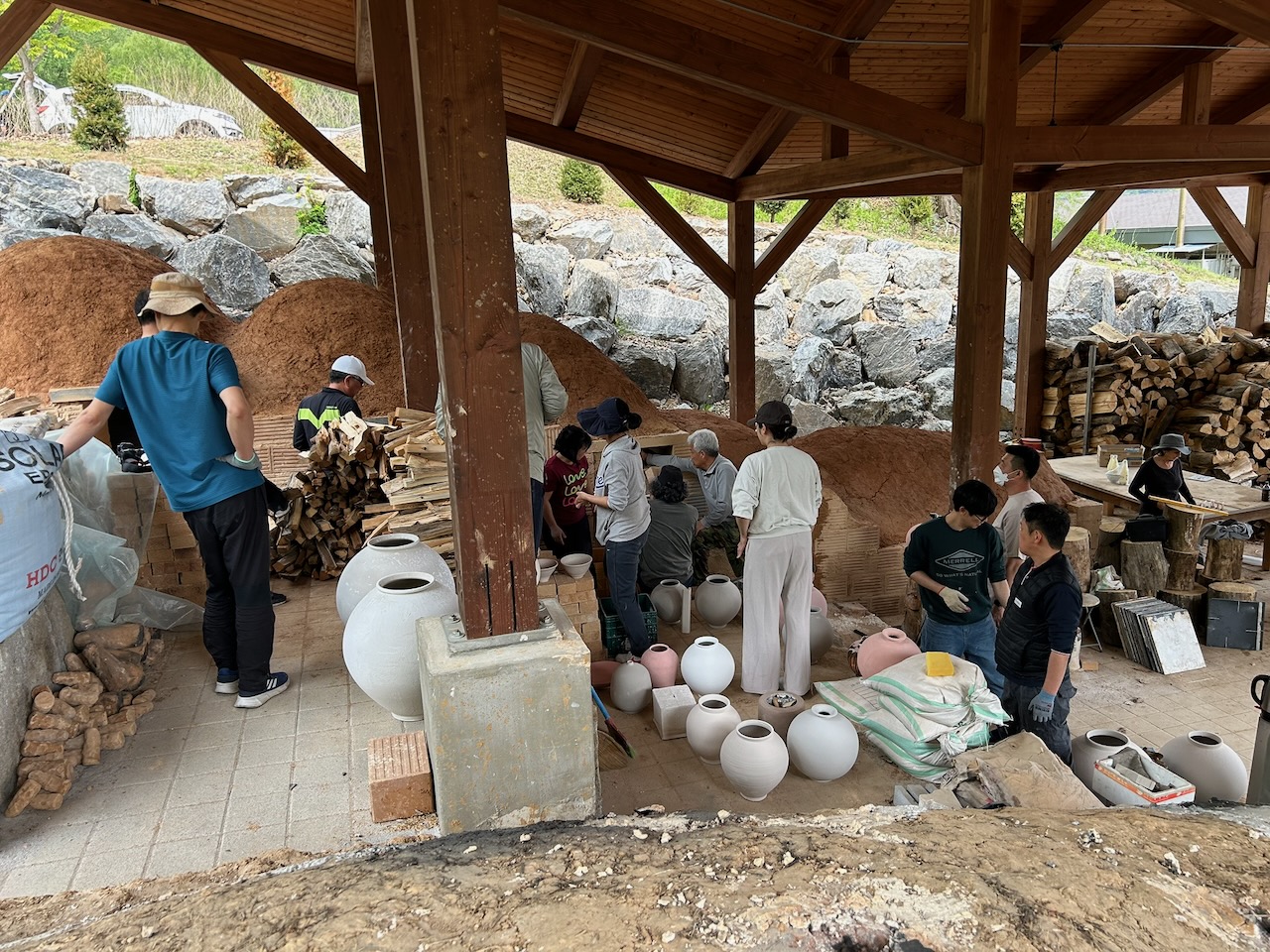
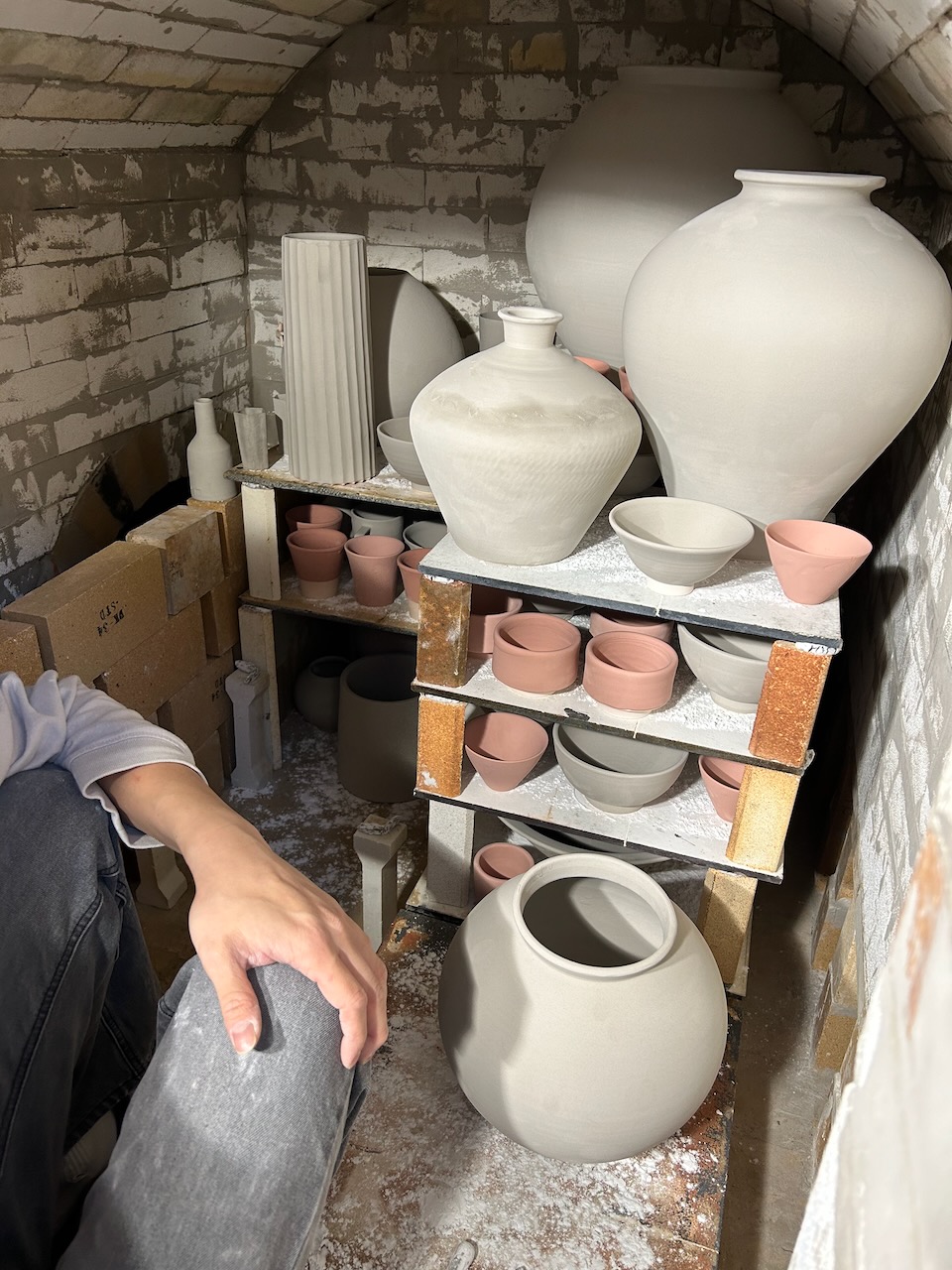
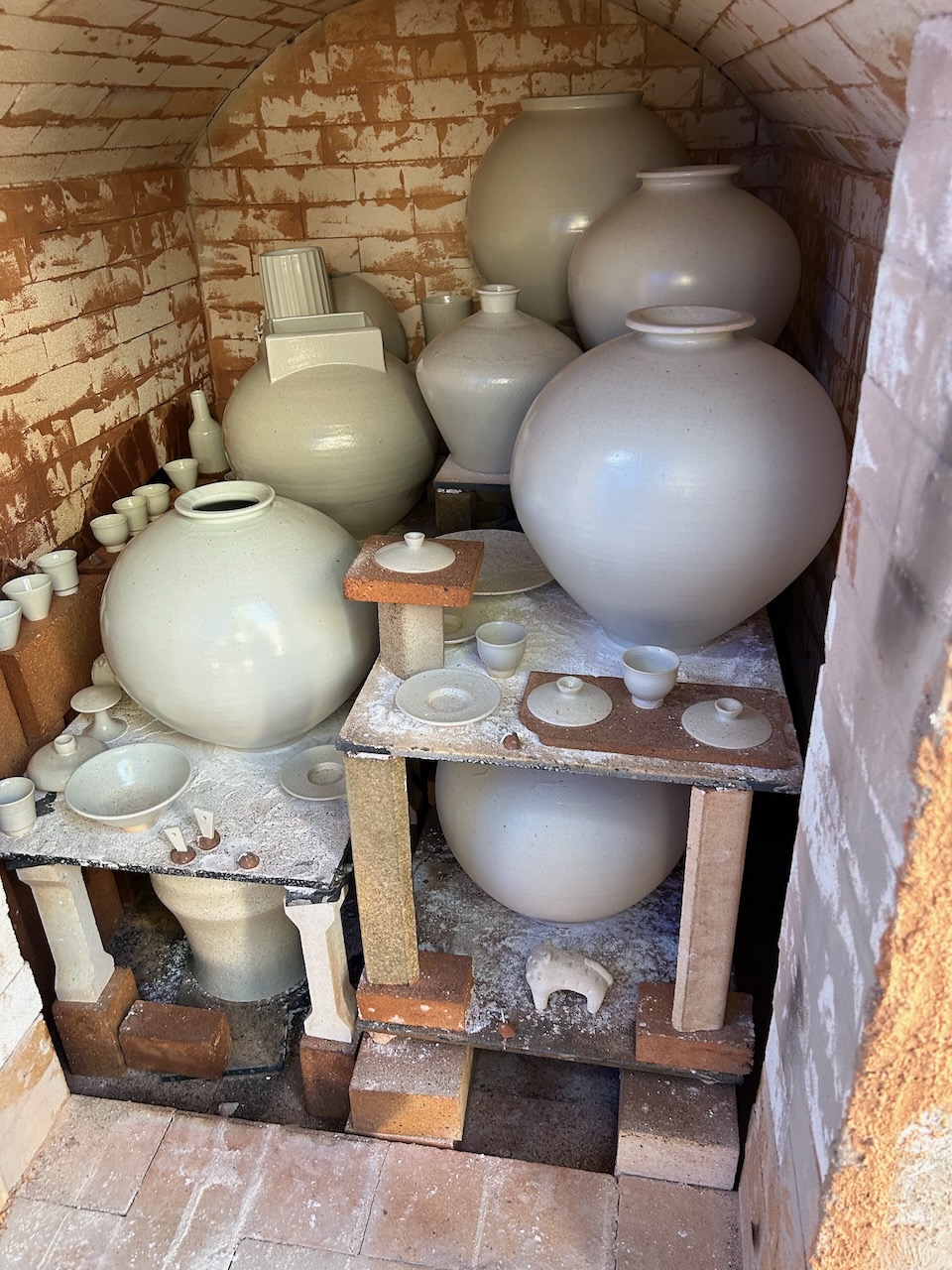
We pack the kiln with our bisque fired and glazed pots, with other contributions from the research students as well. There is only just enough pots to fill the kiln. I could have fitted more work in if there was any. But there is just enough.

Interestingly, they don’t use digital pyrometers or pyrometric cones here. Traditional firing is judged by colour, sound, smell, smoke and flame. Using years of experience with a particular type of kiln, to judge the progress of the firing. They do however use small glazed tiles as draw trials to gauge the degree of glaze melt, and something that I haven’t come across before, and that is the use of a small amount of stiff glaze paste, that is rolled between the fingers into a small length of pasta sized rod and set in some wadding. This little 3mm dia. rod of glaze will melt at top temperature and fall over, in much the same way that we use pyrometric cones as pyroscopes. 

I suddenly realise that I’m really out of my depth here. I usually rely on a digital pyrometer to tell me how I’m going. Now I have to go back to basics and look and listen very closely to the fire to make my decisions. Luckily I’ve also done this before too, so I’m OK, but would prefer the  reassurance of a pyrometer to confirm my decisions. Until very recently, we used ‘handheld’, battery operated, digital meters. This meant that you had to go over to where it was and switch it on, to see the LCD display the temperature. They are cheap – very cheap – $10 to $15, pretty reliable and because they are intermittent, they teach you how to look and listen to the kiln, to watch the fire and see how the wood is burning. How the flame is developing, and not just stare at the screen. Since the big fire here. We lost everything, and I bought 240 volt LED permanent temperature displays, online from China for $30, so I have recently become addicted to screen watching in my dotage. Luckily, I still retain some of my mental capacities, well learnt and polished to a finely detailed finish. So just like my stick welding skills, my firing skills are soon retrieved from the dustbin of the recesses of my mind. 

In the late 1960’s, when I built my first kiln. No one owned a pyrometer. They were just so expensive. They were totally out of reach. I made a lot of mistakes along the way, but I learnt a lot. I wouldn’t recommend this learning strategy. Using an intermittent pyrometer is the better way to learn so much faster and without the losses that I incurred. My first pyrometer was an analogue, needle indicator, galvanometer. They were quite inaccurate and it taught me not to trust them. A wise decision. They are nearly always wrong. I use them to tell me if i’m going in the right direction. Up or Down. That’s it! I leave the decision as to wether the kiln is finished or not to the use of draw trials, test rings and pyrometric cones.
It is very important to me to fire this kiln well, not just get it to temperature, but do it in a steady, constant, reduction, so that all the usual reduced stoneware glazes that they use here will come out as they expect. BUT, most importantly, to fire the kiln with as little smoke as possible. As that is the main reason for me to be here doing this. This kiln is a demonstration of low emission wood firing.

I must admit that as the only fuel here is 5 year old very dry and seasoned pine wood, that burns very fiercely and fast, I have my work cut out to keep the kiln in reduction, but to minimise the smoke at the same time. As it turns out, I can never get to the stage of filling the hobs with progressively combusting wood, as it is designed to do. I ask if there is any hard wood available and I’m told that it can be obtained, but not at short notice. In fact hard woods like oak and acacia are cheaper than pine, so they will get some in for the next firing. But for now, I have to carefully juggle the wood level in the fireboxes. This means constant attention to detail, so this is not really a Laid Back Wood Firing at all, but a rather busy one. AND, not a smokeless wood firing, as the cover of my book in Korean translation falsely claims!

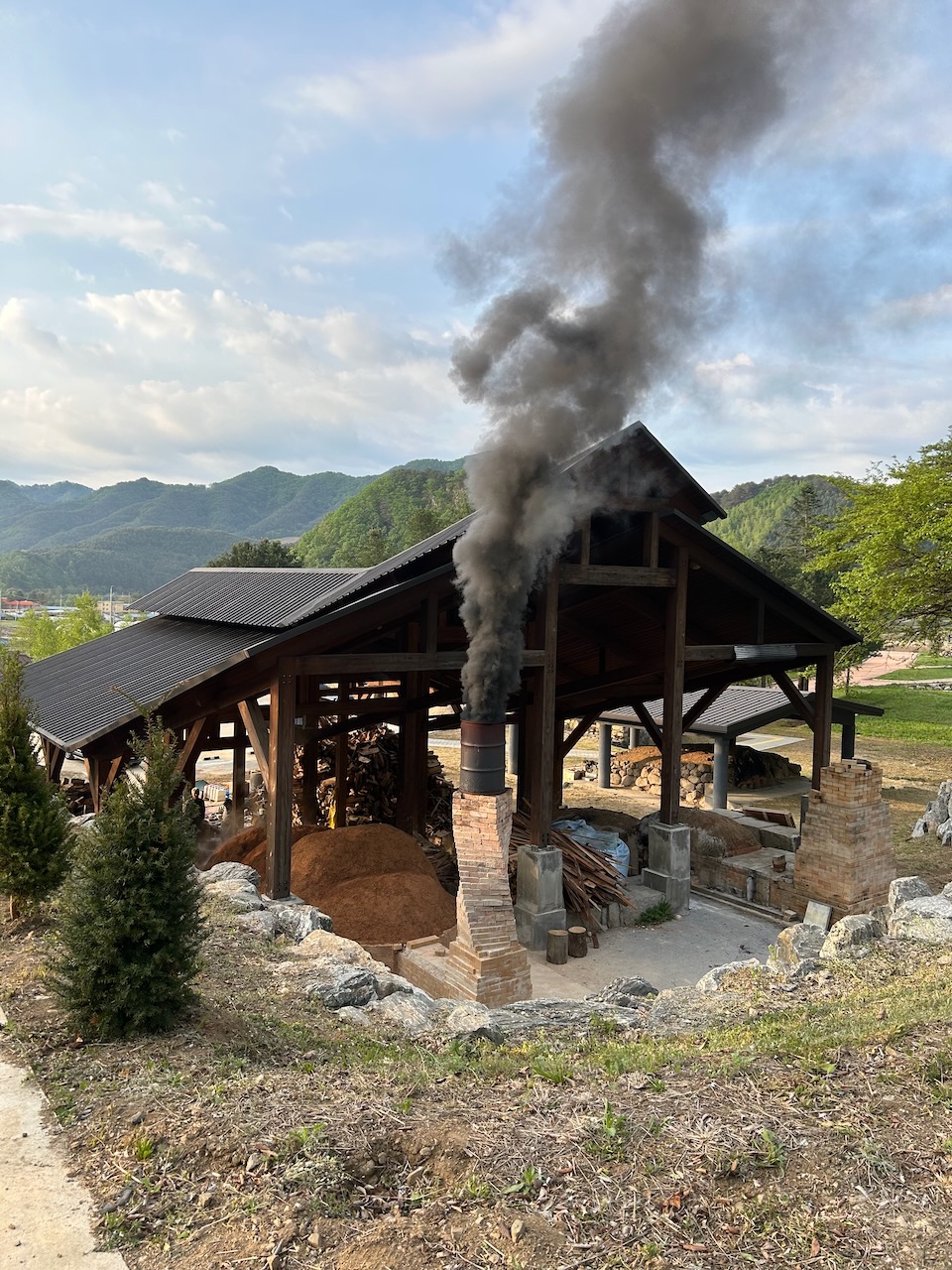
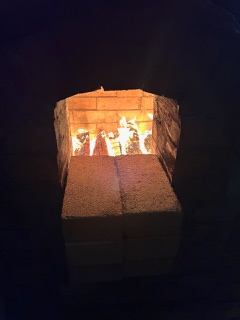
I manage it reasonably well, but each time I stoke and there is a little burst of pale grey/brown smoke from the chimney. There a howls of jeering from the kiln builders next door. However, although it is smoke, it is nowhere near the column of black smoke that issues from the traditional kilns here. Young Mi, one of the resident researches here translates for me during the firing. She tells me that the jeers are just in good humour, and that the chatter is all about how little smoke there actually is and how clean it is. I have surprised them. 

Another resident confides in me that he expected to see flames come leaping up out of the fire box as soon as I lifted the lid. He is also surprised how enclosed, slow and gentle the firing process is.

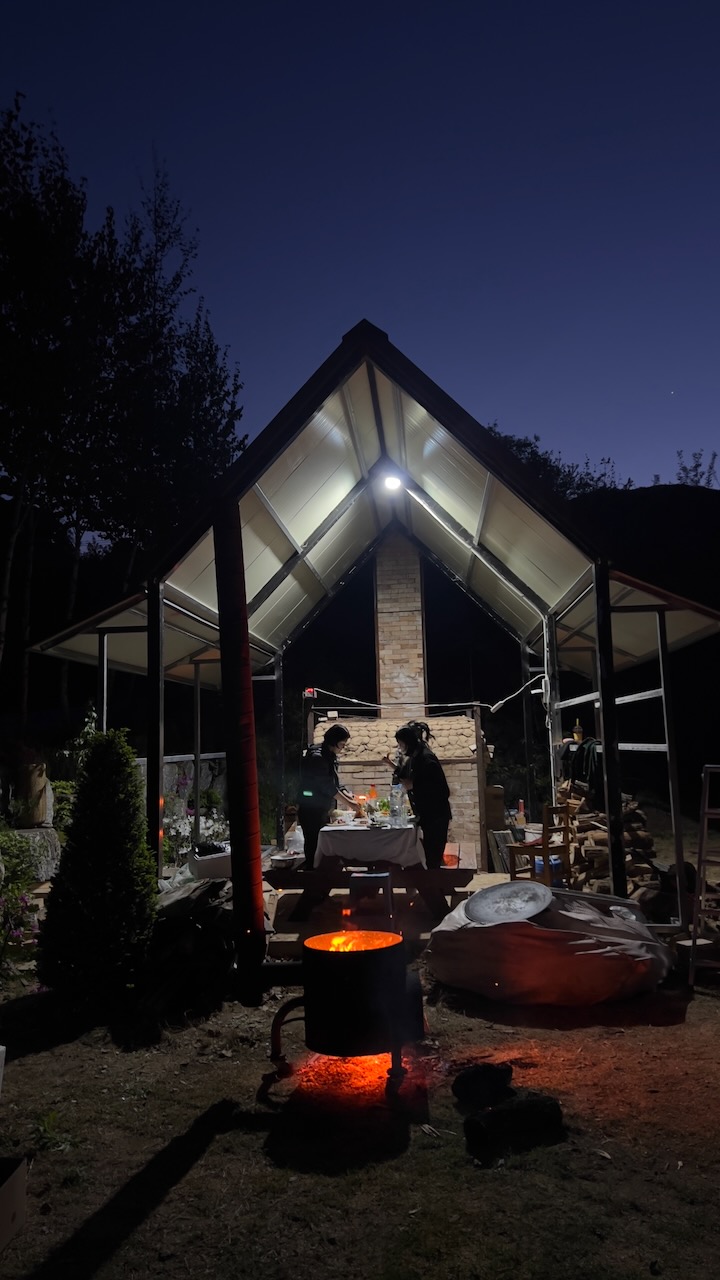
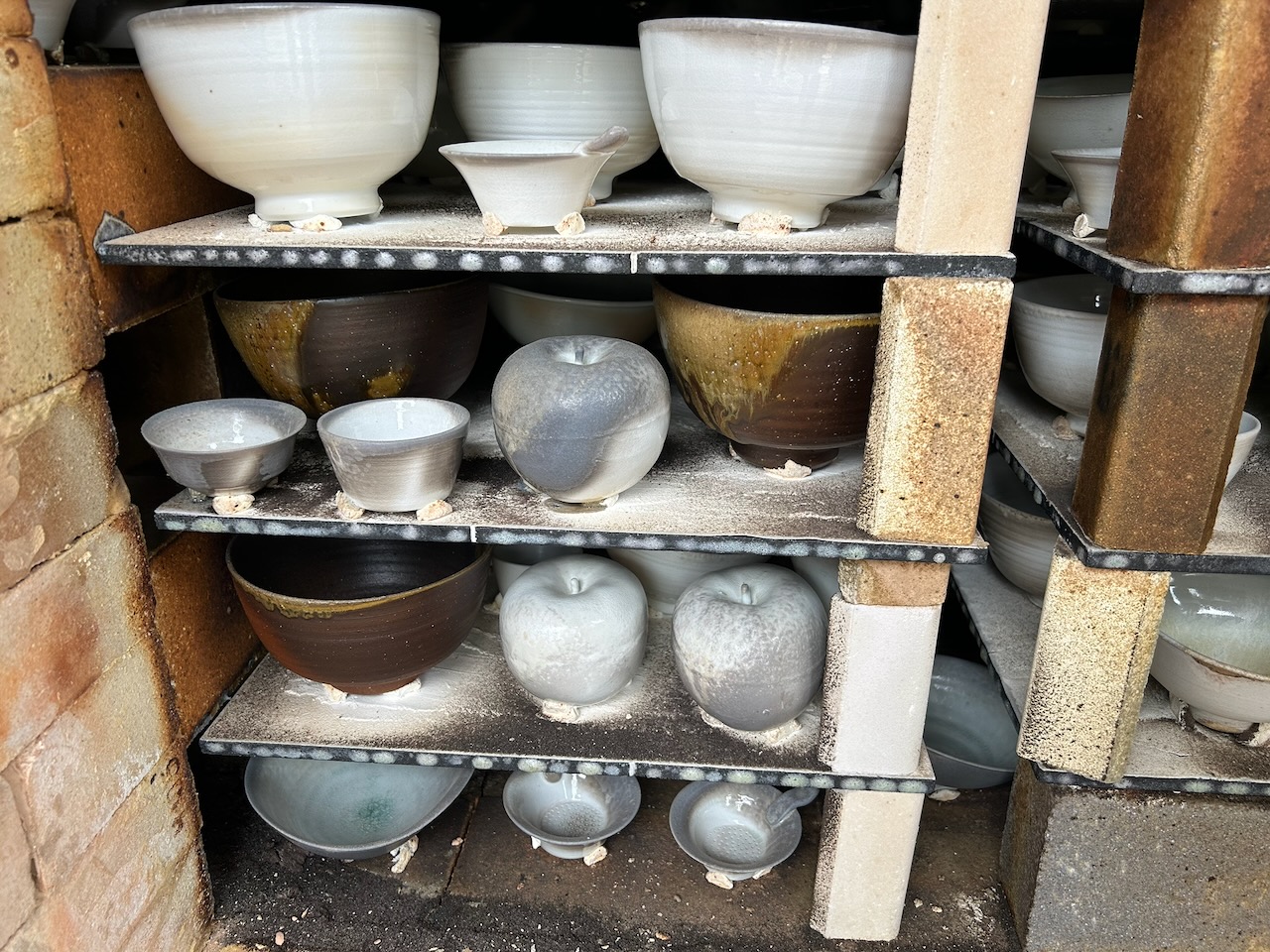
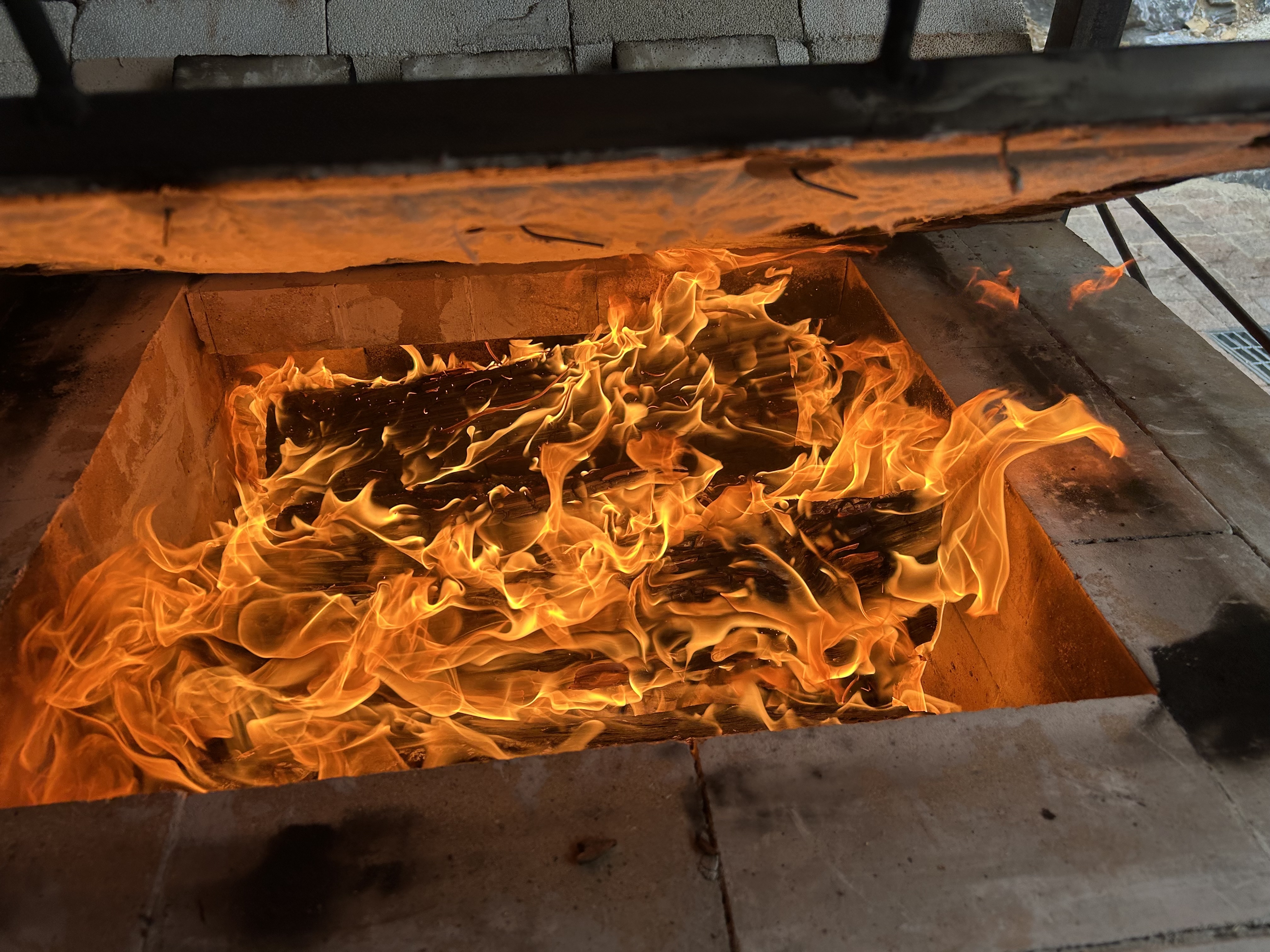
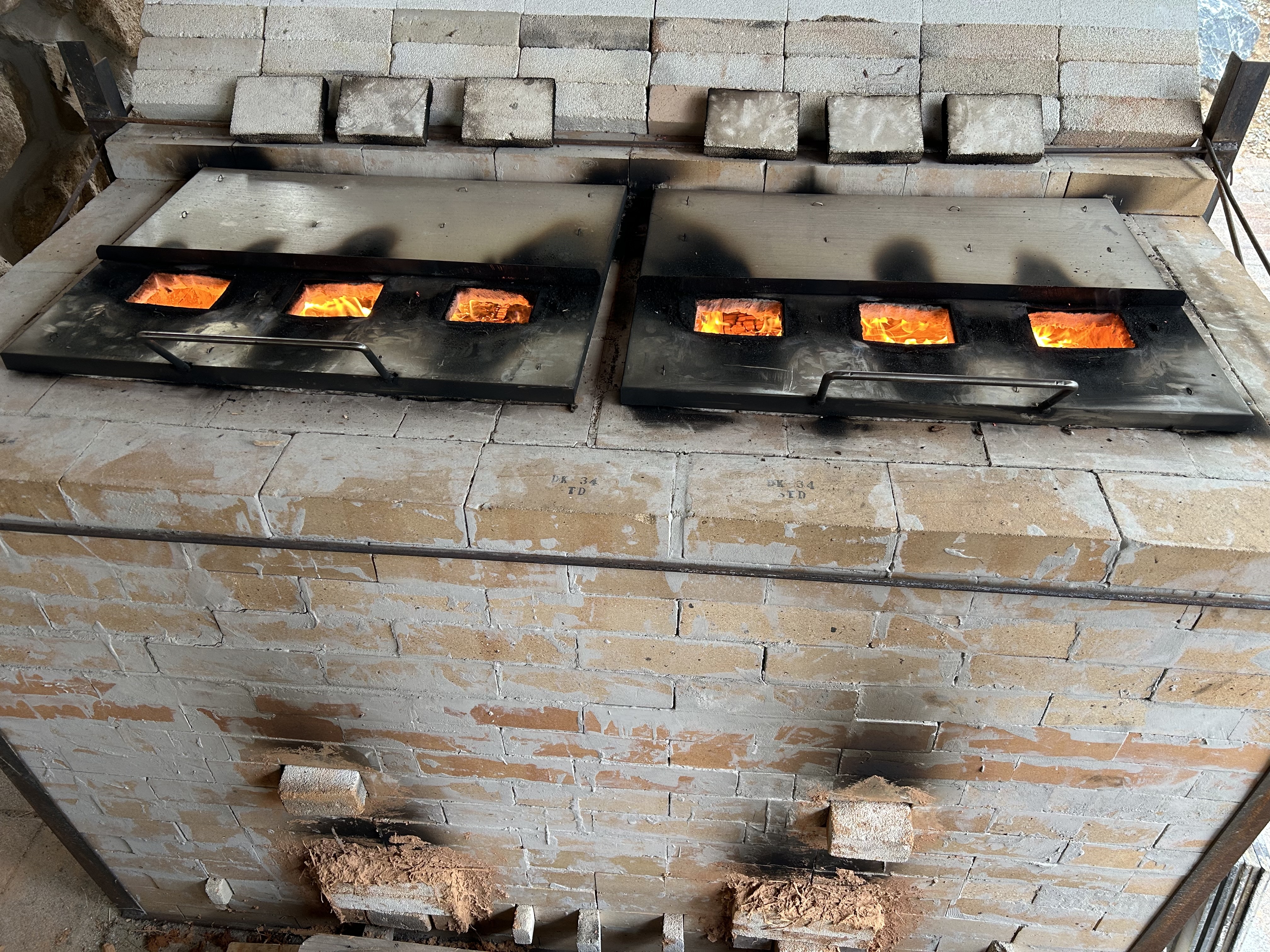
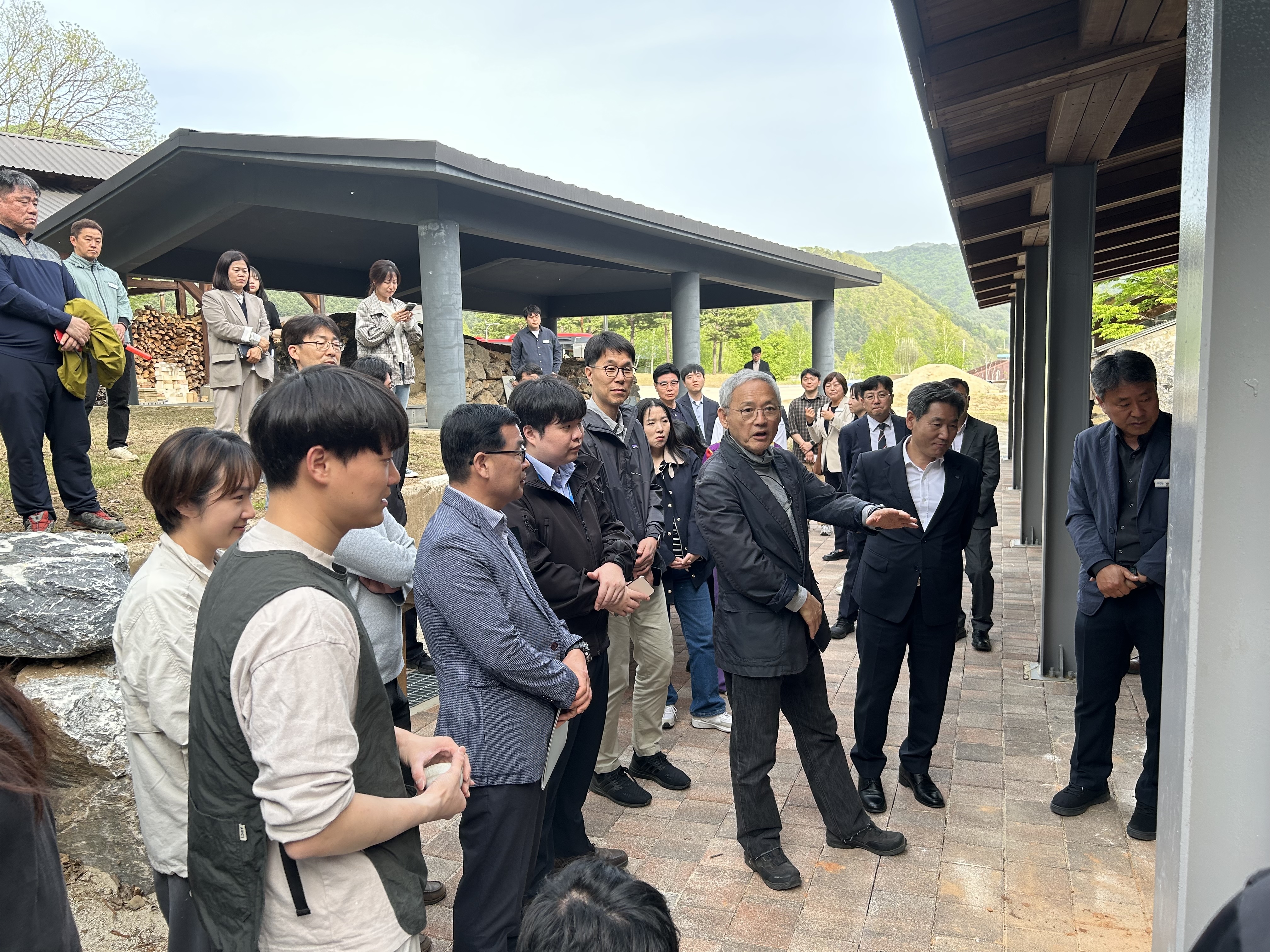
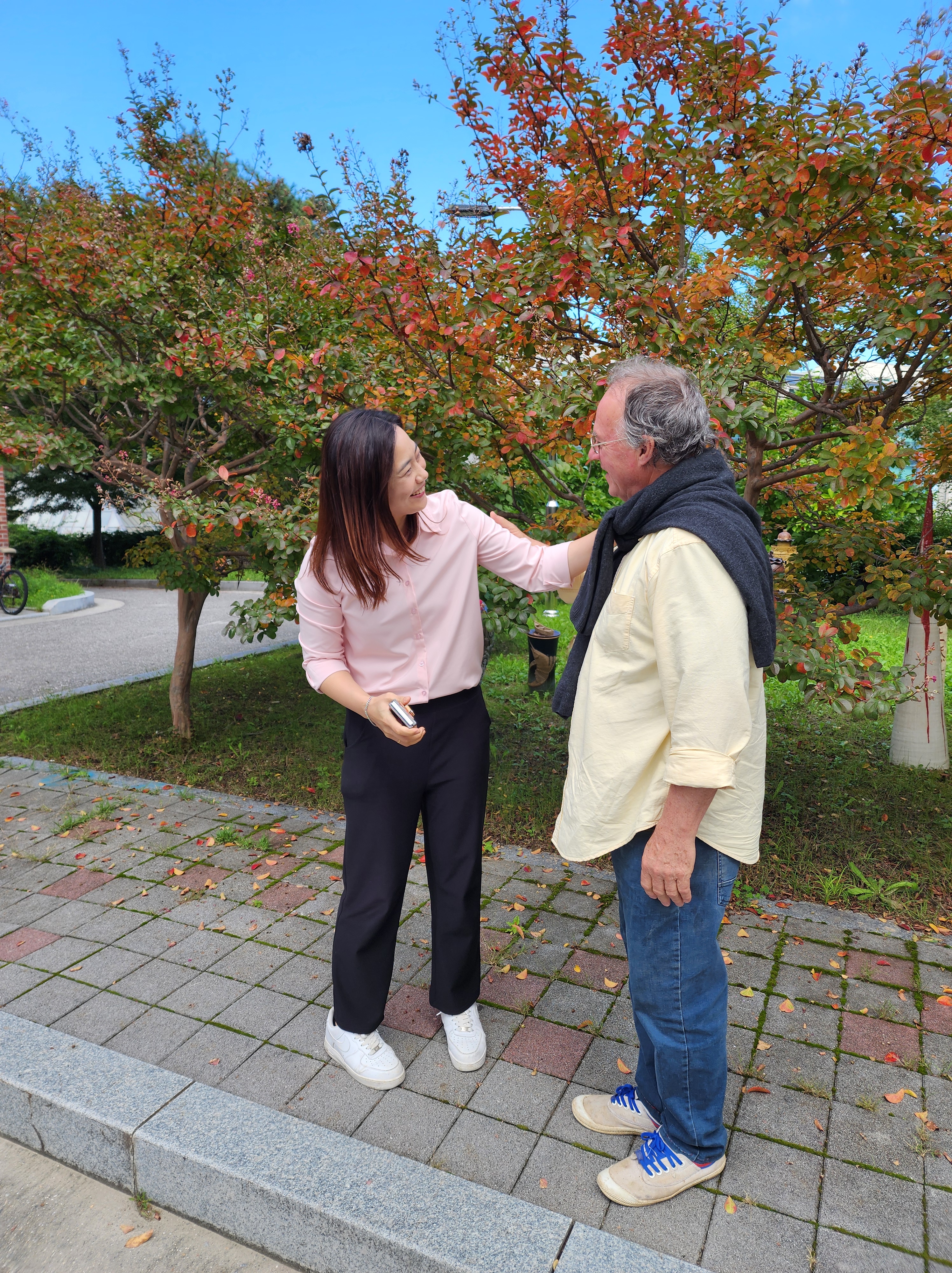
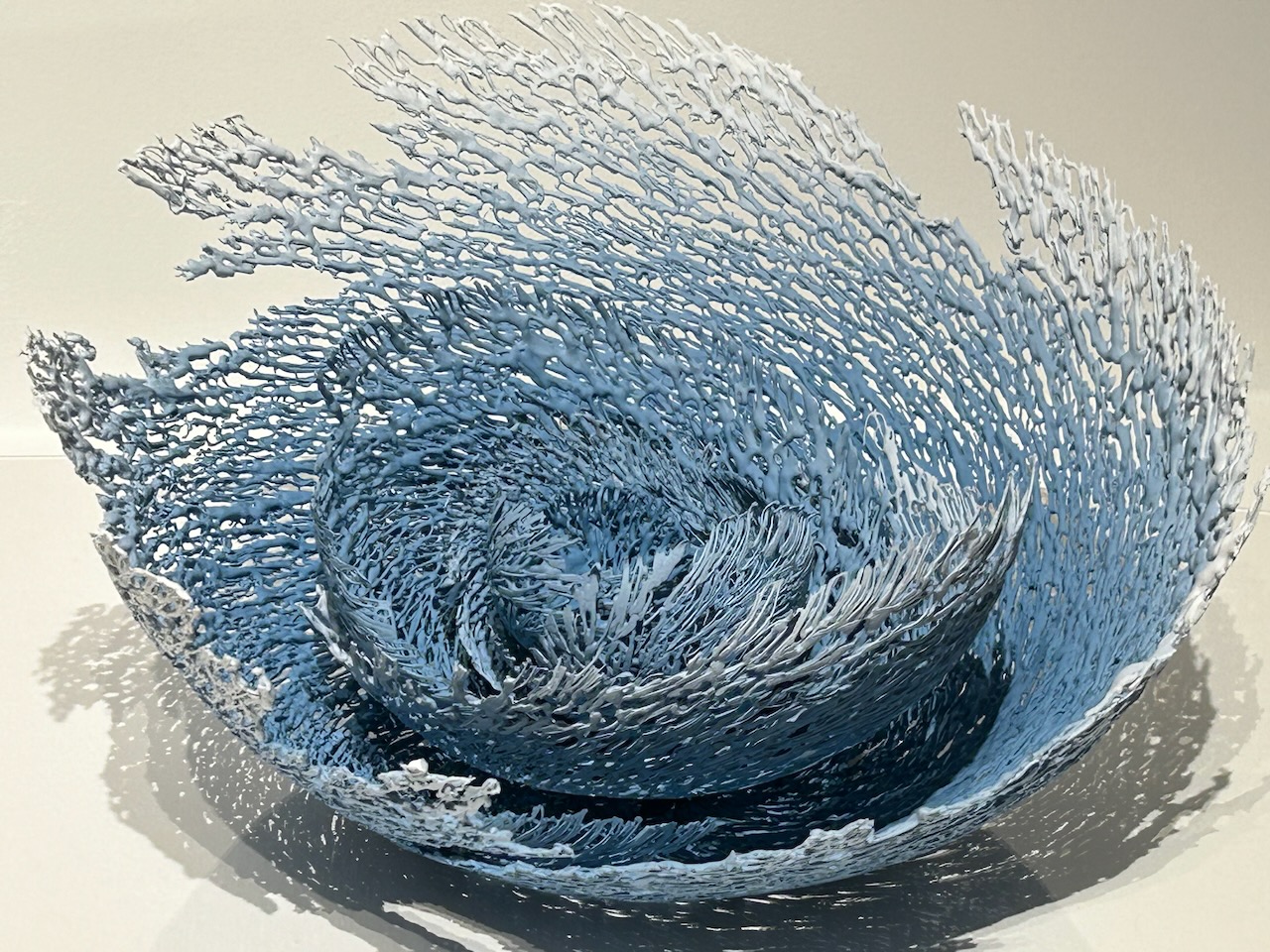
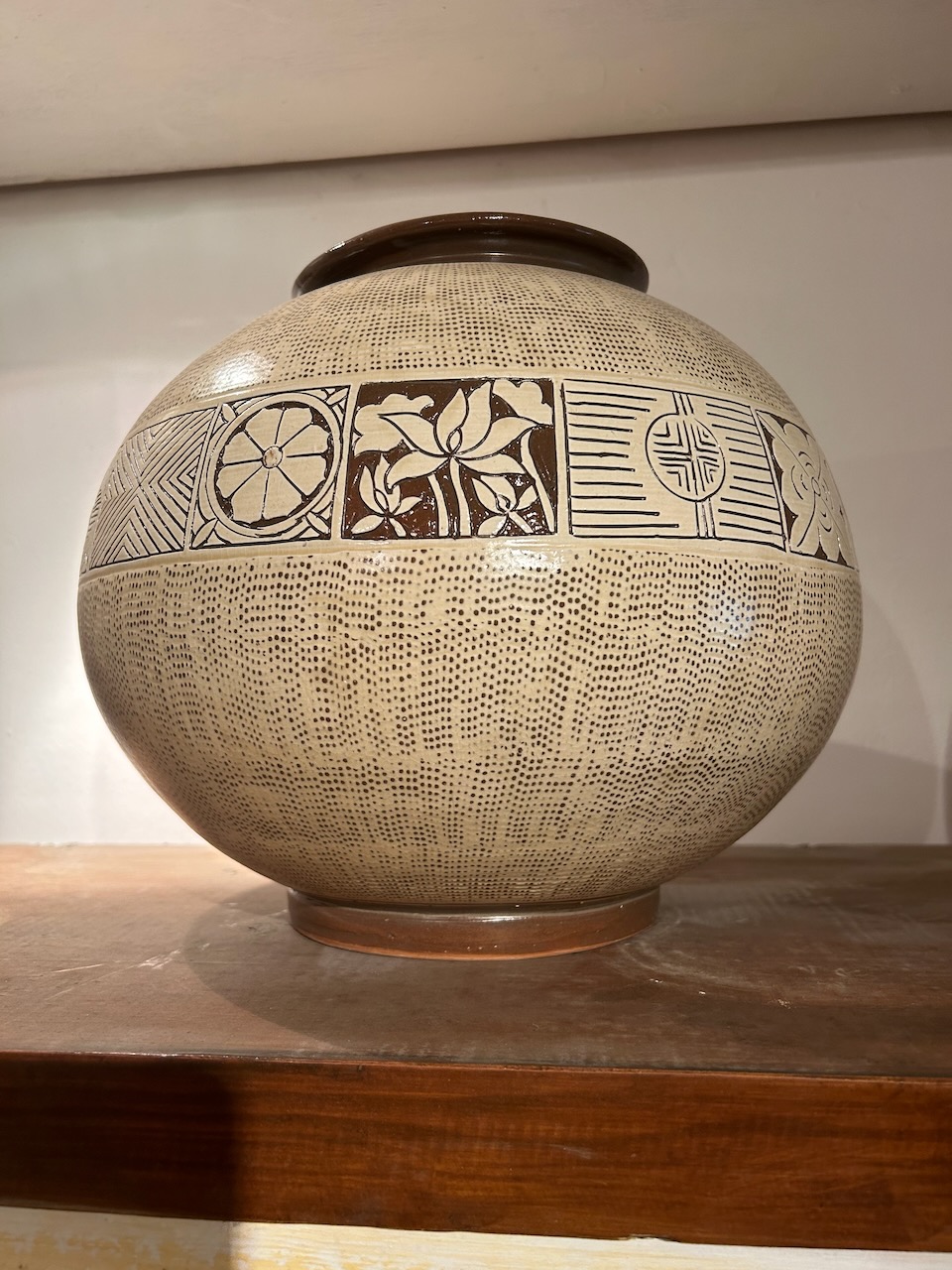
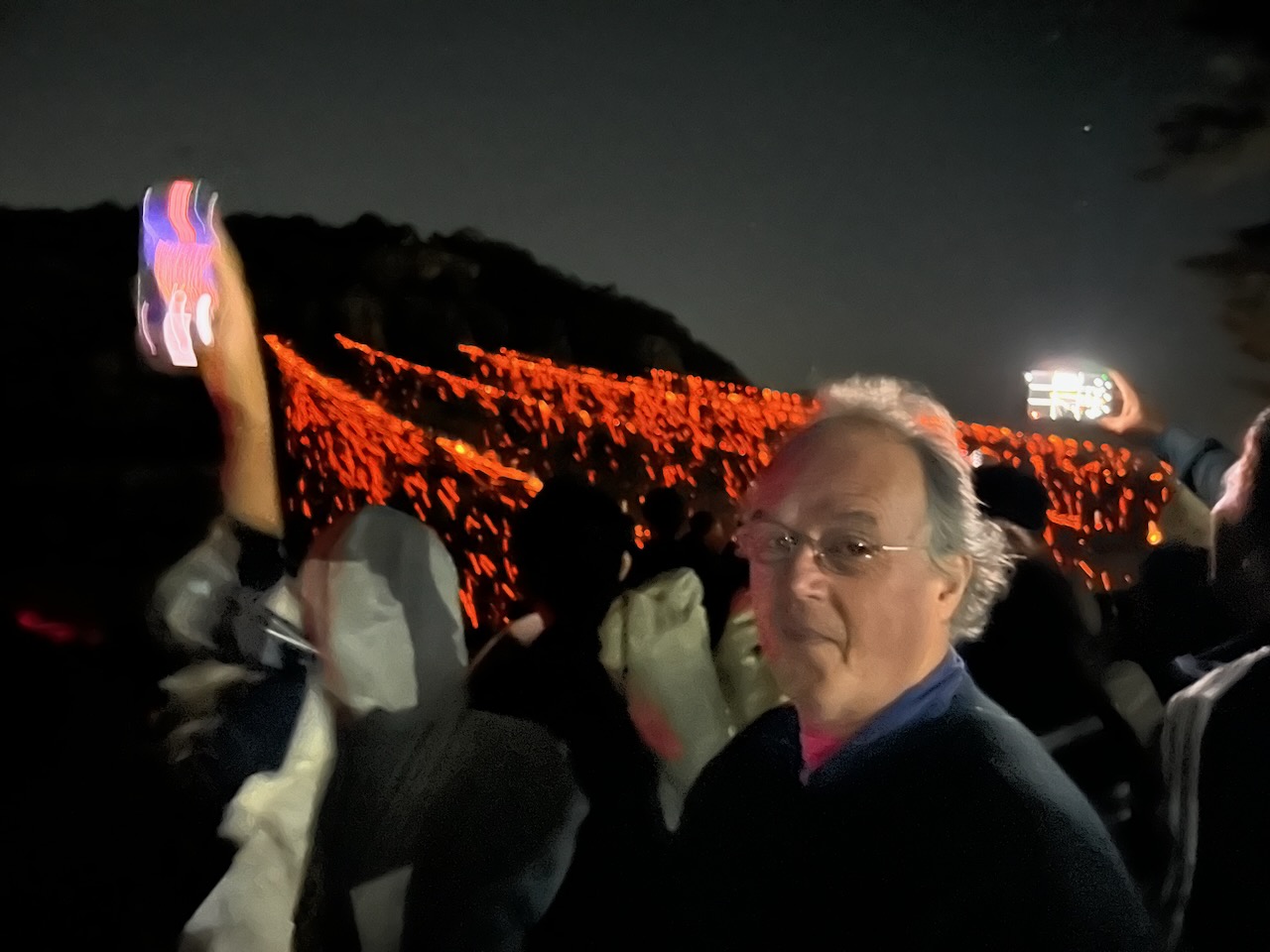
 These 4 images by Kim Young Mi.

I prepared 8 stacks of timber for the firing, expecting to use it all, but as it turned out, I only got to use just over half of it.  In the afternoon, when I go to look in the spy hole, all the little glaze rods have melted. The firing is over in just 9 hours. Too quick! I didn’t realise how fast the temperature was rising without a pyrometer. The colour in the chamber is still looking rather yellowish, and doesn’t have that bright pale glow that I’m used to. I wonder what temperature that glaze stick actually melts at? 

Note to self!  Next time I come here for a firing I’ll bring my own pyrometric cones and a hand held digital pyrometer.

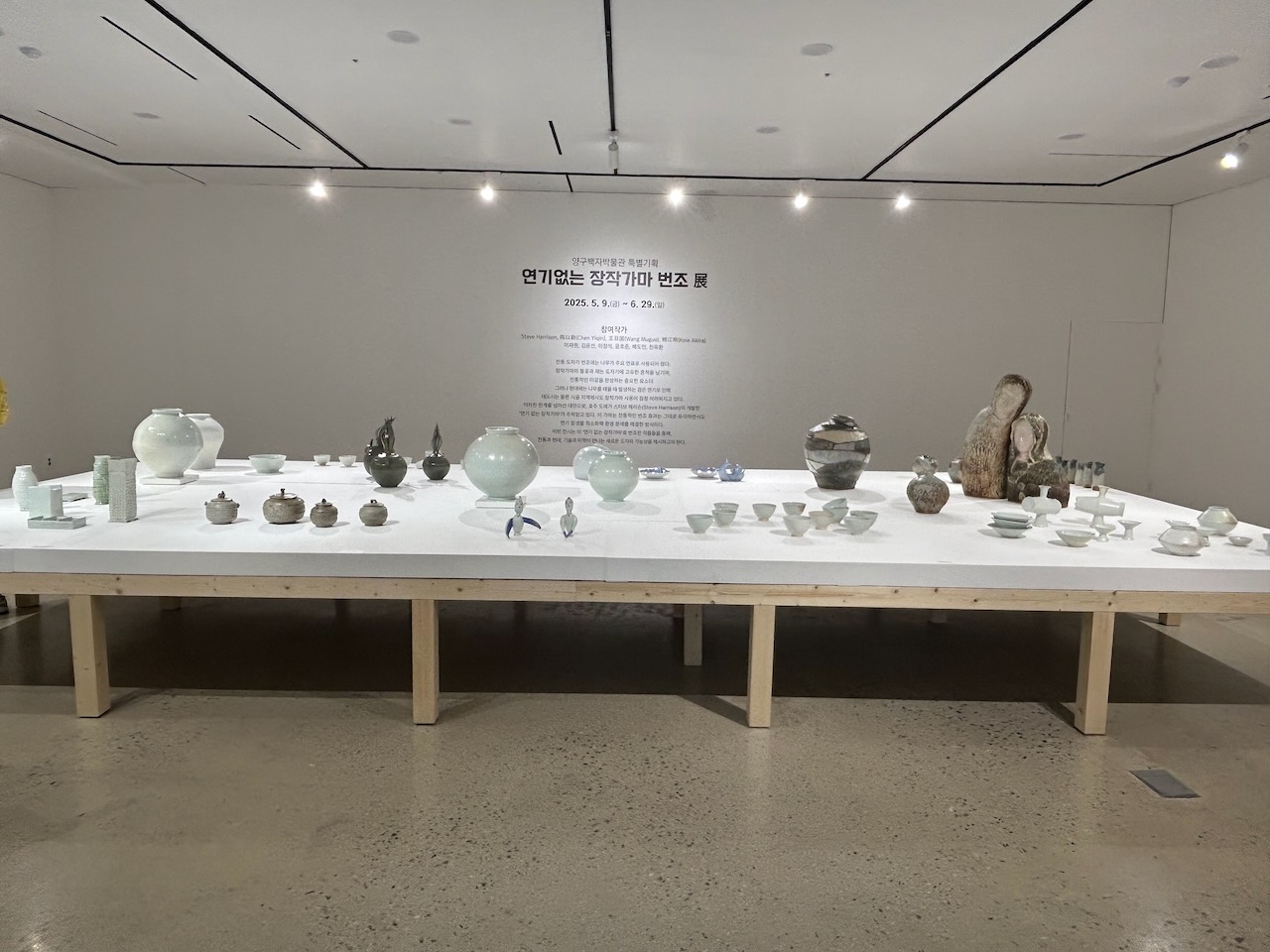
The firing turns out OK. The glazes are pale, grey-blue celadons and off-white, grey/white guans. As I only burnt 4 stacks of wood, possibly 250 kgs of wood, there is no obvious ash deposit, just a little dusting of ash on the glazes facing the fire.

The bottom back shelf is under-fired, but I can remedy that by firing a bit slower and also adjusting the bag wall gaps and height. I hope to be invited back to fire it a couple of times in quick succession, at some later stage, to get to tune it and get an even temperature throughout.

Meanwhile, life goes on in the rest of the village, with the rice harvest in full swing, and autumn vegetables ripening in peoples gardens. I’d love to get in there and pick some of those beautiful vegetables.

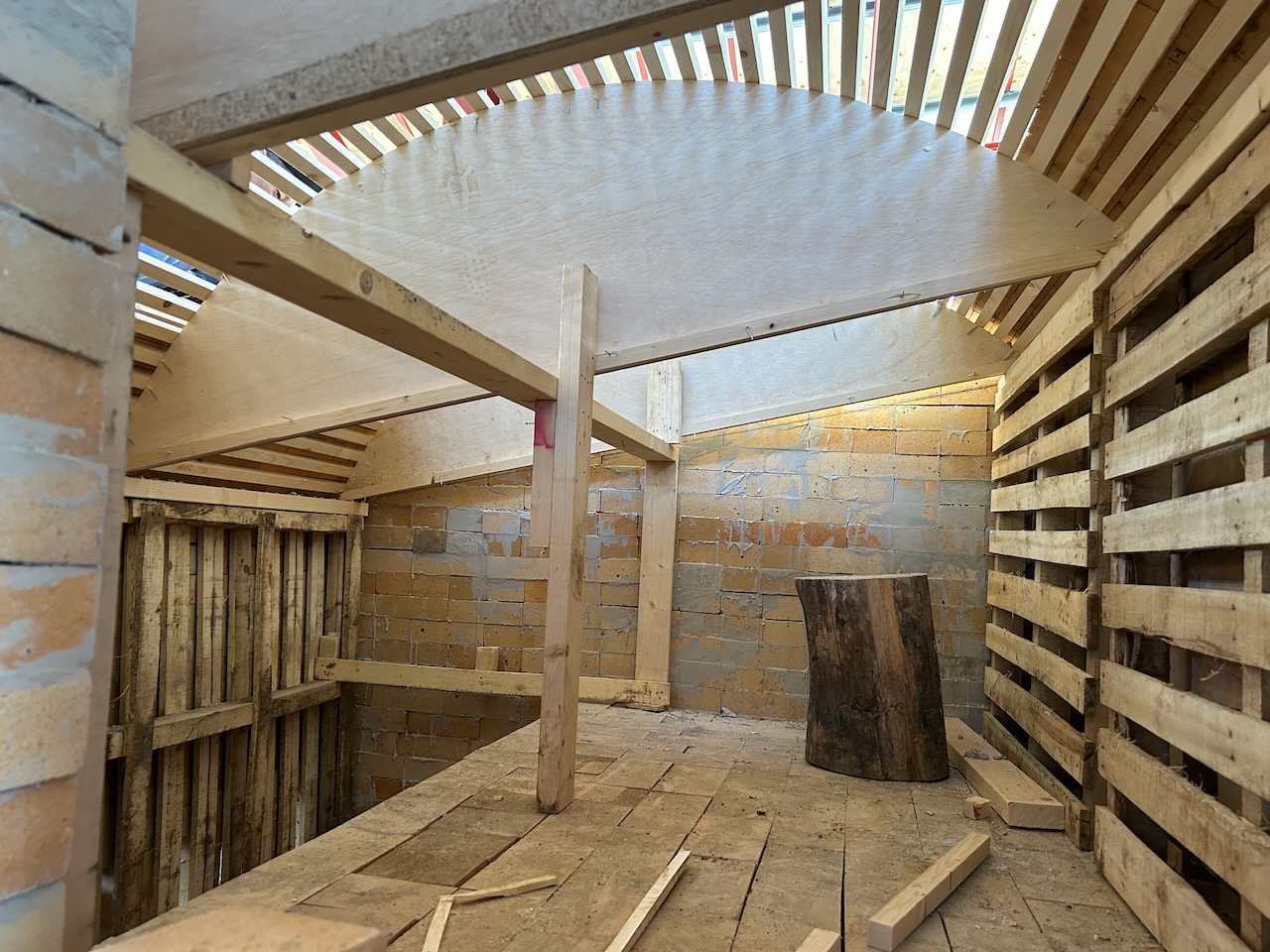
Work has been progressing on the big kiln next door. It is more or less finished, but may need some extra work on it. I’m not too sure there. It will certainly need to be pre-fired to remove all the arch shuttering that is built into each of the 5 chambers. It’s a massive kiln!

Who knows if, or when I’ll be back? What does the future hold. Watch this space


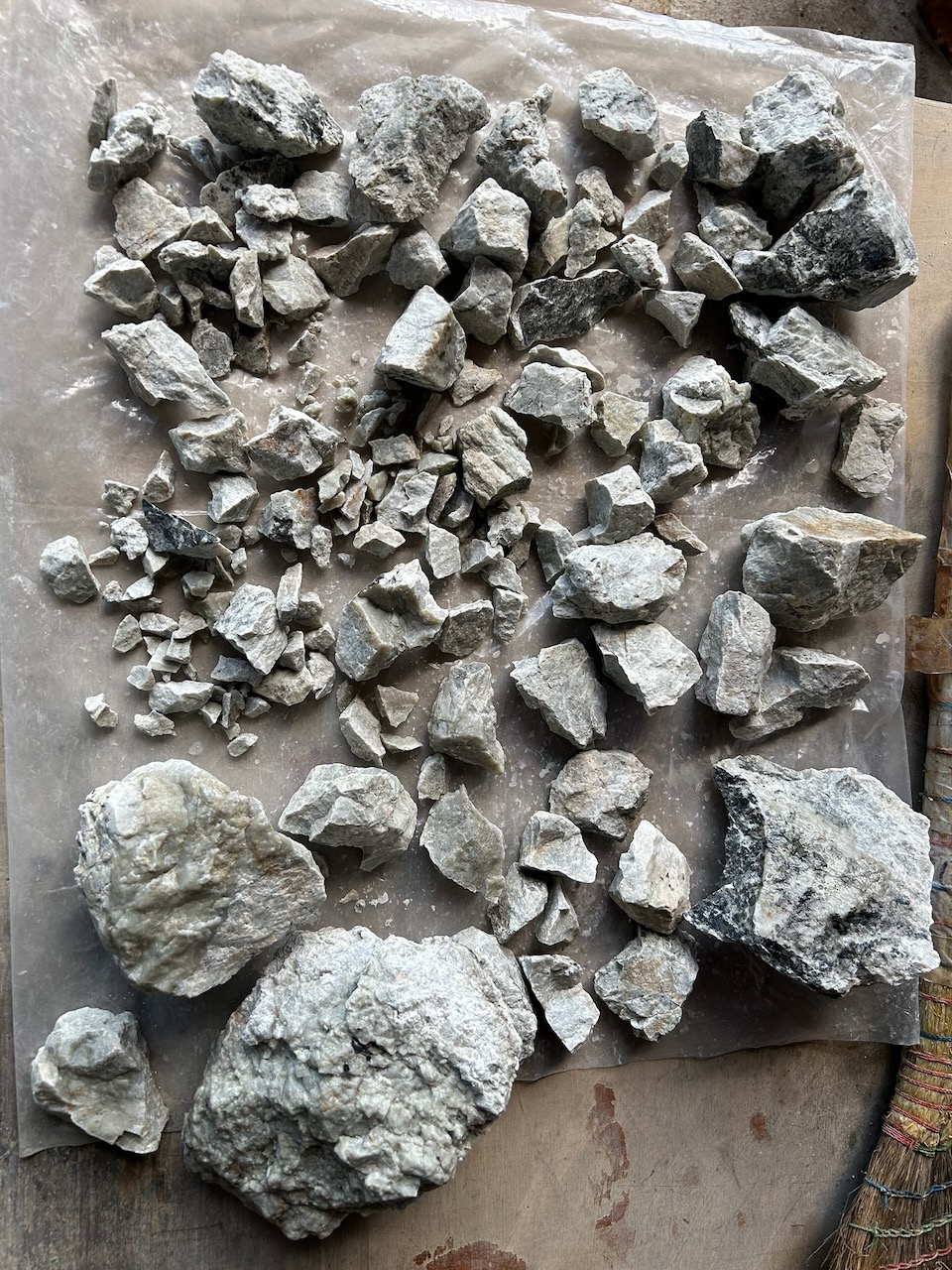
Before I leave this beautifully creative place, I make my usual pilgrimage up the mountain to the ancient site where all the sericite porcelain stone was stock-piled in ancient times. The site has been tragically decimated by a local former. I imagine to stop it being declared an historic ‘National Trust’ site of importance? The whole site was bulldozed some years ago, but remnants remain in the soil. Particularly after heavy rains, the white stones stand out from the brown soil and are easily collected. I make a point of hiking up there and seeing what is available for me to collect. I return with 10 to 15 kgs of stones in my back pack and start the process of meticulously scrubbing the stones to remove any particles of dirt. Then I rinse then several times, until the water runs clear. Finally I soak them overnight in bleach to kill anything that might be harmful to the environment in Australia when I return. 

Back home, I put them through the jaw crusher and then into the ball mill and let the slurry sit and flocculate for a month or two, before stiffening and plastic ageing before use sometime next year.

K-Pot Journal 2

Building my kiln went pretty easily. 

Because the kiln shed wasn’t finished on time, the team of 8 professional kiln builders that are contracted to build the massive North Korean designed 5 chamber kiln that is going in the new shed next to mine, are all sitting with nothing to do for a couple of days, as the slab for their kiln hasn’t even been cast yet. The slab for my kiln was cast the day before I arrived, but as they were still finishing the roof of the shed I wasn’t allowed on site because of the danger of falling objects. So nothing happened for the first day for any of us. We all went into the nearest big town half an hour away to buy groceries for the coming week.

There is almost nothing fresh available here in this little village. There is a junk food ‘convenience store’ that mostly sells soft-drinks, tinned coffee, beer and cigarettes, and a very small ’supermarket’ where you can drop off the first word and buy dried and canned foods that aren’t particularly super in degree or range.

No one sells fresh vegetables, and understandably so, as everyone here, with exception of the dozen museum staff and research students, is involved in farming vegetables. I suppose that they either grow what they need themselves, or swap with neighbours who do. Either way there is nothing fresh in the two tiny shops here.

In the bigger nearby town of Yanggu, there is a choice of bigger grocery shops and one real supermarket. We travel there and get a weeks supply of almost everything that we can think of, that we might need to feed ourselves for the coming week. We spend about $700 on these 3 trolleys of various food items. It even includes shoju and beer! I notice that they sell red wine in there. So return by myself while the others are loading the cars, and buy 4 bottles of red wine, mostly of cheaper origins like Chilean and South Africa There is nothing from Australia available. 

I don’t enjoy shoju at all, but quite like the fermented rice wine called makoli and the local beer, but I feel that there might be an occasion when there will be an opportunity to share some claret in the coming evenings together. It turns out that I’m spot on with this decision. The bottle doesn’t go very far when shared 9 ways!

The first day of brick laying, with many helpers goes really fast and I lay out the parameters for the design and using a string line and plumb bob weight, I make sure that the chimney will be directly below the roof opening. This laying out is the slowest part of kiln building. Getting everything square and level before we start. 

Many hands make light work and we lay the two floor layers in record time. I introduce these Korean professional kiln builders to ‘herring bone’ pattern floor bricklaying technique. They don’t seem to recognise what I’m doing, but using my phone and a translation app, I explain it to them as best that I can, and one of them googles/navers it and announces that it is called herring bone, and they all nod approval, discussing it in detail in Korean chatter as we work. This pattern helps to avoid any straight through cracks developing from left to right or front to back as the kiln shifts and moves as it expands and contracts during its firings. 

2 days later,  I notice that they have decided to use it in the base pattern of brickwork of their kiln foundations as well!

I get this unexpected extra manpower help with my brickwork, as the slab for the big kiln next door is not yet cast. In fact, the local builders are still relocating soil for the earth ramp of the man-made slope and then framing the formwork for the slab. Unbelievably, they get the freshly tamped earth roughly level and tamped down, then all framed-up with formwork and the cement cast by late in the afternoon. I’m pretty amazed by this fast work. However, I do notice that there is no steel mesh used in the slabs, and with it cast on top of freshly placed earth substrate, Will it crack in due course? I have no idea, but hope for the best. These Korean workers sure are fast. Going on this, I can only suppose that there is no steel in my slab either.

I am working flat out, as fast as I can to lay down bricks in their final positions to be laid with mortar seconds later, by one of my several helpers. They are professionals and are so quick. I’m hoping that I don’t make any mistakes working at this speed, as there is no room for any error. It gets particularly stressful when I have to lay out all the mouse holes and tertiary air inlets in under the floor and in the first layer of the walls. They need to be precisely positioned to work effectively, and I have no time to second guess if they are exactly right or not. working with four bricklayers calling for bricks keeps me thinking of four different parts of the kiln at once. Mouse holes, stoke holes, tertiary air inlets, flue holes and the door openings are all required in this first layer, and all at the same time. I’m used to working at a much slower pace and thinking everything through thoroughly. There is no time to think here at this speed. Luckily, I’ve done this before a time or two, so everything goes well.

By the end of the second day, we have the walls well and truely started and up a few courses. I have the luxury of having two of these  enthusiastic helpers dedicated to using both of the diamond saws, cutting the hard fire bricks to special sizes to facilities the special openings that  I need for the tertiary air inlets. These guys have never seen a kiln like this one with so many holes in it. Traditional wood kilns here are very basic in their construction, often, just straight through tunnels, or multiple chambers, one after the other with only the flue holes to think about. They keep asking me how it will all work, and I am at a loss to be able to explain the intricacies of the design to them with my limited Korean and just some charades to do the explaining. It will have to wait until dinner time, when I can get out my lap top and show them some images of finished examples.  Everyone here has a phone with a translation app. I’m constantly turning round to face a phone screen to talk into, to give yet another explanation of a detail in the brick laying pattern.

I briefly have these 7 blokes on my team, and there is just one bloke stripping the form work and measuring the step dimensions and figuring out the layout for the big North Korean designed kiln next door. The cement slab is still fresh, soft and still very wet.

The next day, They are all going flat out on the big kiln, sorting out the necessary steps up the slope and making sure that the first layers will match the brick dimensions needed to align with the next step of brickwork. It’s a massive job. The kiln will have 5 chambers and a huge firebox with two arched openings at the front. They waste no time, and with 8 skilled workers the job flies up.

I am left to work on slowly on my small kiln, with occasional help from one of the bigger kiln team and someone to cart bricks and cut special shapes on the diamond saw when necessary. We work well together, and there is a lot of laughter, good natured banter and good will towards me. At the end of each work session, there are more questions about how it will work. I suspect that they think that I’m a bit mad, or at least quite quirky, expecting the fire to burn up-side-down and not roast my head off as a soon as I open the stoke-hole lid in the top of the fire box. Fire always burns upwards in their experience.

None of them has read my book on downdraught fire box kilns that The Director here of the Research centre has had translated into Korean about 5 or 6 years ago. Not a big seller apparently, among the traditional wood kiln building community?

I ask Mr Jung, The Director of the Porcelain Museum and Research Centre, to bring a copy of the book over to the kiln site, the next time that he visits, he does and it is passed around at morning tea time. A couple of the guys flip through the pages, but I don’t think that any one actually reads it in any detail. After dinner, I get out my lap top and show them images of other projects like this one to help explain what I’m try to achieve.

I build an arch formwork and set it in place on a stack of firebricks, using hand cut special wooden wedges that I place on top to adjust the formwork to the exact level needed, and also to allow me to pull them out and drop the wooden form work down free of the finished brick arch, to allow me to slide the formwork out of the chamber. This excites a little bit of interest in a couple of the bigger team, as they don’t appear to have ever seen this before. 

I have read in older books, perhaps Leach’s Potters Book? That they just leave the form work in place in the big oriental kilns and burn it out later, before the first firing. I though that this was a bit wastefull. So I have never done this, always removing the formwork to be used again in another kiln in the future. When I tap out the wedges and drop the form work, there is a little intake of breath and a smile from Mr Kim who is assisting me at the time. He smiles broadly and taps me on the shoulder, thumbs up. He’s impressed. word spreads and my position in the social order rises slightly. At dinner, some one asks me how old I am. I tell them I’m 72, nodding all round. From this time onwards, I’m always ushered through doorways first and given the front seat in the car when we go somewhere. I’m accepted as one of them as a professional kiln builder, but I’m also the oldest member of the team. So as such I garner a little bit of extra respect as well.

I finish the brickwork on my kiln by the end of the week and start to engage with all the multitude of little jobs that are needed to complete the kiln. I need make a load of ceramic buttons to attach the ceramic fibre insulation to the firebox lids. I also need to get a local company to cut and fold some thin stainless steel sheet to make the fire box lids.

I ask to be given a lift into the bigger nearby town of Yanggu, to buy steel angle iron and round bar to weld on the bracing. It all goes pretty smoothly, and in a couple of days the kiln is all braced in steel. Using a little portable stick welder I slowly work my way around the kiln, cutting and fitting the pieces together. I haven’t used a stick welder for 20 years. I’m a bit rusty on it, but it soon comes back to me. I’ve only used much more modern MIG and TIG welders in my kiln business for the past couple of decades. I have been spoilt by their speed and convenience, but I manage.

In some miraculous way, I manage to weld the 10mm dia. steel rod handles onto the 0.8mm. thick, or should I say thin, stainless steel sheet lids, using the little stick welder. This isn’t normally possible. The heat needed to melt the 10mm steel handle, is far too hot for the thin sheet and would normally burn a hole clean through the thin sheet. I’m aware of this, so prefabricate a small piece of angle iron backing plate that I clamp inside the lid to absorb most of this excess heat. I do burn a couple of small holes through here and there, but mostly it works well and I get the impossible done before lunch. More kudos from the pros on site.

 They are treating me as an equal. It’s turning out to be a very good job.

K-pot Journal

K-pot Journal

There is a world-wide phenomenon in international popular music that has taken the world by storm in the past decade or so called K-pop. A style of popular Korean music, loosely based on traditional Korean music styles, but greatly influenced by loads of Western music styles like hip hop, R&B, rock, jazz, even gospel, reggae, electronic dance, folk, country, disco, and classical. Every body seems to know about K-pop, this Korean cultural export.

I don’t know much about K-pop and Korean popular music, I come here to study ceramics, so I thought that I’d call this blog K-pot! On my first visit to Korea, 8 years ago, I wrote a blog called ‘The Kim-chi Chronicles’ (Sept 2016), This blog is its latest incarnation.

This is my 7th visit to Korea, since I first came here in 2016. I was here only 6 months ago for a ceramics conference, where I presented a paper on low emissions wood firing. This involves using a kiln with a downdraught firebox (Bourry box) which is capable of firing with relatively little smoke. Of course there is always some smoke when burning wood, but this style of kiln design keeps it to a minimum most of the time.

In Australia, where I have done most of my research, I use hard wood, eucalyptus trees for fuel. Eucalypt hard woods are heavy and dense. They burn slowly and steadily. Perfect conditions for low smoke emissions. Here in Korea, they have a lot of different softwoods in the form of pine trees/conifers. They burn fast and furiously, so it is a challenge to minimise smoke during firings.

People here have asked me what is the secret addition that you have incorporated into the kiln? As if there is some sort of afterburner, that they can add to their own kiln to clean it up. There is no secret addition! It is a complete kiln design incorporating the virtues of the down draught firebox that burns the wood more or less in stages, so that there is no intense emission of volatiles that causes smoke in most other kilns.

So I am here again in Bangsan, in the Yanggu Porcelain Village, this time not as an artist-in-residence, as I have been in the past, but as a kiln building tradesman, a glorified refractory bricklayer. I have been tasked with the job of building a small kiln here that demonstrates that wood burning kilns can be fired with a minimum of smoke.

This project was first floated way back in 2018, when the director of the Yanggu Porcelain Museum and Research Centre, Mr Jung Do-Sub, asked me if I would be interested in such a project. The Museum had purchased the rights to publish my book, Laid Back Wood Firing, and had it translated into Korean. They have also published my other books ‘5 Stones’, and ‘Rock Glazes, Geology and Mineral Processing for potters’.

Unfortunately, The translator took someone else’s advice and renamed the book “Smokeless Wood Firing”. Which is of course not true. all wood creates some smoke when being burnt. My project is to keep the smoke to a minimum. Calling the book ‘smokeless woodfiring’ only creates false expectations, and room for criticism and disappointment.

As a result of the books’ publication, there was some interest in getting one of my kilns built at the Yanggu Research Centre as a demonstration model. Like other places in the world, There is a growing interest in cleaning up the environment, at least from the grass roots level, not from there polluting industries, who are being dragged kicking and screaming to be made to be kept to account. It is this citizen-lead interest that is putting pressure on political leaders to make some sort of gesture to seem to be doing something, while still taking large donations from the polluters to keep the status quo.

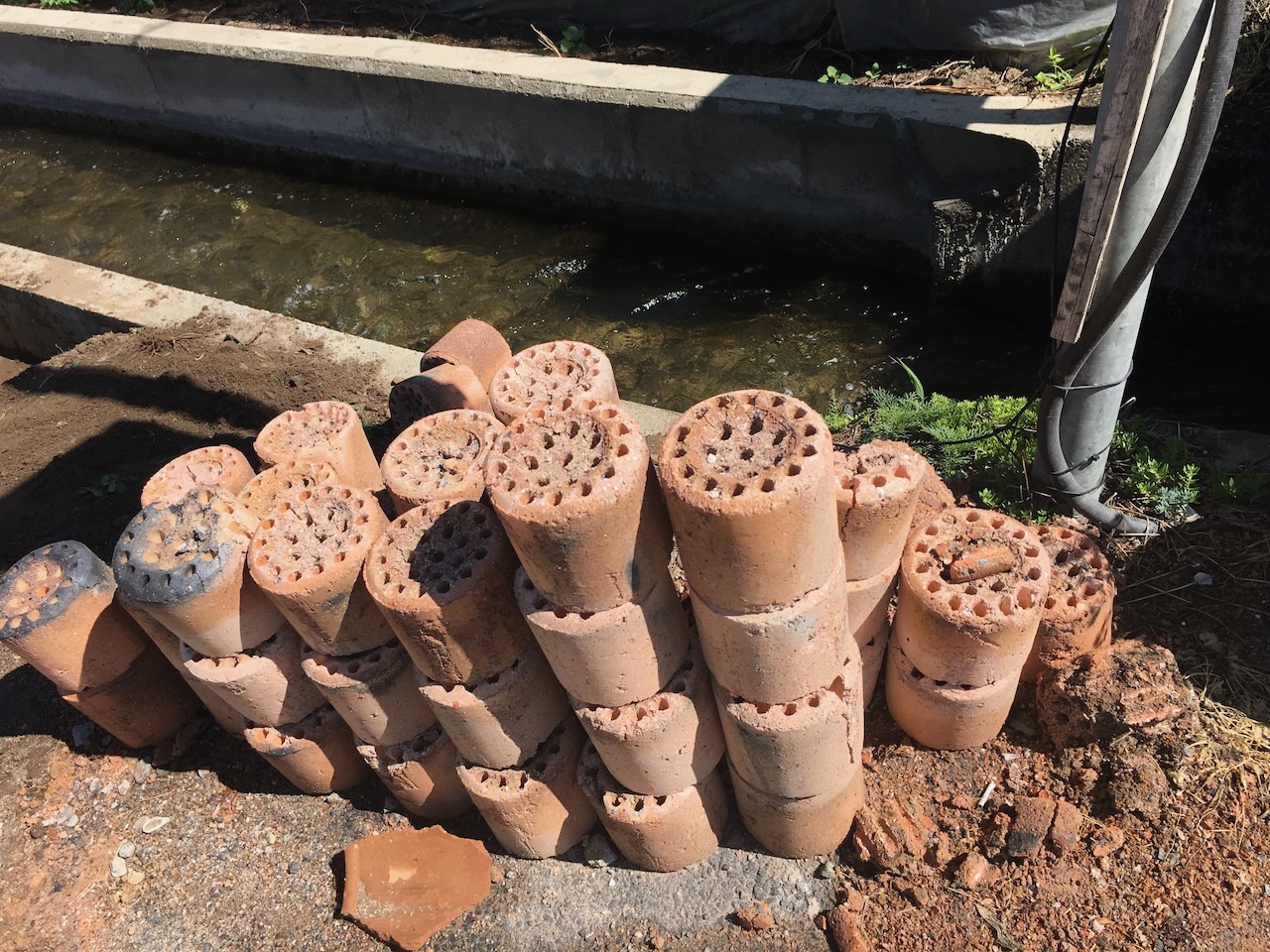
The result is a very slow transition to clean up the environment. The results can be seen here in this tiny, remote village. When we were last here before ‘Covid’, in early 2019. The streets were being dug up and gas pipe lines being installed to every home and business. Previously, most home heating and commercial cookery was being done using pressed coal briquettes. Dirty, inefficient and polluting. The immediate result is much cleaner air.

These days the smoke from the wood fired kilns looks just as polluting, now that the residents have paid to have cleaner gas installed, to eliminate their smoke, why shouldn’t the residents want cleaner air, and less smoke pollution from every source? The traditional kilns here are very smokey, producing black smoke all the way through the firing schedule, from start to finish, particularly at the end of the firing, when the extra chambers of the climbing kilns are being fired by ‘side stoking’ methods.

There are two climbing kilns here in the centre of the village behind the research Centre and Museum. One of them right next to an ancient kiln site, where porcelain has been made since the beginnings of porcelain making here, hundreds of years ago. With an ancient tradition of pottery making here in the village, using these old kilns going back many hundreds of years, it’s hard to suddenly say NO! Just stop doing it. So the Director of the Museum, was thinking a decade in advance of this possible occurrence.

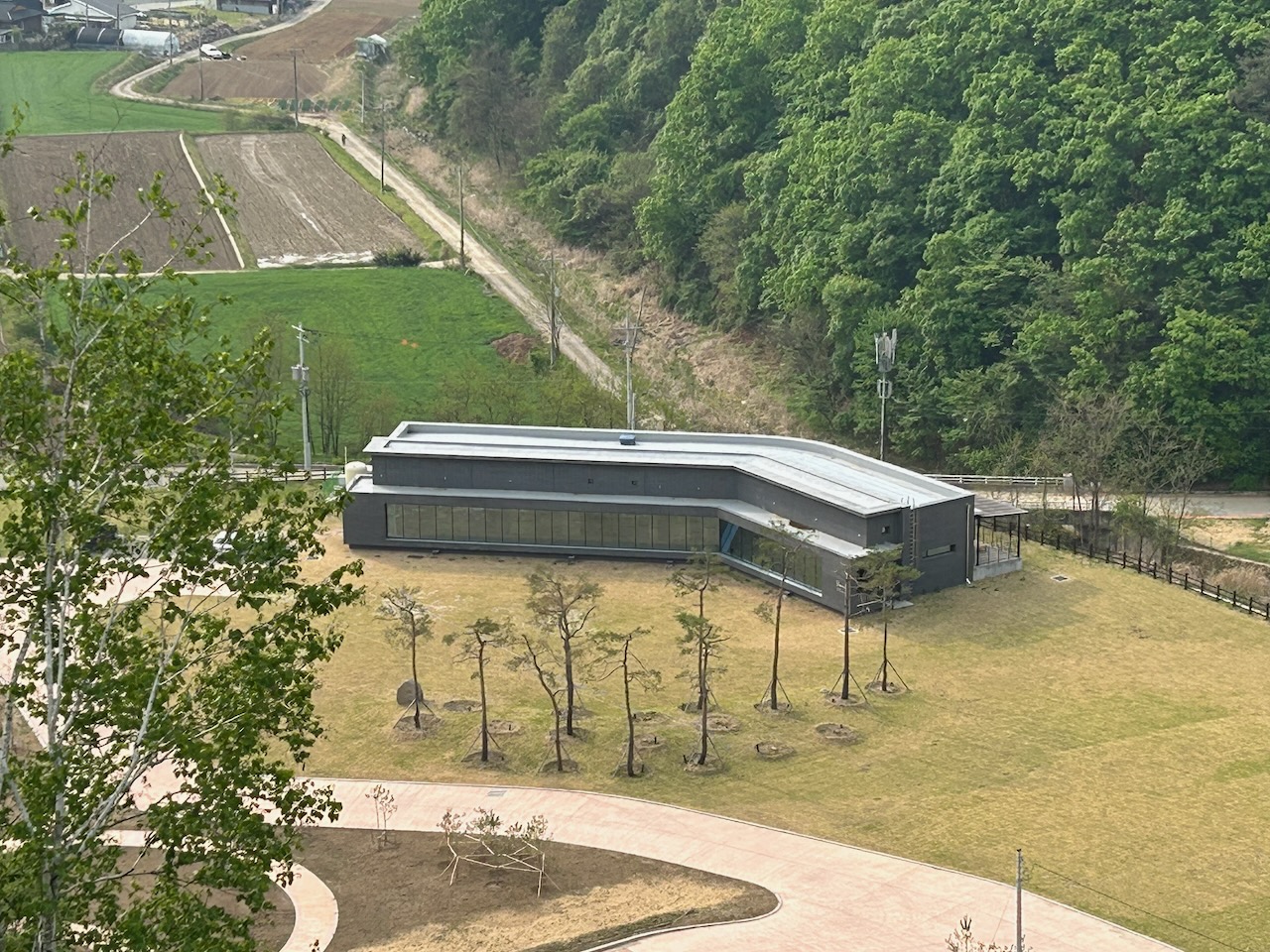
He managed to secure access to an abandoned military base, a few kilometres out of town, up a small valley, well out of the village, where a new

Smoke from one of the traditional kilns here.

‘Porcelain Village’ is being built. When I first arrived here 8 years ago, in this new development, the buildings were still very new and my room still smelt of fresh paint, and all the facilities were still being installed in what had been the officers quarters. One of the stone barracks was being converted to a meeting room and coffee shop. The Museum director had big plans to build several different styles of kilns out here to add to the research facilities available to the students. That has since then, mostly all come to pass. However, the plan keeps changing and expanding and getting more complex.
The Museum Director is a very smart guy, a good strategic thinker and politically very savvy.

The first kiln built up in the valley was a tunnel kiln. I didn’t see this kiln being built, as I have been away for 5 years because of the COVID lockdown, and then the huge catastrophic bush fires that burnt our pottery. It has taken me 5 years to recover, so that I could finally accept Mr Jung’s offer to come and build them one of my kilns.

The second kiln built here was a traditional low-firing, earthenware wood kiln, the design of which, originated in Jeju Island off the far South Coast of Korea. It is built out of basalt stones. The only available material on Jeju Island, so is limited to very low firing temperatures. A kind of tough earthenware.
Hand made fire bricks stacked to dry in front of the Jeju basalt stones kiln

The third kiln built here was a traditional 5 chambered climbing kiln, built almost entirely out of hand made blocks and bricks for the walls, and hand rolled cones of local fire clay for the dome and arches.


Hand made clay cone shaped bricks set out to dry in the kiln shed.

The 5 chamber domed climbing kiln getting ready for its first firing

There are 3 independent, self contained workshop/residencies for artists and their families, and another building with 4 bedrooms and 4 studios, suitable for single student residents. Each of the studios has it’s own electric kin and pug mill. There is a huge communal clay processing and kiln firing building with 2 large gas kilns, and finally a very large conference/residence building that can sleep up to a dozen people with large multiple bathroom, toilets, and even a sauna and laundry.

As far as I can ascertain, all the residents/students here have already completed MA hons degrees from their university, and have come here to study for up to 5 years to gain their PhD in porcelain research. It appears that they get rent free access to all the facilities here and only have to pay for their gas and electricity bills. An amazing deal. Such great support for the Arts here! In exchange, they are expected to take part in communal activities like the making of the hand made fire bricks for the last kiln built here. or making the years supply of small test tiles for glaze testing.

There are plans for the local government to develop and sell off several privately owned and developed house and pottery studio sites, next to the research facilities. There may be up to 8 or 10 of these house sites. 2 of them have now been taken up, and buildings are currently underway. It will become a small porcelain village and creative community.

My wood fired kiln is small compared to the vast climbing kilns here. But it is actually quite a large kiln of 85 cu. ft. or 2.5 cu. m. Very large for a single potter to fill regularly in Australia. However, I expect that it will be filled by group effort here, just like all the other big kilns. Mine will be the 5th wood kiln to be built on site here. A demonstration model of what might be possible in terms of reducing smoke pollution in wood firing, while still achieving reduced stoneware wood ash effects.

I only hope that it all goes to plan, However, I am mentally prepared to accept some smoke, as all the wood here is very dry pine, that will burn intensely, so I will have my work cut out to get a good clean result. I will be severely embarrassed if it all ends up going pear shaped in the firing. So far the kiln looks good and is built to the specifications that I usually rely on when designing similar wood kilns. But knows what will happen when I fire it with very dry pine fuel. I can only guess, but I imagine that there will be some smoke.

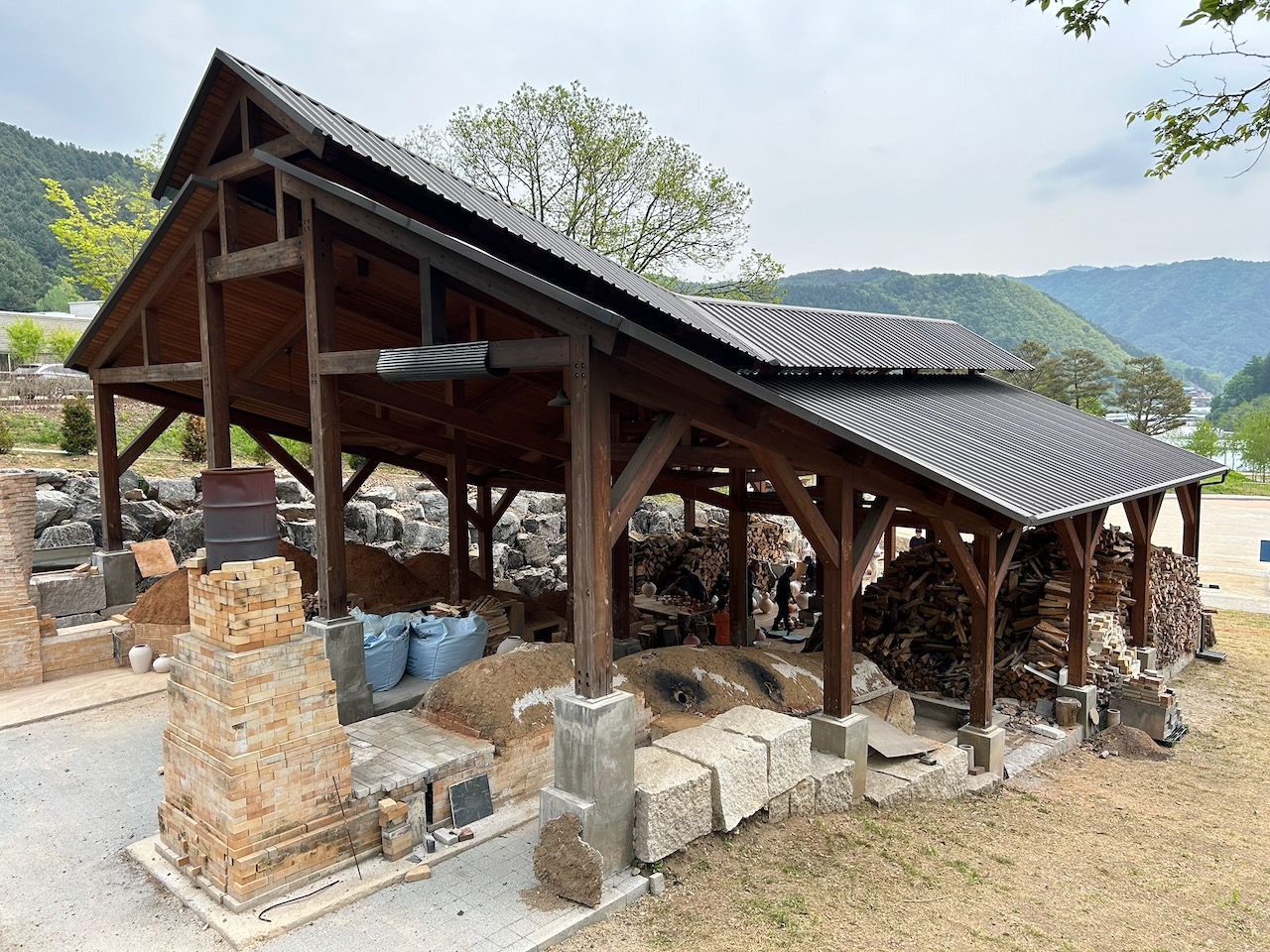
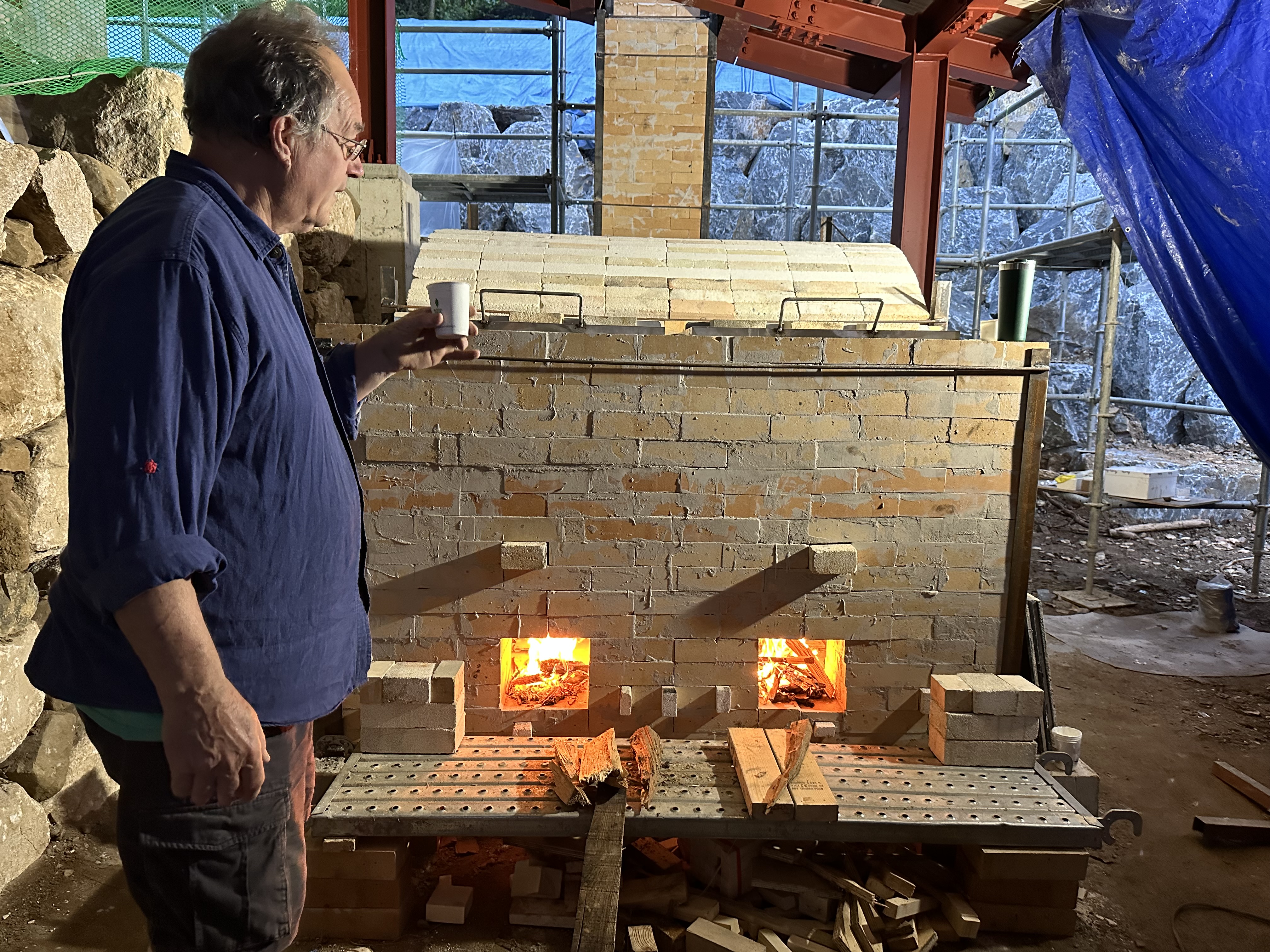
My finished kiln with 2 Bourry style downdraft fire boxes side by side.
Ready for K-pot firing. I have to wait and see what my decisions were like.

Tea bowl exhibition in Seoul, Korea

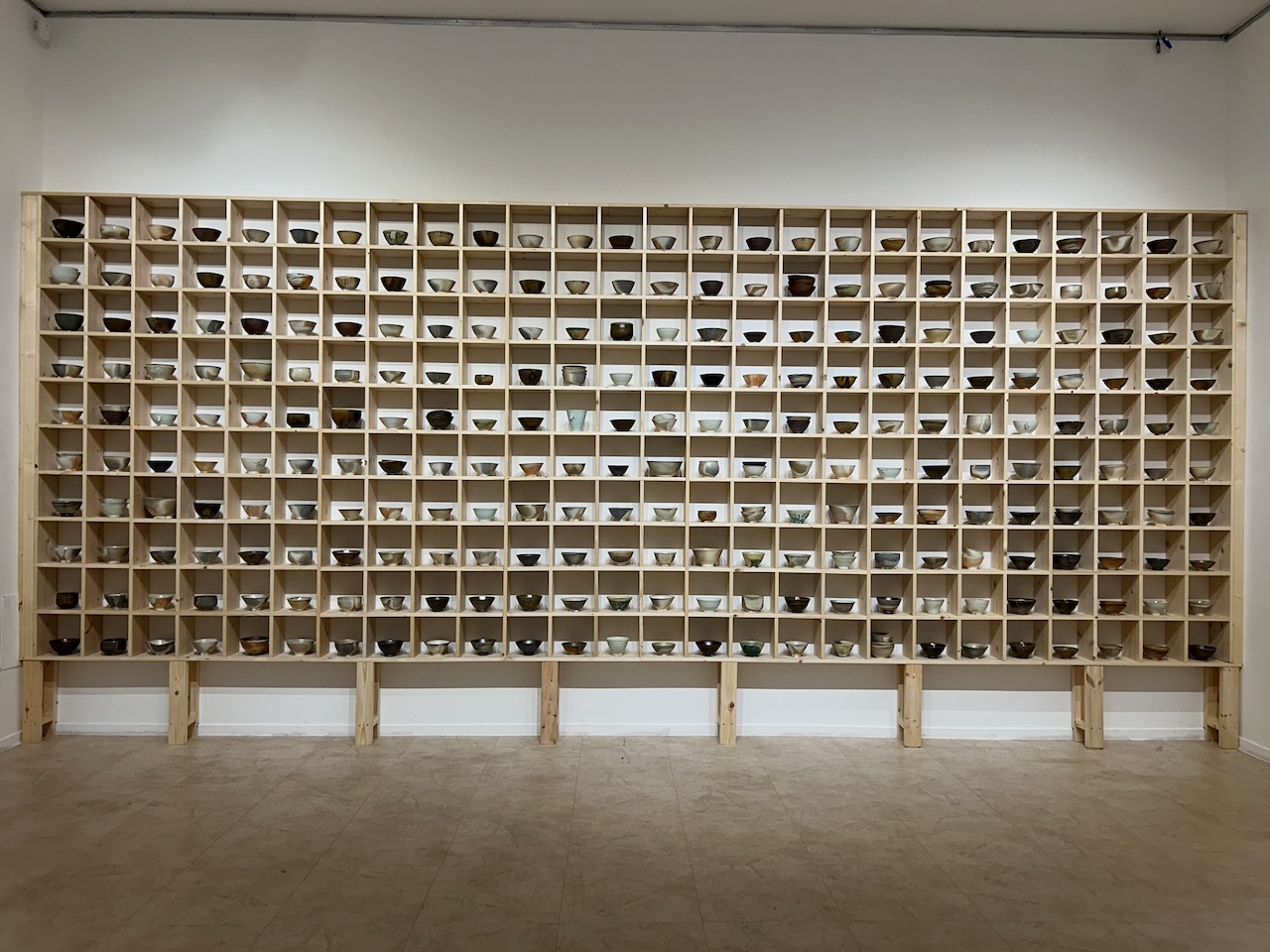
I currently have one of my bowls in a tea bowl exhibition in Seoul, South Korea.

This bowl was fired at the front of my wood fired kiln. During the firing the ash glaze ran just a little bit too much and stuck the bowl to one of its pieces of wadding. Luckily, I was able to chip it off without breaking the bowl. I repaired the damage using the ancient Japanese technique of ‘kintsugi’, using gold to repair precious pieces of ceramic.

Using pure gold to repair a damaged pot shows respect for the item. It honours the piece by giving it time and resources, and finally finishing it off with a coating of pure gold. By showing it respect, I choose to give it a greater value than it would have had, if it had come out of the kiln intact.

The pot is damaged, but it is still beautiful. It has Value, and it is Unique. It is Honoured even though it is Damaged. It’s possible that repairing a damaged thing can make it more beautiful and precious than if it hadn’t been through its ordeal.

I see these damaged and repaired objects as self portraits. I went through an ordeal and although I was damaged, and am not the same, I am still working. I’d like the think that I’m also improved by the experience, although I’m not too sure about that. My pots that I repair are certainly more beautiful, interesting and valued.

Kiln Firing in Korea

Janine and I are recently returned from Korea where we were invited to take part in the Mungyeong Ceramics Festival, where I delivered a paper to the ceramics conference there about low impact wood firing.

My paper concentrated on my research into small down draught fire box design, intended to minimise smoke and pollution as much as possible. I also presented my current work on afterburners and scrubbers to try to minimise particulate pollution from our kiln chimneys.

I believe that these topics will become more important over time as Global Heating and carbon in the atmosphere starts to become obvious and difficult to ignore. Even to conservatives.

My paper was well received and I got some good interrogation during the question time afterwards. My book ‘Laid Back Wood Firing’ was  translated into Korean about 5 years ago and has been available there for some time, so some people there had read it and were up to speed with the concept.

Janine and I will be returning to Korea later in the year to build one of my small Bourry Box kilns as a demonstration of how it can work. It will be built alongside several older traditional wood fired kilns. They are interested to compare the smoke from our firing and also the fired results afterward with that from the traditional kilns.

The most recently built, traditional, multi-chamber kiln was fired while we were there. It smoked all the way through the firing. I’m pretty sure that we can do better!
Its a really beautiful kiln to look at, and is constructed using the very old method of using cone shaped hand made ‘bricks’.

The cones were all made on site by the students/residents in the ceramic research centre at the Yanggu Porcelain Village.

The use of cone shapes allows for a rather nice dome shaped top or 3D arch over each of the fire box and 4 chambers.

The freshly built kiln took just 24 hours for it’s first firing – all 4 chambers to stoneware, absolutely no technology was use. No pyrometers or cones, just an experienced firing crew and home made draw trials of glazed tiles pulled at 30 minute intervals after orange heat.

This kiln was so new, it was still wet, and steam was coming out of all the cracks all the way to top temperature.

Side stoking is always a dirty business. Hard to get around that. It’s the nature of the beast.

That is why I have chosen to build a single chamber bourry box fired kiln as the demo model.

It will be a larger sized chamber, so I have designed it with 2 fireboxes side by side.

Only time will tell if it works the way I intend and if it impresses them.

When you are in Seoul and the air quality is rated as ‘fair’, but you can only see for 1 km through the smog. I makes you think about what a bad day might be like. Smoke from wood firing is not the big problem in the scheme of things.

But every little bit counts.

My 11th book published

This week I received a box in the mail from Korea. It contained copies of my latest book translated into Korean.

I was such a poor student of English at school. I’m somewhat surprised that I have become a published author of multiple books in 3 languages!

Even my English teacher from High School was surprised, to the extent that when I met him 10 years after leaving school, at a reunion, he didn’t believe me when I told him.

I don’t blame him.

My work building our wood fired kiln continues. This last week I have finished the chamber arches with Janine’s help. 

Adding their second layer of insulation bricks and welding on the steel bracing.

I also started work on the chimney with the help of my good friend Warren on the weekend.

The chimney is almost at the height that I can’t build anymore courses until I cut a hole in the roof to allow it to go through. 

This will involve fabricating some specialised pieces of galvanised sheet metal ‘flashing’, custom fitted to the brick courses just above the tin roof to keep the rain out.

I hope to complete the chimney this week. More ladder work! 

I have declared myself an honorary 59 year old for the past week to allow me to keep climbing ladders 🙂

We have now picked nearly all the apples and I cooked another apple and almond flan tartin for our weekend guests. 

I also made the first batch of baked quinces, as the birds had decided that it was time to start eating them, dropping a lot of them onto the ground with just a few holes pecked into them.

They need to be dealt with pronto, or the damage soon spreads and they go bad quickly. I wouldn’t mind so much if they ate the whole thing, but they just peck a hole into the fruit to get to the seeds inside. If the fruit drops, they just watch it fall and start on another. At least the rabbits eat some of the fallen fruit. Quince fed rabbit sounds pretty good!

I wash the fluff off the skin, then peel and core, chop into 4 pieces for small fruit, or 8 pieces for the larger ones. I simmer them for 20 mins in a sugar syrup of 120 grams of sugar per litre of water. This syrup is less than half strength of the recipe ! Use enough water to cover the volume of fruit. Add a few cloves, star anise, a cinnamon stick, and half a small bottle of maple syrup. Once softened a little, transfer to a large baking dish and bake for 2 hours in a low oven at 160oC until nearly all the liquid has evaporated. Remove the aromatics and bottle in sterile jars while hot from the oven. I think that they are ready when they start to catch just a little on the tips and have turned a beautiful reddy/orange colour.

The fragrance is spectacular and the taste is amazing. Can be eaten just like this, or can be enhanced a little with the addition of some pouring cream, plain yoghurt or ice cream.

I also managed to find just enough zucchini and squash flowers, both male and female to make up the numbers, so that I could make stuffed zucchini flowers for dinner. I wasn’t expecting to find so many suitable flowers this late in the season, so wasn’t prepared with suitable quantities of cottage or other suitable cheeses. Instead I used a tub of left over risotto from the fridge. extended with some boiled lentils and a few olives. It made up the distance.

This last week also brought a little bit of excitement into our dull, plodding, Post Modern Peasant lives. The State Government Funded green waste clean-up program commenced, for all the dead and damaged trees in people yards that were created by the 2019 Black Summer catastrophic bush fires here in the Southern Highlands.

We had a team of half a dozen blokes here for two days, lopping, topping and chopping dead trees. Some were completely removed and the stumps ground out, but most were pruned back to make safe habitat trees for wild life.

They shortened and made safe 15 trees and took down 3 or 4 smaller ones in the immediate vicinity of our back yard orchards, where we work and mow.

The purpose of the exercise is to get most of the smaller dead branches down out of the canopy so that it is safe to walk around underneath them in our garden. We had already dealt with the most pressing and difficult problem trees in our front garden 2 years ago at our own expense. I wasn’t prepared to survive the fire and then be killed by a falling branch.

It’s only taken 26 months for the State Government to implement this emergency safety solution into place. I wonder how long it takes them when they take their time 🙂

We still have 3 acres, or one and a bit hectares of dead forrest that is continually dropping dead branches. We just don’t go there, and if I have to, I wear a hard hat. 

It’ll be unsafe for the next couple of decades as the dead branches slowly rot and fall. But what can you do? It’ll cost many thousands of dollars to get them all pruned safely.

We’ll just have to live with it.

Vegan Wood Firing

It is a beautiful clear, sunny day here today. The air is cold and a little fragrant. I’m not too sure what with, but it is crisp and refreshing. We have been up to Sydney and back for the opening of the wood fired show, at Kerrie Lowe Gallery, where we have our work on show.

This is a small white tenmoku bowl with a lovely soft ash deposit on the fire face, showing grey some carbon inclusion on the body and rim.

A very delicate and beautiful object.


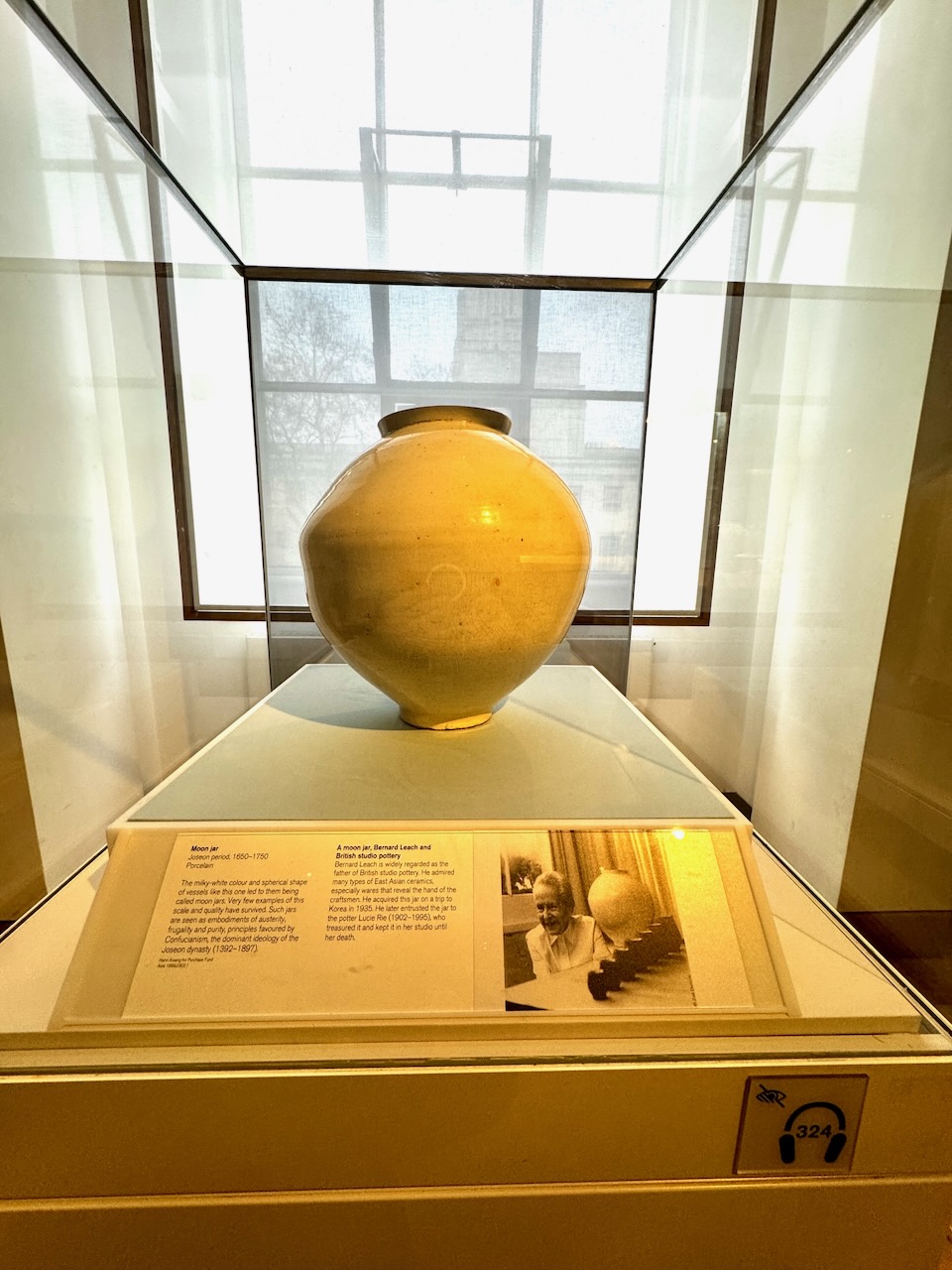
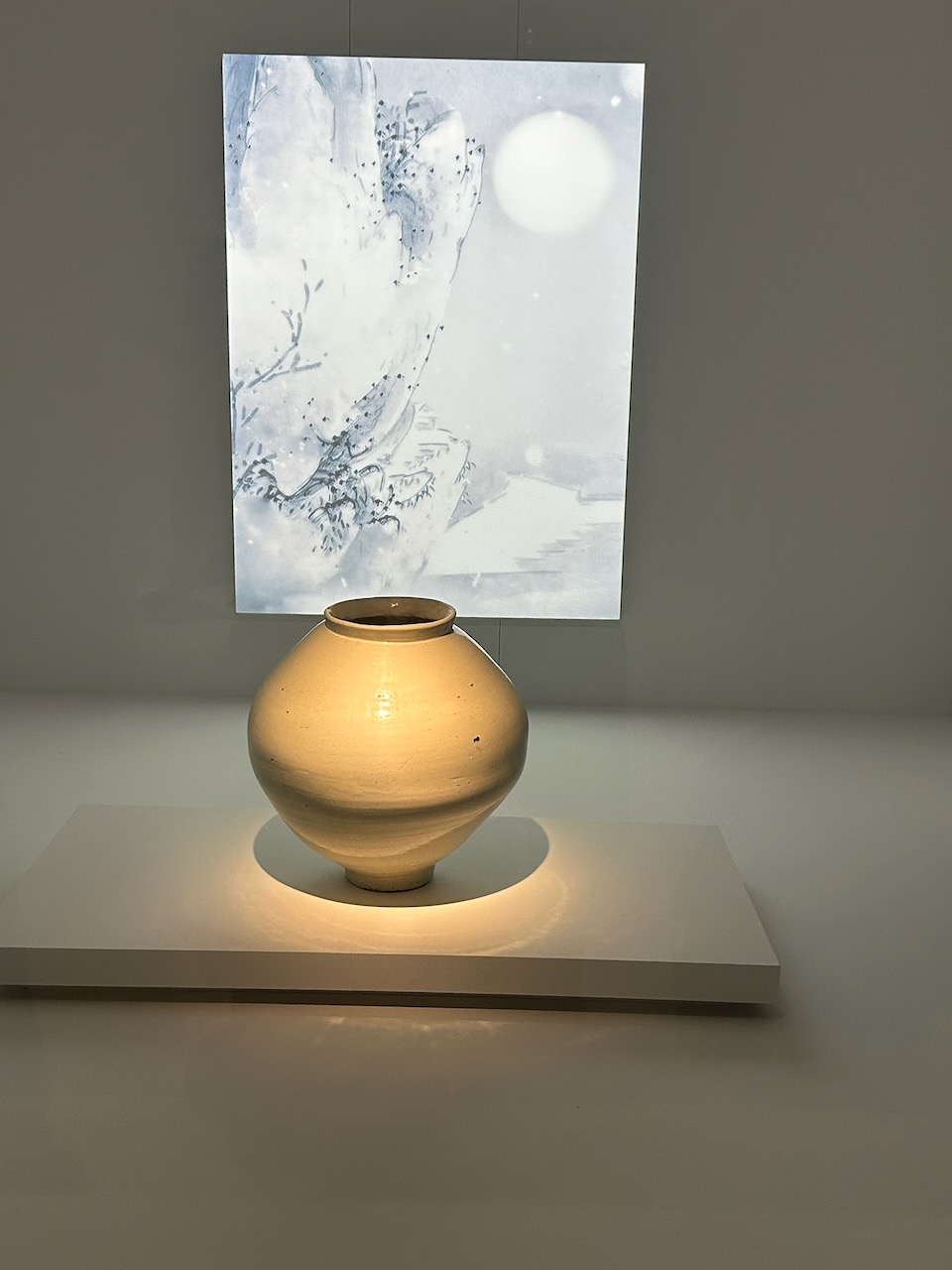
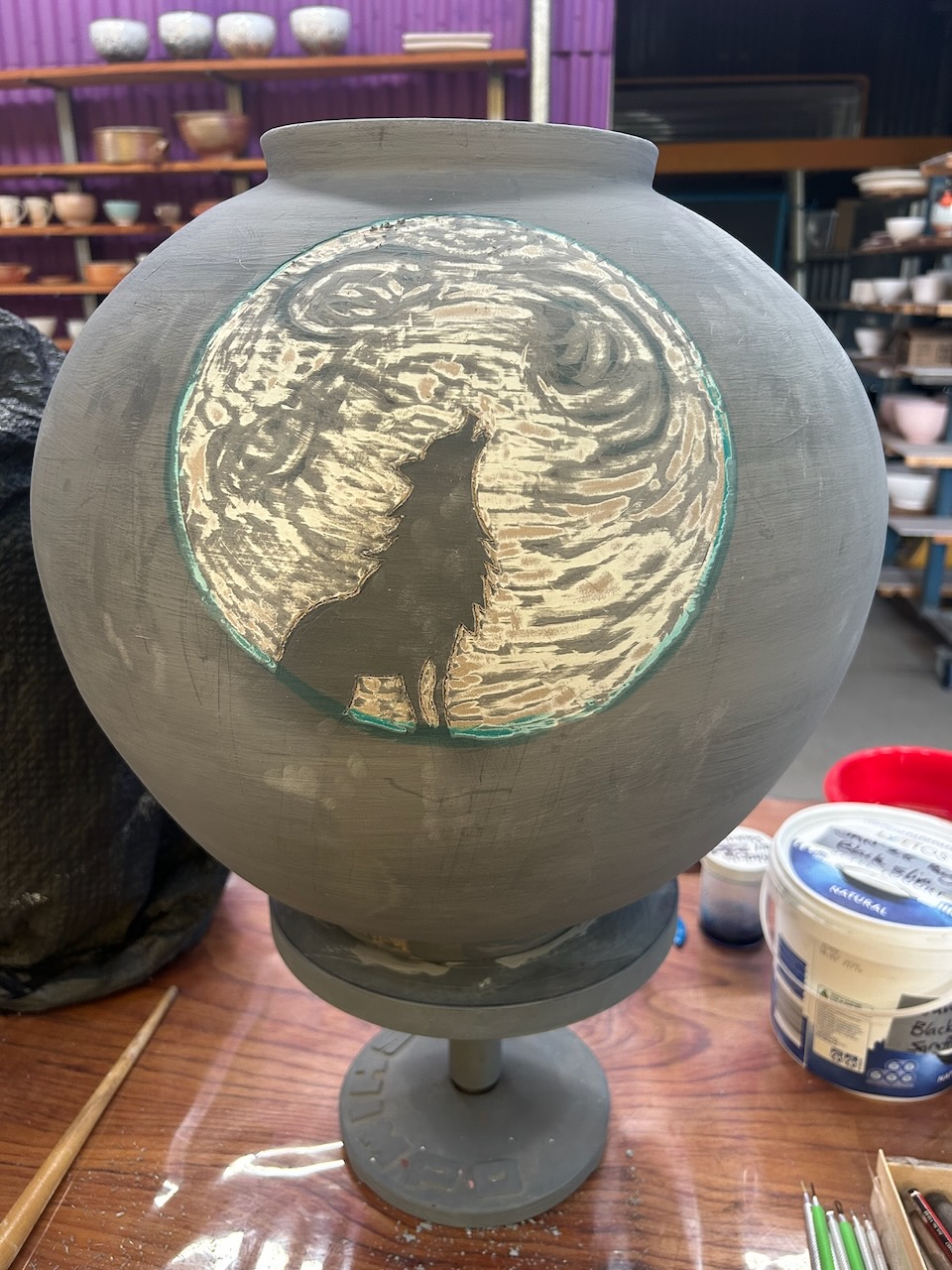
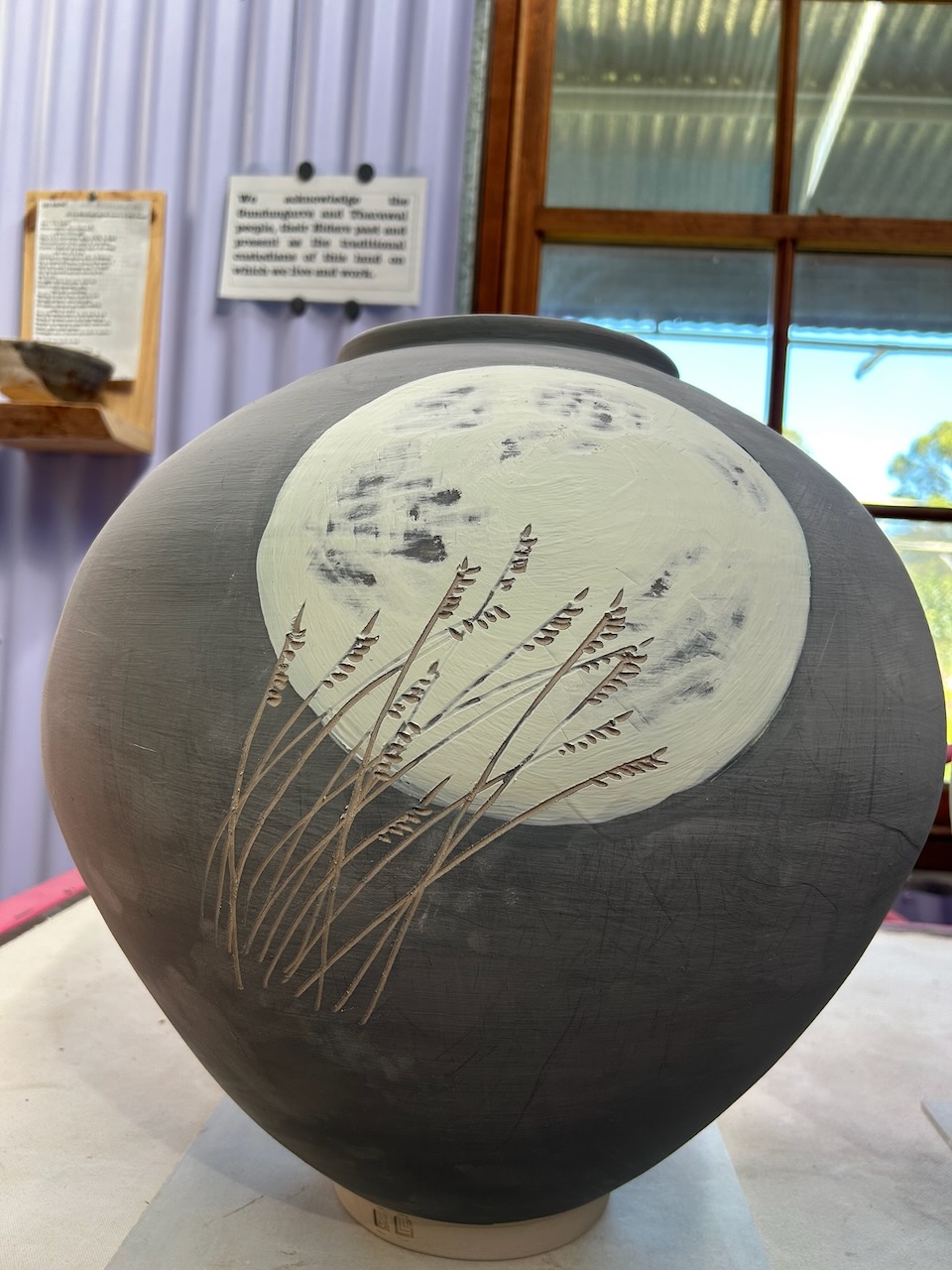
These are two of janine’s blossom vases. These two vessels are inspired by Korean ‘Moon’ jars. On this occasion, Janine has incised a sgrafitto, carved band illustrating the phases of the moon, as a way of linking these beautiful pots back to the origin of their inspiration in Korean, where we have spent a bit of time recently doing our research.

These pots were fired in just 4 hours in our small portable wood fired kiln. This little kiln is so environmentally friendly that I call this type of firing ‘Vegan Wood firing!

All the fuel for this kiln is collected from wind falls in our paddocks. Large old eucalypt trees are constantly dropping dead branches. We have to go around collecting these dead branches to keep the ground clear so that we can mow the dead grass. We have to mow, because in summer, high dead grass is a severe fire hazard. So part of out land management plan is to keep the ground around our house clear of fire hazards, as we live in a very bush fire prone area.

IMG_6127

Having picked up all these dead branches, it seems irresponsible not to use them productively. By firing our wood kiln with wind falls, we are not hurting the trees in any way. No tress were harmed in the making of these pots. Hence ‘Vegan Wood Firing’. As we only use what the tree has rejected and finished with. It is also worth noting that some of the carbon that we collected from the atmosphere through the trees that we have grown here over the past 40 or so years is now encased chemically in our pots, making it securely trapped, more or less forever. So we are doing our bit to reduce the carbon load in the atmosphere. Carbon sequestration and removal on a personal scale.

We each do what we can.

Sericite Journal 4. Out of the fire and into the flying man (’s baggage) 

While my kiln is cooling down. I go for walk along the river, the runs behind the Museum.
Today I see a white crane stalking the shingly shallows, although he doesn’t look to be doing much business this morning. Maybe he is so full already that he is having a rest?
I also spot a black cormorant, ducking and diving. Popping up again here and there, working the deeper river pools.
Slowly a fisherman comes into view, he is strolling quite slowly up stream with his net in hand. He is working the river between the road bridge and the foot bridge. He stops to cast his net out occasionally, apparently with little or no success. I’ll put my money on the cormorant any day.
The sun is well up and I can’t see the sun. The air is just as dirty today as it was yesterday and will  be tomorrow. I imagined when I arrived here this time that it was just some intermittent phase in the air currents. I don’t remember it being this bad before, one, two, three or even 4 years ago. This is my 5th visit to work here. Miles away from the industrialised region of Seoul and it’s the worst that I’ve seen it. The air should be cleaner here. It used to be. I remember being appalled on my first visit here when I returned to Seoul to fly out. I couldn’t see the sky scrapers through the coach’s windows until I was right next to them. This is awful, I was appalled before, simply because of the contrast of country and city. I feel my chest tightening each day. Now the smog is every where. There is nowhere where it isn’t thick and grey.

I get to make another visit to the clay processing building, as there is a problem with the rock crusher that they have just acquired, 2nd hand. Apparently the electric motor starts to smoke after 20 mins of use, i have a close look at it , just from the outside. I can see that the motor is recently reconditioned, the over-spray is still evident on the motor housing and wiring. I’d say that it has burnt out the motto previously in its past life, That may be why it was for sale 2nd Hand?

I suggest t hat they do some research on other new models of this kind of machine and check out what sort of horsepower in really needs. I typed this last sentence in 10 seconds just now, but last week it took me about ten minutes to say all this is several goes at it using the translation app! Waiting for them to formulate a reply or ask another question, then I type my one fingered reply on my tiny, phone virtual key board. It takes a long time.

That’s just the way it is here with me and complex ides and a language that I can’t speak. I feel like I’m a child sometimes. I ave some complex questions that I would like to ask, but when I start to formulate the sentences. The moment has passed and I can see that i will al lot more contextual material for this all to makes one sort of sense. So i give up and wait for another occasion. They must think that I’m stupid sometimes.

It’s a fantastic resource to have available to them to efficiently process their own sericite porcelain from the excellent, but slow, ‘wet-method’ from ball milled slip, filter press and vacuum pugmill.

Colour me ‘Venco-Green’ with clay processing envy!
I the afternoon Mr Jung takes me for a ride, up to the South/North Korean border. There is a lookout post where you can see over the no-mans-land. The road takes us to the east of here through a volcanic crater that is called the ‘Punch bowl’. It is intensively farmed due to the rich volcanic soil within the extinct volcanic crater. It reminds me of the Rutherglen region of Northern Victoria. Great wines are grown in that rich soil and concentrated micro climate.
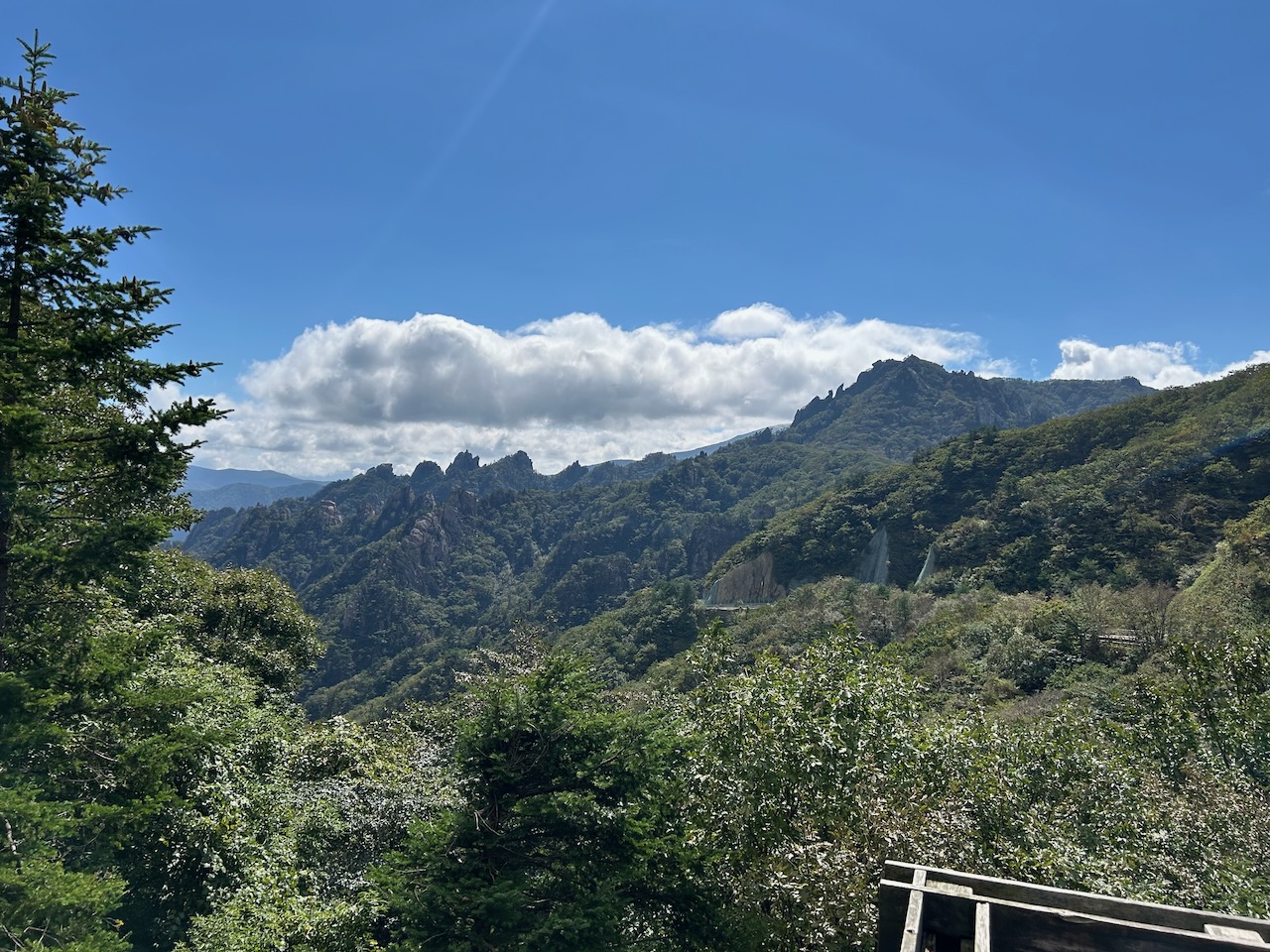
The lookout post is on a high ridge that is part of the caldera’s edge. I was not allowed to take any photographs of the Northern side of the border, facing the other way, as it is forbidden, and the solder/sentries on duty at their posts make sure of it.
I can report that there is absolutely nothing to be seen. Is this because there is so little development in the North? Perhaps. But I am skeptical. I think it more likely that The North, knowing that there is a clear view into their territory from this high place, have made sure that there is absolutely nothing to be seen.
Imagine the image below with no roads, no farms, no power lines, no clearing, no development of any kind. Just the green rolling hills, going on into the distance. That’s what you can see of the North from here.


 Last year when I was here for the Moon Jar conference, the streets in the village were being dug up, deep trenches dug and piping installed. The workers were so very efficient. We were amazed at the time how quickly the work was completed. 3 days for each street, excavated, piping installed, road rebuilt to as-new standard. Fantastic. So little inconvenience to everyone.
I wondered at the time what was being installed.
Now on my return, I can see that every home now has a reticulated LP Gas line and meter next to their house. The homes that are also restaurants, also have a small storage tank as well. I’m assuming that this is to allow peak load at the lunch time and dinner time rush hour, so that they don’t drain the pressure from the street.
This little village is miles from anywhere and a very long way away from Seoul, but the government is committed to reducing the air pollution. One way is the stop the use of coal briquettes being burnt in the countryside where this old anachronism is still in common use.
Coal is a very dirty fuel at the best of times, and the use of crude briquettes in an up draught stove is a real 3rd world solution to cooking and many thousands of women die of respiratory disease each year. Korea is a very technically advanced nation. They built my electric car for me for example. However, way out here in the countryside. Miles from anywhere. Some of the households are still using coal, as they have for 100 years. It’s a credit to the current government that they have funded this development in such a remote place.
I can’t imagine that the gas is pumped all the way from Seoul. It’s just too far to imagine. I assume that the liquid, compressed gas is trucked here from the refinery, to some local depot, where it is stored, evaporated and reticulated in the local network. I’m impressed, as I am with much that is happening here. They still need to stop building and selling diesel engined vehicles though.

As I walk down the street today I can see that one house is still using the dirty coal briquettes, as the spent bisque fired, low quality, circular coal briquettes are stacked up out side the dwelling. I know that some of these spent fuel blocks are crushed and used as a fertiliser. I’ve seen the remnants of them scattered through some of the vegetable patches.
I remember reading an old book back in the 70’s, called ‘Farmers of Forty Centuries’. It was a really interesting book that described the life of farmers of Asia, in China, Japan and Korea, their lives and techniques. I say that it was an old book, because it is! It was published in 1911. There was a chapter about digging silty clay out of the irrigation channels and making mud bricks from it. The bricks were made into a ‘Kang’, a wood fired stove that has an extended horizontal flue area that doubles as a warmed bed base at night after dinner.
After several years, the ‘Kang’ is demolished and recycled. The mud bricks, wood ash and whatever other minerals have been absorbed by the bricks are all crushed to powder and spread through the vegetable garden as a fertiliser! 110 years later, the old technique is still practised by some of the older residents of this village.
The other thing that I see that is different in the village is the new solar powered telephone. This is very new and quite impressive. I’m mostly impressed by the fact that the phones here aren’t  vandalised and still work. I must say that I’ve never seem anyone in there using it, as every young person in the village seems to own a mobile and the signal is very good here. There is also a new electric car charger in the car park!
The other thing that is a huge difference here is the construction of the new Museum extension. It is HUGE!
It looks to be about 3 or 4 times bigger than the old single room, exhibition area and offices building. The existing space was very cleverly divided into a lot of smaller ‘rooms’ using divisions to visually break up the big single volume, into more intimate spaces, each with a small specialised minor subject, display or video, used to explain some particular part of the amazing local history of the discovery and development of the single stone sericite porcelain story, that is endemic to this place.
The new building will occupy the entire length of the grounds from the road frontage, right down the side of the old Museum building and all the way down the side of the site, to the river-frontage walkway at the rear.

The new Museum extension will apparently consist of three new exhibition areas. Each with a particular theme. One of them will be a flexible space for a changing series of contemporary themed shows. One will have a small space for a glass case with my contributions to the continuing story of the Yanggu/Bangsan unique sericite porcelain history.
I look forward to getting to see it all finished on my next visit here.
Friday comes around soon enough and I have an appointment with the governor of the local government area or Province in his offices in the city.  Mr Jung has it all arranged. He has made the appointment a couple of weeks ago, when I first arrived and presented him with my 3 porcelain bowls made from the ‘borrowed’ sericite stones of my last visit, now all glazed with my local kangaroo blue opalescent glaze and returned to their birthplace in an enhanced form. The Premier seems to have been suitably impressed by the gift of my cultural amalgam of Australian/Korean porcelain culture.  As a way of promoting the Museum and gaining some exposure for his project, both with the political ‘machine’ of local government, who are funding the new Museum expansion, but also in the papers for local residential exposure/consumption. Mr Jung is always working to promote his life’s work and interest in sericite porcelain. Mr Jung and I are possibly the only two men in the world just now who are practising this ancient art form.
We meet in the Premiers Office. Myself, Mr Jung, Myeongki my translator and several local government minders. We are ushered into the Premiers private office, with its loverly, large round table and very plush leather lounge chairs. The official photographers are there and capture the moment for the press release. Everyone benefits from this meeting.
The Premier will be in the press showing that he is supporting the arts. Mr Jung can show that there is international recognition of the importance of his Museum. And I get to realise that I am under-dressed for a top level political meeting! After a bit of small talk, the Premier reaches out and holds my hand for the second photo-shoot.
I present him with the pots and a copy of my ‘5 Stones’ book, recently translated into Korean. He is polite and is well briefed. He says thank you for the important cultural gift, that now links our two countries. He tells me that he is impressed. They are beautiful. He also understands that I have developed a kiln design that is smaller, cleaner, more fuel efficient and less polluting than the traditional Korea wood fired kiln. I reply that I think that this is true. I have been working on this technology for a several decades now and the design is becoming quite sophisticated.
He replies that he thinks that Korea must have this technology, and goes on to express the opinion that they are intent on cleaning up their environment and doing what they can to become more environmentally friendly. Mr Jung has already made a proposal to build such a kiln at the Beakto Porcelain Village in Bangsan. The Premier says that he thinks that they should fund a project like this and also have the new wood firing book translated into Korean as well. I’m a bit shocked, is it that easy? Apparently it is.  I wasn’t expecting that!
We have tea and the locals discuss something, all in detail in Korean, that my translator describes to me in small whispered chunks, as it really doesn’t actually involve me at all. It’s secret-mens-political-business that involves the realities of the local government political/economic system. The meeting ends with much hand shaking, smiles and bowing. We leave and everyone seems happy with the result.
It appears that this was just the event to push the new kiln site and kiln building proposal over the political line. Apparently the combined project will be fully funded now, as well as the book. Is it really that easy? I think that there may have been a lot of lobbying going on for a long time behind the scenes? This may just be a ‘way-marker’ point. I mention this to my translator out in the street, adding that in Australia, politicians are renown for saying one thing in public, while doing another, totally different thing behind the scenes. She nods and agrees, politics is probably the same all over the world? Inferring that we will have to wait and see.
My Jung has managed to get the 6 million dollars to build the new Museum extension. He’s an impressive man. Maybe this much smaller, micro-project will happen too?
I cast my mind back 4 or 5 years to my first meeting with Mr Jung in 2015? with Ms Kang as my interpreter at that time. There were two architects invited in to see my presentation to Mr Jung about my research. I can only guess now, that they were there working on the new Museum plans at that time? That would make sense, as these large projects take a long time frame to evolve, develop, mature and eventuate.
The next day, the kiln is cool and my work comes out. I get to see not only my pots, but also the clay and glaze tests that I made from Mr Jung’s new glaze stone deposit from the hill behind his house.
My pots are mostly good. A few have minor faults, but most are good. A few are great, beautiful clear, rich, translucent examples of sericite at its best. I could have applied the glaze a little thicker to get a richer colour. I did give some of my pieces a second dip in the glaze to hopefully get a better result, but second dipping can lead to problems and  I didn’t want to loose all my work from a preventable problem, so just did half. These turned out the best, and now I wish that I had been brave enough to have done them all. My intuition was correct, but my caution was justified, it’s a good outcome. In the worst case scenario I could have lost all my work. So it’s all good.
It’s very interesting to me how the different sericite bodies influence the same glaze in the same firing to come out looking so different. All local sericite porcelains, each showing their own individual character.
 The glaze test results are very good. The new stone produces a beautiful satin blue celadon style glaze at 1270oC in reduction. It’s really good. I could use a glaze like this with pride on my work.
Most of the staff are there to see the unpacking, but Mr Jung has to go out to a meeting somewhere, so doesn’t stick around.
I start to explain to some of the resident researchers and a few of the staff just what I was doing with the glaze grid tile. No-one seems to have seen a grid tile before. It seems that they don’t learn much glaze chemistry in the art schools any more. Just like in Australia and the UK.
Janine and I were invited to do some work for the new ‘Clay College’ in Stoke on Trent last year. Clay College is a fantastic initiative. It’s an attempt to re-start a new hands-on ceramics course for potters in the UK, as it seems that all the universities that once taught ceramics have all been converted to ‘design’ schools, where students ‘design’ objects that get made somewhere else, by someone else, like China, or pumped out from a 3D printer?
I explain that the function of this test is to analyse the stone to find out its chemical analysis in % oxide composition. This sort of thing has usually to be done at great expense in a university chemistry lab using electron microscopes or similar.
I explain that I have developed a simple technique for achieving this using just a simple set of scales and a few ingredients.
They had all watched me make the test a few days ago. Now they see the outcome. I look at the colour and melt activity of the test tile and compare it to my data base of known results. I can quickly ascertain the oxide analysis. From there I can use ‘Segar Formula’ to adjust the glaze stone to make it do a number of different things.
I see that every one is very quiet. Eventually someone asks “what is that formula?”. No one has even heard of chemical formula for glaze calculation.  It seems that the only glazing that’s taught here is how to buy a glaze from the pottery supply shop catalogue. We are at that point here in Australia now. Nothing difficult or technical is being taught.
I give a quick class in glaze calculation. One of the older students tells me that he was taught something like that 20 years ago, but wasn’t paying attention and couldn’t see any reason to learn it at the time. Could I go through that all again slowly please.
I do and they slowly get the drift of the exercise. Not the Segar Formula part, but the compound line-blend test tile exercise. They really like the glaze quality of the result and the ease of ascertaining that result with just one test using a totally unknown stone.
They ask me how I learnt how to do this? Who told me that this was possible. I tell them that it is my own invention. I developed this testing technique during my PhD studies, as I was focussed on using local stones to make local porcelain. More or less trying to achieve in a few years what you have been doing here for 700 years!
I fettle and grind my pots ready to go. I pack them in 3 equal lots and wrap them very well in bubble wrap. One batch goes into my suitcase wrapped again in my clothing. A second lot is slid into my back pack. It just fits and the last group are packed into a cardboard box and taped up. I assume that I will have to pay excess baggage fees to get them onto the plane.
On the last day before I leave Bangsan, Mr Jung takes me up to the Baekto Porcelain village to say good bye to the resident researchers, Mr Jung wants to show me something. The money has come through as promised and work has begun on the new kiln shed. It looks like the project will be going to happen a lot faster than I could have imagined. The Premier is a man of his word.
The site has been a excavated and men are at work setting up formwork ready to cast the concrete footings for the new kiln shed. They have to dig down 1.8 metres to get down below the frost line where the ground freezes during winter. Here that is very deep as the temperature drops to below minus -30oC in winter. The frozen soil will expand and cause the ground and everything on it to crack unless the site is well prepared like this.
Mr Jung explains where my kiln will go in this huge shed. Over on the left hand side, there will be at least one other kiln in here and possibly two, in years to come. One of them is going to be a 5 chamber, traditional climbing kiln. A juxtaposition of the old and new in wood firing techniques.
Mr Jung missed my glaze lesson and asks Daewoong to ask me if I can send him my PhD thesis? I reply that of course I will be pleased to do so, but it is 120,000 words in English and academic English at that. Maybe I should just send him the glaze calculation part about rock glazes? As it happens I just happen to have a book called ‘Rock Glazes and Geology for potters’. I’ll post him a copy. I can see yet another translation project coming along in the future?
This may be my last attempt at a travelers’ tale from Korea.
I considder myself just so lucky to have met such incredibly nice, creative and supportive poeple here.
Best wishes
Steve

Sericite Journal 3 – Ashes to ashes, dust to glaze

While my work dries and I wait to pack the bisque, there are a few people and places I need to catch up on. I’m invited to both a lunch and a dinner with the students and staff of the Museum on two different days. I love Korean food, everything comes with chilli, even some sweet things!

After we have finished eating our lunch, it’s time to settle down and help the residents of the Baekto Porcelain Village make a thousand glaze test tiles. Everyone gets involved at different times. Many hands make light work and they are all made in one day.  

IMG_5569 IMG_5571

I’m not really part of the group and I’m not too sure how I can help out in an unobtrusive way, so I decide to do the picking up off the floor of the cut sections and place them within reach of the real workers who know what they are doing. Later, having shown interest and done my time on the floor. I’m promoted to press-moulding the curved sections ready for assembly.

Before leaving the village, I wander up to the kiln shed to check out the kilns and I see 4 pallets of 2nd hand fire bricks, all cleaned and wrapped and one pallet of new firebrick slabs. I quickly calculate that this is about 2,000 bricks and 90 slabs. I’m guessing that these have been purchased for the kiln building workshop that Mr Jung has proposed to me. It may take some time to eventuate, as there doesn’t seem to be a a floor slab or roof for the kiln as yet.  

IMG_5563 IMG_5564

I am scheduled for a meeting with Mr Jung and The Premier of the County of Yanggu, or State President, along with Myeongki Shim, the translator who has worked with me in the past and did the translation of my book, 5 Stones, into Korean. We are scheduled to meet on Friday to discuss the idea of offering a workshop style summer school open to potters to come and take part and learn about the down draft firebox in the process. I can see this taking some time to organise. 

It might not be the lack of a slab and roof that hold things up? Political realities being what they are, and money being hard to come by. We’ll have to wait and see.

I’ll need to do some calculations to get the whole thing to work correctly, as all the bricks are solid, hard fire brick, so this will limit what I can achieve with just one simple fire box. I’m also told that they don’t want to use ceramic fibre here for the lightweight firebox stoke-hole door, so there goes the idea of a top loading firebox lid and a throat chamber lid. It is starting to look like I might be building quite a small kiln, as I want to build and demonstrate a simple example of a single firebox, single chamber kiln that can be fired fairly cleanly in one day. Something in total contrast to the week long firings that take place in the traditional 5 chamber kiln that they have here.

The water wheel is working today, as Daewoong the resident wood fire potter, is keen to prepare some porcelain stone by the old method of using the stamp mill to crush the sericite. I’m unsure what he is planning, it could be for glaze instead of body material. Time will tell.  

IMG_5612 IMG_5617

I can see across the valley to the new solar power farm that has recently been installed to generate solar electricity for the village. The admin block here was already covered in Solar PV panels, as is the Museum roof. It is noticeable to me that the new solar farm hasn’t taken any usable flat ground that was already used for farming. They have chosen to use the slope of the hill to get a good azimuth angle to the solar rays and not upset any farmers by taking over fertile, flat, productive land.

There has been a firing going on in the big gas kiln all day. The kiln is used by the residents in the porcelain Village. They can book the kiln individually, or as a group firing. They only have to pay for the gas consumed. As I understand it, the residents get free rent of studio and housing spaces, plus free use of the equipment like kilns, wheels, slab roller and pug mill, etc. They only have to pay for their own food, heating, kiln fuel and any exotic raw materials that they may wish to pursue. It seems like a too-good-to-be-true deal from my point of view, as an outsider from Australia, where the Arts are more or less ignored, or if acknowledged, they are mistrusted and/or miss-understood by the general public, encouraged by the Murdoch press, and any money spent on the Arts is roundly ridiculed by the conservatives. No wonder the facilities here are all full. It seems that the locals think that this is normal and complain about having to pay their own heating bill!  I couldn’t get a room in the student accomodation building this time round. Everything is fully utilised, so Mr Jung has kindly offered to allow me to stay in his home with him, 30 minutes away in Yanggu.

When I get to the Museum and Research Centre the next day. The bisque kiln is ready to be packed. My work is all completely dry now. I take it over to the kiln room for packing. There are 2 large electric kilns used for bisque firing on a regular basis. These are used to fire the the part-time students work from the teaching facility.

IMG_5630 IMG_5629

My work is slotted in where it will fit among the regular student projects. My work isn’t large, so it can be fitted in economically. I nest stack them to conserve space. I start with a 5 high stack, but I am discouraged by the technical assistant/pottery teacher. He seems to indicated that with this clay, its particular dry strength and firing characteristics, it is better to just go 2 high, so I do. The firing goes on over night using a ramp programmer. It’s all very modern and efficient in this regard. However, in contrast to this, they also have a 5 chamber traditional wood fired climbing kiln as well for the wood firing enthusiasts. We took part in a 4 day firing of that wood kiln the last time we were here. 

IMG_5634

While my pots are cooling down from their bisque firing. Mr Jung arranges our us to go on a     geology expedition up into the mountains behind Yanggu. There are some logging tracks that we can use to get us up there quickly. He tells me that because he was born and grew up here in the foot hills of these mountains, he has tramped over most of it through the years. We swap his LPG-hybrid, city sedan, for his parents small 4 wheel drive, and set off. He wants to show me a couple of sites that he thinks might be worth our while investigating. 

After a slow and bumpy 45 minute drive over the rough logging tracks, we arrive at the first of what turns out to be 5 sites. This material looks to be a weathered or kaolinised, fine to medium grained acid rock with some small amount of free silica. It’s impossible to say what is in it, but I can hazard a guess that it has some sort of primary clay such as Kaolinite, Halloysite, illite or dickite. It also has the obvious spangles of some free silica that is just visible in the bright sunshine, then there may be some flux minerals such as the felspars or micas, if they haven’t all be weathered down to the clay minerals. The stone is very soft and easily broken up by bashing it together, so I’m certain that it will be low in flux and higher in clay minerals.

IMG_5656 IMG_5666 2

The stone is so rotten, that the fragments are just tumbling down out of the hill side. To my naive geological eye, it looks pretty much like a lot of the material that I have collected back home in the Southern Highlands. It may be able to be finely milled to become sufficiently plastic to be throwable. But they already have a marvellous sericite body here that is beyond excellent, white, plastic and translucent. This new stuff won’t compete. I’m thinking that it might be possible to make a glaze out of it, but it looks a bit too weathered, kaolinitic and refractory to make much of a glaze with just limestone as a flux. I’m not sure, I get the feeling that it might need some extra felspar as well, and perhaps a little ash with it as well? 

I have no real concrete evidence for this thought, it is just what I have experienced back home in my previous research in Australia. The stones that are hardest to crush usually have the most intact alkali content and melt well. The softer materials that are very crumbly, have usually lost a lot of their alkali during weathering and are more refractory. Where this stone fall on the spectrum i can only guess at this point. I won’t know until I have fired some. However, my guess is that it will fall somewhere smack in the middle. Unmelted on its own, but forming a glaze at the end of the line blend series, requiring the maximum calcium flux.

IMG_5674  IMG_5696

When we get back the the Museum a few hours later, I set to work making a few tests. I Start with a grid tile test to ascertain the chemical analysis. This is a unique test that I developed during my PhD. I involves producing a series of line blends with specific additions of a set ratio. The resulting grid tile when glaze fired, shows a particular range of melts and colours. By comparing the new material test with my data base of known and chemically analysed test tiles. I can deduce the chemical analysis of the oxides present in the new material to with in a couple of percentage points. It saves having to send the material off to the university chemical lab and pay a lot of money to learn the same thing.

Pretty clever I think, if I do say so myself.

Apparently. I am the only one who thinks so and says so. Everyone here watching me work, have no idea what I’m doing. but they keep an eye on me, just the same.

I also take a risk and follow a hunch and prepare a line blend in a series of 5 simple steps that I think will show some worthwhile result using this material as a body ingredient, based on my research on similar materials that I’ve worked with back at home. I’m guessing that it will be nice in a wood firing, but I’ll never know, as I only have sufficient material crushed and ground to made these few basic tests for the gas firing coming up. There isn’t a wood firing due at the moment.

I used a bisqueted test tile that I have brought with me from Australia in my suitcase to do such a test if necessary. I’m glad that I did, as there is no time to make one now and get it through the next bisque in time. I decide that I will only do the first three line blends on this occasion, as the last line will be too siliceous to tell us much about a stone like this one. Or so I think. I decide to use the remaining material to make the body line blend of 5% increments.

The next day, the bisque firing is unpacked and I start to glaze my work.  

IMG_5681  IMG_5695

I get all my work glazed and fettled and out into the sun to help it dry out by early afternoon. The smaller and lighter of my bowls are quite delicate and thinly potted. So I can only afford to swipe them through the glaze in one second, so as not to saturate them. Otherwise the glaze will start to run off before it dries. I like to glaze all in one motion if I can, but these pots won’t have sufficient glaze on them to develop any depth of colour. So I decide to partially dry them and give them a second dip to create a thicker glaze coating. This carries a risk of causing pin holing and crawling, but I weigh up the options and decide to take the risk. 

I could choose to spray on a thicker coat, and that would work better, just as the ancient Chinese did a millennium ago, but I’m not from around here and don’t know if there is a spray gun available. There certainly is a compressor, as I’ve already used this once before to blow the dust of my bisque ware. However, I don’t want to outstay my welcome, by constantly bothering the staff, who are always busy, by asking questions, unless it is absolutely necessary. Of course I am incapable of asking any question directly. I involves the use of the translation app on our phones. It’s a slow process and takes up their time typing out questions and answers with one finger on the tiny virtual key pad.

There is a change in this regard this year. I’m asked to down load a new language app onto my phone. This is a new Korean developed translation app, and every one here is using it. It is specifically built to translate Korean. It handles spoken word input too, which speeds things up. There is a little hick-up here with this. My Australia Post prepaid travel SIM card doesn’t handle data. Only calls and texts. Data packs can be purchased for other countries, but not Korea at this stage. So it turns out that I can only use the ‘Papago’ Korean translation app. when i have WiFi service to log into. That really limits where I can use it.

The standard porcelain glaze that they have developed here looks to be made using some sort of ash, as it has a fine grey cast to it and a infinitely fine dark speckle in the dried surface. It just looks like an ash glaze. I can’t justify that opinion any more than that. The next time My Jung, The Director of the Museum passes by, I have my question already typed out on the phone. “Is this glaze made with ash?”. He responds to me in English, “tree ash?”, I respond “yes, tree ash!”. He indicates to follow him into the next work area. I haven’t spent much time in here at all. I have only just glanced as I passed. I have had no business to be in here. I try not to cause any trouble as a guest. A position that I am very grateful to be in.

IMG_5683

Mr Jung takes me to the ash preparation area. There are a series of very large tubs where ash is washed and sieved, then left to settle. In the settling tank, there is a rope suspended in the water. I must look puzzled, as Mr Jung the word in English, “magnet”. He shows me this by lifting it out by its rope and sticking it to the metal floor grating, which he demonstrates, he can now lift up out of the drain, just by the power of the magnetism. The big round magnet must be very powerful. He takes the magnet to the sink and washes it, and to my surprise, it is not big and round at all, but narrow and skinny. It was clustered with irony material stuck to it. I don’t know where all this iron came from, perhaps they burn the organics in a steel furnace?    

The cleaned magnet after washing off all the irony ash particles.

IMG_5699 IMG_5692

Mr Jung then takes me to the glaze store room, where he shows me the working stock of dried ash that they make here. There is ash made from all sorts of plants. Mixed tree ash, Pine ash, chilli plant ash, chrysanthemum ash, ginkgo ash, even calendar flower ash! I’m stunned. So much work! I know what I’m looking at, because we burn plant material to create ash back home and sieve it and dry it. But not on this scale. I guess that it helps if you have a staff of 12 to help you get everything done. The biggest problem that Janine and I face, is that we are trying to do everything ourselves. We are getting older and not surprisingly, we get tired.

I wouldn’t mind a staff of 12 to help get things done. Not too sure how we would pay them though?    Actually, just a part time staff of one would be nice.

My glazed and fettled pots are now packed into the glaze kiln. They will be committed to the fire tomorrow in a 12 to 13 hour reduction firing to 1260oC. I’ll have to just sit it out and wait-n-see. 

IMG_5700  IMG_5705

Sericite Journal Two – 5 More Stones

Sericite Journal 2  – 5 More Stones

I arrive in Chuncheon from Seoul by bus and I am met at the coach terminal by my friend Mr Jung Do Sub, the Director of the Yanggu PorcelaIn Museum and Research Centre. He takes me to dinner and then home where I will be staying in his studio, attached to his house.

It’s a stunning new architectural space, it is so new that he is still working on it. Brutal, modernist, bare cast concrete on the inside, with a recycled brick cladding on the outside, heaps of double glazed glass facing the southern sun. (This is the northern hemisphere.) The sun comes right in onto the polished concrete floor. The cast concrete walls and roof are over 500 mms thick. I suspect that a lot of this thickness is taken up with some substantial insulation, as it hits minus -30 oC here in winter.

The next day we drive to the Porcelain Centre, where I start work immediately on getting things ready to make some work. 

There are a number of sericite porcelain bodies here for me to choose from. The number has increased since I was last here. There are two new ones that I want to try out. When I visit the clay processing facility a few hundred metres away from the Museum. I see one of the new raw materials, the whitest sample, revealed from under a green tarpaulin, just outside the clay stockpile shed. It is actually off-white, but quite pale looking when compared to the standard local sericite that is mined near by. However, when this new white material it is crushed and milled, the whitish raw material in the wet plastic state becomes somewhat darker. This is usual with clays and I’m used to it.  It becomes almost a pale khaki, buff beige colour, whereas the local sericite which is slightly greyish white when raw, becomes whiter when wet?

After stiffening, the resulting plastic pugged clay is mid khaki colour. I’m surprised to see that the fired sample from the reduction kiln comes out very pale grey from under the local standard pale celadon porcelain glaze. I’m intrigued.

There is a related material from the same pit that is slightly pinkish in the raw state, but processes to a pale apricot colour. A colour rather beautiful and very pleasing to my eye. This sericite body fires to almost the same degree of pale grey as the white sample, just a little bit darker, when reduction fired with the same base glaze. I’m quite surprised to see how similar they are after firing, just looking at the difference in the raw colour.  


I get to try all 5 different sericite porcelain bodies over the next week or so of throwing and turning. The original local sericite that is mined just up the road here is highly vitreous at stoneware temperatures and is prone to slumping, even at the lower stoneware temperature of 1260oC. However, with a small addition of JinJu kaolinised sericite obtained from farther south, the resulting mixture throws very well and stands up to the 1260/1270oC stoneware reduction firing very well. I have discussed this beautiful porcelain body at length in previous posts, so won’t dwell on it again here.

My first mornings work involves me securing a wheel space in the crowded workshop. This is a community teaching facility open to the public. It’s mandate is to communicate the history and beauty of the local porcelain, and to offer that experience to the general public. I’m the intruder here, a foreign oddity, here for just a brief moment in the very long history of this place. So I know my place and ask permission before doing anything. I don’t speak the language here very well – if at all. I rely on the translation app on my phone to get me through, so I’m careful to be polite and not get in anyone’s way. I know that translation app software out-put is full of errors, so I’m careful. Some of the staff have slowly come to trust me with their very basic English as well. This is my 5th visit here, so I am getting to know everyone. Together we slowly and carefully explore a more friendly, trusting, and may I say ‘intimate’ way of communicating in this strange mix of two poorly pronounced and impoverished lexicons, extended by faulty software. What a mix! We manage to work our way through the errors, pitfalls and misunderstandings. Trust and friendship slowly develops. I’ve come to really like and trust these wonderful people. I’m so lucky.

Next, I have to source some batts, get a few extrusions of this special local sericite porcelain body pugged and de-aired. Then I clean the wheel scrupulesly to make sure that there is no cross contamination of other clay fragments under the wheel head and in the edges of the tray. I don’t want to contaminate other peoples work with my experiments here when I toss my turnings into the recycling tubs. 

I sort out my tools and start to work up a lump of this marvellously plastic wet mica rock dust. It’s so hard to believe that it is not clay. At least not as we are familiar with the term in Australia. This body might have 10% of Kaolin in it, but that is all. The kaolin is not there to add plasticity. I have used the ‘Jinju Kaolinised Sericite’ that has been added to this mix straight by itself 100% and it is rather floppy and ‘fat’. The Bangsan sericite is plastic enough without it. What the Jinju material offers is not plasticity, but a slightly higher alumina content to increase its firing range.

An aside: Before I left home to come here I packed up three pots to donate to the Porcelain Museum. Pots that I made over the previous 6 months since my last visit here. I made these pots from stones that I collected myself, directly from out of the ground here. I had the resulting powder analysed and it contained only sericite and silica, so I know what authentic, pure sericite mica is like to throw with on the wheel. It can be amazingly plastic. This isn’t always the case though. The sericite that I collected from the ancient and abandoned sericite mine on Tregonning Hill In Cornwall was almost totally non-plastic, As was the siliceous sericite that I collected from the top of Sarri Mountain near Yeoju, here in Korea. The most plastic sericite that I have ever encountered was from Cheongsong in the south of Korea. A strange place, but marvellous clay. It is a pity that it is totally unavailable for foreigners to access due to the difficult personality issues of the manager of the site.

I should point out though that these most plastic Korean bodies are not the whitest. Surprise, surprise there! The whitest sericite is probably the extremely expensive ultra-white special grade of hand sorted Chinese sericite from China, near Jingdezhen. This ‘sericite’ is very hard to get, and not just because of its extremely high price. Following that is the highest white grade ‘Gao Bai Neantu’, version of Jingdezhen porcelain. It is very good, as is the hand-sorted white Amakusa sericite stone body from Arita, but the Amukusa sericite body is not anywhere near as plastic and also a little tricky to glaze fire due to its very high silica content.

Note to self: try a blend of Amakusa white with Bangsan cream. That would be an unholy pairing from Hell! Possibly considered a cultural crime, due to their difficult historical legacies, but it might work well? Each mitigating the short comings of the other. I just might try it in secret at home, where no one will be offended.

To return to my experiences here at Bangsan. 

I only get to start throwing by 11.00 am. I begin by making the clay ‘chucks’ that I know I will need tomorrow when my pots are stiff enough to turn their bases. A ‘Chuck’ is a hollow cone shape of fairly thickly potted clay. This is used to support the delicate rims of the pots while they are having their bases ‘trimmed’ or ‘turned’. I throw these chucks on ‘batts’, flat circular wooden discs,  so that when I pick them up off the potters wheel, there will be no warping. I want the chucks to be running true and perfectly round when I come to use them. Even so, I usually trim them and tidy them up when leather hard by trimming them with a sharp tool to ensure that they are as perfect as it is possible to get them. By lunch time I have my 4 chucks out in the sun and 3 larger sized bowls made as well.


In situations like this, I always start with the largest items first, then work my way down to the smallest pieces last. In this way, they are all ready for the kiln at the same time. No waiting for the bigger bowls to finish drying and holding everything up. My time here is limited. I only have a little over 2 weeks. I know from past experiences that I can get everything done in time if I follow my work schedule pretty precisely. 5 days throwing and turning, 2 days drying, then bisque firing and cooling, 2 days glazing and packing the glost kiln, one day firing, 2 days cooling and then unpacking and fly out home. It can be done! I know this, as it is my 5th visit here. In China, they don’t bisque fire, but spray the glaze on dry. They also fire over night, crash cool, by opening the door at top temperature and crash-cooling the kiln. They unpack and repack the next day. So a full cycle can be reduced to as little as just 8 days! If everything goes to schedule! 

Once the main body of work is thrown, I get to play with the new sericite samples. The apricot coloured one is very nice to throw but suffers from a tendency to split and crack if they are too thick. Too thick in this extreme case is anything over 5mm! This body may be only suitable for very small, thinly potted items, or so it seems? I try my hand at the special school mix that they have developed here that is a mixture of three sericites. This body was developed to make it as forgiving and easy to used as is possible. It is used for all the classes. The Porcelain Museum and Research Centre also has a teaching facility where members of the community, school children, aged care groups, retirees and even squads of Army soldiers come in and learn a little bit about the history and culture of this part of Korea. As complete beginners, the work that they make is sometimes a little bit heavy and somewhat clumsy. The blended teaching clay body that they use for the students is designed to be easy to use, forgiving of lack of technique and indestructible in drying. It works remarkably well. I really like it. I’m not properly trained in porcelain. I’m entirely self taught, so this kind of clay is a great advantage to me as a ‘blow-hard, wanna-be’ potter of average skills and insights. However, I really like the challenge of the single stone varieties, even though they are harder to use. I don’t always get successful results, but I love to learn new ways of compensating for their – and my – short comings and developing new skills in coping with their individual difficulties and character. Giacometti once said that every failure brings you one step closer to success. There just might be some sort of truth in that. If you persist!

The teaching ‘clay’ mix of 3 sericites, appears to be a little bit speckly when I cut through it. I’ll wait to see how it fires. It just might have some iron specks?  Although I don’t see any in the students fired works. Some of the students recognise me and remember me from my last few visits. They welcome me warmly. I’m impressed and thrilled to be included in their conversation, even if it is at the most basic of levels. One student even comes up to me and addresses me by name. He produces my book from behind his back and asks me to sign it for him.

The standard body, on the other hand, is rather fertile this time round, with some sort of organic growth in this well-aged sample. This is of course no problem and will fire out in the bisque.

I end my 5 days of throwing and turning with 45 finished pots from the 5 bodies. The apricot coloured clay continues to self destruct day by day afterwards, all I can do is sit and watch.

The pale coloured sericite body doesn’t like being wire cut, it stresses the clay particles too much and they tend to come apart as they dry out and start to shrink. It seems to lack cohesion? It doesn’t seem to be too much of a problem however, as the cracks are only surface splits and they are easily turned out. I have seen cracking just like this in Jingdezhen in their porcelain body, but in that case some batches of the clay are almost impossible to use without significant losses due to high rates of shrinkage cracking. Those cracks transferred all the way through the pot, so there was nothing that I could do to solve the problem. The Jingdezhen clay also has a tendency to chip and tear too, if turned anywhere near leather hard or softer. It benefits by being left a little bit longer to stiffen more, waiting until it is completely covered in the white drying rings, then it turns a lot easier and smoother. The whitest batch of the teaching mix is also prone to chipping when turned a little too soft. Just like the Amakusa porcelains from Arita.  


The staff who work here are so professional. Their skill levels are very high. The Post-Grad  students who study here after completing their Masters or PhD, are also extremely talented and dedicated. The quality of their work is exceptional after 3 to 5 years of post graduate specialisation in porcelain techniques in this place, they are very accomplished. I can’t impress anyone here with my amateurish skill levels. The thing I can impress is the clay. I use my initials and the Yanggu Seal to represent the workshop where my pieces are made. I impress the seal in to he clay. I love it. It’s such an ancient way of identifying pots, and this is a place with a very ancient tradition.

I am so lucky to be able to work here within this system of nurturing support – as a foreigner, an outsider. The Other! Not from here. These people embrace me and go to great lengths to engage with me and include me in their life, day to day. They include me in their lunch time meals in one of the local family kitchens each day. It has proven impossible for me to pay for even one of these meals. I offer, but no one will let me pay the bill. Everyone here is so open and generous. I wish that I could say the same for Australia’s treatment of refugees! People who really do need, comfort, help and support.


I make a suitable mess all over the floor, as the wheels here don’t have trays. I have no problem in throwing without a tray, I own a Japanese ‘Shimpo’ potters wheel at home, Although I don’t use it often, as I prefer to use the wooden kick wheel for most of my work. However, I have taught myself to use very little water when throwing and don’t ever seem to get any clay slip splatter on me or the floor and I never use a towel on my lap!

But trimming is another matter. I can’t stop the spirals going everywhere onto the floor as they effortlessly peel off from the razor sharp turning tool. I just get used to sweeping up at the end of the day.  After I have turned the last of my pots, I sit down and go through them and sort out a few obvious faults, mostly hair line cracks or slight warping. Then I give a little time to examining the forms pretty closely, as well as the weight and balance.

I cull and I cull. Each day I re-examine my work and trash a few more. I go through the almost dried work and cull another half dozen that are not up to scratch. No point in firing something with a form that isn’t as perfect as you can make it to begin with. Ceramics is the ultimate pollution. It last forever. Everything that we know about ancient cultures was dug up as ceramics! It won’t get any better with glaze on it. I will go through them again just before packing the bisque, once they are all fully dried. I may cull a few more!

I’m down to thirty pieces now, some of my forms were not sufficiently pleasing and didn’t pass muster. I’d like to come away with a dozen good exhibitable pieces for showing eventually.

My throwing time here is now ended, and the less interesting period of packing the bisque and bisque firing is coming up. I will have some spare time, so will start to write all this up.

It is such a honour to be able to work here with these amazing sericite materials. To get this unique experience, and possibly get to take home a few exotic, one-off pieces of unique sericite porcelain. Pots with a history that goes back 700 years on this site.