As the Open Studio Sale Weekend draws closer, we have been working hard to get all the pots fired in time.
This past week we have done several firings in 4 different kilns, 2 solar fired electric kilns, and 2 of the wood kilns, big and small.
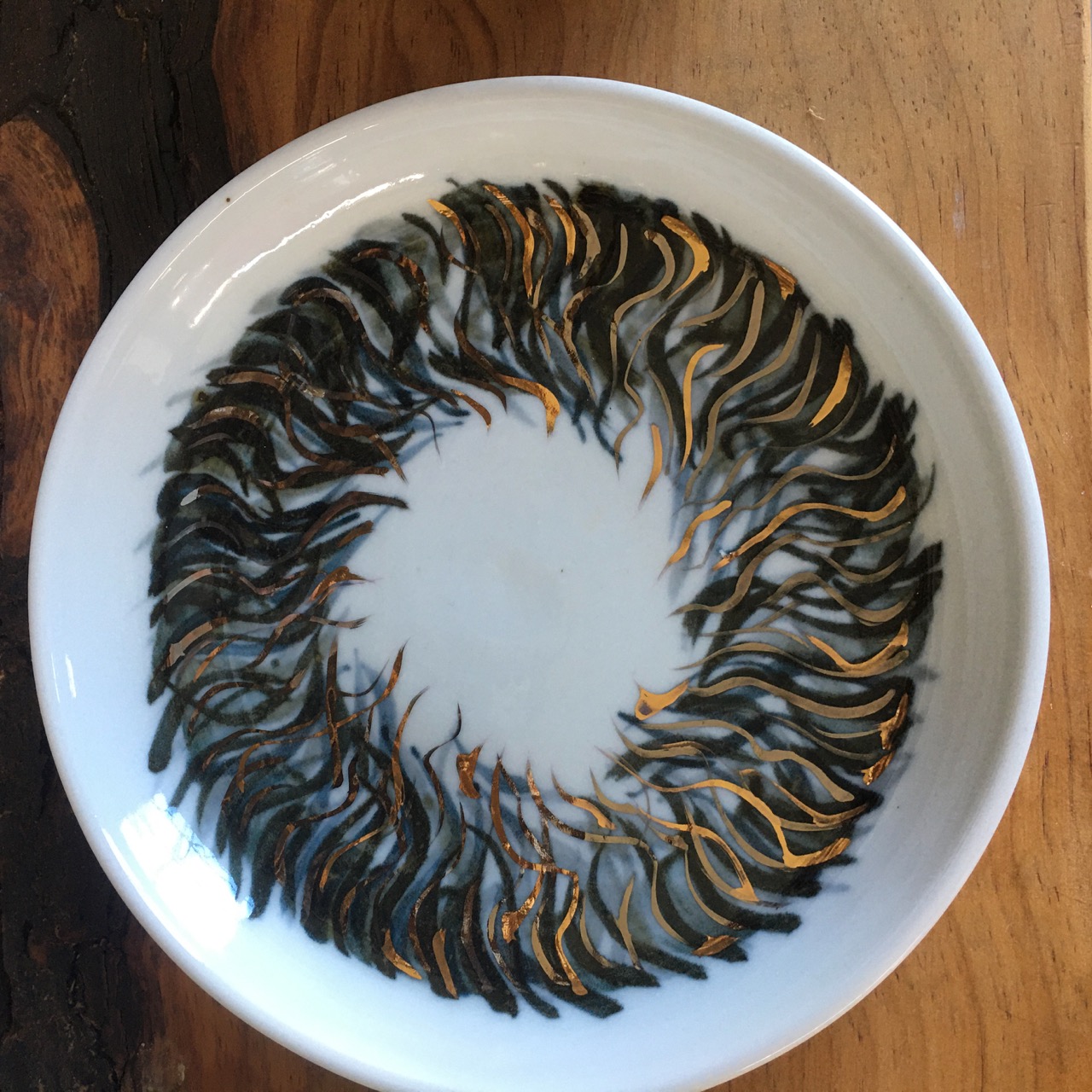
I have been following on with my inclination to develop a decorative image that illustrates the remarkable change in my state of mind.
One day, a few weeks ago, after completlng my EMDR therapy, I was busy at my decorating table, painting some of my bowls, when something remarkable happened.
I was painting the stylised bush fire flames motif that I had developed and have been working on for some time. The sort of gestural image that crops up in my dreams. When I suddenly realised that over the few recent pots that I had been working on. The image had subtilely changed from an improvised flame image, slowly but surely, to an image of garden flowers.
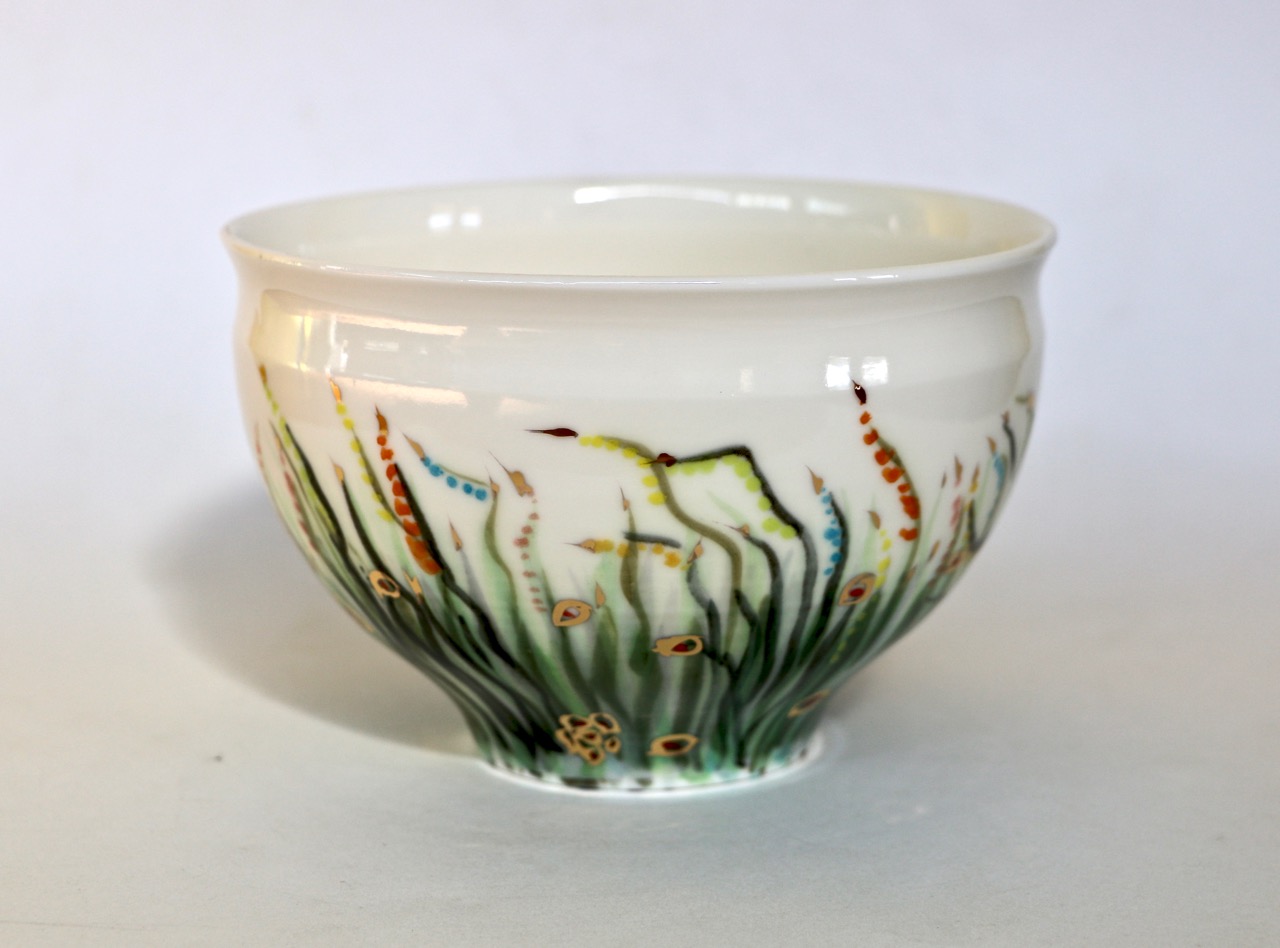
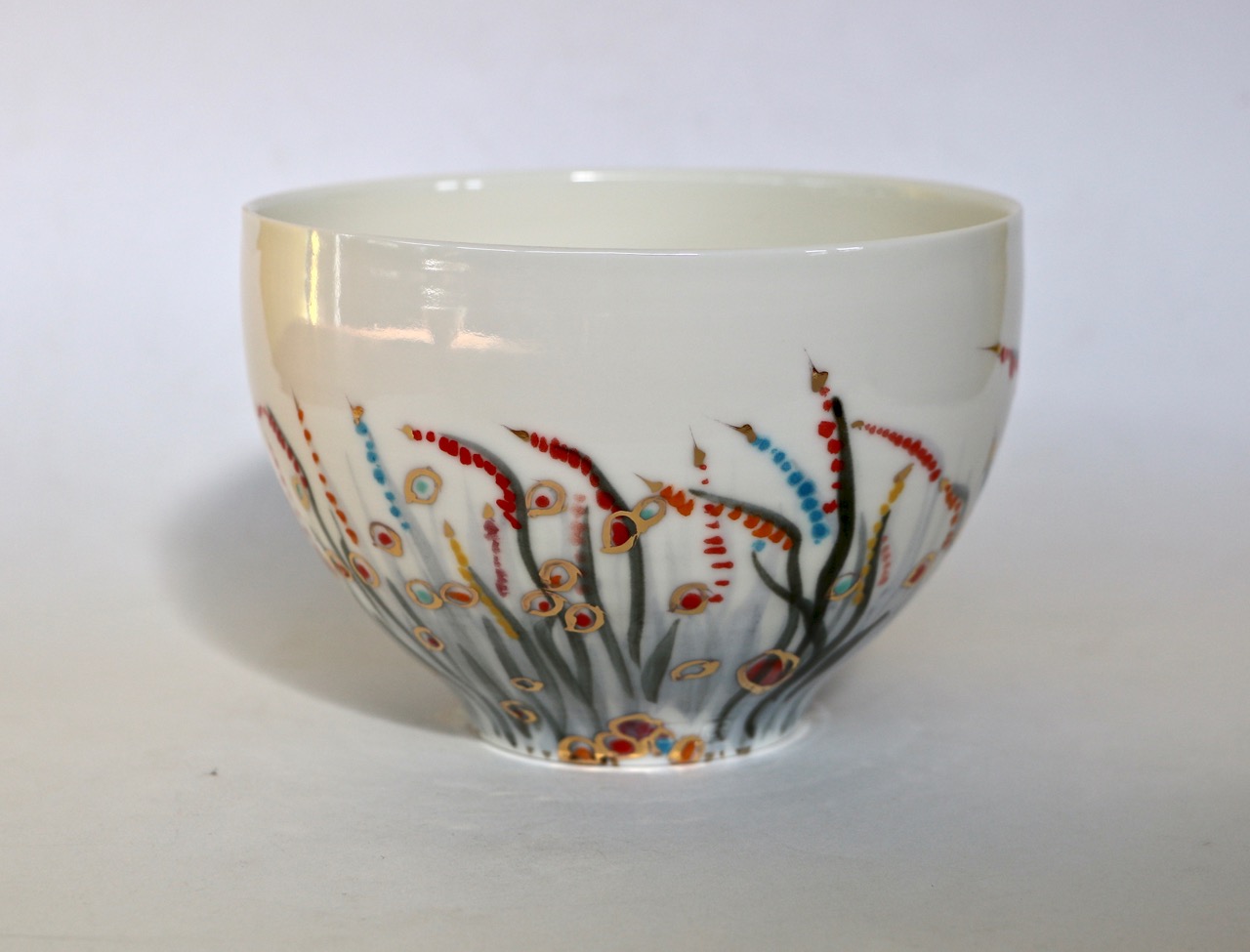
I had started painting an English cottage garden scene!
I was somewhat surprised to say the least. I was also very happy to see such beautiful and reassuring scenes becoming reality as I worked, in front of my eyes. Something in my head had changed irrevocably, and for the better.
I feel so much better these days. More relaxed, and I have a sudden burst of creative energy. I’m painting furiously and firing one or the other of the 2 solar PV fired electric kilns every day.
I’m so pleased to show these new pots and decorative images in the Open Studio weekend sale next weekend. 10, 11 & 12th of June.
The initial home-made cobalt goshu pigment and gold lustre design.
The beautiful floral image that developed out of the flames.
And then the English Cottage Garden design that emerged.
All these pots and others in a similar vein will be for sale in the studio this coming weekend, plus our usual wood fired kitchenware pots.
We will have tea, coffee and cake here on the day to share while we chat with you.
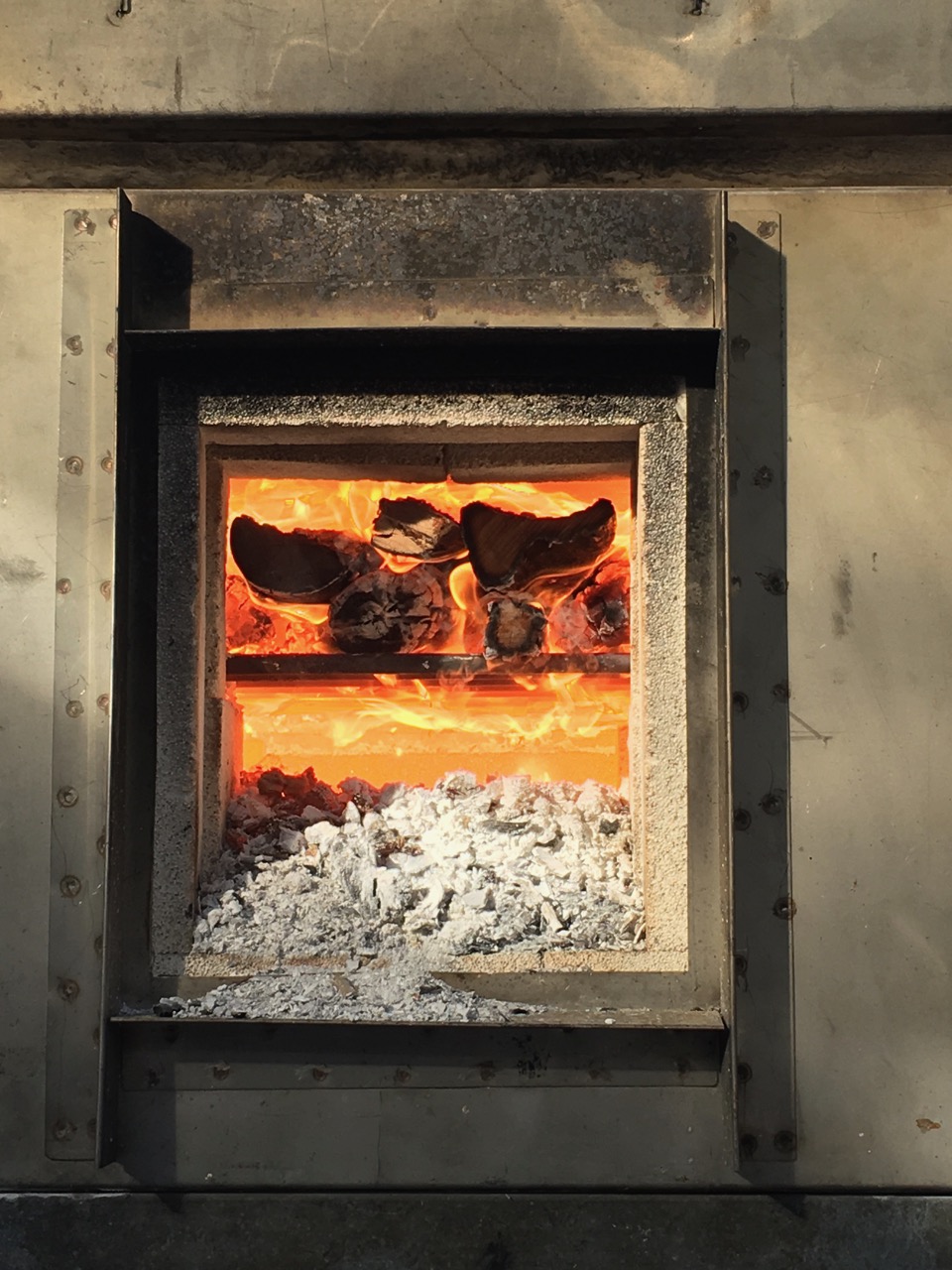
We fired the big wood kiln last weekend, then during the week, Janine packed and fired the little portable wood fired kiln.
We have put the Sturt ’Terra Nova’ show up and it is going well, with a big turn up at the opening. We got to catch up with loads of people that we only usually see at conferences, and as I don’t go to a lot of conferences, nor do I go to ‘openings’ to do ‘networking’. Well, I don’t get to catch up like this very often. It was really good.
Our next big event on the horizon is the ‘Pop-Up’ Artists Open Studios Arts Trail, that will be on the long weekend of the 10th, 11th, and 12th of June. Hence the flurry of firing activity now in preparation. We have been making all year, and firing in the smaller kilns, the solar PV fired electric kilns. We don’t fire the wood kilns over the hotter part of the year, and certainly not during the fire-ban season. So it’s all go now.
Using a combination of elm garden prunings and some thinly split eucalypt (many thanks to our friends, Susan and Dev, who helped split a lot of side stoking wood with us a month or so ago.) Janine was able to fire up to Stoneware in reduction in 4 1/2 hours. A perfect firing for a little portable kiln.
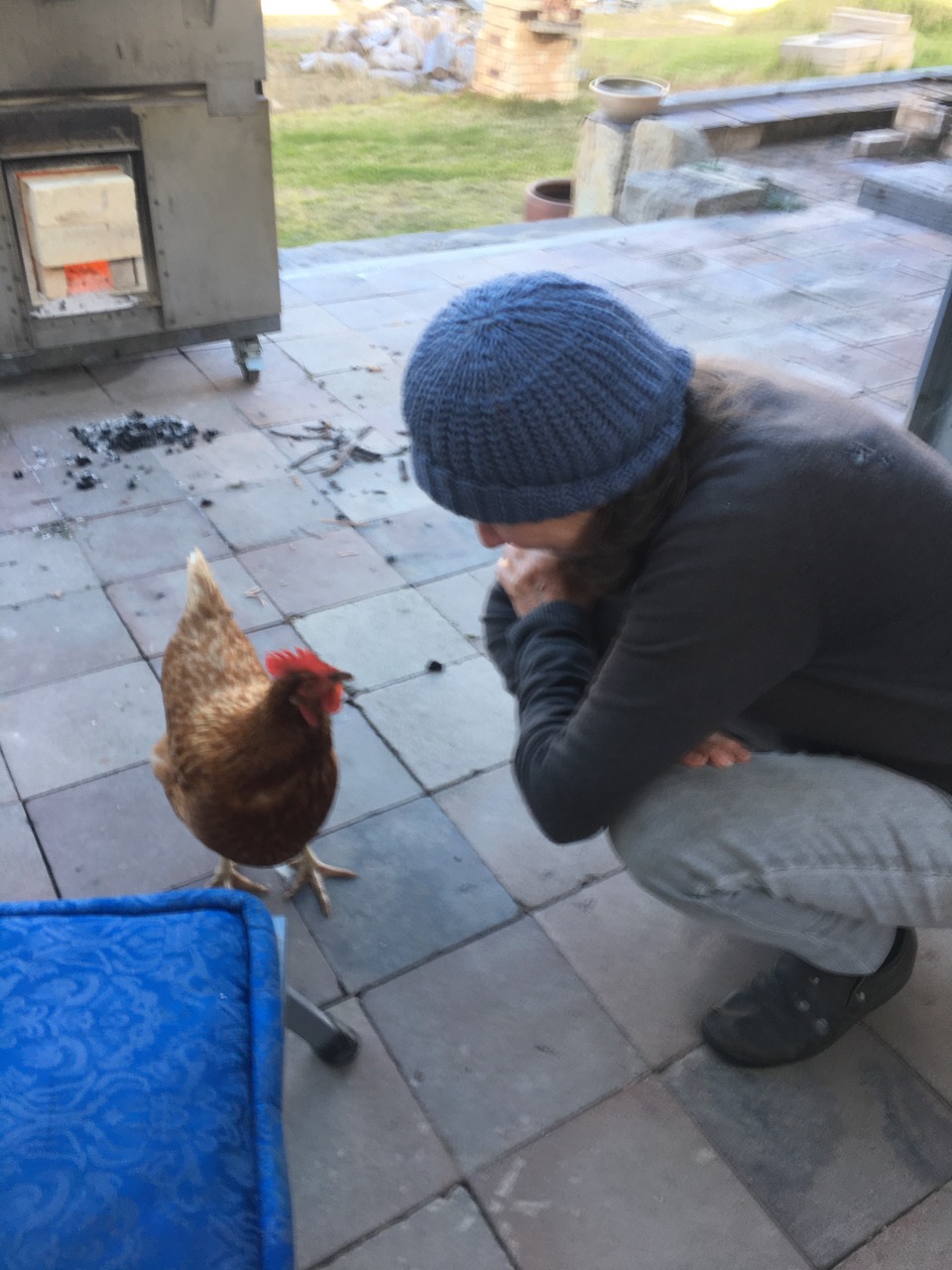
At the end of the firing, Edna the chicken came to check it out. Janine and Edna had a little chat, cooing and clucking together. The gist of it was probably around the matter of if there was anything for a chicken to eat?
I have been packing the big wood kiln again for another firing this coming weekend. The slowest part of packing the big wood kiln is rolling out all the thousand little clay balls of wadding. Each pot has to sit on a ring of little balls of refractory wadding to stop it sticking to the kiln shelf. Over time, and many, many, firings the kiln shelves get a coating of molten fly ash from the burning wood, and if the pots aren’t held up off the shelf, they will fuse together at high temperature becoming a monolithic whole.
First chamber finished and clammed up.
I think that I probably spend a quarter of my time rolling out these little balls, only to throw them away after the firing. Actually, Janine re-uses them as aggregate in the bottom of planter pots around the garden. However, when we first set out on this creative journey, back in the early ’70’s, because we had very little money and couldn’t afford to buy the very expensive kiln shelves that we needed to pack the big wood kiln. As a work-around solution, we decided to make our own. This was a very tricky bit of ceramic chemistry, and only one other husband and wife couple of potters, Harry and May Davis in New Zealand were doing it. We went to work with them to get some insights, and came back and made our own kiln shelves for next to nothing in terms of cash outlay, but a lot of time invested.
The cost of the high alumina grog used to make refractories was prohibitive, so we made our own. For every firing in the little test kiln that we had, I used very high quality, high alumina kaolin from Mudgee. Puggoon 157 kaolin, purchased directly from the mine not too far away, to make the wadding balls. After firing, instead of throwing them out. I put them through the rock crusher and turned them into high alumina crushed grog. All the failed experimental kiln shelves were also put back through the crusher, mixed with more kaolin 50/50 and used again. Eventually we had enough kiln furniture to fire the big 300 cu. Ft. wood kiln at next to no cost. They weren’t very good, but just good enough and this exercise in self reliance got us going. We still have them, but they are rarely used these days, because the new silicon carbide kiln shelves from China are both affordable and excellent quality.
Photos of me, as a much younger man, making kiln shelves, taken by Janine King
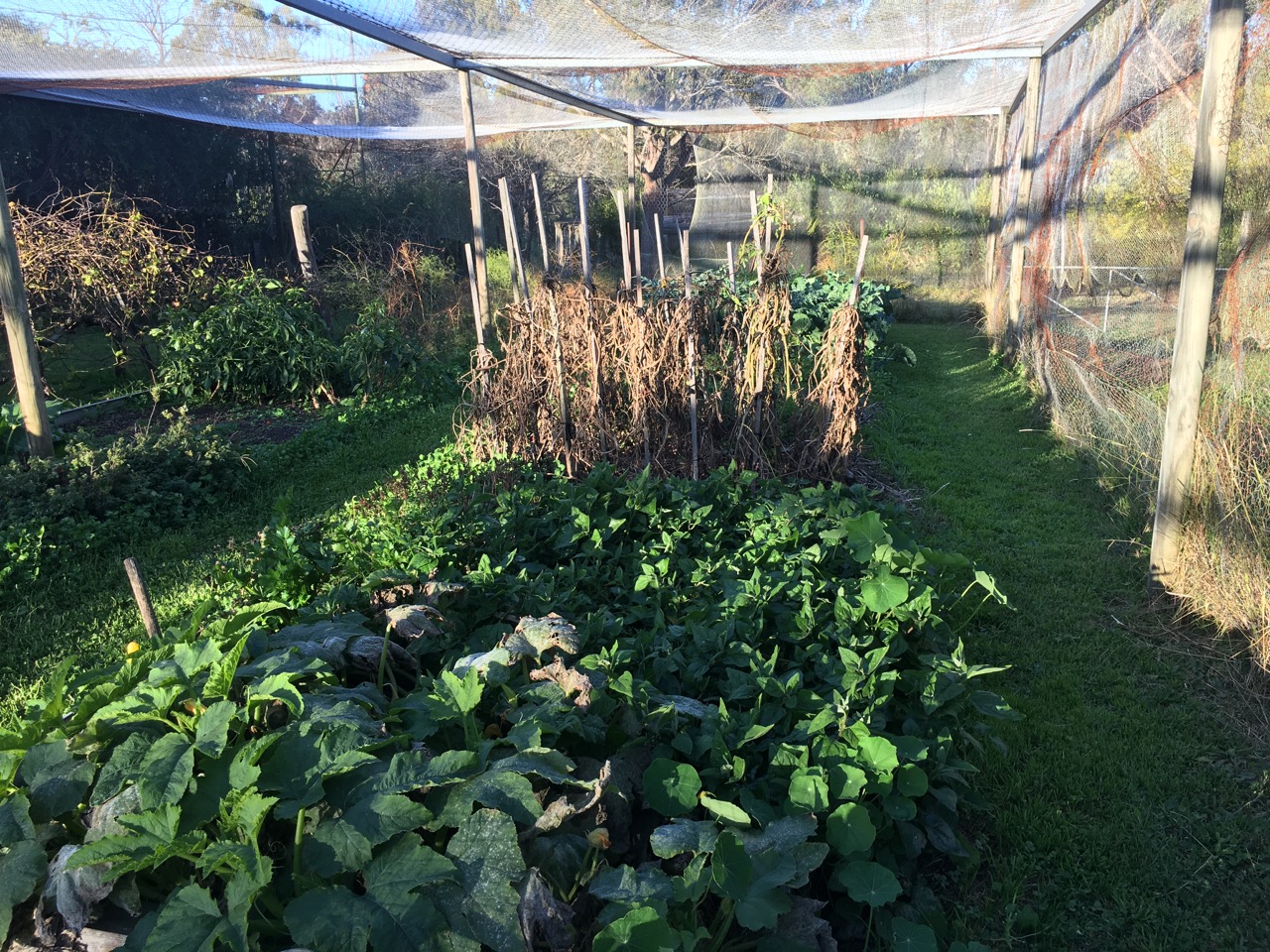
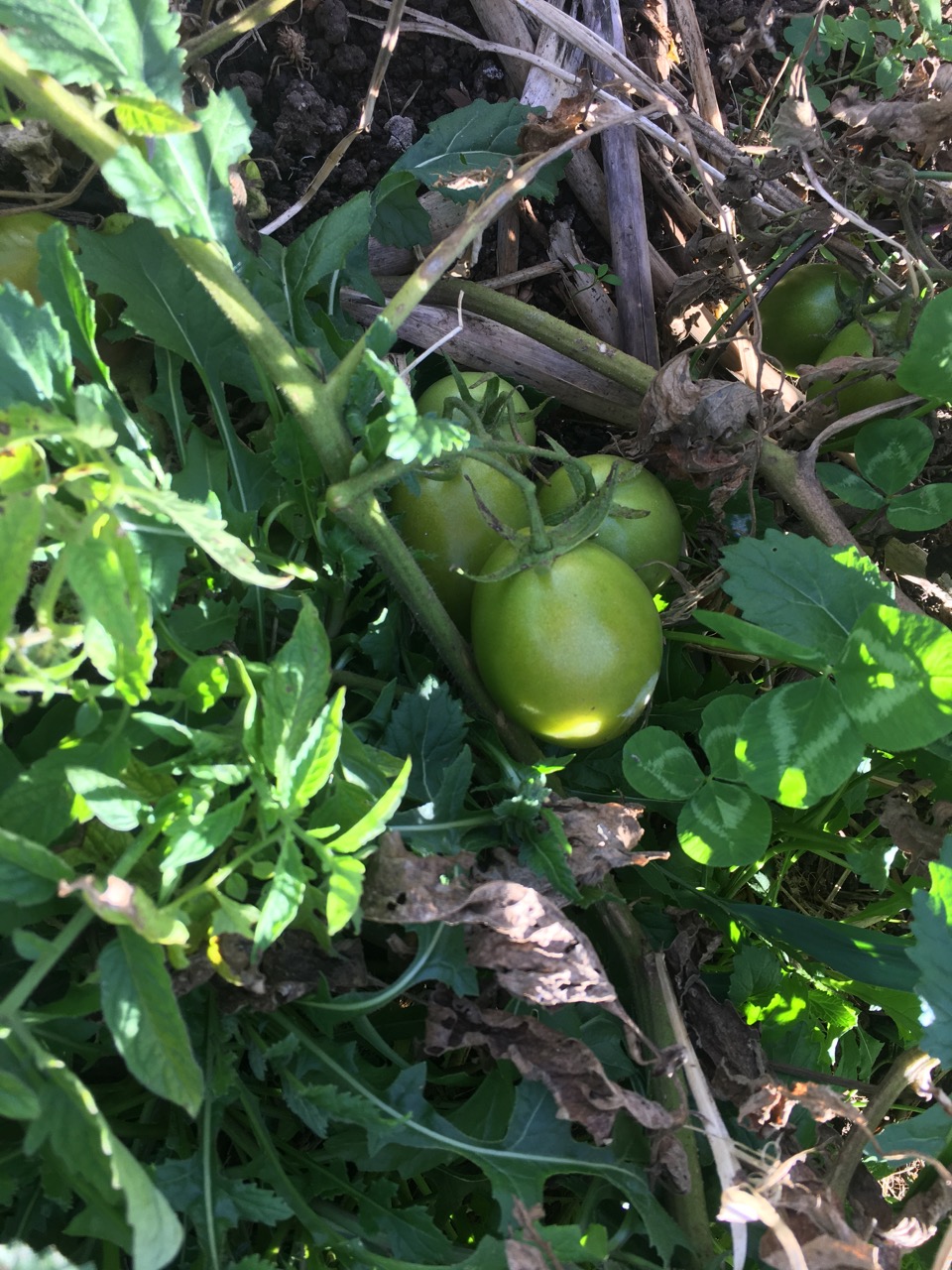
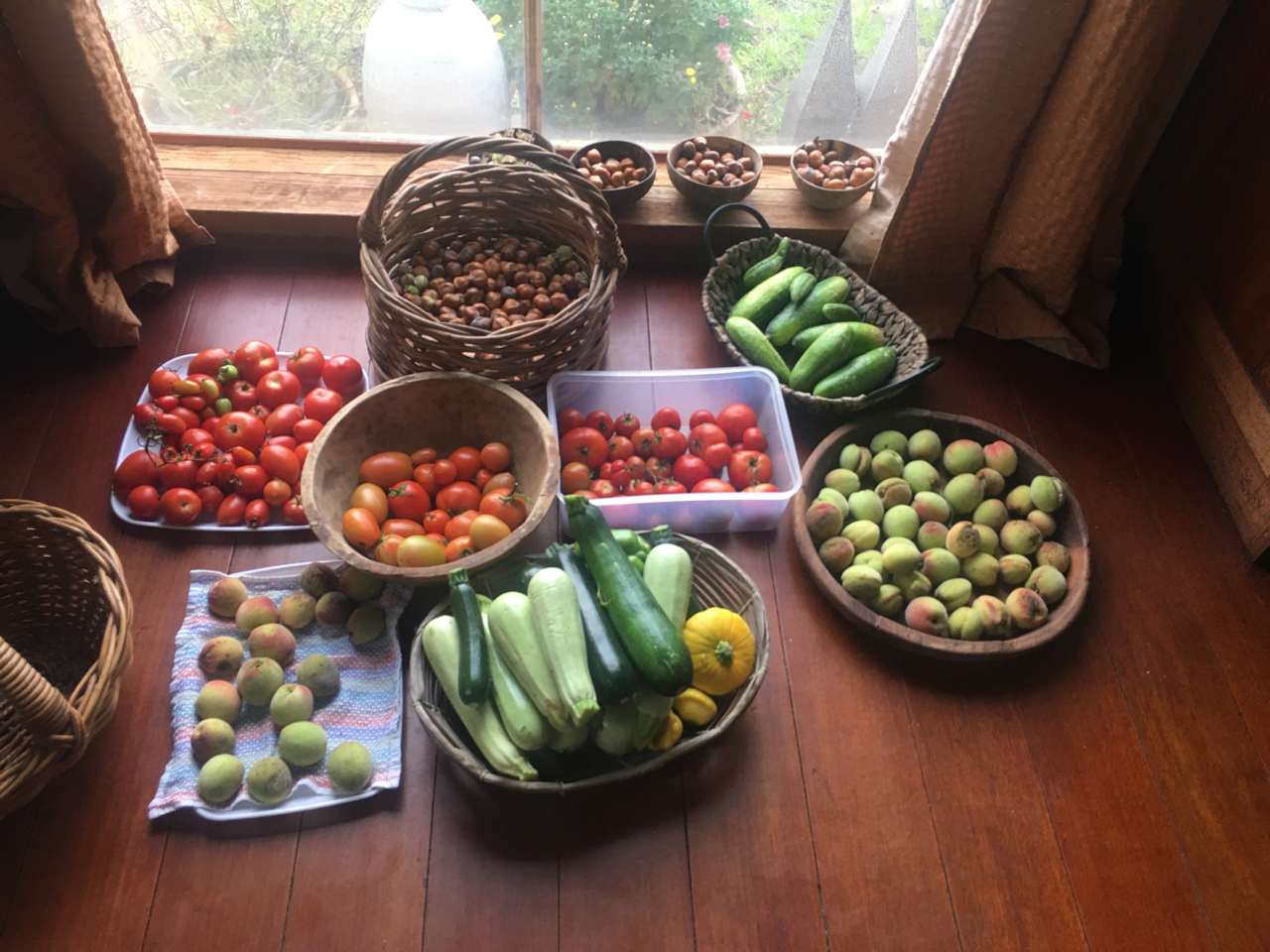
In this last week of autumn, the days are noticeably shorter the weather is so much cooler, and the frosts have started. The tomatoes are dead, but wait. What’s this? Still just a few green tomatoes in among the undergrowth and weeds. AND, 3 red ripe ones!
We are picking plenty of broccoli and cauliflowers. Winter is almost here.
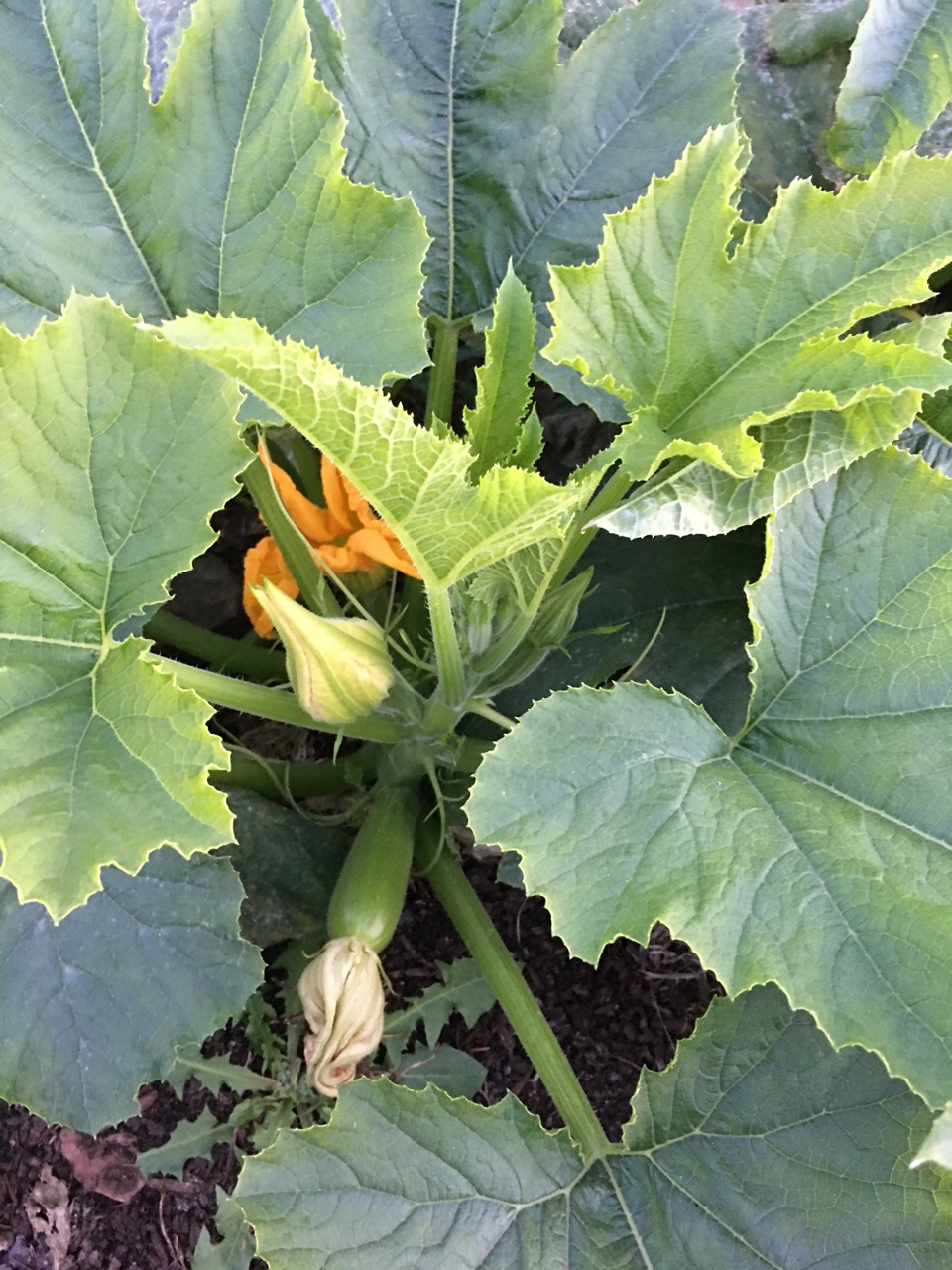
There are just a few very small zucchinis still on the bushes. I need to pick them before they get frosted again and go mushy
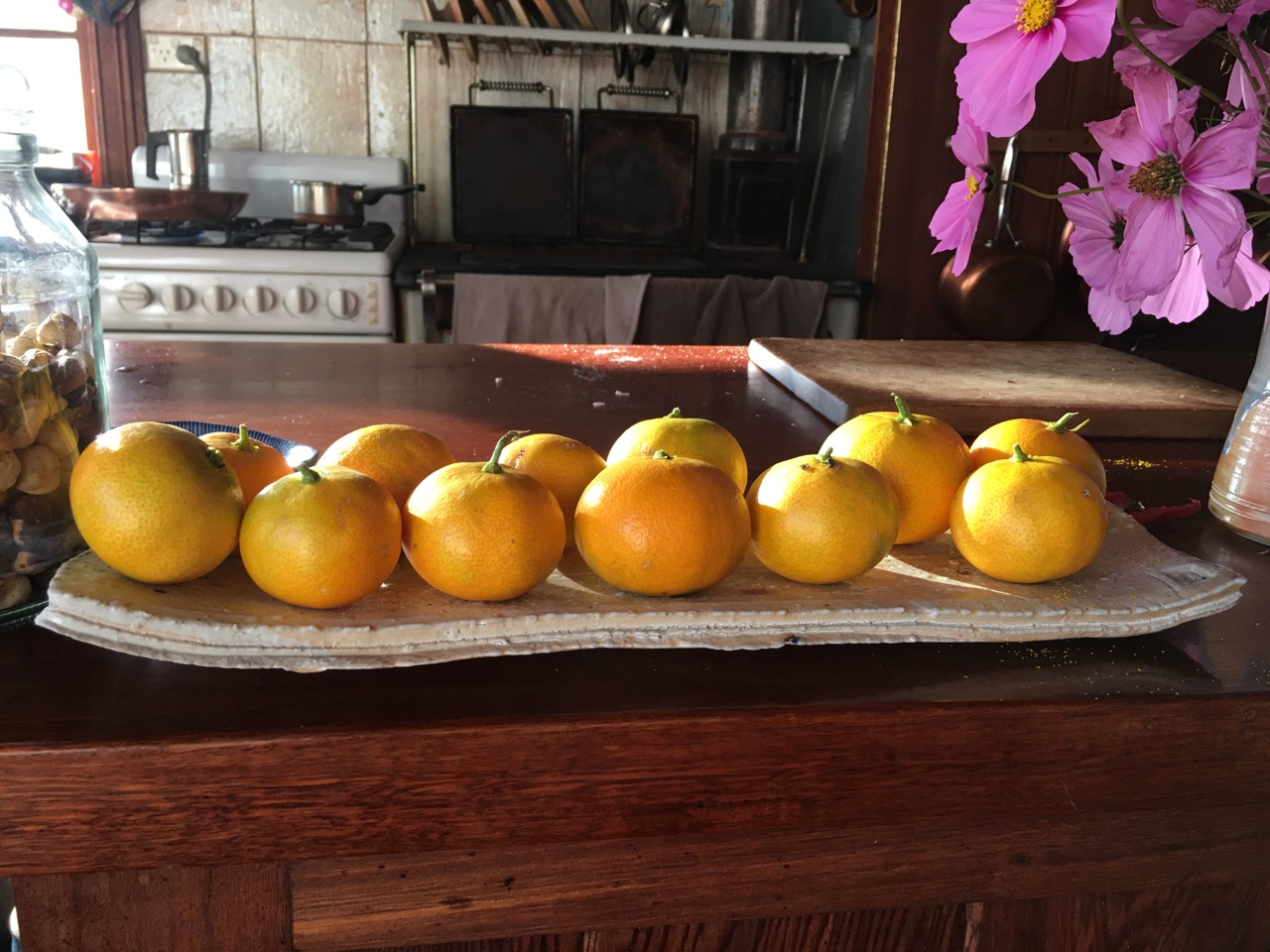
All the apples are finished and we have just picked our last pear. We have started to pick the winter citrus. All of the citrus trees were badly burnt in the fire, as they were growing along side the pottery kiln shed wall. The closest ones were killed, those further away got badly scorched, but with a severe pruning away of the dead wood, fertilising and watering. Then planting new trees in the vacant spaces. We have a citrus grove once again. Because many of the trees are still very young, just two or three years old, We have a lot less fruit to look forward to. We are almost through the Japanese seedless mandarins. It was a small crop of 30 or so. The tree is still very young and this is only our 2nd crop, so not too bad. The Japanese yuzu has just two pieces of fruit on. This is its first crop. The kaffir lime trees out the front of the house got very badly burnt, but are making a come back with a lot of pruning and TLC. The stronger of the two trees had over 60 fruit on this year. We only grow it for the leaves, so the fruit is picked off to allow the tree to flourish.
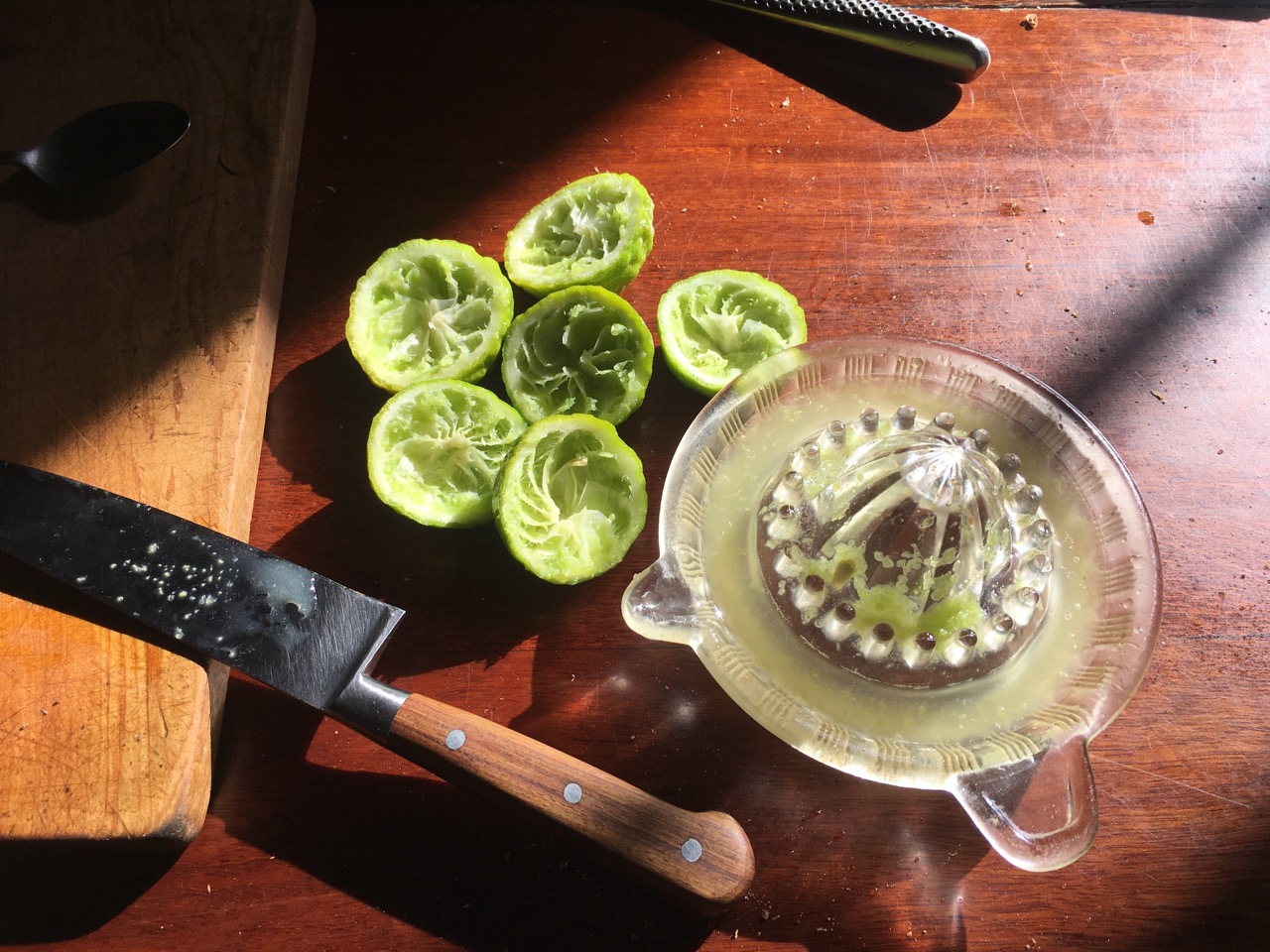
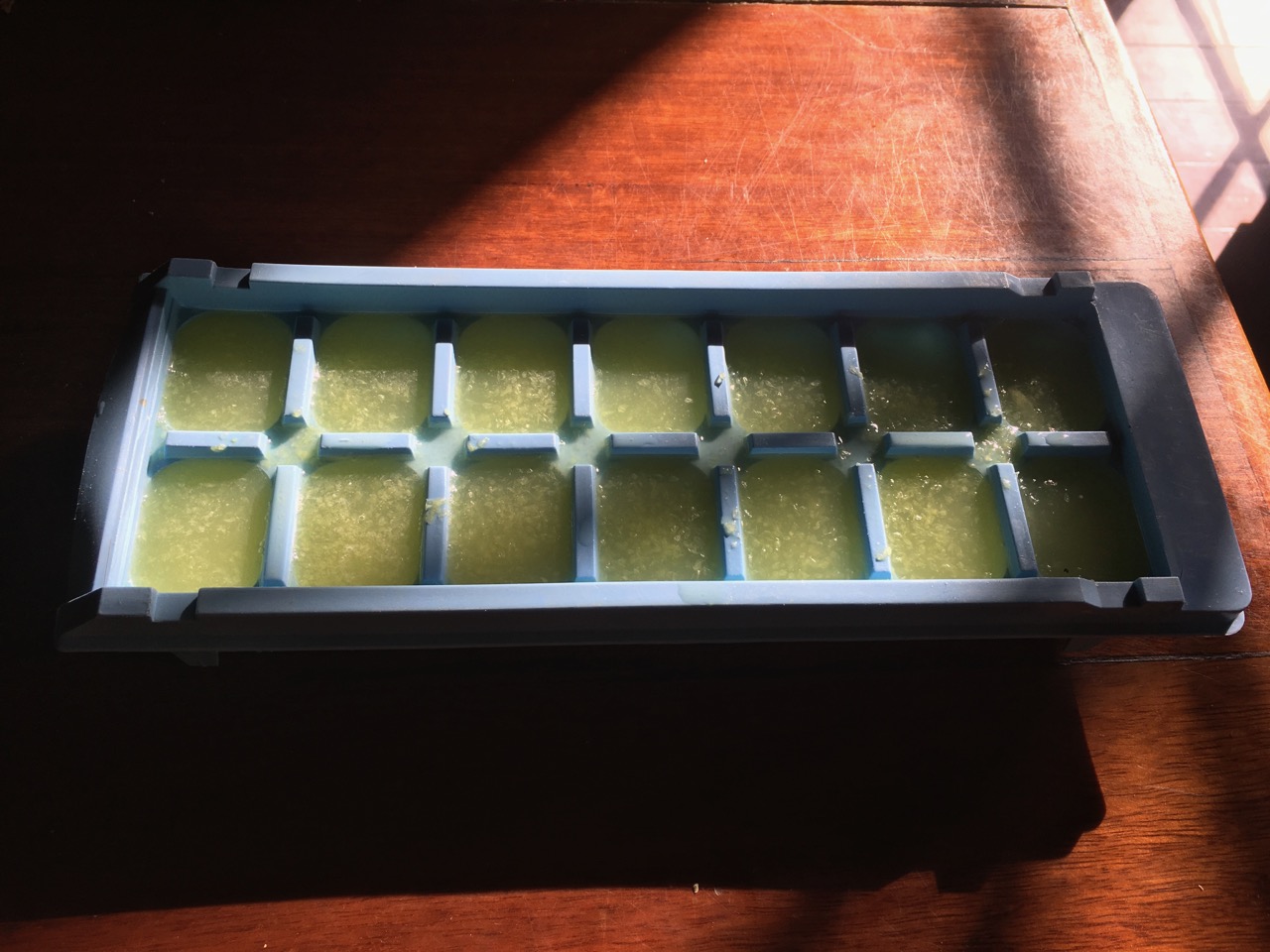
I don’t like to see anything wasted, so I decided to juice 20 of the kaffir limes and make lime juice ice blocks for next summer drinks. I think that it might go well with tequila? It’s a quite sour and bitter form of lime juice perhaps best suited to cocktails?
We have also picked up a fallen grapefruit off the ground, our first, which was very tart and sour. Plenty of room for improvement there as the frosts and winter sunshine sweeten them up.
The other fruit that is plentiful at this time of year is Australian native lilli pilli. This tree survived the fire in behind the house, away from the heat and flames, but it’s a very tall tree and the top branches that extended above the roof got burnt off. It is doing well now with a good crop of pink berries. You can’t eat them, they are only used to make jam or cordial.
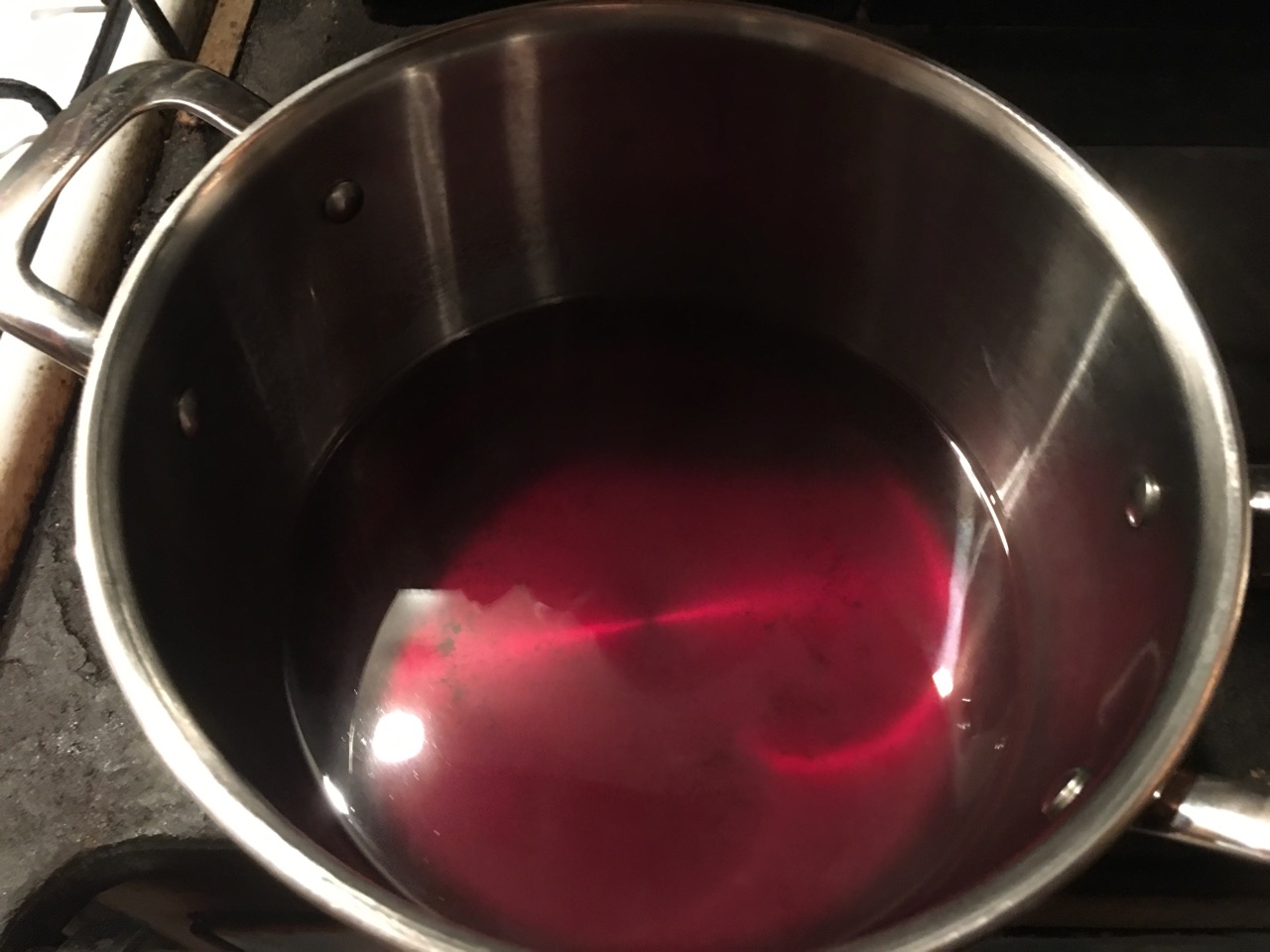
I got up on the tall step ladder and picked enough to fill a basket, once I sorted out all the leaves and twigs, there was sufficient to fill the big 10 litre (2 gal) boiler. Simmered for half an hour and then the fruit is discarded and the liquor left to simmer down to a concentrate of about 750 ml, a bit more than a pint. Quite a big reduction to concentrate the flavour. It needs half a cup of sugar to make it desirable.
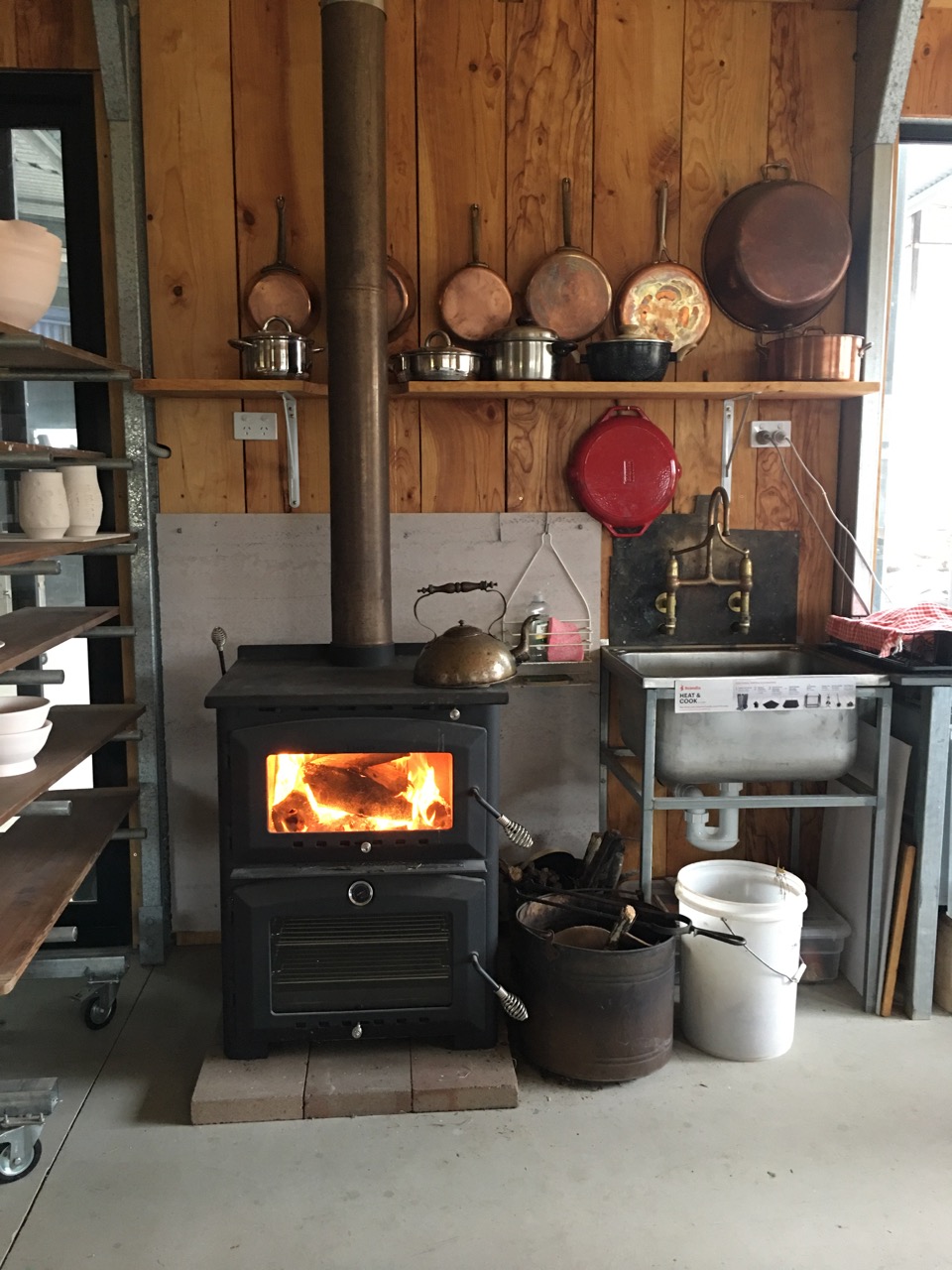
We had to light the wood stove in the pottery for the first time this year. The pottery is so well insulated, that just keeping a small fire ticking over in the stove heats the throwing room area to a gentle comfy warmth. It’s a very nice place to work, great light, comfy warmth, plenty of space.
What more could you want?
Nothing is ever finished, Nothing lasts and nothing is perfect.
This week we have been hard at it everywhere, in the garden, in the pottery In the kitchen.
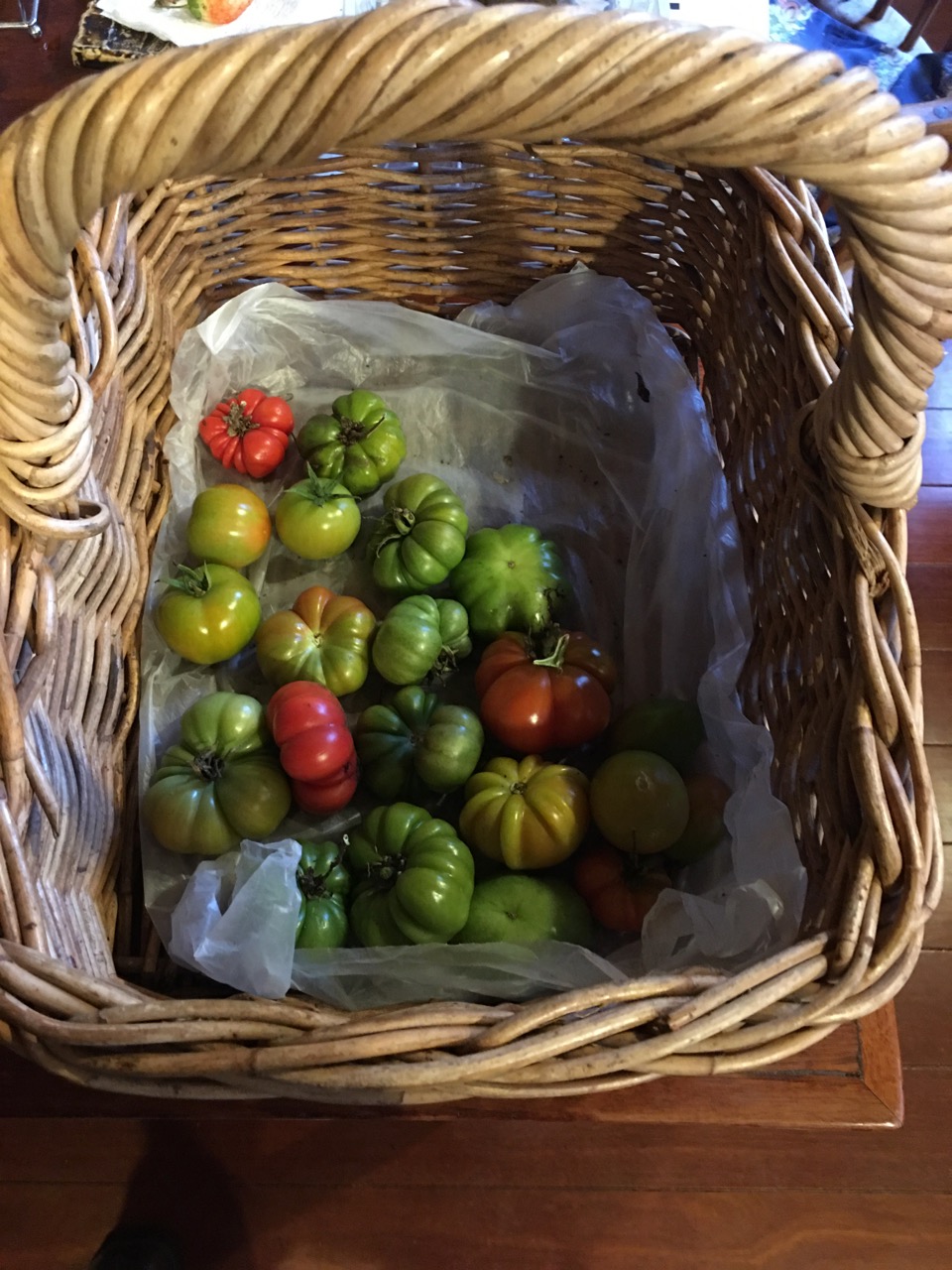
We thought that we had harvested the last couple of wheel barrows of tomatoes, but then we looked again and there were more.
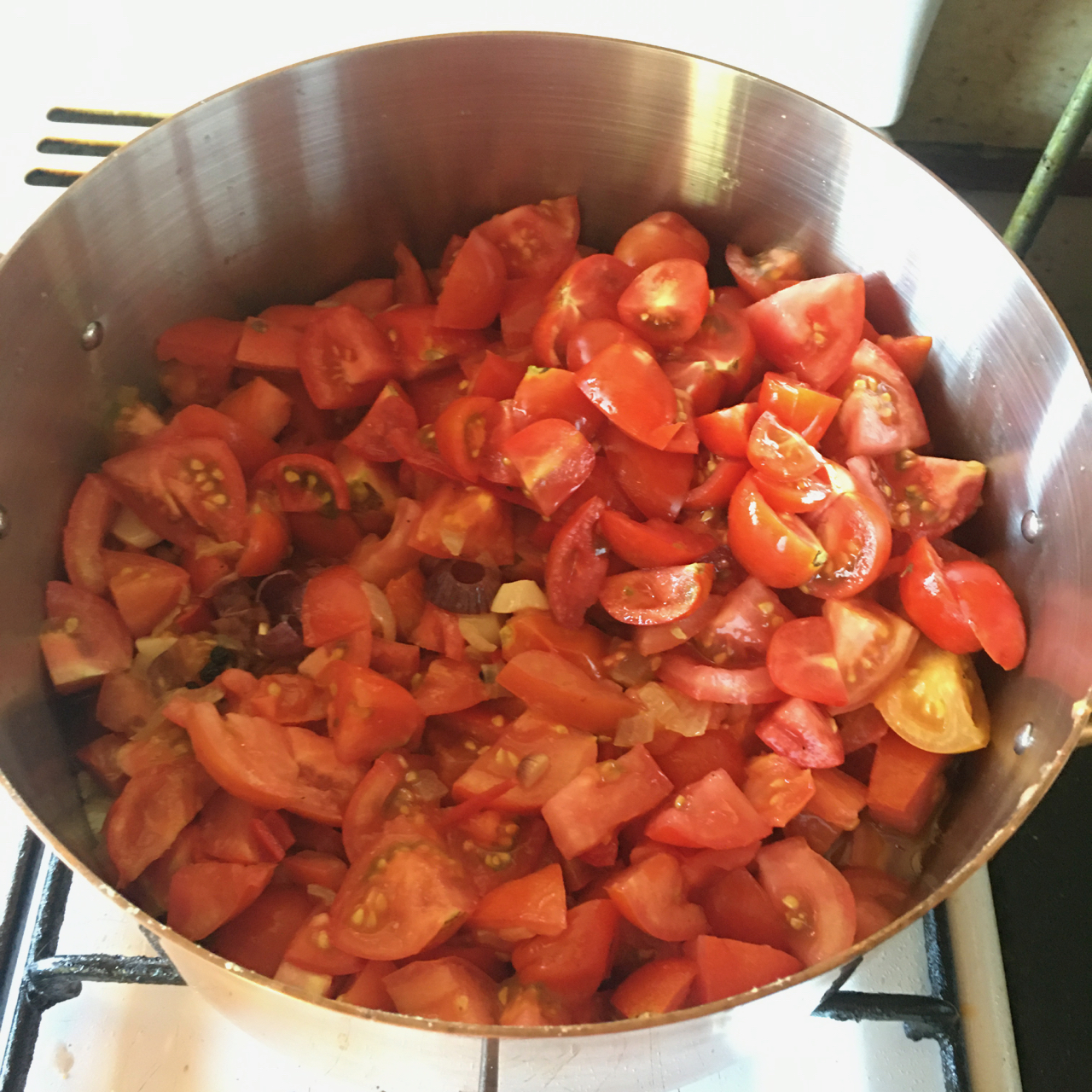
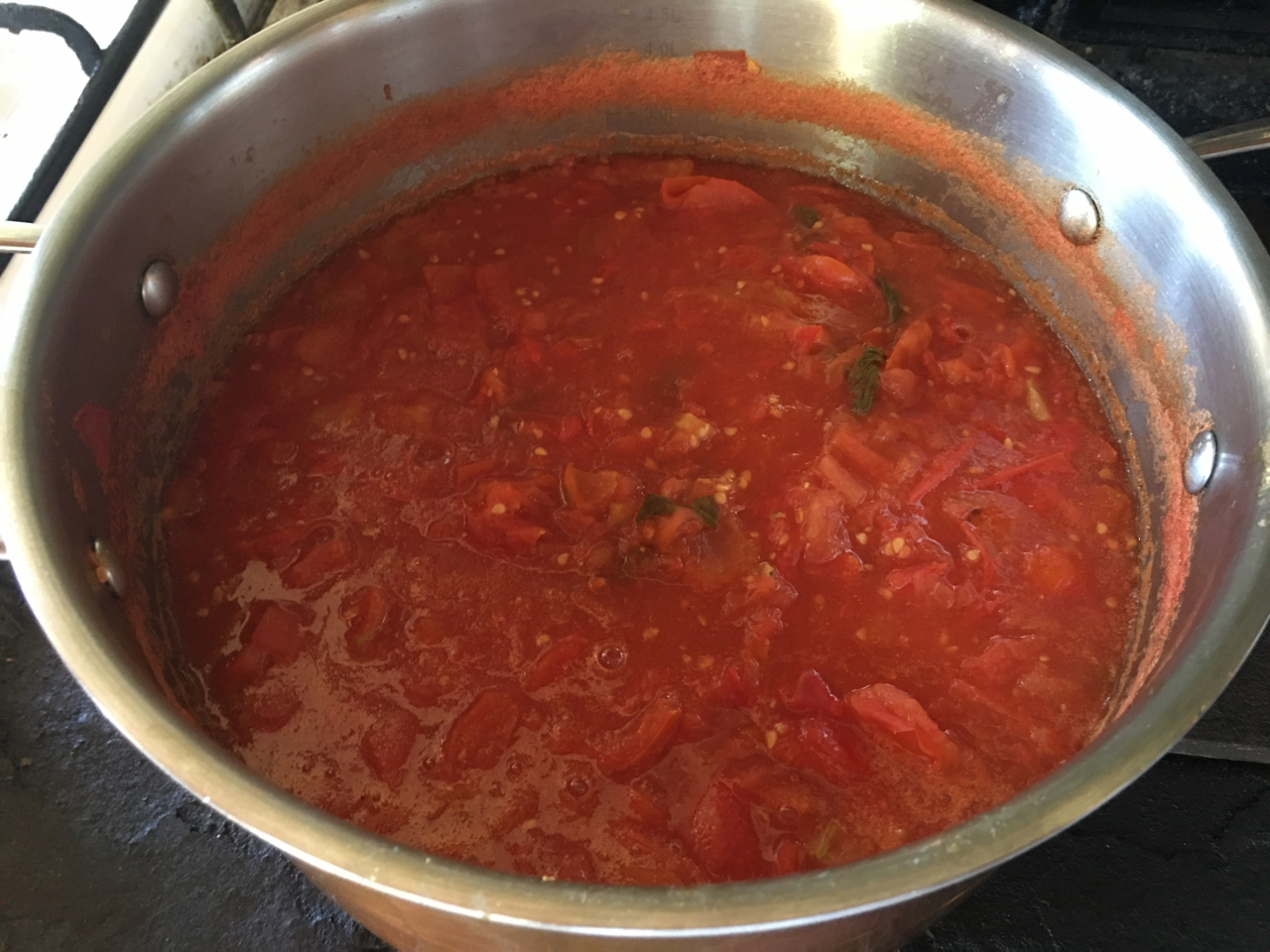
Janine made two seperate 1 gallon boilers of passata, which I put through the mouli sieve and then reduced down to 1 gallon, or 4 1/2 litres of fine liquid, which Janine then reduced down further on the wood stove each night progressing a bit at a time until we had just 2.5 litres of dense concentrate, down from 11 litres of initial pulp. It takes a couple of nights to get through it all. It’s better than trying to find the non-existant intellectual shows on the idiot box.
While the wood stove is hot after dinner is cooked, it’s a shame not to use up all that potential heat embedded in the stove. It not just cooks the dinner, it warms the house and heats the hot water tank. So to get an extra bit of benefit from it is very frugal and efficient. F@#k the gas companies and energy retailers, gouging excess profits from the misery of war and bad forward planning. We are very lucky here to have been through a terrible fire that has left us with thousands of dead trees in our forest that I couldn’t have ever brought myself to cut down in their prime. But now that they are dead from the bush fire they need to be cleaned up to make the place safe again. Fuel for the rest of our lives. As I said, very lucky. You have to look on the bright side.
We were a bit shocked when Janine had to re-arrange the pantry cupboard to fit these recent jars in. We discovered that we now have 79 jars of passata. We could easily go into business selling this stuff. It’s not as if we are not eating our fare share of tomato and egg for breakfast, tomato salad for lunch, tomatoes in ratatouille for dinner, as well as giving away tomatoes to everyone who calls in and visits
But still they come ripening, even now in this cooler weather. However, they must come to an end soon, as the night time temperature is dropping rapidly down to 3oC this week. Soon there will be frosts again and that should put an end to it.
I was so looking forward to the start of tomato season back in November/December. I could just brush the young leaves and smell the tomato fragrance that promised so much. Now I don’t want to touch the leaves so much any more. I’ve had my fill. This is the reality of living with the seasons. The promise, then the first taste — so good, then the glut, and now enough.
I’m sure that we will appreciate the bottled tomatoes over winter in all manner of cooked dishes, to add and extend flavour to almost anything. Passata is a useful and flexible as chicken stock. We have some of that in the freezer too.
We have already picked another few baskets full of prime ripe red produce to make the next batch. Anyone want any tomatoes?
In the pottery, I cleaned out the small Venco pugmill that I use for porcelain. It was starting to allow a few small bits of dryish crumbs through the screens and into the extruded pugs. It has been a year since I last cleaned it out. Unless you use it every day or at least every week. Bits dry out inside the barrel and eventually cause trouble. I hadn’t pugged any porcelain since last year. So now is the time to deal with it. Starting out fresh for the coming work load through till Xmas.
I have found that it is easiest as a two day job. Strip it down last thing in the afternoon, Scrape off all the easily accessible plastic clay. Leave it over night to dry out, then scrape off all the dry clay, and finally sponge it until it is all clean, then reassemble, first thing in the new day.
I have been throwing some gritty clay, making some rough textured bowls for the wood firing.
I have also been making some porcelain dishes for the wood kiln as well.
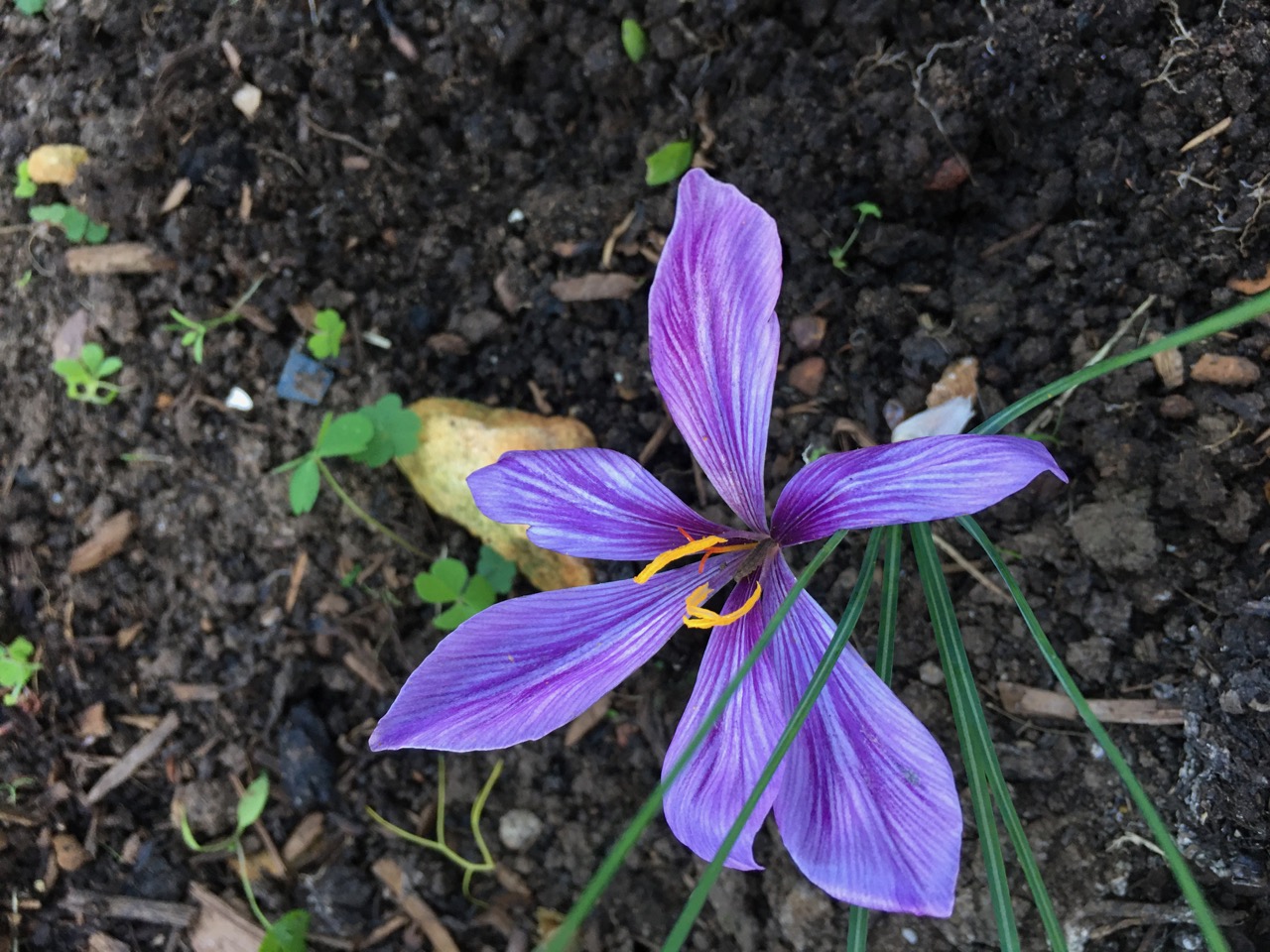
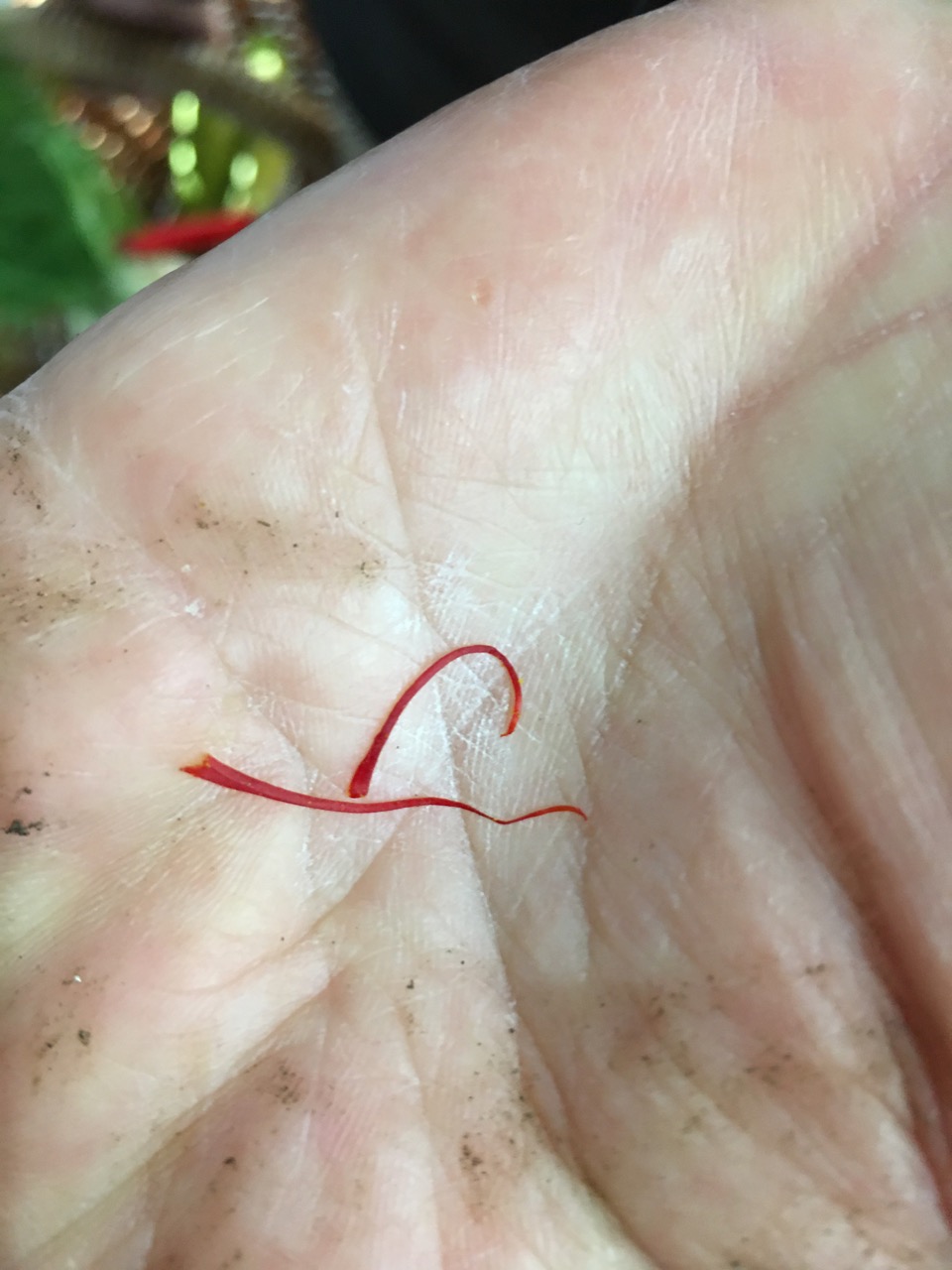
Back in the vegetable garden we found a great surprise! Our first crocus flower. Janine picked out our first two saffron stamens. We ate one each, just to see if we could taste the fine flavour. We couldn’t. But we did get just a little hint of orange colour on our tongues. Hopefully there will be more to follow, as we have 20 crocus bulbs in the garden. We might double our harvest each year? We might eventually even get enough to be able to taste it.
I made a bush tucker pie for dinner from our massive crop of wild warrigal greens – native spinach. It turned out really well. Cooked with 3 cheeses and one egg to bind it. Not a tomato in sight!
We are almost half way through autumn now, the Indian summer is over and the weather has turned cooler. No more 30 degree days. This past week has been steadily in the 20’s and with rain or showers almost every day. However there are bright sunny patches in between. I’ve been working my way through the big pots that I threw to begin this throwing session, bisque firing them in the electric kiln using only pure sunshine. The recent addition of extra solar PV panels last year, bringing us up to 17 kW total and the addition of the 2nd battery, means that we are able to fire without any withdrawal from the grid. I can even fire both electric kilns to bisque at the same time, or just one kiln to stoneware. This is a great sense of independence.
With the price of gas having gone up from $1.75 a litre last year to $2.50 this year with no additional increase in the production cost. It’s just profit gouging and it’s a complete rip off.
So I’m very proud to be able to fire my kilns with my own sunshine. And drive my car off it as well! It’s amazing that there is enough to go around, but we still export our excess on the days when we are not firing. We even manage to export a little in the early stages of the firing.
This is from our most recent electricity bill. Our daily usage is down to 0.76 kWh per day. Down from 1.64 kWh per day the previous year. When we were doing more firings.
The average Australian 2 person household like ours is using 17.6 kWh per day. So, it seems that all our efforts to tread gently in the world are paying off. We run a very efficient, low energy house hold.
Some time later this year, or maybe next, We will be getting rid of our old LP gas kitchen stove. That is our last big investment in our conversion to fully solar electric living. I’m waiting for induction cookers to become more widely available and hopefully a lot cheaper. I have already installed a twin induction cooktop in the pottery. It was only $350. Very affordable.
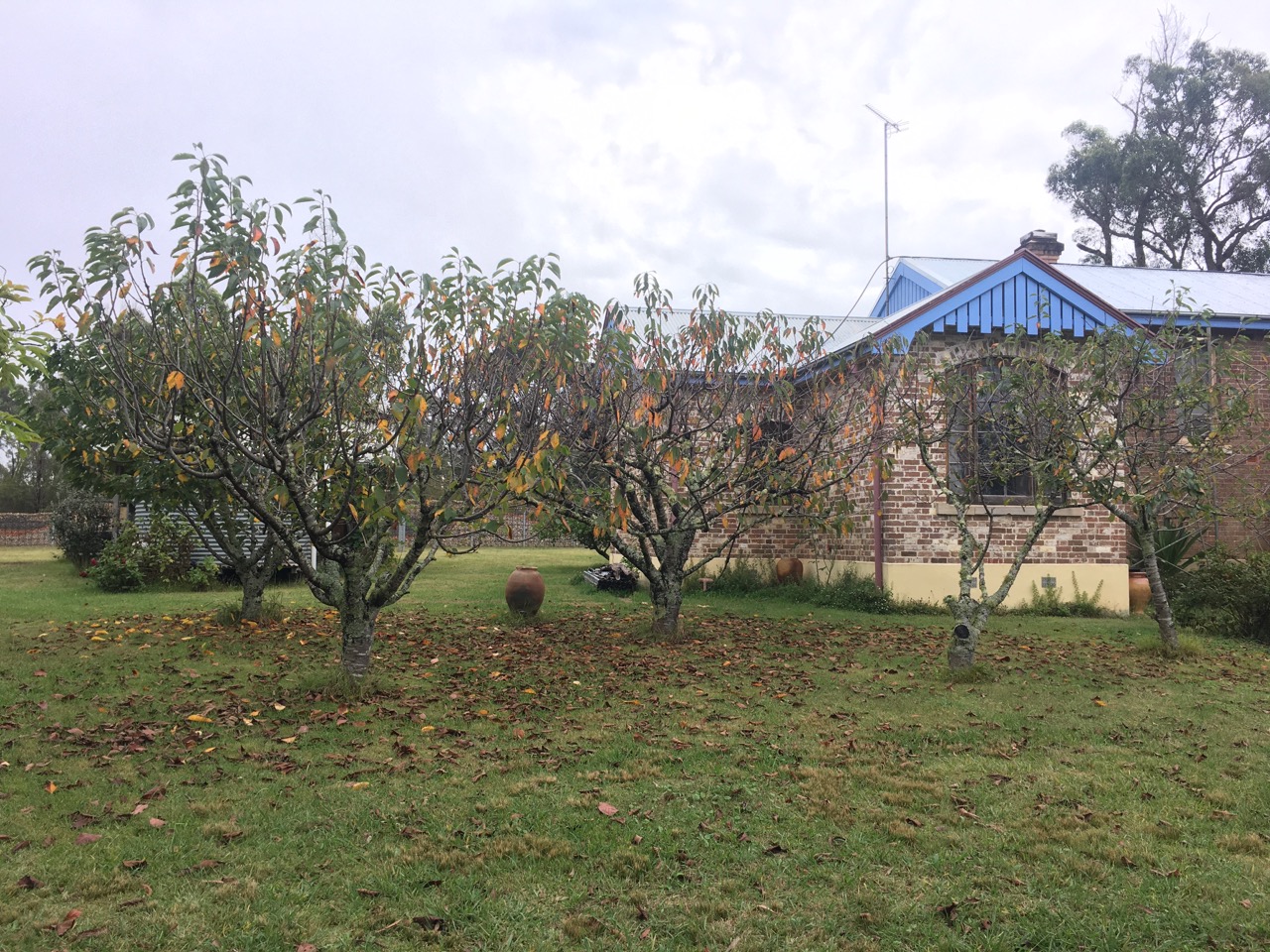
A sign that autumn is well under way here is the change in the Cherry trees, as they shut down and prepare for winter. They are early to fruit in spring, and correspondingly, the first to loose their leaves in the autumn. Our bedroom looks out on to the Chekov orchard. We currently have a carpet of yellow leaves out side our window, that is slowly turning brown.
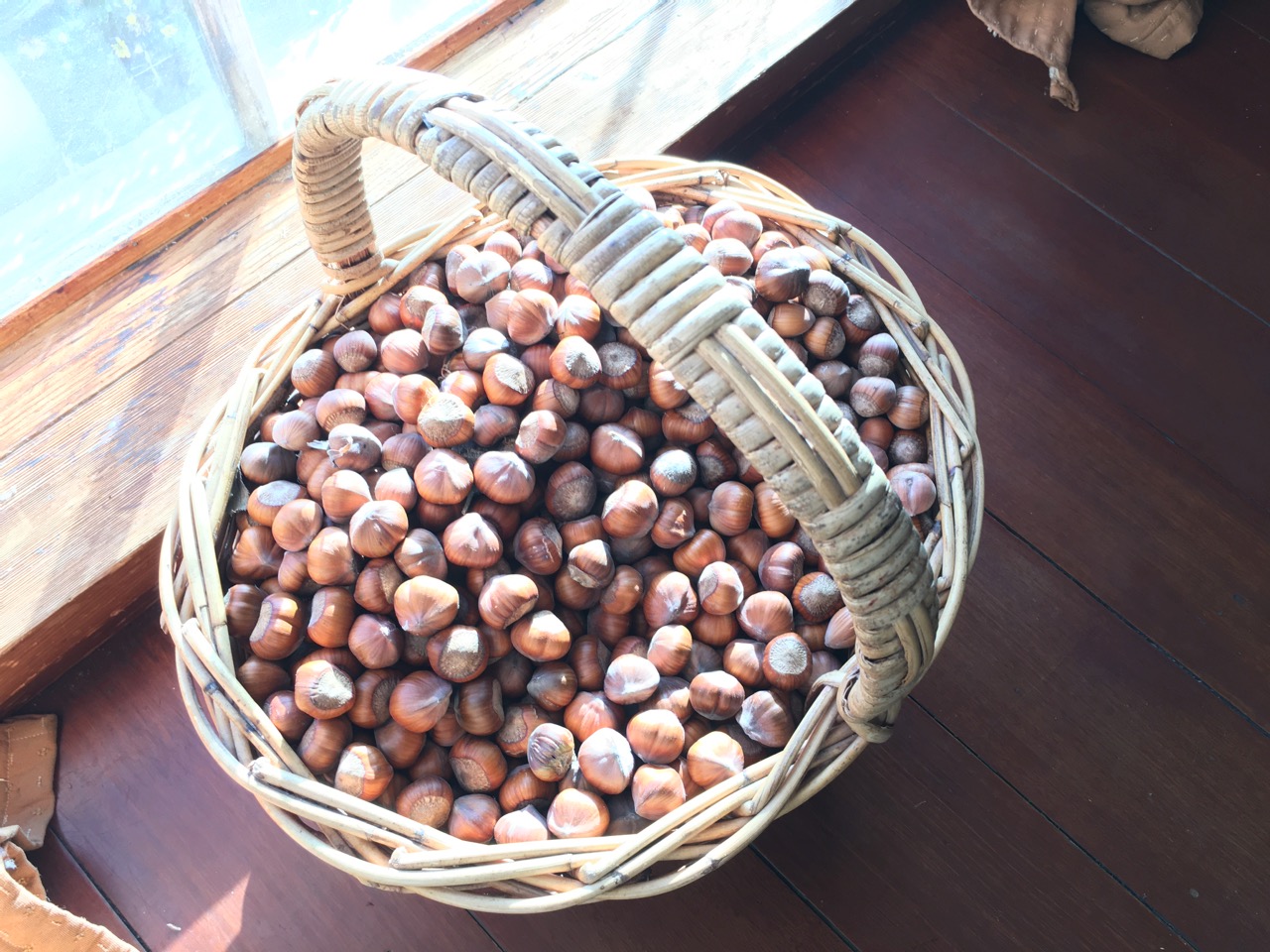
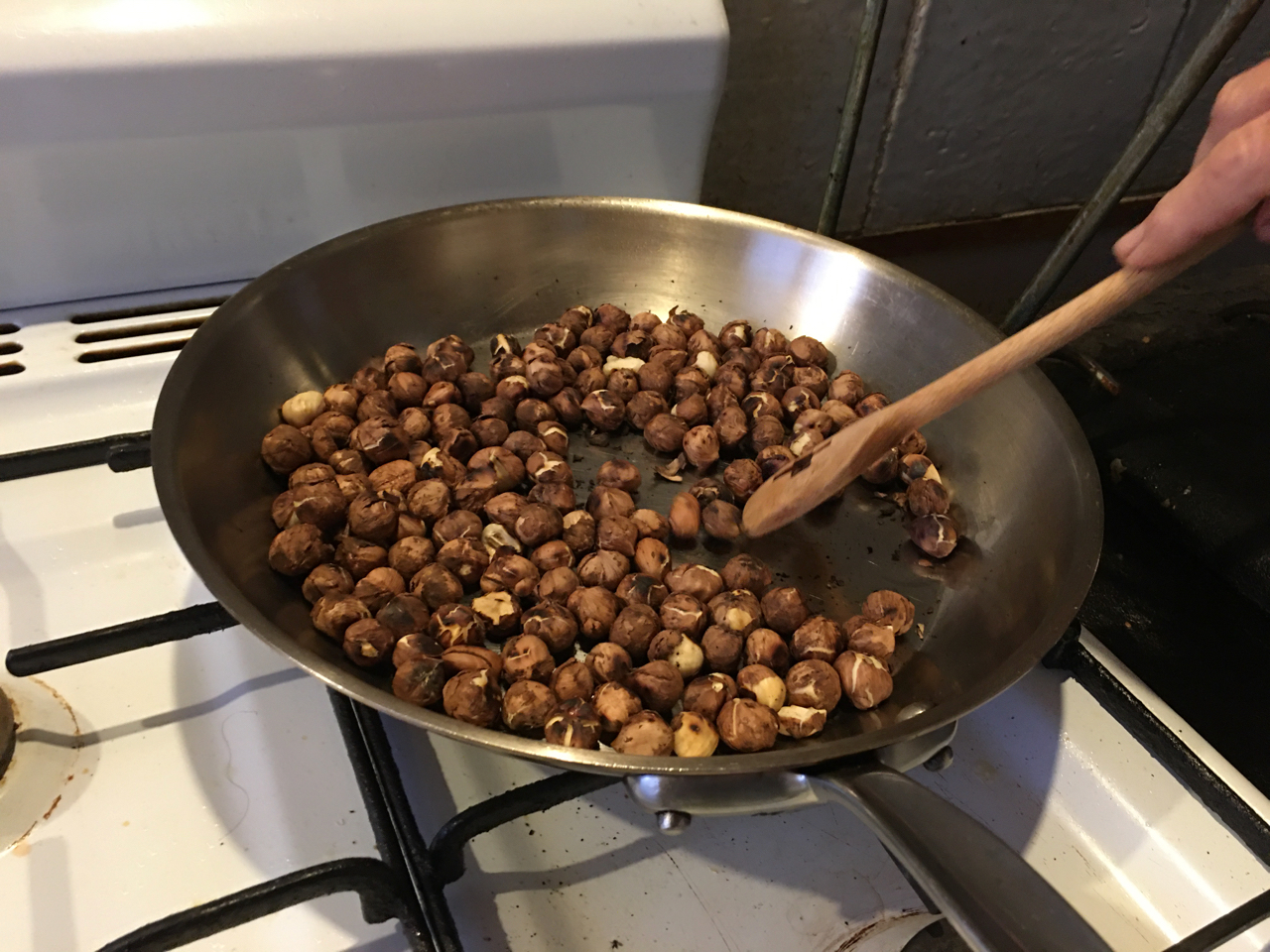
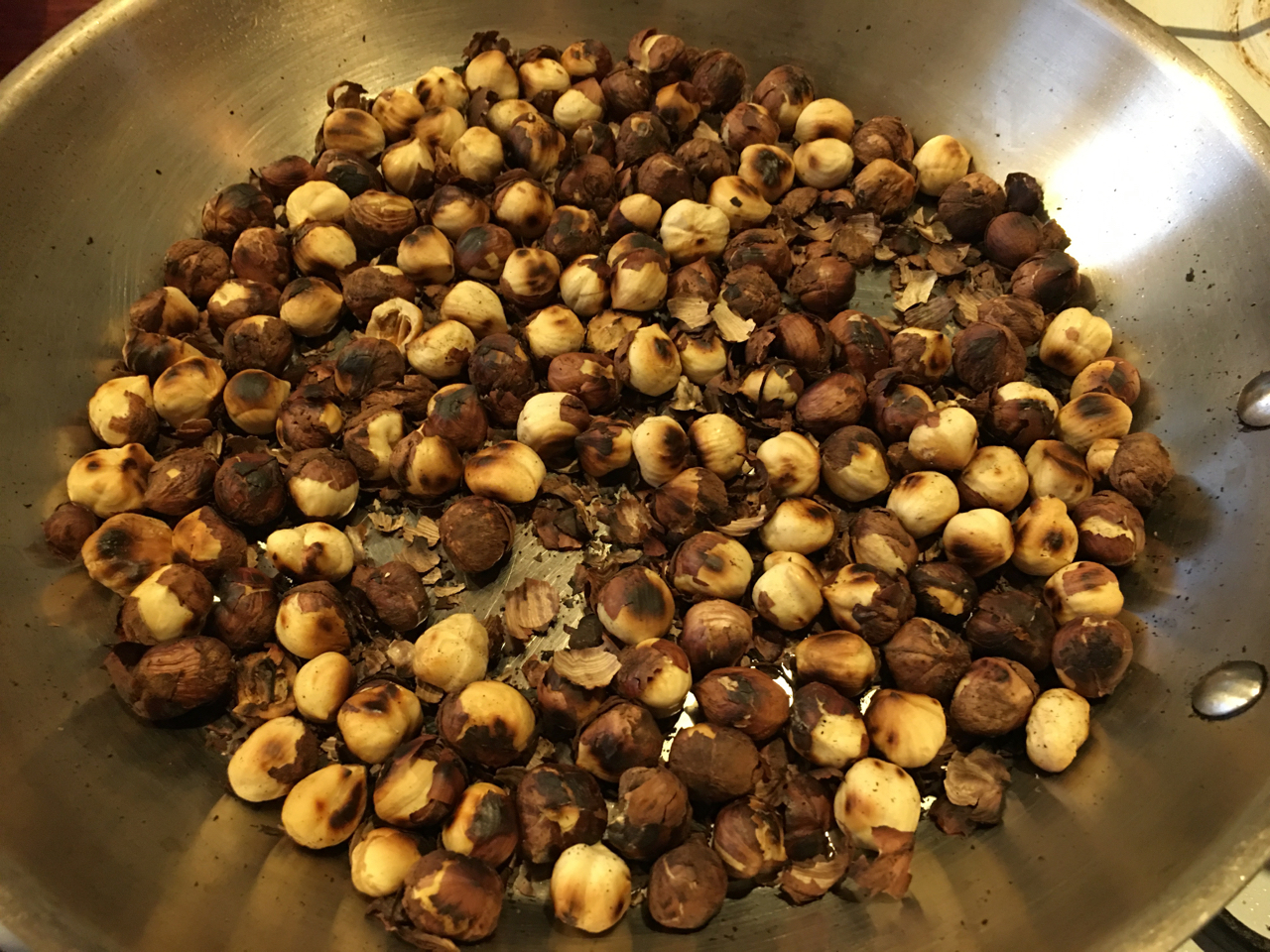
Janine has been collecting more hazel nuts. So far she has picked up 3 baskets full, and there are still more to come. First, she shells them, then checks them for nuts, by bouncing them on the table. If they bounce, they are empty and are discarded. Not worth the energy to crack them to find them empty. The full shells are then cracked open and the nuts are dried in the sunny window for a while. Later she roasts them in a pan on the stove to bring out that superb hazelnut flavour. It’s an ongoing job that is spread over a couple of months. Fitted in here and there whenever the time allows. Most often in front of the idiot box — if there is anything at all worth wasting time on, which is an increasingly rare event
The hazels have already started flowering again. The male ‘catkin’ flowers are out now. I often wonder why? As the female flowers don’t come out until the trees are dormant and have lost all their leaves. The female flowers are quite insignificant and very hard to see, just a pin head sized red dot. They don’t attract any pollinators at all and are wind pollinated, so we have planned out our hazel nuttery of a dozen trees, in such a way as all the best pollinator varieties are up-wind of the predominant winter gales that blow the male pollen down among all the waiting and fecund female flowers.
This is the Hazel nuttery and I am the Nutter. Two of these hazels were bought with an inoculation of French Black truffle spores. So we have some vague hope of truffles in the future — maybe? I planted a dozen different truffle inoculated trees of various types and they all got burnt to the ground in the fire. Only 3 trees re-shot from their root stocks. As truffles are a fungus that lives underground. I’m hopeful that the spores are still active and will one day produce a little surprise for us. But I’m not holding my breath.
In the pottery, I have been making smaller pots that are quicker to dry, so that they will all be ready for a wood kiln firing after Easter. I’m not sure if my skin is getting thinner and less robust with age, or these recent clay body experiments are just more aggressive, but I’ve found that I’m wearing away the skin on my finger tips so much more readily than I used to when I’m turning.
I used to only wear rubber ‘finger stalls’ when turning rather dryish hard stone porcelain bodies. Now I find that I have to wear them all the time when turning.
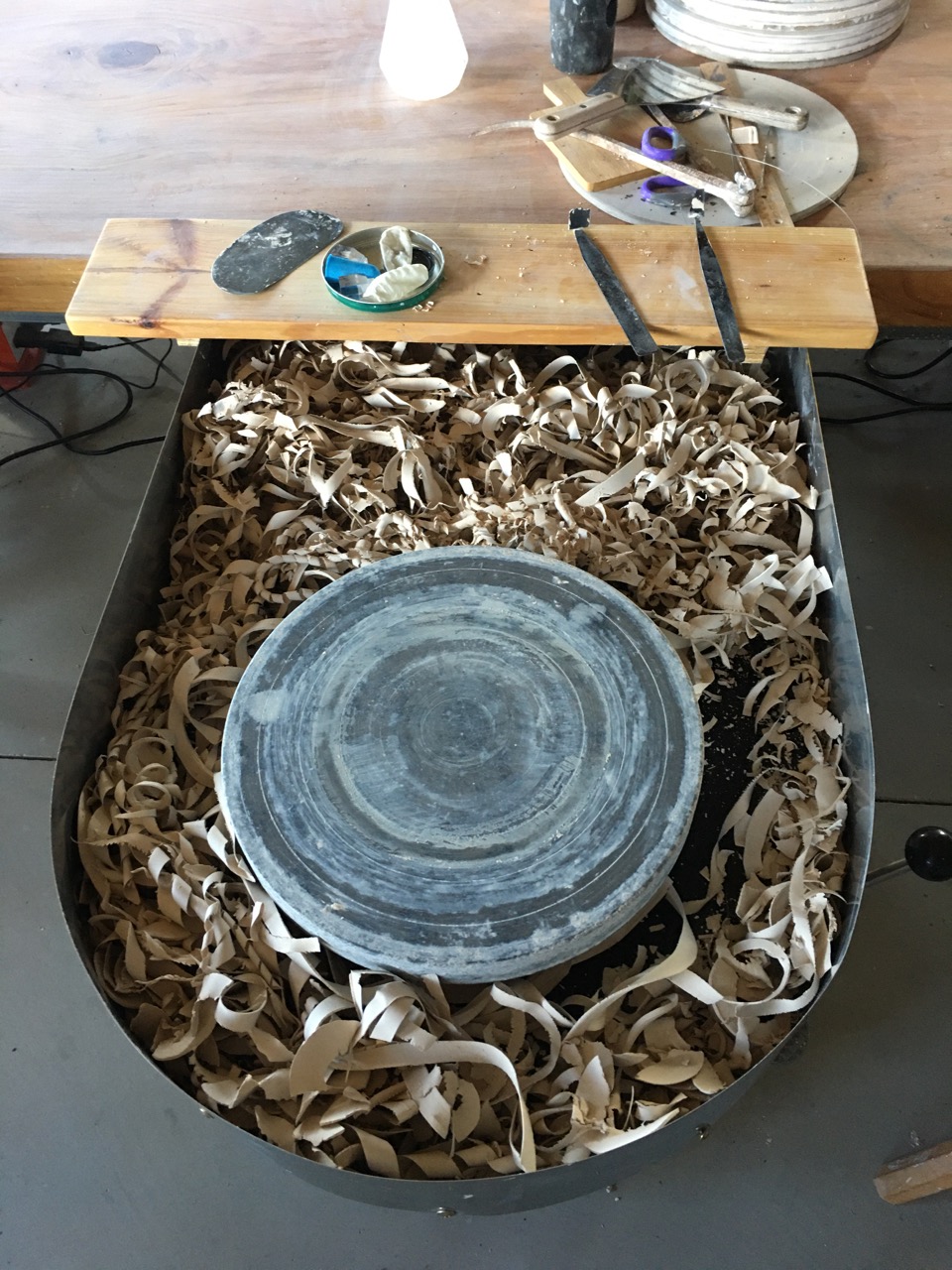
I’m really pleased with my home made larger format wheel trays that I built for the shimpo wheels. I can turn for an hour without filling them up. They hold 50 bowls worth of turnings.
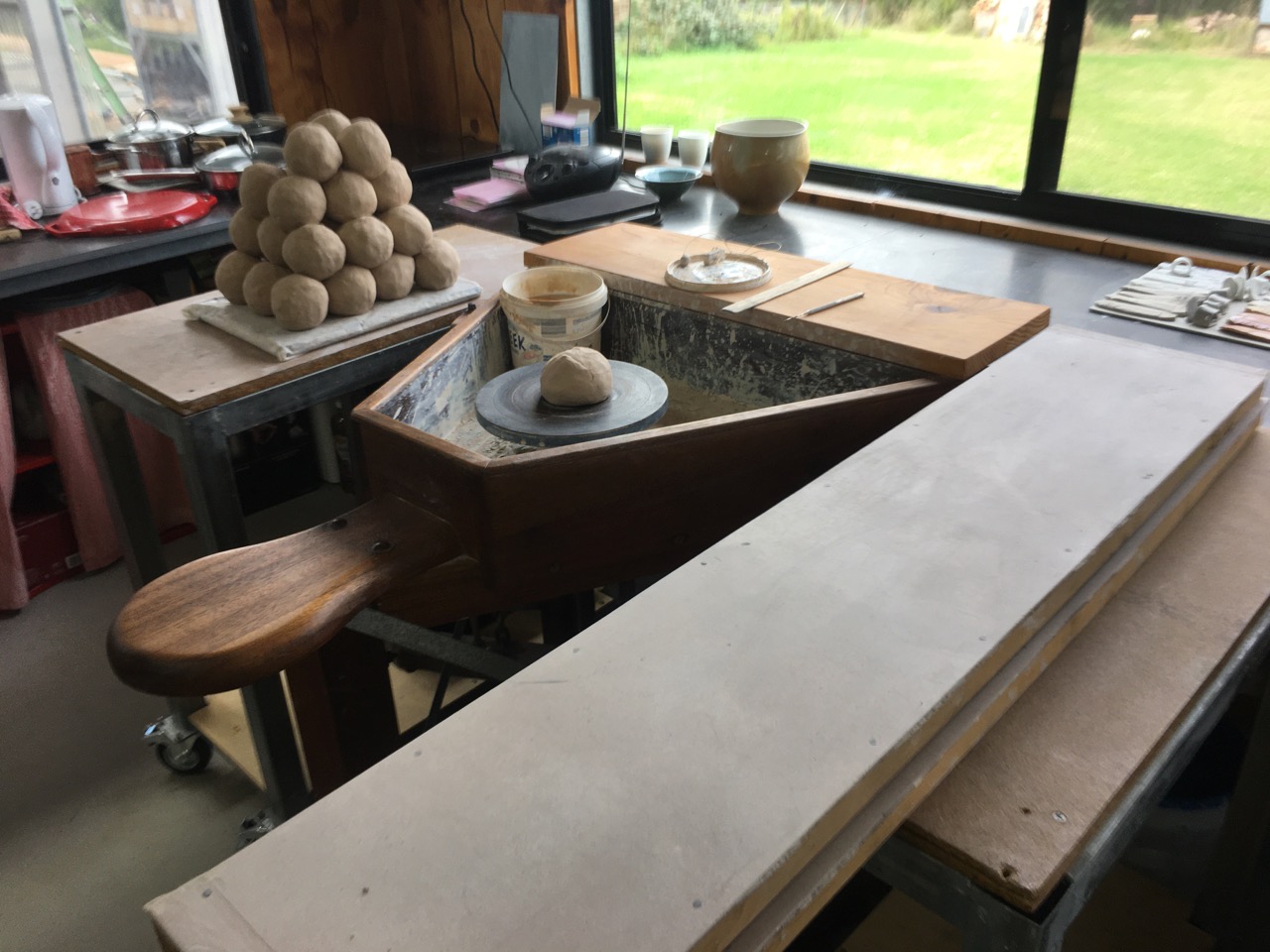
I have also been throwing on my kick wheel as well. It has a decent sized tray. I made 50 bowls on it yesterday. I started with a dry tray and ended with an almost dry tray. I have learnt to throw with a minimal amount of water. Just a few drips and splashes make their way off the wheel head.
Our local council is offering a bulky rubbish clean-up day this week. So the village has been dragging out it’s unwanted lumpy rubbish on to the side of the road to be taken away. Furniture, mattresses, electrical appliances, etc., it’s all piled up in clumps out in the street.
We have nothing to put out, But I make a point of riding my bike along the street to get a good look at everything that there is out there for the taking.
I went back with my truck and picked up 3 wheel barrows. One had a flat tyre and ruined wheel bearings. I pumped up the tyre and it held air over night, that was good, so I bought a pair of wheel barrow bearings for $6 each and in 15 mins, I have a perfect wheel barrow ready for work.
The 2nd one had a broken tray, but everything else was good, so off with the tray and back on the clean-up pile. A new replacement tray is $59, so I ordered one. The 3rd one is old and has been used for concrete, but works well. No issues there. Good to go.
Three wheel barrows for $70.
Reuse, repair, re-purpose and re-cycle. I’m happy.
I’ve been back in the pottery on the wheel on and off all last week, but also fitting in some pressing needs to complete preserving and pickling, tomatoes mostly. We must have sufficient for almost 2 years now. It’s been such a huge crop and they’re still coming.
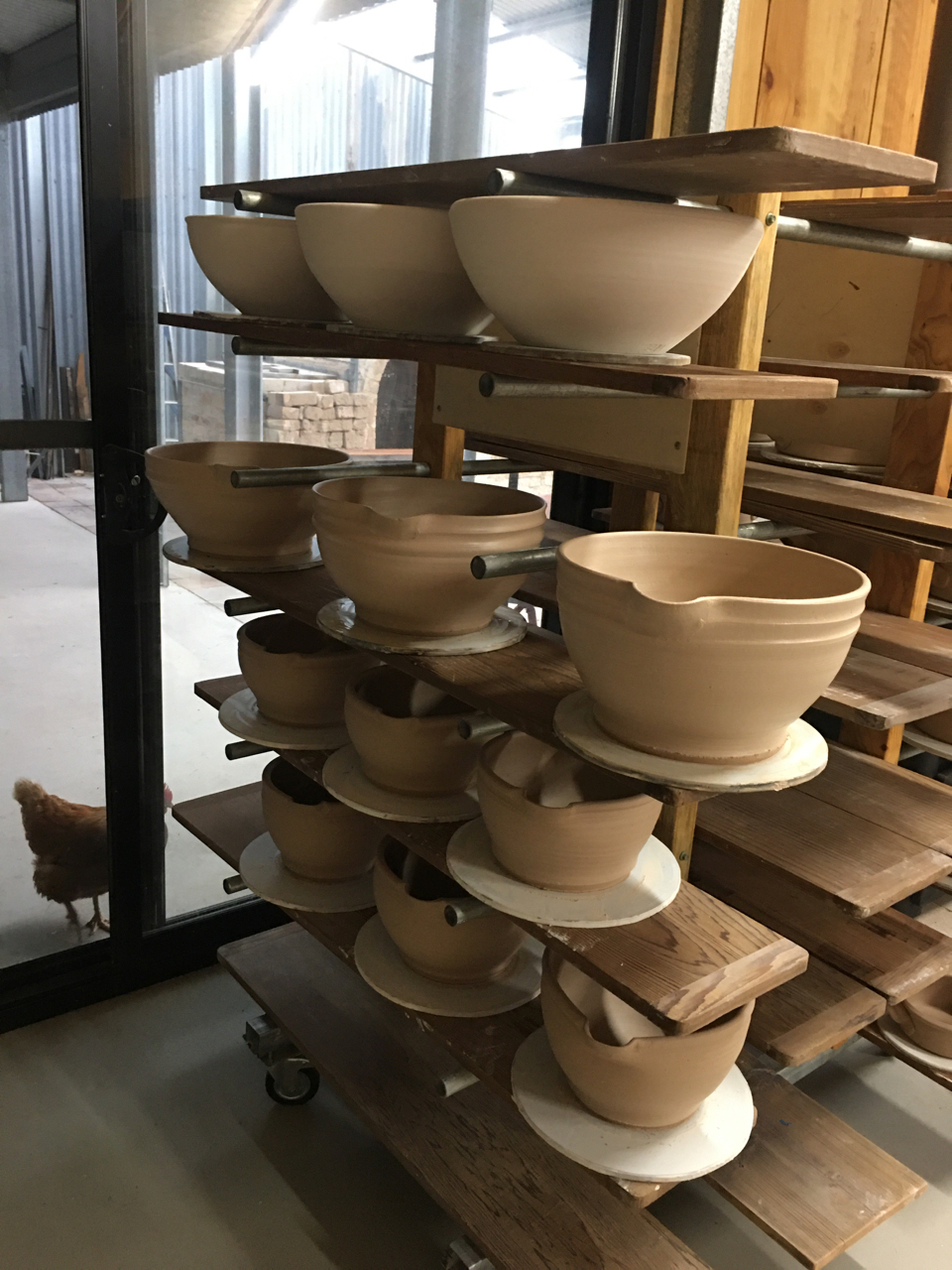
In the pottery I have been making baking dishes and Grandma style large mixing bowls with a pouring spout. They are fun to make and were very popular last year. I sold out, with only one small mixing bowl left in stock after Xmas. I make them out of my rough crushed shale clay mix. It wood fires really well and has an open texture that is really good for oven use.
I’ve made them in 3 sizes, S, M, L. This is one from last years batch, beautiful flashing on the body and glaze from the wood firing.
The old style cooks mixing bowls also all sold out. I remember fondly the one that my Mother used all her married life. It was exactly the same as the one her mother had, both brought over from England on the ‘Orient’ Line ships at different times.
I decided to make these so that I could have one for myself, but I sold them all, so maybe there will be one left from this batch? I usually end up with pots that are second grade pieces, with some tiny fault, Our kitchen is full of pots like this. That’s how we get to keep them.
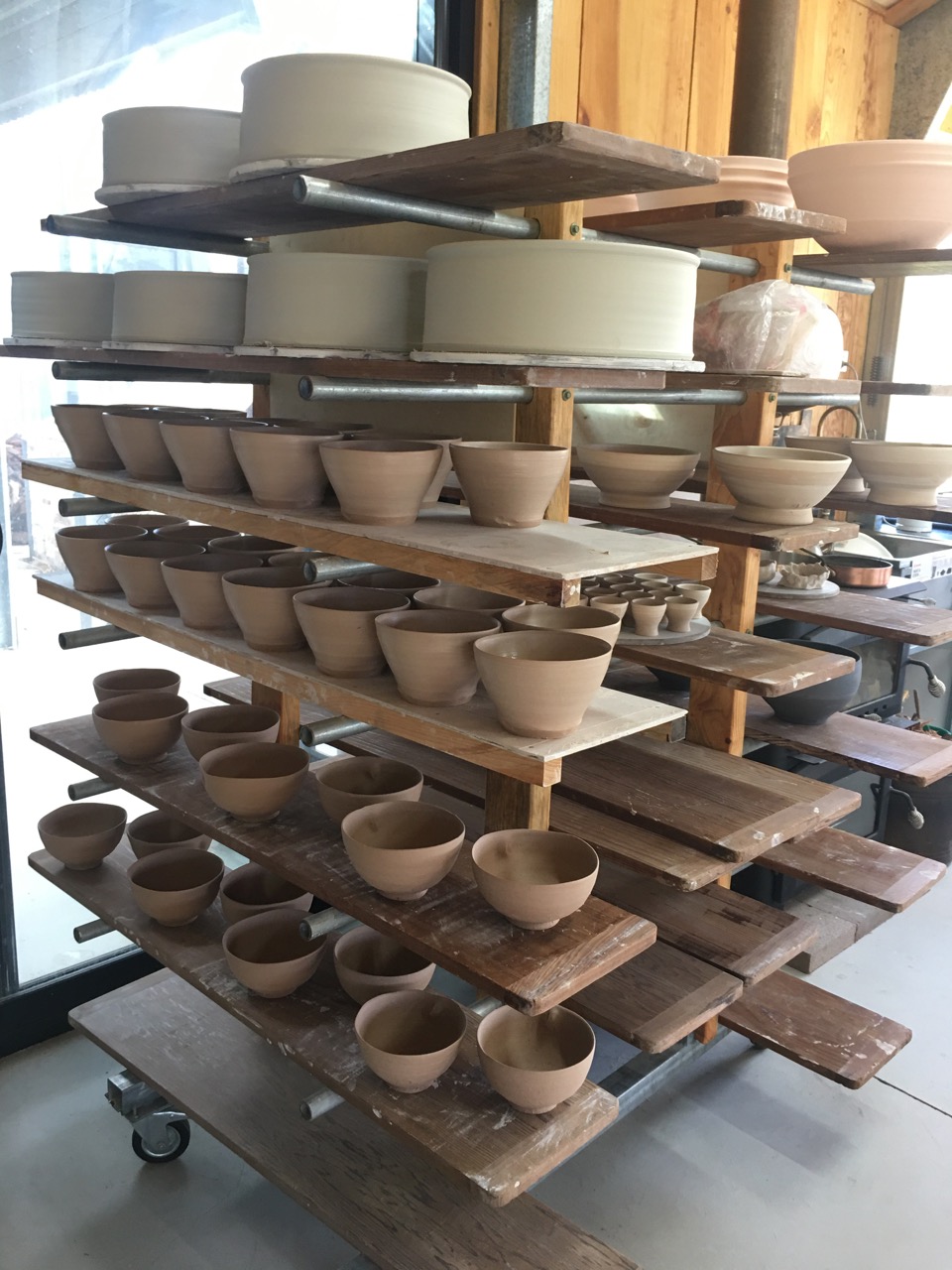
On this side of the drying rack, I have also made 3 bathroom sinks for a customer who lives locally and asked specifically for a sink with one of my rock glazes on the inside and unglazed and wood fired on the out side. I couldn’t do that order till now, as it is not realistic to try to fire the wood kiln over the hot dry summer. Just too much risk of fire bans coming into force half way through the firing. That would be a disaster too awful to think about. So we just don’t attempt to fire during the hotter months.
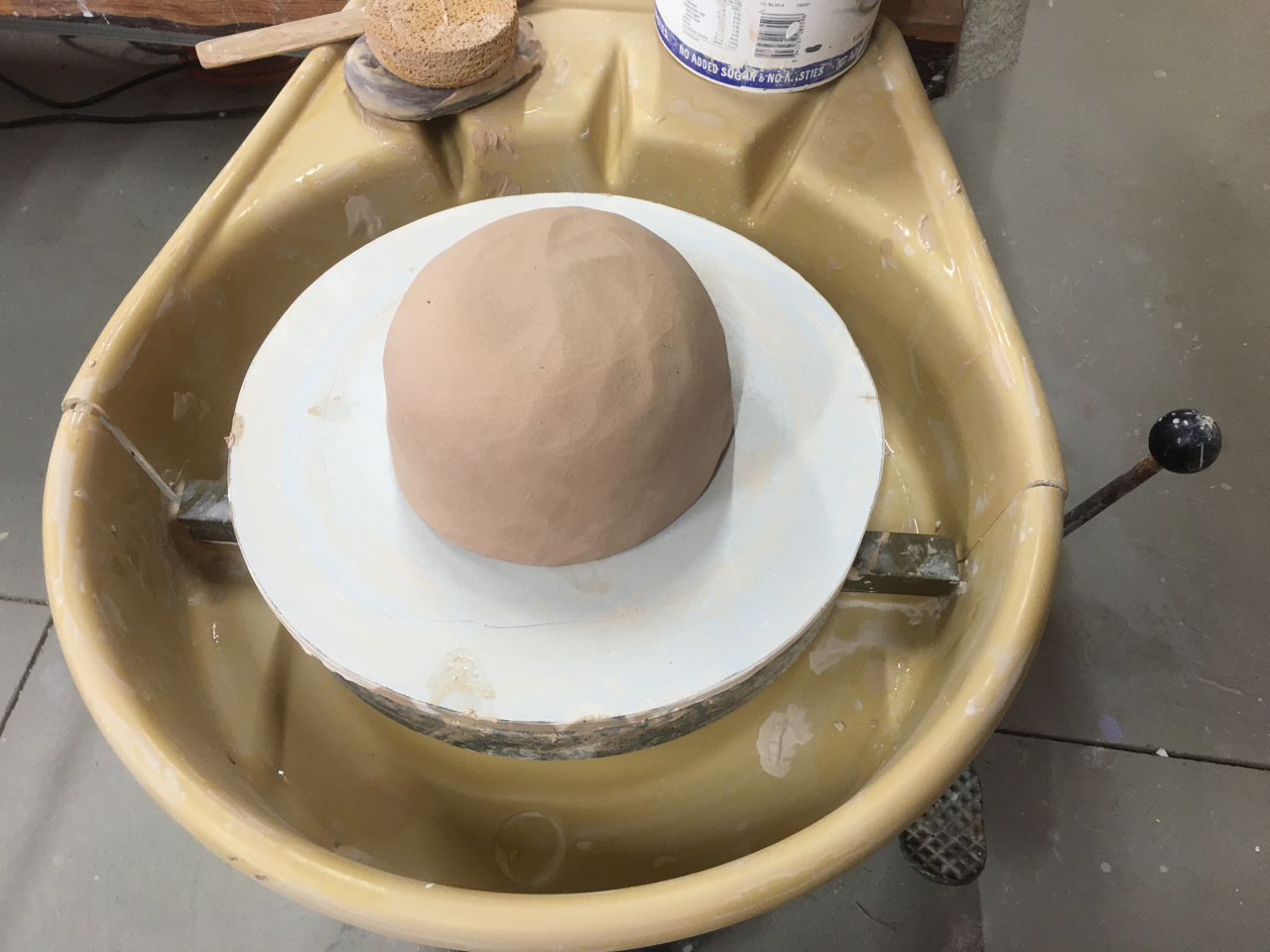
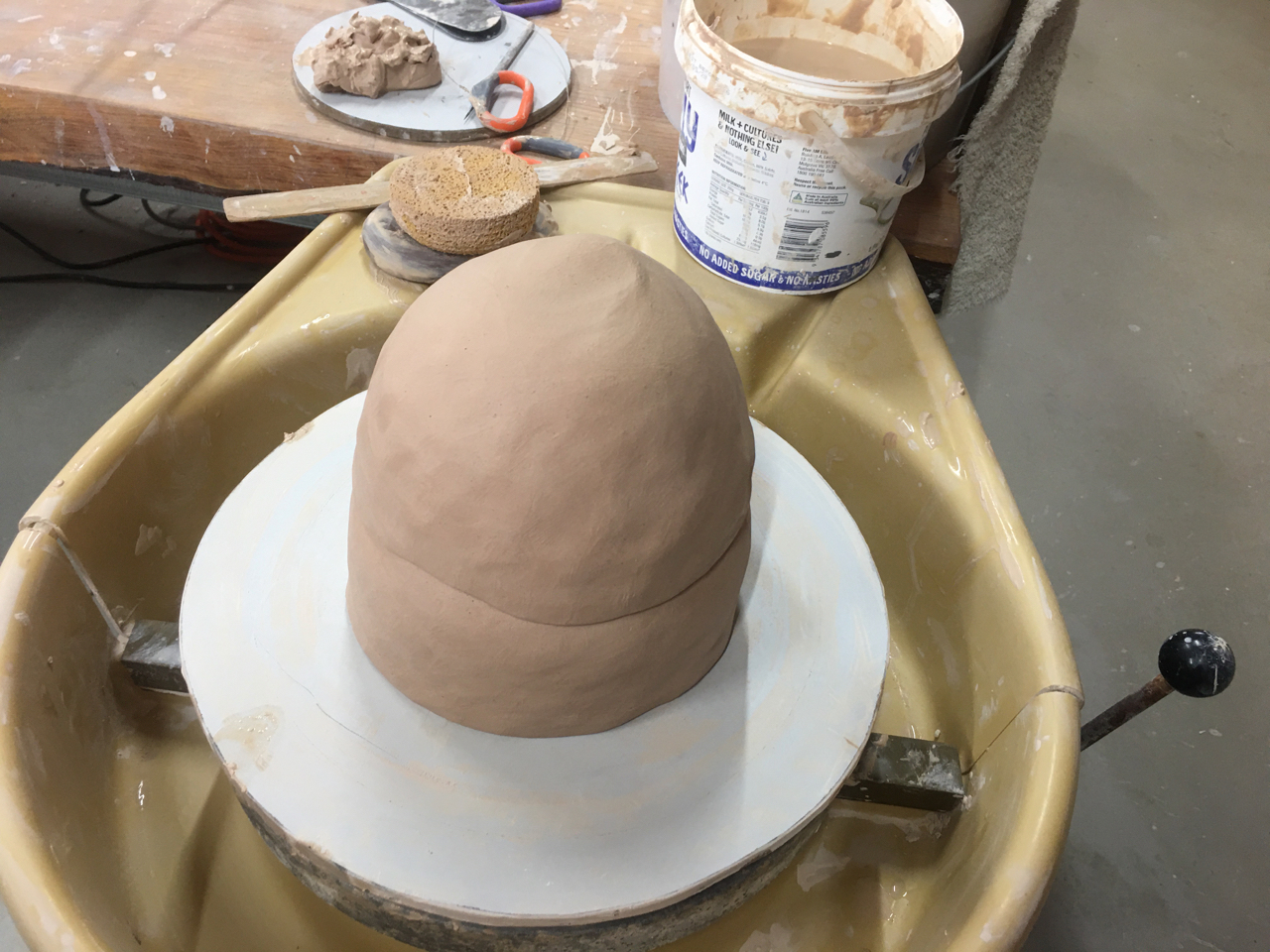
Some of the bigger mixing bowls are quite large, measuring 300mm. dia. and are made from 5 kgs of clay. My ageing wrists are not happy with wedging 5 kgs any more, so I wedge the clay up in two smaller lumps of 2.5 kg. Then join them back together on the wheel. I learnt to ‘slap’ the plastic clay into the centre of the wheel with my hands while still dry. No water involved in this centering technique.
The first 2.5kg lump is slapped into place and rounded off while I rotate the wheel head very slowly. Not using the motor at all, just a slight flick of the wrist as I lift my hands up. This turns the wheel head just 10 mm. each time , so that the next ‘slap’ will be an equal distance apart , so the clay slowly finds the centre. Once it is just about right. I add the 2nd 2.5 kg lump and start the centering all over again.
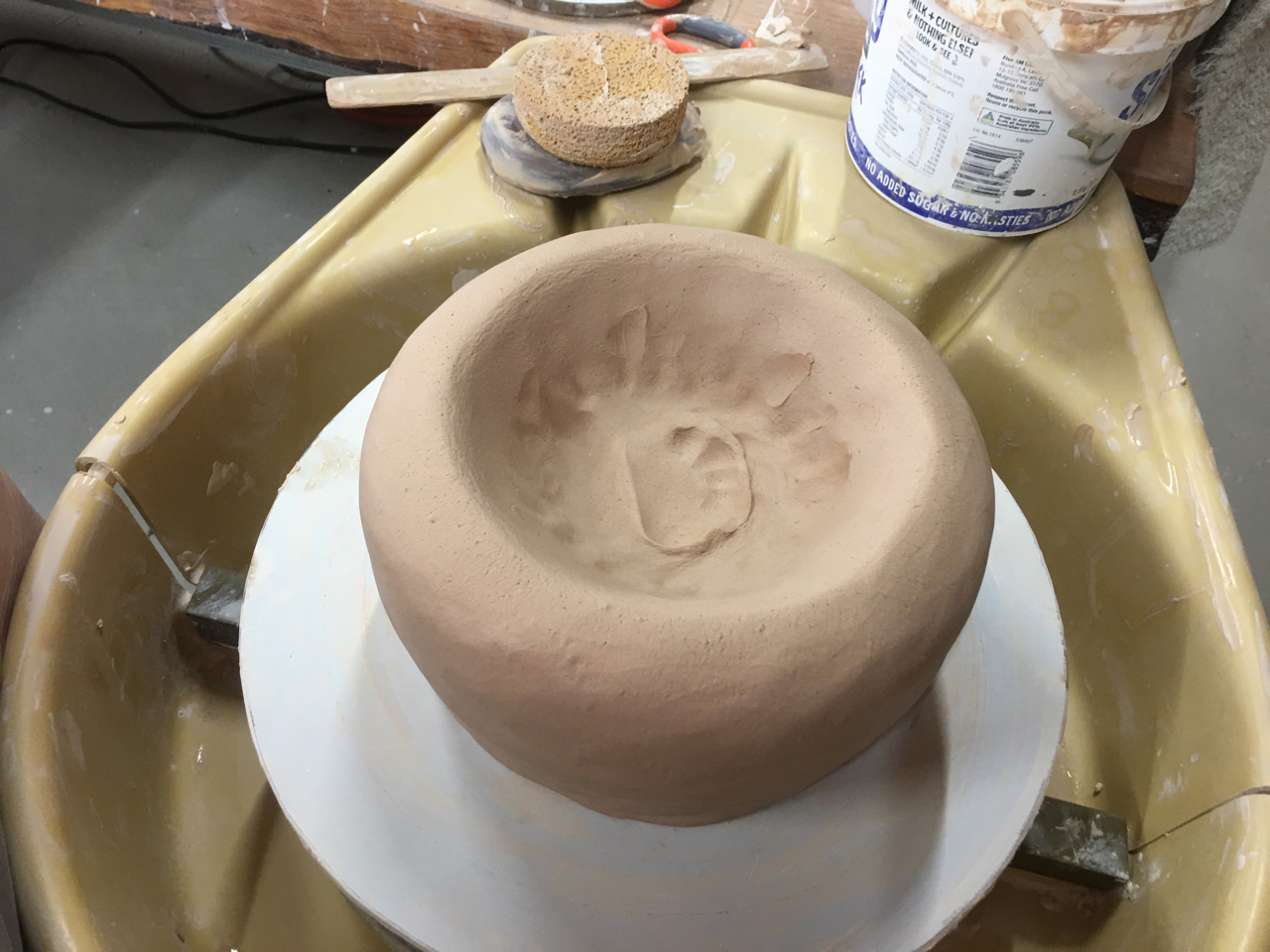
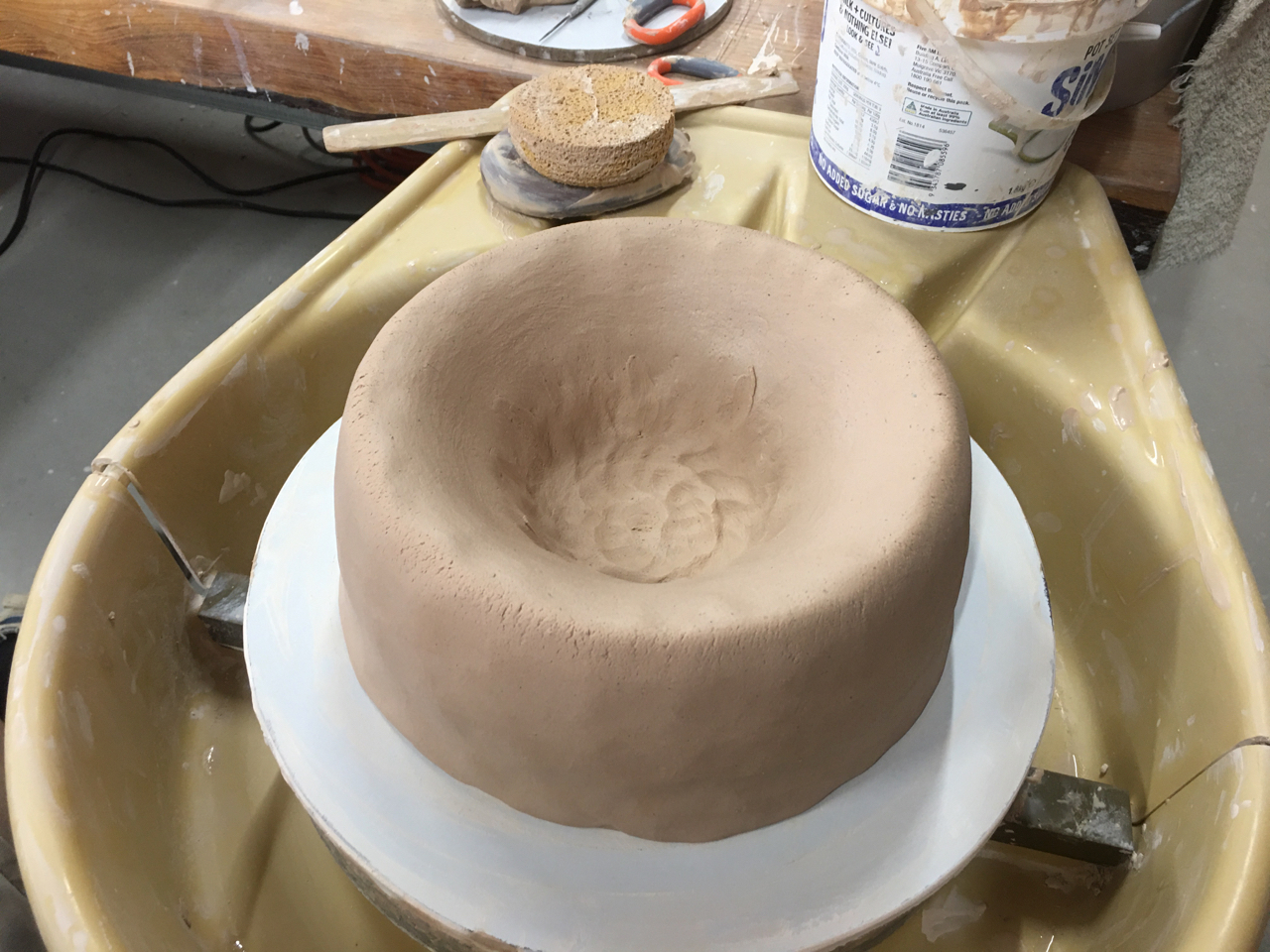
Once the whole 5 kgs are centred, then it is time to punch out the centre, slowly and gently, bit by bit. Lots of little hits while the wheel is very slowly rotated, just as with the first stage of the technique.
Once the lump is opened up evenly. I ‘slap’ the outside again with both hands evenly to get the lump back into a tight cylinder again.
The 5kgs are now centered, tightly bonded to the batt, and opened up ready to throw in a conventional way. The great beauty of a technique like this, is that half of the throwing is now complete, certainly the difficult and very stressful and high energy centering part, and the clay is still dry and ‘fresh’. With no water added up until this point, the clay hasn’t had a chance to get soggy and tired. It is also possible to stop at this point and take a little rest if you are new to the technique and need to rest your self for a minute or two. This is not advisable if you have already wet the clay and started throwing.
Once you have wet the clay to smooth out the surface and start the throwing proper, it’s best to just carry on and not stop for any reason.
Meanwhile in the kitchen, I have been dealing with the great tomato explosion. This week besides making more passata, I made a couple of batches chilli jam. My friend Ian gave me his recipe, which has a lot less sugar and a little more spice than the one I got off the internet some time ago.
2 Kilos of tomatoes boils down to just 4 small glass jars of chilli jam once it has been reduced and concentrated.
Janine has been shelling and roasting the first few basins full of our hazelnut crop. Unlike tomatoes, there is no urgency to deal with nuts. Once they are collected and inside, they are safe. We have a dozen hazel nut trees and a dozen almonds. The almonds have not recovered well from the fire and are struggling, fighting off an attack of ‘shot hole’ fungus in this damp summer weather.
On the other hand the hazels were more of less burnt to ground level, but they are a smaller and very robust plant, perhaps more suited to be used as a hedging bush. This years crop is our best yet.
Once roasted, they become really flavourful. Before that, they are pretty dull. We don’t salt them for health reasons.
Finally it’s time to cook dinner. Tonight it will be baked, stuffed, ripe, red capsicums. I used a vegetable and herb mix, so it’s a vegetarian meal tonight, as it so often is most nights.
This is a small part of our attempts to be both creative and self reliant while treading as lightly as we can in this carbon constrained world.
Nothing is perfect, nothing is ever finished, and nothing lasts.
Since half way through February, I have been back at work in the pottery. I started back by making terracotta slip from dark shale that I have collected and had stored in the barn. The half of the barn that didn’t burn. So that was lucky. I carried water in buckets for several hours to keep the fire under control as it slowly spread. 2 of my 4 pumps failed, so I was left with the only option being to carry buckets from the railway station and throw them onto the burning frame. The fire wasn’t finally extinguished until late in the evening, around dusk, when the first fire truck arrived, seven hours after the fire had passed through. I have no idea what they had been doing for all that time, but they never managed to get to my end of the village until dusk.
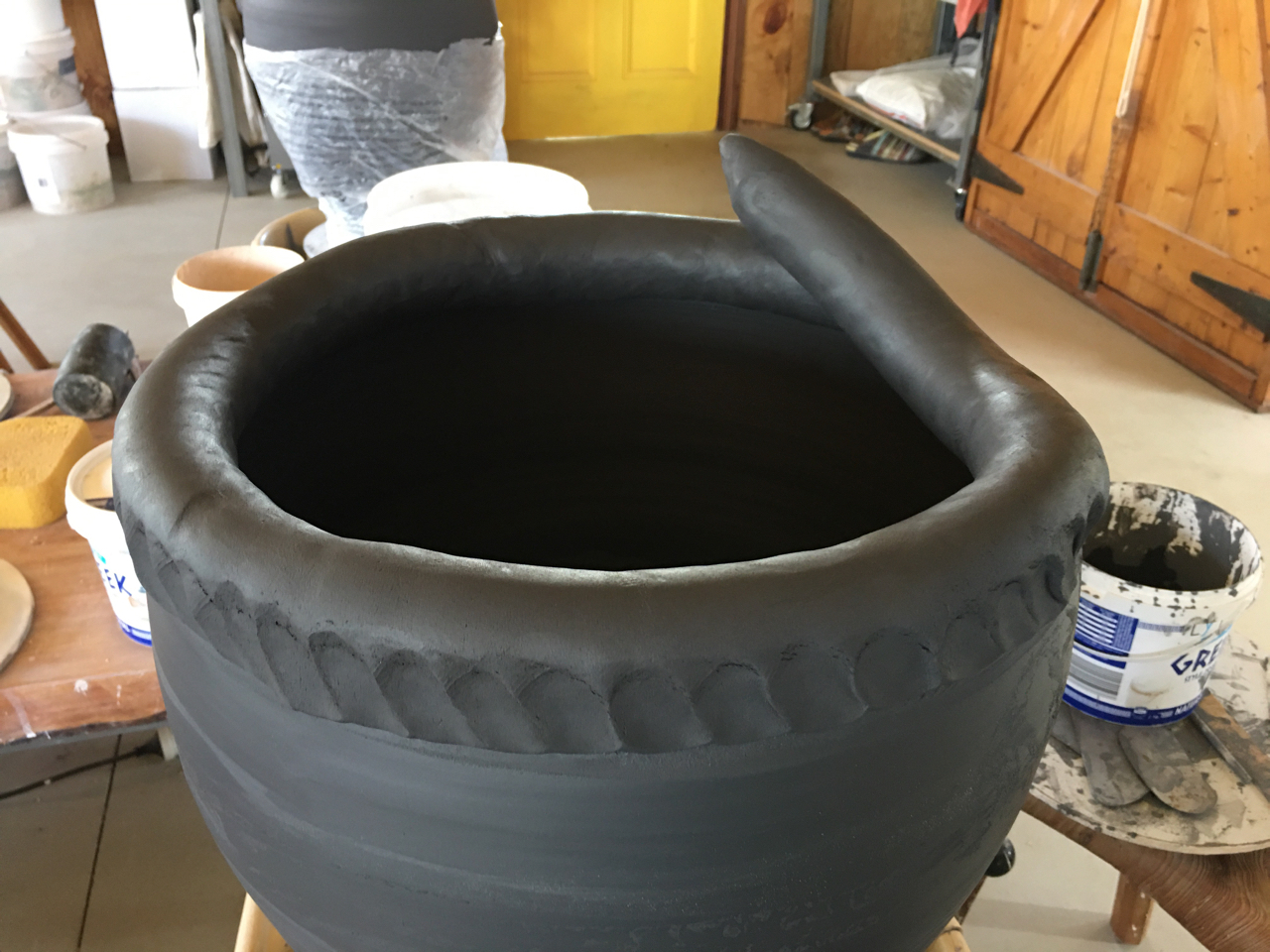
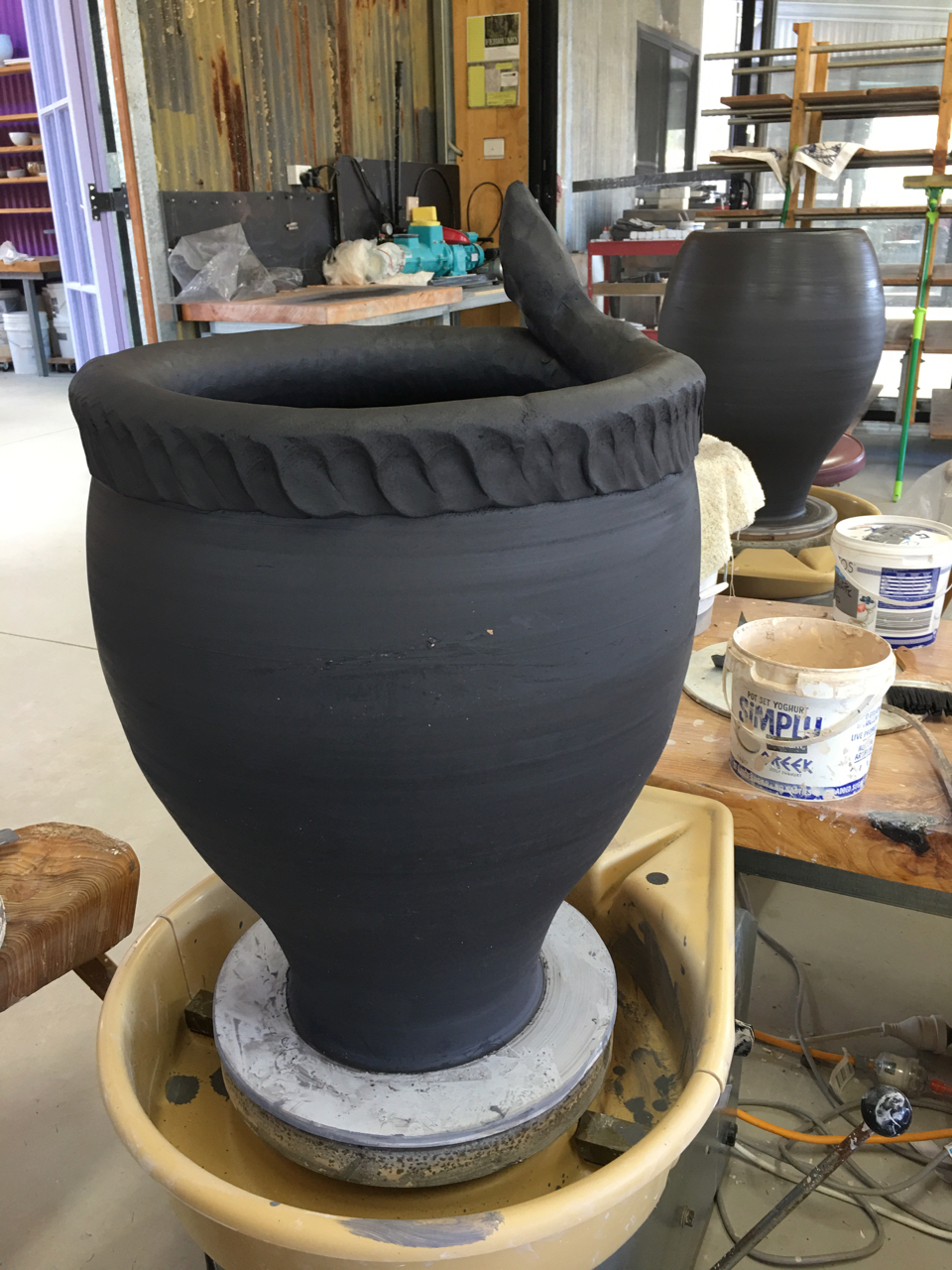
So now I am making clay slip to mix with some powdered kaolin so as to make a dark stoneware body. Some of the materials that I collect have a lot of iron in them. So much so, to the point that they melt at stoneware temperatures in reduction. I had to be so careful not to over-fire them, or reduce too heavily in the past. This time round I’m adding kaolin to the mix to strengthen the body so that it will be a lot easier to fire without losses, but every new clay body is a bit of an experiment.
I collected some dark shale from the local brickworks shale pit. I was taken there by a local geologist when we were having a day out together exploring the clay/shale resources of the local shire. He was keen to point out that there is a significant amount of coal embedded in layers within the shale beds at this location. I imagine that it starts to fire itself once it reaches ignition temperature of the coal fraction. They must need to hold temperature and allow plenty of excess air into the kiln to counter ‘black heart’ or bloating?
He pointed out that the carbon content was so high, that if it were just a touch higher, they would have to pay a coal mining royalty to the State Government, instead of just a shale royalty. When milled up it can turn out to be almost black, very dark grey to charcoal colour.
I could just buy black clay from a pottery supply shop like everyone else. But I just can’t bring myself to do it. It’s not in my psyche. I love to make everything my self. Even if it is not as good as a bought one. At least it is mine and it is low carbon miles and made entirely with my own hands and on my solar electricity. However, sometimes my own home made stuff actually turns out to be better, certainly more individual and sustainable. So it is much better in my mind.
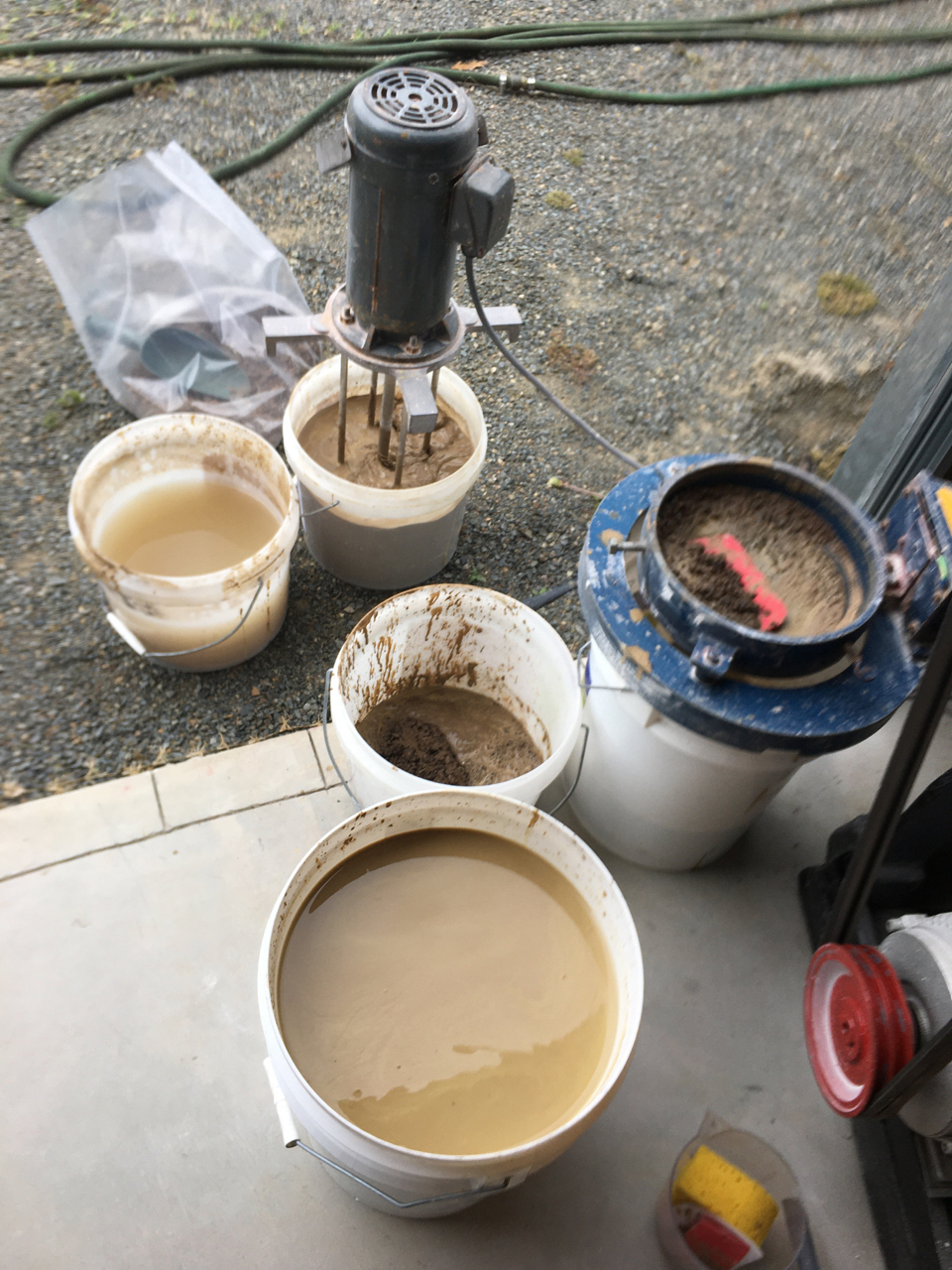
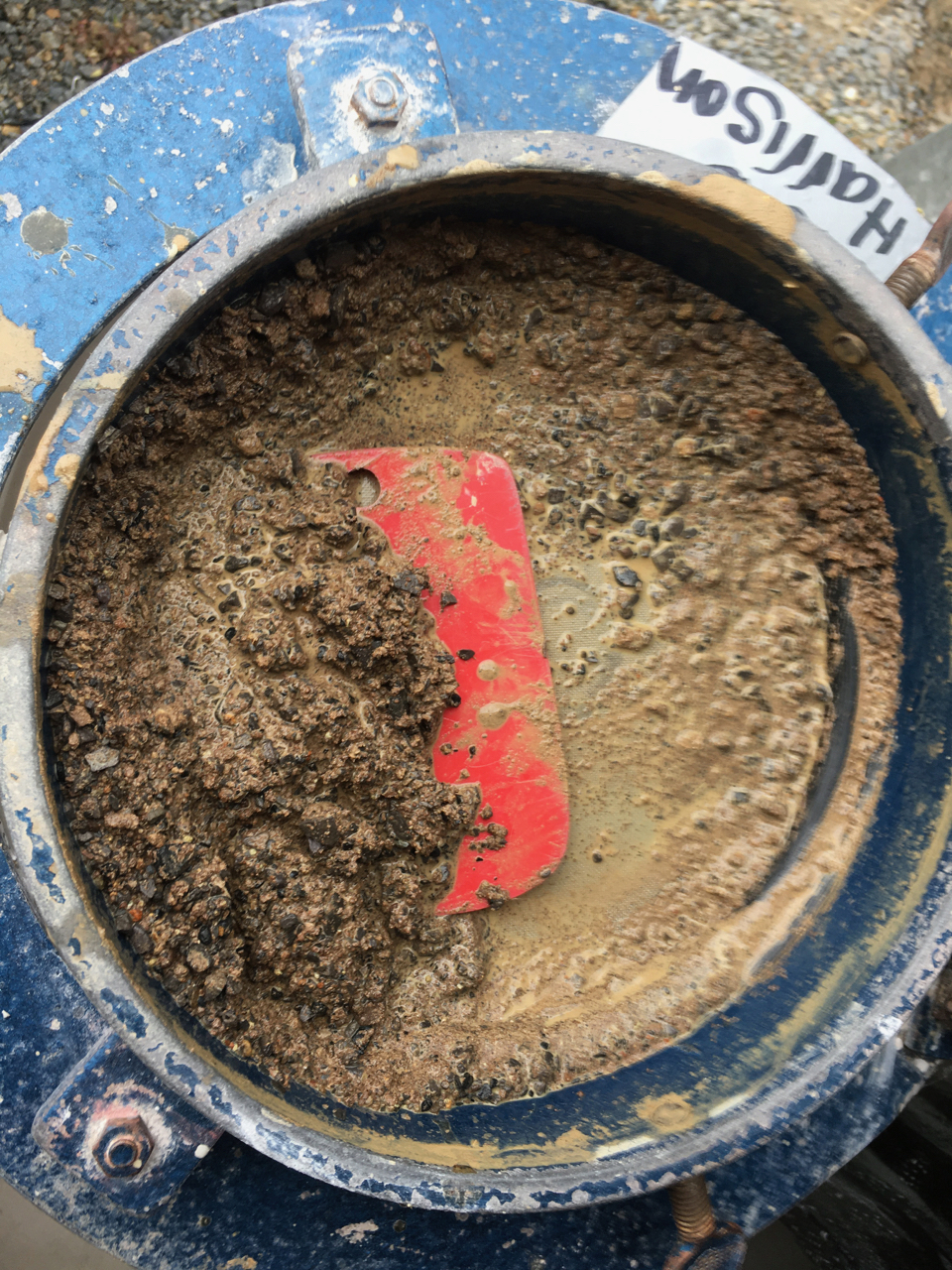
I only bother to rough crush the shale to allow it to go into the blunger. Then I add plenty of water and blunge it through a first pass of 60 mesh. I take out the harder non-plastic shale particles and they can be ball milled to a finer size. They are the concentrated lumps of coal and iron intimately mixed. The slip is then passed through the sieve again at 80 mesh to get a fine slip. This is left to flocculate over a few days and then decanted to give a thick slurry. It’s a slow process, so time has to be created to allow for the natural process of flocculation to occur. This is slow clay, not fast convenience clay making, not so much ‘pret-a-porter’ clay, as L’argile-à-porter.
I also make a coarse textured stoneware from another shale that fires buff to brown, and a finer off-white clay for wood firing that flashes quite nicely given the right firing. All this clay making has been going on since January, interspersed with gardening and fencing work. Important jobs that just had to be done at a certain time and couldn’t be put off.
Finally, three weeks ago I managed to get back on the wheel again. Hurrah!
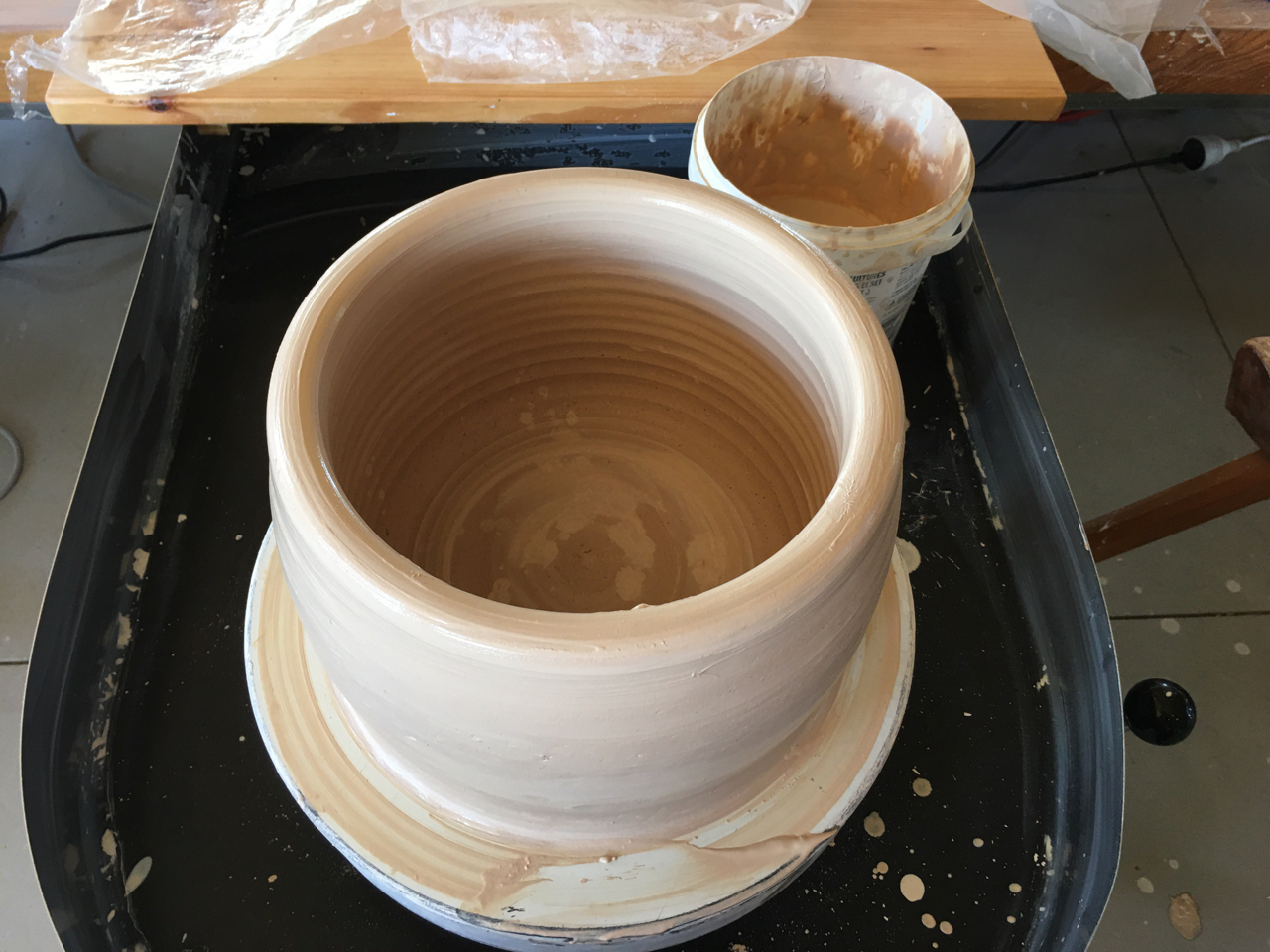
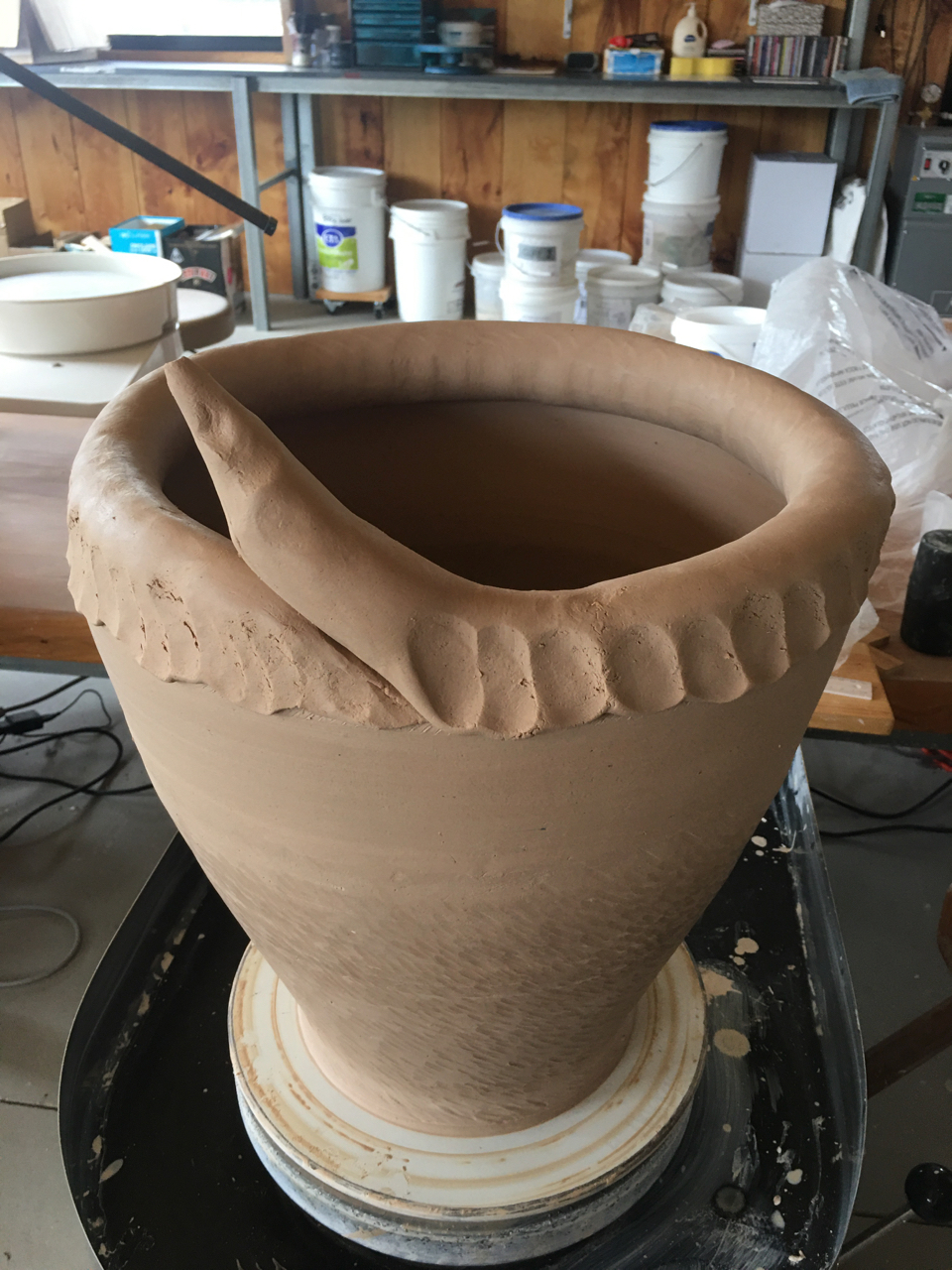
After the previous pottery burnt down in 1983. I spent a year jack hammering out stone foundations to get a more level site and making mud bricks, then hammering 4 inch nails into hard wood beams to create the new studio. The outcome was a beautiful ‘organic’ pottery workshop made of local natural materials at virtually no cost, but the true cost was the severe damage to my wrists, that still persists to this day if I over do it. I had wanted to make some bigger size pots for some time, but couldn’t throw any large lumps of clay due to my wrist damage, so I taught myself how to hand build on the wheel by the ‘coil-and-throw’ technique. I wasn’t taught by anyone. I had only ever seen it done in pictures, so I had to invent my own way. A few years later, when I was doing a demonstration of my technique to an art school class. One of the students called out. “You’re not doing it right. That’s not how Andrew Halford does it”! Andrew was a local Sydney potter who had studied in Japan with a big pot throwing master potter. “You’re supposed to drape the coil of clay over your shoulder!”
One of the differences in my invented technique is that I don’t like to use a gas burner to dry my pots in-between the addition of coils. I can see that it is necessary if you want to complete a large pot with multiple coil additions in just one day or even less to fit into a school schedule. I have been forced to do this myself at times. But I don’t like to if I don’t have to. I prefer to let the pot sit over night, often wrapped in plastic, and for the clay to go ’thixotropic’ and ’set’ instead of drying out and shrinking due to applied heat. I think that I get a better, and more continuous form if I do it this way. Of course, I’m no expert, and as I haven’t made any big pots for quite some years before the fire. I do still get some undulations in my forms. That is where the ‘hammer and anvil’ paddling technique comes in handy. It corrects the form, but disturbs the thixotropic set of the clay particles and therefore delays the addition of the next coil for half a day or even over night.
So here I am back on the wheel in a new pottery. I have built and test fired the new wood kiln a few times, albeit with some difficult learning going on due to the nature of my wood. And I’m now ready to make a few big pots again. My wrists are still a bit delicate, so I’m going with coil and throw again. I have to start small, as I have to remember what I had learnt the last time that I did it. I’ve forgotten so much due to the trauma. It seems that my mind has dumped any superfluous information and wiped its hard drive clean, to eliminate traumatic memories and make way for the ongoing cleanup and rebuilding learning and knowledge. Recovering old files takes time it seems, but it is mostly coming back to me. Bit by Bit.
I started with smaller pieces, then worked up to taller narrow forms, as these are easier, and my 2nd hand wheels don’t do so well going really, really slowly, as the drive is a bit worn.
I’ll start to work on a couple of wider forms next week.
So far so good. That’s the easy bit, it’s the firing that will be the big test.
We are finally back at work in the pottery. Proper work.
There was still so much to finish off in and around the pottery. We have been trying to achieve the impossible.
To rebuild in a few years what it took us 40 years to build up over a lifetime of potting, collecting and restoring.
There is still a lot to do, but most of all the pressingly urgent stuff is complete and in place. The extraction hood over the electric kilns was the last really necessary thing.
I am currently working part time on a flame combustor, spark arrestor and scrubber for the top of the wood kiln chimney. That will be completed in the next few months in time for the cooler weather and the first wood kiln firing of the season.
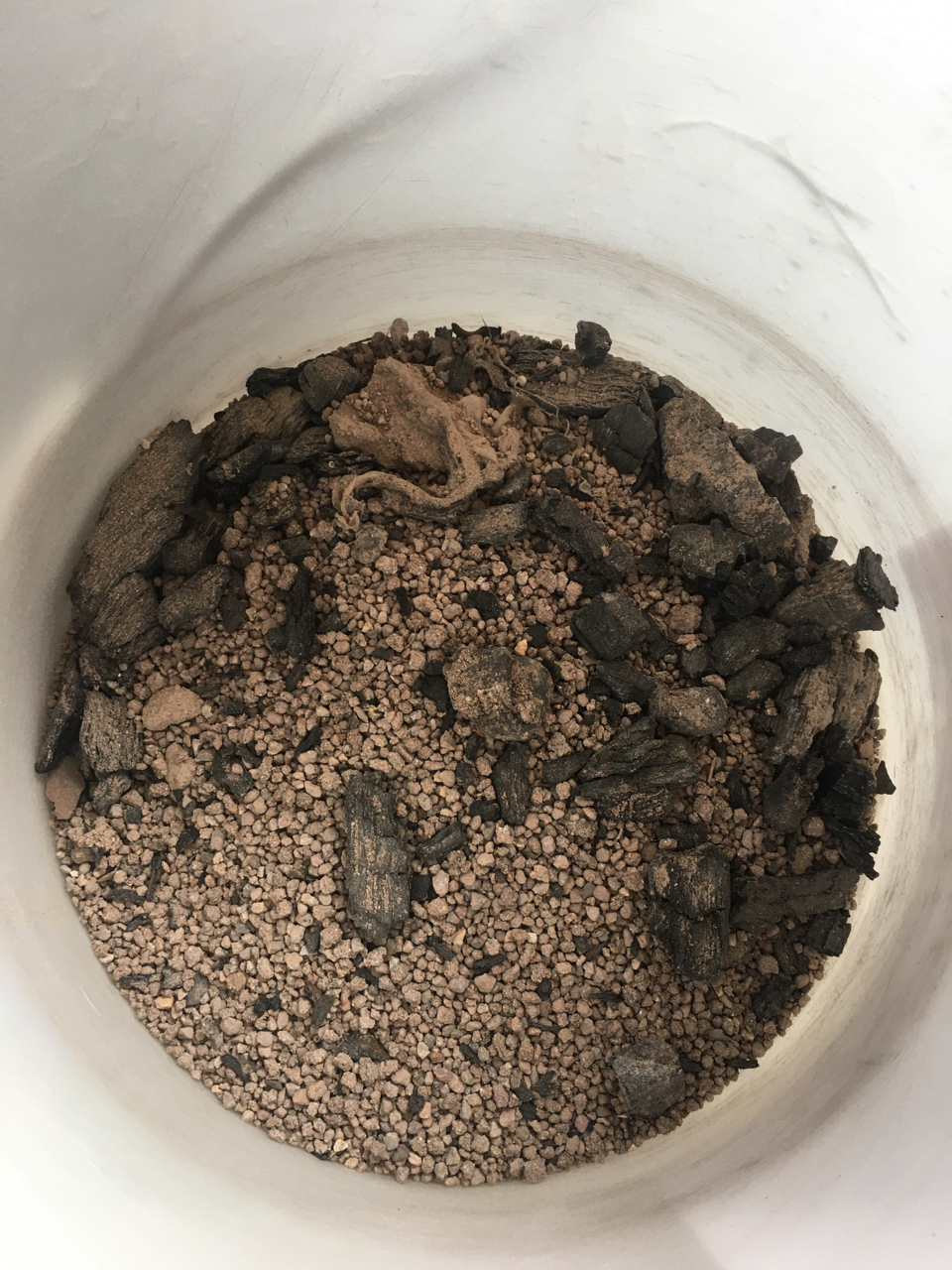
This week I made up a batch of rough stoneware body made from crushed shale. I had to spend some time crushing and sieving the shale. I have had this stuff for some time. It had come through the fire and is full of charcoal from the fire. It wasn’t too arduous, as it was only through a coarse mesh.
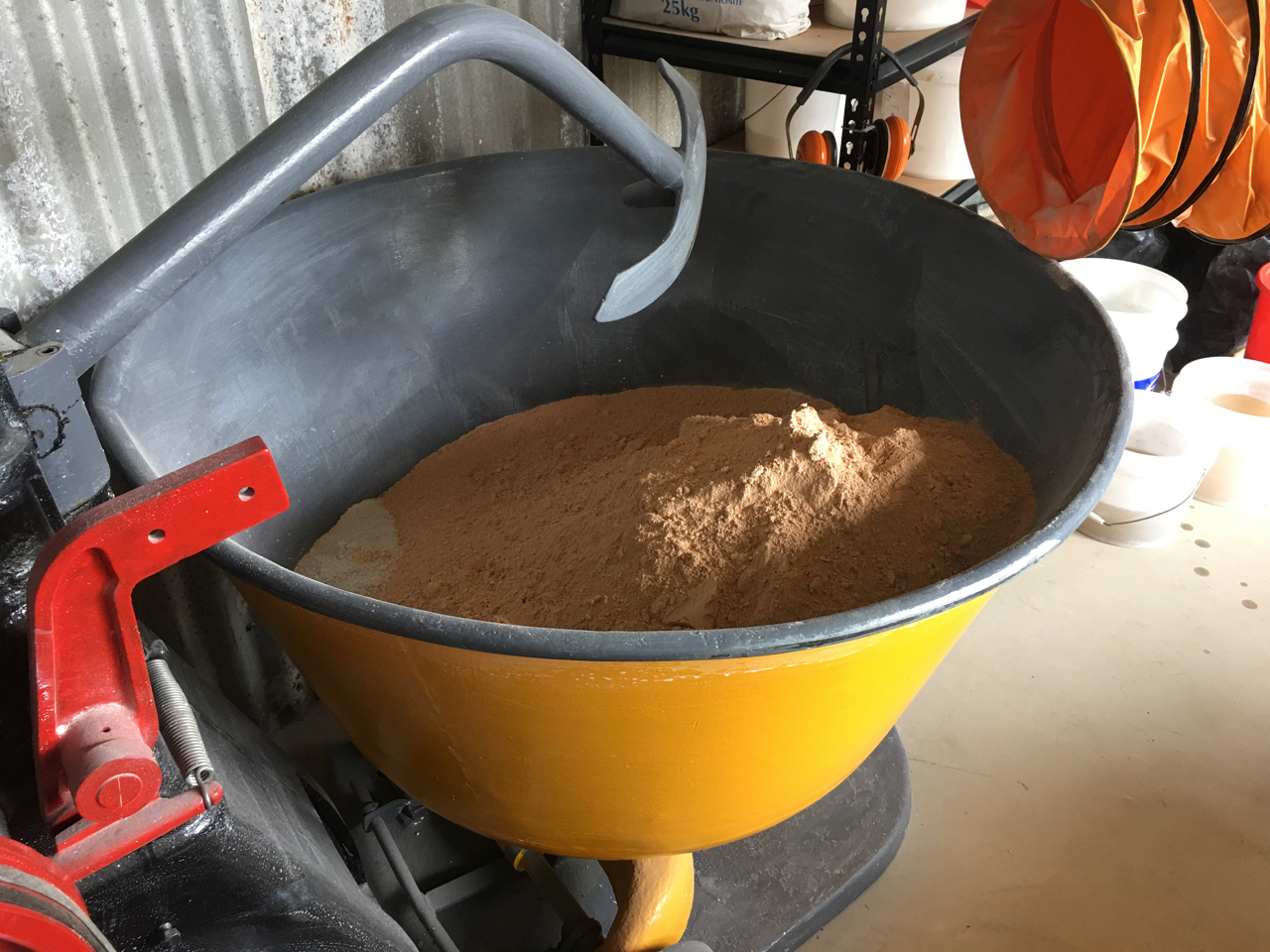
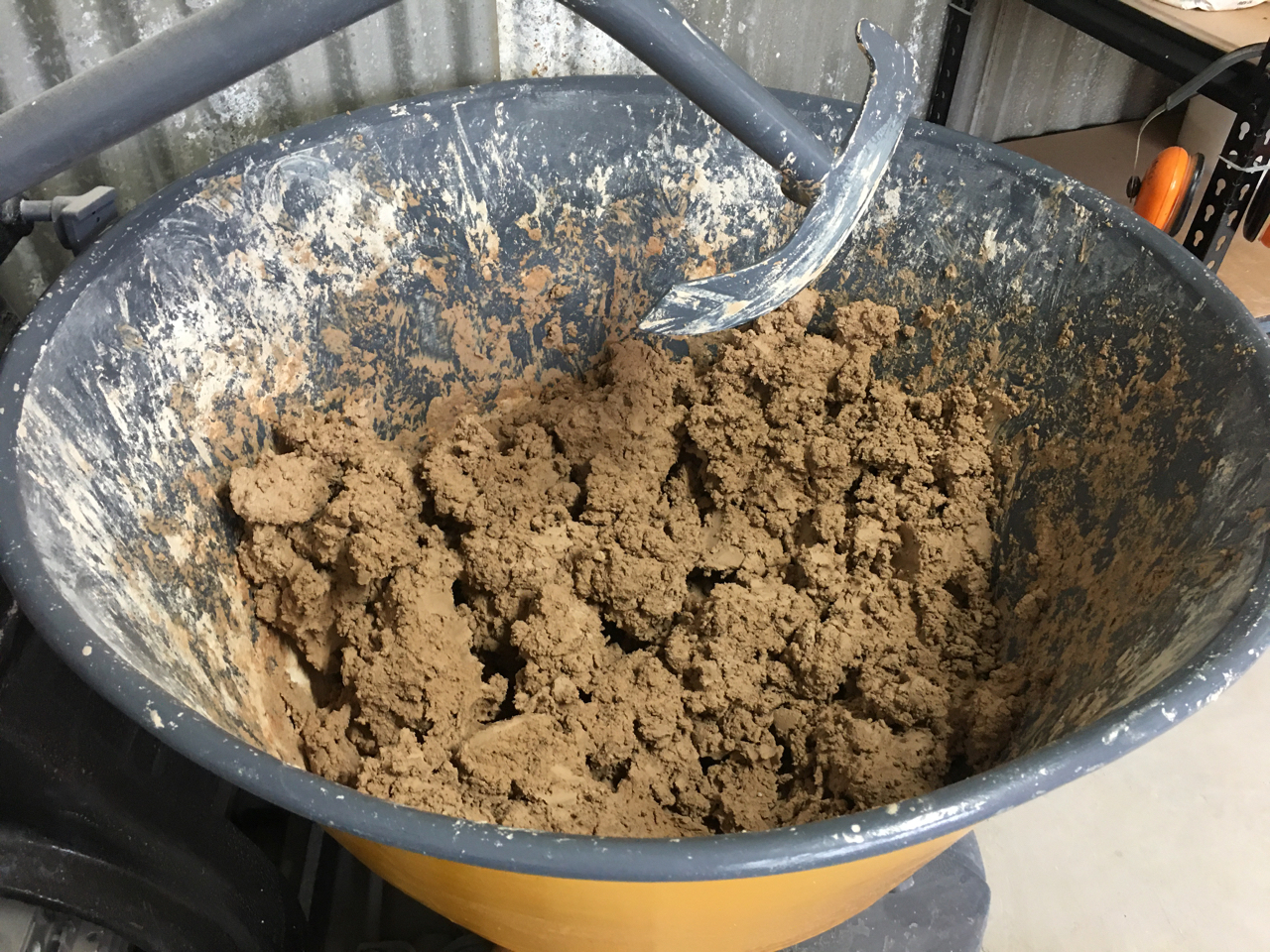
After mixing the two x 125 kg batches of body, we pugged all the clay twice. Once all through the pug and then stacked on the pug table in a pyramid stack. We then cut off all the ends of the sausages and re-pug it all another time, such that each sausage that comes out of the pug is comprised of a mix of all the previous pugs of clay. This is to ensure that there is very little variability from the first to last sausage of clay.
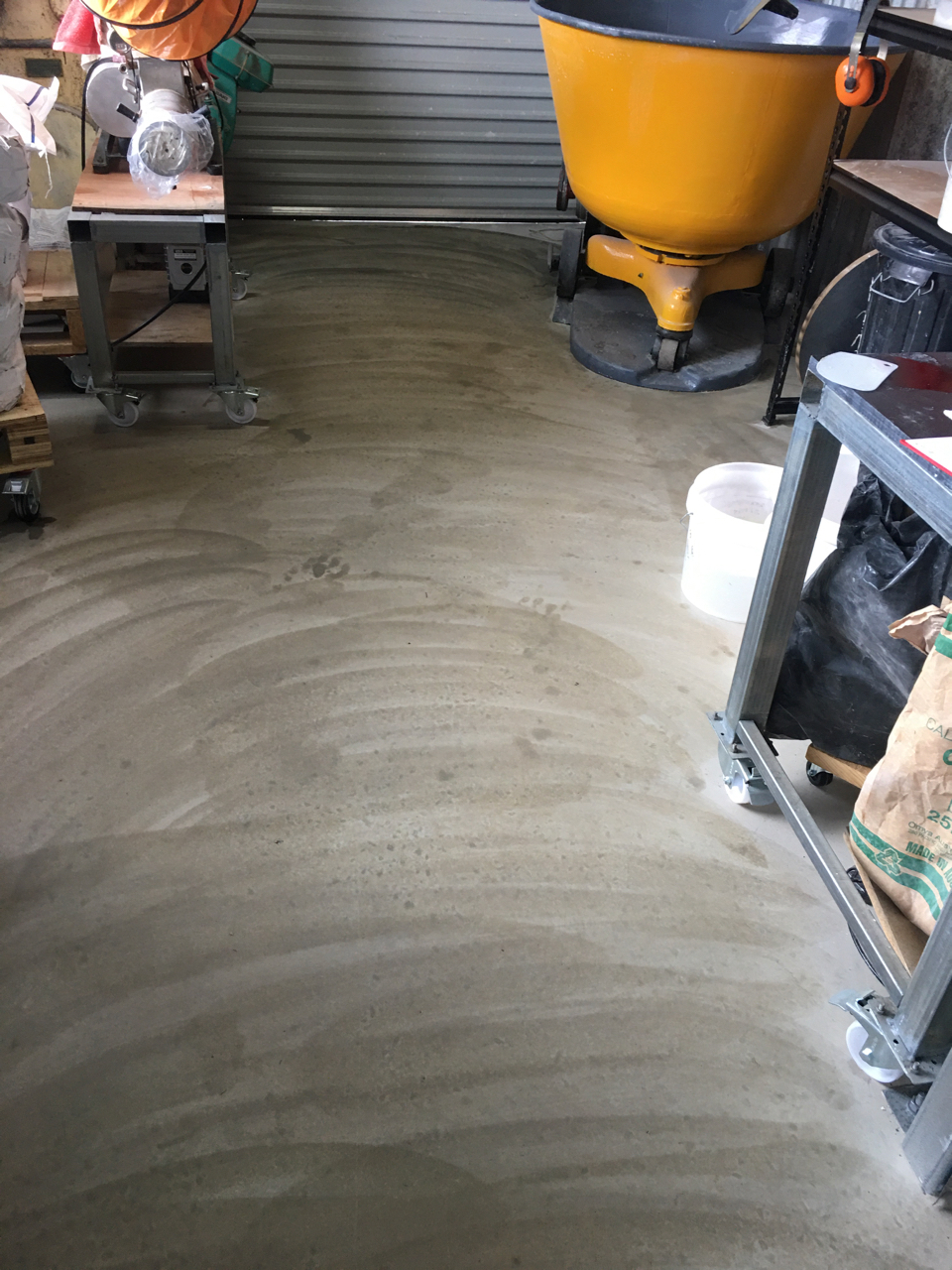
After finishing up, the pug mills and tables are all washed and wheeled out of the way and all the floors are wet scrubbed and mopped to clean off any small amount of clay that finds it way onto the floor, which it inevitably does. The floor is scrupulously clean all through. All the clay is bagged and boxed. Everything ship shape.
This is the best pottery workshop that we have ever had. Having been burnt out 3 times over our careers. I have designed and built this 4th workshop/studio with every piece of equipment on wheels to facilitate flexibility and cleanliness.
We have been picking lots of food from the garden, then cooking and preserving all the excess. We are up to our 5th batch of tomato passata.
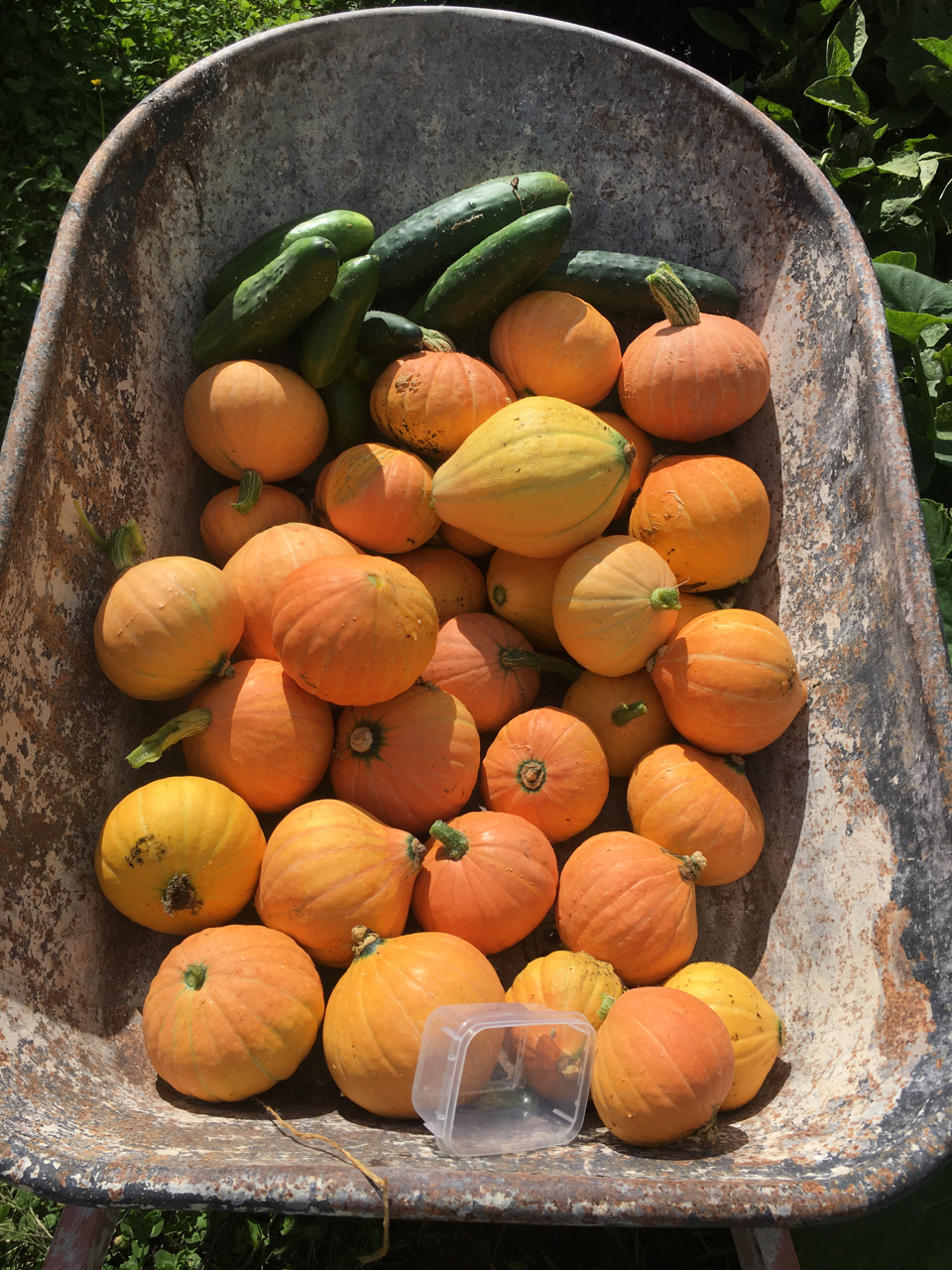
Oven baked pumpkin is great on its own and can be used up all week in all sorts of ways from frittata to salads.
Tomatoes, basil, capsicums, chilli and pepper corns go into the passata.
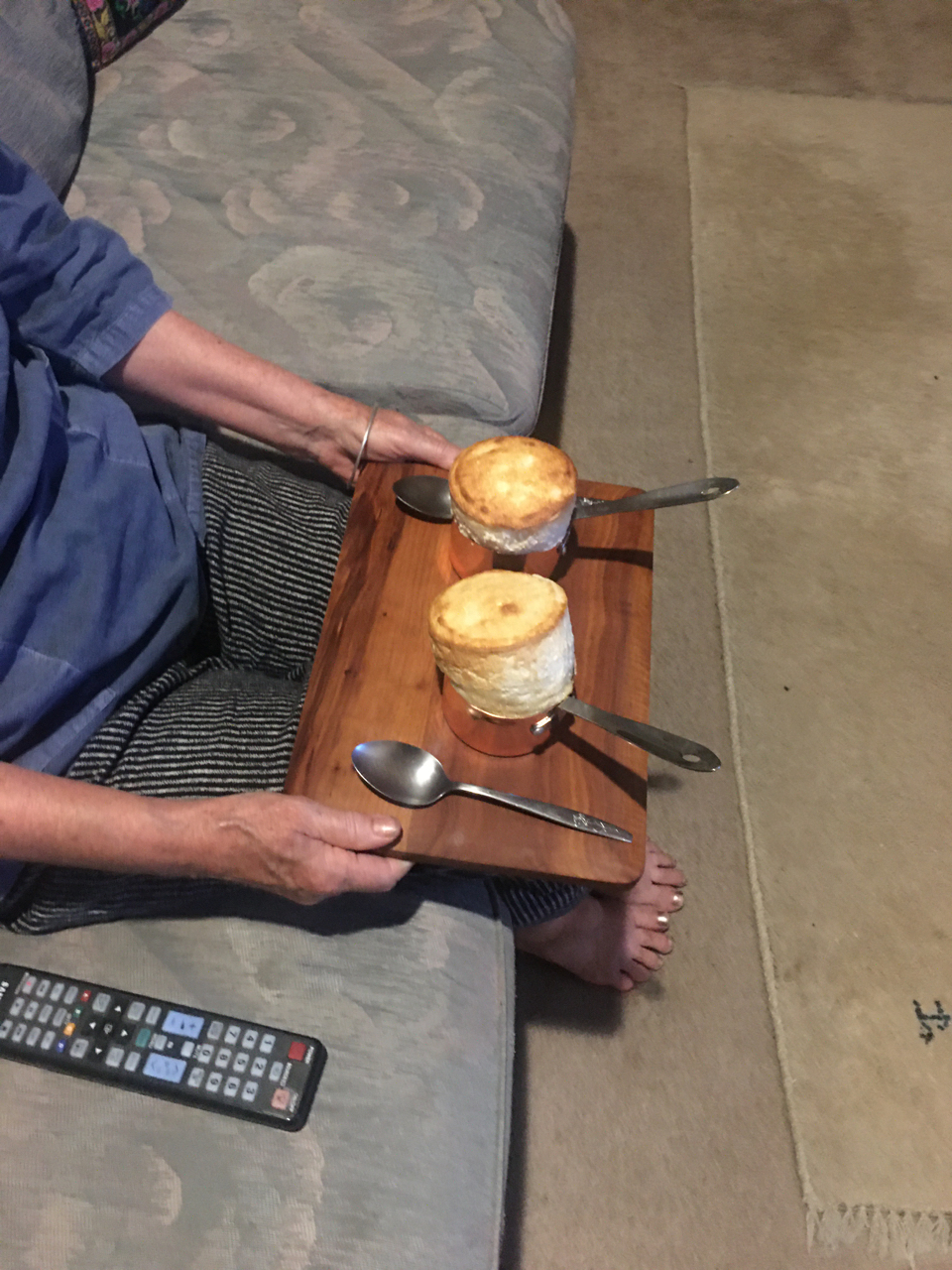
We had an over ripe banana and a few eggs, so I made us a banana soufflé for desert. It worked out really well.
All part of our attempts at self-reliance. It seems to be working out OK.
Over the solstice break, I’ve been having a bit of time off.
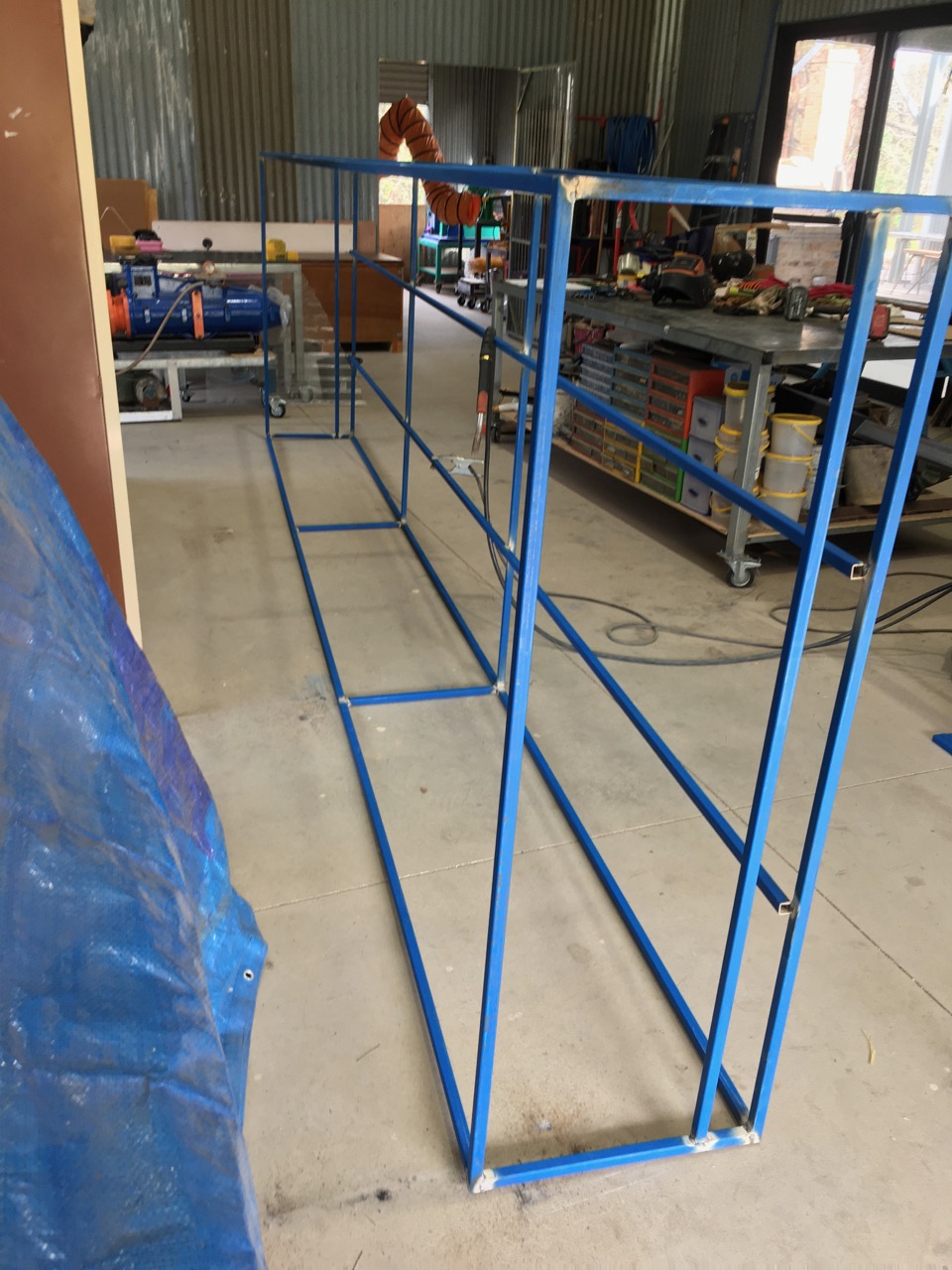
A change is as good as a holiday I’m told. So I took some time out to weld up a steel frame to make a fume extraction hood to go over all the electric kilns.
I have been ‘making-do’ with a bathroom exhaust fan set into the kiln room window, but it doesn’t catch all the fumes.
So we now have a ‘proper’ hood that covers all 3 kilns and there is room for a 4th kiln at the end, if I ever get round to building it.
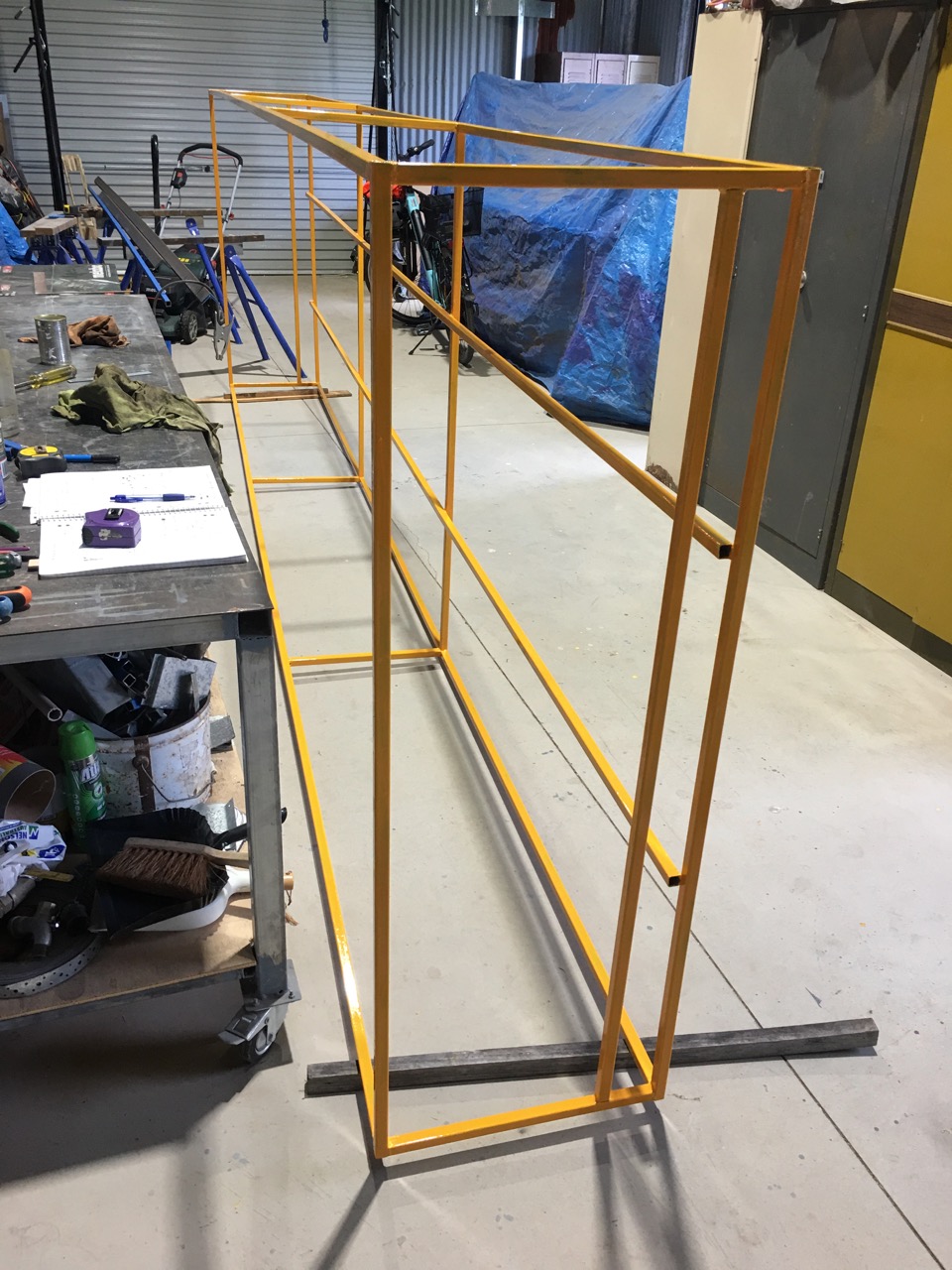
The frame is welded out of 20 x 20 RHS sq. section tube and then primed, undercoated and top coated with a strong yellow industrial grade paint. Something resembling ‘CAT’ Yellow, just to give it that heavy duty industrial look. Actually, I was thinking of the sort of colour that big factories have to paint over-head cranes, gantries and such.
It has turned out to be a massive edifice measuring 4.5 metres long by 1.5 m wide and 500 mm. high.
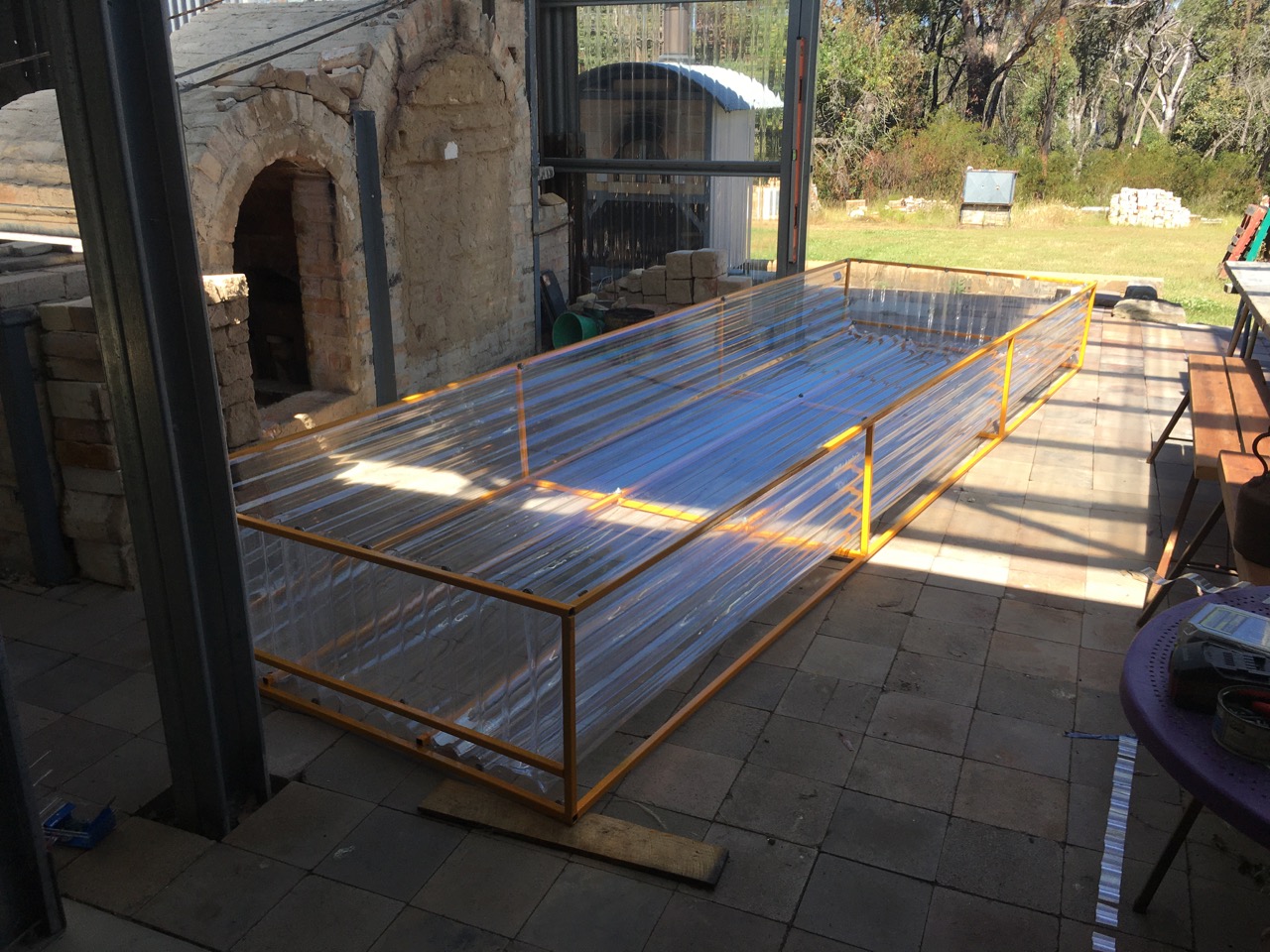
I had to build a special little trolley to manoeuvre it out of the welding area and into the court yard, where I could rotate it so as to allow me to screw in the poly carbonate lining.
I decided to use light weight RHS construction and poly carb sheeting because of the weight factor. I have to lift it up into the ceiling. But I also noticed after the fire, that poly carb doesn’t burn. It just melts, even at really high temperatures. So I thought that I’d give it a try as a fume hood lining. It wont get too hot, so shouldn’t melt. It is very light weight. It lets the light through, adding to the ambiance of the kiln room. It is cheap compared to any other sheeting. BUT most important of all, it doesn’t rust. The big killer of overhead hoods is the condensation of acid gasses and the rust that they create. This could be a solution?
Time will tell.
My son Geordie and my friend Warren came over for our Solstice lunch get-together, so before we ate, we did the install. It took all of 5 minutes, because I had every thing planned out and ready.
Now, the bathroom fan will be more effective at removing all the fumes from the kilns, and there is room for expansion.
Hopefully, a cheap and effective solution to the kiln vent fume problem.
While we had both Geordie and Warren here, I got them to help us move an exquisite old Japanese cupboard into our bedroom.
We were given this gorgeous old Japanese cupboard by my lovely friend Anne, who I have known for a very long time, getting on for 58 years in fact. Where does the time go?
Thank you Anne!
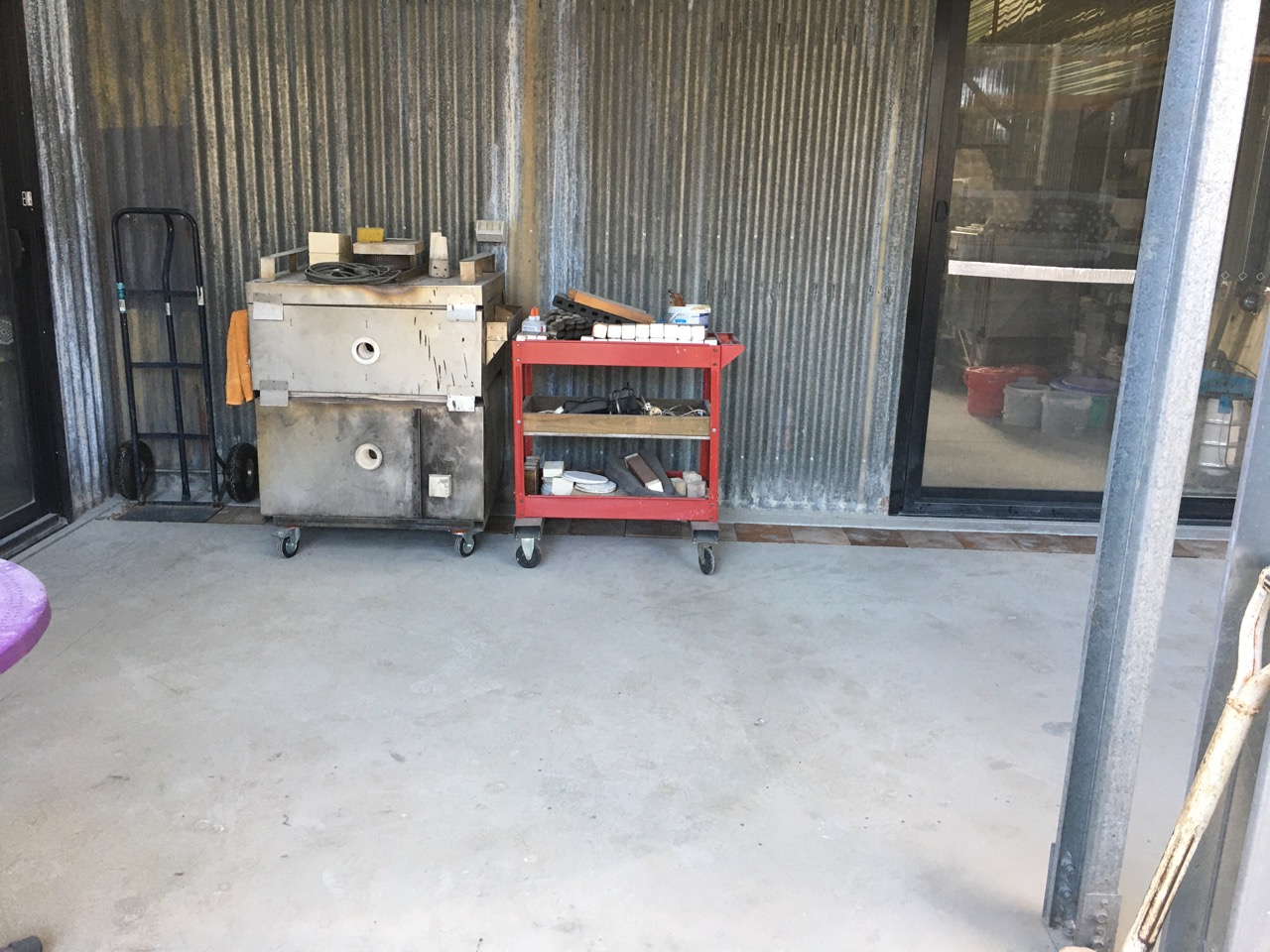
Somewhat disappointingly, we had another flood in the new pottery shed this week. Each time it happens, I look at the causes and find a solution and fix it. This time we had a brief, but severe storm of just 25 mins, but we got 25 mm of rain come down in that short time. It caused the gutters to over flow into the court yard around the kiln. However this time the rain all came it, not from the open wall leading into the courtyard, but deep in the enclosure against the kiln room wall from the gutters that couldn’t cope with the intense volume of water.
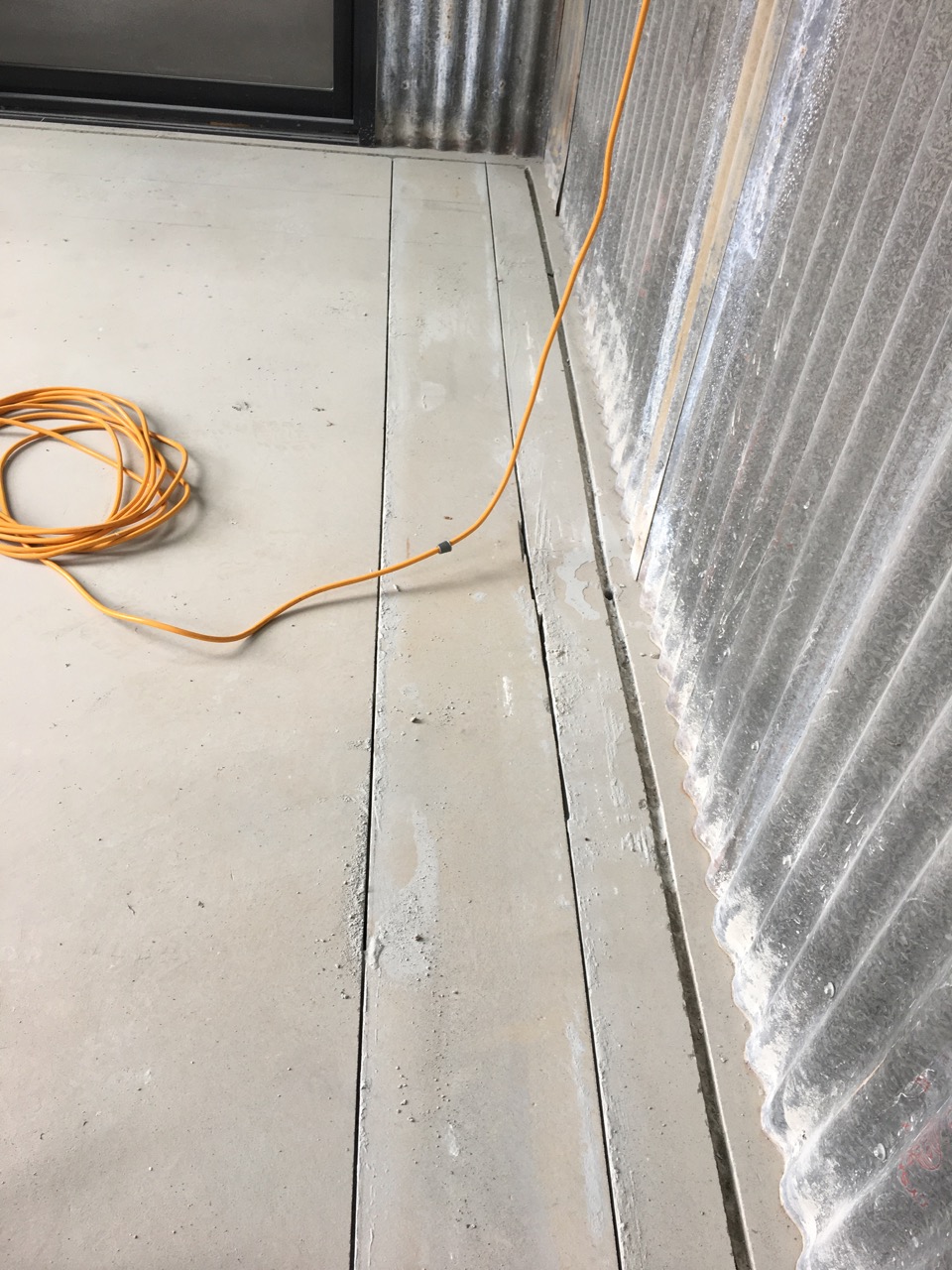
It has become apparent that the builders were pretty sloppy with their levels, such that the concrete slab is high at the edges and low in the middle of the kiln/glazing rooms. The result was that all the water flowed in under the gal iron wall and pooled in the centre of the kiln room, with some seeping into the glaze room.
There is absolutely nothing that I can do to change to the contour of the slab to stop this happening again. So my only option is the make a drain that can intercept the water before it reaches the wall and enters the building.
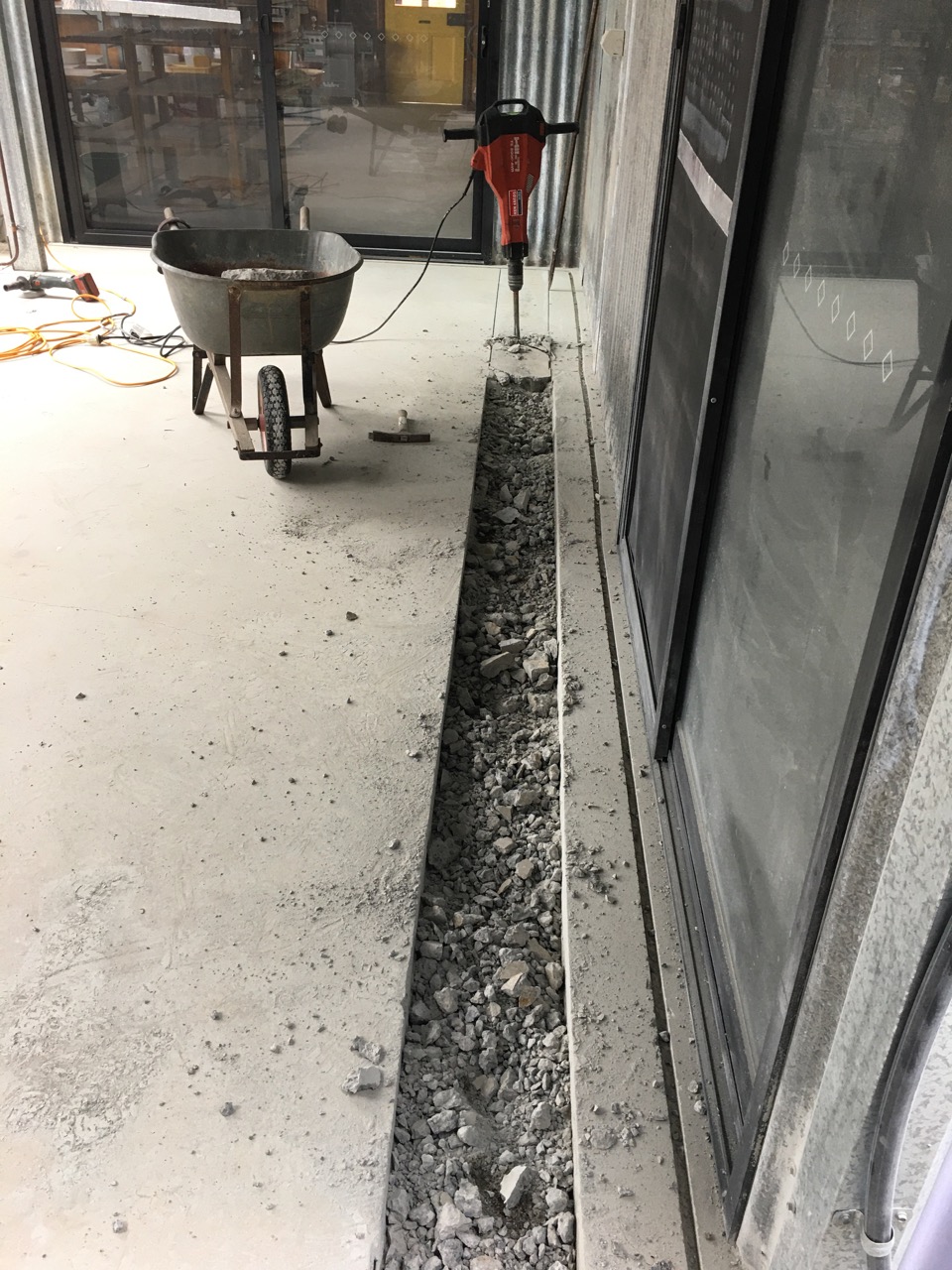
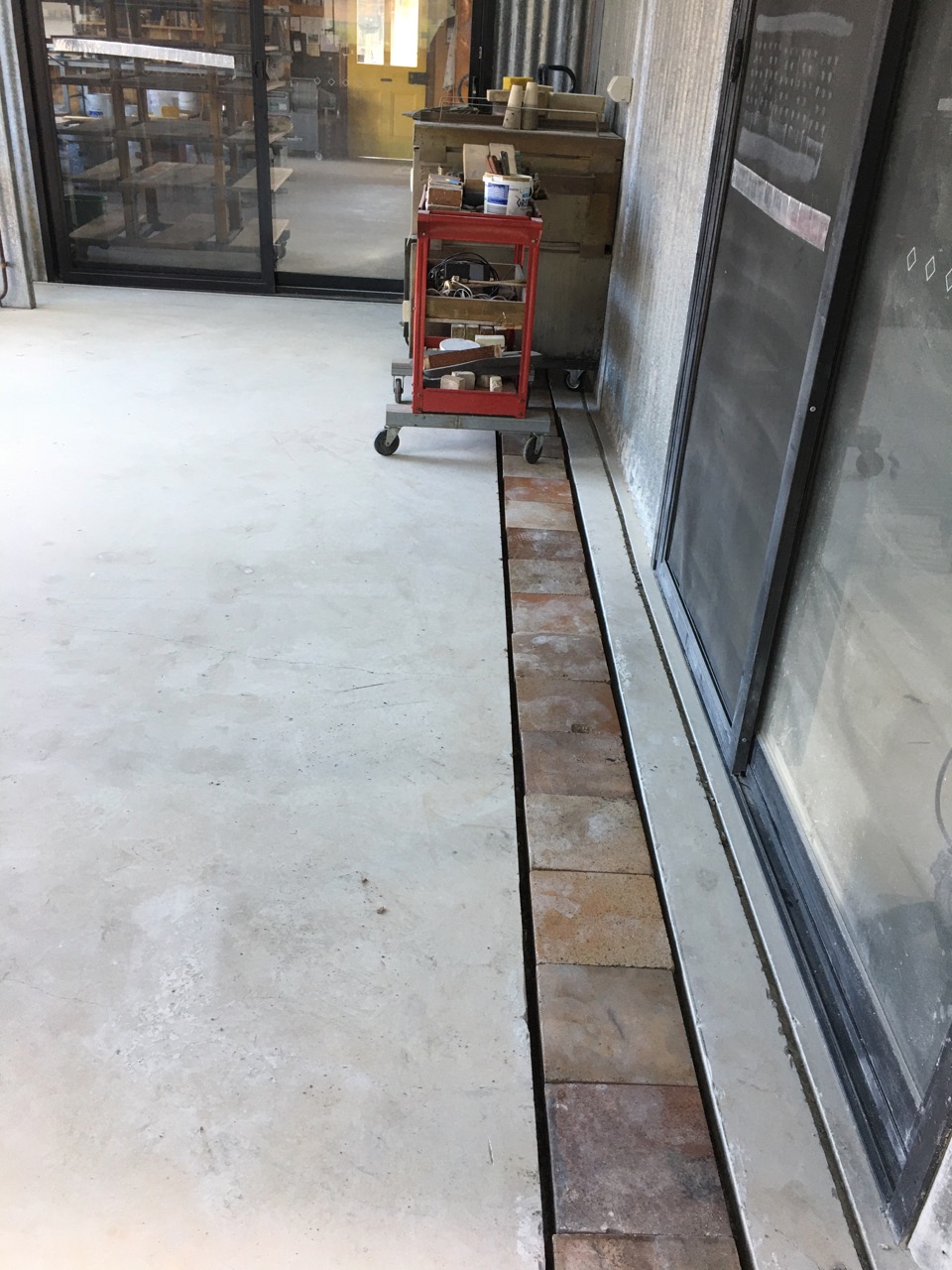
To this end, This morning I used a diamond saw blade to cut two 8 metre long slices through the 115 mm thick concrete slab down to the substrate of compacted rock dust and gravel. It was one of those nightmare jobs that nobody would ever want to do. But someone has to. Meet muggins.
You can see in this image, where I had initially tried (unsuccessfully, as it turned out) to create a small diversion channel around the wall using a circular saw and a friction disc. This wasn’t deep enough to cope with the flood of water from this last storm. I realised that the drain needed to be substantially larger and deeper.
Then, I hired a jack hammer to break up the concrete into rubble. That was another big job.
Finally, I removed the broken ‘rio’ bars and the strip of black plastic waterproofing membrane, and then shovelled out all the larger pieces of crushed concrete and re-installed all the finer gravel.
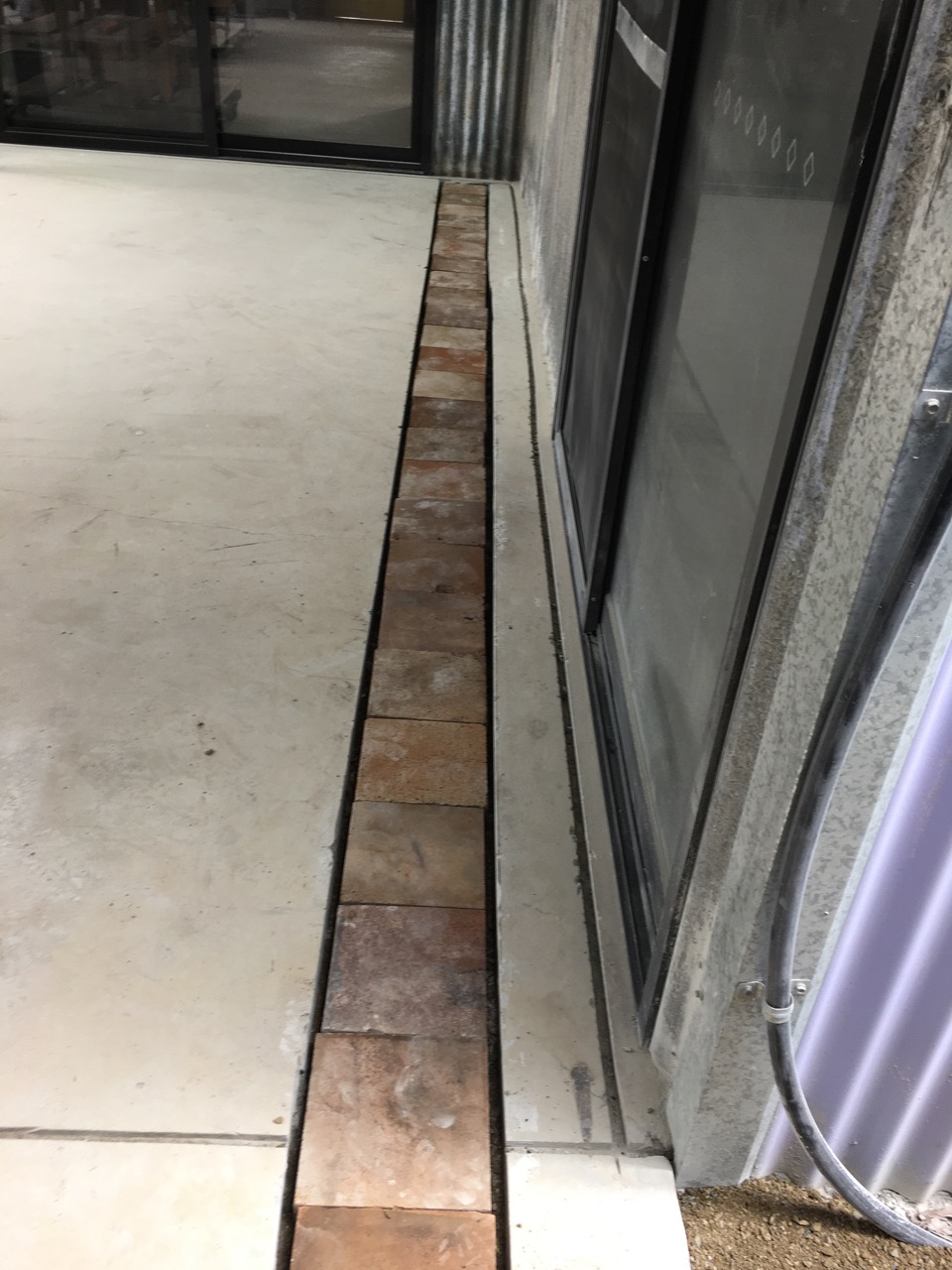
This allowed me to then lay pavers over the rubble to make an ‘agg’ drain.
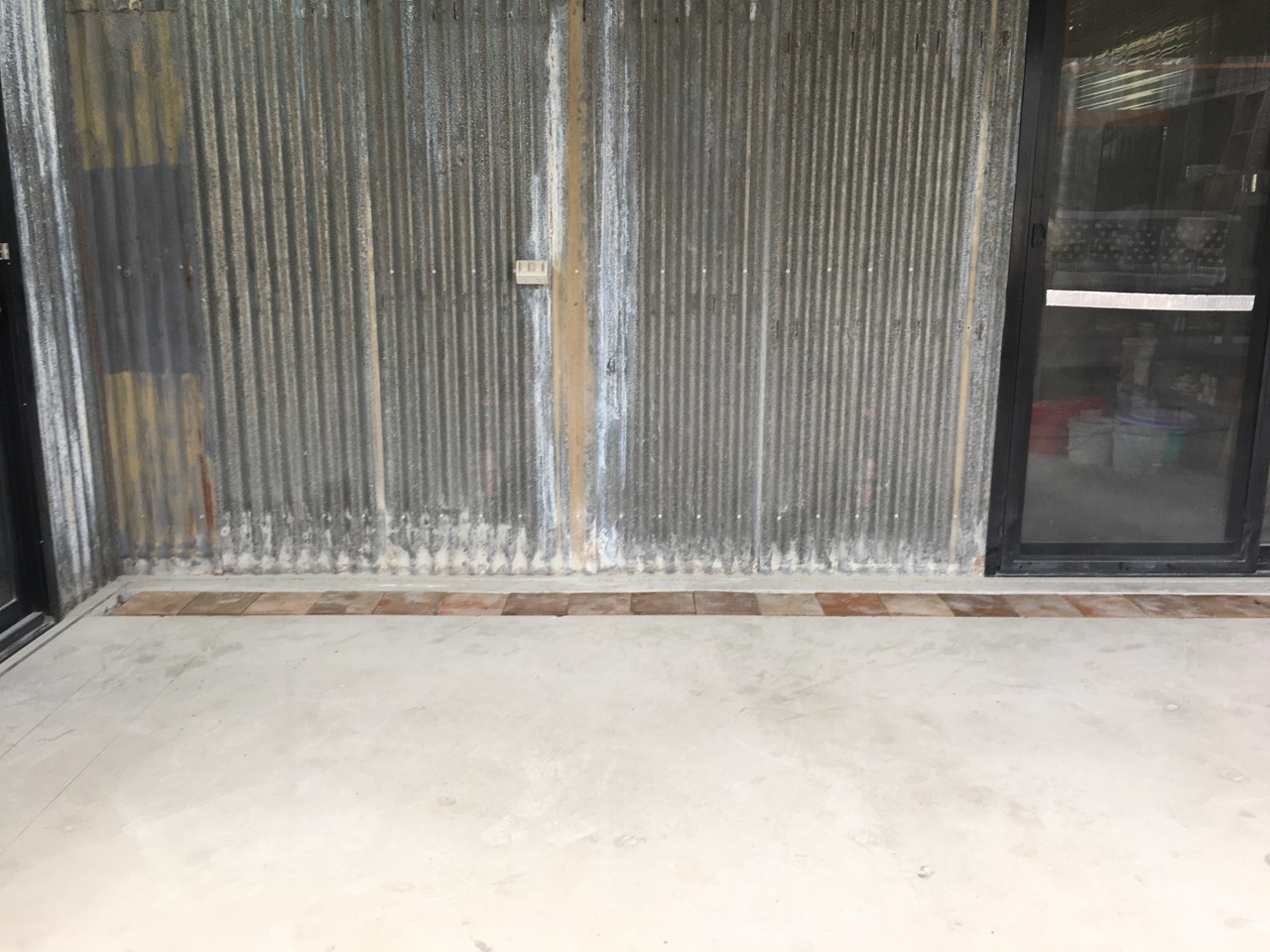
With my remaining energy, I completed the job by laying a line of terracotta pavers to cover the scar, but leaving a gap all along the trench to allow any future flood water to flow down into the rubble drain and seep out along the alley way between the two sheds. Hopefully a simple and effective solution to yet another problem left by our slack and seemingly incompetent builders. ( who have now gone out of business I’m told). I have noticed that any rain that is driven into the courtyard by the storm, just sinks into the porous pavers and their gravel bed. That paved part of the kiln shed/courtyard never holds any water. It’s just a total bummer that the slack builders cast the slab with the fall in the wrong direction.
It’s been a hard day. I’m pretty worn out from the effort of jack hammering, crow-barring and wheel barrowing all the broken-up concrete out of the trench, but very happy with the out come, now that it’s done!
I’m hoping that it will work. I’m getting too old for all this strenuous high energy stuff.
Over the past week, since the first Open Studio weekend, I have managed to do a bit of catching up in the veggie garden, mostly watering and weeding.
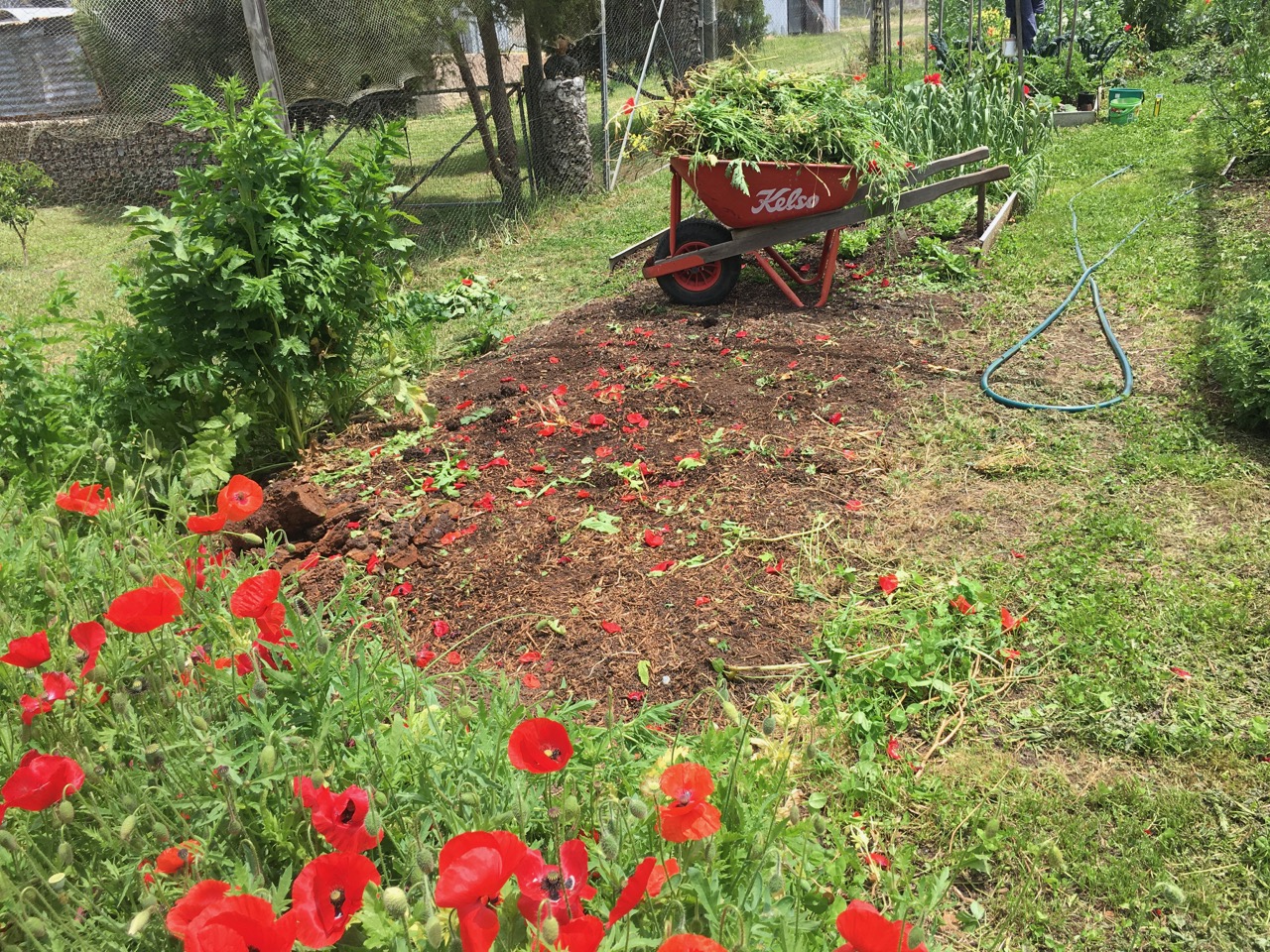
I pulled out half of the ‘Flanders’ Poppies. They are really beautiful. I love them to bits, such a great explosion of bright colour. They self sow every year and fill every space where I don’t weed them out. I need the space now to plant out more summer vegetables, so out they go. Well, half of them. I still want to keep the rest as long as possible.
The French beans are all up and doing well. I have no idea where I found the time to plant these during the hectic work load that we had up to the opening of the studio sales?
Half the poppies are gone to the compost heap to make space.
In their place there are now sweet basil, tomatoes and spinach, Further back, there are cucumbers and pumpkins.
I took a little bit of time out from gardening and weeding this week to glaze the last of the bisqued pots and get a stoneware firing done in the bigger electric kiln, fired entirely on solar energy from our new PV panels and battery. The results are good, just a few more lovely pots to refill the gaps in the gallery shelves from last weeks sales.
We are open this weekend each day from 10 till 4 – ish. on Saturday and Sunday , and also for the rest of the summer by appointment. Please ring or email first to make sure that we will be home.


















































You must be logged in to post a comment.