My friend Stan, a retired scientist, with a PhD in chemistry, has corrected me on my post about all of our ’Night soil’ being pumped out to sea.
Apparently, the sewerage treatment works located around Sydney and Melbourne, do in fact seperate, compost and then sell-on the processed sewerage
This processed human poo is called ‘biosolids’ and has been supplied to specific farms in a very controlled and supervised manner for a long time. Who knew?
“Melbourne Water (MW) produces sufficient biosolids each year to provide a useful soil supplement for approximately 30,000Ha of farm land, based on a re-application every 5 years in accordance with Environmental Protection Authority Victoria (EPAV) Guidelines.”
“Farmer demand for Sydney Water’s biosolids program – which turns human waste into nutrient-rich fertiliser – is currently outstripping supply. The program, which has now been running for 20 years, is known to increase crop yields by 20-30%. “
Thank you Stan. I found it really interesting. I like to be corrected when I get things wrong, because then I can pass on the correct information, so that we all have a better grasp what is going on. Perhaps everyone else out there in the ‘real’ world knew all about this? I live in a self made, environmentally sustainable, romantic bubble here, fairly well insulated from the lies, grossness, violence and political corruption stories that fill the nightly news. I just don’t want to watch it. I look instead for more positive and uplifting stories, but they are harder to find. If it bleeds, it leads, was never so true.
I googled Sydney Water and found this simple diagrammatic explanation;
I remember swimming in the ocean off manly when I was a kid, and there being visible particulates of raw sewage in the ocean at certain times depending on the tide and currents at the time. It was pretty gross. Sewage was still being dumped into the ocean off Sydney, up until around the year 2020. Somehow, I missed seeing these news items at the time.“Surveyor Daniel Fitzhenry said before the deep ocean outfalls, Sydney’s sewage was pumped off cliffs near some of Sydney’s most famous beaches.” “ Manly was like a septic tank, it was dreadful,” he said.
“There were huge surface plumes and the beaches adjacent were really polluted.”
A little while ago, I was travelling along in this chaotically hectic life thinking that I’d be making pots in the 2nd half of January.
But the appearance of the deer in our yard have changed everything.
Out neighbour saw a large buck with antlers in his yard last week. We have had the doe and fawn. So if there is a doe and a buck… then there will soon be a lot more.
We needed to act quickly.
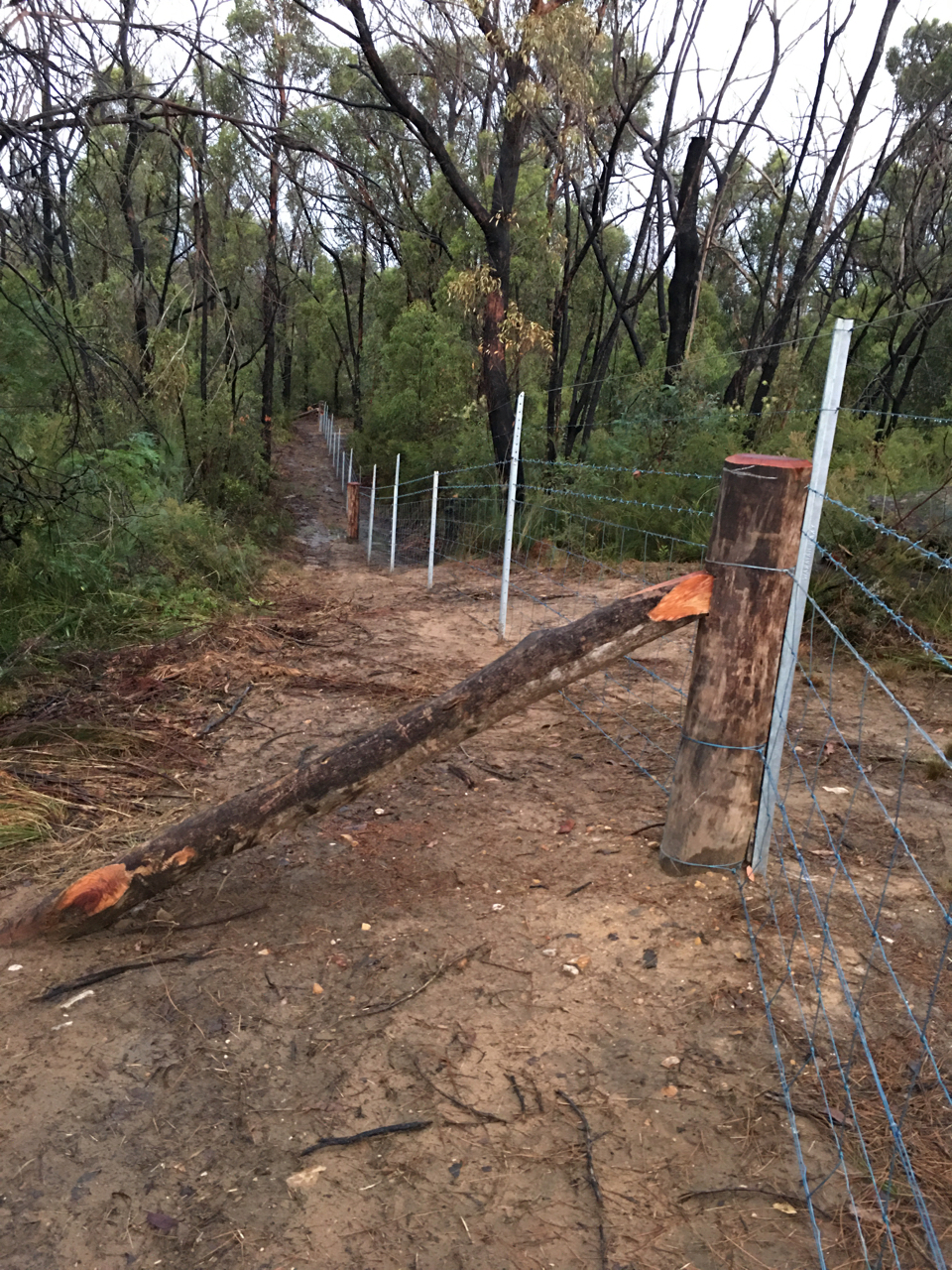
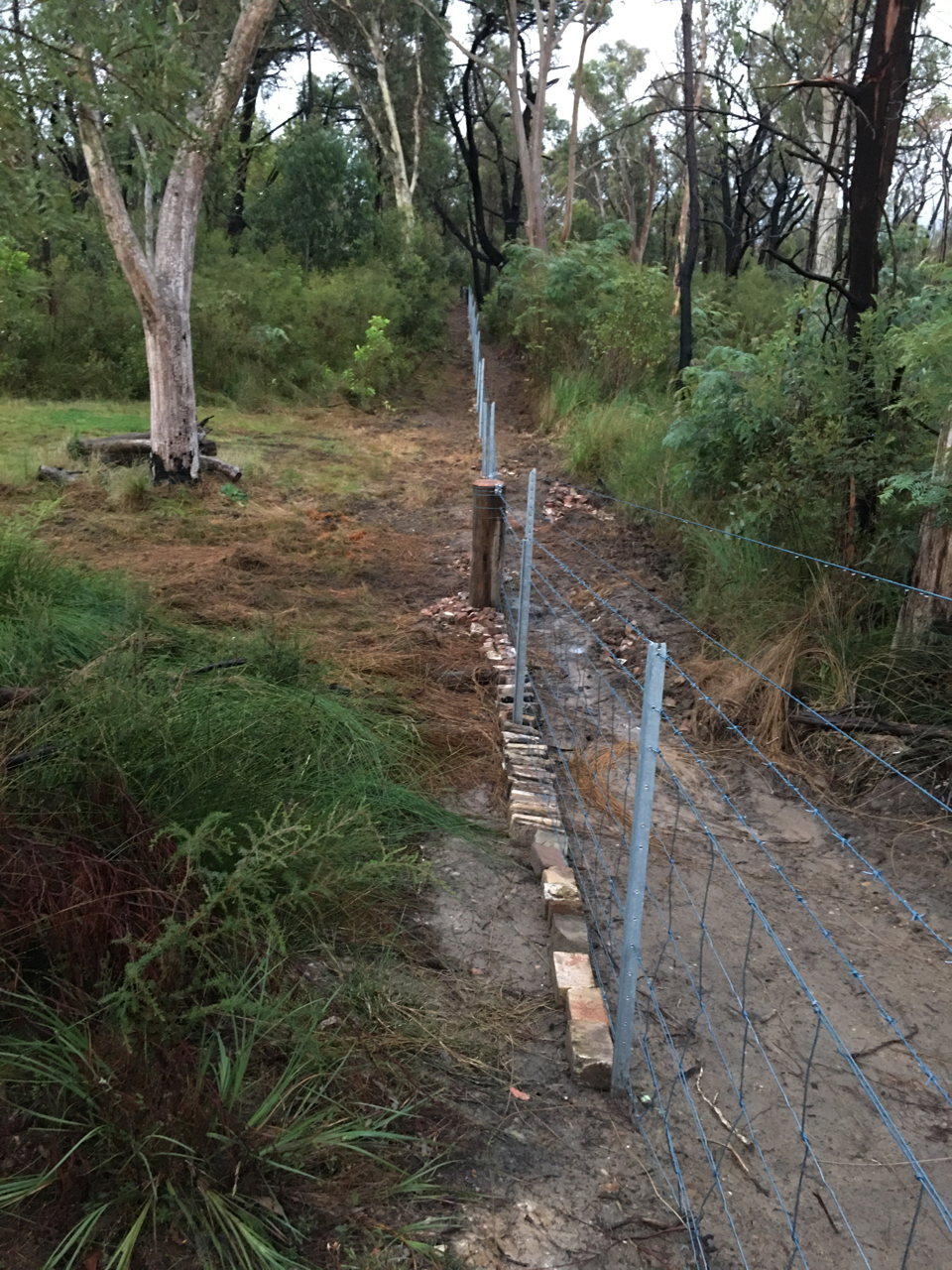
We have now completed the complete perimeter fence of one half of our land. A few years ago we only had one side fence put up by our only neighbour to keep their dog in.
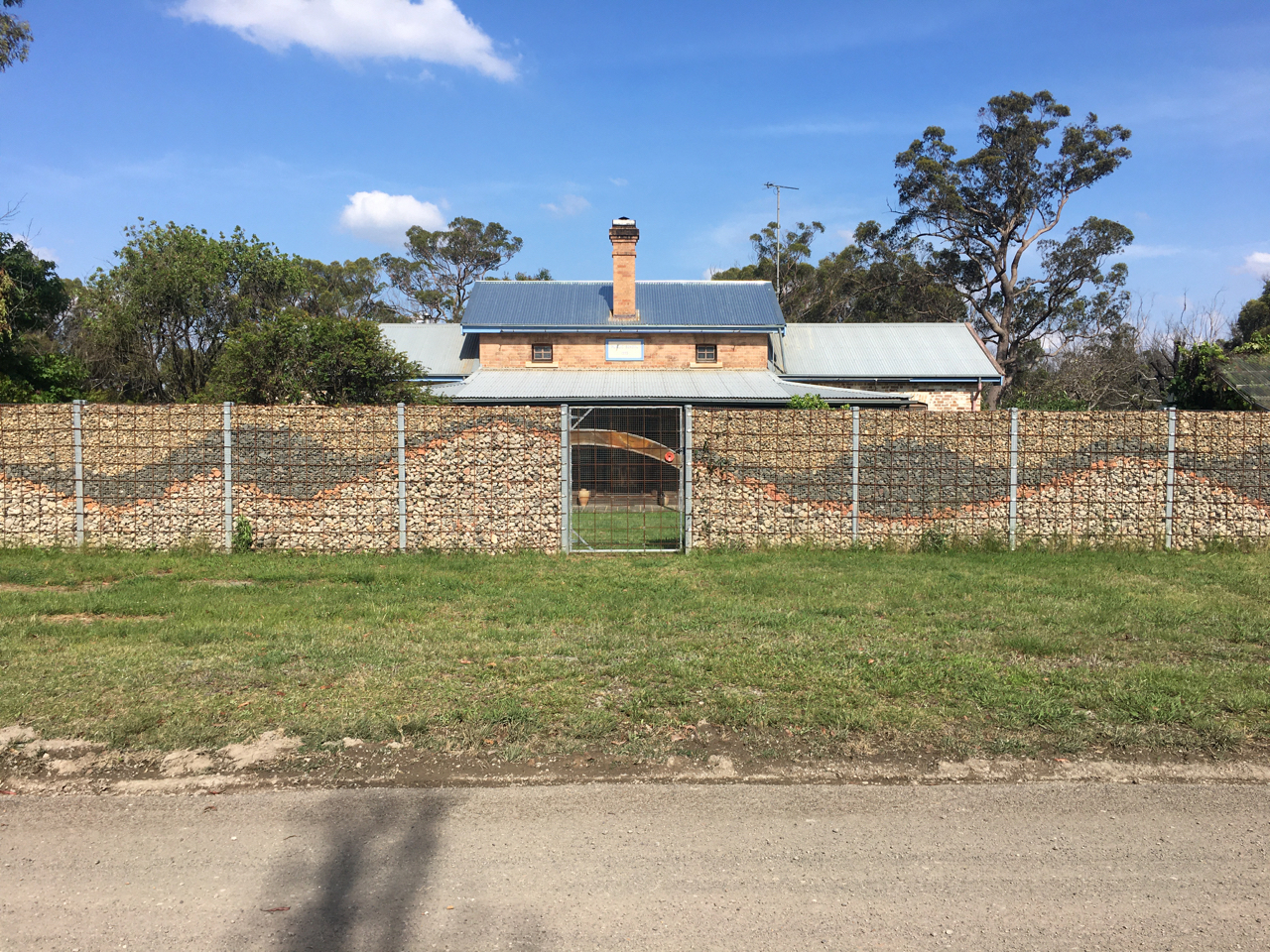
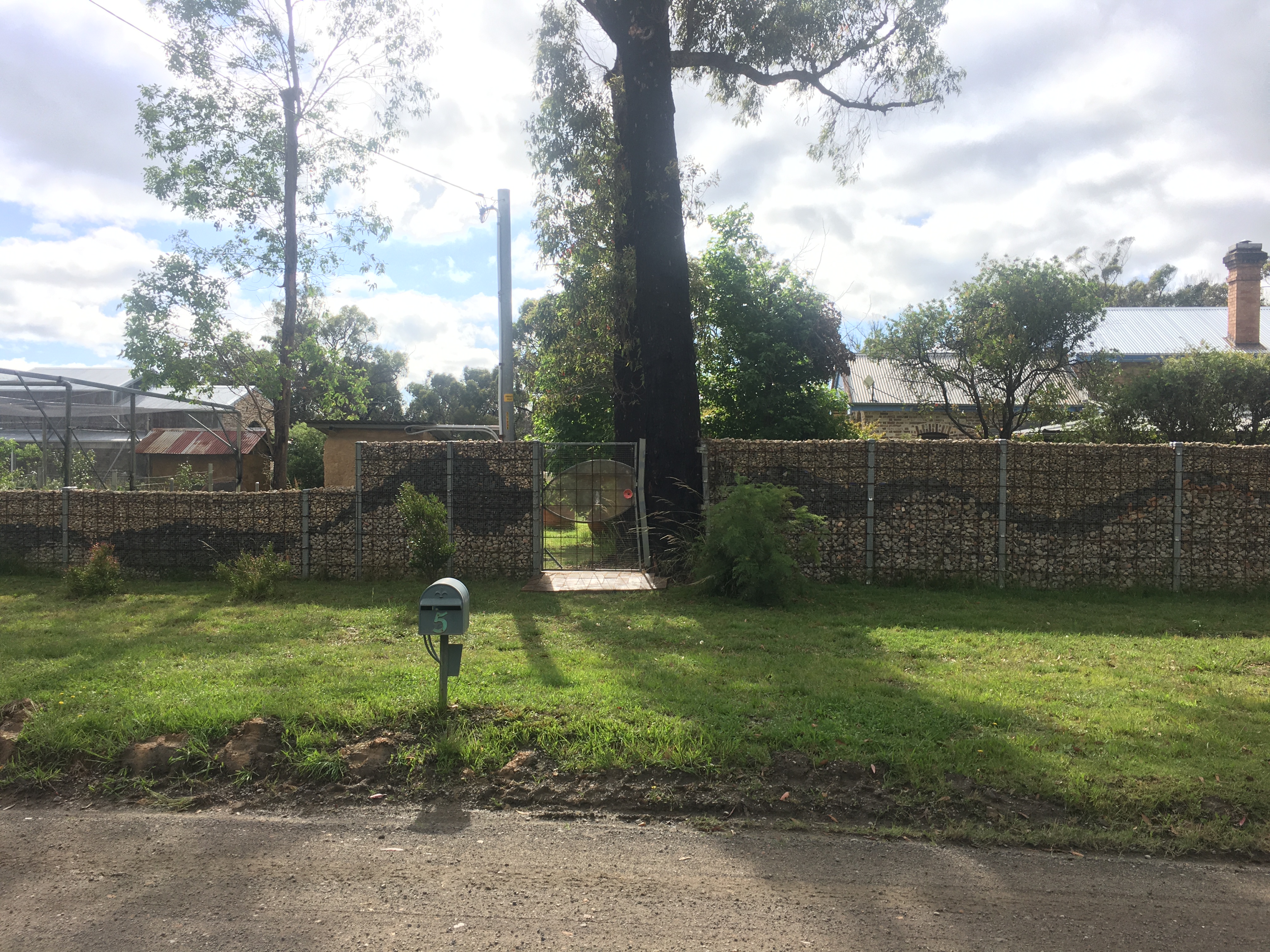
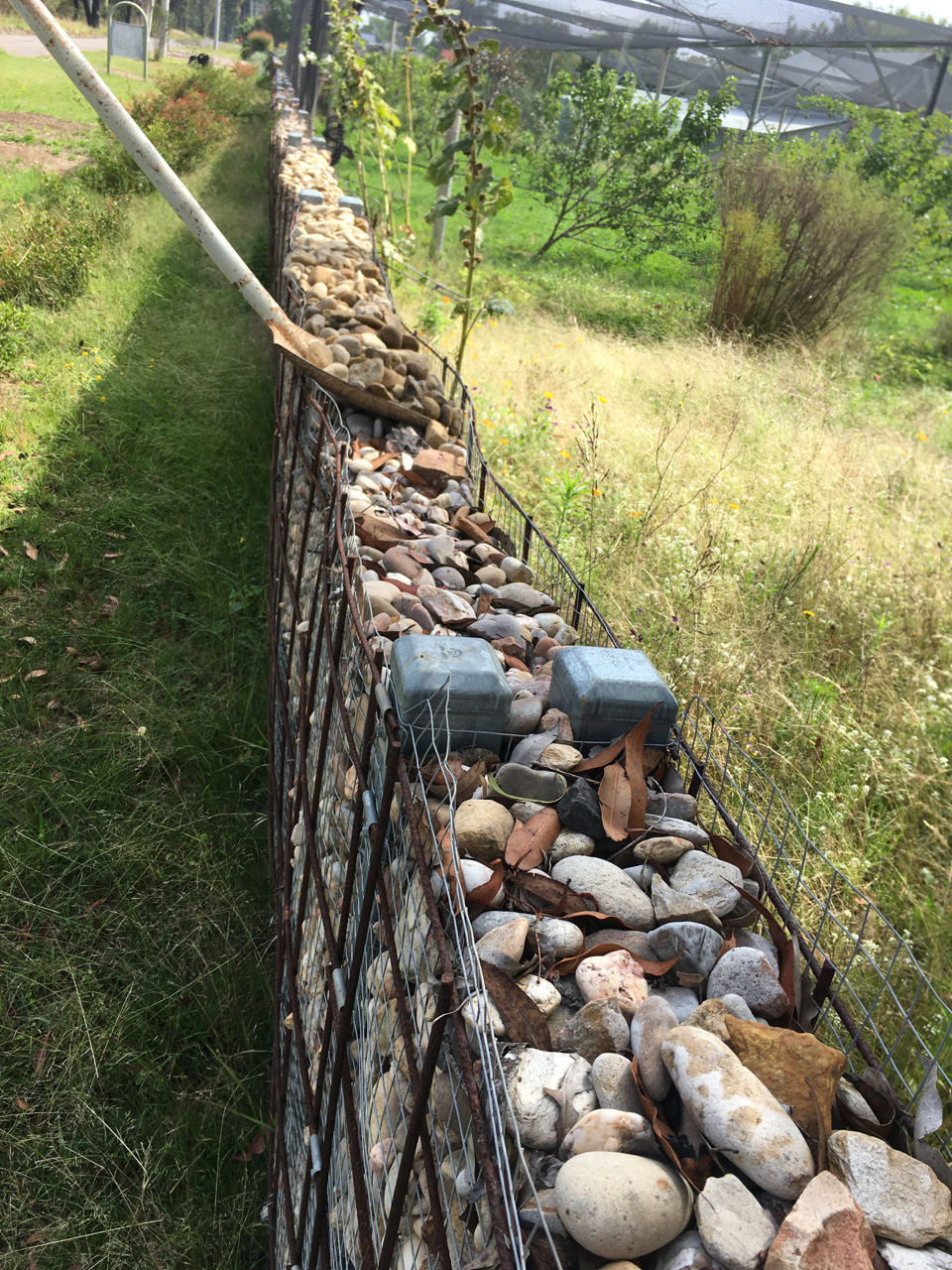
Then after the fire, while we were waiting for the council to approve our re-building plans and waiting for our tin shed kits to be delivered, we decided to use the time to put up the stone and steel gabion wall out the front. This is to act as a radiation barrier in the next fire event.
Now we are the proud owners of just over 510 meters of perimeter fence. It’s been a lot of work. At first, I thought that I might not be up to it, But it went well enough because I didn’t over-do it. I paced myself. However, I wouldn’t want to do it again. I was working close to my limit. In the end the effort was worth it to preserve our fruit trees and garden that we have spent over 45 years cultivating. Only time will tell if it is enough of a deterrent to encourage them to dine elsewhere?
I’m really glad that it’s over.
Starting at the gabion wall on the street front, we had to cross the culvert ditch and make it deeply deer proof. So we installed a swinging gate to allow for the clearance of flood debris.
Then down between the two dams.
Then down to the back lane/firetrail.
Then along the back boundry, and through the key-line dam system overflow.
And finally up to the existing neighbours fence.
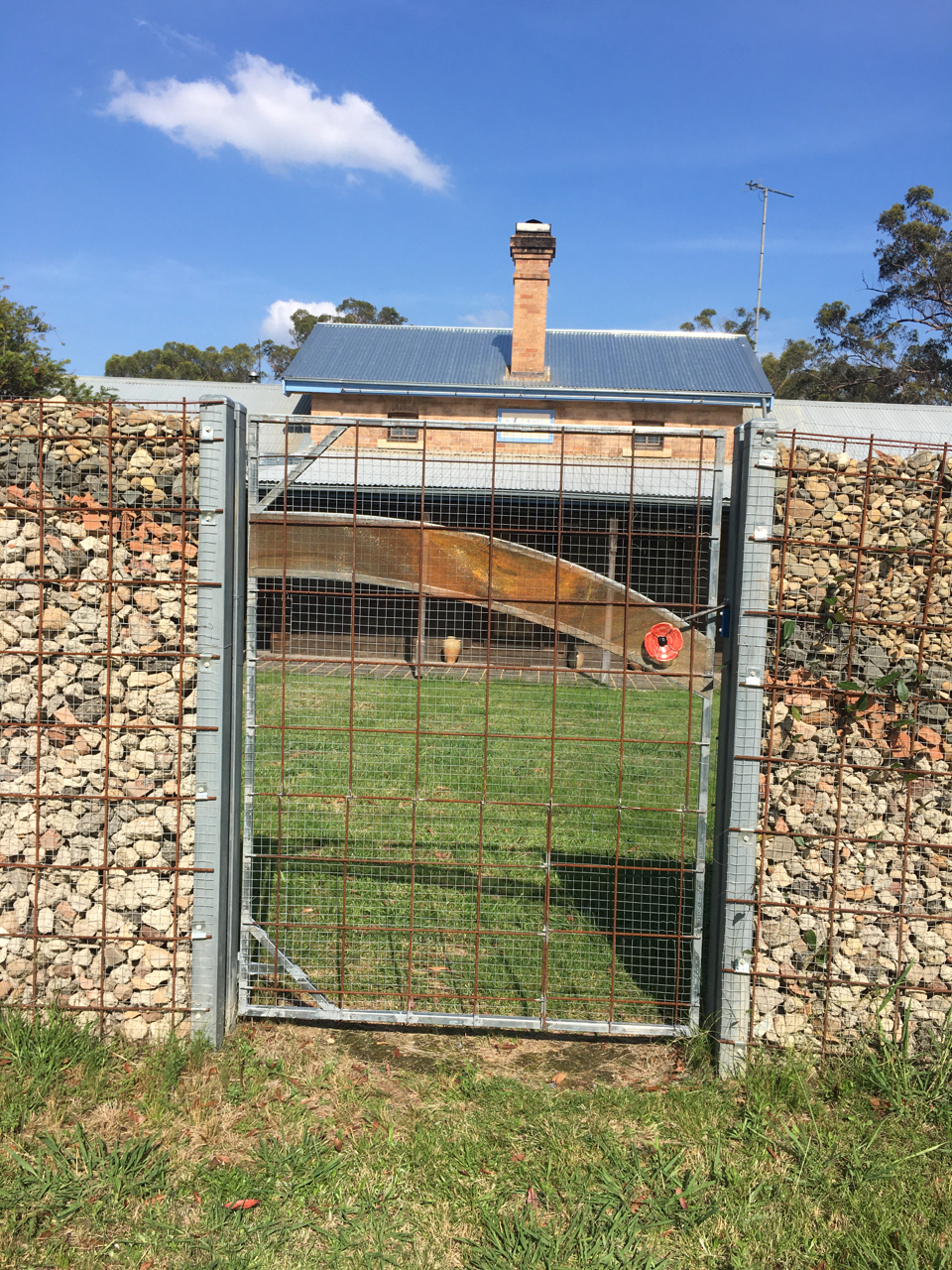
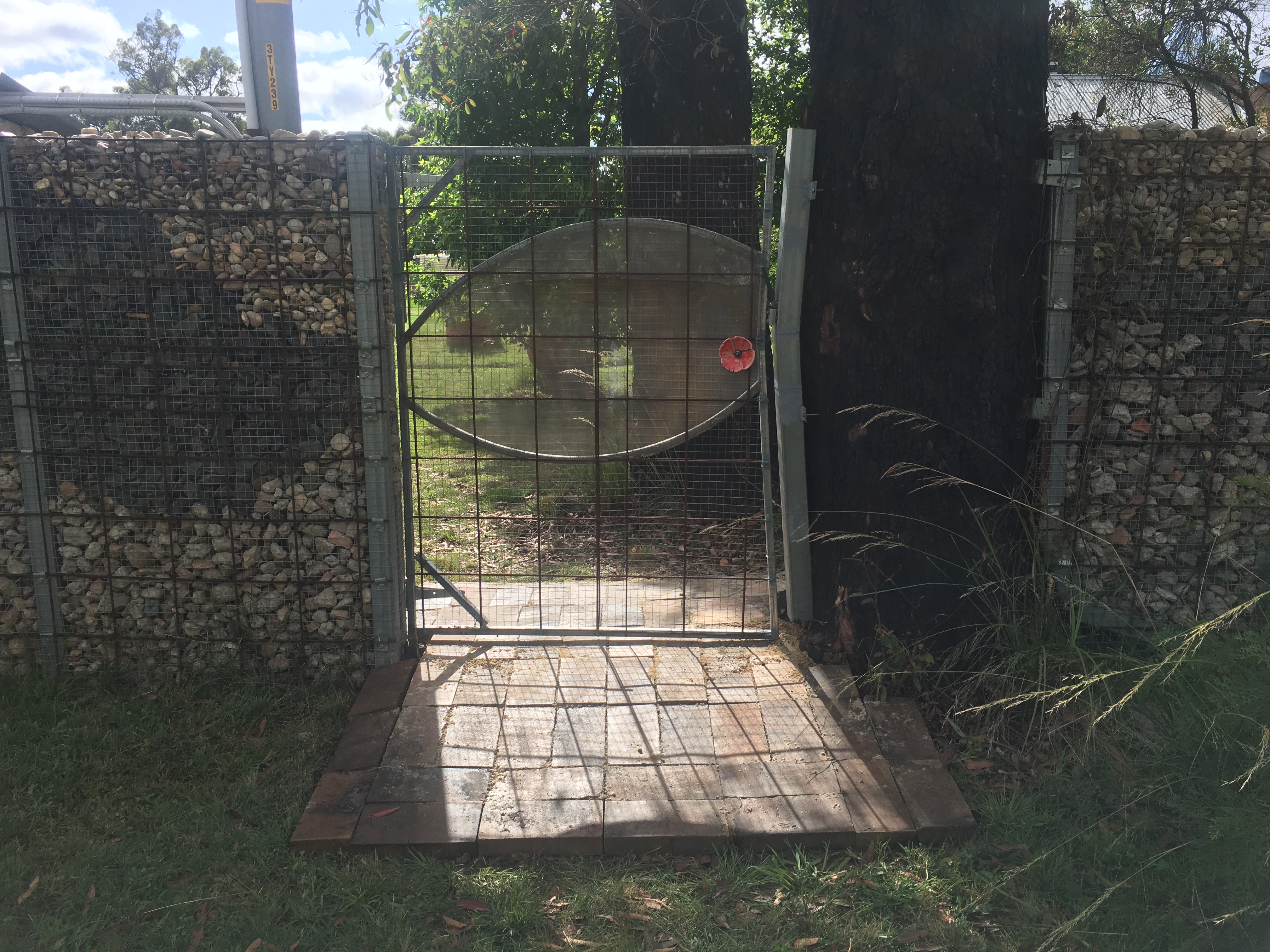
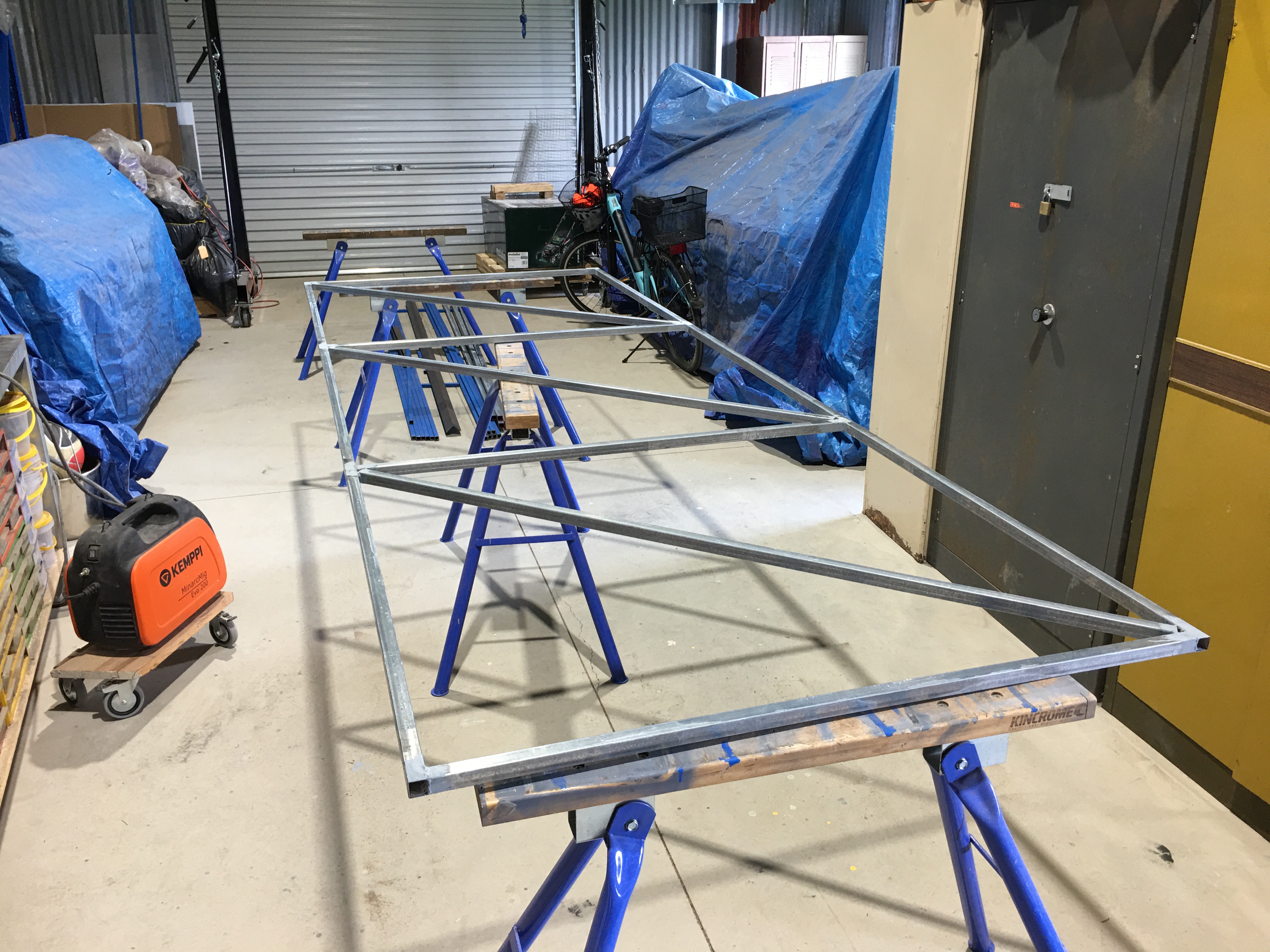
Having completed the fencing the only weak spot in our defences were the openings in the gabion wall where I never got around to making the gates. There are 2 drive in gateways, and two walk through openings. One directly in front of our front door, and the other next to the electrical meter box for access for the electrical services people.
I have spent the last few days making gates for those vulnerable openings. I now have 3 completed. The last one will have to wait, as I really need to get back to work in the pottery.
If the deer arrive in the mean time. I’ll just have to drop everything and weld up that last set of double gates to close off the 7.6 meter wide main drive way.
Now that the gates are in, it made me look closely at the gabion wall, which I hadn’t being paying much attention to recently.
I noticed that the stones had settled down in some places.
We’ve all read the warning label that “Contents may settle during transport”
Well, our stones have settled while stationary.
The only thing to be done was to make a trip down to the sand and gravel yard and buy another tonne of stones to fill it up again.
Now that it is topped up, it should be all good now for another decade?
We have spent the past week continuing to work on the new fence.
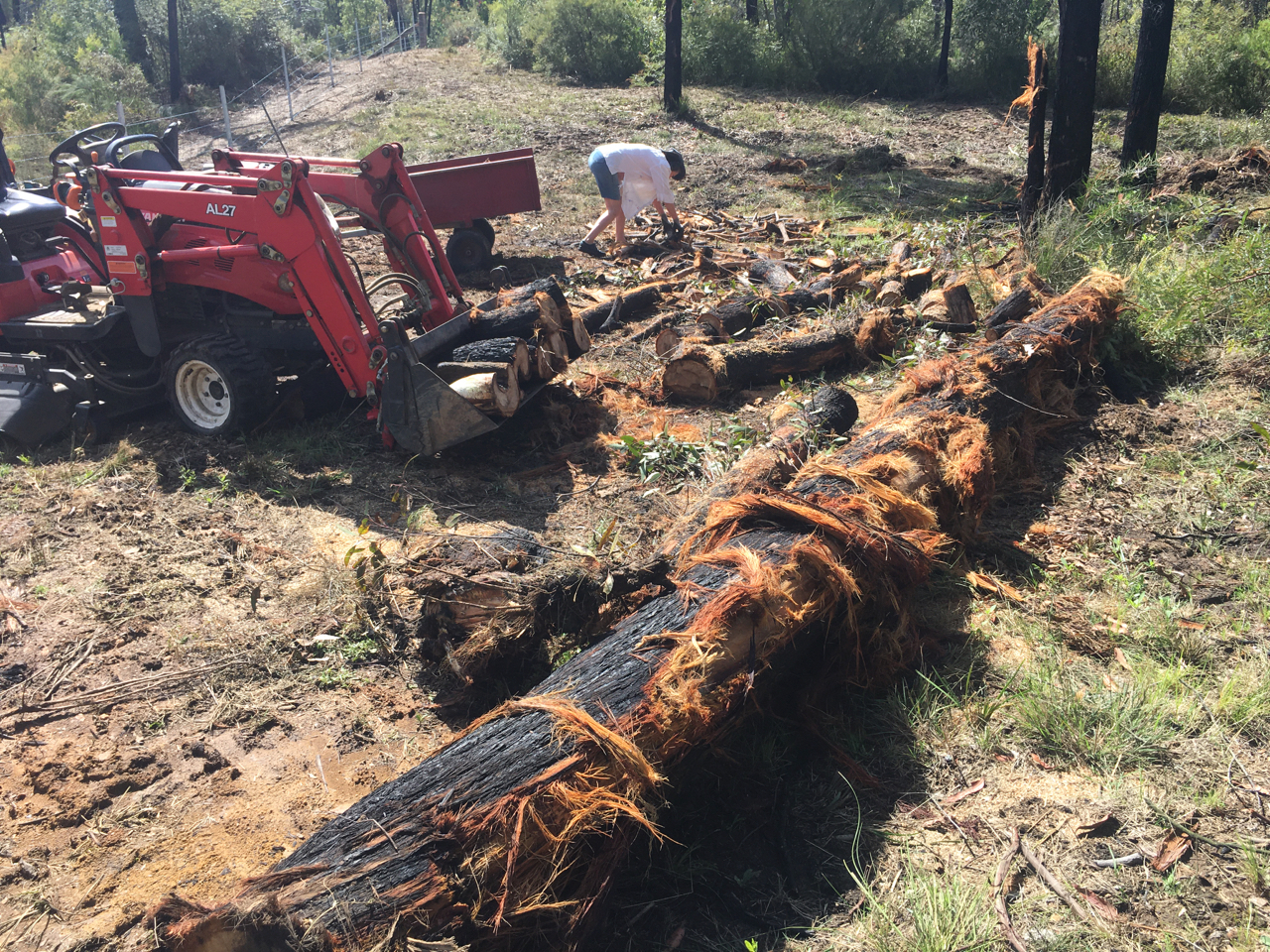
The fence is now finished the construction phase and we have been getting on with cutting up the dead trees that had to be removed to clear a straight line for the fence.
I had to have a few days off to rest my back and forearms that got a bit over worked.
I estimate that I have now cut and stacked 1200 to 1500 billets of timber. Enough for 2 years firewood, if not more. Of course some of them are only small, down to 50mm dia.
But some are up to 450mm dia. I cut up the whole tree. Nothing wasted.
All the felled trees that were within 50 metres of the house are now cleaned up, cut to stove lengths and stacked near the wood shed, ready for use in the winter.
The other trees that were felled are all still stacked along side the fence line. I may get around to getting out there, right down the back and cutting them up.
However, experience has taught me that by the time I have used up all these stacked timber billets, All the logs laying on the ground will have been degraded by the white ants.
There are still so many standing dead trees within just a few metres of the gateway through the new fence that I will most likely be choosing to work on those trees.
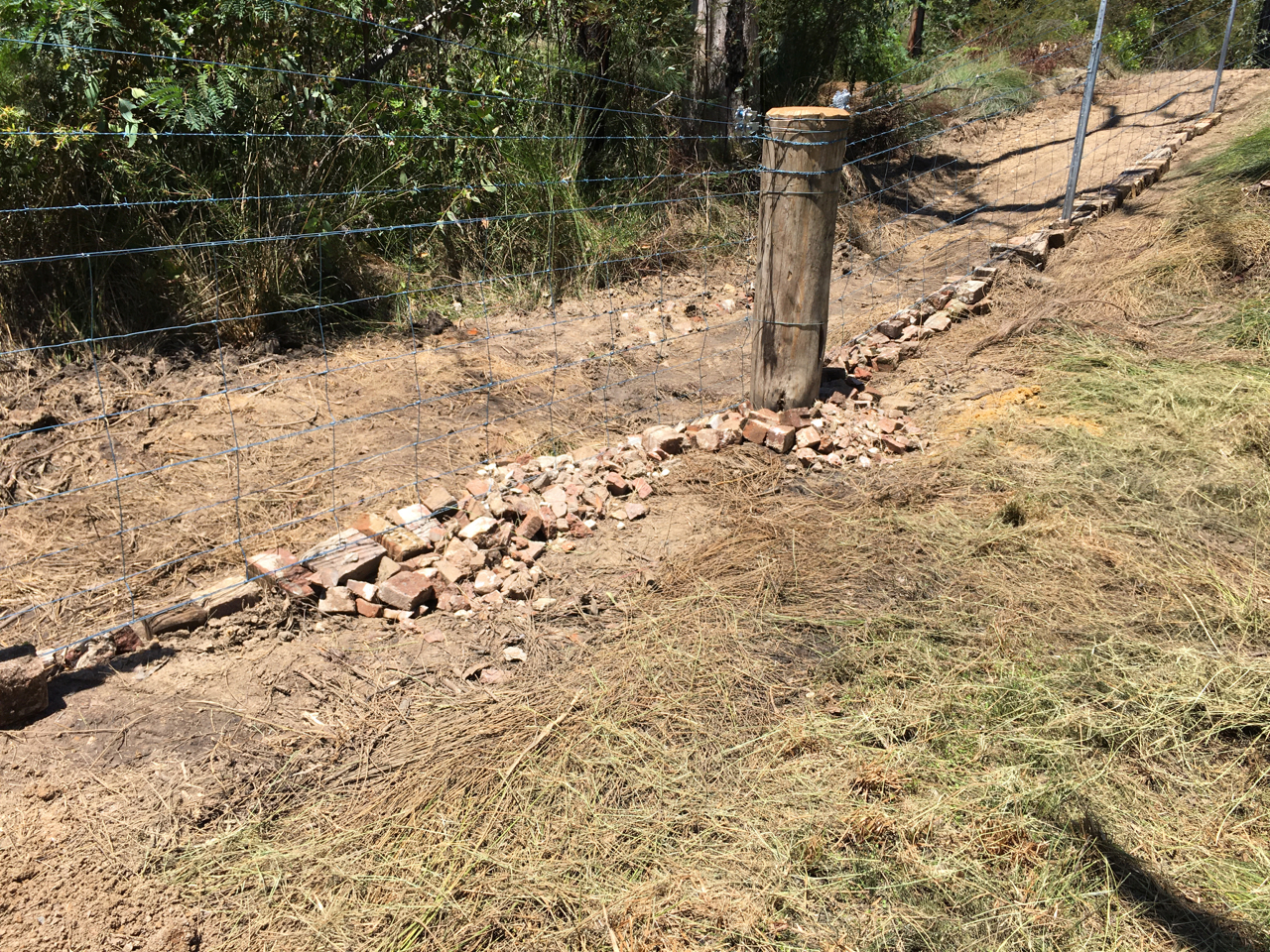
Each morning we get up early and do a few hours work wheelbarrowing broken bricks down the back to fill in the deep gaps under the fence.
This is to stop animals from shinnying underneath the fence in the lowest spots. We have almost finished this job. Maybe just one more cool morning’s work.
Once all the gaps are filled with brick bats and rubble, I start carting some left over crushed gravel from the pottery site footings, down to the fence line.
This gravel and dirt mix will cover the crushed bricks and level out the surface to make it easier in the future to keep the fence line mowed and clear of re-growth.
After lunch, it’s too hot to work outdoors in the full sun for us oldies. So we retire indoors to work on other projects in the shade.
I’m currently working on welding up a set of 3 gates to complete the fence line securely. Our neighbour on the back fence line saw a full size stag in his yard the other day.
I really need to get this unscripted and unfunded crisis done and dusted as soon as I can, so that I can get back to my real work in the pottery.
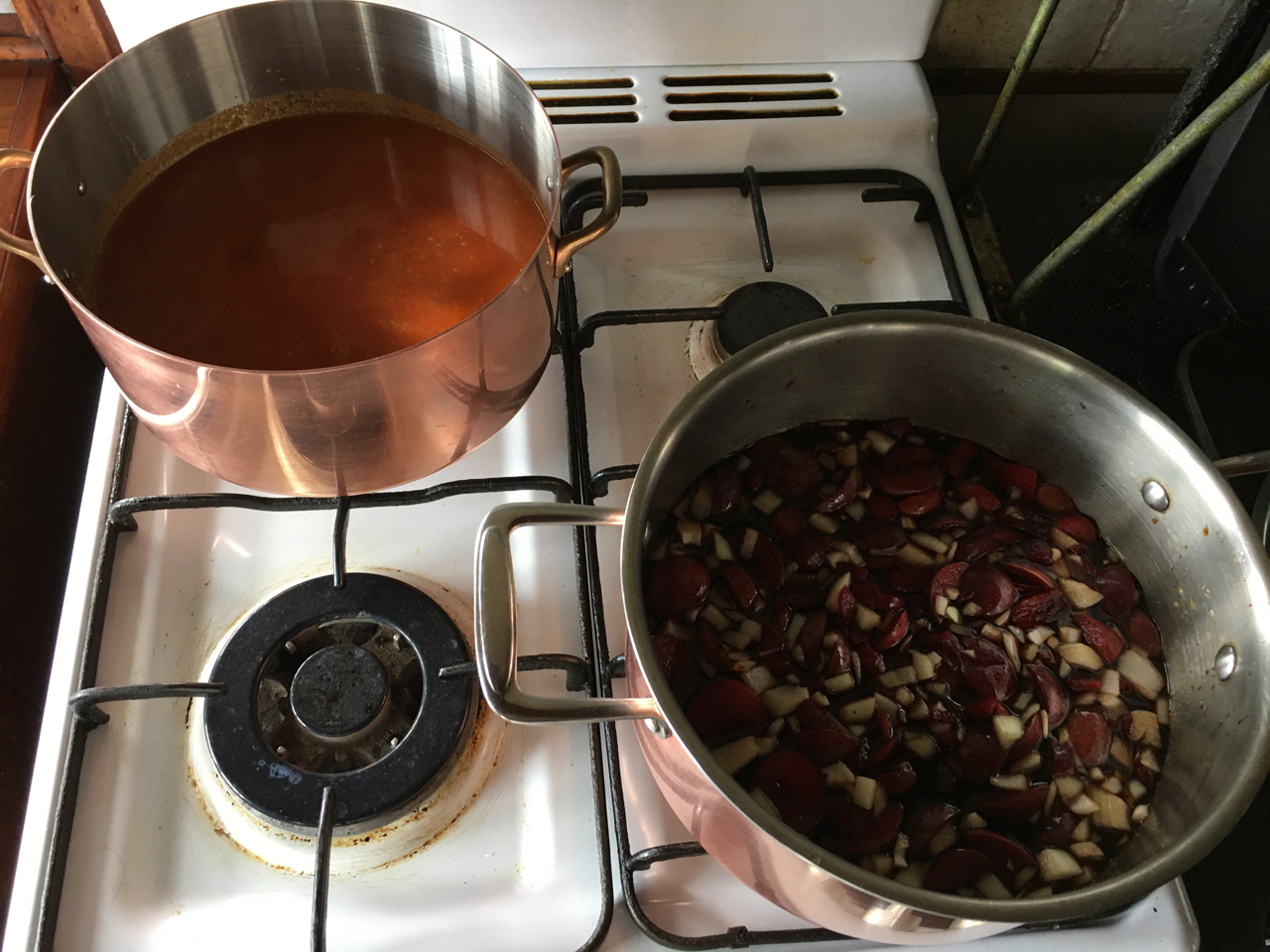
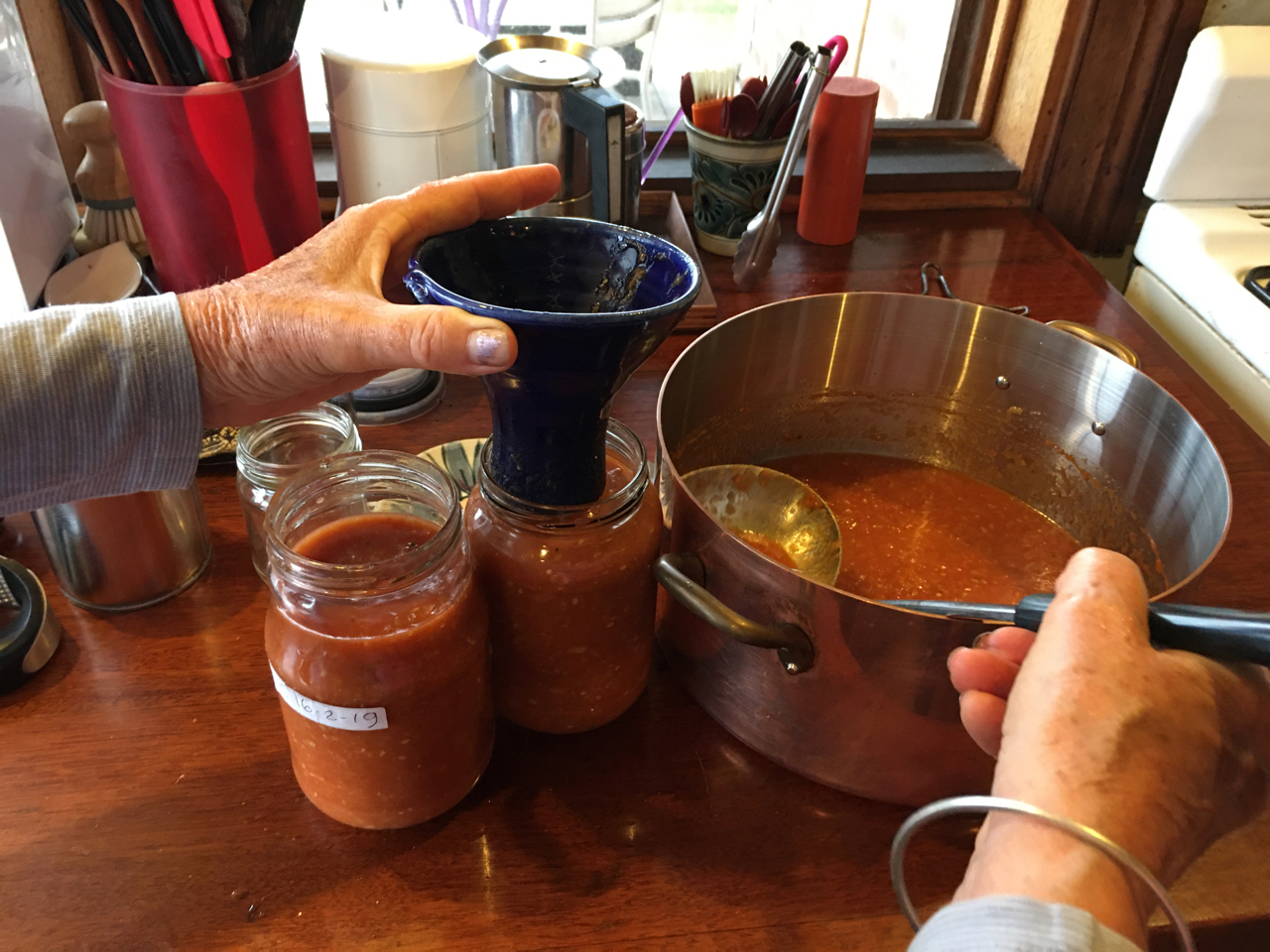
In the evenings we make Tomato passata, Plum sauce and Onion jam. These all need to be made and stored away for later use to make the best of our excess produce.
Bottling tomato passata
Plum sauce bottled and cooling.
At this time of year every meal starts to take on a certain ratatouille aspect. Tomatoes, basil, capsicum, zucchini, and squash.
Summer garden Ratatouille with steamed fish and hand picked capers in a white wine reduction.
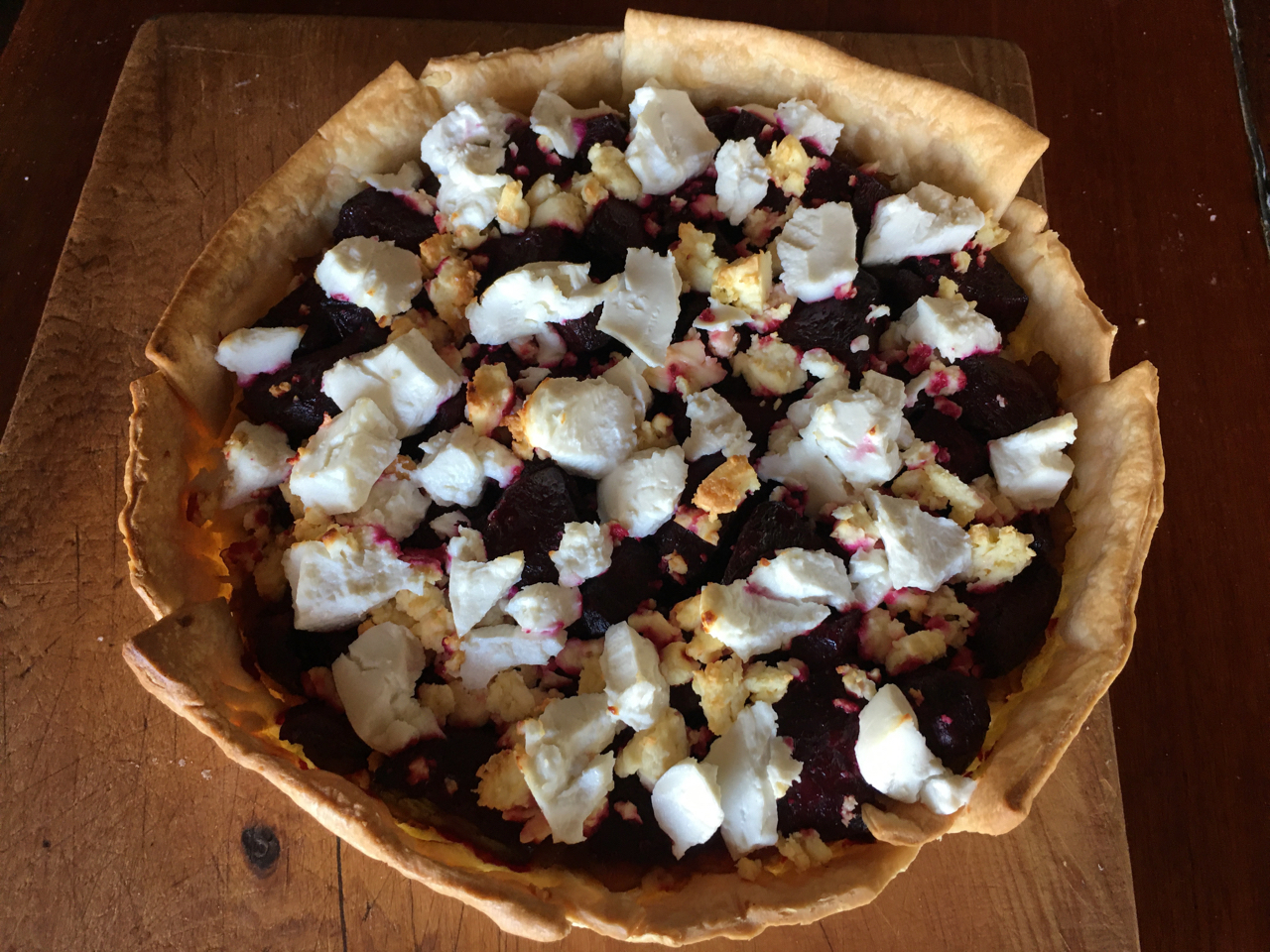
Garden beetroot, home made onion jam, and 2 cheeses tart.
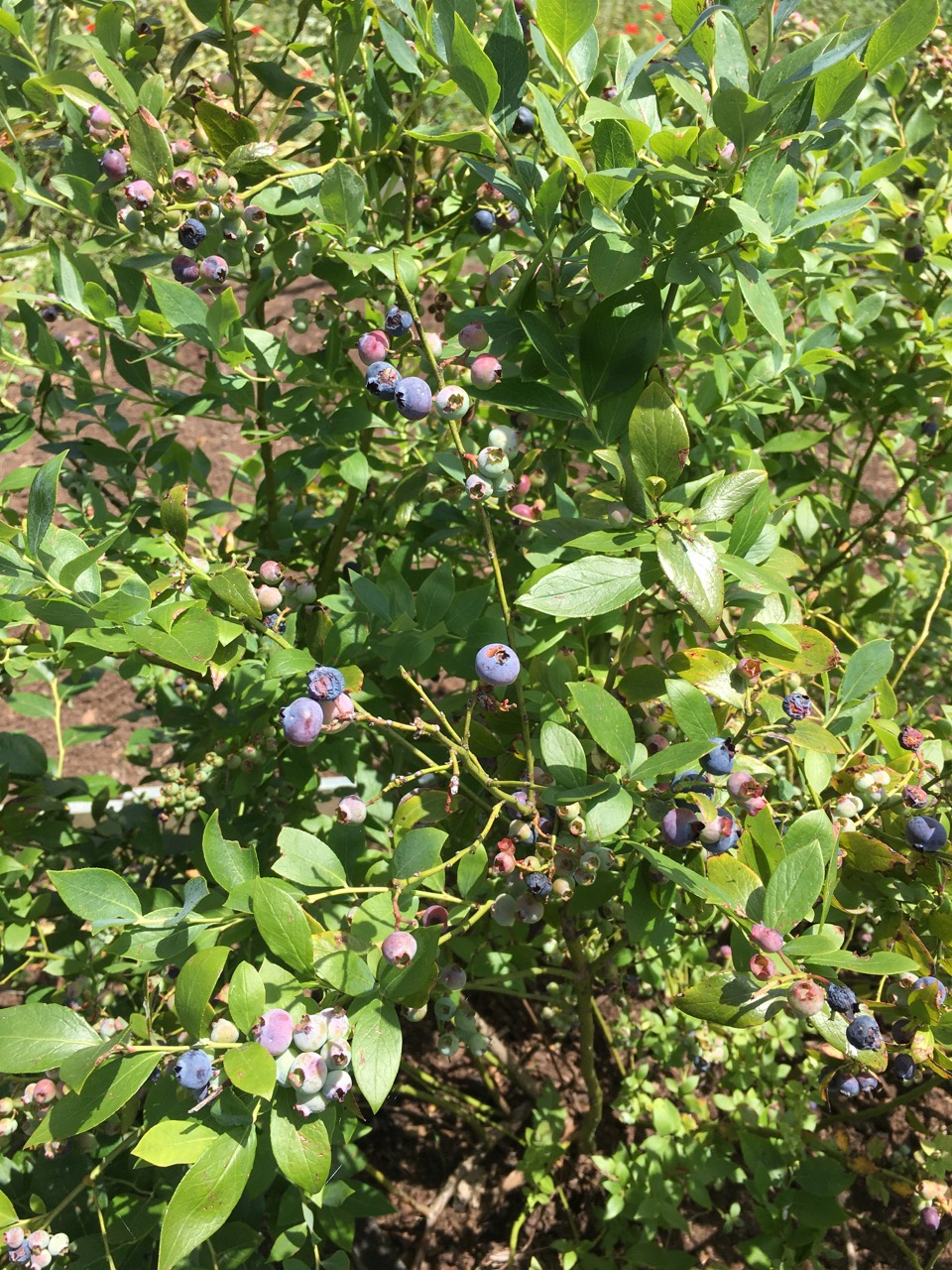
Desert is freshly picked blueberries baked into a tart. We are picking 3 kgs every few days at this time of year. Some get preserved for later in the year. Some eaten fresh for breakfast, some are used in cooking like this and the rest are given away to neighbors and friends.
It’s a tough life, but we just have to work our way through it.
This weekend we spent Saturday over at the Village Hall, helping out with the clean-up, maintenance and garden building.
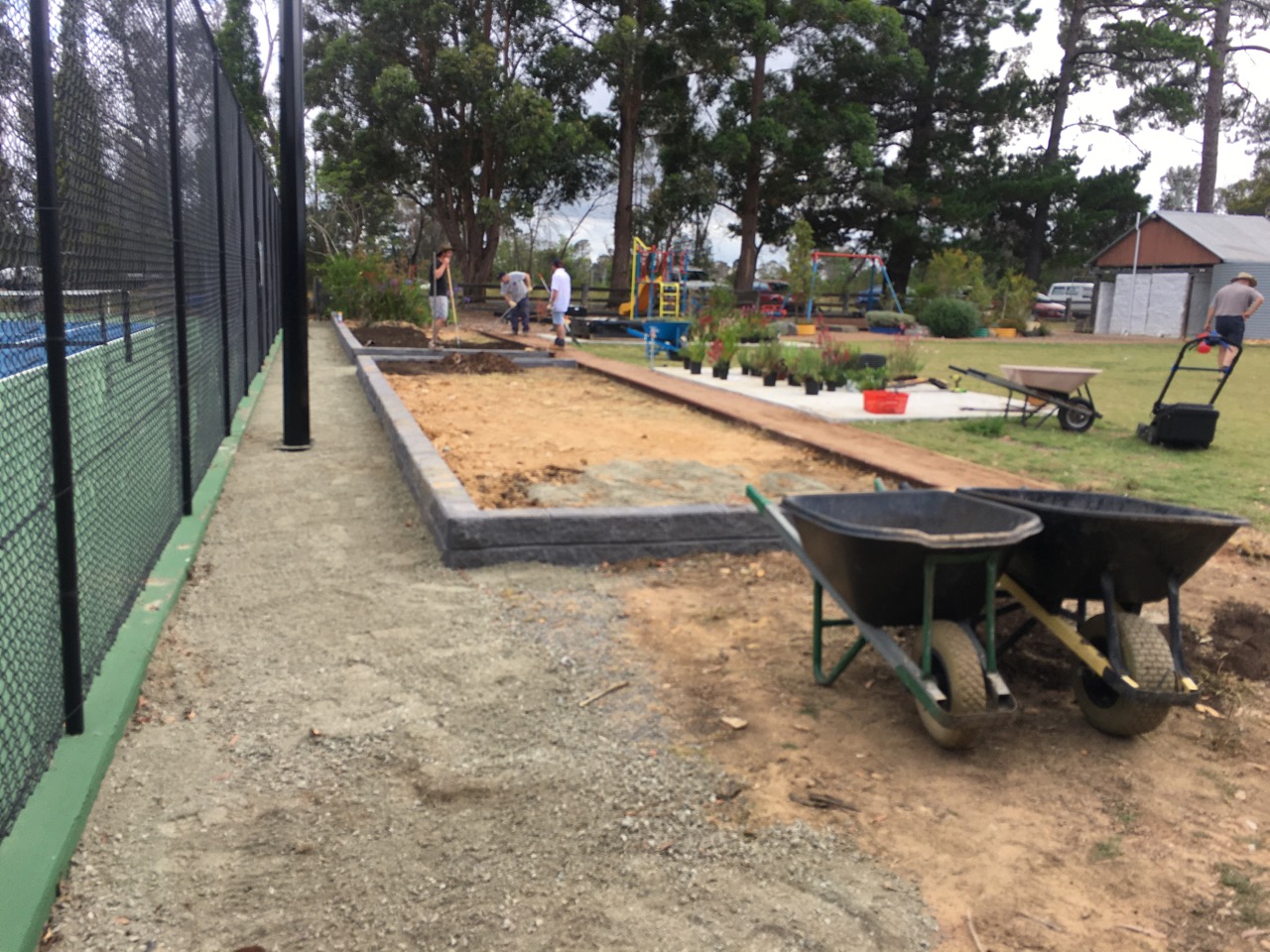
Janine did a lot of pruning and mulching of the existing garden beds, while I helped with the wheel barrowing of several tonnes of road base , then gravel to create new paths, followed by filling the new garden beds with another few tones of topsoil and mulch. The final part , was to plant out all the donated plants to fill the new beds.
A terrific effort from a lot of the Village residents.
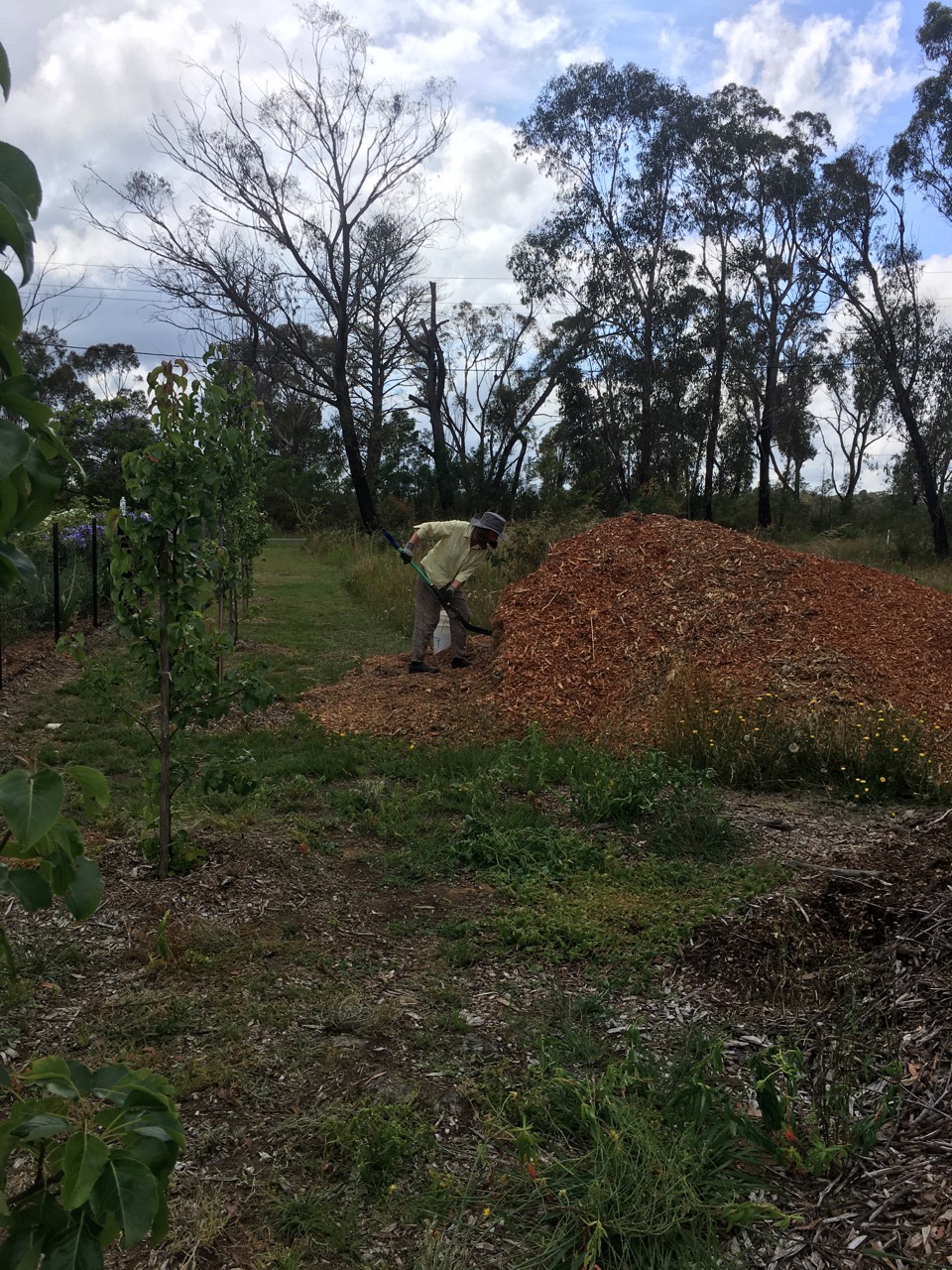
Janine shovelling mulch
Road base spread to level out under the gravel paths along the tennis court.
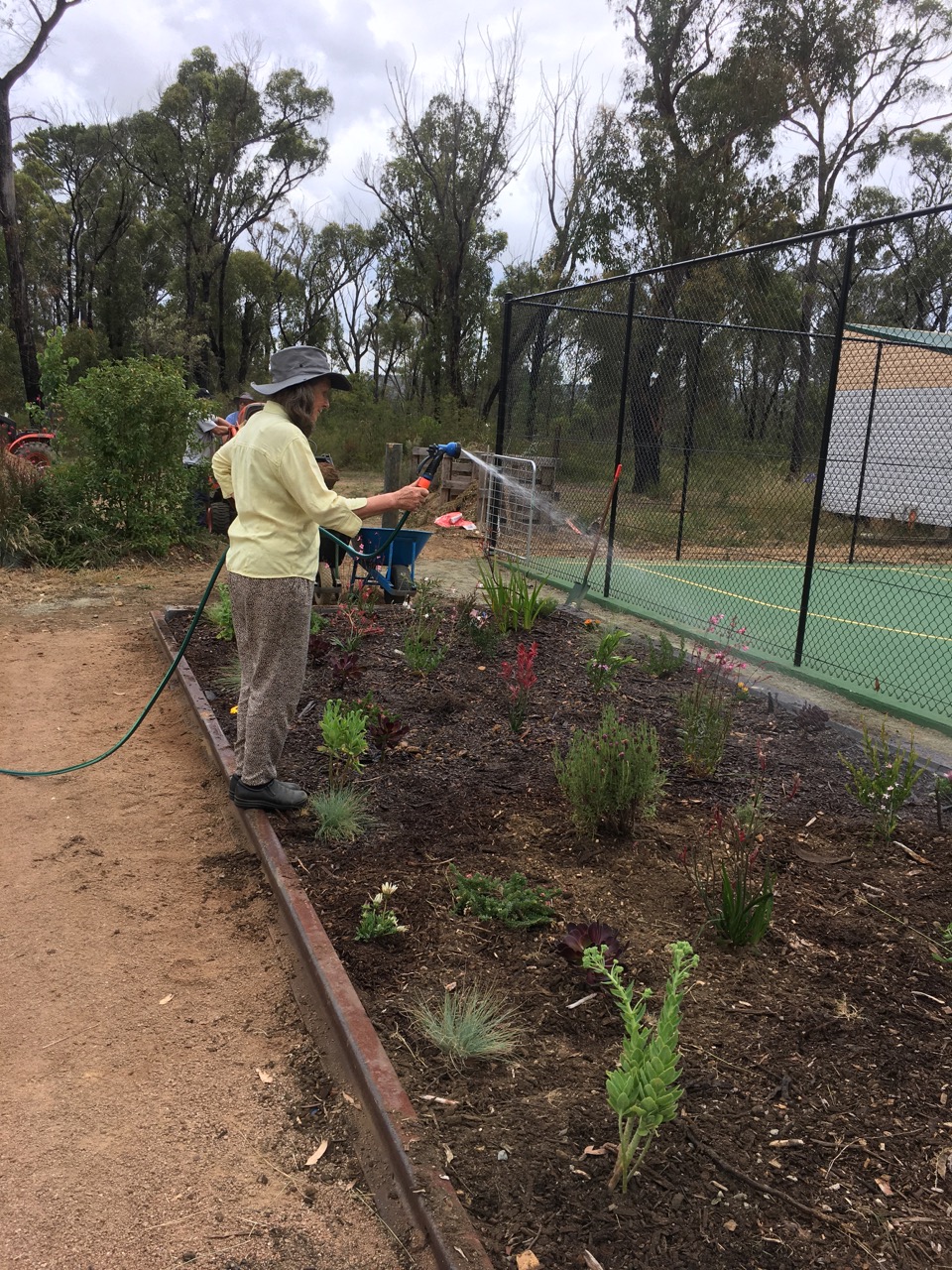
Next we filled the garden beds with top soil and then covered it with a thick layer of mulch before planting out the flowers and shrubs.
Janine watering in the new plantings. It’s a lovely feeling to be part of a communal group activity.
We finished up with a BBQ. A great day of work, that wasn’t too onerous, because everyone turned up and got stuck in.
Many hands = light work.
Today, Sunday morning, Janine and I spent time communing with nature.
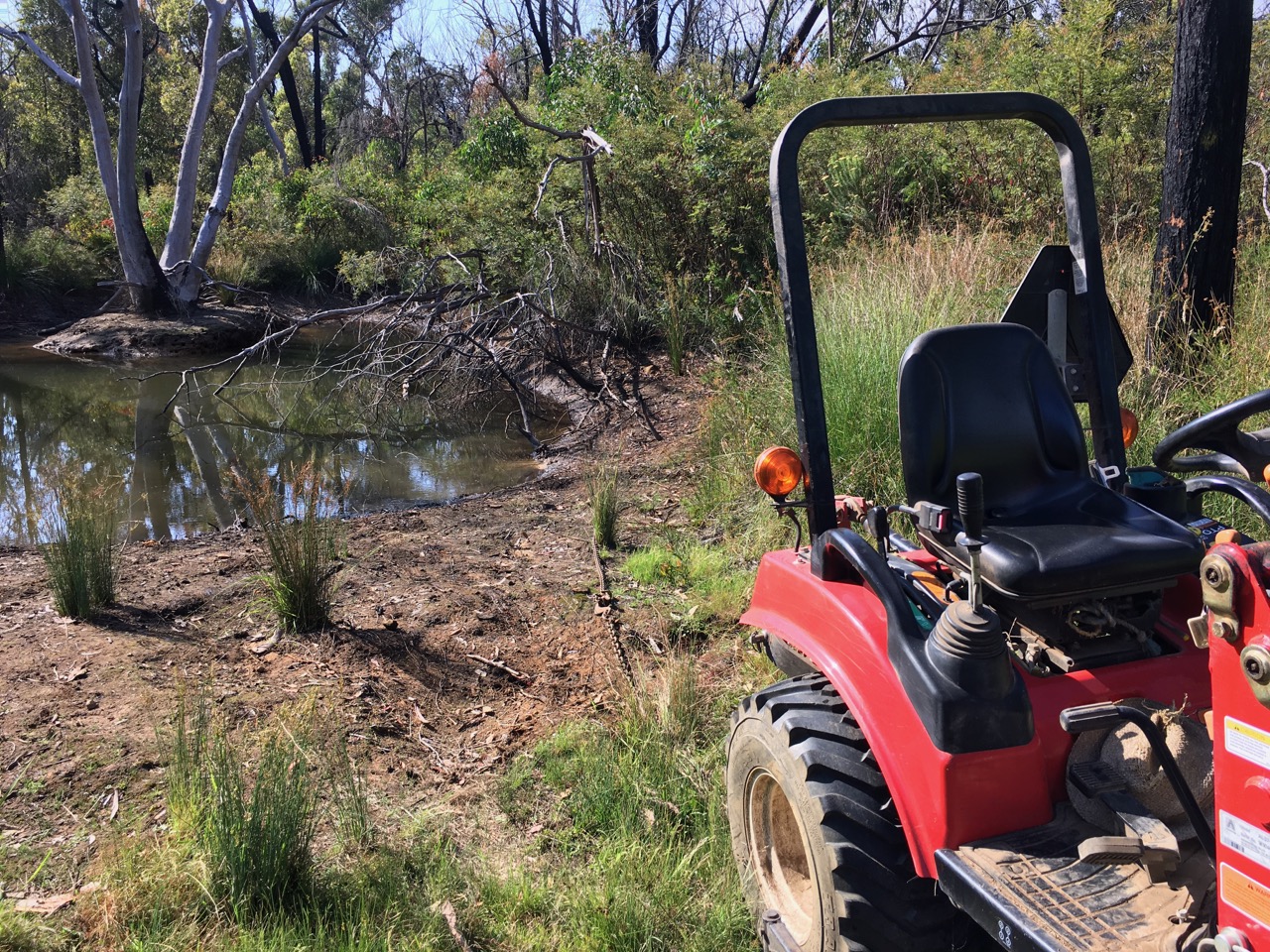
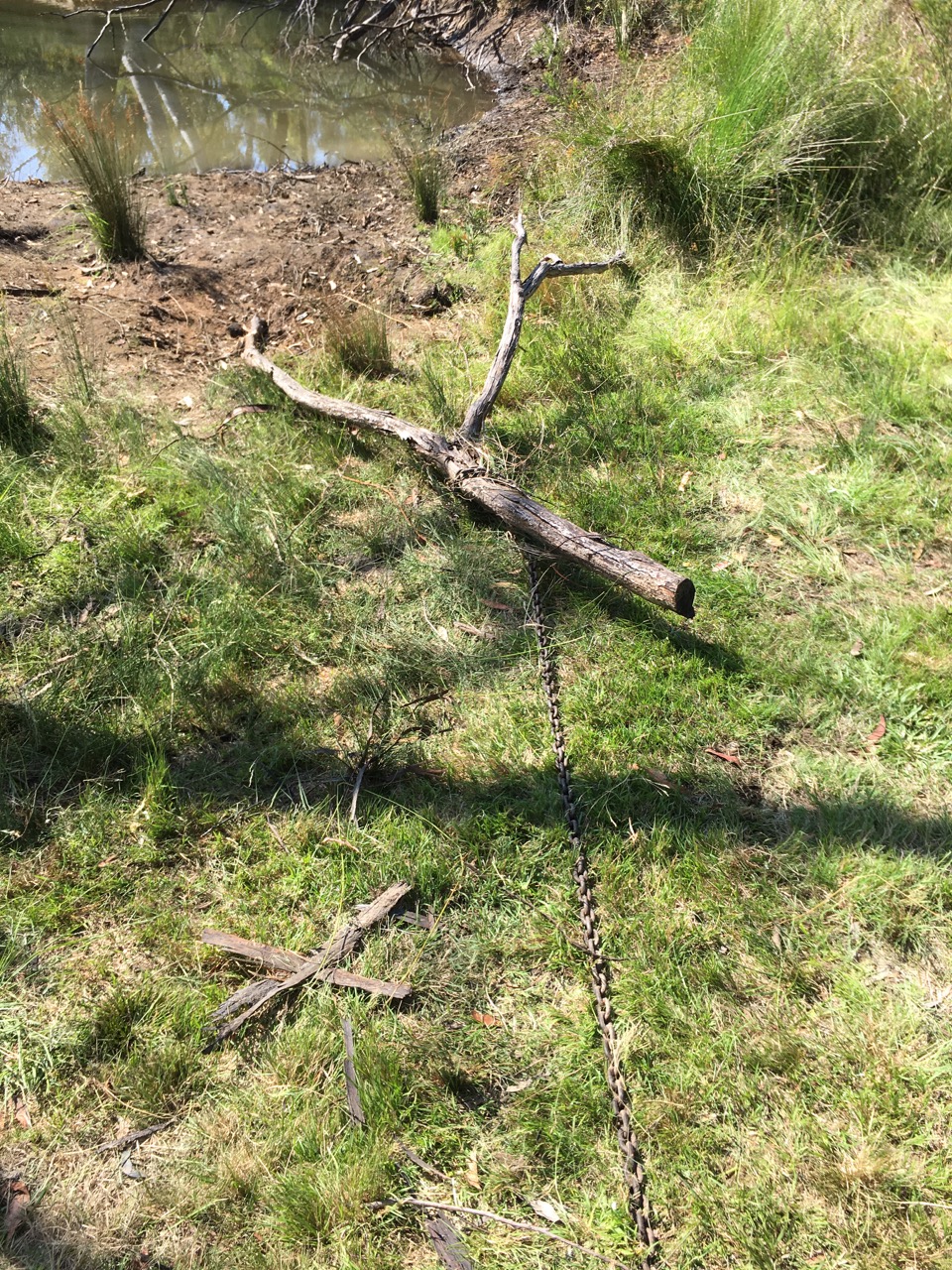
Janine engaged deeply with nature by walking into the muddy dam fully clothed to hook some very heavy load chain around the dead tea trees bushes that were killed by the fire, and have been sitting in the water, standing dead and ugly for 3 years now.
We decided that today was the day to snig out as many of them as we could reach safely, and drag them out of the water and up onto dry land, then cut them up for fire wood for next winter.
It has been raining so much for the past few years since the big fire, that we couldn’t even get close to the dam bank without getting bogged. This has been our first opportunity to get this long-term job started.
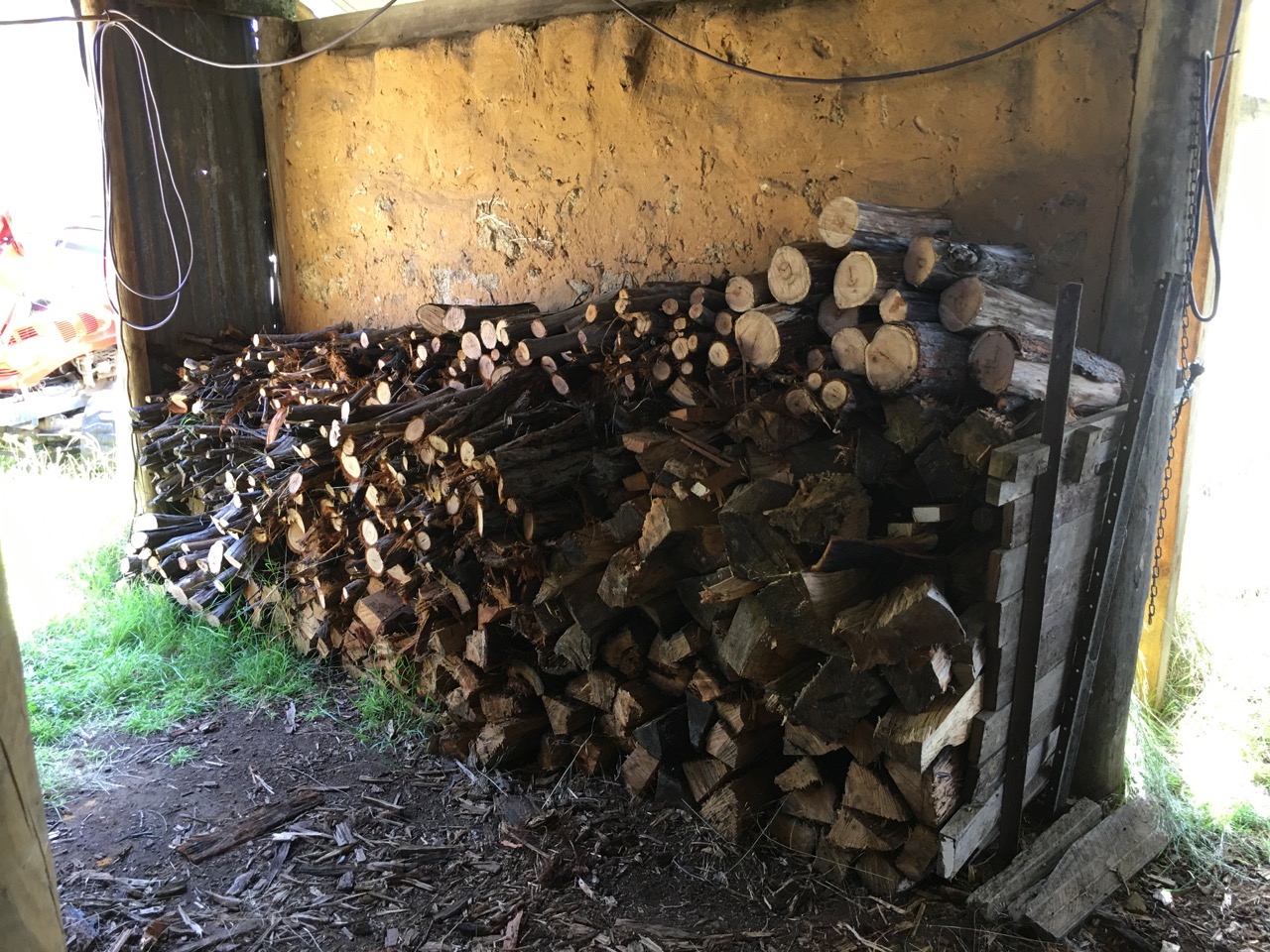
We have cut about half of the wood that we will need for the next winter so far. Cutting and splitting fire wood is an on-going job all year.
We have achieved as much as we can at this stage. We will come back to it when and if the dry weather continues, so that we can walk further into the dam safely to get to more of the branches.
This small dam used to be our most reliable swimming dam in summer, because it was the deepest, and therefore held water the longest. The largest dam is beautiful to swim in, but only when it is full, as it is quite shallow and the water soon seeps and evaporates down to a waddling level.
Once the dam dries out once more, we will get all the dead tree branches out of the small dam, we will clean it out, so that we can swim in it safely on the hottest summer days once again.
Everything worth doing takes time. This is a long term plan.
A new tomato crop is developing. I managed to get a few early tomato plants into the ground in September. I cheated and bought a punnet of seedlings. September is long before our own naturally germinated ‘wild’, self sown tomatoes seeds emerge. I bought a punnet of seedlings from the garden centre. In the past, if I got them in the ground in early September, then we might get a ripe tomato in the week between Xmas and new year. The past decade had been unusually hot and drought ridden here up until 2019. The extra heat allowed the tomatoes to establish so early.
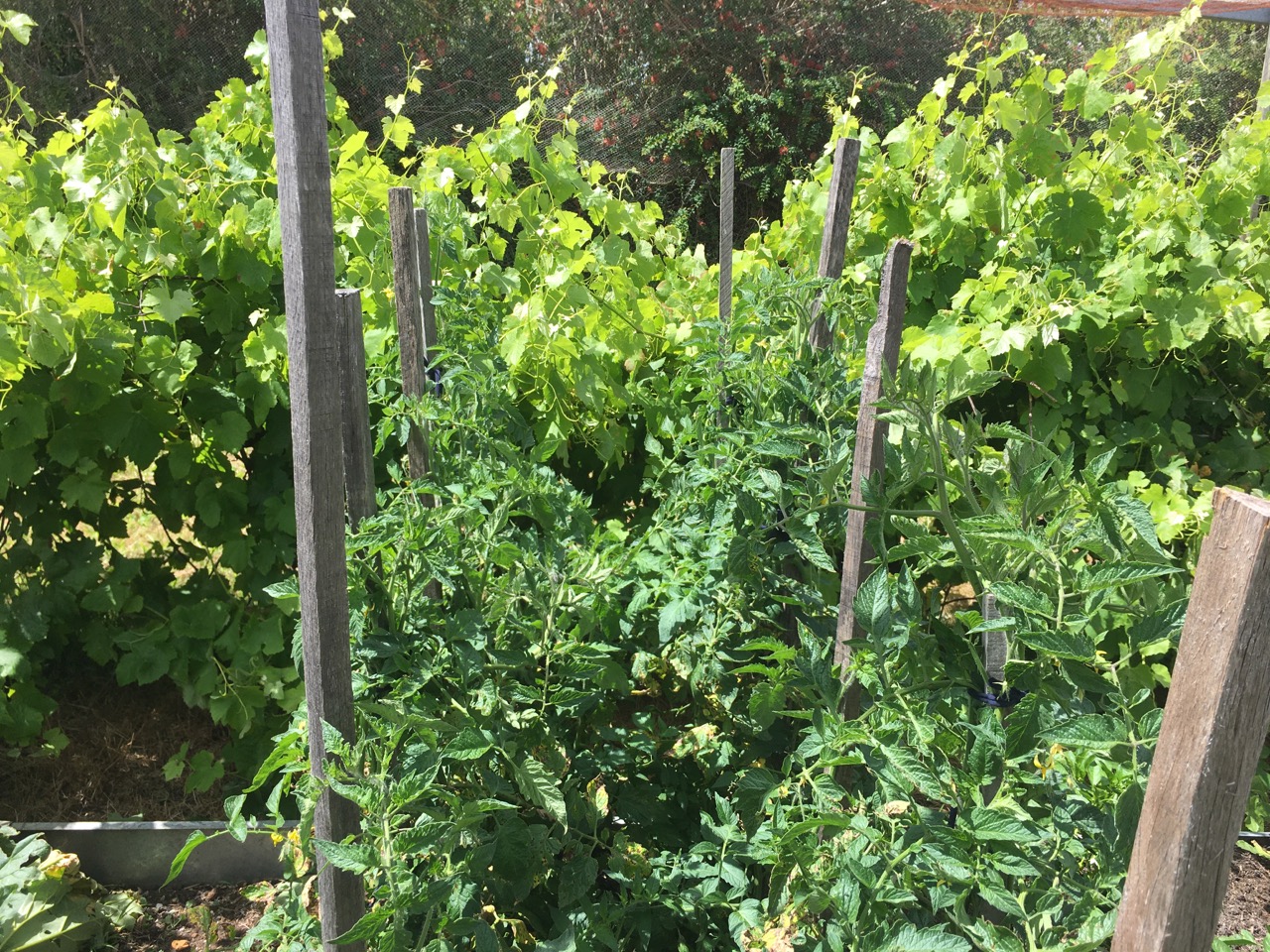
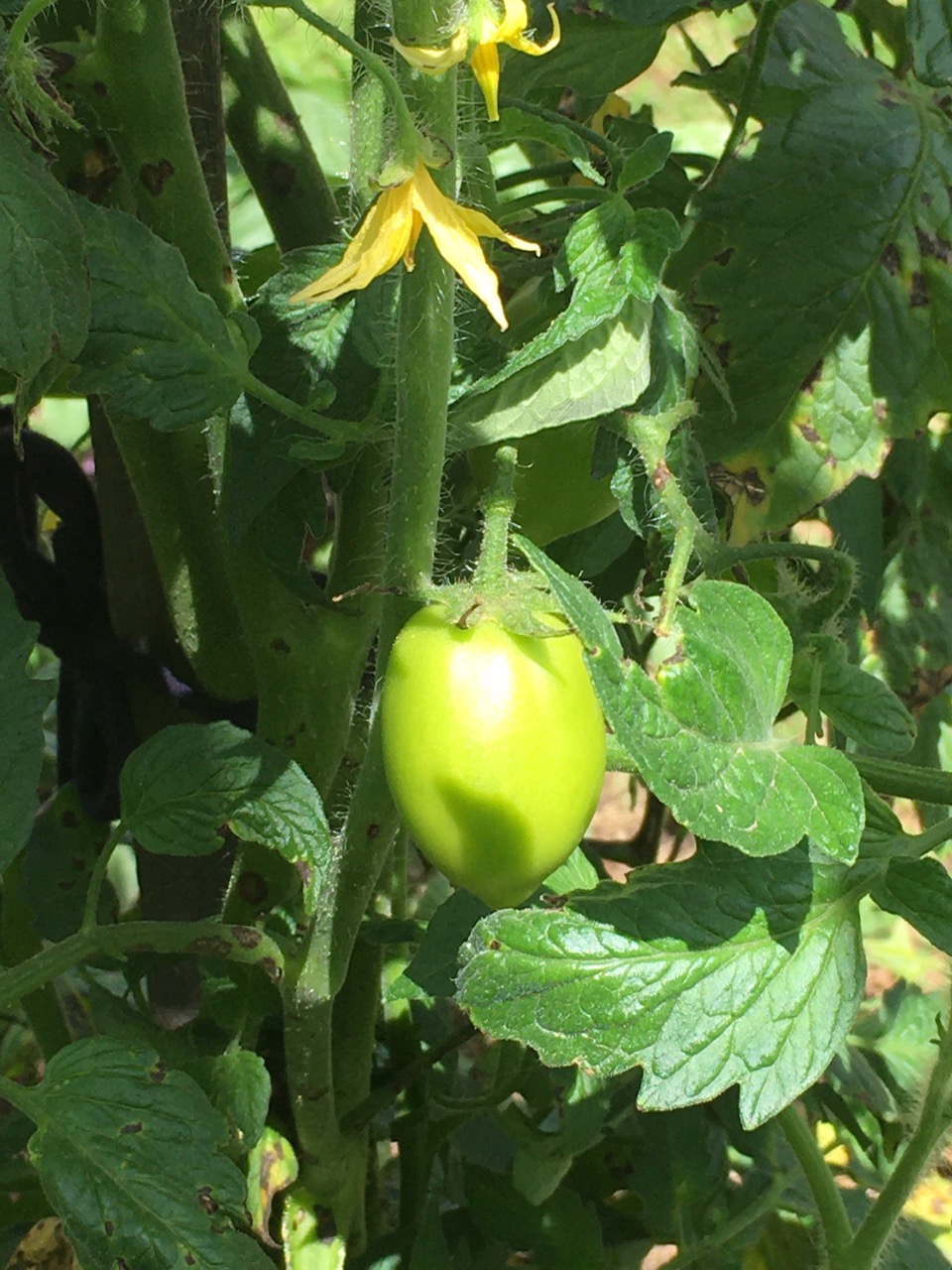
This past year however, it has been cooler and wet in comparison, so the season is delayed somewhat. We do have tomatoes climbing up the tomato stakes, the tallest being about one metre high so far. There are even a few small green tomatoes developing now. However, I doubt if there will be a ripe, red tomato for Xmas, never mind in the next 2 to 3 weeks.
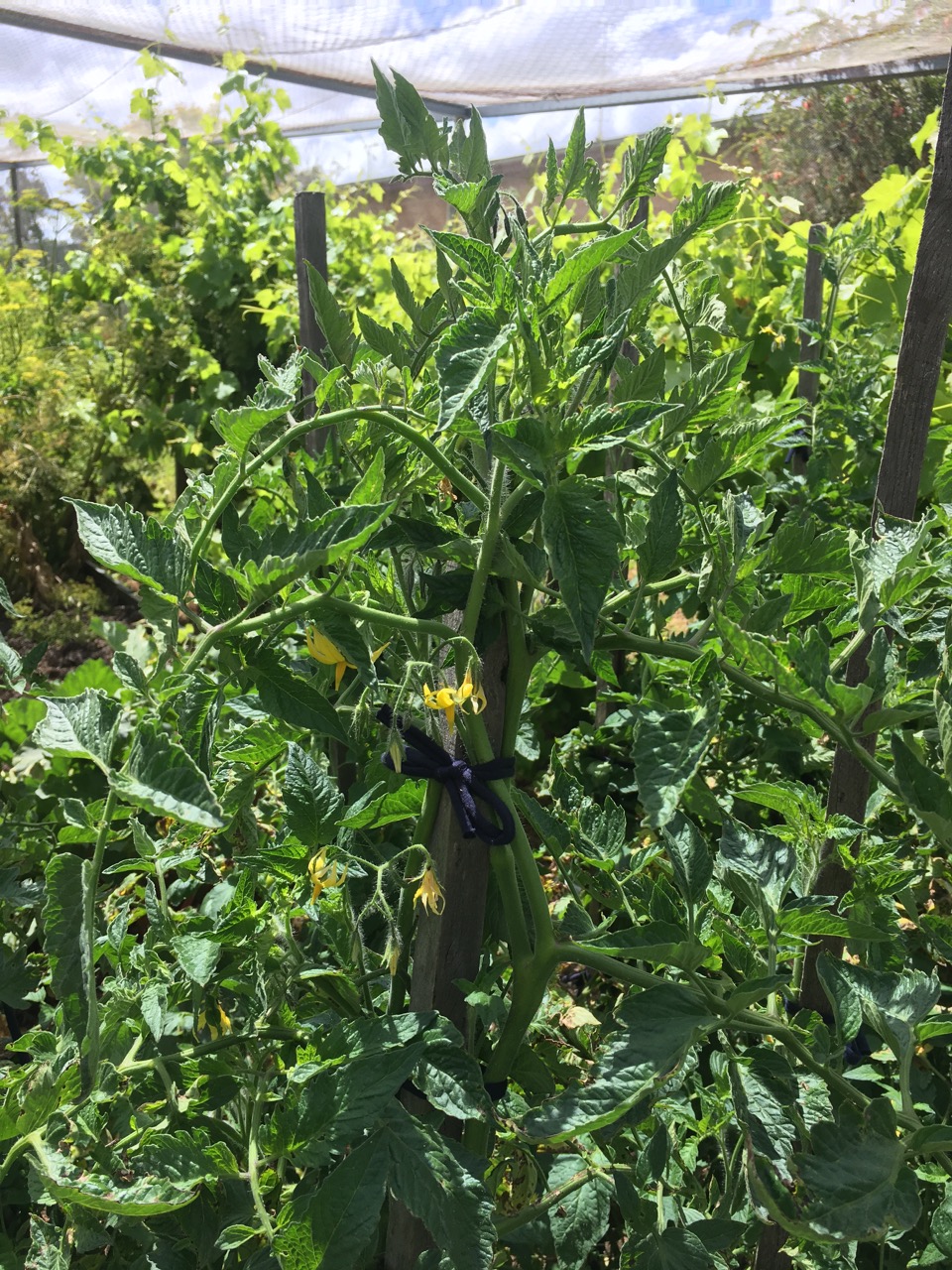
I have planted 4 beds so far, around 10 plants in each bed. The earliest ones are all flowering well now, so it promises to be a good crop in the new year when the warmer weather develops. Well, I’m hoping so anyway. I like to make all the jars of ‘passata’ that will last us all year, as well as all the tomatoes that we will consume in salads and ratatouille dishes over the summer.
Tomatoes need a warm soil temperature and longer daylight hours to thrive. Our own naturally germinating ‘wild’ tomato seeds are just now emerging in among the other beds. So the soil temperature must now be more or less OK. The ‘Diggers Club’ guide tells me that the soil temp for tomatoes must be above 16oC, but I’ve never bothered to go out side with a temperature probe to test the soil temp to find out. Early September seems about right and the plants grow, albeit quite slowly at first. In years gone by I even started the young tomato seedlings off in late August under a sort of home made ‘cloche’ made by wrapping the industrial sized ‘glad-wrap’ that I used to have in the old kiln factory for delivering kilns, and wrapping this around the old wire mesh frames that we used to cover the garden beds before we built the bird proof enclosure. This early frost and cold night protection worked for the important first month, until the weather warmed more, or until the plants got so tall that they out-grew the height of the temporary cover.
Yesterday I went into the garden after lunch to do a bit of tidying up and weeding. I ended up hammering in tomato stakes and tying up the tallest tomatoes. One thing led to another, then I suddenly realised that the chooks had put them selves into their house and were ready for bed as it was after 6 pm. The afternoon had just slipped away while I was being busy.
Tying up tomatoes is such a great job. The season is still early and there is no hope of seeing a tomato any time soon, but just touching the tomato leaves or even brushing against them gives off such an appetising smell. It makes my mouth water with anticipation. I don’t know what chemical is in the tomato leaves, but it is delicious to smell. So spending a few hours hammering in the wooden stakes and tying up the leaders with lengths of soft cloth is a wonderful experience. It promises so much. There is so much optimism tied up in each of those soft little bows.
My go-to reference about my vegetables and fruit growing info is The Oxford Book of Food Plants. It tells me that Tomatoes, ‘Lycopersicon esculentum’ are a native of the lower Andes, and are valued for their high vitamin content. It is part of the solanum family along with deadly nightshade, datura, petunias, the potato, capsicum, chilli and egg plants. In fact eating green or unripe tomatoes can make you sick. Unripe tomatoes contain a toxic alkaloid called ’tomatine’ which is an insecticide, fungicide and has anti microbial properties which are there to presumably protect it from predators, but are easily broken down by cooking, so it is OK to eat them in chutney. No one I know eats them raw when green. However, I did see in ‘wikipedia’ that tests have been carried out and you would have to eat more than half a kilo of tomato leaves, where the tomatine is more concentrated, to get a toxic reaction, which wouldn’t be lethal. I love the smell of touching tomato leaves, but I have no inclination to eat them.
It also tells me that it needs a minimum temperature of 55 to 60oF or 12 to 15oC. This is considerably less than that stated by ‘Diggers’ and may explain why I can get away with starting them in a closh in August here.
The Oxford also tells me that the tomato was originally called ‘pomo-d’oro’ or golden apple, presumably because the earliest varieties brought back from the Americas were a yellow variety? Quite possible? I don’t know. I did read online on a New Zealand web site that only the yellow tomato can be digested properly by humans and that all the red coloured varieties are only digestible by animals!!! Something to do with different forms of lycopene as I remember. However, I have grown a few different yellow tomatoes and they were universally bland and lacking acid in the flavour profile, so I have avoided them ever since. Not worth the trouble to cultivate. I seem to be able to get all the lycopene that I need from the tasty red ones, but do I need any at all?
Michael Pollan, in ‘Defence of Food’ (p67), advises that red lycopene can be easily digested when cooked in olive oil. Italian cooks have always seemed to have known that. Dr Norman Swan in his book, ’So you want to live Longer’ (p 81). Lycopene reduces oxidative stress in the body from free radicals. “There’s a multi-billion dollar industry which sells this idea in a bottle. – Trouble is that they don’t work.” “you’re on much safer ground betting on what’s on your stove”. He consistently returns to the idea that tomatoes cooked in olive oil are really good for you – as part of a Mediteranian diet, low in meat and high in coloured vegetables and whole grains.
I have read elsewhere that all domesticated tomato varieties today are descended from the red-fruited wild tomato, Solanum Pimpinellifolium. Perhaps named after the scarlet pimpernel? One of the other early names for tomato, besides ‘love-apple’ and ‘golden-apple’ was ‘wolf peach’. Which accounts for the latinised name ‘lycopersicon’ used by Linnaeus to describe them in 1753, and still in use today. Tomatoes first appeared in Europe in around 1535 on the return of the Spanish conquistadors from Peru, It took over 150 years for the tomato to be integrated into everyday cuisine, starting in Italy, then slowly spreading across Europe. It’s acceptance was rather slow.
John Ray, The English Botanist, son of a village blacksmith, went on to study at Cambridge, Trinity College, He became the college Steward. He travelled widely in England and Europe, and while in Italy in the 1660s he wrote. ‘The Italians cook tomatoes with marrows, peppers, salt and olive oil’. Perhaps the first ever reference to ratatouille?
It’s Sunday, the day of rest. So I’m taking my rest in the vegetable garden doing a little bit of weeding and planting out some seedlings that I bought yesterday.
I usually prefer to grow nearly everything from seed, often from our own self saved seeds, but when we came home from our little break away down the coast, I found that the lettuce seeds that I had planted a few weeks before had mostly all dried up and shriveled in my absence from lack of water and too many hot dry days.
I gave in and bought a punnet of seedlings. I don’t like to buy seedlings unless there is a very good reason. In this case it is because we will run out of lettuces for our salads in a month or so if we don’t have a follow-on crop coming along. So I planted out the seedlings and sprinkled out a few more seeds alongside to come up in the same bed and take over the spaces as the seedling crop is harvested as sunlight and space allows the the new seeds to flourish in the same spot.
I often do a mixed planting of lettuce and radishes for the same reason, as radishes are such a quick crop, they mature and are removed as the growing lettuces need more space and light.
I also spent an hour plucking out small emerging grass seeds from the leek bed, the carrot bed and the beetroot bed. All these three beds were planted out at the same time about a month or so ago. But the grass seeds germinate so quickly and grow so much faster that if I don’t get down on my hands and knees this weekend and pluck the little buggers out now, with my finger tips, they will out grow and crowd out the vegetables. Pulling them out later, when they are bigger, isn’t an option, pulling them when they are larger and more established with a larger root system will disturb the soil and lift out the tiny, fragile vegetables seedlings in-between them. It’s a job that just has to be done NOW. So it’s done, early on, before the sun gets too hot. I also whipper-snippered the edges and mowed the centre of all the paths. I feel proud of my effort when it’s all done. It’s looking good and loved, well cared for and productive. A great way to begin summer.
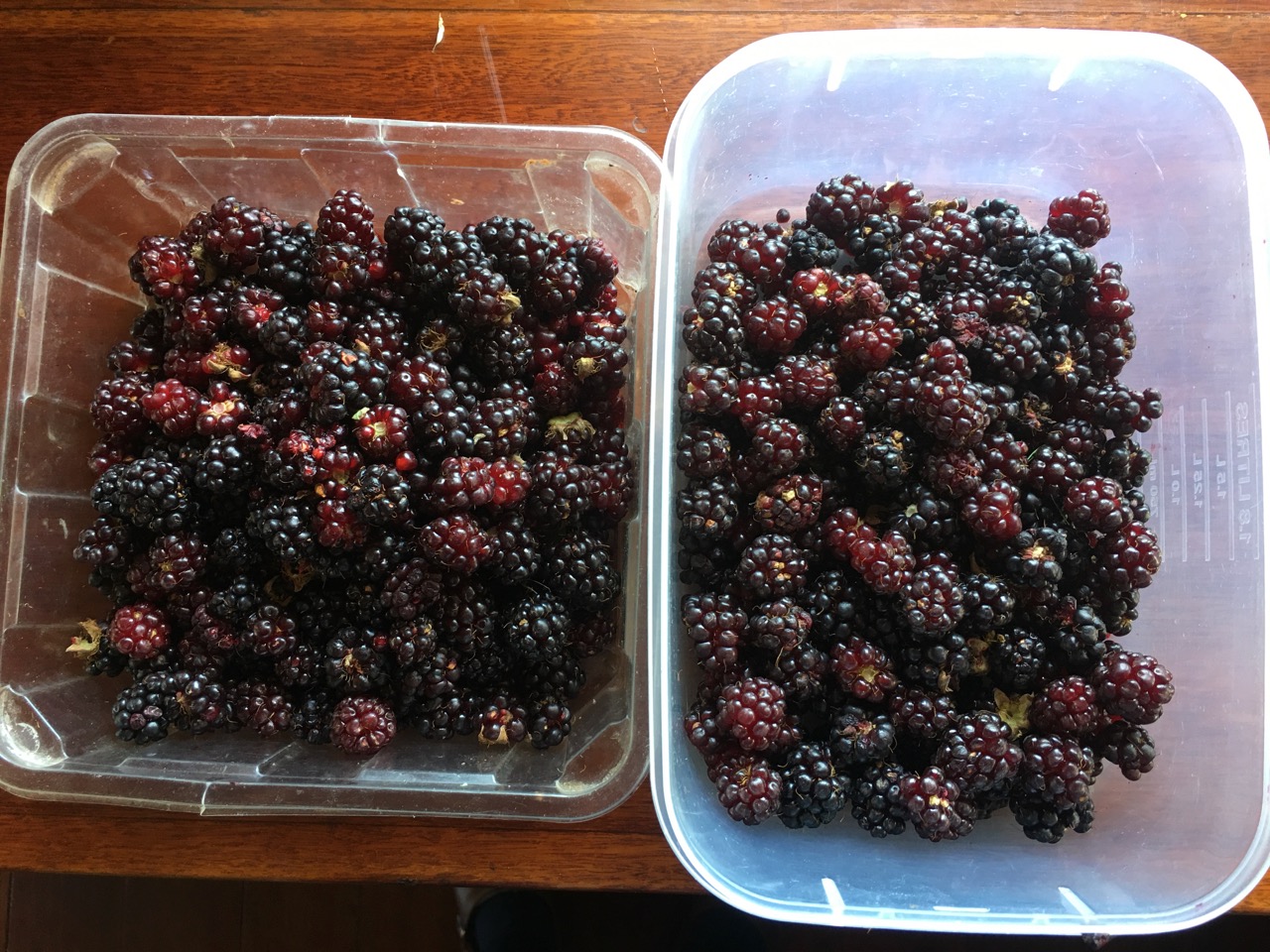
We spent a bit of time before lunch picking blue berries and young berries. We will have the blue berries with our yoghurt for breakfast and I make a agreeable fruit tart with the youngberries.
We now have our breakfast berries picked and in the fridge, our dinner of zucchinis and squash picked, and now desert is taken care of. Time for a little afternoon nap.
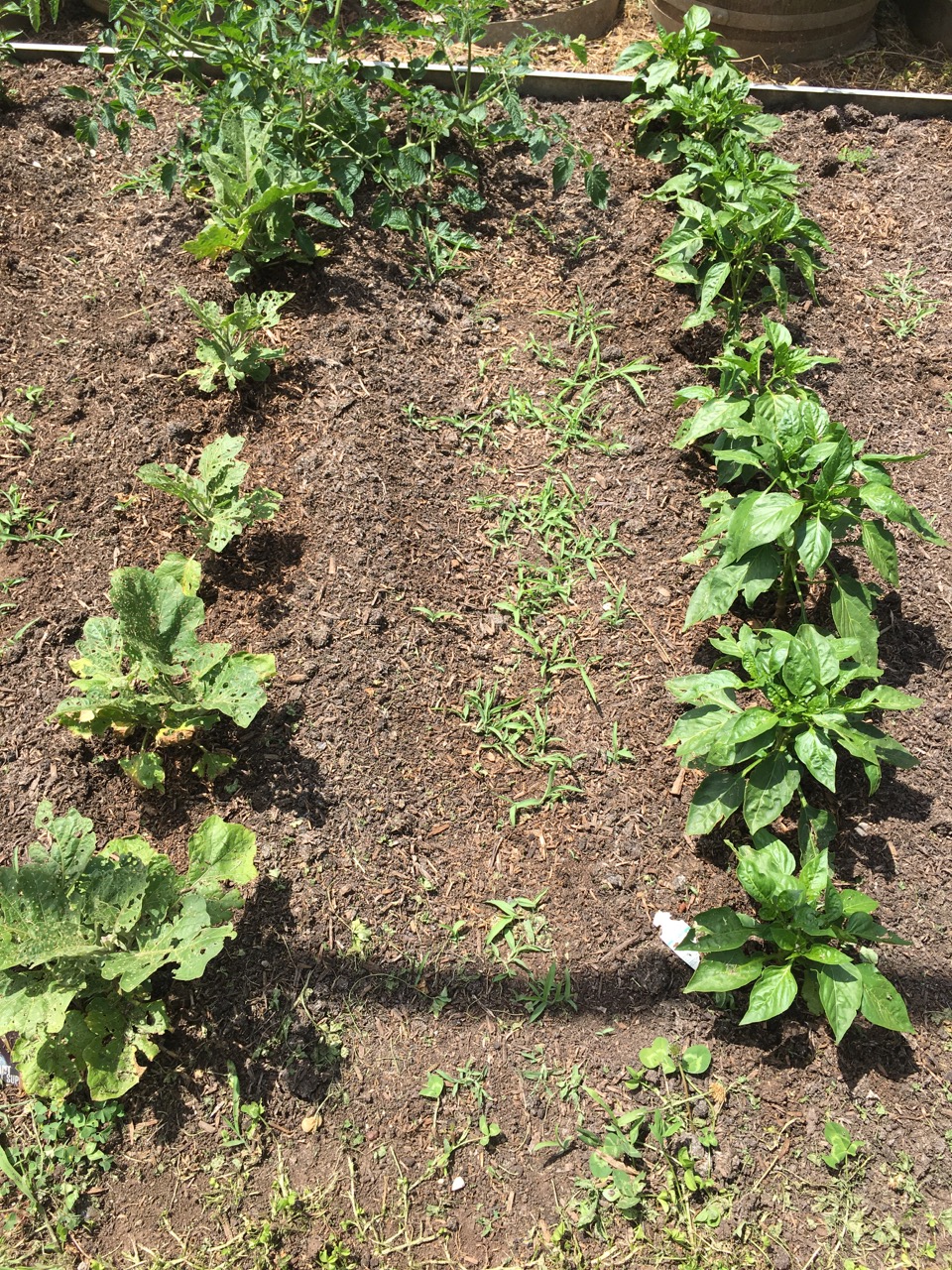
There are still loads of weeds germinating in the paths in-between the rows of veggies, but they can be dealt with using a hoe at a later date. That’s a job for another day.
Tiny basil seeds just germinating.
Small parsley seeds germinating and just showing their first leaves. Sown in-between a few purchased early seedlings.
We have new plantings of Sweet basil seeds, coriander seeds and curly parsley on their way. They all need to be precisely finger tip weeded to allow them to thrive. Just a bit of TLC goes a long way. We all need it to thrive. Even me.
During the week between the two Open Studio Weekends, I ventured out to check out the mulberries. The crop wasn’t good, but there were quite a few coming on. Possibly ready to pick in a week or so once they ripened up a bit more.
After the last weekend sale, when I found some time to get to the orchard again, I realised that the birds had eaten all the mulberries. ALL THE MULBERRIES!
Recently, we have had quite a good number of wattle birds, Dollar birds, Frier birds and the constant regiment of endemic bower birds
There were just a very few immature pale hard berries left. So no mulberry tarts this year.
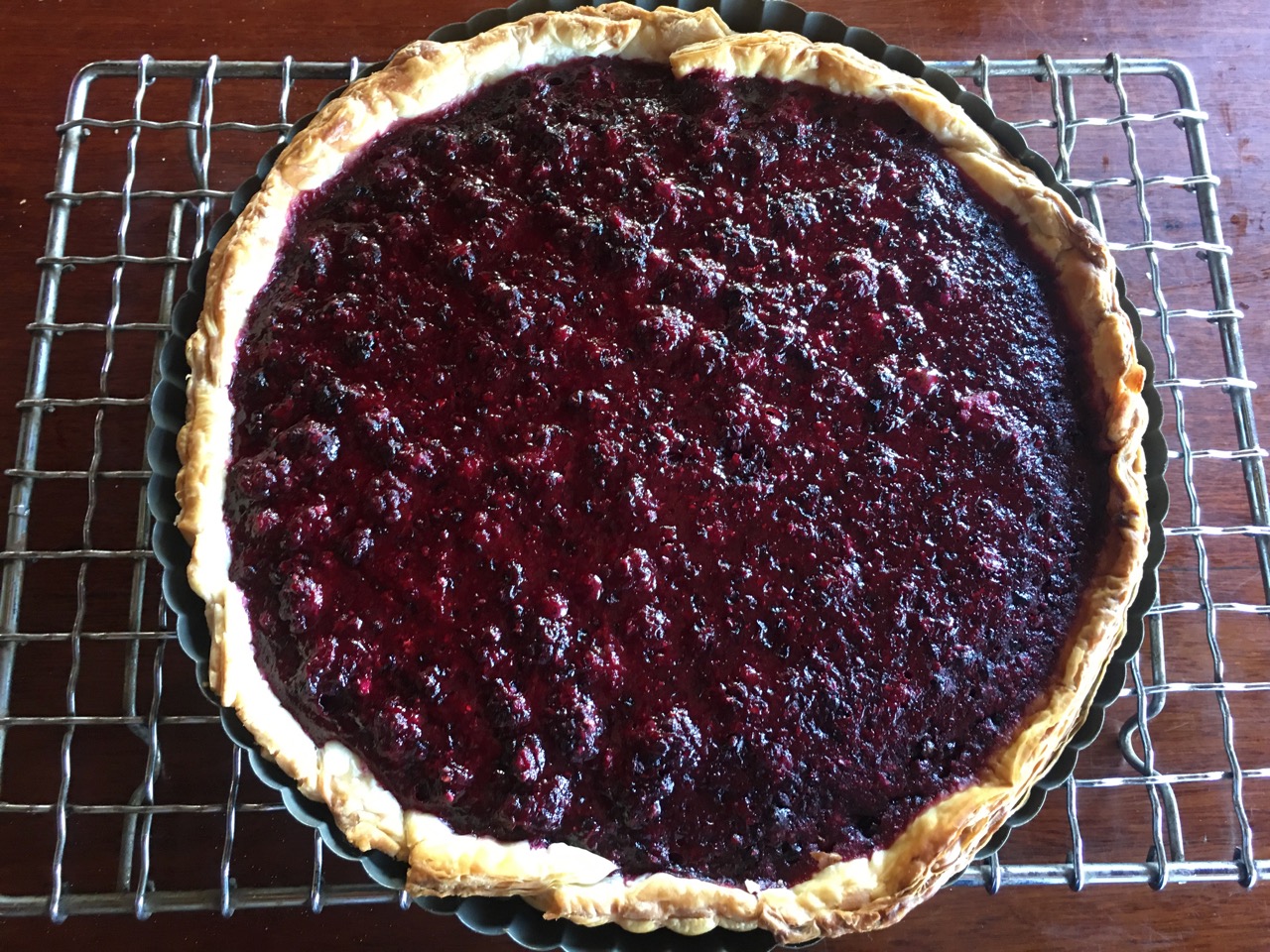
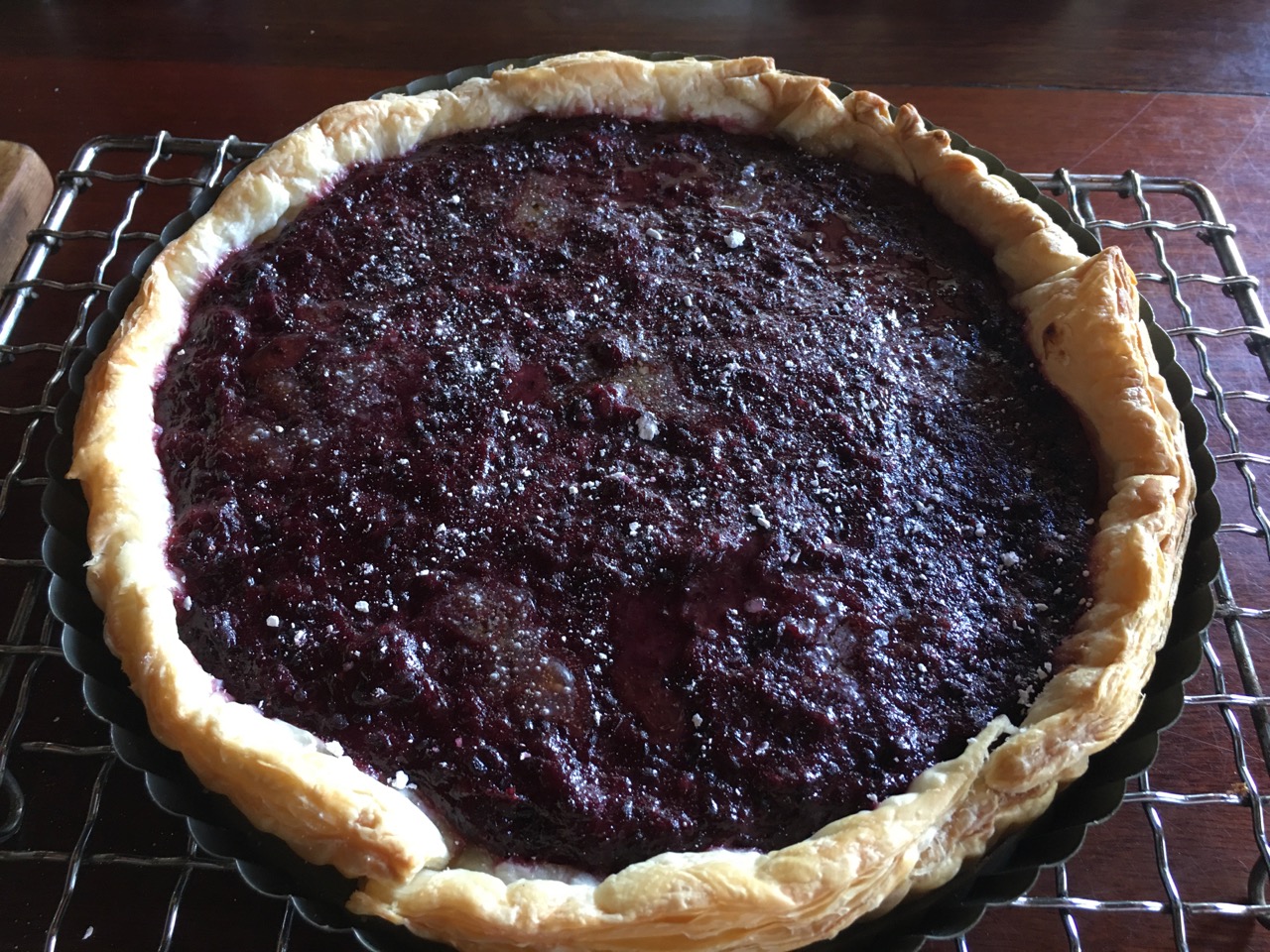
Instead, I decided to make a youngberry tart, using last years Youngberries that I preserved and bottled on the 4th of December ‘21.
It’s a lovely tart. It isn’t quite so good as when I use fresh berries, as fresh berries retain a lot more texture and structure to the substance of the tart.
This years berries aren’t ready yet, but the pantry has a few bottles of last years berries that have survived the hungry gap. Principally because we are trying to cut down on our sugar intake.
I don’t add any sugar to the preserved youngberries. They are sweet enough, and every little bit of sugar adds up. But they are wonderful, so rich, so lively with that special mix of acid and sweetness. I love them. They are so special, really unique to this time of year. I really look forward to their season. They follow the mulberries and preempt the cherries.
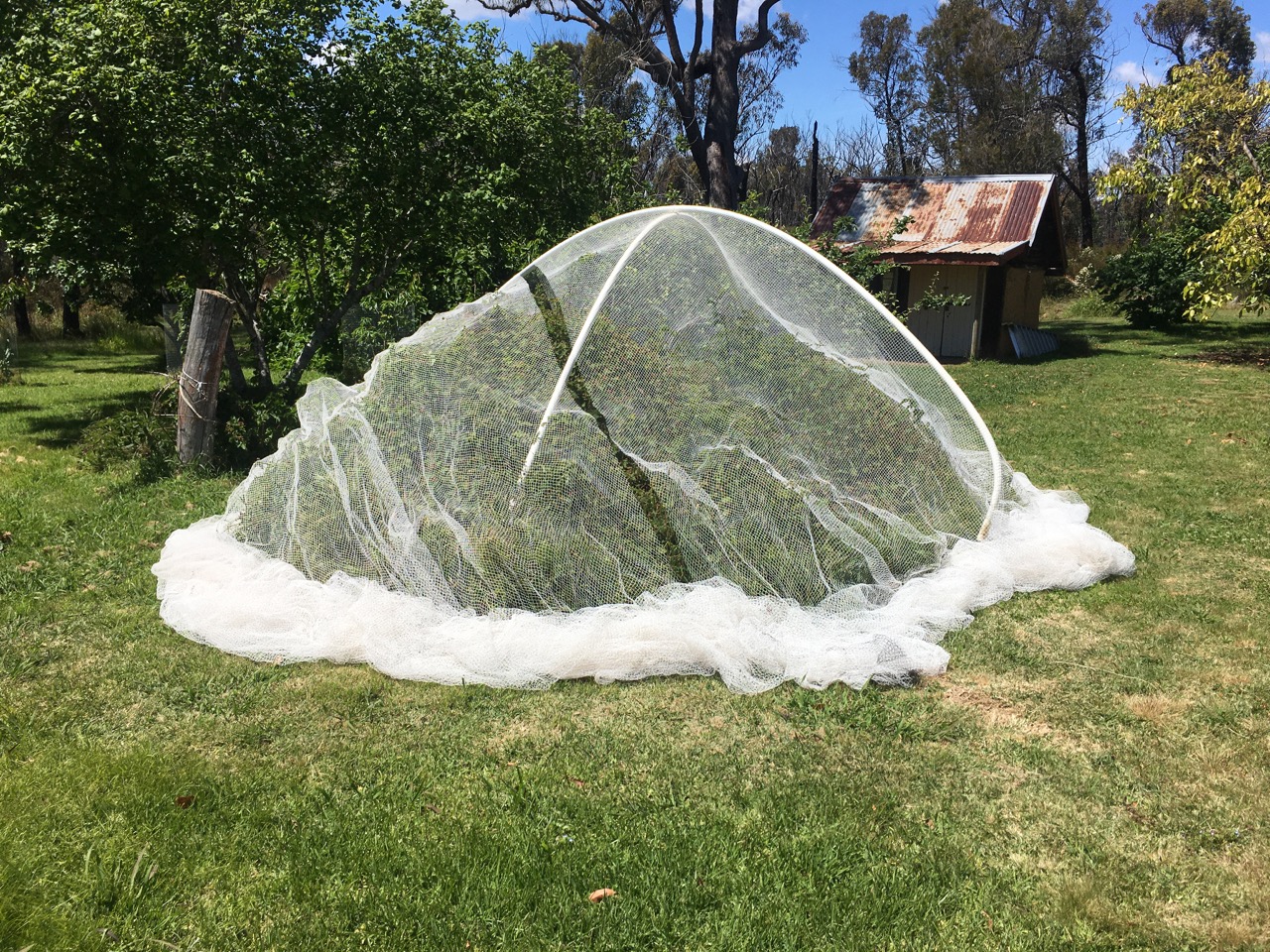
I couldn’t net the mulberries, the tree is too old and too big, so they are all gone, but I can net the youngberries, as they grow on canes at ground level.
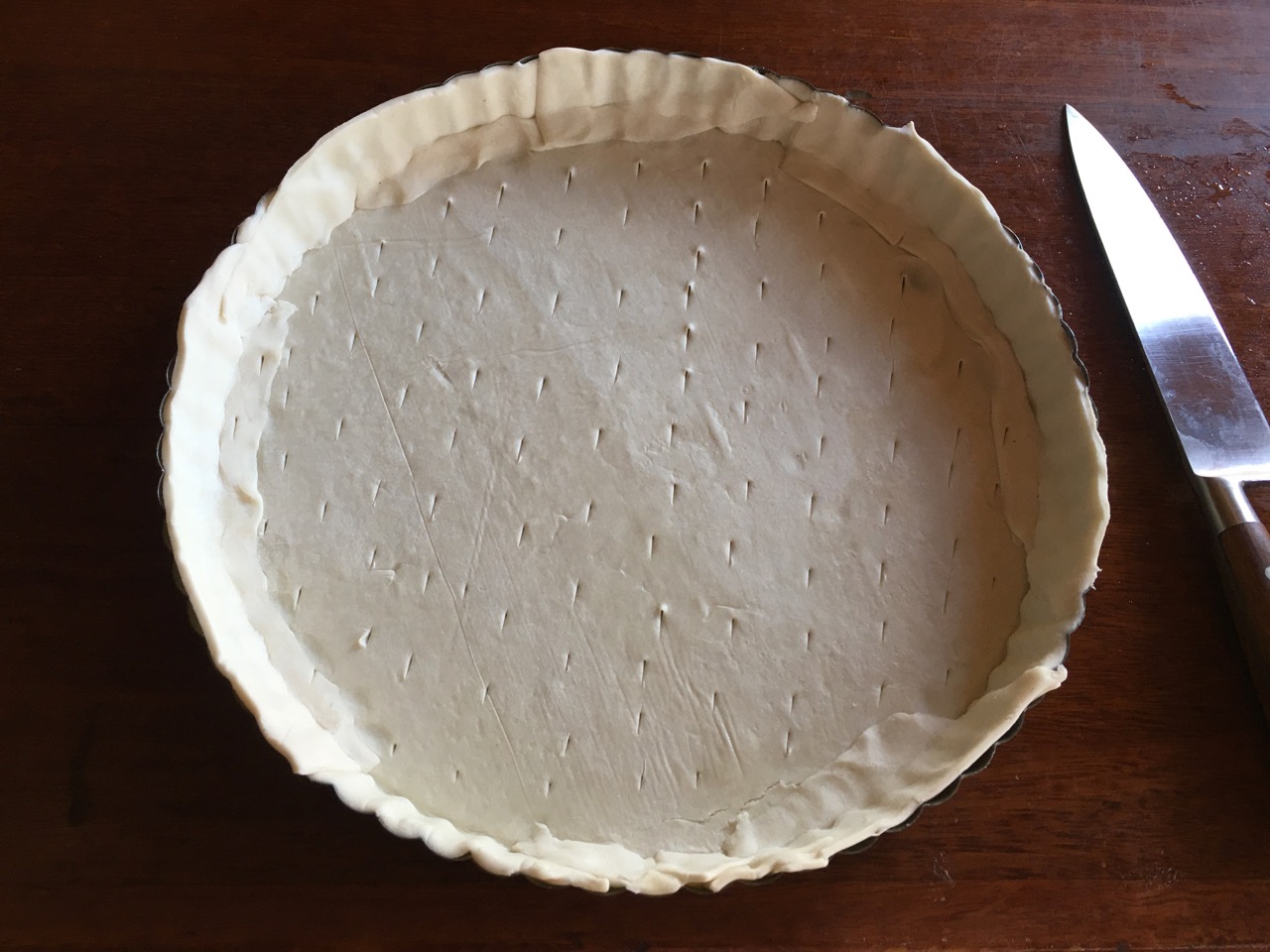
I blind-bake the pastry first to cook it through and then add the fruit, and bake it again to set the fruit.
As soon as we could find the time, we were out in the garden and netted the youngberries. Safe for this season now.
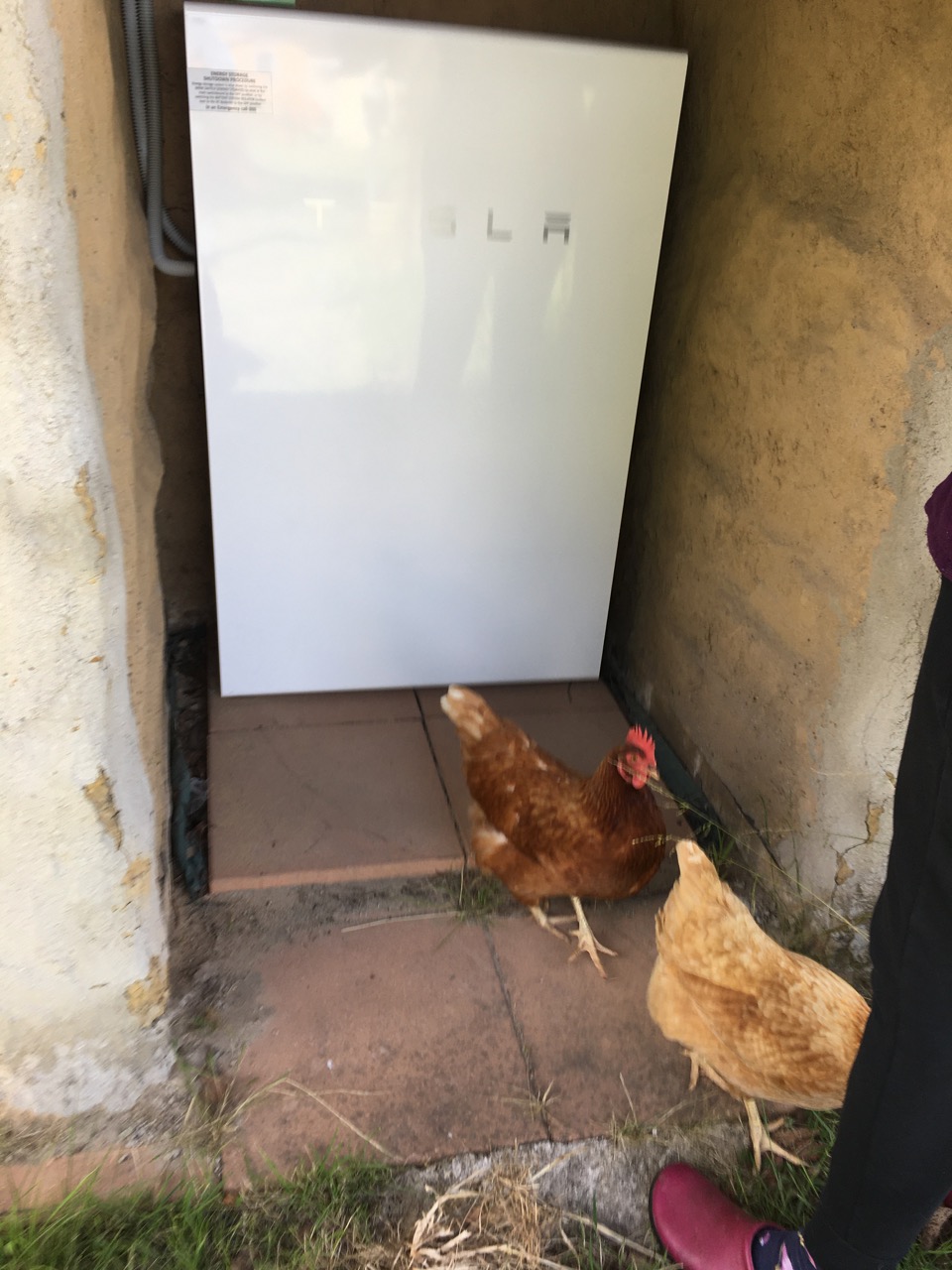
The chickens come out to see the new Tesla Battery. Perhaps they want to know what it is like to be a battery hen? They don’t appear to be very impressed. Battery hens! What’s all the fuss about?
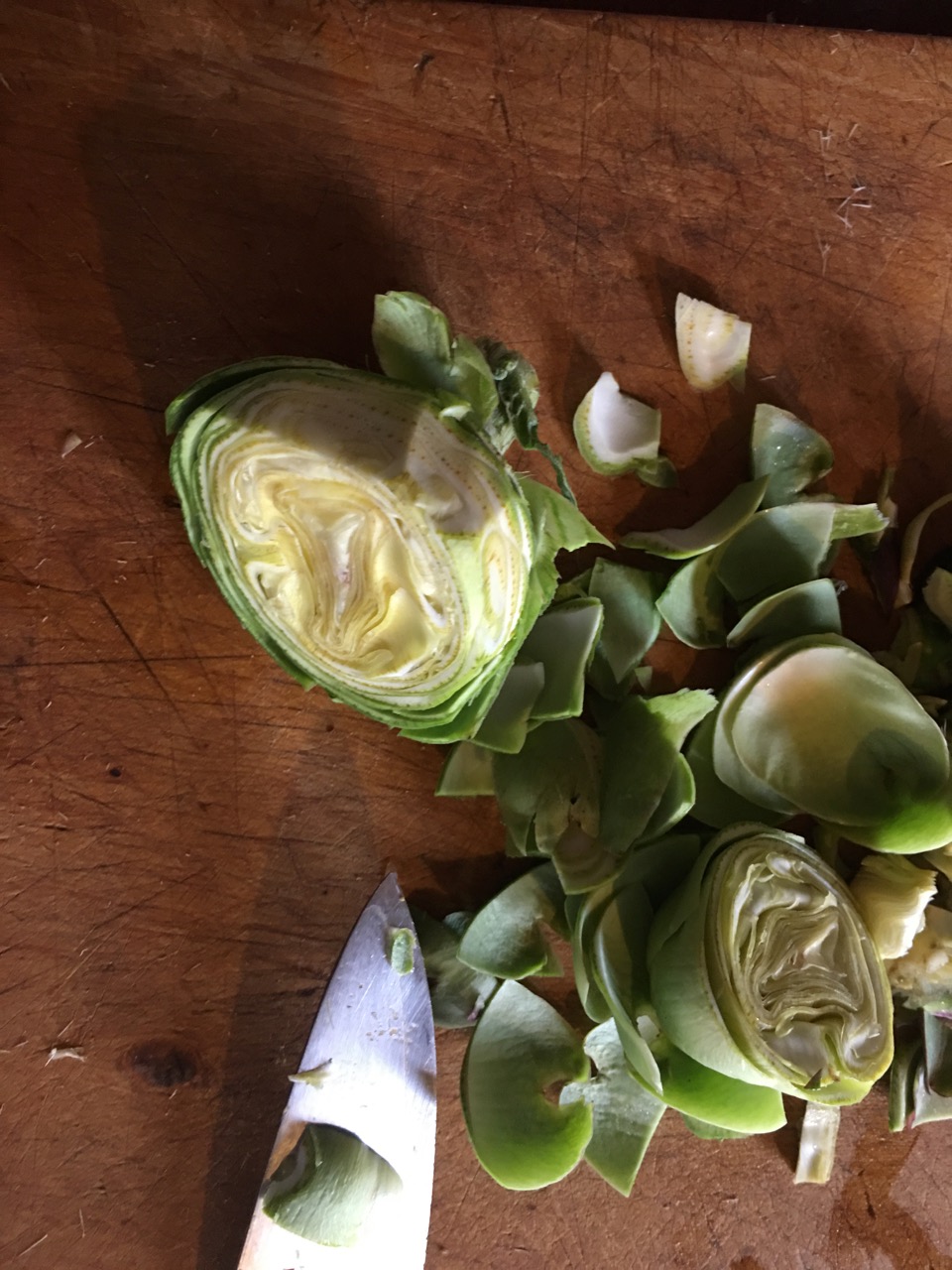
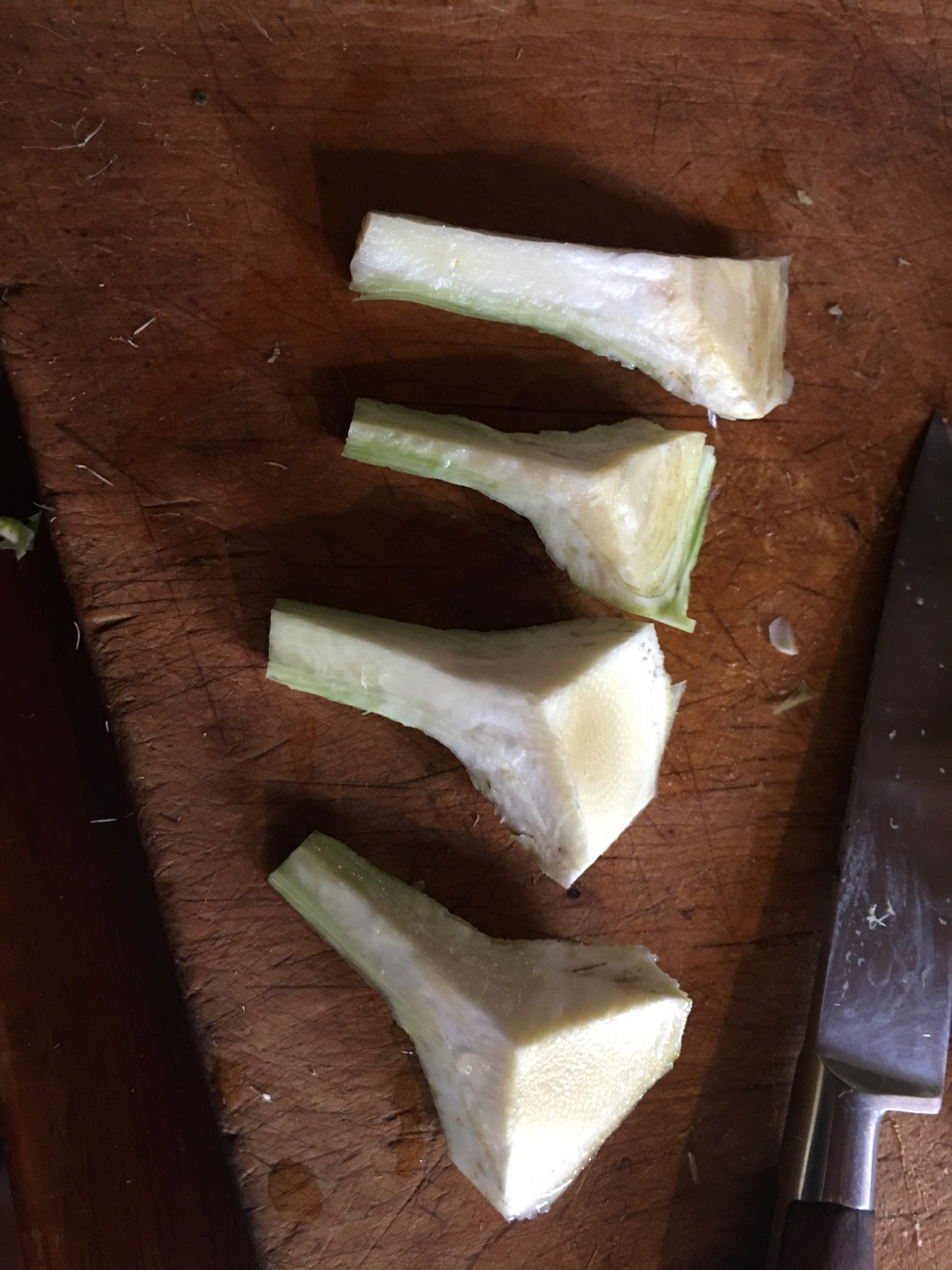
In the garden, we have picked the last globe artichokes. They are a bit past ‘best’, so need to be cut in half and have the ‘choke’ taken out.
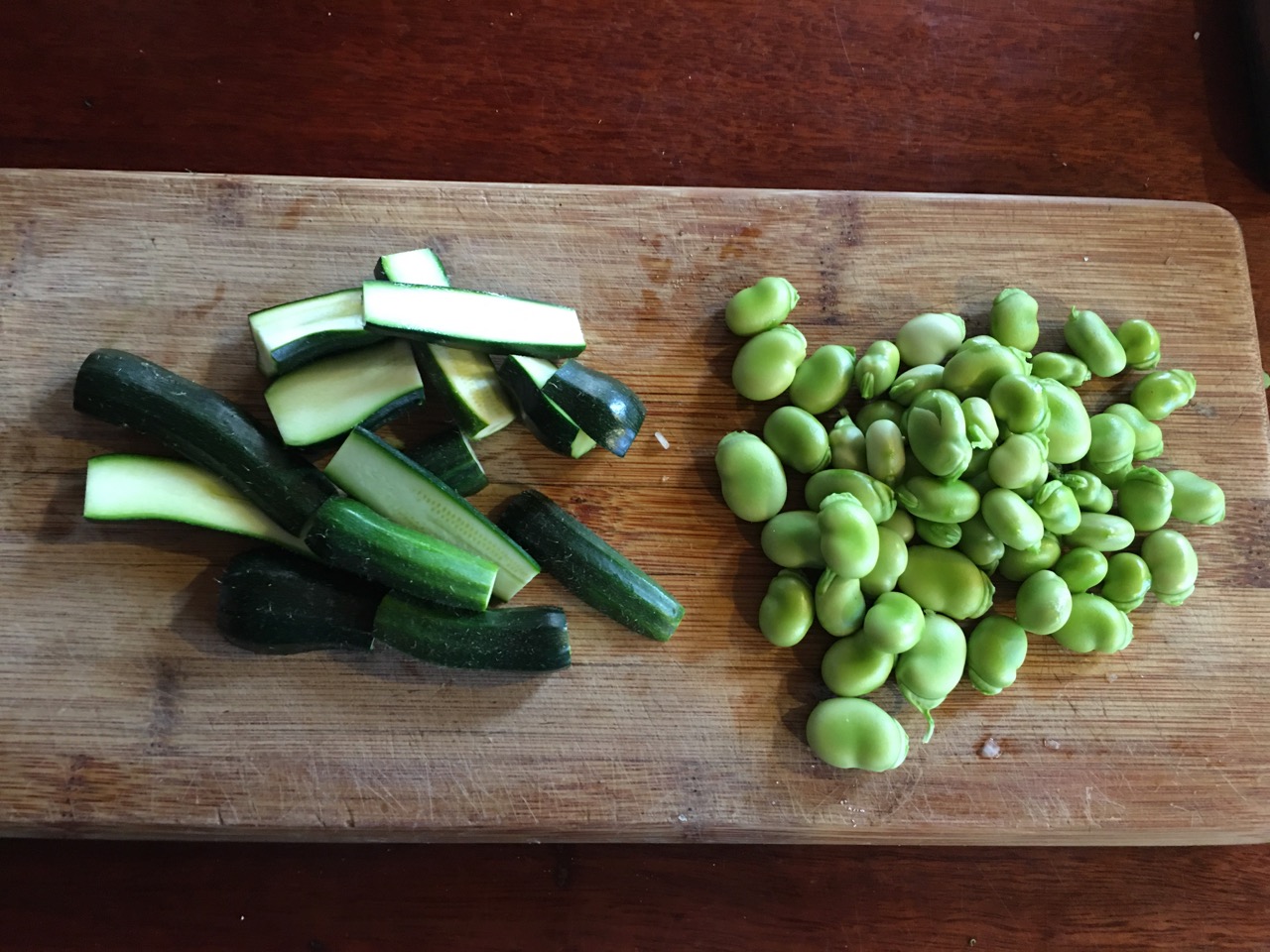
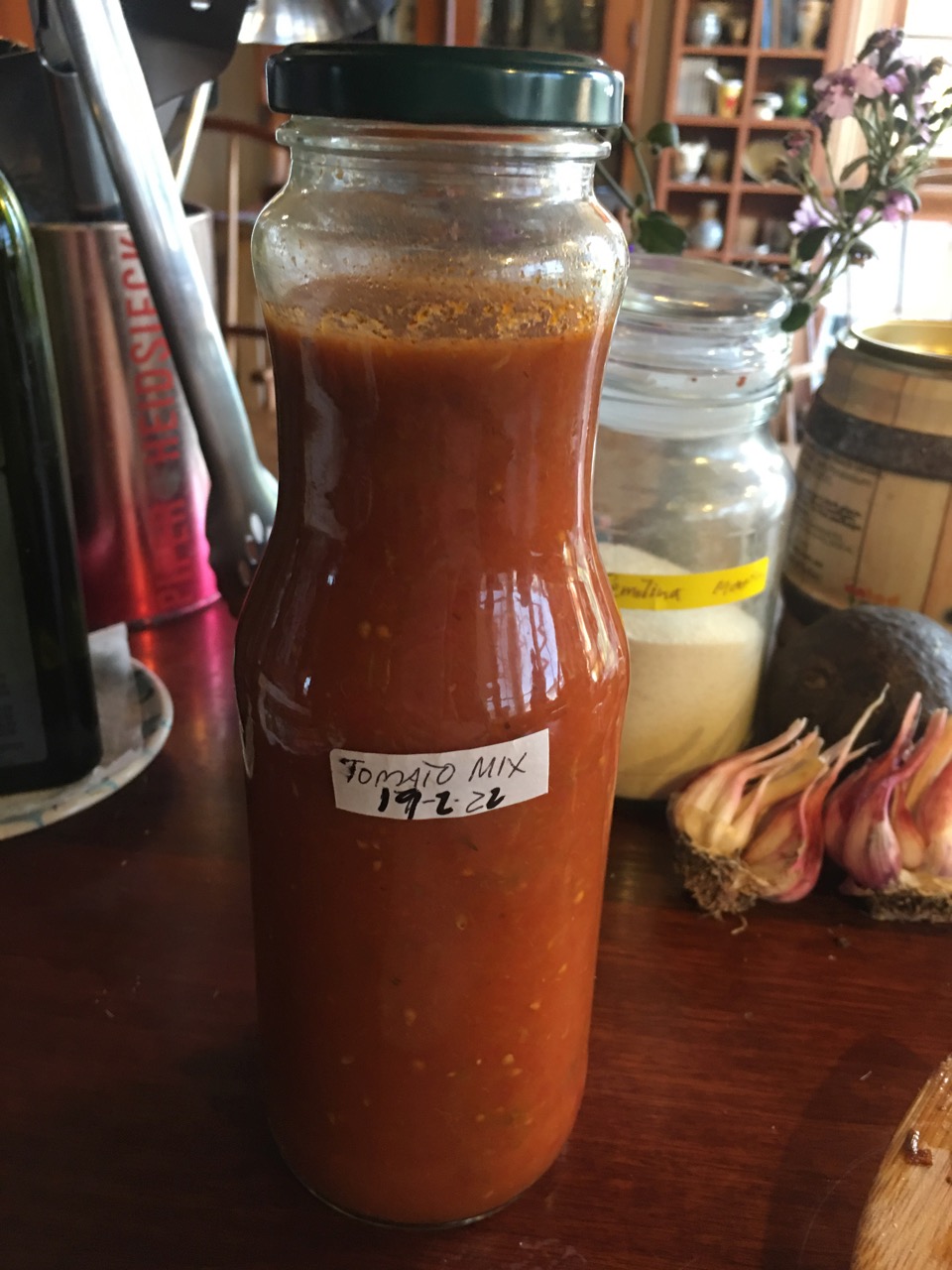
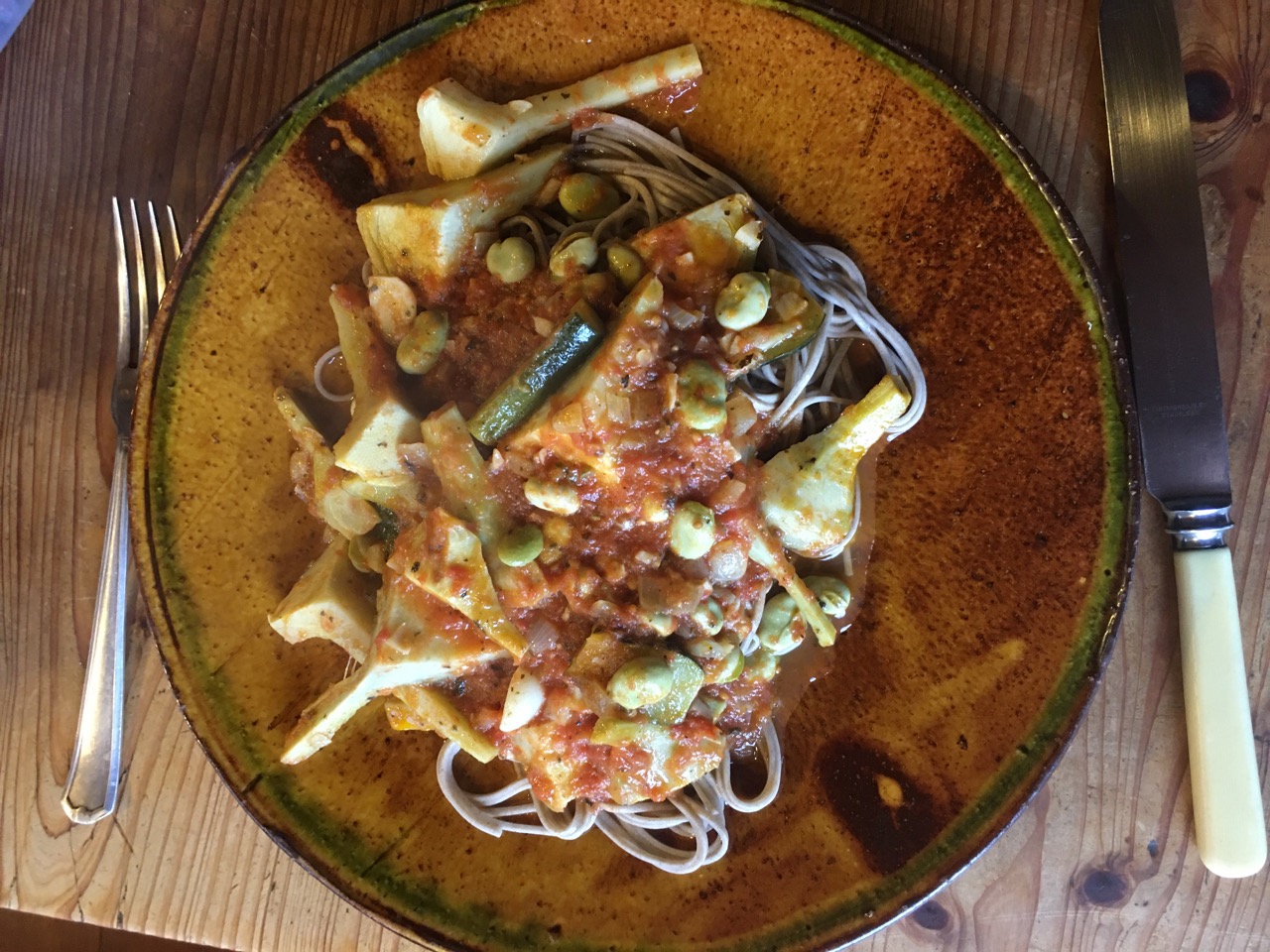
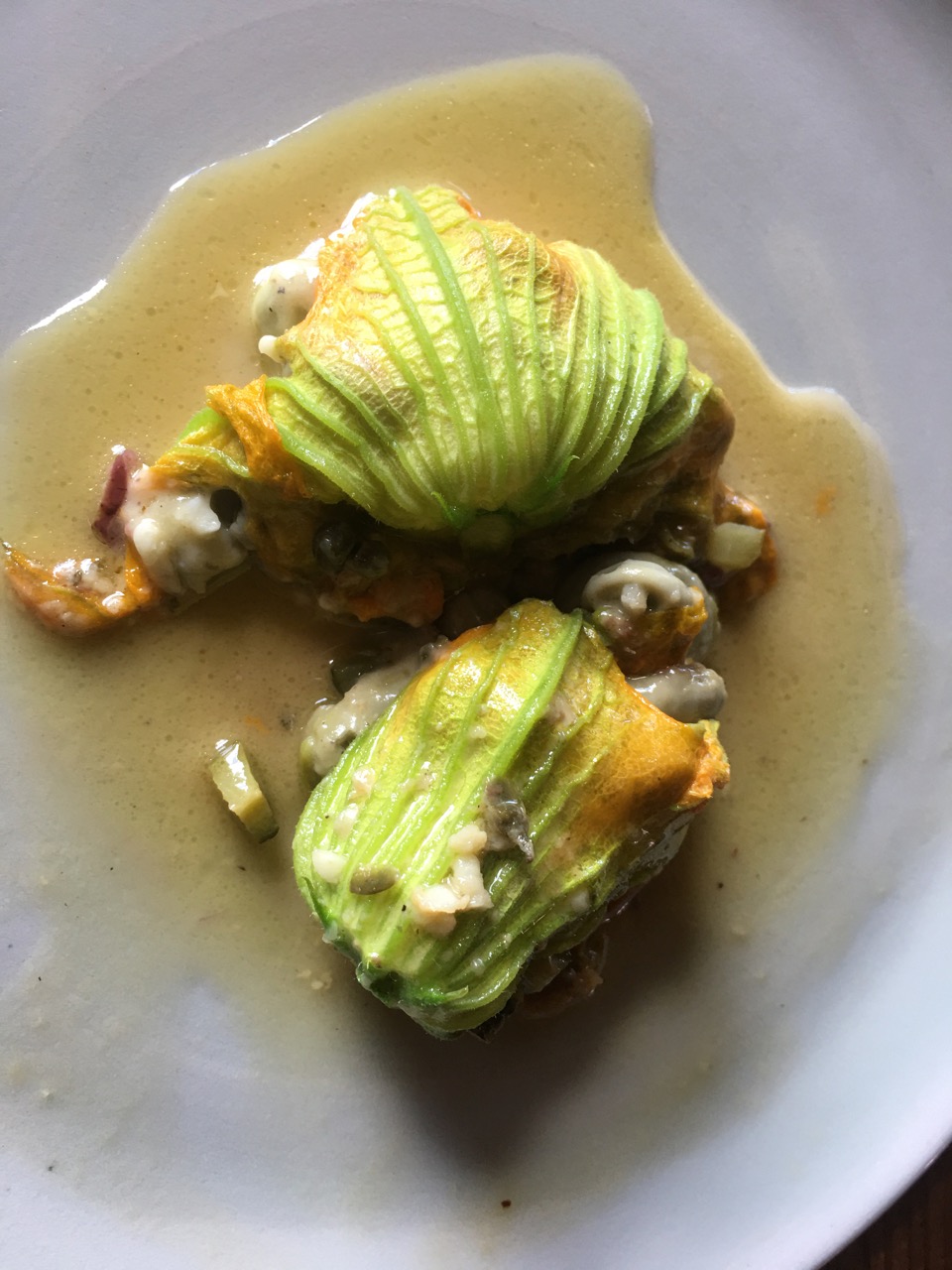
I cut them and trim them down to the essential core of flavour and drop them in lemon juice acidulated water, eventually to make a pasta sauce out of them with our home-made tomato passata sauce from last summer and some little zucchinis and broad beans from the spring garden.
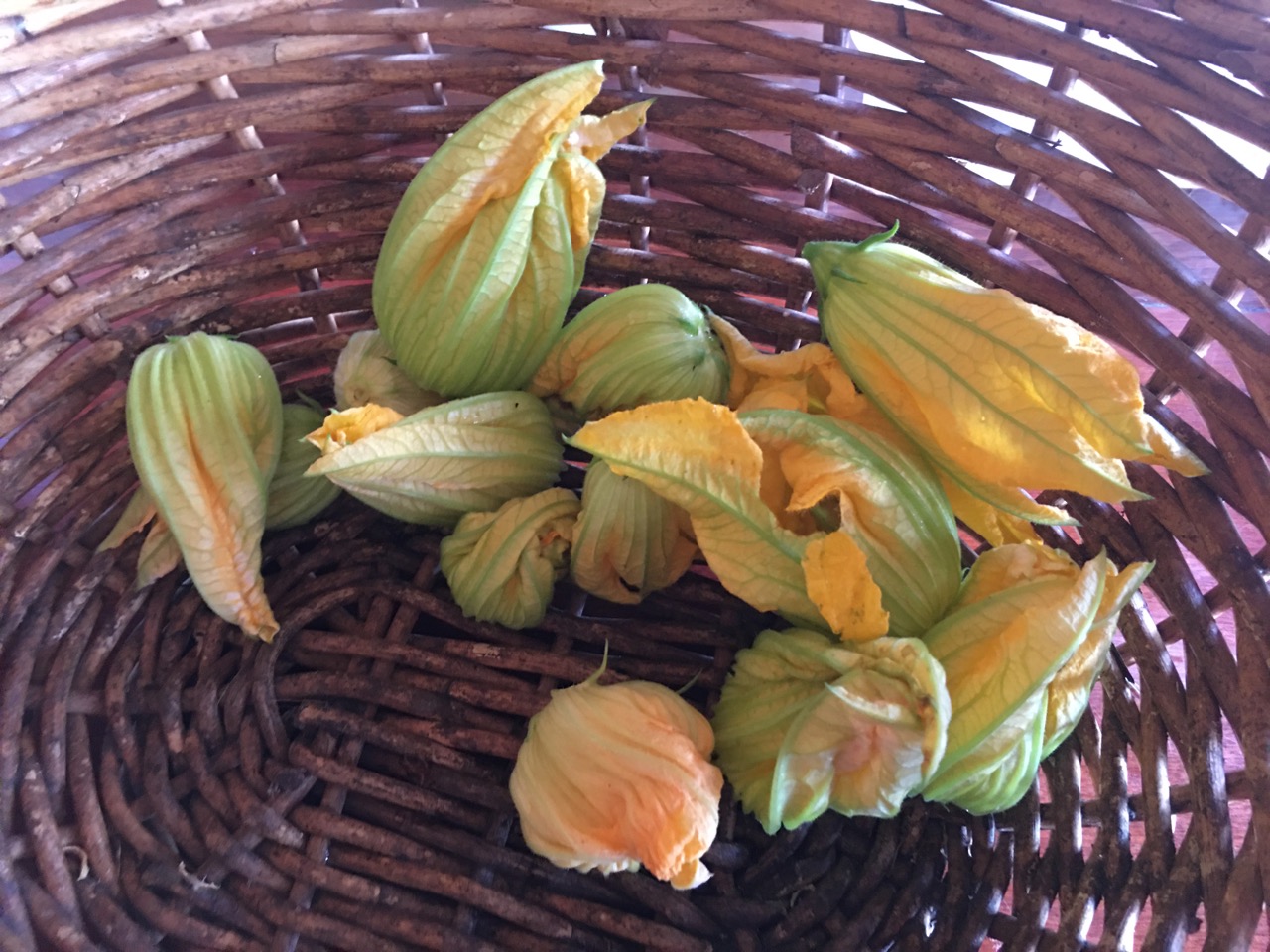
I stuff the zucchini flowers with broad beans, olives, cheese and some chopped gherkins. Not my filling of choice, but I am committed to use what we have in the garden and live with the seasons. We have a lot of broad beans at the moment, and
the last of the winters cauliflowers.
We eat the cauliflower raw with just a little bit of mayonnaise. It makes a lovely entrée.
Over the past week, since the first Open Studio weekend, I have managed to do a bit of catching up in the veggie garden, mostly watering and weeding.
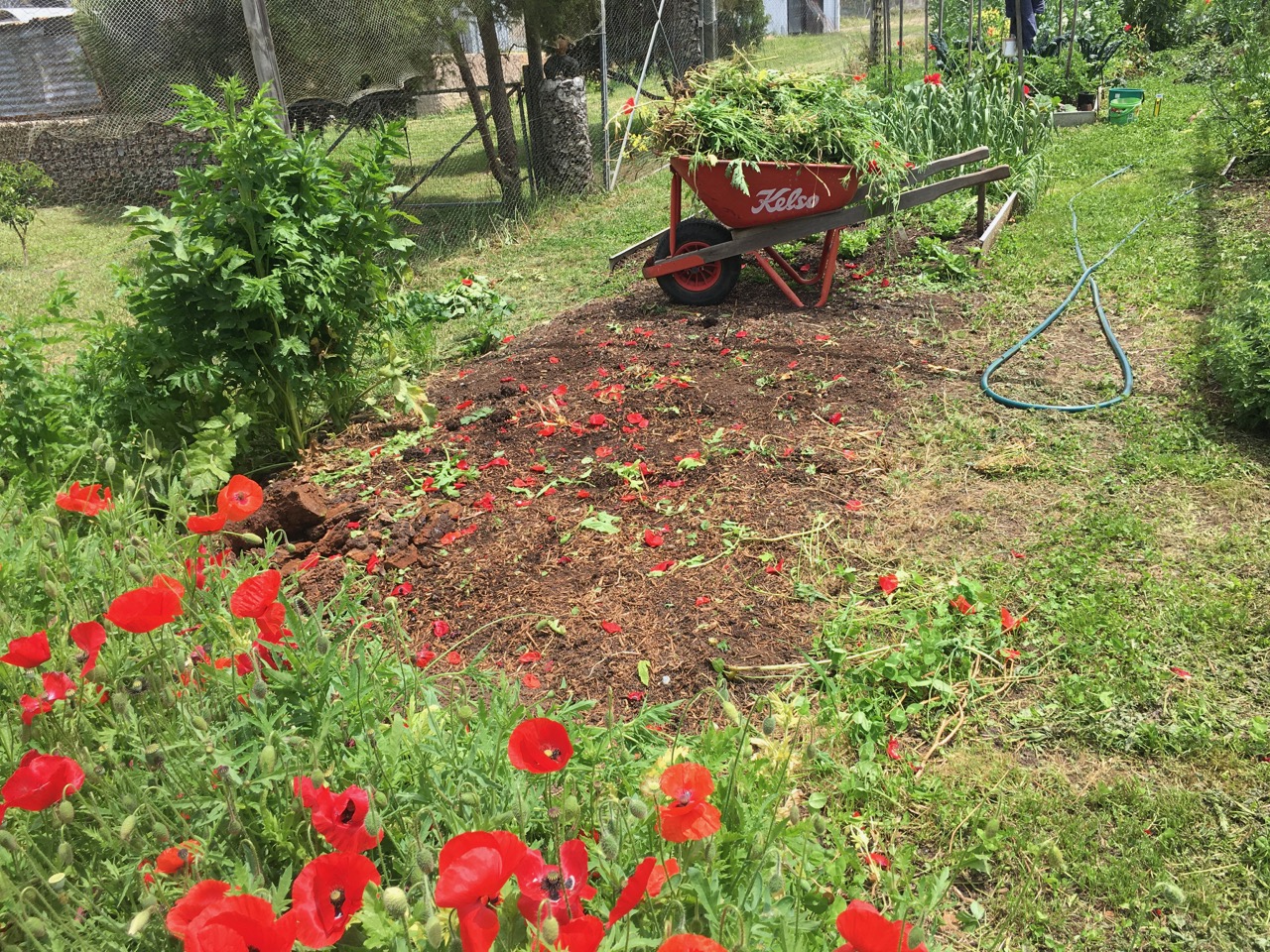
I pulled out half of the ‘Flanders’ Poppies. They are really beautiful. I love them to bits, such a great explosion of bright colour. They self sow every year and fill every space where I don’t weed them out. I need the space now to plant out more summer vegetables, so out they go. Well, half of them. I still want to keep the rest as long as possible.
The French beans are all up and doing well. I have no idea where I found the time to plant these during the hectic work load that we had up to the opening of the studio sales?
Half the poppies are gone to the compost heap to make space.
In their place there are now sweet basil, tomatoes and spinach, Further back, there are cucumbers and pumpkins.
I took a little bit of time out from gardening and weeding this week to glaze the last of the bisqued pots and get a stoneware firing done in the bigger electric kiln, fired entirely on solar energy from our new PV panels and battery. The results are good, just a few more lovely pots to refill the gaps in the gallery shelves from last weeks sales.
We are open this weekend each day from 10 till 4 – ish. on Saturday and Sunday , and also for the rest of the summer by appointment. Please ring or email first to make sure that we will be home.
This time last year I wrote ‘Give Peas a Chance’. This spring it’s all about broad beans.
Peas and beans are the same family of plants, legumiosae.
Broad beans are also called Fava beans and have a long history of cultivation. My ‘Oxford book of food plants’ tells me that it is one of the most ancient of all cultivated vegetables, and traces have been found among Iron age relics. Fava beans have been found in Egyptian tombs, so we have been eating them for a long time.
Ezekiel mentions them in the Old Testament (Ezekiel 4:9) as Pythagoras (570BC) does also, he hated them. Pliny the Elder also talks about them saying that they are as good for the soil as manure. One of the earliest realisations of nitrogen fixing properties of legumes? He recommended ploughing them back in as a green manure crop.
Eating raw fava beans can be highly toxic to some individuals – even fatal! About 30 million people world wide suffer from a disease called Favism. They suffer a specific genetic trait where they are deficient in a gene that produces an enzyme called D6PD. Just inhaling the pollen without actually eating the raw beans, cause the rupturing of red blood cells. However cooking them neutralises the G6PD enzyme and other toxins that are present in the raw beans.
Thousands of years of careful plant selection by farmers have reduced the levels of the more harmful toxins, so todays crops are less toxic. I love eating them raw out in the garden as I work, just as I can’t resist shelling a few peas while im walking past them.
Apparently, there is a genetic recessive disorder known as ‘Glucose-6-Phosphate Dehydronase Deficiency’ that causes favism, and it is the result of an evolutionary development in some humans for resistance to some types of malaria. Which may be why it is most commonly prevalent in people from countries where this disease is endemic?
Maybe Pythagorus suffered from this disorder, such was his distaste for them. There is an account of Pythagoras being pursued by his enemies, who were out to kill him. He had the chance to run through a crop of broad beans to escape, but instead decided to turn and face his attackers and was slain. Bad bean!
Maybe his attackers were the first fauvists? 🙂
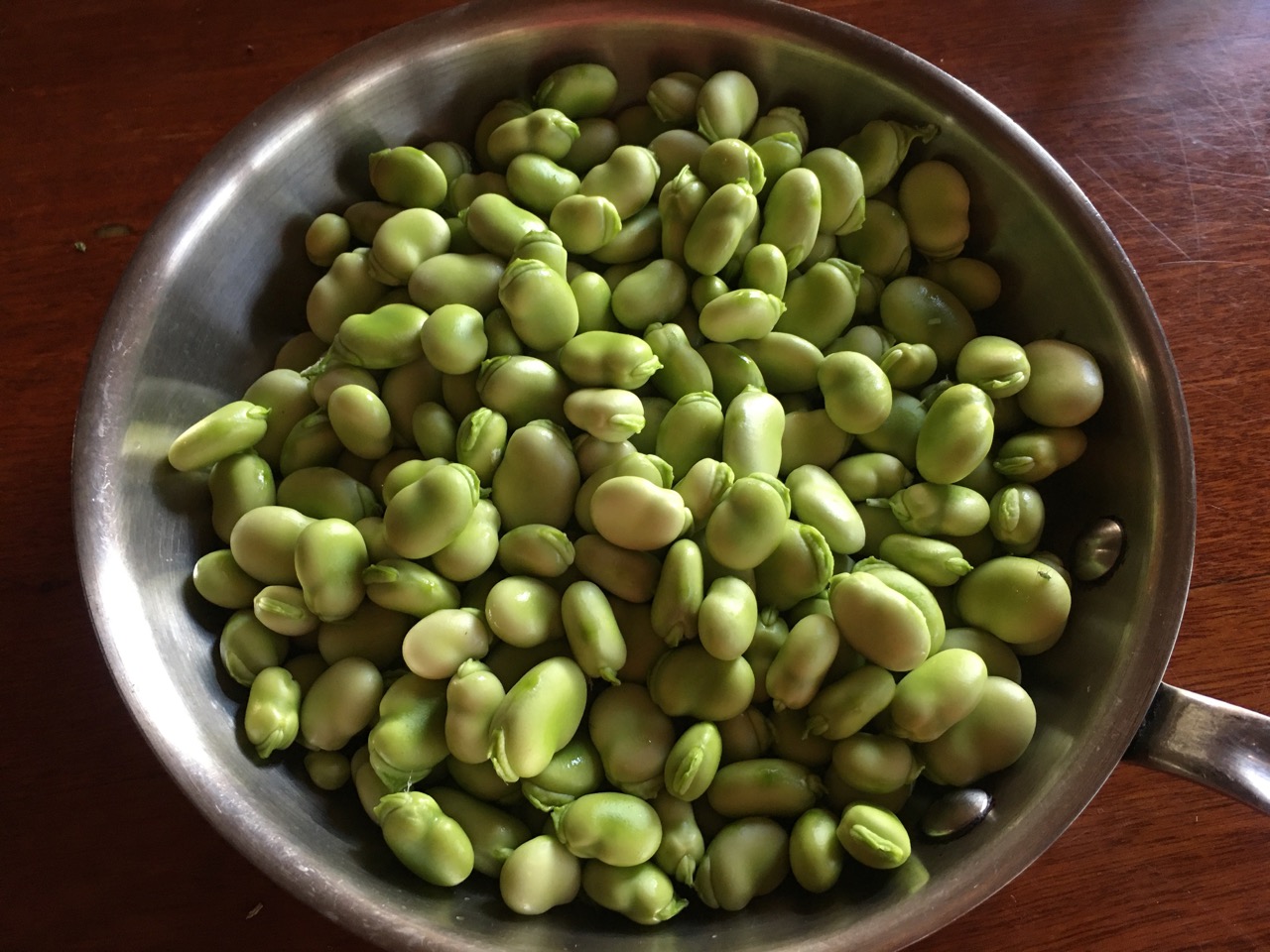
I love to eat them raw straight from the pod with a glass of chilled dry white wine while I prepare dinner. The season is so short that I can’t help getting stuck in and enjoying every last little bit of them while they last. This year I planted two types, ‘Windsor short pod’ and ‘Early long pod’. The flavour doesn’t vary much. I try and plant at least two different varieties of vegetables each season just in case one of them isn’t suited the vagaries and challenges of the climate.Who can tell if we are about to get huge deluges of rain or a hotter, dryer spring 4 months in advance? Right at the moment I’ve planted out 6 different varieties of tomatoes for the same reason. Some will do better than others. I’m just maximising my chances of getting some sort of crop in return for all my efforts.
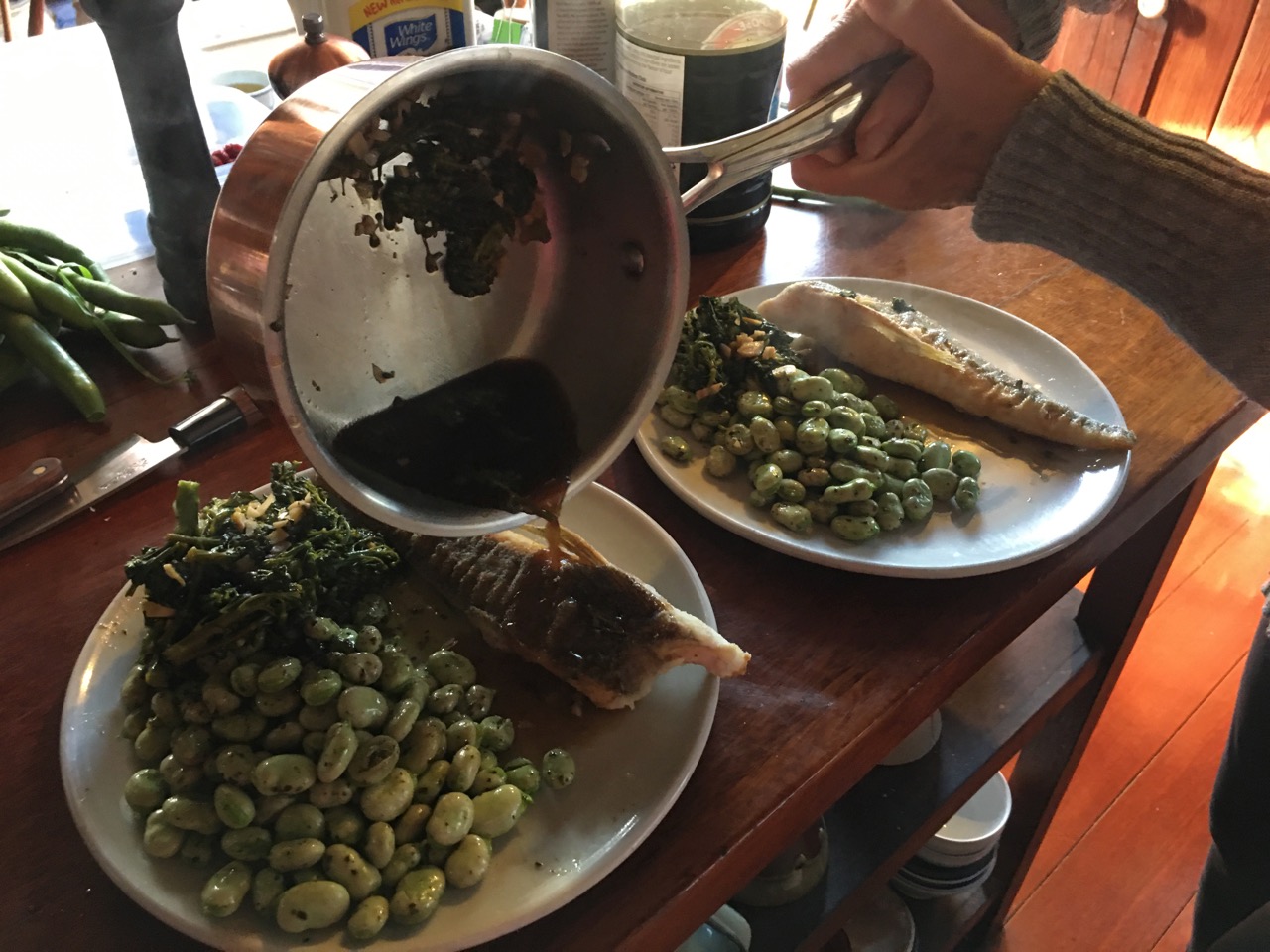
Tonight we had tiny 3rd pick shoots of broccoli, sauteed in a little olive oil with ginger and garlic, served with a dash of fish sauce and lemon juice, along with pan fried flat head fish fillets dusted in a little semolina to crisp up the skin. But the star of the meal for me were the broad beans quickly stir fried just until they were warmed through, but not really cooked. If the skin starts to break open, then they are over cooked. I dress them with a pinch of our dried, powdered chilli. A tbsn full of last seasons dried sweet basil and a grind of black pepper. This is my absolute favourite way to eat them – after raw in the garden or course. I used to cook them in butter, but with my advancing years and rising cholesterol levels, these days I use EV olive oil.
Fish and two veg, quick and simple, couldn’t be better.
We have been hard at it in the pottery preparing for the Arts Trail – Open Studios and the TACA Open Studios weekends coming up very soon. It starts next weekend. We have just managed to squeeze in one last wood kiln firing. But this will be the last for some time. Mainly because I’ve just about run out of dry glazed pots, but also, because from now on the weather will be getting too hot for safe wood firing over the summer.
This firing seemed to go very well, just 11 1/2 hours to cone 10 down, not quite so hot on the top back shelf with cone 8 over, but cone 10 just starting to bend. Probably cone 9, close enough. I changed to pack again this firing just see if I can get a better understanding of how this kiln responds to subtle changes of setting. Life is endless learning.
I got a very good control of the ember level with this firing. I’m pleased about that. We have been getting rather too much ember build-up towards the end of the firing in the last few firings, so I opted to open all the mouse holes right from the start. I can’t remember ever doing this before, but it was just right and worked well, kept everything under control. I’m a slow learner, but I get there in the end. I recon that this wood firing lark is quite good fun. I’ll probably have another go at it 🙂 We’ll see how it has turned out in a couple of days.
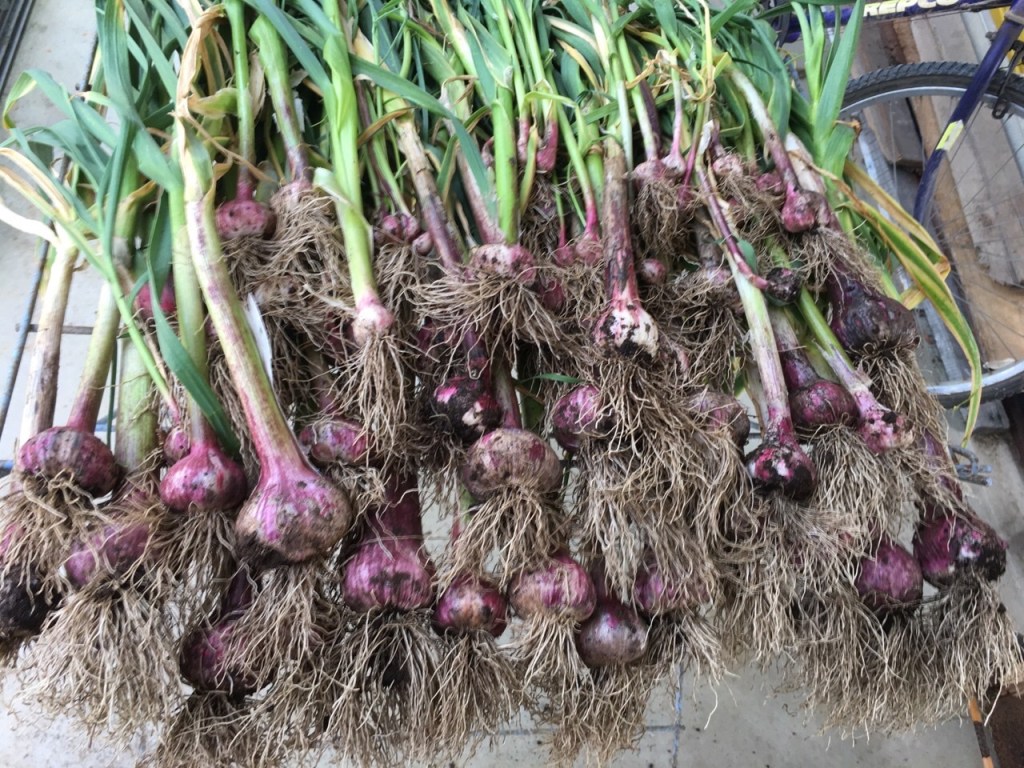
We have also lifted the 2nd planting of garlic. This bed of garlic was planted at the same time as the previous batch that had split into individual cloves. This variety has taken a few weeks longer to mature and has stayed as complete bulbs. This bed of garlic has delivered around 50 knobs. The last bed lifted out 45 split knobs. We still have one more double sized bed to go, maybe in a few more weeks? It may have up to 100 plants, but we’ll have to see what matures and lifts and dries successfully. Not all our garlic plants mature to a full supermarket size. We get quite a few small knobs that are a bit tedious to peel, but the flavour is still all there. We can get through up to 300 knobs of various sizes of garlic in a full year, and that isn’t always quite enough to see us through till next years harvest. This year we ran out of our own home grown organic garlic about a month ago and had to buy 4 or 5 knobs to get us through to a time when we could start to ‘snaffle’ or ‘steal’ a few very early plants from the edges of the first bed. I love fresh, wet, early, fragrant garlic. I have to have a couple of cloves sliced on my homemade rye bread, with a twist of fresh ground black pepper and a tiny sprinkle of salt. Tonight it’s just not my fingers that smell of garlic. Keep your distance!
The first lifted crop is now all dried, plaited and hung in the kitchen ready for use.





































You must be logged in to post a comment.