Taking Time to Take Tea

I have an interest in tea, only minor in the scheme of things, but it’s been consistent in my life. I love the old tea houses, especially when the thatch gets that mossy look of age, that special wabi, sabi  look. There are some especially intuitive, gifted and sensitive people out there to be sure. I’m not one of them, but in my better moments, I can see and appreciate the profoundly beautiful things that they have left behind for me to experience. It’s a joy that highlights my day.

DSC01328

DSC01331  DSC01332

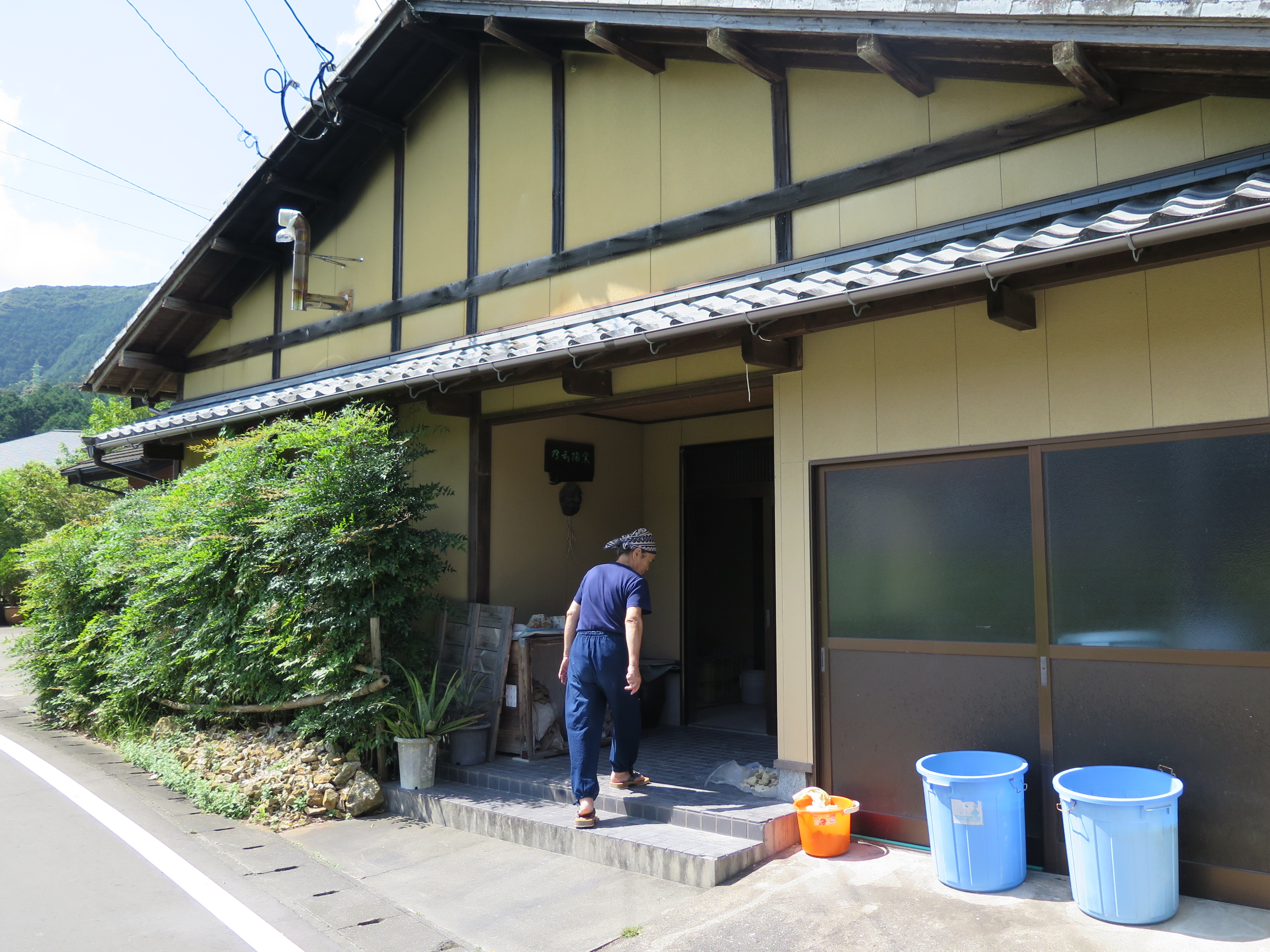
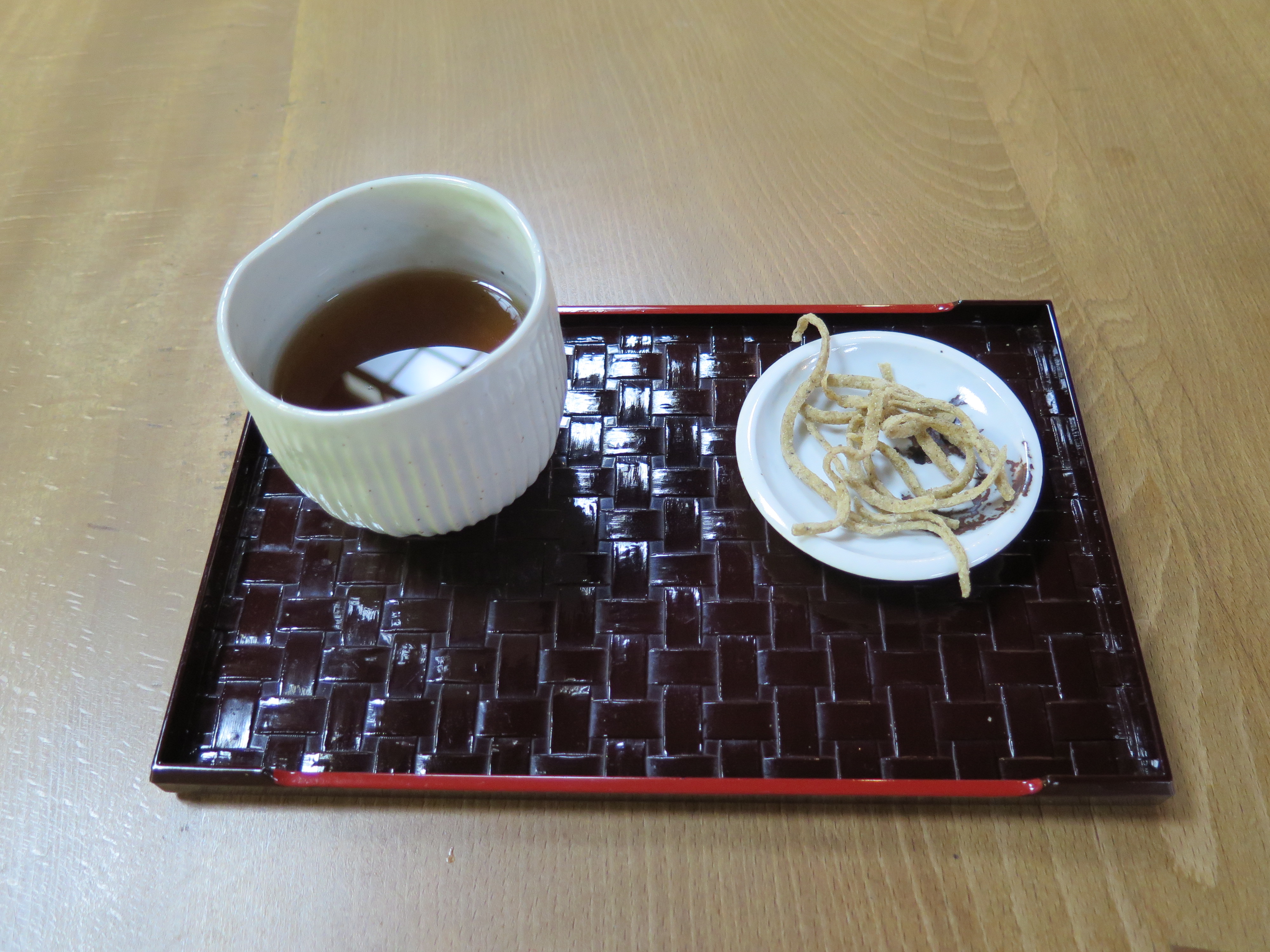
One one of my walks I come across a temple where you can take tea. So I do. I take the time. I sit and I ponder. It isn’t in my vague plan for today, but it is very much welcome and appreciated. This is time unplanned and well spent. The caffeine really enlivens my step afterwards too.

DSC01432DSC01433

I did my washing today. What more could you want?

Much ado about Nothing

I’m finding on this visit to Kyoto that so many of the temples are being re-constructed, but not in a Post Modern way. Rather it’s in a Post Ancient, or using ancient posts kind of way. Most of the work seems to involve renewing the roofs. I was here more or less this time last year and we were able to walk through some of the Higashi-Honganji temple, even though the tradesmen were in doing the work. It was amazing to see them build such a big scaffolding structure over the end of the temple, all set up on tracks, so that as the work progresses, they can winch the covering building along over the next bit, until it’s finished. It will apparently take some years to complete.

thumb_DSC01397_1024 thumb_DSC01403_1024

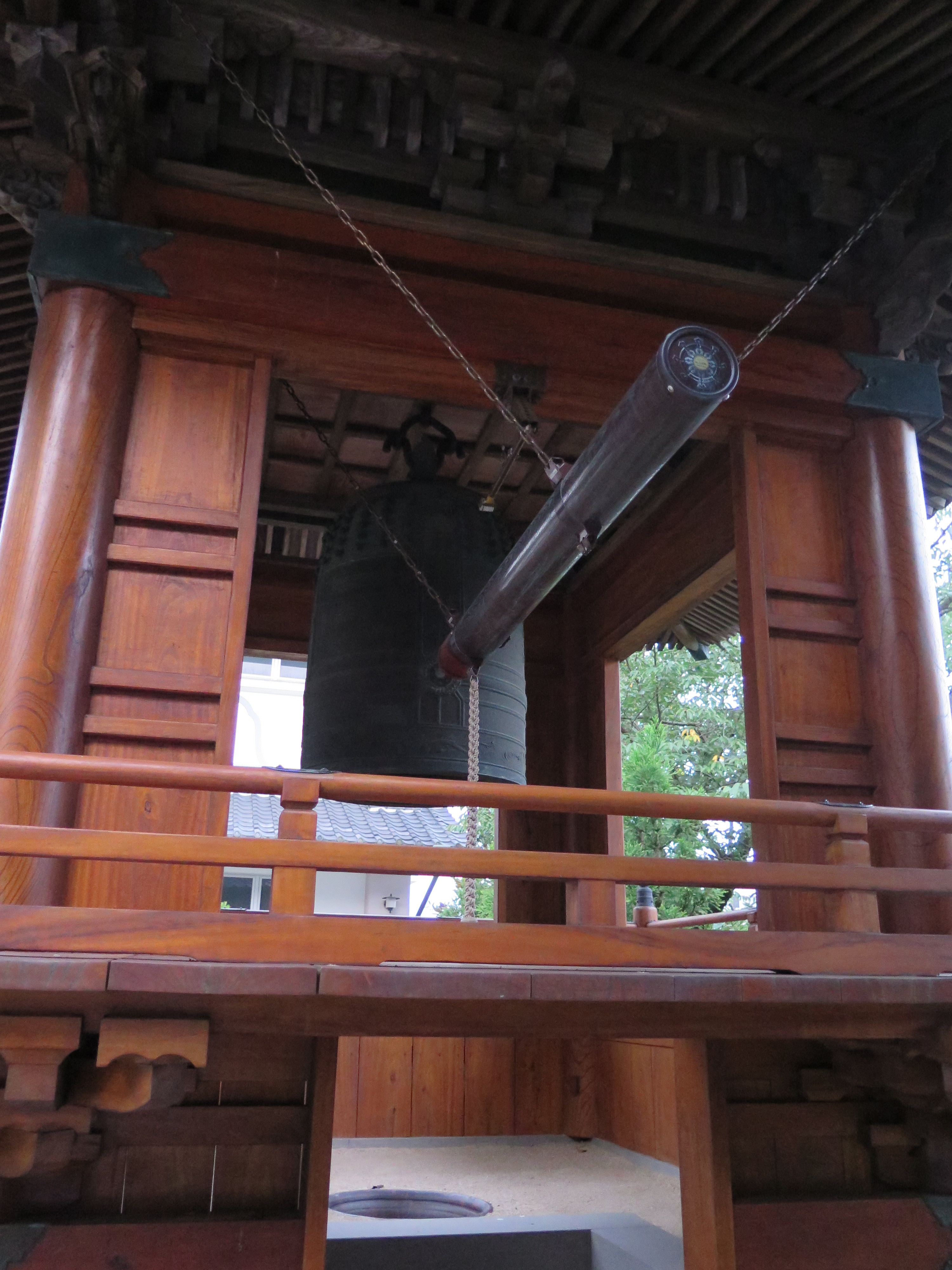
The Largest-Cast-Bronze-Buddha-in-the-world-Temple, Todai-Ji, at Nara is now the Largest-Cast-Bronze-Buddha-Under-a-Temporary-Tin-Roof-Buddha-Temple-in-the-world. Everybody has to have something that defines us as special, even buddhists. It’s all about nothingness, but the biggest building in which to find nothingness seems to be important. Even the Kiyomizu-dera Temple is under reconstructive surgey at the moment.

thumb_DSC01306_1024thumb_DSC01510_1024thumb_DSC01516_1024thumb_DSC01517_1024

I’ve been visiting quite a few temples while I’m here. There are temples featuring wood, moss, stone, raked gavel, water, gold and silver(not), Apparently it’s important to be about something while your contemplating nothing. If zen is a sense of cohesion and tranquility found in emptiness, then I’m on the right track. I have come to terms with some sort of concept of emptiness while I’ve been visiting the temples here. Firstly, my wallet is a lot emptier, that’s for sure, I’m pretty certain about that. But one can never tell. Maybe it’s only an illusion?

My tummy is a lot emptier, as I’m on the 2nd day of fasting now and as I search for emptiness and nothingness. Emptiness sure feels like something to me right now. I’m finding it hard to tell, when or if I’ve found it. Nothing is a hard concept to achieve and inhabit while still being able to tell the difference. So I can safely claim that I have successfully found nothing so far. However, I’ll keep looking, just in case I don’t find more of it.

thumb_DSC01407_1024

thumb_DSC01421_1024thumb_DSC01415_1024  thumb_DSC01411_1024DSC01422

I start the day very early to beat the heat. The sun is casting oblique shadows across the land. The Golden Temple is beautiful. It too was under reconstruction on one of my previous visits. Now it’s all out of its wrappers and showing off in its splendid, glittering, blingy sort of way. So quiet, peaceful and unassuming. Hard to notice that it is even there sort of attitude, while screaming, “Look at me”!

Money, wealth and worldly achievements don’t matter apparently. I suppose that this includes gold? Just the sort of place to look for nothing. The guy who built it was really ripped off. When the builders covered it with gold at the end, they covered all the windows too. So he couldn’t even see out to look on the quiet lake at its foot or feet, I’m not too sure if temples have one or many? I think that he could have saved a lot of money and put in double glazing instead of gold leaf. The insulation value would be heaps better than gold and the view improved out of sight, well, actually into sight.

thumb_DSC01441_1024thumb_DSC01464_1024thumb_DSC01440_1024thumb_DSC01447_1024

Still, he did better that the guy who built the Silver Pavilion Temple. He didn’t even get any silver on it. The builders shot through before the silver was applied and all that they left was a big pile of white builders sand on the site. I did eventually find some silver there. It was all dropped into the wishing well pond. I wonder if it works – wishing I mean. As I’m looking for nothing, I didn’t bother throwing anything in, I don’t want my wish to come true. I might get something, while what I’m really after is nothing.

DSC01455

thumb_DSC01472_1024thumb_DSC01473_1024

thumb_DSC01475_1024

The weather changes while I am here and there is a storm, it’s been coming for a while now. I can sense it in the air and in me. I’m out on the path around the garden and it’s teeming down.

I stand and watch the not-quite Silver Temple melt away in the rain.

The storm has resulted in every one leaving. They scurry for the security of the visitors centre.

I’m here alone.

The path is empty.

The world disolves.

There is only the rain.

I walk across town to Ryoan-ji. Here the path is straight and true, but also strangely empty. It’s mid day now and the sun is almost directly overhead. The storm clouds are gone and the sun is beating down. It’s hot, muggy and humid.

thumb_DSC01481_1024thumb_DSC01484_1024 thumb_DSC01485_1024thumb_DSC01486_1024

Finally at Ryoan-ji I start to come to grips with the the paradox inherent in Zen. At Ryoan-ji, you don’t have to pay to walk around the lake and grounds like you do at all the other temples. Here you only pay to go in and see the raked gravel and the 15 stones. Here’s the paradox. When you go in, you can’t see the 15 stones, You pay for 15, but only ever see 14. If you walk to the other side you can now see the missing stone, but one of the original stones is now obscured. There are only ever 14 stones. Even though there are 15! Deep stuff! I paid money for this.

thumb_DSC01490_1024thumb_DSC01488_1024

thumb_DSC01494_1024

It’s hard to take it all in. Even for my little camera. I sit and think about this for quite a while. But nothing comes.

thumb_DSC01498_1024 thumb_DSC01496_1024

thumb_DSC01499_1024thumb_DSC01507_1024

Janine and I were recently reminded of the Zen concept of non-aquisitiveness when she spent a bit of time with the Tibetan Buddhist Monks. As a fund raiser, they sold her a Tibetan, hand-woven, woollen, mobile phone cover. There’s an example of encouraging non-acquisitiveness for you.

Best wishes from Steve in Kyoto, on the empty path, and not doing much about nothing,

Toji Markets

As it is the 21st of the month, and I’m in Kyoto, that means it is the day of the Toji Markets. They are held on the 21st of the month, regardless of the day. Today it is a Friday. So off I go. The markets are held in the grounds of the Toji Temple, hence the name, not too far from the main Kyoto station. It’s usually a very busy market and very full of all sorts of stalls. Today, however, it is only half full, as it  has rained pretty heavily over night and is still pissing down this morning. I guess a lot of the stall holders just stayed home. The rain cleared about 10 am. and then it was fine, getting very hot in the early afternoon. I eventually needed a hat, but only brought an umbrella.

DSC01366DSC01373

Everything that you could want is here, even on a slow day like today. There are fruit, veggies, clothes, pots, pickles, fabric, beads, furniture and hot food. You name it and it is probably here. I’m particularly looking for and old pot with character. perhaps a tea bowl? I missed one last time I was here. I could kick myself. I passed it up because it was Y45,000. Way above my budget, but I could have afforded it if I’d changed my other plans and rearranged my budget. It scarred me off. I should have extended my self. But travelling on a strict budget has its limits, and that was past mine, and now it’s past tense.

DSC01367

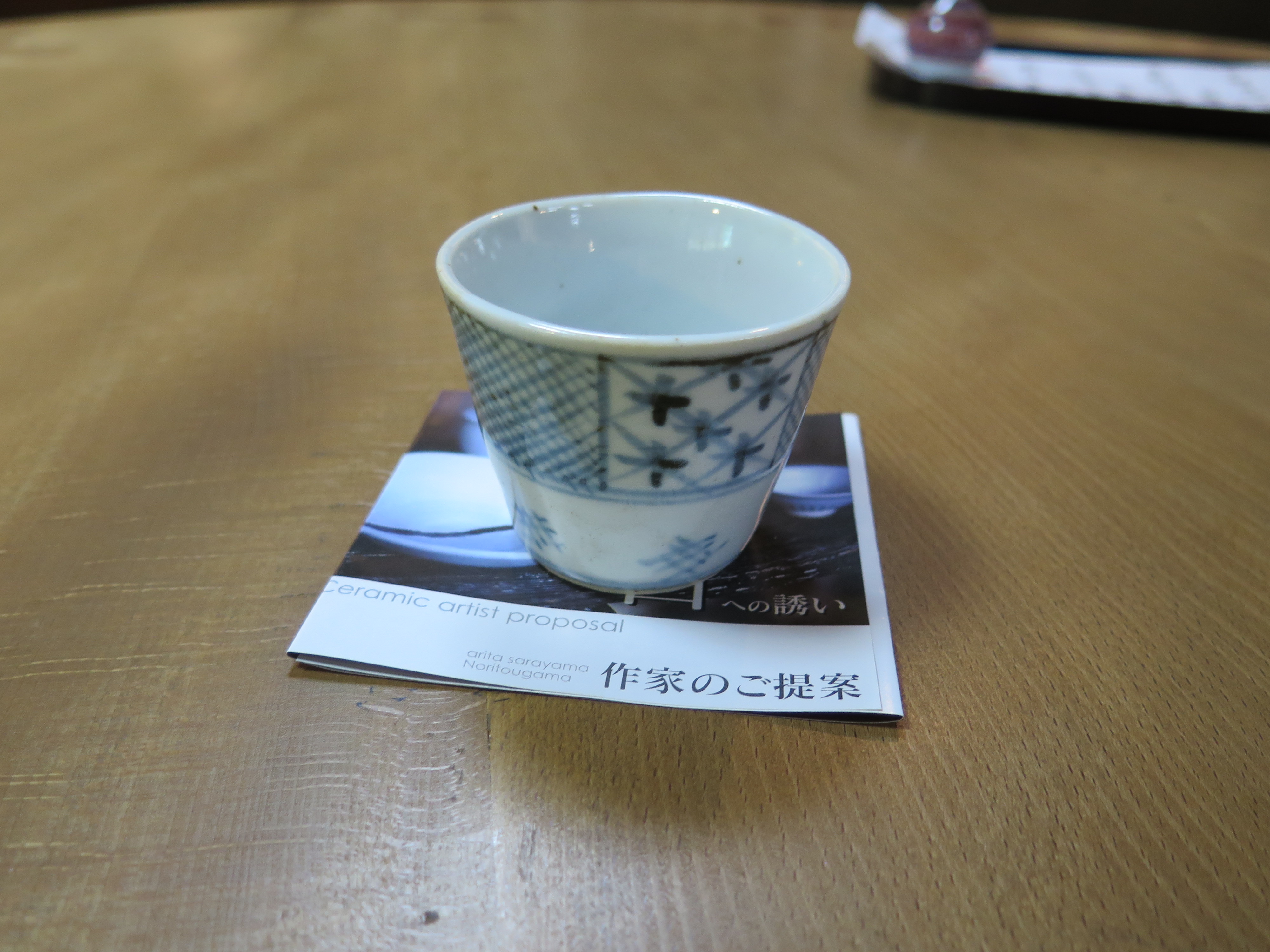
I’m still looking for something exotic, quirky, interesting, unusual, with just a touch of the sabi/wabi’s about it, but today, no luck. I can’t see anything in the way of an old pot that speaks to me. There are plenty of them here, but not one with my name on it today. I eventually settle for an old, not very old, maybe 80 to 100 years old, Soba noodle cup. The straight down the line white porcelain with washed out small blue brushwork, chipped foot ring and a bit of age staining. Delicate and light and speaking lots about old Japanese porcelain. I love the things. They are still fairly cheap and reasonably easy to find, but I notice that they are creeping up in price each year that I come here, and the best ones cost the most – of course!

DSC01376DSC01379DSC01378

To get it to the market, you have to pass through the temple gates. They are massive wooden installations and quite old, recently repaired and restored and beautifully done too. Just inside the gates there is an old lady with a stall selling old, used, indigo cotton fabric. I’m very fond of this stuff, both plain and patterned. I use it to patch my own worn out work clothes. I don’t really know what it is worth, so I don’t buy the first samples that I see. I make sure that I do the whole circuit of the site, looking at every stall first. Eventually I go back and buy some of the early bits that I saw, as they turn out to be the cheapest bits that are in reasonably good condition with still some wear left in them. The plain stuff is the best, as once it has been dyed in Indigo, it is toxic to bugs or something, so nothing will eat it. I find that the patterned fabric has some of the white bits eaten out, or just rotted away and become fragile somehow. Maybe it’s the ultra-violet in the sunlight? I don’t know.

DSC01369DSC01392 DSC01396 DSC01391

DSC01395DSC01393

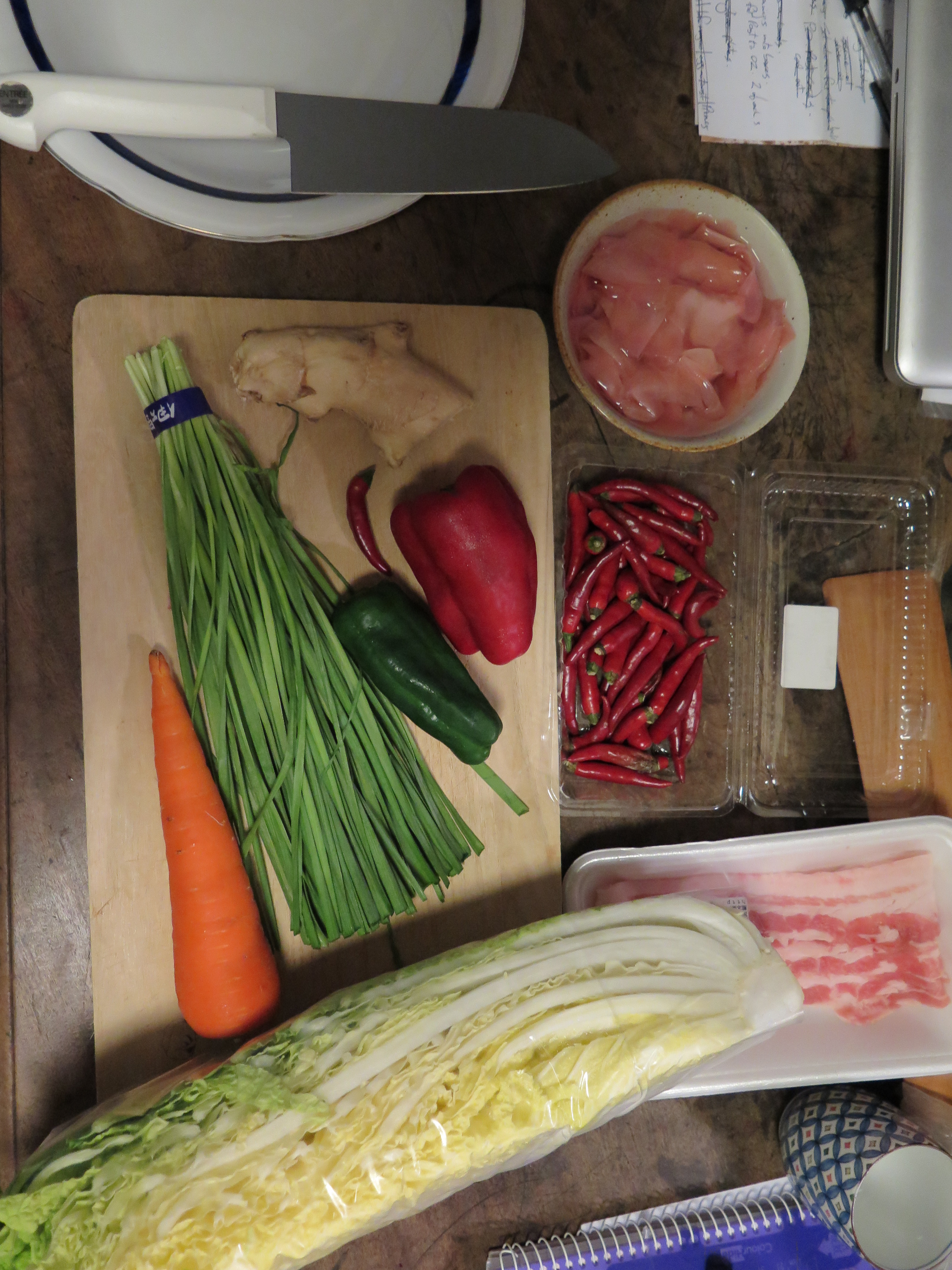
There is so much good food here. I want to try it all, but I hold out for the okonomiyaki. It’s my favourite. I can’t think of anything more delicious and ever so fresh as this. Cooked in front of your eyes in a few minutes. I could describe it as chopped cabbage cooked in a light pancake batter, with bacon and egg and other bits of dressings and herbs and spices like red pickled ginger. Ever so yummy. Oishii Desu!

DSC01375 DSC01374

I see a few old wooden stools that are nice, but totally out of the question for me. I also see some of the freshest and plumpest ginger that I have ever seen. If only I had a kitchen!

A day spent wandering the Toji markets is a full days entertainment with almost free entrance, only a coin donation to the temple at the door.

Desperately Seeking Tungsten

I’m freewheeling in Kyoto for a while. It’s one of my favourite cities to visit. Its small enough to be walkable to most places. A long walk sometimes, admittedly, but then there is an excellent bus and train service that can get you to most places that are a little bit out-of-the-way. It’s quite central to my other interests, as Nara, Osaka and Shigaraki are just short train rides away and good for a day trip. There are more temples and shrines than you can poke a (chop)stick at. I have a few favourites.

But Kiyomizu has to be one of them, as it is easy walking distance from the centre of town or the main station and the roads that lead up to it are a very interesting days entertainment. No matter which way you approach it, there is always something of interest. Because it’s so close to town, it is alway very busy and crowded. A minor drawback.

DSC01319DSC01321

DSC01307

On this visit to Kyoto, I’m searching for some tungsten carbide tipped pottery turning tools for working with porcelain. They are very specialised tools and a bit hard to find. Actually a lot hard to find! It seems that they are only made in 3 places in the world. Nevada in the US, but the style of those tools are not really what I’m after. Plus his web site isn’t working at the moment and the guy is moving shop currently. Then there is a place somewhere in China, but I haven’t been able to locate just where. Whenever I came across some of these tools during my resent research trip, I was told that the tools were from ‘somewhere else’, then when I got to the  ‘somewhere else’ they told me that it wasn’t there, but where I’d just come from? Now I’m in Kyoto and tipped off by my friend Alistair back in Australia, who trained here some time ago, actually many years ago. I hope to track them down here. Alistair doesn’t know the address, but knows someone, who knows someone, who apparently might know.

I’m onto it, nothing like a false start and a dud lead to peak my interest. I like a challenge. When these tools do turn up in Australia, they are terribly expensive when they do, exceeding $100 each. A lot for a small, simple pottery tool. They shatter easily if you drop them, and chip if you hit them against something hard by accident. But they are unbelievably hard-wearing and long-lasting, as long as you look after them. I only own one of them.

So, I set off on my long march. Firstly, I tried to find the ‘Iwasaki’ pottery supply shop that Alistair’s potter friend mentioned. But nothing came up in google maps for that address.
So I asked the very helpful lady here at the guest house, where I’m renting a room. She rang them and got a detailed description of where it was. I walked there. I found it pretty quickly, but it was only a small supply shop with not much choice and no carbide tipped turning tools at all in stock.
However, I bought 2 small brushes and standard carbon steel turning tool. The guy behind the counter didn’t speak much English, but managed to understand what I was looking for after a while. ‘Tungsten carbide’ isn’t a word that I know in Japanese, it takes a lot of charades to get that one across.
He wrote out the name and address for another place, but only in Japanese ‘Kanji” characters. I was starting to feel like this might be going to be a bit like hard work. This might not even be a place-name or address? I’d have to go back to the Inn and get it translated and the place on the map pointed out to me. If indeed it is one. He can’t read my map of Kyoto, as it is in English. He just waves me down the road. “a long way!”
But just at this time, another guy who apparently works in the shop turns up and he can point out on my map, more or less, the area where I need to go. Unfortunately, it’s off the detailed part of my tourist-guide map and into the grey. There be dragons! Yep. That part of the map. I’ve never been to this part of town, so have no mental guideposts for it, but it can’t be that difficult. Can it?
It’s a long walk and it’s a hot steamy, humid late summers day. I manage to work up quite a sweat by the time that I get to where I think that it ought to be. Only to find that it isn’t there. I can’t find it, after all No one that I ask, seems to know. I think that it ought to be up this hill on this road somewhere. I’m only half way up this hill and I’m already feeling a bit ‘over the hill’. So I ask a passing bloke. He doesn’t understand me at all, and he can’t read my map. This is an isolated part of town with few passers-by. So I sort of give up and begin walking back down to find someone who can help me. This is when I come across a couple taking their groceries into their house from the car. I ask again, show him the name and he seems to know what it is and where it is. This special place that I’m after. He goes into the house and comes back with a ‘Gregorys’ type street map book. Lots of detail. He shows me where it is, and I was very close, about 300 metres away but in the wrong street. It turned out to be down and around a lot of small lanes off the main street. He draws me a map of the local lanes, and off I go into the back lanes, left, right, second left, then right again, just where he said. I take careful note of all the turns and corners so as to be able to find my way back OK.
The people in there, didn’t have much English either, but the lady managed a bit, especially when I showed her the tool that I just bought. It all ‘clicked’ into place and out she came with 3 trays of carbide tipped turning tools. Kan-na.
I bought 5 different shapes from around Y2,500 to 3,800 yen each. That’s somewhere around Au$30 to 50 dollars.
DSC01313DSC01314
DSC01315
I then had to walk all the way back. Somehow, the return journey is a lot easier. It’s not just because it’s all down hill, and matches my career. No, it’s because I succeeded in doing it, more or less, on my own, even though I had a lot of help. Thanks Alistair, Aki, Yusushi and Kahori San.

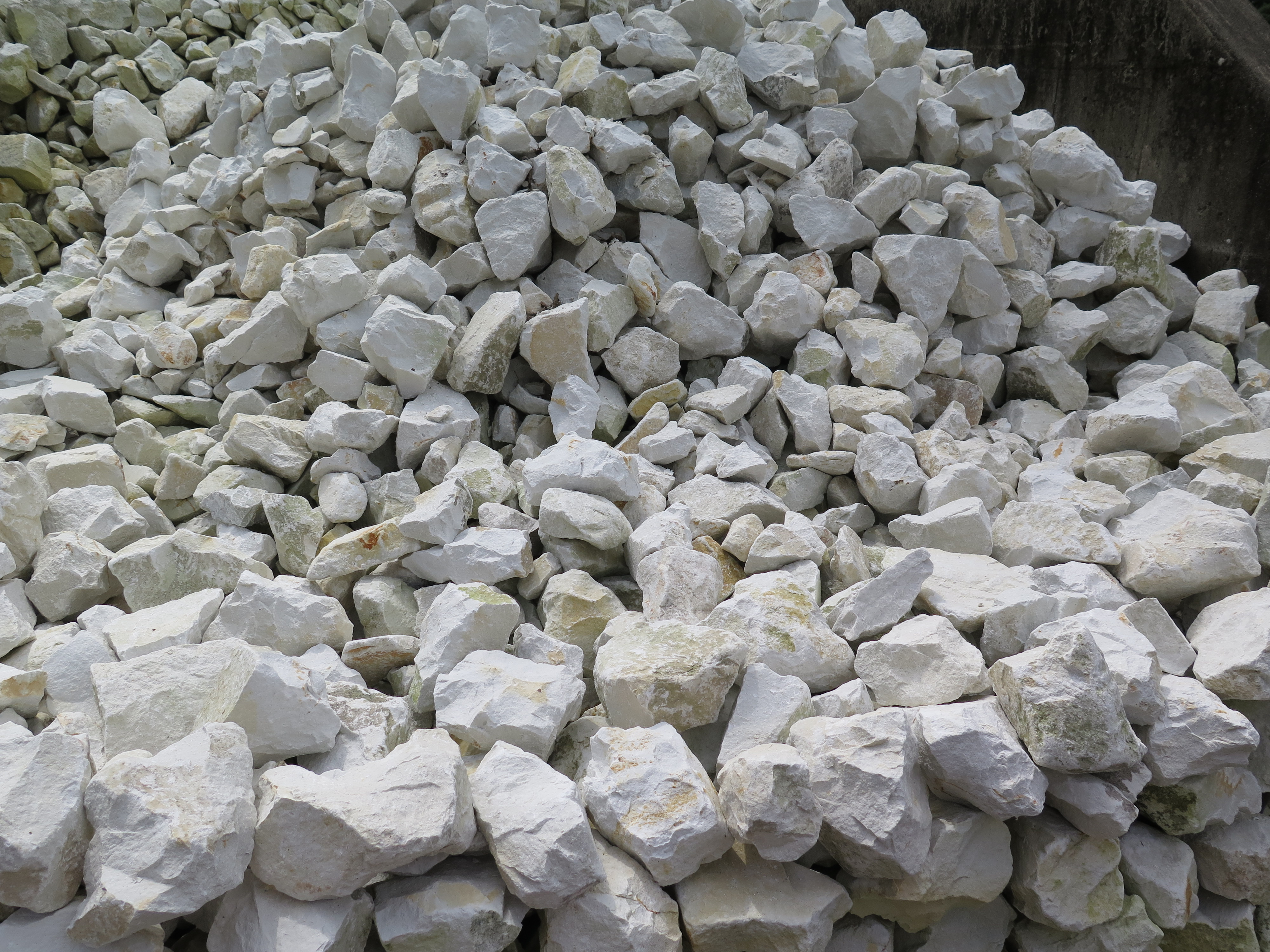
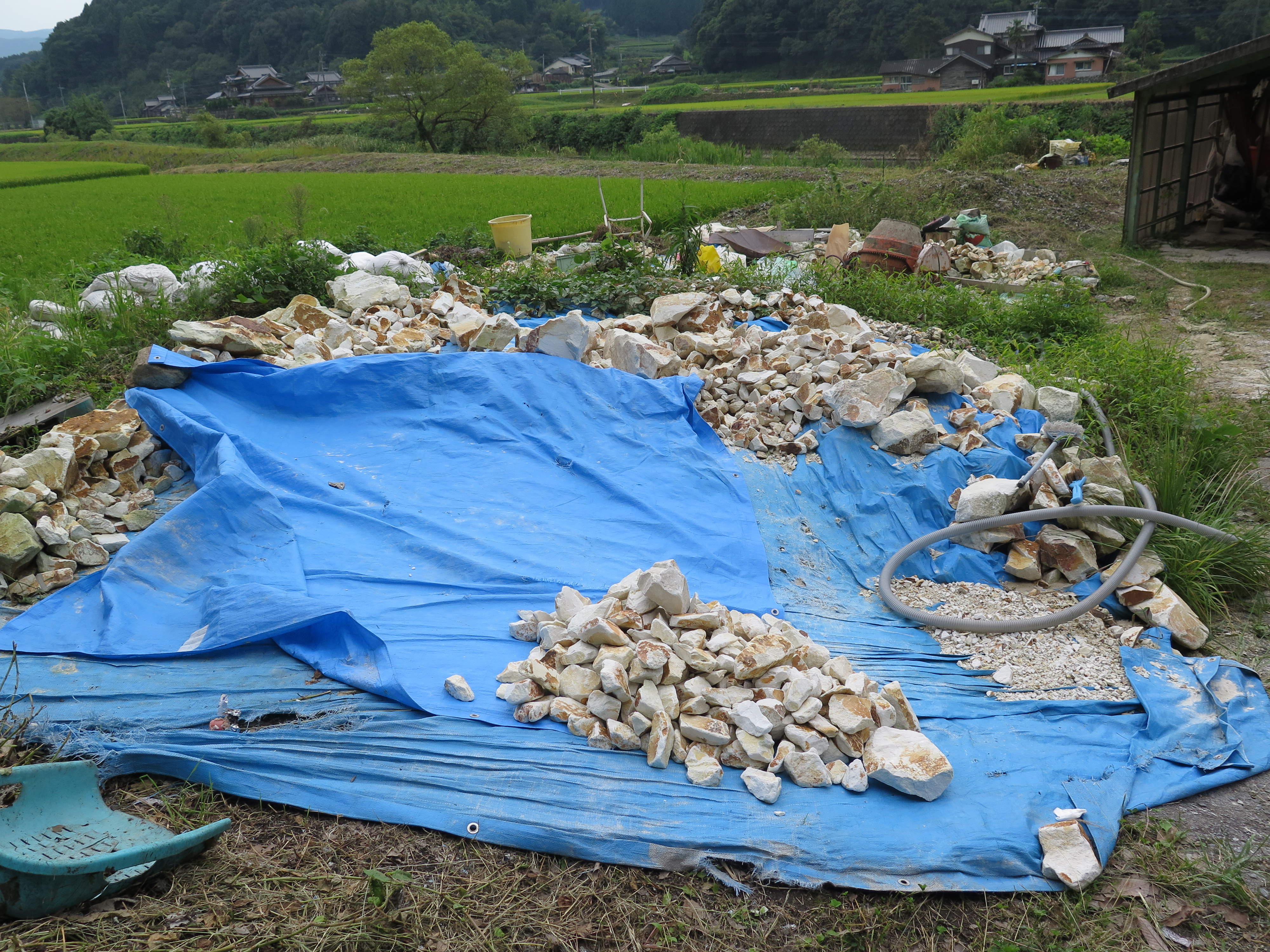
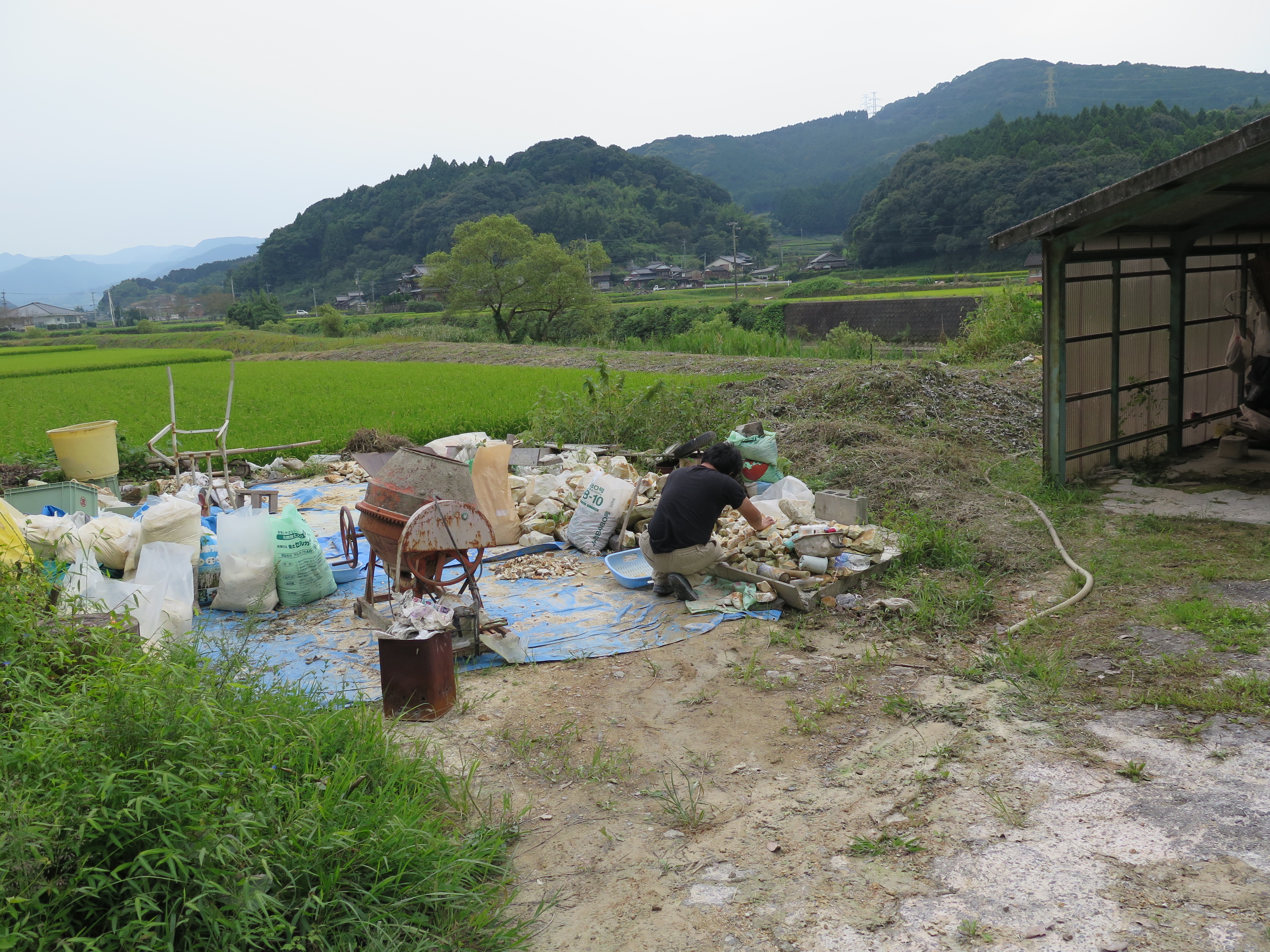
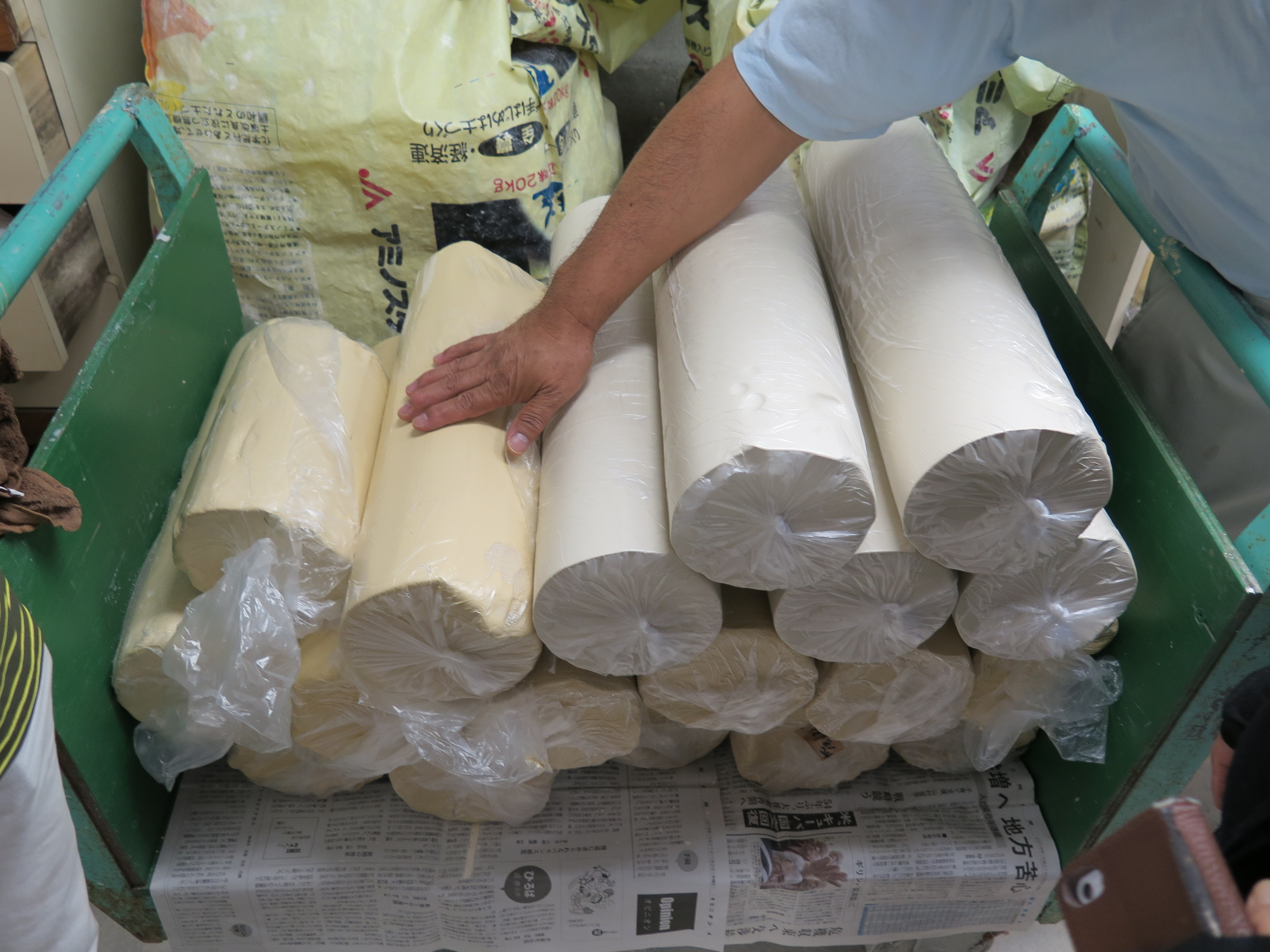
My home-made ground bai tunze porcelain stone body is just like throwing with fine sand and water mixture. It is very tough on the fine razor edge of my turning tools. Especially because this kind of ceramic paste ‘clay’ body. and I use the word ‘clay’ here not as a description of anything plastic and workable, but as a generic term to describe what a potter works with on the wheel. My own particular native porcelain stone is a hard igneous rock. I collect it in chunks from a very small hill, or a big mound, where it has pushed up through the ground in some sort of volcanic activity. Too small to be called a hill, and larger than a mound. I decided to call it a knoll. That sounds just about right. Because it is mostly composed of felspar, which melts in the potters kiln at high temperatures to be a tough glass, I decided to call it the glassy knoll.

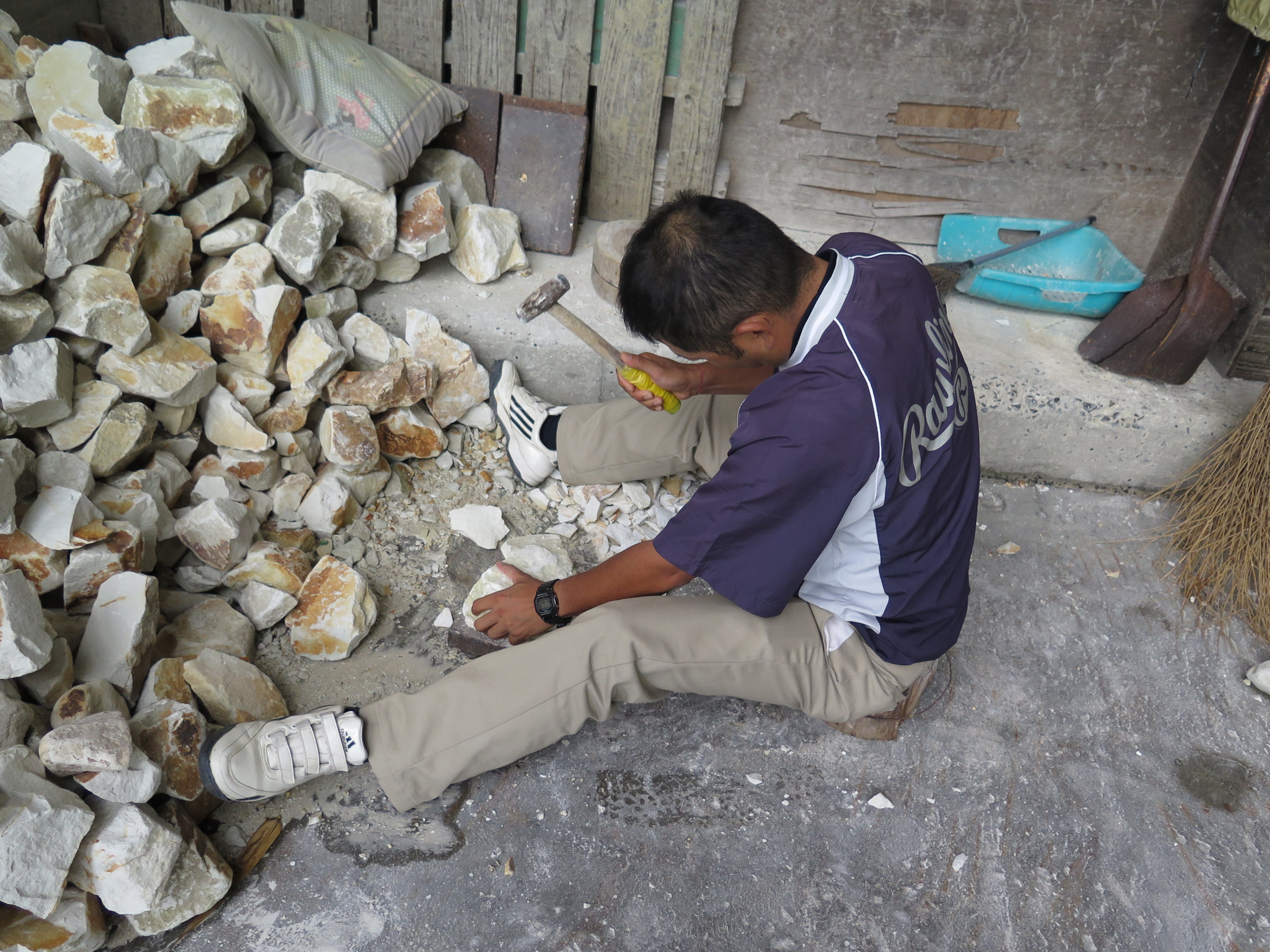
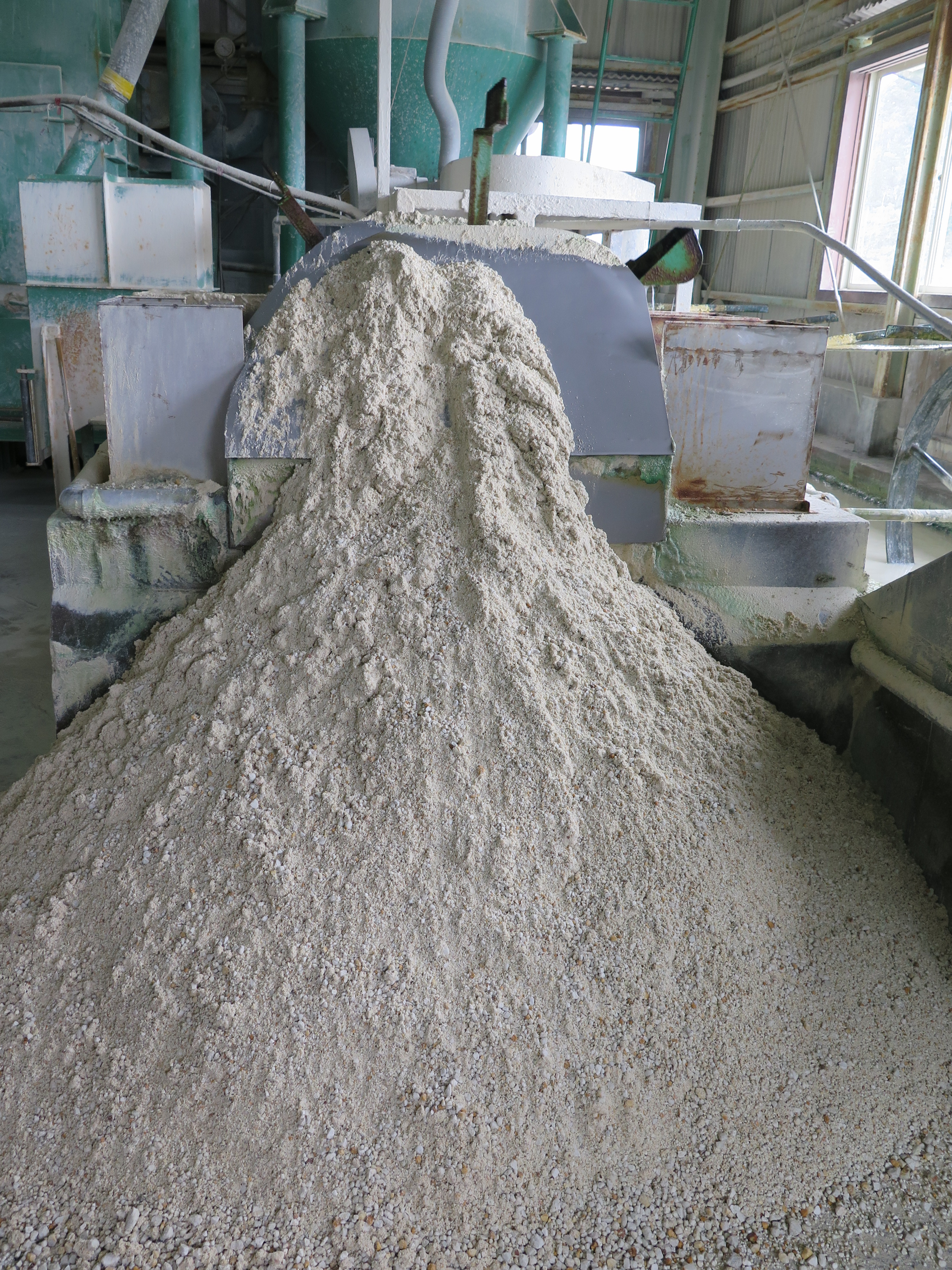
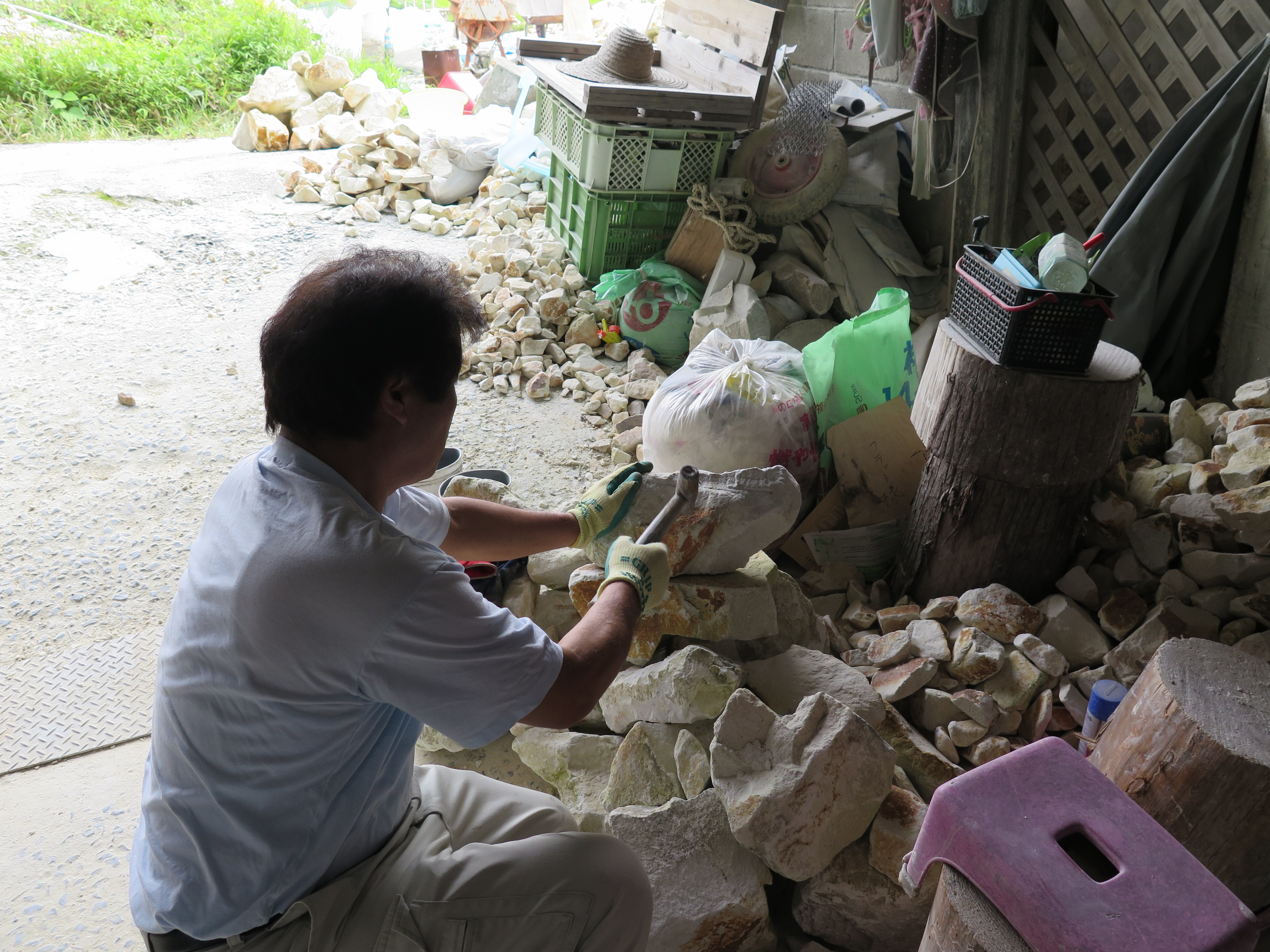
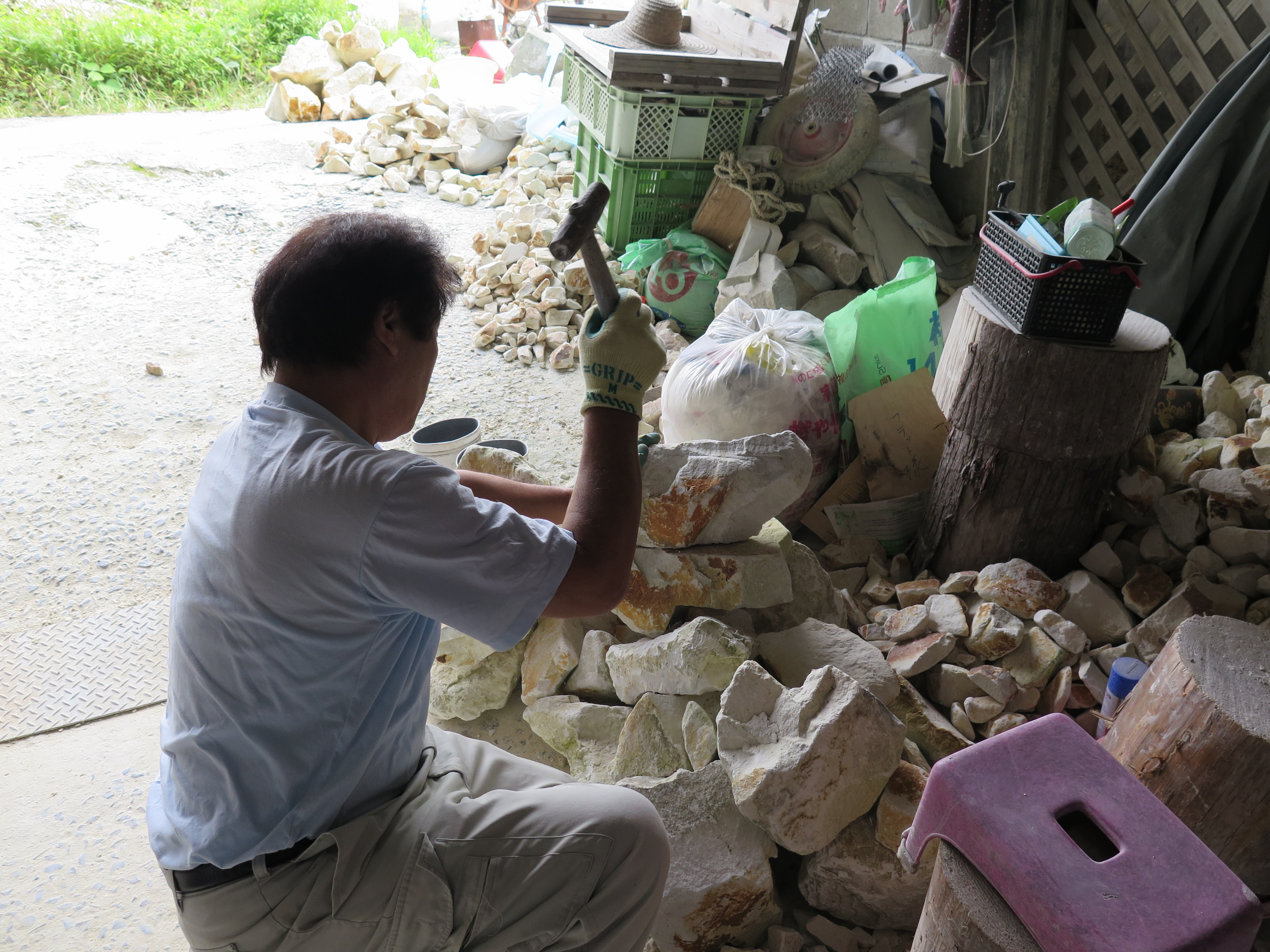
Now, because it hasn’t been ‘weathered’ or degraded by the elements as yet, it is very dense and hard. It needs to be broken down in two stages in a couple of different rock crushers, first into gravel size, then into small sand sized fragments. It is then ground for hours in a ball mill before it is fine enough to work with. It does not have very much clay mineral in its make-up, so I add a small amount, 1%, of bentonite to my mix. Bentonite is a very fine sticky clay material that I get from Queensland. It is quite a rare material, and one of the few ‘exotic’ minerals that I buy. In the US, they seem to call bentonite ‘V’ gum. I don’t know why, but it’s an interesting name. This ceramic ‘gum’ helps to bind it all together, a bit like a glue, so as to make it a little more responsive on the wheel.

How it all works, such that it makes a native rock, that I can pick up off the ground , into a translucent, hard porcelain, is amazing to me. There is probably a conspiracy theory about it somewhere on the web? So I have decided to explain it by calling it “The single gum theory from the glassy knoll”. That should quash any hint of conspiracy!

fond regards from Steve in Kyoto

Enjoying the Now

We have our pottery back to ourselves again now, so it’s back to the wheel for us. We work at our kick wheels, set either side of the old pot belly stove which has been generating a steady gentle heat to keep us warm on the coldest of days for the best part of 40 years now. I’m amazed at how it has kept on going for so long with only minor repairs.

IMG_8895thumb_DSC01182_1024

thumb_DSC01187_1024thumb_DSC01213_1024

thumb_DSC01218_1024

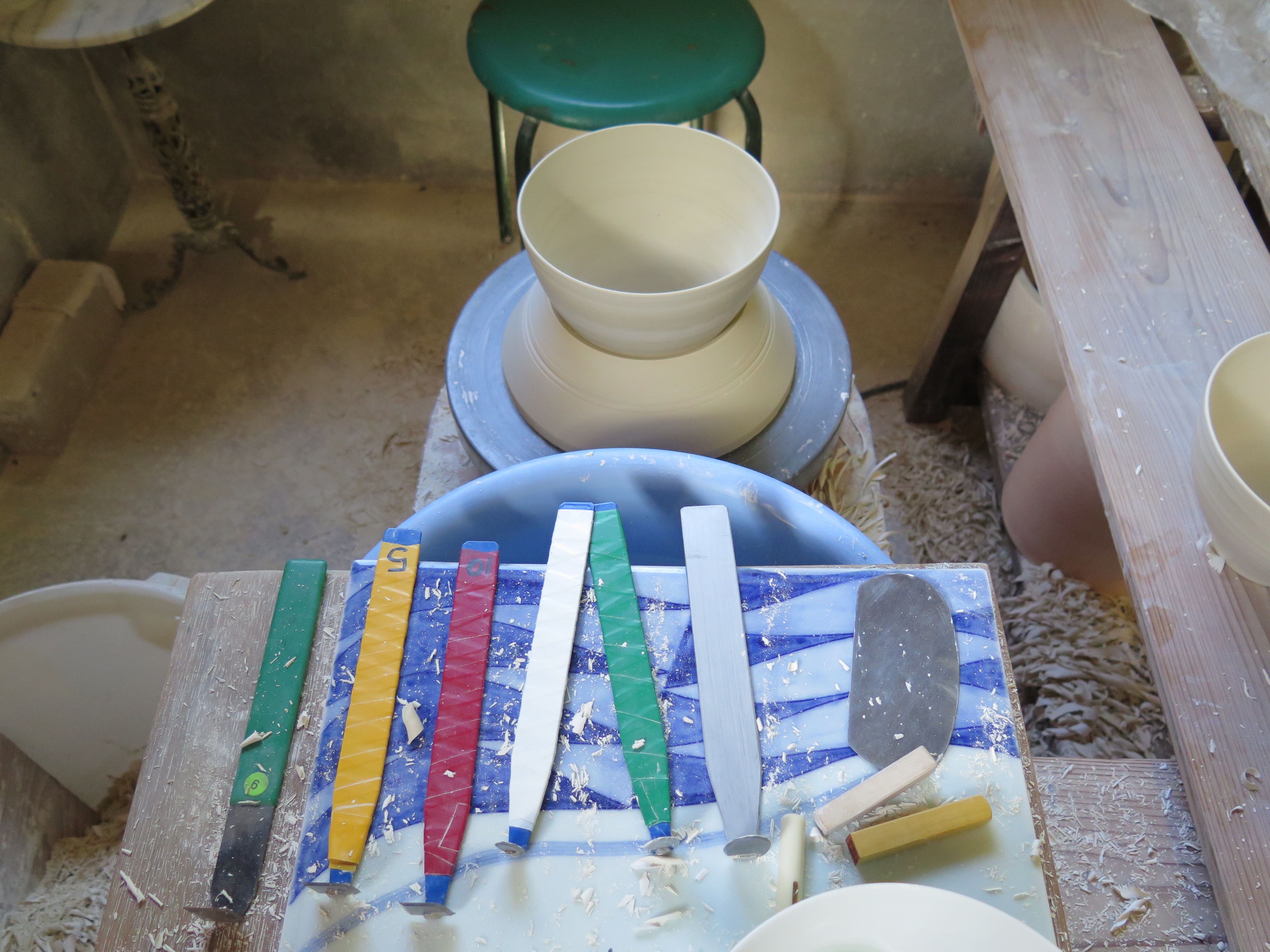
Throwing pots out of these ground rock ceramic pastes is a slow process. We have to plan ahead so that everything must be thrown thicker than you might like and then there is a lot of turning to be done. Some times we rough the forms out on one day, then let them dry overnight until they are almost completely dry, before finishing them off to the thinner desired cross-section. They can’t be bone dry, or they might break under the pressure of the turning tool, but they can’t be damp either, as then they will chip and tear. Milled rock paste isn’t like ordinary clay. It’s just not very plastic. It needs to be turned just before bone dry. Grinding away at what is essentially sand and water mix really takes the edge off my home made metal strip turning tools. I have to resharpen then after every 2nd pot, just to keep the edge keen.

thumb_DSC01219_1024 thumb_DSC01202_1024

The garden is starting to respond to the increasing day length and the hint of warmth in the air. I can see a poppy bud starting to show some red colour and there are swelling buds on the blueberries. We have just picked our first asparagus spears as an aperitif before our other vegetable dinner. These are all good signs of the warmer spring weather to come.

thumb_DSC01287_1024 thumb_DSC01293_1024

thumb_DSC01294_1024thumb_DSC01290_1024

The Japanese Wasabi plants have grown well through the cool wet of the winter and are looking good right now. It’s that hot dry summer heat that knocks them around. I planted onion seeds 2 months ago. A lot of it came up on time, but for some reason, one packet of seed, just sat there and did nothing until now. This variety must need warmer weather to germinate. all the other plants are now 100 mm or more high. I hope that these plants can get enough growing season before it gets too hot and dry for them in the summer? Just down the row a little we have a nice crop of Pak Choi, lovely for stir fry, or just steamed with a little garlic, ginger and soy. 2 mins and melt in your mouth, with still some nice fresh crunch in the warm but fresh and crunchy stems.

thumb_DSC01292_1024 thumb_DSC01291_1024,

I have made what is probably the last batch of marmalade for this year. As the citrus season has all but come to an end. I make a batch of cumquat. blood orange, and lemon marmalade. I finish it off with a dash of whisky before bottling. It’s unusual, it looks great and tastes better.

thumb_DSC01272_1024thumb_DSC01274_1024

thumb_DSC01224_1024tonight’s dinner is spinach with ricotta, Brussel sprouts, initially lightly steamed, then finished in a pan-fried with garlic and chilli, served with steamed potato and pumpkin.

thumb_DSC01278_1024 thumb_DSC01277_1024

Another recent meal was pork medallions pan-fried in olive oil and garlic, he deglazed with a splash of a nice chardonnay, served with lentils simmered in home-made marrow bone and veggie stock, then plated up with mushrooms in white sauce.

We have plenty of cauliflower, broccoli and Brussels sprouts at the moment, as the winter chill weather draws to a close. I have been enjoying lightly steamed Brussel Sprouts, which are then pan-fried in some home-made stock. In this case chicken stock, and finished with a little sesame oil and pan-fried and tossed for a few minutes. They get a few caramelised spots on them as they roll around, a slight grind of fresh pepper and some vegetable salt. Delicious.

IMG_1004

No better way to enjoy the crisp cold of winter.

There was an article in a recent issue of ‘New Scientist’ magazine. (No. 3032, 1/8/15) That told of the health benefits of eating bitter foods like Brussels sprouts.

The Brassicas have several bitter phytonutrients that are produced by the plant to make them unappetising to predators – like us, as well as caterpillars. Sulforaphane is one such protective phytonutrient that gives them the particular sulphur smell. It has anti-cancer functions and is an antioxidant. I usually have a small nibble on what there is in the garden, snapping it off and eating it raw while I wander around, weeding and watering, crunching and chewing as I go. They must be good for me?

I really like the idea of going to the garden each day/evening and picking what needs eating on that day, because it is absolutely ready to be picked, organically grown and totally fresh. This is self-reliance, living with the seasons. 

Enjoying the now!

thumb_IMG_2558_1024

Best wishes from Steve and Janine, who are vegging out in the late winter.

After the firing – pruning in the garden

The weather has turned somewhat balmy after the snow. Maybe spring is on the horizon? Many trees are now in bud and the earliest peaches, plums and almonds are in flower.

IMG_1020IMG_1018

I get up very early to start the firing in the wood fired kiln. It’s 4am. It’s bitterly cold and there is a crunchy frost that I can’t see in the pitch darkness of the very late night/early morn, but I can hear and feel it ‘crunch’ underfoot as I walk down to the pottery.

The firing goes well enough. Pretty well straight down the line as expected. It ought to, as this is the 23rd firing of this version of this iteration of this kiln. Before I could pack the kiln, I had to crawl inside the fire-box to chip out the build up of ash glaze slag. This is fairly normal, but this time I also had to chip out the stump of a snapped off hob brick, that broke off during the last firing and dropped into the firebox. A tricky job as the space is pretty limited, there isn’t much room to swing a hammer in there. In the past I have drilled several holes into the brick and then broken it into smaller pieces that I can chip out. It happens every few years.

This time I try something different. I decide to drill a hole from the outside of the kiln, into the spot where the back of the broken stub of firebrick ought to be. I line it up pretty closely and then using a metal rod, I hammer the old firebrick remnant out of it’s hole, where it has been sitting glazed in tight with all the wood ash for some time. It obliges me and slowly lets go and comes out of its socket fairly easily in only two pieces and a lot of small rubble and spalls.

Maintenance seems to take up and extraordinary amount of my time at this end of my life. This job has gone well, but others are waiting and ongoing. The kind of wood firing that I have developed is quite sedate and well paced with plenty of time to do small jobs, clean up and put away all the tools used in the packing. I sometimes do small maintenance jobs, but they have to be very simple. I can’t afford to get too involved in anything other than the process of firing. I certainly have time to sit and think, plan and ponder. It’s so luxurious to have time to just sit and think. I can afford this luxury, precisely because I have made sure that I have all the necessary wood fuel, and more, cut, split and stacked inside the kiln shed before I start the fire. I make a mental list of all the repair jobs that are waiting to be attended to. I need to replace the last piece of plastic crap that has recently snapped off the pottery roof.

This second piece of plastic crap storm water gutter head has also disintegrated and fallen from the pottery roof, just a couple of months after the first one.

(see; “Note to self: Don’t buy plastic crap” Posted on 04/05/2015 ) I swore that I wouldn’t buy another modern plastic one, and I won’t. So I take an hour off and make a new one out of stainless steel off-cuts from the kiln factory. As it’s my second one in two months, I can still remember how I made the first one and this one goes very quickly, as I avoid all the mistakes that I made inventing and making the first one. The upper face has to be raked back at an angle of 45 degrees, so that it can be fitted with some stainless steel mesh that acts as a leaf deflector.

IMG_0946IMG_0949

IMG_0950thumb_DSC01252_1024

The list of jobs is endless. Now, the guttering on the wood shed has rusted through with all the leaf litter that blows onto that roof from the tree cover. I make a new gutter and fit it up. I’m proud to say that I don’t buy prefabbed stop-ends and down-spouts. I was shown how to make them by one of my mentors. Joe Enfield, the local village plumber 40 years ago. I worked for him as his labourer/assistant for a couple of years when I first came here and didn’t have a proper house and certainly no pottery workshop or kiln. It took me a couple of years to get established again here after we were burnt out in a bush fire in Dural, where we had been renting a place.

I learnt a lot working for Joe. I was only employed on a casual basis on bigger jobs, or where there was crawling under-floor work or a lot of ladder work, as Joe was in his 60’s and close to retirement. He wasn’t obliged to teach me anything, That wasn’t the deal,  but we got on well together and he invested a lot of time in me because he could see that I was keen to learn. I don’t make very good sheet metal work, roof flashing or plumbing, but what I do works and doesn’t leak. I work in the old fashioned way that I was taught by Joe. One of the last of the ‘Old School’ plumbers who still knew do all the old hand skills.

I’m often in at the plumbers wholesale suppliers. They know that I’m not a plumber. I ask all the dumb questions about taps and toilets etc. I only have an account there because I buy a lot of gas fittings for my kiln work. So when I get a length of guttering, but decline the stop ends and down spouts, that are usually sold with it, they question me about it. All the plumbers buy the prefabbed parts, why don’t I. I’m proud to say that I can make my own from off cuts, scrap and leftover bits. Just the way that I was taught. Sometimes I end up making the parts out of stainless steel – because I can! I have more stainless steel off-cuts than galvanised metal to work with.

IMG_0964IMG_0965

IMG_0966IMG_0967

IMG_0973

The firing proceeds slow and steady all the way up to top temperature. It turns out to be a glorious warm day with no wind. This firing, I go to 1320oC. Cone 11 down in the hot spot. 16 hours to top temp and then a 2 hour controlled burning down, until it is safe to leave it to cool naturally. I have my friend, Jim Black here throughout this firing. He helps me pack the kiln by rolling out all the little balls of wadding. During the firing, we sit and chat and solve all the worlds problems while we watch the kiln fire itself. Getting up every so often to stoke more logs into the firebox as necessary. We’re quite ready for bed when it’s all clammed up at 10pm.

thumb_DSC01244_1024thumb_DSC01245_1024

The next couple of days, while the kiln is cooling, I have my other friend Warren here to help with the winter pruning. We get stuck in and prune all the almonds, blue berries and grape vines, trim the hedge and then weed and mow all the almonds, vegetable garden and citrus grove. it’s a long day, but well worth it when we look back after it’s finished. Everything in there is in good shape for spring now.

thumb_DSC01253_1024thumb_DSC01255_1024

thumb_DSC01269_1024

The next day we take down some ageing wattle trees that are over hanging the fuel shed. Its a slow process, because there are three big terracotta pots under these trees. One of them is from the Parliament House Project, from back in 1988. To drop these trees safely, I need to eliminate the weight of the upper branches, in the right places, bit by bit, by taking off one branch at a time, until each tree is whittled down to a trunk that can be chained to the truck and winched over in the right direction, so that it falls safely into a vacant space in the garden. The trunk and larger branches are then cut up into small kitchen-stove sized lengths and wheelbarrowed over to the wood shed to season for a year. The three trees take us all day to deal with and then clean up all the mess.

thumb_DSC01263_1024thumb_DSC01258_1024

While I’m in a gardening mood, I optimistically decide to plant out a few carrot and beetroot seeds. Maybe it’s a little bit early yet, but it somehow seems to be a little warmer and the days are certainly getting longer. The garden trowel has completely rushed away at the end, by being left stuck in the soil while not in use. It’s rusted away down to half its length. I should have looked after it better. It’s only lasted 18 years. I make a new blade for it out of galvanised steel sheet, weld it on and give it a few coats of zinc paint. lets hope i get another 18 years out of it. I suspect that the old hardwood handle won’t last that long? Self reliance is all about making do and doing with what I can make.

IMG_0913IMG_0915

This is just one more of the many jobs that have been on my to-do list for some time now. I seem to cross one off and Janine adds two more. We can never get to the end of the list, but it’s fun trying and doing most things ourselves. It beats working for a living.

Best wishes

from the Artful Bodger

Giving What I Can

So it’s tax time. Something to cheer up this dreary, dull, cold time of the season.
I have my tax return back, and the good news is that I have earned a couple of thousand dollars more than last year.
I was listening to Philip Adams recently, on the Late Night Live replay. I was packing the kiln and the radio was on to keep me company. It filled the back ground space. I tuned in to this guy that Philip Adams was interviewing. He and his wife have dedicated their lives to the good will of others.
He is a philosopher and his wife is a doctor. They have formed a web site that encourages the reader to re-think the way that we pay a proportion of our savings to those less-fortunate than ourselves.
try googling ‘giving what we can’
Following their links I learned that I am in the top 8.6% of the worlds population.
and that my income is greater than 13.6 times the global average.
I was a bit humbled by this. I regularly give 2% of my income to charity. This is pretty pathetic, but I believe that it is widely accepted that this is the minimum amount that a well-fed person in an advanced western economy should be able to afford to give. I recognise that I am very well-off. I’m not doing enough, but I thought that I was doing what I could easily manage. I have now been eased into thinking that I could do more. Perhaps I’m a bit self-complacent, and just a touch lazy and out of the loop of knowing what life is like in the third world. I have some inkling, but I don’t spend any time dwelling on it.
As I have raised my income up from 32,000 PA  to 34,000 I decide to give 10% of this extra income to charity. Small fry, but it is some sort of gesture. I know that I am really comfortable in my life and I should do more, but I want to do lots of things. So I settled on this amount. It’s what I can live with.
I can’t give 40% of my income like these amazingly committed couple, I have already honed my lifestyle down to a pretty frugal minimum, but 10% of my excess above my usual standard income. I can live with that.
I have been giving to several charities over the years. I give them a nominal amount each time they ask, and then they ask for more, I give them my donation and the cycle repeats. I give many small amounts to a lot of organisations. Last year I decided to give each of the charities $100 each in a one-off payment for the year and then nothing else, for 12 months. In response, I Immediately got in the return mail $100 worth of glossy advertising material posted out to me. Clearly I had made a very big mistake. When I sent $25 each month to each of these charities. I didn’t show up on their radar at all. just small fry, to be ignored. But, when I increased my donation level up to $100, then I was to be considered a contender to be milked for a larger amount. Trying to get me onto a regular, larger, automatic donation. As I don’t have any regular income, I can’t commit to any regular payments. I can only give when I know that I have it in the bank to be able to do so.
I can now see that my effort to do ‘the right thing’, was mis-interpreted by the charity cash-raising industry that is employed by the charity organisations.  Without a salary, or any ‘regular’ income. I can’t afford to give a large sum regularly. I can see now that giving a larger amount was a mistake, because I gave $100 in a lump sum to the charity and got $120 worth of glossy paper encouraging me to give more, now!
I declined. I realised that I wasted my small amount of precious money, on that occasion.
We live and learn.
This year I decided to give the total amount in one lump sum to a local charity, that is so small that it doesn’t even have a glossy brochure. Its mission is to build a home for the care of challenged people who need help and support. It is organised, by the parents of these children/adults , such that they might be eased out of their ageing parents homes and into a supportive environment, in a caring way, so that they might be able to become self-supporting eventually. It’s a brave venture and I believe, worthy of support. It’s entirely locally organised by and for these local people.
I sent off all my money and what do you think that I got in the mail the very next week?
Thankfully, all I got in response was a receipt!
I hope that this money is well spent and that the venture is completely realised in the fullness of time.

Vale Peter Rushforth – A Dear Friend and Mentor Has Gone

Peter Rushforth has died, and with his death an era comes to a close. Peter was the last surviving founder of The Potters Society of Australia.

The passing of Peter probably also brings to a close, the influence of the Leach Tradition in Australia. Peter never worked or studied with Leach, although he used Leach’s ‘A Potters Book’ to guide his self-taught experiments into the techniques of stoneware pottery. Stoneware is taken for granted today, but in the post war period it was more or less unknown here and was seen as being so exotic and seemingly unattainable. Peter did visit Leach at St Ives in Cornwall, back in the 60’s on his Churchill Fellowship and Leach visited Australia and spoke and demonstrated at East Sydney Tech.

Peter more or less single-handedly brought into existence the full-time, Vocational Ceramics course in Sydney at the old East Sydney Tech (now known as the National Art School) by shear force of will and persistent, determined, tenacity. He was later joined by Bernd Sahm and Mollie Douglas as the core staff.

Peter Rushforth was a true gentleman in both senses of the word. He was greatly admired for his ceramic skills and his teaching abilities as well as his support for young artists. He had great sensitivity and empathy when dealing with students. He was well known for his cheeky, impish sense of humour. I remember one day he ‘liberated’ a bicycle from outside the ceramics Dept. and rode it around the throwing room, between the wedging benches and the wheels calling out instructions to the students as he passed by. “Don’t let that form get too wide or you’ll lose it” and “don’t open that lump of clay up yet, it isn’t fully centred”!  On another occasion he prevailed upon the teaching staff of the food-school at the Tech to make a large dish of sponge cake mix and we fired it in the big gas kiln for morning tea. This wasn’t a huge success, being slightly soggy on the bottom and a bit charred on top, but we all dutifully ate our share of the sponge-like layer between the char and the sog!

Even though he became quite famous, he never lost his genuinely humble disregard for all the accolades that came his way. In his later life, he would say, ”why don’t they give these awards to a younger person, who is raising a family and paying a mortgage, someone who really needs it?”

One of the great enigmas that surrounded Peter was the fact that he had been a prisoner of war in Changi and on the Burma/Thailand railway. Yet when he returned to Australia, after the war, he embraced the Japanese ceramic aesthetic and later toured there on study trips. He became very close friends of Shiga Shigeo and Tatsuo Shimaoka and others. Everyone knew that he had been in the war, but he never spoke about it publicly. He just wouldn’t discuss it.

What isn’t fully known is that although he was very badly treated on the Burma Railway, as were all the prisoners, there were other, small, but significant moments, that touched him and that, perhaps guided his life forever after. Gestures that he never forgot. At one time on the construction of the rail line. He was so very emaciated and ill, such that he felt he couldn’t work any more. He collapsed, lay down and waited for the beating that was certain to come – or worse. A Japanese guard came up to him and as he waited for the ‘thump’ and ‘bang’ the guard, bent down and offered him some of the medicine that he had in his own shirt pocket. He gave Peter some of the tablets and then the whole packet and said, “so sorry, so sorry!” This was clearly a very deep and touching moment for him, and one that he never forgot.

Perhaps it was this memory of generosity and self-sacrifice that he retained and carried with him, that gave him the faith in humanity and gracious generosity to others that he exhibited all his life, and in particular, an ability to see the beauty and sensitivity of the Japanese culture, particularly in regard to their ceramics?

I was one very lucky recipient of Peters generosity. I was invited to be his workshop assistant one day a week when he lived and worked at ChurchPoint. Later, when I had written the first draught of my Laid Back Wood Firing book, and showed it to Peter for comment. He asked “ So what are you going to do with it”? I said that I thought that I’d like to get it printed as a booklet. But it was a bit beyond me financially, as I didn’t have the $500 that it would cost back in 1976. When I returned after lunch, there was $500 sitting waiting for me. He told me to pay him back some time, when I could. I sold the first 500 copies @ $2 each, in a little over two weeks, such was the demand for a small book of this kind. I was able to repay the loan and get a second printing done. This was a very deep and touching moment for me, and one that I have never forgotten!

We were regular visitors to ‘Le-Var’ over the 45 or so years of our association. Janine and I went up to ‘Le-Var’ and lived with them for a couple of weeks while we built his 2 chamber wood fired kiln in the late seventies. Later returning to share the first firing together. We had just finished the firing and clammed the firebox door, when it started to snow, turning everything white. It was so quiet and peaceful after the hot, hectic final hours of the firing. A very beautiful idyl, not to be forgotten.

A few years ago when we were up visiting them, we went for a walkntalk out to the lookout, as we often did after a long lunch. We passed a fallen tree in the garden that had blown over in a storm and I asked Peter, “What are you going to do with that dead tree. It appears to be a Japanese cedar from the look of the bark. It’ll be a very nice nice piece of timber in there”. He replied that I could have it if I wanted it. I said that I did indeed want it and returned the next day with my truck and chain saws to mill it up into planks.

IMG_2274IMG_2275

IMG_2276IMG_2277

IMG_2279IMG_2280

After seasoning for a few years, I made both Peter and Bobbie a chair each out of the wood. It was soft, light-weight and beautiful to work with and the timber has a lovely grain. I has been made into a few beautiful chairs and I still have quite a bit of it left for other projects. The gift of the chairs was my way of saying thank you for everything, not just the opportunity to forestall waste and to be creative with this windfall tree. I am grateful to Peter and Bobbie for all the years of friendship and support. They have been endlessly supportive and generous over the years, not just to me, but to everyone in their circle. They have led exemplary lives and are an inspiration to us.

IMG_2923IMG_9517

IMG_9519IMG_6115

IMG_9518IMG_9521IMG_2928IMG_1390

IMG_2929

Peter and Bobbie called in to visit us at our home on the morning of our son Geordie’s home-birth. A surprise visit and a very touching one.

We were planning to go up and visit Peter and Bobbie in hospital last Friday, but couldn’t get there because of the snow. Janine spoke to Bobbie on the phone and she said to come sooner rather than later, as he might not last the week. We drove up to visit them on the Tuesday and Peter died the next morning. I’m so glad that we managed to get there in time.

We spent the day up there in the mountains with them.

Peter appeared weak, but OK. He gave us a smile but he was struggling to get his breath. He was very tired.

When I sat with him in the sun and held his hand. He said that he apologised because he couldn’t “entertain me today, because I’m not at all well”.

He reminisced about “the good things, the pots, and the good times that we had shared“ and that he “often thought of us”.

He nodded in and out of sleep, sitting there in his chair in the sun.

Janine had taken him up some of her soft baked almond biscuits. He liked those.

We’ll all miss him. His dry, cheeky, mischievous, often naughty, wry, sense of humour.

His self-effacing humility, his simpatico, his nurturing, caring humanity.

I consider myself so lucky to have been a friend and to have been mentored by him.

So many touching moments that I will never forget.

Snow for the Last Firing Workshop of the Season

It freezing!

The wind has a minus zero wild chill factor and It’s quite hard to get warm. All the wood is wet, even in the wood shed where it has been stored for some weeks, but it just isn’t drying out because of the constant rain. It snowed over night and closed the highway. The busses aren’t running because the highway is blocked. We used to get snow like this, only briefly, every winter back in the seventies when we first came here to the Southern Highlands, but due to global warming, we haven’t had snow for a few years now. So we are unprepared. I have to resort to going down to the kiln shed and stealing some of the dry kiln wood to get the fire started this morning. It’s a day for staying inside until the weather clears a bit, or the sun comes out. We had an inch of rain before the snow. So everything is a bit boggy out there. I was planning on planting out the onion sets, maybe later in the day? It’s well past time to plant out the onions. They should have been planted out last month, 3 or 4 weeks ago. I was brought up to believe that onions should be planted on the shortest day, (20th June), and harvested on the longest, Xmas day. Or there a-bouts. It’s always worked out well enough for us to follow that rule and it’s easy to remember.

The professional advice I have is that there are many types of onions and they can be planted out at different times. I’m sure that this is absolutely correct, but I just don’t have the time to work it all out. Hunter River Brown and Spanish Red are my onions of choice. Plus of course, spring onions and leeks at any time of year. Everything gets planted out now as soon as I can get the time to do it, as close as possible to the mid year solstice in this case. It could explain why we have such variable results with everything that we grow – especially onions. We just don’t put enough effort in. Lazy buggers that we are. We once had a moon planting calendar, to tell us the best time to plant or transplant seedlings. I doubt that it makes any difference, maybe it does? I just don’t know. Because I don’t know, I can’t say that it does or doesn’t make any difference. I could never tell. The sceptic in me doubts it. I couldn’t always get out there on a Tuesday afternoon after 2.00pm to do the particular planting of specific root crops, to catch to most beneficial window for them. I was lucky to get out there some time in the same week, or even the closest month, as is the case now with these onions. I plant when I can find the time. What seems to me to be more important to success in growing vegetables, is keeping up the constant weeding and in dry times, the watering, often twice a day at the height of summer.

We have just finished our last firing workshop for this firing season and are waiting for the kiln to cool. Everything seemed to go well and so perhaps we can anticipate a good result for all the hard-working participants. I hope that the results are good for them. They work so hard to bring it all together. I want it to be rewarding for them. I try my best to deliver for them. But nothing in life is certain.

We started the firing within 10 minutes of the usual time, after finishing packing on the Saturday afternoon and finished the firing within half an hour of our usual time on Sunday afternoon. Pretty much like clockwork. Not so surprising when you think that this is the 22nd firing of this kiln, in this configuration, and fired in this way. It’s only a small kin, so we seem to be getting to know it quite well now.

Everyone who wants to, gets to have a go at stoking the wood into the firebox during their shift. We work to give everyone a safe, enjoyable, entertaining, educational and productive experience. We do all that we can think of to achieve this. We must be doing some things right, as a few students decide to enroll in double workshops and  others have re-enroll the following year. We could do better, but we only have just so much time and energy to put into it.
I try to deliver.

IMG_1390IMG_1412

IMG_1397 IMG_1427

  IMG_1399

Although I have never eaten marshmallows, they seem to appear at most of the firings and are quite popular as the preferred sugar-hit, towards the end of the firing, after a long night shift.

IMG_1428IMG_1431

IMG_1432  IMG_1433

all above images by Jay Warwar

During the firing, I was caught on Davin’s phone, wearing my welding jacket and helmet, looking a bit like Ned Kelly.

Stand and deliver!
I try to deliver.

IMG_2657Image courtesy of Davin Turner

Last night we went to the Royal Society meeting and listened to Dr. Brian Keating Executive Director of CSIRO’s Agriculture, Food and Health Sector.

“The Federal Government has finally released it’s long awaited plan for Australian agricultural competitiveness White Paper 4th July 2015. In this paper the government notes that Northern Australia is a bio-security risk hot spot, facing different risks from other parts of Australia, due to it’s proximity to other countries and its tropical environment which is more receptive to certain pests, diseases and weeds.”

 “Dr Keating’s Sector is responsible for science based solutions to major global challenges such as;

– Food security and the need to increase agricultural productivity in a sustainable way.

– Strong and sustainable industries and economics in rural areas.

– Biosecurity for agriculture including threat of Zoonotic diseases.

– links between food and Health”

(intro from the Royal Soc. briefing note)

In his talk he spent some time outling some of the issues to do with food security. Australia benefitted from the green revolution of the 60’s and 70’s, and we are tracking well to be food secure into the near future, possibly up to the 2050 mid-century period, going on past efforts and statistics. However, there are many variables and bio-security risks, global warming, unpredictable volcanic activity affecting sunlight levels, prolonged draught or el nino, all could change this very rapidly. Apparently we only store about 90 days worth of food in Australia and this is average for the Advanced Western Economies. This has worked well for wealthy nations in the past, as there was always somewhere with an excess and we have a AAA credit rating, so now, because of globalization, we can buy in what we need from whoever is prepared to sell. However, This may not always be the case. In recent decades, apparently, we have gone from a net exporter of food to a net importer. A lot of this is to do with persistent drought in different parts of the country.

The Federal government has also cut spending on plant research, development and breeding. In fact, there have been cuts in many branches of the CSIRO, so we may not always be able to stay ahead of all the pests and diseases, that are consistently developing resistant strains.

We are already using all the arable land that is available and is irigatable. Clearing more forested land will only add to global warming by releasing more CO2 and all the really good, fertile land has already been cleared, so what remains is marginal.

He presented it all quite matter-a-fact, but I fould it quite chilling!

Apparently there a very few sustainable wild caught fisheries left in the world. The future lies in aquaculture, but this causes tremendous polution problems with the local environments where it is implemented. Its also a very inefficient way of producing protein, with several kilos of small fish caught and minced to feed the bigger fish in the pens. Much of this penned fish stock is now being fed on wheat products to provide the protein, but this doesn’t really give the correct balance, so the fish produced don’t have the precious omega 3 oils. The answer from the CSIRO is a GM wheat that contains the omega 3s inserted into it’s genome. The ‘feed-lot’ fish flesh can also be a bit grey, so an orange dye can be added to overcome this.

Oh Dear!

I find it all a bit distressing, but this is the new reality. No one else in the audience seems to be too bothered. They’ve heard it all before. They are all older, or retired scientists and academics. They are on top of all this, they are familiar with these issues and see it from their own particular specialty’s perspective. All grey haired or balding and nodding in agreement. We just look on, we are some of the youngest ones there and we are into our 60’s!

I’d better forget the cold, squally weather outside with a touch of sleet on the wind, that is blowing off the snow, stop winging, and get out there and plant those onion sets. I want to be as self-reliant in food as I can be. This isn’t even cold compared to some countries.
Time to get real and get on with it.
Self-reliance isn’t about comfort. I need to deliver those onions in the summer.
Best wishes from the (as-yet) non, GM-modified Steve and his hard-working organic girl.

Back to the Wheel

My hand is sufficiently healed now for me to return to throwing on the potters wheel. My finger is still numb at the end, but otherwise I’m all OK and I feel that I can throw again OK. That’s my opinion, others watching me might differ. I’ve never been a ‘power thrower’ or aspired to be a virtuoso on the wheel. I am sufficiently capable and skilled to be able to make the ideas that are in my head come to life. I’ve done my several thousands of hours of practise over the past 48 years, so I’m OK with what I attempt to do.

It’s a funny feeling, starting wedging again after a month off. It’s like a ‘getting to know you’ all over again, kind of feeling.

IMG_0859

I can’t wait to get back into it now that we have done our last wood firing weekend workshop. We can have our kiln back now and start to plan for our own firings. Wedging up the clay and making these first pots is the start. I used to think that I could do both. Run these workshops and make a few pots as well. Last year we managed to sneak a firing of our own in, in-between the set firings with the workshop groups. However, it seems to take all our energy to just clean and maintain the kiln as well as cut, split and stack all the wood required for the firings, plus keeping part of the pottery set up as a kitchen. There isn’t any time left to be able to pack, fire and unpack the kiln with our own work in the 5 days in-between each of the other firings, as well as cutting and splitting our own wood for our firing as well. It all proved too much work for me and I just couldn’t manage to do it all. We have done 11 weekends in 13 weeks. I’m glad that we can have some space to make and fire our own work now.

On a brighter note there was an exhibition review of the ‘Turn, turn, turn’ exhibition at the NAS Gallery in Sydney. One of the six shows that I have work in currently. It is amazing that an exhibition of ceramics has been given any space at all in a major Sydney newspaper. It is even more amazing that the reviewer, Christopher Allen was given almost two pages to do the job. I can’t remember a ceramics show getting any oxygen at all in a major newspaper in Sydney for the past twenty years, so I was particularly thrilled to find that my own work got two paragraphs at the end of the review. I don’t know how this has all come about, but I appreciate it enormously, as it will most likely be the only time in my life that this will happen, as ceramics isn’t highly valued in critical circles in Australia.
It’s amazing to me that when it happened, I was part of it.
I am grateful!
Christopher Allen wrote;
“…Steve Harrison represents the culmination of the art of the potter in the East Asian traditions. His deceptively simple and yet refined and serene vessels are the product of the humble, meditative practice of the potters art and reflect, indeed his own choice of a life in harmony with his aesthetic ideals. 
These are works that ostensibly seek only to serve the craft and subsume them selves to its formal demands, which make no attempt to claim our attention with brash or sensational effects, and yet which silently draw us to them by the force and conviction of their integrity.”
Christopher Allen, ‘Wheels of Creation’, Weekend Australian, Review, Visual Arts, P10/11. July 11/12 2015.
Best wishes
Steve