After the firing – pruning in the garden

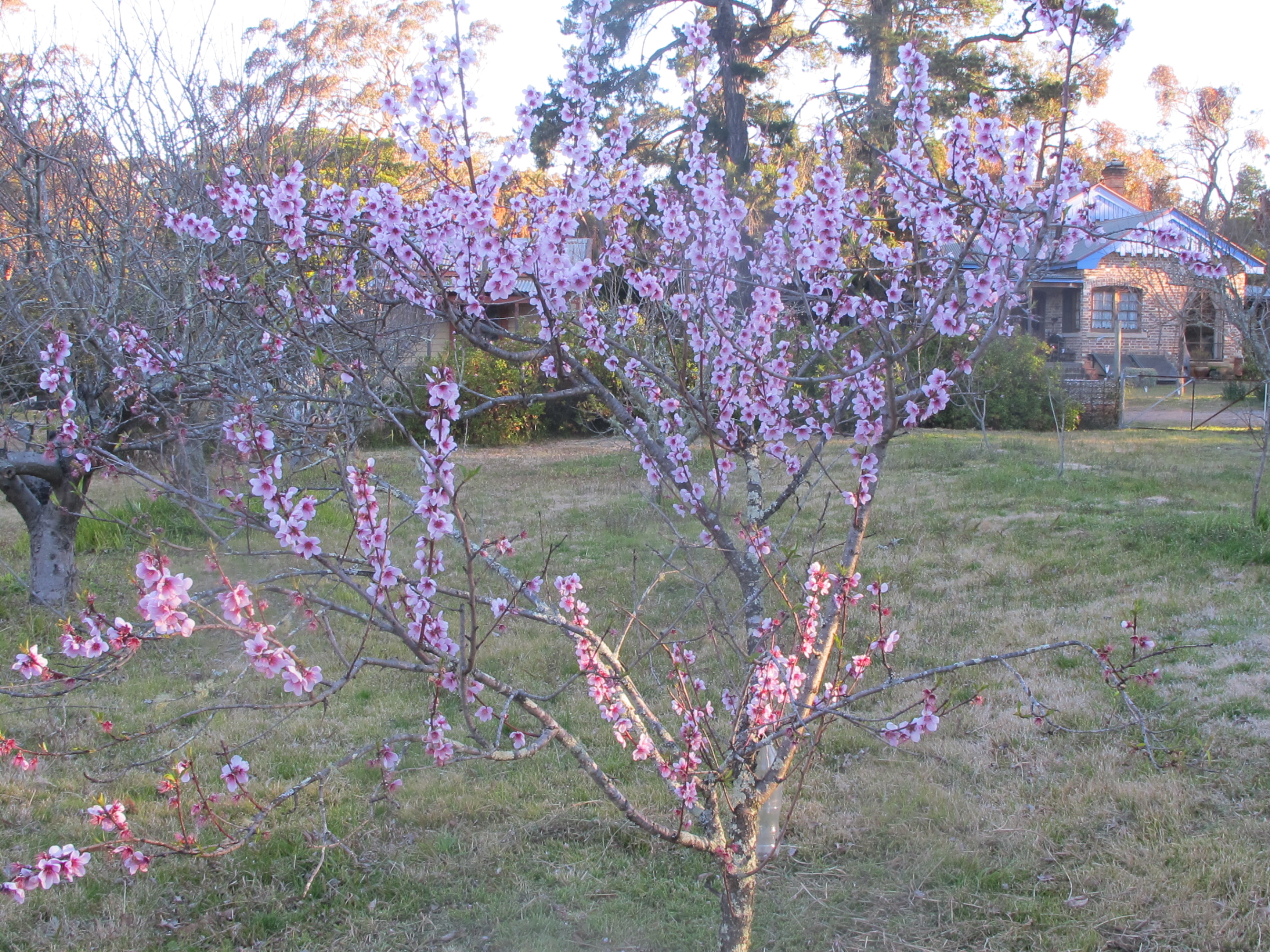
The weather has turned somewhat balmy after the snow. Maybe spring is on the horizon? Many trees are now in bud and the earliest peaches, plums and almonds are in flower.
IMG_1020IMG_1018

I get up very early to start the firing in the wood fired kiln. It’s 4am. It’s bitterly cold and there is a crunchy frost that I can’t see in the pitch darkness of the very late night/early morn, but I can hear and feel it ‘crunch’ underfoot as I walk down to the pottery.

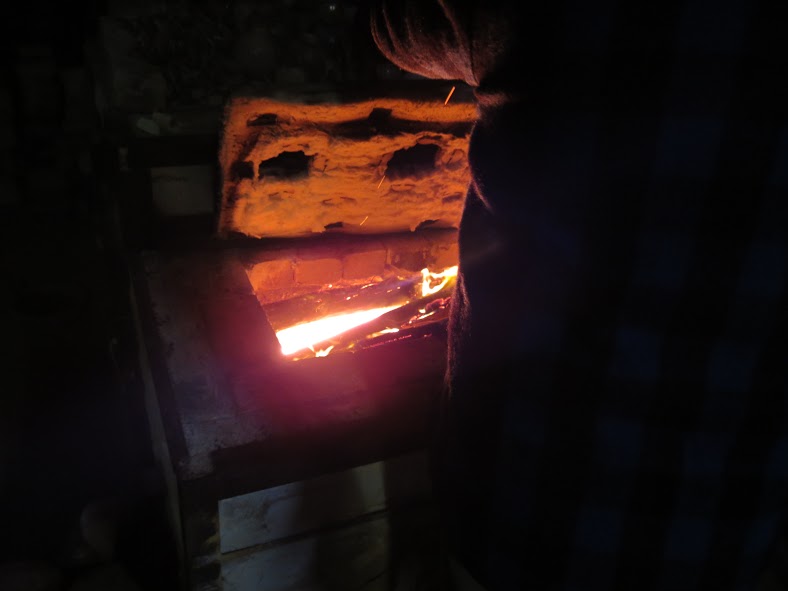
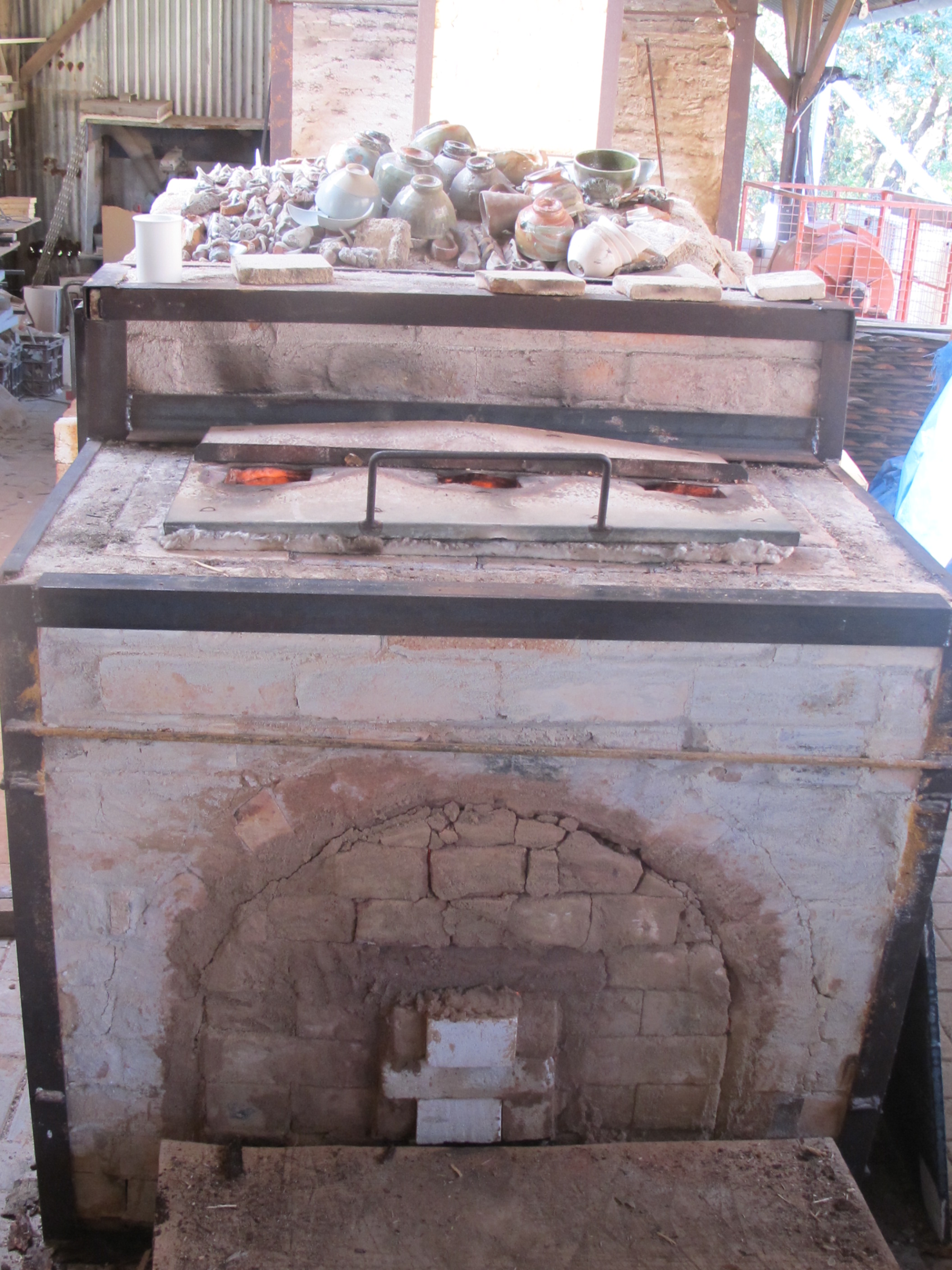
The firing goes well enough. Pretty well straight down the line as expected. It ought to, as this is the 23rd firing of this version of this iteration of this kiln. Before I could pack the kiln, I had to crawl inside the fire-box to chip out the build up of ash glaze slag. This is fairly normal, but this time I also had to chip out the stump of a snapped off hob brick, that broke off during the last firing and dropped into the firebox. A tricky job as the space is pretty limited, there isn’t much room to swing a hammer in there. In the past I have drilled several holes into the brick and then broken it into smaller pieces that I can chip out. It happens every few years.

This time I try something different. I decide to drill a hole from the outside of the kiln, into the spot where the back of the broken stub of firebrick ought to be. I line it up pretty closely and then using a metal rod, I hammer the old firebrick remnant out of it’s hole, where it has been sitting glazed in tight with all the wood ash for some time. It obliges me and slowly lets go and comes out of its socket fairly easily in only two pieces and a lot of small rubble and spalls.

Maintenance seems to take up and extraordinary amount of my time at this end of my life. This job has gone well, but others are waiting and ongoing. The kind of wood firing that I have developed is quite sedate and well paced with plenty of time to do small jobs, clean up and put away all the tools used in the packing. I sometimes do small maintenance jobs, but they have to be very simple. I can’t afford to get too involved in anything other than the process of firing. I certainly have time to sit and think, plan and ponder. It’s so luxurious to have time to just sit and think. I can afford this luxury, precisely because I have made sure that I have all the necessary wood fuel, and more, cut, split and stacked inside the kiln shed before I start the fire. I make a mental list of all the repair jobs that are waiting to be attended to. I need to replace the last piece of plastic crap that has recently snapped off the pottery roof.

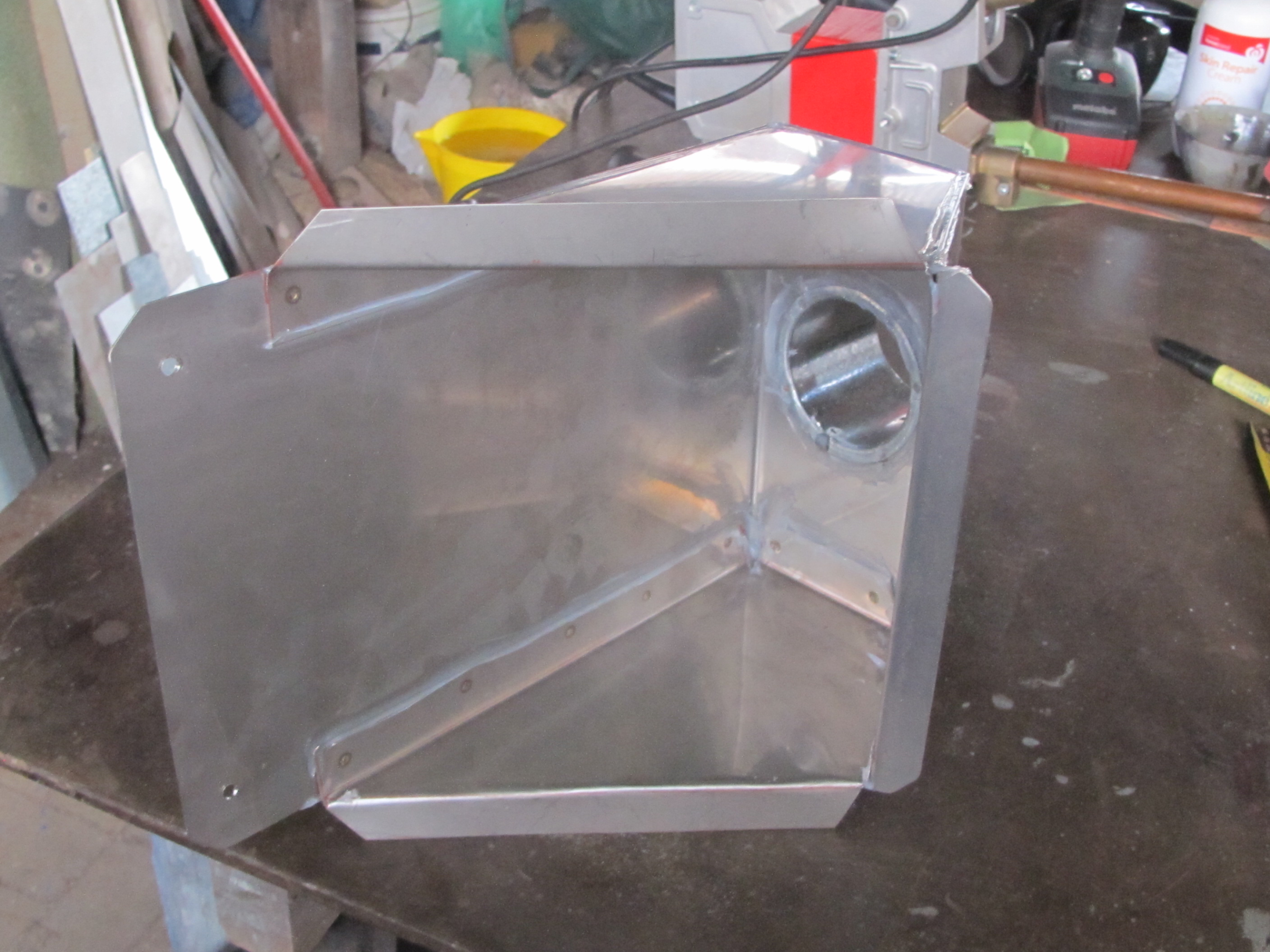
This second piece of plastic crap storm water gutter head has also disintegrated and fallen from the pottery roof, just a couple of months after the first one.

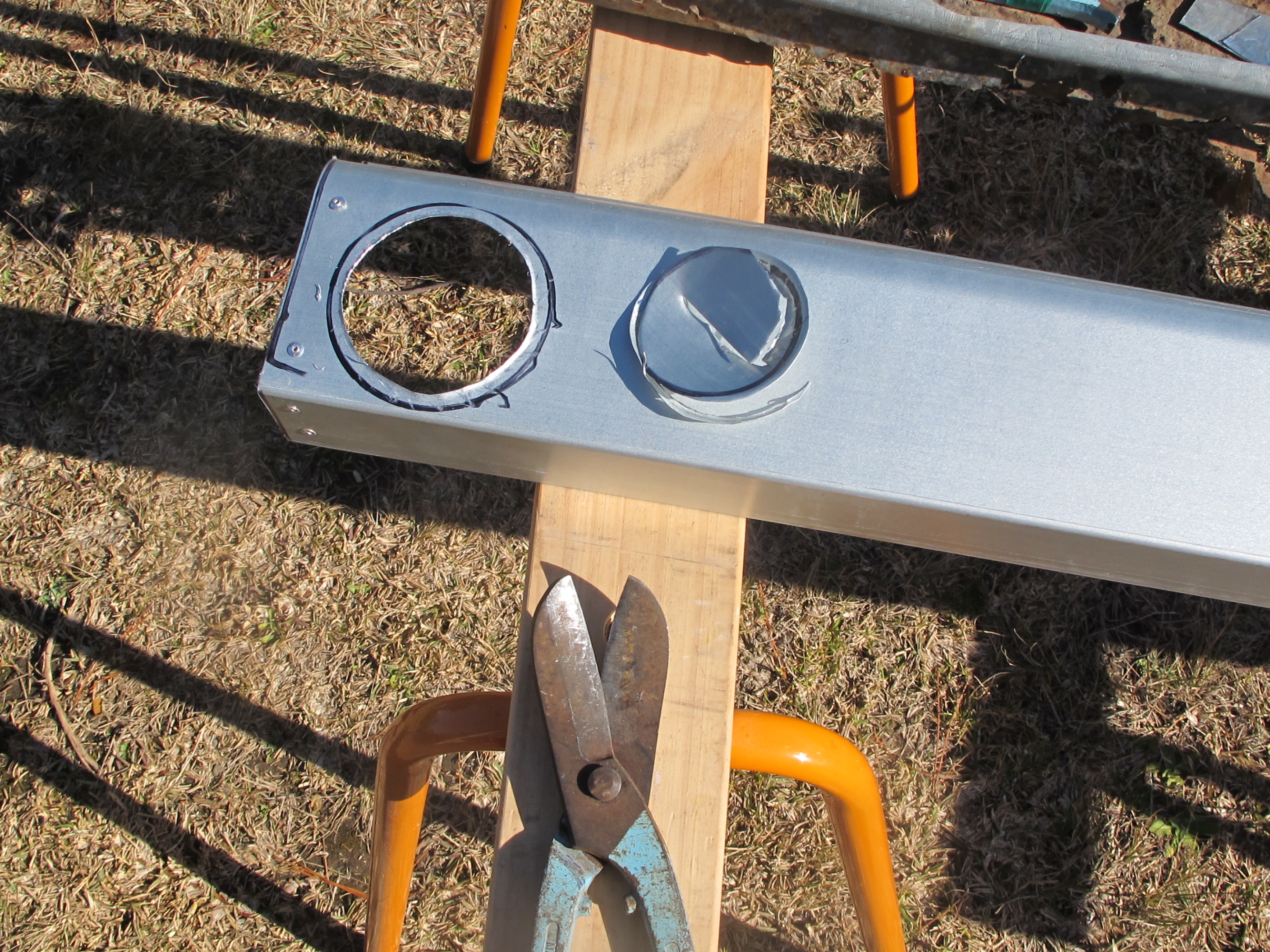
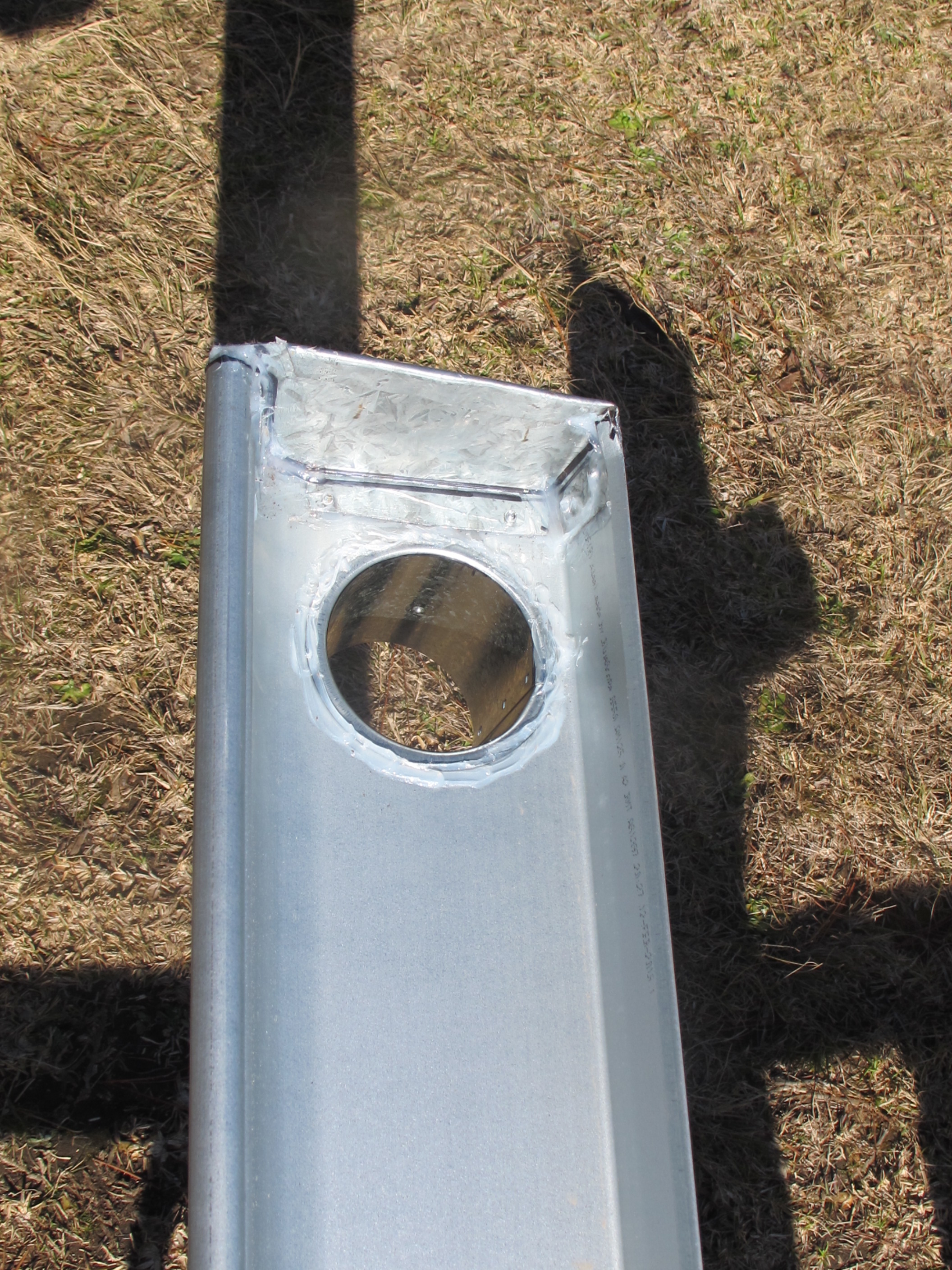
(see; “Note to self: Don’t buy plastic crap” Posted on 04/05/2015 ) I swore that I wouldn’t buy another modern plastic one, and I won’t. So I take an hour off and make a new one out of stainless steel off-cuts from the kiln factory. As it’s my second one in two months, I can still remember how I made the first one and this one goes very quickly, as I avoid all the mistakes that I made inventing and making the first one. The upper face has to be raked back at an angle of 45 degrees, so that it can be fitted with some stainless steel mesh that acts as a leaf deflector.

IMG_0946IMG_0949

IMG_0950thumb_DSC01252_1024

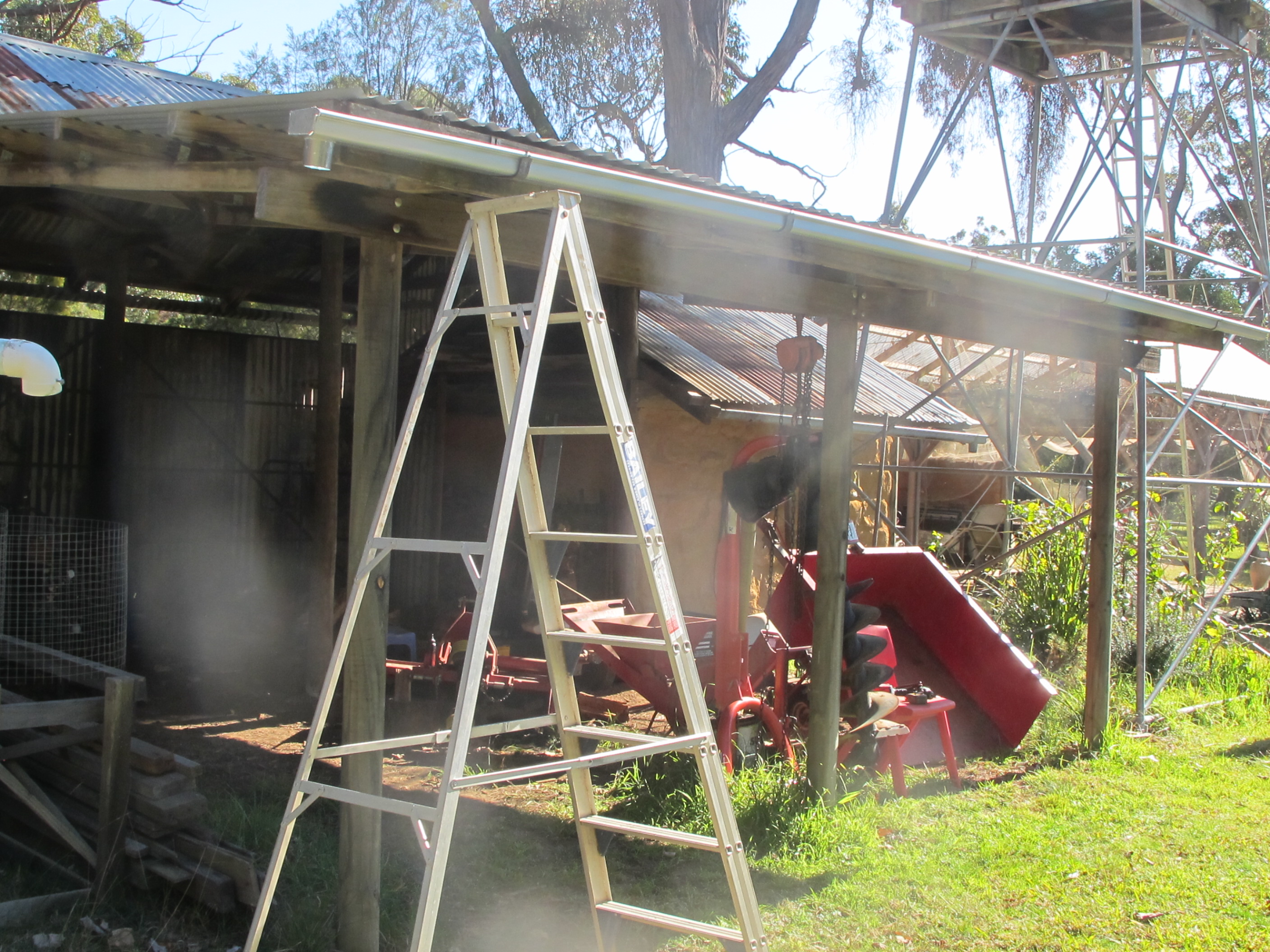
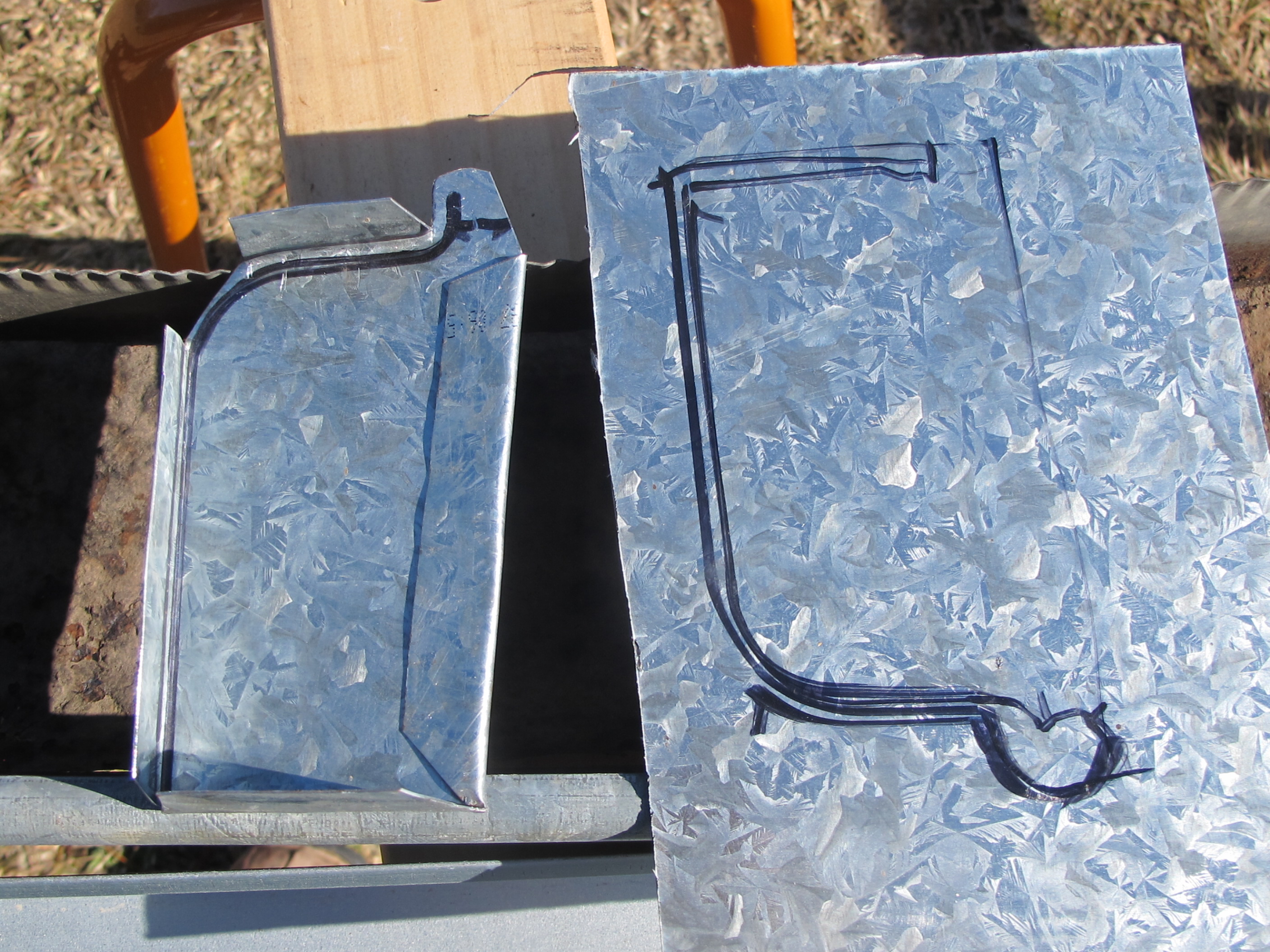
The list of jobs is endless. Now, the guttering on the wood shed has rusted through with all the leaf litter that blows onto that roof from the tree cover. I make a new gutter and fit it up. I’m proud to say that I don’t buy prefabbed stop-ends and down-spouts. I was shown how to make them by one of my mentors. Joe Enfield, the local village plumber 40 years ago. I worked for him as his labourer/assistant for a couple of years when I first came here and didn’t have a proper house and certainly no pottery workshop or kiln. It took me a couple of years to get established again here after we were burnt out in a bush fire in Dural, where we had been renting a place.

I learnt a lot working for Joe. I was only employed on a casual basis on bigger jobs, or where there was crawling under-floor work or a lot of ladder work, as Joe was in his 60’s and close to retirement. He wasn’t obliged to teach me anything, That wasn’t the deal,  but we got on well together and he invested a lot of time in me because he could see that I was keen to learn. I don’t make very good sheet metal work, roof flashing or plumbing, but what I do works and doesn’t leak. I work in the old fashioned way that I was taught by Joe. One of the last of the ‘Old School’ plumbers who still knew do all the old hand skills.

I’m often in at the plumbers wholesale suppliers. They know that I’m not a plumber. I ask all the dumb questions about taps and toilets etc. I only have an account there because I buy a lot of gas fittings for my kiln work. So when I get a length of guttering, but decline the stop ends and down spouts, that are usually sold with it, they question me about it. All the plumbers buy the prefabbed parts, why don’t I. I’m proud to say that I can make my own from off cuts, scrap and leftover bits. Just the way that I was taught. Sometimes I end up making the parts out of stainless steel – because I can! I have more stainless steel off-cuts than galvanised metal to work with.
IMG_0964IMG_0965

IMG_0966IMG_0967

IMG_0973

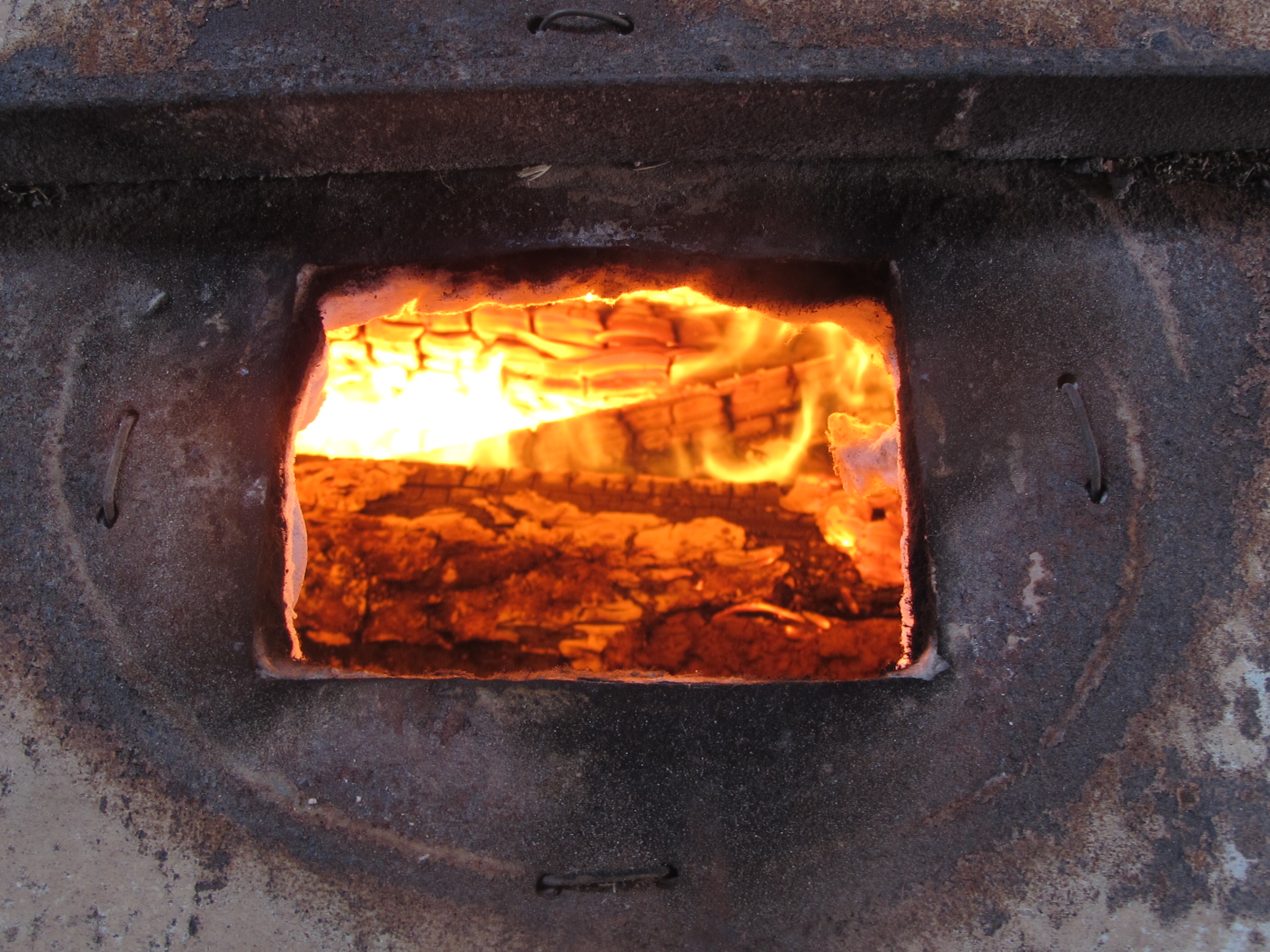
The firing proceeds slow and steady all the way up to top temperature. It turns out to be a glorious warm day with no wind. This firing, I go to 1320oC. Cone 11 down in the hot spot. 16 hours to top temp and then a 2 hour controlled burning down, until it is safe to leave it to cool naturally. I have my friend, Jim Black here throughout this firing. He helps me pack the kiln by rolling out all the little balls of wadding. During the firing, we sit and chat and solve all the worlds problems while we watch the kiln fire itself. Getting up every so often to stoke more logs into the firebox as necessary. We’re quite ready for bed when it’s all clammed up at 10pm.

thumb_DSC01244_1024thumb_DSC01245_1024

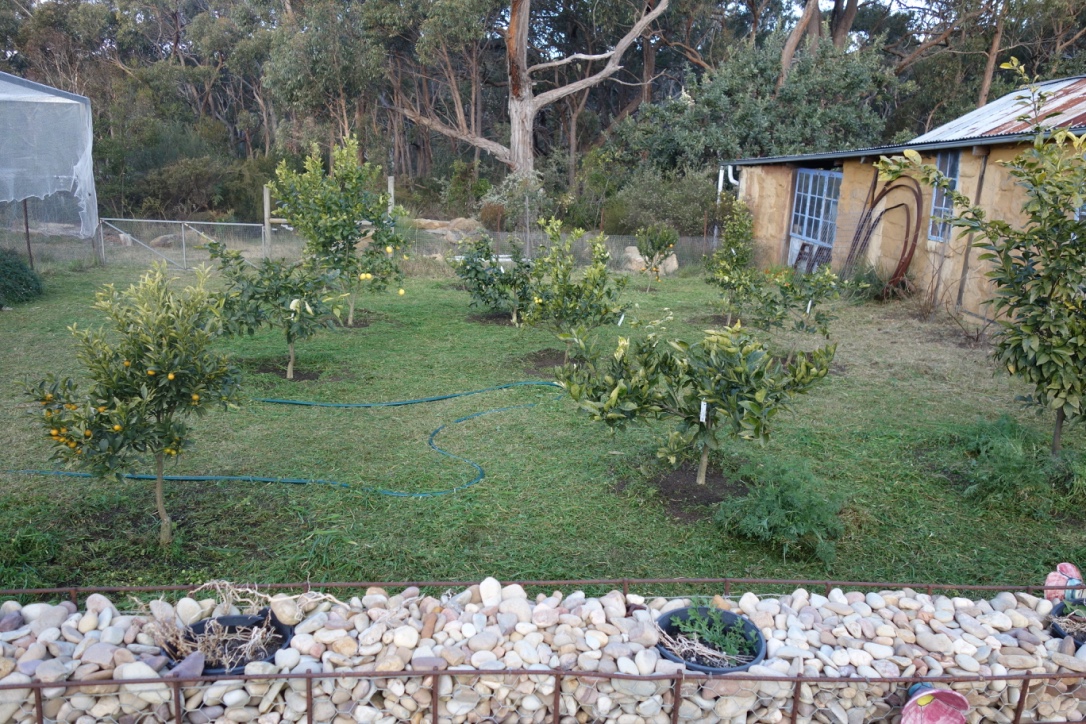
The next couple of days, while the kiln is cooling, I have my other friend Warren here to help with the winter pruning. We get stuck in and prune all the almonds, blue berries and grape vines, trim the hedge and then weed and mow all the almonds, vegetable garden and citrus grove. it’s a long day, but well worth it when we look back after it’s finished. Everything in there is in good shape for spring now.

thumb_DSC01253_1024thumb_DSC01255_1024

thumb_DSC01269_1024

The next day we take down some ageing wattle trees that are over hanging the fuel shed. Its a slow process, because there are three big terracotta pots under these trees. One of them is from the Parliament House Project, from back in 1988. To drop these trees safely, I need to eliminate the weight of the upper branches, in the right places, bit by bit, by taking off one branch at a time, until each tree is whittled down to a trunk that can be chained to the truck and winched over in the right direction, so that it falls safely into a vacant space in the garden. The trunk and larger branches are then cut up into small kitchen-stove sized lengths and wheelbarrowed over to the wood shed to season for a year. The three trees take us all day to deal with and then clean up all the mess.

thumb_DSC01263_1024thumb_DSC01258_1024

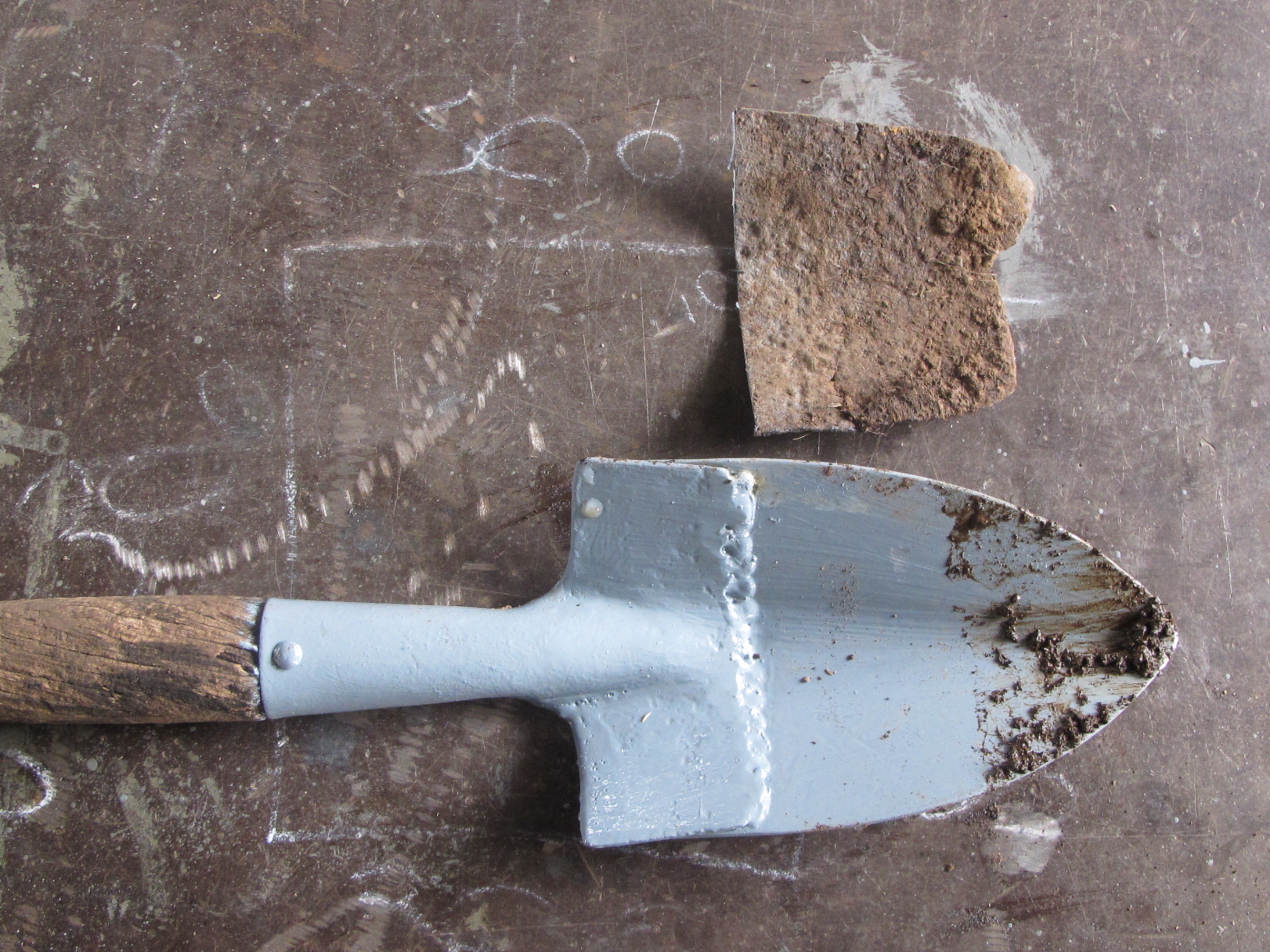
While I’m in a gardening mood, I optimistically decide to plant out a few carrot and beetroot seeds. Maybe it’s a little bit early yet, but it somehow seems to be a little warmer and the days are certainly getting longer. The garden trowel has completely rushed away at the end, by being left stuck in the soil while not in use. It’s rusted away down to half its length. I should have looked after it better. It’s only lasted 18 years. I make a new blade for it out of galvanised steel sheet, weld it on and give it a few coats of zinc paint. lets hope i get another 18 years out of it. I suspect that the old hardwood handle won’t last that long? Self reliance is all about making do and doing with what I can make.
IMG_0913IMG_0915

This is just one more of the many jobs that have been on my to-do list for some time now. I seem to cross one off and Janine adds two more. We can never get to the end of the list, but it’s fun trying and doing most things ourselves. It beats working for a living.

Best wishes

from the Artful Bodger

Giving What I Can

So it’s tax time. Something to cheer up this dreary, dull, cold time of the season.
I have my tax return back, and the good news is that I have earned a couple of thousand dollars more than last year.
I was listening to Philip Adams recently, on the Late Night Live replay. I was packing the kiln and the radio was on to keep me company. It filled the back ground space. I tuned in to this guy that Philip Adams was interviewing. He and his wife have dedicated their lives to the good will of others.
He is a philosopher and his wife is a doctor. They have formed a web site that encourages the reader to re-think the way that we pay a proportion of our savings to those less-fortunate than ourselves.
try googling ‘giving what we can’
Following their links I learned that I am in the top 8.6% of the worlds population.
and that my income is greater than 13.6 times the global average.
I was a bit humbled by this. I regularly give 2% of my income to charity. This is pretty pathetic, but I believe that it is widely accepted that this is the minimum amount that a well-fed person in an advanced western economy should be able to afford to give. I recognise that I am very well-off. I’m not doing enough, but I thought that I was doing what I could easily manage. I have now been eased into thinking that I could do more. Perhaps I’m a bit self-complacent, and just a touch lazy and out of the loop of knowing what life is like in the third world. I have some inkling, but I don’t spend any time dwelling on it.
As I have raised my income up from 32,000 PA  to 34,000 I decide to give 10% of this extra income to charity. Small fry, but it is some sort of gesture. I know that I am really comfortable in my life and I should do more, but I want to do lots of things. So I settled on this amount. It’s what I can live with.
I can’t give 40% of my income like these amazingly committed couple, I have already honed my lifestyle down to a pretty frugal minimum, but 10% of my excess above my usual standard income. I can live with that.
I have been giving to several charities over the years. I give them a nominal amount each time they ask, and then they ask for more, I give them my donation and the cycle repeats. I give many small amounts to a lot of organisations. Last year I decided to give each of the charities $100 each in a one-off payment for the year and then nothing else, for 12 months. In response, I Immediately got in the return mail $100 worth of glossy advertising material posted out to me. Clearly I had made a very big mistake. When I sent $25 each month to each of these charities. I didn’t show up on their radar at all. just small fry, to be ignored. But, when I increased my donation level up to $100, then I was to be considered a contender to be milked for a larger amount. Trying to get me onto a regular, larger, automatic donation. As I don’t have any regular income, I can’t commit to any regular payments. I can only give when I know that I have it in the bank to be able to do so.
I can now see that my effort to do ‘the right thing’, was mis-interpreted by the charity cash-raising industry that is employed by the charity organisations.  Without a salary, or any ‘regular’ income. I can’t afford to give a large sum regularly. I can see now that giving a larger amount was a mistake, because I gave $100 in a lump sum to the charity and got $120 worth of glossy paper encouraging me to give more, now!
I declined. I realised that I wasted my small amount of precious money, on that occasion.
We live and learn.
This year I decided to give the total amount in one lump sum to a local charity, that is so small that it doesn’t even have a glossy brochure. Its mission is to build a home for the care of challenged people who need help and support. It is organised, by the parents of these children/adults , such that they might be eased out of their ageing parents homes and into a supportive environment, in a caring way, so that they might be able to become self-supporting eventually. It’s a brave venture and I believe, worthy of support. It’s entirely locally organised by and for these local people.
I sent off all my money and what do you think that I got in the mail the very next week?
Thankfully, all I got in response was a receipt!
I hope that this money is well spent and that the venture is completely realised in the fullness of time.

Vale Peter Rushforth – A Dear Friend and Mentor Has Gone

Peter Rushforth has died, and with his death an era comes to a close. Peter was the last surviving founder of The Potters Society of Australia.

The passing of Peter probably also brings to a close, the influence of the Leach Tradition in Australia. Peter never worked or studied with Leach, although he used Leach’s ‘A Potters Book’ to guide his self-taught experiments into the techniques of stoneware pottery. Stoneware is taken for granted today, but in the post war period it was more or less unknown here and was seen as being so exotic and seemingly unattainable. Peter did visit Leach at St Ives in Cornwall, back in the 60’s on his Churchill Fellowship and Leach visited Australia and spoke and demonstrated at East Sydney Tech.

Peter more or less single-handedly brought into existence the full-time, Vocational Ceramics course in Sydney at the old East Sydney Tech (now known as the National Art School) by shear force of will and persistent, determined, tenacity. He was later joined by Bernd Sahm and Mollie Douglas as the core staff.

Peter Rushforth was a true gentleman in both senses of the word. He was greatly admired for his ceramic skills and his teaching abilities as well as his support for young artists. He had great sensitivity and empathy when dealing with students. He was well known for his cheeky, impish sense of humour. I remember one day he ‘liberated’ a bicycle from outside the ceramics Dept. and rode it around the throwing room, between the wedging benches and the wheels calling out instructions to the students as he passed by. “Don’t let that form get too wide or you’ll lose it” and “don’t open that lump of clay up yet, it isn’t fully centred”!  On another occasion he prevailed upon the teaching staff of the food-school at the Tech to make a large dish of sponge cake mix and we fired it in the big gas kiln for morning tea. This wasn’t a huge success, being slightly soggy on the bottom and a bit charred on top, but we all dutifully ate our share of the sponge-like layer between the char and the sog!

Even though he became quite famous, he never lost his genuinely humble disregard for all the accolades that came his way. In his later life, he would say, ”why don’t they give these awards to a younger person, who is raising a family and paying a mortgage, someone who really needs it?”

One of the great enigmas that surrounded Peter was the fact that he had been a prisoner of war in Changi and on the Burma/Thailand railway. Yet when he returned to Australia, after the war, he embraced the Japanese ceramic aesthetic and later toured there on study trips. He became very close friends of Shiga Shigeo and Tatsuo Shimaoka and others. Everyone knew that he had been in the war, but he never spoke about it publicly. He just wouldn’t discuss it.

What isn’t fully known is that although he was very badly treated on the Burma Railway, as were all the prisoners, there were other, small, but significant moments, that touched him and that, perhaps guided his life forever after. Gestures that he never forgot. At one time on the construction of the rail line. He was so very emaciated and ill, such that he felt he couldn’t work any more. He collapsed, lay down and waited for the beating that was certain to come – or worse. A Japanese guard came up to him and as he waited for the ‘thump’ and ‘bang’ the guard, bent down and offered him some of the medicine that he had in his own shirt pocket. He gave Peter some of the tablets and then the whole packet and said, “so sorry, so sorry!” This was clearly a very deep and touching moment for him, and one that he never forgot.

Perhaps it was this memory of generosity and self-sacrifice that he retained and carried with him, that gave him the faith in humanity and gracious generosity to others that he exhibited all his life, and in particular, an ability to see the beauty and sensitivity of the Japanese culture, particularly in regard to their ceramics?

I was one very lucky recipient of Peters generosity. I was invited to be his workshop assistant one day a week when he lived and worked at ChurchPoint. Later, when I had written the first draught of my Laid Back Wood Firing book, and showed it to Peter for comment. He asked “ So what are you going to do with it”? I said that I thought that I’d like to get it printed as a booklet. But it was a bit beyond me financially, as I didn’t have the $500 that it would cost back in 1976. When I returned after lunch, there was $500 sitting waiting for me. He told me to pay him back some time, when I could. I sold the first 500 copies @ $2 each, in a little over two weeks, such was the demand for a small book of this kind. I was able to repay the loan and get a second printing done. This was a very deep and touching moment for me, and one that I have never forgotten!

We were regular visitors to ‘Le-Var’ over the 45 or so years of our association. Janine and I went up to ‘Le-Var’ and lived with them for a couple of weeks while we built his 2 chamber wood fired kiln in the late seventies. Later returning to share the first firing together. We had just finished the firing and clammed the firebox door, when it started to snow, turning everything white. It was so quiet and peaceful after the hot, hectic final hours of the firing. A very beautiful idyl, not to be forgotten.

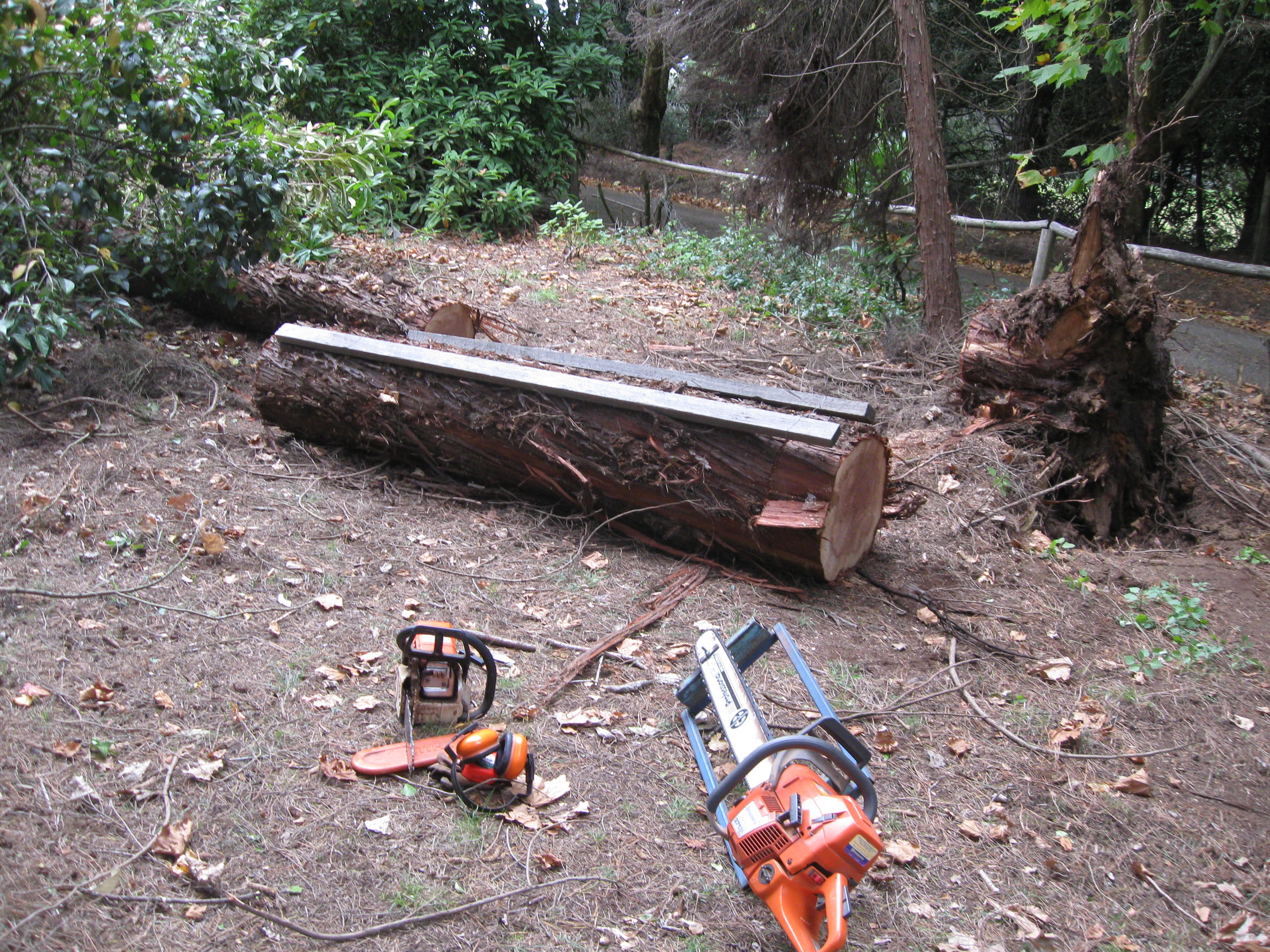
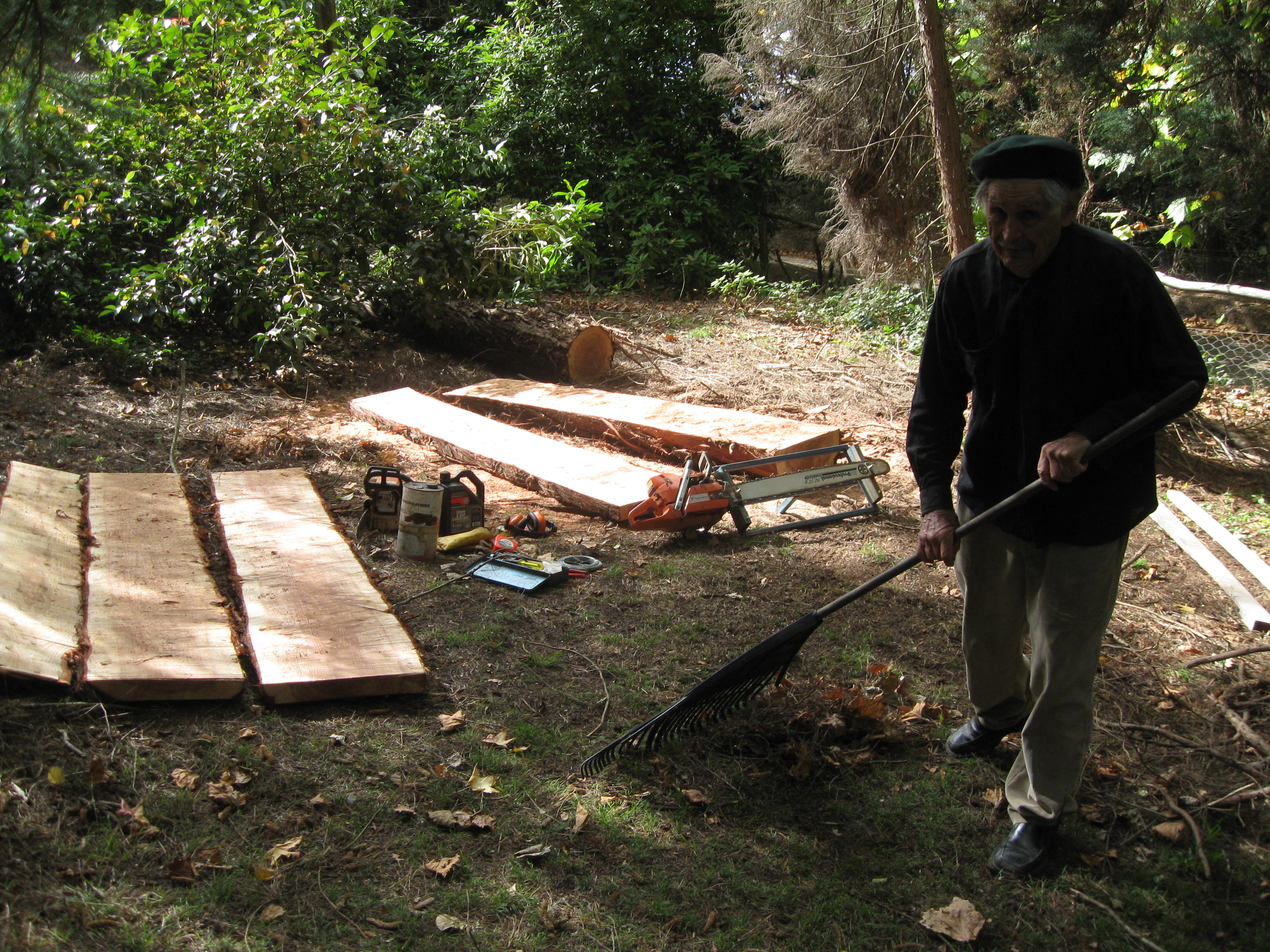
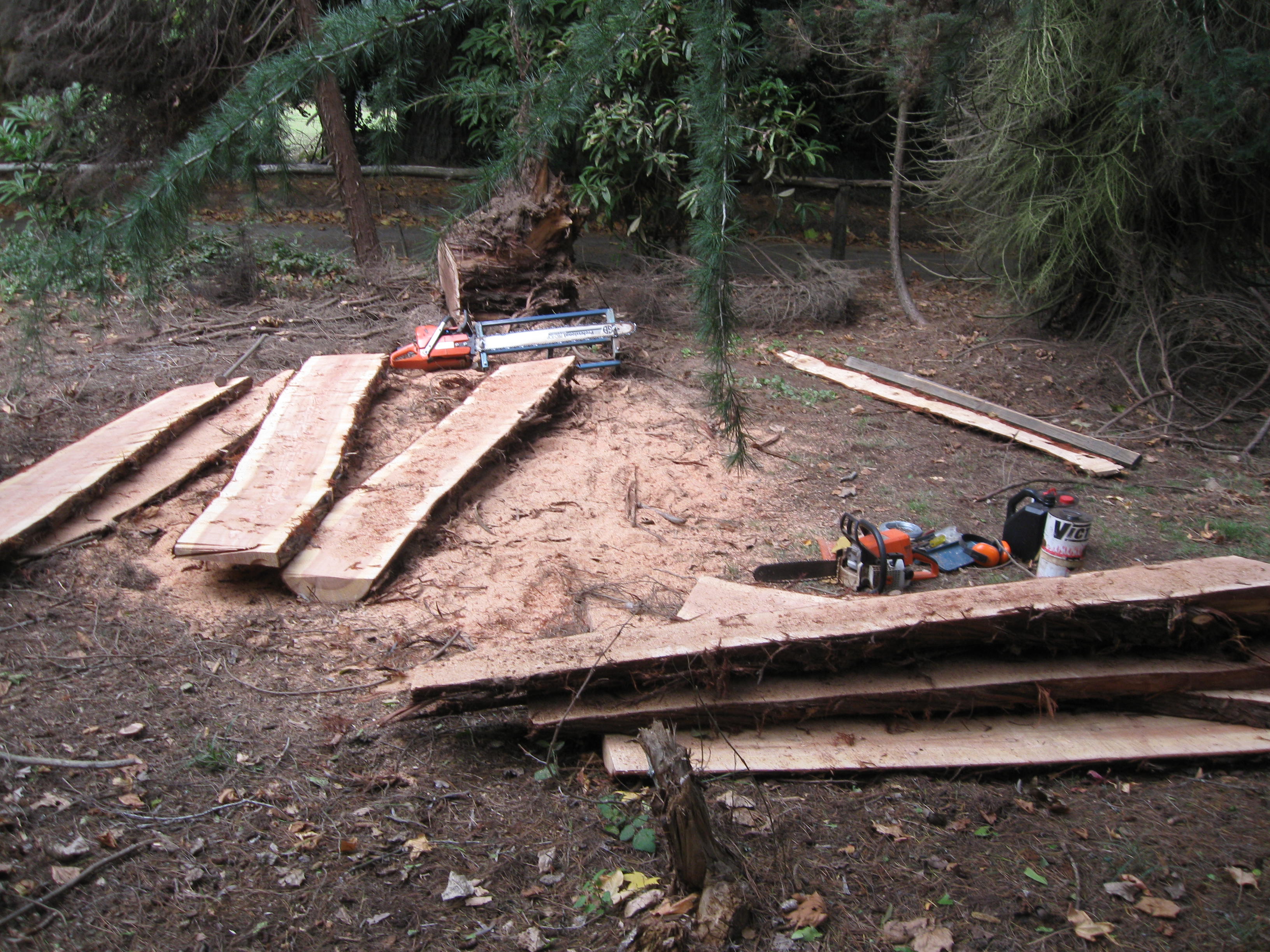
A few years ago when we were up visiting them, we went for a walkntalk out to the lookout, as we often did after a long lunch. We passed a fallen tree in the garden that had blown over in a storm and I asked Peter, “What are you going to do with that dead tree. It appears to be a Japanese cedar from the look of the bark. It’ll be a very nice nice piece of timber in there”. He replied that I could have it if I wanted it. I said that I did indeed want it and returned the next day with my truck and chain saws to mill it up into planks.

IMG_2274IMG_2275

IMG_2276IMG_2277

IMG_2279IMG_2280

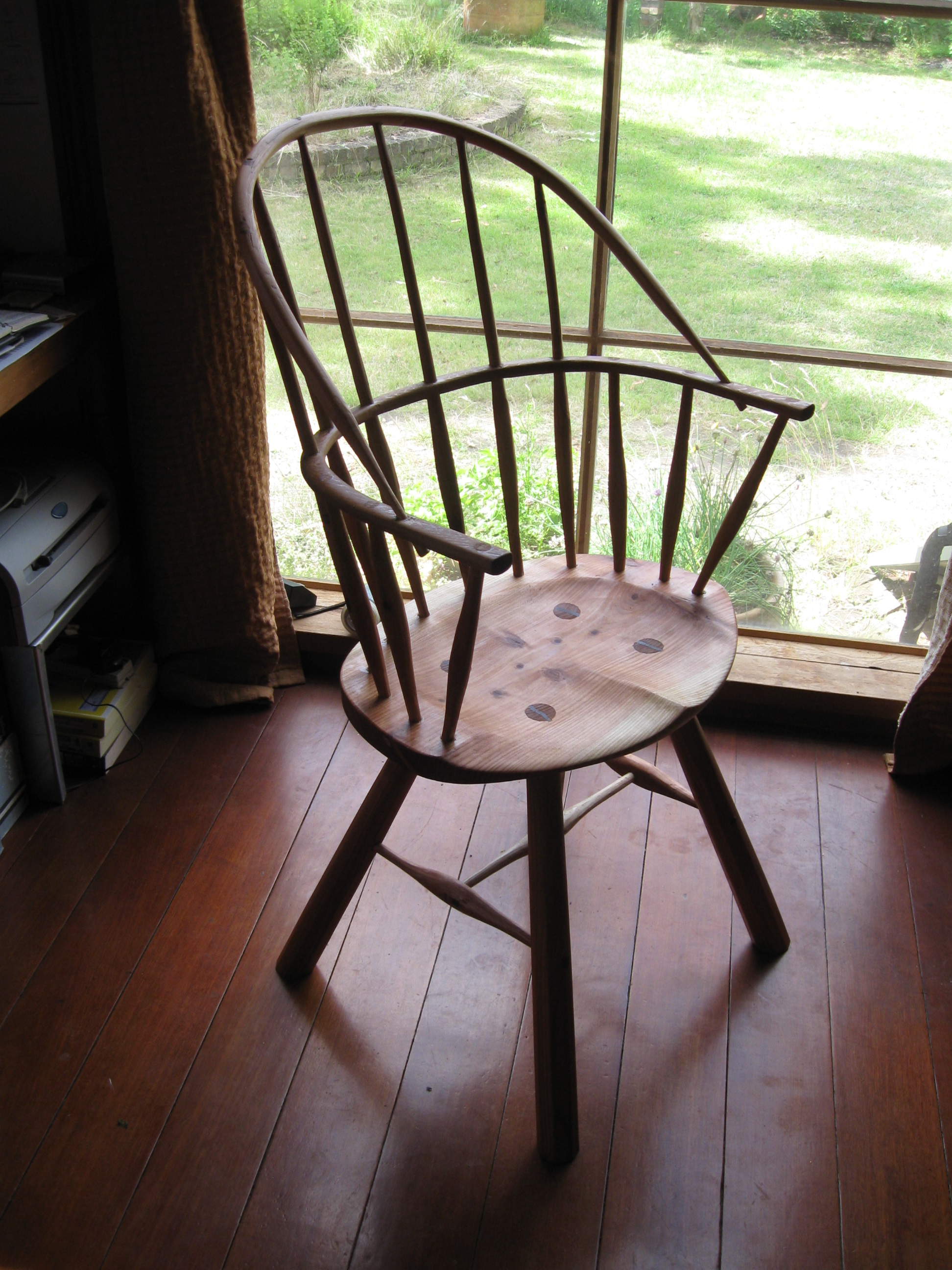
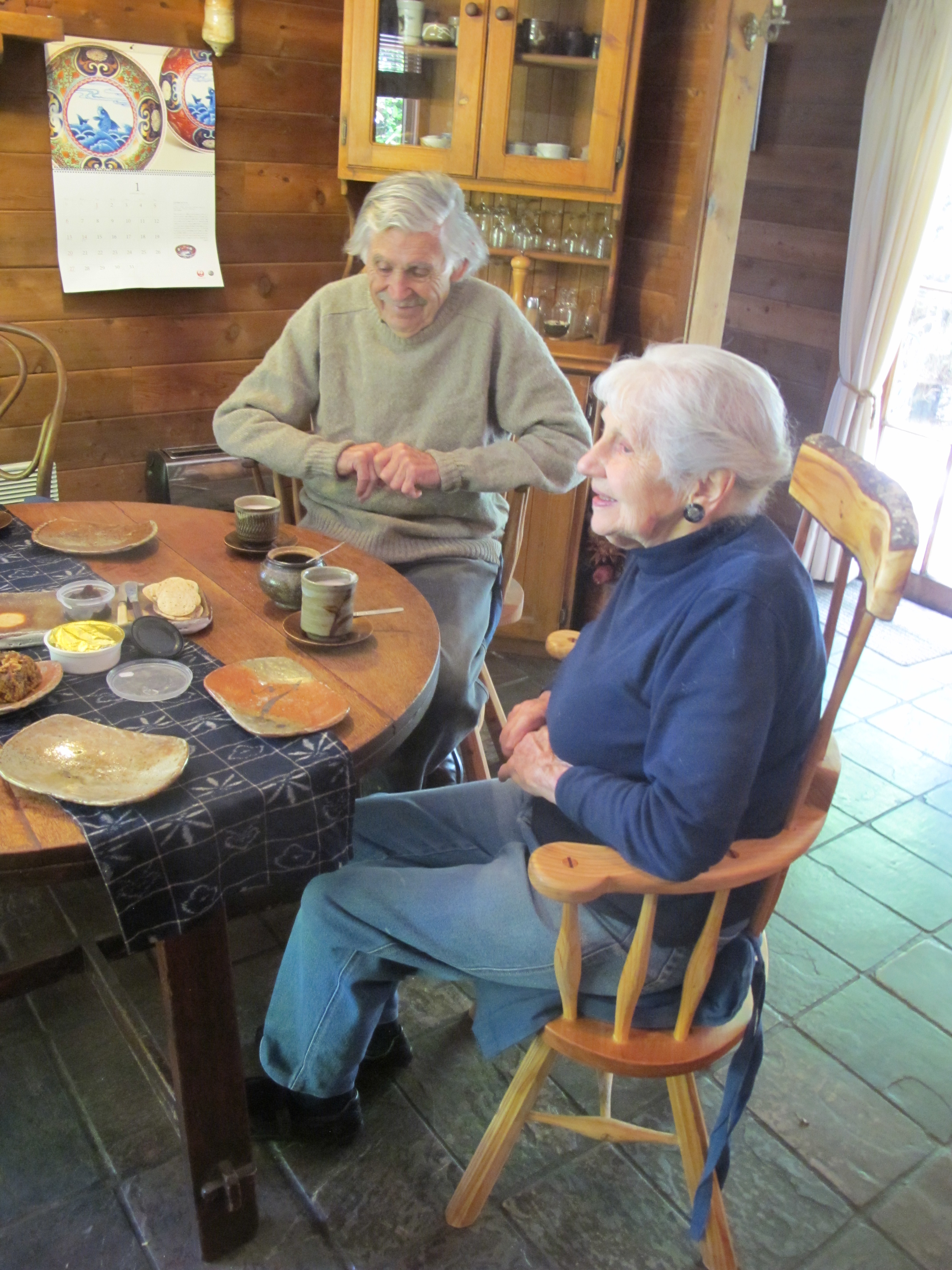
After seasoning for a few years, I made both Peter and Bobbie a chair each out of the wood. It was soft, light-weight and beautiful to work with and the timber has a lovely grain. I has been made into a few beautiful chairs and I still have quite a bit of it left for other projects. The gift of the chairs was my way of saying thank you for everything, not just the opportunity to forestall waste and to be creative with this windfall tree. I am grateful to Peter and Bobbie for all the years of friendship and support. They have been endlessly supportive and generous over the years, not just to me, but to everyone in their circle. They have led exemplary lives and are an inspiration to us.

IMG_2923IMG_9517

IMG_9519IMG_6115

IMG_9518IMG_9521IMG_2928IMG_1390

IMG_2929

Peter and Bobbie called in to visit us at our home on the morning of our son Geordie’s home-birth. A surprise visit and a very touching one.

We were planning to go up and visit Peter and Bobbie in hospital last Friday, but couldn’t get there because of the snow. Janine spoke to Bobbie on the phone and she said to come sooner rather than later, as he might not last the week. We drove up to visit them on the Tuesday and Peter died the next morning. I’m so glad that we managed to get there in time.

We spent the day up there in the mountains with them.

Peter appeared weak, but OK. He gave us a smile but he was struggling to get his breath. He was very tired.

When I sat with him in the sun and held his hand. He said that he apologised because he couldn’t “entertain me today, because I’m not at all well”.

He reminisced about “the good things, the pots, and the good times that we had shared“ and that he “often thought of us”.

He nodded in and out of sleep, sitting there in his chair in the sun.

Janine had taken him up some of her soft baked almond biscuits. He liked those.

We’ll all miss him. His dry, cheeky, mischievous, often naughty, wry, sense of humour.

His self-effacing humility, his simpatico, his nurturing, caring humanity.

I consider myself so lucky to have been a friend and to have been mentored by him.

So many touching moments that I will never forget.

Snow for the Last Firing Workshop of the Season

It freezing!

The wind has a minus zero wild chill factor and It’s quite hard to get warm. All the wood is wet, even in the wood shed where it has been stored for some weeks, but it just isn’t drying out because of the constant rain. It snowed over night and closed the highway. The busses aren’t running because the highway is blocked. We used to get snow like this, only briefly, every winter back in the seventies when we first came here to the Southern Highlands, but due to global warming, we haven’t had snow for a few years now. So we are unprepared. I have to resort to going down to the kiln shed and stealing some of the dry kiln wood to get the fire started this morning. It’s a day for staying inside until the weather clears a bit, or the sun comes out. We had an inch of rain before the snow. So everything is a bit boggy out there. I was planning on planting out the onion sets, maybe later in the day? It’s well past time to plant out the onions. They should have been planted out last month, 3 or 4 weeks ago. I was brought up to believe that onions should be planted on the shortest day, (20th June), and harvested on the longest, Xmas day. Or there a-bouts. It’s always worked out well enough for us to follow that rule and it’s easy to remember.

The professional advice I have is that there are many types of onions and they can be planted out at different times. I’m sure that this is absolutely correct, but I just don’t have the time to work it all out. Hunter River Brown and Spanish Red are my onions of choice. Plus of course, spring onions and leeks at any time of year. Everything gets planted out now as soon as I can get the time to do it, as close as possible to the mid year solstice in this case. It could explain why we have such variable results with everything that we grow – especially onions. We just don’t put enough effort in. Lazy buggers that we are. We once had a moon planting calendar, to tell us the best time to plant or transplant seedlings. I doubt that it makes any difference, maybe it does? I just don’t know. Because I don’t know, I can’t say that it does or doesn’t make any difference. I could never tell. The sceptic in me doubts it. I couldn’t always get out there on a Tuesday afternoon after 2.00pm to do the particular planting of specific root crops, to catch to most beneficial window for them. I was lucky to get out there some time in the same week, or even the closest month, as is the case now with these onions. I plant when I can find the time. What seems to me to be more important to success in growing vegetables, is keeping up the constant weeding and in dry times, the watering, often twice a day at the height of summer.

We have just finished our last firing workshop for this firing season and are waiting for the kiln to cool. Everything seemed to go well and so perhaps we can anticipate a good result for all the hard-working participants. I hope that the results are good for them. They work so hard to bring it all together. I want it to be rewarding for them. I try my best to deliver for them. But nothing in life is certain.

We started the firing within 10 minutes of the usual time, after finishing packing on the Saturday afternoon and finished the firing within half an hour of our usual time on Sunday afternoon. Pretty much like clockwork. Not so surprising when you think that this is the 22nd firing of this kiln, in this configuration, and fired in this way. It’s only a small kin, so we seem to be getting to know it quite well now.

Everyone who wants to, gets to have a go at stoking the wood into the firebox during their shift. We work to give everyone a safe, enjoyable, entertaining, educational and productive experience. We do all that we can think of to achieve this. We must be doing some things right, as a few students decide to enroll in double workshops and  others have re-enroll the following year. We could do better, but we only have just so much time and energy to put into it.
I try to deliver.

IMG_1390IMG_1412

IMG_1397 IMG_1427

  IMG_1399

Although I have never eaten marshmallows, they seem to appear at most of the firings and are quite popular as the preferred sugar-hit, towards the end of the firing, after a long night shift.

IMG_1428IMG_1431

IMG_1432  IMG_1433

all above images by Jay Warwar

During the firing, I was caught on Davin’s phone, wearing my welding jacket and helmet, looking a bit like Ned Kelly.

Stand and deliver!
I try to deliver.

IMG_2657Image courtesy of Davin Turner

Last night we went to the Royal Society meeting and listened to Dr. Brian Keating Executive Director of CSIRO’s Agriculture, Food and Health Sector.

“The Federal Government has finally released it’s long awaited plan for Australian agricultural competitiveness White Paper 4th July 2015. In this paper the government notes that Northern Australia is a bio-security risk hot spot, facing different risks from other parts of Australia, due to it’s proximity to other countries and its tropical environment which is more receptive to certain pests, diseases and weeds.”

 “Dr Keating’s Sector is responsible for science based solutions to major global challenges such as;

– Food security and the need to increase agricultural productivity in a sustainable way.

– Strong and sustainable industries and economics in rural areas.

– Biosecurity for agriculture including threat of Zoonotic diseases.

– links between food and Health”

(intro from the Royal Soc. briefing note)

In his talk he spent some time outling some of the issues to do with food security. Australia benefitted from the green revolution of the 60’s and 70’s, and we are tracking well to be food secure into the near future, possibly up to the 2050 mid-century period, going on past efforts and statistics. However, there are many variables and bio-security risks, global warming, unpredictable volcanic activity affecting sunlight levels, prolonged draught or el nino, all could change this very rapidly. Apparently we only store about 90 days worth of food in Australia and this is average for the Advanced Western Economies. This has worked well for wealthy nations in the past, as there was always somewhere with an excess and we have a AAA credit rating, so now, because of globalization, we can buy in what we need from whoever is prepared to sell. However, This may not always be the case. In recent decades, apparently, we have gone from a net exporter of food to a net importer. A lot of this is to do with persistent drought in different parts of the country.

The Federal government has also cut spending on plant research, development and breeding. In fact, there have been cuts in many branches of the CSIRO, so we may not always be able to stay ahead of all the pests and diseases, that are consistently developing resistant strains.

We are already using all the arable land that is available and is irigatable. Clearing more forested land will only add to global warming by releasing more CO2 and all the really good, fertile land has already been cleared, so what remains is marginal.

He presented it all quite matter-a-fact, but I fould it quite chilling!

Apparently there a very few sustainable wild caught fisheries left in the world. The future lies in aquaculture, but this causes tremendous polution problems with the local environments where it is implemented. Its also a very inefficient way of producing protein, with several kilos of small fish caught and minced to feed the bigger fish in the pens. Much of this penned fish stock is now being fed on wheat products to provide the protein, but this doesn’t really give the correct balance, so the fish produced don’t have the precious omega 3 oils. The answer from the CSIRO is a GM wheat that contains the omega 3s inserted into it’s genome. The ‘feed-lot’ fish flesh can also be a bit grey, so an orange dye can be added to overcome this.

Oh Dear!

I find it all a bit distressing, but this is the new reality. No one else in the audience seems to be too bothered. They’ve heard it all before. They are all older, or retired scientists and academics. They are on top of all this, they are familiar with these issues and see it from their own particular specialty’s perspective. All grey haired or balding and nodding in agreement. We just look on, we are some of the youngest ones there and we are into our 60’s!

I’d better forget the cold, squally weather outside with a touch of sleet on the wind, that is blowing off the snow, stop winging, and get out there and plant those onion sets. I want to be as self-reliant in food as I can be. This isn’t even cold compared to some countries.
Time to get real and get on with it.
Self-reliance isn’t about comfort. I need to deliver those onions in the summer.
Best wishes from the (as-yet) non, GM-modified Steve and his hard-working organic girl.

Back to the Wheel

My hand is sufficiently healed now for me to return to throwing on the potters wheel. My finger is still numb at the end, but otherwise I’m all OK and I feel that I can throw again OK. That’s my opinion, others watching me might differ. I’ve never been a ‘power thrower’ or aspired to be a virtuoso on the wheel. I am sufficiently capable and skilled to be able to make the ideas that are in my head come to life. I’ve done my several thousands of hours of practise over the past 48 years, so I’m OK with what I attempt to do.

It’s a funny feeling, starting wedging again after a month off. It’s like a ‘getting to know you’ all over again, kind of feeling.

IMG_0859

I can’t wait to get back into it now that we have done our last wood firing weekend workshop. We can have our kiln back now and start to plan for our own firings. Wedging up the clay and making these first pots is the start. I used to think that I could do both. Run these workshops and make a few pots as well. Last year we managed to sneak a firing of our own in, in-between the set firings with the workshop groups. However, it seems to take all our energy to just clean and maintain the kiln as well as cut, split and stack all the wood required for the firings, plus keeping part of the pottery set up as a kitchen. There isn’t any time left to be able to pack, fire and unpack the kiln with our own work in the 5 days in-between each of the other firings, as well as cutting and splitting our own wood for our firing as well. It all proved too much work for me and I just couldn’t manage to do it all. We have done 11 weekends in 13 weeks. I’m glad that we can have some space to make and fire our own work now.

On a brighter note there was an exhibition review of the ‘Turn, turn, turn’ exhibition at the NAS Gallery in Sydney. One of the six shows that I have work in currently. It is amazing that an exhibition of ceramics has been given any space at all in a major Sydney newspaper. It is even more amazing that the reviewer, Christopher Allen was given almost two pages to do the job. I can’t remember a ceramics show getting any oxygen at all in a major newspaper in Sydney for the past twenty years, so I was particularly thrilled to find that my own work got two paragraphs at the end of the review. I don’t know how this has all come about, but I appreciate it enormously, as it will most likely be the only time in my life that this will happen, as ceramics isn’t highly valued in critical circles in Australia.
It’s amazing to me that when it happened, I was part of it.
I am grateful!
Christopher Allen wrote;
“…Steve Harrison represents the culmination of the art of the potter in the East Asian traditions. His deceptively simple and yet refined and serene vessels are the product of the humble, meditative practice of the potters art and reflect, indeed his own choice of a life in harmony with his aesthetic ideals. 
These are works that ostensibly seek only to serve the craft and subsume them selves to its formal demands, which make no attempt to claim our attention with brash or sensational effects, and yet which silently draw us to them by the force and conviction of their integrity.”
Christopher Allen, ‘Wheels of Creation’, Weekend Australian, Review, Visual Arts, P10/11. July 11/12 2015.
Best wishes
Steve

Six Shows in Six Weeks

This is going to be a busy week. None of that lazing around that we promise ourselves that we’ll get around to doing one day. I have pots in six different exhibitions this month. One opened two weeks ago, a couple have just opened, two are about to open and there will be one more in the coming weeks.

I was lucky to be included in the National Arts School, 60th anniversary show in Darlinghurst, but blown away to find that I was to be one of the chosen few to be featured and to give an artists talk. I don’t know how this happened, but I have had a very strong association with the place. Going to Art School was great. I went to The East Sydney Tech, Art School in 1971/72. Like so many bright-eyed and bushy-tailed innocents of the sixties and seventies. I went there as a child and left an adult. Painful, challenging, extending, stimulating exciting, but mostly a lot of fun, with so much to learn and so little time – even the ceramics classes were good! 🙂
I was particularly thrilled to find that Patsy Healy also had work in this show and had made two small porcelain installations that referenced her time at East Sydney Tech. One featured all her tutors and the other one is a 3D construction representation of my blog site, composed of 2D images taken from the blog and painted on intersecting porcelain tiles. What an amazing idea!
thumb_DSC01059_1024
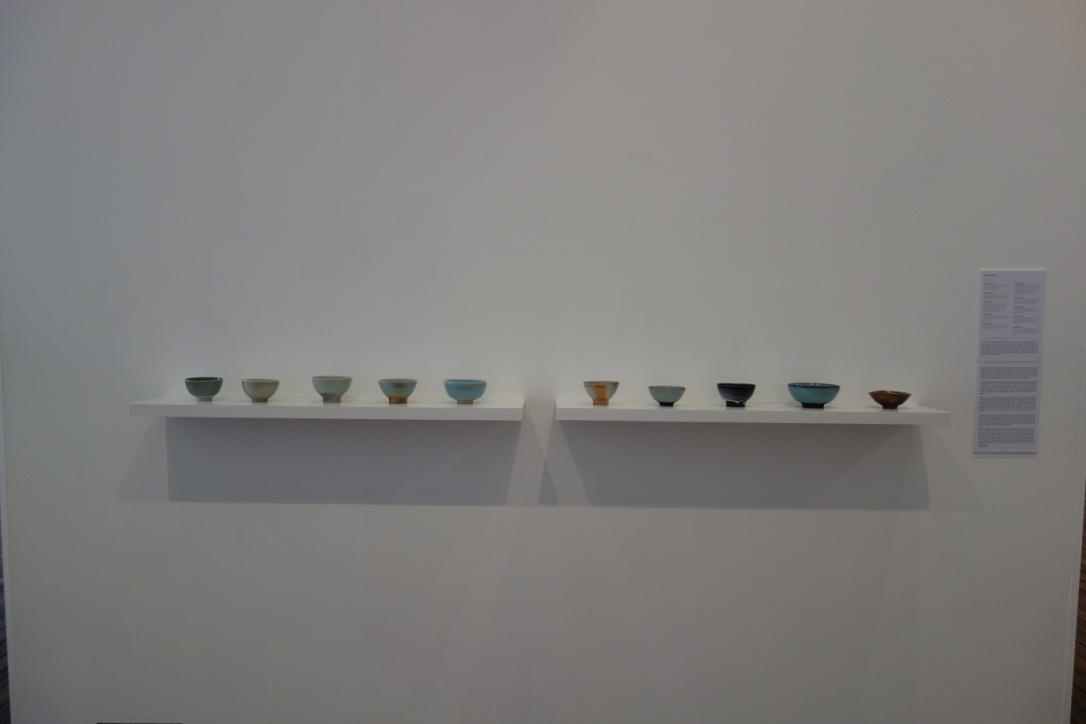
I showed 10 pieces at NAS. A range of my locally prospected, ground rock clay bodies and glazes, plus a couple of unglazed pots.
thumb_DSC01062_1024
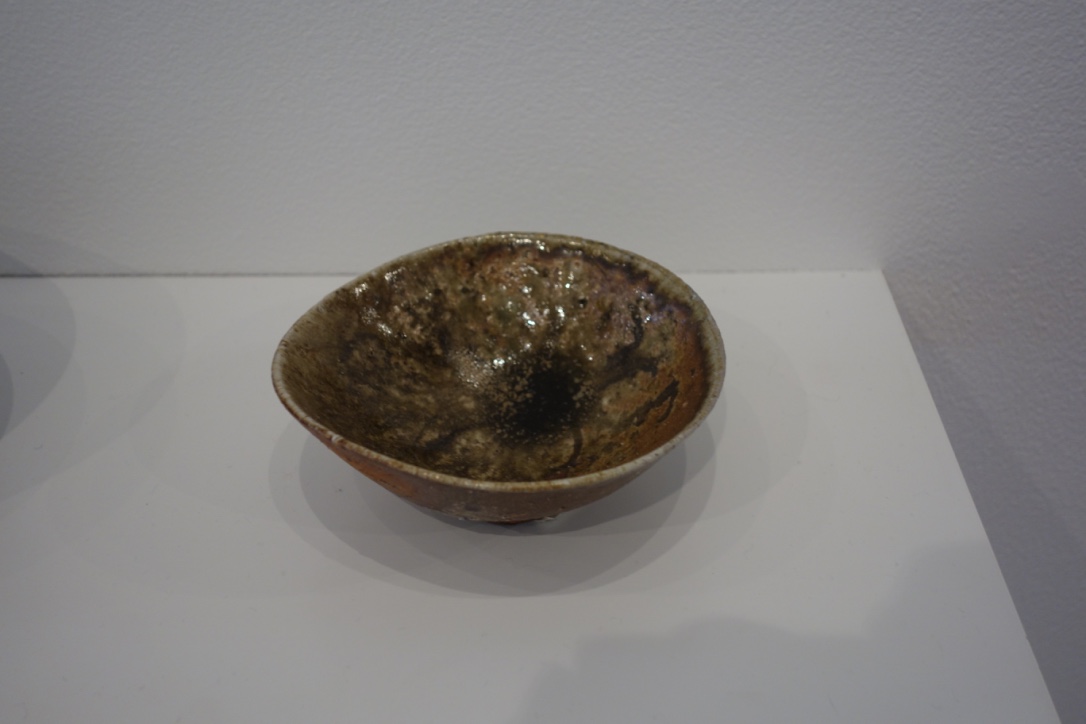
This is a rough unglazed stoneware bowl, that has picked up a lot of wood ash from the fire. it was packed towards the front of the kiln and the ash deposit has melted and run to form a pool of ash glaze just off centre of the bowl, because I packed it up on wads with a slight lean to encourage this off-centredness.
thumb_DSC01063_1024
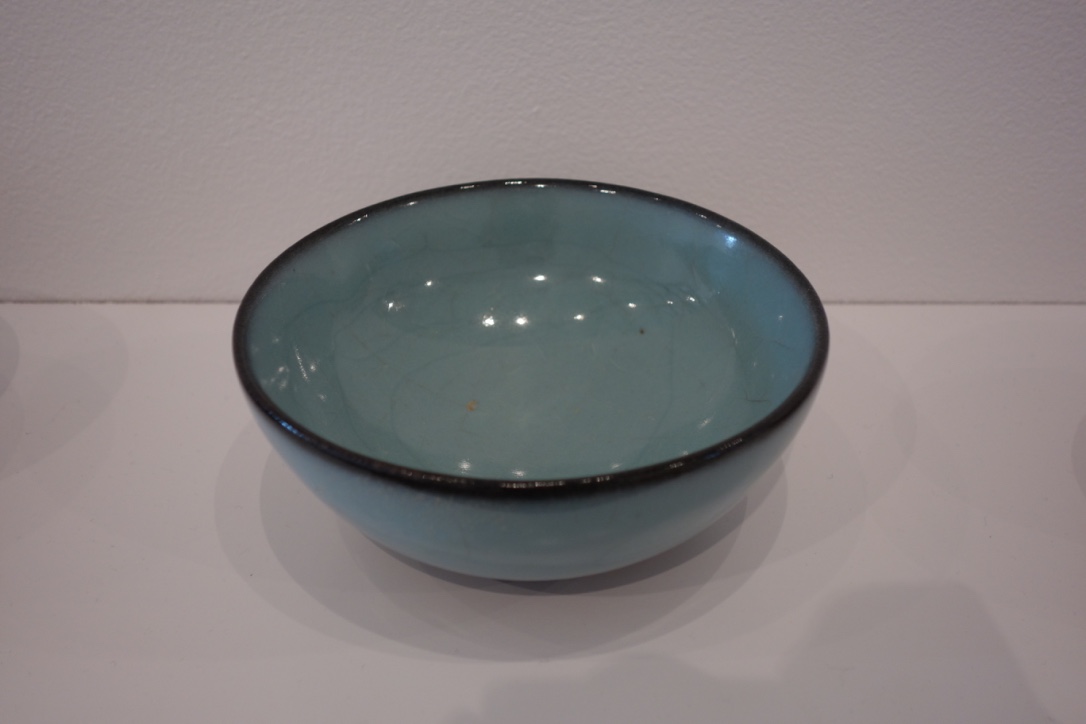
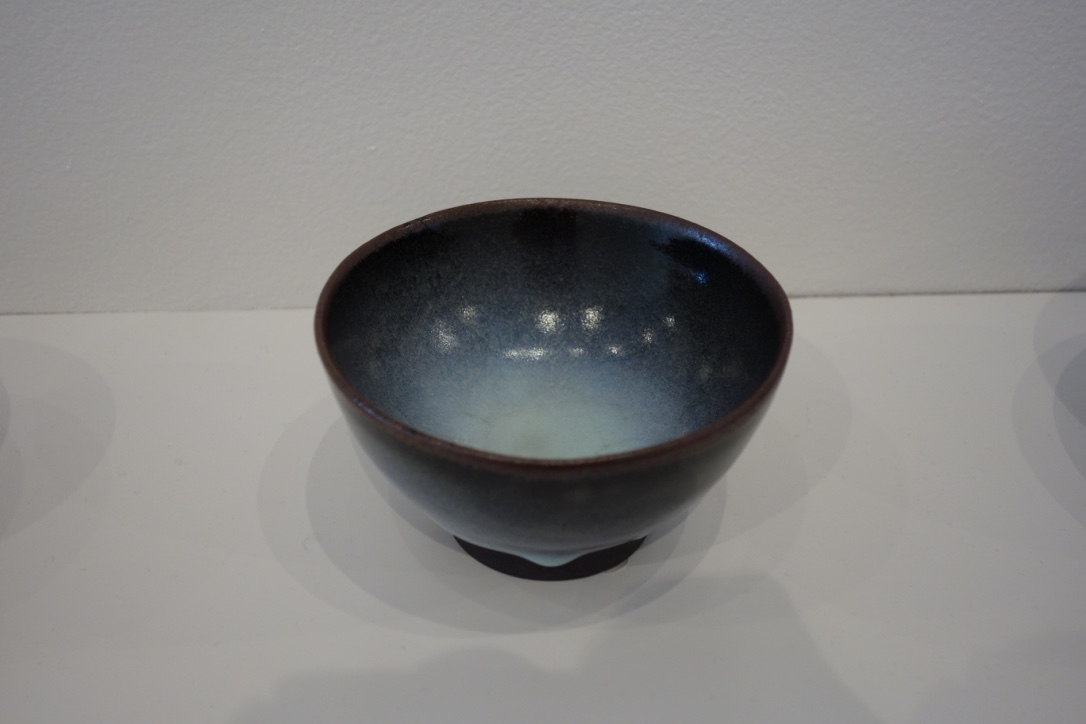
This is a guan glaze made from my local native porcelain stone. The bowl is made from a body that I make by washing basaltic gravel in water, and then throwing away the gravel and keeping the dirty water. If I repeat this exercise many, many, times, I eventually get enough thickened slip in the bottom of the barrel to stiffen up to make an intensely black rock dust/clay body. The intensity of the iron in the body breaks through on the rim.
thumb_DSC01064_1024
This is the porcelain guan glaze mixed with wood ash and cow bone ash. The addition of the ashes starts to react in such a way that the glaze starts to become slightly opalescent.
thumb_DSC01066_1024
This is an unglazed porcelain bowl, composed almost entirely of ground local native porcelain stone 97%. The stone powder is bound together with just 3% of bentonite. The surface of the stone body is flashed to a golden lustre with some flame bleaching on the fire front. It has picked up a small amount of carbon inclusion that defines and accentuates the rim.
All my pots are quite small and delicate. Partly that is my aesthetic choice, but mostly it is because of the nature of my home-made, locally prospected, ground stone bodies that lack any real plasticity. So that making large-scale works on the potters wheel is virtually impossible with this floppy paste. I have taken these limitations and challenges and worked with them, such that these pots respond well to the flame in the wood fired kiln to produce little, engaging, tactile, gorgeous gems.
The other shows that I currently have work in are;
Woodfire 2015, Kerrie Lowe Gallery in Newtown, Sydney. NSW. Janine also has work in this show.
Chance and Intelligence: the Captivating Art of Glazed Wood Fired Ceramics, Skepsi at Malvern Artists’ Society Gallery. Malvern, VIC
BeLonging: Embodied Commentaries Inspired by Place, at ANU Foyer Gallery, Canberra. ACT.
Australian Woodfire, Curators Choice. Strathnairn Gallery, Holt, ACT.
DSC_0005_057DSC_0005steve Harrison 2 DSC_0011_058DSC_0011steve Harrison 2
Two views of “A Pot and a Bit” in ‘Chance and Intelligence’, Skepsi at Malvern Artists’ Gallery
Five pieces from ‘Curators Choice’ at Strathnairn.
image001image003image005image004image002
Best wishes
Steve

Lime Pickle

In these cooler, shorter, winter days. The evenings are long and there is plenty to do. Winter is the season for citrus. I have made 20 jars of marmalade so far, so now its time to make lime pickle. A good lime pickle is a great accompaniment with curry, it needs to be salty, sweet, sour and chilli hot.

We have plenty of limes on the tree, so I slice them up length ways into 1/8 segments, salt then and then leave them covered for a day or two to soften.

A few days later, when I find the time. I’m fasting today, so there will be no dinner, that leaves a bit of time to make up the pickles. The wood fired stove is cranking away in the kitchen, even though we aren’t planning on cooking anything tonight. We light it because it’s frosty outside and going to get a lot colder overnight and we want the room warmed up and the hot water heated as a by-product.
IMG_0874IMG_0875
I start by dry roasting some fenugreek seeds which smell so exotic, but taste of ordinary dried green garden peas unless they are roasted. Roasting brings out a lot of that wonderful aroma and changes the taste to something that is so much more interesting. It also makes them very easy to grind up in the mortar and pestle.
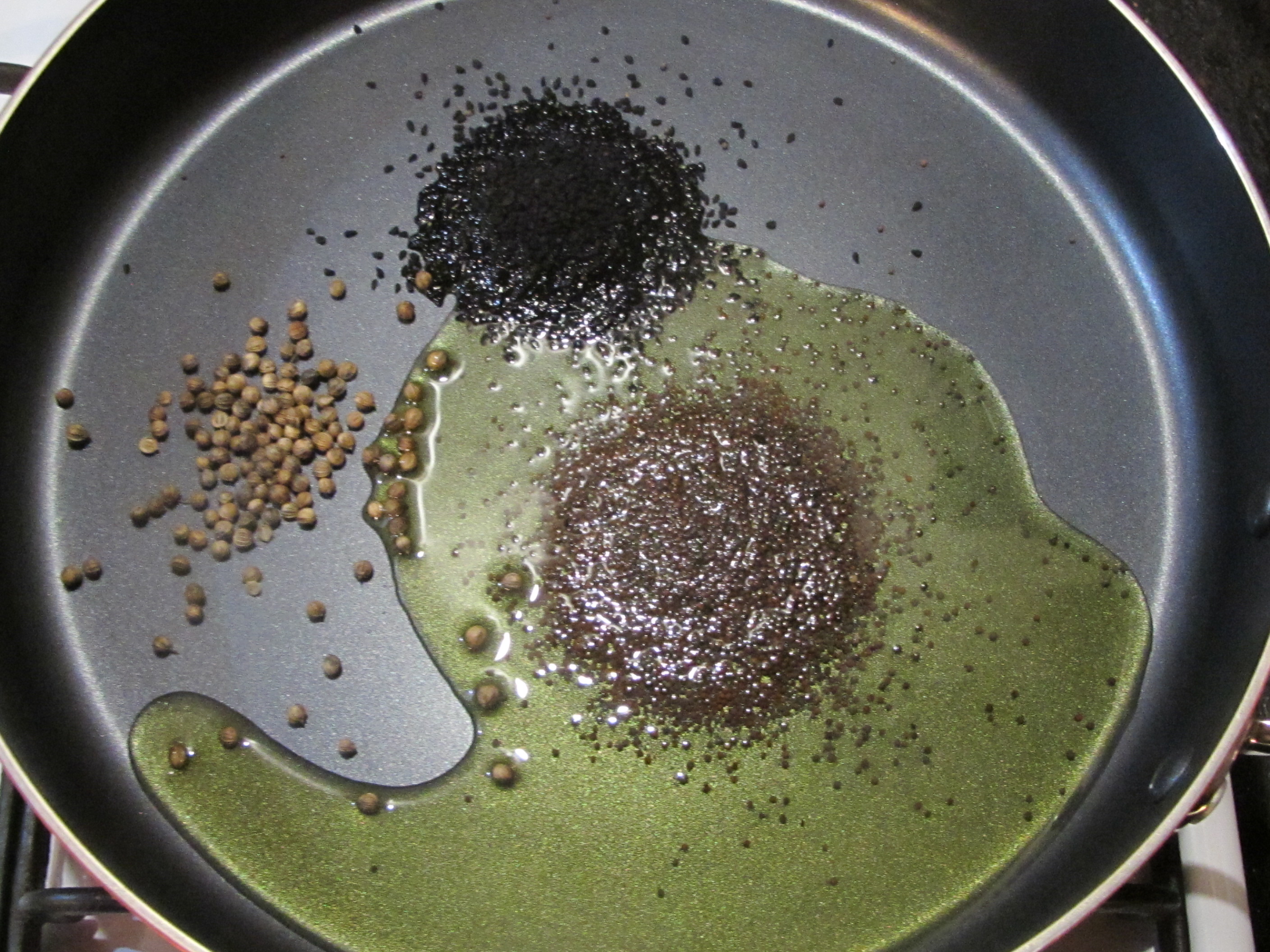
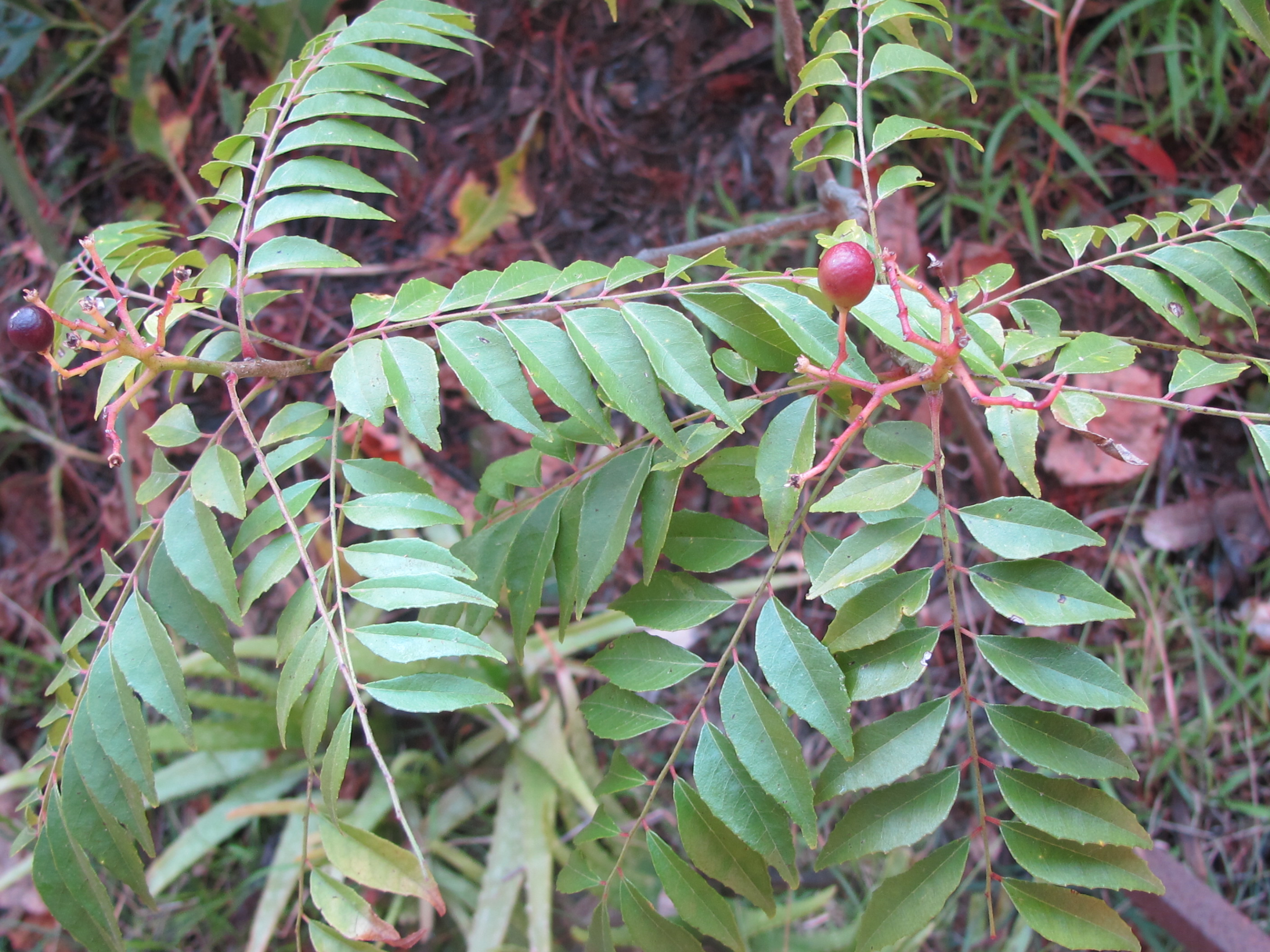
Next I heat a little olive oil in the frypan and add various spices and seeds, like black cumin seeds, mustard seeds and coriander seeds. Once they start to pop, I keep the seeds moving by flipping the pan and add black pepper corns. Once I feel that they are sufficiently heated and softened, without having them popping out of the pan and all over the floor. Not too much heat and keep them moving. I add all the other ingredients. The salted lime segments (de-seeded), some of our roughly chopped chillis, two sprays of our own home-grown curry leaves. Thank you Toni Warburton for the gift of the curry leaf plant some years ago!
 IMG_0879IMG_0876
I also add half a dozen roughly chopped cloves of our ageing garlic. A couple of teaspoons full of cumin, coriander, and ginger. I keep this moving for about 10 minutes on a low heat until the lime skins are a little bit softened and can be chopped in half easily by pushing down on them with a wooded spatula. Not such an accurate measure of cooking time, but it works for me. I want them slightly softened and not too leathery. This also give a bit of time for the flavours to meld in together.
IMG_0877IMG_0878
It seems to work. If it is still a little dry, I add a little bit more oil, or the juice of a lemon or two, or lemonades, or limes, or both. If it is still a bit too sour, I add a little bit of the white death sugar. If you add the juice of the lemonade lemons, you don’t need as much sugar. I try and use a little salt as possible, but a small amount is necessary to get it to taste right, otherwise it is just too bland. I’m not very good at making lime pickle yet, as I only get to do it once or twice a year, during this winter season when the citrus is in such profusion. If I were to do it more often, I’d get better at it, but I don’t need so much lime pickle. Two or three jars are enough for a year.
So many of the things that we attempt here are just like this. We never get to be any good at most of the things that we do because we do so much, there just isn’t time. However, the point is not to be the best at doing something, or ever particularly good. The point of our endeavour here is to be as independent and self-reliant as we can be. Getting better at doing something only comes with repeated practice. This just isn’t possible here with most things – apart from weeding!. So I am resigned to being a bumbling amateur at most of the things that I do. Sometimes I daydream of being competent at one or two particular things, but on reflection, I realise that it is more important to keep the big picture in focus and stay horizontally diversified across all my interests. The more things that I do for myself, the less I need to spend. The less that I spend, the less I need to work. The less time I spend working for money, the more time I have to do things for myself. This cash-minimising self-reliance is a vicious circle.
All this thinking is making me hungry! Actually, these cold nights are just right for a warming curry. if only we had some lime pickle!
Cooking something that you don’t know anything about is always a great big experiment. A bit like life really.
Best wishes
Miss curryleaf Murraya King and her curry-wallah

House Concert – New Heath Cullen CD

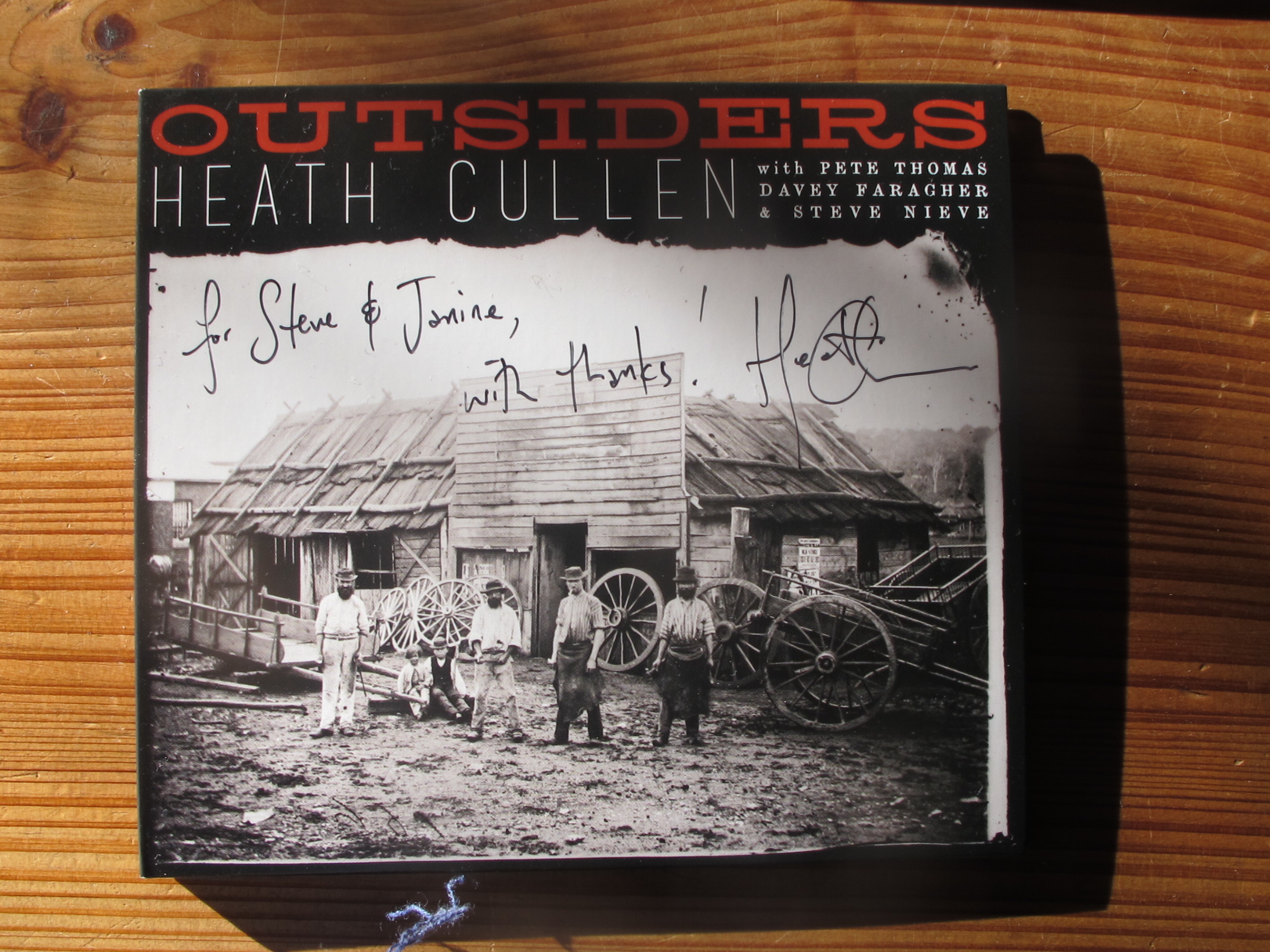
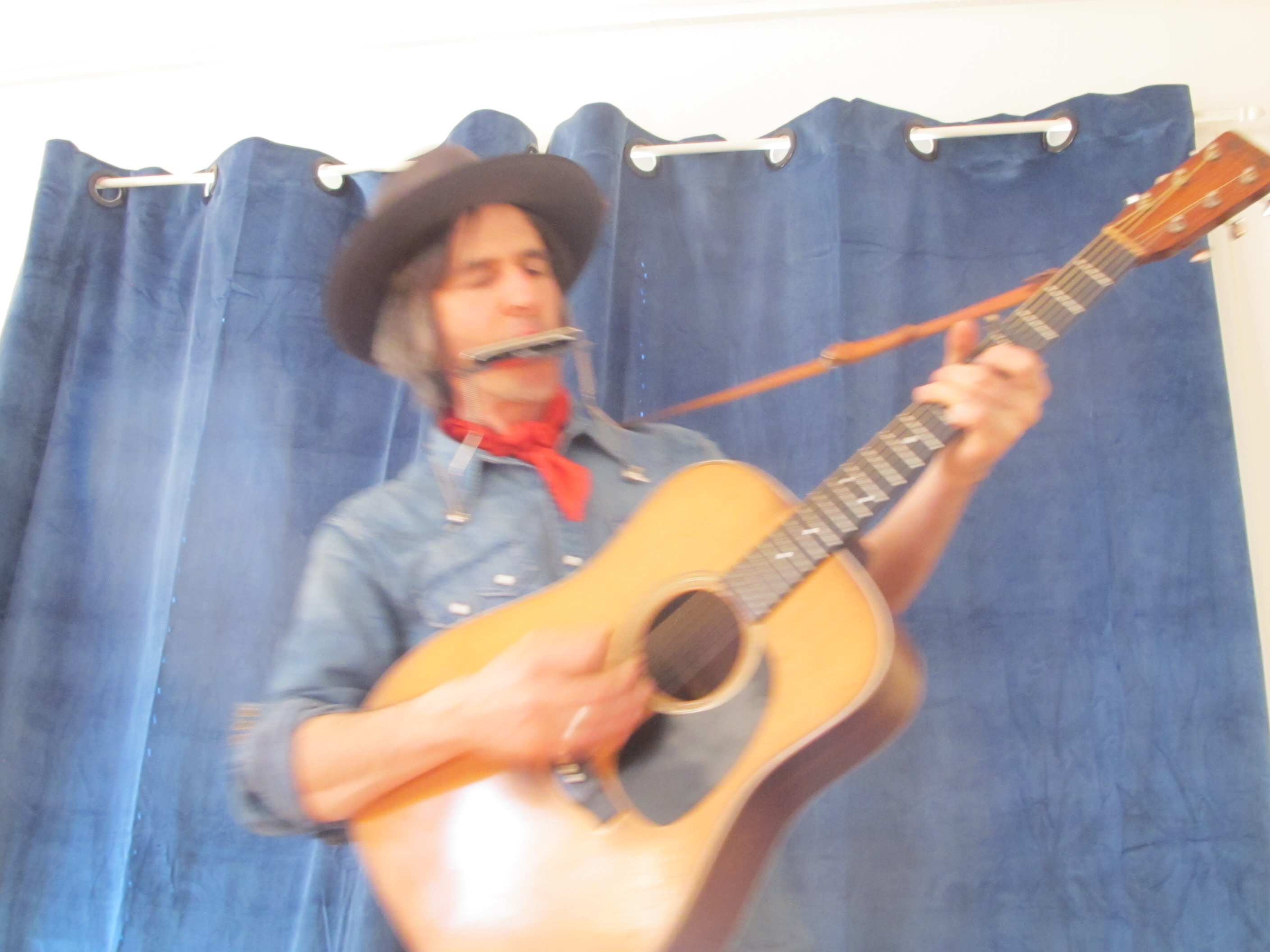
We have just been to a local house concert to see Heath Cullen again. He’s particularly good. I like his music a lot. We already had both of his earlier CDs and they get quite a lot of amplification around the house and pottery workshop. Heath has a new CD about to be released. it’s been coming for some time now, like a slow train.

We spent the afternoon yesterday letting his music wash over us and I am particularly grateful for the opportunity to be able to sit and listen and take it all in at such close quarters in such an intimate location. Now we will have the new CD playing on high rotation for the coming week until we get ‘inside’ the music.

This new CD was recorded with Elvis Costello’s band, The Attractions, when they were in Australia last year.

IMG_0872IMG_0871
IMG_0864IMG_0860
I wrote about Heath Cullen on this blog about 18 months ago;
At that time I described his music as;
He’s like the love child of Nick Cave and Paul Kelly – if that were possible? With the breathiness, but sans the basso profondo, of the gentler side of Tom Waits. That sounds like a very strange description, but I think that it is kind of right”.
I think that this is still as good a description as I can come up with. Words aren’t the best medium to describe music, but it’s all I have. You’ll just have to google him and make up your own mind.
I reviewed one of the songs from his second CD in a post on this blog about a year ago.
‘Silver Wings’ is still my favourite song of his. That hasn’t changed over the year. On his web site you can preview songs from the albums, or even buy just single tracks or the whole album. Check out silver wings.
On the bottom of his web page, I see that he has the tags; alternative avant-garde blues country-alt rock rural Australia
So that is how Heath describes his own music. I still prefer my description.
Best wishes
Steve

More Meat Than I’ve Ever Eaten

I’ve just come to realise that the whole time that I was in China, I seemed to be eating meat 3 times a day. I usually only eat meat occasionally. However, as I think back, every meal seemed to have some sort of meat involved in some way. Even breakfast. I never eat meat for breakfast! But over in China the wantons in the soup or the steamed buns all seemed to have a little bit of meat in them. I must say that I enjoyed it immensely too. The food was great. I didn’t go out of my way to eat meat at every meal, it just seemed to be the way that it was. I just went along with what was on the table.

IMG_0686IMG_0689

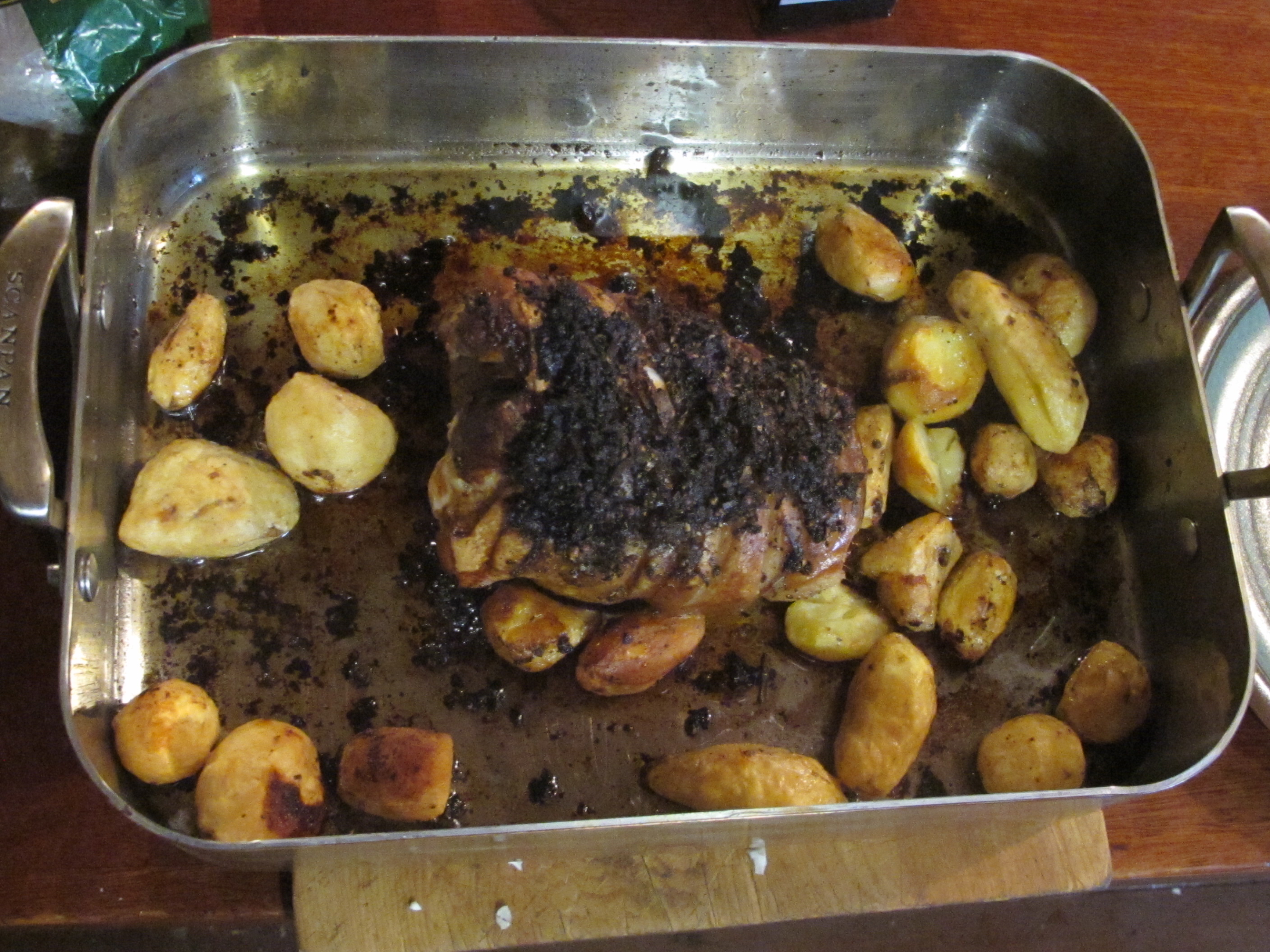
Now I’ve been home for a moth I decide to have a leg of pork for dinner. I get it boned, rolled and tied by the butcher. He also scores the skin for me. It takes a very sharp blade to do this and he is used to it, so I let him do it. I only tried once and was surprised how tough it was. none of my knives in the kitchen are kept in such a sharp condition, especially at the tip.

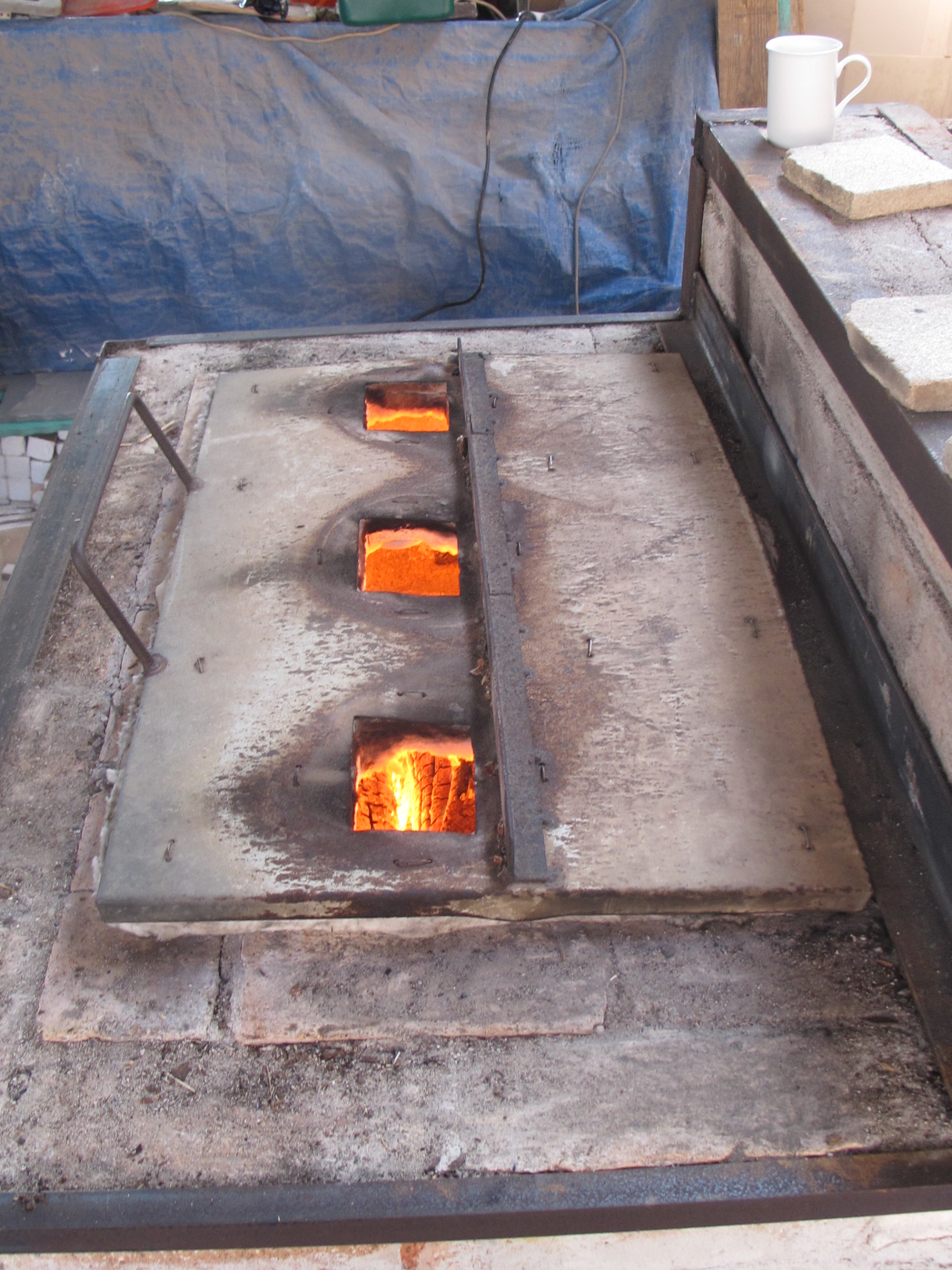
I make up a paste of garlic, bay leaves, pepper, some coriander seeds and a little salt. I pound all this together in one of our home made , wood fired, hand thrown mortar and pestles and crush it and grind it into a sort of paste. It needs a little bit of olive oil to get it to all flow in together. This paste is used to smear over the surface of the rolled roast before baking. It goes into a slow over for a very long time.

IMG_0699IMG_0603

It stays cooking slowly for a few hours in the wood stove. As we are out working all day in the pottery, kiln shed, wood shed and garden. There are always more jobs to get done than there is time to do them. So we do what we can and let the rest just migrate to the bottom of the list and then fall off the end almost without noticing. But I do notice. I should just let them go, in true Buddhist style, but their ghost just lingers on in the back of my mind, as I sum up the day and try to let it all fade away with my out-breath, I “press the recline buttons down with dreamland coming on”. Of all the various activities that go into making up a life, most are just mundane, some tedious, lots repetitive, but it’s those few moments that are special that give a little sense of satisfaction, an achievement, that I remember. They are the glue that holds it all together. Picking fresh vegetables from the garden for a dinner like this is nothing special, we’ve done it almost everyday for 40 years, but it is always a pleasure and it is part of todays glue.
IMG_0756IMG_0757

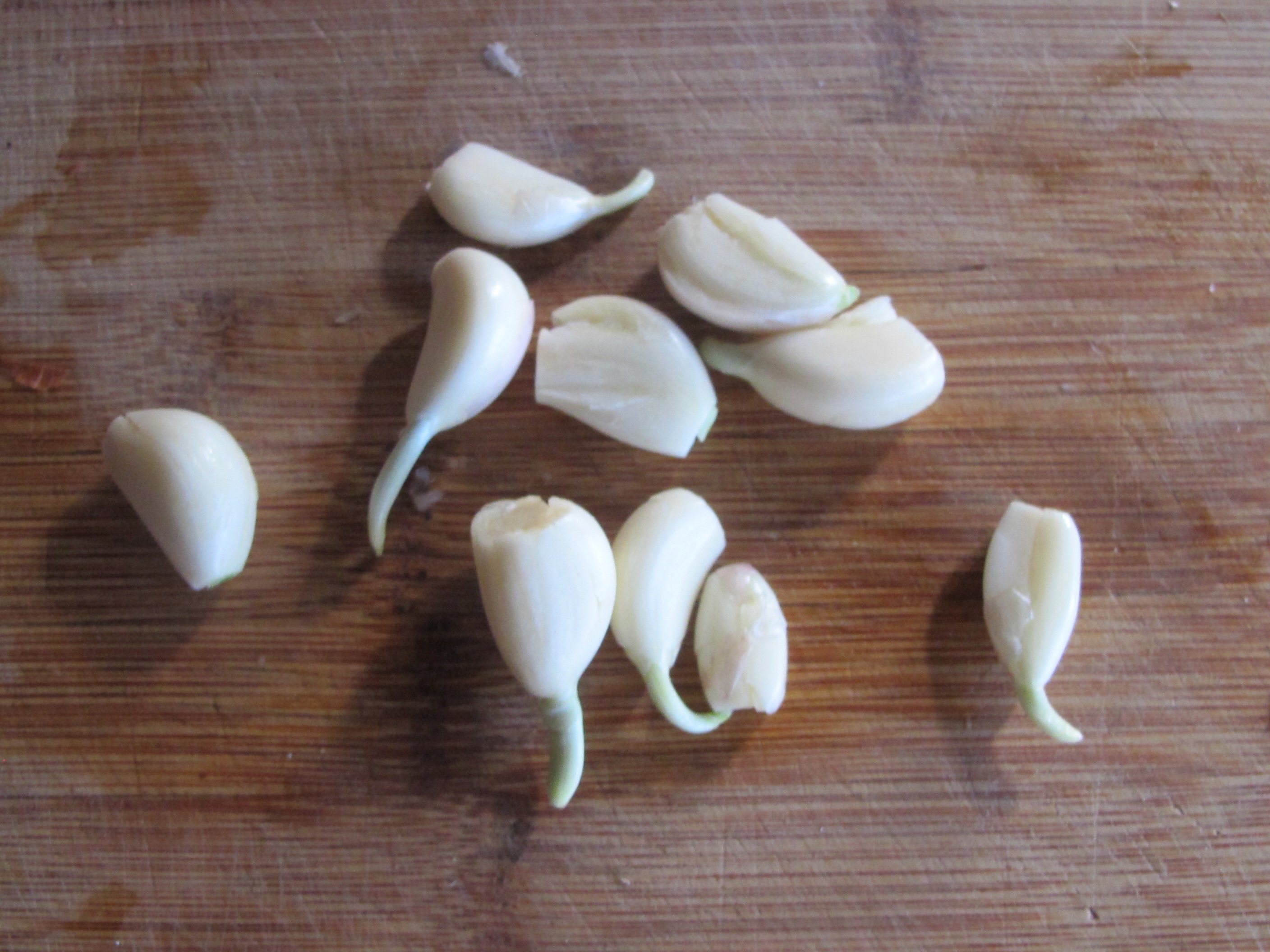
We are getting frosts most mornings these days. Only light frost, perhaps -1oC, I don’t know, but it is enough to kill everything that is sensitive, but not not so cold as to make its way down to the ‘Pantry Field’ garden. Down there in that secluded spot, where there is plenty of tree cover, we have a small plot of 60 sq. metres of fenced off garden, where we have found that we can grow a lot of frost sensitive plants , like over-winter potatoes and they are doing well, even the nasturtiums are still blooming. I found some time, just before a wood fired raku workshop, to get down there and do some more weeding, so as to give the plants a chance. The weeds grow so quickly! The peas are flowering now and so are the broad beans. I think that we will soon get a feed of peas from these plants. The garlic is very varied, some plants are surging ahead, while others have stayed quite small. Perhaps this is their individual habits. I have planted seven new varieties of ‘seed’ garlic this year. All down in the pantry field, where we haven’t ever grown garlic previously. fresh varieties in fresh soil. The last two plaits of garlic hanging in the kitchen ceiling are now a bit withered and starting to ‘shoot’ , but still have a good garlic flavour. They aren’t so juicy any more.

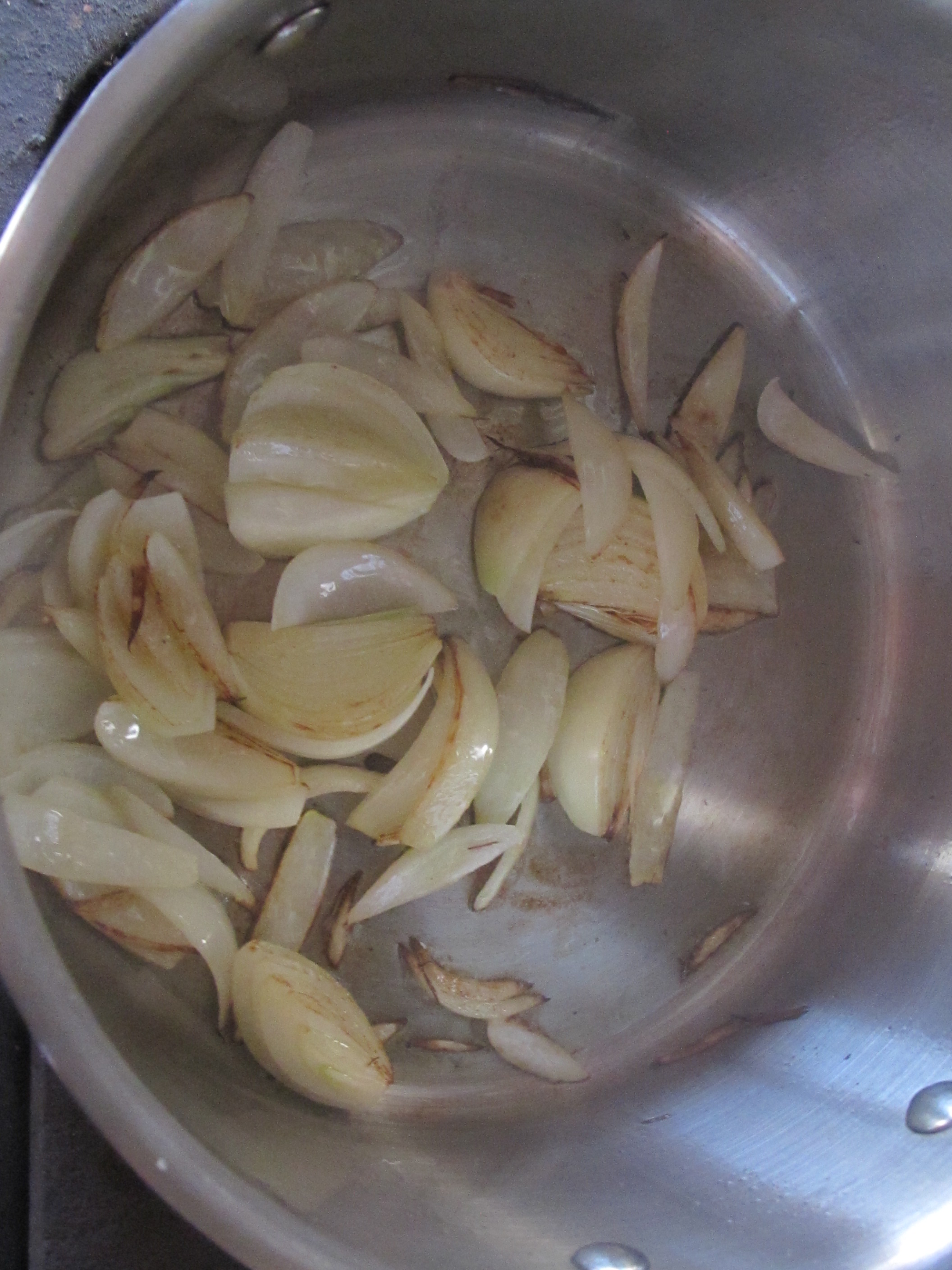
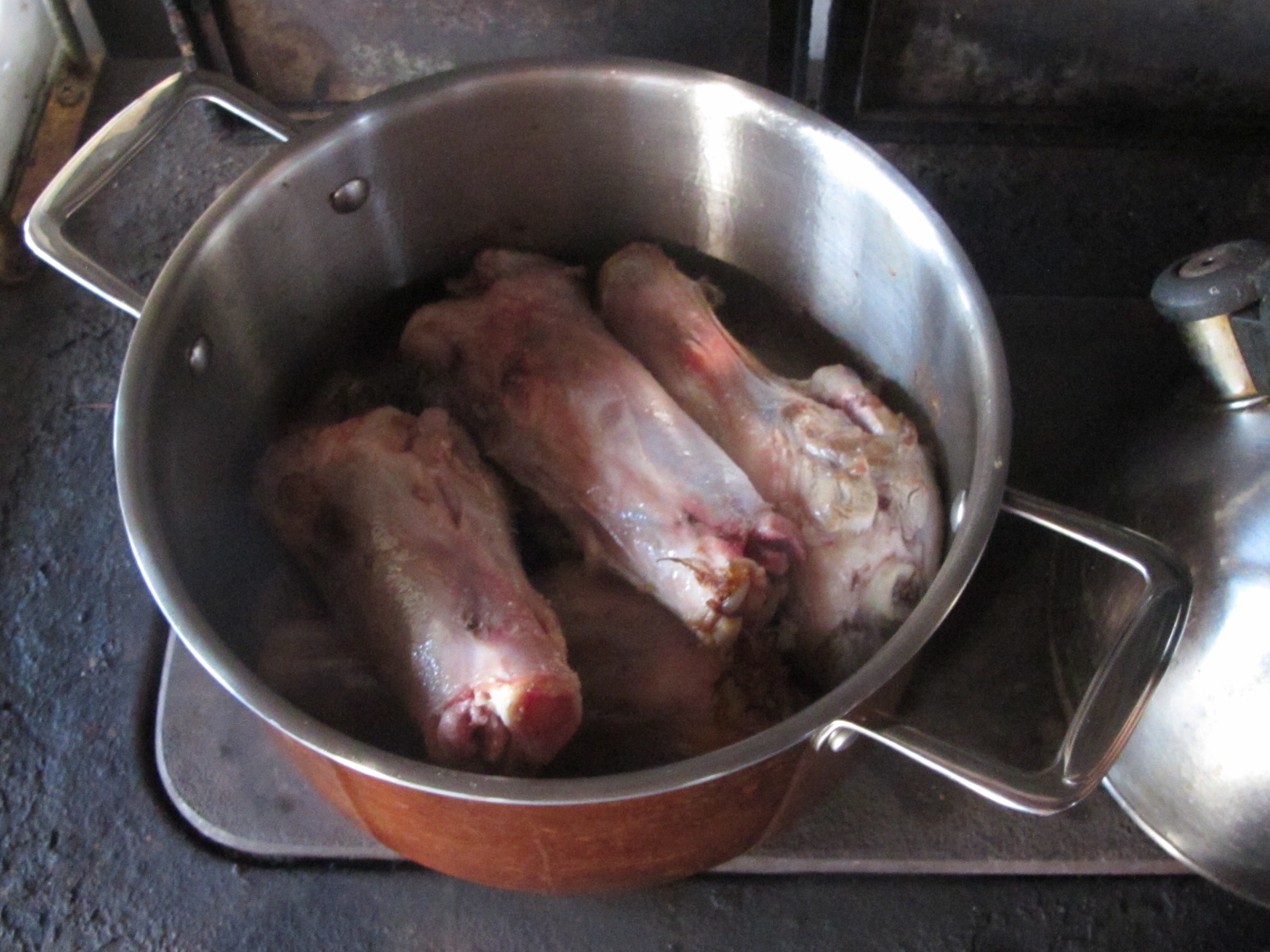
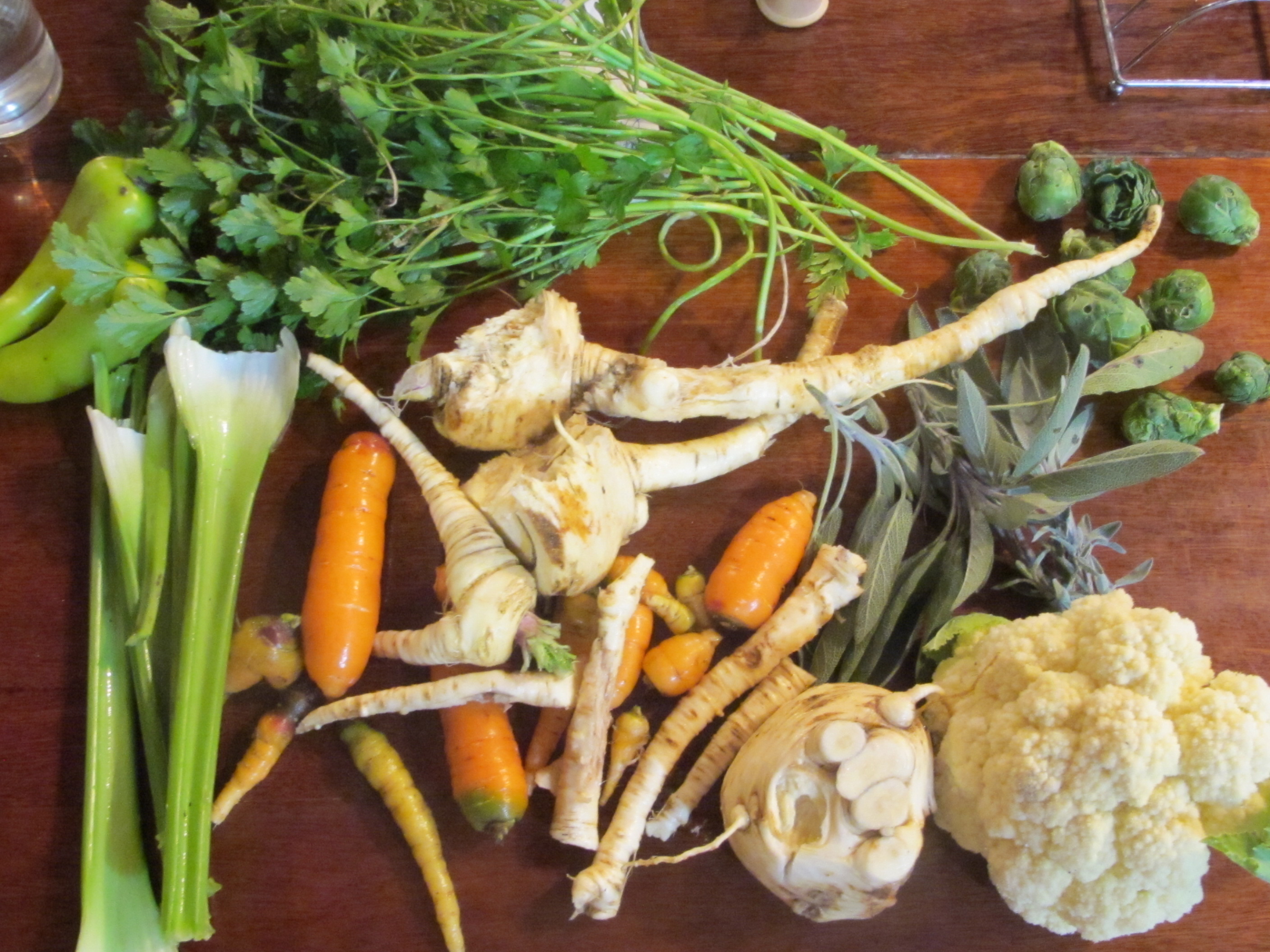
I guess that it is because the weather is cold and the days short. I seem to want to eat more meat these few weeks, so I buy a few lamb shanks and make a nice rich sauce for them to simmer in. Brown onions in olive oil, a whole knob of our garlic and lots of herbs from the garden. I brown the shanks and then add a whole bottle of merlot and let it simmer very slowly over a low fire for a couple of hours with half a tub of my marrow bone stock concentrate.

IMG_0760IMG_0762

IMG_0764IMG_0766

IMG_0767IMG_0769

When we come back into the kitchen in the evening dusk. I open the door into the kitchen and the room immerses me, seduces me, envelops me, in a blanket of warmth and flavoursome aromas. Such a wonderful, warm, welcoming greeting. the light is fading. the wind is picking up, the temperature is falling, but we are warm and secure in here, in our own self-reliant environment. I add the fresh picked vegetables that we have brought in from the garden and let them mellow in to the stock, while we discuss the day and plan for tomorrow. I open a nice bottle of red wine and serve. Fantastic!
Cold weather outside? Who cares! Roll on, the winter.
Best wishes
from the EOFY stock maker and his stock-take girl

Nothing is Ever Finished

We have just finished another firing with a group of enthusiastic potters. The weather is glorious and warm in the sun, with no wind, so a good night for a frost. The firing went very well, even a little bit quick, so we will wait to see what the results are next week.

IMG_0794IMG_0791 IMG_0792IMG_0790 IMG_0793IMG_0798

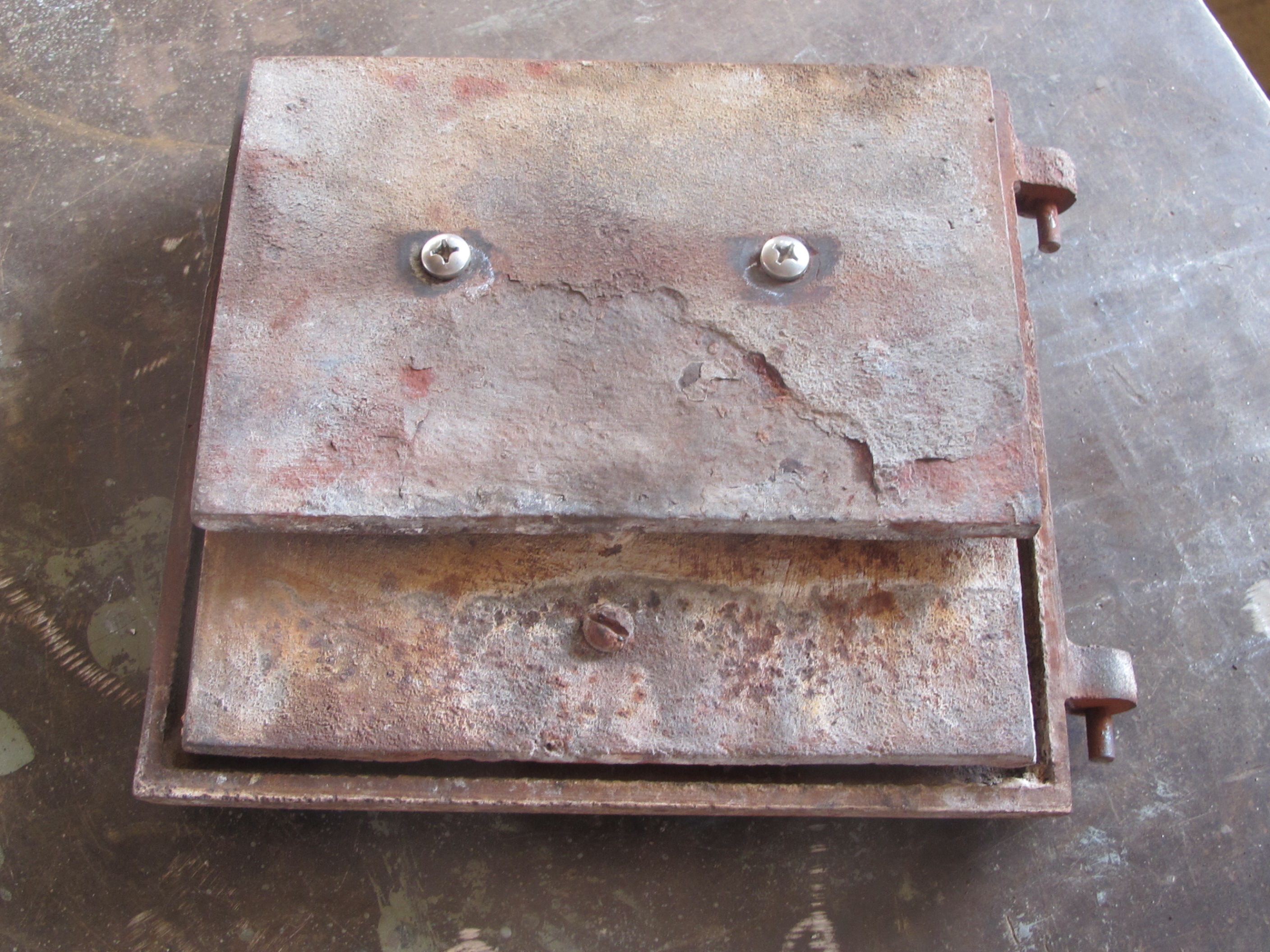
The night before the firing and just after I had written that Nothing lasts, nothing is ever finished and nothing is perfect. The heat shield on the door of the wood fired kitchen stove fell off at the end of dinner. The bolts holding it on had rusted away. I was stuck for just one second with a 2kg piece of red hot steel plate coming free and having to deal with it unexpectedly. Trying to stop it landing on the wooden floor of the kitchen. Fortunately, I installed a piece of thick copper sheet onto the floor in front of the stove, just in case any red hot embers might cascade out of the fire box on some occasion. This has hardly ever happened, but does occasionally. I’m glad that I saved up and did it when I did, thirty years ago, because I probably couldn’t afford to buy such a sheet of copper now. The copper looks great, has lasted well and on this occasion, might just have saved the house from burning down. I man-handle the glowing lump of red hot metal outside and into the ash bucket using the ember shovel.

IMG_0771IMG_0772

IMG_0777

IMG_0778In the morning, before everyone arrives for the next workshop. I’m up early and down in the workshop drilling out the corroded screws and re-tapping the threads to suit the stainless steel bolts that I keep in stock for kiln building purposes. It takes me about 45 mins to clean it up, dissemble it and then figure out what I should do to cobble it all back together again. The old bolt holes are well corroded and packed with swollen, rusted bolty remains. I find that it is next to impossible to reconstruct it as it was, without moving up from 3/8 whitworth  to 10 mm. metric bolts, which I don’t have in stock. I decide to drill right through and use a longer, but thinner bolt. this works well and should last another 20 years. Probably longer than the remaining life of the rest of the stove. I get the door back on the stove just as the first of our guests arrive.

IMG_0781

Small progress, problem solved for the time being. It isn’t perfect, it won’t last, it isn’t finished.

Next!

Fond regards from the imperfect Steve the stove bodger