Two Wood Firings in One Week

Two Wood Kiln Firings in One Week

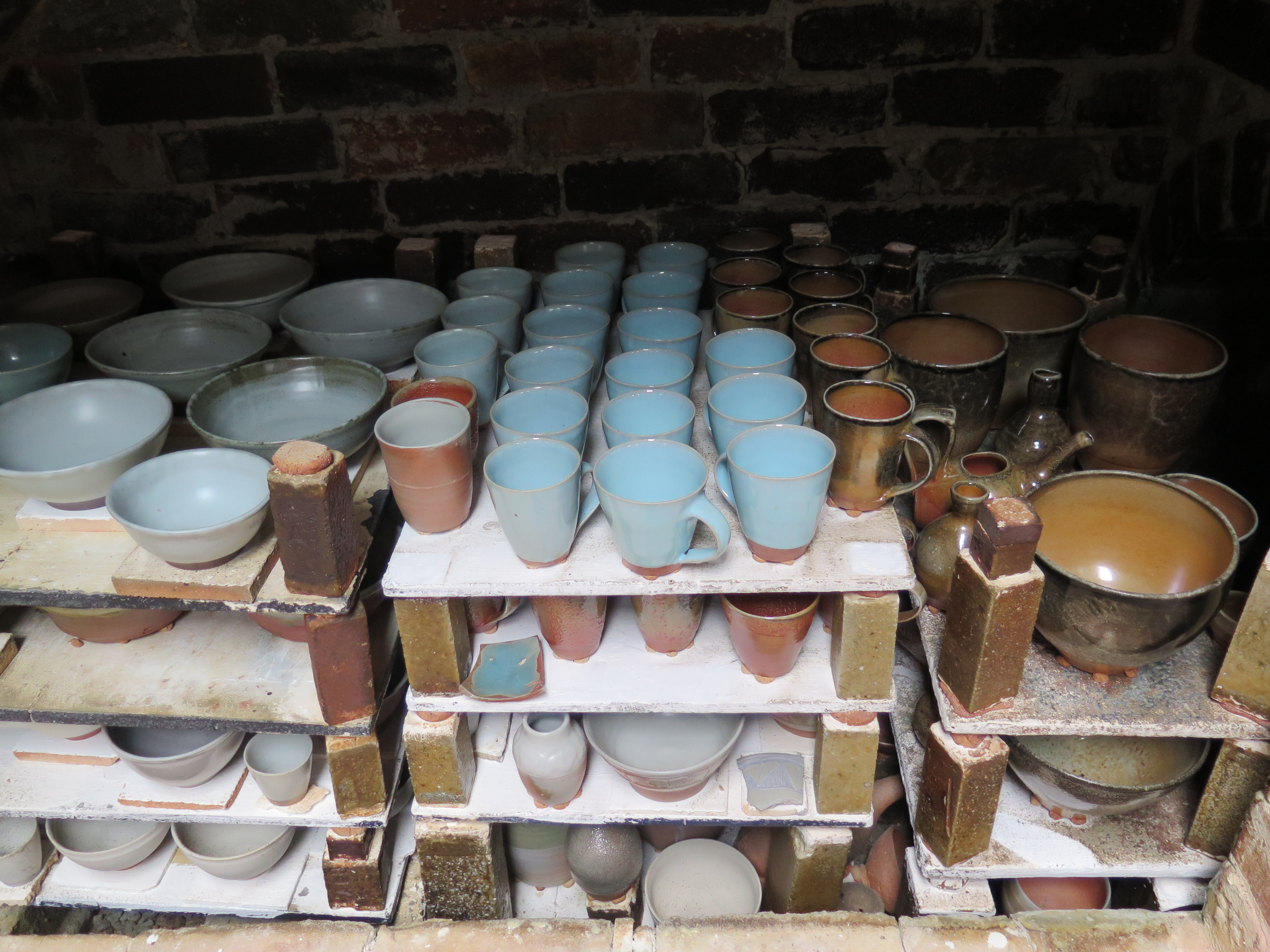
I have decided that I can fit in one extra firing before the Southern Highlands Arts Festival – Arts Trail, Open Studios weekends on the 7th & 8th of November, then again on the 14th & 15th.

The kiln is unpacked and repacked while it is still warm.

IMG_1016IMG_1034

IMG_1037IMG_1040

IMG_1045

For some unexplainable reason, I wake up just after 3 am in the morning. Or is it still very late at night? I’m not too sure, but I’m wide awake, so I get up and walk down to the pottery workshop in the dark. It is quite overcast tonight/this morning, as there are no stars to be seen up in the blackness where the sky ought to be.

IMG_1215

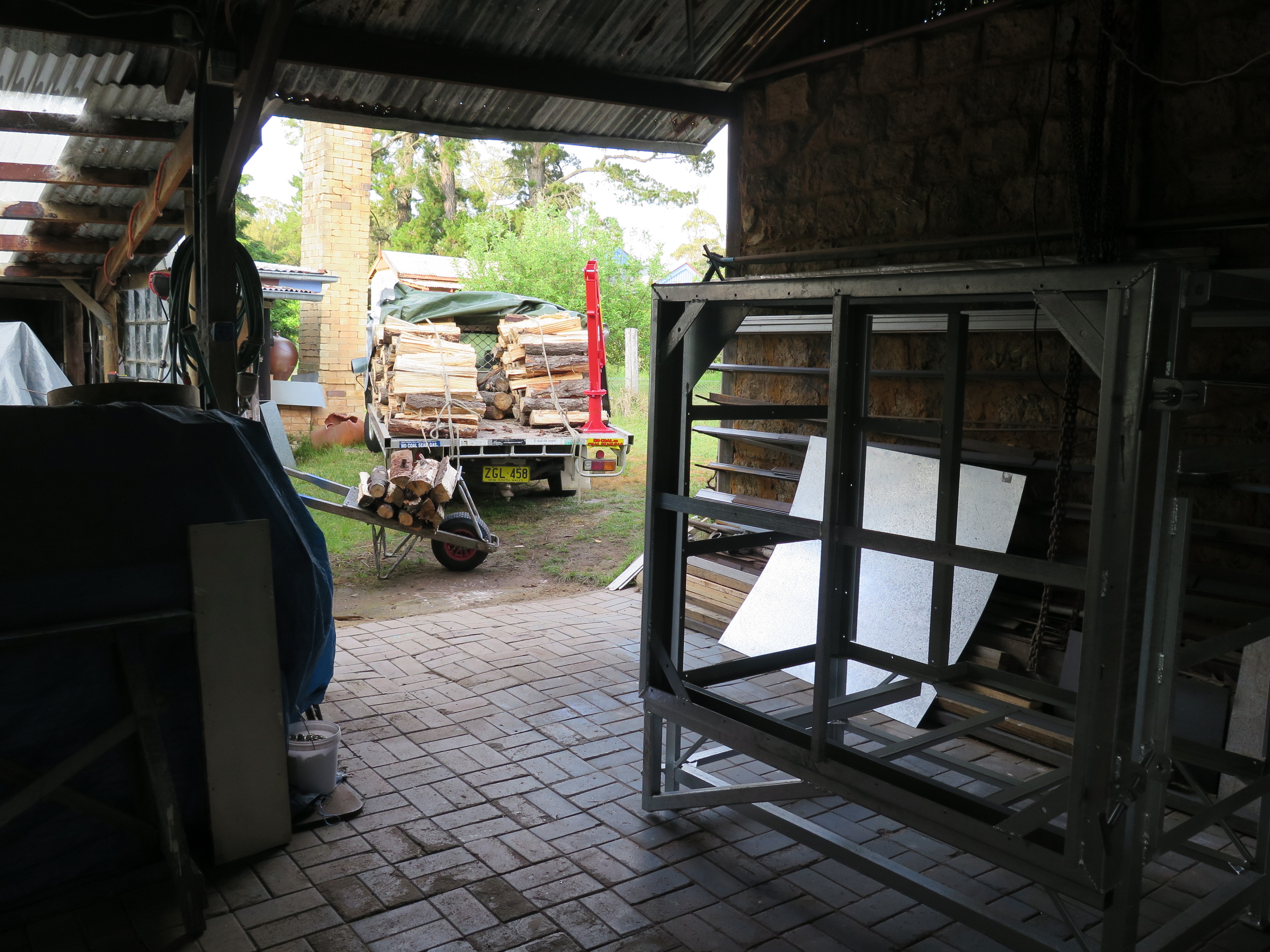
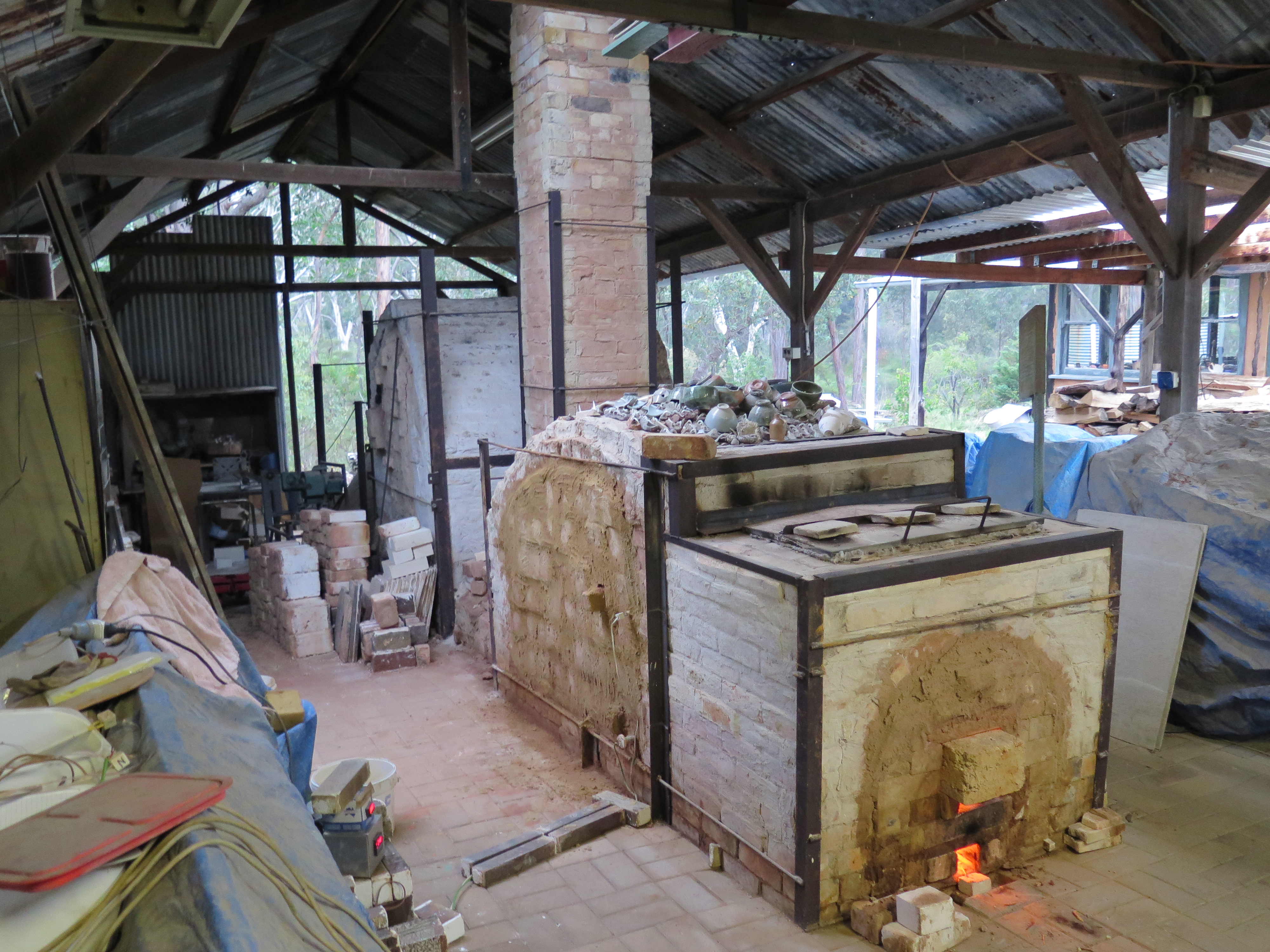
It’s so pitch black and very quiet, it seems a shame to make any noise at all. I decide to only put one light on and work in the soft ambiance and stillness. I make the kindling fire from the scraps of wood that fractured off from the bigger logs as I was splitting them yesterday. I spent most of the day yesterday in cutting, splitting and then, with Janine’s help, stacking it. We stacked half of it onto the truck. A very full load without sides on the tray. I drove it down to the kiln shed, covered it with a tarp against the possibility of rain overnight.

IMG_1208IMG_1211

IMG_1223

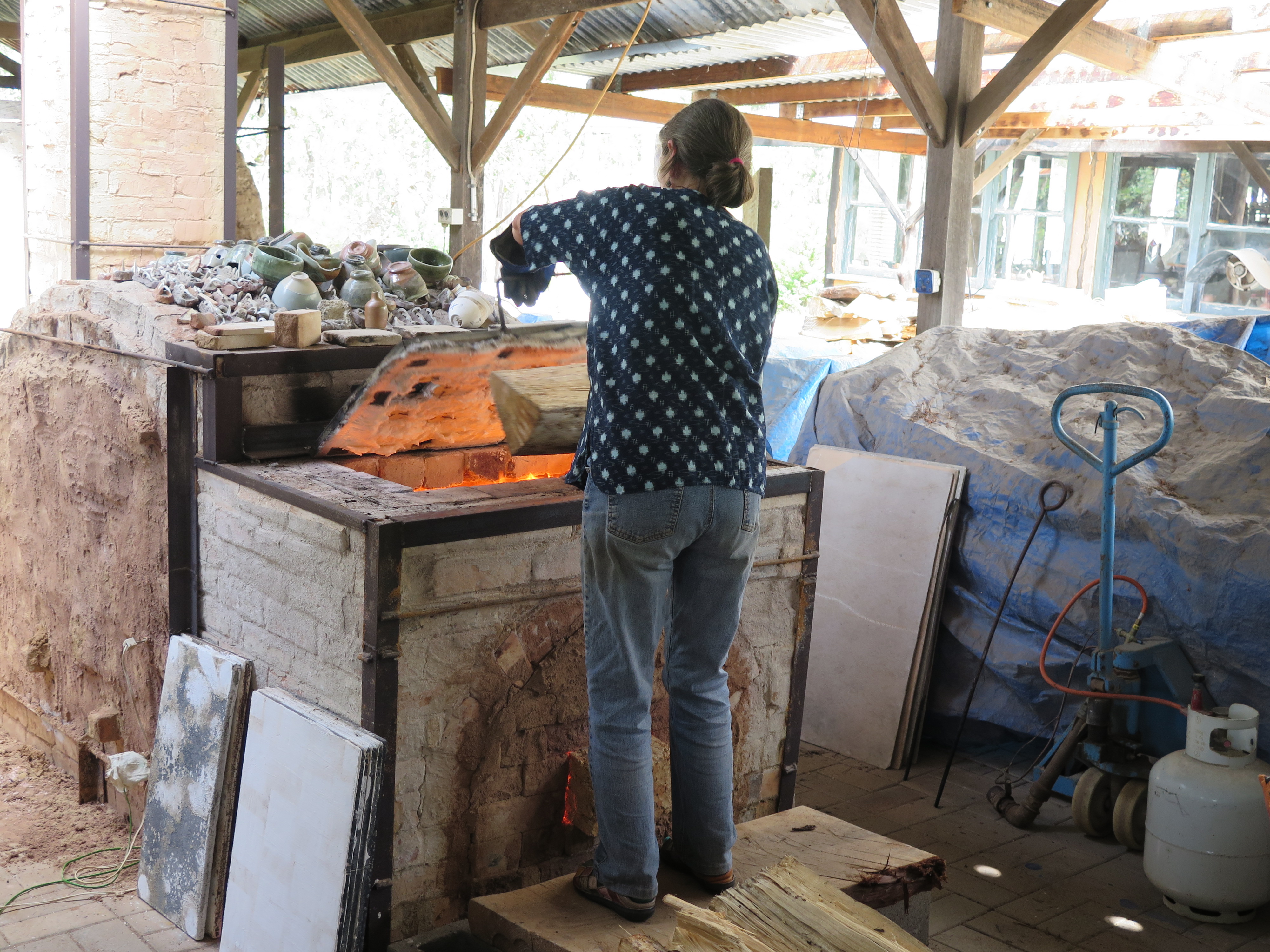
I cut all the straight log wood into hob lengths, avoiding the branched bits. These, I cut around and leave aside for splitting into small short pieces for use at the beginning of the firing, when I start the fire on-the-floor of the firebox. This first stage of the firing gently heats the pots up from cold, but also serves to build up a pile of embers in the base of the firebox which is necessary to ignite the big logs later on in the firing process.

Every part of the tree is used. I don’t like to use branched bits for the longer hob wood, as it doesn’t split easily or well, often coming apart into horrid, sprawling, jagged pieces that are difficult shapes to stack and stoke, so I have developed a technique of spacing my chain saw cuts to get the maximum number of full length ‘hob’ wood pieces from the straight grained sections of the log and a smaller number of knotty, branched bits left in-between for use as floor wood lumps. I usually walk along the log with my metal measuring stick and mark off all the cuts with a red wax crayon. This takes a little time, but makes the cutting and sizing much faster and more accurate overall.

IMG_1214IMG_1225IMG_1232

The kindling fire starts well and develops slowly into a full firebox of burning chunks, after 3 hours, there is enough ember built up in the lower part of the fire box, (‘the ash-pit’) on the floor, to support the fire starting off on the hobs, in the upper part of the firebox (‘on the hobs’). The long, thick pieces of wood introduced onto the ‘hobs’ from the top of the firebox, are held suspended by the brick ‘hobs’ just above the burning embers in the ash pit, placed here, they soon catch alight and start to burn fiercely. This takes the firing to another level, where the wood burns cleanly and thoroughly, allowing the temperature to rise evenly and steadily, up until it is time to begin reduction at about 1000oC.

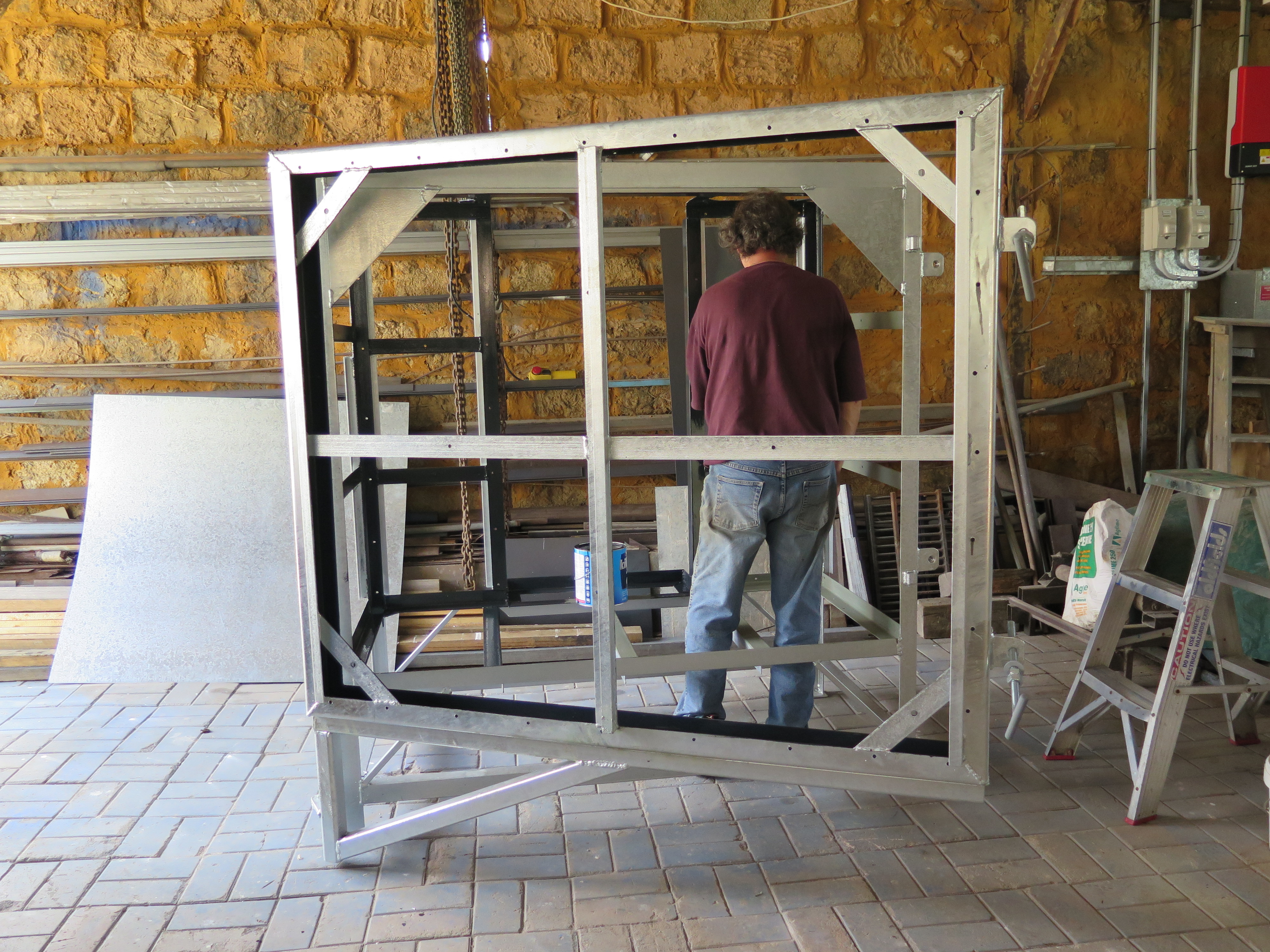
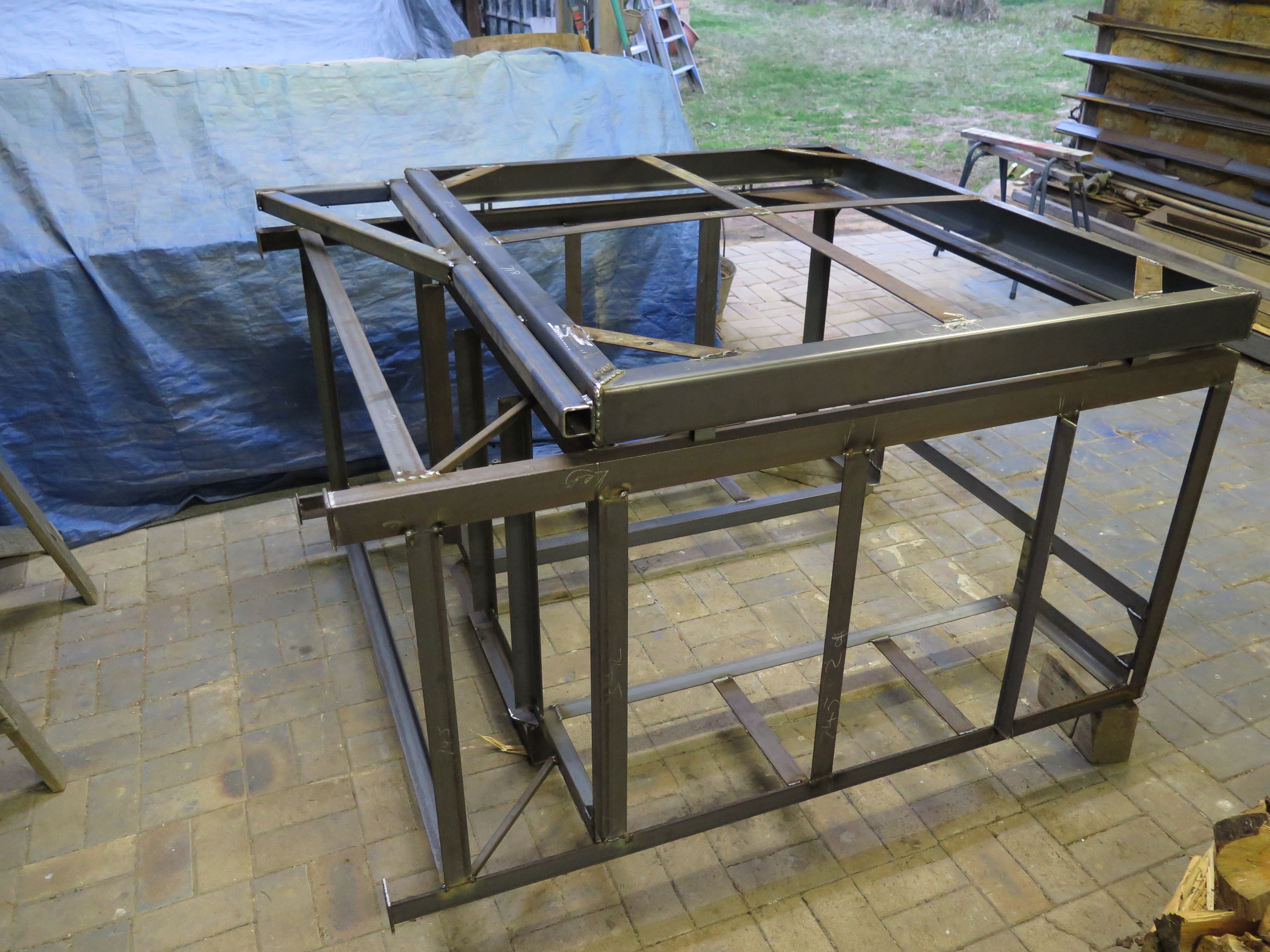
After cutting and stacking the kiln wood yesterday, I spent the rest of the afternoon in grinding, fettling, filing, acid-etching, washing and baking the newly galvanised kiln frame for Sturt Workshops prior to etch-priming. This is all mindless dull work that I have done a hundred times before, if not more and a good time to allow my mind to settle and watch itself wander, constantly returning to the hand/arm action of simple brushing. Paint on, Paint off. I don’t need to be in a buddhist temple in Kyoto to practice mindfulness. Any place will do, but it helps to be able to make the time for it and it alone.

IMG_1222IMG_1227

IMG_1228

Although it is very early in the morning, I’m keeping myself occupied in fiddling with the very small fire in the fire box. I need to watch it carefully, as at this stage it can easily go out if it is left for any

period of time unattended. As I sit and carefully place each new small piece of wood on the pyre, I suddenly realise that it is starting to rain. No wonder that there were no stars in the sky. This is no problem for me, as I took the precaution to cover the wood outside on the truck last night. I’m using freshly split pine, which although being felled two years ago, is still damp inside when split from the log. I don’t want it to get any wetter until the firing is up to 1000oc. or more, then it won’t matter if   the wood is wet and may even be of some use in creating the ‘reduction’ atmosphere in the kiln, which changes the colour of the clay bodies and glazes. Such is the odd nature of burning wood in a potter’s kiln. Pottery may seem superficially to be a simple craft activity, but there is a whole world of science, chemistry and associated technologies that need to be learnt, assimilated and internalised, so that you can then work intuitively and creatively in the medium.

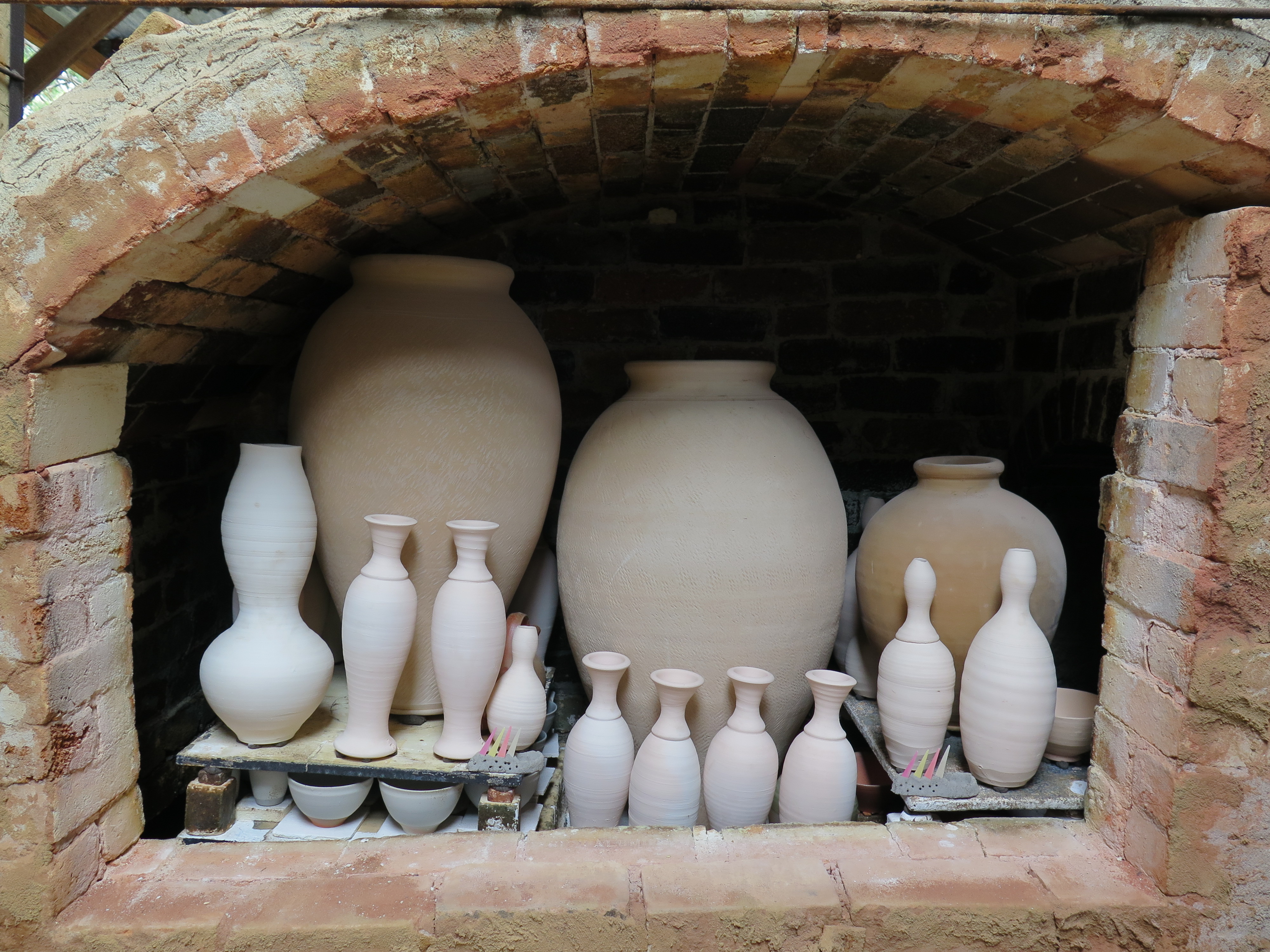
In this firing I have 3 large jars and then a lot of bottles, with a few shelves of smaller domestic pots underneath. This firing isn’t very efficiently packed, but there is no easy way to get these big round jars into a more-or-less square box of a kiln chamber. That is just the way it is, so I do the best that I can with what I have to work with.

IMG_1049_1

I have done this so many times, that I have judged the amount of wood needed, down to the the last half wheel barrow load. The firing proceeds smoothly and evenly right up to top temperature of 1300oC or cone 10 flat, in 16 hours. Because I started so early this morning, there is time for a hot shower and a relaxed dinner back up in the house, even a bottle of wine to celebrate. This is civilised kiln firing. Perhaps even Laid back ?

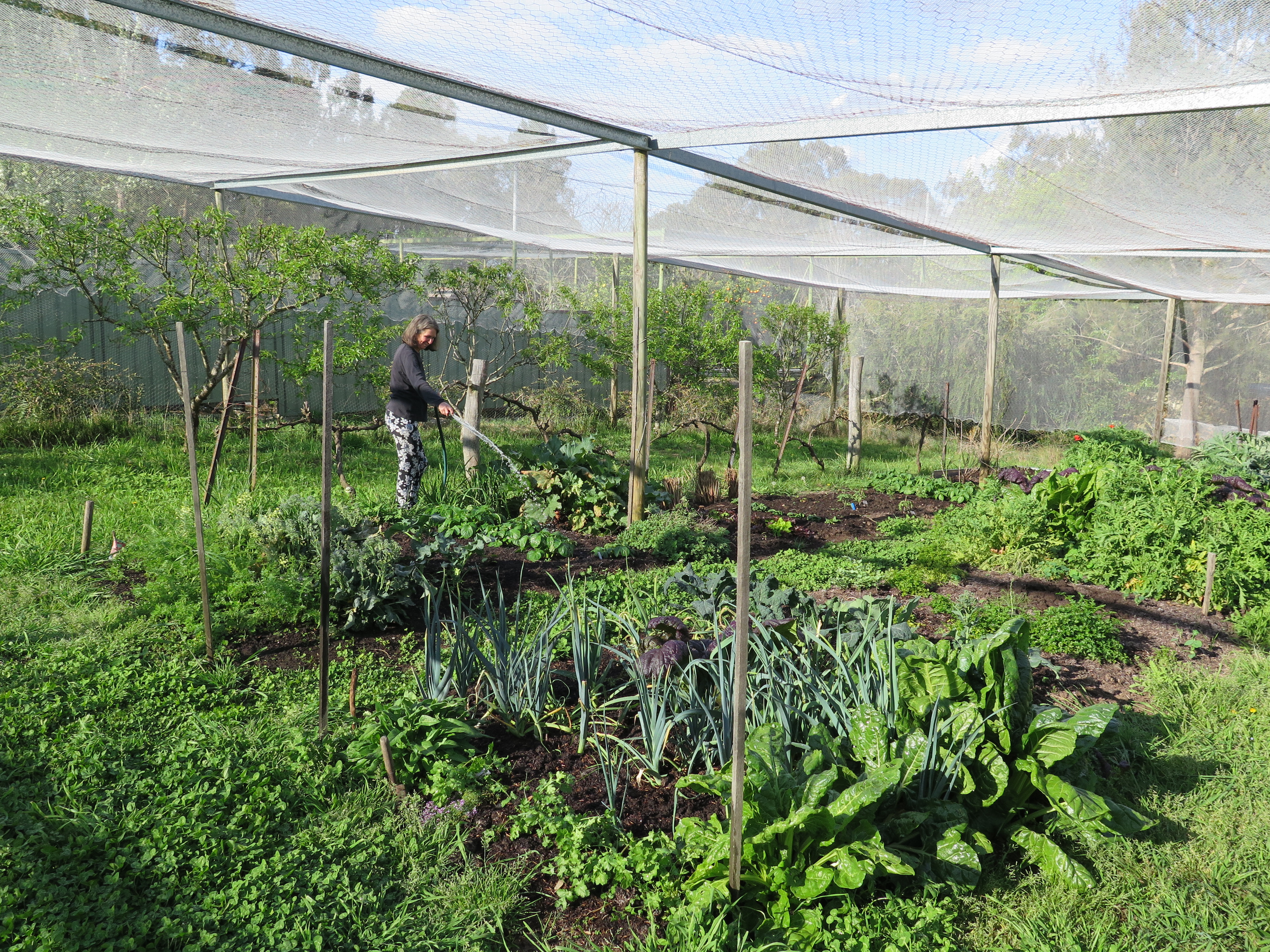
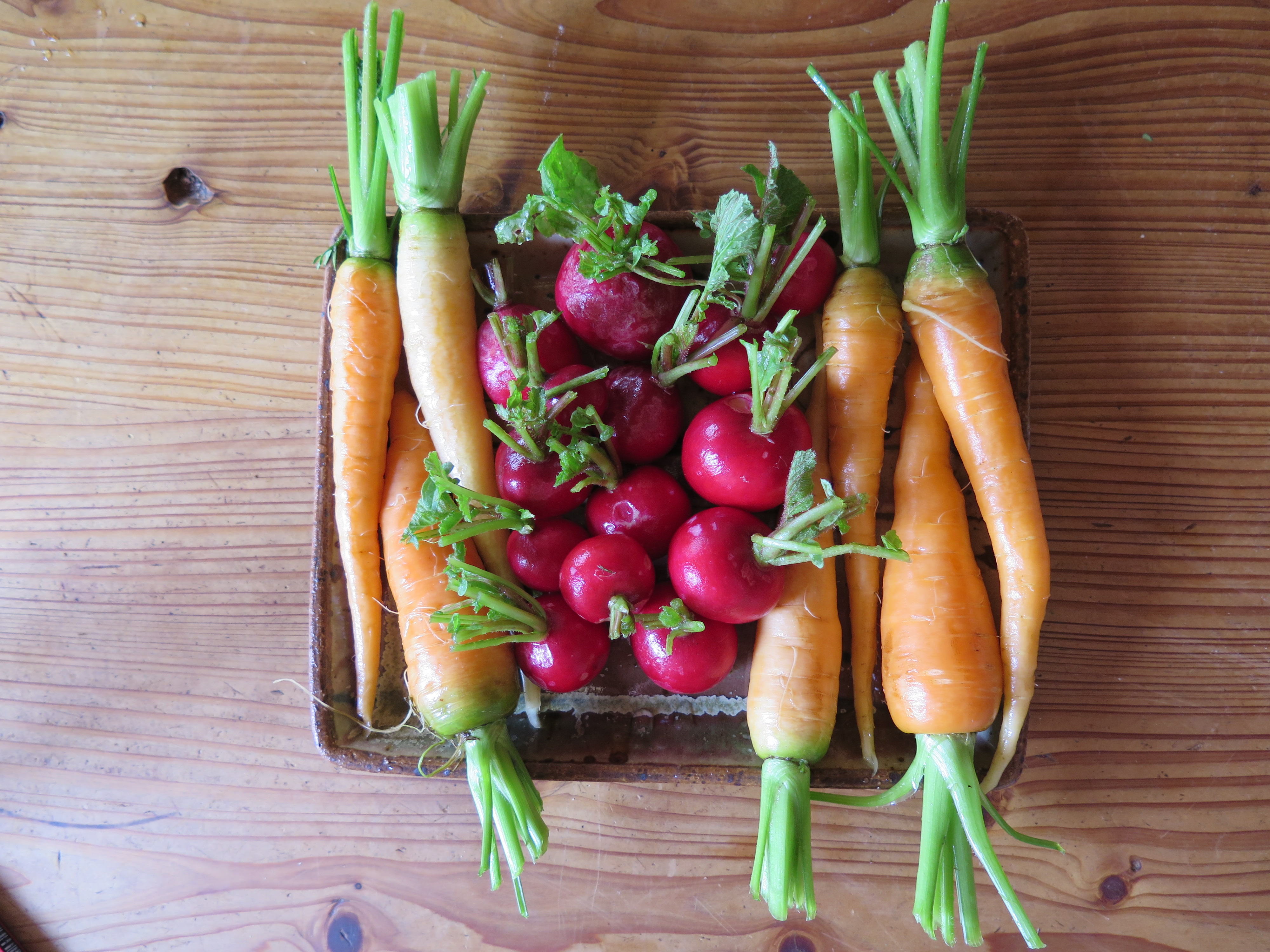
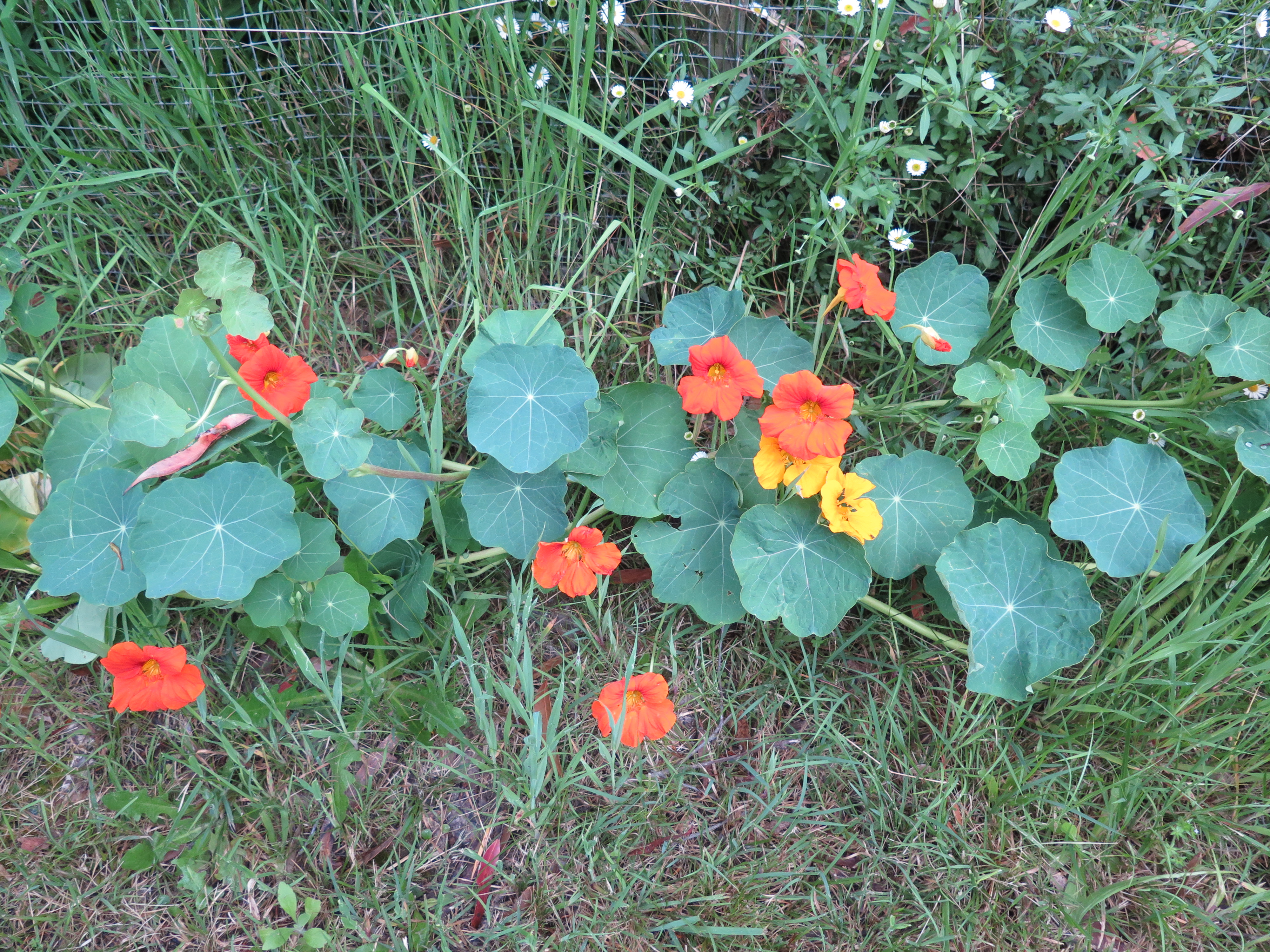
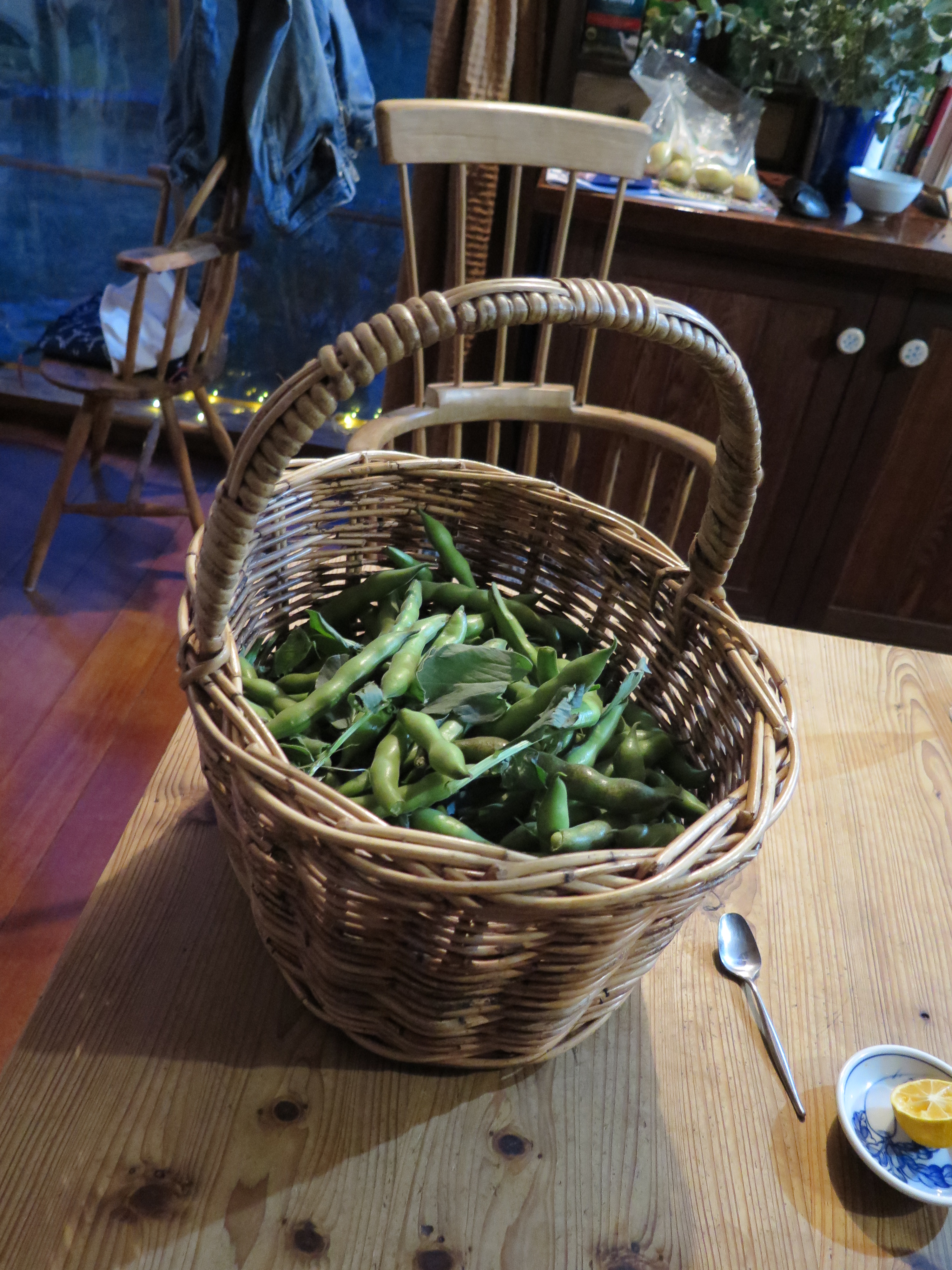
We bake a whole snapper for dinner with some freshly picked broad beans from the garden. The are perfect just now. Sweet and juicy without any starchiness at all, just the way that I love them. This is the 2nd pick and there will probably another couple before they get too big. The first few beans are eaten raw as an entre, perfect with a glass of chilled white wine. We bake a few potatoes, sweet potato, red onions and some pumpkin. Our garden feeds us very well!

IMG_1237IMG_1239

IMG_1240IMG_1241

I bake the fish with some mushrooms and slices of lemon and serve it dressed with a sauce of melted butter with finely chopped anchovies, capers and green olives.

It’s a tough life, but some one has to have a go at it.

Tomorrow I will start to grind, sort and clean all the pots from the last firing, spend a bit more time in the garden and add another coat of paint to the kiln frame waiting in the factory.

Never a dull moment!

fond regards from the multi-tasking Steve and Janine

Hitting the Ground Running

I’m just back from Japan, It’s been a great trip. I’ve been away since late August. I’m back just in time to discover that my friend and mentor, Allan Parkes has just died. Such an interesting and creative person.

For the first time, I decided to rent some studio space in Japan and make some work there. It was very good. I hope that I’ve learned something while I’ve been away, but one never knows. Only time will tell. I tend to take things in and let them blend and simmer for a while, then hope that something will percolate back out again in some dilute form that will enhance and extend what I already do with what I know. If nothing useful emerges, then there is nothing lost, as I really enjoyed my time there. As I alway do. I have a strong affinity for Japan, the people, the food, the creative endeavours of all those people that I have met and/or whose work I have seen in the Galleries.

IMG_1005IMG_1013IMG_1011

I had one day to unpack and do my washing, then straight in to the pottery and kiln factory. I have a large kiln ordered, so it’s straight into welding mode. I have to earn some money. I weld up the steel frame and get it off to the galvanisers in just 4 days. While the kiln is away. I get stuck into glazing all the bisque fired pots that I left here in the pottery, before I went to Japan. So it’s glazing, decorating and kiln packing. Then wood stacking, kiln shelf grinding, cleaning and washing. Finally the kiln is packed and ready to fire.

IMG_1187

It’s 5 o’clock in the morning and the early bird chorus is just starting. I’m down in the kiln shed firing the kiln, I like to get an early start for my firings. For some very intimate psychological/physiological reason that I don’t really understand, I seem to like to get an early start, when it’s dark and quiet and I have the whole world to myself. Well, almost. There is of course the odd rooster in the distance and the bird song. The birds seem to start calling to each other even before I’m aware that that there is any change in the light levels, but they are so much more sensitive to the natural world than I am. We have all learnt to live in an un-natural modified environment with electric lights, refrigeration, supermarkets, air con, and flat screens. I eschew most of this for the frugal comfort of home grown vegetables and a wood fire for warmth and cooking. Of course I do have electric lights and a fridge. I’m not a ludite, but I’m trying to keep my life as simple as I can, while still engaging with the modern world.

IMG_1190

Half an hour later, I can start to see a slight lightening of the sky and instead of it being jet black, it starts to have a very pale light grey to bluish tinge to it. I’m sure that if I had to live without any modern ‘conveniences’, that I’d soon adapt to my circumstances and start to see the dawns approach, just like the birds. But at this stage I’m happy in my hybrid world, sitting on the edge of my small hamlet, with access to everything that a modern first world economy has to offer only half an hour away and I’m also happy to live here quietly and ignore most of it.

Electricity is great. We make all of our own. In fact we make about 3 times more than we use, and sell the excess 2/3rds into the grid for money. Having fresh drinking water on tap is also a great thing. We catch all our own rain water from our roof and store it for later use. Hot water on tap has to be the greatest luxury ever invented. I consider it the basic standard of civilisation. If you have hot water, you probably have peace and stability. We make our own hot water from a combination of solar panels and a boiler fitted into the back of our wood fired kitchen stove. We also own a fridge, a small one, but we don’t own a freezer, even though we have a large kitchen garden and could find a use for one. We thought about it and decided against it, as it uses too much electricity. We always have something fresh to pick and eat from the garden. We eat what is in season in the garden, what we have over, we vacuum preserve it in ‘Vacola’ jars and store it away in the pantry.

IMG_1000IMG_1001IMG_1129IMG_1130IMG_1167
I’m perfectly aware that the way we live is both very hard work and a great luxury. We are in control of most aspects of our life and that is our greatest luxury. However, Just like everyone else living in a capitalist economy, we have to earn money to pay the bills that constantly accrue. Such things as Council rates, insurance, registration, taxes etc. There are lots of once-off bills that occur throughout the year, but add up to be our major expenses over-all. As we don’t have conventional jobs, cash flow can sometimes be a problem, but we manage by living quite frugally. Luckily, most of the things in life that we aspire to can’t be bought for cash, but are earned through hard graft and personal effort.

IMG_1194

This wood firing will be the last that we can fit in before the Southern Highlands Arts Festival Open Studio Weekends, that are slated for the first two weekends in November. It gives us a couple of weeks to unpack the kiln and then fettle and grind all the pots. With any luck, we should have just enough time to unpack the kiln,  then clean up the studio ready for the opening.

Best wishes from Steve who is glad to be back home again and hitting the ground running

Vale Allan Parkes

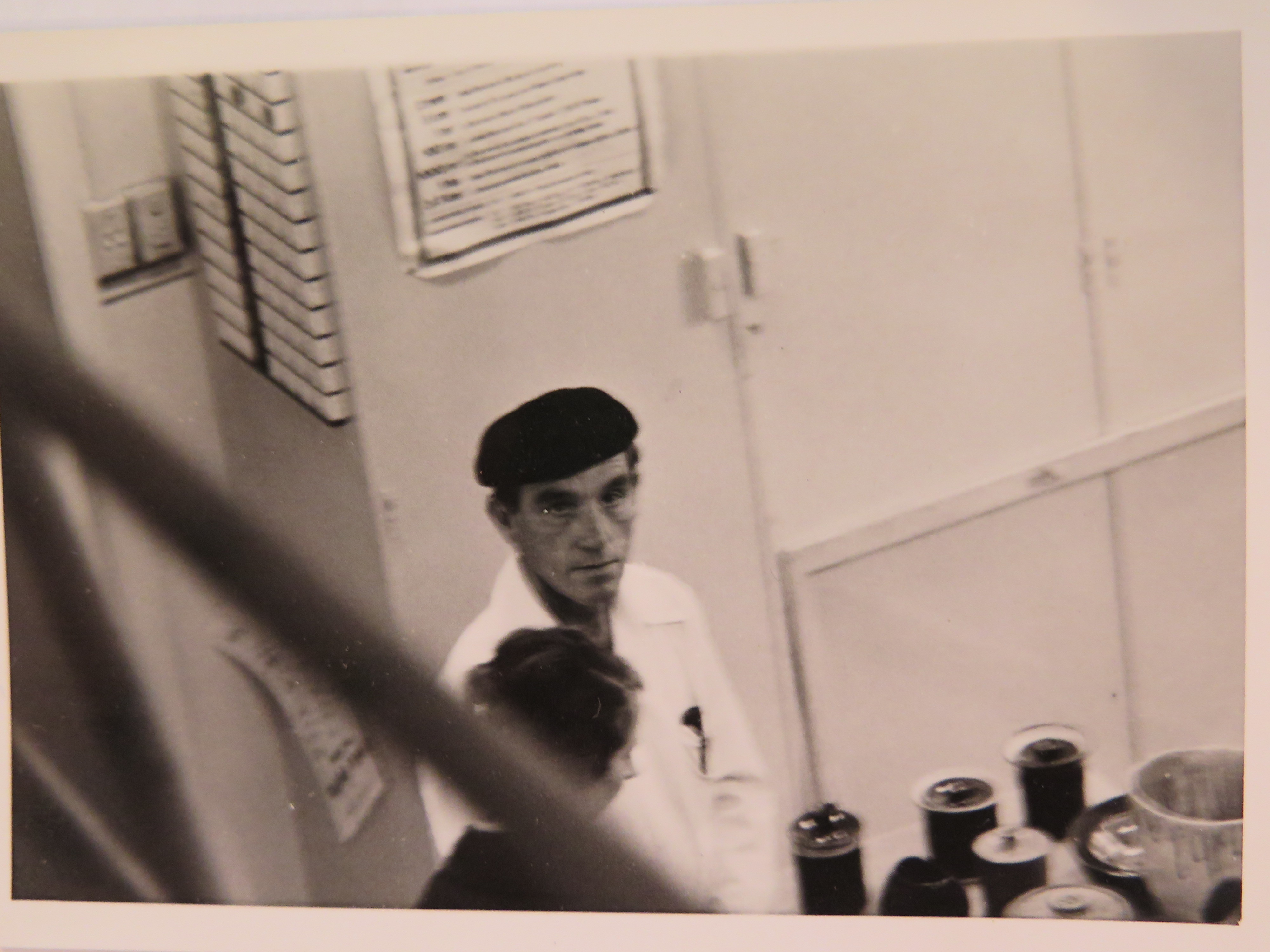
Allan Parkes was a really good person to get to know. I was very lucky to have spent 25 years working with him at the old East Sydney Technical College. He was a great character. I really enjoyed our conversations. He seemed to be very well-educated, but I remember him telling me that he was brought up in the  country on a  property, with an absent father, who was away working in Sydney, earning the money to support the venture. So perhaps Allan was home schooled? Whatever his formal education, he had a wonderful speaking voice with particularly clear diction. Perhaps a result of some private schooling? (I learned at Allan’s funeral service that he was educated remotely by the ‘school of the air’ and by correspondence schooling. His beautiful diction and hand writing were a result of his self imposed and determined effort to ‘improve’ himself. A defiantly independent individual.) He was very well read and could converse on a wide range of topics. He always seemed to be borrowing books from the Art School Library on a regular basis.

He was a fine mentor in my early days there at the ‘Tech’. He was one of the ‘elders’ who helped grow me up. I admired him and remember him very fondly.

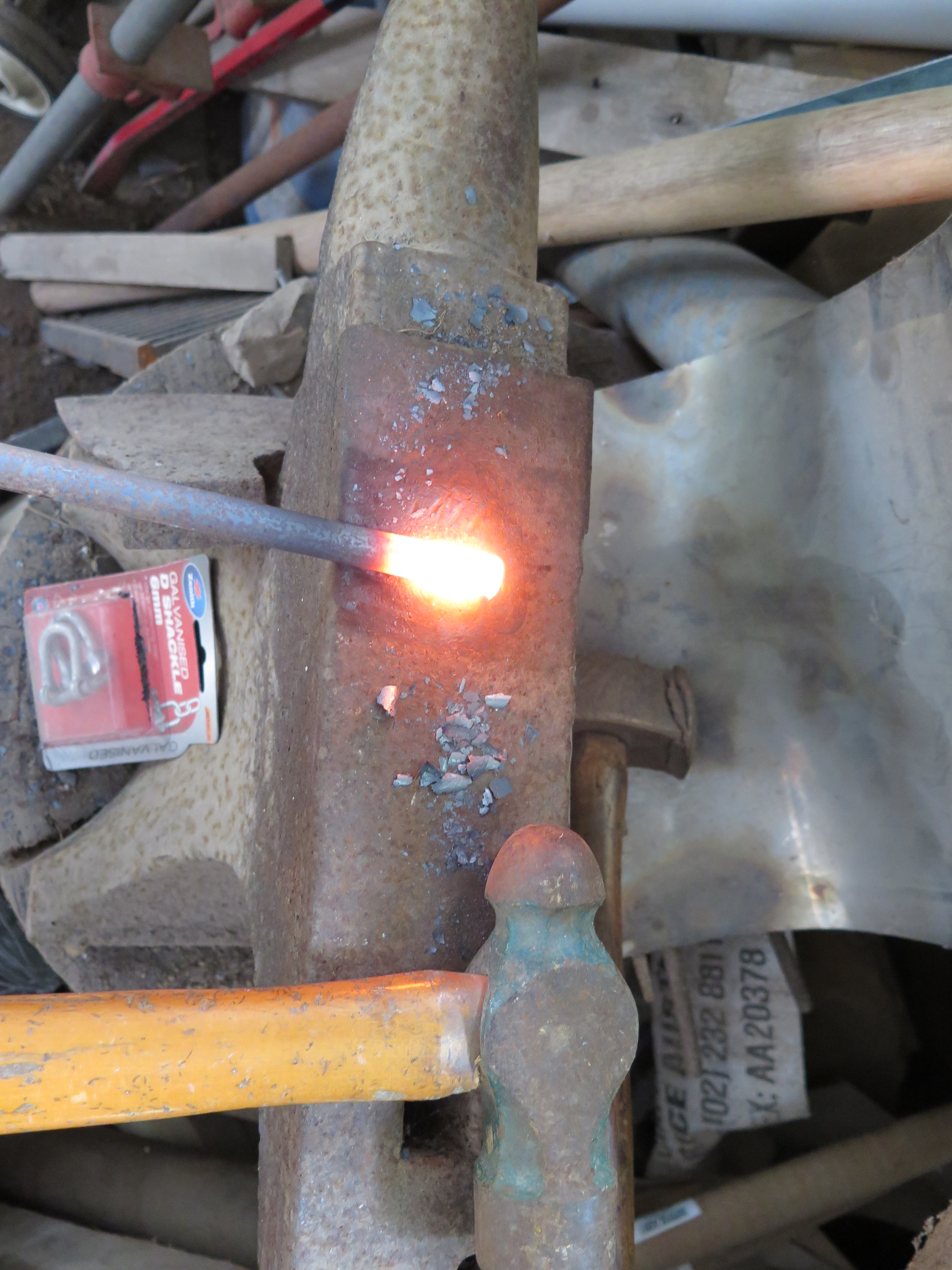
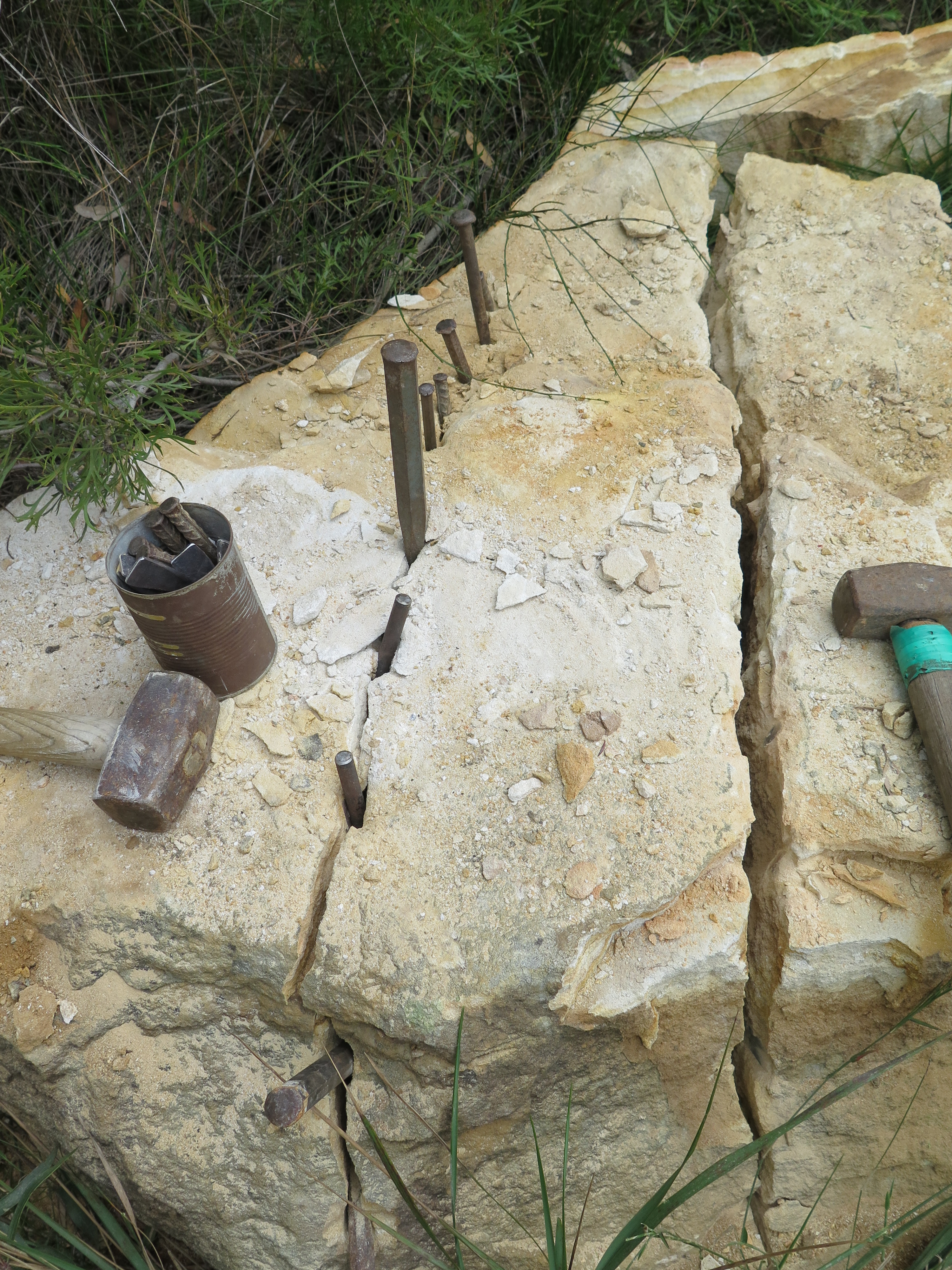
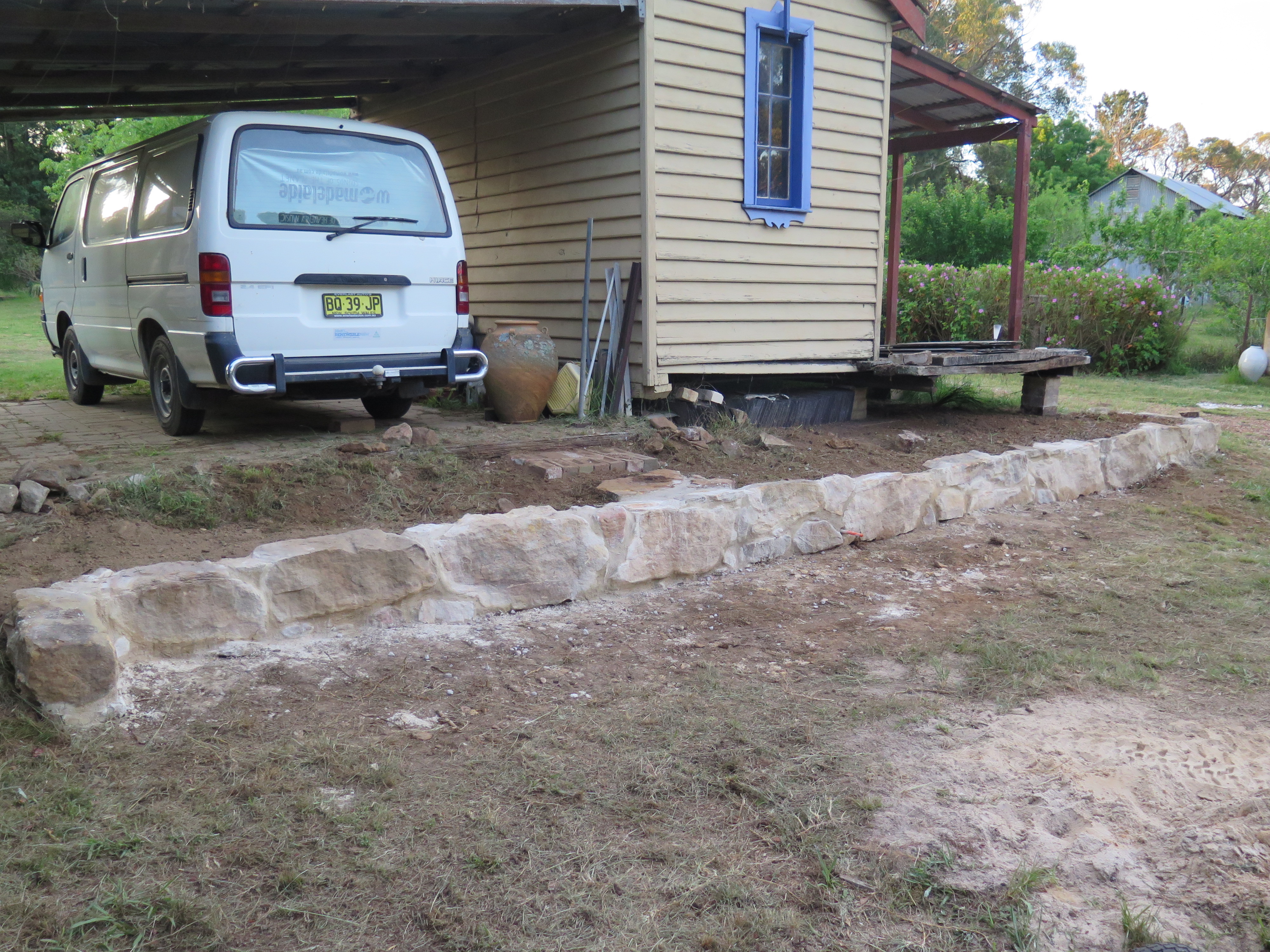
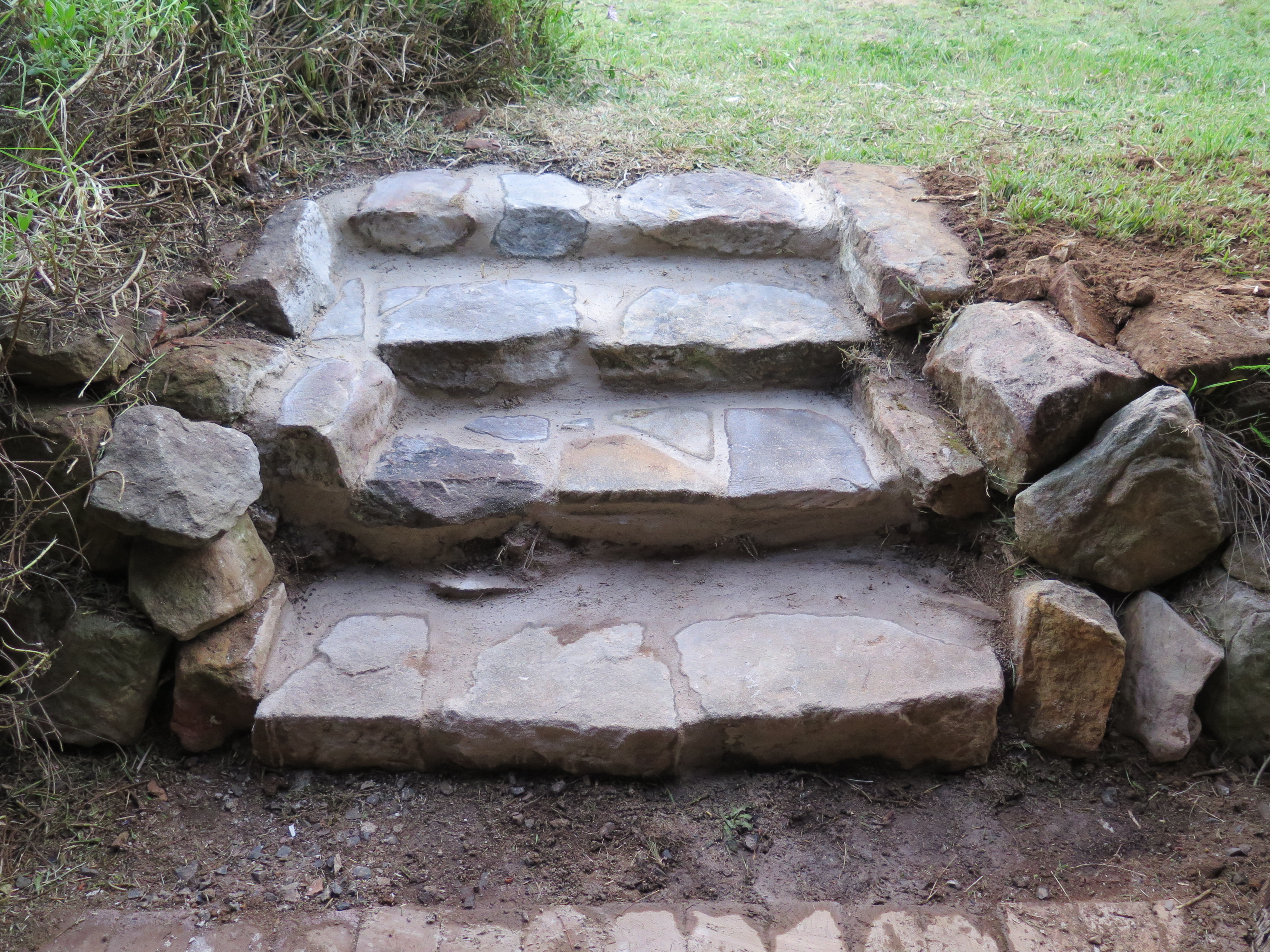
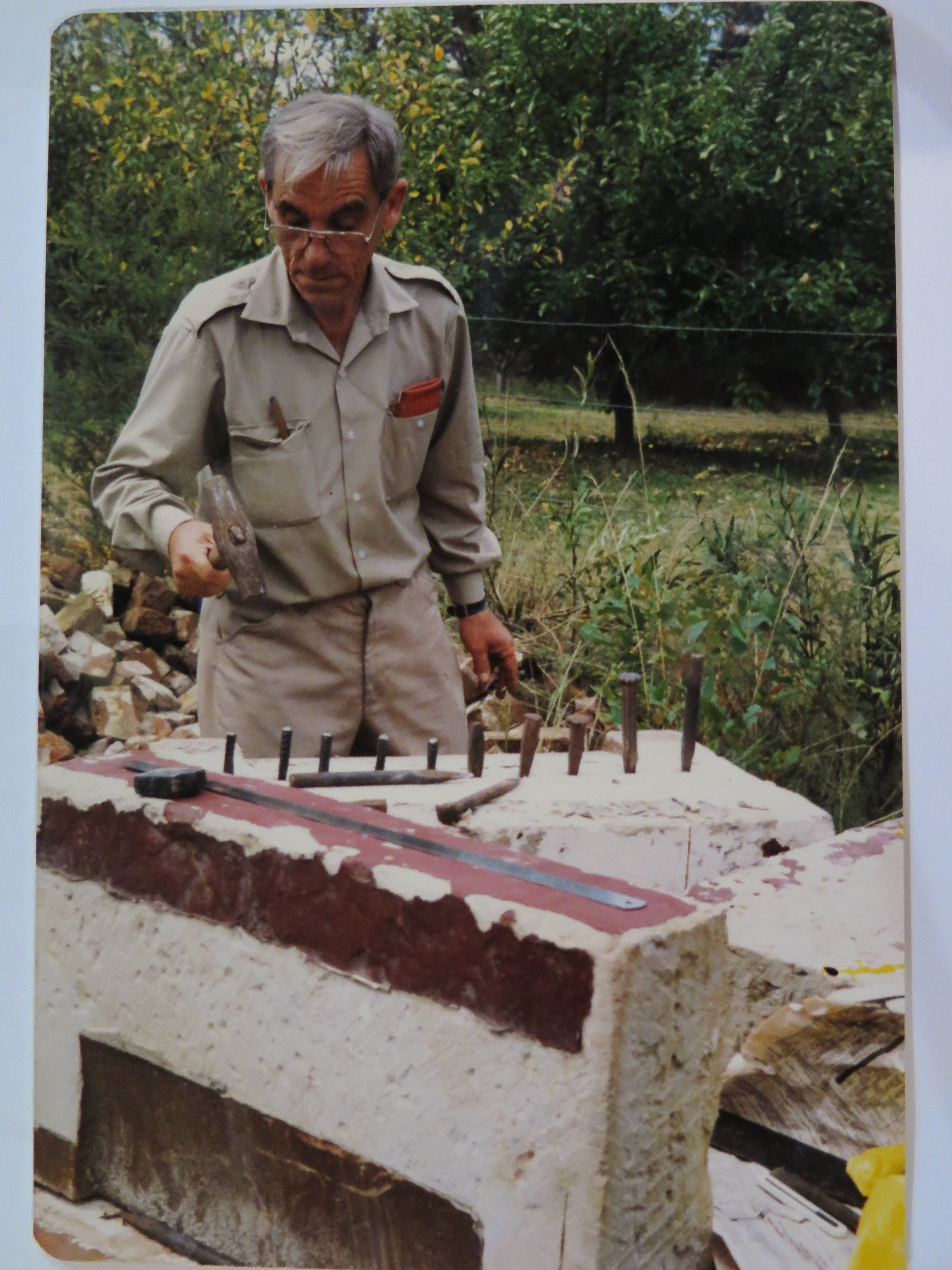
He came and stayed with us at our home in Balmoral Village on one occasion in the 80’s and gave me a lesson on how to cut and dress sandstone, to make the window sills for our house. I learnt a lot in a very short time and went on to carve all the sandstone window sills for our house over the next 9 months. I’m a slow worker. Allan gave me one of his pitching tools which I still have and even now, 30 years later, it still gets occasional use, as I’m currently building a new stone retaining wall at our property.

IMG_1133

He often greeted me with “Hello Citizen” A reference to the French republic, but there was a lot more going on there, not all of which I ever got to the bottom of, but I enjoyed listening to his stories of working as a drover up in the Gulf country. I remember stories of restoration stonework on some big churches, carving the gargoyles for the Government House in The Domain. Very interesting and sad stories of his time as a news correspondent in Burma during the war. Some very brief descriptions of his detention and torture by the Japanese forces there. His discussions of French faience pottery. The need for more colour in the brown and green 70’s ceramics (which was a very accurate and timely prediction, that later came to pass), he was interested in organic gardening, native plant propagation, red wine, water-colours, sculpture. So many topics. He was so erudite, cultured, well read and he had a beautiful hand. We have a few notes and letters from him and even though they are hastily draughted, the lettering is exquisite.

IMG_1134

I met him, when I first enrolled at ESTC in 1971. At that time he was the Technical Assistant in the Ceramics Dept. He was immediately engaging, supportive and helpful. Always ready with some advice and ideas to get the most out of my time there. Although he was only the TA in the Dept. he actually taught me more than some of the full-time staff that were employed there.

I recall going to him early in my first year as a student at the Tech and complaining about how I was so unhappy with my work that had just emerged from the kiln. He put one hand on my shoulder, looked me straight in the eye and said, “I know that you might feel disappointed just now, but I know that you will go straight back out there and make a better one”. I didn’t know that at all! But once he told me, I realised that I could, and so I did.

I didn’t know his history and what he had gone through in the war at that time. I must have appeared to him as a soft, spoilt, indulged, whingeing, middle-class brat, but he didn’t tell me that. What he told me, was to get over it and go and make another one, only not just one, but ten more. Good advice, well received, and because I did, we got on really well after that.

Janine and I used to call in at his home in Concord West at times during the 70’s when we lived in Dural and found ourselves passing by. He was still married to Helen in those days and we met Freya Marc and Manon there. Helen used to lend me her books on Native plant propagation and cultivation. It was Helen and Allan, who introduced us to the work of Edna Walling and that had yet another great effect on our lives. We are still keen native gardeners to this day.

Janine and I have spent some time reflecting and remembering Allan with great fondness during the past week, since we heard of his passing. He was so very good to us both at different times during our student years and then later in different ways. He always seemed so European in outlook, while also being so quintessentially Australian. He drank red wine when everyone was drinking beer. He drank beer when everyone switched to red, when wine became trendy. When boutique breweries evolved and both wine and beer became trendy, he drank cognac. A true individual, he owned a vehicle for his stone mason’s business, when no-one else could afford one, later, he caught public transport when everyone else drove.

He was never far from a roll-your-own cigarette, always rolled rather shakily from some intensely dark, very strong, Dutch tobacco. Later, when his hands became a bit too shaky for roll-your-owns, he switched to cigars.

He was a good artist and multi-skilled. I knew him as a sculptor in stone, ceramics, ice and butter. He often crafted images in butter or ice for use as center-pieces in table settings for big events in the food school at ESTC. This is an ancient tradition that very few people were aware of and skillful in – except of course Allan. He was also a very good water-colourist as well. I remember seeing his design sketches for the new sandstone drive-in gate at ESTC. He did a beautiful design and accompanying water-colour image. I didn’t know until recently, that he had also painted in oils in his latter years.

image005

image006

Allan was asked to repair the gargoyles on Government House in the Domain. He refused the job to re-create the old European originals. Instead, he submitted all new designs based on Australian native animals. I remember going there one day to visit him on-site. He was just finishing off the echidna corner piece. He had a natural gift for sculpture, which he honed through hard work and practice. The gargoyles looked strange up close when viewed on the ground, but suddenly emerged in perfect perspective once they were installed up in the parapet and viewed from 50 feet below. How did he know how to get that sense of perspective just right? He was very good!  Allan also designed and built the copper cockerel weather-vane on the roof of the old circular library building at ESTC. This image was later adapted to become the logo for the Art School. As far as I know, it’s still up there. Look for it the next time you visit the National Art School.

Allan left his mark in so many ways on the people that he interacted with and on the very real structural fabric of Sydney itself. Not many people can say that.

So we all have our own Allan in our minds eye and memories. We all come here today to add our own little bit to the complex picture of the complete man.

Citizen Parkes, well-read, complex, deep, richly informed, engaging.

Fondly remembered, sadly missed.

IMG_1138

A funeral service will be held for Allan at Rookwood Cemetery, West Chapel, on Tuesday 13th of October at 2.00pm.

Schrödinger’s Bell

I’ve re-located to Kyoto now. Only for a few days, as there is a potter that I need to meet. I’m staying at the Chitta Guest Inn, here in Kyoto. It is located just a few minutes walk from the Kyoto central station, which makes it ideally suited to walk to the Higashiyama, potters district, or to catch any bus or train to anywhere. The lady who runs this Inn is Kahori Inada. She is a really helpful person, with a bright outgoing, talkative personality, and she speaks English really well. Which is a great help when you need to call someone who doesn’t, she has done English translation for me on the phone and made appointments for me. A fantastic service. The place is very well-kept and clean. Shoes off, and tatami mats all through. Sleep on the floor on a futon. I see in the foyer, that she got a 8.8 out of 10, review on ‘trip-advisor’.

Keep in mind that this place is low-key, for young back-packers. It has shared toilet and shower facilities down stairs. No problem for me. It has wifi, TV and air-con that I don’t use. The cost is Y3,500 per night. That’s about Au$40! where else in an advanced country can you find a fantastic, basic, private room for that amount of money, so close to the centre of town. It’s pretty amazing as far as I’m concerned. So that is why I keep returning here. I thoroughly recommend it.

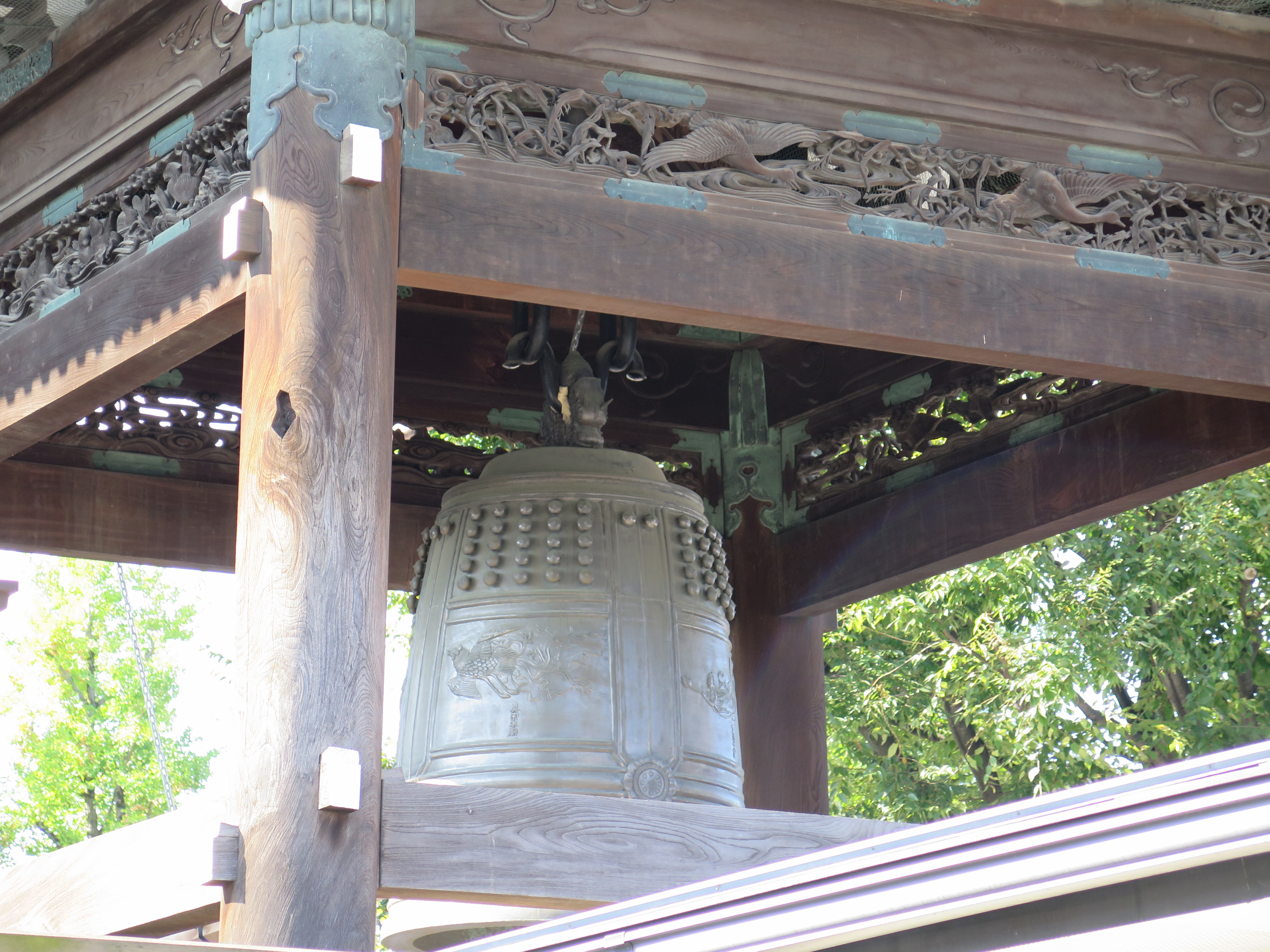
The Inn is located directly opposite the large temple of Higashi-Honganji, so I can’t help but hear the temple bell in the morning. In Arita, the temple bell rang at 6.00 am. and then every 35 seconds for ten minutes. 17 strikes.

Here the temple bell is so much larger. It resounds for longer. Almost one minute. So it sounds only ten times, but it starts at 5.20 am. and then 10 strikes on the minute until 5.30 am.

IMG_0880IMG_0871

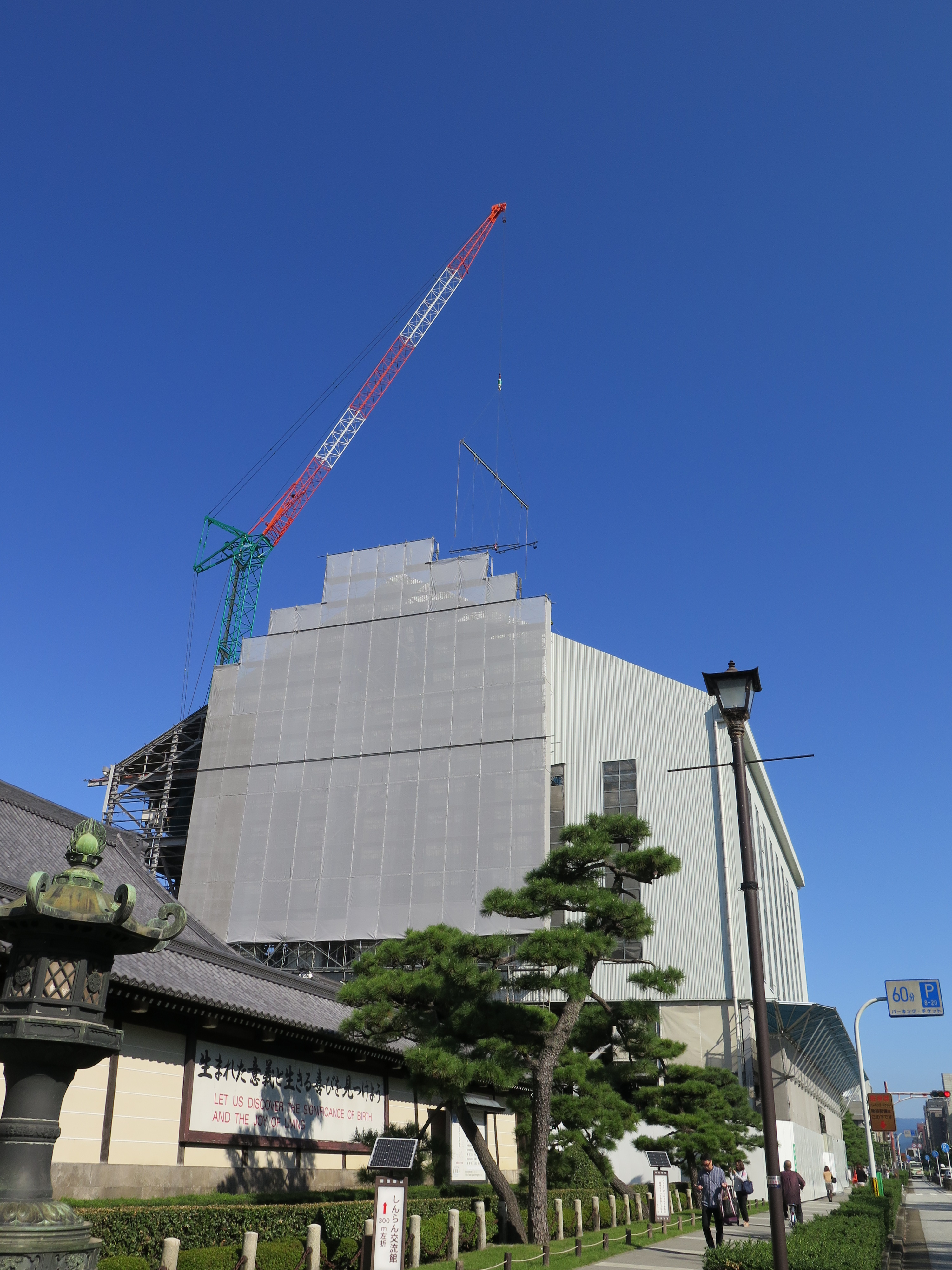
I decide to go over the road and have a good look at it. While I’m there I decide to sit a while in the main temple. It’s huge. The main room is divided into three sections and is just completed being fully restored. The floor area is 12 x 14 tatami mats + side spaces that double that capacity. That’s 336 tatami or 700 Sq. m. While I’m here, there is only one other person in this gigantic space. I sit quietly for a while. contemplating my time here.

IMG_0870IMG_0878

I’d love to show you a picture of this beautiful place, but god has forbidden it apparently. All I can show you is the outside areas, as god isn’t too concerned about that? God is a funny concept!

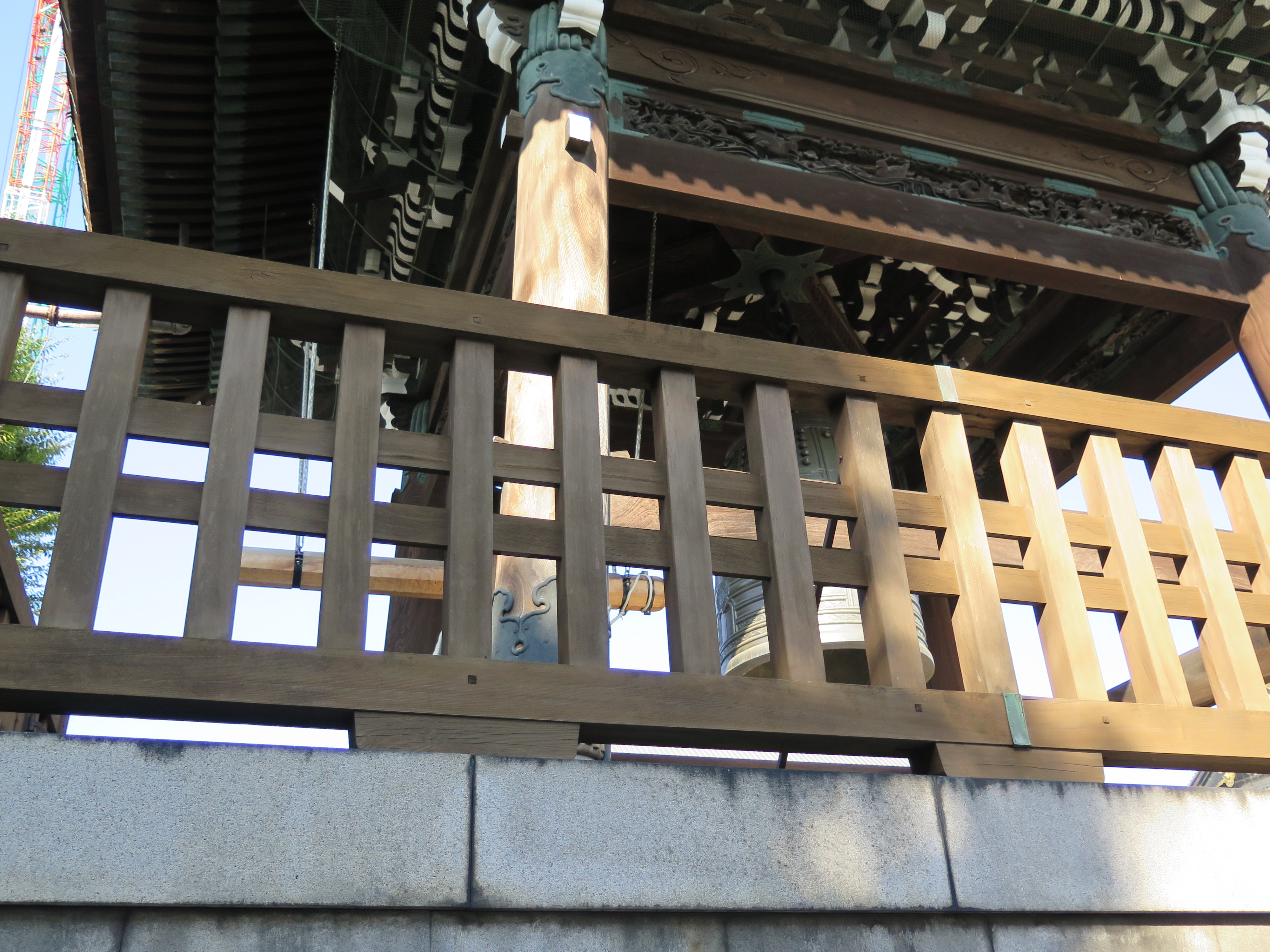
I wander around amid all the construction works. This re-building program has been going on for years now and is almost complete. I can see from the signage, that re-construction is due for completion in 2016. I finally locate the bell in the corner of the grounds. It’s a beauty, but hard to photograph, as I can’t get a clear shot, due to the position of the workman’s service huts or ‘dongers’, as we’d call them in Australia, placed right up close to it. What I can see is that there doesn’t appear to be any mechanical apparatus or mechanism attached to the big log that hangs from its chains, ready to swing into action. There is just a long white rope. So maybe here I will find that robed, dedicated Monk at dawn, doing his daily ritual?

IMG_0873IMG_0874

IMG_0875IMG_0876

The next day I’m up at 4.45am., dressed and ready and out the door with my camera in hand by 5.00 am. As soon as I’m outside, I Suddenly hear it. A bell striking the hour, but it’s a long way off and only faint. I haven’t heard this particular bell previously from inside my room. I make my way over to the Higashi-Honganji Temple. I walk the road to the gate that is normally open, but find that it is shut tight. I can’t see any indication or signage, as to when the temple is open, but clearly it isn’t now. I wait patiently outside the gate, just in case it opens, but it doesn’t. Only a minute to go, then there it is. Deep and resounding and lingering too. A very fulfilling sound and feeling. I feel it in my solar plexus. I stand and let the sound immerse me. At this early hour, there is only the occasional passing vehicle. I linger on, eyes closed. The next strike and then the next…

Was it Monk or machine? I for one will never know! It’s a bit like Schrödinger’s bell, I can’t look to see the outcome. It will always be both.

What is the sound of one hang(ing log) clanging?

Fond regards from Steve in Kyoto.

The Harvest

I started here a month ago. Empty pot boards, clean wheel head, heaps of storage racks all waiting for pots. 100 kgs of clay waiting in its plastic packs. I’m here in a fertile frame of mind and ready to experience and learn. I’m here to harvest what I can from this fertile environment.

IMG_0425

Now after weeks of intensive work I’ve made about 115 kgs of premium Arita porcelain clay into about 100 pots. I’ve ruined 3 of them by accident and turned all the others into fine, thin, beautiful bowls. I’ve gone through them over and over as the turning, re-turning then finishing and polishing has progressed. I’ve narrowed them down to just a dozen nice ones to be fired and glazed.

It doesn’t seem like much for a months work, but I’m quite happy with what I’ve learnt. Ideas and experiences are mingling and germinating. It’s what I’m taking away in my head that counts. The work that I’ve done here is the best way of getting it in there. I haven’t come here to take pots home. I’ve come to learn some skills. I think that I’ve done that, and of course I didn’t spend every day at the wheel. I managed to get out to visit people and places of interest on a lot of days, and that was very good. It was great to get some insight into this place and the people that make it all happen.

IMG_0433IMG_0435

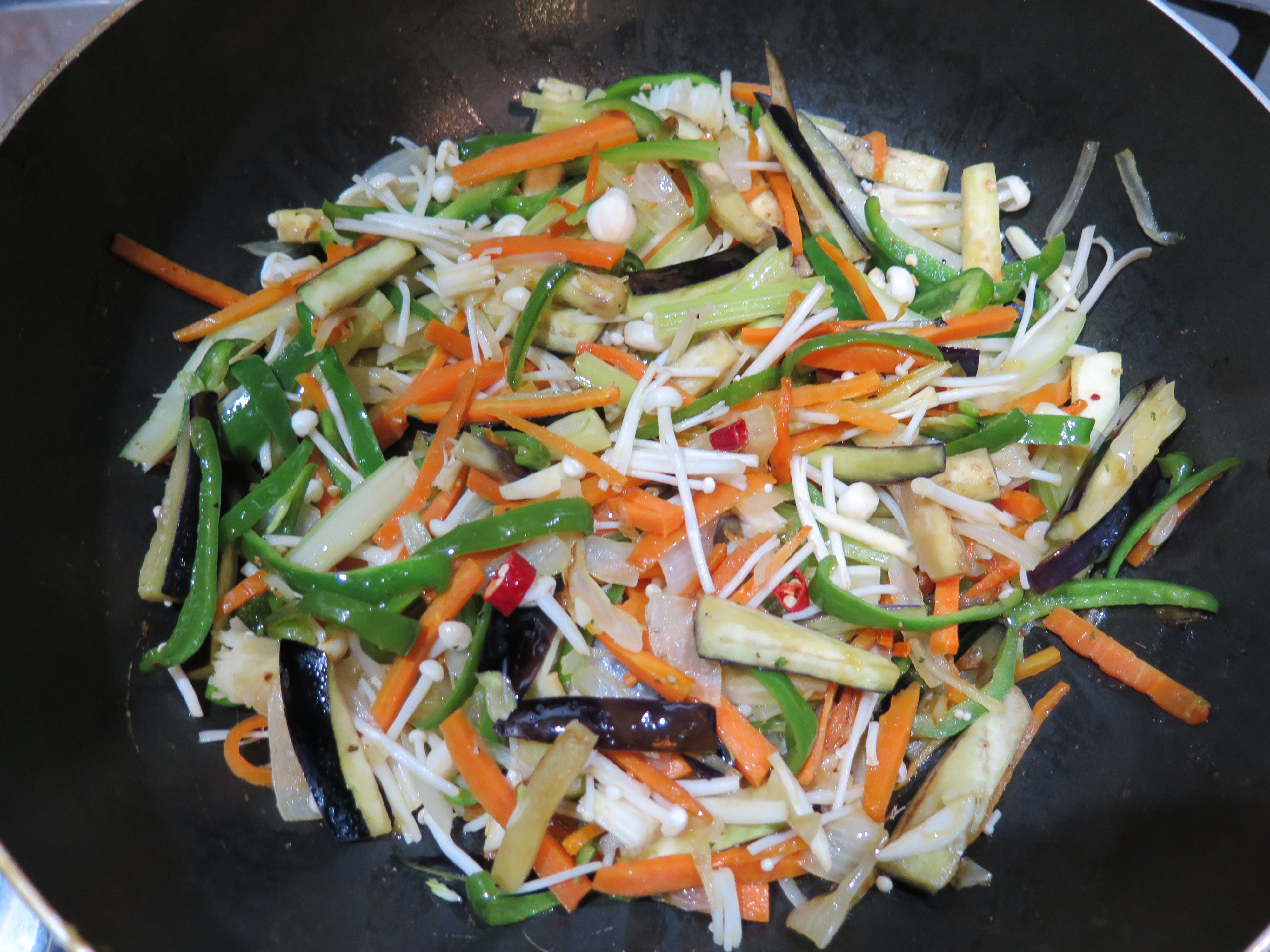
I’ve also eaten a lot of wonderfully flavoursome food. Most of it I cooked myself, in my little kitchen, often for me alone, but also for others who dropped by at times. I quite enjoy cooking , and Japanese food is a favourite influence on what I cook at home.

IMG_0239IMG_0256

I cook a bastardised version of Japanese food at home using the ingredients that I grow in my garden and what I can get hold of locally and substituting the closest things that I can find to make an approximation of what I have in mind. I’m not very good at it, but I enjoy doing it and everybody eats it politely and compliments me on what I cook for them. Japanese people are so polite!

IMG_0712

I don’t cook for myself every night. sometimes I get to go out. I’ve had a coupe of meals out. Sushi, sashimi, tempura, shiso and kelp salad, It’s all so lovely. But it costs money. So I get better value by staying in and cooking for myself. It’s no problem. I love cooking and very good sashimi and fresh vegetables are readily available in the local supermarket. You can’t beat it, fresh, delicious and cheap! What more could you want?

IMG_0560IMG_0925

IMG_0927IMG_0930

IMG_0931

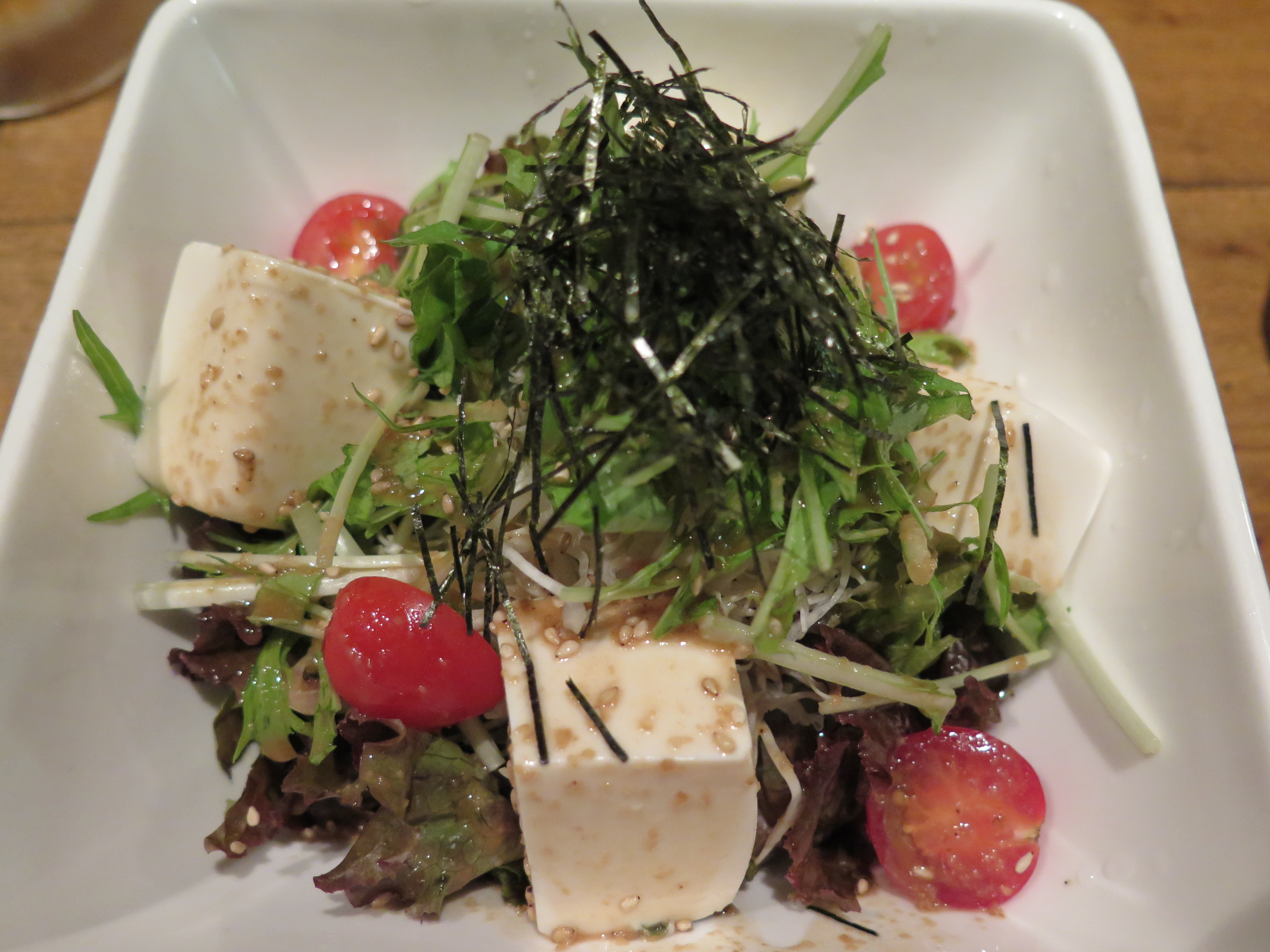
I did manage to find some good salads finally. I took a while, but I got there eventually. Mostly I just bought the salad greens from the supermarket and made them myself, but occasionally , when I saw what looked like a good salad, I’d lash out. Hang the expense! A ten dollar treat every now and then didn’t break the bank.

IMG_0928IMG_0929

Mizumi salad, with tofu skin and roasted seaweed, Yum!

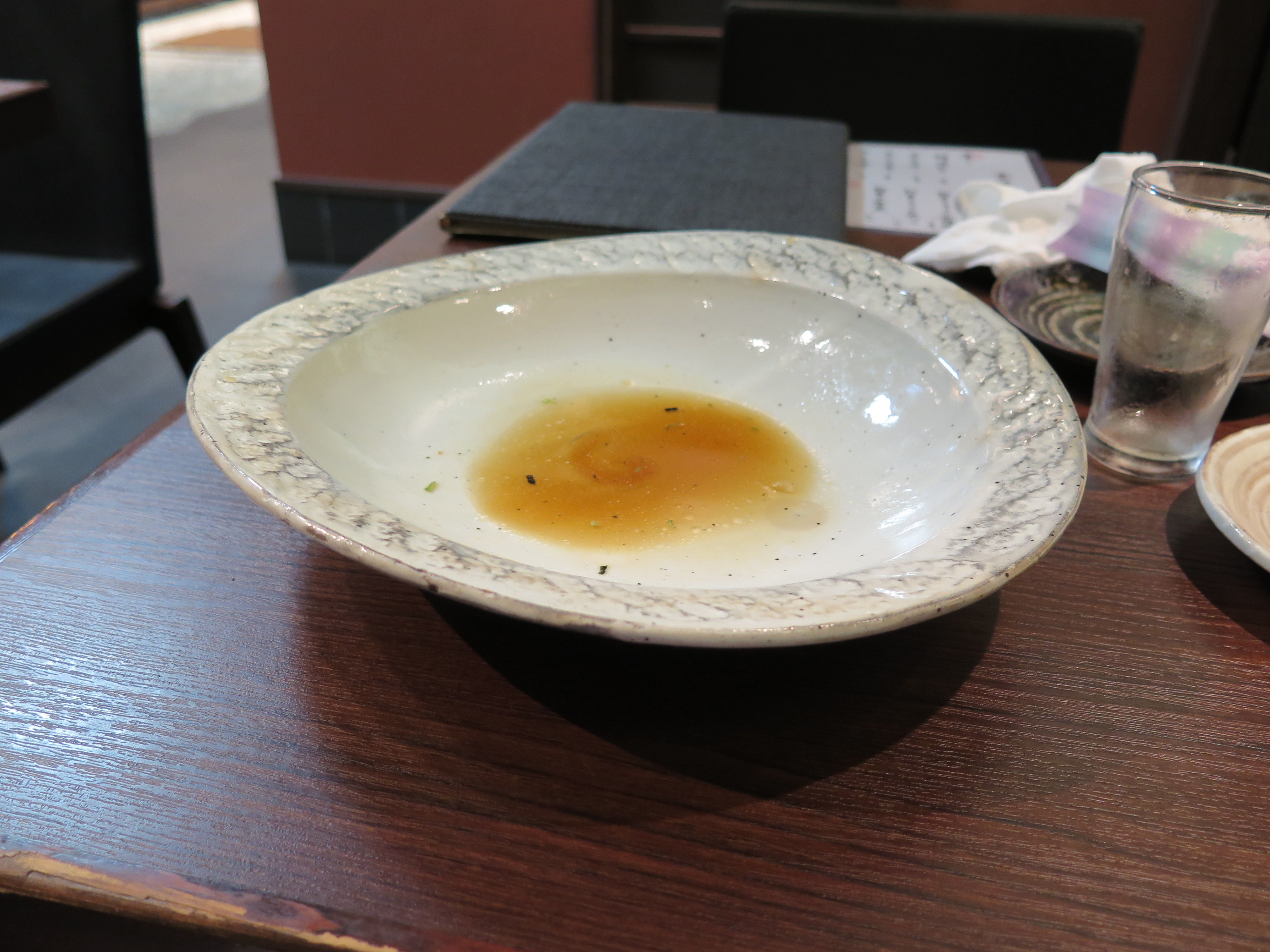
Not only is the salad delicious, but the plate is a joy to examine after I’ve eaten its contents. Beautifully warped, with a thick application of white slip, over a dark iron body, under the clear glaze. Beautiful.  Sugoi!

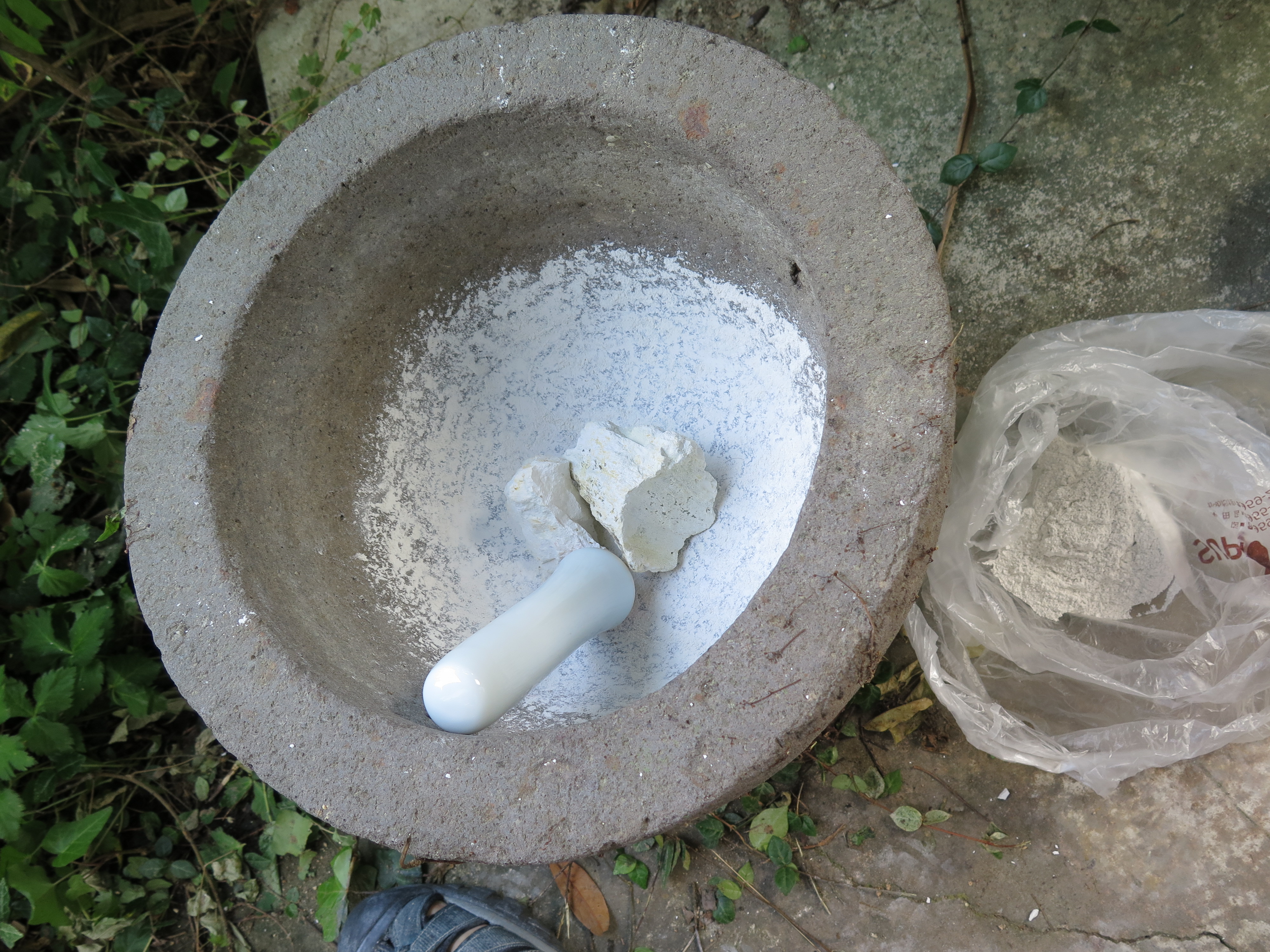
Before I finish up at Tatsuyas workshop. I decide to spend my last day making glaze tests. I have collected a few pieces of Izumiyama stone from the access ramp at the quarry site on a previous visit there last week. I crush it in Tatsuyas huge stone mortar. I ask him if he has a mortar and pestle. He nods and shows me a 100mm dia one that he has made himself for grinding pigments. He has several of them. But they are just too small and light for crushing rock. Then we go outside and there in the garden is the mother of all mortars. It’s huge. It has to be about 50 kgs and carved out of a solid block of volcanic rock. I’ve seen little versions of these in Asian markets in Sydney and other countries around the world. I have used them for my lectures/demos in Singapore and Taiwan recently. This has the be the biggest one that I have ever seen, let alone used.

IMG_0681IMG_0682

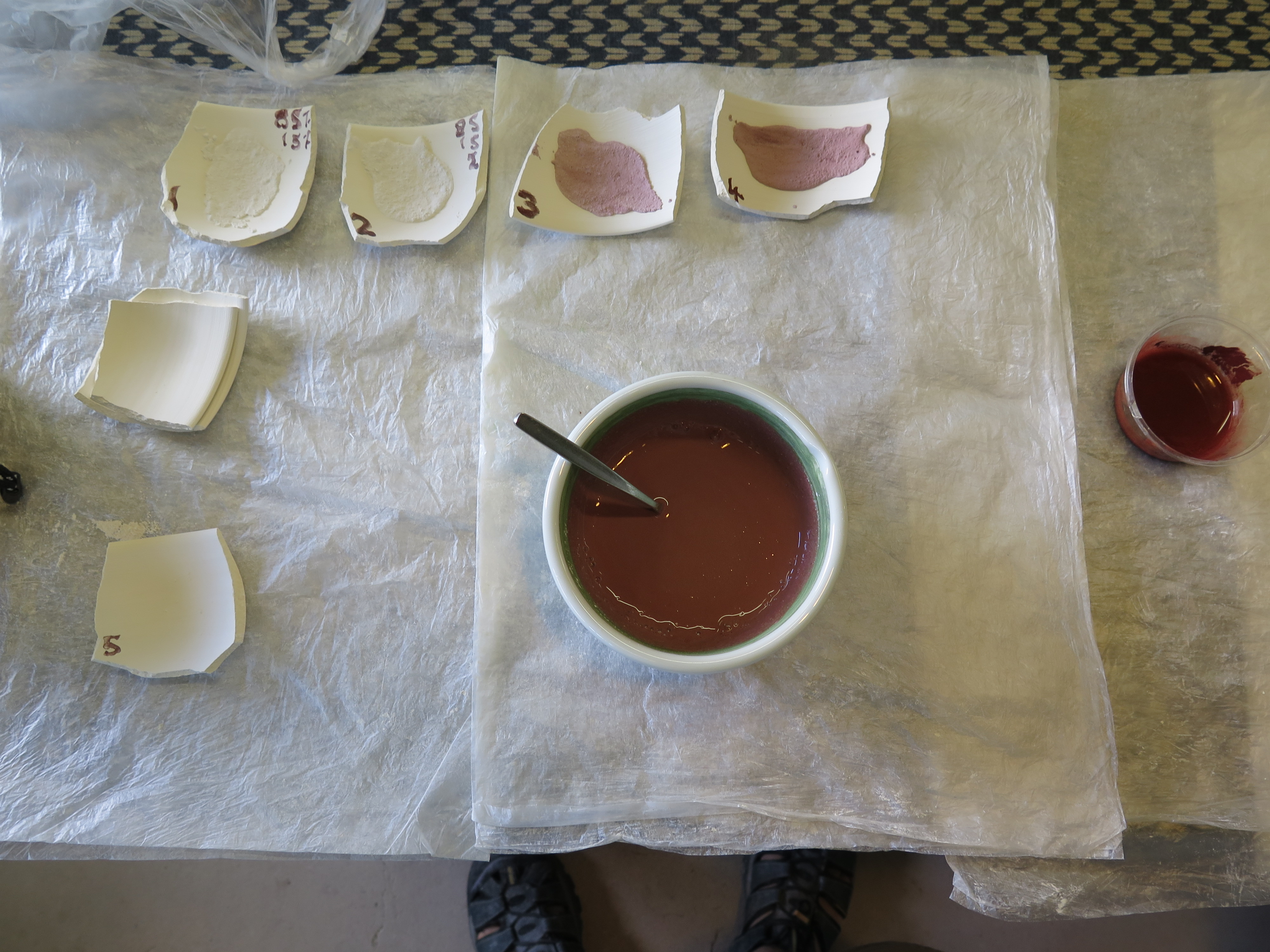
I set to work and make some tests out of the powdered stone with limestone and wood ash added in various proportions. I’m keen to see how it melts. It isn’t any use to me. I won’t be using the glazes, but I’m inquisitive to see how it melts from an intellectual point of view.

Finally its time to leave. My time is up. When I arrived here 5 weeks ago, the rice crop was green and lush, and starting to bolt upwards. Now it is all yellowing and has set its heads of golden grain. As I set out to leave on the train, I see that the first of the harvesters is starting their work.

IMG_0049IMG_0491

I say good bye to Tatsuya san and Miyuri san. My place here is going to be taken by another Australia, Keiko Matsui. She arrives and I leave. It’s an all Australian event here this month with a brief visit by Nicky Coady and her friend Erica during my time here.

This image by Keiko Matsui

This image by Keiko Matsui

I must say that I’m quite sad to be leaving but I have achieved everything that I set out to, and then some more on top of that which I just couldn’t have imagined before arriving here. Thanks to my friends, Tatsuya and Miyuri san.

I am very grateful.  Thank you!

Kyoto Temple Walk (and a little shopping)

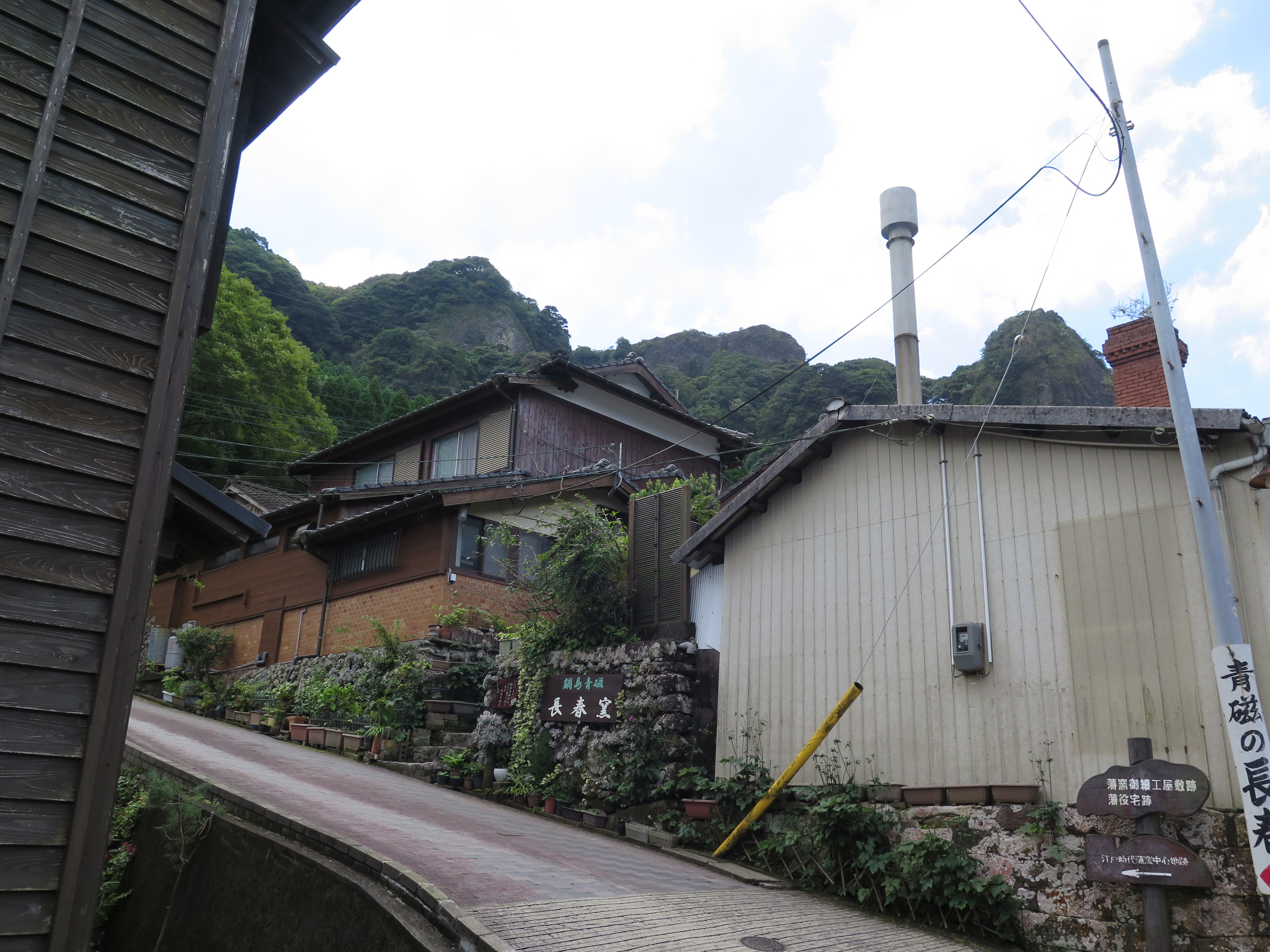
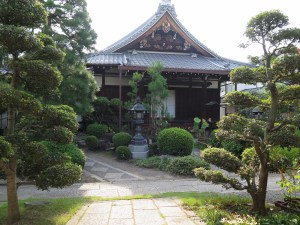
I’m back in Kyoto again now and I have a day to walk some of the interesting temples and shrines. Some I’m re-visiting, others, I haven’t managed to get to before. There is never enough time to do everything in Kyoto. As this week is Silver Week in Japan, There are going to be a lot of people around, So I decide to avoid a lot of the crowds, by going to some of the lesser known Temples and Shrines. I start at the nearest Temple to where I’m staying, The Higashi-Honganji Temple. This temple is located just 5 mins from the Kyoto Station. Straight up Karasuma-dori. I was here very early the other day, to listen to the temple ring out the dawn. Today, I’m here at a much more reasonable hour.

I walk up to the main temple. It is virtually empty. Only a few people are in there. It’s a huge space. The main room is 12 tatami mats by 14 mats in the central section. There is another 2 side sections that double this area. I sit quietly and ponder my day. I don’t sit cross-legged very comfortably for too long, so I get up and decide to stand for a while. It’s quite peaceful and quiet inside this mammoth room. I really enjoy just being here in this ambiance of quietude.
IMG_0948

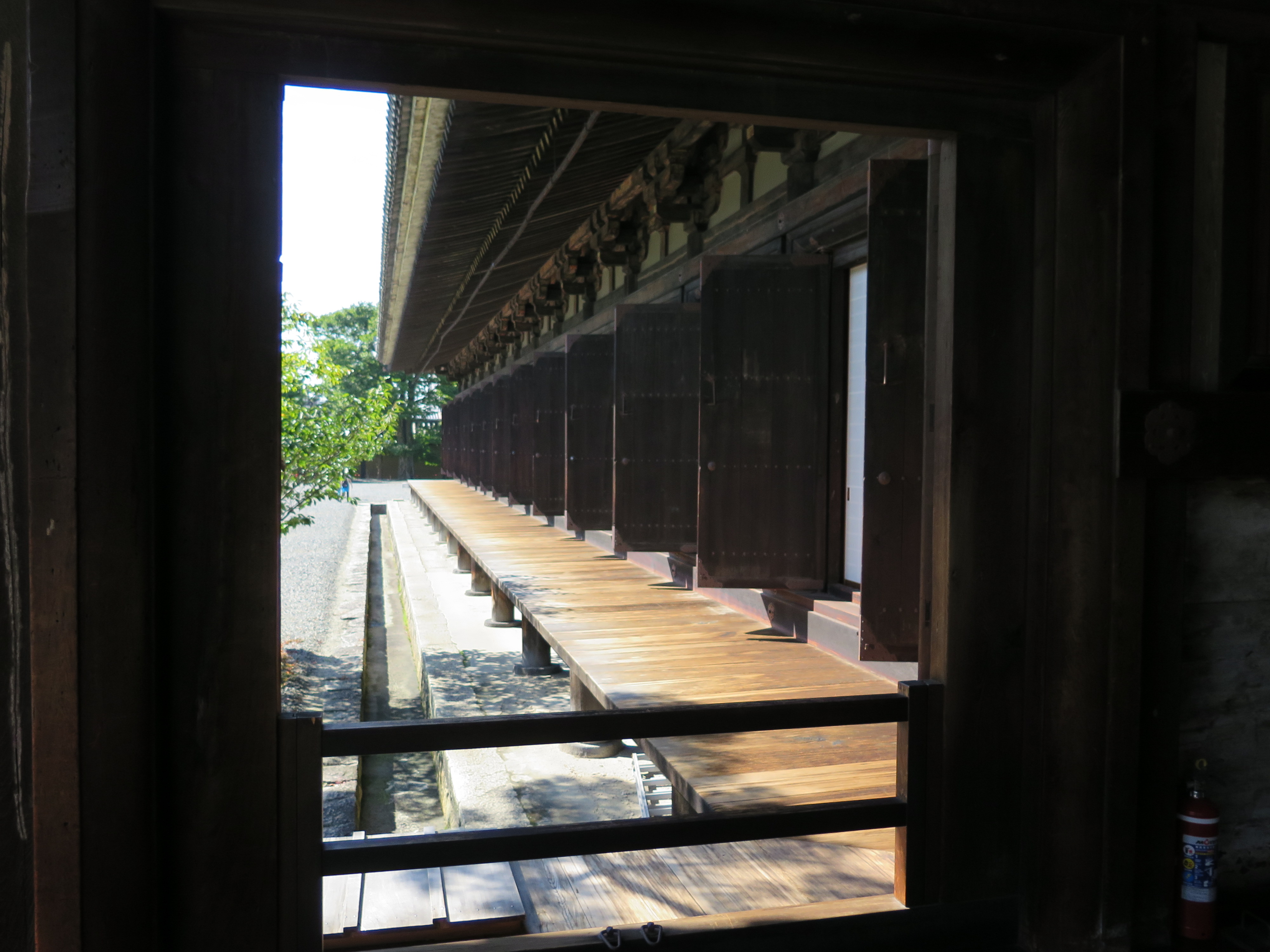
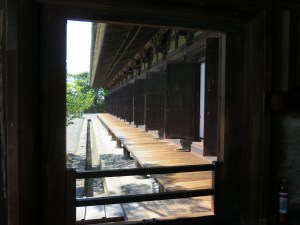
After leaving this sanctuary I cross the Karasuma dori and take the back lanes to the Shosei-en Garden. This is a lovely little garden space, tucked away in these quiet back streets. I walk down to the Shichijo dori, not too far, then cross the Kamu river. While I’m on the bridge. I can see a heron patiently working the shallows for its supper. In the distance I can see two men also working the rapids with weighted, circular throw nets. I’m too far away to be able to see if they are catching anything. Over the bridge, I come to the Sanjusangen-do Temple to see the 1000 goddess/deity images, called ‘Kannon’, each with 38 arms. That’s 38,000 arms, but it doesn’t grab me! I’m listening, but she doesn’t speak to me in any way. In a city with so many temples, you have to have some sort of gimmick to stand out and get some notice. Most are ‘armless, but not this one. It’s fully armed to the hilt.
IMG_0904

This huge wooden temple is enormous and set in very nice grounds, with large gravelled, open spaces, but as it is a well-known Temple and it’s Silver week. It is totally crowded. It’s hard to find a quiet place to sit and think. All those ‘Kannon’ deities, are impressive in their numbers, but the actual image isn’t all that aesthetically pleasing to my eye. I’d have taken a picture to show you, but there are signs every where saying cameras will be confiscated if pictures are taken. Isn’t it funny how many different and sometimes conflicting rules God has. It’s almost as if they were all made up by self-interested people!  And maybe god doesn’t even come into it. Perhaps we are all just acting out our own private power struggles, trying to get a gimmick and them milk it for money, power, prestige? Actually, this place reminds me of the work of sculptor, Brian Doar, who I exhibited with for many years at Legge Gallery and more recently at Watters Gallery. It reminds me of Brian’s sculptures on acid, or Speed, or both. Except that Brian’s sculptures are more engaging. I find a quiet place out in the garden, past the gravel, in some of the very scarce shade. I spend time to take in the scene. Older couples ambling around, Little kiddies running around, burning off energy, while one or other of the parents has the chance to get a serious look at ‘Kannon’ and the massive buddha in the centre of the long wooden hall.

IMG_0910

I really like this elegant, but very large hall from the outside. I’m a big fan of the simplicity and pared back restraint of some of the architecture. Some of the temples are way too busy visually for my taste, but this one has poured all its bling into the inside display and left the outside quietly understated. I can’t find anywhere to sit that is in the shade, but also quiet, away from the throng, so decide to move on. I leave ‘Kannon’ without recording her on my ‘canon’. The best that I can do is take a photo of the tiny image printed in the glossy brochure that you get when you pay to go in. That will have to suffice.

IMG_0990

Across the road from here is the Yogen-in Temple. It was built by one of Hideyoshi’s concubines and has a troubled history. It burnt down, almost as soon as it was built. The temple is small and not all that special except for the blood stains on the ceiling that is its’ claim to fame. The reconstructed temple was built from the remains of a castle that was lost in battle and the defeated warrior, took his own life, rather than be captured and live with dishonour. His spilled blood stained the floor boards of the main hall and later, these same floor boards were used to construct the ceiling of the entrance hall of this temple.

I never really got inside and understood ‘bushido’. I tried. back in the 70’s, I read a lot of Japanese literature at the time, Kawabata, Yukio Mishima’s work and others. but it just didn’t ring true to me. Concepts of servitude, obedience and violence, just don’t sit well with me. I prefer self-imposed discipline, frugality and pacifism. I think more can be achieved by growing organic vegetables than staging coups.

IMG_0899

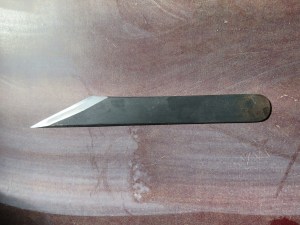
Back outside, I like the sloping walkway up to the Yogen-in Temple entrance with its mossy garden. I think that it’s that best part of this temple. Leaving here brings me to the amazing stone retaining wall of the Kyoto National Museum. I turn left here and go down the hill a few hundred metres to find a sweet little knife shop on the left side of the road, just past the intersection. I was here once before, about 6 years ago, coming from the opposite direction. I’m sort of surprised that I can find it and that it is where I thought that it might be. I bought a little kitchen fruit and vegetable paring knife here. The very helpful lady who runs the shop seems to be related to the maker? Not too sure about this. She has little English and I, very limited Japanese. She does indicate to me that all the knives in the shop are ‘te-sukuri’, hand-made and also made in Kyoto. That makes them pretty rare, as most of the knives on sale here are made in near-by Sakai. I love my little paring knife and use it often at home. I try to tell her that I’ve been here before, years ago and bought that particular knife here. Pointing at the one in the display case. She seems to understand and thanks me. I’m looking for an ‘kanna’ utility blade, just like the one that Tatsuya had in his workshop, and allowed me to borrow and use as required. It’s a special thing, for a man to share a very valuable and treasured, sharp-edged tool with a stranger. I really appreciate his thoughtful kindness. I now want one just like it, but I realise from my quick scouting around in the ‘Aritsugu’ family knife shop in the Nishiki market, that they cost up to $200. I didn’t realise that they were quite so highly valued! Such an apparently simple thing, involving what appears to be so little work compared to a kitchen knife, but twice the cost? I now appreciate Tatsuya’s trust in me even more. I decide that I want to be just like Tatsuya san when I grow up!
IMG_0998

In this tiny, out-of-the-way cutlery shop, my persistence is rewarded. I find just what I am looking for at a very reasonable price that I can afford. I realise that I should master my desire for owning possessions, but there are a few things in life that are special. Some particular pots, mostly made by others, a few wood working tools, a couple of pieces of clothing that I have spent time re-working, repairing and patching. My beautiful hand-made cello. A hand written letter from a friend. When it is all boiled down, there are so few objects/things that I have in my life that are really of value to me and when I sit and consider them, what I see are some un-remarkable, plain and very ordinary objects. They have no monetary value to speak of. I have created the meaning embedded in them. Any one else would throw them out. They are just so ordinary. Simple, restrained and beautiful. Loaded with the South Pacific-Austronesian concept of ‘mana’. I’ve made them special!

I give in to my base nature and purchase this simple elegant thing, and then re-trace my steps back up to the Museum wall. The stones used to make the wall are about 3 metres across and the 100 or so metres of wall are quite impressive. This was once the site of one of Hideyoshi’s castle strongholds, hence the amazing old stonework. These days it is the site of the museum. I am quite taken by the exhibit of calligraphy in the main downstairs gallery. Suddenly I wish that I could read this. But then again, on reflection I realise that it is better not. It’s most likely a note to the dry cleaner or the milkman and probably something quite mundane. It’s probably better that it retains its beautiful romantic mystery and remain an image of beauty. Too much knowledge spoils romance!

IMG_0993

Just along from here on the left, in a back lane is Kawai Kanjiro’s house. It’s always worth a visit. I don’t stop off here every time I come to Kyoto, but I have visited here a few times and I did call in here a month ago on my last visit to Kyoto.  This isn’t a Temple, but it is a sort of shrine for potters with romantic ideals.

Just past Kawai’s house, towards the end of the lane, there is a nice pottery gallery, worth a look. So many of the houses around here are occupied by potters. Some of them have pots out on the sidewalk on shelves with honesty boxes. There are some nice pots among them. I have bought some pots here over the years. They are what I consider to be amazingly cheap, for what they are.

From here it is just a short walk across the Gojo dori street to start the long climb up to the Kiyomizudera Temple. Just 100 m. down the hill from here to the left of the intersection, there is a real  Shinto shrine to potters. There can’t be too many of those in the world, but here is one. I clap once and ring the bell. I leave my little offering. I want the potters of Kyoto to prosper.

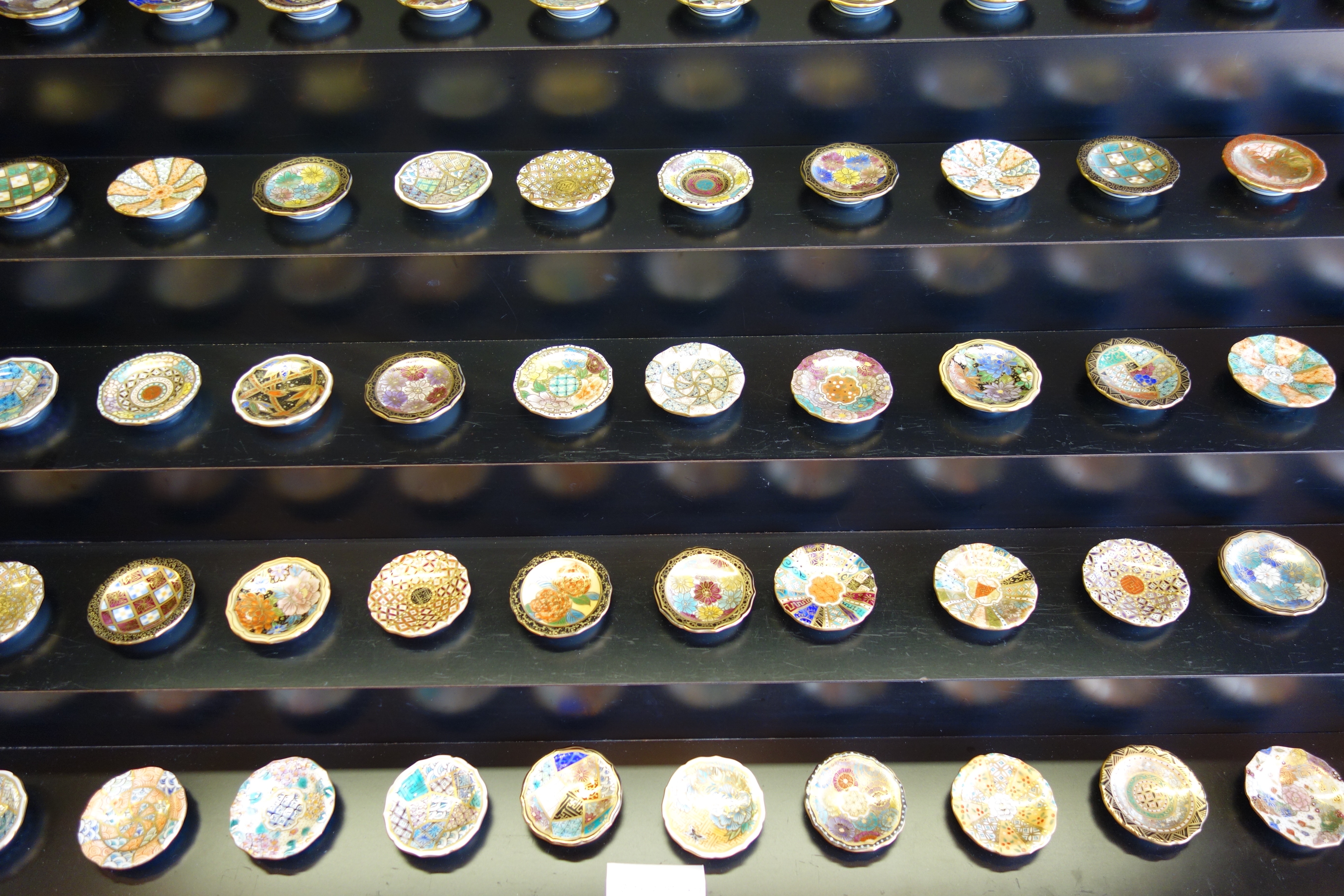
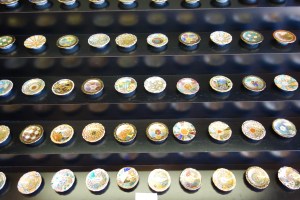
I often come here, each time I visit Kyoto. Not because I’m religious, because I’m not. It’s more for the walk past all the pottery shops that line the streets leading up to the Kiyomizu Temple than anything else. I start off up the Gojozaka street, but today, I decide to take the lower right hand road at the first fork. The Chawanzaka. Along here, there are also a lot of pottery shops. I’m heading for one in particular, towards the top of the street on the left side there is a lovely, small shop which always seems to have a great selection of pots in stock. Today there is an amazing display of polychrome porcelain by a young, local, Kyoto girl. recently graduated from Art School. She has created a range of intricately hand painted tiny dishes. I’m amazed at the detail that she has put into their decoration. I buy one for myself and another as a present for The Lovely. They’re tiny, precious and intense. I hope that she will love my choice as much as I do?
DSC01585

After leaving this shop, there is a staircase up the cliff on the left, directly as you leave the shop. It winds up past a pottery ‘experience’ workshop and emerges at the top, in a small courtyard space between another pottery gallery and a small restaurant. I’ve had a couple of light lunches in there, cheap and cheerful. The gallery opposite is owned by the same people that own the shop lower down, “Asahido”, but all the stock is entirely different! just past the shop front, there is a walkway that leads to the upper temple road again. I walk up to the top of the hill.

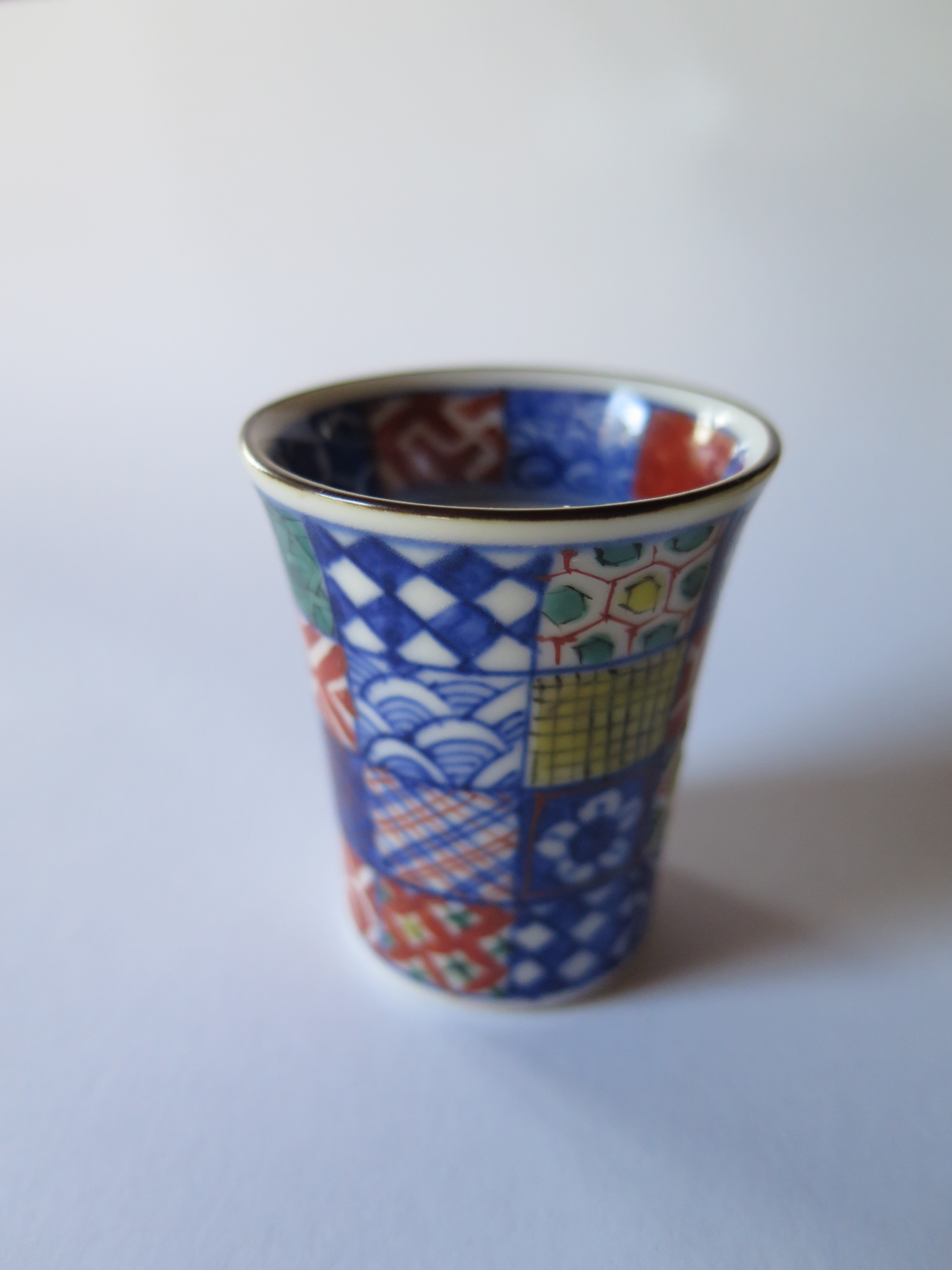
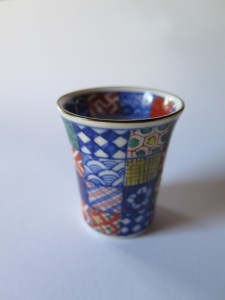
One of the last shops at the top of the hill, has a nice range of Kiyomizuyaki. I buy a lovely little sake cup by Yano Syozo from the Hekiseki Gama workshop. This shop also turns out to be part of the “Asahido” family group of shops. They seem to own everything that I choose to go into.
IMG_0996

I continue on up the hill, but instead of going into the temple this time. I’ve been in there before and I don’t feel the need to go again today. Particularly because it’s packed out, with a huge long queue waiting in the hot sun to get in. Instead, what I do is to take the right hand lane, past the temple entrance and along the side of the temple against the stream of people leaving the temple tour. I’m heading to the rear exit, where I know there are two small cafes that serve chawan of whisked green tea. It’s just what I’m feeling like at this time of the day. The caffeine in the green tea will give me a pick-up to get me going for the rest of the afternoon. I find a quiet place off to the side of the cafe tent awning, with a view down into the valley. The tea is great. It’s a very hot day today, and my tea arrives with ice cubes in it.

IMG_0828

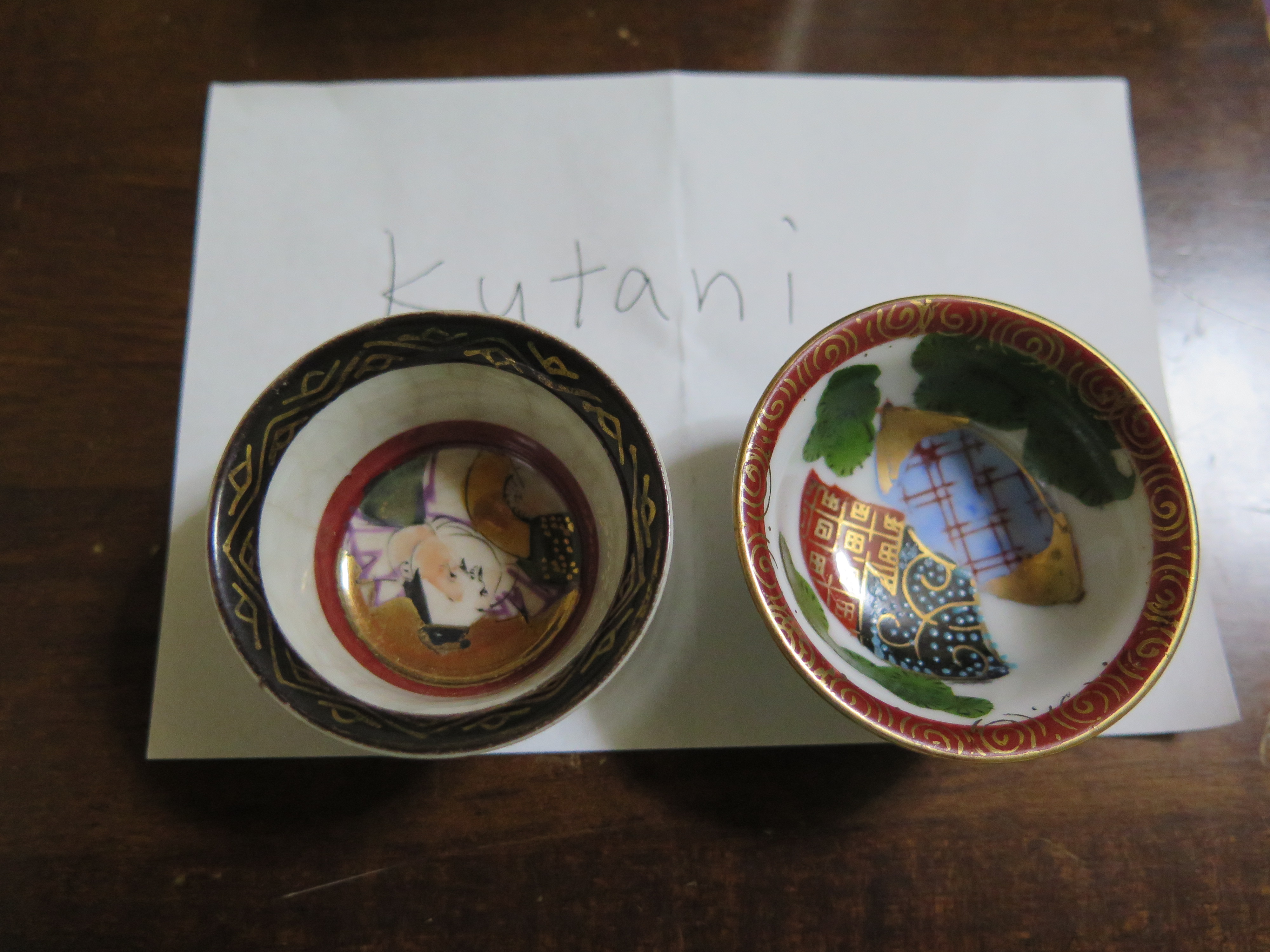
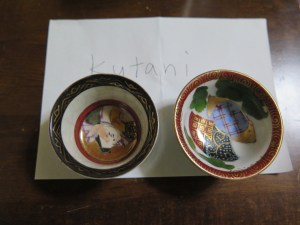
After my little rest, I’m refreshed and up for another walk down the temple road to the steps that lead along towards the Gion district. Along this linked system of alleyways, small roads, stairways and paths, I come to the little antique/2nd hand shop, where a few years ago Janine and I found a Kawai Takeichi, press-moulded rectangular bottle. A beautiful thing and included its signed wooden box. It has a special place on Janine’s dresser. On this occasion, I find two tiny treasures, both polychrome porcelain sake cups made in Kutani early last century for $20. Lovely.
IMG_0843

From here, it’s down and across to the Kodiji Temple where I sit and try not to think for a while, but maybe its the green tea, or just the excitement of being here? All the sights and aromas. I find it so very stimulating. My mind is racing around with so many ideas, concepts, particularly there are ideas of new pots to be made that will reflect all this cultural input. I’m ready to return home now. I want to incorporate some of this new thinking and porcelain throwing/turning skillset into my practice. All this is going through my mind and won’t stop. I watch myself doing this. The constant cycling of thoughts and images. I just let it roll.

There is music out in the park somewhere and I am drawn away from my meditations to listen. I’m so shallow! I’m a sucker for a bit of live music. I get up and wander slowly out to the park. People are enjoying the late afternoon sunshine. I sit and listen and watch the glow slowly disappearing from the sky. It’ll soon be evening. Birds are circling, swooping and wheeling overhead. Children are crying. It’s been a long hot day out for them and they are tired.
IMG_0837

Somehow. I don’t really know how, perhaps it was the green tea? I’m energised and ready to take on the Terramachi shopping street throng, but first I have to navigate the crowds at the Kawabata/shijo dori intersection.

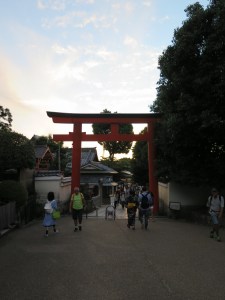
I emerge from the park through the Yasaka shrine gate into the Gion district and across the busy intersection of the Kamo river crossing and up the Pontocho laneway to see and smell all the tiny restaurants located along the narrow passageway.

IMG_0842

There is a nice little lacquer shop just 50 metres in along here, with some great lacquer bargains, I look in, but today I’m not tempted. Then along Karamachi dori to the little hidden gallery upstairs above the soft bank phone shop. The ‘NishiKawa CraftShop’. This place has a nice selection of small items, displayed with a particular elegance and restraint.

I reach the Terramachi, covered market street by a side lane and up to the end, crossing the Oike dori and continuing up the open Teramachi street, up to “Gallery West’ or so the sign says, but is actually called ‘Hitamuki’ or ‘Space-Design’ according to the card I’m given. This is a beautiful, small gallery run by people with excellent taste and a discerning eye. I often buy pots here, especially the porcelain work of Kazumi Kinoshita, but also some very fine woodwork. However, today, there is nothing to temp me.

Just a little further along the street, there is a tiny brush shop, where they have some very fine delicate brushes. I buy two for very fine line work. Across the road there is a nice ‘tea’ shop and next door to there is a washi paper shop. It’s evening now and places are starting to close up. So I make my way home by walking across to the Karasuma Dori and then straight back home to my guesthouse. I suddenly feel hungry. I need to make my way home via the supermarket to get some fresh salad and a small piece of fish. A satisfying end to a full day and an end to my time in Japan – for this year.

An enjoyable day out, walking some of the temples and craft shops of Kyoto.

Best wishes from Steve in Kyoto

A Day in Karatsu and the Old Ochawangama

I make the trip to Karatsu. It’s actually not that far from Arita, via Imari. The first time that I came here, Janine and I made the trip on the train. Two trains actually, changing lines and companies at Imari. I’ve written about Karatsu previously, so I don’t want to repeat my self here, so will just stick to new places and observations.

I want to re-visit the workshop and kiln of Nakazato Taroemon the 14th. But who’s counting? This family have been important potters in this town since 1516!  I wonder if the 14th generation Nakazato Taroemon has a first-born son? No pressure! Just wondering?

Interestingly, I’m told that Ri Sampei, came here to Karatsu first, before travelling on to Arita, where he discovered the now famous porcelain stone deposit at Izumiyama. Then again, I’ve also read that he didn’t really exist at all and is a convenient character to hang a whole lot of speculative psudo-history. Or, it may have been a whole raft of Korean potters who came and established the high fired pottery industry in this area in the late 1500’s?

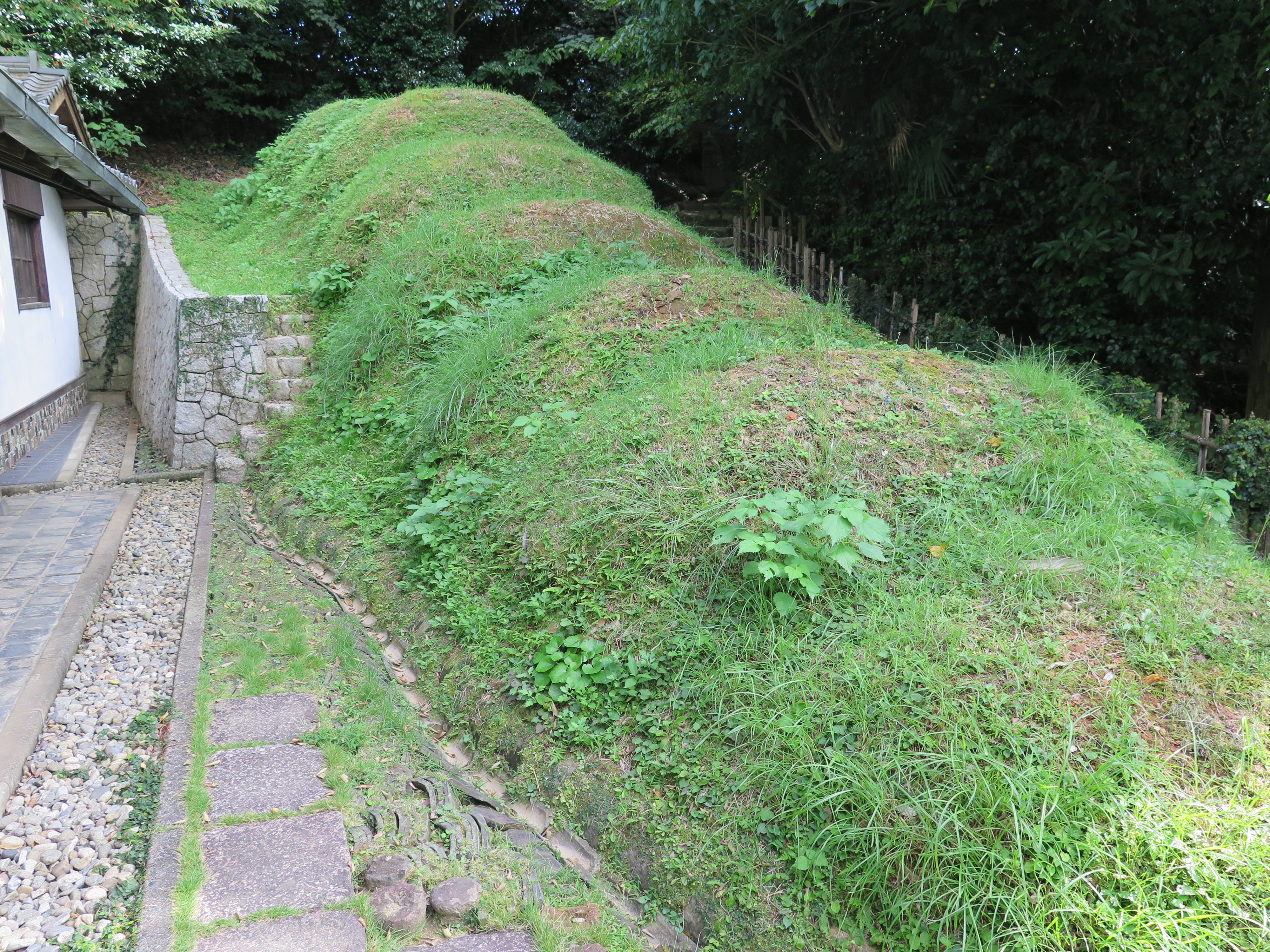
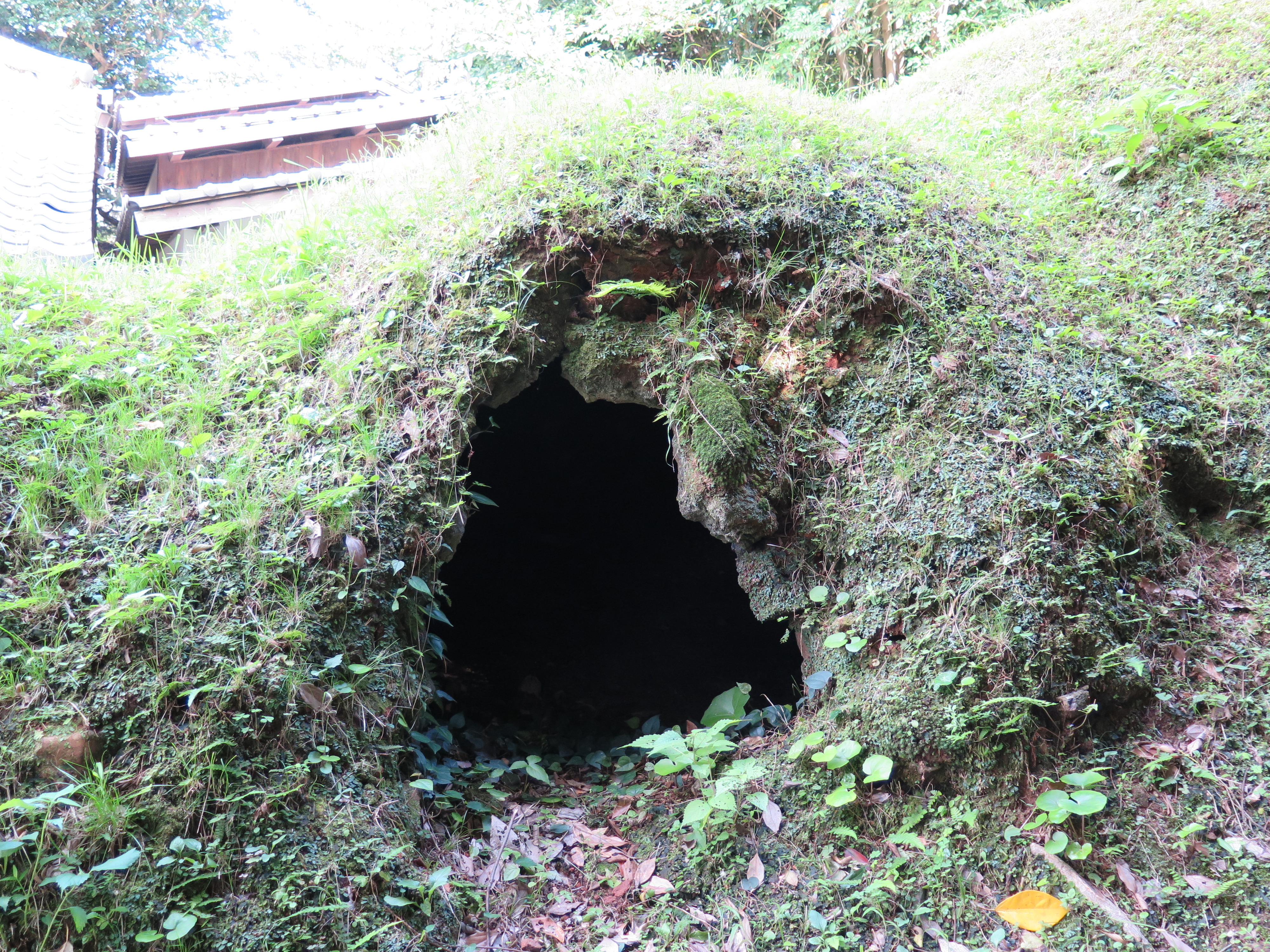
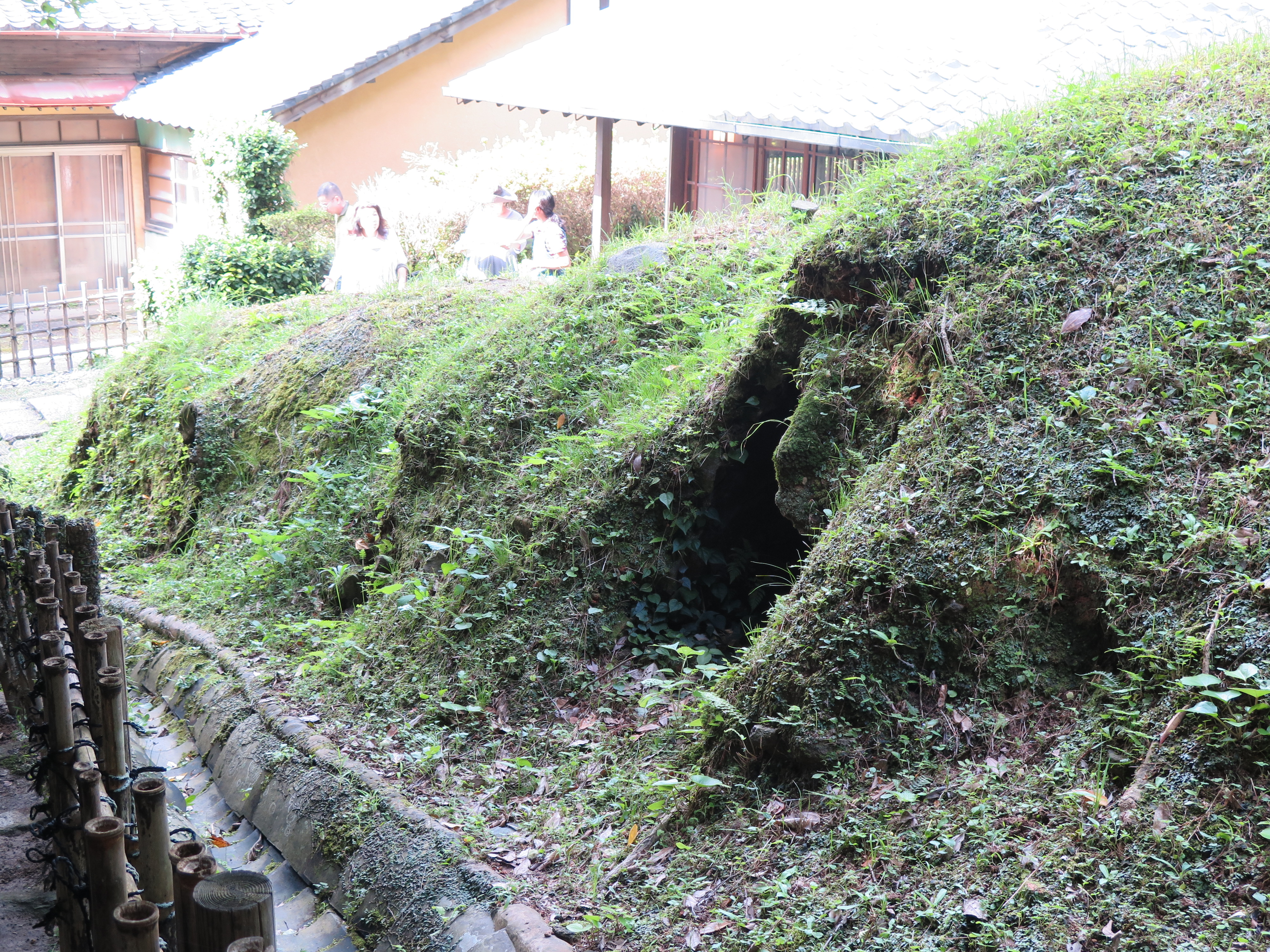
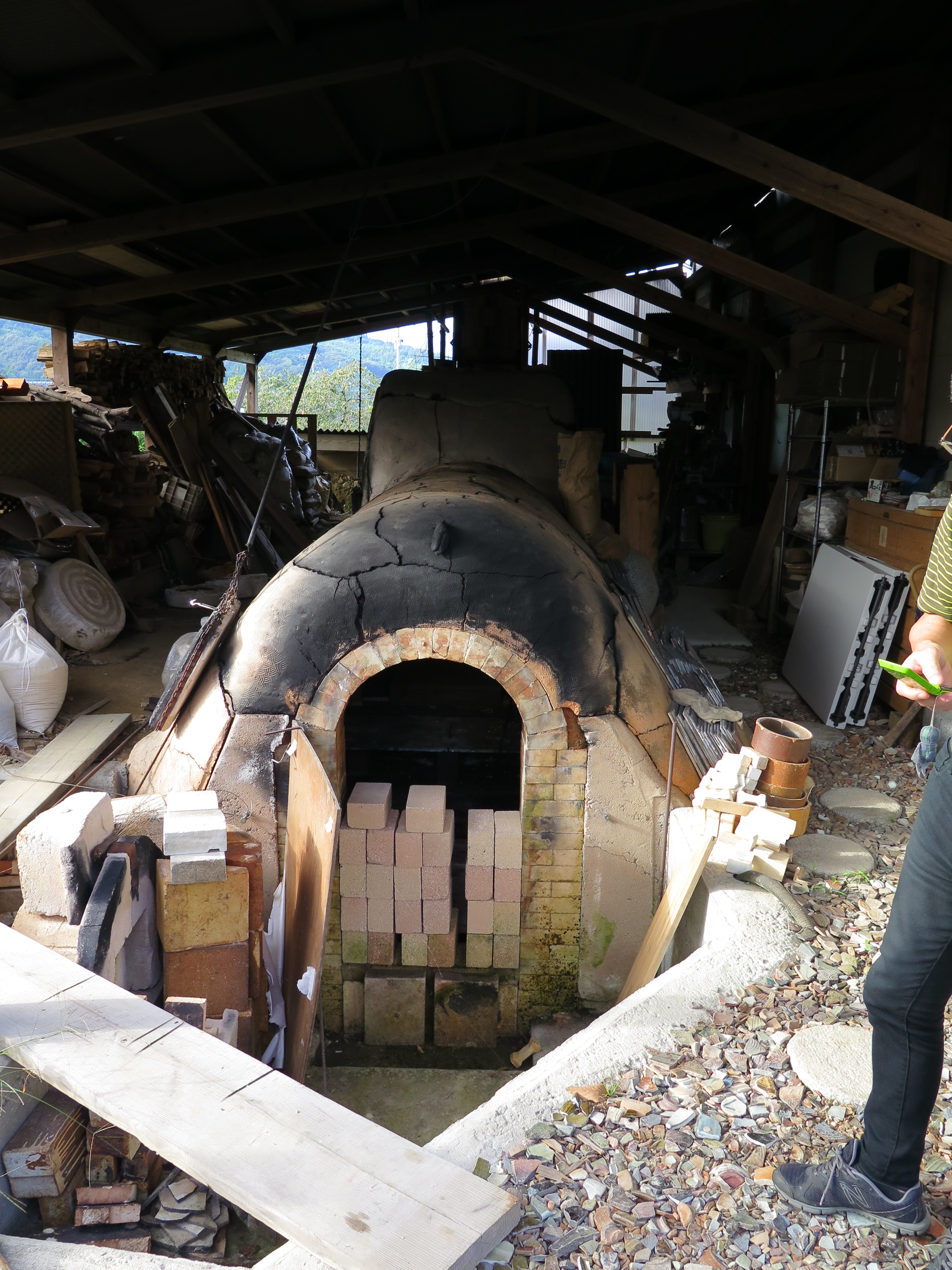
We make our way to the Nakazato Family compound. There is a lovely old family Gallery here in one of the back streets. Personally I don’t care for much of the work on display here. It just doesn’t speak to me at all. What I am keen on seeing is the old family climbing chamber kiln. The ‘Ochawangama’. It is located up one of the nearby alleys and is one of the most beautiful old kiln ruins that I have seen. There is one in Shigaraki that almost rivals it, but this one has the wabi/sabi edge I feel.

IMG_0787

IMG_0786IMG_0785

IMG_0789IMG_0794

It’s a beautiful thing.

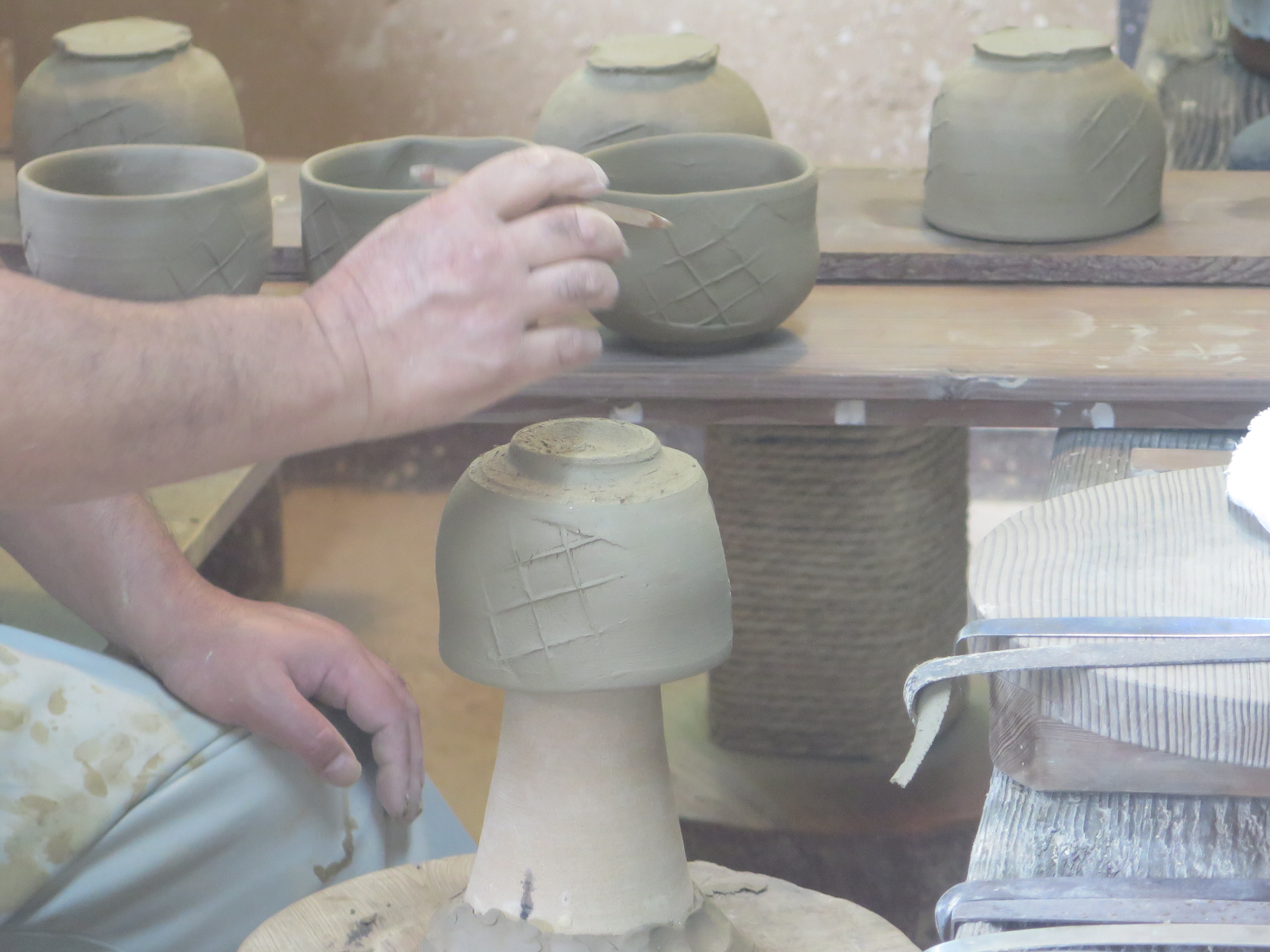
We peek into the private workshop window to see if there is anyone in there and sure enough, Taroemon the 14th is at work on Saturday the 19th. And the 14th is turning his 7th tea bowl of the morning.

IMG_0784IMG_0781

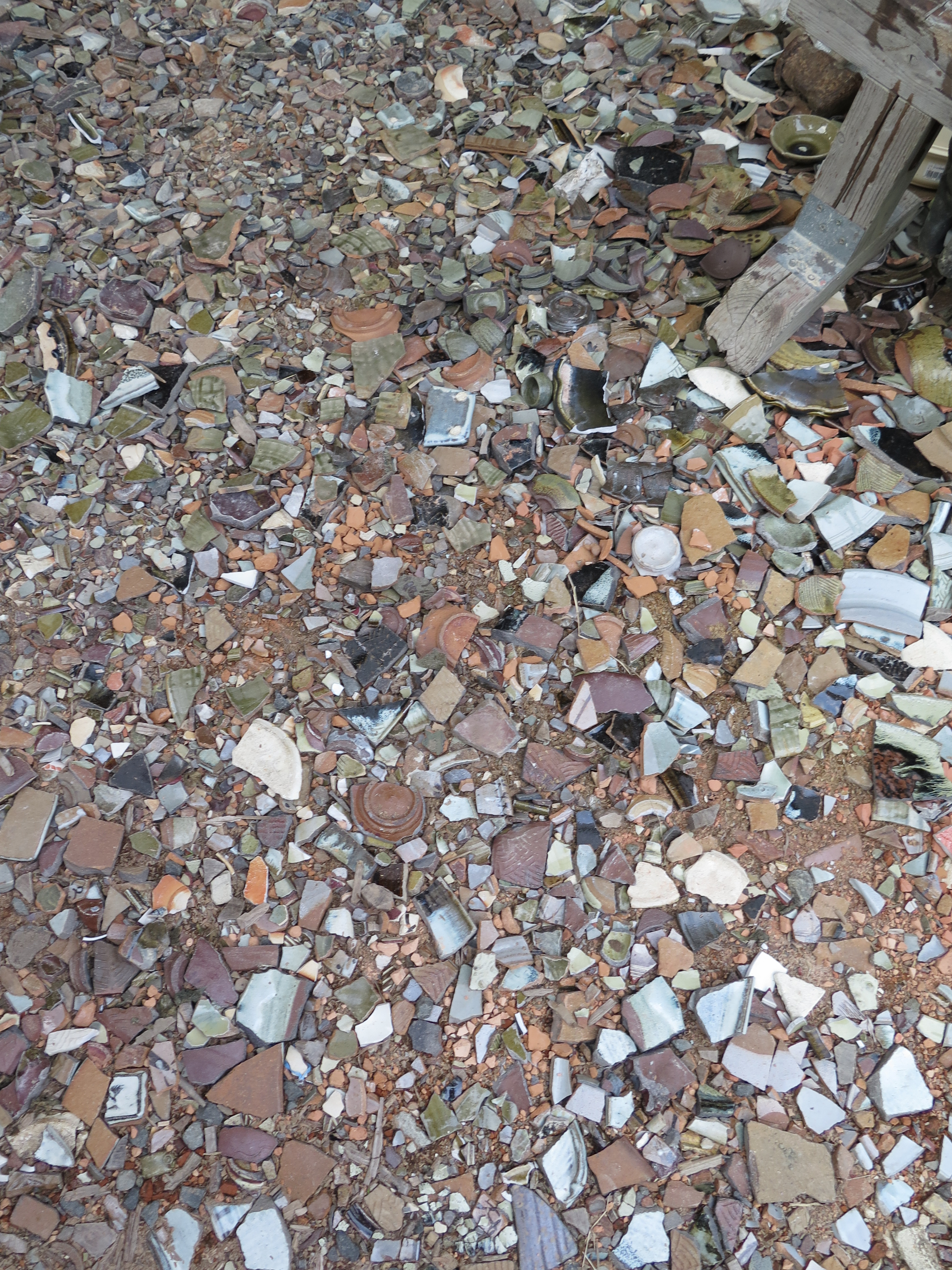
Later, we visit Mike Martino, on the outskirts of Karatsu He is a really lovely guy, very welcoming and so open to questions and very giving of information. He makes time for us, even though he is quite busy. We have tea from his wood fired cups and made in one of his traditional lidded bowl tea pots. The centre of his studio is dominated by a rather large old stone grain grinding wheel. It makes a rather nice, if somewhat unusual table. It manifests the character of both shibui and wabi. Mike uses both electric and gas kilns as well as a large wood fired kiln outside the pottery. He has a courtyard path, not unlike our own driveway, composed almost entirely of shards.

IMG_0801IMG_0799

IMG_0805IMG_0802

We all find that we have to dispose of work that isn’t quite successful. Pots that aren’t either firsts or seconds, but something quite other. Work that we don’t want anyone else to see. Yes! That bad. Failures can become something quite beautiful collectively as shards. It has worked for us in our driveway.

It comes out in general conversation, that both Mike and Tatsuya lift weights for a hobby. It shows!

Best wishes from the so unfit Steve In Karatsu

Okawachiyama, The Secret Village of Twice-Kidnapped Potters

Today I go to visit the hidden village of Okawachiyama. I have already recounted in previous letters, about how the captured Korean potters started the porcelain industry here in Arita in the early 1600’s. The industry started off slowly, but then with the technical successes of high fired translucency. The shogun soon heard of it and wanted his share. It just so happened, that at about the same time in China, there was great upheaval and the export trade to Europe of fine Chinese porcelain came to a sudden grinding halt. The Dutch traders that had control of the industry at that time, desperately looked around for another source of porcelain to fill the growing demand for fine white porcelain in Europe. They soon discovered the Arita porcelain and with lucrative export contracts looming, the former cottage industry in Arita soon boomed and within a few years the production of porcelain was quickly ramped up to fill the European demand. Also about this time polychrome enamels were developed and widely introduced into the workshops in Arita. The net effect of this convergence of vectors, was that the technical quality and visual impact of the Arita polychrome product was quite stunning – and very profitable.

IMG_0380

Of course where there is rarity, demand, profitability and opportunity, someone will want to step in and take their share. That was and still is the ‘mafioso’ way. It was a much more brutal world back then. Hideyoshi simply kidnapped the Korean potters that started the porcelain revolution here in Arita, and likewise, the ruling war lords of the area, decided that they wanted their cut of the action. The Nabashima Clan were the local thugs who ran Kyushu for Hideyoshi. They simply marched into Arita one day and ‘stole’ the best 13 potters from their workshops, and took them closer to Imari port where their castle and stronghold area was. They simply installed these twice-kidnapped potters in a remote valley just out-of-town and locked them away in there with instructions to create the very best polychrome porcelain, that they could. Better than they had previously been making in Arita, on pain of death!

IMG_0728IMG_0730

This isolated valley, with incredibly steep mountains all around, was the perfect place to install these twice-kidnapped potters and keep them contained. It had a fast flowing stream to power the stamp mills to process to Izumiyama stone and they were soon producing very fine work. A Samurai guard-house was built lower down the valley to check the movements of everyone in and out of the secret valley, so that no-one could escape. This secret potters village in the hidden valley was called okawachiyama, and no-one knew about it at the time. Such was the importance and value of polychrome porcelain in those days.

IMG_0764

Guard houses and gates were built at each end of the valley in Arita to check the movement of not just product, but Ideas. Any one with any technical expertise was forbidden to leave. The secret had to be kept secure. No-one was even allowed to see the porcelain stone quarry, or know anything about the process. They kept their secret very closely guarded, as did the Nabashima clan in Imari. The twice imprisoned potters set to work in okawachiyama. No thought to their feelings of separation or their families back in Arita. You don’t get to be the ruling clan of thugs by being nice.

Threats, violence and coercion were the order of the day. Under such pressure, the renditioned potters, mostly Koreans, set to work and very soon developed an astoundingly good product that soon rivalled the Arita porcelain. And why not? Arita had lost its best 13 workshops and artisans and they were now in business under extreme duress to make a superb product. This product became known as Nabashima Ware, named after the ruling clan who owned the total production. This ware was not for export. It was destined solely for the tables of the ruling elite class of Japans warring factions. Much of it given to Hideyoshi, his Clan and their hangers-on, lackeys and sycophants as tithe or tribute.

IMG_0731IMG_0732

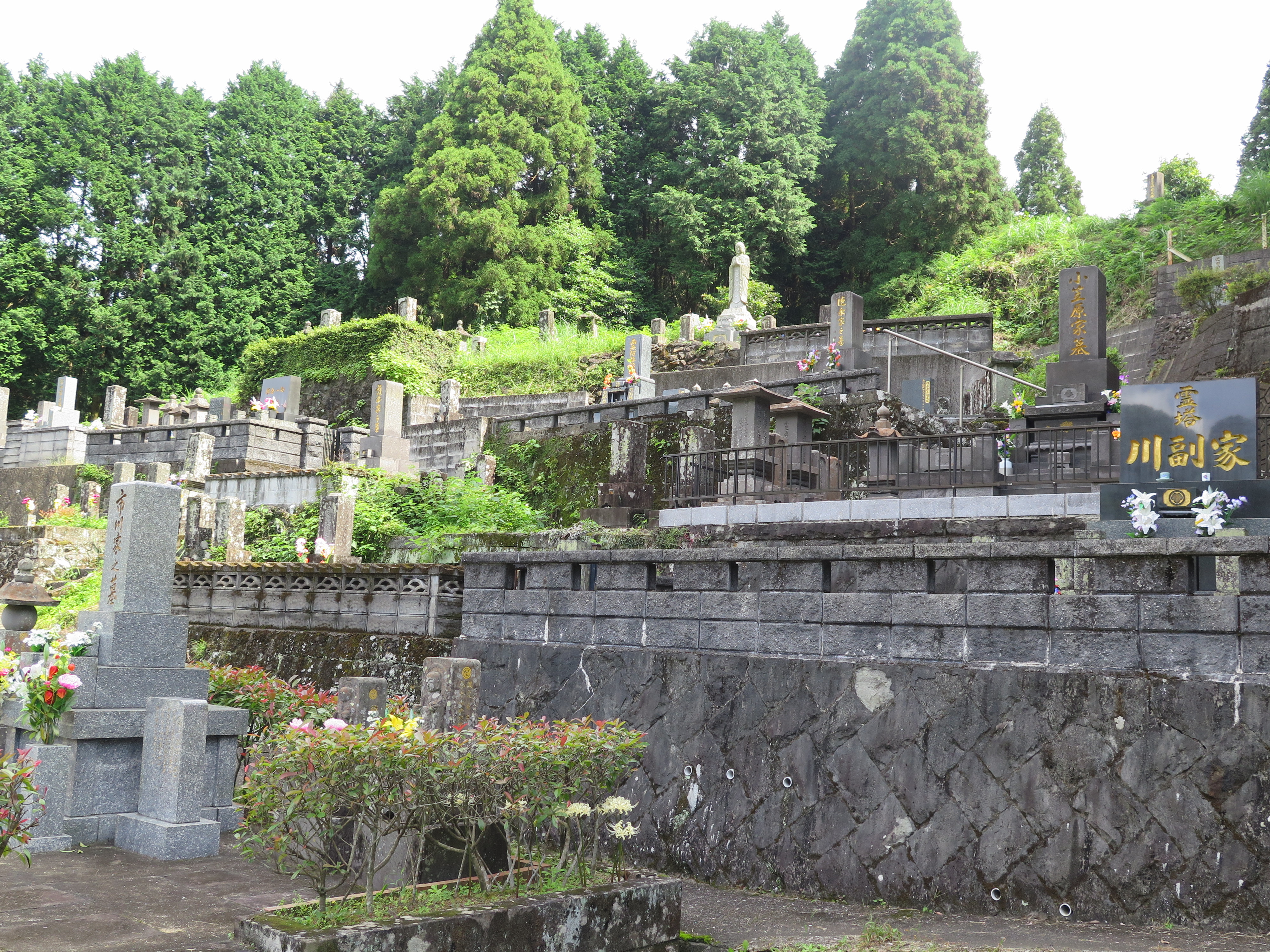
Most of the potters worked there until their death and there is a special Korean cemetery on the opposite side of the river, dedicated to these early potters.

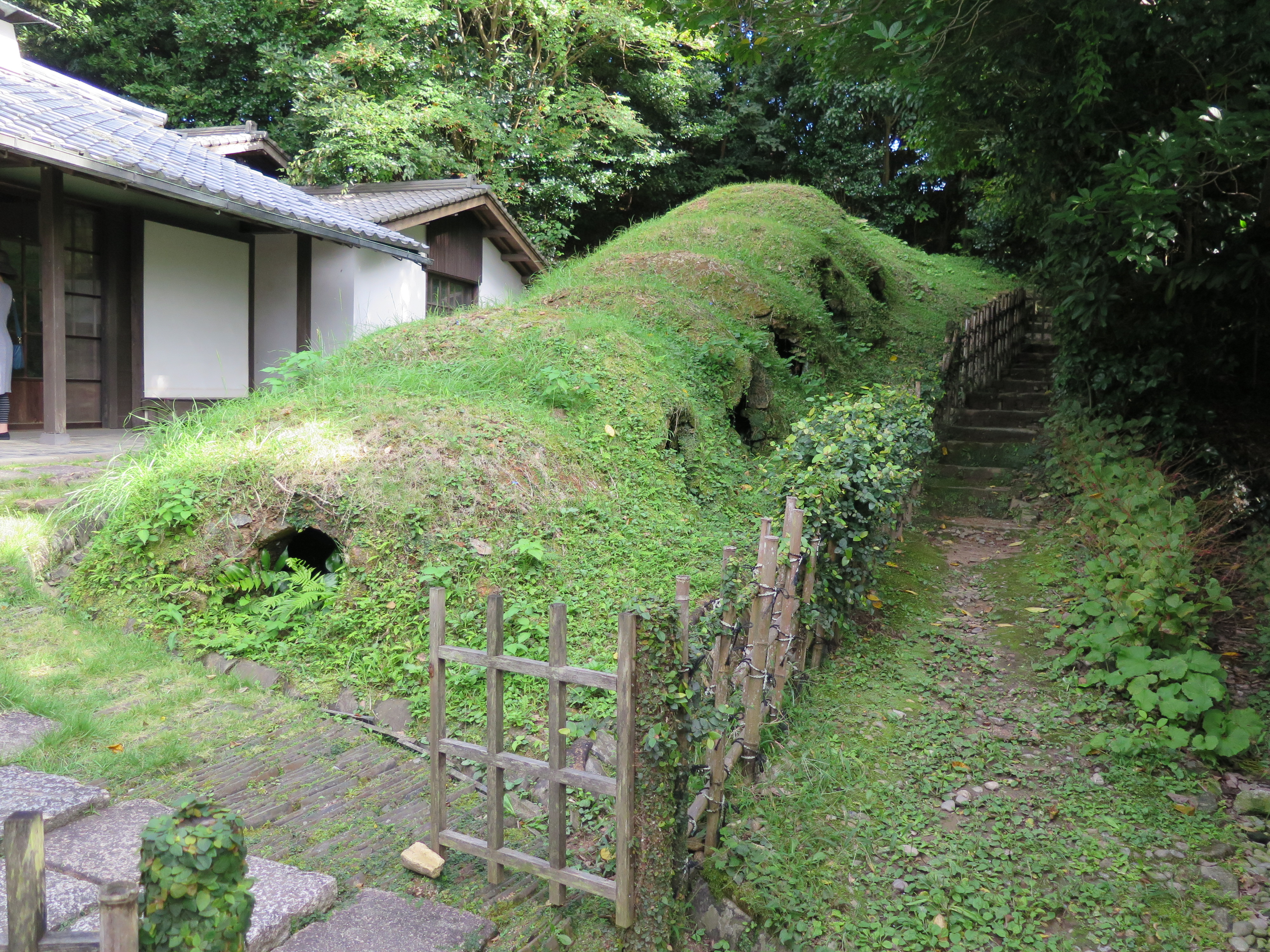
They used the same climbing chambered kilns that were used in Arita. There is a beautiful walk up the hill to the site of two of these old kilns they had up to 14 chambers. This lovely mossy, green, damp walk is very pleasant to-day, as there is no sign of the misery and hardship that these Korean captives endured. The walk even passes through some of the footings of the old kiln chambers.

IMG_0758IMG_0748

Modern Okawachiyama climbing kiln. The descendants of those original potters still live and work in the valley today. We stand on a walkway paved with discarded porcelain setters called ‘hama’ locally.

DSC_0445 This image by Keiko Matsui.

Not everyone involved could put up with this pressure and imprisonment. One potter was known to have escaped by climbing the cliffs and making an escape in the dead night, but he didn’t know the way over the mountain and was soon missed and recaptured. He was persistent though and made many more simple, low-key, night-time reconnaissance missions, preparing for his eventual successful escape.

When he was ready, he made his move and with detailed preparations in place he made a clean get-away. He made his way up to honshu and eventually to a pottery town on shakeku, called tobe, where he found employment as a porcelain potter and was able to introduce his advanced technical skills to the potters there. This new highly accomplished work made its way into the sophisticated market place of Kyoto, Hideyoshi’s capital, and was very much appreciated and soon became in demand.

It just so happened that a Samurai warrior from Imari travelled up to Kyoto on some official business of the clans and saw this new, advanced porcelain work and straight away realised that the only way that this work could have been made there, was if someone had leaked all the techniques and secrets. Only one person with that knowledge was missing, so he must be here. The Samurai made discrete enquiries as to the origins of this new work and followed the trail back to the workshop of the escapee. He was re-captured again! Three times unlucky.
Tragically for him, he was returned to Okawachiyama and publicly executed. His body left  by the main entrance gate into the ‘not-so-happy-valley’. A warning to all the others!
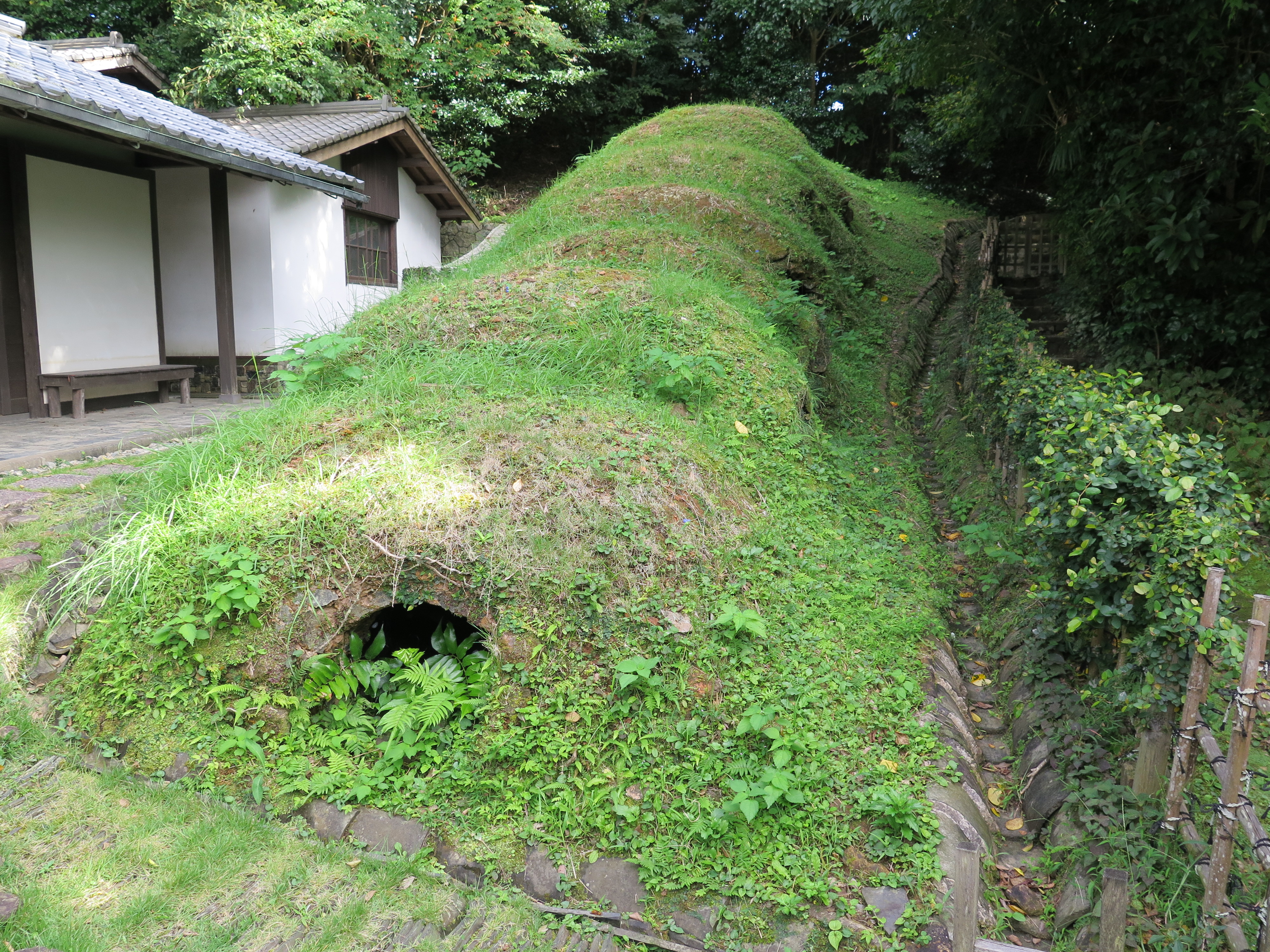
Later in time, because the secrets of porcelain manufacture had leaked out to the wider world. The potters of the Okawachiyama village were allowed to intermix with the other villages. They discovered a local stone called ‘tiger’ stone, because of its naturally occurring yellowish stripes. This stone produced a lovely blueish celadon and is still used for that purpose today by a couple of the local potters at the top of the steep road that leads to one of the ancient kiln sites at the top of the hill.

IMG_0737IMG_0734

IMG_0736

Today, this pleasant little village is serene and peaceful. Surrounded by its steep mountains and cliffs that once emprisioned it. Now they serve to keep the outside world at bay. No unwanted, polluting, industrial development here.

IMG_0761

I love the romance of this isolated, self-reliant, little place today. However, I choose not to dwell on its gruesome past. I almost got here two years ago, on my last visit to Arita, but didn’t quite manage it. The good things are worth waiting for!

There are some very lovely hand painted polychrome pieces still being made here today. I love this little dish particularly and give it a second look, only $15 direct from the maker.

IMG_0745

Once smitten, twice buy.

Best wishes from Steve, in the secret village of okawachiyama

Reprise clay making, recapitulation and Coda

Today I go to visit another of the local porcelain stone clay makers. It is the 3rd of the 4 that I know off and the largest of the Amakusa stone processing factories in the area. So I’m re-visiting a lot of concepts that I am already familiar with, but it doesn’t hurt to reinforce what I think that I know and take a different perspective on it. This clay factory, I call it a factory, because that is just what it is, It’s huge, is owned by Mr. Coda. So it’s only fitting to reprise my clay making experience with a recapitulation with Coda!

The port in the distance , down river.

The port in the distance , down river.

Coda san’s factory is out of town, quite a long way out-of-town, almost to the coast. In fact the reason that it is located here, by this river, so close to the port, is for two reasons. The river provided all the energy to power the stone crushing and stamping mills in the early days. But the other important reason is that the Amakusa stone quarry is located on an island to the south of here and in the past, the only way to get the rock to the main island was by boat. These days there is a bridge and a ferry. But back in the day, it was all done by boat. So the larger boat would come to the port and the porcelain stone cargo was off-loaded to smaller craft and floated up here at high tide, so this location proved to be crucial.

IMG_0621IMG_0620

The remnants of the levy, leat and water slouches still remain in the river, although substantially rebuilt after some devastating floods that raised the river level to 3 metres above the roadway and half way up the walls of the factory buildings.

IMG_0624

As this is the largest of the processors, there is a very large holding area where the new shipments of porcelain stone are sorted and stock-piled on delivery. The factory receives about 100 tonnes of stone per month on a regular basis. This averages about one 10 tonne truck load every 3 days. They hold about 800 tonnes of stone in total, in stock here. This is because the deliveries of the stone are all varied. The deposit, as it is being mined, produces different variations of the stone at different times, so over the year, the material seems to come in differing grades at different times.

The quarry at Amakusa has horizontal strata of weathering, but the mining is done to some extent vertically down the face, for technical reasons to do with stability and safety in quarrying. The whitest and most desirable material is close to the bottom, so a lot of other iron-stained material has to be removed first. For these reasons, it has proved to be necessary to hold a lot of stock to make sure that there will always be sufficient of any one variety, or variation of the material to fill specific orders. I think I understood Coda san was telling me that the quarry also closes during the hottest months of the summer? Meaning that sufficient stock has to be held to get the factory through the lean times.

IMG_0625IMG_0626

IMG_0627

During our tour, it evolves that this factory supplies clay to Malcolm Greenwood and Simon Reece in Australia. A friend has done all the paper work and organising of the complex, import regulation form filling. So far there have been 3 or 4 orders for 3 tonne lots in the past two years. So that is very interesting. I didn’t know that. I’ve come all this way to find out that my friends are customers here too.

For some special customers the whitest stones are still hand chipped to remove the iron staining from the fissure surfaces. This was once common, but these days it is hardly ever done due to the high cost of hand labour. Coda san gives me a demo, but reiterates that he is glad that this type of processing is in the past. They carry such a huge stock of stone to choose from, that these days they simply choose from the whitest material as it comes to them.

IMG_0633IMG_0639

The first thing that you notice as you approach the factory, is the music of the double quick-time rhythm of the stamp mills. These mills run 9 to 10 hrs per day, and there are several batteries of them. All still made of wood, not because they are old, but because the wooden structures have two essential benefits over steel. The first is that they don’t rust and drop iron particles into the stone powder as it is being worked. The other is that wood takes the percussive stresses of the intensive, pounding rhythms that fatigues metal structures.

IMG_0642IMG_0664

Once the stone is reduced to powder in the stamp mills, it is transferred to the wet processing area where it is blunged and levigated to remove the excess silica. This is done in a two stage process. Spring water is used in the factory, as they have a beautiful garden just behind the factory buildings and what appears to be a decorative pond, but is actually the water supply for the processing. Once all the fine silica is sedimented out of the slip, it passes through two sets of electromagnets to remove any stray bit of magnetic iron, such as pieces that have worn off the machinery during processing. Magnets can only remove metallic iron particles. The yellow iron staining that is naturally present in the stone, as it comes from the quarry is in the form of iron oxide and hydrated iron oxide. These minerals cannot be removed by magnets. The slip is then transferred to the filter press area to be de-watered and finally vacuum pugged and bagged ready for delivery.

IMG_0645IMG_0650

There are 4 separate production lines for the basic yellow iron-stained, medium creamy-white and special high quality white products, plus yellow-stained clay for slip casting that doesn’t have to be so fine and plastic. It’s quite an extensive operation and very well organised. Very modern and very efficient for such an ancient process. Very impressive indeed.

IMG_0656IMG_0654

After this very musical, further development and recapitulation of the clay making theme. I pick up my stave and walk to the bars before 4 time!

I’m very impressed with the modernity and efficiency of this slick operation, but there is a part of me that identifies with the romantic idyl of the small rural clay making business of the humble Fuchino family. Having tried clay from all three of the clay makers that I have written about. I rather prefer the idea of rustic, hand-made clay of the Fuchinos.

When I grow up, I want to be like the Fuchinos.

Best wishes from Steve in Arita

The Firing

In these times, when we are so concerned about pollution and air quality. I’m amazed to find that it is still allowable to fire a fairly dirty, wood fired kiln right in the heart of Arita’s main street, old town centre.

IMG_0668

This is a fairly old-fashioned sort of standard European, industrial, down-draught design of kiln, used early to mid last century. There is no attempt to install any scrubber or smoke minimization at all, not that I can see, and if they do have something in place it isn’t working, as is obvious from the smoke billowing from the chimney.

There are three men on shift over night, bringing it up to temperature throughout the day today. This is a stoneware reduction firing for the glaze. When this material is oxidised, it turns out a dark cream/dull beige colour. Not at all attractive. It’s because of the slight iron content. Even the hand-selected and hand-cleaned, super-white, ultra-expensive clay is just as dull. However, when this clay is reduced, it sings. It comes out a clear blue/white under a clear glaze and is a joy. This kiln is currently up to 1175oC and smack in the middle of its reduction cycle.

IMG_0670

The air is super filthy inside the kiln shed. The ventilation is very poor, so the men have to wear paper dust masks, but they have chosen the very poorly fitting hygiene masks, that are ubiquitous here and designed to stop you breathing out or coughing on people in public and spreading mucus carried diseases. They are useless to prevent dust and smoke entering the lungs. If these guys work at this all their days, their lives will be shortened. I’m quite surprised that this is still allowed. The ventilation is so bad that it must be hell in here in summer.

IMG_0671IMG_0673

IMG_0674

I’m also surprised that they are still firing a kiln like this with wood, as all the glazed pots are stacked in saggars inside the kiln, so there will be no aesthetic of wood fly-ash contact. The saggars add extra weight to the thermal mass and makes the firing less fuel-efficient. Seeing that there is no aesthetic benefit  showing on the work. I wonder why they persist, especially as everyone tells me that they are doing it so tough here now and no one is making any money. They could reduce their firing costs significantly and clean the towns’ air quality by switching to a light-weight, low-thermal-mass, gas-fired, fibre or RI brick-kiln. If there really is some sort of aesthetic reason for persisting with the wood firing, then I can’t help but feel that the kiln should be moved out-of-town, changed to a downdraught firebox, or installed with a scrubber. I’m only an ignorant outsider here and have no right to be offering anyone any opinion, but these are the thoughts that go through my mind as I watch.

IMG_0675IMG_0676

There are 2 fireboxes on each side of the kiln. Most likely firing up and over a bagwall, then down through the stacks of saggars to exit flues in the floor. These fireboxes are stoked alternately, first on the left, then the one on the right, symmetrical on each side, alternating every few minutes. There is a lot of smoky flame escaping through the vent holes and spy holes in the door, walls and dome. This is to inform the fireman as to the state of the atmosphere inside the kiln. He wants to know when the smoke is lessening and about to disappear. This indicates when it is time to re-stoke the fireboxes, so as to maintain the air-starved reduction atmosphere in the chamber. If I were here, doing this, I’d have all the windows open and a vent installed in the roof to clear the smoke from the work area. Actually, I’d probably get rid of the dirty up draught fireboxes with their expensive and short-lived metal fire bars and replace them with much cleaner downdraught fireboxes. For the comfort and health of the firemen, as well as improving air quality and fuel efficiency. I wonder if they realise that all that smoke billowing out of the kiln room and chimney top, represents expensive energy wasted?

IMG_0667

I can only suppose so. Everything has a reason here. Just because I can’t figure it out, doesn’t mean that it isn’t important and valid. It’s just not what I’m used to. Even so, I can’t help think  that there will be some health ramifications for these employees, working in that filthy air.

I wonder what the towns folk think about it? Fortunately, as I’m here alone, I don’t have the language ability to get involved in this sort of in-depth conversation. Probably for the better. I don’t want to offend anyone.

Welcome to the new/old Arita!