Low temp wood-fire w/shop

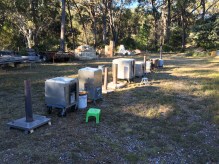
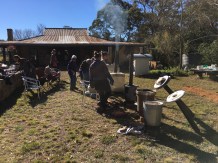
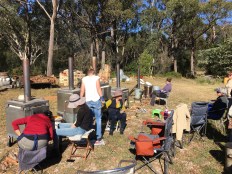
We are all prepared for the first of our winter wood firing workshops. The early morning sun shines obliquely across the site. Everything is ready. We have spent the weeks beforehand preparing the wood, the kilns and the glazes.

IMG_2354 IMG_2356

Yesterday, we had our friend Susan down here for some last minute help with prep. While I was handing out HTV cards for The Greens and the local polling booth. Janine and Susan had their own test firing of their own work. A bit of quiet time to have some fun together, but also a chance to test all the new glaze batches to make sure that everything will run as smoothly as possible on the day.

IMG_2372 IMG_2376

The day goes smoothly, A credit to Janine and Susan, for all the hard work and preparation that they have put in. Everyone seems happy and they are kept busy with glazing and firing all day. The kilns perform well and work starts to accumulate in the saw dust trench.

IMG_2391 IMG_2387

The firings proceed all throughout the day, as once the kilns are hot. They can be unloaded, reloaded and re-fired easily all day.

Glazing, firing, unloading and reloading, smoking and more glazing and refiring. It’s a busy day.

IMG_2358 IMG_2378

IMG_2383

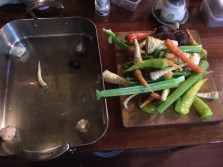
The day ends with a lot of happy potters going home with boxes of glazed pots. We clean up and put everything away again. I go to the garden and pick arms full of veggies. This will be our dinner tonight. Baked vegetables with a small piece of steamed fish.

IMG_2393 IMG_2396

IMG_2402

We light the fires and settle down in front of the idiot box with a glass of red wine to hear some analysis of the election turmoil.

Interesting times!

Midwinter days – & Nights

IMG_2335 IMG_2336 IMG_2338

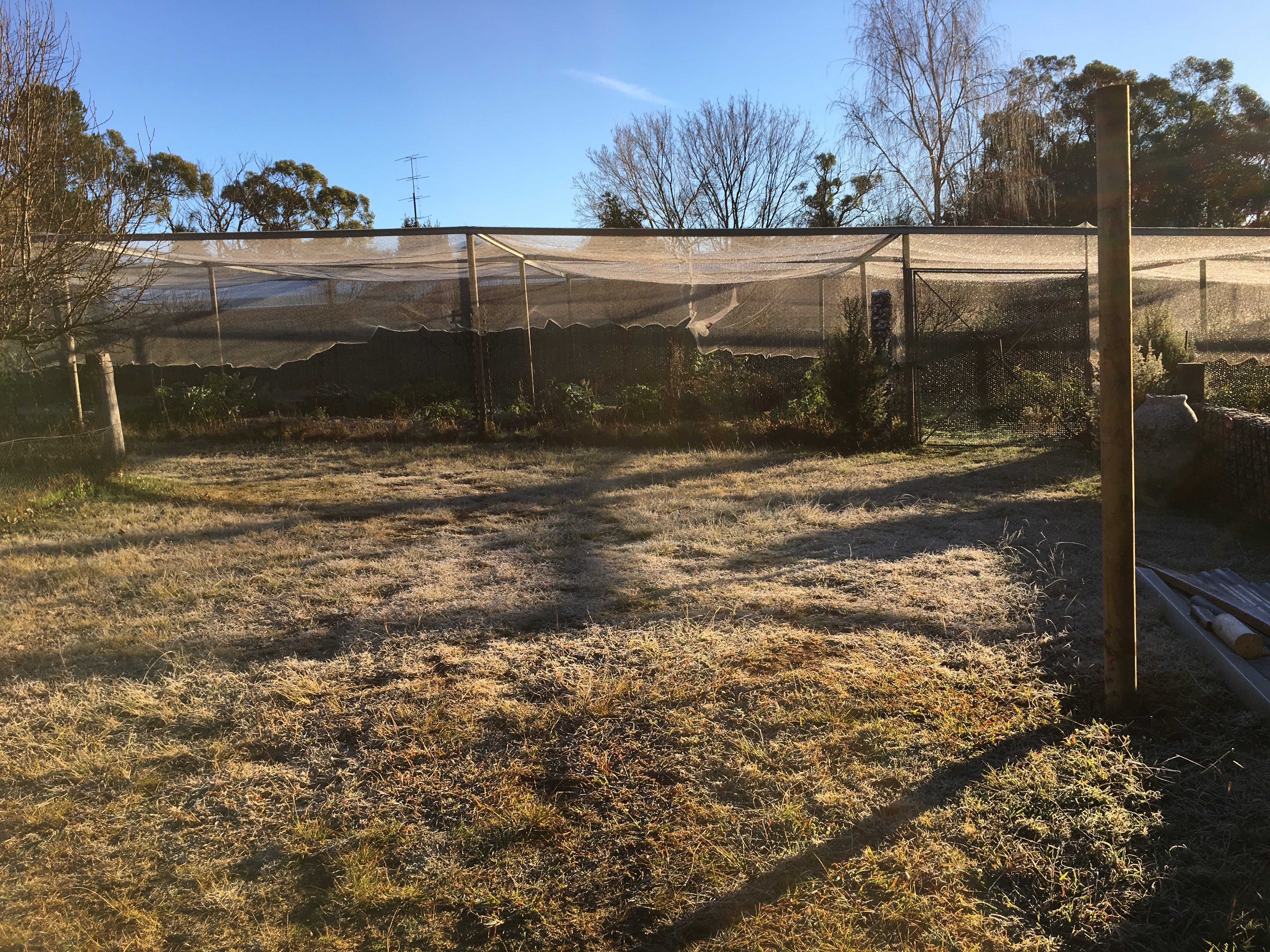
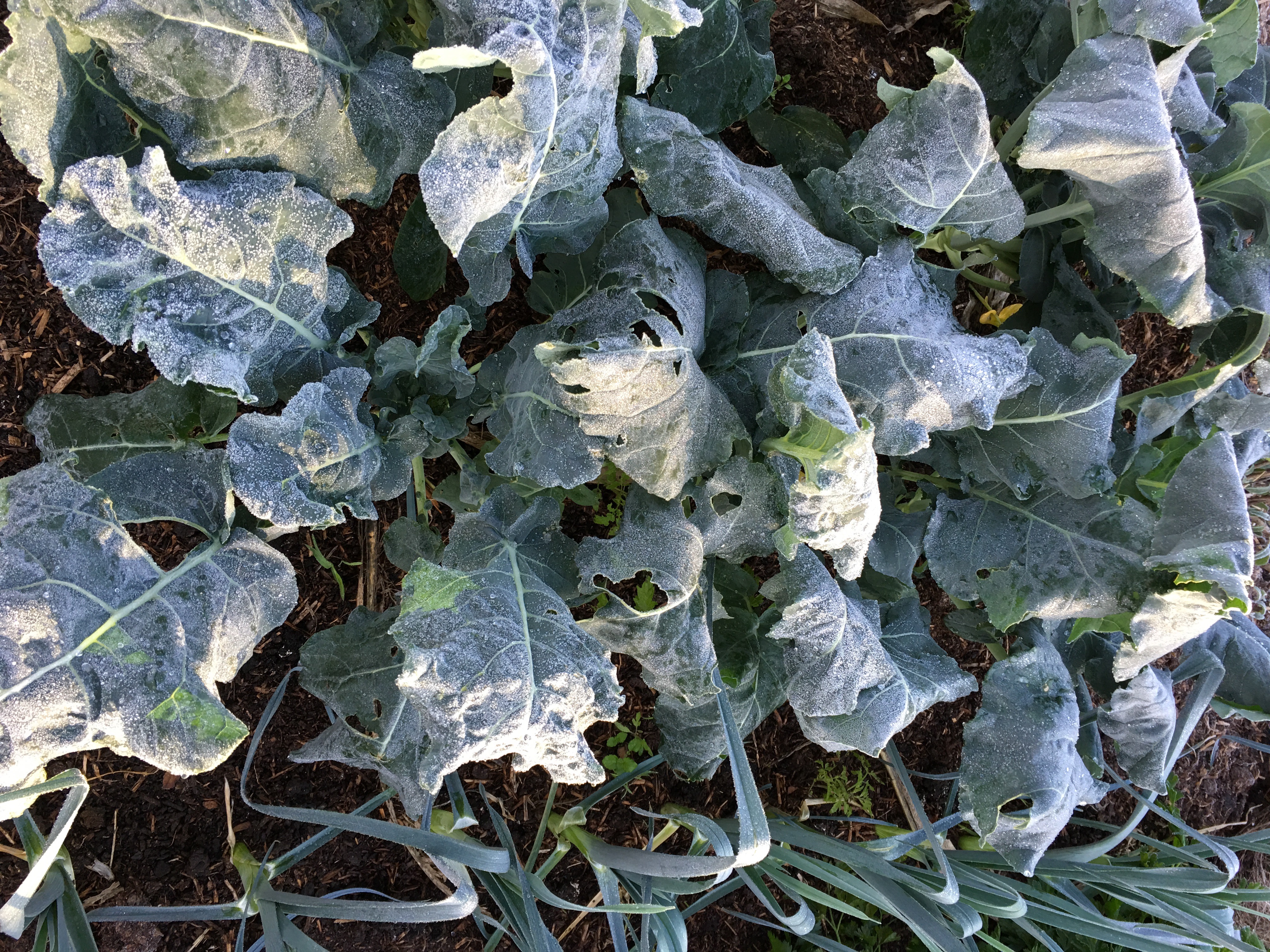
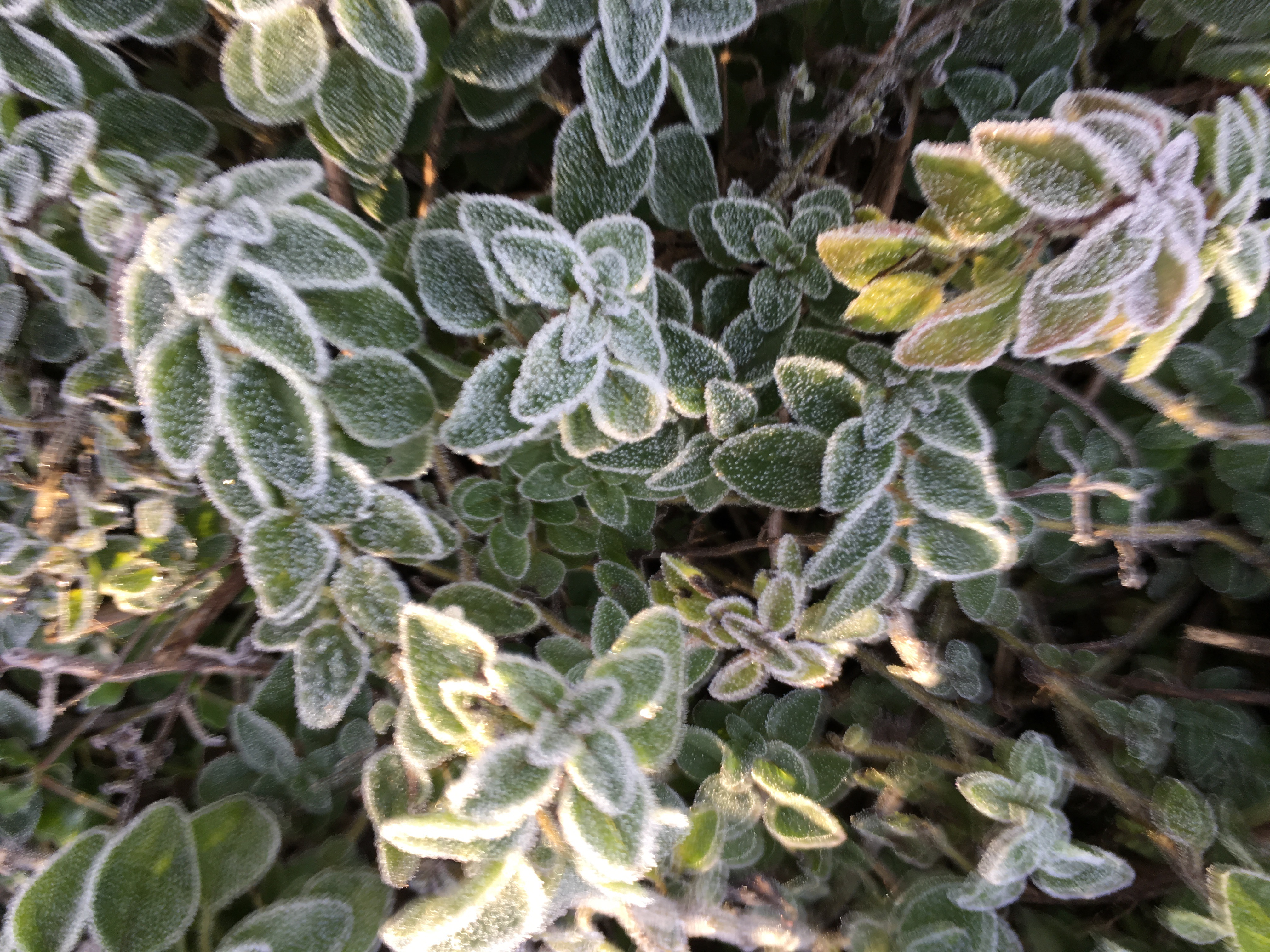
It’s quite frosty these midwinter mornings, now that the rain has cleared. I wander out in the frost to see how the gardening is faring. Especially the small new seedlings and emerging seeds. Everything looks pristine and bright. The frost crystals fringe the leaves and make the foliage look so delicate. My fingers are cold, but I go back and get the camera to take a few images.

IMG_2343 IMG_2339 IMG_2342

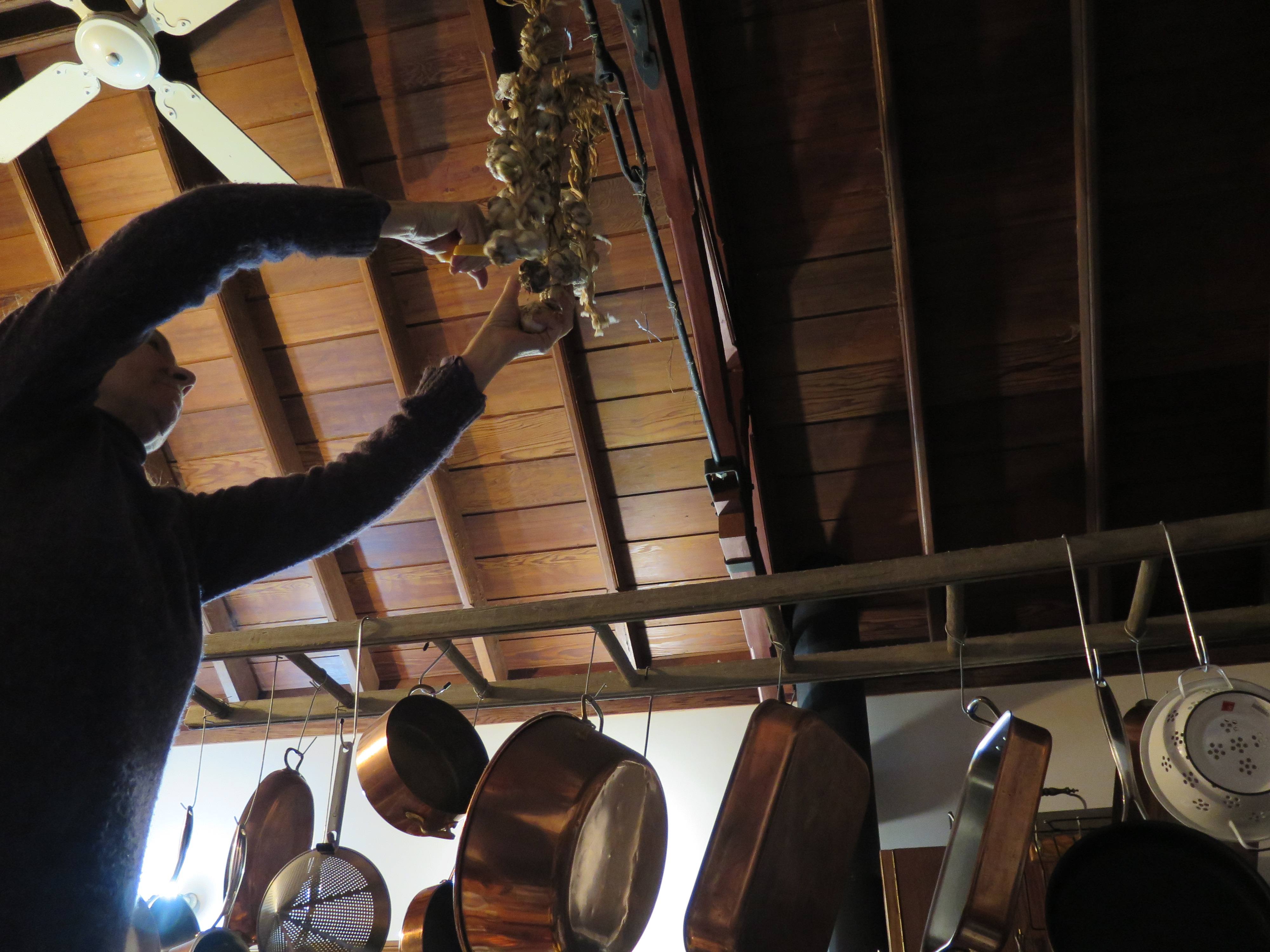
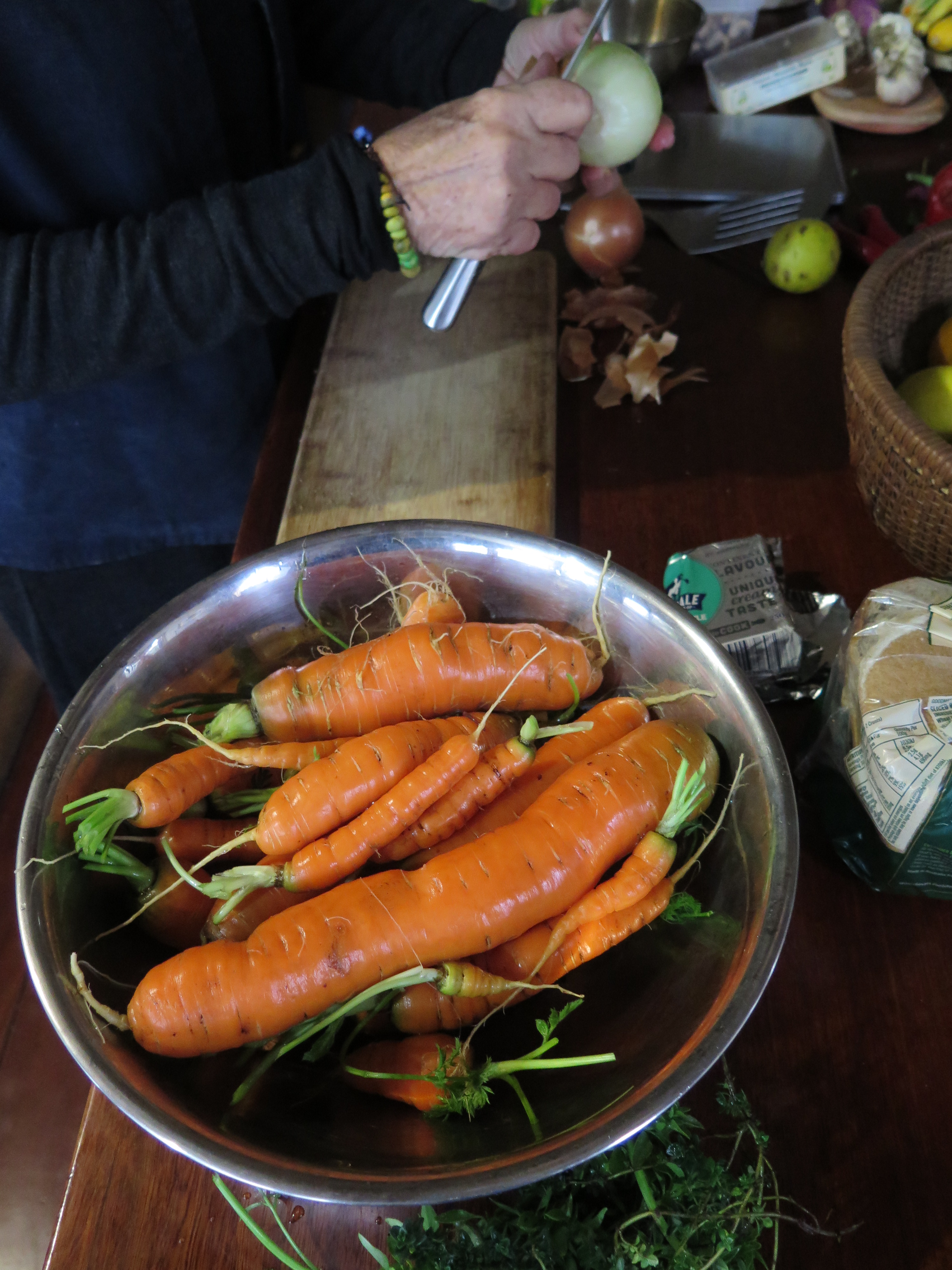
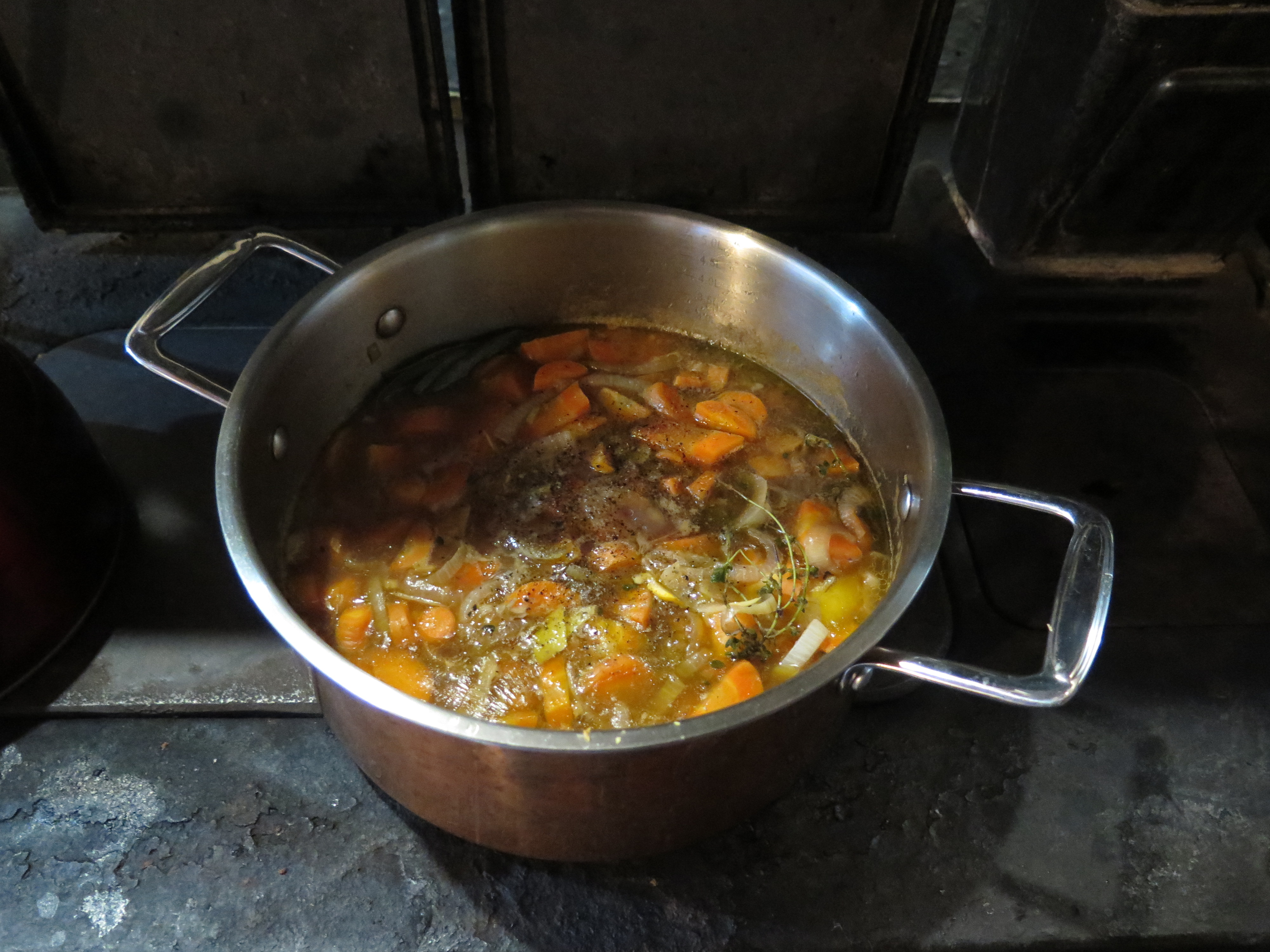
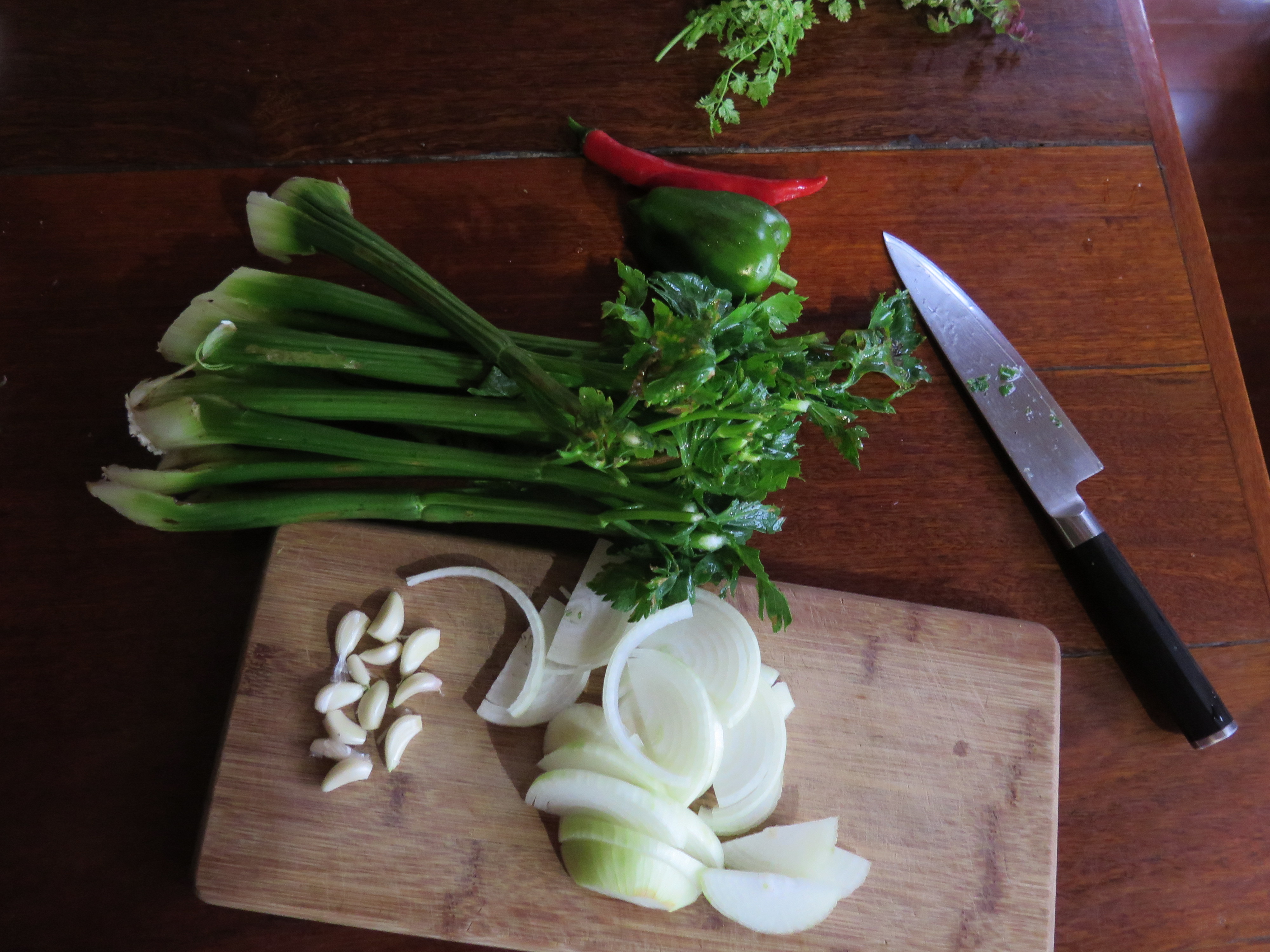
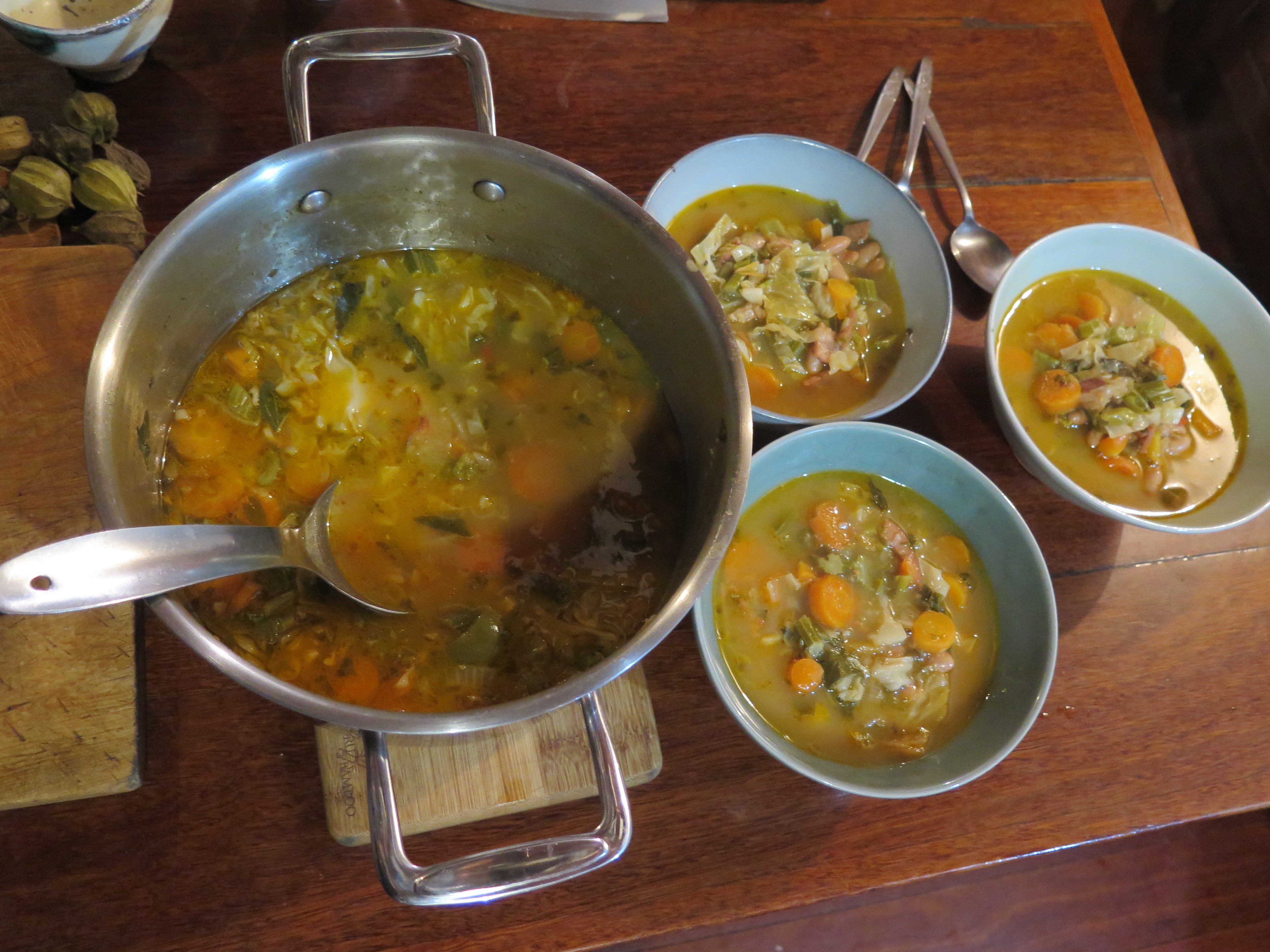
These cold winter days are so appropriate for minestrone. The Lovely picks carrots, cabbage, leeks and celery from the garden and browns an onion in good olive oil. She gas to climb up onto of the kitchen table to reach for another plait of our garlic that is hanging high in the kitchen ceiling curing. We are more or less half way through the garlic year and a bit more than half way through our supply of last years garlic.

IMG_3798 IMG_3808 IMG_3814

IMG_3817

I pick the last of the summers dried beans, still in their pods, shell them and soak them overnight. They make a great start to a wholesome soup base. With the Lady’s magic touch, it all comes together into a warming and nourishing couple of meals.

IMG_3871 IMG_3904

IMG_3905 IMG_3906

IMG_3907

We are enjoying all the usual winter greens. The Brassicas are doing well just now in this cold weather. We have broccoli, cabbage, Brussel Sprouts and cauliflowers all on the go. A typical meals just now might be fish with 3 veg, but otherwise it’s just 3 or 4 veg.

 IMG_3918 IMG_3933

Tonight we have a piece of fish with twice cooked home-grown dutch cream potatoes. Twice cooking starches converts the starch from instantly available high GI starch and sugar, into slowly digested resistant starch, which is very low GI. I Serve this with Brussel sprouts and kale.

IMG_3951 IMG_3953

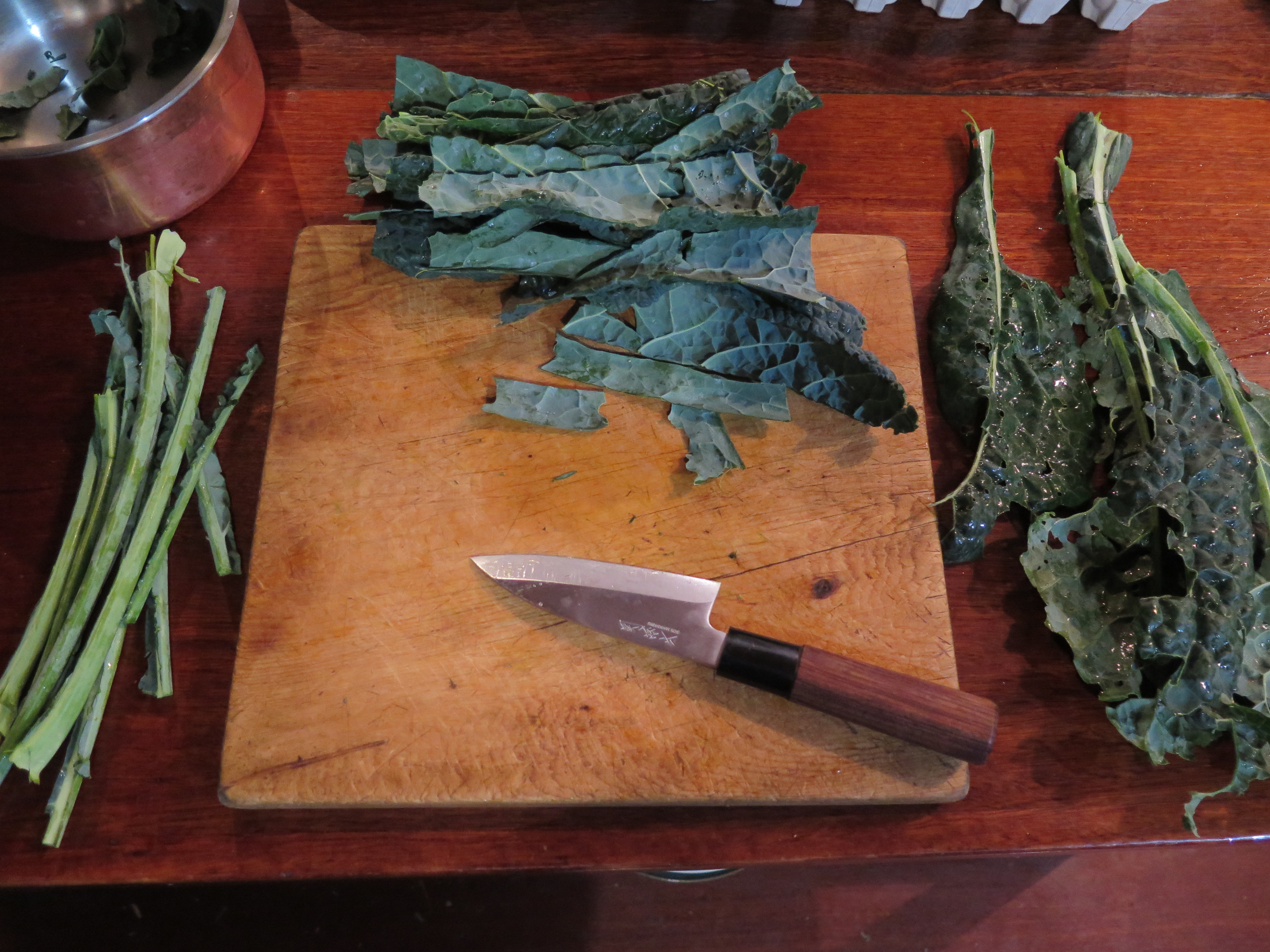
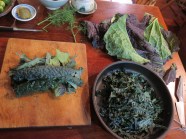
I’ve been trying to find a way to enjoy kale, but it is rather limited in what can be done with it. I persist because kale and all the other older fashioned brassicas. The ones that still have their bitterness still in them, The ones where it hasn’t been bred out yet. These are thought to be very good for you.

Prof. Mark Mattson, of Johns Hopkins University has written a few articles about this. I read one in New Scientist magazine last year. “Whatever doesn’t kill you makes you stronger”. To summarise. The bitter principal in these veggies stimulates your immune system and tones you up.  So, I keep trying to make it more enjoyable. I’ve decided that the best that I can do is to slice the leafy material away from the stem, slice it finely and simmer it in it’s rinse water and a little olive oil with loads of garlic. Then serve with a squeeze of lemon and some fresh ground pepper and a little of my fake salt substitute. It’s almost enjoyable. Once I mixed in some Ethiopian Cabbage and red mustard leaves with the kale. It must have been very good for me, because I could only just eat it. It was so bitter.

IMG_3949

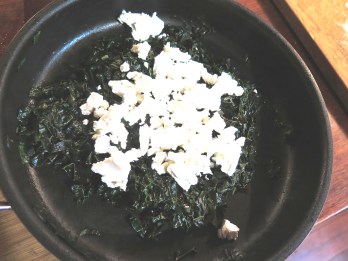
The best way that I have settled into wit kale now, is to simmer the peeled leaves as above and mix in 100g of diced feta , before serving with the seasoning and lemon juice. Have no more fear of kale. This is lovely. The feta makes it all the more delicious and balanced. The fat content dramatically improves the balance, mouth feel and taste.

IMG_3952_01

The Solstice Approaches

Here we are almost at the solstice. It’s dark until late in the morning and dark early in the evening. A few months ago, I booked one of my best friends, Warren, to come and help me do a lot of work. Now, the appointed weekend is here and it is pissing down. We can’t change the dates, we are both fully committed in other work for months ahead. We have to do it now – in this weather! We had the flood last week and have almost finished clearing up from that heavy rain and now it is raining again, almost constant drizzle to annoy us while we work.

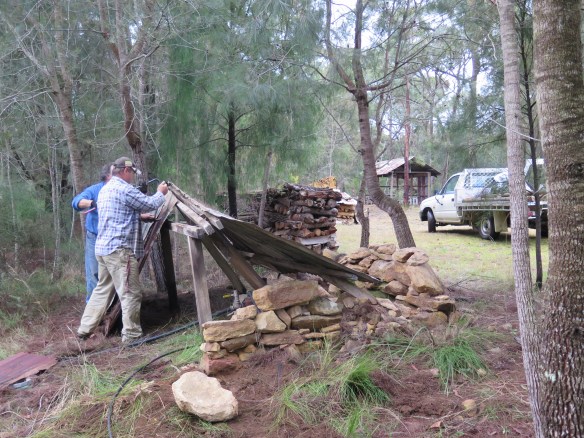
Warren has come to help me build a wood shed for the kiln wood. We have a small shed for the house wood for the kitchen stove and heater, but the kiln wood is so much bigger and there is a lot of it when we do the weekend workshops. So, we have needed another woodshed for some years now. Last year was terrible for us. So stressful, as it always seemed to rain the week before the firing and we spent the year trying to work with wet wood. Sometimes I could store the wood in the kiln shed/factory. But if I was building a kiln in there at the time as well, there just wasn’t room for both. So, the wood was out in the rain. We tried tarping it, but there was loads of condensation under the tarp in the prolonged wet weather and sometimes it would blow off in the really heavy storms.

IMG_3874 IMG_3886

So, we’re building a dedicated shed to store the long lengths of bourry box hob wood. At least that is the plan. The rain comes down in waves, so its jackets on for a while and then we start to steam inside them as we work hard, digging holes and ramming in the poles, lifting beams and climbing ladders, so then it’s jackets off until the rain comes back again. We are cold and damp by the end of the weekend, all our clothes are saturated with either sweat or rain. We finish off the shed by screwing the wall sheets on the outside, while the rain trickles off the new roof down our necks. We just happen to be working directly below the drip line. Who designed this thing?

IMG_3888  IMG_3913

To make it worse, by the end of the weekend, with us two tramping about in the rain, all the ground is mushed up into a slippery slide quagmire. We find it hard to keep our balance towards the end. We finally finish in the dark, using the LED focussed torch beam on the battery drills to find the correct places for the last few screws.

IMG_3915

It’s lovely to be able to strip off and have a steaming hot shower heated with our own firewood and the wood fired kitchen stove. We change into a clean set of dry clothes. It’s such a luxury, I’m so lucky to live here. I’m suddenly thinking of Syrian refugees transmigrating across Europe from one country to another. displaced by war and nobody wants them. They have no hot showers or warm house. I really am so lucky to be here.  The Lovely has got the fires going and the house is toasty and warm. We enjoy an amazing bowl of Janine’s warming ossobuco and a glass of red wine. We are all ready for an early bed.

IMG_3892

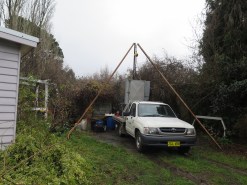
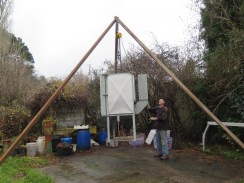
The next day it’s the pump house on the dam bank. It has been there keeping the rain off the old electric pump for 40 years now. I built it out of scrap everything on a zero budget in 1976 when we first arrived here with few prospects and no money, with a double mortgage to support. I built that first shed out of scrounged material. It was rough as guts, just designed to last a short while until I could get around to building a ‘proper’ one. It’s finally falling over and the posts have rotted off at ground level and the dry stone wall is slowly pushing it over with the unbalanced weight of the moving stones. We demolish it in a few minutes and find that the eucalupt hard wood timbers from above ground, are still in excellent condition, even though they were salvaged 2nd hand 40 years ago. So is the roofing iron for that matter. It was worn out and rusty, and dumped at the local tip back in 1976, where there was no supervision at the dump. I saw it there abandoned, all bent and rusty looking. It went onto the roof the next week and has been there ever since. It’s still all bent and buggered, but no more rusty than it was and is still OK for re-use.

IMG_3896

I check out what we have to work with and everything is in good nik, except the hard wood poles in the ground that have rotted off, broken and are falling over. I get 4 poles that  have been re-cycled from grape-vine trellises. We remake the old shed just as it was, but just a bit higher, using the taller poles. I need to put walls on this little shed, to keep the  rain off the electric pump, but that can wait. I put a plastic tarp over it for now. It may end up lasting another 40 years? Temporary things have a habit of doing that around here.

We discover through necessity, that it is OK to use electric power tools in the rain if you put them inside a plastic bag, with just the chuck sticking out. It works really well.

IMG_3903 IMG_3901

The next job is the  verandah on the kiln shed to store the kiln wood when I have both a planned firing weekend and a new kiln job on the go in the kiln shed. There isn’t really room for both very comfortably. So we add an extension to the shed very quickly in just one day using what we have. A lot of 2nd hand timber and roofing iron. The common denominator for all the sheds is new poles in the ground. This time around I’m using ‘green treated’ poles to deter the white ants and the damp soil rot. Almost everything else is recycled. I have even found a bucket of pre-loved roofing screws, that I have salvaged from somewhere. It was so long ago, that I can’t even remember collecting, sorting and cleaning them. But there they are in my salvaged screws and bolts section of the shed, just waiting  to be called on for a second life.

IMG_3916

I have no idea how much it would cost to pay to have all this work done. Obviously, quite a lot. Even the cost of materials would be excessive, never mind the labour cost. I’ve made all my own galvanised steel plate ‘triple-grip’ hardware fasteners. I have all the machines in the kiln factory sitting waiting to be used. We knock out a few hundred of these home-made brackets and then get to work framing the sheds. Everything is held together with roofing ‘TEK’ screws and these steel brackets. It makes for a very quick and seriously strong series of joints.

All of the 100mm. x 75mm. (4×3″) hardwood timber used in the roof trusses was salvaged from the old pottery tank stand. It stood out in the weather for over 30 years with a 13,500 litre (3,000 gallon) galvanised water tank on it, until the tank rusted out. Now it has been de-nailed and cleaned up and has found a new lease of life as roof trusses. I’m amazed how good the local hardwood from Mr. Blatch’s Mittagong saw mill was. It just doesn’t rot. I’ve bought hardwood since, obtained from down the coast, that only lasted 4 years out in the weather, before it rotted. It was largely sap wood. Very disappointing. I re-cycle all the large size 2.4m. x 1.2 m. (8′ x 4′) pallets that the stainless steel sheeting used in the kiln factory comes on. I use this wood for all the knee braces inside. It’s a very valuable resource, and much too good to burn.

IMG_3917

We clad each of these three sheds with recycled galvanised iron that we have been given or scrounged over the years. I never turn down a pile of old roofing iron if it is offered. You never know when you might need it. Today we do need it and we manage to work our way through half of our reserve stack. It’s a great feeling to make very good use of someone else’s cast-offs. Giving them a new useful life, forestalling waste and avoiding earning a lot of extra money to buy these otherwise very expensive building products. I’m so pleased to be able to live this thrifty life of re-imagined waste.

Recycled wood, recycled roofing iron, recycled bolts and screws. It’s a triumph of frugality and re-purposing. I’m very proud of it all. These new old sheds have some of that hard to describe special quality of wabi/sabi. The old, lonely, quiet, rusty, well used, weathered quality of use and nostalgia.

A shiny new, zincalume clad, metal framed, mecano-set-style, farm shed, just wouldn’t do here. It wouldn’t fit in. I love the patina of age of these re-cycled building materials and constructing my sheds so that they have this special ‘weathered’ quality is important to me. They look just right in this setting that we are creating here.

I’m tired now. Actually, I’m a bit wabi/sabi myself – I’m old, well-used, rusted out and weathered, but otherwise very pleased.

Now for a big sleep.

The simple pleasure of a dull job

It’s that time of year again. I need to make some more wadding for packing the kilns. Making wadding isn’t fun. It isn’t even interesting really. If truth be told, it’s a rather dull job. It just has to be done. So, to make it as bearable as possible, I make it up in a monster size batch, so that the pain is all in one go and then there is the relief of knowing that it won’t need to be done again for another year.

Wadding is used to seperate the pots from the kiln shelves and the kiln props from the kiln shelves. It has to be refractory and remain crumbly and friable after being fired to stoneware temperatures, so that it can be removed easily, even allowing for the deposition of the fluxing effect of wood ash during the firing.

I make it up in big batches of 120 to 150 kilos. Every wood-firer has their own ‘secret’ recipe. I don’t have any secrets. They’re all up here on this blog. Some potters use various mixtures of silica and clay, but I don’t want to use fine silica dust anywhere if  I can help it, because of the risks of silicosis. Others use alumina powder and clay, which is very refractory, but expensive and in my opinion it is overkill. There is too much of an embedded energy debt tied up in aluminium and alumina processing. It takes massive quantities of electricity to extract aluminium from bauxite, most of which comes from burning coal, so it is rather unethical to use alumina powder, unless it is absolutely necessary. We use a small amount in shelf wash, but it amounts to just a kilo a year. I can live with that.  The other thing that I really dislike about alumina in wadding is that unless you are particularly careful, you end up putting stark white finger prints on the pots that are being packed after handling the wadding. You really have to wash your hands after every time you touch the stuff.

IMG_3862

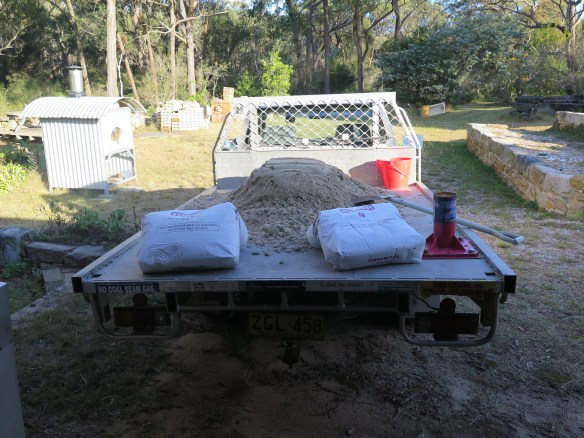
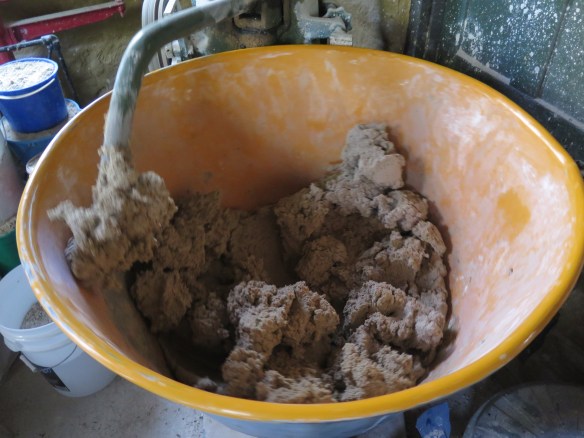
I have decided to make this batch of wadding out of ‘fat’ sand. Fat sand is also called ‘bush sand’,  ‘brickies sand’ or ‘bush loam’. It’s a coarse quartz sand with a fair amount of clay in it. It also contains some limonite or hydrated iron oxide, so it looks a bit yellowish. I mix this with some powdered kaolin. This is a great use for powdered kaolin. I don’t use a lot of it, but is is very useful for this purpose. I mix it in the ratio of one 25kg bag of kaolin to 4.5 buckets of damp washed sand and one bucket of water. When I can get clean saw dust I also add two buckets of saw dust, but this is getting harder to find these days. The last time I visited the local timber yard, they had been cutting some synthetic wood products that were a rich canary yellow. This stuff looked like it was loaded with resin glue. I thought that it might be particularly toxic if it were burnt in the kiln as wadding. So I didn’t collect any.  So, this batch of wadding is just going to be sand and clay.

IMG_3867

Adding saw dust is great for wadding that use on new pots that are once fired, as it can leave an interesting charcoal grey to black shadow mark. It doesn’t work on bisque, only once fired work.

When it is freshly made wadding like this is rather short or non-plastic, being so sandy, but after ageing for a few months it develops quite good plasticity and after a year or so, the last few bags are plastic enough to throw with. Not that you would want to, but I think that it might be possible. I’m down to my last bag of the old batch now and it is very easily worked into coils and small balls. This new batch will have a month or two before I need to use it.

IMG_3870

I make it up in a couple of batches in the dough mixer and then bag it up into 15 kg packs and store it away.

Security is a years supply of wadding.  Now, when I look down on my stash of wadding I get the simple pleasure of knowing that I won’t have to do this job again for another 12 months. It’s a nice feeling!

fond regards from the well wadded potter.


After the flood

The rain has eased off and we can go out and check the damage. We have had 350 mm. of rain in 36 hours. the rain gauge was over-flowing one morning, so we don’t know how much we lost. That has never happened before. We have emptied 350 mm out of it, so perhaps there was another 50 mm that we missed measuring? That’s about 14″ in the old imperial measure. It was certainly a very heavy and prolonged rain storm.

IMG_3819

We go out to survey the damage. Not too much thankfully. Just a  few small trees blown over or snapped off. We sprang a few more previously undiagnosed leaks in our 123 year old tin roof, but I can fix those. I always do, I’m used to it. There is a lot of maintenance in owning a hundred+ year old house. I just don’t know where the leaks are going to be in advance. I have to wait for the big storms to be able to find them. So, we sat through the evening with buckets on the floor, dripping and ‘plonking’ away.

Out side everything is still seeping, teeming, running, gushing. Everywhere you look, the ground is so saturated and oozing water. All 4 of our dams are full and overflowing. As I walk around, I make a mental note of all the jobs that will need doing. The kiln shed is a tragic mess. The water has forced itself up and out of the floor in one corner where the shed is cut back into the hill. The new spring has flowed straight through the middle of the  building, washing away all the small items that were left on the floor and making a trail of patterned tidal sand ridges and depressions like you see in the sand beds of creeks.Now a day or two later, everything is starting to turn green with a mossy/lichen sort of growth. The kiln shed has an earth floor with ceramic paving. It’ll take months of dry warm weather to evaporate all this water from the floor. That is once the earth has stopped seeping.

IMG_3821

I walk down along the old lane it has been swept, or rinsed, clean of loose brush and other light materials. All swept away. The water from our big dam higher up overflows down along here. It looks really peaceful and beautiful here now after the event. The grass and undergrowth has all been swept over and ‘combed’ by the torrent. there is still a steady stream of water 100 mm. deep flowing down along here. It’s hard to believe that this was once the main East/West artery for the village. It’s particularly beautiful, right here, right now. I’m brought back from the moment into another reality. My feet are wet from standing in the water and it’s cold. I chose to wear sandals for this walk, as I knew that it would be too wet down here for shoes.

All the dams are brimming full and over-flowing. It’s a very nice sight and it only ever happens like this once every decade. We are so lucky to have put in all this ground work and infrastructure over the past 40+ years. If everything all goes to some sort of plan, like it has in the past, we will have water now for at least another year and possibly two.

The dams don’t stay full for long as seepage and evaporation steadily take their toll. That is why we have paid extra money to have all the top soil from the dam sites kept and then returned to the tops of the dam banks instead of the usual practice of burying it under the wall. The top soil allows the native bush to re-seed into the bank and grow up into a sort of wind break, as it is the wind passing over the water surface that causes evaporation. If you can slow down the air movement, evaporation is reduced. This seem to have worked well for us over the years. Our dams are all now enclosed in native bush and not sticking out like scars on the landscape. We are so lucky and I am grateful.

IMG_3836


Home Again

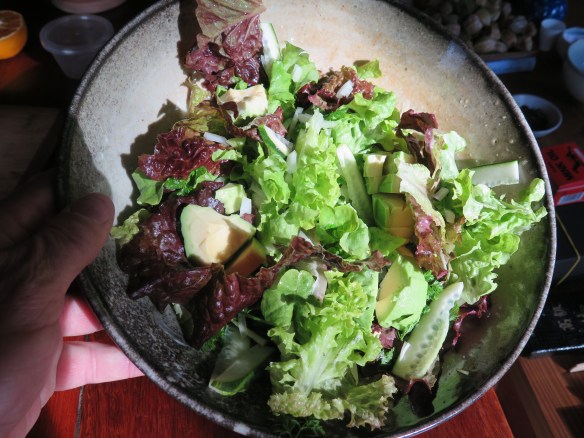
We haven’t been home long and we are able to get most of our meals from the garden. We start with a very fresh and crisp green garden salad. IMG_3713

We find that there are a few ripe avocados still on the tree, so we pick one and add it to the salad. It’s a special bonus. We wouldn’t have any left at all due to the birds and possums if it weren’t for Janine getting out there and bagging the last of the fruit before we left.

I manage to find some time to get out into the garden and pull out all the spent corn stalks and dead tomatoes vines. I have a few goes at it over a couple of days and eventually make a bit of a difference. I lime the soil with dolomite. A natural mixture of calcium carbonate and magnesium carbonate in about a 50/50 ratio. It sweetens the soil and negates some of the natural buildup of acidity through our use of a wide range of organic composts. We make compost from everything that we have on our place here, including pine needles and gum leaves. Everything that is organic and can rot is composted down to a black/brown peaty compost and used as mulch somewhere on the block. Pine needles and gum leaves tend to be acid, so are good for strawberries and blue berries, but bad for other plants that like a more neutral or alkaline pH.

IMG_3781  IMG_3784

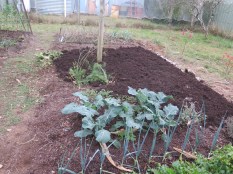
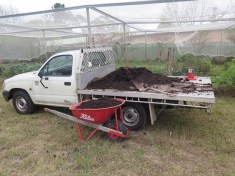
We also add a layer of composted chicken manure on top of the freshly exposed, weeded soil, then cover it all with more compost. I try not to dig unless I have to. The worms seem to do that for us, If left to their own devices.

IMG_3783  IMG_3782

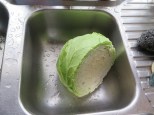
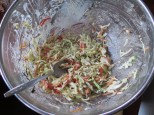
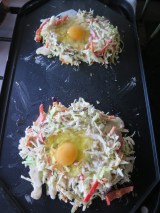
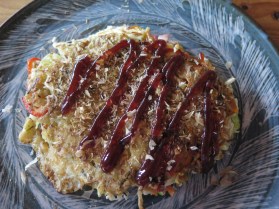
I pick a cabbage and make our first home made okonomiyaki at home here after our return. The cabbage is a whopper. It has grown well while we have been away. I only use a 1/4 for 4 pancakes. I add in some other vegetables that we have including a grated carrot and a finely sliced red capsicum;. These wouldn’t usually be included in such a dish in Japan, but we aren’t in Japan anymore. We are home and this is what we have. And after all, okonomiyaki actually translates as something like ‘add what you like’. So I do!

IMG_3789  IMG_3788 IMG_3787

IMG_3791 IMG_3793

The washing machine decides that it will only do one more wash and then burns out. It stops mid-wash and goes no-more. We have to drain out the water from the unit before we can open the door of the front loader. This machine has done well. Over twenty four years of continuous service. I can thoroughly recommend the ASCO ASEA brand for a quality, reliable, long lasting product. All you have to do is find a brand new and unused model from 20 years ago and you’ll have a good quality machine. God only knows what the current products are like in terms of long lasting quality. Anyway, I’m very pleased with our choice from two and a half decades ago. There is a lot of embodied energy in a thing like this and it really needs to have a long life to justify its existence, otherwise it just becomes more of the same old land fill junk that the big companies want us to cycle through endlessly at great expanse to the planet. Built in obsolescence is a crime against society. So good on you ASCO, for still stocking spare parts for this old model.

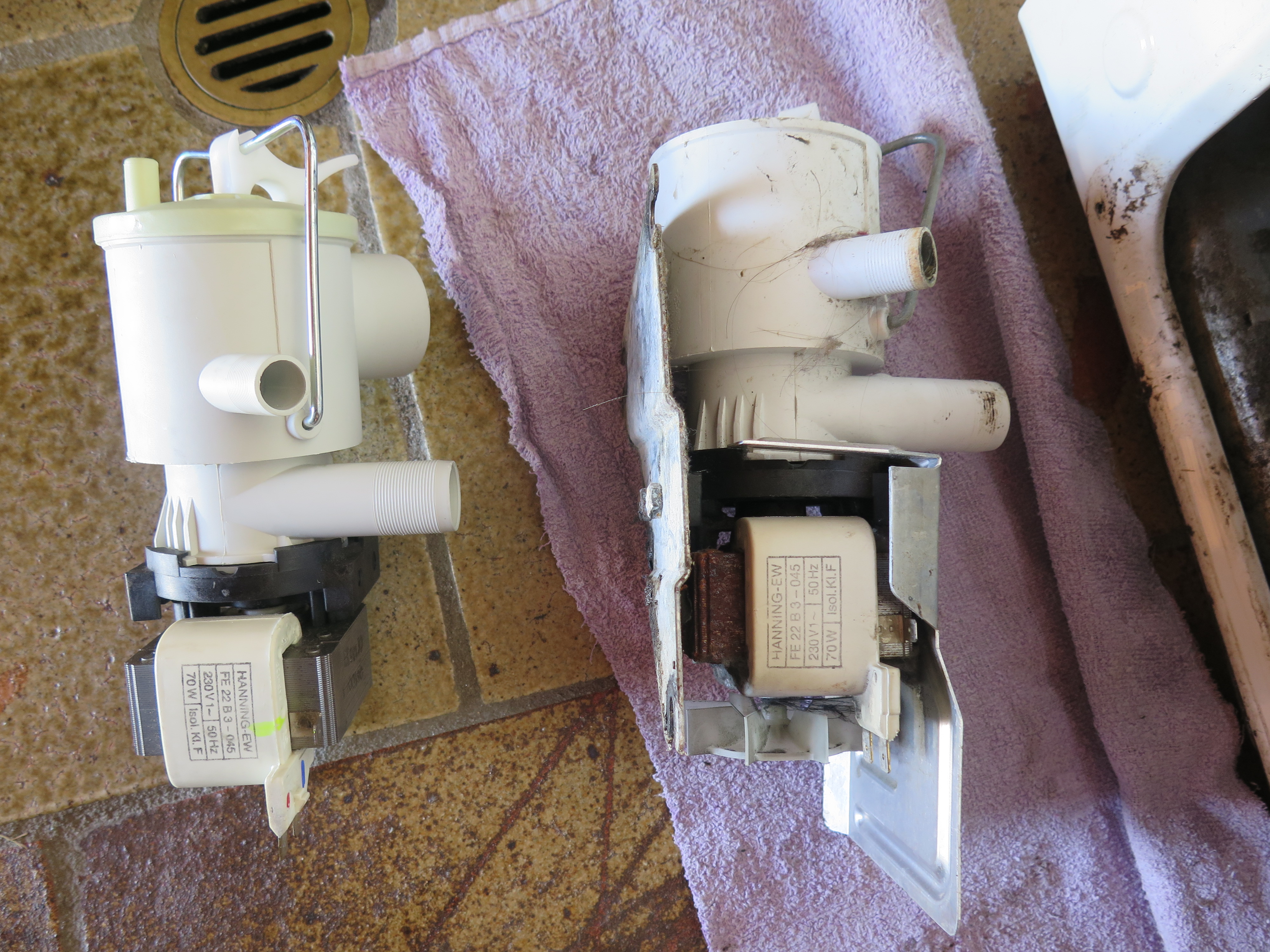
I knew that the water pump in the washing machine was wearing out for some time and I ordered a new one a few months ago. It took a couple of months to get here, as it had to come from Sweden. The new pump arrived just before we left on our travels, so we were lucky that it didn’t fail while we were away and cause Annabelle, our house-sitter, any problems. The local agent doesn’t carry spares for 24 year old products. I can understand. I’m pleased to get one at all after all this time.

I set to work to replace it, but like all these jobs, it turns out to be a bigger, longer, more complex job than I imagined. Firstly, the new pump isn’t complete, I have to take some parts off the old one to make it fit. Second, the old parts are quite well settled into place after 24 years in wet, humid conditions and take quite a bit of un-doing. I am forced to retreat from the laundry and go down to the workshop to get my hands on some serious tools. The Swiss army knife isn’t going to cut it on this job on its own.

IMG_3761 IMG_3765

I manage to get all the parts swapped over including the fan on the pump motor. I’m amazed that this isn’t included. It’s only a simple plastic part worth just a few cents. it has the be prised off the old shaft and it’s a tight press-fit on the new one. I had to pay $250 for this little pump. I’m amazed that they can’t supply a mounting plate and plastic fan for that money!

IMG_3768

The electrical cable is just long enough for the factory technician to fit the pump, while it is up-side-down in the factory, in good light and with the correct tools, and plenty of practice. When I’m working down in a dark corner, on my back, in a confined space, holding a torch in one hand, a pair of pliers in the other and then with my other 2 free hands I am able to manipulate the electrical clips in the correct order, otherwise the last one won’t fit!!!!! I question the logic of this thriftiness. This all has to be accomplished in just 100 x 300 mm. of access space. I’m finding it quite difficult to get both my arms in there at the same time, never mind to be able to see what I’m doing and work accurately.

The last minor annoyance is that the rubber hoses are all crimped on with single-use metal clamps that need to be broken to get them off. Luckily, I keep a lot of different sizes of adjustable hose clamps in stock here for other uses. Fortunately I have 50mm, 35mm and 25mm dia clamps in my tool box. Eventually it’s all done. The only real joy that I can take from this is that I didn’t have to pay a technician another $250 to come out here and do it for me and most importantly, I have forestalled waste by keeping this old appliance going for another few years. So this is self reliance.

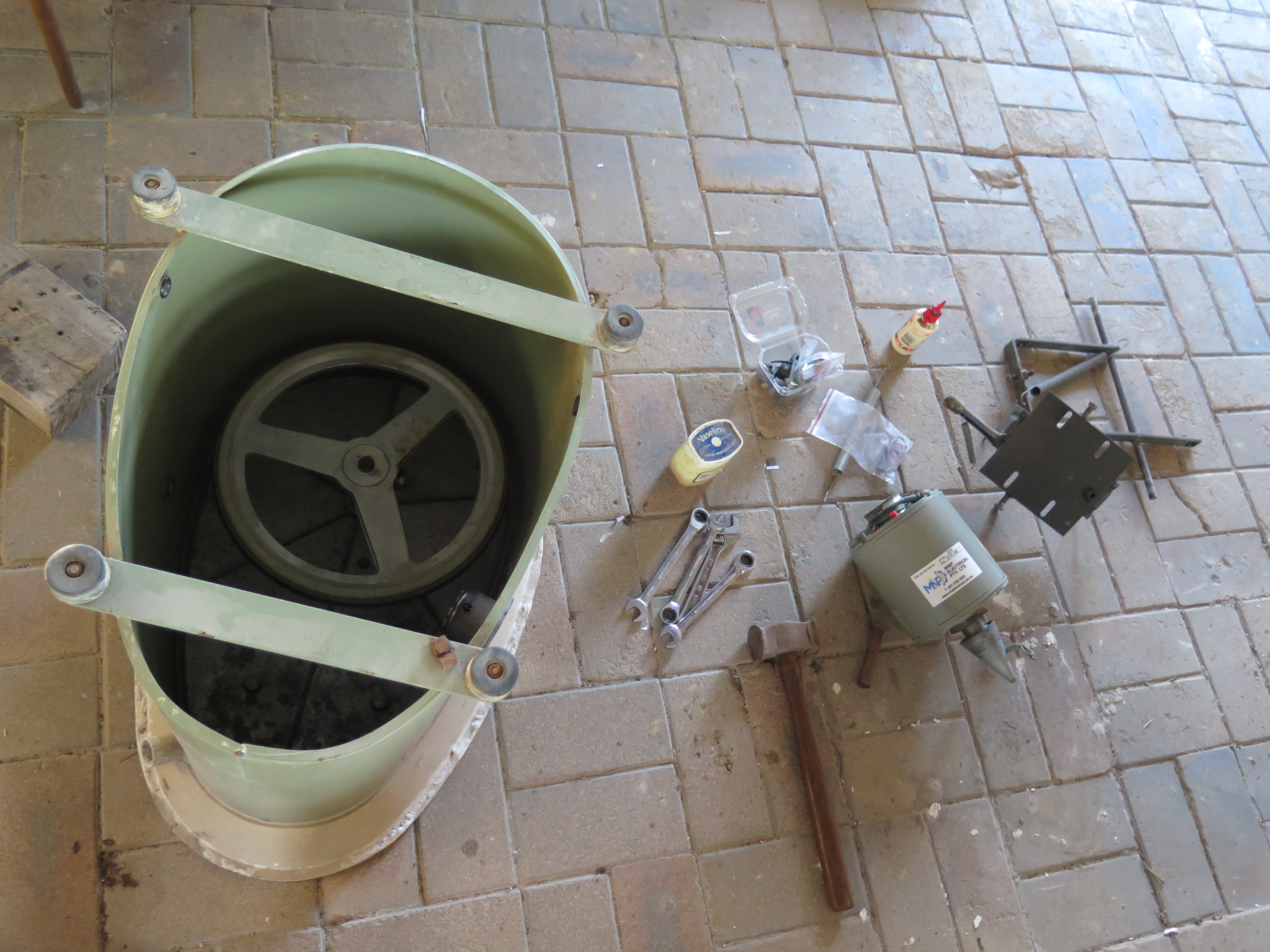
While I’m in maintenance mode, I set about rebuilding a Venco potters wheel destined for an aid project in Cambodia. It arrived here completely disassembled and in a few different cardboard boxes of loose parts. it has a reconditioned motor and all new grommets as well as a new rubber drive wheel. Everything reconditioned for a long life ahead.

It takes me an hour or two just to figure out the order in which I must do the job to get it all to work out. I have one false start and then it goes smoothly. If I had taken it apart myself. I would have remembered the sequence, but as it has all been completely disassembled by someone else, I have no memories to call on. I have to work it out using only logic.

IMG_3770 IMG_3779

It goes and it works OK, so I am happy with that. This old wheel will now have a new life ahead if it in Cambodia in a village pottery workshop for many years to come. More waste forestalled.


Tomatoes for 5 Months

We are now just back from our 5 weeks in Japan continuing our research into single stone porcelain. We were lucky enough to get to many more sites on this visit, where porcelain stone is, or has been mined. See my earlier posts below.

I have been able to make a few nice pots while I’ve been here. Actually, I made a lot of pots, but destroyed all of inferior work that wasn’t up to scratch and didn’t make the cut.  I’m not here to make rubbish. I want to make things that I can be proud of, nothing less. My rejected pots have all been crushed up to dry powder, packed into boxes and shipped back home for a possible 2nd life. My best work was glazed and fired onsite and also shipped home. All my efforts are currently in containers at the port or on the high seas. I will see them again in 2 months. Hopefully they will still look as good when we are reunited.

This work is all a part of my 10 year project to go to all the places in the world where single stone porcelain has been made and then make some work at each of these places, out of the material that is to be found there. These works will then be shipped back here to Australia, where I will exhibit the whole body of work from all the sites along-side my own single stone porcelain pots, that I have made here, in one big show. I’m rather hoping that it will look good when all amassed together in one show. Only time will tell. I’m almost finished. Next year should see the end of it.

As soon as we are back home and settled in. We unpack our bags and put on a load of our soiled clothes into the washing machine, which grumbles and squeeks as it grinds along. I can’t complain, this machine is over twenty years old and still going – just. I think that it is the leaking water pump that is the problem. I have a new one in stock. I ordered it months ago when I noticed the water starting to leak from underneath. It took months to get here. It arrived just a week before we left on our long trip. I didn’t have time to install it before we left. Now that I’m back, I will have to make time.

After the basics are dealt with, then it’s straight out into the garden to check out how all the plants have fared while we have been away. Apparently it has been very dry for most of the time, with just one proper fall of rain. Annabelle Slougetté has been living here in our absence and has kept everything alive for us.

IMG_3723  IMG_3717

The first thing that I notice when I get into the garden, is how dead so much of the garden is. The last of the summer corn, has finished, dried out and turned up its fibrous toes. We made an effort to mulch as much of it as we could in the week before we left and this has really paid off for us. There are so few weeds now. A couple of days of intensive work will bring it all back into healthy production again, as there are loads of winter vegetables coming on. I made an effort to get all these planted early in the season, at the end of summer/early autumn. So, now we have broccoli, brussels sprouts, cabbage and spinach ready to pick.

Surprisingly, many of the late summer plants are still lingering on and still producing food. Others, their time being up, have gone to the big veggie patch in the sky. They will soon be headed into the compost bin, where they will rot down and be fertiliser for next seasons crop of summer vegetables.

As I look around, I see that there are still some little yellow tomatoes ripening on the old, almost dead, vines. We have been picking tomatoes now for 5 months, pretty amazing for us. So this is global warming?

This will likely be the last pick, as the plants have lost all their leaves and are pretty much dead now. Interestingly though, there are still some small new tomato plants germinating and growing up. One is even flowering, but I can’t believe that this will amount to anything, as the first day of winter is only 2 days away. The first frosts can’t be too long after that.

We  used to get our first frosts at the beginning of May, now its the end of May or early June and possibly later? A couple of years ago, we went right through winter with only minimal frosts, to the point that we didn’t get any apples on any of the trees the following summer. Apples need a minimum number of frosts (or winter chilling hours) to develop the hormones that are necessary to make the flowers fertile.

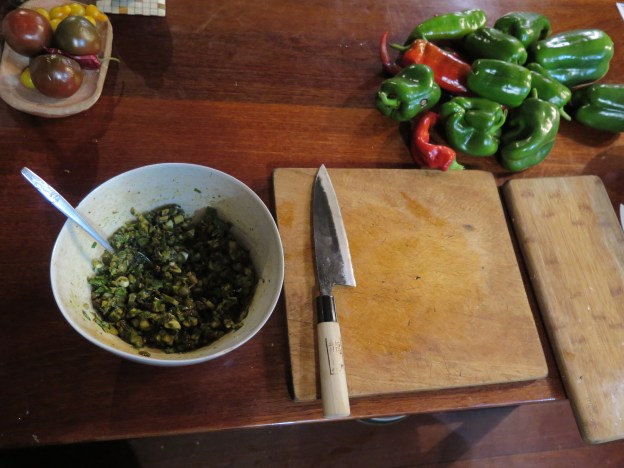
I go straight back out into the garden with my basket and fill it with little yellow tomatoes, the last of the lingering sweet basil and a load of capsicums and chillis.

IMG_3749

I set about making a tomato/caps/chilli salsa by browning a few onions in good olive oil and adding 6 small knobs of garlic. The ones that are so small at 20 to 30mm. dia. that it really isn’t worth peeling them. They will add heaps of flavour to this mix and the small amount of skins and paper will be removed when I strain the whole batch. I let them softening down along with all the diced fruit over a long time at low heat on the wood fired kitchen stove.

IMG_3750

I will  pass it all through the kitchen mouli sieve to take out all the tomato and capsicum  skins and seeds, then reheat it to sterilise it and bottle it in heated glass jars. It will keep for a year or so, but probably won’t last that long. It’s too delicious, although very ‘hot’ with chilli flavour. It will make a great addition to winter stocks and sauces over the coming cooler months.

This little effort marks the end of our summer preserving for this year. I’m very pleased, as I wasn’t expecting there to be any fruit left to preserve. This simple garden-to-kitchen-to-pantry excercise grounds me and resets my emotional and spirituual compass to ‘home’ after being away. This is what I do. This is what I live for. This is me. The self-reliant potter/gardener.

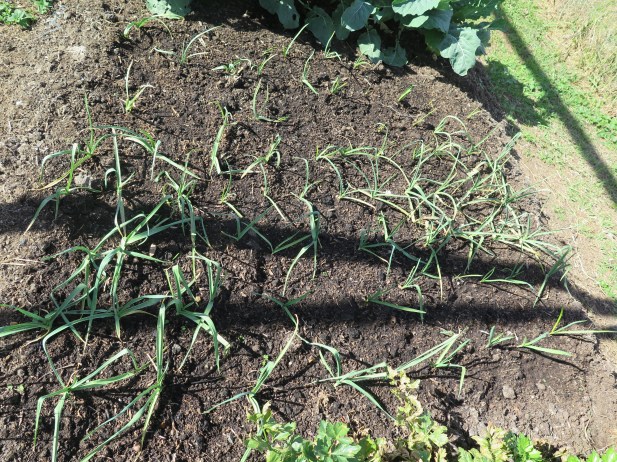
A close inspection of the garden beds reveals a lot of little germinating seedlings of onions, carrots, beetroot and rocket. I planted these seeds just the week before we left. I also planted a few hundred cloves of garlic. Most of which have now germinated and are showing their green shoots. Peas are also up and growing quite strongly, I hope to see them flowering soon.

IMG_3718  IMG_3722

IMG_3721

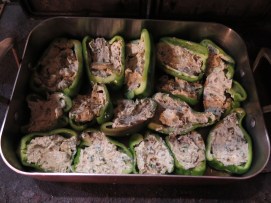
There are a lot of capsicums ready to pick, so I decide to stuff them with ricotta and bake them in the oven, as the stove is lit, we are making hot water and warming the house up as well, seeing that we are now home and the weather is so windy and cold. Such a change from the weather in southern Japan, where it was almost summer and the weather was balmy to hot.

IMG_3726

IMG_3725 IMG_3728

I make a stuffing out of whatever we have at hand in the fridge. Before we left I had bottled some little cucumbers and some dried tomatoes. I add these into a lump of fresh ricotta. I add a few cloves of our garlic, along with a few capers and an anchovy or two, a few olives, a shallot and some parsley. I dice it all up and mash it together with some veggie and herb salt substitute. I would like to add a little bit of finely diced feta cheese to give it a little bit of chewy texture to the cheesey mix, but I don’t have any at this time. I’ll add to my shopping list for next trip into town. There are plenty of capsicums left to pick, so we will be having a meal, not unlike this one again in the coming days or weeks. I like to use what I have in the garden and pantry. Our main food expense these days since we lost our chickens and ducks is protein, which these days consists mostly of fish.

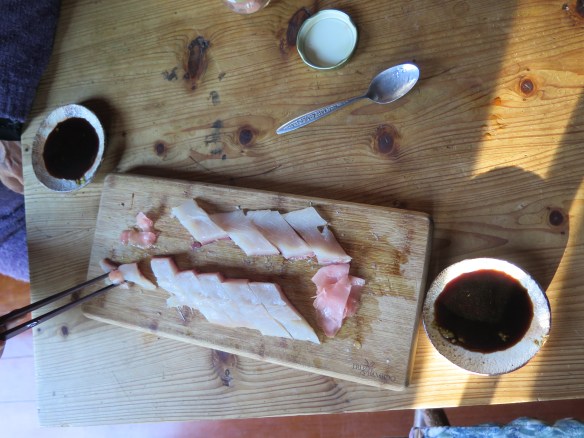
The fresh fish truck is up from the coast today, so I buy a small piece of super-fresh sashimi grade kingfish, we have a small fillet for lunch. I skin it and slice it up and we have it with a little soy sauce, wasabi and pickled ginger in vinegar. Yum. Itadakimas!

IMG_3746

Teppanyaki

On our way home, we let our hair down and go out for dinner a few times. Just cheap places, mostly okonomiyaki. We get three different meals in 3 different cities. We get to try okonomiyaki in Kyoto, Osaka and Tokyo.

Although the technique varies from city to city, from restaurant to restaurant. The general taste is pretty much the same, because most of the ingredients are the same. The overriding flavour is that of the brown okonomiyaki sauce and cabbage. The sauce, which is not unlike brown BBQ sauce and the smothering of kewpie mayonnaise add a very distinctive character. These tend to be the dominant flavours.

There is however, a noticeable variation in texture from place to place. In Osaka the texture of the batter is a little bit creamier. In Tokyo, it was a bit more dense and solid in texture. In Kyoto we saw one place where so little batter was used, that it was mostly the egg holding the whole thing  together. Yet in another, there was plenty of flour in the mix.

Of course, I realise that you can’t just eat half a dozen meals and say that these represent the whole of each locality. We were eating at the markets and in cheap cafes and restaurants while in transit around the country. So what I write has to be taken with a sprinkle of bonito flakes and a pinch of salt!

DSC01369

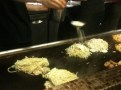
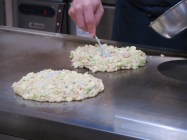
It was an amazing series of taste and textural experiences in a short period of time. The  Tokyo version was quite firm with what seemed like a lot of flour in the batter. I noticed that when the chef flipped it over to cook on the other side, the thing bounced a bit like rubber! Very dense indeed. I watched the other chefs cooking other varieties for other customers at the long teppanyaki grill table, and they were all of the same dense texture.

I Kyoto, the batter was a lot thinner and the resulting texture was a lot more fibrous with the cabbage showing a major influence on the finished dish. There is a very slim layer of batter applied to the hot plate first. Then a big pile of cabbage is placed on top. a dressing of some sort of liquid is ladled onto it and after some time a little hole is made in the pile and an egg is cracked into it.

IMG_2241 IMG_2242 IMG_2266 IMG_2268

Some more batter is ladled onto the cabbage pile and then the whole thing is flipped over and the other side is cooked. If bacon is to be included, it is added on top just before flipping over.

IMG_2269 IMG_2270 IMG_2254 IMG_2277

While in Osaka, the texture was soft and creamy. I’m told that they use a local mountain potato or yam, that when it is grated, it turns directly into a thick, sticky liquid and it is this that defines the taste and texture. I don’t know, so I can’t say. This is just what I was told, so I’m repeating it.

IMG_3699 IMG_3702

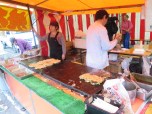
At the Toji markets in Kyoto we make a point of always having the okonomiyaki from the same stall. It’s a hot day this time around and the pancake goes down very well with a chilled beer. It’s a filling cheap and cheerful respite from the crowds and all the hussle and bussle and delicious with it.

IMG_2855 IMG_2857 IMG_0845

In Arita, down in Kyushu, we were served a special okonomiyaki, made at the table of our friend, for a dinner party of mixed international visitors. This was the most rewarding to eat, because of the circumstances and company. We are very fond of the friends that we have made here in Japan and we value their friendship highly.

IMG_5881

I get it!

The only bad thing about travel is the travelling! We have got used to traveling light. we can both pack bags that are under weight at 12  to 14 kgs. This is quite enough to sustain us for the 5 weeks that we will be away. Some of the extra weight that I carry above Janine’s slim baggage, is all the electronic garbage that we tote along to ‘keep in touch’. Taking all the necessary electronic chargers and adaptors to be able to keep more or less in touch while we travel is an extra few kilos that aren’t really essential, but optional. We travel  prepared for all situations, communications wise.

Of course, we could just travel ultra-light with no ‘telecoms’, but I do like to upload our on-going adventures to our blog as we go and to do that we need cameras, phones and a lap top. This is of course showing our age. If I were a young person, I’d just have a modern phone and that would do all of that in one go. I must think seriously about updating and get with the light-weight modern option.

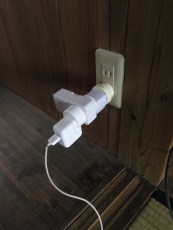
IMG_3667 IMG_0119

Janine has a rather more capable phone than I do. Hers is an iphone4 and it has a remarkably good camera on it. As good as my small pocket-sized Canon handy cam.

Another important thing that I have learnt to take on a long trip is a comfortable pair of shoes. I can’t go past these old leather ‘Walking shoes’ from Adelaide company ‘Slatters’. They are very comfortable for walking around in, something that we do a lot of when we are away. Slatters don’t make this model of shoe any more. They are now a discontinued line and this is very sad. They are not good-looking at all, but by gee, they are comfy!  These are my second pair and have lasted quite a few years. The new range that replace them are not as good for me. They don’t suit me or fit as well, nor are they as soft and snug fitting. From now on, I will be looking out for some other solution for the comfortable footwear conundrum.

IMG_3711

While we have been in Japan, we have been renting some studio space and making some work. This is all part of my 10 year long project to go to each place in the world where they make single stone porcelain and make some work there in each of those places. I want to have a show of this collected work next year at Watters Gallery in Sydney. I only have one more place to go now, so I’m getting quite excited at the prospect of seeing such a long term project mature to some kind of completion.
IMG_5943 IMG_5947 IMG_5948 IMG_5944

Some of my work, before and after glaze firing.

IMG_3600 Copying

IMG_3610

Outside the studio, the bamboo is putting up new shoots. Its spring time here and everything is so green and luscious. The bamboo grows about a foot or 300mm. per day, so in a few days, it’s as high as Janine. We consider collecting some of the new small shoots, while they are still just 100mm. high, but there just isn’t enough time if we want to get our ceramic work done. And after all, this is what we have come all this way for. We see some fresh picked bamboo shoots in the local organic farmers market and this is excellent, as it is just as good and saves us so much time. It’s delicious added to a simple stir-fry/steamed mix of vegetables and brown rice.

Just finding brown rice at all in the supermarket here is such a breakthrough. I’ve never seen it for sale before. It’s a sign! However, it is only available in little slim 500 gram packs for extremists and health food weirdos, whereas white rice still comes in bags and sacks of 5 and 10kgs, up to 20kgs!

The next night I find some sole in the fresh fish mongers little shop, just down the road from our lodgings. He’s a lovely guy, so helpful and sweet. His wife is so lovely too. They operate this little business 10 hours a day, 6 days a week. Nothing is too much trouble. They tell all about the days best choices and possibly all about how to cook it too, but I don’t speak any Arita dialect and very little Japanese, so little, that I can only just pick out a few words. This couple are so patient with me though, I can’t help being totally grateful to them for persevering with me.

Each day they have something else different in their shop, whatever is the best option for the day, plus all the usual offerings. We get some super-fresh sashimi from them when-ever we pass the shop. One day, I call in a bit early in the afternoon and I suddenly get it. There is no sashimi in the ice tray display counter as yet. He hasn’t got around to it, too busy preparing all his other orders? He says to me a sentence that includes two words that I recognise. “sashimi” and “mata” and I get it!  “The sashimi will be ready later on in the afternoon. I haven’t had time to do it yet” at least that is what I take from it. I nod, “mata” I reply and sure enough it is all there to choose from 2 hours later. I’m a bit chuffed at this little exchange. I suddenly feel like I’m starting to fit in a bit. I have experienced this sense of being able to hear more than I can speak on other visits to Japan. After a few weeks, I start to get my memory cells activated and somehow, I seem to know what people are talking about, without knowing all of the words that they are speaking. Freaky, but it happens consistently on each of my 6 visits here over the years.

IMG_3611

I also choose some lovely lemon sole, or that is what I think that I am buying. I have no way of telling, but that is what it looks like. Mr Fish Monger San tells me a lot about it. I nod appreciatively, so then he cleans it and guts it, trims the fins, etc. His wife, Mrs Monger Okesama wraps it and then shows me the price on her calculator. I pay and then they pack some ice in a plastic bag for me to carry it with in my back pack, as they know all about me and where I am working and living. I haven’t told them a thing about me, but they know. The grapevine is working. They know that I’m walking, it’s a hot day and that I have a way to go. It’s all so civilised and pleasant and inclusive. I feel like a little part of me really belongs here. I serve the sole, steamed in a little olive oil, lemon juice and pepper with some steamed, fresh, hot, still crisp, broccoli on a bed of fresh finely shredded cabbage with some shiso dressing. Yum!

The next day at Mr Fish Monger San’s there are a dozen slim garfish sitting there on the ice. I buy them all, and cook them under the grill. They are so fresh that they don’t even smell of fish, just ocean!  I share them with the others in the kitchen.

IMG_3416

Now for something entirely different!

When I get a lift to go to the big supermarket in another town, I’m suddenly aware that there are pictures of whales on the freezer cabinet. I look closer and see lumps of frozen whale meat in vac-packs. I can’t say that I’ve ever seen whale for sale anywhere before, ever! I can’t resist taking a picture of it. So, this is where it eventually ends up. In little towns and villages, in the freezer section.

IMG_3643 IMG_3645

Later, when we are about to leave the supermarket, someone says to me that they saw me taking pictures of the freezer section with the whale meat in it.

Why?

I say that whaling isn’t approved of in Australia. We stopped doing it 40 years ago. They know precisely what I’m saying and put their hands over their mouths in a shy embarrassed sort of way. Oh yes! Australia doesn’t like it. With that, they let it pass.

I’m pretty sure that they know that Australia took Japan to Court and won the case. A little bit embarrassing for them, but they brought up the subject not me. Japan then withdrew from the court and refused to recognise the decision.  They have been ostracised and have decided to go it alone. An environmental pariah. It was made clear in the legal case evidence, that there isn’t and never was, any scientific basis for killing hundreds of minke whales each year. It was just an embarrassing lie, and they have been caught out. Where does the conversation go from here? It doesn’t!

The Japanese government obviously decided that there was more political mileage to be made by going feral and pleasing its political backers with this unjustified whale slaughter circus, than there was in being a good global citizen. Even if it is all done at a loss and isn’t universally popular. We both probably know that there isn’t any profit in whaling. As I understand the situation, no company wants to fund it, to take the financial risk. It is entirely funded by the government, simply because it’s a loss-making operation. The decision is completely political. It’s desecration at a loss, funded by the political interests. We both decide to let it pass at that and we make our way out of the market. My own position on this is that Japan is an independent country and can probably do as it likes. As it is doing. However, they should be brave enough to tell the truth about it and not lie about the fake science.

IMG_3599

Our time is up now and we have finished our time here. I crush all of my pots that were not good enough make the cut. About 50% of what I have made here this time. I burn my poetry. I clean up my wheel. I dry all of my turnings. I pack them into strong plastic bags and pack them securely into strong cardboard boxes and post them back to Australia. I’ll see them again after 2 months spent at sea in the cheap surface to surface mail system. It’s so much cheaper to post dry turnings than fresh wet plastic clay with 30% water content. We have perfectly good water back home in Australia to make good clay from these dry fragments. They may yet have another life?
IMG_3682 IMG_3683

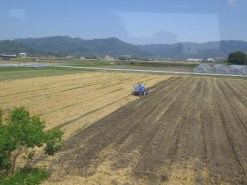
As we catch the train out of Arita, I see the fields of over-winter barley are being harvested now. They were looking very ripe and going to head when we trained into here 5 weeks ago. The stubble is being ploughed in in preparation for the next crop. The other fallow fields are being flooded and ploughed ready for the next rice crop. The weeds and purple flowering, nitrogen-fixing ‘vetch’ that has been allowed to grow in the fallow period needs to be turned in as a green manure. It all looks good from the window of the train as we speed by.

IMG_3709

When I was here 8 months ago the rice was being harvested, now it’s the early, over-wintered’ barly coming in, with the summer rice being planted.

The circle of life turns. I suddenly feel the need to get back to my own garden and do all of the weeding and planting that I know will now be needing to be done. Annabelle Slougette has been working in our pottery and keeping the place under care-and-maintenance for the past 5 weeks.

I can hardly wait to get home, now that I’m starting on the way back. I’m consoled by the beautiful bento box lunch on the train. It helps!

IMG_3685

fond regards from Southern Japan


A Visit to the Organic Sake Brewery

Having taken an interest in drinking sake. Well, you have to don’t you? I’m in Japan and I just want to fit in, so I’m keen to learn about sake. After doing the workshop in Kintsugi gold lacquer porcelain repair. We got to talking with our teacher about all things Japanese, and it turns out that he and his wife have a friend locally that owns and runs an organic sake brewery.
We have arranged a date and they are expecting us. We get the full tour. This lovely old wooden building is the original structure, but the thatch roof has been replaced now. The building is over 150 years old and the young man who shows us around is the 5th generation of his family to be running it.

The water for the sake fermentation is drawn up from a deep well down under the brewery.

The water here is really clean, as it is located well away from any industry, surrounded by steep hills and deep valleys. It rains a lot and the rivers here run powerfully. The granite hills are flawed with millions of tiny cracks and fissures. The water percolates deep into the granite hills and seeps down into the water table.

IMG_3620 IMG_3622

The rice used for sake making comes from all over Japan. Each district has its own specific character and is used to make different styles of sake. Some are polished more then others to improve the taste and mouth-feel. We also learn that there are innumerable different strains of sake yeast. The life long training and study of Sake making is just like the study of vinology. Learning to match the different yeasts and rice strains to get the best result from the current years rice crop.

As this brewery is a small family affair, they are very flexible in their approach to getting the best result. Everything is done in small batches, so many different brews can be produced during the season.

IMG_3625 IMG_3635

The equipment used is a combination of the antique and the hi-tech. The giant press is still the original one, where as some of the modern filtering and pumping equipment is stat of the art.

IMG_3633 IMG_3634

It’s a beautiful old wooden structure. I love the antiquity, the wabi/sabi well-used and loved atmosphere of it all. The sake is excellent too!

IMG_3637

We buy two different bottles one medium and the other dry. We are warned that because there are no preservatives used in the manufacture and bottling, unlike commercial sakes, we should keep the sake in the fridge until use and then drink it fairly quickly after it is opened.

That won’t be a problem!