In which we decide to go way up North to the DMZ and look for Mines
I read somewhere that The DMZ still has somewhere around three million land mines, even after 50 years. We decide to go there anyway. We only want to see one mine. The place we are going to has a fearful reputation of strict control of its natural assets. We know where it is located. The Place has a web site. Miss Kang has rung ahead and spoken to the lady in the office. We can come and make a brief visit. The Centre has a Museum and a Research Facility.
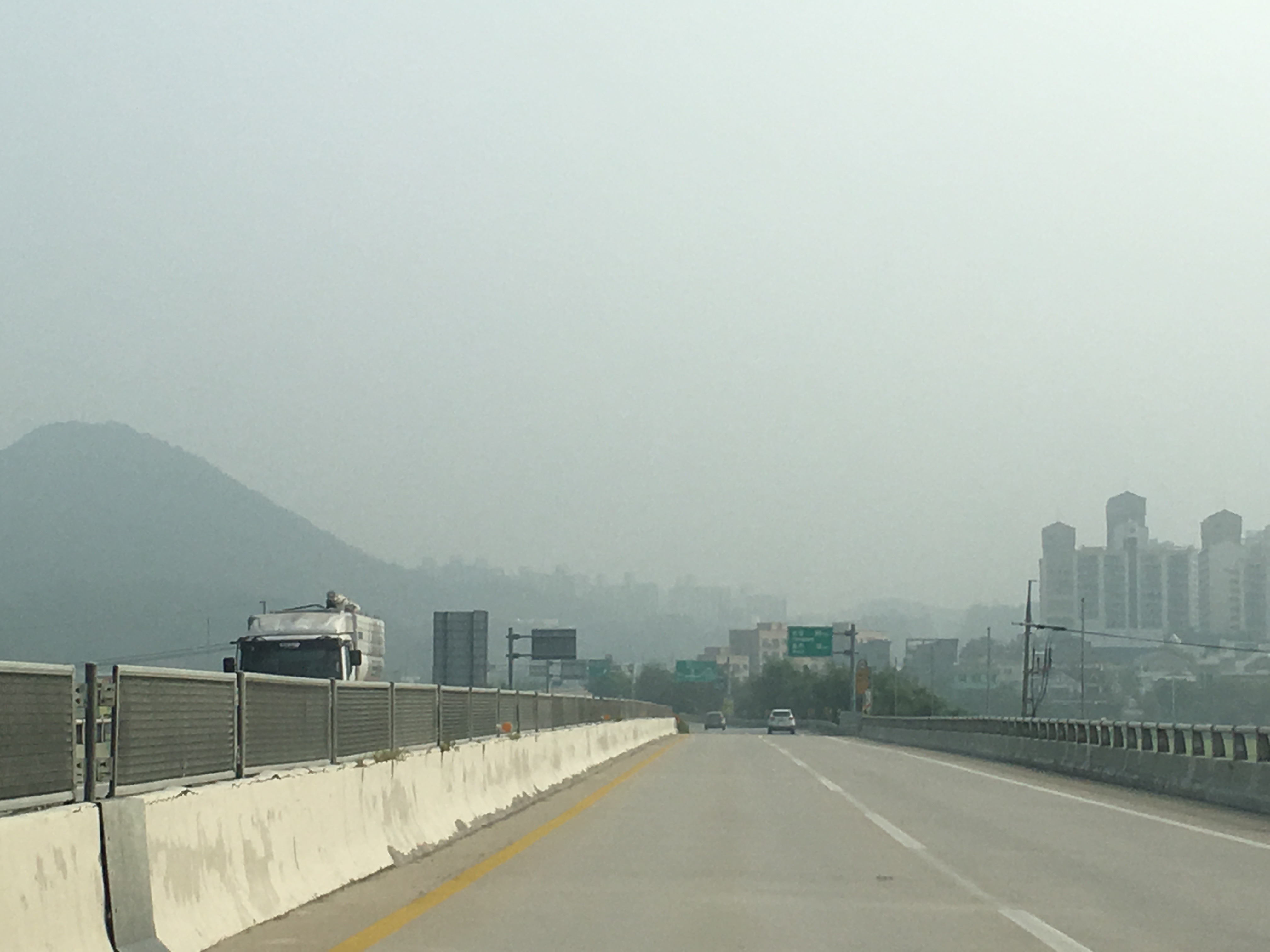
It all sounds very worthwhile visiting. We set off up the coast. At one point, we drive along the shore of the Ocean. I wave at the waves and say ‘Hello’ to Australia, a long way away, on the other side of the ocean. I feel just a twinge of home-sickness at this point, after almost a month away.
It’s another long drive. Miss Kang copes with it very well, just like all the long drives that she has done. I am so lucky to have found such a resourceful person as a guide. We chat sporadically to pass the time. It develops that Miss Kang is a fan of eighties video games along with her partner. I ask if they play pokemon-go?
The answer is a fast NO! They prefer the older 80’s and 90’s generation of games and the consoles that they were played on. Collectors items.
Along the way, our conversation does reveal an amazing fact about Korea – unintentionally. It appears that no-one can play the modern version of pokemon-go in Korea. The Government hasn’t exactly banned it outright. It just hasn’t allowed any detailed maps of Korea to be published or released electronically on the net. It appears that this is because of some sort of paranoia about the use of these maps by North Korea should there be an invasion? Not too sure about this, but this is what I think that I understood?
Because there are no interactive e-maps of Korea, the game won’t work, as it relies on live internet access to e-maps to function. However, there is one anomaly. The detailed e-maps of Japan exist and pokemon-go is very popular in Japan. It just so happens that one of the digital maps of Japan has a square that just covers a part of Japan in its lower south-eastern corner, but also extends out over the sea to cover just a fraction of one Korean city at the opposite side of the square in the upper north-western corner.
Because the detailed electronic map exists in Japan and it has information about this place in Korea. It turns out that this is the only place in Korea that you can play Pokemon-go. The city was soon invaded by extreme numbers of young people on weekends. They would travel down to this city, just to play the game. The City council soon became aware of this as every b&b, hotel, motel and camp site, in the vicinity was booked out solid for months.
The mayor stepped in a took control. He got himself a pokemon-go character outfit and made all his public speeches and appearances in that get-up. He became the character for publicity purposes. He encouraged the players and welcomed them to his town. Making it as easy as possible to get to his town and to spend money there. The place hasn’t looked back. It’s booming! Just his luck to be included accidentally in the far corner of a Japanese map and he has made the most of it for his community.
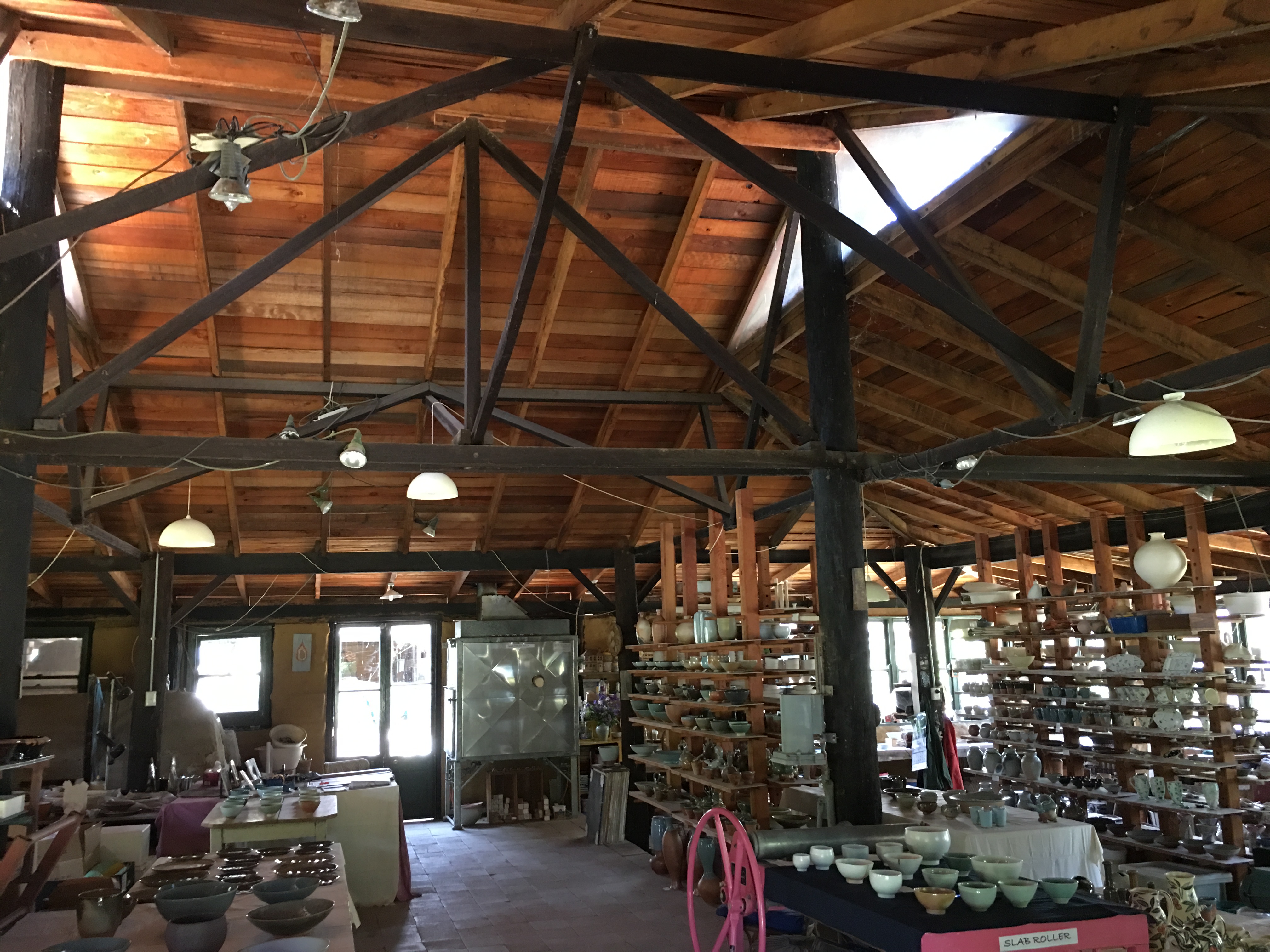
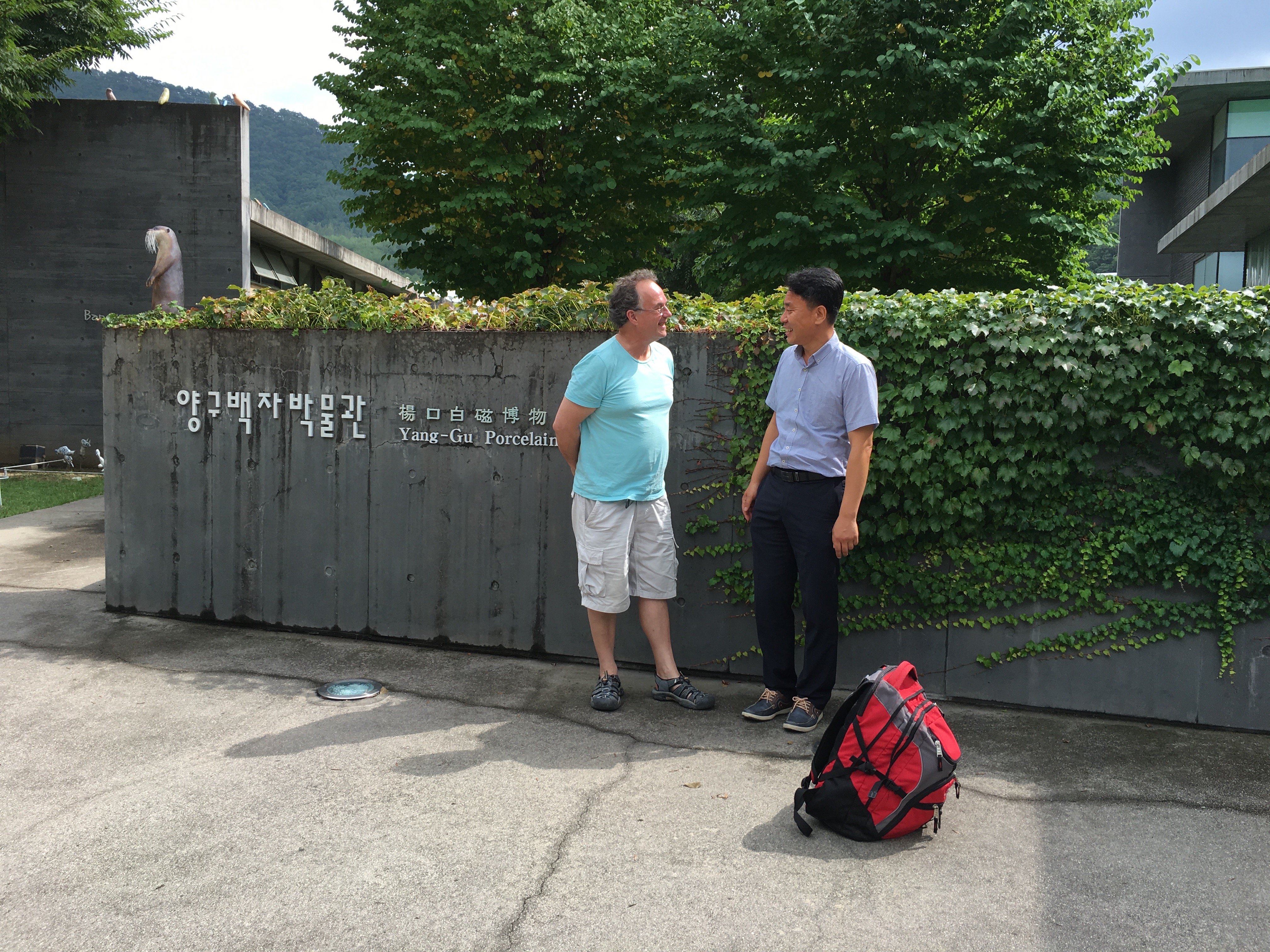
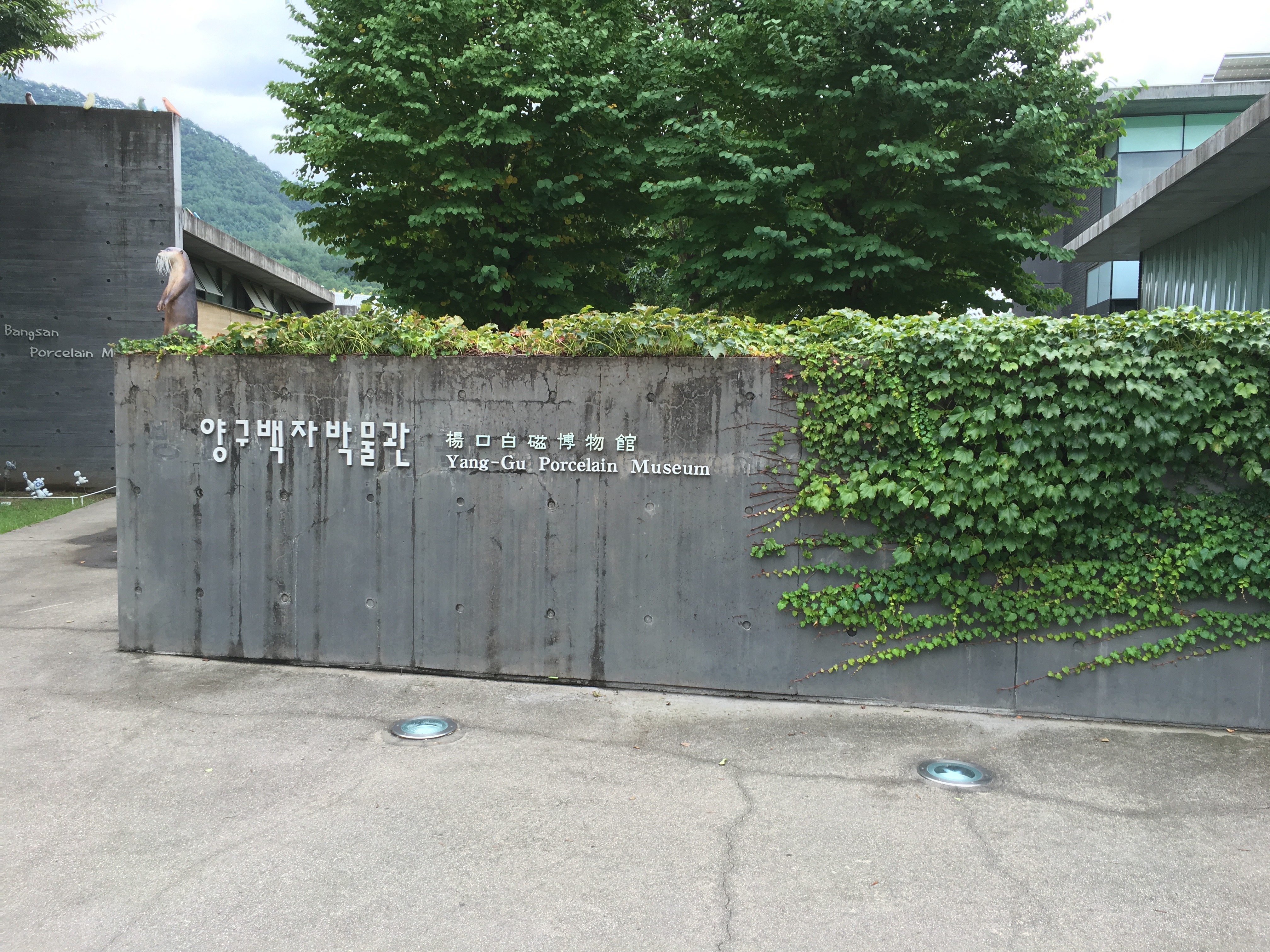
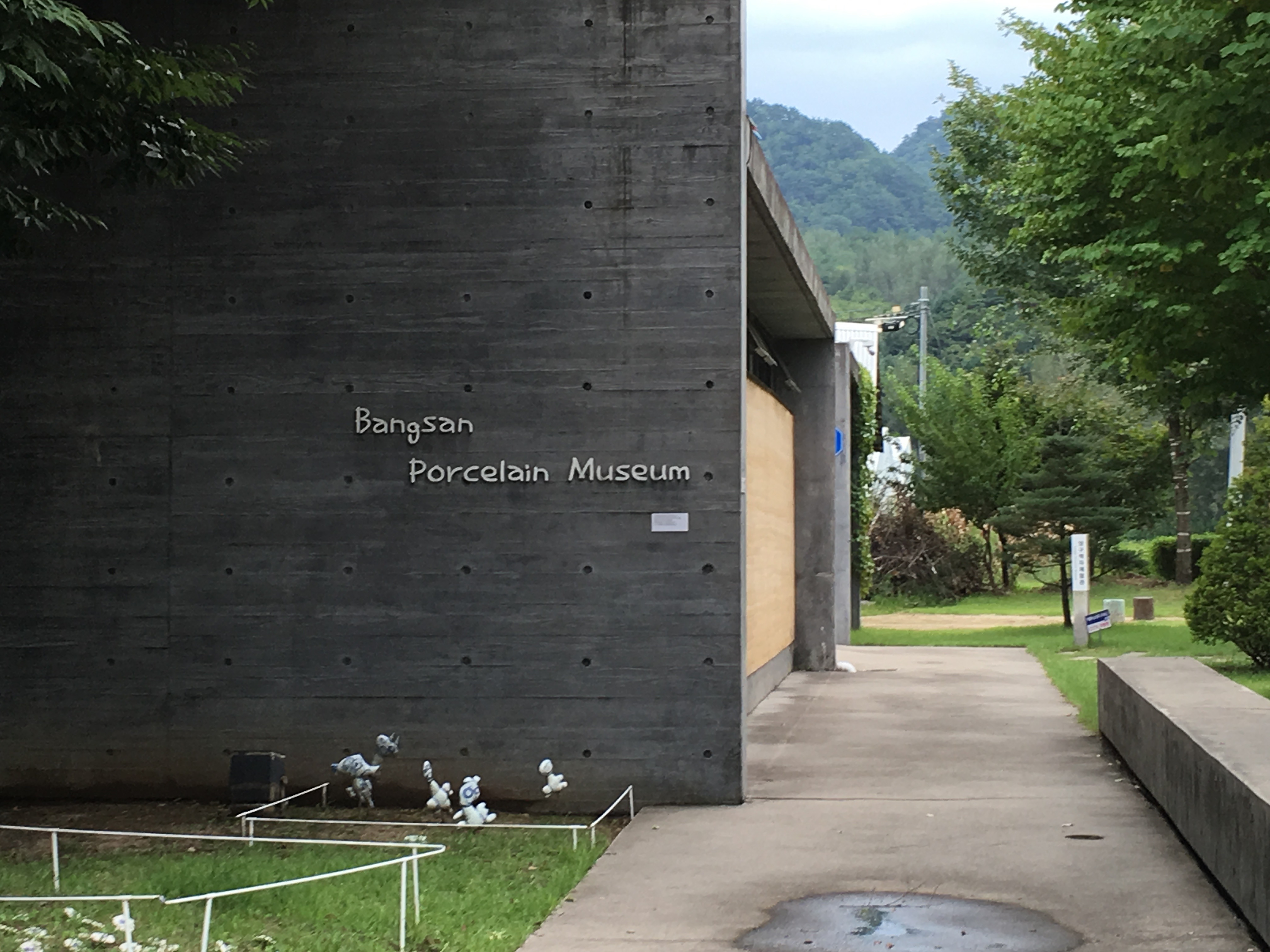
Conversation gives us wings and the time soon passes and we are there in this small town, right up on the Northern border region, up against the DMZ. The Museum is a very Modern affair, Concrete and glass minimalism.
We walk into the front office past a lady weeding the pavers in the courtyard garden. As we walk into the office, she gets up and follows after us and welcomes us. She is the receptionist. She hasn’t been wasting her time waiting for us. She is taking pride in her workplace. We are invited to sit on the lounges while she makes a phone call.
Eventually a man comes into the foyer and greets us. He has an open, friendly face. Tall, slim, elegant and handsome with a confident demeanour and a welcoming smile. But! He looks like a busy man. I get the impression that we should make this quick. Miss Kang does her thing. Introducing us and briefly explaining our mission. The man doesn’t show any reaction at all that I can discern. I can see this becoming a repeat of our experiences of a few days ago.
Suddenly, he gets up and walks out, up the stairs. I’m at a bit of a loss. Few words have passed between them. There is no translation, but she only says to follow him. We do, and the stairs lead up to an office. We are asked to sit at the desk. He positions himself on the other side. He looks a bit bored. Certainly non-committal, but he listens to Miss Kang expand on her introduction. I can discern particular words like ‘Australia’, ’single-stone’ and ‘baekja’, which I recognise as the Korean word for white porcelain.
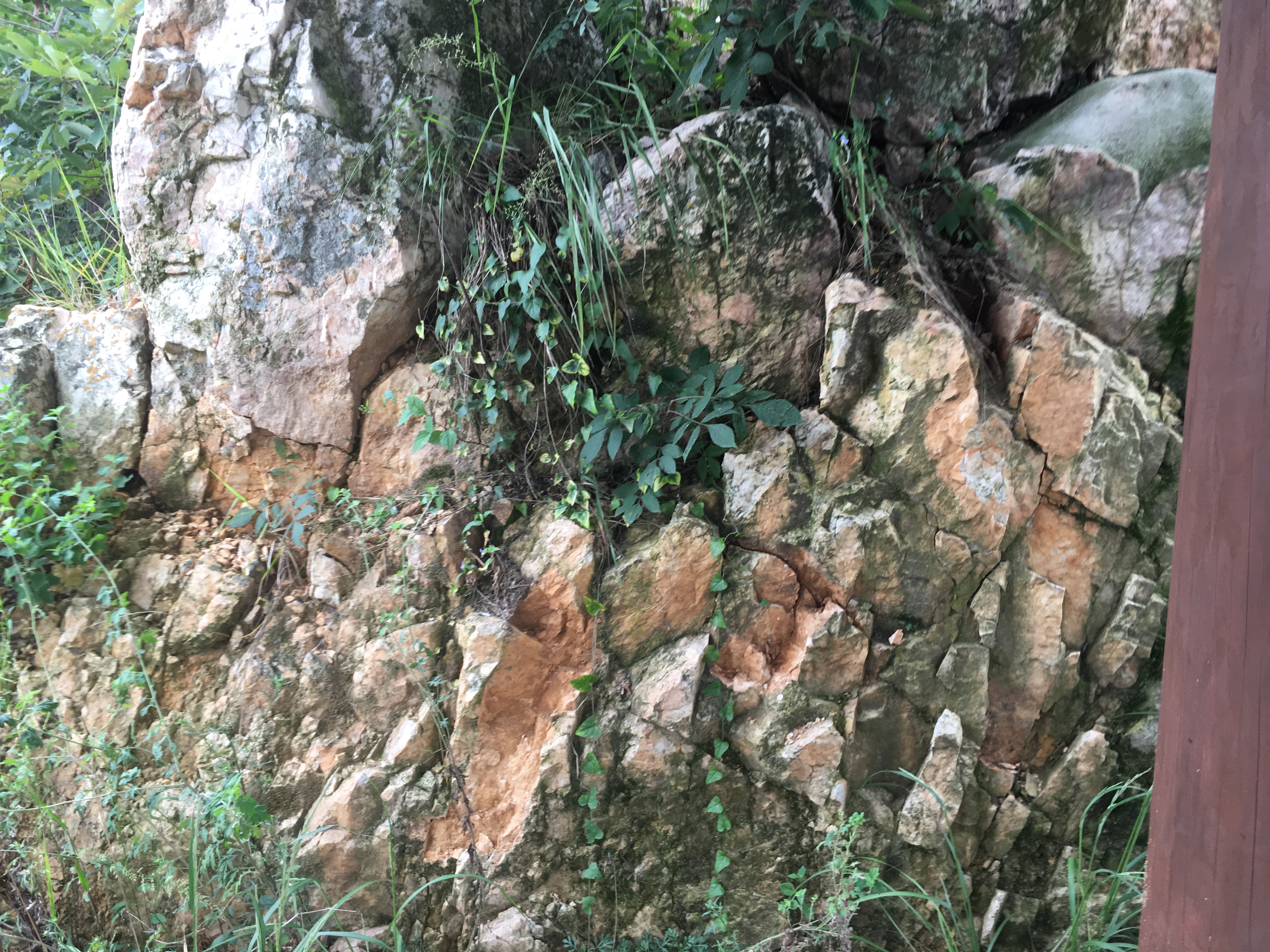
While they are talking, My eyes wander around the office. A few porcelain pots on a shelf, some old-looking shards on another. A book-case full with journals and magazines. Then right next to me on the shelf by my shoulder I see 3 large white lumps of porcelain stone. One of them is iron stained along the fracture cracks by water staining. A man after my own heart.

Miss Kang is addressing me now. I return my gaze to The Man. He is apparently the Museum Director. He is interested to know more about my project and my intended exhibition. I explain to him through the medium of Miss Kang, that there are 5 countries in the world where I know that porcelain was invented independently. There may be others, but this is what I know. I have been to each of these places and worked on-site to make porcelain pots there and intend to have an exhibition of ‘5 Stones’ in Sydney in 2017. He listens blankly at first, then smiles and tells me that he is also collecting samples of every porcelain stone. Where are my five sites located. I tell him that I have been to China, Japan, Cornwall and now Korea. That’s only 4 he comments. I tell him that there is also Australia. He smiles. “I didn’t know that there was any porcelain stone in Australia!” There is, I tell him, because I have used it to make my own native, single-stone, local porcelain. He looks at me a little bit surprised.
“And what about Cornwall?”
I tell him of my visits to Cornwall and my collection of kaolinised granite from this historic site. I tell him of my research and the various sites where information can be found. I write it out for him on his writing pad.
William Cookworthy, Tregonning Hill. 1745. He ‘navers’ it on his computer. This is the same as ‘googleing it here. ‘Naver’, is the Korean equivalent. He scrolls and clicks for a while around on his screen. He turns to me and says through the medium of Miss Kang. That he didn’t know anything about these two porcelain sites till now. How did I learn about them? I tell him that I found William Cookworthy by googling him. All the web sites are in English, so it wasn’t hard to find.
Suddenly, we are engaged at an equal level of common interest. We are connected by the same quest. I’m stunned, he’s amazed. He brightens up when I mention my 5 stones show. He tells me that he has spent his life collecting samples from all over the world. He is building a comprehensive collection of porcelain stone material for the Museum here.
Could he please ask me for a sample of my own stone. Of course he can, I’d be very pleased to send him a sample. I even have a couple of fired sample pots with me in my pack. I get them out and pass them across his desk. He examines them closely over a few minutes. He is taking in every detail. I can tell that he knows what he is looking at. This is so different from my earlier Southern experience, where, when I offered my pots for examination, they were pretty much summarily ignored.
We exchange name cards. The Director’s name is Jung, Du-sub. He takes us on an extended tour of the of the facilities. It is all very extensive and modern. It is a museum, a research facility and a teaching institute. The Museum has a large collection from the 16th Century up to contemporary works. We return to Director Jung’s office. He regretfully informs me of the rule that no stone or clay can be taken away from the site. It’s not his decision. BUT! He can offer me something else.
There is no rule about taking fired pots from here. He will offer me a place in the artist-in-resident program that they run. He retrieves his pad and starts to write out a possible program for me.
“When do I leave Korea?”
“Next Friday, a week away.” It is now Saturday evening.
He plots out a possible program for me. If I start throwing now, this evening. He will keep his TA staff on site till late in the night to give me support.
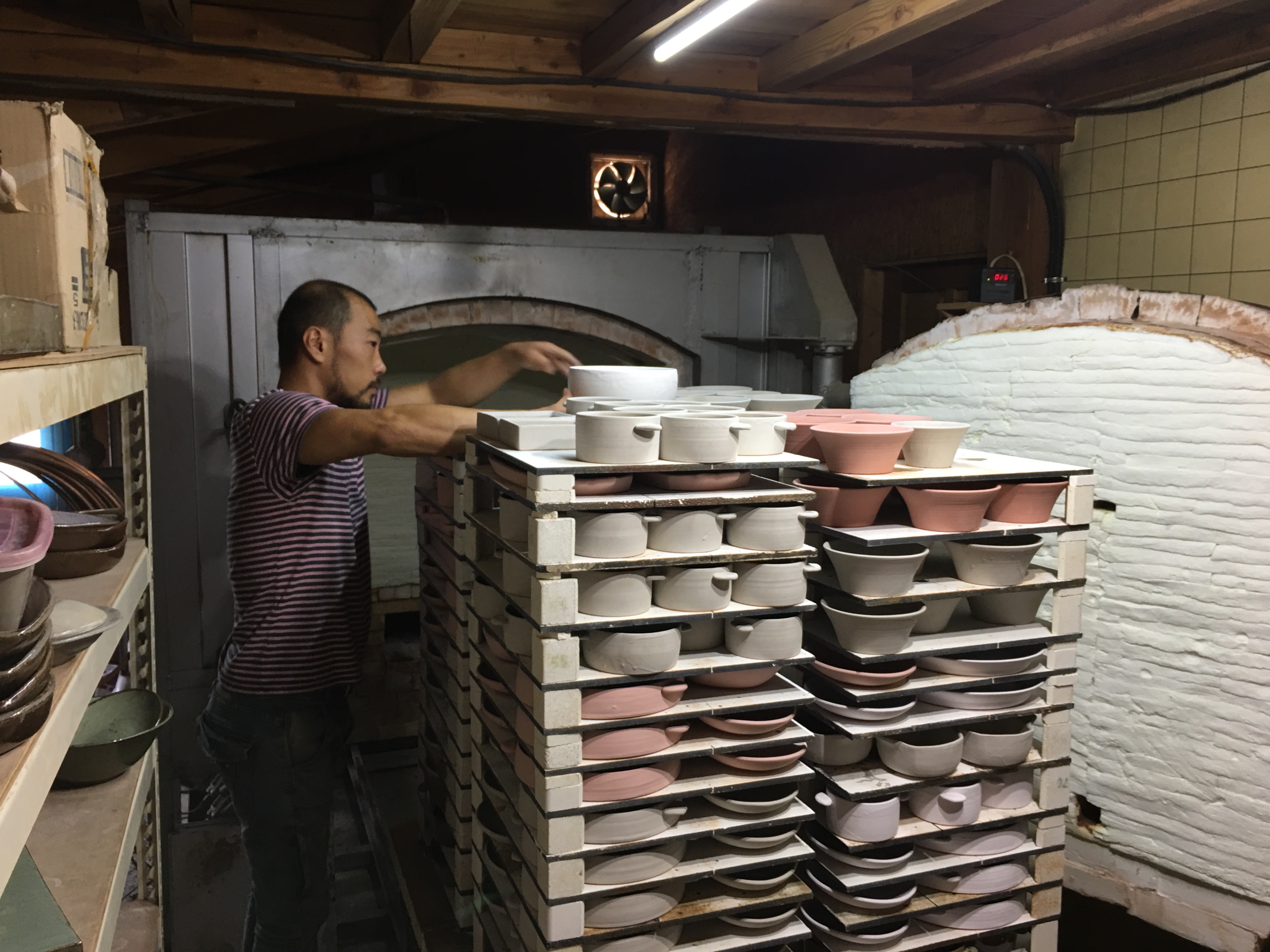
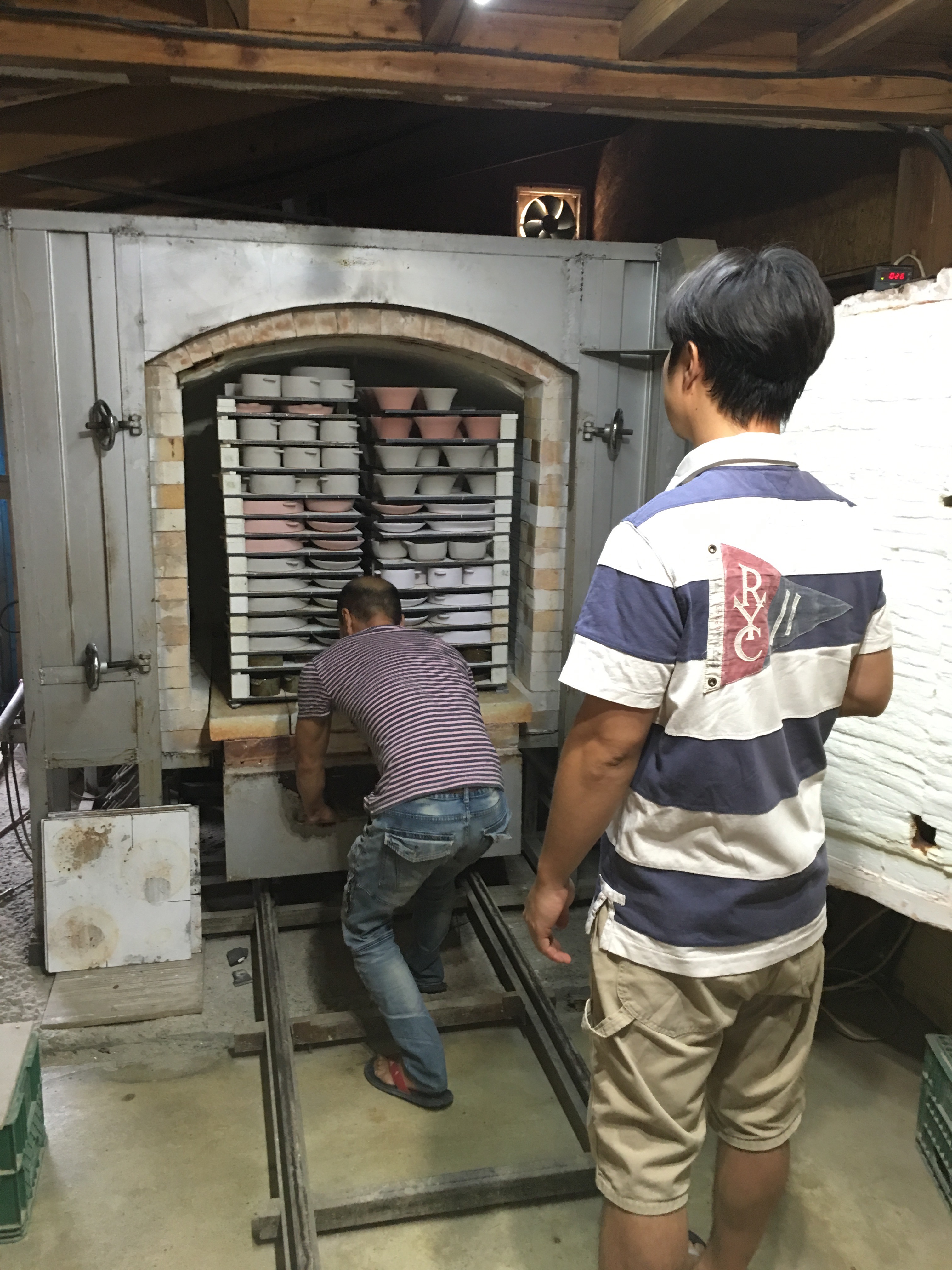
If I throw my work now. I can turn them tomorrow, if we force dry them with a fan and a heat gun. He will arrange to have them bisqued during the week and then glazed and glaze fired, They will be out of the glaze kiln on Thursday lunch time. Can I come back then and collect them on Thursday? Then I will be able to take the pick of them away with me in my hand luggage. I can get to the airport to catch my plane out on Friday. I’m stunned, amazed, thrilled! This man is really thinking creatively and being very helpful to me. I can hardly believe it. All this will be totally free, if I agree to donate one of my pots to the Museum. I agree willingly. Miss Kang rings Jun Beom to tell him that we will still be away for yet another night.
I look at Miss Kang. Can she stay another day? She nods, Yes!. This ‘short’ road trip is becoming bigger than Ben Hurr! Can she bring me back here next Thursday as well? She will have to make a call and get back to me. She goes out to make a call, but is soon back and nods.
Yes, she can bring me back on Thursday.
The residency program offers free accommodation as well as workshop access and firing. He will arrange to get us both separate rooms in the newly refurbished student accommodation building. We will be some of the first residents to use the rooms.
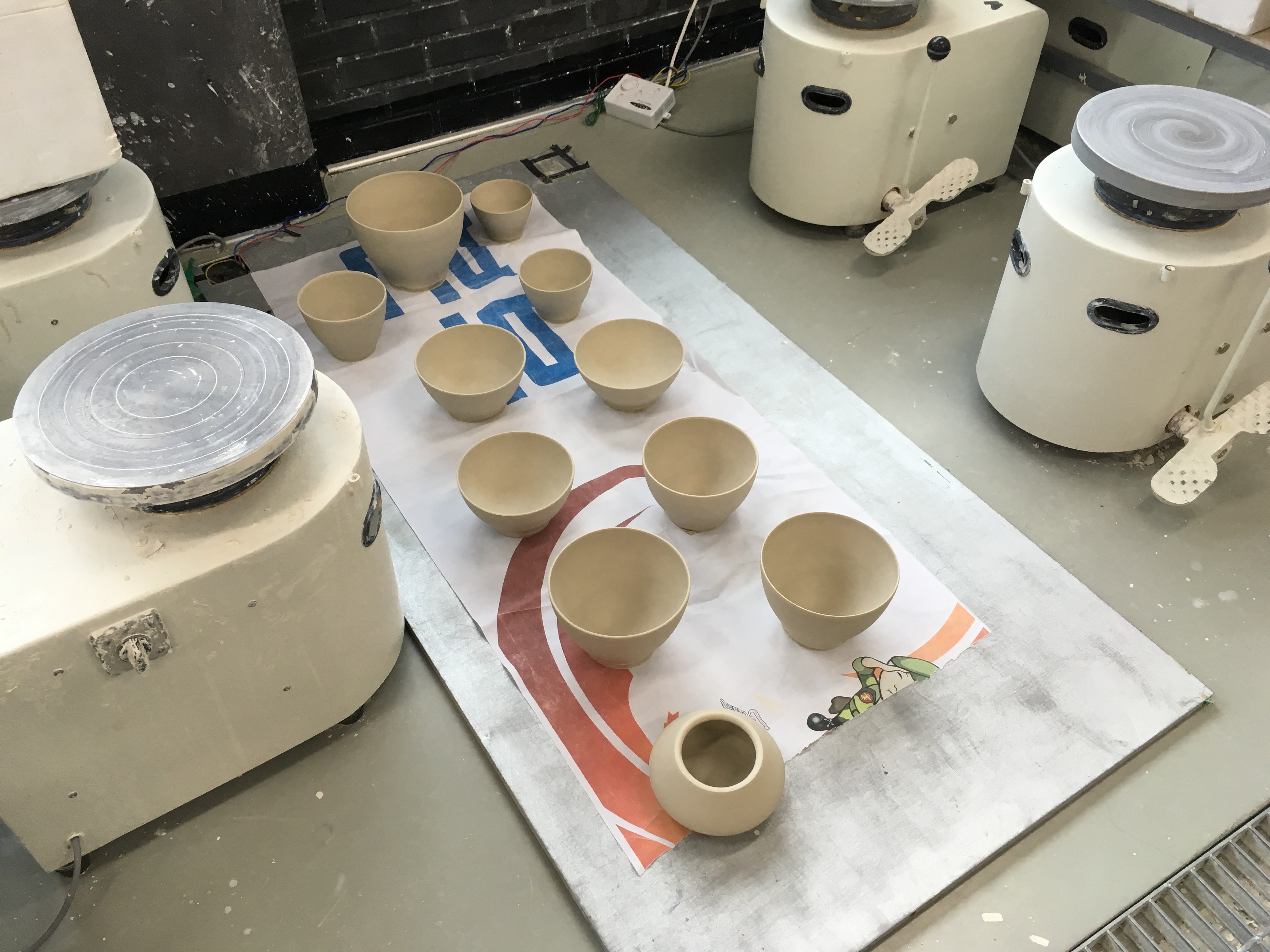
I get started on my work. They give me a metre of freshly pugged clay. I make 10 bowls of various sizes, while Miss Kang sits and waits. Most of the time, she is glued to her tiny screen. Occasionally, stopping to take a few pictures of me working. She is still working for me at all times it seems.
I finish my throwing and take Miss Kang to dinner, she selects a local place that is only walking distance away. It has been recommended by Mr. Jung. We go and it is very nice. The usual fare of a bowl of rice each, a dish of soup to share, served along with several small dishes of pickles and other vegetables. It all looks really delicious. I can’t help taking a photo with my phone. I look up and see that Miss Kang is taking a photo of me, taking a photo of the food. We both laugh.
The residency building is very new. To the level of still smelling of fresh paint. The floor is heated. I find the boiler room near the entrance and turn the heating down to 22. I know that I can live (or sleep) with that. I get a beautiful hot shower and make my bed. I go to the bedding cupboard to find that there are 4 blankets and a pillow. No mattress. I lay 3 of the blankets, folded double down to make a bed and keep the last one for on top. I sleep well enough.
When I wake, there is a fresh bottle of water outside my door with a note from Miss Kang. She has been up early and gone to the 24 hr. shop in the village. I shower and put all my old smelly clothes back on. I have run out of everything except knickers and hankies. I put my singlet back on inside-out to get another day out of it.
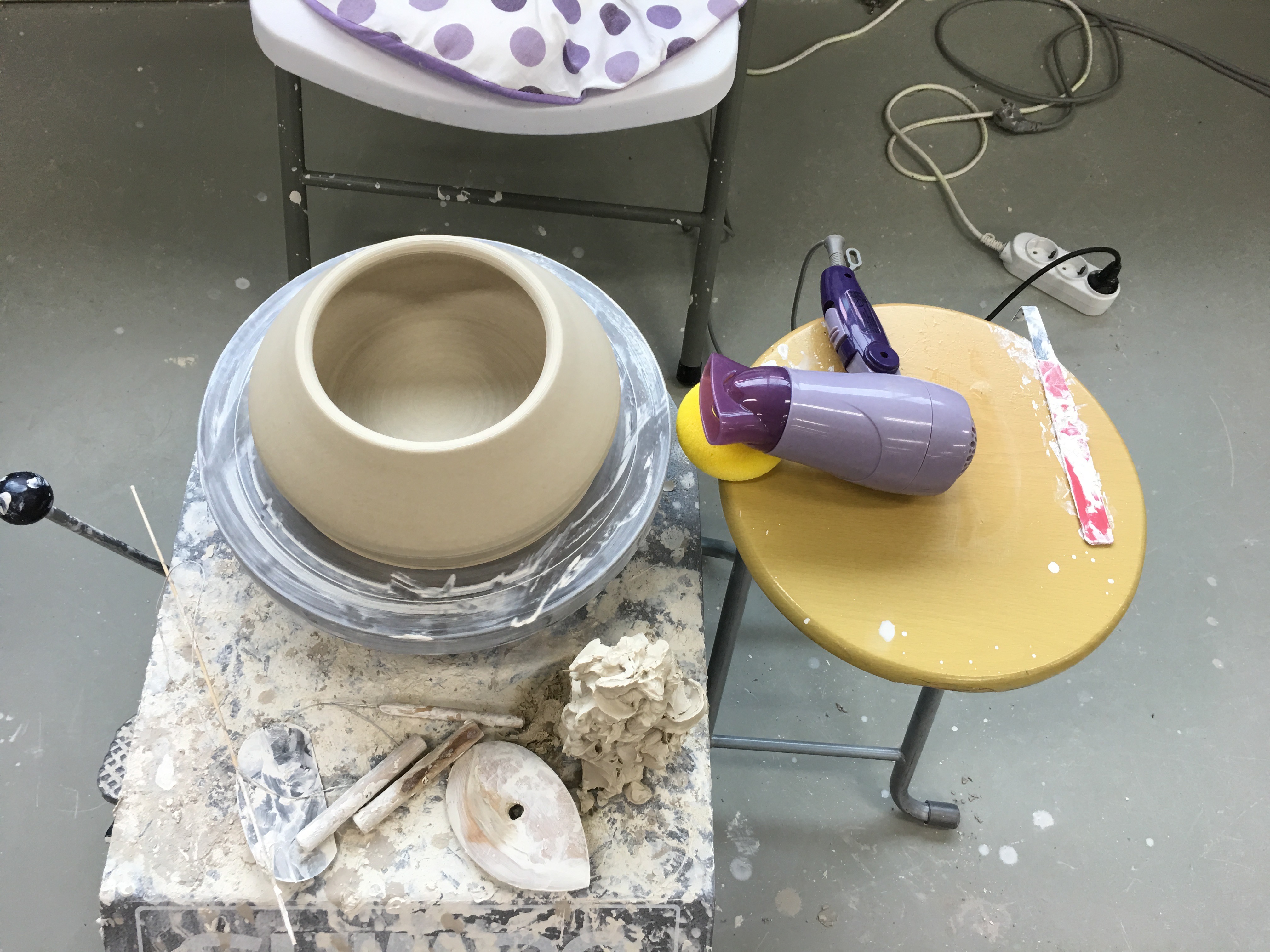
We drive back to the Museum via the 24 hr. convenience store for a coffee and I start drying my pots with a hair dryer, then a heat gun appears and I use both to dry the heaviest of my chucks first, so that I can get started with the trimming. It all goes pretty well.
This clay has been beautiful to throw and turn. It’s one of those beautiful combination of plastics and non-plastics that works perfectly. Plastic enough to spiral knead, which is unusual for many single-stone miller rock bodies, most work best with cut and slap wedging method. There is just a hint of resistance from the milled stone component. I learn later why this is when we sit down together and exchange some technical details of our work.
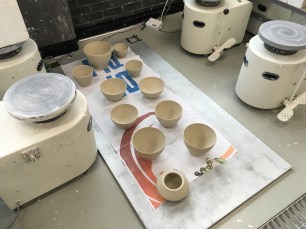
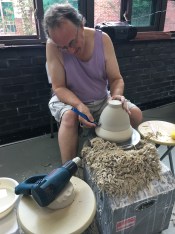
I turns beautifully with no chipping or tearing, but with only a slight tendency to ‘chatter’ when it is a bit too soft. Like all single-stone bodies, it turns best when almost dry. I don’t have that luxury here – or anywhere else on this trip for that matter. So I push on with the turning doing several repeat thinnings as they dry. Mr Jung’s technical assistants are very thoughtful and attentive. A heated drying panel appears and my work is transferred onto it, then a fan is brought in and set up. Luxury under duress. I really need to get this done. I can’t ask Miss Kang to stay away from her home for another night and force her to return to the convenience store for more personal apparel. I need to get this all done today.
I get half of my bowls turned, when Mr. Jung appears. He drops in every hour or so to check on my progress. He checks the weight and thickness of my work. I sometimes see him out of the corner of my eye gently rocking/juggling a bowl to asses its weight and balance. He very carefully runs his fingers down the wall to asses the profile. He seems satisfied. I respect this gentle man. He knows what he is doing. He is positive, creative and supportive. What more could you want?
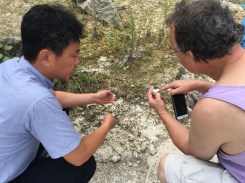
He says that he would like to take me to the mine site to collect some samples of the porcelain stone. I really want to go. This is very important to me, but I also need to get these bowls turned today. I look at Miss Kang. I may need to stay another night to get all this done. How am I ever going to get it all finished? I get a ever-so-brief look that flashes across her face in a micro second. It’s not even there. It’s gone, but I saw it pass. It informs me ever so gently that we are going home tonight. She has had enough! However, she also wants to see the mine as well. She has started to take an interest in my project over this week of total immersion. Poor thing!
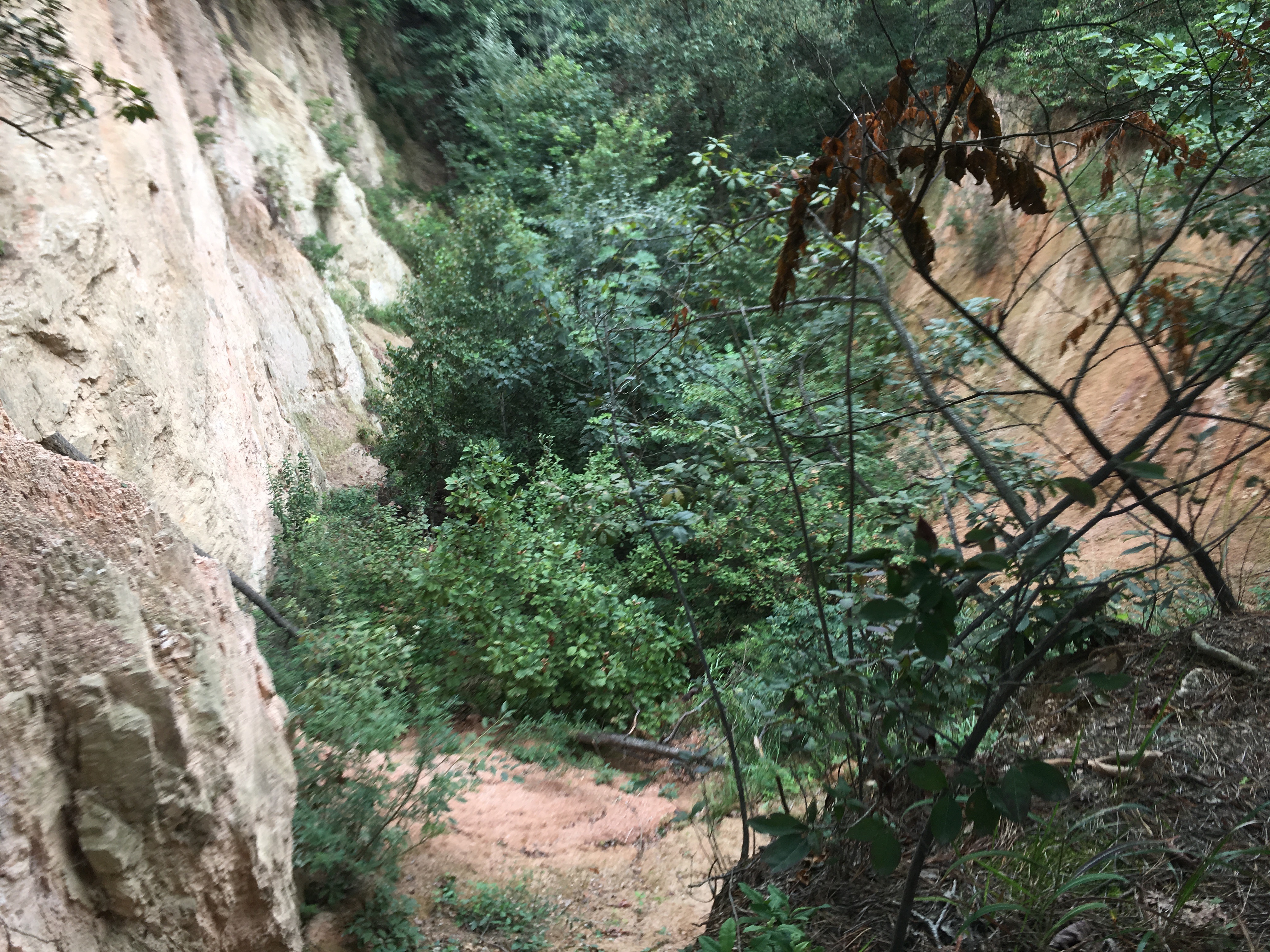
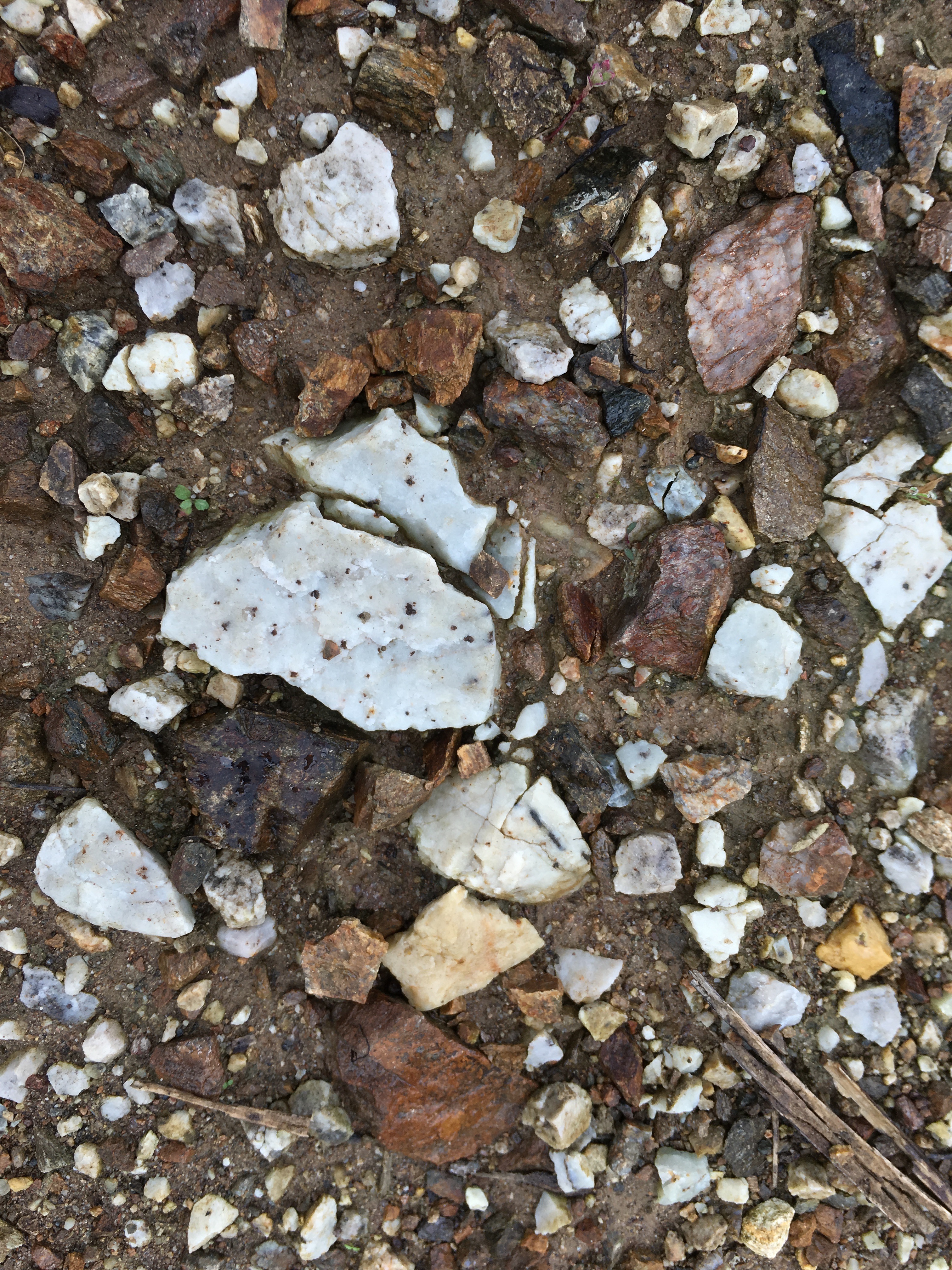
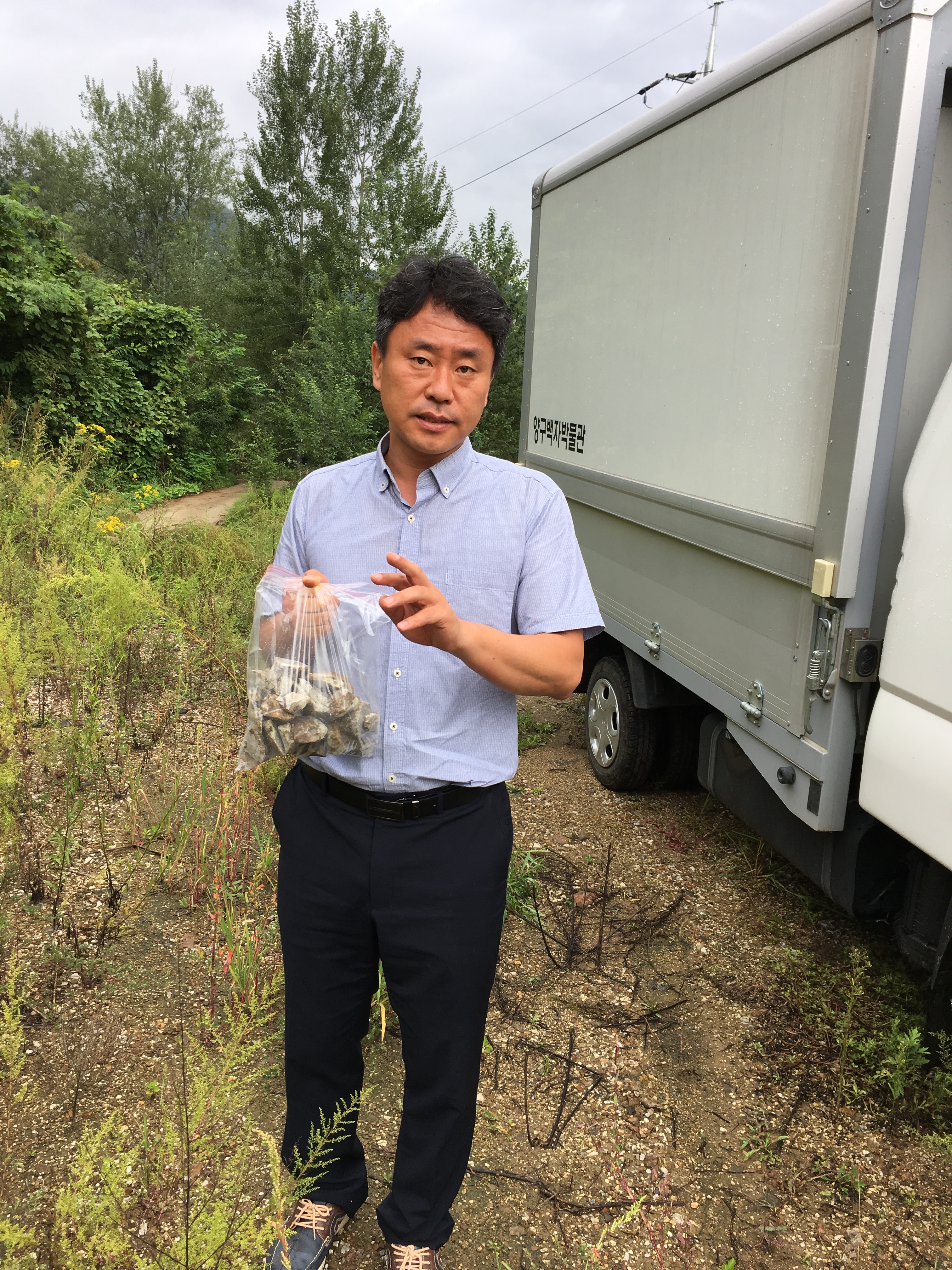
We go to the mine in the company van. It’s a very large site where porcelain stone was stored and sorted for hundreds of years since the 1600’s.
Does my arse look big in this quarry?
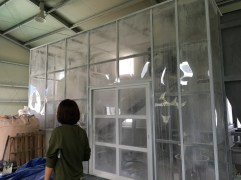
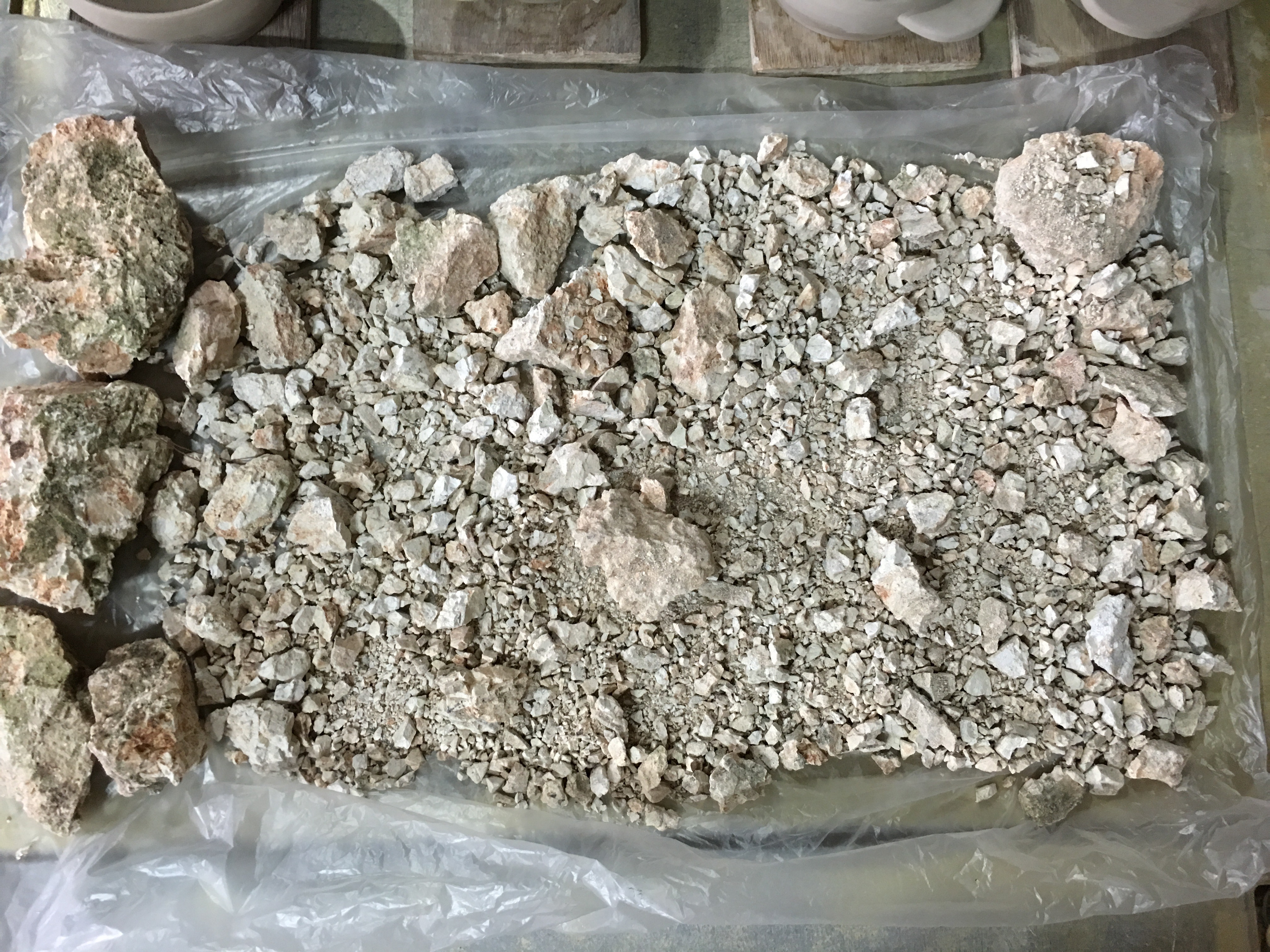
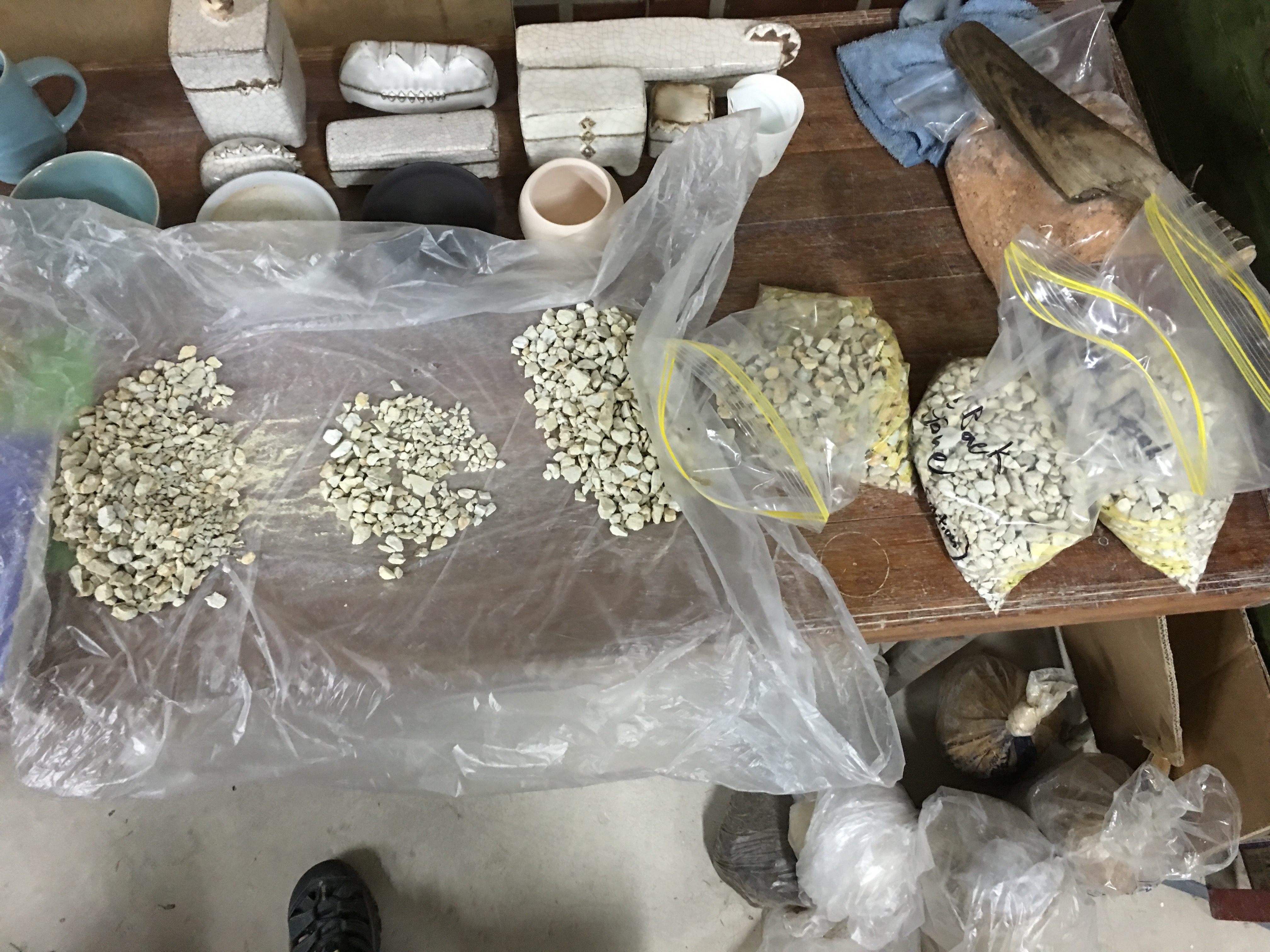
We fill a couple of bags with nice pieces and then My Jung drives us to the clay making facility. It is very modern collection of machinery. The crusher is completely enclosed in a plastic sheeted room of its own to control the dust. Then there is the ball mill, slip tanks, electro-magnets, slip storage, filter press, vacuum pug-mill and then the bagging area and stored to age, ready for use. It’s an enviable clay-making piece of kit. It is sort of what I have, it’s just that mine is in micro, compared to this, and all my gear is home made or bought second hand when I was lucky enough to see it up for sale. Small, laboratory sized crushing equipment doesn’t come up on the market very often in Australia. I have spent a life time of opportunistic scavenging to get all my equipment together in my shed. Then of course there is the expense. I had to do all of this on a shoe string budget. Thats probably the main reason that it has taken me 40 years to get it all assembled. This, on the other hand, is a purpose built shed and all brand new machinery. Oh for a budget like this!


My Jung takes us to lunch. It’s very generous of him and quite unnecessary, but greatly appreciated. On the way back to the Museum. I ask Mr Jung why there is so much loud music and amplified talk radio blaring out from loud speakers through the village. He replies through Miss Kang, that it is not local radio. It is in fact North Korean propaganda that is being piped out over the border.
The border is only just over the hill here. It is only hundreds of metres away. The noise goes on forever. He tells me that no-one really hears it any more. “We are just oblivious to it now. It’s just background noise to us.” luckily I can’t understand a word of it, So it really doesn’t mean anything to me either. It’s just noise to me too.
My Jung promises to post me some samples of clay and stone. It can’t legally done in a straight-forward kind of way apparently. Or so he thinks, but he is not sure. No one appears to have tested it. Mr Jung says that he will post me the samples, but labeled as kaolin and not porcelain stone, just to be sure that there isn’t any problem. He has done this with other academics in China and Japan. I really hope that he does. I’d like to have them. But I will have the work, so it really won’t matter that much. It would be just the icing on top for me.
By 5.30 pm. I have finished my turning and clean up my turnings and wheel. Sweep the floor and sponge everything down. We are ready to go. My Jung asks us to have coffee before we leave. I think that it is a good idea if Miss Kang is to drive for a few hours into the night. He asks me again if I will send him samples and other technical data that I might have about my Australian single-stone. I confirm to him through Miss Kang, that indeed I will. I have given him the unglazed and wood fired bowl that I have with me in my pack. He has prepared a contract for me to sign.
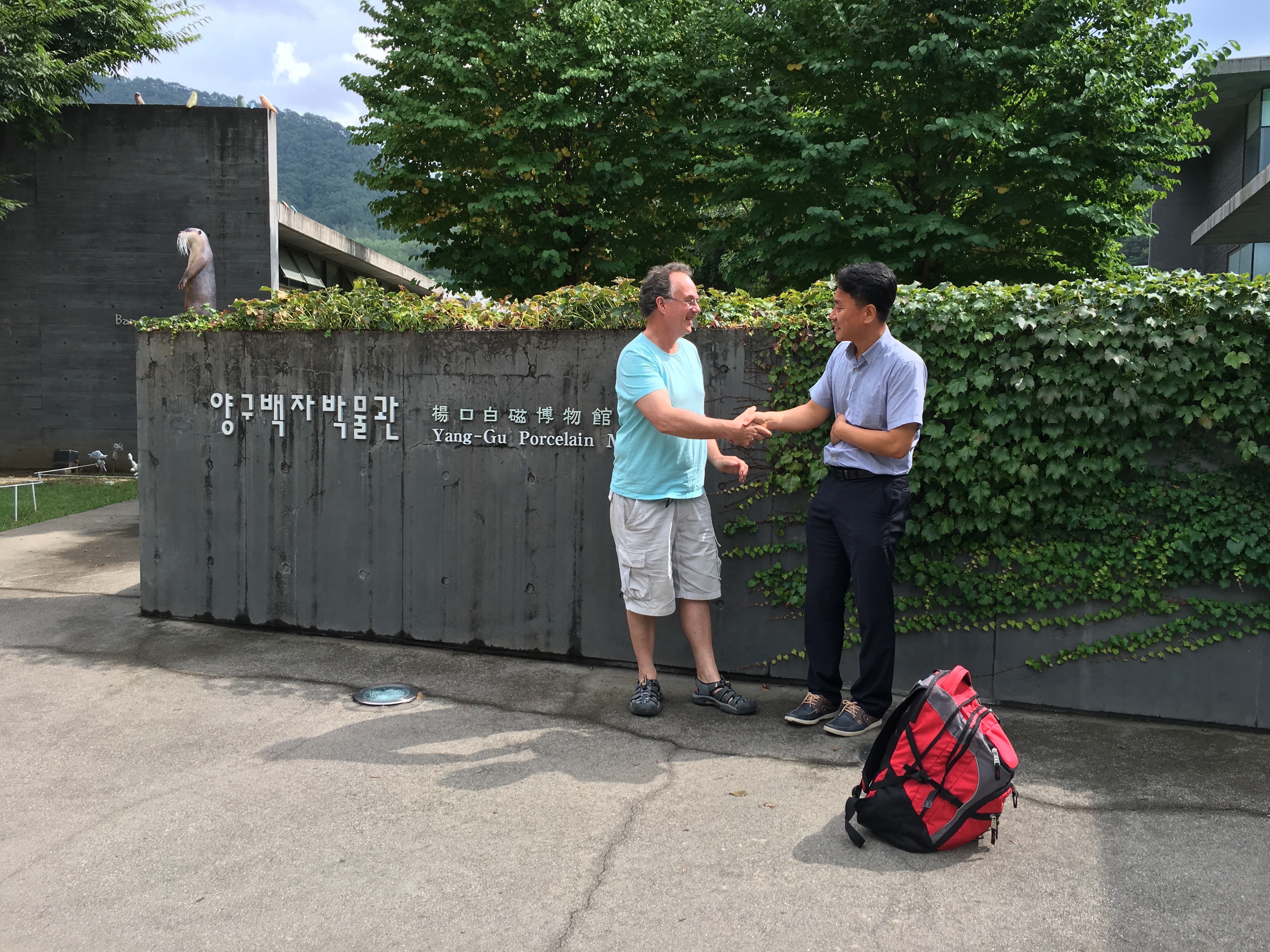
His assistant appears and I duly sign it and I get a presentation copy to keep in a rather plush folder. This is to make it all legal. I will also donate one of my works that I have made here as well, once they are fired. I say that he can have first choice of my work when it comes from the kiln. We all nod in agreement and it’s smiles all round.
This has all turned out so much better than I could have imagined. I’m so happy!
We sit and make small talk for a bit, then Miss Kang tells me that Mr Kang wants to talk to me about Tregonning Hill. He has been doing some research of his own. Have I been there? Do I have a sample of the material? Do I have an image of the site …. and the mineral?
I answer Yes to all of the above. I get out my phone and show him the images that I do have on me. He scrutinises them carefully. We make more small talk. I think that it is getting late and we have a long way to drive, or at least Miss Kang does. Then after dropping me off in Yeo Ju, she still has another few hours to get herself back home to Seoul.
Why are we still here? There is some discussion going on between Miss Kang and The Director, Mr Jung. Eventually, Miss Kang turns to me and says that Mr Jung would like to ask me a favour. I say yes, of course.
He asks me through Miss Kang if I would be prepared to give him a sample of my Tregonning Hill stone. Of course I would. That is absolutely no problem for me. I will post it to him as soon as I get back home, along with a sample of my own local Joadja aplite. He heaves a sigh of relief. Smiles, and says thank you! He has been building up the courage all weekend to ask me this. It is finally said and the air is cleared. We are all happy.
We really need to get going now. We get up and head for the car. He sees us to the door and we get into the car. Miss king takes some time to call her boyfriend, then Jun Beom and set the navigator app for home. As the car turns and starts to pull out. I see that Mr Jung is still waiting by the door to wave good-bye. I wave back and must say that I have a twinge of emotion to be leaving a place where I had absolutely no expectations of any kind. Or if I did, they were probably negative, going on my past experiences and the warnings that I had been given.
To find such a nice, welcoming place, run by such a creative, flexible open-minded person. This is amazing. It’s quite beyond my attempts to put words to it. Then to discover that he has the same interests as me in collecting samples of single-stone porcelain We both didn’t know that each other existed before now. It’s been a very positive meeting of minds. Even though our minds were filtered through the medium of the wonderfully patient Miss Kang.
Miss Kang drives us through the night and I eventually arrive at my old airB&B room quite late. I find that there are 5 guys there tonight partying out the back with beers and a BBQ. It’s quite late, but they insist that I join them. I say OK, but just for a short time, as I am very tired. They have run out of beer, but have moved onto some sort of strong white spirit. I decline, thank you very much. Then one of them comes out with a chilled bottle of fermented rice wine. I’m OK with this, as I’ve had it before.
There is still a lot yet to happen this night, but that is another story.
Fond regards from Steve in Korea















































 Tonight my Fingers Smell of Garlic
You must be logged in to post a comment.