Kita- a Japanese Mountain Village

Janine and I are currently on the indigo trail. We have visited two indigo workshops in Kyoto and one in the north in Mashiko. Today we are making the trip to the Miyama Valley and the little village of Kita. This is rumoured to be a very pretty village of thatched roofed houses a few hours north of Kyoto in a mountainous region. although this sounds gorgeous, it is not the real reason to search it out.

The valley isn’t on any main road or train line, so the trip can be quite a long one, even though the distance isn’t particularly great. The isolation of the village has been its saving grace in terms of architecture, as not much has changed there in a long time.

We are advised to allow 3 to 4 hours for the trip. We can’t know the exact time, as we don’t know all the service times and connections. The journey will involve 2 train journeys and two bus trips. As it turns out, we seem to end up catching the wrong train, even with advice from the tourist information bureau. Our train stops a few stations short of the station that we need to get to in order to connect with the next train. We are a bit lost and bewildered by this, so by the time we get to ask the station master which platform we need to be on to get the next train north, he tells us that it has just left on the other side of the station.

This is a bit of a bummer, as the next train isn’t for another hour, then we need to connect with a local bus, that connects with a much smaller local bus to get us up the mountain to where we need to be. Our incompetence with the language and life in general puts a bit of a limit on our travels sometimes, but our optimism and luck is a good counter-balance on many an occasion, so we make the best of our situation. We decide to sit in the sun outside the station, but on the way out we see this sign.

IMG_1418

Luckily for us we have time to burn, so I decide to try and decipher it. Luckier still, it has some English on it. We march back in and ask the station master. He nods, Yes, the bus departs from outside in half an hour and goes direct. It has nothing to do with the railways. We will have to work it out for our selves. We sit and wait in the sun and as 10.30 arrives, a big coach pulls into the parking area. I wander over and ask in my clumsey, half-baked, abreviated Japanese. “Miyama desuKa”. The driver nods, “Hi desunae”.

It’s all good. We’re off again.

As it turns out, it just happens to be the first day of the summer tourist coach service company’s new offering to run a coach from this station to Kita village direct. It turns out to be a very comfortable one hour luxury coach service. As I remember, it cost us just $12 each. Excellent!
DSC03157

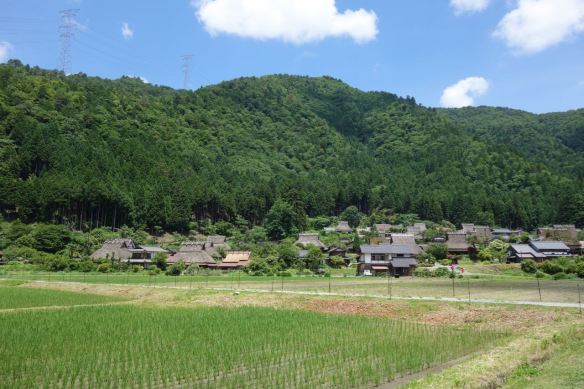
We arrive in the village cool and relaxed. As we desend from the bus, the driver is there at the foot of the steps holding a sign in Japanese that i can see has the time 15:30 written on it. I understand from this that we had better be back here a few minutes earlier than that time. I look at the driver and point at the ground at our feet. He nods. Here!

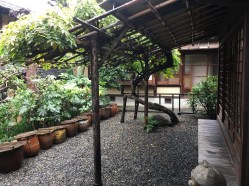
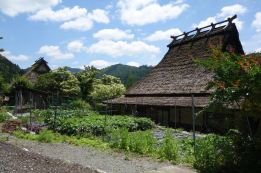
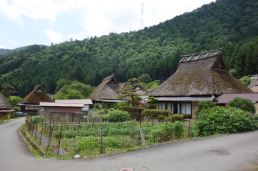
The village looks beautiful. I love Japanese thatched roofed houses at any time. The loverly and I made the pilgrimage to Shirakawago village up in the snow country a few years ago. That was a great experience. Staying overnight in an ancient thatched roofed minka house was a real cultural experience. The ancient lady who owned the ancient house cooked us a lovely multi-course dinner from an ancient recipe. I wrote about it at the time, it will be here on this blog back in the ancient past-posts somewhere, so I won’t bore you with it again here. Only to say that there are some similarities with Kita.

DSC03158

DSC03176

The big difference between them is that where as Shirakawago is all a ‘level 2 national trust preservation environment’, so nothing can be changed, up dated or altered, only maintained as-is. The up-side there is that you have to pay a fee to enter the ‘National Park’ status environment and all the money goes to the village to pay for it’s up-keep and re-thatching. Here in Kita Village, everything is privately owned and all the buildings are just peoples ordinary houses. The residents are farmers and some are commuters, so there are signs everywhere to remind us that we are on private property and not to disturb the residents or try to enter gardens or houses.
DSC03189

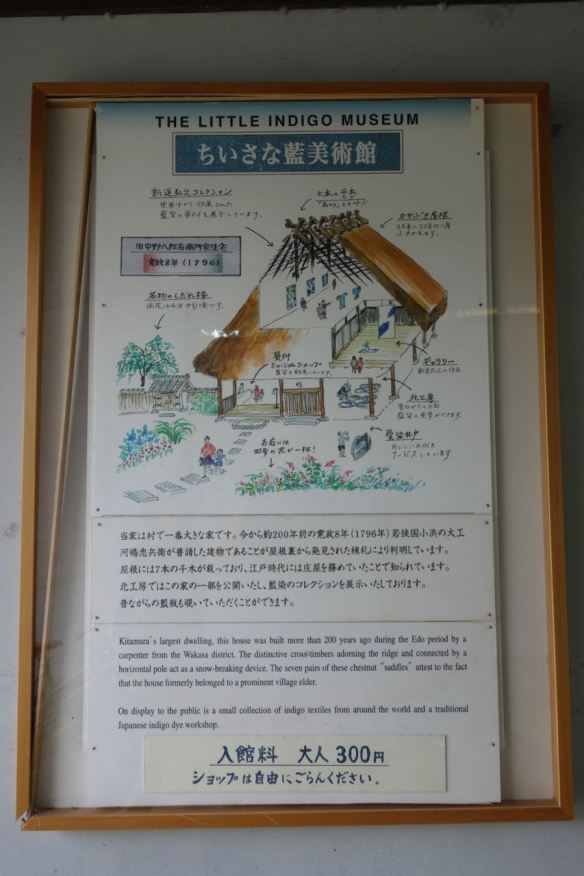
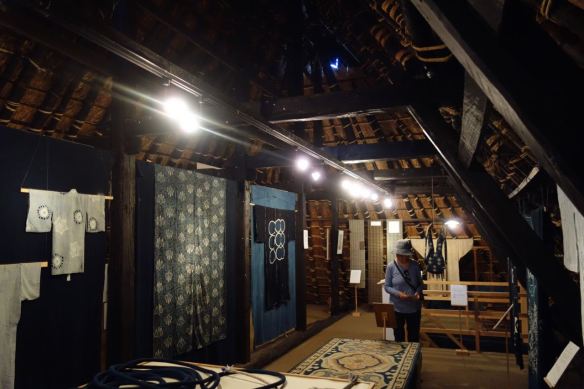
Kita is beautiful, but the main reason to come all this way is to visit the ‘Little Indigo Museum’. Hiroyuki Shindo came to live here many years ago to site his indigo dyeing workshop here. He has been working here ever since. His museum is situated at the top of the village and was once the village Headman’s house. It’s a large house with room for him to raise his family in one half, while his workshop is in the other side of the ground floor. His private museum is located in the roof, and what a beautiful roof it is. All bamboo poles lashed together with rice straw rope. A traditional thatched roof is a truely exquisite piece of craftsmanship.
DSC03226

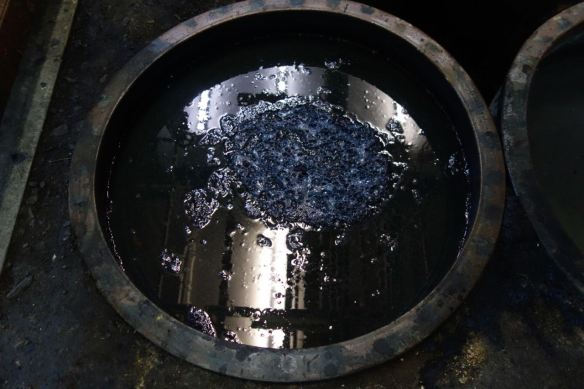
Shindo san is an internationally recognised indigo dye artist and luckily for us, he is a really nice guy who speaks quite good English. We get a tour of his workshop and some work in progress. He shows us how he winds the cotton fabric to get a striped effect in the dye bath and also shows us a finished piece of the work.

DSC03193

DSC03198

We buy a small piece of his work, We have to think small as we are in the first week of a 5 week journey and we have to watch our weight limits. Interestingly, Shingo san’s daughter is a potter and has her own show room on site. However, unfortunately, she is away at the time and the show room is closed.
DSC03176 DSC03260

Most of the houses have vegetable gardens in their back yards, it’s a nice place for me to wander, being a bit of a back yard gardener myself. The village has a restaurant – which you have to make advance booking for. That counts us out. Luckily for us it has a small cafe as well, right at the top of the hill. They use ‘illy’ coffee too, so the coffee is the best that we have had in Japan. The owners have spent time in Italy and the cafe is called the ‘Milan’ cafe.

We make our way back down the village and walk along the river to the bus stop, it’s quite idyllic. one of the beauties of living in a small village is the trust that the locals have for each other and everyone else here. The bus stop has a bunch of cushions provided by the residents for everybody to use while waiting. It’s a beautiful gesture.

DSC03286

The Fabric of Japan

After we leave the Aizenkobo indigo workshop, we walk back to the main road and cross over to the Kyoto Archaeological Museum. It’s a small un-assuming building with a couple of exhibits on two floors, plus a research library. It’s free and quite informative of the local city archaeology. It dates back to the earliest inhabitants tools and objects, through the early ‘Jomon’ ceramic period, up to more recent periods. I liked it. We spent an hour in there.

Back out onto the road and we walk back to the big intersection where I know there is a big textile museum. I walked up to this part of town in the 80’s when I first came here. I remember, more or less where it is. The Nishijin textile museum is quite interesting, but not as interesting as being in an indigo artist workshop. We watch an old lady weaving with gold thread on an old wooden Jacquard card-programmed, semi-automatic loom. She is very quick at it after a lifetime of practice. We watch for 15 minutes and she gets just 1/4″ of an inch completed. She is working with some hundreds of threads per inch. it is unbelievably fine work. God only knows how much this length of fabric will end up costing? It’s destined for someone’s very special kimino I suppose.

We stop there for lunch in their cafe. Miso, rice, pickles, tempura and tea, all simple and just what the doctor ordered at 2.00pm after a long walk and a busy morning.

IMG_1939

We walk back across town and wait for a bus to take us halfway back to the city centre. This time we are heading for the Kyoto Shibori Museum. We find it easily, first time. It turns out to be exactly where I thought that it might be according to the map I have. I see it’s distinctive facade at a distance as we walk down the street. It looks a bit cheesy at first entry, but the girl at the door speaks really good English and welcomes us in, explaining what goes on here and how she can help us.  As well as being a private, family-run museum, they also teach Shiburi classes here, but that is not what we are looking for today. We want to see their private museum upstairs. We pay the $5 and she takes us up to the next floor so that we can watch an introductory video. We know next to nothing about shiburi techniques, having never attempted it, just a little general knowledge, so it is all very informative for us. It’s a really good video, well done and primes us to go into the museum to look at all the examples of what we have just seen on the screen.

IMG_1334

IMG_1335

A detail of a tightly knotted piece before dyeing.

This stuff is insane! We can’t believe what we are seeing and handling. This ought to be impossible. But here it is being done right in front of our eyes. The guide tells us that it is getting harder to get done, as a lot of the people trained in doing this are very old and are dying off. Soon there will be very few people left that are capable of doing it properly.

It’s a dying trade. Just like so many other skill-intensive craft-based industries. This loss of skill is not unique to here! But while it’s still being produced, it’s a joy to see and handle.

IMG_1340 IMG_1339.

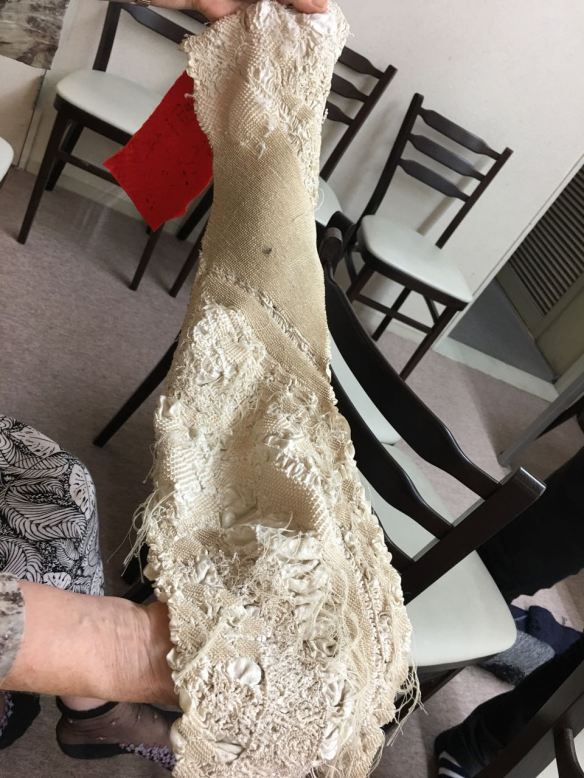
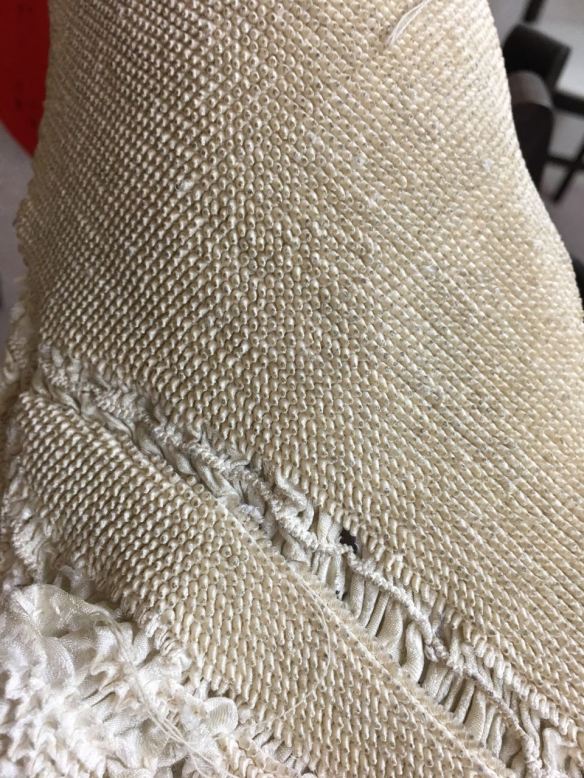
This white, tightly-bound Gorgons head of fabric becomes an amazingly compact stretchy scarf after dyeing and un-binding.

What an amazing experience to see a whole lot of techniques explained in such a short period of time. I loved it. I was informed, educated and entertained.

Wow!

Magnitude 6 Earthquake

Janine and I find ourselves in Japan for a short time. Just in time to be here in Kyoto to wake up to a magnitude 6 earthquake, very exciting!
It’s the second time that I have been here and experienced an earthquake. Luckily we are staying in a 200-year-old wooden building that has survived worse than this, but it was exciting. After the 60 seconds of violent shaking and rumbling that started off slow and then increased to a maximum crescendo, the building was left rocking for another minute until the energy slowly dissipated.
We went down to the ground floor where we met our host in the corridor. I asked if we should go outside, but she said NO! We’ll go and watch it on TV and see what has happened.

I’m totally amazed that within 60 seconds of the quake dissipating the TV channel was broadcasting automated quake readings and a map showing the epicentre just to the southwest of us. It was a magnitude 6 and centred between Kyoto and Osaka. They even had live video coverage from the top of major city buildings showing the degree of  the rocking and shaking of the tower.

I’ve experienced 3 earthquakes and 2 of them have been here in Japan. We were in Mashiko just a few weeks before the big earthquake and tsunami at Sendai that caused so much devastation in that area and the ongoing radioactive problem that still isn’t fixed.
Interestingly, both times here in Japan I have been here with Janine and she has either been in the bath, or this time just returned from the bath, with only just her flimsy cotton ‘yakata’ gown. She was understandably reluctant to run out side! So I’ve learnt something, beware when Janine has a a bath, the earth can move.

The third earthquake was at home in Balmoral Village in 1976 or 77. It was short and sharp and came and went with a sudden ‘crack’ sound. It rattled the window panes but little else in the house. I rushed outside and every bird noise had stopped. It was almost totally silent – except for the sloshing sound of the water in our big water tank outside, up on the tank stand. Ten tonnes of water sloshing back and forwards in the tank. That took many minutes to slowly dissipate. It takes a lot of energy to move 10 tonnes of water so violently.

We are fine and so is everything and everyone else in this city it seems. It’s just another magnitude 6 quake. Just another day. We look forward to seeing a lot of pots, potters, pottery shops and galleries,  and eating a lot of sushi in the coming days.
Everything normal.

Colour, Sound , Movement, – then Stillness

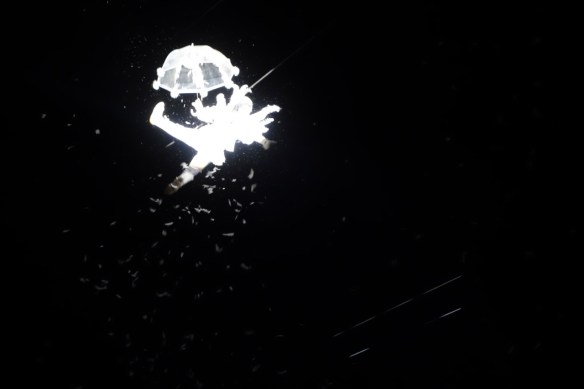
We have recently been in Adelaide for the Adelaide Arts Festival, the Fringe, Writers Week and finally WOMAD. It’s our annual holiday, Art pilgrimage and music fest binge. A really engaging, thoughtful and enjoyable couple of weeks. Womad was the best that it has ever been. There was a really captivating event staged each evening over the stage 1 area involving ‘angles’ working on high-wires high above the crowd, dropping feathers as they went about their angelic business. First, a single angel with white umbrella casting a few feathers to the crowd.

DSC02985

Appearing one at a time, the ‘angels’ floated across the dark sky, initially dropping hands-full of feathers, then more of them, one with a suitcase dropping fists-full. As the performance progressed, there were several angels some with huge barrels full of feathers that they set free in the spot light and the breeze.

DSC03035

The performance progressed, with a giant inflatable ‘Putti’ angel dancing with them in the sky. More and more angels appeared on multiple high wires and distributed ever more feathers to the audience below, so that by the time the one-hour performance was coming to an end, the entire sky was filled with angels, beautifully performing their ‘angelus’, distributing their feathery messages to us on the ground in our eathly domain. Their delicate messages slowly fluttering effortlessly to the ground.

DSC03012 DSC03003

DSC03017 DSC03028

Error
This video doesn’t exist

On the ground, the ‘angels’ danced and cavorted amongst the crowd in a haze of floating feathers while the putti hovered above.

DSC03061

Finally as the music slowed, the angels stood up on some elevated platforms and each took a bow.

DSC03072

DSC03102

It was a really delightful surprise, totally engaging and truly spectacular, as I had no idea what was going to happen, I just went with it. I think that it was the best one-hour performance that I have experienced there. Funnily, It wasn’t as surprising or spectacular the 2nd time around, but I still enjoyed it.

I did wonder who was going to clean up the many cubic metres of feathers from the park.

In total contrast to this spectacular and very loud musical event. We also went to see Kirsten Coelho’s show at the Jam Factory, as part of the 2018 Adelaide Biennial of Australian Art. In almost total darkness and absolute quiet we arrived early in an empty room to view this very beautiful installation. From furious activity to quiet contemplation.

IMG_0423

Beautiful.

Later in the week in Kyoto

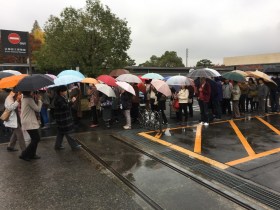
It’s a dull overcast Sunday morning, so we decide to stroll over to the National Museum. On the walk it starts to shower a light sprinkle of rain. A good reason to spend half the day inside the temple of culture, keeping dry and warm. Unfortunately everybody else in Kyoto is thinking the same thing, only they seem to have set off much earlier than we did.

So, by the time we arrive at the museum in mid morning, there is a queue zig zagging back and forth across the quadrangle, like the ones that you have to wait in at the air port bag drop. Then the queue isn’t finished yet, it snakes out of the gates of the museum and meanders up the street. Right up the street! I can’t believe what I’m seeing. Fortunately, there are plenty of security on hand to direct the glacially slow passage of humanity up the street.

Just for our information, we decide to follow it all the way around the corner and into the big car park, were it does another airport style flail. We don’t bother to follow it in there, we’ve see enough. This will be at least a four hour wait in the rain.

It does make me ask myself, what is so important in there that all these people are prepared to wait so long to see. All we know from the posters, is that it is a show of some National Treasure items. I don’t know exactly what they are, but they must be important.

 IMG_9059

We decide to keep walking past the tail end of the queue. We’ll come back another day.

The Kawai Museum is just around the corner, so even though we have been there a number of times before, it’s still an interesting slice of history and there are some lovely pots displayed and some of the items are changed each time I’ve visited. I’m still impressed by the mans individuality and amazing creativity

IMG_9076 IMG_9080

IMG_9084 IMG_9088

IMG_9091 IMG_9094

IMG_9104 IMG_9113

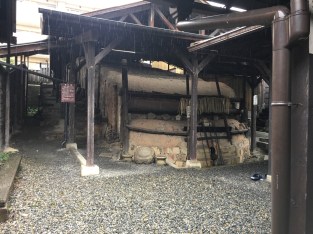
It’s a beautiful old kiln. I’m still amazed that they were able to keep on firing it right up until the mid sixties, right in the heart of the city like that. The kiln has a longer history than just Kawai. I was told that Kawai inherited it from one of his teachers and then built his house in front of it. It was far too big for him to fill alone, so he rented out space in the kiln to other local potters. The kiln was fired on the same day in the month, every month. All the potters knew the date to turn up and fill their own pre-booked space. It provided Kawai an income, and the local potters a chance to get their work wood fired. The house he had built is not a typical Japanese house. It was designed by Kawai to reflect his particular taste and has some unusual features.

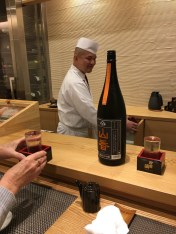
It’s lunch time by the time we finish up with Kawai. We walk up the chawanzaka street and start to look for a place to eat. Everything is so full that there are waiting queues out side. We keep on walking. We decide to head for the Museum of Cloisonné, up in the North of the city, so take the philosophers path that leads up in that direction. Everything is crowded and full. as we start to leave the shopping district We notice a sign in a very narrow ally. It looks new and I’m pretty sure that it   wasn’t there last year. Black painted Kanji on newly polished pine wood. It looks like the sort of sign that would indicate a restaurant. It’s in Japanese and I can’t read it literally, but I think that I can read its intension, so I walk up to investigate. It seems to lead to another little by-way and sure enough,  there is a new sushi bar. We go in. the chef welcomes us in. I ask how long he has been open and he tells us that he has only been here for one month. We order his sushi ‘set’ and a cold dry sake.

We are the only customers in the place. I don’t know how he is going to make a living. He seems a nice guy and the food and service were excellent. It was amazing to have the place to ourselves. The food starts to flow and continues. We spend a lovely hour chatting to him using charades, my very limited language and my phone translation app. He asks us where we are from and I tell him Australia. He replies, “Shiraz”!

I love os-torr-ray-re-a shiraz! We can only agree with him. So do we.

I ask if he has been there and he tells me No. But then goes on to tell me a very long wistful story that is in fast Japanese that I can’t follow. He’s a bit impassioned and speaks quite fast. He doesn’t realise that I can’t speak Japanese all that well – if at all, but I can sometimes work out what is going on around me after a week or so and I get my ‘ear in’ as it were. So now I think that he’s telling me that he wanted to travel, but there was the very long apprenticeship and this over-lapped with his marriage and then the kids came along, and now he has worked his way up to getting his own place! Life just Happens! I nod, Yes. I know!

Even though I don’t, but I think that I do.

IMG_9121 IMG_9120

IMG_9126 IMG_9122

IMG_9125 IMG_9128

We try two different medium dry sakés as we progress through his courses of culinary delights. It’s a really worthwhile simple pleasure and an hour of my life well spent. Before we leave, he offers us a very small chilled glass of a sweet fruity after-dinner style saké to finish the meal. Really great mouth-filling flavour mmm! It’s a very beautiful gesture and  gratefully received and appreciated. If you ever go to Kyoto. Go there! Support this guy. – If you can find him?

I’m very pleased when another couple come in just as we are about to leave. I’d hate to think of him waiting there in an empty shop.

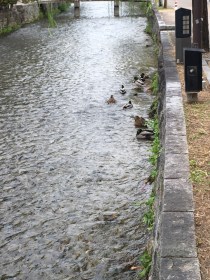
We continue on our way to the Museum of Cloisonné on the other side of town. The rain is clearing, so we keep on walking. It takes us about an hour, but is a very pleasant affair. I’ve never been there before, but a quick glance at the map tells me that if I follow a series of interconnected canals and streams, or the roads that follow along them rather closely, it will take me there, or to within 100 metres. So we do and it does.


IMG_9347 IMG_9348

IMG_9350 IMG_9364

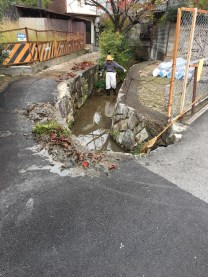
Along the way we get a few little glimpses of Sunday morning life in Kyoto’s back streets. There is a man down in one of the little streams along the way, that flows into the canal. He’s spending his morning cleaning out all the weeds and rubbish that have washed down during the week. Somehow, it is a nice warm feeling to see someone doing their ordinary civic duty. I appreciate his gesture, but can’t tell him. I wonder what people think when they drive past me on our dirt road and see me cleaning the gutters and picking up the MacDonald’s wrappers and beer bottles with my wheel barrow and shovel? The big difference is that I’m not doing any civic duty, I’m clearing the gutters because the water that will eventually flow down there when it rains, will end up in my dam. So I’m just being selfish. It’s not the same.

When they built this canal in Kyoto, someone thought to build in a small narrow set of stairs, so the locals can just duck down and access the water.

It is an interesting walk through a part of town that we hadn’t been before and really worthwhile. The cloisonné Museum is just where we expect it to be and we find it easily.

IMG_9346 IMG_9352

IMG_9355

IMG_9356 IMG_9361

IMG_9362 Namikawa Yasuyuki was a very famous Cloisonné artist who lived and worked in Kyoto from 1868 to 1926. His museum is in his old house and is of the old-fashioned Kyoto style called ‘machiya’ . Namikawa became very wealthy from his work as he invented new styles of working and new techniques. I’m not particularly interested in Cloisonné, but I’m very impressed by the technical genius and level of skill. It’s hard to believe that this level of fine detail could have been achieved prior to the invention of oxy torches, plasma cutting and tig welding. As it turns out Namikawa didn’t actually do the manual work. He just designed it. He had a righthand man called Nakahara Tessen. He was the real genius! But as with all things, it’s a union that makes for a greater whole.
Still, I’m actually more interested in the garden. Namikawa had diverted the local small stream into his garden and had a pond built-in, under and around the house then through the garden. He was rather rich by his mid-career, he could afford it and had good sense of style and taste. It’s a beautiful space and a lasting credit to him.

I’m writing this up on Xmas day,  we spend a quiet day trying to restrain ourselves from doing any outside work. There is plenty that needs doing, but I put on clean clothes to stop my self from going down to the studio and working. We have a small restrained lunch of a small amount of cheese, some home-made hommus and beetroot dips, a few tomatoes and lettuce from the garden, toast and a glass of good red. Simple, fresh and wholesome.

IMG_9916

I went out yesterday and while cleaning the gravel from the gutters to improve the road drainage, I decided to wheel barrow the spoils up to my neighbours place and I filled in two big holes in his drive way with the gravel. He doesn’t know it yet, but that job needed doing for a couple of years. As the holes grew bigger, deeper and filled with water. I thought, I should do something about that. So as my Xmas gesture to my neighbour. I go up and fill in the pot holes in his drive. That will be his xmas surprise, the next time he drives out.

Its a very quiet peaceful and non-commercial xmas.

A Week in Kyoto

Our Poverty Air flight puts us down in Osaka and we make our way to the airport station to catch the train to Kyoto. It’s about an hour and a half to Kyoto central station, then we have to get to the North of the city with our bags, so we opt for a cab as it’s getting late and to top it off, it’s starting to rain. I know the way to where our inn ought to be, but it’s a good 30 to 40 mins walk in the dark with our wheely suitcases, so we hang the expense and choose comfort & speed.

We are now staying in a very small inn in the Gion District. This is where you are most likely to see real Geiko and Maiko (not just tourist maiko-overs), on their way to and from work in the specially designated places where they are employed.  This is a bit of a glam area for us, so I was quite surprised to find a very old house/workshop that had been converted into a very small inn. Only 5 rooms and still very reasonable, so much so that we can afford to stay there. It’s just off the main granite paved Geisha/Geiko/Maiko street and up a very narrow walking lane, just 1.2 m wide. It’s in an all wooden building area and because of its location in an ancient lane, off a pedestrian street, it is one of the quietest places that I have stayed in.

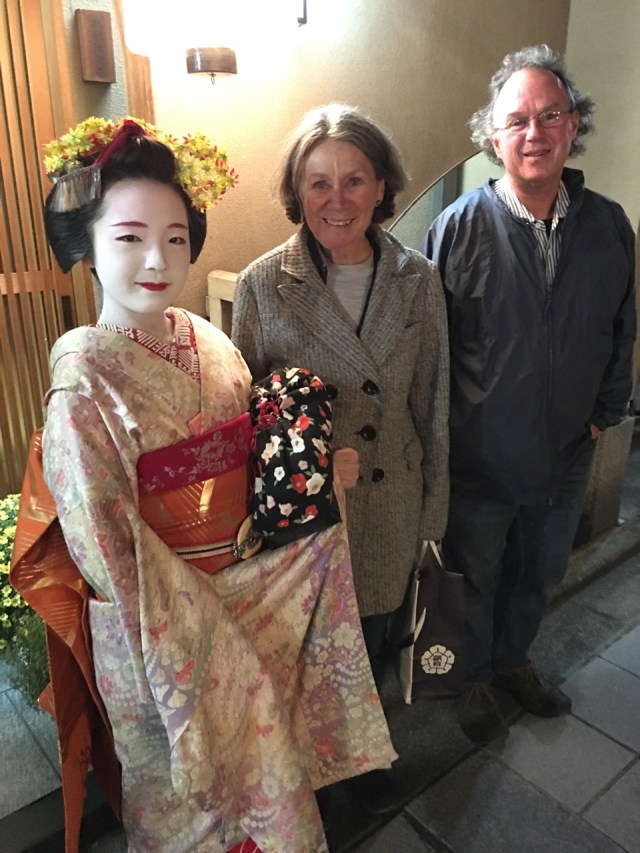
Each day as we come and go from our lodgings, we see the Maiko walking to and fro between jobs and training sessions. Sometimes alone, but nearly always with a minder. On this occasion, as one of the Geiko walks right past me I say quietly, “you are beautiful”.

She stops dead and turns to me, blank faced, no emotion in her practised impasto guise at all. Her minder, a much older lady, who is walking beside her says to me. “Do you want a picture?”. Her minder takes my phone and clicks this image. They turn and walk off, straight into one of the small doorways nearby and disappear inside.

IMG_9228


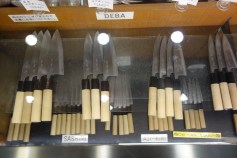
We make our way to the Nishiki street food markets one day to buy a special Japanese knife, as requested by a friend. We head for the Aritsugu knife shop. The Aritsugu family were originally sword smiths, founded in 1560, but as the need for Samurai declined they reinvented themselves as kitchen knife makers and have developed a remarkable reputation as one of the best. The current master is the 18th generation of the family to run the shop and business. They are certainly very accessible here in the Nishiki food market. The shop is alway packed and difficult to manoeuvre around in the narrow isle between the glass cabinets of beautiful trays of knives. I have bought 3 knives here over the years.

DSC01346_2 DSC01358

While we are wandering, we notice that there is a new sushi restaurant opened up in the street. We can’t resist and take a peek inside past the noren. It’s very stylish and restrained. We like it, so go in. There are just two seats left at the bar. It’s meant to be.

IMG_9027

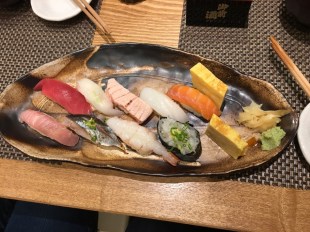
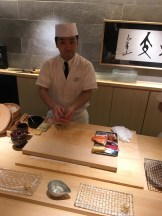
There are only two choices on the menu. 7 or 10 servings. We go for the full 10 pieces. We are served tea and a hot wash cloth. Our man speaks just a little English, which makes everything a lot easier. He asks us, “Wasabi OK”? We tell him, “Yes indeed, we’re fine with wasabi”. He makes each piece for us individually, one at a time and names the species of fish each time, once in Japanese and then in English. He also offers the advice of whether we should use soy with it or not. A couple of the servings have already been treated with a vinegar dressing and he suggests, “This one – No soy”.

The rice is perfect. Not warm or cold just right, Goldilocks rice. There is a very long tradition of making sushi rice. It has a huge history and part of the 7 year apprenticeship to become a sushi chef is learning the vagaries of rice.

The special sticky rice used to make sushi varies from strain to strain and also from the differing climatic zones of Japan. It also has slight differences from year to year and harvest to harvest. Nothing is certain. the chef has to be able to understand these subtle variations and choose the rice of the season that best suits his approach to sushi. Then there is the preparation. The age of the rice has to be taken into consideration. To wash or not to wash, to soak or not to soak. How long to boil before the long slow simmer – if at all. The real skill is however involved, not in the cooking, but in the cooling. This involves fanning the rice to cool it and the secret additions of the vinegar, sugar, salt, sometimes sake and whatever else. Every sushi chef has an opinion and a secret recipe. The restaurant develops a house style that is appropriate to the clientelle, the district, the Ken, the island and the season. These variations are all considered to ensure consistency. In Kyoto, they seem to serve it a little bit sweeter than in Tokyo, a bit like the variations in Miso. The Kyoto speciality is white ‘shira’ miso which is sweeter then the northern saltier ‘aka’ red  style.

I been told that the best sushi chefs can dip their hand into the rice bowl without looking and scoop up the exact amount of rice everytime to within a gram. Then, and this part I don’t believe. He will scoop, round, pat, squeeze and swivel the little ball so that all the grains of rice face the same direction! I looked closely, my man wasn’t choosing to display this skill to me. Maybe I wasn’t paying him enough?

IMG_9030 IMG_9031

We enjoy or sushi with the chef’s recommendation of a bowl of sake, not too dry and not at all sweet. On the dry side of the middle range. It’s a very nice accompaniment.

IMG_9054

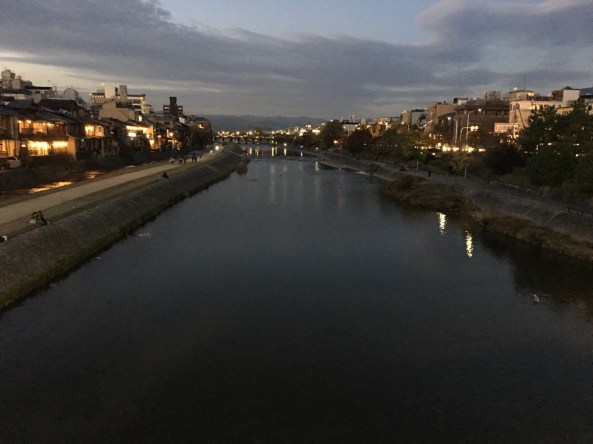
We reflect on our beautiful day in Kyoto as we walk home along the Kamu.

Post-Conference Surprise

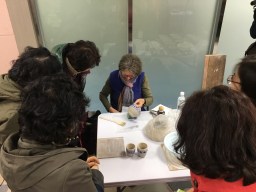
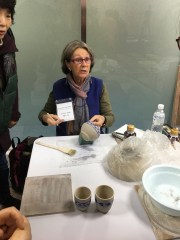
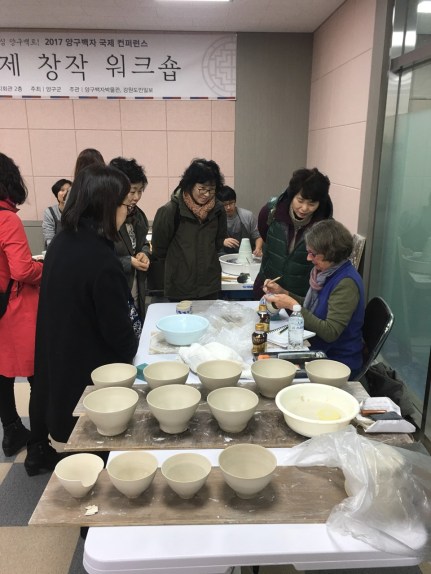
As part of the conference proceedings we are all asked to do a demonstration over two consecutive days. On the first day, we all make a few things that represent a sample of what we do. These pieces are left to stiffen overnight and the following day we finish them off before the assembled conference audience, who walk around and chat to us to get better informed about what we do. My translator shares herself between me and  Janine, who also demonstrates. Janine draws a much bigger audience than I do as her work is intricate, decorative so much more interesting to watch.
IMG_8888 IMG_8889 IMG_8890

After the conference is wound up. All the presenters, their translators and all the Museum staff are taken to dinner by the Museum Director, Mr Jung. We enjoy a full Korean banquet and after the meal, Mr Jung performs a traditional Korean drinking trick to amuse us. He mixes Korean choshu and beer in different ways, all of which amuse, entertain and surprise us.

IMG_8841 IMG_8842

My friend Warren calls this kind of potters beer drinking performance trick “Beertrix Potter” Jokes!
We all assemble at our hotel the next morning for a final breakfast together. I had figured out how Janine and I would catch the series of busses back to the Incheon International airport in time to catch our flight back to Japan. But I shouldn’t have worried. Mr Jung has it all planned. He will deliver all of us to the airport by courtesy limousine provided by the conference. However, before we leave Mr Jung’s assistant, Mr Mun, comes around and gives each of the presenters an envelope. This is good, because I had come here on the understanding that my airfare would be paid, but I had to buy my own ticket and present the receipt to be reimbursed. Other than that, I knew very little else about the conference or its schedule before I arrived. All my information was relayed to me in Australia via Miss Kang in phone text messages. I had nothing in writing. So I was a bit relieved to see an envelope coming my way at this last moment.
What I wasn’t prepared for was the wad of wan that it contained! Apparently we were to be paid for our presentations and demonstrations. I wasn’t told this beforehand. When Mr. Jung asked me if I would take part in a conference if he organised one in the future. I agreed without hesitation. He then asked me how much I would charge. I replied that I’d be happy to do it for free, just as I have always done here in Australia over the past 40 years. He then offered to pay my fare, and asked me how much my airfare was to get there on that trip. I replied that it cost me about Au$1,200. He visibly recoiled! He sat and thought for a while and then said that he might only be able to afford a one way ticket. I said that would be OK. I’d still come. I really like this guy and feel that I owe him a debt for all the help that he had offered me in my prolonged ‘5 Stones’ project.
Australia is a very long way away from Korea, unlike China and Japan are in respect of Korea. These ‘local’ Asian airfares are in the low hundreds of dollars. So I understood the situation and didn’t expect anything more.
So when I felt the thickness of the envelope, then opened it and saw the massive bundle of notes. I was really quite shocked. I certainly wasn’t expecting anything like it. But I was very pleased to receive it. I’ve never earned three million in cash before. Pity it was in Wan and not Dollars!
It’s an easy trip to be collected from our hotel and driven in comfort and style all the way directly to the terminal. Because we have travelled direct, even though we have left later then I would have planned to, we arrive earlier than I had expected.
Mr. Jung sees us into the terminal and checks the flight schedule for us. We are so early that we have time to share coffee and cake, before disappearing into the Airport system to be ‘processed’ through emigration and security. To keep the cost of the airfare as low as possible. We chose to fly with Poverty Air. I’ve flown with them before and we are prepared for the 200 mm leg room and no heating or oxygen to supplement the rarefied air at altitude. We decide not to buy the over priced water on the flight and we have come prepared with a sweater to keep us warm.
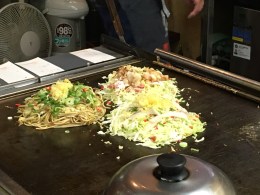
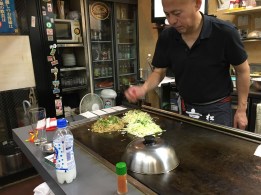
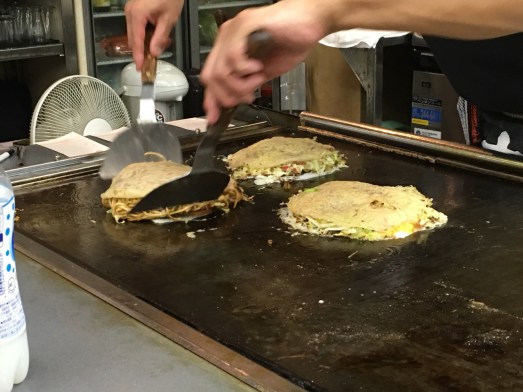
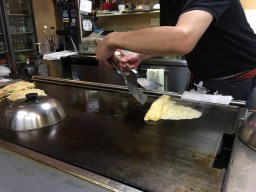
Having travelled well prepared, we arrive in Osaka in good shape, just a couple of hours later and make our way to Kyoto on the train. We were not able to book into our usual inn In the Higashiyama ‘pottery’ district, but find another one not too far away. It’s late by the time we get ourselves booked in and settled. We walk out to look for a place to eat, but there is only one place open at this hour in this more remote area, away from the usual tourist haunts. We walk in and sit down to discover that we are in an okonomiyaki cafe. It’s fabulous! It’s a really local little family place. It’s full of kiddies and families. Kids drawing with crayons and pencils on scrap paper with their parents. We are lucky to get two seats at the bar so we can watch the chef a work. At the end of the bar there is a teenage boy with text books out, doing his homework. It’s all so family oriented, noisey and chaotically wholesome.
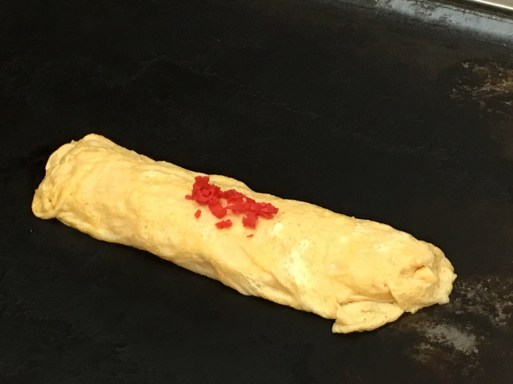
We order okonomiyaki and omelette.
IMG_8928 IMG_8935 IMG_8934
IMG_8956
IMG_8946 IMG_8949 IMG_8952
It’s a great start to our next week in Kyoto.
Best wishes from
Steve and Janine in Korea and Kyoto

The Yanggu International Poreclain Conference in Korea

Mr. Jung explains to me through the translation abilities of Inhwa, about the program for the inaugural International Porcelain Conference at the Yanggu Porcelain Museum. He has paid my travel expenses to get me here from Australia and explains that I will be the making the Key Note address to the conference. This is a little bit of a shock to me, as I usually play 2nd fiddle (or cello). He goes on to say that the idea for the conference occurred to him after he first met me 2 years ago.

When Inhwa isn’t around, we have to make do with the translation apps on our phones. These are not all that accurate and very slow, but we seem to manage to communicate at a basic level by this method. I know that it is not all that accurate and lacks subtleties of the languages, but its all I have in these situations. Hence I sometimes get things wrong or muddled. But I’m still very pleased to be invited here again.

He wasn’t aware of me or my research or even that Australia had native porcelain and he certainly wasn’t aware of the early work of William Cookworthy in Britain that pre-dated Wedgwood. I crashed onto his radar that day with Miss Kang as my pilot and translator and we soon developed a professional friendship based on a mutual interest in single stone porcelain.
Mr Jung had been thinking of ways to promote the unique situation of Yanggu porcelain in Korea, as Yanggu was the original source of the Royal Porcelain for the Korean Court. He has spent his career, building up an excellent Museum and an exceptional research Centre for post-graduate training in Porcelain skills to an amazing level. I’m so impressed with the quality of the work being created here. i wish that I could have been exposed to this level of support in my early career. Instead of the Chaotic, random experience of making do and following ones own impulses without guidance. I had approached the late Ivan McMeekin at the Uni of NSW in the early seventies for some post-graduate experience, but I was rejected. so I had to find my own way on my own.
The Research Centre provides free housing and workshop space for approved students who have completed higher degree level studies, majoring in porcelain. There is a 3 year tenure in the centre to develop an individual approach. The selected students have to pay their own food, fuel and clay costs. It’s an amazing deal for the lucky few Korean post-grads who make it there. Currently there are 7 places for prospective students, but Mr Jung has plans well underway for a small village of residencies, not too far from the centre. He has secured the land already and there are 3 new residency buildings on the site, along with a gallery and cafe building. He has plans for another dozen residencies in the future as finances permit.
After I had explained my project to him at that time, to make porcelain in each of the 5 countries that had developed their own single stone porcelain tradition. He conceived of the idea to hold a conference and invite someone from each country to speak about their research. Hence my invitation. It took him 2 years to organise it and raise the finances. I’m still a little shocked to be up front on this, but I know my work backwards now after 15 years of research and the successful launch of my book ‘5 Stones’ at my big exhibition at Watters Gallery in Sydney just a few months earlier. It’ll be a piece of cake!. Well, it ought to be!
The first day of the conference involves us all travelling by limousine coach to a number of local galleries and museums to experience the full nature of the district and it’s history. I find out a lot more about the Yanggu district that I had known or learnt before on my previous trips. I have always travelled on a shoe-sting with only the absolute necessities allowed for in my budgeting. I have always restricted myself to a narrow vision of what each location presented, concentrating on the porcelain. Now we are all treated to the full Monty of tourist excursion sights. There is an amazing Traditional Arts Museum, A Museum dedicated to a very famous local painter in an amazingly simple but exquisite stone-walled building, buried partially underground. Then there is the museum of philosophies, specialising in local philosophers and poets. I really liked this place and its curator. lastly there is the local contemporary Art museum, that has 3 venues. The most impressive was the current show of virtual Van Gogh. The curators had ploughed the extensive fields all around the building and planted a wheat crop for the summer, while the show was on. The vista outside the extensive gallery glass facade was a very real shimmering golden wheat crop bending and responding to the eddies and zephyrs of the breeze. This was such a beautiful concept to me, I was quite touched. The actual ‘virtual’ show of Van Gogh works wasn’t as impressive!
The next day, Mr Jung opens the proceedings with a 20 min intro explaining the importance of Yanggu and why it is a suitable place to hold such a conference. There are a couple of hundred people present and all the seats are full in the auditorium.  Only standing room for the resident students and researchers. Mr. Jung introduces me as the Key-Note speaker. I have a dedicated professional translator to translate sequentially as I present each image and talk to it. It all takes a bit longer than I had imagined, allowing for the time in translation.
I speak for the best part of an hour with plenty of images to illustrate my points. I go to some length to show the importance of local geology and why sericite is/was so important to the invention of the original porcelains in each place in Asia and England. I make reference to some very recent archaeological research that seems to indicate that some of the earliest porcelain ever made was in Korea and not China!
I am followed by a potter from Jingdezhen who delivers a short dissertation about their unique porcelain and then a potter from Arita who talks about the Izumiyama and Amakusa porcelains.
In an amazing turnabout, it just happens that ‘Manni’ the Chinese potter from Jingdezhen, remembers meeting me coming into his shop earlier in the year in Jingdezhen. I look at him in some combination of disbelief and incredulity. He’s right. I look into his face and recognise the talkative guy trying to sell me everything in his shop in March. I ended up buying just the basic fine white porcelain clay, a couple of 17kg, bags every couple of days. Then to cap it off. Just to prove that the world is a very small place and that there are less than 6 degrees of separation, I find myself in conversation with the potter from Arita and we establish that he is good friends with 3 of my own close friends in Arita! I shouldn’t be surprised, but I am. It’s a very small world!
Best wishes
Steve and Janine in Korea

The Search for the Soul of Seoul

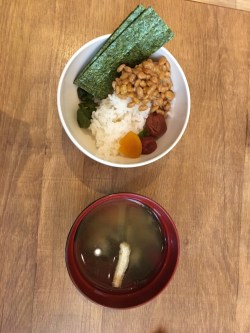
In Tokyo, It’s the tail end of autumn and the Ginkgoes are turning yellow and loosing their leaves. breakfast is nato, rice, pickles and seaweed, with miso. Wonderful!

Janine and I eventually leave Tokyo after several days of art and culture. Tokyo seems to have changed since I fist came here 30 years ago. I can’t put a name to it, it’s just a feeling, but it has changed.

Or maybe its me? I know that I have.
IMG_8413 IMG_8428 IMG_8523.jpgThe future and the past.

We fly out to Seoul. We miss our scheduled flight and have to catch a later one. A much later one. We have a very nice, but basic hotel to go to, but it’s 1.00am in the early morning by the time that we navigate our way out of the airport, then through the underground rain system, changing lines on  route to where our hotel ought to be. Even though its way past midnight, there are heaps of people out in the cafes and on the streets. All well behaved, civilised and ever so helpful. They offer to guide us to our hotel, but ultimately they are not correct and we find our own way there. As soon as I realised that we would be arriving late, very late! I emailed our Korean friends from the airport in Tokyo and asked them to phone the hotel, to tell them that we would be arriving late.

Theoretically, the front desk should be closed by now, but by the time we find our way there, the wonderfully helpful man on the late-night desk has waited up for us and is there practising his guitar as we walk in. I’m so pleased and very thankful!
This will be the first of our wonderful experiences in Korea together. There will be so many more in the days to come. This is my 4th trip to Korea, but this is Janine’s first time here, and it’s my first experience to spend any time in Seoul, instead of just passing through.
Our experiences here lead us to believe that Koreans are so much like Australians. Open, friendly and engaging. I found this on my various earlier trips into the deep hinterland, but it becomes abundantly clear now on this adventure in Seoul.
We have a few contacts here. The Amazing Miss Kang, my former translator, driver and cultural guide. Then there is Ji, a friend and ex-student of one of my former students. She has visited us at our place for an open-day sale a year or so ago, as part of the Southern Highlands Arts Festival, She has offered to show us around Seoul. Ji had also rung the hotel for us as did Miss Kang, to warn of our late arrival. It’s all worked out quite well. We are so lucky to have such wonderful friends.
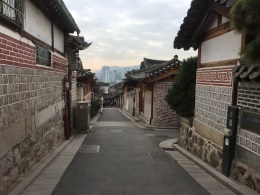
Miss Kang had advised me months ago, when this trip was first muted, to book place in the north of the city, in a place close to, or in Anguk. It was a very good advice indeed. We find ourselves close to the older, interesting, cultural centre of old Seoul. We spend our first day wandering aimlessly through the local area. It’s great. Old streets, traditional housing, many now converted to craft workshops and artists galleries. It’s a culturally vibrant area.
‘Ji’ has arranged to take us out for the day, for a tour of the cultural highlights of Seoul. We meet at the local station and she has an amazingly dense, solid packed, itinerary of people and places, galleries and shows to visit during the day. She is amazing! we are so thrilled to have someone local to offer to show us around and translate for us. You learn so much more about a city when you are given inside knowledge by a local. Ji won’t let us pay for lunch either. I try and dodge past her to get to the till first, but I’m outmanoeuvred, and she speaks to the sales girl in Korean and they won’t take my money. Instead they take her card. I’m out-classed here. I have so few words of Korean to call on. She has her way, and we are grateful, but I’d rather have been able to pay to show our gratitude for her days support, guidance and education.
We can’t help ourselves but buy a few small culturally significant items that will remind us of this warm experience. We can’t carry much, as we have a long trip planned and this is still very early on in our itinerary. So we collect all our little objects of importance and consign them to the Korean postal service. We will get our own belated xmas presents in about 3 months time, when the ship comes in.
IMG_8698 IMG_8567 IMG_8571
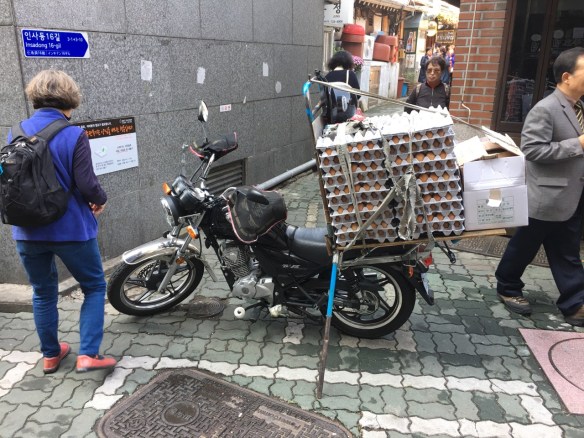
We learn how to carry 700+ eggs on a motor bike!
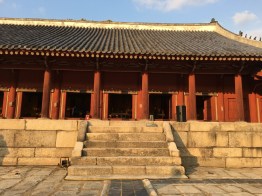
At the end of the day, Ji takes us on a tour of the Emperors Mausoleum. It is only open one day per year, so we are lucky to get to see inside.
IMG_8635 IMG_8636
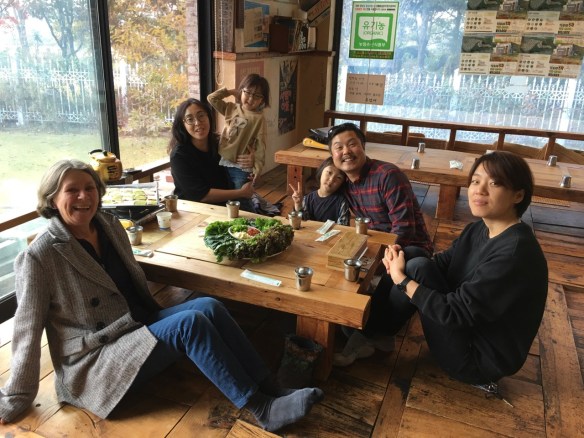
The next day is the weekend and we are able to meet up with Miss Kang again. She drives us for several hours, across to Yeo Ju to re-visit Jun Beom and his family – her old boss. It’s wonderful to see them all again. I take them all out to lunch. It’s the least that I can do to repay all the help that they all gave me last year when I was doing my research into Korean single stone porcelain sites.
IMG_8646 IMG_8651 IMG_8652
Like so many Korean meals that I have experienced in the past couple of years, the meal is very healthy, with so many vegetables and pickles to go with the very small amount of meat on the BBQ. After lunch, Jun Beom and Miss Kang drive us to an ancient Kings burial site. It has been extensively restored and preserved.
IMG_8678 IMG_8679 IMG_8682 IMG_8685  IMG_8725
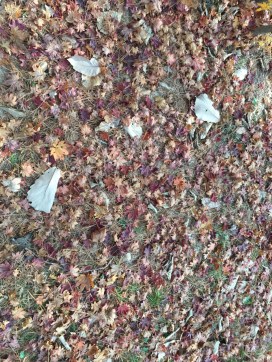
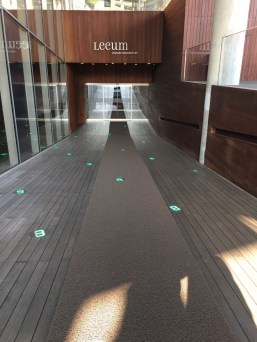
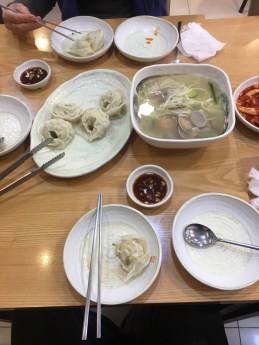
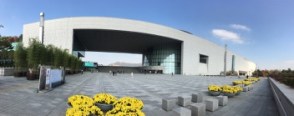
The following day we take our selves to the southern part of the city on the subway and visit the Major Museums, The National Museum and the Leeum Museum. We have lunch in a cafe and although we have identical meals. I get food poisoning. It could only have been the chilli pickles that I added to my meal and Janine didn’t? it takes me by surprise half an hour later as we are walking into the Leeum. I manage to walk the distance to see almost all of the display, but the feeling that I’m about to throw up doesn’t leave me alone and although I thought that I might disgrace my self in the polished black granite foyer, I make it out to the street and eventually throw up at the bus stop. It’s so humiliating and degrading, and poor Janine gets splashed shoes for standing by me and supporting me. Fortunately, there was a garden bed and low hedge behind the bus stop for me to despoil. I cover my disgrace with some dried leaves and some compost before departing.
IMG_8722 The offending meal!
IMG_8777 IMG_8779
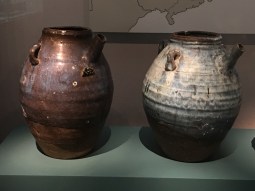
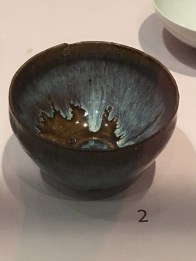
The National Museum has an amazing collection of old pots, as you’d expect. I love the moon jars – everyone does! I’m also taken by some of the old stoneware, high silica, rice-straw-ash, early opalescent glazes.
IMG_8783 IMG_8784IMG_8788 IMG_8798
IMG_8800
As we are leaving the National, we realise that the gardeners have spent the day wrapping the bamboo plants in the tubs along the entrance walkway. Some are done up in traditional rice straw rope, but only those on the right hand side. On the left side, they only seem to be getting the glossy colour magazine paper treatment? I don’t know what this is all about and have no way of finding out. I can only guess that it is something to do with protecting the plants from the intense cold weather that is coming in the winter?
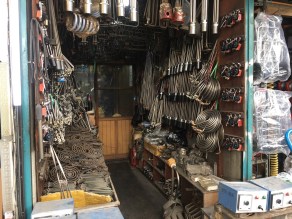
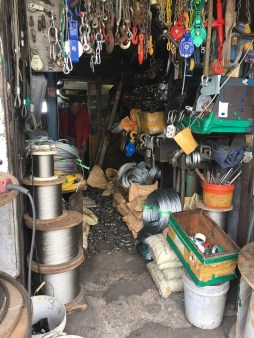
The following day, I’m feeling better and we go to the industrial street of tool shops. This long street is cram-packed with little cubicles. Each one specialising in a different type of tool or piece of equipment. I’m here looking for some specialised diamond cutting discs. I know that they are here, but the exact fittings that I’m looking for prove hard to detect amongst the mass of industrial ‘stuff’ without specialist language skills. On this occasion, charades and sign language don’t cut it. I even have a photo on my phone of the sort of thing that I’m after. But all to no avail. I leave with just two little items that aren’t quite what I had in mind. Still, they were cheap and it was a great half-days entertainment!
IMG_8740 IMG_8741 IMG_8745 IMG_8746 IMG_8748 IMG_8750
On our way home that night we walk past the Japanese Cultural Centre in Seoul for the umpteenth time and as usual there are two police men standing outside the doors. They are there at all hours of the day and night, not dependant on whether the place is open or closed, rain or shine. I stop and ask the police man why they are always there. He answers me quite frankly and honestly in good English. He tells that because of Japan’s past aggressive history towards Korea. There is still a lot of bad feeling toward Japan and its representatives. The permanent police presence is there to off-set any chance of hostility or vandalism breaking out. Very honest and straight forward.
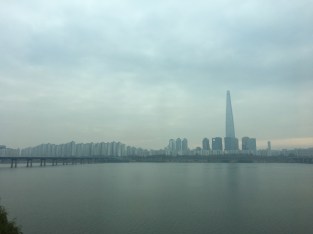
IMG_8803The view form the bus as we depart Seoul.
We only have a 4 day stay in Seoul, and we need to be making our way up into the North to the little village of Bangsan, up on the DMZ. We catch the subway train the the south-eastern city bus terminal. From there we can catch a bus to Yang gu, via Chunchoung. From there we will have to change to a small local bus to go the final leg of the journey to Bangsan. I’ve done it before, so I’m not too phased about it. Its several hours. We buy our tickets and while we wait for the bus to depart. Janine watches the Korean news channel on the big bus depot TV. it appears that President Trump has just flown in to Seoul somewhere. It crosses my mind that it would be unfortunate if there was a dummy spit and temper tantrum on this day of all days, when I’m here with Janine. The day passes and we make all of our connections and arrive in Bangsan in the afternoon. We walk our suitcases across the road and down the lane to the Yang gu Porcelain Museum and Research Centre. We make our way to the pottery room, but there is no-one in there at that moment. I can hear clay being pugged in the clay room next door. I walk in and everything stops. I know the two workers and they recognise me. They lead us back out into the pottery room and My Jung magically appears, as if he has sensed our arrival. I’m not too surprised. I sent him a ‘KaKaoTalk’ text message from the bus terminal in Seoul, advising our departure and approximate arrival time.
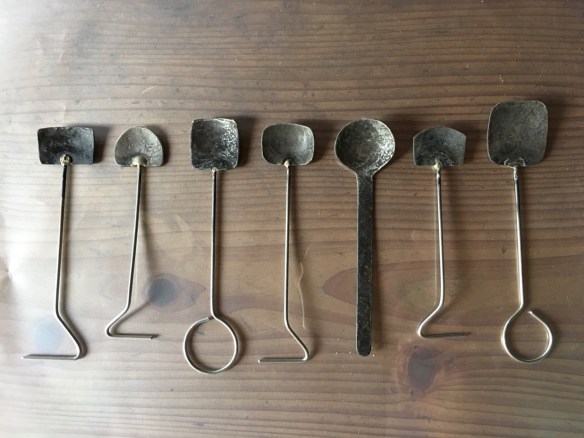
My Jung greets us warmly and takes us straight away, across to the research building where Inhwa Lee and her husband work. Inhwa speaks good English and My Jung want her to translate for him, so that we are clear about what he has planned for the afternoon. Inhwa makes us coffee in her porcelain cups. I know from my last visit that she collects hand made spoons. So, the day before we left Australia, I found some time to make a few stainless steel spoons, forged from my kiln off-cuts, so that I could give them away as presents. I was reluctant to give these people hand made porcelain, as they do it better than I do! The spoons are not very professional, but they are somewhat unique! Anyway both Inhwa and My Jung both choose one as a gift.
IMG_9815
Best wishes from Steve and Janine in Korea

Mottainai

Janine and I have just returned from an extended trip to Japan and Korea.
I was lucky enough to be invited to Korea to represent Australia at a conference in the Yanggu Porcelain Museum and Research Centre in Bangsan in South Korea.
I wouldn’t normally go to conferences, but this one was all about single-stone porcelain, its history and its contemporary applications. A topic close to my heart.
They also offered to pay my air fare, which made it a lot easier to decide to go.
However, I wouldn’t usually consider flying half way around the world for just 2 days at a conference. It’s a lot of environmental damage, for just 2 days of interesting experiences. So to make it more worthwhile Janine and I decided to take the month off and go to Korea for an extended time, so that we could catch up with our friends there and also take in some time in Japan on the way.
I can’t really justify taking a month off just now, as I have a lot of orders booked in and we are very busy. Not to mention that there is a lot to do in the garden at this time of year. However, this was a wonderful opportunity not to be missed, so we made efforts to fit it in.
As we had decided to fly via Japan, we arrived in Tokyo and spent a few days visiting galleries and museums. There is a lot to see in Tokyo, but we only had limited time, so we had to be selective and we kept very busy fitting it all in.
There were a lot of Galleries and a lot of shows, but I will only write about a couple, so as not to bore you.
As I am a keen patch-worker, but not for any fashionable reason. My interest in hand stitching patches onto my worn out work clothes is just to extend their life really. However, it also creates something beautiful and unique out of what would otherwise become a rag. It’s something akin to the kinsugi technique that I use to repair chipped and/or broken pots that are meaningful to me and deserve to be repaired and made more beautiful than they were originally, just because I like them and respect them as objects. A nicely repaired chipped pot is more precious than it was before it was damaged. So, the same applies to my old jeans. They become more interesting, beautiful and precious after I have spent a bit of time on them, and it saves the waste of throwing them out and buying new ones every few years.
I can afford to buy new jeans and new shirts, I just choose to repair and maintain my older clothes as a political statement about over-consumption and our throw-away economy. The fact that these things become gorgeous as well is an added bonus.
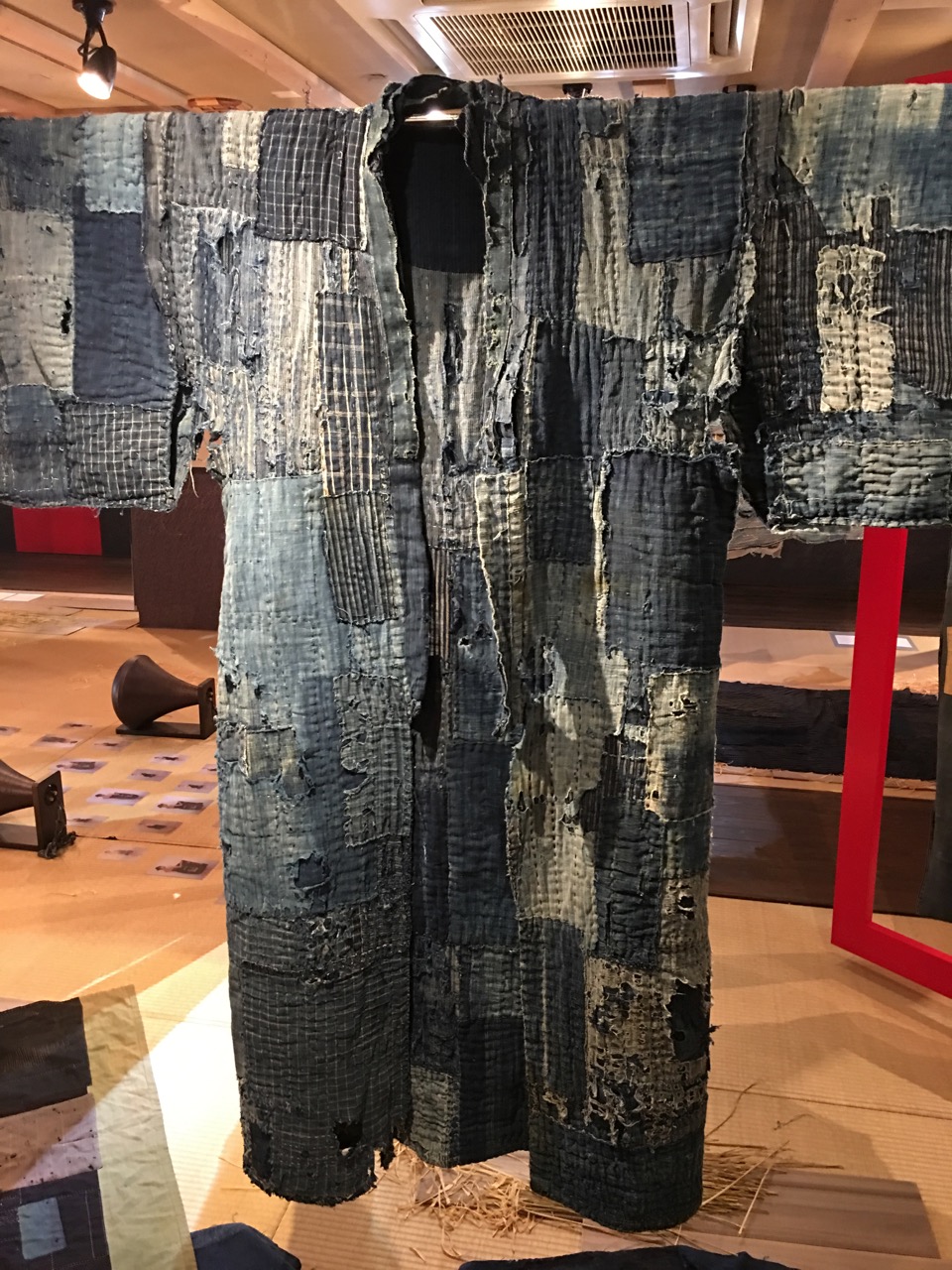
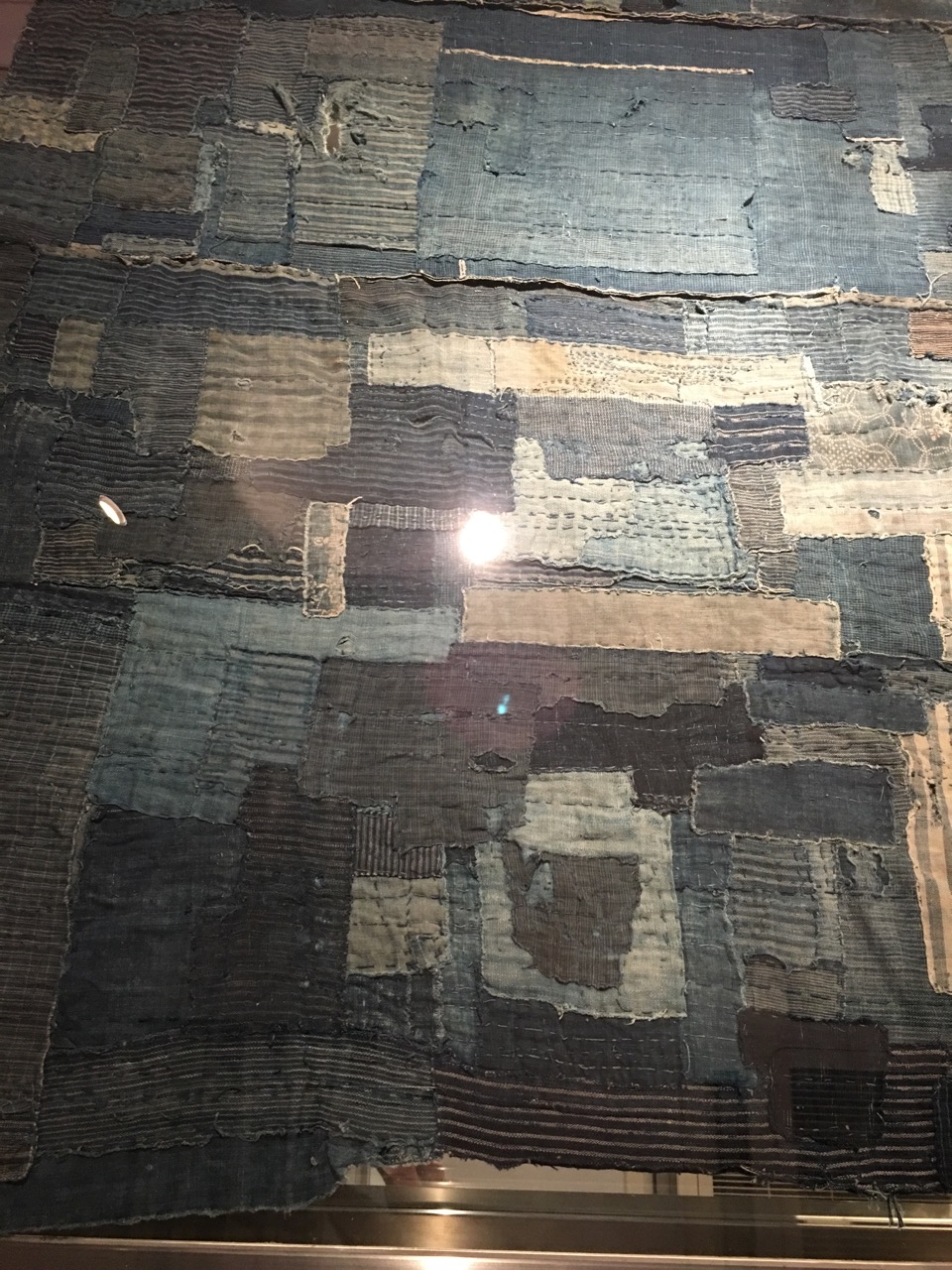
So, with all this in mind, Janine and I went looking for the ‘Boro’ museum. Boro, is a traditional Japanese word used to describe old clothes and blankets that have been patched, repaired and maintained for several generations because of poverty, but these days these old clothes fetch hundreds of dollars in the antique markets.
The boro Museum is a small private museum in outer Tokyo. We tracked it down and spend a very interesting afternoon there.
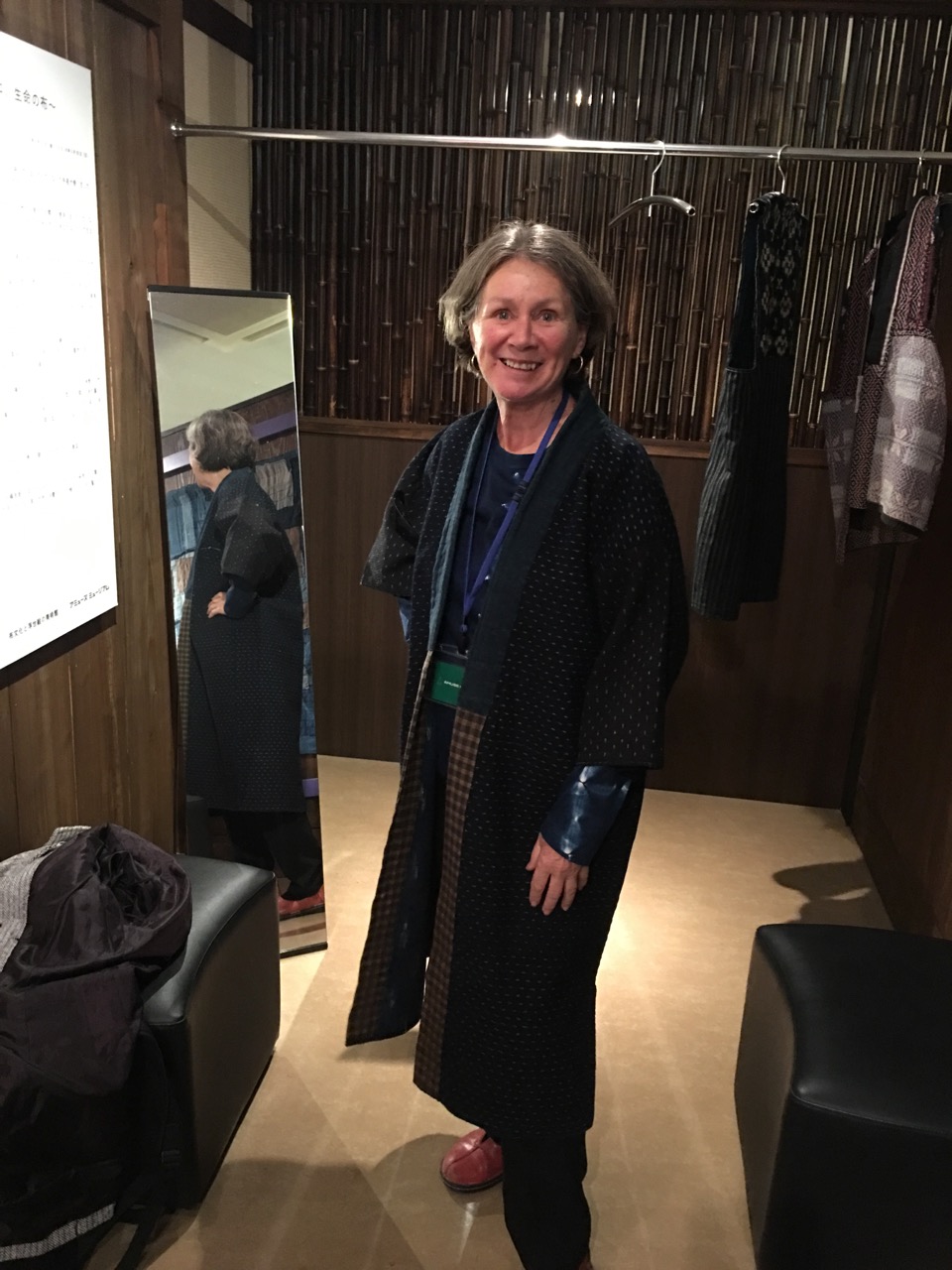
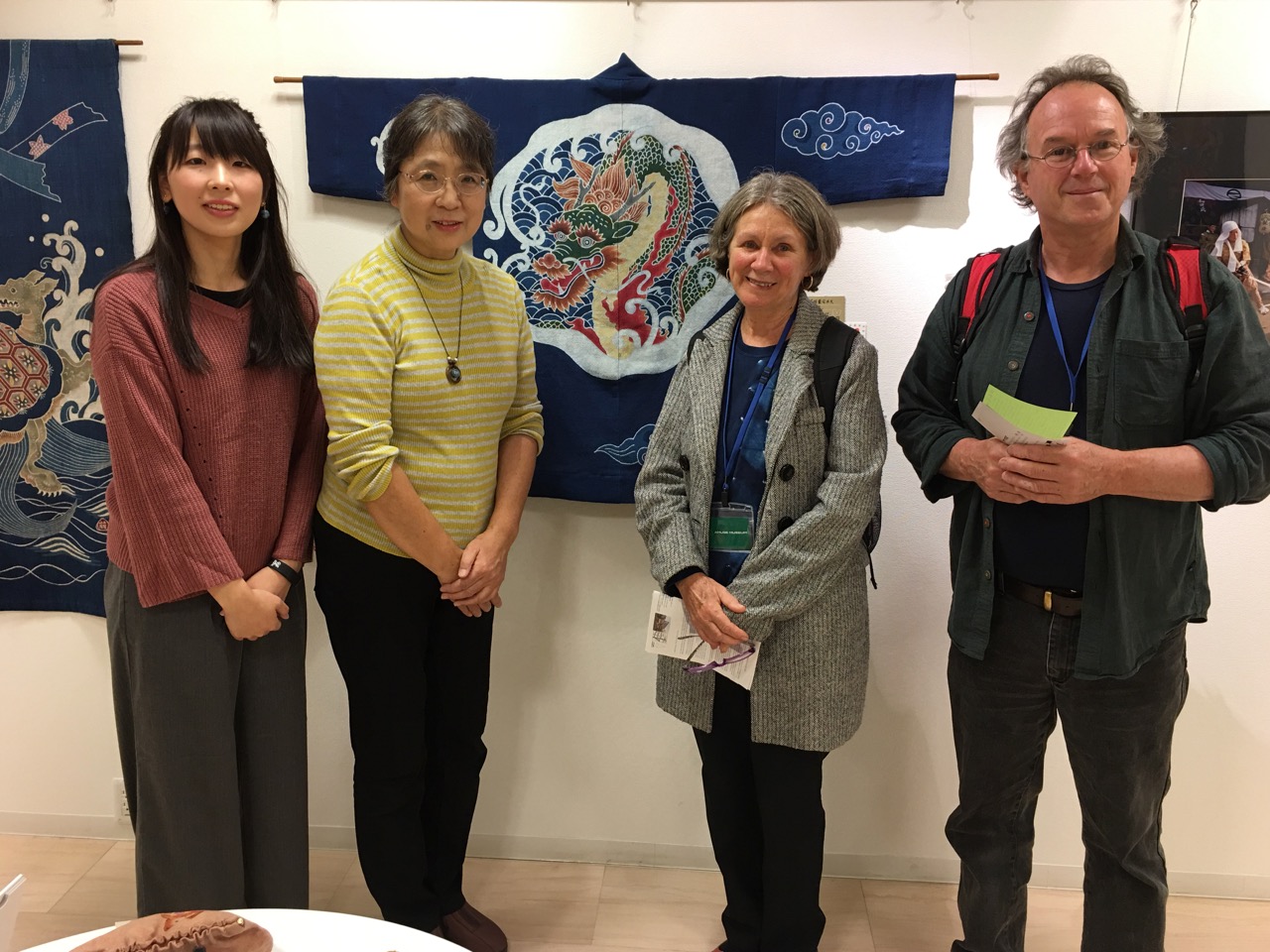
Amazingly, there was an exhibition of contemporary indigo fabrics on show on one of the lower floors. Janine just happened to be wearing her indigo dyed Japanese shirt that she bought some years ago on one of our earlier trips to Japan when we visited Mashiko. We spent a bit of time in the old indigo dying workshop in Mashiko while we were there. The indigo dying workshop in Mashiko dates back about 600 years if I remember correctly. The Lady artist showing the fabrics in the Boro museum contemporary gallery recognised the shirt immediately and told us that it was made by her teacher, who has since died. Such a coincidence.
Janine tries on a few pieces of old boro from the collection.
 
 
All these items were simple peasant farmers clothes that were patched out of necessity. A lot of these pieces were made in the north of Japan, in the Aomori Prefecture, where it gets quite cold and the seasons are short. It is too cold to grow cotton up there, so all the clothes were made of hemp and/or other local natural plant fibres, all dyed with indigo to preserve them and make them long wearing. indigo dyed cloth doesn’t rot and insects wont eat it. It is interesting to see old cloth that has both blue and white designs woven into it. In the very old pieces, the white areas have rotted or been eaten away and only the blue indigo dyed areas remain.
Really old and extremely worn out fabric was pulled to pieces and used to stuff bed-clothes, or cut up into strips and rewoven into indigo hemp warp to create new cloth from the old. This recycling, making sure that nothing is wasted, has a term in Japanese. ‘Mottainai’. Which can be literally translated as ‘being too good to waste’.
I have written about my interest in ‘boro’ in the past on this blog. See, “Something boro, something blue”. Posted on
Best wishes from Steve and Janine in Tokyo.