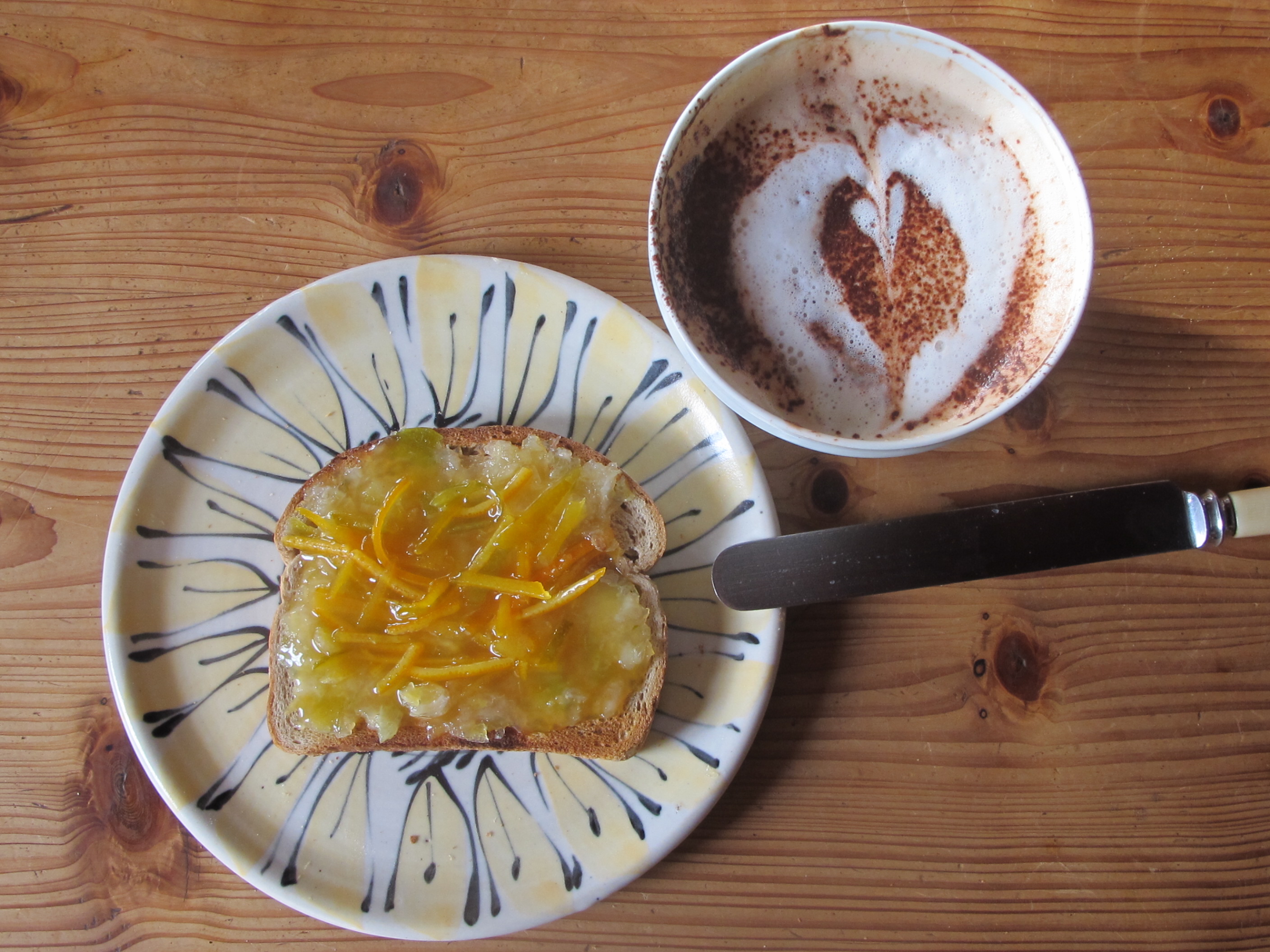
Two Wood Firings in One Week

Two Wood Kiln Firings in One Week

I have decided that I can fit in one extra firing before the Southern Highlands Arts Festival – Arts Trail, Open Studios weekends on the 7th & 8th of November, then again on the 14th & 15th.

The kiln is unpacked and repacked while it is still warm.
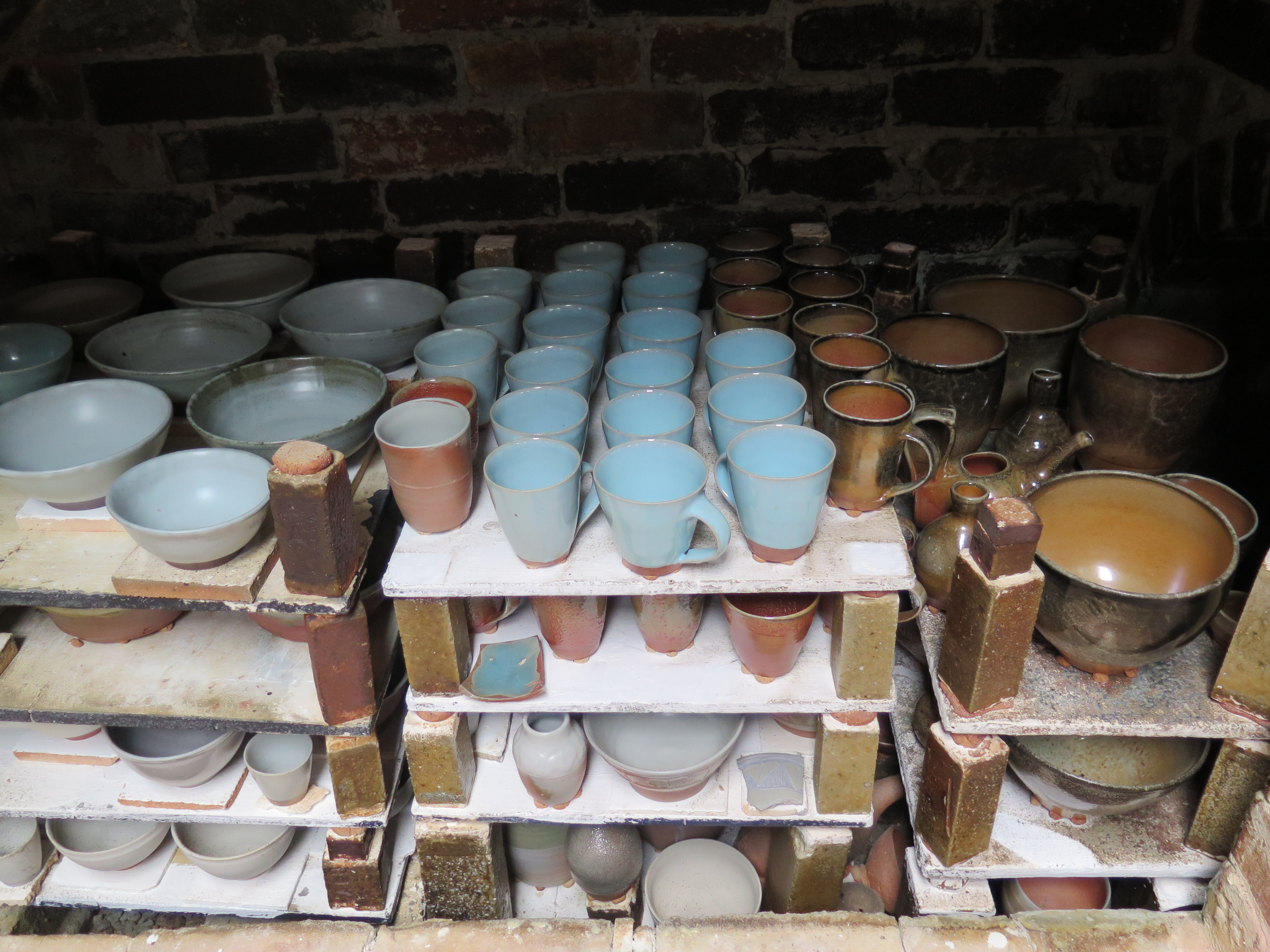
IMG_1016IMG_1034

IMG_1037IMG_1040

IMG_1045

For some unexplainable reason, I wake up just after 3 am in the morning. Or is it still very late at night? I’m not too sure, but I’m wide awake, so I get up and walk down to the pottery workshop in the dark. It is quite overcast tonight/this morning, as there are no stars to be seen up in the blackness where the sky ought to be.

IMG_1215

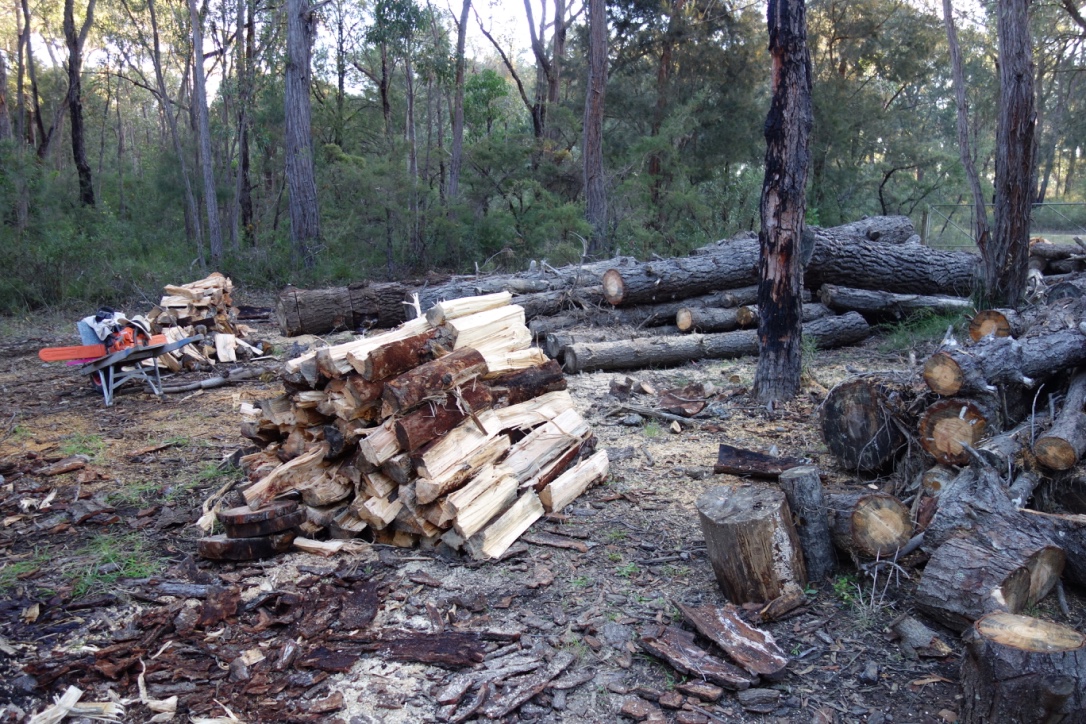
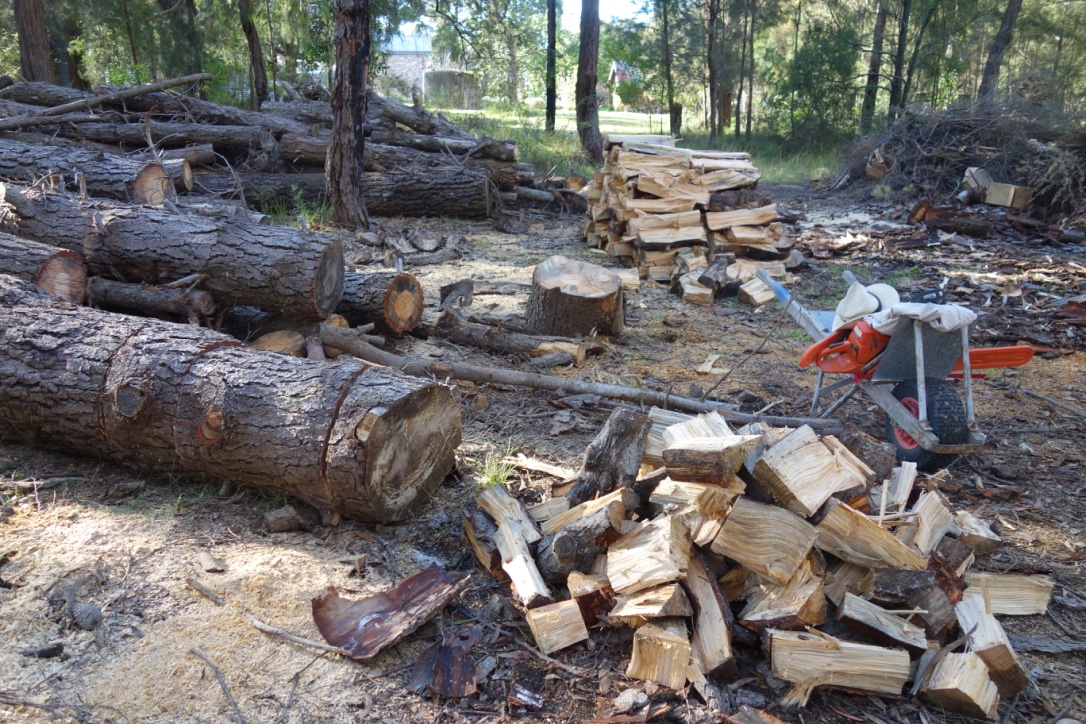
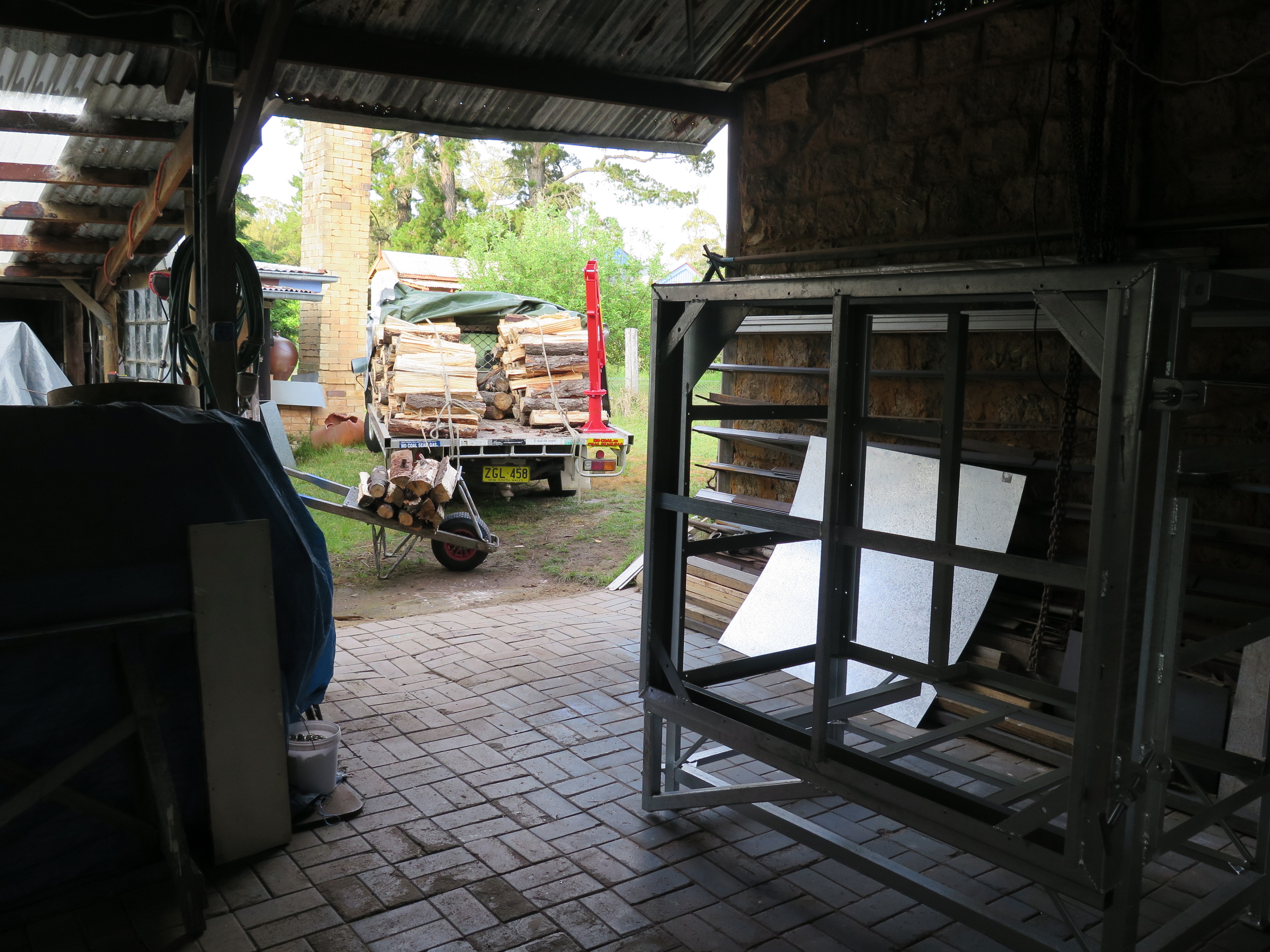
It’s so pitch black and very quiet, it seems a shame to make any noise at all. I decide to only put one light on and work in the soft ambiance and stillness. I make the kindling fire from the scraps of wood that fractured off from the bigger logs as I was splitting them yesterday. I spent most of the day yesterday in cutting, splitting and then, with Janine’s help, stacking it. We stacked half of it onto the truck. A very full load without sides on the tray. I drove it down to the kiln shed, covered it with a tarp against the possibility of rain overnight.

IMG_1208IMG_1211

IMG_1223

I cut all the straight log wood into hob lengths, avoiding the branched bits. These, I cut around and leave aside for splitting into small short pieces for use at the beginning of the firing, when I start the fire on-the-floor of the firebox. This first stage of the firing gently heats the pots up from cold, but also serves to build up a pile of embers in the base of the firebox which is necessary to ignite the big logs later on in the firing process.

Every part of the tree is used. I don’t like to use branched bits for the longer hob wood, as it doesn’t split easily or well, often coming apart into horrid, sprawling, jagged pieces that are difficult shapes to stack and stoke, so I have developed a technique of spacing my chain saw cuts to get the maximum number of full length ‘hob’ wood pieces from the straight grained sections of the log and a smaller number of knotty, branched bits left in-between for use as floor wood lumps. I usually walk along the log with my metal measuring stick and mark off all the cuts with a red wax crayon. This takes a little time, but makes the cutting and sizing much faster and more accurate overall.

IMG_1214IMG_1225IMG_1232

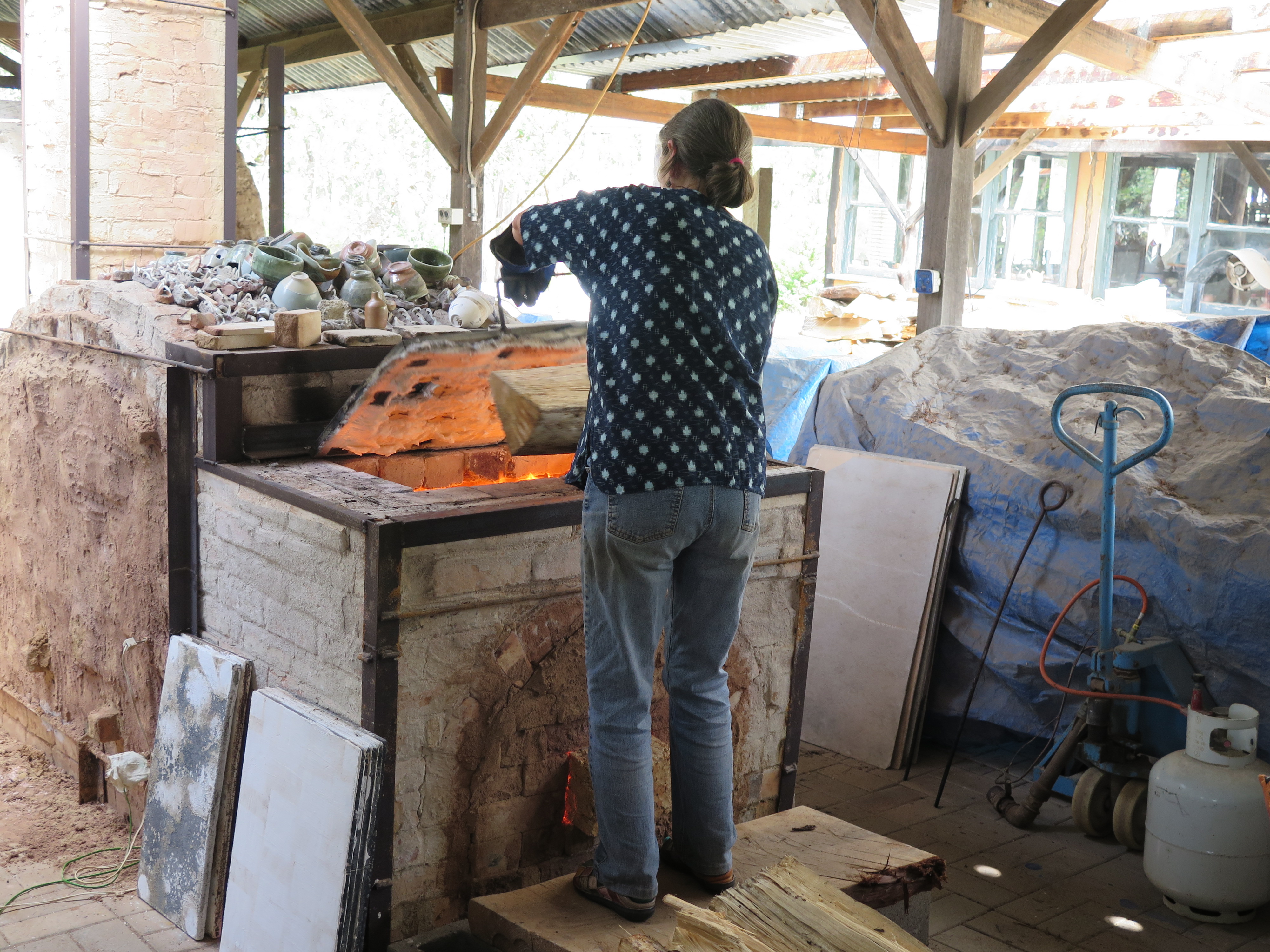
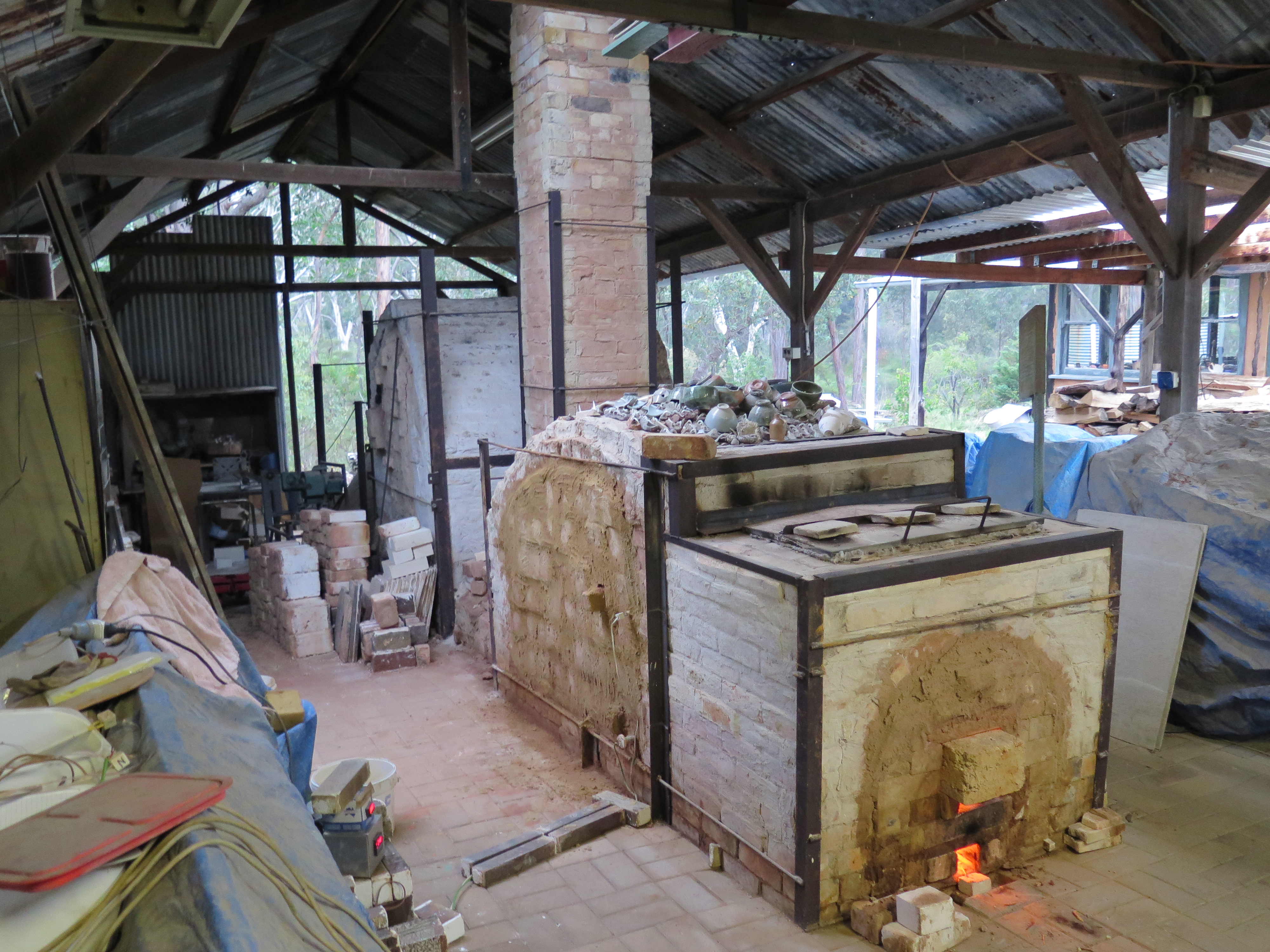
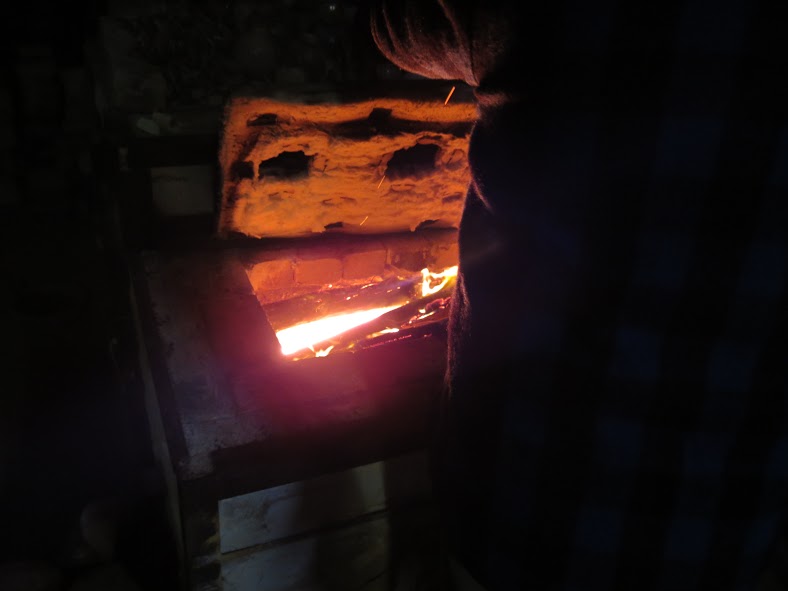
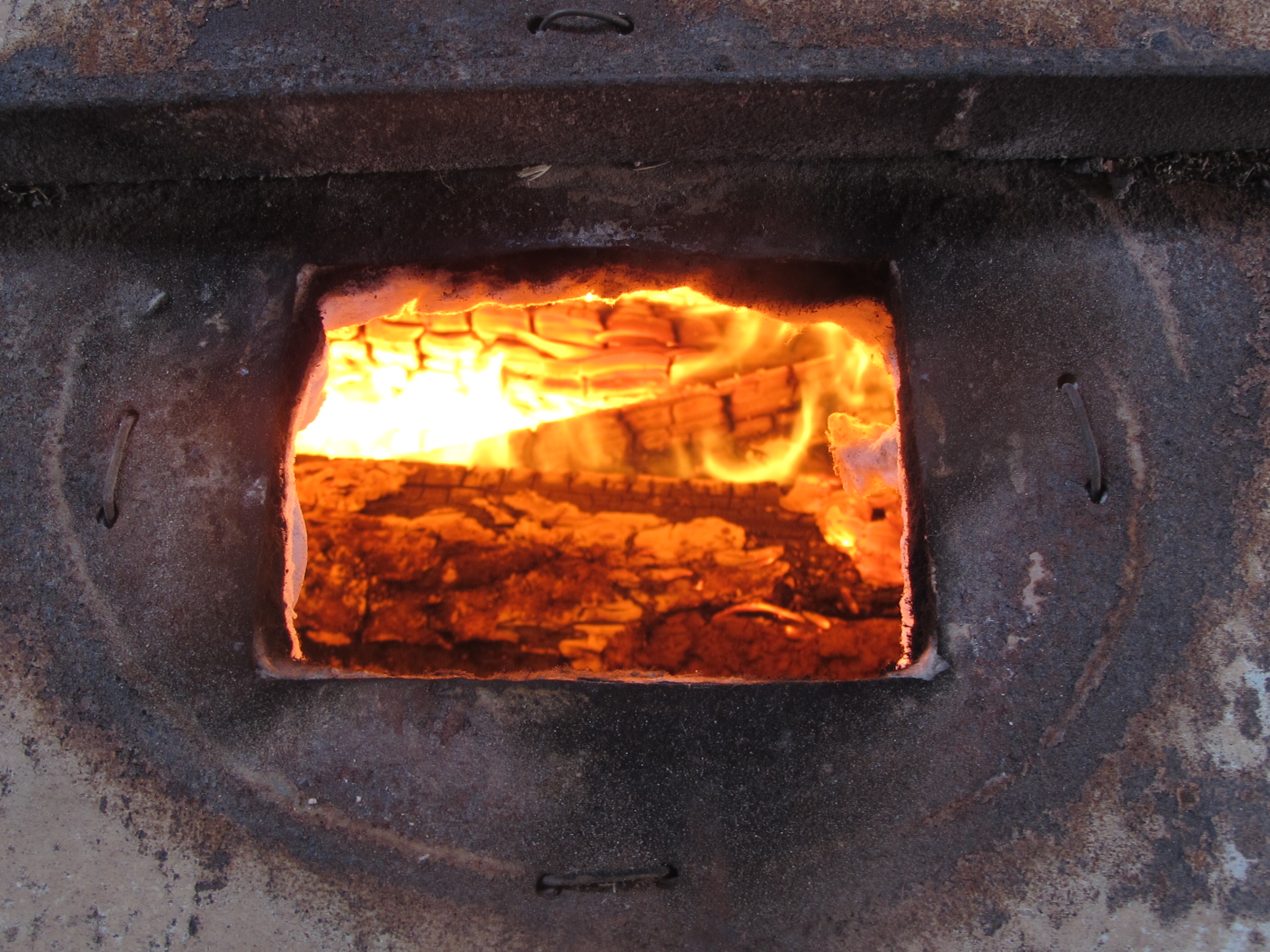
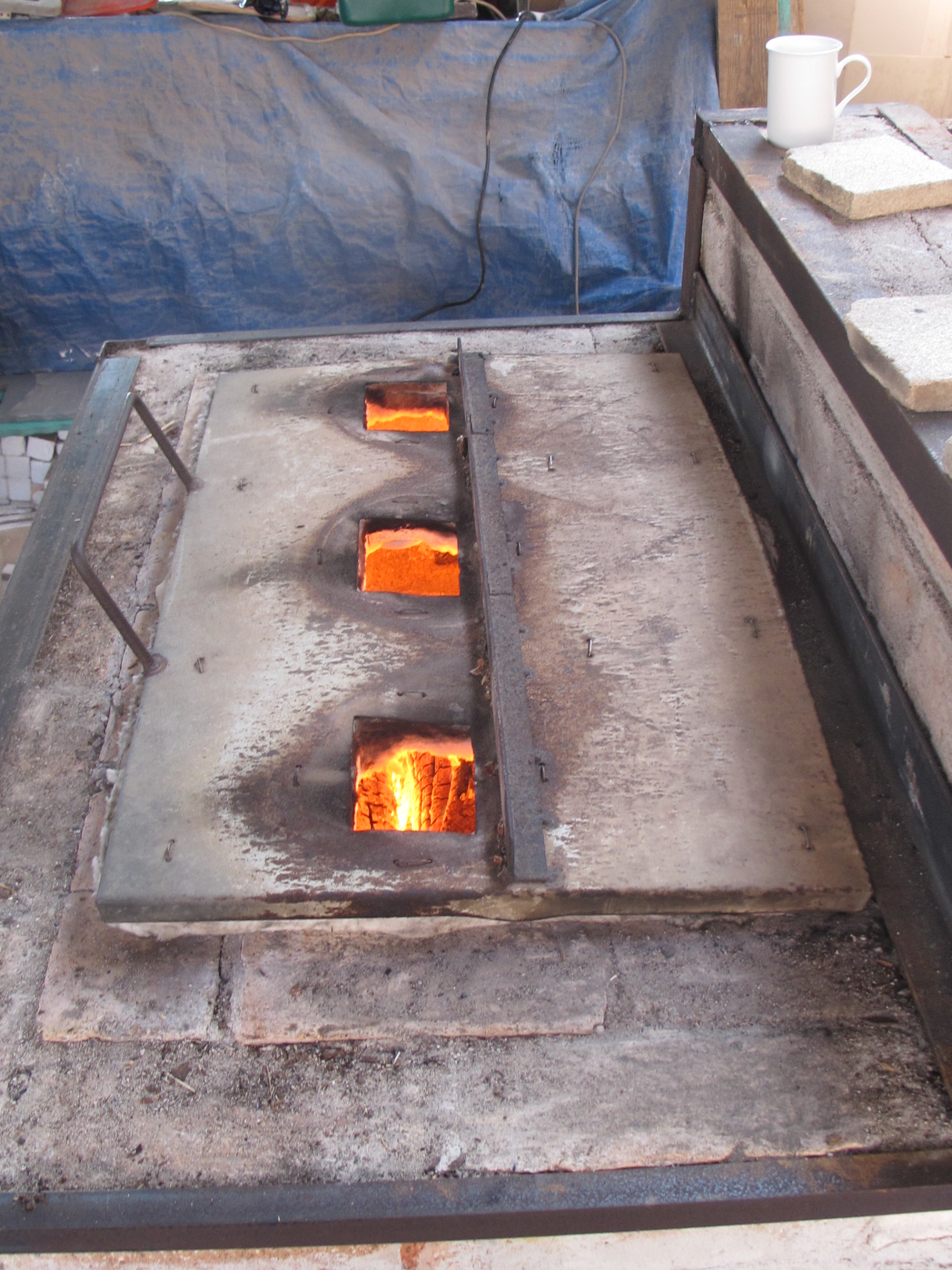
The kindling fire starts well and develops slowly into a full firebox of burning chunks, after 3 hours, there is enough ember built up in the lower part of the fire box, (‘the ash-pit’) on the floor, to support the fire starting off on the hobs, in the upper part of the firebox (‘on the hobs’). The long, thick pieces of wood introduced onto the ‘hobs’ from the top of the firebox, are held suspended by the brick ‘hobs’ just above the burning embers in the ash pit, placed here, they soon catch alight and start to burn fiercely. This takes the firing to another level, where the wood burns cleanly and thoroughly, allowing the temperature to rise evenly and steadily, up until it is time to begin reduction at about 1000oC.

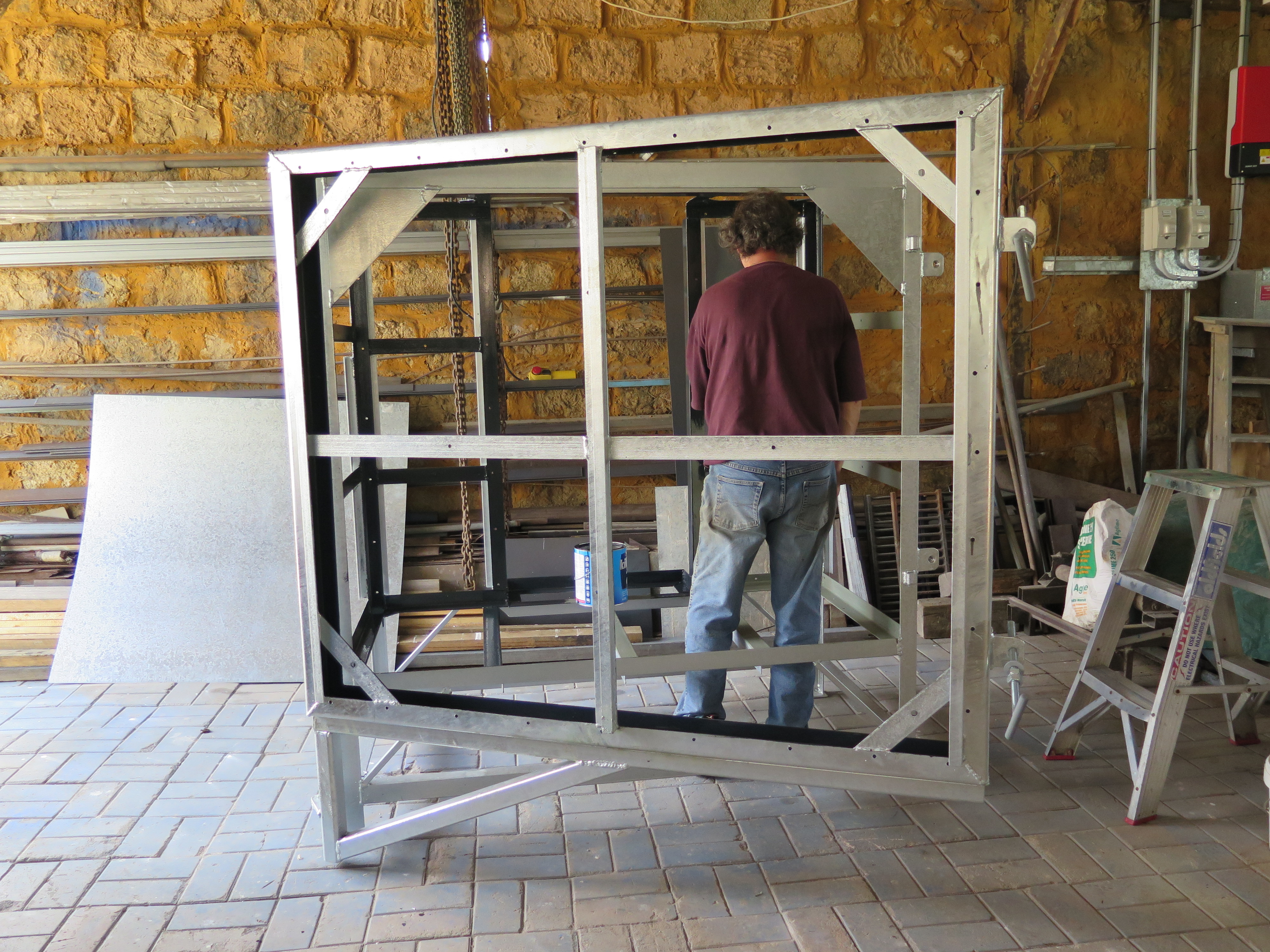
After cutting and stacking the kiln wood yesterday, I spent the rest of the afternoon in grinding, fettling, filing, acid-etching, washing and baking the newly galvanised kiln frame for Sturt Workshops prior to etch-priming. This is all mindless dull work that I have done a hundred times before, if not more and a good time to allow my mind to settle and watch itself wander, constantly returning to the hand/arm action of simple brushing. Paint on, Paint off. I don’t need to be in a buddhist temple in Kyoto to practice mindfulness. Any place will do, but it helps to be able to make the time for it and it alone.
IMG_1222IMG_1227

IMG_1228

Although it is very early in the morning, I’m keeping myself occupied in fiddling with the very small fire in the fire box. I need to watch it carefully, as at this stage it can easily go out if it is left for any

period of time unattended. As I sit and carefully place each new small piece of wood on the pyre, I suddenly realise that it is starting to rain. No wonder that there were no stars in the sky. This is no problem for me, as I took the precaution to cover the wood outside on the truck last night. I’m using freshly split pine, which although being felled two years ago, is still damp inside when split from the log. I don’t want it to get any wetter until the firing is up to 1000oc. or more, then it won’t matter if   the wood is wet and may even be of some use in creating the ‘reduction’ atmosphere in the kiln, which changes the colour of the clay bodies and glazes. Such is the odd nature of burning wood in a potter’s kiln. Pottery may seem superficially to be a simple craft activity, but there is a whole world of science, chemistry and associated technologies that need to be learnt, assimilated and internalised, so that you can then work intuitively and creatively in the medium.

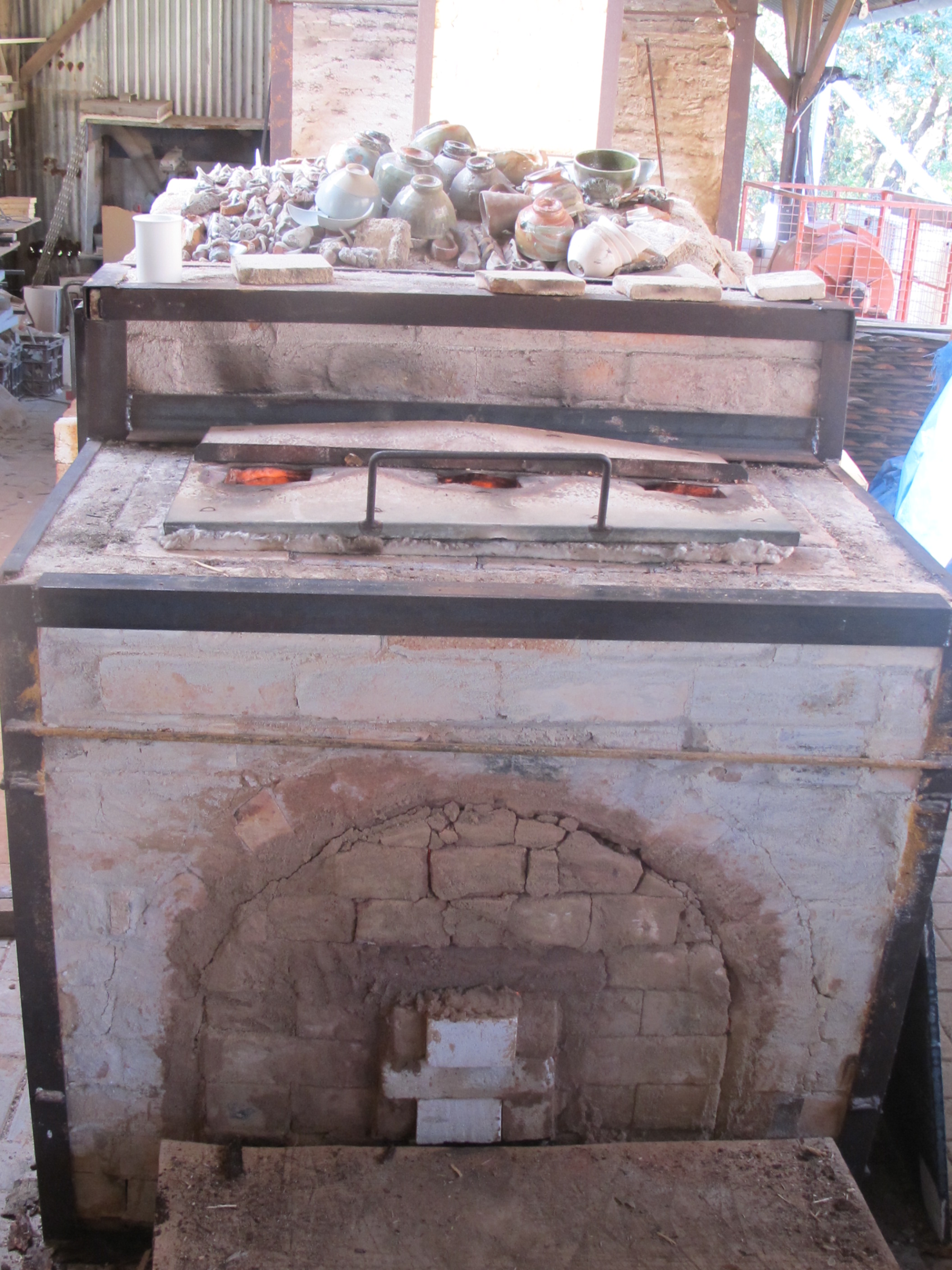
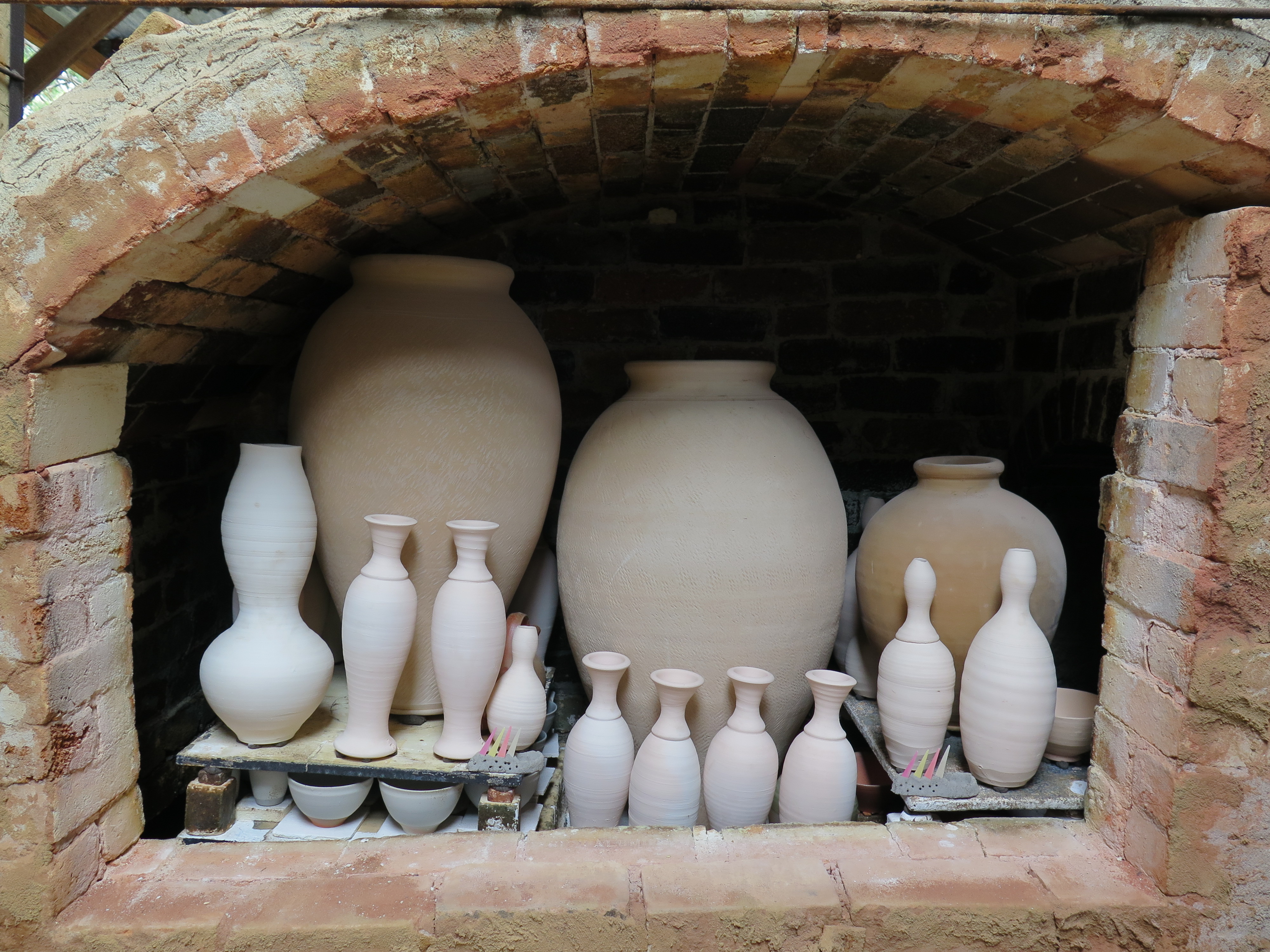
In this firing I have 3 large jars and then a lot of bottles, with a few shelves of smaller domestic pots underneath. This firing isn’t very efficiently packed, but there is no easy way to get these big round jars into a more-or-less square box of a kiln chamber. That is just the way it is, so I do the best that I can with what I have to work with.
IMG_1049_1

I have done this so many times, that I have judged the amount of wood needed, down to the the last half wheel barrow load. The firing proceeds smoothly and evenly right up to top temperature of 1300oC or cone 10 flat, in 16 hours. Because I started so early this morning, there is time for a hot shower and a relaxed dinner back up in the house, even a bottle of wine to celebrate. This is civilised kiln firing. Perhaps even Laid back ?

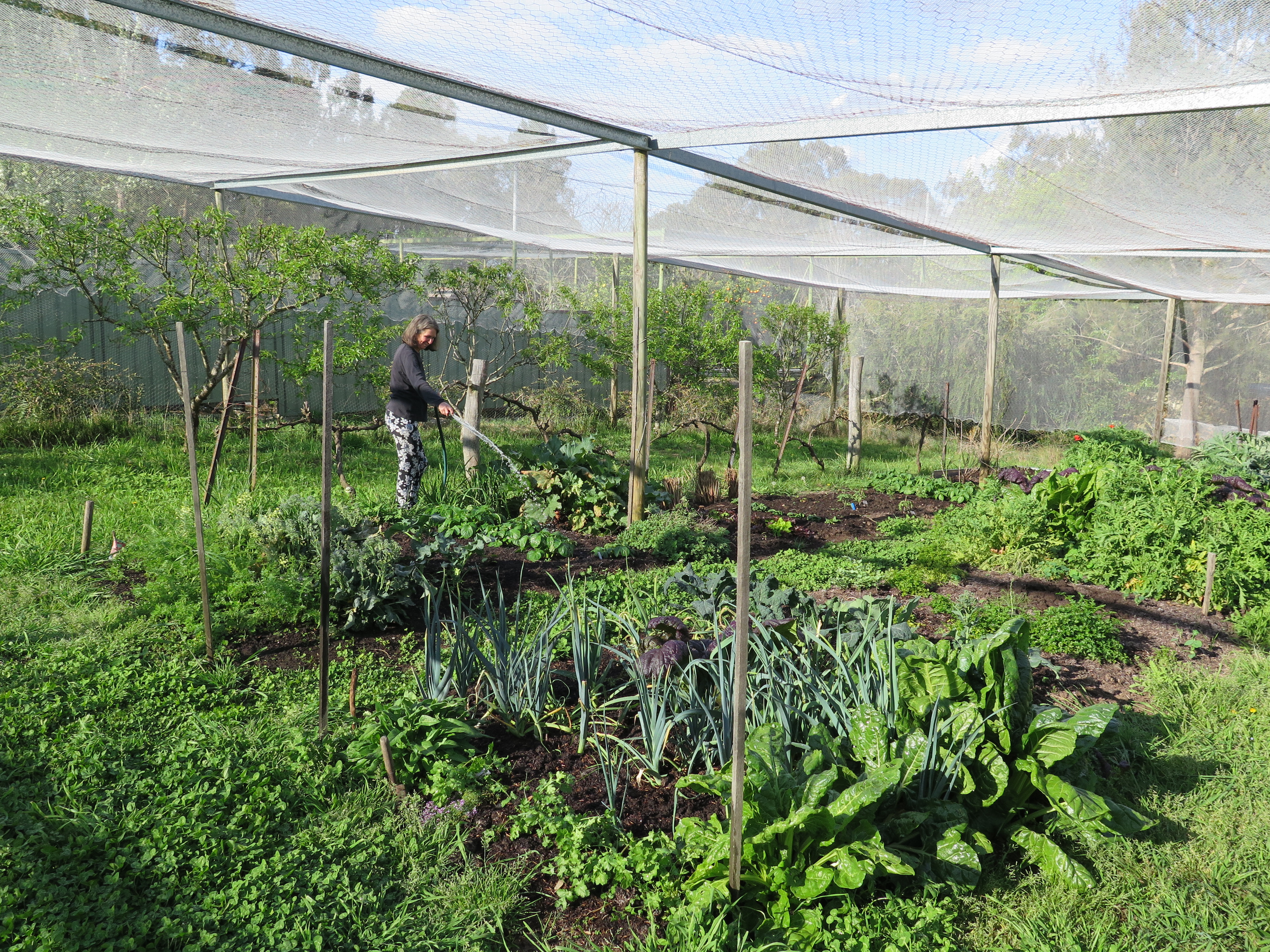
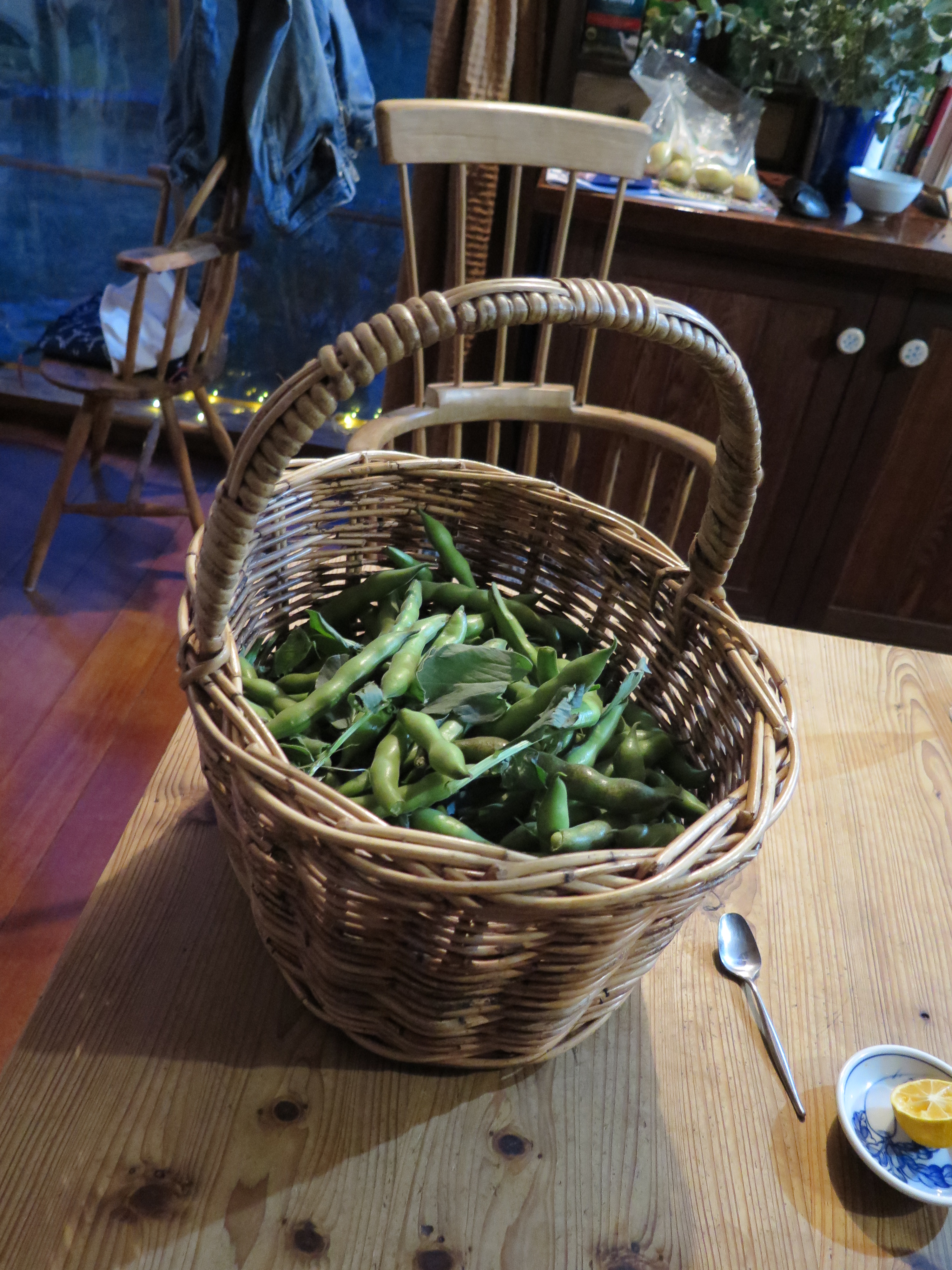
We bake a whole snapper for dinner with some freshly picked broad beans from the garden. The are perfect just now. Sweet and juicy without any starchiness at all, just the way that I love them. This is the 2nd pick and there will probably another couple before they get too big. The first few beans are eaten raw as an entre, perfect with a glass of chilled white wine. We bake a few potatoes, sweet potato, red onions and some pumpkin. Our garden feeds us very well!
IMG_1237IMG_1239

IMG_1240IMG_1241

I bake the fish with some mushrooms and slices of lemon and serve it dressed with a sauce of melted butter with finely chopped anchovies, capers and green olives.

It’s a tough life, but some one has to have a go at it.

Tomorrow I will start to grind, sort and clean all the pots from the last firing, spend a bit more time in the garden and add another coat of paint to the kiln frame waiting in the factory.

Never a dull moment!

fond regards from the multi-tasking Steve and Janine

Hitting the Ground Running

I’m just back from Japan, It’s been a great trip. I’ve been away since late August. I’m back just in time to discover that my friend and mentor, Allan Parkes has just died. Such an interesting and creative person.

For the first time, I decided to rent some studio space in Japan and make some work there. It was very good. I hope that I’ve learned something while I’ve been away, but one never knows. Only time will tell. I tend to take things in and let them blend and simmer for a while, then hope that something will percolate back out again in some dilute form that will enhance and extend what I already do with what I know. If nothing useful emerges, then there is nothing lost, as I really enjoyed my time there. As I alway do. I have a strong affinity for Japan, the people, the food, the creative endeavours of all those people that I have met and/or whose work I have seen in the Galleries.

IMG_1005IMG_1013IMG_1011

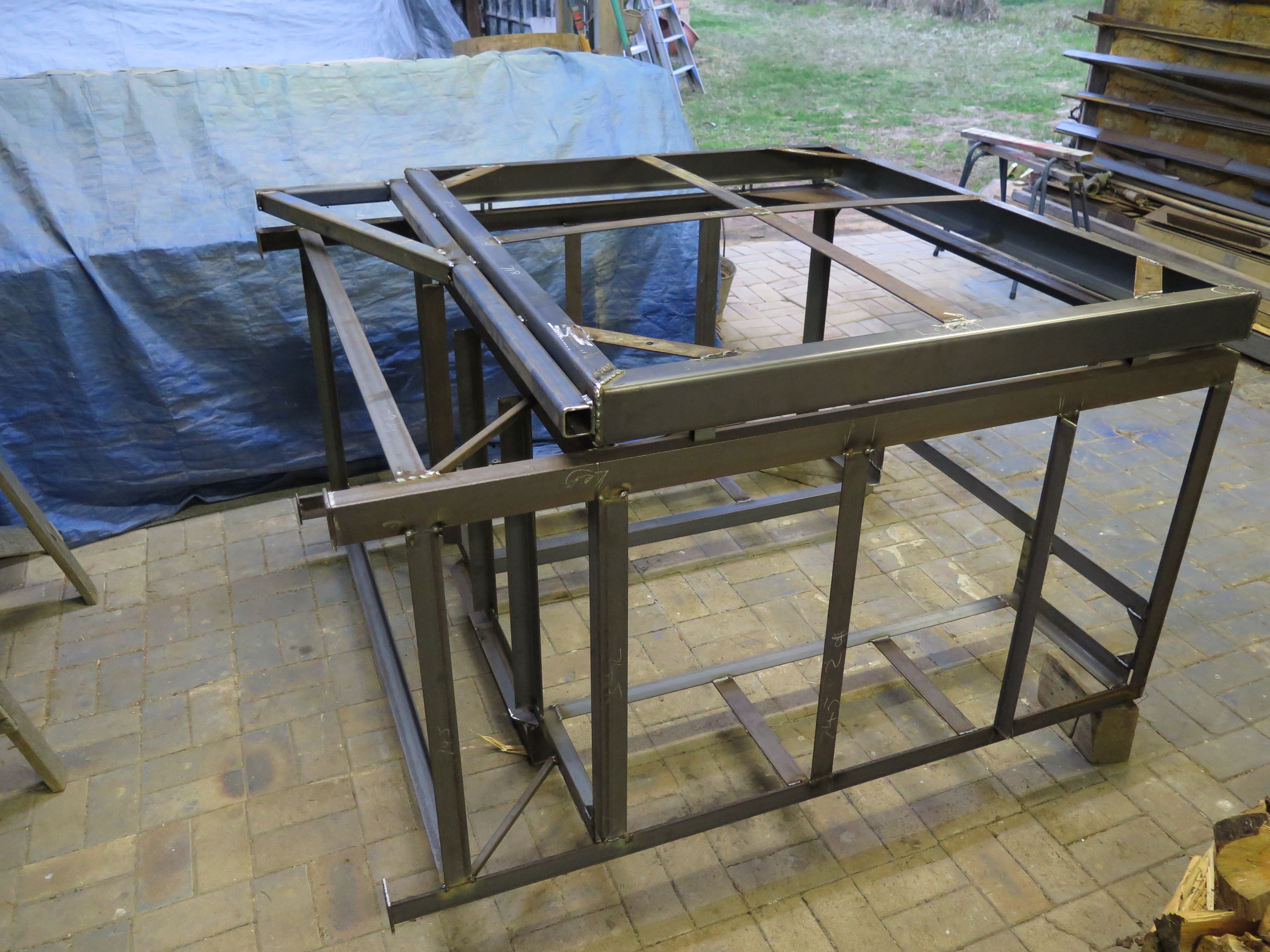
I had one day to unpack and do my washing, then straight in to the pottery and kiln factory. I have a large kiln ordered, so it’s straight into welding mode. I have to earn some money. I weld up the steel frame and get it off to the galvanisers in just 4 days. While the kiln is away. I get stuck into glazing all the bisque fired pots that I left here in the pottery, before I went to Japan. So it’s glazing, decorating and kiln packing. Then wood stacking, kiln shelf grinding, cleaning and washing. Finally the kiln is packed and ready to fire.

IMG_1187

It’s 5 o’clock in the morning and the early bird chorus is just starting. I’m down in the kiln shed firing the kiln, I like to get an early start for my firings. For some very intimate psychological/physiological reason that I don’t really understand, I seem to like to get an early start, when it’s dark and quiet and I have the whole world to myself. Well, almost. There is of course the odd rooster in the distance and the bird song. The birds seem to start calling to each other even before I’m aware that that there is any change in the light levels, but they are so much more sensitive to the natural world than I am. We have all learnt to live in an un-natural modified environment with electric lights, refrigeration, supermarkets, air con, and flat screens. I eschew most of this for the frugal comfort of home grown vegetables and a wood fire for warmth and cooking. Of course I do have electric lights and a fridge. I’m not a ludite, but I’m trying to keep my life as simple as I can, while still engaging with the modern world.

IMG_1190

Half an hour later, I can start to see a slight lightening of the sky and instead of it being jet black, it starts to have a very pale light grey to bluish tinge to it. I’m sure that if I had to live without any modern ‘conveniences’, that I’d soon adapt to my circumstances and start to see the dawns approach, just like the birds. But at this stage I’m happy in my hybrid world, sitting on the edge of my small hamlet, with access to everything that a modern first world economy has to offer only half an hour away and I’m also happy to live here quietly and ignore most of it.

Electricity is great. We make all of our own. In fact we make about 3 times more than we use, and sell the excess 2/3rds into the grid for money. Having fresh drinking water on tap is also a great thing. We catch all our own rain water from our roof and store it for later use. Hot water on tap has to be the greatest luxury ever invented. I consider it the basic standard of civilisation. If you have hot water, you probably have peace and stability. We make our own hot water from a combination of solar panels and a boiler fitted into the back of our wood fired kitchen stove. We also own a fridge, a small one, but we don’t own a freezer, even though we have a large kitchen garden and could find a use for one. We thought about it and decided against it, as it uses too much electricity. We always have something fresh to pick and eat from the garden. We eat what is in season in the garden, what we have over, we vacuum preserve it in ‘Vacola’ jars and store it away in the pantry.

IMG_1000IMG_1001IMG_1129IMG_1130IMG_1167
I’m perfectly aware that the way we live is both very hard work and a great luxury. We are in control of most aspects of our life and that is our greatest luxury. However, Just like everyone else living in a capitalist economy, we have to earn money to pay the bills that constantly accrue. Such things as Council rates, insurance, registration, taxes etc. There are lots of once-off bills that occur throughout the year, but add up to be our major expenses over-all. As we don’t have conventional jobs, cash flow can sometimes be a problem, but we manage by living quite frugally. Luckily, most of the things in life that we aspire to can’t be bought for cash, but are earned through hard graft and personal effort.

IMG_1194

This wood firing will be the last that we can fit in before the Southern Highlands Arts Festival Open Studio Weekends, that are slated for the first two weekends in November. It gives us a couple of weeks to unpack the kiln and then fettle and grind all the pots. With any luck, we should have just enough time to unpack the kiln,  then clean up the studio ready for the opening.

Best wishes from Steve who is glad to be back home again and hitting the ground running

Enjoying the Now

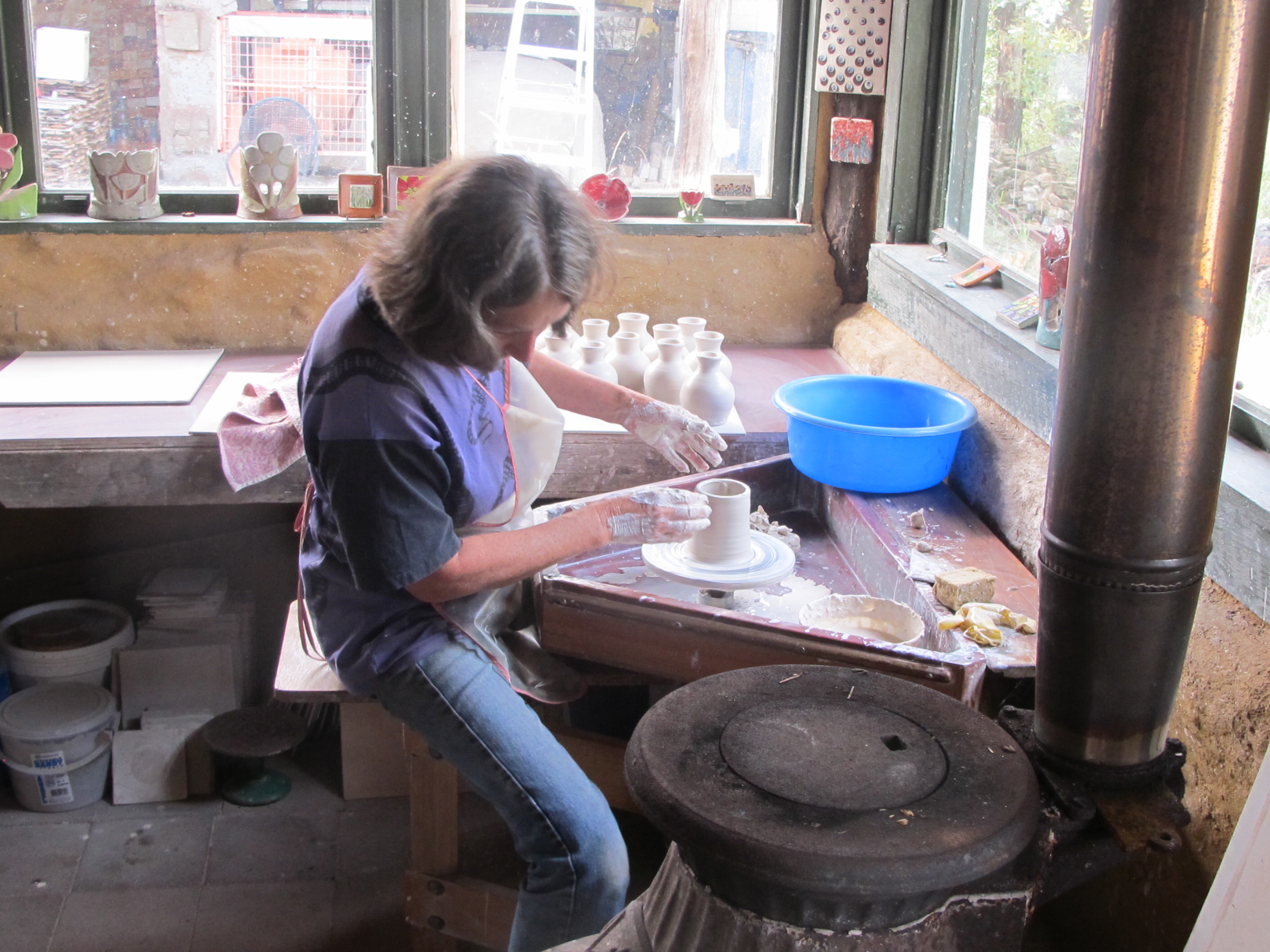
We have our pottery back to ourselves again now, so it’s back to the wheel for us. We work at our kick wheels, set either side of the old pot belly stove which has been generating a steady gentle heat to keep us warm on the coldest of days for the best part of 40 years now. I’m amazed at how it has kept on going for so long with only minor repairs.

IMG_8895thumb_DSC01182_1024

thumb_DSC01187_1024thumb_DSC01213_1024

thumb_DSC01218_1024

Throwing pots out of these ground rock ceramic pastes is a slow process. We have to plan ahead so that everything must be thrown thicker than you might like and then there is a lot of turning to be done. Some times we rough the forms out on one day, then let them dry overnight until they are almost completely dry, before finishing them off to the thinner desired cross-section. They can’t be bone dry, or they might break under the pressure of the turning tool, but they can’t be damp either, as then they will chip and tear. Milled rock paste isn’t like ordinary clay. It’s just not very plastic. It needs to be turned just before bone dry. Grinding away at what is essentially sand and water mix really takes the edge off my home made metal strip turning tools. I have to resharpen then after every 2nd pot, just to keep the edge keen.

thumb_DSC01219_1024 thumb_DSC01202_1024

The garden is starting to respond to the increasing day length and the hint of warmth in the air. I can see a poppy bud starting to show some red colour and there are swelling buds on the blueberries. We have just picked our first asparagus spears as an aperitif before our other vegetable dinner. These are all good signs of the warmer spring weather to come.

thumb_DSC01287_1024 thumb_DSC01293_1024

thumb_DSC01294_1024thumb_DSC01290_1024

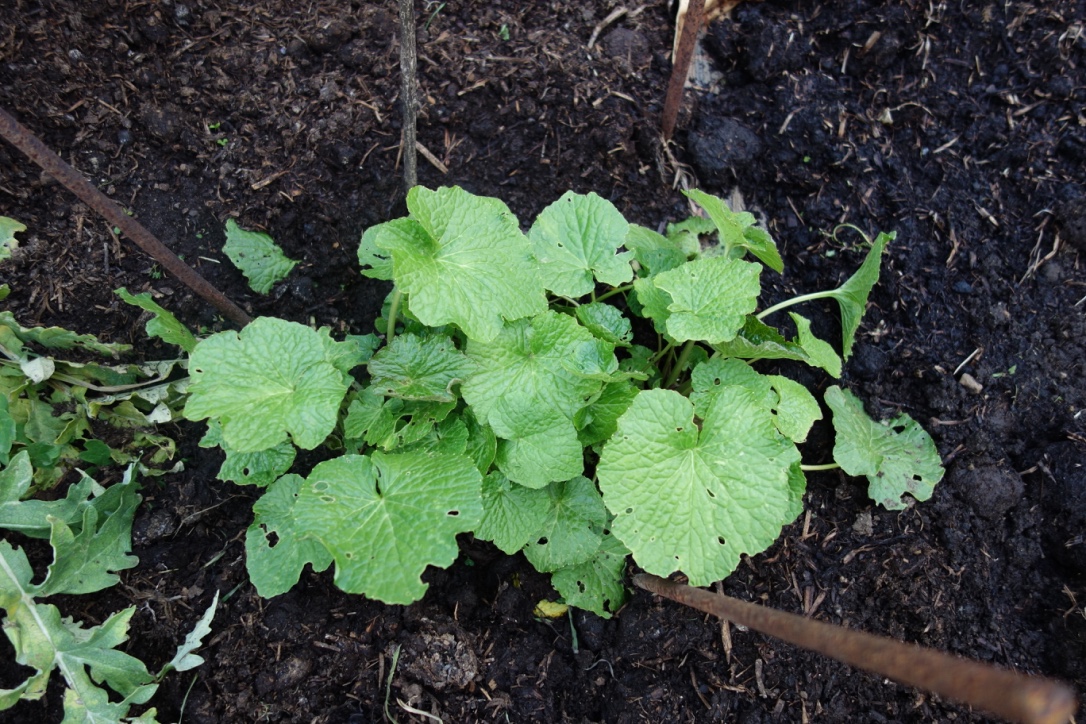
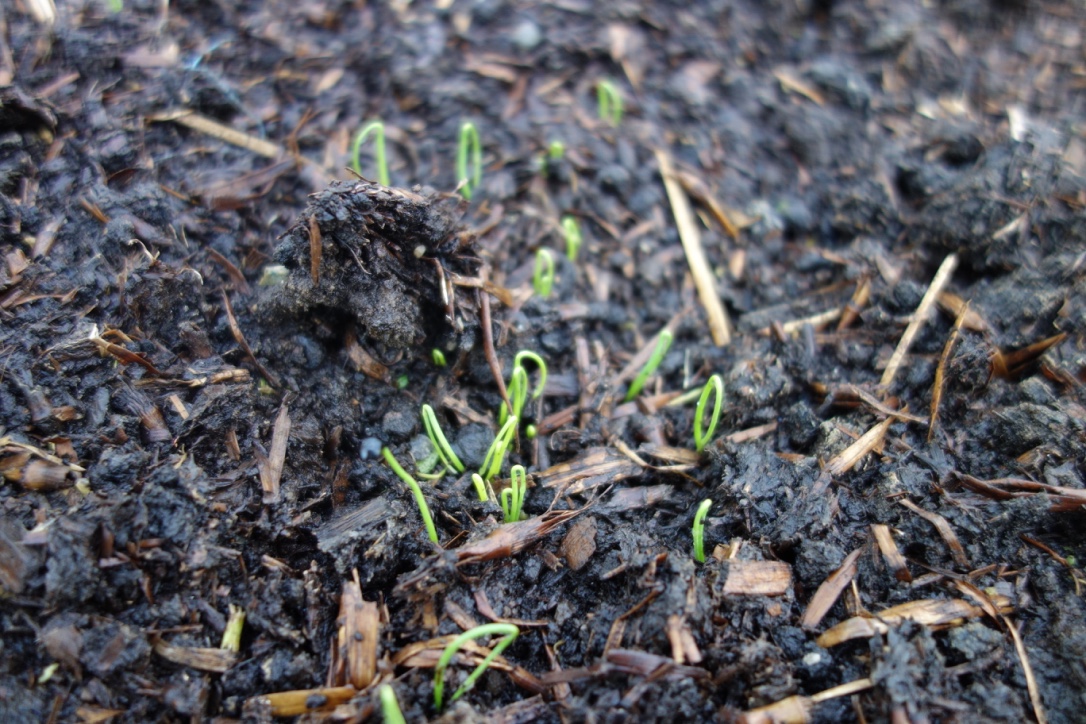
The Japanese Wasabi plants have grown well through the cool wet of the winter and are looking good right now. It’s that hot dry summer heat that knocks them around. I planted onion seeds 2 months ago. A lot of it came up on time, but for some reason, one packet of seed, just sat there and did nothing until now. This variety must need warmer weather to germinate. all the other plants are now 100 mm or more high. I hope that these plants can get enough growing season before it gets too hot and dry for them in the summer? Just down the row a little we have a nice crop of Pak Choi, lovely for stir fry, or just steamed with a little garlic, ginger and soy. 2 mins and melt in your mouth, with still some nice fresh crunch in the warm but fresh and crunchy stems.

thumb_DSC01292_1024 thumb_DSC01291_1024,

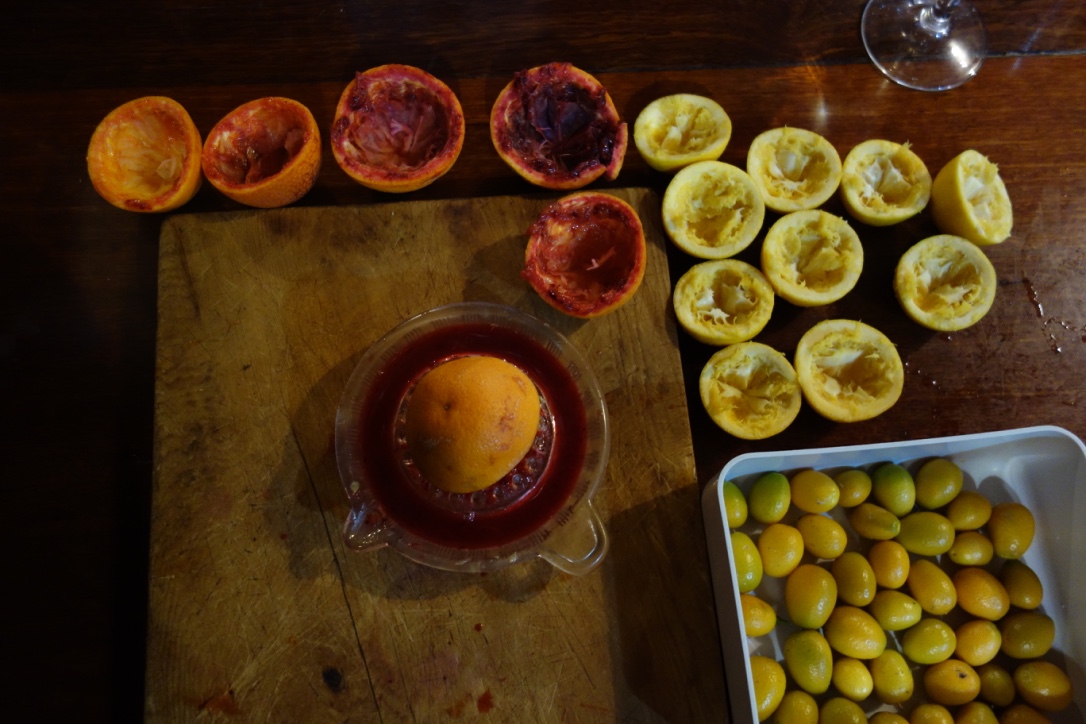
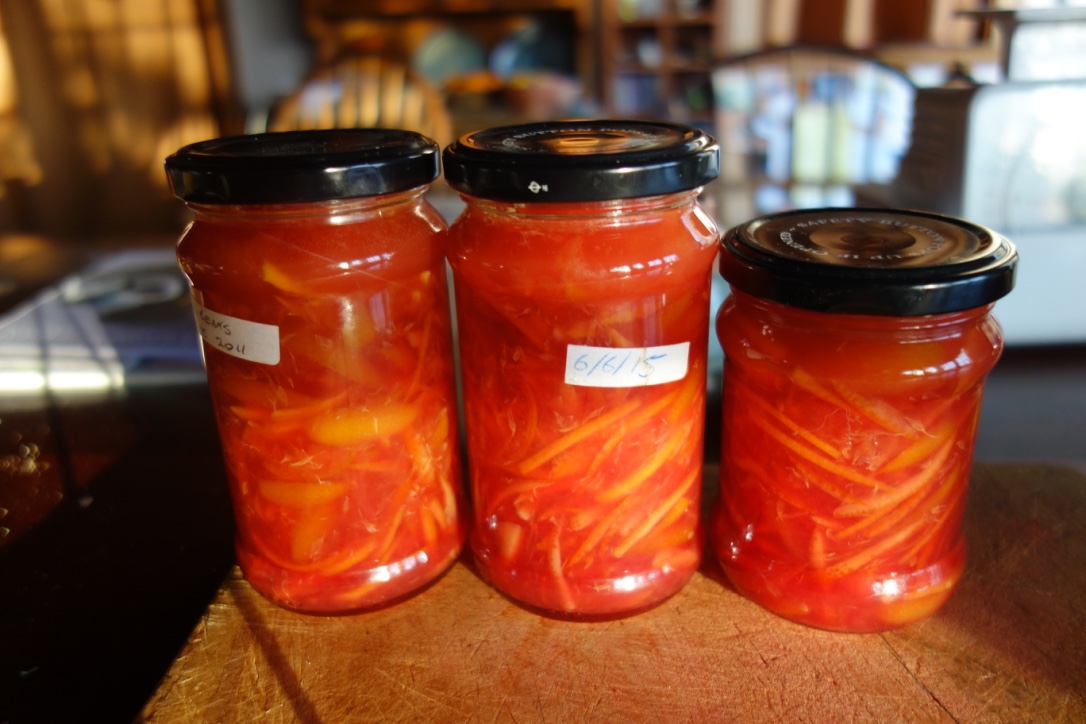
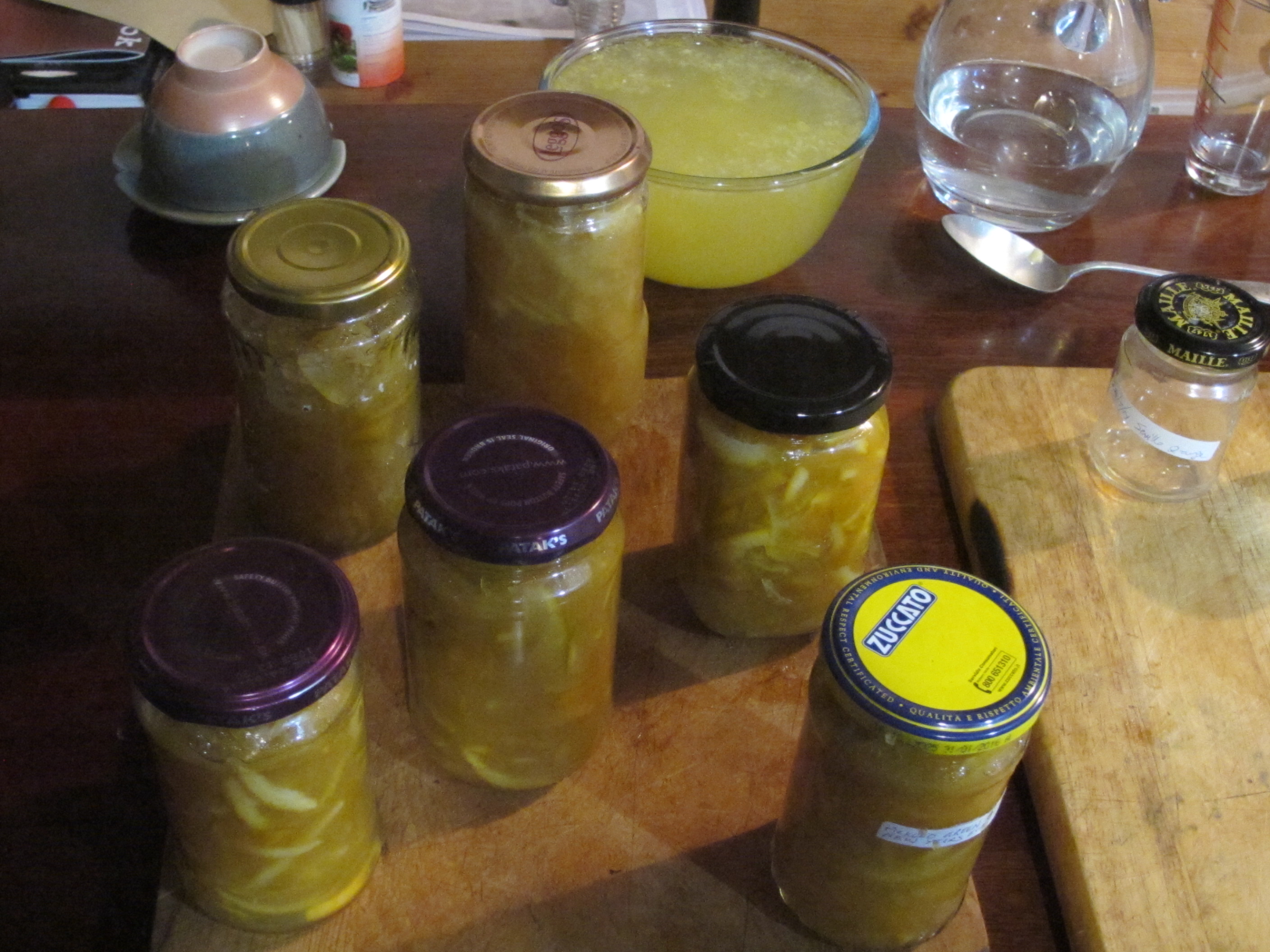
I have made what is probably the last batch of marmalade for this year. As the citrus season has all but come to an end. I make a batch of cumquat. blood orange, and lemon marmalade. I finish it off with a dash of whisky before bottling. It’s unusual, it looks great and tastes better.

thumb_DSC01272_1024thumb_DSC01274_1024

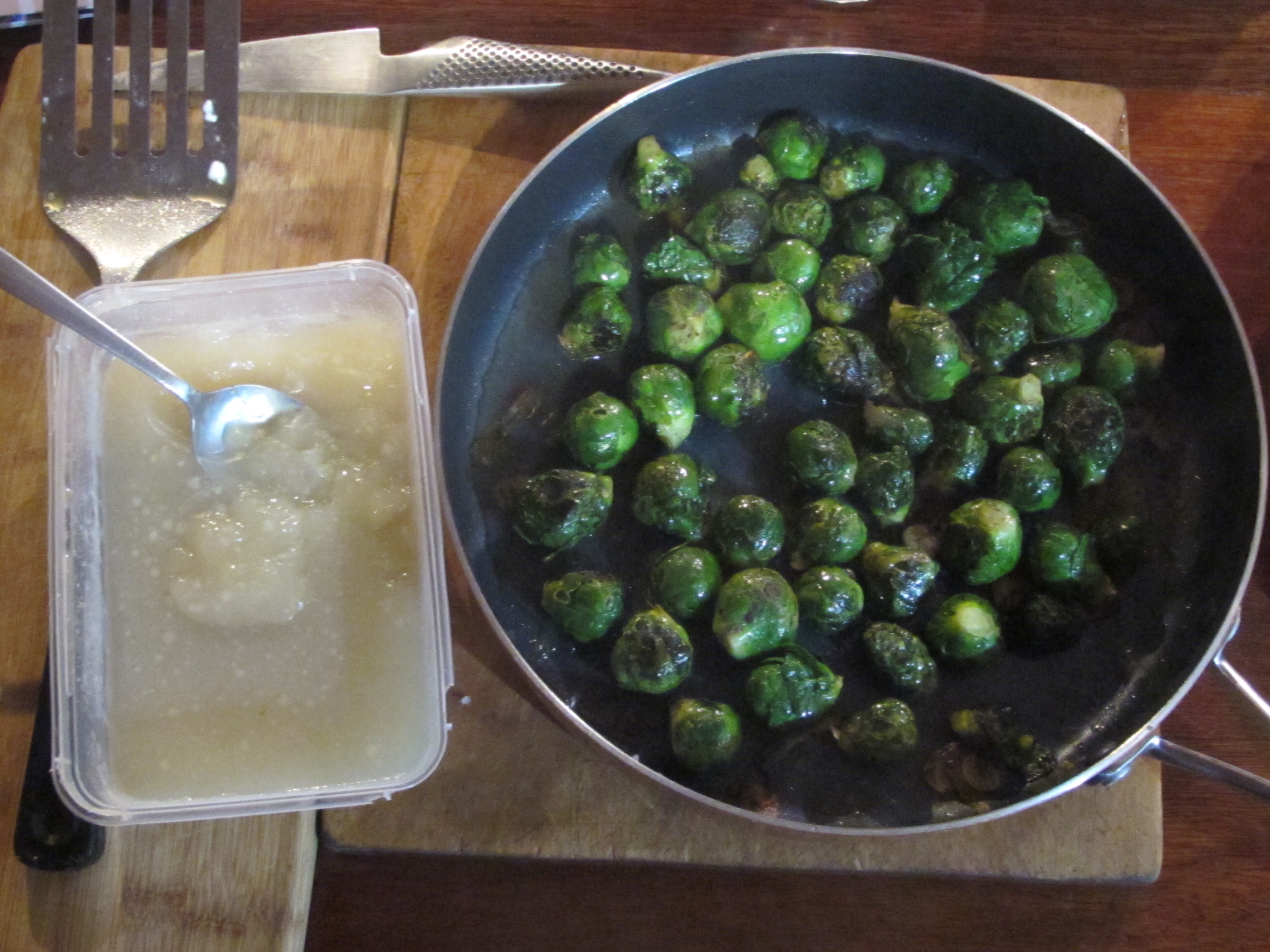
thumb_DSC01224_1024tonight’s dinner is spinach with ricotta, Brussel sprouts, initially lightly steamed, then finished in a pan-fried with garlic and chilli, served with steamed potato and pumpkin.
thumb_DSC01278_1024 thumb_DSC01277_1024

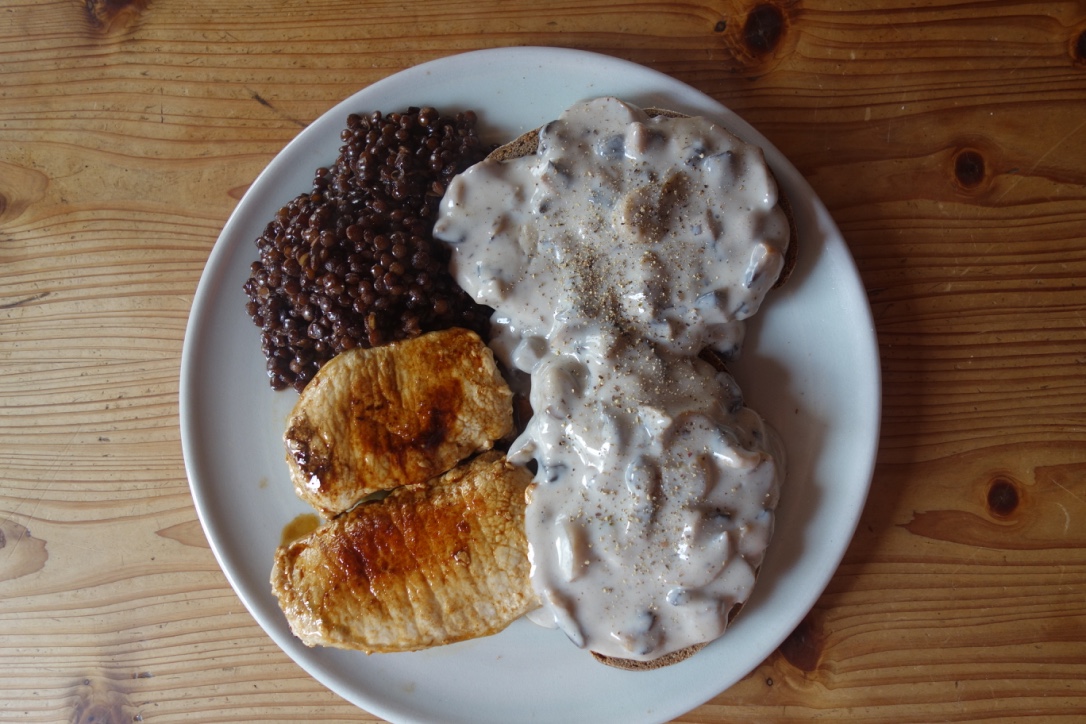
Another recent meal was pork medallions pan-fried in olive oil and garlic, he deglazed with a splash of a nice chardonnay, served with lentils simmered in home-made marrow bone and veggie stock, then plated up with mushrooms in white sauce.

We have plenty of cauliflower, broccoli and Brussels sprouts at the moment, as the winter chill weather draws to a close. I have been enjoying lightly steamed Brussel Sprouts, which are then pan-fried in some home-made stock. In this case chicken stock, and finished with a little sesame oil and pan-fried and tossed for a few minutes. They get a few caramelised spots on them as they roll around, a slight grind of fresh pepper and some vegetable salt. Delicious.

IMG_1004

No better way to enjoy the crisp cold of winter.

There was an article in a recent issue of ‘New Scientist’ magazine. (No. 3032, 1/8/15) That told of the health benefits of eating bitter foods like Brussels sprouts.

The Brassicas have several bitter phytonutrients that are produced by the plant to make them unappetising to predators – like us, as well as caterpillars. Sulforaphane is one such protective phytonutrient that gives them the particular sulphur smell. It has anti-cancer functions and is an antioxidant. I usually have a small nibble on what there is in the garden, snapping it off and eating it raw while I wander around, weeding and watering, crunching and chewing as I go. They must be good for me?

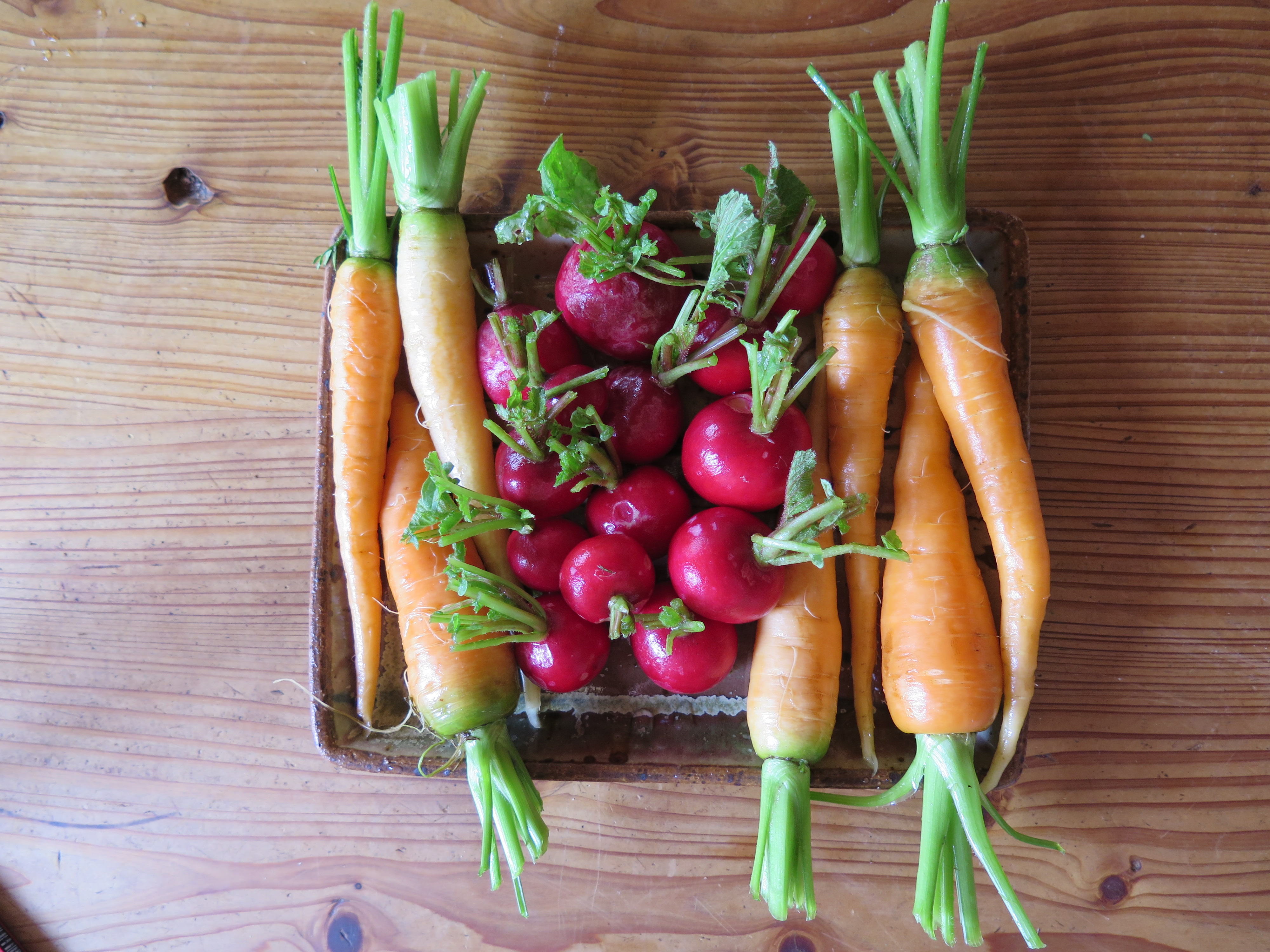
I really like the idea of going to the garden each day/evening and picking what needs eating on that day, because it is absolutely ready to be picked, organically grown and totally fresh. This is self-reliance, living with the seasons. 

Enjoying the now!

thumb_IMG_2558_1024

Best wishes from Steve and Janine, who are vegging out in the late winter.

Snow for the Last Firing Workshop of the Season

It freezing!

The wind has a minus zero wild chill factor and It’s quite hard to get warm. All the wood is wet, even in the wood shed where it has been stored for some weeks, but it just isn’t drying out because of the constant rain. It snowed over night and closed the highway. The busses aren’t running because the highway is blocked. We used to get snow like this, only briefly, every winter back in the seventies when we first came here to the Southern Highlands, but due to global warming, we haven’t had snow for a few years now. So we are unprepared. I have to resort to going down to the kiln shed and stealing some of the dry kiln wood to get the fire started this morning. It’s a day for staying inside until the weather clears a bit, or the sun comes out. We had an inch of rain before the snow. So everything is a bit boggy out there. I was planning on planting out the onion sets, maybe later in the day? It’s well past time to plant out the onions. They should have been planted out last month, 3 or 4 weeks ago. I was brought up to believe that onions should be planted on the shortest day, (20th June), and harvested on the longest, Xmas day. Or there a-bouts. It’s always worked out well enough for us to follow that rule and it’s easy to remember.

The professional advice I have is that there are many types of onions and they can be planted out at different times. I’m sure that this is absolutely correct, but I just don’t have the time to work it all out. Hunter River Brown and Spanish Red are my onions of choice. Plus of course, spring onions and leeks at any time of year. Everything gets planted out now as soon as I can get the time to do it, as close as possible to the mid year solstice in this case. It could explain why we have such variable results with everything that we grow – especially onions. We just don’t put enough effort in. Lazy buggers that we are. We once had a moon planting calendar, to tell us the best time to plant or transplant seedlings. I doubt that it makes any difference, maybe it does? I just don’t know. Because I don’t know, I can’t say that it does or doesn’t make any difference. I could never tell. The sceptic in me doubts it. I couldn’t always get out there on a Tuesday afternoon after 2.00pm to do the particular planting of specific root crops, to catch to most beneficial window for them. I was lucky to get out there some time in the same week, or even the closest month, as is the case now with these onions. I plant when I can find the time. What seems to me to be more important to success in growing vegetables, is keeping up the constant weeding and in dry times, the watering, often twice a day at the height of summer.

We have just finished our last firing workshop for this firing season and are waiting for the kiln to cool. Everything seemed to go well and so perhaps we can anticipate a good result for all the hard-working participants. I hope that the results are good for them. They work so hard to bring it all together. I want it to be rewarding for them. I try my best to deliver for them. But nothing in life is certain.

We started the firing within 10 minutes of the usual time, after finishing packing on the Saturday afternoon and finished the firing within half an hour of our usual time on Sunday afternoon. Pretty much like clockwork. Not so surprising when you think that this is the 22nd firing of this kiln, in this configuration, and fired in this way. It’s only a small kin, so we seem to be getting to know it quite well now.

Everyone who wants to, gets to have a go at stoking the wood into the firebox during their shift. We work to give everyone a safe, enjoyable, entertaining, educational and productive experience. We do all that we can think of to achieve this. We must be doing some things right, as a few students decide to enroll in double workshops and  others have re-enroll the following year. We could do better, but we only have just so much time and energy to put into it.
I try to deliver.

IMG_1390IMG_1412

IMG_1397 IMG_1427

  IMG_1399

Although I have never eaten marshmallows, they seem to appear at most of the firings and are quite popular as the preferred sugar-hit, towards the end of the firing, after a long night shift.

IMG_1428IMG_1431

IMG_1432  IMG_1433

all above images by Jay Warwar

During the firing, I was caught on Davin’s phone, wearing my welding jacket and helmet, looking a bit like Ned Kelly.

Stand and deliver!
I try to deliver.

IMG_2657Image courtesy of Davin Turner

Last night we went to the Royal Society meeting and listened to Dr. Brian Keating Executive Director of CSIRO’s Agriculture, Food and Health Sector.

“The Federal Government has finally released it’s long awaited plan for Australian agricultural competitiveness White Paper 4th July 2015. In this paper the government notes that Northern Australia is a bio-security risk hot spot, facing different risks from other parts of Australia, due to it’s proximity to other countries and its tropical environment which is more receptive to certain pests, diseases and weeds.”

 “Dr Keating’s Sector is responsible for science based solutions to major global challenges such as;

– Food security and the need to increase agricultural productivity in a sustainable way.

– Strong and sustainable industries and economics in rural areas.

– Biosecurity for agriculture including threat of Zoonotic diseases.

– links between food and Health”

(intro from the Royal Soc. briefing note)

In his talk he spent some time outling some of the issues to do with food security. Australia benefitted from the green revolution of the 60’s and 70’s, and we are tracking well to be food secure into the near future, possibly up to the 2050 mid-century period, going on past efforts and statistics. However, there are many variables and bio-security risks, global warming, unpredictable volcanic activity affecting sunlight levels, prolonged draught or el nino, all could change this very rapidly. Apparently we only store about 90 days worth of food in Australia and this is average for the Advanced Western Economies. This has worked well for wealthy nations in the past, as there was always somewhere with an excess and we have a AAA credit rating, so now, because of globalization, we can buy in what we need from whoever is prepared to sell. However, This may not always be the case. In recent decades, apparently, we have gone from a net exporter of food to a net importer. A lot of this is to do with persistent drought in different parts of the country.

The Federal government has also cut spending on plant research, development and breeding. In fact, there have been cuts in many branches of the CSIRO, so we may not always be able to stay ahead of all the pests and diseases, that are consistently developing resistant strains.

We are already using all the arable land that is available and is irigatable. Clearing more forested land will only add to global warming by releasing more CO2 and all the really good, fertile land has already been cleared, so what remains is marginal.

He presented it all quite matter-a-fact, but I fould it quite chilling!

Apparently there a very few sustainable wild caught fisheries left in the world. The future lies in aquaculture, but this causes tremendous polution problems with the local environments where it is implemented. Its also a very inefficient way of producing protein, with several kilos of small fish caught and minced to feed the bigger fish in the pens. Much of this penned fish stock is now being fed on wheat products to provide the protein, but this doesn’t really give the correct balance, so the fish produced don’t have the precious omega 3 oils. The answer from the CSIRO is a GM wheat that contains the omega 3s inserted into it’s genome. The ‘feed-lot’ fish flesh can also be a bit grey, so an orange dye can be added to overcome this.

Oh Dear!

I find it all a bit distressing, but this is the new reality. No one else in the audience seems to be too bothered. They’ve heard it all before. They are all older, or retired scientists and academics. They are on top of all this, they are familiar with these issues and see it from their own particular specialty’s perspective. All grey haired or balding and nodding in agreement. We just look on, we are some of the youngest ones there and we are into our 60’s!

I’d better forget the cold, squally weather outside with a touch of sleet on the wind, that is blowing off the snow, stop winging, and get out there and plant those onion sets. I want to be as self-reliant in food as I can be. This isn’t even cold compared to some countries.
Time to get real and get on with it.
Self-reliance isn’t about comfort. I need to deliver those onions in the summer.
Best wishes from the (as-yet) non, GM-modified Steve and his hard-working organic girl.

Lime Pickle

In these cooler, shorter, winter days. The evenings are long and there is plenty to do. Winter is the season for citrus. I have made 20 jars of marmalade so far, so now its time to make lime pickle. A good lime pickle is a great accompaniment with curry, it needs to be salty, sweet, sour and chilli hot.

We have plenty of limes on the tree, so I slice them up length ways into 1/8 segments, salt then and then leave them covered for a day or two to soften.

A few days later, when I find the time. I’m fasting today, so there will be no dinner, that leaves a bit of time to make up the pickles. The wood fired stove is cranking away in the kitchen, even though we aren’t planning on cooking anything tonight. We light it because it’s frosty outside and going to get a lot colder overnight and we want the room warmed up and the hot water heated as a by-product.
IMG_0874IMG_0875
I start by dry roasting some fenugreek seeds which smell so exotic, but taste of ordinary dried green garden peas unless they are roasted. Roasting brings out a lot of that wonderful aroma and changes the taste to something that is so much more interesting. It also makes them very easy to grind up in the mortar and pestle.
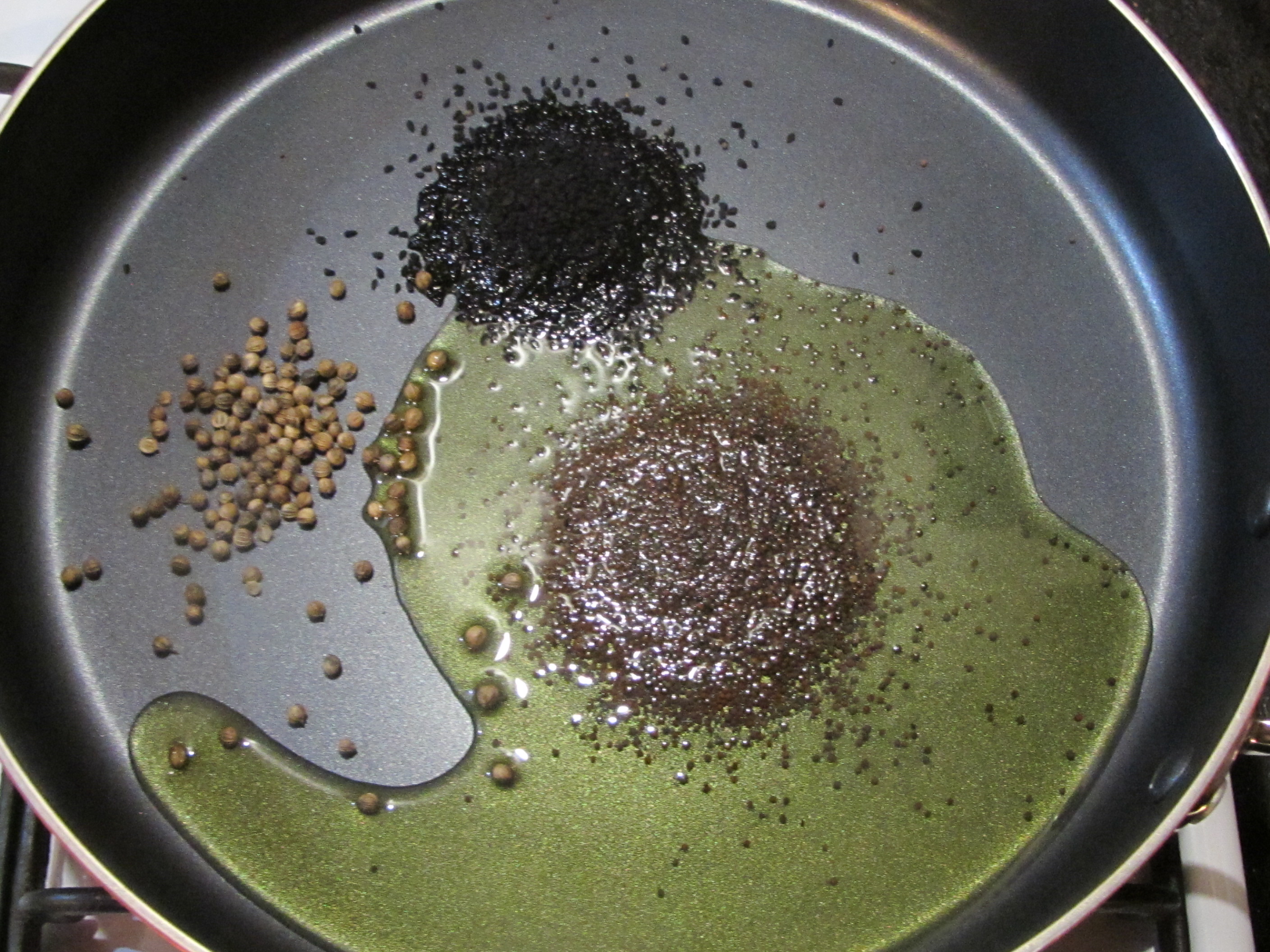
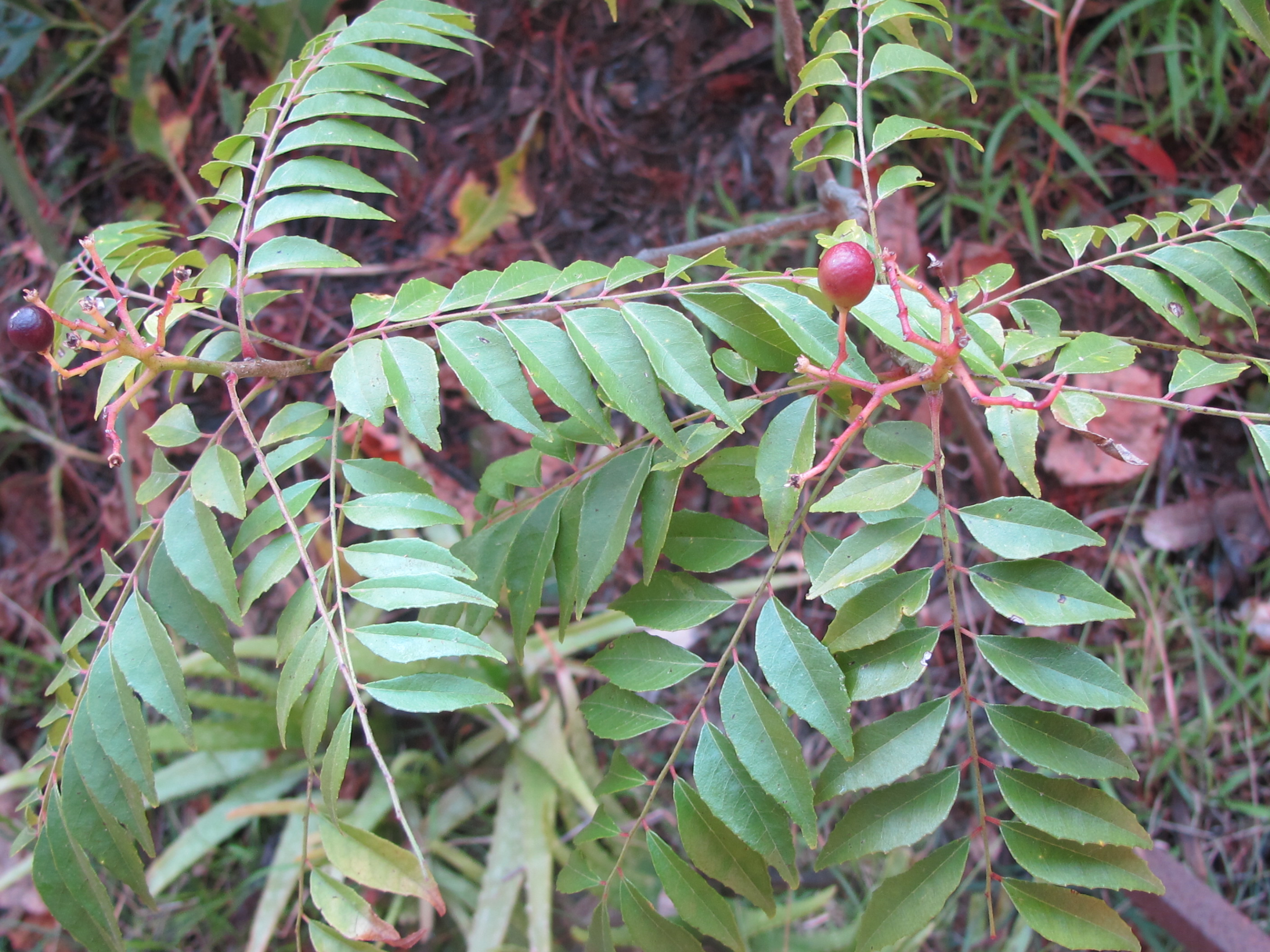
Next I heat a little olive oil in the frypan and add various spices and seeds, like black cumin seeds, mustard seeds and coriander seeds. Once they start to pop, I keep the seeds moving by flipping the pan and add black pepper corns. Once I feel that they are sufficiently heated and softened, without having them popping out of the pan and all over the floor. Not too much heat and keep them moving. I add all the other ingredients. The salted lime segments (de-seeded), some of our roughly chopped chillis, two sprays of our own home-grown curry leaves. Thank you Toni Warburton for the gift of the curry leaf plant some years ago!
 IMG_0879IMG_0876
I also add half a dozen roughly chopped cloves of our ageing garlic. A couple of teaspoons full of cumin, coriander, and ginger. I keep this moving for about 10 minutes on a low heat until the lime skins are a little bit softened and can be chopped in half easily by pushing down on them with a wooded spatula. Not such an accurate measure of cooking time, but it works for me. I want them slightly softened and not too leathery. This also give a bit of time for the flavours to meld in together.
IMG_0877IMG_0878
It seems to work. If it is still a little dry, I add a little bit more oil, or the juice of a lemon or two, or lemonades, or limes, or both. If it is still a bit too sour, I add a little bit of the white death sugar. If you add the juice of the lemonade lemons, you don’t need as much sugar. I try and use a little salt as possible, but a small amount is necessary to get it to taste right, otherwise it is just too bland. I’m not very good at making lime pickle yet, as I only get to do it once or twice a year, during this winter season when the citrus is in such profusion. If I were to do it more often, I’d get better at it, but I don’t need so much lime pickle. Two or three jars are enough for a year.
So many of the things that we attempt here are just like this. We never get to be any good at most of the things that we do because we do so much, there just isn’t time. However, the point is not to be the best at doing something, or ever particularly good. The point of our endeavour here is to be as independent and self-reliant as we can be. Getting better at doing something only comes with repeated practice. This just isn’t possible here with most things – apart from weeding!. So I am resigned to being a bumbling amateur at most of the things that I do. Sometimes I daydream of being competent at one or two particular things, but on reflection, I realise that it is more important to keep the big picture in focus and stay horizontally diversified across all my interests. The more things that I do for myself, the less I need to spend. The less that I spend, the less I need to work. The less time I spend working for money, the more time I have to do things for myself. This cash-minimising self-reliance is a vicious circle.
All this thinking is making me hungry! Actually, these cold nights are just right for a warming curry. if only we had some lime pickle!
Cooking something that you don’t know anything about is always a great big experiment. A bit like life really.
Best wishes
Miss curryleaf Murraya King and her curry-wallah

Nothing is Ever Finished

We have just finished another firing with a group of enthusiastic potters. The weather is glorious and warm in the sun, with no wind, so a good night for a frost. The firing went very well, even a little bit quick, so we will wait to see what the results are next week.

IMG_0794IMG_0791 IMG_0792IMG_0790 IMG_0793IMG_0798

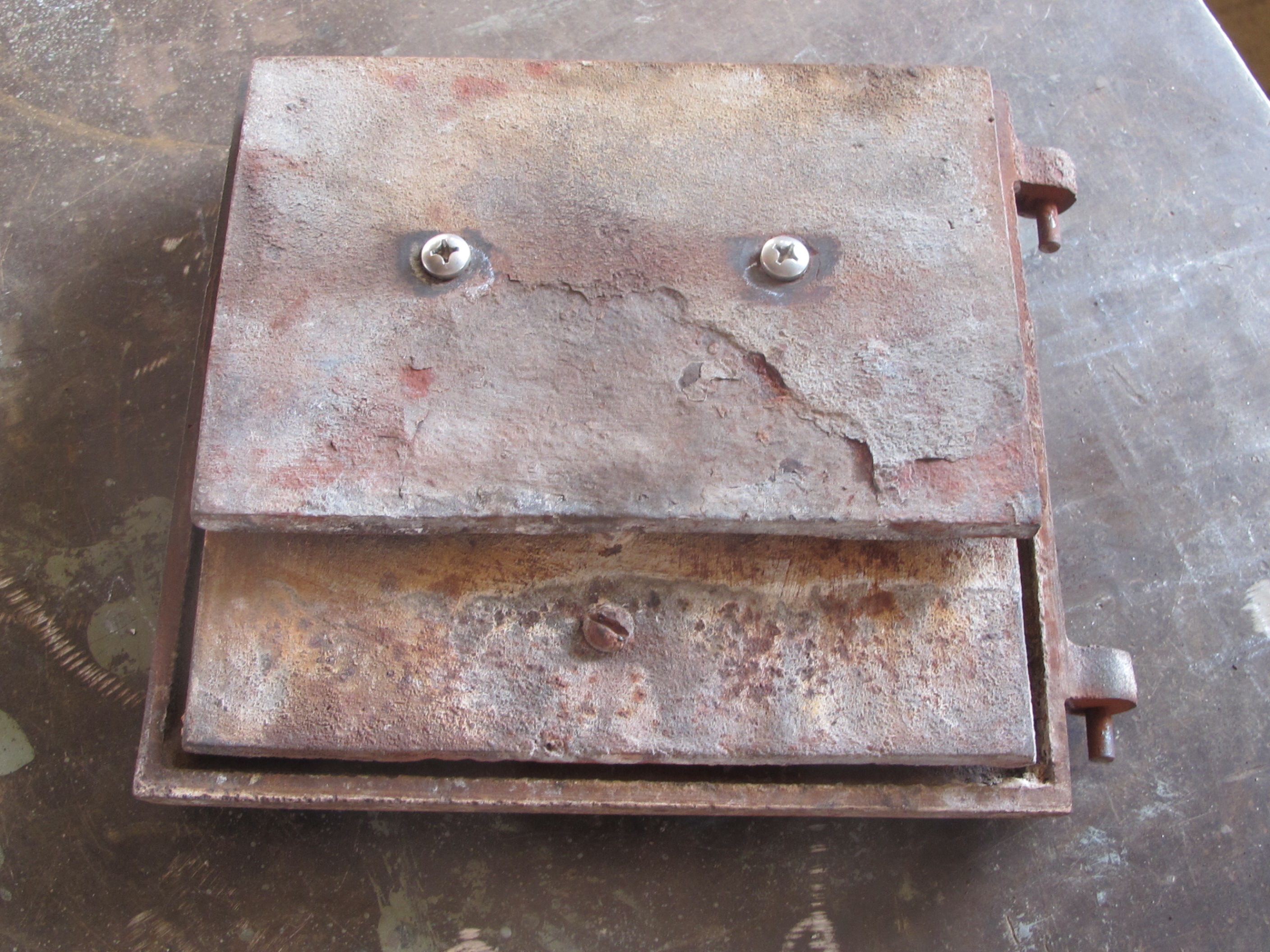
The night before the firing and just after I had written that Nothing lasts, nothing is ever finished and nothing is perfect. The heat shield on the door of the wood fired kitchen stove fell off at the end of dinner. The bolts holding it on had rusted away. I was stuck for just one second with a 2kg piece of red hot steel plate coming free and having to deal with it unexpectedly. Trying to stop it landing on the wooden floor of the kitchen. Fortunately, I installed a piece of thick copper sheet onto the floor in front of the stove, just in case any red hot embers might cascade out of the fire box on some occasion. This has hardly ever happened, but does occasionally. I’m glad that I saved up and did it when I did, thirty years ago, because I probably couldn’t afford to buy such a sheet of copper now. The copper looks great, has lasted well and on this occasion, might just have saved the house from burning down. I man-handle the glowing lump of red hot metal outside and into the ash bucket using the ember shovel.

IMG_0771IMG_0772

IMG_0777

IMG_0778In the morning, before everyone arrives for the next workshop. I’m up early and down in the workshop drilling out the corroded screws and re-tapping the threads to suit the stainless steel bolts that I keep in stock for kiln building purposes. It takes me about 45 mins to clean it up, dissemble it and then figure out what I should do to cobble it all back together again. The old bolt holes are well corroded and packed with swollen, rusted bolty remains. I find that it is next to impossible to reconstruct it as it was, without moving up from 3/8 whitworth  to 10 mm. metric bolts, which I don’t have in stock. I decide to drill right through and use a longer, but thinner bolt. this works well and should last another 20 years. Probably longer than the remaining life of the rest of the stove. I get the door back on the stove just as the first of our guests arrive.
IMG_0781

Small progress, problem solved for the time being. It isn’t perfect, it won’t last, it isn’t finished.

Next!

Fond regards from the imperfect Steve the stove bodger

Nothing is Perfect!

We have just had our latest wood firing and all went well, as usual, thank goodness. We do our best, but we can make no guarantees, only mistakes!. We found that only a few pots made from an imported Japanese porcelain clay dunted. Glazed only on the inside too. Maybe that was the problem? Apart from this it was a very good firing!

thumb_DSC01088_1024thumb_DSC01087_1024 thumb_DSC01079_1024 thumb_DSC01083_1024

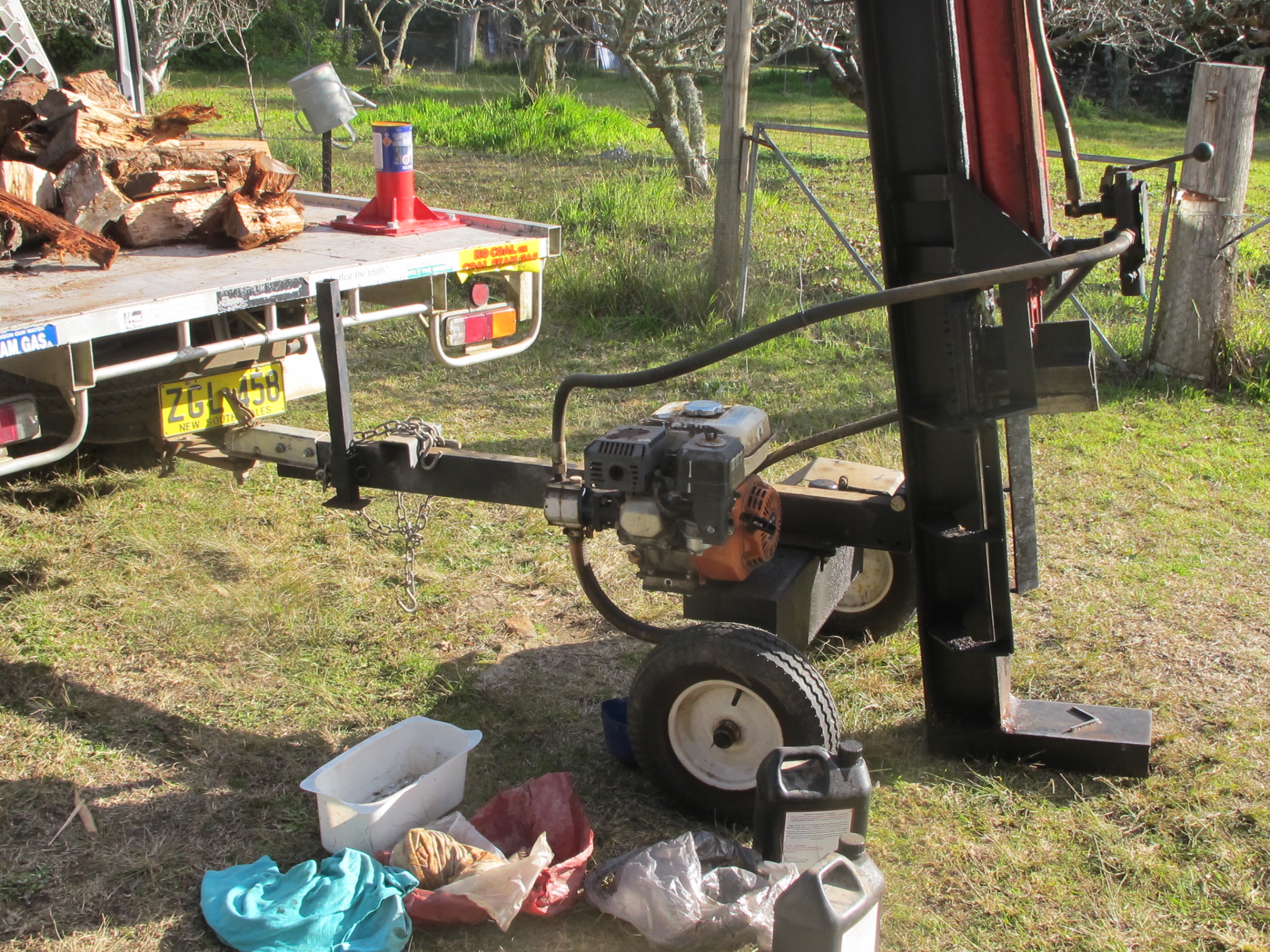
After the firing we get out and about and get stuck into some timber cutting and splitting. I’m up and out early with the chain saws, long before any one comes to help. Chain saws are dangerous enough without anyone else being around to watch out for and keep at a safe distance. We split about half of the 40 or so lengths that I have cut and prepared, but then the throttle lever on the splitter motor comes off in my hand. Cheap Chinese made splitter! So work has to come to a halt for the day while I fix it. We spend the rest of the time stacking and moving all that we have split over to the kiln shed. When everyone is gone. I take the splitter motor to bits looking for where the bolt or screw has fallen out. How could the throttle lever just come off in my hands? I can’t see where it has come from. Where it ought to be, but there ought to be an obvious spot with tell-tale wear marks, to indicate where it belongs. A place with a missing bolt! Just like in an Agatha Christie novel. there ought to be some clues, but the more I look, the less I know. I can’t believe it. Surely I’m not this inadequate and simple that I can’t see a missing bolts hole. I have removed half the engine, the air cleaner, and part of the carbie!

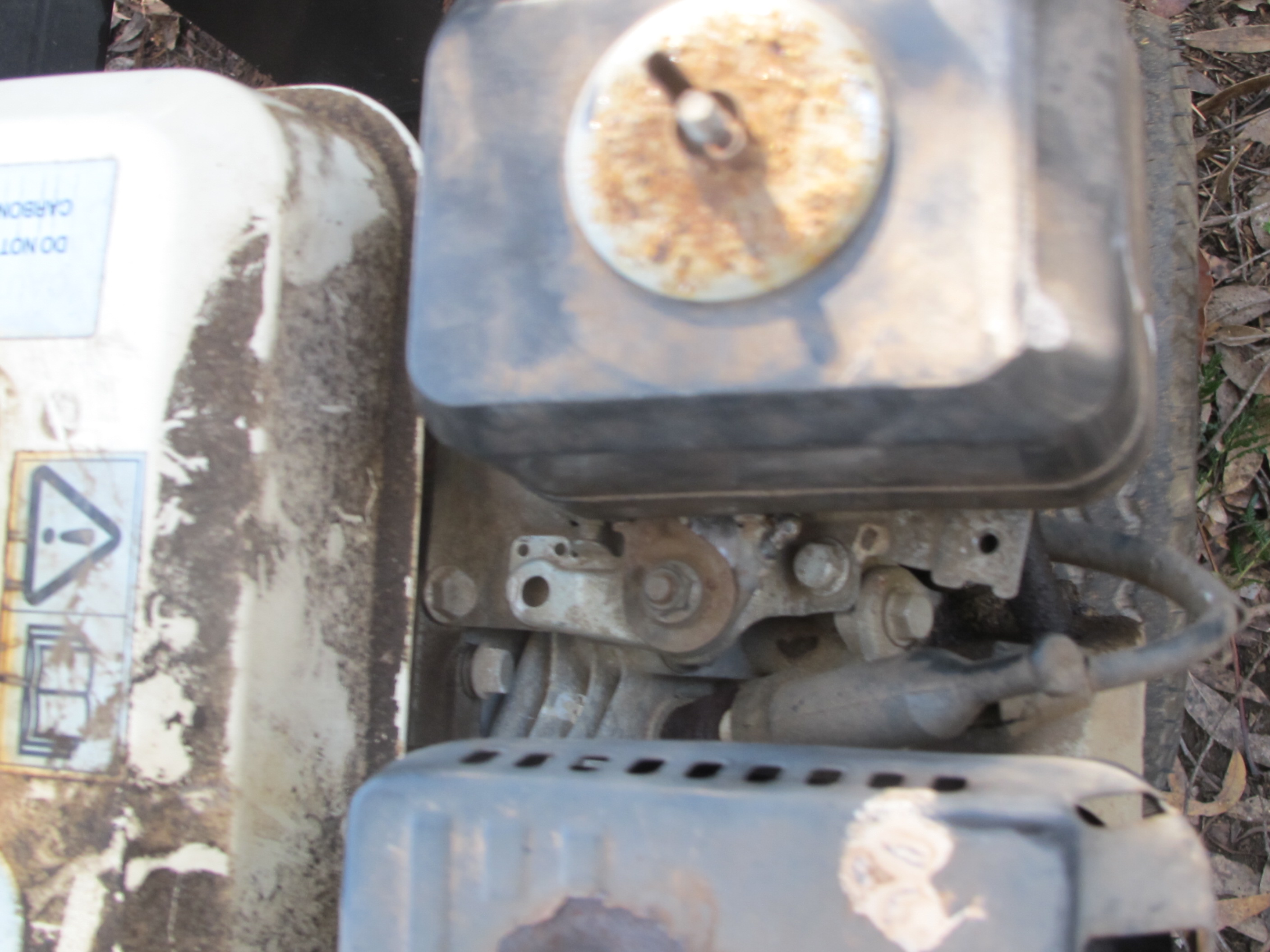
All the mechanism is installed under the air filter on one side and the muffler on the other. All the linkages are under the petrol tank. Everything is hard to get to and nothing is clear. There are metal wire linkages and tiny little, fine wire, return springs. I can’t see where any of it really belongs and to make it harder, the days are so short and it is starting to get dark.

IMG_0759 IMG_0752

Then, finally, it dawns on me. It hasn’t fallen off because of a missing bolt or nut. It has simply shattered in half from metal fatigue and the rest of it is still all attached. It has cracked in half. I need to remove more of the engine to get all of it off, so that I can weld it back together again. I can’t do it on the machine, next to the carburetor, and all that fuel! I take a couple of photos as I go to remind me later on when I’m re-assembling it. So that I can get it all back together again in the right order.

Years ago, I used to write all of this kind of thing down in my day book – sort of diary thing, but now I just take photos. Because I can! When I was young, my first car was an old, classic, red, MG sports car. When I had to pull the engine down the first time. I wrote everything down, step by step and recorded all the detail that I thought was going to be necessary to re-assemble it. I numbered and bagged all the parts in sequence. I had never had to do anything like this before and my father wasn’t much interested or even around to give any guidance, so I just muddled through with the help of my older brother, who also had absolutely no experience of this kind of motor mechanics, but make encouraging noises and was supportive, especially when it came to lifting the donk out. We were completely incompetent and naive, but we managed to get it all back together again and it worked! it was quite a triumph for us. Especially for me.

When it was all done and back together. I had one nut left over, and to this day I still don’t know where it belonged. but the car still worked! Nothing is perfect!

Today, I get this small engine all stripped down and then set about welding the shattered pieces back together again. I think about making a new one, but the thing is so complex and folded in so many different places with so many holes and little tags and bits sticking out, that I decide to just repair it. Nothing is perfect! I don’t know how long it will last. Nothing lasts! It is only very thin pressed metal material. I can’t give it too many amps. I don’t want to burn a hole through it, and I can only weld one side too, because it has to have a flush face on the other side, so that it will swivel properly on it’s seating.  I weld it as best that I can, after testing the amperage on a test piece, so as to get the best result. I get good penetration! What more could a man want! But there is a little burn-through in one spot on the weld, so I have to grind it back a little to get it flush and smooth.

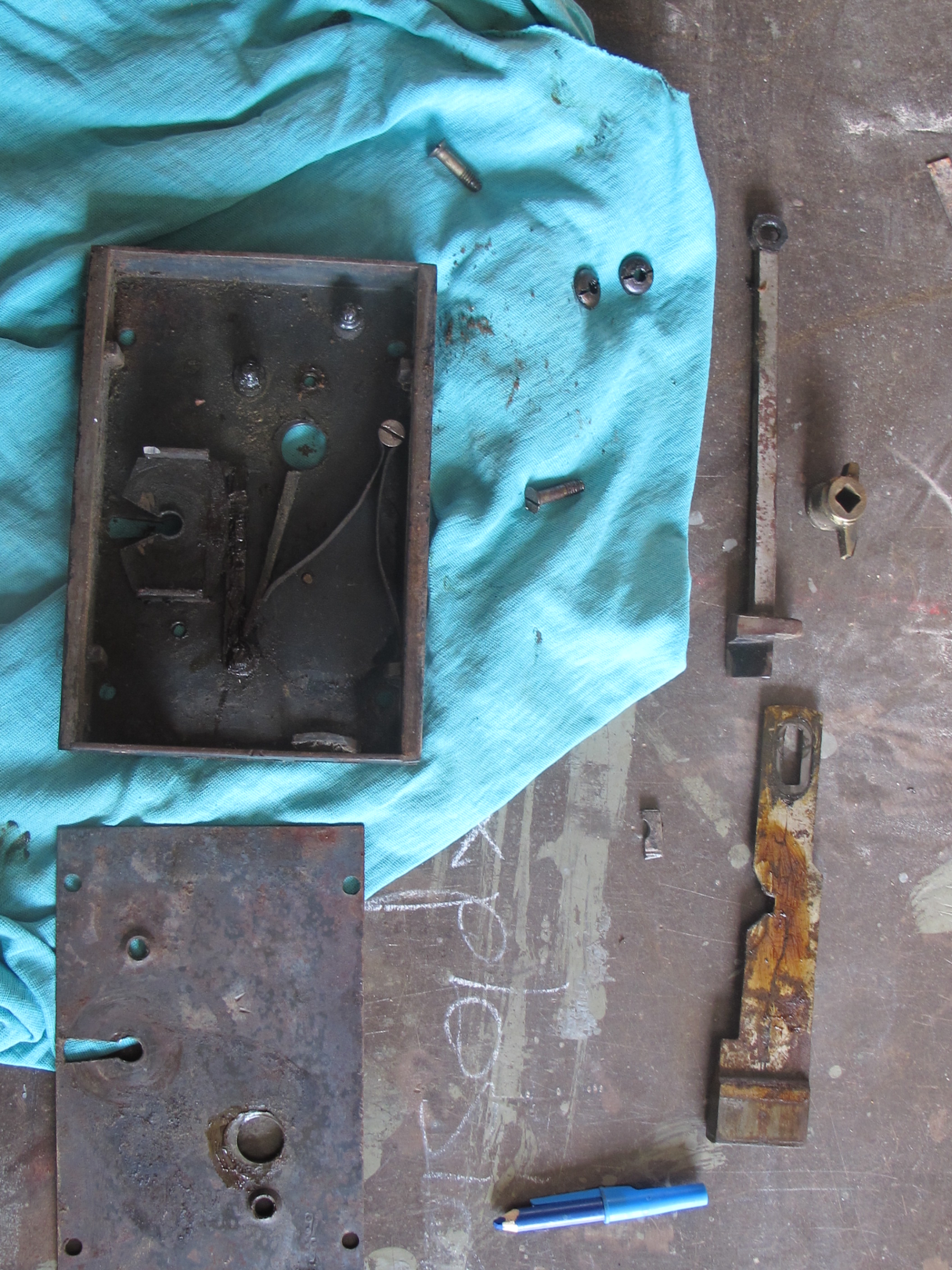
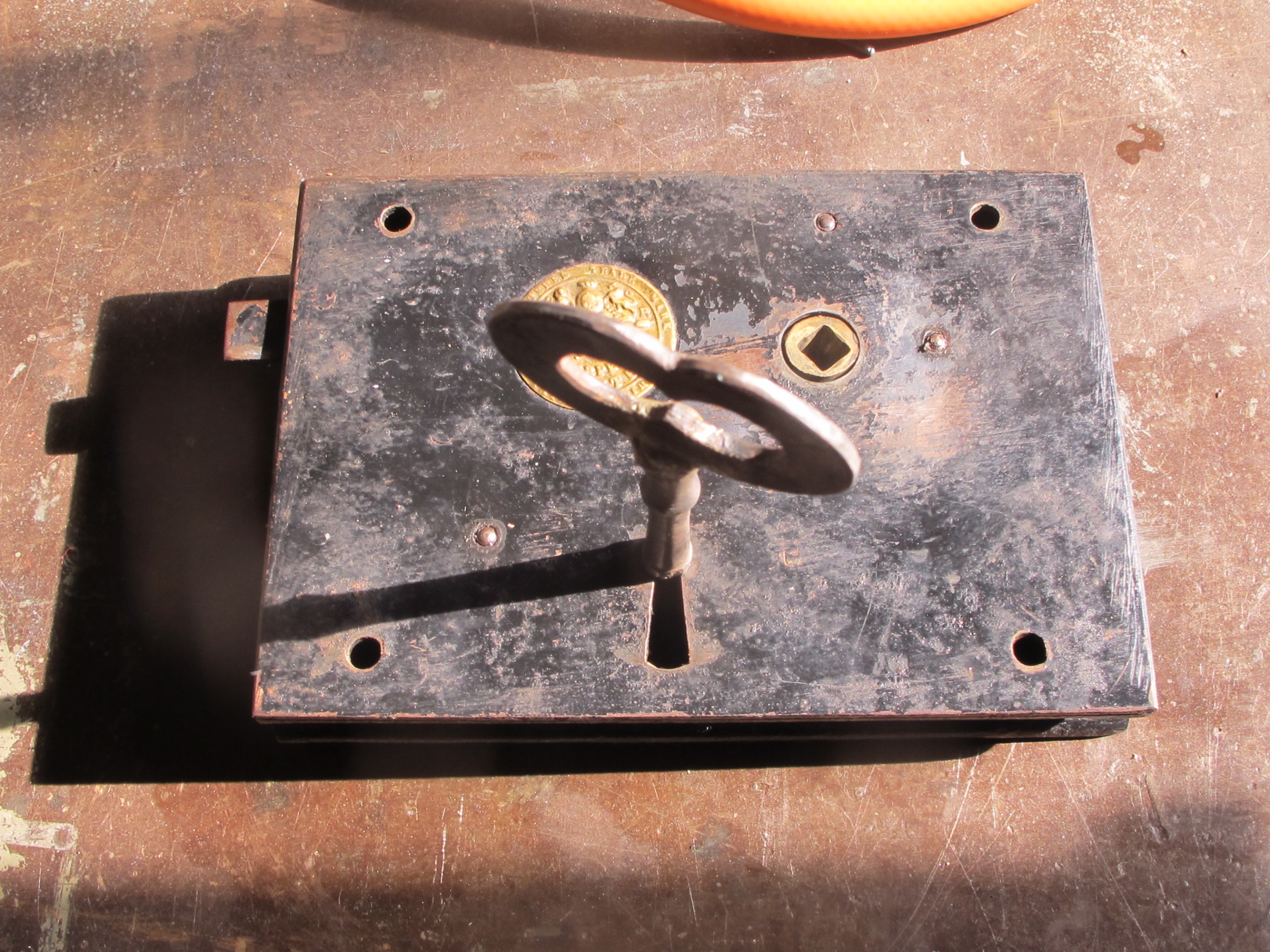
I manage to get it all back together before dark and back into the shed. It’s a bit of a rush, but there are no medals for giving up! I give it a trial run and it works OK. Time will tell if it continues to work for the long term. I go up to the house in the dark and the key snaps off in the lock. This is just what I need! One of the joys of living in a 122 year old house is doing the maintenance. I leave it till morning to take the lock off and fix it in daylight. I can’t see well enough in the dark and fixing locks, with all the fine moving parts is something that needs to be done in a clear frame of mind and good daylight. Fortunately it isn’t too difficult and it turns out to be something that I have had to do before, so it is relatively simple and straight forward and it is all back into working order pretty quickly and before lunch time. Nothing is perfect and nothing is ever finished.

IMG_0661IMG_0669 IMG_0670

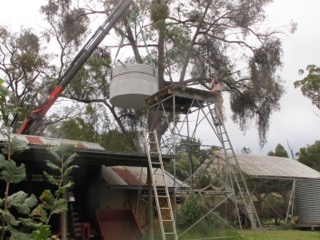
Because crap things always seem to come in threes, at least that is how it appears today. The water tank springs a leak. It has been leaking with a slow drip for a year or more now, but today, it springs a proper leak and The Lovely comes in to tell me that as she walked past the tank stand just now, and it felt like it was raining. This happened a couple of days ago too and she thought that she might have been imagining it. But today she is sure. We go and have a look. The timber tank stand deck is all wet underneath, just as it has been for a few years now, where the slow drip is, but now there is a little fountain pissing from the far side. It’s only very tiny, but it is surely a leak in the side of the tank now. I get the ladder and check it out at close quarters. The water has corroded through the zink coated corrugated steel sheeting. My highly imaginative and creative thinker thought that she was imagining it a few weeks ago when she felt a little fine water spray on her as she walked past the wood shed near by the tank stand. At that time, she imagined that it might be a cicada pissing from high up in a tree, or some other explanation. But now we know that it is real and not imagined. It’s a very tiny, fine spray of water from the pin prick sized hole, but once these things start. It’s always terminal.

I order a new tank, it’s all so specific these days. The height, the diameter, the colour, the inlet, the outlet side etc. It all goes on and on. This is not a current or popular size and configuration however. We will have to go on the waiting list. He rings me back the next day, They have one of those in stock it seems and so I can drive in and pick it up. Amazing! It has to be pretty much the same, because I don’t want to have to change over all the plumbing into a new configuration. When working up a 6 metre ladder. right at the top, it’s scarry enough.

I ring my friend Dave with the crane truck. he can come very late today on his way home. I drain all the water out of the tank and strip it of all its fittings and connectors. I swap all of these onto the new tank. Now we have no water in the house to cook, wash or flush with until it is all put back to rights. I hope that Dave doesn’t forget. He rings to say that he will be a little late, but he is here before dark. Which is good, if you are working on a narrow ladder rung, right at the top of a 6 metre ladder, up from the ground, you don’t want to be doing it in the dark.

It all goes smoothly and all the fittings that I swap over are all in the correct place and in the right direction, or orientation for further use.

IMG_8806IMG_8802 IMG_8808 IMG_8812

The old tank comes down and the new one goes into its place without a hitch. I only have to reconnect the inlet and outlet pipes.

Once it is back in place, Dave leaves for another job, I have to start the pump to refill it with water again, so that we can get on with our normal life.

The Wet One thinks that this tank is only a few years old. I think that it is probably a bit more than that, but not too old. Not more than ten years!  Nothing lasts. However, when I check out the paperwork, it turns out that it is actually 20 years since we put it up on the tank stand. The earlier tank had lasted 21 years and would have lasted longer, but the tank stand rusted out first and fell, crashing to the ground with the water tank still on it. Needless to say, neither survived, nor did the wood shed that it landed on.

I’m just a bit concerned that this new water tank is made of plastic and not galvanised steel like all the others have been. I wasn’t ever happy with the first tank that was made of galvanised steel and sealed with lead solder! But it did last for over 20 years and our first storage tank lasted for over 30 years, but the zink finally corrodes and they start to leak, so we replaced them with new ones. These newer tanks were made from zincalume coated steel, so couldn’t be soldered, that’s good, but they had to be sealed with silicon rubber glue. Not too happy about that either. Nothing is perfect! The last metal tank that we bought was lined with a plastic membrane heat sealed on to the inside of the zincalume sheets. It was called aquaplate, but didn’t last any longer and it was silicone sealed as well. Nothing is perfect!

Plastic is in everything. It’s OK while it lasts, but what will happen to this plastic tank when it finally gets eaten away by the sunlight or what ever is its fate? Can it be recycled? Al least the steel ones can be. I still have and use my parents old galvanised steel water tank. They bought it second-hand in the fifties, so it’s been in constant use in this family for over 60 years and is clearly a lot older, it shows no signs of corrosion yet. It was made out of thick steel plate and hot dipped in molten zinc. That was a product made to last. I have been told that it was a ships tank, but I don’t know. In future I may have to weld up my own tank and get it hot dipped galvanised, just like I do with my kilns. I like things that are made to last as long as possible.

However, I’m also aware that nothing is ever finished, nothing lasts and nothing is perfect.

You live and learn!

Best wishes

Steve

Fruits of the Solstice

We have been keeping up the citrus experiments. Each evening we try something new. The Lovely has been trying out some more ideas with citrus jelly. She uses oranges, limes, lemon, lemonade and tangelos. Whatever is ripe and plentiful on the day.
IMG_9074IMG_9075
IMG_0691 IMG_0692
Citrus Jelly
recipe;
375 mls. of Juice
125g of sugar
1 1/2 tablespoons of gelatine.
IMG_0693 IMG_0697
method;
Squeeze 375 mls. of Juice from the above fruit. Use whatever mix of citrus fruit that you have.
Take 125g of sugar and dissolve it in 100 g of hot water. Stir to dissolve.
Zest some of the skins into the sugar/water mix.
Dissolve 1 1/2 tablespoons of gelatine powder in 8 tablespoons of cold water. Sit the small bowl of gelatine and cold water in a bigger bowl of hot water to encourage the gelatine to dissolve.
Once the gelatine is dissolved, mix it into the sugar water and both into the fruit juice.
Stir well as it cools down. Once cooled, place in fridge to set into jelly. It may need to be stirred a few more times during the time in the fridge to stop the gelatine settling out.
IMG_0719 IMG_0718 IMG_0705 IMG_0582
It’s very easy to make and to eat. It goes very well with either ice cream for desert or yoghurt for breakfast.
Candy for grown-ups
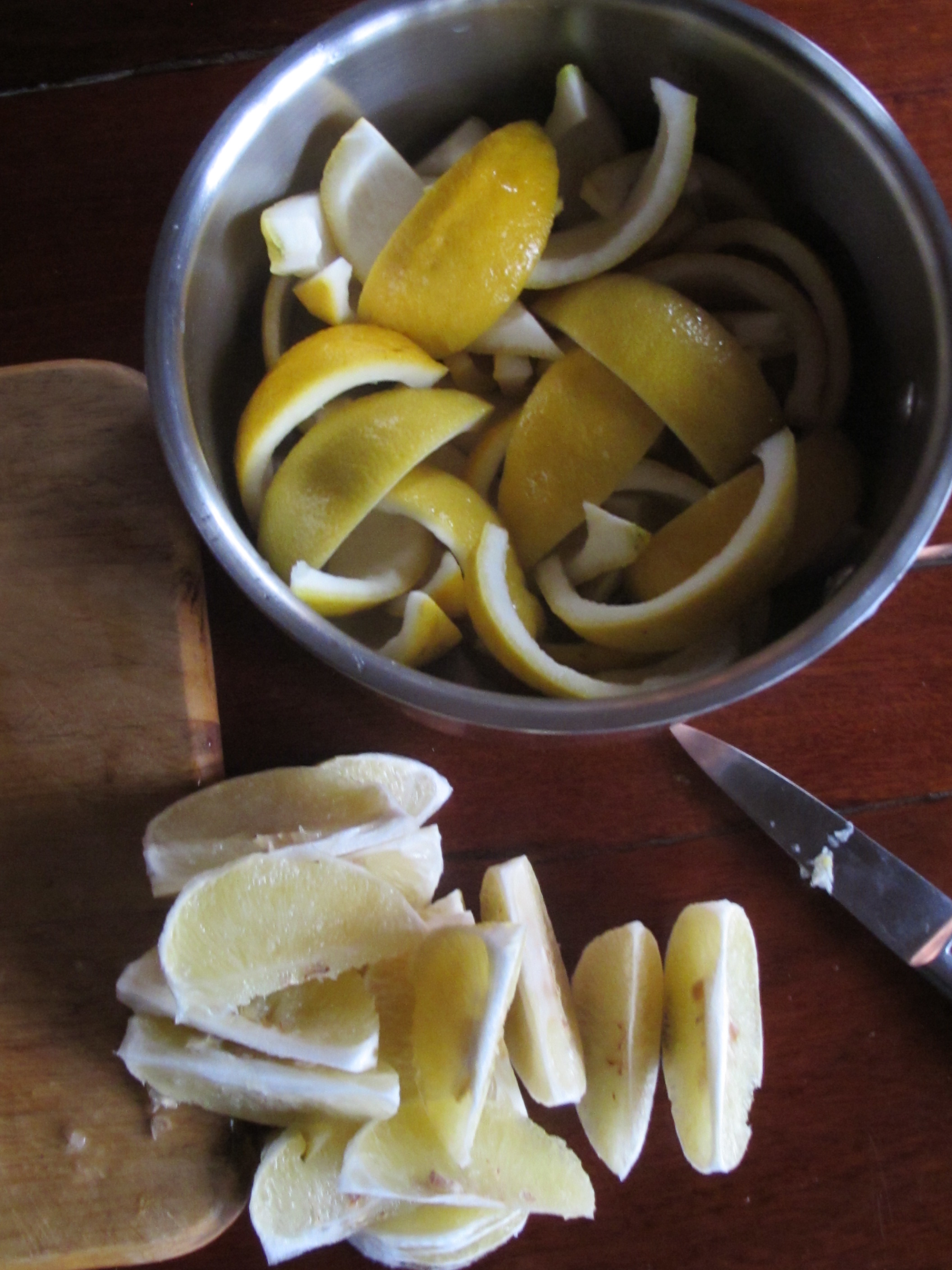
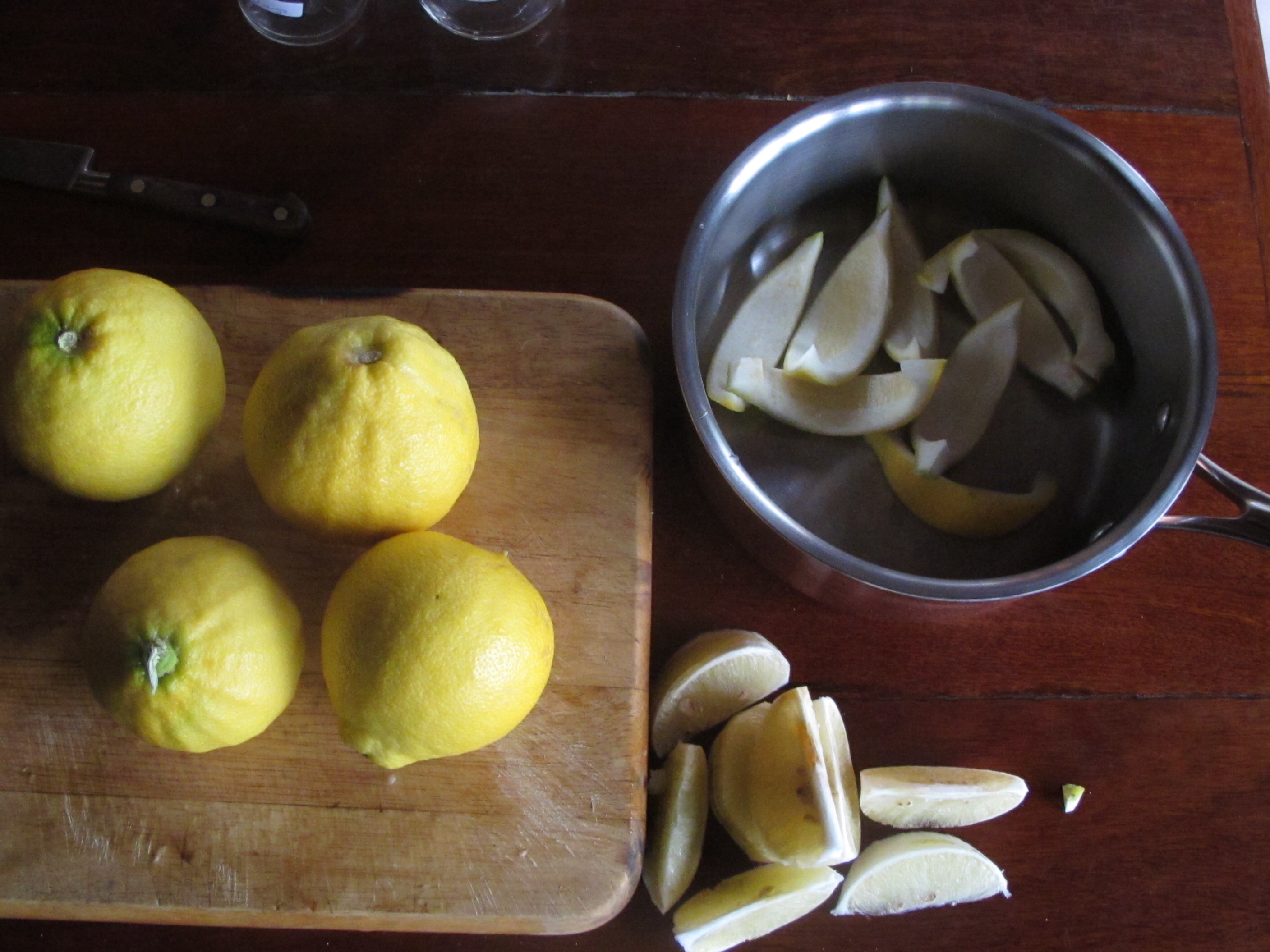
I was recently given a bag of old fashioned citrons by a lovely friend. She tells me that her husband makes marmalade from them. I try them for marmalade, but I think that the flavour is rather too strong. So I decided to try my hand at making candied, citron peel from them. I use candied peel for adding in with other dried fruits when baking some cakes. particularly for panforte or sometimes in muesli.
Candying fruit is an easy thing to do in the background while you do other things in the kitchen at night.
This is a pretty standard recipe and technique. You can use any thick skinned citrus.
Candied Citron Peel
Method
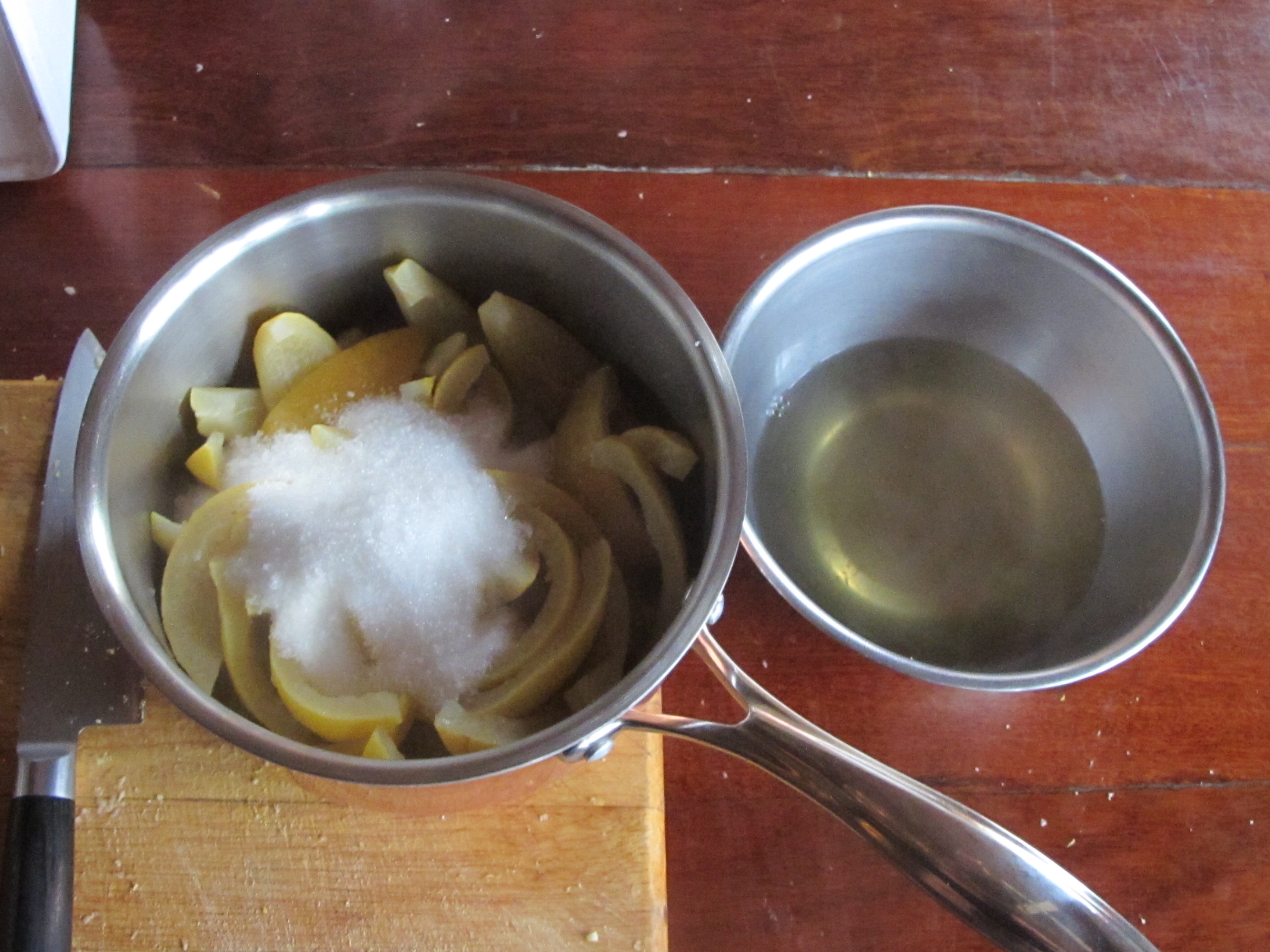
Cut the citron fruit lengthways into quarters and again in half into eighths, cut out the centre of the fruit to leave the white pith and peel.
Place in a saucepan and cover with water, then bring to the boil for a few minutes, maybe 10 or so. Discard the water and refresh. this removes a lot of the bitterness. Bring back to the boil and simmer for half an hour or so, or until softened.
IMG_0725 IMG_0722 IMG_0731 IMG_0732
Drain off the water and weigh it. Add 1kg of sugar for every litre of water or part thereof proportionally. Return to the stove and bring back to the boil and let it simmer for another half hour or so. Leave to cool in the liquid over night.
In the morning drain and leave on a drying rack to dry, or place in stove on rack and dry for an hour or so on very low, with the fan on, if you have one?
The strips should be dry enough now to ‘keep’ in a jar in the fridge without going off.
You can roll them in caster sugar if you want to. I don’t.
Don’t dry them too much or they will become rock hard.
IMG_0744
Winter is not just the time time for citrus. The avocados are in full crop just now too.
They don’t really ripen on the tree. It’s best if you pick them a week or so before you need them. So The Lovely picks a few each week, so that there is an ongoing supply available.
IMG_0630 IMG_0721
It’s an easy and quick lunch to slice over toast with a squeeze of lemon and some freshly ground pepper. Our good friend Toni Warburton comes for the weekend firing workshop and leaves us some smoked trout to put on top.
Yum! Thank you Toni.
IMG_0742 IMG_0743

Best wishes
from The Candy Man and his Sweetie

What a Privilege it is to be a Tax Payer!

We are smack in the middle of our winter, wood firing program, we have done 9 weekends in a row and still have quite a few to go. I am spending a lot of time cutting, splitting and stacking wood for each firing. It takes about a tonne of wood to fire the kiln for the 20 or so hours for the kind of quick firing that we do here for these workshops.
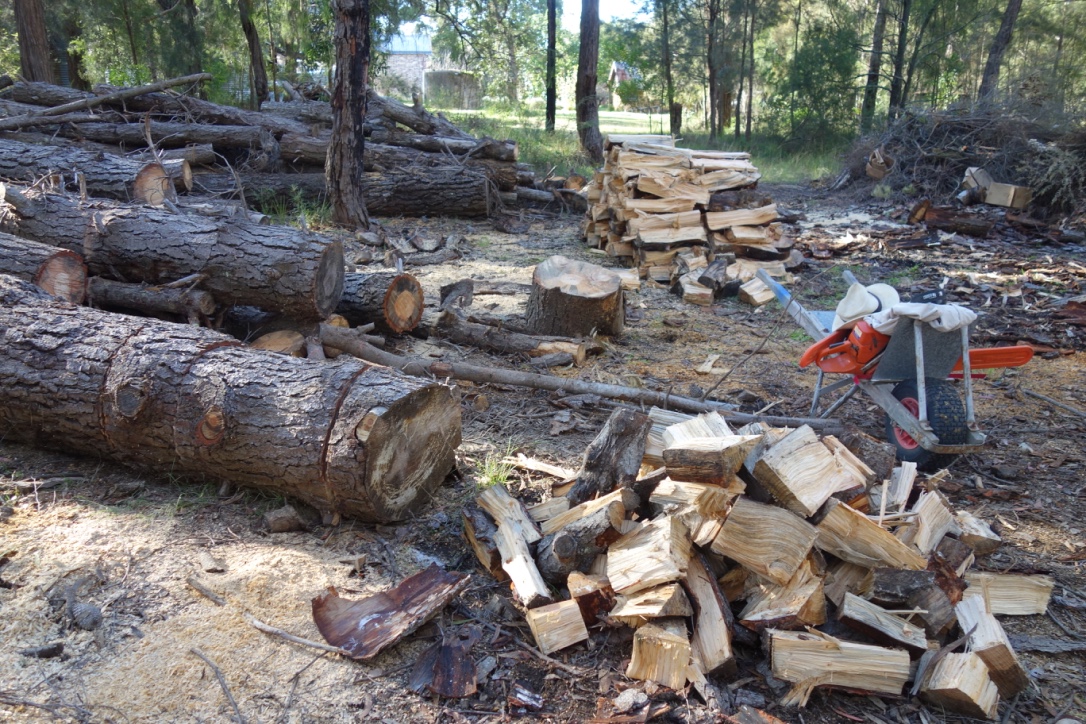
I get out early and spend a few hours cutting the logs to length to suit the firebox length that I need for this kiln. I spend the next 4 or 5 hours splitting the logs that I have cut. I was busy in the morning with other jobs, so I am a bit late getting started into this job. Still, it has to be done, so I get stuck in. It’s a bit foggy and misty/rainy, but once I get into it and warm up. I don’t notice the rain at all.
Splitting wood is a bit mind numbingly repetitive and ever so dull, but what can you do?. After a few hours, I’m a bit over it. But there isn’t enough split yet, so on I go. It’s getting late and a bit dark now, but I push on when I shouldn’t, but I think that I need to do more. Its stupid, but on I go into the dark. The pile of logs is getting smaller on the fire-wood pile of split pieces is getting wider and taller.
Suddenly it happens. I’m way too tired and should have stopped an hour ago. I catch my finger under a piece of wood in the splitter.
Immediately, I stop the downward motion of the blade, but its too late. The pain explodes like a cracker in my mind. There is a flash-light like burst, but not towards me, it’s from the inside my head outward. My vision isn’t affected like it would be with a camera flash. There is no burnt-out hole in my vision. Instead, there is a ringing, although strangely silent sound, with a flashing stab of pain.
Somehow, a piece of wood, that I had in a tight grip in my hand, has somehow slipped, or been wrenched, from my grip. It flips around and over, twisting my wrist and then comes down hard on my other hand that was supposed to be holding the log secure!
How could this happen? I can’t even imagine that this is possible. The pain is blinding and a little nauseous. I can’t even understand what has happened, I’m stunned, but I know that it is serious. I am sufficiently aware to know that I should shut down the motor of the splitter before heading to the house to wash my hand and have a good look at my finger in the bright-light of the kitchen.  Luckily, on this occasion, here is no broken skin, no blood, but my finger is still numb to this day. Some sort of damage that I hope will eventually repair itself and grow out.
thumb_DSC01082_1024thumb_DSC01079_1024
I remember an earlier event of a few years ago, when I really did do myself some serious damage with the splitter. That time I caught my finger under the edge of the blade and it was dragged in and under by the protective glove. I try to pull back on my hand, but the machine is stronger and the glove is caught in the blade. The pain is so intense that I can’t describe it. I’m blank. There is no real memory of it at all. It’s all gone into the file marked ‘don’t go there’. I can remember that it all happened so slowly. I could see it all happening in slow-mo. It all took seconds to happen in replay, but over so quickly.
I’ve crushed my finger. There is no doubt. I gasp it in a vice-like grip with my other hand. I am suddenly in shock, but I can still remember that I had the presence of mind to stop the machine, kill the motor, and take the keys out of the tractor, before heading for the house. I usually wrap everything up in a tarp to keep it all dry in case of heavy dew or rain, but this is different and I just walk away. I know that it is too serious to be bothered with the trivialities.
 thumb_DSC01081_1024 thumb_DSC01080_1024
I can’t get my glove off. It’s wet through and stuck to me. I can’t bear the thought of shaking it off or pulling it off. A piece of my finger might comer with it!. Is it wet with blood or sweat? I don’t remember it being wet beforehand. I’m gripping my hand so tightly, that I’m cauterising it. I don’t mean too. I can’t help myself. It’s instinctive. I head for the house. I walk in and Janine knows straight away. She grasps her mouth. “What have you done now”!
I often come up to the house with some sort of blood stained head or hand that isn’t any sort of real problem. When you are focussed, and want to get the job done, you just push on and get it finished and don’t let any little nick or scratch deter you.
I say “What blood?” and we go from there. It’s always so superficial. Boring even!
But this is different. I know, that she knows, that I know, that I’m hurt. I haven’t cried since I was a child, but this makes my eyes water a little. I’m far too quiet too. She knows. She goes to get the car keys. We’re off to the hospital.
“Are you OK?”
“Yes, but it’s a bad one this time. I thInk that I might need stitches”
I ease the glove off over the sink. It isn’t blood that is sticking it on, but sweat. It’s crushed out of shape a bit and the numbness is starting to wear off now and it’s hurting like hell.
She drives and I sit and shiver. I’m feeling quite cold now, while only a few minutes ago, I was hot and sweaty and very busy. I want a drink of water, I’m parched, but The Lovely say no!
“You’re in shock and it’s not good to drink anything, just in case you need surgery and anaesthetic. So I sit and shiver it out for the 25 minutes it takes to get us to Bowral Hospital Emergency.
The triage nurse see us coming through the outer doors and comes out from behind her desk to meet us. She ushers us straight through a side door and into some sort of cubicle. So much for all those poor people queued up in the rows of seats in the waiting room! She says to sit here and someone will come. They do. I must look bad, to get this Ryan-Air style priority seating. The nurse comes and asks me some questions that I don’t remember. Janine isn’t here now, she’s back outside. I’m cold and alone. Eventually the Doctor comes. He looks at it and asks how I did it. He flinches! He tells me that I’m stupid! I already know that.
You’ve spent 10 years becoming a doctor. Tell me something that I don’t know!
He responds. “I’ve seem fingers come off in accidents like this. You are very lucky!”
I am lucky. I know it, and I am very stupid with it. I know that too! I should have stopped an hour earlier. But didn’t. I am so fortunate.
However, I’m also aware that if I had lived my life, stopping when I should, and not working extra time, doing over-time and more! Doing too much. working into the dark. Not stopping for beak times and working to rule, then I wouldn’t own my own home by now. You have to put your arse into gear and work hard if you want to get ahead in this Brave New World of part-time, unregulated, contract work and self employment.
The doctor starts to clean the wound and gives me a series of injections around the site. A local anaesthetic. But it doesn’t work very well and I can still feel the needle go in and out, and be pulled through, with each stitch. It hurts! I ask if this is normal and he answers that there are some places that are very hard to anaesthetise fully and this is one of them. He gives me a few more shots and it is a bit better, but still quite sensitive to the needle and thread. More of a sort of prickly sting, than a real pain. I’m not about to complain. I’ve seen the third world, I consider myself so lucky that this has happened here.
Eventually, it is all cobbled back together. X-rays reveal that no bones are broken, but a lot of damage has been done to the knuckle. He warns me that it will take a while to heal and that I should go and see my regular doctor on Monday.  I get a script for antibiotics and pain-killers. It doesn’t look quite normal any more, but at least I still have it. It ends up taking over a year to loose sensitivity and another year to get back to normal function. To this day, if I bump it during the winter when it is cold. It stings and aches for ages.
I’m a very lucky man and I know it. But this is the price of independence in the Brave New Deregulated World.
At least the hospital is clean, the service is fast, excellent and sterile. I’m not in the third world now!. It’s also completely free. I’m amazed. I should pay something. If I went to a doctor, if one was available on a Saturday night. I’d have to pay him or her.  I am so very grateful that such an amazing service is available. I want to pay someone for this incredible service. But No, I can’t, it’s totally free to citizens. This mind blowingly complex and efficient service is apparently covered by my meagre taxes.
What a privilege it is to be a Tax payer!
I am so grateful!
fond regards from ‘Lefty’ Harrison

Marmalade for Busy People

The solstice draws near, the days are cool and short. The mornings cold and misty. Mrs Grey Thrush is out and about celebrating this cold, cloudy, misty, drizzling morning. She flys down and serenades The Lovely with her beautiful haunting melodic song. she swoops down and continues from the verandah guttering, then up into the pine tree with her mate. They continue together for some time all around the garden with what might be some sort of call and response? It’s a shear delight on a dull morning.

IMG_0737 IMG_0740

During this cool, damp time It’s great to celebrate this colder weather and make the most of it while it lasts. We have had a few frosts, but only mild. Hopefully just enough to spur the older varieties of stone-fruit into fertile flower buds. I noticed the other day as I walked through the orchard, that one of the early peaches has its first blossom out! How amazing. So early.

IMG_0736

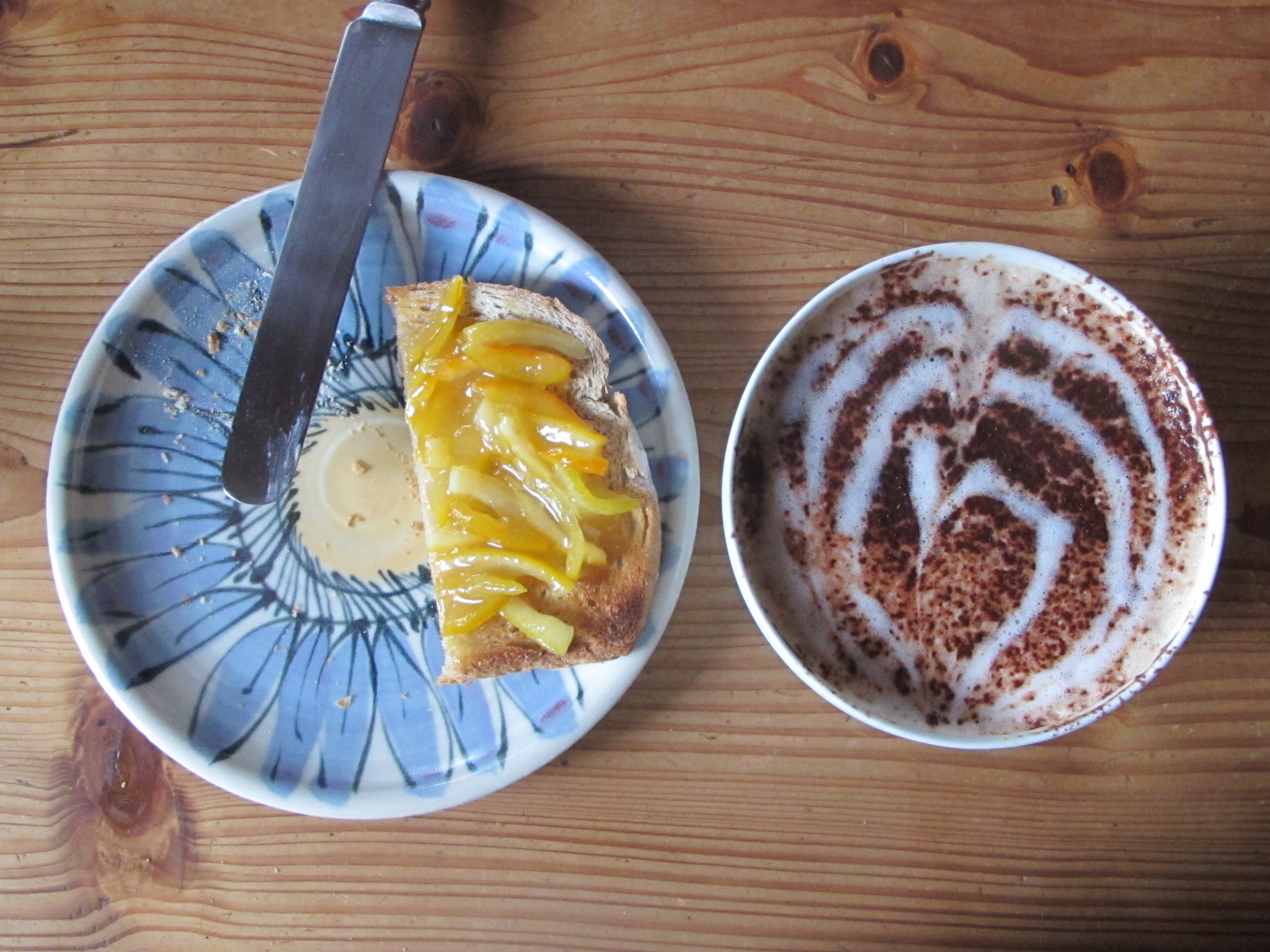
Mid winter is the time for warm lingering breakfasts of coffee and toast with marmalade. I have been trying to keep up with the citrus fruit this year by making a batch of marmalade each day. Of course I’m not successful at this. It just can’t be done, but I hold it in my mind as an objective to aim for. There is so much to be done. Something has to give. Sometimes it’s cello practice, other times its preserving the garden excess. But the winter firing workshops must be prepared for and made to work smoothly.

IMG_0734

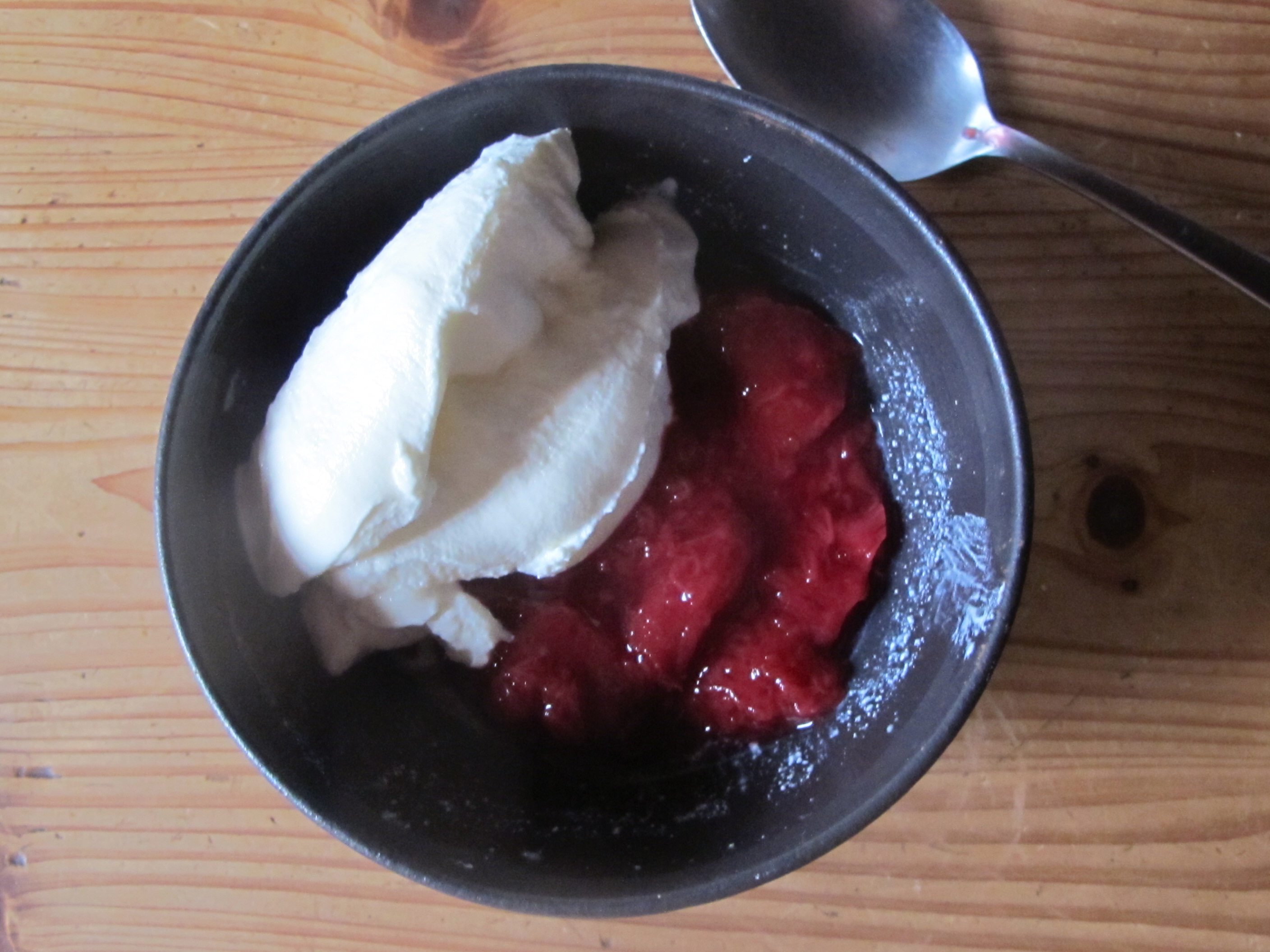
This mornings breakfast involved preserved blood plums from the summer with yoghurt. These are so good. Full of flavour, sweetness and the fruity acidic tang of a good blood plum. The colour is exceptional, dark and rich, with a complex texture that is both fibrous and smooth. We have been enjoying them on and off through the year and are now down to our last three jars. It’s a wonderful thing to have a pantry full of preserved food that you have grown and bottled yourself. A great sense of reward and satisfaction just to look in there and see all the colours ,and then to imagine all the concentrated flavours, that you know and are so familiar with. What is really good, is to know that non of it came from a supermarket or chemical factory and non of it is stored in plastic. All recycled glass. our oldest bottles date back to the mid seventies, and they were bought 2nd hand even then.

IMG_0720

This week I have been developing the recipe for my marmalade a little bit further. I use more or less the same recipe every year. the only difference being the fruit that i use. Two years ago i was given some honey mercott Mandarins. these turned out to be so sweet that the marmalade was not nice. Too sickly sweet. I like my marmalade to be a bit tangy and slightly bitter, and definitely not too sweet. it has to taste of citrus and the tangy bitterness of the peel. I aim for a nice creamy smooth texture, not too runny, but definitely not stiff and rubbery.

So to this end I did a few experiments. I have always weighed the fruit. 1 kg of whole fruit to 300g of sugar and I use only the juice of the fruit as the cooking liquid. However, the juiciness of the individual fruits varies so much. Especially in regard to when the fruit was picked. I have noticed that the fruit is easier to juice if it has been picked for a week or so beforehand. fresh picked citrus is a lot harder to juice.

IMG_0693

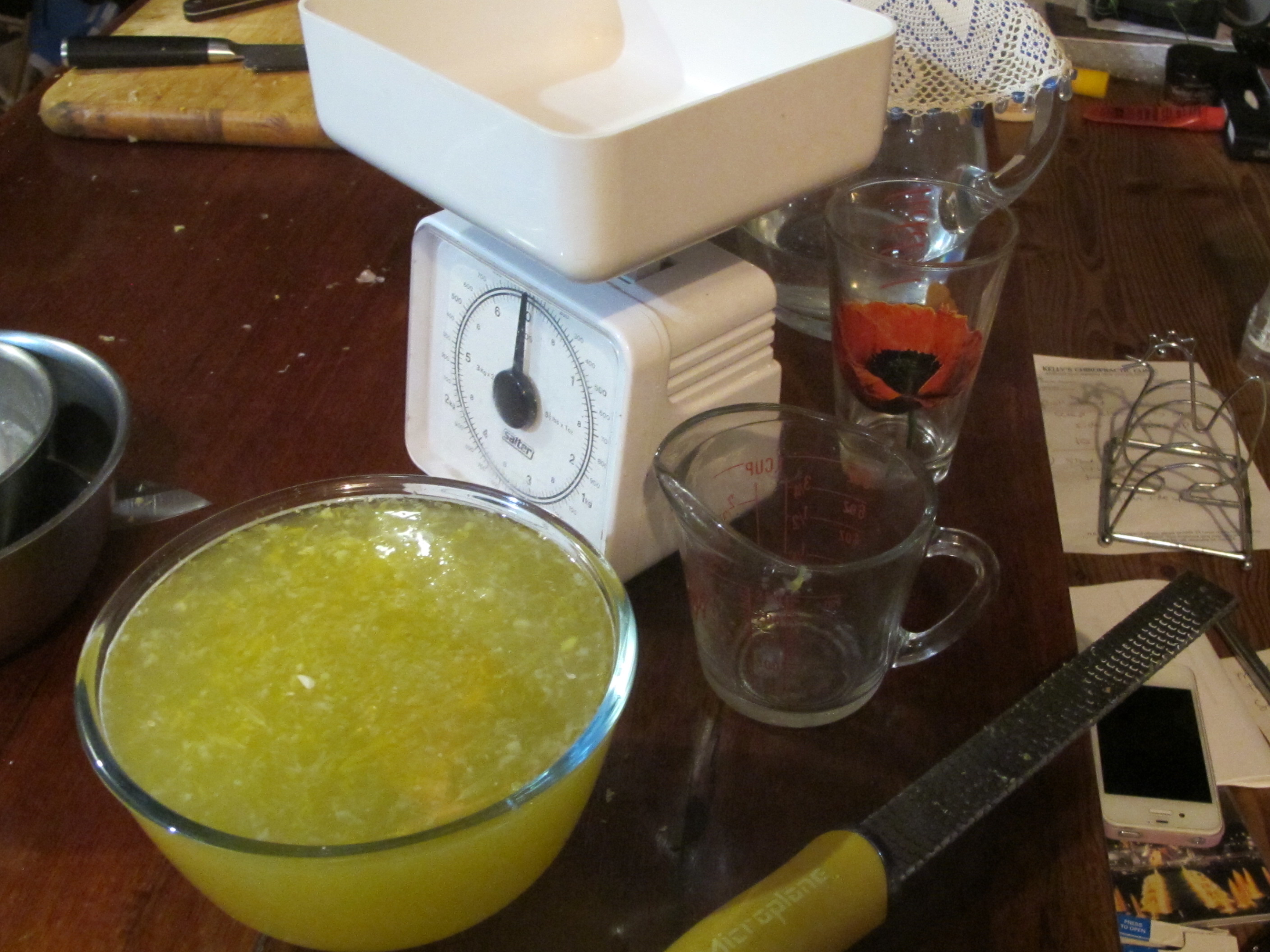
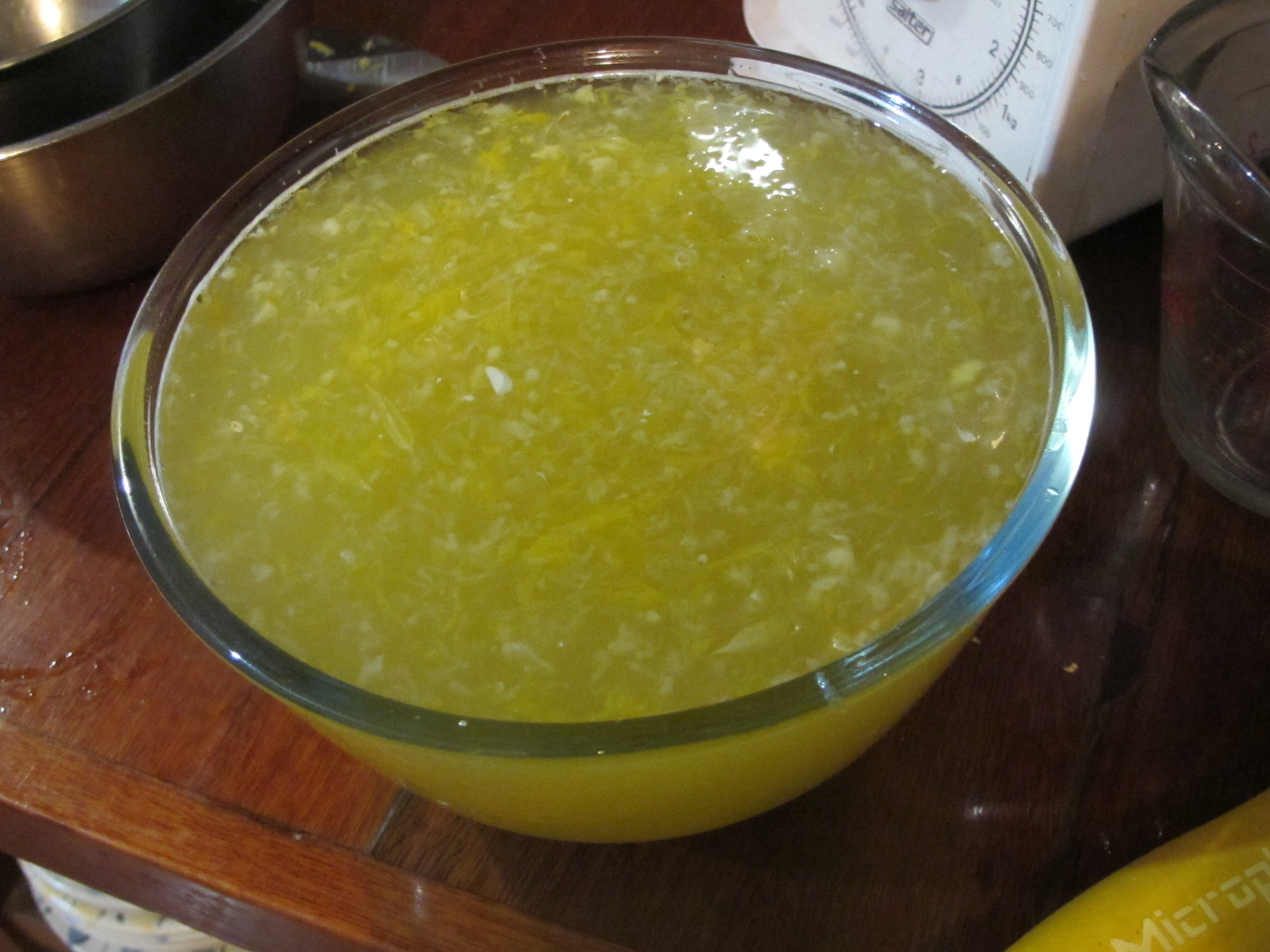
I have come to the following recipe, developed from the original one above, but reduced to separate weights of each of the components. recipes That I have read that say take 4 oranges and add ‘X’ sugar and ‘Y’ water aren’t reliable, because the size and the age of the fruit varies so much. I decided that achieve the best result, it would be necessary to weight the separate ingredients; the cleaned peel, the squeezed juice and the sugar individually.

IMG_0724 IMG_0651

IMG_0727IMG_0728

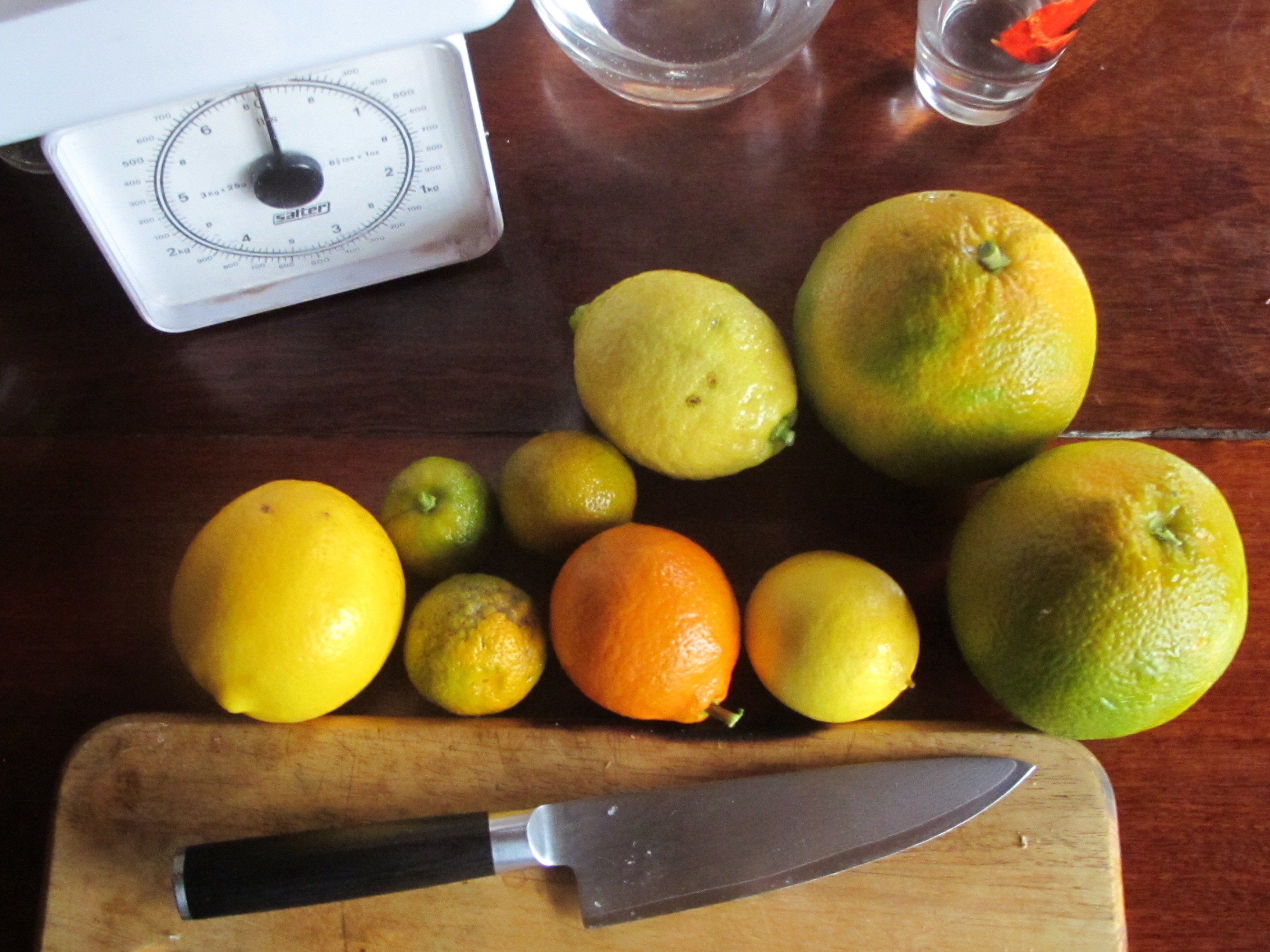
Yesterdays batch of mixed citrus fruits from the grove turned out quite well following this line of thought. I used;

1 ruby grapefruit

1 myer lemon

1 Tahitian lime

1 seville orange

1 Washington navel orange

1 tangelo and

1 Italian bitter chinnoto

IMG_0714 IMG_0715 IMG_0711

I have come to the following recipe and method.

Recipe.

Cleaned citrus Peel = 100% = 550g

Juice 83%  of the weight of the peel = 455g

Sugar 79% of the weight of the peel = 435g

Method.

1. Squeeze the juice out of the fruit and set aside

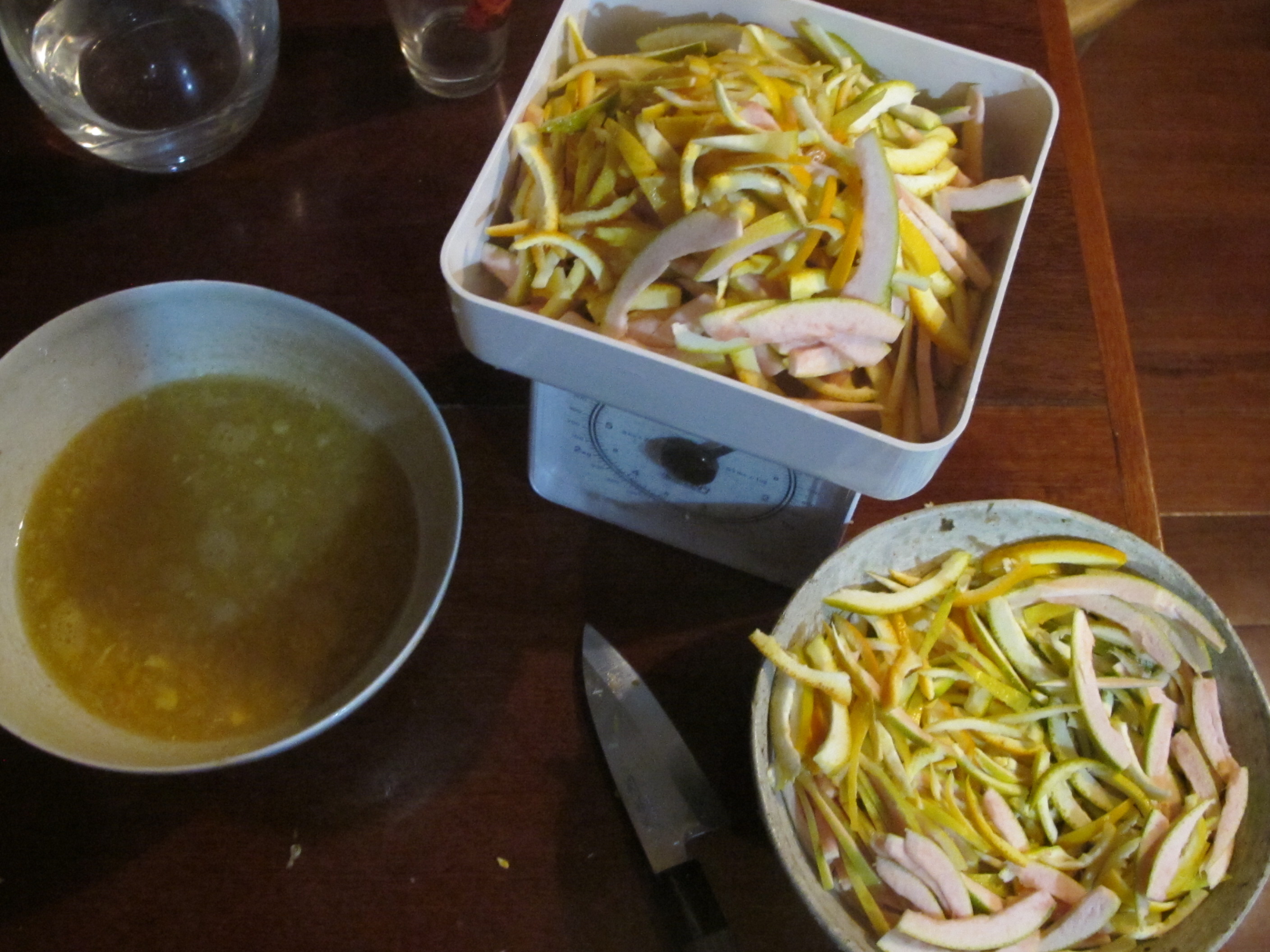
2. Strip the peel of all the spent fibrous core, to reveal the peel with a clean layer of white pith.

3. Thinly slice the peel into strips and weight it. What ever the weight of this peel, say 550g. call this amount 100%

4. Calculate 83% of 550g = 456g.  Weigh the juice and make sure that it is 456g, or close to it. If the fruit is a bit dry and there isn’t enough juice, then juice another piece of fruit to make up the difference. If you have too much, drink the excess.

5. Calculate 79% of 550g. = 434g. Weight out 434g of sugar.

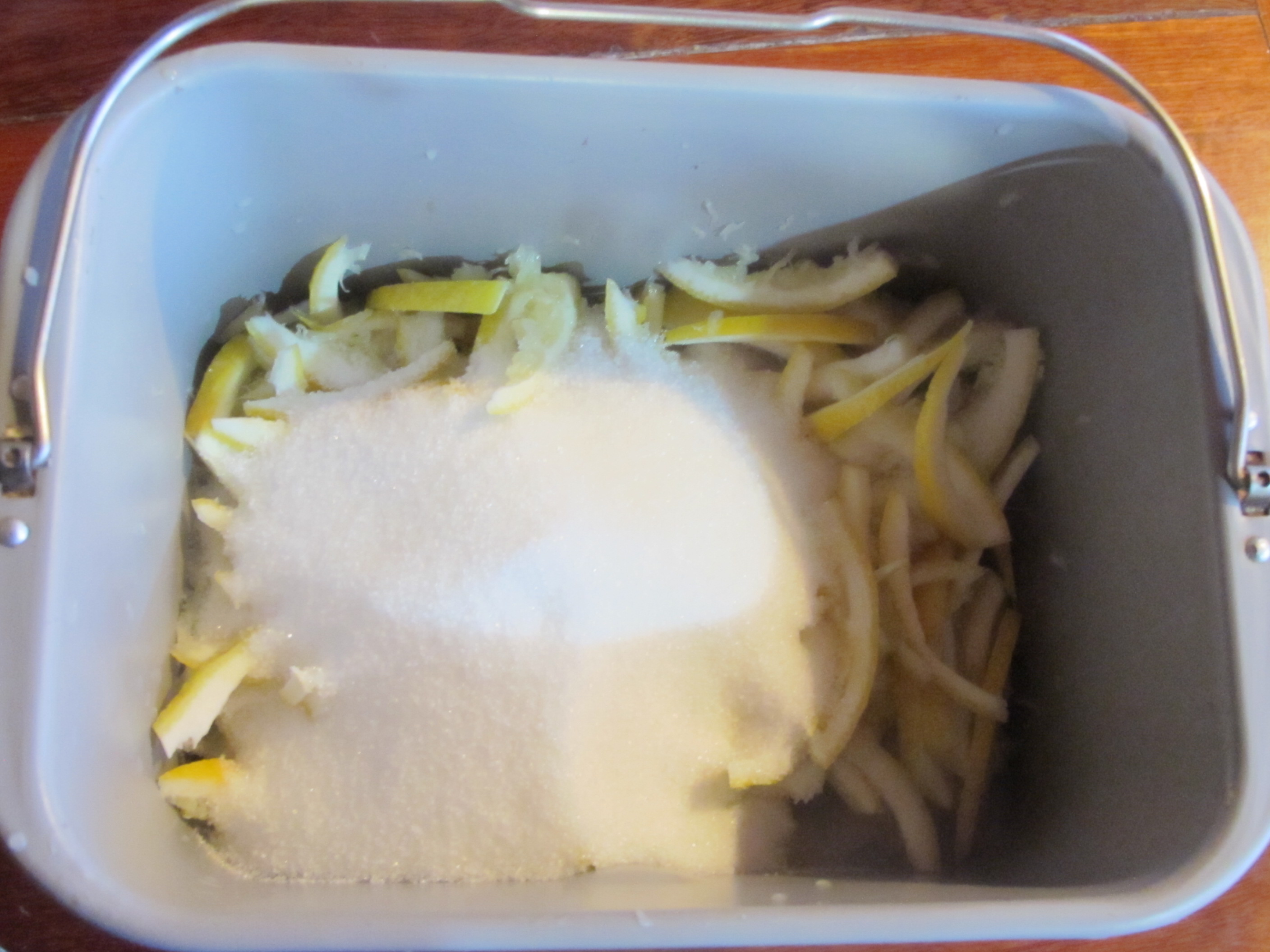
Place all ingredients in the bread-maker machine pan and set for ‘Jam’ setting. come back in and hour and decant into sterilised jars while still hot from the oven and seal with sterilised lids. They will make a loud ‘POP’ noise as they cool down and vacuum seal.

I am inclined to add a dash of whiskey into the hot marmalade as it comes out of the machine. Stir it through evenly, just before pouring into the jars.

Technically, sealed in this way, the marmalade should last for a few years, but never seems to last us till next season 🙂

You should end up with a creamy, smooth marmalade that isn’t too runny or stiff, and you don’t have to soak overnight or spend an hour at the stove stirring, or boil the pips in a calico bag. Marmalade for busy people!

IMG_0677

Best wishes

Steve and Janine, a busy couple of people