Nothing is Perfect!

We have just had our latest wood firing and all went well, as usual, thank goodness. We do our best, but we can make no guarantees, only mistakes!. We found that only a few pots made from an imported Japanese porcelain clay dunted. Glazed only on the inside too. Maybe that was the problem? Apart from this it was a very good firing!

thumb_DSC01088_1024thumb_DSC01087_1024 thumb_DSC01079_1024 thumb_DSC01083_1024

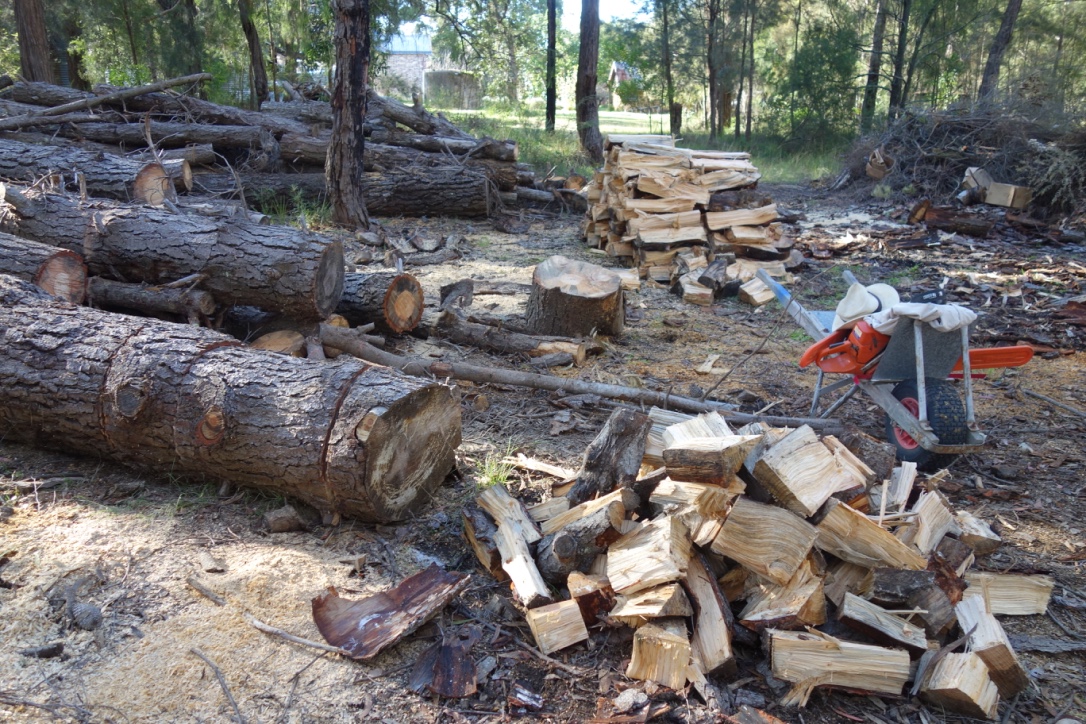
After the firing we get out and about and get stuck into some timber cutting and splitting. I’m up and out early with the chain saws, long before any one comes to help. Chain saws are dangerous enough without anyone else being around to watch out for and keep at a safe distance. We split about half of the 40 or so lengths that I have cut and prepared, but then the throttle lever on the splitter motor comes off in my hand. Cheap Chinese made splitter! So work has to come to a halt for the day while I fix it. We spend the rest of the time stacking and moving all that we have split over to the kiln shed. When everyone is gone. I take the splitter motor to bits looking for where the bolt or screw has fallen out. How could the throttle lever just come off in my hands? I can’t see where it has come from. Where it ought to be, but there ought to be an obvious spot with tell-tale wear marks, to indicate where it belongs. A place with a missing bolt! Just like in an Agatha Christie novel. there ought to be some clues, but the more I look, the less I know. I can’t believe it. Surely I’m not this inadequate and simple that I can’t see a missing bolts hole. I have removed half the engine, the air cleaner, and part of the carbie!

All the mechanism is installed under the air filter on one side and the muffler on the other. All the linkages are under the petrol tank. Everything is hard to get to and nothing is clear. There are metal wire linkages and tiny little, fine wire, return springs. I can’t see where any of it really belongs and to make it harder, the days are so short and it is starting to get dark.
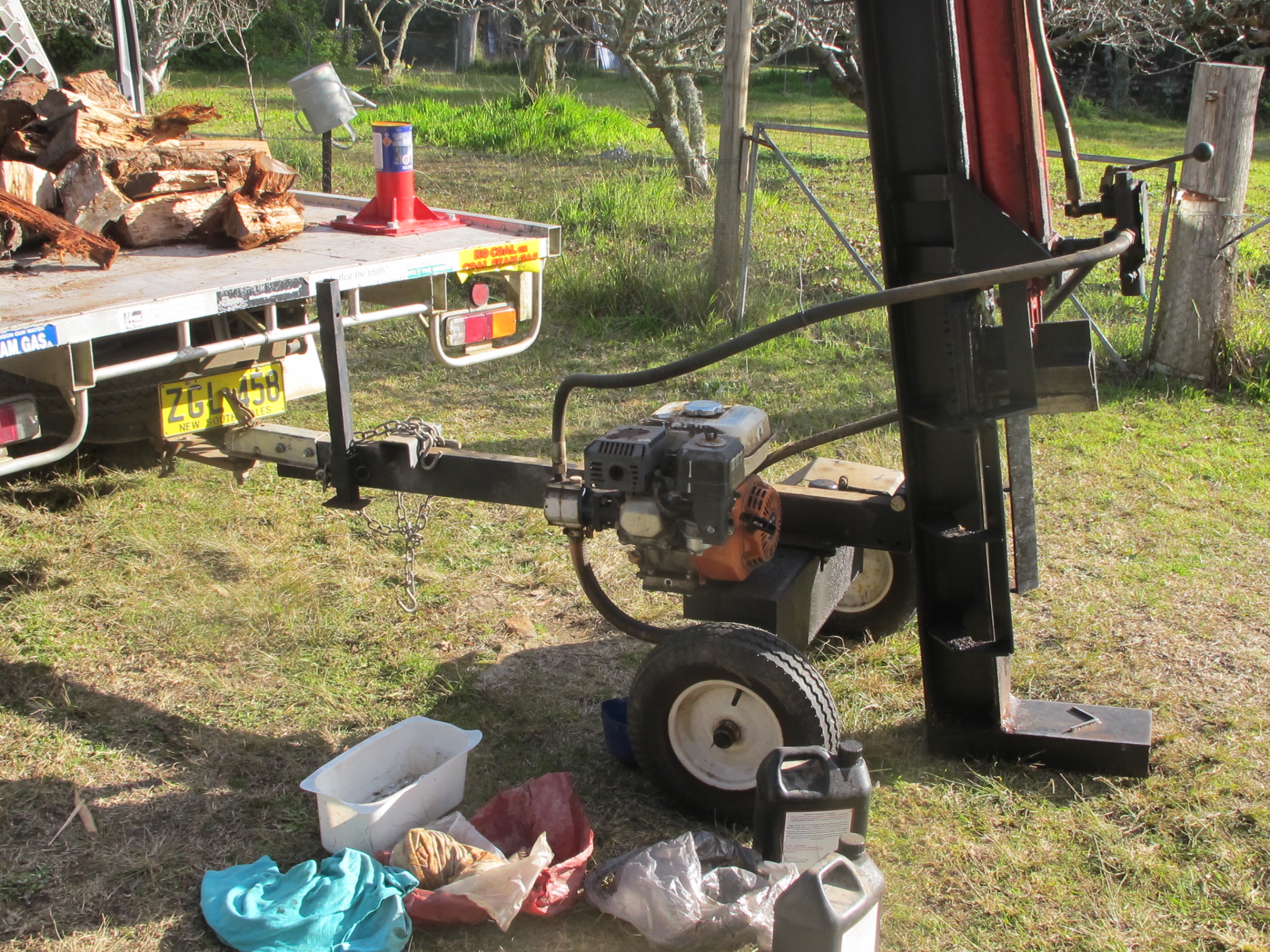
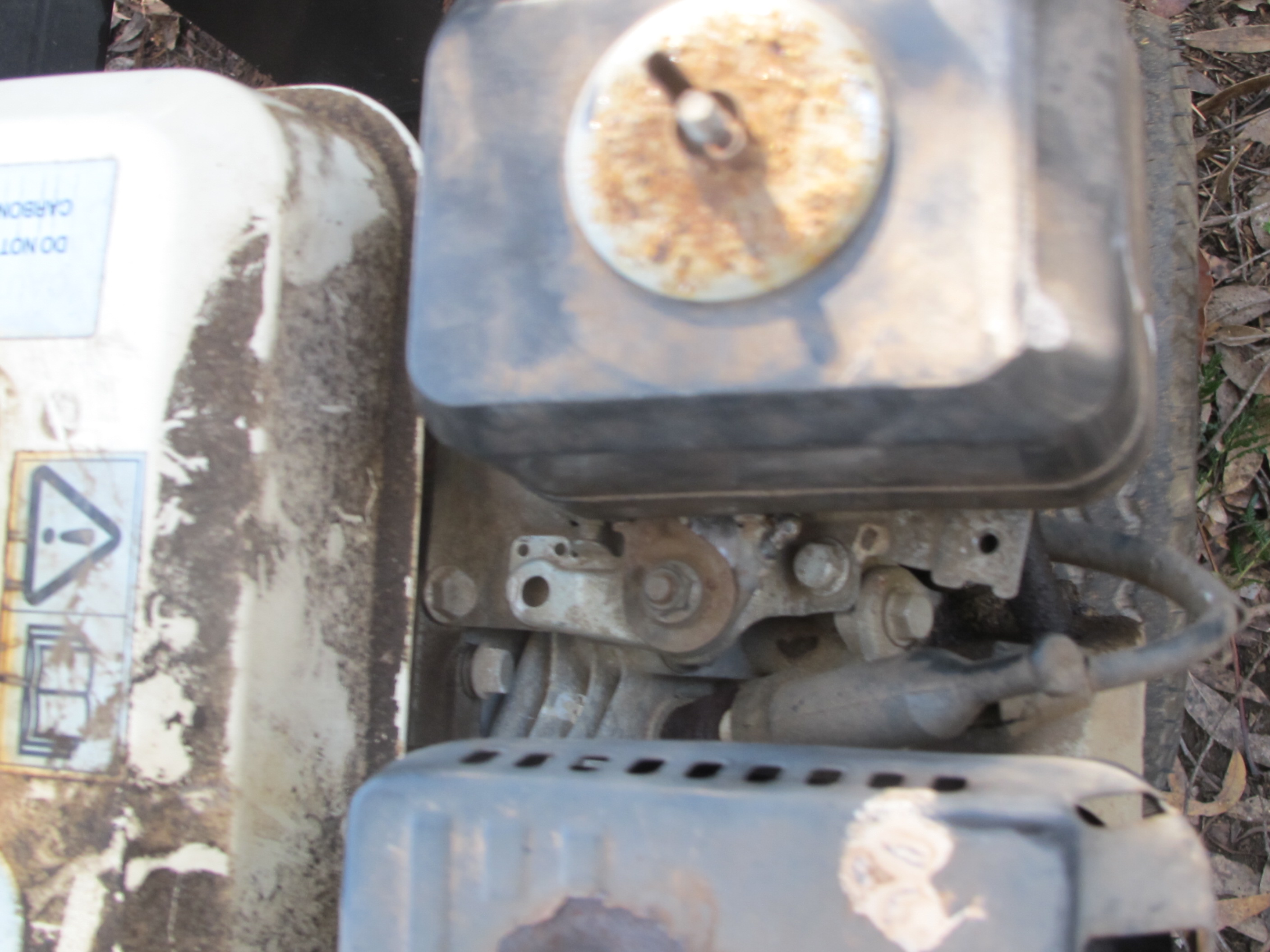
IMG_0759 IMG_0752

Then, finally, it dawns on me. It hasn’t fallen off because of a missing bolt or nut. It has simply shattered in half from metal fatigue and the rest of it is still all attached. It has cracked in half. I need to remove more of the engine to get all of it off, so that I can weld it back together again. I can’t do it on the machine, next to the carburetor, and all that fuel! I take a couple of photos as I go to remind me later on when I’m re-assembling it. So that I can get it all back together again in the right order.

Years ago, I used to write all of this kind of thing down in my day book – sort of diary thing, but now I just take photos. Because I can! When I was young, my first car was an old, classic, red, MG sports car. When I had to pull the engine down the first time. I wrote everything down, step by step and recorded all the detail that I thought was going to be necessary to re-assemble it. I numbered and bagged all the parts in sequence. I had never had to do anything like this before and my father wasn’t much interested or even around to give any guidance, so I just muddled through with the help of my older brother, who also had absolutely no experience of this kind of motor mechanics, but make encouraging noises and was supportive, especially when it came to lifting the donk out. We were completely incompetent and naive, but we managed to get it all back together again and it worked! it was quite a triumph for us. Especially for me.

When it was all done and back together. I had one nut left over, and to this day I still don’t know where it belonged. but the car still worked! Nothing is perfect!

Today, I get this small engine all stripped down and then set about welding the shattered pieces back together again. I think about making a new one, but the thing is so complex and folded in so many different places with so many holes and little tags and bits sticking out, that I decide to just repair it. Nothing is perfect! I don’t know how long it will last. Nothing lasts! It is only very thin pressed metal material. I can’t give it too many amps. I don’t want to burn a hole through it, and I can only weld one side too, because it has to have a flush face on the other side, so that it will swivel properly on it’s seating.  I weld it as best that I can, after testing the amperage on a test piece, so as to get the best result. I get good penetration! What more could a man want! But there is a little burn-through in one spot on the weld, so I have to grind it back a little to get it flush and smooth.

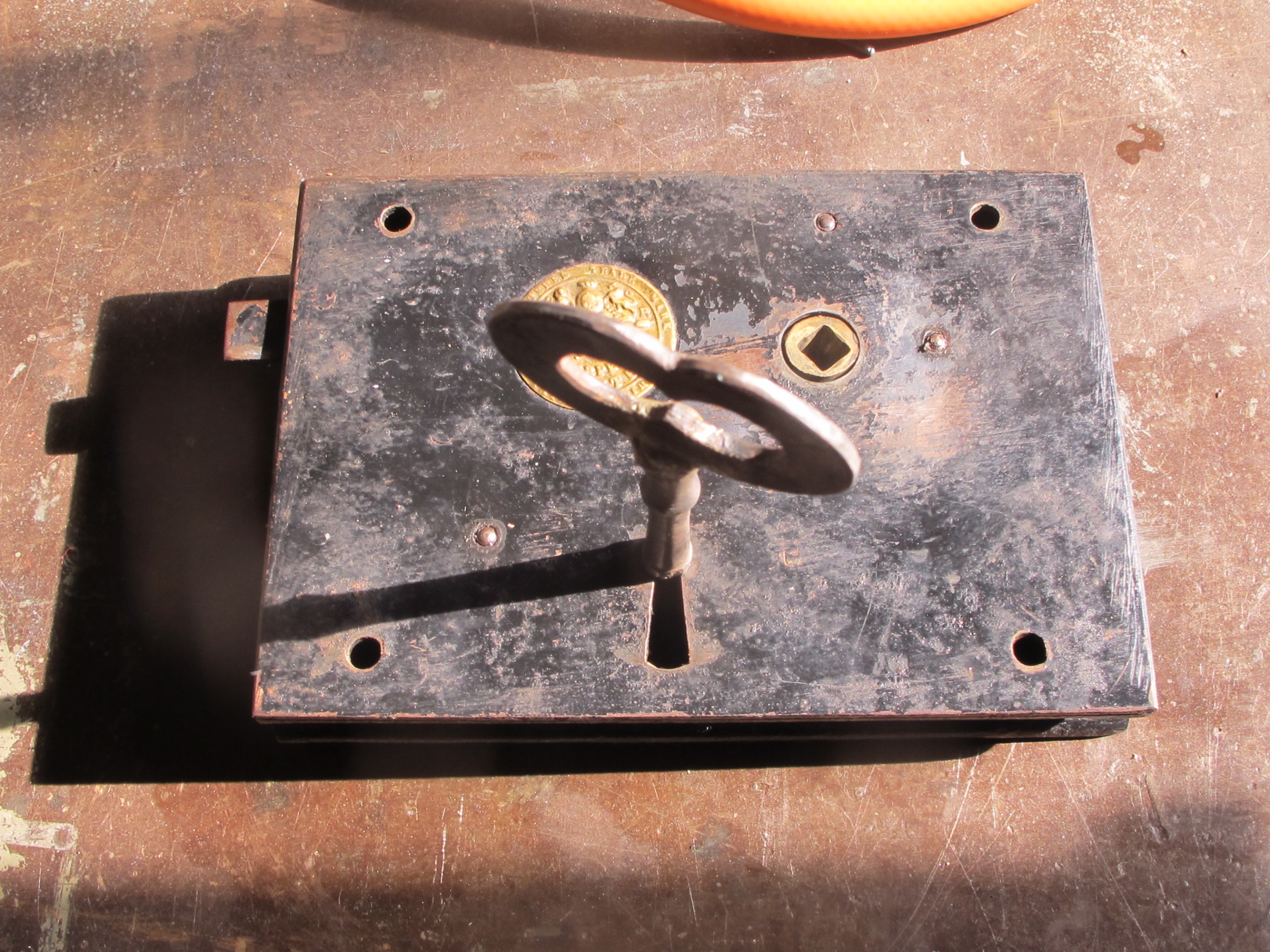
I manage to get it all back together before dark and back into the shed. It’s a bit of a rush, but there are no medals for giving up! I give it a trial run and it works OK. Time will tell if it continues to work for the long term. I go up to the house in the dark and the key snaps off in the lock. This is just what I need! One of the joys of living in a 122 year old house is doing the maintenance. I leave it till morning to take the lock off and fix it in daylight. I can’t see well enough in the dark and fixing locks, with all the fine moving parts is something that needs to be done in a clear frame of mind and good daylight. Fortunately it isn’t too difficult and it turns out to be something that I have had to do before, so it is relatively simple and straight forward and it is all back into working order pretty quickly and before lunch time. Nothing is perfect and nothing is ever finished.
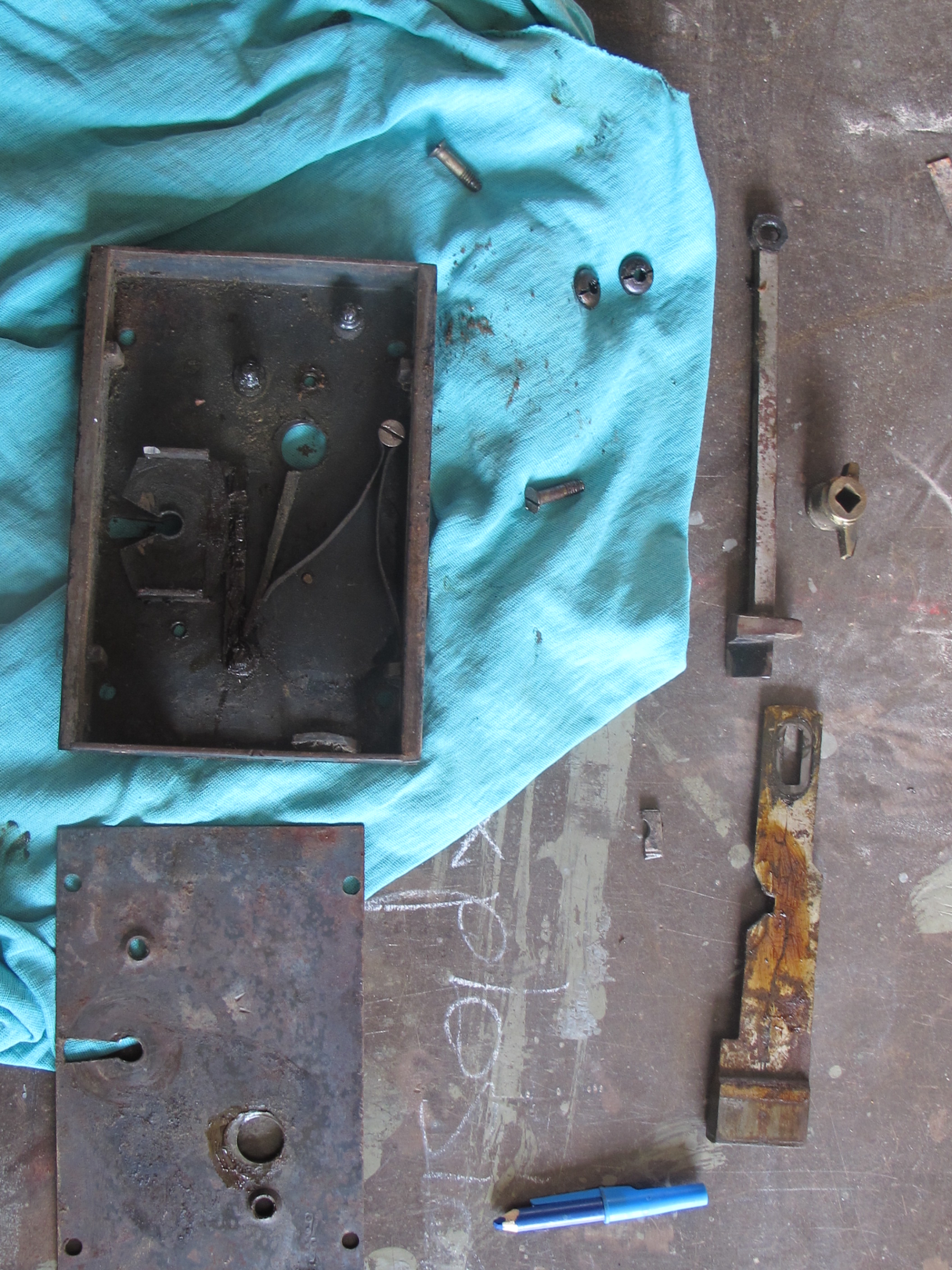
IMG_0661IMG_0669 IMG_0670

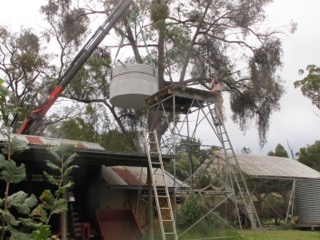
Because crap things always seem to come in threes, at least that is how it appears today. The water tank springs a leak. It has been leaking with a slow drip for a year or more now, but today, it springs a proper leak and The Lovely comes in to tell me that as she walked past the tank stand just now, and it felt like it was raining. This happened a couple of days ago too and she thought that she might have been imagining it. But today she is sure. We go and have a look. The timber tank stand deck is all wet underneath, just as it has been for a few years now, where the slow drip is, but now there is a little fountain pissing from the far side. It’s only very tiny, but it is surely a leak in the side of the tank now. I get the ladder and check it out at close quarters. The water has corroded through the zink coated corrugated steel sheeting. My highly imaginative and creative thinker thought that she was imagining it a few weeks ago when she felt a little fine water spray on her as she walked past the wood shed near by the tank stand. At that time, she imagined that it might be a cicada pissing from high up in a tree, or some other explanation. But now we know that it is real and not imagined. It’s a very tiny, fine spray of water from the pin prick sized hole, but once these things start. It’s always terminal.

I order a new tank, it’s all so specific these days. The height, the diameter, the colour, the inlet, the outlet side etc. It all goes on and on. This is not a current or popular size and configuration however. We will have to go on the waiting list. He rings me back the next day, They have one of those in stock it seems and so I can drive in and pick it up. Amazing! It has to be pretty much the same, because I don’t want to have to change over all the plumbing into a new configuration. When working up a 6 metre ladder. right at the top, it’s scarry enough.

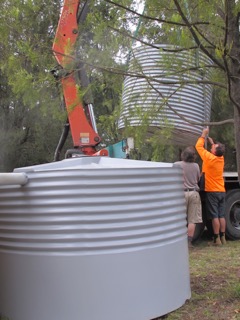
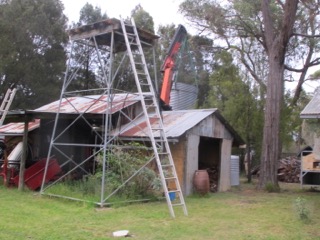
I ring my friend Dave with the crane truck. he can come very late today on his way home. I drain all the water out of the tank and strip it of all its fittings and connectors. I swap all of these onto the new tank. Now we have no water in the house to cook, wash or flush with until it is all put back to rights. I hope that Dave doesn’t forget. He rings to say that he will be a little late, but he is here before dark. Which is good, if you are working on a narrow ladder rung, right at the top of a 6 metre ladder, up from the ground, you don’t want to be doing it in the dark.

It all goes smoothly and all the fittings that I swap over are all in the correct place and in the right direction, or orientation for further use.
IMG_8806IMG_8802 IMG_8808 IMG_8812

The old tank comes down and the new one goes into its place without a hitch. I only have to reconnect the inlet and outlet pipes.

Once it is back in place, Dave leaves for another job, I have to start the pump to refill it with water again, so that we can get on with our normal life.

The Wet One thinks that this tank is only a few years old. I think that it is probably a bit more than that, but not too old. Not more than ten years!  Nothing lasts. However, when I check out the paperwork, it turns out that it is actually 20 years since we put it up on the tank stand. The earlier tank had lasted 21 years and would have lasted longer, but the tank stand rusted out first and fell, crashing to the ground with the water tank still on it. Needless to say, neither survived, nor did the wood shed that it landed on.

I’m just a bit concerned that this new water tank is made of plastic and not galvanised steel like all the others have been. I wasn’t ever happy with the first tank that was made of galvanised steel and sealed with lead solder! But it did last for over 20 years and our first storage tank lasted for over 30 years, but the zink finally corrodes and they start to leak, so we replaced them with new ones. These newer tanks were made from zincalume coated steel, so couldn’t be soldered, that’s good, but they had to be sealed with silicon rubber glue. Not too happy about that either. Nothing is perfect! The last metal tank that we bought was lined with a plastic membrane heat sealed on to the inside of the zincalume sheets. It was called aquaplate, but didn’t last any longer and it was silicone sealed as well. Nothing is perfect!

Plastic is in everything. It’s OK while it lasts, but what will happen to this plastic tank when it finally gets eaten away by the sunlight or what ever is its fate? Can it be recycled? Al least the steel ones can be. I still have and use my parents old galvanised steel water tank. They bought it second-hand in the fifties, so it’s been in constant use in this family for over 60 years and is clearly a lot older, it shows no signs of corrosion yet. It was made out of thick steel plate and hot dipped in molten zinc. That was a product made to last. I have been told that it was a ships tank, but I don’t know. In future I may have to weld up my own tank and get it hot dipped galvanised, just like I do with my kilns. I like things that are made to last as long as possible.

However, I’m also aware that nothing is ever finished, nothing lasts and nothing is perfect.

You live and learn!

Best wishes

Steve

Home Made Chainsaw Saw Mill

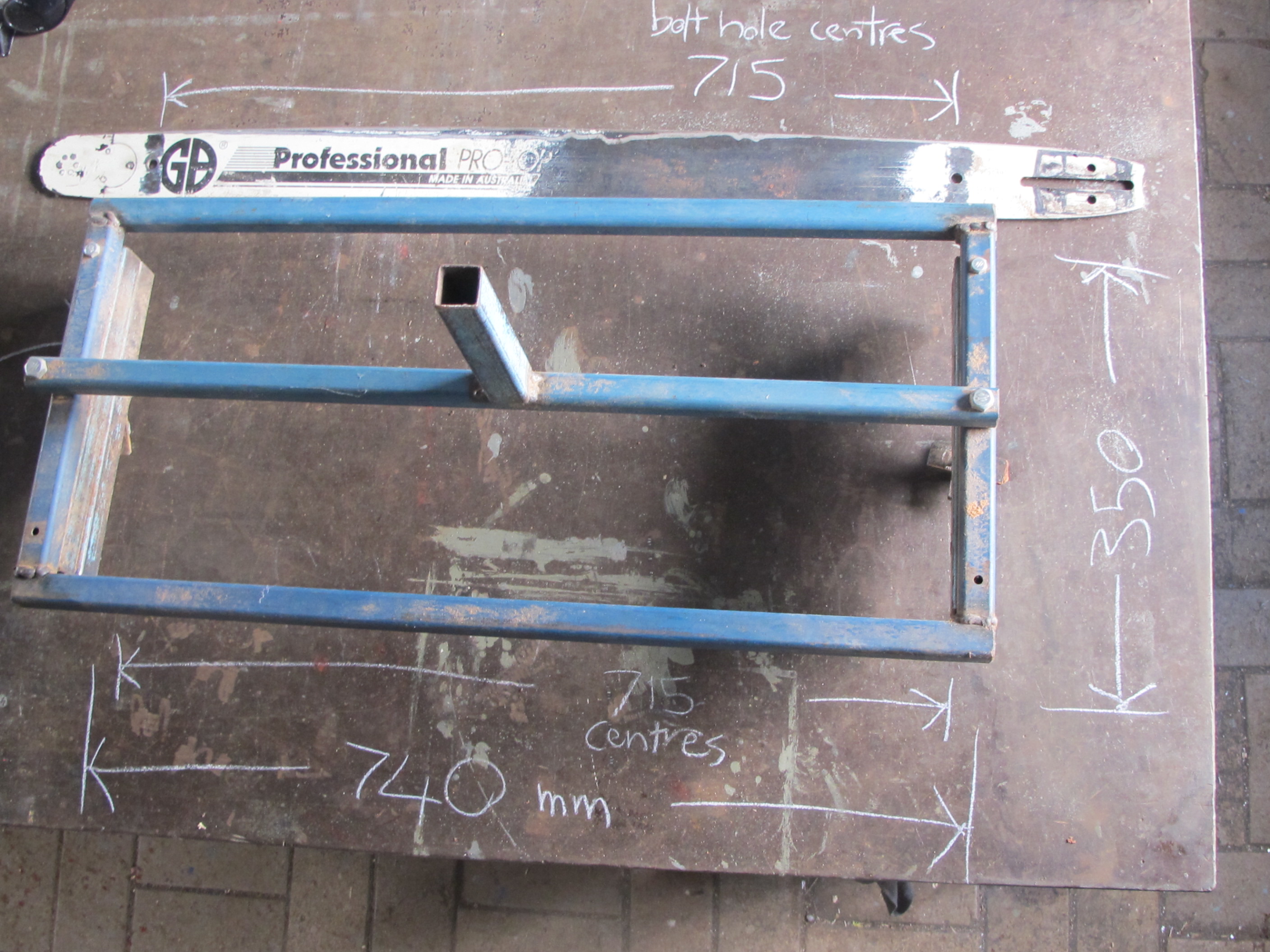
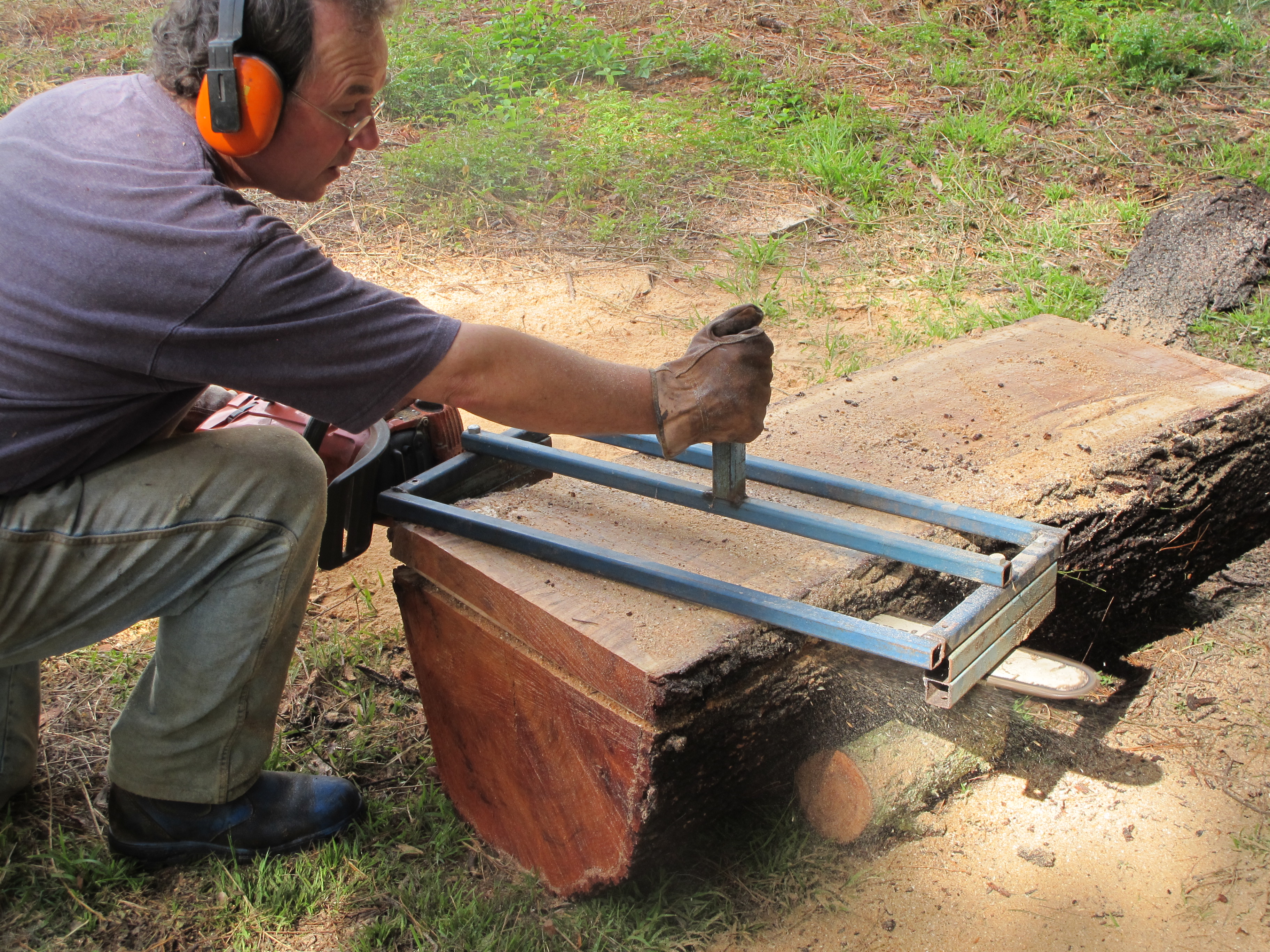
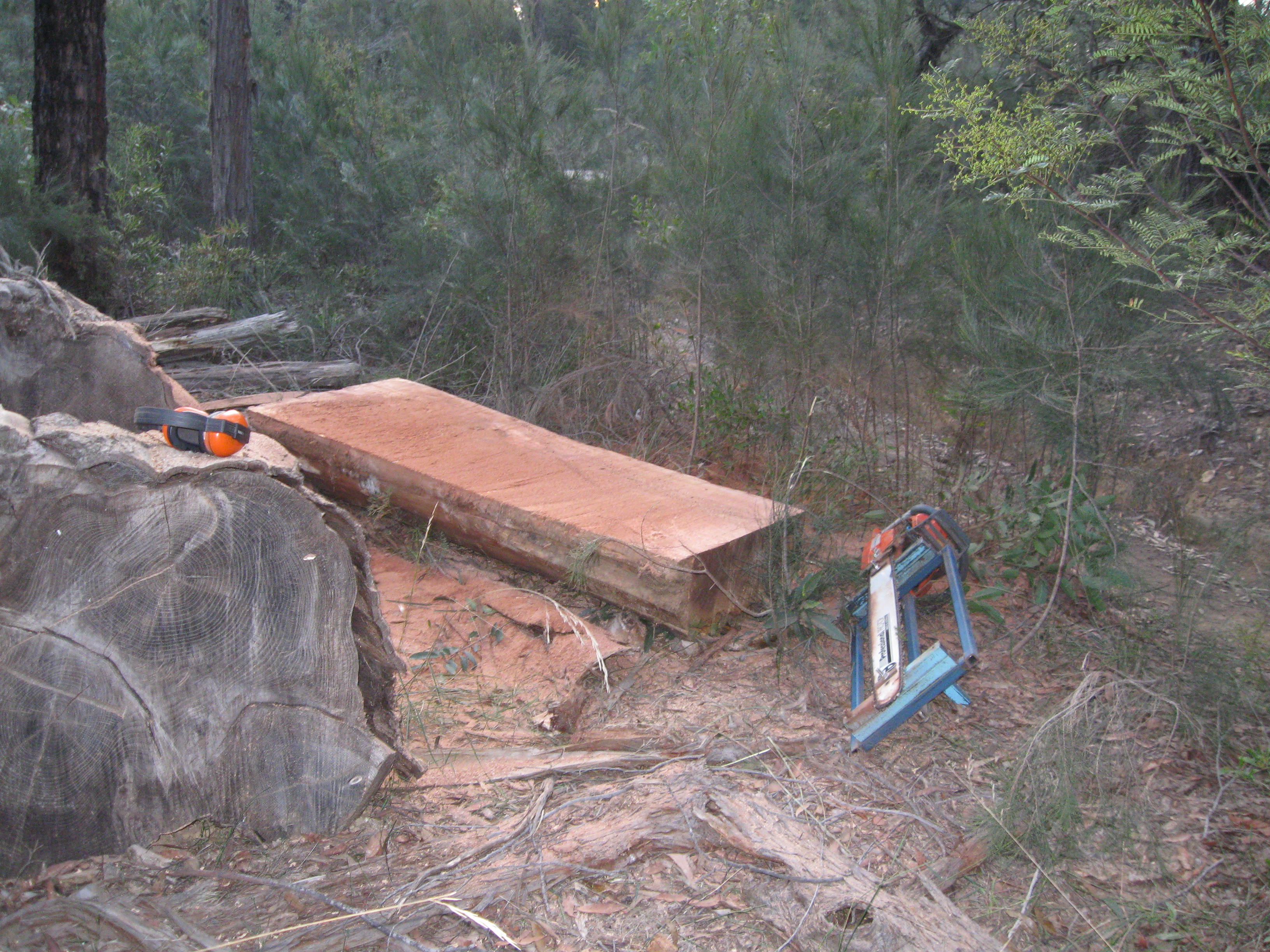
Over the past few weeks I have had over 500 hits on my article on self reliance including a little bit about milling my own timber. So I thought that seeing there is so much interest in building a home made saw mill attachment for a chain saw, I ought to put up a post with some more detailed explanation, including a few dimensions and some images to help explain what I did.

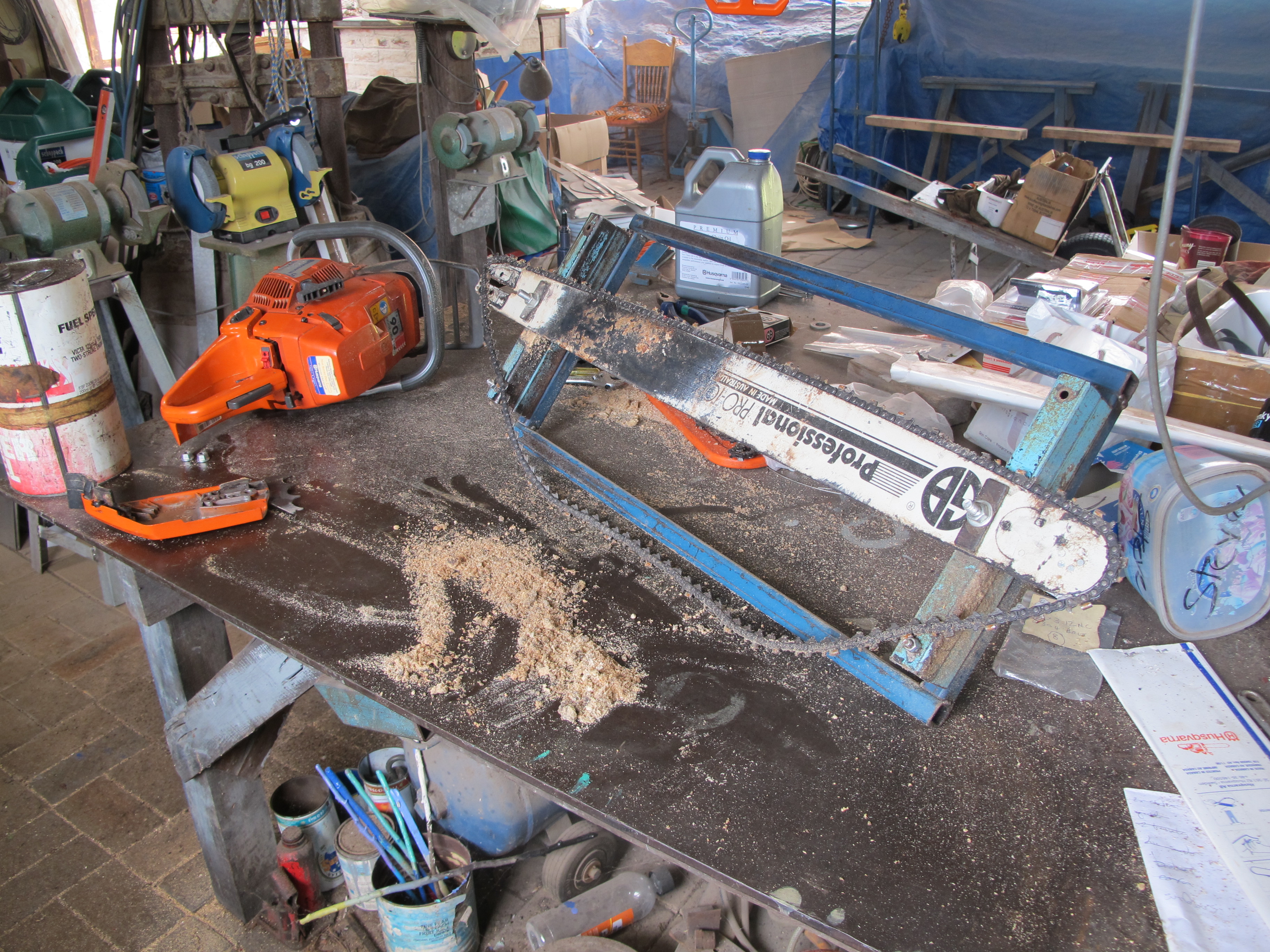
It’s pretty basic unit made out of scrap steel sections that I just happened to have laying about on the day, but it works really well for what I need it to do and that is to turn logs that are too good to burn, into usable milled planks. I haven’t studied this kind of gadget at all. This is my first attempt at building one. It seems to work OK, so i haven’t got around to making another one or changing it. If I was to, I would perhaps add a bit of rubber tube over the upright centre handle, just for comfort.

Since I moved here, I have built my own house and pottery building. We made all our own floor boards and made all the windows and french doors. I also made all of the kitchen furniture to go into it, chairs, tables stools etc.

All you seem to need is a few basic tools, an inquisitive mind, some perseverance and a bit of spare time to figure things out. The saw is an old (15 years) Husqvarna  371 60 cc. and the milling bar is about 900 mm. long. The effective cut is about 600 mm.

So here are a few pictures with measurements chalked onto the bench.

IMG_9167

IMG_9168

IMG_9169IMG_9170IMG_9171

IMG_9166

IMG_6220

IMG_6221

IMG_6208IMG_6209

IMG_6212

IMG_2291IMG_2292

13 Years of Hard Work Up in Smoke

Winter Delights.

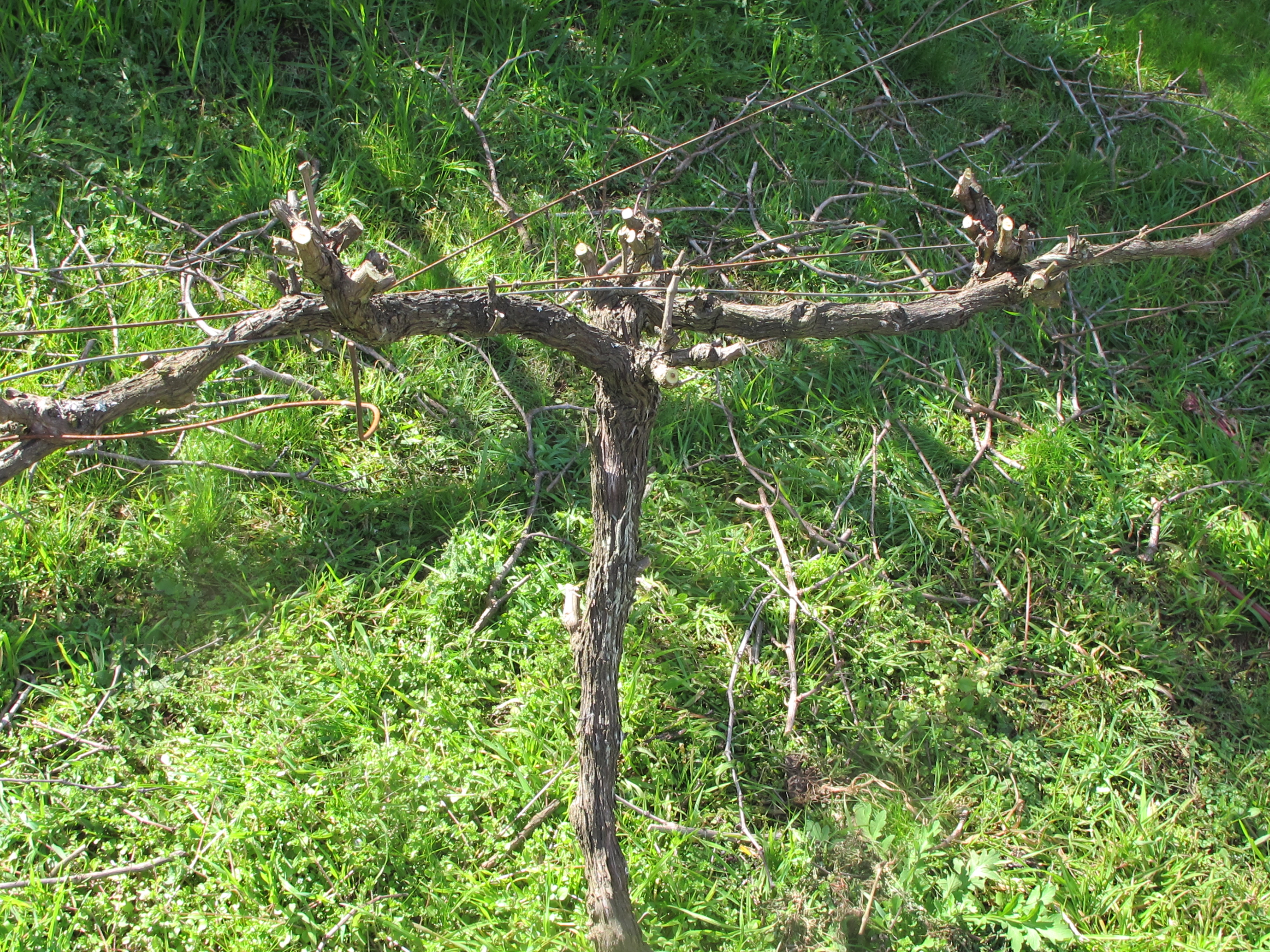
It’s the middle of winter and it’s time for pruning. I spend the morning pruning the dozen or so almond trees and then go on to prune the shiraz grape vines, as they are close together. These young almond trees are just coming into their 13th year now, we have other, older almonds that are 38 years old as well, but they are in another part of the garden, in with the original stone fruit orchard and are quite established.
Once you get into it, it’s an easy, mindless job. The sun is warm on my back, as there is no wind this morning. It’s a nice job, so much better than cleaning out the kiln firebox. My only difficulty is when I’m working around the trees and have to prune into the sun, which is low in the sky and makes me squint with it’s brightness. If this is the only thing that I can find to whinge about, then I am a happy man.
While I’m at it, I can’t help but recall Peter Mayle’s fictional neighbour ‘Massot” who he encounters while ‘Massot’ is pruning his vineyard. He has been pushing a wheel barrow along the rows depositing all the prunings into the wheel barrow. There is a small fire glowing in the bottom of the metal barrow and as each new collection of cuttings is deposited, it is ignited from the coals and ashes of the previous vine. As it is described, I can visualise that it’s a beautiful system of ancient ancestry. It removes the dead wood from the vineyard. It doesn’t require any cartage. It sterilizes the woody plant material that might otherwise spread infected material from vine to vine and as there is a hole in the bottom of the barrow, all the ash from the fire is slowly drained out along the rows of vines as soluble fertilizer for when it rains. A pretty perfect system. Beautiful in it’s simplicity. I’ve thought about burning my prunings in one of our metal barrows. Sending 13 years of hard work up in smoke.

Mayle takes great pleasure in humiliating his hard-working peasant neighbour for his earthy roots by pointing out that he has seen small bundles of vine cuttings for sale in posh English department stores, sold as kindling – selling for 10 Euros per bundle. Massot looks back along the long rows of vine trellises and can visualise hundreds of Euros of kindling gone up in smoke. It’s meant to be funny, but maybe it can be read in a different way. Perhaps it illustrates that Mayle feels inferior to the local French man in his natural environment. Mayle can’t see the beauty of the system, only the money and we know that the peasant isn’t getting the money, he has a life deeply embedded in the terroir. Mayle will never be part of this environment, never really comfortable, never naturalised into it, always the expat, his clean hands will always tell that he is from somewhere else.

IMG_4653IMG_4649

IMG_4634IMG_4636

IMG_4647IMG_4648

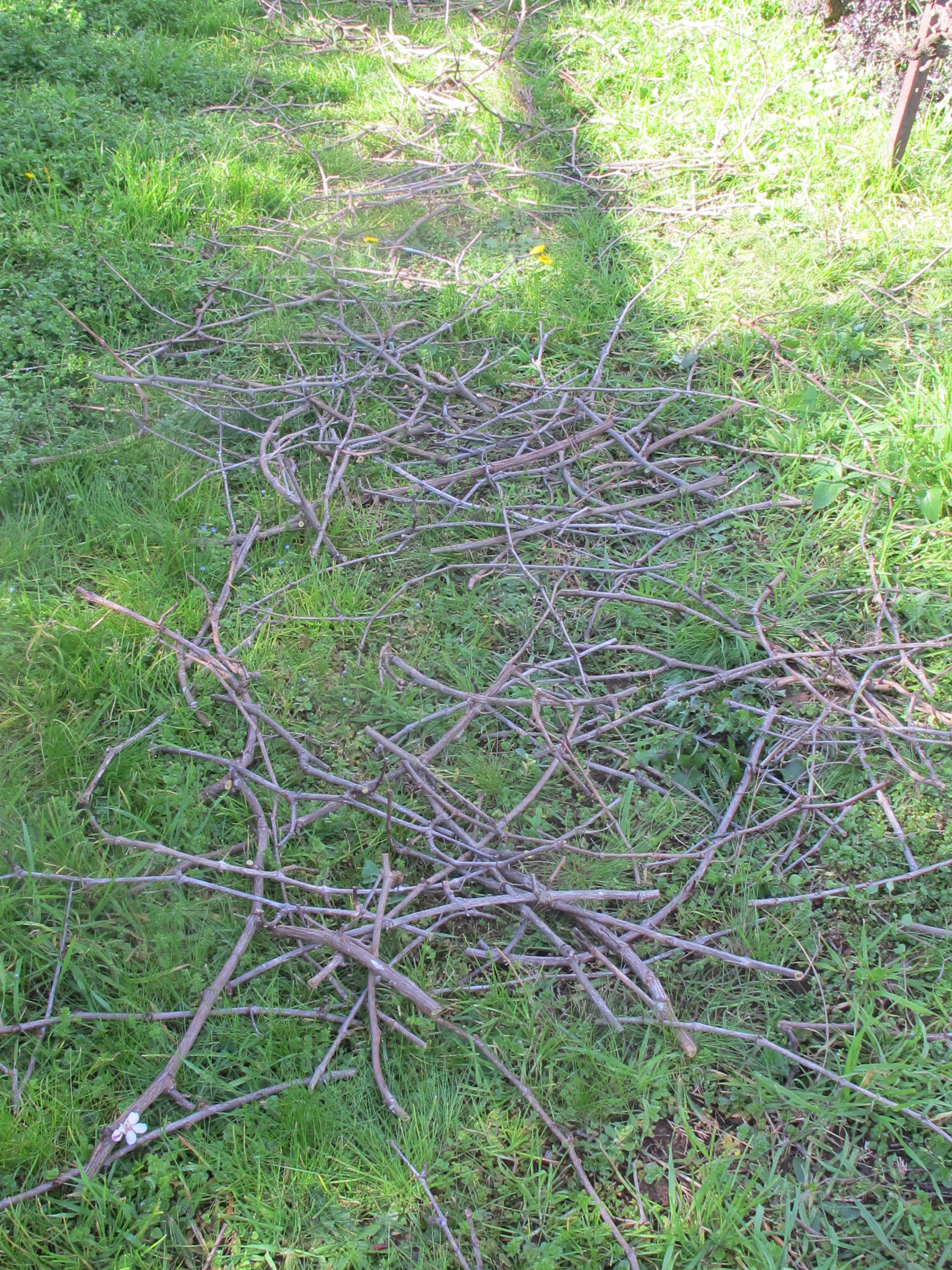
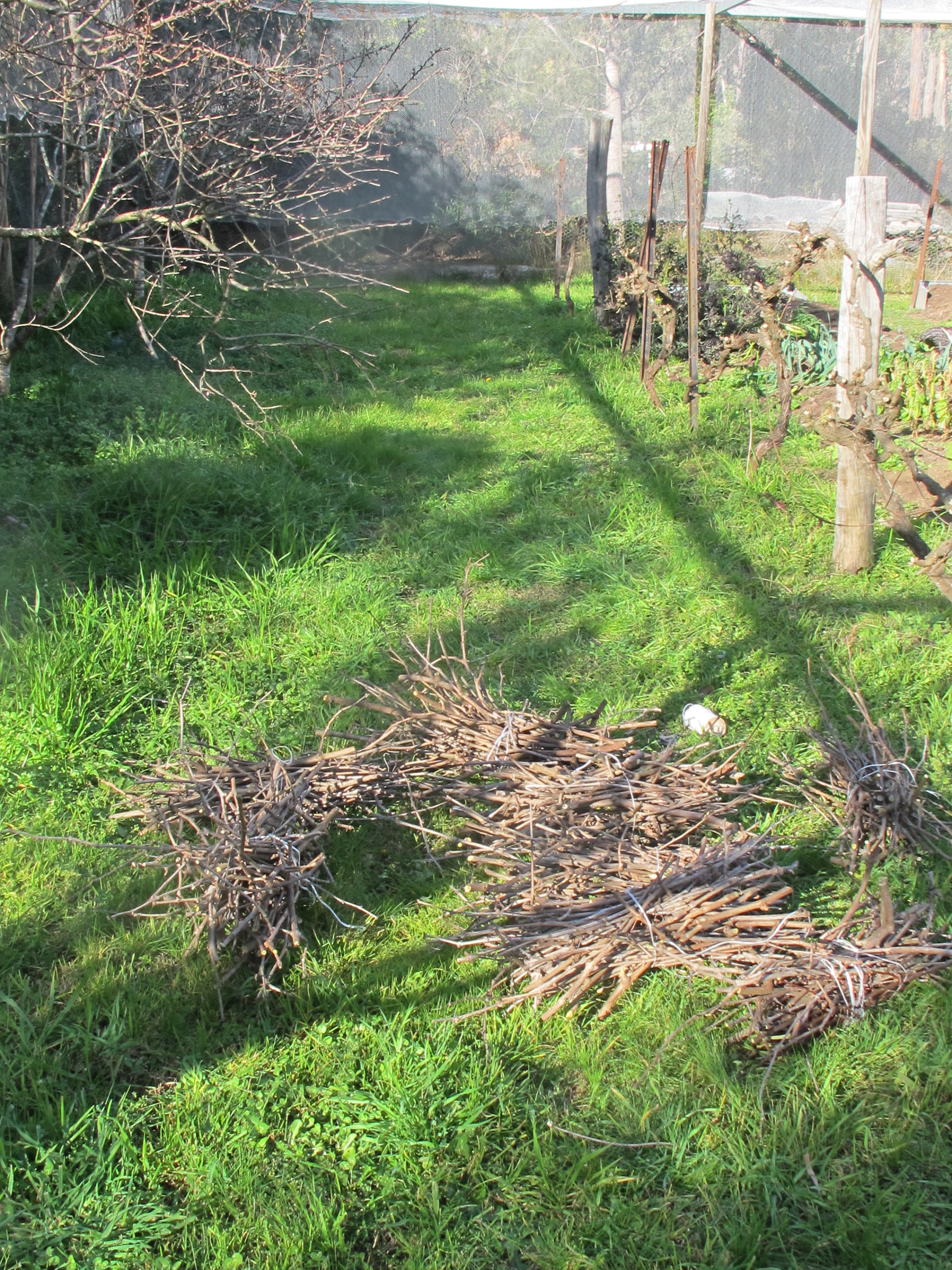
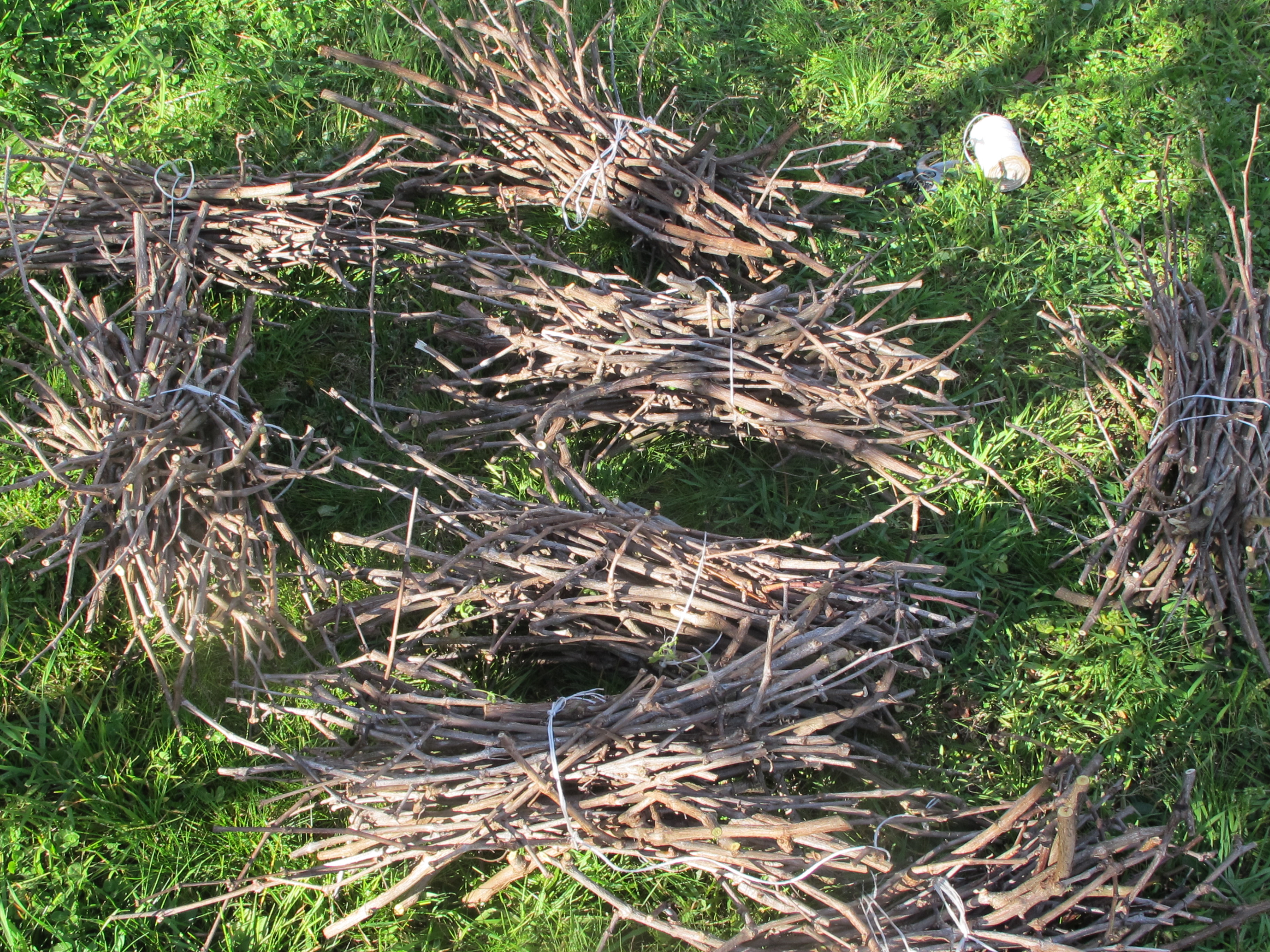
I bundle my prunings, not for sale, but for kindling in our own fire place. Often used to start the kiln. I like the symmetry of the closed loop. Use what you’ve got. The prunings have to be removed from the orchard and vineyard. The best way to deal with the issues of disease is the burn them, but rather than burn them for no beneficial outcome, using them to start the kiln is a positive use, appropriate for a post-modern peasant-potter.

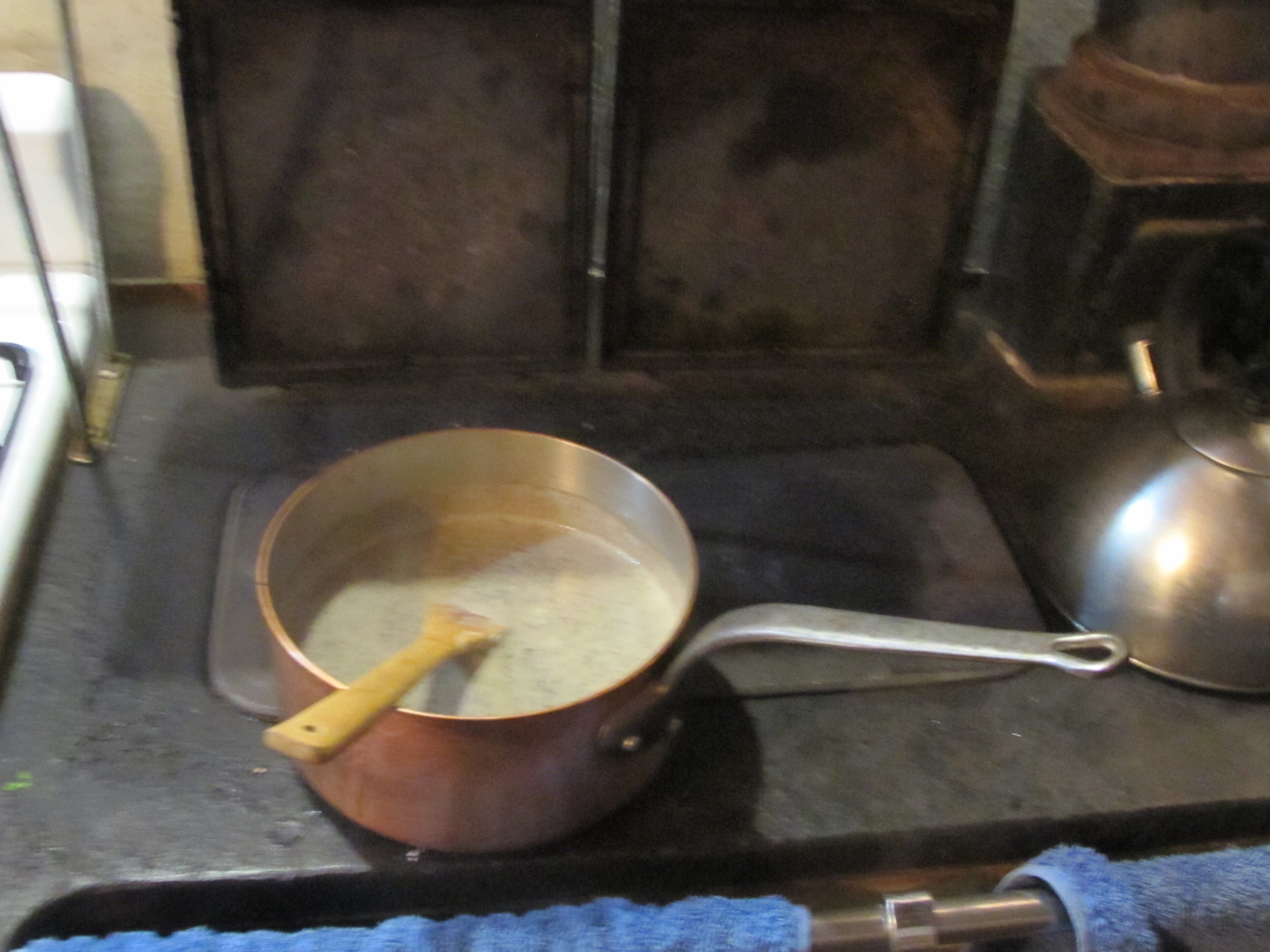
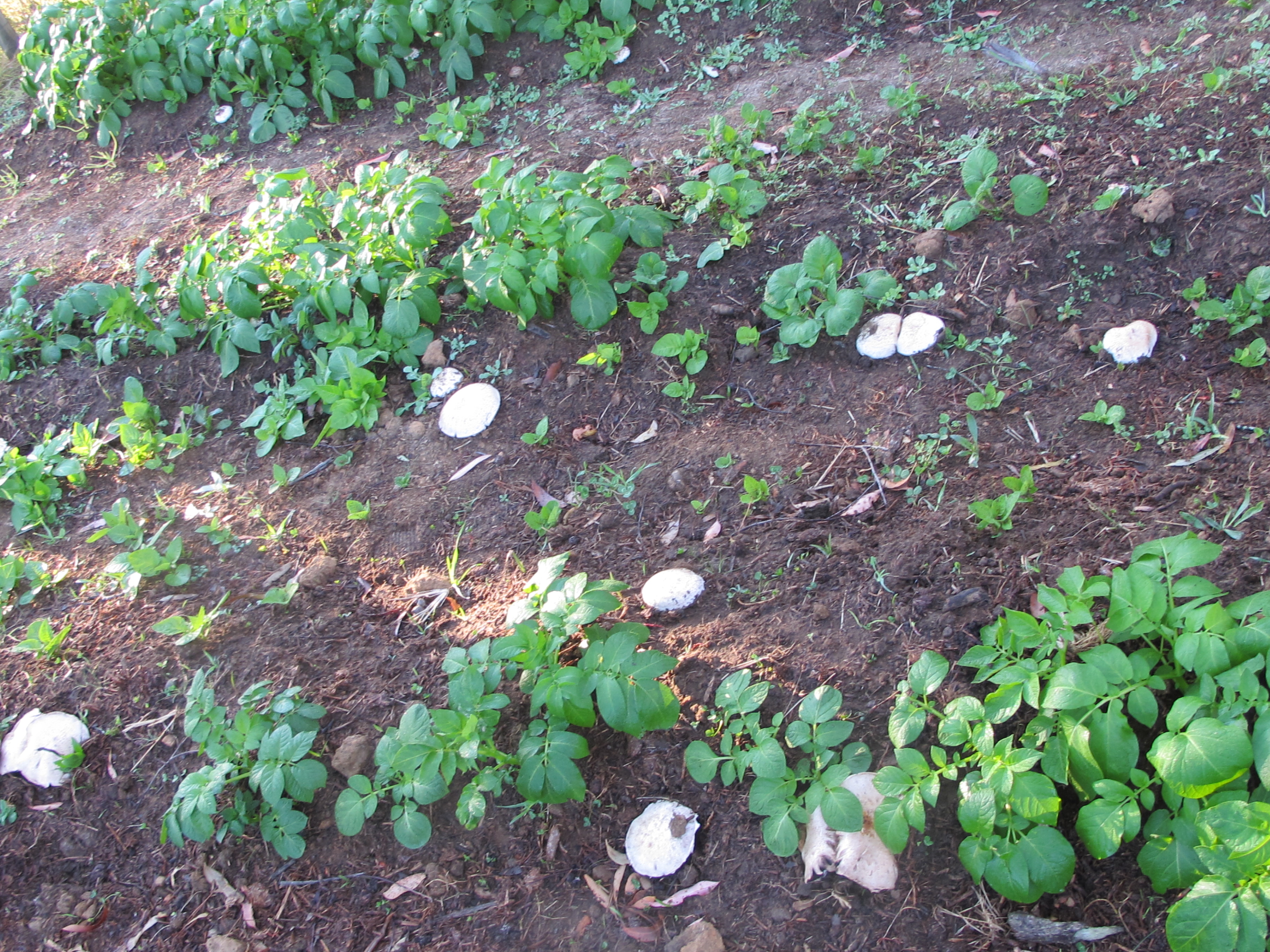
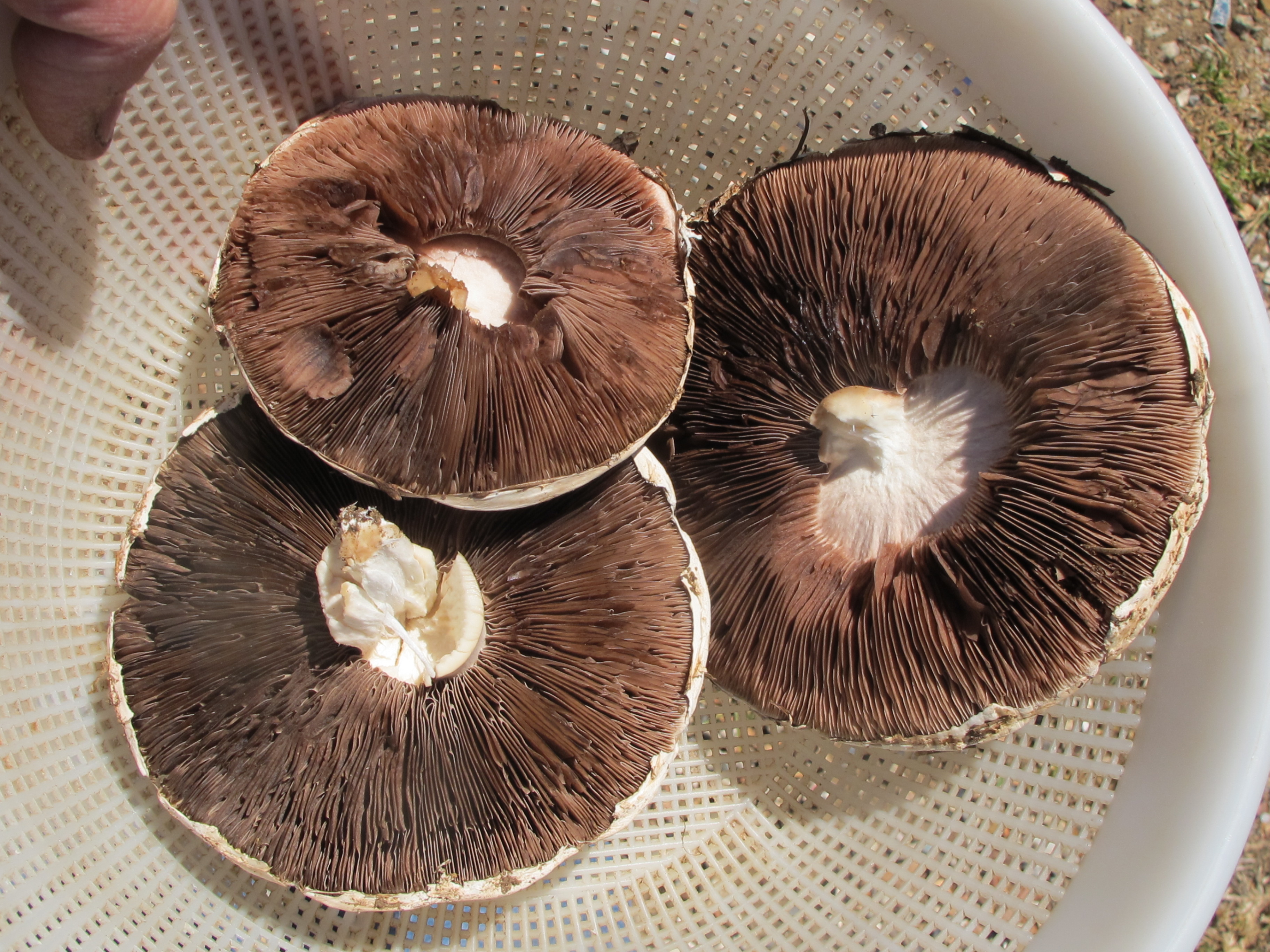
I water the big potato patch down in the Pantry Field and find that they are still growing wonderfully well, as are the field mushrooms in among them. The tall tree cover has worked wonderfully well to keep the frost off. I wasn’t fully aware up until now just how warm it was down there in that secluded little clearing. I collect a dozen big mushrooms for dinner from in amongst the spuds. We’ll have mushroom soup tonight. A few bunches of herbs and an onion browned in olive oil till soft, then the diced mushroom added and sautéed, some marrowbone and garden mirepoix stock added in and all left to simmer down and reduce, lastly a little flour and oil Roux to thicken it up a little, some pepper, a lovely warming and filling garden delight on a winters night.

IMG_4692IMG_4694

IMG_4695IMG_4696

We have a huge pile of stumps, old logs too big for the chain saw and too heavy for the tractor to move around, These massive sections of pine tree trunk were given to us to burn in the kiln by my friend’s Mother, when a hundred year old pine snapped off in a severe storm, crashing down in her garden narrowly missing her house. The tree was 1.8 metres across and each section weighed more than a tonne. It was delivered by bobcat and tip truck, 20 tonnes of it over three trips. I cut up what I could manage by myself, the section up to 1.2 metres, but some of the larger base sections were just too big. Now, after 3 or 4 years, the white ants and wood rot have set in, so I have to deal with it. I get the bobcat back and get what’s left pushed up into a pile. We add some nasty weeds that we don’t want to seed around the garden and woody garden waste too thick for the shredder, but too small for hob wood. It’s all piled up on the spare block, where we stock pile our kiln wood.
IMG_0125IMG_0147
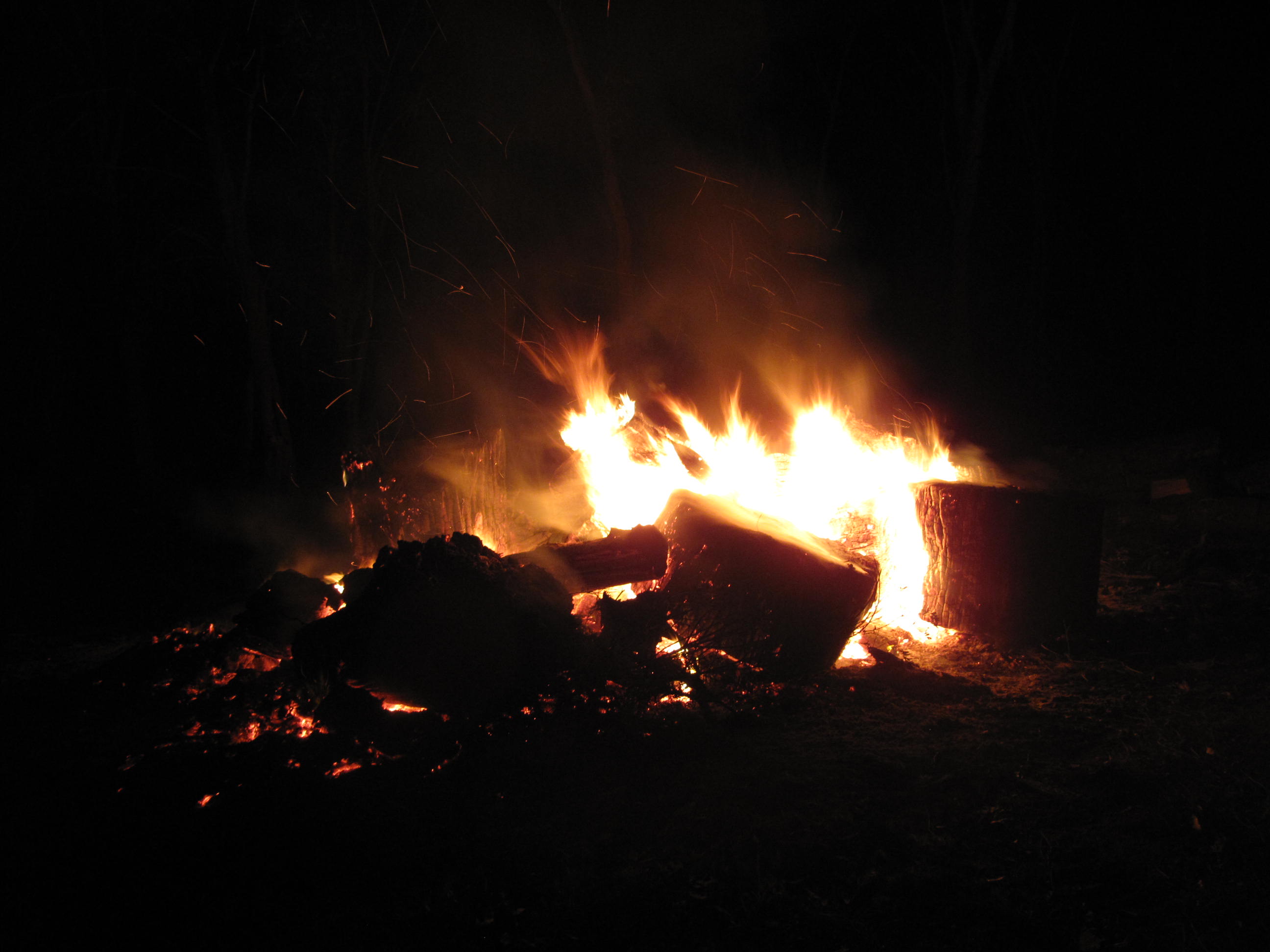
As the weather is clear and fine with no wind, it’s winter and there are no fire bans, we decide to burn off all this otherwise difficult to deal with herbage. In the evening we light it and it goes up like a Guy Fawkes’ night celebration. We have the long fire hoses ready and the high pressure fire pump going. It’s a good chance to give it a run and check that everything is in working order, ready for the summer.
IMG_0175IMG_0174

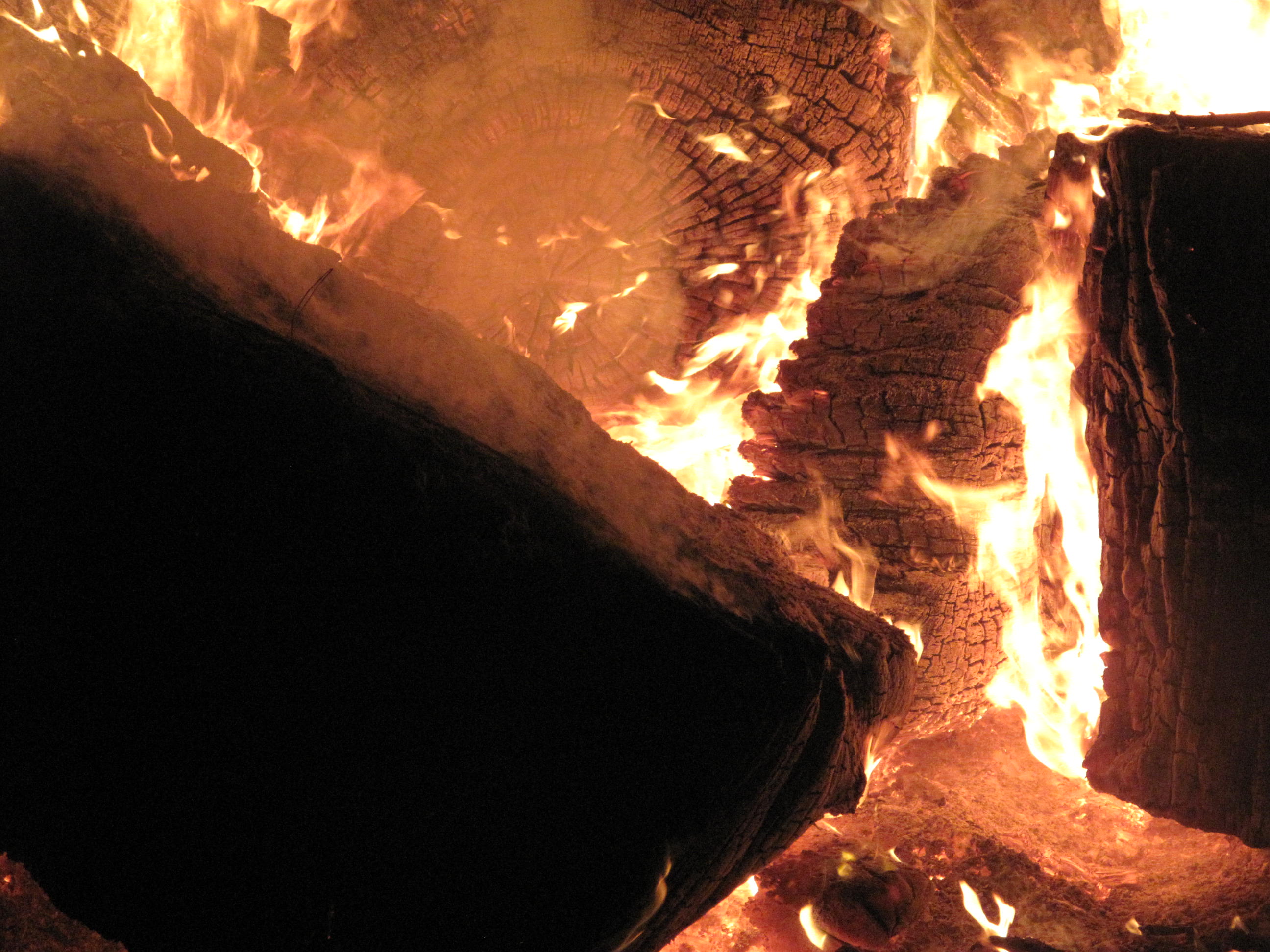
We crack a bottle of home-brew beer, congratulate ourselves for a long day of hard work and watch it burn, The flare of light tinder is all over in half an hour, but the massive stumps and log sections remain glowing and smouldering into and through the night. Janine is up at 1.00 am to check it and I’m out there again at 6am.
In the early morning light there are three separate collections of smouldering lumps. I get the tractor out and push them all together, back into one big pile and they burst back into flames and continue to burn throughout the day. I hate to waste wood like this, but without the machinery to deal with such big lumps, there doesn’t seem to be any other option for me. I can’t afford to pay the bob cat driver to come and work here regularly, while I work my way through the pile, I don’t want to have a massive termite nest on my door step and now that it has spent a few years in the weather, what’s left of this spongy pine has all gone quite ‘manky’, and lost most of it’s calorific value. A fire seems to be the best way.

We spend all of the next day tending and supervising the fire. Cleaning up a lot of small rubbish, rotten wood and weeds. Someone has to stay with it all of the time, just to be safe. There might be some good ash to be collected, if there isn’t any wind or rain before it all cools down, so that I can get to it.
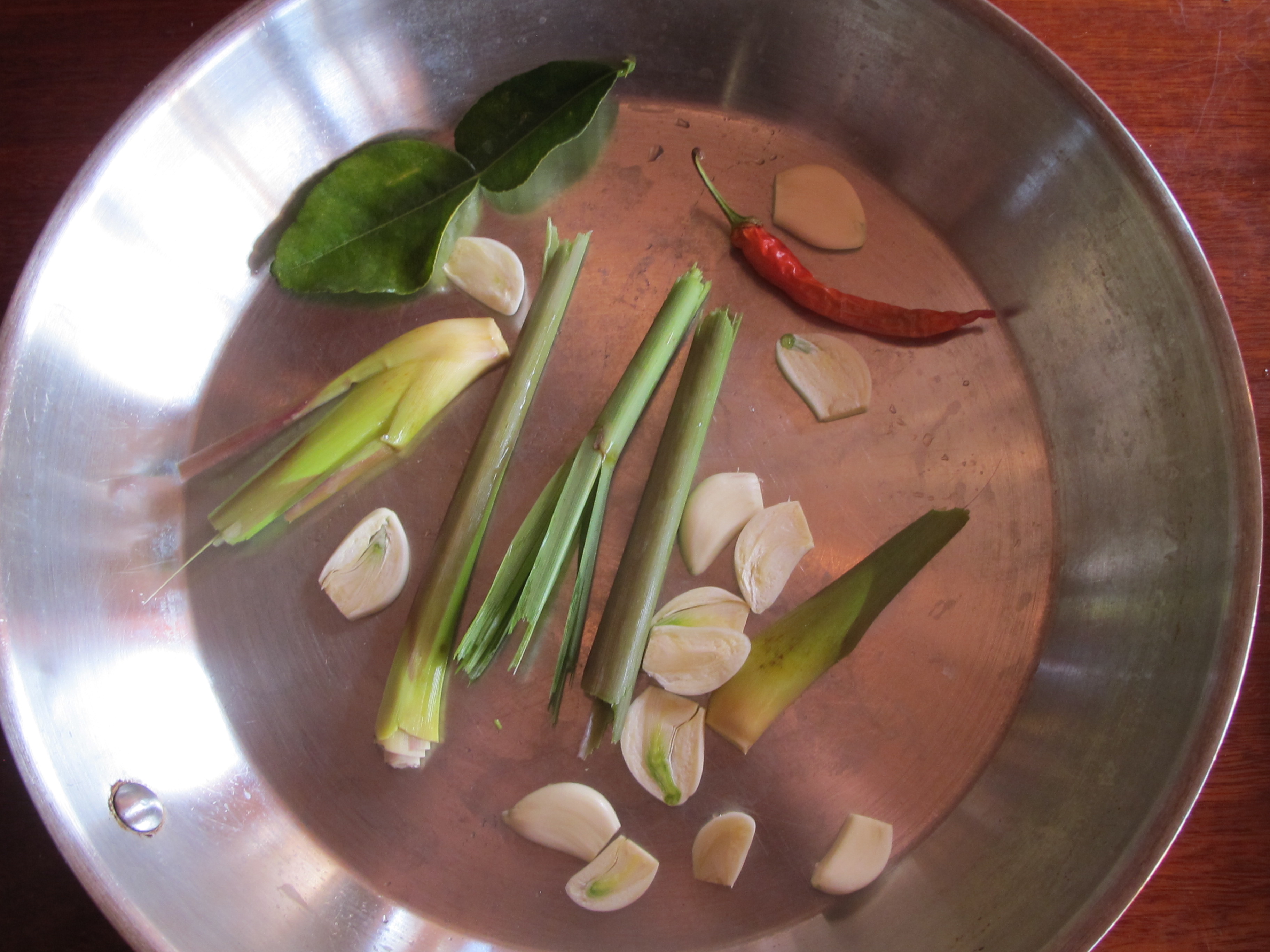
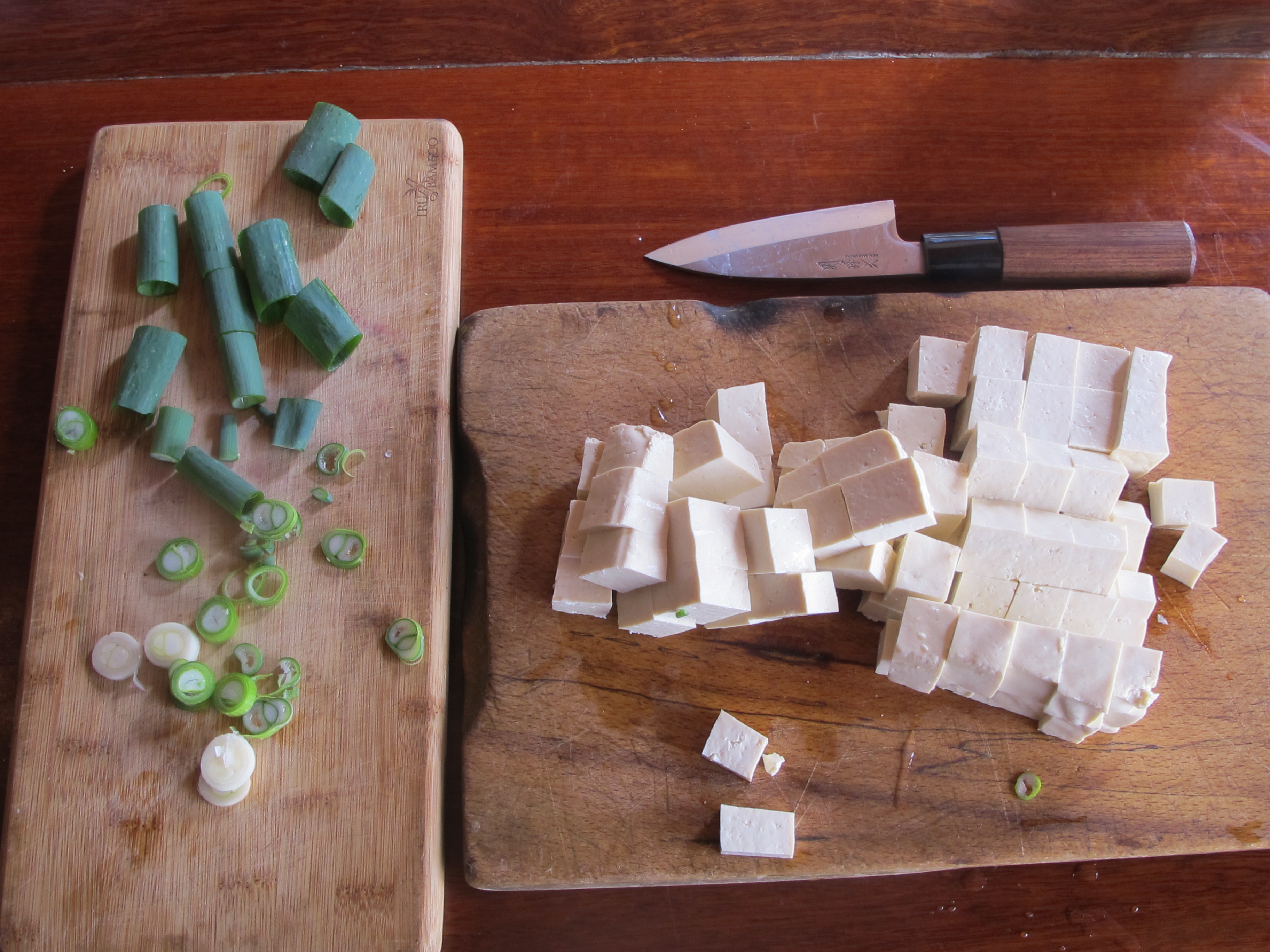
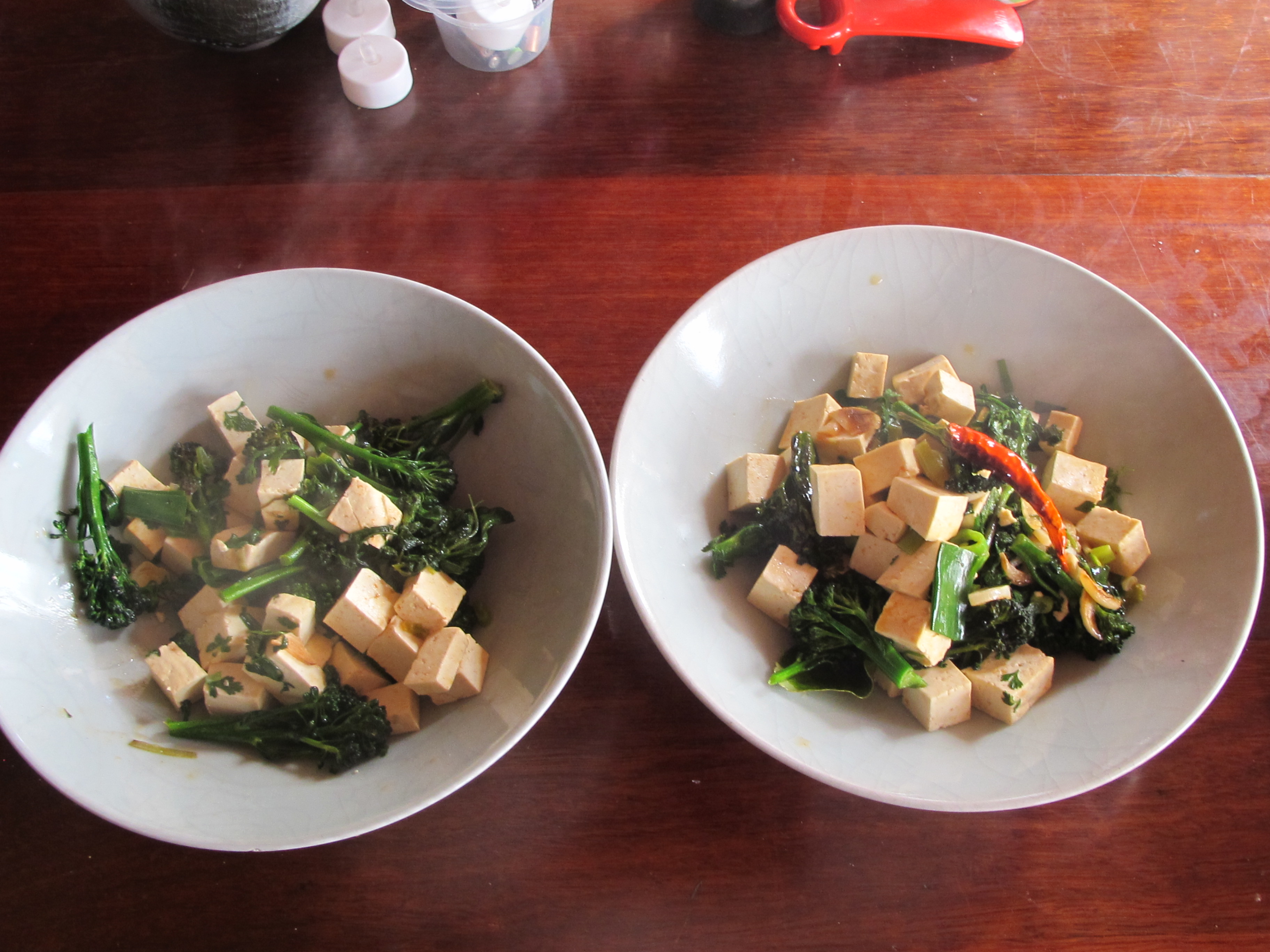
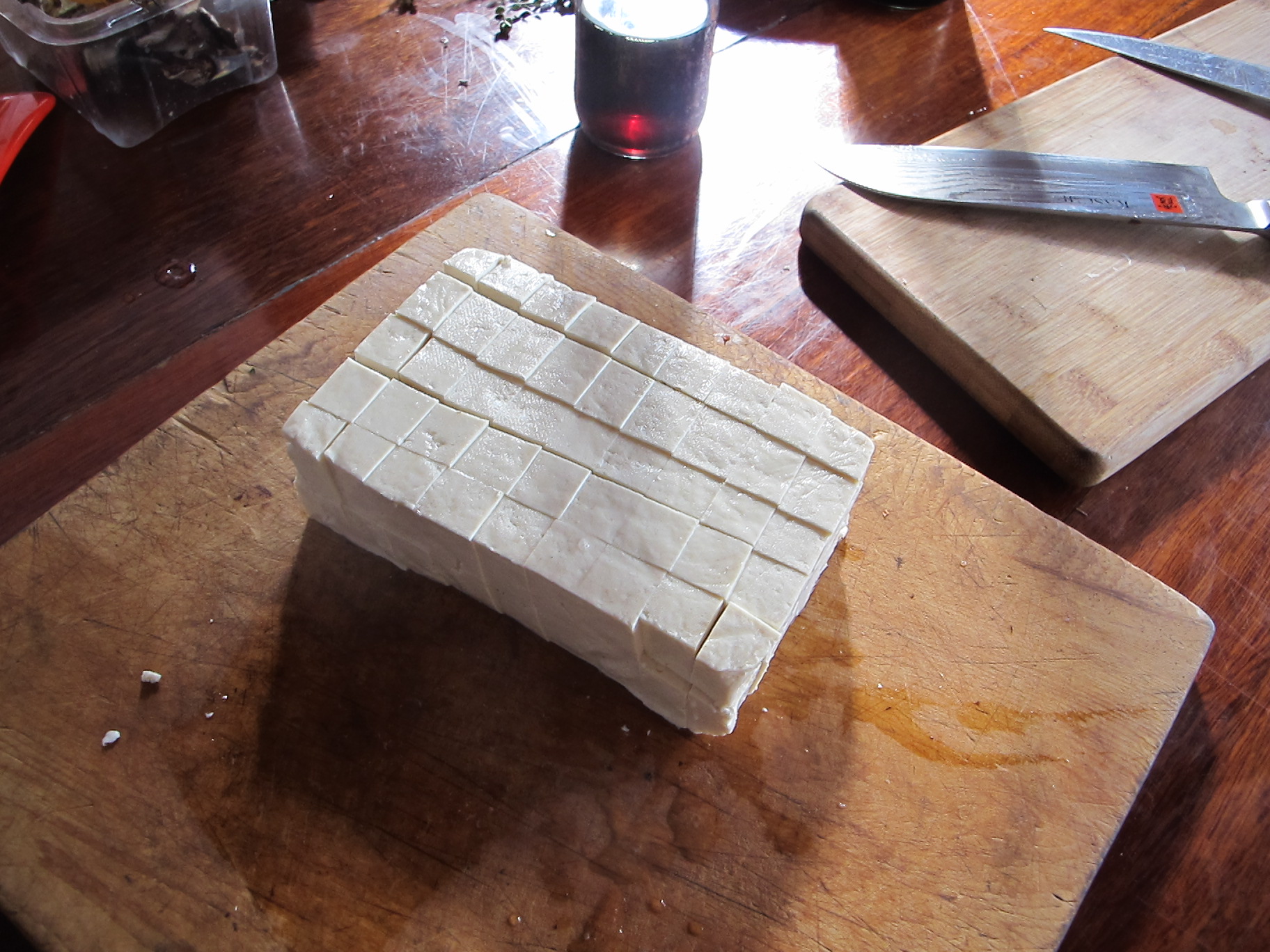
I cook tofu in sesame oil for lunch with garden vegetables, broccolini and coriander. A little bit of fish sauce makes it sing.

IMG_4671IMG_4672

IMG_4673IMG_4675

Day 3 of our fire sees very little left of the pile. Just one big block that started off as a 1.8 x 1.8 metre stump, weighing several tonnes, is now mostly gone. We have to drag in other pieces of wood to keep it alight. It’s a chance to clean up the back block and the little lane that wanders through the centre of our land. This pretty little wandering bushy lane was once the main east west road through the village. It was never legally gazetted, but just used by the locals as the shortest route between A and B. There were 3 attempt to make an access path through to the east ridge and 2 of them went through our place. They were both abandoned because the land there is so low-lying and boggy in wet weather. Parts of the lane were paved with stones to try to overcome this, but never satisfactorily. Eventually a legally gazetted road was built in the right place, but it meant a lot of very expensive earthworks.
IMG_4702IMG_4706
Our small lane is almost completely over grown now. We’ve seen to that by blocking it off at both ends to stop weekend 4 wheel drivers winching their way through our land without asking on long weekends. It’s a very pretty place to go now, and as it isn’t used anymore, except by us to get to the back of our land to collect firewood, it has soon become over-grown. I decide to take the tractor down there, mow it and clean out all the dead wood, and while I’m at it, I cut up a few dead trees that have fallen down along the track and up on the dam bank of the ‘Max Lake’ out biggest dam, The one that we had built in order to collect and store water for irrigating our vineyard.

Janine has a stroke of genius in getting onto the hot smoldering coals and hot ashes to poke at the fire and shift logs with her rake without melting her shoes. She places thick sheets of stringybark bark down on the ashes first then steps onto them to do the work. She then retrieves them before they burst into flames. I have ruined one pair of old boots by working in the hot ashes and melting the soles.
IMG_4698IMG_4699

IMG_4701

As it’s Friday and the end of the week, we celebrate by not eating any mushrooms. We have lightly fried tofu again with more garden greens.

IMG_4707IMG_4708

IMG_4711IMG_4716

So that’s what ‘s been happening this week with the hot-footed, self-reliant Guy and Girl Fawkes, who are lighting the blue touch-paper and standing back to wait and see what happens.

With fond regards from his Naked Flame and her Rake

Old Slag and a Tosser

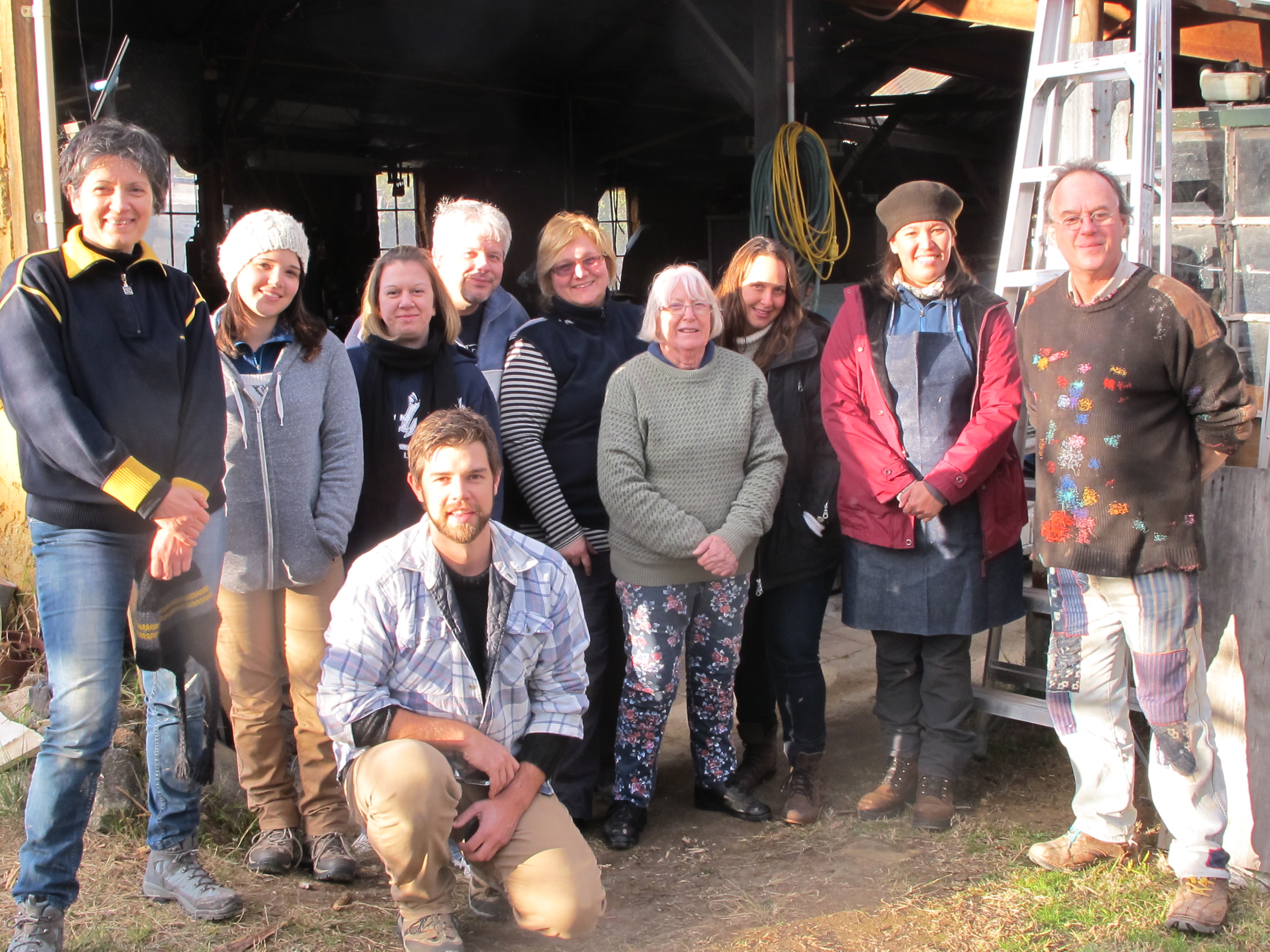
We have another weekend wood firing workshop. Another amazing group of wonderful people. Everyone so engaged and enthusiastic. I have to cut split and stack more wood. Prepare the kiln and its furniture, kiln shelves and props. Check out all the fittings and structural elements to make sure that it all goes smoothly. The fire box lid lining is on its last legs, but will last a few more firings. It takes a few hits from our enthusiastic new stokers, with well-meaning, but miss-placed logs at high temperature.

IMG_4594

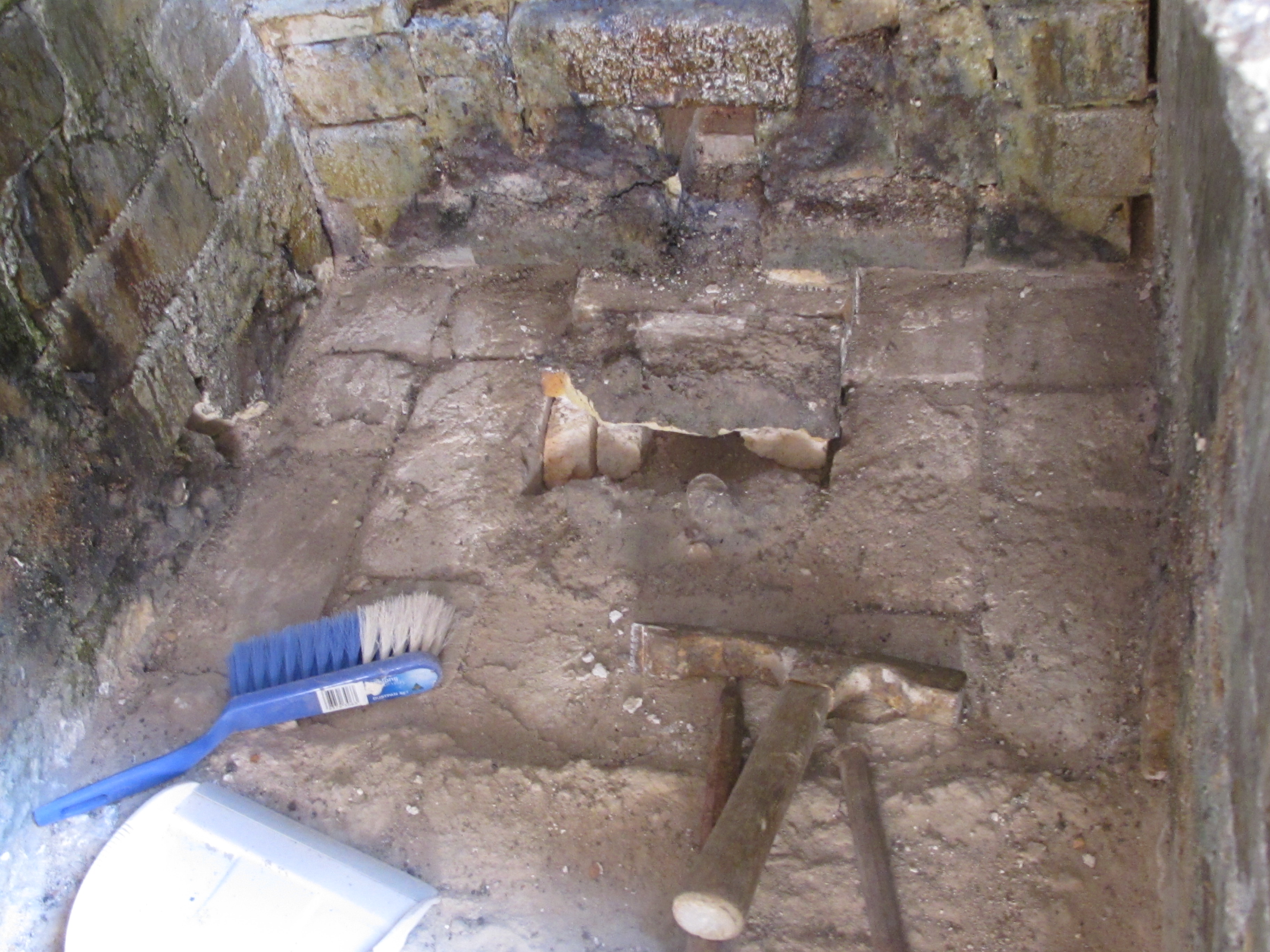
Before we can fire the kiln again, There is maintenance to do. I have to get inside the fire box of the kiln to chip out the molten ash glaze slag from the last firing. This has to be done after every firing. The ash from the firing collects in the base of the firebox and accumulates to the point that it melts into a molten slag at the high temperatures at the end of the firing. It forms flows of liquid natural ash glaze that pool into the floor bricks. This is the same natural ash glaze that decorates our pots during the wood firing and gives them their distinctive wood-fired look.

There is alway some minor repair work required after each firing . Sweeping out the dusty ash and charcoal, chipping out the slag that threatens to block off the air holes. This is normal maintenance. However, when I get inside the firebox this time I see that the last firing had such fluid ash glaze formed at the end of the firing that it has run and pooled into the very important mouse hole in the base of the ash pit. This hole is most important to keep the ember level under control during the firing. It has to work properly, otherwise I can’t control the fire as easily and everything could go pear-shaped.

On close inspection I find that the ash glaze slag has completely filled the air hole and sealed it off completely. To avoid this occurrence, I place a special little kiln shelf ‘lid’ over the hole to deflect most of the ash to the periphery of the hole and this usually works. But the combination of wood that I have used this last time has created a very fluid slag and every thing had disappeared into a grey/brown puddle of lava. I can’t even see the ‘lid’ or the hole beneath it. I work on the principal that I know that it is under there. I have to climb into the firebox base armed with a 2 kg hammer and cold chisel, a crow bar and a skutch hammer. I have protective goggles over my glasses and a dust mask as I set to work in this cramped space, hammering and chiselling as best I can without being fully able to swing the hammer properly. I bash, chip hammer and prize my way through the glassy, lava-like slag. It is brittle and smashes into jagged, conchoidal, shattered spalls. Bits fly everywhere. It’s in my hair and all through my clothes. I have to be careful not to cut my fingers trolling through the pieces, tossing them back into a bucket in the kiln chamber. I finish by sweeping up the small fragments and dust. It’s a crap job, stuffed into this small space with all the dust and sharp edges, but it has to be done and no-one else, including the kiln fairy, is likely to volunteer. I keep putting it off, hoping that the kiln fairy will do it, but no such luck there. It’s all part of being self-reliant. I often put it off till the last minute, because I just don’t enjoy it, other times I get stuck into it first thing. It all depends on my energy levels and state of mind. There is no avoiding it. It just has to be done.

IMG_4590

IMG_4591

Although it doesn’t look it, it’s actually all cleaned out and ready for more work.

I’m lucky and very grateful that this is the worst job that I have to put up with. It’s certainly the least glamorous job in the pottery. It’s all very well, sitting in the sun being creative and making lovely things that are visually engaging and wonderfully tactile. Unpacking the kiln is like Xmas, but no-one daydreams of all the hard graft that goes into ‘creativity’. Don’t give up your day job!

We have a -2 oC frost overnight, during the firing. It keeps us sitting up close to the kiln during the midnight to dawn shift. Our European friends will call us pathetic wimps. That isn’t cold! Minus 40 is cold. I know that, but we are in Australia, the land of heat and sunshine, draughts and heat waves and not used to the severe European cold. Minus 2, certainly felt cold enough to me. If it got colder than this on a regular basis, I’d build a different shed. One that had walls!

A quick walk around the garden reveals that the last 2 rows of very late potatoes in the garden have now had it. The frosts are coming regularly now. Not severe, but light and regular. I think that this must put an end to these spuds, but they still have a few green leaves. I don’t need the space just now, so will leave them to their own devices, till spring. I can’t see anything coming of them. However the single red Flanders Poppies growing among them seem to love it.

IMG_4620IMG_4656

IMG_4643IMG_4603

IMG_4604

IMG_4619

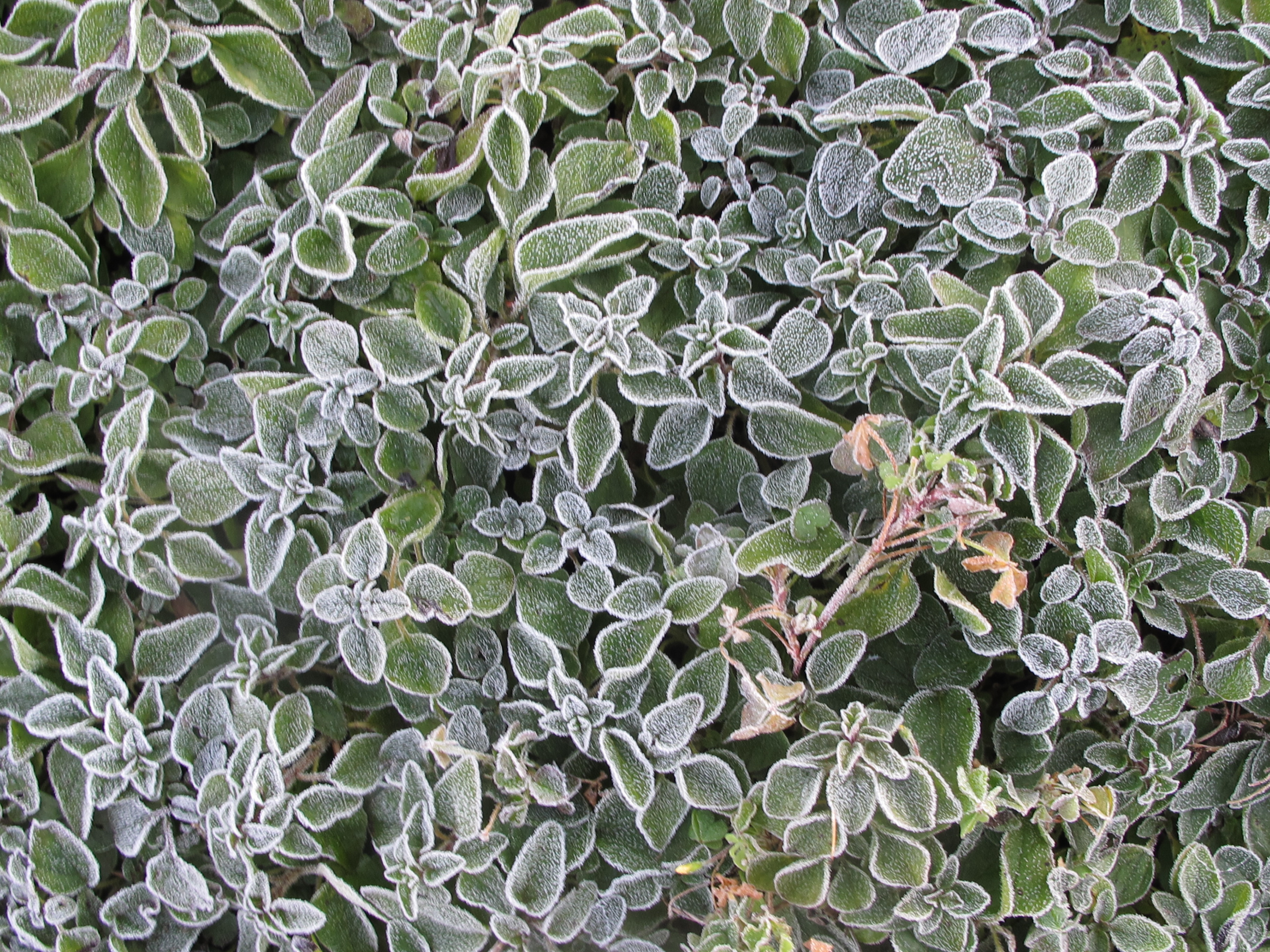
There are lots of pretty images in the garden of leaves tinged with white frost and ice crystals. The ground crunches under foot as I walk about. There have been several frosts like this one now. It’s good. It will finish off a lot of bugs like the fruit fly, that can over winter in milder climates. This ‘chill’ will help all the old varieties of fruit that need their winter chill to become fertile in the spring.

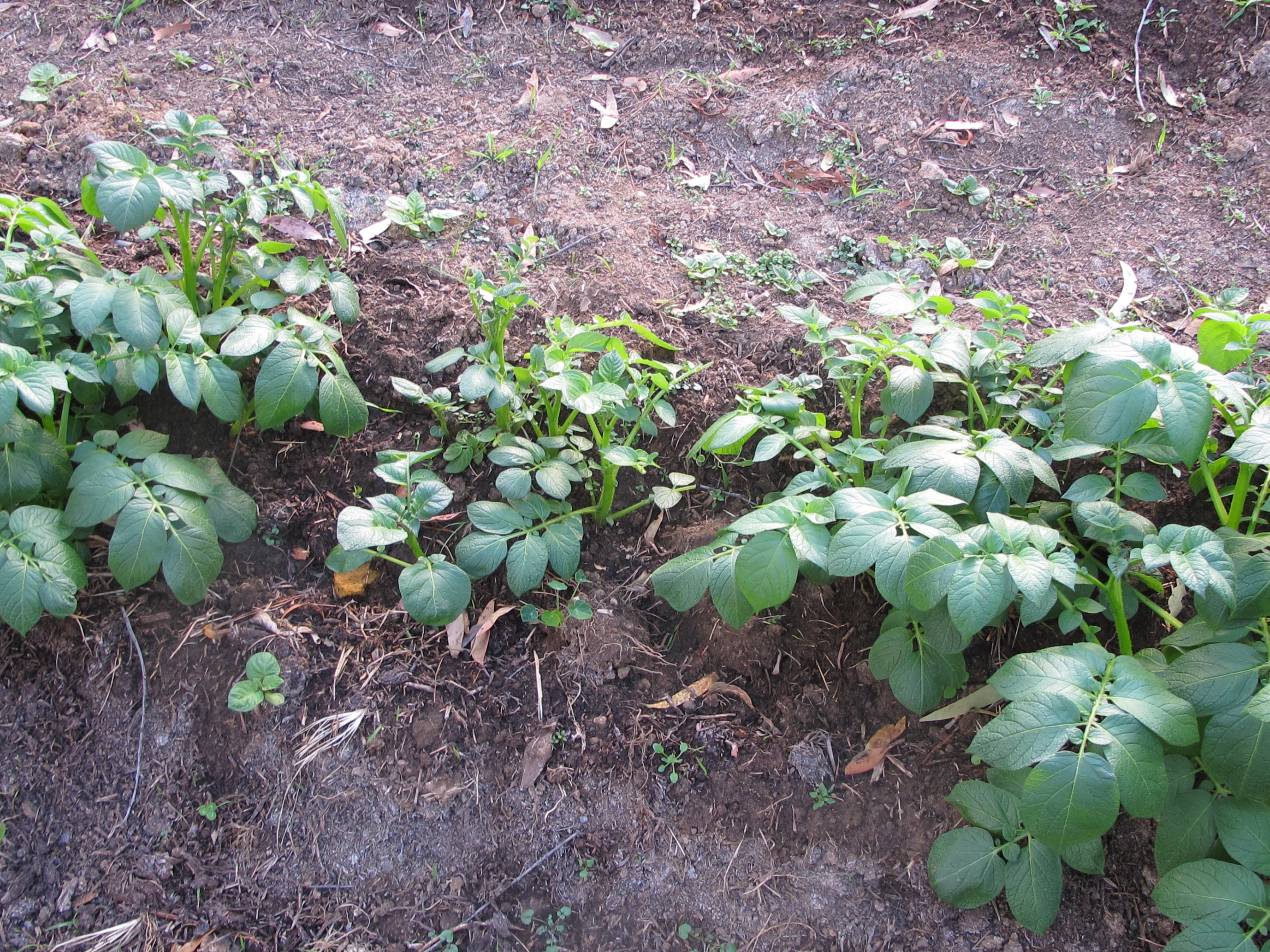
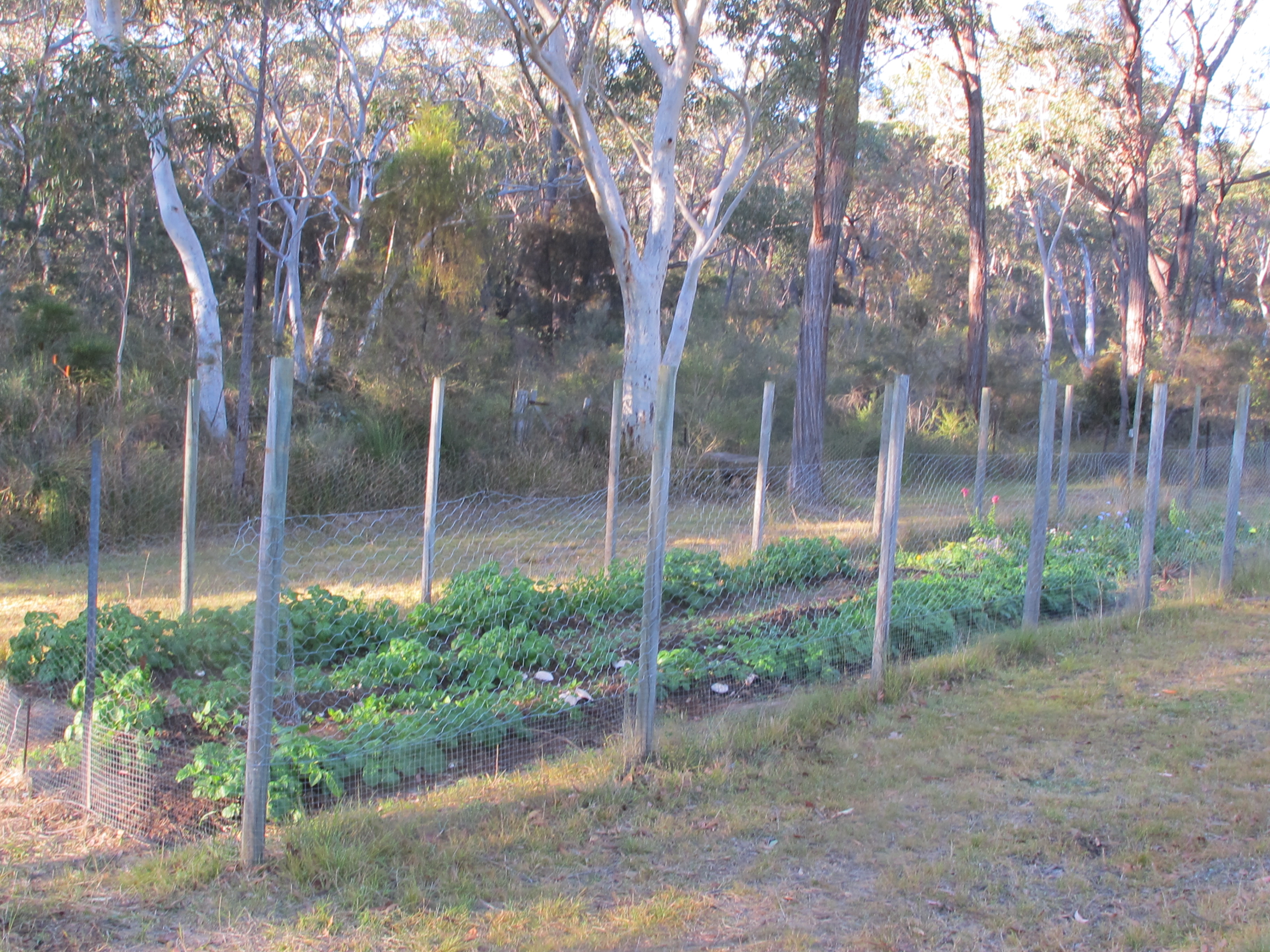
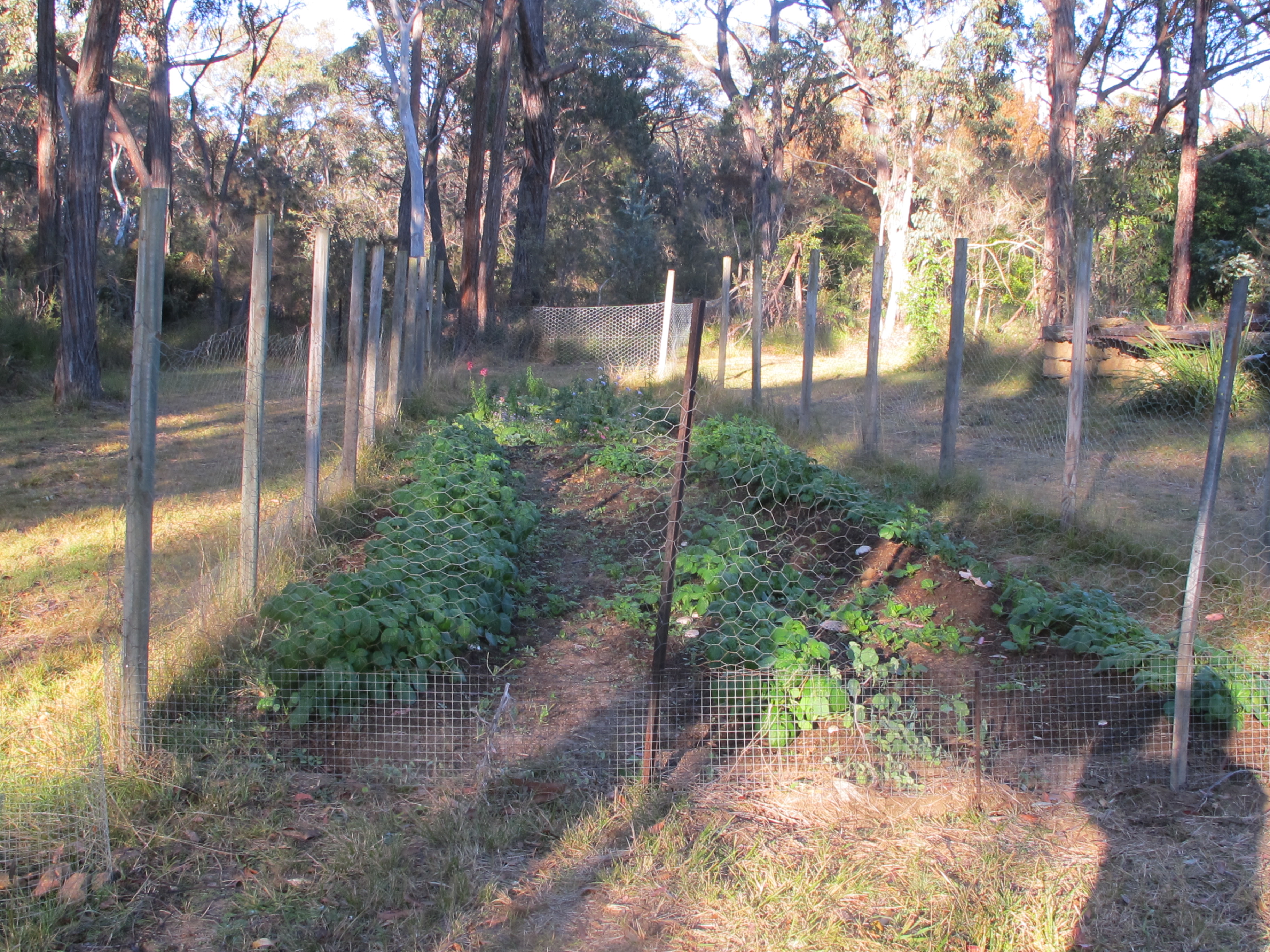
I walk down to the Pantry Field garden. It’s situated down at the bottom of our land, in a clearing in among the tall eucalypts. the tree cover of the tall crowns gives a modicum of protection. I have a quick look around and see that the frost hasn’t penetrated here as yet. The big potato crop is still doing just fine, no frost damage. But on closer inspection I see that a lot of the tender tops of the plants aren’t burn’t off, but completely missing. Nibbled off by our resident Eastern grey kangaroos that wander through here attracted by the grass, tree cover, undergrowth protection and the availability of 4 dams to choose from for water. No wonder that they hang around. They treat the place like they own it, and they do! They were here first. We haven’t fenced our land at the boundaries at all. It is all open for them to pass through and enjoy. What we have decided to do is to fence off the various islands of garden and orchard, to keep some possibility of getting a crop to ripen. These plants haven’t been attacked till now, so now is the time to do something about it, If I don’t, they all be gone in a week or so.

IMG_4612IMG_4611

IMG_4628IMG_4629

IMG_4630IMG_4639

I make it a priority to extend the fencing wire up to 1.5 metres. Up until now we had got by with only rabbit proofing fencing. Wire mesh that we could step over. Now I need to make a taller fence with a walk in gate, plus an openable end to allow the tractor to be able to get in and out for tilling once a year. While thinking all this through I see that there are another crop of mushrooms coming along. I can count about twenty or more. We’ll be changing our diet slightly now and for the next few weeks to include Mushroom soup, mushroom sauces, mushroom risotto, mushroom in white sauce and eggs and bacon for that leisurely late brunch. If we can find a day that we can declare to be leisurely?

Fond regards from the old fun-gi