Two Wood Firings in One Week

Two Wood Kiln Firings in One Week

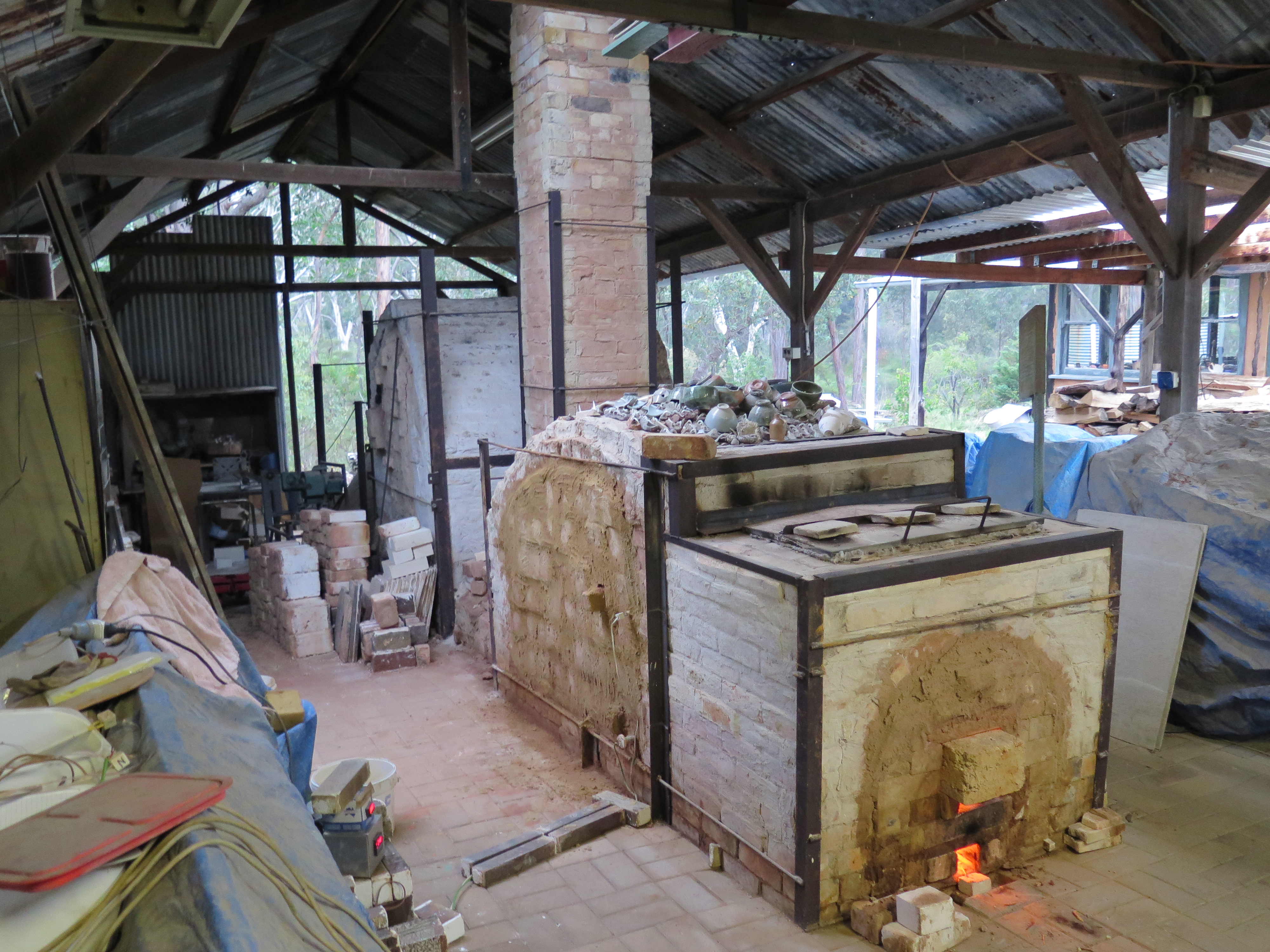
I have decided that I can fit in one extra firing before the Southern Highlands Arts Festival – Arts Trail, Open Studios weekends on the 7th & 8th of November, then again on the 14th & 15th.

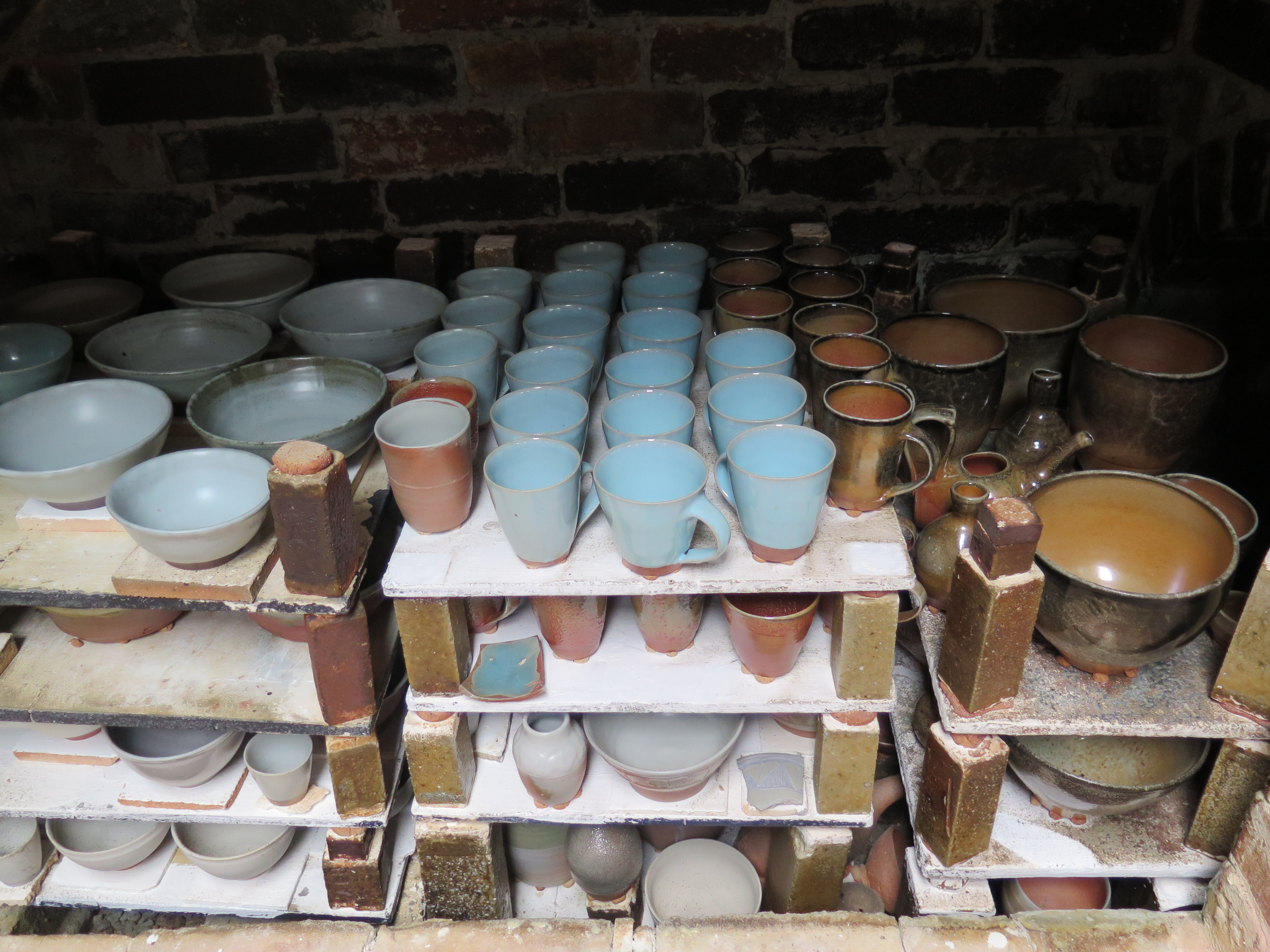
The kiln is unpacked and repacked while it is still warm.
IMG_1016IMG_1034

IMG_1037IMG_1040

IMG_1045

For some unexplainable reason, I wake up just after 3 am in the morning. Or is it still very late at night? I’m not too sure, but I’m wide awake, so I get up and walk down to the pottery workshop in the dark. It is quite overcast tonight/this morning, as there are no stars to be seen up in the blackness where the sky ought to be.

IMG_1215

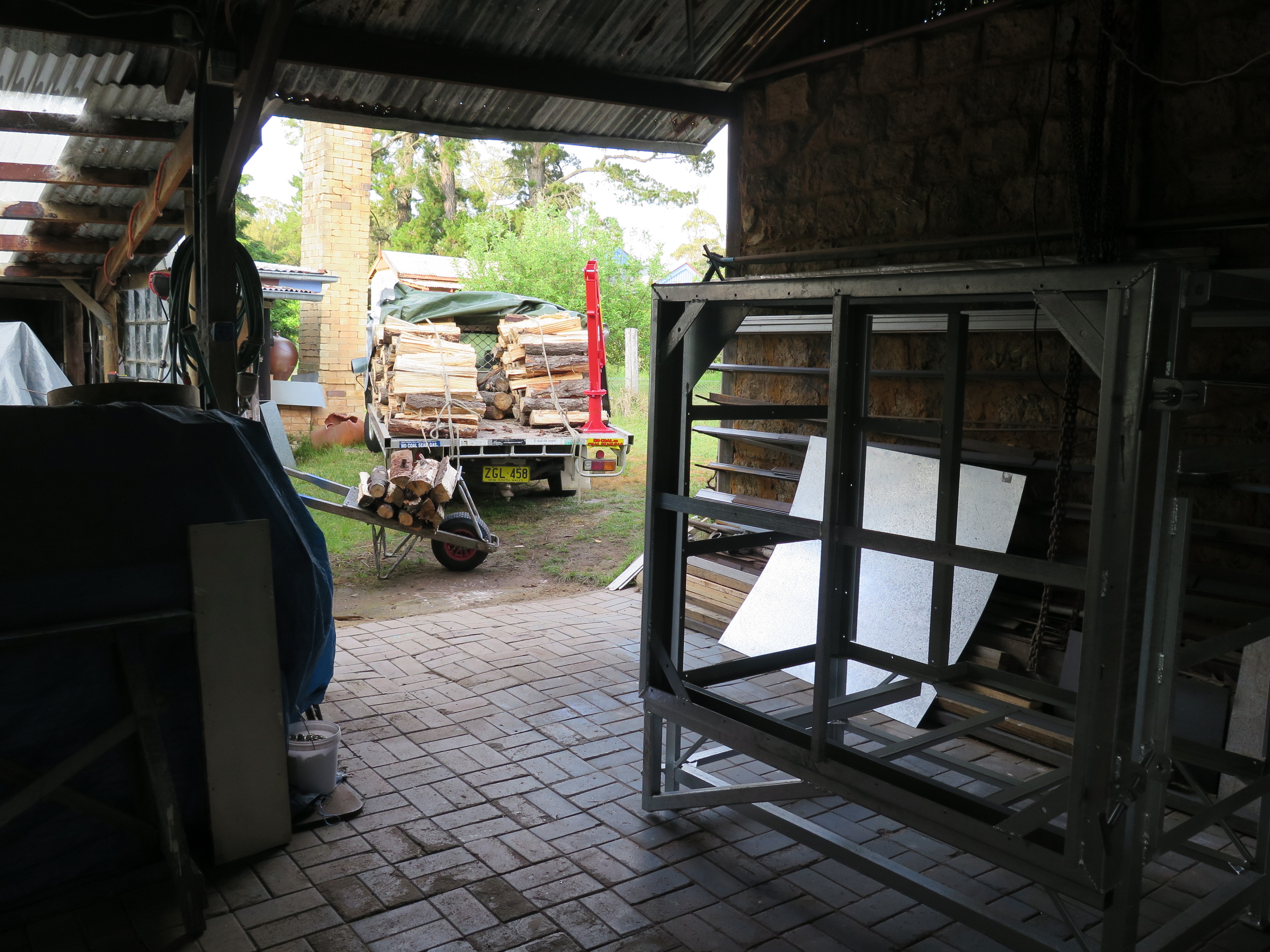
It’s so pitch black and very quiet, it seems a shame to make any noise at all. I decide to only put one light on and work in the soft ambiance and stillness. I make the kindling fire from the scraps of wood that fractured off from the bigger logs as I was splitting them yesterday. I spent most of the day yesterday in cutting, splitting and then, with Janine’s help, stacking it. We stacked half of it onto the truck. A very full load without sides on the tray. I drove it down to the kiln shed, covered it with a tarp against the possibility of rain overnight.

IMG_1208IMG_1211

IMG_1223

I cut all the straight log wood into hob lengths, avoiding the branched bits. These, I cut around and leave aside for splitting into small short pieces for use at the beginning of the firing, when I start the fire on-the-floor of the firebox. This first stage of the firing gently heats the pots up from cold, but also serves to build up a pile of embers in the base of the firebox which is necessary to ignite the big logs later on in the firing process.

Every part of the tree is used. I don’t like to use branched bits for the longer hob wood, as it doesn’t split easily or well, often coming apart into horrid, sprawling, jagged pieces that are difficult shapes to stack and stoke, so I have developed a technique of spacing my chain saw cuts to get the maximum number of full length ‘hob’ wood pieces from the straight grained sections of the log and a smaller number of knotty, branched bits left in-between for use as floor wood lumps. I usually walk along the log with my metal measuring stick and mark off all the cuts with a red wax crayon. This takes a little time, but makes the cutting and sizing much faster and more accurate overall.

IMG_1214IMG_1225IMG_1232

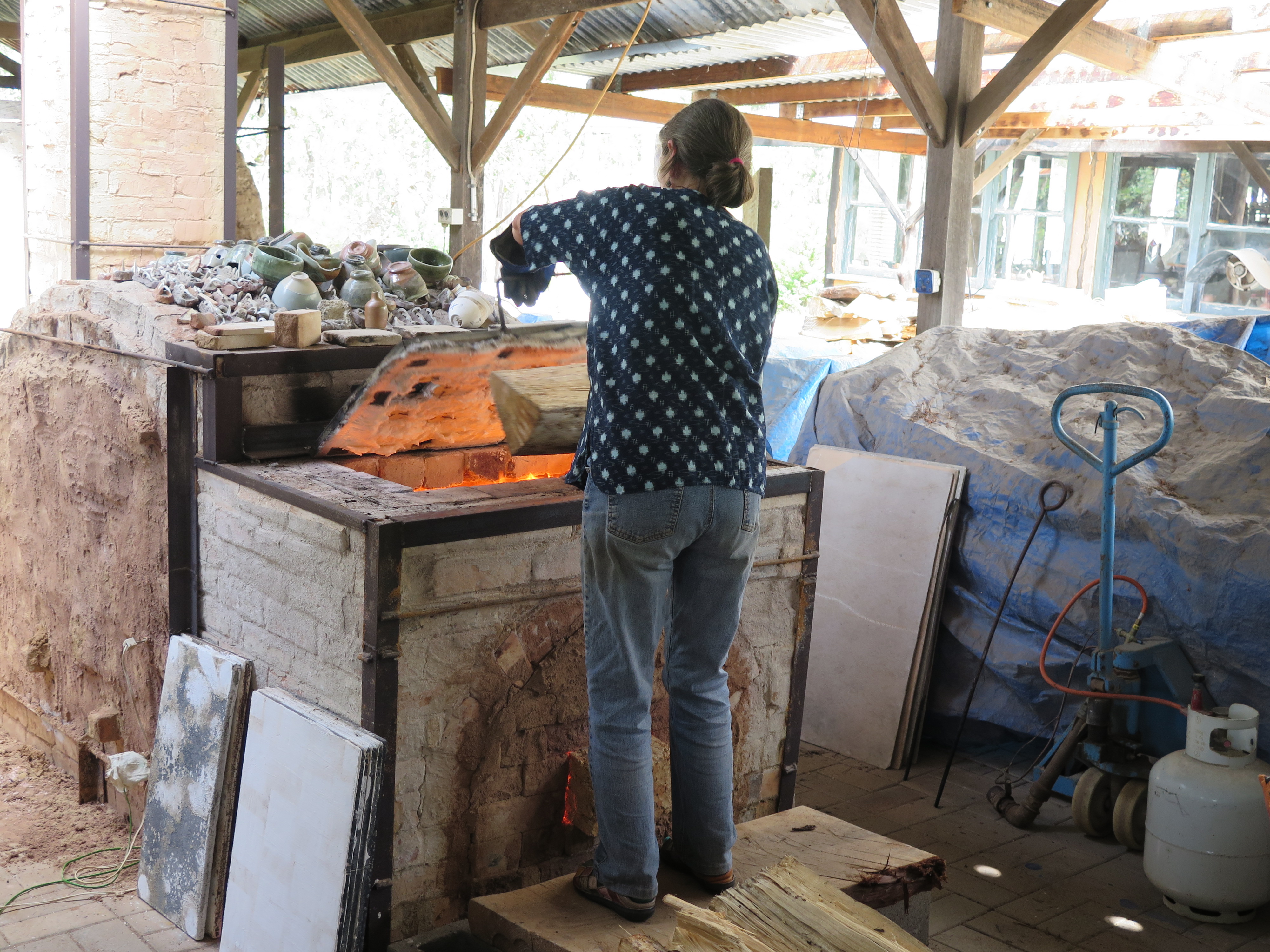
The kindling fire starts well and develops slowly into a full firebox of burning chunks, after 3 hours, there is enough ember built up in the lower part of the fire box, (‘the ash-pit’) on the floor, to support the fire starting off on the hobs, in the upper part of the firebox (‘on the hobs’). The long, thick pieces of wood introduced onto the ‘hobs’ from the top of the firebox, are held suspended by the brick ‘hobs’ just above the burning embers in the ash pit, placed here, they soon catch alight and start to burn fiercely. This takes the firing to another level, where the wood burns cleanly and thoroughly, allowing the temperature to rise evenly and steadily, up until it is time to begin reduction at about 1000oC.

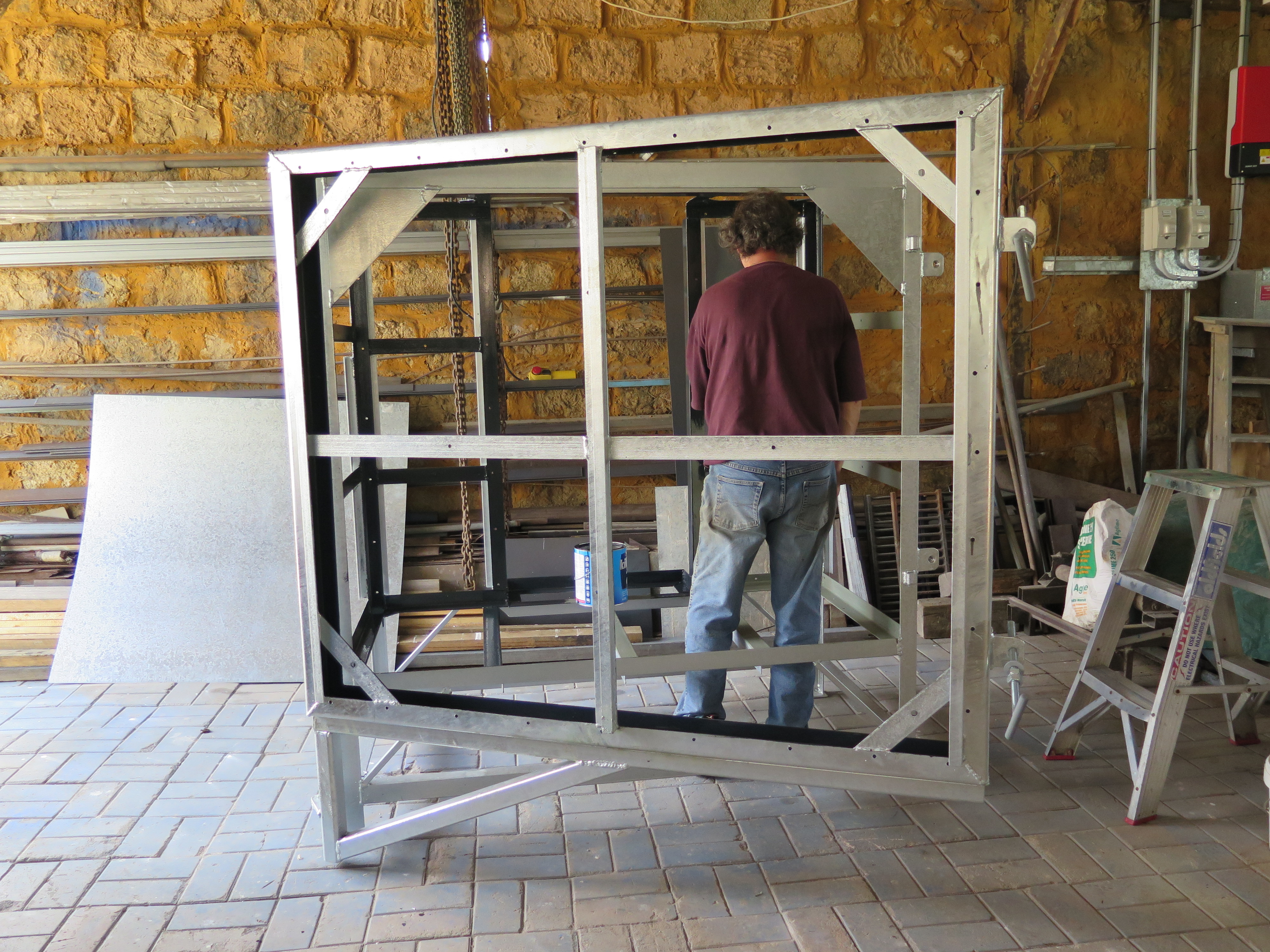
After cutting and stacking the kiln wood yesterday, I spent the rest of the afternoon in grinding, fettling, filing, acid-etching, washing and baking the newly galvanised kiln frame for Sturt Workshops prior to etch-priming. This is all mindless dull work that I have done a hundred times before, if not more and a good time to allow my mind to settle and watch itself wander, constantly returning to the hand/arm action of simple brushing. Paint on, Paint off. I don’t need to be in a buddhist temple in Kyoto to practice mindfulness. Any place will do, but it helps to be able to make the time for it and it alone.
IMG_1222IMG_1227

IMG_1228

Although it is very early in the morning, I’m keeping myself occupied in fiddling with the very small fire in the fire box. I need to watch it carefully, as at this stage it can easily go out if it is left for any

period of time unattended. As I sit and carefully place each new small piece of wood on the pyre, I suddenly realise that it is starting to rain. No wonder that there were no stars in the sky. This is no problem for me, as I took the precaution to cover the wood outside on the truck last night. I’m using freshly split pine, which although being felled two years ago, is still damp inside when split from the log. I don’t want it to get any wetter until the firing is up to 1000oc. or more, then it won’t matter if   the wood is wet and may even be of some use in creating the ‘reduction’ atmosphere in the kiln, which changes the colour of the clay bodies and glazes. Such is the odd nature of burning wood in a potter’s kiln. Pottery may seem superficially to be a simple craft activity, but there is a whole world of science, chemistry and associated technologies that need to be learnt, assimilated and internalised, so that you can then work intuitively and creatively in the medium.

In this firing I have 3 large jars and then a lot of bottles, with a few shelves of smaller domestic pots underneath. This firing isn’t very efficiently packed, but there is no easy way to get these big round jars into a more-or-less square box of a kiln chamber. That is just the way it is, so I do the best that I can with what I have to work with.
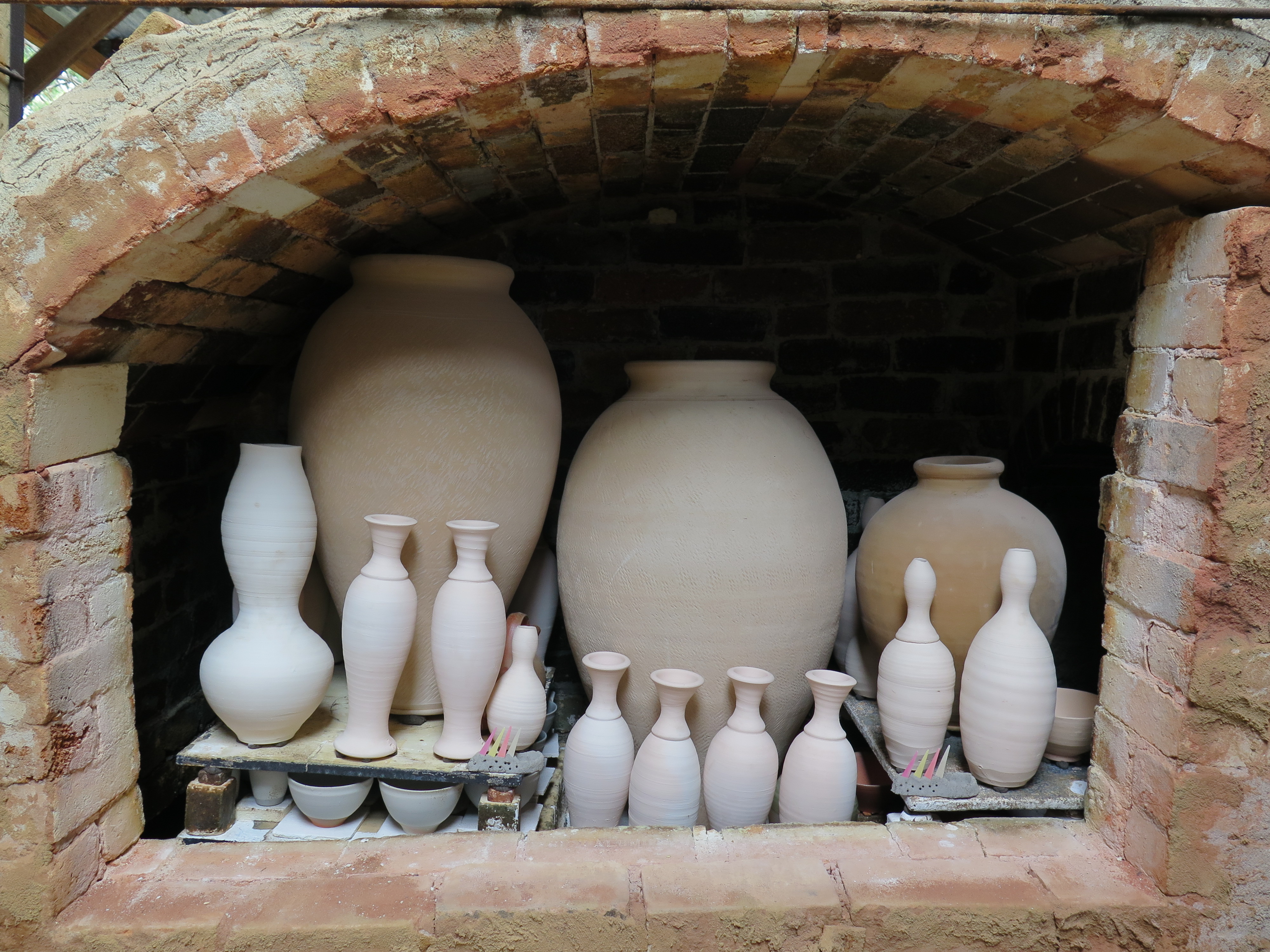
IMG_1049_1

I have done this so many times, that I have judged the amount of wood needed, down to the the last half wheel barrow load. The firing proceeds smoothly and evenly right up to top temperature of 1300oC or cone 10 flat, in 16 hours. Because I started so early this morning, there is time for a hot shower and a relaxed dinner back up in the house, even a bottle of wine to celebrate. This is civilised kiln firing. Perhaps even Laid back ?

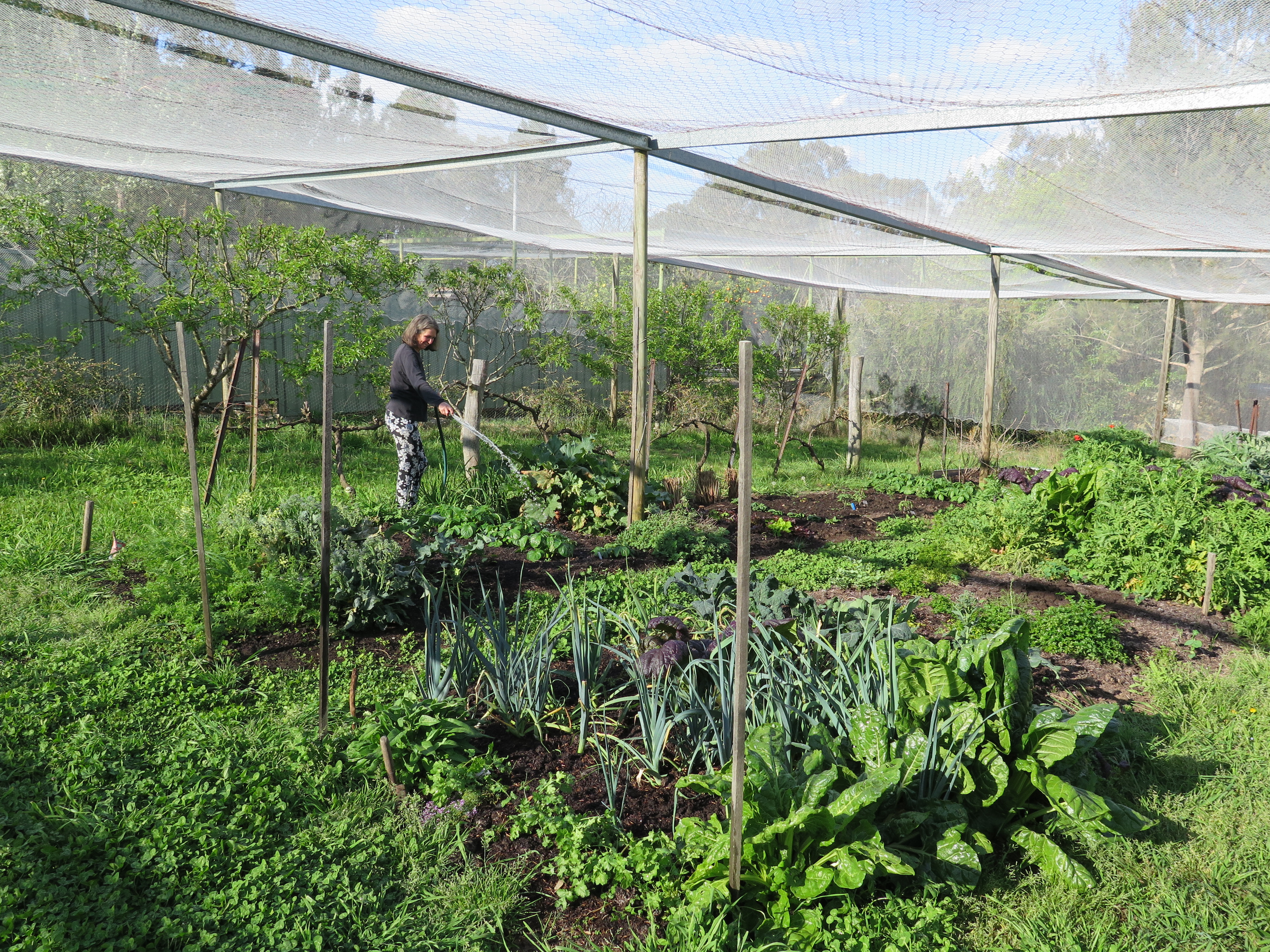
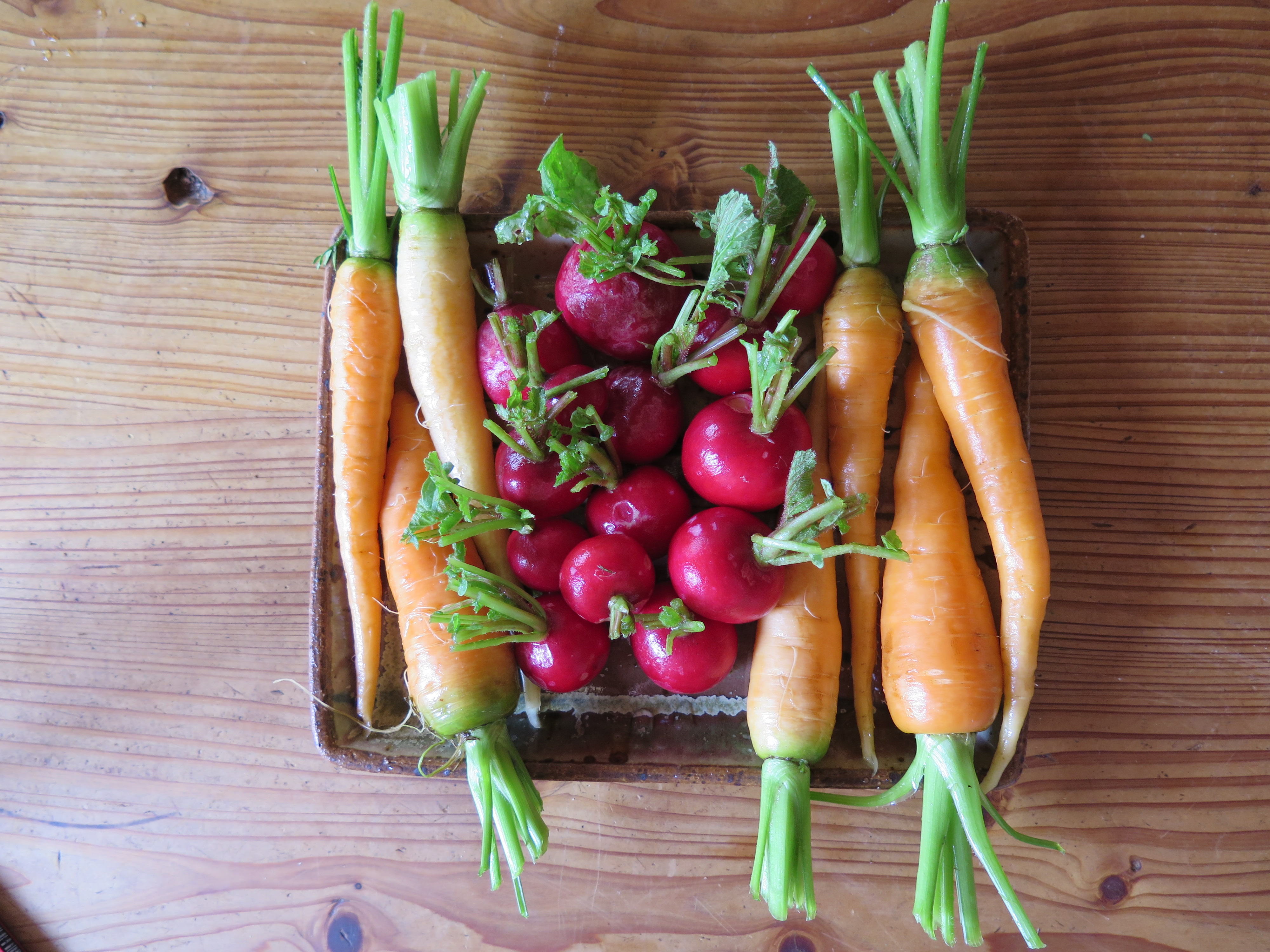
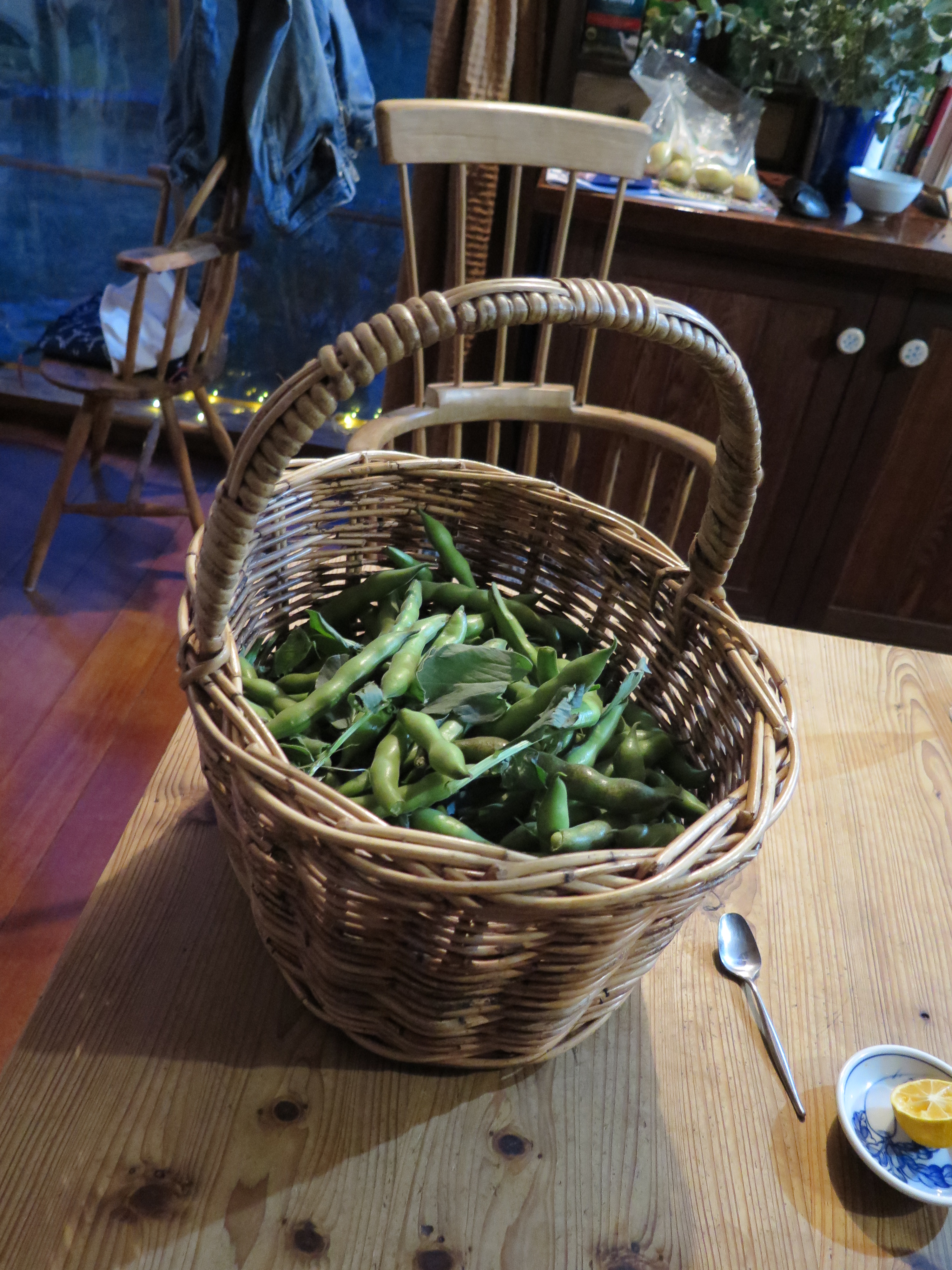
We bake a whole snapper for dinner with some freshly picked broad beans from the garden. The are perfect just now. Sweet and juicy without any starchiness at all, just the way that I love them. This is the 2nd pick and there will probably another couple before they get too big. The first few beans are eaten raw as an entre, perfect with a glass of chilled white wine. We bake a few potatoes, sweet potato, red onions and some pumpkin. Our garden feeds us very well!
IMG_1237IMG_1239

IMG_1240IMG_1241

I bake the fish with some mushrooms and slices of lemon and serve it dressed with a sauce of melted butter with finely chopped anchovies, capers and green olives.

It’s a tough life, but some one has to have a go at it.

Tomorrow I will start to grind, sort and clean all the pots from the last firing, spend a bit more time in the garden and add another coat of paint to the kiln frame waiting in the factory.

Never a dull moment!

fond regards from the multi-tasking Steve and Janine

Hitting the Ground Running

I’m just back from Japan, It’s been a great trip. I’ve been away since late August. I’m back just in time to discover that my friend and mentor, Allan Parkes has just died. Such an interesting and creative person.

For the first time, I decided to rent some studio space in Japan and make some work there. It was very good. I hope that I’ve learned something while I’ve been away, but one never knows. Only time will tell. I tend to take things in and let them blend and simmer for a while, then hope that something will percolate back out again in some dilute form that will enhance and extend what I already do with what I know. If nothing useful emerges, then there is nothing lost, as I really enjoyed my time there. As I alway do. I have a strong affinity for Japan, the people, the food, the creative endeavours of all those people that I have met and/or whose work I have seen in the Galleries.

IMG_1005IMG_1013IMG_1011

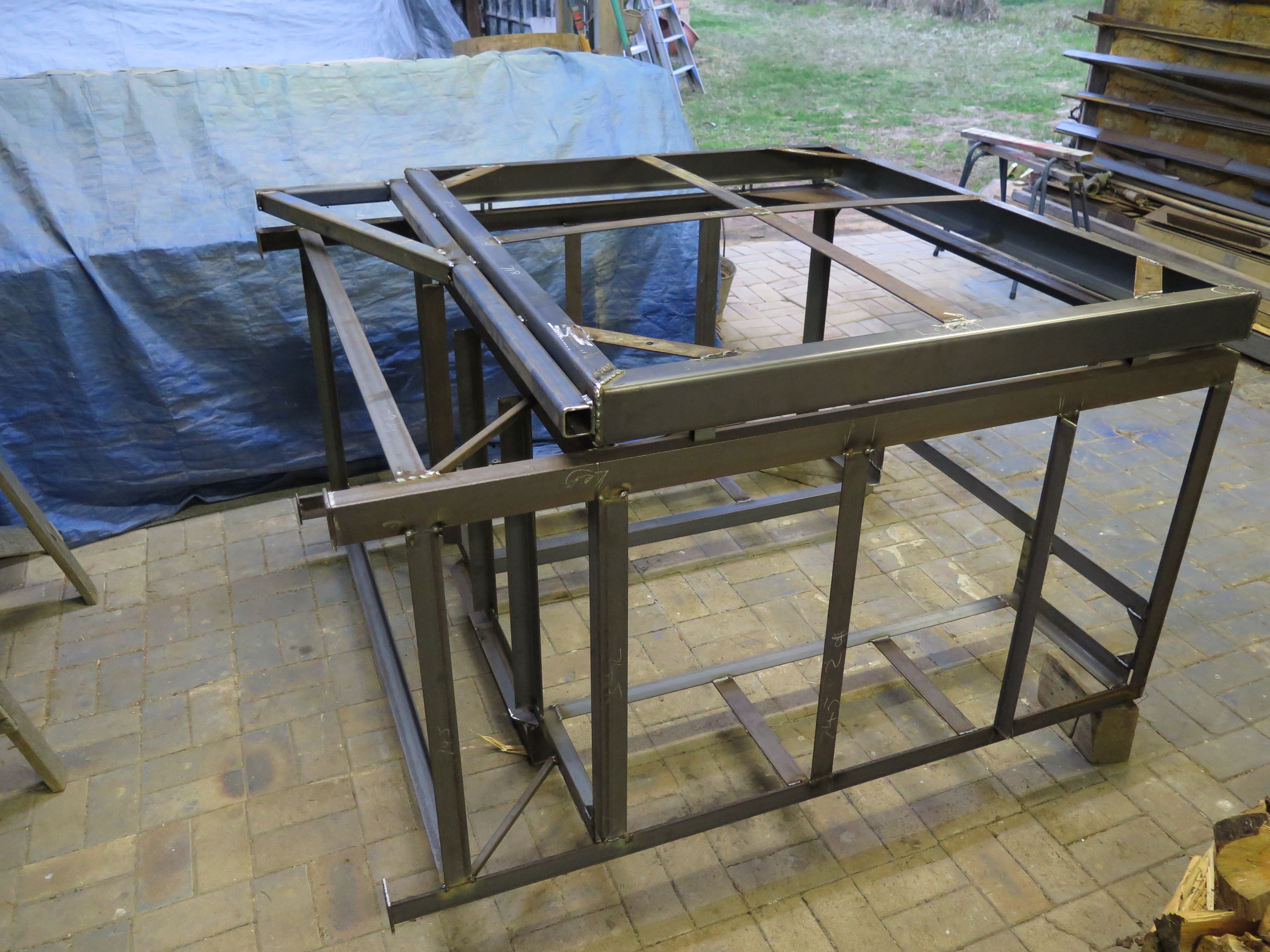
I had one day to unpack and do my washing, then straight in to the pottery and kiln factory. I have a large kiln ordered, so it’s straight into welding mode. I have to earn some money. I weld up the steel frame and get it off to the galvanisers in just 4 days. While the kiln is away. I get stuck into glazing all the bisque fired pots that I left here in the pottery, before I went to Japan. So it’s glazing, decorating and kiln packing. Then wood stacking, kiln shelf grinding, cleaning and washing. Finally the kiln is packed and ready to fire.

IMG_1187

It’s 5 o’clock in the morning and the early bird chorus is just starting. I’m down in the kiln shed firing the kiln, I like to get an early start for my firings. For some very intimate psychological/physiological reason that I don’t really understand, I seem to like to get an early start, when it’s dark and quiet and I have the whole world to myself. Well, almost. There is of course the odd rooster in the distance and the bird song. The birds seem to start calling to each other even before I’m aware that that there is any change in the light levels, but they are so much more sensitive to the natural world than I am. We have all learnt to live in an un-natural modified environment with electric lights, refrigeration, supermarkets, air con, and flat screens. I eschew most of this for the frugal comfort of home grown vegetables and a wood fire for warmth and cooking. Of course I do have electric lights and a fridge. I’m not a ludite, but I’m trying to keep my life as simple as I can, while still engaging with the modern world.

IMG_1190

Half an hour later, I can start to see a slight lightening of the sky and instead of it being jet black, it starts to have a very pale light grey to bluish tinge to it. I’m sure that if I had to live without any modern ‘conveniences’, that I’d soon adapt to my circumstances and start to see the dawns approach, just like the birds. But at this stage I’m happy in my hybrid world, sitting on the edge of my small hamlet, with access to everything that a modern first world economy has to offer only half an hour away and I’m also happy to live here quietly and ignore most of it.

Electricity is great. We make all of our own. In fact we make about 3 times more than we use, and sell the excess 2/3rds into the grid for money. Having fresh drinking water on tap is also a great thing. We catch all our own rain water from our roof and store it for later use. Hot water on tap has to be the greatest luxury ever invented. I consider it the basic standard of civilisation. If you have hot water, you probably have peace and stability. We make our own hot water from a combination of solar panels and a boiler fitted into the back of our wood fired kitchen stove. We also own a fridge, a small one, but we don’t own a freezer, even though we have a large kitchen garden and could find a use for one. We thought about it and decided against it, as it uses too much electricity. We always have something fresh to pick and eat from the garden. We eat what is in season in the garden, what we have over, we vacuum preserve it in ‘Vacola’ jars and store it away in the pantry.

IMG_1000IMG_1001IMG_1129IMG_1130IMG_1167
I’m perfectly aware that the way we live is both very hard work and a great luxury. We are in control of most aspects of our life and that is our greatest luxury. However, Just like everyone else living in a capitalist economy, we have to earn money to pay the bills that constantly accrue. Such things as Council rates, insurance, registration, taxes etc. There are lots of once-off bills that occur throughout the year, but add up to be our major expenses over-all. As we don’t have conventional jobs, cash flow can sometimes be a problem, but we manage by living quite frugally. Luckily, most of the things in life that we aspire to can’t be bought for cash, but are earned through hard graft and personal effort.

IMG_1194

This wood firing will be the last that we can fit in before the Southern Highlands Arts Festival Open Studio Weekends, that are slated for the first two weekends in November. It gives us a couple of weeks to unpack the kiln and then fettle and grind all the pots. With any luck, we should have just enough time to unpack the kiln,  then clean up the studio ready for the opening.

Best wishes from Steve who is glad to be back home again and hitting the ground running

A Day in Karatsu and the Old Ochawangama

I make the trip to Karatsu. It’s actually not that far from Arita, via Imari. The first time that I came here, Janine and I made the trip on the train. Two trains actually, changing lines and companies at Imari. I’ve written about Karatsu previously, so I don’t want to repeat my self here, so will just stick to new places and observations.

I want to re-visit the workshop and kiln of Nakazato Taroemon the 14th. But who’s counting? This family have been important potters in this town since 1516!  I wonder if the 14th generation Nakazato Taroemon has a first-born son? No pressure! Just wondering?

Interestingly, I’m told that Ri Sampei, came here to Karatsu first, before travelling on to Arita, where he discovered the now famous porcelain stone deposit at Izumiyama. Then again, I’ve also read that he didn’t really exist at all and is a convenient character to hang a whole lot of speculative psudo-history. Or, it may have been a whole raft of Korean potters who came and established the high fired pottery industry in this area in the late 1500’s?

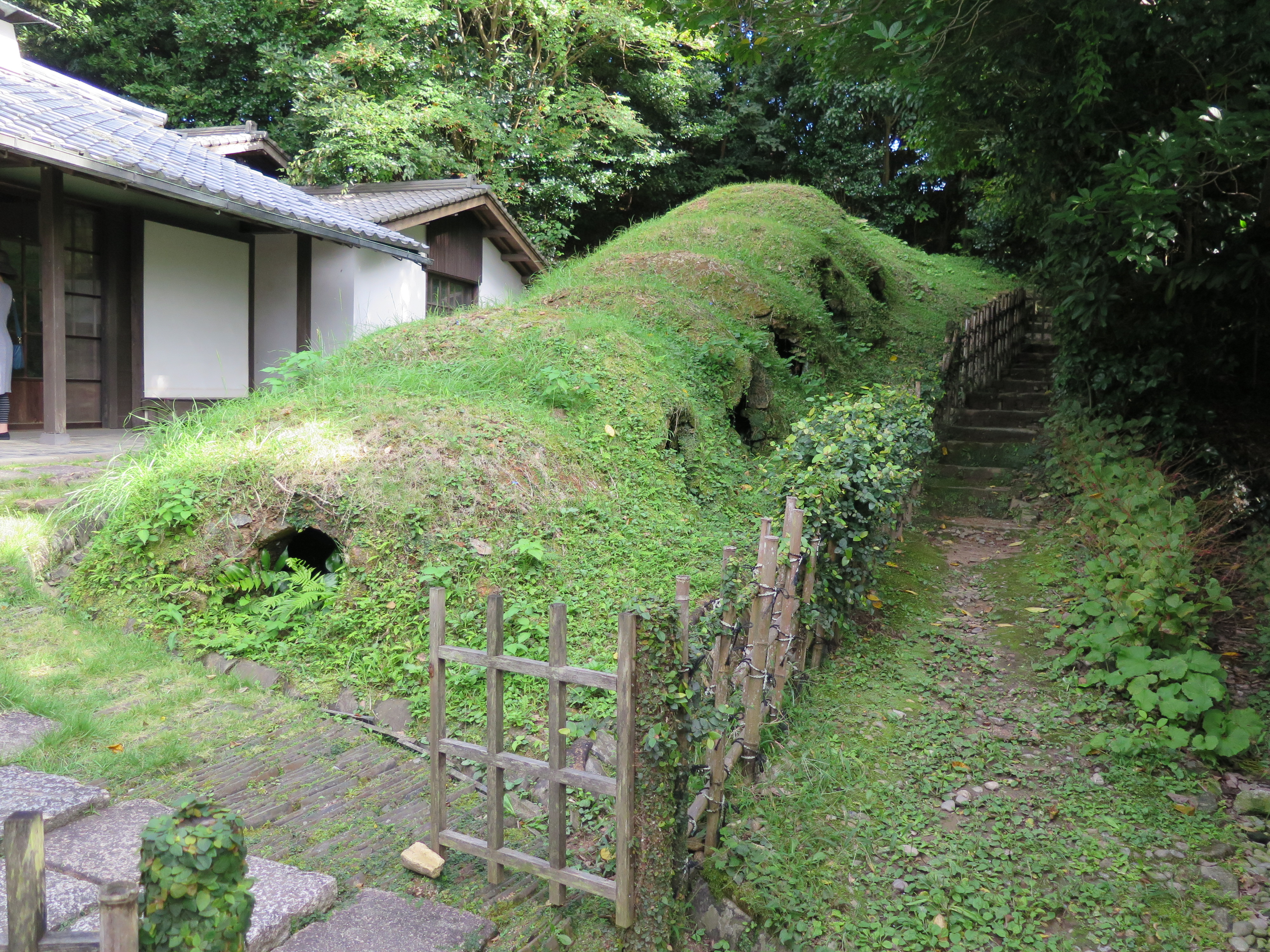
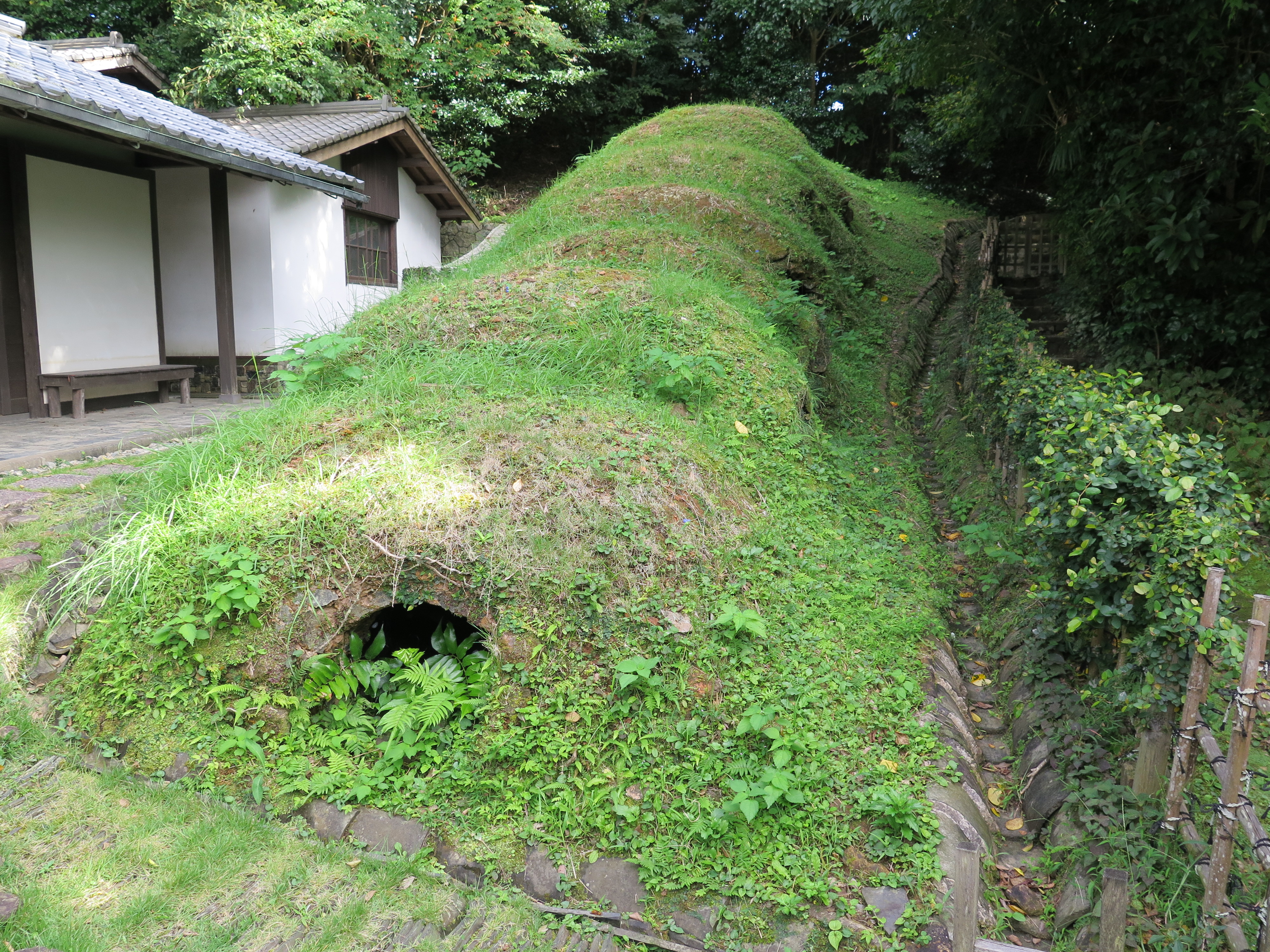
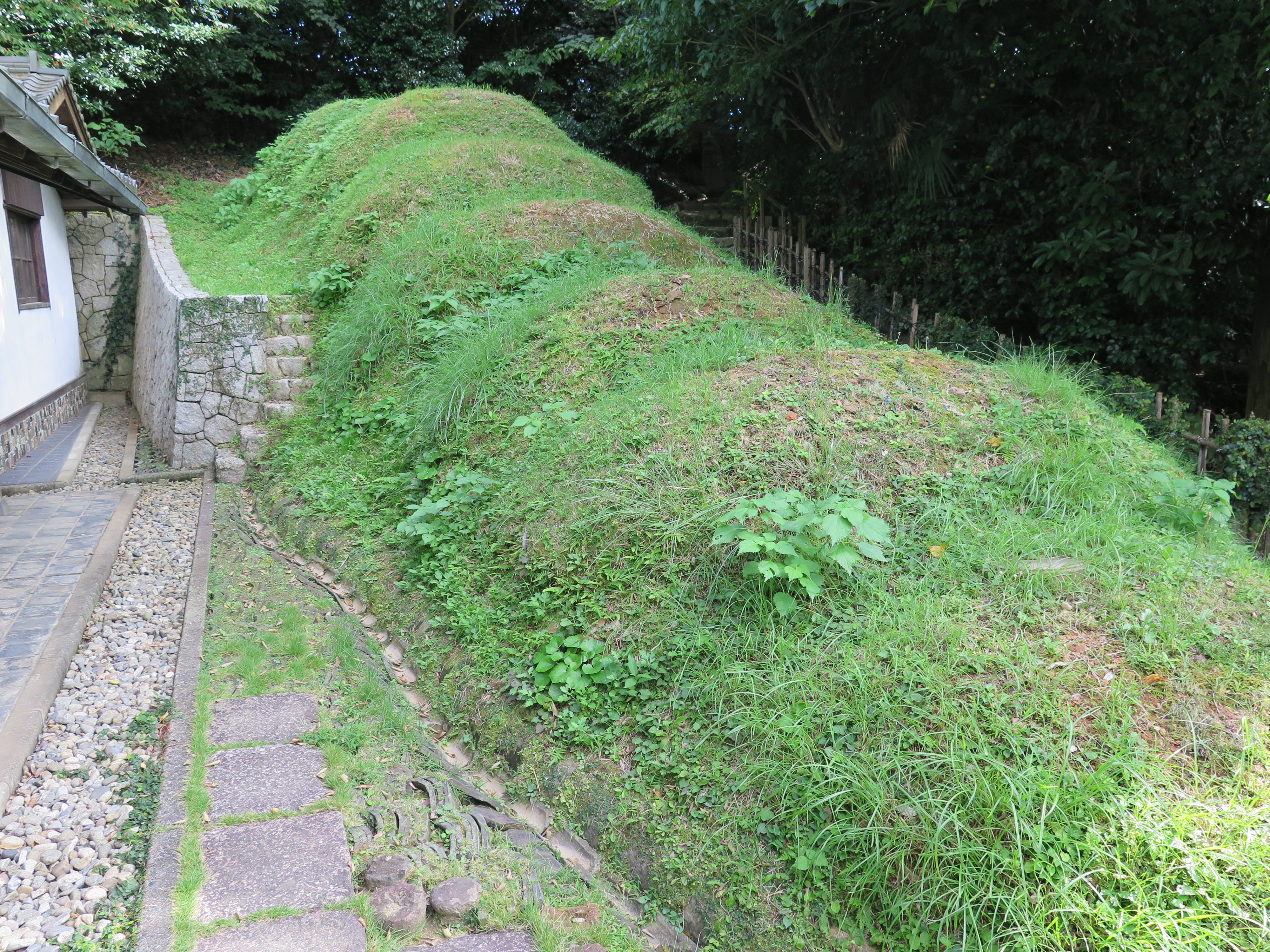
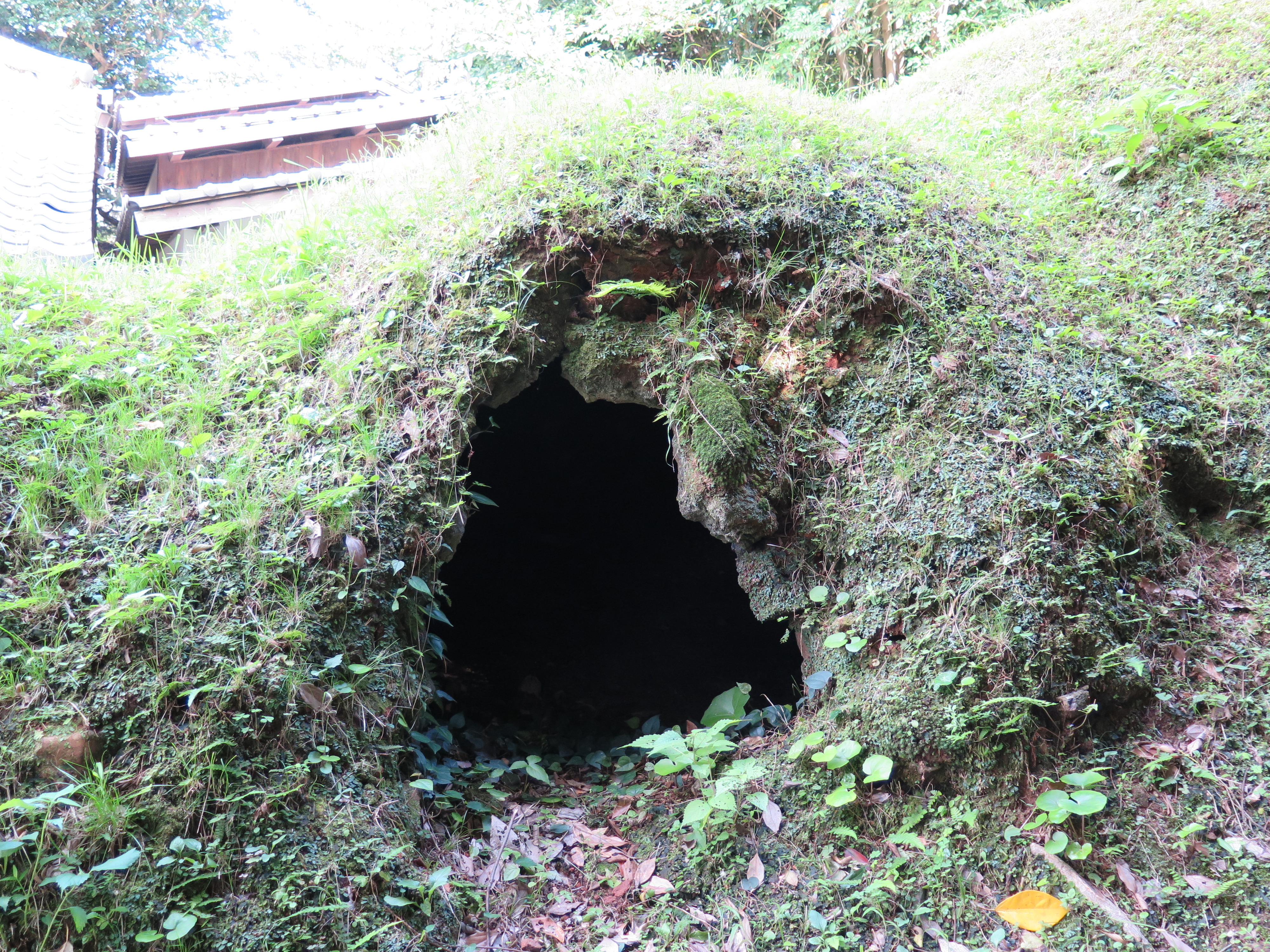
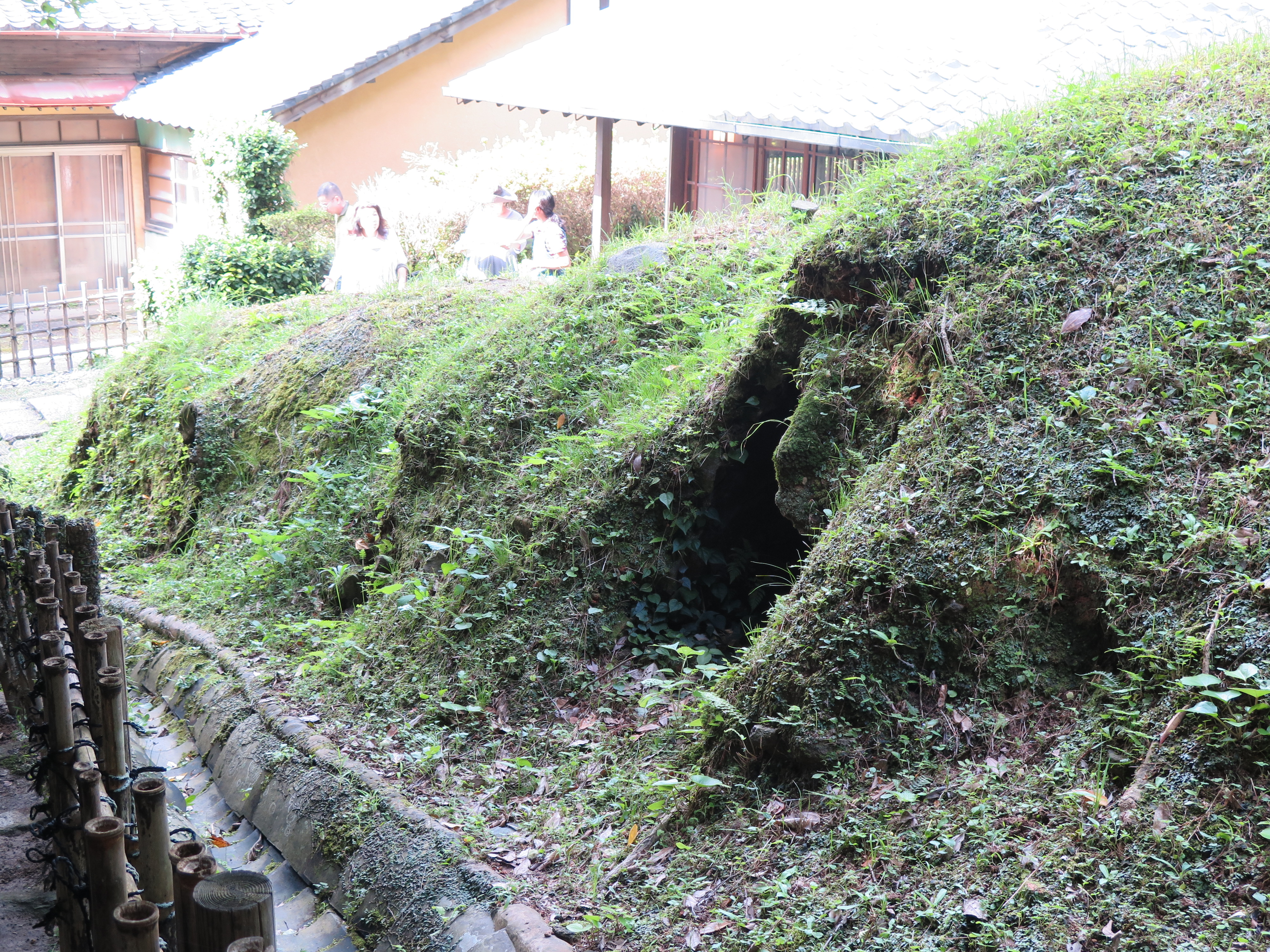
We make our way to the Nakazato Family compound. There is a lovely old family Gallery here in one of the back streets. Personally I don’t care for much of the work on display here. It just doesn’t speak to me at all. What I am keen on seeing is the old family climbing chamber kiln. The ‘Ochawangama’. It is located up one of the nearby alleys and is one of the most beautiful old kiln ruins that I have seen. There is one in Shigaraki that almost rivals it, but this one has the wabi/sabi edge I feel.

IMG_0787

IMG_0786IMG_0785

IMG_0789IMG_0794

It’s a beautiful thing.

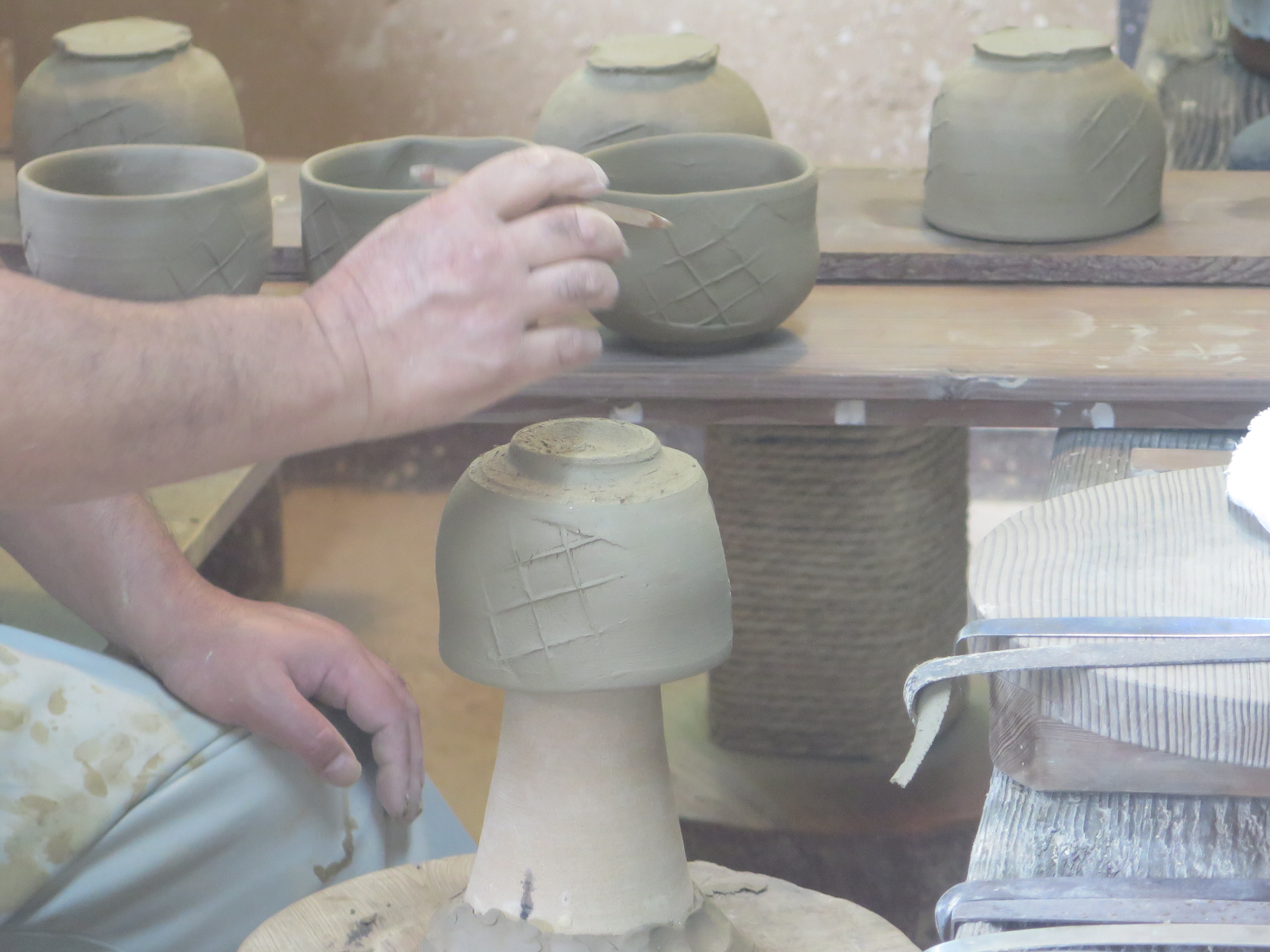
We peek into the private workshop window to see if there is anyone in there and sure enough, Taroemon the 14th is at work on Saturday the 19th. And the 14th is turning his 7th tea bowl of the morning.

IMG_0784IMG_0781

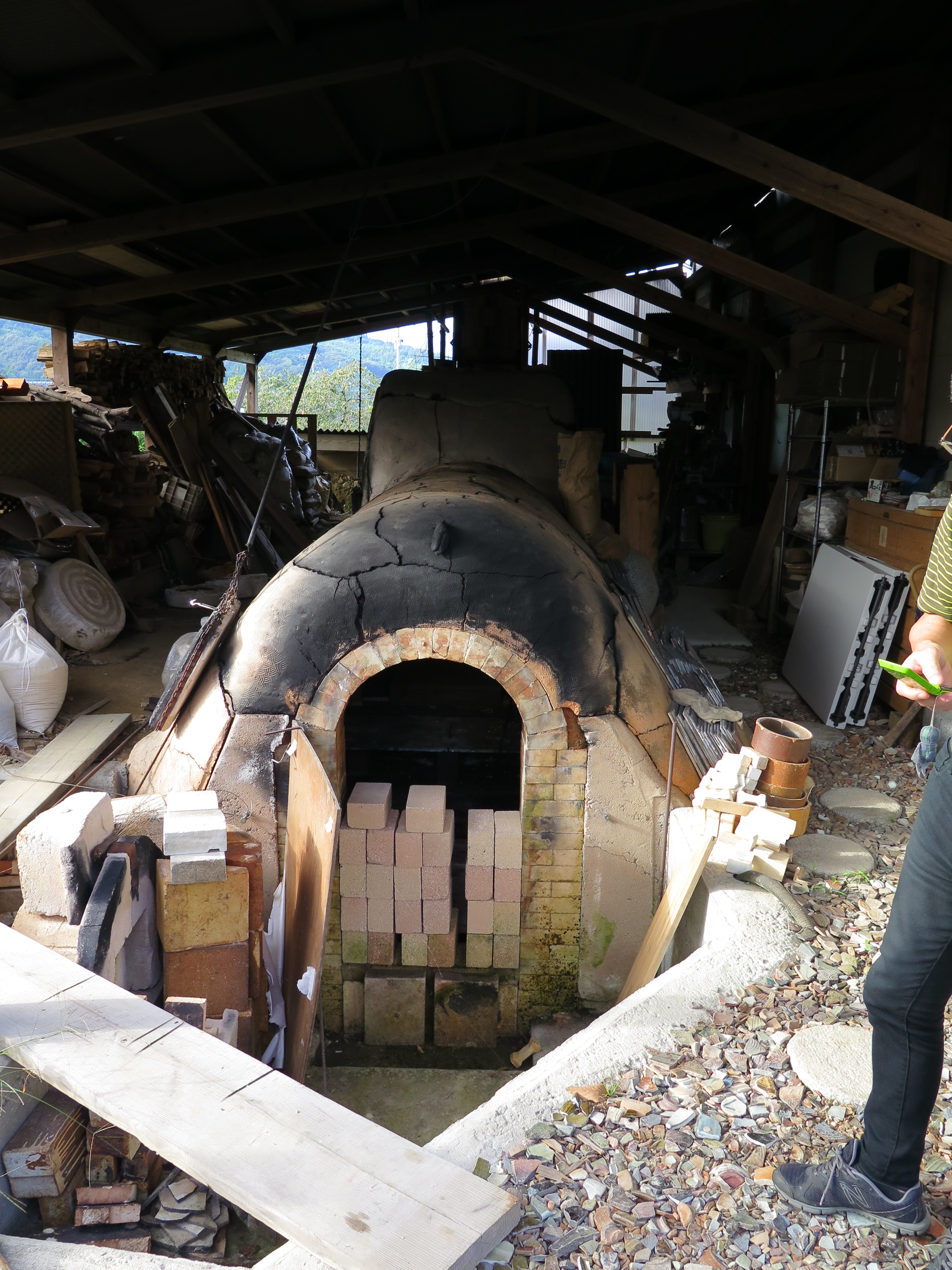
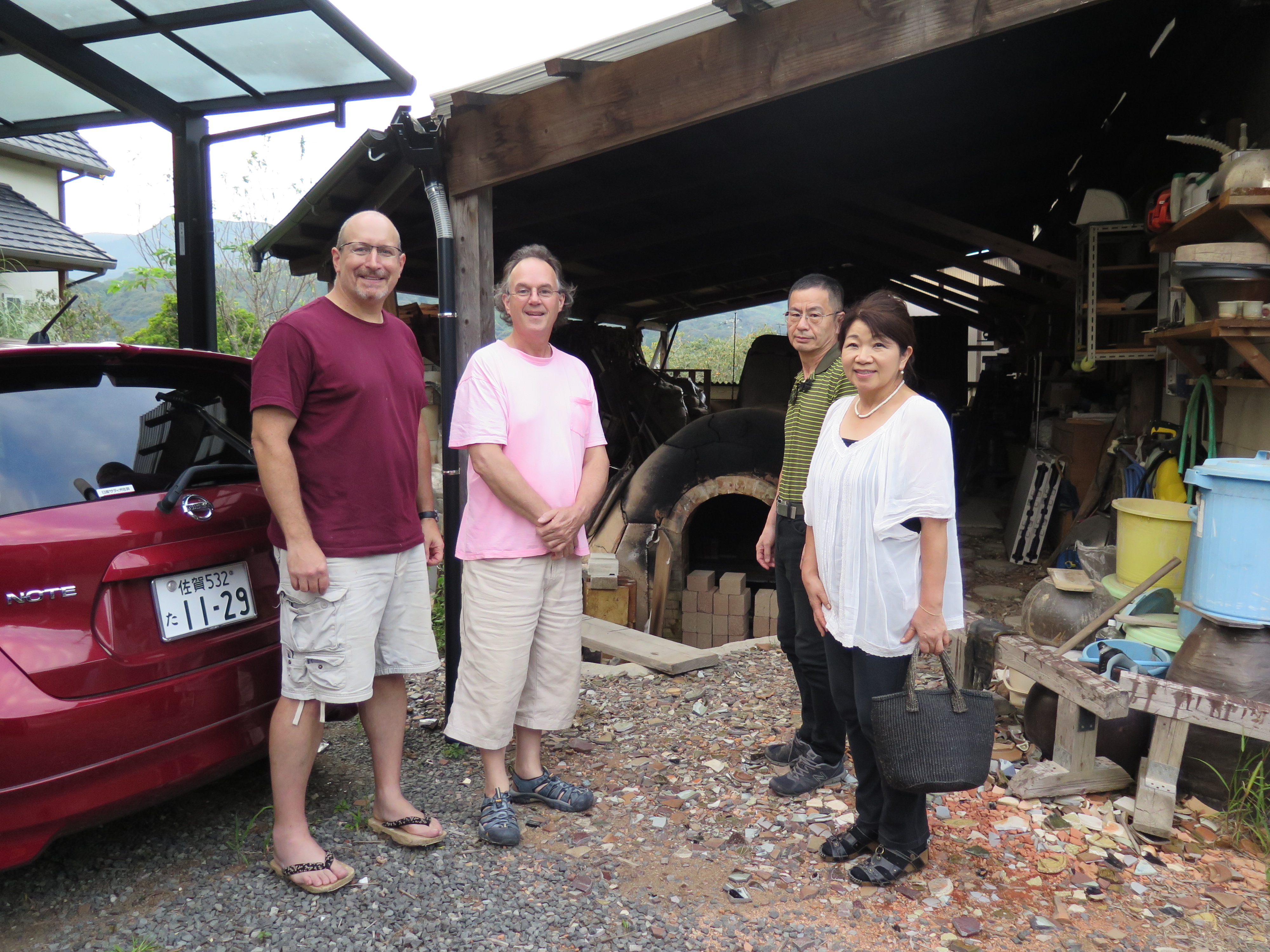
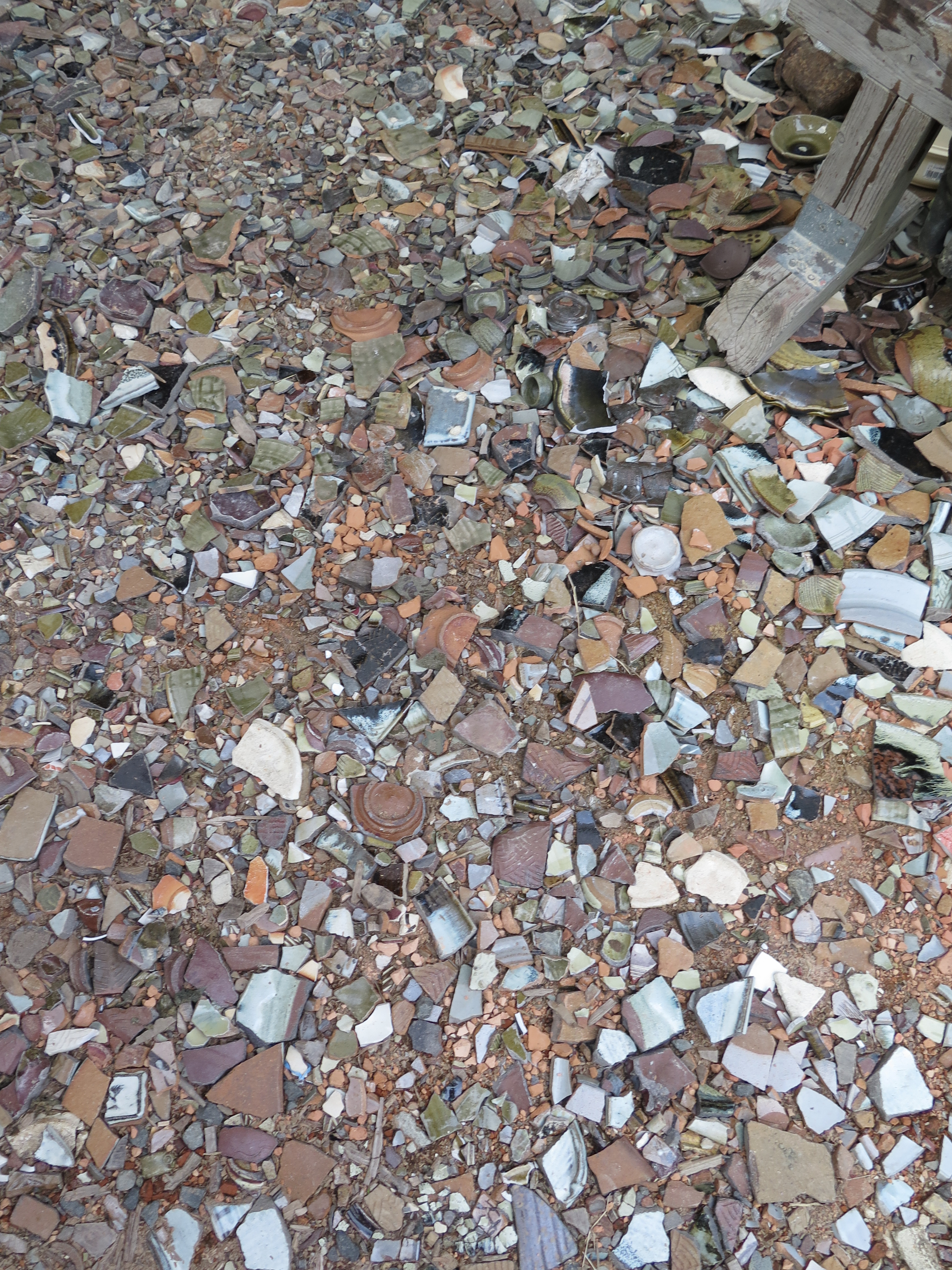
Later, we visit Mike Martino, on the outskirts of Karatsu He is a really lovely guy, very welcoming and so open to questions and very giving of information. He makes time for us, even though he is quite busy. We have tea from his wood fired cups and made in one of his traditional lidded bowl tea pots. The centre of his studio is dominated by a rather large old stone grain grinding wheel. It makes a rather nice, if somewhat unusual table. It manifests the character of both shibui and wabi. Mike uses both electric and gas kilns as well as a large wood fired kiln outside the pottery. He has a courtyard path, not unlike our own driveway, composed almost entirely of shards.

IMG_0801IMG_0799

IMG_0805IMG_0802

We all find that we have to dispose of work that isn’t quite successful. Pots that aren’t either firsts or seconds, but something quite other. Work that we don’t want anyone else to see. Yes! That bad. Failures can become something quite beautiful collectively as shards. It has worked for us in our driveway.

It comes out in general conversation, that both Mike and Tatsuya lift weights for a hobby. It shows!

Best wishes from the so unfit Steve In Karatsu

Four Generations of Porcelain Stone Clay Makers

Today I am going out to visit the very smallest of small-scale porcelain stone clay making workshops. This family have been crushing and grinding the local porcelain stone here for four generations. The building is located so far out of town and in such an isolated place, that even my friend and driver, who is a local, has difficulty finding his way there. So many little winding roads and intersection.

IMG_0589IMG_0569

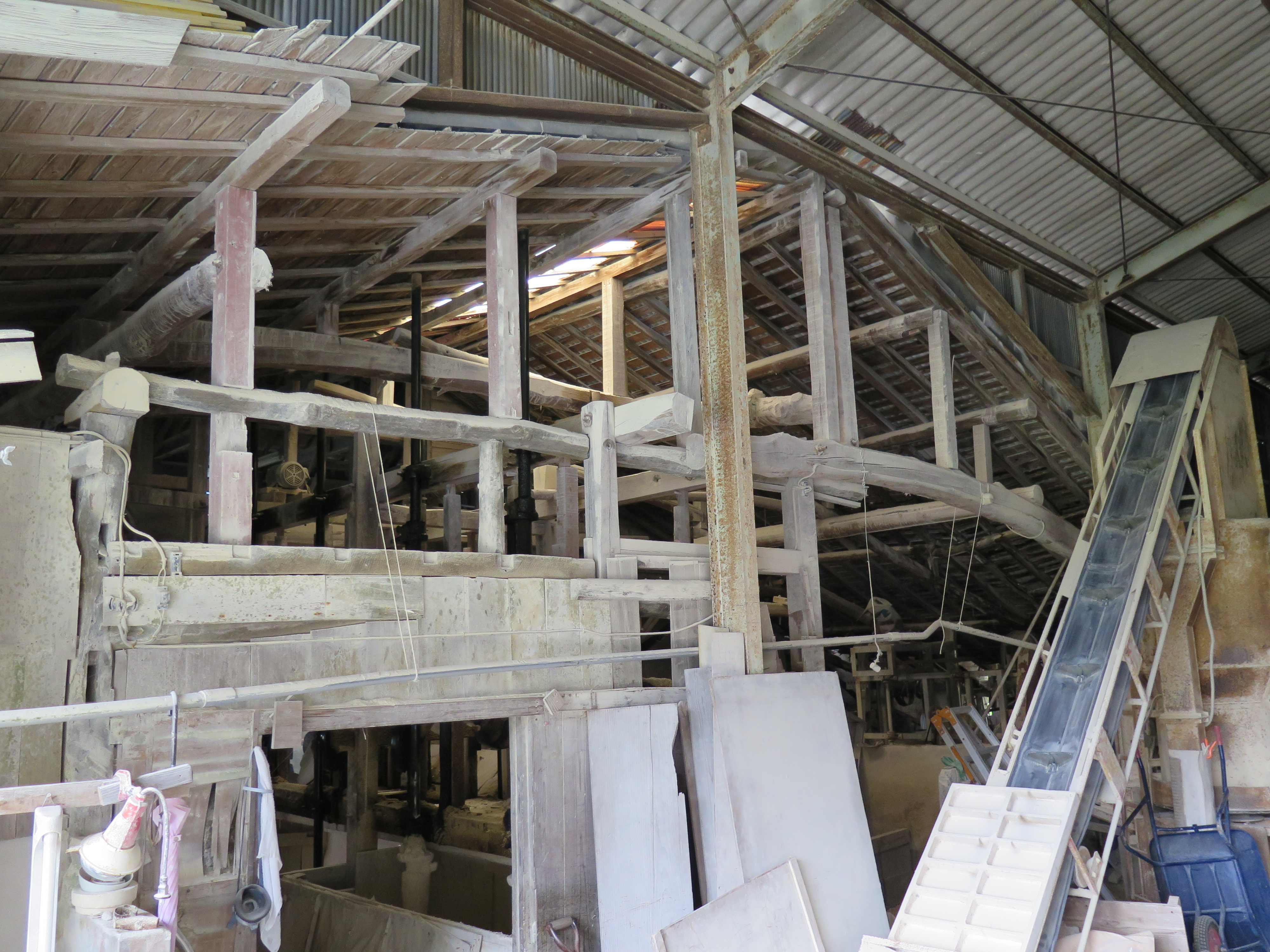
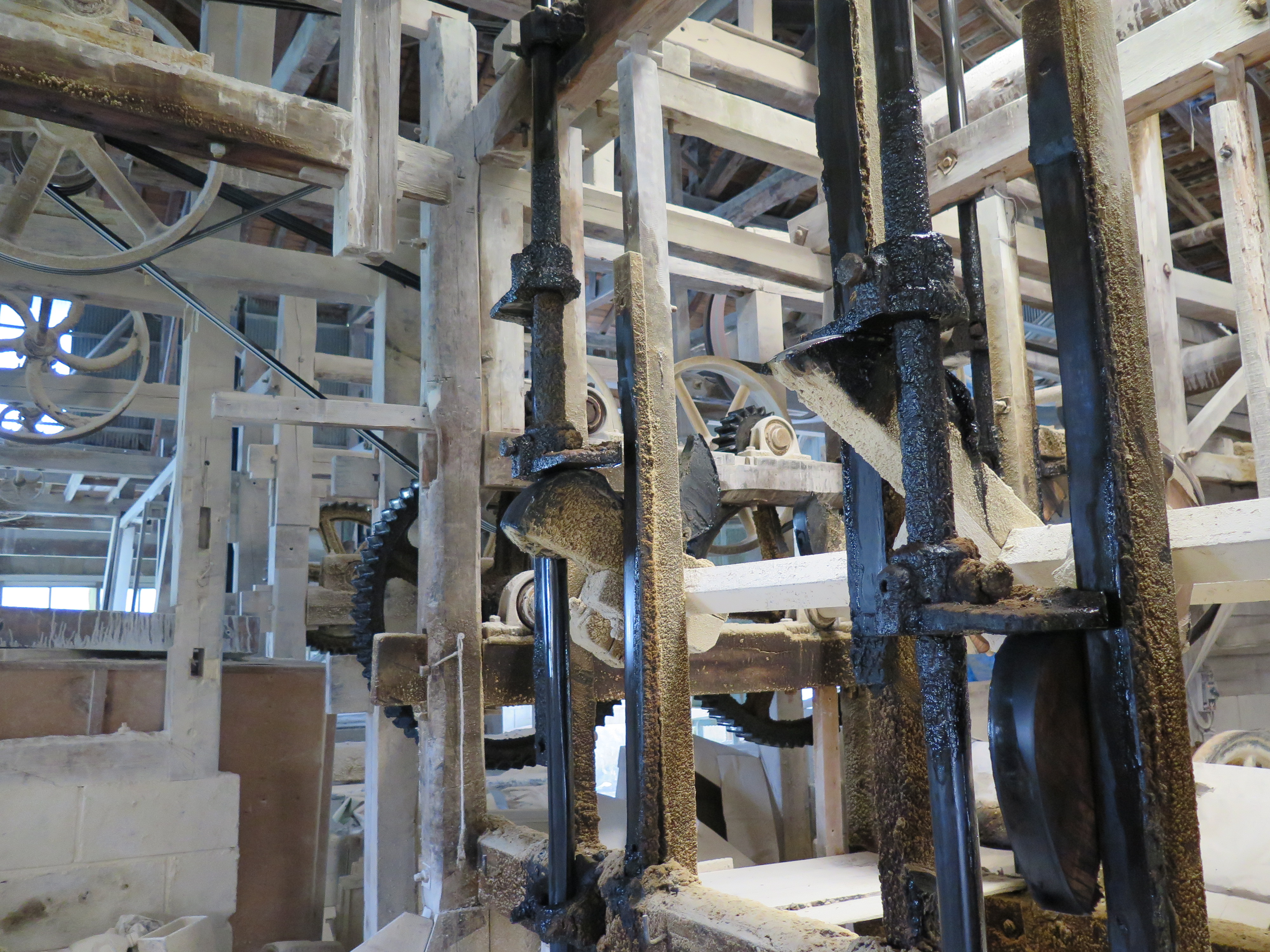
Eventually we arrive. Another liminal site, perched just above the edge of the rice paddies, on the edge of the farm track and just below the tea plantations higher up the hill. The family building is absolutely original and built by the great-grandfather here over 100 years ago. It’s a beautiful old wooden structure. Even the supporting frame-work for the stamp mills is completely original and made of wood. The machinery looks pretty original too, especially the stamp mills. The only real concession to modernity here now are the filter presses and the vacuum pug mills.

IMG_0581

IMG_0588IMG_0564

IMG_0566

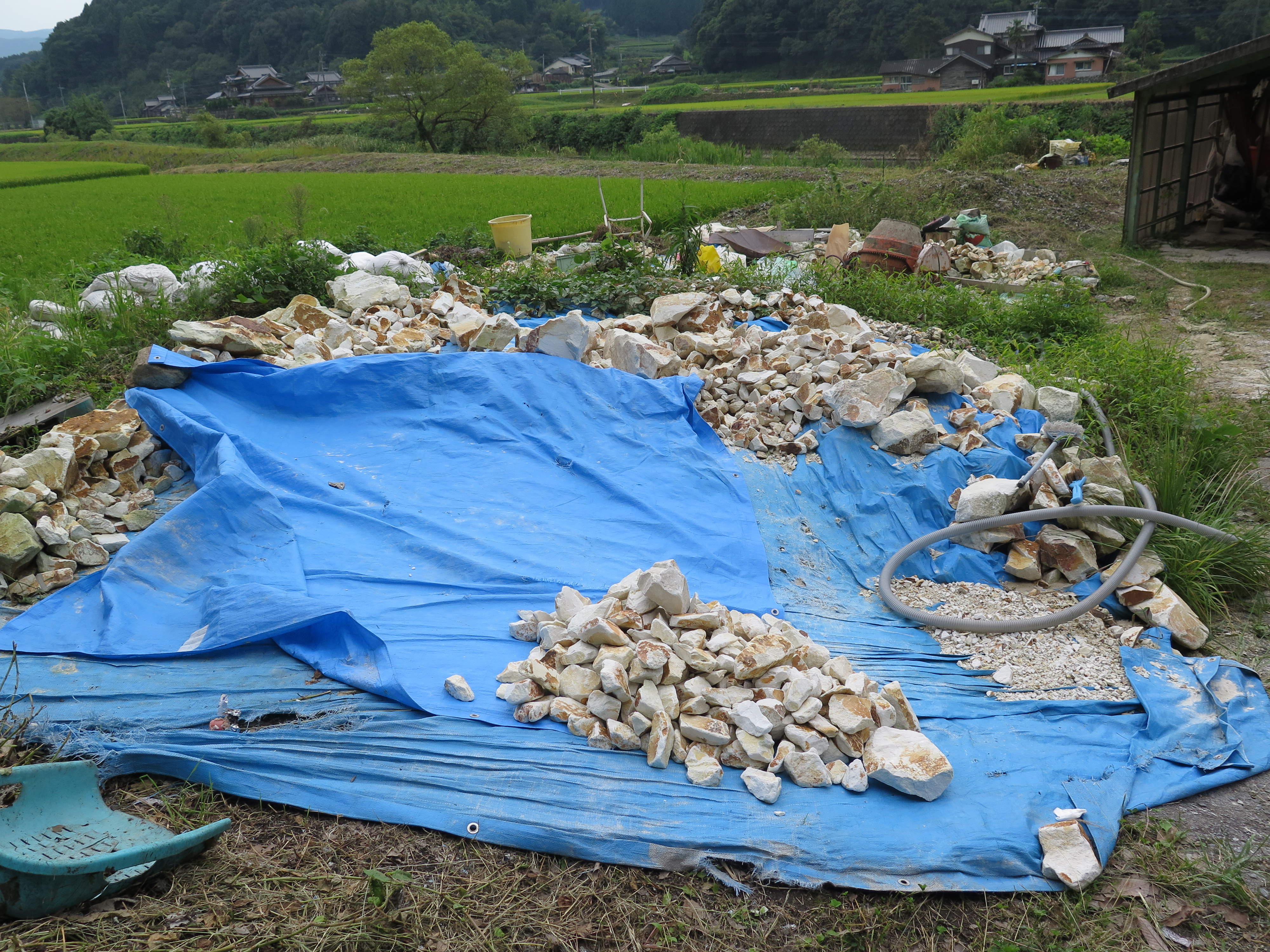
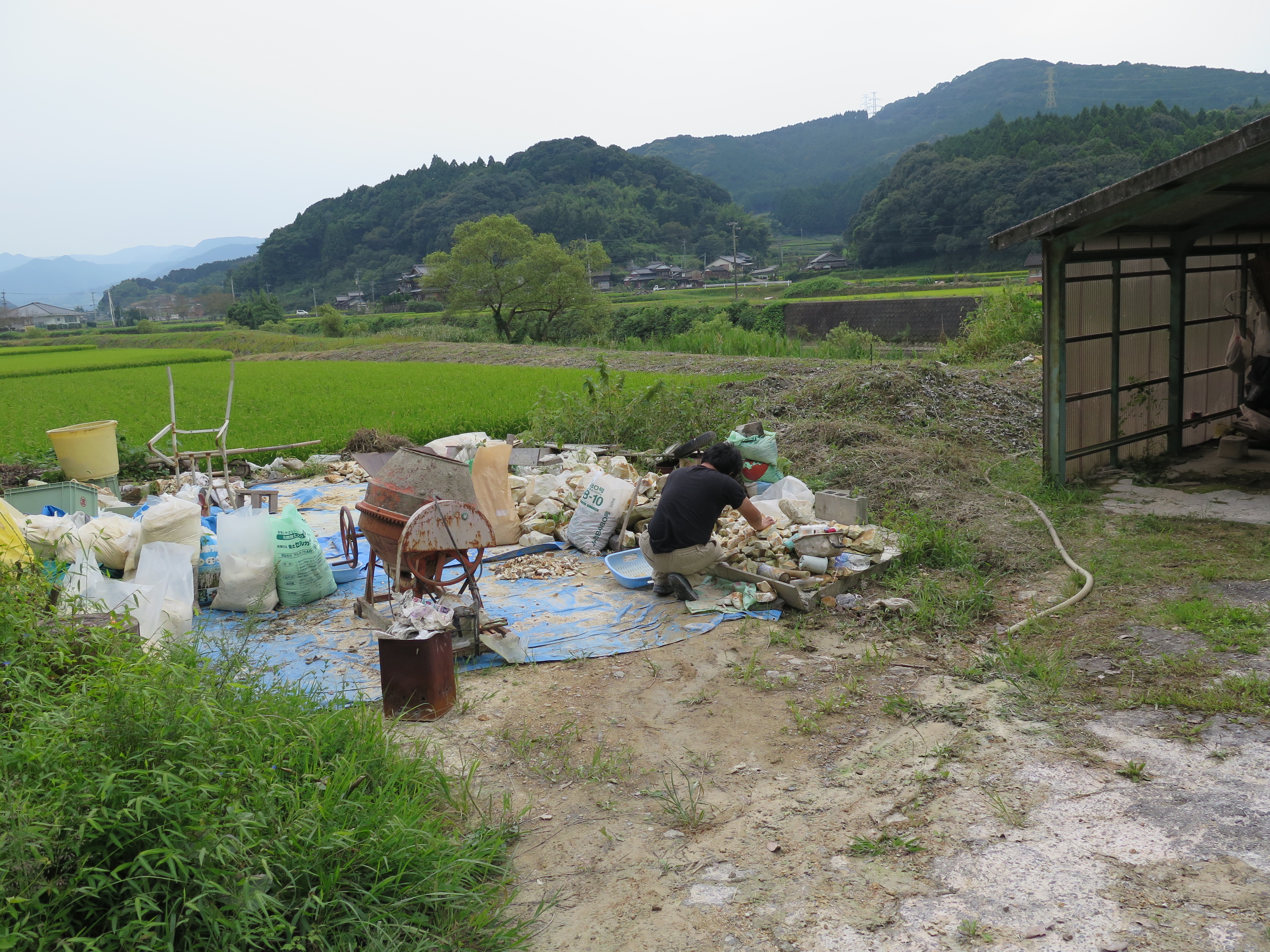
The family, Mother, father and son still do all of the initial work of sorting and selecting by hand. It is the only way to get the very best quality result. And the result is exceptional. No one else does this to every piece of stone that enters the workshop. One other factory, The Coda Factory, can put through small special batches of hand cleaned superior white stone body, but it is very expensive and only occasionally done these days. The other factories, like Tajima san’s, appear to just take the stone as it comes, wash it and run it all through the jaw crusher. (see, “More, not less, from Japan Posted on 16/11/2014)

On the other hand, this small ‘Fuchino’ family run business puts in a lot of effort to hand sort and classify all the minerals as they are all dumped in a 14 tonne pile straight from the tip truck that delivers the stone from the quarry.

IMG_0565

IMG_0567

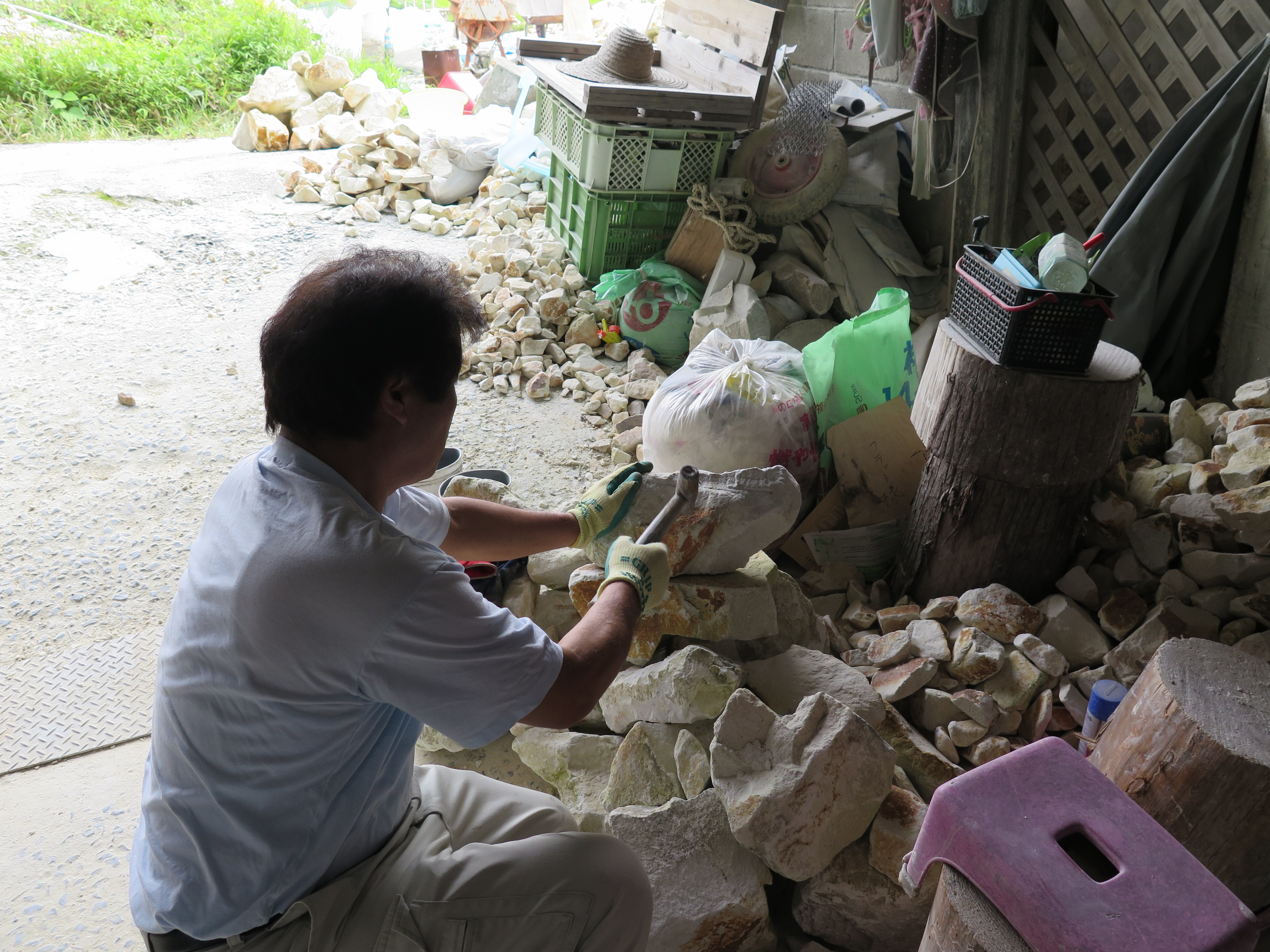
First all the stones are sorted and classified into one of 3 groups. The native Amakusa stone is quite varied in its mineralogy with bands of various minerals throughout the deposit. The quarry doesn’t really discriminate that much. A truck load of this mixture can be processed all together as one composite material, as happens at the ‘Tajimi’ and other two clay makers. Here they spend an enormous amount of time sorting and classifying the mixed load into its components. There is felspar, silica and mica. The silica is deeply inter mixed with the felspar and looks for all intents and purposes, the same as the white sericite mica. However, there is a subtle difference in colour and weight. Added to this there is a very slight difference in hardness. Going on these minor differences alone and using 40 years of experience. The miller can tell the difference instantly and throws each of the stones onto a different pile as it passes through his hands.

IMG_0574

To complicate matters, there are veins of iron, that have been leached from the parent material over the millions of years and found itsself concentrated in the cracks that permeate the mass of rock. The iron is slowly leached from the degrading stone as it weathers and concentrates there in the cracks and fissures in wet periods and then dries out and becomes insoluble. This concentrate of iron in the cracks, builds up over the millennia and makes for a red, orange, brown, blackish surface coating around each lump of rock.

IMG_0575

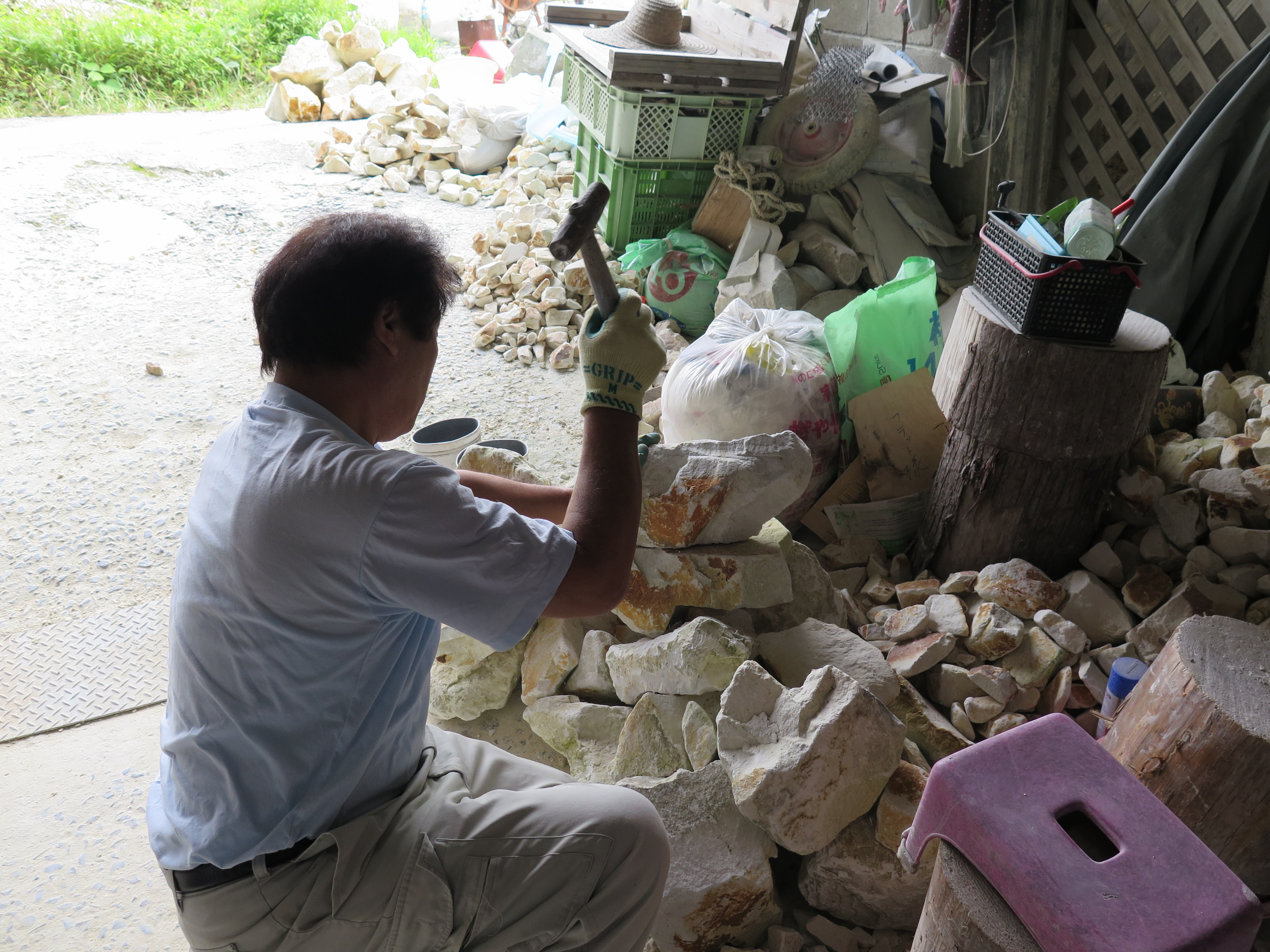
To get the best result. The miller sits and patiently chips away the iron coating on each stone, to reveal the white mineral content inside. Hour by hour, day by day. The miller and his wife and son chip and scrape their way through the entire 14 tonnes of hard rock, until it is all sorted and cleaned. It takes them one month to process the 14 tonnes of stone. The result of this gargantuan effort of exacting perfection is three piles of stones which are processed separately.

IMG_0578IMG_0579

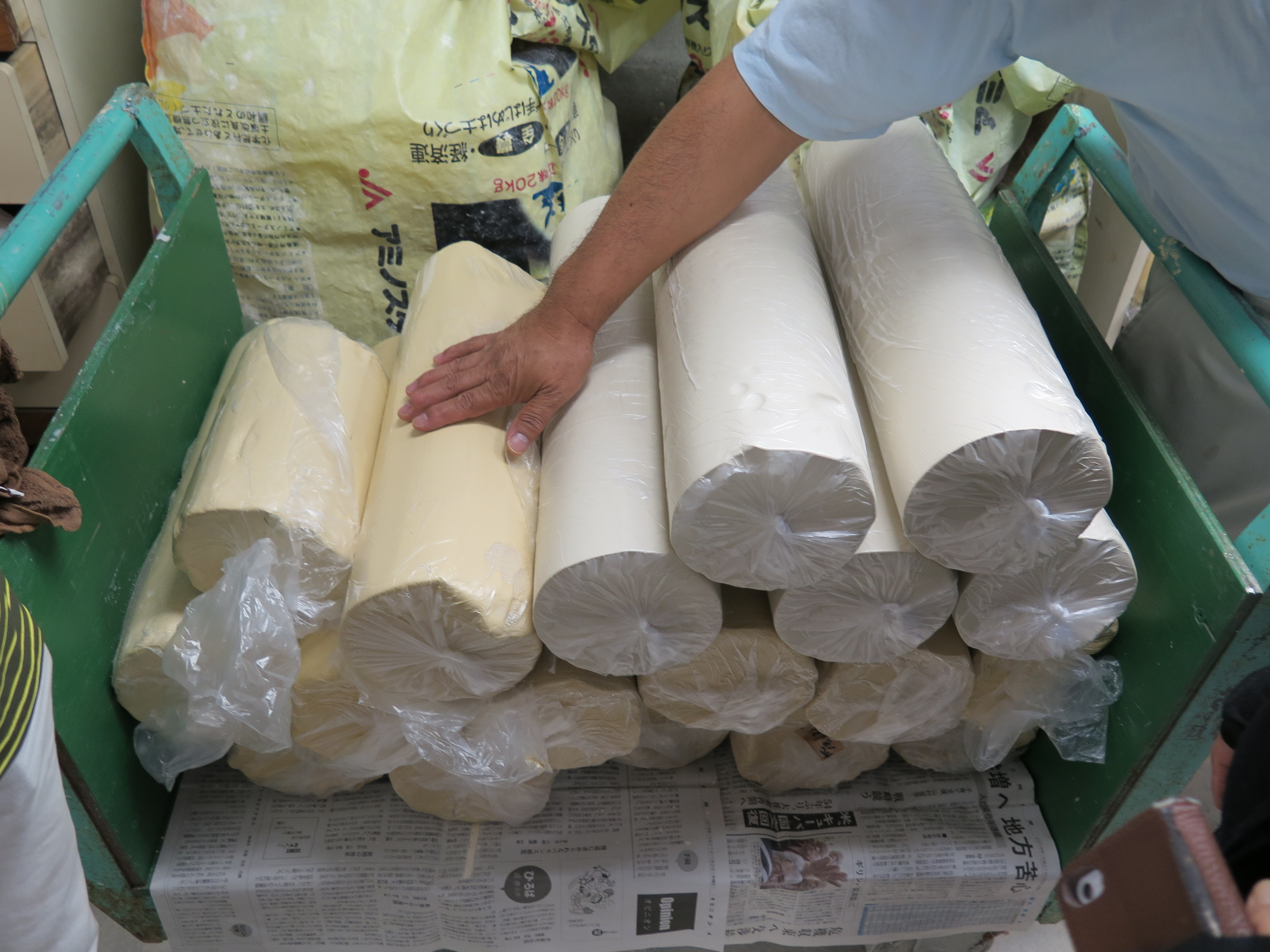
First they are put through the stamp mills and reduced to a fine powder. It is then sieved and sorted again before blunging and sent to the levigation tanks, where the heavier, coarser silica particles are sedimented out and the finer clay and sericite mica fraction is floated off. This slurry is then concentrated and stiffened using a filter press, the only concession to modernity introduced since the great-grandfather built the operation over a hundred years ago. The stiffened filter cakes are then vacuum pugged and bagged ready for delivery.

IMG_0570

The number one product is a very fine white sericite and kaolin based body perfect for the creation of the wheel thrown items. It fires pure white and translucent with perfect glaze fit. This is obviously the most expensive grade and is in very limited supply. The second grade material is creamy white, with a slight iron contamination, but only very slight. It fires white and translucent with perfect glaze fit. Number 2 body is plastic and throwable, just like number 1 body, just not as pure white. The third grade is somewhat yellowish and is made up of all the chipped, hammered, and scraped off iron fragments from the surface of the coloured stones. This is the cheapest grade and the least white, firing a bit grey, with reduced translucency and low plasticity, but with excellent glaze fit.
IMG_0573

During my life as a potter, I’ve spent years, cleaning and sorting my collected native porcelain stones. I never really mentioned this to anybody lest they thought that I was mad. Now I know that I’m not. There are at least three other people in the world who are as committed to excellence as I am. The difference is that this family are well paid to produce this special clay for the most famous pottery families in Japan, and can boast that they supply clay to at least three ‘National Treasure’ category potters. These famous, Nationally awarded potters couldn’t have gained their unique status without the sustained diligence and commitment to excellence of this family.

It is an amazing experience to be able to be with these people, if only briefly. To see this old Wabi/sabi building. To learn of it’s long history. To speak with this couple. It’s all a bit amazing. They are so special and yet so ordinary and humble and uncomplicated. Just dedicated to their exacting work and very proud of their achievement. There is no other place like it in all of Japan, that I am aware of, and as this kind of work is pretty special to Japan. It might be safe to say the entire world. The effort that they have put in is rewarded with the status that they have achieved.

Myself, Tatsuya and Fuchino san

Myself, Tatsuya and Fuchino san

I’m thrilled to get to meet someone a little bit like me and to be able to throw my pots out of this unique material. Needless to say there is a months long waiting list for this couple’s product. There should be a National Treasure Award just for clay makers like these, who work at a very unsexy job, but who have elevated it to stratospheric levels of excellence.

I still find it hard to believe that it is possible to do what I have just seen with my very own eyes. I just didn’t really think that people still worked like this in a modern world. Taking so much time to be the best in the world, while not caring that anybody, other than their customers even know what they do. While we are there we buy 5 bags of this amazing stuff, but only the No.2 creamy white body today. There isn’t a skerrick of No.1 to be had for months yet. It appears to be all sold on advance order to the 3 National Treasure potters. I guess that this is one way of cementing your advantage over your other porcelaineous competitors?

I consider my self so lucky to be associated with Tatsuya san, and therefore able to use both the creamy white and hand selected, ultra-pure white varieties of this family’s clay while I am here. Tatsuya san has had a 40 year relationship with this clay making family and I am lucky to be able to tag along and reap that benefit.

I am grateful.

Best wishes from Steve on the outskirts of Arita

The White River Box Maker

I’m here in Arita and the layout of the little town follows the meanderings of the river and its feeder streams. This is a modern Japanese town, perhaps city? That has developed over its ancient foundation of porcelain footings. The little river that has prescribed the subsequent development has a few stories attached to it. I was told that the first Korean potter to come to this area, as a prisoner of war, called Ri Sam Pei, noted the absence of fish in the smaller upper river and that this was one of the signs of being in the vicinity of a porcelain stone area that he recognised from back at home in Korea. The water of this stream or upper river drains down from the rotten granite mountain of Izumiyama.

This water, as it drains through the fissures in the granite, leaches out both soluble potash alkali from the decomposing felspars in the granite, but also a tiny amount of kaolinized clay particles from that breakdown process. The mountain was once a molten granite pluton that was pushed up during a very ancient volcanic event, leaving the molten rock to cool slowly just below the surface. Once cooled and slightly eroded by surface weathering the exposed granite would normally take millions of years to degrade by normal surface weathering through the action of wind, rain and winter frosts and snow. What makes this place so unique is that something else happened here.

In just a few places in the world an event called hydrothermal-weathering take place. This involves the passage of superheated steam at hundreds of degrees centigrade rising upwards through the earths crust and passing out through cracks in the rocks of the mantle. In this particular case, it passed up through cracks in the granite mountain. The superheated steam strips out the soluble alkalis from the parent rock.  In this case, the felspars in the granite, reducing it to pure white kaolin clay and altering the micas present in the granite, stripping them of their iron oxide and creating a unique form of white ‘plastic’ mica called ‘sericite’. This special combination of pure white plastic kaolin and pure white plastic mica, is a very rare find indeed and makes the perfect combination of minerals to create white, translucent porcelain.

The small amount of this pure white material that then slowly leached out of the rotten granite and into the stream killed the fish and turned the water a milky white. So the river became known as the ‘white river’, or ‘Shira-kawa’.

I don’t know how complete, accurate or even true these details about fish and sericite  are? This is just what I was told.

IMG_0521

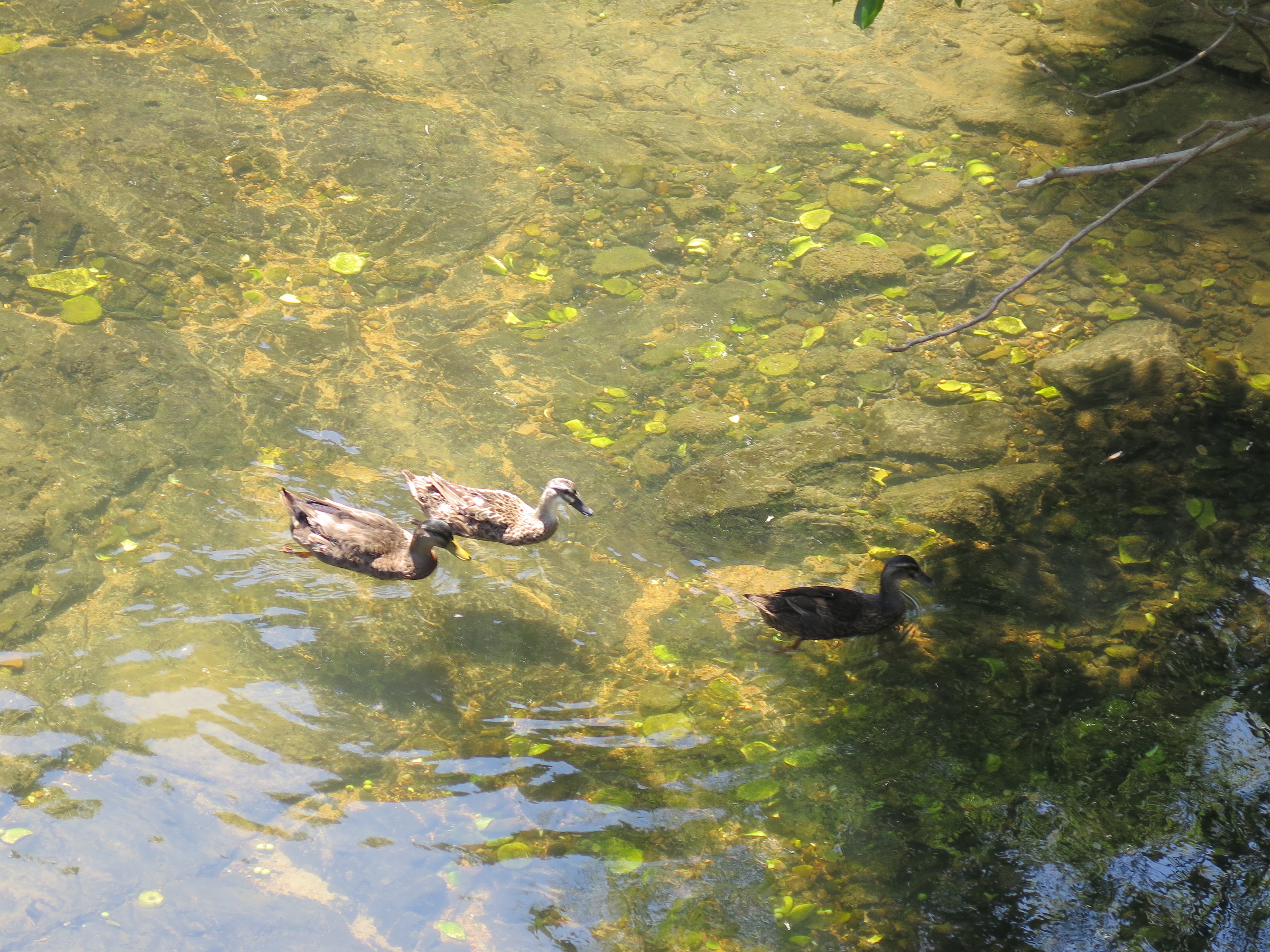
I walk or bike along the Shirakawa river every day, just like all the locals who now drive along it here. The river doesn’t run white any more. Perhaps because the quarry is all but mined out now. Perhaps because of stringent, anti-pollution laws? I don’t know. There are ducks making living on the stream these days. I can’t say that I have seen any fish in the river.

IMG_0522

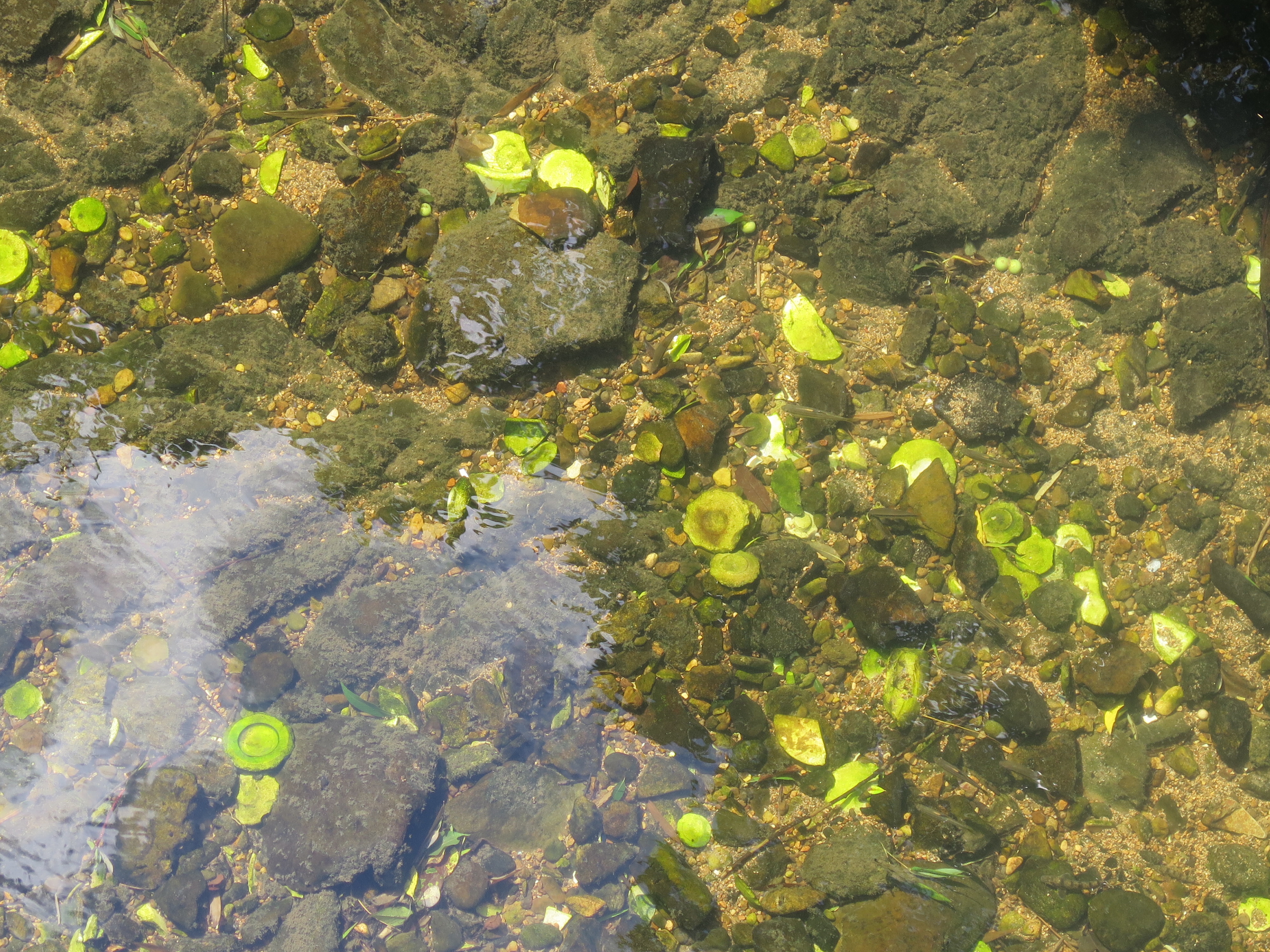
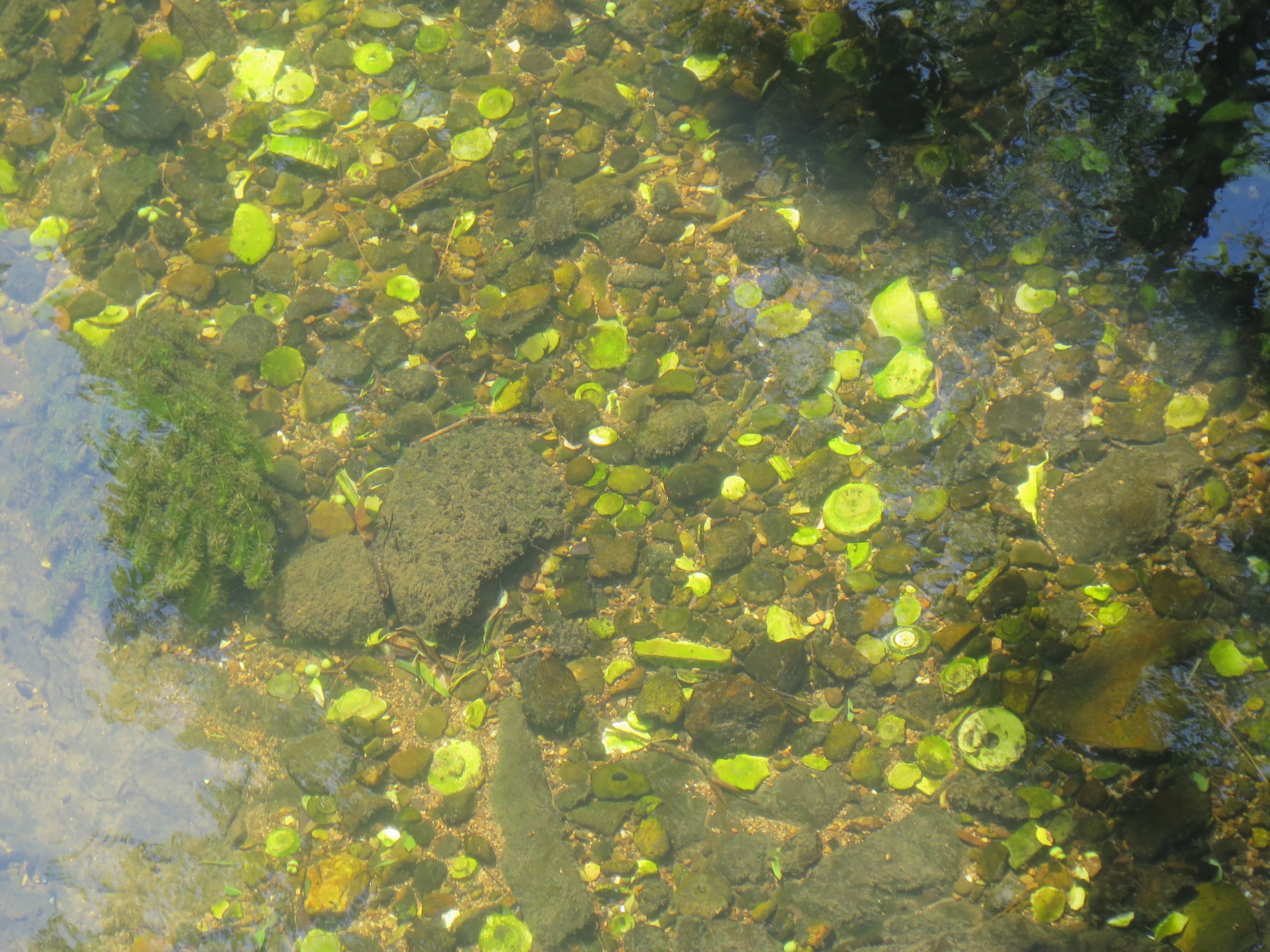
However, I can see that there is a pretty good deposit of porcelain shards in the river bed now. At each bridge that I come to, there are shards to be seen in the shallows below. It would be interesting to walk the river bed and do a sampling of the various dates of those shards, at some dry period in the seasons. I’m sure that it must have already been done. There’s a PhD or MA Hons in there for sure, just waiting to be retrieved and analysed!

IMG_0523IMG_0524

Today we are travelling along the stream on our way to visit the box maker. He lives a little out of town. On a beautiful little winding road, up through the forest. It’s all covered in moss and is deep in shade from all the tall trees on each side and the abundant humidity. There are springs trickling out of the rocks on the roadside. I call this part of the road the ‘shibui-dori’. It’s caught on with Miyuri and Tatsuya. It made them laugh. Now they are both calling it ‘shibui-dori’.

Working from home on the liminal edge, where the rice paddies stop and the forest begins. The box-maker has a small, humble house and next to it, large, industrial work shed, where he has all the machinery to make the boxes. The timber planks go in one end and the milled boards are planed and thicknessed, then edge glued to make large sheets, which are subsequently sawn back down to smaller sizes for the individual boxes required dimensions. The four sides fitted and glued together, then squared up and the bottoms installed, then the lids made. It’s all very exacting and precise work. Just like making the Arita style porcelain that goes inside them.

IMG_0554

Although the shed is a bit ordinary looking from the outside. Everything inside is modern, and up-to-date, hand-fed, but electrically driven woodworking machinery. Its a pleasure to see the modern workings of someone’s workshop, involved in such modern, yet ancient craft skill. The boxes are just the same as they once were, but now, most of the processes are mechanised to reduce the labour cost. It’s an honour and a privilege to be allowed in here to see and watch the process first-hand. Hand made boxes like these are a bit expensive. You need to know that you will be able to sell quite a few of the pots packed in them, before engaging in ordering a full set for the all the work in a show. There is no way out. It is expected that a decent pot will come in a decent box here. It’s all part of the social contract.

IMG_0557

In Australia, unlike Japan. Pots generally sell so cheaply, even in exhibitions these days in Oz, that it just isn’t possible to fund a good, hand-made box, from exotic timbers for each pot. But even here the pressure is on and the box maker now has to compete against cheap Chinese imported boxes. These of course are not custom-made for each pot, but imported in container loads of the most common sizes, for fast-moving items. What can he do. His only option is to aim higher for the high-end art market and hope that he can keep finding enough work to keep himself employed until he retires.

Globalisation is everywhere, affecting everyone. Even the box-maker.

The Soba Noodle Potter

I decide that today is my only chance to go and visit Mr Norito, or Noritou, or Noritow. I’ve seen it written in different ways. In Romanji it’s written as Norito, His web site is ,  but on his card, the hiragana ends in a ‘u’. So I think that Noritou is the best approximation that I can make.

I first met Noritou san when I was taken to his workshop for a brief  mid-week visit. He is in his late 80’s I think, although he doesn’t look it. He’d pass for 60’s any time, but I’m told that he was selected as a very young kamikaze pilot at the end of the war. Not unlike my former teacher Shiga Shigeo, they only survived, because the military ran out of planes.

IMG_0512

Noritou san is a very gentle character. I can tell from his manner and tone of voice.

He is also a very interesting potter. He is the only person that I have been introduced to so far that makes his own single stone porcelain body for his pots here in Arita. Regrettably I can’t speak Japanese well enough to understand any of the technical information that he is offering directly from him. However, I have Miyuri san with me on my first visit and she is a very competent translator. It was she who brought me here and told me that I really ought to meet this guy. “He’s a bit like you. he makes his own clay from stone”. So of course I had to come. He has no machinery, it’s all very hands on and time-consuming, as all clay making is, but he selects the softest, kaolin/sericite material that he can still find – I didn’t ask where, directly, but I got the impression from Miyuri san that it is from the old Izumiyama quarry. Even though it is now a preserved Historical site, apparently, there is a group of potters who want to preserve the old traditional ways, and Noritou san is one of them. They appear to have privileged access to collect small quantities of porcelain stone from the site. The archaeologist at the Historical Museum on site, maintains that there is still plenty of material in the quarry. This fits with my understanding of the nature of hydro-thermal weathering. it creates an inverted cone shape of ore body. So it should go down a long way, like an inverted image of the mountain that was formally there, now all mined away

Noritou san simply slakes his collected material in water and ashes for a year. Yes, that’s right ashes! He is telling me through Miyuri san that the ash-water, lye perhaps? is necessary to break down the clayey particles and remove the iron staining from the various contaminants? It doesn’t make a lot of sense to me  – but!

IMG_0514IMG_0516

That is what I was told, or what I think that I heard, but there could be some loss in translation, Ne! He shows me his slaking tubs. I dip my hand into the water. It is certainly slippery, just like lye. This is exactly the opposite of my understanding of clay making. I know from my own experiments, that when I grind the porcelain stone down to powder, it breaks some the chemical bonds of the alkali in the felspars, releasing some soluble alkali. This makes the resulting clay rather ‘floppy’ to use. Sort of thixotropic in nature, becoming softer and more fluid as it is worked, making it difficult to hold its form on the potters wheel. The counter to this is to add some acidic material into the mix to counter the release of alkalis and neutralise them. I choose to use the roof water from my water tank connected to the pottery roof, which has loads of eucalyptus leaves in the gutters, and makes the water naturally acidic. I also add vinegar. As I understand it, clay develops its plasticity better under slightly acid conditions as it ages. The low pH encourages the growth of beneficial bacteria that increases the workability of the mix. Maybe Noritou san knows this too, but is talking about something else entirely. And all this through an interpreter. Imagine what is happening now that I’m here alone this time?

Actually, I don’t always need a lot of words. I’ve spent close to 50 years as a potter, so I have a fair understanding of what is happening in the pottery just through observation. It’s mostly all I need. My limited Japanese is only just greetings and platitudes, in-depth, technical discussion is beyond me, but I manage.

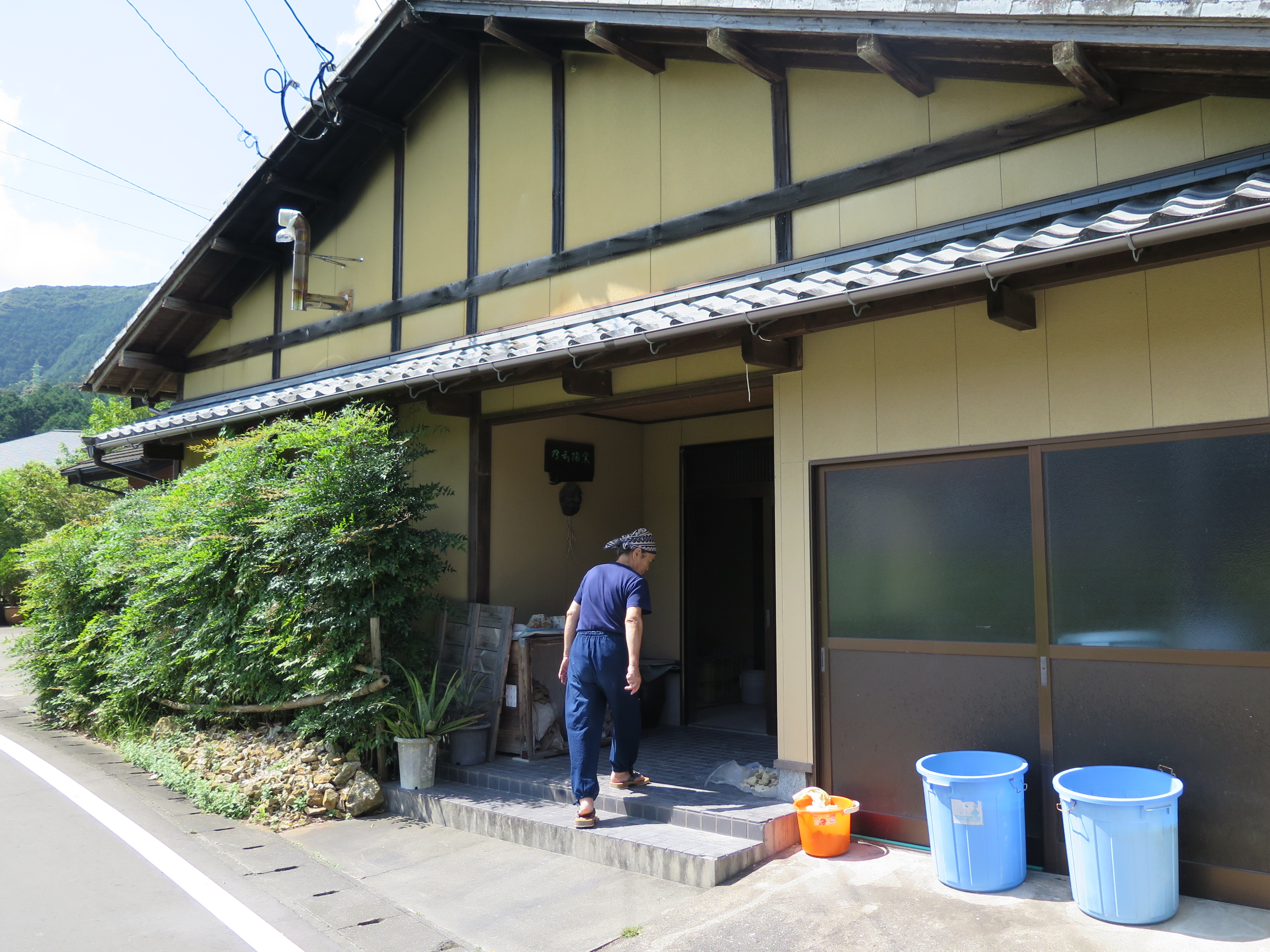
The other very interesting thing about Noritou san, is that he does many things, just like me. We don’t just share a love of fossicking and clay making. He also teaches pottery to visitors on one or two days during the week to bolster his income, because you can imagine, his income from making ceramics by his chosen, slow, hands-on method is very low. That part of the conversation we both agree on! So, a little bit of teaching from home, just like me. The really interesting bit is that he opens his home on Friday, Saturday and Sunday for lunch and early dinner, something like 11am to 7 pm. He operates a hand-made soba noodle shop and is very famous locally. I’m warned to go early as he is usually booked out, so I do. Naughtily, I arrive 15 mins before he is due to open. I’m first in.

He and his wife make all the buckwheat noodles themselves by hand in the old-fashioned traditional manner, allowing them to sit over-night before cooking them, in the time-honoured way. This ageing maximises the buckwheat flavour. I can’t wait to get back there again. It’s Sunday today, so you can guess where I’m going. It’s my last chance, as I’m leaving next Sunday and am booked with other things planned on the other two days.

IMG_0500IMG_0508

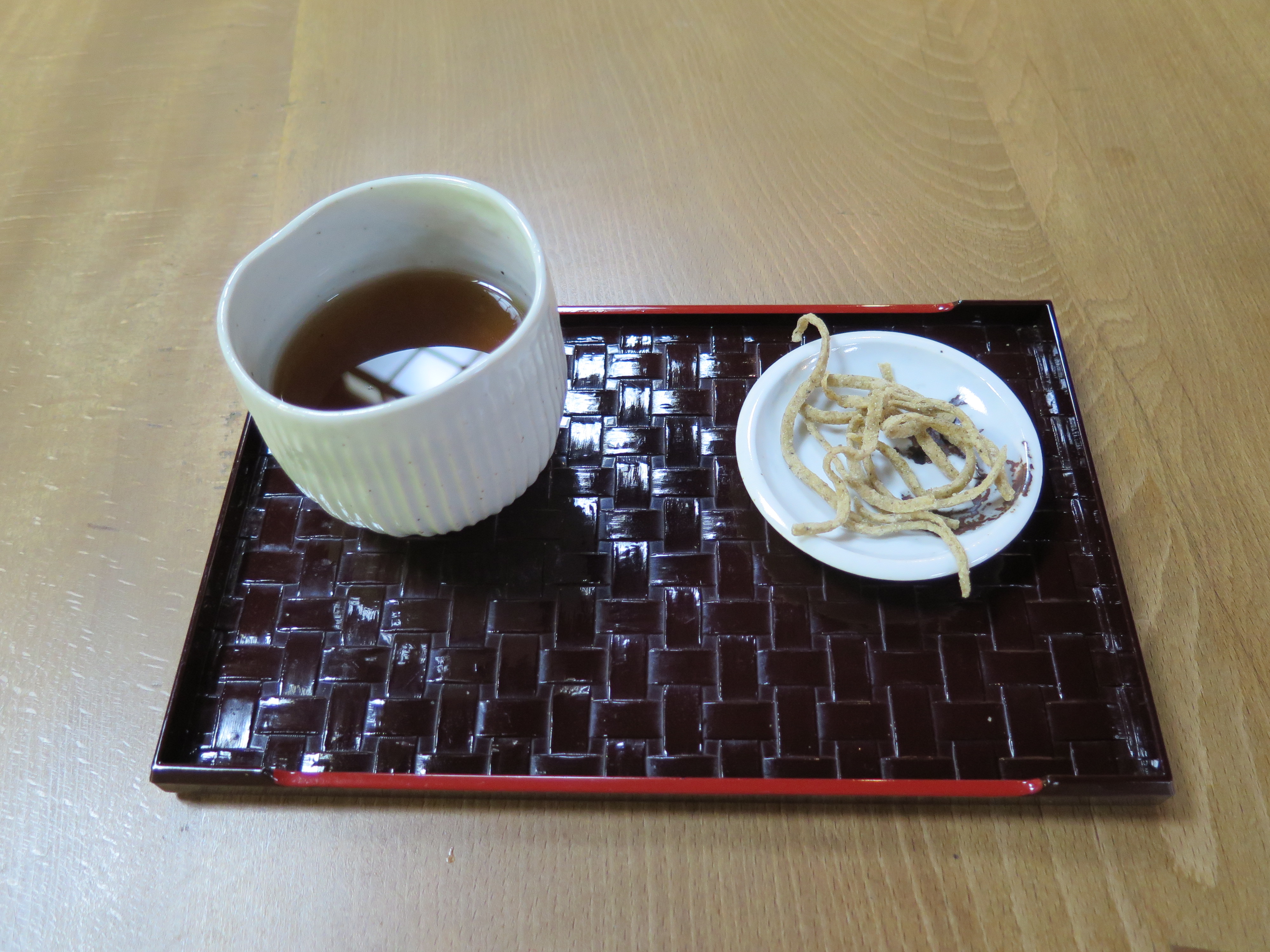
The meal comes in 3 servings, an amuse of tea and room temperature, crisp, fried buckwheat noodles, with just a hint of salt. Then the main course of cold, handmade noodles with an adjunct of warm soup to follow. There are some condiments of grated daikon radish, finely chopped green onions and wasabi, with a small separate dish of pink salt. Finally, there is a desert of sweetened buckwheat paste. It’s all terribly yummy. All this for Y800. That’s less than $10.

We exchange gifts, I have brought him a jar of Australian honey and he gives me one of his pots.

IMG_0510IMG_0509

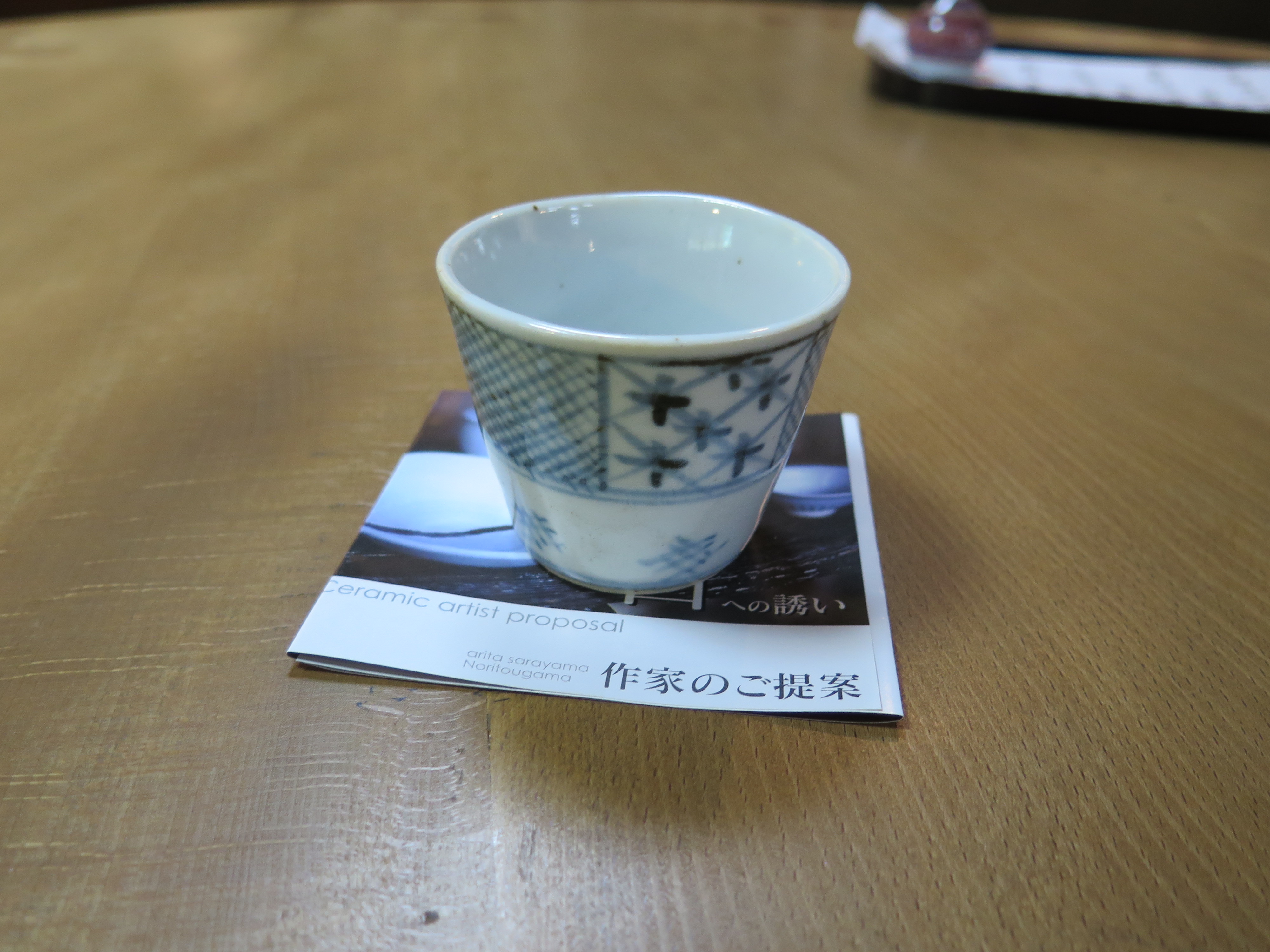
His advertising says that you can eat your handmade soba noodle lunch from his hand-made porcelain-stone, soba cup/bowl and them buy the cup. I do just that. It’s a warm autumn day and just right for cold soba.

from Steve in Arita, enjoying the food, porcelain-stone cold soba

Izumiyama and the Shira Jiki

I’m working in a workshop in Arita, in Kyushu. I’m trying to learn something about working with single stone porcelain. The potters of Arita in Japan have been making porcelain ‘jiki’ pots out of this single crushed stone from the izumiyama mountain quarry for four hundred years and they have developed a technique or two in that time. I’m keen to learn just a fraction of that knowledge in the very brief 5 weeks that I have here.

Arita is famous for being the first place in Japan where porcelain stone was discovered and white porcelain was subsequently made here. This place has a very long history. The first porcelain being made here in 1616. Since then the industry has had it’s highs and lows. We are currently in a low. Just like everywhere else in the world, the industry here is facing steep competition from China. Only a couple of decades ago, there were 300 studios here in this little town. Now there are only 100 and falling steadily. No country or industry can compete with the low cost-base of China. The best hope that they have is to engage with people like me, cultural tourists. I’m prepared to pay for the experience of working here in this amazing place, with this unique material that they have here. Merging traditional porcelain manufacture with paid workshop access for artists could be the difference between financial survival in the future. This town needs more accommodation and restaurants, if it is to encourage more longer-stay cultural tourism. Something more than the usual casual day-visit for shopping.

I don’t think that they really understand how rare and amazing this stuff really is on a global scale. So don’t fully understand its true value and what they have to offer. It’s just so normal for them here, after so many centuries. They don’t realise the special nature of what they have. It’s bred by familiarity! As all the workshops seem to be struggling financially, People like me could be the cash cows of the future, or at least part of the fiscal solution.

In the early 1600’s, the great Japanese Warlord Hideoshi invaded Korean. He captured potters and repatriated them to Japan. Rendition! It sounds familiar? A potter, named Ri Sampei, he was actually a part time potter and part time vegetable grower (farmer). Sounds familiar. He was captured and brought to this place. He soon discovered the special porcelain stone in the mountain of Izumiyama just outside of the village of Arita. He recognised it for what it was and began to make the first white porcelain in Japan, called Shira Jiki. The rest is history.

First day, I start with a clean wheel and pot boards, + a few lumps of porcelain clay.

IMG_0426

So I’ve come to this place to experience the special southern Japanese porcelain techniques that have been developed here. This stuff is amazing, sufficiently plastic to throw well enough, so that you don’t really think that you are throwing with a ground up piece of stone. It is quite strong and stands up well on the wheel. Not vigorous, but sufficiently robust to make reasonable forms easily. For me anyway.

It is miles away from what I’m used to. The hard rock that I grind up at Home is a solid, non-plastic affair. I know from my reading that this stone here, is highly weathered. In a form known to geologists as ‘hydrothermal weathering’, where hot steam has passed through fissures in the parent rock, reducing what was formerly hard granite, to a soft crumbly type of soft white mica called Sericite. Sericite is both slightly plastic, throwable and highly fluxed at the same time. Plus, it is very low in iron oxide. A very unusual combination of characteristics. Only a few places in the world have materials like this at hand.

I find that the clay is used so soft here in this workshop, that I can’t separate my pots from the wheel-head using a conventional cutting string and lifting technique that I’m used to. I find that I have to use so much force to allow air in under the pot to lift it, that it distorts the bowl. I take a moment to make myself an extra thick, double twisted, multi-stranded, cutting string. The texture that it creates as it passes through the ultra-fine porcelain clay allows air to penetrate, so breaking the vacuum seal and allowing the pot to be easily removed from the wheel head.

IMG_0456IMG_0457

I settle in for a few of weeks of intensive work. We work together, side by side.

IMG_0429

I’m, in the workshop of Tsutsui Tatsuya. He is very experienced, having spent 40 years in this workshop. Purpose built, up on the hill overlooking Arita’s U-Tan district. I spend half a day throwing my pots and then spend a week turning them, and so it goes for the rest of my time here. I soon fill my shelves and then I’m looking for more storage space in the overhead racks, above the wheels.

IMG_0437IMG_0468

The turning here is a different story to what I’m used to. It takes me back to my student days working for the Japanese Potter Shiga Shigeo. He was trained in the porcelain techniques of Kyoto and worked for the ‘Nation Treasure’ potter Tomimoto in Kyoto, another porcelain centre of excellence in Japan. Here they turn not just outside, but inside as well. I’m not used to that. I have tried in the past to get my form just about right on the wheel, so that there would be as little turning as possible. Here they all seem to use the ‘nobebere’ profile stick to throw the forms. Another thing that I’m not used to. But I’m here to learn and to experiment.

IMG_0464IMG_0477

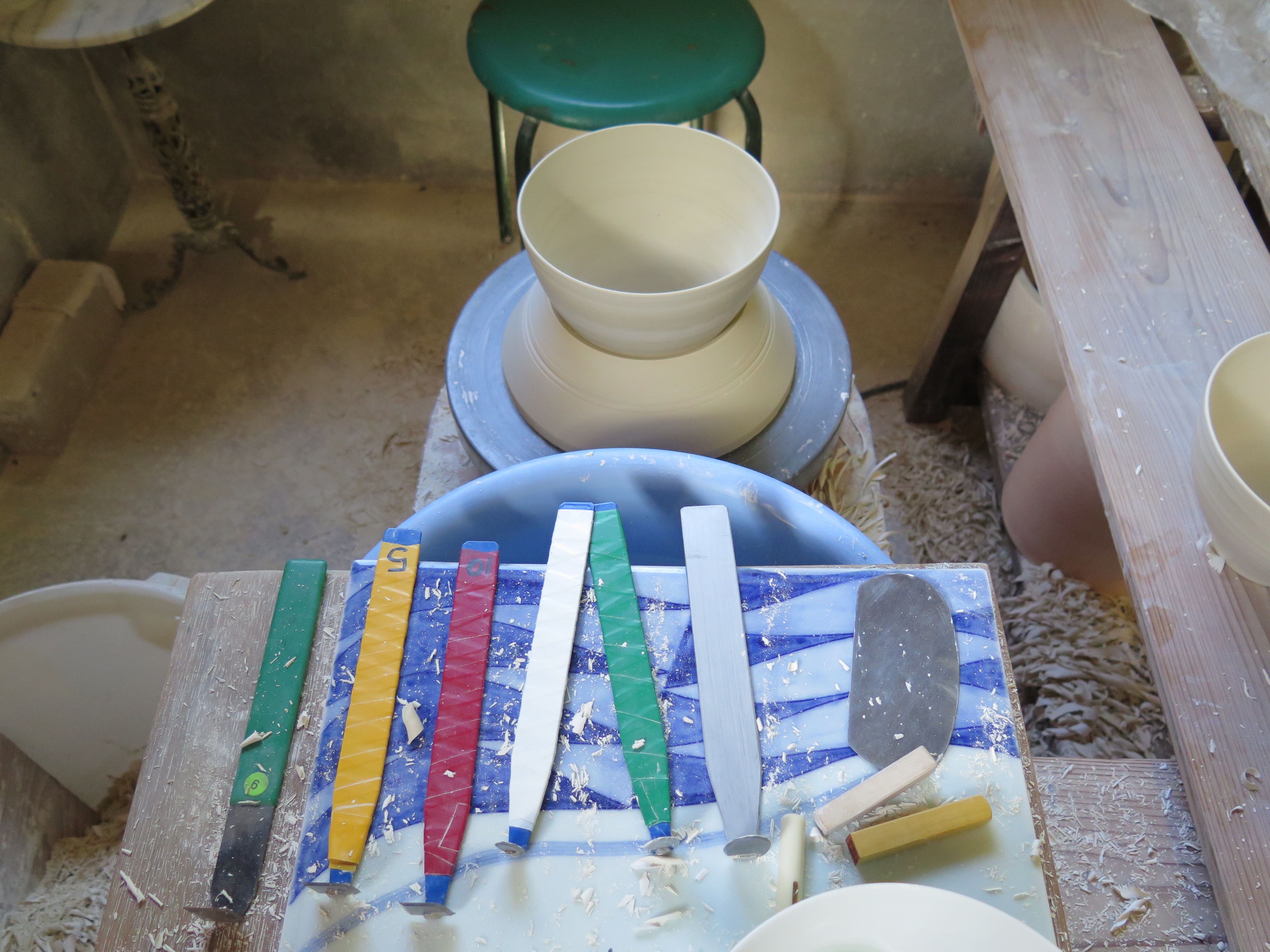
This work requires you to be both meticulous in detail and therefore precise in your hand-eye co-ordination, I’m not too sure if I’m up to it, but I give it my best, roughing out on the next day and turning down to form on the third, then the precise thinning and finishing when it is bone dry on the next, or any time after really. It doesn’t matter once it is fully dried out. I get to use my new tungsten-carbide-tipped turning tools for the job. I’ve colour-coded them. I need to get out more!

IMG_0471made by Steve in Arita

IMG_0449First pot finished, 89 to go.

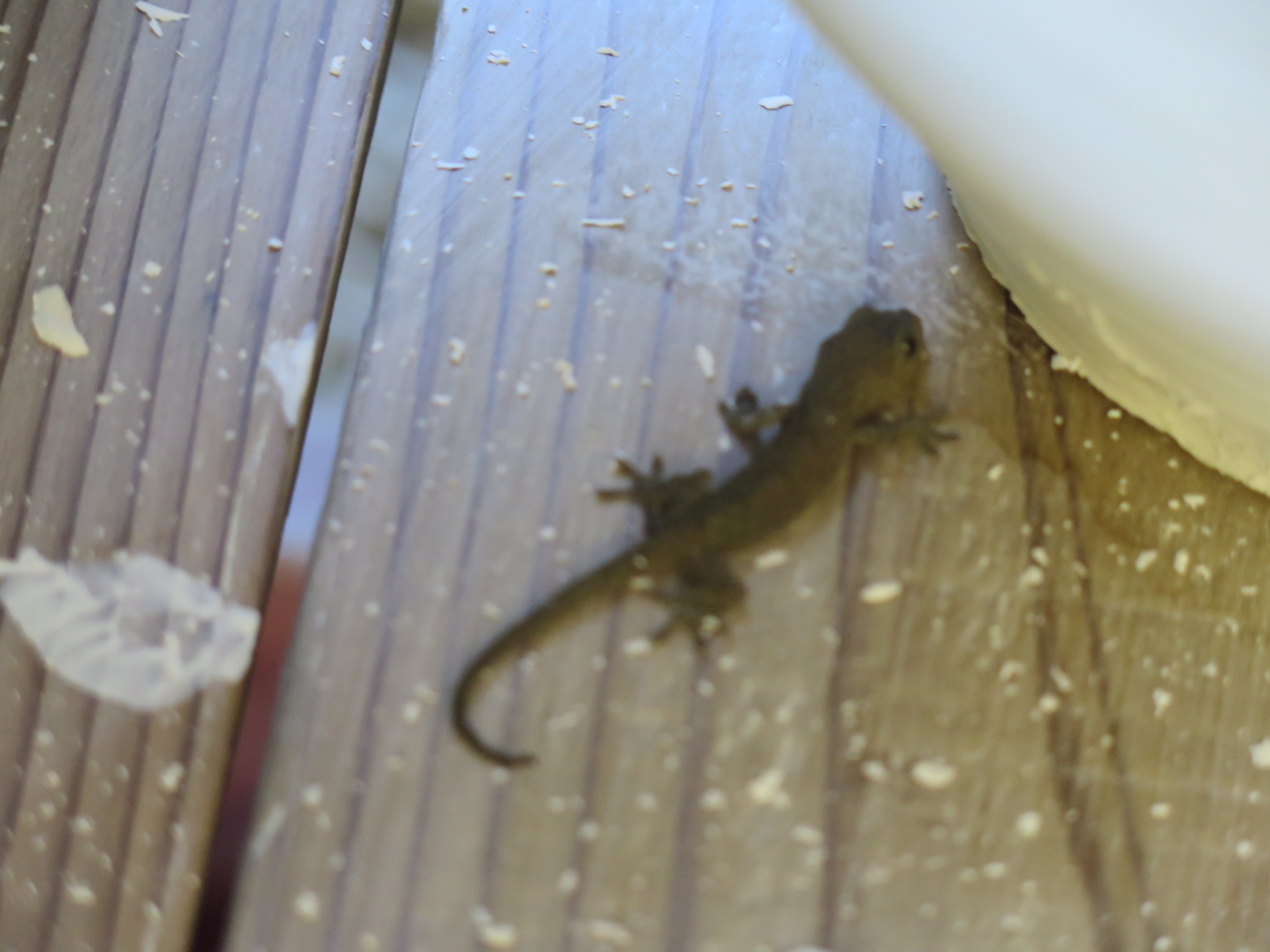
A gecko comes to visit me while I’m turning.

IMG_0466

Today Tatsuya made us a cup of matcha for afternoon tea break. It was amazing. He offered me his father’s Karatsu tea bowl and chose to use the bowl that I had recently given him as a gift, for himself. The tea looked really good in them. We both reached for our cameras at the same time. We laughed! So funny!. We were both thinking that we ought to record the special image of this very particular event on our cameras.

IMG_0473IMG_0475

IMG_0476

It’s a modern world, in this ancient place. So full of history, you can taste it!

The perfect juxtaposition of then and now.

fond regards from Old Steve in the New Arita, Japan

Desperately Seeking Tungsten

I’m freewheeling in Kyoto for a while. It’s one of my favourite cities to visit. Its small enough to be walkable to most places. A long walk sometimes, admittedly, but then there is an excellent bus and train service that can get you to most places that are a little bit out-of-the-way. It’s quite central to my other interests, as Nara, Osaka and Shigaraki are just short train rides away and good for a day trip. There are more temples and shrines than you can poke a (chop)stick at. I have a few favourites.

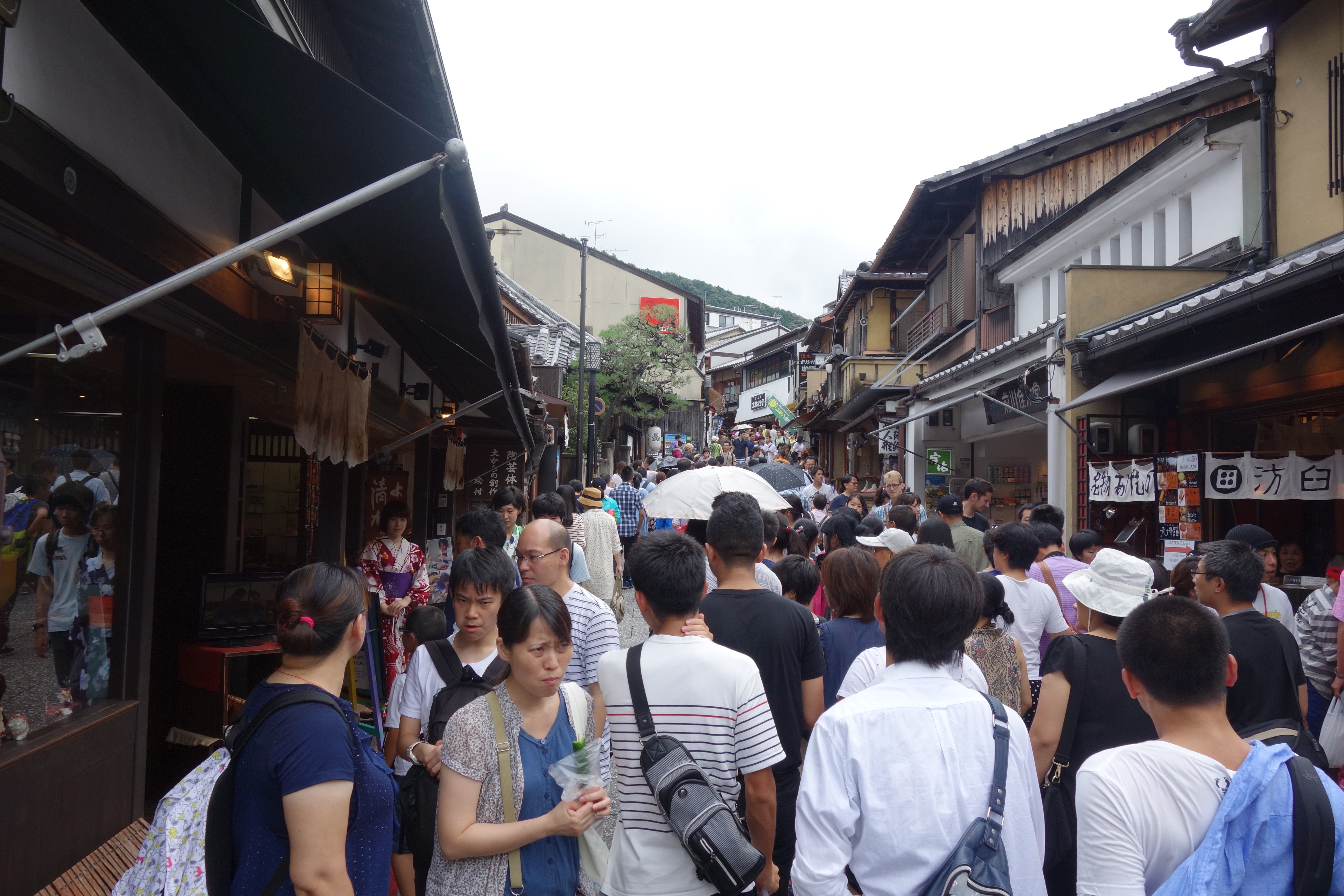
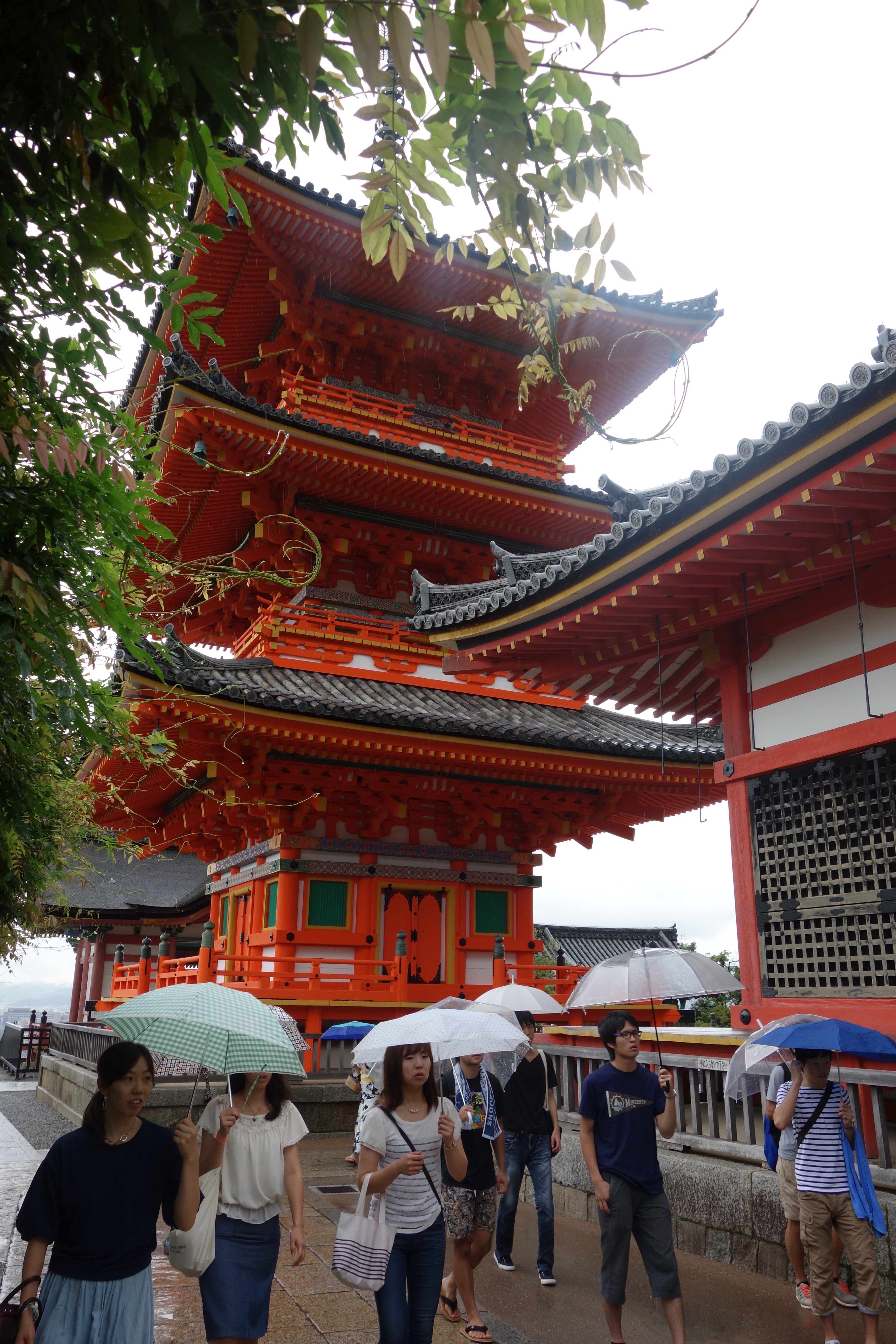
But Kiyomizu has to be one of them, as it is easy walking distance from the centre of town or the main station and the roads that lead up to it are a very interesting days entertainment. No matter which way you approach it, there is always something of interest. Because it’s so close to town, it is alway very busy and crowded. A minor drawback.

DSC01319DSC01321

DSC01307

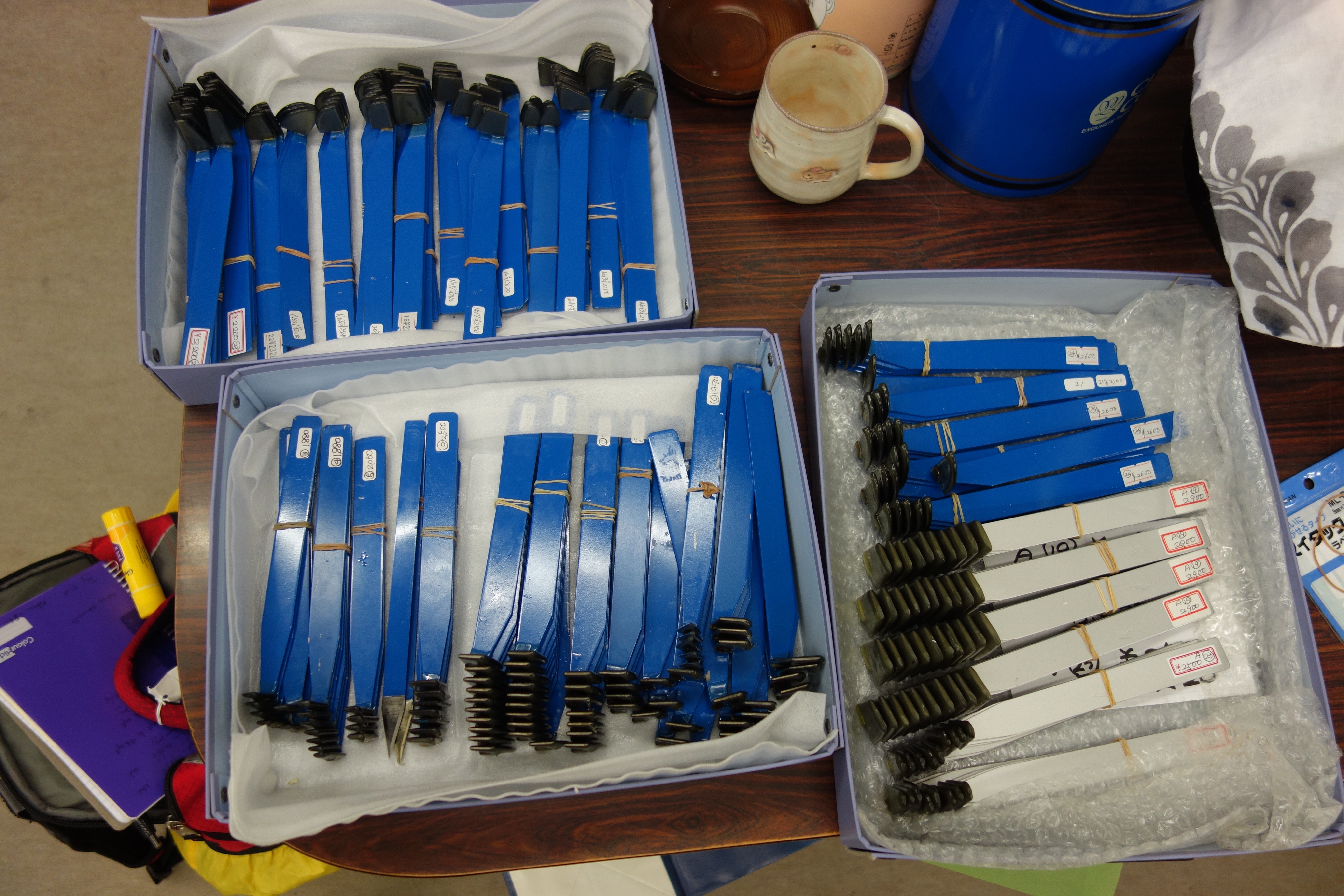
On this visit to Kyoto, I’m searching for some tungsten carbide tipped pottery turning tools for working with porcelain. They are very specialised tools and a bit hard to find. Actually a lot hard to find! It seems that they are only made in 3 places in the world. Nevada in the US, but the style of those tools are not really what I’m after. Plus his web site isn’t working at the moment and the guy is moving shop currently. Then there is a place somewhere in China, but I haven’t been able to locate just where. Whenever I came across some of these tools during my resent research trip, I was told that the tools were from ‘somewhere else’, then when I got to the  ‘somewhere else’ they told me that it wasn’t there, but where I’d just come from? Now I’m in Kyoto and tipped off by my friend Alistair back in Australia, who trained here some time ago, actually many years ago. I hope to track them down here. Alistair doesn’t know the address, but knows someone, who knows someone, who apparently might know.

I’m onto it, nothing like a false start and a dud lead to peak my interest. I like a challenge. When these tools do turn up in Australia, they are terribly expensive when they do, exceeding $100 each. A lot for a small, simple pottery tool. They shatter easily if you drop them, and chip if you hit them against something hard by accident. But they are unbelievably hard-wearing and long-lasting, as long as you look after them. I only own one of them.

So, I set off on my long march. Firstly, I tried to find the ‘Iwasaki’ pottery supply shop that Alistair’s potter friend mentioned. But nothing came up in google maps for that address.
So I asked the very helpful lady here at the guest house, where I’m renting a room. She rang them and got a detailed description of where it was. I walked there. I found it pretty quickly, but it was only a small supply shop with not much choice and no carbide tipped turning tools at all in stock.
However, I bought 2 small brushes and standard carbon steel turning tool. The guy behind the counter didn’t speak much English, but managed to understand what I was looking for after a while. ‘Tungsten carbide’ isn’t a word that I know in Japanese, it takes a lot of charades to get that one across.
He wrote out the name and address for another place, but only in Japanese ‘Kanji” characters. I was starting to feel like this might be going to be a bit like hard work. This might not even be a place-name or address? I’d have to go back to the Inn and get it translated and the place on the map pointed out to me. If indeed it is one. He can’t read my map of Kyoto, as it is in English. He just waves me down the road. “a long way!”
But just at this time, another guy who apparently works in the shop turns up and he can point out on my map, more or less, the area where I need to go. Unfortunately, it’s off the detailed part of my tourist-guide map and into the grey. There be dragons! Yep. That part of the map. I’ve never been to this part of town, so have no mental guideposts for it, but it can’t be that difficult. Can it?
It’s a long walk and it’s a hot steamy, humid late summers day. I manage to work up quite a sweat by the time that I get to where I think that it ought to be. Only to find that it isn’t there. I can’t find it, after all No one that I ask, seems to know. I think that it ought to be up this hill on this road somewhere. I’m only half way up this hill and I’m already feeling a bit ‘over the hill’. So I ask a passing bloke. He doesn’t understand me at all, and he can’t read my map. This is an isolated part of town with few passers-by. So I sort of give up and begin walking back down to find someone who can help me. This is when I come across a couple taking their groceries into their house from the car. I ask again, show him the name and he seems to know what it is and where it is. This special place that I’m after. He goes into the house and comes back with a ‘Gregorys’ type street map book. Lots of detail. He shows me where it is, and I was very close, about 300 metres away but in the wrong street. It turned out to be down and around a lot of small lanes off the main street. He draws me a map of the local lanes, and off I go into the back lanes, left, right, second left, then right again, just where he said. I take careful note of all the turns and corners so as to be able to find my way back OK.
The people in there, didn’t have much English either, but the lady managed a bit, especially when I showed her the tool that I just bought. It all ‘clicked’ into place and out she came with 3 trays of carbide tipped turning tools. Kan-na.
I bought 5 different shapes from around Y2,500 to 3,800 yen each. That’s somewhere around Au$30 to 50 dollars.
DSC01313DSC01314
DSC01315
I then had to walk all the way back. Somehow, the return journey is a lot easier. It’s not just because it’s all down hill, and matches my career. No, it’s because I succeeded in doing it, more or less, on my own, even though I had a lot of help. Thanks Alistair, Aki, Yusushi and Kahori San.

My home-made ground bai tunze porcelain stone body is just like throwing with fine sand and water mixture. It is very tough on the fine razor edge of my turning tools. Especially because this kind of ceramic paste ‘clay’ body. and I use the word ‘clay’ here not as a description of anything plastic and workable, but as a generic term to describe what a potter works with on the wheel. My own particular native porcelain stone is a hard igneous rock. I collect it in chunks from a very small hill, or a big mound, where it has pushed up through the ground in some sort of volcanic activity. Too small to be called a hill, and larger than a mound. I decided to call it a knoll. That sounds just about right. Because it is mostly composed of felspar, which melts in the potters kiln at high temperatures to be a tough glass, I decided to call it the glassy knoll.

Now, because it hasn’t been ‘weathered’ or degraded by the elements as yet, it is very dense and hard. It needs to be broken down in two stages in a couple of different rock crushers, first into gravel size, then into small sand sized fragments. It is then ground for hours in a ball mill before it is fine enough to work with. It does not have very much clay mineral in its make-up, so I add a small amount, 1%, of bentonite to my mix. Bentonite is a very fine sticky clay material that I get from Queensland. It is quite a rare material, and one of the few ‘exotic’ minerals that I buy. In the US, they seem to call bentonite ‘V’ gum. I don’t know why, but it’s an interesting name. This ceramic ‘gum’ helps to bind it all together, a bit like a glue, so as to make it a little more responsive on the wheel.

How it all works, such that it makes a native rock, that I can pick up off the ground , into a translucent, hard porcelain, is amazing to me. There is probably a conspiracy theory about it somewhere on the web? So I have decided to explain it by calling it “The single gum theory from the glassy knoll”. That should quash any hint of conspiracy!

fond regards from Steve in Kyoto

Enjoying the Now

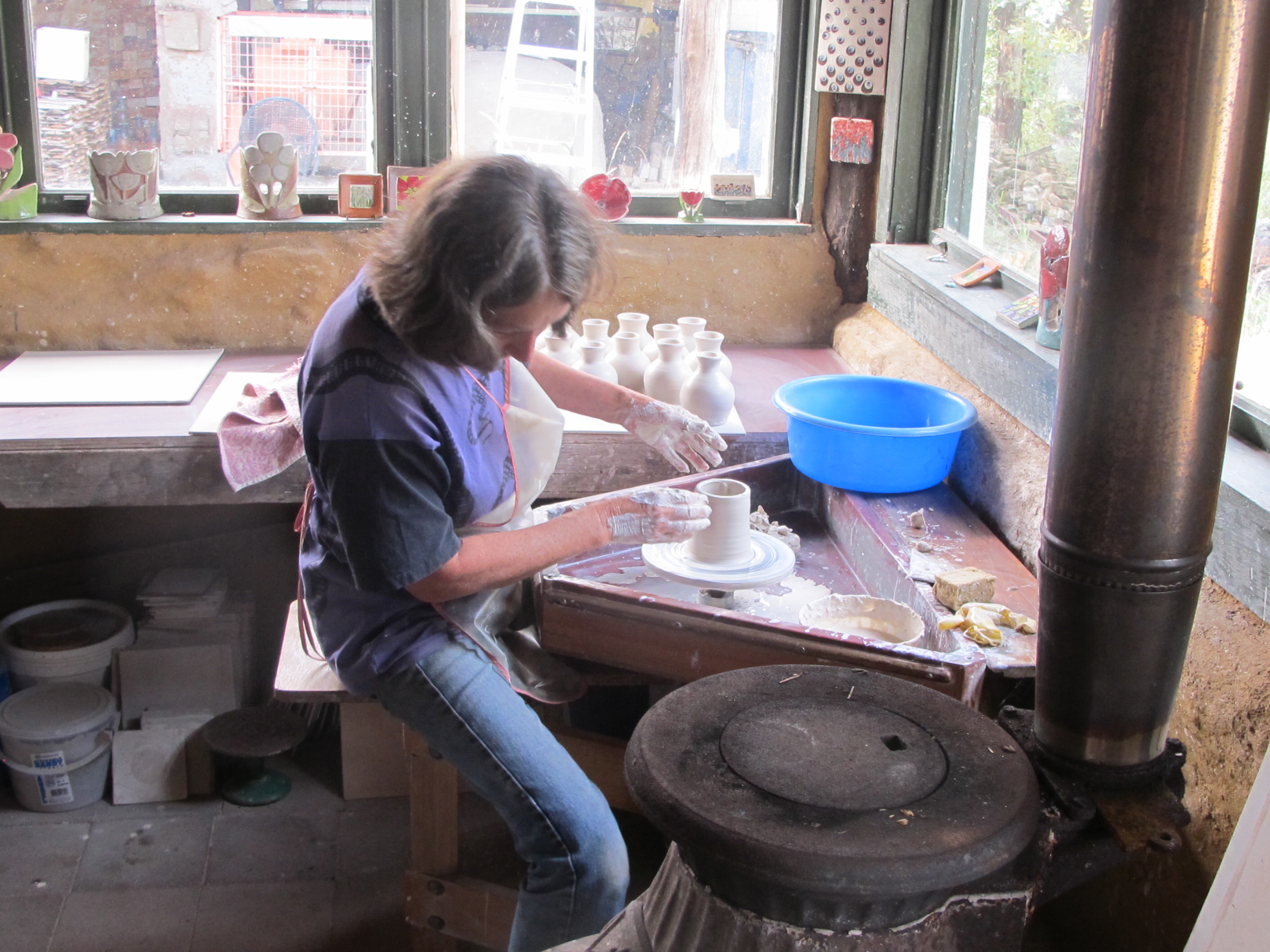
We have our pottery back to ourselves again now, so it’s back to the wheel for us. We work at our kick wheels, set either side of the old pot belly stove which has been generating a steady gentle heat to keep us warm on the coldest of days for the best part of 40 years now. I’m amazed at how it has kept on going for so long with only minor repairs.

IMG_8895thumb_DSC01182_1024

thumb_DSC01187_1024thumb_DSC01213_1024

thumb_DSC01218_1024

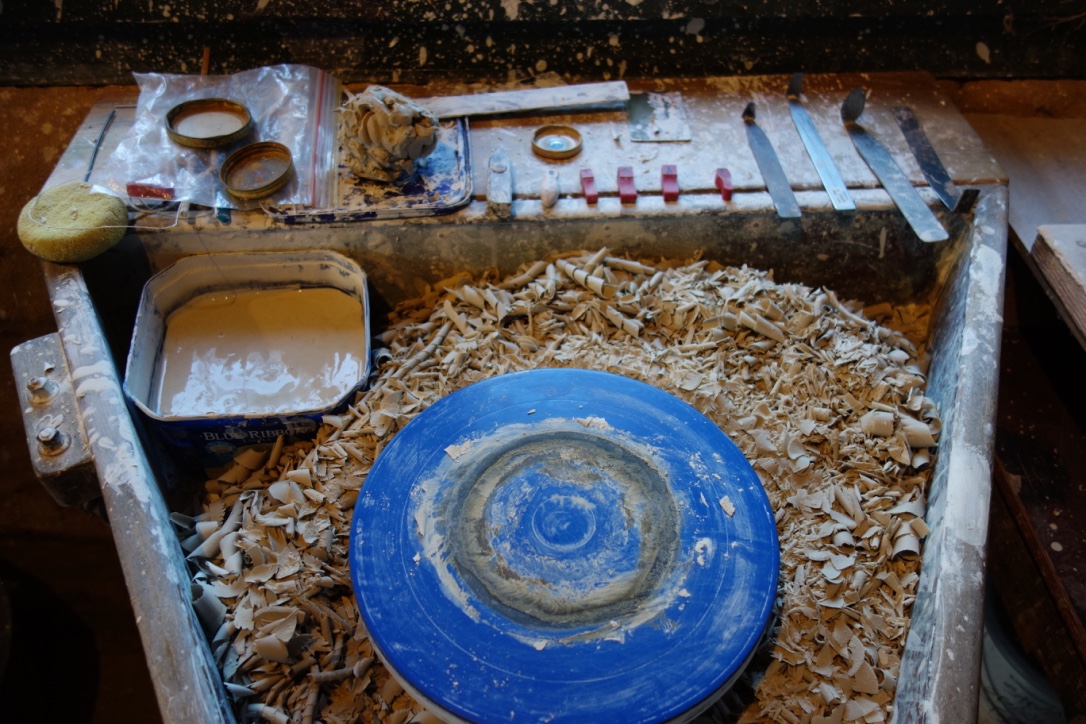
Throwing pots out of these ground rock ceramic pastes is a slow process. We have to plan ahead so that everything must be thrown thicker than you might like and then there is a lot of turning to be done. Some times we rough the forms out on one day, then let them dry overnight until they are almost completely dry, before finishing them off to the thinner desired cross-section. They can’t be bone dry, or they might break under the pressure of the turning tool, but they can’t be damp either, as then they will chip and tear. Milled rock paste isn’t like ordinary clay. It’s just not very plastic. It needs to be turned just before bone dry. Grinding away at what is essentially sand and water mix really takes the edge off my home made metal strip turning tools. I have to resharpen then after every 2nd pot, just to keep the edge keen.

thumb_DSC01219_1024 thumb_DSC01202_1024

The garden is starting to respond to the increasing day length and the hint of warmth in the air. I can see a poppy bud starting to show some red colour and there are swelling buds on the blueberries. We have just picked our first asparagus spears as an aperitif before our other vegetable dinner. These are all good signs of the warmer spring weather to come.

thumb_DSC01287_1024 thumb_DSC01293_1024

thumb_DSC01294_1024thumb_DSC01290_1024

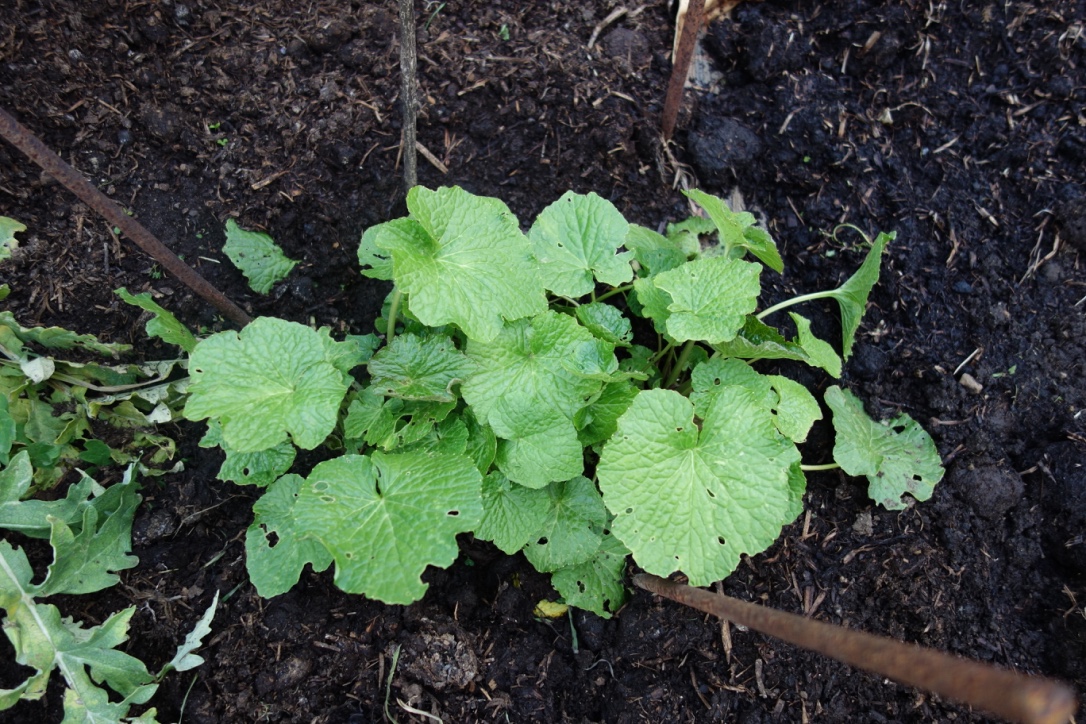
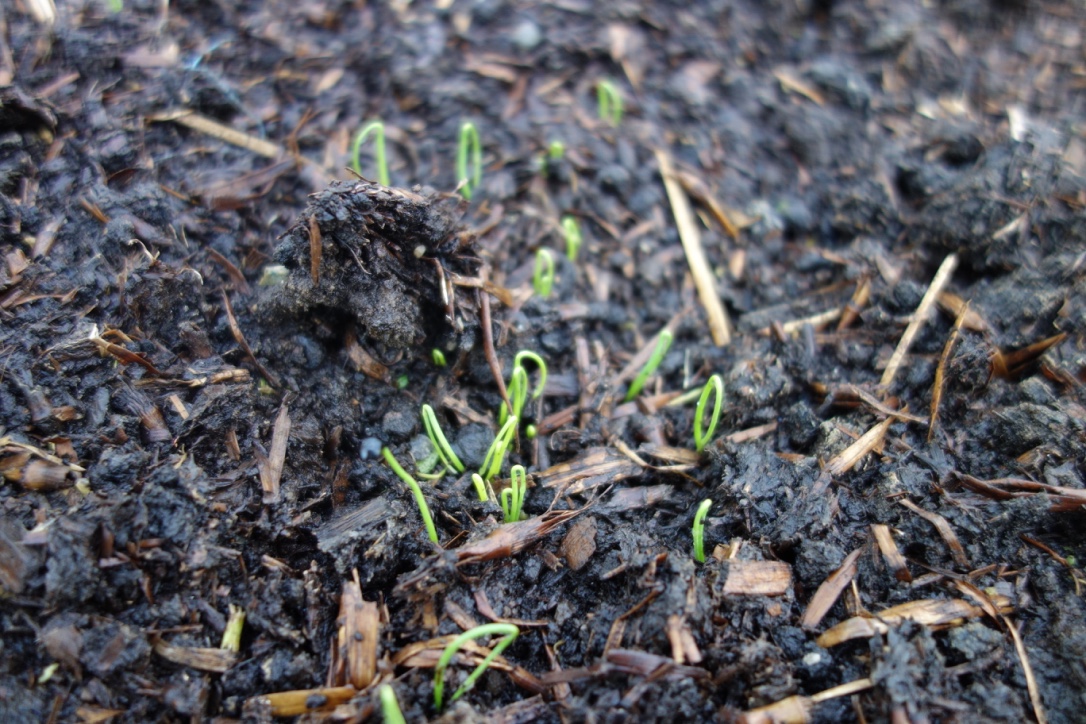
The Japanese Wasabi plants have grown well through the cool wet of the winter and are looking good right now. It’s that hot dry summer heat that knocks them around. I planted onion seeds 2 months ago. A lot of it came up on time, but for some reason, one packet of seed, just sat there and did nothing until now. This variety must need warmer weather to germinate. all the other plants are now 100 mm or more high. I hope that these plants can get enough growing season before it gets too hot and dry for them in the summer? Just down the row a little we have a nice crop of Pak Choi, lovely for stir fry, or just steamed with a little garlic, ginger and soy. 2 mins and melt in your mouth, with still some nice fresh crunch in the warm but fresh and crunchy stems.

thumb_DSC01292_1024 thumb_DSC01291_1024,

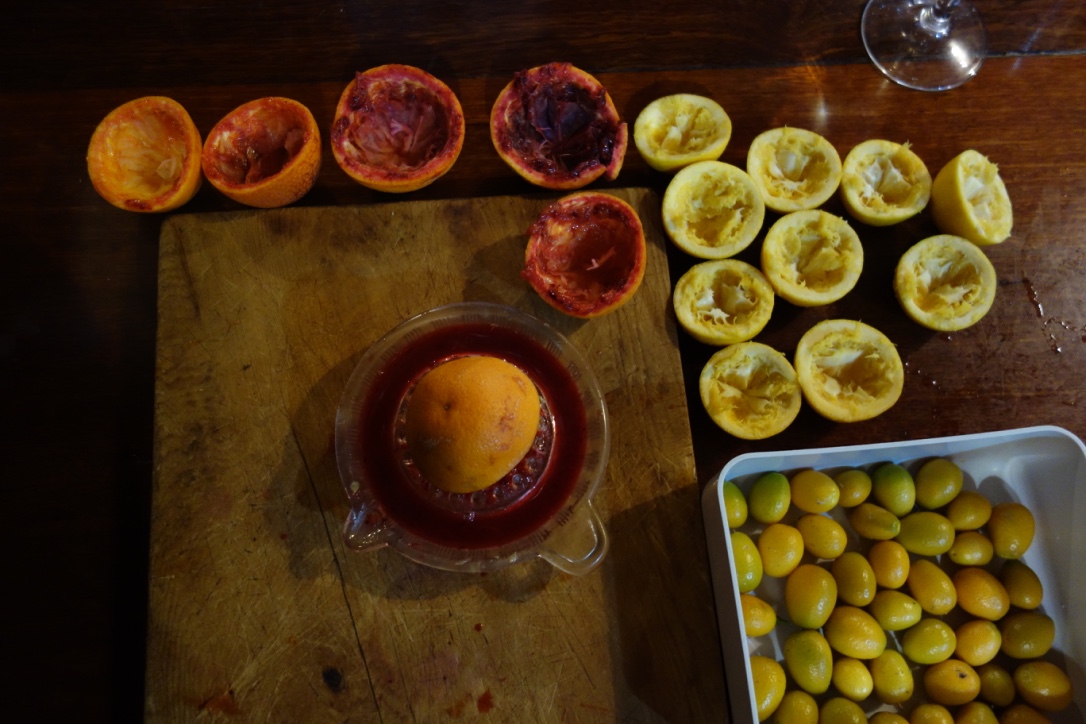
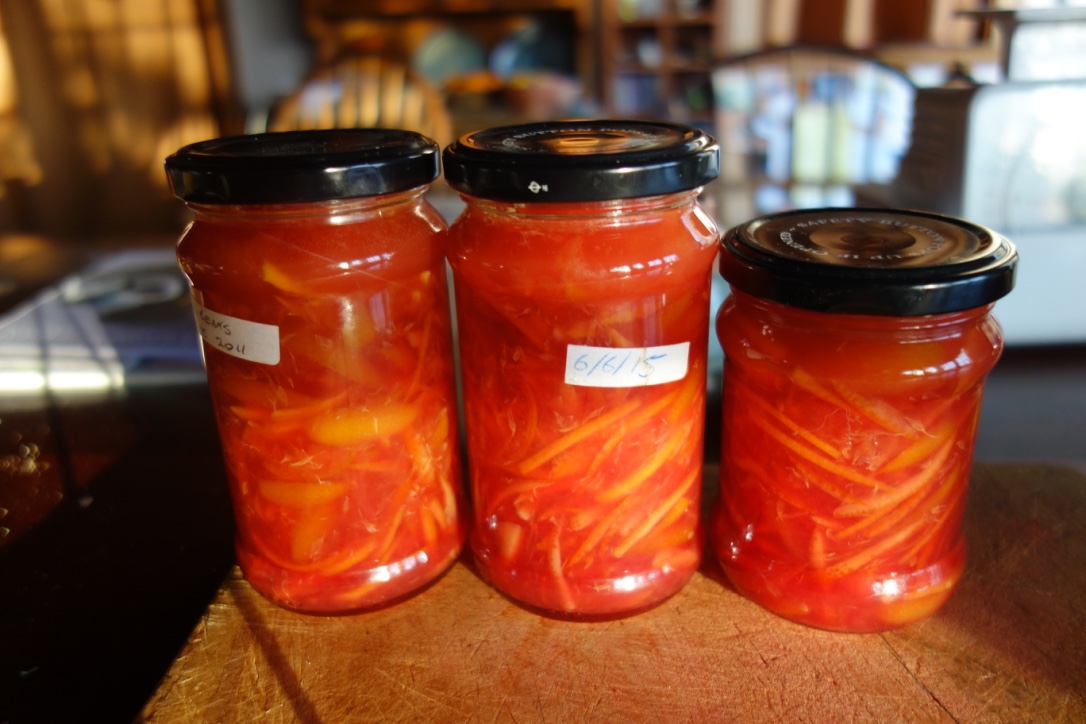
I have made what is probably the last batch of marmalade for this year. As the citrus season has all but come to an end. I make a batch of cumquat. blood orange, and lemon marmalade. I finish it off with a dash of whisky before bottling. It’s unusual, it looks great and tastes better.

thumb_DSC01272_1024thumb_DSC01274_1024

thumb_DSC01224_1024tonight’s dinner is spinach with ricotta, Brussel sprouts, initially lightly steamed, then finished in a pan-fried with garlic and chilli, served with steamed potato and pumpkin.
thumb_DSC01278_1024 thumb_DSC01277_1024

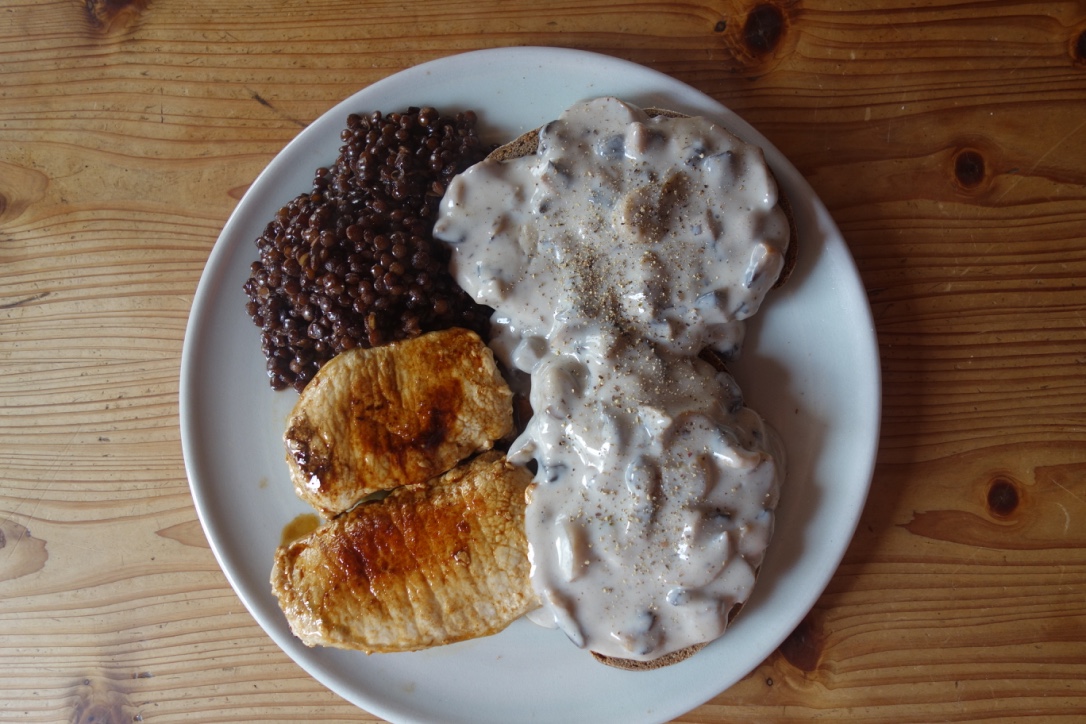
Another recent meal was pork medallions pan-fried in olive oil and garlic, he deglazed with a splash of a nice chardonnay, served with lentils simmered in home-made marrow bone and veggie stock, then plated up with mushrooms in white sauce.

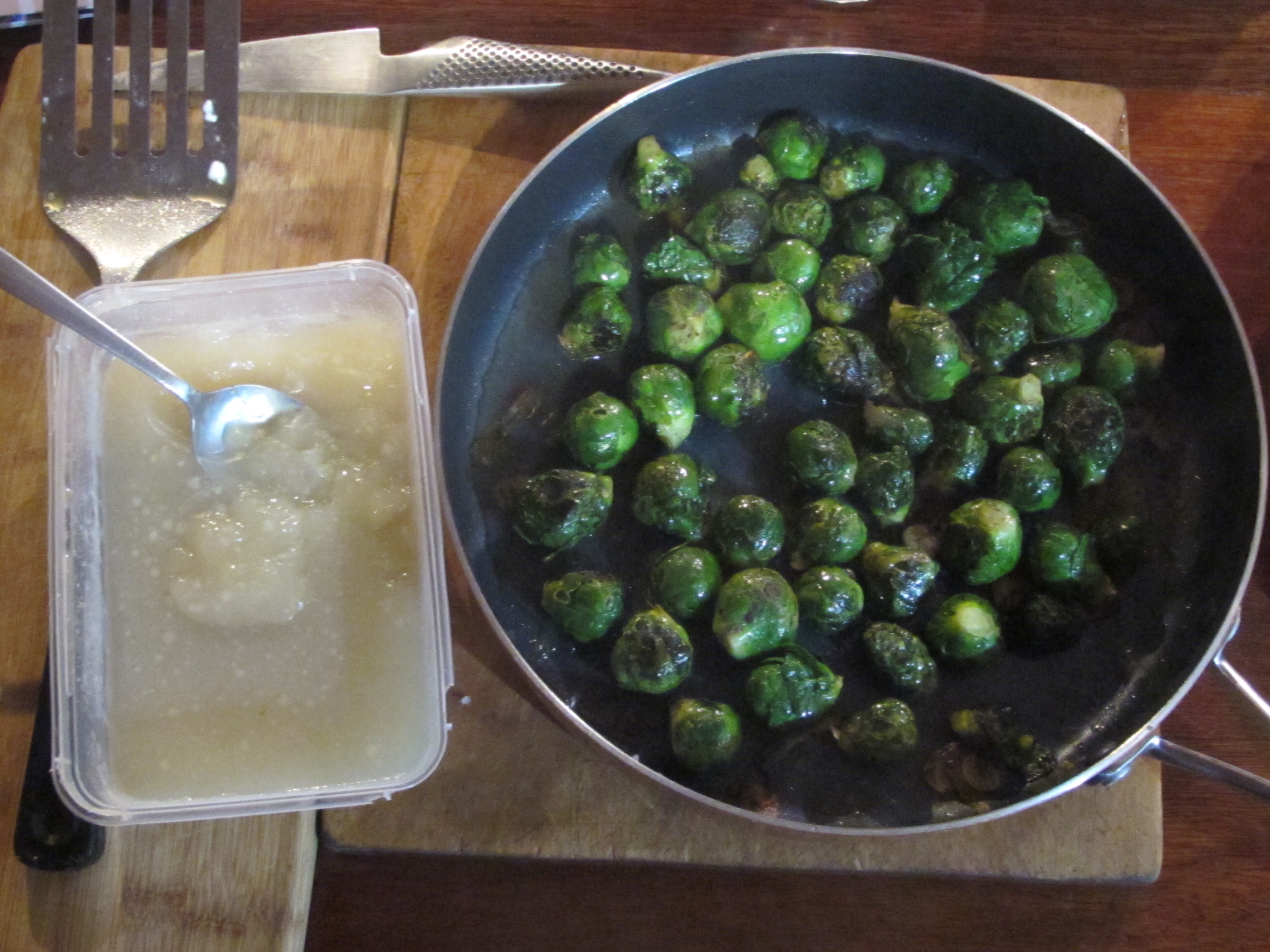
We have plenty of cauliflower, broccoli and Brussels sprouts at the moment, as the winter chill weather draws to a close. I have been enjoying lightly steamed Brussel Sprouts, which are then pan-fried in some home-made stock. In this case chicken stock, and finished with a little sesame oil and pan-fried and tossed for a few minutes. They get a few caramelised spots on them as they roll around, a slight grind of fresh pepper and some vegetable salt. Delicious.

IMG_1004

No better way to enjoy the crisp cold of winter.

There was an article in a recent issue of ‘New Scientist’ magazine. (No. 3032, 1/8/15) That told of the health benefits of eating bitter foods like Brussels sprouts.

The Brassicas have several bitter phytonutrients that are produced by the plant to make them unappetising to predators – like us, as well as caterpillars. Sulforaphane is one such protective phytonutrient that gives them the particular sulphur smell. It has anti-cancer functions and is an antioxidant. I usually have a small nibble on what there is in the garden, snapping it off and eating it raw while I wander around, weeding and watering, crunching and chewing as I go. They must be good for me?

I really like the idea of going to the garden each day/evening and picking what needs eating on that day, because it is absolutely ready to be picked, organically grown and totally fresh. This is self-reliance, living with the seasons. 

Enjoying the now!

thumb_IMG_2558_1024

Best wishes from Steve and Janine, who are vegging out in the late winter.

Back to the Wheel

My hand is sufficiently healed now for me to return to throwing on the potters wheel. My finger is still numb at the end, but otherwise I’m all OK and I feel that I can throw again OK. That’s my opinion, others watching me might differ. I’ve never been a ‘power thrower’ or aspired to be a virtuoso on the wheel. I am sufficiently capable and skilled to be able to make the ideas that are in my head come to life. I’ve done my several thousands of hours of practise over the past 48 years, so I’m OK with what I attempt to do.

It’s a funny feeling, starting wedging again after a month off. It’s like a ‘getting to know you’ all over again, kind of feeling.

IMG_0859

I can’t wait to get back into it now that we have done our last wood firing weekend workshop. We can have our kiln back now and start to plan for our own firings. Wedging up the clay and making these first pots is the start. I used to think that I could do both. Run these workshops and make a few pots as well. Last year we managed to sneak a firing of our own in, in-between the set firings with the workshop groups. However, it seems to take all our energy to just clean and maintain the kiln as well as cut, split and stack all the wood required for the firings, plus keeping part of the pottery set up as a kitchen. There isn’t any time left to be able to pack, fire and unpack the kiln with our own work in the 5 days in-between each of the other firings, as well as cutting and splitting our own wood for our firing as well. It all proved too much work for me and I just couldn’t manage to do it all. We have done 11 weekends in 13 weeks. I’m glad that we can have some space to make and fire our own work now.

On a brighter note there was an exhibition review of the ‘Turn, turn, turn’ exhibition at the NAS Gallery in Sydney. One of the six shows that I have work in currently. It is amazing that an exhibition of ceramics has been given any space at all in a major Sydney newspaper. It is even more amazing that the reviewer, Christopher Allen was given almost two pages to do the job. I can’t remember a ceramics show getting any oxygen at all in a major newspaper in Sydney for the past twenty years, so I was particularly thrilled to find that my own work got two paragraphs at the end of the review. I don’t know how this has all come about, but I appreciate it enormously, as it will most likely be the only time in my life that this will happen, as ceramics isn’t highly valued in critical circles in Australia.
It’s amazing to me that when it happened, I was part of it.
I am grateful!
Christopher Allen wrote;
“…Steve Harrison represents the culmination of the art of the potter in the East Asian traditions. His deceptively simple and yet refined and serene vessels are the product of the humble, meditative practice of the potters art and reflect, indeed his own choice of a life in harmony with his aesthetic ideals. 
These are works that ostensibly seek only to serve the craft and subsume them selves to its formal demands, which make no attempt to claim our attention with brash or sensational effects, and yet which silently draw us to them by the force and conviction of their integrity.”
Christopher Allen, ‘Wheels of Creation’, Weekend Australian, Review, Visual Arts, P10/11. July 11/12 2015.
Best wishes
Steve