Hit The Ground Running

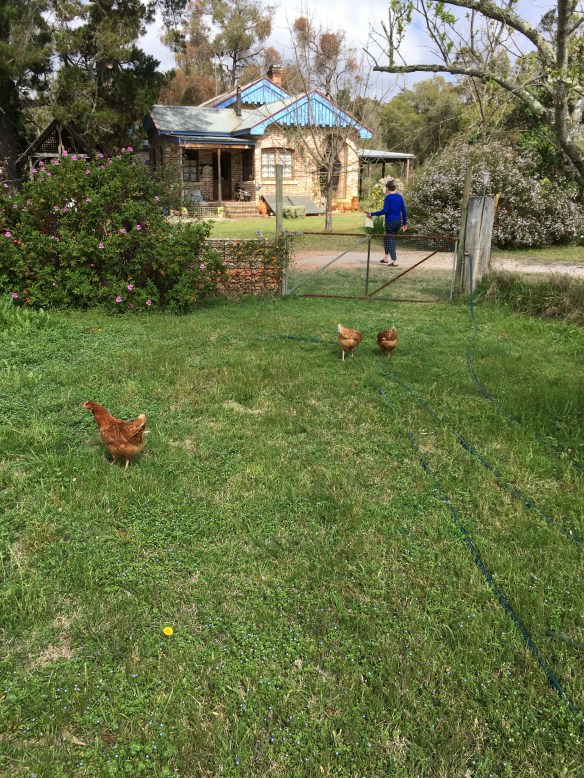
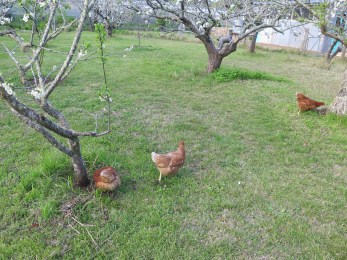
It’s always good to be home and re-united with my 4 girls.

img_3472 img_4361

I have a lot to do. Jobs that have built up while I’ve been away. I hit the ground running. We have 3 weekend workshop booked in for wood firings over the next 3 weekends. We have a lot of bisque-ware ready to be glazed for the Southern Highlands Arts Trail Open Studio Weekends that are coming up, but we can’t get access to our wood kiln until we finish all the workshops.

The effort that we put in to preparation pays off, as all the weekends go smoothly and everyone leaves with something nice to make all the effort worthwhile. And we are lucky with the weather too. It blows a gale all week, and then it settles down and we have a glorious weekend of still, sunny days.

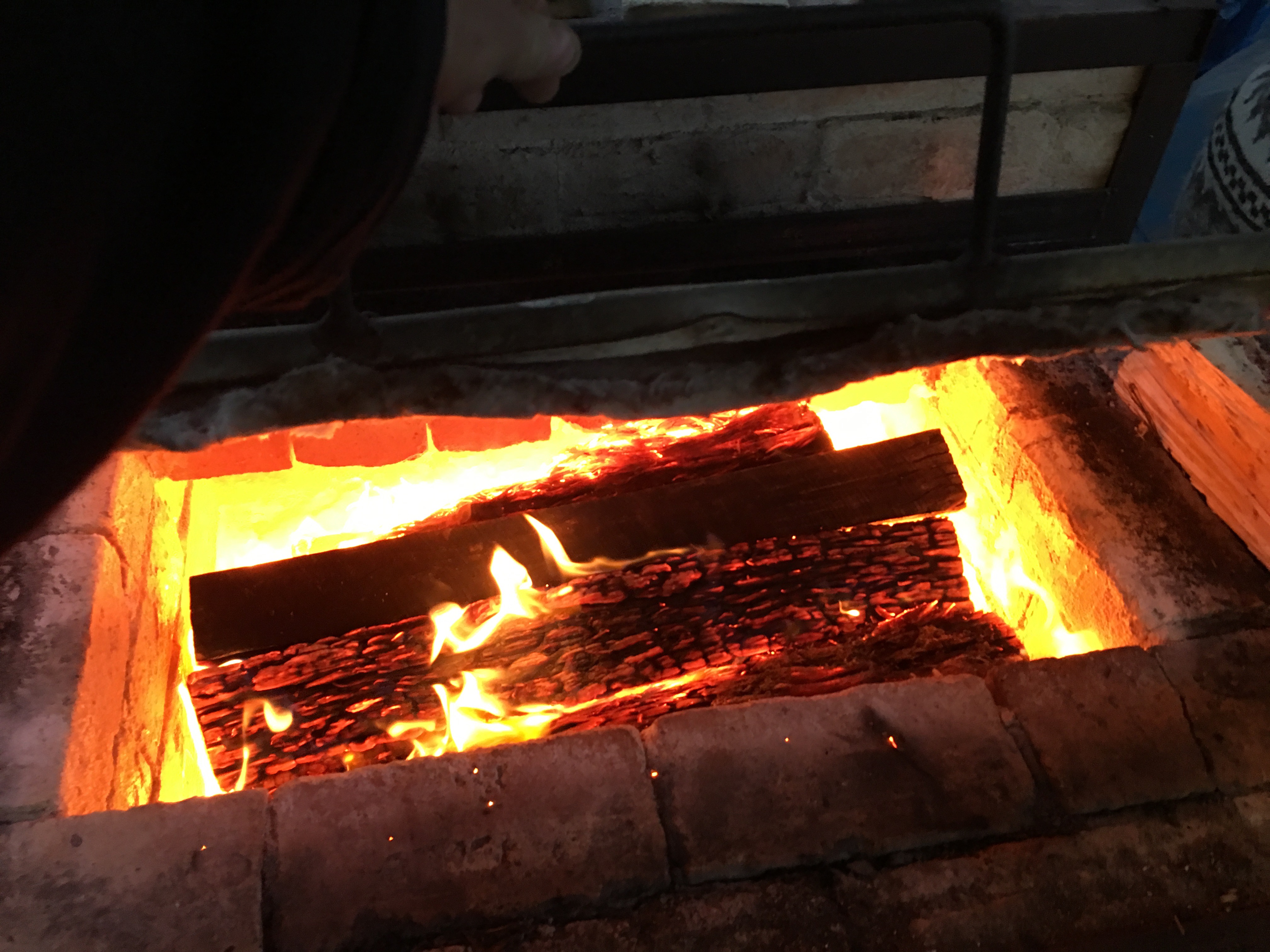
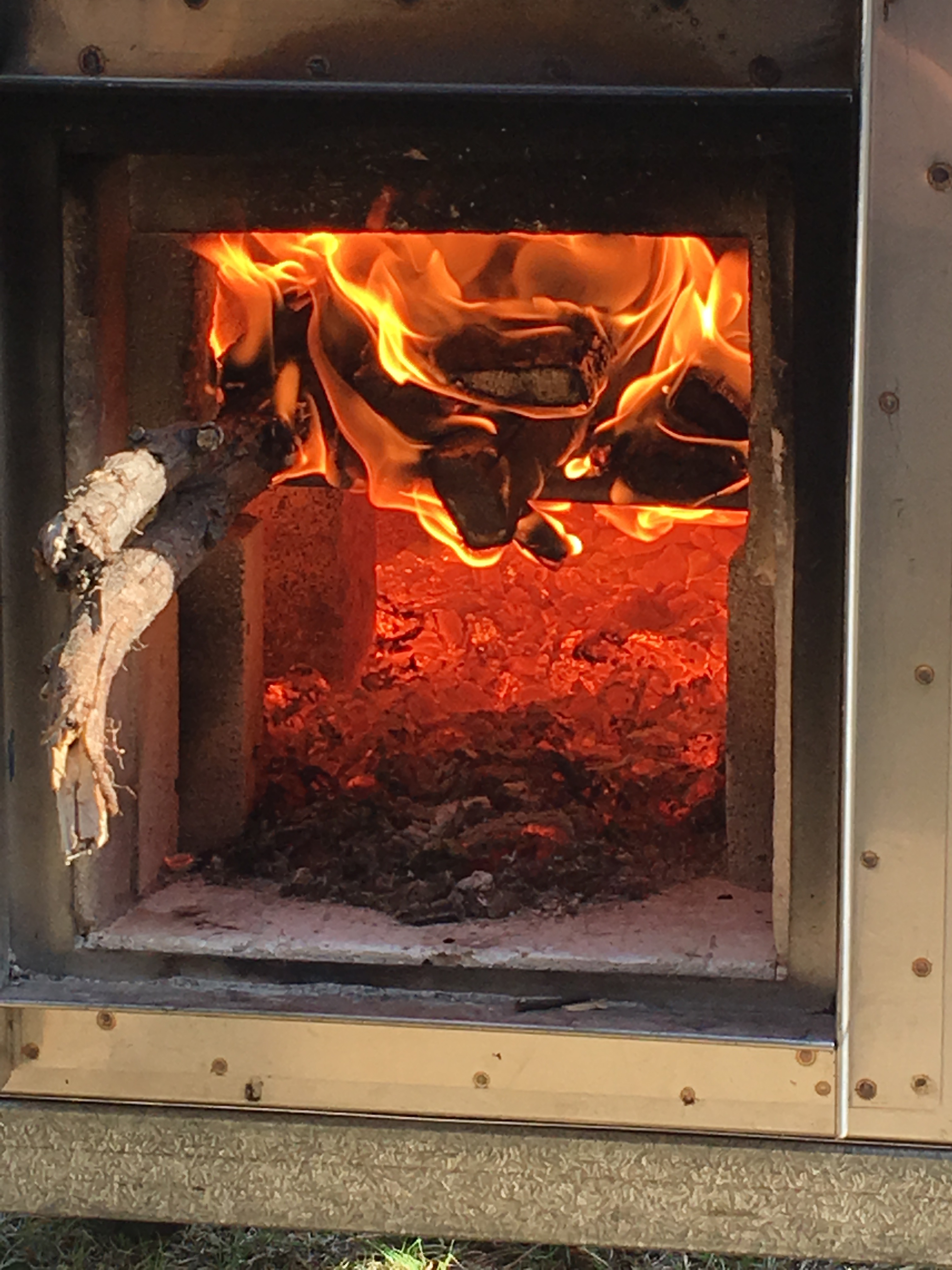
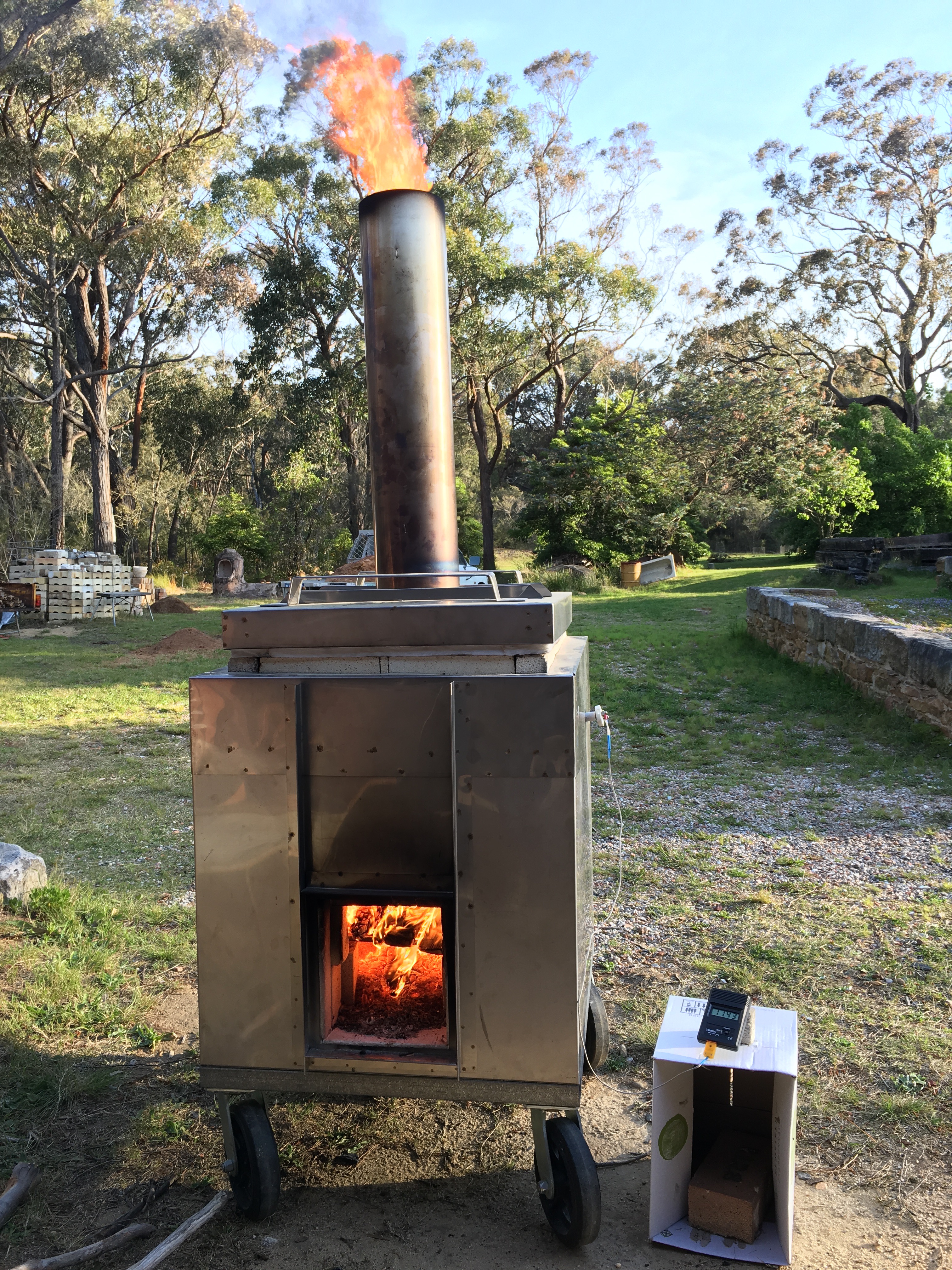
We fire the big wood kiln overnight through the weekend, taking shifts of 4 hours and overlapping each change of personal by 2 hours, so that there is always some continuity. The nights are cold and we huddle near the firebox for warmth. This is a downdraught ‘Bourry’ style firebox, so there isn’t very much to do most of the time.

img_3512 img_3526

If we stoke with big pieces of hardwood. It might take up to one hour for those logs to burn down sufficiently to allow another stoke. The kiln climbs slowly in an even, steady, reducing atmosphere.

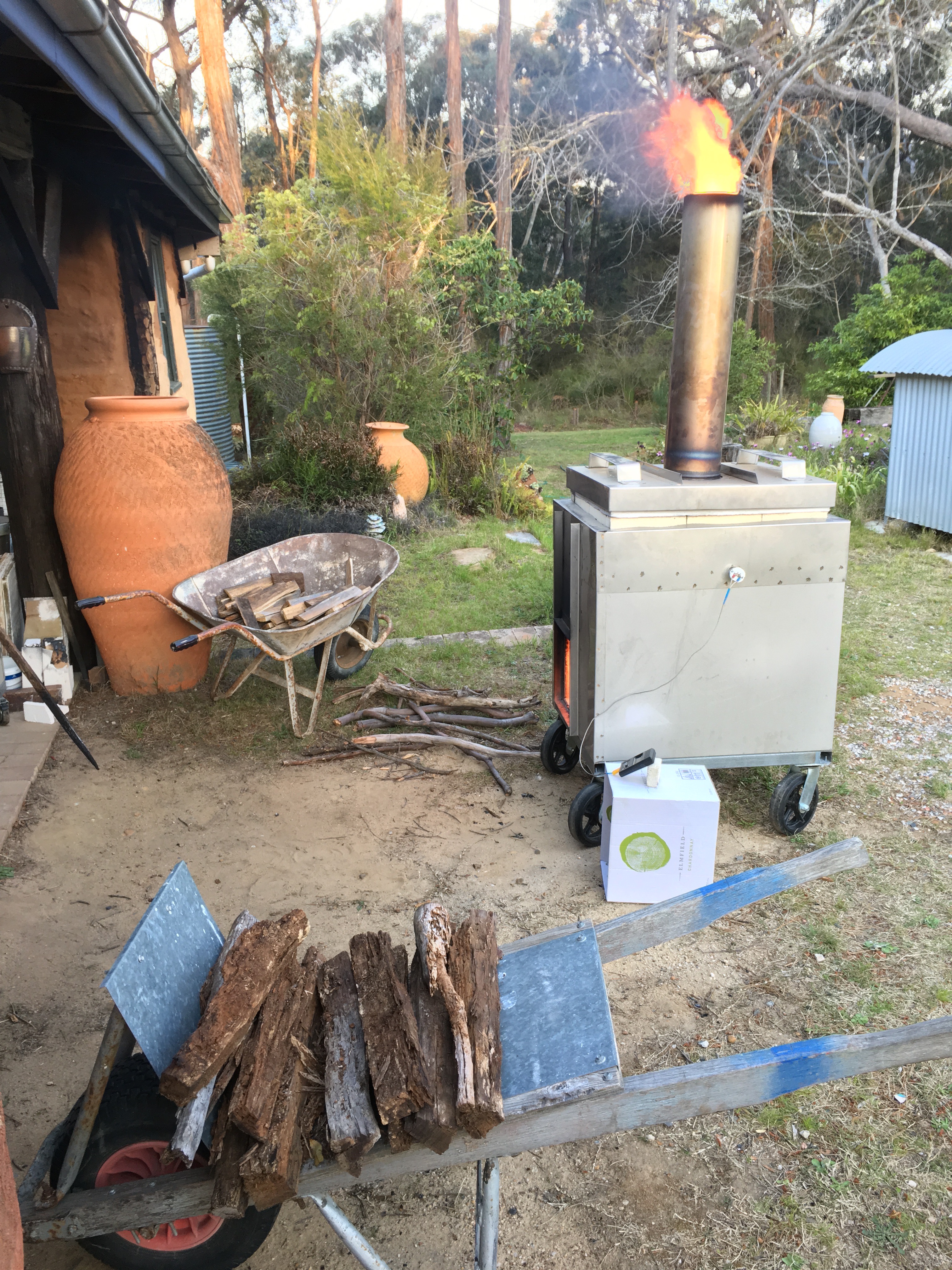
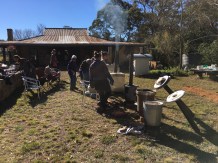
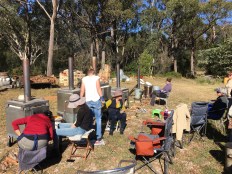
The next weekend we have a low temperature wood firing workshop. We have half a dozen small wood fired kilns that we use throughout the day. We have 10 participants, who each bring 5 or 6 pots to fire, depending on size. We get through them all in the day, along with half a dozen wheel-barrow loads of wood.

img_3563

When the day is over, we pack away all the little kilns, except for one. I leave it out and pack it with my glaze tests for all the new batches of glazes that have made up for the next big wood firing. It will have a lot of work in there for the  ArtsTrail Open Studios Weekends. I want to make sure that I haven’t made any mistakes or poor assumptions, when making-up these glazes.

I pack the kiln in the morning and start to fire straight away. I push it along, as I have other things to do this afternoon. This little beauty breaks all previous records and cruises up the cone 10 in just 2 1/2 hours in reduction. The results are really quite good. Everything is well melted. There is no flashing in such a short firing. Nor is there very intense reduction colour, but all the colours are there – only paler than I would expect from a longer wood firing. I’m finished by lunchtime and can get on with other things.

img_3550 img_3554

img_3555 img_3557

img_3558

I even surprise my self! I didn’t know that this sort of speed was possible for a stoneware firing, and with so little effort.

img_4310 img_4373

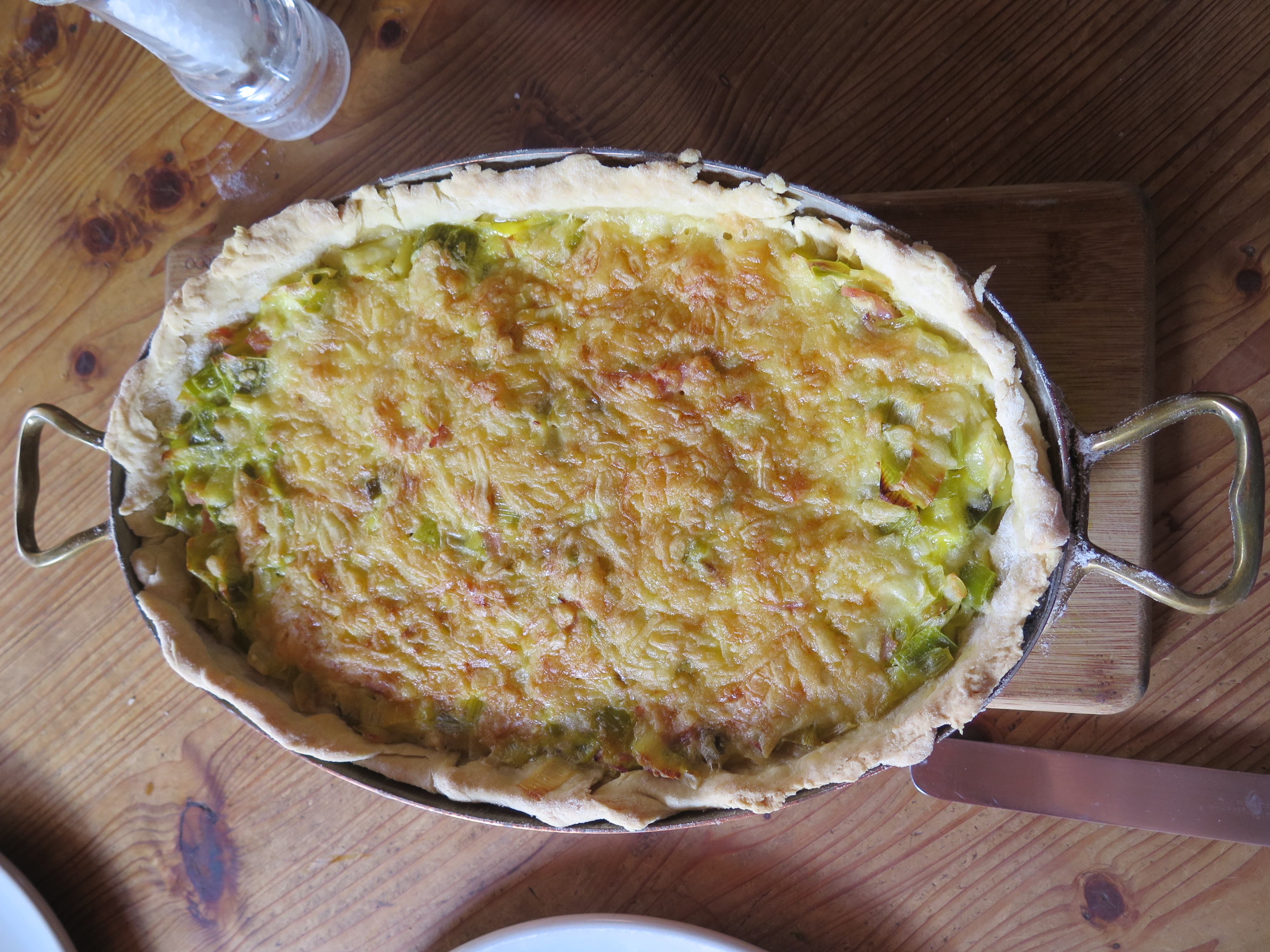
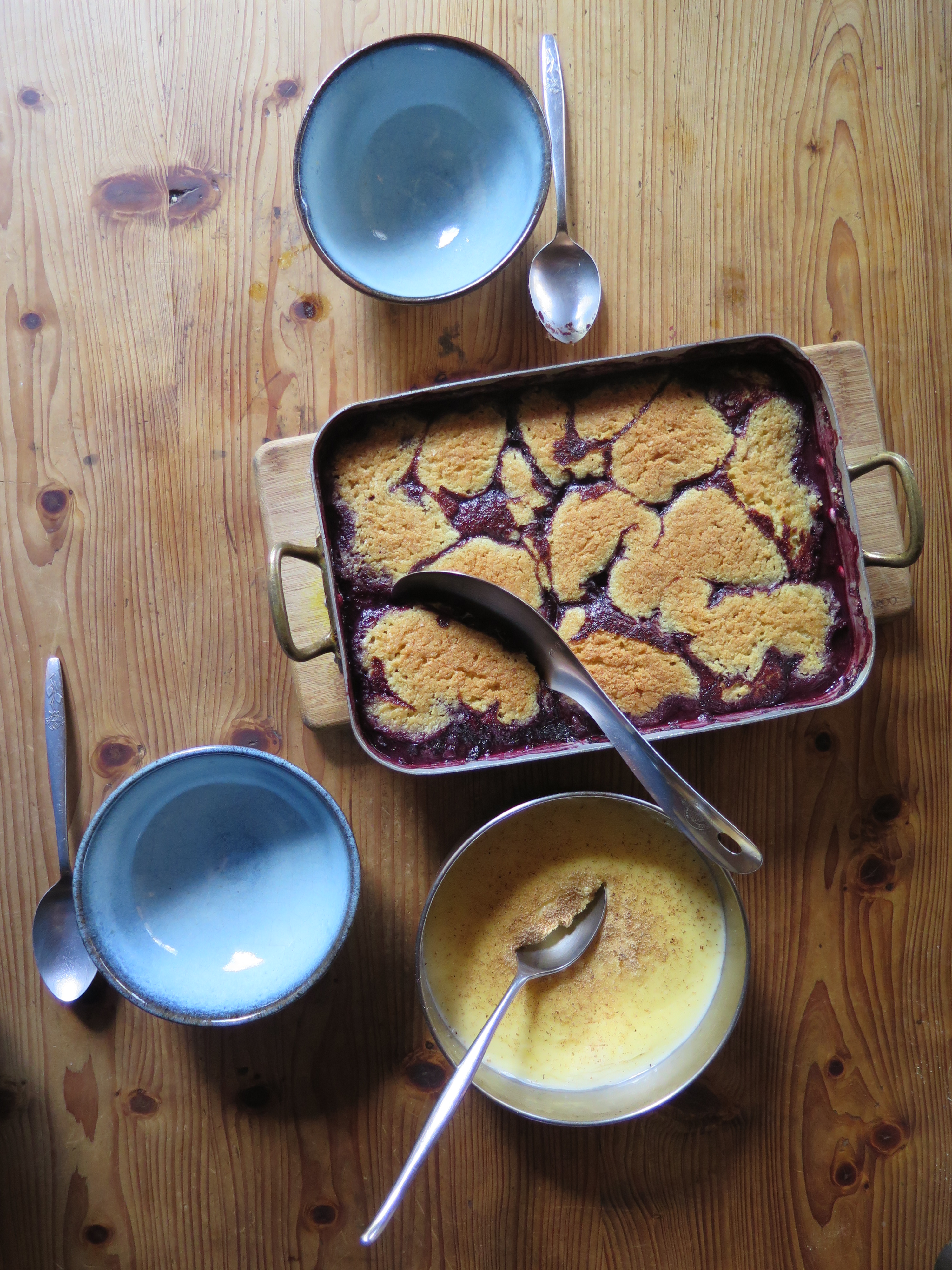
The garden is producing well, with Nina in charge in my absence, she decides to have the evening baking and makes a couple of lovely dishes. A leek pie with a little bit of sour cream and a wholemeal crust, topped with some grated tasty cheese, which is amazing, followed with a berry pie with a baked sponge topping. Served with Edmonds custard. Yum! It’s an economical, warming, dinner on a cold evening. All this garden produce is a fitting reward for all the hours of weeding and watering. However, we don’t do it to save money, but to enjoy wholesome, unpolluted, fresh food.

img_4347 img_4355

Over the years, we have made decisions that have allowed us to be in control of much of our lives, but nothing is perfect, nothing is finished and nothing lasts!

Enjoy the moment.

Low temp wood-fire w/shop

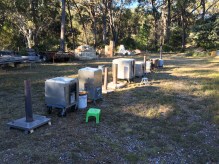
We are all prepared for the first of our winter wood firing workshops. The early morning sun shines obliquely across the site. Everything is ready. We have spent the weeks beforehand preparing the wood, the kilns and the glazes.

IMG_2354 IMG_2356

Yesterday, we had our friend Susan down here for some last minute help with prep. While I was handing out HTV cards for The Greens and the local polling booth. Janine and Susan had their own test firing of their own work. A bit of quiet time to have some fun together, but also a chance to test all the new glaze batches to make sure that everything will run as smoothly as possible on the day.

IMG_2372 IMG_2376

The day goes smoothly, A credit to Janine and Susan, for all the hard work and preparation that they have put in. Everyone seems happy and they are kept busy with glazing and firing all day. The kilns perform well and work starts to accumulate in the saw dust trench.

IMG_2391 IMG_2387

The firings proceed all throughout the day, as once the kilns are hot. They can be unloaded, reloaded and re-fired easily all day.

Glazing, firing, unloading and reloading, smoking and more glazing and refiring. It’s a busy day.

IMG_2358 IMG_2378

IMG_2383

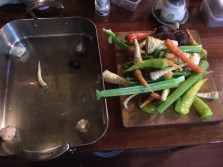
The day ends with a lot of happy potters going home with boxes of glazed pots. We clean up and put everything away again. I go to the garden and pick arms full of veggies. This will be our dinner tonight. Baked vegetables with a small piece of steamed fish.

IMG_2393 IMG_2396

IMG_2402

We light the fires and settle down in front of the idiot box with a glass of red wine to hear some analysis of the election turmoil.

Interesting times!

The simple pleasure of a dull job

It’s that time of year again. I need to make some more wadding for packing the kilns. Making wadding isn’t fun. It isn’t even interesting really. If truth be told, it’s a rather dull job. It just has to be done. So, to make it as bearable as possible, I make it up in a monster size batch, so that the pain is all in one go and then there is the relief of knowing that it won’t need to be done again for another year.

Wadding is used to seperate the pots from the kiln shelves and the kiln props from the kiln shelves. It has to be refractory and remain crumbly and friable after being fired to stoneware temperatures, so that it can be removed easily, even allowing for the deposition of the fluxing effect of wood ash during the firing.

I make it up in big batches of 120 to 150 kilos. Every wood-firer has their own ‘secret’ recipe. I don’t have any secrets. They’re all up here on this blog. Some potters use various mixtures of silica and clay, but I don’t want to use fine silica dust anywhere if  I can help it, because of the risks of silicosis. Others use alumina powder and clay, which is very refractory, but expensive and in my opinion it is overkill. There is too much of an embedded energy debt tied up in aluminium and alumina processing. It takes massive quantities of electricity to extract aluminium from bauxite, most of which comes from burning coal, so it is rather unethical to use alumina powder, unless it is absolutely necessary. We use a small amount in shelf wash, but it amounts to just a kilo a year. I can live with that.  The other thing that I really dislike about alumina in wadding is that unless you are particularly careful, you end up putting stark white finger prints on the pots that are being packed after handling the wadding. You really have to wash your hands after every time you touch the stuff.

IMG_3862

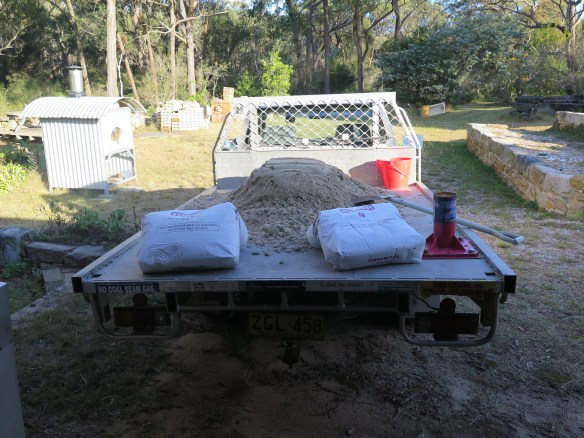
I have decided to make this batch of wadding out of ‘fat’ sand. Fat sand is also called ‘bush sand’,  ‘brickies sand’ or ‘bush loam’. It’s a coarse quartz sand with a fair amount of clay in it. It also contains some limonite or hydrated iron oxide, so it looks a bit yellowish. I mix this with some powdered kaolin. This is a great use for powdered kaolin. I don’t use a lot of it, but is is very useful for this purpose. I mix it in the ratio of one 25kg bag of kaolin to 4.5 buckets of damp washed sand and one bucket of water. When I can get clean saw dust I also add two buckets of saw dust, but this is getting harder to find these days. The last time I visited the local timber yard, they had been cutting some synthetic wood products that were a rich canary yellow. This stuff looked like it was loaded with resin glue. I thought that it might be particularly toxic if it were burnt in the kiln as wadding. So I didn’t collect any.  So, this batch of wadding is just going to be sand and clay.

IMG_3867

Adding saw dust is great for wadding that use on new pots that are once fired, as it can leave an interesting charcoal grey to black shadow mark. It doesn’t work on bisque, only once fired work.

When it is freshly made wadding like this is rather short or non-plastic, being so sandy, but after ageing for a few months it develops quite good plasticity and after a year or so, the last few bags are plastic enough to throw with. Not that you would want to, but I think that it might be possible. I’m down to my last bag of the old batch now and it is very easily worked into coils and small balls. This new batch will have a month or two before I need to use it.

IMG_3870

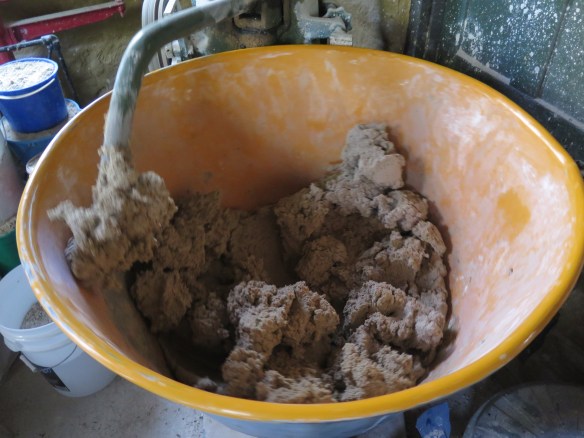
I make it up in a couple of batches in the dough mixer and then bag it up into 15 kg packs and store it away.

Security is a years supply of wadding.  Now, when I look down on my stash of wadding I get the simple pleasure of knowing that I won’t have to do this job again for another 12 months. It’s a nice feeling!

fond regards from the well wadded potter.


The Last Beta Firing? Success at iteration 7

Janine has just completed the 7th firing and design iteration of the little wood fired kiln. It worked well and there are now no more obvious and glaring changes that need to be made to the design. Of course there are a lot of little issues that will need to be tweaked over the coming months. But I can’t see anything that will require a major rebuild. I think that this design as it stands now is a good one. – Until I think of something better!

The verandah of the pottery now has a collection of these little prototypes all parked there out of the weather. They all work well enough at lower temps, so I will use them for our raku firing weekend workshops. The image shows a very full wheel barrow of wood, enough for two or more firings to stoneware.
The design that I have ended up with is now ready for a limited production run.
This last firing of Janine’s was more or less perfect. Except that we managed to crack a kiln shelf. Janine had a lot of flat ware, so I retrieved a kiln shelf from the rack that hadn’t been fired for over 20 years. I think that the shock of a fast firing and possibly moisture absorbtion that couldn’t escape fast enough was the problem, as this hasn’t happened before. I would usually like to season a new kiln shelf more gentle. Perhaps by rubbing in salt and pepper with a little olive oil might work next time?:) By lunch time we’re famished. Because I managed to catch up with the fresh fish man, we have ultra-fresh sashimi grade tuna. So its sashimi for lunch.
IMG_2609
I also make fresh pippies in white wine, chilli and saffron sauce for dinner. What more could you want to celebrate a successful firing day. Followed by a fresh salad from the garden. We have a local grower of saffron now, so we support them.
IMG_2583
I have been making a new batch of spy holes for my kiln factory. I throw them on the wheel, very slowly, out of a very coarse mix of crushed high alumina grog and a small amount of kaolin to bind it. The mix is so aggressive that my hands are starting to hurt after just one pot-board full. This mix really takes your skin off. But that’s OK. 20 or so will last me for another year. If I wanted to make any more I’d have to wear gloves. I’ve heard some potters claim that they throw till their fingers bleed, but I’m not that stupid. I know when to stop.
I fire the spy holes in the little wood kiln. This little wonder fires cone 8 on the bottom shelf, cone 9 in the middle and cone 10 at the top. A perfectly useable working stoneware temperature range. Certainly OK for a 3 to 3 1/2 hour firing schedule. My bowls turn out well too. Some nice, soft, pastel glazes.
I’m really pleased that everything has come to a clear resolution at this time. As for the next couple of months. I’m fully booked on other projects and I wont have any time to play with this little kiln for a while. In the evening we de-seed chillies for drying in the kitchen window, along with beans and corn, destined for drying and grinding for polenta. I also finish drying some tomatoes in the oven. Once dried in this way they have the potential to keep almost indefinitely, but they never do. They are so yummy that I eat them like lollies. They never last the year. It’s great to add a handful into winter stocks. They add that certain piquant, sharp sweetness to sauces or a ragu.
This is just another day in the mixed household of self-reliance.
Best wishes from Mr. Beta and Ms Better

Small portable stoneware wood fired kiln. cont.

We have just fired the 5th incarnation of our little, portable, stoneware capable, wood fired kiln. It fired very well, again easily in 3 hours. It just cruises along at its own pace. 1 hr to 1000 oC and then 2 hrs to 2 1/2 hrs in reduction to stoneware cone 10 over.

This variation was to test out the new chimney arrangement and that worked perfectly, some much better than the previous one. I am very happy with that. Another problem solved!

The hard-working firing team, going at it flat out. Half way through the wood stack in the barrow. Going for the big final effort, no holes barred! Go for it ladies!

IMG_2604

I have it adjusted now so that as the temperature reaches 1000 oC. The kiln automatically goes into reduction. I don’t have to use a damper to make this happen. The kiln continues to rise steadily over the next two hours without having to alter any settings in the firebox. It’s lovely.

However, I notice slight difference in the fired surfaces around the setting, so I conceive of another experiment to try and even out this anomaly. I have everything that I need in stock in the spare parts shelf in the pottery, so no need to go out and buy anything. I spend the morning cutting, grinding and painting all the new bits and the kiln is primed and ready to fire again. I need to glaze some more work for this firing, so there will be a days delay while they dry out. This will be variation/refinement firing number 6.

I’ve learnt from bitter experience that if I fire fast with freshly applied glazes. I can blow them off the pot on the underneath side. All my bodies and glazes are currently made here onsite from locally collected and processed rocks, shales and ashes. Everything is made onsite and it takes a month of Sundays to get it all organised, dried, crushed and milled and then bagged ready for inclusion in the glazes. These are weighed out and then sometimes re-milled. and at other times, just passed through a very fine sieve to extract any small detritus that was caught in a gap around the lid of the ball mill and didn’t get fully ground. Glazes with no clay in them are notoriously delicate and friable to handle once dry and very prone to just falling off from the underneath side of pots. Of course i use a little bentonite to help stabilise them and shrink them on as well as creating a little bit of dry strength, but I have found that I can only add 1 or 2 % before it starts to change some of the glazes.

Tragically, as always seems to happen. I found yet one more issue with this configuration that needs a little more thought. During this last firing, I notice that I could improve the kiln shelf and stainless steel grating arrangement. So it’s back to the drawing board, or in this case, the work bench and I make a new set of one-piece ceramic supports that I hope will work a lot better. I pull the kiln to pieces and start again from scratch, right back to floor level and create a new setting design.

Maybe this will be the last of the beta firings?

We will fire again today with a load of Janine’s work in it this time. As she has a load glazed and dried ready to go.

Always so much more to learn.

Another Post From The Running Postman

The wild flowers have been lovely, but they are all gone now. It’s almost autumn and the cherry trees in the Chekov orchard are loosing their leaves. They are the first to fruit and the first to go dormant. We are experiencing a late summer scorching week of high temperatures in the mid 30’s and have had to be out early and late to water the garden. Overall, this summer has been exceptional, although it has been hot, it has also rained a lot and even at this late stage , with all this heat now, we still have green grass outside our window. We are usually looking out at dry, dusty gravel at this stage of the summer.

IMG_3689IMG_2350
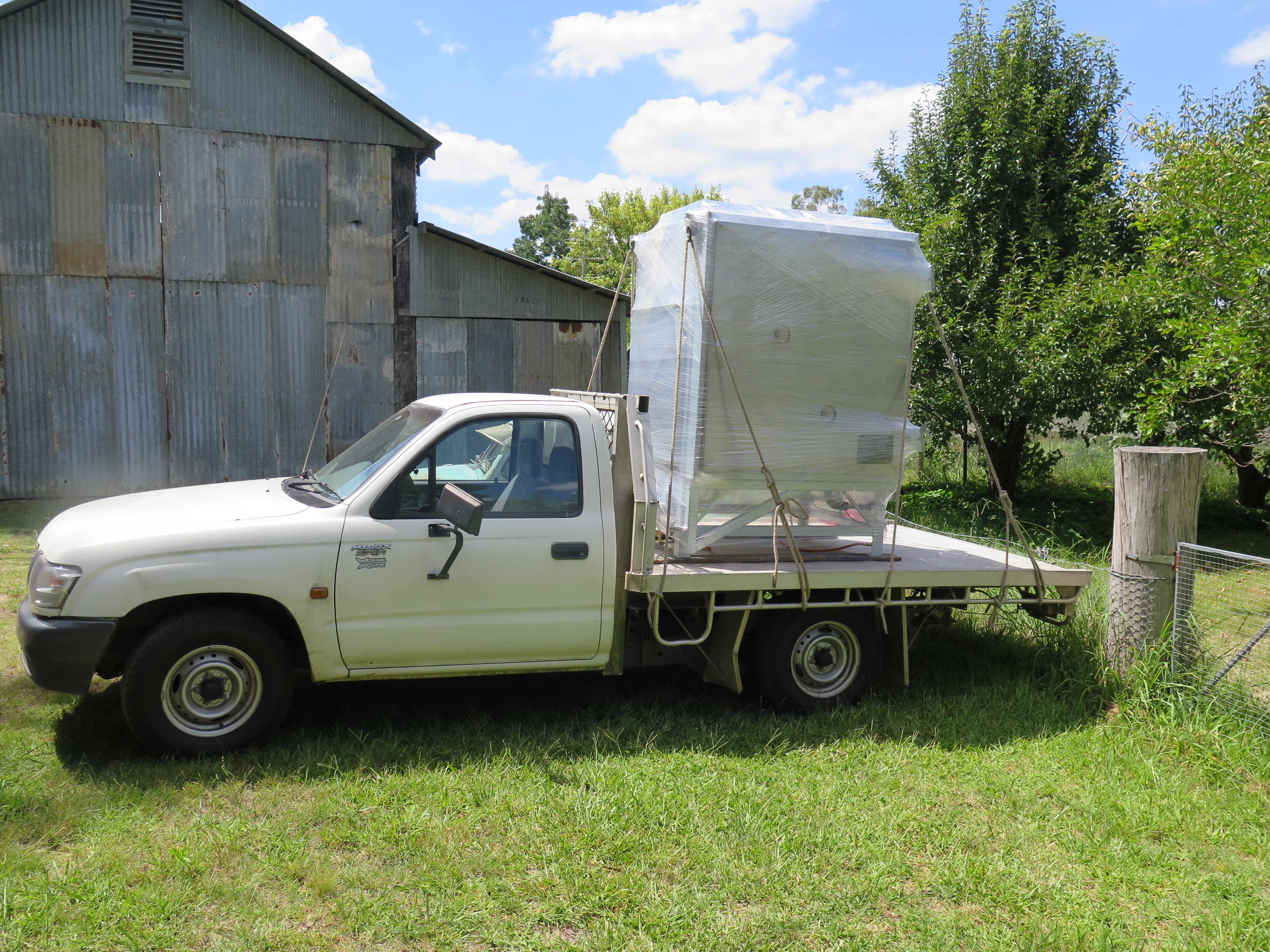
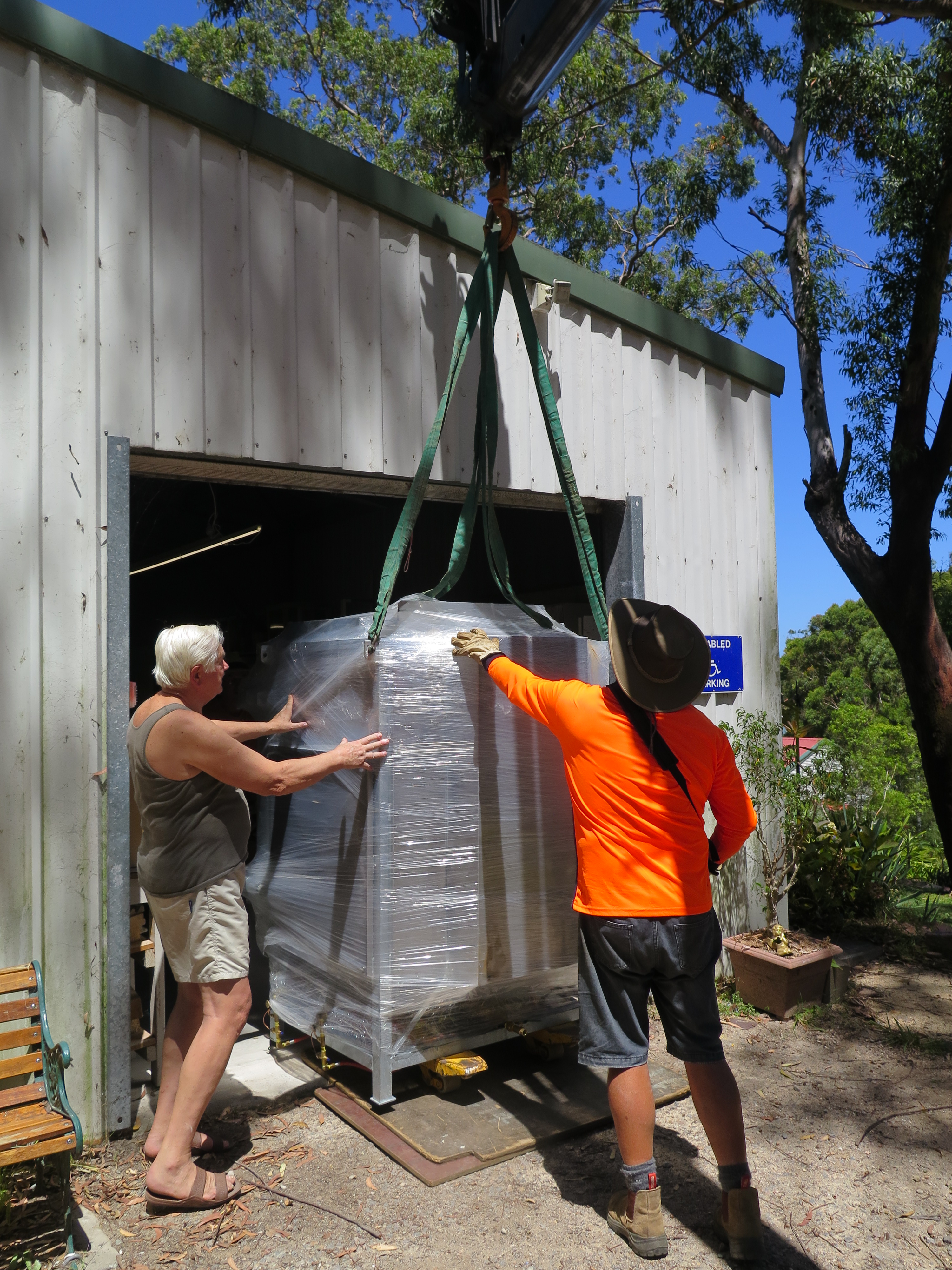
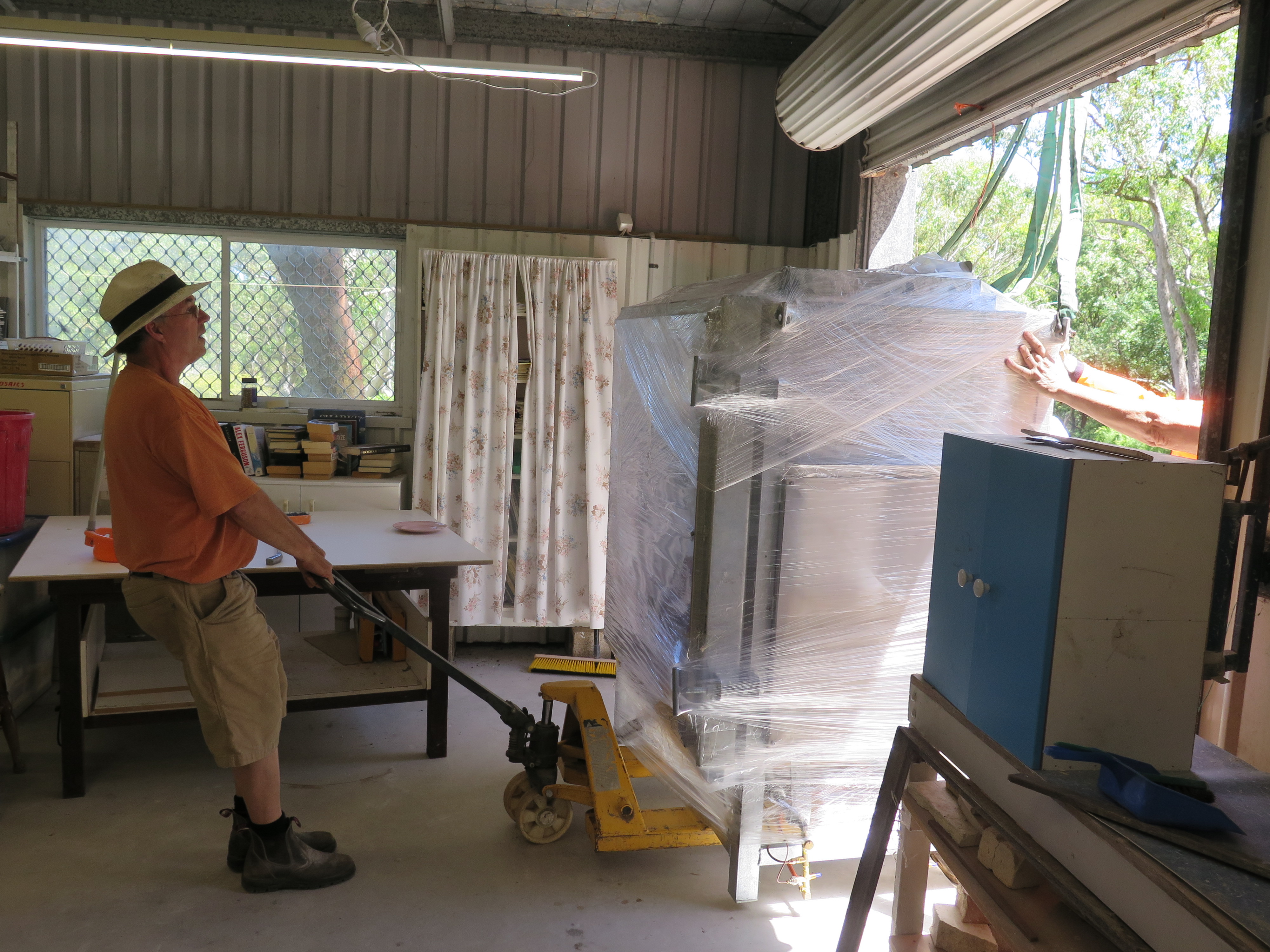
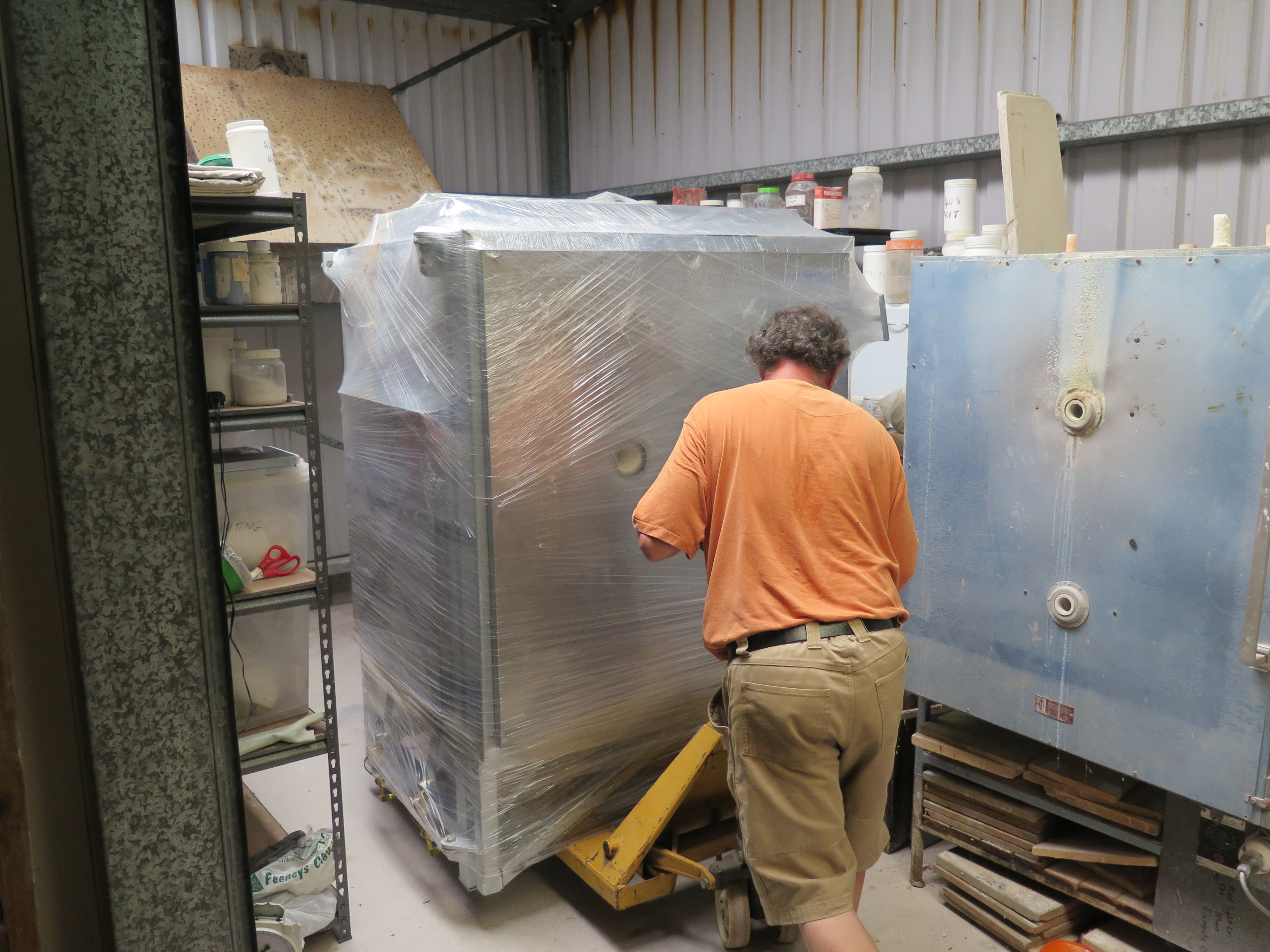
I have delivered the latest kiln to my customer and all went so very smoothly. Just as it should, as we do a planning to get it all just right, but regular readers of this blog will know that the best laid plans can suddenly go terribly wrong at the drop of a hat when a third party lets you down after promising faithfully to turn up on time. This is never the case with Dave, my local crane truck driver. He is amazingly punctual and careful with my jobs. It’s a pleasure to work with someone so professional and creatively competent at moving heavy objects.
IMG_2313IMG_2335 IMG_2336IMG_2338 IMG_2340 IMG_2342
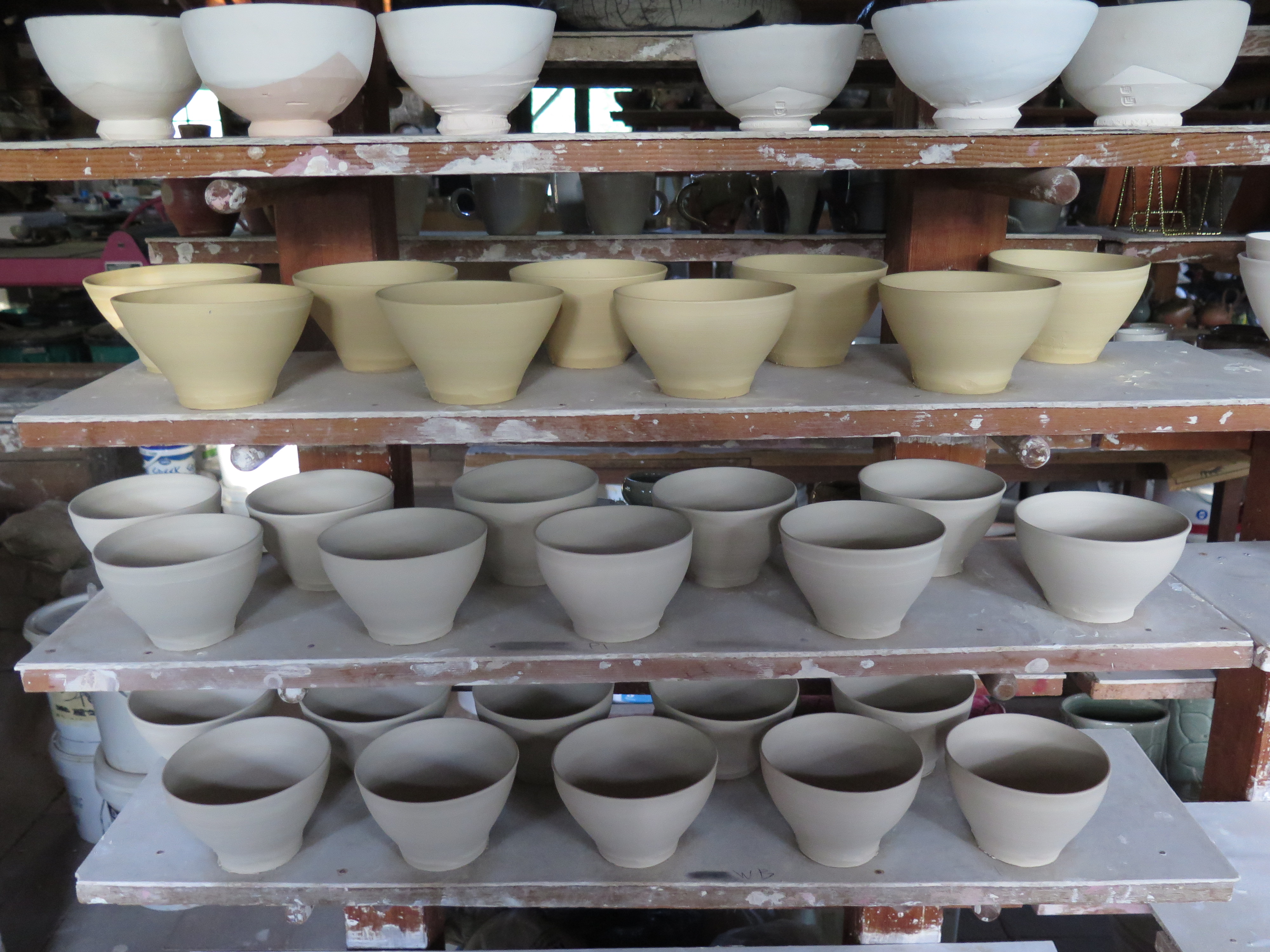
Warren and I have already started the next job and got it well under way. As I am ahead of schedule with my orders, I have been able to spend time in the pottery making some more of my porcelain. Iron stained yellow, pale ochre grey and creamy grey/white bodies.
IMG_2330 IMG_2331
We have also now completed 5 firings in our little new experimental, portable wood fired kiln. It gets better every time we fire it. That is to say we are getting better at understanding it and how it works. I’m also finding out all it’s weak points. All the things that I didn’t expect or imagine might happen have shown them selves and come to pass, so each time we fire, we find a new problem that needs a better solution. I solve each one as it appears and then onto the next. I think that I have it all solved, then something else appears. I’m constantly thinking this next firing will see it all solved and then I can start to produce them. Always the optimist:)
IMG_2292 IMG_2302
Cast iron doesn’t work in this kiln. OK for raku, but not here.
We have tried experiments with different types of fire bars over time and worked out that in this kiln, we can’t use ceramic fire-bars, or mild steel fire-bars, or cast iron bars, but custom welded stainless steel fire bars are the go for this little beauty when fired in reduction. The other fire bars that we have tried have worked well in other kilns at different times, but for this one, it’s going to have to be custom made stainless steel. They have proved to also have their issues, but I have worked thorough these and I now have a workable solution. I just need to try one more variation on the way we use the flue!
I am so confident about this little kiln now, that I am starting to draw up a plan for a larger version. Increasing the kiln shelf area from 300mm. x 455mm. (12’ x 18”) to a kiln shelf of 455mm x 455mm. Sq.  (18” x 18”)!
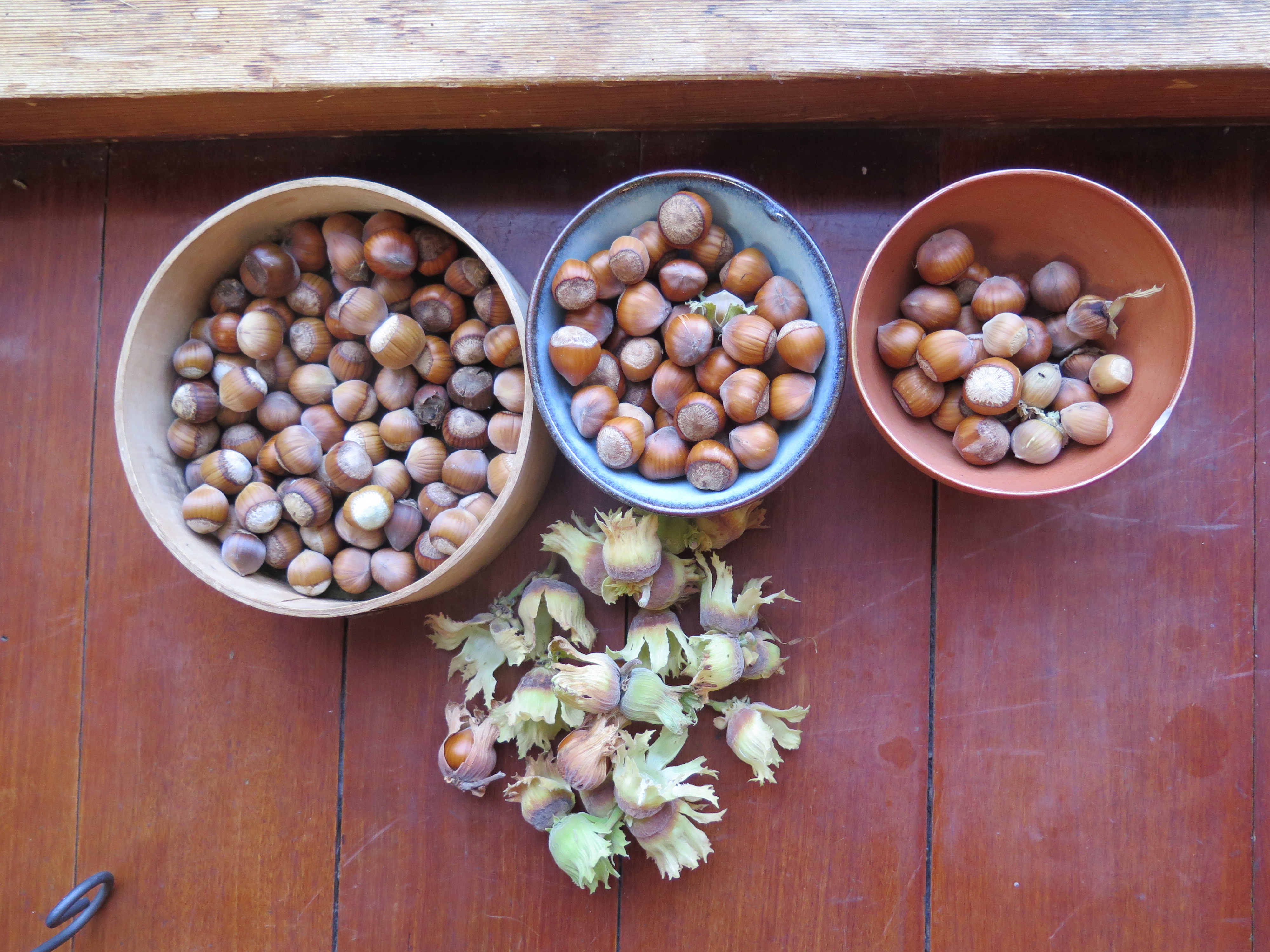
For the last few weeks, the hazelnuts have started to ripen and fall, we dry them in the sun in the kitchen window sill for a week and then they are ready to eat. Unlike our almonds, that always seem to need oven drying and slightly roasting to get the best out of them. The filberts are good to go, straight out of their shell after drying. This is our first good crop from them. We planted 2 year old grafted seedlings about 3 and 4 years ago, so the oldest ones are just starting to come to fruiting now. The first year, all the shells were empty. Last year we only got a few hands-full of nuts and half were hollow, but this year, they seem to have reached maturity, with most casings containing a nut — and they are lovely, crunchy and sweet. We have a few with a piece of nice cheese after dinner.
IMG_2193 IMG_2349
I’ve been in and out of the pottery pushing ahead with making pots for the next firing. We are technically still in fire ban season, so we can’t fire the big kiln easily at this time, as it takes 20 hours and is obvious to passers-by. But the little portable kiln is OK for a quick 3 1/2 hr. firing on the cooler days after some rain or a damp night of heavy dew. We can start early and finish before the day gets hot at mid day and after. It’s very convenient. We have settled into using just one wheel barrow of paddock falls, dry dead branches. I’ll have to try it with fresh split pine, old pallets and eucalypt heartwood in the future, but I can’t see any real problems there. Time will tell.

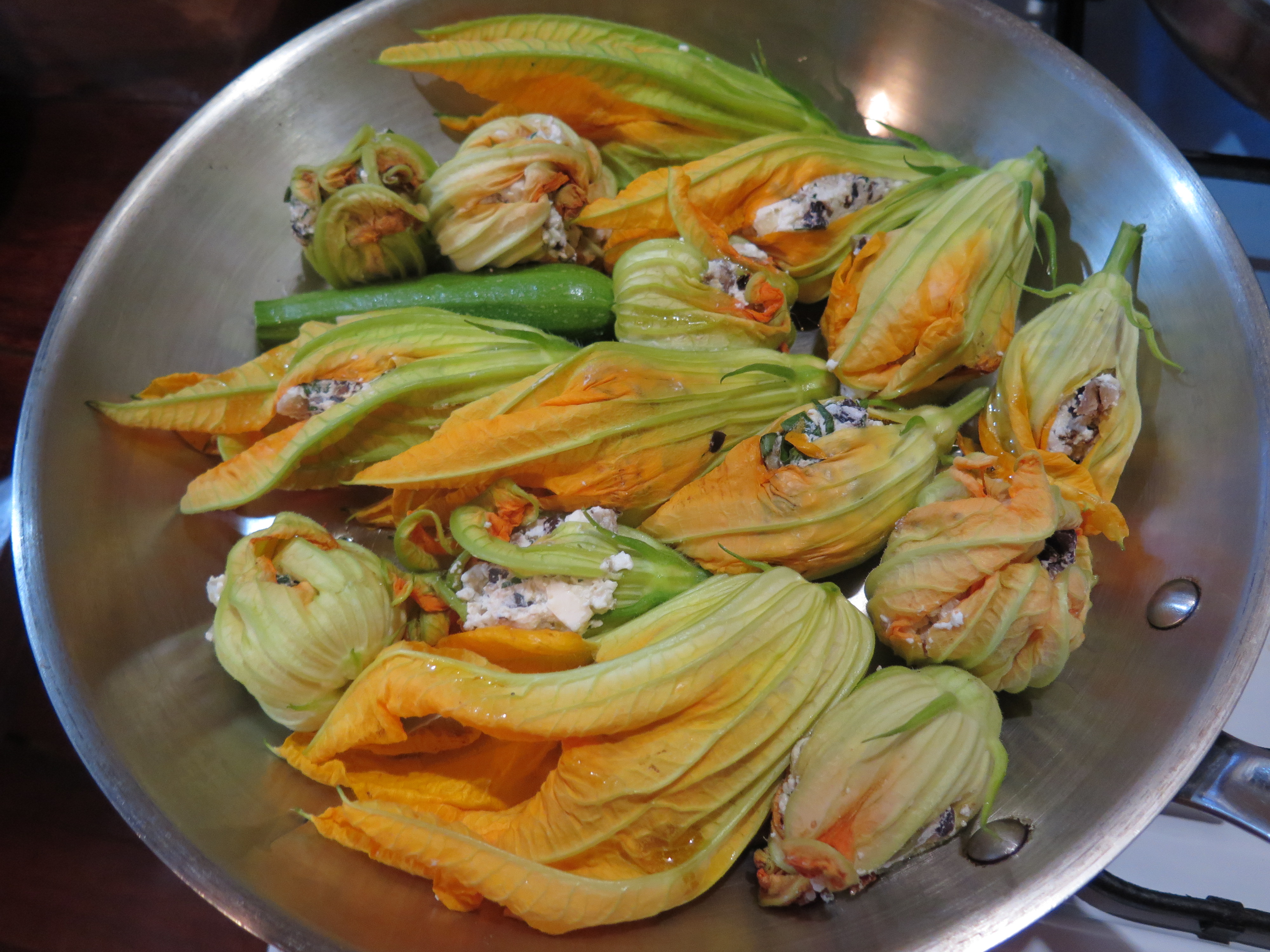
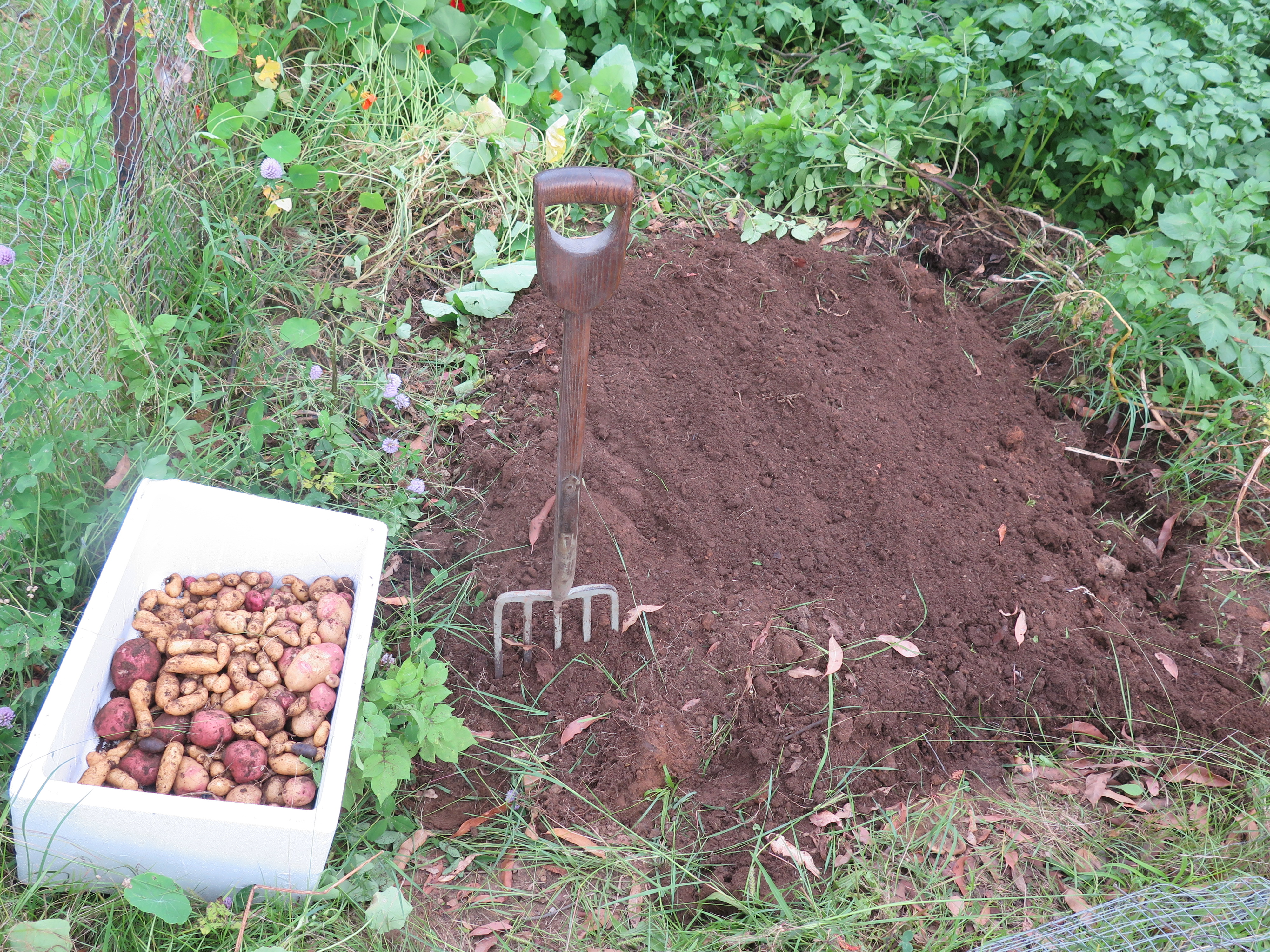
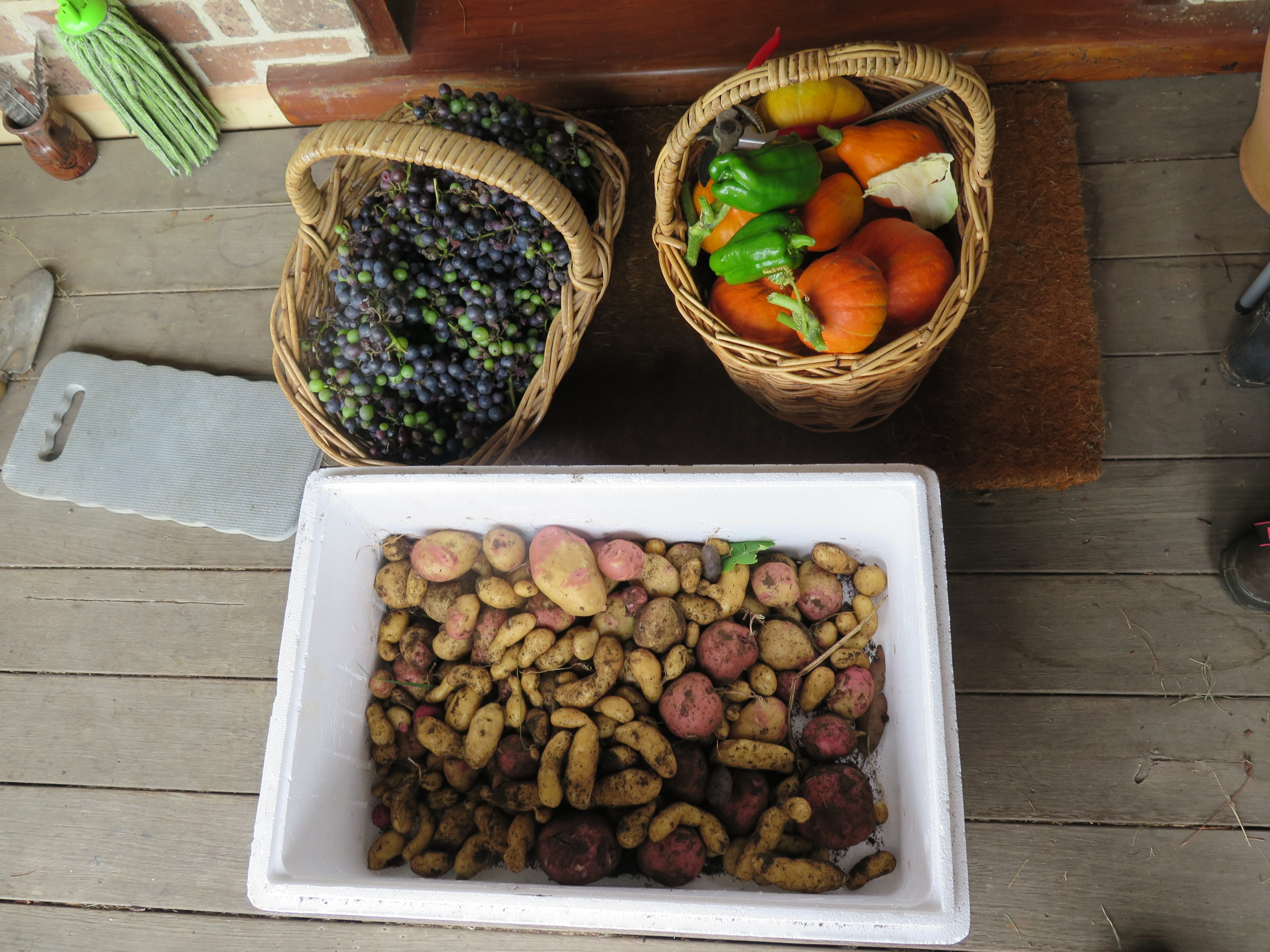
As the garden is thriving we have been eating fresh stuffed zucchini flowers. These are our 2nd planting of zucchinis. We are starting on our third planing of cucumbers, as the extremely hot days really frazzles them, and our 5th planting of raddishes etc.  We are also enjoying capsicums stuffed with ricotta and our own dried tomatoes and herbs. We have started to dig the first 3 rows of the 2nd planting of potatoes. It looks to be a very prolific crop. We fill a box quickly. There are twenty rows to keep us well fed through the winter.

IMG_2277IMG_2276IMG_2202IMG_2204IMG_2206
Regrettably, Janine and I went to the fish markets mid-week for a late sushi lunch on our way to an opening of a friends show at Watters Gallery later in the evening. I say regrettably, because I was struck down with food poisoning during the evening and had to leave early from the show, before my friend even turned up.
I’ve had to have 2 days off with the runs, and stomach cramps, unable to sleep through the first night without interruption. I am chastened and weakened, but starting to recover. An unwelcome surprise. I won’t be eating anything more from the sushi shop at the fish markets! Even now I’m still suffering a delicate stomach and slight head ache that makes it hard to concentrate. I have a load of work to do, but I’m not really up to achieving much just yet.
Best wishes from The Running Postman

Stealing Time – Guilty Creative Pleasures

I quickly steal a bit of time in the workshop. I want to make some pots out of my aged porcelain stone bodies. I’m supposed to be building gas burners and silver soldering copper gas manifolds, but the lure of the potters wheel is just too strong. I manage to get 30 or so pots made from 3 of my specially prepared and aged porcelain stone clay/stone pastes. It’s a good feeling to be back on the wheel again after a week of brick laying and kiln building. I can only take just so many days of wearing the dust mask, goggles, ear muffs, gloves and all the other OH&S paraphernalia. It’s socially isolating and almost disorienting in its exclusion of the tangible world.

A day back in the pottery grounds me and alows me the fuzzy pleasure of thinking creatively again.

Some of these ground stone pastes of mine are so short that even after 25 years of ageing. I still can’t kneed them by the usual spiral kneading technique. One is just so short that it cracks apart under the rolling stress. I return to the tried and true ‘cut and slap’ wedging method. This has be proven to me to work much better than spiral kneading where finely ground porcelain stone bodies are concerned. The cut and slap method compresses and activates all the clay particles that can respond to this kind of wedging. The rest of the fine, non-plastic stone particles are firmly encased in the weak plastic matrix. It develops a tight workable putty that is almost throwable on the wheel, as long as I take a lot of time to coax it along slowly into the final shape, without expecting anything to happen quickly. The essentially non-plastic, porous,  surface sucks up water and dries out very fast, making the whole soft and floppy, so I have developed a technique of re-using all the wet slip from my fingers to lubricate the paste, thick slip doesn’t absorb so quickly, so that it doesn’t become too floppy, and extends the working time. Still, I have to work fast to get the form into a suitable shape and lift it off the wheel before it collapses.
It’s clumsy and slow, but it eventually delivers a workable open bowl form. Very heavy at the base and only just thrown thinly enough at the rim to pass muster. I rely on doing a lot of turning to get the shape to emerge eventually from the clod of stone paste.
Turning can only be done on bodies like this when they are almost dry. Any time before this, the soft, loosely bonded coagulate of mineral granules, just tears itself apart into crumbly chunks, making the whole pot unusable. Australian readers will recognise this particular torn and crumbly texture if I mention the name of Mersey Valley cheddar cheese. It’s impossible to cut this cheese without it tearing and crumbling against the knife. My milled stone paste porcelain bodies act like this if I try to turn them leather hard. I wait until there are significant white drying rings all over the surface before attempting to start turning.
The stoney grit in the matrix takes the edge off the turning tools in minutes. I have to stop and file the edge on my hardened steel turning tools very regularly. This involves getting off the potters wheel and walking some distance away, where it is safe to create iron filings by filing the edge sharp again, that wont end up in the clay.
Since my last trip to Japan to study single stone porcelain making, I returned with a cluster of tungsten tipped turning tools specially made for turning porcelain. These tools stay sharpe for a very long time. But even they eventually go blunt under constant use. I have found that I can recover the cutting edge back to its pristine sharpness by using a diamond dust impregnated file. This is the closest that I get to bling! I do apparently own quite a few diamonds. It’s just that they are invisibly small and encased in some sort of amalgam. Not sexy, almost as expensive but very useful!
I treat us to a dinner of gyoza, Japanese style pork and vegetable dumplings. I use lots of our garlic along with prime minced pork with very little fat. I get our local butcher to mince up some prime lean pork for me specially. I add in sweet corn niblets, finely shredded cabbage and green onion shoots. I fry it all up to make sure that it is all well cooked through and then work it into the tiny wanton wafers that I buy from the Asian supermarket section. These are pan fried in sesame oil, then when well crisped on one side, turned over and a cup of stock added to the pan with the lid on to steam them for a couple of minutes more.
They are beautifully rewarding, both crisp and yet soft and juicy at the same time. Wonderfull!
A real treat.
Best wishes
from the stone aged (aged stone) man and his wanton Wilma

New Small Wood Fired Kiln

The first of the figs are ripe and we savour it. It is just perfect, sweet and juicy. We wouldn’t have got it or any others if The Lovely Hardworking One, hadn’t been out there early and netted the branch a few weeks ago. If we don’t net the fruit trees or the most laden branches, the birds take everything.

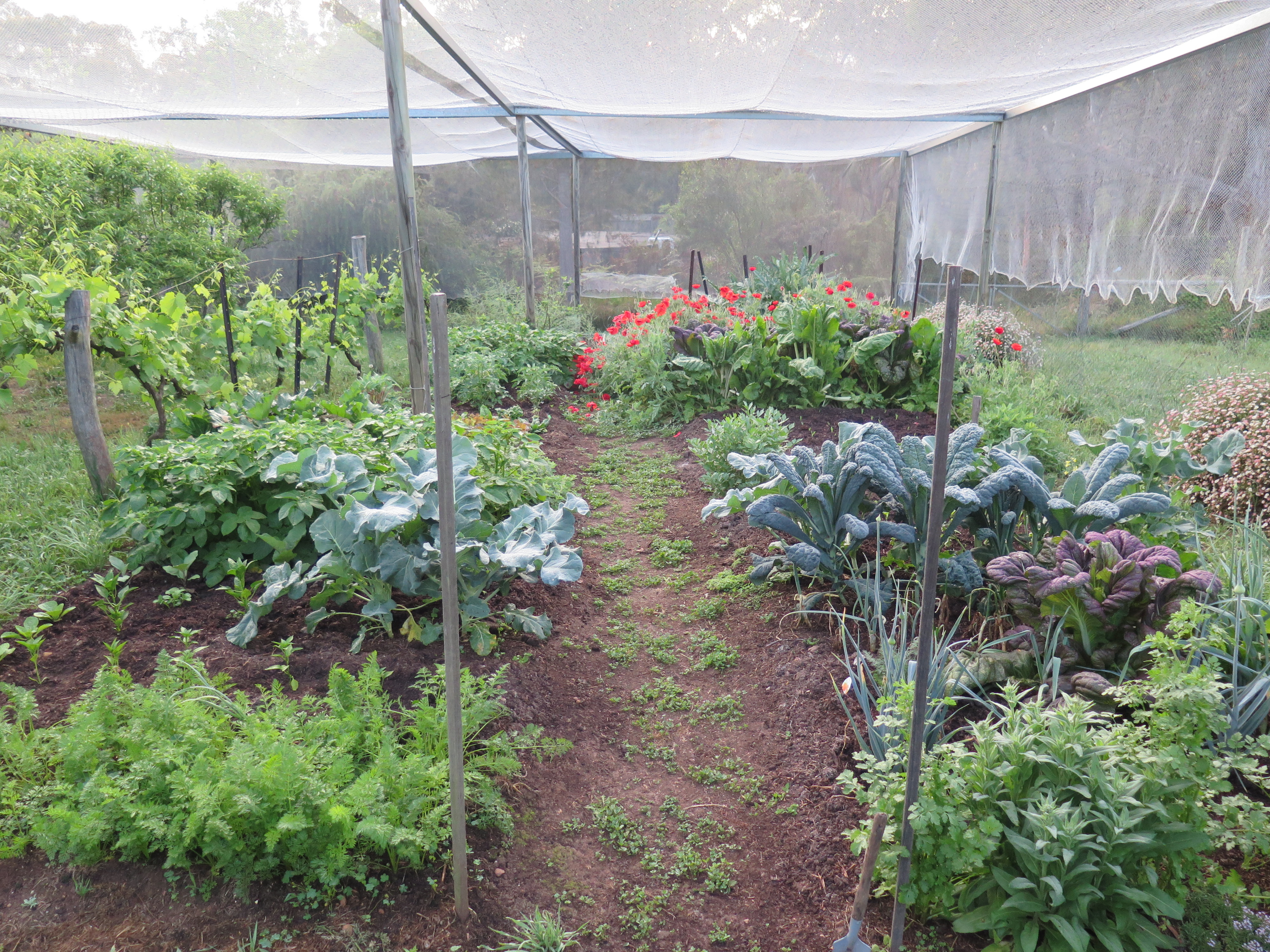
There weren’t any fruit eating birds here in this bushy area when we arrived, but 40 years on and an enormous amount of work later, we have built 4 dams for a secure key-line water supply and open grassy areas between the orchards, with areas of understory native shrubbery. We left all the really big established trees and without knowing it, we created a perfect habitat for all sorts of native bird life, from the very small finches, through to bowerbirds and magpies. There is even a very large white owl, that we haven’t managed to see close-up, so we can’t identify it. It has taken frogs off the kitchen window at night, right in front of our eyes, but moves so quickly and so totally silently that it strikes and removes its prey, without actually touching the glass and is them gone is a flash of pale wings, before we can adjust our eyes to the scene. I’m constantly amazed at how clever our birds are at fossicking out a living from our little property. So the fruit trees have to be enclosed to protect some of the fruit for us. The vegetable garden is now totally enclosed in small (35mm.) hex gal wire and very fine nylon mesh. This keeps out most of the birds that we don’t want in there. Those are the fruit and veg eaters, but allows the little finches in to feed on bugs. It seems to work OK for us now, but has taken a lot of trial and error to work it all out – mostly error.
IMG_1913

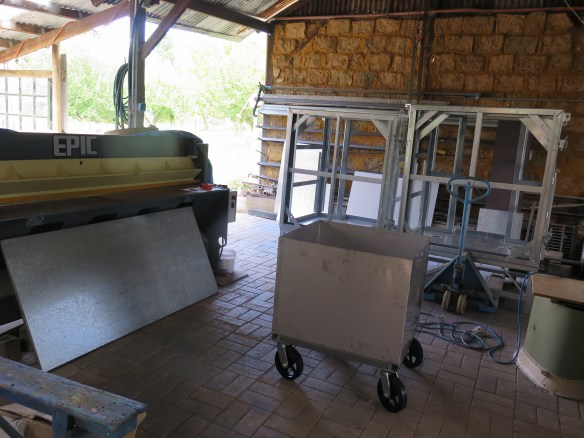
I have spent a little time over the summer break building another version of my portable stoneware wood fired kiln. These kilns are a direct response to seeing and working with Stefan Jakob’s ‘Ikea’ garbage bin raku kilns. Such a fun idea! And they work really well too, but only at the lower temperatures used for raku. It made me think about if it would be possible to make a reliable stoneware version of this kiln. Not in an Ikea bin, but in a custom made stainless steel monocoque box frame. The answer that I have been developing over the last half dozen years in my spare time is Yes!

This one solves all the problems identified in the last version, that although it could get to stoneware, some of its components weren’t likely to have a long life. I abandoned the ceramic fibre lining, as it doesn’t last for extended periods of time at very high temperatures where there is a lot of wood ash. The fibre turns glassy and peels off, like glaze shelling off, exposing new fibre, which then dissolves, the ash glaze slowly eats its way through the lining in this way.

We first experimented with a ceramic fibre lined stoneware wood fired kiln back in the late 70’s and early 80’s (see Handbook for Australian Potters P289-291.) In that kiln I used the new material at that time called ‘saffil’ board, that was mostly composed of alumina fibre. A 10 mm. hot face lining of this material lasted 30 stoneware firings before it was eaten away in the hottest part. These new little kilns use light weight refractory insulating bricks as the lining.

I couldn’t allow myself to recommend or to sell anything that wasn’t up to scratch and capable of delivering a long working life, so the development has continued, designing out the apparent flaws as they made them selves known. So now the design is a little closer to completion. I have designed version 5, so I hope that after that is built and fired a few times, everything will be settled down and we will have a very long lived and reliable small portable kiln. I think that we could say that we are now moving from prototype to beta testing stage. Perhap there will be something that we can sell to other potters with like minds. Just like we do with the more substantial gas and electric kilns that we build here – only much cheaper.

The improvements in version 4 meant that we could fire it up to 1,000oC in one hour. This part of the firing could easily go very much faster, but we have cracked kiln shelves in the past by going too fast below red heat. We then took the firing from 1000 to 1280 in another hour, finally soaking at 1280oC to 1300oC for the last hour until cone 10 was over. We got very good reduction colour in the glazes in that time frame. I was amazed what a couple of extra hours could achieve, in terms of quality. After all it’s not all about intense speed. We can already do that. This is more about getting very good quality results with a minimum of expenditure of effort and fuel.

I spent a few days working out how to create this little wonder of a kiln, to enlarge it to use a 12” x 18”  (300mm. x 460mm.) kiln shelf in the setting, and still be able to cut the frame out of one sheet of Stainless steel with no or minimal wastage.

I’m sure that there are a number of potters who are with me and like minded in this regard, potters who are thinking just the same as me. How can I achieve lovely wood fired results without firing for days and creating loads of smokey pollution. I think that this sort of little fun kiln will be very good for potters with an interest in wood firing, but without the large work flow required to fill a larger anagama kiln, or a suitabe place where so much smoke can be created day after day. This little kiln is definately not smoke free, but the smoke is minimal.

As it turned out, this was a very relaxed and easy firing using dead brushwood and small, dead, fallen branches as fuel. There are always loads of eucalypt paddock falls all around our property from season to season. We collected 3 wheel barrow loads, one of kindling twigs and another two barrow loads of small thin branches, up to 50 mm in dia. We ended up using only 2 of them. We will fire it again for a little longer next time, slowing it down a little so that we can not only get the good reduction colour in the glazes but also some surface flashing in the bodies as well. I’m intrigued, what is the minimum length of firing time required to be able to get some pleasing wood fired effects on the surface of our pots?

When we fired up my pots in the first kiln, up to stoneware in just 1 hr. in reduction in the earliest version of this kiln, there was little reduction effect showing in the glazes. The pots looked pasty and palid, as if oxydised, but were in fact very pale grey, so they were reduced. It seemed that 30 minutes of reduction wasn’t enough to get a good response from the clay and glaze chemistry. This time, at 3 hrs. The results have shown very good reduced glaze colour effects, but only a very limited flashing colour on the exposed clay bodies. The work is starting to show some pink flash on the porcelain clay bodies with this slightly longer firing time, so we are getting close now. At least there is something there. The difference between one hour and 3 hours is dramatic. Perhaps the next firing of 4 or 5 hrs to S/W will do the trick and give results that I am better pleased with?

I want every thing now! I just don’t have the time to be able to do it all.

best wishes

from the multi-tasking S&J

8 New Clay Tests

I have been using the warm weather. In-between rain storms. To dry out some of my new batches of single-stone porcelain clay test batches. The 50 litre batch of 12 month aged porcelain slip is now almost stiff enough. It should have been ready to lift off the drying bed a couple of days ago, but with this last series of rain storms, the atmosphere has been very humid lately, so we have slow drying weather. The mornings start with a heavy mist that doesn’t burn off until later in the morning when the sun get up.

I have used the plaster tubs to dry out some small batches and I now have 7 different new clays to test and throw. They are all just about the same on the wheel, not a great deal of difference. I have dug out a bag of special ‘vintage’ porcelain from my clay store. I don’t have a date on the bag, but reference to my clay-making diary tells me that it was made in 199o! This is the oldest clay in my cellar at 26 years of age. It has stiffened a bit too much to be throwable now, so I have to dampen it down a little. I’m amazed how well it throws. The reason that I put it away in the first place was because it was so short that it was unusable. Now after 25 years of ageing, it throws like a normal porcelain. It does have a slightly peculiar ‘grainy’ texture though. A little bit odd for such a finely milled clay. Some sort of bio-chemical change has taken place in the intervening years of ageing.

IMG_2085

I remember co-responding with Harry Davis back in the 80’s. He asked me if I had any experience with clays that went grainy after long periods of ageing. He had left clay in his clay store while he went away for 10 years and worked up in Izcuchaka in the Peruvian Andes on his and May’s private aid project. When he returned, all his clay had changed texture and become grainy. I hadn’t experienced anything like it at that time. I wasn’t old enough to have clay laid down for ten years at that time! Now I am, and I suspect that it is some sort of aggregation of the microscopic clay particles into larger flocs over extremely long periods of time. This happens in slip if left in a slightly acid condition. So, perhaps it’s possible in the plastic state as well?

Of these 7 different bodies, there are 7 different colours, from iron stained yellow, through to almost white. Of the bodies that I have made from my ‘bai tunze’ single-stone porcelain stone. There are variations in colour due to the fact that there are veins of iron running through the rock. I crush the stones through the large, primary jaw crusher  and then spend some time sorting and separating the iron-stained pieces from the white material, these are them processed separately to give yellow, cream and grey clay body mixes.

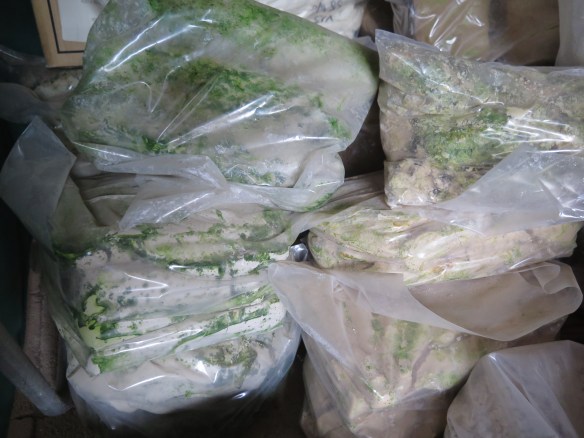
The iron stained bodies respond well to the wood firing by flashing to a mahogany red colour, where the paler coloured mixes flash in the wood kiln to a pale pink to crimson colour. All the milled stone body mixes grow a series of organic algae and/or fungus come moulds of some sort or another. The clear plastic bags that I store them in turn green and/or buff/brown where daylight can get to them. A little bit off-putting, but it seems to increase workability/plasticity rather than decrease it over longer periods of time. I’m not saying that the presence of algal growth increases plasticity, but the time spent ageing the clay increases the plasticity and the algal growth is a natural sign of this extended time taken.

IMG_2084

Because I don’t add anything to my milled local porcelain stone bodies, except a small amount of bentonite and the slightly acidic tanninised tank water. The whole thing is alive with all sorts of organic material from both the natural stone and the water. It’s a living thing! It doesn’t happen straight away, but over time stuff grows in there where-ever the conditions are right.

Commercial clay doesn’t do this. I recently opened a bag of commercially prepared paper clay to find that it smelled of ‘dettol’ antiseptic fluid. Nothing is going to grow in that! I’m an organic gardener and I am trying to live a simple, creative, organic life. If green algal mould is the result in the bags of clay, so be it. At least I know that it is alive, and not dead and even possibly toxic.

One of the batches of my ball milled baitunze, batch JV15db, was milled for a little longer than usual to get it extra fine. However, I seem to have milled it a bit too long this time, 16 hrs. I suspect that this was too long, because when I threw my first bowl out of it, it shrank and cracked in the base where it was thickest. This has happened once before. I will have to blend it with a coarse milled batch now to reduce the shrinkage a little.

For dinner we try yet another variation of ratatouille with todays pick of  French beans, we par-boil them, so that they are still crisp and then add them into the mix of ingredients from the garden. I partially BarBQ the egg plants and zucchinis while grilling some long yellow capsicums. Janine reduces a boiler full of very ripe tomatoes, onion, garlic, olive oil and basil. We finish it off in the flat flan-pan, then pop it under the grill and melt some grated cheese topping to a golden yellow/brown crispy finish.
This is what we have, so this is what we eat.
Best wishes from the algal greenie and his all greenie gal
Steve

Spring and The Man for All Seasons

The broad beans that I planted before leaving for Japan have come to fruiting. They have been slow arriving, but now they are in full fruit. We have had 3 picks from them so far and there will be more, but with the increase in heat and day length, there are no more flowers, so as we pick the last beans from each plant we pull it out and add it to the compost pile.

There haven’t been quite enough of them to get tired of them yet, we have managed them quite well. I don’t think that there will be many left at the end of the season to dry for later use. only just enough to save for next years seed.

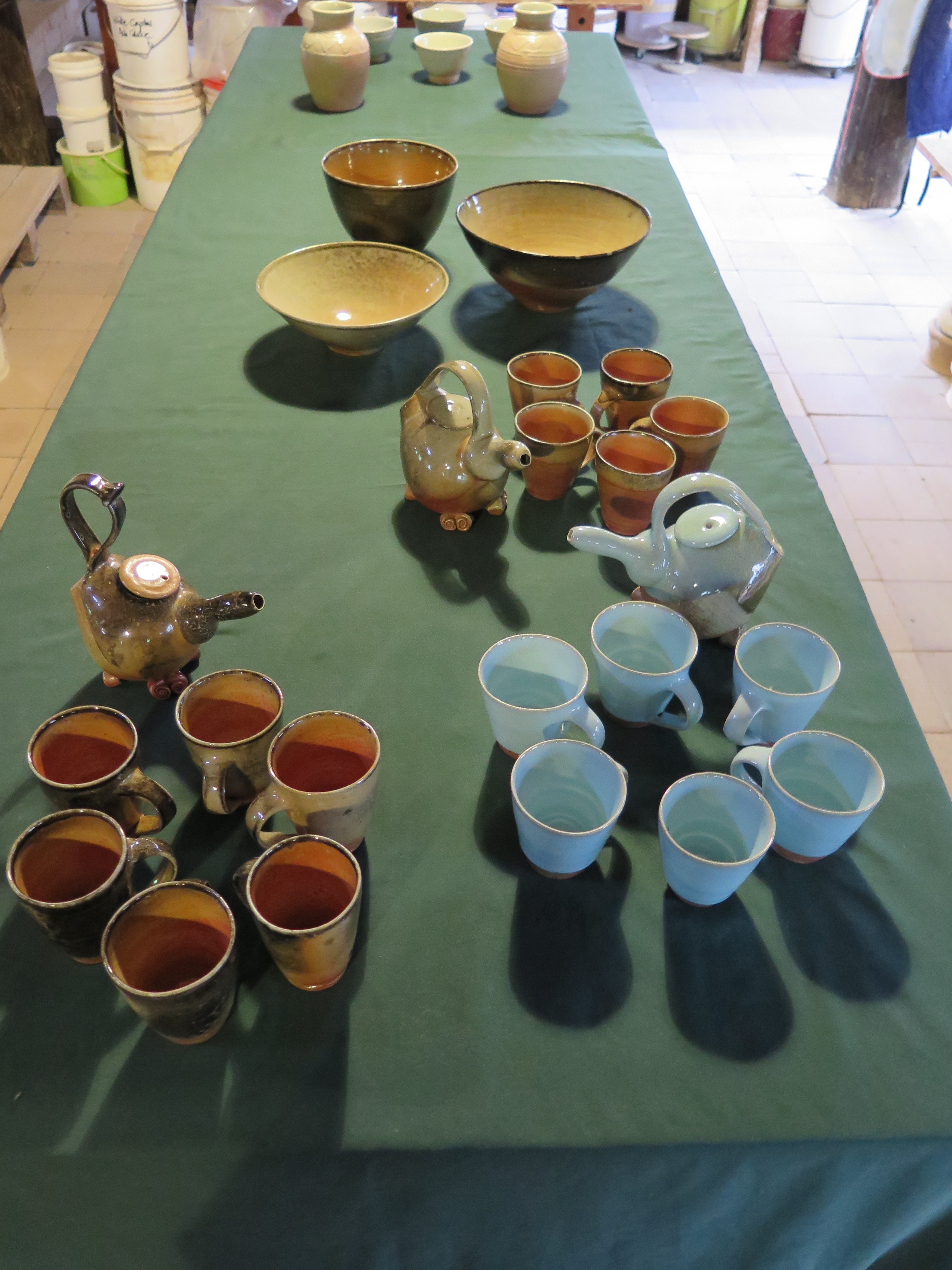
The garlic that I planted in March is wilting now and drying off, so it is time to harvest it and lay it out for drying. This will have to wait for next week, as we are flat-out busy cleaning up the pottery and setting out our pots for the Open Studio Weekends coming up. We are pretty much ready now with only minor adjustments left to do today. I did all the lighting and most of the pricing yesterday.

IMG_1382

Next to the garlic I planted a long row of peas which The Lovely enjoyed while I was away in Japan. They are all over now, so I planted potatoes in that spot a few weeks ago. They are all starting to show their first leaves now. They went in a month late, but I was so busy when I got back that I just couldn’t do everything at once. Pot making, kiln building, wood splitting, kiln firings, studio cleaning, weeding, mowing, planting and harvesting.

IMG_1216IMG_1217

IMG_1363IMG_1346

IMG_1352IMG_1359

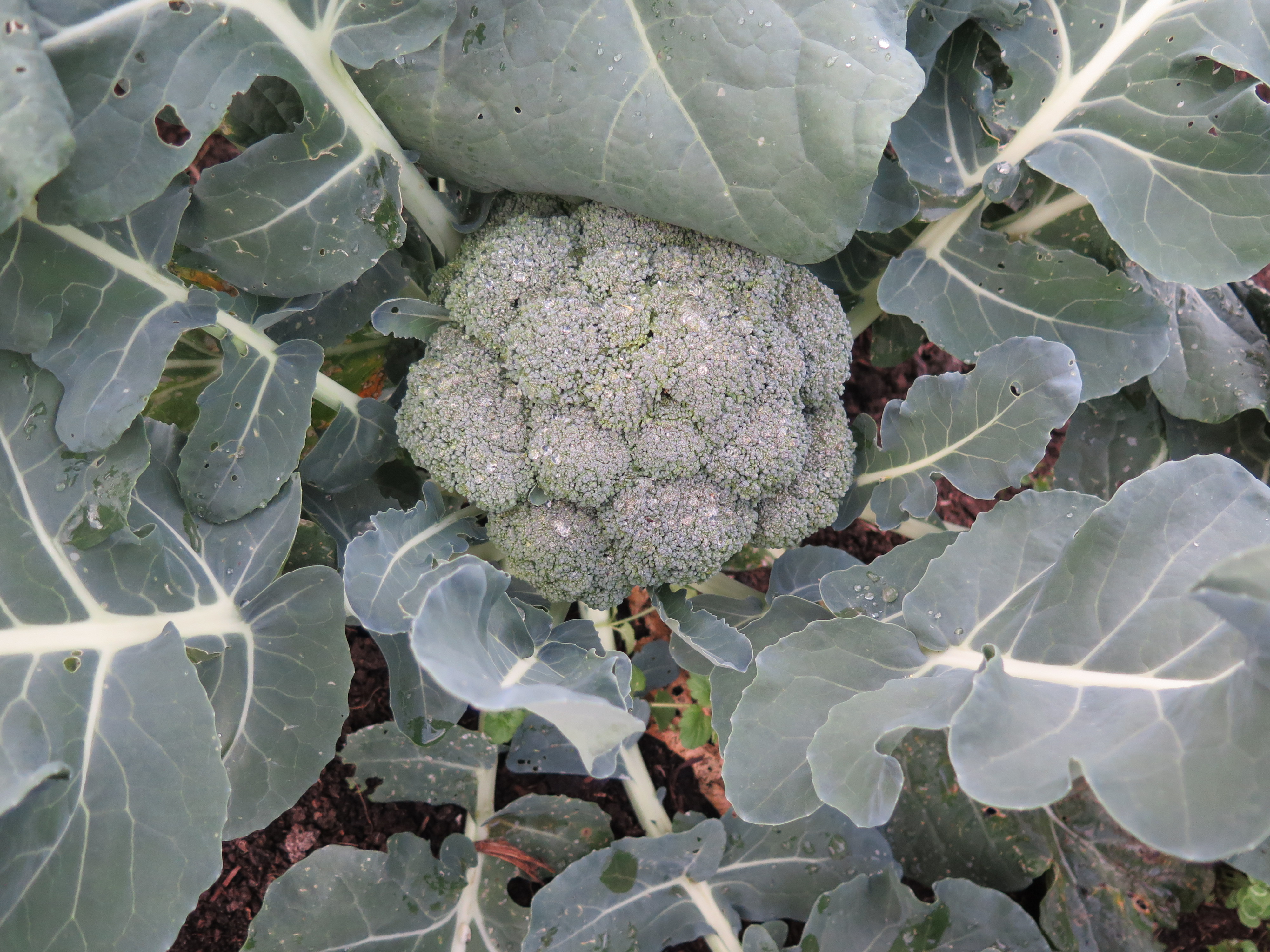
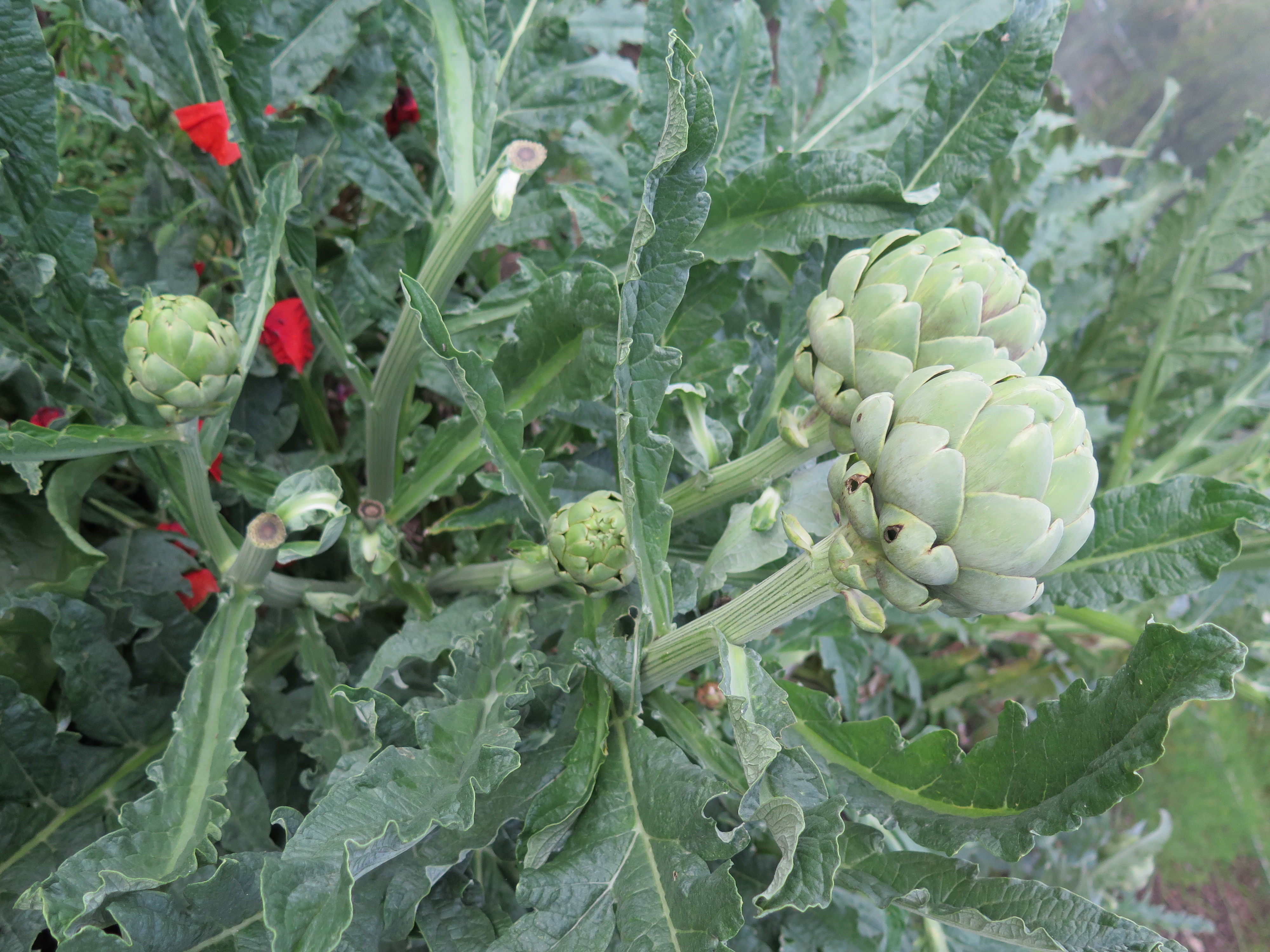
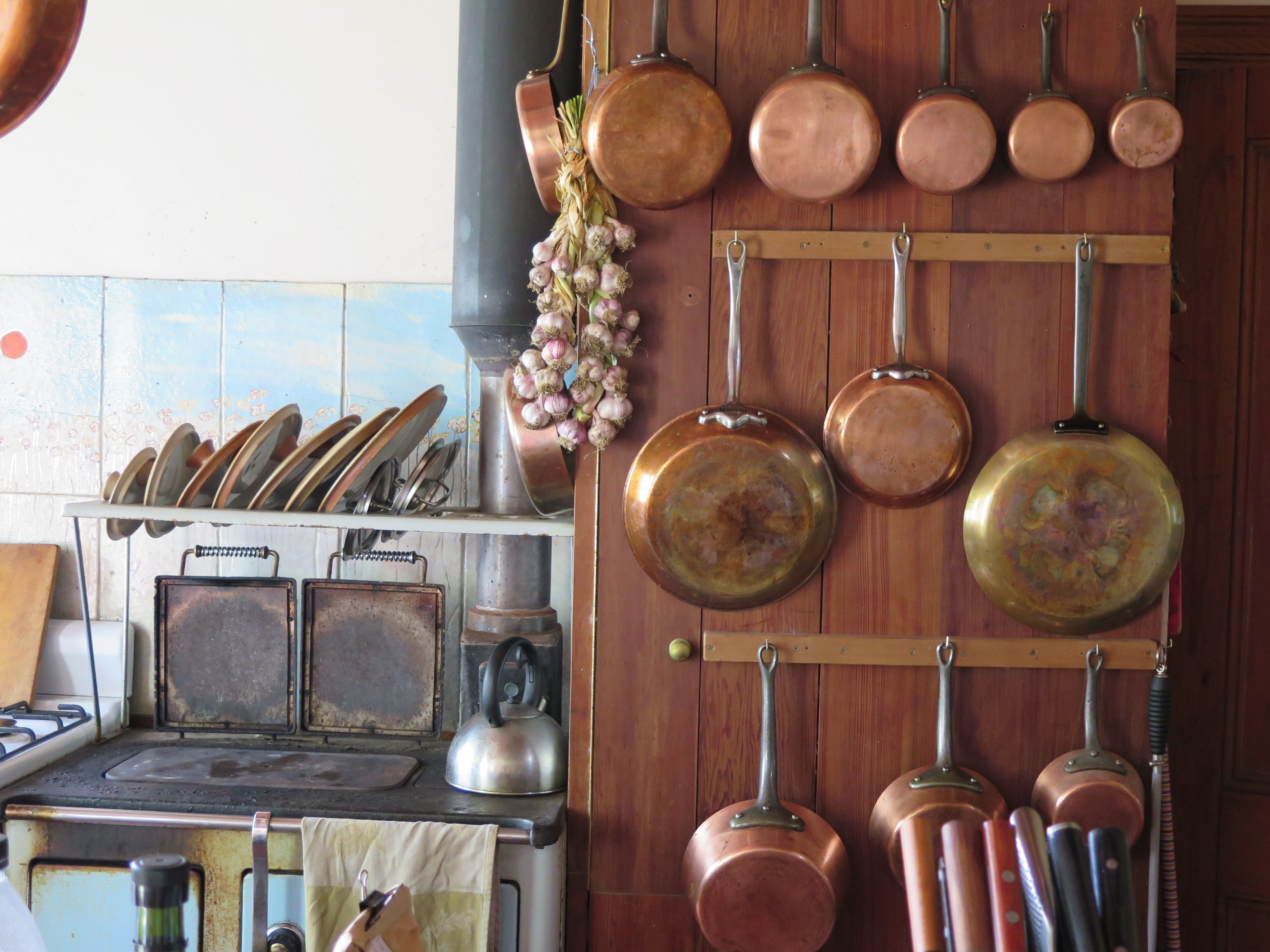
I have been back a while now and just about caught up. The garden is pretty much fully planted out with the summer vegetables and we have already picked our first cucumber, zucchinis, picked our first sprigs of basil and had a couple of meals of artichokes. Janine lifted some of the earliest garlic that had self-sown on the edge of the path, a few knobs that we missed last year, that had grown into splendid plants. They are all dried, plaited and hung up next to the stove in the kitchen. It’s so nice to have fresh garlic again. I forget just how juicy and oily it is when it is this fresh. This is the first year that we have had our own garlic last the full year. We had just 2 little dried out knobs left in the colander on the kitchen bench when Janine picked that first plant.

IMG_1365IMG_1384

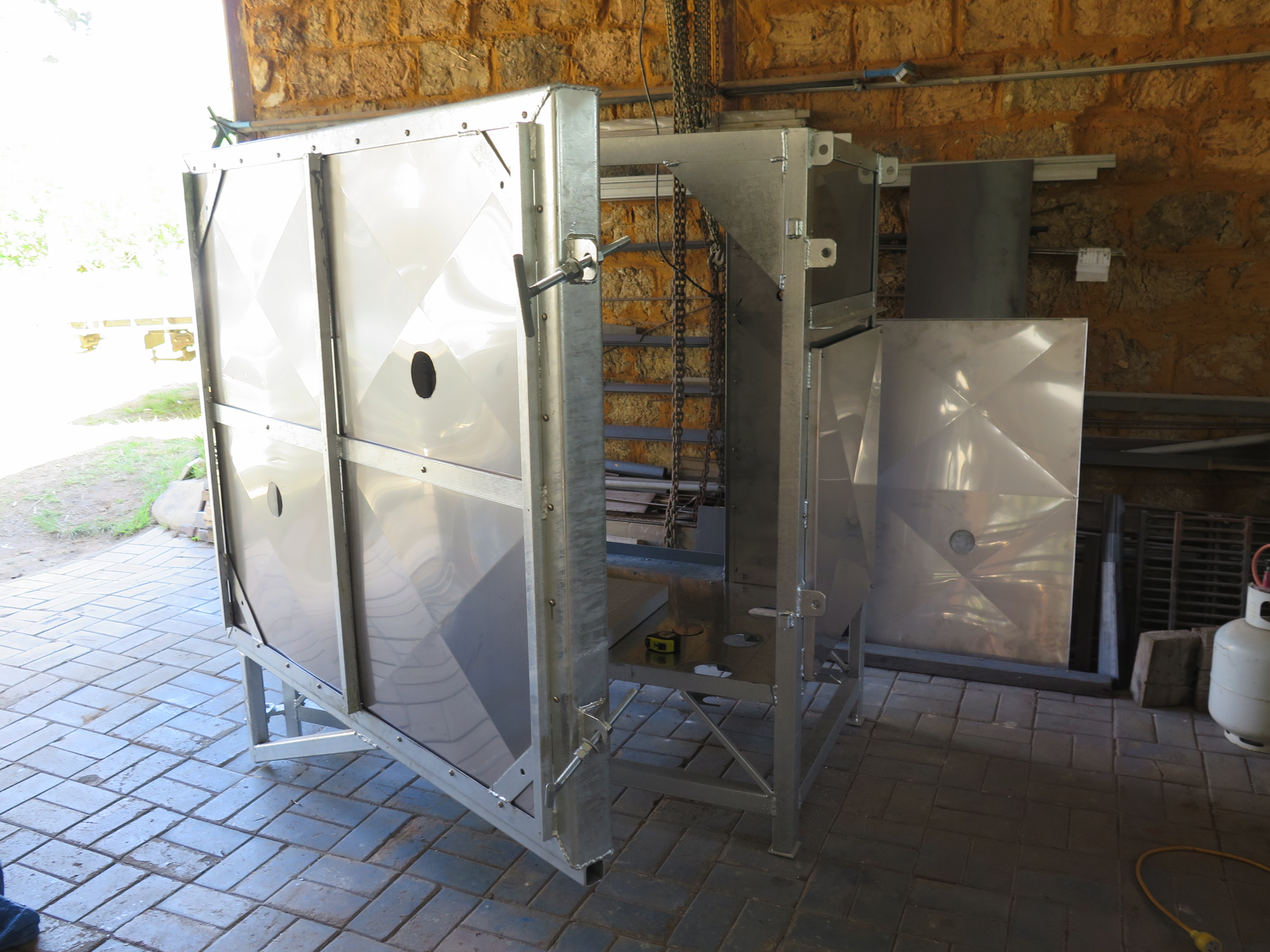
I have managed to make progress on the big new gas kiln for Sturt Workshops. It is all panelled and bricked up now. I had my very good friend and right hand man Warren down for a few days to give me a hand, as there is just too much to do at this time of year and I’m only one man.

Warren is an amazingly creative person. So skilful at so many things. He was apprentice of the year in his trade course. For two years in a row! Then he worked as a stonemason in Canada for a while, then as a fencer on his return, a panel beater, and a potter/sculptor, this was when I first met him. He worked in the sculpture department of the National Arts School for some years and then studied horticulture and set up his own business. An amazingly creative, restless spirit.

I taught Warren in the ceramics course at The National Arts School, back in the 90’s. On the first day of the year, I started my class by getting the students to make some good, basic, pottery tools. I took them all over to the sculpture workshop, where there were woodworking and metal working tools and vices. They were encouraged to get to know how to use these simple tools, so that they could make and sharpen their own tools. A little bit of self-reliance, that I had decided to inject into the course syllabus.

I handed out some small pieces of thin stainless steel sheet and a pair of tin snips to each of the students, so that they could cut out a small kidney-shaped profile tool. By the time I had turned around, Warren had cut out a perfect kidney shape. He held it up to me and said,

“Do you mean like this”?

I said “Yes! Exactly like that. Do you want a job”!

He replied, “Maybe, it depends what it is”

We have worked together on a casual basis ever since. When I have too much work on, it’s great to get Warren down here to give me hand. Apart from being amazingly skilful, he is great fun and we laugh a lot. Working with Warren puts a spring in my step.

Having been a panel beater, Warren is excellent with sheet metal and with the State Medal in MIG welding under his belt, he is a very useful man to have in a kiln factory. He has a great eye for detail and is very careful and accurate with his hand-work skills. This in conjunction with a few years as a mason, makes him ideal at the very fine and precise type of brick laying that I do in my kilns. It’s great to have The Man for All Seasons here in the Spring.

IMG_1323IMG_1337

IMG_1342