The Last Beta Firing? Success at iteration 7

Janine has just completed the 7th firing and design iteration of the little wood fired kiln. It worked well and there are now no more obvious and glaring changes that need to be made to the design. Of course there are a lot of little issues that will need to be tweaked over the coming months. But I can’t see anything that will require a major rebuild. I think that this design as it stands now is a good one. – Until I think of something better!

The verandah of the pottery now has a collection of these little prototypes all parked there out of the weather. They all work well enough at lower temps, so I will use them for our raku firing weekend workshops. The image shows a very full wheel barrow of wood, enough for two or more firings to stoneware.
The design that I have ended up with is now ready for a limited production run.
This last firing of Janine’s was more or less perfect. Except that we managed to crack a kiln shelf. Janine had a lot of flat ware, so I retrieved a kiln shelf from the rack that hadn’t been fired for over 20 years. I think that the shock of a fast firing and possibly moisture absorbtion that couldn’t escape fast enough was the problem, as this hasn’t happened before. I would usually like to season a new kiln shelf more gentle. Perhaps by rubbing in salt and pepper with a little olive oil might work next time?:) By lunch time we’re famished. Because I managed to catch up with the fresh fish man, we have ultra-fresh sashimi grade tuna. So its sashimi for lunch.
IMG_2609
I also make fresh pippies in white wine, chilli and saffron sauce for dinner. What more could you want to celebrate a successful firing day. Followed by a fresh salad from the garden. We have a local grower of saffron now, so we support them.
IMG_2583
I have been making a new batch of spy holes for my kiln factory. I throw them on the wheel, very slowly, out of a very coarse mix of crushed high alumina grog and a small amount of kaolin to bind it. The mix is so aggressive that my hands are starting to hurt after just one pot-board full. This mix really takes your skin off. But that’s OK. 20 or so will last me for another year. If I wanted to make any more I’d have to wear gloves. I’ve heard some potters claim that they throw till their fingers bleed, but I’m not that stupid. I know when to stop.
I fire the spy holes in the little wood kiln. This little wonder fires cone 8 on the bottom shelf, cone 9 in the middle and cone 10 at the top. A perfectly useable working stoneware temperature range. Certainly OK for a 3 to 3 1/2 hour firing schedule. My bowls turn out well too. Some nice, soft, pastel glazes.
I’m really pleased that everything has come to a clear resolution at this time. As for the next couple of months. I’m fully booked on other projects and I wont have any time to play with this little kiln for a while. In the evening we de-seed chillies for drying in the kitchen window, along with beans and corn, destined for drying and grinding for polenta. I also finish drying some tomatoes in the oven. Once dried in this way they have the potential to keep almost indefinitely, but they never do. They are so yummy that I eat them like lollies. They never last the year. It’s great to add a handful into winter stocks. They add that certain piquant, sharp sweetness to sauces or a ragu.
This is just another day in the mixed household of self-reliance.
Best wishes from Mr. Beta and Ms Better

A Healthier Substitute for Common Salt?

I like to limit my salt intake. I achieve this mainly by limiting the amount of processed food that I buy. Processed foods tend to be loaded up with salt, sugar and fat. Not particularly good for us in excess. By making nearly all our meals from scratch, using vegetables from our own organic garden, we can be fairly certain of what is in most of our food. So we can limit our salt, fat and sugar intake. Salt tends to cause hypertension and hardening of the arteries Something to be avoided. I was brought up in a household where my mother used very little salt. The only salt in the house that I can remember was ‘Blooms’ celery salt, that came in a cardboard box. it was used spearingly at table. So I’m used to the slightly bland, less stimulating tastes of the likes of Tuscan bread and cultured, unsalted butter.

Perhaps this is why I have always had low blood pressure. At least I did. I used to get up in the morning and feel a bit dizzy when I stood up after getting out of bed and sometimes had to sit down again for a while, before heading to the bathroom, waiting for my blood pressure to catch up. Once in the shower, I would get a bit dizzy again as the warm water relaxed my blood vessels and my pressure would drop again. Sometimes I would start to see stars circulating in my vision. Just like in the cartoon – only these ones weren’t coloured, just grey. I didn’t enjoy any of this and mentioned it to my family doctor on one of the rare occasions that I ever went, as I have never really had a need to go. He told me that there was no treatment for low blood pressure and that I should be careful. Especially when driving first thing in the morning, because when he tested my blood pressure it was something like 60 over 90. He asked me if I was OK? I said that I was. I felt normal. He looked a bit shocked and warned me that I should be careful that I didn’t pass out unexpectedly.

15 years ago, I decided to start taking a little salt in my diet, and for 10 years I took a small amount of common salt each week. Now, 10 years on, my blood pressure is up to normal. So I stopped taking ordinary salt a few years ago. These days I use a salt substitute that I mix up my self. It has a small amount of common salt in it, but is mostly composed of vegetable matter.

I buy a readily available brand of vegetable salt called ‘trocomare’ (250 gram pkt). This seems to be about half sodium chloride and half vegetable powder. I empty this into a large mixing bowl. To this I add a 500 gram packet of kelp powder, plus 100 grams of ‘K’ salt – Potassium Chloride, some powdered celery seed, if I have it, and one or two small packets of Sumac 30 grams. This is all mixed up and put into sealed containers, to keep it dry, ready for use. The kelp powder has a small amount of sea salt in it, but most importantly, it contains iodine.

Australian soils are quite low in iodine, being very ancient and well weathered, This is especially prevalent in the South Eastern States. Our ancient soils have not had the benefit of massive glacial activity pushing finely ground volcanic rock dust with it that would eventually degrade into deep, rich, fertile soils. So our soils around here are depleted of iodine.

For so many years our nation used glass milk bottles to deliver the daily milk. These bottles were re-cycled, washed, sterilised with iodine and re-used. The infinitesimal remnants of iodine that were left in the glass from the sterilisation were just enough to keep all Australians who drank milk supplied with their daily dose of Iodine. We didn’t have any trouble with iodine deficiency here in the cities, where glass milk bottles were used. Since we have economically irrationalised ourselves, and milk is delivered in plastic, or plastic-coated cardboard, now we are developing an iodine deficiency again.

This iodine deficiency was first noted here back in 1900. There have even been parliamentary inquiries into the mandatory addition of micro amounts of iodine into general food stuffs, such as bread, through the introduction of iodised salt. This is a practice that has been adopted in New Zealand, and  possibly Germany and Switzerland as well as far as I understand it. But I could be wrong on this.

I choose to buy iodised salt when I do buy salt, but it isn’t very often, as a small packet lasts a very long time because I try not to use very much of it. Most of it tends to get used mixed with lemon skins to scour and clean my copper cooking pots and pans. It does a lovely job. Every pan gets a good going over at least once every few weeks. It keeps them looking bright and shiny.

What is the right amount of salt? Salt is certainly addictive. once you get used to that spike in taste, everything else seems to be very bland. I used to know someone who added salt to everything. He didn’t like my food, as it was too bland for him. When he made porridge in the morning, he added so much salt that I couldn’t eat it. It was just too salty for me. when he made a low salt batch the next morning for me, he couldn’t eat it, as it tasted too bland for his taste. He had to add a lot more salt into his bowl. He said that he just couldn’t taste it.

So is salt good or bad for you? I don’t know. Life is a big one-way gamble. I’ve put my chips on the low salt option. It wasn’t too hard to do, as I was brought up that way. It seems normal to me. There just might be something to be said for blandness. It might help me appreciate the subtleties of delicate flavours? I certainly taste the stronger flavours when I get them. And you know, I don’t really like very salty foods. They just taste too salty to me, so I tend to avoid them.

Everything in moderation!

I’m grateful that I’m able to make these choices.

Pan Fried Figs in Apple Toffee

Because we are now past the solstice, it is time for the figs to begin to ripen. We enjoy them cooked in a little butter with a squeeze of lemon juice and a dash of our own preserved, concentrated apple juice. It slowly simmers down to a concentrate of apple toffee with soft poached figs.

It is pretty amazing, but last nights figs in preserved rich red preserved plum juice was  even a little better I feel. It’s all so hard to say, as every bit of it is so, fragrant, soft and delicious. Wonderfully soft and engaging while being a little bit sharp and sweet and delicately textural. It’s one of the few times where a little bit of ice-cream goes so well. It improves it and extends the texture, mouth feel and flavour.
So simple, so flavourful, so easy. Plant yourself a fig tree and enjoy the benefits – if you can keep the birds away!

Nina had to spend quite some time bagging the fruit to protect it from the birds.

IMG_2584

Peppers, with Peppers, with Pepperoni

This months meat meal is pork. Pork in the form of a hot spiced sausage. I know that I shouldn’t be eating preserved meats. There is plenty of evidence out there to indicate that the preservatives like sodium nitrate and not at all healthy, but on a special occasion once a year. I think that the phrase, everything in moderation might apply.

So, last night I made green peppers (capsicum), with chilli peppers and pepperoni sausage. Actually, it wasn’t pepperoni at all, it was chorizo, but I like the sound of the alliteration. I could have called it chorizo with chilli and chapsicum, but that isn’t as good.

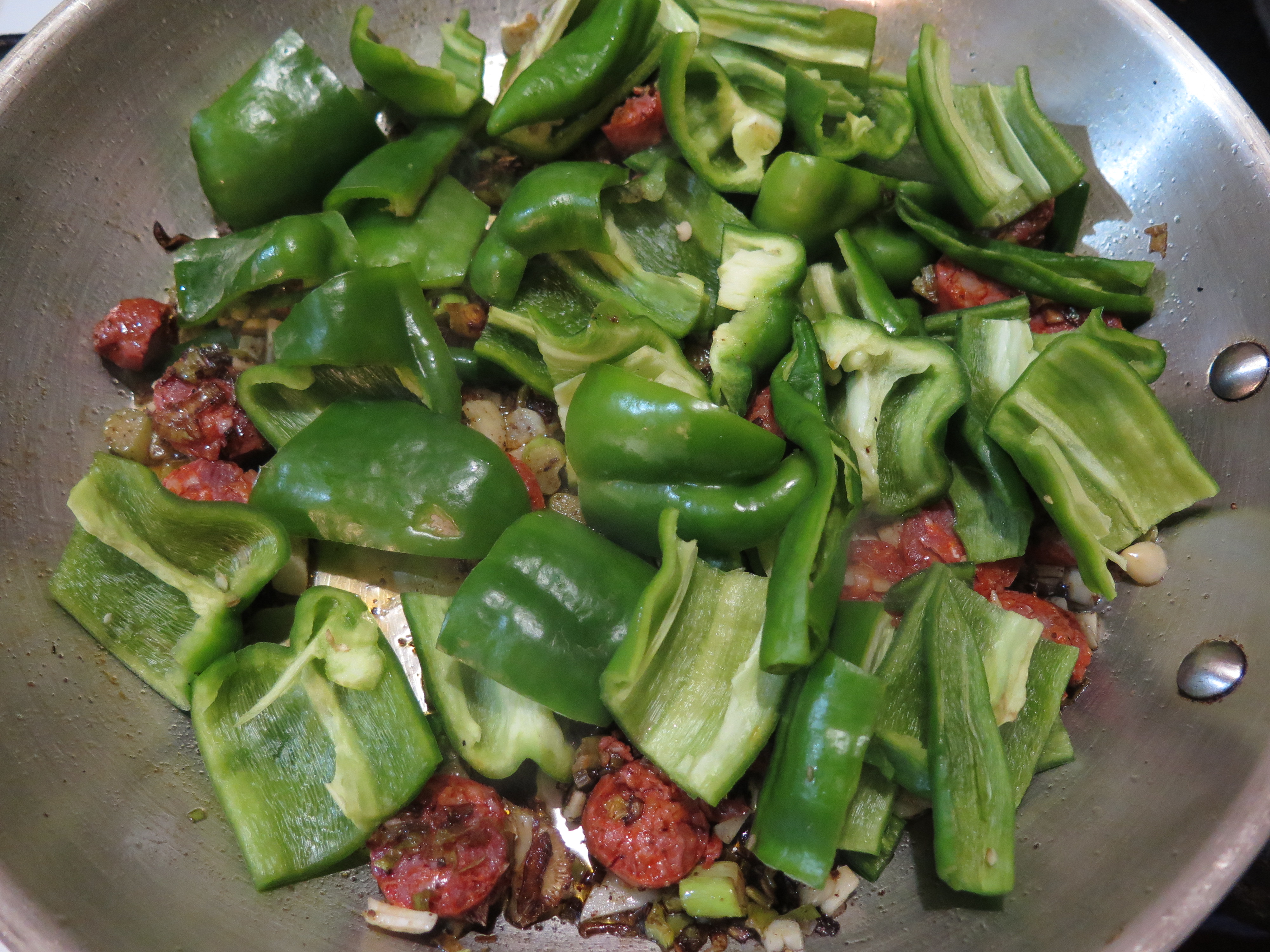
It turned out pretty well. I was pleased with it. Everything except the sausage came from our garden. I started by frying very finely sliced leeks in olive oil until they were golden and crispy, then added 1/2 a knob of finest diced garlic along with the roughly chopped capsicums and chills, plus the chunks of chorizo. Stir fried for a few minutes and then simmered with the lid on for a couple more to sweat out all the juices.

It was hot and spicy, but still crisp and crunchy to bite into. lovely!

IMG_2517

I am very grateful to be able to live this wholesome, self-reliant life.

Sugo and Passata

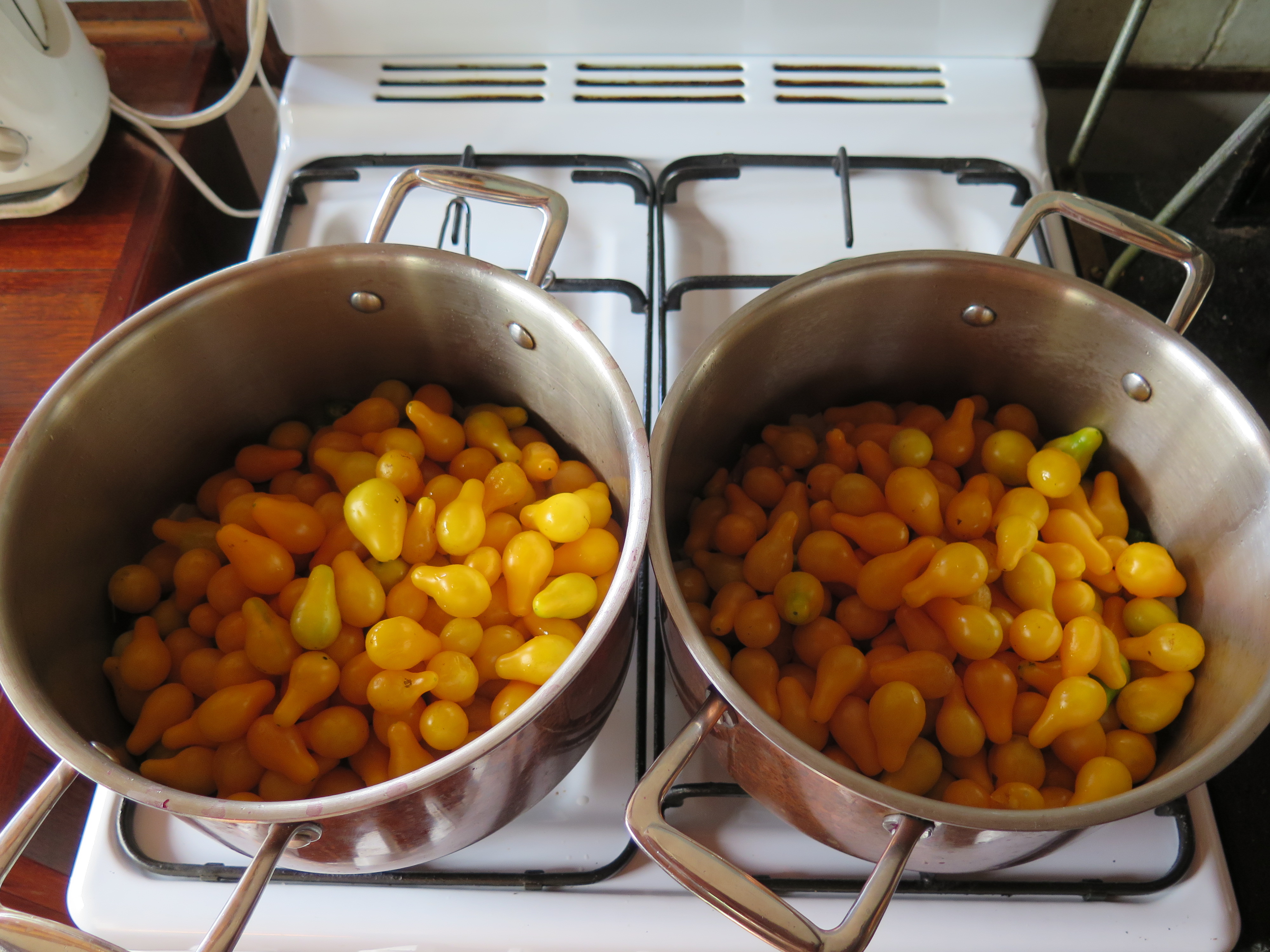
The summer is over and we are now firmly into the autumn. The leaves on the fruit trees in the orchards are turning yellow and dropping, but there is still plenty of action in the vegetable garden. In this late season, the little yellow tomatoes are doing well and sprawling all over the garden beds, putting down adventitious roots as they go and still flowering and fruiting well. They sprawl about the place like drunken revellers at the end of a very boozy party, making a mess and refusing to leave. I’ve picked a wicker basketful full of these little wonders. They are slowing down now, but I can still fill the basket once a week.

IMG_2496

 I am engaged in the repetitive task of boiling them down into tomato sugo, then sieving the result and heating it again to reduce it further and concentrate the full flavour of summer tomatoes. I will find lots of uses for it in the coming months for the winter stews and casseroles. Then in spring and even early summer I will use it up in all manner sauces. We don’t get our first ripe tomatoes here until around, or even after Xmas, but even then, they start of in a very shy way, only giving us just enough ripe fruit for our salad lunches.
The really productive time for tomatoes is now, right at the end of the season. So it’s sugo and passata making time.
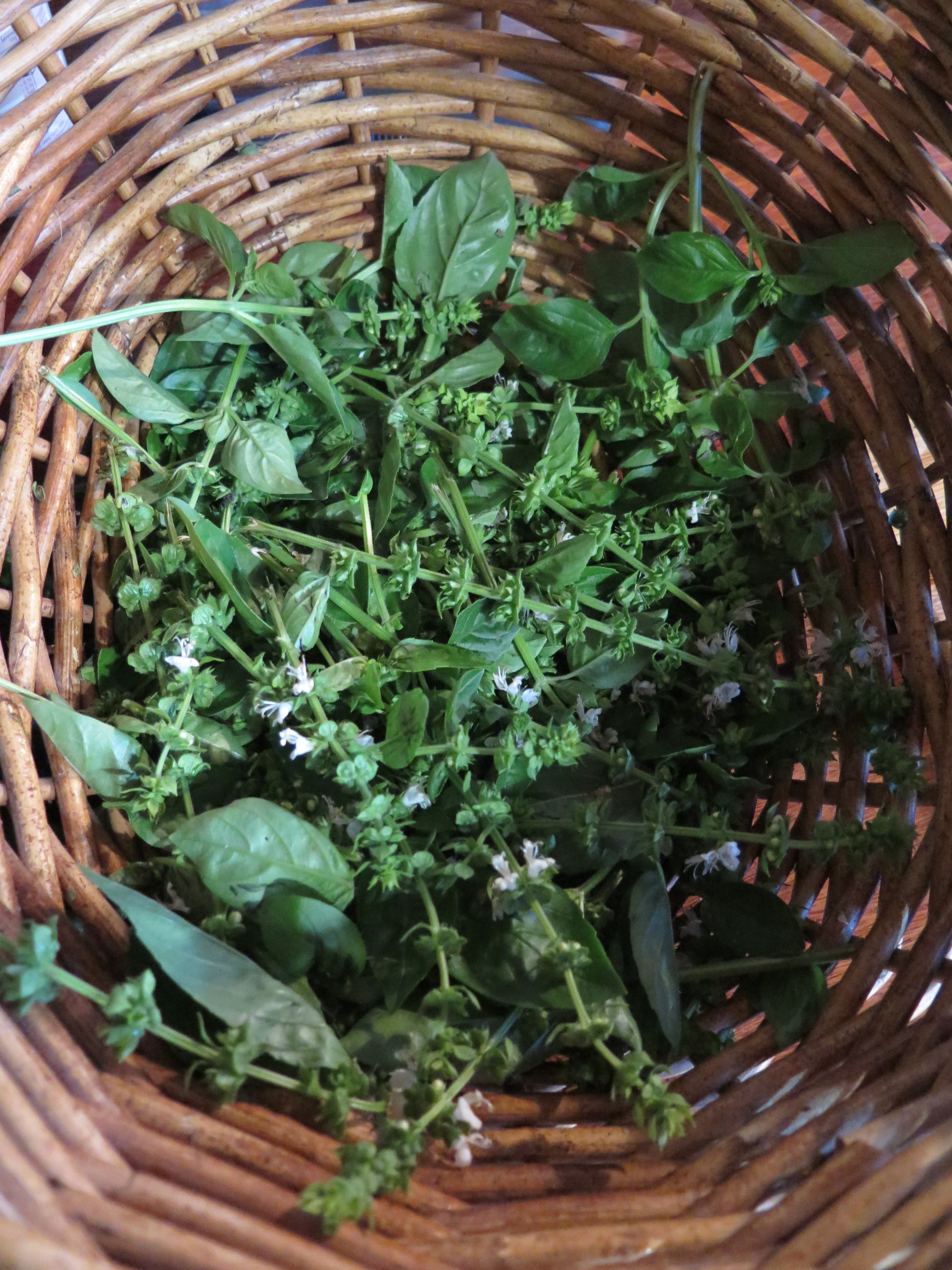
I make my own version of preserved tomato pulp. I add in onion, garlic, capsicum, chilli and basil, as these are all producing well at this time of year, so it makes sense to incorporate all that I have in the garden that is compatible.
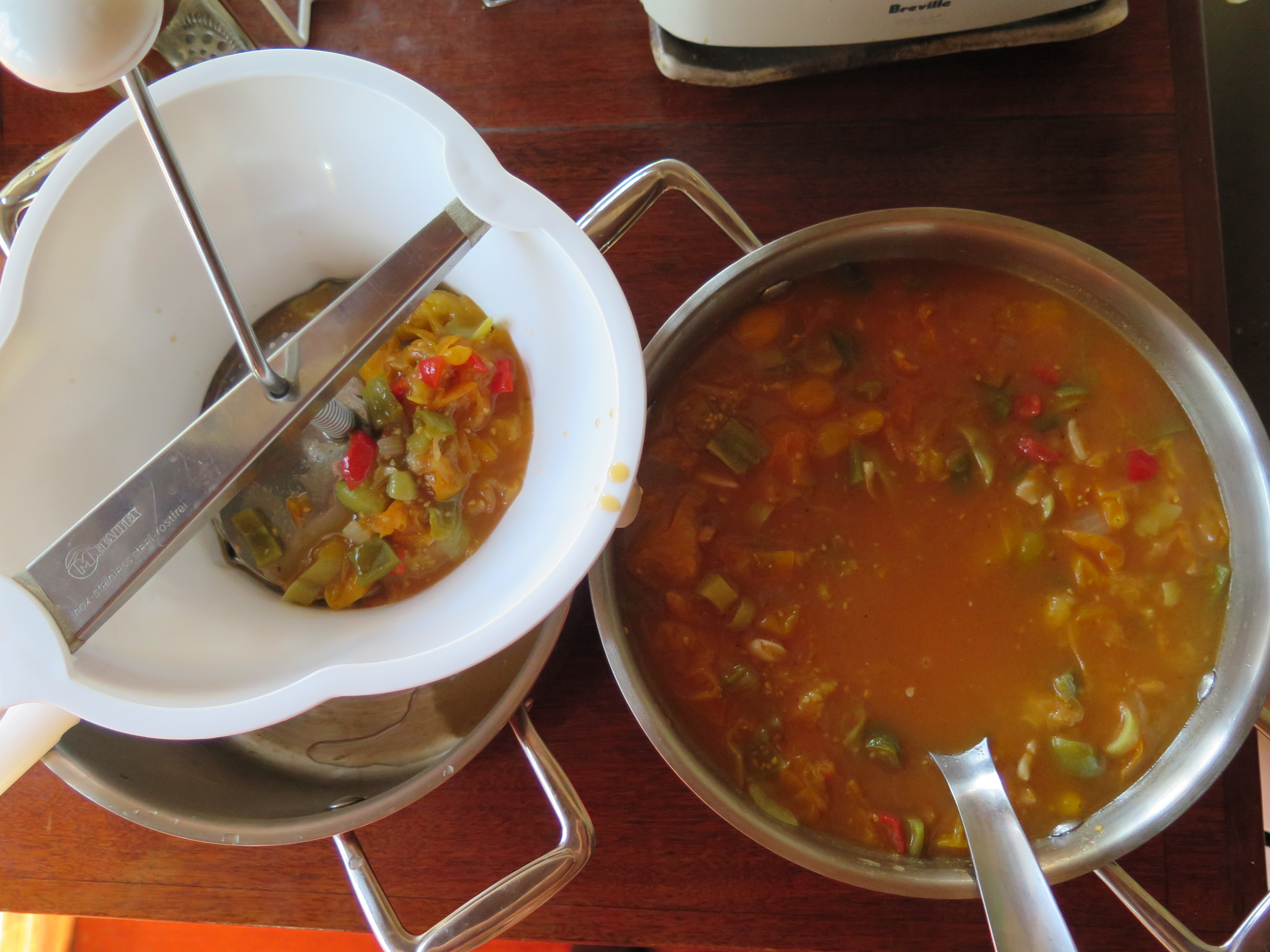
If I’m pressed for time, and aren’t we all, always pressed for time? I just make a quick boiled down sugo or sauce. Mostly tomatoes, placed in a big stew pan and brought to the boil. Seeds and skins all left in and the whole lot ladled into heated glass jars straight from the oven. This works OK, but the flavour from the seeds and skins that are left in there is not as good as when they are removed. It seems to make the sauce a bit thin and sharp somehow? So, I’ve found that it is worth the effort to pass the whole lot through the rotary moullii sieve. But time is always in short supply, so time has to be made for a good passata. Passata sauce has to be sieved. I believe that ‘passata’ means passed through a sieve in Italian? Passata = passed? Whereas ’sugo’ just means sauce.
I haven’t made sugo for two years now. I prefer the flavour of passata, so that is what I plan to do again this season and every year. But the best of intensions often get side tracked or even de-railed completely. So when everything goes temporarily pear shaped. I can still make sugo. I have tried to make time to get every batch of this autumns tomatoes twice cooked and moulied. so far I have been successful and have let other things go temporarily to make the time for it. Something has to give and that something is watching the grim offerings on what Peter Rushforth use to call ‘The idiot box’! No loss there.
I like to add some herbs of whatever takes my fancy. I must say that my favourite is always basil, sweet basil, and plenty of it, but I also vary it with sweet marjoram, thyme and or bay leaves. And of course pepper, but very little salt, just a touch. I make my own salt substitute mix, but that’s another story for another blog.
IMG_2500
 I like to brown some brown onions in olive oil to start with. We are getting to the end of our own onions by this time of the year. I’ve never been very successful with growing a years worth of onions. The small seeds soon get swamped out with weeds and it’s a lot of work to get them up and above the competition, so that I can mulch them to suppress the weeds. I do what I can, but it’s never enough. Still, we do get some onions to dry for 3 or 4 months use.
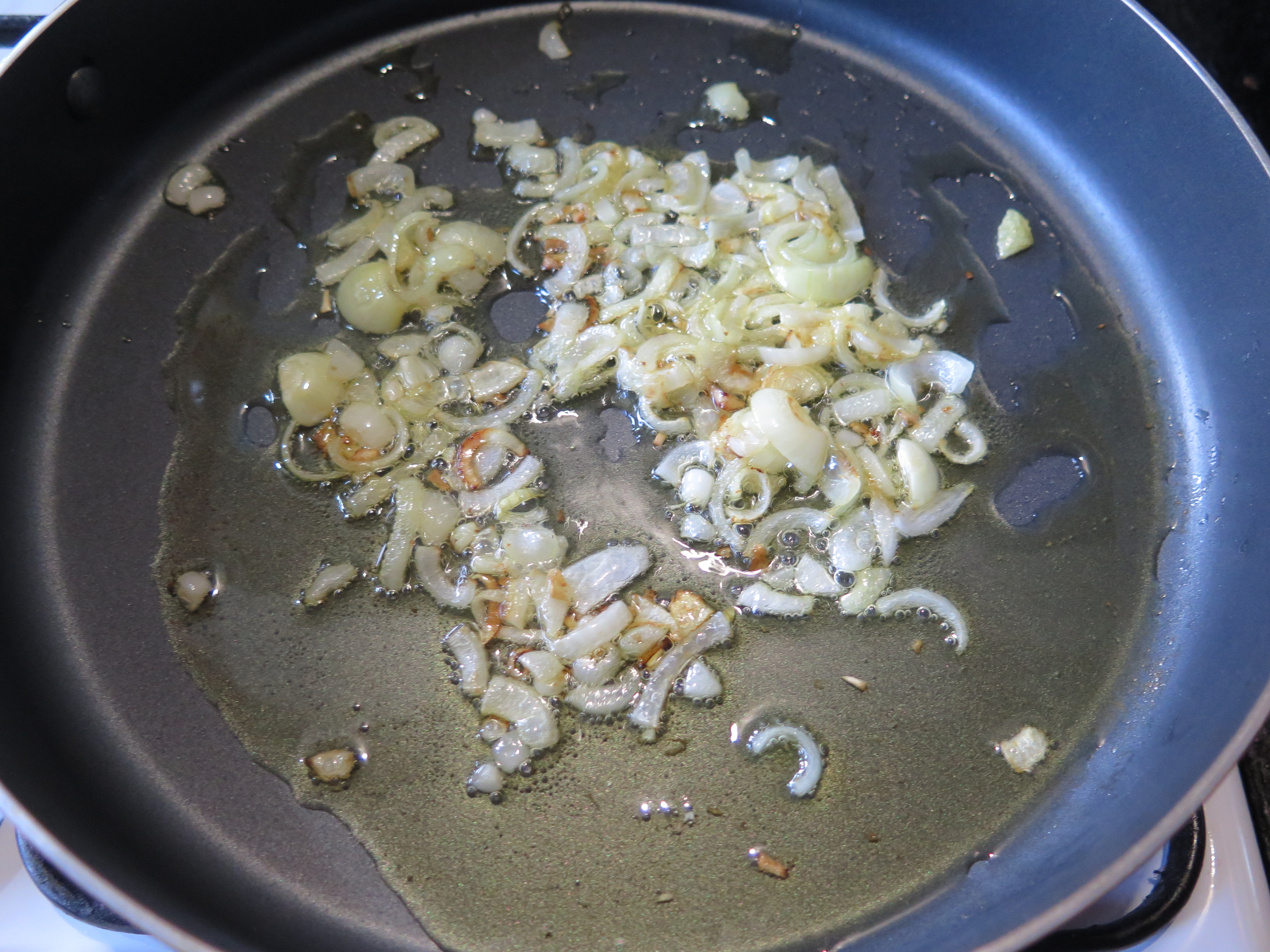
I dice the onions very fine so that they will break down easily and eventually pass through the fine mouli easily. I soften them out slowly in Australian olive oil and when they are translucent, I add in a few knobs of our smallest, under-size garlic. We grow a few hundred knobs of garlic each year and about a quarter of them never reach a suitable size, for one reason or another. They remail small, about 1.5 to 3 cm acress, not worth plaiting and hanging. They all get sun-dried and then stored in a large wooden bowl on the kitchen counter. I top and tail them and cut them in half, crush them with the side of a knife to break down the fibres and release all the flavour and them drop them into the pot with skins and all. It will all get sieved out at the end, so it won’t matter. Peeling small garlic cloves is a really slow and in this case an almost pointless job as I’m going to sieve it anyway. So this is my easy, fast solution to the small garlic clove problem. How to use everything that we grow, the good, the ugly and the undersized!
IMG_2396 IMG_2398 IMG_2399
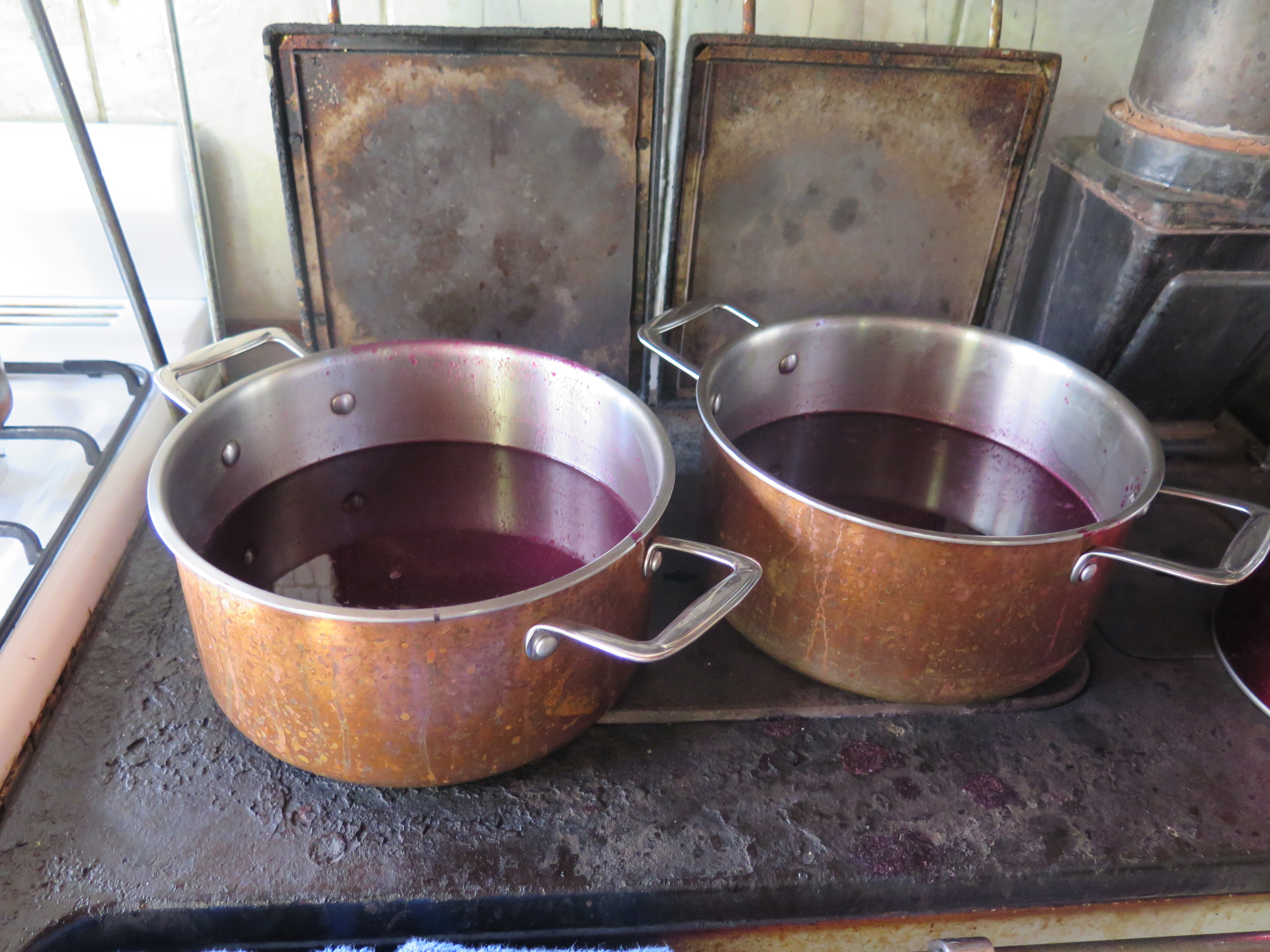
I put on two medium sized boilers of tomatoes, capsicum, chilli, basil mix. This time there is even a few zucchini’s in there and a couple of very ripe aubergines. It is easily reduced down to just one medium boiler of passata after it has all been passed through the mouli. I re-heat it all and bring it to the boil for a few minutes and then let is simmer slowly to reduce and concentrate. It also sterilises it. Meanwhile I get the glass jars washed and ready to pre-heat in the oven to 120oC for 10 minutes or so and I simmer the lids equally.
IMG_2503 IMG_2406 IMG_2504IMG_2505IMG_2424 IMG_2509
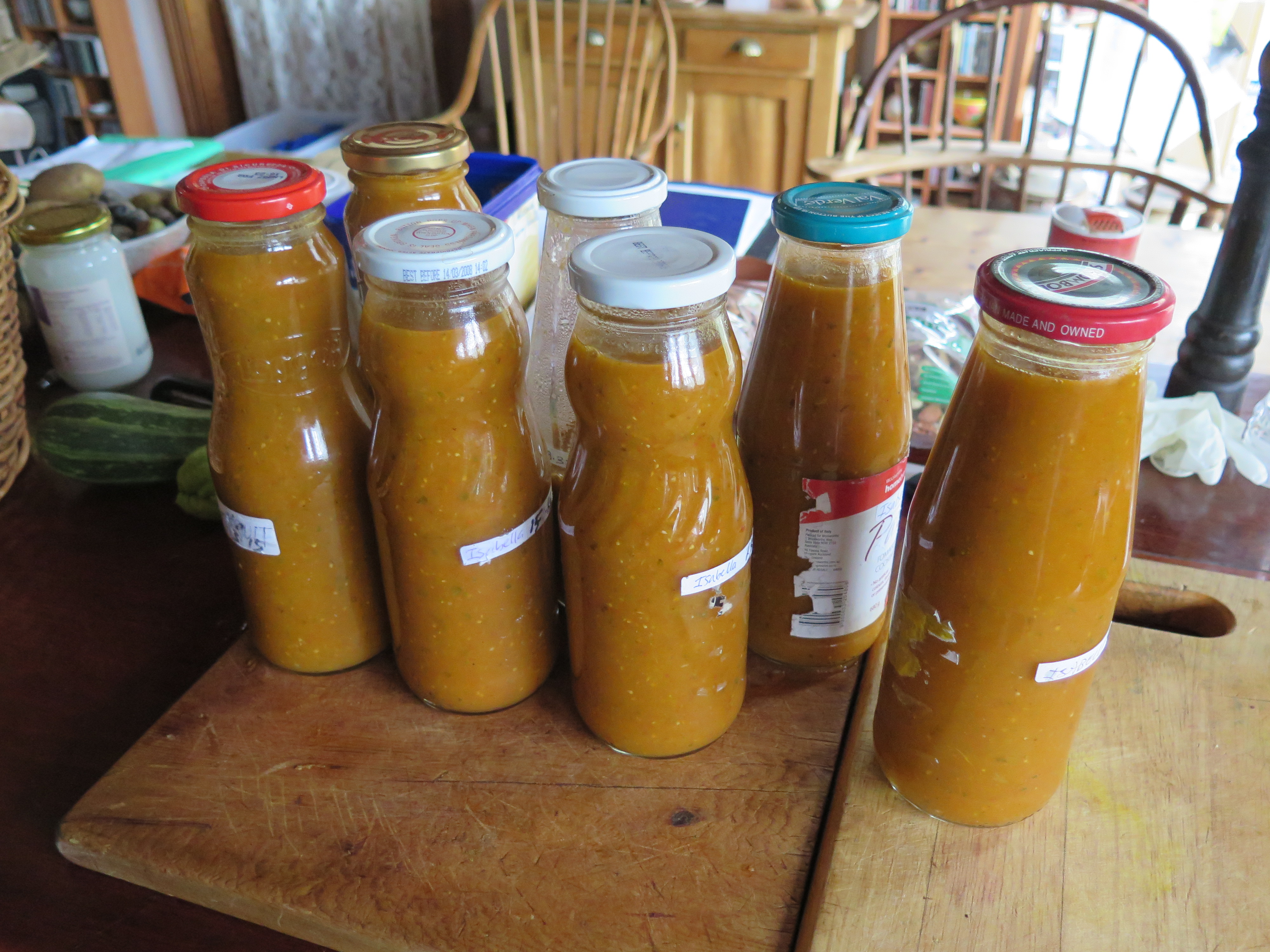
The easiest part of the whole exercise is to pour the concentrated liquid puree into the jars and screw on the caps. As they cool, I can hear the sharp, loud ‘clack’ noise as the whole lot shrinks and creates a vacuum in each of the jars in turn, sucking down the ‘pop-top’ lid, to indicate that it is now vacuum sealed These jars will now keep for up to 12 months without any further energy being applied to them. It’s a wonderfully fast and efficient way to preserve food. It’s the cooking and sieving that takes the time, but spread over a couple of evenings, it’s not such a big job and I really enjoy it. It’s a seasonal special event. Something to be looked forward to and relished because it’s a real, honest, creative activity. It might also be supremely healthy, tomato juice concentrate, loaded with lycopene, especially the way that we do it, entirely organic and free of any fertilisers, sprays and preservatives. Even if lycopene isn’t as healthy as some people claim, passata is still amazingly delicious.
I don’t think that many people are aware of this kind of activity these days and how important it is to take control of your own life and take as much personal responsibility for your actions and your own health as possible. It doesn’t get exhibited, or advertised, talked about or reviewed. It is not sexy or marketable. It is just one of the small invisible things that we do to make a tiny part of our larger life here.
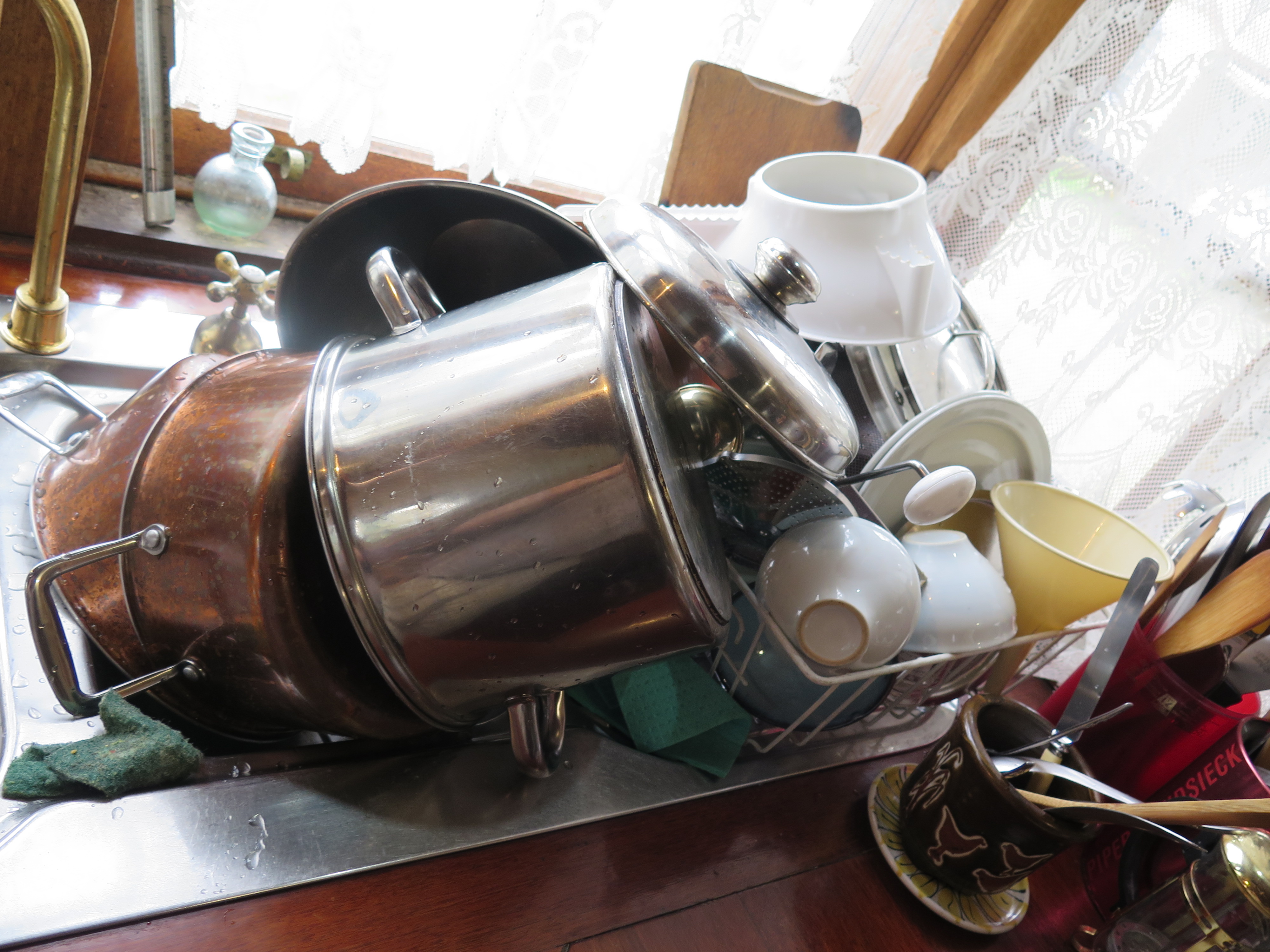
The really big job as always, is the washing up!
IMG_2507
Best wishes
The saucy Ms Sugo and her concentrated Mr Passata

Vendange

It’s autumn now and the grapes are fully ripe. We have been dealing with them in batches over the last few weeks. Yesterday we made the last pick. The Vendange is over for another year. All safely picked, juiced, heat-treated, sterilised and bottled. The rich red dark grape juice bottled in this way will keep for 12 months easily. We make it now in the autumn and drink most of it as a refreshing cool drink next summer in 9 months time.

We have preserved dark grape juice from both our shiraz grapes as well as our isabella fragolino varieties. They both make good dark grape juice, but I think that I prefer the slightly foxy, aromatic density of the fragolino juice to the somewhat austere and peppery shiraz. We abandoned making wine from our grapes sometime ago, as it takes a lot of effort for something that is just plain ordinary and we can buy good wine quite cheaply here in Australia. We have learnt to be selective about where we expend our limited energies, so as to get the best return on our efforts.
IMG_8529IMG_2106IMG_2107
After a lot of experiments, we have learnt that dark grape juice is the best that we can do with what we’ve got, although, this year, early in the season, The Resourceful One also tried her hand at making very early season verjuice.
IMG_2363 IMG_2364 IMG_2366
We macerate the grapes and sieve out the fresh unfermented ‘must’, skins and seeds. The pure juice is heated on the stove to sterilise it and then bottled into heated jars, fresh from the oven. It all takes time, but this is the quickest and most efficient way that we have found to deal with the harvest, that gives and exceptional quality of product. It also has the added benefit of requiring no energy to store it for a year and keep it beautifully preserved for when you really appreciate it.
IMG_6349
We have been out and when we return in the evening, we find Annabelle Sloujetté’s ute spread-eagled across the front of our house. She has her own key and has let herself in. She is on her way somewhere, or back, and slides her ute into a sort of parked position in the front garden. She asks where Janine is and I have to say that I don’t know. She was here with me just a minute ago. “Ah! Slougetté responds. ‘Miss Flit’. That is why I call her Miss Flit. She flits in and she flits out, never stays still long enough to carry on a complete conversation. A complete conversation with ‘Miss Flit’ is like a Dickens serialised novel. It takes time and you have to be patient as it evolves.”
We end the day with a vegetarian BBQ. Nothing special, just quick and simple, place your sliced, freshly picked vegetables on the barbie and turn them when they are softened, Zucchini, aubergines, little golden nugget pumpkin and capsicums. They couldn’t be fresher and cooking outside at this time of year in the evening is a delight. The cooling breeze has arrived and the aromas emanating make my mouth water in anticipation. I make an autumn salsa out of our little, late-season, yellow  tomatoes, some garlic and chillis, while the bbq looks after itself. The girls are tête-à-tête, deep in gossip.
I plate up to table and we eat them with relish. I like a spoonful of my piquant home-made spicy plum sauce on my bbq’d veggies, but quince paste also works well I think.
IMG_2359
When we wake, she is gone. Only her tell-tale signature circle work on the front lawn tells the tale of her visit.
Best wishes
From Mr and Mrs Flit

Another Post From The Running Postman

The wild flowers have been lovely, but they are all gone now. It’s almost autumn and the cherry trees in the Chekov orchard are loosing their leaves. They are the first to fruit and the first to go dormant. We are experiencing a late summer scorching week of high temperatures in the mid 30’s and have had to be out early and late to water the garden. Overall, this summer has been exceptional, although it has been hot, it has also rained a lot and even at this late stage , with all this heat now, we still have green grass outside our window. We are usually looking out at dry, dusty gravel at this stage of the summer.

IMG_3689IMG_2350
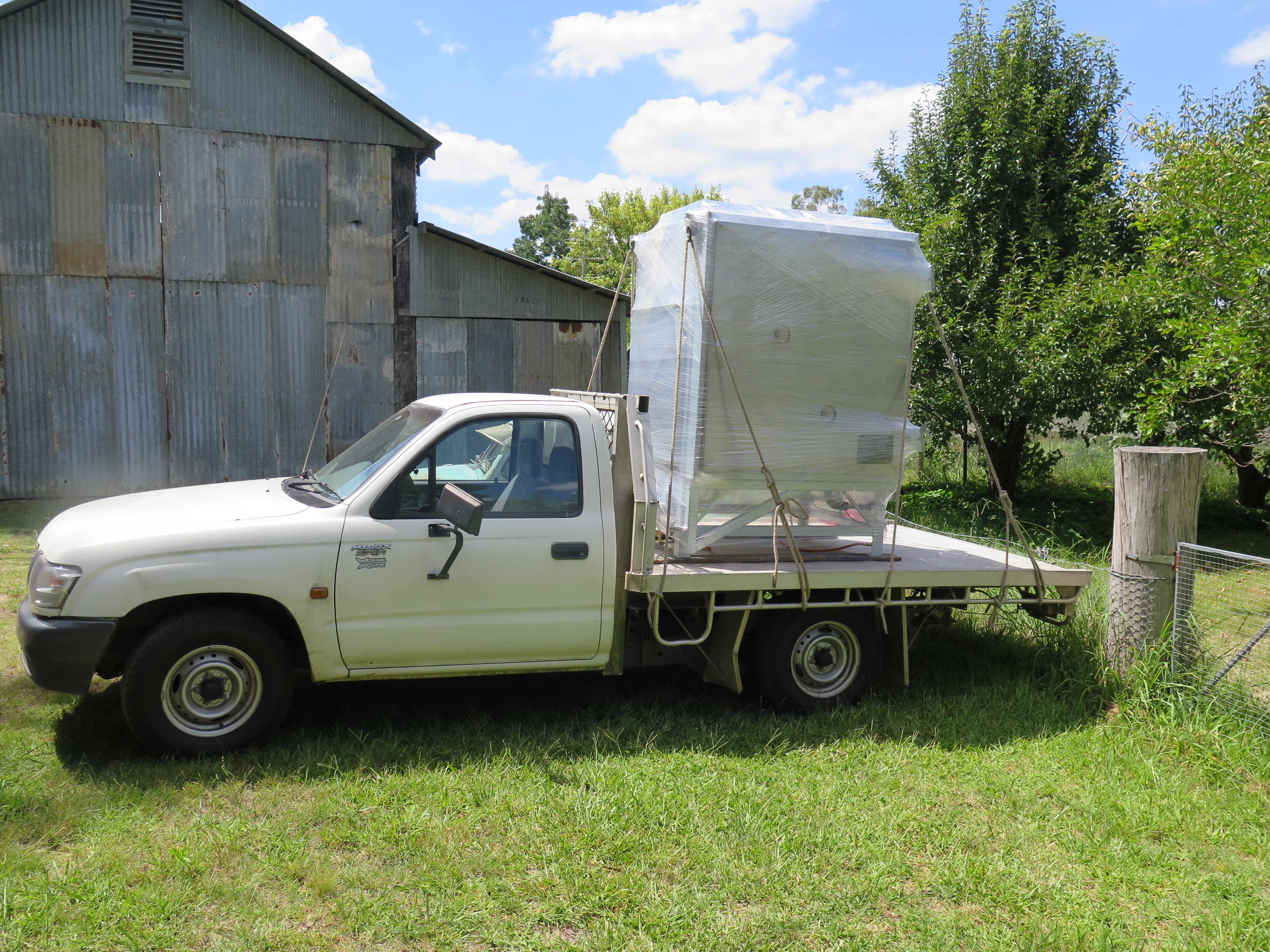
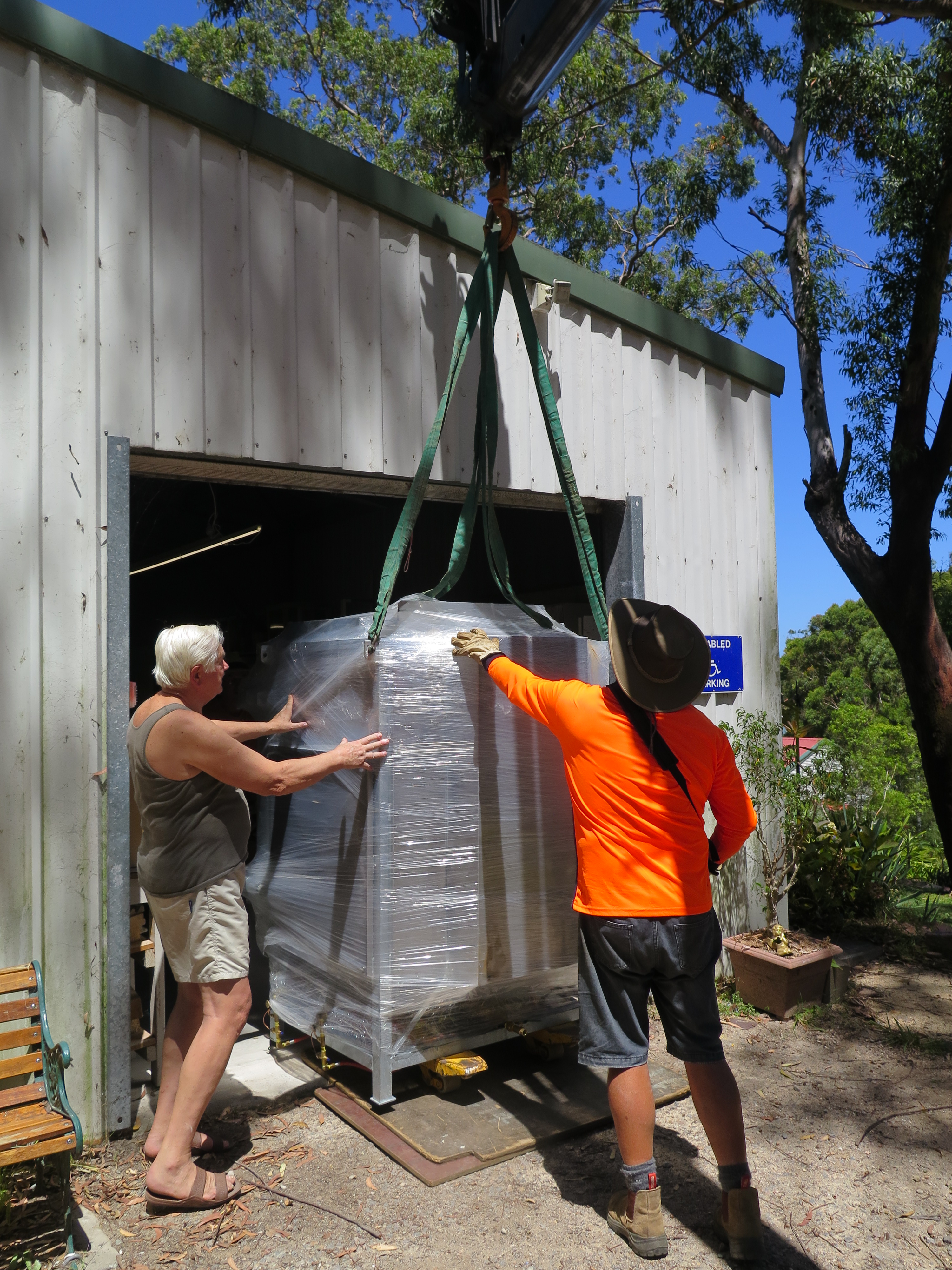
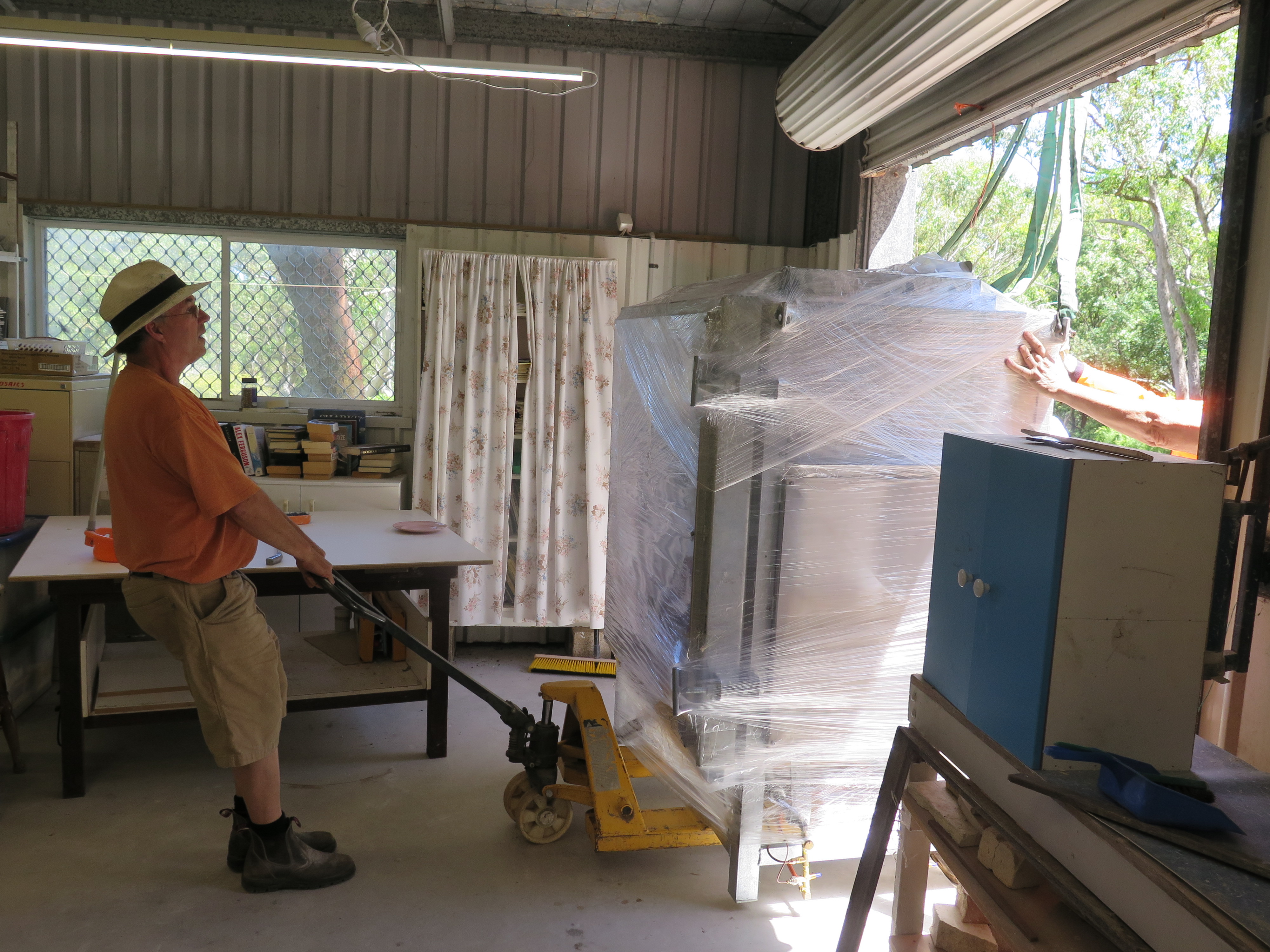
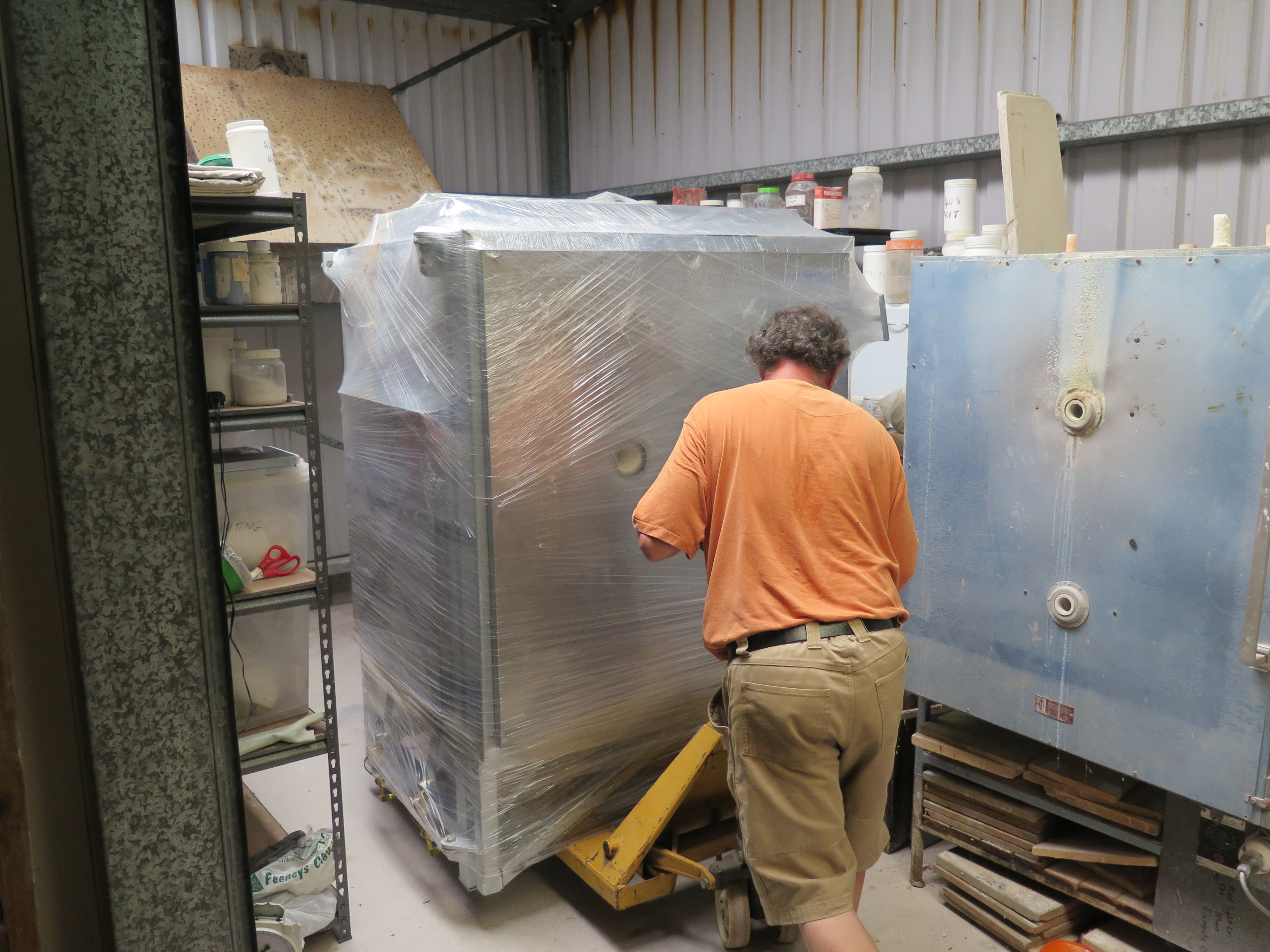
I have delivered the latest kiln to my customer and all went so very smoothly. Just as it should, as we do a planning to get it all just right, but regular readers of this blog will know that the best laid plans can suddenly go terribly wrong at the drop of a hat when a third party lets you down after promising faithfully to turn up on time. This is never the case with Dave, my local crane truck driver. He is amazingly punctual and careful with my jobs. It’s a pleasure to work with someone so professional and creatively competent at moving heavy objects.
IMG_2313IMG_2335 IMG_2336IMG_2338 IMG_2340 IMG_2342
Warren and I have already started the next job and got it well under way. As I am ahead of schedule with my orders, I have been able to spend time in the pottery making some more of my porcelain. Iron stained yellow, pale ochre grey and creamy grey/white bodies.
IMG_2330 IMG_2331
We have also now completed 5 firings in our little new experimental, portable wood fired kiln. It gets better every time we fire it. That is to say we are getting better at understanding it and how it works. I’m also finding out all it’s weak points. All the things that I didn’t expect or imagine might happen have shown them selves and come to pass, so each time we fire, we find a new problem that needs a better solution. I solve each one as it appears and then onto the next. I think that I have it all solved, then something else appears. I’m constantly thinking this next firing will see it all solved and then I can start to produce them. Always the optimist:)
IMG_2292 IMG_2302
Cast iron doesn’t work in this kiln. OK for raku, but not here.
We have tried experiments with different types of fire bars over time and worked out that in this kiln, we can’t use ceramic fire-bars, or mild steel fire-bars, or cast iron bars, but custom welded stainless steel fire bars are the go for this little beauty when fired in reduction. The other fire bars that we have tried have worked well in other kilns at different times, but for this one, it’s going to have to be custom made stainless steel. They have proved to also have their issues, but I have worked thorough these and I now have a workable solution. I just need to try one more variation on the way we use the flue!
I am so confident about this little kiln now, that I am starting to draw up a plan for a larger version. Increasing the kiln shelf area from 300mm. x 455mm. (12’ x 18”) to a kiln shelf of 455mm x 455mm. Sq.  (18” x 18”)!
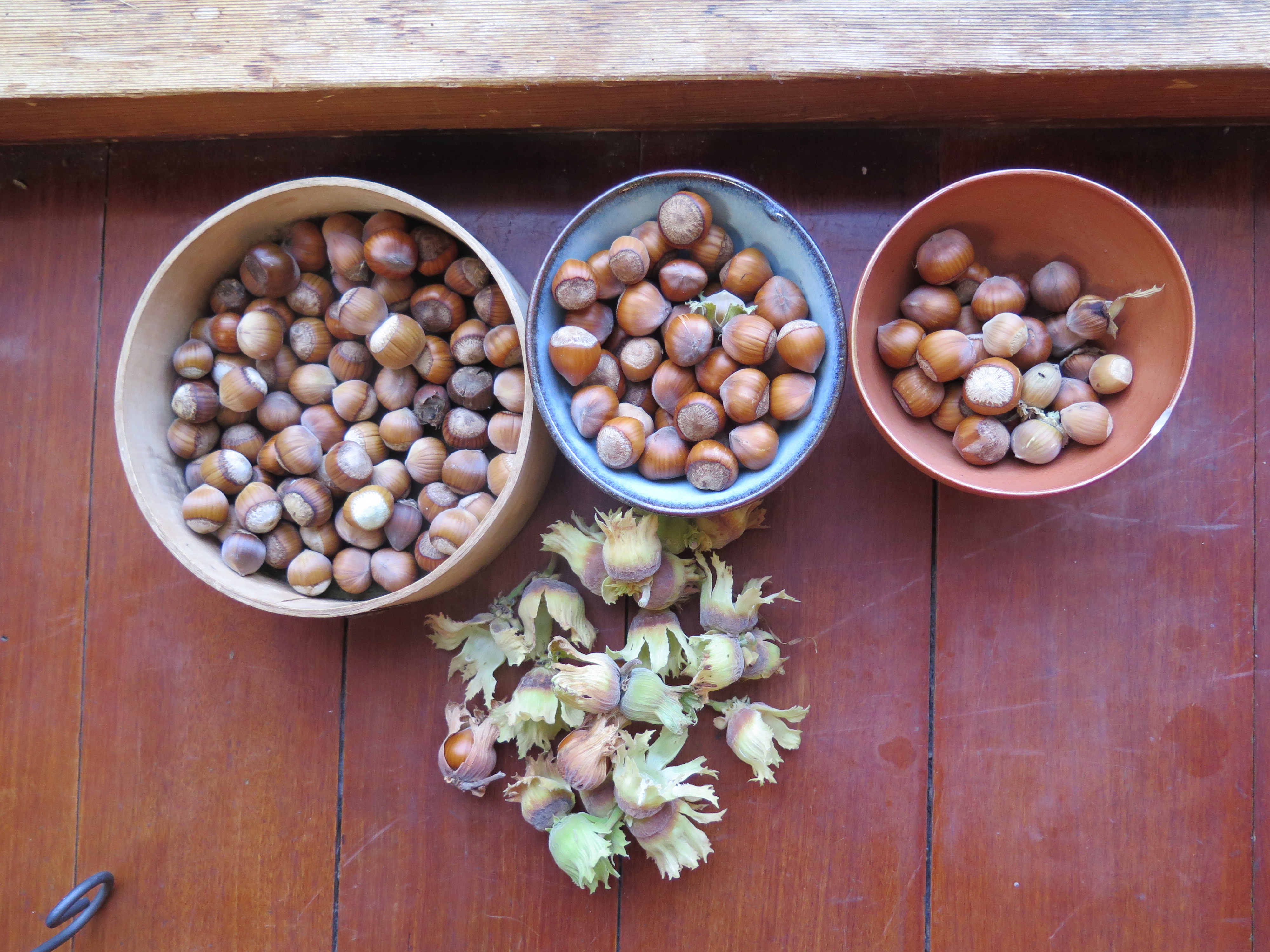
For the last few weeks, the hazelnuts have started to ripen and fall, we dry them in the sun in the kitchen window sill for a week and then they are ready to eat. Unlike our almonds, that always seem to need oven drying and slightly roasting to get the best out of them. The filberts are good to go, straight out of their shell after drying. This is our first good crop from them. We planted 2 year old grafted seedlings about 3 and 4 years ago, so the oldest ones are just starting to come to fruiting now. The first year, all the shells were empty. Last year we only got a few hands-full of nuts and half were hollow, but this year, they seem to have reached maturity, with most casings containing a nut — and they are lovely, crunchy and sweet. We have a few with a piece of nice cheese after dinner.
IMG_2193 IMG_2349
I’ve been in and out of the pottery pushing ahead with making pots for the next firing. We are technically still in fire ban season, so we can’t fire the big kiln easily at this time, as it takes 20 hours and is obvious to passers-by. But the little portable kiln is OK for a quick 3 1/2 hr. firing on the cooler days after some rain or a damp night of heavy dew. We can start early and finish before the day gets hot at mid day and after. It’s very convenient. We have settled into using just one wheel barrow of paddock falls, dry dead branches. I’ll have to try it with fresh split pine, old pallets and eucalypt heartwood in the future, but I can’t see any real problems there. Time will tell.

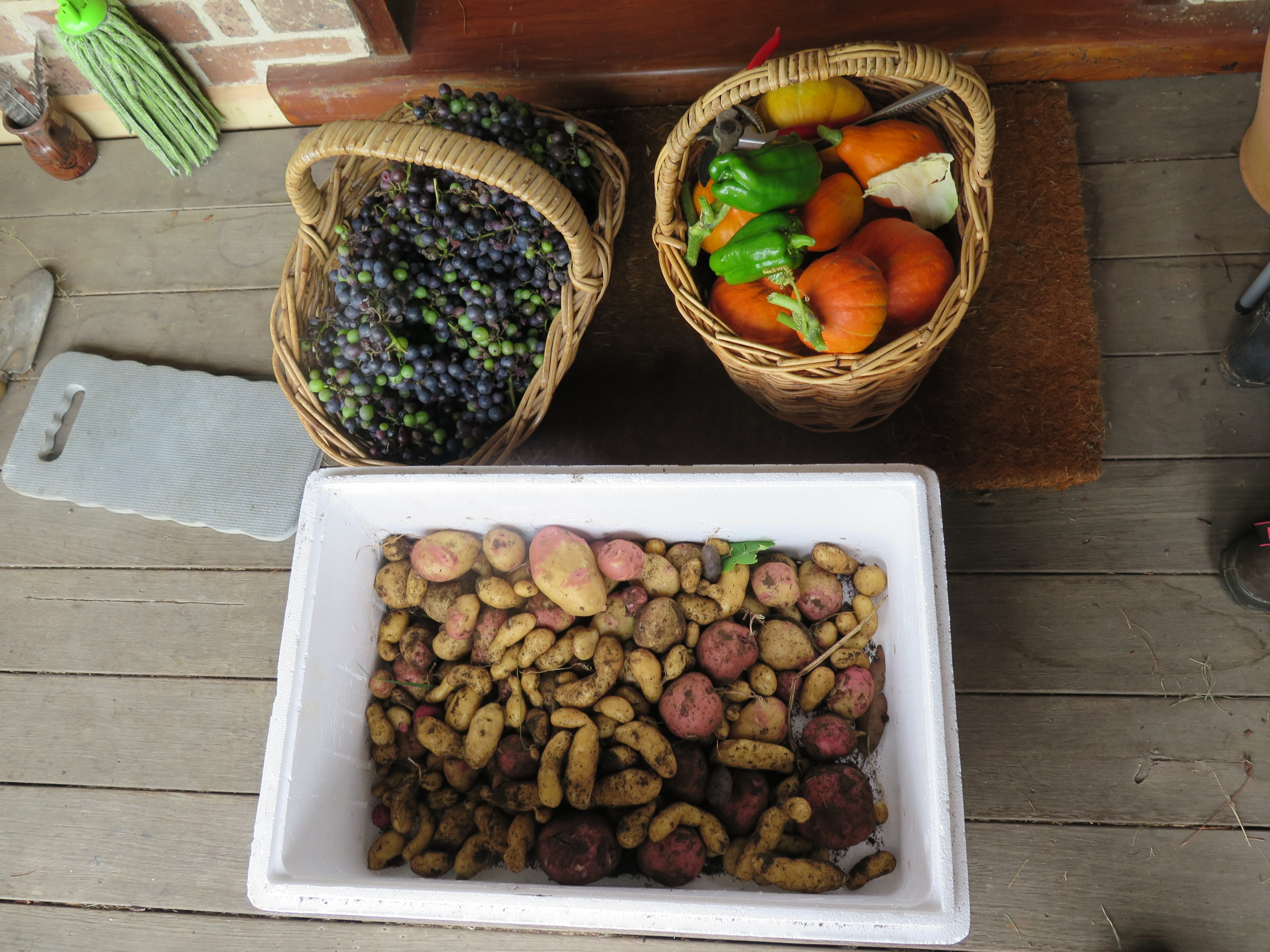
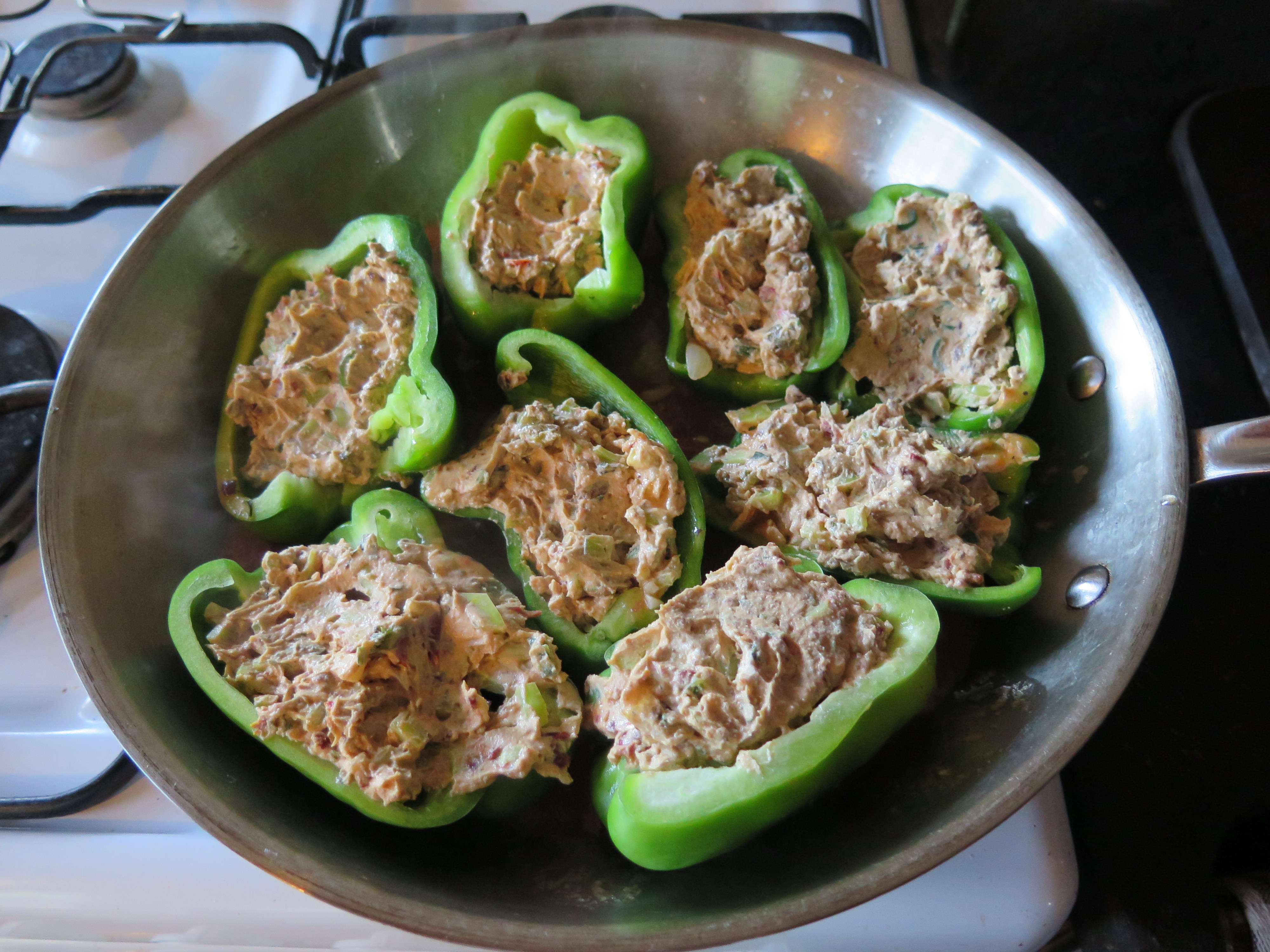
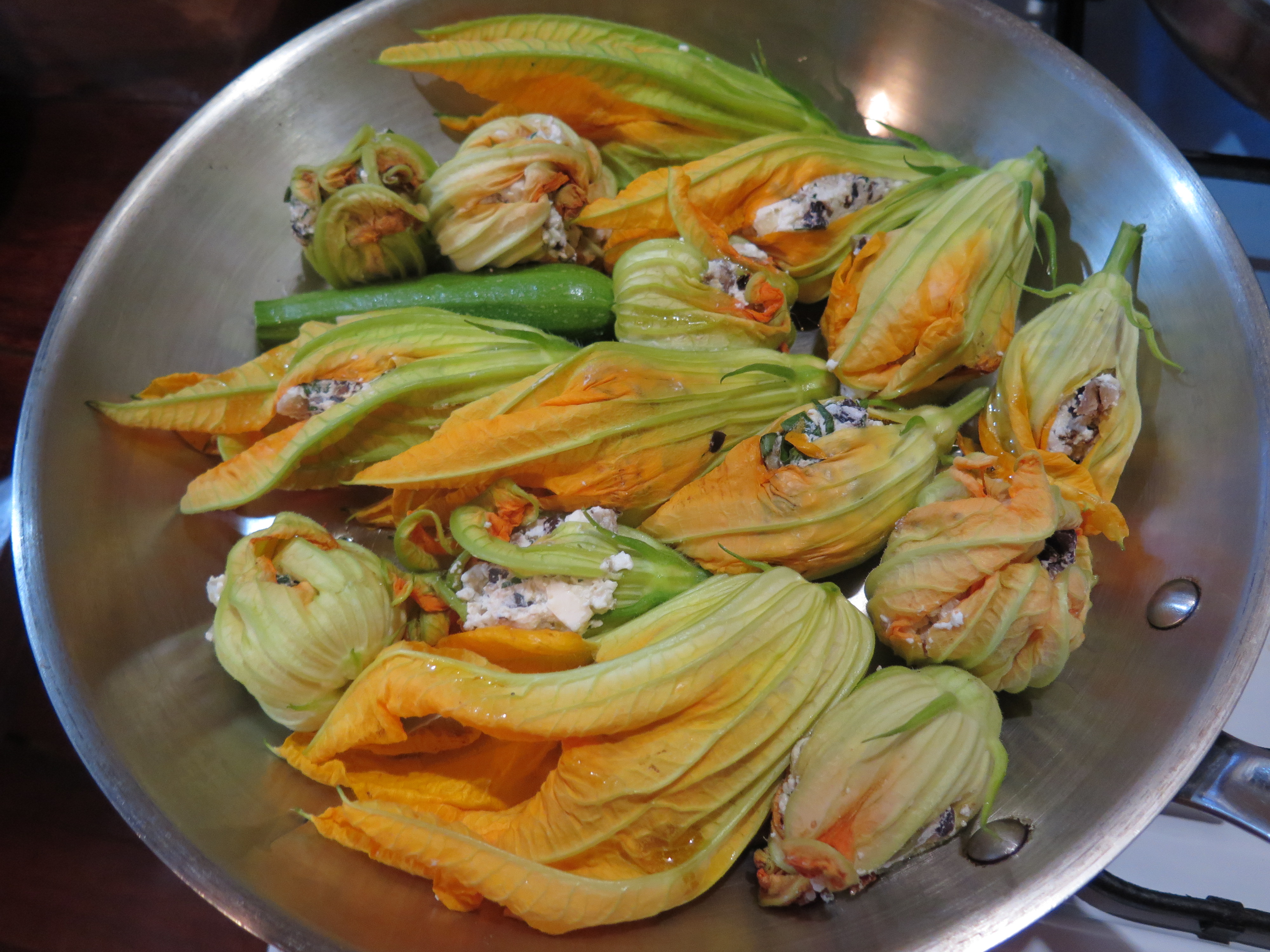
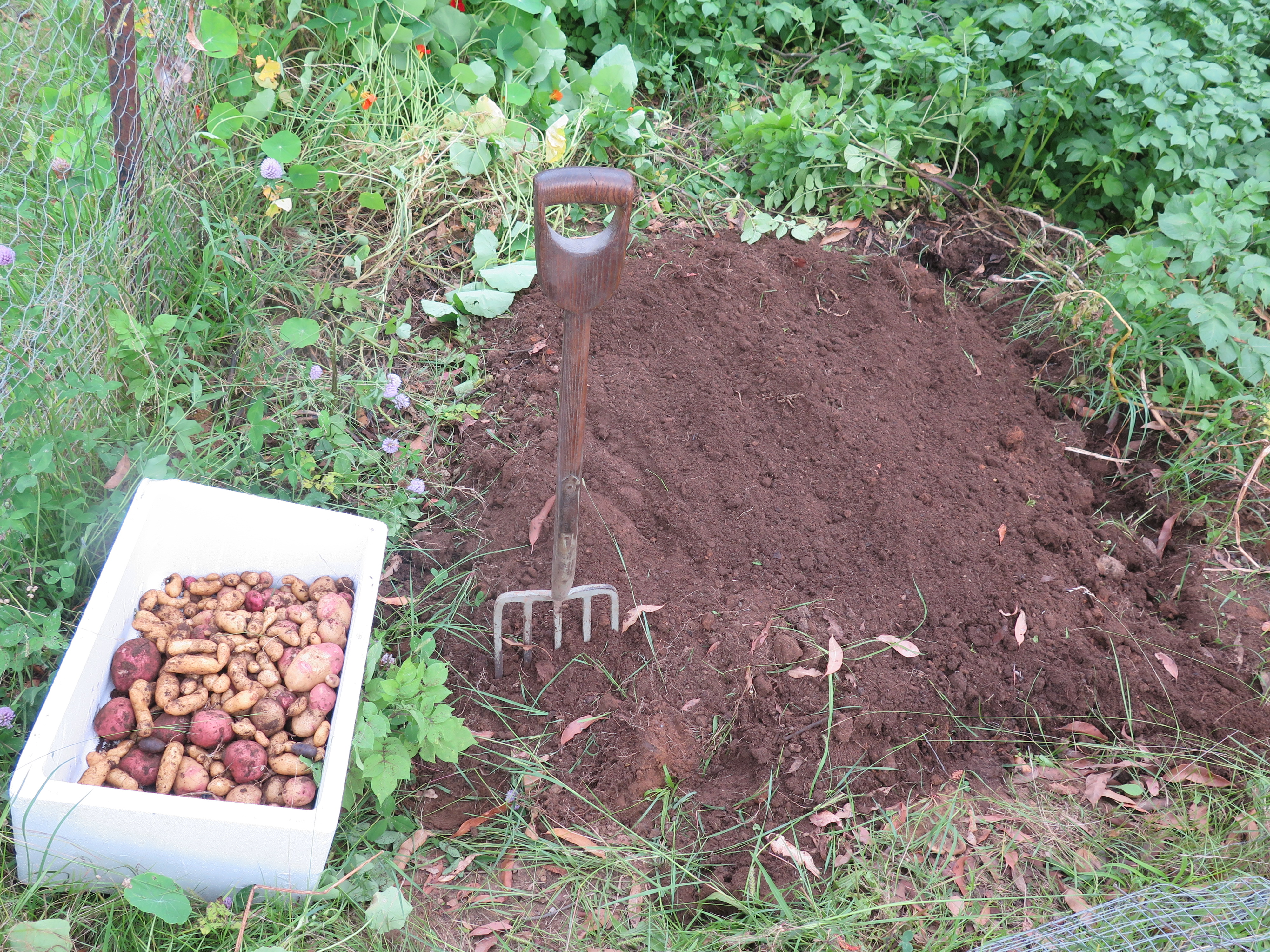
As the garden is thriving we have been eating fresh stuffed zucchini flowers. These are our 2nd planting of zucchinis. We are starting on our third planing of cucumbers, as the extremely hot days really frazzles them, and our 5th planting of raddishes etc.  We are also enjoying capsicums stuffed with ricotta and our own dried tomatoes and herbs. We have started to dig the first 3 rows of the 2nd planting of potatoes. It looks to be a very prolific crop. We fill a box quickly. There are twenty rows to keep us well fed through the winter.

IMG_2277IMG_2276IMG_2202IMG_2204IMG_2206
Regrettably, Janine and I went to the fish markets mid-week for a late sushi lunch on our way to an opening of a friends show at Watters Gallery later in the evening. I say regrettably, because I was struck down with food poisoning during the evening and had to leave early from the show, before my friend even turned up.
I’ve had to have 2 days off with the runs, and stomach cramps, unable to sleep through the first night without interruption. I am chastened and weakened, but starting to recover. An unwelcome surprise. I won’t be eating anything more from the sushi shop at the fish markets! Even now I’m still suffering a delicate stomach and slight head ache that makes it hard to concentrate. I have a load of work to do, but I’m not really up to achieving much just yet.
Best wishes from The Running Postman

Stealing Time – Guilty Creative Pleasures

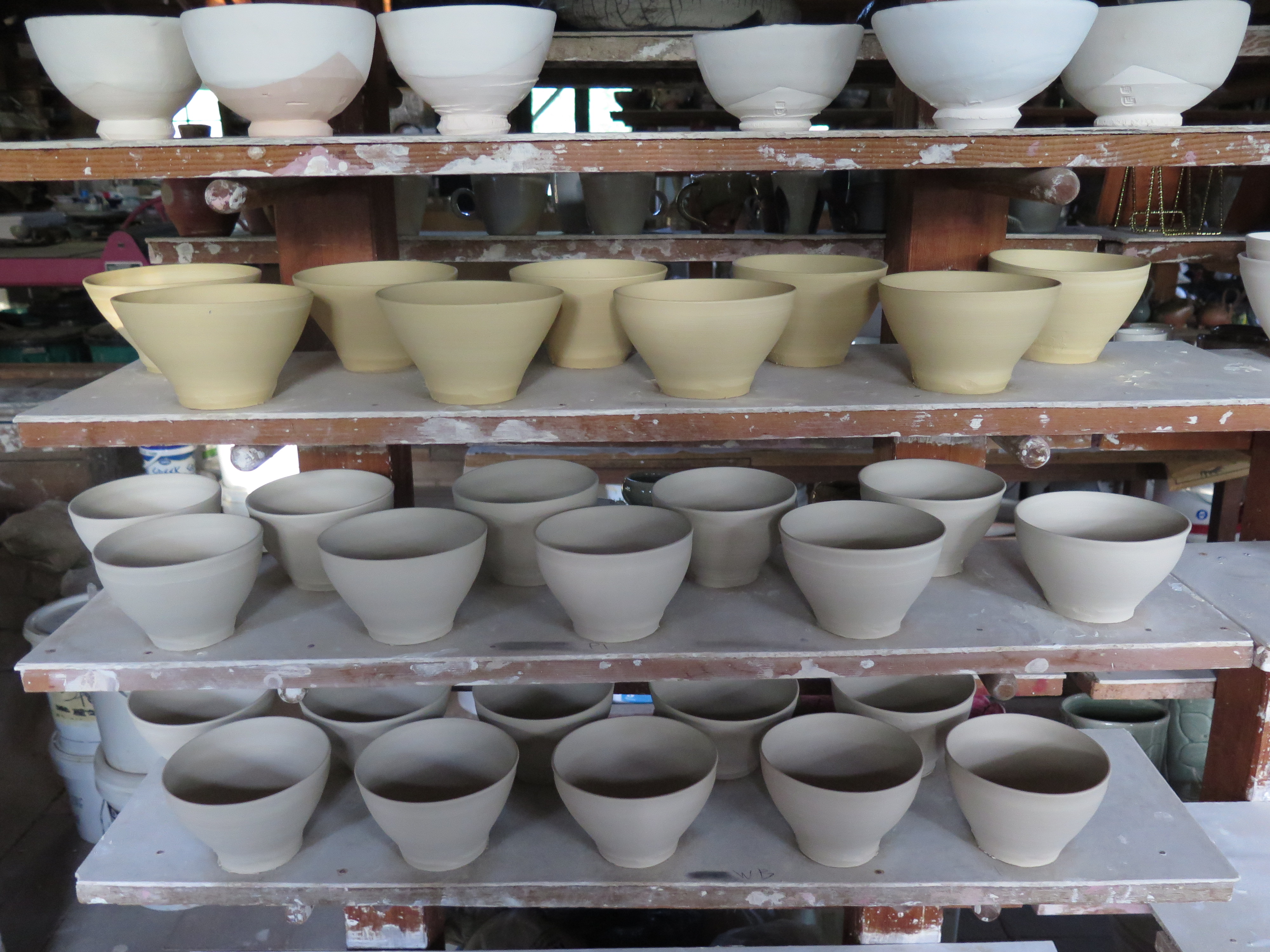
I quickly steal a bit of time in the workshop. I want to make some pots out of my aged porcelain stone bodies. I’m supposed to be building gas burners and silver soldering copper gas manifolds, but the lure of the potters wheel is just too strong. I manage to get 30 or so pots made from 3 of my specially prepared and aged porcelain stone clay/stone pastes. It’s a good feeling to be back on the wheel again after a week of brick laying and kiln building. I can only take just so many days of wearing the dust mask, goggles, ear muffs, gloves and all the other OH&S paraphernalia. It’s socially isolating and almost disorienting in its exclusion of the tangible world.

A day back in the pottery grounds me and alows me the fuzzy pleasure of thinking creatively again.

Some of these ground stone pastes of mine are so short that even after 25 years of ageing. I still can’t kneed them by the usual spiral kneading technique. One is just so short that it cracks apart under the rolling stress. I return to the tried and true ‘cut and slap’ wedging method. This has be proven to me to work much better than spiral kneading where finely ground porcelain stone bodies are concerned. The cut and slap method compresses and activates all the clay particles that can respond to this kind of wedging. The rest of the fine, non-plastic stone particles are firmly encased in the weak plastic matrix. It develops a tight workable putty that is almost throwable on the wheel, as long as I take a lot of time to coax it along slowly into the final shape, without expecting anything to happen quickly. The essentially non-plastic, porous,  surface sucks up water and dries out very fast, making the whole soft and floppy, so I have developed a technique of re-using all the wet slip from my fingers to lubricate the paste, thick slip doesn’t absorb so quickly, so that it doesn’t become too floppy, and extends the working time. Still, I have to work fast to get the form into a suitable shape and lift it off the wheel before it collapses.
It’s clumsy and slow, but it eventually delivers a workable open bowl form. Very heavy at the base and only just thrown thinly enough at the rim to pass muster. I rely on doing a lot of turning to get the shape to emerge eventually from the clod of stone paste.
Turning can only be done on bodies like this when they are almost dry. Any time before this, the soft, loosely bonded coagulate of mineral granules, just tears itself apart into crumbly chunks, making the whole pot unusable. Australian readers will recognise this particular torn and crumbly texture if I mention the name of Mersey Valley cheddar cheese. It’s impossible to cut this cheese without it tearing and crumbling against the knife. My milled stone paste porcelain bodies act like this if I try to turn them leather hard. I wait until there are significant white drying rings all over the surface before attempting to start turning.
The stoney grit in the matrix takes the edge off the turning tools in minutes. I have to stop and file the edge on my hardened steel turning tools very regularly. This involves getting off the potters wheel and walking some distance away, where it is safe to create iron filings by filing the edge sharp again, that wont end up in the clay.
Since my last trip to Japan to study single stone porcelain making, I returned with a cluster of tungsten tipped turning tools specially made for turning porcelain. These tools stay sharpe for a very long time. But even they eventually go blunt under constant use. I have found that I can recover the cutting edge back to its pristine sharpness by using a diamond dust impregnated file. This is the closest that I get to bling! I do apparently own quite a few diamonds. It’s just that they are invisibly small and encased in some sort of amalgam. Not sexy, almost as expensive but very useful!
I treat us to a dinner of gyoza, Japanese style pork and vegetable dumplings. I use lots of our garlic along with prime minced pork with very little fat. I get our local butcher to mince up some prime lean pork for me specially. I add in sweet corn niblets, finely shredded cabbage and green onion shoots. I fry it all up to make sure that it is all well cooked through and then work it into the tiny wanton wafers that I buy from the Asian supermarket section. These are pan fried in sesame oil, then when well crisped on one side, turned over and a cup of stock added to the pan with the lid on to steam them for a couple of minutes more.
They are beautifully rewarding, both crisp and yet soft and juicy at the same time. Wonderfull!
A real treat.
Best wishes
from the stone aged (aged stone) man and his wanton Wilma

Recycling

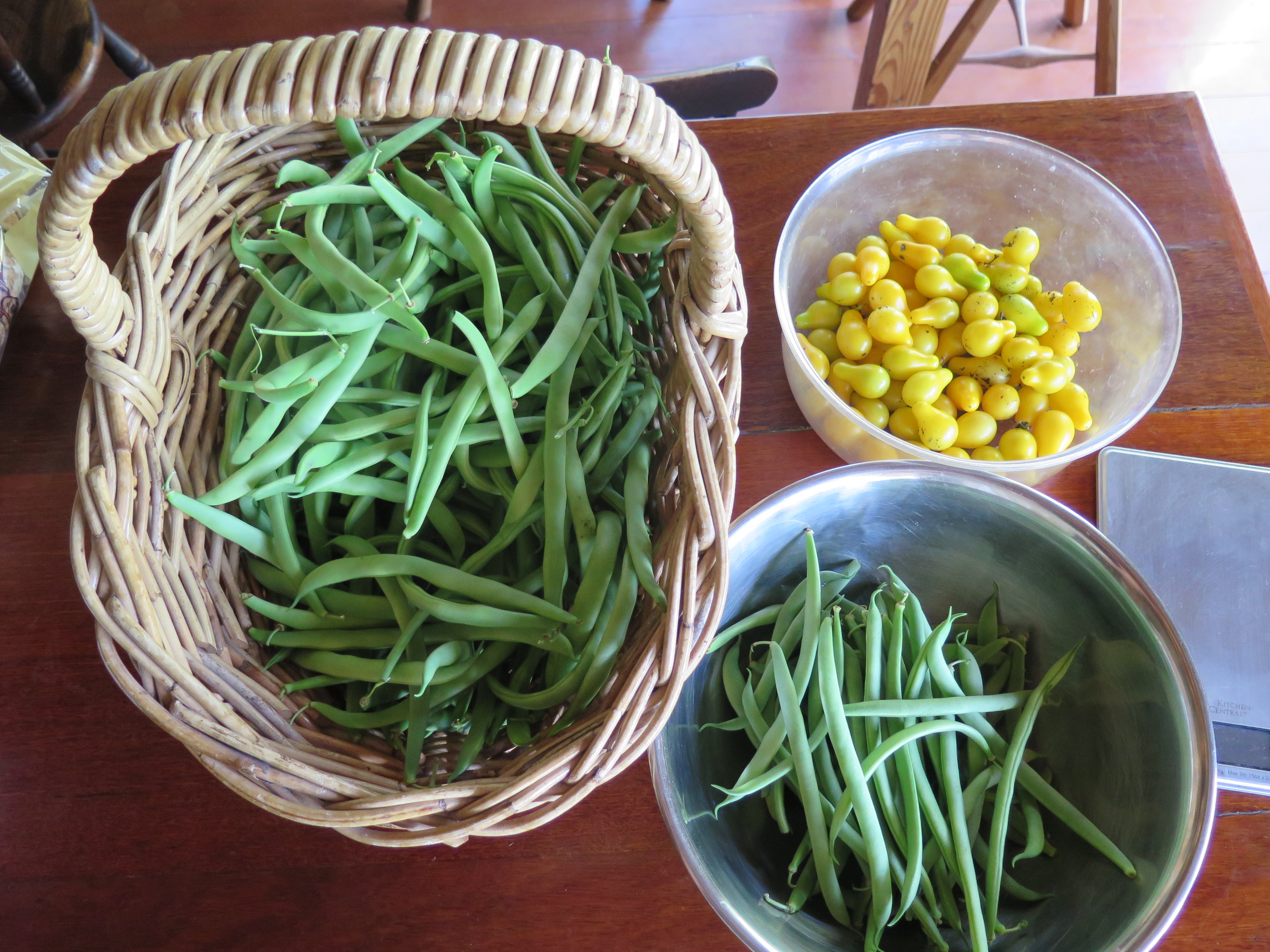
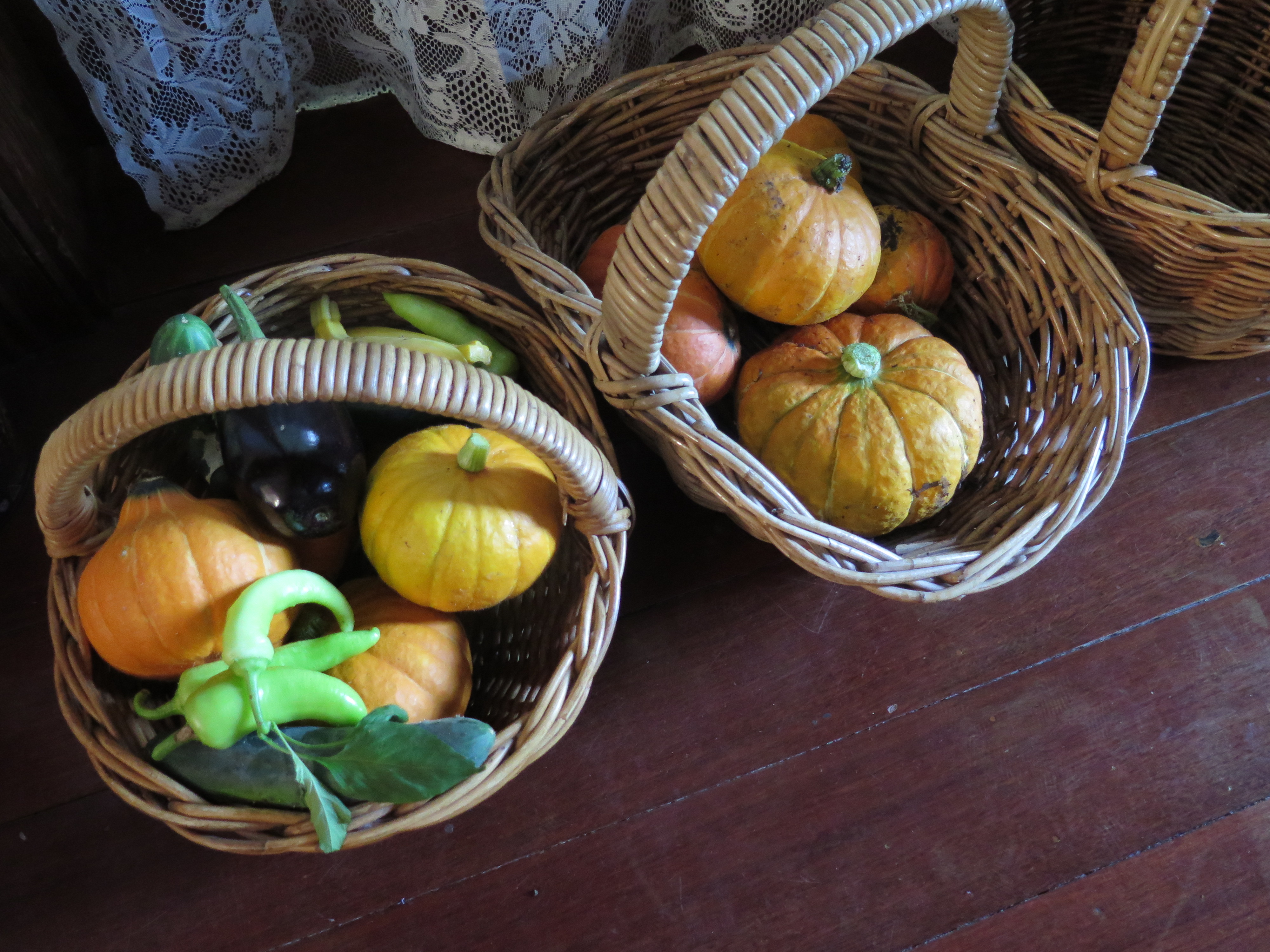
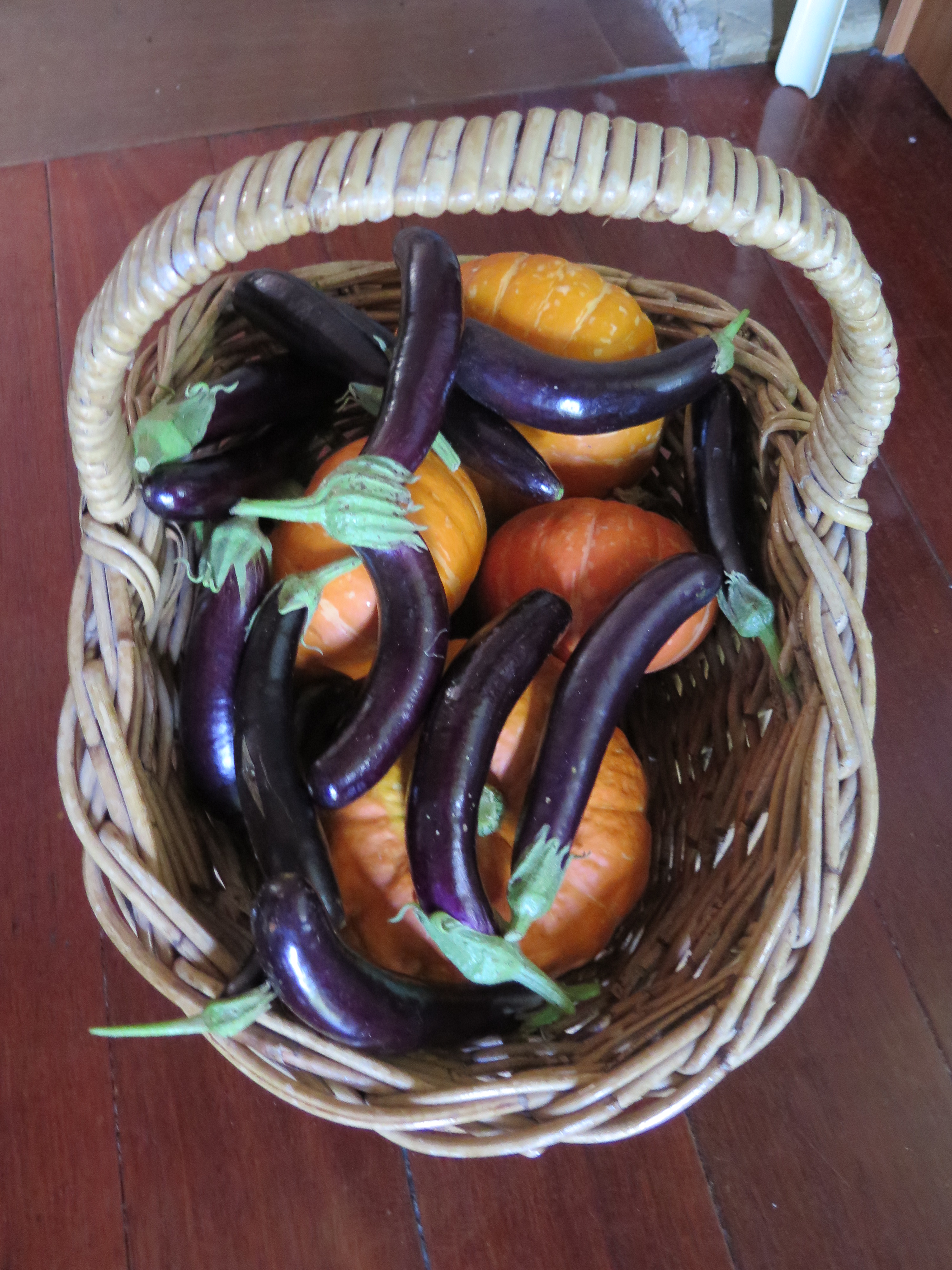
We have been active in the late summer garden, everything is growing it’s head off. The Lovely just picked two and a half kilos of beans. I took most of them straight down to Biota for Geordie to use in the restraunt. We have delivered baskets full of various veggies over the last few weeks, aubegines, zucchinis, mini orange pumpkins, sweet basil and bundles of shiso.

IMG_2188IMG_2127IMG_2102

At this time of year we are getting the full abundance of the late summer heat. We have had regular rain falls all through the summer, so we just can’t eat it all. We bottle, dry and preserve a lot of it, but it is always nice to be able to give away our excess to our neighbours and friends as well.

The chefs at Biota are high-end creative and flexible people, they simply invent a dish for that day that will use what we take in. It’s a one-day special on the menu till it’s all gone.
The summer garden has been feeding us with lots of lovely meals, like pan fried, stuffed zucchini flowers and baked capsicums stuffed with ricotta, our own dried tommatos herbs and spices.
IMG_1926 IMG_2174IMG_2176 IMG_2178
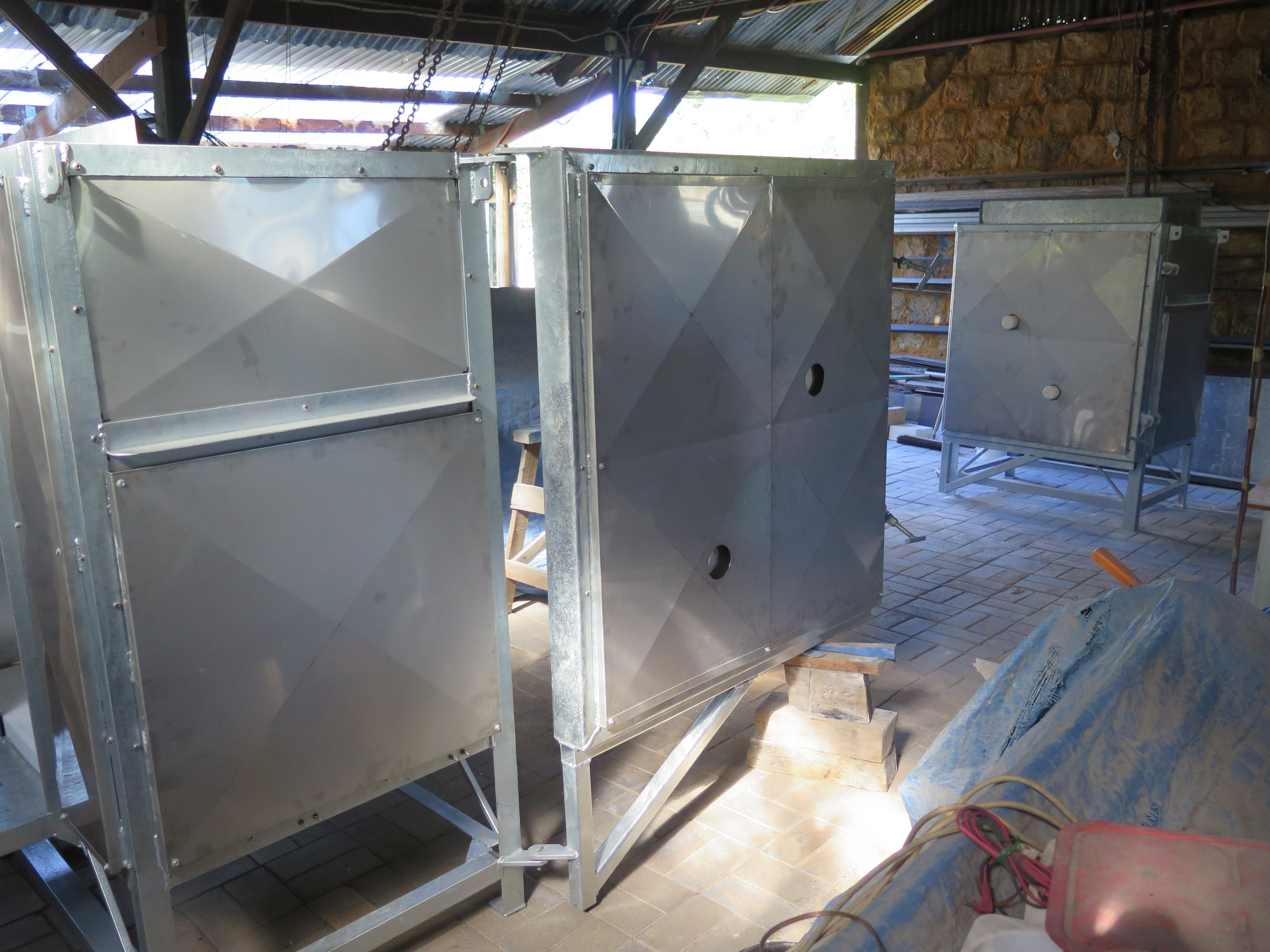
I’m back to work in the kiln factory again now. Warren and I put in a 5 day straight effort and almost finished the first one of the current pair of frames sitting in the shed.
IMG_2092IMG_2131
I make all my own firebricks for my own kilns, but when it comes to building kilns for other potters, then I buy in commercial light weight insulating refractory firebricks. They come all packaged on a wooden pallet. I end up with lots of these used pallets. Some from ‘loscam’ and ‘chep’ are deposited and can be returned or exchanged to retrieve the deposit, but these days a lot more coming in on one-off, single-use, non-returnable pallets. I’ve been thinking how I can get some value out of these pallets. The last resort is to break them up and fire the kiln with them. This is OK, as long as they are only heat treated and not copper chrome treated ‘green’ timber. The ‘green’ treated timber can only be taken to the tip for burrial, and at some expense. A total waste. Fortunately, we don’t see any of these green treated ones turning up anymore, they are all heat-treated these days, so OK for burning.
IMG_2116 IMG_2117IMG_2119 IMG_2118 IMG_2121IMG_2120

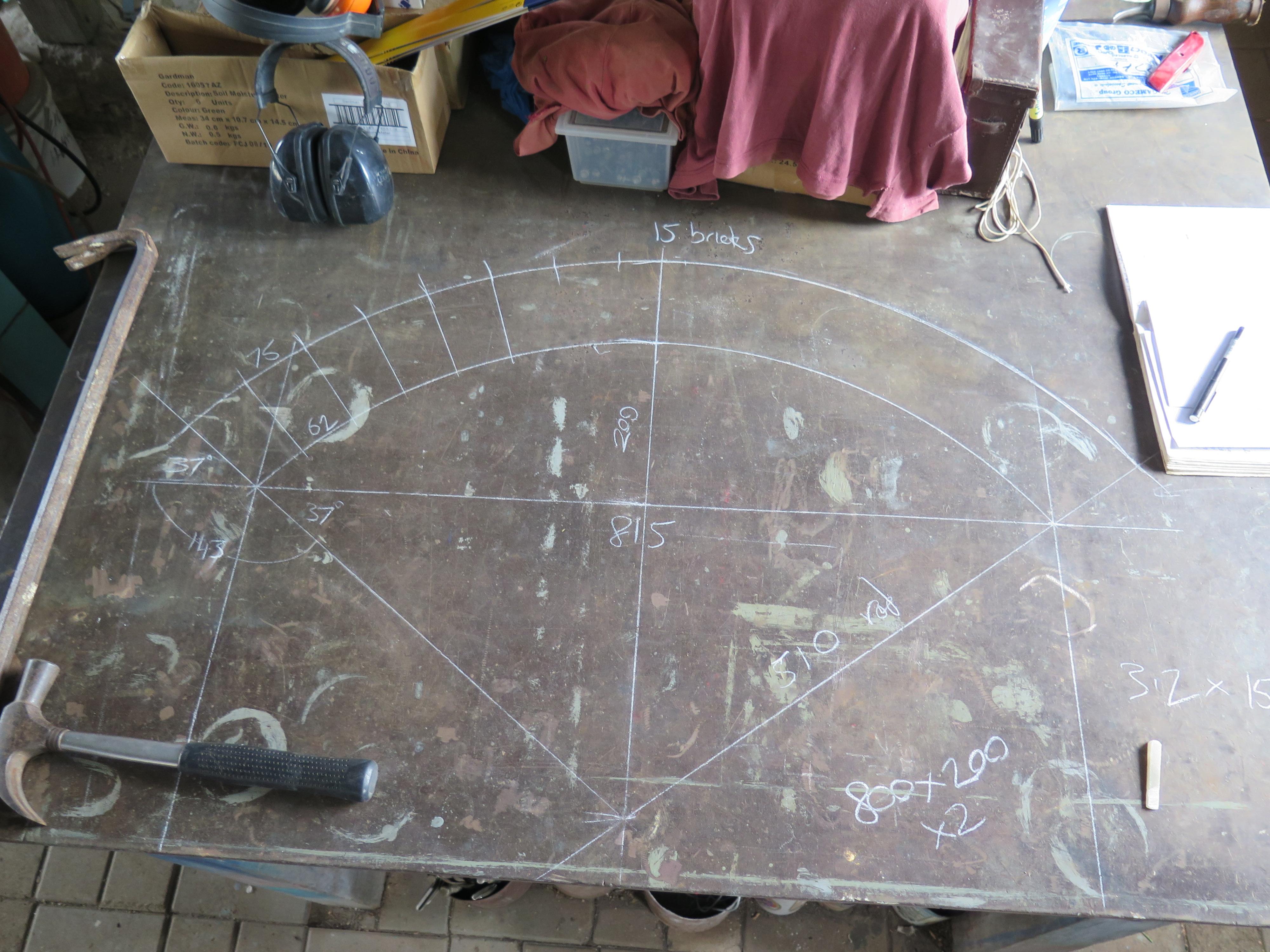
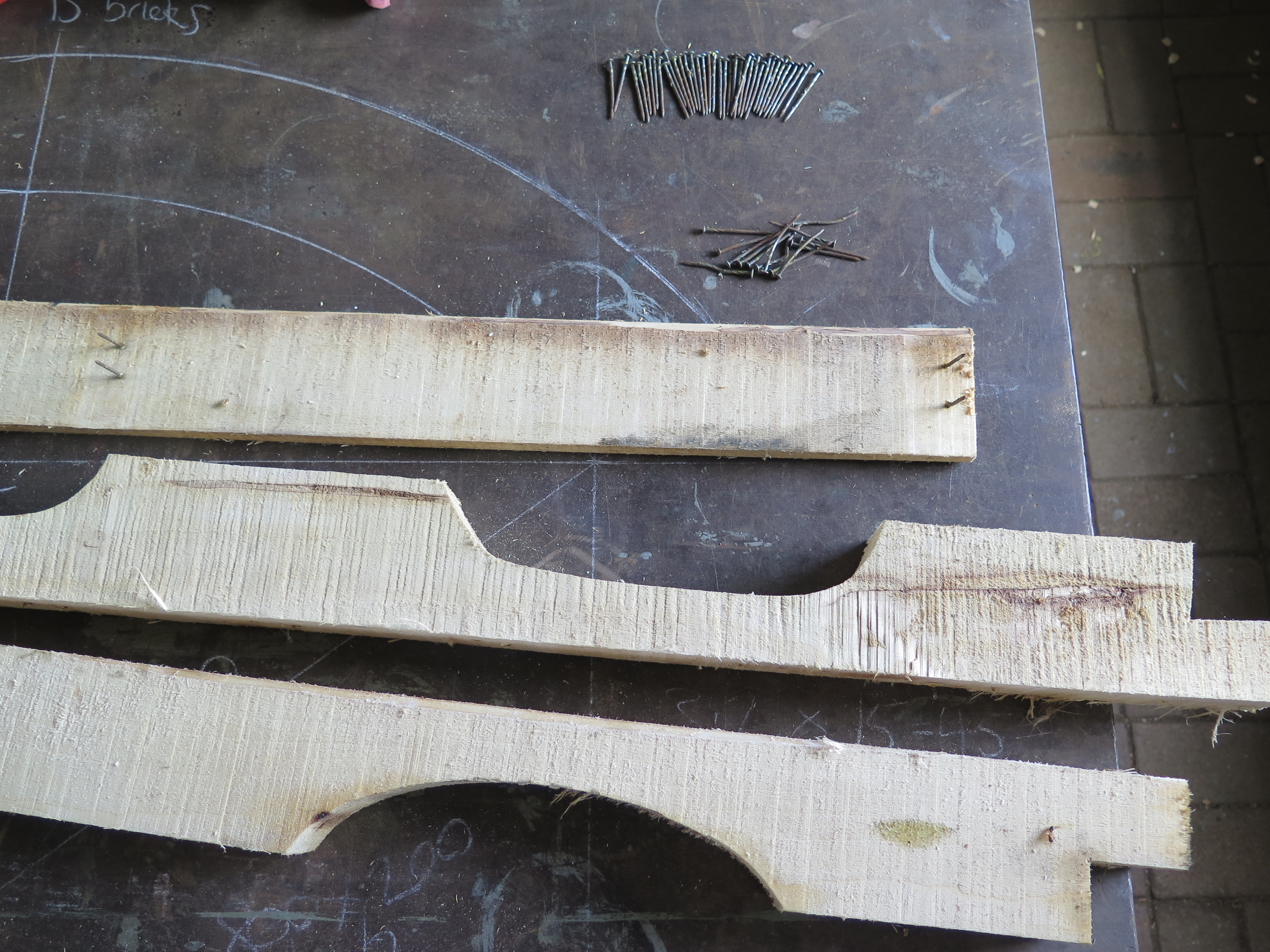
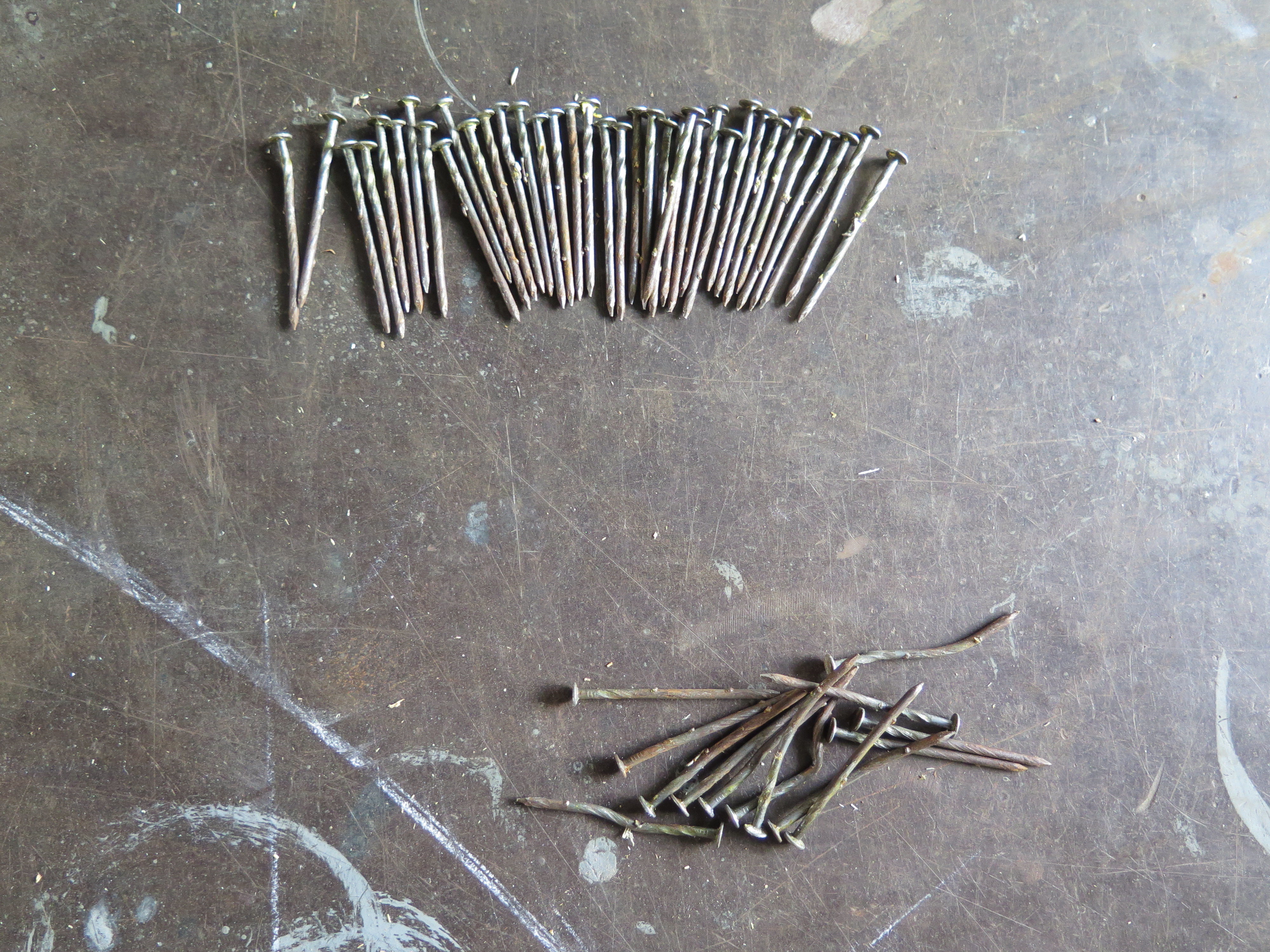
This last week I disembled one after we had used all the bricks off it to build the kiln and them re-cycled the timber into the arch formwork for the kiln. I even recycled all the nails from the pallet to re-assemble the arch form work.

We finish the day with a 3 rice rissoto and summer garden excess.
IMG_2141 IMG_2143
lightly browned home grown onion and garlic in olive oil, red ,brown and white rice, deglazed with a cup of white wine, enriched with a chunk of my frozen marrow bone stock and softened with a pan full of stock, simmered down from what was left from yesterdays baked fish lunch.
IMG_2145IMG_2068 IMG_2146IMG_2148
I serve it on Clive Bowen slipware plates with steamed sword fish and a dollop of Janine’s freshly made basil pesto.
IMG_2149
This latest kiln will be ready by the end of the week, so that I can start on the next one in the queue. I’d rather be making pots just now, but I know that I will need to pay out a lot of bills starting this week. Rego, insurance, council rates, land tax and the BAS statement, are all coming due. Just like so many creative types, I’m caught in the creative dilemma. Working for money to support my habit. My ceramic habit!
 .
Did you hear the one about the potter who won the big lottery?
He said that it wouldn’t change his life at all.
He would just keep on making pots till all the money was used up!
 .
At least we have a great life here working for ourselves, we don’t have to go to work for a boss! We live on a very low income, but have a millionaires quality of life. Last year we got a special tax concession of $500 from the tax dept. because we were living below the poverty line. We don’t think of ourselves as being in poverty. We’ve chosen this frugal austerity.
This Friday we’re having a day ‘off’, This will be our ‘weekend’. The Lovely and I will be firing the little portable wood fired kiln for its second outing. I’ve performed a bit of surgery on it to improve it a little more. At least I hope so. We’ll do a longer firing this time, we want to see if there can be some nice surface flashing if we fire for long enough? We’ll see what happens.
.
best wishes from doctor Steve and his very patient Janine

8 New Clay Tests

I have been using the warm weather. In-between rain storms. To dry out some of my new batches of single-stone porcelain clay test batches. The 50 litre batch of 12 month aged porcelain slip is now almost stiff enough. It should have been ready to lift off the drying bed a couple of days ago, but with this last series of rain storms, the atmosphere has been very humid lately, so we have slow drying weather. The mornings start with a heavy mist that doesn’t burn off until later in the morning when the sun get up.

I have used the plaster tubs to dry out some small batches and I now have 7 different new clays to test and throw. They are all just about the same on the wheel, not a great deal of difference. I have dug out a bag of special ‘vintage’ porcelain from my clay store. I don’t have a date on the bag, but reference to my clay-making diary tells me that it was made in 199o! This is the oldest clay in my cellar at 26 years of age. It has stiffened a bit too much to be throwable now, so I have to dampen it down a little. I’m amazed how well it throws. The reason that I put it away in the first place was because it was so short that it was unusable. Now after 25 years of ageing, it throws like a normal porcelain. It does have a slightly peculiar ‘grainy’ texture though. A little bit odd for such a finely milled clay. Some sort of bio-chemical change has taken place in the intervening years of ageing.

IMG_2085

I remember co-responding with Harry Davis back in the 80’s. He asked me if I had any experience with clays that went grainy after long periods of ageing. He had left clay in his clay store while he went away for 10 years and worked up in Izcuchaka in the Peruvian Andes on his and May’s private aid project. When he returned, all his clay had changed texture and become grainy. I hadn’t experienced anything like it at that time. I wasn’t old enough to have clay laid down for ten years at that time! Now I am, and I suspect that it is some sort of aggregation of the microscopic clay particles into larger flocs over extremely long periods of time. This happens in slip if left in a slightly acid condition. So, perhaps it’s possible in the plastic state as well?

Of these 7 different bodies, there are 7 different colours, from iron stained yellow, through to almost white. Of the bodies that I have made from my ‘bai tunze’ single-stone porcelain stone. There are variations in colour due to the fact that there are veins of iron running through the rock. I crush the stones through the large, primary jaw crusher  and then spend some time sorting and separating the iron-stained pieces from the white material, these are them processed separately to give yellow, cream and grey clay body mixes.

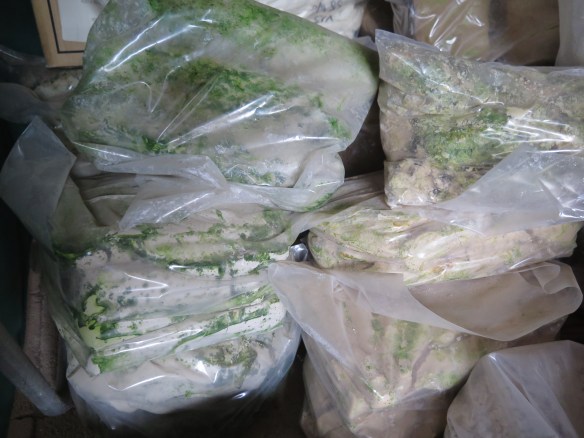
The iron stained bodies respond well to the wood firing by flashing to a mahogany red colour, where the paler coloured mixes flash in the wood kiln to a pale pink to crimson colour. All the milled stone body mixes grow a series of organic algae and/or fungus come moulds of some sort or another. The clear plastic bags that I store them in turn green and/or buff/brown where daylight can get to them. A little bit off-putting, but it seems to increase workability/plasticity rather than decrease it over longer periods of time. I’m not saying that the presence of algal growth increases plasticity, but the time spent ageing the clay increases the plasticity and the algal growth is a natural sign of this extended time taken.

IMG_2084

Because I don’t add anything to my milled local porcelain stone bodies, except a small amount of bentonite and the slightly acidic tanninised tank water. The whole thing is alive with all sorts of organic material from both the natural stone and the water. It’s a living thing! It doesn’t happen straight away, but over time stuff grows in there where-ever the conditions are right.

Commercial clay doesn’t do this. I recently opened a bag of commercially prepared paper clay to find that it smelled of ‘dettol’ antiseptic fluid. Nothing is going to grow in that! I’m an organic gardener and I am trying to live a simple, creative, organic life. If green algal mould is the result in the bags of clay, so be it. At least I know that it is alive, and not dead and even possibly toxic.

One of the batches of my ball milled baitunze, batch JV15db, was milled for a little longer than usual to get it extra fine. However, I seem to have milled it a bit too long this time, 16 hrs. I suspect that this was too long, because when I threw my first bowl out of it, it shrank and cracked in the base where it was thickest. This has happened once before. I will have to blend it with a coarse milled batch now to reduce the shrinkage a little.

For dinner we try yet another variation of ratatouille with todays pick of  French beans, we par-boil them, so that they are still crisp and then add them into the mix of ingredients from the garden. I partially BarBQ the egg plants and zucchinis while grilling some long yellow capsicums. Janine reduces a boiler full of very ripe tomatoes, onion, garlic, olive oil and basil. We finish it off in the flat flan-pan, then pop it under the grill and melt some grated cheese topping to a golden yellow/brown crispy finish.
This is what we have, so this is what we eat.
Best wishes from the algal greenie and his all greenie gal
Steve