Aioli

As we have an excess of fresh garlic just at the moment. I decided to make aioli sauce as the accompaniment to the steamed fish and new potatoes that we are having for dinner.

Aioli is a very ancient form of sauce, a bit like mayonnaise, but flavoured with garlic. It’s a great addition to lots of meals. Tonight we are having fresh ‘Ling’ off the fish truck that comes up to the Highlands from the coast, 3 days a week. He arrives at 6.00am and is sold out by 1.00 or 2.00 pm. I get there just in time to get the last piece of ling and some fresh mussels.

I decide to steam the Ling with a few drops of olive oil, to stop it sticking, then add a few fresh leaves off the Kaffier lime tree on top. I deglaze with a crisp white wine and serve it with our steamed new potatoes and  zucchini, picked fresh from the garden.
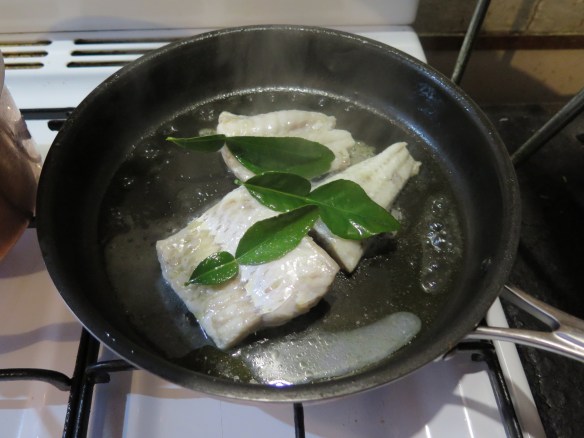
IMG_1512

We have both green and yellow zucchinis at the moment. They are the first of the summer vegetables to come into full production so early on the  the season. It’s still late spring. It isn’t even summer yet, but we have just had our first 40+oC day for the season. It forces us to be out watering both morning and night to keep the young summer vegetables from drying out and being set back.
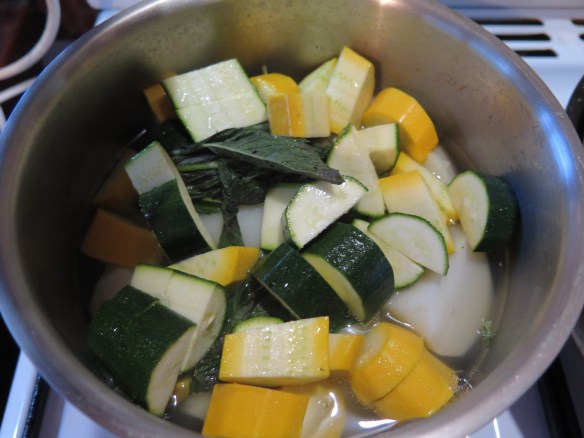
IMG_1513IMG_1509

I peel and then crush the cloves of one small knob of our fresh garlic, then add the juice of half a lemon, one egg yolk from our son Geordie’s chickens and whisk it all up together into a mucilarge. I then proceed to add just a few drops of olive oil to the mix, a few drops at a time while whisking with the other hand. This continues until a thick white, bulked-up consistency is achieved. It takes quite a lot of oil to bring this about.. Don’t worry if it takes a long time, just keep on adding a few more drops of the oil at a time. Don’t get frustrated and add too much in one go. To make a mayonnaise-like emulsification sauce, you need to be patient. Just add a few drops at a time and keep whisking. It will eventually emulsify.
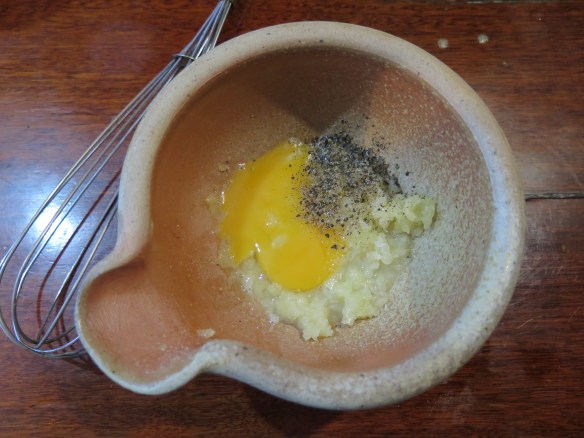
IMG_1510

This is a very ancient recipe, dating back into prehistory. It is to be found all over the south of Spain, France and northern Italy. It was apparently, originally, just a mix of garlic and olive oil to begin with. It was later found that the addition of a little egg yolk, stabilised the emulsion and thickened it considerably. It benefits from the addition of a little salt and some freshly ground pepper to taste.
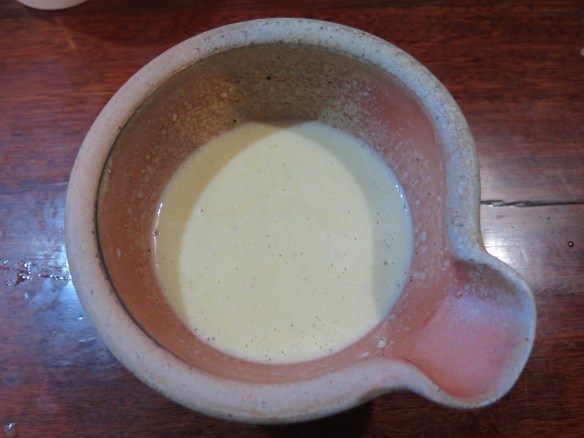
IMG_1511

Rick Stein has suggested that the garlic be crushed with the side of a large chef’s knife and then chopped fine, crushed again with the side of the knife and very fine chopped and worked into a paste. A rather nice craftsman-like way to do it. I like it. For those without the patience or the knife skills, a garlic press works well enough. I actually like  it to be a little chunky and rustic. I also like it to have a lot of garlic in it.

Anyone can buy that anonymous, mild, made not-to-offend, finely milled, bland paste from the supermarket. It has too much salt and is loaded with preservative. What I’m making here is real life food, home grown, home made, organic, rough, chunky and strong flavoured.

However it is made, it is just right NOW at this time of year, when the garlic is so fresh and oily. Later in the year when it dries out and goes rather leathery, it just isn’t the same. At this time of year, aioli is a great accompaniment for lots of things that we grow and eat. It goes very well with fish and potatoes.
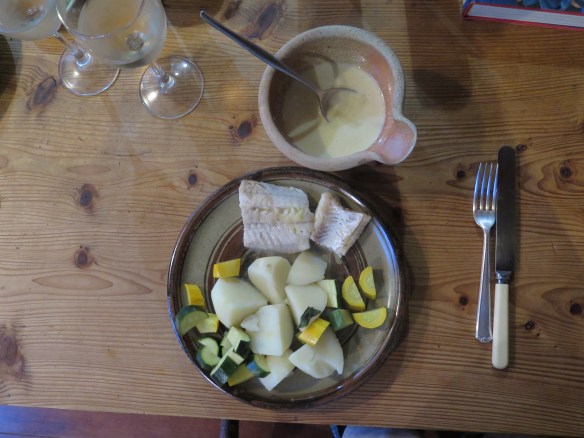
IMG_1514

Aioli probably lasts quite a long time in the fridge, but we’ve never managed to keep it long enough to find out. It’s deliciously piquant.

We haven’t had any red meat since August, I’m starting to think that it would be nice to have a couple of lamb cutlets with aioli.

Buckotto

We have had a couple of very good week ends of Open Studio, with lots of visitors and good sales. This is the best Open Studio that we have participated in. The Open Studio Trail has been operating now for about 10 years and we have participated in 5 of them. We would have been involved in more of them, but they fell on times when we we’re away or unable to take part for one reason or another . So this has been good for us to see a strong response to our domestic pots.

It has been frenetic, but very good. we are looking forward to a slightly easier and quieter time for the next little while. We have a lot of other small, deferred jobs to catch up on, as well as a kiln to finish building. It has been sitting in stasis for the past two weeks while we concentrated on the pottery.

IMG_1466IMG_1472

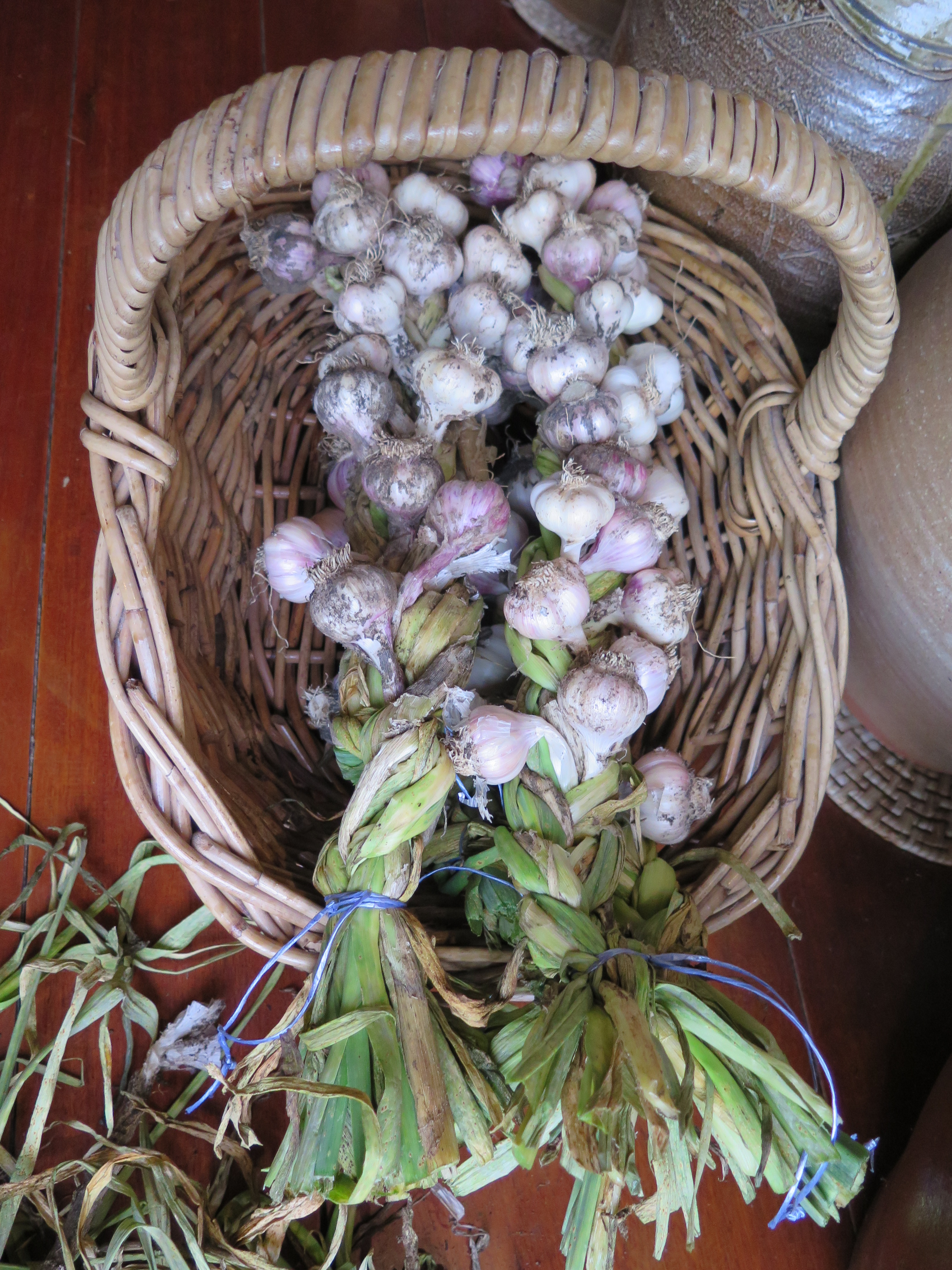
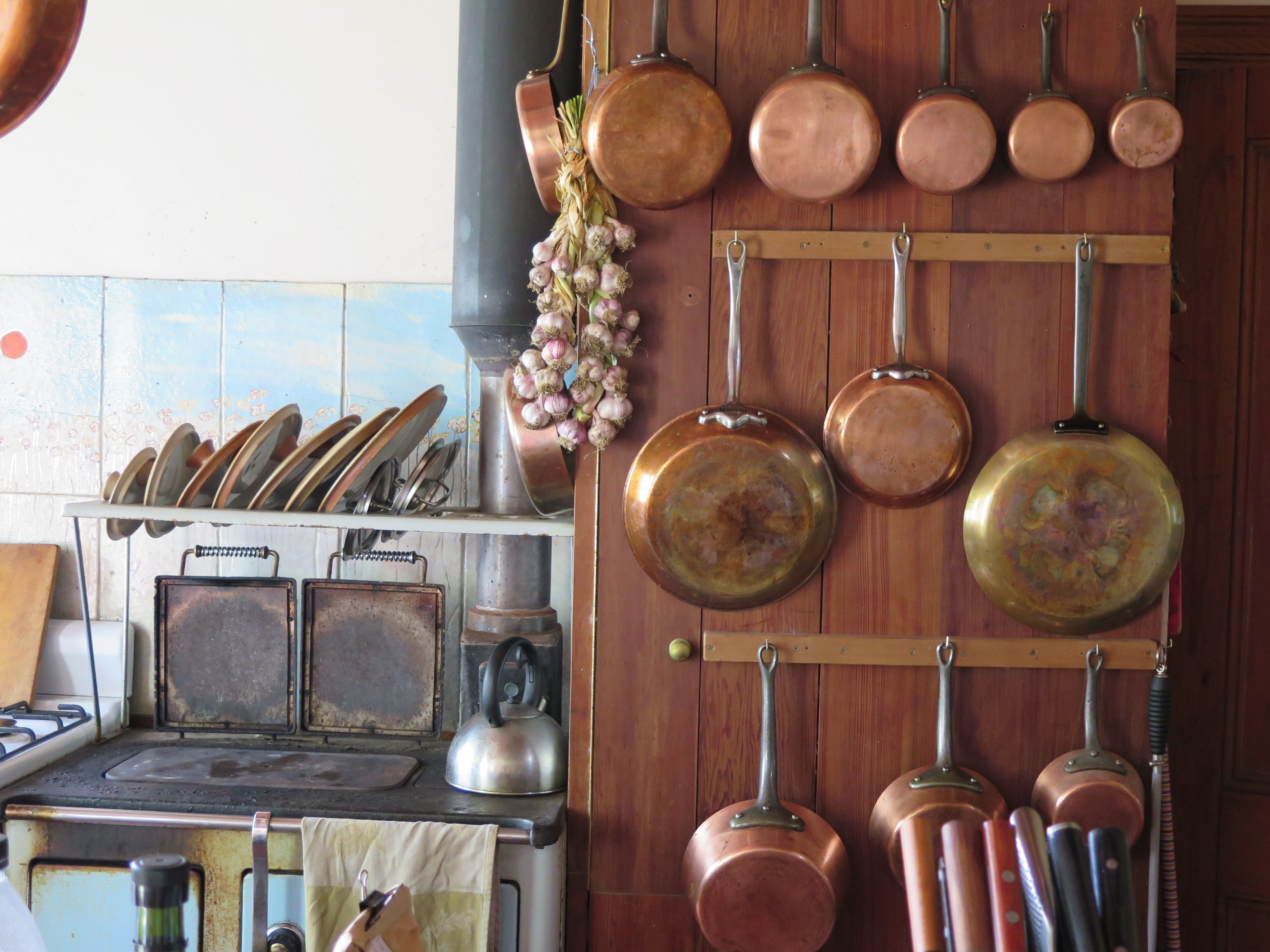
The Lovely has been busy dealing with the new garlic. We have had it spread out to dry all over the place from in the sun on the front verandah to the kitchen floor in front of the big window. The best of it is all peeled and plaited now and hung up in the kitchen to finish drying. We have 10 plaits holding anything from 15 to 20 knobs and another equal number of knobs that were too far gone to be able to plait and they are currently stored loose in wicker baskets in the kitchen window to finish drying along with the last of the broad beans.

IMG_1471

I love the fresh, oily, new season garlic. It just pops out of its soft skin so easily. I have been eating garlic sandwiches, made with heavy, dark rye bread. A dusting of veggie salt and freshly ground pepper and it’s all I need. There is only a month or so where it stays like this, so fresh and wet and oily. Once it dries out and the skin becomes papery, then the magic is gone and it becomes just plain ordinary garlic for the next 6 months, until it declines into its older, leathery dried out state with green shoots. This is when it is time to replant the next crop.

We save the largest and strongest bulbs for planting out for next seasons supply. These go back into the ground around about March, as soon as there is any sign of a green shoot. I usually see a few wild shoots appearing in the garden at this time. Some rogue cloves that have escaped captivity. They set the agenda, when they shoot up out of the ground, it’s time to replant the next years crop. We can still keep on eating the remainder of our stock from the kitchen plaits until it is all used up. We rarely last out the year, usually falling short by a month or two, but this year we made it right to the end by buying a plait from one of the members of our local ‘Seed Savers Group’.

We have had a few changes in the weather with a few warm days following some rain and the first of the spring crop of Safron milk-cap mushrooms (Lactarius deliciosus,) has appeared in the garden. They grow in conjunction with pine trees, and as we have some magnificent Caribbean pines growing beside our house, we get a good supply of these lovely wild mushrooms all through the year, but mainly in spring and autumn. This one may end up in a risotto for dinner.

IMG_1483IMG_1484

I have recently been experimenting with making a variation on risotto using buckwheat. I bought a kilo of organically grown buckwheat and have been finding ways of using it. I originally bought it to make my own ‘soba’ noodles. However, ‘buckotto’ has turned out to be my favourite use for it.

IMG_1469

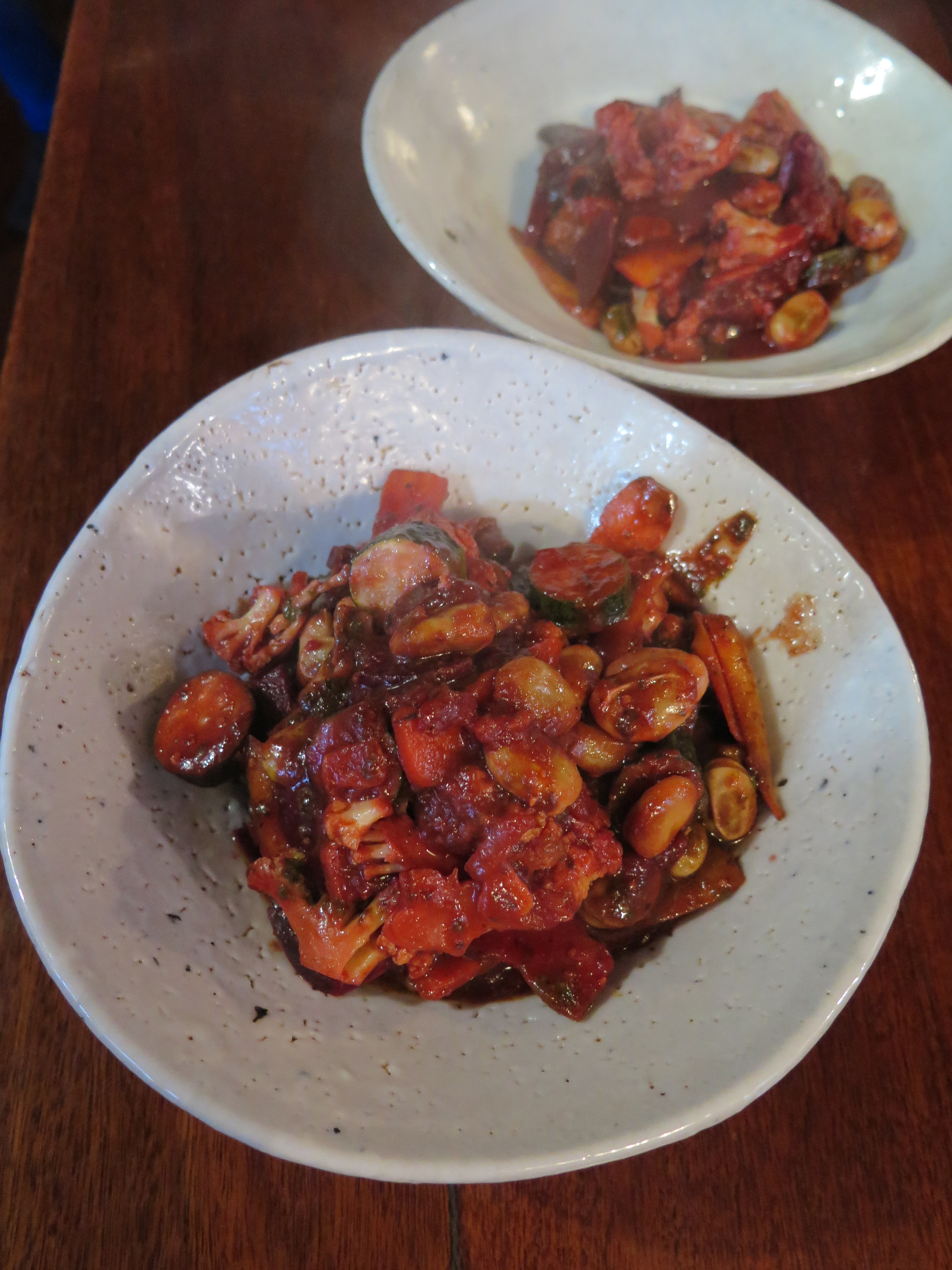
We have plenty of beetroot, carrots, broad beans and zucchinis at the moment, so tonights dinner will be pink veggie buckotto. I make it just like any other risotto, by first slow heating some finely chopped onion in good olive oil and later adding some of our garlic. Cooking them though for some time so that they are soft, translucent and glowing, but not browned or burnt. Add a cup of the small triangular buckwheat grains to the mix and stir till coated with oil. I add a cup of white wine and add in the various sliced up vegetables in order of required cooking time, stirring often. Today, I have a pan of fish stock on the go to keep the mixture lubricated. I also have a few jars of our own preserved tomato passata left in the pantry from last summer, so I add in half a small jar of this and a slab of frozen basil pesto from the freezer.

IMG_1474

We only have a very small freezer attached to the top of our small domestic fridge. We have chosen not to own a separate freezer to save using electrical power unnecessarily. When we preserve our summer excess from the garden we do it by cooking and vacuum sealing the produce in glass ‘Vacola” jars. Basil pesto of course, isn’t cooked, so it is one of the few things that go in the freezer. I made 7 tubs of the stuff last summer. It’s great to be able to go to the freezer and grab a chunk of distilled summer garden essence and add it to a meal so much later in the year.

I keep the dish moving, so that it won’t stick as it thickens up. it’s a beautiful, rich vegetable flavour with a creamy texture and some chewy vegetable chunks.

IMG_1476IMG_1478

A great meal for a late spring evening. Ever so simple. Quick and easy and very tasty.

I believe that it is even quite healthy.

Tonight My Fingers Smell of Garlic – Again

The first of our open studio weekends is over and we were quite busy all day, each day, with only one 10 minute gap between visitors all day each day. Not quite enough time to be able to make and eat a sandwich. We had to take it in turns to eat and go to the loo.

IMG_1390

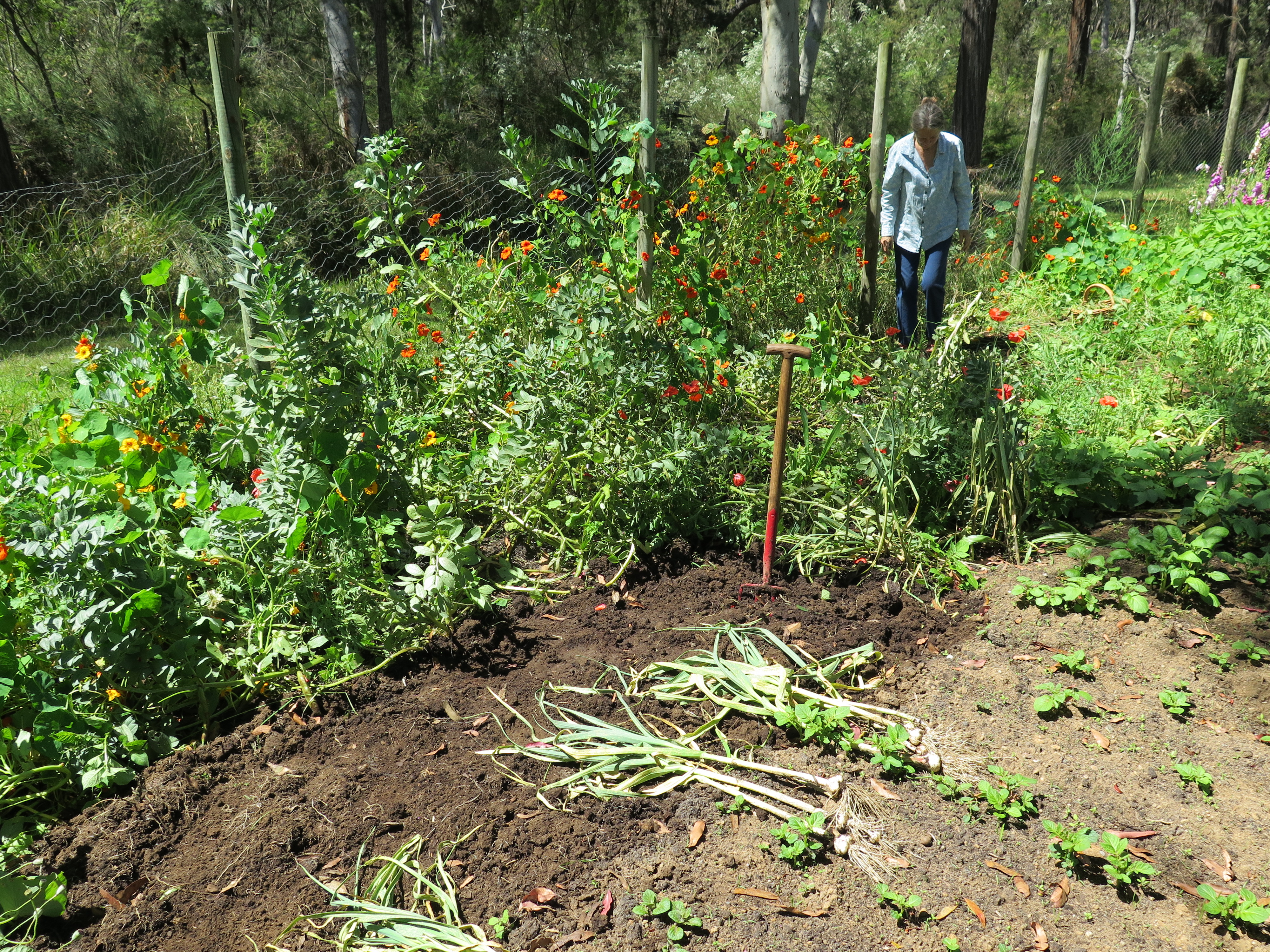
Now that the pressure is off. It is time to lift the garlic crop for this year. As I got them in early, they were ready to be lifted and dried a couple of weeks ago. Now is the first clear space I have had to be able to get into the garden and spend a couple of hours digging over the plot, weeding and sorting them all out.

Janine had managed  to get into the main garden last week and dig up the small plot that I planted out up there. I planted about 100 cloves from our larger knobs in the kitchen. A mix of all the different types that we have collected over the years. Red, white and pink varieties in both hard and soft stem types. She managed to find the time to preen them and spread them out to dry, before plaiting the largest of them and hanging them up on the kitchen wall by the wood stove chimney to finish drying. We have 3 plaits of about 15 knobs each. With another 50 smaller knobs all cleaned and dried and placed in a large colander on the kitchen bench top for immediate use over the next month or so.

IMG_1430IMG_1428

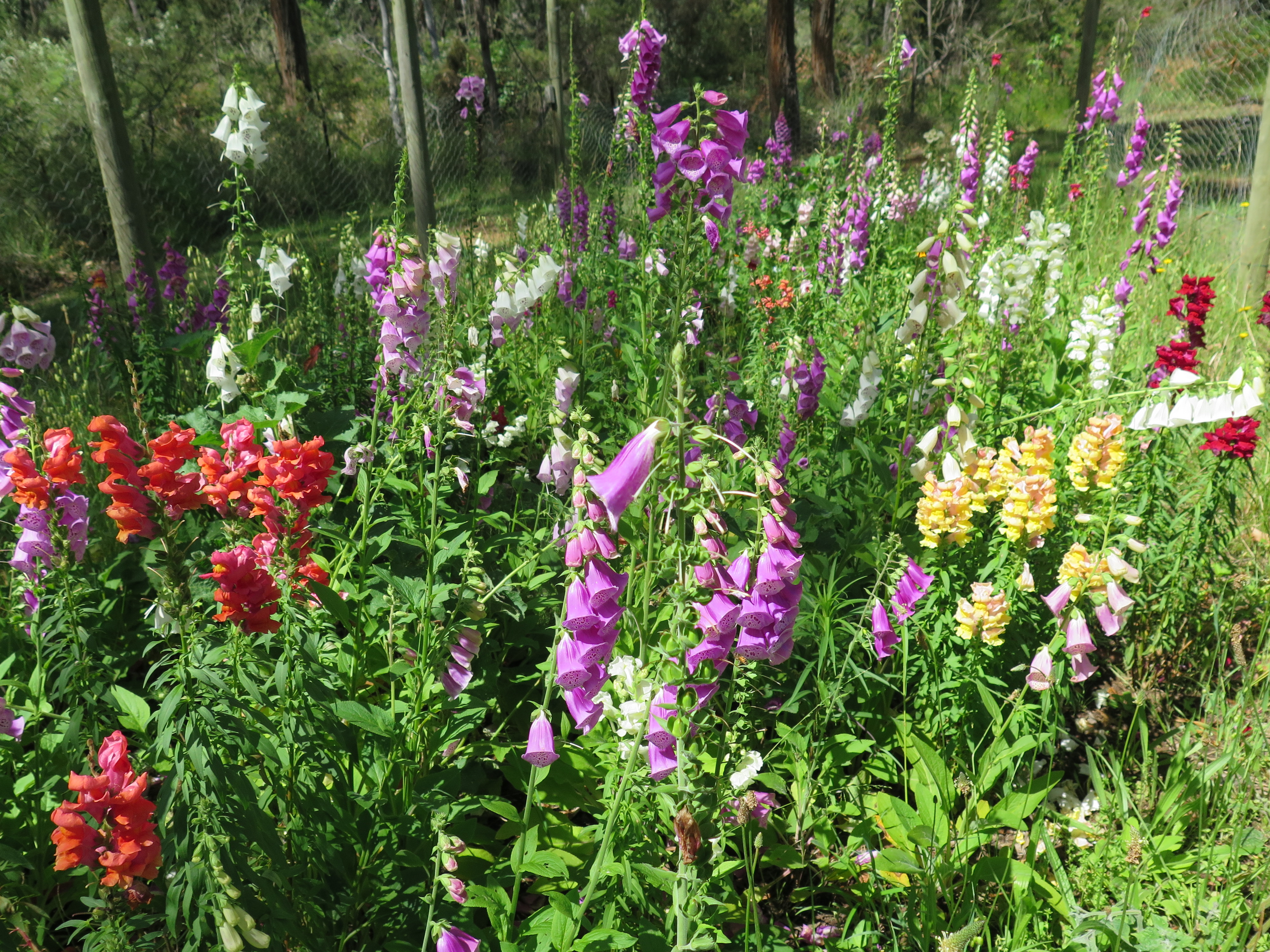
While I dig the garlic, The Lovely gets stuck in at the other end of the plot, up by the patch of English cottage garden flowers that I planted for her as a surprise 2 or 3 years ago. They take a while to get established, but are flowering well now. It bit past their best, but still lovely. A very nice back-drop to our work today. At some point in the future, I am going to reverse these two garden beds and lift all the cottage garden flowering plants and move them to the vegetable end, and vice versa. This will refresh the soil and the vegetables and flowers will both benefit from the change. Janine starts to harvest the last of the broad beans. Pulling out the spent plants as she finishes stripping the last of the beans off each one. It’s nice to be able to spend this time, working together in the garden.

IMG_1424

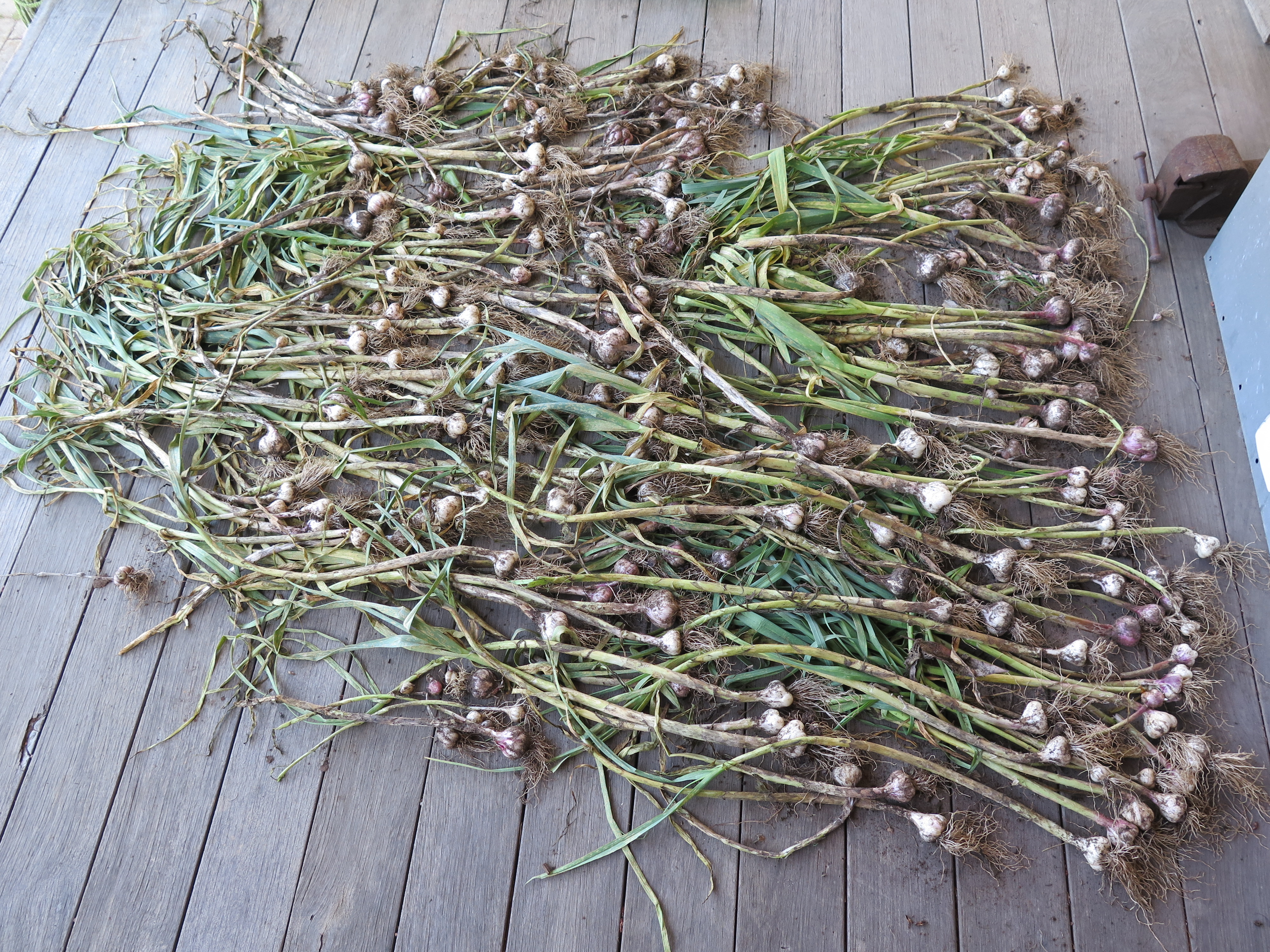
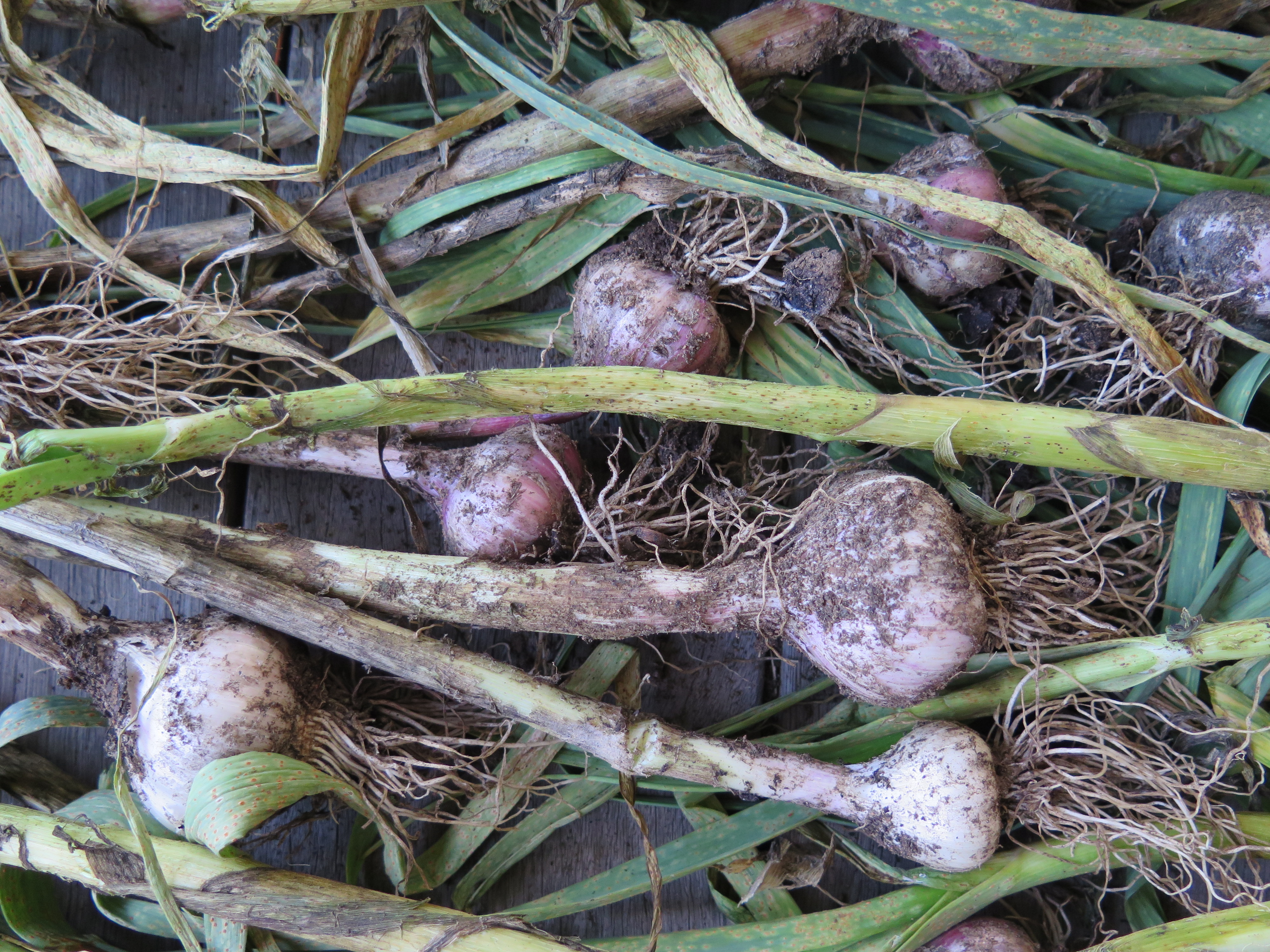
I bought half a dozen ‘new’, named varieties of organically grown garlic and planted them out in serried rows, down here in the Pantry Field garden. They had grown quite well, with some being obviously much stronger growers than others. I bought 3 knobs of each and planted out the individual cloves. These have now grown up into about 150 knobs of differing sizes. It would have been best if we had managed to find the time to harvest them a week or two ago. They had started to dry out and the tops had begun to lean over. Then we got so busy and it started to rain. We had 3 inches or 75 millimetres of rain last week and this was enough to reduce the dried tops to a liquid mush. The earliest varieties had lost their ‘paper’ coating and are starting to ‘burst’ or spread out. They’ll be fine for eating, but without any substantial stem. we won’t be able to plait them and hang them up. So more individual knobs for use directly from the bowl kitchen bench top.

IMG_1435

I’m not too sure how this will affect their ‘keeping’ capacity? We’ll find out during the coming year as this hasn’t happened before. I’m glad that we have had this fine, sunny day today, combined with a day ‘off’, so that we could get the crop in and start it drying out. There is a certain sense of achievement, satisfaction and security knowing that we have to years supply of garlic safely in hand.

IMG_1440

Some people have asked me what we do with so much garlic. Well, we eat it. We seem to get through the 200 to 300 small knobs pretty easily during the year. What we grow isn’t the largest or most presentable garlic. Not like what you might see for sale in the green grocers. But it is our own, organically home-grown produce, clean and free from any sprays, pesticides or preservatives. That is the kind of self-reliance that our enterprise here is all about, and a day ‘off’, spent in the garden is a good day indeed. This is fun for us. It doesn’t involve going out, driving anywhere, or spending any money. What more could you want?

IMG_1441

Our friend Annabelle Sloujetté has turned up from the south coast, bearing gifts of oysters and a couple of beautiful blackfish. I steam them with some of our fresh little garlic cloves, a little olive oil, a couple of sliced large dark field mushrooms, two sliced zucchinis, some pepper and a squeeze of lemon juice. A splash of white wine finishes it off.

IMG_1443IMG_1450

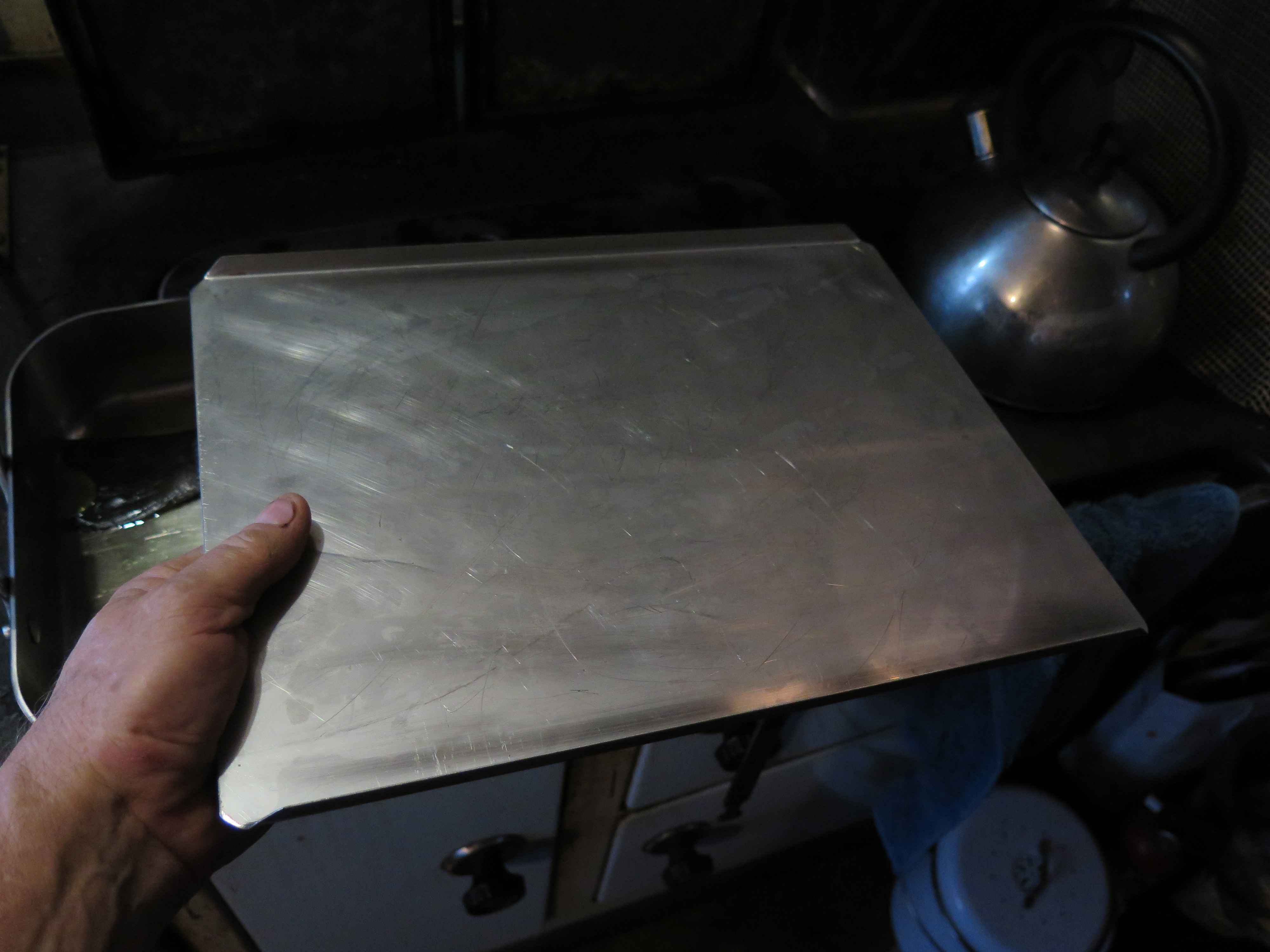
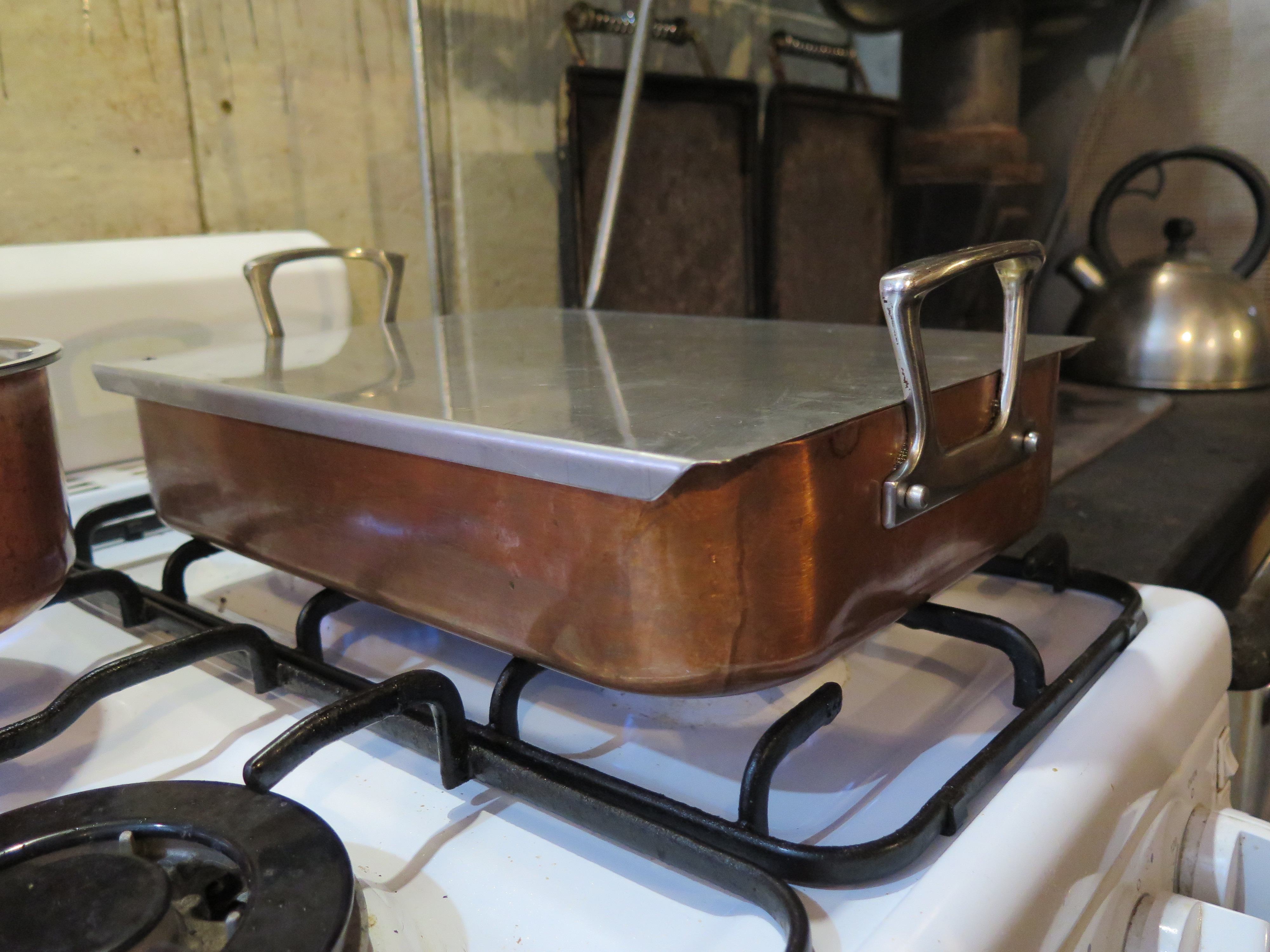
These fish are a really good size for blackfish, so I choose to cook them in the big rectangular copper baking pan, but it doesn’t have a lid. In the past I have used a sheet of al-foil to cover the pan on occasions, but I really don’t like to use aluminium cooking foil. It’s an environmental disaster, so we rarely use it. I decide to run down to the kiln shed and quickly make up a folded stainless steel, custom-made, lid for the pan. I’ve been meaning to do it for a long time now. So now is the time.

IMG_1445IMG_1449

I choose a small piece of stainless off-cut, that is almost the right size. I measure it exactly and use the guillotine to slice off a few centimetres, I use the pan break to fold a slight return on two sides to help keep it flat when it is heated, then hand-file and smooth the edges. I measure it so that it will fit exactly between the two handles and sit snuggly on the flat rim.

It takes me 7 1/2 minutes to get it done and I’m back in the kitchen before the others have  finished cleaning the new potatoes that we harvested today along with the garlic and broad beans.

I lift my hand to my face to wipe my brow after I have run back up from the workshop. Ah, Yes! I remember that smell. I have been digging and cleaning garlic all day, so tonight my fingers smell of garlic – again!

Spring and The Man for All Seasons

The broad beans that I planted before leaving for Japan have come to fruiting. They have been slow arriving, but now they are in full fruit. We have had 3 picks from them so far and there will be more, but with the increase in heat and day length, there are no more flowers, so as we pick the last beans from each plant we pull it out and add it to the compost pile.

There haven’t been quite enough of them to get tired of them yet, we have managed them quite well. I don’t think that there will be many left at the end of the season to dry for later use. only just enough to save for next years seed.

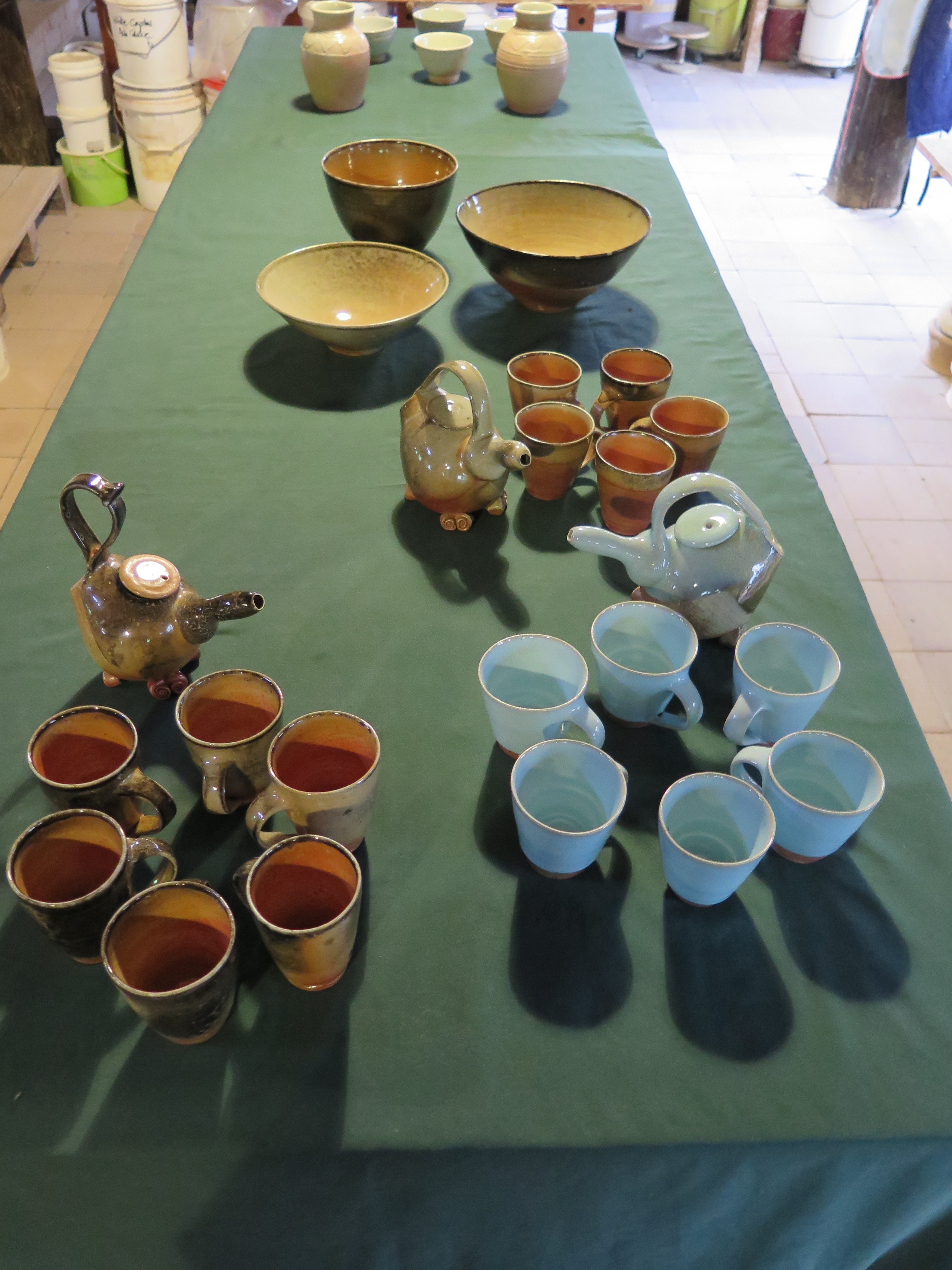
The garlic that I planted in March is wilting now and drying off, so it is time to harvest it and lay it out for drying. This will have to wait for next week, as we are flat-out busy cleaning up the pottery and setting out our pots for the Open Studio Weekends coming up. We are pretty much ready now with only minor adjustments left to do today. I did all the lighting and most of the pricing yesterday.

IMG_1382

Next to the garlic I planted a long row of peas which The Lovely enjoyed while I was away in Japan. They are all over now, so I planted potatoes in that spot a few weeks ago. They are all starting to show their first leaves now. They went in a month late, but I was so busy when I got back that I just couldn’t do everything at once. Pot making, kiln building, wood splitting, kiln firings, studio cleaning, weeding, mowing, planting and harvesting.

IMG_1216IMG_1217

IMG_1363IMG_1346

IMG_1352IMG_1359

I have been back a while now and just about caught up. The garden is pretty much fully planted out with the summer vegetables and we have already picked our first cucumber, zucchinis, picked our first sprigs of basil and had a couple of meals of artichokes. Janine lifted some of the earliest garlic that had self-sown on the edge of the path, a few knobs that we missed last year, that had grown into splendid plants. They are all dried, plaited and hung up next to the stove in the kitchen. It’s so nice to have fresh garlic again. I forget just how juicy and oily it is when it is this fresh. This is the first year that we have had our own garlic last the full year. We had just 2 little dried out knobs left in the colander on the kitchen bench when Janine picked that first plant.

IMG_1365IMG_1384

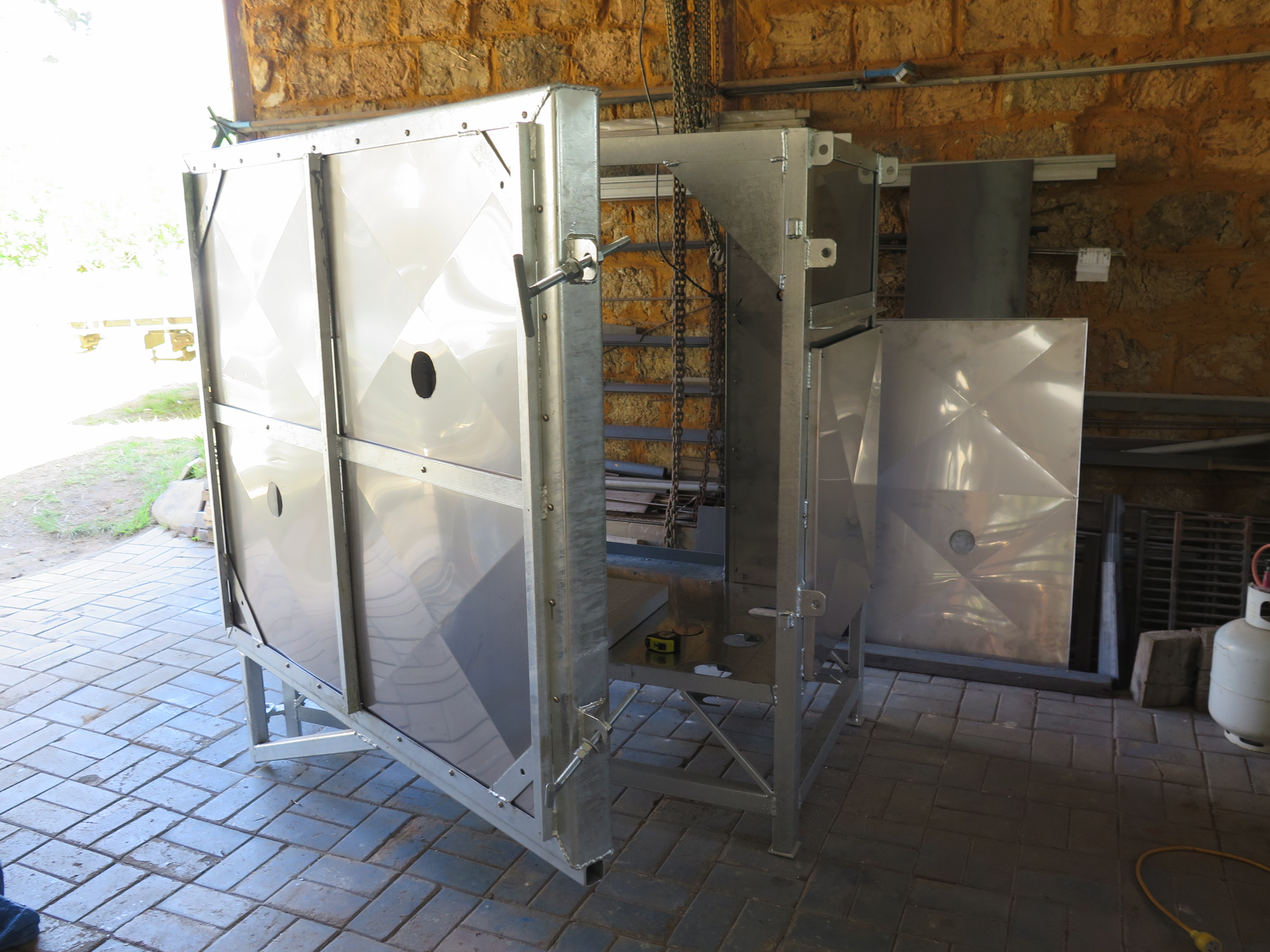
I have managed to make progress on the big new gas kiln for Sturt Workshops. It is all panelled and bricked up now. I had my very good friend and right hand man Warren down for a few days to give me a hand, as there is just too much to do at this time of year and I’m only one man.

Warren is an amazingly creative person. So skilful at so many things. He was apprentice of the year in his trade course. For two years in a row! Then he worked as a stonemason in Canada for a while, then as a fencer on his return, a panel beater, and a potter/sculptor, this was when I first met him. He worked in the sculpture department of the National Arts School for some years and then studied horticulture and set up his own business. An amazingly creative, restless spirit.

I taught Warren in the ceramics course at The National Arts School, back in the 90’s. On the first day of the year, I started my class by getting the students to make some good, basic, pottery tools. I took them all over to the sculpture workshop, where there were woodworking and metal working tools and vices. They were encouraged to get to know how to use these simple tools, so that they could make and sharpen their own tools. A little bit of self-reliance, that I had decided to inject into the course syllabus.

I handed out some small pieces of thin stainless steel sheet and a pair of tin snips to each of the students, so that they could cut out a small kidney-shaped profile tool. By the time I had turned around, Warren had cut out a perfect kidney shape. He held it up to me and said,

“Do you mean like this”?

I said “Yes! Exactly like that. Do you want a job”!

He replied, “Maybe, it depends what it is”

We have worked together on a casual basis ever since. When I have too much work on, it’s great to get Warren down here to give me hand. Apart from being amazingly skilful, he is great fun and we laugh a lot. Working with Warren puts a spring in my step.

Having been a panel beater, Warren is excellent with sheet metal and with the State Medal in MIG welding under his belt, he is a very useful man to have in a kiln factory. He has a great eye for detail and is very careful and accurate with his hand-work skills. This in conjunction with a few years as a mason, makes him ideal at the very fine and precise type of brick laying that I do in my kilns. It’s great to have The Man for All Seasons here in the Spring.

IMG_1323IMG_1337

IMG_1342

Time For Some Fun


Last week I attended my friend Alan Parkes funeral. Alan was a good mentor, a stonemason and sculptor. He taught me how to cut and dress stone, so that I could create all the sandstone features for my home, when I built it way back in the early seventies. I still have those stone masons tools that I forged all those years ago. I have Allano’s pitching tool, that he gave to me, I am forever grateful for his kindness and support. All the other tools I have forged myself.
I have been slowly building stone retaining walls for the new pottery workshop Pavillion building. It’s been a slow process, because I have had to dig nearly all the stones out of the ground myself over the years that we have been living and gardening here. When even I make a new garden bed or make a new orchard area, I have to dig some enormous sandstone floaters out of the ground. I pile them up down at the bottom of our land, until the time is right for some more stone work.
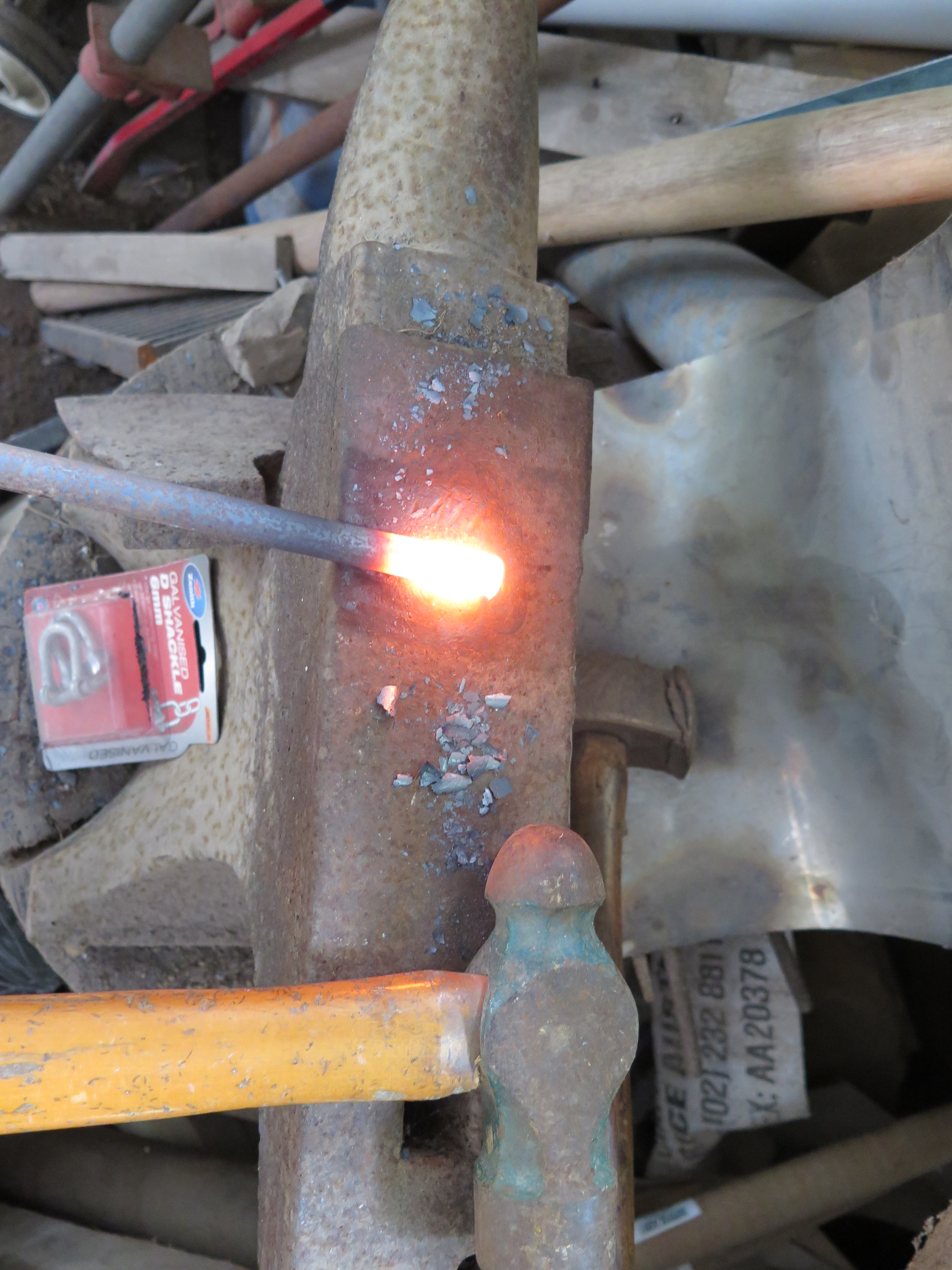
That time is now. It’s time to have some fun and in memory of Alano I get out my skutch, point and bucket of gads. I originally made myself 10 gads, back in the seventies, but when I get my bucket of stone working tools out from the workshop, I find that I only have 5 left,  I’ve lost one at a time over the intervening period, so now I only have a bare minimum of them left. The first thing that I do is make another set of 10 more. That should see me out for another 40 years of quarrying and masonry work! Just like the last lot.
IMG_1258IMG_1261
IMG_1264IMG_1265
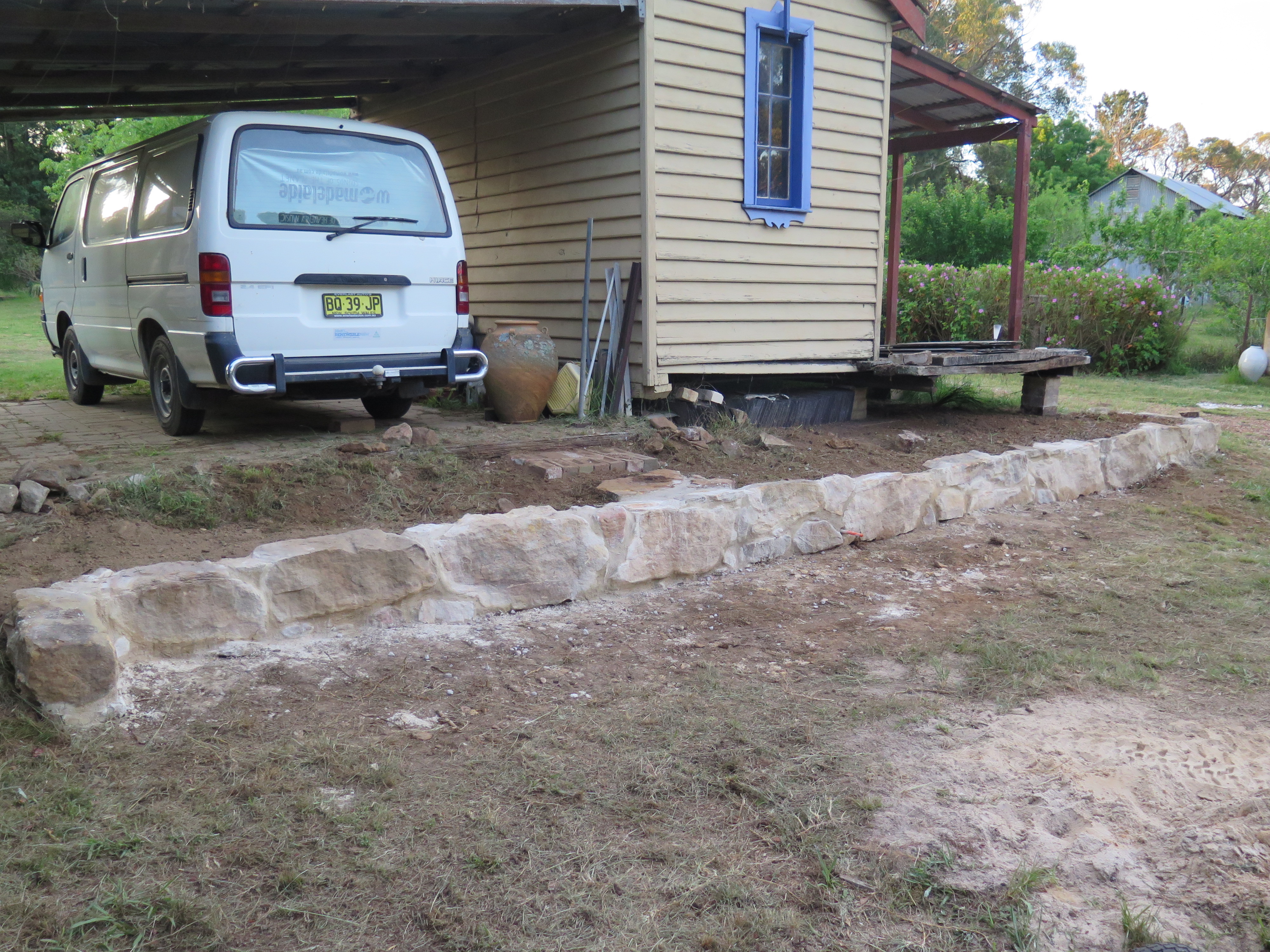
I set about breaking up the big floater that I cut in half a while ago, so that I could put the citrus grove fence right through the middle of that space. The rock just happened to be smack-bang in the way, so I cut it in half and cut up the piece that was now in the way and used it to make the lower part of the stone retaining wall that I plan to finish off this weekend. Using just my small 4 lb hammer and a dozen gads, I cut it up into 4 large blocks and another half-dozen, smaller blocks. They are really enormous lumps of stone and I need to use the tractor to move them to the site. The largest is about 200 kilos. It’s longer than the 1200 mm bucket on my tractor. I have to secure it with heavy snigging chains, to make sure that it doesn’t fall out of the bucket during the bumpy ride over to the building site on the other side of the kiln shed and pottery.
It is amazing what one man can achieve with just a 2kg hammer, a dozen small gads – and a few hours!
IMG_1298  IMG_1299
IMG_1303IMG_1304
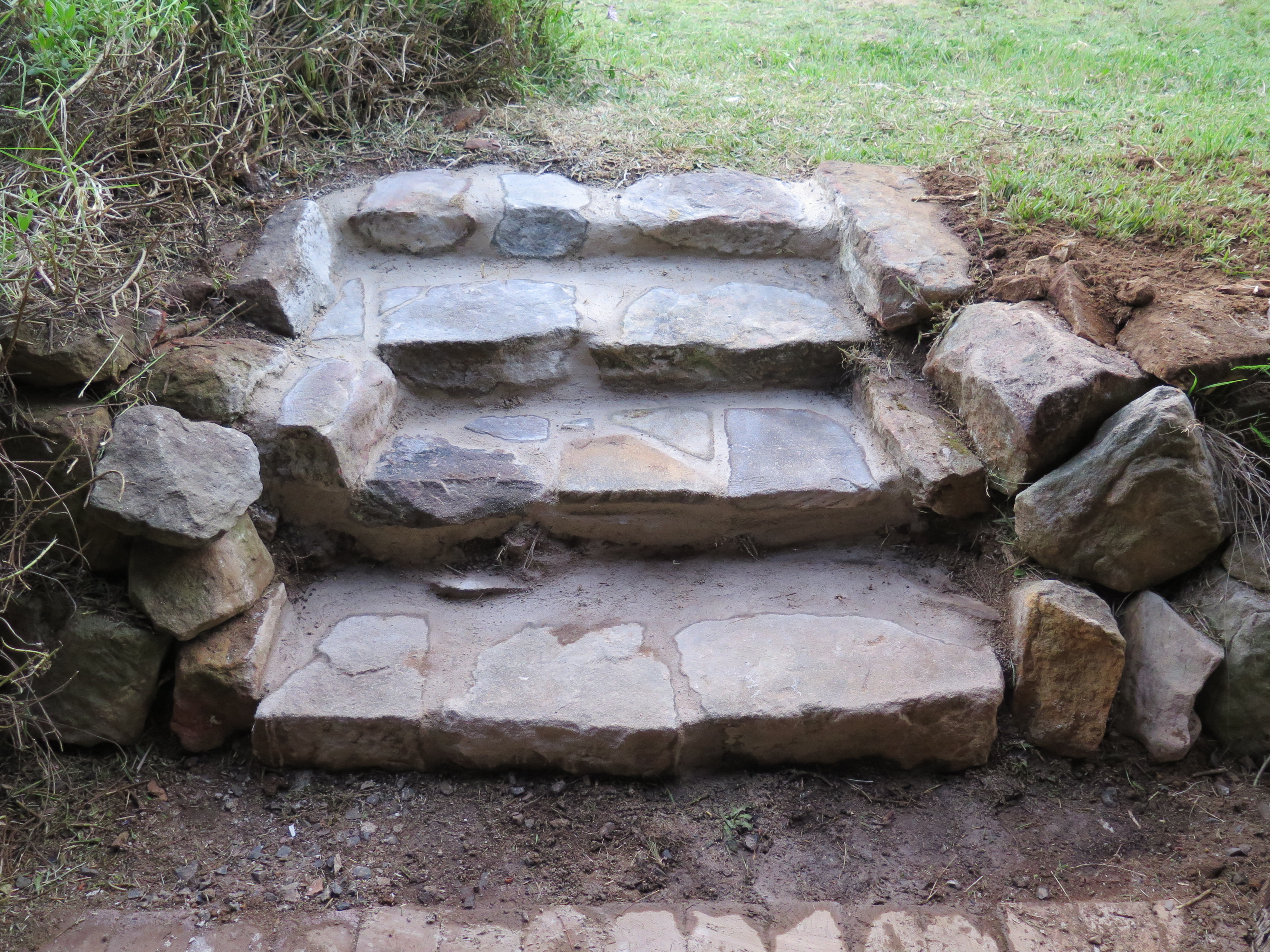
Using crow bars, levers, rollers, the tractor and the help of my good friend and faithful retainer, Warren, we build the retaining wall. In two days, we cut and lay 20 metres of stone wall and two sets of stone stairs. It’s great fun and ever so rewarding. We get so much done working together and we manage to laugh a lot while we are at it, even though the work is physically very demanding. The Lovely Janine is here too, supporting, passing, carrying, sorting stones, getting gravel and lime in the ute, raking up, finishing the details and finally sparging and cleaning our messy lime mortar work in the afternoons, once the mortar has started to set a little. The weekend goes so fast. It’s been really tiring but also energizing to be so productive in a free and creative way. We don’t really know what we are doing, but we enjoy doing it all the same. It all goes so well. Mostly because I spent the last two days before-hand splitting up the stones and cutting and dressing those blocks, then carting then onto the site in preparation. The largest stone is 450 mm high x 300 mm deep and 1500mm. long. It takes a bit of maneuvering to get it into place, but it can’t resist the hydraulics of the tractor and two crow bars.
IMG_1311 IMG_1312 IMG_1307 IMG_1308
IMG_1314 IMG_1310 IMG_1313
Even though I have used, the tractor, chain blocks, crow bars. levers, wedges and rollers and a mate to help me. My back is still telling me that I have done too much. But if I don’t do too much, then I don’t get enough done.
We finish the job and are all cleaned up, well before dark. The Lovely had picked the 2nd picking of the early pink cherries. Yum! We need to be vigilant, as the birds soon realise that they are ripening and will clean out the lot if we don’t net them. But netting will have to wait for another day. Today we are being masons, not orchardists! The Gorgeous One manages to find time during the days hectic work, to bag a good deal of the crop, so as to allow it to ripen in its own good time and mature, before the pesky birds get them all.
IMG_1318
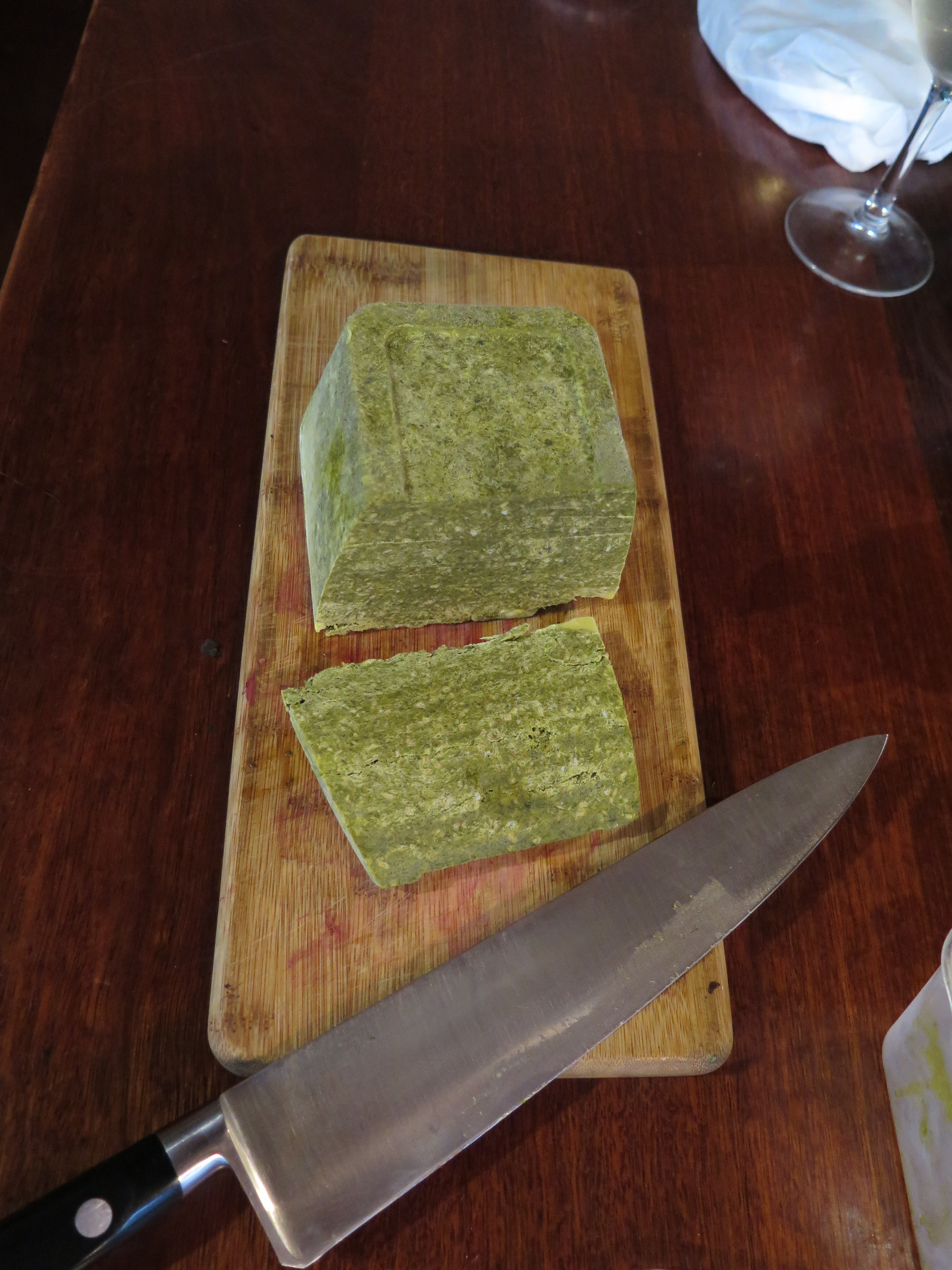
As it is getting dark, we come inside for hot showers, a change of clothes and a well earned beer. For dinner we have a simple light meal of cubed silken tofu with todays fresh picked, early season garlic, some finely diced spring onion fresh from the garden, finely diced fresh ginger and a drizzle of light soy sauce. This has to be one of my favourite light meals.
IMG_1317
I am someone who benefitted greatly from the generosity and good will of Allano Parkes. He left his mark on me, and inadvertently on this small piece of land of ours. I am really quite taken by the concept of self-reliance. So being taught to be able to dig up stones and turn them into a visually pleasing and environmentally sensitive, carbon-neatral, building material is a real thrill. Apart from the occasional use of the tractor to do the heavy lifting, there were no power tools used on this job. All the cutting was done using the small 2kg hammer and gads, while all the fine dressing was done using the bitch-pick and pups as well as the skutch hammer. We ache all over from the exertion and the use of muscles that don’t get used like this very often, but when we take the time to stand back and admire our achievement at the end of the day, they are all good aches!
fond regards from the part-time mason and his masonette

Hitting the Ground Running

I’m just back from Japan, It’s been a great trip. I’ve been away since late August. I’m back just in time to discover that my friend and mentor, Allan Parkes has just died. Such an interesting and creative person.

For the first time, I decided to rent some studio space in Japan and make some work there. It was very good. I hope that I’ve learned something while I’ve been away, but one never knows. Only time will tell. I tend to take things in and let them blend and simmer for a while, then hope that something will percolate back out again in some dilute form that will enhance and extend what I already do with what I know. If nothing useful emerges, then there is nothing lost, as I really enjoyed my time there. As I alway do. I have a strong affinity for Japan, the people, the food, the creative endeavours of all those people that I have met and/or whose work I have seen in the Galleries.

IMG_1005IMG_1013IMG_1011

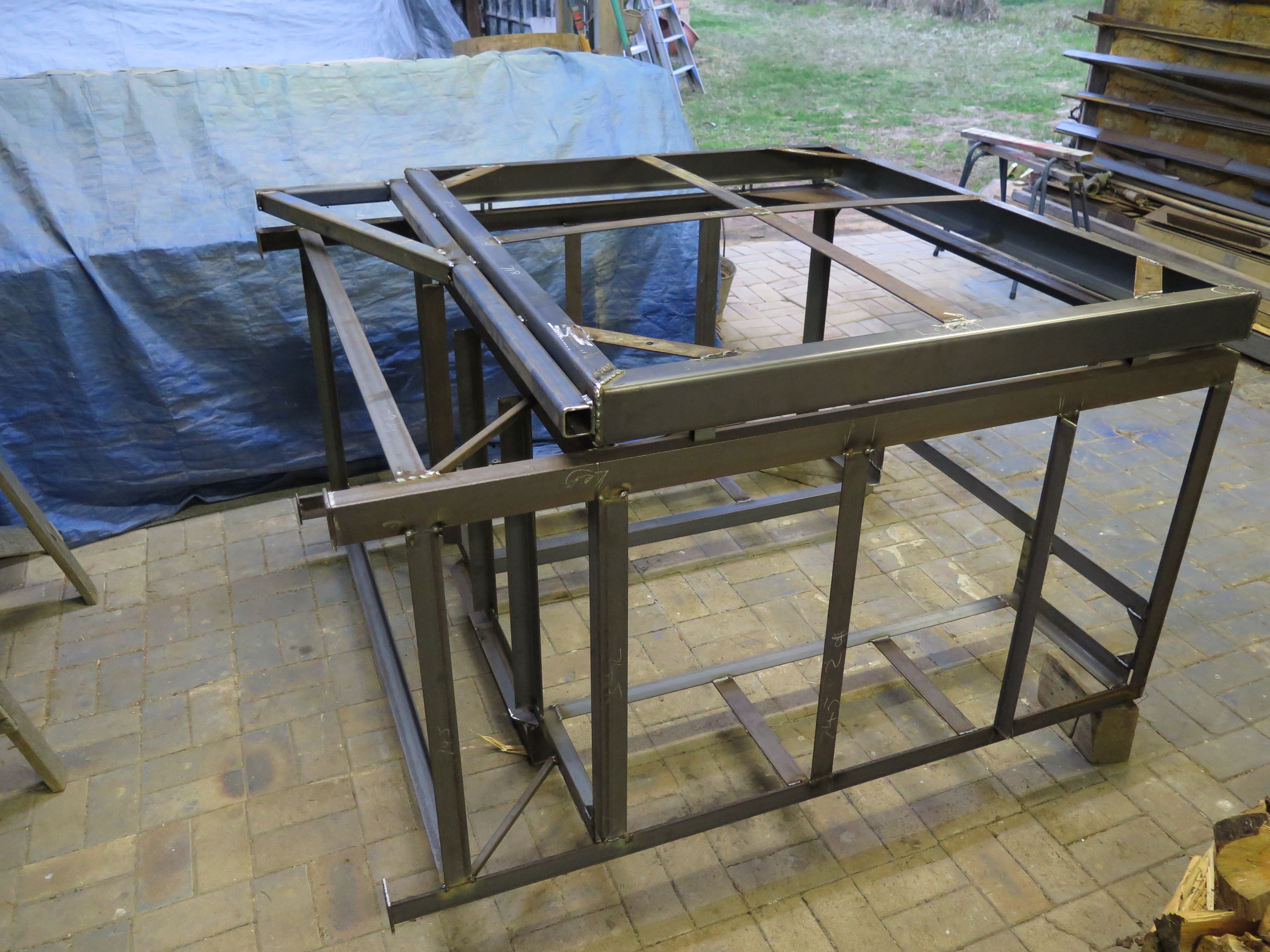
I had one day to unpack and do my washing, then straight in to the pottery and kiln factory. I have a large kiln ordered, so it’s straight into welding mode. I have to earn some money. I weld up the steel frame and get it off to the galvanisers in just 4 days. While the kiln is away. I get stuck into glazing all the bisque fired pots that I left here in the pottery, before I went to Japan. So it’s glazing, decorating and kiln packing. Then wood stacking, kiln shelf grinding, cleaning and washing. Finally the kiln is packed and ready to fire.

IMG_1187

It’s 5 o’clock in the morning and the early bird chorus is just starting. I’m down in the kiln shed firing the kiln, I like to get an early start for my firings. For some very intimate psychological/physiological reason that I don’t really understand, I seem to like to get an early start, when it’s dark and quiet and I have the whole world to myself. Well, almost. There is of course the odd rooster in the distance and the bird song. The birds seem to start calling to each other even before I’m aware that that there is any change in the light levels, but they are so much more sensitive to the natural world than I am. We have all learnt to live in an un-natural modified environment with electric lights, refrigeration, supermarkets, air con, and flat screens. I eschew most of this for the frugal comfort of home grown vegetables and a wood fire for warmth and cooking. Of course I do have electric lights and a fridge. I’m not a ludite, but I’m trying to keep my life as simple as I can, while still engaging with the modern world.

IMG_1190

Half an hour later, I can start to see a slight lightening of the sky and instead of it being jet black, it starts to have a very pale light grey to bluish tinge to it. I’m sure that if I had to live without any modern ‘conveniences’, that I’d soon adapt to my circumstances and start to see the dawns approach, just like the birds. But at this stage I’m happy in my hybrid world, sitting on the edge of my small hamlet, with access to everything that a modern first world economy has to offer only half an hour away and I’m also happy to live here quietly and ignore most of it.

Electricity is great. We make all of our own. In fact we make about 3 times more than we use, and sell the excess 2/3rds into the grid for money. Having fresh drinking water on tap is also a great thing. We catch all our own rain water from our roof and store it for later use. Hot water on tap has to be the greatest luxury ever invented. I consider it the basic standard of civilisation. If you have hot water, you probably have peace and stability. We make our own hot water from a combination of solar panels and a boiler fitted into the back of our wood fired kitchen stove. We also own a fridge, a small one, but we don’t own a freezer, even though we have a large kitchen garden and could find a use for one. We thought about it and decided against it, as it uses too much electricity. We always have something fresh to pick and eat from the garden. We eat what is in season in the garden, what we have over, we vacuum preserve it in ‘Vacola’ jars and store it away in the pantry.

IMG_1000IMG_1001IMG_1129IMG_1130IMG_1167
I’m perfectly aware that the way we live is both very hard work and a great luxury. We are in control of most aspects of our life and that is our greatest luxury. However, Just like everyone else living in a capitalist economy, we have to earn money to pay the bills that constantly accrue. Such things as Council rates, insurance, registration, taxes etc. There are lots of once-off bills that occur throughout the year, but add up to be our major expenses over-all. As we don’t have conventional jobs, cash flow can sometimes be a problem, but we manage by living quite frugally. Luckily, most of the things in life that we aspire to can’t be bought for cash, but are earned through hard graft and personal effort.

IMG_1194

This wood firing will be the last that we can fit in before the Southern Highlands Arts Festival Open Studio Weekends, that are slated for the first two weekends in November. It gives us a couple of weeks to unpack the kiln and then fettle and grind all the pots. With any luck, we should have just enough time to unpack the kiln,  then clean up the studio ready for the opening.

Best wishes from Steve who is glad to be back home again and hitting the ground running

Enjoying the Now

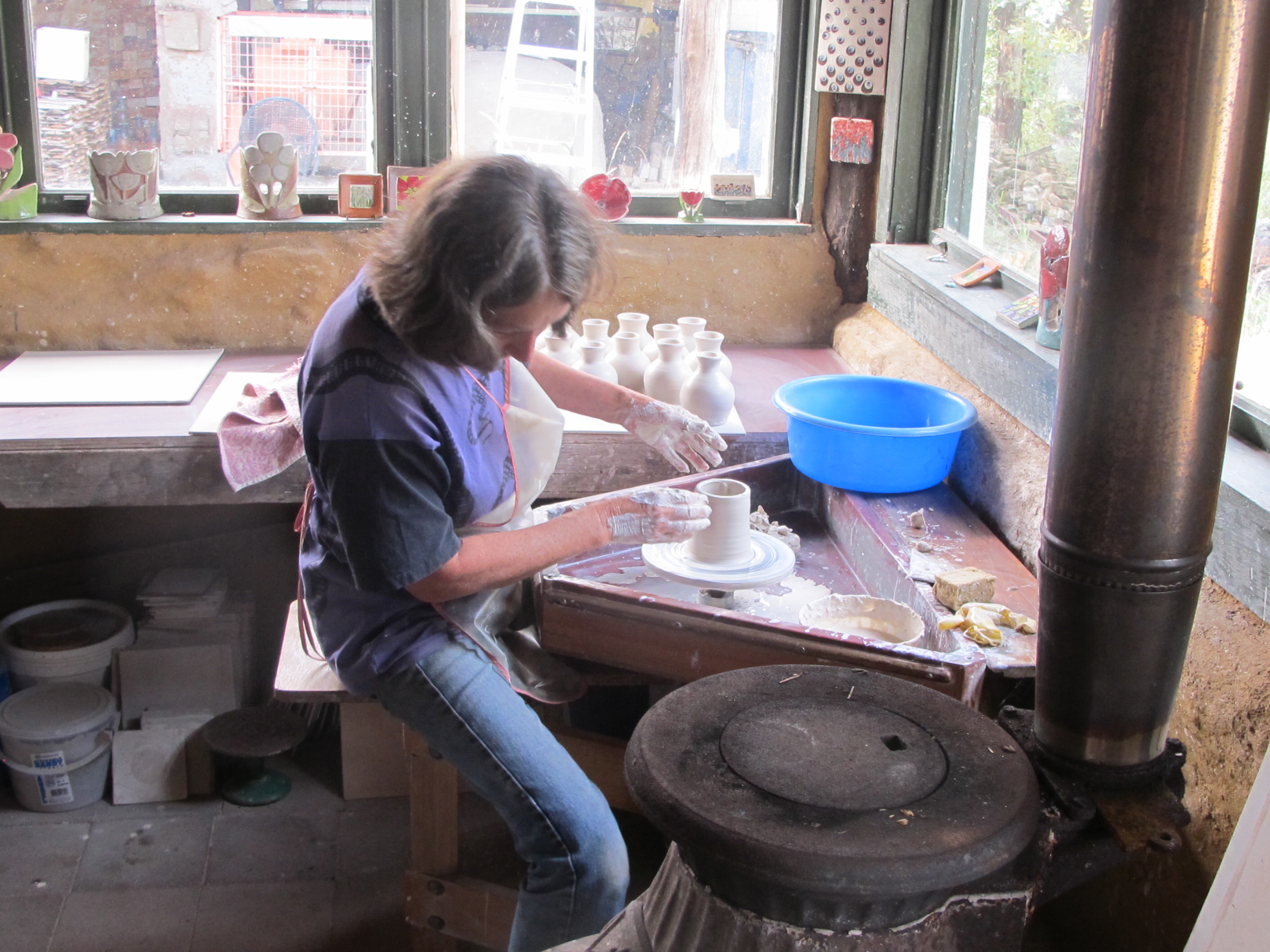
We have our pottery back to ourselves again now, so it’s back to the wheel for us. We work at our kick wheels, set either side of the old pot belly stove which has been generating a steady gentle heat to keep us warm on the coldest of days for the best part of 40 years now. I’m amazed at how it has kept on going for so long with only minor repairs.

IMG_8895thumb_DSC01182_1024

thumb_DSC01187_1024thumb_DSC01213_1024

thumb_DSC01218_1024

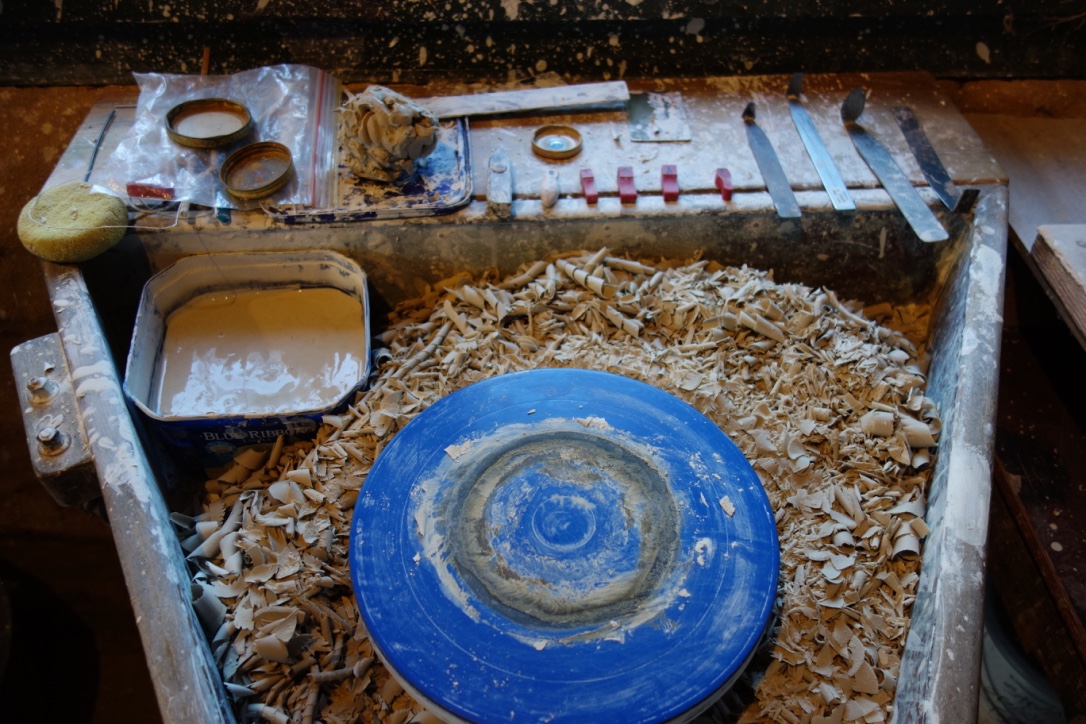
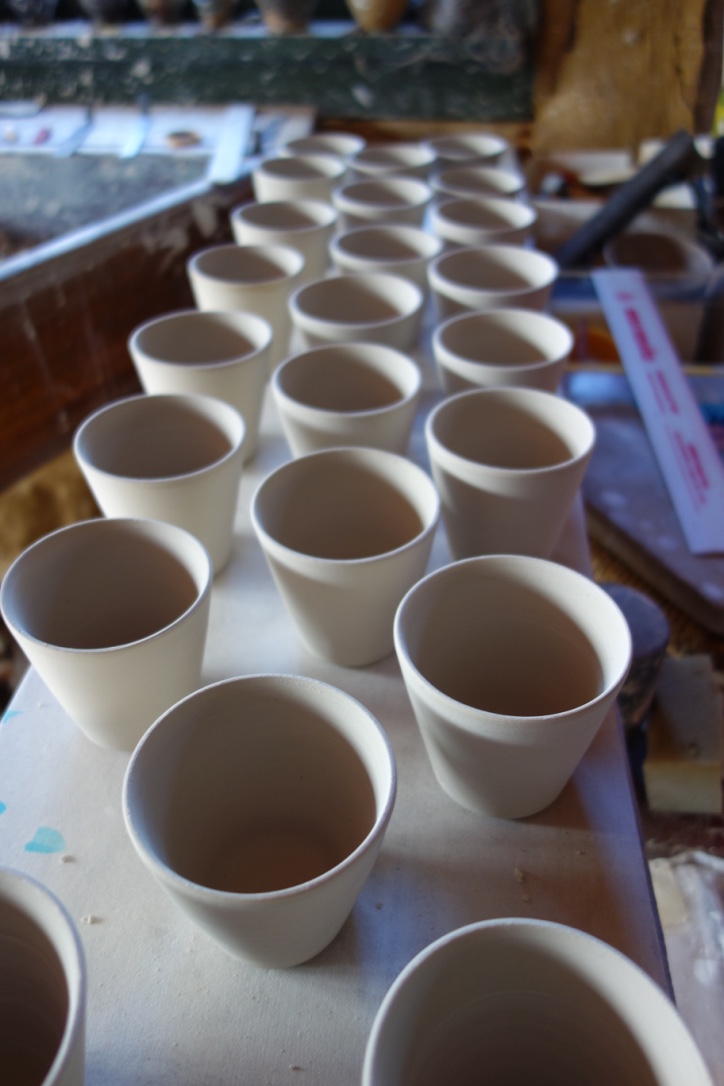
Throwing pots out of these ground rock ceramic pastes is a slow process. We have to plan ahead so that everything must be thrown thicker than you might like and then there is a lot of turning to be done. Some times we rough the forms out on one day, then let them dry overnight until they are almost completely dry, before finishing them off to the thinner desired cross-section. They can’t be bone dry, or they might break under the pressure of the turning tool, but they can’t be damp either, as then they will chip and tear. Milled rock paste isn’t like ordinary clay. It’s just not very plastic. It needs to be turned just before bone dry. Grinding away at what is essentially sand and water mix really takes the edge off my home made metal strip turning tools. I have to resharpen then after every 2nd pot, just to keep the edge keen.

thumb_DSC01219_1024 thumb_DSC01202_1024

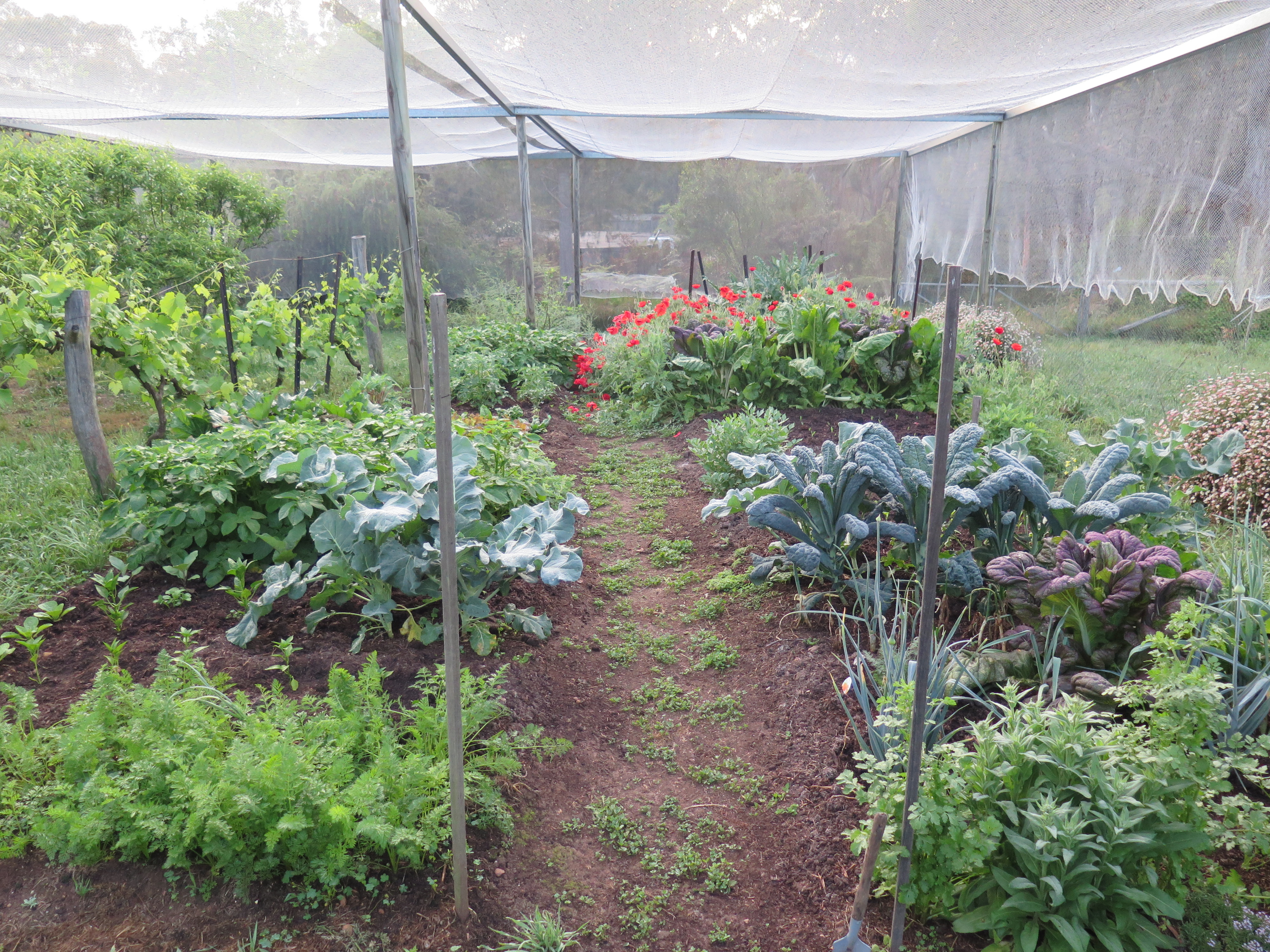
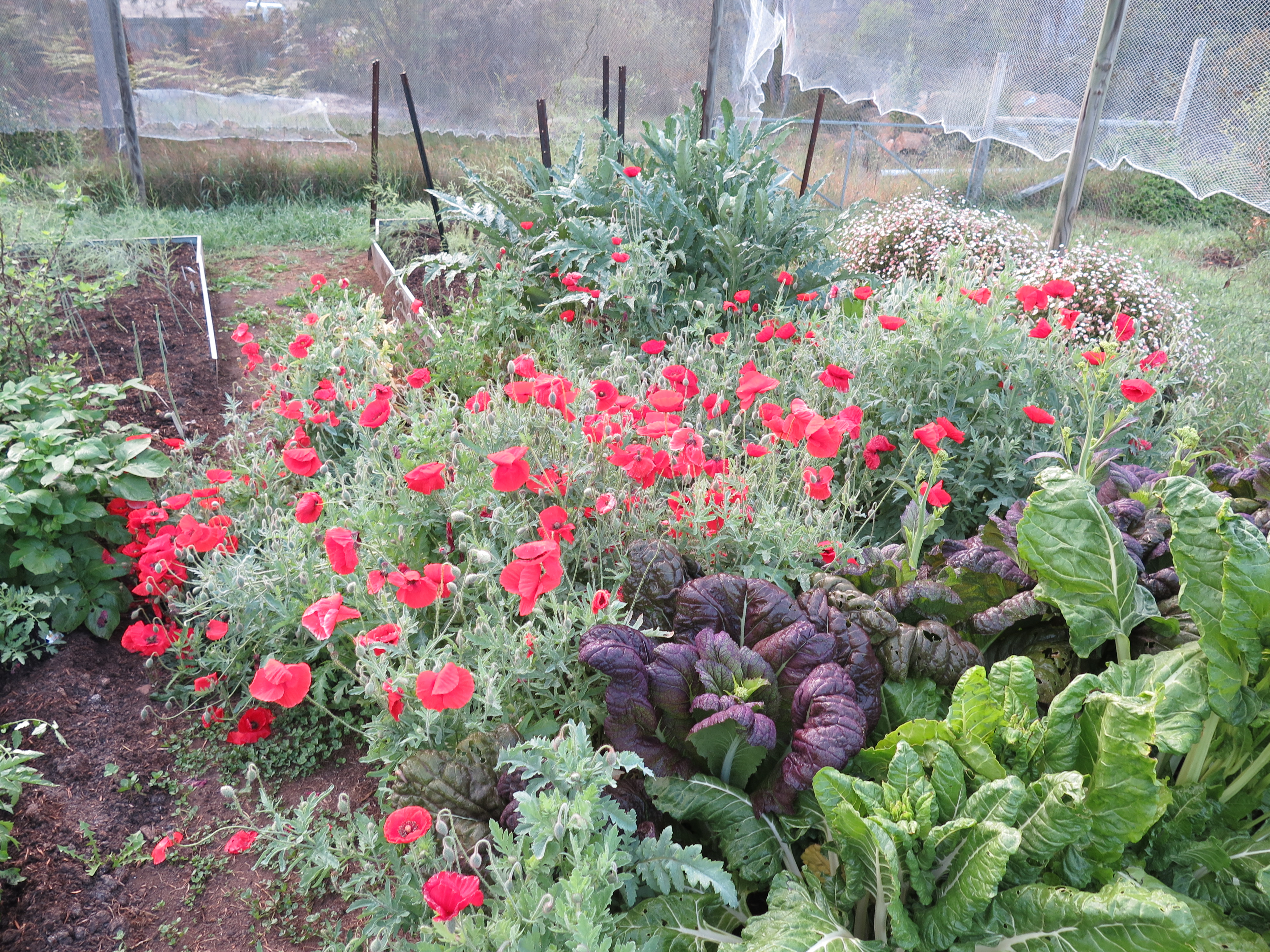
The garden is starting to respond to the increasing day length and the hint of warmth in the air. I can see a poppy bud starting to show some red colour and there are swelling buds on the blueberries. We have just picked our first asparagus spears as an aperitif before our other vegetable dinner. These are all good signs of the warmer spring weather to come.

thumb_DSC01287_1024 thumb_DSC01293_1024

thumb_DSC01294_1024thumb_DSC01290_1024

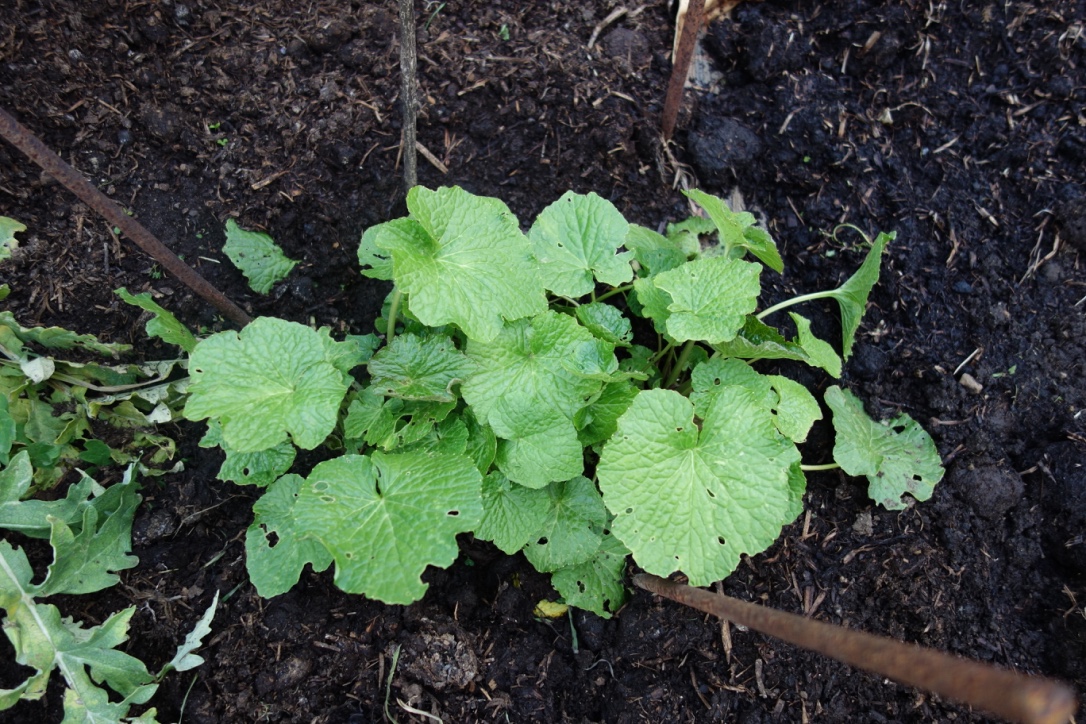
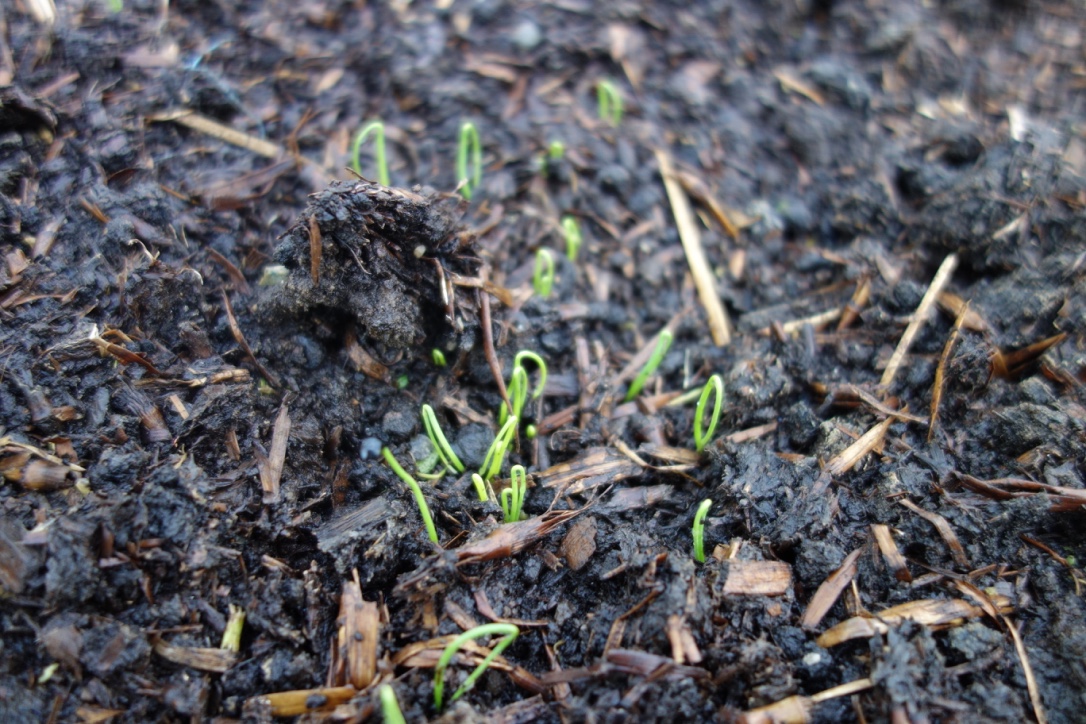
The Japanese Wasabi plants have grown well through the cool wet of the winter and are looking good right now. It’s that hot dry summer heat that knocks them around. I planted onion seeds 2 months ago. A lot of it came up on time, but for some reason, one packet of seed, just sat there and did nothing until now. This variety must need warmer weather to germinate. all the other plants are now 100 mm or more high. I hope that these plants can get enough growing season before it gets too hot and dry for them in the summer? Just down the row a little we have a nice crop of Pak Choi, lovely for stir fry, or just steamed with a little garlic, ginger and soy. 2 mins and melt in your mouth, with still some nice fresh crunch in the warm but fresh and crunchy stems.

thumb_DSC01292_1024 thumb_DSC01291_1024,

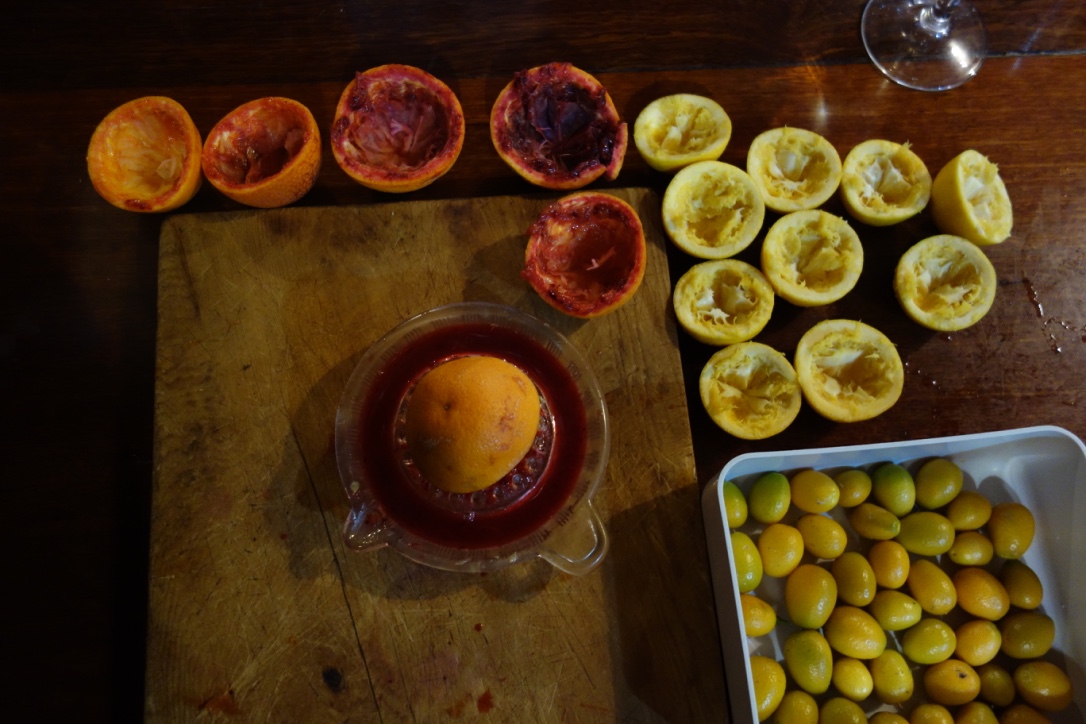
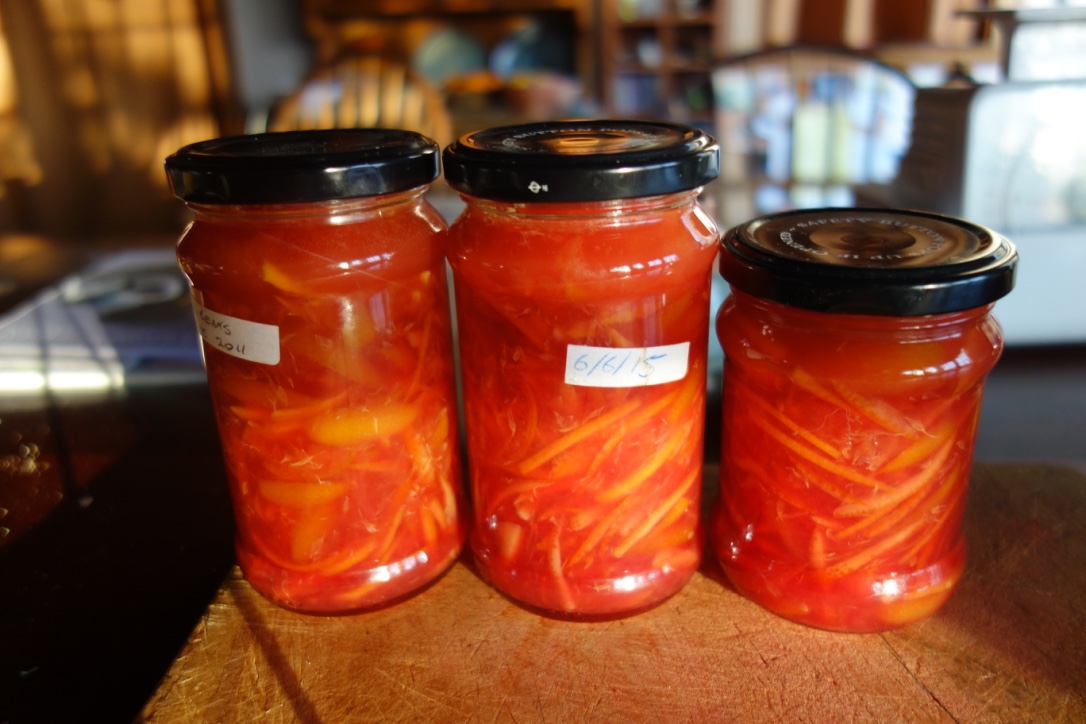
I have made what is probably the last batch of marmalade for this year. As the citrus season has all but come to an end. I make a batch of cumquat. blood orange, and lemon marmalade. I finish it off with a dash of whisky before bottling. It’s unusual, it looks great and tastes better.

thumb_DSC01272_1024thumb_DSC01274_1024

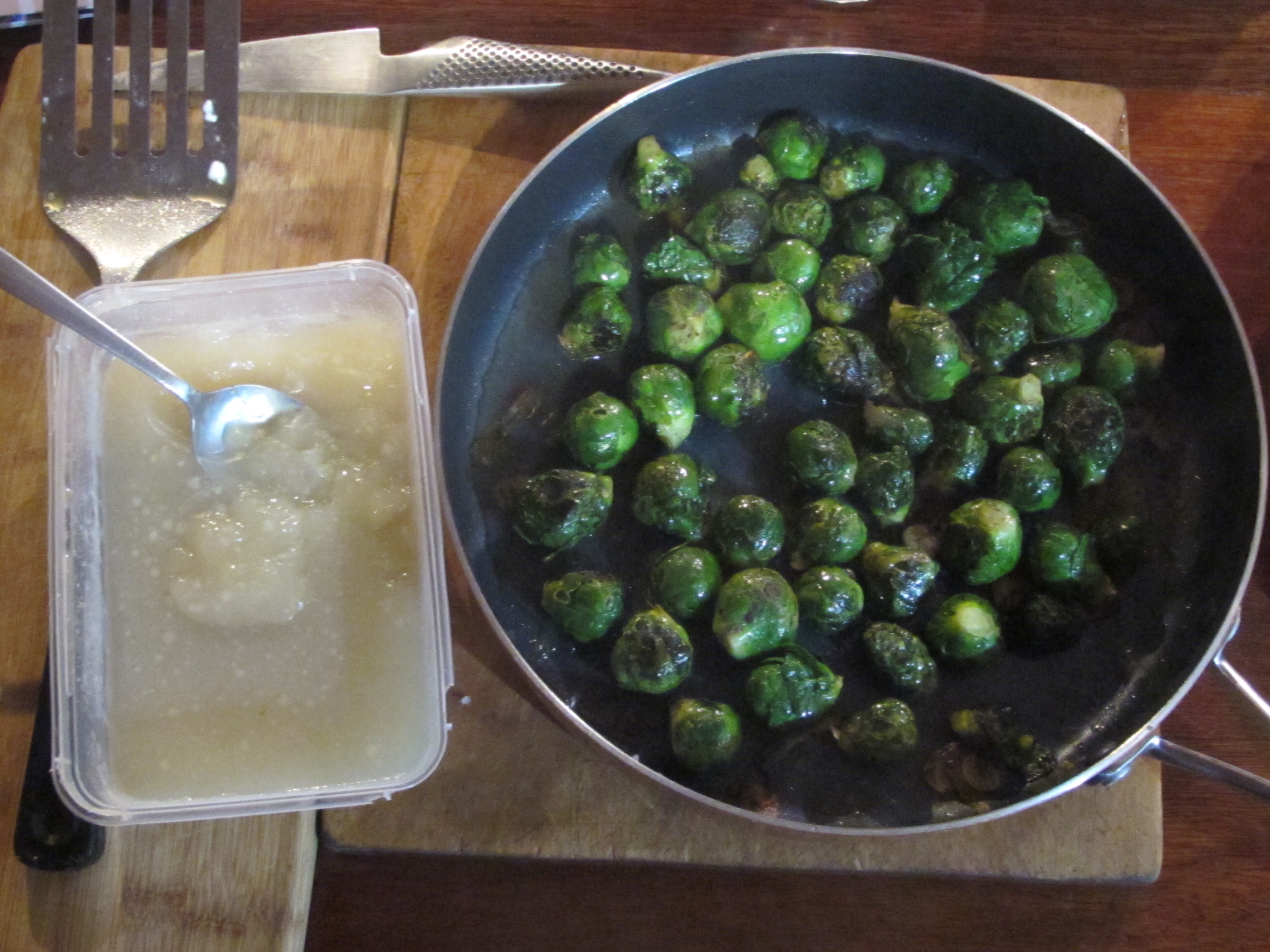
thumb_DSC01224_1024tonight’s dinner is spinach with ricotta, Brussel sprouts, initially lightly steamed, then finished in a pan-fried with garlic and chilli, served with steamed potato and pumpkin.

thumb_DSC01278_1024 thumb_DSC01277_1024

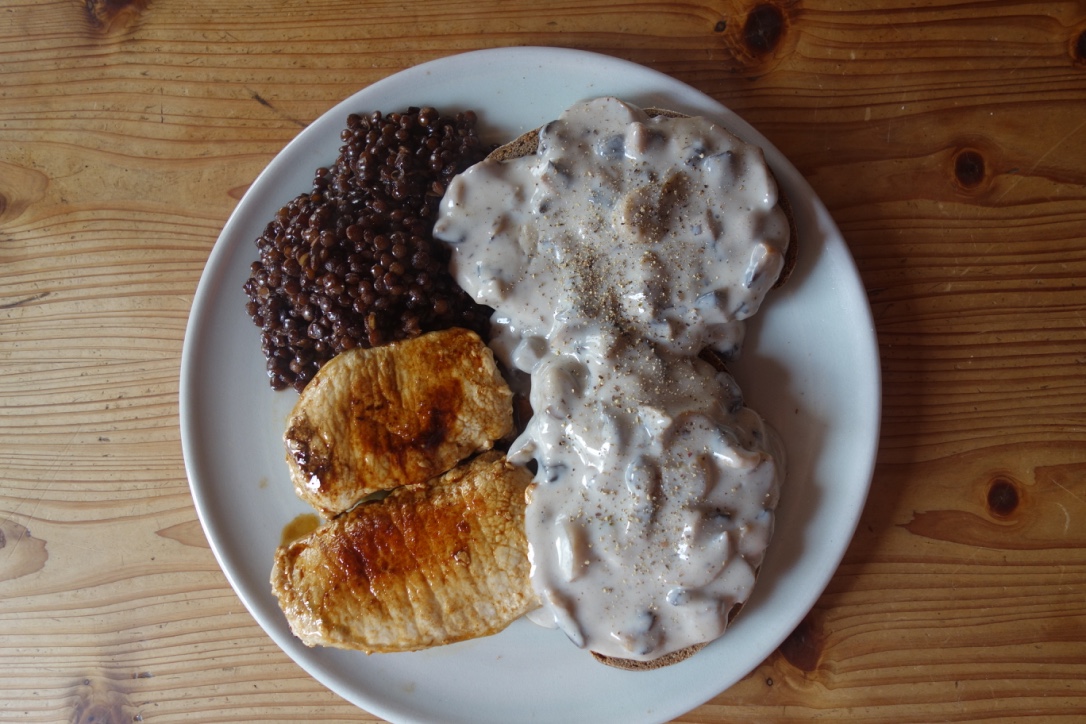
Another recent meal was pork medallions pan-fried in olive oil and garlic, he deglazed with a splash of a nice chardonnay, served with lentils simmered in home-made marrow bone and veggie stock, then plated up with mushrooms in white sauce.

We have plenty of cauliflower, broccoli and Brussels sprouts at the moment, as the winter chill weather draws to a close. I have been enjoying lightly steamed Brussel Sprouts, which are then pan-fried in some home-made stock. In this case chicken stock, and finished with a little sesame oil and pan-fried and tossed for a few minutes. They get a few caramelised spots on them as they roll around, a slight grind of fresh pepper and some vegetable salt. Delicious.

IMG_1004

No better way to enjoy the crisp cold of winter.

There was an article in a recent issue of ‘New Scientist’ magazine. (No. 3032, 1/8/15) That told of the health benefits of eating bitter foods like Brussels sprouts.

The Brassicas have several bitter phytonutrients that are produced by the plant to make them unappetising to predators – like us, as well as caterpillars. Sulforaphane is one such protective phytonutrient that gives them the particular sulphur smell. It has anti-cancer functions and is an antioxidant. I usually have a small nibble on what there is in the garden, snapping it off and eating it raw while I wander around, weeding and watering, crunching and chewing as I go. They must be good for me?

I really like the idea of going to the garden each day/evening and picking what needs eating on that day, because it is absolutely ready to be picked, organically grown and totally fresh. This is self-reliance, living with the seasons. 

Enjoying the now!

thumb_IMG_2558_1024

Best wishes from Steve and Janine, who are vegging out in the late winter.

Lime Pickle

In these cooler, shorter, winter days. The evenings are long and there is plenty to do. Winter is the season for citrus. I have made 20 jars of marmalade so far, so now its time to make lime pickle. A good lime pickle is a great accompaniment with curry, it needs to be salty, sweet, sour and chilli hot.

We have plenty of limes on the tree, so I slice them up length ways into 1/8 segments, salt then and then leave them covered for a day or two to soften.

A few days later, when I find the time. I’m fasting today, so there will be no dinner, that leaves a bit of time to make up the pickles. The wood fired stove is cranking away in the kitchen, even though we aren’t planning on cooking anything tonight. We light it because it’s frosty outside and going to get a lot colder overnight and we want the room warmed up and the hot water heated as a by-product.
IMG_0874IMG_0875
I start by dry roasting some fenugreek seeds which smell so exotic, but taste of ordinary dried green garden peas unless they are roasted. Roasting brings out a lot of that wonderful aroma and changes the taste to something that is so much more interesting. It also makes them very easy to grind up in the mortar and pestle.
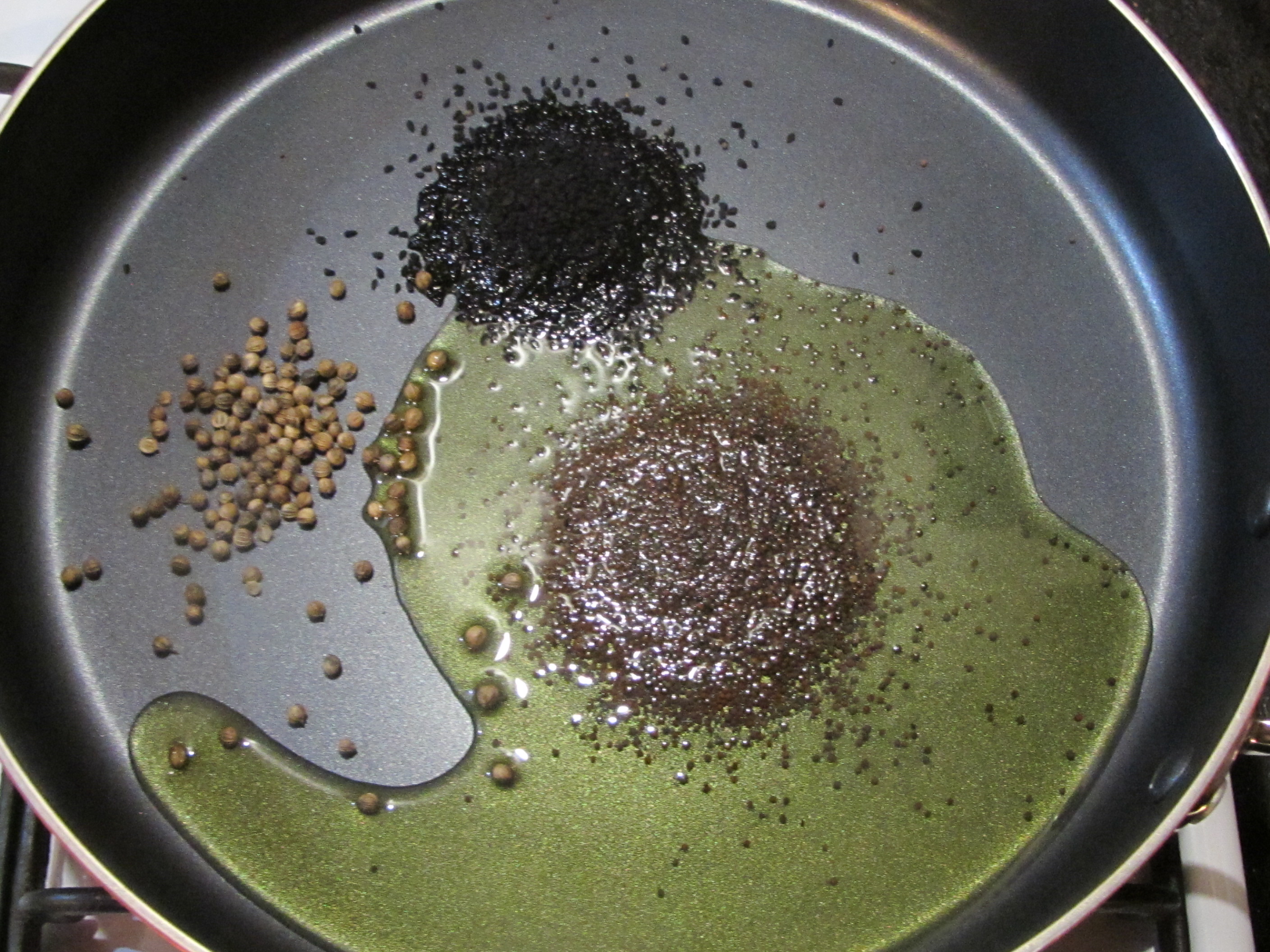
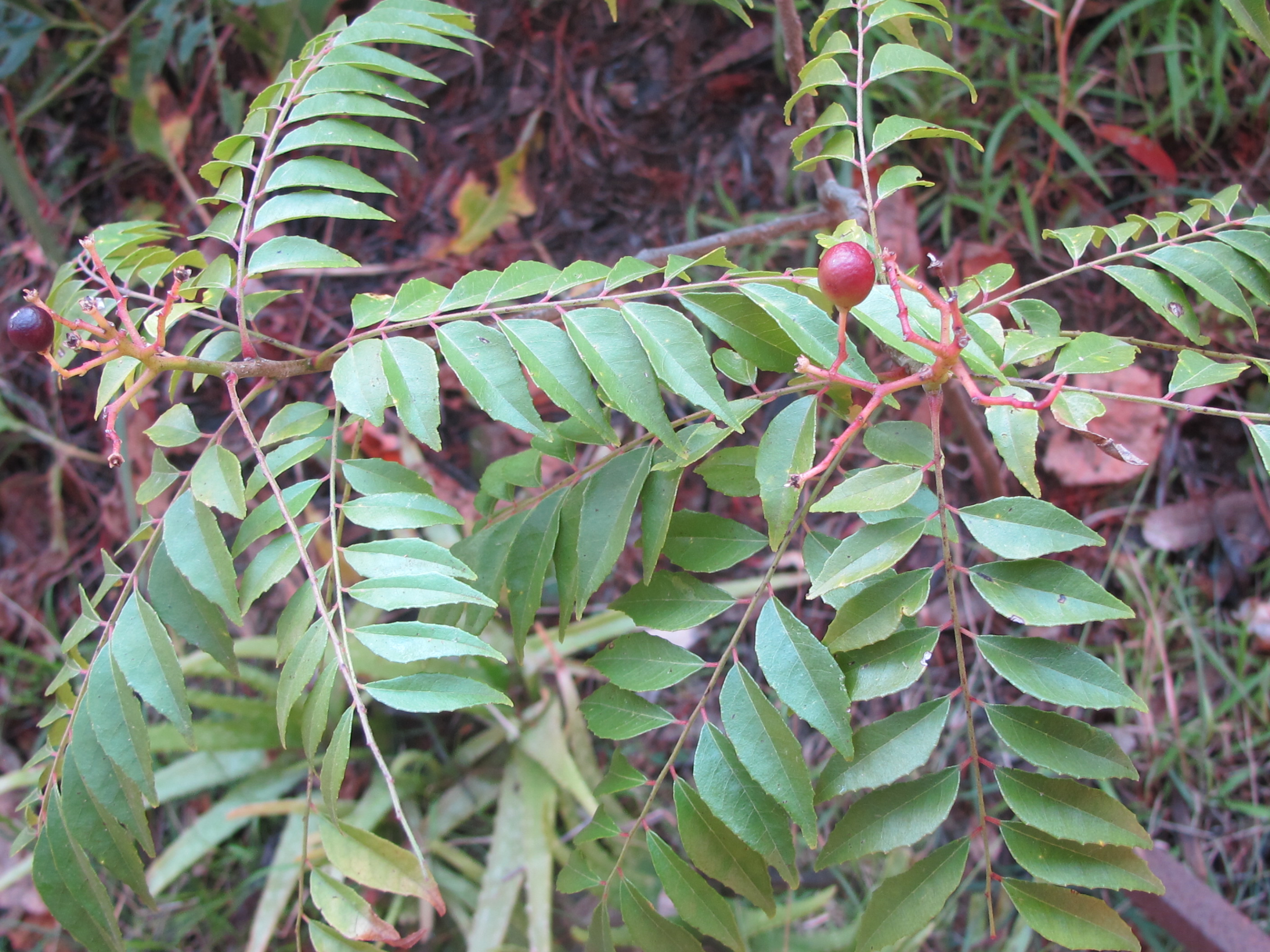
Next I heat a little olive oil in the frypan and add various spices and seeds, like black cumin seeds, mustard seeds and coriander seeds. Once they start to pop, I keep the seeds moving by flipping the pan and add black pepper corns. Once I feel that they are sufficiently heated and softened, without having them popping out of the pan and all over the floor. Not too much heat and keep them moving. I add all the other ingredients. The salted lime segments (de-seeded), some of our roughly chopped chillis, two sprays of our own home-grown curry leaves. Thank you Toni Warburton for the gift of the curry leaf plant some years ago!
 IMG_0879IMG_0876
I also add half a dozen roughly chopped cloves of our ageing garlic. A couple of teaspoons full of cumin, coriander, and ginger. I keep this moving for about 10 minutes on a low heat until the lime skins are a little bit softened and can be chopped in half easily by pushing down on them with a wooded spatula. Not such an accurate measure of cooking time, but it works for me. I want them slightly softened and not too leathery. This also give a bit of time for the flavours to meld in together.
IMG_0877IMG_0878
It seems to work. If it is still a little dry, I add a little bit more oil, or the juice of a lemon or two, or lemonades, or limes, or both. If it is still a bit too sour, I add a little bit of the white death sugar. If you add the juice of the lemonade lemons, you don’t need as much sugar. I try and use a little salt as possible, but a small amount is necessary to get it to taste right, otherwise it is just too bland. I’m not very good at making lime pickle yet, as I only get to do it once or twice a year, during this winter season when the citrus is in such profusion. If I were to do it more often, I’d get better at it, but I don’t need so much lime pickle. Two or three jars are enough for a year.
So many of the things that we attempt here are just like this. We never get to be any good at most of the things that we do because we do so much, there just isn’t time. However, the point is not to be the best at doing something, or ever particularly good. The point of our endeavour here is to be as independent and self-reliant as we can be. Getting better at doing something only comes with repeated practice. This just isn’t possible here with most things – apart from weeding!. So I am resigned to being a bumbling amateur at most of the things that I do. Sometimes I daydream of being competent at one or two particular things, but on reflection, I realise that it is more important to keep the big picture in focus and stay horizontally diversified across all my interests. The more things that I do for myself, the less I need to spend. The less that I spend, the less I need to work. The less time I spend working for money, the more time I have to do things for myself. This cash-minimising self-reliance is a vicious circle.
All this thinking is making me hungry! Actually, these cold nights are just right for a warming curry. if only we had some lime pickle!
Cooking something that you don’t know anything about is always a great big experiment. A bit like life really.
Best wishes
Miss curryleaf Murraya King and her curry-wallah

Fruits of the Solstice

We have been keeping up the citrus experiments. Each evening we try something new. The Lovely has been trying out some more ideas with citrus jelly. She uses oranges, limes, lemon, lemonade and tangelos. Whatever is ripe and plentiful on the day.
IMG_9074IMG_9075
IMG_0691 IMG_0692
Citrus Jelly
recipe;
375 mls. of Juice
125g of sugar
1 1/2 tablespoons of gelatine.
IMG_0693 IMG_0697
method;
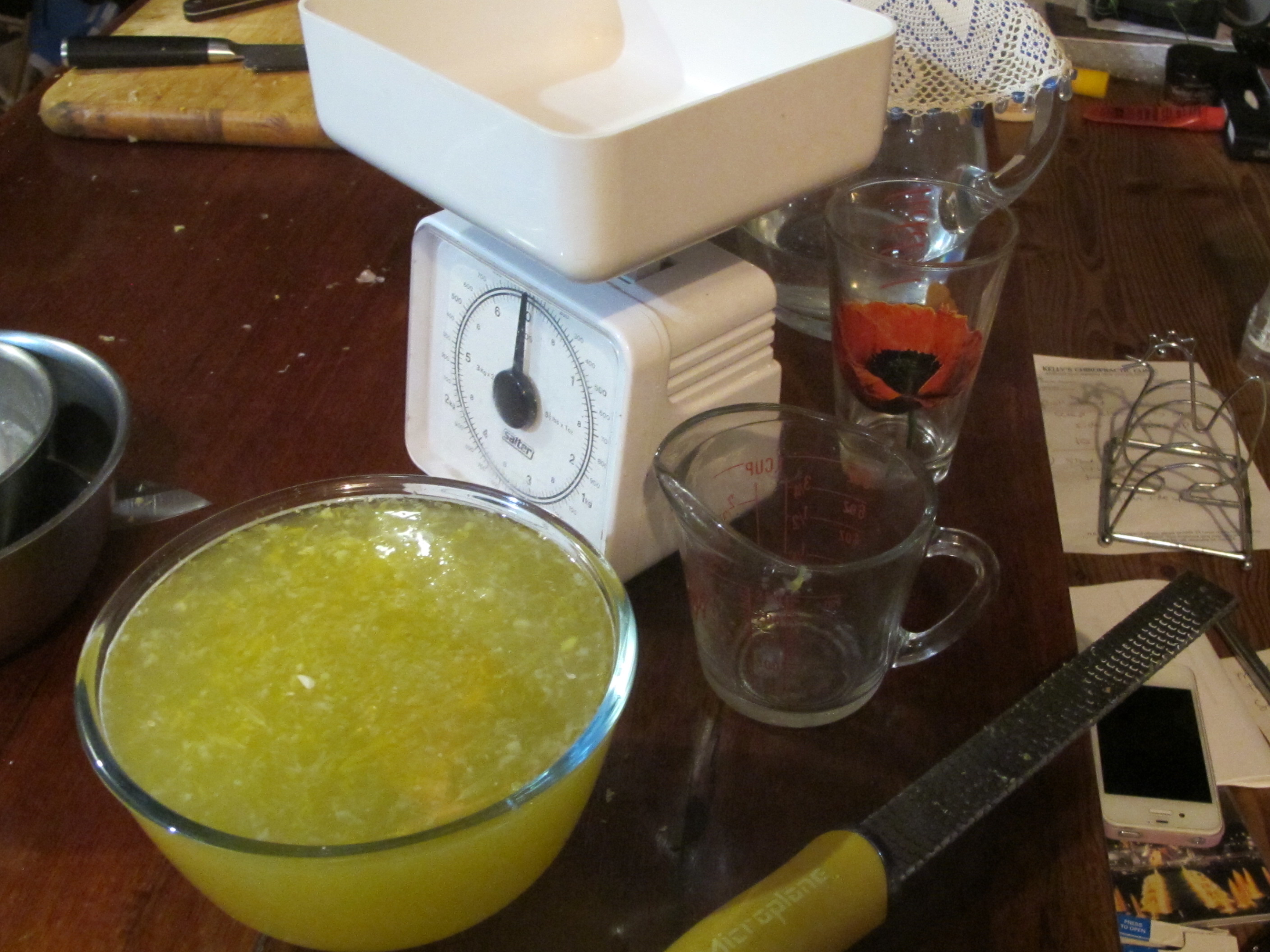
Squeeze 375 mls. of Juice from the above fruit. Use whatever mix of citrus fruit that you have.
Take 125g of sugar and dissolve it in 100 g of hot water. Stir to dissolve.
Zest some of the skins into the sugar/water mix.
Dissolve 1 1/2 tablespoons of gelatine powder in 8 tablespoons of cold water. Sit the small bowl of gelatine and cold water in a bigger bowl of hot water to encourage the gelatine to dissolve.
Once the gelatine is dissolved, mix it into the sugar water and both into the fruit juice.
Stir well as it cools down. Once cooled, place in fridge to set into jelly. It may need to be stirred a few more times during the time in the fridge to stop the gelatine settling out.
IMG_0719 IMG_0718 IMG_0705 IMG_0582
It’s very easy to make and to eat. It goes very well with either ice cream for desert or yoghurt for breakfast.
Candy for grown-ups
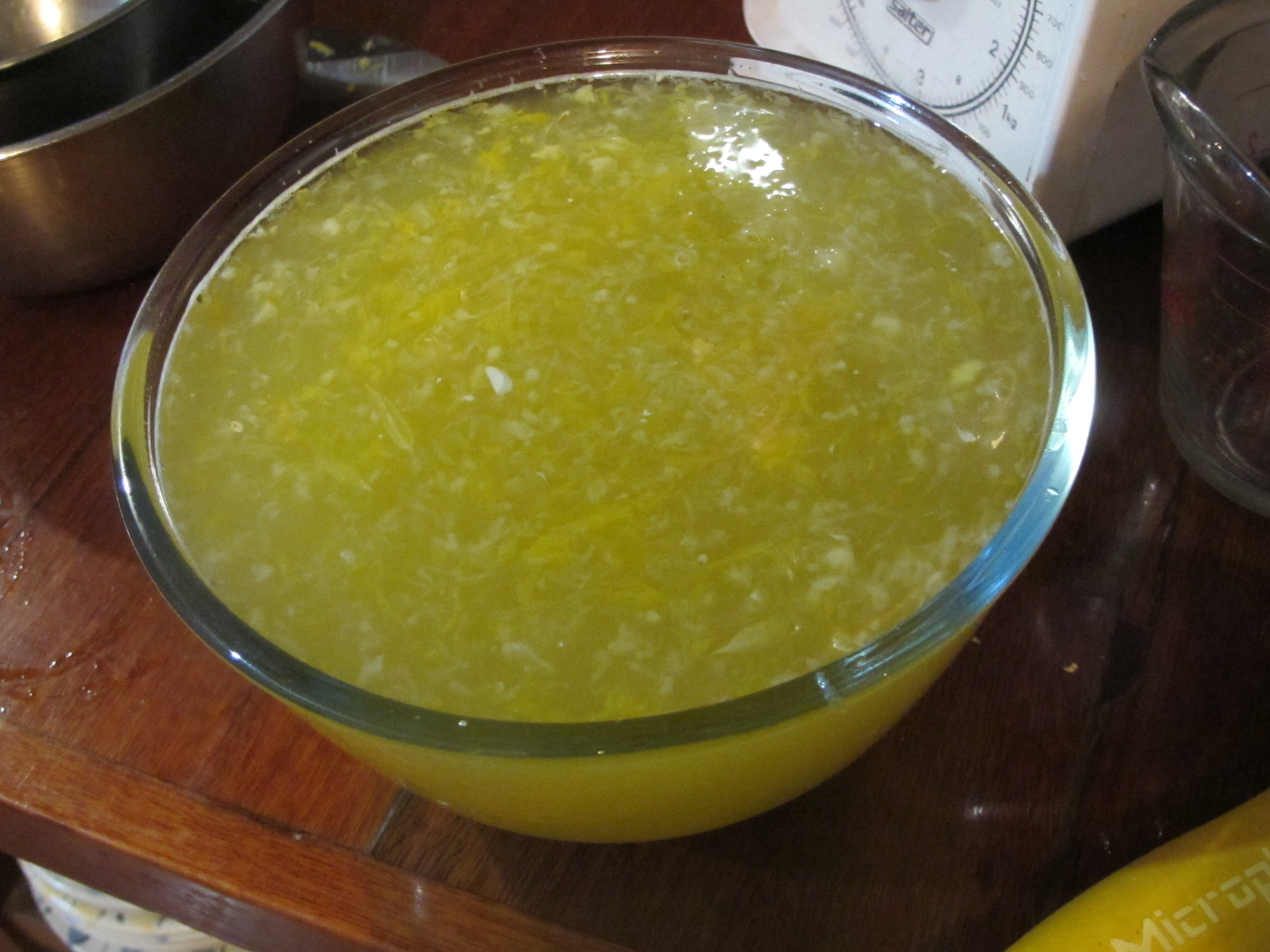
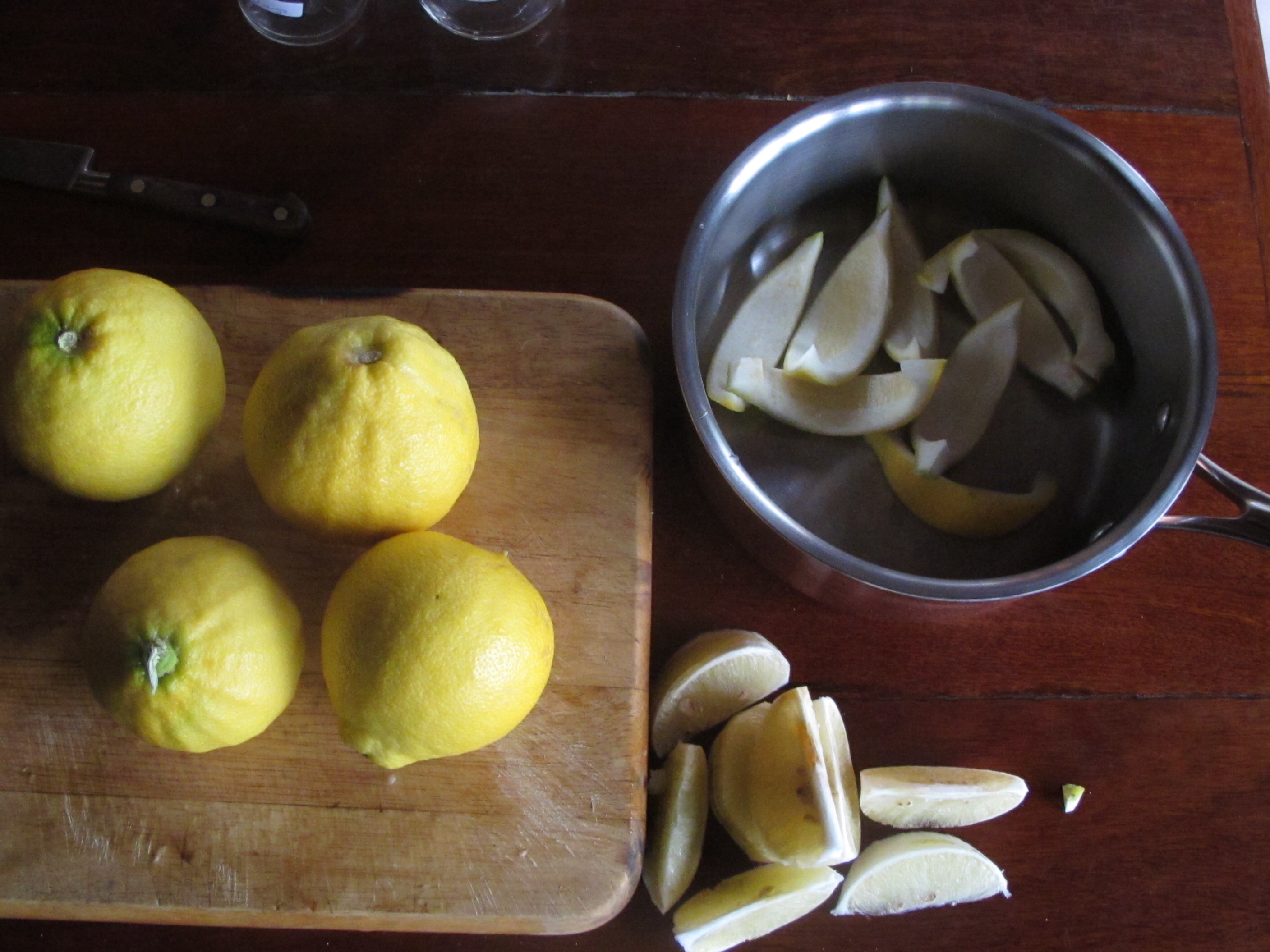
I was recently given a bag of old fashioned citrons by a lovely friend. She tells me that her husband makes marmalade from them. I try them for marmalade, but I think that the flavour is rather too strong. So I decided to try my hand at making candied, citron peel from them. I use candied peel for adding in with other dried fruits when baking some cakes. particularly for panforte or sometimes in muesli.
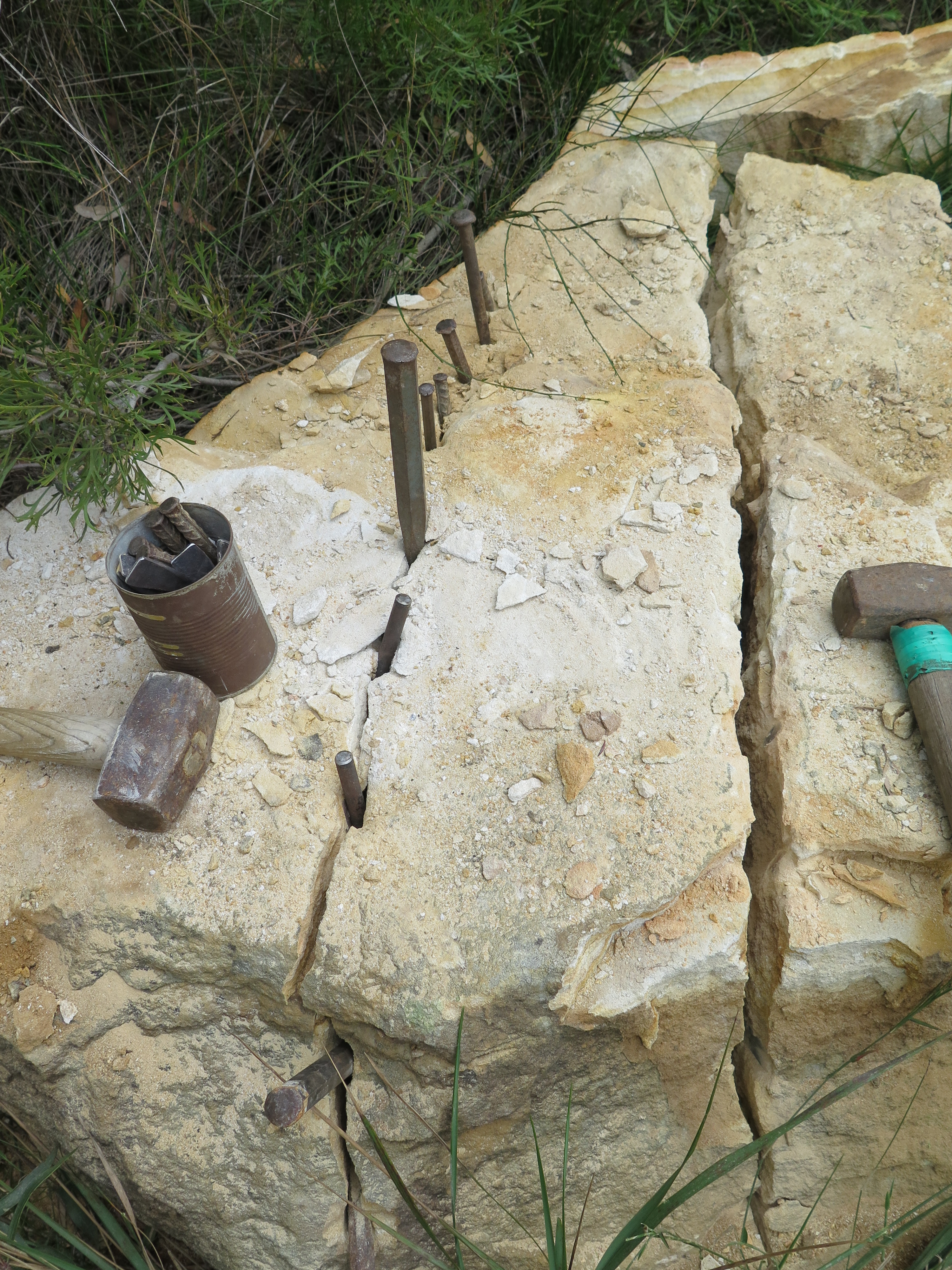
Candying fruit is an easy thing to do in the background while you do other things in the kitchen at night.
This is a pretty standard recipe and technique. You can use any thick skinned citrus.
Candied Citron Peel
Method
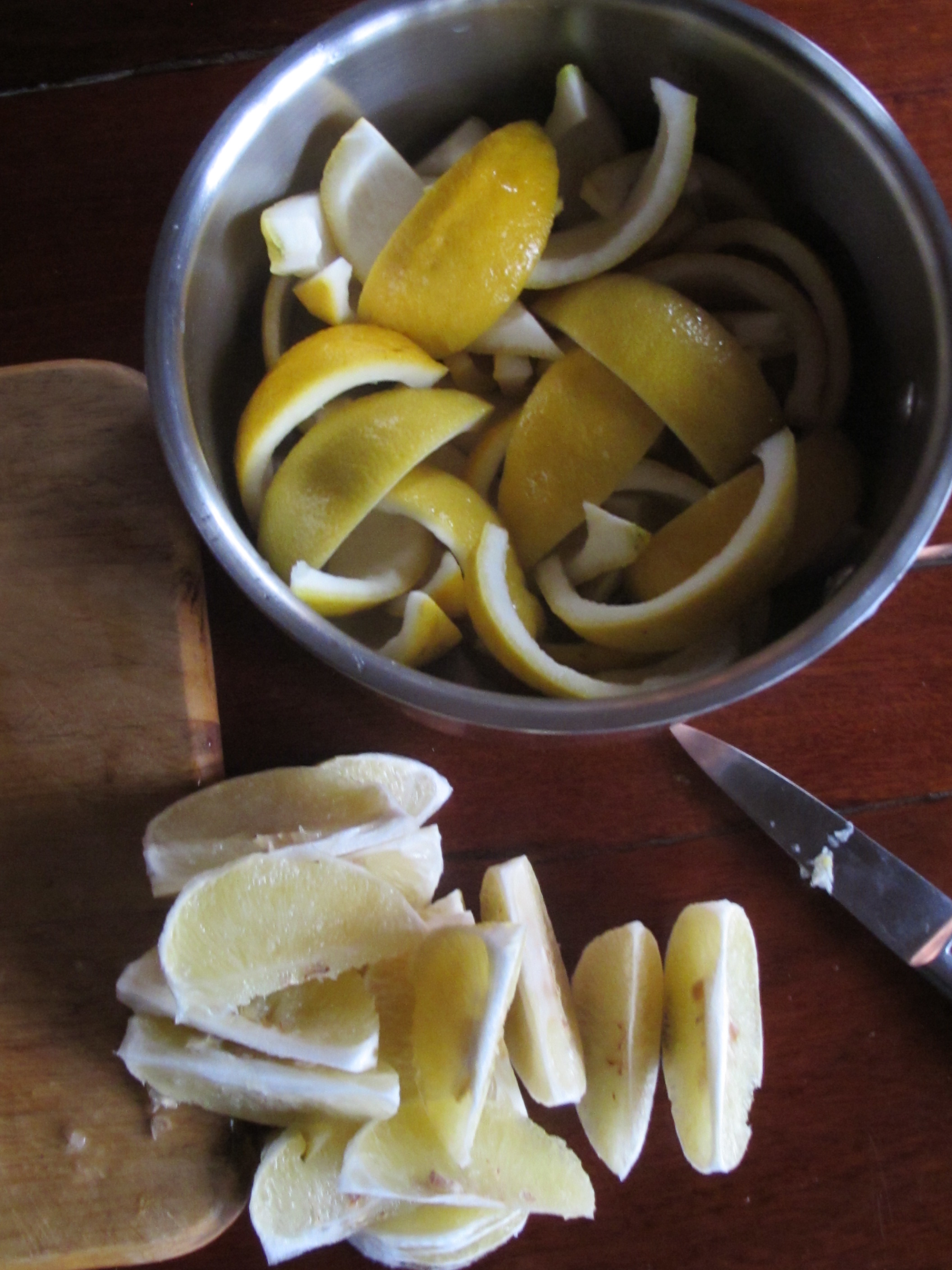
Cut the citron fruit lengthways into quarters and again in half into eighths, cut out the centre of the fruit to leave the white pith and peel.
Place in a saucepan and cover with water, then bring to the boil for a few minutes, maybe 10 or so. Discard the water and refresh. this removes a lot of the bitterness. Bring back to the boil and simmer for half an hour or so, or until softened.
IMG_0725 IMG_0722 IMG_0731 IMG_0732
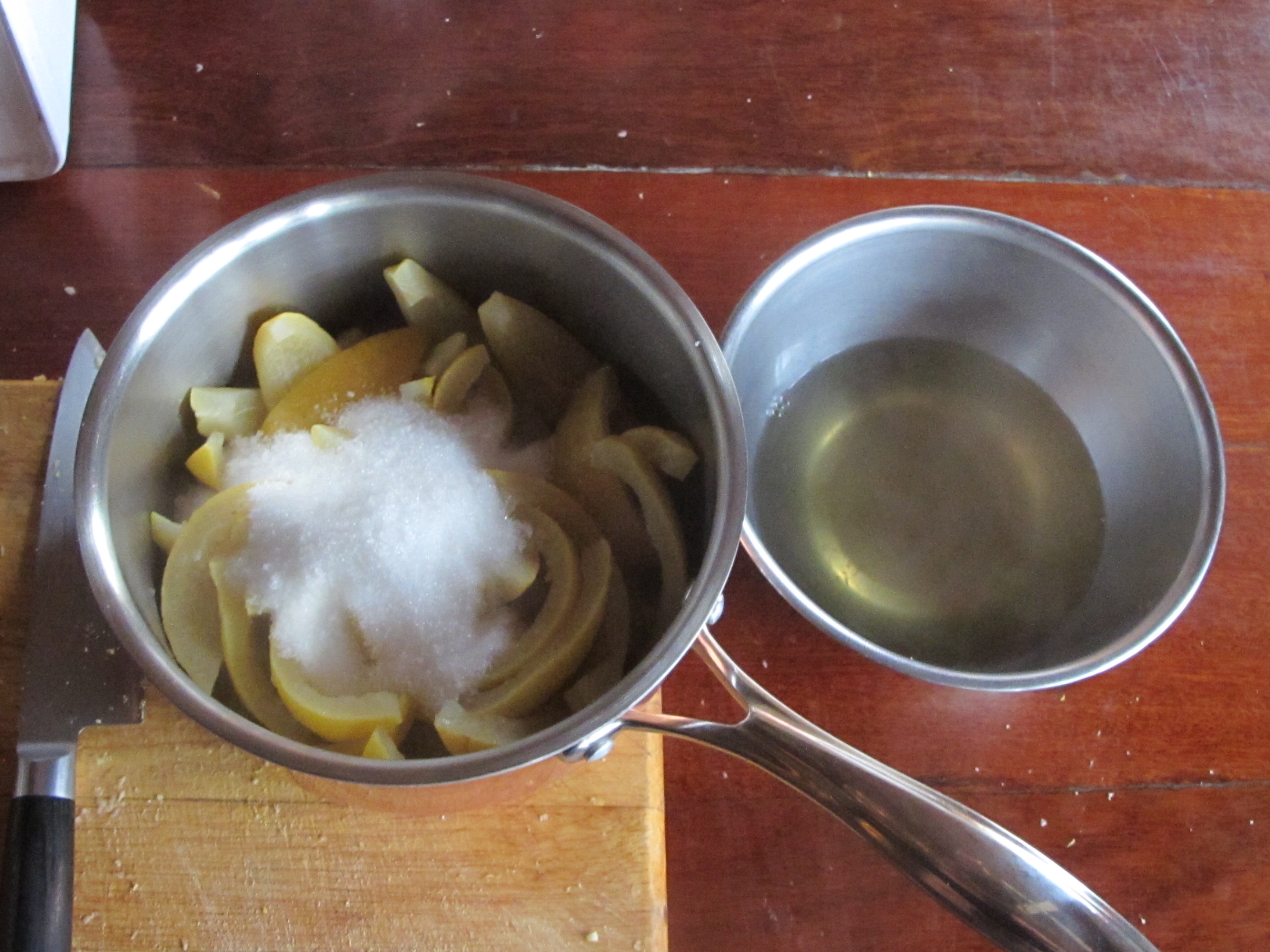
Drain off the water and weigh it. Add 1kg of sugar for every litre of water or part thereof proportionally. Return to the stove and bring back to the boil and let it simmer for another half hour or so. Leave to cool in the liquid over night.
In the morning drain and leave on a drying rack to dry, or place in stove on rack and dry for an hour or so on very low, with the fan on, if you have one?
The strips should be dry enough now to ‘keep’ in a jar in the fridge without going off.
You can roll them in caster sugar if you want to. I don’t.
Don’t dry them too much or they will become rock hard.
IMG_0744
Winter is not just the time time for citrus. The avocados are in full crop just now too.
They don’t really ripen on the tree. It’s best if you pick them a week or so before you need them. So The Lovely picks a few each week, so that there is an ongoing supply available.
IMG_0630 IMG_0721
It’s an easy and quick lunch to slice over toast with a squeeze of lemon and some freshly ground pepper. Our good friend Toni Warburton comes for the weekend firing workshop and leaves us some smoked trout to put on top.
Yum! Thank you Toni.
IMG_0742 IMG_0743

Best wishes
from The Candy Man and his Sweetie

Marmalade for Busy People

The solstice draws near, the days are cool and short. The mornings cold and misty. Mrs Grey Thrush is out and about celebrating this cold, cloudy, misty, drizzling morning. She flys down and serenades The Lovely with her beautiful haunting melodic song. she swoops down and continues from the verandah guttering, then up into the pine tree with her mate. They continue together for some time all around the garden with what might be some sort of call and response? It’s a shear delight on a dull morning.

IMG_0737 IMG_0740

During this cool, damp time It’s great to celebrate this colder weather and make the most of it while it lasts. We have had a few frosts, but only mild. Hopefully just enough to spur the older varieties of stone-fruit into fertile flower buds. I noticed the other day as I walked through the orchard, that one of the early peaches has its first blossom out! How amazing. So early.

IMG_0736

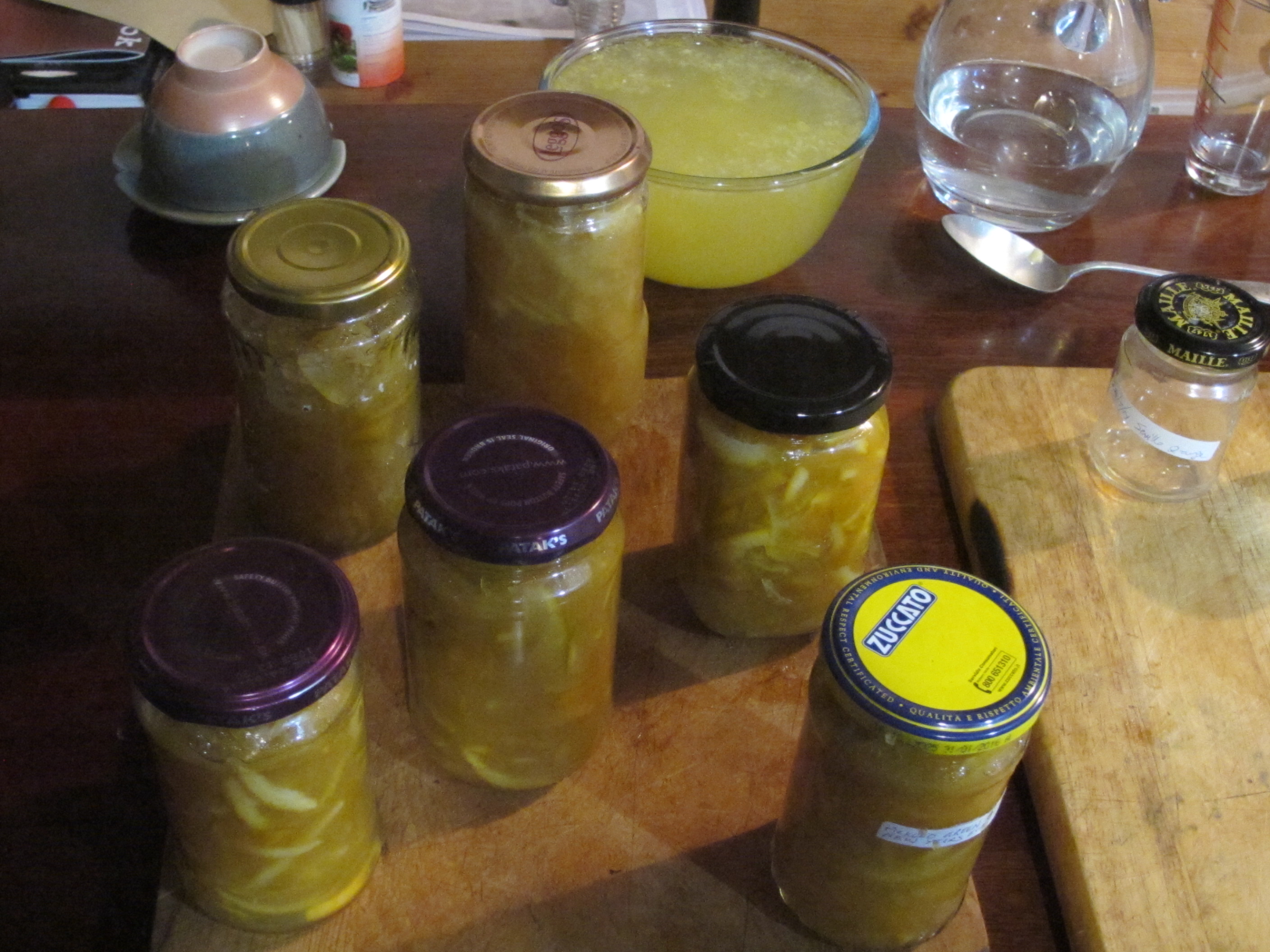
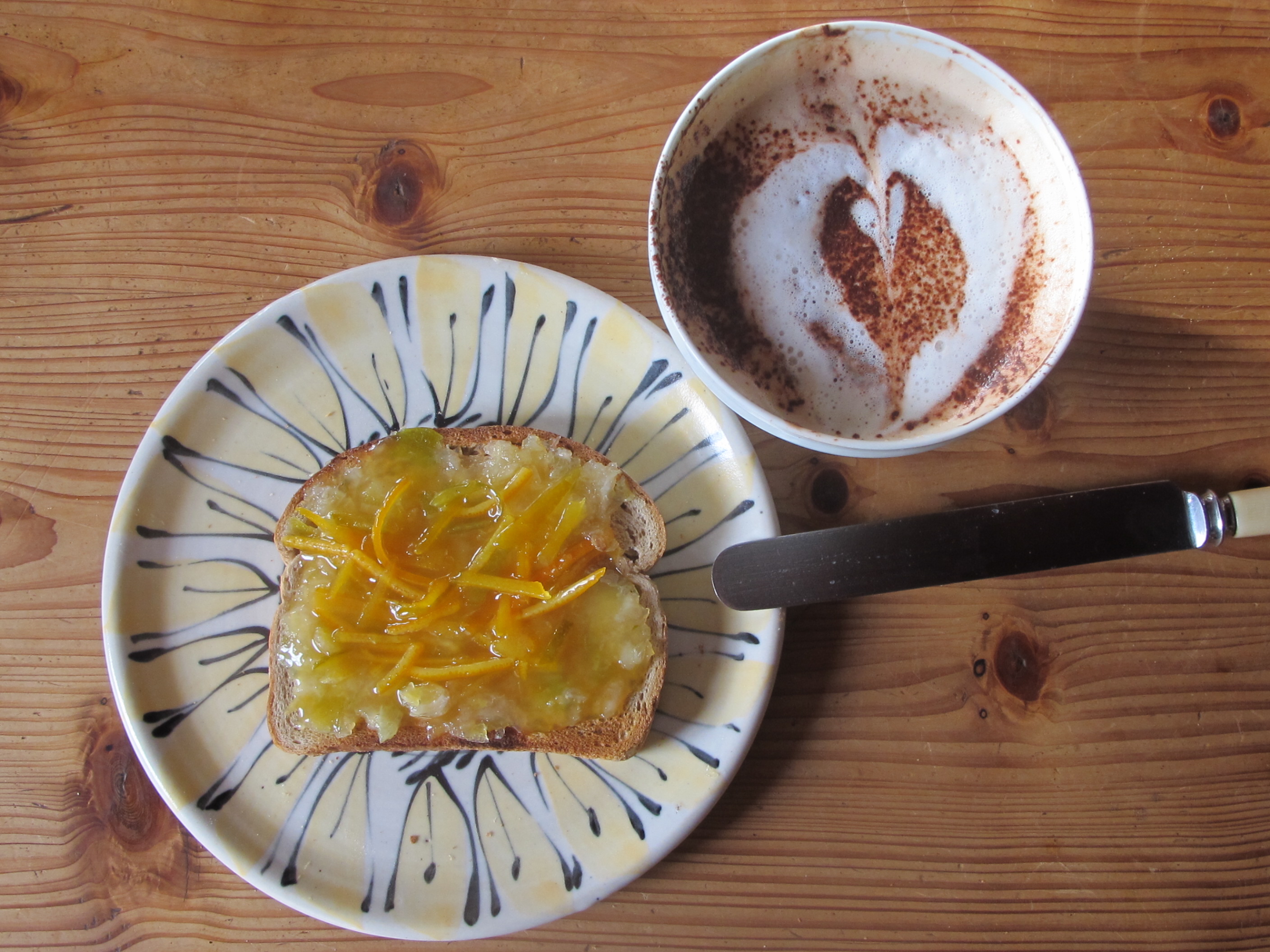
Mid winter is the time for warm lingering breakfasts of coffee and toast with marmalade. I have been trying to keep up with the citrus fruit this year by making a batch of marmalade each day. Of course I’m not successful at this. It just can’t be done, but I hold it in my mind as an objective to aim for. There is so much to be done. Something has to give. Sometimes it’s cello practice, other times its preserving the garden excess. But the winter firing workshops must be prepared for and made to work smoothly.

IMG_0734

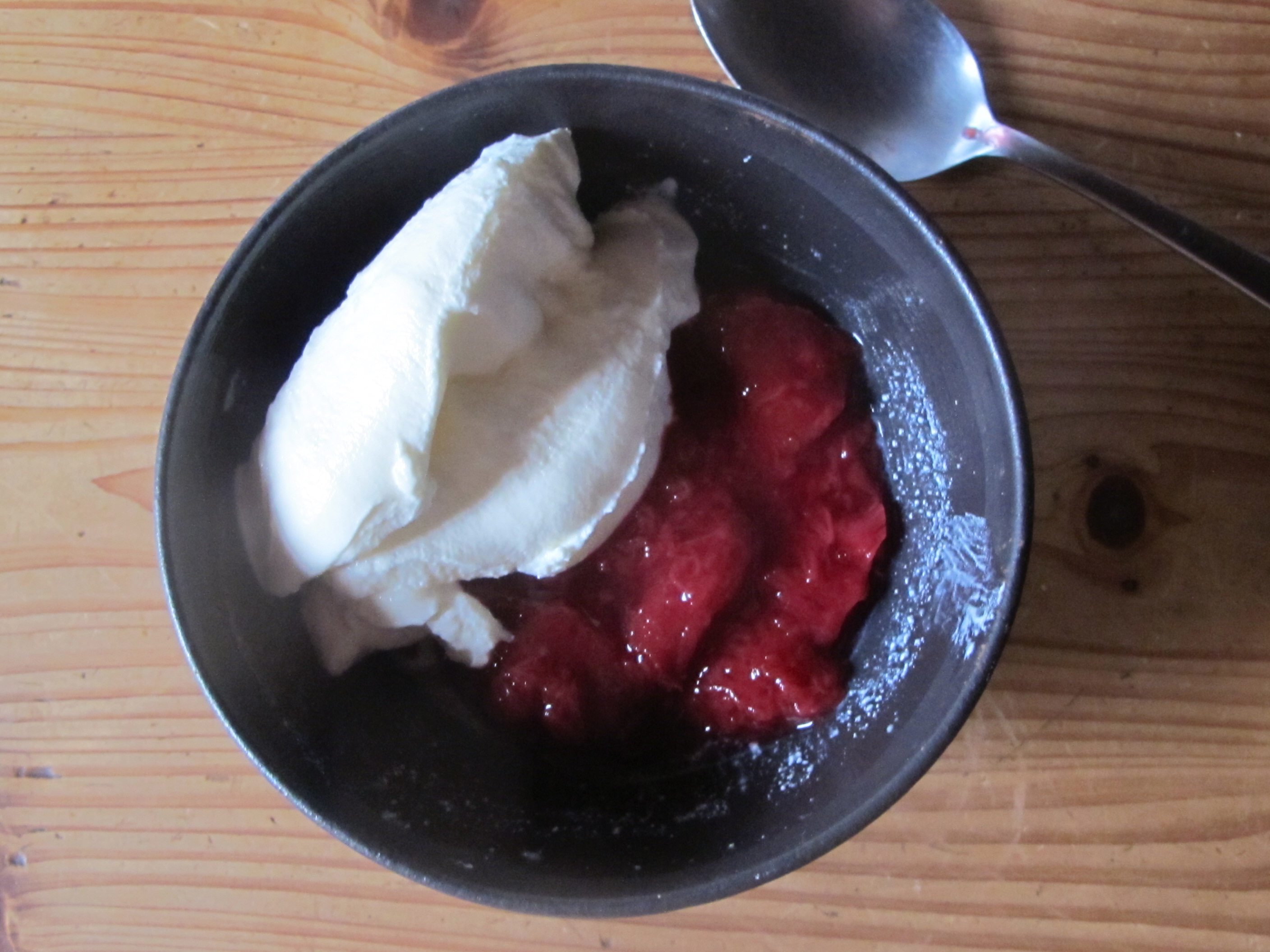
This mornings breakfast involved preserved blood plums from the summer with yoghurt. These are so good. Full of flavour, sweetness and the fruity acidic tang of a good blood plum. The colour is exceptional, dark and rich, with a complex texture that is both fibrous and smooth. We have been enjoying them on and off through the year and are now down to our last three jars. It’s a wonderful thing to have a pantry full of preserved food that you have grown and bottled yourself. A great sense of reward and satisfaction just to look in there and see all the colours ,and then to imagine all the concentrated flavours, that you know and are so familiar with. What is really good, is to know that non of it came from a supermarket or chemical factory and non of it is stored in plastic. All recycled glass. our oldest bottles date back to the mid seventies, and they were bought 2nd hand even then.
IMG_0720

This week I have been developing the recipe for my marmalade a little bit further. I use more or less the same recipe every year. the only difference being the fruit that i use. Two years ago i was given some honey mercott Mandarins. these turned out to be so sweet that the marmalade was not nice. Too sickly sweet. I like my marmalade to be a bit tangy and slightly bitter, and definitely not too sweet. it has to taste of citrus and the tangy bitterness of the peel. I aim for a nice creamy smooth texture, not too runny, but definitely not stiff and rubbery.
So to this end I did a few experiments. I have always weighed the fruit. 1 kg of whole fruit to 300g of sugar and I use only the juice of the fruit as the cooking liquid. However, the juiciness of the individual fruits varies so much. Especially in regard to when the fruit was picked. I have noticed that the fruit is easier to juice if it has been picked for a week or so beforehand. fresh picked citrus is a lot harder to juice.

IMG_0693

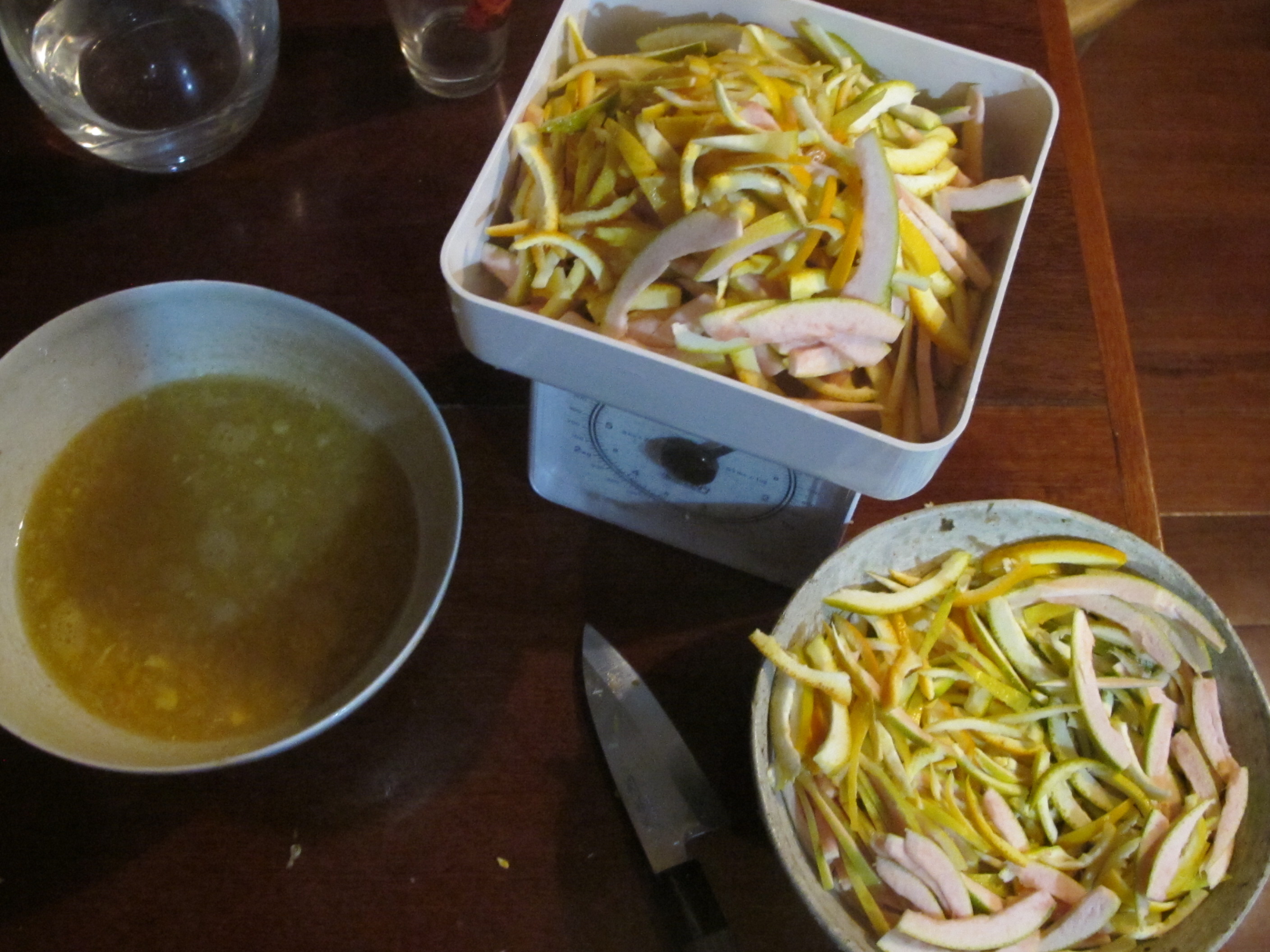
I have come to the following recipe, developed from the original one above, but reduced to separate weights of each of the components. recipes That I have read that say take 4 oranges and add ‘X’ sugar and ‘Y’ water aren’t reliable, because the size and the age of the fruit varies so much. I decided that achieve the best result, it would be necessary to weight the separate ingredients; the cleaned peel, the squeezed juice and the sugar individually.

IMG_0724 IMG_0651

IMG_0727IMG_0728

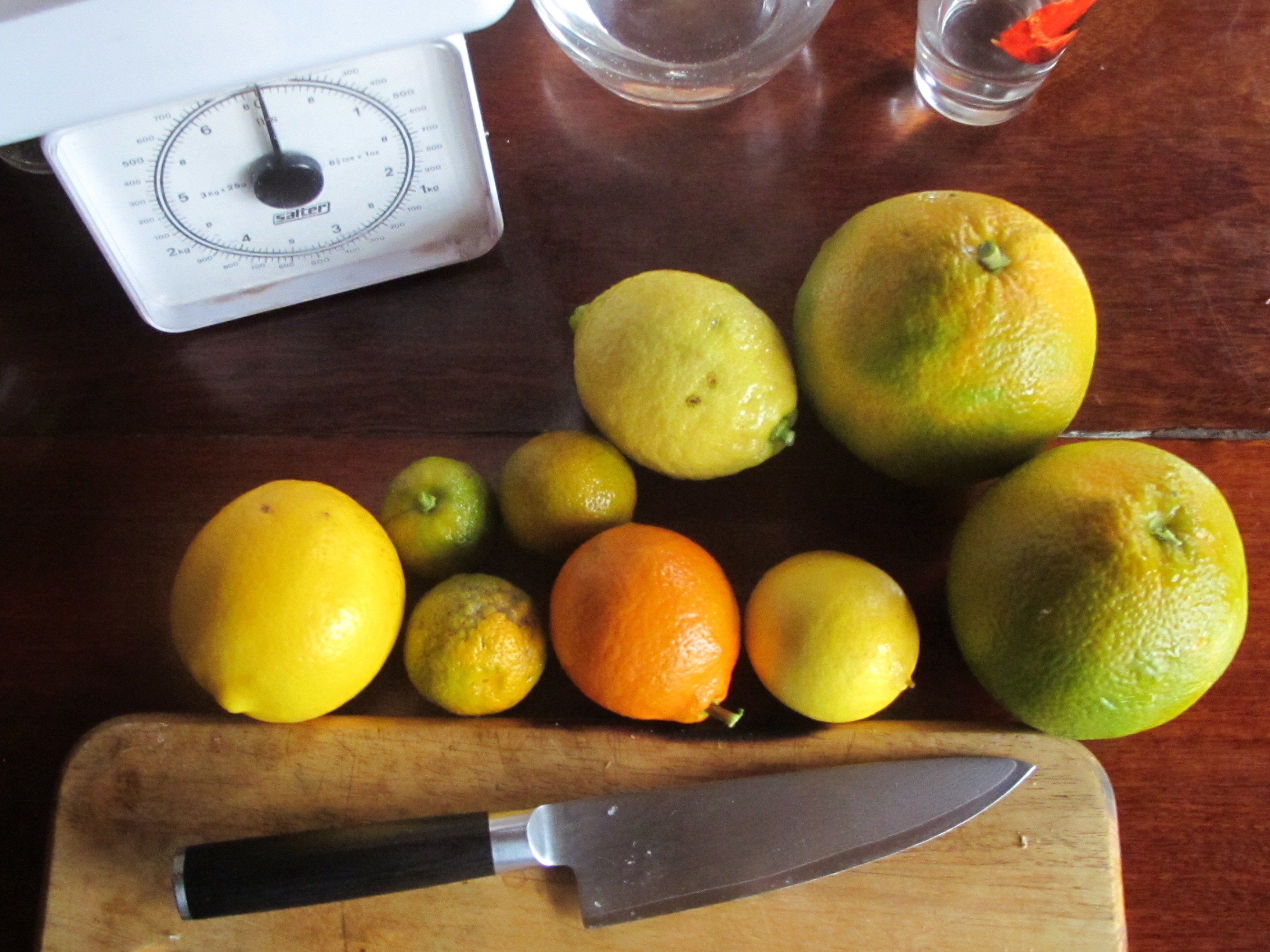
Yesterdays batch of mixed citrus fruits from the grove turned out quite well following this line of thought. I used;

1 ruby grapefruit

1 myer lemon

1 Tahitian lime

1 seville orange

1 Washington navel orange

1 tangelo and

1 Italian bitter chinnoto

IMG_0714 IMG_0715 IMG_0711

I have come to the following recipe and method.

Recipe.

Cleaned citrus Peel = 100% = 550g

Juice 83%  of the weight of the peel = 455g

Sugar 79% of the weight of the peel = 435g

Method.

1. Squeeze the juice out of the fruit and set aside

2. Strip the peel of all the spent fibrous core, to reveal the peel with a clean layer of white pith.

3. Thinly slice the peel into strips and weight it. What ever the weight of this peel, say 550g. call this amount 100%

4. Calculate 83% of 550g = 456g.  Weigh the juice and make sure that it is 456g, or close to it. If the fruit is a bit dry and there isn’t enough juice, then juice another piece of fruit to make up the difference. If you have too much, drink the excess.

5. Calculate 79% of 550g. = 434g. Weight out 434g of sugar.

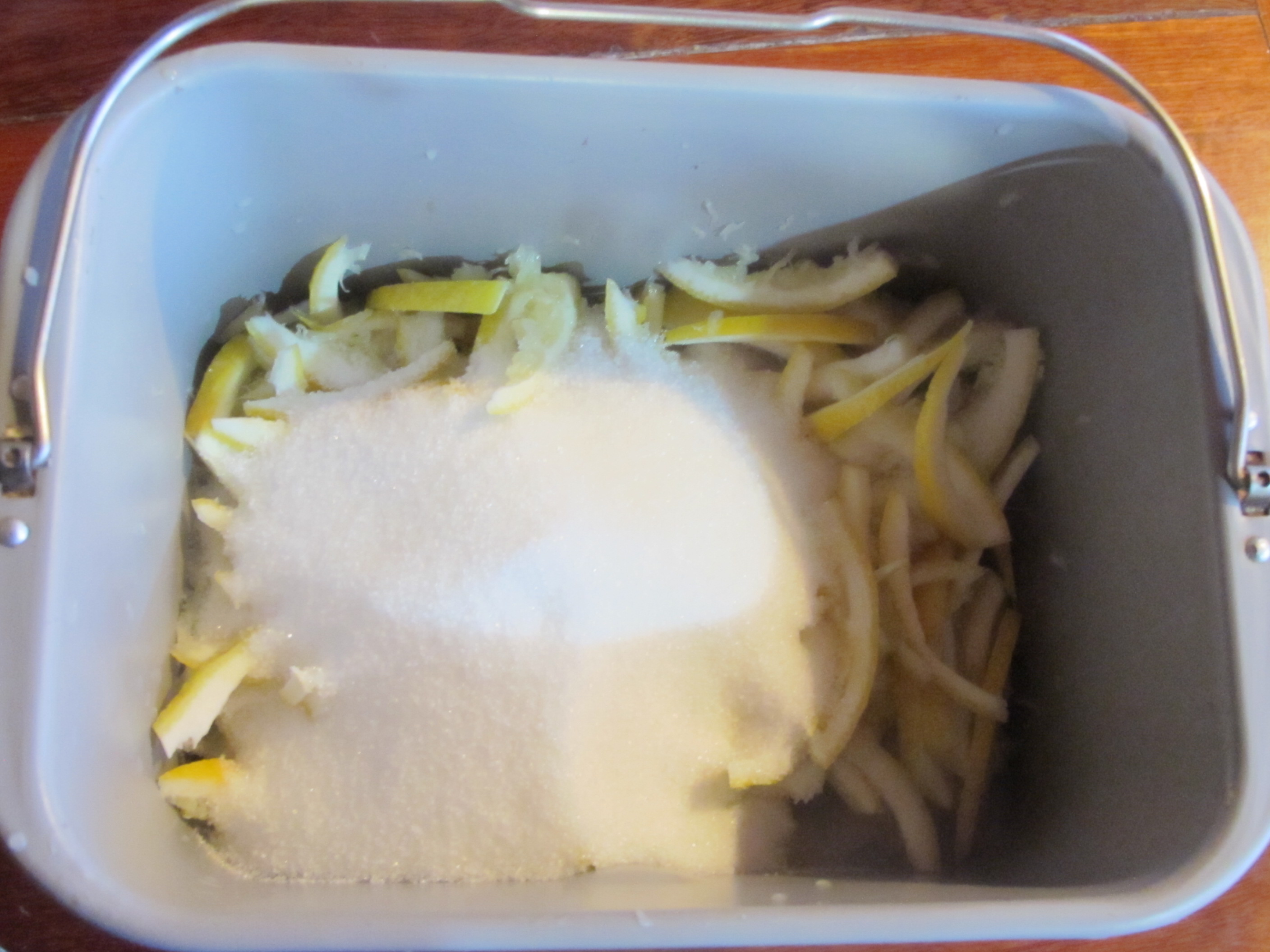
Place all ingredients in the bread-maker machine pan and set for ‘Jam’ setting. come back in and hour and decant into sterilised jars while still hot from the oven and seal with sterilised lids. They will make a loud ‘POP’ noise as they cool down and vacuum seal.

I am inclined to add a dash of whiskey into the hot marmalade as it comes out of the machine. Stir it through evenly, just before pouring into the jars.

Technically, sealed in this way, the marmalade should last for a few years, but never seems to last us till next season 🙂

You should end up with a creamy, smooth marmalade that isn’t too runny or stiff, and you don’t have to soak overnight or spend an hour at the stove stirring, or boil the pips in a calico bag. Marmalade for busy people!

IMG_0677

Best wishes

Steve and Janine, a busy couple of people