Home Again

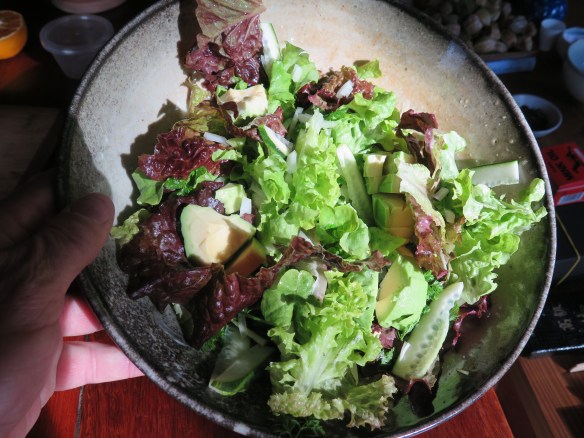
We haven’t been home long and we are able to get most of our meals from the garden. We start with a very fresh and crisp green garden salad. IMG_3713

We find that there are a few ripe avocados still on the tree, so we pick one and add it to the salad. It’s a special bonus. We wouldn’t have any left at all due to the birds and possums if it weren’t for Janine getting out there and bagging the last of the fruit before we left.

I manage to find some time to get out into the garden and pull out all the spent corn stalks and dead tomatoes vines. I have a few goes at it over a couple of days and eventually make a bit of a difference. I lime the soil with dolomite. A natural mixture of calcium carbonate and magnesium carbonate in about a 50/50 ratio. It sweetens the soil and negates some of the natural buildup of acidity through our use of a wide range of organic composts. We make compost from everything that we have on our place here, including pine needles and gum leaves. Everything that is organic and can rot is composted down to a black/brown peaty compost and used as mulch somewhere on the block. Pine needles and gum leaves tend to be acid, so are good for strawberries and blue berries, but bad for other plants that like a more neutral or alkaline pH.

IMG_3781  IMG_3784

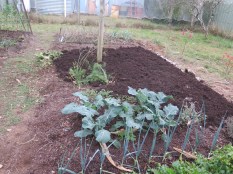
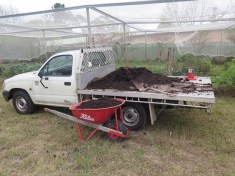
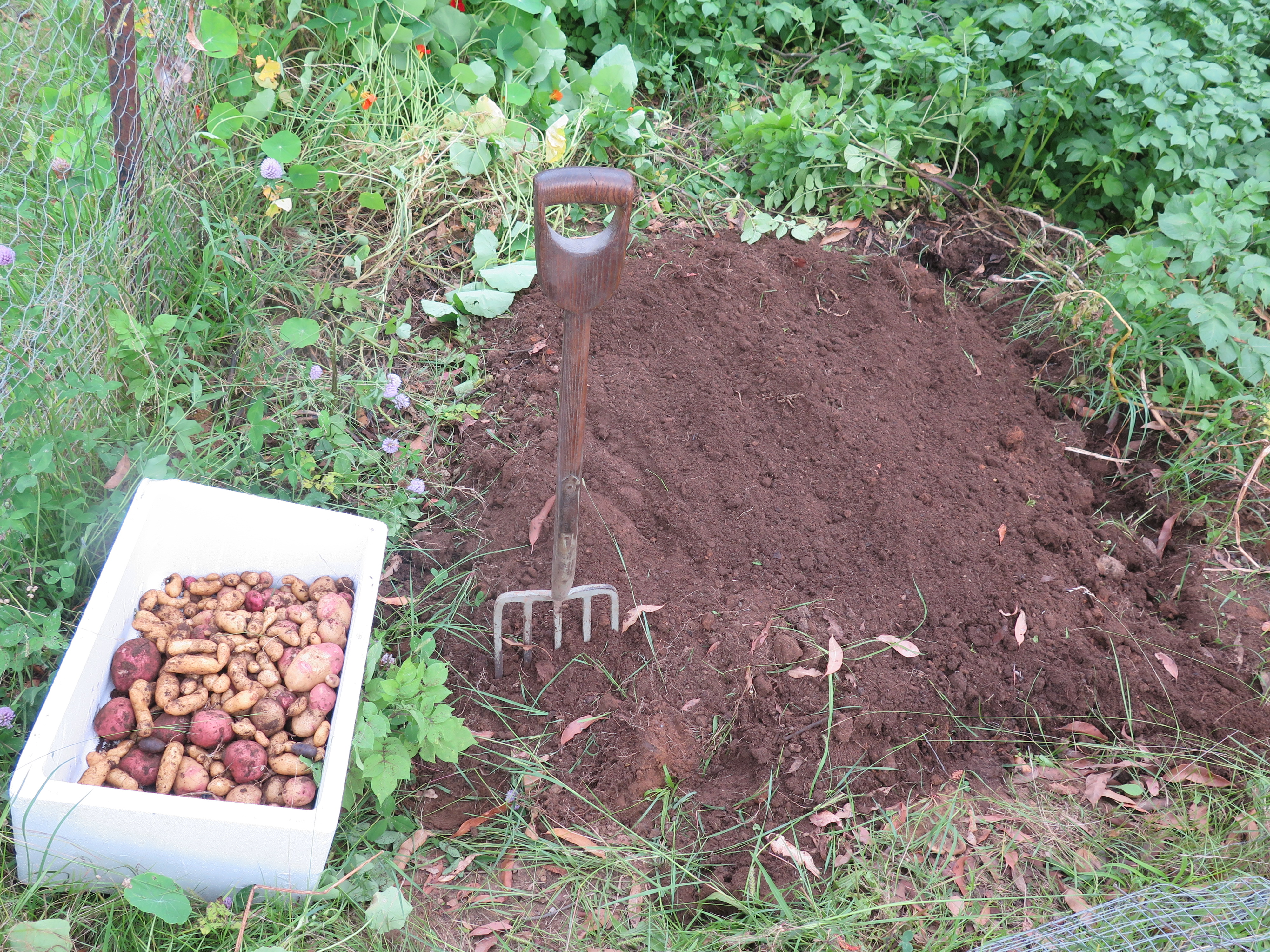
We also add a layer of composted chicken manure on top of the freshly exposed, weeded soil, then cover it all with more compost. I try not to dig unless I have to. The worms seem to do that for us, If left to their own devices.

IMG_3783  IMG_3782

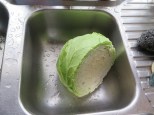
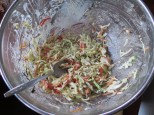
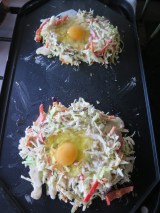
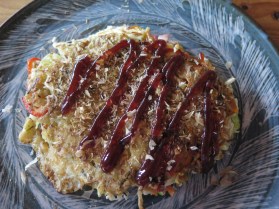
I pick a cabbage and make our first home made okonomiyaki at home here after our return. The cabbage is a whopper. It has grown well while we have been away. I only use a 1/4 for 4 pancakes. I add in some other vegetables that we have including a grated carrot and a finely sliced red capsicum;. These wouldn’t usually be included in such a dish in Japan, but we aren’t in Japan anymore. We are home and this is what we have. And after all, okonomiyaki actually translates as something like ‘add what you like’. So I do!

IMG_3789  IMG_3788 IMG_3787

IMG_3791 IMG_3793

The washing machine decides that it will only do one more wash and then burns out. It stops mid-wash and goes no-more. We have to drain out the water from the unit before we can open the door of the front loader. This machine has done well. Over twenty four years of continuous service. I can thoroughly recommend the ASCO ASEA brand for a quality, reliable, long lasting product. All you have to do is find a brand new and unused model from 20 years ago and you’ll have a good quality machine. God only knows what the current products are like in terms of long lasting quality. Anyway, I’m very pleased with our choice from two and a half decades ago. There is a lot of embodied energy in a thing like this and it really needs to have a long life to justify its existence, otherwise it just becomes more of the same old land fill junk that the big companies want us to cycle through endlessly at great expanse to the planet. Built in obsolescence is a crime against society. So good on you ASCO, for still stocking spare parts for this old model.
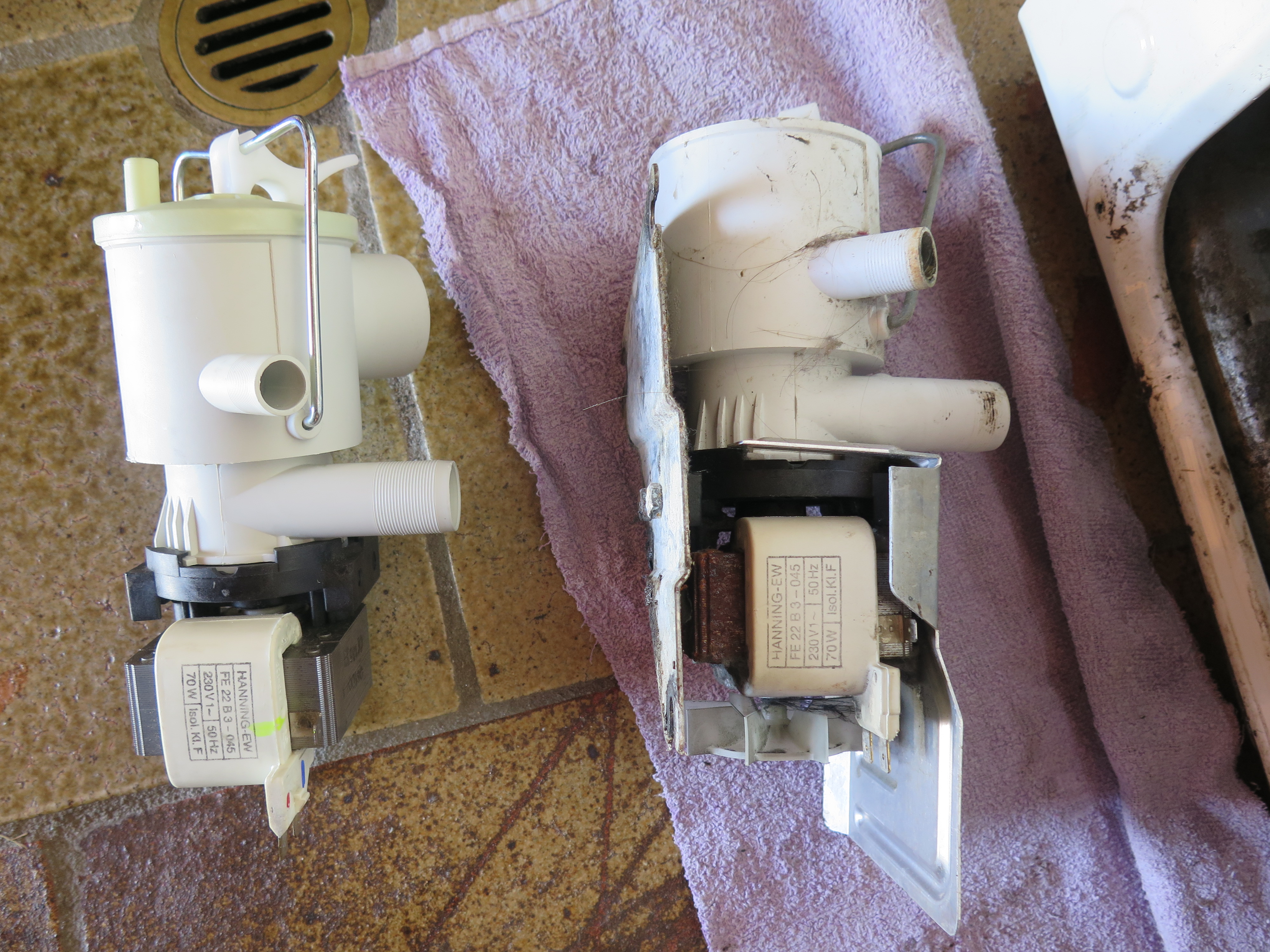
I knew that the water pump in the washing machine was wearing out for some time and I ordered a new one a few months ago. It took a couple of months to get here, as it had to come from Sweden. The new pump arrived just before we left on our travels, so we were lucky that it didn’t fail while we were away and cause Annabelle, our house-sitter, any problems. The local agent doesn’t carry spares for 24 year old products. I can understand. I’m pleased to get one at all after all this time.

I set to work to replace it, but like all these jobs, it turns out to be a bigger, longer, more complex job than I imagined. Firstly, the new pump isn’t complete, I have to take some parts off the old one to make it fit. Second, the old parts are quite well settled into place after 24 years in wet, humid conditions and take quite a bit of un-doing. I am forced to retreat from the laundry and go down to the workshop to get my hands on some serious tools. The Swiss army knife isn’t going to cut it on this job on its own.

IMG_3761 IMG_3765

I manage to get all the parts swapped over including the fan on the pump motor. I’m amazed that this isn’t included. It’s only a simple plastic part worth just a few cents. it has the be prised off the old shaft and it’s a tight press-fit on the new one. I had to pay $250 for this little pump. I’m amazed that they can’t supply a mounting plate and plastic fan for that money!
IMG_3768

The electrical cable is just long enough for the factory technician to fit the pump, while it is up-side-down in the factory, in good light and with the correct tools, and plenty of practice. When I’m working down in a dark corner, on my back, in a confined space, holding a torch in one hand, a pair of pliers in the other and then with my other 2 free hands I am able to manipulate the electrical clips in the correct order, otherwise the last one won’t fit!!!!! I question the logic of this thriftiness. This all has to be accomplished in just 100 x 300 mm. of access space. I’m finding it quite difficult to get both my arms in there at the same time, never mind to be able to see what I’m doing and work accurately.
The last minor annoyance is that the rubber hoses are all crimped on with single-use metal clamps that need to be broken to get them off. Luckily, I keep a lot of different sizes of adjustable hose clamps in stock here for other uses. Fortunately I have 50mm, 35mm and 25mm dia clamps in my tool box. Eventually it’s all done. The only real joy that I can take from this is that I didn’t have to pay a technician another $250 to come out here and do it for me and most importantly, I have forestalled waste by keeping this old appliance going for another few years. So this is self reliance.

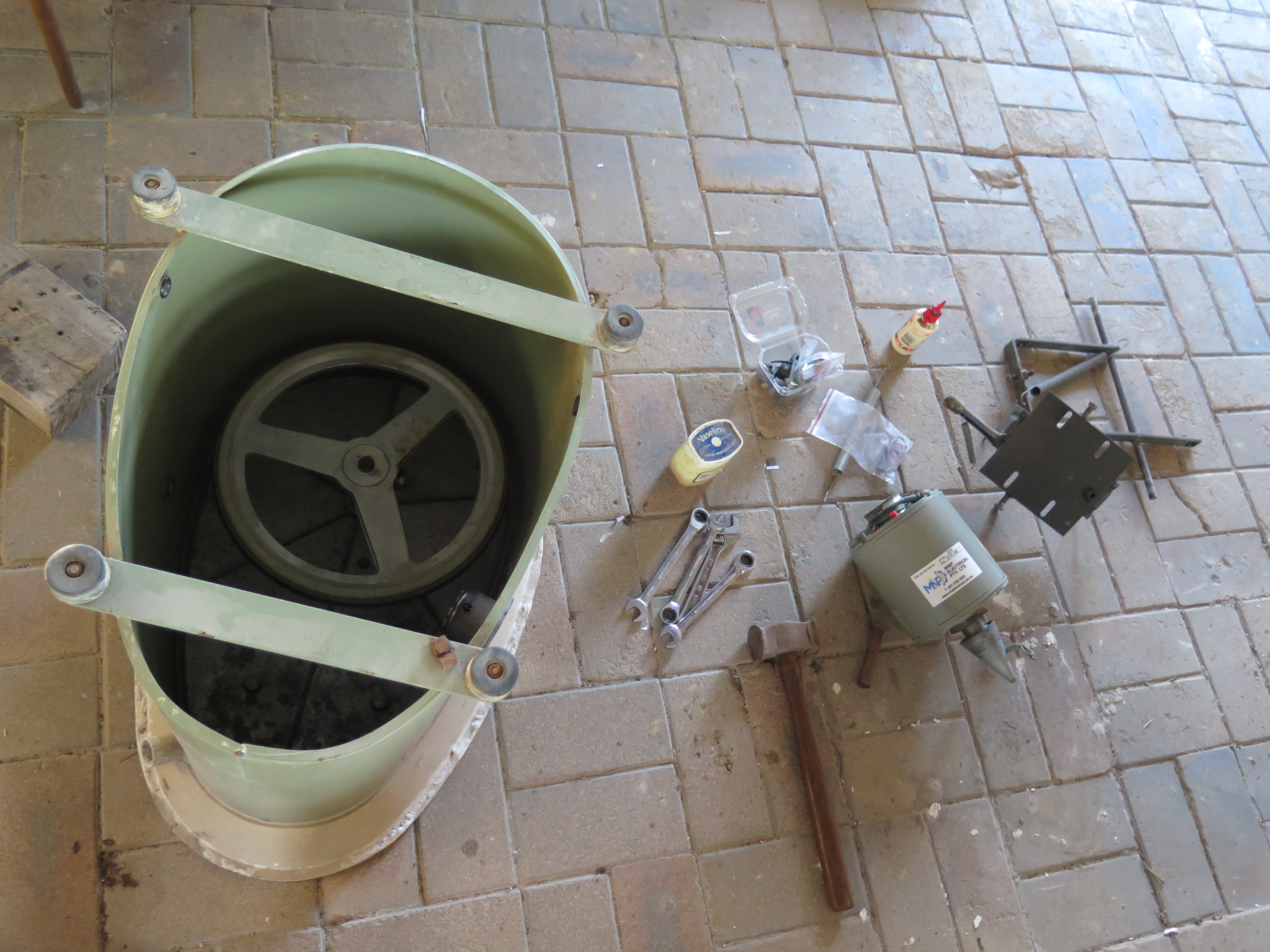
While I’m in maintenance mode, I set about rebuilding a Venco potters wheel destined for an aid project in Cambodia. It arrived here completely disassembled and in a few different cardboard boxes of loose parts. it has a reconditioned motor and all new grommets as well as a new rubber drive wheel. Everything reconditioned for a long life ahead.

It takes me an hour or two just to figure out the order in which I must do the job to get it all to work out. I have one false start and then it goes smoothly. If I had taken it apart myself. I would have remembered the sequence, but as it has all been completely disassembled by someone else, I have no memories to call on. I have to work it out using only logic.

IMG_3770 IMG_3779

It goes and it works OK, so I am happy with that. This old wheel will now have a new life ahead if it in Cambodia in a village pottery workshop for many years to come. More waste forestalled.


Tomatoes for 5 Months

We are now just back from our 5 weeks in Japan continuing our research into single stone porcelain. We were lucky enough to get to many more sites on this visit, where porcelain stone is, or has been mined. See my earlier posts below.

I have been able to make a few nice pots while I’ve been here. Actually, I made a lot of pots, but destroyed all of inferior work that wasn’t up to scratch and didn’t make the cut.  I’m not here to make rubbish. I want to make things that I can be proud of, nothing less. My rejected pots have all been crushed up to dry powder, packed into boxes and shipped back home for a possible 2nd life. My best work was glazed and fired onsite and also shipped home. All my efforts are currently in containers at the port or on the high seas. I will see them again in 2 months. Hopefully they will still look as good when we are reunited.

This work is all a part of my 10 year project to go to all the places in the world where single stone porcelain has been made and then make some work at each of these places, out of the material that is to be found there. These works will then be shipped back here to Australia, where I will exhibit the whole body of work from all the sites along-side my own single stone porcelain pots, that I have made here, in one big show. I’m rather hoping that it will look good when all amassed together in one show. Only time will tell. I’m almost finished. Next year should see the end of it.

As soon as we are back home and settled in. We unpack our bags and put on a load of our soiled clothes into the washing machine, which grumbles and squeeks as it grinds along. I can’t complain, this machine is over twenty years old and still going – just. I think that it is the leaking water pump that is the problem. I have a new one in stock. I ordered it months ago when I noticed the water starting to leak from underneath. It took months to get here. It arrived just a week before we left on our long trip. I didn’t have time to install it before we left. Now that I’m back, I will have to make time.

After the basics are dealt with, then it’s straight out into the garden to check out how all the plants have fared while we have been away. Apparently it has been very dry for most of the time, with just one proper fall of rain. Annabelle Slougetté has been living here in our absence and has kept everything alive for us.

IMG_3723  IMG_3717

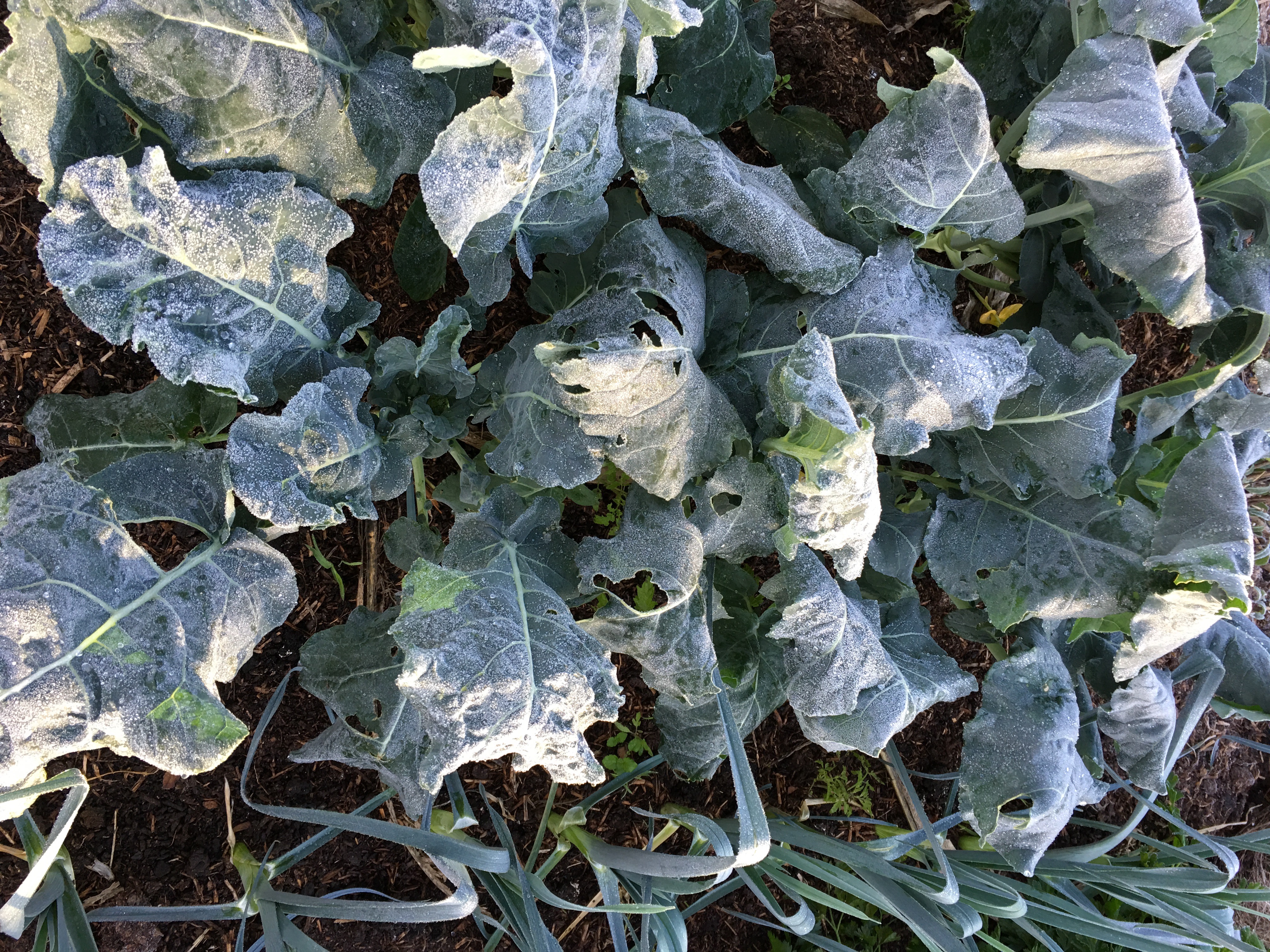
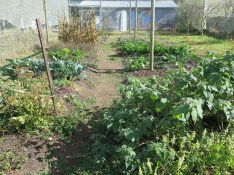
The first thing that I notice when I get into the garden, is how dead so much of the garden is. The last of the summer corn, has finished, dried out and turned up its fibrous toes. We made an effort to mulch as much of it as we could in the week before we left and this has really paid off for us. There are so few weeds now. A couple of days of intensive work will bring it all back into healthy production again, as there are loads of winter vegetables coming on. I made an effort to get all these planted early in the season, at the end of summer/early autumn. So, now we have broccoli, brussels sprouts, cabbage and spinach ready to pick.

Surprisingly, many of the late summer plants are still lingering on and still producing food. Others, their time being up, have gone to the big veggie patch in the sky. They will soon be headed into the compost bin, where they will rot down and be fertiliser for next seasons crop of summer vegetables.

As I look around, I see that there are still some little yellow tomatoes ripening on the old, almost dead, vines. We have been picking tomatoes now for 5 months, pretty amazing for us. So this is global warming?

This will likely be the last pick, as the plants have lost all their leaves and are pretty much dead now. Interestingly though, there are still some small new tomato plants germinating and growing up. One is even flowering, but I can’t believe that this will amount to anything, as the first day of winter is only 2 days away. The first frosts can’t be too long after that.

We  used to get our first frosts at the beginning of May, now its the end of May or early June and possibly later? A couple of years ago, we went right through winter with only minimal frosts, to the point that we didn’t get any apples on any of the trees the following summer. Apples need a minimum number of frosts (or winter chilling hours) to develop the hormones that are necessary to make the flowers fertile.

I go straight back out into the garden with my basket and fill it with little yellow tomatoes, the last of the lingering sweet basil and a load of capsicums and chillis.

IMG_3749

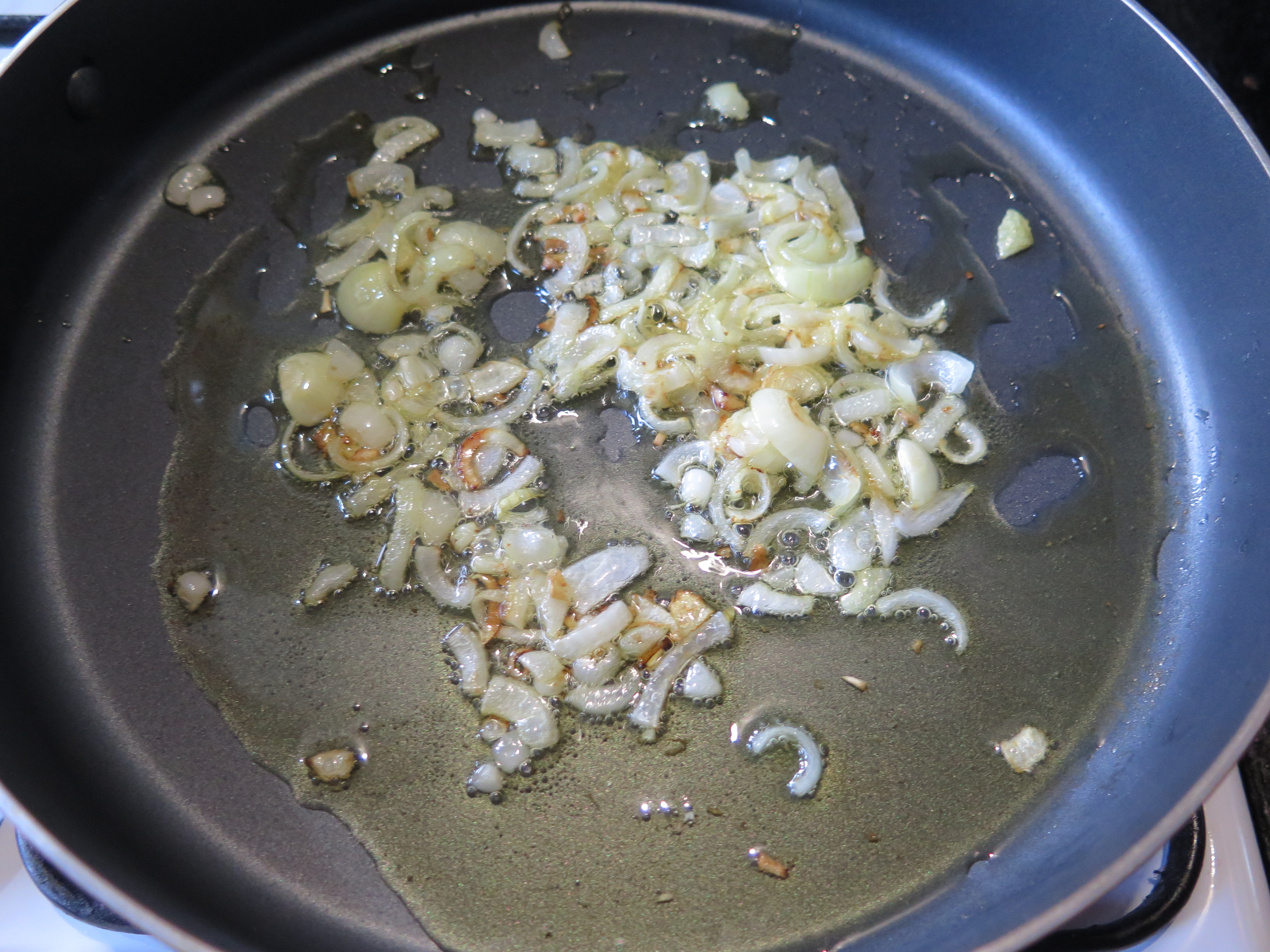
I set about making a tomato/caps/chilli salsa by browning a few onions in good olive oil and adding 6 small knobs of garlic. The ones that are so small at 20 to 30mm. dia. that it really isn’t worth peeling them. They will add heaps of flavour to this mix and the small amount of skins and paper will be removed when I strain the whole batch. I let them softening down along with all the diced fruit over a long time at low heat on the wood fired kitchen stove.

IMG_3750

I will  pass it all through the kitchen mouli sieve to take out all the tomato and capsicum  skins and seeds, then reheat it to sterilise it and bottle it in heated glass jars. It will keep for a year or so, but probably won’t last that long. It’s too delicious, although very ‘hot’ with chilli flavour. It will make a great addition to winter stocks and sauces over the coming cooler months.

This little effort marks the end of our summer preserving for this year. I’m very pleased, as I wasn’t expecting there to be any fruit left to preserve. This simple garden-to-kitchen-to-pantry excercise grounds me and resets my emotional and spirituual compass to ‘home’ after being away. This is what I do. This is what I live for. This is me. The self-reliant potter/gardener.

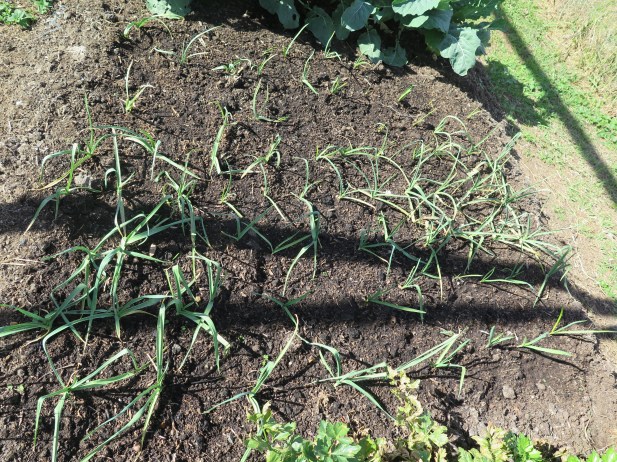
A close inspection of the garden beds reveals a lot of little germinating seedlings of onions, carrots, beetroot and rocket. I planted these seeds just the week before we left. I also planted a few hundred cloves of garlic. Most of which have now germinated and are showing their green shoots. Peas are also up and growing quite strongly, I hope to see them flowering soon.

IMG_3718  IMG_3722

IMG_3721

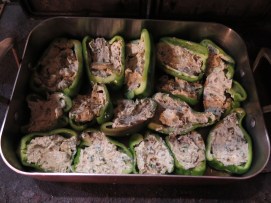
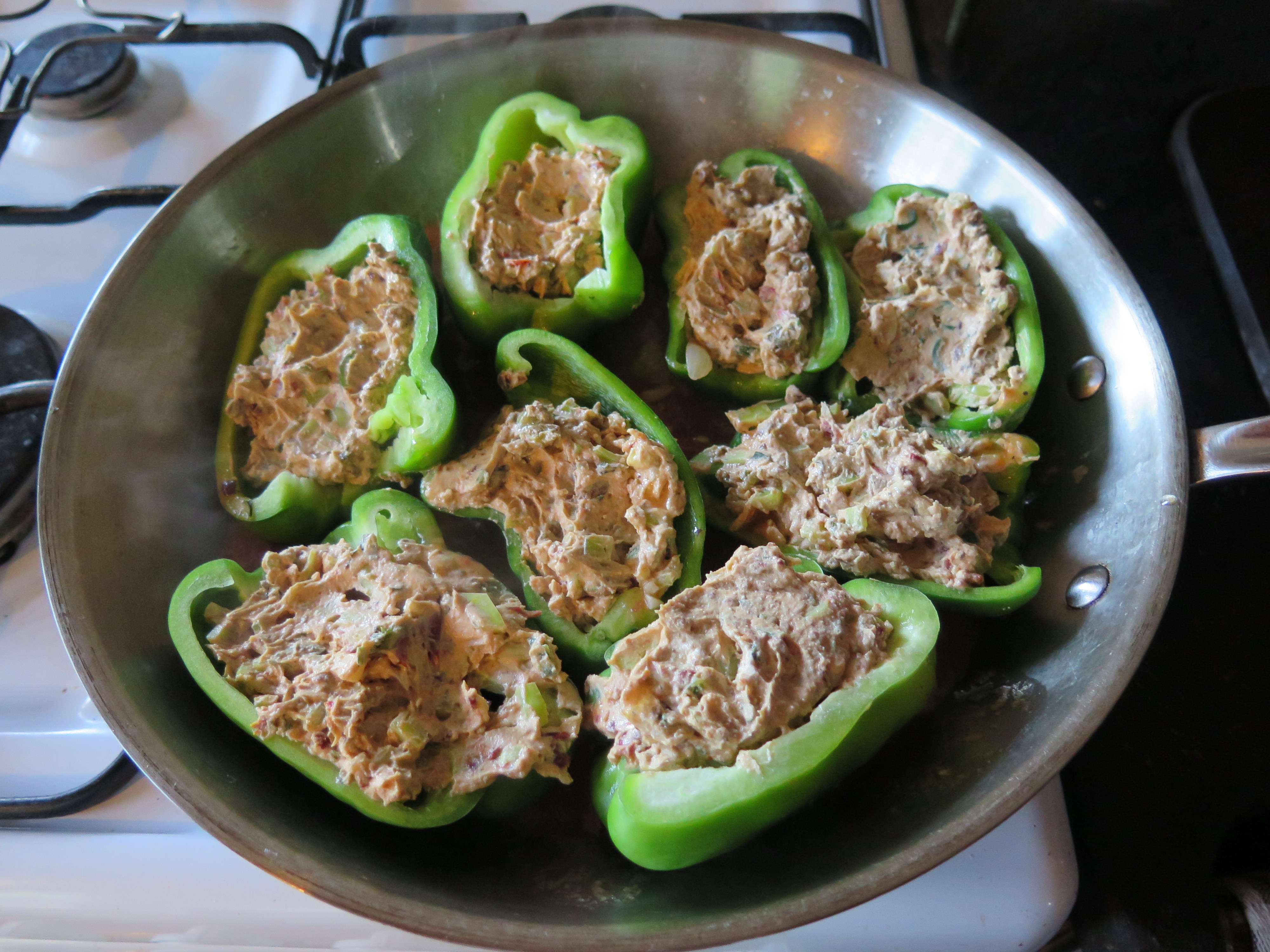
There are a lot of capsicums ready to pick, so I decide to stuff them with ricotta and bake them in the oven, as the stove is lit, we are making hot water and warming the house up as well, seeing that we are now home and the weather is so windy and cold. Such a change from the weather in southern Japan, where it was almost summer and the weather was balmy to hot.

IMG_3726

IMG_3725 IMG_3728

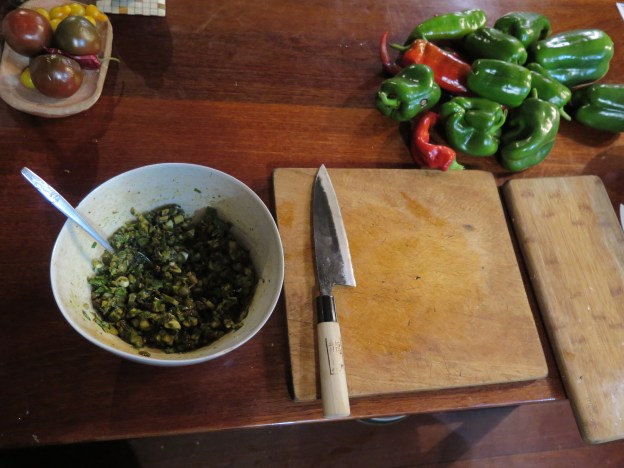
I make a stuffing out of whatever we have at hand in the fridge. Before we left I had bottled some little cucumbers and some dried tomatoes. I add these into a lump of fresh ricotta. I add a few cloves of our garlic, along with a few capers and an anchovy or two, a few olives, a shallot and some parsley. I dice it all up and mash it together with some veggie and herb salt substitute. I would like to add a little bit of finely diced feta cheese to give it a little bit of chewy texture to the cheesey mix, but I don’t have any at this time. I’ll add to my shopping list for next trip into town. There are plenty of capsicums left to pick, so we will be having a meal, not unlike this one again in the coming days or weeks. I like to use what I have in the garden and pantry. Our main food expense these days since we lost our chickens and ducks is protein, which these days consists mostly of fish.

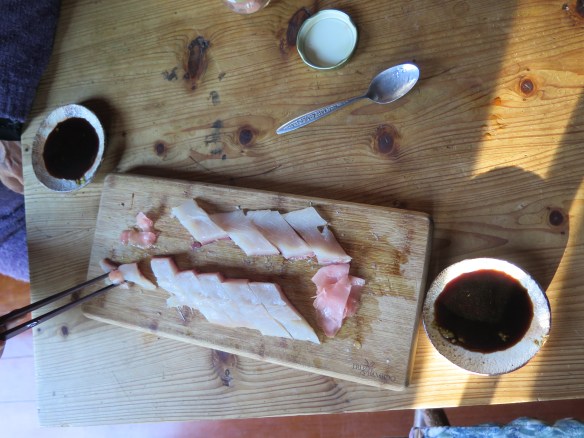
The fresh fish truck is up from the coast today, so I buy a small piece of super-fresh sashimi grade kingfish, we have a small fillet for lunch. I skin it and slice it up and we have it with a little soy sauce, wasabi and pickled ginger in vinegar. Yum. Itadakimas!

IMG_3746

Pan Fried Figs in Apple Toffee

Because we are now past the solstice, it is time for the figs to begin to ripen. We enjoy them cooked in a little butter with a squeeze of lemon juice and a dash of our own preserved, concentrated apple juice. It slowly simmers down to a concentrate of apple toffee with soft poached figs.

It is pretty amazing, but last nights figs in preserved rich red preserved plum juice was  even a little better I feel. It’s all so hard to say, as every bit of it is so, fragrant, soft and delicious. Wonderfully soft and engaging while being a little bit sharp and sweet and delicately textural. It’s one of the few times where a little bit of ice-cream goes so well. It improves it and extends the texture, mouth feel and flavour.

So simple, so flavourful, so easy. Plant yourself a fig tree and enjoy the benefits – if you can keep the birds away!

Nina had to spend quite some time bagging the fruit to protect it from the birds.

IMG_2584

Vendange

It’s autumn now and the grapes are fully ripe. We have been dealing with them in batches over the last few weeks. Yesterday we made the last pick. The Vendange is over for another year. All safely picked, juiced, heat-treated, sterilised and bottled. The rich red dark grape juice bottled in this way will keep for 12 months easily. We make it now in the autumn and drink most of it as a refreshing cool drink next summer in 9 months time.

We have preserved dark grape juice from both our shiraz grapes as well as our isabella fragolino varieties. They both make good dark grape juice, but I think that I prefer the slightly foxy, aromatic density of the fragolino juice to the somewhat austere and peppery shiraz. We abandoned making wine from our grapes sometime ago, as it takes a lot of effort for something that is just plain ordinary and we can buy good wine quite cheaply here in Australia. We have learnt to be selective about where we expend our limited energies, so as to get the best return on our efforts.
IMG_8529IMG_2106IMG_2107
After a lot of experiments, we have learnt that dark grape juice is the best that we can do with what we’ve got, although, this year, early in the season, The Resourceful One also tried her hand at making very early season verjuice.
IMG_2363 IMG_2364 IMG_2366
We macerate the grapes and sieve out the fresh unfermented ‘must’, skins and seeds. The pure juice is heated on the stove to sterilise it and then bottled into heated jars, fresh from the oven. It all takes time, but this is the quickest and most efficient way that we have found to deal with the harvest, that gives and exceptional quality of product. It also has the added benefit of requiring no energy to store it for a year and keep it beautifully preserved for when you really appreciate it.
IMG_6349
We have been out and when we return in the evening, we find Annabelle Sloujetté’s ute spread-eagled across the front of our house. She has her own key and has let herself in. She is on her way somewhere, or back, and slides her ute into a sort of parked position in the front garden. She asks where Janine is and I have to say that I don’t know. She was here with me just a minute ago. “Ah! Slougetté responds. ‘Miss Flit’. That is why I call her Miss Flit. She flits in and she flits out, never stays still long enough to carry on a complete conversation. A complete conversation with ‘Miss Flit’ is like a Dickens serialised novel. It takes time and you have to be patient as it evolves.”
We end the day with a vegetarian BBQ. Nothing special, just quick and simple, place your sliced, freshly picked vegetables on the barbie and turn them when they are softened, Zucchini, aubergines, little golden nugget pumpkin and capsicums. They couldn’t be fresher and cooking outside at this time of year in the evening is a delight. The cooling breeze has arrived and the aromas emanating make my mouth water in anticipation. I make an autumn salsa out of our little, late-season, yellow  tomatoes, some garlic and chillis, while the bbq looks after itself. The girls are tête-à-tête, deep in gossip.
I plate up to table and we eat them with relish. I like a spoonful of my piquant home-made spicy plum sauce on my bbq’d veggies, but quince paste also works well I think.
IMG_2359
When we wake, she is gone. Only her tell-tale signature circle work on the front lawn tells the tale of her visit.
Best wishes
From Mr and Mrs Flit

Another Post From The Running Postman

The wild flowers have been lovely, but they are all gone now. It’s almost autumn and the cherry trees in the Chekov orchard are loosing their leaves. They are the first to fruit and the first to go dormant. We are experiencing a late summer scorching week of high temperatures in the mid 30’s and have had to be out early and late to water the garden. Overall, this summer has been exceptional, although it has been hot, it has also rained a lot and even at this late stage , with all this heat now, we still have green grass outside our window. We are usually looking out at dry, dusty gravel at this stage of the summer.

IMG_3689IMG_2350
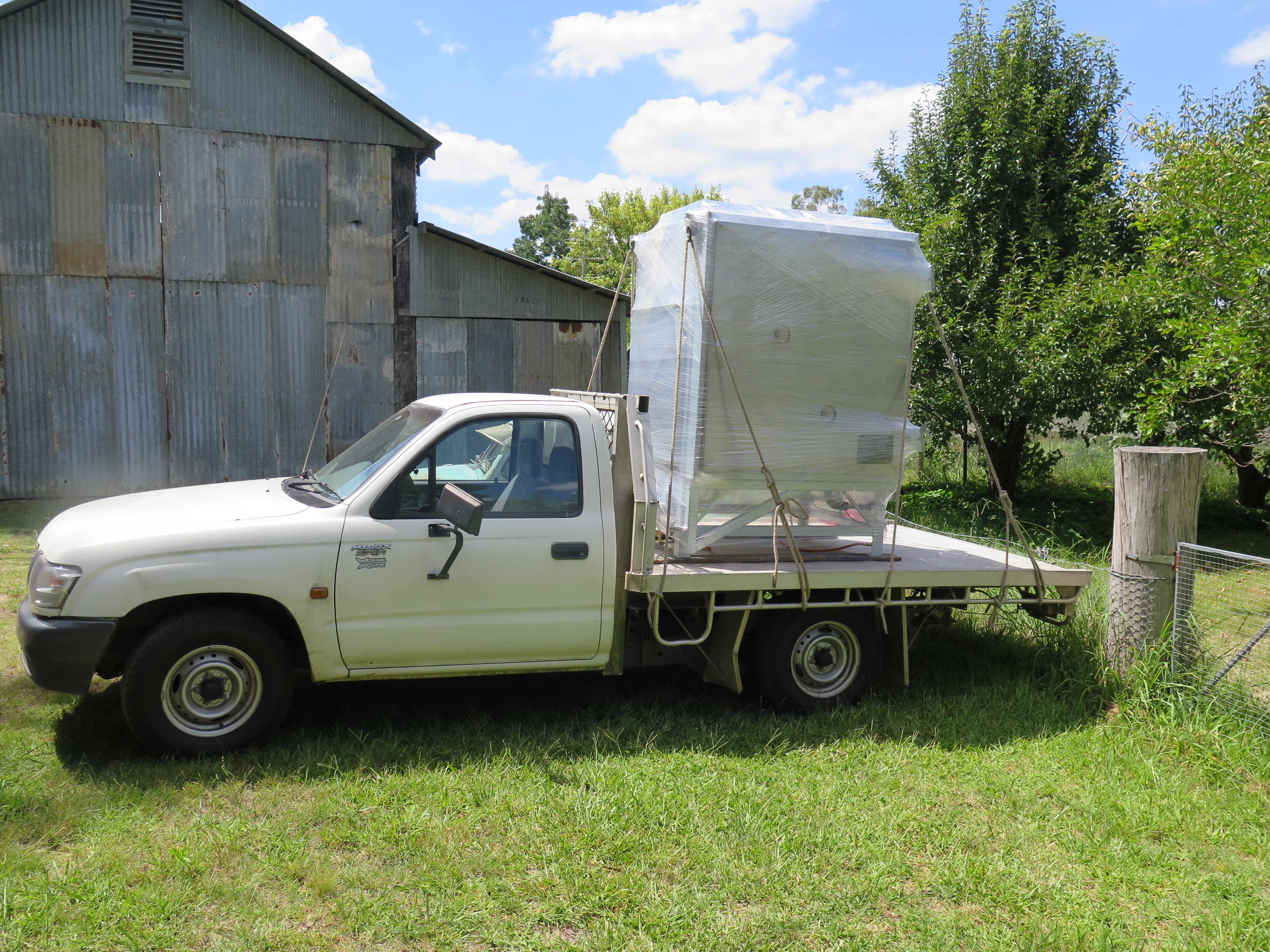
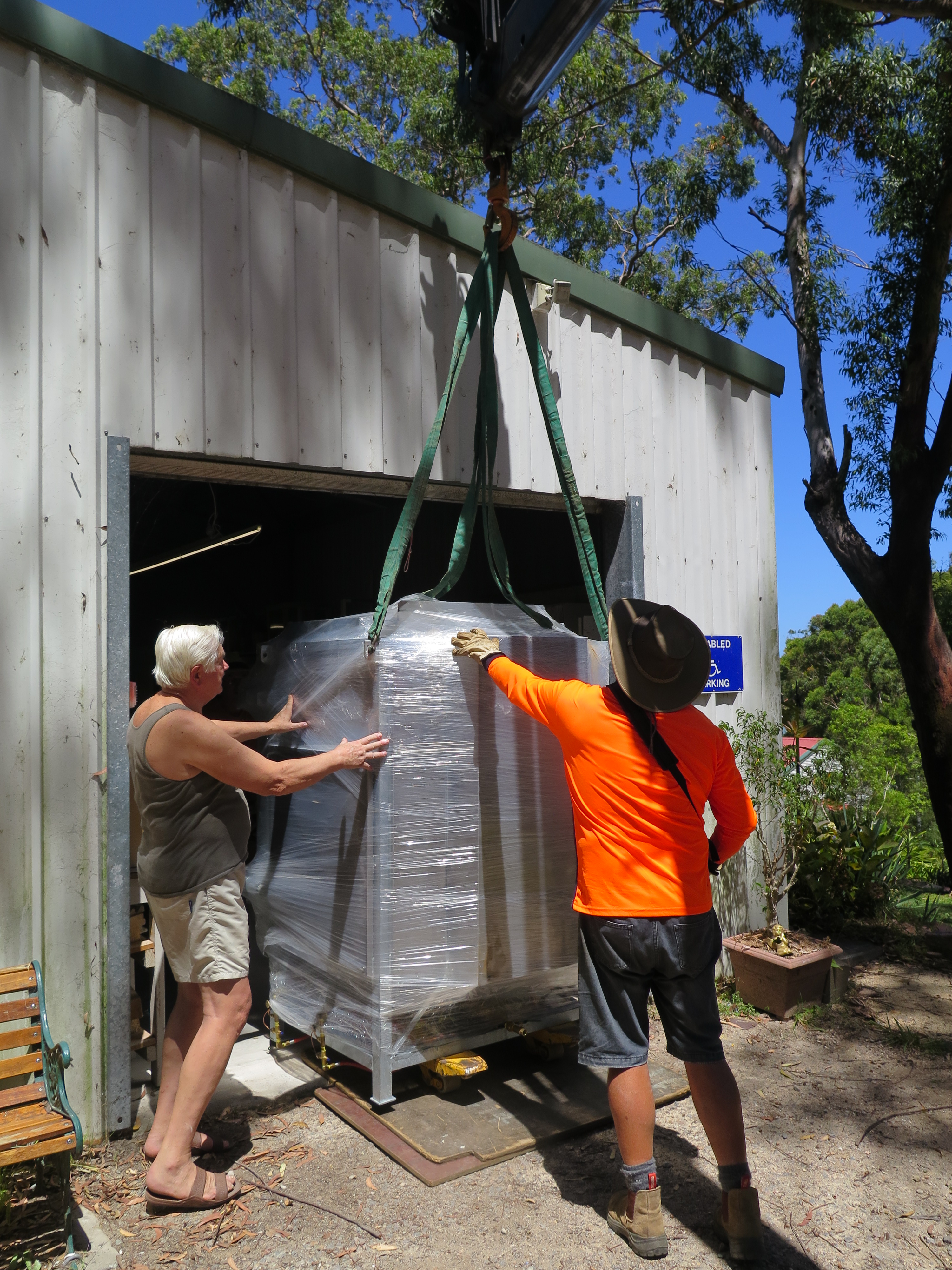
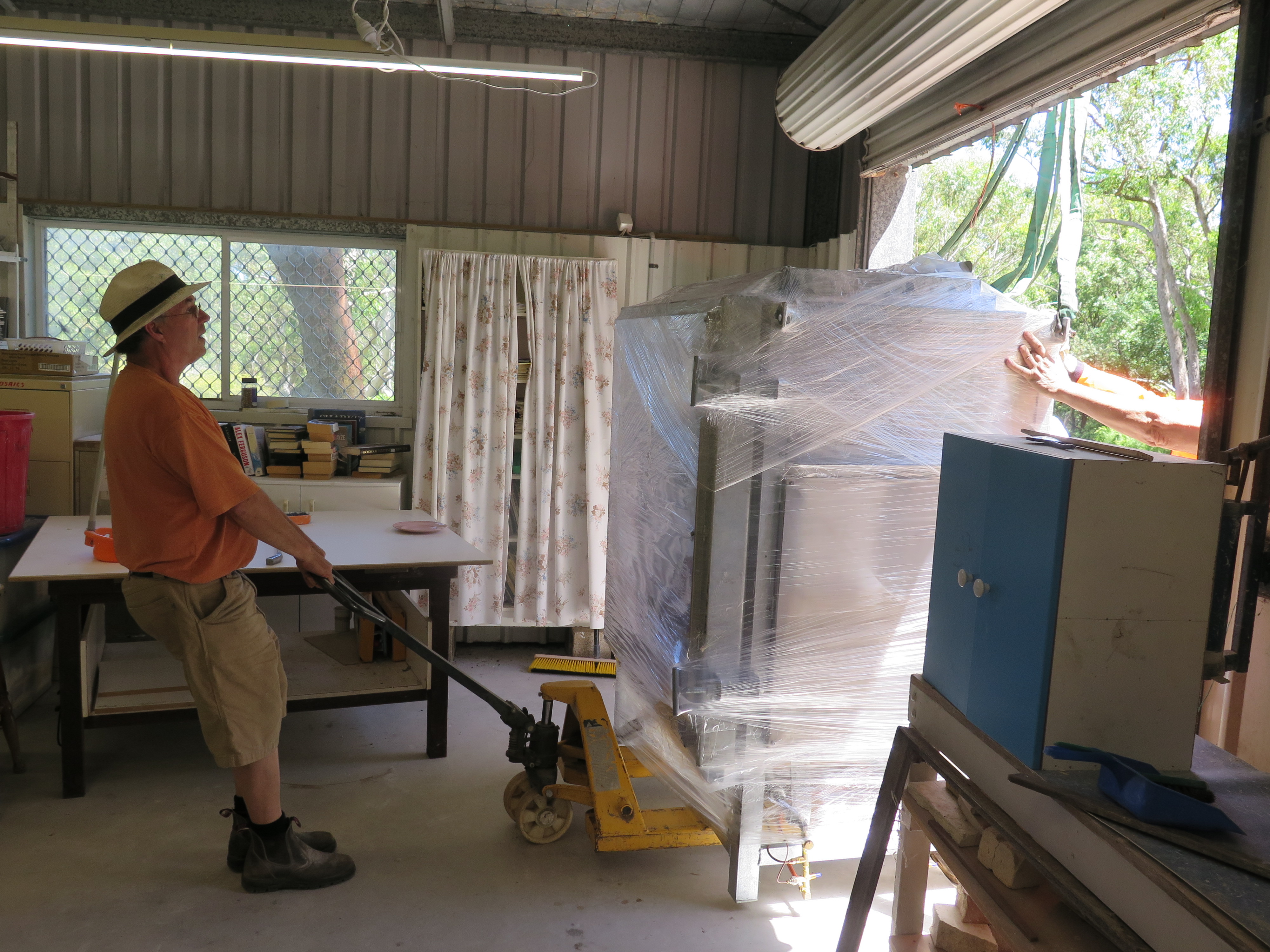
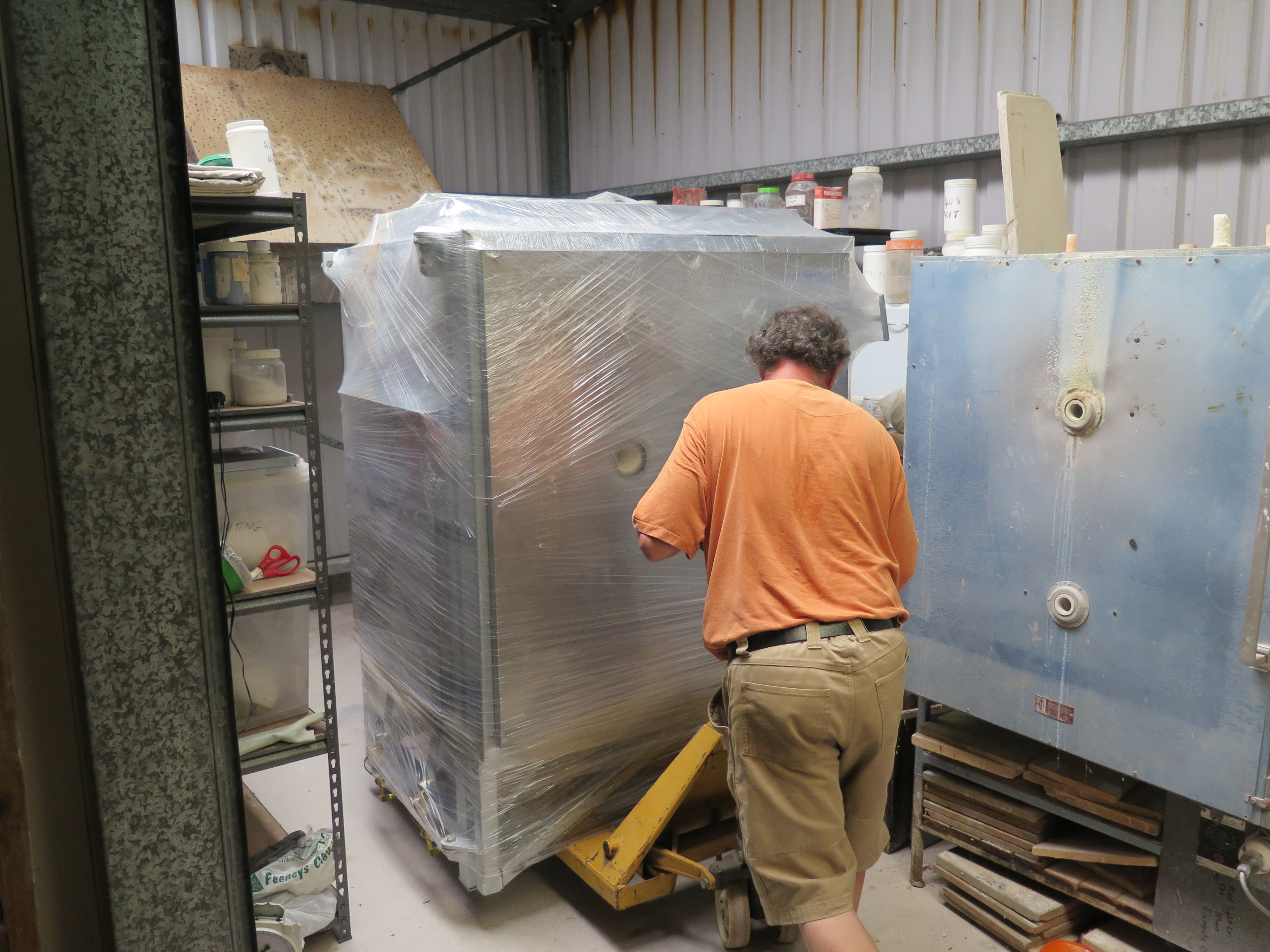
I have delivered the latest kiln to my customer and all went so very smoothly. Just as it should, as we do a planning to get it all just right, but regular readers of this blog will know that the best laid plans can suddenly go terribly wrong at the drop of a hat when a third party lets you down after promising faithfully to turn up on time. This is never the case with Dave, my local crane truck driver. He is amazingly punctual and careful with my jobs. It’s a pleasure to work with someone so professional and creatively competent at moving heavy objects.
IMG_2313IMG_2335 IMG_2336IMG_2338 IMG_2340 IMG_2342
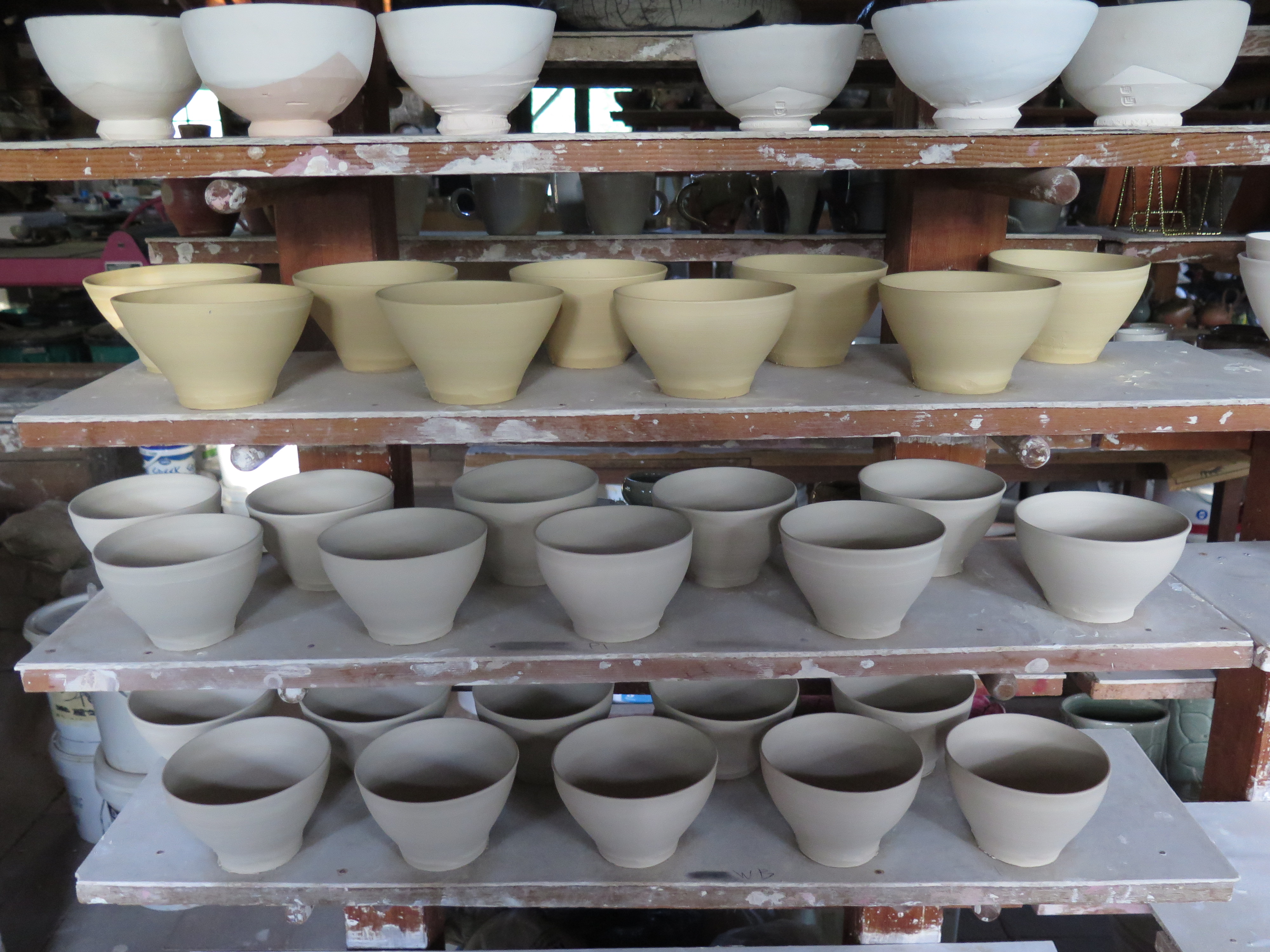
Warren and I have already started the next job and got it well under way. As I am ahead of schedule with my orders, I have been able to spend time in the pottery making some more of my porcelain. Iron stained yellow, pale ochre grey and creamy grey/white bodies.
IMG_2330 IMG_2331
We have also now completed 5 firings in our little new experimental, portable wood fired kiln. It gets better every time we fire it. That is to say we are getting better at understanding it and how it works. I’m also finding out all it’s weak points. All the things that I didn’t expect or imagine might happen have shown them selves and come to pass, so each time we fire, we find a new problem that needs a better solution. I solve each one as it appears and then onto the next. I think that I have it all solved, then something else appears. I’m constantly thinking this next firing will see it all solved and then I can start to produce them. Always the optimist:)
IMG_2292 IMG_2302
Cast iron doesn’t work in this kiln. OK for raku, but not here.
We have tried experiments with different types of fire bars over time and worked out that in this kiln, we can’t use ceramic fire-bars, or mild steel fire-bars, or cast iron bars, but custom welded stainless steel fire bars are the go for this little beauty when fired in reduction. The other fire bars that we have tried have worked well in other kilns at different times, but for this one, it’s going to have to be custom made stainless steel. They have proved to also have their issues, but I have worked thorough these and I now have a workable solution. I just need to try one more variation on the way we use the flue!
I am so confident about this little kiln now, that I am starting to draw up a plan for a larger version. Increasing the kiln shelf area from 300mm. x 455mm. (12’ x 18”) to a kiln shelf of 455mm x 455mm. Sq.  (18” x 18”)!
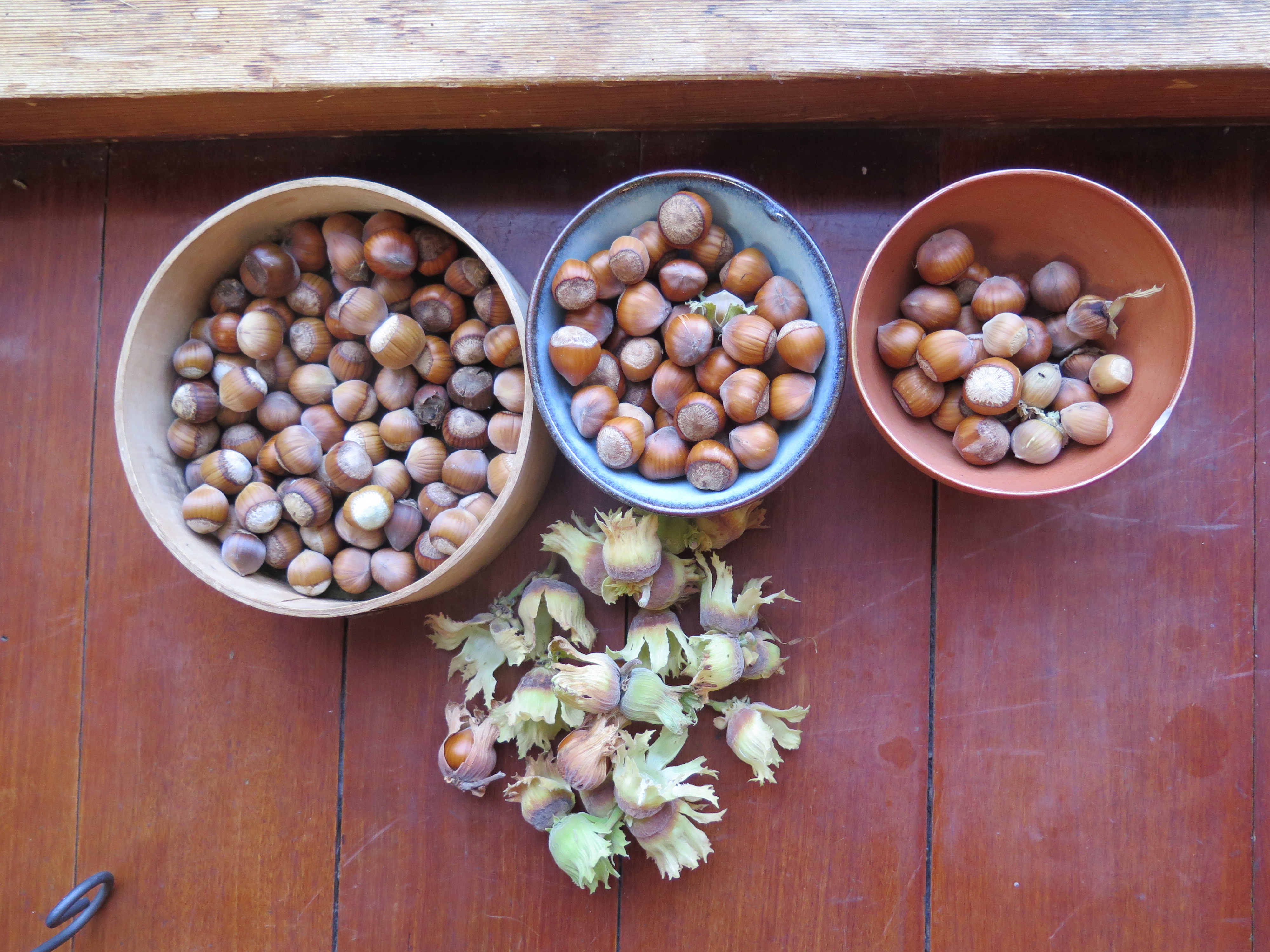
For the last few weeks, the hazelnuts have started to ripen and fall, we dry them in the sun in the kitchen window sill for a week and then they are ready to eat. Unlike our almonds, that always seem to need oven drying and slightly roasting to get the best out of them. The filberts are good to go, straight out of their shell after drying. This is our first good crop from them. We planted 2 year old grafted seedlings about 3 and 4 years ago, so the oldest ones are just starting to come to fruiting now. The first year, all the shells were empty. Last year we only got a few hands-full of nuts and half were hollow, but this year, they seem to have reached maturity, with most casings containing a nut — and they are lovely, crunchy and sweet. We have a few with a piece of nice cheese after dinner.
IMG_2193 IMG_2349
I’ve been in and out of the pottery pushing ahead with making pots for the next firing. We are technically still in fire ban season, so we can’t fire the big kiln easily at this time, as it takes 20 hours and is obvious to passers-by. But the little portable kiln is OK for a quick 3 1/2 hr. firing on the cooler days after some rain or a damp night of heavy dew. We can start early and finish before the day gets hot at mid day and after. It’s very convenient. We have settled into using just one wheel barrow of paddock falls, dry dead branches. I’ll have to try it with fresh split pine, old pallets and eucalypt heartwood in the future, but I can’t see any real problems there. Time will tell.

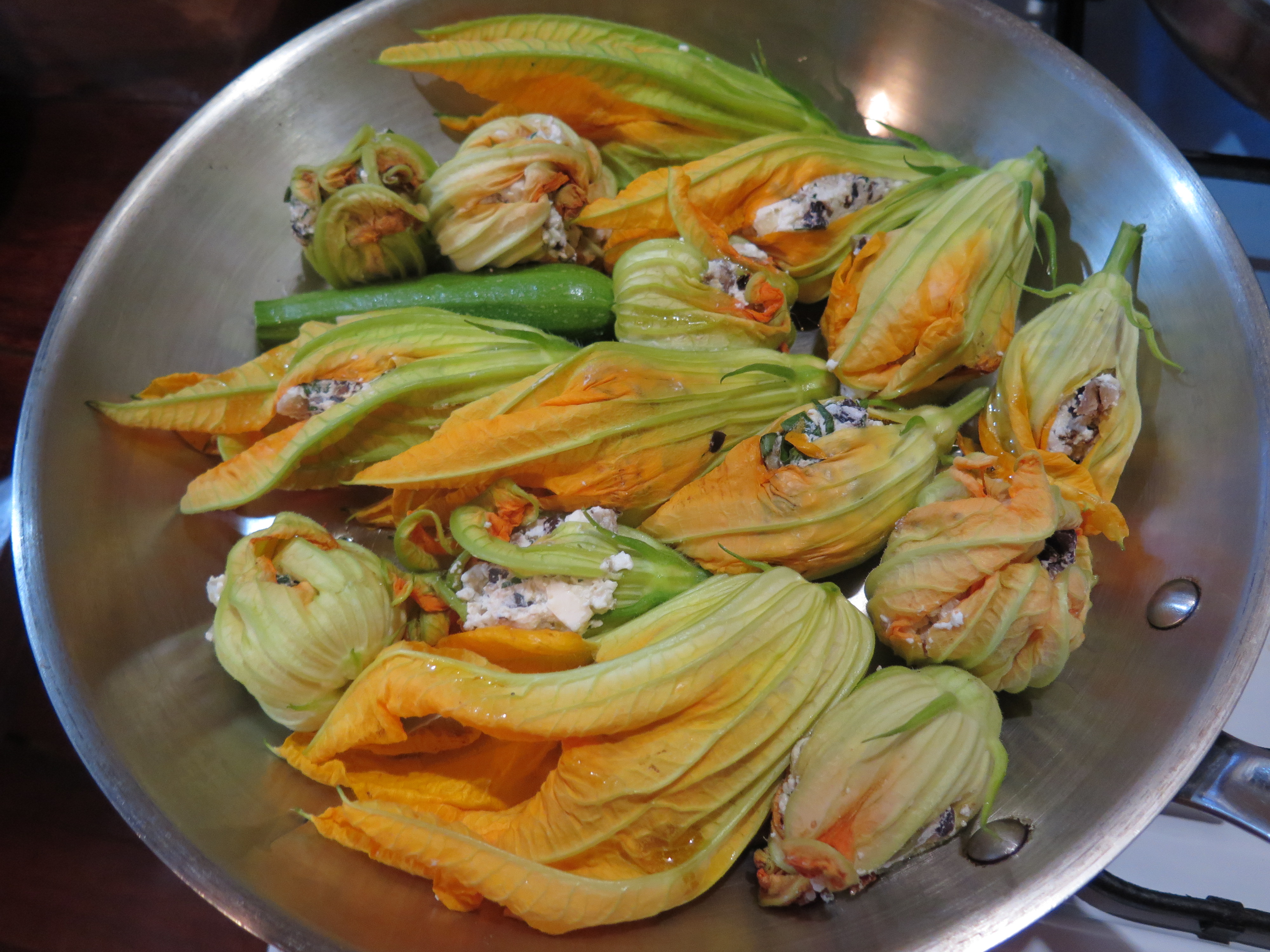
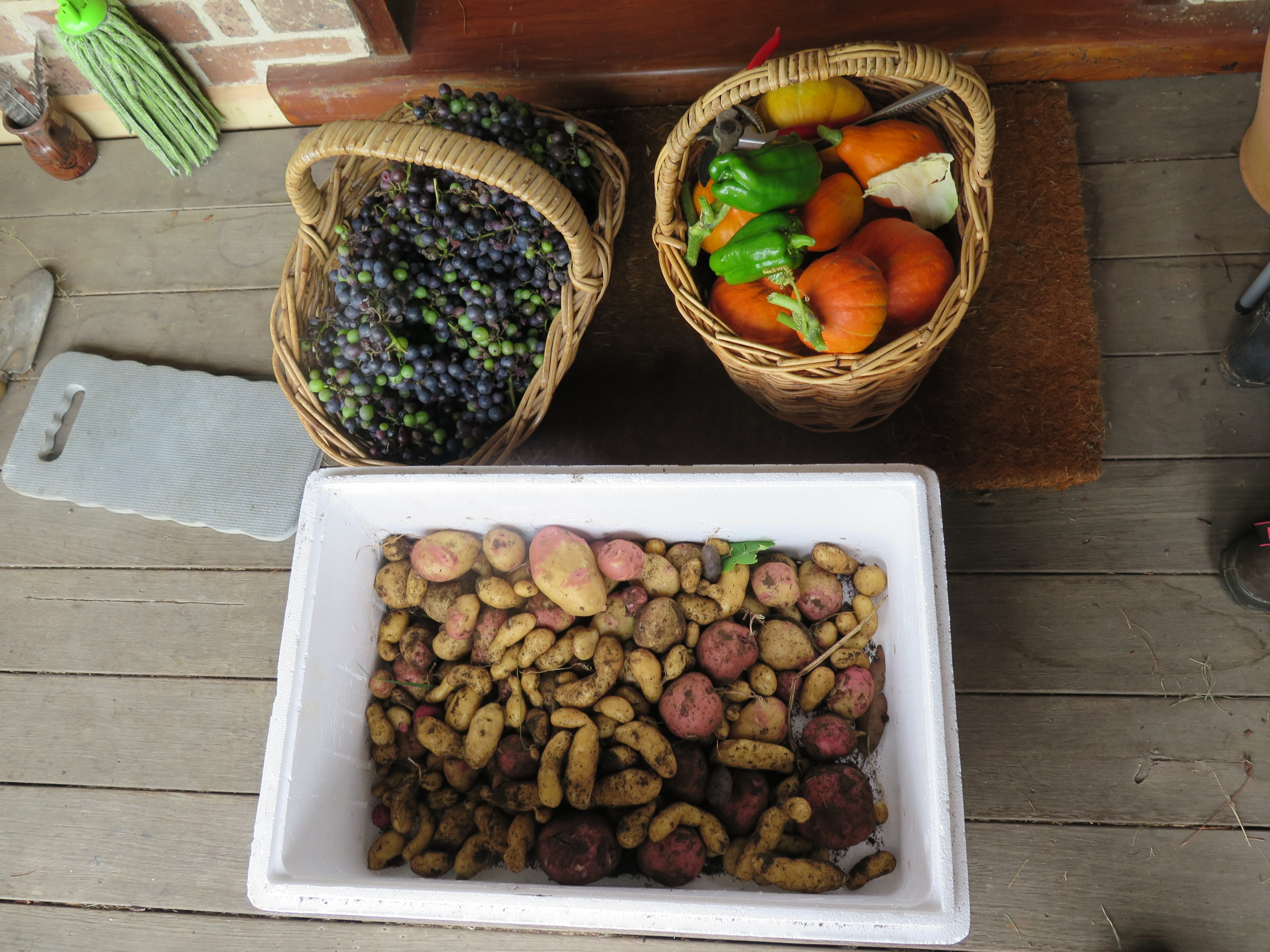
As the garden is thriving we have been eating fresh stuffed zucchini flowers. These are our 2nd planting of zucchinis. We are starting on our third planing of cucumbers, as the extremely hot days really frazzles them, and our 5th planting of raddishes etc.  We are also enjoying capsicums stuffed with ricotta and our own dried tomatoes and herbs. We have started to dig the first 3 rows of the 2nd planting of potatoes. It looks to be a very prolific crop. We fill a box quickly. There are twenty rows to keep us well fed through the winter.

IMG_2277IMG_2276IMG_2202IMG_2204IMG_2206
Regrettably, Janine and I went to the fish markets mid-week for a late sushi lunch on our way to an opening of a friends show at Watters Gallery later in the evening. I say regrettably, because I was struck down with food poisoning during the evening and had to leave early from the show, before my friend even turned up.
I’ve had to have 2 days off with the runs, and stomach cramps, unable to sleep through the first night without interruption. I am chastened and weakened, but starting to recover. An unwelcome surprise. I won’t be eating anything more from the sushi shop at the fish markets! Even now I’m still suffering a delicate stomach and slight head ache that makes it hard to concentrate. I have a load of work to do, but I’m not really up to achieving much just yet.
Best wishes from The Running Postman

Recycling

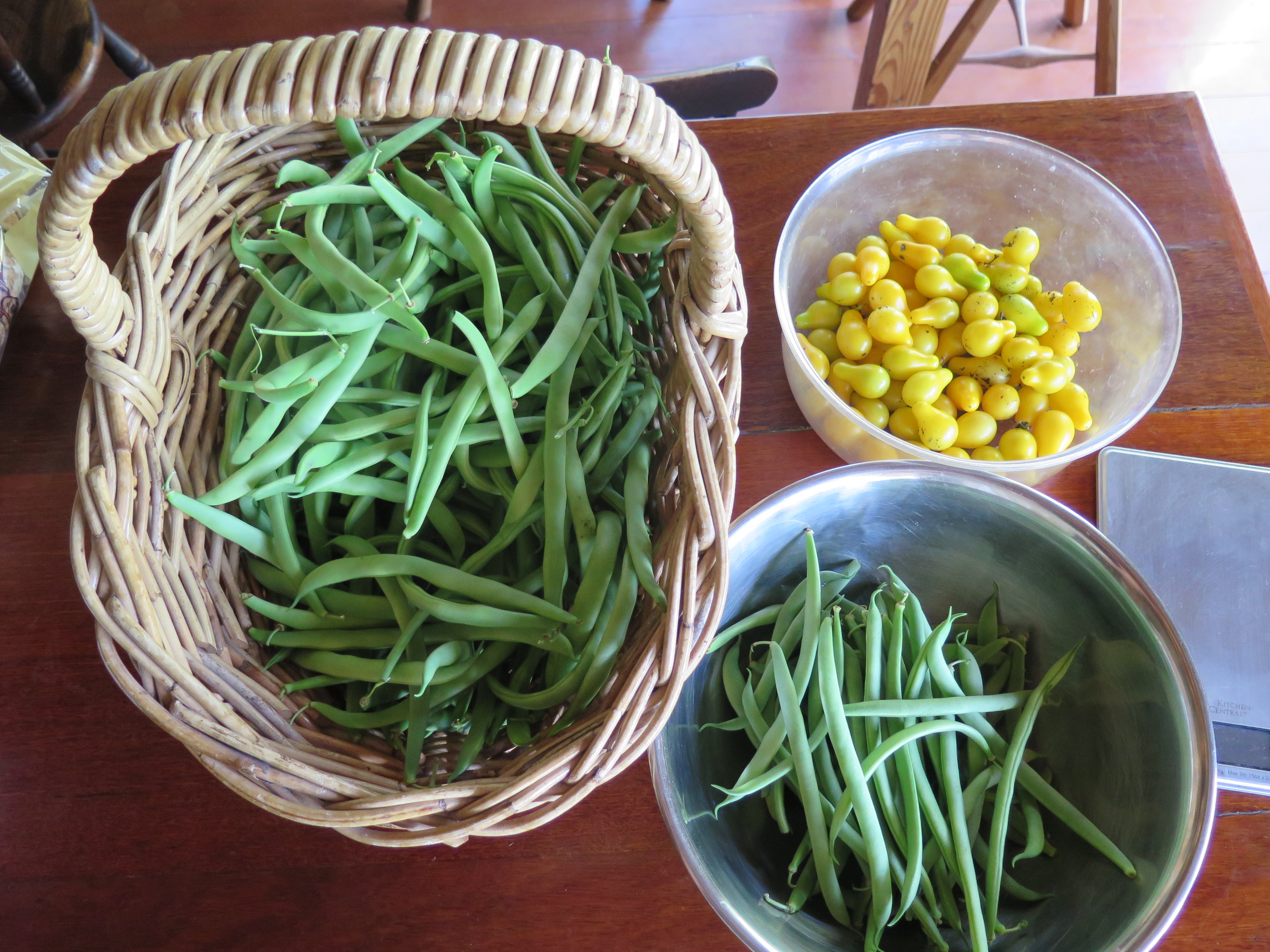
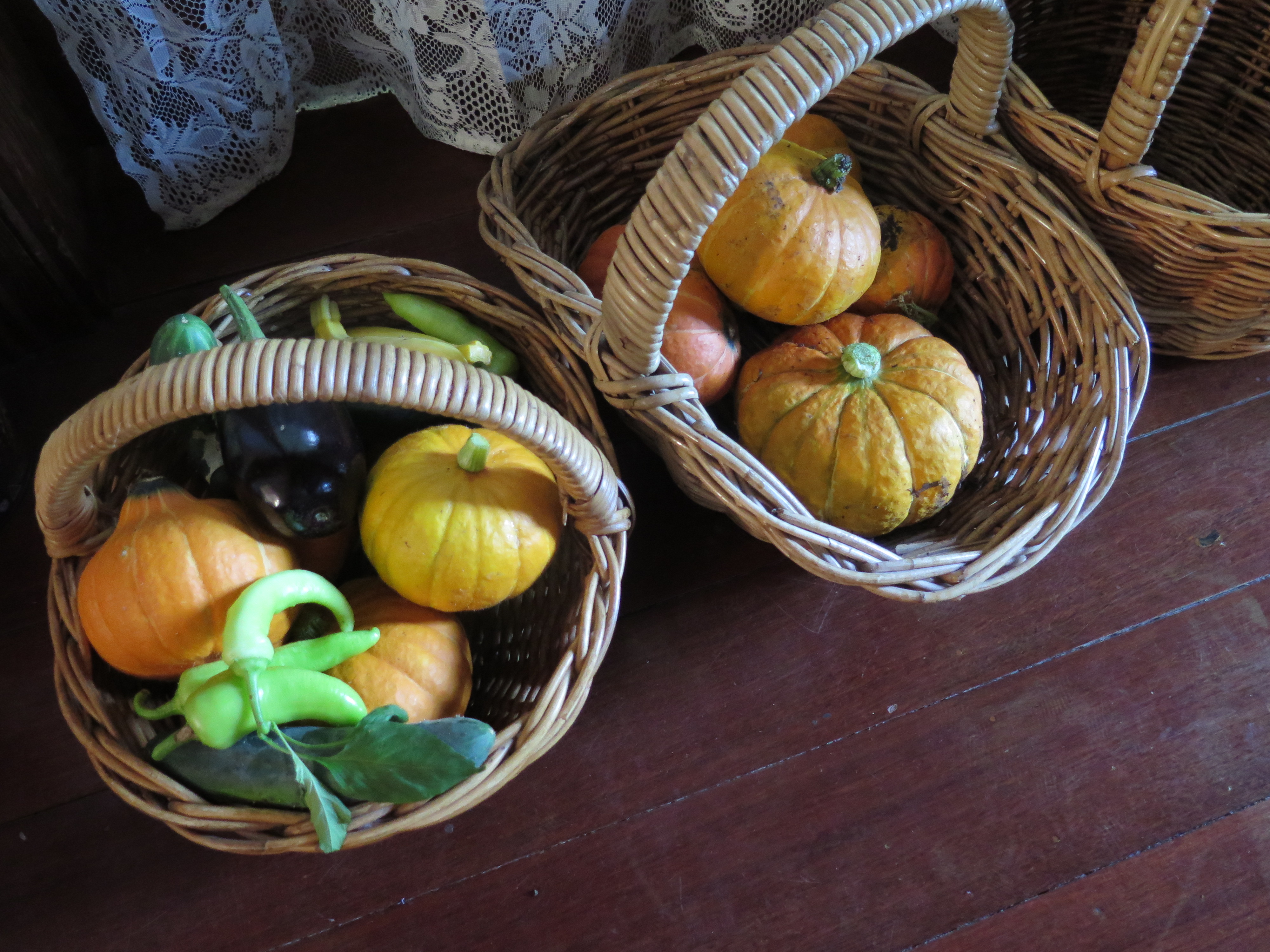
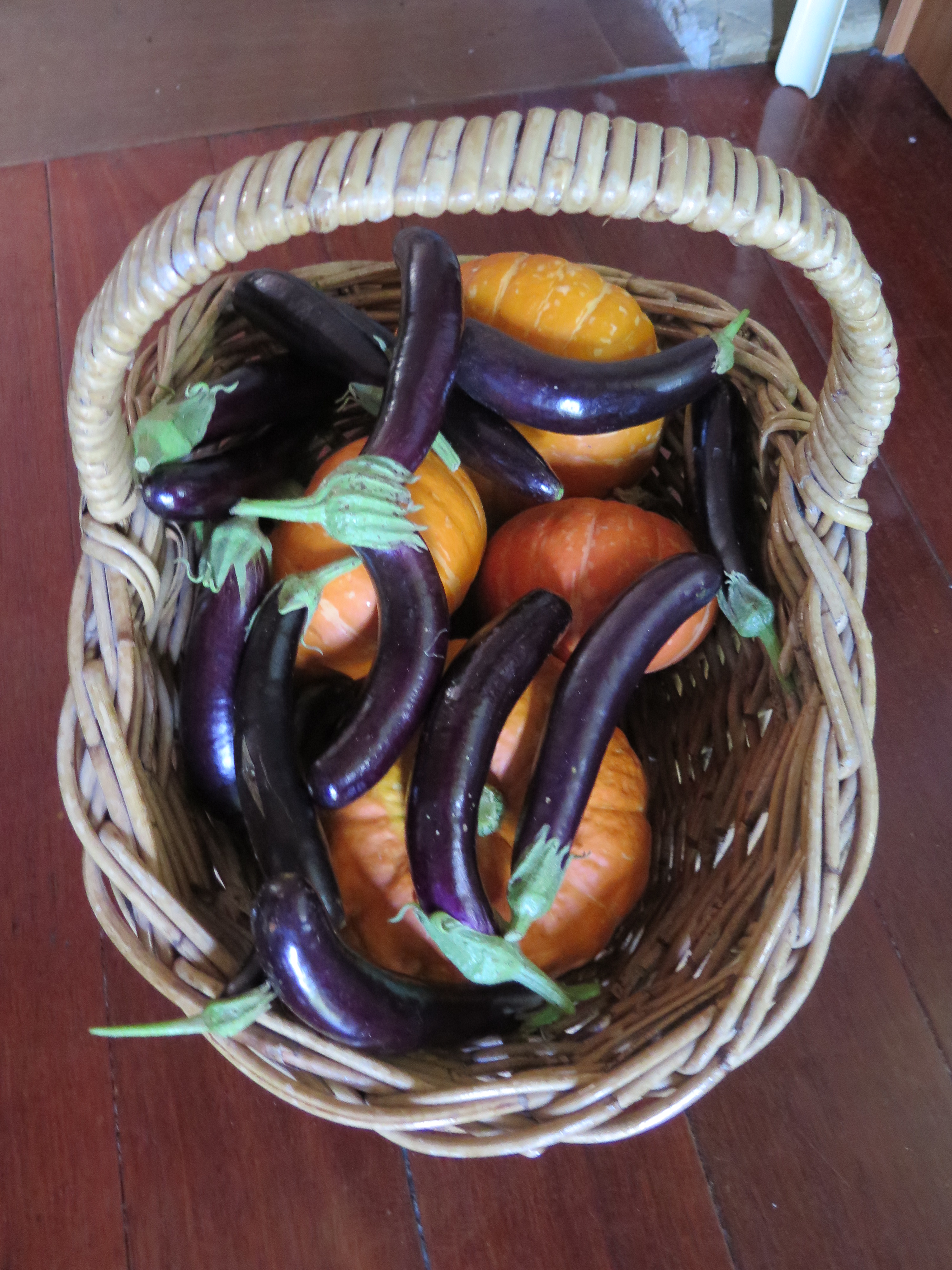
We have been active in the late summer garden, everything is growing it’s head off. The Lovely just picked two and a half kilos of beans. I took most of them straight down to Biota for Geordie to use in the restraunt. We have delivered baskets full of various veggies over the last few weeks, aubegines, zucchinis, mini orange pumpkins, sweet basil and bundles of shiso.

IMG_2188IMG_2127IMG_2102

At this time of year we are getting the full abundance of the late summer heat. We have had regular rain falls all through the summer, so we just can’t eat it all. We bottle, dry and preserve a lot of it, but it is always nice to be able to give away our excess to our neighbours and friends as well.

The chefs at Biota are high-end creative and flexible people, they simply invent a dish for that day that will use what we take in. It’s a one-day special on the menu till it’s all gone.
The summer garden has been feeding us with lots of lovely meals, like pan fried, stuffed zucchini flowers and baked capsicums stuffed with ricotta, our own dried tommatos herbs and spices.
IMG_1926 IMG_2174IMG_2176 IMG_2178
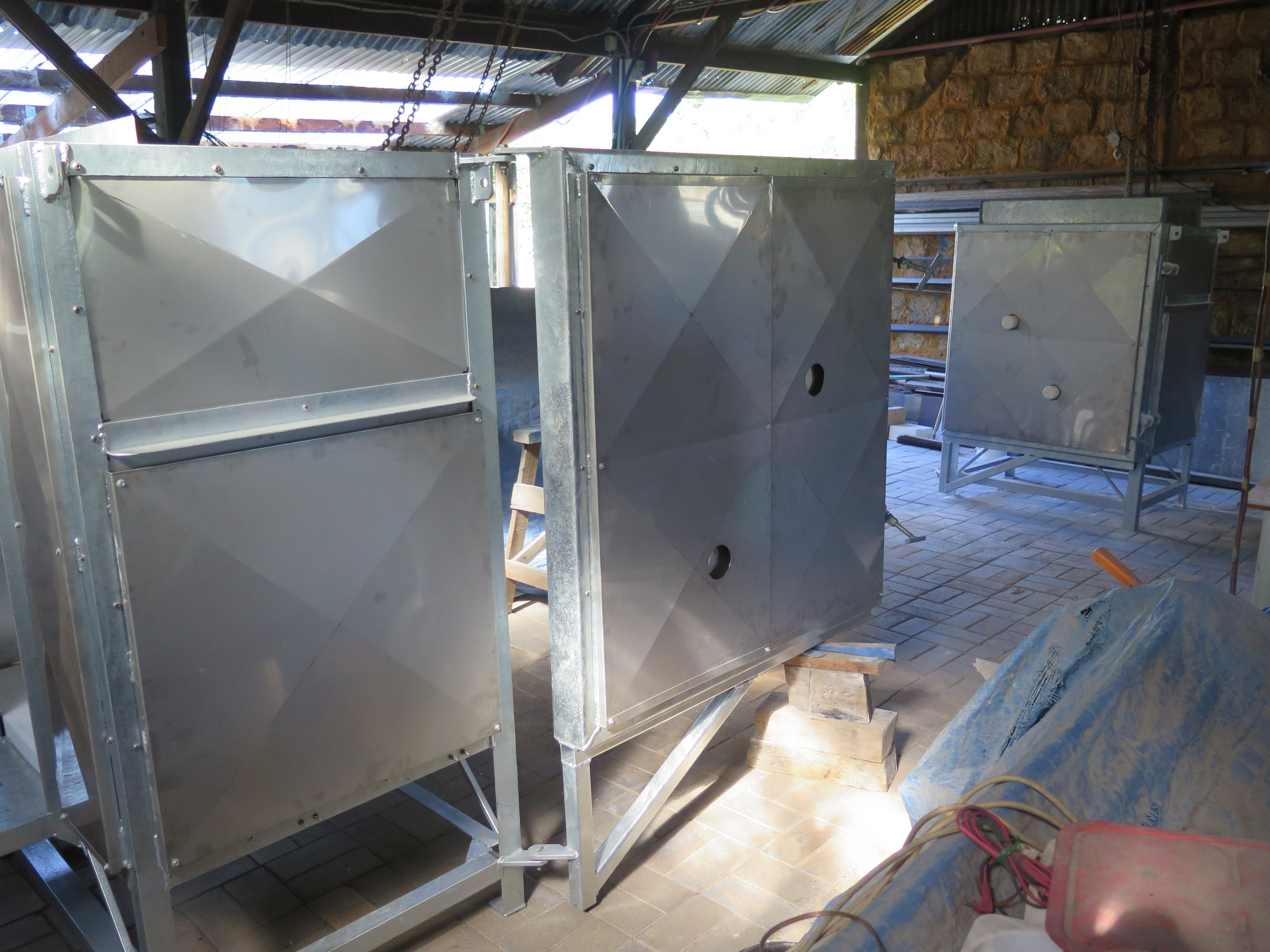
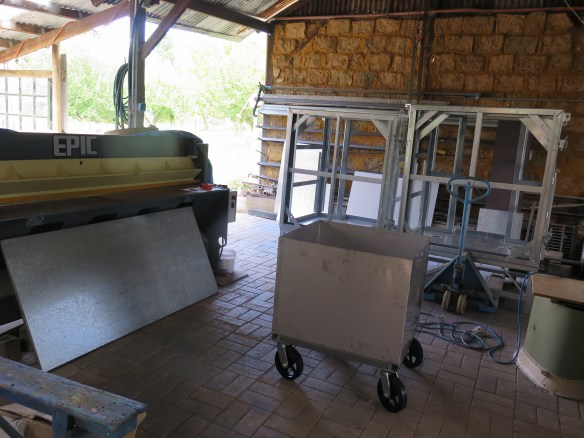
I’m back to work in the kiln factory again now. Warren and I put in a 5 day straight effort and almost finished the first one of the current pair of frames sitting in the shed.
IMG_2092IMG_2131
I make all my own firebricks for my own kilns, but when it comes to building kilns for other potters, then I buy in commercial light weight insulating refractory firebricks. They come all packaged on a wooden pallet. I end up with lots of these used pallets. Some from ‘loscam’ and ‘chep’ are deposited and can be returned or exchanged to retrieve the deposit, but these days a lot more coming in on one-off, single-use, non-returnable pallets. I’ve been thinking how I can get some value out of these pallets. The last resort is to break them up and fire the kiln with them. This is OK, as long as they are only heat treated and not copper chrome treated ‘green’ timber. The ‘green’ treated timber can only be taken to the tip for burrial, and at some expense. A total waste. Fortunately, we don’t see any of these green treated ones turning up anymore, they are all heat-treated these days, so OK for burning.
IMG_2116 IMG_2117IMG_2119 IMG_2118 IMG_2121IMG_2120

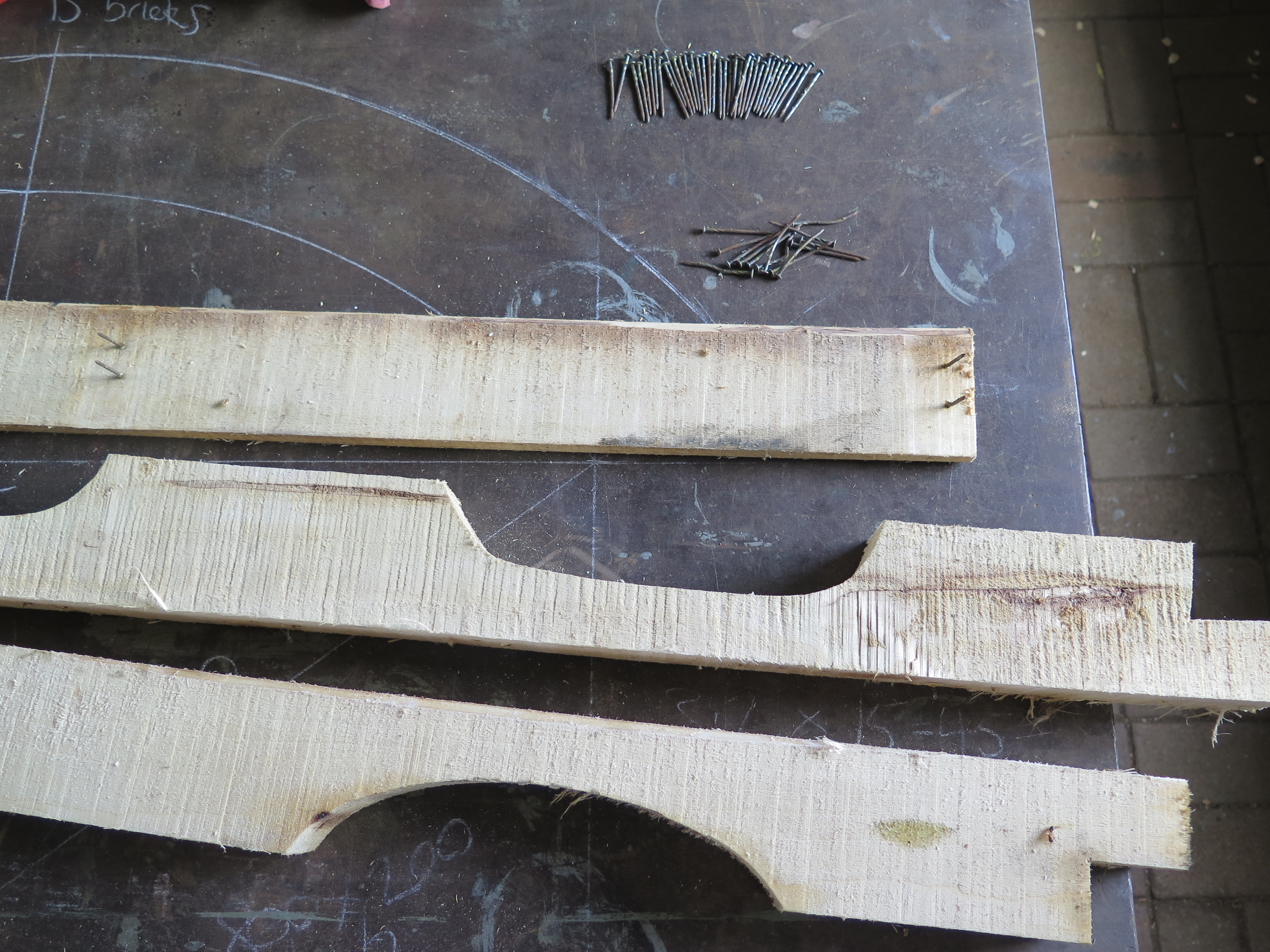
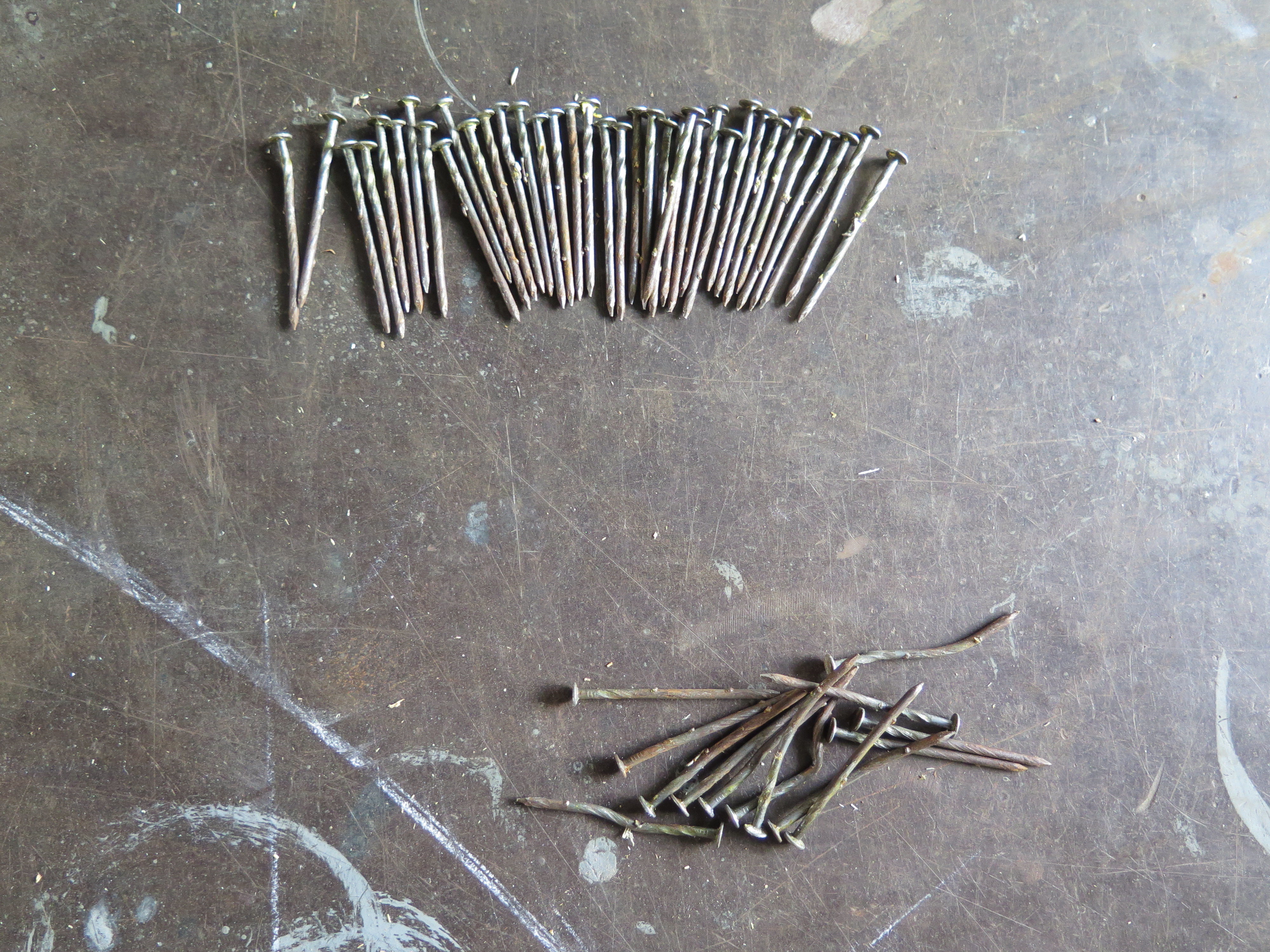
This last week I disembled one after we had used all the bricks off it to build the kiln and them re-cycled the timber into the arch formwork for the kiln. I even recycled all the nails from the pallet to re-assemble the arch form work.

We finish the day with a 3 rice rissoto and summer garden excess.
IMG_2141 IMG_2143
lightly browned home grown onion and garlic in olive oil, red ,brown and white rice, deglazed with a cup of white wine, enriched with a chunk of my frozen marrow bone stock and softened with a pan full of stock, simmered down from what was left from yesterdays baked fish lunch.
IMG_2145IMG_2068 IMG_2146IMG_2148
I serve it on Clive Bowen slipware plates with steamed sword fish and a dollop of Janine’s freshly made basil pesto.
IMG_2149
This latest kiln will be ready by the end of the week, so that I can start on the next one in the queue. I’d rather be making pots just now, but I know that I will need to pay out a lot of bills starting this week. Rego, insurance, council rates, land tax and the BAS statement, are all coming due. Just like so many creative types, I’m caught in the creative dilemma. Working for money to support my habit. My ceramic habit!
 .
Did you hear the one about the potter who won the big lottery?
He said that it wouldn’t change his life at all.
He would just keep on making pots till all the money was used up!
 .
At least we have a great life here working for ourselves, we don’t have to go to work for a boss! We live on a very low income, but have a millionaires quality of life. Last year we got a special tax concession of $500 from the tax dept. because we were living below the poverty line. We don’t think of ourselves as being in poverty. We’ve chosen this frugal austerity.
This Friday we’re having a day ‘off’, This will be our ‘weekend’. The Lovely and I will be firing the little portable wood fired kiln for its second outing. I’ve performed a bit of surgery on it to improve it a little more. At least I hope so. We’ll do a longer firing this time, we want to see if there can be some nice surface flashing if we fire for long enough? We’ll see what happens.
.
best wishes from doctor Steve and his very patient Janine

New Small Wood Fired Kiln

The first of the figs are ripe and we savour it. It is just perfect, sweet and juicy. We wouldn’t have got it or any others if The Lovely Hardworking One, hadn’t been out there early and netted the branch a few weeks ago. If we don’t net the fruit trees or the most laden branches, the birds take everything.

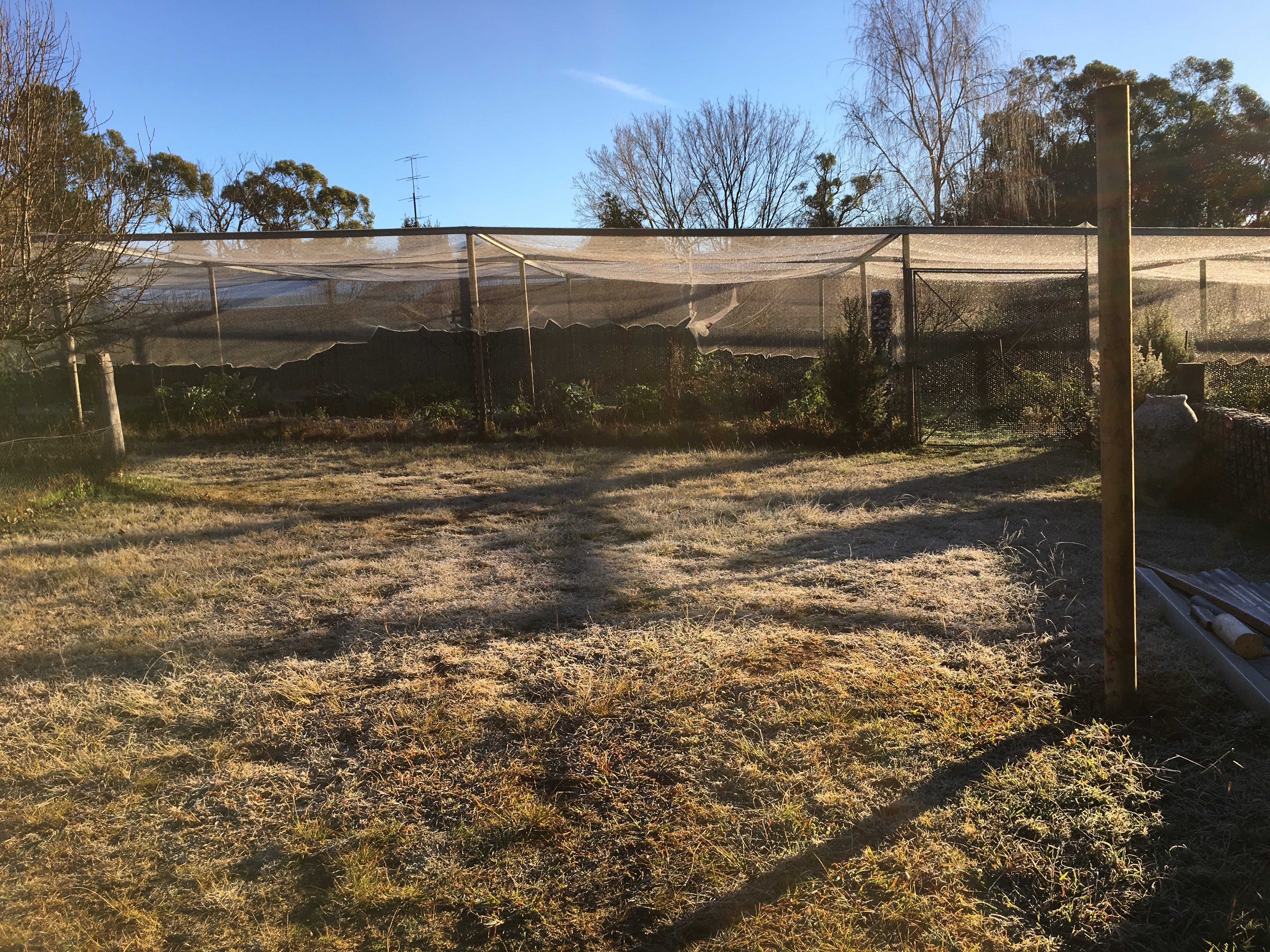
There weren’t any fruit eating birds here in this bushy area when we arrived, but 40 years on and an enormous amount of work later, we have built 4 dams for a secure key-line water supply and open grassy areas between the orchards, with areas of understory native shrubbery. We left all the really big established trees and without knowing it, we created a perfect habitat for all sorts of native bird life, from the very small finches, through to bowerbirds and magpies. There is even a very large white owl, that we haven’t managed to see close-up, so we can’t identify it. It has taken frogs off the kitchen window at night, right in front of our eyes, but moves so quickly and so totally silently that it strikes and removes its prey, without actually touching the glass and is them gone is a flash of pale wings, before we can adjust our eyes to the scene. I’m constantly amazed at how clever our birds are at fossicking out a living from our little property. So the fruit trees have to be enclosed to protect some of the fruit for us. The vegetable garden is now totally enclosed in small (35mm.) hex gal wire and very fine nylon mesh. This keeps out most of the birds that we don’t want in there. Those are the fruit and veg eaters, but allows the little finches in to feed on bugs. It seems to work OK for us now, but has taken a lot of trial and error to work it all out – mostly error.
IMG_1913

I have spent a little time over the summer break building another version of my portable stoneware wood fired kiln. These kilns are a direct response to seeing and working with Stefan Jakob’s ‘Ikea’ garbage bin raku kilns. Such a fun idea! And they work really well too, but only at the lower temperatures used for raku. It made me think about if it would be possible to make a reliable stoneware version of this kiln. Not in an Ikea bin, but in a custom made stainless steel monocoque box frame. The answer that I have been developing over the last half dozen years in my spare time is Yes!

This one solves all the problems identified in the last version, that although it could get to stoneware, some of its components weren’t likely to have a long life. I abandoned the ceramic fibre lining, as it doesn’t last for extended periods of time at very high temperatures where there is a lot of wood ash. The fibre turns glassy and peels off, like glaze shelling off, exposing new fibre, which then dissolves, the ash glaze slowly eats its way through the lining in this way.

We first experimented with a ceramic fibre lined stoneware wood fired kiln back in the late 70’s and early 80’s (see Handbook for Australian Potters P289-291.) In that kiln I used the new material at that time called ‘saffil’ board, that was mostly composed of alumina fibre. A 10 mm. hot face lining of this material lasted 30 stoneware firings before it was eaten away in the hottest part. These new little kilns use light weight refractory insulating bricks as the lining.

I couldn’t allow myself to recommend or to sell anything that wasn’t up to scratch and capable of delivering a long working life, so the development has continued, designing out the apparent flaws as they made them selves known. So now the design is a little closer to completion. I have designed version 5, so I hope that after that is built and fired a few times, everything will be settled down and we will have a very long lived and reliable small portable kiln. I think that we could say that we are now moving from prototype to beta testing stage. Perhap there will be something that we can sell to other potters with like minds. Just like we do with the more substantial gas and electric kilns that we build here – only much cheaper.

The improvements in version 4 meant that we could fire it up to 1,000oC in one hour. This part of the firing could easily go very much faster, but we have cracked kiln shelves in the past by going too fast below red heat. We then took the firing from 1000 to 1280 in another hour, finally soaking at 1280oC to 1300oC for the last hour until cone 10 was over. We got very good reduction colour in the glazes in that time frame. I was amazed what a couple of extra hours could achieve, in terms of quality. After all it’s not all about intense speed. We can already do that. This is more about getting very good quality results with a minimum of expenditure of effort and fuel.

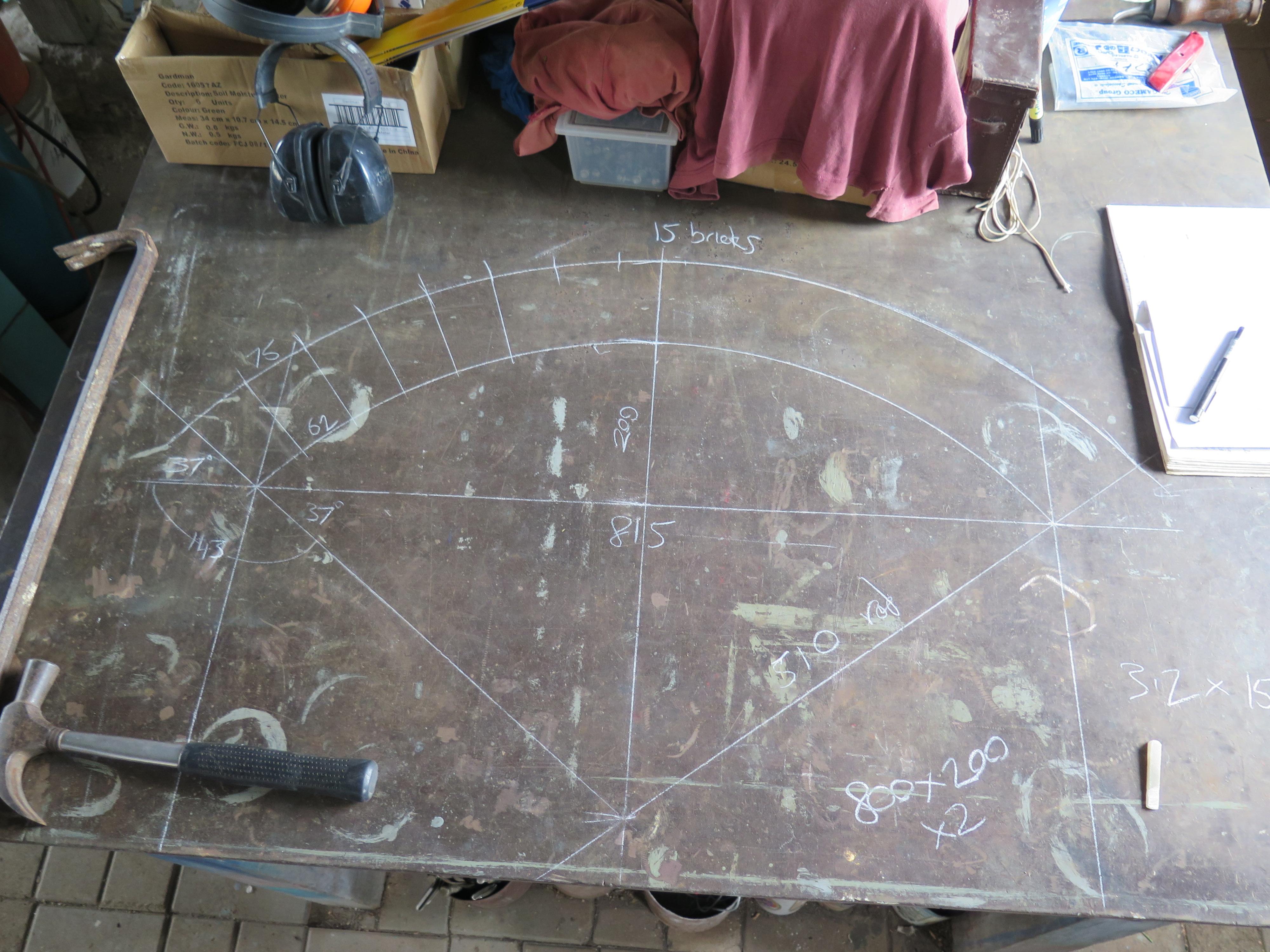
I spent a few days working out how to create this little wonder of a kiln, to enlarge it to use a 12” x 18”  (300mm. x 460mm.) kiln shelf in the setting, and still be able to cut the frame out of one sheet of Stainless steel with no or minimal wastage.

I’m sure that there are a number of potters who are with me and like minded in this regard, potters who are thinking just the same as me. How can I achieve lovely wood fired results without firing for days and creating loads of smokey pollution. I think that this sort of little fun kiln will be very good for potters with an interest in wood firing, but without the large work flow required to fill a larger anagama kiln, or a suitabe place where so much smoke can be created day after day. This little kiln is definately not smoke free, but the smoke is minimal.

As it turned out, this was a very relaxed and easy firing using dead brushwood and small, dead, fallen branches as fuel. There are always loads of eucalypt paddock falls all around our property from season to season. We collected 3 wheel barrow loads, one of kindling twigs and another two barrow loads of small thin branches, up to 50 mm in dia. We ended up using only 2 of them. We will fire it again for a little longer next time, slowing it down a little so that we can not only get the good reduction colour in the glazes but also some surface flashing in the bodies as well. I’m intrigued, what is the minimum length of firing time required to be able to get some pleasing wood fired effects on the surface of our pots?

When we fired up my pots in the first kiln, up to stoneware in just 1 hr. in reduction in the earliest version of this kiln, there was little reduction effect showing in the glazes. The pots looked pasty and palid, as if oxydised, but were in fact very pale grey, so they were reduced. It seemed that 30 minutes of reduction wasn’t enough to get a good response from the clay and glaze chemistry. This time, at 3 hrs. The results have shown very good reduced glaze colour effects, but only a very limited flashing colour on the exposed clay bodies. The work is starting to show some pink flash on the porcelain clay bodies with this slightly longer firing time, so we are getting close now. At least there is something there. The difference between one hour and 3 hours is dramatic. Perhaps the next firing of 4 or 5 hrs to S/W will do the trick and give results that I am better pleased with?

I want every thing now! I just don’t have the time to be able to do it all.

best wishes

from the multi-tasking S&J

Finally, the rain comes

We have had a week of swelteringly hot days, all up in the high 30s. Yesterday was 39oC way too hot to work out side, so we got up very early and got started working by 6am. We gave up and came inside at 11.00 am. It was just too hot. We have been watering the vegetables morning and night, but they are still suffering. Many of the plants like beans, celery and  cucumbers have dead, dried patches on their leaves.

IMG_1740IMG_1737

But at least they are still alive, so that is success. I gave the sweet basil its first hair cut. I tip pruned all the florets that were trying to flower and filled a large basket with the leaves. I like to make a kind of pesto-like paste. to go into the freezer, so that there will always be basil to add to sauces later in the year. We also make real pesto with garlic, pine nuts and parmigiano cheese, but what I’m making here now is just basil, garlic, a little salt and olive oil paste. It freezes well and keeps all year, so that when I need some basil flavouring in winter, I can open the freezer and take out the tub of this frozen basil paste, tap it upside down to drop it out of the container and then slice off a block of almost fresh basil concentrate. Beautifully green and flavourful. The rest is returned to the freezer for later.

I’ve been known to make up to six or seven of these half litre containers during the summer. As long as I never let the basil flower and keep pinching out the growing tips, the plants seem to thicken up and keep producing more leaves. Once you let them set flowers, they stop growing.

This stuff is fantastic. I love it. It’s one of there few things that we keep in our small freezer section of our fridge. Because it isn’t cooked, we can’t preserve it any other way, other than drying the leaves, which I have also done, but dried leaves are different. This stuff is magic. So intense. The little bit of garlic and salt really brings it to life. And it is surprisingly easy to slice from the block when frozen. Having very little water content and being mostly oil, it doesn’t set hard like ice, but more sort of leathery?

All the mid season peaches are now gone. We only have one tree of late peaches yet to come on. It is netted and we wait for them to ripen. All the berries are now over with over 20 kilos picked this year and safely all preserved, vacuum sealed and stored in the pantry. This recent heat wave has brought on the plums and they are just wonderful, sweet and tangy with that fabulous combination of acid and sugar that make your mouth water. We eat the first of them straight from the tree. Such a great taste, warmed by the sun, the juice trickles down our chins. They are mouth waveringly good. There are too many ripening all at once, so Janine has been stewing them and we have them for breakfast with a little yoghurt.

IMG_1719

We are in direct competition with all the birds at this time of year. The Lovely and hard working Janine has been moving the nets around and bagging some of the fruit, keeping one step ahead of the birds, while I have been so busy with orders. It’s a lot of work, but worth it. Having beautiful fresh, organic, clean food that we have grown ourselves, is a major part of our enterprise here.

We work outside very early and then again in the late afternoon and evening. Working inside during the heat of the day. Janine has mown the stone fruit orchard and I have mown the citrus grove and vegetable garden. Everything is looking good and now the heat is over for the time being with a cool change arriving and bringing with it some beautiful, cooling rain. I emptied the rain gauge this morning and we have had 33 mm. Just enough to flow down and top up the dam for a few more weeks of hand watering. The combination of cooler temperatures and soaking rain will bring all the plants back to life and put on a growth spurt.

IMG_1722

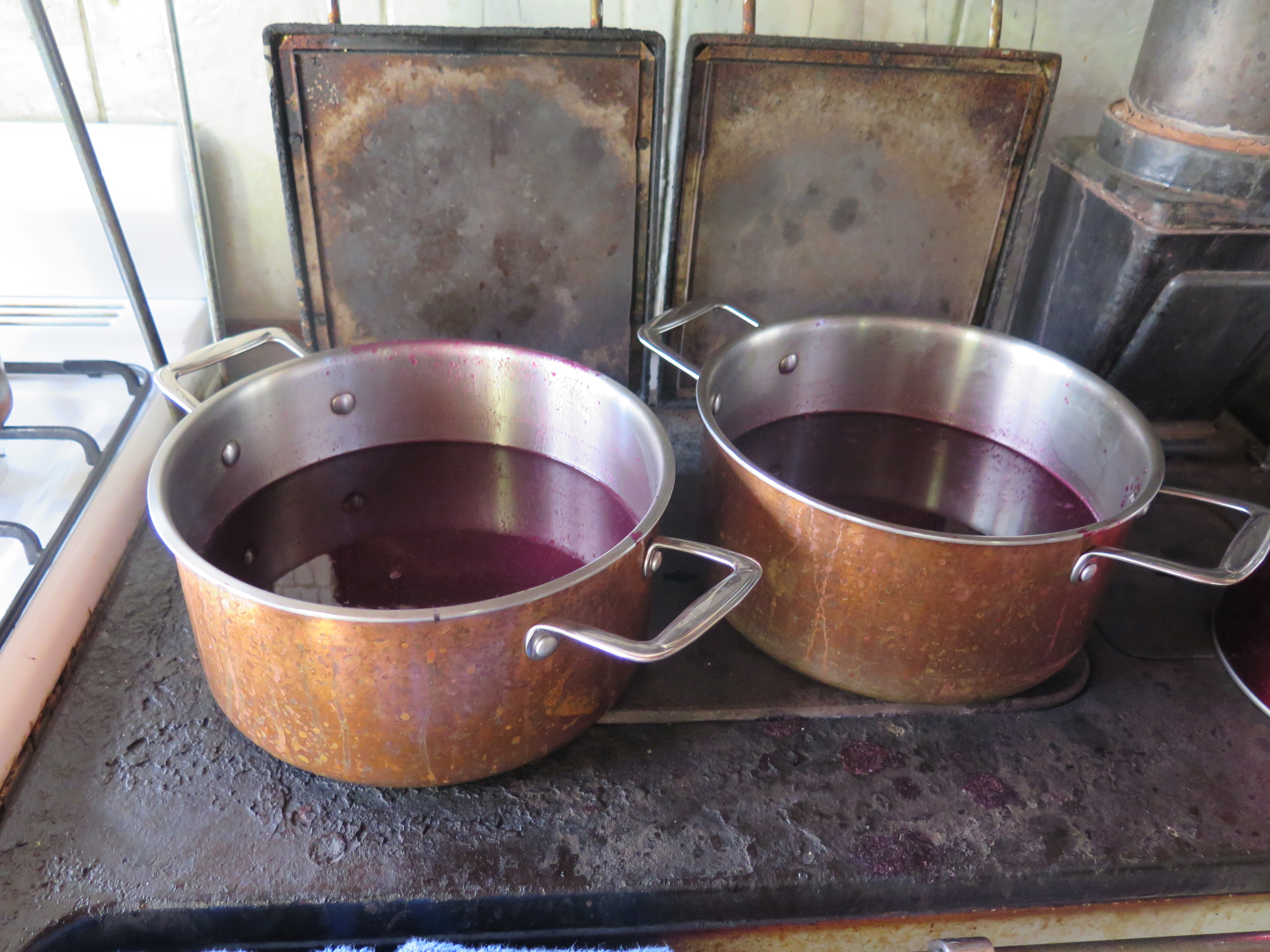
I bought a kilo of live mussels from the fish-truck man, so we are having mussel and vegetable soup for lunch. I usually just do the simple favourite, mussels in white wine, but as we have so many beautiful vegetables at the moment, I make a combination of green peppers, green and yellow zucchinis, red shallots and fresh sweet basil sauce. I bring it all to life with a jar of our preserved tomato passata concentrate from March. This batch was made with tiny yellow tomatoes, onions, capsicum, garlic and olive oil.

I cook it off and add the mussels to the boiling broth. It fills the kitchen with its steamy fragrance. It’s a great indulgence, but we  have earned it. Everything except the mussels from our own labours in the garden.

IMG_1721IMG_1724

IMG_1732

The First Tomatoes of the Year, Ratatouille

Yesterday, we harvested the first ripe tomatoes of the year. This is only the second time that we have managed to get ripe tomatoes before Xmas. The only other time was last year. Global warming, What global warming?

We also made our first pickings of our large green capsicums and smaller yellow banana capsicums, added to the sweet basil and yellow and green zucchinis, we have the makings of the first ratatouille of the summer. The egg plants bushes oblige us with the first few small aubergines and suddenly, there is our dinner in a basket.

The weather is very hot now 39 0C during the day. Our friends in Adelaide have had 4 days in a row of  41,42,43 and 41 oC. Way too hot to be able to work effectively outside. I make clay while the sun shines, inside under cover of a roof, but still sweltering. Porcelain slip dries very well on the drying bed in this weather. It’s a good time to make single-stone porcelain.

In the evening we sit outside and cook our produce, Ratatouille with the addition of a small jar of last years concentrated tomato, onion and basil ‘sugo’. I lightly brown our new-season onions in olive oil and then add in our crushed garlic. The roughly diced vegetables are added and turned in the oil a few times to coat them, then the sugo is added and the lid placed on to allow it all to simmer and soften for a few minutes.

We sit and chat into the cool of the evening. A nice chilled glass of rosé goes very well with this simple, fresh and very delicious Post Modern Peasants repast. The flavour of summer!

We have really earned this meal. We started making this meal three months ago, when we spread the compost and planted the seedlings. Now it’s payback time. It explodes in our mouths and takes us back to last summer. I can feel myself starting to relax into the idea of taking a little time off over the solstice break. This is a well earned, beautiful moment.

I am grateful!


Approaching the Solstice

As we approach the solstice the weather has turned hot and we are getting days in the mid thirties oC. Everything becomes desiccated very quickly if we don’t water morning and night. As the longest day will soon be here, it’s time to lift the onions and the early potatoes.

We plant most of the onions around the shortest day at the winter solstice and harvest near the summer solstice. So that is now. We aren’t very good gardeners, as we try to do too much, so there isn’t always time to do things ‘properly’, but we manage our time as best we can and everything that needs to get done usually does. We don’t plan things out meticulously and then follow through on the plan with Germanic precision. Rather we kind of lurch from crisis to crisis, doing what really needs to be done NOW and can’t wait any longer. I remember that I planted two packets of brown onion seed in late June,  but only a smattering of seeds germinated. I don’t know why. So I planted another packet in late July, when I realised that I wasn’t going to get any more strike from that first germination. The second attempt was also very patchy. As it takes a few weeks to realise that things haven’t worked out as you planned, there isn’t always time left to get the next planting done and germinated in time. So it was very late, at the beginning of August. The last day before I left for Japan, that I sprinkled two more packs of onion seed, a different brand this time, and then flew out for a month or so. When I returned, the unattended seeds had all struck, but were a bit crowded. I was so busy catching up with everything else on my return, I left them to get on with it. They are now ready to lift, but rather small, as they didn’t get enough cold weather to grow out well. I’m calling them salad onions now, small but juicy and sweet. I’m not too sure how they will keep.

The garden girl has been lifting the early potatoes, Nicola and Maris Piper. We don’t get huge crops, using only compost and some chicken manure to fertilise them. But the soil is soft and fibrous, and rich with worms. It looks and smells great, so I’m happy with that. We get about 8 potatoes for every one that we plant, maybe 1 kg per spud. I’m told that commercially, they get 8 to 10 kgs per plant? I’m not too concerned. We do everything organically with a view to growing just enough to support ourselves. This isn’t a business. It’s real life, a life where we aim to be as sustainable as possible. We get more than enough spuds to keep us going all year, more then we need actually. So the ones that get a bit shrivelled and start to get long sprouts on them after storage for a long time, just simply get replanted, back into the garden. They become the winter crop, down in the frost free area of  the Pantry Field.

All the young berries have finished now, as have the raspberries, there are just a few boysenberries left under netting. We picked over 20 kilos of berries this year. We ate a lot of them, but most of them were sterilised and went into vacuum sealed jars for use later in the year.

We have a good crop of cabbages coming along, so we are developing recipes for using cabbage. Finely sliced and cooked in okonomiyaki, shredded in a salad with mint and vinegar dressing, or served with shiso, rocket, mizuma and roasted nor paper strips and dressed with a sesame oil, mirin, rice wine vinegar, sake and soy.

Annabelle Sloujettè called in and introduced us to a commercial brand of pre-fried Chinese noodles in a plastic pack. Not the sort of thing that we would normally think of buying. She made a cabbage salad with these crunchy noodles and a lovely tangy home made dressing. We were very impressed. It was really delicious. She stayed over and we talked late into the night. In the morning we had coffee with her before she left.

She likes a big coffee to start the day.

IMG_1672