Home Again

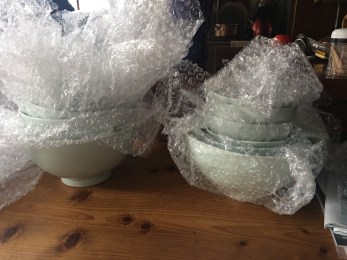
I have had an amazing time in Korea. I was very lucky to meet such supportive and helpful people. Every thing had gone well this time and I am returning with a suitcase and back pack loaded with beautifully fired porcelain. So different from my last visit, in terms of the fired result.

IMG_7204 IMG_7201

IMG_7175

My last day starts foggy and overcast, but clears up.  I was walking back across the lawns from the research centre , back to the pottery workshop building , when I bumped into one of the support staff. A lady who I thought spoke very little English. I had heard her say “Australian Honey” out loud on my 2nd day in the workshop. I had given a small jar of honey to one of the staff members who had just helped me with a problem. I took several small jars of Australian varietal honey with me specifically to use as gifts. This lady saw the jar and read the label out loud. I heard this from the other side of the room and got another jar out of my back pack and presented it to her.

She asked if it was for her. I replied. “Yes, it’s a gift for you”.

She thanked me profusely, and that was the end of the matter. I didn’t have reason to speak to her again personally until now. She stopped me on the lawn and said to me in her basic English. “You leave today?”  I replied. “No, not today, tomorrow morning, very early, 7am.”

She explained to me that she only spoke a very little English, but wanted to thank me for the honey and say that I was nice to have around. She reminded me that I had helped her to move a heavy shimpo potters wheel, so she could do some cleaning under and around it.

It was very nice of her to say so, and to venture to initiate the conversation in a language that she was not proficient in. She told me that she was not Korean, but originally came from Japan and married a local Korean farmer.

I replied “So desu ka!” Is that so!, She did a double-take, blinked and replied “Anatawa Nihongo hanasamasuka?” Can you speak Japanese? I replied “sumimasen, watashiwa, Nihongo arimasen…choto dake” Not really – just a little.  It’s true, I don’t speak Japanese, but I can speak a few words, however, when I get my ear in, after I’ve been in Japan for a week or so. I realise that I can recognise a lot of words in what is being said around me, and I often know what it going on. Japanese is the only foreign language that I ever tried to learn by doing a bit of study. Some of it has stuck.

Suddenly we were off on a tangent talking in a weird mix of Japanese, English and Korean using my phone app. It was a completely unexpected, but warm and rewarding moment for both of us. I came away thrilled and very pleased at the intimate level of communication that had just evolved so organically and unexpectedly.
IMG_7177 IMG_7202

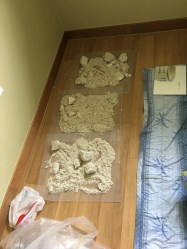
I go back to my room and start to clean up and pack my bags. I have a few clay samples that I have been drying on the heated floor of my room. I eventually get everything back into my bags, plus, I’ll be leaving with an additional 20 bowls and 5 kgs of clay. I’m ready for the early start tomorrow.

The sunset is lovely. The sky is clear. The last rays illuminate the rice and the poly tunnels, that so define this place. It’s a beautiful way to remember this pleasant valley.

IMG_7107

Inhwa and her husband turn up very early the next morning to give me a lift with another student to the bus terminal at Yang gu. My Jung turns up too! He has stopped off on his way to work, to say a final Good Bye. My return trip to Incheon airport out of this remote place on 3 busses all connects perfectly and I arrive at the airport earlier than I had allowed for. My return flight is uneventful, I just want it to be over with really. Sitting in a seat for 12 hours is very dull. Although I do manage to find a couple of hours sleep during the night. Probably my best effort so far at sleeping sitting-up while flying. Possibly because  didn’t sleep much the night before.  Maybe I’m getting better at this? Not that I want to practice it any more. I’m over it.

I’m home just before the solstice. I unpack my pots to show Janine and take a walk around the garden. The early peach has started to flower. It’s so amazingly early. The first job is to move some more big logs into the wood shed, closer to the splitter. The last time that  Idid this, a month ago. I smashed my finger. it still isn’t healed. The chickens are happy to come along and help with this job. But only because there are always a lot of bugs and creepy-crawlies under the bark for them to eat. They love the wood splitter. It provides fresh protein that wriggles all the way down. Yum!
IMG_7210 IMG_7231

IMG_7213 IMG_7223

They have absolutely no fear of machinery like the splitter. They really want to get their heads in there as soon they can, to get the first peck, but sometime the splitter blade hasn’t even finished coming down. I’m constantly brushing them away, but they swivel around and are straight back. They trust us – foolishly.

I think that they have no fear, because they have no brain. But they are sweet things to have around and they are good company.


Wintum, A time for a clean out and change over

Here we are on the last day of autumn, on the threshold of winter. All the garlic that I planted on the evening before setting off for China is up and thriving. Garlic loves to get an early start. Late Feb and early March seems to suit it best around here. I know this because this is when all the old, last-years cloves that  missed harvesting, all start to shoot up, looking for the last of the warmth as the days get shorter. If these little fellows know that it is time to shoot up, then this must be the time. So in they go, or went in this case. I didn’t get time before leaving in the hectic weeks before setting off. So it was a case of do it now in the evening dusk or miss out. I’m glad that I made the effort now.

IMG_6568  IMG_6571

Its a very much smaller crop than I have managed in previous years. This time about 100 plants. It’ll have to do. At least it is something. I realise that I can’t do everything. I’m very happy with what I have achieved.

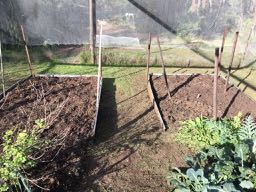
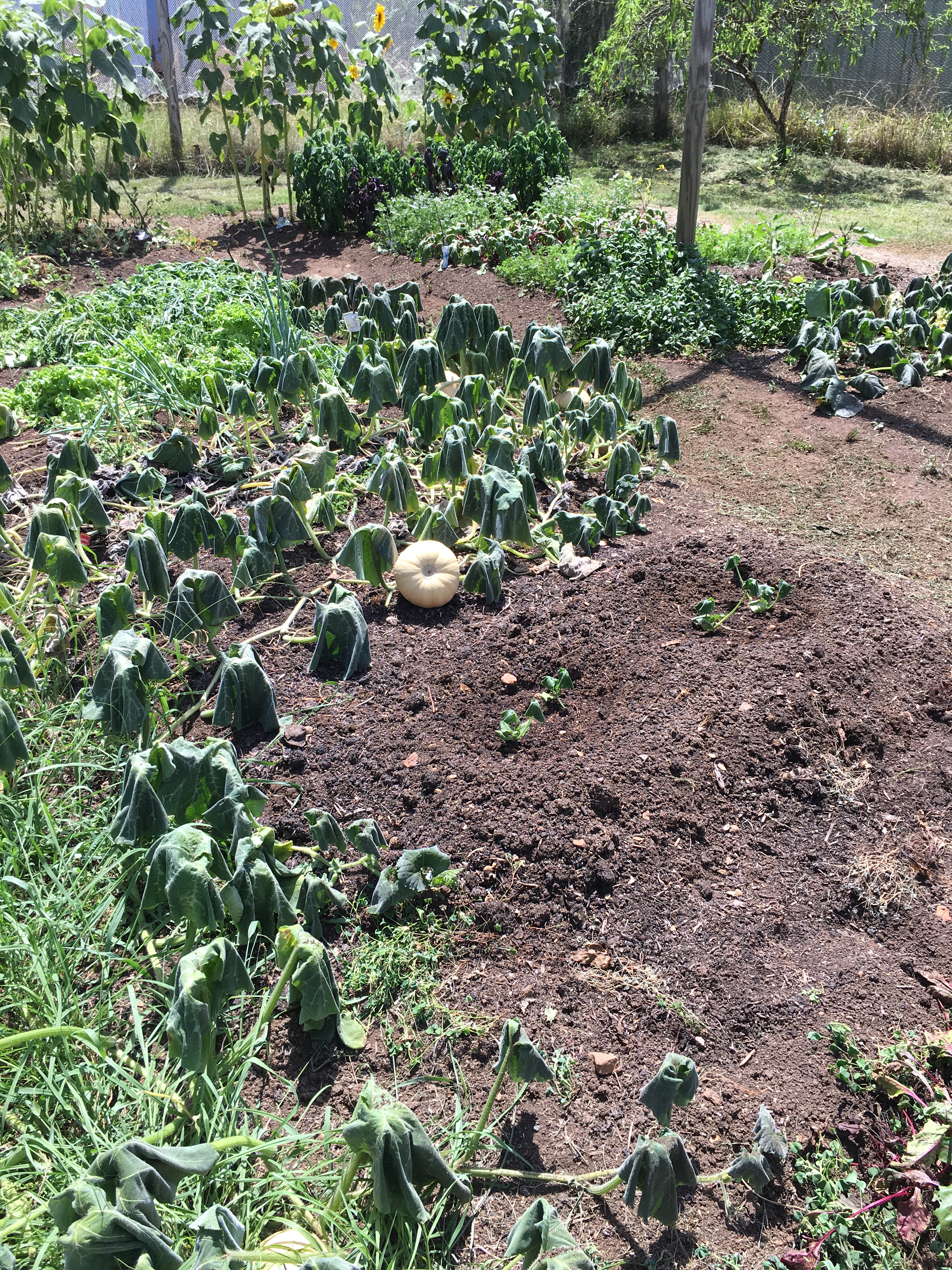
When I returned from our little break away in Canberra, but before we left for Cambodia. Apart from building a kiln and making some more porcelain stone bodies from my recycled turnings. Janine and I managed 2 half days in the garden. Cleaning out all the old dead and finished summer plants. It was all cleaned out and taken to the big compost heap behind the pottery. This is one of the chooks favourite places. They can spend hours in there. They really want to get into the vegetable garden to ‘help’ us! But alas, they are kept locked out. We don’t need their kind of help in there just now.
  IMG_6563.jpg  IMG_6562

The chooks like to see what is going to the compost and ambush Janine on her way demanding to see what is nice and possibly edible in the wheel barrow. They decide that un-ripe, green  and sour golden berries are just what they love. and as long as we peel of the paper coating, they gobble them down.

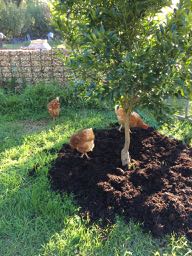
We prune off all the dead asparagus fronds and top dress the 2 beds with compost. It all starts to take on a look of care and attention again, instead of the wild riot of form and colour that was there at the end of the rampant summer growth. Janine mows the orchard while I wheel-barrow compost and spread over the garden beds and all around the citrus trees.

IMG_6567 IMG_6566

I will be time to start pruning the orchards and grape vines soon. But before I can do that, I have some Korean sericite porcelain to make. Everything in its own time.

Nothing is ever finished, nothing is perfect and nothing lasts.

However, for now, the garden and orchards look loved again.

IMG_6659 IMG_6660  IMG_6661

Welcome home

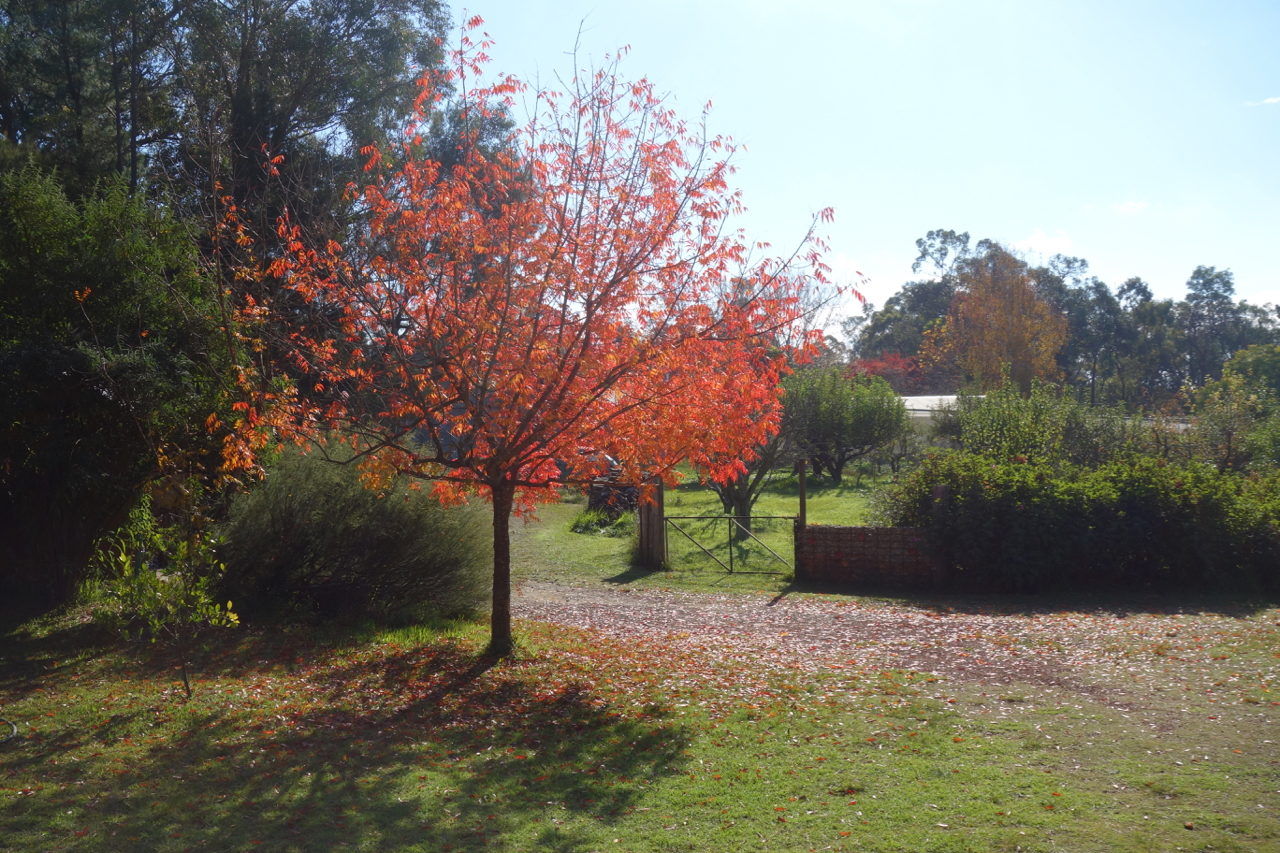
We arrive back home at the end of Autumn. The pistachio tree has turned red in our absence and the liquid ambers are loosing their leaves. We head straight to the chook house to see how the girls have been faring without us. Perfectly well it appears. They have changed their allegiance to Annabelle Slugette, because she has been living here, working in the pottery and feeding them treats for the past few weeks. Hens live for food! I know that it is only cupboard love, but I do feel a little bit abandoned. I’ll need to find them a few snails or other special treats to win their hearts ( and stomachs) back.


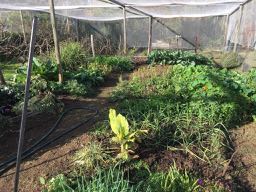
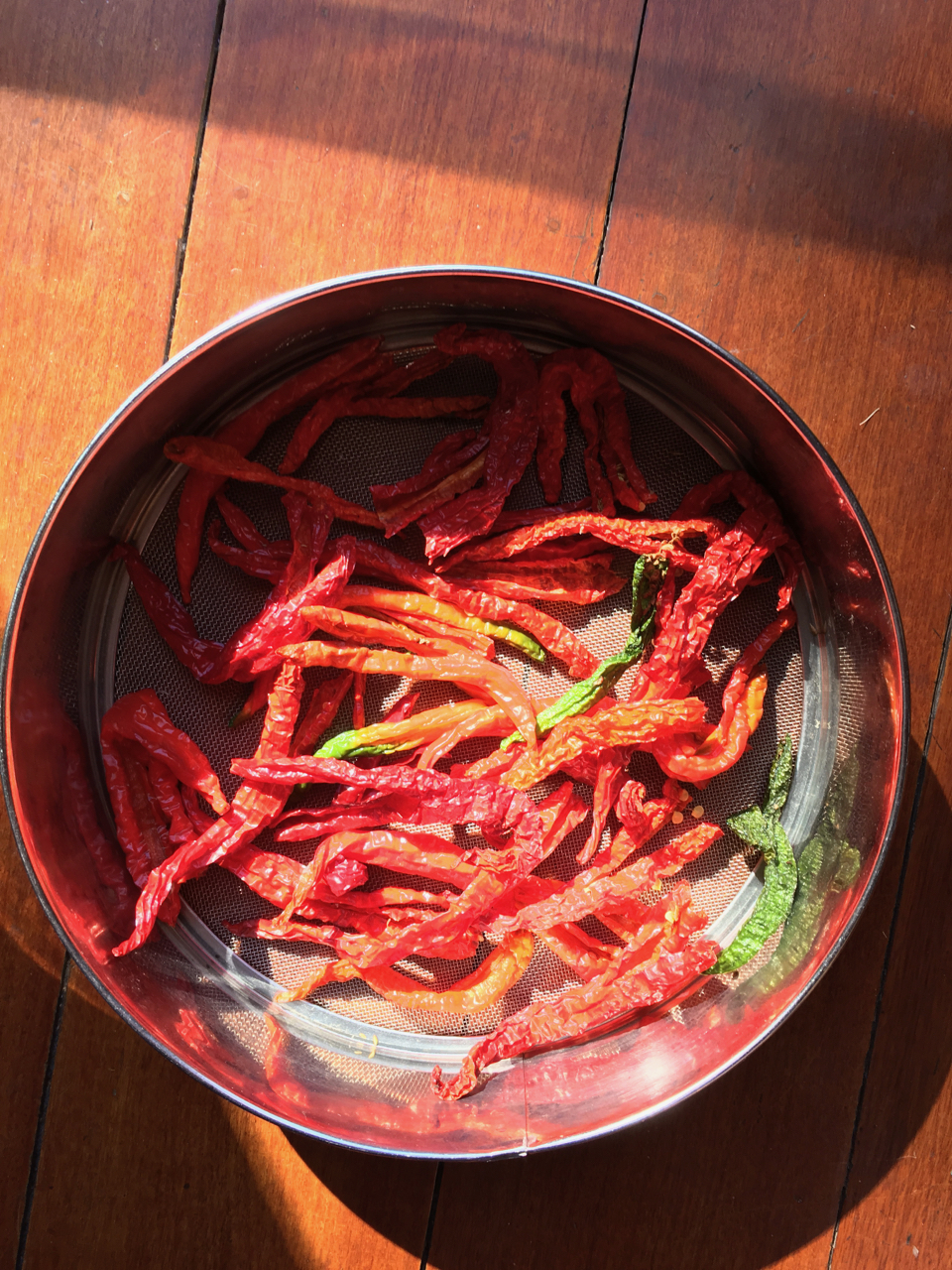
We head to the garden to see what there is for dinner. We find our selves in that special period of the year when there are just a few summer vegetables hanging on, while the winter crops are just starting, so we pick the last zucchini and the first cauliflower. There are only a couple of weeks when you can eat this combination of garden produce. The chillis have ripened a lot more while we have been away, so we pick some and dry them.


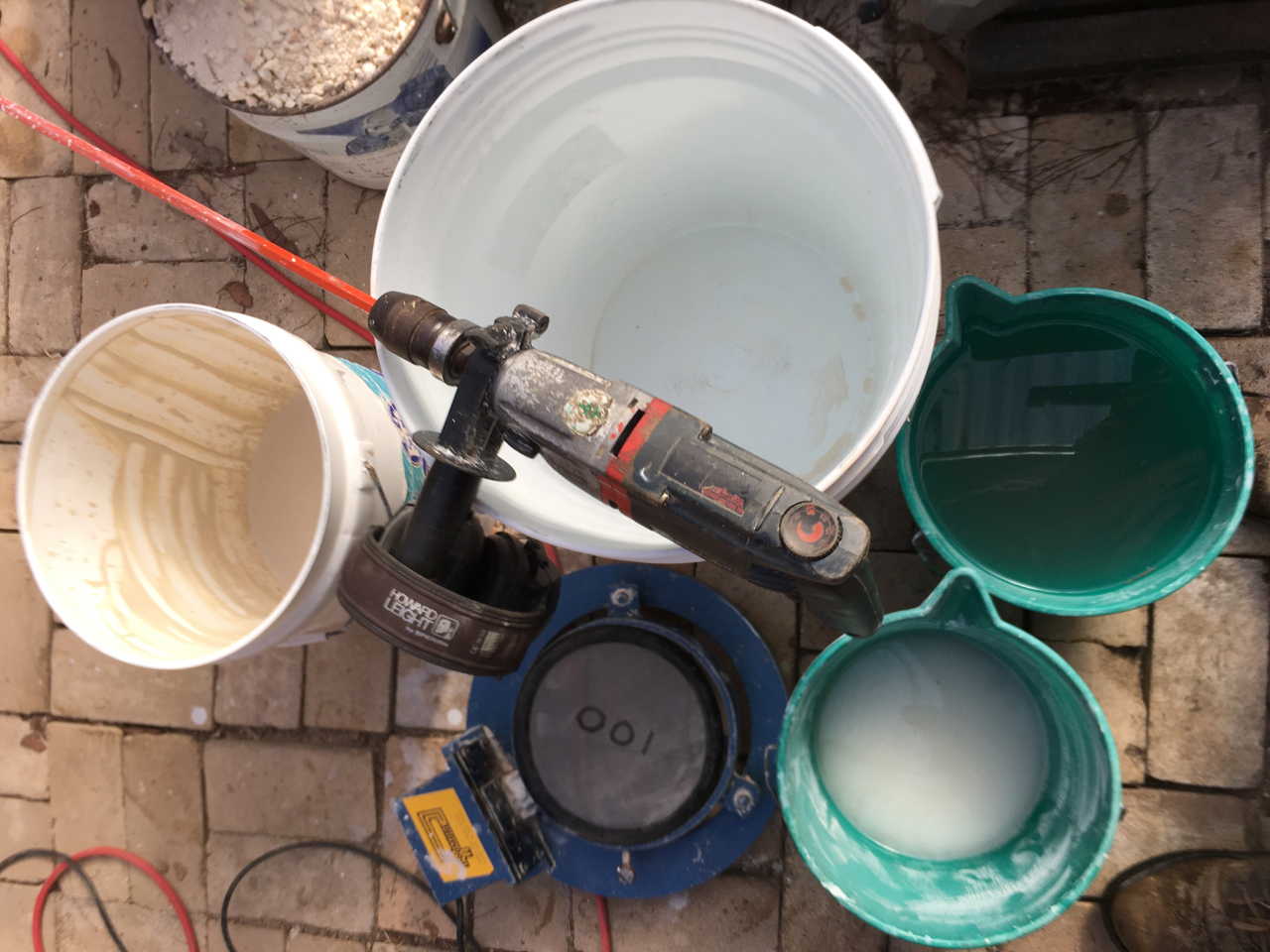
The next day I’m back at work in the pottery. I have  to slake down all my turnings that have dried out while I’ve been away. Clay slakes down so much faster when it is bone dry. I have lots of small batches to deal with. I have been working on my collected samples of porcelain stones from all around the world and I have to keep all the turnings from each batch of pots made from each special rock completely separate and well-marked, so that I don’t get mixed up or confused about which is which. I have 10 buckets marked with masking tape and felt fen, so as to keep it all under control.

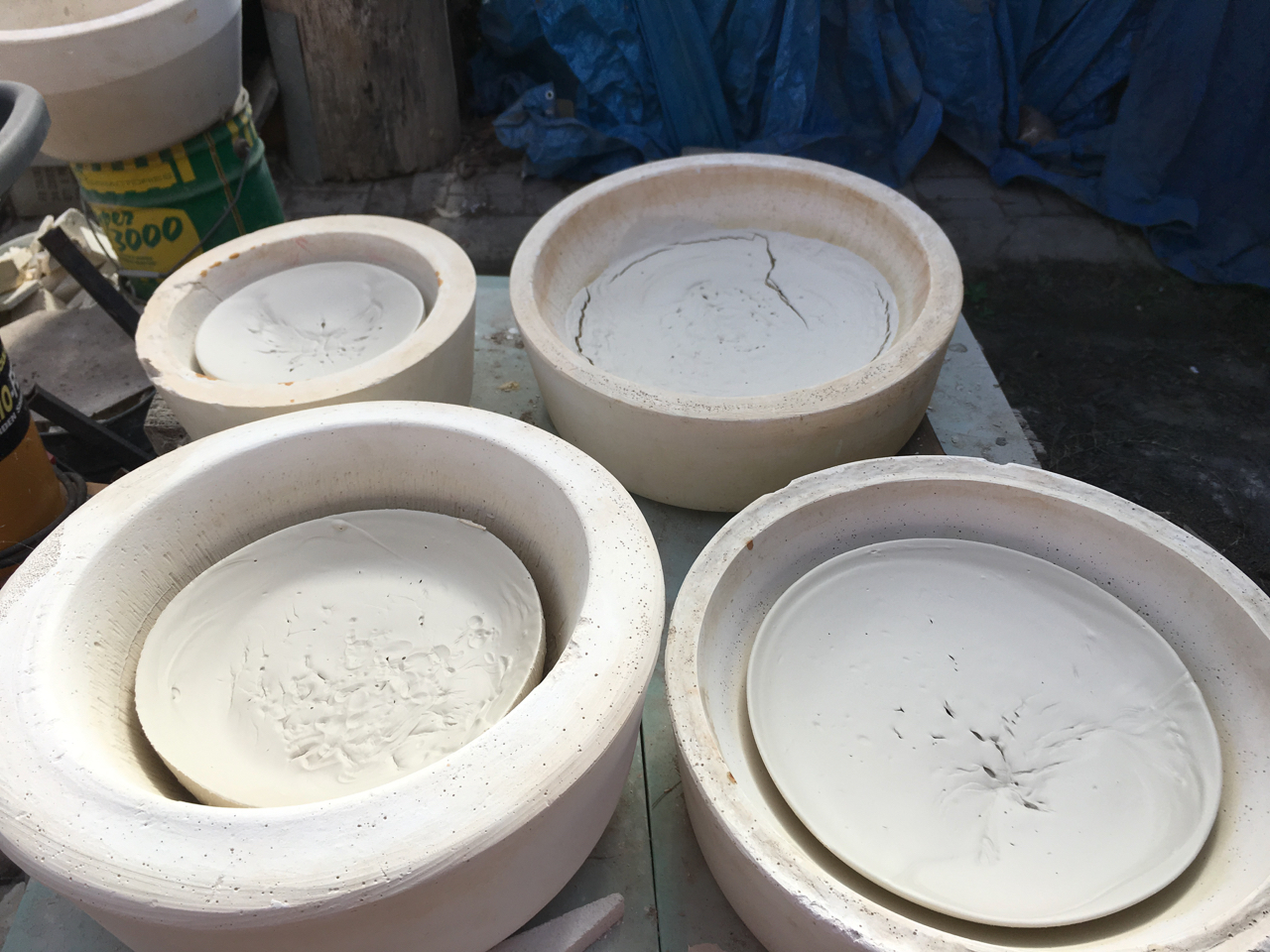
I start with the first 5 batches. I slake, blunge and sieve them all through a 100# mesh screen, then flocculate them and decant the excess water, it takes a while to get its all done. Eventually, they make it out onto the plaster drying tubs that I use for small batches of re-cycling like this..


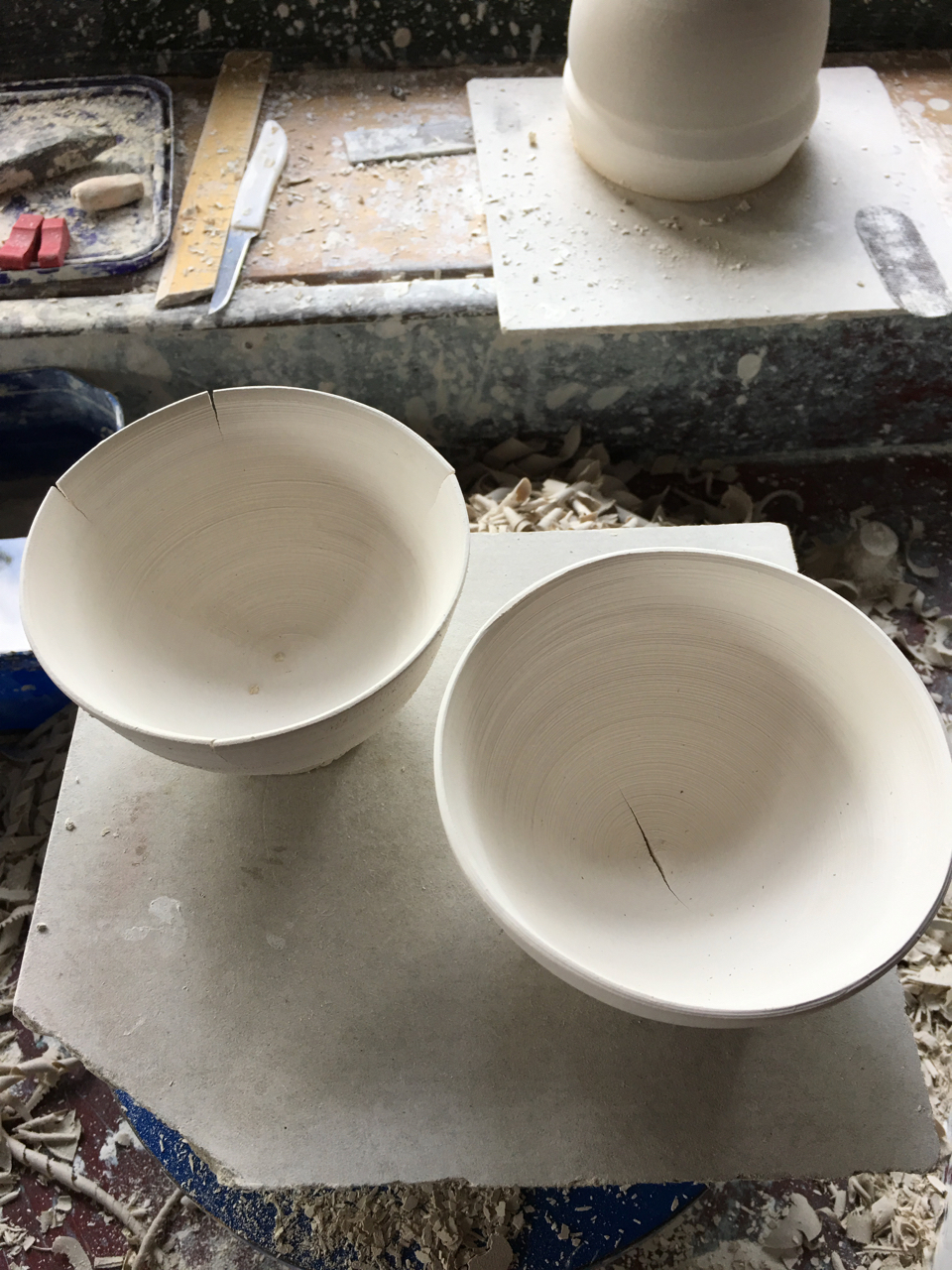
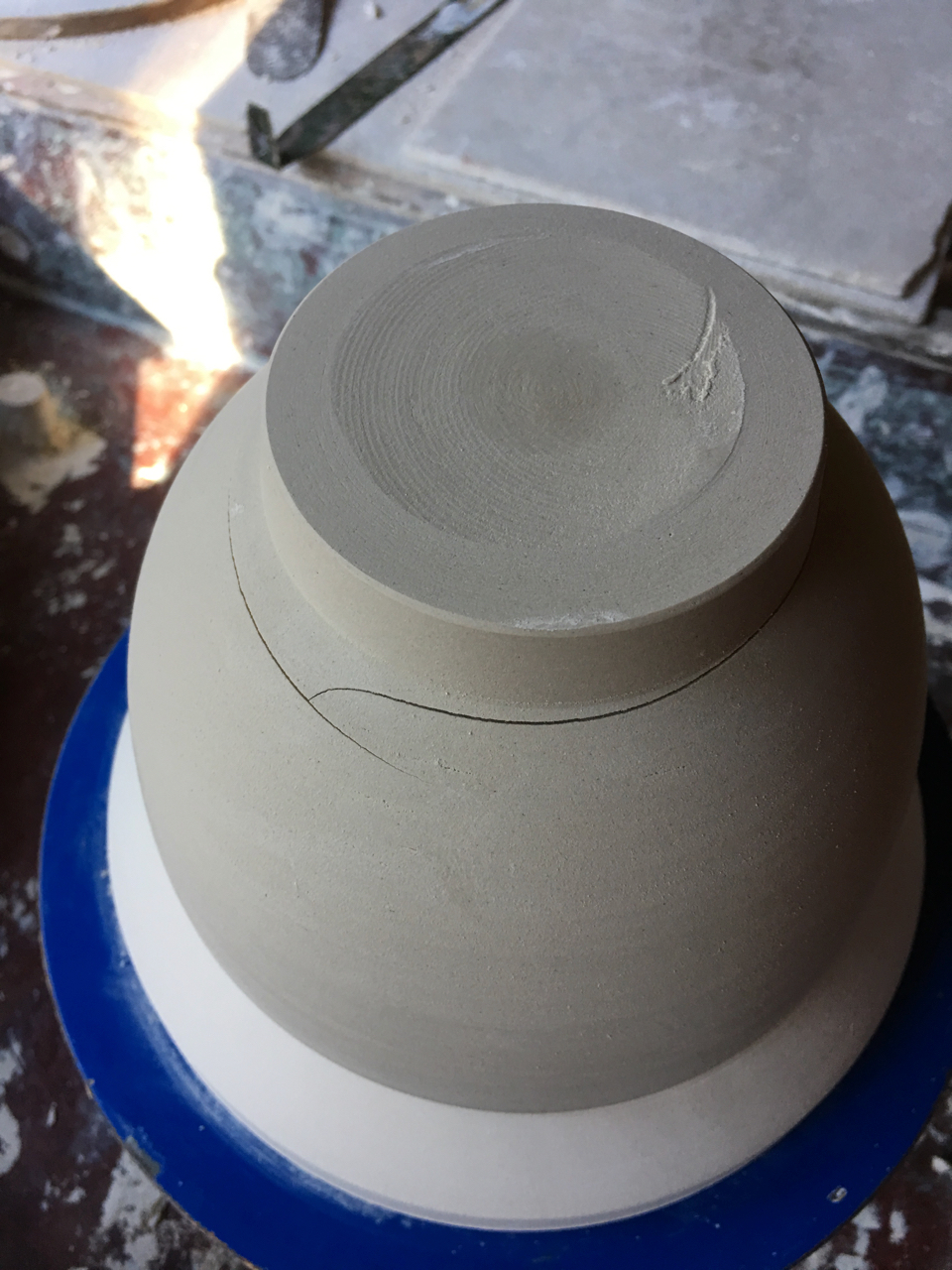
I’m not just dealing only with turnings here. Many of my pots don’t even get to the turning stage. These ultra-fine, ground stone bodies, with virtually no real ‘clay’ content, based solely on mica and quartz, with just a little illitic material. Consequently, they have no dry strength. They sometimes just split as soon as they are placed on the chuck, some don’t even get to the chuck, as they split during drying. Other decide to part company with themselves after the first turning at the ‘roughing out’ stage.


Some others tear themselves apart after the second trimming. Only a few make it to the final turning and bisque kiln. The only good thing about pots cracking during drying, is that at least I can re-work the material and have another go at making something that might survive to the kiln. What happens in the glaze kiln is another matter. I’ll find that out for these samples soon enough!


Environmental fellowship

We have had a Danish potter staying with us for the past month. He won the Environmental Ceramics Fellowship for for 2016, but for both of us it was just too difficult to complete it last year, so we postponed to this year.

He is a potter from Denmark who is interested in sustainability and new ways of exploring how to make a living in this new digital age. He has his own web presence in Denmark where he markets Potters wheels, kilns and clay bodies, as well as making his own work. He is a digital native. Whereas, I am, on the other hand, a dig-it-all-native. Making everything myself from the ground up – and that is what he is here to learn.

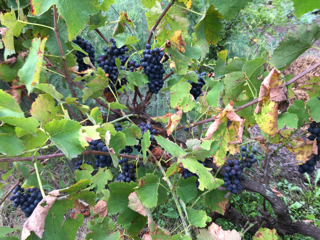
We crushed porcelain stone in the big jaw crusher to make single-stone porcelain body. We made clay tests to investigate unknown clays. We worked in the gardens and orchards. Ate all our own produce. Cooked up some wonderful meals. Lauge is a great cook, so that helped. We went on a geology excursion to look at some of the local stone deposits. Harvested the shiraz grape crop and made dark grape juice from the grapes.

IMG_4683 IMG_4684.jpg

All in all, the month flew by and it all went too fast, leaving so many things un-explored. A month just isn’t enough time to experience everything that we do here.

Janine and I are planning to do some volunteer aid work overseas soon. So we are working towards this by making clay tests out of the local clay that has been posted over to us to process. Our Guest lends a hand in everything that we do.

IMG_4764  IMG_4766

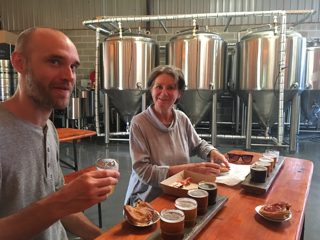
We decide to go exploring and looking at a few rocks for making glazes. Then, to complete the true ‘Australian’ experience, we take him to the local micro-brewery and have a meat pie with tomato sauce, accompanied by a tray of the brewery’s sample beers for lunch. Fantastic! I haven’t eaten a meat pie since I was a kid, so it was an experience for me too!

 IMG_5065 (1)IMG_5068

IMG_5006 (1)

You have to look closely at the image of the analcime basanite deposit above to focus on the small figure in the foreground.

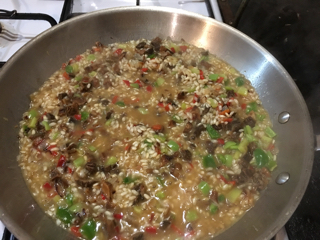
We cook and eat what is in season in the garden this autumn equinox. An autumn garden risotto, a fresh garden salad of shaved beetroot, cucumber, raddish, quince. Served with wasabi rocket, lettuce, beetroot tops, chilli and crunchy pan-roasted almonds.

IMG_4977 (1) IMG_5076

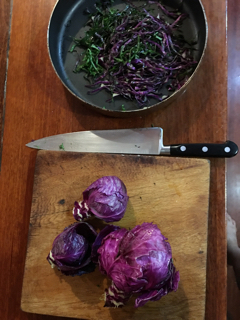
We also make an alternate version of okonomiaki, using some very firm, third pick, red cabbage, our own home grown eggs, garlic, chilli and shiso. Everything from the garden. Red cabbage is too slow to cook straight off as a cabbage pancake. So I pre-cook the cabbage to soften it down before I blend in the pancake mix and all the other ingredients. It’s not really a traditional Japanese okonomiaki. It’s an improvised Aussie OKA-nomiaka. Served with mayonnaise and Japanese okonomi sauce. Topped with bonito flakes and some Japanese pickled ginger.

IMG_5072 (1) IMG_5074 (1)

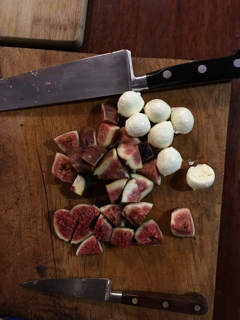
We finish the meal with fresh figs and soft white cheese. We do this desert a lot at this time of year while the figs are coming on. We try it with all manner of different soft cheeses. Boconcini isn’t the best, but you don’t know these things until you try them out. We’ve tried it with blue cheese, fetta and soft white goats cheese which was best.

IMG_5073

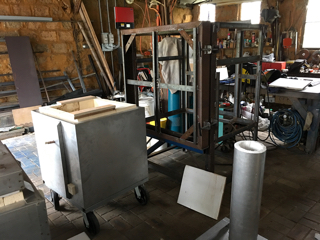
Lauge helps me finish off the internal fittings for the 8 little dalek kilns. These are now  almost all delivered, leaving space for me to start welding up my 2nd kiln job of the year. There is just enough room to get both jobs in the factory at the same time, but it takes a little bit of planning and maneuvering to get everything into the tight space.

Now the shed is almost empty, with the big new frame gone off to be galvanised and all the little ones gone to good homes:)

IMG_4999 (1) IMG_4998 (1)

IMG_4997 (1)

We Are Cooking in the Heat

This last few days of heat has really set the garden back. We are out early and late watering. I watered for an hour, early this morning, but by lunch time everything was drooping with this blast of oven temperature air.

img_4607 img_4608

Because it is so baking hot, I have been out cutting bracken fronds and sticking them into the seedling beds to give some shade to the young transplanted seedlings. I transplant them in the evening when it is cool and give them overnight to settle in before the next hot day. They seem to be surviving OK so far.

I have been harvesting the summer excess. A bucket of beetroot, a bucket of cucumbers a bag chillies and another red cabbage.

img_4571 img_4579

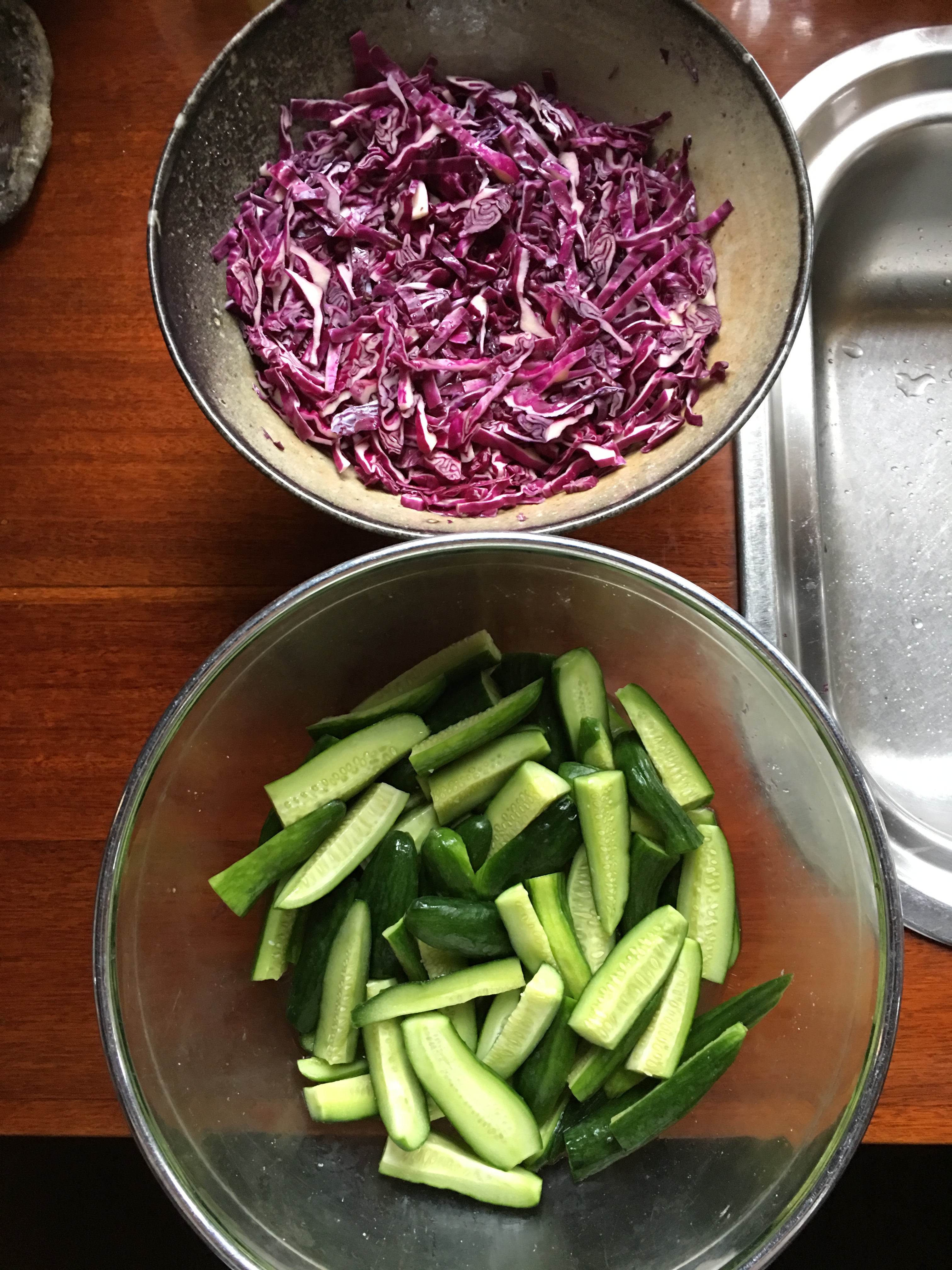
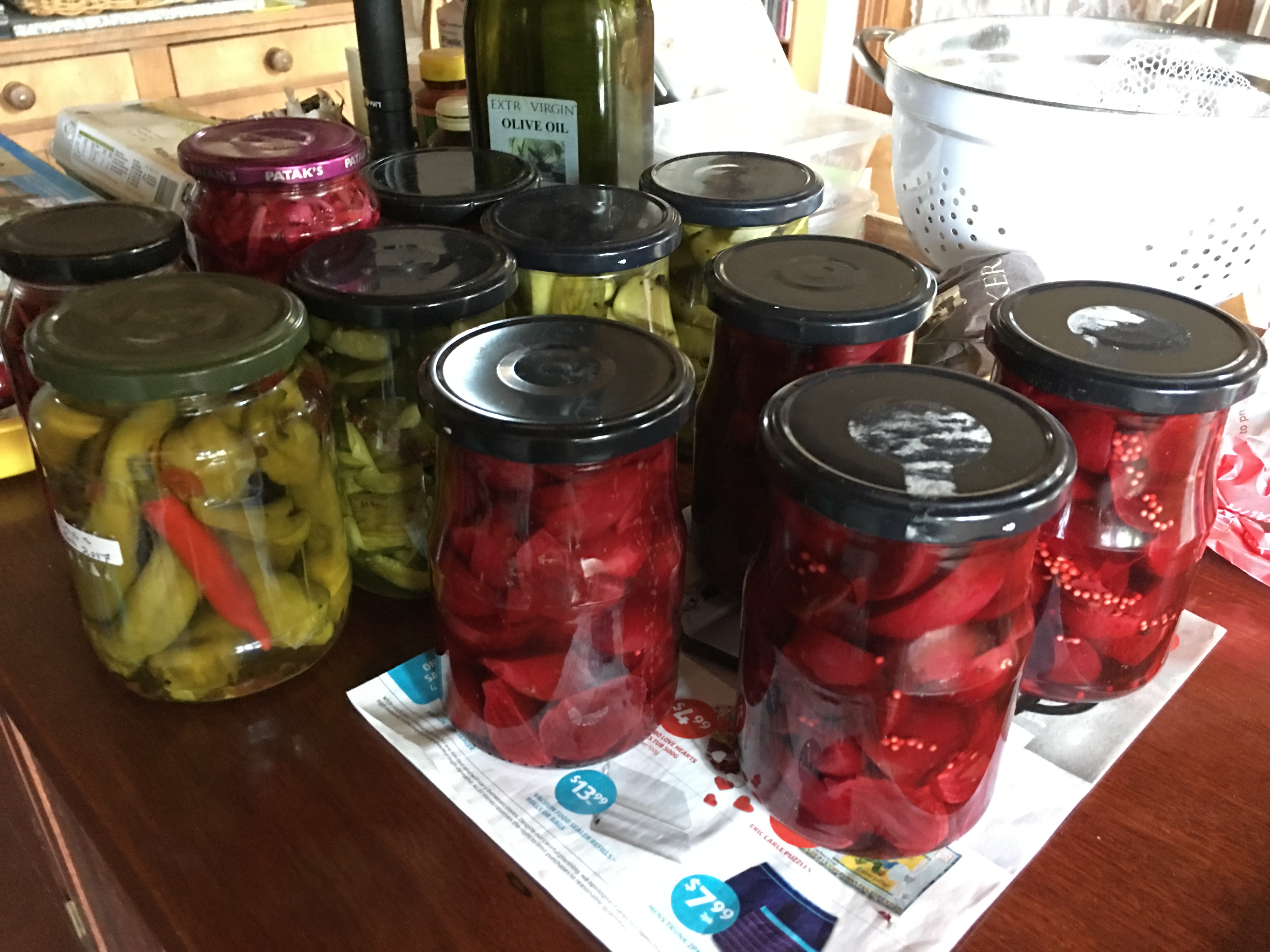
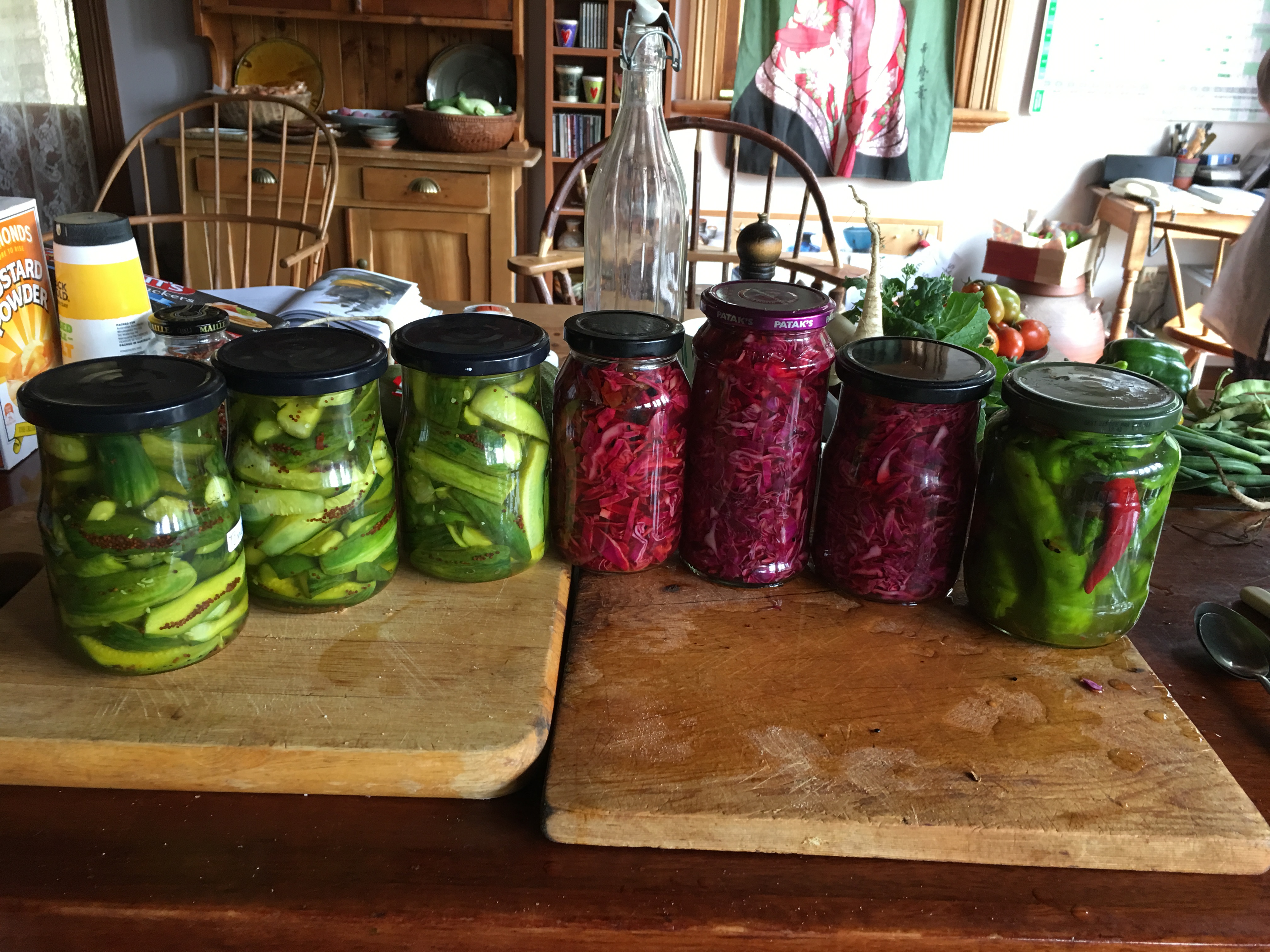
I decide to make pickles, I wash, chop and thinly slice the cabbage, then soak in a brine of 2 cups of salt to 1 litre of water. The cabbage collapses over night and in the morning it is completely submerged. I rinse it twice to get a lot of the salt out, then pack it in hot sterilised jars from the oven and cover with hot pickling vinegar, then seal down the lids.  I hear them ‘pop’, and vacuum seal themselves when they cool, as I go about dealing with the cucumbers. They have been sliced and soaked in brine too. I rinse them and pack them into hot jars, cover with more of the pickling vinegar.

img_4580

While I’m at it, I stuff another large jar with whole chillies, that I have sliced open on the side to allow the pickling liquid in. My final job is to peel, then slice a big boiler full of cooked beetroot. They are a really wonderful colour. I bring them back to the boil for a minute or two in their original juice, I get 4 jars packed tight. I fish out a chilli, some cloves, pepper corns and a small piece of cinnamon bark to add to each jar. Then cover with the last of the vinegar.

img_4597 img_4598

img_4602 img_4604

I have to go back to work tomorrow in the kiln factory. I have 7 kilns ordered, so far this year already. I’m booked out till September.  I have to get busy. My summer break is over. I started back a couple of weeks ago to get an early start on all these orders, but then I sliced my knuckle open. So that was that till now. With the scorching heat, I don’t fancy working in the tin shed that I call the factory. But needs as needs must. I think that I’ll be running the sprinkler on the roof during the hottest part of the day.

It’s an ill wind that blows nobody any good.

It’s an ill wind that  blows nobody any good. Citrus stinkbug up-date

My friend down the road just emailed me to say that he had been doing just the same as me. Getting out there and squashing the citrus bugs, but unlike me, he has taken the precaution of wearing the rubber gloves. Unfortunately, although he wears glasses, one of the little buggers managed to give him a serious squirt in the eye from an oblique angle. He ended up in hospital. His eye all swollen and weeping. Unable to open it. The hospital said that the caustic juice had corroded the surface of his eye! Poor bugger!

I’ve never been squirted in the eye by these stinky little effers. I can only imagine how painful it is. But I have coped a little spray on my neck and face and it really burns the delicate parts of my skin that might be exposed. The most pain that I have suffered at the hands, or should I say butts, of these little squirty critters is when I had a cut on my fingers and the acidic juice get into the cut. You can’t wash it out fast enough and it never really goes away for hours.

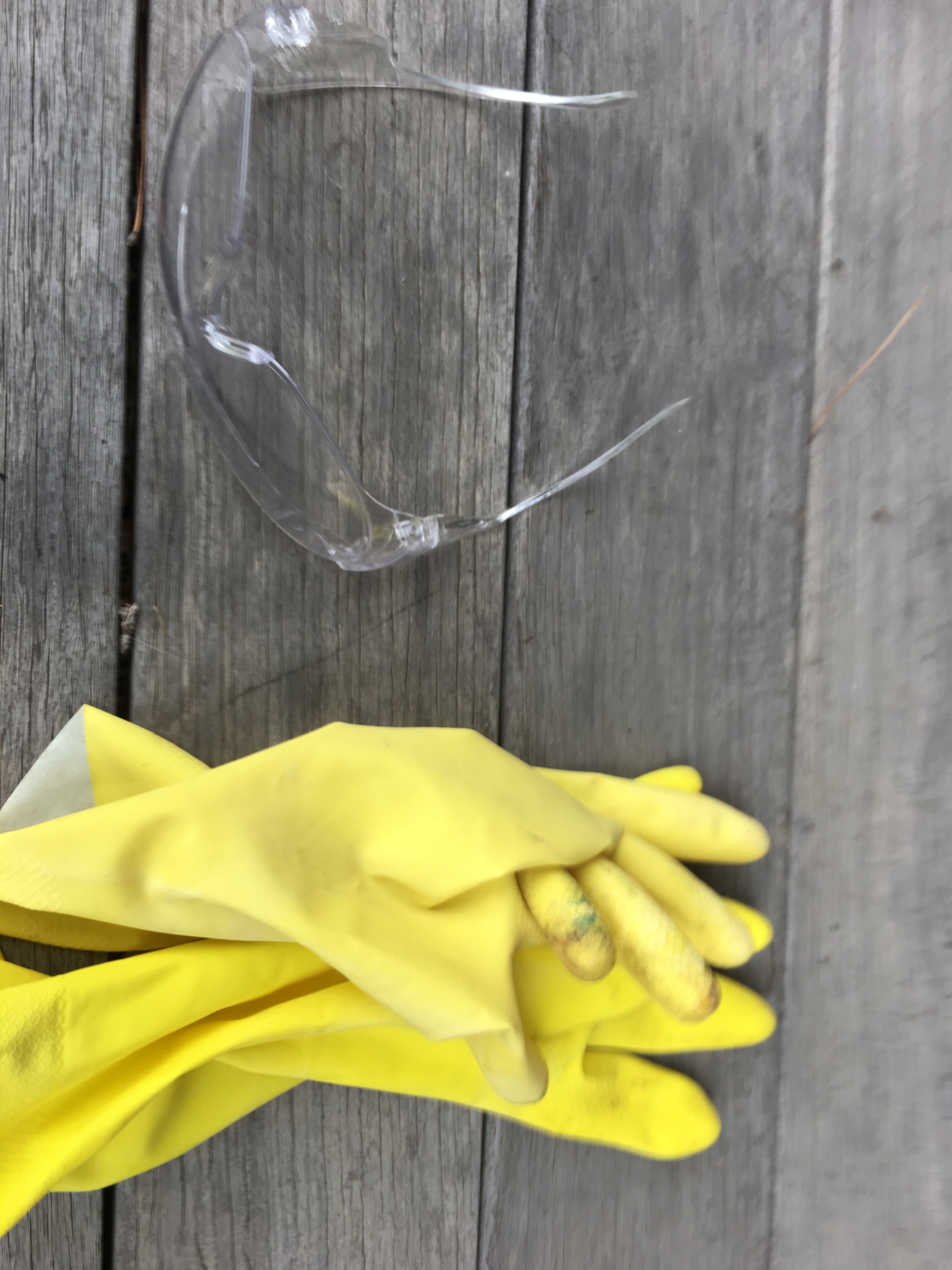
I go about on my rounds of the citrus trees this morning, I only find 5 victims. However, I’m wearing rubber gloves and clear protective goggles this time. A lesson well learnt by my friend and passed on in a timely manner. I see that ants are completely immune to the caustic acid juices of the stink bugs. All of yesterdays corpses are covered in ants, being dissected and devoured. It’s an ill wind that  blows nobody any good!

img_4326 img_4335

img_4336 img_4337


The Summer Vegetables have Arrived

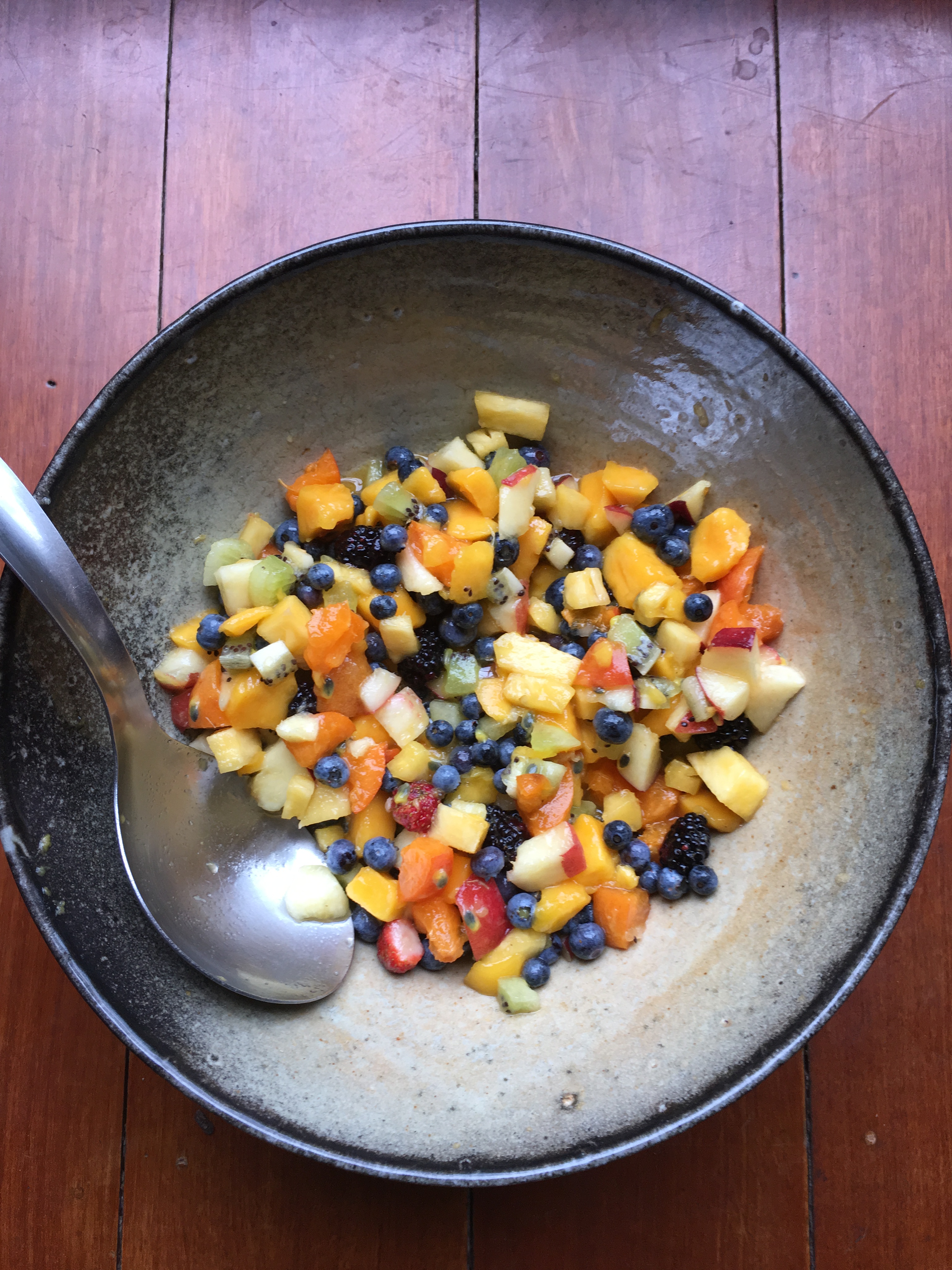
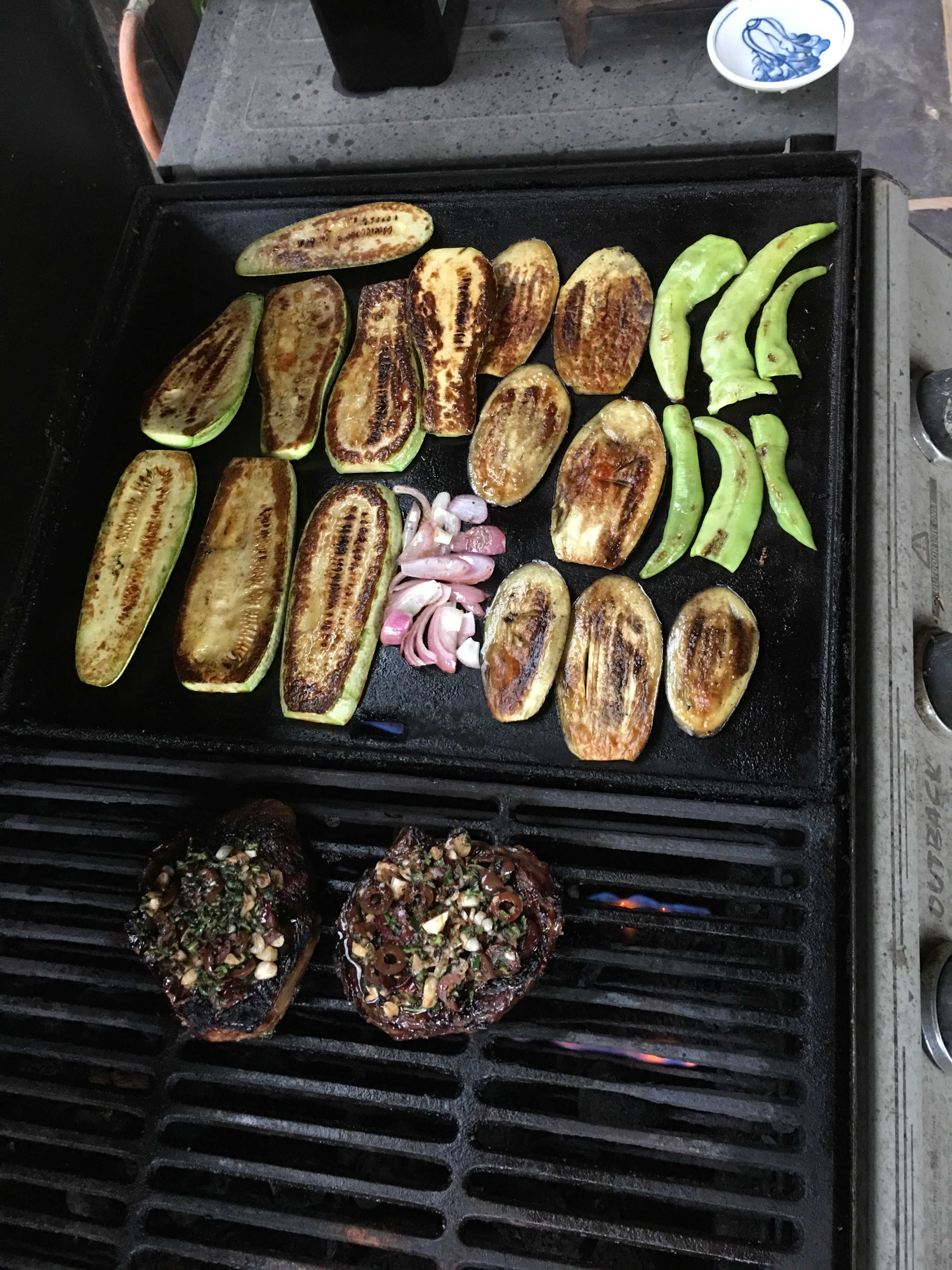
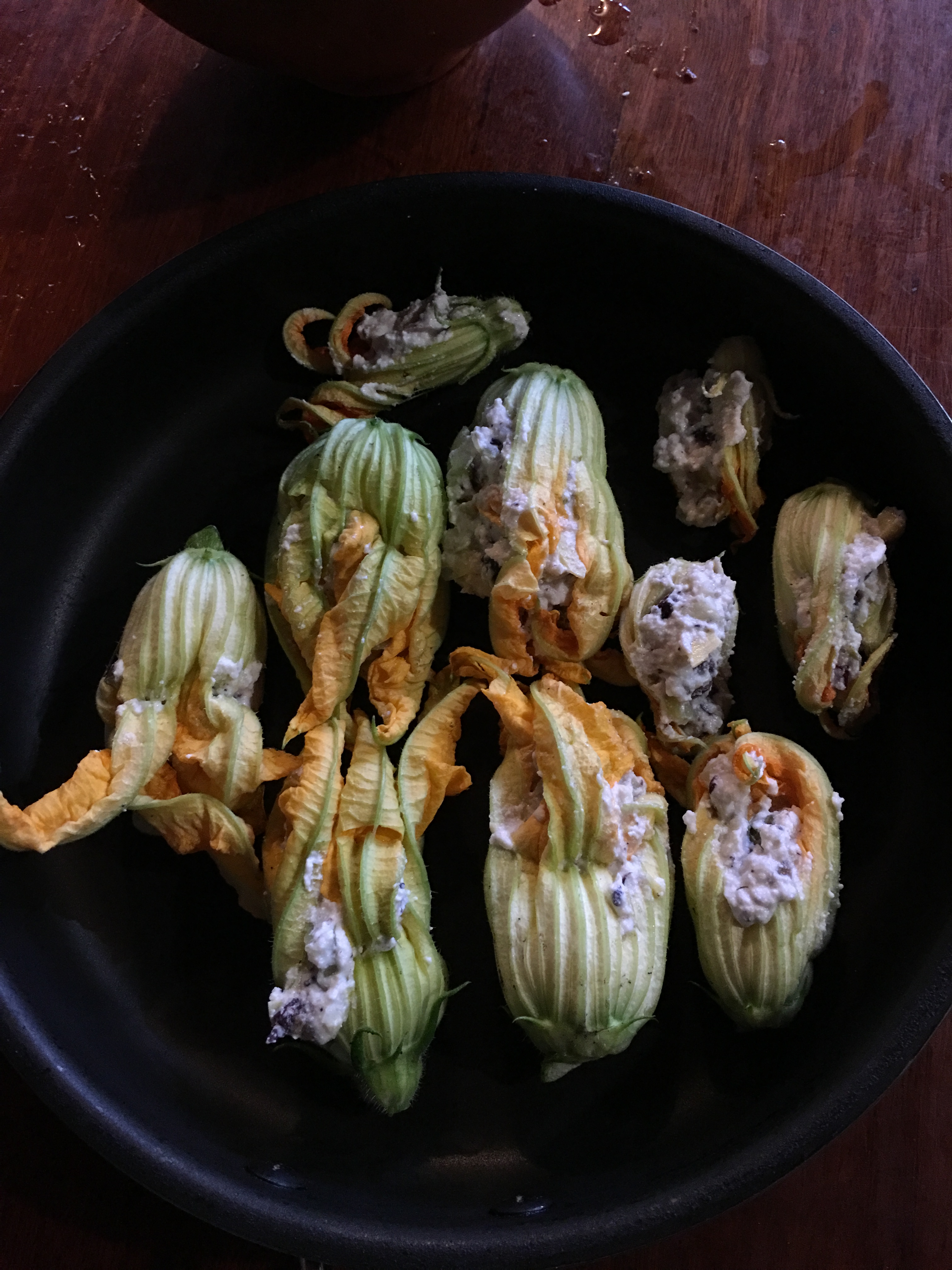
In these last few dying days of the old year, the heat has set in and all the summer vegetables that were dawdling along last month, are now racing in the heat and we have to water the garden every day. We had our first red tomato before the Solstice, as well as  beans, zucchinis and our first aubergines. There are lettuces shooting up, along with the radishes, mesclun greens and rocket. We have enjoyed the first meal of pan-fried, stuffed, zucchini flowers. It’s a rich and varied, fresh and crisp menu these days, with plenty of garlic, chilli and sweet basil. Roll on the summer days of veggie stir fries, BBQ’s and salads. Not to mention our blueberries, blackberries, golden berries, peaches and apricots for our breakfast fruit salads, all given a little bit of a lift with a squeeze of lime juice.

img_4317 img_4318

img_4319 img_4320

img_4332 img_4334

img_4242

Citrus Stink Bugs Move In

The weather is hot and the insects are very active. There are termites swarming in the evenings. Suddenly, I realise that the citrus stink bugs have moved in. Usually, they come in small numbers and are green. They slowly change over a week or two to a copper colour. Then finally to a shiny black. This is when they are sexually mature and start to breed. I hadn’t noticed them in the lead up as I might usually do. I guess that I’ve been too busy lately. I’ve been watering the citrus trees, but I didn’t notice them.

Now that I have noticed them, I start to crush them with my fingers. There are lots of ways to deal with them, but quickly reaching in to the foliage and crushing them between the fingers is the fastest and most effective. I have a 98% hit rate. Very few are fast enough to get away. If they do, they don’t go far and usually land on another branch where I track them down and finish them off.

If i don’t deal with them, they will breed up and eventually suck all the juices out of the new growth, killing it. Also sucking  the life out of the small fruit, until it drops of. So, with all the new growth dead and all the small fruit gone. this sets the tree back a whole year. Left unchecked, it’s a disaster that means hardly any fruit and an stunted tree.

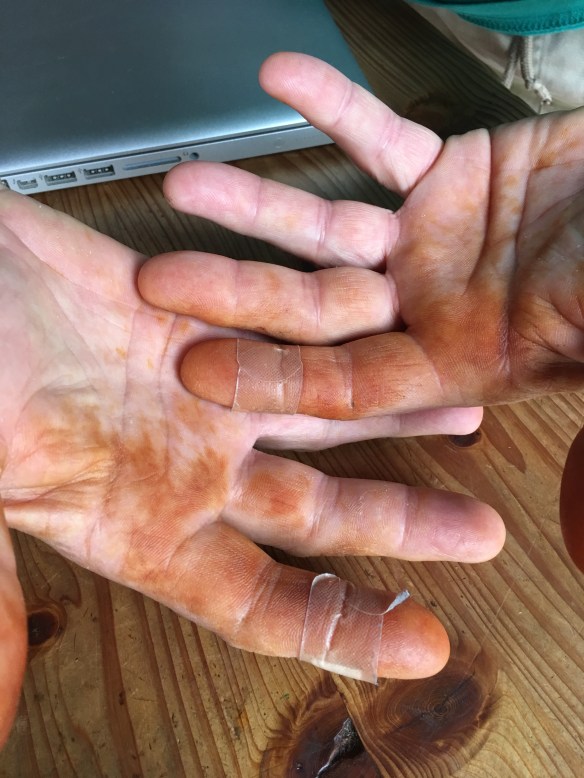
I finish off every bug that I can see. So much so that my hands turn yellow with the acrid juices that the bugs spray out as some sort of protection. I have to be careful to keep my eyes clear, so as not to get sprayed in the eye. My hands are quite stained and they stink, but the job is mostly done. I will now return every day to the citrus grove to clean up any strays that I might have missed. I get 100 or so the first day and maybe another 30 or so the next. I don’t like killing things, but this is a case of defending my food supply. I can’t get them all, there will be some that get away and go on to breed, so that there is always another generation every year.

The second day I take out another 20 or so more. This time, I take the precaution of wearing rubber gloves. I’m not too sure what long term effect this caustic stink bug juice will have on my skin. It certainly smells awful!

img_4323img_4326

The First Ripe Tomato Before Xmas

We have just picked our first ripe tomato before Xmas. This was never possible when we came to live here 40 years ago, but now, with global warming, we have been able to do it for the last 3 or 4 years in a row.

img_4264 img_4265 img_4266

We have a nice crop of red cabbage coming along just now, so it’s time to make a batch of pickled red cabbage. I slice it finely and remove all the coarse bits to be fed to the worms. Then place it in a big bowl and pour over some brine. This is the standard 1 cup of salt to 2 litres of water. This is a pretty saturated solution. It’s just about as much salt as cold water can dissolve. It’s left to stand over night with a weight on top to compress. It soon drops down and is submerged in the brine. In the morning I pour off the brine and rinse it once on cold water, then pack the cabbage into sterilised jars. I prepare a batch of pickling vinegar, by heating up standard white wine vinegar with all the usual spices and a spoon full of sugar. This is poured over the cabbage and the lids sealed down. It couldn’t be simpler.

I want the cabbage to remain crunchy for use in salads, so I don’t cook it. It’ll need to be kept in the fridge for safe keeping.

img_4269 img_4272 img_4285


Berry Jelly

As we approach the summer solstice, the red berries are starting to ripen. We have to cover them with one of our large sheets of nylon bird netting. If we don’t cover the ripening fruit, the birds will take the lot in a couple of days.

We have made a few small picks over the last week, but now, the real crop is ripening. We go out early, before the heat of the sun builds up. We pull back the net half way and work over one side, then the other. In half an hour we fill half a dozen plastic tubs with luscious ripe red/black berries.

img_4026img_4027

We will do this every 2nd day for a week now and then once or twice more during the next week and they will all be all but gone before Xmas.
Back in the kitchen, Janine weighs the munificence of the canes. We have harvested 3 1/2 kilos this morning, and another 3 kilos the day before. It’s a great start to the day and the week.
img_4028img_4029
Bach in the cool of the house, we re-hydrate with a cup of last years preserved dark grape juice. It’s so thick and concentrated, it is 100% grape juice and nothing else, pasteurized and vacuum sealed. It’s really amazing stuff that bears no resemblance to anything that you can buy in a shop. The commercial grape juices that i have tried, taste like they are 80% water in comparison. This stuff is just so rich and thick and concentrated in comparison. So much so that it has to be mixed 50/50 with water, otherwise it is just too strong. It’s a great natural, flavourful thirst quencher.
While I go back to work down to the kiln factory finishing up the last of the work on the current job, that is due for delivery on Wednesday, Janine stays in the kitchen to make todays harvest into 3 gratifying indulgences.
First, a youngberry sorbet, which is made from the juice sieved from the berries, no pulp in there, she only adds a very small amount of gelatine and some orange juice and then it is churned in the freezer, until it sets.
img_4451
juice of 500g youngberries
juice of a couple of oranges
1 tbs of gelatine powder
img_4058
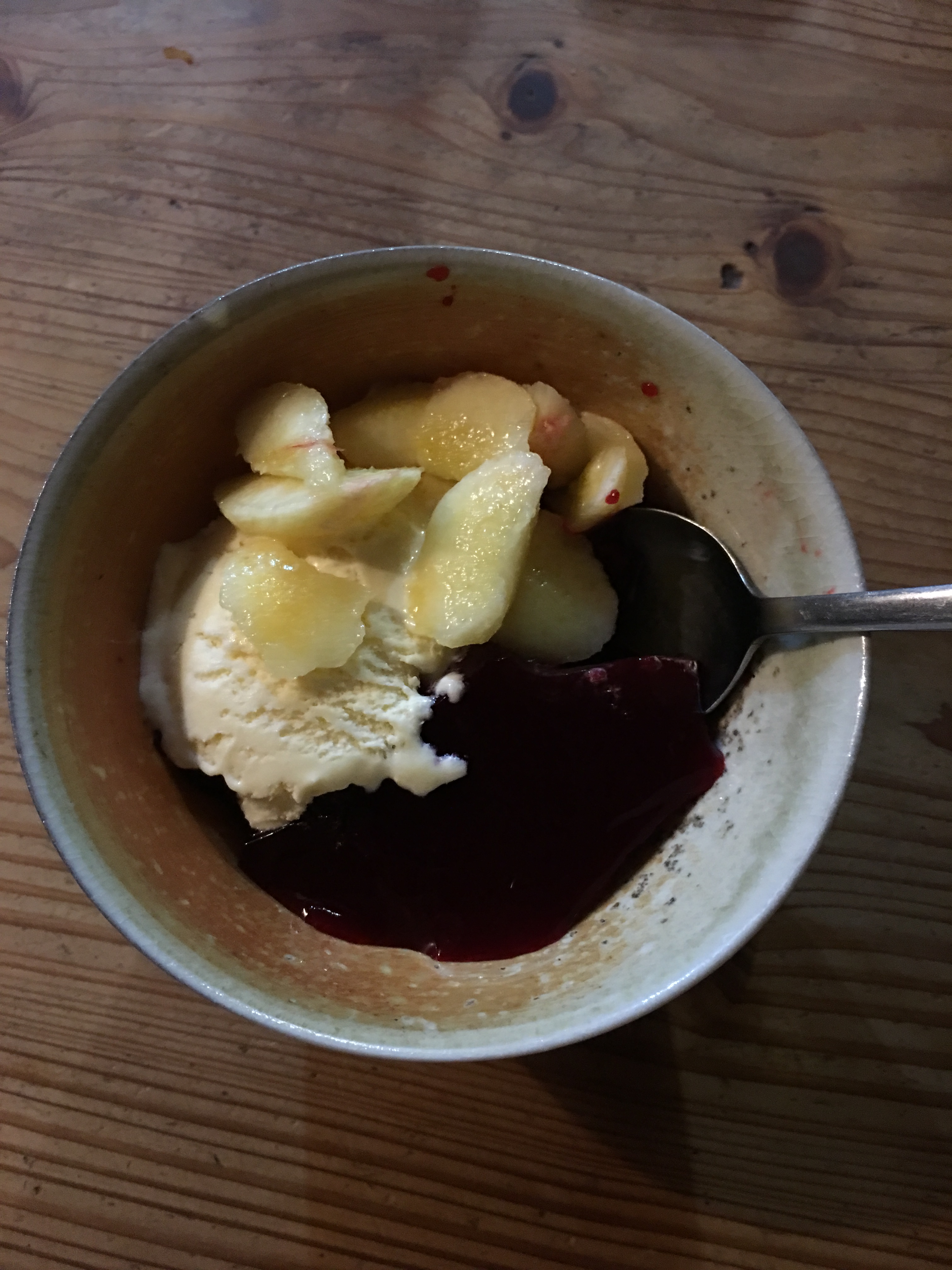
Second, she makes a youngberry jelly. This jelly is a desert jelly. It is made with the berry juice and gelatine and placed in the fridge until it sets.
First bring the whole fresh fruit to the boil and mash it all up with a potato masher as it is heating. This liberates the juice quicker. Pour through a sieve or cheese cloth to remove the pulp and pits. While still warm, pour the juice into a medium pottery bowl and add one tbs of dried gelatine and stir until dissolved. Leave to cool, stirring occasionally while cooling to keep the gelatine in suspension. Once cooled, place in the fridge to set.
Her third creation is youngberry jelly This is a fruit conserve jelly. The kind that you spread on toast at breakfast. This is really sensational. I think that this is the best thing that can be made from youngberries. Everything made with youngberries is good, but this is the best! The balance of concentrated fruit flavour, the natural fruit acid and the natural sweetness of the fruit is just amazing. It takes a bit of time, but it is all there, just for there making.
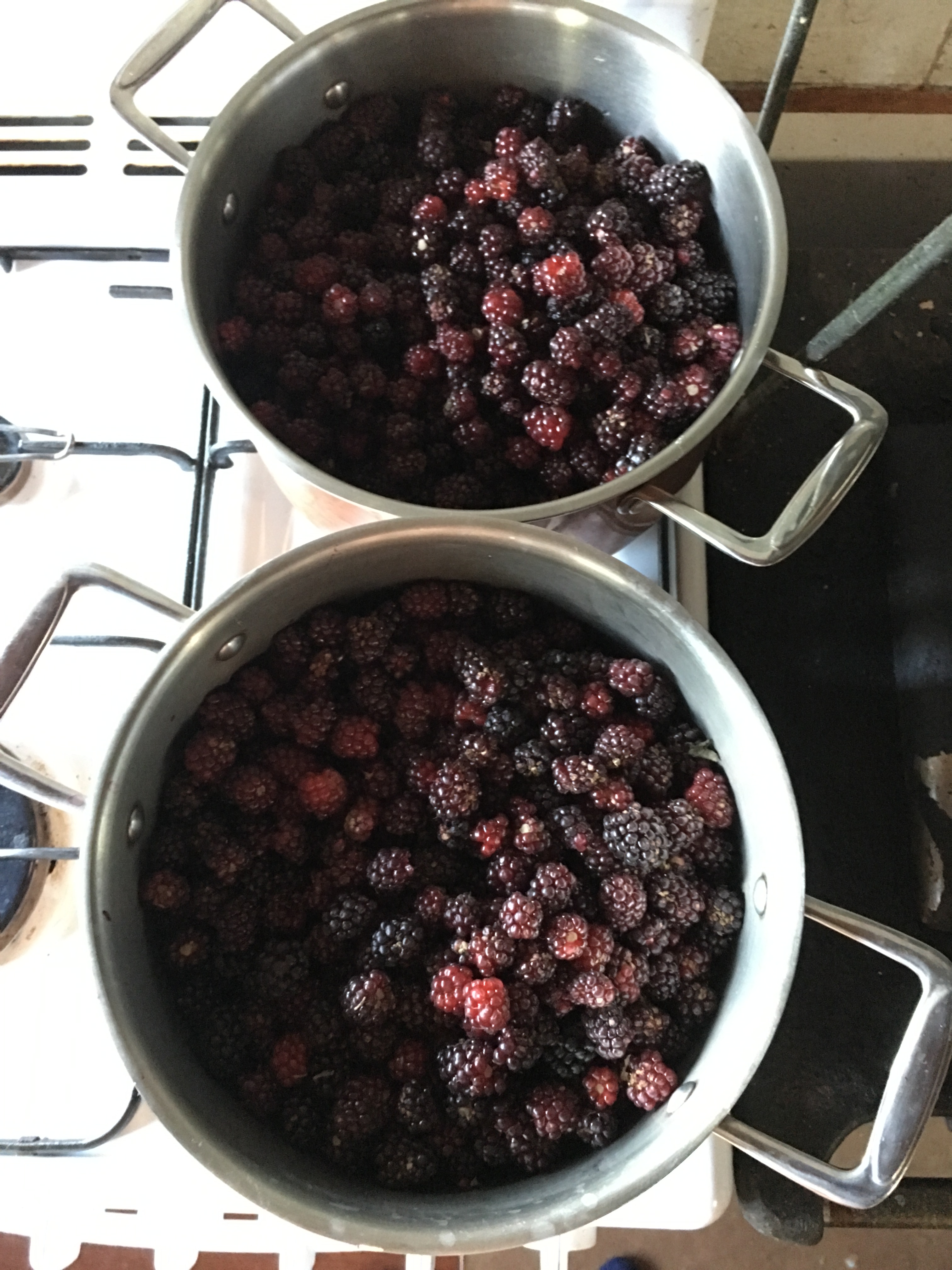
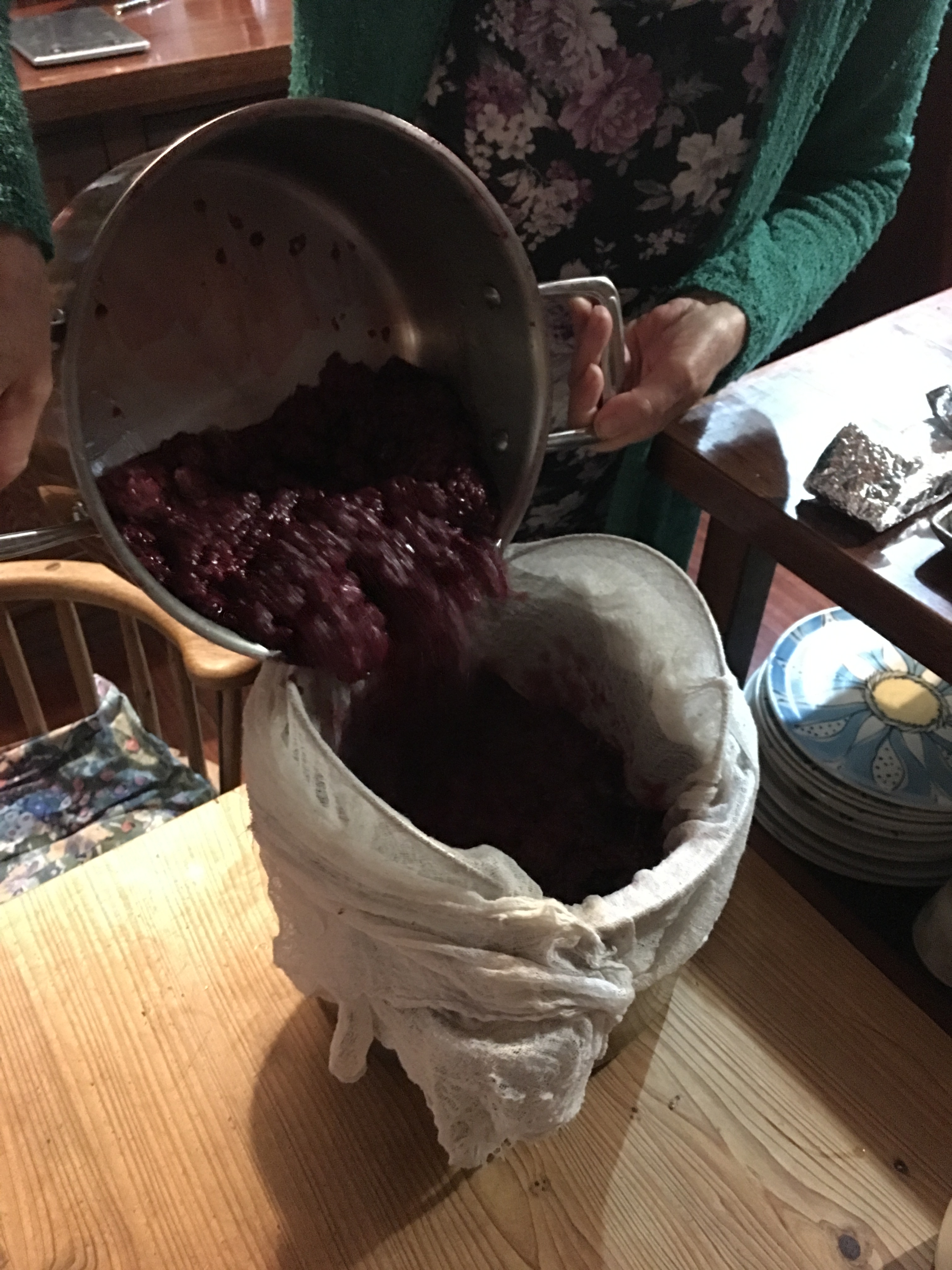
Fill two 5 litre boilers with fresh fruit. Bring the fruit to the boil and simmer for a short time, while mashing the fruit pulp to express the juice. When it has cooled, pour it through cheese cloth and let the liquid drain freely from the fruit for several hours, or overnight. Don’t squeeze of press the cloth to extract more juice, or the jelly will become cloudy. You can add a small amount of sugar to the clear juice and bring back to the boil. Most recipes say to add equal weight of sugar to that of the juice for this kind of jelly, but that makes it ridiculously sweet. However, it does ‘gell’ quicker. Janine only adds a 1/4 of that amount  of sugar and cooks it a little longer. This serves to concentrate it more and makes it all the more intense.
img_4050 img_4054
img_4059 img_4449
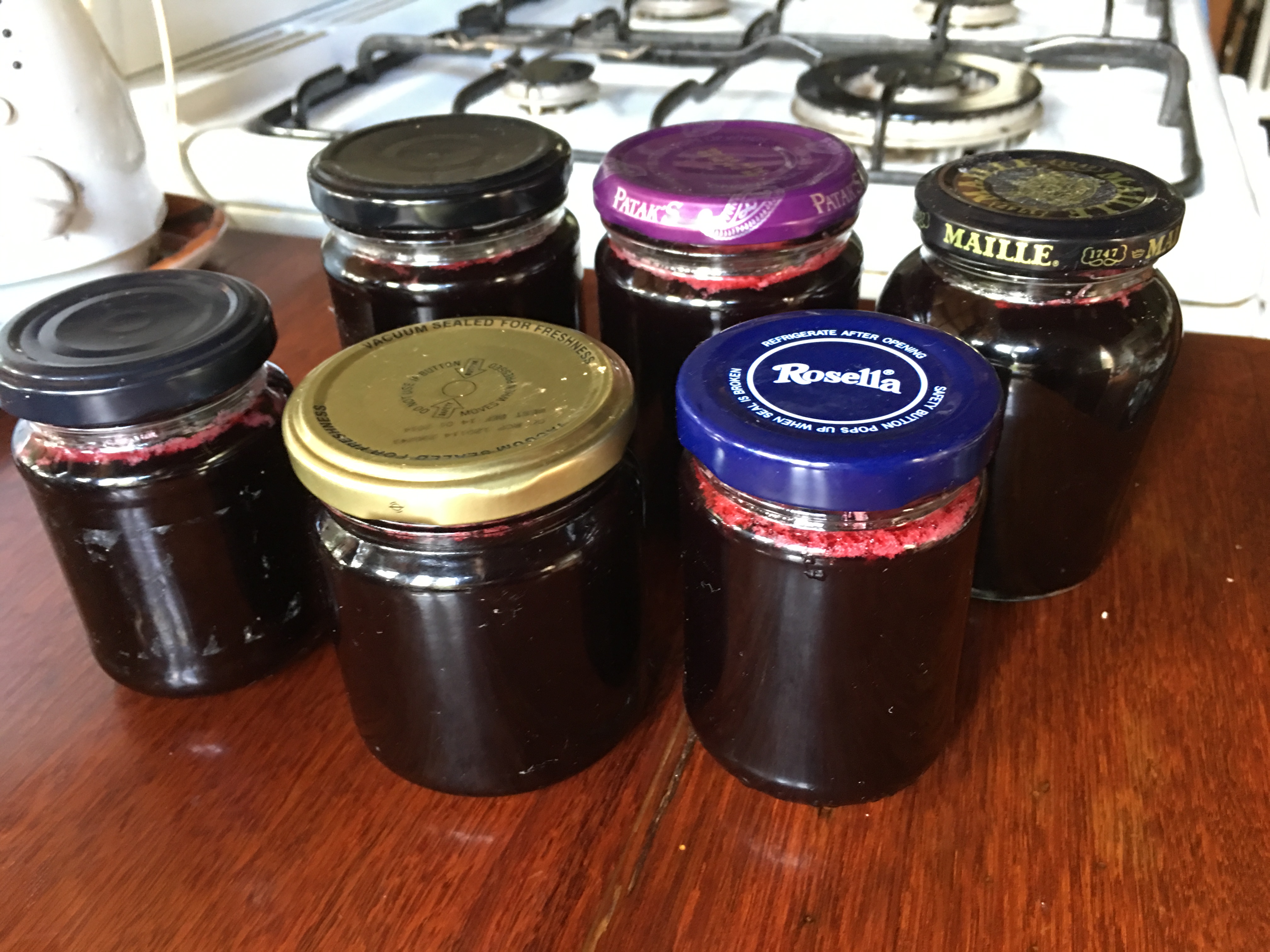
Simmer this mixture to allow the fruit flavour to concentrate and intensify. Test by putting a small sample on a dish and place it in the fridge until it ‘sets’. If it doesn’t ‘set’ , cook it for longer. This standard jam making procedure. Once ready, bottle in sterilized jars straight from the oven and screw the lids down tight.
Technically, it will keep for a year, but it never lasts that long. This jelly making activity makes the kitchen and most of the house smell so delicious. The sweet, acidic fragrance wafts right through the house. It smells so amazingly good. We polish off the first jar in just two sittings.
img_4037 img_4036
Janine also bottles the whole berries as simmered pulp, once sterilised it is bottled hot jars from the oven and keeps for ages. We made so much of this last year, we still have some left.
We are grateful for this largesse of our canes. They provide for us in this bountiful way each year in the early summer and I reciprocate in kind by diverting the underground seepage trench from the septic system over into their direction. These vines and the cherry trees below them are now well watered and well fed throughout the year by this artificially created underground spring of nutrient rich water. Totally natural, gravity fed and organic!
Best wishes Steve