Summer Wine

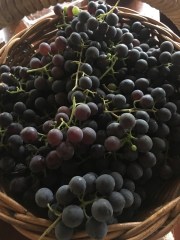
We are harvesting the last of the grape harvest. It’s been a long vintage this year, stretching over 8 weeks. We have been making dark grape juice out of most of the vintage. However, with these last few baskets full of rich dark red sugary deliciousness, we decide to make ‘Summer Wine’. We first came across this wonderful stuff in France, then Germany, followed by Switzerland and finally in northern Italy. As the season developed and the grapes ripened. We had to have the experience introduced to us by our hosts in Germany at that time. We stopped the car on the side of the road to buy vegetables and fruit from a farmers road-side stall. Our friend asked if we had tried ‘Niue Wine’ or ‘summer wine’? We hadn’t, so we did and it was a bit of a revelation.

We have been making our version of concentrated red grape juice for a few decades and always look forward to it. We manage to bottle 20 or so litres each year for us throughout the year. We pasteurise it so that it will keep and not ferment. Then sealed in sterilised glass bottles. It works well. But this was an eye opener.

We don’t make wine from our red grapes, because it is too much work for the reward. Good quality wine is cheap in Australia, why bother, but good organic red grape juice is extremely expensive. So thesis where we put our effort. What we experienced in Europe that autumn was just like our red grape juice, but very slightly fermented, possibly for just a few days. The outcome was a sweet grape juice with all the fruit flavour, but also enhanced with a little sourness and tingley, cabin dioxide induced spritzig. I might hazard a guess that it was fermented to about 2% or so of alcohol. It was a  light,  really refreshing and satisfying draft.

We have since  started to make a small batch of summer wine each year. It has to be drunk within a few days of the fermentation starting, while it still has plenty of sugars left in solution. We asked about the roadside wines that we saw and were told that it will only be available for a few days from each stall. Once the barrel is emptied, then that’s it. find the next farmer’s stall.

They might possibly use the wild natural yeast bloom on the grape skins, but this can be very variable. Because we don’t know what we art doing, and don’t have parents and grandparents on hand with generations of local knowledge about such home based, home-grown, organic production. We decide to pastures the juice as usual and then add a known wine makers yeast to get a more-or-less predictable and reliable outcome.

IMG_4609 IMG_4610

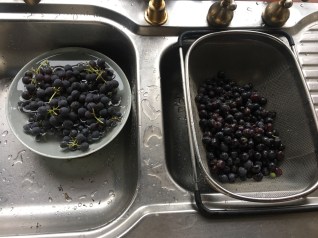
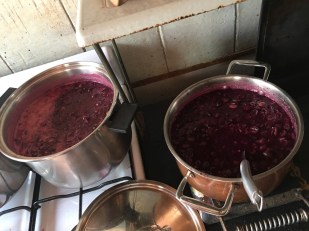
We wash and de-stem the grapes to make the juicing process easier. Either way it is a lot of work. This is just the way that we have got used to doing it over the years. After sterilizing by briefly simmering the juice, we let it cool over night and then add the yeast. , somewhere between 16 and 24 degrees C. We let it sit for a day to allow the ferment to get going and then bottle it. We start to drink it from the 2nd day. After the third day, or when we feel it has reached a good point in the sugar/acid balance, we bottle it and keep it in the fridge to stall any further fermentation. it keeps for a week like this. and then it all gone. If you try this at home, don’t screw the caps on. LEAVE THEM LOOSE.

IMG_4653 IMG_4666

IMG_4667

IMG_4668

Peasant Food

I have been doing a bit of reading lately about the life of peasants. Mostly in the recent past as you would be hard pressed to find a peasant these days. I call myself a Post Modern Peasant and have a keen interest in living a sustainable life style in this modern and very complex first-world situation.

I am rather interested in the self-reliant nature of the life of peasants. Some of the books that i have read are by Philip Olyer. His best in my opinion is ‘The Generous Earth’. recounting his life among the French peasants in the Dordogne Valley, early last century.


His second book on the subject wasn’t very good, or at least not as good as the first. It struck me that it was all the rejected anecdotes that were edited out of the first volume.

I’m not saying that I didn’t enjoy it, just that the first volume was so much better. I learnt quite a few things about the way the French peasants of that time prepared and preserved food.


Pig Earth on the other hand has a lot less about the growing, preparation and preserving food, but still a reasonable read with some gritty insights into the harsh reality of their lives.

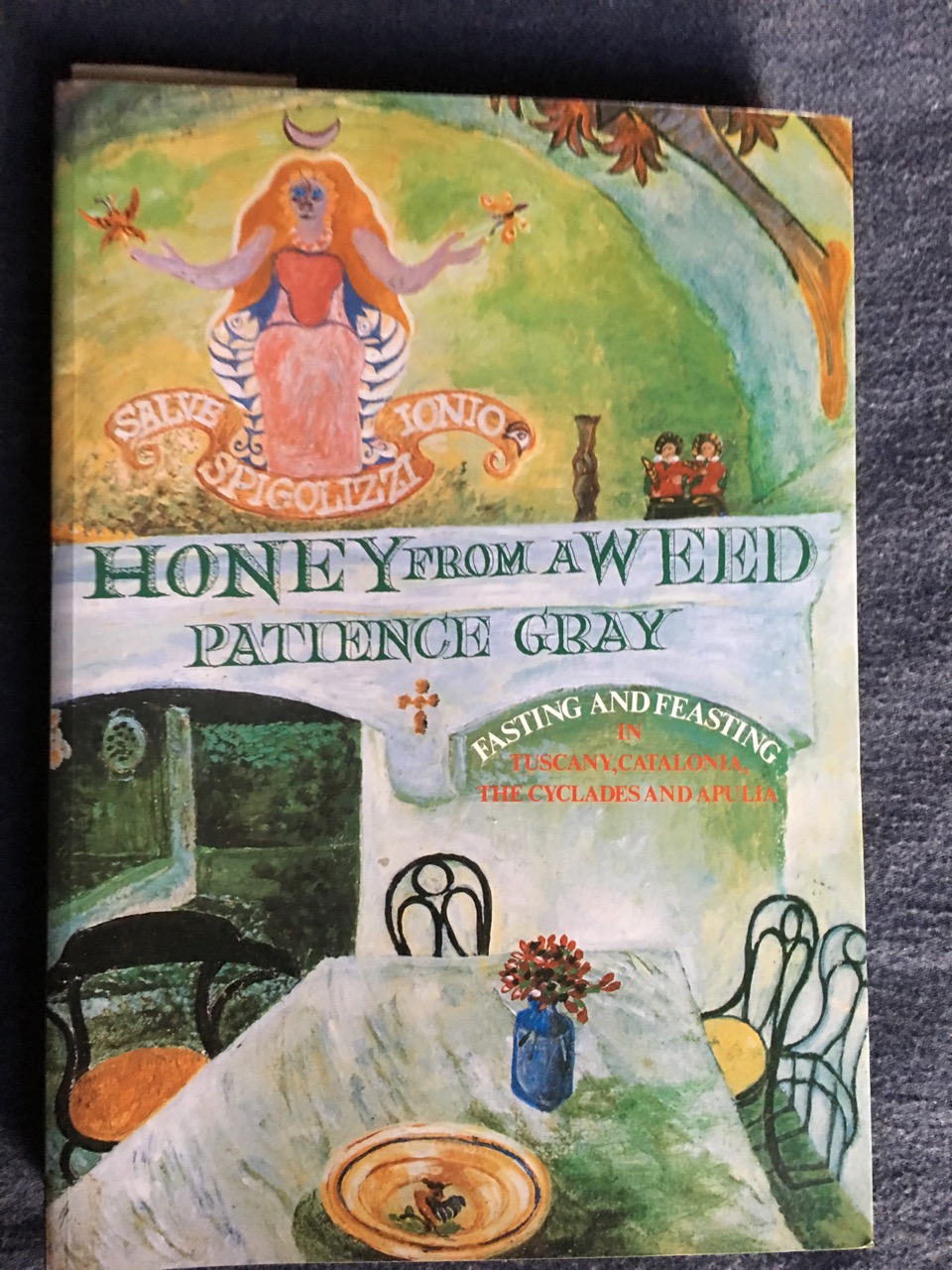
By far the better of these two is Patience Grey’s Auto-biography ‘Honey from the Weed” the story of her life of living with her stone-carving, sculptor-husband in and around the Mediterranean in Spain, Italy and Greece.

They have no money and learn to live with the locals, like the locals, in small, isolated hamlets, way off the beaten track, up in the mountains, close to the marble quarries. Living so close to the local peasantry and quarry workers, in particular to their wives and grandmothers, gains her particular insight into the intimacies of their daily existence.

The writing is a touch clumsy in places and isn’t particularly sequential, more of a series of vignettes strung together under particular headings like cooking with pulses. Here are  several recipes all involving dried beans of varying origins, sizes and form, from fresh to dried. This section is followed by a long passage on farting!

I was moved, pun intended, to cook up a meal of our own dried beans from last summer. We grow a lot more beans than we can ever eat fresh off the bush from the garden. We let them all go to seed and dry on the bush or trellis. This years crop are starting to dry off now and will soon be ready to harvest.

This being the case, I thought about the last couple of jars of dried beans in our pantry cupboard from last year. I used half of them and soaked them over night, changing the water every few hours, or when ever I was passing and thought about it. I boiled them for an hour. The time it takes to boil dried beans varies with their age. One year old beans like these take about and hour. fresh picked and dried beans only take 20 to 30 mins.

After 15 mins I changed the water again. Patience Grey recommends boiling with a pinch of salt or bicarbonate of soda for the first 1/4 hour. This then requires the change of water, she also suggests boiling the beans with bi-carb helps loosen the outer skins, such that they can be rubbed off. This she says that this reduces the ‘fartyness’ of the resulting meal.

Our son is a Chef and has worked in some very high-end restaurants with ‘Chef’s Hat’ awards. He also told me this, that when cooking chick peas for example, pre-boil them until you can rub the outer skins off between two tea towels. then replenish with fresh water and finish the cooking. This is worth the effort, because it results in happier customers the next day, or later in the week!

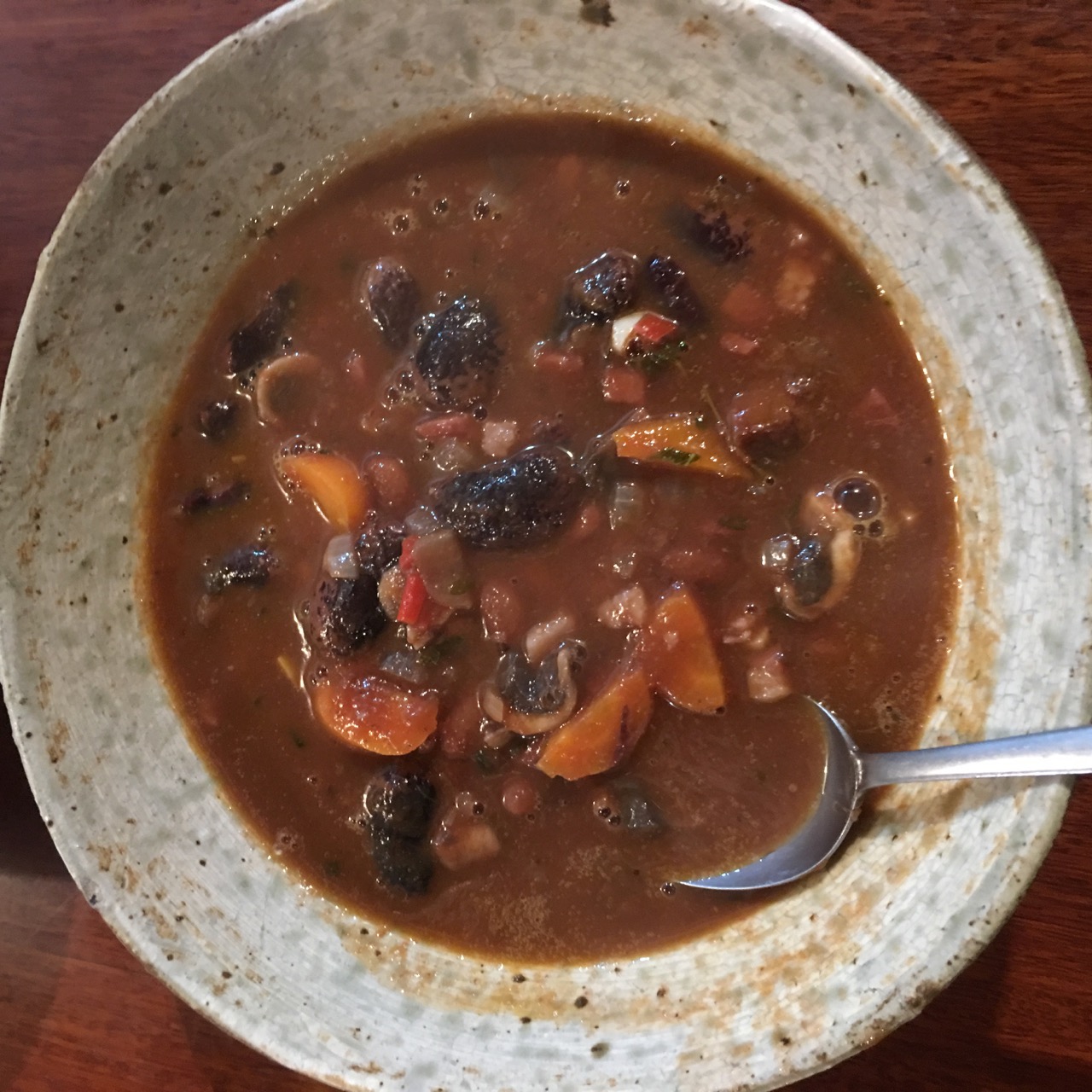
I don’t have customers, so left out the bi-carb and the de-skinning. While the beans are boiling. I make an aromatic oil frying a finely diced onion and some fresh herbs and bay leaves in olive oil, finishing with a few smashed garlic cloves. I add in a small amount of diced, dried, smoked, nitrite-free bacon.

I avoid using ‘ordinary’ bacon where possible as the sodium nitrite that is commonly used is a known carcinogen. I can only find one brand of nitrite free bacon on sale anywhere around here. I’m not recommending this product. I don’t do that. It is just the only one I can find here locally.

Adding a little bit of bacon, speck or porcetta, like this adds heaps of flavour. I don’t use very much. You don’t need to. One slice is enough, it’s only for flavour. Once this is cooked off, I add a couple of spoons of my home-made marrow bone reduced stock to fill out the flavour profile and create a creamy smooth texture. I add the beans in and a cup or two of my home-made tomato sugo concentrated sauce.

The last step is to add a dash of local gold medal winning merlot red wine and let it simmer for a few minutes to meld.

Enjoy.


Preserved Capsicums

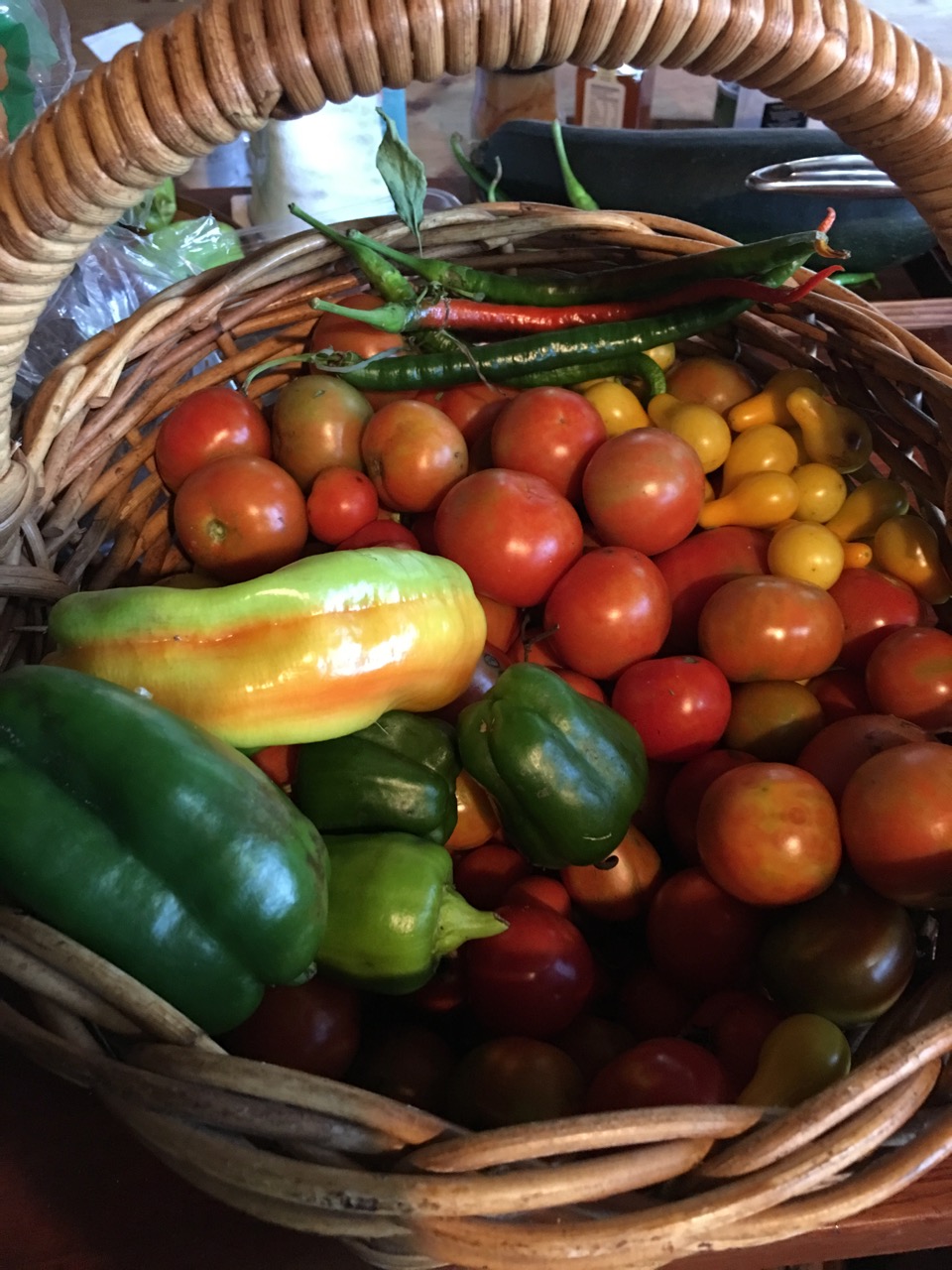
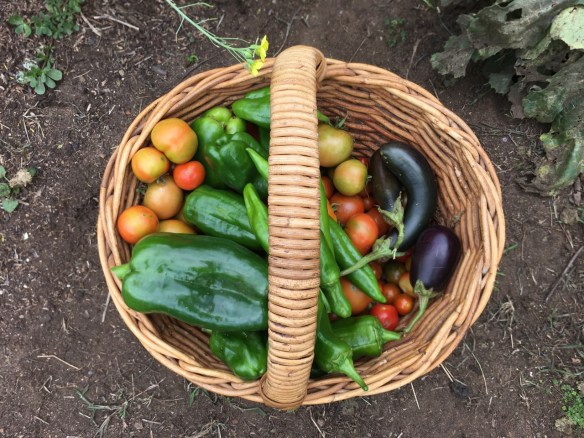
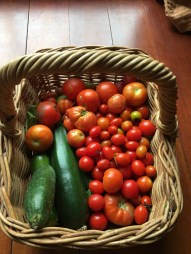
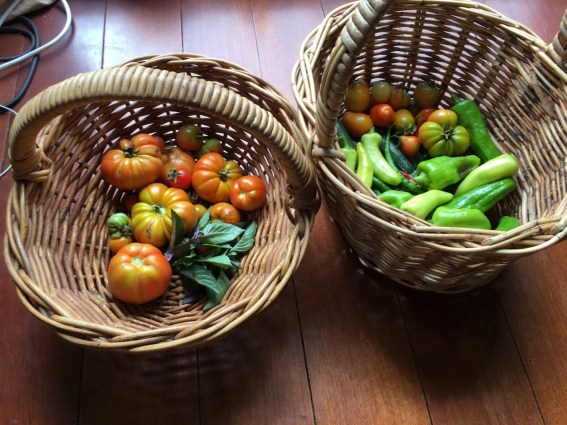
Even though the summer has long passed now, we can still pick the best part of a ratatouille to fill the garden harvest basket.

IMG_4418

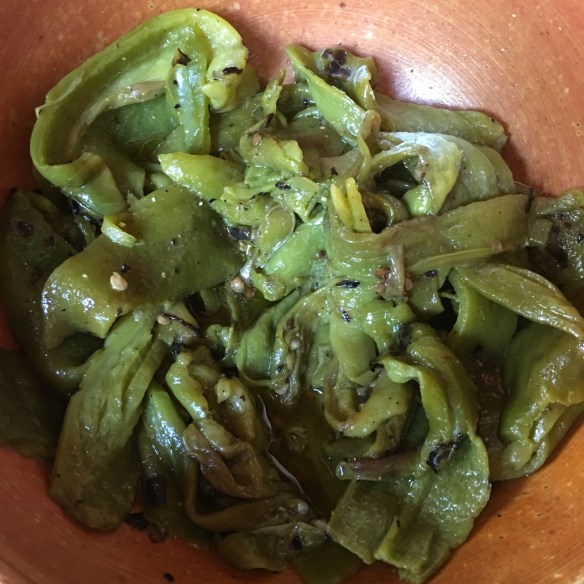
We have plenty of capsicums just now, so its time to preserve a few as a roasted capsicum salsa. They need to be roasted over an open flame and then left to sweat in a bag for 15 mins. This releases the skins where the bitterness is. The resulting strips of sweet flesh are then de-seeded and coated with an olive oil and vinegar dressing.

Pretty yum.

IMG_4419

IMG_4425

Just Another Day

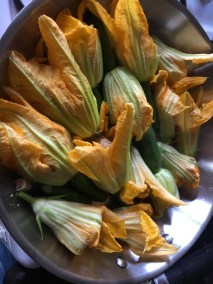
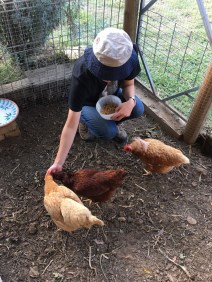
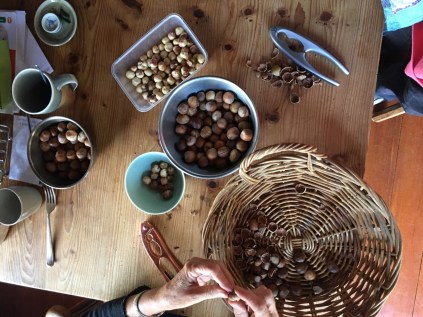
We share our last meal of stuffed Zucchini flowers. This time with a somewhat asian flavour profile, less cheese and more tofu. Ms. Kang feeds the chickens, we say our goodbyes and deliver her to the train station. There is a train service, more or less direct to the airport. We come home and start to shell todays harvest of hazelnuts. Just another day with so many jobs to do.

IMG_4381 IMG_4386

IMG_4393 IMG_4403

IMG_4410

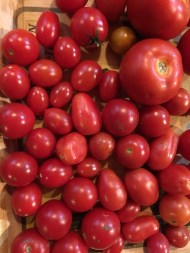
I spend a bit of time weeding and watering in the garden, then harvesting the endless procession of ripening tomatoes. Another batch of passata is on the way. I take the time to grab a handful of bouquet-garni from the garden along the way.

IMG_4415

I finally get some free time to sort out my glaze tests from our recent glaze firing in the solar-fired, electric reduction kiln. They are all quite good, actually very good. These are all glazes made from my local stones, collected around the shire where I live. I’m very pleased with the latest version of my Kangaroo Blue glaze (see earlier post, Kangaroo Blue. 12/12/18) and the Bindook Porphyry pale limpid celadon. Not too bad for a 5 hour solar-powered firing.

IMG_4412

Ms Kang has left the building. We’ll miss her.

From Garden to Glass jars, Preserving our Excess

Our international guest and pottery/environmental living intern, Ms Kang from Korea, is about to leave us. We spend our time in the pottery, garden and kitchen. We put in a big day from early morning through till late night, a 14 hour day. There is a lot to get done at this time of year.

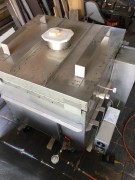
We have glazed our pots and packed the kiln previously, so while we wait for the sun to get up in the sky so that we can start the firing. I get up on the roof and wash the solar panels. We live on a dirt road which is quite dusty in dry weather. We recently had a good rain storm and collected 75mm. (3″) of rain, but then we had 150mm. (6″) of wind and dust, This means that I need to wash the PV panels so that we achieve maximum efficiency. At this time of year, the shadow from the trees doesn’t pass off the last of the panels until 10.00am.

IMG_4334 IMG_4345 IMG_4346

By 10.00am the sun is up in the sky and we are generating good energy, it’s a good time to switch on the electric kiln. I wait until the PV panels are generating enough power before I start the firing. I like to start about 10-ish and finish by 5-ish, thus making the most of the sun. The kiln is very powerful and can easily fire straight through to Stoneware 1300oC in 5 hours if needed. Once the kiln gets to 1000oC, I start reduction with 2 small pilot burners running at 5 kpa. I can’t set the pressure any lower than this and expect it to be reliable. This takes the kiln through to 1300 in reduction using just 300 grams of gas. I’m still experimenting with this kiln.

If we want to fire longer, or on cloudy days when there isn’t enough direct sunlight, we have the Tesla battery to fill the gap. We can, if needed, fire the kiln and charge the car as well on the same day. On a good sunny day, we can charge both car and Kiln, fill the battery and still sell a little to the grid. On the off days when we don’t fire or drive the car, we sell everything to the grid. We sell our excess at 20 cents per kW/hr. occasionally when it is cloudy for a few days we buy back power from the grid. We chose a 100% green power contract and pay the premium price of 35 cents per kW/hr for the privilege. However, we are connected to the grid by a net meter, so we only have to pay for power if our imports exceeds our exports in any given month. It never does.

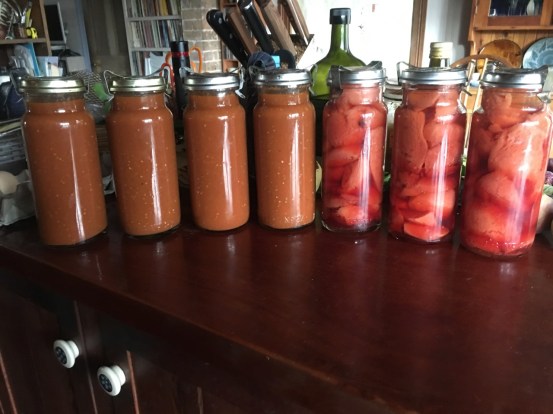
Once the kiln is on, It fires itself in semi-automatic mode. I only need to check it occasionally. Then its back into the garden to continue the harvest of more tomatoes, chilis, capsicums and aubergines. We are at peak tomatoes now, as we dealt with the last of the late-season plums last week. They are all safely vacuumed sealed in their jars, in the pantry, waiting for later in the year.

IMG_4351 IMG_4360 IMG_4361

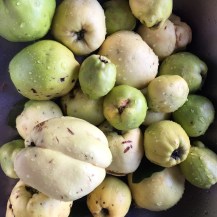
While I harvest the tomatoes et al, in the vegetable garden, the ladies, Ms’s King & Kang collect hazel nuts and quinces from the orchard. We are all soon very busy in the kitchen, by the time the heat of the day sets in. All the tomatoes need to be washed and sorted. Even though we have set fruit fly traps all around our garden and orchards, we still get some fruit fly stings in the very ripe tomatoes in this late summer season of hot and damp weather. All the tomatoes are cut open, checked for fly strike and then sorted into two separate pans. A big boiler for the good fruit and a small sauce pan for the fly struck fruit. The spoilt tomatoes are all boiled to kill the grubs and then fed to the chickens, with the remaining skins and detritus composted or fed to the worms.

IMG_4342 IMG_4336

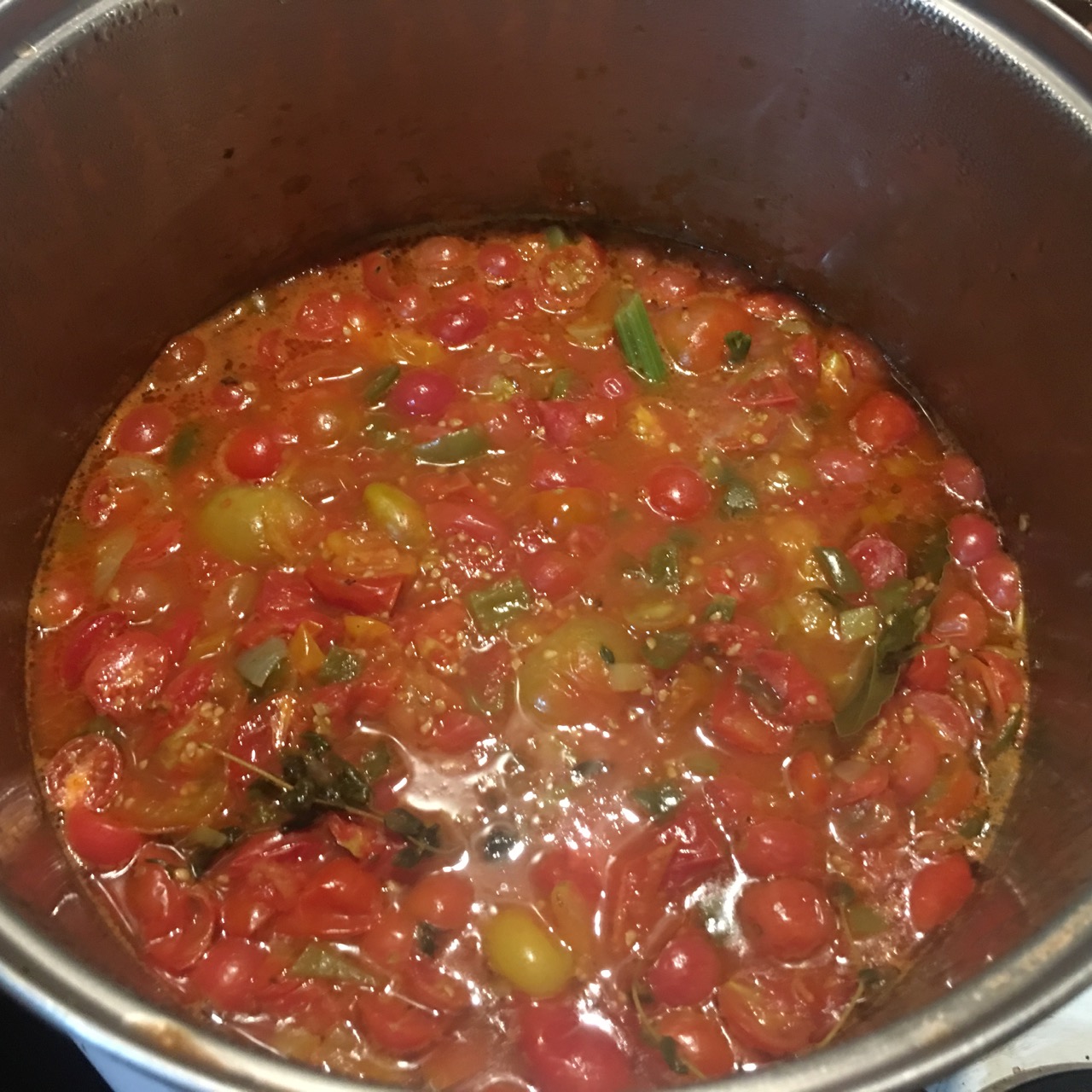
While I’m cooking, Ms Kang is shelling the days pick of hazelnuts. This batch of tomato passata will be cooked with pepper corns, bay leaves and a bottle of good red wine. It looks great and tastes delightfully sweet and sharp, sort of tangy, with just a little bite and lingering heat from a few chilli peppers in the mix.

The quinces are washed, peeled sliced and then boiled with a little sugar, 300g in the big boiler + a couple of litres of water to cover them. I add a stick of cinnamon, a few cloves and two star anise. After they have softened. I transfer them to baking trays, pouring the sweet boiling liqueur over them and add a little bit of Canadian maple syrup into the mix I give them 45 mins at 180 and this reduces the liquer to a sticky gel and turns the fruit to a lovely red colour. I choose to cook them with a minimum of sugar. If I added more sugar, they would turn a deeper/richer shade of claret red. I love that colour, but don’t like the saturated sweetness.

IMG_4380 IMG_4355

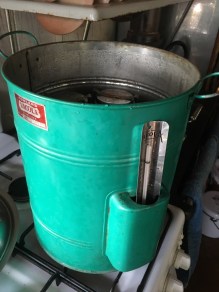
We preserve everything in our antique ‘Fowlers’ Preserving jars. We bought this old boiler and a few boxes of glass jars, 2nd hand at a garage sale over 40 years ago and they are still giving good service. We have only had to replace the rubber rings.

IMG_4375 IMG_4376

IMG_4377

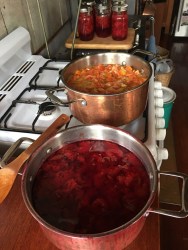
It still surprises me that a basket full of quince fruit can fill the sink when being washed, then fill 2 baking dishes in the cooking and finally be reduced to just 3 jars of concentrated sunlight, colour and flavour after a days work. Two baskets of tomatoes fills two boilers, then makes only 4 jars of passata once it has been reduced on the stove for an few hour.

Such is the business of summer.

The Simple Pleasures of Our Mundane Life

As we approach the end of the summer season, we are busy both in the pottery making, but also in the garden and orchards harvesting and preserving. The late summer season brings loads of fruit and vegetables to deal with.

IMG_4261

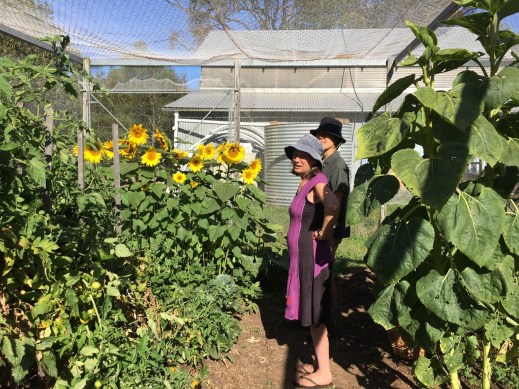
Ms King and Ms Kang in the garden considering the sunflowers. We grow sunflowers in a series of staggered plantings all through the summer to feed to the chickens. They get one sunflower head each day to supplement their-free range foraging.

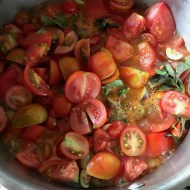
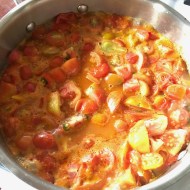
We have made several batches of tomato passatta this summer. This equates to about 2 to 3 jars per week added to the pantry. A basket full of tomatoes, with a few added capsicums and chillies, fills a medium-sized boiler. I add a big handful of sweet basil, few couple of sage leaves and a sprig of lemon thyme. Whatever is on hand, sometimes I add a couple of bay leaves instead, but not this time. Sometimes a dash of red wine.

IMG_4073 IMG_4092

IMG_4285 IMG_4286

This concentrated tomato concoction is boiled and reduced until it is all softened and a bit mushy. After cooling, I pass it all through the kitchen moulii to remove the skins and seeds, and then bring the resulting liquid to a soft simmer for another hour to reduce the volume and concentrate the flavour.

IMG_4260 IMG_4287

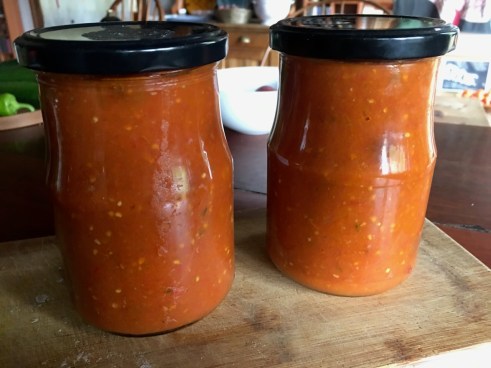
I start the day with a full boiler of tomatoes fresh from the garden and end the night with just 2 half-litre jars of concentrated sauce. By filling the glass jars straight from the oven where they have been pre-heated and capping with their lids that have been simmered for a few minutes, the hot sauce is vacuum sealed as it cools. This will keep all year if needed. Precious little for a days part-time work. Very precious!

IMG_4302

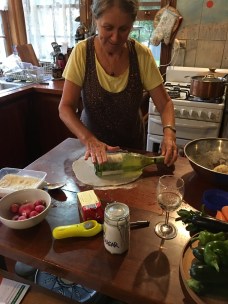
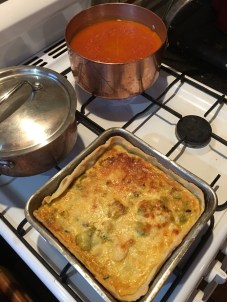
While I’m finishing this latest batch of passatta, Janine has been preserving plums. We are at peak late-seasons plums. She makes a leek pie for dinner. She makes her special easy pastry recipe that she learnt from a visiting Spanish artist-in-residence here, using wine and olive oil with the flour. She improvises with the wine cold bottle straight from the fridge as a roller and pours us both a glass while she is at it.

IMG_4298 IMG_4300

We have a lot of leeks coming on just now. We have learnt to eat what we grow and eat it as it matures. Our life here is not so much what do you fancy tonight, but more a case of this is what we will have tonight because its ripe.

These are the simple pleasures of our mundane life.


Our New Intern from Korea

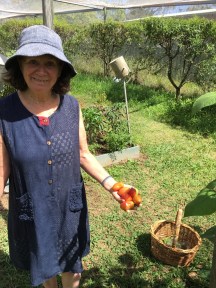
We have a new intern working with us this January. Our visitor is Ms. Kang from Korea. She has come here to experience our sustainable approach to life and our ceramic work.

We have been working together crushing and grinding porcelain clay body and glazes from local rocks, throwing pots, working in the vegetable garden growing our food, cooking the food that we harvest and doing a little bit of sightseeing as well. The three of us have been doing some tourist activities together, like a trip to Sydney with a ferry ride on the harbour, and a trip to the local National Park and the south coast beaches.

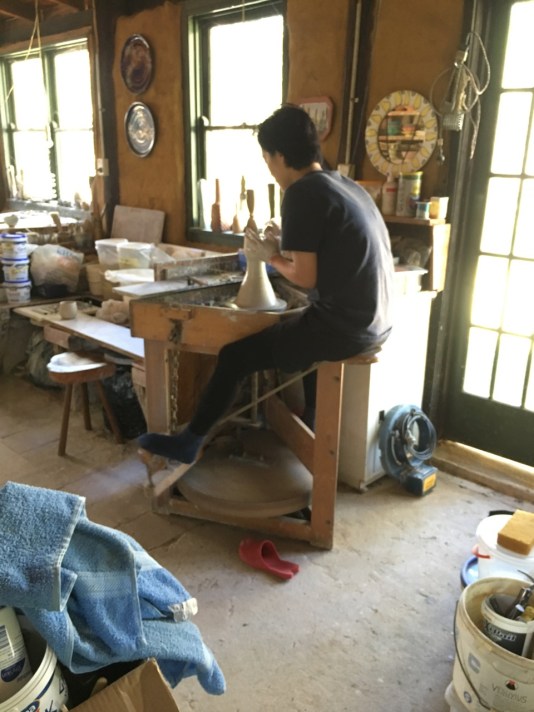
Ms. Kang has been learning to use our foot-powered ‘Leach-style’ kick wheels.  We have just finished making sufficient clay work today to fill the solar powered electric kiln for a bisque firing. Last week we calcined some local white granite rocks, to make our local blue celadon/guan glaze.

Pretty-much life as usual, but with a hard-working and dedicated student-guest.

IMG_4109

IMG_4115

IMG_4238

IMG_4174

IMG_4158


Seasonal Vegetable Pasta

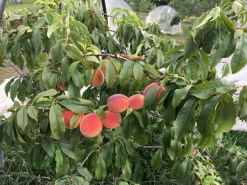
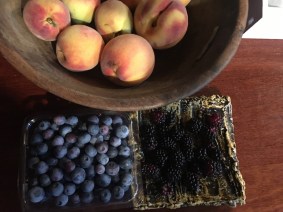
We are now harvesting the late yellow peaches and although the early youngberries are long gone now and just a memory for another year, the thornless blackberries are in full swing and they integrate very pleasingly with the constant supply of blueberries. All the early season blueberries have finished, but the crop seamlessly flows into the mid season varieties and we still have un-ripe late-season berries slowly colouring up in the bushes. Either it’s a very good season for the blueberries, or after 10 years, the bushes are hitting their stride.

img_3828 IMG_3829.jpg

img_3833 img_3845

Breakfast is just the freshest and most delicious meal of the day. Mouthwateringly vitamin C tangy, crunchy, succulent and sweet. Each mouthful bursting with sunlight and vitamins. All the ingredients picked fresh every day, straight from the garden. They couldn’t be fresher or more vibrant. Such a refreshingly interesting way to wake up the taste buds and kick-start the day. We are now vegetarian this month, as the fish truck that comes up from the South Coast 2 days a week, is now on summer break for the whole month. We won’t be seeing him again until February. But as there is so much coming in from the garden each day, we haven’t noticed any lack in our diet.

img_3831

Last night we picked tomatoes, capsicums, chillis, Zucchinis and fully formed scarlet runner beans. These are too coarse to eat whole now, so I peeled them and we added the fresh beans to the vegetable marsala mix. Starting off with my Xmas present of lemon myrtle infused olive oil, onion and garlic, then sweating down the vegetables in the juice of the tomatoes, aided by a little dash of white wine. To keep the lemony theme going I add a little sprig of lemon thyme, some basil leaves and two quarters of diced, preserved lemon rind. This is simmered down to a delicate crunchy softness.

img_3835 img_3837

I served this super-fresh garden passata-like sauce over soba noodles. I love watching soba noodles cook. They take one minute to soften, then as they loosen up, they start to roll in the boiling water, for about 2 minutes, and then as they swell and expand, they slowly stop rolling and tumbling, about one minute, and they are ready. To keep the fresh lemony zangy flavour profile going, I served the meal topped with a very tiny sprinkling of Japanese Sansho pepper. 

img_3841

This stuff is exceptional. It has a delicate lemony fragrance and initial taste. The taste is so good and so complex that I want to taste more, zingy, zesty, bright, savoury citrus-like flavour. It is so more-ish, but when you have that little bit more, it starts to make your tongue go numb. So I restrain my self adding just the very smallest amount. We buy this pepper in the markets in Japan each visit, freshly ground each day and then vacuum sealed in a foil sachet. We buy it on our last day before flying out and take it straight to the freezer compartment of out fridge. Here it keeps its freshness and full flavour for a year, or until we run out. last trip I bought several packets, some as gifts, but mostly because I’m greedy.

img_3838 img_3840

img_3848

Now it just so happens that I have the perfect pot to serve the right amount of sansho pepper in. This tiny little dish was once an ancient, broken Chinese Bowl. The only part left in tact was the foot rim. The remnants of the bowl body was ground away down to just the undamaged foot itself. Measuring about 30mm across and 25 mm inside and just 6 mm deep. It is ideal for presenting just the smallest amount of sansho pepper. A perfect re-imagining, reworking and re-use of a remnant of a gorgeous ancient Chinese bowl. Perfect!


The Glorious Weeks of High Summer

We have entered the glorious weeks of high summer, where it’s just too hot to do much physical activity in the middle of the day. Having both had skin cancers removed – fortunately at early stages, we are careful to wear long sleeves and a hat when we are out. We start early in the garden and orchards, as we want to be out of the sun before it gets too hot in the middle of the day. We work until lunch time and then stay inside until the heat has passed in the afternoon, then we get back out there and do some more.

The jobs vary, but they are never-ending. There is always something to be done, often needed in a hurry. The morning starts with picking fruit. We have passed peak young berry and although we are still getting some each day, we are no longer picking kilos a day. At the peak, our biggest day was 3 kg. We will continue to get less and less, picking only every second day now, up until Xmas day, or thereabouts.

We have reached peak blueberry season today with 2 x 200mm. plastic containers of blueberries. We have about 20 plants, some doing well and others not so well. They are high maintenance and very demanding.

IMG_3688

Blueberries won’t do well unless all their demanding criteria are met. They need to grow in a bog of fresh seeping, acid water, or at least watered every second day. They also need to grow in acid conditions, preferably a very well-drained situation. So here, where we are, up on top of this dry, stoney, drought ridden ridge, there is no natural place for them. We have tried them in the ground in a couple of places, even mulching with huge amounts of acidic leaf litter and the addition of a little sulphur powder to the soil, but they are not happy, even though we water them well, I suspect that they are not sufficiently well drained. They are growing, but not too well, hardly putting on any growth. They do flower and set fruit, but only in moderate amounts. They have only grown 700 mm. high in half a dozen years. Our second attempt, also in the ground in the vegetable garden, where we dug in copious quantities of acidic leaf litter and she-oak mulch, they did much the same, they didn’t thrive, but we do get some fruit from them.

Our best effort to date was to plant them in tubs filled only with naturally acidic leaf litter and detritus from the wood pile and from around the wood splitter, this being almost entirely made up of coarse, fibrous woody compost-like material. These 7 plants have grown 1.2 metres in one year and have flowered and set a great crop. They still need to be watered regularly, but boy are they productive. I’m still finding it hard to believe that a plant can grow so well in nothing but tree bark and saw dust! A medium that has no soil in it. It’s certainly well-drained and is naturally acidic. It seems to be just a matter of keeping up the water to them.

IMG_3685 IMG_3680

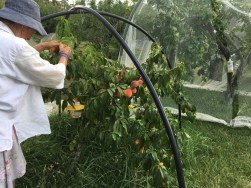
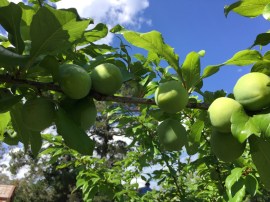
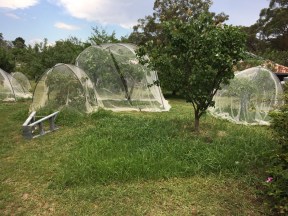
We have just started to pick the first santarosa plums along with the last of the apricots. Now that the apricots are over for us, the net is no longer needed there and we have decided to move this big net off the apricot tree this morning and along with its poly-pipe hoops and have set it up over the second plum-tree. The elephant heart plum.  These plums are still green now, but will be turning red soon, and that red colour always attracts the birds. So far we have managed well with the birds this season.
IMG_3679 IMG_3684

Once the poly hoops are set up and the netting transferred, I drag the last of the netting over and manage to trap one luscious Janine and two chooks under the net. Now we can relax a bit. All that is left to do is to move the DAK pots and fruit fly lures across from the other tree. I try and keep at least one fruit fly lure inside every net. I spend $50 each year on fruit fly trap re-fills and a bag of dynamic lifter. Even growing your own fruit isn’t free + the hundreds of hours spent in the maintenance and watering, but this isn’t really work. It’s better described as fun and recreation, otherwise you wouldn’t do it.

IMG_3677 IMG_3674

The late peaches are ripening, I suspect that it won’t be long and we will have these on the menu too. The late peaches are luscious, dense, yellow fleshed and so flavorsome. They put the super early white peaches to shame for flavour, but the early peaches are always first, so we are so glad to get them and really appreciate them for their sweetness. We don’t realise how thin the flavour is because we are so looking forward to eating them after 12 months without peaches. Now in the midst of the high summer heat and ever so long days, the solstice is just a few days away, we are getting picky. For instance, we have stopped picking and eating the mulberries, there is always so much more and better fruit at this time of year. We let the birds have most of those, we just take the easy low hanging fruit these days.
IMG_3687

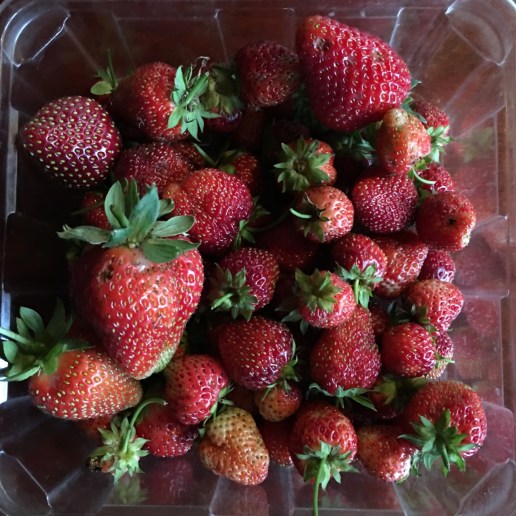
The strawberries are still continuing to produce regular pickings since spring, never too many, but just regular and steady, we have the strawberries mulched with pine needles that Janine sweeps up from under the big pine trees after every storm. We have a constant pile of it down where the truffle trees are growing. We use it for litter in the chook run and in their nesting boxes. After I rake it out of the chook rum every few weeks, along with a load of pooh all mixed in with it, it gets wheel-barrowed to the citrus grove and used for mulch around the trees in there. Nothing is wasted, everything has a use and a re-use.

IMG_3682 IMG_3686

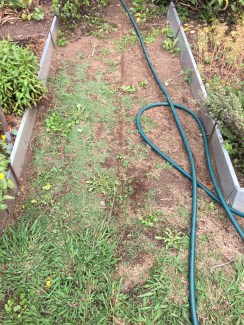
Looking back at our mornings work, I can see that there is a lot of grass grown up under where the netting has been. I get out the whipper-snipper thing and see to it, then think that I should also do all the paths in the veggie garden while I’m out here and into it. Couch grass never sleeps in this hot weather. I can’t afford to let it get a hold in the garden beds. One thing leads to another. There is no end to jobs. But the sun is right up there now and its almost 12-ish and time to put the mower away and go inside for lunch and then some inside work till it cools off. It’s a good thing that the days are so long right now, otherwise we wouldn’t be able to get it all done.

I get out there again and dig out a nasty patch of couch grass that has got a hold of part of the garden path. I set too with the mattock and dig it out roots and all. It’s hot sweaty work, but very rewarding when you look back after you’ve finished!
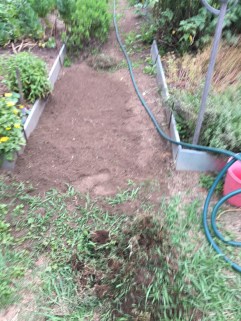
IMG_3639 IMG_3646

This is a job that won’t need doing again for another year in this spot, but there are still 3 more patches just like it at the other ends of the pathways.

I must have been wicked!

The First Ripe Tomato of the Summer

This is a special occasion for us. To get the first red ripe tomato on the 16th of December!

We have had a ripe tomato before Xmas before, maybe a couple of times in the last 5 years, but usually either just a day or two before Xmas or more likely in the week before New Year.

This is very early for us. I did buy 6 seedlings from the nursery when we returned from Korea in October and planted them out under our temporary closhe to beat the frosts and get them started extra early. See a previous posting;
Back Home in the Garden   Posted on
I have since planted another 20 plants, the most recent as recently as last week. I want to have plenty of fruit for making tomato passata in the summer. We are down to our last 4 jars from last summers harvest left in the pantry now. We’ll just make it through the year. perfect!

IMG_3629  IMG_3630