Everything is relative

We are having a short break from the pottery studio for a week to work around the garden, before the next few weeks of weekend workshops. It’s the last week of spring and we are only now getting the time and energy to plant out the summer garden. It will be a smaller garden this summer, as we are forecast to be heading into a long dry ‘el nino’ period. The previous one lasted some years and culminated in a severe drought with bush fires.

We spent the last summer of el nino drought watering our vegetables and garden plants from our rain water tanks, as all the dams had dried up. Luckily for us, we had invested in two huge storage tanks 20 years ago, when I was working and had the money to invest in our future water security. People mocked us, but we have never had to buy water in our life. We are attempting to be self reliant in as much as we can. Rain water and solar electricity are at the top of the list.

Last drought, we emptied one of the very large 125,000 litre water tanks and were half way through the other when the rains returned. Luckily, we didn’t have to buy water. Some people that we used to know years ago, had planted out an extravagant and sophisticated English garden told us that they were spending $300 per week back then, buying water to keep their garden alive and thriving. Three large truck loads of water were delivered and pumped into their tanks each weekend. It was the wrong kind of garden for this area, at this time. They also got a 100 metre deep bore drilled to get access to some underground water, but it dried up, and had to be evacuated, all the pumps and piping had to be hauled out with a crane and hole re-drilled down another 20 metres, to find a more permanent source of water, which then turned out to be iron bearing and needed to be oxidised and treated before it could be used on plants.

We learnt from this and decided to live a more simple and frugal existence, more in keeping with the natural environment. Every part of modern life does damage to the environment. Our aim is to keep that damage to a minimum where we can.

We have been enjoying the very early fruits from the garden as our breakfast fruit salad, Cherries, blue berries and strawberries. They are all growing under cover in the vegetable garden enclosure, safe from birds, so we get them all. Except for what the snails eat.

We had a good crop of mulberries this year and I was able to get my share despite the birds taking everything that they could. It’s the first fruit to come on out there in the orchard, so the birds are very hungry after the winter. They are also looking to feed their new babies hatching out in the spring time. This year we shared the crop. I was able to make 3 mulberry pies over the couple of weeks while the crop lasted. Being a huge tree, we have no way of netting it, so we share. The youngberries come on next and because they are a bunch of canes , and not too high we can net them to get most of the fruit. The birds are resourceful and learn how to land on the netting, pushing it down and then pecking the fruit through the net.

We also netted the apricot tree, as it has a reasonable crop of fruit coming on. Who knows how the rains will turn out? If there is no natural water from the sky, the dams won’t be enough. We have netted it just in case anyway. You never know what might happen. What we do know is, no net = no fruit. So we net.

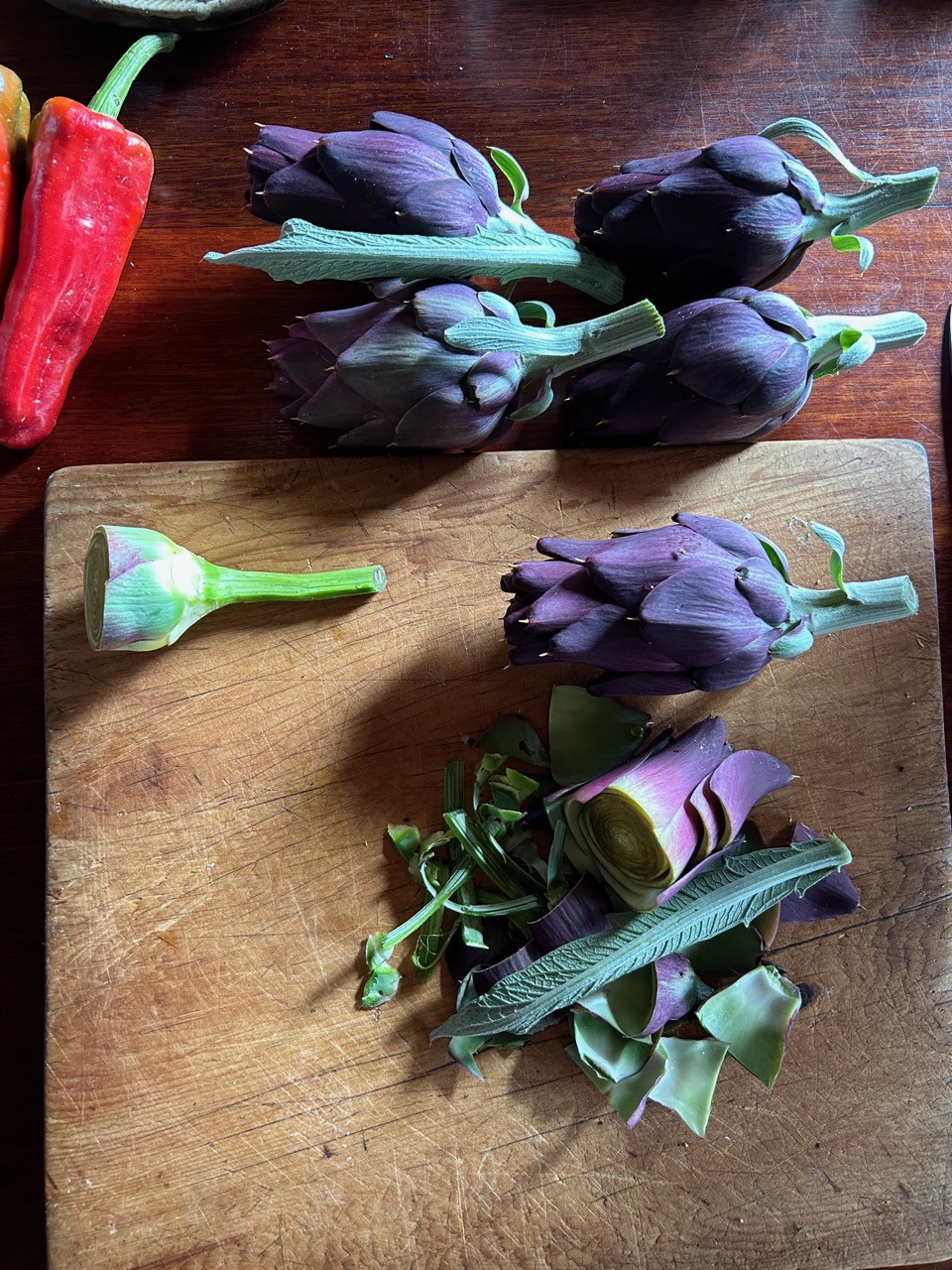
We have finished the last of the globe artichokes. The purple variety are the last to mature. They are a lovely seasonal treat. This year we have been having them on pasta for a slow lunch.

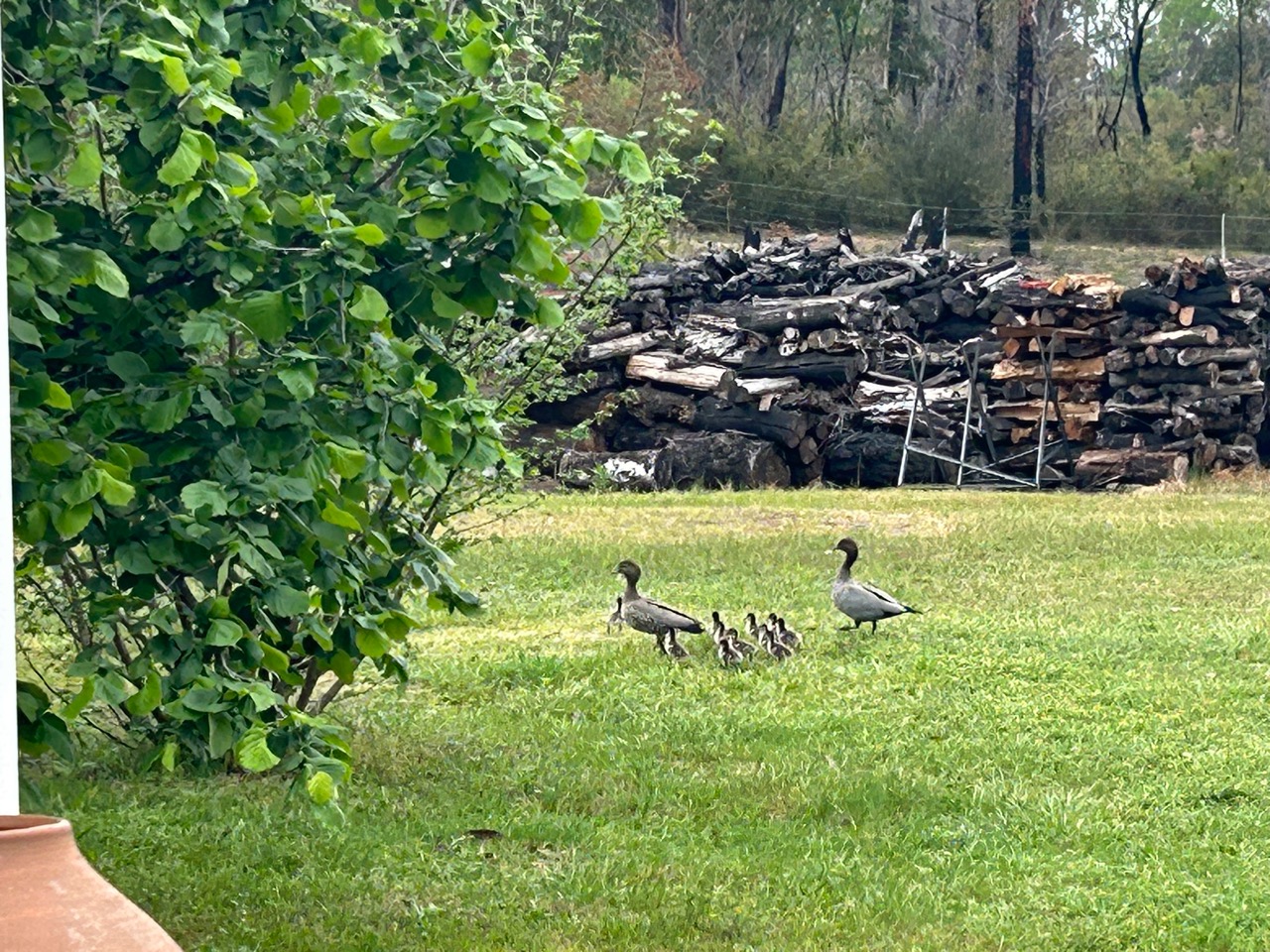
Spring also brings a return of the wood ducks. This season so far, we have had 3 hatchings. They start of with a dozen littlies and day by day the number decline. I assume that they are taken by bigger birds, although I haven’t seem one taken. They are very timid and wary by nature, so we keep out of their way while they have young. Choosing to walk the long way around if we encounter them in the garden or orchards. I think that they are probably lucky to get 2 or 3 to maturity by the end of spring. We have learnt from experience that if you don’t make eye contact, they are less likely to run or fly away. They will stay and keep a very close eye on you but not move. As soon as you turn your head to look at them, then they take off.

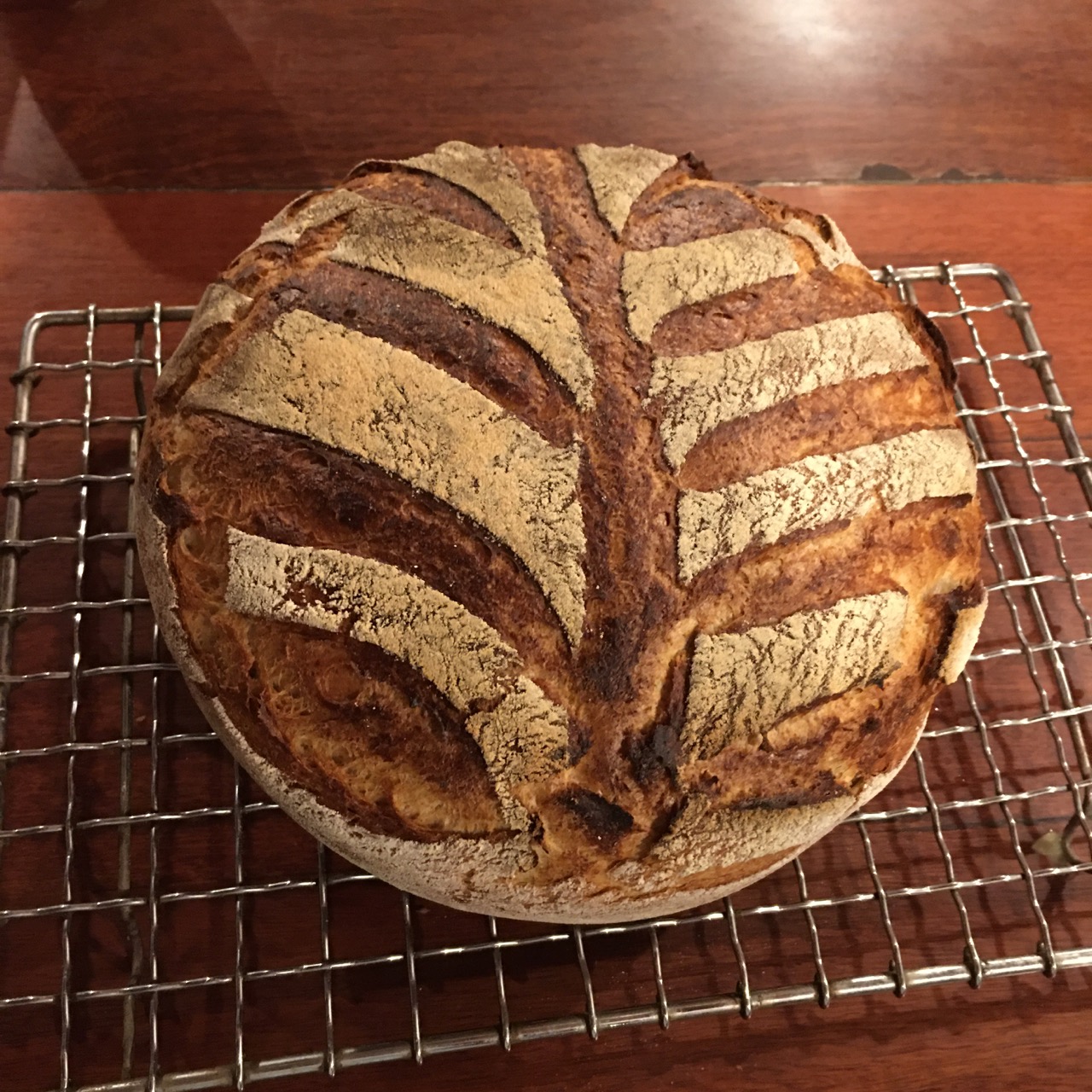
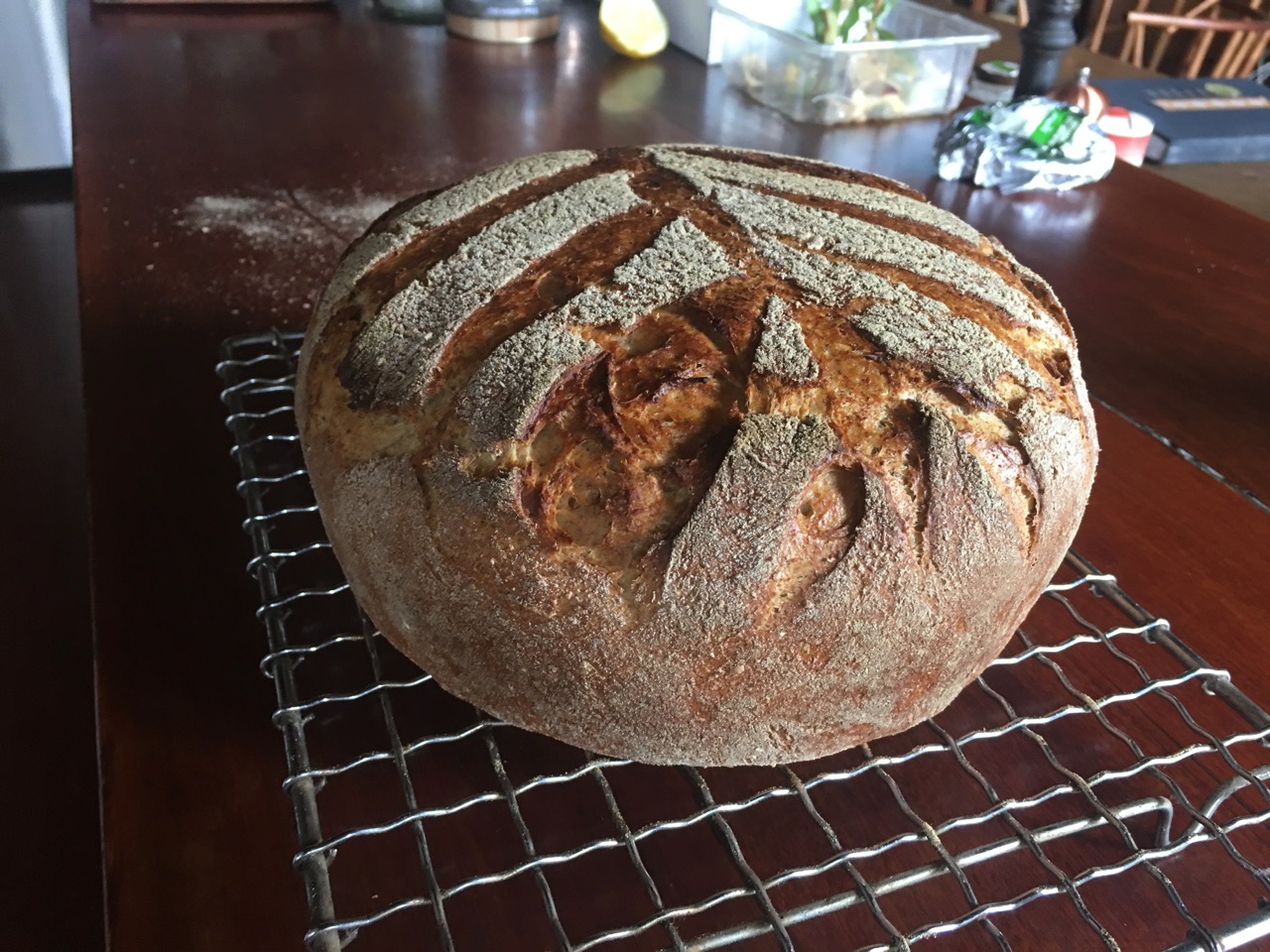
I’m still baking my bread each week. It’s a 50/50 blend of wholemeal and rye. It works out well for me, the way that I have developed it. To save time and make it an easy proposition, I sort of cheat. Sort of! But not really. I use a bread making machine to mix the dough on the ‘dough-only’ setting. It takes 1 1/2 hours to mix, prove, knock down and rise the dough. Then it switches off. I turn up and knock it down one last time and pop it in a cast iron, ‘Dutch-oven’ baking pan and bake it in the oven for 20 mins at 240oC with the lid on, then another 20 mins with the lid off. It works for me.  I can be outside working while the dough is being nurtured and pampered in the machine. We are on to our 3rd bread machine. They last about 10 to 12 years before they burn out, or wear out the bearing. At one loaf a week for 10 years, that’s a 500 loaf life span.

We picked the last of the spinach. Just tiny leaves from the spinach trees, as they bolt skywards heading to seed. I made the last spinach pie for a while. I will need to plant some more. I should have them in the ground by now, but life was too busy to do it all. I have just put in the seed this weekend.

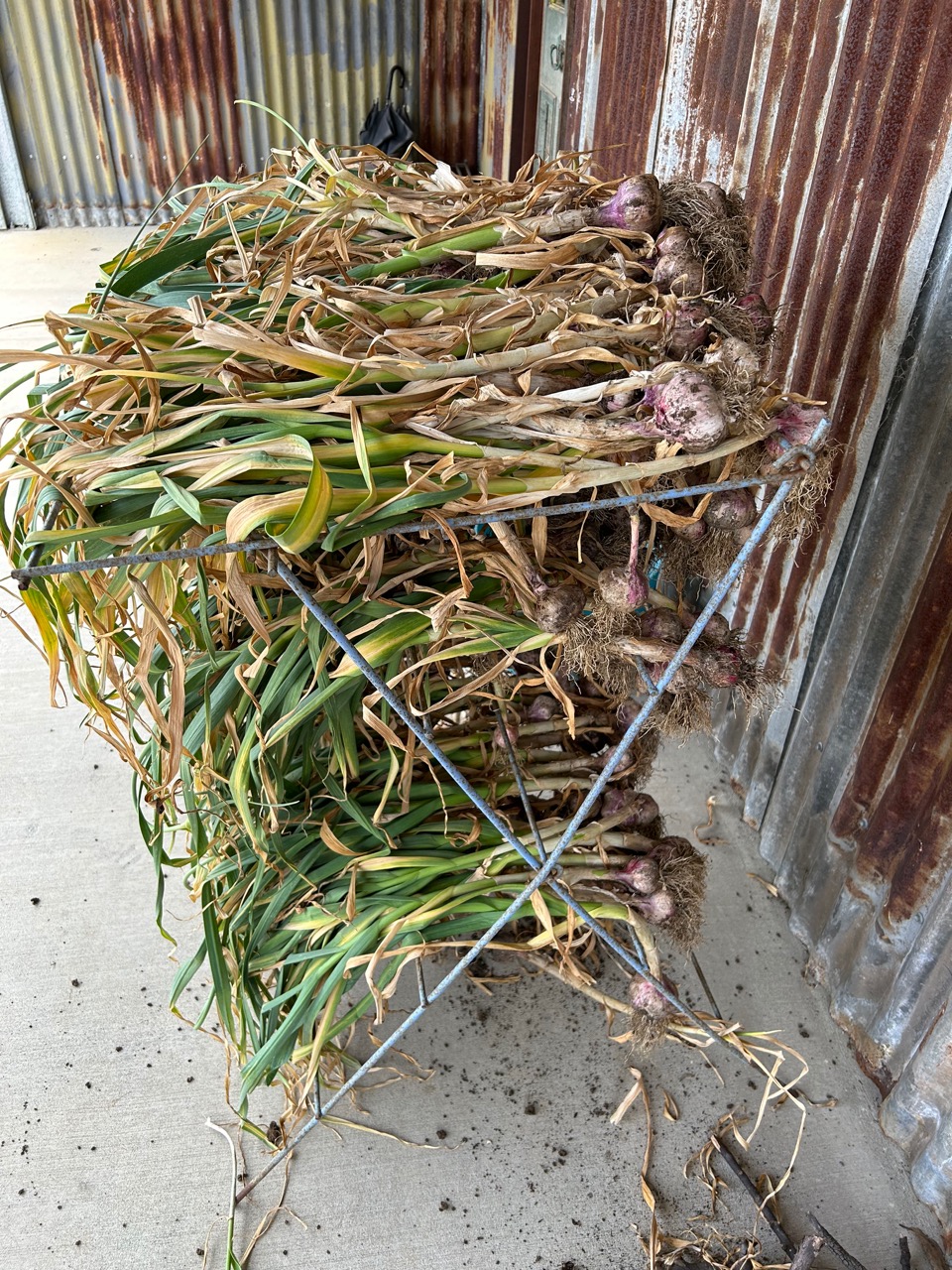
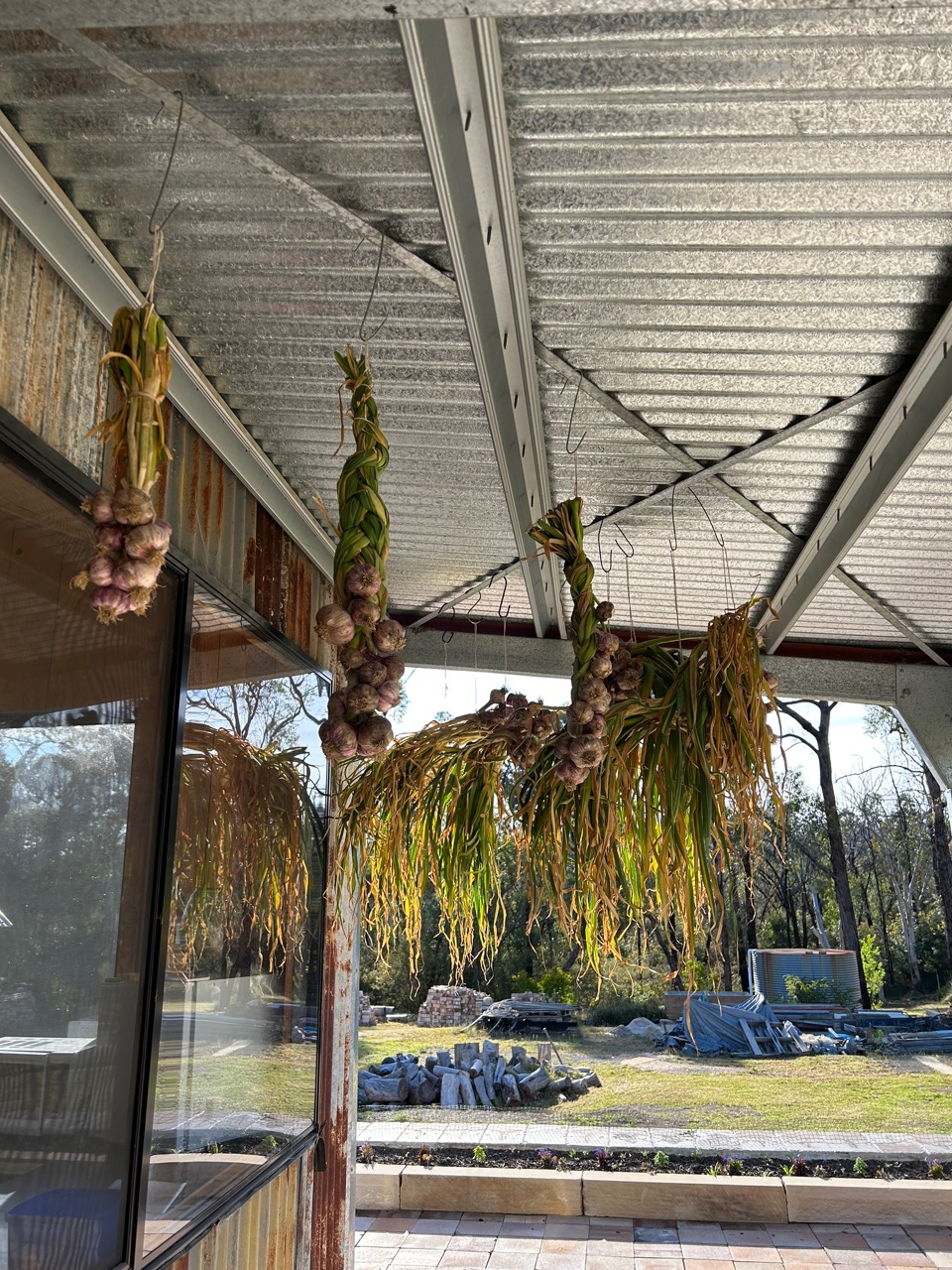
Janine has found the time to plait this years small garlic crop, just half a dozen plaits and a big bowl full of tiny knobs that are too much trouble to plait. Those small garlic knobs sit in their bowl on the kitchen work bench are used first. The biggest and best are kept for replanting in March. Its a very small crop and wont last us through the year. But can’t complain, at least we have some.

I catch myself thinking that things could be better. More or better sized garlic, more regular rain. But things are really pretty perfect for us. I have to remind myself that I’m not in Palestine or Ukraine being bombed. Be happy with what you have.

Winters End – The Last Truffle of the Season

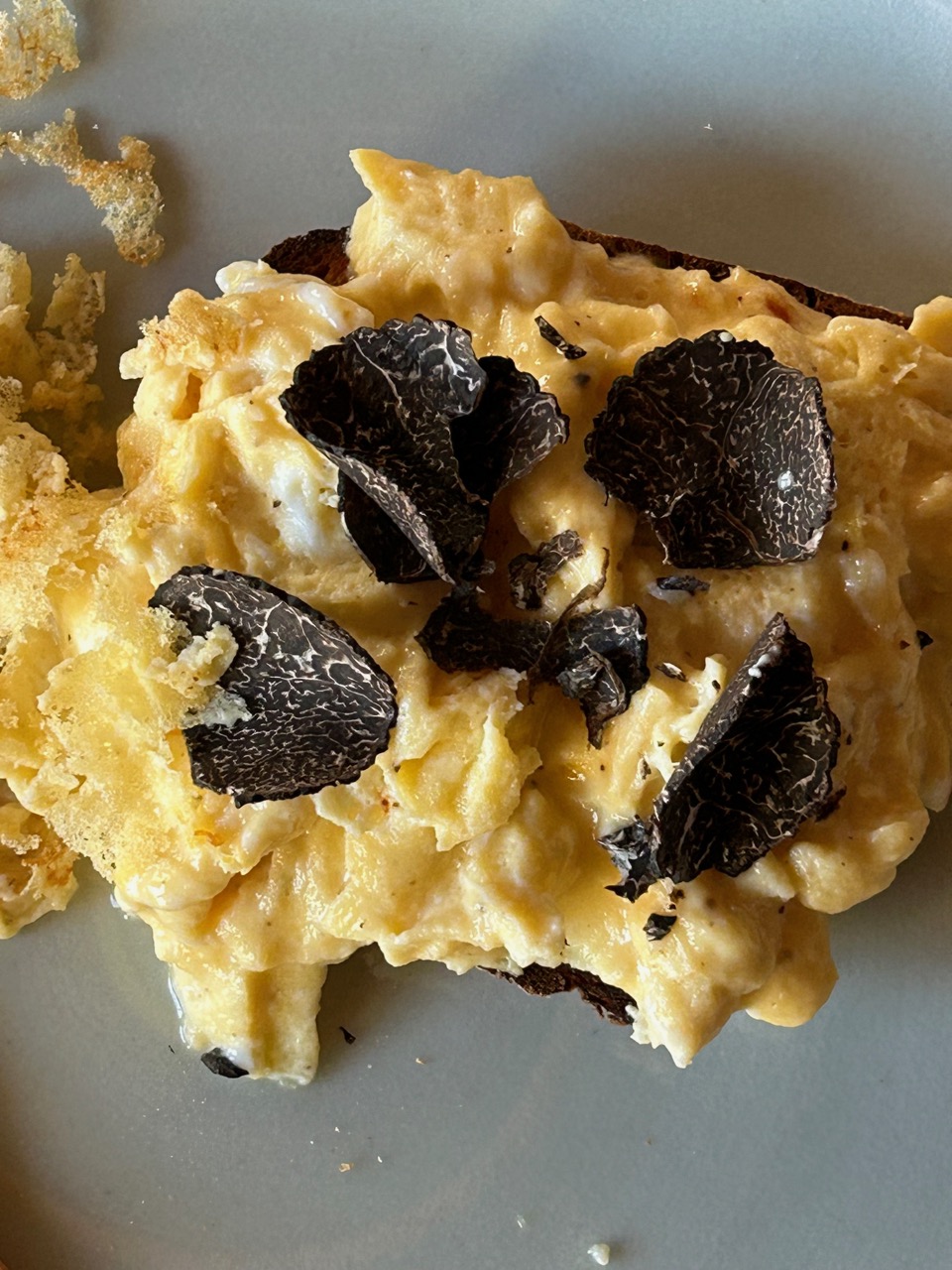
Today we finished off the last truffle of the season. It was romantic, mysterious, fragrant, exotic and delectable. It really elevates the humble scrambled egg into something special without taking anything away, just adding loads of romance and aroma. The warmth of the freshly cooked eggs releases so many aromatic oils and esters from the tiny black fungus. It fills my nostrils as I bend over doing the shaving. It’s a good thing that we only get to eat these delicious little morsels in the winter months, otherwise we may become somewhat blasé about it all. As it is, they are still a very special seasonal treat, If somewhat expensive. We can only afford to live this decadent gourmet lifestyle on our frugal budget because we have a son in the industry.

We are also probably making our last batch of marmalade too, as we have picked most of the Seville oranges now and eaten nearly all of the other citrus fruit. Although this is the beginning of spring, it is also the end of winter in another way, so it’s the end of the winter crops like citrus. We try and live with the seasons, so that’s it for the big citrus splurge in our diet. 

It is one of the blessings of living in the Southern Highlands, that we have 4 distinct seasons. For instance, this morning we had another frost. This might possibly be our last really cold morning, but you never know with the climate emergency developing as it is, anything could happen.

I peel off the thin yellow layer of the skin without taking too much of the pith. I want the pith off!  With my pile of curly peels, I end up with what can only be called ‘bitter and twisted’ .

Janine removes the pith and cuts up the juicy centre to add to the pan. The first pan is on for 30 mins. before we get the 2nd pan on the stove and the difference in colour is dramatic, it  gets richer and deeper as it cooks. We try to use as little sugar as possible, while not making it too bitter and acidic, we also need enough sugar to make it ’set’. It takes about an hour of steady simmer to get it to thicken sufficiently. It’s worth all the effort, it tastes delicious, with just the right consistency. Seville oranges aren’t all that nice on their own. They are OK, but they really come into their own when it comes to making marmalade.

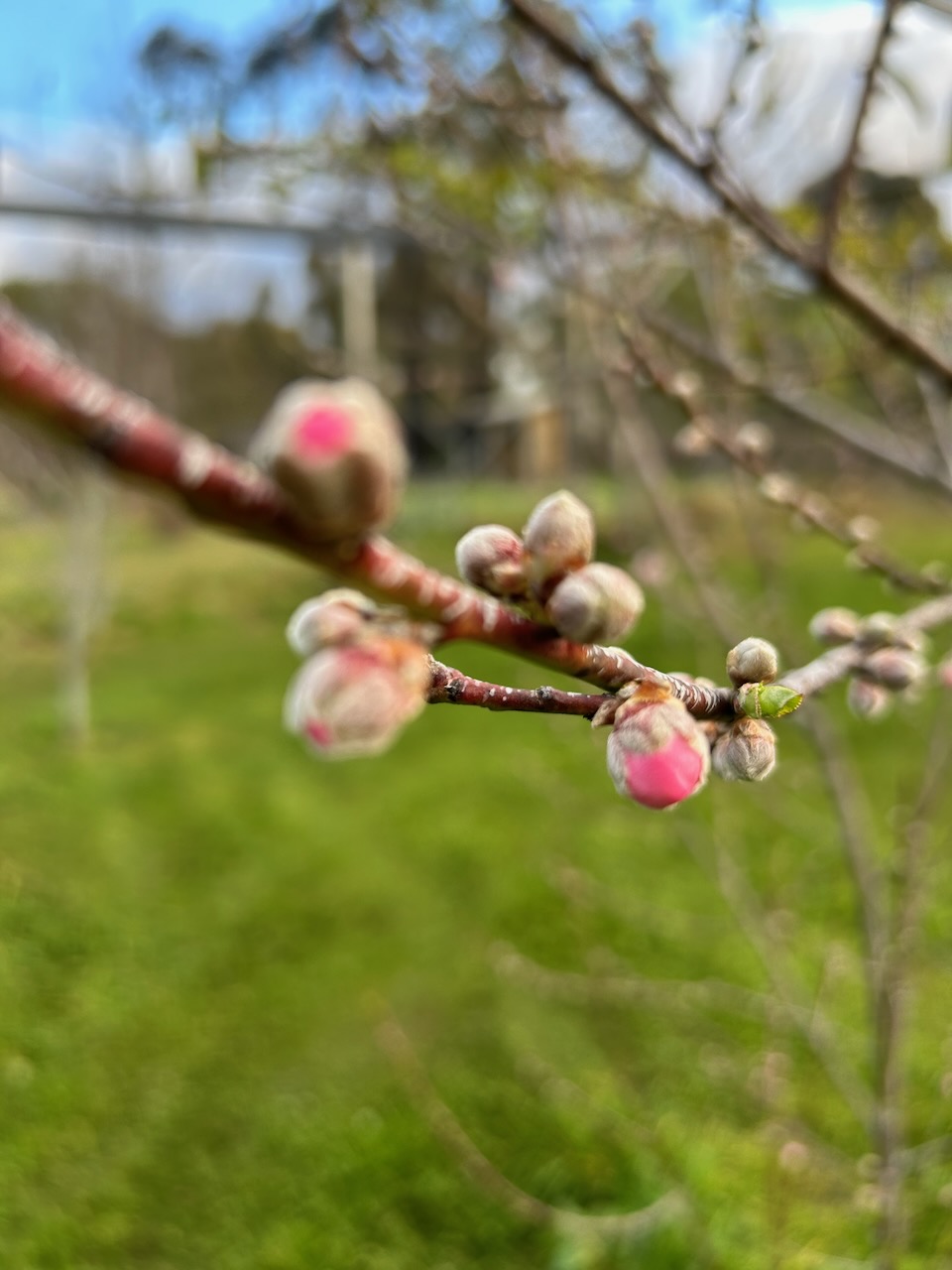
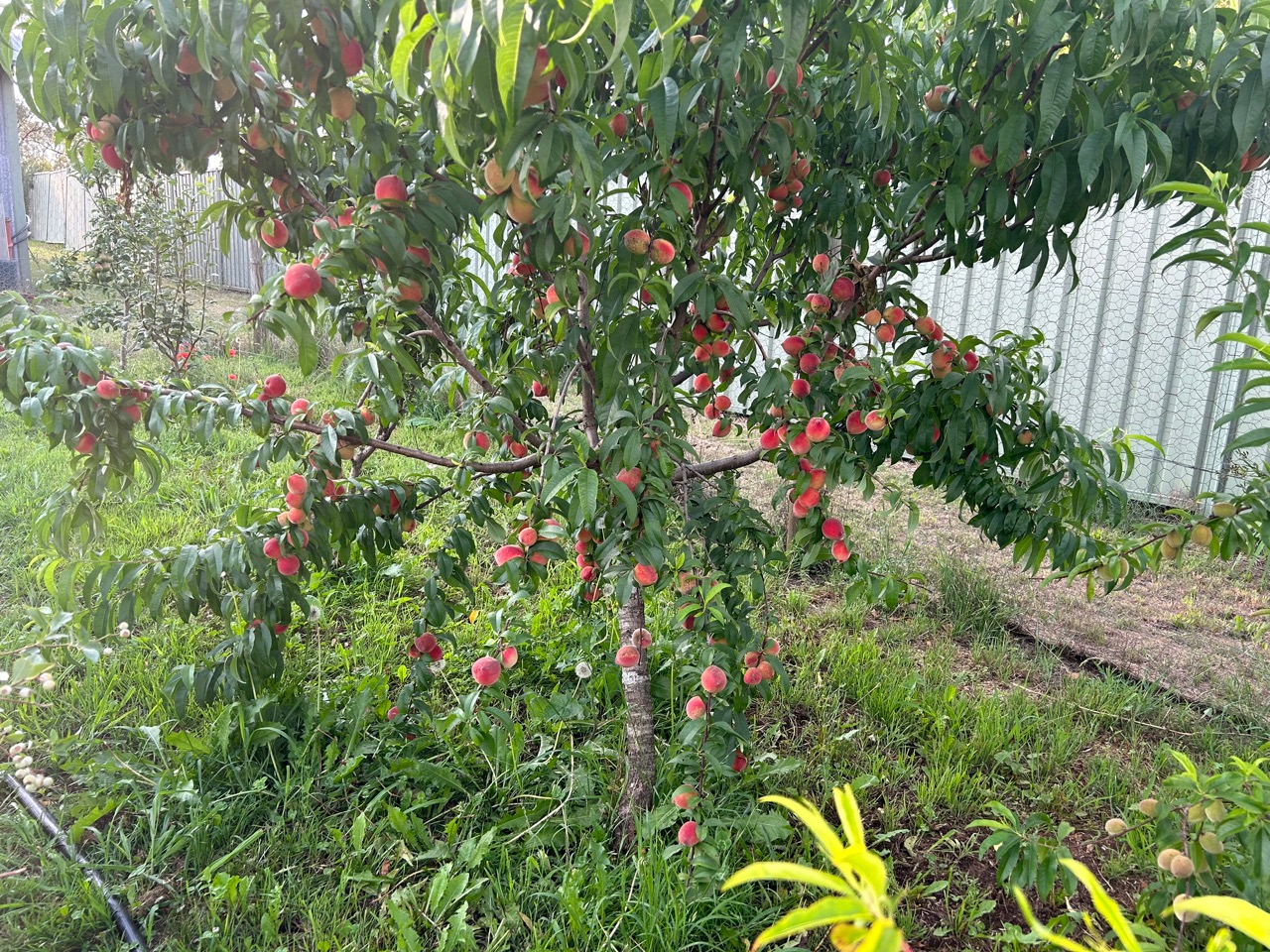
The stone fruit orchard is growing up well. This is its 3rd year and the trees are starting to look a lot more settled and established, with thicker trunks. I have been pruning them into open vase shapes where possible, but some of them have a very narrow vertical habit. They are all grafted onto ‘dwarf’ rootstocks, so they are keeping to a compact size. Most of them are now about 1.5 to 1.8 metres high, with an expected total height of 2.5 metres eventually. But I am well aware that plants can’t read their own labels! So there are bound to be variations.

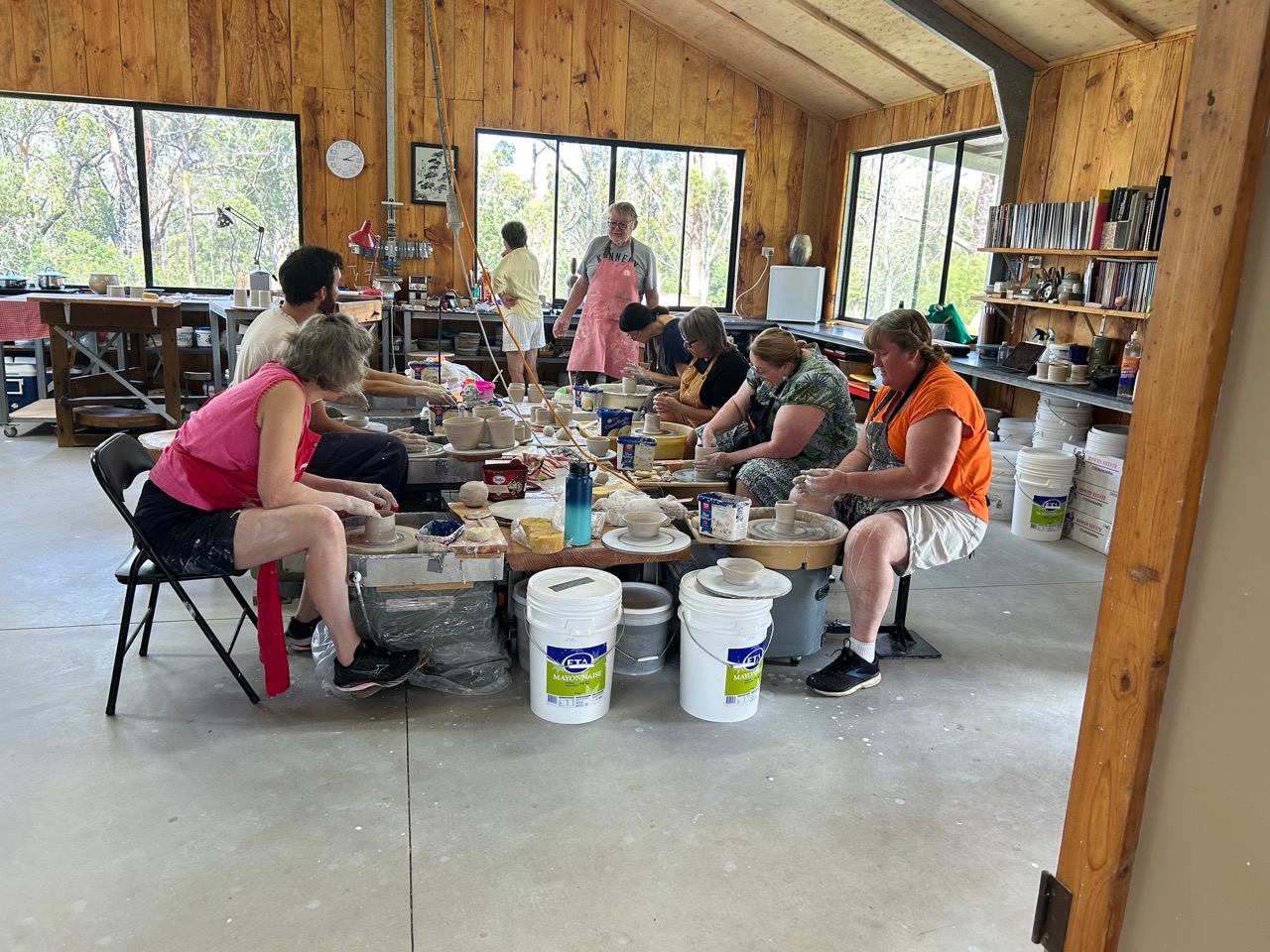
We had a really great 1st Weekend workshop in the new pottery. It worked very well. The new studio is a great space to teach in. The light is good and the layout works ergonomically for 10 people, 8 students and 2 teachers. After everyone left I got stuck in and started making more pots for myself. The Open Studios, Arts Trail is coming up at the end of the year, so I need to get back to work making pots for that. I started back at it by making 30 straight sided mugs.

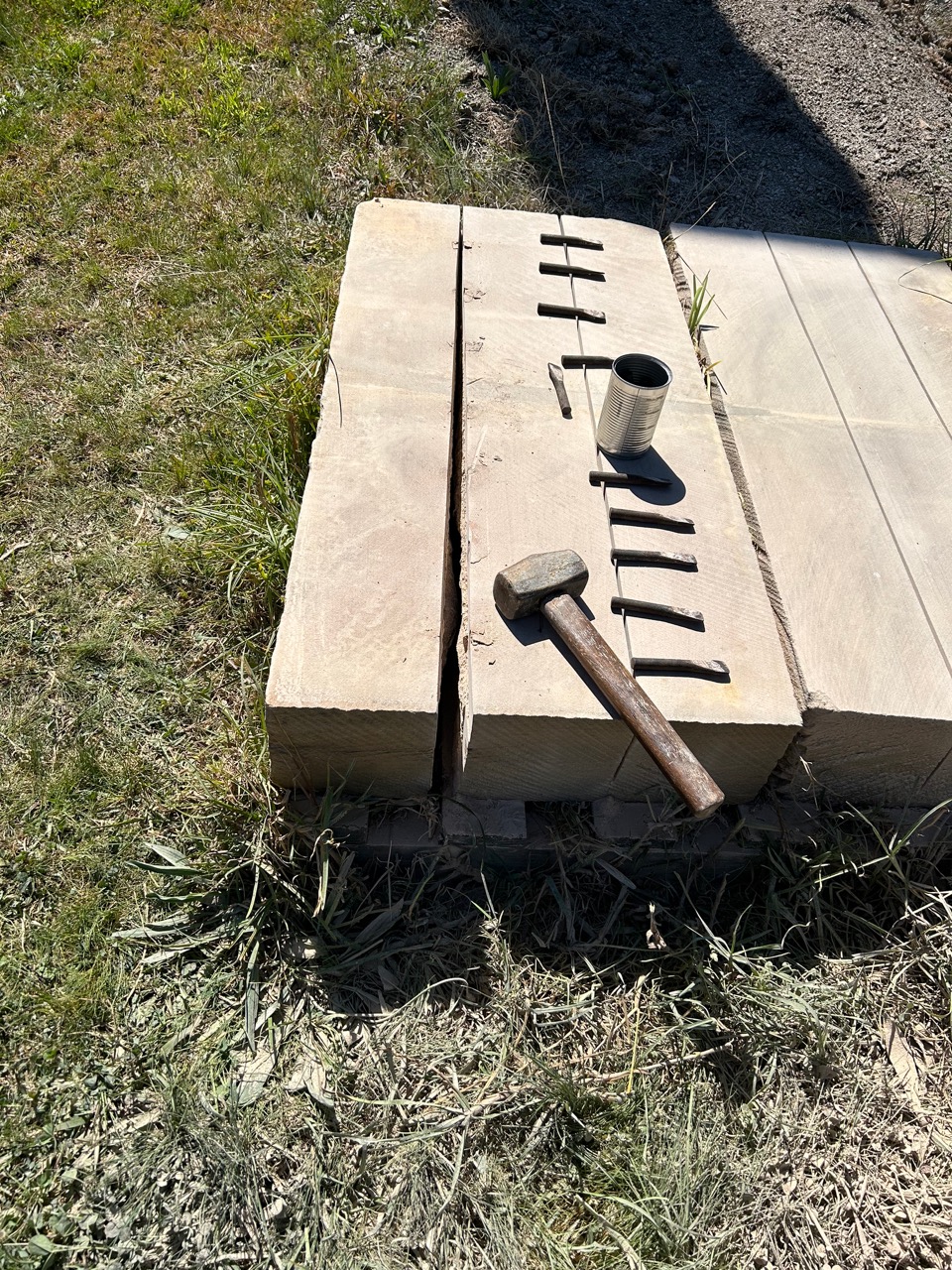
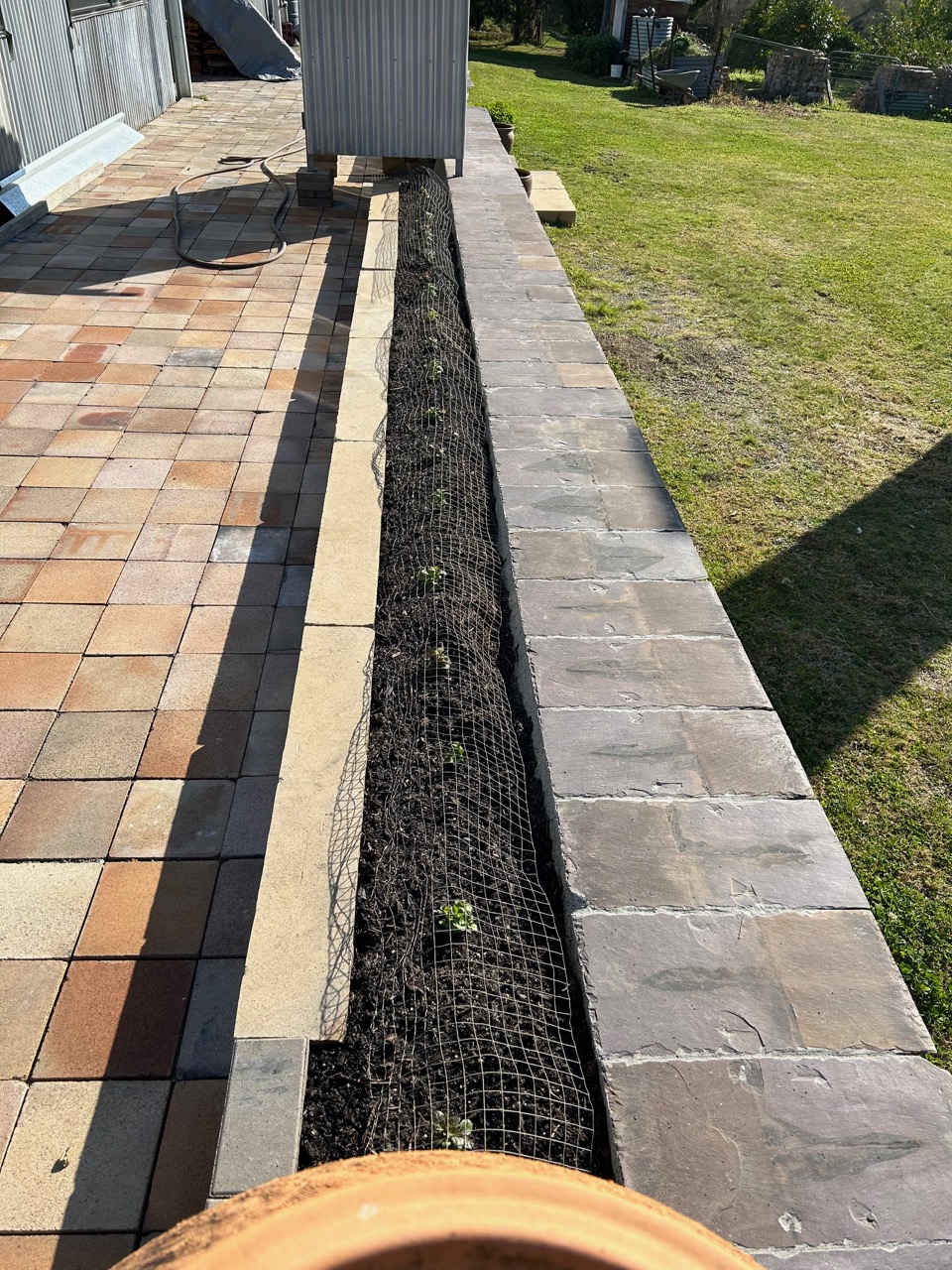
I spent a few days since the recent weekend workshop, in the afternoons, in my spare time, splitting and dressing sandstone blocks, to make some garden bed edging along the recently finished slate capping on the big sandstone retaining wall around the new pottery. It’s just another one of those jobs that has been in the offing and waiting for the ‘right’ time. I chose this ‘right’ time from what is left of my other time! Once the little wall was in place I shoveled in a load of top soil and planted seeds and a few seedlings to make the edging look a bit more settled and finished. I sprinkled in a packet of English Cottage Garden seed mix for good measure and 30 caper seeds, one every 600mm. Capers need an elevated, well drained, sun baked, dry, harsh environment to thrive. They take 2 years to establish, then persist for many more as long as they are cut back and pruned hard in the winter to stimulate good growth in the spring and summer, as flowers and fruit are produced on the new years growth. The elevated and exposed wall seemed like a pretty good place to try them out. I have read in a few books that they thrive on top of stone walls in the Med’s dry summers. I have no expectations, but if something comes of it, I’ll be pleased. If not, then I’ll chalk it down to another one of life’s enriching experiences. The stones look nice anyway, regardless of whether the plants grow or not!

After the soil was shoveled into the new beds, Edna the chicken, who had been helping me all day, came along and decided to help me some more by scratching a lot of it out again. I had to make some impromptu wire covers to protect the small seedlings from being excavated!

I’m happy with the result. 3 days work and $50 bucks goes a long way. I’m hoping that it will look greener in time for the November Arts Trail, Open Studios event.

Faire Chabrot

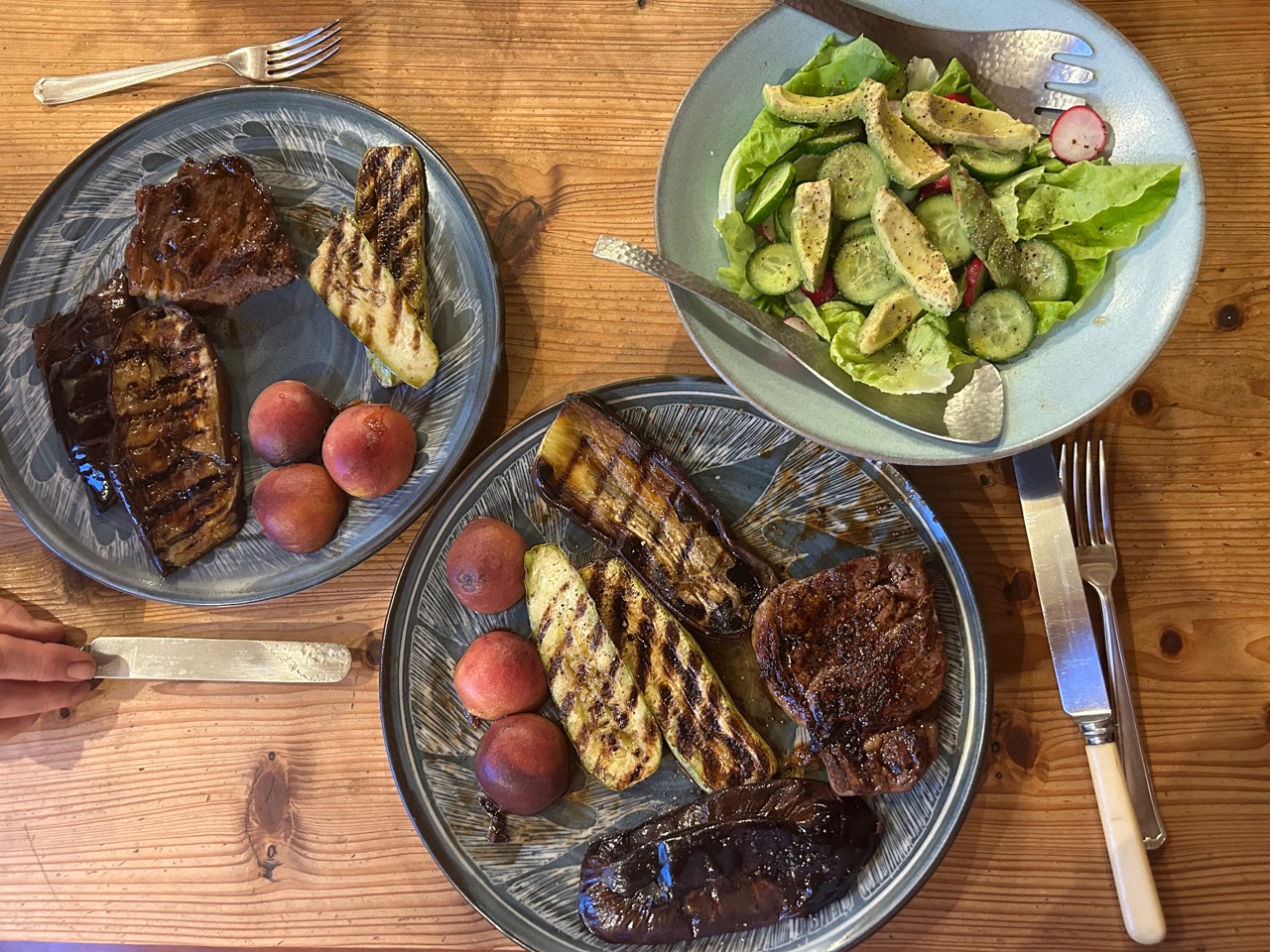
As the weather has been cold. We decided to have a baked dinner. This months meat meal is a very small piece of fillet steak.

Baked with a load of vegetables from the winter garden, and of course, a Yorkshire pudding in the old fashioned tradition of using all the meat juices from the baking pan. The proper way! After baking, the meat is placed in the warming oven to rest, while the baking dish is then reused to bake the ‘pudding’. 

Non of those shop bought, frozen, pissy little cup cake things, masquerading as Yorkshire pudding, to be microwaved to a perfection of stogy, doughy sog.

The batter for proper Yorkshire pudding has to be made up and hour or so at least before hand. It’s the first thing that you have to do before starting to get a baked dinner ready. Even before washing and prepping the veggies, or spiking the meat with cloves of garlic. It has to be mixed and left to rest, then stirred occasionally throughout the baking time, so as to get a light and fluffy pudding with a thin crispy top.

recipe;

2 table spoons full of plain flour

1/2 a cup of milk

2 eggs

(See previous blog post 17/08/2014. ‘Don’t get to know the farm animals too well’)

Janine learnt this method from my Yorkshire mother, who learnt it from her mother etc.

She was a good student and makes a very nice Yorkshire pudding. My mother would approve.

It ends up being a huge meal, but we have been working hard, cutting and splitting fire wood all day, so it’s very tasty and easy to eat.

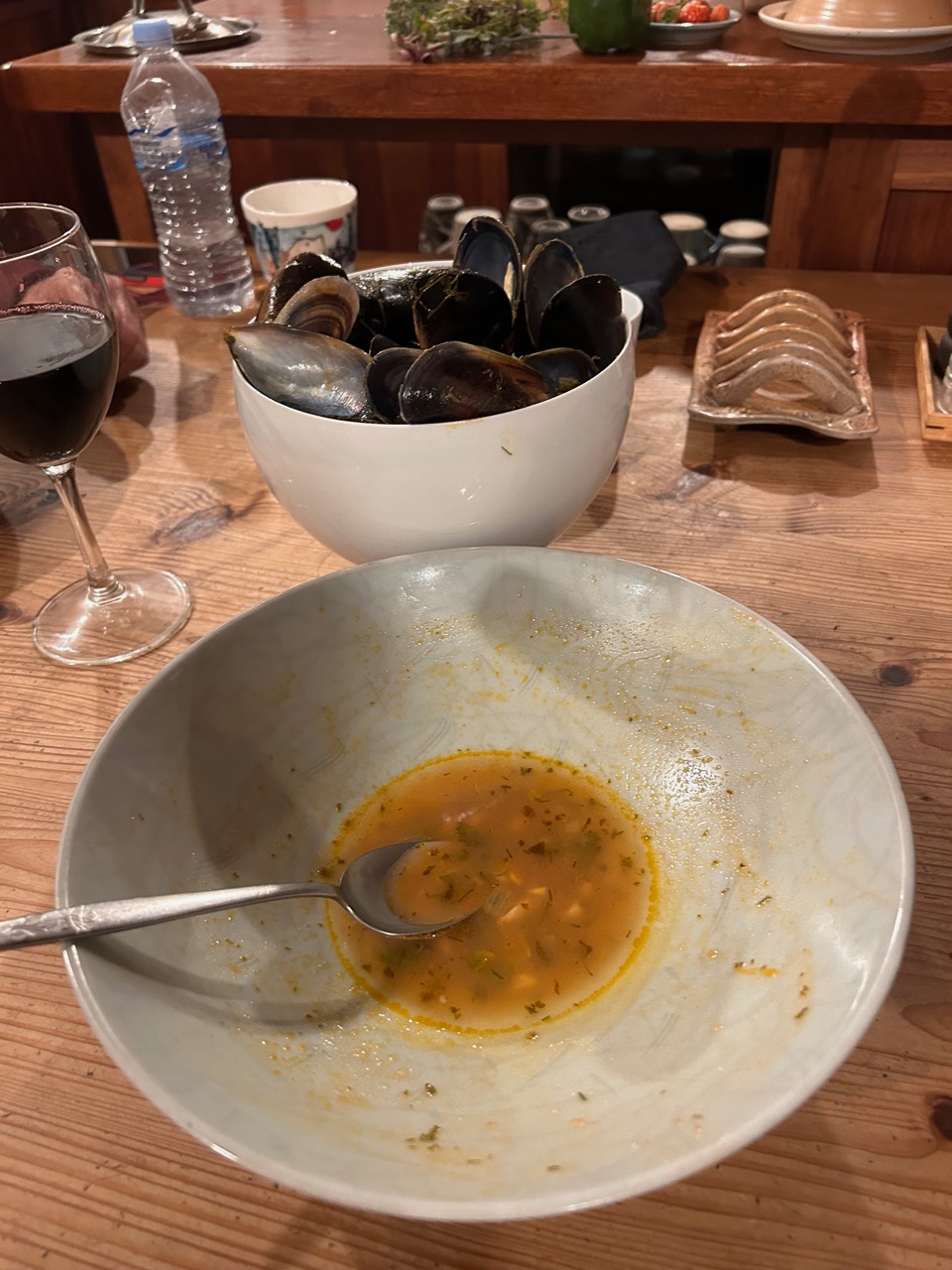
I also made a lovely mussel soup this week. I used a lot of fresh herbs from the garden, some white wine and a bottle of our preserved tomato passata from last summer.

It was very good with the mussels, and with a lot left over in the pan, made a warming lunch time soup the next day.

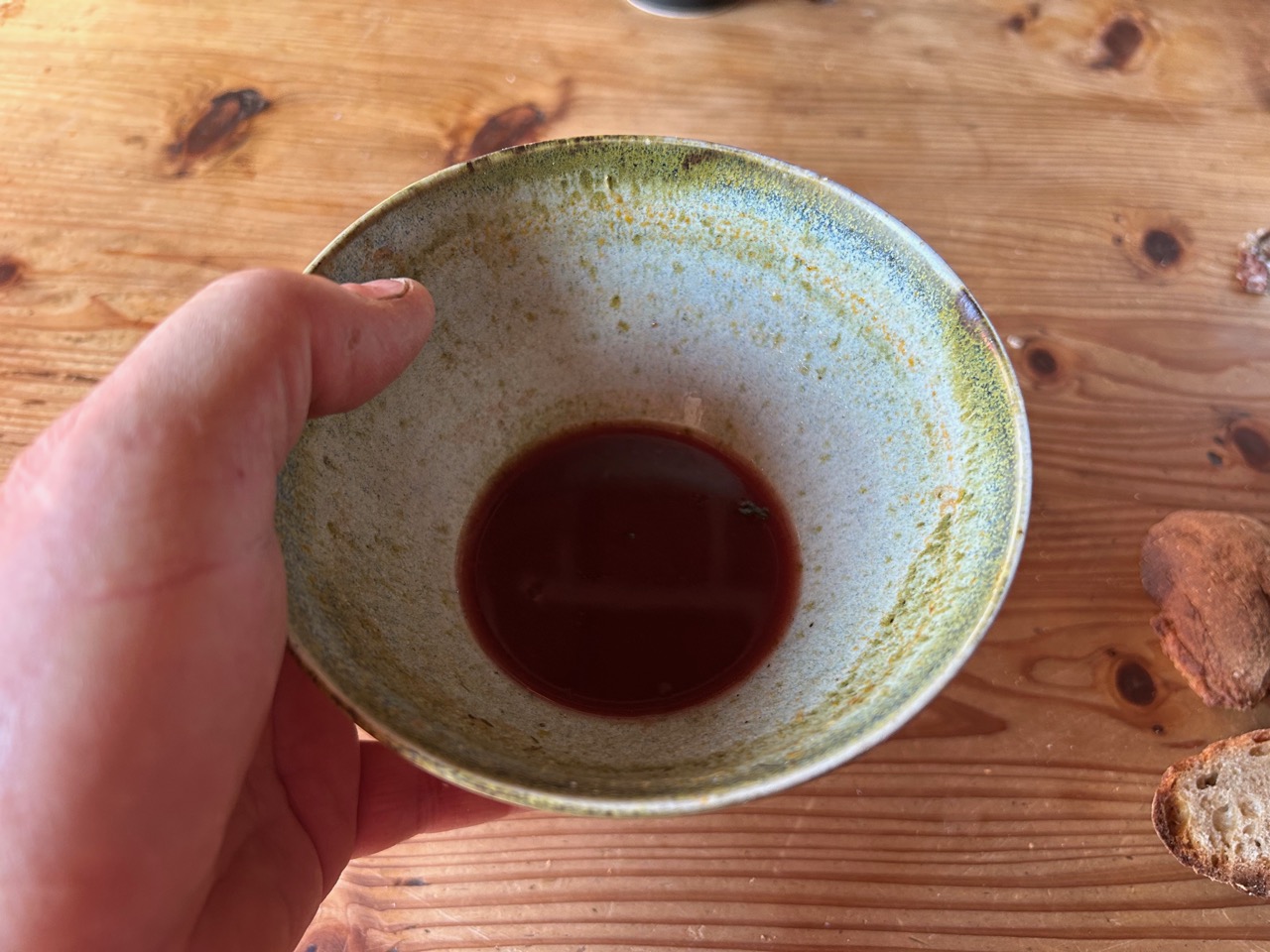
After eating all of the mussels, there was a little soup left in the bowl, so I was inclined to engage in the ancient French tradition of ‘faire Chabrol’. 

By pouring a little of my red wine into the bowl and drinking the mixture straight from the bowl.

I’m warned that this is not a practice to engage in, in polite society. It’s strictly for peasants. Welcome to the home of the Post Modern Peasant.

It’s catching!

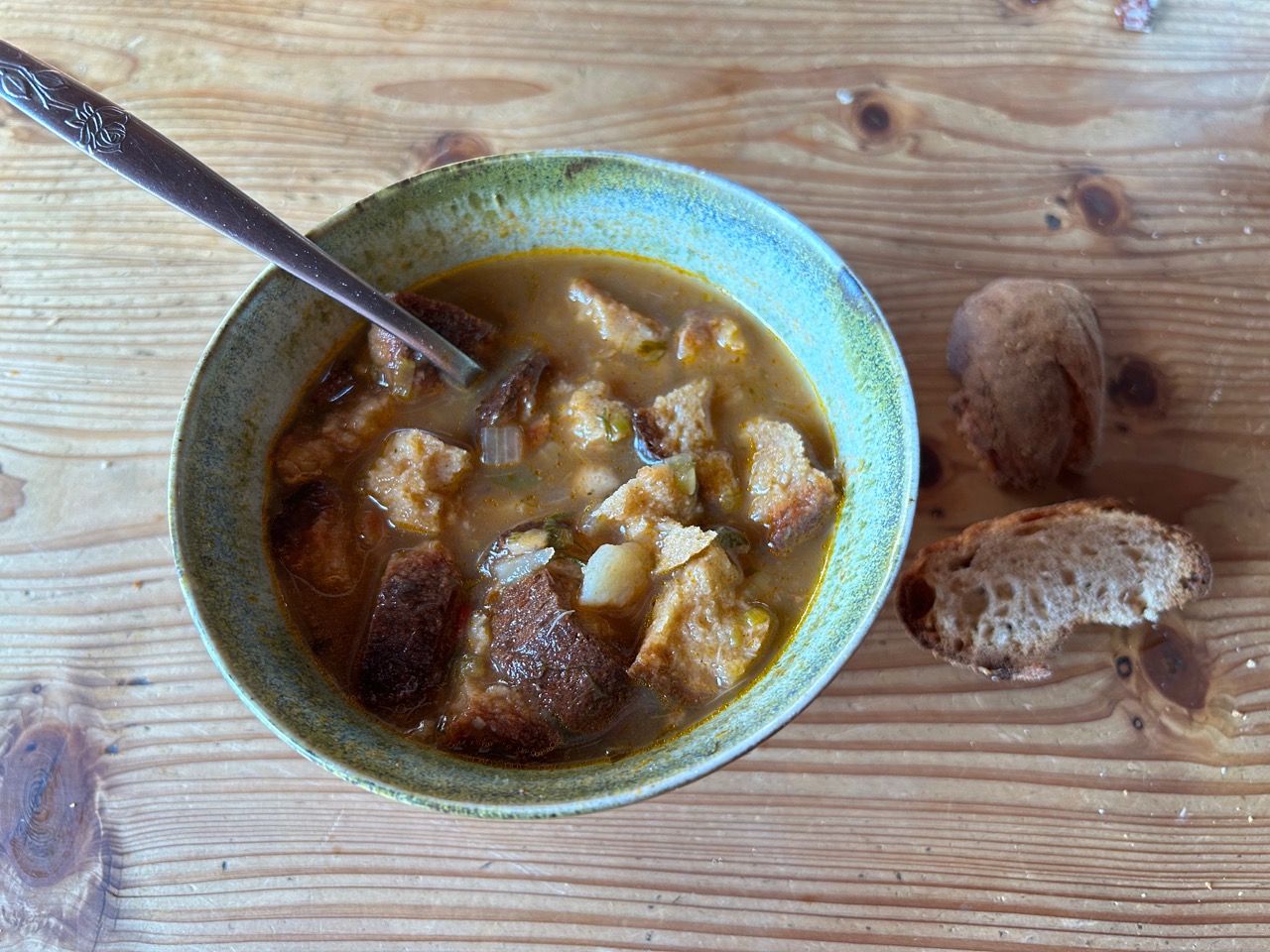
The next day at lunch, we had the same broth, sans mussels. But in another very old tradition, I added broken pieces of old bread into the soup to fill out the meal. And, in keeping with the tradition, I finished with a little red wine. Faire chabrot!

Itadakimasu!

Winter Solstice and the First Truffle of the Season

We are well and truly in the months of winter now. We had a week of crackling frosts, then they were driven away by a week of freezing winds. That didn’t help me to get out and about in the garden at all, so I stayed inside working in the studio, out of the wind.

We celebrated the winter solstice with a dinner here in the big decorating room in the pottery, at the big work bench, converted for the day into a refrectory table. We can seat a dozen pretty comfortably in there. It is such a big, almost empty space, that it doubles up very well as our entertaining area. It is huge and uncluttered, as opposed to out house, which is small and compact, and none of the rooms in the house were designed to seat 12 people for a meal. We have however, had over 30 souls in there for a house concert, crammed in cheek and jowl. But that was only for listening to music, not a sit down meal.

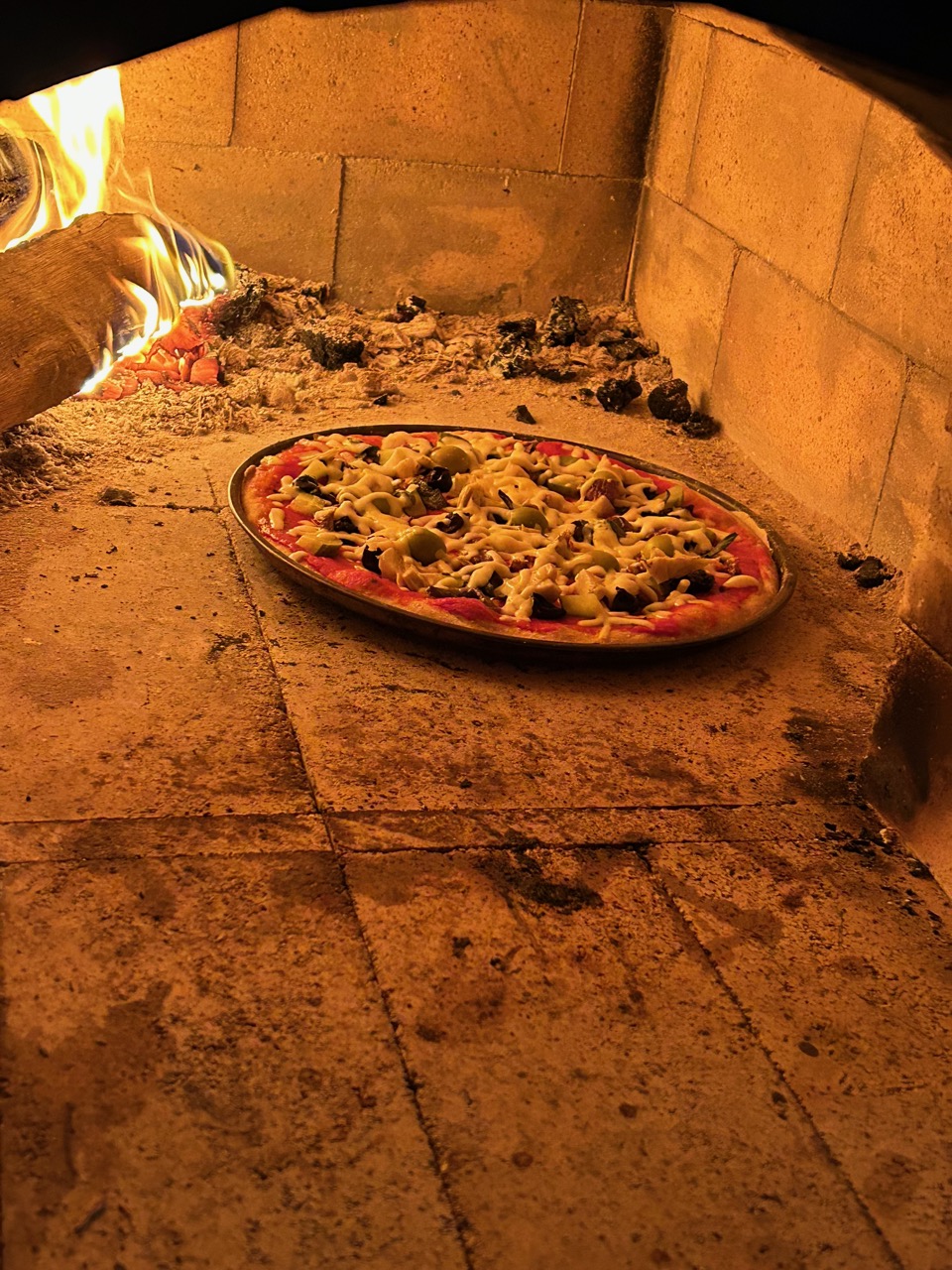
On this occasion, I cooked pizzas for everyone, as it is cold outside, it was a good time to light up the old wood fired pizza oven and crank out a few pizzas. 

I try and stay clear of the usual suspects. My favorite this time was wilted spinach and oven roasted pumpkin from the garden, with a few olives. I prepared everything before hand, picking, washing and wilting the spinach before everyone arrived. I spent the morning in the kitchen prepping. The pumpkin was finely sliced, diced and roasted in the new solar electric oven, with olive oil salt and pepper and some finely diced garlic, also from the garden. These crunchy little gems melt in your mouth and smell and taste delicious.

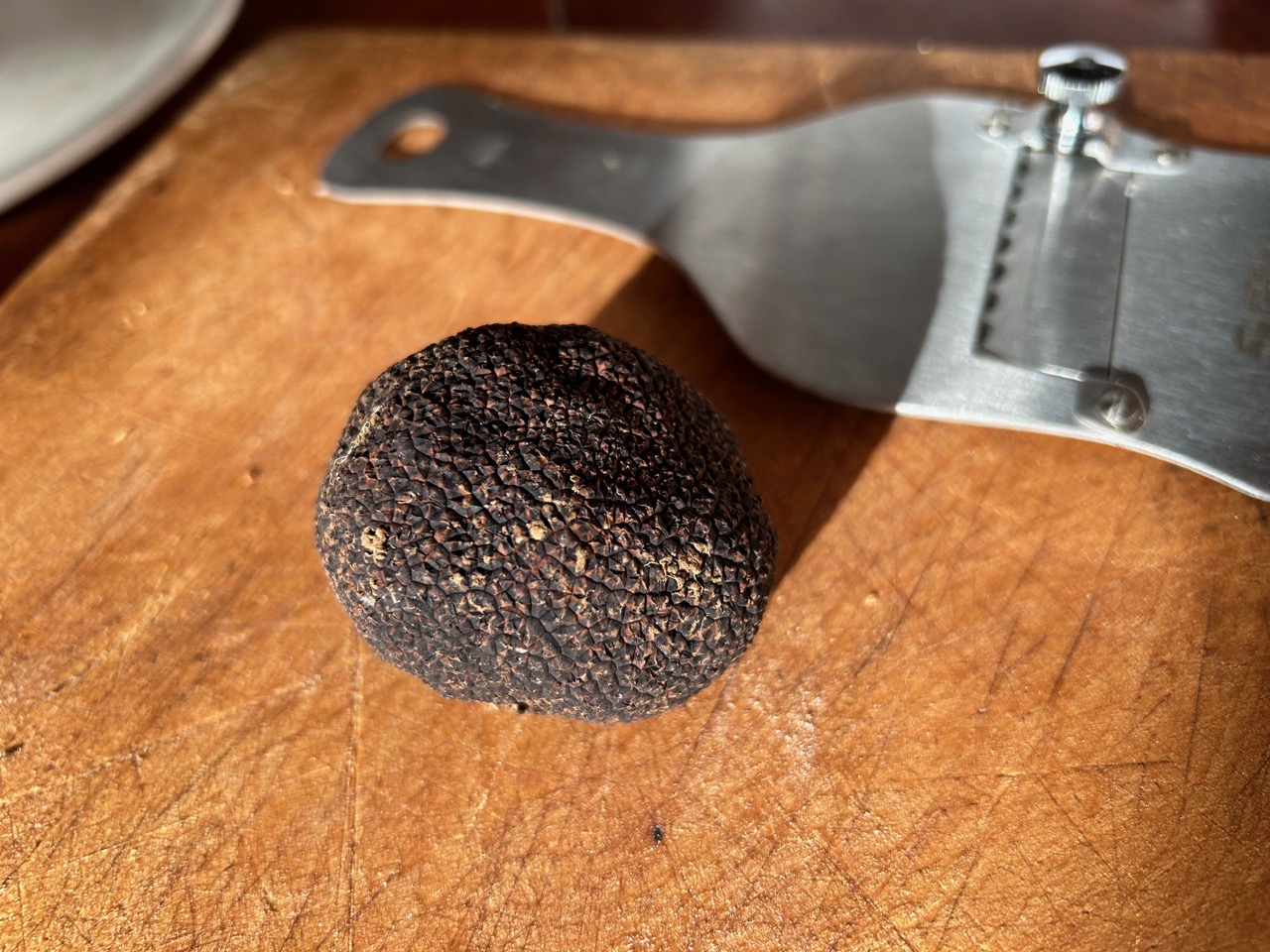
We have been enjoying the first truffle of the season for our breakfasts this last week. We buy only one truffle each winter. It’s a special indulgence. They are hard to buy around here directly from the growers, who prefer to sell in larger amounts directly to restaurants. Luckily we have a son who is a chef and has access to the trade, so we order one each season through him. We take what ever comes. I only ask for something less than $100. At $1 a gram, it can quickly add up, but usually we get something around $30 to $50 worth. However, this year, the price has gone up to $1.50 per gram, and what turned up in our order is a beauty! 50 grams. That is about 50mm dia. and the biggest that we have had the privilege to enjoy so far. 

This is a 4 or 5 meal truffle!

We store the truffle in a container with the eggs for tomorrows breakfast and a cup of rice that will be the next nights risotto dinner.

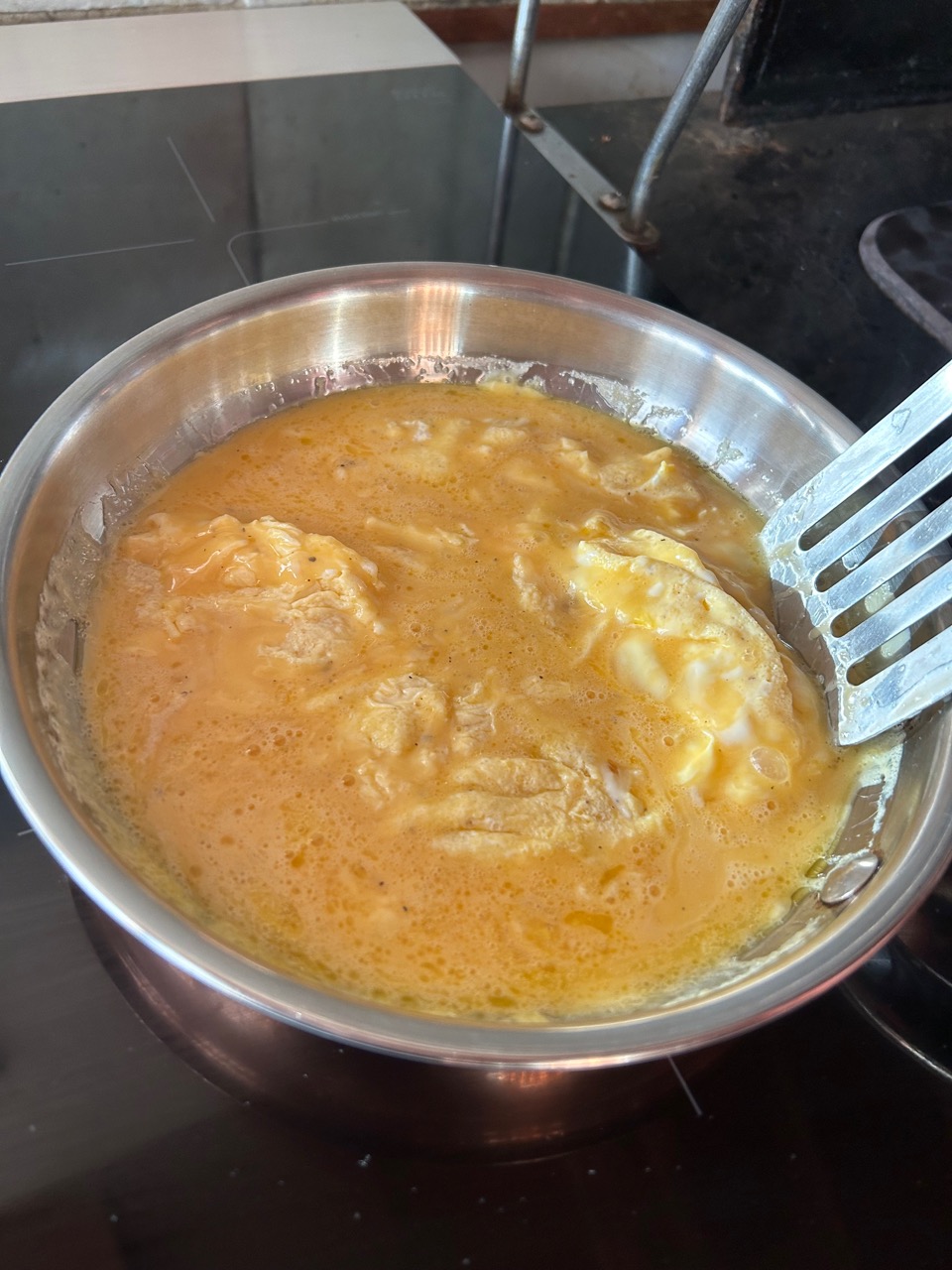
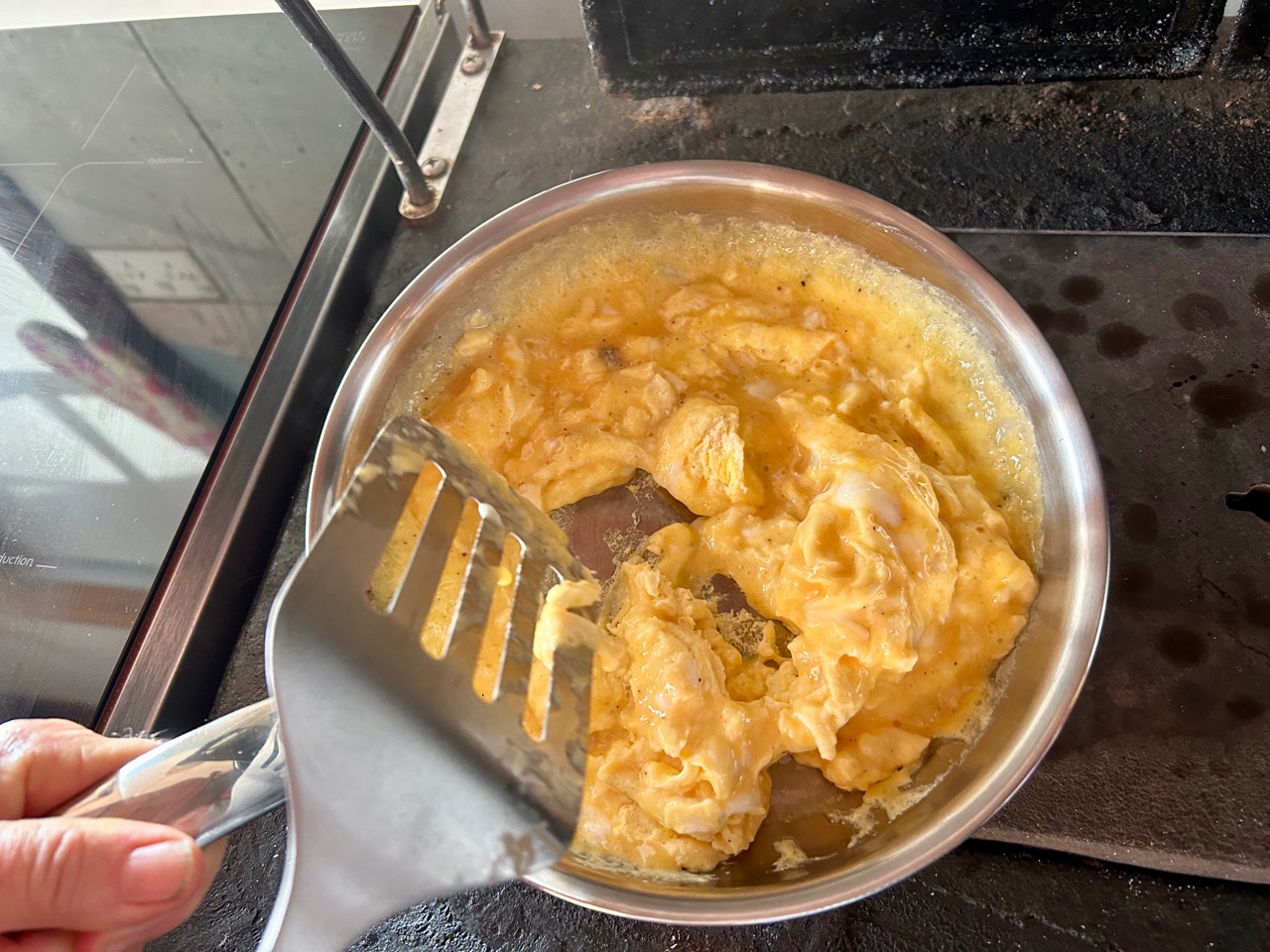
The best way to enjoy truffle in my opinion is just simply grated over very soft scrambled eggs.

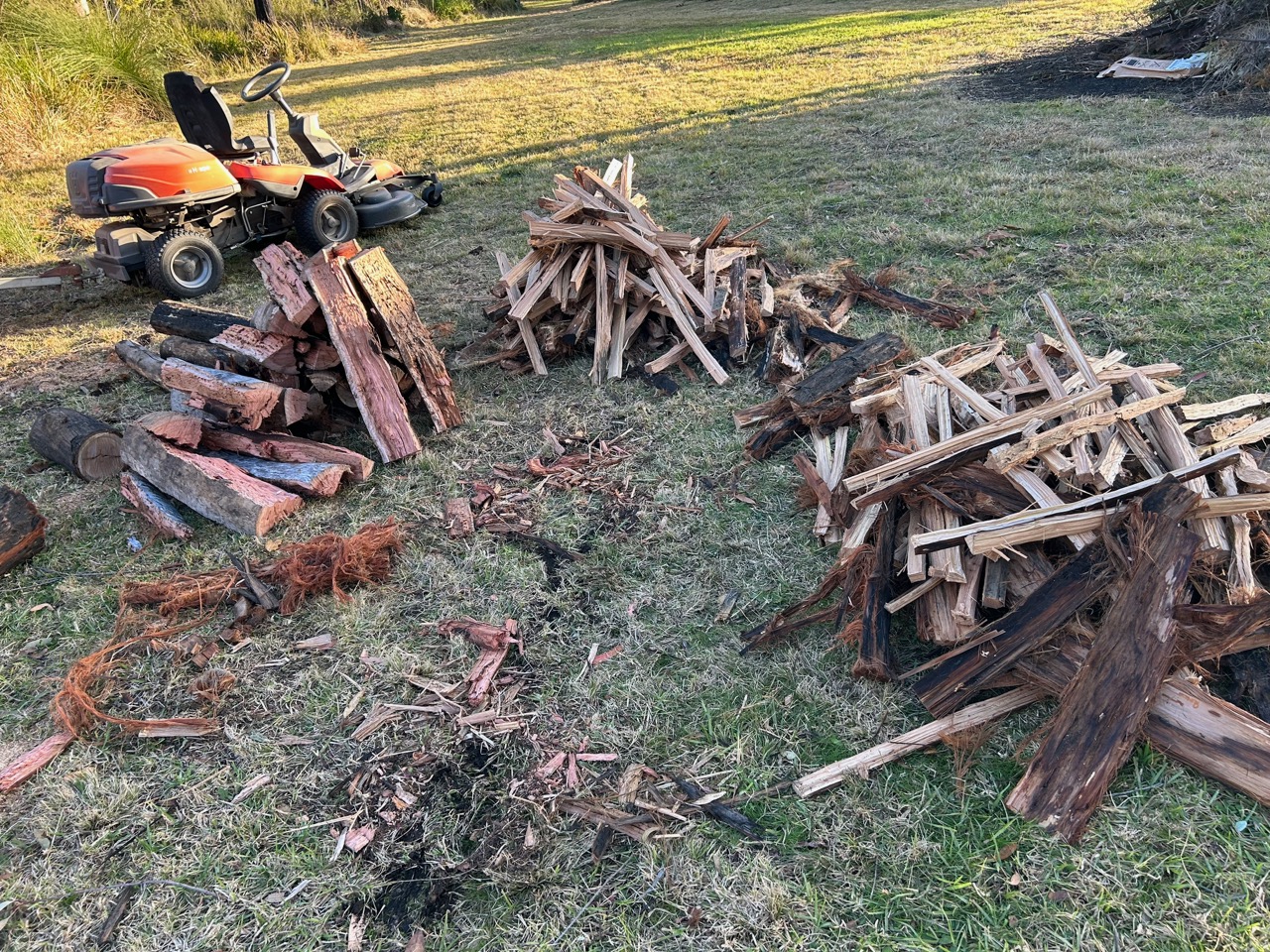
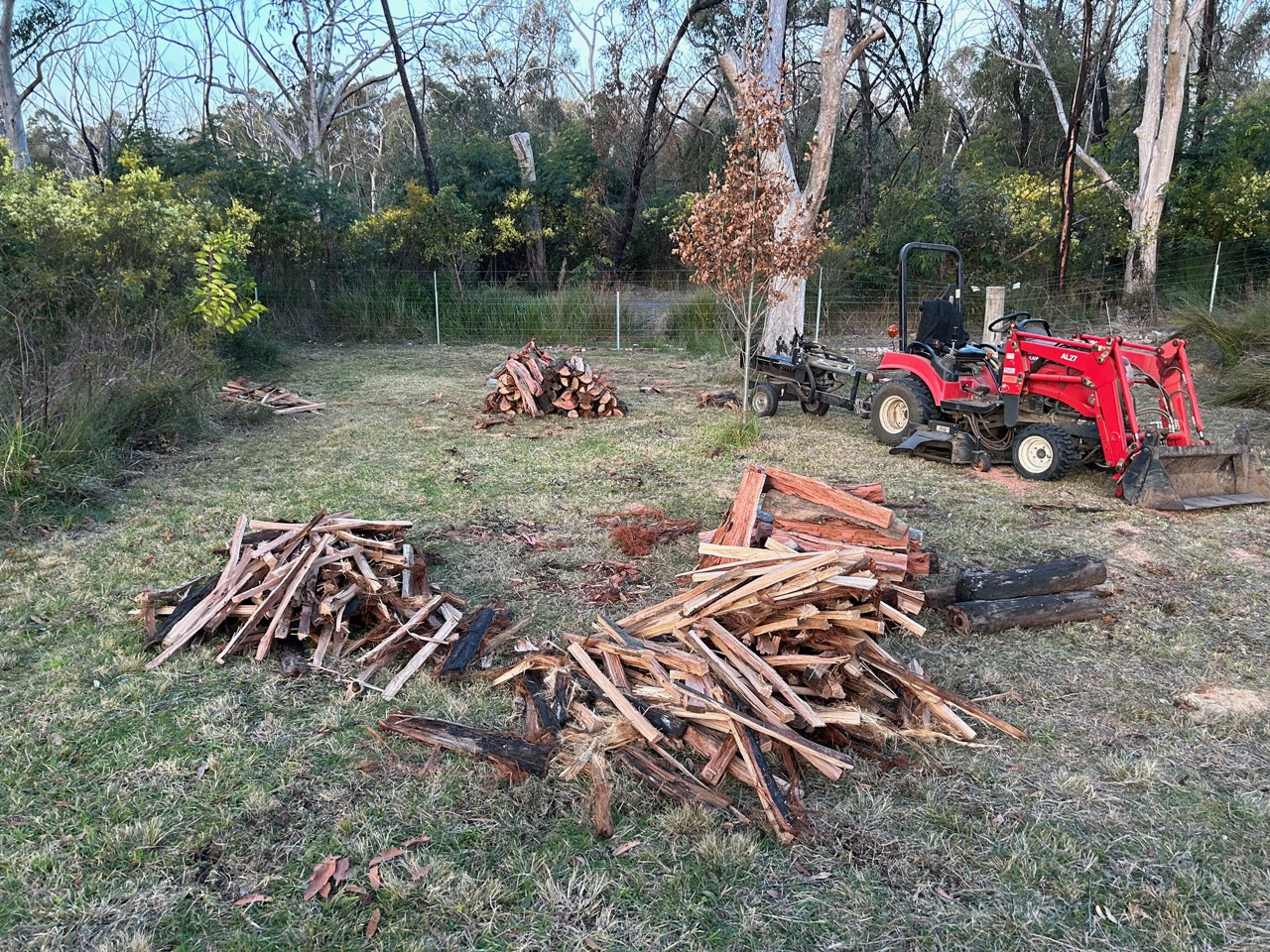
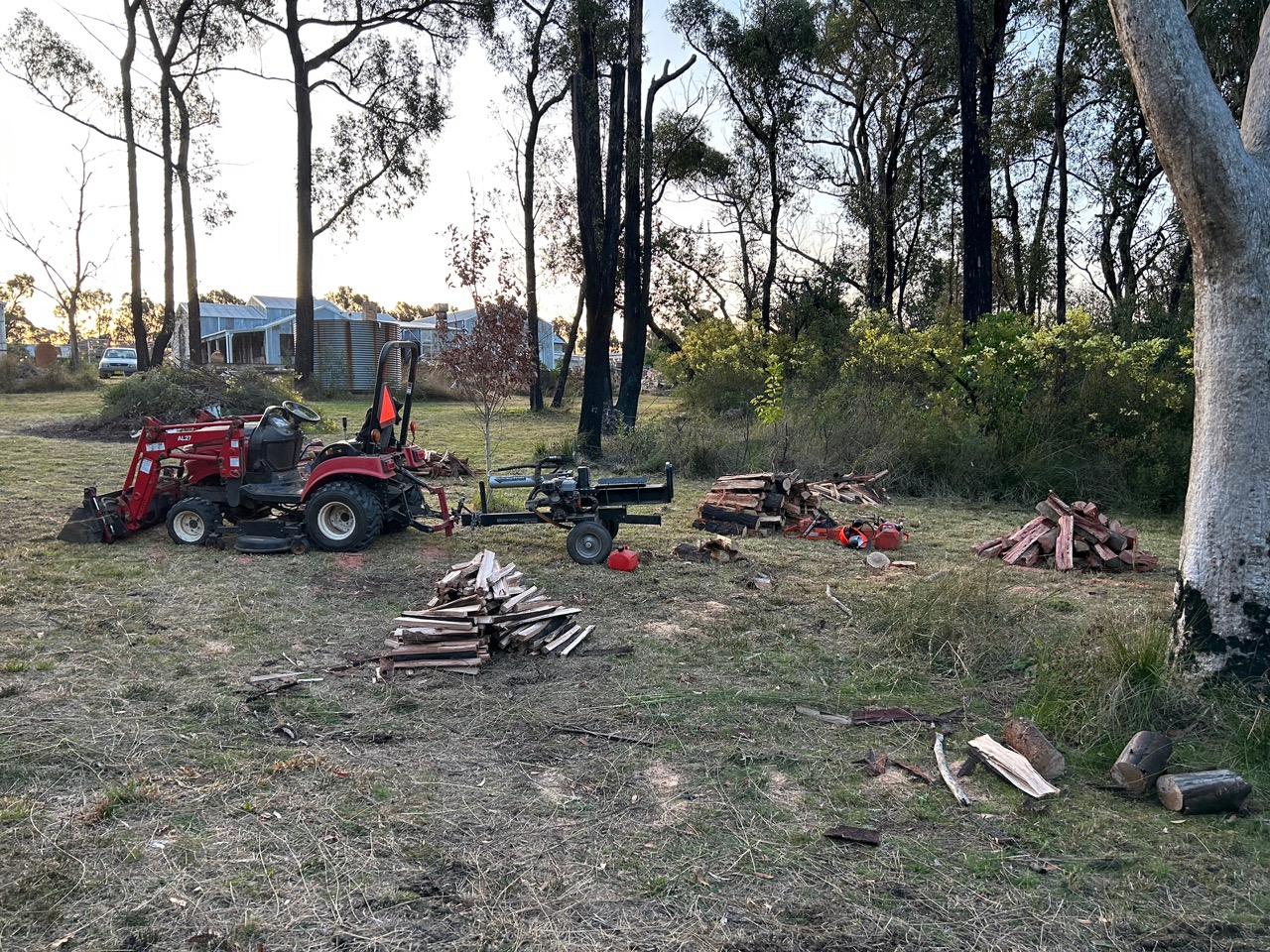
We spent the weekend cutting and splitting wood for the kiln and house. These are logs still sitting in the yard, left over from the bushfire clean-up.

Yes, We are still dealing with the aftermath of that horrible event. It’s still all around us, in the dead trees still standing, but on this occasion, we are cleaning up logs still sitting on the ground from burnt tress that were felled for safety reasons by the State Government clean Up squad that came through after the fire to ‘make-safe’ the area where people might be living and working around their houses.

Some of the logs were particularly straight grained, so were ideal for splitting very fine for the side stoking of the 2nd chamber of the new wood kiln.

Others were gnarled and knotty with many forked branches, so I cut these short for use in the house stove. You can see the new pottery up in the distance. We are clearing up further from the core area around the house now, So we are making some progress.

It was a full day and by the end of it I was conscious that I was very tired and needed to stop before I ended up hurting my self. I have damaged my hand in the splitter years ago, by working on into the gloom in the evening, just trying to get the job finished in one day. 

As the shadows lengthened. I called it quits. I will finish the job another day.

What started the day as a 3 big piles of twisted logs and butt ends, ended with several small er piles of split timber kiln fuel. 

49 years ago, when we started out together on this creative journey. All we had was a two metre long, ancient, two man cross-cut saw and a block buster hammer. My, how things have changed! I still have the big cross cut saw, it hangs up on the wall in the barn. I still have the block buster head too, however it has had countless wooden shafts, broken and replaced since then. My days of swinging the block buster are numbered, but it still gets some sporadic use for small jobs that are too small to be bothered getting out the tractor and hydraulic splitter. It’s a bit like kitchen gadgets that take more time to clean up than the time saved using them. I still admire and appreciate many old things and ways of being, but splitting wood with a hammer is not one of them.

Reducing our carbon footprint still further

In our attempt to reduce our carbon footprint to as low as possible without having to reduce ourselves to living in a cave. We want to engage with the modern world, but only to the extent that we can cope with. For instance, we have virtually no presence on social media. 

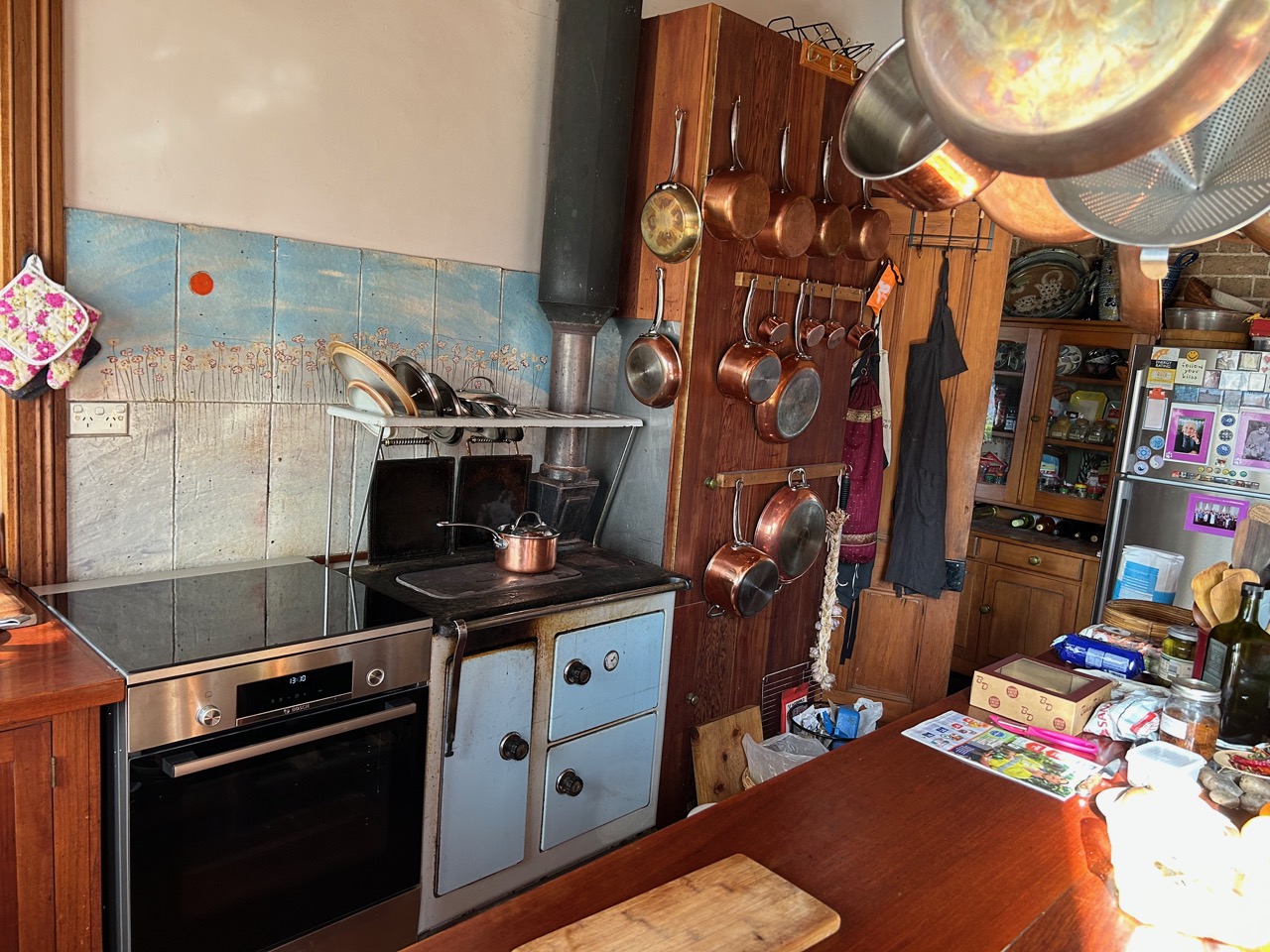
As our latest attempt to get out of the fossil fuel industry web of complex energy solutions. We have recently purchased an electric stove, so the old LP gas stove has been retired to the pottery for the odd occasion when I have to cook for a lot of people over there.

The new stove now completes our conversion to a fully PV powered solar electric home. It’s a good feeling to cook on sunshine, either fresh off the roof during the day, or stored in our battery for use at night. The pottery kilns are either solar electric or wood fired using trees from our own forest. Our car is run almost exclusively on PV sunshine, and now the house is fully electric. However, we have retained the wood fired slow combustion kitchen range, as it heats the hot water for the house in winter when there is not so much less sunshine for the solar hot water panels. It cooks all the winter meals, and warms the house to boot. In summer when the temperature is too hot to want to light the fuel stove, that’s when the electric range comes into play.

The stove has a conventional electric oven, but it has a modern induction cook top, coupled with the right induction compatible metal based copper pans it is lightning quick to heat up and cooks beautifully. There will be a bit of a learning curve for us to digest the 50 pages of instructions.

Digital cooking is a new concept for us. We end up pressing a lot of buttons with our digits to make it work.

The new stove sits very comfortably alongside the very old steampunk wood stove that we bought 2nd hand 45 years ago.

So far I’ve experimented with baking a loaf of rye bread, couldn’t tell the difference. 

A pan forte cake, witch was just as delicious as it always was in the old stove, no change there, just cleaner air in the house and no fossil carbon released.

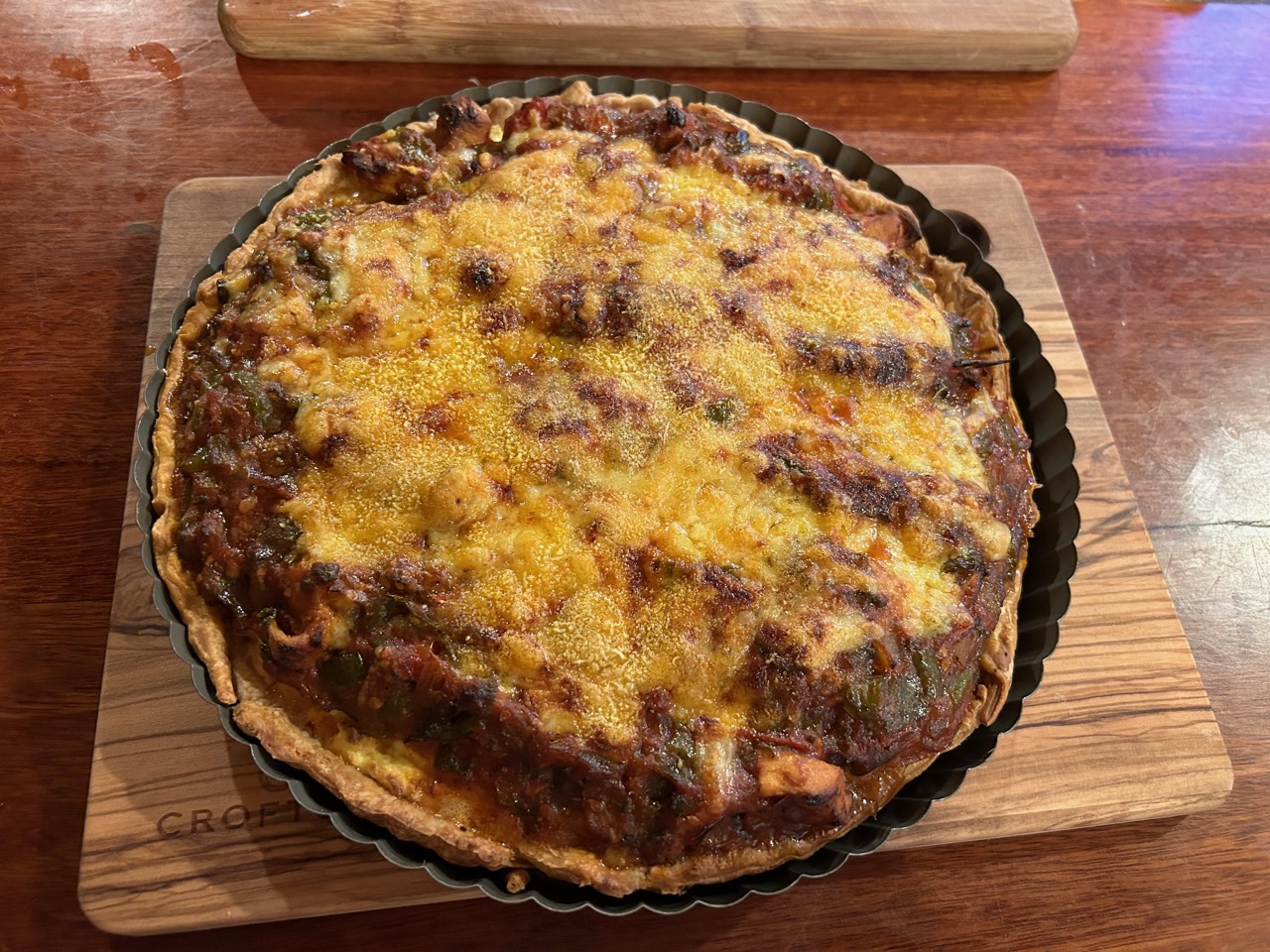
I also tried winter vegetable quiche. All good with no problems. I’m happy.

3 Things that I learnt today

The first thing that I learnt was actually last night.

I tried roasting Brussel Sprouts in with the roast instead of steaming them first and then sautéing them in olive oil with a little garlic, salt and pepper.

They were sensational roasted. Soft and creamy inside, but a little bit crispy and crunchy-charred outside. So fantastic! It made my day! Maybe I need to get out more?

As winter is a time for roast dinners, I’ll be doing this again.. This months experience of roast beef was a very petite 250 gram roast. After cooking and cut in half we had just over 100 g each. Just the right amount to insure that we have some red meat, just in case it is good for us. But not too much just in case it isn’t!

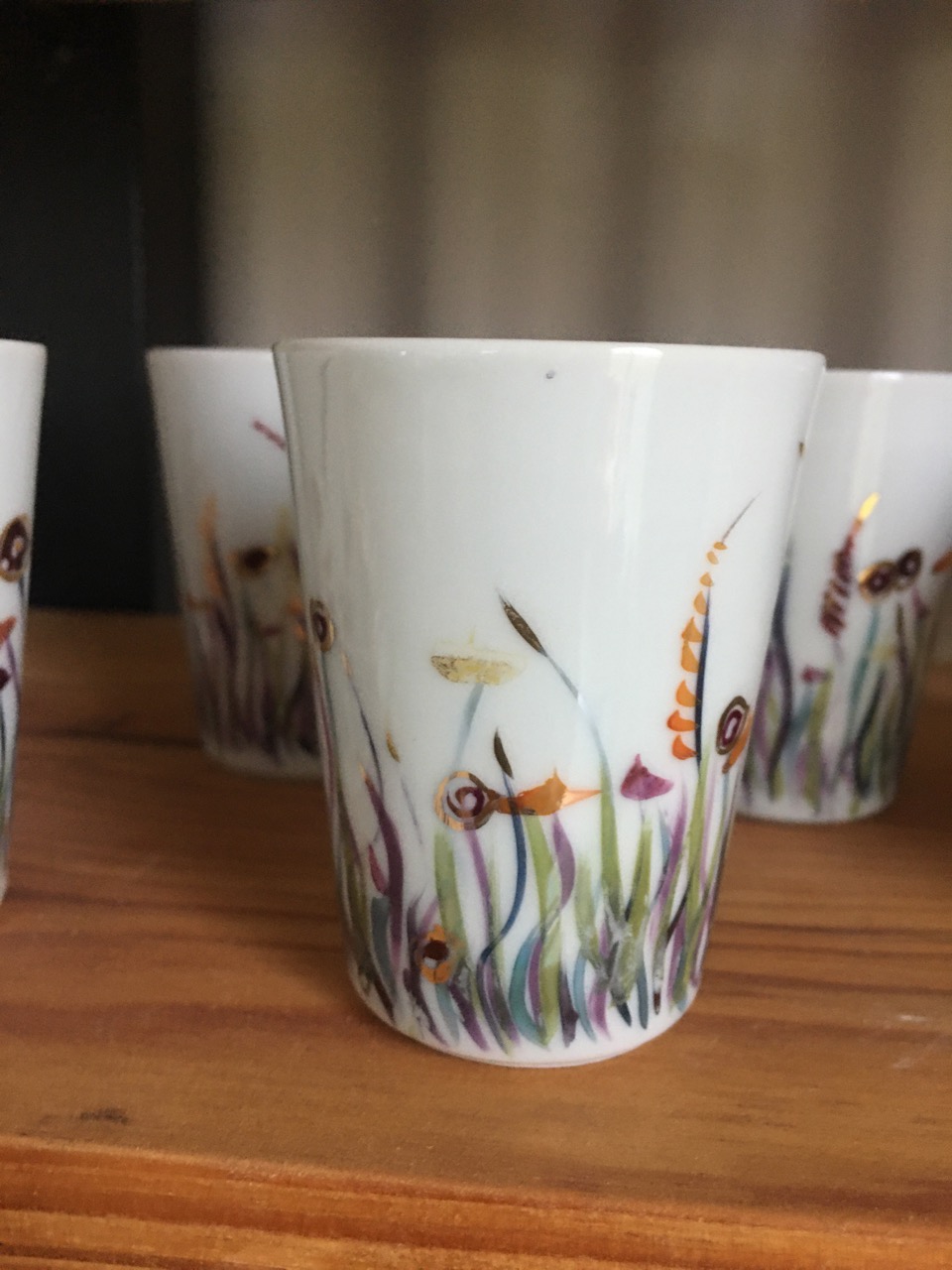
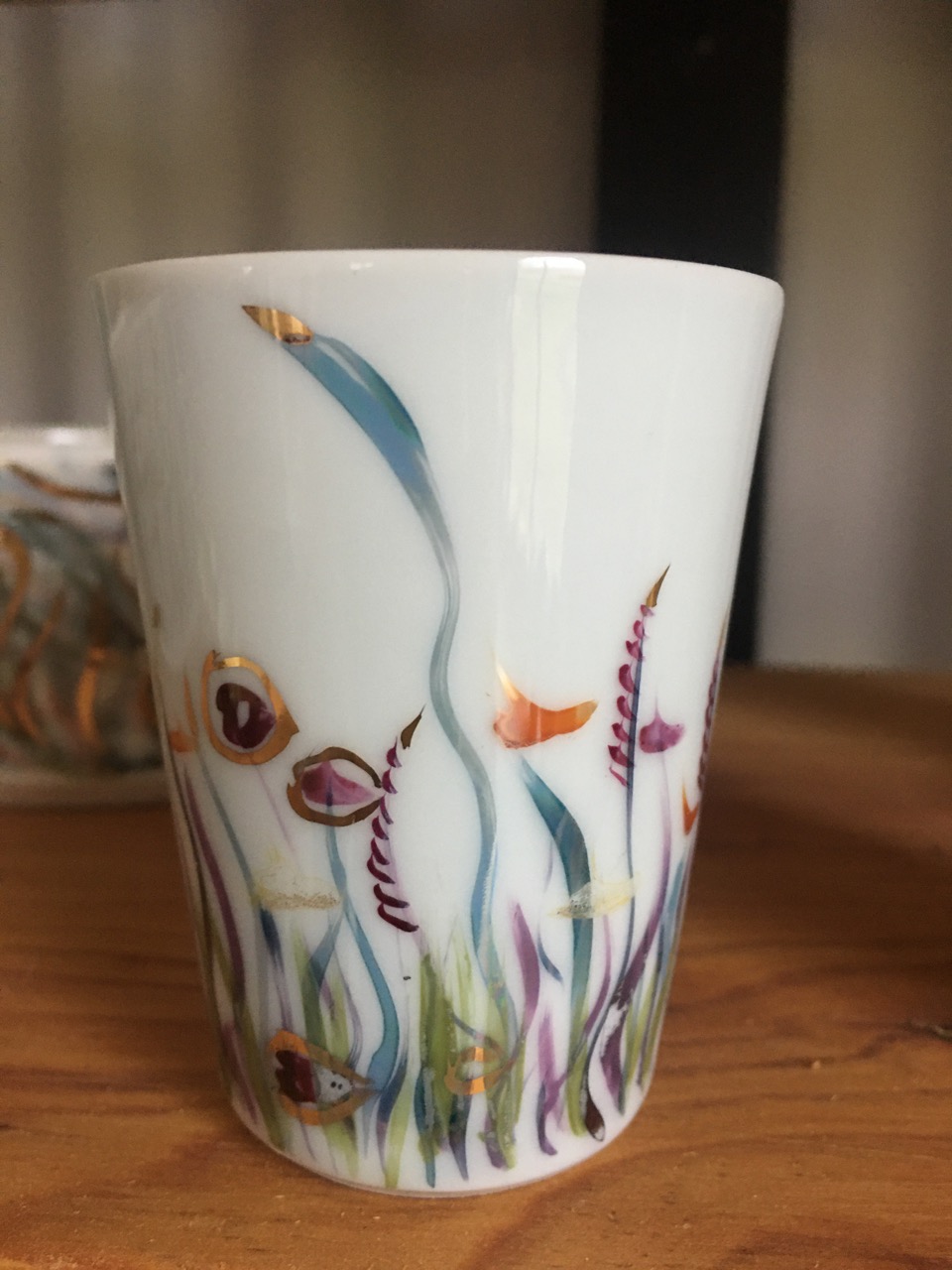
The other thing is that I am really enjoying learning to decorate with colours and lustres.

I feel Like I’m a first year pottery student channeling Janna Ferris. Only without her talent, insight, skills and years of experience.

But I have to start somewhere. This is very ‘somewhere’ for me at this stage in my life.

I’m very happy with these tiny ‘shot’ glasses. 50mm dia x 75mm high.

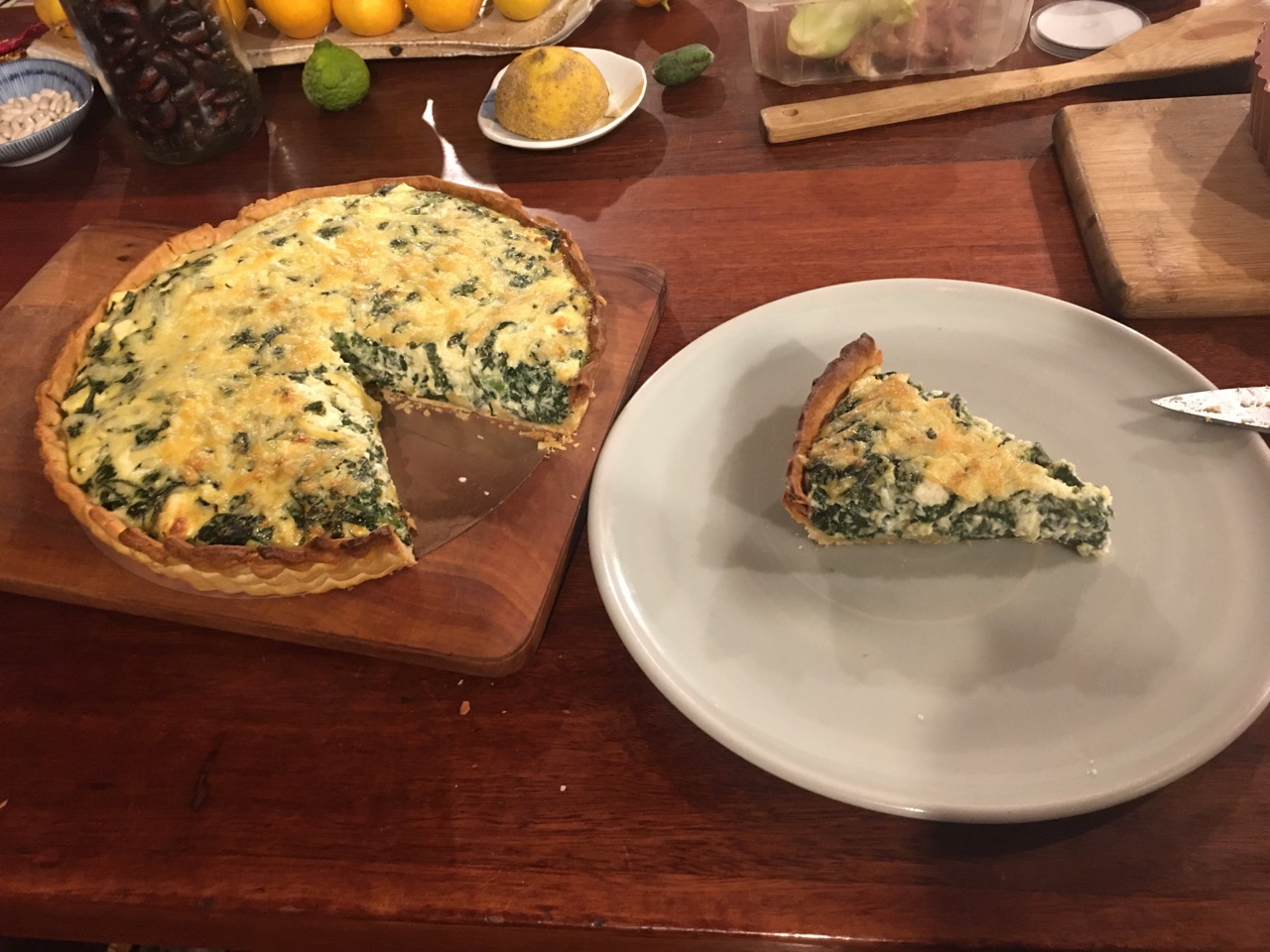
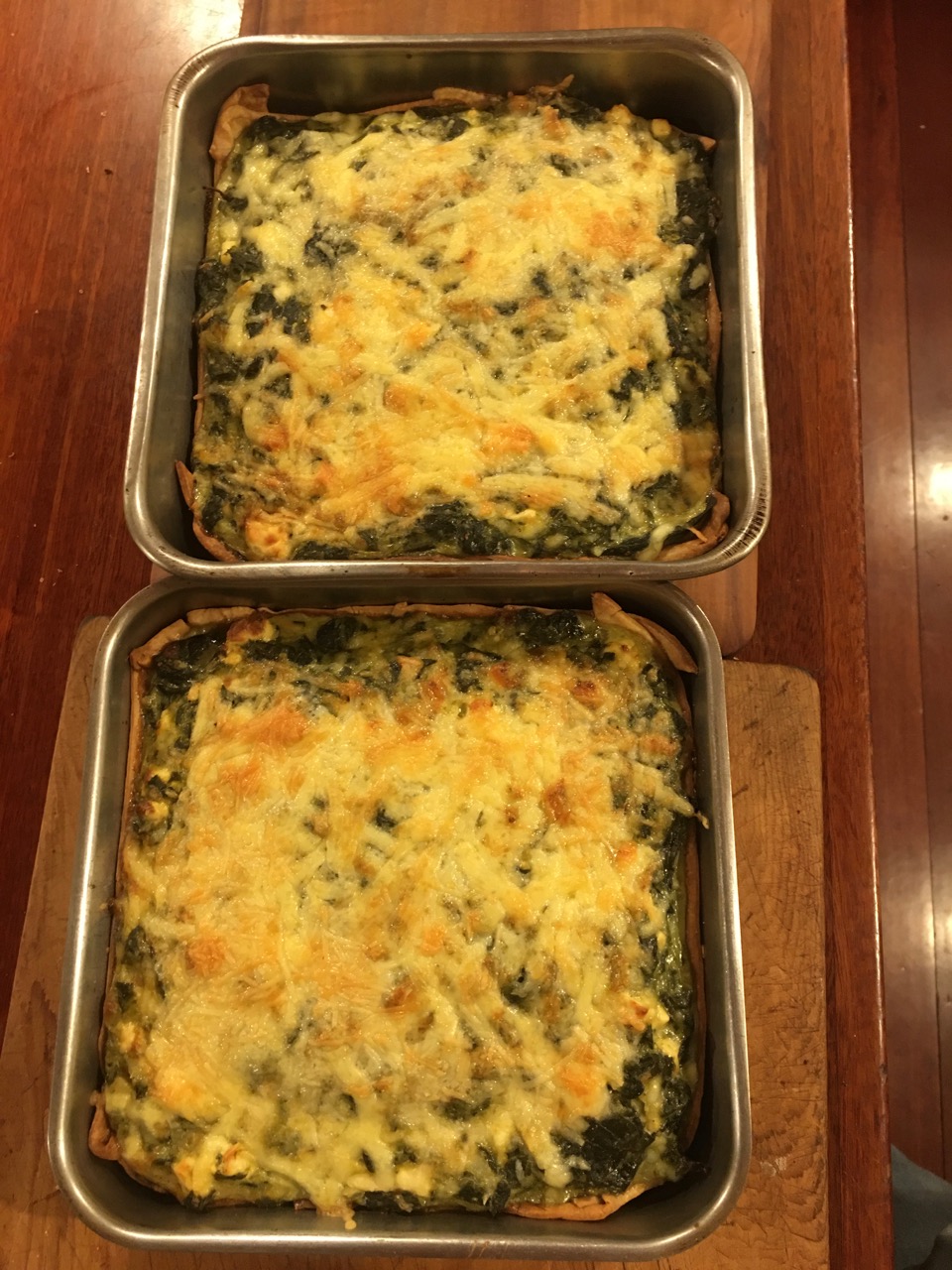
The last thing is that native worrigal greens (native spinach) makes a wonderful spinach and 3 cheeses pie.

I already knew that but just thought that I’d throw it in.

They are so good I made 2. 

We will need some handy, ready-made lunches for the weekend Open Studio Arts Trail sale days.

So really, there was just one new thing that I learnt today. But it was so good, that it felt like three!

Bush Tucker, Safron and More Tomatoes

This week we have been hard at it everywhere, in the garden, in the pottery In the kitchen.

We thought that we had harvested the last couple of wheel barrows of tomatoes, but then we looked again and there were more.

Janine made two seperate 1 gallon boilers of passata, which I put through the mouli sieve and then reduced down to 1 gallon, or 4 1/2 litres of fine liquid, which Janine then reduced down further on the wood stove each night progressing a bit at a time until we had just 2.5 litres of dense concentrate, down from 11 litres of initial pulp. It takes a couple of nights to get through it all. It’s better than trying to find the non-existant intellectual shows on the idiot box.

While the wood stove is hot after dinner is cooked, it’s a shame not to use up all that potential heat embedded in the stove. It not just cooks the dinner, it warms the house and heats the hot water tank. So to get an extra bit of benefit from it is very frugal and efficient. F@#k the gas companies and energy retailers, gouging excess profits from the misery of war and bad forward planning. We are very lucky here to have been through a terrible fire that has left us with thousands of dead trees in our forest that I couldn’t have ever brought myself to cut down in their prime. But now that they are dead from the bush fire they need to be cleaned up to make the place safe again. Fuel for the rest of our lives. As I said, very lucky. You have to look on the bright side.

We were a bit shocked when Janine had to re-arrange the pantry cupboard to fit these recent jars in. We discovered that we now have 79 jars of passata. We could easily go into business selling this stuff. It’s not as if we are not eating our fare share of tomato and egg for breakfast, tomato salad for lunch, tomatoes in ratatouille for dinner, as well as giving away tomatoes to everyone who calls in and visits

But still they come ripening, even now in this cooler weather. However, they must come to an end soon, as the night time temperature is dropping rapidly down to 3oC this week. Soon there will be frosts again and that should put an end to it.

I was so looking forward to the start of tomato season back in November/December. I could just brush the young leaves and smell the tomato fragrance that promised so much. Now I don’t want to touch the leaves so much any more. I’ve had my fill. This is the reality of living with the seasons. The promise, then the first taste — so good, then the glut, and now enough.

I’m sure that we will appreciate the bottled tomatoes over winter in all manner of cooked dishes, to add and extend flavour to almost anything. Passata is a useful and flexible as chicken stock. We have some of that in the freezer too.

We have already picked another few baskets full of prime ripe red produce to make the next batch. Anyone want any tomatoes?

In the pottery, I cleaned out the small Venco pugmill that I use for porcelain. It was starting to allow a few small bits of dryish crumbs through the screens and into the extruded pugs. It has been a year since I last cleaned it out. Unless you use it every day or at least every week. Bits dry out inside the barrel and eventually cause trouble. I hadn’t pugged any porcelain since last year. So now is the time to deal with it. Starting out fresh for the coming work load through till Xmas.

I have found that it is easiest as a two day job. Strip it down last thing in the afternoon, Scrape off all the easily accessible plastic clay. Leave it over night to dry out, then scrape off all the dry clay, and finally sponge it until it is all clean, then reassemble, first thing in the new day.

I have been throwing some gritty clay, making some rough textured bowls for the wood firing. 

I have also been making some porcelain dishes for the wood kiln as well.

Back in the vegetable garden we found a great surprise! Our first crocus flower. Janine picked out our first two saffron stamens. We ate one each, just to see if we could taste the fine flavour. We couldn’t. But we did get just a little hint of orange colour on our tongues. Hopefully there will be more to follow, as we have 20 crocus bulbs in the garden. We might double our harvest each year? We might eventually even get enough to be able to taste it.

I made a bush tucker pie for dinner from our massive crop of wild warrigal greens – native spinach. It turned out really well. Cooked with 3 cheeses and one egg to bind it. Not a tomato in sight!

Cheesy grins all round.

Baking Dishes and Mixing Bowls

I’ve been back in the pottery on the wheel on and off all last week, but also fitting in some pressing needs to complete preserving and pickling, tomatoes mostly. We must have sufficient for almost 2 years now. It’s been such a huge crop and they’re still coming.

In the pottery I have been making baking dishes and Grandma style large mixing bowls with a pouring spout. They are fun to make and were very popular last year. I sold out, with only one small mixing bowl left in stock after Xmas. I make them out of my rough crushed shale clay mix. It wood fires really well and has an open texture that is really good for oven use.

I’ve made them in 3 sizes, S, M, L. This is one from last years batch, beautiful flashing on the body and glaze from the wood firing.

The old style cooks mixing bowls also all sold out. I remember fondly the one that my Mother used all her married life. It was exactly the same as the one her mother had, both brought over from England on the ‘Orient’ Line ships at different times.

I decided to make these so that I could have one for myself, but I sold them all, so maybe there will be one left from this batch? I usually end up with pots that are second grade pieces, with some tiny fault, Our kitchen is full of pots like this. That’s how we get to keep them.

On this side of the drying rack, I have also made 3 bathroom sinks for a customer who lives locally and asked specifically for a sink with one of my rock glazes on the inside and unglazed and wood fired on the out side. I couldn’t do that order till now, as it is not realistic to try to fire the wood kiln over the hot dry summer. Just too much risk of fire bans coming into force half way through the firing. That would be a disaster too awful to think about. So we just don’t attempt to fire during the hotter months.

Some of the bigger mixing bowls are quite large, measuring 300mm. dia. and are made from 5 kgs of clay. My ageing wrists are not happy with wedging 5 kgs any more, so I wedge the clay up in two smaller lumps of 2.5 kg. Then join them back together on the wheel. I learnt to ‘slap’ the plastic clay into the centre of the wheel with my hands while still dry. No water involved in this centering technique.

The first 2.5kg lump is slapped into place and rounded off while I rotate the wheel head very slowly. Not using the motor at all, just a slight flick of the wrist as I lift my hands up. This turns the wheel head just 10 mm. each time , so that the next ‘slap’ will be an equal distance apart , so the clay slowly finds the centre. Once it is just about right. I add the 2nd 2.5 kg lump and start the centering all over again.

Once the whole 5 kgs are centred, then it is time to punch out the centre, slowly and gently, bit by bit. Lots of little hits while the wheel is very slowly rotated, just as with the first stage of the technique.

Once the lump is opened up evenly. I ‘slap’ the outside again with both hands evenly to get the lump back into a tight cylinder again.

The 5kgs are now centered, tightly bonded to the batt, and opened up ready to throw in a conventional way. The great beauty of a technique like this, is that half of the throwing is now complete, certainly the difficult and very stressful and high energy centering part, and the clay is still dry and ‘fresh’. With no water added up until this point, the clay hasn’t had a chance to get soggy and tired. It is also possible to stop at this point and take a little rest if you are new to the technique and need to rest your self for a minute or two. This is not advisable if you have already wet the clay and started throwing.

Once you have wet the clay to smooth out the surface and start the throwing proper, it’s best to just carry on and not stop for any reason.

Meanwhile in the kitchen, I have been dealing with the great tomato explosion. This week besides making more passata, I made a couple of batches chilli jam. My friend Ian gave me his recipe, which has a lot less sugar and a little more spice than the one I got off the internet some time ago.

2 Kilos of tomatoes boils down to just 4 small glass jars of chilli jam once it has been reduced and concentrated.

Janine has been shelling and roasting the first few basins full of our hazelnut crop. Unlike tomatoes, there is no urgency to deal with nuts. Once they are collected and inside, they are safe. We have a dozen hazel nut trees and a dozen almonds. The almonds have not recovered well from the fire and are struggling, fighting off an attack of ‘shot hole’ fungus in this damp summer weather.

On the other hand the hazels were more of less burnt to ground level, but they are a smaller and very robust plant, perhaps more suited to be used as a hedging bush. This years crop is our best yet.

Once roasted, they become really flavourful. Before that, they are pretty dull. We don’t salt them for health reasons.

Finally it’s time to cook dinner. Tonight it will be baked, stuffed, ripe, red capsicums. I used a vegetable and herb mix, so it’s a vegetarian meal tonight, as it so often is most nights.

This is a small part of our attempts to be both creative and self reliant while treading as lightly as we can in this carbon constrained world.

Nothing is perfect, nothing is ever finished, and nothing lasts.

This meal isn’t, wasn’t and didn’t.

March is peak tomato season

Autumn is peak tomato season. The crop starts to ramp up in February, but really hits its stride in autumn. We are picking a couple of baskets full of red, ripe tomatoes twice a week, with smaller picks in-between for lunches and salads as needed. The big pick goes straight into the large 5 litre copper boilers on the stove with herbs, onions and garlic, to be reduced down to pulp and preserved in sterilised glass jars as tomato passata for use throughout the year in all sorts of meals from pasta sauce to a lovely flavourful addition to soups and stews.

I always start with good olive oil, onions and garlic. I can’t think of anything more delicious than the smell of hot olive oil, and then the salivating addition of the onions and garlic heating and lightly browning as I toss the pan to keep it all moving so that nothing burns. It’s like foreplay. It fills the kitchen with such a wonderful aroma. When Janine comes in from the garden, she always comments how delicious the kitchen smells, and it’s true. I remember years ago when I used to work at the National Arts School in East Sydney. I would cook lunch for the students on Fridays. It was the only day that I came in as a part timer. All the full time staff took their rostered day off on Friday to get a long weekend. They all taught Throwing and hand-building, all the easy enjoyable subjects. So I got the day to teach all the difficult stuff that nobody else wanted to teach, like kiln and firing technology, glaze technology, clay body chemistry and OH&S.

I attempted to make the day more enjoyable by cooking lunch for them, otherwise, many of them wouldn’t bother to turn up at all. I had to keep to a strict budget of $1 per student or less, as no one was funding this exercise. I also noticed that some of the younger student were running perilously short of money by late in the week. So had to resort to going to the Hari Krishna’s in the evening and sit through an hour of indoctrination, so as to get a free veggie meal at the end. That was the real incentive to start cooking for them. One really good cheap brown rice and vegetable meal each week to make sure that they got some proper food with minerals and fresh vitamins. It was fresh, filling, tasty, and free. So they nearly all turned up, as did some of the staff from the library and office on occasions.

Art students don’t usually enrol in Art School to learn technical stuff. They want to express themselves creatively. My subjects weren’t that popular. They mostly turned up because they wanted to get a pass mark. But there were a few quite keen ones. One day while starting to cook lunch, we had a famous chef and restauranteur as a student at the time and he stuck his head over the upstairs rail from the room next door and yelled out how delicious the smells wafting up to his studio were. He offered the analysis that he might be detecting truffles sautéed in cultured butter with thyme and bay leaves. I said NO. Then he suggested some other exotic combination. Again, NO!

I told him that it was just olive oil and garlic so far, nothing else added – yet. He was amazed. It really is that flavoursome.So that is how I start most batches of tomato passata, once the onions are just starting to brown, I add the garlic half way through so that it doesn’t burn. I add in the basket load of tomatoes. It takes about 30 minutes to chop my way through two basketsful of soft ripe tomatoes. Once they are in and heating up, I add in the chopped capsicums, a chilli, pepper corns, loads of sweet basil, a couple of bay leaves, some thyme and or sage and or marjoram, even parsley, whatever is in abundance.

Once all the boilers are full to the brim, I let them simmer for half and hour, to make sure that everything is very soft, as the next step is to pass it all through the kitchen mouli sieve. I wait, usually until the next evening, when its all cooled down before attempting to sieve it. This removes all the herb stalks and tomato skins , etc. 

What is left is then reheated on the stove on a low heat to simmer and reduce by about 1/4 to concentrate it. Once this is ready, then I wash and sterilise the glass jars in the oven and bottle the sauce while it is still very hot. If the hot jars are immediately sealed with ‘pop’ top lids that have also been simmered for a few minutes, then the jars will self vacuum seal on cooling  and the sauce will keep for a year or more without any more energy needing to be applied to it. They never last a year. It’s too delicious.

It’s been a very good tomato crop so far this year, so we have already bottled about 30 bottles, our best ever harvest, and still a long way to go. We are already giving away our excess when people call in or if I go out visiting, I take tomatoes as presents. We will soon run out of the ’normal’ glass jars that we have collected over the years, so we will start to use half size jars.

We get about three to four 700 ml. jars of concentrated passata from each basket full of fruit, and a basket fills a 5 litre boiler with chopped fruit, so 5 litres of boiled pulp is reduced to about 2 1/2 litres of concentrate.

I always look forward to making passata, but at this stage the initial novelty of the cooking and preserving of tomatoes is starting to wear off. However, I still really enjoy it. It’s why I live here like this. To live out of our garden for most of the year. Preserving excess is essential to providing our own food for the entire year.

It’s Post Modern Peasant 101.

Clay and Soufflé

We are finally back at work in the pottery. Proper work.

There was still so much to finish off in and around the pottery. We have been trying to achieve the impossible. 

To rebuild in a few years what it took us 40 years to build up over a lifetime of potting, collecting and restoring.

There is still a lot to do, but most of all the pressingly urgent stuff is complete and in place. The extraction hood over the electric kilns was the last really necessary thing.

I am currently working part time on a flame combustor, spark arrestor and scrubber for the top of the wood kiln chimney. That will be completed in the next few months in time for the cooler weather and the first wood kiln firing of the season.

This week I made up a batch of rough stoneware body made from crushed shale. I had to spend some time crushing and sieving the shale. I have had this stuff for some time. It had come through the fire and is full of charcoal from the fire. It wasn’t too arduous, as it was only through a coarse mesh.

After mixing the two x 125 kg batches of body, we pugged all the clay twice. Once all through the pug and then stacked on the pug table in a pyramid stack. We then cut off all the ends of the sausages and re-pug it all another time, such that each sausage that comes out of the pug is comprised of a mix of all the previous pugs of clay. This is to ensure that there is very little variability from the first to last sausage of clay.
After finishing up, the pug mills and tables are all washed and wheeled out of the way and all the floors are wet scrubbed and mopped to clean off any small amount of clay that finds it way onto the floor, which it inevitably does. The floor is scrupulously clean all through. All the clay is bagged and boxed. Everything ship shape.

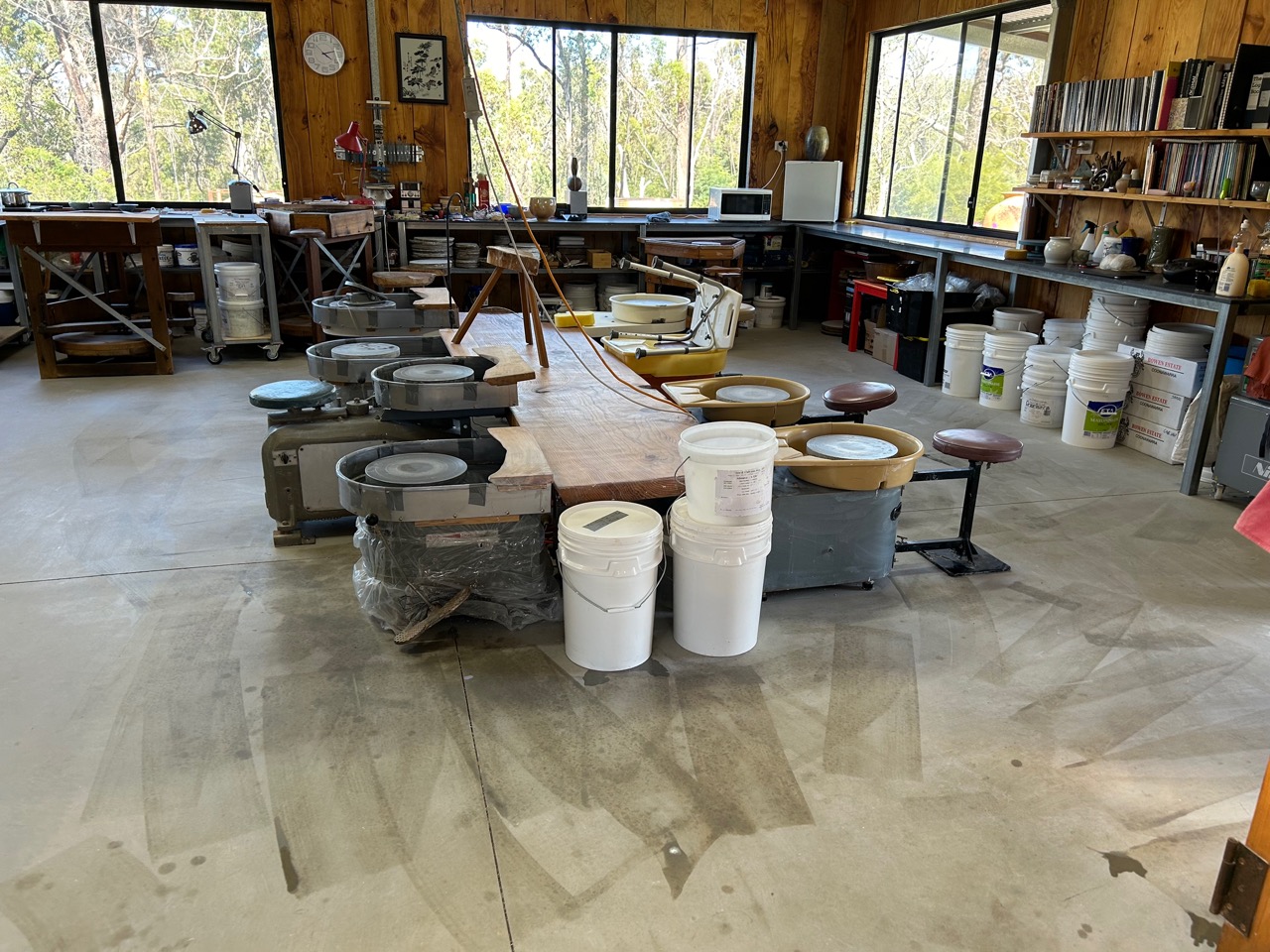
This is the best pottery workshop that we have ever had. Having been burnt out 3 times over our careers. I have designed and built this 4th workshop/studio with every piece of equipment on wheels to facilitate flexibility and cleanliness.
We have been picking lots of food from the garden, then cooking and preserving all the excess. We are up to our 5th batch of tomato passata.

Oven baked pumpkin is great on its own and can be used up all week in all sorts of ways from frittata to salads.

Tomatoes, basil, capsicums, chilli and pepper corns go into the passata.

We had an over ripe banana and a few eggs, so I made us a banana soufflé for desert. It worked out really well.

All part of our attempts at self-reliance. It seems to be working out OK.